
Time To Say Goodbye
346 episodes — Page 6 of 7

Abolish ICE! And keep going. With Silky Shah of Detention Watch Network.
Hello from Stuart’s Coffee in Bellingham!This week, we welcome a special guest to talk about the immigrant rights movement and immigration policy. Plus, Andy and Tammy channel Jay Energy and answer listener questions.(0:00): Andy and Tammy discuss Japanese food and our favorite chaebols. (6:50): Listener Questions! What’s up with the “PI” in “AAPI?” listener SansMouton asks. We discuss the awkward origins of AAPI and why Pacific Islanders and Native Hawaiians shouldn’t be lumped into Asian America (cf. this random feature on Asian feelings in the NYT this weekend). But is there anything redeeming about a “Pacific” frame? And what would be the Pacific version of Paul Gilroy’s Black Atlantic? * Thanks to friend of the pod Amita Manghnani for talking through the local politics of “A/P/A” and recommending “Asian American Studies and the ‘Pacific Question,’” by Wesleyan anthropologist Kehaulani Kauanui.(25:00): How should academics balance institutional responsibilities (and annoying prestige stuff) with teaching? listener Robi asks. Andy tries to punt the question to Tammy before laying out his own materialist approach. (31:44): Silky Shah, friend of the pod and executive director of Detention Watch Network, explains all things immigration:* Her Truthout article on the dramatic increase in immigrant detention under Biden* How her corner of the immigrant rights movement become abolitionist* Why borders are b******t* The We Are Home coalition* Links between immigration and foreign policy* The Dems’ obsession with “deterrence”* Myths about immigration* Why “Abolish ICE” isn’t nearly enough* Recommended reads by Harsha Walia and Todd Miller.For more on immigration policy, tune into this book event on Tuesday, Sept. 28, at noon EST, moderated by Tammy: Thanks for listening and supporting the pod! Please keep in touch via Patreon and Substack, email ([email protected]) and Twitter! This is a public episode. If you'd like to discuss this with other subscribers or get access to bonus episodes, visit goodbye.substack.com/subscribe
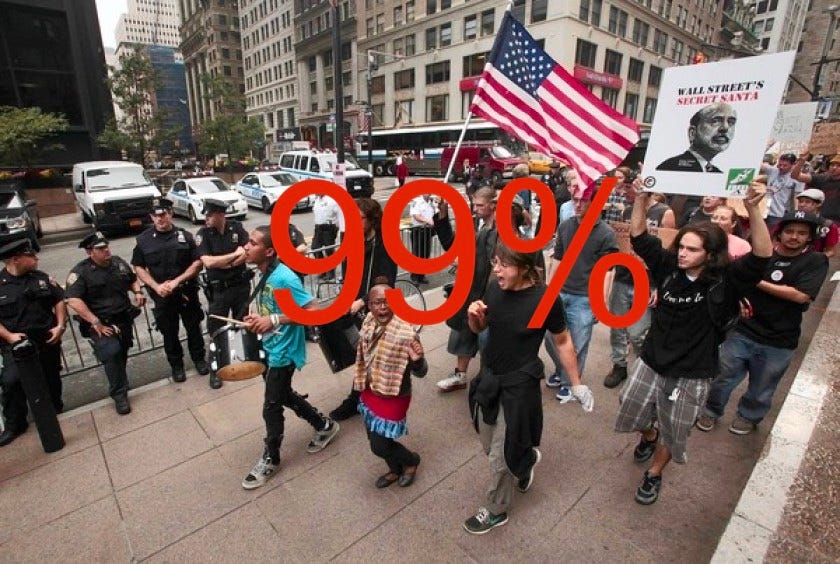
Happy 10th birthday, Occupy Wall Street!
Hello from Zuccotti Park!Lots of leftist nostalgia and reminiscence about Occupy Wall Street this week — and the podsquad joins in! Then we talk Vietnamese American Republicans in Orange County and rising COVID numbers in Vietnam.(0:00): Marshmallow test(10:50): Does Occupy Wall Street have an anarchist or socialist legacy? Why, even though it was “annoying” at times, does it still matter? Lots of personal anecdotes and reflection, plus a tangent about the suburbs.(1:02:20): Why did Vietnamese American Californians, who vote heavily Republican (even for Trump), vote against Gavin Newsom’s recall? (1:16:00): Vietnam recently went from having almost no coronavirus cases to an out-of-control epidemic. What happened, and what does it say about China and vaccine supply chains? Thanks for listening and supporting the pod! Please keep in touch through Patreon and Substack, email ([email protected]) and Twitter! This is a public episode. If you'd like to discuss this with other subscribers or get access to bonus episodes, visit goodbye.substack.com/subscribe

The Great Unvaccinated
Pod squad assemble!0:00 – Tammy catches us up on the latest in Asian Americana aka “Shang-Chi.” Jay and Andy remain skeptical of all things MCU. 12:30 – We talk about the new vaccine mandate and the current discourse around “the unvaccinated.” Are we too un/sympathetic to the material constraints of poor and working-class people who haven’t been vaccinated? Is vaccine skepticism a reflection of the US’s unique political polarization? And what to make of demographic trends by race, education, political party, and class? 43:50 – We mull Gideon Lewis-Kraus’s recent piece, “Can Progressives Be Convinced That Genetics Matters?” Should the left stake out a position on behavioral genetics, which the right has already done? Is all “genetics” talk doomed to slip into “race science”? Is race an inescapable way to think about the world?Please share, contact us, and subscribe!* Email: [email protected]* Twitter + DM: https://twitter.com/ttsgpod* Patreon: https://www.patreon.com/ttsgpod* Substack: This is a public episode. If you'd like to discuss this with other subscribers or get access to bonus episodes, visit goodbye.substack.com/subscribe
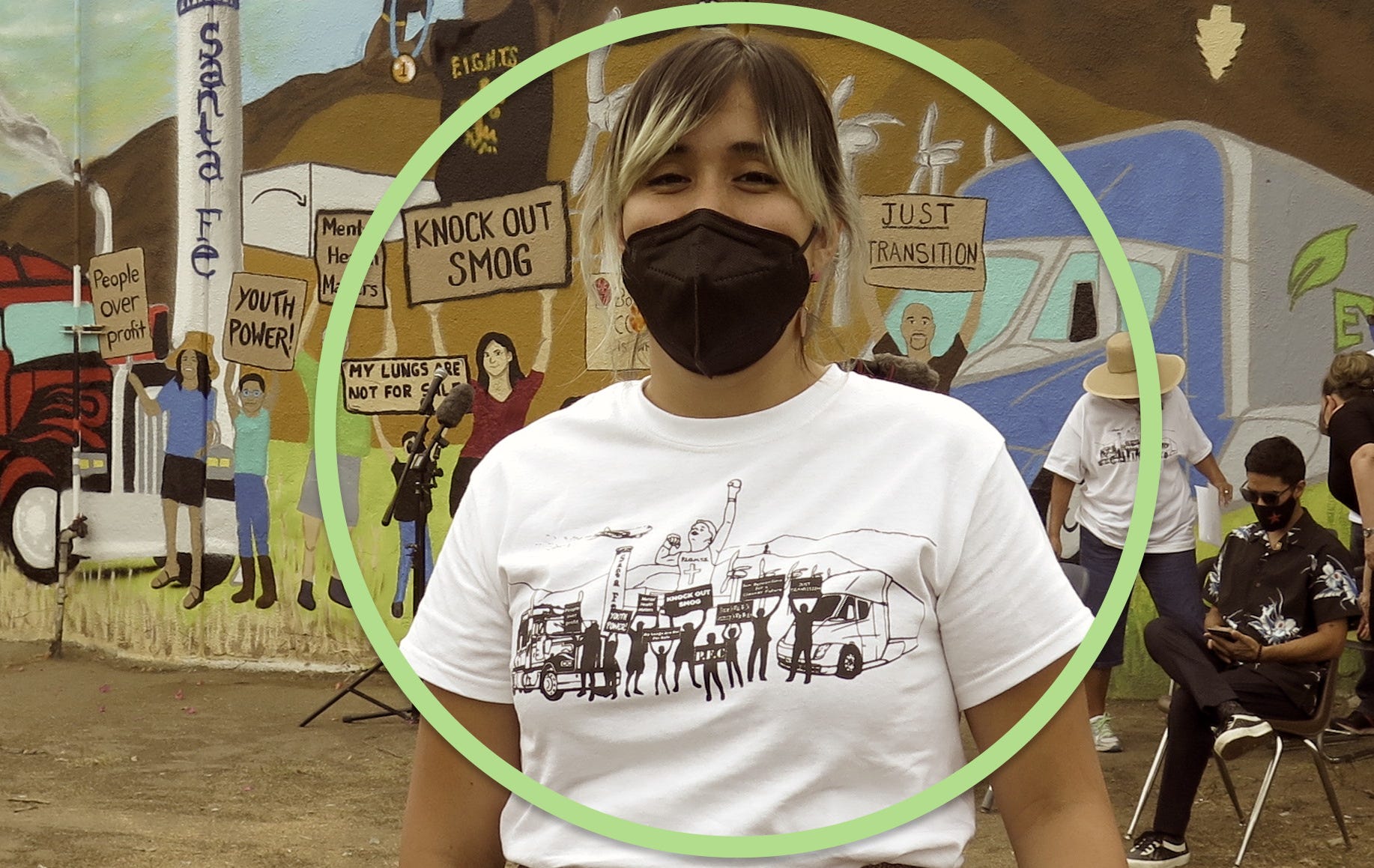
Environmental justice, Amazon logistics, and immigrant workers: Andrea Vidaurre
(Audio fixed and updated Sept. 7 afternoon. Thanks for your patience!)Hola from the Inland Empire!This week, we bring you Tammy’s IRL interview with Andrea Vidaurre, a policy analyst with the People’s Collective for Environmental Justice, in San Bernardino, California. Andrea talks about the meaning of “environmental justice,” local manifestations of global warming, working-class immigrant life in the desert, labor violations at Amazon, organizing outside the nonprofit industrial complex, and green futures in logistics. Some recs from Andrea: * Support PC4EJ’s work! * Read The Cost of Free Shipping: Amazon in the Global Economy, edited by Jake Alimahomed-Wilson and Ellen Reese.* Jam to Milpa, a musical collective in the Inland Empire, and oldies by The Chosen Few and Los Mirlos.* Read Gonzalez and Daughter Trucking Co., a novel by María Amparo Escandon.The pod squad will reunite ASAP. Until then, thanks for listening and supporting us via Patreon and Substack! Stay in touch by email ([email protected]) or Twitter. This is a public episode. If you'd like to discuss this with other subscribers or get access to bonus episodes, visit goodbye.substack.com/subscribe

SCOTUS evictions, mixed-race Census, a new silent majority, and the D'Amelios
Hello from the West Coast!It’s just Jay and Tammy this week, on everything from backyard farming to Barbara Ehrenreich. * Jay advises Tammy on late-season tomato growing. 🍅* What to make of SCOTUS’s awful (but anticipated) decision to end the COVID eviction moratorium? Where will it hit worst? * Why are so many more people (nearly triple!) identifying as mixed-race in the US Census? Does it have anything to do with 23andMe? * Tammy asks Jay about the latest installment of his NYT newsletter: on what we might learn from the media misfires of 1968. * Who is teen TikToker Charli D’Amelio, and why does her whole family now have a Hulu reality show? Is it too late to get in on this hustle?Andy will be back soon. Until then, thanks for listening and supporting us via Patreon and Substack! Stay in touch by email ([email protected]) or Twitter. This is a public episode. If you'd like to discuss this with other subscribers or get access to bonus episodes, visit goodbye.substack.com/subscribe
Gig work, Afghanistan, "The Chair"
Hello from a reunited pod squad!This week, we gab about a welcome court ruling on California’s Proposition 22 gig-work law, the US withdrawal from Afghanistan, and Sandra Oh’s new Netflix show. (0:00): Tammy on why Prop 22 was ruled unconstitutional and what it means for workers’ rights across the US(7:10): How to understand what’s happening in Afghanistan in the context of our long wars in the region(44:45): What “The Chair” says about Asian American TV, austerity politics in higher ed, race and generational divides, and the (cancel) culture wars. Thanks for listening and supporting us via Patreon and Substack! Stay in touch by email ([email protected]) or Twitter. This is a public episode. If you'd like to discuss this with other subscribers or get access to bonus episodes, visit goodbye.substack.com/subscribe
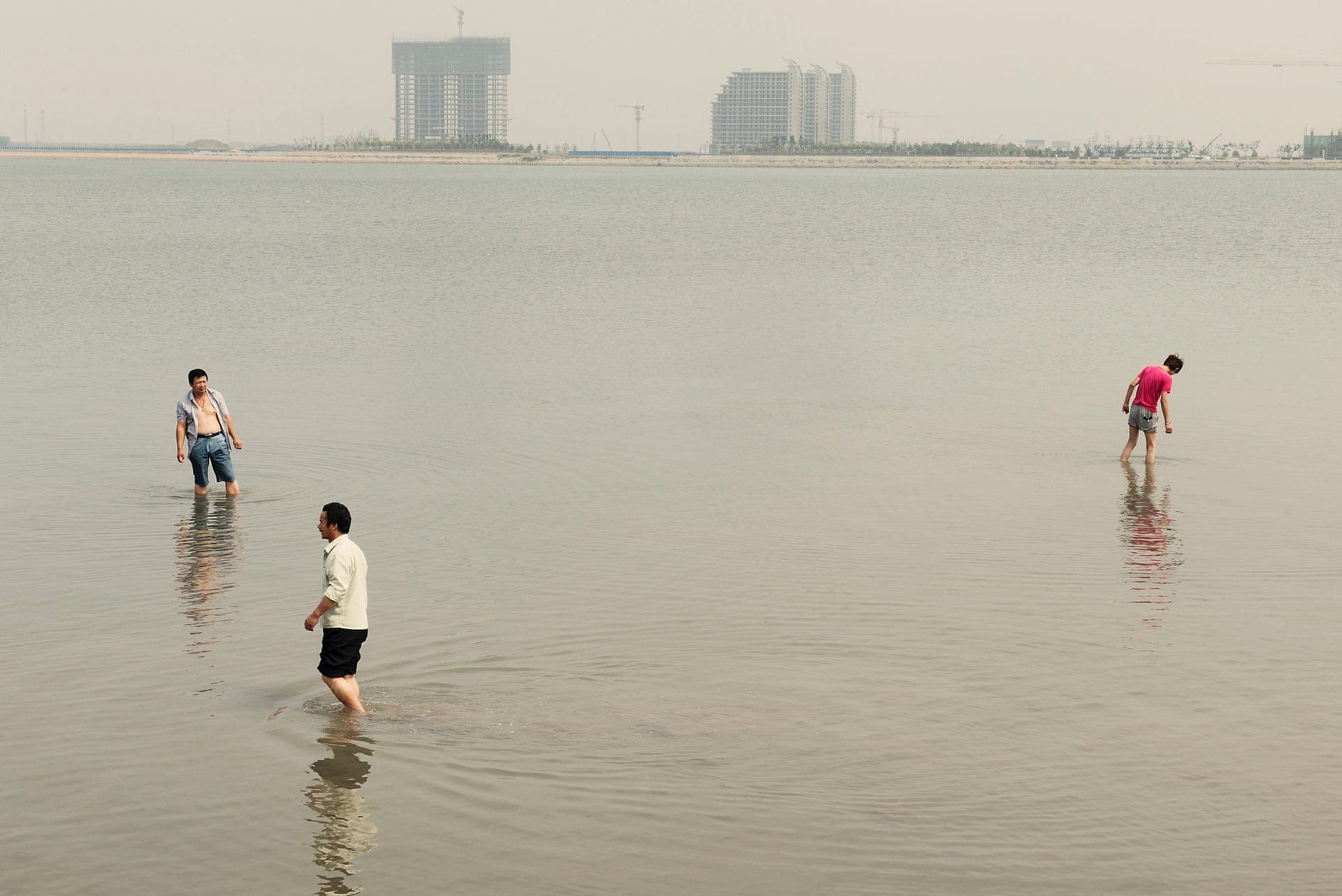
Neoliberalism's end + "China": Jake Werner
Hello from a Chinese ghost city!It’s just Andy this week, speaking with my friend academic-activist Jake Werner (@jwdwerner) on how to make sense of the current ideological shift in US and global politics and especially the hostile rhetoric between US and Chinese elites. (0:00) We talk about the recent spate of “big spending” bills pushed by Biden and the Democrats, supporting infrastructure (“hard” and “soft”) and industrial policy. Is this a break from “neoliberal” ideology? And also, what was “neoliberalism” about anyway? (17:40) Some of the biggest proponents for new, big-government programs are also the loudest critics of China and Chinese competition. What’s going on with purported leftists who supported Bernie but are hawkish on China? And is that really so bad?(45:40) We discuss a different way of thinking about China today on its own terms, reviewing its tumultuous 40-year encounter with a US-centered global system and what changed in 2008. How can we eschew approaches centered “national” and “cultural essence” and instead look at shared global dynamics between China, the US, and the rest of the world? (Jake outlined these ideas recently in this talk). (1:13:20) Finally, Jake’s pitch for “progressive globalization,” something he is fighting for through his organization Justice is Global (along with friend of the show Tobita Chow!). Why is the US-China relationship so crucial for the next phase in world history, from climate change to Covid to equitable growth? What’s the response in DC? How can listeners become more active? (also: tankies catching strays)Some pieces by Jake:“Only the Left can Save Globalization Now,” with Eric Levitz, New York Magazine (2021)“U.S.-China: Progressive Internationalist Strategy Under Biden” Rosa-Luxemburg Stiftung with Tobita Chow (2021)“Why Confrontation With China Threatens the Progressive Agenda,” The Nation (2019)“China is cheating at a rigged game,” Foreign Affairs (2018)And recommended reading from Jake: “The US-China Rivalry Is About Capitalist Competition” by Ho-Fung Hung, Jacobin (2020)note: I tried to edit out the sounds of sickness throughout, but some had to be left in, sorry! It’s not Covid, I swear!Please share, contact us, and subscribe!* Email: [email protected]* Twitter + DM: https://twitter.com/ttsgpod* Patreon: https://www.patreon.com/ttsgpod* Substack: This is a public episode. If you'd like to discuss this with other subscribers or get access to bonus episodes, visit goodbye.substack.com/subscribe
Live music and a "good hang" with No-No Boy's Julian Saporiti and Emilia Halvorsen
Hello from back in July, when Tammy recorded this special live episode in Portland, Oregon! The occasion was the new album, “1975,” by No-No Boy. No-No Boy is Julian Saporiti, a folk and rock musician from Nashville whose PhD dissertation has taken the form of an extended song cycle about Asian America. Julian and his partner, Emilia Halvorsen, an aspiring lawyer who co-produced and sings on “1975,” talked with Tammy about the folk tradition, US empire, travels in the Mountain West, ethnomusicology, the struggle for immigrants’ rights, Asian-American and mixed-race identities, John Okada, and Jens Lekman. They also performed two brand-new tunes.The songs you’ll hear in this episode:* “Imperial Twist,” No-No Boy, 1975 (Smithsonian Folkways, 2021)* “St. Denis or Bangkok, From a Hotel Balcony,” 1975* “Yuiyo Bon Odori,” Nobuko Miyamoto, 120,000 Stories (Smithsonian Folkways, 2021)* “The Best God Damn Band in Wyoming,” 1975* “No No Boy,” The Spiders (Philips, 1966)* “Disposable Youth,” No-No Boy, 1942 (2018)* “Pilgrims,” 1975* “St. Michael,” Little Monk Panda Scout aka Julian and Emilia* “Panda Scout,” Little Monk Panda ScoutThanks for listening and supporting the pod through Patreon and Substack! Get in touch by email ([email protected]) or Twitter, and props to all the Angelenos who came to our recent Discord-goes-IRL picnic! This is a public episode. If you'd like to discuss this with other subscribers or get access to bonus episodes, visit goodbye.substack.com/subscribe

Shooting arrows at an archer + landlord politics
Hello from Tammy’s DIY SUV camper! This week, we bring you talk of Korean archery, feminism, and misogyny. Plus, the terrifying end of the US eviction moratorium and what politicians and activists are doing about it. * An San, South Korea’s triple gold medalist in archery, has been attacked by men’s rights activists for… having short hair. Why are so many young men so misogynistic? So mixed up in right-wing politics? What is the character of new Korean feminism and its homegrown #MeToo movement? * US politics, a case study: Cori Bush and The Squad (who actually seem to care about tenants’ rights) vs. Nancy Pelosi (who just found out that the eviction moratorium was about to end). Thanks for supporting the pod through Patreon and Substack! Please be in touch via email ([email protected]) and Twitter. This is a public episode. If you'd like to discuss this with other subscribers or get access to bonus episodes, visit goodbye.substack.com/subscribe

The Young Congee Marx
Hello from Philly, Berkeley, and Pasadena!This week, we talk about the Tokyo Olympics, food appropriation in Oregon, and Raoul Peck’s film The Young Karl Marx (2017). * What are people protesting in Tokyo? In this pandemic moment, who are the Olympics for? Plus: props to young women weightlifters and skateboarders.* Why are Asian Americans so mad about congee? (And why are white restaurateurs in Oregon so prone to getting in race trouble?)* What did “The Communist Manifesto” mean in the time and place it was written? Does its analysis apply today? Why did Peck make this movie? (good film review here). Bonus: brief comparison to another origin-story biopic Amadeus (1984). (For more on the women’s work around these famous men, Tammy recommends biographies of Eleanor Marx, Karl’s daughter, and the French film Mozart’s Sister.)(And Andy laoshi suggests reading the original Marx from the film: Engels’s Conditions of the Working Class in England (1845), Marx and Engels’s The Holy Family (1844) and The German Ideology (1846) on the “young Hegelians”; The Poverty of Philosophy (1847) against Proudhon; and ofc what we simply call “The Manifesto” (1848)). We were stoked to meet so many of you at our recent IRL in Berkeley. If you want to take part in such events and our raging Discord, join our membership club at Substack or Patreon. And please get in touch via Twitter or email ([email protected]).Thank you! This is a public episode. If you'd like to discuss this with other subscribers or get access to bonus episodes, visit goodbye.substack.com/subscribe
Haiti and Cuba, COVID Delta, and Listener Qs
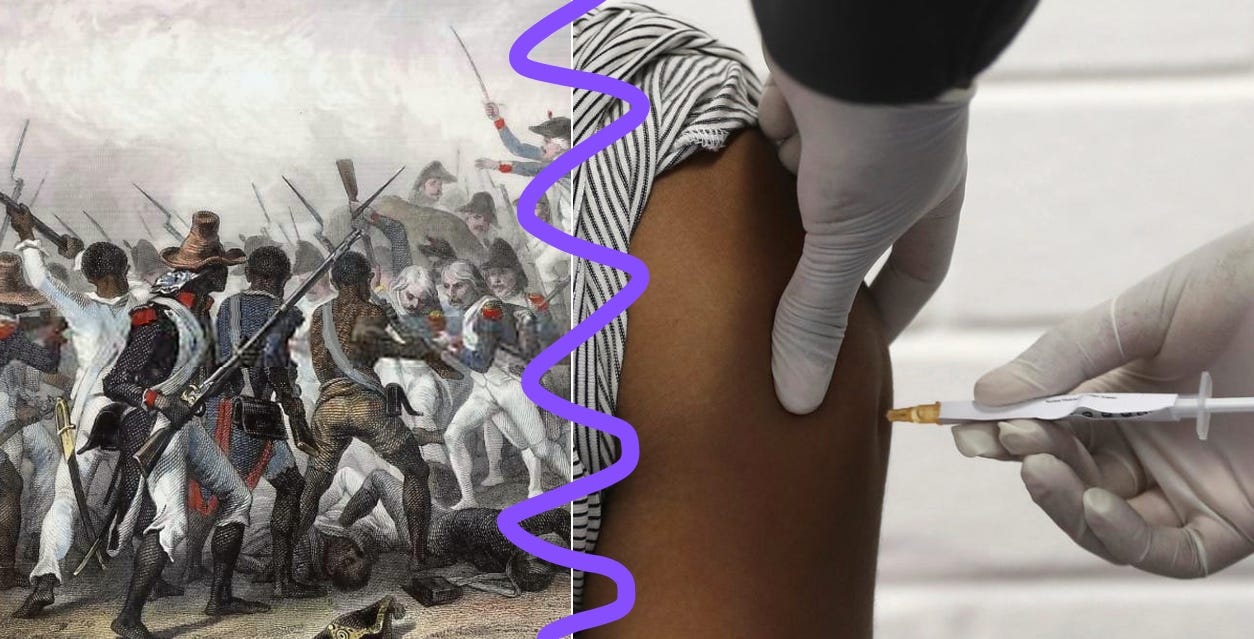
Hello!This week: two pressing topics from the news and listener questions.First, we talk about the political crises in Haiti and Cuba and questions of U.S. empire and intervention. Though military invasions have become less savory, on Monday, U.S. officials still informally dictated Haiti’s choice for interim president. We place the news in geographic and historical context and draw connections to East Asia. Also: the hallowed place of the Haitian and Cuban revolutions for leftists (and academics), the logic of anti-imperialist and “decolonial” politics (think Latin American tankie-ism), and how best to understand the Caribbean today.Second, we discuss the spiraling numbers of Covid infections and hospitalizations among unvaccinated people in the U.S., especially in Black and Latino communities. How do these numbers square with mainstream media coverage of the unvaccinated? Is race the best framing? How bad will things get in the next few months? Not to mention how horribly things are going in the Global South, thanks to vaccine apartheid. Finally, some listener questions:* Brinda asks for reading recommendations. (Andy’s is a follow-up on the CRT episode: a feature on Chris Rufo in The New Yorker). * Daffodilly asks about “the academy” and “academia.”* And So Long, Lillian asks about intra-Asian (inter-Asian?) matrimony. (There are some studies!)Please share, contact us, and subscribe!* Email: [email protected]* Twitter + DM: https://twitter.com/ttsgpod* Patreon: https://www.patreon.com/ttsgpod* Substack: https://goodbye.substack.com/p/support-the-show-through-substack This is a public episode. If you'd like to discuss this with other subscribers or get access to bonus episodes, visit goodbye.substack.com/subscribe
Steel, Care, PMCs: historian Gabe Winant
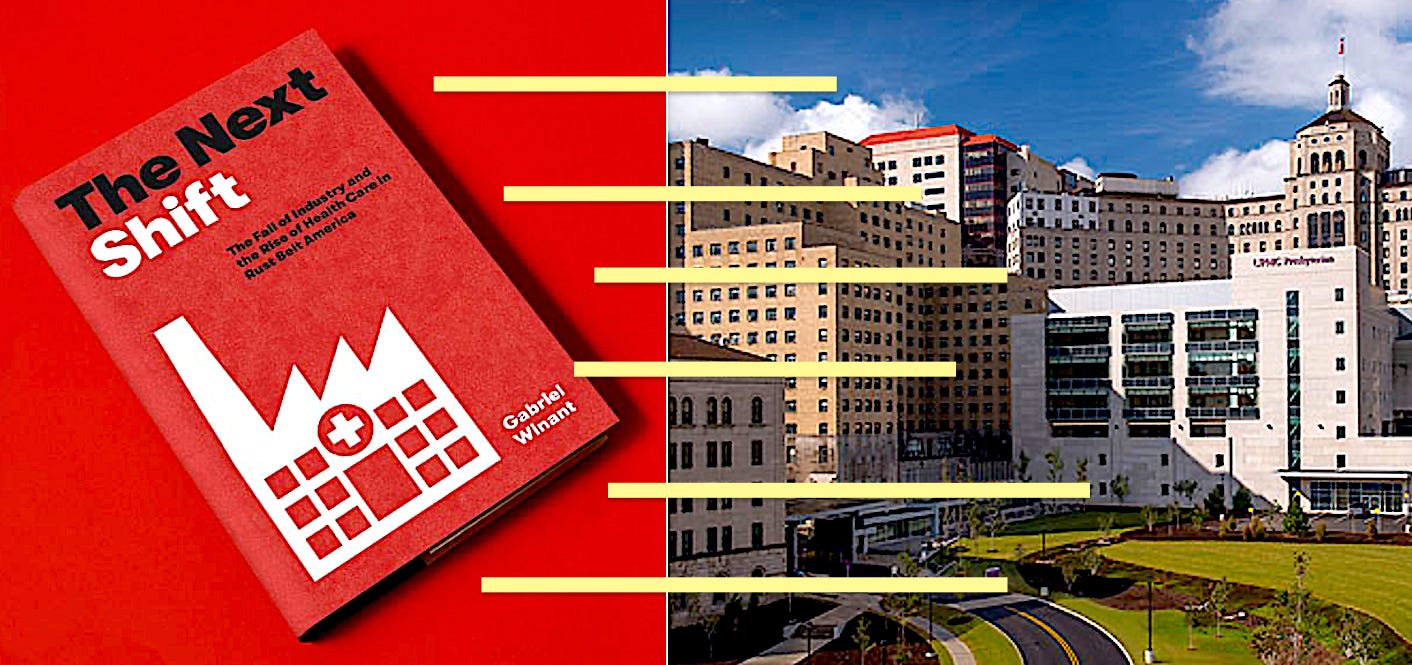
Hello!A guest episode today: Andy talks with U Chicago historian Gabriel Winant (@gabrielwinant) about his new book, The Next Shift: The Fall of Industry and the Rise of Health Care in Rust Belt America. We discuss capitalism and neoliberalism, what’s going on with the U.S. socialist movement, and class fissures within the professional ranks. Check out Gabe’s other writing in many places, including Dissent, n+1, The Nation, and Jacobin! 0:00 – Pittsburgh, discussions of class, Gabe’s journey, Marxism, and the rumored “history of capitalism” trend in the academy.20:00 – We dig into The Next Shift: steel in non-nostalgic terms, the difference between steel and healthcare (or manufacturing versus service), how nursing homes became so marginalized, and the strategic sectors for struggle today (healthcare? education?). 1:04:50 – Gabe’s 2019 essay on the “professional-managerial class”: revisiting Barbara and John Ehrenreich’s invention of the term in 1977, how it applies today, and why the only people who talk about the PMC are themselves the PMCest of PMCs? Watch out for bonus content later this week! The podsquad will be back again soon.Please share, contact us, and subscribe!* Email: [email protected]* Twitter + DM: https://twitter.com/ttsgpod* Patreon: https://www.patreon.com/ttsgpod* Substack: https://goodbye.substack.com/p/support-the-show-through-substack This is a public episode. If you'd like to discuss this with other subscribers or get access to bonus episodes, visit goodbye.substack.com/subscribe
Sports talk radio: NO-lympics + diversity "pressure" at ESPN
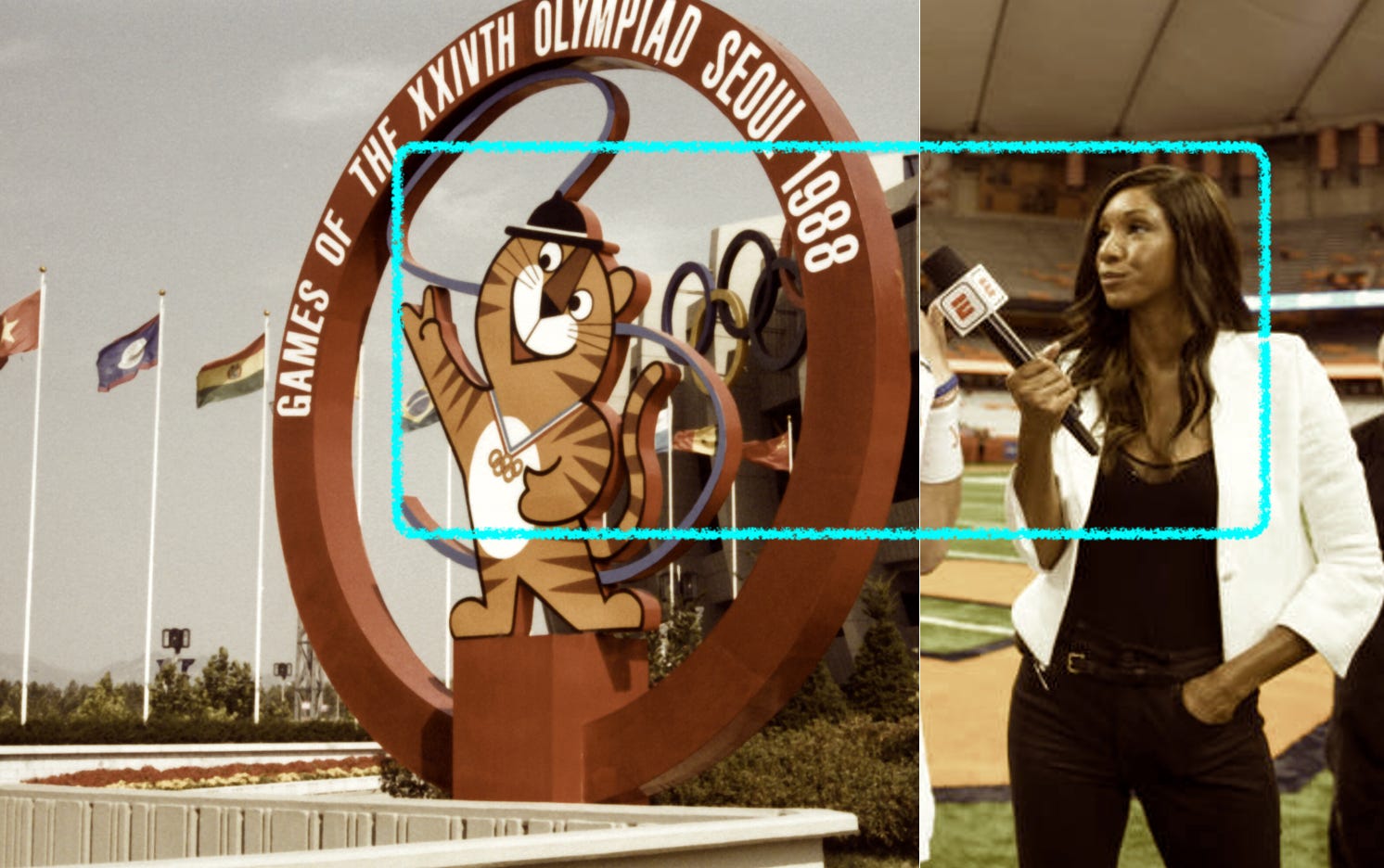
Hello, and welcome to Asian American Sports Talk radio—from the site of the 2032 Olympics!Three topics today:First, the Chinese Communist Party held a massive centennial celebration last week (here’s Andy talking about it), and China-watchers pounced on one phrase from Xi Jinping’s speech: that haters would suffer “broken heads and spilled blood” (頭破血流). Hey, imperialist pigs, nothing to see here!(8:20) Second, we discuss the racist origins, wasteful history, and cruel policies of the Olympic Games, ahead of the Tokyo games this month (and LA 2024, baby!). Also: some nostalgia for the 1988 Seoul Games, less so for Beijing 2008, and some proposals for how to continue watching some people run really fast in the future—but sustainably!(53:10) Finally, we weigh in on revelations that ESPN journalist Rachel Nichols criticized the promotion of colleague Maria Taylor on “diversity” grounds, as detailed by Kevin Draper in the Times. We talk about the meaning of “hard work,” private conversations, media no-nos, and how to talk about diversity (or not) in 2021.Please share, contact us, and subscribe!* Email: [email protected]* Twitter + DM: https://twitter.com/ttsgpod* Patreon: https://www.patreon.com/ttsgpod* Substack: https://goodbye.substack.com/p/support-the-show-through-substack This is a public episode. If you'd like to discuss this with other subscribers or get access to bonus episodes, visit goodbye.substack.com/subscribe
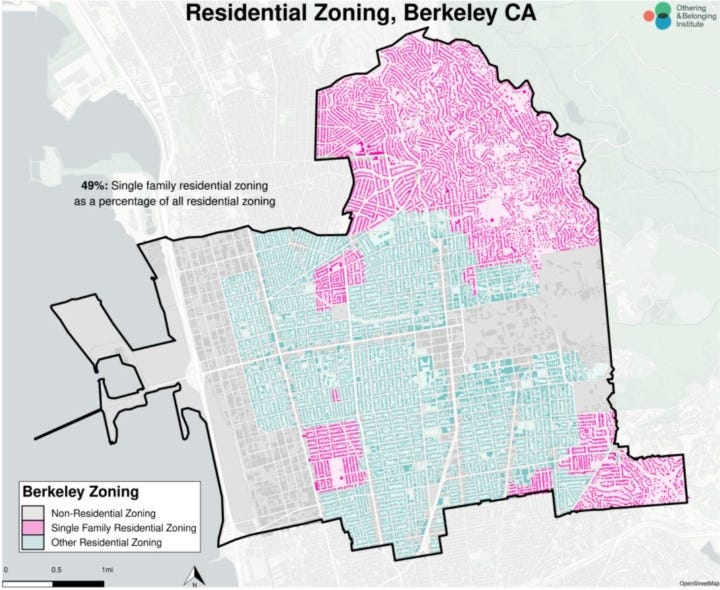
The Fight to End Single Family Zoning and the YIMBY/NIMBY/PHIMBY War with Darrell Owens
Hello! Today’s episode is about housing, the fight to end single-family zoning, YIMBYs, NIMBYs and PHIMBYs. Our guest today was Darrell Owens, a housing activist and policy analyst. We went through a lot — Berkeley’s recent unanimous initiative to end single-family zoning, asked the inevitable questions about whether this would actually help make Berkeley more affordable, talked a bit about the PHIMBY movement (Public Housing in My Backyard), the pragmatic limitations of all housing work, and much more. Give it a listen!- JayRelated Reading: Darrell’s Twitter: @idothethinkingHow Berkeley Beat Back NIMBYs in NYTimes OpinionWho are the PHIMBYs? in LA MagAn interview with Ananya Roy This is a public episode. If you'd like to discuss this with other subscribers or get access to bonus episodes, visit goodbye.substack.com/subscribe

Click, buy, suffer? Plus listener questions
Hello from Tammy’s 104-degree podcast studio!This week, we talk about the nightmare of piled-up container ships on the West coast, why Covid has triggered these crises along the global supply chain, a bit of logistics history, and the dire ecological future that awaits us. Also, for the first time in a while, some listener questions:* Are there racial aspects to Yang’s mayoral downfall? Or do Yang’s two campaigns tell us something about the difference between appealing to Asians versus a wider public? * More on the “Asian pessimism” discussion from last week?* Any social-justice wins to be happy about? Thanks to Stephanie, Sam, and Cliff for their questions! And thanks to all of you for listening and subscribing. Stay cool! Please share, contact us, and subscribe!* Email: [email protected]* Twitter + DM: https://twitter.com/ttsgpod* Patreon: https://www.patreon.com/ttsgpod* Substack: https://goodbye.substack.com/p/support-the-show-through-substack This is a public episode. If you'd like to discuss this with other subscribers or get access to bonus episodes, visit goodbye.substack.com/subscribe
Recasting history and sports workers at SCOTUS
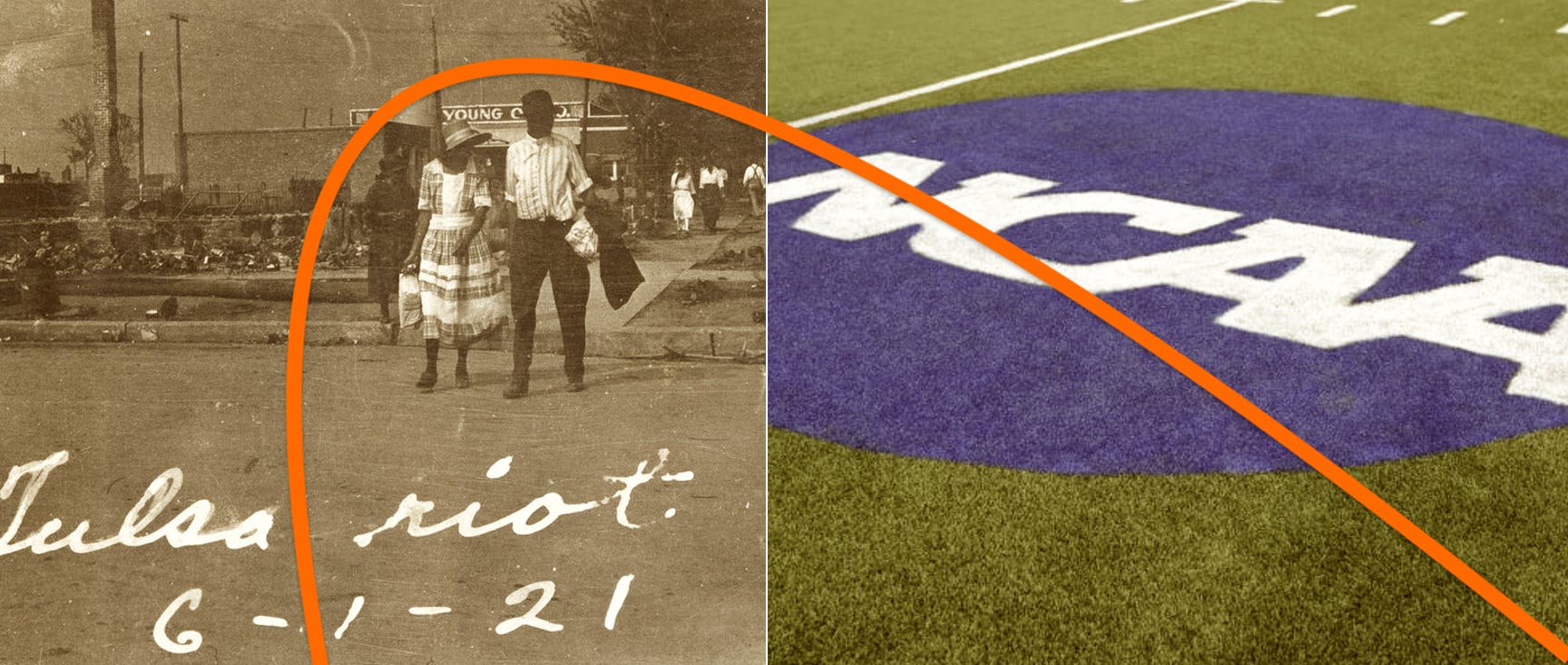
Hello from I-5!Today: another round in our long-simmering, passive-aggressive professional feud (journalists vs. historians), occasioned by two new pieces on how we talk about and apply the lessons of U.S. history. First, UCLA historian Robin D.G. Kelley in conversation with George Yancy in Truthout. They talk about the recent surge of interest in the 1921 Tulsa Massacre and what’s lost in our narrow focus on “Black Wall Street.” What does the Hollywoodification of race politics mean for working-class stories?Second, Princeton historian Matt Karp’s “History as End” in Harper’s. Karp argues that U.S. history, typically the domain of the patriotic right, has been taken up increasingly by left-liberal journalists and historians, and in a noticeably pessimistic register.Is public history too obsessed with “origins” and analogies? What are its dominant politics? Do stories of upward mobility play out differently for different groups? Do history and journalism inhibit forward thinking? Or should journalists and historians spend even more time talking about history?!Finally, we weigh in on a new decision by the Supreme Court. In a unanimous ruling, the justices found in favor of college athletes in their case against the NCAA, paving the way for better compensation of student workers. Jay fantasizes about bribing players to join the Tarheels, Tammy comments on labor and antitrust politics, and Andy draws a—surprise!—historical analogy. This Saturday, join Jay, Andy, and Tammy (and other friends of the pod) for the Asian American Writers’ Workshop’s Page Turner conference! Register here, and use discount code: FRIENDOFAAWW!Thanks for listening and reading! Help keep our mikes hot (and join our Discord!) at Patreon or Substack, and send questions and comments to [email protected] or @TTSGPod. This is a public episode. If you'd like to discuss this with other subscribers or get access to bonus episodes, visit goodbye.substack.com/subscribe
[Unlocked] Iyko Day: on Asians as capital
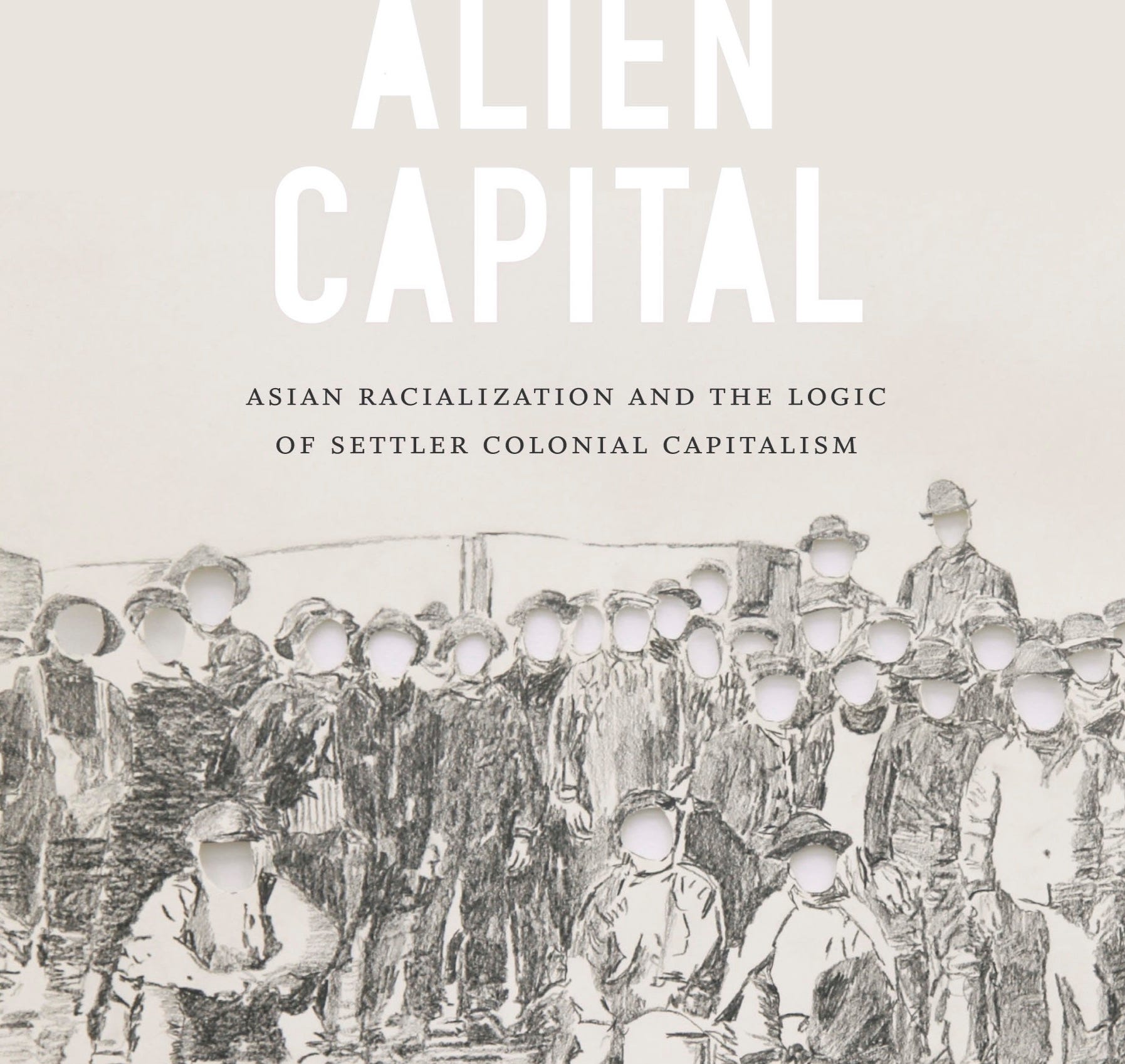
Note: The following is an unlocked episode originally released on May 7 for our Patreon and Substack subscribers. Enjoy!Hi everyone,Today, a more scholarly episode: Andy speaks with Prof. Iyko Day of Mount Holyoke College’s English program, discussing her book Alien Capital: Asian Racialization and the Logic of Settler Colonial Capitalism (Duke, 2016).In the book, she analyzes different moments in the history of Asian migration to North America and their attendant racialization. In particular, we discuss the association of Asian immigrants with "excessive economic efficiency." That is, the basis of anti-Asian racial sentiment has been the idea that Asians represent a hyper-efficient economic threat. Anti-Asian racism, then, is a sort of misplaced, reactionary revolt against capitalism itself.Examples span from the 19C. "yellow peril" of Chinese miners and railroad workers, culminating in Chinese Exclusion; fears of Japanese property ownership, buttressing WWII internment; and even now, the "model minority" stereotype of post-1965 Asian immigrants ("high-tech coolies" in white-collar jobs, engineering, tech), who are both revered for their efficiency but also scapegoated for the abstract and destructive ills of globalization. I see Day's work as contributing to literature on the history of racial ideas specific to the history of capitalism. Most famously, we have books and essays on how slavery and segregation turned the social categories of "White" and "Black" into biological ones by the nineteenth century. But of course, her intervention is to theorize the specificity of Asian racialization. Thus, Anti-Asian racism is not simply analogous to anti-Black racism, for instance, which centers on ideas of biology and inferiority, but rather represents something abstract and threatening, personifying and embodying the destructiveness of capitalist value. In this sense, it is closer to modern anti-Semitism. Ultimately, Day returns to the bigger question of how Asian racialization fits alongside other racial forms in North America, such as indigenous, Black, Latinx, etc.Other topics include: the politics of being a PMC Asian, fears of "alien capital" around the world, locating the role of literature and art, the relationship between borders and prisons, and joining reading groups for Marx’s Capital. Also, a quick note: this episode’s format is a bit different. Alien Capital was actually chosen for the inaugural session of the TTSG Discord’s new monthly (?) book club back in April/May. We discussed the book one week before this episode, and later, Andy spoke with Prof. Day online, with listeners in attendance. The first half is our interview; the second half (49:30) features questions from the Discord community themselves (one calling in from a van full of listeners) either spoken directly or read out loud by Andy.Finally, a few works referenced in the conversation:Colleen Lye, America's Asia: Racial Form and American LiteratureMoishe Postone, "Anti-semitism and National Socialism"Moishe Postone, Time, Labor, and Social DominationJohn Kuo Wei Tchen and Dylan Yeats, Yellow Peril!: An Archive of Anti-Asian Fear Barbara Fields, "Slavery, Race and Ideology in the USA"Sylvia Federici, Caliban and the WitchRuth Wilson Gilmore, Golden GulagPlease share, contact us, and subscribe!* Email: [email protected]* Twitter + DM: https://twitter.com/ttsgpod* Patreon: https://www.patreon.com/ttsgpod* Substack: https://goodbye.substack.com/p/support-the-show-through-substack This is a public episode. If you'd like to discuss this with other subscribers or get access to bonus episodes, visit goodbye.substack.com/subscribe
Lab leak theory and "Who Killed Vincent Chin?"
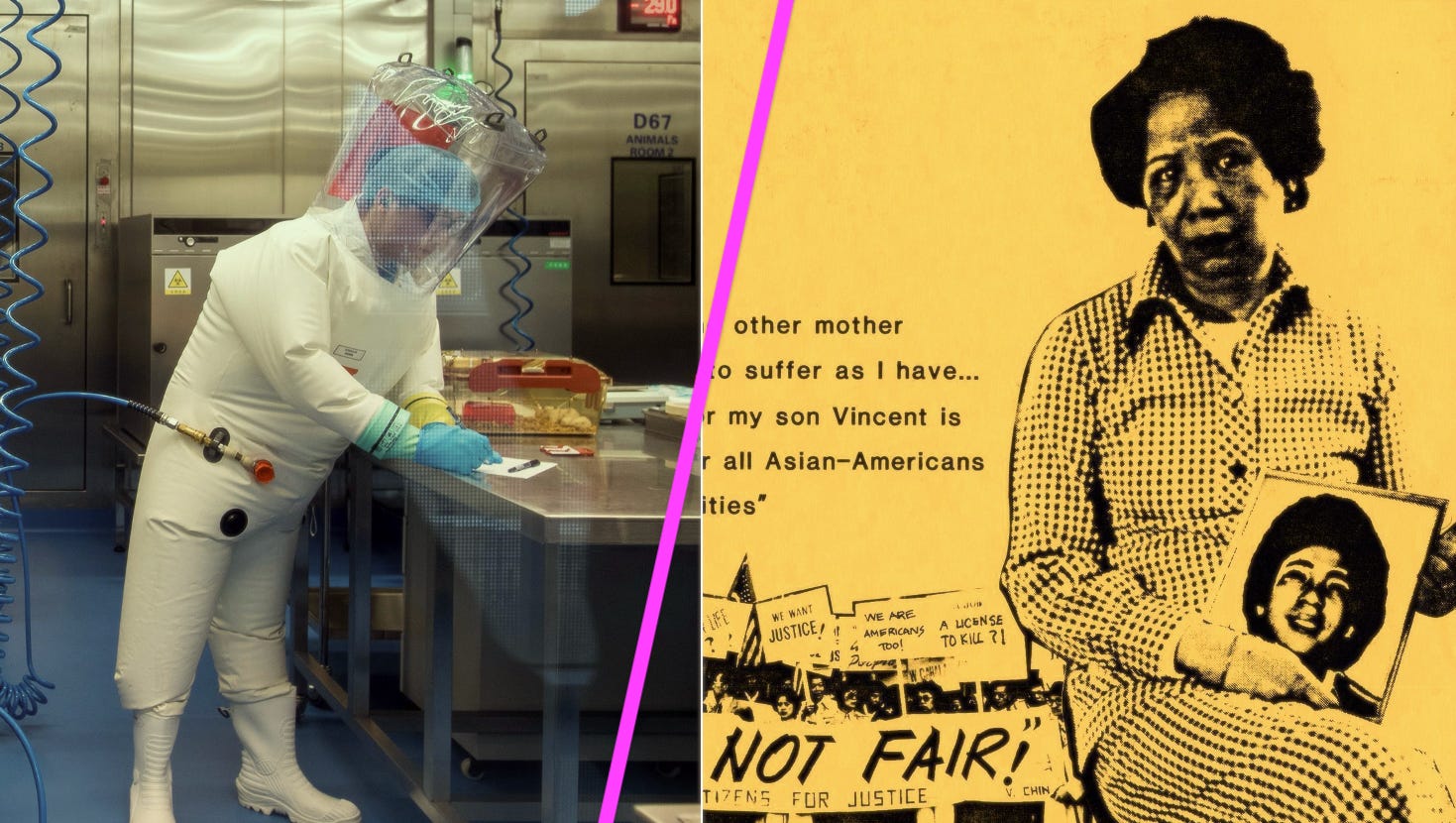
Hello from Tammy’s fantasy vacation house! It’s just the three of us today, with two important topics. First, the renewed media and political interest in the Wuhan “lab leak theory,” which had previously been treated as a conspiracy. This essay, published last month by science journalist Nicholas Wade, made a stink by arguing that a lab leak was a reasonable possibility. China’s renowned virologist Shi Zhengli (aka, “bat woman”) responded just this week, in an interview with the NYT, and Biden has promised to lead an international effort to reinvestigate Covid’s origins in China.We review the “wild” vs. “lab leak” theories, fears of anti-Asian backlash in the US, anti-China geopolitics, the need for greater transparency among all nations for the sake of global public health and science (read this, by friend of the pod Yangyang Cheng), and the political backlash that may await experts and scientists who dismissed the lab theory (read Thomas Frank and Matt Yglesias on technocratic libs and social-media bubble-ology). Second, we revisit the classic documentary, Who Killed Vincent Chin? (1987, dirs. Christine Choy and Renee Tajima-Peña). We talk about the murder case, the film, and how these real-world and on-screen histories resonate today. We also discuss the recent controversy around, and cancellation of, a star-studded Vincent Chin podcast and new representations of Asian stories (including rumors of green-lit film and TV projects). Why do Hollywood Asian Americans keep forgetting (or willfully neglecting) to do their homework?Reminder: If you’re into storytelling across media, join Jay, Andy, and Tammy (and other friends of the pod) on Saturday, June 26, for the Asian American Writers’ Workshop’s Page Turner conference! Register here, and use discount code: FRIENDOFAAWW!Thanks for listening and reading! Please help keep our mikes hot (and join our absurdly lively Discord!) at Patreon or Substack, and send questions and comments to [email protected] or @TTSGPod. This is a public episode. If you'd like to discuss this with other subscribers or get access to bonus episodes, visit goodbye.substack.com/subscribe

Chelsea Schieder on Comfort Women denialism, the Japanese Right, the Asia-Pacific, and Coed Revolution
Hi all:Today’s episode is a conversation with Andy’s friend and classmate Chelsea Szendi Schieder, historian of Japan at Aoyama Gakuin University (Tokyo). Chelsea was involved in compiling the empirical case against Comfort Women denialism, which we covered in an episode back in February. She’s now also written a reflection piece on the experience for The Nation.We talk more about Comfort Women denialism, the Japanese online right (netto uyoku ネット右翼), and the history and present state of Japanese studies and east Asia geopolitics. How did the U.S. encumber a reckoning with the Japanese empire? How are Comfort Women and the war in China (1937-1945) taught in Japan today? How do these issues reflect shifting power struggles between Japan, Korea, China, and the rest of Asia? We then talk about Chelsea’s recently released book Coed Revolution, focusing on the role of women students in Japan’s “new left” but also asking questions about the legacy of the “new left” and its place in the pivotal 1970s/80s transformation of politics and society, in Japan and around the world. Also: Japan’s COVID and vaccine situation and “why the f-ck” are we still holding the Tokyo Olympics this year?Please share, contact us, and subscribe!* Email: [email protected]* Twitter + DM: https://twitter.com/ttsgpod* Patreon: https://www.patreon.com/ttsgpod* Substack: https://goodbye.substack.com/p/support-the-show-through-substack This is a public episode. If you'd like to discuss this with other subscribers or get access to bonus episodes, visit goodbye.substack.com/subscribe
6/4 no more? And CRT McCarthyism
Hello!It’s just us three this week, talking recent news (and some hot goss). First, we discuss the suppressed vigil for the 32nd anniversary of the Tiananmen Square massacre (6.4.1989) in Hong Kong. When thousands of police officers cordoned off the usual gathering place, Victoria Park, Hong Kong residents came up with creative ways to demonstrate, using cell phone flashlights and much else. (Remember: “Be water.”) We talk about contemporary meanings of Tiananmen in Asia and the rest of the world, the chilling effect of HK’s National Security Law, and the 1989 protesters’ demands not only for democracy but also a better life for Beijing’s working class (h/t Zhang Yueran). Bonus content: “A Day to Remember,” a short film on the suppression of public discussion about Tiananmen in China. Second, we unpack the right-wing bogeyman of critical race theory, legislative attacks on free speech in schools, and awful stories out of Kansas, Montana, and Pennsylvania. What’s the right’s bigger strategy here? Has the U.S. left failed by ceding “free speech” to conservatives? How dangerous are these currents, and what is to be done? Plus: white tears in Tammy’s middle-school social studies class.+++Tammy and Jay’s former comrades at The New Yorker are getting close to a strike. Please learn more, reach out to management, and sign up for news alerts!+++Friend of the pod, Jay, with Justice is Global, invites you to a free screening and discussion of “Call Her Ganda,” a documentary about Jennifer Laude, a Filipina trans woman who was murdered by a U.S. Marine—and the crew of activists who fight back. The Zoom discussion will take place on June 10, with filmmaker PJ Raval, Filipino trans rights advocate Naomi Fontanos, and representatives of Malaya Movement and GABRIELA. (The film will be made available 24 hours beforehand.)+++If you’re into storytelling across media, join Jay, Andy, and Tammy (and other friends of the pod) on June 26 for the Page Turner conference at the incredible Asian American Writers’ Workshop. Register here, and use discount code: FRIENDOFAAWW!Thanks for listening and reading! Please support us (and join our absurdly lively Discord!) at Patreon or Substack, and send questions and comments to [email protected] or @TTSGPod. This is a public episode. If you'd like to discuss this with other subscribers or get access to bonus episodes, visit goodbye.substack.com/subscribe

Buddhism, writing, and mixed martial arts with Ocean Vuong
Hello! Special guest this week. Ocean Vuong, a poet, novelist, essayist, and the author of On Earth We’re Briefly Gorgeous. Ocean has won the Whiting Award, the T.S. Eliot Prize, and was recently a MacArthur Genius Grant recipient. Jay and Ocean talked about Mixed Martial Arts, Ocean’s novel, and whether one can be a writer and a Buddhist at the same time. The conversation went to completely unexpected places — lots of discussion about Wang Wei, Ezra Pound, Gary Snyder, and Anderson Silva. Ocean’s novel is out in paperback this week, so pick it up! This is a public episode. If you'd like to discuss this with other subscribers or get access to bonus episodes, visit goodbye.substack.com/subscribe
"Mare of Easttown" special impromptu episode!
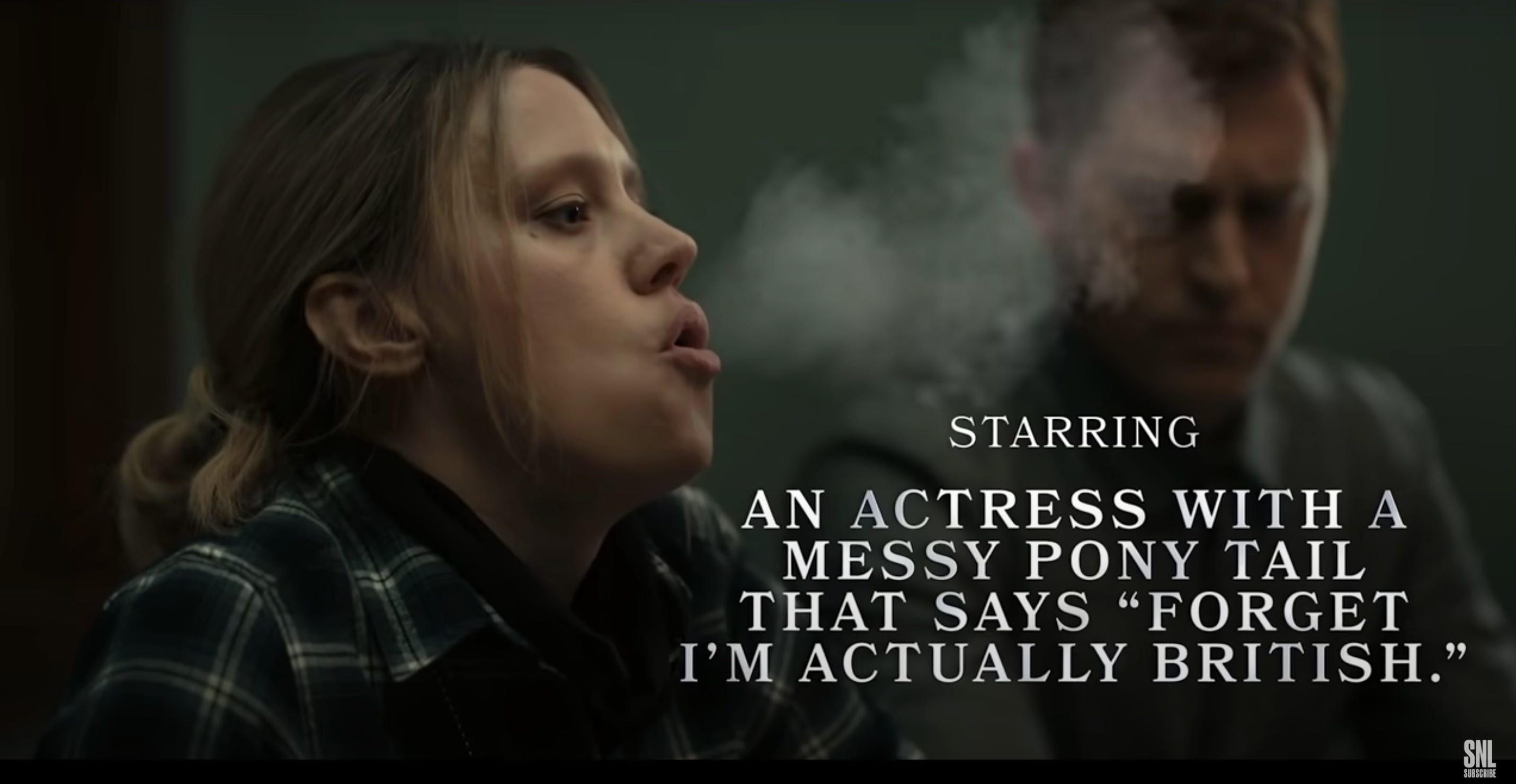
Andy talks with Vinson Cunningham (New Yorker) and Jane Hu (UC-Berkeley English and Film) about the HBO show Mare of Easttown -- a.k.a. “Murder Durdur” -- which concludes its run this Sunday. We’re hooked, and we can’t figure out why!*Warning: this episode includes spoilers!* * Why are we all obsessed with this show about “specific whites” in the downwardly-mobile Pennsylvania suburbs? * Why the appeal of regional accents? * (Philly accent Youtube recs: Tina Fey, James McAvoy, Kate Winslett)* Does the show have clear politics? Does it redeem the police?* How successfully does it blend multiple genres (cop show, family sitcom, YA romance) into one? * Does the show say something interesting about race and gender?* Comparisons to The Wire, Twin Peaks, Law & Order, The Undoing &c.* Finally, we reveal who actually killed Erin McMenamin??Please share, contact us, and subscribe!* Email: [email protected]* Twitter + DM: https://twitter.com/ttsgpod* Patreon: https://www.patreon.com/ttsgpod* Substack: https://goodbye.substack.com/p/support-the-show-through-substack This is a public episode. If you'd like to discuss this with other subscribers or get access to bonus episodes, visit goodbye.substack.com/subscribe

Vinson Cunningham on the NBA, Yang, and IRL theatre
Hey, sports fans! A break from the news cycle with our friend, Vinson Cunningham, a theatre critic at The New Yorker, playwright, novelist, and all-around lovely guy. We talk about the NYC mayoral race (race/authenticity politics), basketball (the architecture of MSG; the LeBron effect; Jokic, Luka, and European style), and how the theatre world has survived the pandemic (read Vinson on virtual theatre and his recent review of a piece in Tammy’s neighborhood).Speaking of incredible performances:Thanks for listening and supporting the pod! Please stay in touch, and see you in the Discord! This is a public episode. If you'd like to discuss this with other subscribers or get access to bonus episodes, visit goodbye.substack.com/subscribe
Loving Palestine with Esmat Elhalaby
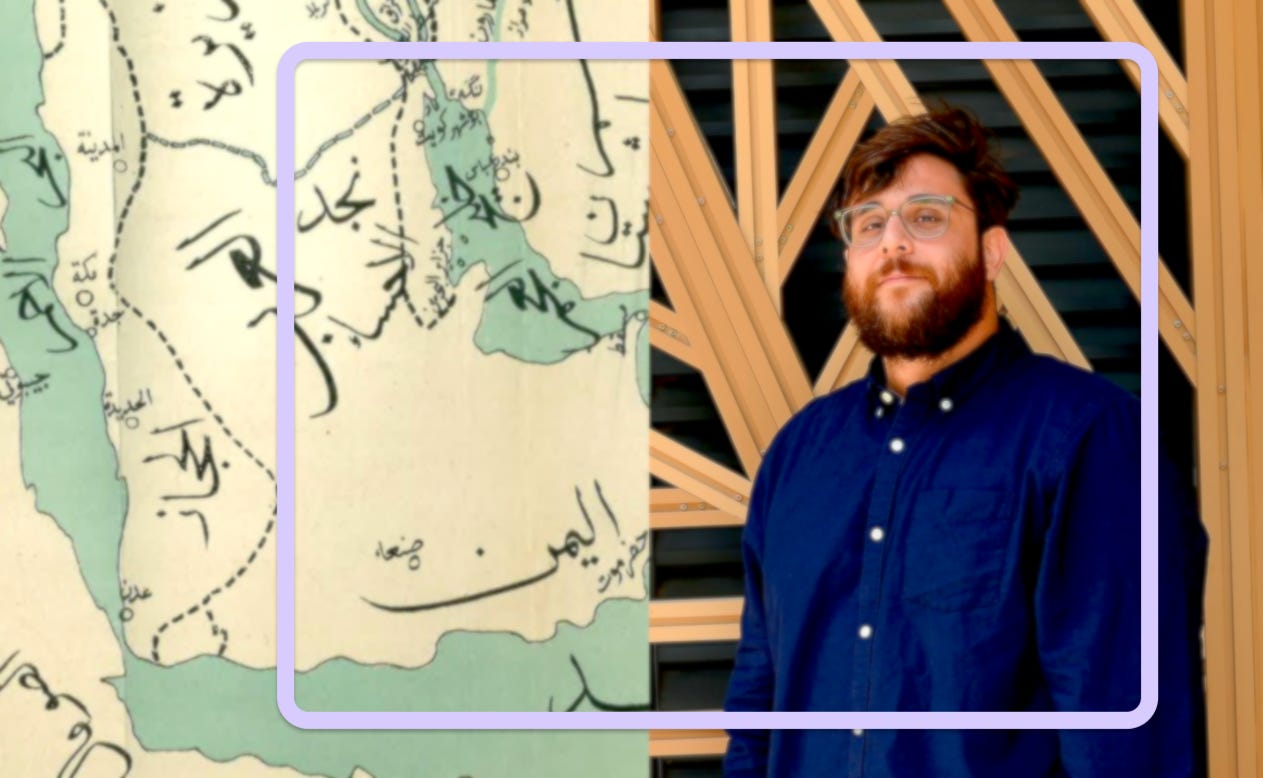
Hello!We’re back in a new arrangement (Andy and Tammy this time) for our second of two episodes on what’s happening in Palestine. Our special guest is Esmat Elhalaby, a post-doc at UC Davis who will soon join the faculty of the University of Toronto. Esmat tells us about his family ties to Palestine, especially Gaza, the scope of recent bombings by Israel, and what is excluded and silenced by the US media’s framing. He also places US actions—and Americans’ evolving views—in the context of broader global support for the Palestinian people and explains why we should revisit and revive histories of internationalism.Finally, we discuss the poet Rashid Hussein, the late Edward Said’s seminal book Orientalism, the metaphor of Palestine for “the east,” and the historical possibilities and limits for pan-Asian + Asian-American + anti-colonial solidarity — all covered in + inspired by Esmat’s recent essay about the new biography of Edward Said. Some recommendations from Esmat for more reading:* “This time it’s different” by Ahmed Abu Artema Electronic Intifada* “Protests by Palestinian citizens in Israel signal growing sense of a common struggle,” Maha Nassar The Conversation* Teach-in “Palestine in Resistance: Voices of Anticolonial Mobilization”: https://www.facebook.com/ArabStudiesUH/videos/753092018711925* An account from Haifa, by Muhannad Abu Ghosh: https://ctjournal.org/2021/05/20/haifa-war/* Coverage of Gaza from the Middle East Research and Information Project: https://merip.org/2021/05/revisiting-merip-coverage-of-gaza-jerusalem-and-the-israeli-palestinian-conflict/* @JehadAbusalim on Twitter Thanks for listening. You can support us (and join our thriving Discord!) at Patreon or Substack, and send questions and comments to [email protected] or @TTSGPod. This is a public episode. If you'd like to discuss this with other subscribers or get access to bonus episodes, visit goodbye.substack.com/subscribe

Sheikh Jarrah and What Feels Different This Time about Israel/Palestine with Josh Leifer of Jewish Currents
Hello!This week we talked with Joshua Leifer, an editor at Jewish Currents, about the ongoing military violence against Palestinian communities in Gaza this past month (for those keeping track, Josh helped organize that Jewish Current-TTSG webinar from two weeks ago!)(Tammy unfortunately had to sit out today’s episode with a last-second conflict 😔 )We talk to Josh about his recently co-authored explainer on the clashes in the Sheikh Jarrah neighborhood of East Jerusalem, resistance from Palestinian groups and the Israeli Left, and the role of Biden and US (and international) solidarity. We also discuss his colleague Peter Beinart’s essay “Teshuvah: A Jewish Case for Palestinian Refugee Return.”Also: does 2021 represent a turning point in debates over Israel/Palestine in the US? Comparisons and connections to BLM and other protests against settler colonialism worldwide? And Josh’s personal experiences navigating Jewish-American debates, Zionism and anti-Zionism, and diasporic internationalist organizing.Other links from the conversation + recommendations for further reading:* +972 Magazine: https://www.972mag.com/* Nathan Thrall NYT on the Boycott-Divest-Sanctions (BDS) movement and the Democrats * The late Palestinian writer Edward Said’s prescient (1999) essay on “The One-State Solution” * Human Rights Watch’s Apartheid Report on Palestine (2021)* Peter Beinart on Biden's Israel record* Tareq Baconi's writing at the New York Review of BooksPlease share, contact us, and subscribe!* Email: [email protected]* Twitter + DM: https://twitter.com/ttsgpod* Patreon: https://www.patreon.com/ttsgpod* Substack: https://goodbye.substack.com/p/support-the-show-through-substack This is a public episode. If you'd like to discuss this with other subscribers or get access to bonus episodes, visit goodbye.substack.com/subscribe
India's Second Wave: with Meghna Chaudhuri
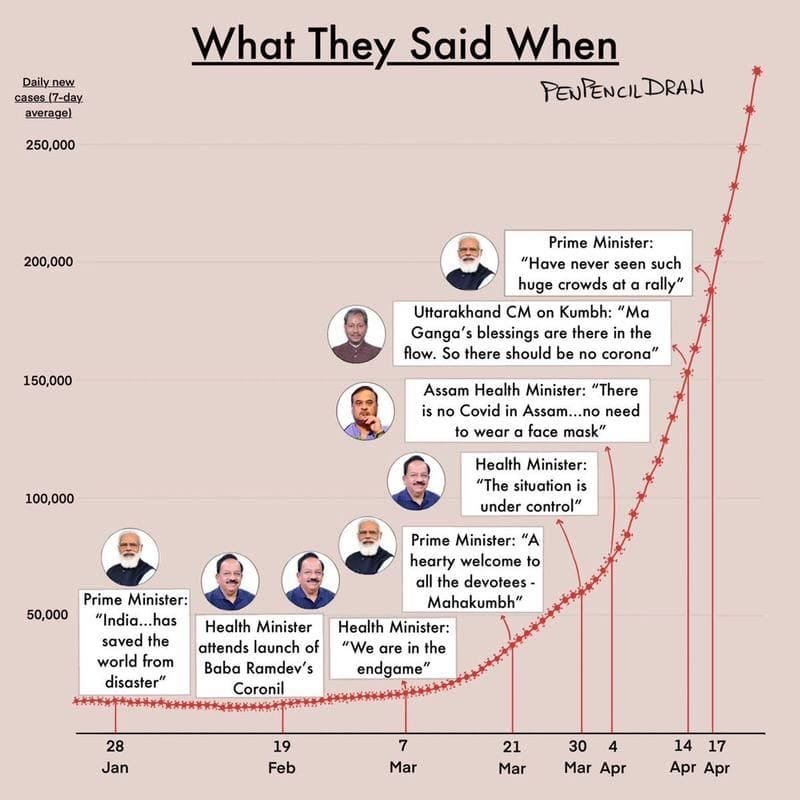
credit: @penpencildrawHello!Andy here with a Friday episode in discussion with historian Meghna Chaudhuri (NYU, Boston College) on the COVID disaster currently unfolding in India: the officially reported death count is 240,000 but may actually be more than one million.Meghna and I talk about what everyday life has been like for her, quarantining with family in Kolkata during this second wave, which broke out last month -- from the free-for-all search for treatments and hospital supplies to navigating misinformation around vaccines and medicines. We also assess the past year of governance by the ruling party BJP and Prime Minister Narendra Modi; why this wave is not just a natural but also political disaster; the BJP’s longstanding “anti-science” stance and the appeal of the BJP’s perverted anti-imperialism in an economically stagnant India; misinformation in both corporate and social media (“Whatsapp Uncles”); and why we should probably not expect an international panacea to save India in the short-term (e.g., the TRIPS waiver) and instead focus on some very basic questions about competent local governance.Some further reading:* “India’s COVID-19 Emergency” in The Lancet* “A Report Card on the End Times Brought Upon Us by Hindutva” by Meena Kandasamy in The Wire (India)* “Parking Lot Crematoria Burn Through the Night as Covid-19 Overwhelms Delhi” by Fahad Shah in The NationAnd for those looking to contribute from abroad, Meghna suggested some avenues for (more) direct assistance could be found at Mutual Aid India*Had a few audio issues with this one — sorry! I tried my best to edit out the weird feedback noises but not all could be fixed. Please share, contact us, and subscribe!* Email: [email protected]* Twitter + DM: https://twitter.com/ttsgpod* Patreon: https://www.patreon.com/ttsgpod* Substack: https://goodbye.substack.com/p/support-the-show-through-substack This is a public episode. If you'd like to discuss this with other subscribers or get access to bonus episodes, visit goodbye.substack.com/subscribe
"Magic Actions" and "When the Party's Over": the past year in politics
Hello! A long but focused discussion this week—on two new essays that attempt to write recent history.First, Tobi Haslett’s “Magic Actions” (n+1), recovering the explosive potential of last year’s George Floyd uprising, institutional attempts to domesticate it, and ongoing struggles for abolition and Black liberation. Second, Brendan O’Connor’s “When the Party’s Over” (The Baffler), a look at social-democratic politics after the thrill and demise of the Bernie campaign, the drudgery of party work, politician fandom, and finding a (new) base for socialism in 2021. ICYMI: Our conversation with the good folks at Jewish Currents, archived on YouTube:Thanks to everyone who came to our picnic in Brooklyn on May 2! And thanks also to our listeners who gathered for a hike, book chat, and carbs in Los Angeles this past weekend!Support our pod (and join the Discord!) at Patreon or Substack, and be in touch with questions and comments via [email protected] or @TTSGPod. This is a public episode. If you'd like to discuss this with other subscribers or get access to bonus episodes, visit goodbye.substack.com/subscribe
What happened after '92, and "the secret history" of Ethnic Studies with Tamara K. Nopper
Hello! This is Jay. This week, we have my conversation with sociologist, writer, and data artist Tamara K. Nopper. She’s been an invaluable resource for me for years now — if I ever actually sound like I know what I’m talking about, it’s likely because of something Tamara sent me to read over the years. Today, we talk about this moment that I’ve been fascinated with for years — what happened after ‘92, not just in terms of what happened on the ground in Black and Korean communities, but also within the academy, where a seemingly new type of scholarship emerged to make sense of it all. We talk about that, Korean banks, “the secret history” of Third Worldism, and a whole lot more. There’s a lot we agree about but also a lot we disagree about on these topics. Tamara recently did a great talk with our friends at the Asian American Writer’s Workshop. Watch it! Tamara also edited ‘We Do This ‘Til We Free Us: Abolitionist Organizing and Transforming Justice,’ a book of Mariame Kaba’s writings and interviews (Haymarket Books), and researched and wrote several data stories for Colin Kaepernick’s Abolition for the People series.——Thanks to everyone who made it out to the inaugural TTSG picnic this past weekend! We had a huge turnout. And thanks again to everyone who joined in our first book club, where we discussed Alien Capital. The building of the community both on the discord and on social media has been really overwhelming. If you’d like to join, please either subscribe to the newsletter on Substack or on patreon at patreon.com/ttsgpod.thanks!Jay This is a public episode. If you'd like to discuss this with other subscribers or get access to bonus episodes, visit goodbye.substack.com/subscribe
Vaccine apartheid part 2 + Asian accent game
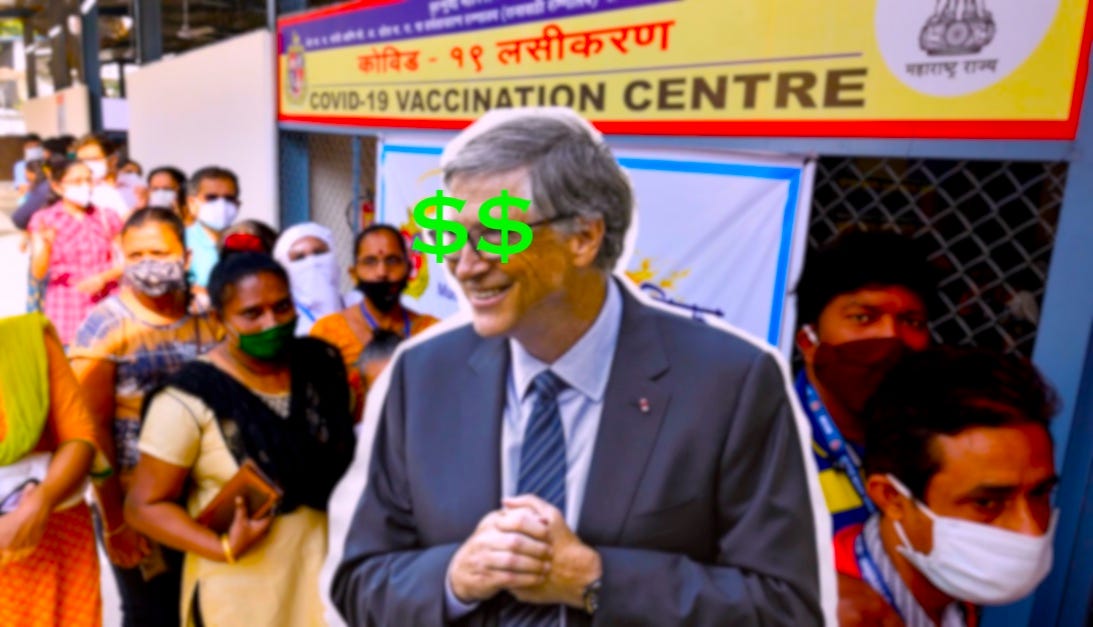
Hello from the AAPI Oscars! This week, we begin with a guessing game from George Mason University’s “Speech Accent Archive” (thanks, listener Jai Kang!). Join us and guess along as we make horribly essentialist assumptions about Asian accents (h/t danyo and sansmouton!). In our main segment, we dig into the murderous policy of global vaccine apartheid. We first discussed this topic back in November, and things have only gotten worse, with India being the most visible site of a world-historical crisis.To guide our conversation, we rely primarily on a recent piece by Alexander Zaitchik at The New Republic that explains how Bill Gates, the Gates Foundation, Big Pharma, and global intellectual-property rules have brought us to this point. How should we understand this moment in the context of the last 30 years? Can ordinary people defeat supra-state oligarchs? Links:* Contrary to what Gates has said, there are, in fact, many capable vaccine factories around the world waiting to be mobilized (thanks, listener Stephen Buranyi).* The WTO is debating a temporary waiver to the IP regime known as TRIPS. Will the Biden administration listen to the will of the people?SAVE THE DATE! On Monday, May 3, at 7pm ET, we’ll be doing a free event with our friends at Jewish Currents magazine (we subscribe!). Please register here and join us in exploring the possibility of diasporic internationalism against the backdrop of US imperial decline! And, as always, support our pod (and join the Discord!) at Patreon or Substack. You can send questions and comments to [email protected] or @TTSGPod. This is a public episode. If you'd like to discuss this with other subscribers or get access to bonus episodes, visit goodbye.substack.com/subscribe
Michelle Zauner on Crying in H Mart
Hello! We spoke with special guest Michelle Zauner aka Japanese Breakfast about her memoir, Crying in H Mart; her forthcoming album, Jubilee; her life as an artist; and how to cook with Maangchi.Enjoy! This is a public episode. If you'd like to discuss this with other subscribers or get access to bonus episodes, visit goodbye.substack.com/subscribe
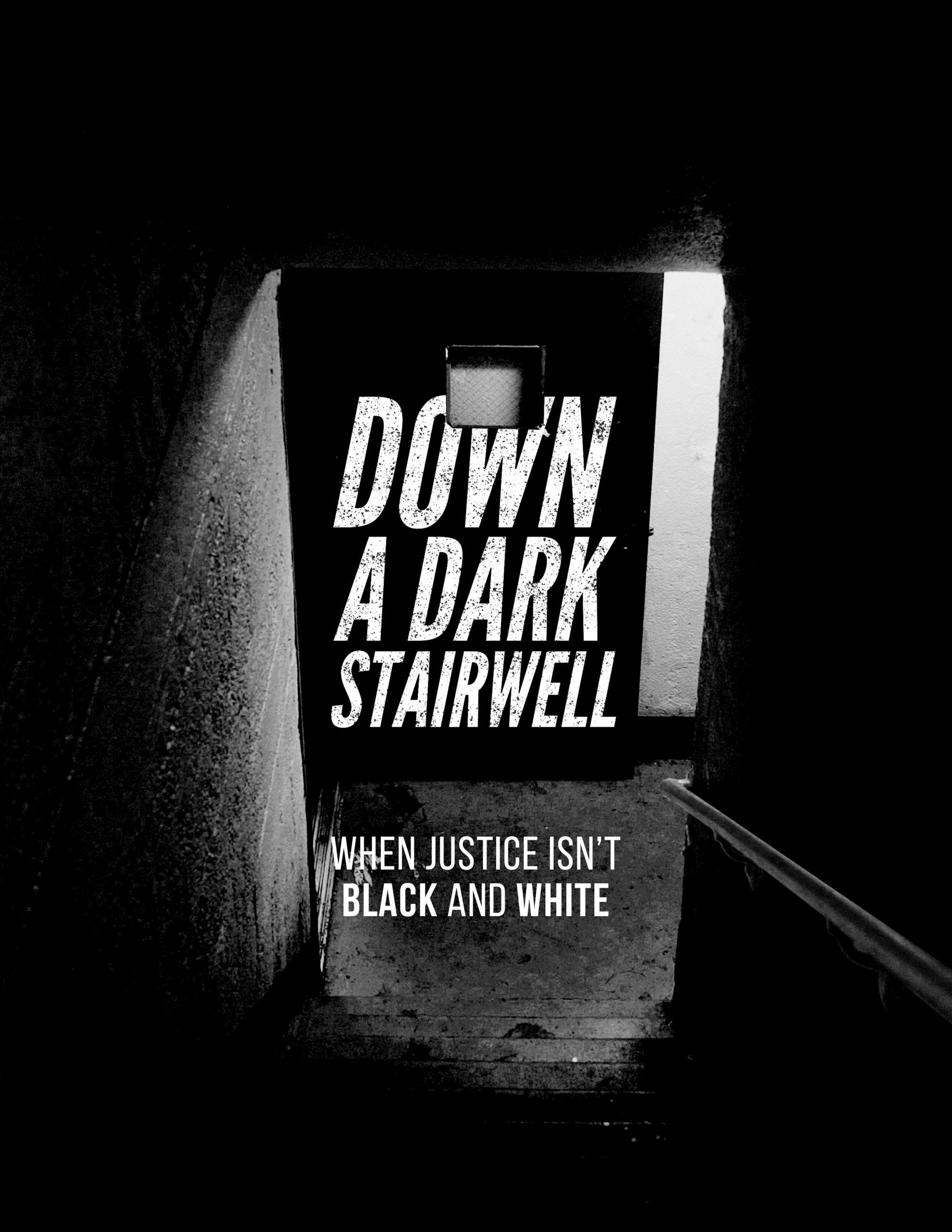
DOWN A DARK STAIRWELL - Akai Gurley, Peter Liang, and how communities are built with filmmaker Ursula Liang
Hello, A special episode this week with filmmaker Ursula Liang about her new film Down a Dark Stairwell. It’s out now on PBS and we hope everyone who listens to the show watches this nuanced, thoughtful and brave film. I (Jay) first saw Ursula’s work in 9-Man, a film about sports in Chinatown. Since then, I’ve followed her career carefully because what she does — deep community reporting, thoughtful portrayals of the concerns of all types of people, and the care with which she makes her films — exemplifies everything good about journalism and documentary filmmaking. This is a film about many things, but at it’s core, it’s about how two communities deal with a police killing. And through verite footage and intimate interviews, it shows how people both come together and split apart while trying to navigate problems that fall well outside the easy consensus. On the show, we talk a lot about the need to go beyond rigid identity categories and simple, doctrinaire explanations. If you want to watch what that looks like, watch this film. The film is available in both Chinese and English — both versions available to stream here. —As always, thanks for supporting the show. If you’re new to us, you can sign up at goodbye.substack.com, where there’s an option to subscribe for bonus episodes and access into our chat community. Or you can do the same at patreon.com/ttsgpod. Thanks! This is a public episode. If you'd like to discuss this with other subscribers or get access to bonus episodes, visit goodbye.substack.com/subscribe
Unionizing in an Amazon age
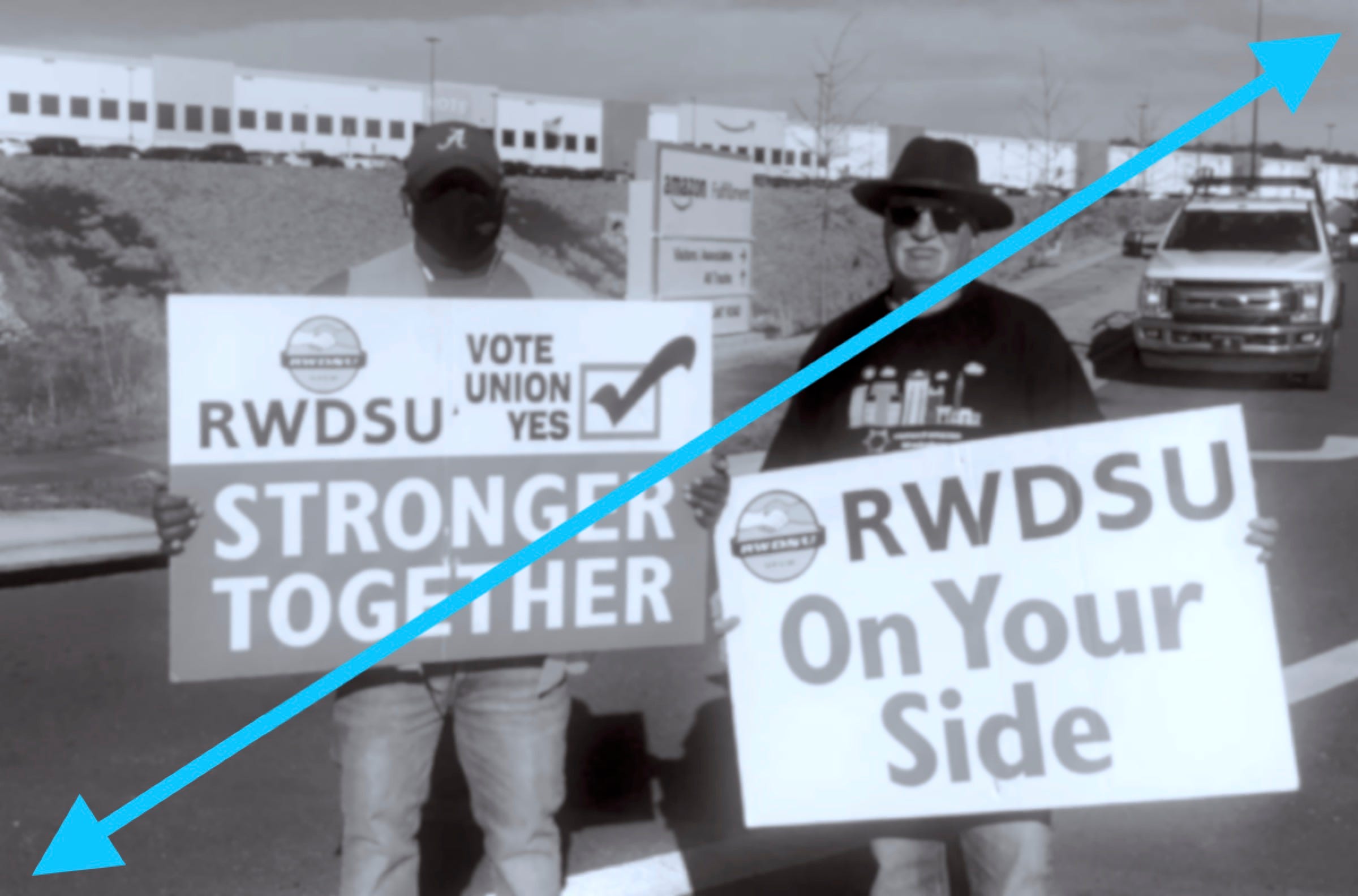
Greetings from Substack hell!It’s just the three of us this week, talking about the union defeat in Bessemer, Alabama, labor history, and the future of organizing in an Amazon economy. We discuss labor expert Jane McAlevey’s tactical post-mortem on the RWDSU campaign (rebuttals here and here), Tammy’s critique of McAlevey from last year, and Andy and Jay’s critiques of Tammy! Plus, the divergent strategies of Amazonians United and Athena; media influence (or interference?); and how the PRO Act, some decent regulation, and a huge investment in organizing could transform the labor movement. And finally, the economics of unionization in US history, the racial and geographic specificity of Bessemer, and the paradox of our current moment: a broad sympathy for labor paired with an almost unprecedented concentration of power by tech monopolies like Amazon.Recommended: Lauren Kaori Gurley on Vice News Reports podcast, with an in-depth look at the union drive and the history of Bessemer. Comments and questions!Email [email protected] @ttsgpodJoin our Patreon (and discord) community! This is a public episode. If you'd like to discuss this with other subscribers or get access to bonus episodes, visit goodbye.substack.com/subscribe
Depoliticization, Identity Politics and Protest with Asad Haider
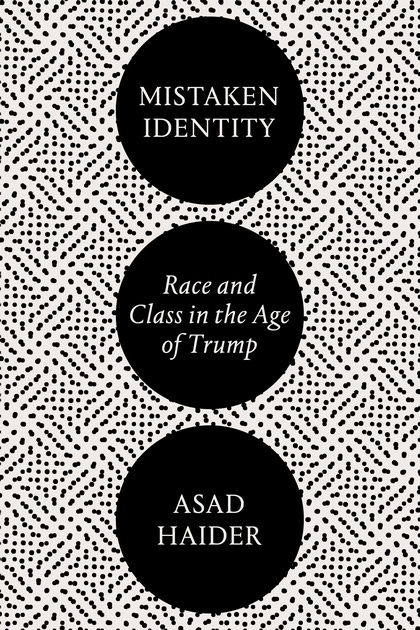
Hello! Today’s subscriber episode is a wide-ranging conversation Asad Haider, one of the founding editors of Viewpoint Magazine and the author of Mistaken Identity: Race and Class in the Age of Trump. Jay talked to Asad about his concept of “depoliticization,” his book on identity politics, and political exhaustion. *- note from Jay: When we started the podcast, Asad was at the top of the list of guests I wanted to invite onto the show. I was really excited to talk to him at length. Mistaken Identity was a very eye-opening book for me to read and everyone should read it, although with these recent pieces. On Depoliticization, in Viewpoint. Emancipation and Exhaustion, in SaaganthologyDismissal, in The Point. And a little housekeeping: we tried something different with the audio levels for this one, so please let us know if it sounds better. This is a public episode. If you'd like to discuss this with other subscribers or get access to bonus episodes, visit goodbye.substack.com/subscribe
How not to think like a cop, with Naomi Murakawa
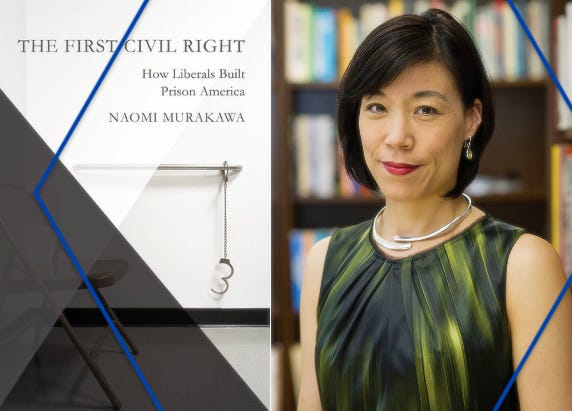
Hello from Jay’s backyard Easter egg hunt!It’s just Andy and Tammy this week, with special guest Naomi Murakawa, a professor of African American Studies at Princeton and the author of The First Civil Right: How Liberals Built Prison America.Naomi talks with us about her J-A roots in Oakland, how her dad’s career in the criminal-legal system got her thinking about carceral politics, why police reform has long been a trap, and the history of hate crimes legislation in the US. She shares her observations on Black Lives Matter, the emergence of abolitionist thinking, and the discourse around “anti-Asian violence.” What can crime statistics tell us about the world? How do we stop ourselves from thinking like cops? Which groups are pushing Asian America in a more punitive direction? And how should “Asian American history 101” inform our analyses of recent violence? “The we-ness is something we make through struggle.”Naomi shouts out:– Mariame Kaba’s new book, We Do This ’Til We Free Us (foreword by Naomi; and check out the rest of the abolitionist series Naomi curates for Haymarket)– Victoria Law’s new book, “Prisons Make Us Safer” and 20 Other Myths about Mass Incarceration– Christina B. Hanhardt’s Safe Space: Gay Neighborhood History and the Politics of Violence– Chandan Reddy’s Freedom With Violence: Race, Sexuality, and the US State– Stuart Hall’s Policing the Crisis: Mugging, the State, and Law and Order– The work of Dylan Rodriguez and Ruth Wilson Gilmore– The abolitionist organizing of Incite!, AAAJ-Atlanta, and Red Canary Song and alliesThanks for listening, supporting, and spreading the word. Stay in touch via email ([email protected]), Twitter, and/or Patreon—and see you in our Discord! This is a public episode. If you'd like to discuss this with other subscribers or get access to bonus episodes, visit goodbye.substack.com/subscribe

CROSSOVER EPISODE with The Dig!
Hello!This week, your intrepid hosts had the pleasure to speak with journalist Daniel Denvir and his podcast “The Dig,” with Jacobin Radio. Daniel engaged us on a number of topics we’ve touched upon recently, including: the Atlanta shootings and the question of anti-Asian violence; the connection between anti-China foreign policy and domestic anti-Asian racism; the potential for an Asian backlash against liberalism and the Democratic party; affirmative-action fights and the enduring mythology of “model minorities”; and the coherence and usefulness of “Asian” identity. If you’re curious, please check out The Dig’s other podcast episodes, found here:https://www.thedigradio.com/As always, please reach out to us with comments and questions:[email protected]@ttsgpod on twitterand you can support us through:https://www.patreon.com/ttsgpodhttps://goodbye.substack.com/p/support-the-show-through-substackAddenda: some sources referenced by Andy.1) Alien Capital by Iyko Day, named on the show.2) On the link between Japanese and US “comfort stations” in Asia, see Sara Kang’s work in this article last week (Harper’s Bazaar).3) On the role of Asian American ‘model minority’ fantasies in the infamous 1965 Moynihan Report on “the Negro family,” see Ellen Wu’s The Color of Success. This is a public episode. If you'd like to discuss this with other subscribers or get access to bonus episodes, visit goodbye.substack.com/subscribe
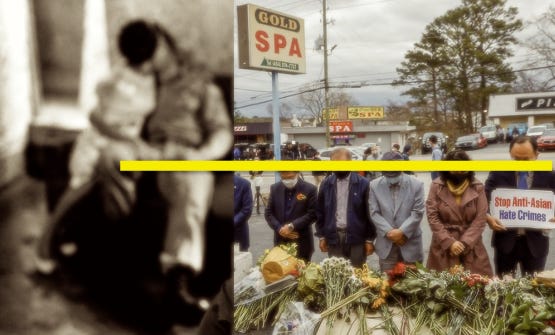
Interpreting the Atlanta massacre
Hello at the end of a sleepless week. In this episode, we analyze the many responses to the murders in Atlanta — in a spirit, of course, of solidarity.Should the murders be viewed as a white-supremacist hate crime? An occasion for more policing? Or less? Are we guilty of assimilating the Atlanta shootings to general headlines about anti-Asian racism? Do we risk losing the specificity of class, gender, and the massage industry in particular?Were the killings rooted in misogyny and fetishization? In histories of empire? Are there too many historians on twitter? (yes)And are geopolitical and economic tensions between U.S. and China in the mix? Is this a moment for solidarity between Chinese, Korea, and other Asian diasporas, or a moment of splinter? Plus: Tammy reflects on a rally in Brooklyn (thanks to the Patreon Discord chatroom).Thanks for listening, supporting, and spreading the word. Stay in touch via email ([email protected]), Twitter, and/or Patreon. Quick plug: This Friday morning NY time, join Tammy and a stellar group of labor leaders for a mini conference on the present and future of workers’ rights. Register for free here. This is a public episode. If you'd like to discuss this with other subscribers or get access to bonus episodes, visit goodbye.substack.com/subscribe
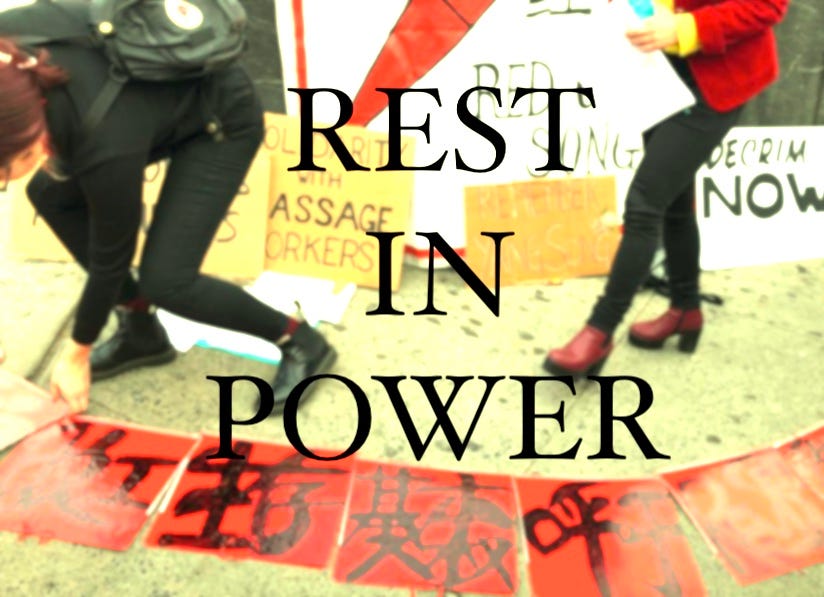
"I want you to care when people are still alive": Yves Tong Nguyen of Red Canary Song
In light of the harrowing news out of Atlanta this week, we spoke with Yves Tong Nguyen, an organizer with Red Canary Song 红莺歌 (@RedCanarySong), a grassroots collective of Asian sex workers & allies who push for for migrant justice, labor rights, and full decriminalization. Extended show notes after the break. First, here are some groups to learn about and support:* Red Canary Song, New York City* Butterfly: Asian and Migrant Sex Workers Network, Toronto* SWAN, Vancouver* Massage Parlor Outreach Project, API Chaya, Seattle* Make the Road, greater New York* Sex Workers Project, Urban Justice Center, New York City0:00 – Yves tells us about herself and Red Canary Song, and why they push for decriminalization rather than legalization. Plus: the material conditions, transnational history, and political rights of massage workers, sex workers, and other low-wage workers; and Red Canary Song’s connection to Song Yang, a Chinese migrant sex worker killed during a police raid in Flushing in 2017.18:15 – Yves’s criticism of anti-trafficking NGOs, most of which partner with the police; why arguing over the labels “sex worker,” “massage worker,” etc. distracts from a broader assessment of criminalization policies; the respectability politics of separating and ranking workers; and why massage workers have common cause with other low-wage migrant Asian workers in food, nail salons, and service and manufacturing. “Whether or not they are sex workers, they were harmed by the criminalization of sex work”29:30 – Long before Atlanta, workers in the massage industry experienced violence from neighbors, ICE, police, savior-complex NGOs, and clients. Yves responds to the argument that we need police to “protect” Asian communities.“The system itself protects itself. It is white supremacy itself, and it is made to protect white supremacists.” 38:30 – What does “justice” look like in Atlanta? Is calling murder a “hate crime” or “terrorism” helpful? Plus: how migrant workers and sex workers have reacted to the news this week.“I know that people really want to be like, ‘Oh, yeah, if we put them in prison, it’ll be justice. But then are we also owning that every member of our community put into prison is also justice?’”43:30 – Yves’s surprise at the media attention this week—and frustration about the status quo of ignoring this industry. And how we should all do better.50:50 – Does this week connect anti-Asian stigmatization during the pandemic? Plus: why blaming Trump and racist rhetoric is mostly unhelpful. “People want to say that that is the problem, that that is the root. But really it is a symptom. Trump’s rhetoric and people saying this and doing this is a symptom of things that have existed for such a long time. But people want to say that Trump is the problem, because then they can be like, if we can get rid of Trump then it’s good.“Which is partially what I fear. I think that people might stop caring and think that we’ve solved it until the next awful thing happens.“When you asked me about what I would tell people to take away from it, I want us to stop building and organizing in reaction to when people die. I want us to organize to keep people alive.”Thanks for supporting Time to Say Goodbye. Please stay in touch:[email protected]://twitter.com/ttsgpodhttps://www.patreon.com/ttsgpod This is a public episode. If you'd like to discuss this with other subscribers or get access to bonus episodes, visit goodbye.substack.com/subscribe
A very good recovery plan and one year since lockdown
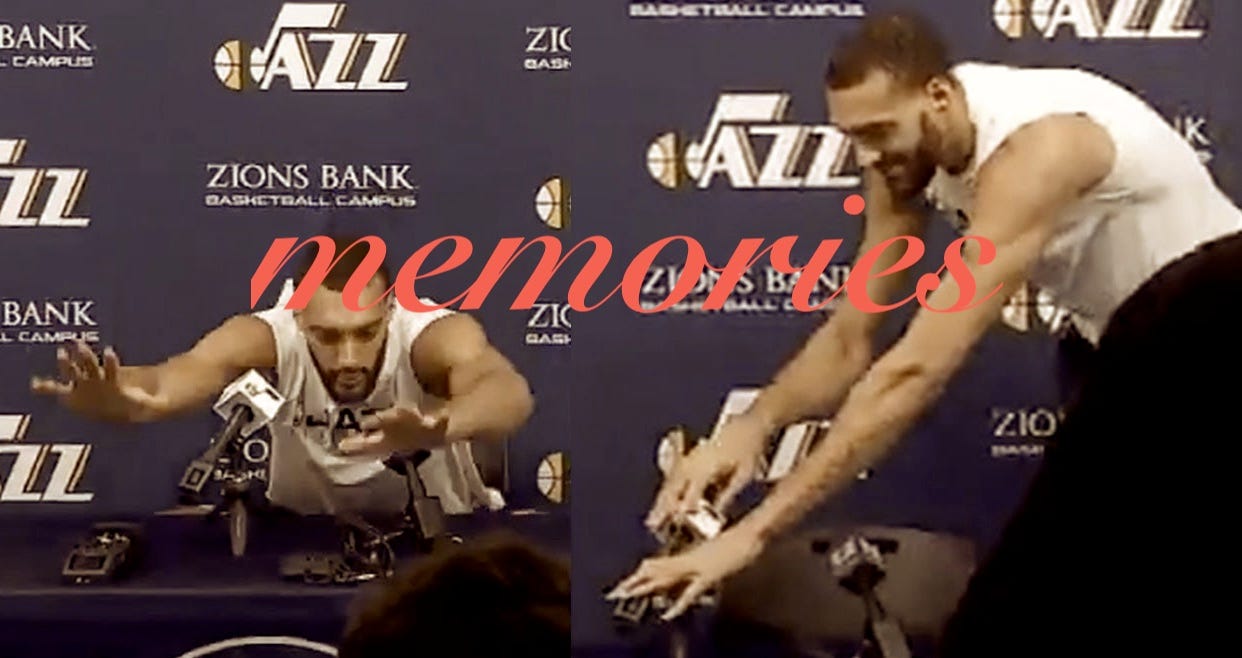
Happy belated Pi Day (3.14)!**Also Stephen Curry’s birthday and the anniversary of Marx’s death! (Guess who’s drafting today’s notes?)0:00 – Seth Berkman’s NYT article on Subway product placements in K-dramas (don’t forget: Subway is evil!), Fatima Bhutto’s book on non-Western entertainment gone global, and whether Taylor Swift listens to BTS.16:00 – The $1.9 trillion “American Recovery Plan,” or ARP, was signed last week. Is it a new era of Keynesian governance (Zach Carter in NYT) and/or a reversal of a half-century of austerity (Eric Levitz in NY Mag)? We talk: $1,400 checks, childcare credits, and, boo, the failure of the $15 federal minimum wage, and what all this could mean in the long run. (Also, is the new paradigm shift partly a nationalist response to the threat of China?)44:00 – Covid reflections. What were we doing one year ago when Rudy Gobert’s positive Covid test shut down the NBA (and Tammy’s neighborhood library closed)? Plus: Covid Asian nationalism, loopholes in the vaccine rollout, and retrospectives on last summer’s protests. Thanks for listening! Please write in with questions and comments, and join our growing community: [email protected], @ttsgpod (Twitter), https://www.patreon.com/ttsgpod. ==P.S. – If you’re free Thursday night U.S. time, come to Tammy’s presentation on Camp Humphreys, the U.S.’s largest foreign military base, with poet and translator Eunsong Kim, sponsored by the Heung Coalition, UC Berkeley, and U Mich. This is a public episode. If you'd like to discuss this with other subscribers or get access to bonus episodes, visit goodbye.substack.com/subscribe
Loving Guam, fighting empire with Julian Aguon
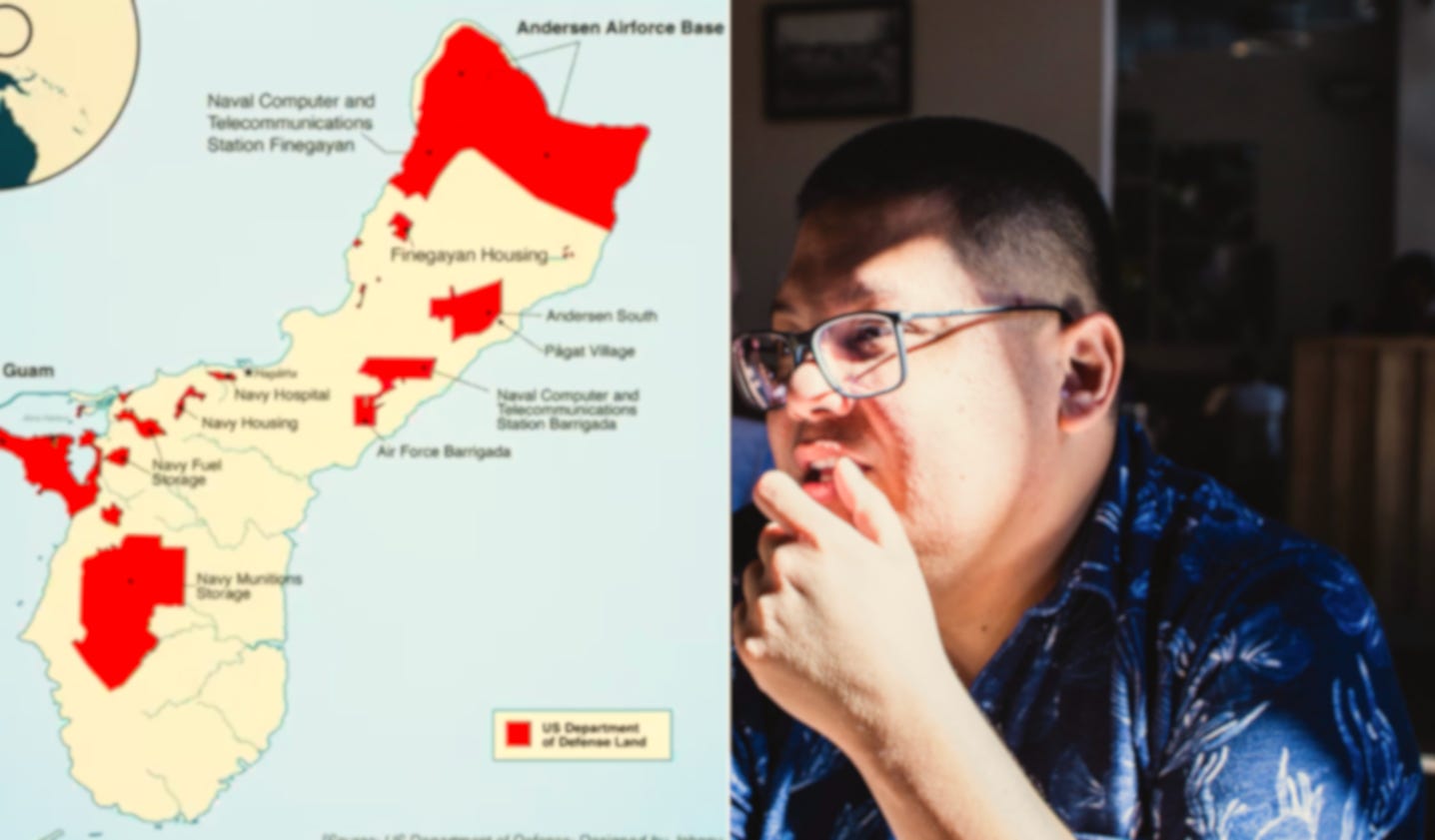
Hello from the imperial U.S.A.! Our special guest this week is the CHamoru activist attorney and writer Julian Aguon. Julian calls in from Guam to talk about his new book, The Properties of Perpetual Light, which comes out at the end of the month. (Pre-order it for you and a friend!) Julian reads from the book and talks about: * Developing his voice as a writer and mixing genres: from poetry to political commentary to personal essay; * Guam/CHamoru identity and attempts to build solidarity with other colonized and indigenous peoples across the world;* His work as a lawyer with Blue Ocean Law; * Guam as a hotspot of climate change and militarization;* How Guam, as a U.S. colony, is often stuck in the old and ongoing U.S.-China conflict.For more, check out:* Julian’s 2017 piece (In These Times) on Guam in the crosshairs of U.S.-North Korean saber rattling;* Julian’s recent book talk at American University;* Reporting by Chris Gelardi and Sophia Perez (The Nation) on how people in Guam and the Northern Mariana Islands are fighting U.S. militarism.Thanks for listening! Please write in with questions and comments, and join our growing community: [email protected], @ttsgpod (Twitter), https://www.patreon.com/ttsgpod. This is a public episode. If you'd like to discuss this with other subscribers or get access to bonus episodes, visit goodbye.substack.com/subscribe

The real history of "comfort women"
We discuss the unfolding row over an academic article by Harvard law professor Mark Ramseyer, who argues, without evidence, that “comfort women” across Asia were not coercively indentured by the Japanese imperial army in World War II, but had legally consented to sex work. (For background on this debate, check out Tammy’s paper from 2006!)Though typically irrelevant to the rest of society (lol), Ramseyer’s is the rare academic paper to invite public attention and, subsequently, outrage. His bizarrely unsourced work has triggered questions about Japan’s wartime responsibilities, unfree labor, sexual slavery, and ongoing geopolitical tensions in East Asia. And also, as Jeannie Suk Gersen, Ramseyer’s colleague, wrote last week in The New Yorker, the struggle at Harvard? Thousands of scholars have spoken out against the article, including five historians of Japan (and friend of the show Chelsea Szendi Schieder) who compiled an extensive list of Ramseyer’s errors and mistakes—far longer than the original paper! (N.b., economists have denounced the piece, as have groups at Harvard.)* History of the ‘comfort women’ question 101, starting in the 1990s, thanks to the public testimony of survivor Kim Hak-sun and the support of historian Yoshimi Yoshiaki* What does this story mean, especially, to those in Korea and the Korean diaspora? * What does it tell us about legal academia, the prestige of Harvard, and how TF it could get published in the first place?* What is going on with the far-right in Japan? (cf. friend of show Adam Bronson’s piece on Abe Shinzō in Dissent)* Why should people in the US, or around the world, care about a story seemingly confined to South Korea and Japan?Good materials on the comfort women: * Embodied Reckonings by Elizabeth Son* Lolas’ House by M. Evelina Galang* Grass by Keum Suk Gendry-Kim* A Cruelty to Our Species by Emily Jungmin Yoon* Silence Broken by Dai Sil Kim-Gibson* Comfort Women by Yoshimi Yoshiaki* The Comfort Women by George Hicks* Comfort Woman by Nora Ojka KellerSome prints inspired by stories of the comfort women, by Tammy:Thanks for tuning in. To further join the TTSG community, check out our Patreon: https://www.patreon.com/ttsgpod. This is a public episode. If you'd like to discuss this with other subscribers or get access to bonus episodes, visit goodbye.substack.com/subscribe
A Russian doll of cancellations, "Minari," and listener questions
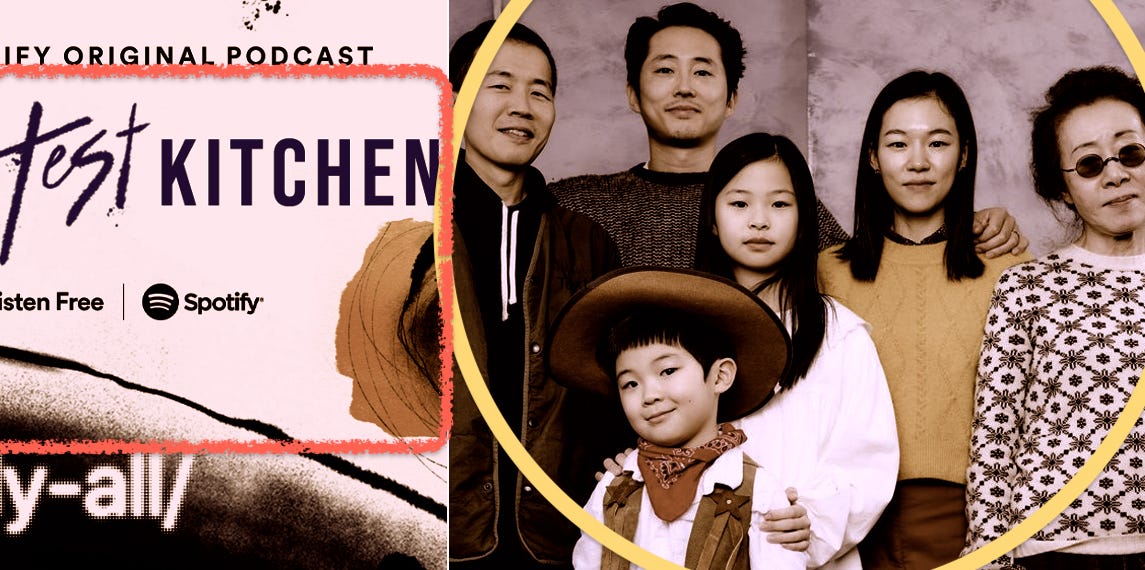
Hello from a Chinese banquet! (If only…)0:00 - “주먹만한 얼굴” (tiny face obsession)2:48 – Reply AllWe discuss the story buzzing throughout media: the hosts of the Reply All podcast, while reporting on the exploitative labor practices at Bon Appétit, had their own exploitative, anti-union activism exposed last week. What does this say about class versus race politics and the unionization movement in media? Plus, thoughts on the podcast-industry bubble.(By the way, we are aware of the irony of talking, on a podcast, about another podcast that got canceled after talking about yet another podcast, so don't bother pointing that out!)38:15 – “Minari”Writer/director Isaac Chung’s “Minari,” starring Steven Yeun, has just been widely released. Is it a story about successful US assimilation or migrant ambivalence? Is it a universal or specific Asian-American tale? What is the state of Asian-diaspora storytelling in 2021, and when is the Forever 21 saga going to be made into a television movie?1:01:00 – Three listener questions* On ableism in our discussion of Covid-19 and “working women” (from Reena)* Mixed feelings about the “decolonizing food” movement (from Jackie)* On academics tweeting about political causes (from Jenny)Thanks for listening! * Email us your questions: [email protected]* DM us here: https://twitter.com/ttsgpodBecome a patron! https://www.patreon.com/ttsgpod This is a public episode. If you'd like to discuss this with other subscribers or get access to bonus episodes, visit goodbye.substack.com/subscribe

TikTok fame, Asian hip-hop, and culture "gentrification" with Jaeki Cho
Hello! Special unlocked bonus Patreon episode today with entrepreneur, TikTok cook, and hip-hop head Jaeki Cho. He and Jay talk about Jaeki’s quick rise to TikTok fame via his Korean cooking videos, Asian-American hip-hop in the 90s and 00s, and the ways in which immigrants acquire, imitate and then incorporate language. You can find Jaeki’s TikTok here.And a Friday throwback video for all of you. This is a public episode. If you'd like to discuss this with other subscribers or get access to bonus episodes, visit goodbye.substack.com/subscribe
Working women's rage, more on the street violence in Oakland, and East vs. West Coast Asians
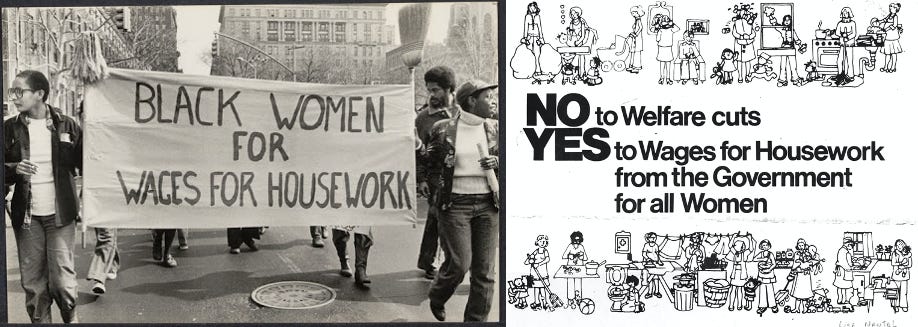
Hello from the angry depths of our work-from-home souls! This Valentine’s Day week:0:00 – Big, hearty thanks for subscribing and supporting us through our Patreon. Don’t miss the raucous Discord chat or bonus episodes with Anakwa Dwamena and Jiayang Fan. 4:40 – Why are women shouldering the extra work of the pandemic? Why are they the first to lose their jobs and get stuck with multiplying jobs at home? We talk about the NYT’s “Primal Scream” package of stories, the neoliberalism/second-wave-feminism debate between scholars Nancy Fraser and Melinda Cooper, and the radical, unfinished challenge of the welfare rights and Wages for Housework movements. 44:50 – More discussion of recent street violence in the Bay Area, thanks to solid reporting through a partnership between The Oaklandside and Oakland Voices. (+ part two here). Is this a Black–Asian thing? What’s the economic/pandemic backdrop? How do we avoid carceral thinking? (link to Oakland Voices piece here.1:11:11 – Thanks to Stephanie for her question about identity-obsessed East Coast Asians versus “gentle, confident” West Coast Asians (lol). We talk about ethnic enclaves like Cerritos, the making of Flushing, and Andy’s time in Plano, TX. Thanks again for listening and sharing. Reach out anytime at @ttsgpod or [email protected]. Plugs!Read Oakland Voices! On Wednesday (4.17) at 1230P ET: And on Thursday (4.18) at 8P ET: This is a public episode. If you'd like to discuss this with other subscribers or get access to bonus episodes, visit goodbye.substack.com/subscribe
Xinjiang on Clubhouse and listener questions!
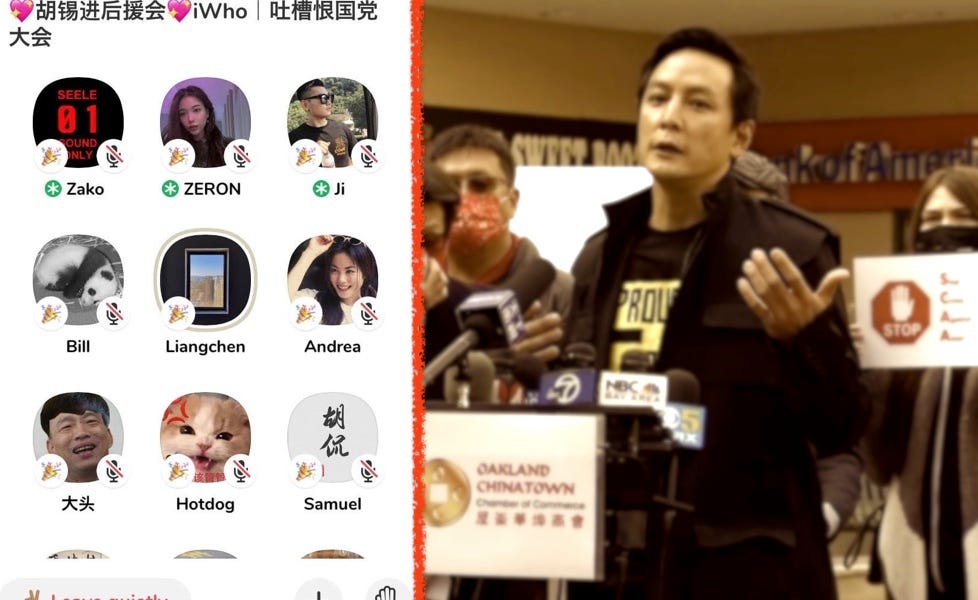
Hello!This week, fabulous guest Darren Byler. Plus, three questions from our very smart listeners.0:00 – Friend of the show Darren Byler returns (don’t miss his earlier episode, from July, where he discusses his research on Xinjiang with Tammy and Andy) to reflect on what he (and Andy) heard on Mandarin Clubhouse over the weekend. There was a brief burst of discussion among Mandarin speakers of various ethnicities around the world, including many in the PRC, about what’s happening to Uyghurs in Xinjiang. Clubhouse has since been banned in the PRC, but the rooms continue to operate. Those interested in Darren’s work should read this recent piece on surveillance capitalism in Xinjiang. Darren had also written about the types of stories told by Han Chinese residents of Xinjiang, which are similar to those that emerged on Clubhouse this weekend. 39:40 – As promised, we answer listener questions about: – Anti-Asian violence in the Bay Area (Cathy) +– Asians and the return-to-school debate (Matteo) + – How to push the Biden administration left? (Milos)Stay in touch! [email protected] / TTSG on Twitter This is a public episode. If you'd like to discuss this with other subscribers or get access to bonus episodes, visit goodbye.substack.com/subscribe
Casino capitalism and racialized school reopenings. And the new TTSG Patreon!
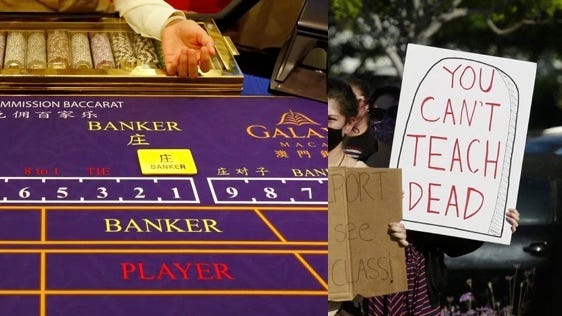
Good snowy morning from Andy and Tammy, while Jay wears shorts!This week, we talk about cultures of luck, public schools, tankieism, Myanmar, and Corky Lee. 2:15 – Andy explains the freaky, punny “Bling Empire.”12:12 – Our inevitable takes on GameStop, Robinhood, and the global, neoliberal casino of our financial system. For more: stories by Noah Kulwin, Kate Aronoff, and Doug Henwood. Andy recommends this episode of Slate Money podcast. 46:58 – David Brooks gives us hives, but so does most of the coverage of school reopenings. Why this anti-union, anti-parent campaign—and in the name of “Black and brown kids”? For more: a sharp analysis by Rachel Cohen; NYT’s recompense for Brooks’s editorial.1:07:10 – We respond to listeners who think we’re too dismissive of pro-China takes as tankieism. 1:16:11 – In Tammy’s sad news corner: What’s happening in Myanmar? 1:21:31 – Another preventable COVID-19 death hits close to home. Rest in peace and power, Corky Lee! For more: Hua Hsu’s tribute and the NYT obit.** 1:24:43 – A way to help us keep going—and with better sound: We’re launching a TTSG Patreon! Please sign on as a supporter, and tell all your friends! **Thanks for tuning in and supporting us. [email protected]@TTSGpodQuick plug: Andy helped organize a series of talks this month by professional historians but intended for public audiences. The theme is “decolonizing decolonization”: extending discussions about decolonization from Euro-America to looking at experiences in the “rest” of the world. Tomorrow (2/3) at lunchtime (ET) is Adom Getachew from U. Chicago, talking about Black internationalism from the 50s to 70s (apropos Black history month). Register and check it out!Next week (2/10): Turkey and Latin America and ChinaFollowing week (2/17): China, India, Xinjiang, and Kashmir This is a public episode. If you'd like to discuss this with other subscribers or get access to bonus episodes, visit goodbye.substack.com/subscribe
Bonus ep: representation politics, at Philly's Asian Arts Initiative with Bakirathi Mani and Anne Ishii
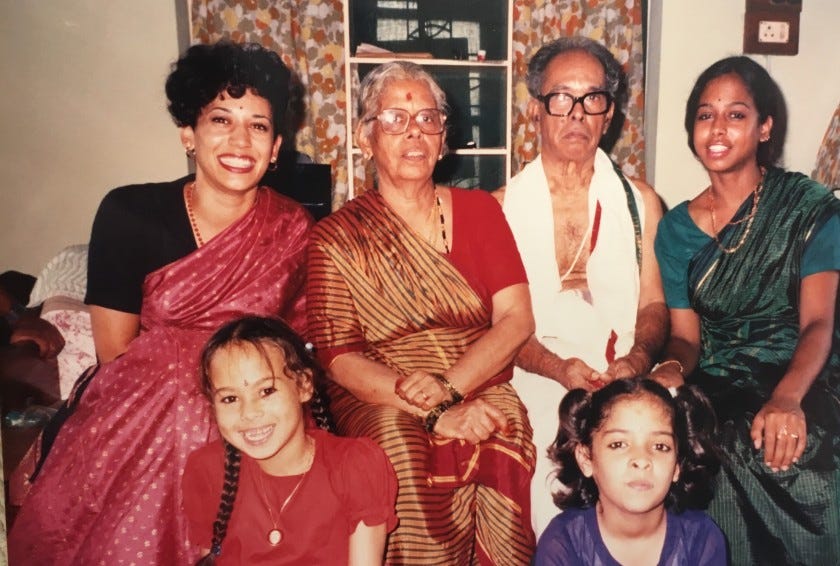
Bonus ep!This past week, the Asian Arts Initiative in Philly (AAI) hosted a short conversation about the question of representation in media and politics. AAI’s exec. director Anne Ishii (@ill_iterate) MCed the event, which featured myself (Andy) and Bakirathi Mani, a fellow academic in the region (Swarthmore college, check out her new book Unseeing Empire, with the discount code E20EMPR). We talk: * Kamala and Andrew* south and east Asian comparative diasporas* Asian versus Asian American studies* why the search for representation is always just a little bit “off”? (there’s also a Youtube version of the in-person conversation here!)Check out AAI on twitter: @asianartsphillyAs always, follow us @ttsgpod and email us at: [email protected]! This is a public episode. If you'd like to discuss this with other subscribers or get access to bonus episodes, visit goodbye.substack.com/subscribe
Kimchi nationalism, Biden on immigration and foreign policy, and Desi identities with Rozina Ali
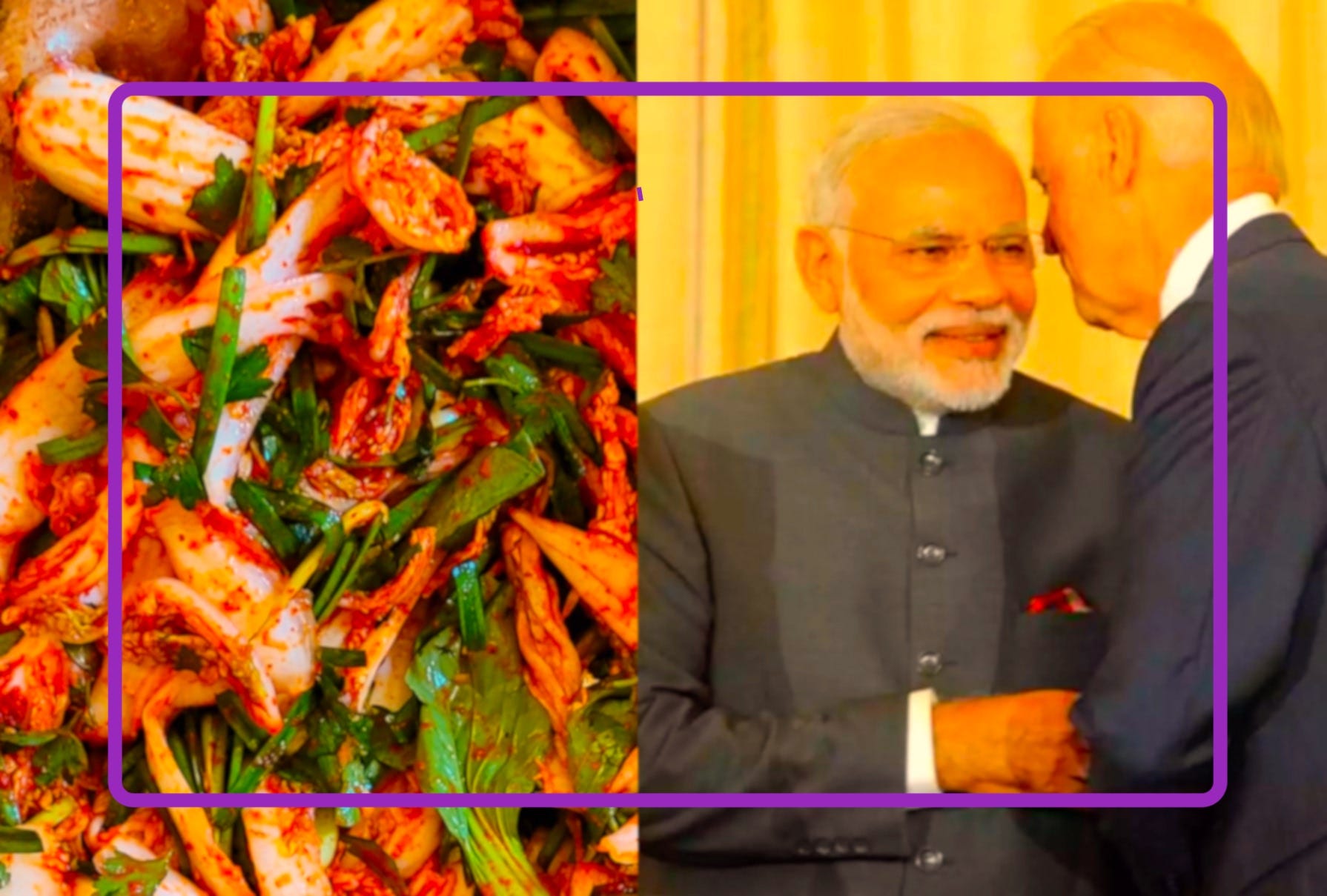
Hi from Obama’s third term!This week, we welcome the wonderful, brainy Rozi Ali, a journo friend who writes about Islamophobia and the US “war on terror.” We also dish about basketball and a kimchi-based spat between South Korea and China.1:10 – Why Rozi gave up on the Warriors.3:35 – Korea and China are fighting again. Over kimchi. Not sponsored content: the offending Li Ziqi video (kimchi at the 13:20 mark: judge for yourself!)17:45 – Biden started his presidency by reversing Trump-era actions on immigration, including the Muslim ban. Rozi puts these moves in context of foreign policy and the forever wars. Shout-out to the Quincy Institute and anti-war activism; plus: Jay and Rozi still don’t know who Fran Lebowitz is. 54:30 – The South Asian diaspora in the US tends to vote very Democratic, but some of its members have big blind spots around class concerns as well as the government in India. We discuss all this in the context of Arun Venugopal’s recent piece in The Atlantic, “The Truth Behind Indian American Exceptionalism.”>> If you’re free tonight, Tuesday, Jan. 26, join this US–Canada event on transnational “movement lawyering,” organized by TTSG friends. Tammy is in the mix: https://www.eventbrite.ca/e/asian-american-asian-canadian-perspectives-on-movement-lawyering-tickets-135937527805 Thanks for tuning in and supporting us. Next time: lots of reader questions!We’re on Twitter way too much, at @ttsgpod. And on email: [email protected]. This is a public episode. If you'd like to discuss this with other subscribers or get access to bonus episodes, visit goodbye.substack.com/subscribe

"That identity s**t, that’s old news, man": belated Capitol takes + "Chan is Missing" with Hua Hsu
Greetings from the deep state in our heads! This week, we talk some oldish politics (January is moving so fast…) and welcome back our first repeat guest, Hua Hsu, to dig into classic Asian-American cinema.0:00 – Andrew Yang is running for mayor of New York City. Last we saw him, he was buying Ito En green tea at a bodega and calling the worker “bro.”8:20 – The better Asian Andrew, our Andy, wrote about the 1.6.2021 Capitol attack in our newsletter last week. We talk fascisms and how to combat right-wing extremism without further expanding our military-police industrial complex. Plus: this short Samuel Moyn essay in The Nation.41:00 – In part two of our film club, scholar and critic Hua Hsu joins us to discuss director Wayne Wang’s classic, Chan is Missing (1982). (Check out Hua’s essay from way back when.) Wang is better known for The Joy Luck Club and Maid in Manhattan (J.Lo, anyone?), and more recently made a documentary on Cecilia Chiang, the godmother of stateside Chinese haute cuisine, as well as an adaptation of an essay by Chang-rae Lee. But Chan is Missing is totally weird and singular—and changed Jay’s life, he explains. Bonus: check out “Juke and Opal,” a sketch by Richard Pryor and Lily Tomlin that Tammy sees as a precursor of a key scene in Chan is Missing. (Hilton Als has written beautifully about it.) And here’s A.K.A. Don Bonus, a Spencer Nakasako documentary Hua loves.Thanks for supporting and tuning in. Send us your questions and comments, as audio or text, to [email protected] or @TTSGpod. This is a public episode. If you'd like to discuss this with other subscribers or get access to bonus episodes, visit goodbye.substack.com/subscribe
Vaxx dreams; American decline vs. Chinese ambition; and 2020 favs
This week’s theme, courtesy of Tony Soprano: “Is the U.S. over?”Both Tammy and Jay have new pieces out on our failure to curb the spread of Covid-19 in nursing homes. The country has seemed unable to tackle complex problems. Have we learned anything? What now? 0:00 – We talk about the vaccine rollout in the U.S. and our ominously poor start to distribution. Tammy hates on federalism and the States counterplan (debate joke). Plus: should health care workers have the right to refuse the vaccine?23:45 – At the end of 2020, Beijing-based economic analyst Dan Wang offered this year-in-review newsletter full of global, historical observations of the U.S., spurring much chatter on China Twitter. Is Chinese society experiencing the equivalent of the U.S.’s “golden age of capitalism”? How do most Americans imagine the life of an “average” person in China—you know, like Pangzai? And is the U.S. in a “declining empire” / “rentier” stage of its history?1:09:30 – A listener question from Swoo: What were some of your favorite reads in 2020? * Tammy: James Baldwin, “Stranger in the Village” (essay)* Andy: Nancy Fraser, “Feminism, Capitalism, and the Cunning of History” (paper)* Jay: Greg Kot, I’ll Take You There; Mark Kram, Jr., Ghosts of ManilaThanks for tuning in. Please subscribe and spread the word! Keep in touch via @TTSGPOD and [email protected]. This is a public episode. If you'd like to discuss this with other subscribers or get access to bonus episodes, visit goodbye.substack.com/subscribe
Working-class unity with organizer JoAnn Lum; plus, listener Qs on the diversity labyrinth
HNY from the heart of Times Square!0:00 – This week, we welcome JoAnn Lum, the director of NMASS (the National Mobilization Against Sweatshops), a “multi-trade, multi-ethnic workers center” located on the Lower East Side of Manhattan.Though COVID-19 has recently shone a light on horrifying working conditions in healthcare, nursing homes, restaurants, and delivery, JoAnn describes how “essential workers” have faced steadily worsening prospects for decades, and relays her members’ disappointment in the government response. She also talks about how immigration law has been used to divide workers, and explains NMASS’s “Ain’t I a Woman” campaign, which is challenging the 24-hour workday for home care attendants. (Tammy wrote about this around-the-clock work for Businessweek two years ago [a sobering read!].) Unsurprisingly, the pandemic has only exacerbated the urgency of NMASS’s organizing. Learn more and contribute here!34:30 – In the second half, we discuss a bundle of listener questions about “diversity:” employment initiatives, diversity statements, even children’s books! How do we navigate between “good” and “bad” versions of diversity? What are the right categories to describe them? Thanks to Adriana, Amy, and Helen for the excellent questions! Keep your queries and comments coming! We’d love more recorded audio bits, too, which you can send by email: [email protected]. On Twitter, we’re doomscrolling at @TTSGpod.Finally, pass the podcast onto your friends! This is a public episode. If you'd like to discuss this with other subscribers or get access to bonus episodes, visit goodbye.substack.com/subscribe