Think Inclusive
241 episodes — Page 4 of 5
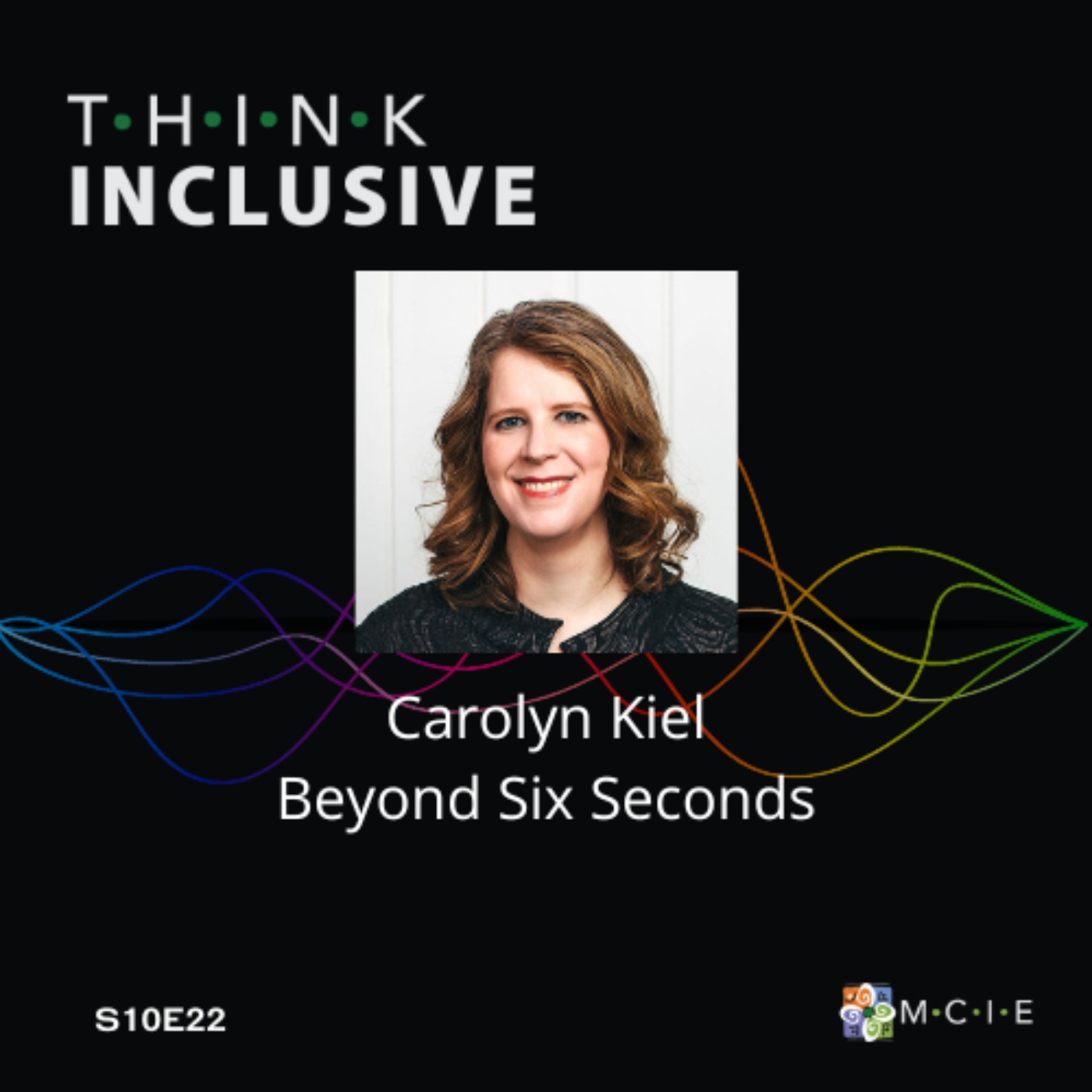
S10 Ep 22Beyond Six Seconds: Carolyn Kiel on Neurodiversity and Authentic Inclusion
Carolyn Kiel is a corporate instructional designer and the host of Beyond 6 Seconds, a podcast that spotlights neurodivergent and disabled entrepreneurs, creators, and advocates. She’s a late‑identified autistic adult who uses her platform to share first‑person stories that challenge stereotypes and expand understanding.In this conversation, Tim talks with Carolyn about why she started Beyond 6 Seconds, how the show’s name pushes back on snap judgments, and what led her to focus the podcast on neurodiversity. Carolyn shares her journey to a late autism diagnosis, the relief of having language for lifelong experiences, and the habits that help her regulate and work (yes to stim and fidget tools). Together, they dig into what inclusion really looks like: listening first, trusting people’s lived experience, and offering practical accommodations without gatekeeping. For educators, Carolyn’s core message is simple—learn from neurodivergent adults and presume competence, especially for nonspeaking students who may need different communication supports. Listeners will leave with concrete ways to shift classroom mindsets and amplify authentic neurodivergent voices.Complete show notes and transcript: https://mcie.org/think-inclusive/carolyn-kiel-beyond-six-seconds-2/
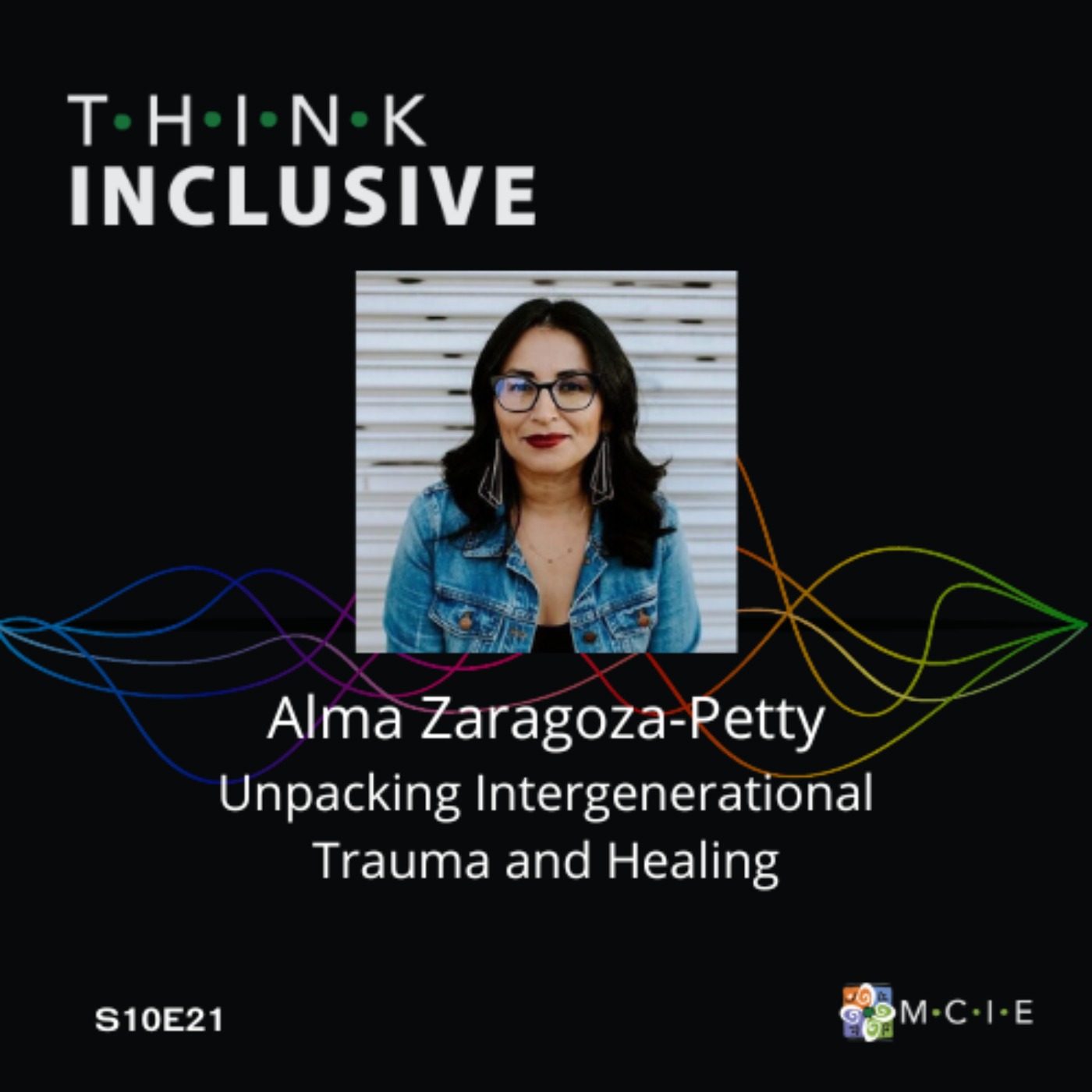
S10 Ep 21Reclaiming “Chingona”: Healing Intergenerational Trauma with Alma Zaragoza‑Petty
Alma Zaragoza‑Petty (she/her) — Mexican American activist, scholar, and podcast host; author of Chingona: Owning Your Inner Badass for Healing and Justice. She advises and counsels first‑generation, low‑income students and teaches equity-focused coursework to working professionals at USC, with a personal and scholarly focus on intergenerational healing.Alma Zaragoza‑Petty shares how reclaiming the word “chingona”—once used to silence Latina women—can fuel personal healing and collective justice. She unpacks intergenerational trauma, practical steps for healing (acknowledgment, memory work, retelling our stories, and forgiveness), and how educators and mentors can change trajectories for students who have been underserved.Complete show notes and transcript: https://mcie.org/think-inclusive/alma-zaragoza-petty-unpacking-intergenerational-trauma-and-healing-2/
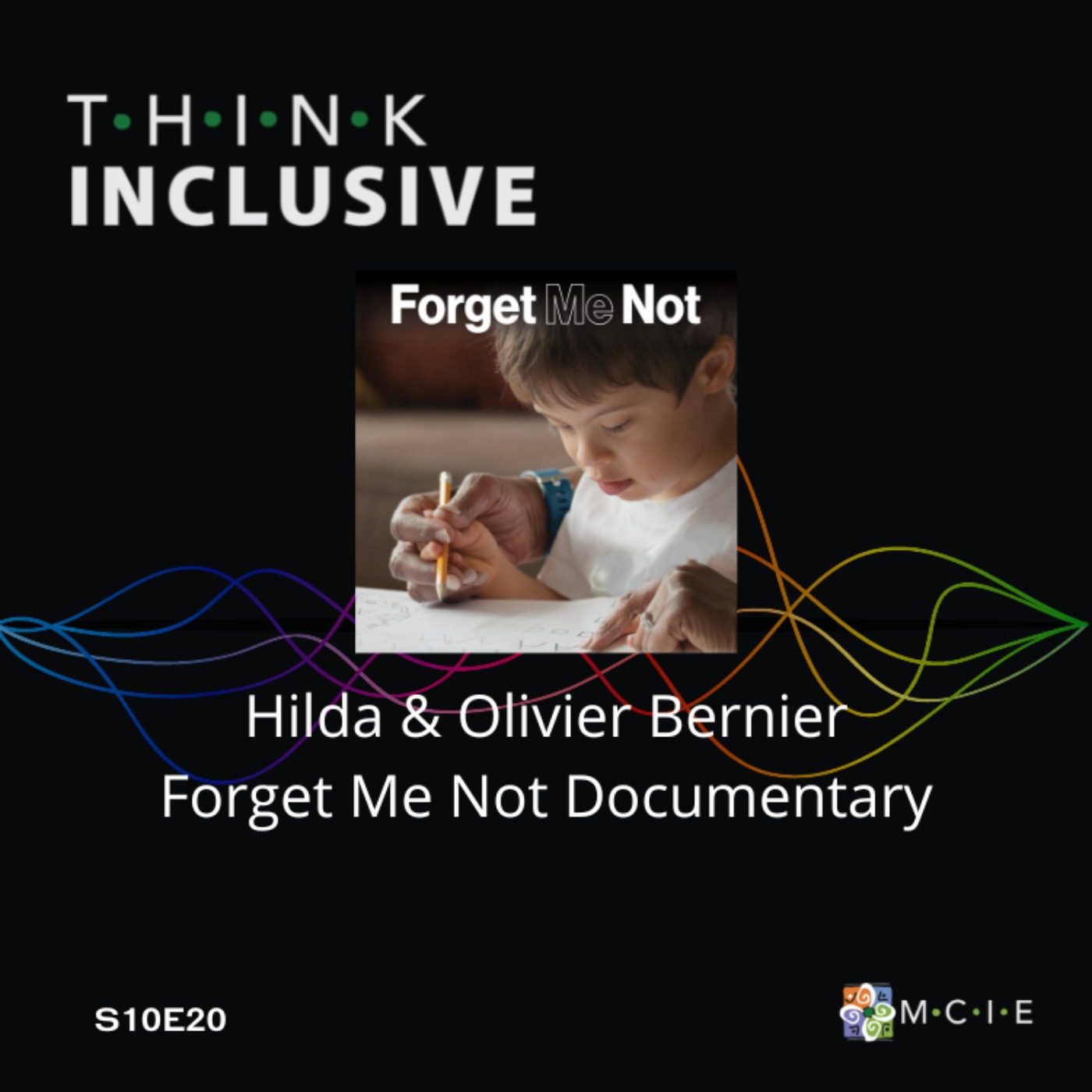
S10 Ep 20Inclusive Education in Action: The Story Behind Forget Me Not
Hilda Bernier — Educator with a special education license and bilingual extension who has taught mostly integrated co‑teaching classes (and some self‑contained high‑school classes). As a parent, she describes how evaluation reports and an early IEP meeting pushed against inclusion for her son, Emilio, and how seeing the Henderson Inclusion School shifted her perspective on what’s possible.Olivier Bernier — Filmmaker and father who turned the camera on his family to make Forget Me Not, documenting their fight for inclusive education in New York City and the realities of IEP meetings. He aims to spark wider conversations about inclusion and accessible schooling for all learners.Tim talks with Hilda and Olivier Bernier about their documentary Forget Me Not, which follows their son Emilio’s path into school and their push for inclusion within a segregated system. They discuss what went wrong in early evaluations and IEPs, what good inclusion looks like, and how Emilio is thriving today in a fully included kindergarten.Complete show notes and transcript: https://mcie.org/think-inclusive/hilda-and-olivier-bernier-forget-me-not-documentary-2/
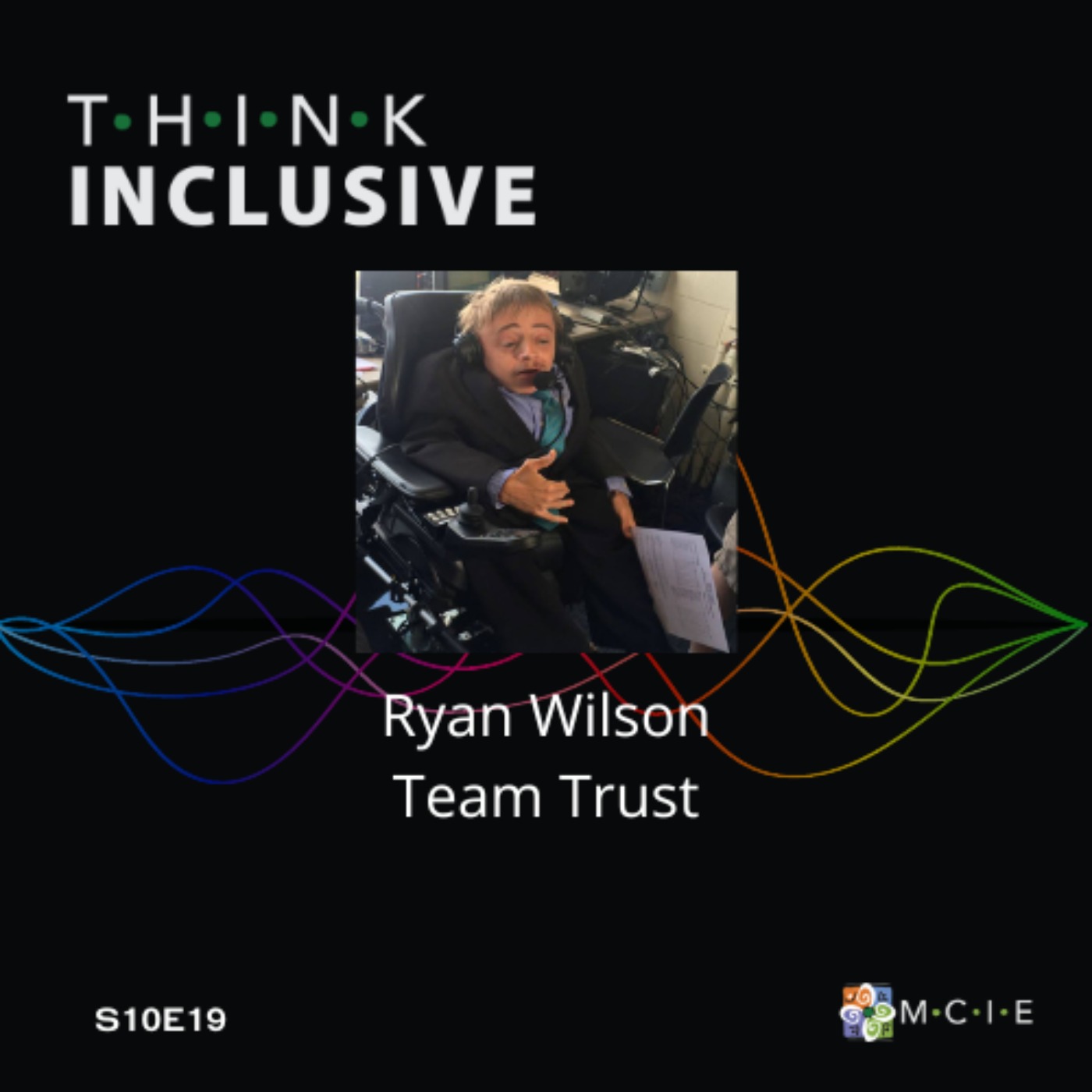
S10 Ep 19How Team Trust Is Changing Disability Representation in Media and Marketing
Ryan Wilson is the founder and director of Team Trust Productions, a disability‑led media company that partners with mission‑driven organizations to tell authentic stories of people with disabilities. He launched Team Trust after an early documentary project (“Seeing With Trust”) and now works with nonprofits and higher‑ed institutions to make marketing more accessible and inclusive. Ryan lives with Osteogenesis Imperfecta and speaks from lived experience about access, belonging, and representation.Tim Villegas talks with Ryan Wilson about what authentic disability representation looks like—and why it matters in schools, higher education, and media. They dig into common pitfalls (the “inspiration” trope), practical fixes (accessibility in video and web, ASL, real stories), and how personal connections with students change outcomes.Complete show notes and transcript: https://mcie.org/think-inclusive/ryan-wilson-team-trust-2/
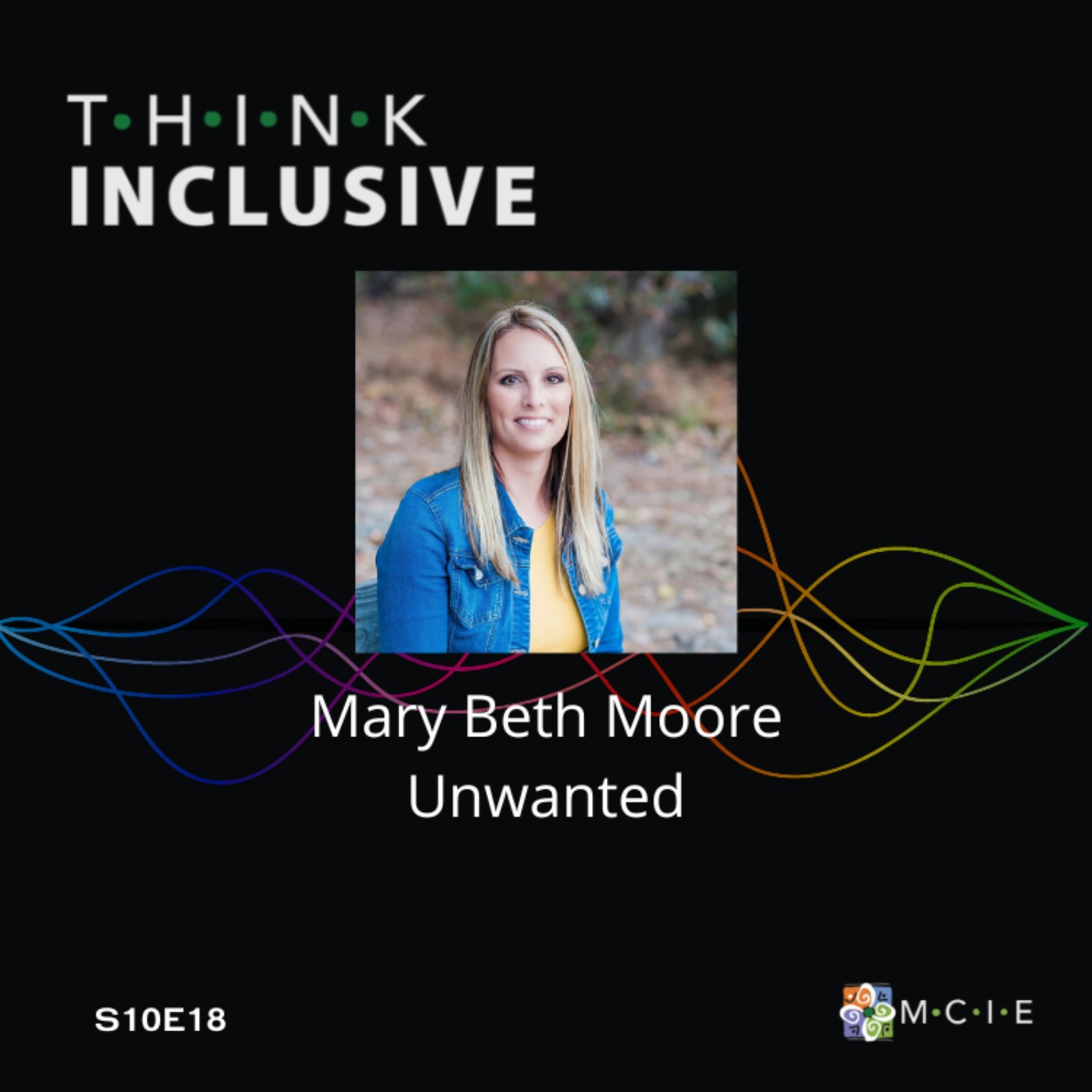
S10 Ep 18Mary Beth Moore on Fighting for Belonging in Education
Mary Beth Moore — Author of Unwanted: Fighting to Belong and founder/executive director of The Advocacy Underground. She studied political science and criminal justice at UNC Charlotte, served in the U.S. Marine Corps, worked as a DoD intelligence analyst and later as a marketing leader. She uses storytelling to make special education law and research accessible to families and educators. She’s also Gavin’s mom.When school leaders say yes to inclusion, everything changes. In this conversation, Mary Beth Moore shares how her son Gavin—who has Down syndrome, is nonverbal, and is still working on early literacy and numeracy—thrives in a fourth‑grade general education classroom because a principal chose to welcome him and build support. She contrasts that with systems that default to no, explores why implementation (not new law) is the bottleneck, and offers practical ways families and districts can move from conflict to collaboration. The through‑line: inclusion isn’t about meeting grade‑level benchmarks—it’s about belonging, support, and leadership willing to try.Complete show notes and transcript: https://mcie.org/think-inclusive/mary-beth-moore-unwanted-2/
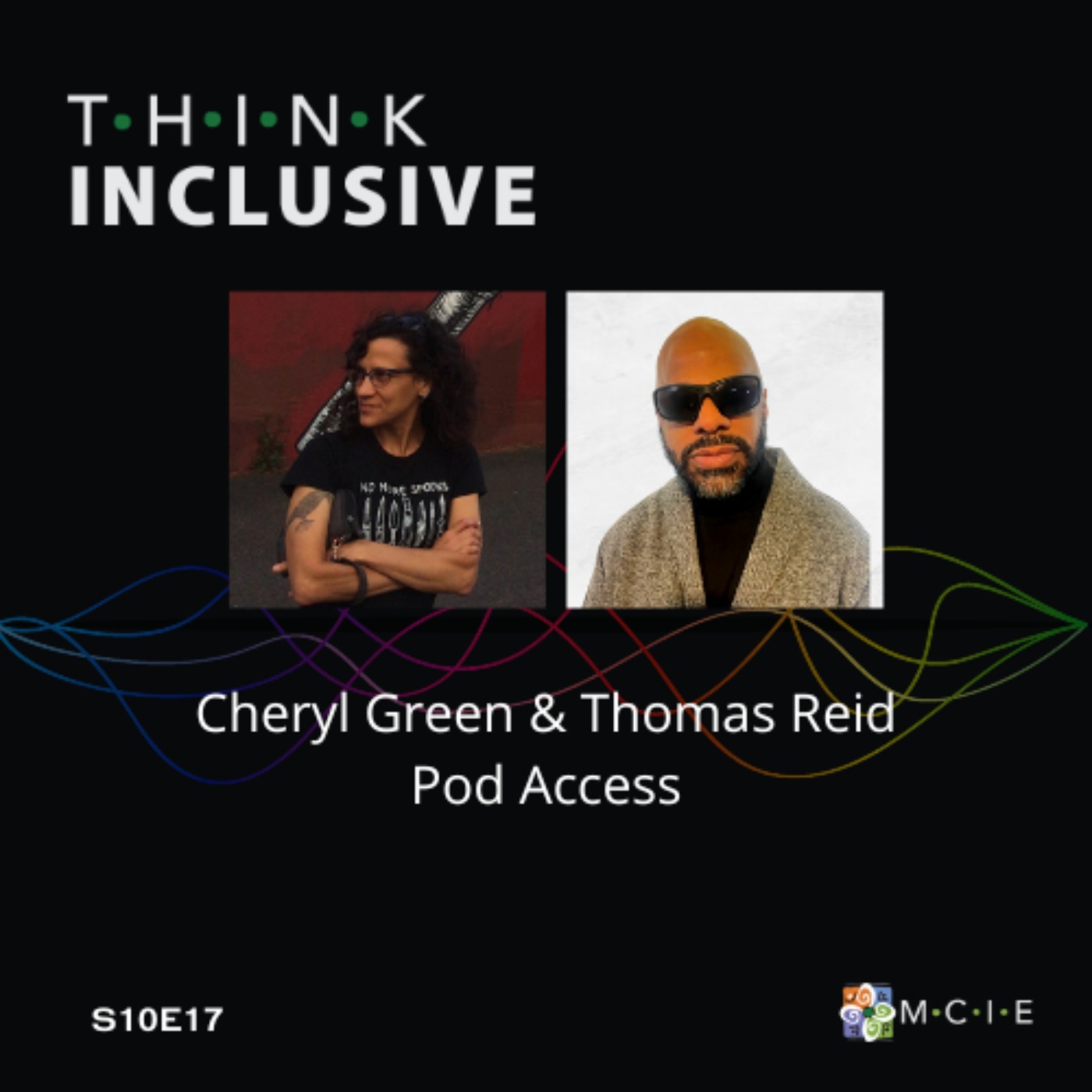
S10 Ep 17Pod Access: How Disabled Creators Are Changing Podcasting
Cheryl Green is an access artist who’s spent a decade creating creative, immersive captions and five years crafting audio description, drawing on lived experience with chronic illness and invisible disabilities. She’s collaborated with disability‑focused organizations including Superfest International Disability Film Festival, Disability Visibility Project, and Kinetic Light; she’s also produced documentary films and makes (and transcribes) the storytelling podcast Pigeonhole.Thomas Reid became blind in 2004 and reignited a long‑standing passion for audio. Selected as a “new voice scholar” by an association for independent radio in 2014, he launched Reid My Mind Radio, featuring compelling people impacted by blindness and disability—and, at times, reflective stories from his own life. He’s widely recognized for covering audio description and now narrates AD and other voiceover work.Host Tim Villegas talks with Cheryl Green and Thomas Reid about storytelling by disabled creators, why medicalized “how it happened” narratives aren’t the only (or best) way to tell disability stories, and how to center community voice without objectifying guests. The conversation introduces Pod Access—a new effort bringing disabled podcasters and listeners together through a resource hub and companion podcast—while exploring language shifts, like Thomas Reid’s move from “vision loss” to “blind,” and the importance of owning one’s story. They close with messages for educators about believing and following the lead of students with invisible disabilities and chronic illness, and a reminder that what teachers say can shape a student’s self‑concept for years.Complete show notes and transcript: https://mcie.org/think-inclusive/cheryl-green-thomas-reid-pod-access-2/
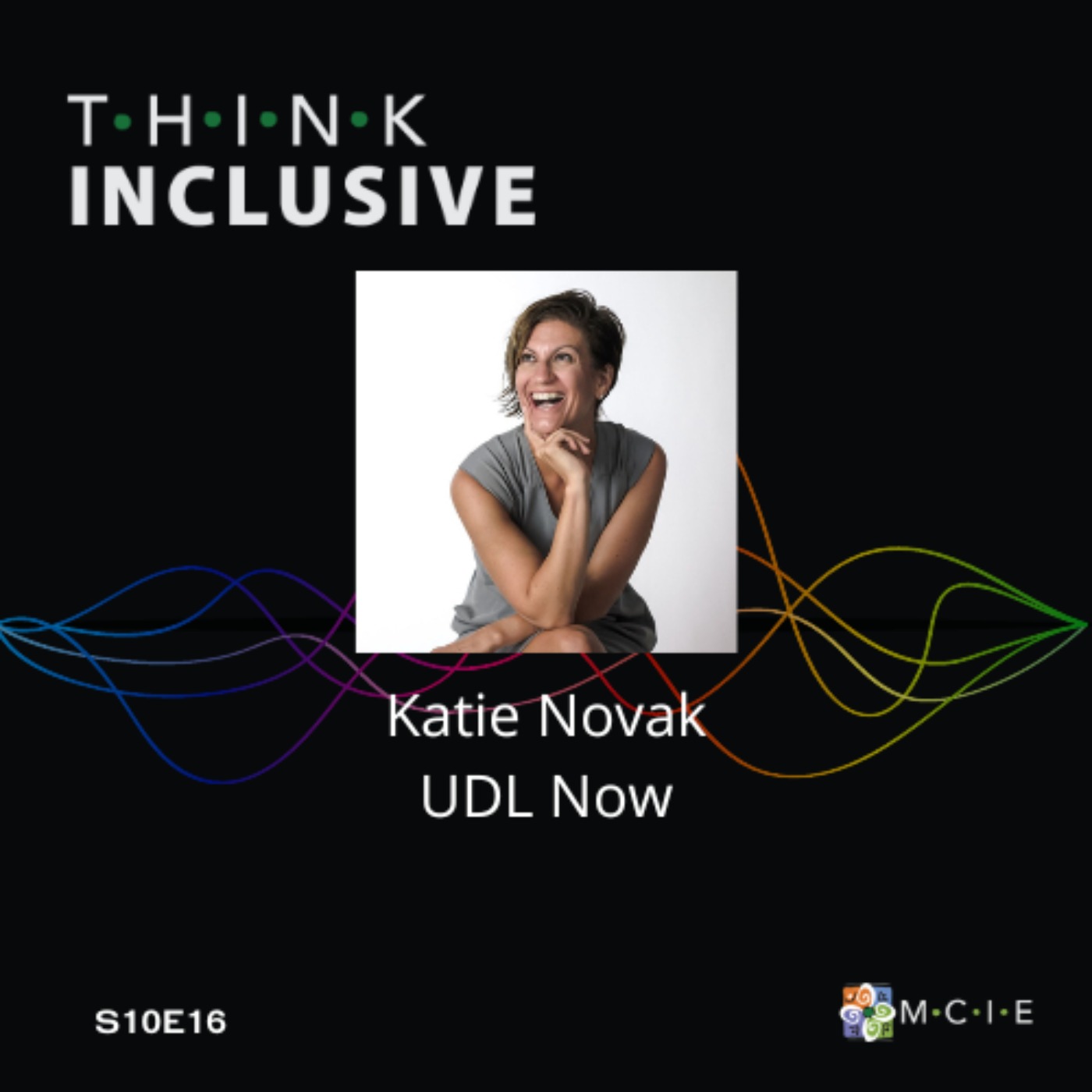
S10 Ep 16UDL Now with Katie Novak: Practical Strategies for Every Teacher
Katie Novak is an internationally recognized education consultant, author of 11 books, graduate instructor at the University of Pennsylvania, and former assistant superintendent in Massachusetts. With over 20 years of experience in teaching and administration and a doctorate in curriculum and teaching, Katie specializes in Universal Design for Learning (UDL), Multi-Tiered Systems of Support (MTSS), and universally designed leadership. She designs and delivers workshops nationally and internationally to help educators implement inclusive practices.Katie Novak breaks down what UDL really is—and isn’t—by centering three ideas: the dynamic variability of learners, firm goals with flexible means, and growing expert learners who can co-design their own paths. She clarifies how UDL (first-best, proactive design) fits alongside differentiated instruction (responsive grouping) and specially designed instruction (individualized supports), including for students with extensive support needs. The conversation also tackles common misconceptions about “choice,” rigor, and equity, and offers practical starting points so overwhelmed educators can move one step forward without trying to “do it all” at once.Complete show notes and transcript: https://mcie.org/think-inclusive/katie-novak-udl-now-2/
S10 Ep 15Why Schools Overuse Paraprofessionals in Inclusive Education (and What to Do Instead)
Michael Giangreco is a University Distinguished Professor Emeritus of Special Education at the University of Vermont and is affiliated with the UVM Center on Disability and Community Inclusion. He’s authored over 200 publications, presented across the U.S. and internationally, and is known for the “Absurdities and Realities of Special Education” cartoon collection, created to spark reflection and change in inclusive education.Tim talks with Michael about why many schools over-rely on paraprofessionals for inclusion and how that can unintentionally create dependency, block peer relationships, reduce teacher ownership, and limit access to qualified instruction. Michael offers a simple shift: teachers take instructional ownership, special educators co-plan and co-facilitate, and paraprofessionals support the teachers (not attach 1:1 to students), all within inclusion‑oriented schools using natural proportions. They close with the story behind Michael’s cartoons and why humor and candor help the field move forward.Complete show notes and transcript: https://mcie.org/think-inclusive/michael-giangreco-on-the-overreliance-of-paraprofessionals-to-implement-inclusive-education-2/
S10 Ep 14From Teacher to Researcher: Lessons on Inclusion from Melissa Defayette
Melissa Defayette — Third‑year PhD student in Special Education at the University of Maryland; advanced to candidacy in Fall 2022. Her research focuses on designing and implementing math interventions for students with moderate to severe disabilities in general education settings aligned to grade‑level content. She previously taught special education in Maryland for about seven years and has co‑authored three articles with a research team led by her advisor, Dr. Yakubova.Note: In the interview (recorded early 2022), Melissa describes being a second‑year PhD student preparing for candidacy; she later achieved candidacy in Fall 2022.Tim and Melissa dig into the gap between research and classroom practice in inclusive education—why we have decades of evidence for social and communication benefits but far less on academic outcomes for students with extensive support needs. They talk candidly about teacher mindsets, alternate assessments, and shifting from chasing “the standard” to measuring growth, and Melissa shares how a middle‑school moment first pushed her toward inclusion advocacy.Complete notes and transcript: https://mcie.org/think-inclusive/melissa-defayette-transitioning-from-teacher-to-researcher-2/
S10 Ep 13Temple Grandin on Visual Thinking: Why Schools Need Hands-On Learning
Temple Grandin, PhD — Professor of Animal Science, Colorado State University Dr. Grandin is a renowned author and advocate whose work bridges animal welfare, education, and neurodiversity. She’s written multiple New York Times bestsellers—including Animals in Translation, Animals Make Us Human, The Autistic Brain, and Thinking in Pictures—and her life story was portrayed in the HBO film Temple Grandin starring Claire Danes.In her newest book, Visual Thinking, she argues that schools and industries undervalue “object visualizers” like herself, calling for the return of hands‑on classes and practical pathways so visual thinkers can thrive—skills she ties directly to real‑world innovation and workforce needs.Dr. Temple Grandin explains why “visual thinking” matters for students, workplaces, and society—making the case that removing shop and other hands‑on classes has created a skills gap while screening out talented visual thinkers with algebra‑heavy requirements. She shares simple, low‑cost design fixes (from airport accessibility to animal‑welfare audits) and outlines how exposure, mentoring, and flexible pathways help all learners—especially autistic students—build meaningful careers.Complete show notes and transcript: https://mcie.org/think-inclusive/dr-temple-grandin-visual-thinking-2/
S10 Ep 12Perfectly Imperfect Advocacy: How to Make Inclusion Work in Schools with Ashley Barlow
Ashley Barlow — Special education attorney practicing in the Greater Cincinnati area (licensed in Kentucky and Ohio), parent and self‑advocate, former K–12 German teacher, and host of Special Education Advocacy with Ashley Barlow. She runs Ashley Barlow Company, which offers reasonably priced resources and digital courses for parents and advocates, and serves as Director of Education at the National Down Syndrome Congress. 1Tim Villegas — Host of Think Inclusive and Director of Communications at the Maryland Coalition for Inclusive Education (MCIE). A former special education teacher of 16 years, Tim founded Think Inclusive to learn, connect with self‑advocates and educators, and share practical stories about authentic, supported inclusion.This crossover conversation flips the script: Tim Villegas and Ashley Barlow interview each other about what authentic inclusive education looks like and how to advocate for it—practically, legally, and system‑wide. They unpack how dear colleague letters and policy documents can strengthen IEP advocacy, why placement, membership, participation, and learning must all be present for inclusion to be real, and how “perfectly imperfect” is a healthy mindset for doing the work. They also spotlight district‑level systems change grounded in implementation science and share real‑world examples (like Cecil County Public Schools) where “general education first” is the norm.Complete show notes and transcript: https://mcie.org/think-inclusive/ashley-barlow-perfectly-imperfect-advocacy/
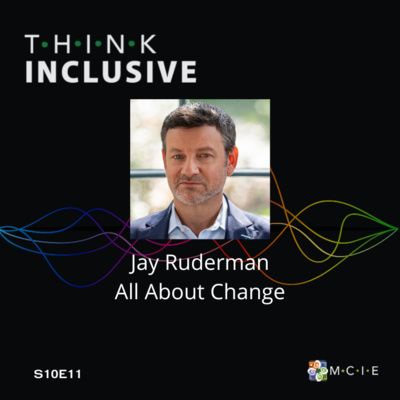
S10 Ep 11Jay Ruderman on Authentic Representation and Inclusion in Media
Jay Ruderman is the President of the Ruderman Family Foundation, a philanthropic organization dedicated to inclusion, diversity, and social justice. A lifelong social justice activist, Jay has championed disability rights and worked to hold the entertainment industry accountable for authentic representation. He also hosts the podcast All About Change, which highlights stories of activism and resilience.In this episode, Tim Villegas talks with Jay Ruderman about his journey as an activist, the evolution of the Ruderman Family Foundation, and the fight for authentic representation of people with disabilities in media. They explore how advocacy strategies can influence systemic change, the power of storytelling, and why allyship is essential for creating a more inclusive society.Complete show notes and transcript: https://mcie.org/think-inclusive/jay-ruderman-all-about-change/
S10 Ep 10Characteristics of Fully Inclusive Schools: A Conversation with TASH Leaders
Debbie Taub — TASH board member and technical assistance provider with the TIES Center, a national TA center focused on building inclusive systems for students with the most significant cognitive disabilities. Also brings a parent perspective as a mom advocating at the IEP table. Diane Ryndak — Professor at the University of North Carolina at Greensboro; co‑chair of TASH’s Inclusive Education Community of Practice (CoP), former TASH board member, and affiliated with the TIES Center on inclusive practices and policies. Mary Fisher — Faculty at Lewis University (Romeoville, IL); co‑director of the TASH Inclusive Education CoP and long‑time TASH member since 1977. Focuses on teacher preparation and practical ways schools move toward inclusion. Members of the TASH Inclusive Education Community of Practice break down what fully inclusive schools look like and how to get there—moving from “one student at a time” fixes to systemic change at school, district, and state levels. They highlight presuming competence, high expectations, explicit communication instruction, and clear placement in general education as non‑negotiables, and point listeners to tools (like TIES Center’s RISE/IER) that help teams reflect and plan. Complete show notes and transcript: https://mcie.org/think-inclusive/tash-characteristics-of-fully-inclusive-schools/
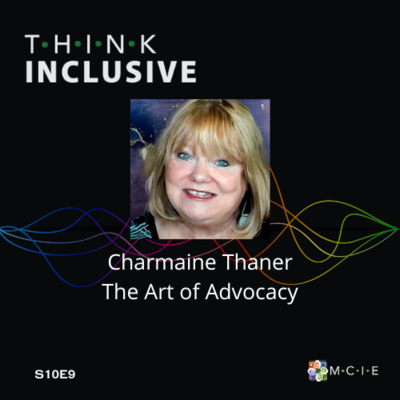
S10 Ep 9The Art of Advocacy: Charmaine Thaner on Building Inclusive Schools
Charmaine Thaner is an inclusion advocate and founder of Collaborative Special Education Advocacy. She’s a former self‑contained special education teacher who became a general education teacher for 15 years, and now works alongside families and schools to make inclusive education real. She also hosts the long‑running Facebook Live series The Art of Advocacy. Her path runs from Slippery Rock State College in the 1970s, to early work in Colorado schools, to serving as an education specialist with the PEAK Parent Center (Colorado’s PTI). As a parent, she and her husband advocated for full inclusion for their son, Dylan, who has Down syndrome—from community preschool through college—experiences that shape her practical, relationship‑first approach today. Charmaine launched her advocacy business (originally Visions and Voices Together, now Collaborative Special Education Advocacy) to blend lived experience and professional know‑how and to stand with families in meetings when communication and trust have broken down. In this episode, Tim Villegas talks with Charmaine Thaner about what it really takes to move inclusion from idea to everyday practice. Charmaine traces her journey from self‑contained teaching to general education and district collaboration, and then to parent‑advocacy after her son Dylan was born—highlighting why “relationships, relationships, relationships” are the three R’s of effective advocacy. They dig into the rise, stall, and renewal of inclusive education, Dylan’s fully included path (including auditing classes at the University of Colorado - Colorado Springs with support from allies on campus), and the hard truth that some schools still isolate students despite paper “inclusion.” Charmaine shares when to ask for help, how to keep it collaborative (and when to escalate), and why broader coalitions—parents, self‑advocates, and educators—are pushing for changes like ending seclusion and restraint and implementing UDL with fidelity. Complete show notes and transcript: https://mcie.org/think-inclusive/charmaine-thaner-the-art-of-advocacy/
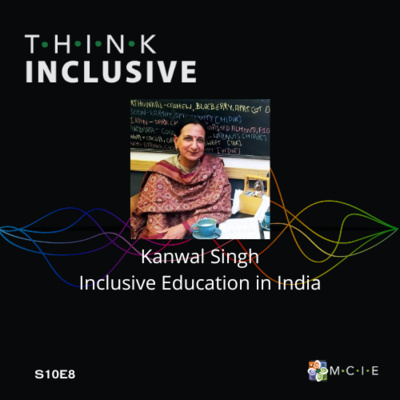
S10 Ep 8Inclusive Education in India: Lessons from Kanwal Singh’s Journey
Kanwal Singh — former Director of the Vishwas school (India) and author of Hanging On: A Special Educator’s Journey into Inclusive Education (published in 2020). She began her career in 1988 at the Spastic Society of Northern India and has spent more than three decades moving from special education to integration to inclusion. Currently, she consults with the UK-based Enabling Education Network, supporting inclusive education and teacher training programs in Ethiopia and Uganda.Kanwal Singh shares her journey from leading special schools to building a fully inclusive model at Vishwas in India—removing labels, simplifying language, and centering the idea of “all students together.” She explains why teacher preparation often teaches inclusion in theory but defaults to special-ed practices in reality, and what it takes to sustain inclusion: aligned people, systems, and funding.Complete show notes and transcript: https://mcie.org/think-inclusive/kanwal-singh-inclusive-education-in-india/
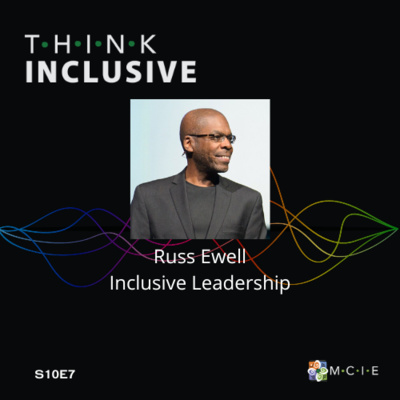
S10 Ep 7Inclusive Leadership in Action: Russ Ewell’s Journey from Sports to Systems Change
Russ Ewell — Founder of E‑soccer and Digital Scribbler; CEO of Hope Technology Group; host of the Lead Different Podcast; and father of children with disabilities. His inclusion journey began when his eldest son was born with Down syndrome, which led him to create inclusive sports programs so kids with and without disabilities could play together.When Russ Ewell saw his son segregated in youth sports, he built a different model—launching E‑soccer to bring kids together on the same field. In this conversation with Tim Villegas, Russ unpacks what inclusive leadership looks like: empathy, compassion, emotional intelligence, and the humility to keep learning. They also discuss the everyday “micro‑moments” that either build or undermine inclusion (like at a coffee shop), and why culture—not just programs—determines whether people gain independence or remain isolated. Tim closes by sharing his own path from psychology student to inclusive educator, sparked by a classroom observation and strengthened by planning around student strengths. Complete show notes and transcript: https://mcie.org/think-inclusive/russ-ewell-inclusive-leadership/
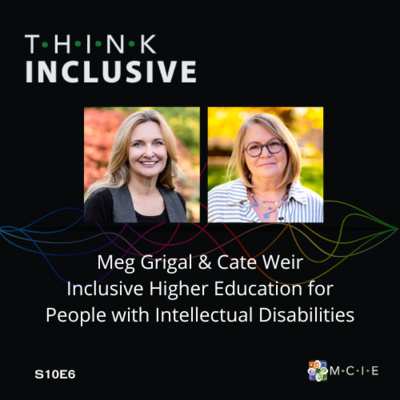
S10 Ep 6Think College: Expanding Higher Education for Students with ID
Meg Grigal — Researcher and program leader at the Institute for Community Inclusion, University of Massachusetts Boston, where she directs multiple federally funded projects that expand access to higher education for people with intellectual disability (ID).Cate Weir — Project Coordinator for the Think College National Coordinating Center at UMass Boston; she supports colleges nationwide and has led the ongoing build‑out of the Think College website and resource ecosystem.Host Tim Villegas speaks with Meg Grigal and Cate Weir from Think College about why inclusive higher education is both possible and powerful for students with intellectual disabilities—even for those who didn’t experience strong K–12 inclusion or who don’t hold a “regular” high‑school diploma. They outline how programs typically use an alternative admissions path, focus on authentic campus life (academics, internships, social life, sometimes residential), and award meaningful non‑degree credentials aligned to career goals. Complete show notes and transcript: https://mcie.org/think-inclusive/meg-grigal-cate-weir-inclusive-higher-education-for-people-with-intellectual-disabilities/
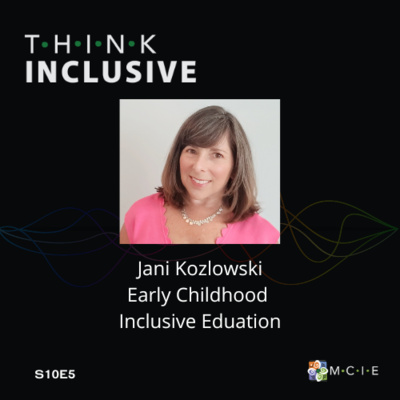
S10 Ep 5Every Child Can Fly: Building Inclusive Classrooms from the Start
Jani Kozlowski is a Technical Assistance Specialist with the Early Childhood TA Center at the Frank Porter Graham Child Development Institute (University of North Carolina–Chapel Hill). She previously served as the inclusion lead for the Office of Head Start’s National Center on Early Childhood Development, Teaching, and Learning, and is the author of Every Child Can Fly: An Early Childhood Educator’s Guide to Inclusion.In this episode, Jani Kozlowski makes a compelling case that inclusive early childhood programs set the trajectory for belonging and learning throughout K–12 and life. She shares research-backed benefits for children with and without disabilities, unpacks the defining features of inclusion (access, participation, supports), and explains why the biggest barriers are often beliefs and habits—not laws or funding. Jani also offers practical ways to prepare educators, partner with families, and design environments where every child can learn to “fly”—in their own way.Complete show notes and transcript: https://mcie.org/think-inclusive/jani-kozlowski-early-childhood-inclusive-education/
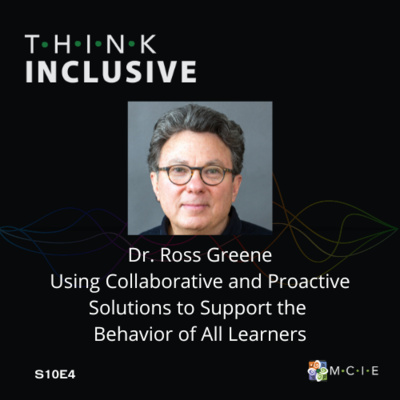
S10 Ep 4From Punishment to Problem-Solving: The CPS Model Explained by Dr. Ross Greene
Dr. Ross Greene is the New York Times bestselling author of Lost at School and Raising Human Beings. He developed the Collaborative and Proactive Solutions (CPS) model, a framework for supporting children with challenging behavior by focusing on problem-solving rather than punishment. Formerly on the faculty at Harvard Medical School for over 20 years, Dr. Greene is now the founding director of Lives in the Balance, a nonprofit offering free resources on CPS. In this episode, Tim Villegas talks with Dr. Ross Greene about why schools need to shift from focusing on student behavior to addressing the underlying problems causing that behavior. They explore how the CPS model works, why traditional behaviorist approaches fall short, and how educators can create more equitable and inclusive environments for all learners. Complete show notes and transcript: https://mcie.org/think-inclusive/dr-ross-greene-using-collaborative-and-proactive-solutions-to-support-the-behavior-of-all-learners/
S10 Ep 3Beyond Behavior Charts: Rethinking Discipline with Dr. Mona Delahooke
Dr. Mona Delahooke is a licensed clinical psychologist with over 30 years of experience supporting children and families. She is a senior faculty member at the Profectum Foundation and a member of the American Psychological Association. Dr. Delahooke is the author of Beyond Behaviors: Using Brain Science and Compassion to Understand and Solve Children’s Behavioral Challenges and Brain-Body Parenting. Her work focuses on translating neuroscience into practical strategies for parents and educators to better understand and support children’s emotional and behavioral development.In this episode, Tim Villegas talks with Dr. Mona Delahooke about moving beyond traditional behavior management systems like charts and rewards. They explore why behaviors should be seen as signals rather than targets, the importance of relational safety, and how understanding the brain-body connection can transform parenting and teaching. Dr. Delahooke introduces practical tools like the “check-in” process and explains why co-regulation—not punishment—is key to helping children thrive.Complete show notes and transcript: https://mcie.org/think-inclusive/dr-mona-delahooke-beyond-behavior-charts-and-positive-reinforcement/
S10 Ep 2Neurodiverse Love Stories: Mazey Eddings on Anxiety, Romance, and Representation
Mazey Eddings is an author and dentist who identifies as neurodivergent (anxiety since childhood; ADHD and autism diagnosed later). She’s on a personal mission to destigmatize mental health and write “love stories for every brain.” She also proudly claims the title of stage mom to her cats, Yaya and Zedi. Host Tim Villegas talks with Mazey Eddings about neurodiverse representation in romance, the visceral reality of anxiety as portrayed in her debut novel A Brush with Love (set in dental school), and how stories can help readers see mental health with greater empathy. They discuss internalized shame and ableism, sexism in clinical training, and the trial‑and‑error of supporting a partner with anxiety—while reaffirming romance’s promise of hard‑won happy endings.Complete show notes and transcript: https://mcie.org/think-inclusive/mazey-eddings-neurodiverse-representation-in-books/
S10 Ep 1Voices That Matter: Disability Advocacy Through YouTube and Podcasting
Liz Weintraub — Senior Advocacy Specialist at the Association of University Centers on Disabilities (AUCD); host of the monthly YouTube series Tuesdays with Liz: Disability Policy for All, where she breaks down complex policy terms and bills so everyone can understand and advocate. She’s interviewed legislators and has produced 200+ short episodes over ~5–7 years. Kenneth Kelty — Motivational speaker and disability advocate with the Carolina Institute for Developmental Disabilities (UNC); graduate of Western Carolina University’s University Participant (UP) inclusive postsecondary program; host of Exceeding Expectations with Kenneth Kelty, a podcast featuring trailblazers (with and without disabilities) focused on empowerment, inclusive postsecondary education, and competitive employment. His show has covered stories like B3 Coffee (NC) and an international perspective on disability from Ireland. Host Tim Villegas talks with Liz Weintraub and Kenneth Kelty about why they create content as a form of advocacy—Liz to make disability policy plain-language and actionable, and Kenneth to amplify lived experiences and self‑determination through podcasting. They share memorable moments (like explaining congressional recess in everyday terms and highlighting inclusive employment via B3 Coffee) and where listeners can find their work. Complete show notes and transcript: https://mcie.org/think-inclusive/liz-weintraub-kenneth-kelty-using-content-creation-for-disability-advocacy/
S9 Ep 20Rasheera Dopson on Womanhood, Disability, and Building Inclusive Communities
Rasheera Dopson — Author, disability justice activist, researcher, and MPH student at Morehouse School of Medicine whose work explores the intersection of race, gender, and disability. She founded Beauty With a Twist in 2016 to build community among women and girls with disabilities and hosts the WomanHood & Disability podcast, creating a safe, intersectional space that bridges disabled and non‑disabled audiences.Host Tim Villegas welcomes Rasheera Dopson to talk about why she launched the WomanHood & Disability podcast and what it means to live at the intersection of womanhood and disability. Rasheera shares how moving from writing to podcasting pushed her to articulate lived experiences—like ableism and health disparities—in ways that invite both vulnerability and community. The conversation covers how she mixes solo episodes with interviews, uses cultural moments (e.g., Black History Month) to frame topics, and keeps the door open for allies while centering disabled voices. She also reflects on internships (including with Sen. Jon Ossoff’s office and AAPD), her goals in disability policy, and what’s ahead for Season 2, from body positivity to Black disability and intersectionality.Complete show notes and transcript: https://mcie.org/think-inclusive/rasheera-dopson-womanhood-and-disability-podcast/
S9 Ep 19Matt from With Rolls and No Luck & Shirene Hayes of Super MEro
Matt (he/him) — Disability advocate (legal name withheld in the episode), graduate of Wake Forest University, podcaster, and independent contractor. He lives with cerebral palsy and discusses the tightrope of earning income while maintaining essential Medicaid benefits. He also co-hosts the actual‑play Dungeons & Dragons podcast With Rolls and No Luck under the alias “Samurai Fooks.”Shirene Hayes (she/her) — Chief Encouragement Officer and creator of Super MEro and The Code, an SEL resource for schools. She’s an award‑winning author, keynote speaker, serial entrepreneur, world traveler, and mother of two grown sons; she champions the “each one, teach one” mindset and the “power of one.”Complete show notes and transcript: https://mcie.org/think-inclusive/matt-from-with-rolls-and-no-luck-shirene-hayes-creator-of-super-mero/

S9 Ep 18Autistic Archive & the History of the Neurodiversity Movement
Ira Eidle (Decatur, GA) is an autistic self‑advocate and curator of Autistic Archive, a growing collection that preserves and teaches the history of the neurodiversity movement. He earned a B.A. in Theater & Performance Studies from Kennesaw State University, completed the 2020 Autism Campus Inclusion program with the Autistic Self Advocacy Network (ASAN), and founded the student group Neurodivergent Advocates of Kennesaw. He currently interns at The Hirsch Academy and is passionate about documenting movement history so educators and advocates can learn from past wins—and missteps. Cameos in this episode: Bryan Nance, a barista at Independent Grounds (Kennesaw, GA), shares how meaningful, inclusive work has improved his life and skills; Tim Villegas hosts.Host Tim Villegas talks with Ira Eidle about the origins and evolution of the neurodiversity movement and why he created Autistic Archive to make that history accessible. They explore early listserv culture, seminal sites like Autistics.org and Neurodiversity.com, and recurring debates inside the movement—centering the question “who’s in control?” of spaces, services, and narratives about autistic people.Complete show notes and transcript: https://mcie.org/think-inclusive/ira-eidle-autistic-archive/
S9 Ep 17Haley Moss on Redefining Independence for Autistic Adults
Haley Moss (she/her) — autistic attorney, author, artist, and advocate based in Miami, Florida. Known as Florida’s first openly autistic attorney, Haley now works as an educator and consultant to corporations and nonprofits on neurodiversity and disability inclusion, and is a frequent commentator on disability rights. Her books include Great Minds Think Differently, Neurodiversity for Lawyers and Other Professionals, and The Young Autistic Adults’ Independence Handbook. Earlier works include Middle School: The Stuff Nobody Tells You About and A Freshman Survival Guide for College Students with Autism Spectrum Disorder.What does independence actually mean for autistic young adults—and where does interdependence fit in? Haley Moss deconstructs the all‑or‑nothing notion of “doing everything by yourself,” offers practical life strategies (from grocery shopping to prescriptions), and lays out alternatives to guardianship with a strong emphasis on supported decision‑making. She closes with concrete ways educators can foster self‑advocacy at every age.Complete show notes and transcript: https://mcie.org/think-inclusive/haley-moss-autistic-independence/
S9 Ep 16Building Inclusive Communities Beyond Schools with Merge Consulting
Lisa Drennan — inclusion expert, trainer, consultant, and founder of Merge Inclusion Consulting. She draws on 37 years of leadership supporting people with disabilities and helps community organizations (like YMCAs, rec programs, camps, libraries, and faith groups) build inclusive cultures where everyone has a meaningful role. Host Tim Villegas talks with Lisa Drennan about moving inclusion beyond schools and into community life—especially recreation spaces like YMCAs, summer camps, JCCs, Boys & Girls Clubs, libraries, and arts programs. They cover practical advocacy steps for families (start at the top, ask about barriers, and suggest training), the mindset shift from “we can’t” to “how do we get to yes,” and why inclusion must be an organization‑wide commitment, not a one‑off program or single staff role. Lisa also shares a free toolkit she authored with The Arc of Massachusetts to help community organizations spark authentic friendships between people with and without disabilities.Complete show notes and transcript: https://mcie.org/think-inclusive/lisa-drennan-inclusive-recreation/
S9 Ep 15Creating Cultures of Belonging in Education and Beyond with Alida Miranda-Wolff
Alida Miranda-Wolff is the CEO and founder of Ethos, a consultancy firm specializing in Diversity, Equity, Inclusion, and Belonging (DEIB) transformation. She is notable for her book, "Cultures of Belonging: Building Inclusive Organizations that Last," which explores strategies for fostering inclusive environments. Alida's background spans higher education at the University of Chicago, non-profit work in immigrant and refugee rights, and a pioneering role in venture capital as one of the first Latina directors. She has taught at the University of Chicago, Northwestern University, and General Assembly, cultivating a deep understanding of DEIB initiatives. Through Ethos, Alida aims to innovate and apply DEIB strategies that resonate with modern organizational dynamics.In this insightful episode of the Think Inclusive Podcast, Tim Villegas engages Alida Miranda-Wolff, the CEO of Ethos and author of "Cultures of Belonging," to delve into creating inclusive educational environments. With a focus on diversity, equity, inclusion, and belonging (DEIB), Alida explains how organizations, particularly schools, can foster a culture of belonging for both students and teachers. Tim and Alida discuss how identity and personal experiences shape one's approach to DEIB work, drawing from Alida's diverse career background in higher education, nonprofit, and venture capital sectors.Throughout the conversation, Alida emphasizes the importance of belonging as a core psychological need and describes her approach to building inclusive cultures, which hinges on the three R's—relationships, resources, and reciprocity. For schools, this means creating meaningful connections and ensuring educators are supported and fairly compensated. Alida also addresses the issue of value misalignment within educational institutions and how teachers can navigate these challenges. Practical strategies for fostering belonging among educators are discussed, encouraging teachers to build their micro-cultures and seek community support, even in misaligned systems.Complete show notes and transcript: https://mcie.org/think-inclusive/alida-miranda-wolff-building-inclusive-organizations-that-last/
S9 Ep 14What Inclusionists Need To Know About the Anti-CRT Movement
King Williams — Atlanta-based journalist and filmmaker who traces CRT’s history, explains how cases like Dred Scott and Plessy v. Ferguson reveal the gap between what is legal and what is moral, and describes how groups like the United Daughters of the Confederacy shaped school narratives in the South.Alida Miranda-Wolff — CEO and founder of Ethos, clarifies what CRT is (and isn’t), outlines core tenets (race as a social construct; racism embedded in institutions; the role of counter-storytelling; and the critique of colorblindness/meritocracy), and shares how intersectionality and systems-thinking inform practical DEIB work.Eddie Fergus — Professor of Urban Education Policy at Temple University who teaches a doctoral seminar on CRT and connects historical/legal context to today’s school equity debates, noting why “when you’re accustomed to privilege, equity feels like oppression.”Pete Newlove — High school English teacher and doctoral candidate at the University of Colorado Denver who describes on-the-ground effects of anti‑CRT politics in schools and how educators navigate backlash, book bans, and board-level power shifts.Featuring a clip from Cecelia Lewis — A school leader whose experience became entangled in anti‑CRT rumors; she shares a powerful inclusion story about moving a student with significant behavioral support needs into general education.Host Tim Villegas explores how the anti‑CRT movement is spilling over into K–12 and threatening broader educational equity efforts—including disability inclusion. With insights from King Williams, Alida Miranda-Wolff, Eddie Fergus, and Pete Newlove, the episode clarifies what CRT actually is, how it’s being mischaracterized, and what practical steps educators can take to keep inclusion moving forward.Complete show notes and transcript: https://mcie.org/think-inclusive/what-inclusionists-need-to-know-about-the-anti-crt-movement/
S9 Ep 13Disability Awareness That Matters: Insights from Diana Pastora Carson
Diana Pastora Carson is an educator of 30+ years who has taught at both the elementary and university levels. She’s a consultant and trainer on disability and diversity, a board alum of Disability Rights California and current board member of Disability Voices United. She hosts the Beyond Awareness: Disability Awareness That Matters podcast and is the author of Beyond Awareness: Bringing Disability into Diversity Work in K–12 Schools and Communities and the children’s book Ed Roberts: Champion of Disability Rights. Diana is also a fierce sibling advocate. Her brother Joaquin spent 15 years in institutional settings after years of aversive “behavior” programs and harmful medication protocols. Diana and her family fought to bring him home into supported living on rural property designed for his safety and choice—what they lovingly call “Joaquinified.”Host Tim Villegas talks with Diana Pastora Carson about her family’s journey to free Joaquin from an institution and what true inclusion requires in schools and communities. They unpack why typical “disability simulations” miss the point, and why presuming competence, prioritizing communication access, and removing societal barriers are the real drivers of inclusion. The episode closes with how Diana’s Beyond Awareness work gives educators concrete, research‑informed steps that honor disabled people’s voices. Complete show notes and transcript: https://mcie.org/think-inclusive/diana-pastora-carson-beyond-awareness/
S9 Ep 12Born Fabulous: Greta Harrison’s Journey to Inclusive Storytelling
Greta Harrison is the creator and host of the Born Fabulous Podcast. A passionate advocate for inclusive education, Greta is a mother of two daughters—her youngest has Down syndrome and autism. Her journey has been shaped by a commitment to learning, community involvement, and storytelling. Greta’s podcast amplifies the voices of self-advocates and their families, showcasing the power of inclusion and the importance of hope in education. She is also a writer for The Mighty and is currently working on a fiction book.In this episode, Tim Villegas interviews Greta Harrison about her motivation for starting the Born Fabulous Podcast, her personal journey as a parent of a child with disabilities, and the importance of hope and relationships in inclusive education. Greta shares powerful stories from her life and podcast guests, emphasizing that inclusion is not just about access to education but about building a life in the community. The conversation also explores systemic challenges, the role of educators, and how parents can advocate effectively for their children.Complete show notes and transcript: https://mcie.org/think-inclusive/greta-harrison-born-fabulous-podcast/
S9 Ep 21How Race and Disability Shape Inclusive Education
Dr. Zerek Mayes — Director of Diversity, Equity, and Inclusion at a private school in Chicago, Illinois.Dena Slanda — Faculty at the University of Central Florida, working on teacher preparation grants through the Office of Special Education Programs.Lindsey Pike — Doctoral candidate at the University of Central Florida in Exceptional Education, focusing on diversity, equity, and inclusion at the intersection of disability and other markers of difference.Eric Wells — Director of IDEA Programs at the Oregon Department of Education.In this bonus episode recorded live at the Council for Exceptional Children Conference in Orlando, Tim Villegas sits down with four equity advocates to unpack the intersection of race and disability in education. The conversation explores why current systems often fail students from racially, culturally, and linguistically diverse backgrounds—and what educators can do to change that. From grassroots action to systemic reform, this episode is a call to reflect, act, and lead for equity.Complete show notes and transcript: https://mcie.org/think-inclusive/the-intersection-of-race-and-disability-pop-up-podcast-cec2022/
S9 Ep 11Honoring Intersectionality: LGBTQIA+ and Disability Inclusion in Schools
Amanda Darrow — Director of Youth, Family, and Education at the Utah Pride Center. She holds an M.Ed. and a B.S. in Clinical & Counseling Psychology from Westminster College (Salt Lake City). Her work focuses on helping homes, schools, and community spaces become more inclusive for LGBTQIA+ youth and families, and educating current and future generations about the community. Shamby Polychronis, Ph.D. — Assistant Professor of Special Education at the University of Utah. A long‑time disability rights advocate, her passions include intersectionality, alternatives to guardianship, full inclusion in school and community, eliminating aversive interventions, and meaningful employment. She prepares special‑education teacher candidates and continues research and advocacy across these issues.Host Tim Villegas talks with Amanda Darrow and Shamby Polychronis about honoring intersectionality between disability and LGBTQIA+ identities—what it looks like in classrooms, why language matters, and how policies and everyday practices can either harm or protect students. They unpack the “Genderbread Person” framework (identity, expression, sex, and attraction), discuss pronouns and the life‑saving impact of respectful language, share data on overlap between LGBTQIA+ and disability communities, and offer practical tips administrators and teachers can implement now—along with legal angles (ADA, FAPE/IDEA, Title IX) for creating safer, more equitable schools.Complete show notes and transcript: https://mcie.org/think-inclusive/amanda-darrow-and-shamby-polychronis-honoring-intersectionality/
S9 Ep 10The Best of Think Inclusive Volume 2
Host — Tim Villegas Host of Think Inclusive, framing this “best of” episode and guiding four featured conversations on inclusion.Lou Brown Co‑founder of TASH; this previously unpublished 2019 clip covers “ultimate functioning,” vertical and horizontal teaming, and why inclusive, integrated settings matter for learning and behavior.Katie Novak Universal Design for Learning (UDL) expert and former assistant superintendent; she challenges ineffective standardized assessments and urges impact‑over‑intent, evidence‑informed teaching.Alfie Kohn Author of Punished by Rewards; explains how extrinsic incentives (stickers, points, praise-as-reward, PBIS) can erode students’ intrinsic motivation.Cheryl Jorgensen Author and longtime inclusion advocate; draws clear parallels between civil rights and disability rights and offers practical advice for educators working toward system change.This “Best of” episode features four powerful clips: a never‑before‑released conversation with Lou Brown from 2019; plus highlights with Katie Novak, Alfie Kohn, and Cheryl Jorgensen. Together they tackle enduring questions—why inclusive placements outperform segregated “special classes,” how UDL can counter inaccessible assessment systems, why rewards often backfire, and how disability rights sit alongside civil rights. It’s a practical, plain‑spoken primer on building schools where every learner belongs.Complete show notes and transcript:
S9 Ep 9Anthony Ianni on Autism, Basketball, and Breaking Barriers
Anthony Ianni is a national motivational speaker and autism self‑advocate, and the first known NCAA Division I men’s basketball player with an autism diagnosis. He played for the Michigan State Spartans, earned a bachelor’s degree in sociology from Michigan State, and is the author of Centered: Autism, Basketball, and One Athlete’s Dreams. He’s also a husband and dad to two sons, Knox and Nash.Host Tim Villegas opens with the Autistic Self Advocacy Network’s plain‑language definition of autism, then talks with Anthony Ianni about his late‑disclosed diagnosis, his journey to (and through) Michigan State basketball, and how he came to embrace his autistic identity. The conversation centers on high expectations, support, and the message Anthony shares with young autistic people: you define your futureComplete show notes and transcript: https://mcie.org/think-inclusive/anthony-ianni-autism-basketball-and-one-athletes-dream/
S9 Ep 8Inside Belchertown State School and How It Changed One Educator's Life
Howard Shane, Ph.D. — Associate Professor at Harvard Medical School and Director of the Autism Language Program at Boston Children’s Hospital. A pioneer in augmentative and alternative communication (AAC), Dr. Shane has designed numerous computer applications for people with disabilities, holds two U.S. patents, and has been recognized by national organizations for lifetime contributions to clinical practice and technology innovation. He is the author of Unsilenced: A Teacher’s Year of Battles, Breakthroughs, and Life‑Changing Lessons at Belchertown State School. Content Warning: In today’s episode, we will discuss depictions of the living conditions of institutions for people with disabilities in the 1960s and certain attitudes about people with disabilities that worked there.Dr. Howard Shane reflects on his first teaching job at Belchertown State School in 1969, how witnessing institutional life transformed his career, and the early DIY innovations that helped shape modern AAC. He traces a throughline from interest‑driven instruction to today’s consumer‑grade tech (wearables, AR, and AI) that can quietly support communication and social‑emotional needs—while arguing for a language and mindset shift that keeps students learning with their peers as much as possible, with targeted instruction layered in.Complete show notes and transcript: https://mcie.org/think-inclusive/howard-shane-how-teaching-at-belchertown-state-school-changed-my-life/
S9 Ep 7What Is Self-Determination? Exploring the SDLMI with Karrie Shogren & Sheida Raley
Karrie Shogren — Director of the Kansas University Center on Developmental Disabilities and Professor in the Department of Special Education at the University of Kansas.Sheida Raley — Assistant Research Professor at the Kansas University Center on Developmental Disabilities and Assistant Professor in the Department of Special Education at the University of Kansas.In this episode, Tim Villegas talks with Karrie Shogren and Sheida Raley about what self-determination really means and why it matters for all students—not just those in special education. They dive deep into the Self-Determined Learning Model of Instruction (SDLMI), a flexible, evidence-based framework that empowers students to set goals, make plans, and reflect on their progress.The conversation explores how SDLMI works in inclusive classrooms, its role in multi-tiered systems of support, and why fostering self-determination is essential for equity and lifelong success. You’ll also hear practical stories from classrooms and learn how educators can start implementing SDLMI in their schools.Complete show notes and transcript: https://mcie.org/think-inclusive/karrie-shogren-sheida-raley-what-does-self-determination-really-mean/
S9 Ep 6Reimagining Special Education: Jenna Rufo on How Inclusion Builds Equity for All Students
Dr. Jenna Rufo is an author, educator, and inclusive education consultant who founded empowerED School Solutions to help districts implement inclusive practices. She previously served as a special education administrator, director, and assistant superintendent, after beginning her career as an inclusion facilitator. Her work is deeply informed by her sister, Nina, who has multiple disabilities. Dr. Jenna Rufo co‑authored Reimagining Special Education with Dr. Julie Causton.In this conversation, Tim Villegas and Dr. Jenna Rufo dig into what it really means to “reimagine” special education—using inclusion as the framework for equity and support for all students. They talk about shifting beliefs so the default is general education, wrapping services around students, designing instruction that’s engaging and differentiated, and building structures (like intervention/enrichment blocks and inclusion facilitation) that make inclusive schooling sustainable. They also touch on accountability for Least Restrictive Environment (LRE), neighborhood schools, and practical steps educators can take to start change now.Complete show notes and transcript: https://mcie.org/think-inclusive/jenna-rufo-using-inclusion-as-a-framework-to-build-equity-and-support-all-students/
S9 Ep 5Michael McSheehan on Building Inclusive Schools with MTSS and UDL
Michael McSheehan is the owner and lead technical assistance provider at Evolve and Effect, LLC. He partners with schools, districts, and state agencies nationwide to strengthen inclusive education by braiding MTSS (Multi‑Tiered System of Support) and UDL (Universal Design for Learning). His path started in speech‑language pathology with a focus on augmentative and alternative communication, and grew into systems‑change work—including years with the SWIFT Education Center across five states, 16 districts, and 64 schools.In this conversation, Michael McSheehan unpacks how MTSS and UDL fit together to make inclusive education work in everyday classrooms. He explains that UDL is the design foundation—assuming variability, elevating student voice, and removing barriers—while MTSS adds the structures and rapid response needed to prevent struggle and respond quickly when students need more. Together, they form a proactive, responsive system where all students start with “first, best instruction” and belong to a community of learners. Michael reflects on lessons from SWIFT systems‑change work (state–district–school alignment matters), names the biggest barriers (adult mindsets, insufficient collaboration time, leadership turnover), and argues we need stronger civil‑rights‑level accountability—akin to Brown v. Board—to move beyond incrementalism. He also tackles the hard question, “Is inclusion done badly better than segregation?” and explains why the answer is no, sharing a student story (“Andy”) that shows how harm from unsupported inclusion can necessitate a temporary separate placement—with a thoughtful path back. Complete show notes and transcript: https://mcie.org/think-inclusive/michael-mcsheehan-how-mtss-and-udl-fit-into-inclusive-education/
S9 Ep 4What to Say When Families Think Segregated Special Education Classrooms Are Best
Janice Fialka — Author, social worker, and longtime activist; mom of two adult children, including Micah, who lives interdependently in Syracuse and was featured in the film Intelligent Lives. (Emma—her daughter—is a school principal in Boston.)Sara Jo Soldovieri — Doctoral student at Syracuse University studying inclusive special education; inclusive special educator by training; previously created and ran the inclusive education program at the National Down Syndrome Society; appears in the documentary Forget Me Not about inclusive education in New York City.Host Tim Villegas sits down with Janice Fialka and Sara Jo Soldovieri to talk about how to respond when families believe segregated special education classrooms are “best.” The conversation centers on listening first, naming fears, presuming competence, and taking practical steps—because inclusion is a process where all students learn together with the right supports.Complete show notes and transcript: https://mcie.org/think-inclusive/janice-fialka-sara-jo-soldovieri-what-to-say-when-families-think-segregated-special-education-classrooms-are-best/
S9 Ep 3How to Be an Ally to Disabled People with Emily Ladau
Emily Ladau — Disability rights activist, writer, and speaker; editor‑in‑chief of the Rooted in Rights blog; co‑host of The Accessible Stall podcast; and author of Demystifying Disability: What to Know, What to Say, and How to Be an Ally.Emily Ladau joins Tim Villegas to unpack what meaningful allyship to disabled people looks like in everyday life, why language matters, and how multiple disability models shape attitudes and systems. They dig into inclusive schooling and work, the limits of “inspiration” narratives, and the principle of “nothing about us without us.”Complete show notes and transcript: https://mcie.org/think-inclusive/emily-ladau-how-to-be-an-ally-to-disabled-people/
S9 Ep 2The Good Things in Life: Building Inclusive Lives with Genia Stephen
Genia Stephen — founder and host of the Good Things In Life podcast. She supports families to help kids with intellectual disabilities build inclusive lives at home, school, and in the community. She’s also a midwife with 10+ years’ experience working with families, including those welcoming a child with a disability.Tim talks with Genia Stephen about why podcasting is her go‑to way to bring disability thought leaders to families, what inclusion looks like across Canada and the U.S., and why “perfect inclusion” is aspirational—but inclusion still beats segregation every time. They discuss real‑life examples—from Genia’s sister and friend Becky to her son’s schooling—that show how community, relationships, and access to the regular curriculum create better outcomes.Complete show notes and transcript: https://mcie.org/think-inclusive/genia-stephen-good-things-in-life-podcast/
S9 Ep 1We're Not Broken: Eric Garcia on Changing the Autism Conversation
Eric Garcia is a journalist and the author of We’re Not Broken: Changing the Autism Conversation. He has worked at The Washington Post, The Hill, Roll Call, National Journal, and MarketWatch; his writing has appeared in The New Republic, The Daily Beast, The American Prospect, and Salon. He currently serves as Senior D.C. Correspondent for The Independent and is active on X/Twitter at @EricMGarcia. In this episode, Tim Villegas talks with Eric Garcia about reframing how society talks about autism—centering autistic voices, prioritizing real supports, and moving away from labels that flatten people’s experiences. Garcia challenges “inspiration” narratives, argues for fully funding and properly delivering IDEA services, and explains why integrated employment and community‑based supports matter for dignity and opportunity. He discusses health care that listens to autistic people, the overlapping struggles of autistic and LGBTQ+ communities, and why terms like “high‑” and “low‑functioning” should give way to talking about support needs. The conversation closes with a hopeful vision: autistic people included in every decision that affects them—across policy, workplaces, and public life. Complete show notes and transcript: https://mcie.org/think-inclusive/eric-garcia-were-not-broken-changing-the-autism-conversation/
S8 Ep 11What Is Co‑Teaching? Expert Insights from Marilyn Friend
Marilyn Friend — Renowned expert on co‑teaching and inclusive practices; author of practitioner books including Co‑Teach and Specially Designed Instruction for Co‑Teaching. She emphasizes co‑teaching as a service delivery option that embeds specially designed instruction in general education classrooms. Learn more at coteach.com or reach her at [email protected]. Host Tim Villegas talks with Marilyn Friend about what co‑teaching really is (and isn’t), why it isn’t mandated in federal or state law, and how it strengthens inclusive education by ensuring physical, social, and instructional integration for students with disabilities. The conversation covers the six co‑teaching approaches, which ones to prioritize, and practical guardrails like role reciprocity and keeping specially designed instruction truly “special.”
S8 Ep 10Why Exclusion Fails Students: Lessons from the Documentary Excluded
Sarah Wishart is the Creative Director at EachOther, a UK human-rights journalism charity, where she leads both the editorial and film teams. With a background in theatre/performance and communications in the education/media space, she focuses on storytelling that centers lived experience. In 2020 she launched Excluded, a youth-led feature documentary about school exclusion in the UK that elevates the voices of young people—many credited as co‑creators and consultants.Host Tim Villegas talks with Sarah Wishart about Excluded, a young-people–led documentary exploring how exclusion works in UK schools and why inclusion and compassion matter. They cover the viral “ad hack” that mapped a school‑exclusion‑to‑prison pipeline on the London Underground, the realities of temporary and permanent exclusion (including PRUs), and how co‑creating—and paying—young contributors changed the film and the organization behind it.Complete show notes and transcript: https://mcie.org/think-inclusive/sarah-wishart-excluded-a-young-people-led-film-on-school-exclusions/
S8 Ep 9Having High Expectations for All Students with Wyatt Oroke
Wyatt Oroke (often “Mr. O”) is a nationally recognized Baltimore educator known for his work in social justice and literacy. He teaches 7th–8th grade English and Honors English at City Springs Elementary/Middle School in Baltimore City. Honors include 2020 Baltimore City Teacher of the Year and 2021 Maryland Teacher of the Year, with additional recognition from Johns Hopkins, the University of Baltimore School of Law, the Maryland State Senate, the Baltimore Orioles, and a “Superhero Award” from Ellen DeGeneres, where he appeared twice. Instagram: @wyattoroke; he’s on Twitter but rarely posts; DMs are the best way to request his email.In this conversation, Wyatt Oroke makes the case that high expectations are an equity issue: every student (“scholar,” in his classroom) deserves access to grade‑level content with the right supports. He shares how an honors‑level curriculum and a student‑led (90/10) classroom helped his scholars rise academically, engage with real‑world issues like restorative practices, and advocate directly to city leaders. Grounded in his own story as a once‑struggling reader, Oroke challenges deficit language (e.g., “learning loss”), pushes for curriculum that centers students’ identities and voices, and calls for schools to become true community hubs. He doesn’t mince words about systemic inequities—his stance is to “blow it up and start again”—while offering practical steps educators can take right now: listen first, design for access to grade‑level work, and give students the mic.Complete show notes and transcript: https://mcie.org/think-inclusive/wyatt-oroke-having-high-expectations-for-all-students/
S8 Ep 8What Inclusive Preschool Services Look Like
Melissa McCullough is the Director of Early Childhood for the East Moline school district in Illinois, a pre‑K–8 district of about 2,700 students with roughly 200 children in its early childhood program. She started her career as a school social worker in an inclusion‑first district, brings that mindset to her current role, and is also a parent of three boys who are hard of hearing—experience that fuels her advocacy for inclusive preschool. Tim Villegas talks with Melissa McCullough about what fully inclusive preschool looks like—and how her district moved away from “all‑or‑nothing” special education toward blended classrooms where related services are pushed in, teachers are dually certified, and supports are built around least restrictive environment from day one. A key milestone: the program began the 2021–22 school year with zero students in self‑contained placements. The conversation covers mindset shifts, partnering with families, strategic professional development, and using data and funding drivers (like Indicator 6 in Illinois) to sustain change.Complete show notes and transcript: https://mcie.org/think-inclusive/melissa-mccullough-what-inclusive-preschool-services-look-like/
S8 Ep 7Disproportionality in Special Education with Eddie Fergus
Eddie Fergus is an associate professor of urban education and policy at Temple University. A former high school teacher, program evaluator, and community school program director, his research focuses on the intersection of education policy and outcomes, with specific attention to Black and Latino boys, disproportionality in special education, suspensions, school climate, and access to advanced courses.In this conversation, Eddie Fergus breaks down what “disproportionality” means in schools—when a student group is over‑ or under‑represented in programs like special education relative to their share of enrollment—and why it persists. He explains how practitioner mindsets (“shopping carts” of lived experience) and systemic design choices (e.g., wait‑to‑fail models) interact to produce inequitable outcomes. The discussion touches on Response to Intervention (RTI) and multi‑tiered supports, restorative practices as repair rather than punishment, and why the biggest barrier to inclusion may be the belief that only certain adults can teach students with disabilities.Complete show notes and transcript: https://mcie.org/think-inclusive/eddie-fergus-disproportionality-in-special-education/
S8 Ep 13How Poway Unified Transformed Special Education
Megan Gross — Special education teacher (14 years) and teacher on special assignment supporting inclusive practices and leading professional learning for K–12 teams in the Poway Unified school district. 2017 California Teacher of the Year and co‑author of The Inclusion Toolbox (with Dr. Jenny Kurth) and ParaEducate (with Renay Marquez).Nancy Brundrett — Special education instructional assistant (19 years) and the district’s first classified on special assignment, providing job‑embedded coaching for instructional assistants, supporting school teams to implement inclusive practices, and leading professional learning.In this episode, host Tim Villegas talks with Megan Gross and Nancy Brundrett about how Poway Unified school district shifted from celebrated segregated programs to a system where all students are general education students first. They walk through the leadership moves, the opt‑in pilot approach, the creation of on‑special‑assignment roles, and the day‑to‑day coaching that make inclusion work in real classrooms.Complete show notes and transcript: https://mcie.org/think-inclusive/bonus-megan-gross-and-nancy-brundrett-what-inclusive-education-looks-like-at-poway-unified/
S8 Ep 6Creating Effective Participation Plans for Students with Extensive Support Needs
Dr. Jennifer (“Jenny”) Kurth is an associate professor of special education at the University of Kansas. Her work centers on inclusive education for students with extensive and pervasive support needs, and she co-developed practical “participation plans” that general and special educators build together to support students in general education classes. Jenny Kurth makes the case that inclusive education is a social‑justice issue because the “wealth, opportunity, and privilege” in schools live in general education—not in separate settings. She walks through how participation plans work (ecological assessment, general + individualized supports, embedded instruction, and prioritizing a few big learning goals) so students with complex support needs learn with their peers. Jenny also pushes the field to move beyond labels and placement continuums—toward “specialized supports” that follow the student—and reminds educators to use the power they already have to advocate, collaborate, and “find another way.”Complete show notes and transcript: https://mcie.org/think-inclusive/jenny-kurth-implementing-inclusive-education-with-participation-plans/