Think Inclusive
240 episodes — Page 2 of 5
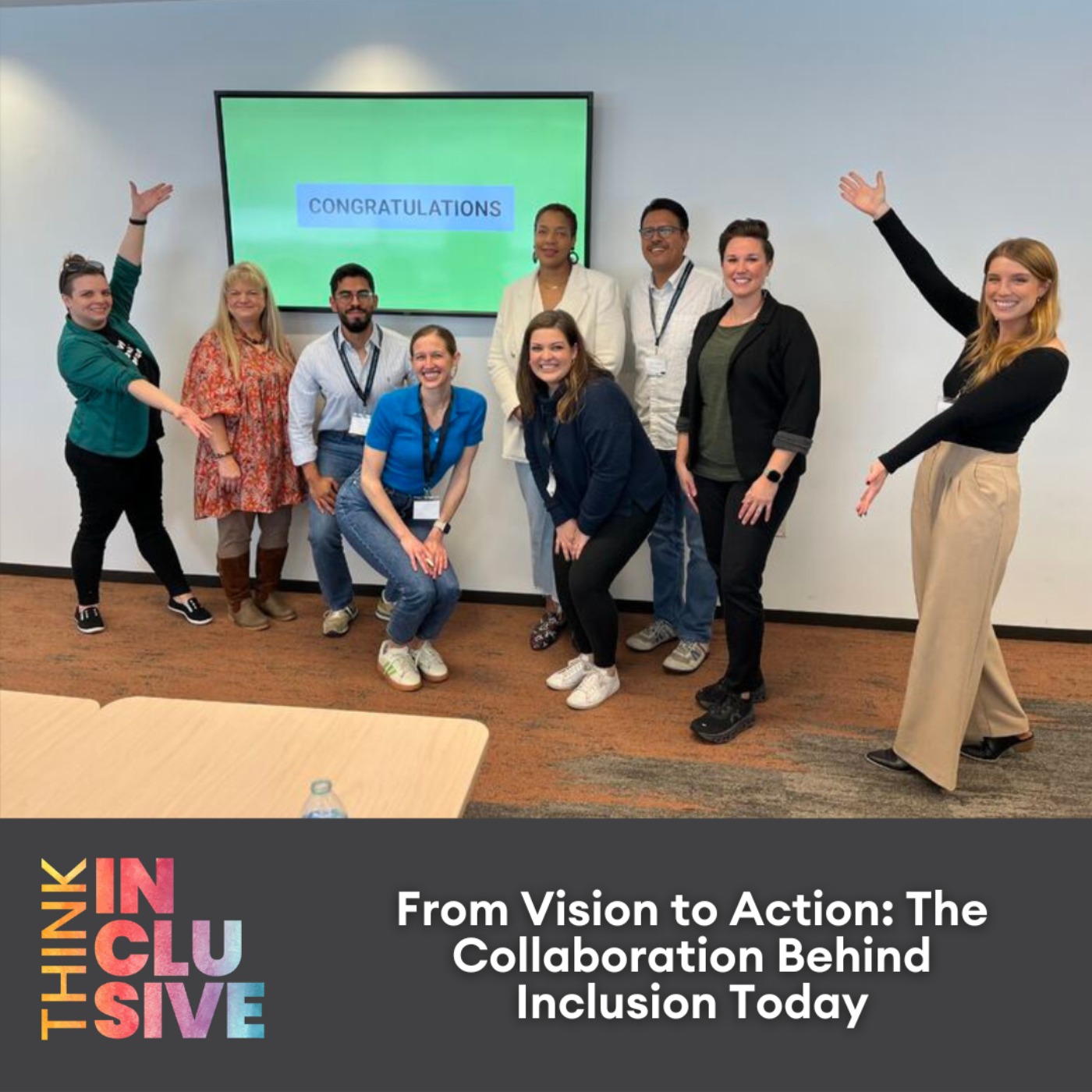
From Vision to Action: The Collaboration Behind Inclusion Today
bonusEpisode SummaryIn this insightful bonus episode of the Think Inclusive podcast, host Tim Villegas and the Inclusion Today team explore the collaborative journey embarked upon with the Educating All Learners Alliance. Igniting an ambitious national campaign, their goal is to ensure that more than a million students are educated in environments committed to inclusive learning practices. This episode captures the essence of their shared mission and navigates the challenges and triumphs of their team-based approach.The episode unravels the experiences during the Educating All Learners Alliance's Community of Action in December 2023, where educators from diverse backgrounds coalesced around a shared mission. Through detailed discussions, Tim, alongside his team, recounts how trust, collaborative synergy, and dedication shaped their successful initiative. They recount into how the Community of Action facilitated rich exchanges leading to the development of an inclusive toolkit, breaking down complex educational barriers to pave the way for sustainable inclusivity in education systems across the globe.Complete show notes and transcript: https://mcie.org/think-inclusive/from-vision-to-action-the-collaboration-behind-inclusion-today/Key TakeawaysThe power of trust and collaboration can significantly impact tackling educational challenges, guiding teams toward innovative solutions.Successful collaboration often involves acknowledging individual strengths and vulnerabilities, enabling participants to contribute uniquely to shared goals.Authentic inclusivity in education requires a thoughtful approach, focusing on accessible resources and actionable strategies.Participatory grant funding provides unique opportunities for organizations to address systemic educational issues proactively.Reflecting on experiences through constructive team feedback can enhance understanding and implementation of inclusive practices.To take the Inclusive Leadership Pledge and download the Starter Kit & Companion Guide go to https://educatingalllearners.org/inclusion-today/Thanks to the Educating All Learner Alliance for making Inclusion Today and this bonus episode possible. Learn more at https://educatingalllearners.org/ Hosted on Acast. See acast.com/privacy for more information.
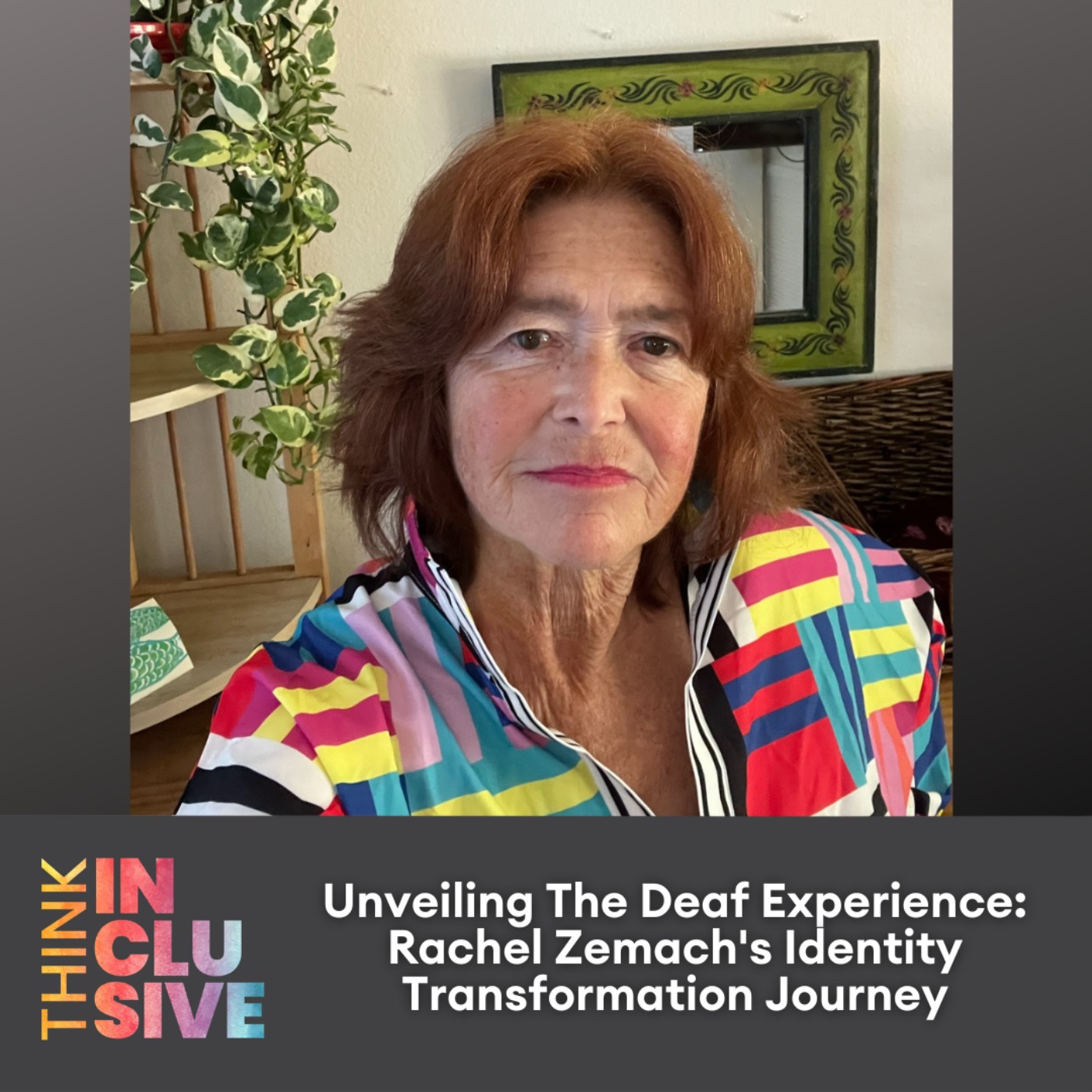
S12 Ep 37Unveiling The Deaf Experience: Rachel Zemach's Identity Transformation Journey
About the Guest(s):Rachel Zemach is a deaf author and former educator with a passionate career centered around advocating for deaf students. Her profound experiences in mainstream education as a deaf teacher culminated in the writing of her book, "The Butterfly Cage: Joy, Heartache, and Corruption Teaching While Deaf in a California Public School," published in 2023. Rachel, who became deaf at the age of 10, is a strong proponent of positive deaf identity and sign language, striving to raise awareness about the challenges faced by deaf students in mainstream educational settings. She currently resides in Northern California.Episode Summary:In this engaging episode of Think Inclusive, host Tim Villegas speaks with Rachel Zemach, a deaf author and former teacher, about her firsthand experiences educating deaf children within California's public school system. The episode dives deep into the themes of inclusion, identity, and the significance of tailored education for deaf students. With her book "The Butterfly Cage" as the backdrop, Rachel shares transformative insights from her decade-long teaching career and discusses the deep impacts of a strong deaf identity.Rachel Zemach highlights the pressing issues mainstream education faces when accommodating deaf students, pressing for educational systems that embrace American Sign Language and deaf culture. The conversation explores how a better understanding of communication barriers and the hiring of deaf professionals can promote a conducive learning environment. The potential of inclusive education systems and their ability to cater to a diverse learning community without trying to "fix" or change deaf students is a central theme.Complete show notes and transcript: https://mcie.org/think-inclusive/unveiling-the-deaf-experience-rachel-zemachs-identity-transformation-journey/ Key Takeaways:-Deaf Identity and Education: Rachel Zemach emphasizes the need for deaf children to be taught by deaf teachers or in environments that celebrate deaf culture and identity.-Sign Language and Communication: Schools should promote the learning and use of American ------Sign Language to foster inclusivity and understanding among deaf and hearing students.-Mainstreaming Challenges: Mainstream education often inadequately supports deaf students, emphasizing speech over sign language, leading to communication breakdowns and educational inequity.-Benefits of Deaf Schools: Deaf schools provide a unique environment where deaf children thrive, offering cultural identity, peer connection, and effective communication.-Systemic Changes: Implementation of resources, like certified interpreters and deaf educators, is crucial for creating supportive and inclusive educational settings.Resources:Rachel Zemach's Book: The Butterfly Cage https://rachelzemach.com/Thank you to our sponsor, IXL Learning: https://ixl.com/inclusive Hosted on Acast. See acast.com/privacy for more information.
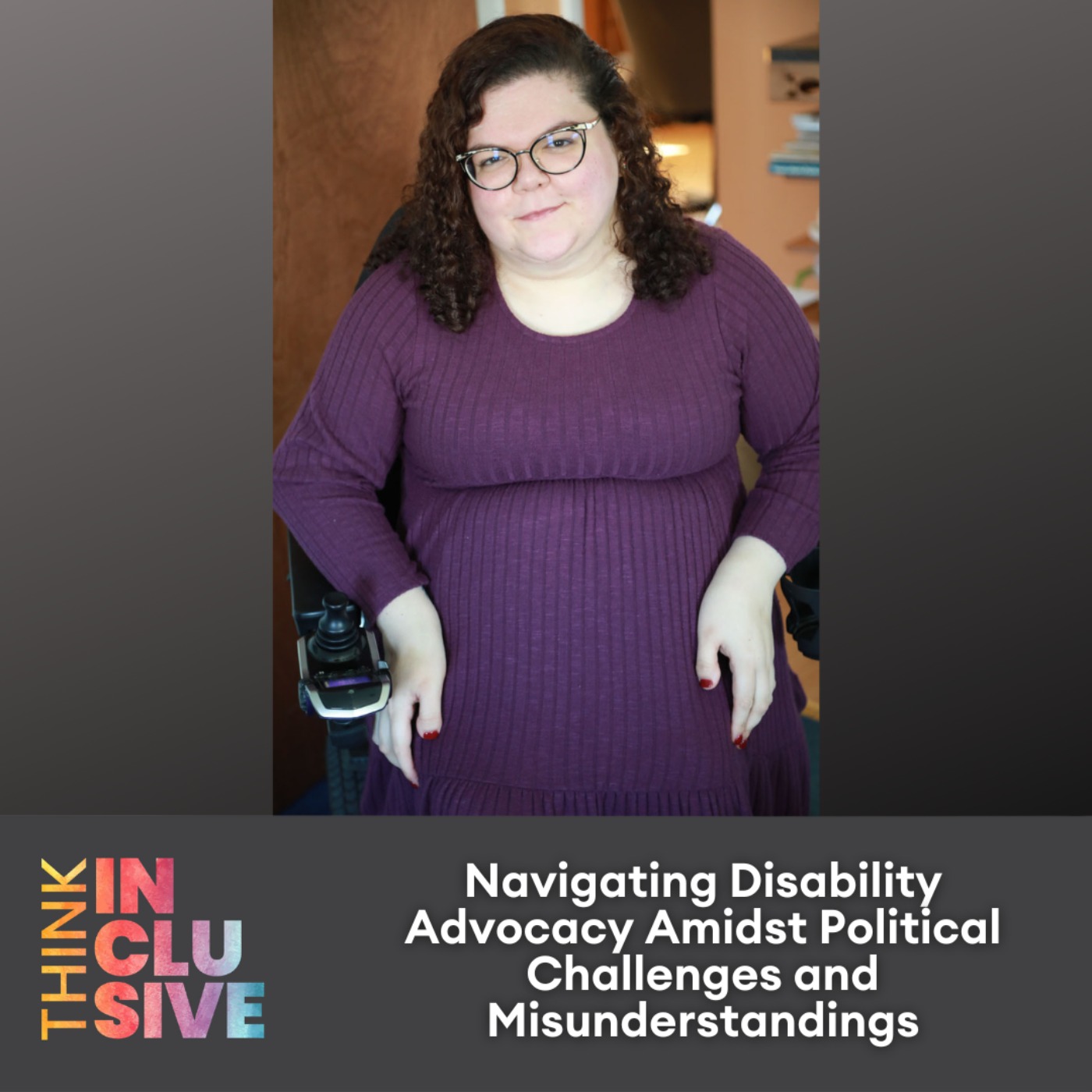
S12 Ep 36Navigating Disability Advocacy Amidst Political Challenges and Misunderstandings
About the Guest(s):Emily Ladau is an activist, writer, and speaker, known for her relentless advocacy for disability rights. With a decade of experience, Emily serves as the editor of Able News, a digital newspaper amplifying the voices and stories of New York's vibrant disability community. Her involvement in disability rights extends beyond writing, as she continually seeks to inspire and challenge societal perceptions through her speaking engagements and published works, including her book aimed at bridging understanding between disabled and non-disabled communities.Episode Summary:In this stimulating episode of Think Inclusive, host Tim Villegas engages with long-time friend and leading disability advocate Emily Ladau. As they delve into pressing issues confronting minority groups, Emily reflects on the systematic erosion of rights for the disability community, particularly those with multiple marginalized identities. She provides personal insights into navigating these challenges while expressing the uncertainties of future potentials for individuals’ rights, especially under the current sociopolitical climate of 2025.The conversation moves to explore the intricacies of communicating effectively with diverse audiences, with an emphasis on thoughtfully engaging conservative politicians. Emily shares the balance of maintaining authenticity while strategically choosing words that resonate across party lines, addressing the need for cross-aisle dialogue in advancing disability rights. She also provides crucial advice for those striving to be allies, emphasizing the importance of mindful communication and adaptive advocacy efforts as tools for sustaining momentum in inclusivity goals. This episode is a rich tapestry of personal reflection and strategic insights, capturing the pulse of advocacy in challenging times.Complete show notes and transcript: https://mcie.org/think-inclusive/Key Takeaways:-The current sociopolitical environment is eroding disability rights, with advocates like Emily Ladau emphasizing the dire impacts on those with multiple marginalized identities.-Strategic vagueness in political rhetoric is creating an environment of fear and uncertainty, where advocacy requires deliberate and thoughtful communication.-Emily Ladau underscores the necessity of adjusting language to gain support from conservative audiences by aligning advocacy messages with core values.-Recognizing the limits of individual capacity, Emily advises allies to engage in advocacy through manageable actions without compromising personal well-being.-She stresses the significance of platforms like social media in advocating for disability rights, highlighting its dual role in fostering community and echo chambers.Resources:Emily's Website: https://emilyladau.com/Able News: https://ablenews.com/Thank you to our sponsor, IXL: https://ixl.com/inclusive Hosted on Acast. See acast.com/privacy for more information.
S12 Ep 35Empowering Advocacy with AI: Charmaine Thaner's Insights
About the Guest(s):Charmaine Thaner is a seasoned educator and advocate with over 30 years of experience, who has dedicated her career to supporting families and children with special needs. As a mother to a son with Down syndrome, she blends personal experience with professional expertise to guide parents through the complexities of the Individualized Education Program (IEP) process. Thaner is the founder of the Connecting for Change group, where she coaches parents and offers innovative tools and techniques to empower them in educational advocacy, focusing on creating inclusive environments where every child feels valued and supported.Episode Summary:In this episode of the Think Inclusive Podcast, host Tim Villegas converses with Charmaine Thaner about the intersection of artificial intelligence and inclusive education advocacy. Villegas kicks off the episode with an intriguing twist — using an AI-generated version of his voice to introduce the topic and set the stage for a discussion on how AI can be leveraged as a tool for empowerment in educational advocacy.Thaner shares her journey into using AI tools like ChatGPT, describing how they have revolutionized her approach to helping parents navigate the IEP process. By integrating AI in drafting emails, summarizing meetings, and even crafting legislative communications, Thaner highlights the potential these tools hold for reducing stress and enhancing clarity for parents and educators alike. She discusses the nuanced art of crafting effective prompts and custom GPTs tailored to individual advocacy goals, and how Chris Voss's negotiation techniques inspire more engaging conversations in educational settings. Throughout the episode, Tanner emphasizes the importance of maintaining authentic human connections in advocacy work, even as AI tools enhance efficiency and precision.Complete show notes and transcript: (coming soon)Key Takeaways:-AI in Advocacy: Charmaine Thaner discusses how AI tools like ChatGPT can support parents in writing effective advocacy emails, summarizing meetings, and preparing for educational presentations.-Customized AI Solutions: Thaner introduces the concept of custom GPTs, tailored AI solutions that reflect personal advocacy goals and values, proving invaluable for individualized support.-Negotiation Techniques: Inspired by Chris Voss, Thaner utilizes negotiation strategies to craft more productive and empathetic communications with educators.-AI Beyond Emails: The use of AI extends to legislative advocacy, assisting parents in developing personalized messages to policymakers.-Human Connection: Despite AI's capabilities, Thaner stresses that authentic human interaction remains vital in advocacy efforts.Resources:Find Charmaine here: https://iep.today/CharmaineChris Voss's book: Never Split the Difference: https://amzn.to/4knHSx3AI tools mentioned: ChatGPT, Claude, Poe, and Descript Hosted on Acast. See acast.com/privacy for more information.
S12 Ep 34Rethinking Behavior Support: Ending Restraint and Seclusion in Schools
About the Guest(s):Guy Stevens is a nationally recognized expert and advocate for ending restraint and seclusion in schools. He is the founder of the Alliance Against Seclusion and Restraint (AASR), a nonprofit organization focused on reforming punitive discipline practices in educational settings. Guy is also a board member of the ARC of Maryland and PDA North America. His advocacy is dedicated to promoting trauma-informed, neuroscience-aligned, and neurodiversity-affirming approaches that prioritize inclusive and safe educational environments for all students.Episode Summary:In this episode of Think Inclusive, host Tim Villegas is joined by Guy Stevens, a leading advocate for more humane behavior support strategies in schools. Through a riveting conversation, they explore the profound harms of traditional punitive practices, like restraint and seclusion, and the importance of trauma-informed educational frameworks. They delve into Guy's personal journey from a conventional understanding of behavior support to becoming a passionate advocate for transformative discipline practices.The discussion highlights the systemic challenges and widespread use of outdated behaviorist strategies such as PBIS, emphasizing the need for approaches that recognize the neuroscience of behavior. Guy shares his insights on the negative impacts of punitive measures on both students and educators, urging a shift towards more supportive and effective methodologies. Packed with educational insights and practical tips, this episode is a deep dive into creating more inclusive and empathetic learning environments.Complete show notes and transcript: (coming soon)Key Takeaways:-Understanding Behavior: Traditional behaviorist strategies often fail to address the real underlying causes of behavior, which are frequently rooted in stress and trauma.-Shift to Trauma-Informed Practices: Schools should move towards trauma-informed and neuroscience-aligned practices to promote better educational environments.-Restraint and Seclusion: These practices still present a significant problem in schools, resulting in safety risks and potential trauma for both students and educators.-PBIS and Behaviorist Strategies: While well-intentioned, these frameworks often lack the necessary depth to address individual student needs and may perpetuate exclusion.-Transformative Advocacy: By fostering curiosity and understanding the brain's role in behavior, educators can fundamentally change how they respond to and support students' needs.Resources:Alliance Against Seclusion and Restraint (AASR)Books Mentioned:Brain-Body ParentingBeyond BehaviorsSelf-RegRaising Kids with Big Baffling BehaviorsThank you to our sponsor, IXL. Hosted on Acast. See acast.com/privacy for more information.
S12 Ep 33Transforming Schools with Truly Inclusive Leadership and Practices
About the Guest(s):Toni Barton is a leader in education innovation and the founder of Speligent. She is a recognized authority on transforming schools through inclusive, equity-driven, and tech-enabled learning models, having gained vast experience as a teacher, principal, and district leader. Toni initiated the Inclusive Schools Leadership Institute at Relay Graduate School of Education, training leaders to construct anti-ableist, student-centered environments. Her insights have been featured in major publications including Forbes and The Hechinger Report. Toni is also known for her book, "Six Principles for Building a Truly Inclusive School," which is a resource for forward-thinking educators.Episode Summary:In this episode of the Think Inclusive Podcast, host Tim Villegas engages with Toni Barton in a deep dive into reshaping the educational landscape for inclusivity and equity. Toni shares her journey from a professional in law to an advocate in education, driven by her own son's experience with special education. This insightful discussion emphasizes the importance of actively implementing inclusive practices beyond mere acknowledgment, and how educators can cultivate environments where every student thrives.The conversation unpacks Toni’s book, "Six Principles for Building a Truly Inclusive School," detailing strategies for initiating inclusive leadership in educational institutions. Emphasizing anti-exclusionary program designs, building person-first cultures, and understanding the critical role of special education teachers in leadership roles, the episode provides practical steps for systemic change. Listeners walk away with a clear understanding of how urgent and strategic data use can drive student success and create schools that meet every student's needs.Complete show notes and transcript.Key Takeaways:-Inclusive Leadership: Special education teachers and leaders should aim for leadership roles to enact systemic change in education systems.-Truly Inclusive Schools: Emphasizes both academic progress and a genuine sense of belonging for students, as defined from the students' perspectives.-Anti-Exclusionary Program Design: Encourages creating systems that intentionally support historically marginalized students, promoting inclusive environments beyond just integrated placements.-Data Urgency: Stresses the importance of real-time data-driven decision-making to close performance gaps and enhance instructional effectiveness.-Person-First Culture: Advocates rethinking discipline and behavior systems as social-emotional frameworks that prioritize student-centered support.Resources:SpelligentSix Principles for Building a Truly Inclusive SchoolCulturally Responsive Teaching and the BrainToni’s WebsiteThank you to our sponsor, IXL. Hosted on Acast. See acast.com/privacy for more information.
S12 Ep 32Empowering Neurodivergent Students Through Storytelling and Advocacy
About the Guest(s): Riley Mulcahy is the founder and Executive Director of The Riley Project, a nonprofit organization focused on storytelling and community building for individuals with learning differences. A graduate of St. Mary's College of California with a background in English and Creative Writing, Riley is also the Marketing and Admissions Associate at Compass High School, where he champions inclusive, strengths-based education. He is an advocate for neurodiversity, dedicating his efforts to initiatives like the Neurodiversity Education Series, aimed at creating supportive systems for neurodivergent individuals. Episode Summary: In this enlightening episode of Think Inclusive, host Tim Villegas chats with Riley Mulcahy, a prominent advocate for individuals with learning differences. Riley discusses his journey with dyslexia and his commitment to creating inclusive environments through storytelling and advocacy. As the founder of the Riley Project, Riley sheds light on challenges and triumphs within the landscape of neurodivergent education. The episode gives listeners a deep dive into the concepts of multisensory instruction, the implications of the "Wait to Fail" model in schools, and the pivotal role of early intervention in supporting students with learning differences. Listeners will gain insights as Riley emphasizes the transformative power of storytelling in social change, drawing parallels between historical movements and current advocacy for neurodiversity. With a focus on practical strategies and technologies aiding learning differences, the discussion encompasses everything from reading interventions to the potential of AI-driven education tools. Whether you're an educator, parent, or advocate, this episode is packed with valuable information on fostering inclusive, supportive educational environments where all students can excel. Complete show notes and transcript.Key Takeaways: Power of Storytelling: Riley highlights how storytelling has been central to social justice movements, emphasizing its potential to drive change in the education system for those with learning differences. Multisensory Reading Instructions: Discussing the effectiveness of multisensory instruction methods, Riley underscores its importance for students struggling with traditional learning approaches. Early Intervention and Support: The episode stresses the necessity of early intervention and the creation of strength-based IEPs to help neurodivergent students thrive. Future of Education Technology: A spotlight on assistive technologies, text-to-speech, and AI as tools to help students with learning differences achieve better outcomes. Inclusion and Advocacy: The Riley Project aims to create safe spaces for individuals to share experiences, thus fostering a community of support and awareness. Resources: The Riley ProjectEducating All Learners AllianceDyslexic Advantage Proust and the Squid Thank you to our sponsor, IXL. Hosted on Acast. See acast.com/privacy for more information.
S12 Ep 31Transforming Inclusive Education Through Inclusion Indicators
About the Guest(s):Alissa Rausch is a dedicated advocate for inclusive education rights, especially for young children with disabilities and various intersectional identities. Based at the University of Denver, she has extensive experience as a provider, program leader, educator, and technical assistance provider, notably developing inclusive programs and participating actively in legislative initiatives with organizations like Disability Law Colorado and the Early Childhood Technical Assistance (ECTA) Center.Ben Riepe is a Senior Project Manager at the Positive Early Learning Experiences Center at the University of Denver, contributing significantly to ECTA and the National Center for Pyramid Model Innovations. With 13 years supporting Head Start Classrooms as a teacher and coach, Ben focuses on embedding evidence-based inclusive practices into classrooms and communities.Episode Summary:Delve into a transformative discussion on the Think Inclusive Podcast with Tim Villegas, featuring an insightful conversation with Alissa Rausch and Ben Riepe from the University of Denver. They discuss the significance of the Early Childhood Technical Assistance Center's inclusion indicators, designed to guide systems at varying levels, like state and community, towards enhancing inclusive practices, aiming for a profound societal impact.In this episode, Alissa and Ben emphasize the critical role of systems in fostering inclusive environments for children, particularly those with disabilities. They explore the implementation science behind these indicators and how it supports sustainable and meaningful inclusive practices. Through poignant real-world examples and insights, they expound on the barriers families face and the power of family partnerships in achieving truly inclusive educational settings. Their experiences and collaborative work highlight opportunities for systemic change, especially through intentional community-based approaches and systems-level transformation, positioning early childhood inclusion as a foundational element of lifelong success.Complete show notes and transcript: https://mcie.org/think-inclusive/transforming-inclusive-education-through-inclusion-indicators/Key Takeaways:-Inclusion Indicators: Developed by ECTA, the indicators serve as a North Star for programs implementing inclusive practices across various levels such as state, community, and local programs.-Systems Approach to Inclusion: Emphasizes working at every level of the educational ecosystem, from state policies to individual classrooms, ensuring comprehensive support for inclusive practices.-Family Partnerships: Building genuine partnerships with families is critical, recognizing them as co-constructors in the journey of inclusion, thereby facilitating better educational outcomes.-Long-Term Impact: Highlighting the necessity of early childhood inclusion as a foundation for lifelong educational and community success.-Implementation Science: Using strategic, science-based processes for planning and executing inclusive practices, aiming for scalable and sustainable change.Resources:ECTA Center: https://ectacenter.org/Disability Law Colorado: https://disabilitylawco.org/Thank you to our sponsor, IXL: https://www.ixl.com/inclusive Hosted on Acast. See acast.com/privacy for more information.
S12 Ep 30Unlocking Inclusive Strategies: Empower Every Child to Fly
About the Guest(s):Jani Kozlowski is a renowned early childhood professional, boasting over 30 years of experience. She is an accomplished author and speaker, serving as a technical assistance specialist and consultant. Jani focuses on supporting the development of young children and their families, with expertise in early childhood disability services, learning environments, and social-emotional development. She currently leads initiatives at the Frank Porter Graham Child Development Institute, University of North Carolina, Chapel Hill. Jani is the author of "Every Child Can Fly: An Early Childhood Educator's Guide to Inclusion" and its family-oriented companion, "Empowering Your Child to Fly."Episode Summary:In this compelling episode of Think Inclusive, host Tim Villegas engages Jani Kozlowski, a notable expert in early childhood inclusion, in a discussion about advocating for inclusive education for young children with disabilities. The episode begins with Jani sharing personal insights on the importance of inclusion for preschool children, emphasizing that early inclusion sets a positive trajectory not only for children with disabilities but also for their peers without disabilities. Her approach to this often daunting prospect for families highlights strategies that aim to demystify special education processes and the legal foundations surrounding inclusion.This episode delves deep into the practical aspects of advocating for and implementing inclusive education practices. Jani discusses her recent adaptation of "Every Child Can Fly" into a version for families, illustrating her dedication to making vital information accessible to parents. Through interviews with 15 families, Jani brings authenticity and emotional depth to the conversation, offering real-world strategies for navigating special education systems. Emphasizing a long-term vision for inclusion, Jani articulates the significance of forging robust partnerships between families and educators, underscoring the myriad benefits of fostering inclusive learning environments.Complete show notes and transcript: https://mcie.org/think-inclusive/unlocking-inclusive-strategies-empower-every-child-to-fly/Key Takeaways:-Early childhood inclusion sets the foundation for a child's future educational trajectory, impacting both those with and without disabilities.-Understanding the legal frameworks and rights surrounding special education is crucial for parents advocating for their children's inclusive education.-Building strong relationships between families and teachers facilitates collaboration and problem-solving, crucial for achieving successful inclusion.-A clearly defined vision for a child's educational journey empowers families and guides school teams in decision-making processes.-Leveraging supportive networks and existing resources, like OSEP-funded parent centers, can enhance advocacy efforts and access to inclusive placements.Resources:Jani's website: https://everychildcanfly.com/Parent Center Hub: https://www.parentcenterhub.org/Forget Me Not Documentary: https://forgetmenotdocumentary.com/CADRE: https://cadreworks.org/Thanks to our sponsor, IXL: https://www.ixl.com/inclusive Hosted on Acast. See acast.com/privacy for more information.
S12 Ep 29Why We Need to Blend General and Special Education Teacher Training
About the Guest(s):Jen Newton is an Associate Professor at Ohio University with a dedicated career in inclusive education spanning 25 years. Her expertise encompasses anti-racist, anti-ableist education, early childhood inclusion, and inclusive teacher preparation. Beginning her career as an early interventionist and inclusive pre-kindergarten teacher, Dr. Newton now focuses on teacher education, inclusion consulting, and research. She actively contributes to local, regional, and national discussions on advancing inclusive education practices.Episode Summary:In this episode of Think Inclusive, hosted by Tim Villegas, the spotlight is on Dr. Jen Newton's insights into the challenges of preparing educators for including students with diverse learning needs in general education classrooms. With decades of experience in inclusive education, Dr. Newton provides a critical analysis of the current gaps in teacher preparation and the need for an inclusive pedagogical approach.This conversation delves into the systemic limitations that hinder the effectiveness of inclusive practices in education. Tim and Jen outline practical strategies for empowering both general and special education teachers to adapt and modify curricular materials effectively. They argue for comprehensive teacher training focusing on modifications, accommodations, and a deeper understanding of learners with extensive support needs. The dialogue also touches on the political aspects, revealing how educational policies and legislative agendas shape the current state of inclusion in schools. As key legislation remains outdated, the discussion underscores the urgency for updated educational policies that reflect current understandings of disabilities and mental health.Complete show notes + transcript: https://mcie.org/think-inclusive/why-we-need-to-blend-general-and-special-education-training/Key Takeaways:-Understanding the current lack of comprehensive inclusive training provided to general educators and advocating for collaborative teaching practices.-Addressing the political landscape and its influence on inclusive education and teacher preparation frameworks.-The significance of inclusive licenses for teachers, which integrate general and special education training.-How a focus on collaboration between teachers can facilitate effective adaptations to accommodate diverse learning needs.-The impact of federal and state educational policies on practical inclusion efforts in schools.Resources:Jen website: https://www.teachingisintellectual.com/Books Mentioned:"Wolf at the Schoolhouse Door" by Jennifer Berkshire and Jack Schneider"Troublemakers: Lessons in Freedom from Young Children at School" by Carla Shalaby"Demystifying Disability" by Emily LadauPodcast Mentioned: Have You Heard hosted by Jennifer Berkshire and Jack SchneiderThanks to our sponsor, IXL: https://www.ixl.com/inclusive Hosted on Acast. See acast.com/privacy for more information.
S12 Ep 28Empowering Inclusion: Advocates Share Stories and Strategies
About the Guest(s):Brilly Semenova: Brilly is a passionate advocate for individuals with disabilities, having started her advocacy journey during her middle school years. She is based in Maryland but operates nationally, providing resources and support to families and individuals. Her focus covers education, employment, social skills, and legal guidance for navigating benefits for people with disabilities.Nisha Batra: Nisha is a dedicated Early Childhood Educator and passionate disability advocate. She was recently honored with the King Charles III Award in recognition of her impactful advocacy work. Nisha firmly believes that normalizing differences empowers individuals and fosters a more inclusive and equitable society.Episode Summary:In this enlightening episode of Think Inclusive by Tim Villegas, inclusion advocates Brilly Semenova and Nisha Batra share their profound insights and personal journeys in promoting inclusive practices for individuals with disabilities. Brilli recounts her experiences from initiating mentorship programs in middle school to providing comprehensive resources for families navigating educational and legal systems. Her story emphasizes the importance of inclusivity in fostering supportive environments for individuals with different abilities.Nisha Batra brings a unique perspective with her background in early childhood education and her personal experience with a learning disability. She discusses the critical importance of celebrating diversity within educational settings and normalizing differences among students. By sharing her journey and professional insights, Nisha highlights the potential transformation inclusion can bring about in educational settings, fostering an environment where every student feels supported and valued.Complete show notes + transcript: https://mcie.org/think-inclusive/empowering-inclusion-advocates-share-stories-and-strategies/Key Takeaways:-Brilly Semenova illustrates the need for mentorship and guidance programs for young individuals with disabilities to promote self-advocacy and inclusive environments.-Nisha Batra emphasizes the significance of acknowledging and celebrating diversity in classrooms, advocating for normalization of differences among students.-Both advocates highlight the necessity for educational and societal systems to be readily inclusive, moving towards environments that support diverse learners without needing them to 'be ready' first.-The conversation underscores the challenges and opportunities found within advocacy, highlighting the transformative power inclusion holds at both individual and systemic levels.-Practical examples of advocacy efforts and successful inclusion practices are discussed, showcasing real-world applications.Resources:Helpipedia: https://helpipedia.org/Nisha's Instagram: @TheSwanTransformation: https://www.instagram.com/theswantransformation/Thank you to our sponsor, IXL: ixl.com/inclusive Hosted on Acast. See acast.com/privacy for more information.
S12 Ep 27Empowering Educators: Navigating Inclusive Education Challenges and Opportunities
About the Guest(s):Nicole Eredics is a seasoned expert specializing in inclusive education, boasting over 25 years of experience in the field. Armed with degrees in elementary and special education, Nicole began her career as an inclusion teacher in British Columbia, Canada. She is the founder of the Inclusive Class and has been instrumental in implementing inclusive systems in over 150 schools across the United States since 2008. Also an esteemed author, her best-selling book "Inclusion in Action" is a vital resource for educators aiming to foster inclusive educational settings. Currently, Nicole offers her expertise as a national presenter and trainer for the Bureau of Education and Research, as well as an education and ed-tech consultant.Episode Summary:In this engaging episode of Think Inclusive, host Tim Villegas is joined by inclusive education expert Nicole Eredics. Eredics offers valuable insights into fostering inclusive education practices within school systems. The episode kicks off with an exploration of Nicole's rich history in education and her journey from advocating for inclusion in Canada to transforming schools across the United States. As the discussion unfolds, Nicole shares her experiences working with school districts, highlighting the advancements made in personalized instruction and the integration of technology to support diverse student needs. The conversation also delves into the complexities of standardized testing, the role of co-teaching models, and the substantial influence educators have on crafting positive educational experiences for all learners.As the dialogue deepens, Eredics underscores significant changes in education, particularly the growing emphasis on individual student needs and diversity awareness. These changes have sparked an evolution in instructional practices, the use of universal design for learning (UDL), and the availability of resources enhancing teachers' capabilities. However, Nicole also sheds light on the enduring challenges, like the rigidity of standardized systems and the struggles of grading students with varying needs. Offering tactical advice, she encourages educators to begin with small, manageable changes, such as observing their current classroom practices, while leveraging technology and collaboration to enhance their inclusive teaching methods.Complete show notes + transcript: https://mcie.org/think-inclusive/empowering-educators-navigating-inclusive-education-challenges-and-opportunities-with-nicole-eredics/Key Takeaways:-Inclusive education requires a nuanced understanding of personalized instruction and the commitment to supporting diverse learners within the general education classroom.-Recent advancements highlight increased awareness of diversity and personalized instruction among educators, yet challenges like standardized testing and rigid grading systems remain barriers.-Co-teaching and Universal Design for Learning (UDL) are increasingly being embraced as vital components of inclusive educational practices.-Technology, particularly AI, is transforming how educators tackle customized learning needs, offering streamlined solutions for adapting lessons and teaching approaches.-Effective inclusive systems are bolstered by insightful leadership from administrators who understand and value inclusive practices.Resources:Nicole's book: https://amzn.to/3GdExBrVisit Nicole's website: https://www.theinclusiveclass.com/Thanks to our sponsor, IXL: ixl.com/inclusive Hosted on Acast. See acast.com/privacy for more information.
S12 Ep 26The Power of Storytelling in Disability Rights with Jeiri Flores
About the Guest(s):Jeiri Flores is a Puerto Rican disability rights activist based in Rochester, New York. After earning her bachelor's degree in Sociology and African American Studies from SUNY Brockport in 2014, she pursued a master's in Human Development at the University of Rochester. As a passionate advocate for disability rights, Jeiri shares her insights on inclusion, disability, and intersectionality at colleges and conferences, aiming to enlighten and inspire change. Her mission is to empower disabled youth to redefine societal narratives around disability.Episode Summary:In this episode of Think Inclusive listeners are introduced to the compelling story and advocacy journey of Jeiri Flores, a dynamic disability rights activist. Jeiri opens up about the relentless challenges faced by disabled individuals, particularly highlighting the dehumanization and isolation embedded within societal and systemic structures. Through engaging storytelling, she discusses the critical role of love and belonging in fostering truly inclusive communities and delves into how these spaces can transform by acknowledging the humanity of every individual.Throughout the conversation, Jeiri reflects on her advocacy's roots, nurtured from a young age while translating for her family, and how her practices have evolved over time. Key themes such as navigating healthcare systems, societal expectations, and the perpetual need for systemic change are explored. Jeiri also emphasizes the power of sharing personal narratives, not only as a form of advocacy but as a way to bridge connections between diverse experiences. As she navigates topics like love, belonging, and her intersectional identity, Jeiri provides a rich tapestry of insights that resonate deeply with educators, advocates, and anyone passionate about disability rights and inclusion.Complete show notes + transcript: https://mcie.org/think-inclusive/the-power-of-storytelling-in-disability-rights-with-jeiri-flores/Key Takeaways:Authenticity and vulnerability are essential in effective advocacy, as they help build deeper connections and understanding.Navigating healthcare and societal systems poses significant challenges for disabled individuals, often leading to stress and self-segregation.Inclusion spaces thrive on recognizing every individual's humanity and embracing differences, with love serving as a guiding principle.Storytelling in advocacy can be a powerful tool for raising awareness and encouraging systemic change.The importance of engaging diverse voices in decision-making processes, particularly those directly affected by the outcomes.Resources:Jeiri on Insta: https://www.instagram.com/dangerously_gifted/Jeiri on LinkedIn: https://www.linkedin.com/in/jeiri-flores-b7bb3651/Jeiri's story about her mom: https://youtu.be/bq62Q7Cg85g?si=Il5zrhoH74ZcYRaaThank you to our sponsor, IXL: https://www.ixl.com/inclusive Hosted on Acast. See acast.com/privacy for more information.
S12 Ep 25Disability Inclusive Curriculum: Changing Mindsets in Pennsylvania Schools and Nationwide
About the Guest(s):Lisa Aquila is a dedicated advocate for disability rights and Vice Chair of the Board at Disability Equality in Education (DEE). Lisa's journey into disability advocacy began after a career as a home care attendant was cut short due to her own disability. As an education outreach specialist, she has been pivotal in lobbying for disability-inclusive curriculum legislation, co-founding the Coalition on Disability Inclusive Curriculum, and advancing the social model of disability. Her work aims to integrate disability discourse into general education, inspiring future generations to embrace diversity.Episode Summary:In this enlightening episode of Think Inclusive, host Tim Villegas welcomes Lisa Aquila, a fervent advocate for disability rights and Vice Chair at Disability Equality in Education. They explore the importance of integrating disability into K-12 education, emphasizing that disability is a natural part of human diversity. Through personal anecdotes and professional insights, Lisa outlines her journey from home care attendant to becoming a key figure in disability advocacy.Lisa shares her experience spearheading the disability-inclusive curriculum initiative, highlighting the success of the program piloted in Pennsylvania. The conversation delves into the social model of disability, focusing on how societal barriers can be dismantled through education. Both Lisa and Tim discuss the potential of early education in changing perceptions, advocating for resources and support systems that enable teachers to effectively incorporate disability studies into classrooms nationwide.Complete show notes + transcript: https://mcie.org/think-inclusive/disability-inclusive-curriculum-changing-mindsets-in-pennsylvania-schools-and-nationwide/Key Takeaways:Disability is a natural part of human diversity and should be woven into everyday conversations and education to dismantle stigma.The disability-inclusive curriculum aims to educate K-12 students on the contributions of disabled individuals, promoting understanding and acceptance.Lisa Aquila and DEE work under the principle of "Nothing About Us Without Us," ensuring that disabled voices are central in creating educational content.The pilot project in Pennsylvania offers a blueprint for disability education that could inspire similar initiatives nationwide.Teachers have continuous support for integrating these lessons into their classrooms, fostering a more inclusive generation.Resources:Disability Equality in Education (DEE): https://www.disabilityequalityeducation.org/DEE email: [email protected] DEE at (724)726-1155Thanks to our sponsor, IXL. https://www.ixl.com/inclusive Hosted on Acast. See acast.com/privacy for more information.
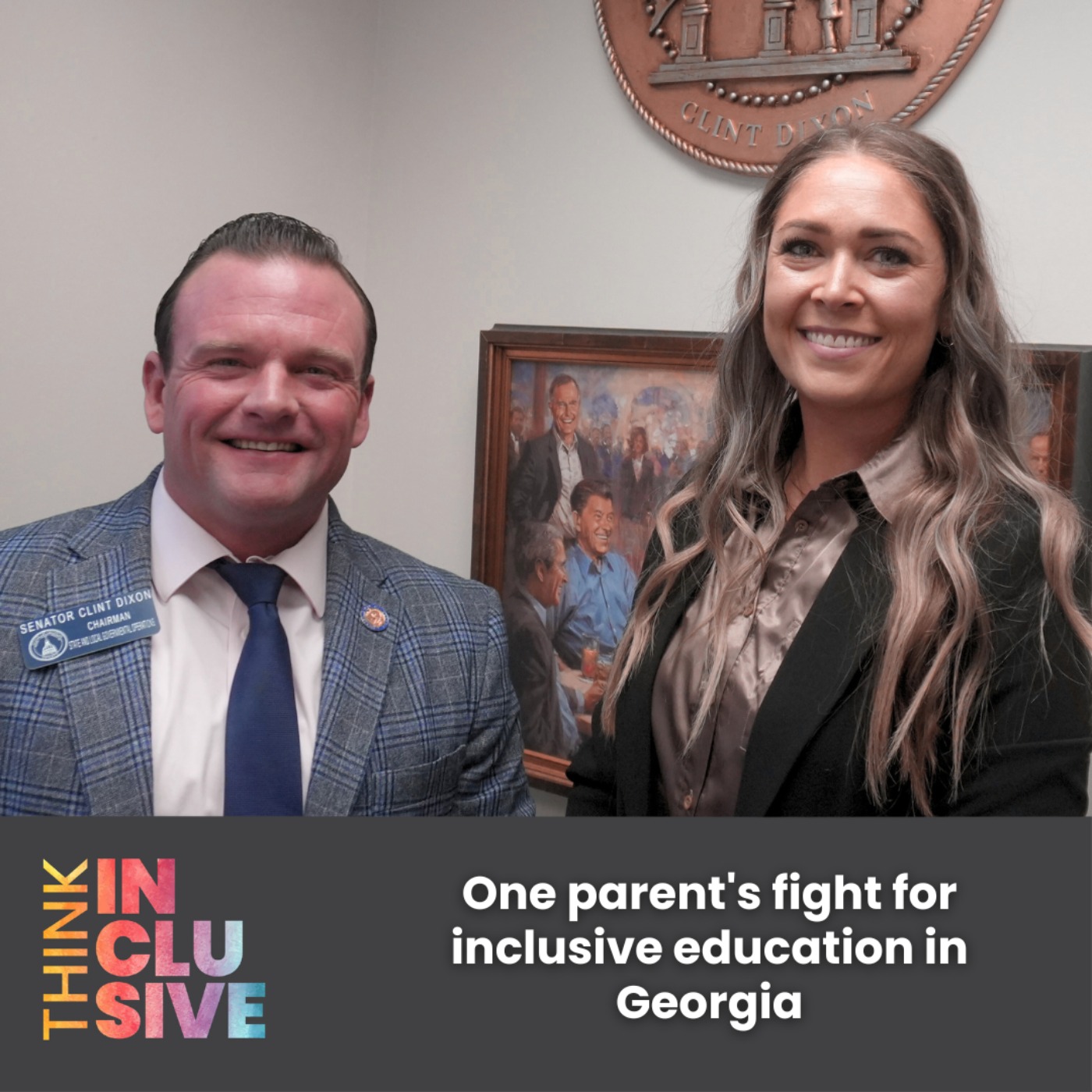
One parent's fight for inclusive education in Georgia
bonusAbout the Guest(s):Chelsea Hutchings is a dedicated advocate for inclusive education, residing in Gwinnett County, Georgia. As a mother of five, with her youngest son having Down syndrome, she became intricately involved in advocating for systemic reform in special education after experiencing the challenges firsthand. Chelsea actively engages with local representatives, school board members, and community leaders to push for change and is a part of the Theo Hutchings Task Force for Inclusion. She has taken part in extensive learning experiences, including conferences and fellowship programs, to deepen her understanding and efficacy in advocacy work.Episode Summary:In this engaging bonus episode of the Maryland Coalition for Inclusive Education podcast, host Tim Villegas sheds light on the tenacious efforts of Chelsea Hutchings as she navigates the rugged terrain of advocating for inclusive education in Georgia. Meeting Chelsea at the Georgia State Capitol provided a firsthand look at her dynamic advocacy work with state representatives, including State Senator Clint Dixon.Chelsea Hutchings, a Gwinnett County parent, shares her inspirational journey advocating for inclusive education reform, driven by her direct experiences with the special education system's shortcomings. Chelsea ardently illustrates how her son, diagnosed with Down syndrome, was isolated within the educational system, leading her to champion the cause of inclusive education. By building a community-focused advocacy approach, Chelsea rallied support from local authorities, such as her city mayor, and worked on forming the Theo Hutchings Task Force for Inclusion. Throughout her advocacy journey, Chelsea highlighted the importance of being informed, persistent, and collaborative in effecting systemic change.Read the Weeklyish: https://mcie.org/think-inclusive/one-parents-fight-for-inclusive-education-in-georgia/Transcript: https://otter.ai/u/7Fv-AGGijZrPiXRl86K-dJsn7h8?utm_source=copy_url Hosted on Acast. See acast.com/privacy for more information.
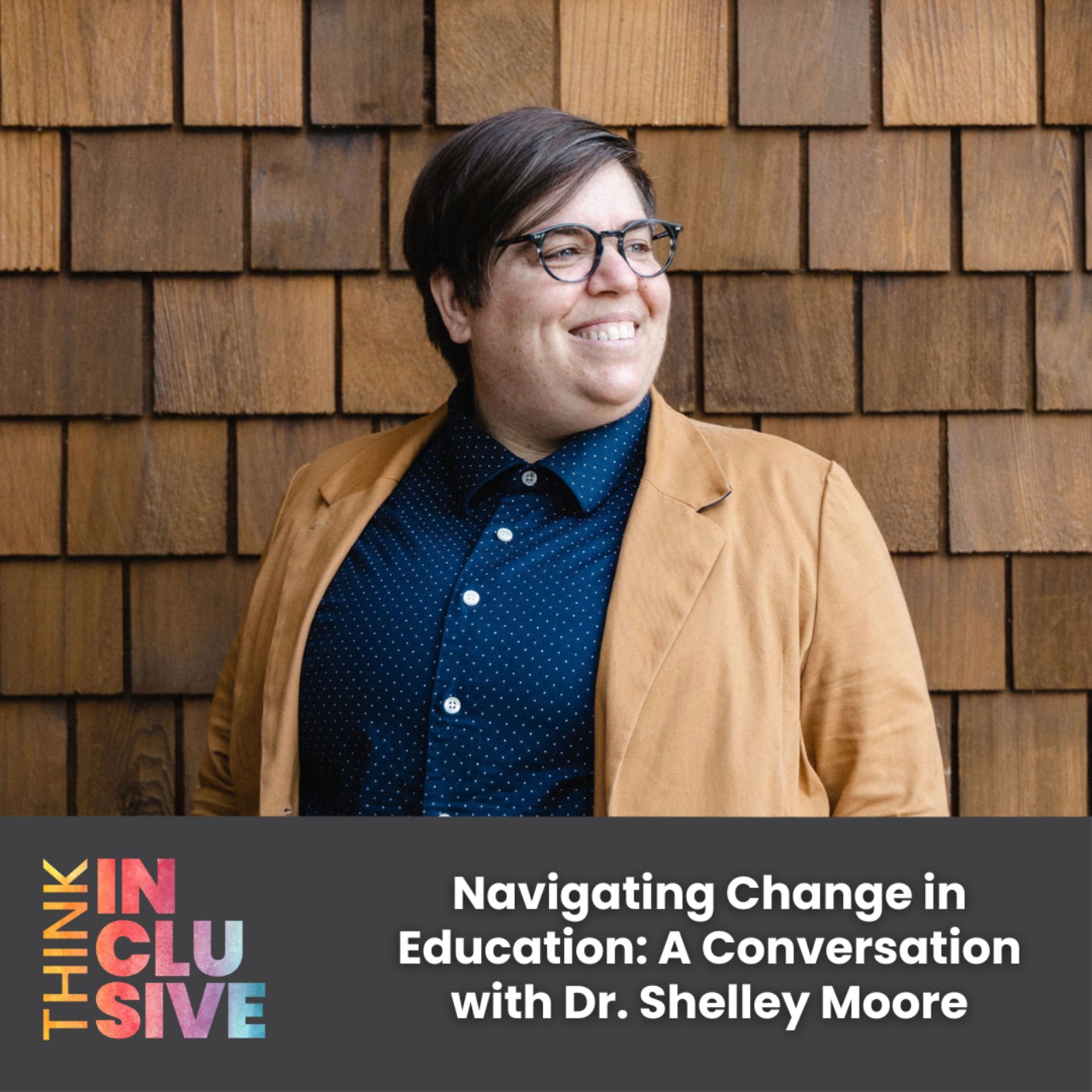
S12 Ep 24Navigating Change in Education: A Conversation with Dr. Shelley Moore
About the Guest(s):Dr. Shelley Moore is a renowned inclusive education researcher, teacher consultant, and storyteller based in British Columbia, Canada. Shelley holds a Special Education undergraduate degree from the University of Alberta, a Master's from Simon Fraser University, and a PhD from the University of British Columbia. She is highly sought after internationally for her insights on designing grade-level academic classrooms using strength-based and responsive approaches to include students with intellectual disabilities. She runs Outside Pin Consulting, a company dedicated to promoting diverse voices and expertise in inclusive education.Episode Summary:Join Tim Villegas in a riveting episode of the Think Inclusive Podcast featuring Dr. Shelley Moore, a leading voice in inclusive education. Kicking off the episode, Dr. Moore shares empowering strategies for educators to embrace inclusivity and teamwork within schools, emphasizing the transformational potential of collaboration. The conversation weaves through her personal journey as a parent, shedding light on mindful practices amidst the struggles educators face due to a lack of resources, systemic challenges, and DEI efforts in the U.S. and Canada.Furthermore, Dr. Moore and Tim delve into their professional practices, specifically within mindfulness's impact on educators. Touching on cultural and systemic barriers to inclusivity, they discuss the resistance of change and the pressure on educators to reform traditional models. Dr. Moore highlights her latest initiative, Outside Pin Consulting, which fosters a collective community for diverse perspectives, advocating for student agency over independence. Ending on a thought-provoking note, Dr. Moore shares insights on moving forward amidst adversity in the field of inclusive education.Complete show note + transcript: https://mcie.org/think-inclusive/navigating-change-in-education-a-conversation-with-dr-shelley-moore/Key Takeaways:Educators are encouraged to collaborate with one another, emphasizing the value of teamwork in creating inclusive classroom environments.The concept of independence versus agency is explored, highlighting the need for tailored expectations and goals for students with disabilities.Outside Pin Consulting is introduced as a platform for gathering diverse educational voices and expertise to work towards inclusive education.The importance of mindfulness and meditation is discussed as a valuable tool for educators to stay grounded and present amidst chaotic and overwhelming circumstances.Dr. Moore and Tim address systemic educational challenges, touching on the topic of limited resources and the misconception of resource allocation in inclusive practices.Resources:Outside Pin Consulting: https://www.drshelleymoore.com/outside-pin"People are NOT Supports" video by Shelley Moore: https://youtu.be/rOlUnnxCspA?si=12TxE-iN64KKMFSIThank you to our sponsor, IXL: https://www.ixl.com/inclusive Hosted on Acast. See acast.com/privacy for more information.
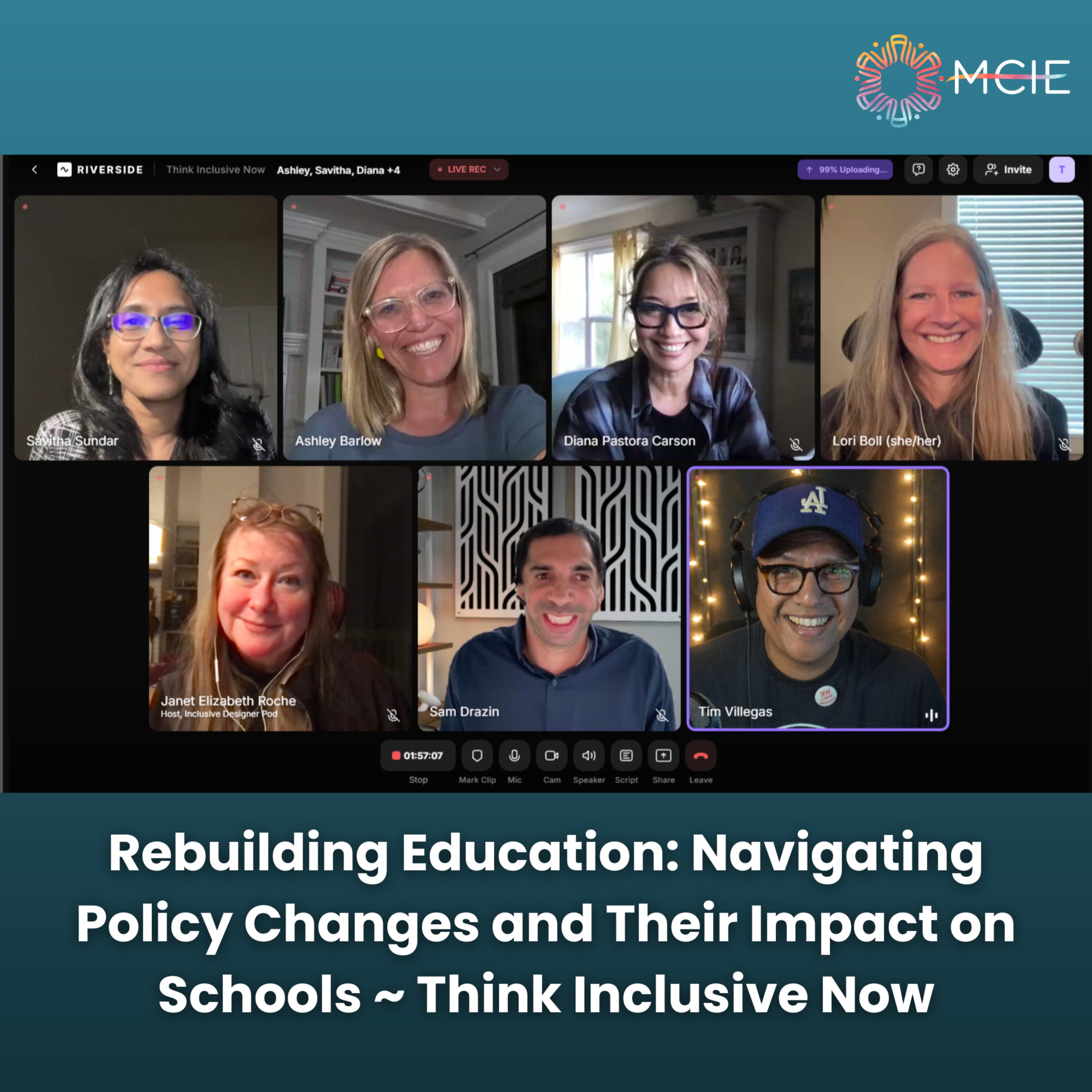
Rebuilding Education: Navigating Policy Changes and Their Impact on Schools ~ Think Inclusive Now
bonusAbout the Guest(s):Tim Villegas: Tim is associated with the Maryland Coalition for Inclusive Education. He is also the host of the Think Inclusive podcast and Director of Communications at the Maryland Coalition for Inclusive Education.Ashley Barlow: A special education attorney and advocate, Ashley also hosts the Collaborative IEP Podcast. She offers extensive insights into legal aspects and advocacy for inclusive education.Janet Roche: Known for co-producing the Inclusive Designers Podcast alongside Carolyn Robbins, Janet is also an advocate of trauma-informed design and a co-founder of Trauma-Informed Design Society.Sam Drazin: As the Executive Director of Changing Perspectives, Sam is engaged in promoting inclusive education in schools. He is also known for his podcast, Sip and Sam Inclusion Coffee Talk.Savitha Sundar: Host of the Inclusive Occupations Podcast, Savitha brings her expertise as an occupational therapist to offer insights into inclusive practices throughout different professional environments.Lori Boll: Executive Director of Senia International and host of the SENIA Happy Hour podcast, Lori's work focuses on championing inclusion for students with special needs around the world.Diana Pastora Carson: An educator with a passion for disability advocacy, Diana hosts the Beyond Awareness: Disability Awareness That Matters podcast.Episode Summary:Join Tim Villegas and an esteemed panel of experts as they dive into the complexities of rebuilding education in light of recent policy changes affecting schools. This episode is brimming with insightful discussion on the importance of inclusive education and the challenges posed by changes at the political level. Each guest shares their perspectives reflecting varied fields, from special education law, occupational therapy, to teacher preparation and inclusive design, emphasizing the urgency of collaborative advocacy for students with disabilities.The conversation is rich with details about potential impacts of policy alterations on inclusive educational practices. Ashley Barlow breaks down complex legal shifts, while Janet Roche introduces the principles of trauma-informed design. The discourse extends to Sam Drazin who passionately highlights the significance of Diversity, Equity, and Inclusion (DEI) and Savita Sundar who discusses concerns faced by service providers in education. Lori Boll tunes in with a global perspective, discussing how changes in the United States affect international schools, while Diana Pastora Carson emphasizes the role of educators in advocacy. Sam Drazin powerfully closes with a call for unity in advancing disability inclusion worldwide. This episode is a treasure trove for educators, advocates, and families focused on inclusive practices during these challenging times.Complete show notes + transcript: https://mcie.org/think-inclusive/rebuilding-education-navigating-policy-changes-and-their-impact-on-schools-think-inclusive-now/Key Takeaways:-The current political climate demands increased awareness and advocacy from educators, focusing on protecting students' rights under IDEA.Trauma-informed design plays a critical role in creating calming, inclusive environments in schools.-The removal of DEI initiatives could harm the educational system by reducing the empathy and understanding necessary for truly inclusive practices.-Grassroots advocacy in education has proven impactful, reflecting a need for continued collective action to address policy challenges.-The discourse on school choice and voucher systems highlights a concern for increased segregation and inequity in education. Hosted on Acast. See acast.com/privacy for more information.
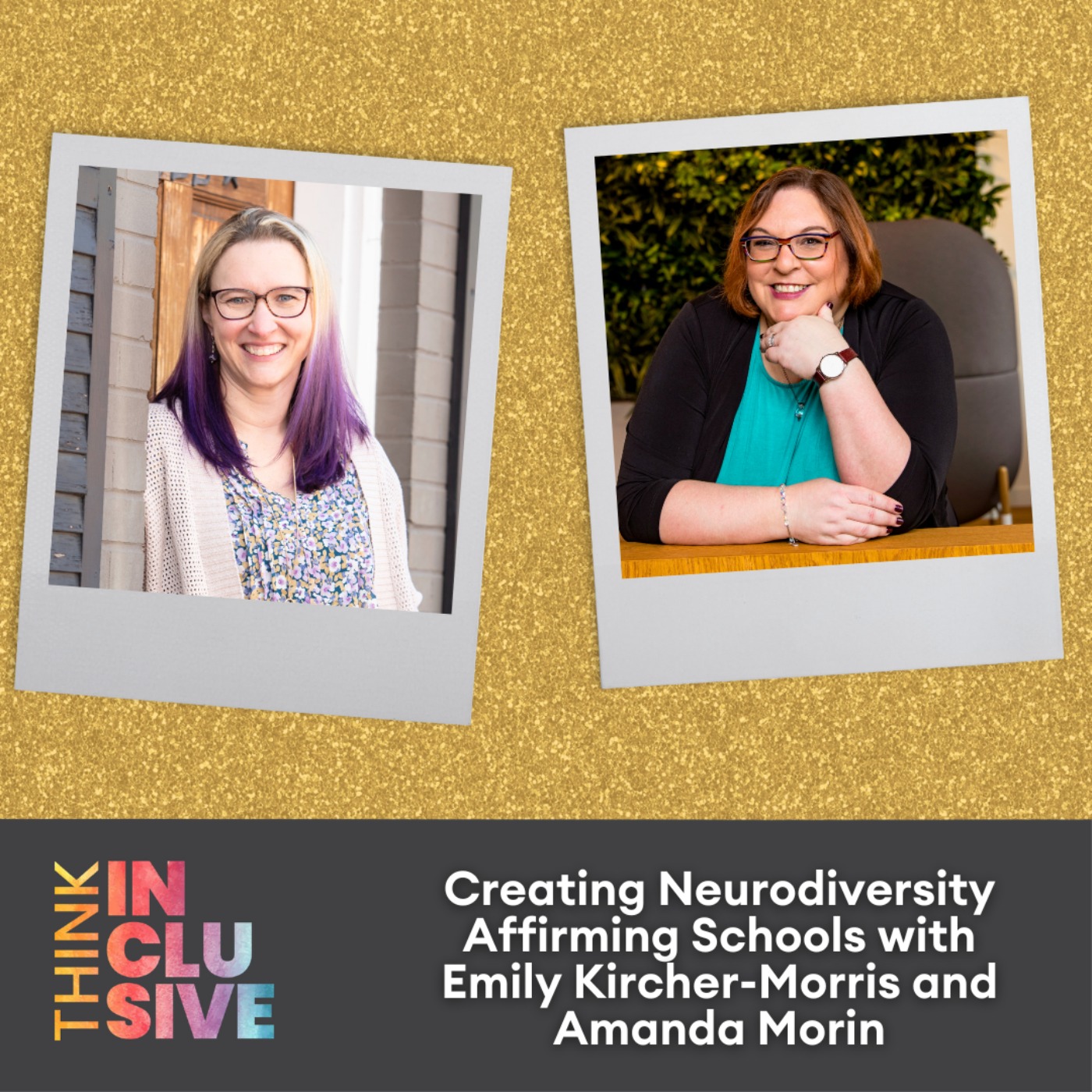
S12 Ep 23Creating Neurodiversity Affirming Schools with Emily Kircher-Morris and Amanda Morin
About the Guest(s):Amanda Morin: A renowned neurodivergent neurodiversity activist, Amanda Morin is an award-winning author, specialist in early childhood and behavioral studies, a certified teacher, and a nationally acclaimed speaker. She has dedicated her career to creating accessible, inclusive environments for neurodivergent individuals, working with educational professionals and parents to enhance understanding of mental health, neurodiversity, and disability.Emily Kircher Morris: Licensed Professional Counselor (LPC) and host of the Neurodiversity Podcast, Emily specializes in supporting neurodivergent, twice-exceptional, and gifted individuals. Based in St. Louis, Missouri, she began her career in education and now runs a private mental health practice. Through her books and podcast, Emily explores the complex psychological, educational, and social needs of neurodivergent people.Complete show notes + transcript: https://mcie.org/think-inclusive/creating-neurodiversity-affirming-schools-with-emily-kircher-morris-and-amanda-morin/Episode Summary:Explore the transformative world of neurodiversity in education with host Tim Villegas and his guests Emily Kircher Morris, and Amanda Morin. This episode of Think Inclusive focuses on thought-provoking insights from their book, "Neurodiversity Affirming Schools." The conversation ventures into the heart of inclusive education, emphasizing strategies that create positive learning environments for all students by fostering an understanding of neurodiversity in schools.Discover how Amanda Morin and Emily Kircher Morris harness their expertise to challenge traditional perspectives on behavior and education. The dialogue introduces the concept of using identity-first language rather than person-first language to better support neurodivergent individuals, a practice that has stemmed from the neurodiversity movement. They address critical issues such as behavior management and the importance of co-regulation and mental health awareness among educators. By promoting a shift from ableism to inclusivity, this episode offers a guide for educators striving to make impactful changes in their teaching practices.Key Takeaways:-Neurodiversity-affirming practices are transforming educational environments by embracing and supporting all brain types and learning strategies, benefiting students and educators alike.-Amanda and Emily highlight the significance of using identity-first language in place of person-first terminology, as promoted by self-advocates within the neurodiversity movement.-Fostering a collaborative atmosphere among educators and related service providers is essential for supporting neurodivergent and twice-exceptional students.-The discussion on behavior reframes conventional perspectives, advocating for understanding stress behavior and emphasizing co-regulation between teachers and students.-The podcast offers practical recommendations, encouraging educators to make small yet meaningful changes that lead to substantial improvements in inclusive education practices.Resources:Neurodiversity Podcast: Hosted by Emily Kircher Morris, investigating the needs of neurodivergent individuals: https://www.neurodiversitypodcast.com/Neurodiversity Affirming Schools Podcast: A limited series complementing the book by Amanda Morin and Emily Kircher Morris: https://www.neurodiversityaffirmingschools.com/Thanks to our sponsor, IXL: https://www.ixl.com/inclusive Hosted on Acast. See acast.com/privacy for more information.
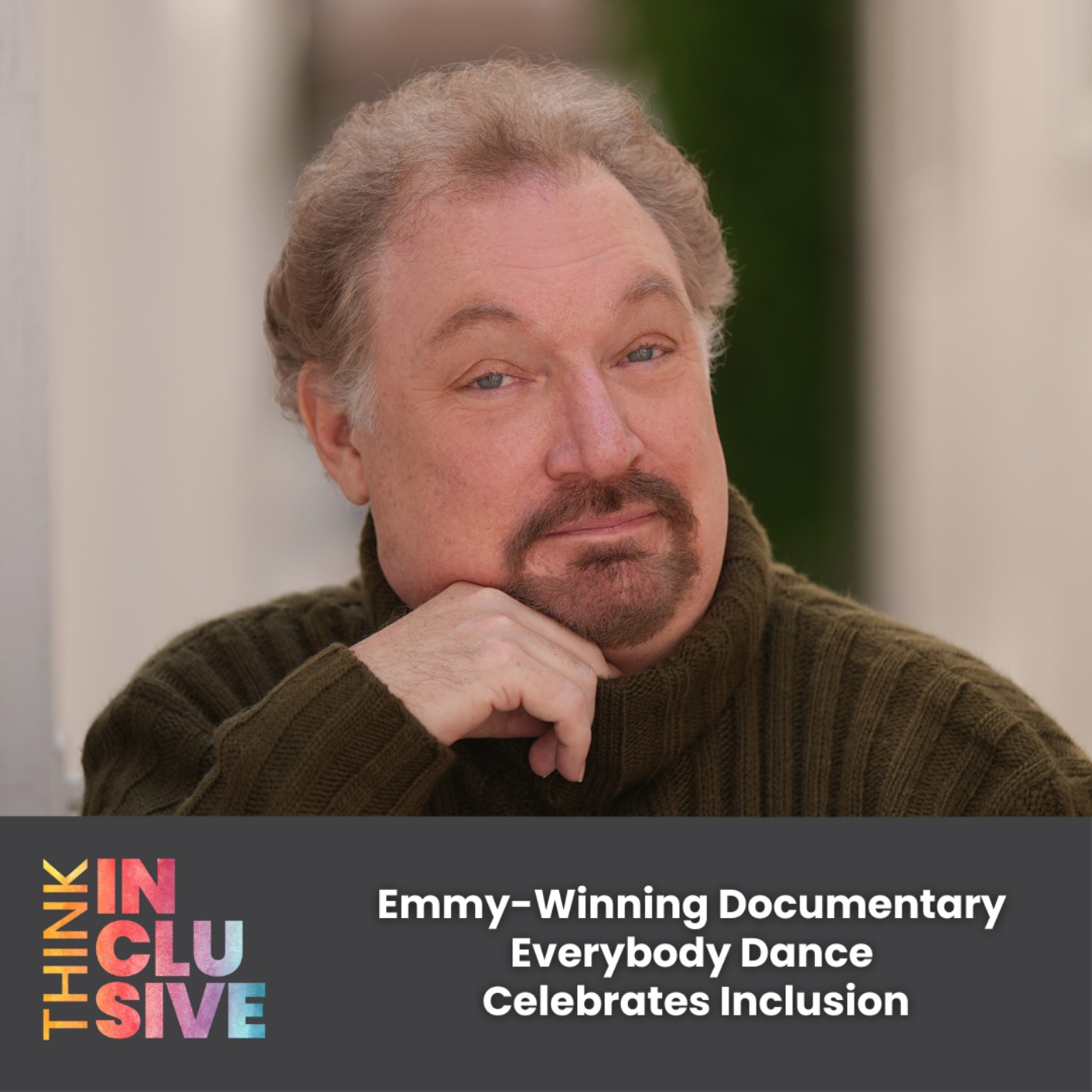
S12 Ep 22Emmy-Winning Documentary Everybody Dance Celebrates Inclusion
About the Guest(s):Dan Watt is a distinguished producer and director, recognized for his work on the 2024 Emmy Award-winning documentary "Everybody Dance." With a rich background in film, Dan has worked on notable projects with Columbia Pictures, including "House Bunny" and "Just Go with It." Beyond film production, he collaborated on a documentary with entertainment icon Simon Cowell about the band One Direction. Dan is currently producing upcoming documentaries with Tony and Pulitzer Prize-winning producer Daryl Roth and Rosie O'Donnell. His notable work underscores his commitment to inclusive storytelling and transformative educational experiences.Episode Summary:Dive into this insightful episode of Think Inclusive, hosted by Tim Villegas, featuring the accomplished producer and director, Dan Watt. Broadcasting from the CEC Conference in Baltimore, Tim explores the intricacies and inspiration behind Dan's Emmy Award-winning work, "Everybody Dance." This compelling documentary unravels the transformative power of inclusive dance education, emphasizing community and personal growth for children with disabilities.This episode delves deeply into the concept of inclusivity and the integral role of community and arts in fostering an environment where neurotypical children and those with disabilities can flourish together. Dan Watt shares his journey from working at Columbia Pictures to creating a heartwarming documentary that highlights the resilience and determination of its young subjects. Key insights include the importance of exposure to diverse environments, the benefits of inclusive educational practices, and the profound insights shared by the children featured in "Everybody Dance." Learn how fostering inclusive spaces in educational and extracurricular settings can break down barriers and transform lives.Complete show notes + transcript: https://mcie.org/think-inclusive/emmy-winning-documentary-everybody-dance-celebrates-inclusion/Key Takeaways:Inclusive environments allow neurotypical kids and kids with disabilities to learn from each other, fostering understanding and community.The film "Everybody Dance" showcases how arts and dancing can build confidence and determination, benefiting children in multiple areas of life.Dan Watt stresses the importance of instructors adapting their teaching styles to reach all students, enhancing inclusivity in educational settings.Establishing safe and inclusive spaces for all students encourages them to express themselves freely and grow together.The documentary highlights the shared human desire for belonging and the joy of finding a community where everyone fits in.Resources:Everybody Dance: https://www.amazon.com/gp/video/detail/B0B5KLD2JD/ref=atv_dp_share_cu_r Dan Watt on Instagram: https://www.instagram.com/dancindanw/Thanks to our sponsor, IXL. Learn more: https://www.ixl.com/inclusive Hosted on Acast. See acast.com/privacy for more information.
S12 Ep 21Battle Fatigue: The Fight for Inclusive Education with Dr. Priya Lalvani
About the Guest(s):Dr. Priya Lalvani is a professor of Disability Studies at Montclair State University, where she also coordinates inclusive education graduate programs. Holding a PhD in developmental psychology from CUNY and a Master of Arts in Special Education from Columbia University, Dr. Lalvani brings over 14 years of professional experience working with young adults with disabilities in New York City. Her academic focus is on ableism, the segregation of students with disabilities in educational settings, and she has authored over 20 research articles alongside the co-authored book, "Undoing Ableism."Episode Summary:In this thought-provoking episode of Think Inclusive, host Tim Villegas engages in a deep conversation with Dr. Priya Lalvani, an esteemed professor and advocate for the rights of children with disabilities. The episode kicks off with Dr. Lalvani's poignant thoughts on the paradox of segregating children to foster a sense of belonging, asking difficult questions about educational environments that fail these students. This podcast episode is an insightful dive into the history and ongoing challenges of parent advocacy in special education.Dr. Priya Lalvani shares her extensive research on ableism in education, uncovering systemic resistance parents face when fighting for inclusive educational practices. A significant part of the discussion revolves around Dr. Lalvani's recent study on "battle fatigue" experienced by parents advocating within the system, offering both a critique of current practices and practical solutions to overcome these barriers. This episode is a must-listen for educators, policymakers, and advocates passionate about genuine inclusion, as it delves deeply into the responsibilities and challenges of creating inclusive spaces for all learners.Complete show notes + transcript: https://mcie.org/think-inclusive/battle-fatigue-the-fight-for-inclusive-education-with-dr-priya-lalvani/Key Takeaways:Segregation vs. Inclusion: Dr. Lalvani questions the logic behind segregating students with disabilities to create spaces of belonging, advocating instead for transforming existing educational environments to become more inclusive.Parent Advocacy and Systemic Challenges: The history and current landscape of parent advocacy in special education reveal systemic barriers that make the fight for inclusion strenuous for families.Battle Fatigue in Advocacy: Dr. Lalvani introduces the concept of "battle fatigue," describing the emotional and physical toll on parents as they continuously advocate for their children’s rights in a resistant educational system.Privilege Disparities: The discussion highlights how disparities in privilege affect the efficacy of advocacy efforts, with certain families able to leverage resources and knowledge to push for change more effectively than others.Policy Recommendations: Practical solutions, such as improving professional development for educators on IDEA and inclusive practices, could shift the current paradigm towards more effective inclusion.Resources:Undoing Ableism: https://bit.ly/3Ftd4v9Constructing the (M)other: https://bit.ly/4iRRT4hBattle Fatigue: Parents, Institutionalized Ableism, and the “Fight” for Inclusive Education: https://journals.sagepub.com/doi/10.1177/15407969241259365Thank you to our sponsor, IXL: https://www.ixl.com/inclusive Hosted on Acast. See acast.com/privacy for more information.
S12 Ep 20Peer Tutoring: A Key to Inclusive Education Success
About the Guest(s):Dr. Rebecca Brooks serves as an Associate Professor of Education for the School of Education and Program Director for the Aspiring Scholars Program (an inclusive post-secondary education program for students with intellectual disabilities) at California State University at San Marcos. Dr. Brooks has worked with individuals with disabilities in recreational, vocational, residential, and educational settings for over 30 years. Prior to her faculty appointment, she served as a special educator in public schools for 16 years, dedicating her career to including students with disabilities in general education settings. She developed peer tutoring programs and focused on creating accessible curriculum for all students. Her published works have been in the areas of inclusive education, curriculum adaptations, and peer tutoring. She is a nationwide presenter and consultant in the area of effective inclusive schooling practices. Her research interests focus on access to general education curriculum, accommodations and modifications, the development and implementation of peer tutoring support systems, and inclusive post-secondary education programs.Episode Summary:In this compelling episode of Think Inclusive, Tim Villegas sits down with Rebecca Brooks to delve into the nuances of peer tutoring as a vital strategy in inclusive education. The discussion kicks off with defining what peer tutoring entails and differentiating it from peer buddy systems often rolled out in schools. Rebecca brings to light her extensive experience and insights on effectively implementing peer tutoring systems, underlining how this approach benefits not just students with disabilities but also the peers who assist them.Rebecca Brooks shares vital information on the logistics of setting up peer tutoring systems, including selecting appropriate peer tutors, training, and ensure ethical practices are upheld. The episode explores the significant benefits peer tutoring has on both academic and social facets for students with disabilities. Additionally, Rebecca highlights the profound impact this interaction has on peer tutors, preparing them for roles in diverse and inclusive societal settings. With insightful anecdotes and informed advice, this episode offers educators, administrators, and inclusive education advocates the tools and motivation to adopt more integrative teaching practices.Key Takeaways:Understanding Peer Tutoring: Peer tutoring involves a structured system where peers provide academic and social support to students with disabilities, differing significantly from informal peer buddy systems.Selection and Training: Successful peer tutoring programs rely heavily on careful selection of tutors and offering them adequate training and guidance to support their peers effectively.Personal Growth and Benefits: Both peers and students with disabilities gain immense personal and educational benefits, fostering a culture of inclusion and mutual growth.Documenting Peer Support: The episode discusses how peer tutoring can and should be documented within IEPs to align with student goals and ensure strategic supports.Collaborative Cultural Change: Implementing peer tutoring should be part of a broader systemic change aimed at creating inclusive educational environments, emphasizing collaboration among educators and school leaders.Resources:Rebecca Brooks' Email: [email protected] MCIE: https://mcie.org/ Hosted on Acast. See acast.com/privacy for more information.
Reimagining Special Education: A Conversation on Inclusion | Think Inclusive Now
bonusSummaryIn this conversation, Tim Villegas and Jenna Rufo discuss the current state of special education, focusing on the Individuals with Disabilities Education Act (IDEA) and the need for reform. They explore the importance of inclusion practices, the challenges of funding and educational placement, and the bureaucratic hurdles parents face in due process. The discussion also highlights the need for innovative approaches to co-teaching and resource allocation to improve educational outcomes for students with disabilities. In this conversation, Jenna Rufo and Tim Villegas discuss the complexities of Individualized Education Programs (IEPs) and the importance of inclusion in education. They address misconceptions about the Least Restrictive Environment (LRE) and emphasize the need for supplementary aids and services in general education settings. The discussion then shifts to the implications of the ongoing 504 lawsuit, highlighting concerns about potential discrimination against students with disabilities. Finally, they encourage listeners to engage in advocacy by contacting legislators to express their views on disability rights and education policies.Transcript: https://mcie.org/wp-content/uploads/2025/02/Think-Inclusive-Now-2.25.25-with-Jenna-Rufo.txtReimagining IDEA: Why America’s Special Education Law Needs a Modern Overhaul: https://www.forbes.com/sites/scottwhite/2025/02/18/reimagining-idea-why-americas-special-education-law-needs-a-modern-overhaul/Jenna's Website: https://www.empoweredschool.org/MCIE: https://mcie.org/ Hosted on Acast. See acast.com/privacy for more information.
S12 Ep 19Navigating the Path to True Inclusion with the Integrated Schools Podcast
About the Guest(s):Val Brown is a Black mom from North Carolina. She believes that education is a vehicle for social change, and encourages parents, caregivers, and educators to engage in public discourse about critical topics because it allows them to learn with and from others.Andrew Lefkowits is a White dad from Denver, and the father of an 8th grader and 5th grader. He believes that #ThurgoodWasRight – unless our kids learn together, there is little hope we will learn to live together and understand each other.Together they host the Integrated Schools Podcast.Episode Summary:In this engaging episode of Think Inclusive, host Tim Villegas sits down with Val Brown and Andrew Lefkowits, co-hosts of the Integrated Schools Podcast, to discuss the pressing themes of integration and inclusion in education. The conversation traces back to the origins of the Integrated Schools organization, driven by the transformative decisions of its founder, Courtney Mykytyn. This episode provides a profound discussion on the role of parents and caregivers in the educational landscape, highlighting how meaningful integration goes beyond desegregation to create genuinely inclusive environments.Focusing on the barriers to achieving inclusive schools, the episode delves into how systemic structures, societal pressures, and entrenched beliefs shape our educational institutions. Through personal anecdotes and professional insights, Val and Andrew explore how privilege, race, and disability intersect within the educational system. Val strongly emphasizes the need for robust conversations about race and inclusion, while Andrew points out the vital role schools play in nurturing a sense of belonging and community among students.Key Takeaways:Integrated Schools Podcast began from Courtney Mykytyn's decision to send her children to a local, predominantly nonwhite school, which led to broader discussions about educational inclusion.Authentic integration in educational settings requires more than just mixing diverse student bodies; it necessitates creating spaces where all forms of diversity are acknowledged and embraced.The societal and cultural pressures surrounding "good parenting" often conflict with broader social justice ideals, influencing parental choices in educational settings.Conversations about inclusion must extend beyond race to address disability and other social identities, encouraging educators and communities to engage in ongoing dialogue and action.Both guests highlight the importance of schools as environments where students learn to embrace diversity and foster inclusive communities, which can have a lasting impact on their perceptions and actions in society.Resources:Integrated Schools Podcast: https://integratedschools.org/podcasts/Transcript + Show Notes: https://mcie.org/think-inclusive/navigating-the-path-to-true-inclusion-with-the-integrated-schools-podcast/Thank you to our sponsor, IXL. https://www.ixl.com/inclusive Hosted on Acast. See acast.com/privacy for more information.
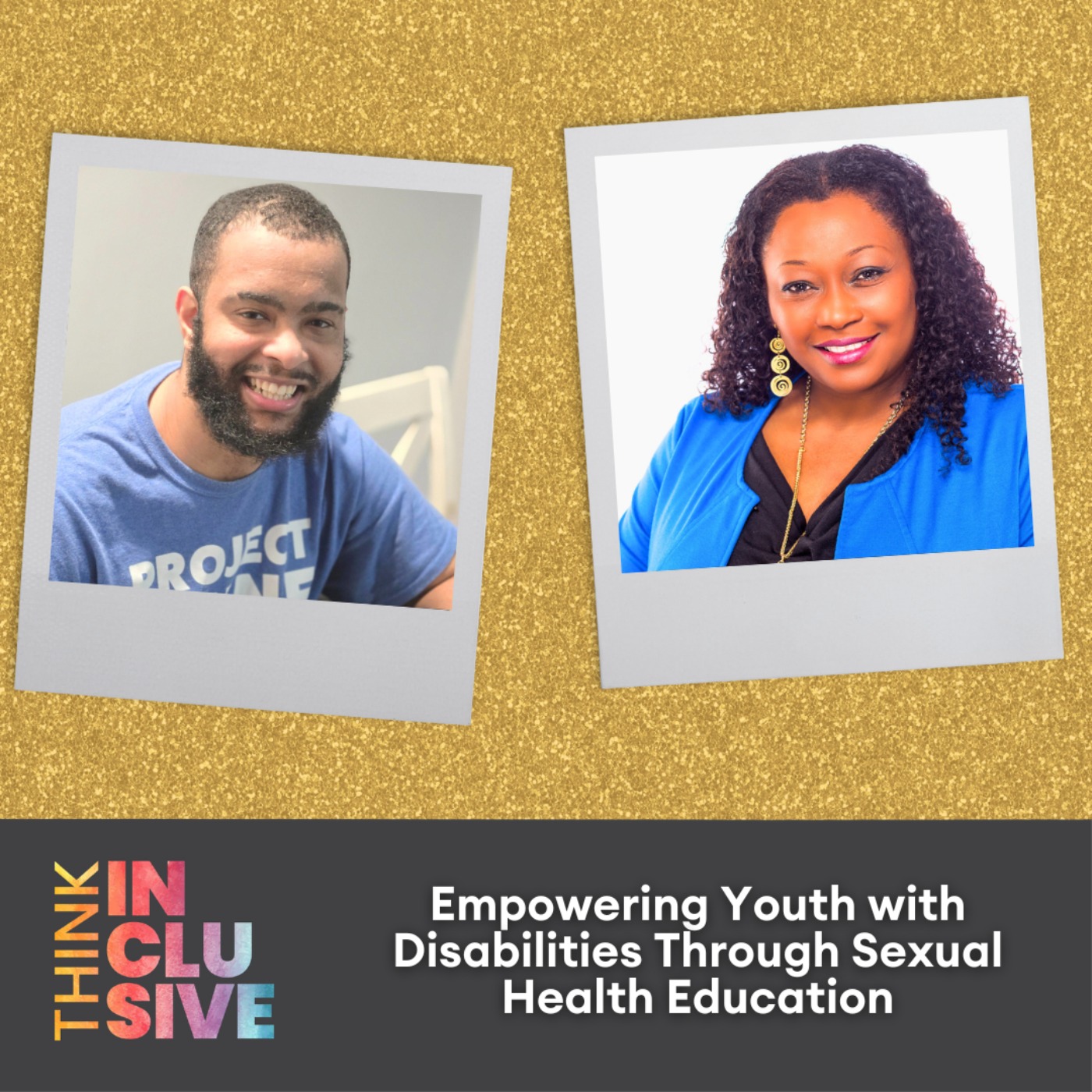
S12 Ep 18Empowering Youth with Disabilities Through Sexual Health Education
About the Guest(s):Connie Senior is an Assistant Director and Project Manager for Project SHINE at YAI. She has over 27 years of experience in neurodevelopmental disabilities and mental health. With extensive experience advocating for and supporting individuals with intellectual and developmental disabilities (IDD), Connie plays a crucial role in developing resources for this community. Her work focuses on bridging gaps in education and providing individuals with IDD the tools they need for personal empowerment, particularly in realms like sexual health education. Breon Williams is a Project SHINE Youth Ambassador who is committed to educating and raising awareness about SHINE’s sexual health toolkit for youth with disabilities. Drawing from his personal experiences as a young man with I/DD, he connects meaningfully with both youth and families, fostering open and inclusive conversations. Williams earned a general diploma in high school and pursued two years of college. Like many young people with disabilities, he initially felt uneasy discussing sexual health. However, through his journey of self-empowerment, Williams has overcome these challenges and now strives to help others gain confidence in having these important conversations.Episode Summary:In a thought-provoking episode of the Think Inclusive Podcast, host Tim Villegas from the Maryland Coalition for Inclusive Education discusses Project SHINE with Connie Senior and Breon Williams. Developed by YAI in collaboration with Planned Parenthood and other agencies, Project SHINE aims to bridge gaps in sexual health education for youth with intellectual and developmental disabilities (IDD). The episode highlights the project's significant impact, including the launch of "Your Sexual Health Toolkit," a comprehensive platform empowering individuals with IDD. Connie explains how the project addresses the lack of sexual education in schools and adapts to different learning needs, while Breon shares his experiences promoting the toolkit and educating his family. They also emphasize the role of educators in integrating these resources into learning programs to support students with IDD holistically.Key Takeaways:Bridging Educational Gaps: Project SHINE aims to fill in the existing gaps in sexual health education for youth with IDD, ensuring they have the knowledge needed for personal safety and advocacy.Comprehensive Resources: Your Sexual Health Toolkit is an accessible, user-friendly resource designed to cater to individuals with IDD, featuring tools like glossaries, videos, and interactive games.Empowerment Through Education: Proper sexual health education empowers individuals with IDD to make informed choices, report abuse, and maintain body autonomy.Importance of Advocacy: Youth Ambassadors like Breon Williams are integral in spreading awareness about the toolkit and bridging the information gap within communities.Collaborative Efforts: The initiative underscores the need for collaboration among families, caregivers, and educational institutions to effectively deliver and promote inclusive education.Resources:Your Sexual Health Toolkit: https://yoursexualhealthtoolkit.orgThank you to our sponsor, IXL. https://www.ixl.com/inclusive Complete Show Notes + Transcript: https://mcie.org/think-inclusive/empowering-youth-with-disabilities-through-sexual-health-education/ Hosted on Acast. See acast.com/privacy for more information.
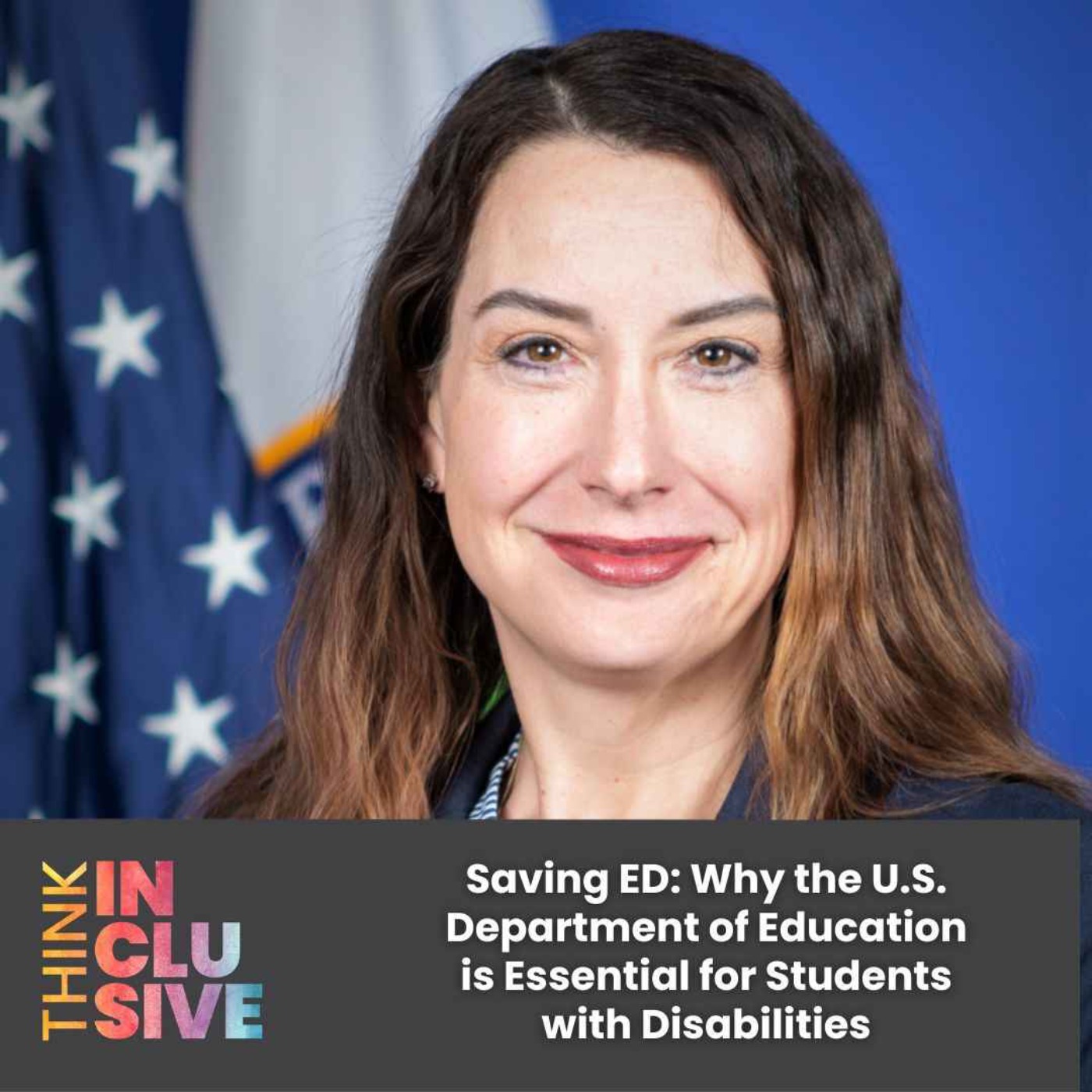
Saving ED: Why the U.S. Department of Education is Essential for Students with Disabilities
bonusAbout the Guest(s):Glenna Wright-Gallo, is most the recent assistant secretary in the Office of Special Education and Rehabilitative Services at the United States Department of Education under the previous administration and a seasoned expert in public education, focusing on special education and policy implementation. With nearly two decades of experience in state educational agencies and a strategic stint at the U.S. Department of Education, Glenna has developed a deep understanding of inclusion and systemic improvement. As a recognized advocate for equitable educational opportunities, she actively works to enhance the quality of education for learners with disabilities. Her insights draw from a rich career in both academia and policy formation, bolstered by her personal advocacy as a parent and professional committed to public education.Episode Summary:In this episode of the Think Inclusive podcast, Glenna Wright-Gallo joins host Tim Villegas to delve into the pressing concerns surrounding public education, particularly in the context of special education. They discuss the threats and misconceptions about dismantling the ED and explore the role and significance of federal oversight in ensuring equitable education for all. Glenna offers her expert perspective on why maintaining the structure of public education is crucial while advocating for continuous reform and improvement.Amidst a backdrop of political shifts and administrative changes, the conversation underscores the vital role the Department of Education plays in supporting diverse and inclusive educational environments. Keywords like "IDEA oversight," "federal funding," and "inclusive practices" punctuate their discussion as they highlight the consequences of weakening federal oversight. Glenna articulates the potential risks, emphasizing the need for a coordinated system that combines federal guidance with state implementation to support learners with disabilities effectively.The discussion is timely and pertinent, especially in light of increased political attention on education. They examine the impact of executive orders on DEI (Diversity, Equity, and Inclusion) initiatives, underscoring the critical nature of advocacy and public involvement. Glenna's insight offers listeners a comprehensive understanding of the complexities of public education reform, stressing the importance of informed community engagement and robust advocacy in shaping policy that serves every child equitably.Complete Show Notes + Transcript: https://mcie.org/think-inclusive/saving-ed-why-the-u-s-department-of-education-is-essential-for-students-with-disabilities/Key Takeaways:The ED plays a crucial role in ensuring consistent educational standards across states, particularly for special education.Dismantling the Department could result in fragmented oversight, reducing the effectiveness of IDEA and potentially reversing progress made in inclusive education.Monitoring and public input are vital components of federal and state education oversight, yet both require significant public engagement to be effective.Diversity, equity, and inclusion initiatives remain essential for fostering inclusive learning environments, despite political opposition.Advocacy and public voice are crucial in protecting and advancing public education policies that support equity and access for all students.Resources:Building and Sustaining Inclusive Educational Practices: https://bit.ly/ED-Inclusive-Practices Hosted on Acast. See acast.com/privacy for more information.
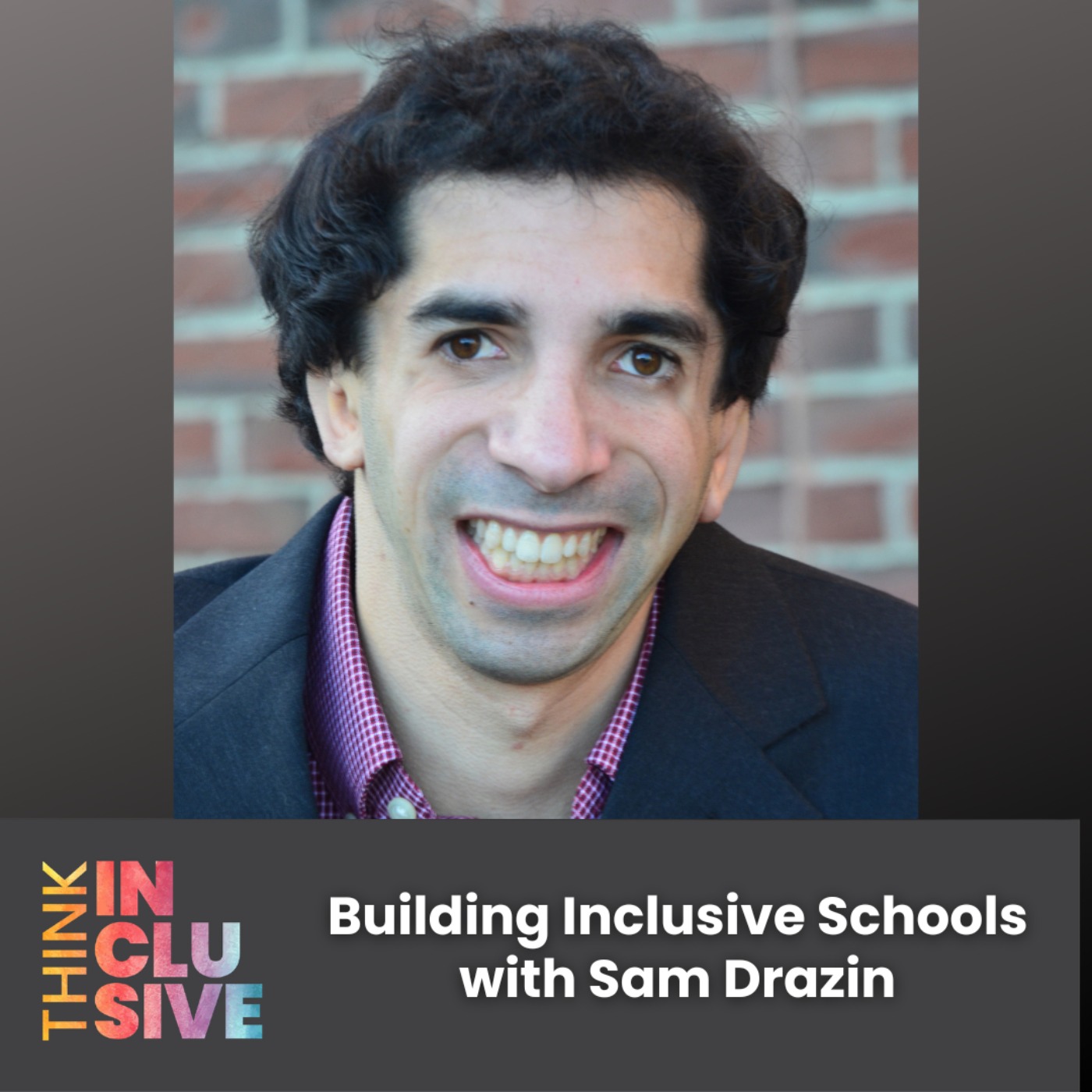
S12 Ep 17Building Inclusive Schools with Sam Drazin
About the Guest(s):Sam Drazin is the founder and Executive Director of Changing Perspectives, an organization focused on promoting inclusive education and social inclusion. Sam has extensive experience as a former teacher and is a sought-after speaker and consultant for schools seeking to implement inclusive practices. Under Sam's leadership, Changing Perspectives offers professional development, coaching, and consulting services and has a broad reach within schools across the United States and internationally.Episode Summary:In this engaging episode of Think Inclusive, host Tim Villegas welcomes back Sam Drazin, Executive Director of Changing Perspectives, to talk about the flourishing field of inclusive education. The discussion delves into how inclusion is becoming a priority for schools, with institutions increasingly incorporating these practices into their strategic plans and budgets. Sam shares his extensive travel itinerary, reflecting the growing demand for guidance in inclusive education across states such as Maryland and Massachusetts, and even internationally with a planned conference in Cambodia.Sam explains how Changing Perspectives supports schools through a combination of professional development, coaching, and site visits. He articulates the importance of creating a vision for inclusive education that schools can implement through specific goals. Sam highlights notable projects such as inclusive practices during morning meetings and recess, emphasizing the tangible benefits of breaking down silos within educational environments. The conversation underscores the complexity of implementing fully inclusive practices but champions the necessity of taking incremental steps for sustainable change in education systems.Transcript: https://otter.ai/u/30b6GuxydPA04S1PD8J94YnDtPwKey Takeaways:Changing Perspectives provides integral support to schools through professional development, coaching, and site visits to foster inclusive practices.Creating a clear vision for inclusive education helps schools identify specific, tangible goals that foster long-term change.Sam Drazin emphasizes the need for educators to differentiate between accommodations and modifications to better support diverse student needs.True inclusion should blend so seamlessly into school culture that it becomes a norm rather than a noticeable addition.Sam highlights the effectiveness of starting with low-hanging fruit to build confidence and commitment to inclusive practices.Resources:Changing Perspectives: https://changingperspectivesnow.org/Books mentioned: "Enemy Pie," "Out of My Mind," "Happiness Falls"MCIE: https://mcie.org/Thanks to our sponsor, IXL: https://www.ixl.com/inclusive Hosted on Acast. See acast.com/privacy for more information.
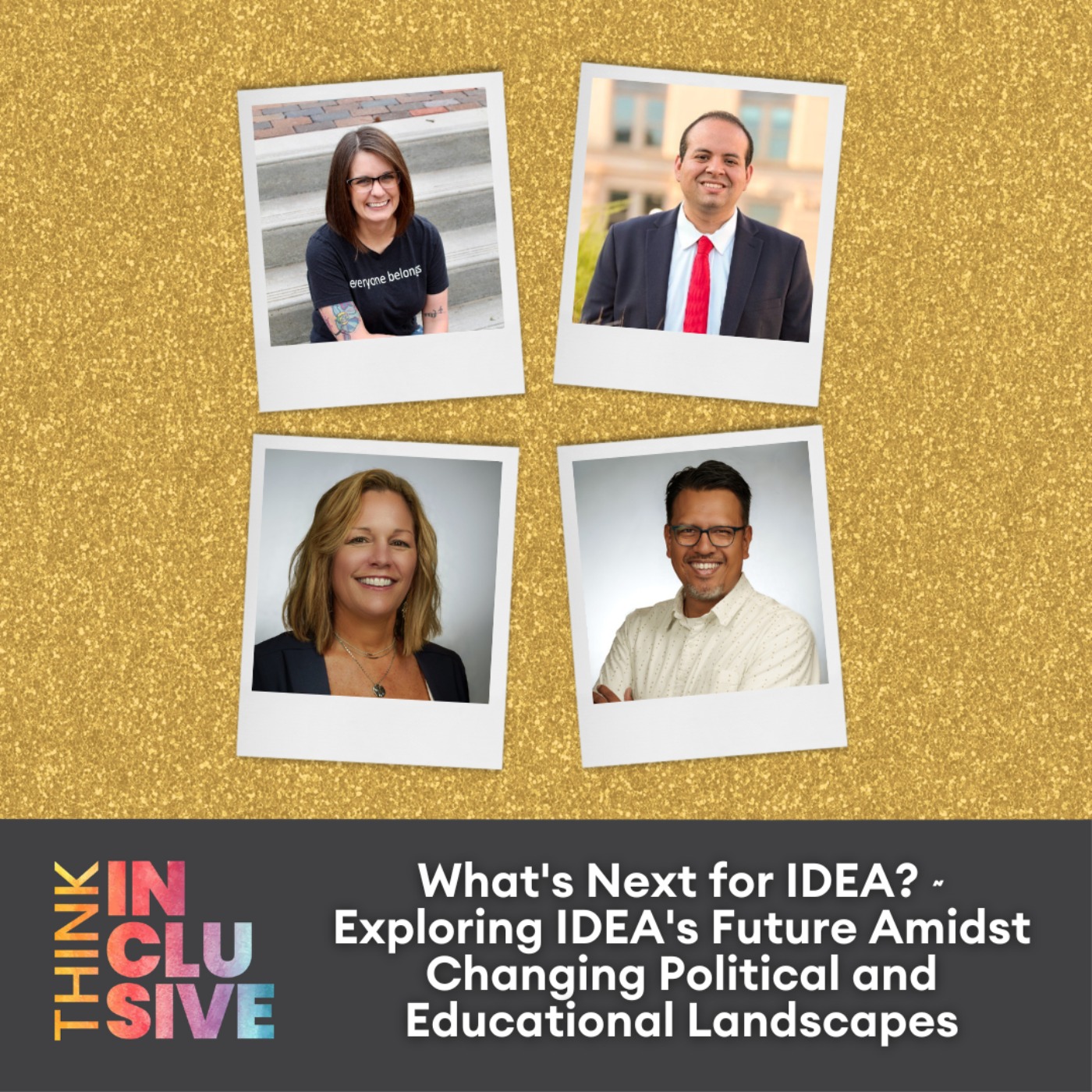
S12 Ep 16What's Next for IDEA? ~ Exploring IDEA's Future Amidst Changing Political and Educational Landscapes
About the Guest(s):Dr. Jen Newton: Associate Professor in Special Education at Ohio University with expertise in strengths-based approaches to families, early childhood inclusion, and socially just educational practices. Dr. Newton has previously taught at James Madison University and Saint Louis University and is a passionate advocate for inclusive education.Eric Garcia: Washington Bureau Chief and Senior Washington Correspondent at the Independent. Eric covers the White House, Congress, and politics, and is also an MSNBC columnist. He's the author of the book "We're Not Broken: Changing the Autism Conversation" and a recipient of the Harriet McBride Johnson Prize for his nonfiction writing on autism.Dr. Carolyn Teigland: CEO of the Maryland Coalition for Inclusive Education (MCIE), Dr. Teigland is a seasoned educator dedicated to advancing diversity, equity, and inclusion in schools. She has also served as an Associate Superintendent in Cecil County Public Schools, leading transformative inclusive education efforts and providing congressional testimony on the subject.Tim Villegas: Host of the Think Inclusive podcast and a former special education teacher, Tim has been with MCIE since 2020. He advocates for inclusive education and produces two podcasts: Think Inclusive and Inclusion Stories, which explore real-world inclusion and share diverse educational experiences.Episode Summary:Join host Tim Villegas as he navigates a thought-provoking discussion on the future of the Individuals with Disabilities Education Act (IDEA) with distinguished experts Dr. Jen Newton, Eric Garcia, and Dr. Carolyn Teigland. This episode provides an unfiltered look at how potential changes and challenges to IDEA could shape the educational landscape amidst shifting political priorities.The conversation opens up critical perspectives on the challenges facing special educators and administrators as a new administration takes the helm. The panelists delve into the implications of possible funding changes, especially the controversial move towards block grants. Eric Garcia brings insight from his political coverage, analyzing the plausibility of dismantling the Department of Education and the priorities of the Trump administration regarding public school reform.The episode explores the necessity for advocacy and civic engagement at both the state and local levels. Jen Newton and Carolyn Teigland emphasize the importance of understanding state policies and the role they play in shaping education funding directed towards inclusive practices. Highlighting the gaps in the current system, the panelists call for collective efforts to rebuild and reform American education, ensuring it addresses the diverse needs of all students, particularly those with disabilities.Transcript: https://otter.ai/u/cIskPwj8p73iR1JbtTHt0Rm8evAKey Takeaways:The potential reauthorization of IDEA under a new administration raises significant concerns, particularly regarding block grants and funding changes.Engaging with state and local education policies is crucial for effective advocacy on behalf of students with disabilities.Potential moves to dismantle the Department of Education face legislative hurdles, but they underscore broader discussions on public school reform.Understanding the nuances of school choice and its implications for marginalized students remains essential for parents and educators.Advocacy and equitable education practices are vital to counteract possible setbacks in inclusive education policies.Complete Show Notes: https://mcie.org/think-inclusive/Thank you to our sponsor, IXL: https://www.ixl.com/inclusive Hosted on Acast. See acast.com/privacy for more information.
S12 Ep 15Embracing Inclusion: Navigating Disability in Education and Parenting with Kelley Coleman
About the Guest(s):Kelley Coleman is an influential advocate and author specializing in parenting children with disabilities. Over a decade into her journey of raising a child with multiple disabilities, Kelley has become a voice of insight and support for many parents navigating similar paths. She recently authored the book, "Everything No One Tells You About Parenting a Disabled Child," where she imparts practical advice on various aspects of managing disabilities, both in daily family life and navigating the education system. Kelley is a champion for inclusivity, grounded in her personal experiences and extensive engagement with parents, educators, and the disabled community.Episode Summary:In this captivating episode of "Think Inclusive," host Tim Villegas interviews Kelley Coleman, offering a heartfelt discussion about parenting a disabled child and striving for inclusive education. Kelley shares insights from her book, "Everything No One Tells You About Parenting a Disabled Child," drawing from her decade-long journey of raising a child with multiple disabilities. Her perspective challenges listeners to rethink societal perceptions of disability and underscores the importance of fostering strong, collaborative relationships between parents and educators.Kelley discusses the power of vision statements in IEP meetings to streamline educational goals for children with disabilities. The episode presents a balanced view, recognizing both the struggles and triumphs associated with advocating for the best educational outcomes for disabled children. The conversation expands to discussing inclusivity in schools, the undercurrent of fear surrounding disability, and strategies for educators to better support inclusive practices. The insights shared in the conversation are aligned with current themes in education and disability advocacy, offering a roadmap for both parents and educators to foster a more inclusive environment.Transcript: https://otter.ai/u/e5WjDGn5-klsWtmOr0C48R8LL6QKey Takeaways:Creating a vision statement for a child with disabilities is crucial for setting clear, achievable educational goals and establishing a unified direction for their learning journey.Establishing ongoing communication between parents and teachers is essential for building trust and fostering a collaborative approach to education and inclusion.Normalizing disability in society reduces fear and stigma, which can lead to more meaningful and supportive interactions between disabled and non-disabled individuals.Teachers require sufficient training and resources to implement effective inclusive practices, which simultaneously benefit students with and without disabilities.The Paralympics exemplifies a successful platform for showcasing the excellence of disabled athletes without resorting to inspiration porn.Resources:Kelley's Website: https://www.kelleycoleman.com/MCIE: https://www.mcie.org/Thanks to our sponsor, IXL: https://ixl.com/inclusiveDonate to MCIE: https://bit.ly/MCIE-Donate Hosted on Acast. See acast.com/privacy for more information.
S12 Ep 14Building Bridges: How Leaders Can Truly Connect and Cultivate Belonging with Alida Miranda-Wolff
About the Guest(s):Alida Miranda-Wolff is an accomplished diversity, equity, inclusion, and belonging (DEIB) practitioner. She is a three-time guest on the Think Inclusive podcast, showcasing her expertise in cultivating inclusive cultures. Alida is the founder and CEO of Ethos, a full-service DEIB and employee advocacy firm, serving a multitude of clients worldwide. She is also the host of the podcast "Care Work with Alida Miranda Wolff" and has written two bestselling books with HarperCollins: "Cultures of Belonging: Building Inclusive Organizations that Last" and "The First Time Manager: Diversity, Equity, and Inclusion."Episode Summary:In this episode of Think Inclusive, Tim Villegas engages in a thought-provoking conversation with Alida Miranda-Wolff, focusing on creating inclusive environments within educational systems. Alida's seasoned knowledge as a DEIB practitioner provides valuable insights into the necessity of having diversity, equity, inclusion, and belonging at the forefront of leadership strategies in schools. This episode is tailored for those in educational leadership, offering tangible actions for fostering inclusivity and belonging among teachers, students, and administrators.The discussion traverses the strategic application of DEIB principles aimed at empowering school leaders and managers, defining the nuanced difference between leadership and management, and addressing potential resistance to inclusive practices in contemporary educational settings. By weaving Alida's experiences and actionable insights into the narrative, the episode creates a robust framework for educational leaders to build a culture of belonging and address the recent controversies around DEIB practices. Filled with enlightening reflections and actionable strategies, the episode is essential listening for anyone involved in organizational leadership or educational management.Transcript: https://otter.ai/u/O2TB1lIc3jb6l2xqhiasZ1NJDbwKey Takeaways:Leaders and managers have distinct roles; understanding the difference is crucial in fostering school inclusivity.Modeling growth-oriented behaviors and offering employees care are essential habits for building inclusive school environments.Challenging conversations and transparency in leadership pave the way for effective inclusivity practices.Understanding and addressing resistance to DEIB initiatives involve acknowledging underlying fears in change and loss of status or autonomy.Achieving true inclusivity in schools means focusing primarily on the needs of students and then accommodating teachers and staff accordingly.Resources:Alida Miranda-Wolff: https://alidamirandawolff.com/Ethos: https://www.ethostalent.com/Alida's books: "Cultures of Belonging: Building Inclusive Organizations that Last" and "The First Time Manager: Diversity, Equity, and Inclusion" (available where books are sold)MCIE: https://mcie.org/think-inclusive/alida-miranda-wolff-belonging-leadership/ (find Alida's previous appearances on the podcast here)Thank you to our sponsor, IXL: https://ixl.com/inclusive Hosted on Acast. See acast.com/privacy for more information.
S12 Ep 13'The Other Kids': A Conversation about Inclusion, Trauma, and Behavior with Alex Shevrin Venet
About the Guest(s):Alex Shevrin Venet: Alex is an educator, consultant, and author known for her work in trauma-informed and equity-centered education. She has authored "Equity-Centered Trauma-Informed Education" and "Becoming an Everyday Change Maker." With a background in therapeutic school settings, Alex now focuses on teacher development, school consulting, and writing. She is dedicated to empowering educators to create inclusive and equitable learning environments.Episode Summary:In this episode of the Think Inclusive podcast, host Tim Villegas welcomes Alex Shevrin Venet to discuss pressing issues in education surrounding inclusive and trauma-informed practices. Tim and Alex delve into the ramifications of exclusionary classroom settings, the role of educators as change makers, and the imperative to place equity at the center of educational approaches. This engaging conversation provides valuable insights for educators seeking to foster inclusive environments.Throughout the discussion, Alex shares her experiences and insights about the challenges and opportunities within the education system. They highlight the systemic issues stemming from segregated special education settings and how educators can empower themselves to become everyday change makers. Alex emphasizes the importance of stepping into one's role within the educational system, acknowledging individual strengths and areas for influence while advocating for systemic change. Her discussion on trauma-informed education suggests a shift away from behaviorism to a more holistic and equity-centered approach.Transcript: https://otter.ai/u/F4rhCJCaeQUg8FBAo0DUMy7FlBgKey Takeaways:Becoming a Change Maker: Educators can create change within their spheres of influence, starting small and building momentum for inclusive education.Equity-Centered Approaches: Alex emphasizes the need to integrate equity into trauma-informed educational practices.Challenges of Behaviorism: The systemic reliance on behaviorist approaches needs reevaluation, with a focus on empowering students rather than just managing behavior.Building Inclusive Communities: Segregated systems often prevent authentic community building; all students benefit when differences are embraced.Strategic Change Advocacy: In politically charged environments, educators need to be strategic about advocating for equity and inclusive practices.Resources:What about the other kids in the room? https://www.unconditionallearning.org/blog/the-other-kids-in-the-roomUnconditional Learning: https://www.unconditionallearning.org/Donate to MCIE: https://bit.ly/MCIE-DonateThank you to our sponsor, IXL: https://www.ixl.com/inclusive Hosted on Acast. See acast.com/privacy for more information.
S12 Ep 12Sonic Rebels: How Reynols Shatters Stereotypes with Every Note
About the Guest(s):Alan Courtis is an Argentine experimental musician known for his work with the band Reynols. Founded in 1993, the band is distinctive in the experimental rock scene, especially since its lead singer, Miguel Tomasin, has Down syndrome. Courtis has collaborated broadly in the music industry, contributing significantly to avant-garde and noise music. He continues to challenge conventional boundaries by creating innovative musical experiences and focusing on inclusivity within the music world.Episode Summary:In this episode of Think Inclusive, host Tim Villegas navigates us through a fascinating conversation with Alan Courtis from the groundbreaking Argentine band Reynolds. Broadcasting from Marietta, Georgia, while on a vinyl hunting expedition, Tim introduces us to the profound and inspiring story of Miguel Tomasin, a musician with Down syndrome leading a band renowned for its experimental sounds. Courtis dives into the journey and evolution of Reynols, shedding light on how this unique band rose to prominence and discusses the nuances of creating art that transcends conventional expectations.Focusing on inclusivity and diversity in music, the discussion uncovers the band's philosophy of allowing Miguel to drive their creative pursuits. Despite initial skepticism from critics, Reynols has sustained a remarkable 30-year career by creating music that defies typical categorization, enabling audiences to indulge in an unparalleled auditory experience. Alan highlights the importance of embracing the unpredictability of their music-making process and the artistic value this brings. Listeners are encouraged to not only appreciate but also learn from the inclusivity and innovation championed by Reynols.Transcript: https://otter.ai/u/HEU8KnWUGSpDbnvPY7g20fu_uWcKey Takeaways:Reynols band, led by a musician with Down syndrome, creates experimental rock music that defies conventions and embraces unpredictability.The band values Miguel's unique contributions, emphasizing creativity and innovation gained from letting him guide their musical journey.Inclusive art forms can drive significant cultural change and challenge societal norms surrounding disability.Despite facing criticism, Reynols has sustained a 30-year career due to their commitment to breaking musical barriers.Alan Courtis emphasizes living in the present and leveraging individual talents to enrich artistic expression.Resources:Reynols on Facebook: https://www.facebook.com/minecxio/Reynols on Instagram: https://www.instagram.com/reynols_oficial/New York Times article: https://www.nytimes.com/2022/12/02/world/americas/argentina-miguel-tomasin-drummer.html?unlocked_article_code=1.bU4.V4Mi.IOKr7TTILPry&smid=url-shareReynols “Manorla Acuplemo”: https://youtu.be/XqHzgU9czQM?si=yAMwFLffe3kpJLajThanks to our sponsor, IXL: https://ixl.com/inclusiveMCIE: https://mcie.org/ Hosted on Acast. See acast.com/privacy for more information.
S12 Ep 11Exploring Virtual Education's Potential for Inclusive Learning Environments
About the Guest(s):Alexis Thomason is an accomplished virtual art instructor at the Pearson Georgia Connections Academy. She has a robust background in teaching, having spent 25 years in various educational roles. Initially starting her career in middle school education with certifications in K-12 art and language arts for grades 4 through 8, Alexis transitioned to the virtual teaching sphere following her enriching experience during the COVID-19 pandemic. She is known for her dedication to fostering an inclusive and engaging educational environment that benefits all learners, including those with disabilities.Episode Summary:In this engaging episode of the Think Inclusive podcast, host Tim Villegas explores the realm of virtual education alongside guest Alexis Thomason from the Georgia Connections Academy. This episode dives deep into the possibilities and challenges of providing inclusive education in an entirely virtual setup. With the rapid transition to online schooling during the COVID-19 pandemic, many educators faced the challenge of adapting their teaching methods. Alexis shares her journey from traditional classroom teaching to becoming a virtual art educator and discusses how online education can be a viable and inclusive option for students, especially those with disabilities.As virtual education becomes a more prominent fixture in the educational landscape, Alexis outlines how Pearson Georgia Connections Academy operates as a tuition-free online public school, serving K-12 students. Emphasizing flexible learning and accessibility, Alexis explains how virtual schooling can uniquely support learners with disabilities, allowing for personalized and differentiated instruction. With insights on how virtual environments foster self-driven learning and teaching, Alexis provides a compelling case for educators and parents to consider virtual schooling as a potential avenue for their educational needs.Transcript: https://otter.ai/u/12q3Th8cahLWUnBULlKfYnN34soKey Takeaways:Virtual education can be an inclusive and accommodating environment for students, including those with disabilities, by offering personalized learning options.Pearson Georgia Connections Academy provides a flexible, 100% online schooling option that caters to K-12 students across multiple states.Differentiation in teaching methods is crucial in a virtual setting to cater to diverse learning styles and needs, helping ensure that each student receives the appropriate support.The transition to virtual education offers flexibility not just for students but for educators too, allowing them to find a teaching style that suits their personal needs and professional goals.Students can thrive in a virtual learning environment by receiving individualized support and having access to recorded lessons and flexible learning schedules.Resources:Pearson Connections Academy: https://www.connectionsacademy.com/Thank you to our sponsor, IXL! Learn more: https://www.ixl.com/inclusive Hosted on Acast. See acast.com/privacy for more information.
S12 Ep 10Breaking Down Myths: The True Cost of Inclusive Education
About the Guest(s):Jamie Sowers: Jaime is a dedicated special education director focused on teacher retention and hiring. As Clinical Advisory Team Director at BlazerWorks, he aids school districts in recruitment and retention, emphasizing post-secondary outcomes for students with disabilities. With 20 years of experience, Jaime has been a teacher, coordinator, and principal. He holds a Doctor of Education from Wilmington University and a Master of Education from Mansfield University. Jaime is active in professional organizations and serves on two volunteer school boards.Jessica Bowman: Jessica is the co-Principal Investigator of the TIES Center and a researcher with the National Center on Educational Outcomes. She enhances the inclusion of students with significant cognitive disabilities in general education by creating resources and providing technical assistance. Starting as a teacher, she has extensive experience in professional development at the state level. Her research focuses on inclusion in mathematics for these students. Dr. Bowman holds a Ph.D. in Special Education from the University of Utah.Episode Summary:In this enlightening episode of Think Inclusive, hosted by Tim Villegas, we dive deeply into the conversation about the cost and logistics of inclusive education. Jamie Sowers from BlazerWorks joins Tim to debunk myths about the funding required for inclusive practices and to discuss the efficient utilization of school resources. Next, Tim is joined by Jessica Bowman from the University of Minnesota to break down her recent research on separate school placements for students with extensive support needs. This dialogue sheds light on how geographical locale and charter school enrollment influence educational outcomes.Throughout the episode, key topics revolve around optimizing educational resources and innovative solutions to staffing challenges. Jamie Sowers emphasizes that while special education funding has historically fallen short, inclusive education doesn't inherently require more resources; rather, it calls for smarter use of available funds and staff. The discussion with Jessica Bowman highlights her research findings that suggest alarming discrepancies in separate school placements across different states and regions, raising questions about equitable access to education for all students. Their shared insights advocate for a continuous commitment to developing inclusive environments where all students can thrive.Transcript: https://otter.ai/u/ohPZW9go9tpraqmN5c9v5UUYMAQResources:BlazerWorks: https://blazerworks.com/TIES Center: https://tiescenter.org/.Separate School Placement for Students With Extensive Support Needs and the Potential Impact of Locale and Charter School Enrollment: https://journals.sagepub.com/doi/10.1177/00224669241231546?icid=int.sj-abstract.citing-articles.4Inclusion Stories: https://pod.link/1633672526YouTube: https://www.youtube.com/@think_inclusiveThank you to our sponsor, IXL! Learn more: https://ixl.com/inclusive Hosted on Acast. See acast.com/privacy for more information.
S12 Ep 9Unlocking Inclusive Education: Master Scheduling with Natural Proportions
About the Guest(s):Brittni Sammons is a Professional Learning Coordinator with the Maryland Coalition for Inclusive Education (MCIE), bringing a wealth of experience from her past roles as a special educator, assistant principal, and inclusive education facilitator. Before joining MCIE, she served the Calvert County Public Schools, where she played a pivotal role in partnership with MCIE to further inclusive practices. Later, she became a supervisor of instructional performance, focusing on culturally responsive instruction. Brittany’s dedication is driven by a belief in every student's need to develop a sense of belonging within inclusive educational communities.Episode Summary:In this engaging episode of Think Inclusive, Tim Villegas, joined by his colleague Brittni Sammons, delves into one of the most frequently asked questions in inclusive education: scheduling. The podcast promises a practical exploration of how inclusive education can function effectively within the framework of school scheduling, emphasizing the concept of "natural proportions."The conversation unravels common misconceptions about inclusion, such as the over-reliance on "co-taught" classrooms. Brittni and Tim advocate for spreading resources evenly across classrooms, ensuring students with disabilities are included naturally within the school community. They highlight the importance of understanding students’ strengths, services, and the supports needed, discussing strategies like "targeted" co-teaching which allow for dynamic support based on evolving needs. This detailed exploration aims to dispel myths and demonstrate a more efficient, community-integrated model for special education.Transcript: https://otter.ai/u/Xd3227PaT2hlVORApnZR56ghv5E?utm_source=copy_urlKey Takeaways:The principle of "natural proportions" ensures students with disabilities are naturally included in classrooms based on the proportion of students with disabilities in the general population.Effective inclusive education requires strategic and collaborative planning among general and special educators to meet individual student needs.Different models like "co-targeted" and "consultative" relationships offer flexible, collaborative ways to deliver special education services without relying solely on co-taught classrooms.Educators can adapt the inclusion model through phases—grouping students, assigning support roles, and building master schedules tailored to the school’s needs.Reflective practices and adaptive measures can lead to more significant educational advances and a stronger sense of community belonging for students.Resources:MCIE: https://mcie.org/resources/Lou Brown on Natural Proportions: https://youtu.be/Cq5TiGbWAK0?si=JPzYoY5us1SXJTzBThank you to our sponsor, IXL. Learn more: https://ixl.com/inclusive Hosted on Acast. See acast.com/privacy for more information.
S12 Ep 8Embracing the Complexity of Inclusive Education with Aaron Lanou
About the Guest(s):Aaron Lanou (he/him) is an educational consultant supporting schools and organizations to reach all kids with inclusive, strengths-based practices. Through the lens of Universal Design for Learning, Aaron coaches teachers and others to teach and support autistic students and all kids with a variety of academic, executive functioning, and social support needs. A member of Carol Gray’s Team Social Stories, Aaron also provides Social Stories workshops and collaborates with Carol and the team to continually update and refine the Social Stories philosophy and approach. Aaron was previously a special education teacher in the New York City Public Schools and Executive Director of the Nest Program at NYU, helping to lead the nation’s largest inclusion program for autistic students.Episode Summary:In this engaging episode of Think Inclusive, host Tim Villegas sits down with inclusive education consultant Aaron Lanou from New York. They dive deep into the current landscape of inclusive education and the challenges faced by educators striving for more inclusive practices in schools. Aaron shares his insights on the necessary methods, mindsets, and structures that need to be in place to truly integrate inclusive practices in educational settings. With over 20 years in the field, his perspective offers a blend of practical advice and philosophical reflections on the state of education.Tim and Aaron also tackle some of the misconceptions surrounding inclusion, such as the belief that it's solely about placing students with disabilities into general education classrooms. They advocate for a more nuanced approach that emphasizes providing the necessary supports to allow every student to succeed. Celebrating the success stories and dissecting the persistent barriers, they urge educators to remain steadfast in their commitment to inclusive education, drawing on resources, supports, and community to fuel the journey towards more inclusive practices. This episode is packed with valuable insights and actionable strategies for educators and advocates at every level.Transcript: https://otter.ai/u/cMJupjKF1K5R5_Xv6F8M4SX8SBgKey Takeaways:Inclusive Education is Not Just Physical Inclusion: It requires supporting diverse needs with appropriate resources and training.Mindset Matters: Mindset, method, and structure are the three pillars of successful inclusive education—known as "The M&Ms."Barriers for Teachers Exist: Educators face obstacles in mindset shifts, lack of resources, and structural constraints.Resourcefulness is Key: Teachers are encouraged to find creative solutions in advocacy and classroom practice.Interdependence and Collaboration: Seeking supportive networks and resources is crucial for educators working in less inclusive environmentResources:Aaron Lanou: https://www.aaronlanou.com/Papi Por Que: https://papi-porque.com/Thank you to our sponsor, IXL! Learn more: MCIE: https://www.mcie.org Hosted on Acast. See acast.com/privacy for more information.
S12 Ep 7Busting Math Myths with UDL: Making Math Accessible for All
About the Guest(s):Jenna Rufo is an inclusive education consultant and the founder and CEO of EmpowerED School Solutions. She has worked with state departments of education, disability rights organizations, and school systems across the United States and Australia to create more equitable and inclusive special education programs. She spent nearly 20 years in public education as an assistant superintendent, special education director, and teacher, where she advocated for students with disabilities to receive services in inclusive settings.Ron Martiello is a learning coach in Montgomery County, PA. He has served as a 1st grade teacher, an elementary assistant principal, and an elementary principal. In 2018, Ron became a learning coach to support teachers in the areas of technology and math.Episode Summary:In this engaging episode, host Tim Villegas converses with Jenna Rufo and Ron Martiello about their book "Conquering Math Myths with Universal Design." The discussion opens with shared personal stories about early math experiences, growing into a broader dialogue about the persistent myths surrounding math education. Listeners are encouraged to reflect on how universal design for learning (UDL) principles can reshape the learning experience and dismantle long-held barriers in mathematics education.As the conversation unfolds, Jenna and Ron delve into the specifics of their book. They emphasize the necessity of integrating UDL to foster an inclusive and engaging math classroom environment. Key topics include the myth of answer-getting, the fallacy of prerequisite skills, and how these misconceptions hinder the learning process. By addressing these issues, the guests assert that educators can uplift students who are often left behind in traditional math settings, hence promoting equity and excellence simultaneously.Transcript: https://otter.ai/u/ZviVGZjEdxglJVPj5GSvF55FnWIKey Takeaways:Universal Design for Learning (UDL) can help debunk myths about mathematics by creating multiple entry points for diverse learners.The idea that quick answer-getting equates to math proficiency is a myth; success in math involves understanding processes and reasoning.Focusing solely on prerequisite skills can hinder students' exposure to more advanced mathematical concepts.Collaborating across disciplines and educational roles can enhance instructional design and ensure more inclusive educational practices.By utilizing UDL, educators can develop teaching strategies that accommodate the needs of all students, thereby ensuring equitable access to mathematics education.Resources:Conquering Math Myths with Universal Design: An Inclusive Instructional Approach for Grades K–8: https://ascd.org/books/conquering-math-myths-with-universal-designEmpowerEd School Solutions: https://www.empoweredschool.org/Ron Martiello on LinkedIn: https://www.linkedin.com/in/ronmartiello/Thanks to our sponsor, IXL! https://ixl.com/inclusiveMCIE: https://mcie.org Hosted on Acast. See acast.com/privacy for more information.
S12 Ep 6Exploring AI's Role in Streamlining IEP Development for Educators
About the Guest(s):Dr. Andrea Harkins-Brown is the Program Director for Disability Policy and Systems Change and an Assistant Research Scientist at the Center for Technology and Education within Johns Hopkins University School of Education. With a background as a special educator in public schools in Maryland, Dr. Harkins-Brown has extensive experience serving students with autism and significant cognitive disabilities. Her career transitioned from classroom teaching to higher education and research, focusing on leveraging technology to enhance special education services. Her work at Johns Hopkins includes supporting state and local school districts to improve special education implementation and outcomes through innovative research.Episode Summary:In this engaging episode of the Think Inclusive podcast, host Tim Villegas and Dr. Andrea Harkins-Brown of Johns Hopkins University explore how AI can revolutionize individualized education programs (IEPs) by reducing teacher workloads, enhancing procedural compliance, and allowing educators to focus more on teaching. Dr. Harkins-Brown shares insights from her research at the Center for Technology and Education, where her team is exploring how AI can streamline IEP creation, addressing the high attrition rates among special educators due to paperwork burdens. They discuss the potential of AI to analyze data, offer evidence-based recommendations, and generate language for IEPs, while also considering ethical implications, bias mitigation, and the need for rigorous testing before large-scale implementation in education.Transcript: https://otter.ai/u/h77GRXniZr5pkAyRS_7sYmgOXT0Key Takeaways:AI tools promise to alleviate the heavy paperwork burden on special educators, enabling them to focus more on meaningful classroom instruction and student interaction.The effective deployment of AI in IEP development could involve AI making preliminary recommendations or content generation, subject to educator validation and customization.AI has the potential to improve procedural compliance and reduce implicit biases in IEPs by providing objective suggestions and ensuring transparent development processes.Thorough research and evaluation are crucial to understanding AI’s effectiveness in producing quality IEPs compared to current methods.Integrating AI in education necessitates ethical programming, addressing biases, and ensuring tools truly benefit teachers and students rather than exacerbating existing issues.Resources:Center for Technology and Education (CTE): https://education.jhu.edu/cte/Andrea Harkins Brown on X: https://twitter.com/andreahparrishAI in Education Webinar: https://www.aiforeducation.io/harnessing-ai-in-special-education-a-four-part-seriesThanks to our sponsor, IXL! Learn more: https://ixl.com/inclusiveMCIE: https://mcie.org Hosted on Acast. See acast.com/privacy for more information.
S12 Ep 5Inclusion Starts Now: Building Relationships to Promote Inclusive Education
About the Guest(s):Kayla Coburn is an inclusive education advocate and former special education teacher, known for her transformative work in promoting inclusive practices within schools. Having taught in both inclusive and segregated classrooms, Kayla brings firsthand experience to her consultancy, "Inclusion Starts Now." She is also a children's book author with titles focusing on inclusion and diversity, aiming to educate young minds on these crucial themes. Her creative efforts extend to her podcast, also titled "Inclusion Starts Now," where she engages in meaningful discussions about educational practices.Episode Summary:In this engaging episode of the Think Inclusive Podcast, host Tim Villegas welcomes Kayla Coburn from "Inclusion Starts Now" for a rich dialogue on promoting inclusive education practices. Both Tim and Kayla share their experiences as former special education teachers and discuss the complexities of working within school systems resistant to change. The conversation delves into practical strategies for fostering inclusive environments, even when structural obstacles exist. Tim and Kayla explore the nuances and challenges of expanding inclusive practices in school districts that still perpetuate special education classrooms and programs. They address the metaphor of "planting seeds" as critical to pushing forward the boundaries of what inclusive practices can achieve, especially in historically non-inclusive settings. The episode highlights the importance of relationship-building and persistence in advocating for systemic change within education.Transcript: https://otter.ai/u/QgahJWww2zvGk4a-Ix7GmHfWQ3YKey Takeaways:Building trust and relationships with colleagues is essential for fostering an inclusive educational environment.Educators should not feel shame for using methods such as "reverse inclusion" but should continue to work towards more authentic inclusion for all learners.Persistence and continued advocacy are vital for driving systemic change in school districts.Inclusive education benefits everyone—students with and without disabilities—by creating a more enriched learning environment.Innovative leadership and grassroots efforts can effectively pave the way for broader inclusive practices in education.Resources:Inclusion Starts Now: https://www.inclusionstartsnow.com/Inclusion Starts Now Podcast: https://pod.link/1732870059Books by Kayla: https://www.inclusionstartsnow.com/shopThank you to our sponsor, IXL. Learn more at https://ixl.com/inclusiveMCIE: https://mcie.org/ Hosted on Acast. See acast.com/privacy for more information.
S12 Ep 4Using Data to Advocate for Inclusive Education and Policy Change
About the Guest(s):Liz Zogby is a dedicated advocate in the special education and disability space based in Baltimore City. She is the co-chair of the Maryland Down Syndrome Advocacy Coalition (MDAC) and the Special Education Policy and Advocacy Project. Liz also co-chairs the special education workgroup with the state superintendent under the Maryland State Department of Education. Her advocacy efforts are deeply personal, inspired by her daughter Hope, who has Down syndrome.Steven Davis is a policy advocate focused on special education reform. He resides in California, has a background in mathematics, and is known for his analytical approach to education data. Steven is dedicated to improving local policy advocacy infrastructures in his community. He founded Disability Almanac and actively engages in discussions and actions to enhance educational inclusivity for children with disabilities.Episode Summary:Join Tim Villegas on the Think Inclusive Podcast as he hosts Liz Zogby and Steven Davis to explore the crucial intersection of data and special education advocacy. Both guests bring a wealth of knowledge and personal experience as parents of children with disabilities, which fuels their passion and dedication to inclusive education practices.In this compelling episode, Liz and Steven share their journeys into the world of special education advocacy, underscored by a deep dive into the use of data to inform and drive policy changes. Liz discusses her initiatives in Maryland and how understanding and leveraging data can shift legislative perspectives. Steven provides a critical look at the alarming statistics surrounding inclusion rates in California, emphasizing the need for high expectations and proper resource allocation. Together, they highlight the importance of combining both data and personal stories to make a significant impact on educational reform.Transcript: https://otter.ai/u/FFx3Ms0th62yMOHjGYBECmtcgPYKey Takeaways:The Role of Data in Advocacy: How Liz and Steven use data on inclusion rates to inform and drive policy changes.Systemic Challenges: Steven's insights into California's dismal inclusion statistics and his efforts to build better local advocacy infrastructures.Personal and Statistical Storytelling: The importance of merging personal stories with data for effective advocacy.Actionable Strategies for Educators: Recommendations for educators on understanding and utilizing data to support inclusive practices.Parent Empowerment: Encouragement for parents to use their expertise about their children in IEP meetings and advocacy.Resources:National Council of Disability PDF: https://www.ncd.gov/assets/uploads/docs/ncd-segregation-swd-508.pdfHow to Find a School District’s LRE %: https://mcie.org/think-inclusive/how-to-find-a-school-districts-least-restrictive-environment-percentage/Thank you to our sponsor, IXL: Learn more at https://ixl.com/inclusiveMCIE: https://www.mcie.org Hosted on Acast. See acast.com/privacy for more information.
S12 Ep 3Uncover the Power of Belonging in Inclusive Education with Erik Carter
About the Guest(s):Erik Carter serves as Executive Director of the Baylor Center for Developmental Disabilities, which aims to promote the thriving of people with disabilities and their families. He joined the Baylor faculty in 2023. His research and writing focus on principle-driven and research-based strategies for promoting full participation, relationships, and valued roles for children and adults with intellectual and developmental disabilities (IDD).One strand of his research addresses the intersections of faith and disability. Dr. Carter’s work in this area addresses the spiritual lives and flourishing of people with IDD and their families, the practices and postures of inclusive churches, and faith-based partnerships with disability service systems. A second strand explores the pathways to inclusion and belonging for individuals with IDD. He is particularly interested in capturing the reciprocal and lasting benefits that come through friendships and life lived together in community.Episode Summary:In this episode of the Think Inclusive podcast, Tim Villegas welcomes Erik Carter, the esteemed Executive Director of the Baylor Center for Developmental Disabilities, to discuss the intricate topics of disability, inclusion, and belonging. Erik shares updates on his current work at Baylor and the initiatives he is spearheading to promote flourishing within communities, schools, and faith congregations. Erik's transition from Vanderbilt to Baylor signifies his broader focus on community-wide inclusion and ensuring every individual's sense of belonging and purpose.Erik delves into the concept of "flourishing" versus "thriving," defining flourishing as living rich, full, and abundant lives with strong relationships, community connections, and a sense of purpose. In a thought-provoking discussion, Erik outlines ten dimensions of belonging that extend beyond mere inclusion to emphasize the importance of being invited, welcomed, known, accepted, and loved. The conversation highlights the practical, everyday actions that can foster these dimensions of belonging in both educational and faith-based settings, encouraging listeners to re-evaluate and improve their approaches to inclusion and community building.Transcript: https://otter.ai/u/CfJq-Oo4E_1D2ljznGNv0hNFOxQKey Takeaways:Erik Carter's move from Vanderbilt to Baylor emphasizes a broader community focus on inclusion and belonging.The concept of "flourishing" involves more than just good outcomes; it incorporates strong relationships, purpose, and community connections.Erik outlines ten dimensions of belonging: being present, invited, welcomed, known, accepted, supported, heard, befriended, needed, and loved.Belonging extends beyond schools to faith communities, where inclusion must be reimagined to prevent the deep wounding caused by exclusion.Practical steps to foster belonging include noticing who is excluded, reflecting on intentional actions, and transforming both educational and faith institutions to be more inclusive.Resources:Baylor Center for Developmental Disabilities: https://bcdd.soe.baylor.edu/10 Dimensions of Belonging: https://promotingprogress.org/sites/default/files/2022-02/Fostering_Belonging_Handout.pdfThank you to our sponsor, IXL! Learn more: https://ixl.com/inclusiveMCIE: mcie.org Hosted on Acast. See acast.com/privacy for more information.
S12 Ep 3The Call for Access to Spelling for Nonspeakers in Schools with Danny and Tara Whitty
Danny Whitty is a non-speaking autistic advocate who uses spelling to communicate. He has gained attention for his insights into living as a non-speaker and his advocacy for disability rights. Danny is a co-host of the podcast "All Our Brave Hearts" along with his sister, Tara. Their podcast aims to amplify the voices of non-speakers and advocate for more inclusive practices in education and society.Tara Whitty is Danny's sister and his main communication regulation partner. She plays a crucial role in helping Danny communicate and is an advocate for inclusive education and disability rights. Tara holds a PhD in a field unrelated to speech communication, but she has trained herself to be a practitioner to support Danny in his communication journey. Together, they produce the podcast "All Our Brave Hearts."In this engaging episode of "Think Inclusive," host Tim Villegas converses with Danny and Tara Whitty, shedding light on the transformative power of alternative communication methods like spelling to communicate. Through a detailed discussion, Danny shares his experiences of living a "shadow of a life" before gaining the ability to communicate via spelling. Tara discusses the crucial role of a communication regulation partner and the struggles associated with hiring one outside the family.Danny and Tara delve into the barriers to full inclusion in schools, highlighting the resistance and skepticism surrounding alternative communication methods such as spelling to communicate. Despite the challenges, Danny’s journey stands as a testament to resilience, illustrating the power of presuming competence and the essential human right of communication. The episode serves as a powerful reminder that an inclusive mindset can make a significant difference in the lives of non-speakers.Complete show notes and transcript: https://mcie.org/think-inclusive/the-call-for-access-to-spelling-for-nonspeakers-in-schools-with-danny-and-tara-whitty/
S12 Ep 2The Harsh Realities of Segregated Classrooms
Dive into the compelling discussion led by Tim Villegas on the prevalent issue of segregated special education classrooms and the significant need for inclusive education. In this inaugural episode of the 12th season of Think Inclusive, Tim reflects on his experiences as a special education teacher and district support specialist, offering profound insights into why segregated classrooms persist and how we can evolve beyond them. He questions the rationale behind segregated education and champions the cause of inclusive practices for all learners, especially those with complex support needs. Tim dismantles prevalent myths around the safety, specialized support, and individualized attention that segregated classrooms purportedly offer. He also introduces effective strategies and frameworks that underline the benefits of inclusive settings for students' academic and social development. This episode serves as a rich resource for educators, parents, and policymakers committed to fostering equitable and inclusive learning environments. Complete show notes and transcript: https://mcie.org/think-inclusive/the-harsh-realities-of-segregated-classrooms/
S12 Ep 1A Conversation with Inclusionists
In this special live episode of Think Inclusive, host Tim Villegas engages with a distinguished panel about the intricacies and importance of inclusive education. Recorded at the Crown Plaza in Annapolis, the discussion features insights from Margo Gross, Lisa Quinn, Jennifer Ayers, and Jennifer Sommerness, each bringing their extensive experience and expertise in the field.The panelists delve into what it means to be an inclusionist, exploring the roles and responsibilities involved in advocating for inclusive education. Using personal stories and professional experiences, they provide a holistic view of the challenges and triumphs associated with implementing inclusive practices in educational systems. From identifying and removing barriers to actively listening and engaging in meaningful conversations, the episode emphasizes the collaborative effort needed to foster an inclusive environment.Listeners will learn about the practical steps and strategies that can be employed to advocate for and achieve inclusive education. The conversation highlights both the successes and ongoing challenges, providing a nuanced perspective on why inclusion is not just the right thing to do, but an essential practice for educational equity and social justice. The episode concludes with a discussion on how to maintain resilience and motivation in the face of setbacks and the importance of community and support in continuing this vital work.Complete show notes and transcript: https://mcie.org/think-inclusive/inclusionists-discuss-strategies-and-stories-in-education-panel/
S11 Ep 40Graduate Excluded at Ceremony Sparks Fight for Inclusion
About the Guest(s):Ashlynn Rich: Ashlynn Rich is a recent high school graduate with Down syndrome. She graduated with honors and earned the title of scholar-athlete for her involvement in the school’s swim team. She also owns her own small business, Pop Queen Baked Goods. Ashlynn advocates for including students with disabilities in school and the community.Linda Ramirez: Linda is the mother of Ashlynn Rich. She has tirelessly advocated for inclusive education and has fought for her daughter to be fully included in general education classrooms.Episode Summary: In this compelling episode of Think Inclusive, Tim Villegas delves into the bittersweet experience of Ashlynn Rich, a high school graduate with Down syndrome, and her struggle for inclusion in everyday school life and her graduation ceremony. Despite her numerous achievements, Ashlynn faced exclusion during this milestone event, highlighting systemic issues within the education system regarding inclusivity.Ashlynn and her mother, Linda Ramirez, share their emotional journey and the ongoing fight for a truly inclusive education system. The episode covers the immediate and long-term impacts of Ashlynn’s exclusion during her graduation, a school board meeting addressing the incident, and the broader implications of segregating students with disabilities. Through their story, listeners gain valuable insights into the challenges and importance of creating an inclusive educational environment for all students.Transcript: https://otter.ai/u/Mv0TTx788S3qKBPvfhtAvLvw0GgKey Takeaways:Exclusion at Graduation: Ashlynn was separated from her peers during her graduation ceremony, which caused her to feel hurt and disappointed.Lifelong Advocacy: Linda Ramirez has fought for years across multiple school districts to ensure Ashlyn receives an inclusive education.Systemic Issues: The incident underscores the broader problem of systemic exclusion of students with disabilities in education.Public Apology: Following their speeches at a school board meeting, the superintendent publicly apologized for Ashlynn’s exclusion, admitting it should have been a parental decision.Call for Action: Linda continues to advocate for better training for educators on inclusive practices to prevent such incidents in the future.Resources:Pop Queen Baked Goods: https://www.facebook.com/PopQueenBakeryMarietta Daily Journal:https://www.mdjonline.com/news/education/a-minimization-sprayberry-graduation-excludes-disabled-students/article_877c8ca8-1f6b-11ef-9c86-9f56b036ce0e.html?fbclid=IwZXh0bgNhZW0CMTAAAR1Fd0vSy1uksocDF726LtrkPk5XL3n6p4Wv6aqNLAgLwUalhbbEP7Kt62o_aem_2iJcypHHifJb1xCwyUvcdQhttps://www.mdjonline.com/news/education/cobb-superintendent-apologizes-for-graduation-exclusion/article_2b14e6f8-29da-11ef-a166-ab78ef807f2b.html Hosted on Acast. See acast.com/privacy for more information.
S11 Ep 38We All Learn Differently: Empowering Neurodivergent Middle Schoolers
About the Guest(s): Bari Levin is a retired special educator with over 34 years of experience, predominantly working with middle school students with learning differences. He is actively involved with the I Am Able Foundation, focusing on storytelling to remove the stigma associated with neurodiversity. Bari co-leads the We All Learn Differently campaign to foster understanding and empathy for neurodivergent students in middle schools.Episode Summary: In this episode of the Think Inclusive Podcast, host Tim Villegas interviews Bari Levin, a seasoned special educator and advocate for neurodivergent students. The discussion dives into the We All Learn Differently campaign, an initiative that leverages storytelling to eliminate the stigma around learning differences in middle school students. Bari shares his insights on the importance of understanding and empathy in fostering a supportive learning environment for all students.Bari Levin elaborates on the origins and objectives of the We All Learn Differently campaign, which she co-developed under the auspices of the Educating All Learners Alliance and the I Am Able Foundation. The campaign specifically targets middle school students, promoting a deeper understanding of learning differences through engaging videos, an interactive playbook, and classroom activities. Bari's extensive experience in special education is evident as she discusses the impact of recognizing diverse learning styles and providing tools for students to advocate for themselves.Bari emphasizes the significance of creating positive dialogues around learning differences both in the classroom and at home. The campaign's playbook includes practical resources and activities designed for teachers, counselors, and parents to facilitate these crucial conversations. With the backing of the community and ongoing feedback from participants, Bari aims to expand the reach of the We All Learn Differently campaign, fostering environments where every student feels understood and valued.Transcript: https://otter.ai/u/ClPrq7tWRreQJ71QvtJOhpu5ImYKey Takeaways:Understanding Learning Differences: The campaign highlights the importance of recognizing and accommodating diverse learning styles in middle school students.Empowerment Through Storytelling: The campaign aims to foster empathy and reduce stigma by sharing personal stories of neurodivergent individuals.Parental Involvement: Resources are provided to help parents have open conversations with their children about learning differences.Practical Classroom Integration: The playbook offers accessible activities that can be seamlessly integrated into the existing curriculum without overwhelming educators.Ongoing Development: Continued feedback and data collection aim to refine and expand the campaign’s resources and impact.Resources:I Am Able Foundation: https://www.iamablefoundation.org/We All Learn Differently: https://www.wealllearndifferently.com/Thanks to our sponsor: https://dcmp.org/MCIE: https://www.mcie.org/ Hosted on Acast. See acast.com/privacy for more information.
S11 Ep 37Sam Drazin Discusses Building Inclusive Schools with Changing Perspectives
About the Guest(s): Sam Drazin is the founder and Executive Director of Changing Perspectives, a nonprofit organization dedicated to fostering inclusive educational practices. A former elementary school teacher, Sam brings firsthand experience and a deep understanding of the challenges and opportunities in creating inclusive school environments. His organization works with schools nationwide and internationally, providing professional development, consulting, and curriculum resources aimed at building more inclusive classrooms and communities.Episode Summary: In this thought-provoking episode of the Think Inclusive Podcast, host Tim Villegas engages in an enlightening discussion with Sam Drazin, founder of Changing Perspectives. Sam delves into his journey from being a classroom teacher to leading a nonprofit that aims to transform educational practices toward inclusion. This episode uncovers the importance of inclusive education, the structural obstacles that educators face, and actionable strategies for creating a more inclusive learning environment for all students.Sam Drazin shares his insights on why inclusion is vital, not just as a theoretical concept but as a practical approach that mirrors the real world. Highlighting that schools often segregate based on ability, Sam argues for schools to act as microcosms of a diverse society. This ensures students learn not just academic skills, but also about empathy and collaboration, preparing them for a more inclusive future. Villages and Drazin also discuss the often-gleaned yet practical hurdles educators face, advocating for a shift in mindset from "I can't" to "How can we?" This focus on growth mindsets over fixed mindsets is central to Drazin’s philosophy and the work of Changing Perspectives.Transcript: https://otter.ai/u/kMOqK-BonE7gdPEJaRZRVkI8iFIKey Takeaways:Embrace Inclusion as Real-World Preparation: Schools should act as mini-societies that teach students about diversity, empathy, and inclusion.Combat Ableistic Structures: The current education system is inadvertently ableistic, designed more to push out homogeneous groups of students rather than celebrating diversity.Mindset Shift: Moving from a fixed to a growth mindset is crucial for educators to address the challenges in implementing inclusive education.Actionable Strategies: Schools should identify specific, actionable goals for inclusion rather than vague or broad initiatives, enabling measurable progress.Empowerment Through Training: Customized, hands-on professional development can significantly impact teachers' ability to create inclusive classrooms.Resources:Changing Perspectives Website: https://changingperspectivesnow.org/Thanks to our sponsor for the month of June: https://dcmp.org/MCIE: https://www.mcie.org/ Hosted on Acast. See acast.com/privacy for more information.
S11 Ep 36How to Know You Are Implementing UDL with Loui Lord Nelson
About the Guest(s): Loui Lord Nelson, an internationally recognized expert in Universal Design for Learning (UDL), is the author of the bestselling book, "Design and Deliver." A former special education teacher, Loui is renowned for her work on UDL at various levels, including district, national, and international stages. She has been awarded her postdoc by CAST, influenced policies, and educational practices in the US and abroad, including work with the US Agency for International Development (USAID). Loui also hosts the "UDL in 15 Minutes" podcast, where she shares global insights into UDL implementation.Episode Summary: In this enlightening episode of Think Inclusive, host Tim Villegas delves into the intricate aspects of Universal Design for Learning (UDL) with Loui Lord Nelson, a globally recognized UDL leader. Loui shares her fascinating journey, from being a special education teacher to becoming a thought leader in educational practices that promote inclusivity. The episode is a cornucopia of practical advice, transformative insights, and real-world examples of UDL in action.Throughout the conversation, Loui elaborates on the UDL guidelines, emphasizing their role as a strategic framework to help educators design flexible learning environments and engagement strategies. The discussion explores the importance of creating a "buffet" of learning opportunities tailored to diverse learners and debunks the myth that UDL is just an overwhelming collection of tasks. Louie underscores the significance of reflecting on teaching practices and remaining adaptable, encouraging teachers to integrate UDL gradually and purposefully into their planning.In addition to practical tips for classroom implementation, the episode also navigates through the challenges of time management and collaboration among educators. Loui provides valuable guidance on utilizing tight communication structures and carving out collaborative planning time. The episode wraps up with an inspiring "mystery question" that reveals personal anecdotes from Loui and Tim, highlighting small victories and the joys of lifelong learning.Transcript: https://otter.ai/u/IB4Xa2pMR1GsXEsF58giaP-72IU?Key Takeaways:Understanding UDL Guidelines: Viewing UDL as a supportive framework rather than an add-on can transform teaching practices.Reflective Teaching: Reflection and intent in teaching are critical for effective UDL implementation.Collaboration: Structured, reliable communication platforms are essential for keeping educators synchronized, especially in schools with limited planning time.Time Management: Focus on one guideline at a time for a semester to deepen understanding without feeling overwhelmed.Environmental Design: Effective UDL practices often stem from well-planned learning environments that anticipate learner variability.Resources:The UDL Approach - https://theudlapproach.com/CAST UDL Guidelines - https://udlguidelines.cast.org/Design and Deliver - https://products.brookespublishing.com/Design-and-Deliver-P1237.aspxUDL in 15 Minutes - https://theudlapproach.com/podcasts/Sponsor: https://dcmp.org/Website: https://mcie.org Hosted on Acast. See acast.com/privacy for more information.
S11 Ep 35Reframing Special Education Using Strengths-Based IEPs with April Rehrig
About the Guest(s): April Rehrig is the founder of Rise Educational Advocacy and Consulting, LLC. With over 20 years of experience as an elementary school teacher and school psychologist in Los Angeles, April is a licensed educational psychologist and a board-certified special education advocate. She has attended the prestigious COPAA SEAT 2.0 and 3.0 programs and is a certified Autism Spectrum Disorder Clinical Specialist and Master IEP Coach. Her services include parent advocacy, IEP coaching, and DIY IEP workshops.Episode Summary: In this insightful episode of Think Inclusive, host Tim Villegas speaks with April Rehrig, founder of Rise Educational Advocacy and Consulting, LLC, who shares her profound insights on writing strengths-based IEPs (Individualized Education Programs). They discuss the complications of IEP documents and the importance of reframing special education to focus on students' strengths instead of deficits.Rehrig elaborates on the systemic issues causing confusion around IEPs, including the medical model traditionally used to write them, and offers strategic advice on how parents and teachers can structure IEPs to genuinely benefit students. The conversation touches on practical aspects like the importance of effective IEP training, using person-centered language, and the role of negotiation within IEP meetings. This episode is essential listening for anyone invested in special education and striving for better educational outcomes for all students.Transcript: https://otter.ai/u/G4kZrOPQzj9e1ewoTFhUN6kYNow?utm_source=copy_urlKey Takeaways:Reframing Special Education: Shift from a deficit-based to a strengths-based approach in IEPs to better support students.The Importance of Language: Utilize person-centered language to write effective and empowering IEPs.Strategic Questions: Asking the right questions and focusing on students' needs can lead to better negotiation outcomes in IEP meetings.Effective Training: Teachers need robust and practical training to write and implement strengths-based IEPs.Collaboration over Competition: Encouraging teachers, parents, and advocates to work together rather than viewing the process as adversarial.Resources:Website: Rise Educational Advocacy and Consulting, LLCTeachers Pay Teachers Store: Rise Educational Advocacy on TPTInstagram: @RiseEdAdvocacyMCIE Summer Insititute 2024: https://secure.givelively.org/event/maryland-coalition-for-inclusive-education-inc/mcie-summer-institute-2024MCIE: https://www.mcie.org/ Hosted on Acast. See acast.com/privacy for more information.

S11 Ep 34Breaking Barriers: How JDS Creative Academy is Empowering Adults with Developmental Disabilities
About the Guest(s): Diane Strand is an accomplished entrepreneur, influential leader in the creative industry, and an advocate for inclusion through the arts. With a rich background that includes credentials from iconic shows such as "Friends," "General Hospital," and "Veronica's Closet," Diane's expertise spans across production and acting. Alongside her professional acting partner and husband Scott Strand, Diane has co-authored a guide to breaking into the acting industry. She is a leading force behind the JDS Creative Academy, a non-profit organization aiming to promote inclusivity and creative learning for individuals with a variety of learning styles, including those with developmental disabilities. Diane's work is centered around her belief in the transformative power of the arts and her commitment to opening up creative opportunities for all.Episode Summary: In this episode of the Think Inclusive podcast, Tim Villegas engages in an insightful conversation with Diane Strand, a passionate advocate for inclusive practices and the power of the arts in education and workforce development. The dialogue delves into Diane's personal experiences with exclusion and inclusion, her journey in the creative industry, and her transformative work with JDS Creative Academy.Beginning with Diane's own encounter with dyslexia and the pivotal moment she felt included through the school play, the episode dives into how these experiences shaped her understanding of inclusion and led to her embrace of the arts as a universal connector. Diane discusses her dedication to helping individuals, especially those with developmental disabilities, find their passion and purpose through a variety of creative endeavors. The conversation also explores the adaptable curriculum Diane has crafted, with the goal of fostering creative thinking and practical skills among learners of all abilities.Transcript: https://otter.ai/u/OAym_QySWLT636mg_2O3I8tLiAsKey Takeaways:The significance of inclusion in fostering a sense of value and belonging among individuals.The arts as a powerful tool for inclusivity and learning across various educational and workforce settings.The personal growth and development that can stem from pushing through exclusion and embracing one's capabilities.JDS Creative Academy as an innovative model for teaching video production and multimedia skills to a diverse learning community.Diane's approach to curriculum development which prioritizes hands-on, tailored learning experiences to fit individual needs.Resources:Diane Strand's website: https://dianestrand.com/JDS Creative Academy: https://jdscreativeacademy.org/MCIE: https://mcie.org/ Hosted on Acast. See acast.com/privacy for more information.
S11 Ep 33Understanding Behavior in Education: Shifting Perspectives and Supporting Students with Dr. Emily King
About the Guest(s): Dr. Emily King is a licensed psychologist with a background in school psychology and a passion for supporting neurodivergent individuals. Her professional history includes working as a school psychologist and providing consultation services for educators and parents. Dr. King focuses on understanding and supporting diverse learners' emotional experiences, utilizing her expertise to equip educators with the knowledge and tools to foster inclusive learning environments. She is also an advocate for parent-teacher collaboration, aiming to improve the education system for neurodiverse students.Episode Summary: In this enlightening episode of the Think Inclusive podcast, host Tim Villegas invites Dr. Emily King to delve into the shifting landscape of educational support for behavior in schools. The conversation offers a compelling snapshot of the evolution that has occurred from a deficit framework towards a more inclusive and neurodiversity-affirming approach in classrooms. Vital concepts such as emotional regulation, behavior prevention, and the influence of neuroscience on understanding student behavior underpin the discussion, offering a rich tapestry of insights into modern educational practices.Dr. King shares her personal journey through the field of school psychology, touching on how her own experiences as a parent and educator have shaped her philosophies on student behavior and discipline. With a significant shift towards understanding anxious behaviors and patterns, the episode uncovers strategies educators can utilize to anticipate and mitigate disruptive behaviors through rooted comprehension of each child's unique needs. Listeners will be guided through the nuances of functional behavior assessments and behavior intervention plans, highlighting the importance of adapting to learners' abilities for effective teaching.Transcript: https://otter.ai/u/WwJu-DxoZpu8AwjwPp830QTjd0sKey Takeaways:The transition from a deficit model to a more compassionate, neurodiversity-focused approach has reshaped support for student behavior.Functional behavior assessments and intervention plans need to align with the child's developmental stage for them to be successful.Preventing disruptive behaviors involves understanding the underlying motives and patterns rather than focusing solely on the behaviors themselves.Educators must strive to create classroom environments where students feel safe learning, expressing themselves, and navigating challenges.Embracing inclusive educational practices calls for training programs that prepare teachers to support an increasingly neurodiverse student population.Resources:Dr. Emily King's website: https://www.learnwithdremily.com/Emily's Substack: https://learnwithdremily.substack.com/The optimum context for learning; drawing on neuroscience to inform best practice in the classroom: https://explore.bps.org.uk/content/bpsecp/33/1/75Thanks to DCMP for being our sponsor this week: https://dcmp.org/MCIE Summer Institute: https://secure.givelively.org/event/maryland-coalition-for-inclusive-education-inc/mcie-summer-institute-2024 Hosted on Acast. See acast.com/privacy for more information.