
The Zen Studies Podcast
349 episodes — Page 2 of 7
Ep 288288 - 10 Fields of Zen, Field 7 – Opening Your Heart: Self-Acceptance and Non-Separation (1 of 2)
The seventh Field of Zen Practice is Opening Your Heart. Working explicitly to open your heart not only benefits other living beings, it puts you in accord with the Dharma and supports all other aspects of your practice. You work on radical self-acceptance to make Awakening and compassion possible. You work on real and personal relationships with other beings – overcoming your social fears, becoming more willing to be seen and known, learning to be authentic, and recognizing the Buddha-Nature manifested in others. Ultimately, self and other are not separate; in practice, you seek to manifest and realize this simultaneously.

Ep 287287 - A Few Useful Teachings for Tumultuous Times
In a time of political divisiveness, many of us look to the three treasures of Buddha, Dharma, and Sangha for solace, strength, and guidance. I offer a few Dharma teachings I have found useful for practicing in tumultuous times.

Ep 286286 – Ending Dukkha: Taking Care of this Precious Life (2 of 2)
In the last episode, I offered seven points about the role of Dukkha in our life and practice and discussed the first five points. In this episode I'll finish the discussion with point #6: Buddhism offers a holistic approach to alleviating Dukkha, including maximizing our overall spiritual health, working with our karma, and curing its ultimate cause, and point #7: Even when our Dukkha is not extreme, it is a sign of lingering false views, so we continue to pay close attention to it and seek to end it.

Ep 285285 – Ending Dukkha: Taking Care of this Precious Life (1 of 2)
While physical and emotional pain, discomfort, and longing are an inevitable part of human life, Dukkha is existential angst we add to such experiences, ranging from subtle uneasiness to acute anguish. It drives our unhealthy or harmful behaviors, so we seek to end Dukkha for the sake of self and others. Buddhism offers a holistic approach to doing this, including maximizing our overall spiritual health and working with our karma. However, Buddhism's radical teaching is that Dukkha is a symptom of underlying spiritual illness caused by false views - so, through practice, our spiritual illness can be cured, and Dukkha ended.

Ep 284284 - Reflections on Continuous Practice and Dogen's "Gyoji" (2 of 2)
It's challenging to make our Dharma practice continuous – maintaining awareness and appropriate conduct each moment of our lives. In his essay Gyoji, or "Continuous Practice," Zen Master Dogen doesn't offer practical tips for mindfulness and pure conduct in everyday life, but instead challenges our limited ideas about what practice is. In this episode (part 2), I continue discussing four points I think Dogen makes about Gyoji.

Ep 283283 - Reflections on Continuous Practice and Dogen's "Gyoji" (1 of 2)
Our goal in practice is to live in accord with the truth, or the Dharma - not only while sitting in meditation or studying Buddhism, but every moment of our lives. In other words, we strive to make our practice continuous. It can be extremely challenging to maintain mindfulness and good behavior all the time. How can we make our practice more continuous? Not surprisingly, in his essay "Gyoji," or Continuous Practice, Dogen does not give us practical tips but instead challenges our limited ideas about what practice is.

Ep 282282 – Cutting Moral Corners: Is Buddhism Compatible with 21st-Century Life? (2 of 2)
This is part two of my discussion "Cutting Moral Corners: Is Buddhism Compatible with 21st-Century Life?" In Part 1 I talked about the moral stress that arises from living a modern life, where almost every decision we make becomes a moral choice. I discussed how home leaving – or monasticism – was early Buddhism's prescription for avoiding moral stress, and then how the Mahayana bodhisattva ideal become a model for lay practice. In this episode I address the matter of moral stress and how we might practice in the midst of it in order to free ourselves from dukkha, or suffering.

Ep 281281 – Cutting Moral Corners: Is Buddhism Compatible with 21st-Century Life? (1 of 2)
As long as we remain engaged in 21st-century life, at least in any industrialized society, we are part of an infinitely complex web of karma that covers our planet. Even the details of our lives become moral choices, and it becomes increasingly difficult to live in a way that does no harm or that fulfills the ideal of the selfless Buddhist contemplative. Because of our interconnectedness with all things, we feel pain and moral stress when we act out of accord with our ideals. What does lay Buddhist practice look like in the midst of all of this?
Ep 280280 - Stories of My Teachers - A Live Talk*
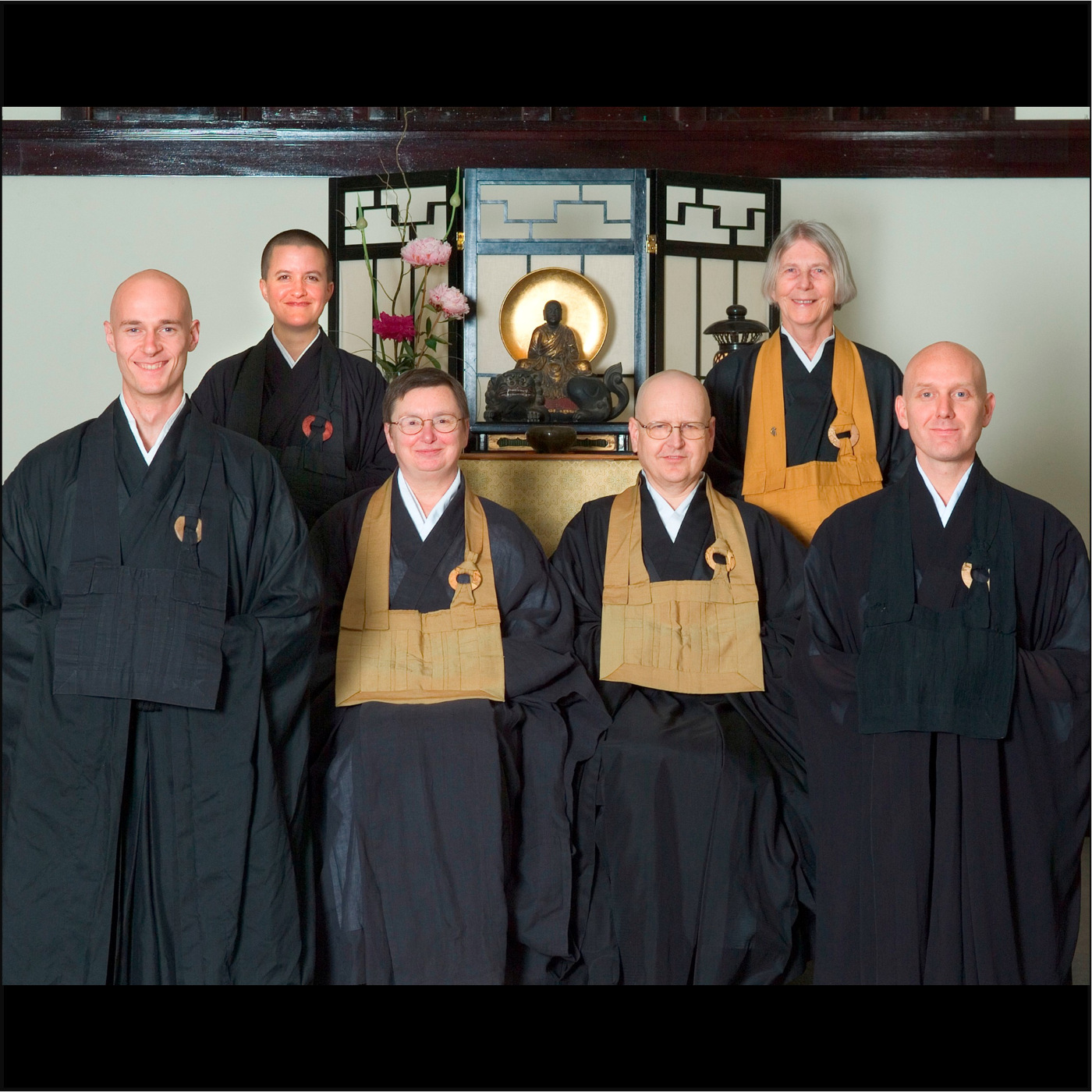
In a lineage tradition like Zen, your understanding, manifestation, and expression of the Dharma is deeply influenced by your teachers, and by their teachers. Whether you are a member of my Zen Center, Bright Way Zen, or a fan of this podcast, you may appreciate stories of my teachers Kyogen and Gyokuko Carlson in this live talk.* (*Most of my episodes are produced specifically for podcast listeners, but I am on sabbatical in August.)

Ep 279279 - Talking about Politics as a Buddhist - A Live Talk*
I am on sabbatical for the month of August, so this is a recent live talk* I gave at Bright Way Zen. This is, of course, a very timely topic with a major election coming up in the U.S. in just over two months. If politics is "the set of activities that associated with making decisions in groups, or other forms of power relations among individuals, such as the distribution of resources or status, none of us are able to opt out of politics. How can we engage in conversations about what we should do as a group, institution, organization, community, state, nation, or species, while remaining centered in our practice and true to our aspirations as Buddhists? (*Most of my episodes are produced specifically for podcast listeners.)
Ep 278278 - Having a Zen Teacher - An Live Talk*
I'm on sabbatical the month of August, so this episode is an informal, live talk* I gave in response to a question: "Is everything a Zen teacher does a 'teaching'? How do you know?" This led to discussion of other topics as well, related to having a formal relationship with a Zen teacher - What does it mean? What does it look like? Why would someone want this? (*Most of my episodes are produced specifically for podcast listeners.)
Ep 277277 - My Sesshin (2 of 2)
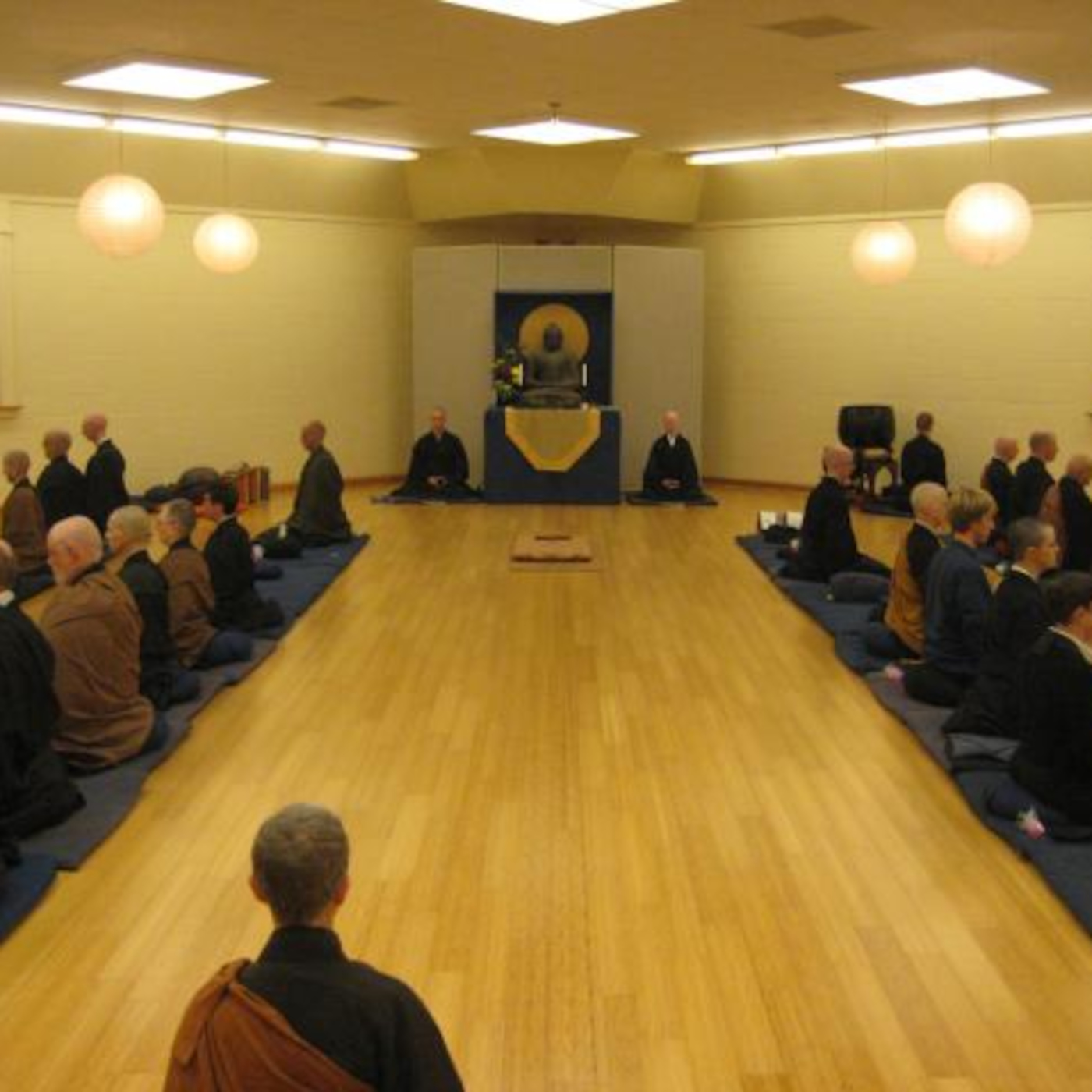
In this episode and the previous one, I do something radical and share my experience of a sesshin I recently attended, describing it day by day. There are many reasons not to do this, and I went into those reasons in the last episode (part one), where I also described my first two full days of retreat. In this episode I describe days 3-5 and make some closing remarks.
Ep 276276 - My Sesshin (1 of 2)
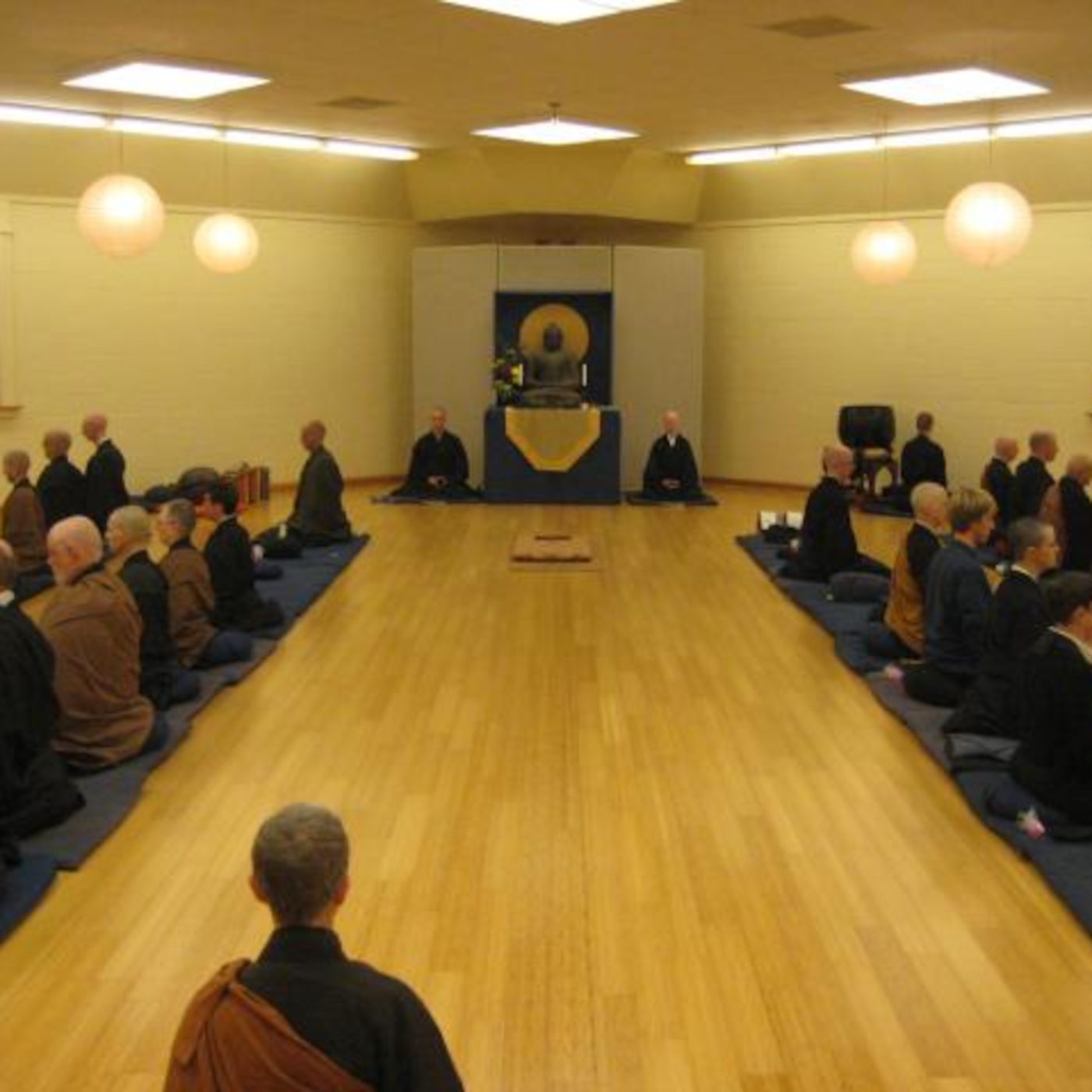
In this episode I'm going to do something radical and share with you my experience of the sesshin I attended last week, describing it day by day. There are many reasons not to do this, which I will go into. I certainly don't intend to do it again. Still, despite my misgivings I thought it might be helpful for you to get an insight into what a sesshin is like for another person. In this episode I get through the first couple days of the retreat, and I will finish my story in the next episode.
Ep 275275 - Ten Fields of Zen, Field Five – Precepts: Transcending Self-Attachment (3 of 3)
This episode is the third installment of chapter five of my book-in-process, The Ten Fields of Zen: A Primer for Practitioners. In the first episode, I described the central role of Precepts in Zen and covered the Three Refuges, Three Pure Precepts, and two of the Grave Precepts. In the last episode, I talked about the Grave (serious, or weighty) Precepts 3-8. In this episode, I'll discuss Grave Precepts nine and ten, and talk about how we work with Precepts.
Ep 274274 - Ten Fields of Zen, Field Five – Precepts: Transcending Self-Attachment (2 of 3)
This episode is the second part of chapter five of my book-in-process, The Ten Fields of Zen: A Primer for Practitioners. In the last episode, I described the central role of Precepts in Zen and covered the Three Refuges, Three Pure Precepts, and two of the Grave Precepts. In this episode, I talk about the Grave (serious, or weighty) Precepts three through eight. In the next episode, I'll discuss Grave Precepts nine and ten, and talk more about how we work with Precepts.
Ep 273273 - Ten Fields of Zen, Field Five – Precepts: Transcending Self-Attachment (1 of 3)
The fifth Field of Zen Practice is living according to moral Precepts. The Buddhist precepts guide our ethical conduct, ensuring we minimize the harm we do to self and others. Such conduct is a prerequisite for the peace of mind we need for spiritual practice. The precepts also serve as valuable tools for studying the self; when we are tempted to break them, it alerts us to our self-attachment and reveals our persistent delusion of self as a separate and inherently-existing entity. Keeping the precepts familiarizes us with acting as if the self is empty of inherent existence. This episode is the first part of chapter five of my book-in-process, The Ten Fields of Zen: A Primer for Practitioners.

Ep 272272 - Keizan's Denkoroku Chapter 3: Ananda and the Flagpole
According to Zen master Keizan's Denkoroku, Ananda spent 20 years at the Buddha's side. He had a perfect memory, understood all the teachings, was an impeccable practitioner, and attained arhatship. Despite this, the Buddha made Kashyapa his Dharma heir, and Ananda spent another 20 years practicing with Kashyapa. Finally, Ananda asked Kashyapa, "What am I missing?" This chapter of the Denkoroku discusses their subsequent exchange and Ananda's long-awaited awakening.
Ep 271271 - Ten Fields of Zen, Field Four - Dharma Study: Wrestling with the Teachings (2 of 2)
This episode and the last, "Dharma Study: Wrestling with the Teachings," comprise chapter four of my book, The Ten Fields of Zen Practice: A Primer for Practitioners. In the last episode, Part 1, I talked about the value of Dharma Study and how best to approach it. Then I discussed how to go about deciding what you want to study. In this episode I offer a list of eight fundamental teachings I recommend becoming familiar with, along with suggested texts to begin your investigation of each topic. I'll end with a discussion of how to engage the teachings you study in a meaningful way.
Ep 270270 - Ten Fields of Zen, Field Four - Dharma Study: Wrestling with the Teachings (1 of 2)
The fourth Field of Zen practice is Dharma Study, or becoming familiar with and investigating Buddhist teachings. The texts and teachings in Buddhism include tools we can use for practice and inspirational guidance for our behavior, but the most critical part of Dharma Study is challenging the ideas and views we already hold, not acquiring new ones. The teachings describe Reality-with-a-Capital-R and invite us to investigate and verify the truth for ourselves. We don't seek to acquire insight into Reality for its own sake, but because it is liberating and transformative.

Ep 269269 - Making a Vow of Inner Nonviolence and Complete Acceptance
We all have negative aspects of ourselves we want to fix, disown, or even expunge completely from our being, but even with practice some things are extremely hard to change. As we strive to break free of our less-than-helpful aspects of self, we typically employ violent means, ranging from subtle rejection to vicious and debilitating self-loathing that may even manifest physically. Regardless of the severity of the violence, it causes damage. Much more transformative than our typical approaches to change is making a vow of complete, unconditional, inner nonviolence and then working toward complete acceptance and integration.
Ep 268268 - Teisho, An Encouragement Talk During Zazen
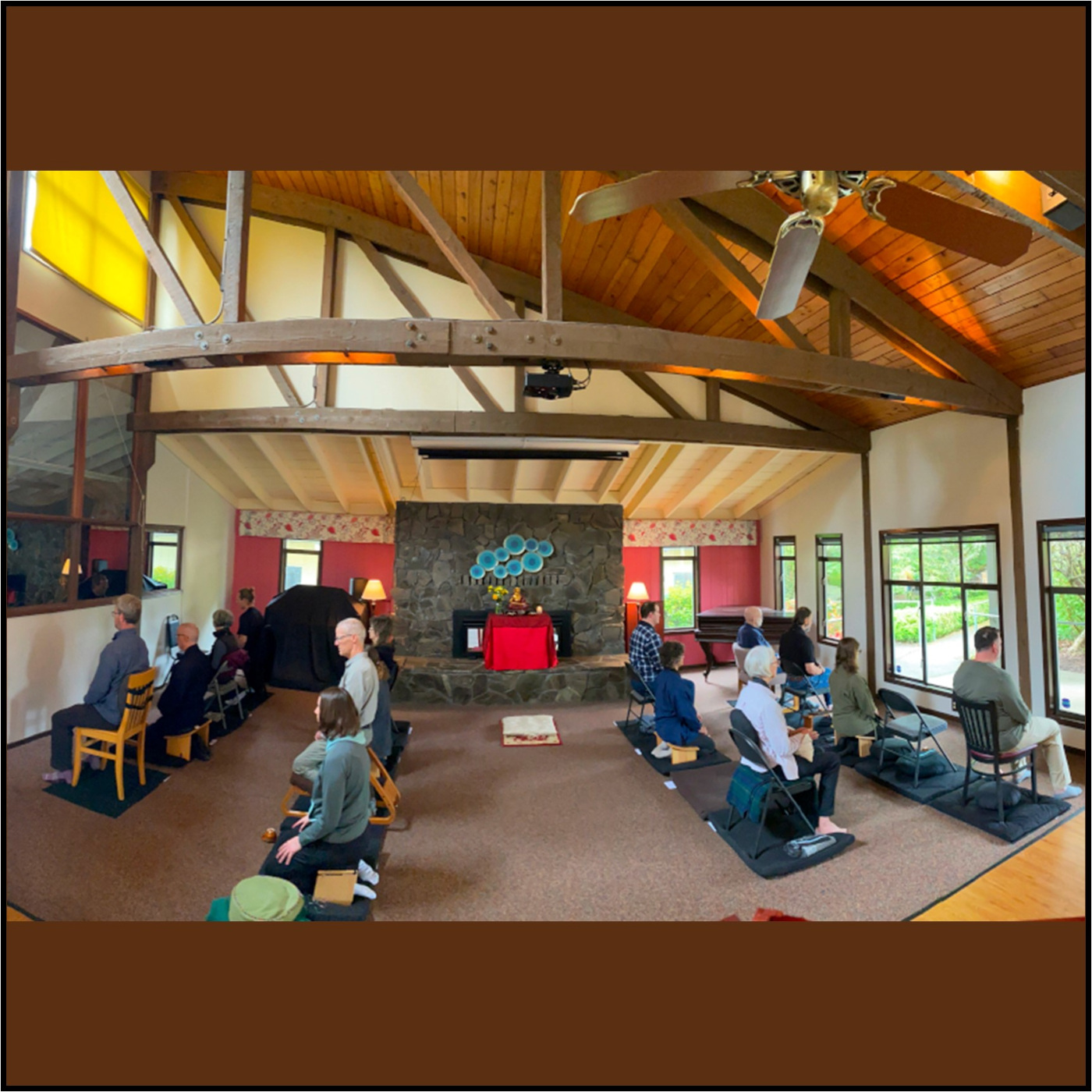
Last week I led a sesshin, or silent Zen retreat. Participants participated in a 24-hour schedule of zazen, chanting, silent work, formal meals, and rest. Once or twice a day, I offered a "teisho" during zazen. "Tei" means to offer or put forth, and "sho" means to recite or proclaim. Teisho are sometimes called "encouragement talks," and they are meant to help listeners connect with the Dharma in spaciousness and silence of zazen. Teisho are not about explanations or the imparting of information, and they generally not recorded. They are offered spontaneously, just for the moment, just for those listening. Although you may not be sitting zazen while you listen to this episode, I thought I would offer you a teisho as if you are.
Ep 267267 - Ten Fields of Zen, Field Three - Mindfulness: Cultivating Awareness Every Moment
The third Field of Zen practice is Mindfulness, which is cultivating clear awareness of what is happening, moment by moment, within you and around you. Mindfulness is absolutely fundamental to Zen practice, allowing you to practice within all the other Fields. Without awareness, you can't live your life by choice instead of by karma.
Ep 266266 - What Would the Buddha Say About the Suffering in the World?
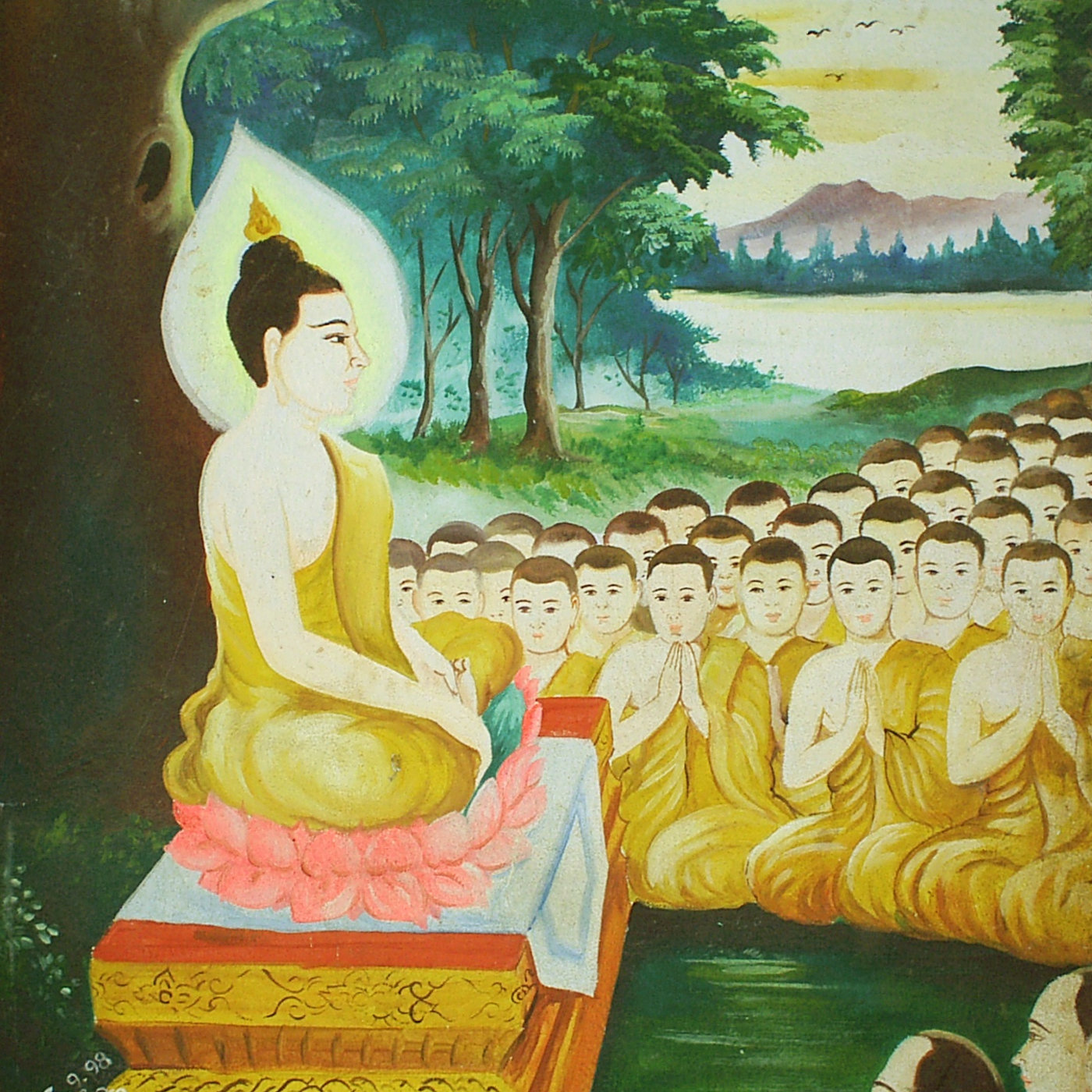
Recently, someone submitted a Dharma question for me to address: "I wonder what Buddha would say to us about the crises facing humanity, particularly the suffering of our own making?" I can't know, but I dare to put some words in the Buddha's mouth and then present follow-up questions.

Ep 265265 - Ten Fields of Zen, Field Two - Zazen: Our Total Response to Life (3 of 3)
This is the third episode of three comprising the "Zazen" chapter of my book, "The Ten Fields of Zen Practice: A Primer for Practitioners." I start by offering what I should have put at the beginning of my chapter on Zazen: Basic instructions for Zazen. I then discuss how my "Five Efforts in Zazen" suggest Zazen is a neat and linear process, but in actuality Zazen is a messy, organic, real-life experience. Finally, I talk about how to deepen your Zazen without getting caught up in self-centered striving.
Ep 264264 - Ten Fields of Zen, Field Two - Zazen: Our Total Response to Life (2 of 3)
This is the second episode of three comprising the "Zazen" chapter of my book, "The Ten Fields of Zen Practice: A Primer for Practitioners." I finish my discussion of the five efforts of Zazen, covering becoming intimate with Life, seeing the true nature of Life, and being one with Life.
Ep 263263 - Ten Fields of Zen, Field Two - Zazen: Our Total Response to Life (1 of 3)
The second Field of Zen practice is Zazen. "Za" means seated, and "zen" means meditation. However, as 13th-century Zen master Dogen famously stated, "…Zazen is not meditation practice." Superficially, our Zazen may look like the meditation done in other spiritual traditions, or even in secular settings. We even call Zazen "meditation" sometimes, for convenience. However, Zazen is not meditation in the sense of a mental exercise aimed at a particular result. Zazen is our total response to life. It is the essence and enactment of our entire Zen practice.

Ep 262262 - The Value, Care, and Feeding of Dharma Friendships (2 of 2)
The Buddha famously said "admirable friendship," or what I'm calling Dharma friendship, is the entirety of the holy life. In the last episode, I discussed the value and nature of personal Dharma friendships. In this episode, I talk about what makes a good Dharma friendship and offer some practical ideas about how to find, form, and maintain such relationships.

Ep 261261 – The Value, Care, and Feeding of Dharma Friendships (1 of 2)
The Buddha famously said the "admirable friendship," or what I'm calling Dharma friendship, is the entirety of the holy life. In this episode, I discuss the value and nature of personal Dharma friendships. In Part 2, I will talk about what makes a good Dharma friendship and offer some practical ideas about how to find, form, and maintain such relationships.

Ep 260260 – Ten Fields of Zen, Field One – Bodhicitta: Way-Seeking Mind
This episode on Bodhicitta, or Way-Seeking Mind, is chapter two of my book The Ten Fields of Zen Practice: A Primer for Practitioners." Bodhicitta is the first Field of practice because without it we never even begin practice, and, if we don't nurture and sustain it, our practice will wither and die. I discuss the first arising of Bodhicitta, its function, how to cultivate it, and its profound nature.
Ep 259259 – Ten Fields of Zen, Introduction – What Is Zen Practice?
In this introductory chapter to my book, "The Ten Fields of Zen Practice: A Primer for Practitioners," I discuss the nature of practice and "progress" on the path of practice. I then introduce the Ten Fields, and the rest of the book will consist of a chapter on each of the Fields.

Ep 258258 - One Reality, Many Descriptions Part 6: The Two Truths of Absolute and Relative 2
The Two Truths teaching is another classic Chan/Zen description of Reality-with-a-Capital-R. Reality has two aspects, often called relative and absolute. I call them the "dependent dimension" and the "independent dimension." I describe this teaching and discuss why it is so important to our practice.

Ep 257257 - One Reality, Many Descriptions Part 5: The Two Truths of Absolute and Relative – Part 1
The Two Truths teaching is another classic Chan/Zen description of Reality-with-a-Capital-R. Reality has two aspects, often called relative and absolute. I call them the "dependent dimension" and the "independent dimension." I describe this teaching and discuss why it is so important to our practice.

Ep 256256 - Do Your Own Practice: Spiritual Translation Versus Transformation
One way to frame our practice is to say it has a "translation" aspect and a "transformation" aspect. Translation means to apply Buddhist teachings and practice to our life to free self and other from suffering, and live with greater wisdom and compassion. Transformation means to seek transcendence of the self and all of its limited views through a relentless process of inquiry, for the sake of an even more profound and stable liberation. I discuss how each aspect is valuable, how they differ, and clarifying what you want out of your own spiritual path.

Ep 255255 – The Medicine of Emptiness When Witnessing Suffering and Injustice
When we witness - or experience - suffering or injustice, the medicine of emptiness can give us strength and equanimity. It should also increase our compassion, allowing us to be open, sensitive, and responsive without getting overwhelmed by anxiety, depression, fear, anger, or hatred. I talk about what the "medicine of emptiness" is - and isn't - and how to access it.

Ep 254254 - Practice is How You Live Each and Every Moment – Part 2
Everyday life gives us countless opportunities for "awakening work." I discuss ways to practice each and every moment in order to awaken to the truth of Dukkha and the ending of Dukkha, and to the truth Emptiness. In Part 3 I will talk about how we can similarly work on a direct, personal experiences of Suchness, Buddha-Nature, and the Two Truths (absolute and relative) in the midst of our daily lives.

Ep 253253 - Practice is How You Live Each and Every Moment – Part 1
The formal aspects of Buddhist practice – the things you can look at and identify as "Buddhist practice" – are very important. These include meditation, Dharma study, and time with Sangha. However, unless you're a monk in a really strict monastery, over 90% of your time is spent outside of formal practice. It's important to remember that practice each and every moment – how we choose to live our life, just as it is – is the most important thing.

Ep 252252 - Reflections on Dogen's "Bussho, The Buddha-Nature" Part 2: Total Existence
In my second episode reflecting on Dogen's "Bussho," or "The Buddha-Nature," I discuss how Buddha-Nature is a teaching about our existential koan as human beings. I also talk about how Dogen says we have already got Buddha-Nature, and then explore more fully his teaching about "Total Existence."

Ep 251251 – Reflections on Dogen's "Bussho, The Buddha-Nature" Part 1: Being
In his essay "Bussho," or "The Buddha-Nature," Dogen explores and expands a classic Mahayana Buddhist teaching. I reflect on a few central concepts from the first paragraph.

Ep 250250 - In Zazen We Stop Imposing Ourselves on the World and Meet It Instead
In zazen we stop imposing ourselves on the world either through our habitual thinking or through any effort to control or judge our meditative experience. Only then can we meet the world us it is unfolding around, within, and through us - but this meeting requires energy and participation. This episode addresses the two essential aspects of zazen practice: What we are not doing, and what we are doing. Both are equally important and both are easily misunderstood.

Ep 249249 - Are the Buddha's Teachings on Renunciation Relevant for Householders? – Part 2
In this second half of a two-episode discussion, I briefly review the limitations of sensual or worldly pleasures. Then I explore how engagement with the world, contrary to simply being a compromise, can be its own path of practice. Finally, I talk about how the Buddha's teachings on renunciation are not only relevant but deeply meaningful and useful for householders.

Ep 248248 - Are the Buddha's Teachings on Renunciation Relevant for Householders? – Part 1
The Buddha was pretty clear. If you wanted to experience complete liberation, it was best practice renunciation - to leave all worldly things behind: Family, sex, alcohol, fancy food, music, entertainment, frivolity, etc. Why did the Buddha recommend this? Why do fully ordained Buddhist monks and nuns still live this way? Are the Buddha's teachings on renunciation relevant for householders?

Ep 247247 - Sangha Challenges: How and Why to Open Up to the Treasure of Sangha – Part 3
In Part 3 of my "Sangha Challenges" discussion, I finish my list of reasons you may resist joining a Buddhist community or find it challenging to maintain your relationship with one over time. I present each challenge as an opportunity for growth and learning.

Two Episodes Recommended by Listeners
trailerThis is my third and final post during my 2023 sabbatical month. I'll be back soon with a full episode, but in the meantime I wanted to share two past episodes with you that multiple listeners have said were important to them.

Recommended Episodes on Zazen
trailerHere again with recommended episodes for you to listen to while I'm on my August sabbatical from Zen teaching and writing. Your chosen form of meditation may be what I call "Directed Effort" meditation, or "Letting Go" meditation (I discuss Directed Effort versus letting go in Episodes 83 and 84: Two Paths to Meditative Concentration: Directed Effort Versus Letting Go – Part 1 and Part 2). In either case, you may find some useful tips in Episodes 184 and 185: 14 Ways to Enliven Your Zazen. When my zazen gets dull, lazy, restless, or distracted, these are the ways I try to engage my meditation more wholeheartedly.

Announcement and Recommendation
trailerI take a sabbatical from my Zen teaching one month a year, and this year it's in August. In this announcement I explain (and thank you for your patience), and recommend one of my 236 past episodes to listen to (published six years ago!).
Ep 246246 - Sangha Challenges: How and Why to Open Up to the Treasure of Sangha – Part 2
In Part 2 of my "Sangha Challenges" discussion, I talk about various reasons you may resist joining a Buddhist community or find it challenging to maintain your relationship with one over time. I present each challenge as an opportunity for growth and learning. I will finish up my list of challenges in the next episode, Part 3.
Ep 245245 - Sangha Challenges: How and Why to Open Up to the Treasure of Sangha – Part 1
Should you join a Sangha? Sangha, or community, is one of the "Three Treasures" of Buddhism, but is it really necessary? How important is it? There are many "Sangha Challenges" - reasons you might feel resistance to joining a community, or difficulties you might face as you practice with one. I discuss ways to relate to various Sangha challenges as opportunities for practice and growth.

Ep 244244 - Zazen as a Religious Act
Seated Zen meditation – zazen – is less like the meditative practices of many other spiritual traditions, and more like prayer in theistic traditions. This is not because we believe in God (although we might), but because zazen can be seen as a "religious" act – if we define religion in one of the ways philosopher William James offered, as "our total response to life."

Ep 243243 - The Buddha's Life Story as Archetype and Teaching
Understanding the teachings of Buddhism starts with becoming familiar with the Buddha's life story. This isn't because he is believed to have been divine, or even a prophet. Instead, his story is important because it serves as an archetype for the Buddhist vision of spiritual seeking and development. There are many teachings embedded in the story of the Buddha, who is regarded as having been a remarkable human being – but just a human being, like you or me.

Ep 242242 - Reflections on Sansuikyo, Dogen's Mountains and Waters Sutra
One of Zen master Dogen's most beloved writings is a relatively short essay called "Sansuikyo," or the Mountains and Waters Sutra. In this episode, I reflect on two aspects this work: The statement that mountains and waters are, in of themselves, words of the Buddha, and the fantastic imagery of "mountains walking." I only cover a few paragraphs of the Sansuikyo, but it is enough to open up a profound spiritual inquiry.