
The WW2 Podcast
326 episodes — Page 5 of 7

Ep 123123 - Admiral Sir Bertram Ramsay
Bertram Ramsey was the mastermind behind the evacuation of the BEF from France in those crucial weeks at the end of May and the start of June in 1940. It was his planning, determination and leadership which helped evacuate around 338,000 men from Dunkirk. But for this Royal Navy Officer, still officially retired, it was just one landmark operation he was involved with. Ramsey would go on to plan and take part in the invasion of North Africa, Sicily and Normandy; for Overlord he would be in overall command of the naval component of the D-Day landings, Neptune. But, Admiral Bertram Ramsay is not now a household name, overshadowed by some of his contemporaries. Hopefully in this episode we'll try and put the record straight. I'm joined by Brian Izzard. Brian's book Mastermind of Dunkirk and D-Day: The Vision of Admiral Bertram Ramsay is the first major biography of Ramsay for 50 years! Like the podcast? Why not become a patron?
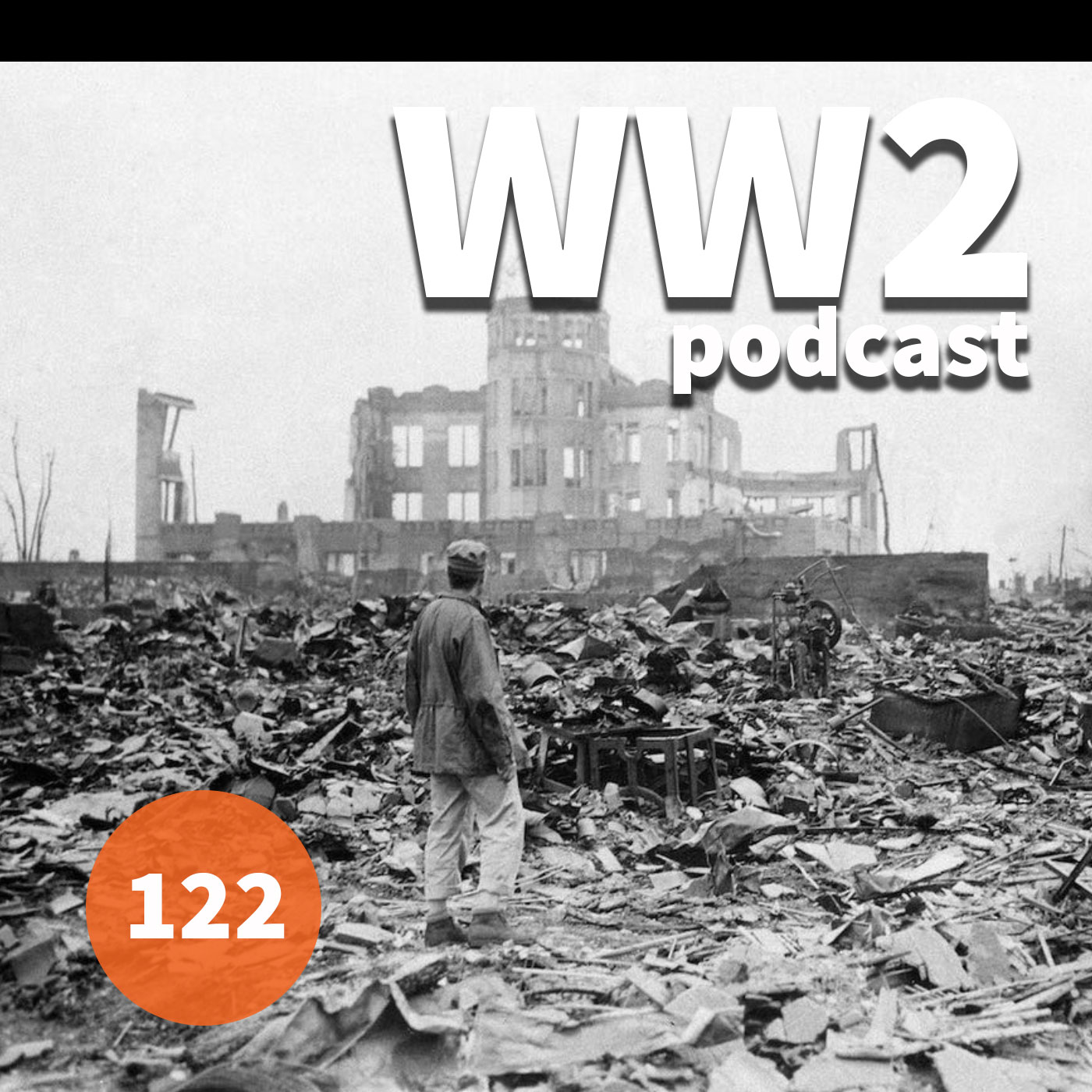
Ep 122122 - Fallout: The Hiroshima Cover-up
On 6th August 1945, Colonel Paul Tibbets, flying the 'Enola Gay' a B-29 Superfortress named after Tibbets's mother, dropped the first atomic bomb on the Japanese city of Hiroshima. The bomb, 'little-boy', devastated the city; exploding with the energy of approximately 15 kilotons of TNT. The explosion instantly killed thousands of people and in the next few months tens of thousands more would die from the effects of burns, radiation sickness, and other injuries, compounded by illness and malnutrition. On the 9th August Nagasaki would be the next city to be hit by an atomic bomb. The effects of the atomic bombs shocked even the US military. Even before the Japanese surrender, the US government and military had begun a secret propaganda and information suppression campaign to hide the devastating nature of these experimental weapons. For nearly a year the cover-up worked—until New Yorker journalist John Hersey got into Hiroshima and managed to report the truth to the world. Hersey's story would shape the postwar narrative of the atomic bombs, and the US government's response has helped frame the justification for dropping the bombs which comes down to us today. I'm joined by Lesley Blume author of the excellent Fallout: The Hiroshima Cover-up and the Reporter Who Revealed It to the World.
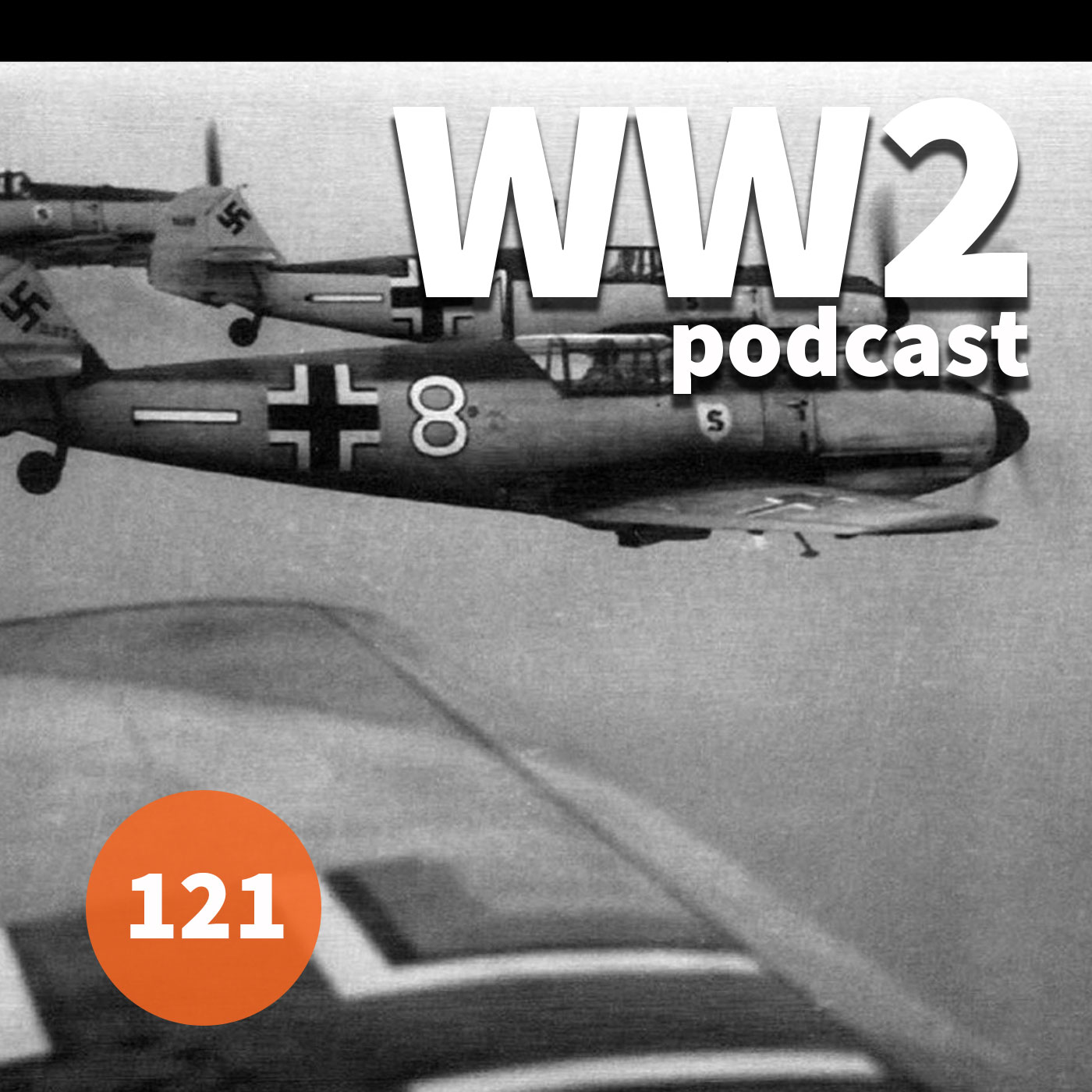
Ep 121121 - To Defeat The Few: The Luftwaffe's Battle of Britain
After the fall of France, Germany turned its attention to Britain. The Battle of Britain is the story of the hard pressed RAF struggling against an enemy, which up to that point hadn't been stopped. Immortalised on celluloid in the 1969 film, with a star studded cast, Guy Hamilton's Battle of Britain is very much an anglo centric view and even nearly 30 years after the war the narrative leans heavily on the wartime propaganda. The story of the Battle of Britain is much more complicated, that is not taking anything away from those men Churchill referred to as 'the 'few', in fact in many instances it makes their story more remarkable. This may well be a topic we come back to from time to time, but to start us off we're going to look at those crucial summer months in 1940 from the German perspective, asking how did they view it and what was their experience? Joining me today is Douglas Dildy and Paul Crickmore authors of To Defeat the Few: The Luftwaffe's campaign to destroy RAF Fighter Command, August–September 1940. Doug is a retired US Air Force colonel who spent nine of his 26-year career in Western Europe and retired with approximately 3,200 hours of fast jet time, almost half of that as an F-15 Eagle pilot. He attended the US Armed Forces Staff College and USAF Air War College and holds a Masters Degree in Political Science. Doug has authored several campaign studies as well as several articles covering the Dutch, Danish and Norwegian air arms' defence against the German invasions of 1940. Paul is an aviation historian and former air traffic controller, he's penned numerous books including a number on the SR-71 Blackbird and F-15.
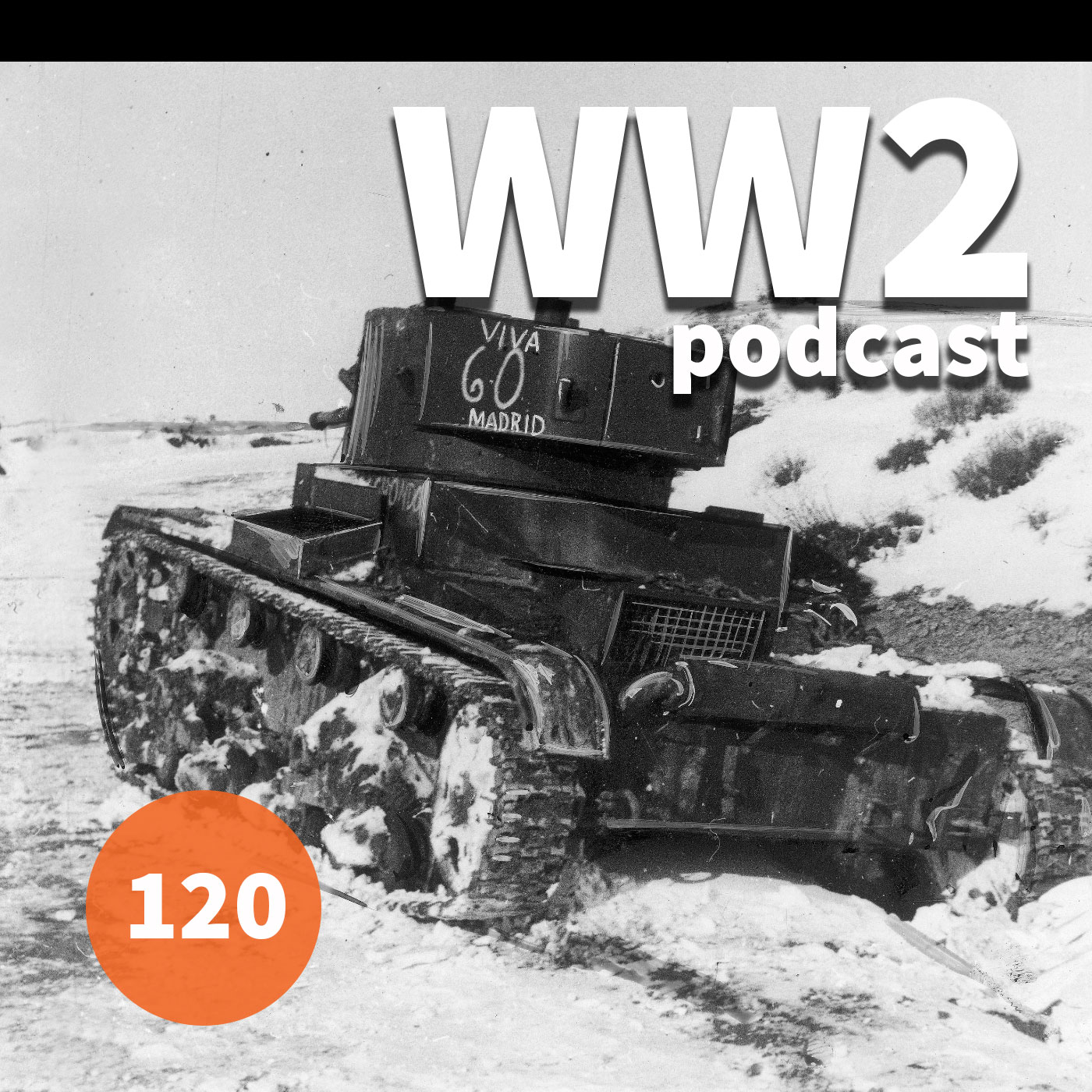
Ep 120120 - The People's Army in the Spanish Civil War
The Spanish civil war has been highlighted as an important prelude to WWII with Germany, Italy and Russia providing men and materiel for the Republican and Nationalist forces. Augmenting this were other foreign fighters forming the international Brigades. In this episode we'll explore this conflict to see how much influence it had on the Second World War. I'm joined by Alex Clifford, author of The People's Army In the Spanish Civil War and co-host of the podcast History's Most, a podcast that delves into interesting, under-reported and controversial topics in history. In each episode they take a 'most' or 'worst' in history and investigate it, from History's Most Guilty man, to most Unlikely victory to worst democracy. From Erich Ludendorff to the First Crusade... You should be able to find it on your podcast software of choice...
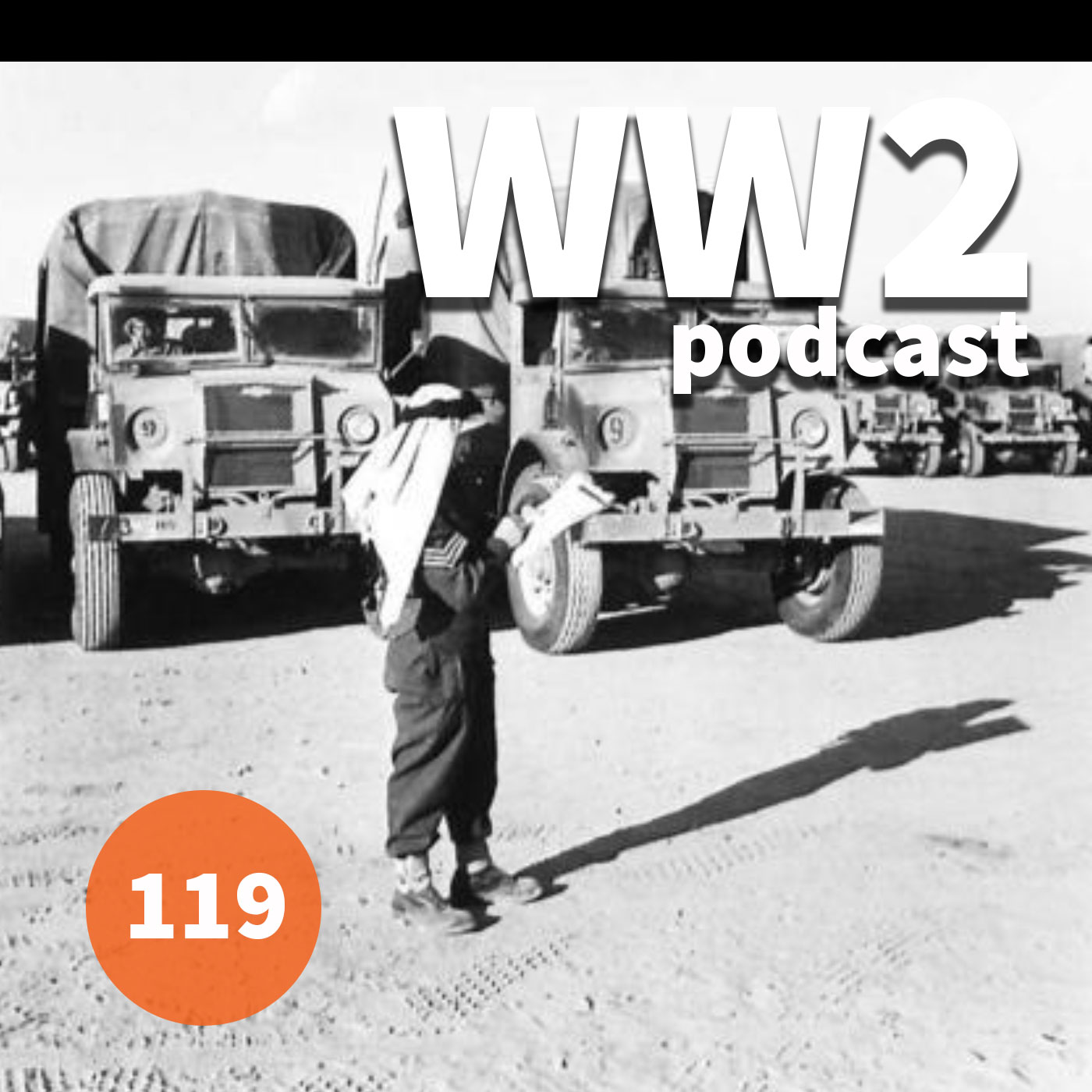
Ep 119119 - The British Army and the Anti-Locust Campaign
As you know I like to seek out lesser known topics of the Second World War. In this episode we'll be looking at the British army's Middle-East Anti-locust Unit (MEALU). Due to locust threatening local food crops in the middle east, and to prevent valuable shipping space being used to import food the unit was created, and tasked with waging war on locust. Joining me is Athol Yates. Athol is Assistant Professor at Institute for International and Civil Security, at the Khalifa University in the United Arab Emirates. He has recently published the paper The British Military and the Anti-Locust Campaign across the Arab Peninsula including the Emirates, 1942-45
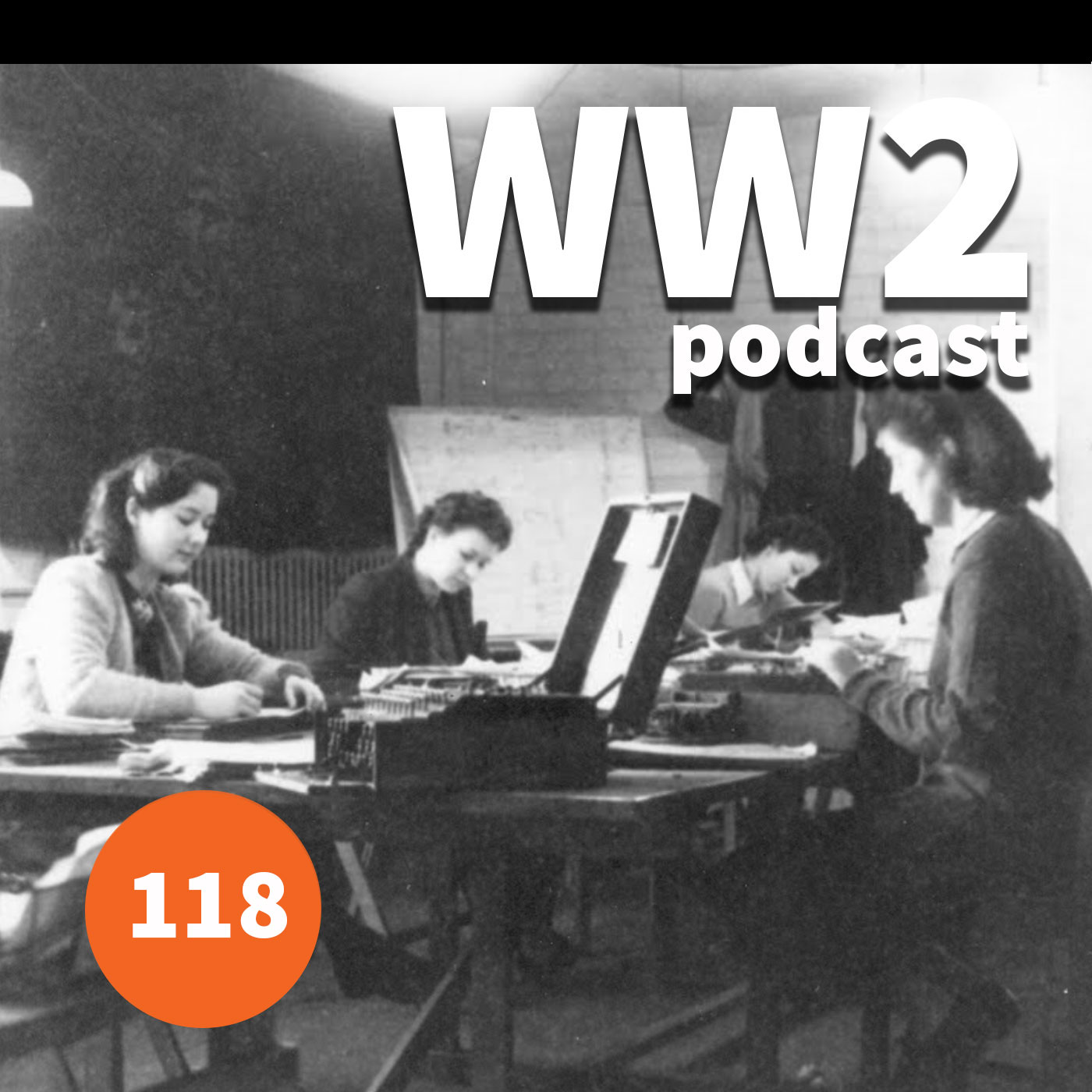
Ep 118118 - The Codebreakers of Bletchley Park
In this episode we're looking at the British decryption efforts centred around Bletchley Park. I'm sure to some extent you're all aware of the German cypher machine Enigma which proved so challenging to crack, but how much more do you know of British Government Code and Cypher School, which was housed at Bletchley Park during World War II. Joining me is Dermot Turing, if the name sounds familiar he is the nephew of the now well known Alan Turing whose name is now synonymous with the cracking of the enigma code. Dermot has served as a trustee of Bletchley Park and the Turing Trust, he is author of a number of books looking at Alan Turing and codebreaking, his latest being The Codebreakers of Bletchley Park.

Ep 117117 - Information Hunters
The old adage is 'information is power', and in this episode we're going to be looking at the US operations to initially obtain information that was in the public domain. Post D-Day the mission changed to both seizing books, documents and papers as the Allies advanced; then after the close of hostilities in May 1945 the operations morphed once more to collecting, seizing and sorting books. The men tasked with this job were an unlikely band of librarians, archivists, and scholars. It's a particularly less well known corner of the war that historian Kathy Peiss throws the spotlight on in her book Information Hunters: When Librarians, Soldiers, and Spies Banded Together in World War II Europe. Kathy Peiss is the Roy F. and Jeannette P. Nichols Professor of American History at the University of Pennsylvania. Her research has examined the history of working women; working-class and interracial sexuality; leisure, style, and popular culture; the beauty industry in the U.S. and abroad; and libraries, information, and American cultural policy during World War II.
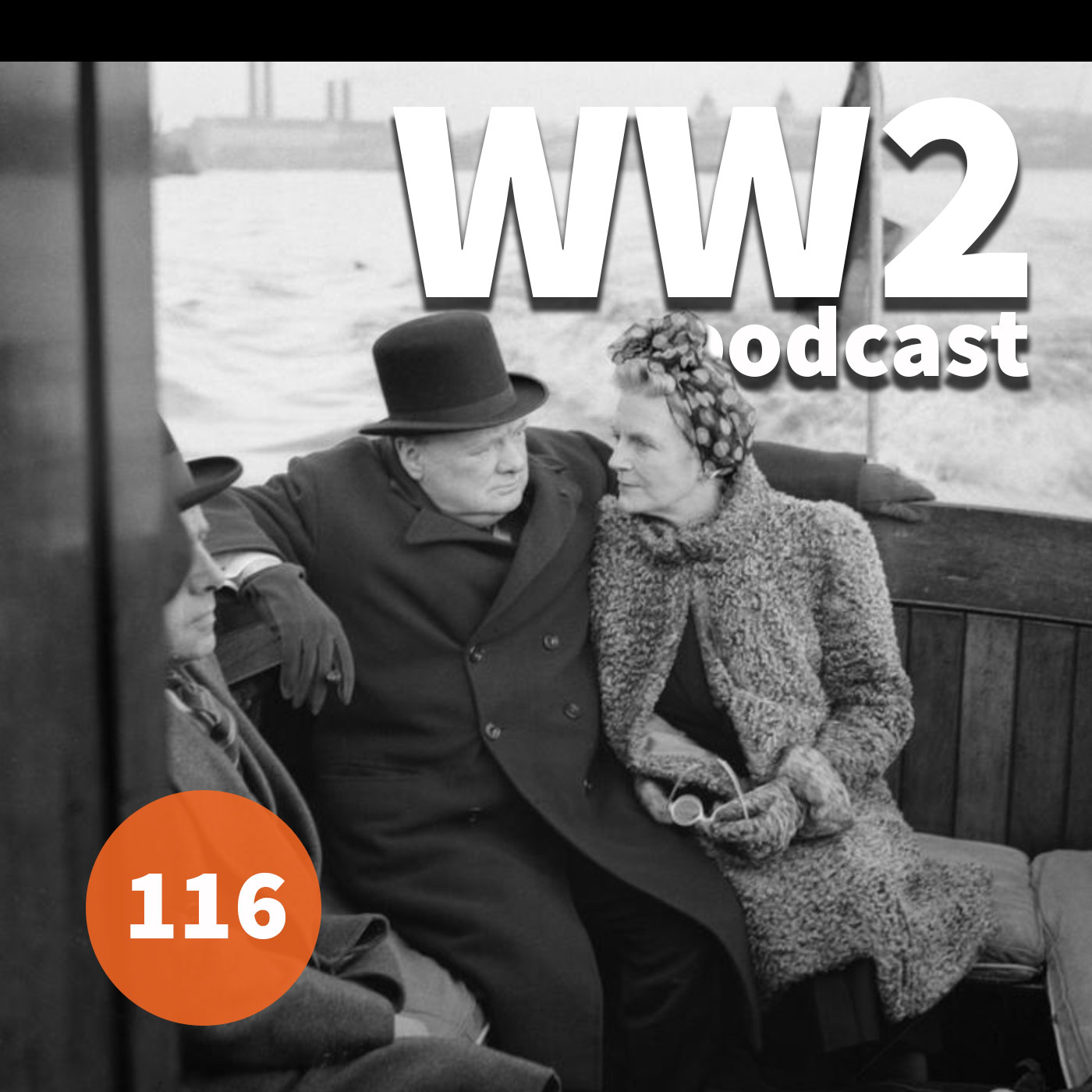
Ep 116116 - Clementine Churchill
Clementine Churchill supported her husband Winston through the ups and downs of his long career. She was his most trusted confidant, counsellor and companion. Indeed it could be arguable that without his wife Clementine, Winston might never have become Prime Minister. By his own admission, the Second World War would have been 'impossible without her'. I'm joined by Marie Benedict. Marie is the author of Lady Clementine: A Novel.

Ep 115115 - To VE Day Through German Eyes
80 years ago this month (thats May 2020, if you're reading this from the future) the Germans finally surrendered to the Allies. While there were a number different surrender ceremonies the 8 May 1945 was declared by the Western Allies to be Victory in Europe Day, VE Day (the Russians celebrate it on the 9th May). In this episode we take a look at the closing period of the war, from September 1944 though to VE Day from the perspective of the Germans. Regular listeners will recall last year I talked to Jonathan Trigg about D-Day and the Normandy Campaign from the German side of the lines. Well we're going to pick up the story and discuss from September to the end of the war in May 1945, which co-incidently is the the topic of his latest book To VE-Day Through German Eyes: The Final Defeat of Nazi Germany.

Ep 114114 - Airborne Chaplains in the Second World War
In this episode we're exploring the work of army Chaplains assigned to British Airborne units during the war. These men landed with the troops by parachute or glider, often behind enemy lines sharing the dangers and challenges of front line operations through North Africa, Sicily, Italy, D-Day and Arnhem to the crossing of the Rhine. I'm joined by Linda Parker. Linda has written a number of books exploring the work of British Army Chaplains, her latest is Nearer my God to Thee: Airborne Chaplains in the Second World War.

Ep 113113 - Sighted Sub, Sank Same
We've neglected the Battle of the Atlantic, so in this episode of the podcast we look at the how the US Navy tackled the U-Boat threat during WWII. To start with, flying long missions with just a pair of binoculars to spy an enemy sub, by the 1944 new technology was being applied to track, trace and destroy U-Boats. Joining me is Alan Cary. Alan is a historian specializing in military aviation and has written Sighted Sub, Sank Same: The United States Navy Air Campaign against the U-Boat.
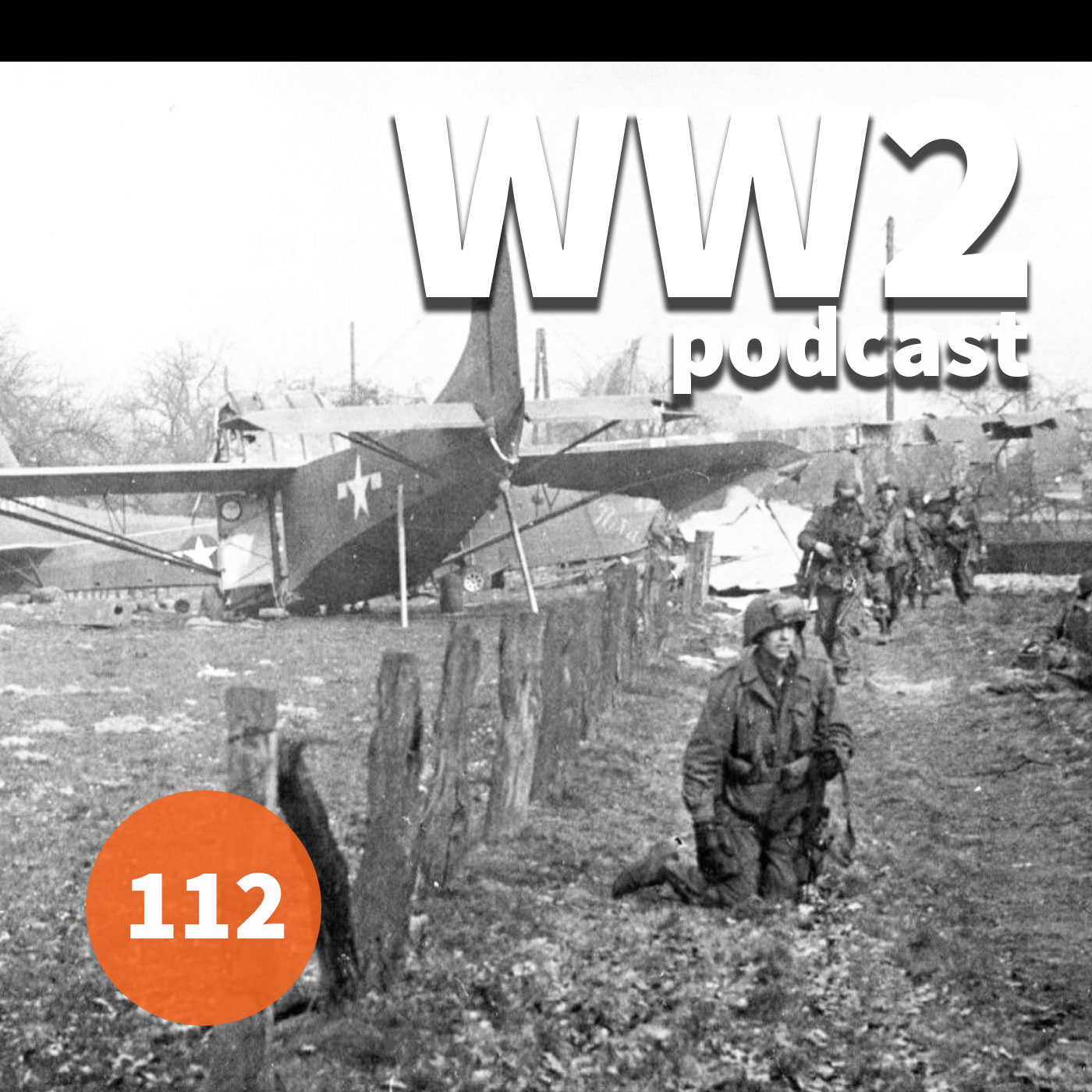
Ep 112112 - Four Hours of Fury: Operation Varsity
On the 24th of March 1945, 75 years ago this year, the largest ever airborne operation swung into action. Operation Varsity involved over 16,000 paratroopers and thousands of planes, the objective was to secure the west bank of the Rhine and the bridges over the Issel. Behind them was the Monty's 21st Army Group which was crossing the Rhine as part of Operation Plunder. A successful crossing of the Rhine would allow the allies access to the North German Plain and ultimately to advance upon Berlin. Joining me today is James Fenelon. James served in the US Airborne before turning his hand to writing, he is the author of Four Hours of Fury which looks at Varsity. It's a good read and does an excellent job of getting across the confusion of the situation for those men, once they hit the ground on that day in 1945.

Ep 111111 - An Impeccable Spy: Richard Sorge
"Richard Sorge was a man with two homelands. Born of a German father and a Russian mother in Baku in 1895, he moved in a world of shifting alliances and infinite possibility. A member of the angry and deluded generation who found new, radical faiths after their experiences on the battlefields of the First World War, Sorge became a fanatical communist - and the Soviet Union's most formidable spy." Joining me to discuss Sorge is Owen Matthews. Owen is the former Moscow and Istanbul Bureau Chief for Newsweek Magazine and has just has just released a biography of Richard Sorge, An Impeccable Spy: Richard Sorge, Stalin's Master Agent. It's a cracking read! I thoroughly enjoyed it…
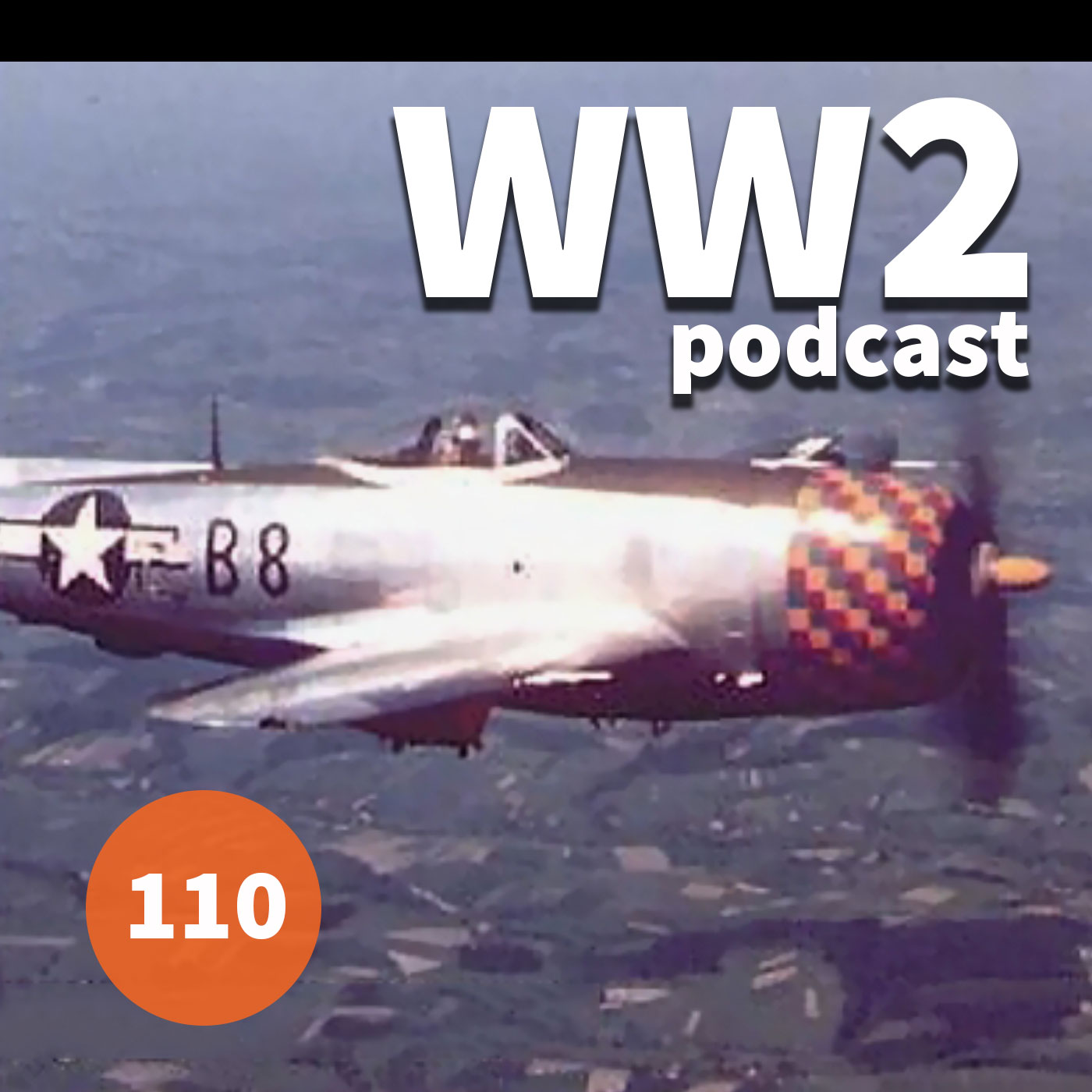
Ep 110110 - The P-47 Thunderbolt and 362nd Fighter Group
In this episode we're going to be looking at the P-47 Thunderbolt and the US 362nd Fighter Group. The P-47 was a fighter bomber and very much suited to a ground attack role, with it's eight .50 cal machine guns and it could carry a bomb load of 2,500lbs or rockets. On top of that, it could take a lot of punishment. I'm joined by Chris Bucholtz. Chris is an aviation historian with a number of books under his belt including Thunderbolts Triumphant: The 362nd Fighter Group vs Germany's Wehrmacht.
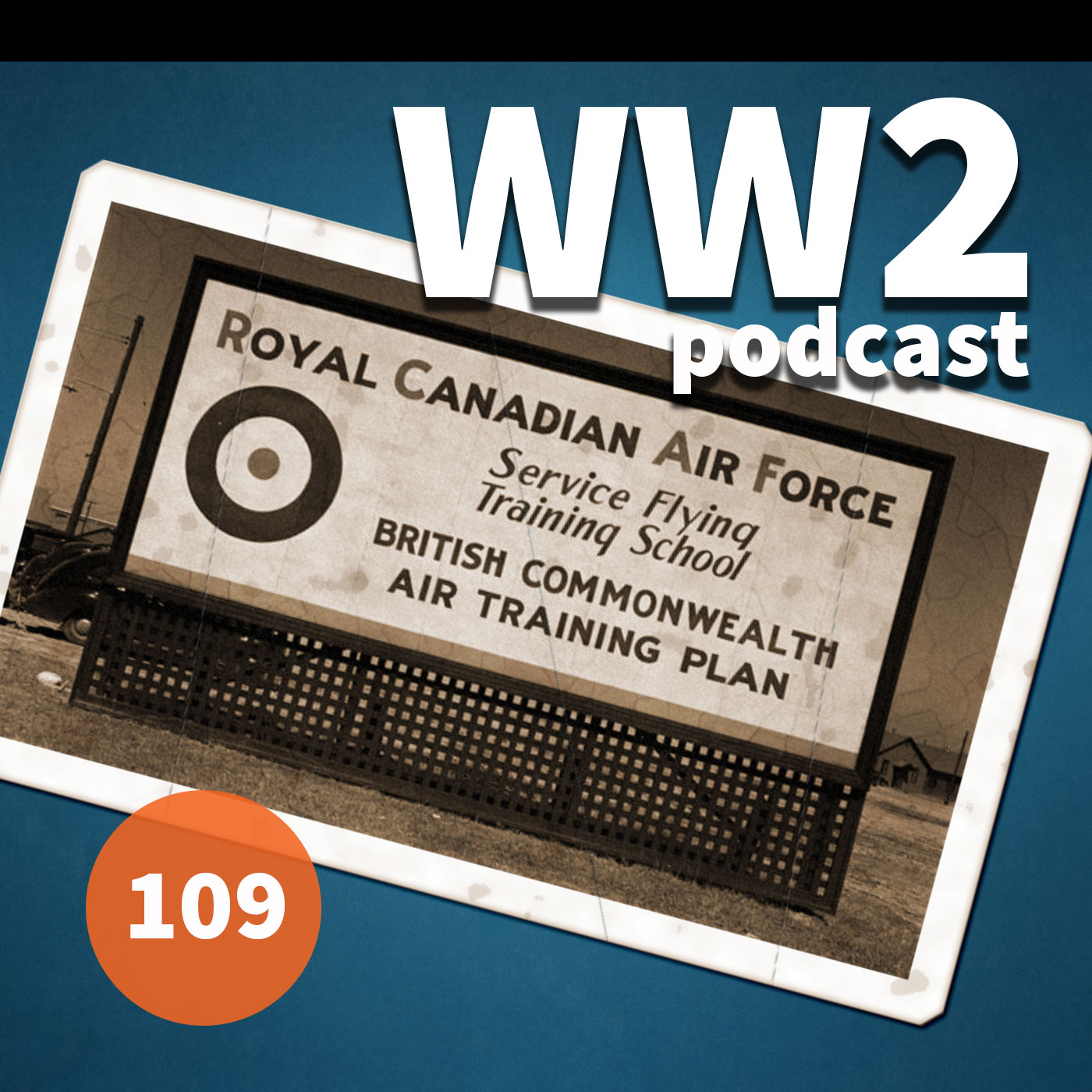
Ep 109109 - The British Commonwealth Air Training Plan
At the end of last year aviation historian Mathew Chapman sent me over his MA thesis, which is titled The Evolution of Professional Aviation Culture in Canada, 1939-45. In it he outlines the development of the British Commonwealth Air Training program in Canada, but the thesis goes on to discuss how veteran WWII pilots would dominate post war commercial airlines. If you were an air passenger in the 50's, 60's, 70s, and into the 1980s, there was a good chance your pilot was a WWII veteran. Take Concorde, the most famous passenger plane. The first man to fly it, Brian Trubshaw, he was in Bomber Command and flew Lancasters and transports during the war. If that is not interesting enough, the retirement of these veteran pilots led to a re-evaluation of the relationships between aircrew, the effects of which (as my wife pointed out) were so fundamental they have been introduced into the health service here in the UK.

Ep 108108 - The Battle for Hong Kong, 1941
We're all familiar with the events on that day of 'infamy', the 7th December 1941. The Japanese launch their typhoon in the pacific with the attack on Pearl Harbour. Hours later they would invade Malaya; an operation that would outflank the British 'fortress' singapore. Japanese units would land on the Philippines and the conquest of the Dutch-East Indies (modern day indonesia) would begin. Less well known is the Japanese attack on the British territory of Hong Kong The island had been ceded to the British in 1841, it served as a valuable harbour for ships trading with the Chinese port of Canton (now Guangzhou). Since then the colony had grown to include the Kowloon peninsula and the New Territories on the mainland, giving Hong Kong a land border with China. We've looked at various early attacks made by the Japanese in December 1941, but I've often wondered what happened to Hong Kong? Well to answer that I'm joined by Phillip Cracknell. Phillip is a battlefield tour guide in Hong Kong as well as being the author of The Battle for Hong Kong, December 1941.

Ep 107107 - The Battle of the Peaks and Long Stop Hill
We're in North Africa for this episode of the podcast. In late 1942 the Allies landed in Morocco and Algeria, this was operation Torch. With them landed elements of what would become First Army, comprising of British, French and American troops. It was commanded by Lieutenant-General Sir Kenneth Anderson a dour capable, scotsman. First Army would be tasked with moving east pushing the Germans back into Tunisia, with the goal of capturing Tunis. After a 500 mile advance, the allies reached what would become known as Long Stop Hill with its surrounding peaks, a natural upland barrier. To guide us through the battle I'm joined by WWII historian Ian Mitchell. Ian has been piecing together the battle over the last nine years, and layed it all out in his book The Battle of the Peaks and Long Stop Hill. It is a crucial battle of the campaign which until now has been overlooked.

Ep 106106 - Operation Swallow
In this episode we're starting with the US 110th Infantry regiment in the Ardennes and following a small number of GI's who became POW and sent back to Germany, to ultimately work as slave labour on 'operation swallow'. Joining me once more is military historian Mark Felton. Mark is having a busy year, if you recall we chatted to him recently about the Bridge Busters, a raid on the Dortmund-Ems canal in episode 96. In episode 73 we discussed US troops undertaking Operation Cowboy as a rescue mission to save the world famous 'spanish riding school', and one of my favourite episodes 49 we talked about VIP POWs held by the Italians - that is a fantastic episode! And if you've listened to all that, don't forget Mark is prolific on youtube with his short pieces on military history, you can find him at Mark Felton Productions.

Ep 105105 - Case White: The Invasion of Poland, 1939
2019 marked the 80th anniversary of the invasion of Poland by Germany and then a few weeks later, Russia. It was the event that forced Britain and France to finally declare war on Germany. In a five week campaign the Wehrmacht fought one of the largest armies in Europe to a point where it collapsed. But the Poles were not necessarily the backward force commiting cavalry to attack tanks as often the narrative of the campaign suggests. In 1939 the Polish army could put more tanks in the field than the US military, she was exporting arms, including the Bofors gun favoured by the British. Joining me is Robert Forczyk. I've talked to Robert before when we looked at Operation Sea Lion in episode 32, and Case Red: The collapse of France in episode 59. Well, he's back with his new book Case White: The Invasion of Poland 1939, from Osprey.
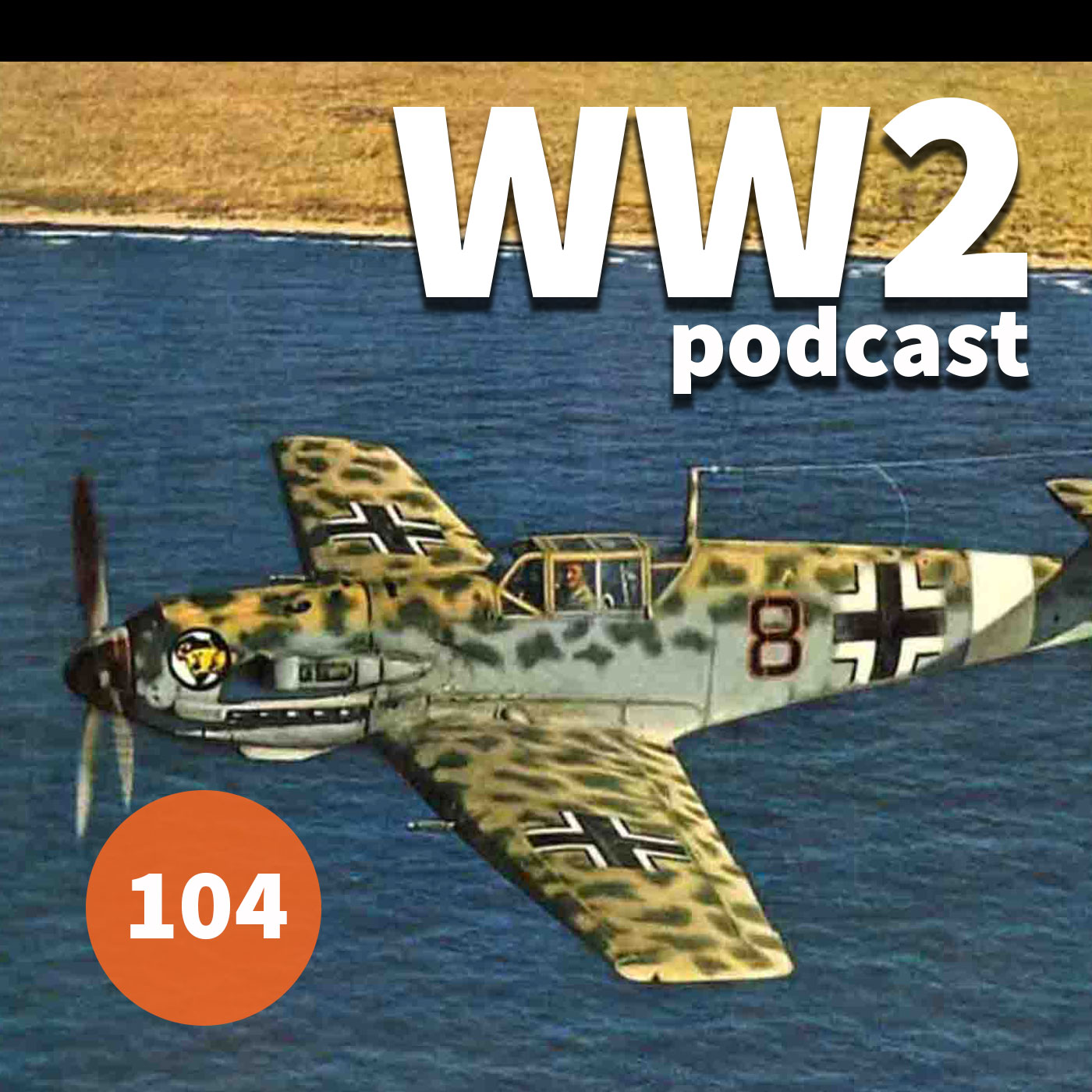
Ep 104104 - Alarmstart: The Luftwaffe in the Mediterranean
If you cast your mind back to February 2018 I discussed the experience of German fighter pilots experience in Western Europe with Patrick Eriksson, that's episode 60. Later that same year, Patrick followed up with a second book Alarmstart East, focusing on the luftwaffe fighting over Russia (episode 85). Patrick has now finished his trilogy of Luftwaffe books with Alarmstart South and the final defeat, closing with the German experience flying in and around the Mediterean; so North Africa, Sicily, Malta etc and through to the end of the war. So I asked Patrick back for a chat…
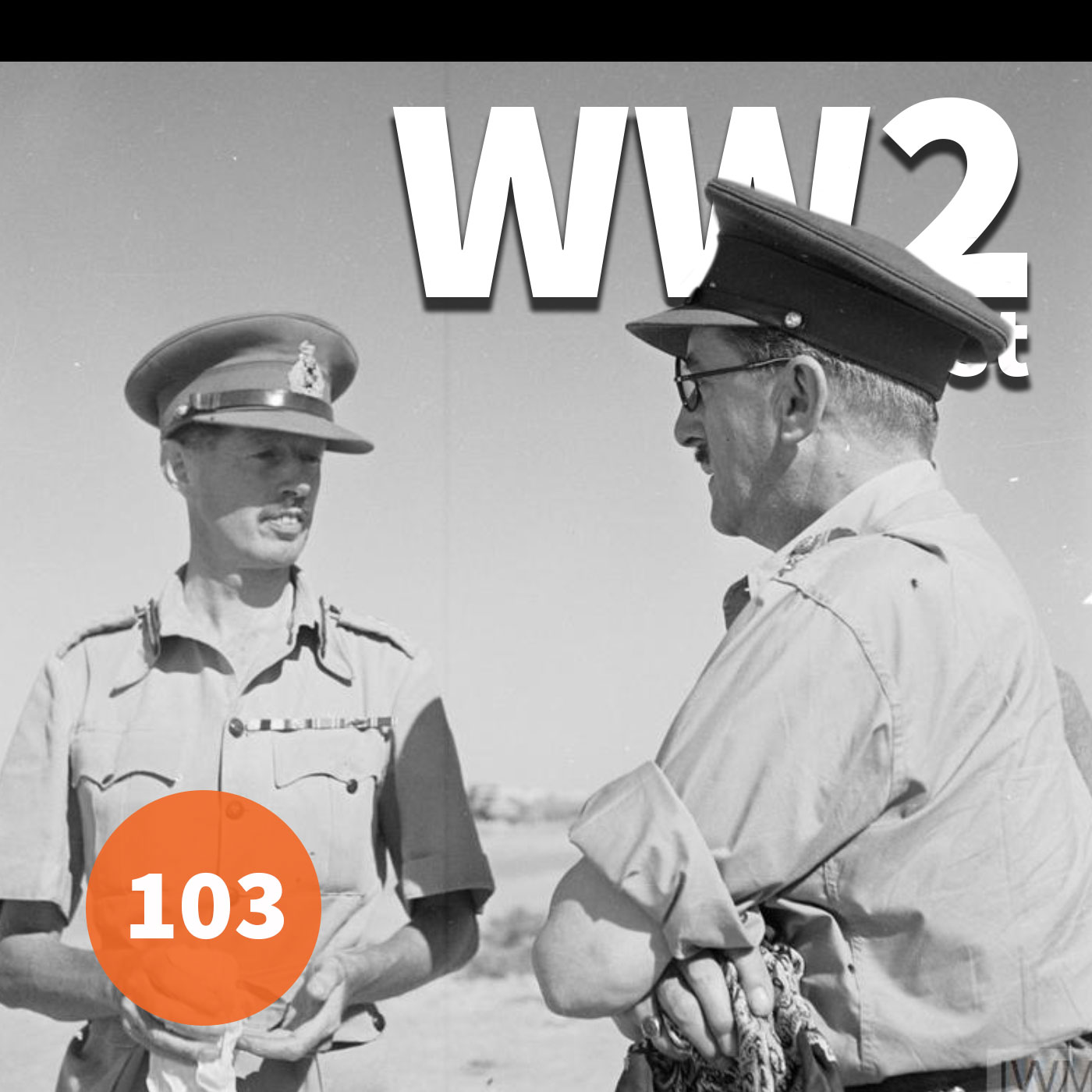
Ep 103103 'Chink' Eric Dorman-Smith
If you've ever read about the British experience in the Deserts of North Africa during WWII, one name usually gets a mention somewhere in the narrative, that of Eric Dorman-Smith, often refered to as 'chink'. He can be a divisive character, sometimes portrayed as a far thinking military genius whose ideas were ignored or misunderstood. To others he represents what was problematic with both the senior British commanders Wavell and Auchinleck, whose fortunes rose and fell; he was symptomatic of retreat, reorganisation, confusion and poor leadership. The curious thing about Dorman-Smith is so little is directly written about him, he is a footnote in the books of other desert leaders and often only gets a brief mention in histories of the North Africa Campaign. So hopefully in this episode we'll shed some light on 'chink'. Joining me today is James Colvin. James is currently working on a history of the 8th army pre the battle of Alamein, which will be published by Helion next year (I'll keep you all posted when it's released).
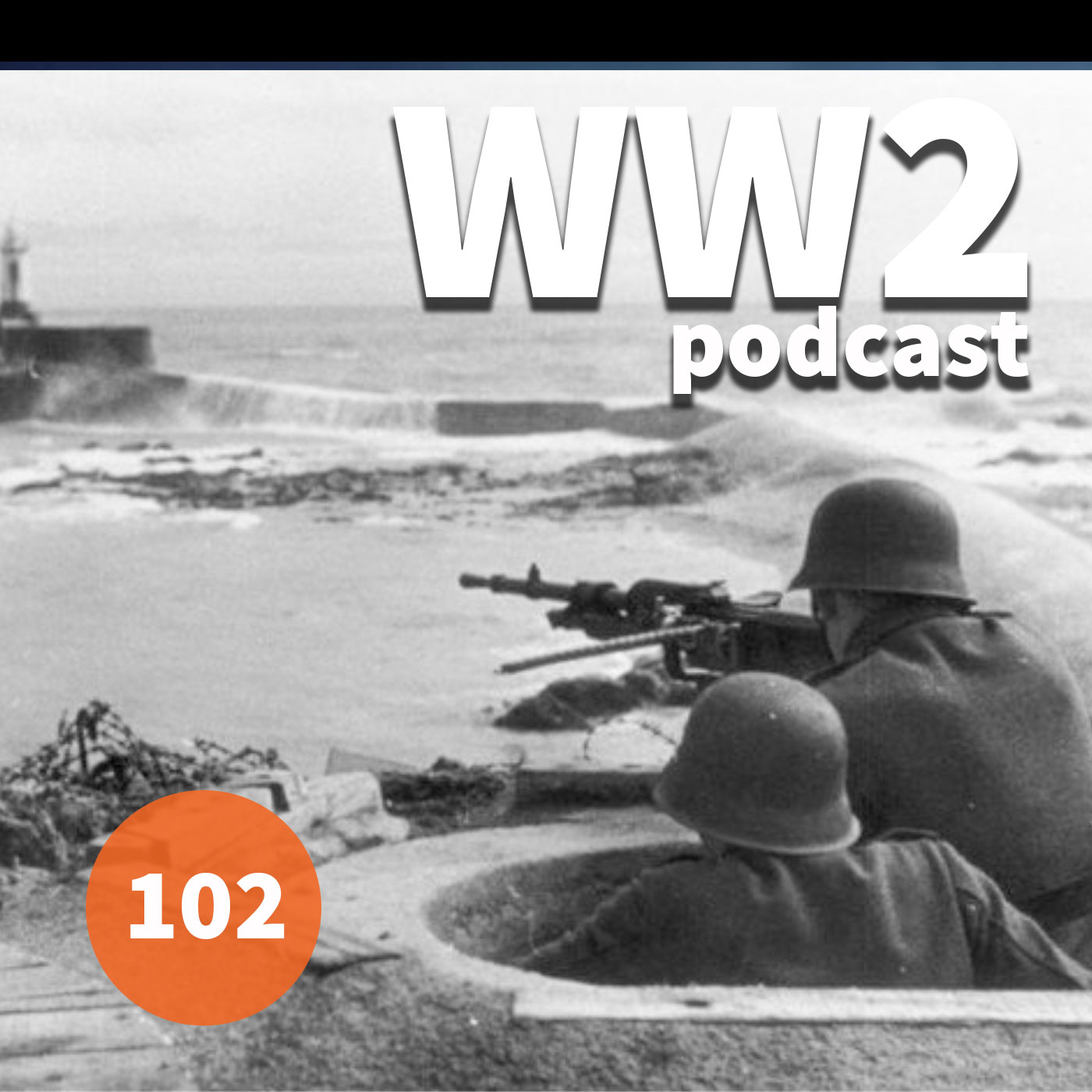
Ep 102102 - D-Day Through German Eyes
June 2019 marked the 75th anniversary of D-Day, we had a month of D-Day podcasts looking at the operation from the British, Canadian and American perspectives. The narrative of that day is the difficulty of the operation, doubts if the landings would succeed, but what if we turn the tables? How was it for the Germans? To answer that question I'm joined by WW2 podcast stalwart Jonathan Trigg. Jonathan has joined us in the past to discuss his work researching foreign recruits to the SS, you can find those in episodes 55 and 77. Earlier this year, he had a new book released titled D-Day Through German Eyes: How the Wehrmacht Lost France. With D-Day fresh in our minds I thought we best get him back to have a chat about the allied invasion of Europe from the German perspective.

Ep 101101 - Operation CHASTISE: The Dambusters
On the night of May 16th, 1943, 19 Lancaster bombers took off from England heading toward the German industrial heartland of the Ruhr. They carried a new bomb, designed to skip across water avoiding any torpedo nets before hitting the target and sinking into the depths; then exploding.. The bomb was codenamed 'upkeep', we know it today as the 'bouncing bomb' designed by Barnes Wallis. Those Lancaster's of 617 squadron, commanded 24 year old Guy Gibsonwould become known as the 'Dam Busters', the operation was CHASTISE. The mission would be a success, as in two of the targeted dams were hit and breached causing millions of tons of water to surge down into the Ruhr region, flooding mines, destroying factories and homes. The crews that survived the raid would arrive back in Britain as celebrities, swept up in the wartime propaganda; and of course memorialised in books such as Paul Brickhill's 'The 'Dam Busters', of which the well known 1955 film is based. Joining me to discuss the raid is Victoria Taylor. Victoria is a Post Graduate Researcher at the University of Hull. Her MA thesis is Redressing the Wartime and Postwar Mythologization of Operation CHASTISE in Britain. Recommended books about operation Chastise. Cooper, Alan W. The Men Who Breached the Dams. Pen & Sword Books, 2013. Holland, James. Dam Busters. Random House, 2012. Sweetman, Dr John. The Dambusters Raid(Cassell Military Paperbacks). W&N, 1999.

Ep 100100 - Left For Dead At Nijmegen
On the 17th September 1944 Gene Metcalfe, of the 82 Airbourne, parachuted in to Holland as part of Operation Market Garden. Approaching the bridge they were to capture Gene is injured in a firefight and left for dead. He would spend the rest of the war as a POW. I talk to Gene about his wartime experiences in the Airbourne, as a POW and what happened once he was liberated. Left for Dead in Nijmegen, by Marcus Nannini, is the story of Gene's war, it is a fantastic read and well worth picking up a copy.
Ep 9999 - George Mergenthaler - MERG
One thing I've learned from producing these podcasts is the research never ends, it only leads to new avenues of interest branching off from the original topic. And this is the case for Peter Lion. If you recall in episode 33, Peter told us how elements of the US 28nd infantry division, stationed in the Luxembourg town of Wiltz put on a christmas party for the local children, and this included GI Richard Brookins dressing as St Nicholas and arriving by jeep to hand out gifts. In researching that Peter bumped into the story of George Mergenthaler, heir to the Mergenhaler Linotype Company. I've been trying to pin down a guest for an 'extra' episode for quite a while, so when Peter proposed we discuss his book MERGit I jumped at the chance. For Patrons of the podcast I make available parts of the interviews that are off topic or just never made it into the 'final cut'. I've a bit more of Peter and chatting and I've decided to release it free to everyone as a big thank you for listening and all the support you've all given me. If you want to listen to it you can find it at patreon.com/ww2podcast.
Ep 9898 - Operation Market Garden
September 2019 marks the 75th anniversary of Operation Market Garden, the allied attempt to create a sixty mile corridor, and secure a crossing over the Rhine. The plan was to use the newly formed First Allied Airborne Army to seize and hold nine key bridges until relieved by the British Army's XXX Corp. The Airborne component was known as Market, and the ground attack was Garden. Joining me to talk about the background to airborne operations and Market Garden is Dr William Buckingham. William is the author or Arnhem: The Complete Story of Operation Market Garden 17-25 September 1944.
Ep 9797 - Japanese POW: Ray Fitchett
Last year I got an email from Cole Gill, his grandfather had made a number of tape recordings recounting his experiences during the war serving on the Royal Navy ship HMS Exeter, then as a POW at the Fukuoka camp,where he witnessed the dropping of the atomic bomb on Nagasaki. Who wouldn't be interested in that story? Cole sent them over and after listening to them they've been languishing in my virtual bottom draw on my computer, awaiting for me to have some inspiration. Well I've got them out, dusted them down and what I have for you is the story of Raymond Fitchett. It's a big thank you to Cole Gill for sharing these recordings.
Ep 9696 - Bridge Busters: The Dortmund-Ems Canal Raid
In this episode we're looking at an RAF raid in 1940 against the Dortmund-Ems canal. The canal was a vital trade route with huge amounts of supplies and raw materials passing along it daily. With the fall of France and the build up to Operation Sealion, the invasion of Britain, interrupting the traffic on the canal would aid in upsetting the German timetable. But to undertake the task a level of accuracy was needed from the RAF which was hitherto unheard of… It was very much a proto-dambusters raid. Joining me to discuss the raid is Dr Mark Felton, author of The Bridge Busters. We've spoken to Mark before, we looked Operation Cowboy, where some elements of the Whermacht joined with the Americans to save the world famous Lipizaner horses at the close of WWII. In episode 49, we discussed British VIP POWs held by the Italians. If you've not heard it, dig it out. I think it's my favorite episode of the WW2 podcast so far. You can also find Mark on YouTube here.

Ep 9595 - Jimmy Stewart
For a long time I've been fascinated by movie stars who chose to join the military and saw combat in World War Two. And one star in particular has always interested me, 'Jimmy Stewart'. A big star in the 1930's, in 1940 he would win the Oscar for best man in The Philadelphia Story' and was nominated for one for Mr. Smith Goes to Washington, yet when war came he was insistent on not avoiding it and joined the United States Army Airforce flying combat missions over Europe. Joining me to discuss Jimmy Stewart's military career is Robert Matzen, author of Mission: Jimmy Stewart and the Fight For Europe.

Ep 9494 - 1941
The usual narrative for WWII is that turning points of the war are in 1942 with the battles of Midway, El Alamein and Stalingrad. While these are unquestionably major victories that signalled the 'end of the beginning', as Churchill would put it. Friend of the podcast Andrew Nagorski has suggested that actually 1941 was the pivotal year of the war. Andrew contends that the decisions made in 1941, by the major nations, would make an allied victory not just possible but inevitable. It's a compelling idea. As we've had Andrew on the podcast previously (in episode 18, when discussed Nazi war crimes), I thought it would be good to get him back for a catch up and to outline his thesis laid out in his new book '1941: The Year Germany Lost The War'.

Ep 9393 - D-Day: The British Beach Landings
In the last episode we looked at the American experience of D-Day at Omaha beach, this time it's the turn of the British and Canadians at Sword, Juno and Gold on the 6th June 1944. In this episode we're going to concentrate on the British and Canadian landings on D-Day. I'm joined by John Sadler. Now we've talked to John before in episode 26, when we looked at Operation Agreement, a combined operations raid in the deserts of North Africa that included the Long Range Desert Group, the SAS and the Royal Navy. John is also a battlefield guide of the D-Day Beaches and surrounding areas and has a book out called D-Day: The British Landings.
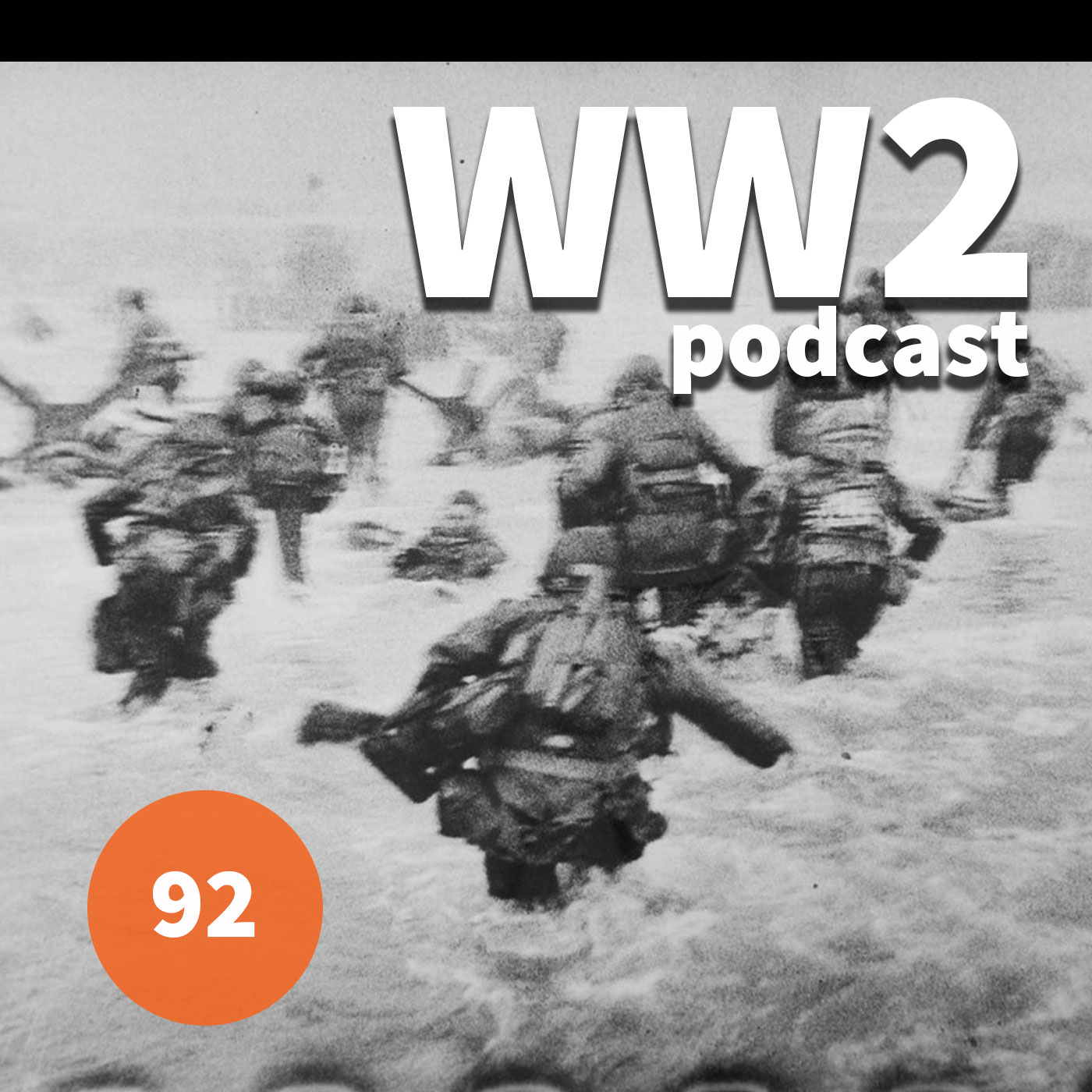
Ep 9292 - D-Day: Omaha
'Before the war, Normandy's Plage d'Or coast was best known for its sleepy villages and holiday destinations. Early in 1944, Field Marshal Erwin Rommel took one look at the gentle, sloping sands and announced 'They will come here!' He was referring to Omaha Beach ‒ the primary American D-Day landing site. The beach was subsequently transformed into three miles of lethal, bunker-protected arcs of fire, with chalets converted into concrete strongpoints, fringed by layers of barbed wire and mines. The Germans called it 'the Devil's Garden'.' In this episode I'm joined by Robert Kershaw military historian, battlefield guide and author of Fury of Battle: A D-Day landing as it happened. We discuss the American landings on D-Day at Omaha beach.
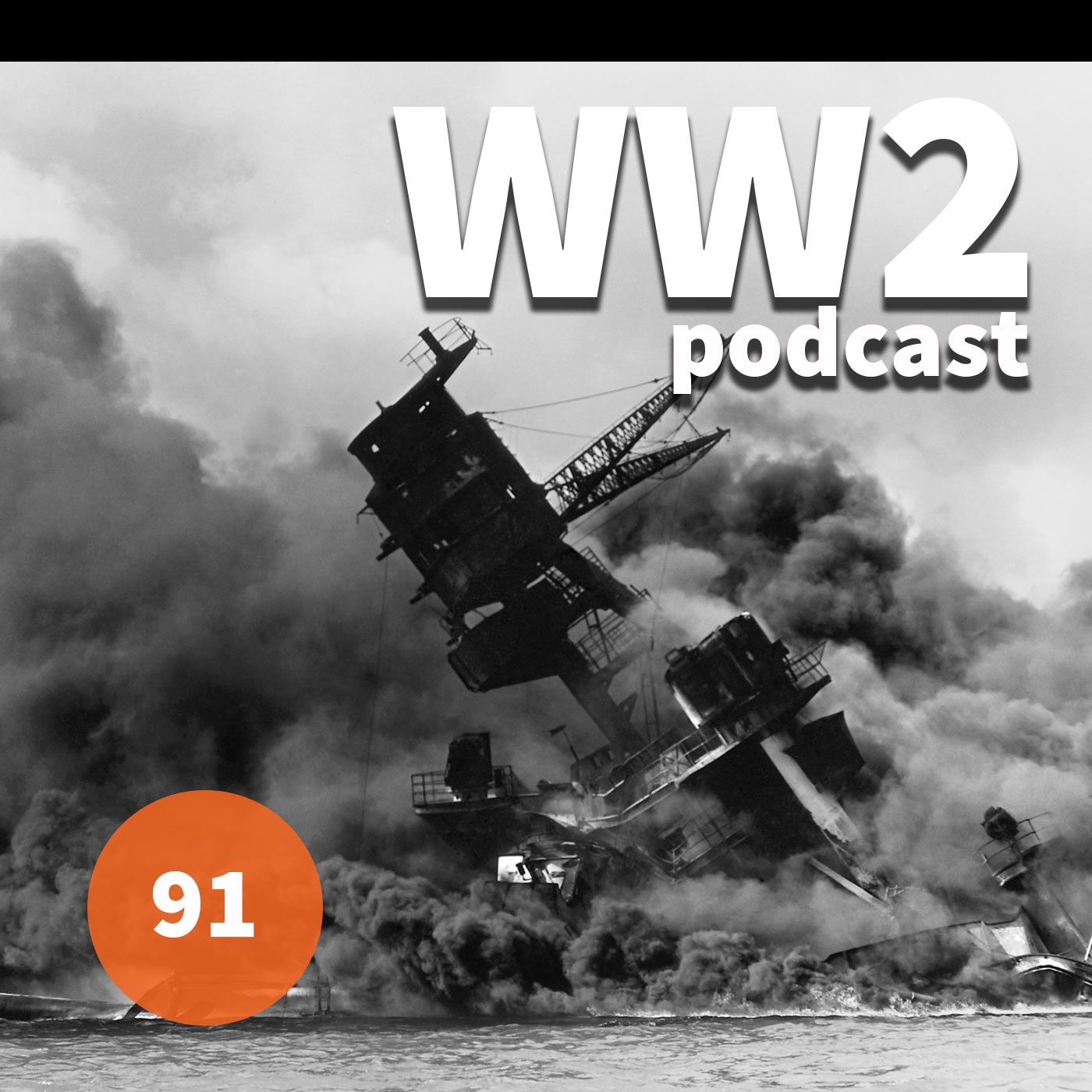
Ep 9191 - USS Arizona: Brothers Down
In this episode I'm joined by Walter Borneman, if you cast your mind back I talked to him in episode 25 about General Macarthur. That was nearly three years ago! How time flies! Since then Walter has been busy researching the history of the sinkingof the USS Arizona during the attack on Pearl Harbour in December 194 and the fate of the crew, including a remarkable 23 sets of siblings. He has a new WWII book out called Brothers Down, so I thought we'd get him back to discuss it.
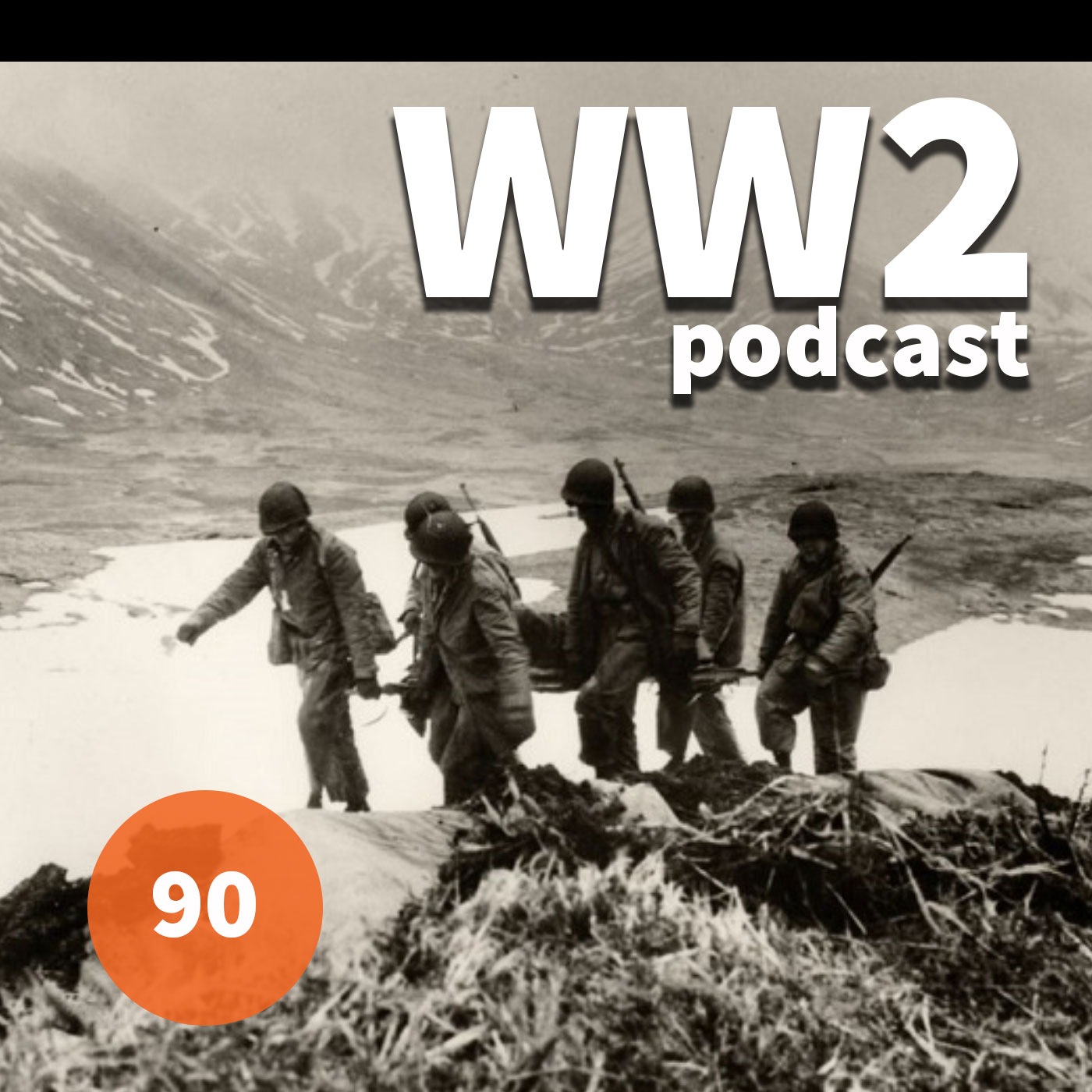
Ep 9090 - Storm On Our Shores
On the 6th of June 1942 Japanese troops invaded the island of Attu which is part of Alaska, it was the first time since 1812 that continental America had been invaded. In this episode we're looking at the US attack to recapture the island, the fighting was bitter in a very hostile environment, and the discovery of a diary of a Japanese army surgeon who had been trained before the war in the USA. I'm joined by Mark Obmascik, author of The Storm on our Shoreswhich traces the story of the fighting on Attu, Paul Nobuo Tatsuguchi and an American GI called Dick Laird.

Ep 8989 - Cork Wars
A few months ago I got email from David Taylor asking if I'd ever considered looking at the cork industry in WWII? I'm sure like you, it had never crossed my mind. The more I looked into it the more I got enthused by the story of cork, it was a wonder product during the early 20th century, used in all manner of things - almost anything that needed a seal such as a gasket used cork, so it was crucial to the auto industry, aviation and munitions. The American government defined it a strategic industry along with coal and steel! What makes the story more intriguing is the majority of it came from neutral Portugal and Spain… I hope I've laid out my case on why it is such a fascinating story. I'm joined by David Taylor, who is the author of 'Cork Wars' which tells the stories of some of those involved in the cork business during WWII and Crown Cork and Seal one of the largest companies producing cork products during the war.
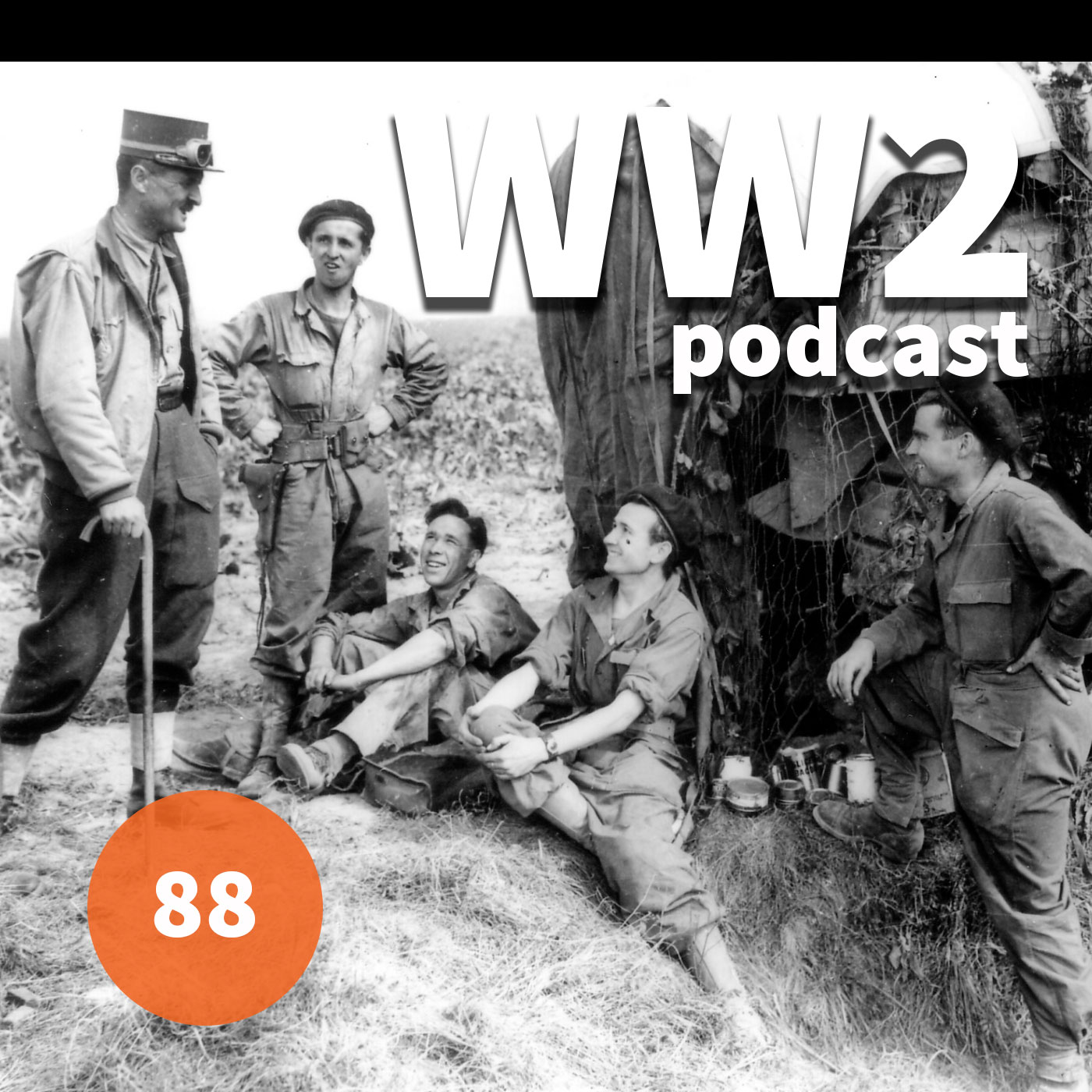
Ep 8888 - Division Leclerc
In this episode we're going to be looking at the Free French and the Division Leclerc, commanded by Philippe de Hauteclocque. Raised in the French Colonies of Africa, they fought with distinction in the deserts of Libya and with the British 8th Army. They also took part in the fighting in North West Europe after D-Day, being one of the units that liberated Paris in 1944. This is not just a story of a unit, but is very much the story of the growth of the Free French. For this episode I'm joined by M.P. Robinson. Robinson is author of a number of book, the latest published by Osprey being'Division Leclerc: The Leclerc Column and Free French 2nd Armoured Division, 1940-46'
Ep 8787 - Hitler's Death
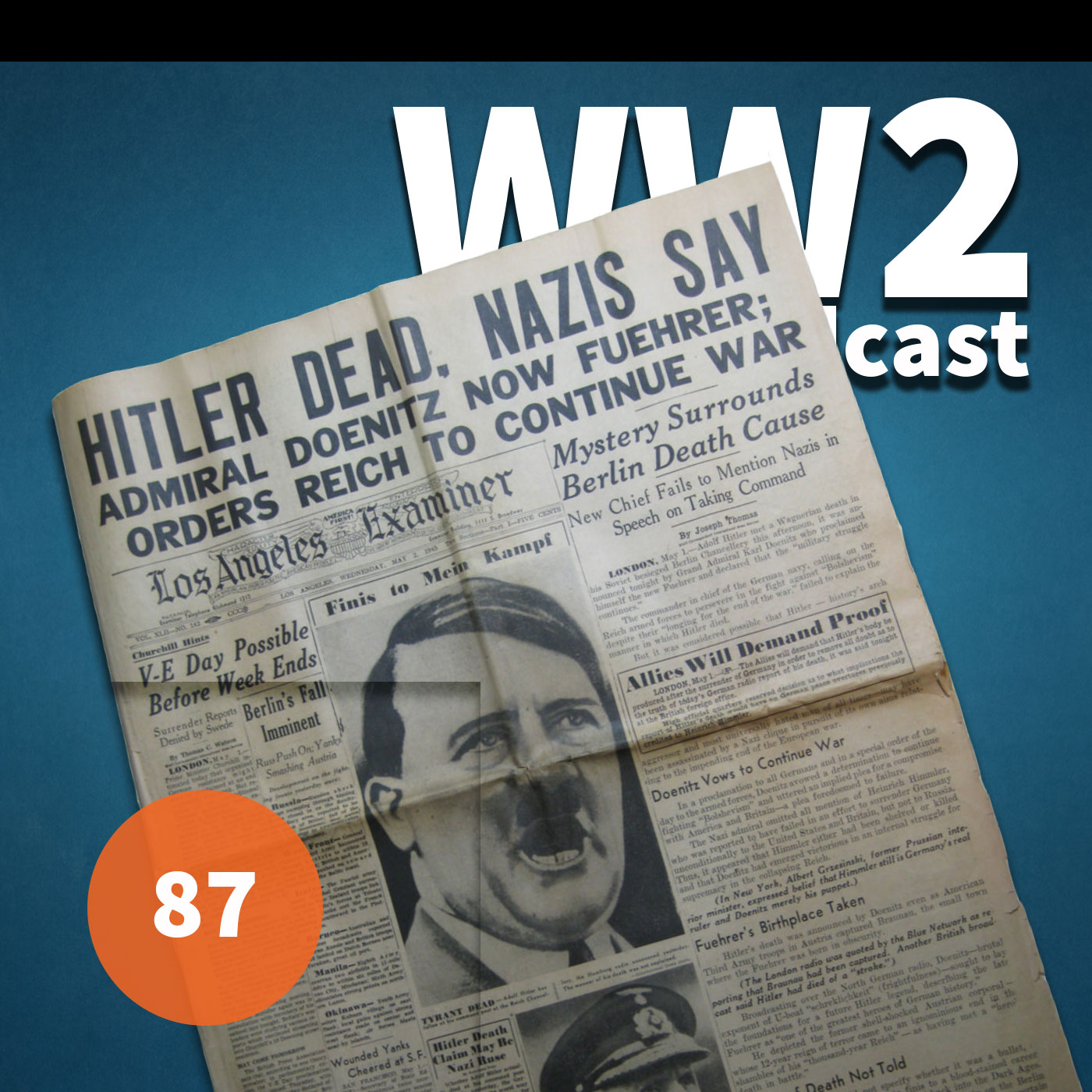
We've all see the film Downfallabout the Führerbunker in Berlin, in the closing days of the war. And we all know the story of how Adolf Hitler, with his new wife Eva Braun, committed suicide and the body was destroyed. Well, how much of that story do we actually know? Since the end of the war a series of newspaper reports, books and more recently the TV series Hunting Hitler have all put forward the idea that Hitler escaped at the end of the war and the official history, for want for a better phrase is not the whole truth… In this episode I'm joined by Luke Daly-Groves. Luke is a postgraduate researcher at Leeds University and author of the new book Hitler's Death, in which he revisits the original post war investigations by the allied powers and using all the data now available assesses how accurate they were. In doing so he also explores and debunks these Hitler conspiracy theories.

Ep 8686 - The SAS in Italy, 1943-45
The SAS made their name in the North African desert, but less well known is after that they continued to fight in the mediterranean theatre. They carried out raiding missions in advance of the invasion of Sicily, Operation Husky, and then operating behind enemy lines during the Italian Campaign. For this episode I'm joined by Malcolm Tudor. Malcolm's father actually fought in Italy during WWII, his Italian mother's family worked with the partisans and aided escaped allied POW's. Malcolm is also the author of SAS In Italy, 1943-1945

Ep 8585 - Alarmstart East
"There are no more than a handful of Second World War Luftwaffe members alive today. Patrick Eriksson had the foresight to record these experiences first-hand before it was too late. Some witnesses ended up as senior fighter controllers. The recollections and views of the veterans are put within the context of the German aerial war history. By no means all the witnesses were from the ranks of the so-called 'aces'." Last year I discussed the experiences of German Luftwaffe pilots fighting in the West, against the Allies, I was joined by Patrick Eriksson. Patrick has completed the second book in his trilogy looking at the Luftwaffe - Alarmstart East- this time tracking the pilots on the Eastern Front from 1941 though to the end of the war in 1945.

Ep 8484 - Shot Down
In this episode we're going to be looking at the story of Howard Snyder, a B-17 'Flying Fortress' pilot, flying with the US 8th air force from Britain. Through letters Howard wrote to his family, and exhaustive research, his son Steve Snyder has pieced together the remarkable story of his father, and what happened after he was shot down in Belgium. You can find more about Steve Snyder and his father, Howard, at stevesnyderauthor.com

Ep 8383 - Operation Crossbow
In 1943 allied surveillance picked up the construction of V1 and V2 rocket sites in France. Without quite knowing the extent of the threat allied planners decided to embark upon a pre-emptive campaign to deny the Germans the use of these sites, the code name was Operation Crossbow. It would be an Anglo-American Operation with ran up until the end of WWII, in 1945. I'm joined by Steven Zaloga. Steven is a prolific military historian and analyst, he has also written a book on Crossbow published by Osprey, Operation Crossbow 1944; Hunting Hitlers V-Weapons.

Ep 8282 US Navy vs IJN Fleet Submarine, 1941-42
In this episode we're going to be looking a Japanese submarine operations in the Pacific in the early part of the war. While I'm sure we're all familiar with the Imperial Japanese surface fleets actions during 1941-42, especially if you've listened to my discussions with Jeff Cox in episode #14 and #63, but there seems to be very little mention of submarines. Which is interesting because if we look at the Battle for the North Atlantic it was all about the German U-Boats. Joining me today is Mark Stille. Mark is a retired US Navy commander, alumni of the US Naval War College and author of numerous Osprey titles, mainly focusing on the war in the Pacific - his latest being USN Fleet Destroyer vs IJN Fleet Submarine.
Ep 8181 - Britain's Blockade of Europe & the response of the ICRC
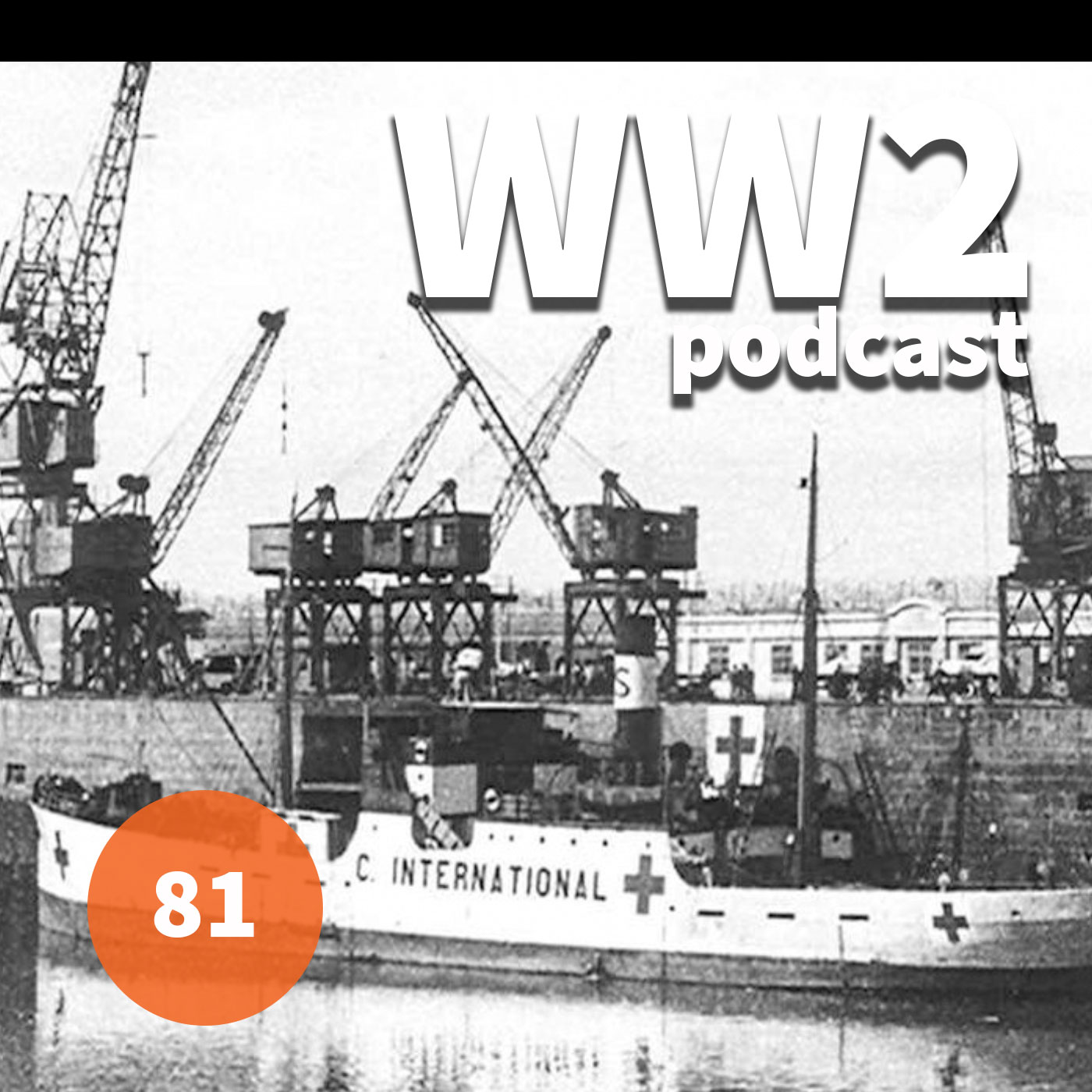
At the outbreak of WWII Britain put into motion the strategy of using the Royal Navy to blockade Germany, depriving her of essential goods. When Europe fell the blockade was widened to include all of Europe. This provided a dilemma for the British, the Ministry of Economic Warfare was in favour of depriving all occupied countries of goods, for the Foreign Office depriving occupied countries would mean negatively affecting countries that were allied with Britain. In Greece this would lead to famine, and a relief operation organised by the International Red Cross. I'm joined by Dr James Crossland of Liverpool John Moores University. James specialises in the history of international humanitarian law and the development of the Red Cross.

Ep 8080 - The Italian Army In North Africa
Long standing listeners will have heard me chat to Walter Zapotoczny before, in episode 57 we looked at Ardennes offensive, and in episode 63 we looked at German penal battalions. Patrons of the podcast might recall on both occasions after I'd finished recording we got to talking about the Italians in North Africa. Well, Walter's book on the topic was released a couple of months ago 'The Italian Army In North Africa: A Poor Fighting Force or Doomed by Circumstance' Hopefully we can answer the question a poor fighting force or doomed by circumstance in this podcast.
Last Man Standing: Geoffrey Rothwell
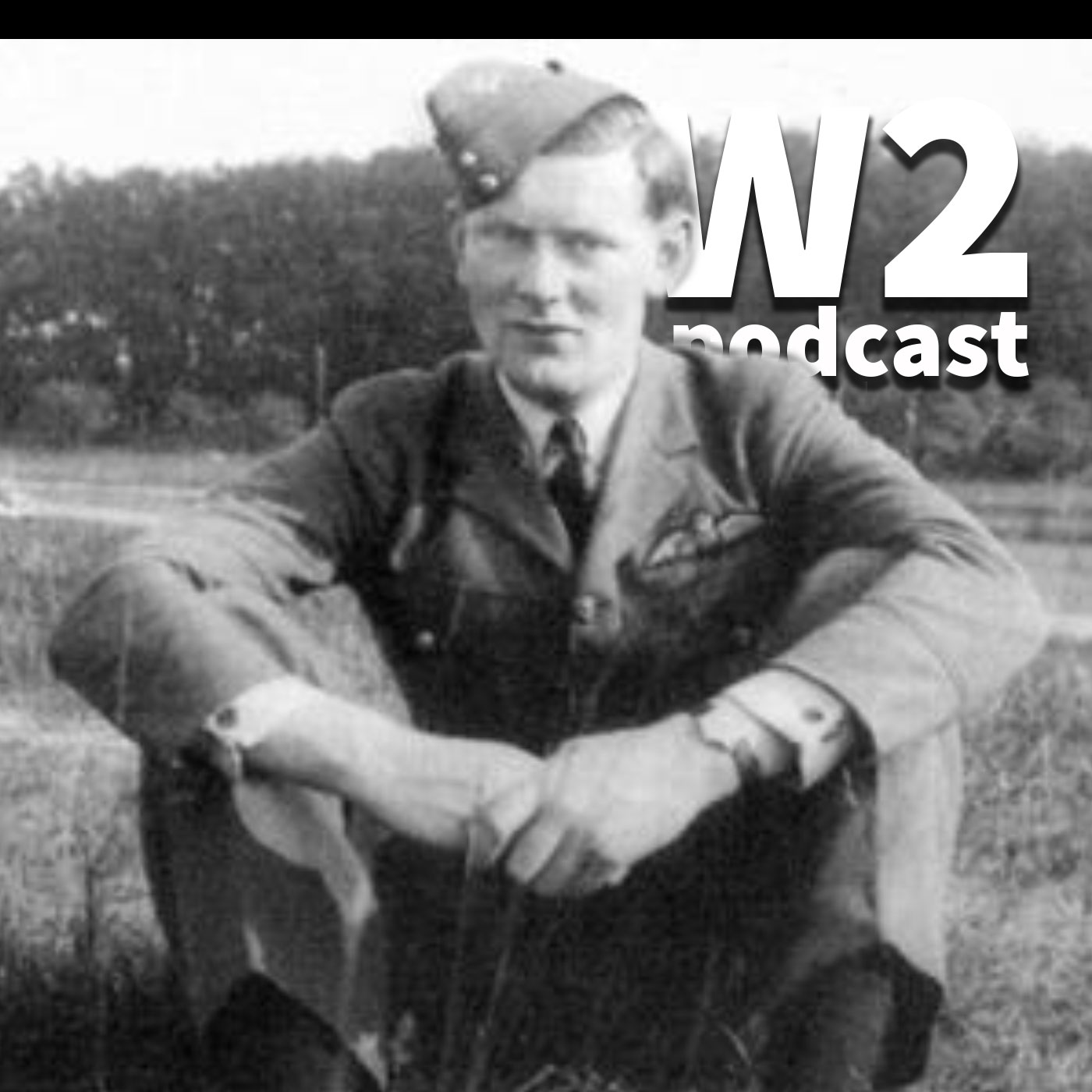
bonus"'Stay low, stay on track, and stay alive' was the motto of the RAF's most secret Station, Tempsford. That's exactly what Geoffrey Rothwell did ‒ DFC & Bar, 1939-45 Star, Aircrew Europe Star with France/Germany Clasp, Defence Medal, Victory Medal, Order of Leopold II & Palme, Croix de Guerre 1940 & Palme, Bomber Command Medal, POW medal, La Légion d'honneur ‒ from Bomber Command via SOE to Stalag and back." In episode 53 I talked to Gabrielle McDonald-Rothwell about the SOE agent Diana Rowden. After we had stopped recording Gabrielle told me about her husband Geoffrey Rothwell, was the last surviving pilot for SOE during the war. At the time she was in the process of checking through a biography of Geoff's experiences. Sadly since then Geoff has passed away, but Gabrielle has managed to complete the book recounting his life and wartime experiences and its been released, the title is 'Last Man Standing'. In this bonus episode of the podcast I talk to Gabrielle about Geoff's life.

Ep 7979 - The Forgotten Dead: Exercise Tiger
'On a dark night in 1944, a beautiful stretch of the Devon coast became the scene of desperate horror. Tales began to leak out of night-time explosions and seaborne activity. This was practice for Exercise Tiger, the main rehearsal for the Utah Beach landings…' This is very much an episode in two halves, I start by looking at the disastrous Exercise Tigerwhich took place in April 1944, at Lyme Bay and Slapton Sands in Devon. Then move on to talk about a Sherman tank! I'm joined by Dean Small. Dean's father Ken did much to rediscover those event in April 1944, and create a memorial to those who lost their lives. He wrote the book The Forgotten Dead: The true story of Exercise Tiger, the disastrous rehearsal for D-Day You can find out more about the exercise on Dean's website Exercise Tiger Memorial.

Ep 7878 - Bones of My Grandfather
US Marine, Lt Alexander Bonnymanlanded on Tarawa in December 1942. He was mortally wounded leading an assault on a Japanese bunker, which was key to defense of the island, and act for which he would posthumously receive the Medal of Honor. In this episode of the podcast I talk to his grandson, Clay Bonnyman Evansabout the events surrounding his death and about how his grandfather's remains, along with hundreds of others who had been hastily buried, were lost after the war.

Ep 77Hitler's Vikings
At the beginning of WWII Germany invaded and occupied Denmark and Norway, but left neutral Sweden alone. Less than a year later citizens from all three of those Scandinavian nations were volunteering to join the Waffen-SS. By the end of the war in 1945 the number of Scandinavians who had fought in the Waffen-SS had reached the thousands. Casualties were high, but there were survivors and they returned home, often to face retribution and condemnation. In episode 55, I discussed the Flemish Waffen SS, with Jonathan Trigg. Since then he's been busy tracking down the few surviving veterans of the SS who were from Scandinavia, for his new book Voices of the Scandinavian Waffen SS: The Final Testament of Hitler's Vikings. Being a fellow Yorkshireman, with a new book, on a very interesting topic, I thought it rude not to ask him back!

Ep 7676 - RAF Flight Engineers
Way back in episode four of the podcast, I talked to Andrew Panton about the Lancaster Bomber; Andrew is the pilot of Lancaster 'Just Jane' here in the UK. Whilst chatting the role of flight engineer came up, I had no clue what they actually did, I wasn't aware they worked in tandem with the pilot to fly the plane. Ever since I've been on the lookout for someone to talk to about the role, if you do a search on Amazon you'll discover how overlooked the Flight Engineer has been in the historiography. Earlier this year Colin Pateman released his latest book 'Fuel, Fire and Fear: RAF Flight Engineers at War', clearly he is the man to speak!
75 - The Rise of Hitler and National Socialism
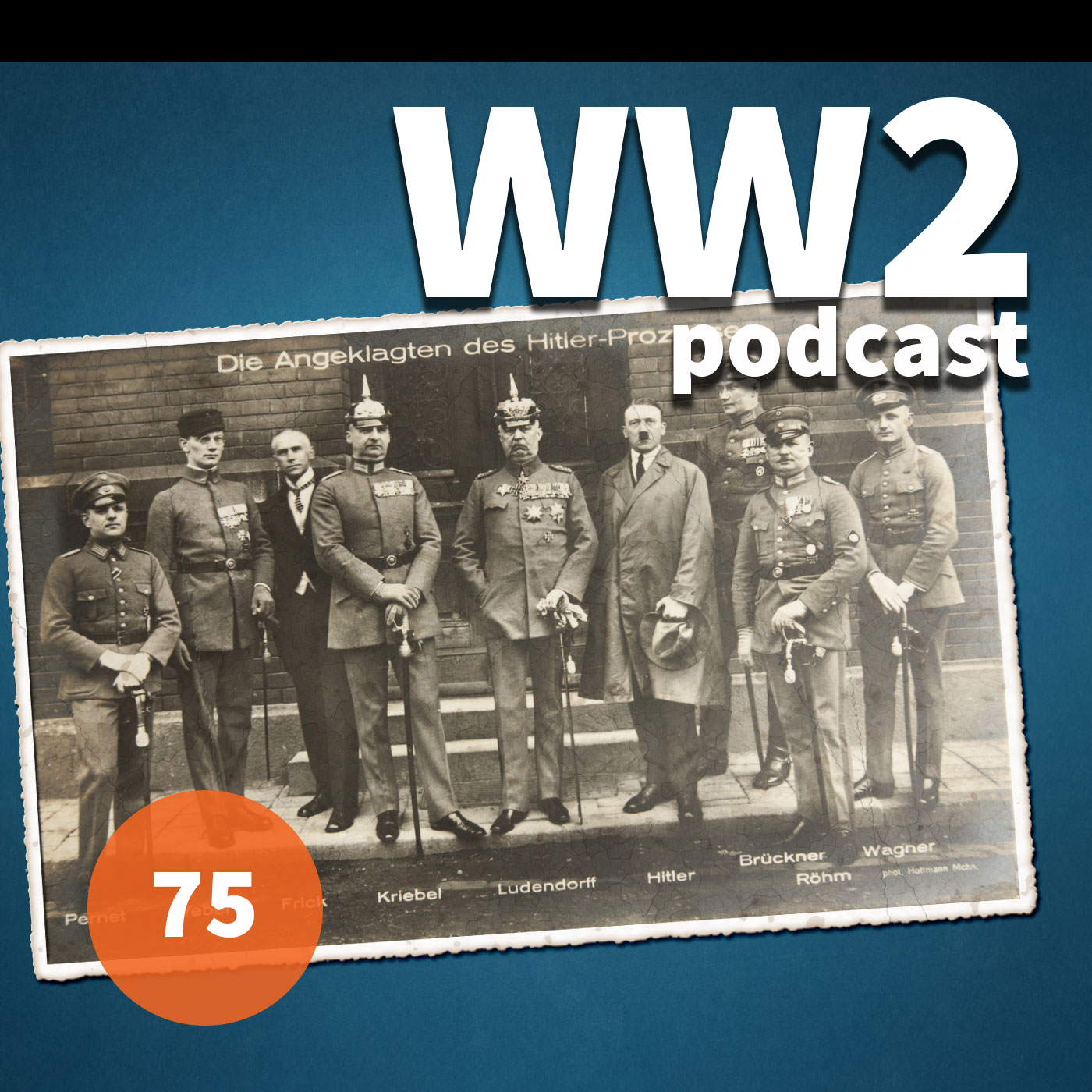
September 2018 marks the 80th anniversary of the Munich agreement, where the British Prime Minister, Neville Chamberlain, flew to Germany to meet Hitler; in an attempt to avert war. He famously returned with an agreement which he believed would deliver 'peace in our time'. It got me thinking about Hitler's rise to power, in 1933 he joined the government one of only three Nazi's in it. Five years later he was dominating European foreign policy, as he pushes forward with his agenda. In this episode I thought we'd look at Hitler's rise to power, from the end of the First World War, through to him joining in the government in 1933. Joining me today is Professor Matthew Stibbe, from Sheffield University. He has delivered an excellent chapter in the new Oxford Illustrated History of the Third Reichlooking at the rise of National Socialism.