
The WW2 Podcast
326 episodes — Page 3 of 7

Ep 223223 - Landing Craft Infantry
In this podcast episode, I'm looking at the work of LCI's, Landing Craft Infantry. These are not the smaller Higgins Boats we see storming the Normandy beaches in Saving Private Ryan but large beaching craft intended to transport and deliver fighting troops, typically a company of infantry or marines, to a hostile shore once a beachhead was secured. Joining me is Zach Morris. In When the Beaches Trembled, Zach writes about his grandfather, Stephen Ganzberger, who enlisted in the U.S. Navy and served on LCI's during the war. Zach is also the former editor-in-chief of Elsie Item, the quarterly magazine newsletter of the USS Landing Craft Infantry National Association.

Ep 222222 - The D-Day Scientists Who Changed Special Operations
Operation Jubilee, the Dieppe Raid on the coast of France, was a disaster in 1942. However, it did highlight the need for more reconnaissance before any other amphibious operations were mounted. In London, a small group of eccentric researchers, experimenting on themselves from inside pressure tanks in the middle of the London air raids, explored the deadly science needed to enable the critical reconnaissance vessels and underwater breathing apparatuses that would enable the Allies' future amphibious landings, specifically D-Day. Joining me today is Dr Rachel Lance. Rachel is an Assistant Consulting Professor at Duke University, where she conducts research out of their Hyperbaric Medicine facility. She is also the author of Chamber Divers: The Untold Story of the D-Day Scientists Who Changed Special Operations Forever. Patreon:patreon.com/ww2podcast

Ep 221221 - Training the Indian Army
The Indian Army was the largest volunteer army during the Second World War. Indian Army divisions fought in the Middle East, North Africa and Italy - and went to make up the overwhelming majority of the troops in South East Asia. Over two million personnel served in the Indian Army. In this episode, I am joined by Dr Alan Jefferys to discuss how the Indian Army developed a more comprehensive training structure than any other Commonwealth country during WWII. This was achieved through both the dissemination of doctrine and the professionalism of a small cadre of Indian Army officers who brought about a military culture within the Indian Army - starting in the 1930s - that came to fruition during the Second World War. Alan is the Head of Equipment and Uniform at the National Army Museum and the author of Approach to Battle: Training the Indian Army During the Second World War. Patreonpatreon.com/ww2podcast

Ep 220220 - The Archer: Reversing to Victory
From late 1944, an ungainly piece of equipment was introduced into service in the British and Canadian armies. Referred to at the time as the 'Valentine 17-pounder SP', and later as the 'Archer', it was a tracked vehicle with an open compartment at the front and a large gun facing to the rear. Joining me to tell the story of the Archer's development is loyal patron of the show, and author of 'Self Propelled 17 Pounder - Archer', Christopher Camfield. Patreonpatreon.com/ww2podcast

Ep 219219 - D-Day Tourism
While at We Have Ways Fest, I caught Paul Woodadge, the host of WW2TV, giving an excellent talk on D-Day tourism. I thought I would ask him on the show to discuss tourism, how it has changed and what to see. Base in France, Paul has been a battlefield tour guide for over 20 years. More recently, he launched WW2TV and became a Second World War YouTube sensation. You can find Paul at DDayHistorian.com and ww2tv.com. Patreonpatreon.com/ww2podcast

Ep 218218 - Target Hong Kong
In January 1945, Admiral Halsey, with the third Fleet, conducted a raid into the South China Sea. This was designated Operation Gratitude. The raid was to support the landings on Luzon, in the Philippines, with the aim of destroying the Japanese navy, supply convoys and any air assets in the area. As part of this operation, Hong Kong would be attacked. Steven Bailey joins me. Steven is the author of Target Hong Kong, which looks at the raid from numerous angles, including an eyewitness account from a British prison officer held in a Japanese internment camp on the island. Patreonpatreon.com/ww2podcast

Ep 217217 - How the Luftwaffe Lost the skies over Germany
Starting with small raids at the start of the war, the aerial offensive grew into a massive operation. Huge air armadas would eventually pulverise Germany, with the Mighty Eigth Airforce flying by day and the Lancasters of Bomber Command by night. This 24-hour campaign seriously damaged Germany's ability to make war and killed hundreds of thousands. Joining me is Jonathan Trigg, whose new book is The Air War Through German Eyes: How the Luftwaffe Lost the Skies over the Reich, which looks at the air war from the point of view of the Germans. Patreonpatreon.com/ww2podcast

Ep 216216 - The Latvian Legion
'In Arctic blizzards between January and March 1945, the Latvian 15th SS Division - a core of Russian Front veterans but most raw teenage conscripts from Nazi-occupied Latvia - tried to stop the Red Army sweeping across Pomerania, now Poland. One in three died: the majority never returned home.' In this episode, I'm joined by Vincent Hunt, and we discuss the Latvians fighting with the Germans in the Latvian 15th SS Division. Through interviews, diaries, and never-before-utilised sources, in his book The Road of Slaughter: The Latvian 15th SS Division in Pomerania, January-March 1945, Vince has built a compelling narrative of desperate fighting as the Latvians were withdrawn from defending their own country to Poland. For listeners of the podcast, Helion has offered us a discount code for copies of the book purchased from their website helion.co.uk. The code is VHRS10. Patreonpatreon.com/ww2podcast

Ep 215215 - The Power of Japanese Propaganda
This episode will look at Japanese propaganda during the imperial era. With the rise of mass production of newspapers and magazines amidst the Russo-Japanese War, the Japanese population became instilled in nationalism and militarism. Despite the era of demilitarisation and democratisation after the First World War, the Japanese Empire, once again, became fixated on expansion. Harnessing film, radio and cultural institutions, the country was galvanised for total war. Ray Matsumoto, author of Echoes of Empire: The Power of Japanese Propaganda, joined me. Patreonpatreon.com/ww2podcast
Ep 214214 - Stan Hollis VC and the Green Howards on D-Day
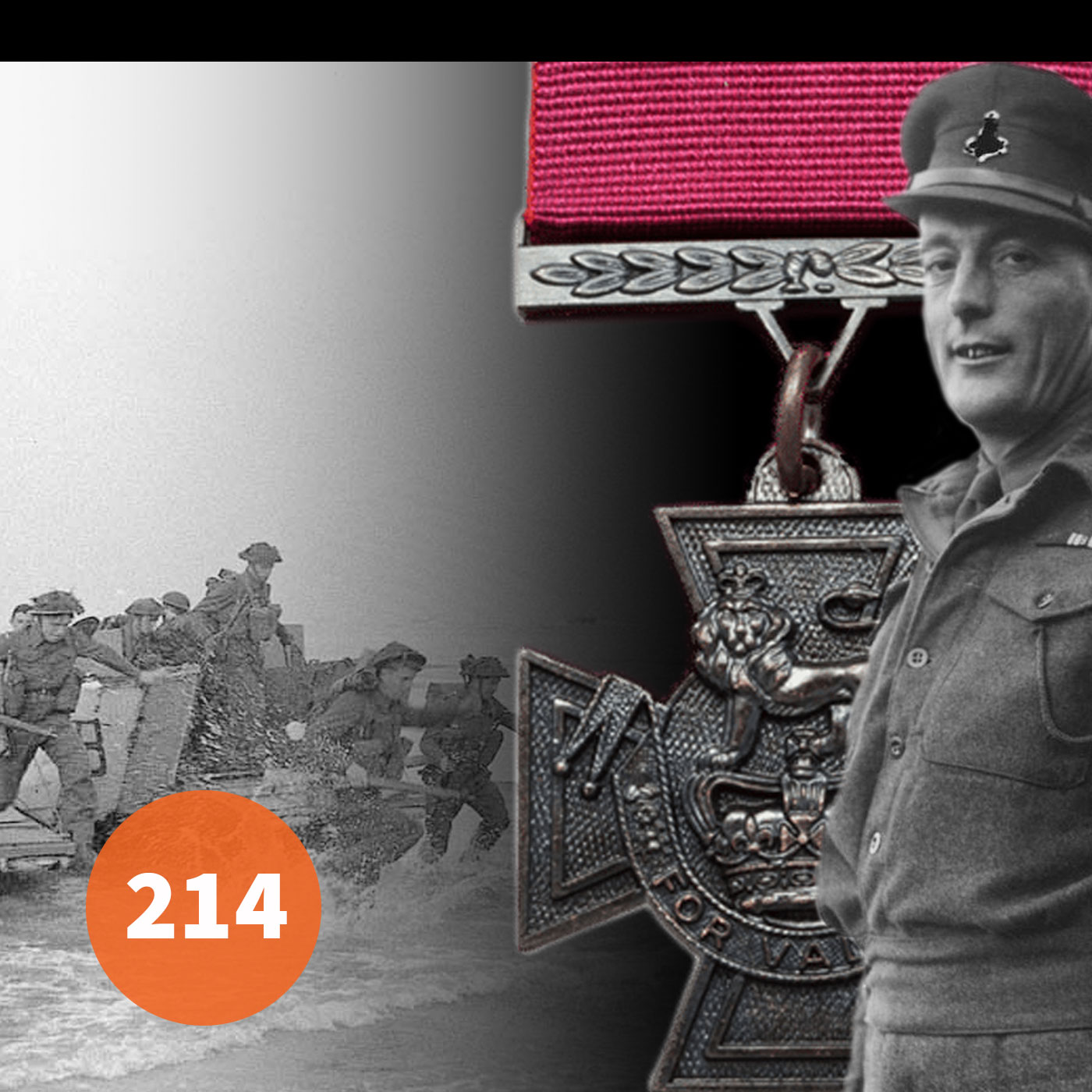
The Green Howards landed in the first wave on D-Day. With them was Company Sergeant Major Stan Hollis, who had seen action in France in 1940, being evacuated from the beaches of Dunkirk. He fought in North Africa and took part in the invasion of Sicily. It is fair to say Hollis was a seasoned soldier. He is also the only recipient of the Victoria Cross for his actions on the 6th of June 1944. I have made a field trip to the Green Howards Regimental Museum in Richmond, Yorkshire. In this episode, Steve Erskine joins me to discuss Hollis and the Green Howards on D-Day. The museum is hosting a special 80th D-Day anniversary event on the 6th of June, 2024. This is a unique event to be held at the museum in Richmond. Those attending will have the chance to explore items from the museum collection relating to this crucial phase of the Second World War. Hear accounts of the day itself and understand more about the impact of the events of 6 June 1944. You can find out more on the museum website greenhowards.org.uk. Patreonpatreon.com/ww2podcast

Ep 213213 - The British Empire and Commonwealth's War Against Imperial Japan
The war in Asia and the Pacific against Japan is often seen as an American affair. While the US did play a dominant role, the British and Commonwealth forces also made major contributions – on land, at sea and in the air – eventually involving over a million men and vast armadas of ships and aircraft. Joining me to discuss Britain and the Commonwealth's war in the Far East is Brian Walter, author of Forgotten War: The British Empire and Commonwealth's Epic Struggle Against Imperial Japan. Long-time listeners might recall I discussed the war in the Atlantic with Brian in episode 127, and we looked at the naval campaign in the Mediterranean in episode 173. Patreonpatreon.com/ww2podcast

Ep 212212 - Invisible Generals
When President McKinley turned down Benjamin Oliver Davis for a place at West Point due to the colour of his skin, Davis joined the army as a private. Davis soon worked his way through the ranks to receive his second lieutenant commission in 1901. It would be over 30 years before another black officer would receive his commission, and that would be Benjamin Oliver Davis's son, Benjamin Oliver Davis Jr. In theory, black troops would be barred from combat, but Benjamin Oliver Davis Jr. would lead the first Black flying squadron, the Tuskegee Airmen, to success during WWII. For this episode, I'm joined by Doug Melville, a direct relative of Benjamin Oliver Davis Jr. and Sr. When George Lucas's film 'Red Tails' (2012), celebrating the Tuskegee Airmen, was released, Doug was shocked when he realised that Ben Jr.'s name had been omitted and replaced by the fictional Colonel A. J. Bullard. And Ben's father, Benjamin O. Davis Sr., America's first Black general who helped integrate the military, was left out too. The film inspired him to rediscover his family's story, which spans five generations, and write Invisible Generals: Rediscovering Family Legacy, and a Quest to Honor America's First Black Generals. Patreonpatreon.com/ww2podcast

Ep 211211 - HG-76: Taking the Fight to Hitler's U-boats
The convoy HG-76 sailed from Gibraltar to Britain in December 1941. The Royal Navy commander in charge was 'Johnnie' Walker, an anti-submarine expert who had developed new, aggressive U-boat hunting tactics. Accompanying the escorts was HMS Audacity, the Royal Navy's first escort carrier - a new type of warship purpose-built to defend convoys from enemy aircraft and U-boats. Aware of the departure of HG-76, a wolfpack of U-boats was sent against it, and the Luftwaffe was heavily committed to, in a rare example of German inter-service cooperation. German intelligence agents in Gibraltar and Spain also knew every detail of HG-76 before it sailed, seemingly stacking the odds in favour of the Kriegsmarine. Joining me on this episode is Angus Konstam. Angus is a naval historian and author of The Convoy: HG-76: Taking the Fight to Hitler's U-boats For patrons of the podcast, Osprey Publishing has given us a discount code to be used on their website, ospreypublishing.com. If you are not a patron of the show, you can sign up at patreon.com/ww2podcast. Patrons can get advert-free listening and extra WWII chat. Patreonpatreon.com/ww2podcast

Ep 210210 - The Battle for Italy, 1943
Hot on the heels of victory in Sicily, the Allies crossed into Southern Italy in September 1943. They expected to drive the Axis forces north and be in Rome by Christmas. Although Italy surrendered, the German forces resisted fiercely, and the swift, hoped-for victory descended into one of the most brutal battles of the war. I am joined by James Holland, author of The Savage Storm: The Battle for Italy 1943 and co-host of the We Have Ways podcast. Patreonpatreon.com/ww2podcast

Ep 209209 - Hospital Trains of WWII
From the middle of the 19th century, the railways had an integral role in warfare. Trains brought food, ammunition and essential supplies. They also transported troops into the combat zone, and then trains would be used to bring men home. Hospital trains were not a new concept in WWII, but their development moved the carriages away from being ambulances for evacuating the wounded to mobile hospital units with operating theatres. Joining me is Alexandra Kitty, author of A Different Track: Hospital Trains of the Second World War. Patreonpatreon.com/ww2podcast

Ep 208208 - 2SAS and Bill Sterling
David Stirling is the name synonymous with the wartime SAS, but the real brains behind the operation was, in fact, Bill Stirling, David's eldest brother. Having originally joined the SOE in March 1940, Bill Stirling sailed for Cairo in 1941 and there had the idea for a small special forces unit to be led by his mercurial brother. But despite some success, David allowed the legendary 1SAS to drift under his leadership. Following his capture, Bill re-directed 2SAS, under his personal command, to the strategy he had originally envisaged: parachuting behind enemy lines to gather intelligence. Joining me is Gavin Mortimer. Gavin is the author of several books focusing on the SAS, including a biography of David Sterling. His latest book is 2SAS: Bill Stirling and the forgotten special forces unit of World War II. Patreonpatreon.com/ww2podcast

Ep 207207 - Tank Warfare in North Africa, 1942-43
If you cast your mind back to episode 187, I discussed the war in the North African desert in 1940-41 with Robert Forczyk. The war in the North African desert was pure mechanised warfare and, in many respects, the most technologically advanced theatre of World War II. It was also the only theatre where, for three years, British and Commonwealth, and later US, troops were in constant contact with Axis forces. Robert's follow-up book has just been released, 'Desert Armour: Tank Warfare in North Africa: Gazala to Tunisia, 1942-43'. In this episode of the show, Robert joins me once more. This time, we discuss the fighting in the desert in 1942 through to Mongomery's victory at El Alamein. Robert Forczyk has a PhD in International Relations and National Security from the University of Maryland. He retired as a lieutenant colonel from the US Army Reserves, having served 18 years as an armour officer and is the author of numerous books focusing on WWII. Patreonpatreon.com/ww2podcast

Ep 206206 - The Extraordinary Life of Journalist Wallace Carroll
Journalist Wallace Carroll had a career that spanned 45 years as a journalist. His first foreign posting, in 1929, was to London with the United Press newswire service. Throughout the 1930s, he covered the major events in Europe and witnessed the Spanish Civil War first-hand. Posted back to London, he dictated his early reports of the Blitz from his office rood top. Carroll had a knack for being in places at the right time. His talents and connections got him noticed, and he finished the war working for the US government with the Office of War Information. Here, he was tasked with counteracting German propaganda and conducting 'physiological warfare'. Joining me is Mary Llewellyn McNeil. Mary has written the biography of Carroll, Century's Witness: The Extraordinary Life of Journalist Wallace Carroll. Patreonpatreon.com/ww2podcast
Ep 205205 - Victory to Defeat: The British Army 1918-40
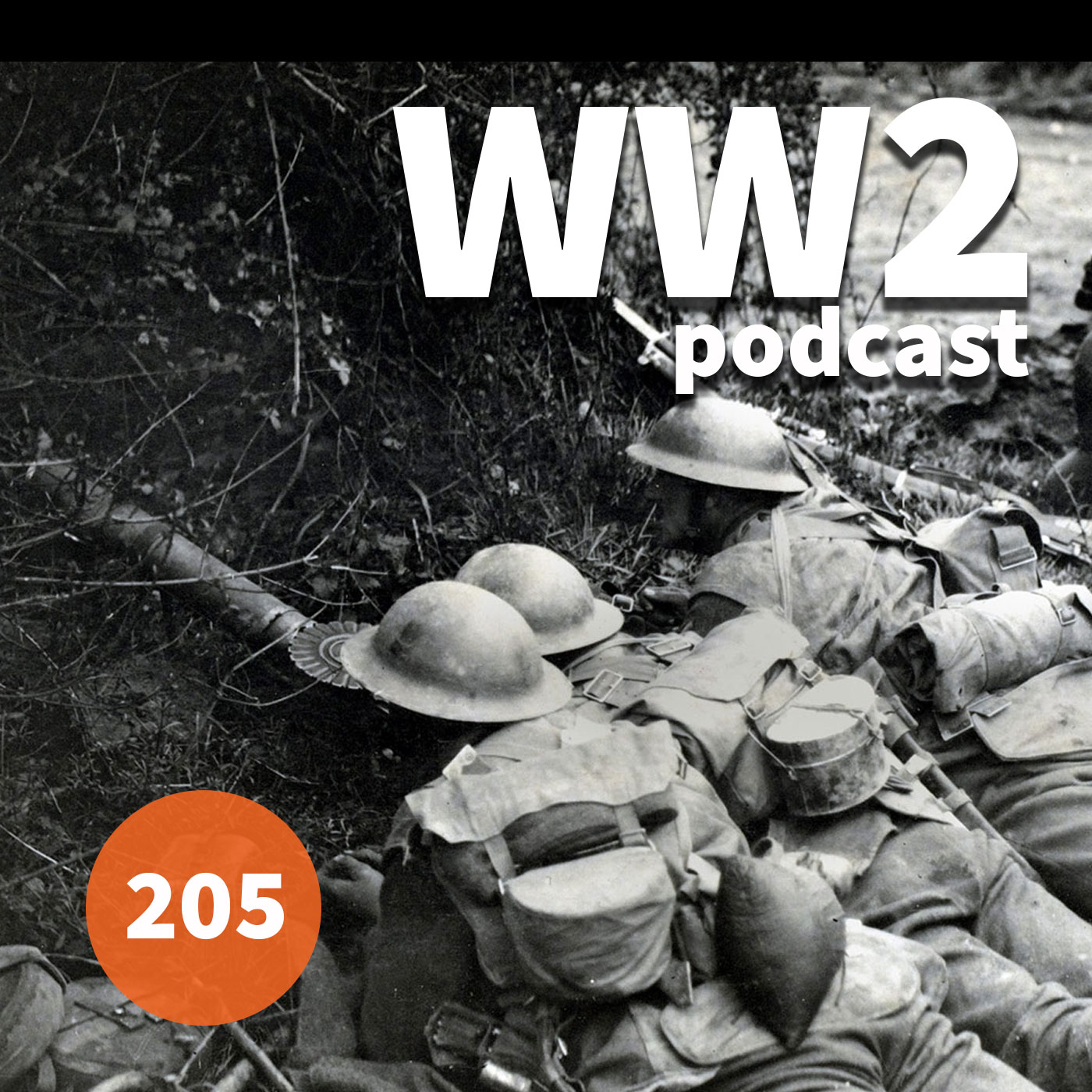
As some of you may know, I am also a First World War historian, and the academic history of the war can be very different from the public perspective, which dwells on the first two years of the war. Forgetting the victories of 1917 and 1918 is not new; it is something the British army did during the inter-war period. Added to this corporate amnesia, there was very little discussion in Britain on who the army might be expected to fight. All this culminated in 1939 with a British army unprepared for war and the defeat in France in 1940. Joining me once more is Robert Lyman, who, with Richard Dannatt, has written Victory to Defeat: The British Army 1939-40. The book is a compelling account of the mismanagement of the British army from the end of the First World War to the start of the next war. Patreonpatreon.com/ww2podcast

Ep 204204 - Armour in the Pacific
We do not think of armour being widely used in the Pacific campaign, and compared to other theatres, that is a reasonable assumption. However, it was utilised by both the Japanese and Americans from the island campaigns, such as Tarawa and Guadalcanal, through to the Philippines. Joining me today is Mike Guardia, who is the author of American Armor in the Pacific and The Combat Diaries: True Stories from the Frontlines of World War II. Patreonpatreon.com/ww2podcast

Ep 203203 - The Battle of Britain, July 1940
In this episode, I'm joined by Patrick Eriksson. If you cast your memory back, Patrick has previously joined us to talk about the Luftwaffe and his Alarmstart trilogy of books (episodes 60, 85 and 104). This time, he is back to discuss the opening few weeks of the Battle of Britain, covered in his book Tally-Ho: RAF Tactical Leadership in the Battle of Britain, July 1940. Patreonpatreon.com/ww2podcast

Ep 202202 - Leningrad, 1941-42
From September 1941, the Germans surrounded Leningrad, laying siege to the city for 900 days. Over 2 million Russians were trapped, and thousands would die through starvation. As the winter closed in, Lake Ladoga froze, allowing trucks to cross the ice. Dubbed 'Road of Life', it would bring vital supplies and eventually evacuate over a million civilians from the besieged city. While all the time, the Russian army struggled to try and lift the siege. I am happy to welcome back to the podcast Prit Buttar. Pritt's latest book is To Besiege a City: Leningrad 1941–42, and we will discuss the first year of the siege. Patreonpatreon.com/ww2podcast

Ep 201201 - Japanese Americans in WWII
After the attack on Pearl Harbor, over 125,000 Japanese Americans living in the continental United States were incarcerated in prison camps. The majority of these were born in America and US citizens. This was authorised by an Executive Order from President Roosevelt. The Japanese Americans complied and spent years in the camps. Even though incarcerated, they remained loyal Americans. When the call came for volunteers for the Army first the 100th Infantry Battalion was formed and then the 442 Regimental Combat Team - in which thousands of Japanese Americans volunteered to serve. These two units were awarded over 4,000 Purple Hearts, and 21 men received the Medal of Honor. In post-war America, the narrative of the treatment of Japanese Americans shifted. In 1988 President Ronald Reagan signed the Civil Liberties Act, which officially apologised for the incarceration on behalf of the U.S. government. Joining me today is Mitchell Maki. Mitchell is the President and CEO of the Go For Broke National Education Center, a non-profit organisation dedicated to preserving the legacy and lessons of the Nisei World War II veterans. And he is the author of Achieving the Impossible Dream: How Japanese Americans Obtained Redress. Patreonpatreon.com/ww2podcast
Ep 200200 - The Life of Mrs George S Patton
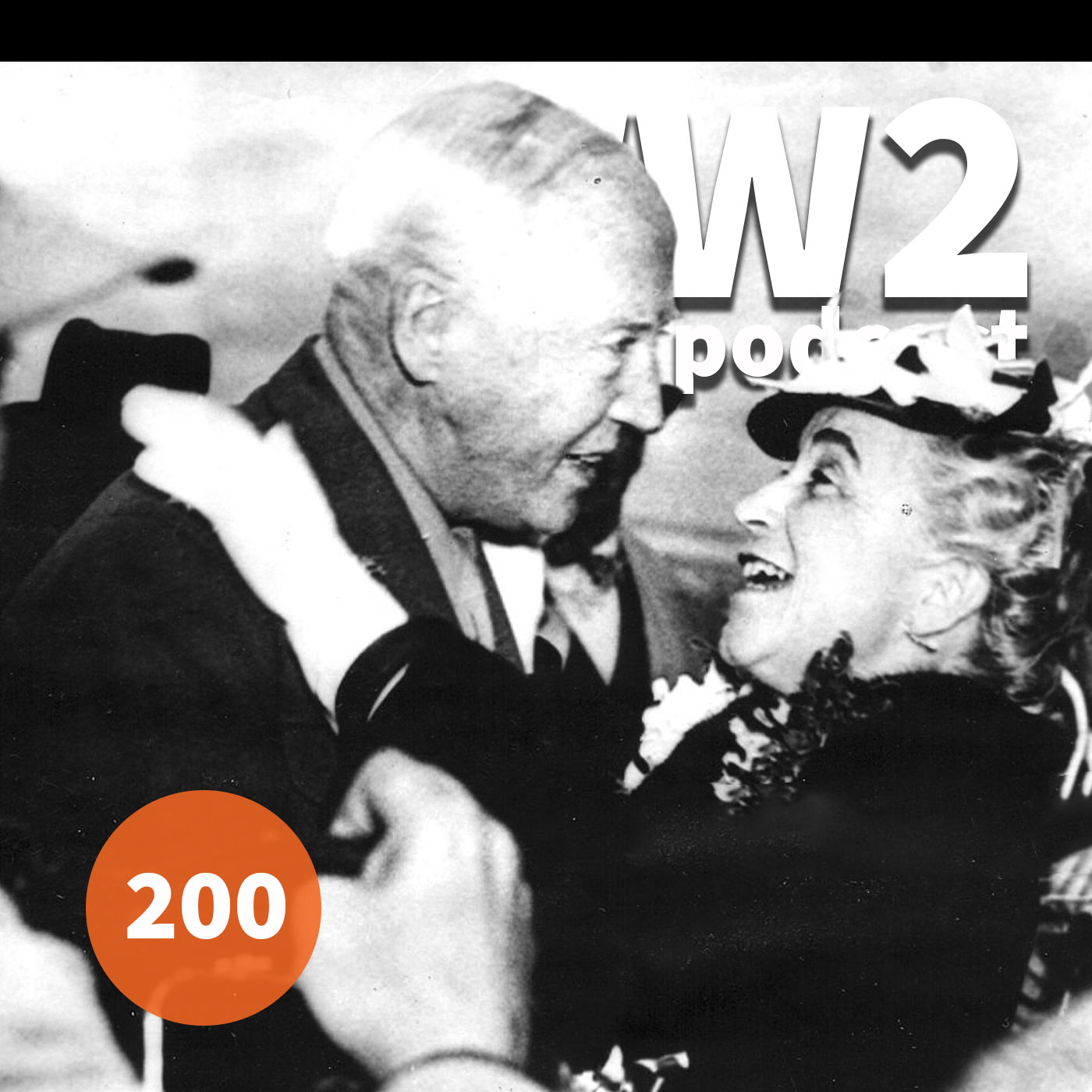
Few wives of prominent men are more than a footnote in many histories, but they were often central to their husbands' lives. The classic well-known example is the relationship between the wartime British Prime Minister Winston Churchill and his wife Clementine (see episode 116). For months I've been sitting on Stefanie van Steelandt's biography of Mrs Patton, Lady of the Army: The Life of Mrs George S Patton. Following my look at George Patton in the last episode, I thought it was the opportune time to look at his wife Beatrice. Patreonpatreon.com/ww2podcast

Ep 199199 - Patton, August - December 1944
If you cast your memory back to episode 157, Kevin Hymel joined me. We discussed General Patton from the campaigns in Mediteranean in 1942 to just before his activation as commander of third army in 1944. Kevin is back. This time we will discuss Patton's arrival in France through to the Battle of the Bulge. Kevin has worked as a historian for the US Army and is currently doing work for the Arlington National Cemetery. He is also a tour guide for Stephen Ambrose Historical Tours. He is the author of Patton's Photographs: War as He Saw It, and his second book in what is to be a trilogy, is Patton's War: An American General's Combat Leadership, Volume II: August to December 1944. Patreonpatreon.com/ww2podcast

Ep 198198 - Kesselring
In episode 144, I chatted to Andrew Sangster about Alanbrooke. Earlier this year, I noticed Andrew had a new book, Flawed Commanders and Strategy in the Battle for Italy, 1943-45. With his co-author Pier Paolo Battistelli, the book looks at Montgomery, Mark Clark, Patton, Harold Alexander, Albert Kesselring and the fighting in Sicily and Italy. There is too much to cover in a single episode of the podcast, but I've asked Andrew back to discuss the fighting in the Mediterranean from the perspective of Kesselring. Andrew Sangster has six degrees, in Law, Theology and four in history including his doctorate. An ordained priest, he has trespassed away from the Church to teaching and the study of history. He has taught in grammar schools and at Eton College, was a headmaster for some nine years and has assisted post-graduate students of history. He has some twenty published history books to his credit both in the United Kingdom and overseas with some co-authored with Pier Paolo Battistelli, the well-known Italian historian. When not called for Church duties he studies the lesser-known aspects of modern history and plays chess for relaxation. Patreonpatreon.com/ww2podcast
Ep 197197 - Kohima
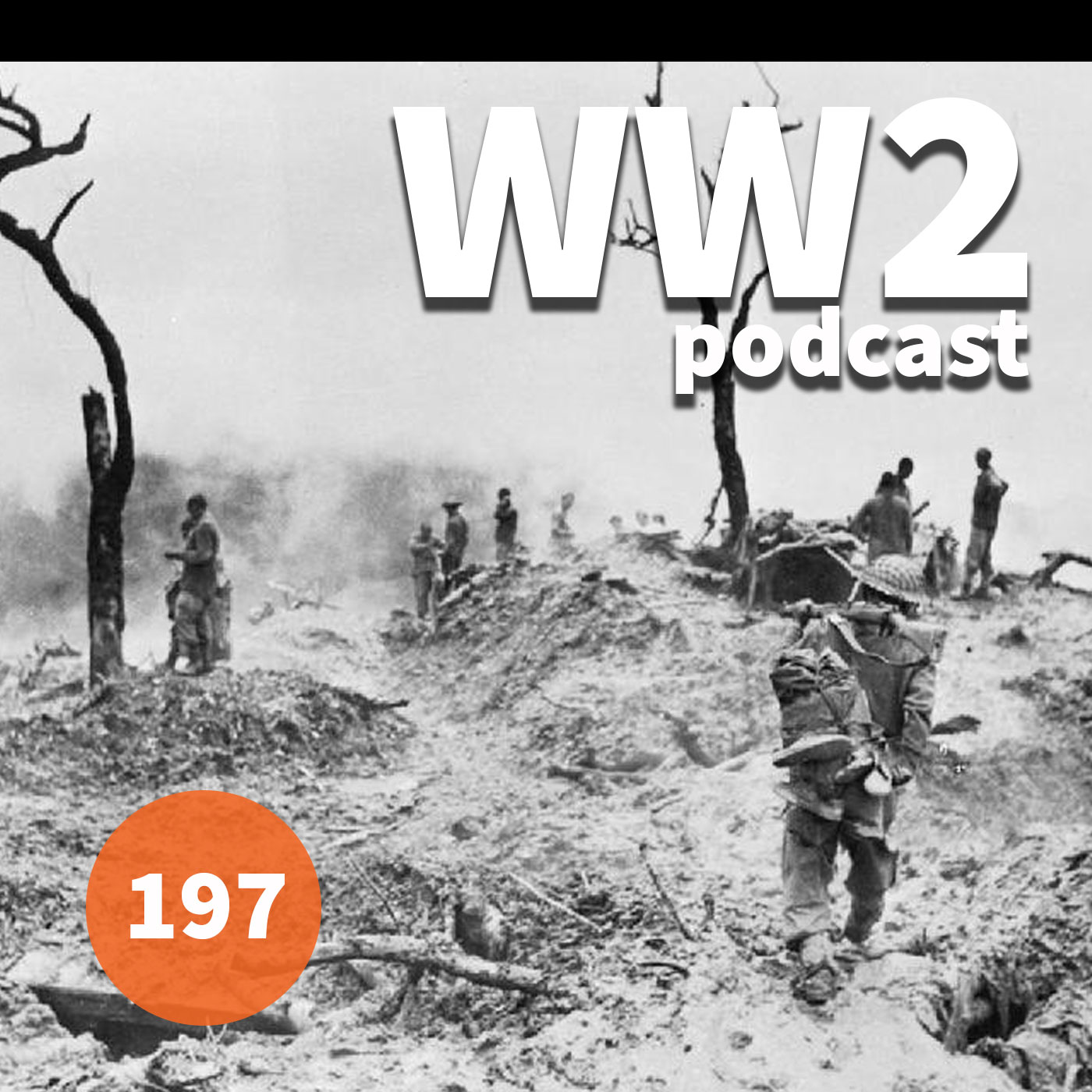
Fought between 8 March and 18 July 1944, the battles of Imphal and Kohima were the turning point of one of the most gruelling campaigns of the Second World War (1939-45). The decisive Japanese defeat in north-east India became the springboard for the Fourteenth Army's subsequent re-conquest of Burma. Joining me for this episode is Robert Lyman, author of the excellent A War of Empires; Japan, India, Burma and Britain 1941-45. The book covers the defeat of the British and Indian armies in 1941-42, the change of commanders, the restructuring, training of the army and new tactics, and the extraordinary victories culminating in Mandalay in May 1945 and the collapse of all Japanese forces in Burma. But that is a big topic to cover. So I thought we would focus on the battle of Kohima and, to some extent, Imphal. In 2013, a British National Army Museum poll voted the Battles of Kohima and Imphal as 'Britain's Greatest Battle'. Patreonpatreon.com/ww2podcast

Ep 196196 - Winthrop Bell: Cracking the Code
In public life, Canadian Dr Winthrop Bell was a Harvard philosophy professor and wealthy businessman. As MI6 secret agent A12, he evaded gunfire and shook off pursuers to break open the emerging Nazi conspiracy in 1919 Berlin. His reports provided the first warnings of right-wing conspiracies in the German establishment, eventually leading to Hitler and the National Socialists. In the 1930s, after reading Hitler's speeches and books, Bell was warning of the Holocaust. But his warnings fell on deaf ears until the outbreak of war. For this episode, I am joined by Jason Bell. Jason is a professor of philosophy at the University of New Brunswick. He has served as a Fulbright Professor in Germany and was the first scholar granted exclusive access to Winthrop Bell's classified espionage papers. Jason is also the author of Cracking the Nazi Code: The Untold Story of Canada's Greatest Spy, which recounts Bell's story. Patreonpatreon.com/ww2podcast

Ep 195195 - Their Finest Hour Project
With the Second World War slipping from living memory, the University of Oxford has launched Their Finest Hour. The project aims to empower local communities to digitally preserve these stories and objects before they are lost to posterity. For this episode, I am joined by Dr Joseph Quinn to explain how the project works and how you can get involved. Patreonpatreon.com/ww2podcast
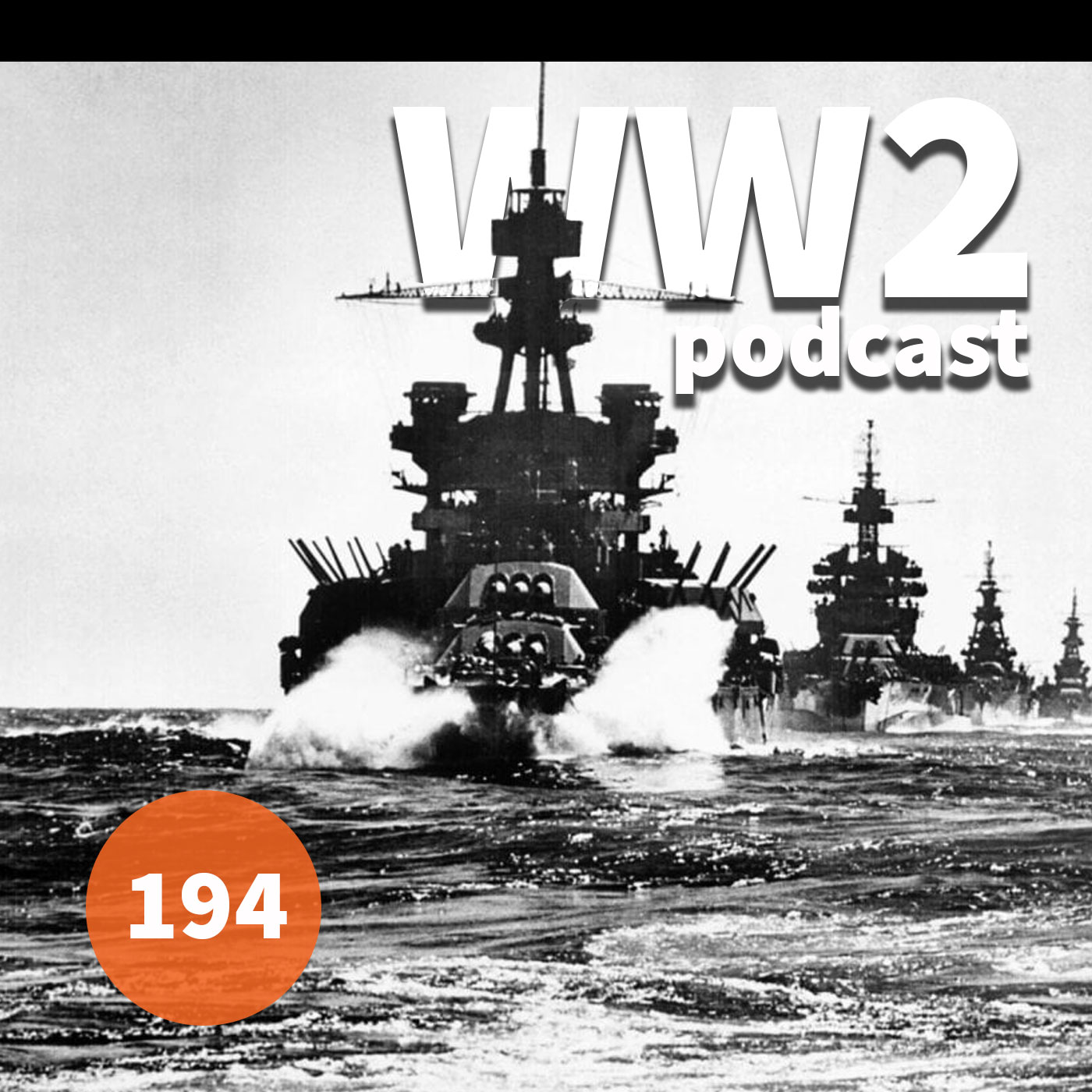
Ep 194194 - The Battle of Leyte Gulf
The battle of Leyte Gulf was the largest naval battle of WWII, it consisted of four separate actions near the Philippines between the US Navy and the Imperial Japanese Navy. The Japanese plan was to disrupt the American landings on the island of Leyte. In one respect, the plan was a success, the Japanese did draw off Admiral Halsey's 3rd Fleet. But ultimately, it was a disaster for the Japanese Imperial Navy, which suffered one of the most decisive defeats of the war. Joining me is Mark Stille. Mark was last with us discussing Pearl Harbor in episode 155. He has a new book published by Osprey titled - Leyte Gulf: A New History of the World's Largest Sea Battle. Patreonpatreon.com/ww2podcast

Ep 193193 - London Underground
As attacks on London by the Luftwaffe became a reality in the summer of 1940, Londoners needed somewhere to shelter from the air raids. And so during the Blitz and through to the end of the war, deep-level Tube stations of London underground were utilised, sheltering thousands every night. But the role of the underground is much more complicated, in 1939, the station platforms were never expected to see civilians sleeping there, but rather they were to be kept clear for emergency transportation use. In this episode I am joined by Niall Devitt. Niall is the author of Underground Railway: A New History, which is due to be published by Pen & Sword. Patreonpatreon.com/ww2podcast

Ep 192192 - 'The Angels', The 11th Airborne Division
When we think of airborne operations in WWII, the historiography is dominated by operations in the European Theatre. Parachute drops on Sicily, the Normandy coast for D-Day and into the Netherlands for Market Garden. But, in the Pacific, Joseph Swing's 11th Airborne Division - nicknamed the Angels - were making combat drops. They fought in some of the war's most dramatic campaigns, from bloody skirmishes in Leyte's unforgiving rainforests to the ferocious battles on Luzon, including the hellish urban combat of Manila. Joining me is James Fenelon. Long-time listeners might remember I chatted with James about the US 17th Airborne Division during Operation Varsity, the crossing of the Rhine. This time we are discussing James' new book Angels Against the Sun: A WWII Saga of Grunts, Grit, and Brotherhood. Patreonpatreon.com/ww2podcast
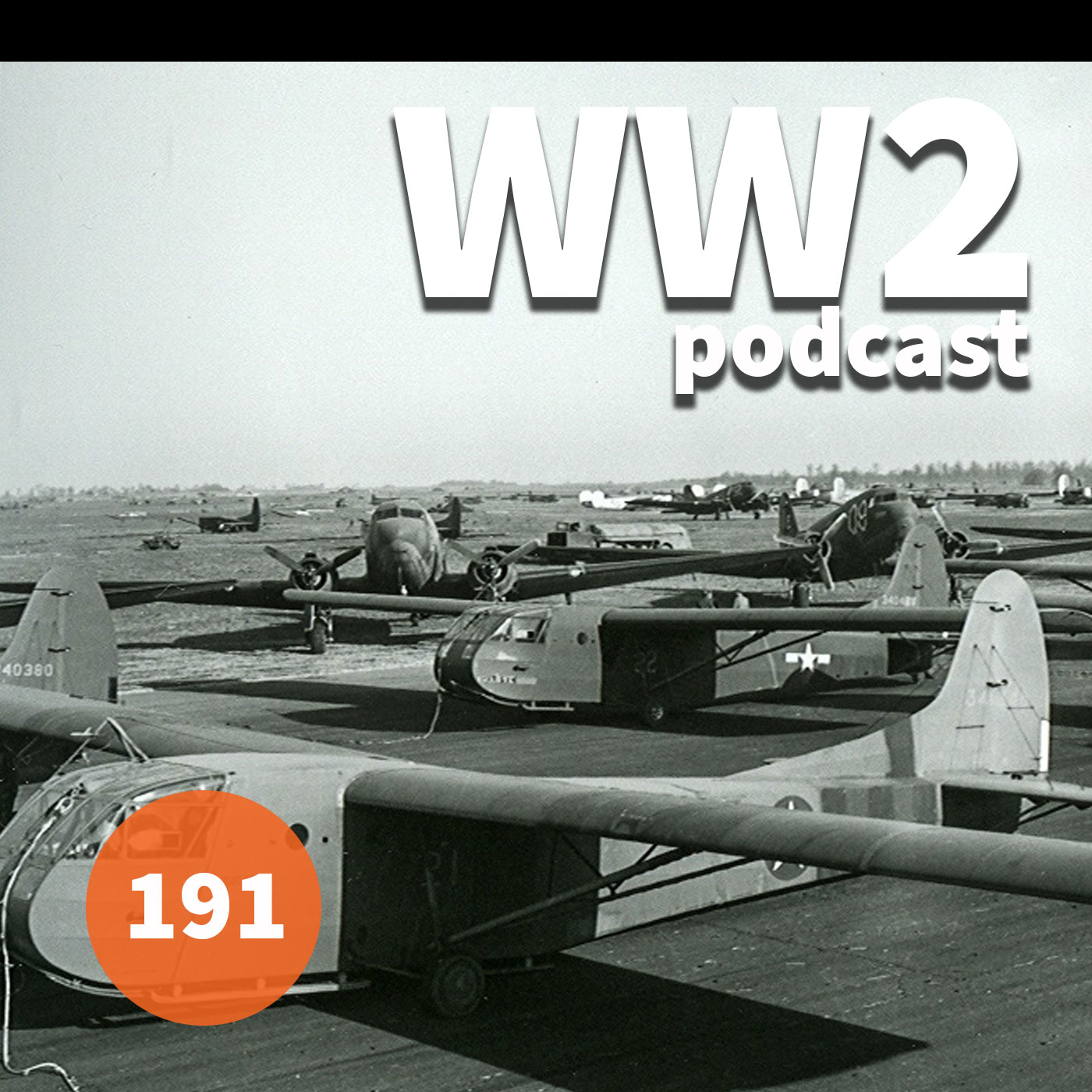
Ep 191191 - US Glider Pilots of World War II
The US glider pilots in WWII were all volunteers. Playing a pivotal role in delivering thousands of troops, including logistical support, these pilots landed their gliders ahead of the ground forces in Italy, France, the Netherlands, Belgium and Germany. Yet, 80 years later, their story is virtually unknown. For this episode, I am joined by Scott McGaugh. Scott is the author of The Brotherhood of the Flying Coffin: The Glider Pilots of World War II. If this has piqued your interest in Glider pilots, in episode 13, I discuss the experiences of British glider pilots with Matt Yates. Patreonpatreon.com/ww2podcast
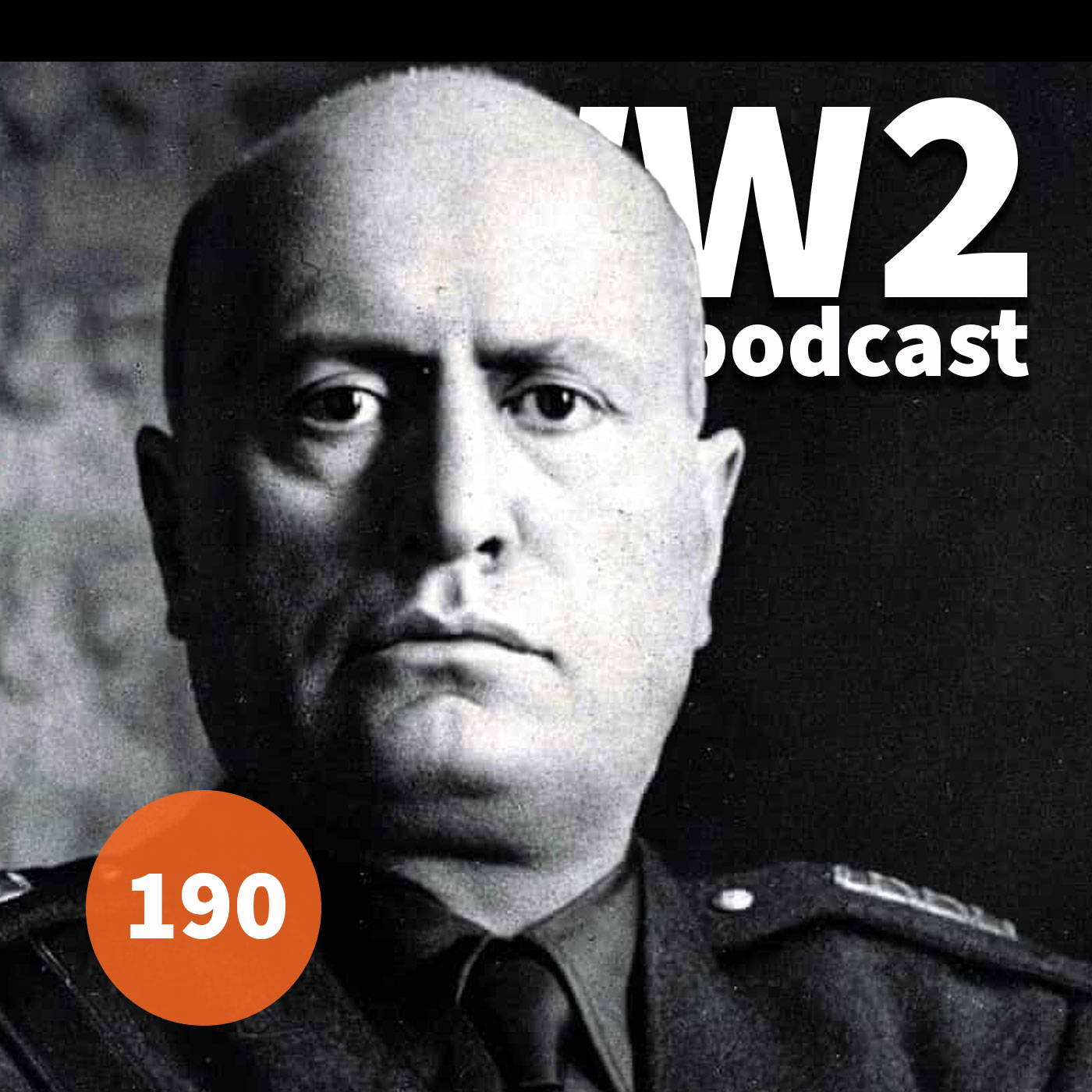
Ep 190190 - Mussolini's Last 10 Days
In April 1945, with the Allies closing in, the Italian dictator, Benito Mussolini, with his German bodyguards, decided to flee Milan. The convoy was later joined by a Luftwaffe column retreating toward Germany, making a powerful force. In this episode, we're going to be looking at Mussolini's last days and the race between the OSS, the SOE and the Italian partisans to kill or capture him. I am joined by Malcolm Tudor. Malcolm is an Anglo-Italian author specialising in Italy during WWII. He was last with us in episode 86, discussing the SAS in Italy. His new book is Mussolini, The Last 10 Days, A New Investigation. Patreonpatreon.com/ww2podcast

Ep 189189 - The Stalingrad Airlift
Stalingrad ranks as one of the most infamous, savage and emotive battles of the 20th century. To supply the trapped and exhausted German Sixth Army, the Luftwaffe mounted an airlift in the winter of 1942/43. The weather conditions faced by the flying crews, mechanics, and soldiers on the ground were appalling, but against all odds, and a resurgent and active Soviet air force, the transports maintained a determined presence over the ravaged city on the Volga, even when the last airfields in the Stalingrad pocket had been lost. I'm joined by Robert Forsyth, whose new book is To Save An Army: The Stalingrad Airlift. Robert has been with us before discussing Luftwaffe special weapons and, before that, the Luftwaffe's attempt to support U-Boat operations in the Atlantic. Patreonpatreon.com/ww2podcast

Ep 188188 - Company of Heroes
Following episode 187, when I talk to Forczyk about the war in North Africa, I thought it might be interesting to see how that fighting is interpreted and simulated as a computer game. And look at the choices game designers make when juggling authenticity and entertainment. I'm joined by David Milne from Relic Entertainment. David is one of the senior designers who worked on Company of Heroes 3, a computer game which focuses on WWII in North Africa and Italy. Patreonpatreon.com/ww2podcast

Ep 187187 - Desert Armour: Tank Warfare in North Africa
The war in the North African desert was pure mechanized warfare and, in many respects, the most technologically advanced theatre of World War II. It was also the only theatre where for three years, British and Commonwealth, and later US, troops were in constant contact with Axis forces. In this episode, we are going to be discussing North Africa in the early period of WWII, from 1940 to the end of 1941. I'm joined by, now regular of the podcast Robert Forczyk, whose new book is Desert Armour: Tank Warfare in North Africa: Beda Fomm to Operation Crusader, 1940–41.

Ep 186186 - Our Man in Tokyo
In 1932 career diplomat Joseph Grew was posted to Japan as the American Ambassador. At the time, Japan was in crisis. Naval officers had assassinated the prime minister, and conspiracies flourished. The military had a stranglehold on the government. War with Russia loomed. Not only was the country in turmoil, but its relationship with America was also rapidly deteriorating. For the next decade, Grew attempted to warn American leaders about the risks of Japan's raging nationalism and rising militarism while also trying to stabilize Tokyo's increasingly erratic and volatile foreign policy. From domestic terrorism by Japanese extremists to the global rise of Hitler and the fateful attack on Pearl Harbor, the events that unfolded during Grew's tenure proved to be pivotal for Japan and for the world in the run-up to WWII. To discuss Joesph Grew and Japanese American relations running up to the war, I'm joined by Steve Kemper. Steve is the author of Our Man in Tokyo, which draws on Grew's diary, correspondence, dispatches, and first-hand Japanese accounts to lay out Japan's road to the Second World War. Patreonpatreon.com/ww2podcast

Ep 185185 - Adrian Carton de Wiart
In this episode, I discuss one of the most remarkable soldiers of the British Army, Adrian Carton de Wiart. Belgium by birth, he would fight in the Boer War, lose an eye in the Somaliland Campaign, win a VC and lose a hand in First World War, command the British troops during the Norwegian Campaign of 1940, spend time as a POW for the Italians (where he escaped) and finish the war a Winston Churchill's personal representative to Chiang Kai-Shek. The Oxford Dictionary of National Biography described him thus: "With his black eyepatch and empty sleeve, Carton de Wiart looked like an elegant pirate, and became a figure of legend." I am joined by Alan Ogden, author of The Life and Times of Lieutenant General Sir Adrian Carton de Wiart: Soldier and Diplomat. Patreonpatreon.com/ww2podcast
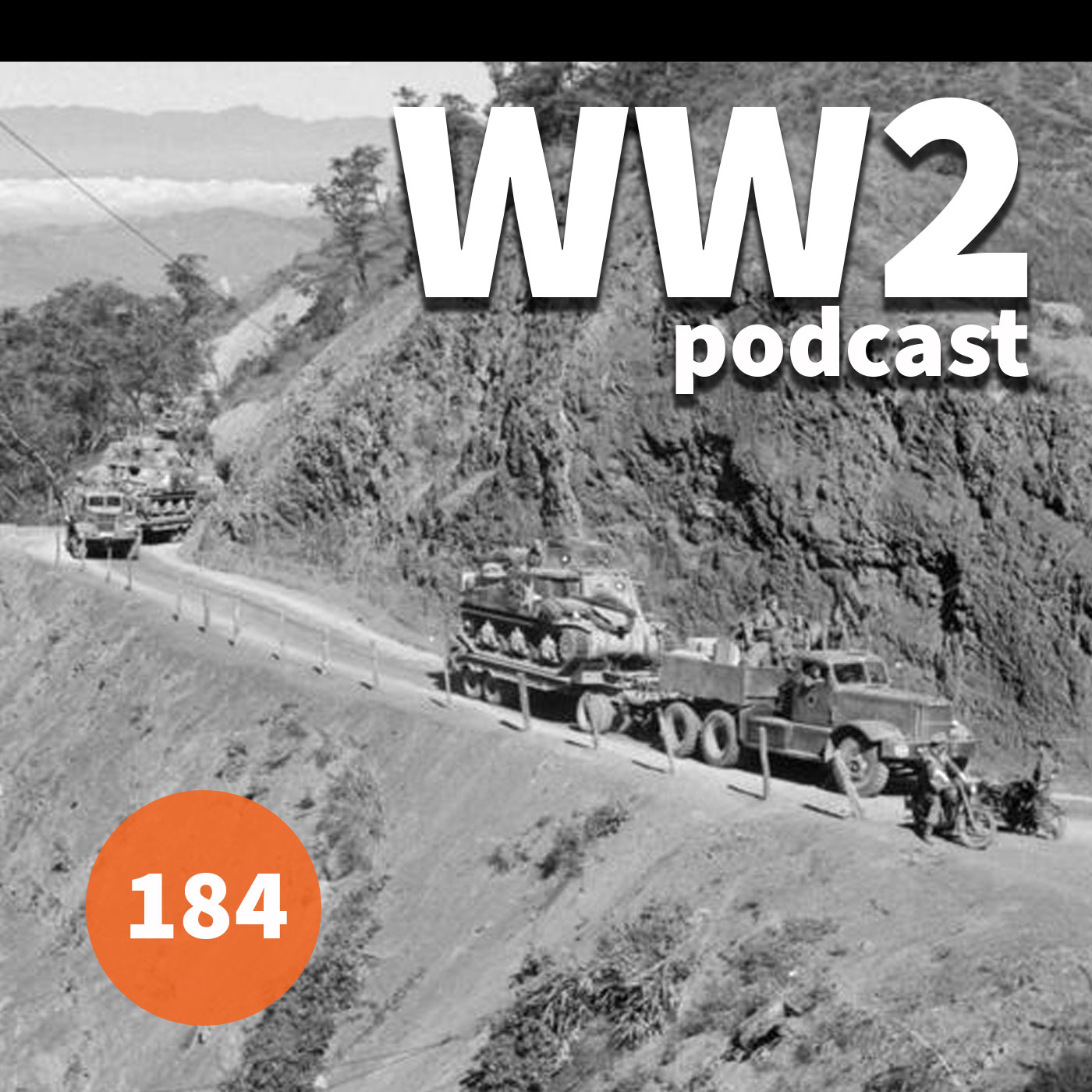
Ep 184184 - My Road to Mandalay
Don Townsend joined the British army as a private in 1940 and saw service in Egypt, then India and Burma. After five years of active service he left the army as a Major. I'm joined by Don's son, David has compiled his father's wartime letters home to his family and future wife into the book My Road to Mandalay. Patreonpatreon.com/ww2podcast
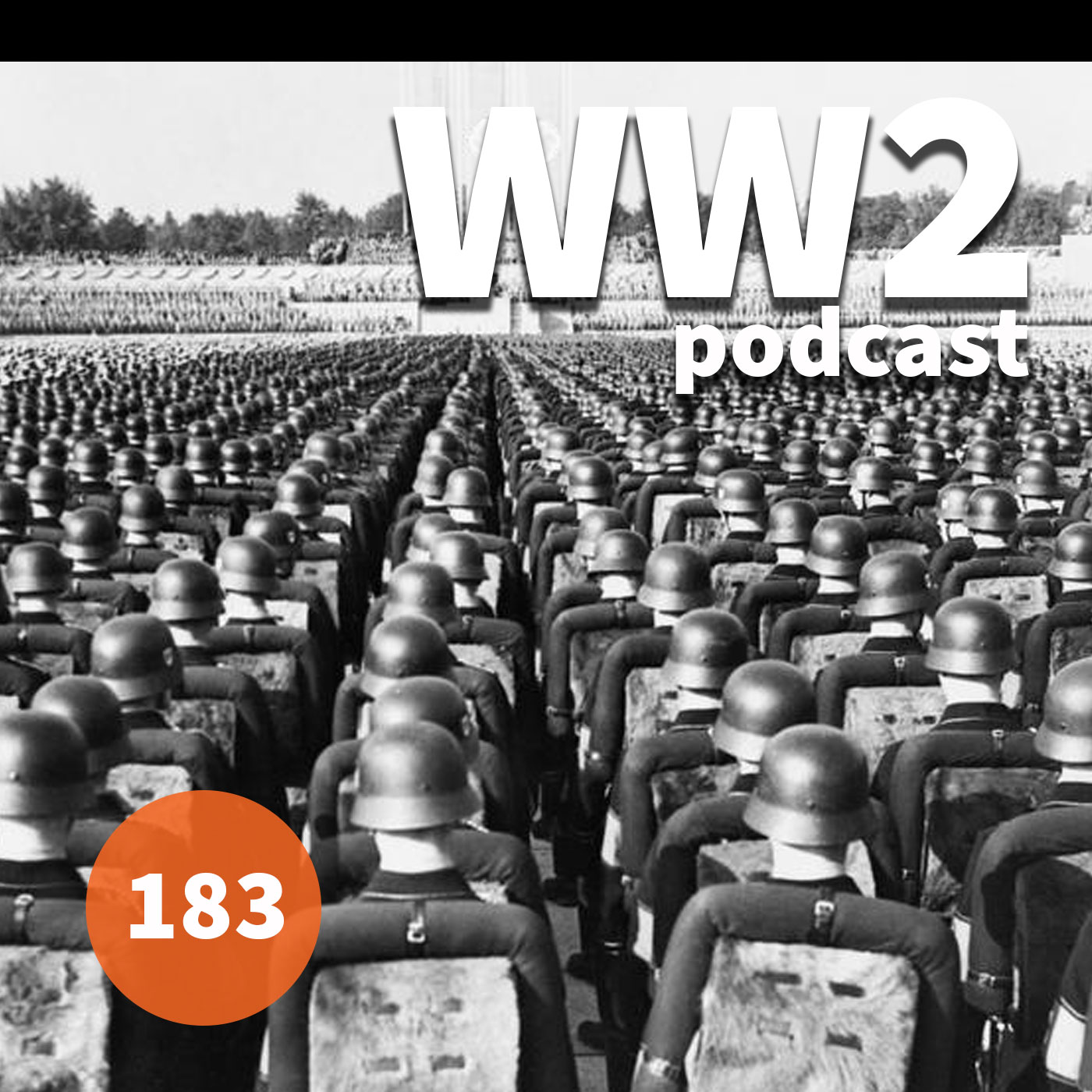
Ep 183183 - The Waffen-SS
The Waffen-SS was one of the most formidable German military formations of the Second World War. Feared for its tenacity and ruthlessness in battle, notorious for the atrocities it committed. As a distinct fighting force derived from the Nazi Party's SS organization, it stood apart from the other units of the German army. Its origins, structure and operational role during the war are often misunderstood, and the controversy still surrounding its conduct makes it difficult today to get an accurate picture of its actions and its impact on the fighting. To discuss the SS, I'm joined once more by Anthony Tucker-Jones, whose book Hitler's Armed SS: The Waffen-SS at War, 1939-1945 was released last year. Patreonpatreon.com/ww2podcast
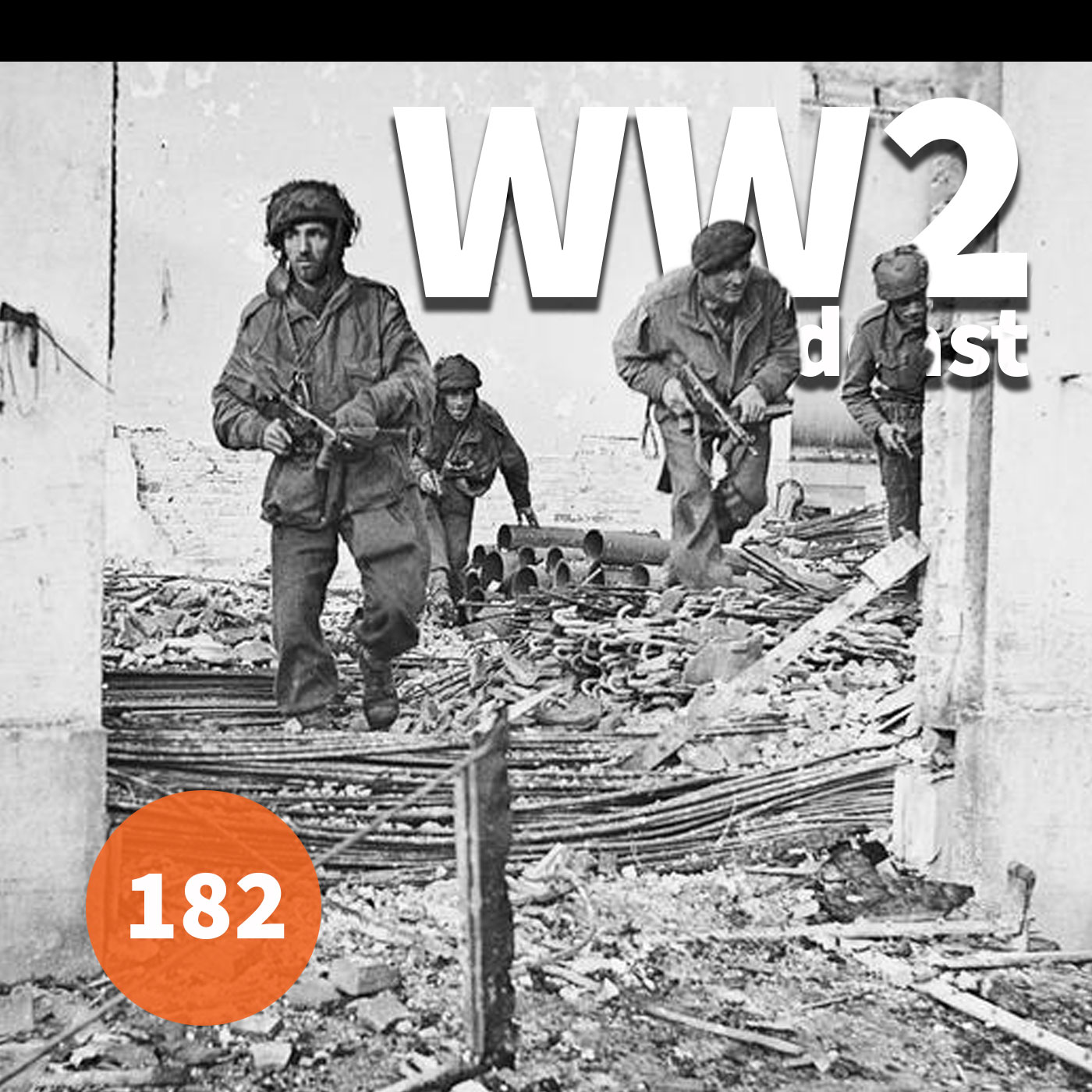
Ep 182182 - The British Parachute Regiment
The Parachute Regiment was formed in June 1940 and eventually raised 17 battalions. It would see service in North Africa, Sicily, Italy, Normandy, Arnhem and would cross the Rhine as part of the largest airborne assault ever undertaken. To discuss the formation of the regiment and its history through WWII, I'm joined by historian and broadcaster Mark Urban, who has written an authorised history of the regiment called Red Devils: The Trailblazers of the Parachute Regiment in World War Two. Patreonpatreon.com/ww2podcast

Ep 181181 - Britain's Coast at War
During WWII, the whole of Britain's coastline was involved in the struggle against the Nazis. In 1940-41 invasion was the main threat. Many towns and cities around the coast, such as Plymouth, Portsmouth, Hull and Great Yarmouth, were the targets of devastating air raids. The East Coast was pivotal to North Sea operations against enemy mining and E-boat operations, and the Western ports, particularly Liverpool, were crucial to the vital Atlantic convoys and the defeat of the U-boat threat. In this episode, I'm joined once more by the cultural and social historian Neil R Storey to discuss Britain's Coast at War, which is also the title of his book Britain's Coast at War: Invasion Threat, Coastal Forces, Bombardment and Training for D-Day. Patreonpatreon.com/ww2podcast

Ep 180180 - US Navy Demolition Divers
In this episode, we're going to be looking at US Navy combat divers. The Combat Demolition Unit would land on D-Day with the first wave of troops. It was their job to clear coastal defences that might get in the way of landing craft. In the Pacific, Underwater Demolition Teams were carrying out similar tasks on islands such as Iwo Jima and Okinawa. I'm joined by Andrew Dubbins. Andrew managed to track down one of the surviving divers who landed on Omaha beach, then was shipped to the Pacific to land on Iwo Jima and Okinawa. His book is Into Enemy Waters: A World War II Story of the Demolition Divers Who Became the Navy SEALS. Patreonpatreon.com/ww2podcast
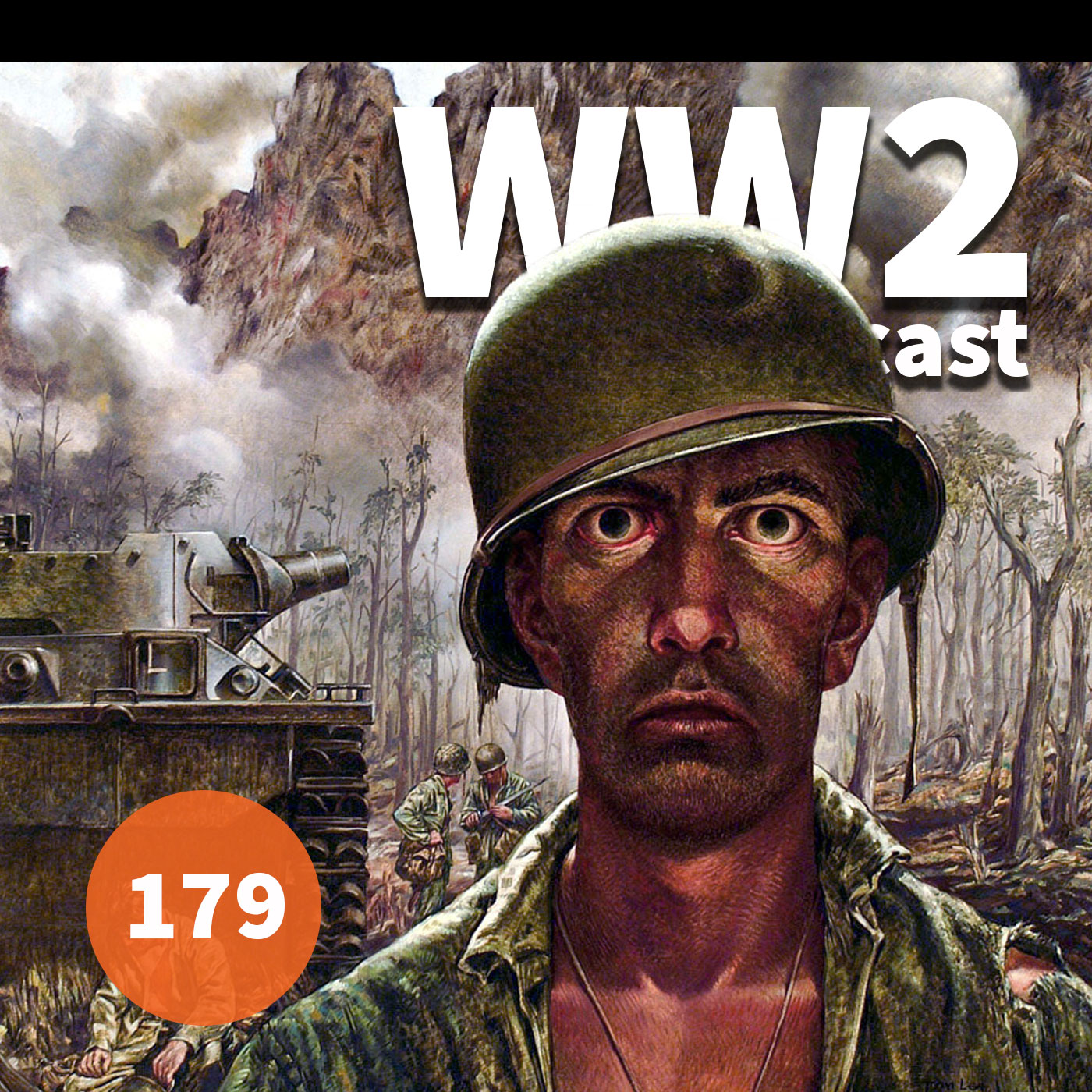
Ep 179179 - Bitter Peleliu
In late 1944, as a precursor to the invasion of the Philippines, U.S. military analysts decided to seize the small island of Peleliu to ensure that the Japanese airfield could not threaten the invasion forces. It was estimated that the island would fall in a week or so. In fact, the fighting on Peleliu would go on for 74 days. The US would pay a heavy price for capturing the island with a higher casualty rate than the fighting on Iwo Jima and Okinawa. In this episode, I'm joined by Pacific War historian Joseph Wheelan, author of Bitter Peleliu: The Forgotten Struggle on the Pacific War's Worst Battlefield. Patreonpatreon.com/ww2podcast

Ep 178178 - Battles of Rzhev Salient
After the failure to take Moscow in the autumn of 1941, the Germans were left with a large salient bulging into the Russian lines, extending to the town of Rzhev. The battles around Rzhev were some of the bloodiest battles of the war for the Russians. Though millions of men would fight and die in the vast tract of forests and swamps, the Rzhev Salient does not have the name recognition of Leningrad or Moscow. I'm Joined by Prit Buttar, author of Meat Grinder: The Battles for the Rzhev Salient, 1942–43. Prit was last with us discussing the defeat of Army Group South in 1944 in episode 136. Patreonpatreon.com/ww2podcast

177 - Japan's Pacific War
I seem to have had a good run of episodes this year looking at operations from the German perspective. In this episode, we are off to the Pacific to look at the Japanese perspective of the war. I'm joined by Peter Williams. Peter lived in Japan for four years. Whilst he was there, he interviewed Japanese veterans of the Second World War. His book 'Japan's Pacific War' collects together over 40 interviews with veterans who predominantly fought against the Australians. Patreonpatreon.com/ww2podcast
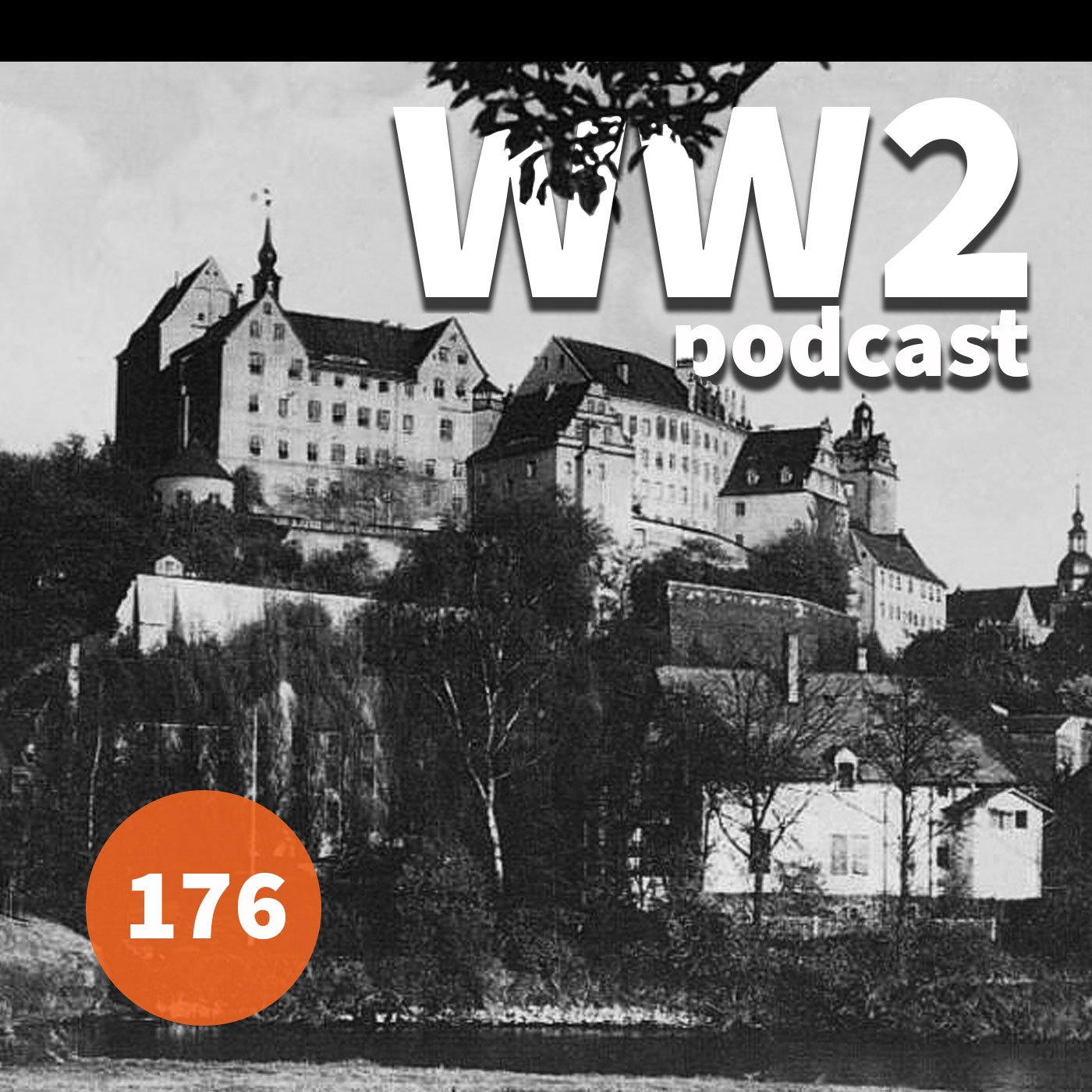
Ep 176176 - Colditz
At the outbreak of WWII, the ancient gothic castle of Colditz was converted into a prisoner-of-war camp. Its location on a rocky spur overlooking a river made it the ideal location for a high-security prison, or so the Germans thought. Sent to Colditz were some of the most difficult allied prisoners-of-war. Made famous after the second world war in memoirs, films and TV, Colditz was known for its multiple escape attempts, some of great derring-do, others were feats of ingenuity and engineering. In this episode, I'm joined by Ben Macintyre. Ben is the bestselling author of books including Agent Sonya, SAS: Rogue Heroes, The Spy and the Traitor, Agent Zigzag, Operation Mincemeat and A Spy Among Friends. Ben's new book Prisoners of the Castle: An Epic Story of Survival and Escape from Colditz, the Nazis' Fortress Prison takes a new look at the Colditz and really fills out the story. Patreonpatreon.com/ww2podcast

Ep 175175 - Dünkirchen, 1940
The evacuation of the British Expeditionary Force from Dunkirk in 1940 is one of the iconic moments of the Second World War. The miracle of the 'little ships' plucking soldiers off the beaches is regularly played out in the popular media, including the 1958 and 2017 films 'Dunkirk'. But, this is very much the British narrative. What if we turn the tables to look at the fighting from the German perspective? Joining me once more is Robert Kershaw. Robert was last with us to discuss D-Day and the landings at Omaha beach (in episode 92). He has a new book, 'Dünkirchen 1940: The German View of Dunkirk'. Patreonpatreon.com/ww2podcast

174 - The Pacific, August 1945
In this episode, we are looking at the closing weeks of the war in 1945. August would see the Russians enter the war with Japan, the atomic bombs dropped, and an attempted coup in Japan. The culmination of which would be the final declaration of surrender by Japan's Emporer Hirohito on the 15th of August, followed a couple of weeks later by the formal ceremony on the USS Missouri presided over by General MacArthur. I am joined by Barrett Tillman. Barrett specializes in naval and aviation topics and has a prestigious back catalogue. His latest book is When the Shooting Stopped: August 1945. Patreonpatreon.com/ww2podcast