
The WW2 Podcast
326 episodes — Page 2 of 7
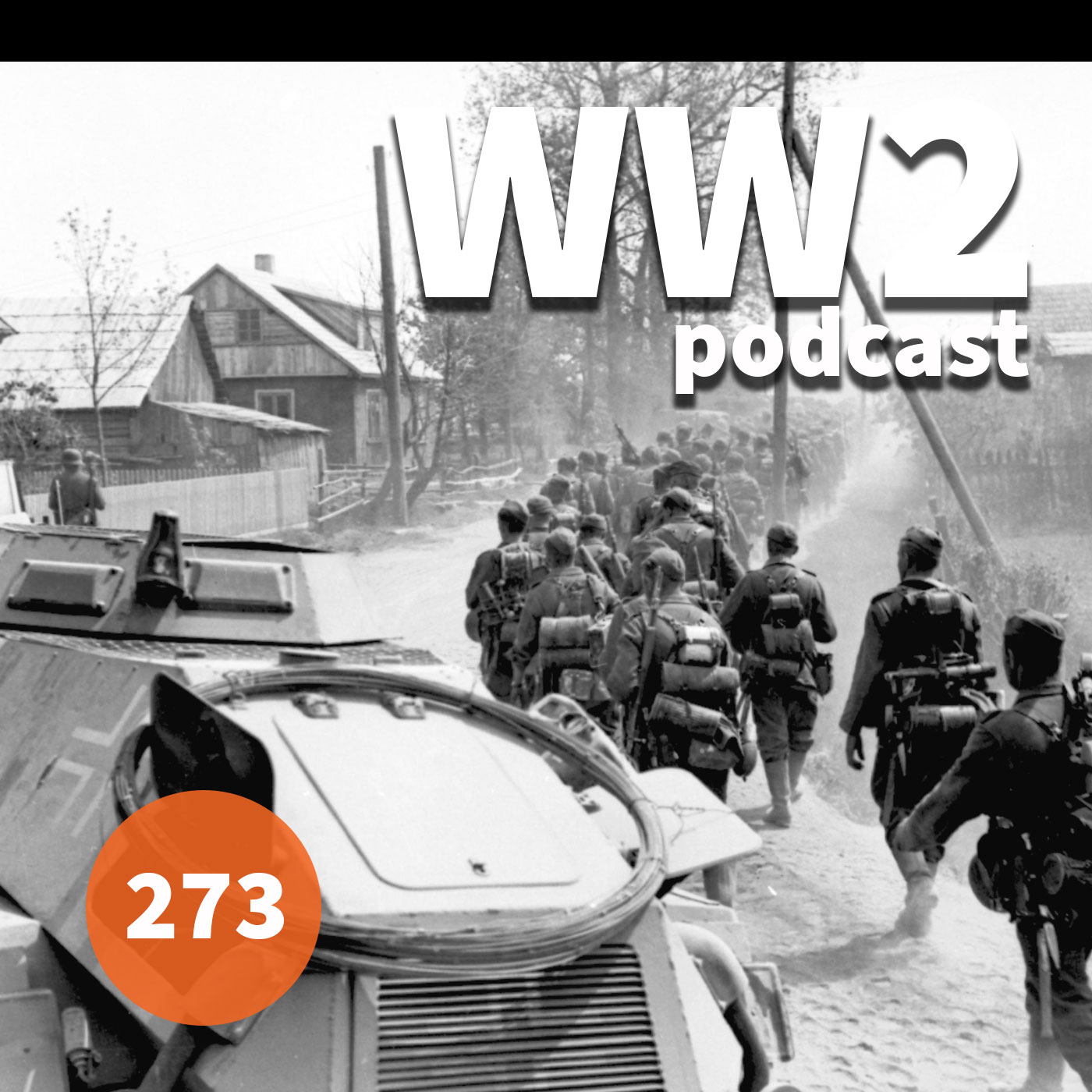
Ep 273273 - Operation Barbarossa, June–July 1941
In this episode of the WW2 Podcast, we're turning our attention to the opening phase of one of the most brutal and vast campaigns of the Second World War—Operation Barbarossa. On 22 June 1941, Hitler launched his long-anticipated invasion of the Soviet Union. In the first two weeks, the German Wehrmacht made some of its fastest advances of the war. Panzer groups surged deep into Soviet territory, clashing with Russian armoured forces—encounters that were sometimes unexpected and, for both sides, revealing. To explore this dramatic opening stage of the war in the East, I'm joined by Richard Hargreaves, author of Opening the Gates of Hell, which examines the scale, speed, and shock of Barbarossa's beginning. patreon.com/ww2podcast
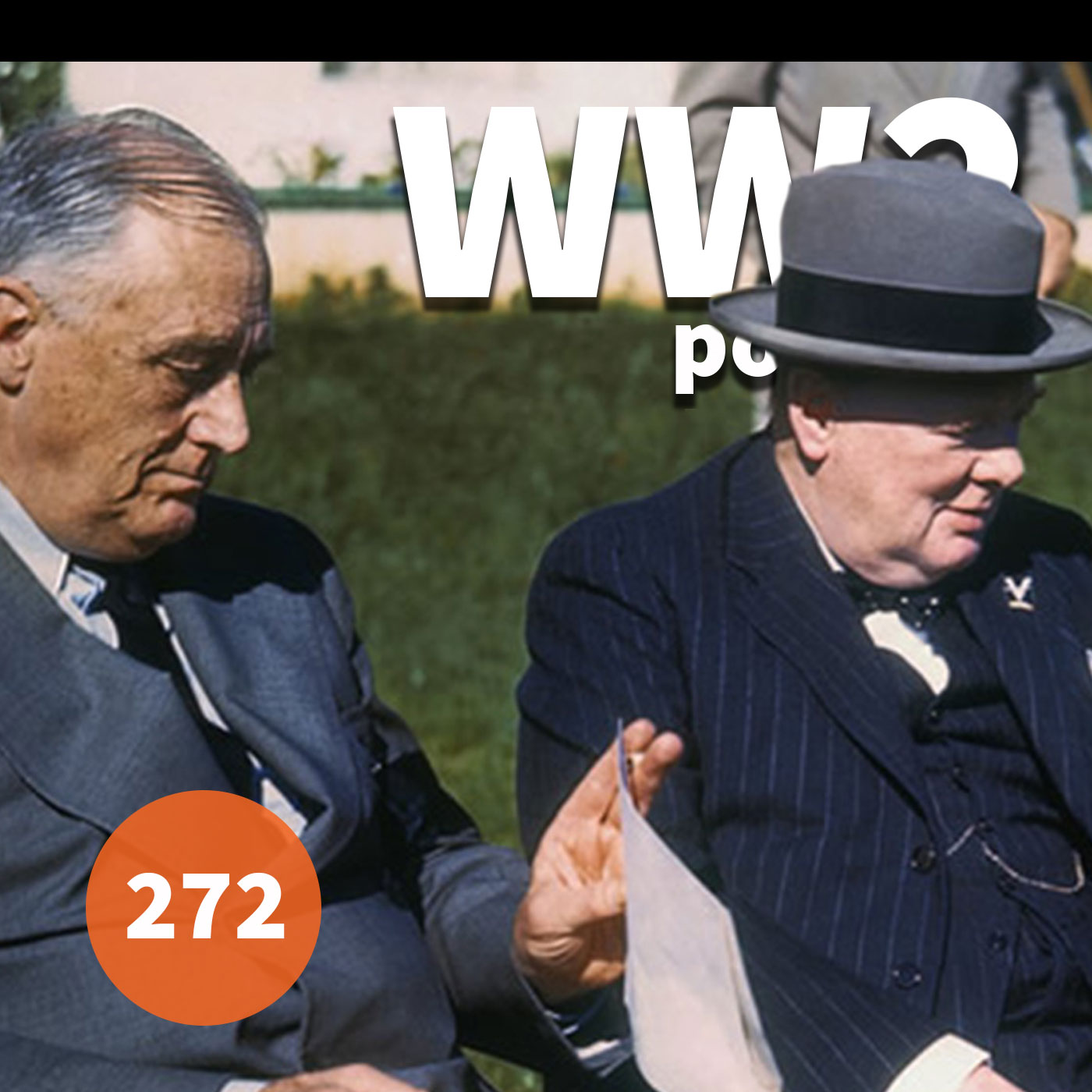
Ep 272272 - Second Front: Anglo-American Rivalry
When we talk about the Second Front, most of us think of the Allied invasion of Northwest Europe—D-Day, June 1944. But in his new book, Second Front: Anglo-American Rivalry and the Hidden Story of the Normandy Campaign, historian Professor Marc Milner offers a different perspective. What if the real second front wasn't in Normandy, but in Washington? Milner argues that while Britain fought alongside the United States on the battlefields of Europe, it was also engaged in a very different kind of struggle across the Atlantic: a political and diplomatic battle to retain its influence over an increasingly dominant America. By the time Allied troops landed in France, the United States had not only become the senior partner in the alliance but had begun reshaping the postwar world, often at the expense of British interests. But as we'll hear, this wasn't just about wartime politics or military planning. The roots of Anglo-American rivalry ran much deeper, stretching back to the way each nation remembered the First World War. Joining me to discuss all this is Professor Marc Milner.
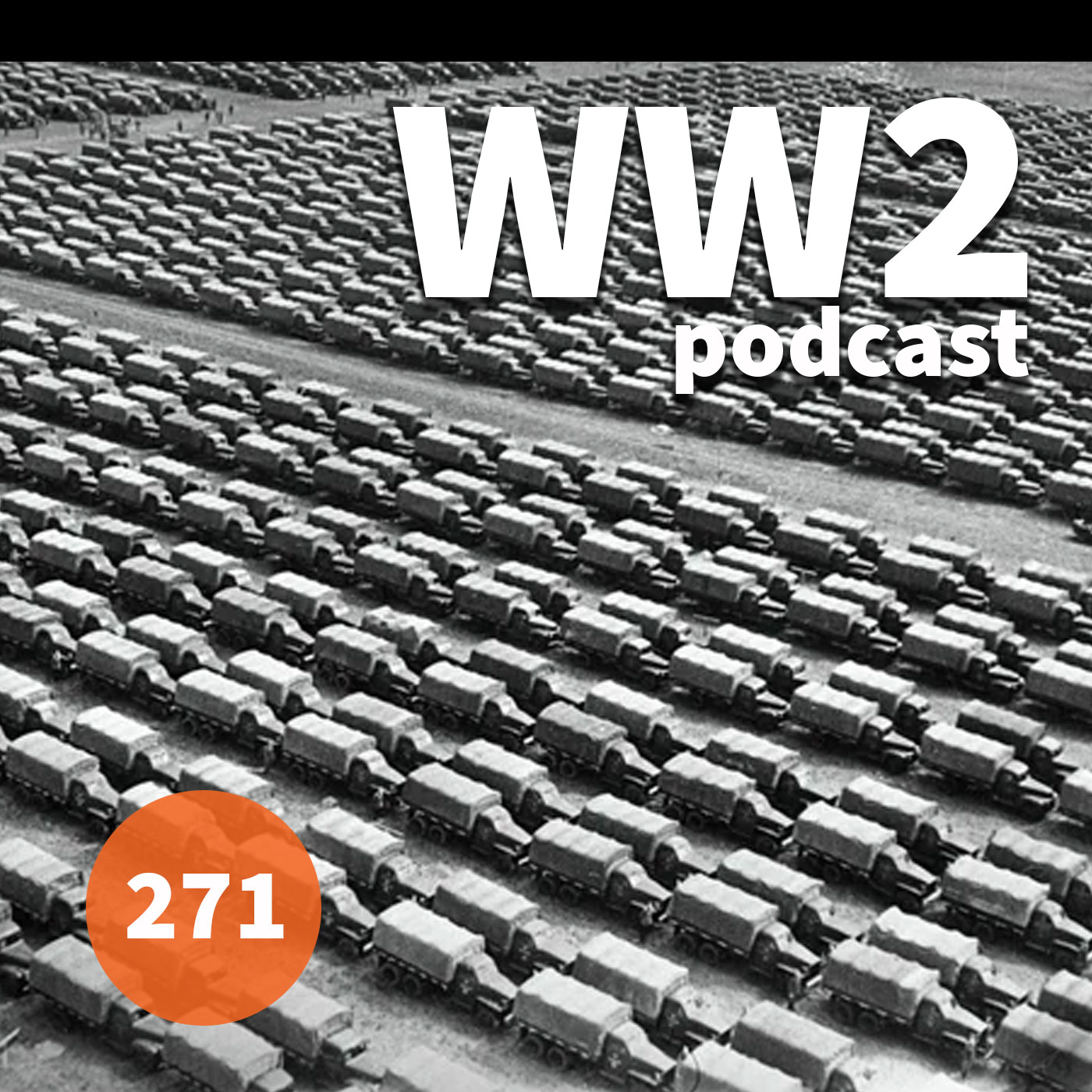
Ep 271271 - Feeding the Bear: Lend Lease to the USSR
In this episode, we're doing something a little different. I recently joined Scott Bury on his podcast Beyond Barbarossa, which takes a close look at the Eastern Front of the Second World War from a Soviet perspective. Together, we explored the topic of American aid to the USSR through the Lend-Lease program. The usual narrative often paints Lend-Lease as the lifeline that saved the Soviet Union. But, as with most things in history, the reality is far more complex. While Lend-Lease undeniably made a difference—especially in the war's later stages—its impact, timing, and strategic value are worth examining more closely. So, in this episode, we dig into what was actually sent, when it arrived, how it was used, and whether or not it really was decisive in turning the tide on the Eastern Front. patreon.com/ww2podcast
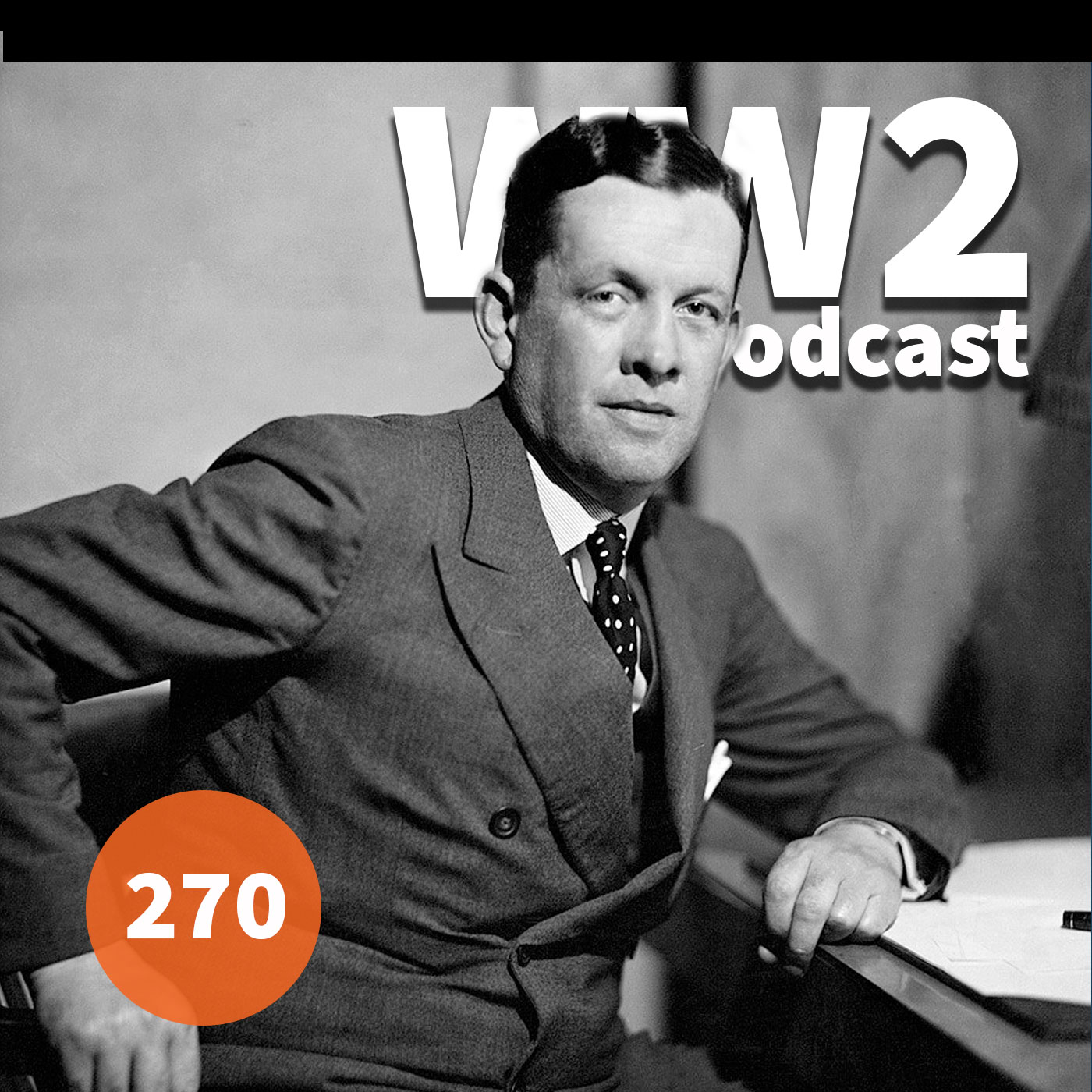
Ep 270270 - Bruce Lockhart and the Political Warfare Executive
In this episode of the WW2 Podcast, I am joined by Professor James Crossland to discuss the extraordinary life of Robert Bruce Lockhart — a British diplomat, journalist, author, and secret agent. Though not a household name, Lockhart was a key figure behind the scenes of 20th-century history. His career began before the First World War and took him from revolutionary Russia to wartime Britain, often placing him near the centre of power and influence. During the Second World War, he served as Director-General of the Political Warfare Executive, the organisation responsible for coordinating all British propaganda efforts against the Axis powers. Lockhart's life reads like a spy thriller, full of intrigue, diplomacy, and covert operations. James Crossland, author of Rogue Agent: From Secret Plots to Psychological Warfare – The Untold Story of Robert Bruce Lockhart, sheds light on the man whose influence was far greater than his fame. patreon.com/ww2podcast
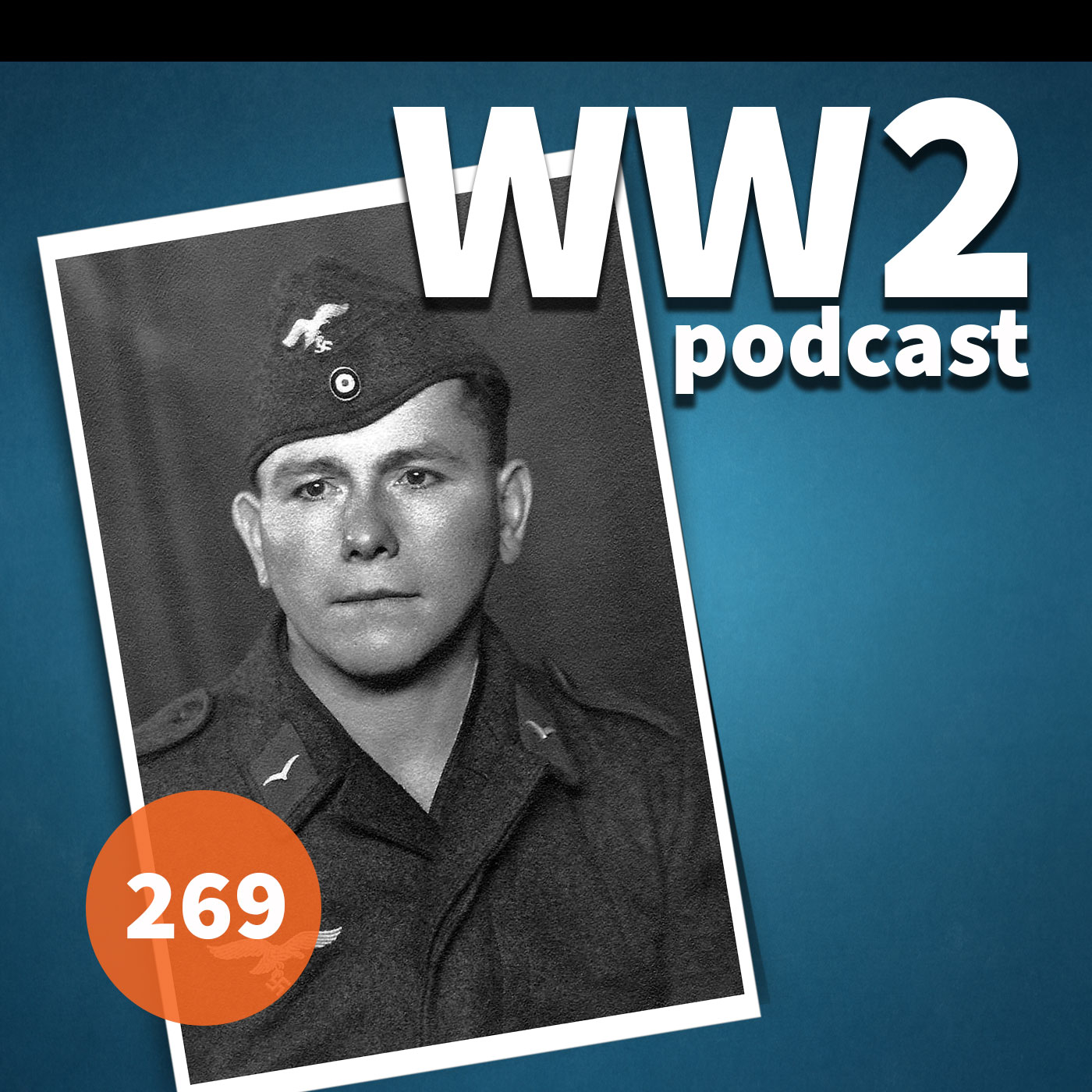
Ep 269269 - The Diary of a German POW
In this episode of the WW2 Podcast, I am joined by Bernd Häber to discuss the remarkable story of his grandfather, Fritz Häber — a German soldier who became a prisoner of war in American custody at the end of World War II. During his 16 months in a U.S. POW camp, Fritz kept a diary that not only captured the daily realities of captivity but also reflected on his wartime experiences and personal history. Now published as Fritz Häber: The Complete Diary – 16 Months in an American POW Camp, the account provides a rare and honest perspective from the losing side of the conflict. Bernd shares insights into his grandfather's life, the motivations behind the diary, and the legacy it represents — a deeply human story of reflection, identity, and the long shadow of war. You can find more about Fritz at 16monthsaspow.com patreon.com/ww2podcast
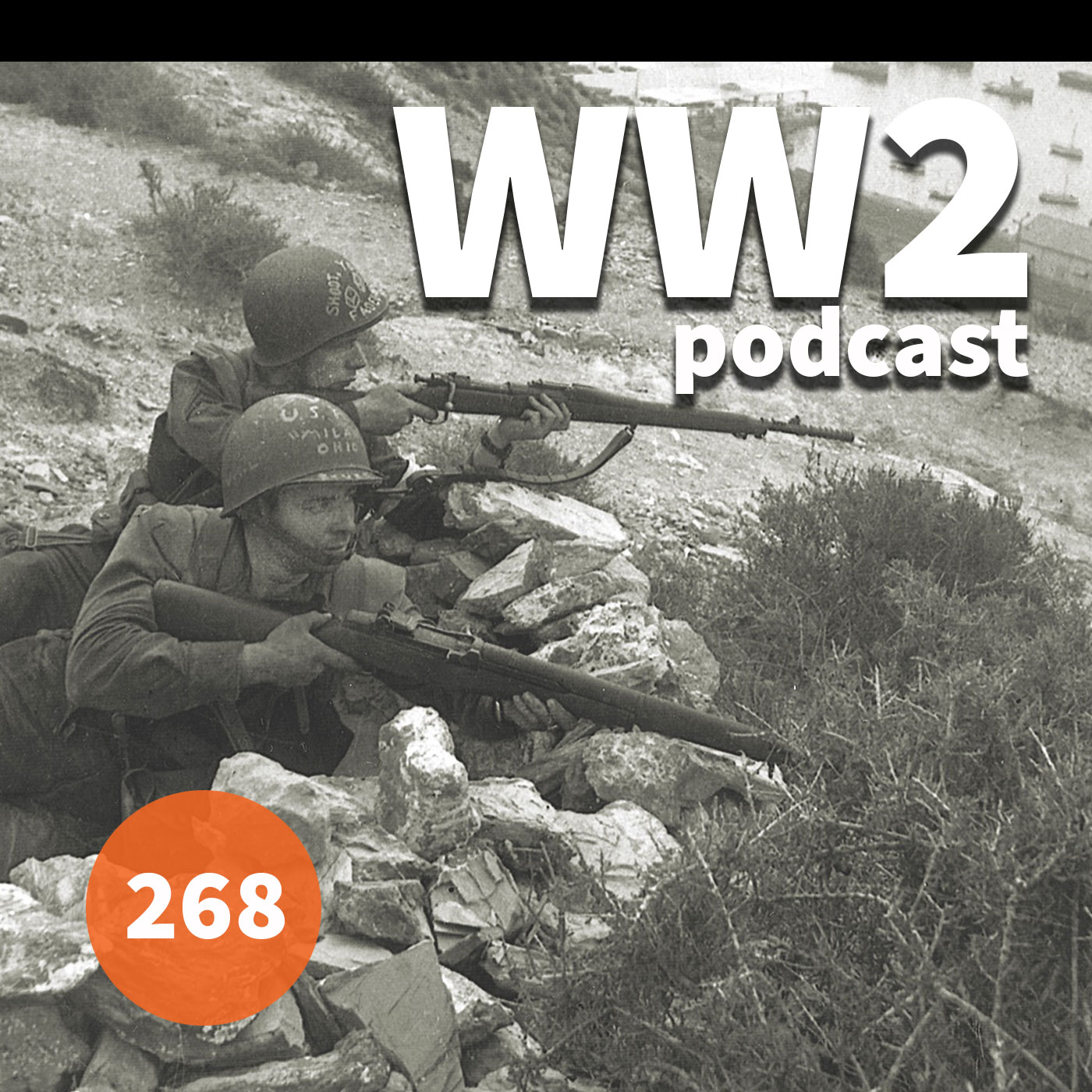
Ep 268268 - The First US Army Rangers of WWII
In the early stages of America's involvement in the Second World War, the U.S. Army began forming a new kind of fighting force—elite units trained for speed, surprise, and special operations behind enemy lines. These were the first Army Rangers, inspired by British Commandos and destined for some of the toughest missions of the war. In this episode, I'm joined by historian and author Mir Bahmanyar to talk about the formation and deployment of these early Rangers, from their beginnings in North Africa and Sicily to their fateful engagement at Cisterna in 1944, a battle that ended in disaster for two Ranger battalions. Mir is the author of 'Houdini Club: The Epic Journey and Daring Escapes of the First Army Rangers of WWII', a book that sheds light on the origins, ethos, and early missions of these extraordinary soldiers. patreon.com/ww2podcast
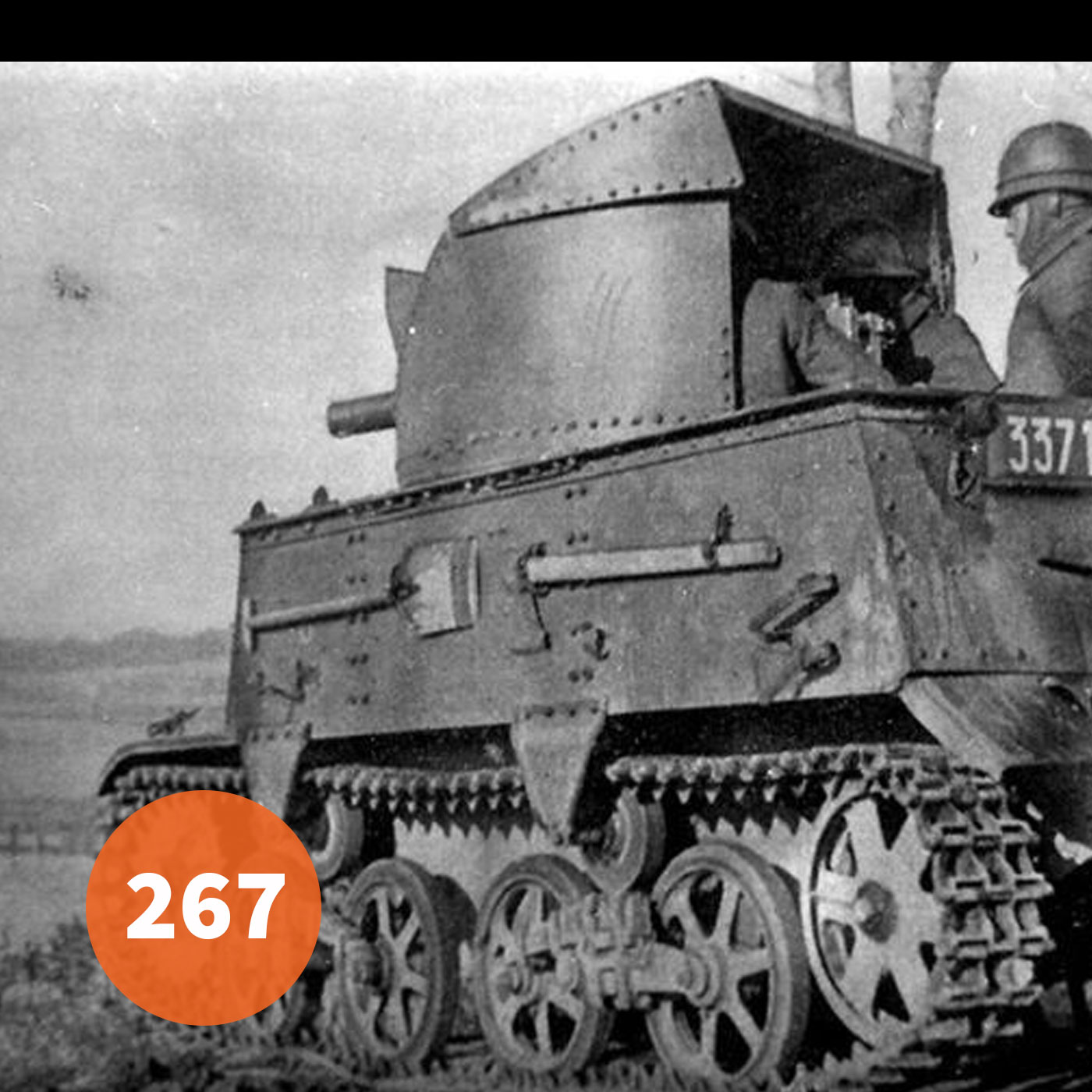
Ep 267267 - The T-13 Tank Destroyer
During the critical interwar years, Belgium found itself walking a diplomatic tightrope—maintaining neutrality while neighbouring Germany rapidly rearmed. Faced with the growing threat of conflict, the country was forced to modernise its defences. One of Belgium's key military developments during this period was the T-13 tank destroyer—an armoured vehicle that, although modest by international standards, played a vital role in the country's attempt to resist the German invasion in 1940. In this episode, we head to Brussels to uncover the story of the T-13 with Robby Houben from the Belgian Royal Military Museum. Patreonpatreon.com/ww2podcast

Ep 266266 - Robert Capa's D-Day Photographs
On the morning of June 6th, 1944, war photographer Robert Capa waded ashore on Omaha Beach during the Allied landings in Normandy. What happened next became the stuff of legend: under withering fire, Capa supposedly captured over a hundred photographs of the chaos and courage of D-Day, only for all but eleven to be lost in a darkroom accident. These surviving images, the so-called "Magnificent Eleven," helped define the visual memory of D-Day and cemented Capa's reputation as the greatest war photographer of the 20th century. But what if the story we've long accepted isn't entirely true? In his book Back into Focus: The Real Story of Robert Capa's D-Day, Charles Herrick takes a forensic look at the events of that day, unraveling inconsistencies in Capa's own account and challenging the myths that have grown around his legacy. Drawing on official military records, eyewitness testimony, and detailed photo analysis, Herrick offers a new—and at times controversial—perspective on one of the most iconic moments in photojournalism history. I'm delighted to welcome Charles to the podcast today to talk about what really happened on D-Day, how the legend of Robert Capa was built, and what his findings mean for how we understand both history and heroism. patreon.com/ww2podcast
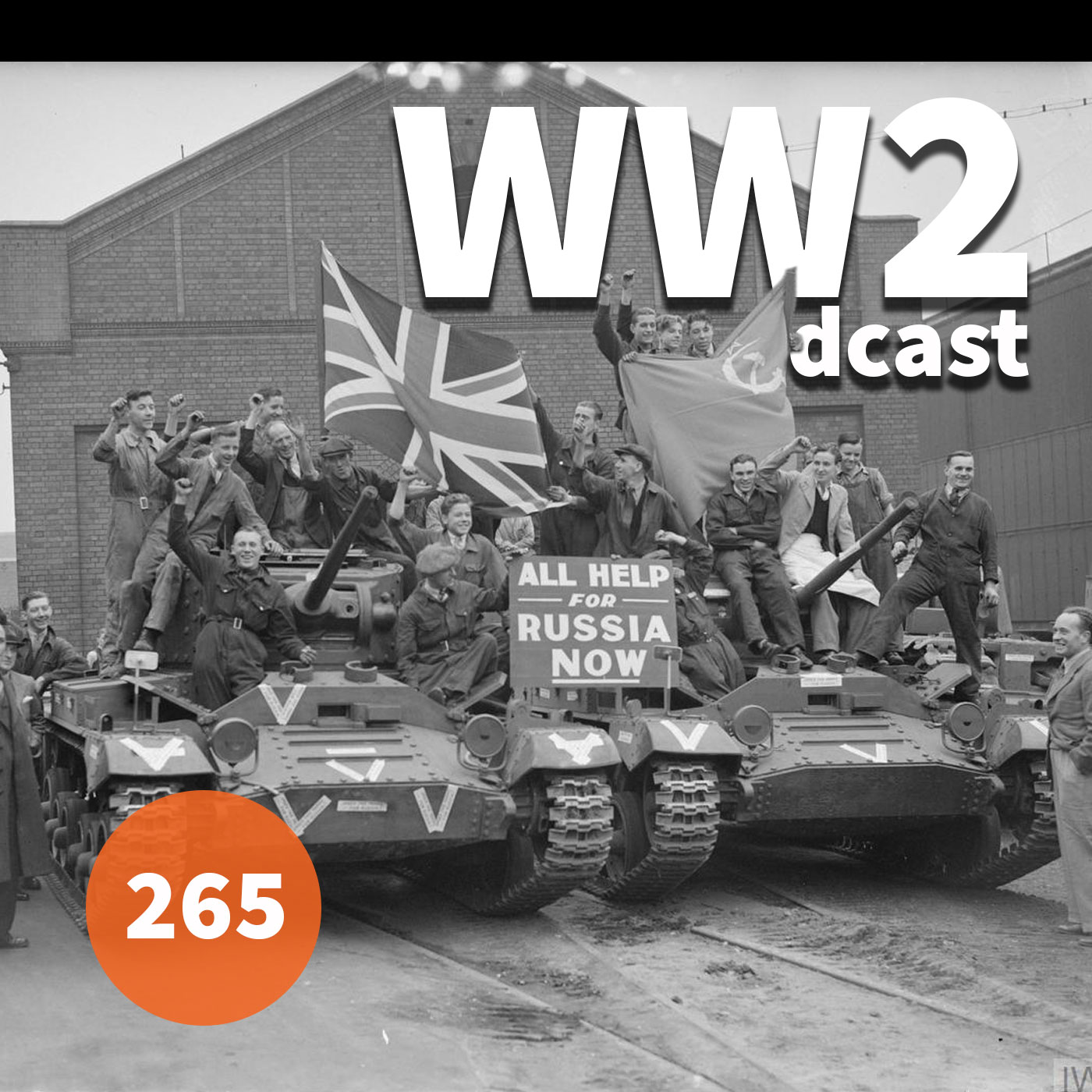
Ep 265265 - British Tanks of the Red Army
Today, we are exploring a topic that doesn't get talked about much — the British tanks that ended up serving with the Red Army during the Second World War. We often think about the Soviet Union producing huge numbers of its own tanks like the T-34, but in the early years of the war—and even before it—the Soviets were looking abroad for armoured vehicles to strengthen their forces. Britain, with its long history of tank development stretching back to the First World War, was one of the countries they turned to. Joining me is Peter Samsonov, who's spent a lot of time researching Soviet armoured warfare and is the author of 'British Tanks of the Red Army'. patreon.com/ww2podcast

Ep 264264 - SAS Great Escapes, Archie Gibson
In this episode, I'm joined by bestselling author Damien Lewis to talk about one of the remarkable men featured in his new book SAS Great Escapes Four — Archie Gibson. Archie served with the Long Range Desert Group and worked closely with the SAS during some of their earliest and most daring operations. His wartime journey took him from the harsh deserts of North Africa to the rugged terrain of Yugoslavia, where he operated alongside local resistance fighters behind enemy lines. We also delve into the ongoing campaign to award SAS legend Paddy Mayne a posthumous Victoria Cross, recognition he was controversially denied during the war. patreon.com/ww2podcast
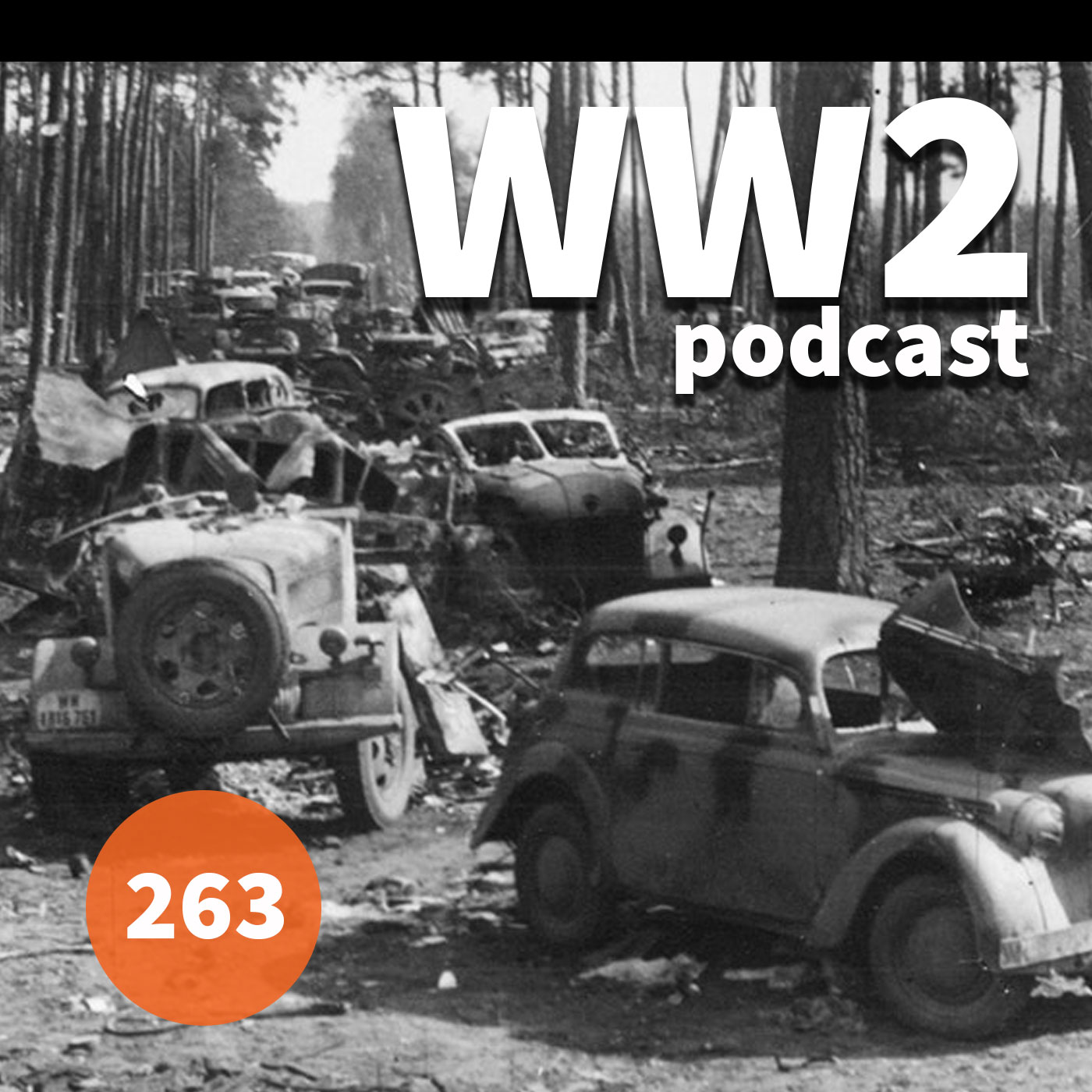
Ep 263263 - The Halbe Pocket, 1945
In the final weeks of the Second World War, as Soviet forces closed in on Berlin, tens of thousands of German soldiers and civilians found themselves encircled in what became known as the Halbe Pocket. In a desperate attempt to break out west and surrender to the Americans rather than the Soviets, brutal fighting erupted in the forests south of Berlin. The result was one of the bloodiest and most chaotic battles of the war's final days. Joining me is David Sumner. David is a British-German World War II historian and podcaster based in Berlin. He's the producer and host of Europe At War, a weekly podcast that explores lesser-known battles and stories of the Second World War, with a particular focus on the Eastern Front. You can find David at davidsumnerhistory.com. patreon.com/ww2podcast
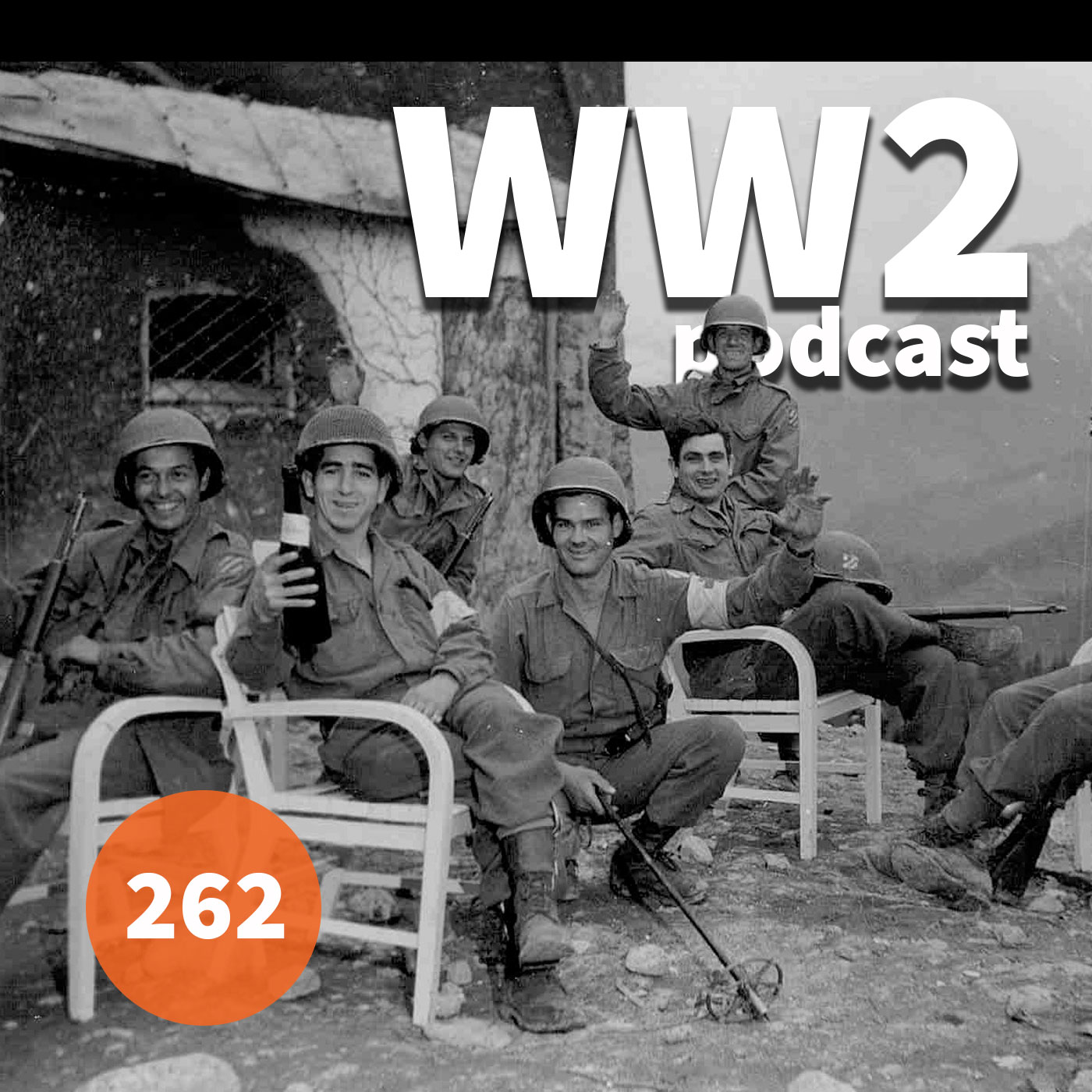
Ep 262262 - The 7th Infantry Regiment
The 7th Infantry Regiment, known as the "Cottonbalers," is one of the oldest units in the U.S. Army, originally formed in 1812. It has fought in nearly every major American conflict, including the Civil War, both World Wars, Korea, and Iraq. Renowned for its bravery and deep traditions, the regiment remains an active combat unit to this day. I'm joined by Professor John McManus, whose 2009 book American Courage, American Carnage chronicles the unit's remarkable history. During World War II, the 7th landed in North Africa as part of Operation Torch, fought through Sicily and Italy, stormed the beaches of Southern France in Operation Dragoon, and ended the war as the first American unit to reach Hitler's mountain retreat at Berchtesgaden. The regiment also takes centre stage in the upcoming computer game Burden of Command, where John serves as the historical advisor. If you'd like to hear more about the game, head over to patreon.com/ww2podcast. patreon.com/ww2podcast
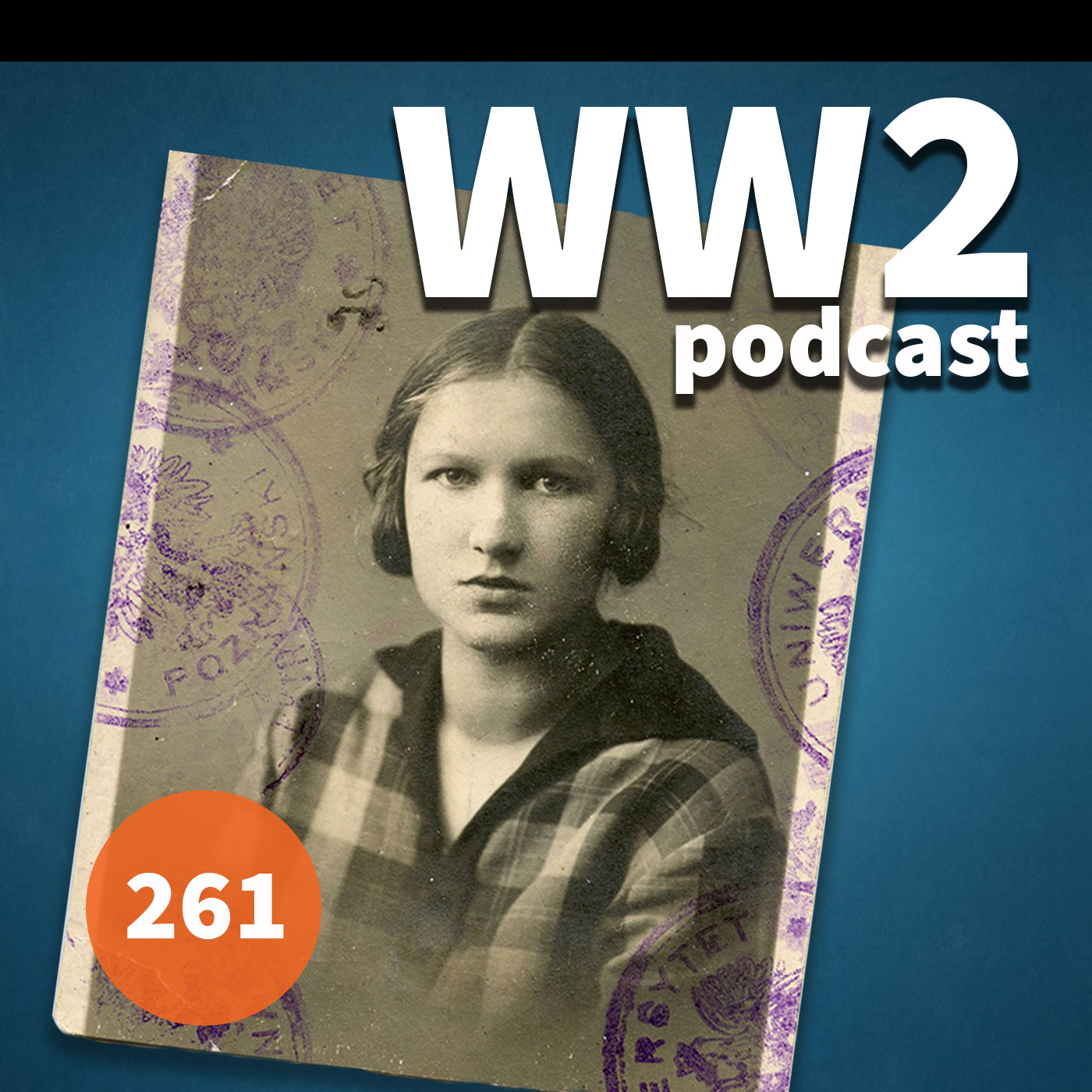
Ep 261261 - Agent Zo
In this episode of the WW2 Podcast, I'm joined by Clare Mulley to uncover the extraordinary story of Elżbieta Zawacka—known by her codename, "Zo"—a woman who defied the odds as a resistance fighter, courier, and special operations agent during the Second World War. Zo was the only woman to make the perilous journey from Warsaw to London as an emissary of the Polish Home Army. After completing secret training in Britain, she became the only female agent to parachute into Nazi-occupied Poland. There, with the Gestapo hunting her and her family arrested, she played a crucial role in the resistance, fighting in the Warsaw Uprising and working toward Poland's liberation. After the war, despite being one of Poland's most decorated female soldiers, the Soviet-backed communist regime imprisoned Zo, and her story was buried for decades. Now, thanks to new archival research and exclusive interviews, Clare brings her remarkable life back into the spotlight in the excellent book Agent Zo. patreon.com/ww2podcast
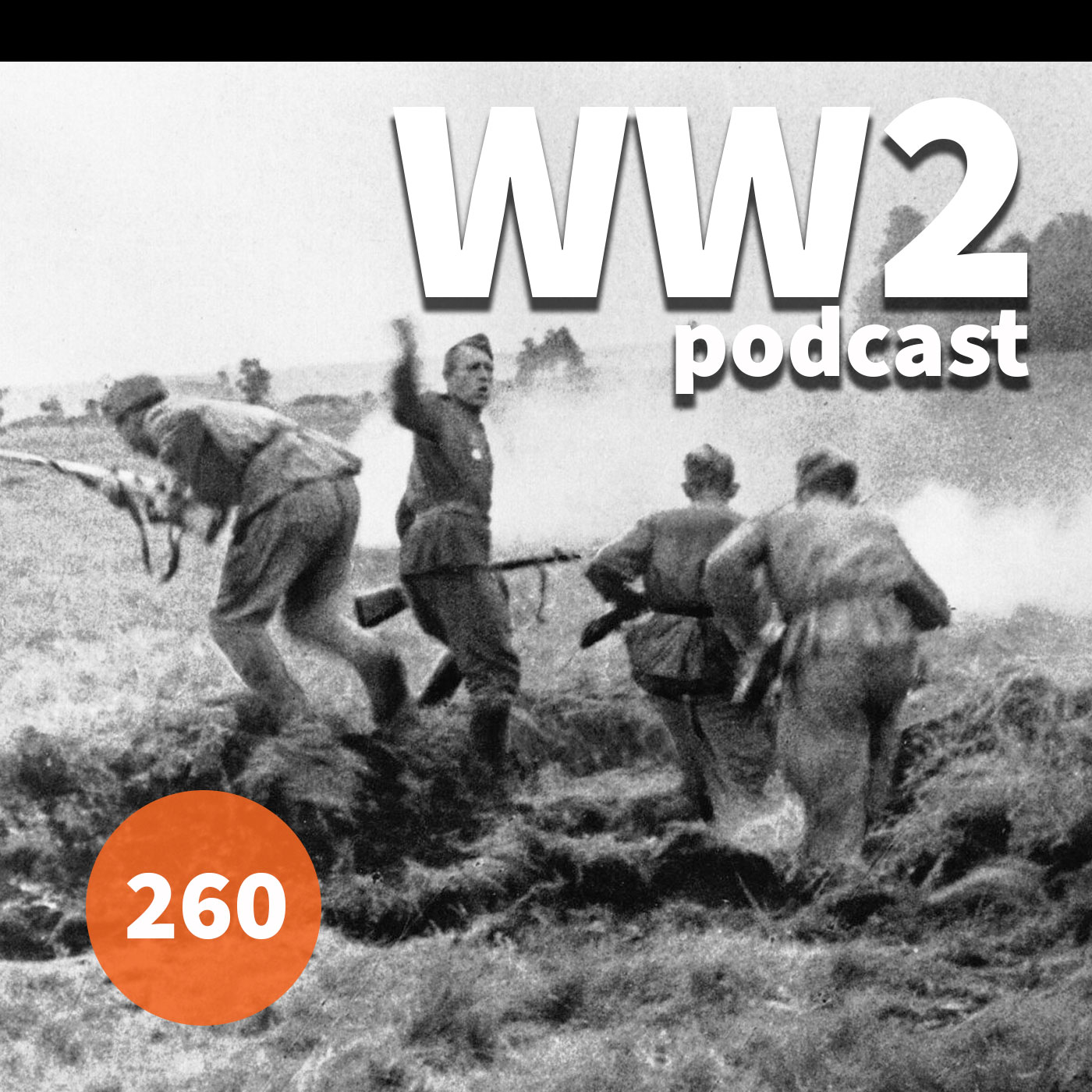
Ep 260260 - Operation Bagration
For this episode, I am by Prit Buttar to discuss Operation Bagration—the massive Soviet offensive launched in the summer of 1944 that shattered the German Army Group Centre. While the D-Day landings in Normandy dominate the narrative of mid-1944, events on the Eastern Front were just as decisive, if not more so, in determining the course of the war in Europe. Prit's latest book in his series looking at the Eastern Front during WWII is Bagration 1944: The Great Soviet Offensive. patreon.com/ww2podcast
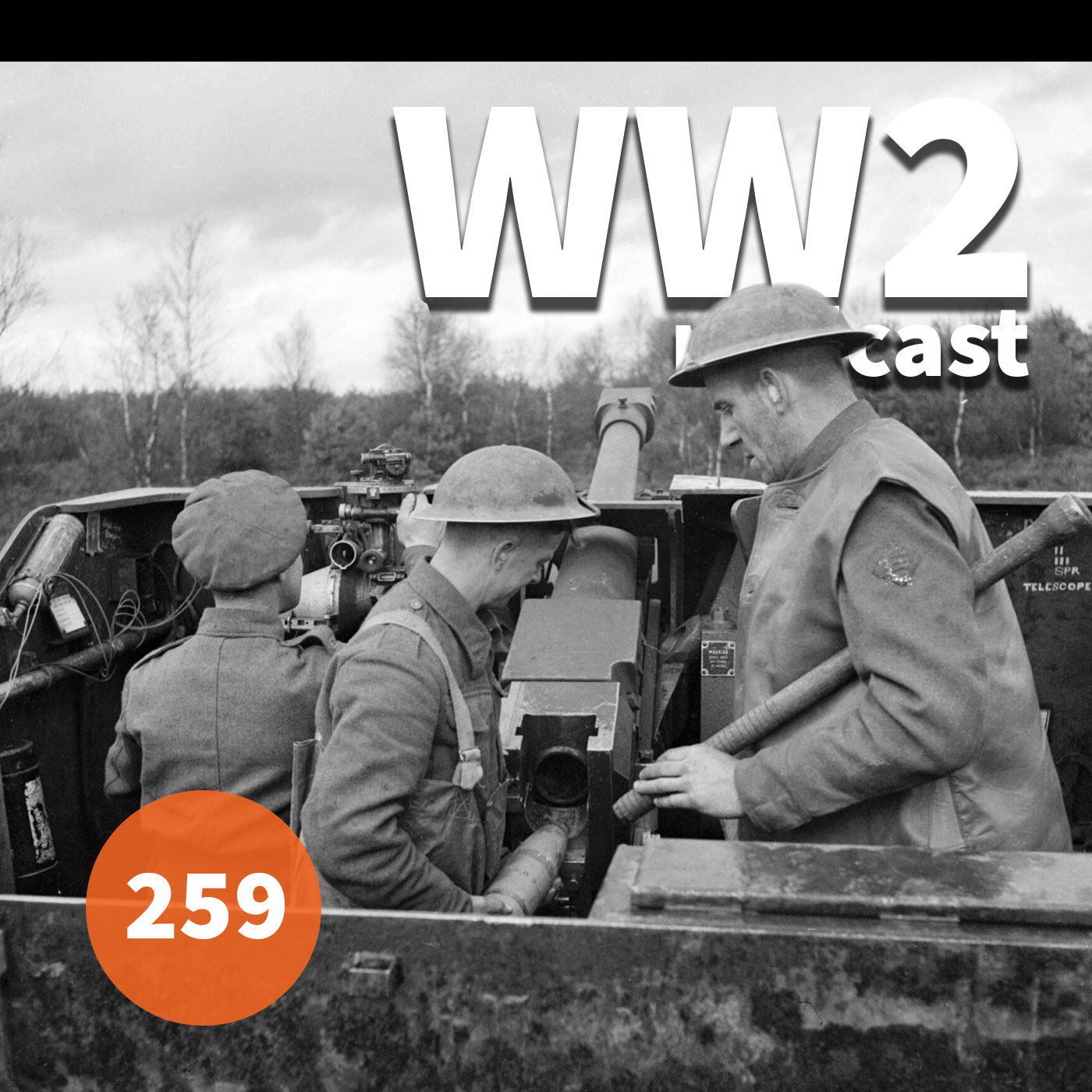
Ep 259259 - The Essex Yeomanry
With a history stretching back to the late 18th century, the Essex Yeomanry had seen action in the First World War, but in WWII, they found themselves in the thick of the fighting once again. From the Western Desert and the Italian Campaign to the beaches of Normandy and the advance into Germany, the Essex Yeomanry played a part in some of the war's most crucial battles. My guest is Stephen Keoghane, author of 'Shield and Protect: An Illustrated History of the Essex Yeomanry'. Drawing on extensive archival research and first-hand accounts, his book explores the regiment's wartime experiences and challenges as they transitioned from their cavalry roots to modern mechanised warfare. patreon.com/ww2podcast

Ep 258258 - USN PT Boats
The vast expanse of the Pacific Ocean was a battleground unlike any other during the Second World War. While massive aircraft carriers and battleships dominated the headlines, a different kind of naval warfare was fought in the shadows—one of speed, stealth, and surprise. Armed with torpedoes and machine guns, the small but deadly PT boats waged a relentless fight against Japanese convoys, warships, and outposts, proving that size wasn't everything in naval combat. Mark Stille, a naval historian and author of PT Boats vs IJN Destroyer, is joining me for this episode. We'll be exploring the role of these fast attack boats in the Pacific, their successes and challenges, and how they squared off against the Imperial Japanese Navy's formidable destroyers. patreon.com/ww2podcast

Ep 257257 - Uncovering Berlin's Wartime Past
Berlin is a city steeped in history, with its streets, buildings, and scars bearing witness to the dramatic events of the 20th century. From the rise and fall of the Third Reich to the Cold War divisions that shaped the modern city, Berlin remains a living museum of its past. Yet, beyond the well-known landmarks, countless hidden stories lie waiting to be uncovered. Joining me today is Peter Graham, a historian and guide who runs walking tours of Berlin, offering visitors an in-depth look at the city's wartime history. He also manages the popular Facebook page Berlin Battle Damage, which explores the lasting marks of war still visible today. We'll be discussing his work, the fascinating remnants of history that can be found across Berlin, and how walking the city's streets brings the past to life. patreon.com/ww2podcast

Ep 256256 - Bomber Command Minelaying Operations
Aerial mining by RAF Bomber Command played a crucial role in the Allied war effort, sinking far more Axis shipping than direct attacks by either Coastal Command or Bomber Command itself. Minelaying operations began in April 1940 and expanded significantly throughout the war, yet today, this critical campaign—along with its impact on Axis merchant vessels, Kriegsmarine warships, and U-boats—remains largely overlooked. Joining me today is Jane Gulliford Lowes, author of The Invisible Campaign: Assessing Bomber Command's Minelaying Operations 1940-1945. We explore the RAF's minelaying efforts during the war, their strategic importance, and why they've been so often forgotten.

Ep 255255 - Caen, Cobra and Confusion
General Montgomery was a complex figure, and his legacy remains the subject of debate among historians. In this episode, I'm joined by Andrew Harrison, author of Caen, Cobra and Confusion, to examine the controversies surrounding Monty's leadership during the Normandy campaign. Central to our conversation are the misunderstandings about Monty's intentions for Caen and the American breakout at Operation Cobra, misconceptions that have played a significant role in shaping his legacy. We'll explore how events beyond the battlefield, as well as the perspectives of historians, have influenced how Montgomery's decisions are viewed today. patreon.com/ww2podcast

Ep 254254 - Macau
In this episode, we discuss the role of Macau, the Portuguese colony in South China, and the experiences of John Reeves, the British Consul stationed there. Despite Portugal's official neutrality, Macau found itself caught in the geopolitical struggles of the Pacific War. With Japanese forces surrounding the colony, John Reeves had the difficult task of representing British interests while navigating an increasingly precarious situation. His work included intelligence gathering, aiding refugees, and balancing diplomacy with survival in an environment where Japan's influence was ever-present. I'm joined by Peter Rose author of 'The Good War of Consul Reeves, which focuses on wartime Macau. patreon.com/ww2podcast

Ep 253253 - Fortress Britain
Alone, unprepared, and weak—these are the words often used to describe Britain's position in 1940, a narrative that has persisted since the end of World War II. But is that the whole truth? The reality might surprise you. In this episode, we uncover the fascinating story of Britain's secret defences during the dark days of 1940. Joining me is Andrew Chatterton, author of Fortress Britain 1940: Britain's Unsung and Secret Defences on Land, Sea, and in the Air. We delve into the vital yet often-overlooked roles played by the Pillboxes, the Home Guard, auxiliary units, and other covert organisations in preparing to resist invasion. patreon.com/ww2podcast

Ep 252252 - Canadian Airmen in the Battle of Britain
In 1940, for 113 harrowing days, Nazi Germany's Luftwaffe unleashed relentless attacks on Great Britain, aiming to secure an early victory in World War II. The defence of southern England fell to the brave pilots of the Royal Air Force, joined in their hour of need by over 100 Canadian airmen. These men, hailing from all walks of life—some from prominent families, others fresh off the farm—served with distinction in 47 different Battle of Britain squadrons. In this episode, Ted Barris, author of Battle of Britain: Canadian Airmen in their Finest Hour, joins me to explore their incredible contributions during this pivotal chapter of the war. patreon.com/ww2podcast

Ep 251251 - Fighting Vichy from Horseback
In 1939, incredibly, the British Army still fielded cavalry units that had yet to be mechanised, relying on horses as they prepared for war. When conflict broke out, these regiments—many of them Territorial Army Yeomanry units—were mobilised, with horses being requisitioned to meet the demand. By 1940, the 1st British Cavalry Division was deployed to the Middle East, where they would play a significant role in Operation Exporter, the Allied invasion of Vichy-controlled Syria. Today, I'm joined by Jonathan Washington, author of Fighting Vichy from Horseback: British Mounted Cavalry in Action, Syria 1941, to explore this fascinating chapter of military history. patreon.com/ww2podcast

Ep 250250 - The Home Intelligence Unit
During the Second World War, the Home Intelligence Unit—a branch of the Ministry of Information—was tasked with monitoring public attitudes on the home front. They compiled confidential reports on the state of popular morale, which were circulated among decision-makers in Whitehall. These reports offer a fascinating insight into how ordinary people coped with the stresses of wartime life, their hopes for victory, and their fears about what the post-war world might bring. Joining me today is Jeremy Crang, Professor of Modern British History at the University of Edinburgh. Together with his late colleague, Paul Addison, Jeremy has edited three volumes of these reports (Our People's War, The Spirit of the Blitzand Listening to Britain), bringing to light the voices and concerns of wartime Britain. patreon.com/ww2podcast

Ep 249249 - Private Snafu
Today, I'm joined by Peter Zablocki, a professor at Caldwell University, host of the History Shorts podcast, and author of The Death of General Sikorski. I was introduced to Peter after I recorded the episode looking at the death of Sikorski with Chris Wroblewski. Chatting I discovered Peter had researched and written about an entirely different but fascinating subject: Private Snafu (you can read it here). For those unfamiliar, Private Snafu was the star of a series of black-and-white animated shorts produced between 1943 and 1945. These instructional films, aimed at U.S. servicemen, combined irony and humour with serious messages. Amazingly, they were produced by Frank Capra (It's a Wonderful Life), written by Theodor Geisel (Dr. Seuss), and voiced by Mel Blanc, the legendary voice behind Bugs Bunny. Despite their playful tone, the films served a crucial role in military training and morale during the war. patreon.com/ww2podcast
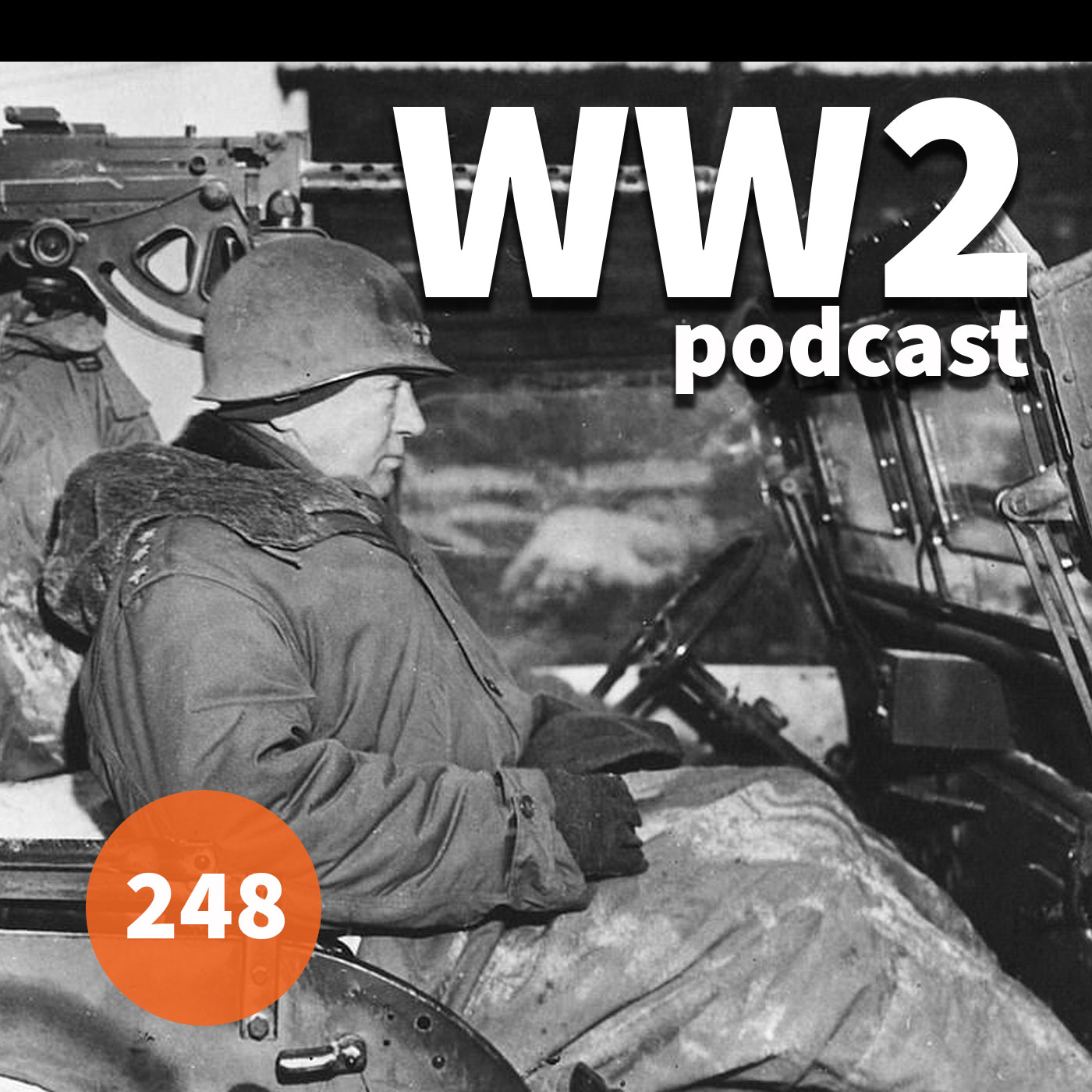
Ep 248248 - Patton and the Battle of the Bulge
In this episode, I'm joined by acclaimed historian and bestselling author Alex Kershaw to explore one of the most pivotal moments of the Second World War: the Battle of the Bulge. This December marks the 80th anniversary of the battle, a critical turning point where General George S. Patton's bold leadership and daring actions—most famously the dramatic relief of Bastogne—helped shift the tide in favour of the Allies. Alex joins me to share fascinating insights from his latest book, Patton's Prayer, a powerful exploration of the faith, determination, and sheer grit that defined one of America's most legendary generals. patreon.com/ww2podcast

Ep 247247 - The Mysterious Death of Wladyslaw Sikorski
In this episode, we are uncovering one of the great enigmas of the war: the tragic death of General Władysław Sikorski. Sikorski was a towering figure in the Polish government-in-exile, a man who held together the hopes of a nation during its darkest days. His sudden death in 1943, when his Liberator aircraft crashed into the sea near Gibraltar, shocked the world and raised a swirl of questions that linger to this day. Was it an accident? Sabotage? Or something more sinister? To help unravel this mystery, I'm joined by Chris Wroblewski, author of Sabotage!: An In-Depth Investigation of the 1943 Liberator Crash that Killed Polish General Sikorski. Chris has worked alongside WWII Air Crash Detectives' Garth Barnard to shed new light on this controversial event. Together, they've pieced together a gripping tale of conspiracy, wartime politics, and investigative research. patreon.com/ww2podcast
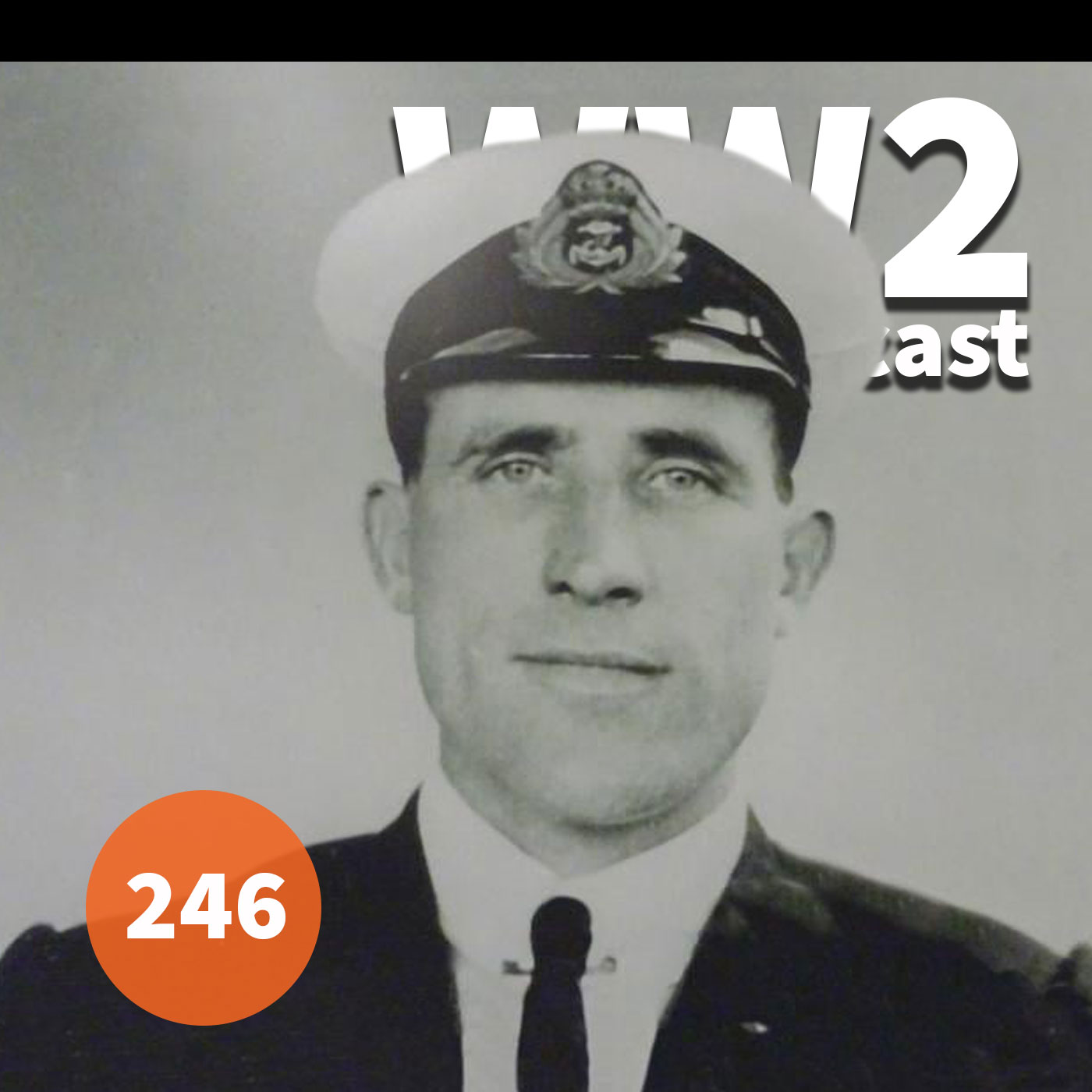
Ep 246246 - Frederick Rutland: The Double-Agent War Who Helped Japan
In this episode, Ronald Drabkin joins me to uncover the fascinating yet complex story of Frederick Rutland, a First World War hero with a unique story. Known as "Rutland of Jutland" for his bravery as an aviator in WWI, Rutland's career took an unexpected turn in the interwar years as he became a spy for Japan. This is a gripping tale of loyalty, intrigue, and a man who found himself on both sides of history. Ronald is the author of 'Beverly Hills Spy: The Double-Agent War Hero Who Helped Japan Attack Pearl Harbor' patreon.com/ww2podcast

Ep 245245 - Spies in the Sky
In this episode, historian Taylor Downing joins me to explore the remarkable work of reconnaissance pilots and photo interpreters during the Second World War. These daring aviators flew perilous missions over Occupied Europe, risking life and limb to capture the detailed aerial photographs crucial to the Allied war effort. But capturing the images was only half the story. On the ground, a team of brilliant and inventive photo interpreters worked tirelessly, pioneering a completely new science to decode these pictures. From developing 3D photography techniques to uncovering enemy positions and movements, their work provided invaluable intelligence that shaped the course of the war. Taylor is the author of 'Spies In The Sky: The Secret Battle for Aerial Intelligence during World War II', and if you cast your mind back, he joined me in episode 226 to discuss allied deception plans for D-Day. patreon.com/ww2podcast

Ep 244244 - Harold Alexander and the road to Supreme Command
For this episode, I'm joined by Matthew Hough, and we discuss Harold Alexander and his road to supreme command in the Mediterranean Theatre. Matthew is a postgraduate researcher at the University of Leeds whose research examines Alexander and ideas about Supreme Command in the Mediterranean Theatre toward the end of the war. patreon.com/ww2podcast

Ep 243243 - Borneo
Borneo, the third-largest island in the world, held immense strategic value during WWII and quickly became a top priority for Japanese control. With its vast reserves of oil and rubber, the island was essential for fueling the Japanese war effort. But Borneo would also become a tragic battleground, claiming the lives of countless prisoners of war, internees, locals, and even Japanese forces. Joining me today is John Tulloch. John served with the Royal New Zealand Artillery before transferring to the British Royal Artillery, gaining experience across the globe and instructing on the British Army's Jungle Warfare course. He is also the author of The Borneo Graveyard, 1941-45, which tells the story of Borneo's occupation and the deployment—and eventual capture—of five Royal Artillery air defence sections sent to Southeast Asia. To order your copy The Borneo Graveyard, 1941-45, email [email protected]. patreon.com/ww2podcast

Ep 242242 - The Good Allies: Canada and the USA
When World War II began in 1939, it sparked a deadly conflict between the Axis and Allies, while also creating tense negotiations among the Allies. Diplomacy, military power, and economic decisions determined the fate of nations. In North America, the U.S. and Canada worked to build a military alliance to protect their coasts from German U-boats and the threat of Japanese invasion. Their economies became intertwined to supply weapons for Britain and other allies, and defending North America was crucial before sending forces abroad. Joining me is Tim Cook. Tim is the Chief Historian and Director of Research at the Canadian War Museum. He has penned numerous bestselling books which have won multiple awards. His latest being The Good Allies: How Canada and the United States Fought Together to Defeat Fascism During the Second World War. patreon.com/ww2podcast

Ep 241241 - Leningrad 1943–44
During the Second World War, the people of Leningrad endured a brutal 900-day siege, facing relentless bombing, shelling, and starvation. In early 1943, the Red Army broke through the blockade, marking a crucial turning point. Despite setbacks, the Soviet forces and civilians held firm, and by late 1943, the Germans, weakened by harsh conditions, began to retreat. In episode 202, we discussed the siege up until 1942. I'm joined once more by Prit Butar to pick up the story of the siege being lifted, which is covered in his latest book 'Hero City: Leningrad 1943–44' patreon.com/ww2podcast
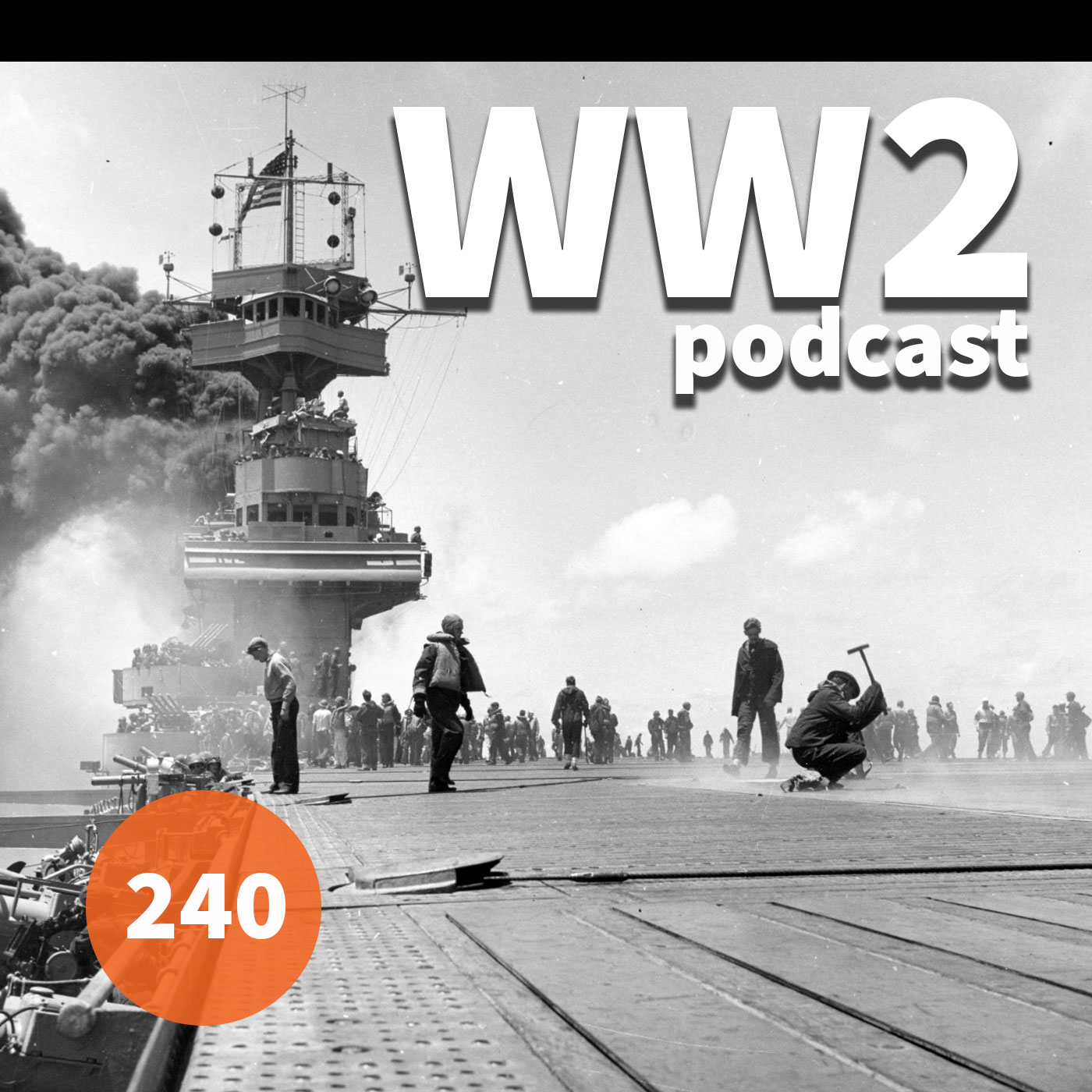
Ep 240240 - The Battle of Midway
In April 1942, the Imperial Japanese Navy's Combined Fleet was at the height of its power, having delivered a crushing blow to the US Navy at Pearl Harbor just months earlier. This fleet spearheaded Japan's aggressive expansion through Southeast Asia and unleashed havoc across the South Pacific. However, the tides of war were soon to change. By June 1942, the US Navy achieved a decisive victory over this formidable force at the Battle of Midway, shifting the strategic momentum in the Pacific Theater to the Allies. Midway stands as the most renowned naval battle of the Pacific War and one of the most storied in military history. The traditional narrative, shaped immediately after the conflict and enduring to this day, portrays an outnumbered American fleet snatching victory against overwhelming odds. While this depiction has become deeply ingrained, it oversimplifies the true nature of the battle. Joining me is Pacific War expert Mark Stille, whose new book is Midway: The Pacific War's Most Famous Battle, where he contends that a Japanese defeat was not only possible but likely. This perspective redefines the engagement not as a miraculous American triumph or a mere stroke of luck but as a complex confrontation where the factors at play heavily favoured the United States. Support the podcast:patreon.com/ww2podcast
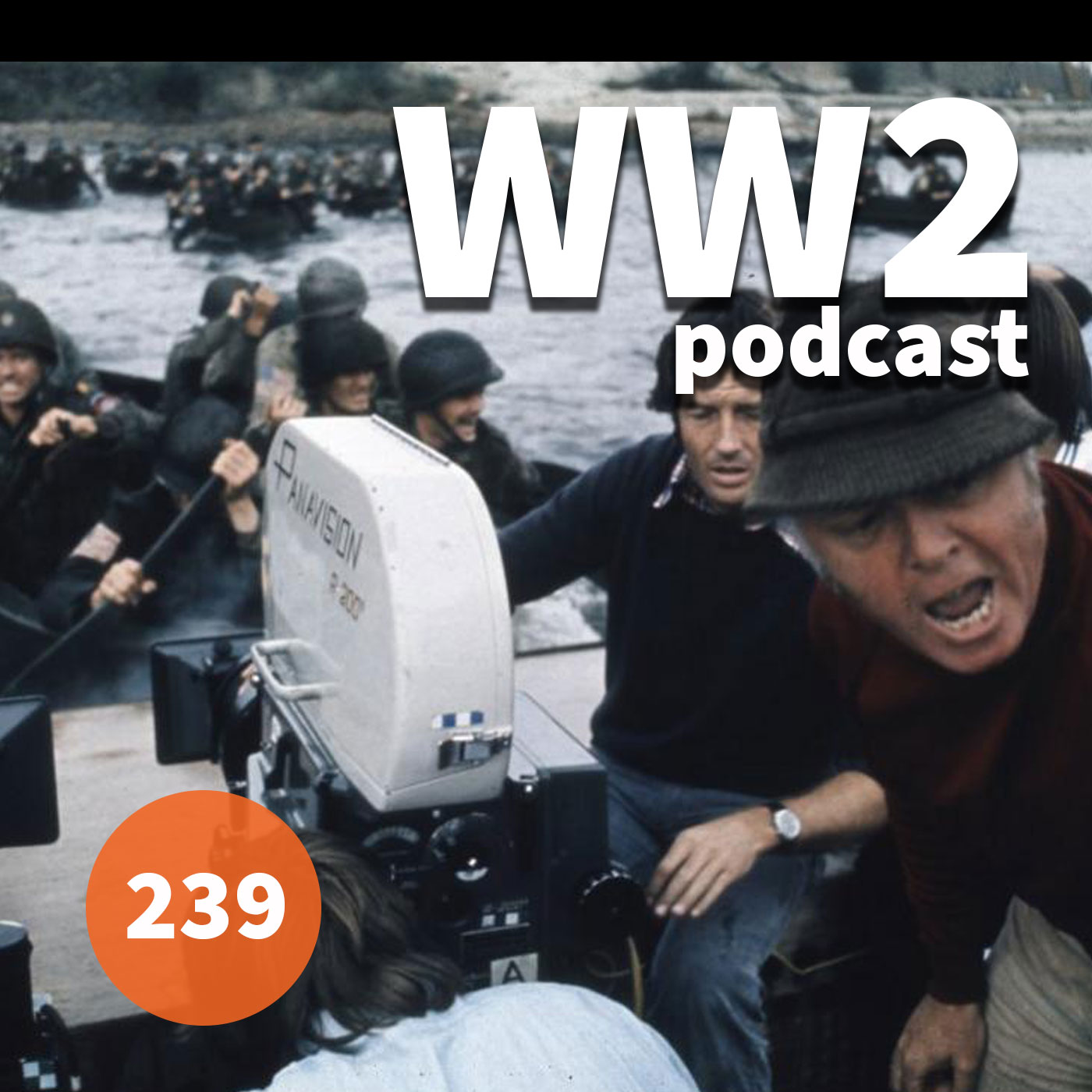
Ep 239239 - Making A Bridge Too Far
Released in 1977, A Bridge Too Far stands as the last grand-scale WWII film produced by the Hollywood studio system. The film ambitiously sought to bring to life Operation Market-Garden, the bold but ultimately doomed Allied campaign of September 1944, culminating in the failed attempt to capture the Arnhem bridge. Producer Joseph E. Levine gathered an incredible ensemble cast, featuring legends like Anthony Hopkins, Robert Redford, Sean Connery, James Caan, Michael Caine, Elliott Gould, Dirk Bogarde, and Laurence Olivier. The movie was shot on location in Holland, with the town of Deventer doubling as Arnhem to recreate the intense and chaotic battle scenes. In this episode of the WW2 Podcast, I'm joined by Simon Lewis, author of Making 'A Bridge Too Far.' patreon.com/ww2podcast

Ep 238238 - 6th Airborne Division: Generating Combat Effectiveness
In this episode, we'll examine the 6th Airborne Division and its combat effectiveness, focusing on how its commanding officer, Richard Gale, meticulously trained and developed the unit. The 6th Airborne was the second British airborne division to be formed, and it would first see action during the Normandy invasion. Gale's leadership and the culture he instilled were crucial in shaping the airborne soldier's capabilities and forging the division's cohesive fighting force. Joining me is Andrew Wheale. Andrew is the author of 'Ham & Jam: 6th Airborne Division in Normandy - Generating Combat Effectiveness: November 1942 - September 1944'. patreon.com/ww2podcast

Ep 237237 - From the Soviet Gulag to Arnhem
When Germany invaded Poland in 1939, it wasn't the Germans who first uprooted Stanislaw Kulik and his family—it was the Russians. Deported to a Siberian Gulag, Stanislaw's fate took a dramatic turn in 1941 when the Germans launched their invasion of the Soviet Union. Suddenly, the Russians released their Polish captives, and Stanislaw embarked on an arduous journey across thousands of miles. He eventually joined the Polish army in Uzbekistan, a path that would lead him to Britain and ultimately to the frontlines in Holland, where he fought with the Polish Parachute Brigade at Arnhem. Joining me is Nicholas Kinloch, the grandson of Stanislaw Kulik. Nicholas has chronicled his grandfather's extraordinary wartime experience in his book, From the Soviet Gulag to Arnhem: A Polish Paratrooper's Epic Wartime Journey. patreon.com/ww2podcast

Ep 236236 - Tank Warfare in Burma
When we think of the fighting in the Far East between Britain, her allies, and the Japanese, we often picture thick jungles, impossibly steep hills, and dense terrain. This has led to the common perception of it being an infantryman's war. However, armour played a crucial and often overlooked role in this theatre of war. In this episode, I'm joined by Jack Bowsher, author of Forgotten Armour. His book begins with the interwar Indian Army's struggle to fully mechanise, then traces the evolution of armoured training, logistics, and tactics. We explore how, once tanks arrived and bunker-busting methods were developed, armoured units became decisive in their encounters against the Japanese, saving countless Allied lives. patreon.com/ww2podcast

Ep 235235 - The Middle East Commandos
I recently attended the We Have Ways Fest, where I ran into Séan Scullion, a friend of the podcast. You might remember him from episode 135, where we discussed Spaniards in the British army. His book, "Churchill's Spaniards," is about to be released. At this year's We Have Ways Fest, Sean was scheduled to speak about the British Middle East Commandos. We found a supposedly quiet corner to chat, though it turned out to be less quiet than anticipated. Patreonpatreon.com/ww2podcast

Ep 234234 - Truman and the Decision to Drop the Bomb
It was only as Harry S. Truman was sworn in as the 33rd president of the United States that he was told of the Manhattan Project. In this episode, we embark on a journey through one of the most controversial and consequential decisions in modern history: Truman's choice to drop atomic bombs on Hiroshima and Nagasaki during World War II. The story of this decision is complex, marked by intense debates, ethical dilemmas, and immense geopolitical stakes. As the war in Europe concluded with the defeat of Nazi Germany, the Pacific Theater continued to rage with brutal intensity. American forces faced fierce resistance from Japanese troops, and the prospect of a prolonged and bloody invasion of Japan loomed large. In this episode, we'll explore the multifaceted considerations that influenced Truman's decision. We'll examine the military strategies, the political pressures, and the moral questions that weighed on the shoulders of the 33rd President of the United States. I'm joined by Edward Aldrich, the author of The Partnership: George Marshall, Henry Stimson, and the Extraordinary Collaboration That Won World War II. To learn more about Marshall and Stimson, go back to episode 164. Patreonpatreon.com/ww2podcast

Ep 233233 - Hearts of Steel: One sailor's Journey with the Royal Navy
In this episode of the WW2 podcast, we'll explore the Royal Navy from 1918 to the end of the Second World War and one man's career. Not an officer, but a regular sailor: Herbert Leeder, who chalk up 27 years of service. Following the career of one sailor is an interesting way to view the Royal Navy. It gives us a slightly potted history, but Herbert took part in a number of major actions during the Second World War, and it brings home how one man can be a witness to many great events. I'm joined by James Carter. After working as a volunteer researcher for a local history project during the centenary of the First World War, James was inspired to seek out the history of his own great-grandfather when his mother handed him a four-page summary of Herbert Leeders's career. The outcome of that research is Hearts of Steel, which tracks Herbert's career and the Royal Navy in which he served. Patreonpatreon.com/ww2podcast

Ep 232232 - The Australians and New Zealanders at Greece & Crete
In March 1941, 40,000 Australian and New Zealand troops were rushed to Greece in a desperate attempt to support the Greeks against the looming threat of a German attack. Although the operation was ultimately doomed to fail, the Aussies and Kiwis managed to hold up the German advance long enough to evacuate thousands to Crete, where Hitler then set his sights. Joining me today is Craig Collie, author of 'Where the Flaming Hell Are We? The Story of Young Australians and New Zealanders Fighting the Nazis in Greece and Crete'. We'll be delving into these often-overlooked, disastrous operations in the Mediterranean. I want to extend a big thank you to David Phillipson from the History Guild, who suggested our guest today and connected me with Craig. The History Guild has a project focusing on Australians in the Mediterranean theatre during WWII. For more articles and posts on this topic, visit historyguild.org. Patreonpatreon.com/ww2podcast

Ep 331231 - US Battle Tanks
In this episode, we discuss the development of US tanks from the end of the First World War through to the end of the Second World War. I am joined by renowned historian and author Steven Zaloga, who has penned numerous works on military technology and history, and his latest book is 'US Battle Tanks 1917–1945'. It is a comprehensive and richly illustrated examination of the development and combat performance of US battle tanks; Stephen delves into the history of tanks in American service, tracing their journey from the initial experiments with armoured vehicles in the early 20th century through the significant battles and innovations up to the end of World War II. Patreonpatreon.com/ww2podcast

Ep 230230 - U-505: Codename Nemo
Just two days before D-Day, Captain Gallery's US antisubmarine Task Group 22.3 managed to force the German U-boat U-505 to the surface. In a bold move, a boarding party secured the submarine before it could be scuttled, capturing an Enigma machine and the current Kriegsmarine code books. This remarkable operation earned Lieutenant Albert David the Medal of Honor for his leadership. However, it could have had catastrophic consequences. If the Germans had suspected that their cyphers were compromised, it might have jeopardised the Allied operation Ultra, which was already deciphering German signals. The Chief of US Naval Operations, Ernest King, was so incensed about the capture of U-505 that he threatened to fire Admiral Gallery. Joining me to discuss this operation is Charles Lachman, author of Codename Nemo: The Hunt for a Nazi U-Boat and the Elusive Enigma Machine. If you are interested in seeing the 1945 newsreel Now it can be told, you can find it here. Patreonpatreon.com/ww2podcast
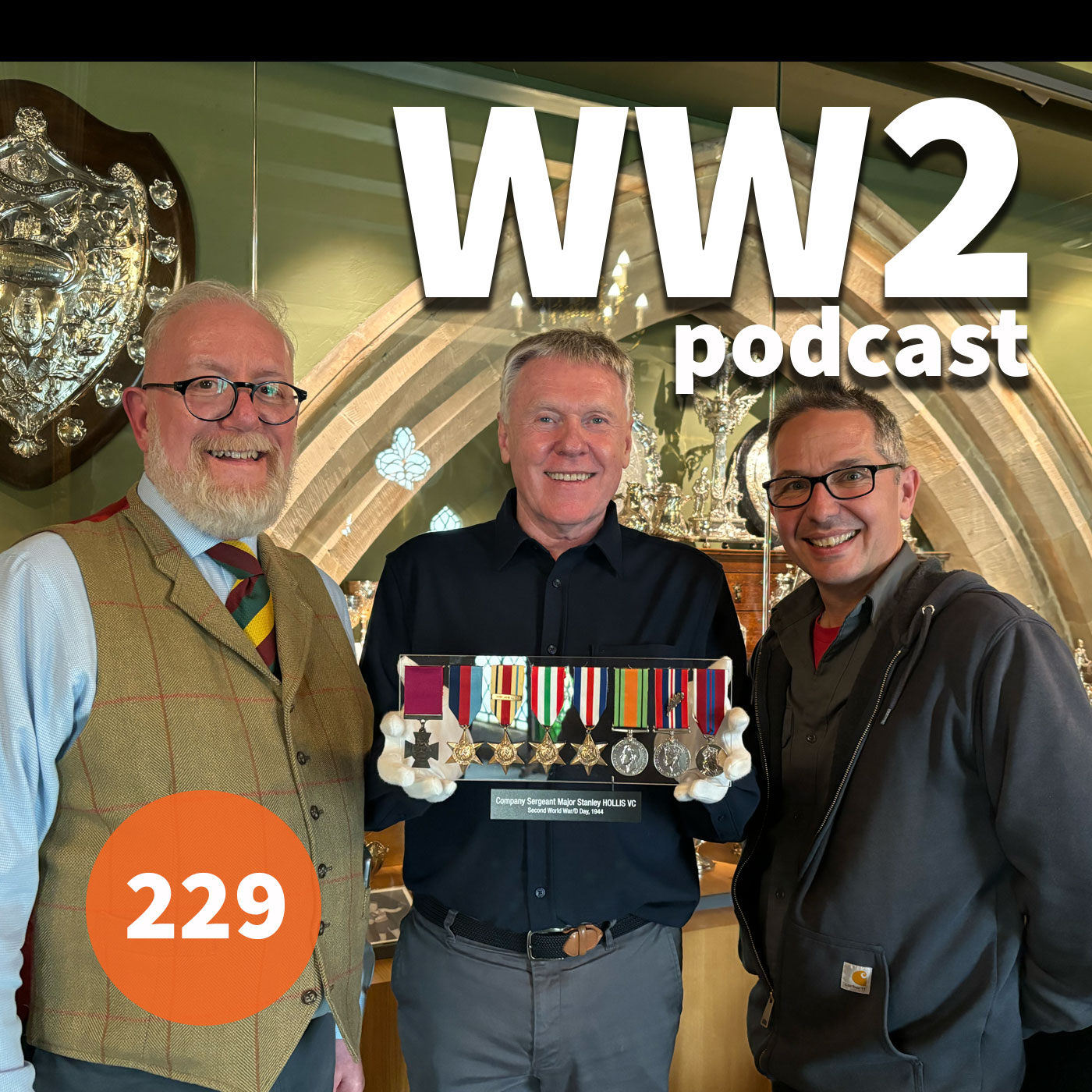
Ep 229229 - D-Day Legacy
To commemorate the 80th anniversary of D-Day, I attended a special event at the Green Howards Museum. We started at the regimental war memorial in Richmond (Yorkshire) at 6.30 a.m., which was when the Green Howards landed on Gold Beach. The day was packed with discussion about the regiment and their role on D-Day. It closed with us having the privilege of getting up close to the only Victoria Cross, which was won on June 6th. If you find yourself in the Yorkshire Dales, visit the museum; it is a cracking afternoon out. To round off my look at D-Day, I'm joined by Steve Erskine from the Green Howards Museum and Paul Cheall (from The Fighting Through Podcast), whose father landed on Gold Beach with Stan Hollis, who received the Victoria Cross for his deed that day. In theory, we sat down in the museum on June 5th to discuss what D-Day meant to us. In practice, we had a rather wide-ranging discussion. We never got as far off the beaches as we anticipated… I hope you find our war waffle interesting. Patreonpatreon.com/ww2podcast

Ep 228228 - D-Day Landing Craft
More than 132,000 Allied troops landed on the Normandy beaches on 6 June 1944. Through their efforts, the tide of the war turned for the final time to favour the Allies. But how did the Allied army get to the shores of Normandy? The contribution of Landing Craft to D-Day is often overlooked. Andrew Whitmarsh joins me to correct this oversight. Andrew has worked as a curator in military history museums for over 25 years, latterly as the curator of The D-Day Story in Portsmouth. Outside of work, he is also the author of D-Day Landing Craft: How 4,126 'Ugly and Unorthodox' Allied Craft made the Normandy Landings Possible. Patreonpatreon.com/ww2podcast

Ep 227227 - D-Day: Sword Beach
6th June 1944 saw the largest seaborne assault in human history: D-Day. While much has been written about the operation as a whole, little detailed attention has been paid to the battle for Sword Beach itself, the easternmost of the amphibious attack areas. For this episode, I am joined by Stephen Fisher. Stephen is a historian and archaeologist who specializes in military history. He is also the author of Sword Beach: The Untold Story of D-Day's Forgotten Victory. Patreonpatreon.com/ww2podcast
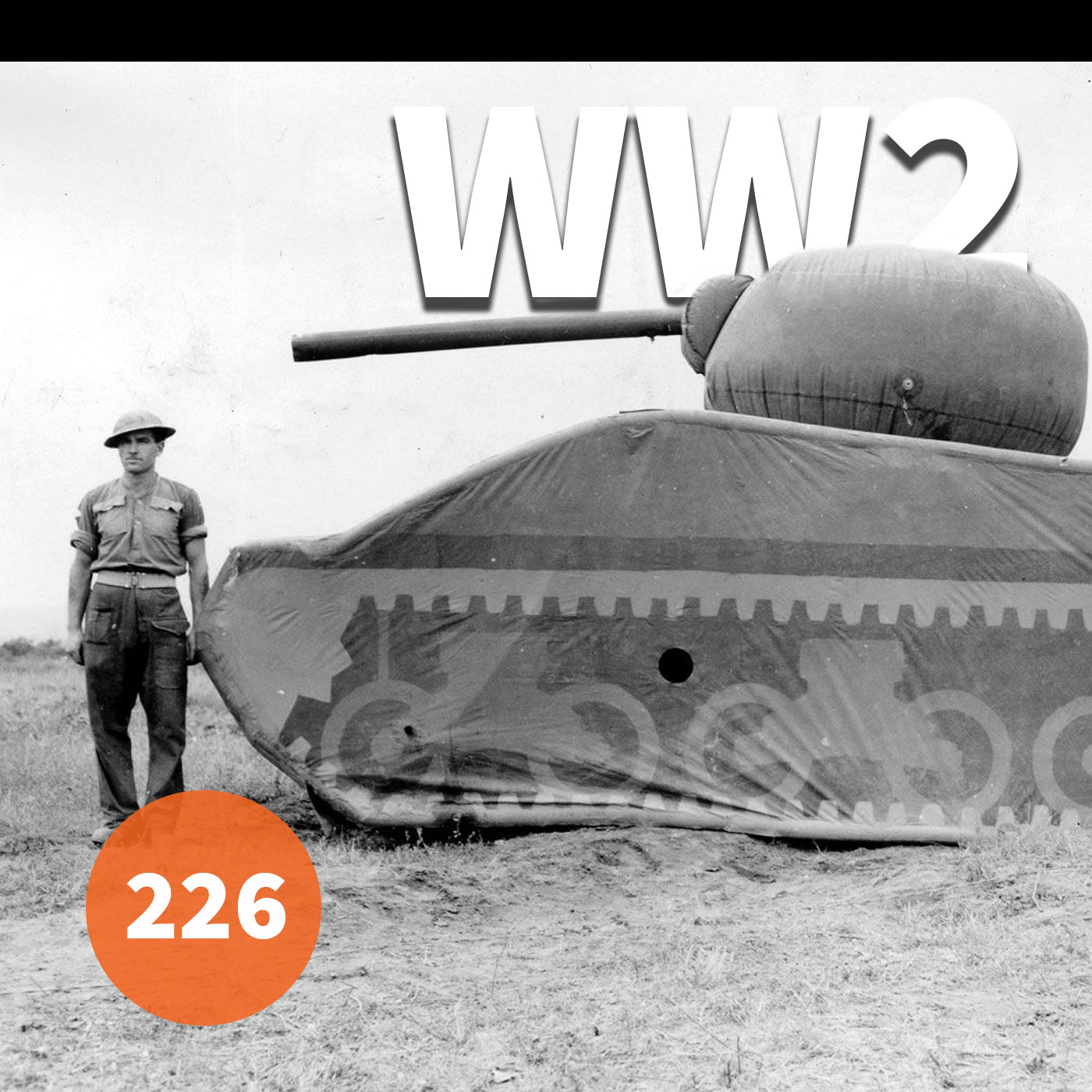
Ep 226226 - D-Day and the Great Deception
As the Allied forces prepared for the monumental invasion of Normandy, concealing the massive build-up of troops in Britain from the Germans became increasingly challenging. To mislead German intelligence about the timing and location of the invasion, the Allies devised a series of elaborate deception plans. The most audacious of these schemes aimed to convince the Germans that the Normandy landings were merely a diversion. This ruse featured a fictitious army led by General Patton, complete with hundreds of realistic dummy landing crafts, tanks, and aircraft. Joining me to delve into the intricate web of D-Day deception is Taylor Downing, author of The Army That Never Was: D-Day and the Great Deception. Patreonpatreon.com/ww2podcast

Ep 225225 - Hill 107 and the Battle of Crete
On the morning of May 20, 1941, the Germans launched Operation Mercury. The invasion of Crete was the largest airborne operation yet attempted during the war, with thousands of Fallschirmjäger deployed. Key to the operation's success would be the capture of the airfield at Maleme. Outnumbered and having suffered horrendous casualties, when the airborne troops secured Hill 107, overlooking the airfield, it opened the door for reinforcements and, ultimately, the Allied withdrawal from the island. For this episode, I'm joined by Robert Kershaw, a now-regular show participant who was last with us to discuss Dunkirk. He has a new book available, The Hill: The Brutal Fight for Hill 107 in the Battle of Crete. Patreonpatreon.com/ww2podcast
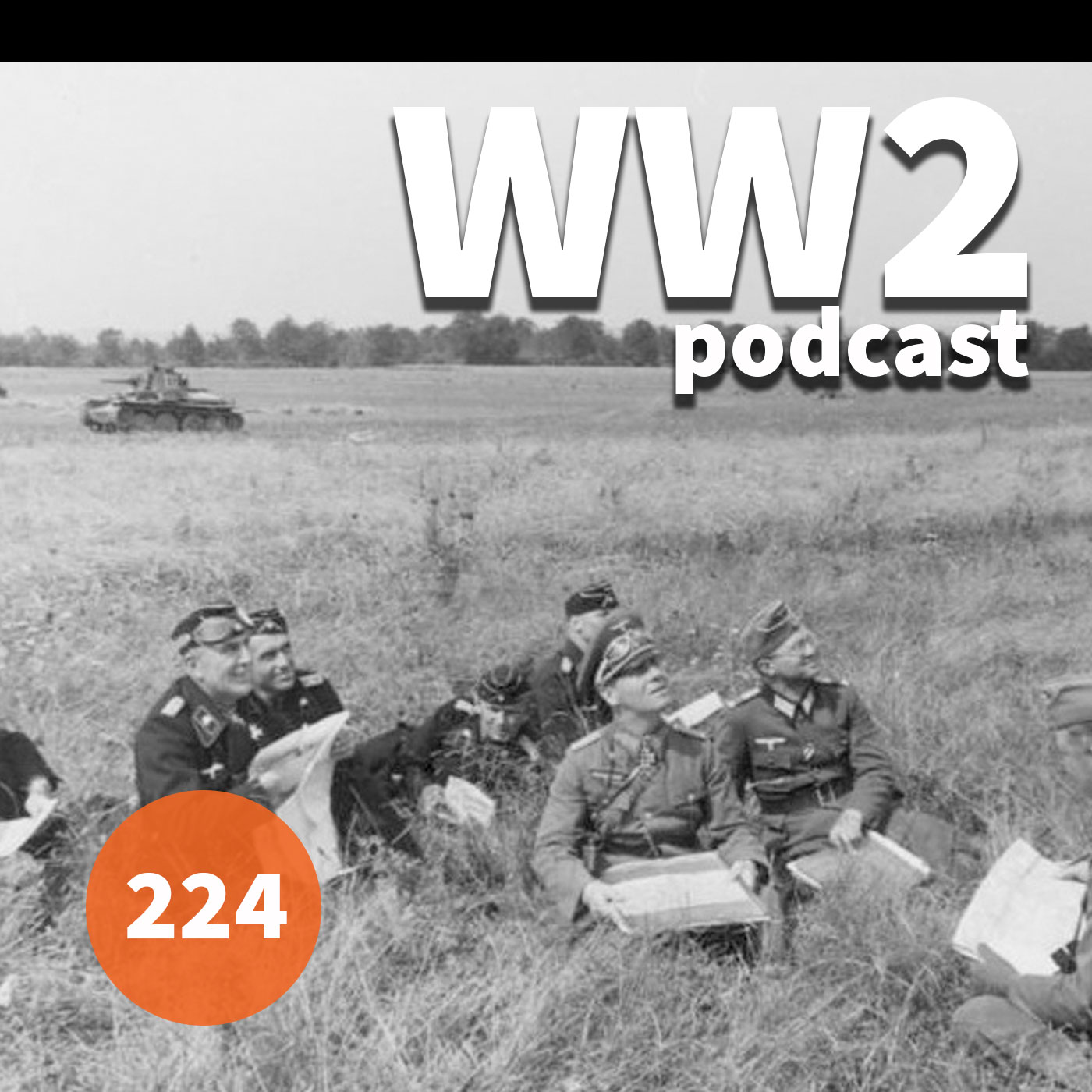
Ep 224224 - The Theory and Practice of Command in the British and German Armies
In this podcast episode, we will discuss the different approaches to command and control of the British Army and the German Army. From a management point of view, both organisations developed different doctrines to deal with the 'fog of war' or 'friction', which affected how commanders responded as a battle unfolded. We'll do this by delving into the origins of each nation's different approaches to doctrine and training and, most importantly, how these strategies played out during the pivotal Battle for France in 1940. Joining me today is Martin Samuels. Martin is the author of Piercing the Fog of War: The Theory and Practice of Command in the British and German Armies, 1918-1940, which builds upon his early work Command or Control? Command, Training and Tactics in the British and German Armies, 1888-1918. Patreonpatreon.com/ww2podcast