
The Woodpreneur Podcast
515 episodes — Page 5 of 11
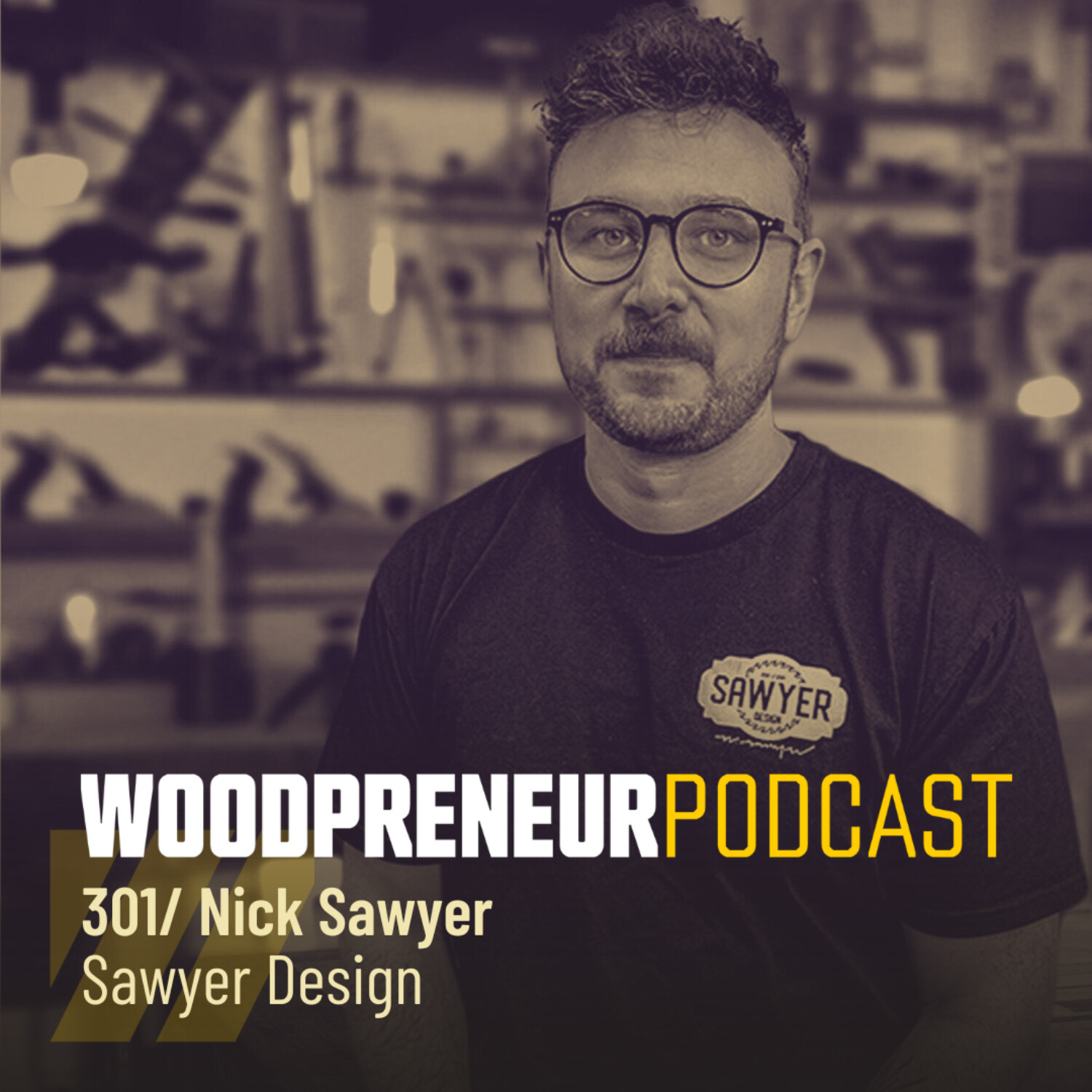
S3 Ep 301Nick Sawyer: Sawyer Design
Access our training - $200K and 300 Leads in 15 Days for Woodpreneurs here: https://go.buildergrowth.io/optin-wms “I sort of started enjoying sharing stuff on Instagram. And that's where a lot of my business was coming from. Yeah, but I have always had this itch to find the next hardest thing every time. As soon as I've done something, I don't have a ton of interest in doing it again” -Nick Sawyer Welcome to a brand-new episode of the Woodpreneur Podcast. Today, your host Steve Larosiliere is joined by Nick Sawyer from Sawyer Design. In this episode, we delve into Nick's journey as a custom furniture maker and content creator on YouTube. Nick shares his passion for one-of-a-kind pieces, the power of storytelling, and his plans for the future of his brand. Listen now and get the whole story! “I was able to build like this sculptural piece and really take the story of his life that his dad gave me and build a piece where every part of it was some representation of that story. Yeah. And something just clicked. It meant a lot.” -Nick Sawyer Finding His Way into Woodworking Nick's journey into woodworking began by accident, sparked by a desire to create patio furniture for his wife. Armed with a chop saw, he started building pallet wood furniture and honing his woodworking skills. A Mentor and a New Beginning Nick's passion for fine woodworking was ignited by a mentor in Boise, which was later carried forward when he moved to Portland. However, the transition from having a customer base to trying to make one-offs was challenging, driving him to share his work on Instagram. Discovering Content Creation Nick found his niche in sharing intricate, detail-oriented work on Instagram. His focus shifted to YouTube as he realized the potential for storytelling through video. The driving force behind his woodworking journey was the desire to create unique, high-quality pieces, rather than mass-produced items. Building a Unique Brand Nick emphasizes the importance of creating content that stands out in the saturated YouTube woodworking space. He seeks to cater to an audience of "wood pornographers" who appreciate intricate designs and processes. Finding a balance between stories that appeal to woodworking enthusiasts and broader audiences is key. Balancing Passion and Business Nick's unique style of woodworking is centered on creating high-end, one-of-a-kind pieces. Each piece is crafted as a commission rather than part of a product line. He maintains a small 400-square-foot shop and invests his all into every single piece. The Role of YouTube Nick's primary product is his YouTube content. While he invests substantial time and effort into his pieces, his focus is on creating compelling YouTube videos. From Custom Pieces to Digital Products Nick's desire to scale his business leads him to explore options beyond labor-based products. He is contemplating creating digital courses, but he refuses to release content that doesn't meet his high standards. “ I feel like a lot of people, especially in the woodworking space are a little afraid to go there. They're afraid to position themselves as like the star, they're the reluctant to even acknowledge that they a star star.” -Steve Larosiliere Contact him through: Instagram:https://www.instagram.com/sawyer_design/ Youtube: https://www.youtube.com/@SawyerDesign
S3 Ep 300Building Success in the Wood Industry with Builder Growth.IO
Access our training - $200K and 300 Leads in 15 Days for Woodpreneurs here: https://go.buildergrowth.io/optin-wms “I figured the tool companies tell you how much a tool costs and, you know, mills and kilns and, you know, you know, whether it's festivals, you can see, so I'm just gonna pull back the curtain, and I'm just gonna let you know. And I'm doing my best to just give you as much information as possible, nothing to hide, just so that it's just so much easier when you get on the phone with either myself, or one of our growth advisors, or you're talking to one of our growth specialists about the business,” -Steve Larosiliere Welcome to a brand-new episode of the Woodpreneur Podcast. In this episode I want to discuss how you can work with me and Builder Growth IO to take your wood business to the next level. If you've been wondering about our offerings and pricing, I'm here to provide you with all the details. Transparency is key, and I want you to have all the information you need to make an informed decision for your business. Steve Larosiliere's insights provide a roadmap for your woodworking business's growth and prosperity. By following these steps, you'll be on your way to attracting and serving the right clientele, ensuring the long-term success of your business. It's time to hear the complete story now! “ if I'm gonna be telling, you know, my salespeople and I'm going to be promoting this a lot more. Again, this is as a fall 2023 Don't hold us to it be cuz programs and pricing will probably change as we add more value to the community and the more results we get, and the busier we are, things may change.” -Steve Larosiliere Kickstart Program (Coming Soon): This program is designed for those who want to take a DIY approach to learning and growing their wood business. You'll have access to a library of our podcast episodes, free resources, and mini-courses, all for an affordable price. Foundations Program: This program includes a free course, access to a community (on Discord), and monthly subscription-based content. It's perfect for those who want to dive deeper into wood business strategies and tap into a supportive community. This is ideal for those just starting to invest in their business, and the monthly fee is budget-friendly. Foundations Plus: Priced at around $3,000, this program offers substantial value. You'll receive a website, a logo refresh, group coaching calls, access to our 10k in 15-day sprint program, and our personal branding course. It's a great choice if you're ready to invest in professional branding and business growth. Branding and Advertising Program: For $5,000, this program provides you with everything you need to boost your marketing efforts. We'll set up your CRM, manage your Facebook and Google ads, and provide access to our courses and community for six months. You'll also get personalized coaching to fine-tune your product and pricing strategies. Wood Printer Marketing Systems Program: Priced at $10,000, this program is designed to install a marketing department in your business. We create content, manage your ads, and even provide a virtual marketing assistant to handle tasks like appointment booking and sending quotes. It's a comprehensive package to help you scale your wood business efficiently. Contact him through: Instagram: https://www.instagram.com/thelarosiliere/?hl=en Woodpreneurlife Instagram: https://www.instagram.com/woodpreneurlife/ LinkedIn: https://www.linkedin.com/in/stevelarosiliere/ Acres of Timber Website: https://www.acresoftimber.com/ Stoked Website: https://www.stoked.org/ YouTube: https://www.youtube.com/c/SteveLarosiliere Woodpreneurlife YouTube: https://www.youtube.com/@woodpreneurlife4211 Facebook: https://www.facebook.com/stevelarosiliere1/ Woodpreneurlife Website: https://www.woodpreneurlife.com/
S3 Ep 299Boosting Sales:The Power of Events for Wood, Lumber, and Furniture Businesses
Access our training - $200K and 300 Leads in 15 Days for Woodpreneurs here: https://go.buildergrowth.io/optin-wms “Event planning framework is to help you get a bunch of leads and a bunch of sales and increase brand awareness about your business in a short period of time. “ -Steve Larosiliere Welcome to a brand-new episode of the Woodpreneur Podcast. In this episode we're diving into a valuable strategy that could transform your wood, lumber, or furniture business - the art of hosting events. I'm Steve Larosiliere, the founder of Builder Growth, where we specialize in helping wood-based businesses scale from six to seven figures. In this blog, I want to share a snippet of the training I provide to my clients on how to leverage events to grow sales and increase brand awareness. It's a powerful strategy that's worked wonders for businesses, with some raking in substantial revenue - from $15,000 to an impressive $60,000 in a single day. Steve Larosiliere's insights provide a roadmap for your woodworking business's growth and prosperity. By following these steps, you'll be on your way to attracting and serving the right clientele, ensuring the long-term success of your business. It's time to hear the complete story now! “I recommend folks combined personal branding strategy, and paid ads just to start generating leads generating leads generally, even though a lot of those leads that were like, you know, when you run an ad, and there's a lot of tire kickers like those people, you need to actually get their email address, you need to you need to like get their contact info, because those people that are tire kickers now, if you keep in touch with them can end up being customers.” -Steve Larosiliere The Timeline for Your Event We'll kick off with a timeline. The objective of this event planning framework is simple: gather leads, boost sales, and create brand awareness in a short period. To do this, I recommend combining personal branding strategies and paid ads. Those tire-kickers you attract through ads? They can turn into loyal customers with a bit of nurturing. Six to Eight Weeks Out: Pick a Date and Venue Your first step is to select a date and venue for your event. Whether you have a showroom, storefront, shop, or yard, or even if you don't, you can collaborate with existing businesses to use their space. Consider whether you want a one-day event or something spanning multiple days. Multi-day events can be especially successful, so don't rule them out. Six to Eight Weeks Out: Gather Your Contacts Next, gather all your contacts. Export data from your phone, QuickBooks, social platforms, and email contacts. You want to create a comprehensive invite list that includes names, email addresses, and phone numbers. Six to Eight Weeks Out: Create a Name and Theme Still, six to eight weeks before the event, come up with a catchy name and theme. Align it with the season or consider themes like grand openings, rebrands, or new website launches. These are all excellent reasons to invite people to your event. Four Weeks Out: Set Up on Social Media Now, it's time to create an event on Facebook and design a flyer. Eventbrite is your best friend for registration. Make sure people RSVP; you can entice them with giveaways and collect valuable contact information. These RSVPs are your potential future customers. Contact him through: Instagram: https://www.instagram.com/thelarosiliere/?hl=en Woodpreneurlife Instagram: https://www.instagram.com/woodpreneurlife/ LinkedIn: https://www.linkedin.com/in/stevelarosiliere/ Acres of Timber Website: https://www.acresoftimber.com/ Stoked Website: https://www.stoked.org/ YouTube: https://www.youtube.com/c/SteveLarosiliere Woodpreneurlife YouTube: https://www.youtube.com/@woodpreneurlife4211 Facebook: https://www.facebook.com/stevelarosiliere1/ Woodpreneurlife Website: https://www.woodpreneurlife.com/
S3 Ep 299Boosting Sales:The Power of Events for Wood, Lumber, and Furniture Businesses
Access our training - $200K and 300 Leads in 15 Days for Woodpreneurs here: https://go.buildergrowth.io/optin-wms “Event planning framework is to help you get a bunch of leads and a bunch of sales and increase brand awareness about your business in a short period of time. “ -Steve Larosiliere Welcome to a brand-new episode of the Woodpreneur Podcast. In this episode we're diving into a valuable strategy that could transform your wood, lumber, or furniture business - the art of hosting events. I'm Steve Larosiliere, the founder of Builder Growth, where we specialize in helping wood-based businesses scale from six to seven figures. In this blog, I want to share a snippet of the training I provide to my clients on how to leverage events to grow sales and increase brand awareness. It's a powerful strategy that's worked wonders for businesses, with some raking in substantial revenue - from $15,000 to an impressive $60,000 in a single day. Steve Larosiliere's insights provide a roadmap for your woodworking business's growth and prosperity. By following these steps, you'll be on your way to attracting and serving the right clientele, ensuring the long-term success of your business. It's time to hear the complete story now! “I recommend folks combined personal branding strategy, and paid ads just to start generating leads generating leads generally, even though a lot of those leads that were like, you know, when you run an ad, and there's a lot of tire kickers like those people, you need to actually get their email address, you need to you need to like get their contact info, because those people that are tire kickers now, if you keep in touch with them can end up being customers.” -Steve Larosiliere The Timeline for Your Event We'll kick off with a timeline. The objective of this event planning framework is simple: gather leads, boost sales, and create brand awareness in a short period. To do this, I recommend combining personal branding strategies and paid ads. Those tire-kickers you attract through ads? They can turn into loyal customers with a bit of nurturing. Six to Eight Weeks Out: Pick a Date and Venue Your first step is to select a date and venue for your event. Whether you have a showroom, storefront, shop, or yard, or even if you don't, you can collaborate with existing businesses to use their space. Consider whether you want a one-day event or something spanning multiple days. Multi-day events can be especially successful, so don't rule them out. Six to Eight Weeks Out: Gather Your Contacts Next, gather all your contacts. Export data from your phone, QuickBooks, social platforms, and email contacts. You want to create a comprehensive invite list that includes names, email addresses, and phone numbers. Six to Eight Weeks Out: Create a Name and Theme Still, six to eight weeks before the event, come up with a catchy name and theme. Align it with the season or consider themes like grand openings, rebrands, or new website launches. These are all excellent reasons to invite people to your event. Four Weeks Out: Set Up on Social Media Now, it's time to create an event on Facebook and design a flyer. Eventbrite is your best friend for registration. Make sure people RSVP; you can entice them with giveaways and collect valuable contact information. These RSVPs are your potential future customers. Contact him through: Instagram: https://www.instagram.com/thelarosiliere/?hl=en Woodpreneurlife Instagram: https://www.instagram.com/woodpreneurlife/ LinkedIn: https://www.linkedin.com/in/stevelarosiliere/ Acres of Timber Website: https://www.acresoftimber.com/ Stoked Website: https://www.stoked.org/ YouTube: https://www.youtube.com/c/SteveLarosiliere Woodpreneurlife YouTube: https://www.youtube.com/@woodpreneurlife4211 Facebook: https://www.facebook.com/stevelarosiliere1/ Woodpreneurlife Website: https://www.woodpreneurlife.com/

S3 Ep 298Jared Foster: Jpaulthecarpenter
Access our training - $200K and 300 Leads in 15 Days for Woodpreneurs here: https://go.buildergrowth.io/optin-wms “ I just saw other people making money in other ways rather than just, you know, busting their butt trying to build every day. And I was like, man, let me let me try to see if I can do this.” -Jared Foster Welcome to a brand-new episode of the Woodpreneur Podcast. Today, your host Steve Larosiliere is joined by Jared Foster from Jpaulthecarpenter. Jared's journey from the music industry to becoming a skilled woodworker and successful business owner is nothing short of inspiring. Let's dive into his remarkable story. Jared's journey into the world of woodworking started in an unconventional way. He moved to Atlanta and spent a year and a half on tour with a music artist. However, the constant travel and living out of a suitcase took its toll. Jared knew he needed a change. He decided to leave the music scene behind and embrace a new path. Once off the road, Jared's journey into woodworking began. He started small, using pallets and reclaimed materials from the neighborhood to create unique pieces of furniture. This is where his passion for woodworking started to flourish. Jared's creativity was unleashed, and he began making TV stands with LED lights, tables, and more. Listen now and get the whole story! “My price is my price. I want to give you the best thing that I can give you. And I want other people to see this thing. And want to come and shop with me.” -Jared Foster The Power of Connections Jared's journey continued to evolve. He collaborated with a well-known general contractor in Atlanta who mentored him in the ways of contracting and home renovations. This mentorship broadened Jared's skillset and provided invaluable insights into the industry. The Porch Swing King For five years, Jared's primary focus was creating beautiful porch swings. These swings became so popular that people in Atlanta affectionately referred to him as "the porch swing king." He created swings that became a hub for families to gather and enjoy their homes. However, Jared's journey didn't stop there. Expanding Into Home Renovations Jared's ambition led him to expand into home renovations, taking on projects that involved complete transformations of living spaces. He gradually built a team, hiring part-time help and collaborating with various contractor teams in Atlanta to handle different aspects of renovation projects. Challenges Along the Way One of the significant challenges Jared faced was negotiating prices with clients. He realized that compromising on pricing often led to the use of cheaper materials, which affected the quality of the final product. His lesson was clear: maintaining his prices was essential to ensuring the highest quality for his clients. “part of that is having a visionary mission and a vision for your company, so that you can start to attract the right talent to your company. Yeah, right. But it's a little, it's a muscle that you need to develop. You know, one needs to develop in order to start sourcing, outsourcing and scaling. “ -Steve Larosiliere Want to get in touch with Jared Foster? Contact him through: Instagram: https://www.instagram.com/jpaulthecarpenter/
S3 Ep 297Taking Action: Prioritizing Growth in Your Wood Business
Access our training - $200K and 300 Leads in 15 Days for Woodpreneurs here: https://go.buildergrowth.io/optin-wms “I love power tools. So I wrote back and I said, you all need to prioritize marketing and sales. The first thing in the morning, take one to two hours a day. Your first job in running your business is marketing and sales and getting attention. “ -Steve Larosiliere Welcome to a brand-new episode of the Woodpreneur Podcast, we discuss about the ultimate resource for all things related to the lumber, woodworking, hardwood flooring, and sawmill industries. I'm your host, Steve, from Acres of Timber. In this episode, we'll dive into the importance of taking action and putting aside excuses when it comes to achieving your business goals. I was inspired to discuss this topic during a recent challenge I hosted within my community. So, let's get started! Now is the time to listen and hear the whole story! Excuses and Challenges: I recently noticed a trend among participants in a 10k challenge I organized. Some of them were struggling to get started due to various reasons. One individual admitted to not even beginning the challenge by day three or four. Others were too busy with their woodworking tasks, while some wished they had a virtual assistant to help them. The Shift in Focus: In response to these concerns, I emphasized the need to prioritize marketing and sales. Your first job when running a wood-related business should be marketing and sales. Building and crafting come after attracting customers and generating sales. Unfortunately, too many individuals in the industry tend to get lost in their craft, forgetting the vital step of bringing in new customers. The Uncomfortable Skill of Focusing on Metrics: Focusing on metrics like leads, sales, and quotes might feel uncomfortable, especially for those more comfortable with woodworking tools. Yet, this sprint challenge is designed to help you develop these critical skills that are essential for your business's success. It's like learning to focus on marketing and coaching yourself; it's akin to a pivotal life decision, like getting married. Investing in Your Business: Investing in your business can feel just as challenging and uncomfortable as any other significant life change, like marriage or having kids. It might seem daunting, but you'll rise to the occasion when you prioritize it. The key is to step out of your comfort zone, focus on what drives you, and believe that you can achieve your goals. “I sent out some feelers but I heard back from one you know yada yada. And then I said Read look, it is really uncomfortable. And an it's an really uncomfortable skill to focus on a few key metrics on your business leads, and sales.” -Steve Larosiliere Want to get in touch with Steve Larosiliere? Contact him through: Instagram: https://www.instagram.com/thelarosiliere/?hl=en Woodpreneurlife Instagram: https://www.instagram.com/woodpreneurlife/ LinkedIn: https://www.linkedin.com/in/stevelarosiliere/ YouTube: https://www.youtube.com/c/SteveLarosiliere Woodpreneurlife YouTube: https://www.youtube.com/@woodpreneurlife4211 Facebook: https://www.facebook.com/stevelarosiliere1/ Woodpreneurlife Website: https://www.woodpreneurlife.com/
S3 Ep 296How to Quit Your Job and Go Full-Time with Your Wood/Lumber Business
“you need a certain level of organizational skills you need. You need to have some clarity as to, start and finishing projects, being disciplined and knowing how to if you Oh, my God, if you've managed people this is like this is one of the best things that you can do is to start your own business” -Steve Larosiliere Welcome to a brand-new episode of the Woodpreneur Podcast, we discuss about quitting your job to go full-time with your wooden lumber business. I'm Steve Larosiliere, your host, and I'm also the President and Founder of Builder Growth IO. We specialize in helping wood, lumber, furniture, and millwork companies scale their businesses through effective marketing systems. Over the years, I've had the privilege of mentoring and coaching several woodpreneurs, assisting about eight of them in making the leap from the corporate world to full-time wood-based entrepreneurship. Today, I'm thrilled to share insights and strategies on how to transition from your day job to living your passion as a woodpreneur. Now is the time to listen and hear the whole story! My Journey: My journey into full-time entrepreneurship began while I was working a 9-to-5 job at a marketing agency. As I became proficient at my role, I started a side hustle with a partner, leveraging our network to secure new clients. One of those clients happened to be a record company, and our commitment to delivering exceptional value led to an offer that allowed us to start our business. This was my first taste of quitting a job to pursue a dream. The second time I left a job was to start a nonprofit organization. I had a job at a nonprofit, but my passion project required more immediate funding. I had saved up four months of living expenses to bridge the gap, and quitting my job provided the time I needed to launch the nonprofit successfully. My third transition came while working full-time at a nonprofit. On the side, I had built a company using the skills I had honed. By this point, I had learned how to delegate, build teams, and manage efficiently. Eventually, my consulting and podcast work in the wood industry provided enough income to replace my job, allowing for a natural transition. Inspiring Client Stories: Matt: Matt, a father of six from Minnesota, began his wood journey part-time while working at a factory. With a well-thought-out freedom plan, he continued to save money and expand his business until he reached a point where his day job was costing him more than he was making from his lumber business. When your side gig becomes more profitable than your day job, it's a clear sign it's time to take the leap. The Foundation for a Seamless Transition: Now, let's delve into the key elements needed for a successful transition from employment to full-time entrepreneurship: Skill Development: To go all-in on your wood-based business, you must have the necessary skills and experience. This might involve mastering woodworking, furniture-making, or millwork. If you lack these skills, you'll need to invest time in learning and honing them. “Some people are lucky. But and I would say that I'm fortunate but it hasn't always been easy. And so you kind of have to like go in and just be patient, be patient with yourself, be patient with the process. If you are doing things for yourself, oftentimes it does take longer. “ -Steve Larosiliere Want to get in touch with Steve Larosiliere? Contact him through: Instagram: https://www.instagram.com/thelarosiliere/?hl=en Woodpreneurlife Instagram: https://www.instagram.com/woodpreneurlife/ LinkedIn: https://www.linkedin.com/in/stevelarosiliere/ Acres of Timber Website: https://www.acresoftimber.com/ Stoked Website: https://www.stoked.org/ YouTube: https://www.youtube.com/c/SteveLarosiliere Woodpreneurlife YouTube: https://www.youtube.com/@woodpreneurlife4211 Facebook: https://www.facebook.com/stevelarosiliere1/ Woodpreneurlife Website: https://www.woodpreneurlife.com/
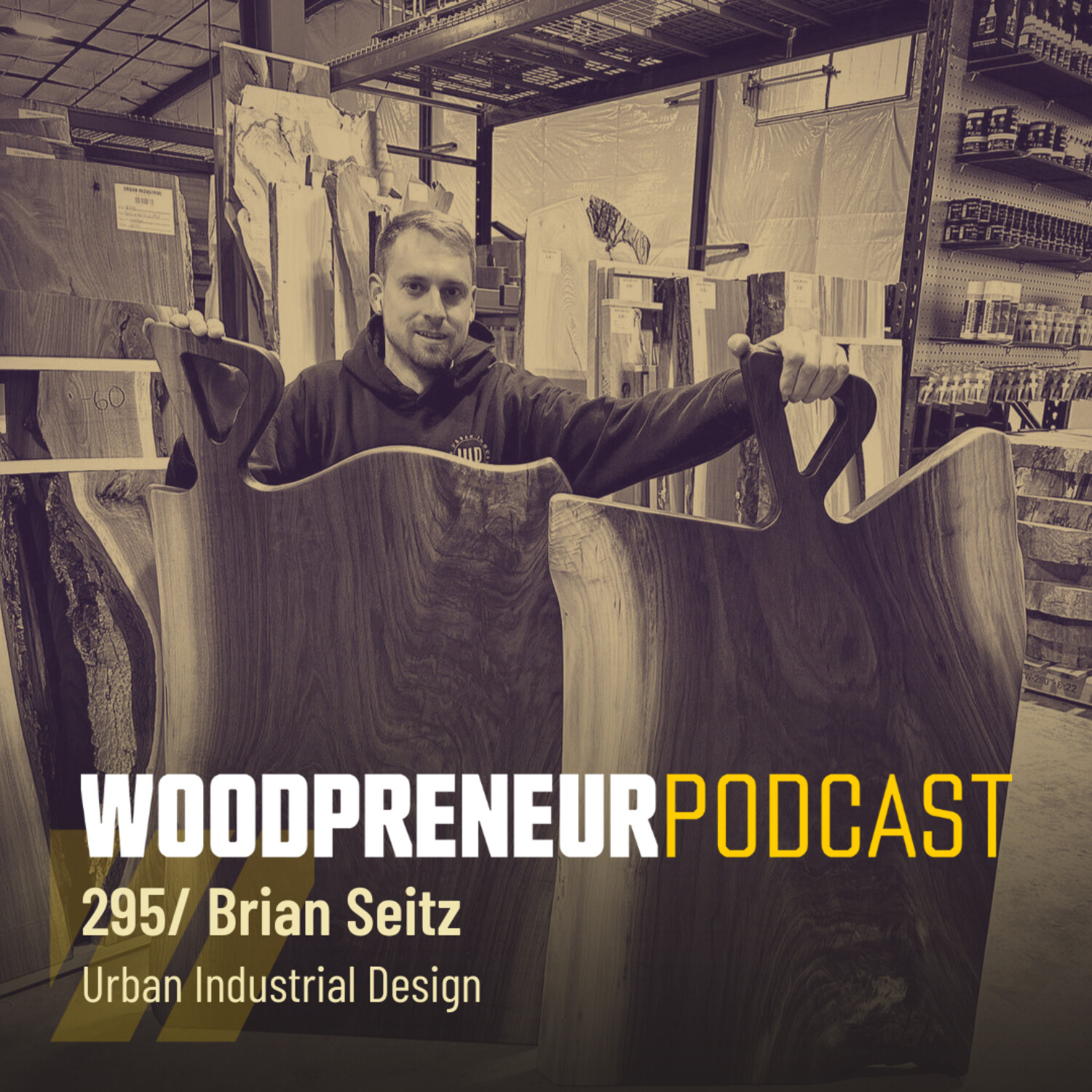
S3 Ep 295Brian Seitz: Urban Industrial Design
“ I invested in my own website. And whatever money I had left from the servers, I went out and bought as many tools that I could that I think we're going to set me up to make money down the line. You know, I can remember my very first day full time in my shop, my little one car garage. Remember, I had this customer I've been talking with, and he ended up putting a deposit down, like 2500 bucks cash that day. And I was like, wow, this is great.” -Brian Seitz Welcome to the Woodpreneur podcast, the ultimate show for the business and marketing side of the lumber, woodworking, hardwood flooring, and sawmill industry. With your host Steve Larosiliere today is Brian Site from Urban Industrial Design (UID). Brian takes us on a journey back to 2016 when he purchased his first home and decided to take on various renovation projects. His quest for unique furniture led him to discover the world of custom woodworking. Brian, with no prior woodworking experience but a strong mechanical background, decided to build his own furniture pieces. With basic tools, a one-car garage, and determination, he began his journey. “I crossed paths with and worked with different companies and what's out there, what's next? And I don't know that it just, I just kept getting, you know, sidetracked with the thought of running my own business.” -Brian Seitz The Turning Point Brian's woodworking skills quickly evolved, and his work garnered attention, eventually leading to a turning point in his life. But before he could go full-time into his newfound passion, he had a stable job in the alternative energy field, specifically working with solar panels. The career provided Brian with problem-solving experience and a desire to bring projects from conception to reality. However, fate had something different in store. Brian: "I had a six-week heads up that I had to go full time with this business. And it was the next move. I remember was just, I ran wild with, you know, at the time, Craigslist, that's whoever was advertising. I put, you know, many different items, like food on Etsy, I've learned everything about, you know, sort of how to get your scene out there on Etsy." The Beginnings of UID Brian's transition into full-time woodworking was a leap of faith. He hustled to grow his small garage-based business, and the support of friends and family played a significant role. The early days were marked by long nights and weekends spent perfecting his craft. Brian's willingness to embrace the challenge and adapt was a defining factor. Steve: "So how many years between from when you started to the 5,000 square foot shop? And how many employees did you have?" Brian: "I think it was about three years in between there. When I moved into that space, I had a full-time guy and two part-time guys." Overcoming Challenges and Growth Brian's business steadily grew, and he acquired valuable skills along the way. The ability to identify opportunities and adapt to changing circumstances became a recurring theme in his journey. He expanded into commercial and residential furniture, and his diverse product line evolved to include floating shelves. “The wood industry is so diverse, you know, there's so many different things you can do. Like, you know, you can kill it with floating shelves, you can kill it with slabs, you can kill it with, you know, so many different so many different things.” -Steve Larosiliere Want to get in touch with Brian Seitz? Contact him through: Instagram: https://www.instagram.com/urban_industrial_design/ Facebook: https://www.facebook.com/urbanindustrialdesign
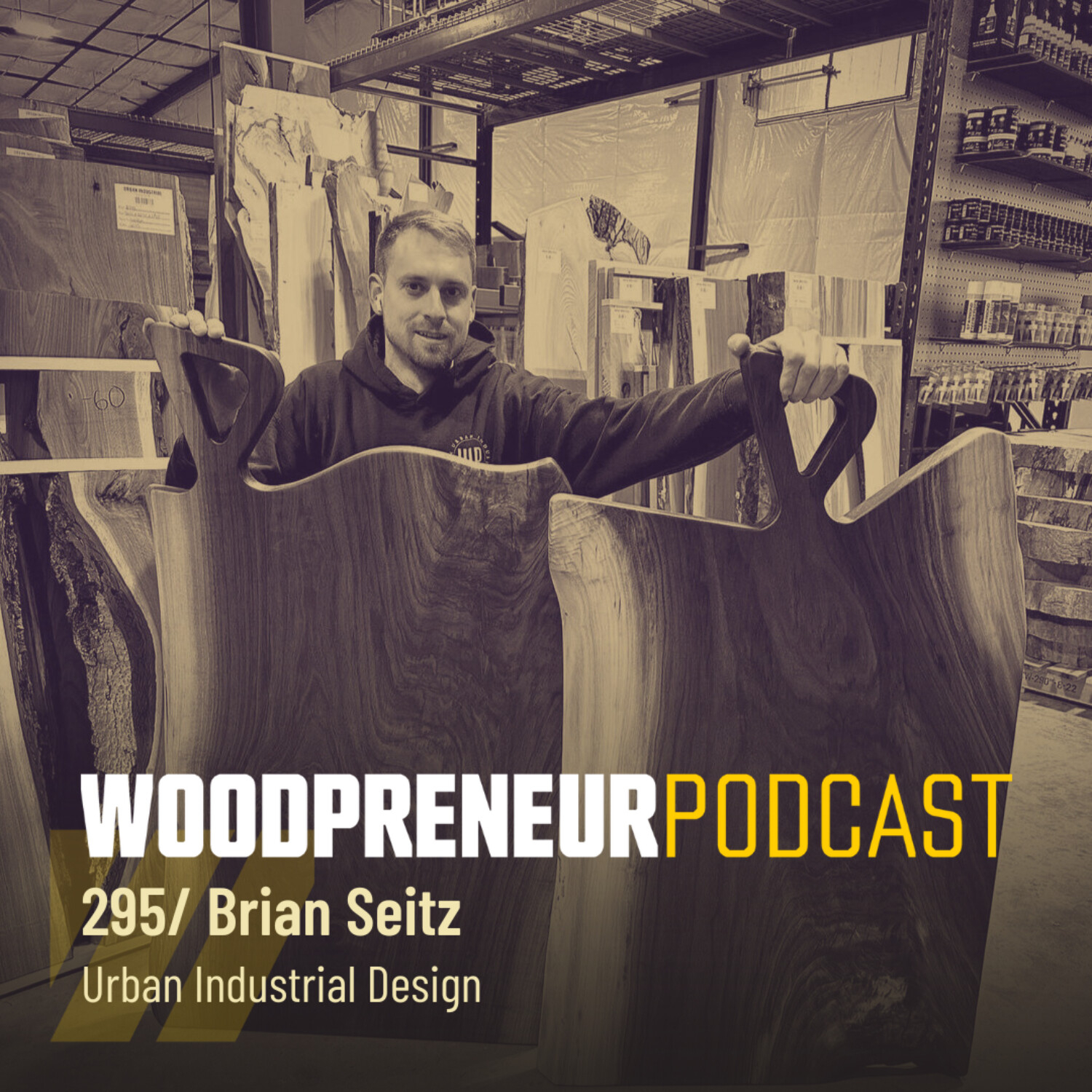
S3 Ep 295Brian Seitz: Urban Industrial Design
“ I invested in my own website. And whatever money I had left from the servers, I went out and bought as many tools that I could that I think we're going to set me up to make money down the line. You know, I can remember my very first day full time in my shop, my little one car garage. Remember, I had this customer I've been talking with, and he ended up putting a deposit down, like 2500 bucks cash that day. And I was like, wow, this is great.” -Brian Seitz Welcome to the Woodpreneur podcast, the ultimate show for the business and marketing side of the lumber, woodworking, hardwood flooring, and sawmill industry. With your host Steve Larosiliere today is Brian Site from Urban Industrial Design (UID). Brian takes us on a journey back to 2016 when he purchased his first home and decided to take on various renovation projects. His quest for unique furniture led him to discover the world of custom woodworking. Brian, with no prior woodworking experience but a strong mechanical background, decided to build his own furniture pieces. With basic tools, a one-car garage, and determination, he began his journey. “I crossed paths with and worked with different companies and what's out there, what's next? And I don't know that it just, I just kept getting, you know, sidetracked with the thought of running my own business.” -Brian Seitz The Turning Point Brian's woodworking skills quickly evolved, and his work garnered attention, eventually leading to a turning point in his life. But before he could go full-time into his newfound passion, he had a stable job in the alternative energy field, specifically working with solar panels. The career provided Brian with problem-solving experience and a desire to bring projects from conception to reality. However, fate had something different in store. Brian: "I had a six-week heads up that I had to go full time with this business. And it was the next move. I remember was just, I ran wild with, you know, at the time, Craigslist, that's whoever was advertising. I put, you know, many different items, like food on Etsy, I've learned everything about, you know, sort of how to get your scene out there on Etsy." The Beginnings of UID Brian's transition into full-time woodworking was a leap of faith. He hustled to grow his small garage-based business, and the support of friends and family played a significant role. The early days were marked by long nights and weekends spent perfecting his craft. Brian's willingness to embrace the challenge and adapt was a defining factor. Steve: "So how many years between from when you started to the 5,000 square foot shop? And how many employees did you have?" Brian: "I think it was about three years in between there. When I moved into that space, I had a full-time guy and two part-time guys." Overcoming Challenges and Growth Brian's business steadily grew, and he acquired valuable skills along the way. The ability to identify opportunities and adapt to changing circumstances became a recurring theme in his journey. He expanded into commercial and residential furniture, and his diverse product line evolved to include floating shelves. “The wood industry is so diverse, you know, there's so many different things you can do. Like, you know, you can kill it with floating shelves, you can kill it with slabs, you can kill it with, you know, so many different so many different things.” -Steve Larosiliere Want to get in touch with Brian Seitz? Contact him through: Instagram: https://www.instagram.com/urban_industrial_design/ Facebook: https://www.facebook.com/urbanindustrialdesign
S3 Ep 29410 Strategies for Thinking Big in Your Wood / Lumber Biz
“Specialization is the path to becoming an authority and a leader in your field. So pick an industry, a niche or product set, either based around what your market needs or your tools. And make sure that it aligns with your passions and skills. So that when people think about whether it's renovation or cabinetry or, or new home builds, or you know tables, like they literally just think of you” -Steve Larosiliere Welcome to a brand-new episode of the Woodpreneur Podcast. In this episode i’m going to discuss about 10 Proven Strategies to Grow Your Wood or Lumber Business, If you're a woodworker looking to take your business to the next level, you're in the right spot. But before we dive in, make sure to subscribe to the channel you're listening or watching from. Steve Larosiliere's insights provide a roadmap for your woodworking business's growth and prosperity. By following these steps, you'll be on your way to attracting and serving the right clientele, ensuring the long-term success of your business. It's time to hear the complete story now! “You can't just stay in the shop, he can't stay behind the computer, you have to actually go out and there's a power in DMing people to start having conversations. The next strategy number six is streamlining your workflow.” -Steve Larosiliere Enhance Your Online Presence: In today's digital age, having a robust online presence is non-negotiable. Your website and social profiles are the first impression of your business. Make them visually appealing, user-friendly, and filled with great content, images, and videos of your work. Your woodworking journey begins here. Niche Specialization: Specialization is the path to becoming an authority in your field. Pick a niche or product set that aligns with your market needs, your tools, your passions, and your skills. When people think of woodworking, they should think of you. Effective Marketing Techniques: Marketing is the bridge to your ideal client. Utilize digital marketing strategies such as search engine optimization and social media content marketing to reach a larger audience. Engage with your audience authentically. Elevate Your Client and Customer Experience: Exceptional customer service sets you apart. Go above and beyond your clients' expectations, from personalized project updates to after-sales support. Make every interaction memorable. Networking: Networking is your secret weapon. Connect with peers, suppliers, industry professionals, and other businesses. Don't just stay in your shop or behind a computer – reach out and start conversations. There's immense power in networking. Streamline Your Workflow: Identify bottlenecks in your workflow and invest in time-saving tools and technology. Learning to be more efficient reduces waste, boosts productivity, and saves you both time and money. “Think and go big. That's I always say that that's like my motto is I challenge you to think and go big. “ -Steve Larosiliere Contact him through: Instagram: https://www.instagram.com/thelarosiliere/?hl=en Woodpreneurlife Instagram: https://www.instagram.com/woodpreneurlife/ LinkedIn: https://www.linkedin.com/in/stevelarosiliere/ Acres of Timber Website: https://www.acresoftimber.com/ Stoked Website: https://www.stoked.org/ YouTube: https://www.youtube.com/c/SteveLarosiliere Woodpreneurlife YouTube: https://www.youtube.com/@woodpreneurlife4211 Facebook: https://www.facebook.com/stevelarosiliere1/ Woodpreneurlife Website: https://www.woodpreneurlife.com/
S3 Ep 293$10K in 15 Day Sprint Testimonial - Brandon Cord
“It was like a goodwill I wanted to help people get some big milestones in their life and their business, you know, and I'm glad it was perfect. I'm glad that it was able to help you at a time when you need it” -Steve Larosiliere Welcome to a brand-new episode of the Woodpreneur Podcast. Today, we have a remarkable success story to share with you. Meet Brandon from BC Woodworks, who took on a 15-day challenge that completely transformed his business and set him on a path to success he'd never imagined. So, grab your favorite coffee or tea, and let's dive into Brandon's journey. Now is the time to listen and hear the whole story! “I just like to get things done quickly. So 15 Day Challenge, knock it out real quick and see what happens. But like I said, What do you got to lose? You got to try new things if you want to grow? “ -Brandon Cord Background and Beginnings Before we jump into the challenge, let's get to know Brandon a bit. Brandon started his woodworking journey at a young age, working alongside his father building custom cabinets, mainly kitchens. For over a decade, he honed his skills in the shop, eventually taking on the role of a foreman. However, Brandon started feeling burned out on cabinets and wanted to build his legacy, something that truly resonated with his passion. He began crafting custom furniture and ventured into selling lumber, which he did for two years before making the leap to go full-time. The Motivation to Take on the Challenge Now, you might be wondering why Brandon decided to participate in the 15-day challenge. Well, he had a goal - to achieve $10,000 in revenue. But it wasn't just about the money; he needed more work and wanted to explore how he could leverage the power of Facebook, something that's both simple and free. With August slowing down and September approaching, Brandon decided he had nothing to lose and everything to gain by taking on the challenge. The Results That Surpassed Expectations Fast forward through the 15-day challenge, and Brandon accomplished something remarkable. His initial goal was to reach $10,000 in revenue, but the results were beyond his expectations. Brandon generated an astounding $27,565 in just 15 days! That's more than double his previous highest month ever. What's even more impressive is that this newfound success isn't just a one-time thing. Brandon secured two significant ongoing accounts, each potentially worth around $75,000 to $80,000 annually. This success has put him in a position to hire someone to help manage the growing workload and expand his business even further. “I'm also in line to buy a sawmill first of the year. So we're gonna play with that, too. If the numbers make sense, I I got a like a brand new Lt. 40 guys wants me to buy it for them. So that would be a big help to buy that right now. “ -Brandon Cord Want to get in touch with Steve Larosiliere? Contact him through: Instagram: https://www.instagram.com/thelarosiliere/?hl=en Woodpreneurlife Instagram: https://www.instagram.com/woodpreneurlife/ LinkedIn: https://www.linkedin.com/in/stevelarosiliere/ Acres of Timber Website: https://www.acresoftimber.com/ Stoked Website: https://www.stoked.org/ YouTube: https://www.youtube.com/c/SteveLarosiliere Woodpreneurlife YouTube: https://www.youtube.com/@woodpreneurlife4211 Facebook: https://www.facebook.com/stevelarosiliere1/ Woodpreneurlife Website: https://www.woodpreneurlife.com/
S3 Ep 292Jim Becker: Creative Log & Lumber
“It just felt like I was sitting on a powder keg, just apply a little bit of sales and some operations and, and watching it grow.” -Jim Becker Welcome to a brand-new episode of the Woodpreneur Podcast. Today, your host Steve Larosiliere is joined by Jim Becker the driving force behind Creative Log and Lumber, a full-service urban lumber company located in Southeast Wisconsin. Jim's story is one of transformation, from a career in aerospace and hydraulics manufacturing to becoming a passionate advocate for sustainable woodworking and the preservation of urban trees. Jim's journey began in the world of manufacturing, where he spent 12 years working primarily in aerospace and hydraulics component manufacturing. Although he excelled in this field, it wasn't his true passion. Then came a furlough from his company due to the COVID-19 pandemic, and it was the catalyst for change. Jim's journey into the world of urban lumber started with a simple kitchen renovation project during the pandemic. He stumbled upon Creative Log and Lumber while searching for a live-edge bartop or island top. Little did he know that this encounter would set the course for his future. Months later, when the furlough extended, Jim decided to reach out to Creative Log and Lumber to offer his assistance temporarily. What was meant to be a short-term gig turned into a two-and-a-half-year adventure of passion and learning in the urban lumber industry. Listen now and get the whole story! “My mom looked at me and said, Jim, your marketing is so bad that your family members don't even know it. And she was done. And she's always called it as she's seen it. So that was a wake up call just so that I felt like I talked about what I did and shared with people what I did.” -Jim Becker The Genesis of Creative Log and Lumber Creative Log and Lumber is a division of Creative Edge Landscapes, owned by Bob and Corrine Livingston. These visionary entrepreneurs saw the potential in salvaging high-quality urban logs that often ended up as low-quality landscaping products. In 2011, they purchased a sawmill, built a dehumidification kiln, and slowly built their lumber business piece by piece. Jim joined the company when it was on the cusp of exponential growth. With his manufacturing expertise, he applied lessons from his previous career to the lumber industry, implementing operational improvements and quality control standards. Becoming Visible: The Marketing Challenge One of the significant challenges Jim faced was the company's lack of visibility. Creative Log and Lumber was nestled in a small town in Wisconsin, and very few people knew about their existence. Even Jim's own family members were unaware of his involvement in the business. The wake-up call came during a family dinner when Jim's mother-in-law innocently revealed that they were buying a table from a local woodworker found on Facebook Marketplace. Jim's dismay at not being their first choice highlighted a severe marketing deficiency. Jim realized that to grow the business, he needed to overcome his aversion to social media and embrace it as a powerful tool for reaching potential customers. It was time to change the narrative and make Creative Log and Lumber a well-known entity in the market. “I know, there's like this mindset amongst the wood community. It's like, if you do good enough work, people will find you, i’m like No!!!” -Steve Larosiliere Want to get in touch with Jim Becker? Contact him through: Website: https://www.logandlumber.net/ Instagram: https://www.instagram.com/creativelogandlumber/
S3 Ep 291$10K in 15 Day Sprint Testimonial - Layane Maximillion
“I think part of what I wanted to do with this was to help show people what was possible. Yeah. And I think like, I think I told you this, or you found out that this is literally one strategy. Like this is just one strategy to get you to where you need to be. “ -Steve Larosiliere Welcome to a brand-new episode of the Woodpreneur Podcast. Today, we have a remarkable success story to share with you. Leanne Maximilian, co-owner of a furniture company in Dallas, Texas, recently participated in our 10k in 15 Day Challenge sprint. Despite facing some personal challenges, she achieved incredible results, making it one of her best months ever. In this episode, we'll dive into Leanne's journey and discover the strategies that propelled her business forward. Now is the time to listen and hear the whole story! “ It's such a huge part of our business, like, there's no way to forget about it. Especially if you want to make what we love. Right, the pieces that we love, we need to find the right clients for that. So the only way is by marketing.” -Layane Maximillion Motivation to Participate: Leanne's motivation to participate in the challenge stemmed from curiosity and a desire to learn more about effective marketing strategies within the woodworking community. She decided to give it a try, despite not having any prior marketing plans due to her surgery. The Impact of the Challenge: During the challenge, Leanne began to notice positive changes in her business. She started receiving more leads and new followers on social media, particularly from the tasks assigned by the challenge. It was around day three or four when she realized that the strategies were genuinely working to generate leads and boost her business. Significant Impact: Around day five, Leanne noticed a significant shift. She realized that maintaining consistent marketing efforts every day was the key to success. This realization highlighted the importance of daily activity for generating consistent leads and sales. Most Effective Strategies: Leanne found that a combination of paid advertising on Facebook and Instagram, as well as leveraging Nextdoor, yielded remarkable results. Additionally, actively adding friends on Facebook, a strategy she hadn't previously used, proved to be highly effective in expanding her network. Breakthrough Moments: Leanne shared that posting on her personal Facebook page, which she rarely did, was a breakthrough moment. It helped her connect with friends and acquaintances she didn't know were interested in her business. This demonstrated the power of utilizing a variety of marketing strategies. Overcoming Obstacles: The challenge helped Leanne overcome the obstacle of not consistently staying active with marketing efforts. She realized that maintaining daily marketing activities was essential to ensuring a steady flow of leads and opportunities. Specific Results: In just 15 days, Leanne's business generated over $12,400 and received 17 new leads, with approximately 30-40% of those being new clients. “ I had some friends that I really did not know I had as, as friends, local people. And they were like, Oh, my gosh, your pieces are beautiful. I didn't know that. That's what you did. Like, literally, friends from our Facebook already. So. So that's something big too. So just put it in our together the whole, like, the whole, you should use a little bit of every strategy. It was awesome.” -Layane Maximillion Want to get in touch with Steve Larosiliere? Contact him through Instagram: https://www.instagram.com/thelarosiliere/?hl=en Woodpreneurlife Instagram: https://www.instagram.com/woodpreneurlife/ LinkedIn: https://www.linkedin.com/in/stevelarosiliere/ Acres of Timber Website: https://www.acresoftimber.com/ Stoked Website: https://www.stoked.org/ YouTube: https://www.youtube.com/c/SteveLarosiliere
S3 Ep 290$10K in 15 Day Sprint Testimonial - Todd Nordstrom
“if you follow the instructions and you do everything you're you're going to generate more money, potentially than you've ever made before.” -Steve Larosiliere Welcome to a brand-new episode of the Woodpreneur Podcast, If you've ever doubted the power of mentorship and the impact it can have on your business, Todd Nordstrom's story is bound to change your mind. In a recent podcast interview with Steve Larosiliere, Todd shared his experience of taking on the 10K in 15 Days Challenge and the incredible transformation it brought to his sawmill business. This podcast takes you through the key takeaways from the conversation. Now is the time to listen and hear the whole story! “I'd say just, you know, kind of stepping out of my comfort zone and reaching out and actually being active in the in the community and then with previous customers. And then posting a lot being like, you know, this is who I am, this is what I do” -Todd Nordstorm The Challenge That Changed It All Todd Nordstrom, a sawmill owner based in Mount Bethel, Pennsylvania, embarked on a journey that would redefine the possibilities for his business. Prior to taking on the challenge, Todd was making around $5,000 a month from his sawmill business, primarily selling beams and siding made from white pine and oak. But he knew there was more potential waiting to be unlocked. Steve Larosiliere's 10K in 15 Days Challenge provided the perfect opportunity for Todd to push his boundaries. The challenge aimed to help participants generate $10,000 in 15 days, an ambitious goal for Todd, who had never crossed the six-figure mark in his business. A Shift in Mindset and Strategy As Todd dove into the challenge, he started noticing significant shifts in his business. One of the first realizations he had was the importance of being active on social media and reaching out to previous customers. Consistency in posting and engagement with his audience turned out to be key drivers in generating leads. Todd reached out to a mix of homeowners and contractors, expanding his client base. It wasn't long before he witnessed the challenge's impact. By day six or seven, Todd had secured substantial orders, and this was a game-changer. He was finally beginning to see the fruits of his labor. “ I'm gonna help you visualize what that means. Yeah, you could ideally spend $100 to get one customer. Oh, yeah. $170. But that $170 or even $200 Will for one customer. They're going to be worth way more than that. Because you got a lot of repeat customers in the past, “ -Steve Larosiliere A Message for Skeptics For those who may still be skeptical about the power of mentorship and challenges like this, Todd Nordstrom has a message. He firmly believes that consistency and a commitment to giving it your all are the prerequisites for success. The challenge helped him visualize his goals, break through his limitations, and embrace a new perspective on his business. Want to get in touch with Steve Larosiliere? Contact him through: Instagram: https://www.instagram.com/thelarosiliere/?hl=en Woodpreneurlife Instagram: https://www.instagram.com/woodpreneurlife/ LinkedIn: https://www.linkedin.com/in/stevelarosiliere/ Acres of Timber Website: https://www.acresoftimber.com/ Stoked Website: https://www.stoked.org/ YouTube: https://www.youtube.com/c/SteveLarosiliere

S3 Ep 289Austin Handel: The Maker Camp
“I'd seen all these awesome people on Instagram and stuff making incredible things. But I never really fathom that there is this interconnected network of all of these makers and influencers that like I didn't realize it like everybody already knew each other for the most part. And they were just looking for an excuse to come together and like share their skills with one another.” -Austin Handel Welcome to a brand-new episode of the Woodpreneur Podcast. Today, your host Steve Larosiliere is joined by Austin Handel from The Maker Camp. In the world of craftsmanship and creativity, there are places that serve as hubs for artisans to gather, learn, and share their skills. One such place is Maker Camp, a unique and grassroots event located in eastern New York. In this podcast episode, we explore the journey of Austin Handel, the mastermind behind Maker Camp, as he talks about the inception of the event, its growth, and the challenges he has overcome to make it a thriving success. Listen now and get the whole story! “whenever I find something that people are interested in, I tried to find ways to expand on it. Like last year, I had purchased Neiman teaching silver smithing classes and people really liked it. So I've got somebody doing some some cold for metal smithing.” -Austin Handel Building a Community Austin reflects on the sense of community that has grown around Maker Camp. He discovered that the maker community was not just a loose collection of individuals but a tightly-knit network of passionate artisans and influencers. The first year of Maker Camp served as a transformative experience for him, as he realized the depth of interconnectedness within the maker world. Planning and Growth Organizing Maker Camp is no small feat, and Austin explains how the planning process typically begins immediately after the previous year's event. The podcast delves into Austin's meticulous planning process and how he incrementally adds new elements and classes each year to enhance the experience for attendees. The International Reach of Maker Camp Maker Camp's popularity has grown significantly, with attendees coming from various parts of the world, including Norway, Japan, Germany, the UK, and Canada. Austin expresses his pride in putting his small town of East Durham on the map, drawing people from across the globe to his family's resort. “ I love and I get energy from people, but then when I'm done, I'm like, I just want to squirrel away for a little bit. Just like refocus, not be around the energy. “ -Steve Larosiliere Want to get in touch with Austin Handel? Instagram: https://www.instagram.com/themakercamp/ Website: https://catskillmountainmakerscamp.com/2023-events
S3 Ep 288Maximizing Efficiency and Growth in Your Woodworking Business
“ Add 20% to all of those bills because then that's going to give you margin If you're way too busy and way too swamped, it's because your prices are not high enough.” -Steve Larosiliere Welcome to a brand-new episode of the Woodpreneur Podcast, we discuss about running a successful woodworking business comes with its fair share of challenges, especially when growth begins to stretch your resources thin. In a recent conversation with Steve, the co-founder of a thriving lumber and furniture business, we delved into the complexities of managing a growing enterprise and how to make the most of your available time and resources. Here's a breakdown of the valuable insights shared during our discussion Now is the time to listen and hear the whole story! Elevate Your Positioning: Steve emphasized the importance of positioning your business effectively. Highlight your unique selling points and create an outstanding customer experience to justify higher prices. Streamline Quoting and Presentation: Use professional presentations like PowerPoint to enhance your quotes. Follow up with potential clients through video presentations or personal calls to provide a personalized experience. Delegate and Outsource: Identify tasks that can be delegated or outsourced to free up your time. Use a CRM (like VMAs) to automate follow-ups, lead generation, and customer management. Effective Time Management: Implement strict time blocking to prioritize important tasks. Don't answer the phone during specific hours; let calls go to voicemail and set expectations for call-back times. Create Attention-Grabbing Assets: Allocate time in the morning to create attention-grabbing assets for your business, such as social media posts, emails, and marketing materials. Focus on High-Impact Activities: Differentiate between tasks that are merely time-consuming and those that significantly impact your business growth. “My mornings are all about checking in with my sales team. My afternoons, while mid morning is about reviewing sales calls and numbers and metrics.” -Steve Larosiliere Want to get in touch with Steve Larosiliere? Contact him through: Instagram: https://www.instagram.com/thelarosiliere/?hl=en Woodpreneurlife Instagram: https://www.instagram.com/woodpreneurlife/ LinkedIn: https://www.linkedin.com/in/stevelarosiliere/ Acres of Timber Website: https://www.acresoftimber.com/ Stoked Website: https://www.stoked.org/ YouTube: https://www.youtube.com/c/SteveLarosiliere Woodpreneurlife YouTube: https://www.youtube.com/@woodpreneurlife4211 Facebook: https://www.facebook.com/stevelarosiliere1/ Woodpreneurlife Website: https://www.woodpreneurlife.com/
S3 Ep 287Mastering Social Media for Your Woodworking Business: Nine Essential Content Types
“There's a bunch of different variations, but you actually should just do what's comfortable for you. And if not, potentially outsource the rest, but like, focus on these nine pieces of content” Steve Larosiliere Welcome to a brand-new episode of the Woodpreneur Podcast, in the ever-evolving world of woodworking, establishing a strong online presence is crucial for growth and success. As a woodpreneur, it can be challenging to decide what content to share on your social media platforms. That's why we're here to guide you through the nine essential pieces of content every woodworking business needs to flourish on social media. I'm Steve Larosiliere, the founder of Builder Growth and the host of the Woodpreneur Podcast, where we specialize in helping wood, lumber, woodworking, and sawmill businesses thrive. Today, let's dive into a quick training session to help you create these nine fundamental content pieces and lay the foundation for continuous growth on your social media platforms. Now is the time to listen and hear the whole story! “You can create content and videos and, and written words with screenshots. And you know carousels based off of all of this right so the ever process for milling lumber, if you have a process for building tables of process for designing and quoting, built ins, if you have a process for flooring, if you have a process for any, like renovations, like anything that that people always ask you, what's your timeframe, what's your lead time like from start to finish? What are your payment terms like all of this stuff” -Steve Larosiliere Step 1: Uniformity and Clarity in Your Profiles Before you start creating content, it's essential to ensure consistency across all your social media accounts, be it Facebook, Twitter, YouTube, Instagram, or LinkedIn. Make sure your usernames are the same across all platforms, and your bios are similar. Each bio should include a link to your website and a clear call to action, such as "Contact me for a custom design" or "Book an appointment for a consultation." This consistency and clarity will help potential customers easily connect with your business. Step 2: The Nine Essential Content Types Now, let's explore the nine types of content you should focus on for your woodworking business: 1. Facility and Product Showcase: Share pictures and videos of your woodworking facility, shop, showroom, or factory. Highlight the various products you offer, from custom furniture to lumber milling and renovations. 2. About Us and Company Bio: Create a video or written content that tells your audience about your business's history, vision, mission, and values. Share how long you've been in business to humanize your brand. Step 3: Content Creation and Editing To streamline the content creation process, consider using tools like Chat GPT to write scripts and captions. Video editing software like Cap Cut, iMovie, or Instagram's built-in editor can help you compile photos and B-roll footage. Add a voiceover to enhance your content's impact. “if you want to stay relevant, just stay on on the daily, just post stories to Instagram and habits sync to your Facebook personal or business page.” -Steve Larosiliere Want to get in touch with Steve Larosiliere? Contact him through: Instagram: https://www.instagram.com/thelarosiliere/?hl=en Woodpreneurlife Instagram: https://www.instagram.com/woodpreneurlife/ LinkedIn: https://www.linkedin.com/in/stevelarosiliere/ Acres of Timber Website: https://www.acresoftimber.com/ Stoked Website: https://www.stoked.org/ YouTube: https://www.youtube.com/c/SteveLarosiliere Woodpreneurlife YouTube: https://www.youtube.com/@woodpreneurlife4211 Facebook: https://www.facebook.com/stevelarosiliere1/ Woodpreneurlife Website: https://www.woodpreneurlife.com/
S3 Ep 286Matt Ruben: Ruben Custom Sawmill
“with all the obstacles, overcoming, there's so many, with any occupation that you go into, or your daily life, you have to mitigate risks, and this type of occupation that he's in, there's a lot of mitigating. And it's just been more of a learning experience as his sidekick, I guess that's my answer to all of the the wives out there, or husbands, you know, that, that feel like their spouse wants to go into this is just to know that life is short, and to push your spouse to go for what they want their dreams” -Matt Ruben Welcome to the Woodpreneur podcast, the ultimate show for the business and marketing side of the lumber, woodworking, hardwood flooring, and sawmill industry. With your host Steve Larosiliere today isMatt & Antonia Ruben from Ruben Custom Sawmill. Matt and Antonia's journey in the woodworking industry began several years ago when Matt was working as a manager at a steel foundry while pursuing woodworking as a part-time passion. Their lives took a significant turn when they decided to invest more in Matt's woodworking venture. Matt's wife, Antonia, played a pivotal role in encouraging him to expand and take his passion seriously. They recognized the potential for growth and the demand for portable milling and custom wood pieces. “when you go for something, don't give up and there's no there's no way we'll ever be able to fix an issue if you don't try to mitigate through your your problems and try to, you know, get you'll get to where you want to be when you go through all that.” -Matt Ruben The Humble Beginnings: Matt and Antonia's journey in the woodworking industry began several years ago when Matt was working as a manager at a steel foundry while pursuing woodworking as a part-time passion. Their lives took a significant turn when they decided to invest more in Matt's woodworking venture. Matt's wife, Antonia, played a pivotal role in encouraging him to expand and take his passion seriously. They recognized the potential for growth and the demand for portable milling and custom wood pieces. Facing Early Challenges: Matt's woodworking business started to gain traction, but it wasn't without challenges. In 2020, shortly after he officially started the business, Matt received a cease operations order. This unexpected setback marked the beginning of a challenging journey. The couple faced various misconceptions, complaints, and legal battles from their neighbors and local authorities. Despite being law-abiding and passionate about their craft, Matt and Antonia found themselves in a difficult position. Want to get in touch with Matt Ruben? Contact him through: Instagram: https://www.instagram.com/rubencustomsawmill/ Website: http://rubencustomsawmill.com/
S3 Ep 285Overcoming Challenges and Building a Thriving Custom Wood Business
“ So here's the thing, the thing with with business is so I have clients that are doing what you're doing and and the only difference is how fast they're able to respond to their leads.” -Steve Larosiliere Welcome to a brand-new episode of the Woodpreneur Podcast, in this episode, i am sharing a snippet from $10k in 15 days challenge, where in this discussion highlights the importance of persistence, adaptability, and a clear vision for entrepreneurs in the custom furniture industry. By learning from their experiences and implementing the right strategies, these business owners are working towards building thriving enterprises in a competitive market Now is the time to listen and hear the whole story! “when are you looking to do this project? If they say next year, don't get on the phone with them? If they say six months, don't get on the phone with them. If they say right now, or the next two months or three months, then get on a call with them” -Steve Larosiliere The Challenge of Getting Leads One entrepreneur expressed their frustration with leads that seemed promising at first but ended up being "tire kickers." Many potential customers expressed interest but were not ready to commit. This is a common challenge for businesses, especially those just starting. Generating Leads: A Valuable Achievement Another participant pointed out that generating any leads at all is a significant accomplishment. Many businesses struggle to attract leads, making it crucial to acknowledge the achievement of generating interest, even if they don't all convert into sales. Identifying Target Customers The conversation then shifted to the importance of targeting the right audience. One entrepreneur discussed the significance of crafting a message that resonates with potential customers who can afford and are ready to invest in custom furniture. Understanding your target market and their needs is key to success. Creating a Sense of Urgency The entrepreneurs emphasized the importance of creating a sense of urgency when dealing with potential clients. Urgency can help qualify leads and separate those who are genuinely interested from those who are not ready to commit. By asking potential clients when they want to complete their project, business owners can better assess their level of commitment. The Sales Process: Step by Step A step-by-step approach to the sales process was also discussed. The process begins with a quick initial call to understand the customer's needs and explain the project's steps. It then progresses through qualification, design consultation, and proposal presentation, each step serving to further refine the lead and build trust. “Part of the challenge is having clarity on what your right business model is. Because once you have the right business model, like it, you'll go really really fast.” -Steve Larosiliere Want to get in touch with Steve Larosiliere? Contact him through: Instagram: https://www.instagram.com/thelarosiliere/?hl=en Woodpreneurlife Instagram: https://www.instagram.com/woodpreneurlife/ LinkedIn: https://www.linkedin.com/in/stevelarosiliere/ Acres of Timber Website: https://www.acresoftimber.com/ Stoked Website: https://www.stoked.org/ YouTube: https://www.youtube.com/c/SteveLarosiliere Woodpreneurlife YouTube: https://www.youtube.com/@woodpreneurlife4211 Facebook: https://www.facebook.com/stevelarosiliere1/ Woodpreneurlife Website: https://www.woodpreneurlife.com/
S3 Ep 284Finding the Right Customer for Your Woodworking Business
“Honestly, if you just spent most of your time analyzing who is your ideal customer, or profiling your past five customers, this will help you tremendously, because then you're like, Okay, these are the people that buy where I want to buy, how do I reach them” -Steve Larosiliere Welcome to a brand-new episode of the Woodpreneur Podcast. In this episode i’m going to help you with Finding the right customers for your woodworking business requires a strategic and thoughtful approach. Identifying your ideal customer, tailoring your marketing efforts, qualifying leads, collecting feedback, and collaborating with industry peers are all crucial steps to success. Steve Larosiliere's insights provide a roadmap for your woodworking business's growth and prosperity. By following these steps, you'll be on your way to attracting and serving the right clientele, ensuring the long-term success of your business. It's time to hear the complete story now! “Define your ideal customer. So what you want to do is, before you find the right customer, you need to know who they are. And you want to start by creating an ideal customer profile. This is a detailed description of the right type of customer who are the best fit for your business? And so some of the things you want to think about our demographics like what are the age, whether to gender, income level, occupation or types of occupation?” -Steve Larosiliere Tailor Your Marketing and Outreach Once you've created your Ideal Customer Profile, tailor your marketing and outreach efforts to cater specifically to this audience. Here's how: Content Marketing: Develop content, such as articles, videos, and posts, that directly addresses the needs and interests of your ideal customers. For instance, if your target audience consists of homeowners looking to renovate kitchens, create content about kitchen design and the benefits of custom cabinetry. Social Media Targeting and Paid Advertising: Utilize platforms like Facebook, Instagram, and Google PPC to target your ideal customers based on their demographics and interests. Leverage localized Search Engine Optimization to attract local customers. Attend Local Events and Network: Engage with your community by attending local events, joining business associations, and building relationships with potential customers and businesses that can refer customers to you. This hands-on approach can be highly effective. “Facebook and Instagram make it so easy to target these people geographically by age by what their lifestyle is, whether they have family, that sort of stuff, we can probably do another training on that localized Search Engine Optimization” -Steve Larosiliere Contact him through: Instagram: https://www.instagram.com/thelarosiliere/?hl=en Woodpreneurlife Instagram: https://www.instagram.com/woodpreneurlife/ LinkedIn: https://www.linkedin.com/in/stevelarosiliere/ Acres of Timber Website: https://www.acresoftimber.com/ Stoked Website: https://www.stoked.org/ YouTube: https://www.youtube.com/c/SteveLarosiliere Woodpreneurlife YouTube: https://www.youtube.com/@woodpreneurlife4211 Facebook: https://www.facebook.com/stevelarosiliere1/ Woodpreneurlife Website: https://www.woodpreneurlife.com/
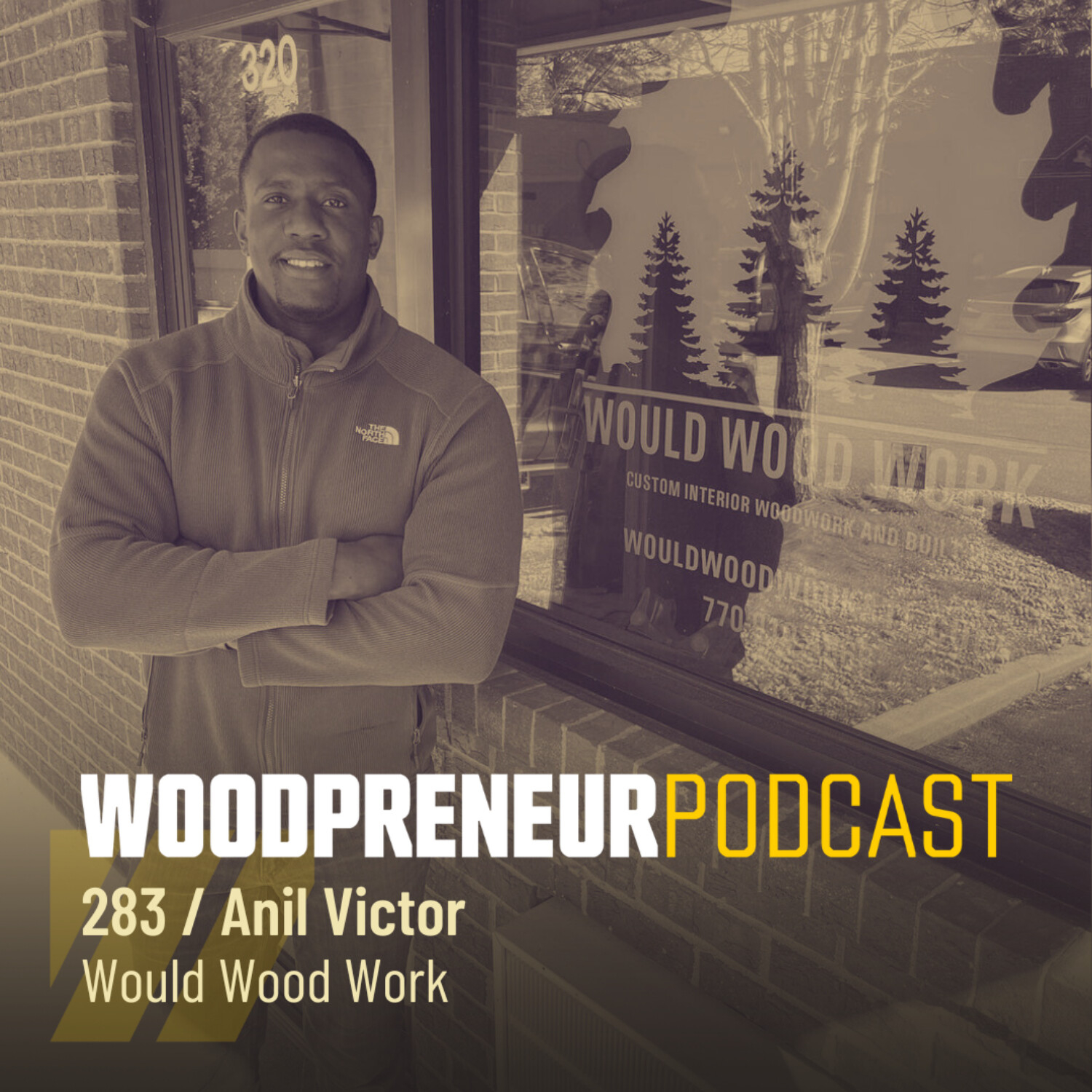
S3 Ep 283Anil Victor: Would Wood Work
“Our living room built in our closet. And as I was doing these projects, my neighbors, they were like catching on to what I was doing. And then I had one neighbor that inquired about a project. And I did it for her, you know, made it made a decent profit off of that project. And that's what kind of opened my eyes to wait. There's something here that, you know, I'm not yet understanding, but I think I should, dive a little bit deeper into this” -Anil Victor Welcome to the Woodpreneur podcast, the ultimate show for the business and marketing side of the lumber, woodworking, hardwood flooring, and sawmill industry. With your host Steve Larosiliere today is Anil Victor the founder of Would Woodwork. Neil's journey from creating infinity tables to crafting custom woodworking masterpieces is nothing short of inspiring. Let's dive into his incredible story. Listen now and get the whole story! “ Do whatever you needed to do but I took that time so you know, learning woodworking I was like reading articles on how to build certain things, watching YouTube videos, you know, dabbling around making mistakes.” -Anil Victor The Turning Point in His Woodworking Adventure In 2017, Anil and his partner Samantha purchased a townhome. Disappointed by the cookie-cutter designs and lack of character, Anil took matters into his own hands. He started creating custom accent walls, window benches, and even closet spaces. Word quickly spread among his neighbors about his exceptional woodworking skills. One neighbor, in particular, asked Anil to take on a project for her. He accepted the challenge, and the result not only impressed her but also ignited Anil entrepreneurial spirit. This initial project planted the seed of an idea—the potential for a thriving woodworking business. Fast forward to the end of 2020, and that seed had grown into "Wood Woodwork." The Pandemic Pivot The year 2020 brought immense change for many people, including Neil. As the pandemic unfolded, Anil work transitioned from his tech job to full-time woodworking. The turning point came when he looked in the mirror, questioning his potential. March 18, 2021, marked the day he handed in his two-week notice, taking the plunge into full-time entrepreneurship. Anil initial focus was on creating custom accent walls, capturing the attention of social media. TikTok and Instagram became powerful tools for showcasing his work, drawing in potential clients. His innovative designs and meticulous craftsmanship rapidly gained recognition, paving the way for a broader range of projects. “But the way I like to say it is like social media and Instagram and Tiktok and Facebook or whatever, YouTube, whatever the platform is, the more you show up, the more you consistent, it is literally like driving on a highway” -Steve Larosiliere Want to get in touch with Anil Victor? Instagram: https://www.instagram.com/wouldwoodwork_llc/ Website: https://wouldwoodworkatl.com/

S3 Ep 282Prepping for Q4 - Profits Before Christmas
“ For many, the fourth quarter is a culmination of the year's work. And in woodworking businesses and in wood businesses, this is definitely your chance to shine. A lot of people bring get most of their business during this time” -Steve Larosiliere Welcome to the Woodpreneur podcast, the ultimate show for the business and marketing side of the lumber, woodworking, hardwood flooring, and sawmill industry. With your host Steve Larosiliere today we'll delve into the critical topic of the fourth quarter (Q4) and what it means for your wood business. Q4 is the culmination of a year's hard work for many wood businesses. It's a time when opportunities abound, from custom holiday orders to end-of-year projects and beyond. People are looking to invest their money, both in personal and business ventures. Your performance during this period can leave a lasting impression and set the tone for the following year. However, many wood printers underestimate the potential of Q4, often letting business come to them instead of proactively seeking it. Listen now and get the whole story! “over promising under delivering can tarnish your company's in your brand's reputation. So part of this process is to really look at what you're capable of. I know it's enticing to want to like produce a lot of smaller quick to order things. And it's you know, it's it's it's nice money” -Steve Larosiliere Components of a Successful Q4 Strategy To craft a successful Q4 strategy, you must reflect on your past performance in the previous three quarters. What products were well-received? Which marketing strategies yielded the best results? Identifying your top sales sources and most profitable products will guide your approach. Consider enhancing your star product. Can you make it even more appealing by using unique materials or creating limited-edition versions? Additionally, capacity planning is vital. While it's tempting to accept every order, prioritize quality over quantity. Focus on substantial projects that allow you to maintain a sustainable workload and enjoy the holiday season. Tips and Recommendations for Woodpreneurs Here are some practical tips to help you navigate Q4 successfully: Eisenhower Box: Use this tool for task prioritization to identify what needs immediate attention.Time Blocking: Allocate dedicated time for both production and marketing activities. Minimize distractions during these blocks.Centralized Communication: Streamline communication with clients by consolidating emails, phone calls, and direct messages into one central location.Focus on High-Value Products: Concentrate on high-ticket items like tables, furniture, and built-ins. These projects can yield better profit margins with fewer orders.Seek Support: Don't hesitate to bring in extra help, outsource marketing, customer communication, or accounting tasks when needed. Conclusion Remember, Q4 is not just another quarter; it's an opportunity to end the year on a high note and set the stage for the year ahead. Your wood business has the potential to shine during this period. Every product, every customer interaction, and your own story can leave a lasting impact.

S3 Ep 281Unlocking the Potential of Woodworking: The Power of Leverage
“Imagine if you literally had to hand sand, your, every piece of furniture, right, that would take you forever. Or you can use an orbital sander that gives you more leverage there” - Steve Larosiliere Welcome to the Woodpreneur podcast, Woodworking is a craft that has been cherished for centuries, producing beautiful and functional pieces of art. As a woodworking enthusiast or professional, you're no stranger to the hours of hard work and dedication that go into each project. But have you ever stopped to think about the concept of leverage and how it can transform your woodworking business? In this podcast, we'll delve into the world of leverage and how it can take your woodworking endeavors to new heights. Listen now and get the whole story! “what we do for folks like you is that what we do is that we hire and train a virtual assistant that you pay five to $7 an hour, and you put them and we placed them in your business, so that they can oversee your online advertising, they can oversee and post for you on social media. And they can help amplify your word of mouth. And they can even book appointments for you and do more research on your ideal customer, and email them and post to there and tag them and get their your message in front of them” -Steve Larosiliere Understanding Leverage in Woodworking: 1. Production Leverage: To truly grasp the concept of leverage, let's start with a journey through woodworking history. Back in the 1800s, milling lumber was a laborious task that involved sawing logs by hand. It could take an entire day to mill just one log. The introduction of the chainsaw mill brought a significant improvement, allowing woodworkers to cut logs more efficiently, processing up to one log per hour. However, the pinnacle of production leverage came with the bandsaw mill. With this tool, a few logs could be processed in an hour, drastically increasing productivity. While these tools come with costs, they make woodworking more efficient and profitable. 2. Drying Leverage: Wood drying is another area where leverage plays a crucial role. Traditional air drying can take years, often at a rate of one inch of drying per year. This slow process ties up valuable resources and limits your project throughput. The game-changer is the dehumidification kiln, reducing drying time to just a few months. For even greater leverage, consider investing in a vacuum kiln, which can dry wood in a matter of weeks or even days. This level of efficiency ensures that you always have a steady supply of dry wood for your projects. 3. Finishing Leverage: Finishing woodworking projects can be a time-consuming task, especially if you rely solely on hand sanding. Each piece of furniture or woodwork requires meticulous attention to detail, and the process can seem never-ending. Enter power tools like orbital sanders and wide belt sanders. While these tools come with upfront costs, they provide immense leverage by saving you a significant amount of time. Wide belt sanders, in particular, cover larger areas quickly, allowing you to complete projects more efficiently. “ I'm guiding you and mentoring you along the way. And by the way, I've got my own mentors, and I've got my own guides in my own business. And they make lots and lots of money. And they've seen all sorts of business. And these are the people that I tap into when I don't know, but I've grown in scale” -Steve Larosiliere
S3 Ep 280Joel McPherson: MacPhersonMakery
“I knew it could be something big. I just never imagined how big and I never imagined how quickly we could get it there. So my summation is if you're ready to pull the trigger, if you're ready to do it, and you're ready to burn your boats then burn your boats” -Joel McPherson Welcome to a brand-new episode of the Woodpreneur Podcast. Today, your host Steve Larosiliere is joined by Joel McPherson Joel started repurposing, also known as upcycling or reclaiming wood, involves taking reclaimed or salvaged wood and giving it a new life. Instead of allowing fallen or discarded trees to waste away, artisans and woodworkers like Joel McPherson from McPherson Makery are recognizing the potential in this overlooked resource. He shared the insights about the art of wood repurposing, exploring how trees can be transformed into treasures and how this sustainable practice benefits both artisans and the environment. Listen now and get the whole story! “In a world where people try to do a bunch of different things, one should focus on their vision, and everything that kind of stems from that, and it's trees and wood. But you're staying in your lane with that your equipment and your services, which is super duper, super duper powerful” -Steve Larosiliere Preservation of Natural Resources: By using salvaged wood, the need for cutting down fresh trees is diminished, preserving forests and the vital ecosystems they support. Lower Carbon Footprint: The process of harvesting, transporting, and processing fresh lumber generates significant carbon emissions. Repurposing wood reduces this environmental impact. Artisanal Craftsmanship: Unique Aesthetic: Reclaimed wood often tells a story through its imperfections, patina, and character. This uniqueness adds charm and personality to wood products. Customization: Woodworkers can create one-of-a-kind pieces tailored to clients' preferences, contributing to the revival of handcrafted, personalized items. “I was confident in my use of the machinery and its capabilities, and my abilities will fit. So that was no longer a question in my mind, all I had to focus on was my customer relations and how I'm actually presenting myself to the public so that they knew what I had to offer” -Joel McPherson Local Economy Boost: Wood repurposing can stimulate local economies by supporting small businesses, artisans, and sawmills specializing in reclaimed wood. Job Creation: As the demand for repurposed wood grows, more jobs are created within the industry, from sourcing to processing and crafting. “ Sometimes the thing that you want to accomplish in life and in business always doesn't turn out the way you hoped that it imagined. Sometimes it comes out through helping other people achieve Their thing to” -Steve Larosiliere Want to get in touch with Joel McPherson? Contact him through: Instagram: https://www.instagram.com/macpherson_makery_llc/ Website: https://www.macphersonmakery.com
S3 Ep 279Ben Adams: Ben Adams Studio
“If I wanted to actually, earn enough money to buy a house or start a family or something, I'm going to need to, to earn more than just what I make as a barista, or even this the sporadic performing arts work that came in. So I made a decision, I was either going to become a laborer or like a chippy, or a carpenter, or actually start my own business.” -Ben Adams Welcome to a brand-new episode of the Woodpreneur Podcast. Today, your host Steve Larosiliere is joined by Ben Adams from Ben Adams Studio. Ben's journey into the world of woodworking is a testament to the power of passion and the pursuit of creativity. From a young age, he was drawn to the art of making, tinkering, and building. His grandfather's shed served as a haven for his curious spirit, igniting a spark that would eventually shape his destiny. Initially studying theater and performing arts, Ben found solace in crafting wood during his spare time. As he honed his skills and created beautiful pieces year after year, his love for woodworking never waned. A pivotal moment arrived during the challenging days of the pandemic, when the performing arts industry took an unexpected pause. This interlude allowed Ben to fully embrace his woodworking talents and turn them into a flourishing business. Listen now and get the whole story! “ So having having low prices, but it's really hard when you start out having low prices to then have, when you're getting your business going to actually then try and raise the prices is a lot harder than starting out at a reasonable price, and then maybe, maybe getting cheaper as you get more efficient.” - Ben Adams Building Bridges: Challenges and Triumphs Transitioning from a garage-based operation to a commercial workshop poses its share of challenges. Ben's journey demonstrates the importance of aligning vision with growth. For him, one of the pivotal challenges was pricing his art accurately. Overcoming the tendency to undervalue his work and understanding the intrinsic worth of his craftsmanship became a crucial step towards building a sustainable business model. Designing for Generations: A Legacy of Craftsmanship At the core of Ben's work lies the joy of crafting pieces that will stand the test of time and resonate through generations. It's the beauty of knowing that the dining tables he creates will witness family gatherings, celebrate milestones, and serve as a tangible link between the past and the present. His pieces tell stories - of the trees that stood for years, the hands that shaped them, and the moments they become part of. In an age of mass-produced items, Ben's dedication to sustainable practices and handcrafted excellence shines as a beacon of authenticity. His journey reminds us that behind every piece of art lies a creator's heart, a dedication to preserving traditions, and a commitment to crafting a sustainable future. In Montville, Ben Adams Studio is more than a workshop; it's a testament to the beauty of transforming nature's gifts into functional art that resonates deeply with our souls. As Ben continues to craft his legacy, he invites us to pause and reflect on the stories we can infuse into the objects we create, the importance of sustainable practices, and the timeless beauty that can emerge from a single piece of wood. “I would even take some of the excess money and hire a virtual assistant, like do it for a week or 225 in the morning. 25 In the evening, right? instead of maybe 50, do 4020 In the morning, 20 In the evening, friend 20 People in the morning on Facebook, 20 people in the evening, so I would do the DMing on Instagram, and on Facebook, I would you friend 50 people a day, join the groups participate, all that sort of stuff, and then go all in and don't stop literally don't stop” -Steve Larosiliere Want to get in touch with Ben Adams? Contact him through: Instagram: https://www.instagram.com/benadamsfurniture/ Website: https://www.benadams.studio/
S3 Ep 278Joanie Sprague: The Little Bit Workshop
Joanie Sprague: The Little Bit Workshop “ How does a model become a woodworker? I'm like, I don't know, how does the high school person become a gynecologist. You learn, you learn, yeah, you just learn and so but there's also a huge like, Hey, guys, or girls, or whoever, if I can do it, you can do it, you can do it.” – Joanie Sprague Welcome to the Woodpreneur podcast, the ultimate show for the business and marketing side of the lumber, woodworking, hardwood flooring, and sawmill industry. With your host Steve Larosiliere today is Joanie Sprague whose path took an unexpected turn in her late twenties when she realized that her modeling career was no longer fulfilling her sense of purpose. Seeking more rewarding and hands-on endeavors, she embarked on a journey into the construction and home improvement field. Through television opportunities, she found herself immersed in the world of carpentry and DIY projects, igniting a passion that would ultimately become her life's work. Listen now and get the whole story! “And I did it outside of TV and started my own home improvement and DIY kind of thing. And then the woodworking just was a little, you know, extra cherry on top. Because now that was like you learn these skills in construction. And then you carry that over into woodworking, and you've got all the tools and you're like, Wow, this is so cool. “ Empowering Others: One of the driving forces behind Joanie's mission is to encourage and empower others, especially women, to pursue their passions fearlessly. By sharing her journey and skillset, she has become a role model for those who may have once thought woodworking was out of their reach. Her dedication to educating and supporting others resonates deeply and shows that determination knows no boundaries. “I still get a lot of that, like, people just don't trust me, because I don't look like I fit the particular mold in that space.” Building a Community: Joanie's impact extends beyond her carpentry skills. Through her Little Bit Workshop brand, she has nurtured a community of individuals eager to learn and engage with hands-on projects. Whether it's through creating content or teaching woodworking classes, Joni's warm and relatable approach creates an environment where people can confidently explore their creative potential. Looking ahead, Joanie envisions expanding her educational efforts by hosting woodworking classes and workshops. Her aspiration is to create a safe and inviting space where individuals can learn practical skills and build a strong sense of community. By focusing on the intersection of creativity, empowerment, and craftsmanship, she aims to inspire a new generation of woodworkers to realize their potential. “Like, what's the thing that people liked from you what is the most profitable and then literally just go all in Add on that, and just push that as much as possible” – Steve Larosiliere Want to get in touch with Matt Moore? Instagram: https://www.instagram.com/joaniesprague/ Youtube: https://www.youtube.com/@thelittlebitworkshop
S3 Ep 277Matt Moore: Matt Moore Designs
Matt Moore: Matt Moore Designs “If you have a particular set of standards that you want to work to, it doesn't matter what anybody else thinks about them. You know, if it's right for you, then it's right for you. And that's all that matters.” – Matt Moore Welcome to the Woodpreneur podcast, the ultimate show for the business and marketing side of the lumber, woodworking, hardwood flooring, and sawmill industry. With your host Steve Larosiliere today is Matt Moore whose Designs stands as a testament to the power of personalization and connection. Through the MM Method, Matt and his team have redefined the woodworking experience, transforming homes and lives in the process. With an unwavering commitment to authenticity, quality, and intimacy, Matt Moore Designs is poised to continue reshaping the woodworking landscape for years to come. In this episode, Matt shares his goal is to redefine how people perceive and interact with their environments, incorporating customized woodwork that enhances both aesthetics and functionality. Listen now and get the whole story! Read More!
S3 Ep 276Jesus Romero: Romero Furniture
Jesus Romero: Romero Furniture “I started studying industrial design. I graduated in industrial design. So, one of the teams of the industrial design was working with some materials, metal, some wood, some resin, some, I don't know, a lot of materials. So, when we started to work with wood, I had all the knowledge to work with. I know how to work with machines. I had a little experience because I was a child, I was 17 years old, I guess.” - Jesus Romero Welcome to a brand-new episode of the Woodpreneur Podcast. Today, your host Steve Larosiliere is joined by Jesus Romero from Romero Furniture. Jesus earned a degree in industrial design. One of the industrial design teams used metal, wood, resin, and a variety of other materials. Jesus, therefore, had all the information at his disposal when he began working with wood. He is skilled in operating machinery. He had some experience, but he was still a young man back then—17 years old, to be exact. In this episode, Jesus shares how he develops his sense of style and aesthetic, where he gets his materials, and the turning point in his career when he realized he could live a genuine life around his business and MORE! Listen now and get the whole story! Read More!
S3 Ep 275Sam Hunt: Cordova Woodworking
Sam Hunt: Cordova Woodworking “I used to own and operate an online advertising business. And that was kind of fizzling down. I didn't want to stay in that industry. So, for quite a while, I was looking for something I wanted to do. And yeah, woodworking was a hobby. So that was kind of always in the back of my mind. But I went to design school. I did two programs, to learn more hard design skills like sketching and drafting, not necessarily more though on the theory side. And then from there, I was like pretty eager to jump into something. So, I got myself a studio to share a woodshop in Vancouver and started making some of my own designs and doing some custom work. And it started in early 2020.” - Sam Hunt Welcome to a brand-new episode of the Woodpreneur Podcast. Today, your host Steve Larosiliere is joined by Sam Hunt from Cordova Woodworking. Sam used to own and run an online advertising company, but it was starting to lose steam. He didn't want to continue working in that field. Sam had been searching for quite some time for anything to do, and woodworking was a passion. So, that was something he thought about often. Sam enrolled in design school and completed two programs to gain more expertise in complex design techniques like drawing and drafting, albeit perhaps not as much in theory. He was eager to dive into something after that. He then acquired a workspace in Vancouver to share with a woodshop and began producing some of his own designs and performing some bespoke work. And in early 2020, everything started. In this episode, Sam shares what his first year of business was like, how he established his sense of style and aesthetic, and the main core product he sells most of the time. Listen now and get the whole story! Read More!
S3 Ep 274Josh Scheutzow: A Carpenter's Son
Josh Scheutzow: A Carpenter's Son “It was just a side hustle. But with an interesting twist. I was an estimator engineer for a construction company, and my boss had this beautiful wood shop down in our office. And so, I started making cutting boards in my spare time to make some extra money to pay for adopting one of our kids. And so, we kind of quickly picked up some steam. It was right when Instagram started to gain popularity and people were joining up telling the story of what they were doing. So, we figured we'd do the same thing. So, we started making cutting boards to offset the cost of our kids' adoption. And then, just kind of quickly spiraled out of control. And we sold about $30,000 worth of cutting boards and stuff within a month or two. It was nuts. So, it’s kind of became all-consuming very quickly.” - Josh Scheutzow Welcome to a brand-new episode of the Woodpreneur Podcast. Today, your host Steve Larosiliere is joined by Josh Scheutzow from A Carpenter's Son. Josh started the company as an exciting side venture. Josh worked as a construction company's estimator engineer, and his boss had a lovely wood shop right in the office. As a result, Josh began producing cutting boards in his spare time to earn some additional cash for one of their children's adoption. Thus, they quickly gained momentum. It was at that exact moment that Instagram began to gain popularity, and users began to sign up and share their activities. Josh assumed that they would act likewise. He began creating cutting boards to help pay for their children's adoption. The situation then quickly got out of control. In a matter of months, they were able to sell cutting boards and other items for roughly $30,000. Yes, that was insane! It immediately became all-consuming as a result. In this episode, Josh shares his first major AHA when he realized that his business is a real thing, how he handled the uncertainty and stress, and the moment he started hiring staff. Listen now and get the whole story! Read More!
S3 Ep 273John Stene: Stene Woodwork
John Stene: Stene Woodwork “Mostly, it grew up in a cabinet shop. I wasn't really planning to be a cabinet maker, but been working in cabinet shops for 17 years. And just moved back down and to the home place where I grew up. And my dad passed away, and then the shop was sitting here empty. So, I decided to take up the shop and start the business.” - John Stene Welcome to a brand-new episode of the Woodpreneur Podcast. Today, your host Steve Larosiliere is joined by John Stene from Stene Woodworks. Most of Stene Woodworks' growth occurred in a cabinet shop. They didn't intend to become cabinet makers, but he had 17 years of experience working in cabinet shops. Just recently, he returned to his childhood home. The shop remained empty after Steve's father passed away. He so made the decision to open the shop and begin his business. In this episode, John shares his first significant business accomplishment, the state of the South-Central Montana cabinet-making market, his main service to clients, the benefits of community involvement, and ways you can start making a difference today! Listen now and get the whole story! Read More!

S3 Ep 272Justin Mitchell: JAMCo Woodworks
Justin Mitchell: JAMCo Woodworks “The big part of working with us is this personal branding strategy. And because I believe that whether Justin decides to do a solo business or whether he wants to do anything else, he's always going to have this community. And he's got these tools and skills to continue growing.” - Steve Larosiliere Welcome to a brand-new episode of the Woodpreneur Podcast. Today, your host Steve Larosiliere is joined by Justin Mitchell from JamCo Woodworks, one of Steve's clients in his mentorship program. Justin has 20 years of experience in the construction industry. Justin had to transition into a different industry for a period because he couldn't survive the 2008 crisis. After that, Justin realized he was a terrible employee and needed to work for himself. He so launched his construction business, and they were building custom homes with up to 13 employees. They also had specific difficulties through Covid, whether related to their personnel or more general problems with the supply chain. In this episode, Justin shares the AHA moment that he had during the mentorship program that generated a lot of momentum for him, the moment that he realized that he was already in the competitive business game, and Justin shares his first couple steps as soon as he got into the mentorship program. Listen now and get the whole story! Read More!
S3 Ep 271Steve Larosiliere: A Coaching Session with Wood Businesses
Steve Larosiliere: A Coaching Session with Wood Businesses “Just tighten it up. Create a policy. Go to ChatGPT and just say, “Hey, ChatGPT.” I need a payment policy to include on my website. Can you write one up?” - Steve Larosiliere Welcome to a brand-new episode of the Woodpreneur Podcast. Today's episode is a little bit different than usual. Steve recorded one of his coaching sessions with a few clients in his mentoring and coaching program. It's a bit lengthy, but you'll undoubtedly benefit significantly from it. You can learn how Steve coaches various wood businesses; you'll surely get many suggestions and criticism relevant to your wood business. Listen now and get the whole story! Read More!
S3 Ep 270Paul Mencel: Philadelphia Table Company
Paul Mencel: Philadelphia Table Company “It started kind of like everybody else does, kind of starts as a hobby or a side hustle. I graduated with a degree in chemistry and physics. And I was like, kind of like substitute teaching, but also, at the same time, I was in a rock band that ended up getting signed to RCA Records. So, between touring and recording, we made some money upfront, but not a ton. So in between touring and recording, I'd build furniture. It started with just one piece for my house. And then friends would come over, and then it was friends and friends of friends. And then I'd be on tour, and I'd get an order or two from Etsy, and I'd be like, “Sweet, I could make rent this month.” - Paul Mencel Welcome to a brand-new episode of the Woodpreneur Podcast. Today, your host Steve Larosiliere is joined by Paul Mencel from Philadelphia Table Company. Like everyone else, Paul began making furniture as a hobby or a side business. He earned a degree in physics and chemistry. He was a member of a rock band that eventually reached a record deal with RCA Records while still working as a substitute teacher. They earned some money upfront, but not much, while making furniture between tours and recording. It all began with only one item for his house. After that, friends would drop by, followed by friends of friends. Then, while on tour, he would receive one or two orders from Etsy and say, "Sweet, I could make rent this month." In this episode, Paul shares the initial product they were producing, the current state of his business, the number of people he currently has, and how he spread the news about the company when it was still in the beginning stages. Listen now and get the whole story! Read More!

S3 Ep 269Steve Larosiliere: Best Business Models For Woodpreneurs
Steve Larosiliere: Best Business Models For Woodpreneurs “You need to have the ability to focus on one to two things. You can't focus on five different things, right? Focus on five different things. It's going to be really, really hard. It's learning new processes, doing things over and over again, like starting from scratch.” - Steve Larosiliere Welcome to a brand-new episode of the Woodpreneur Podcast. Today, your host Steve Larosiliere will be talking about the best business models for Woodpreneurs. Whether you work in lumber, construction, sawmill, furniture, or any other industry where you build, produce materials, or sell wood items, then this is for you. Steve will discuss the best business models. This is based on his interviews with guests for the Woodpreneur Podcast and clients he has worked with. Listen now and get the whole story! Read More!
S3 Ep 268Will Phillips: Sandtown Furniture Co.
Will Phillips: Sandtown Furniture Co. “My background, I sort of learned everything that I know, through a career at Under Armor. So, I spent a long time working there. And I started Sand Town in 2010. I continued to work at Under Armor. It was my side hustle for eight years until I made that leap that you often talk about and talk to your clients about. So anyway, I found a partner. I found a wood shop. We designed a collection. We started taking it to the farmer's market, the big farmer's market in Baltimore. And we left it really rustic. We wanted it to be this story of Baltimore, and we wanted you to be able to look at the piece and understand that this was salvage material.” - Will Phillips Welcome to a brand-new episode of the Woodpreneur Podcast. Today, your host Steve Larosiliere is joined by Will Phillips from Sandtown Furniture Company. Will acquired all of his knowledge while working with Under Armour. He stayed there for a while until starting Sand Town in 2010. Before making the leap we frequently discuss with our clients, he worked at Under Armour for eight years as a side gig. He discovered a wood shop and a partner. They designed a collection. They began bringing it to Baltimore's large farmer's market while yet keeping it in its natural state. They wanted it to tell the tale of Baltimore and to be apparent to the customers that it was salvaged material when they looked at it. In this episode, Will discusses his customer demographic, how selling at Baltimore's market became a thing and the huge AHA moment that led him to resign from Under Armour and concentrate on his company. Listen now and get the whole story! Read More!
S3 Ep 267Jordan Messick: Coastal Building Supply
Jordan Messick: Coastal Building Supply “I had about 15 years of experience in different corporate jobs in sales, management, and director of sales in various industries, and felt that I had gained the knowledge and business experience to go out on my own.” Jordan Messick In this episode of the Woodpreneur Podcast, host Steve Larosiliere, the founder of Acres of Timber, engages in a fascinating conversation with Jordan Messick from Coastal Building Supply in Wilmington, North Carolina. The episode begins with Jordan sharing the background of Coastal Building Supply, formerly known as Fitzgerald Wood Products. The company was established in 1994 by Patrick Fitzgerald, a lifelong Woodpreneur specializing in imported tropical hardwoods, particularly teak, for marine and boating applications. Jordan explains how the company's focus gradually shifted toward the residential use of tropical hardwoods over the years. He further reveals that he purchased the company in January 2022 and subsequently rebranded it as Coastal Building Supply in June 2023. Read More!

S3 Ep 266Matt Lucero: Lucero & Co.
Matt Lucero: Lucero & Co. “Well, we make tung oil wood finishes and we press our own tung oil here in Vietnam. So, I'm located in Vietnam and we manufacture our products here. And we sell to the market here for furniture production also retail. And we export. We just started selling retail in the US and we have plans to expand, we have a lot of different types of products. They're very easy to use. I think you've even used them. They can't be simpler.” - Matt Lucero Welcome to a brand-new episode of the Woodpreneur Podcast. Today, your host Steve Larosiliere is joined by Matt Lucero from Lucero & Company. Matt's company produces tung oil wood finishes and presses their own tung oil in Vietnam, where he is currently based. They produce their products and sell them to the market for furniture production. They also engage in retail and exporting. They recently began selling retail in the US, and they intend to grow! In this episode, Matt shares his journey to Vietnam, his time spent working with a nonprofit organization, and the target market that their tung oil products are aimed at, and a lot more! Listen now and get the whole story! Read More!
S3 Ep 265Nathan Porter: Goodview Woodworks
Nathan Porter: Goodview Woodworks “Why is it called “GoodView”? It's super simple. I live on Buena Vista Road, so that's the English translation of, Buena Vista's. “GoodView”. Not as cool as you might think, but business, as to woodworking business. It actually started out as a YouTube channel. Wasn't really a full-on business.” - Nathan Porter Welcome to a brand-new episode of the Woodpreneur Podcast. Today, your host Steve Larosiliere is joined by Nathan Porter, the founder of GoodView Woodworks. Nathan's business name is called "GoodView" for the simple reason that he resides on Buena Vista Road, which is Buena Vista's English translation. The company actually began as a YouTube channel. Nathan wanted to share some videos and he wanted to learn how to do river tables, and this was five years ago, back when hardly anybody knew about river tables. He built a coffee table for a friend, and documented the process, as a result, the videos quickly gained popularity. Each episode of his five-part series received 300,000 views. This episode will be a bit different because Steve will be interviewing a successful coaching client who is also a Woodpreneur. They will discuss Nathan's financial situation as a business owner prior to working with Steve and/or enrolling in his coaching program, the process of working with Steve coming straight from one of his students, and tune in as they reflect on the inspiration behind the creation of GoodView. Listen now and get the whole story! Read More!
S3 Ep 264Clinton & Kerry: CK Wall Designs LLC
Clinton & Kerry: CK Wall Designs LLC “One of our favorite past times was going to the model homes and looking at model homes. And look at the core and the accent walls that they have there. And we would, sometimes ask, where could we find someone to do something like this in our house? But we met with the same answer. It's custom. But custom companies are usually expensive. So, we couldn't find anyone to do it. And one day she just asked me, she went on Pinterest and found something. Asked me to do it because I have an artist background, but no woodworking background. So, I just took it on, got it done, and got it looking even better than the one that she showed me with just hand tools. I didn't even have power tools at the time. So, I used the hacksaw actually.” - Clinton & Kerry Welcome to a brand-new episode of the Woodpreneur Podcast. Today, your host Steve Larosiliere is joined by Clinton & Kerry, founders of CK Wall Designs LLC. Going to model homes to check out the accent walls was one of Clinton and Kerry's favorite past times. And occasionally, they would inquire where they might find someone to carry out such tasks in their home. However, they received the same response, "It's custom." But customized businesses are frequently pricey. And one day, Kerry searched Pinterest for a project, found something, and asked Clinton to complete it because he had experience as an artist (but not as a woodworker). Clinton just took on the task, finished it, and improved upon the one Kerry had shown him using only hand tools. Clinton used a hacksaw because he lacked power tools at the time. In this episode, Clinton and Kerry share how they spread the word from the start, how they built the brand that elevated the art of accent walls that clients are flying them to different locations to complete a project, and the biggest hurdle they faced in running their business. Listen now and get the whole story! Read More!
S3 Ep 263Rocky Levy: Icon Modern
Rocky Levy: Icon Modern “Icon Modern is the culmination of a concept I had in the early 2000s. So, I was a multi-line sales rep in the commercial industry, so I sold desks and chairs and laid everything for commercial clients. I called on designers, and, at the time, sustainability in the industry was minimal at best. So, a sustainable message was a very difficult thing to achieve.” - Rocky Levy Welcome to a brand-new episode of the Woodpreneur Podcast. Today, your host Steve Larosiliere is joined by Rocky Levy, Owner & Sales/Marketing of Icon Modern. Icon Modern is the culmination of Rocky's concept in the early 2000s. He thus worked as a multi-line sales representative for the commercial sector, selling chairs and desks. He laid everything to commercial clients, and he called on designers, and at the time, there was, at most, a meager amount of sustainability in the industry. Creating a sustainable message requires a lot of effort. Therefore, Icon Modern is a combination of a side hustle, entrepreneurial power, and a desire for sustainability. In this episode, Rocky shares how they won a project with Starbucks and Twitter, acquired a space and built a showroom with items related to their wood shop, and the primary type of furniture they produce. Listen now and get the whole story! Read More!
S3 Ep 262Brad Huebner: Hammer & Grind
Brad Huebner: Hammer & Grind “The people that are going to be good employees, they're not sitting at home unemployed on a couch searching the Indeed job boards, and this happens to find, they're working for someone else. And you have to steal them away. I mean, dude, you really have to steal them away from the company.” - Brad Huebner Welcome to a brand-new episode of the Woodpreneur Podcast. Today's episode will be a bit different from the norm as your host Steve Larosiliere will be interviewing not just a woodworker, but also a contractor coach and a podcaster. We will be joined by Brad Huebner from Hammer & Grind. After graduating high school, Brad worked various jobs while contemplating his plans. And during his junior and senior years of high school, he studied architectural drawing for two years. After realizing in his senior year that being an architect required outstanding marks, Brad decided to join the military instead of pursuing his dream profession. To cut a long story short, he found himself working for a construction management company some years after getting out of the military. In this episode, Brad discusses the most profitable jobs he did before, the difficulties he faced while starting his handyman business, and his opinions on whether it is better to stay small or expand into an actual business. Listen now and get the whole story! Read More!
S3 Ep 261Brad McDonald: McDonald Cabinet & Furniture
Brad McDonald: McDonald Cabinet & Furniture “I've been in construction since 2006. And then I started working in a couple of local cabinet shops and got the bug to build kitchens, furniture, and stuff. And I just wound up having enough side work that it would make sense to go out on my own. Right now, I've been doing a lot of countertops and bar tops.” - Brad McDonald Welcome to a brand-new episode of the Woodpreneur Podcast. Today, your host Steve Larosiliere is joined by Brad McDonald from McDonald Cabinet & Furniture. Since 2006, Brad has worked in the construction industry. He later began working at a few nearby cabinet shops to gain experience in producing kitchens, furniture, and other items. He eventually had enough side work that going independently made sense. Brad is currently working on numerous countertops and bartops. In this episode, Brad shares the challenges facing his company, the kind of customers who prefer custom kitchens versus store-bought items, and how his business has been doing over the past year. We all require assistance at some point. Brad says he'd prefer to work with someone like him, even if it's a retired older man looking for something to do a few days a week or a summertime college student. However, he is still determining if he can afford that. But the objective is to get a foreman who can manage the shop daily, after which Brad will handle customer relations and some design, perhaps with the help standing by his side. Brad will be free to concentrate on some of his more creative goals. Listen now and get the whole story! Read More!

S3 Ep 260Zach Jernigan: Jernigan Woodworking
Zach Jernigan: Jernigan Woodworking “My dad kind of taught me the way when I got out of high school and then when COVID happened, I just kind of started doing other people's houses and it’s kind of boomed from there. A lot of built-ins, kind of specialty stuff. Trying to get into the custom fish tanks because we just did one.” - Zach Jernigan Welcome to a brand-new episode of the Woodpreneur Podcast. Today, your host Steve Larosiliere is joined by the award-winning Zach Jernigan of Jernigan Woodworking. When Zach graduated from high school, his father taught him the craft of woodworking. After COVID, Zach began working on other people's homes, and business took off from there. His company currently concentrates on specialty items, mainly custom fish tanks. In this episode, Zach shares his experience on how he started a business amidst the COVID-19 pandemic, his preferred woodworking materials, and who are his ideal clientele. Trying to decide whether we should move forward is always challenging. Zach said that although everything is currently a bit expensive, he is still trying to figure out how to open a shop. Zach is still determining if he can pull it off, especially if he hires another guy. Although his business has been successful, is it time for him to move forward, grow, open his own shop, and bear the risk? Listen now and get the whole story! Read More!
S3 Ep 259Kevin Donner: Treesmith USA
Kevin Donner: Treesmith USA “So, we are a small tree company. I'm an arborist. I've been an arborist primarily for 10 years or more now. Always with a passion for, not seeing things go to waste after we bring trees to the ground. So, 90% of our work is pruning and removal, and general tree assessment. Providing people with guidance as far as caring for their trees and their properties.” - Kevin Donner Welcome to a brand-new episode of the Woodpreneur Podcast. Today, your host Steve Larosiliere is joined by Kevin Donner, owner of Treesmith USA. Kevin has worked mainly as an arborist for the past ten years. He is constantly driven by a desire to prevent things from being wasted once they have felled trees. Pruning, removal, and general tree evaluation make up 90% of their job, which involves advising clients on how to take care of their trees and property. In this episode, Kevin talks about the moment he realized he could run his own business, the difficult lesson he learned the hard way when he first got going, and the key pieces of equipment he bought that helped him get started. It all began as a hobby, as per Kevin. Word gets around, and guys just start hitting him up. And for him, it feels right that he is turning materials into usable ones, as it's difficult for an existing tree company to incorporate that because it's relatively new in the market. Listen now and get the whole story! Read More!
S3 Ep 258Tyler Booth: Temecula Yard Games
Tyler Booth: Temecula Yard Games “I started making custom cornhole works, which was just a kind of a shot in the dark and it really took off, probably did about 20 sets the first year and then, about 50 the second year and about a hundred last year or kind of in between years, not necessarily 12 months. So, I tried to kind of create this experiment in business. And so, I've added since then the Etsy pages, the kind of, content creation side. And make a little money off each one of these streams, which is really helpful in terms of supporting the new tools and the other projects that I want to do.” - Tyler Booth Welcome to a brand-new episode of the Woodpreneur Podcast. Today, your host Steve Larosiliere is joined by Tyler Booth of Temecula Yard Games. Tyler began creating unique cornhole pieces and it quickly gained popularity. He likely produced around 20 sets his first year, followed by 50 sets his second year, and roughly 100 sets his third year. Tyler then added the Etsy pages and content creation and generated a small profit from each of these sources, which is very beneficial for funding the new tools and furthering the projects he wants to work on. In this episode, Tyler discusses how creating an online community has benefited him, the time he started designing furniture, and his bestselling product at the moment aside from cornhole pieces. Tyler has been ringing in the new year gradually. He reveals that he has modified his design as he begins the new season of corn boards. He now has a 12-by-24-inch mini-board, which Tyler characterizes as a fun kid-friendly travel companion. Listen now and get the whole story! Read More!

S3 Ep 257Sebastien Desmarais: Hollywood Woodwork
Sebastien Desmarais: Hollywood Woodwork “We're an architectural woodwork company, founded in 1968 by my grandfather at the time we were a small two-person shop and we started doing different things, and we grew up and eventually we focused on commercial architectural woodworking, and by 1999 we've grown to maybe a 20-million a year company. And we started heading down a path of employee ownership. So, we're an ESOP, we're partially employee-owned, and since then, just been growing the business and now we're diversified a little bit. We do woodworking, we do metalwork, and we're also into residential as well.” - Sebastien Desmarais Welcome to a brand-new episode of the Woodpreneur Podcast. Today, your host Steve Larosiliere is joined by Sebastien Desmarais from Hollywood Woodwork. Sebastien's grandfather established Hollywood Woodwork in 1968, specializing in architectural woodwork. At the time, they had a small, two-person staff. By 1999, they had developed into a 20 million-dollar firm as a result of their focus on commercial architectural woodworking. The business then began to move in the direction of employee ownership. They are an ESOP member, which means they are partially employee-owned. Sebastien has been expanding the company and recently began to diversify. They work with metal, wood, and even residential clients. In this episode, Sebastien shares where most of their assignments come from, who their biggest client is, and how he keeps in touch and maintains a good relationship with them long after the project has concluded. Keeping up excellent client relations after the project is finished can be difficult. Nonetheless, Sebastien said it's as easy as picking up the phone when people call, completing the task, and handling the issues. "The individual who dives deeply into problems and seeks out solutions." That, in his opinion, is what keeps their customers coming back. Listen now and get the whole story! Read More!
S3 Ep 256Haeden Secor: Truett & Grace Construction
Haeden Secor: Truett & Grace Construction “You're catching us in the very early stages. We probably went into business about seven months ago. So, we're definitely in the growing stage, mostly just making connections, networking, and stuff like that. The long-term goal is we're more of a general contractor. That's what the goal is. So, being in Lake Harwell, we're here on the lake. So, our long-term goal is, we want to start building custom lake homes, kind of designated more towards the higher-end homes is what my end goal is, but for right now, just getting started, I'm not turning down any projects.” - Haeden Secor Welcome to a brand-new episode of the Woodpreneur Podcast. Today, your host Steve Larosiliere is joined by Haeden Secor from Truett & Grace, a professional contracting company, Located in Hartwell, Georgia. Haeden launched his company roughly seven months ago. They were undoubtedly in the growing stage and were mainly networking and forming relationships. Situated in Lake Harwell, their long-term ambition is to build unique lake homes oriented more towards higher-end properties. However, as they are only beginning, Haeden is not rejecting any projects at this time. In this episode, Haeden discusses his first six months of business ownership, how he transitioned from his day job to make his side hustle a full-blown business, and the most profitable projects his team has completed thus far, and more! It's challenging to work a full-time job plus a side gig. Haeden's company's initial marketing strategy consisted only of yard signs and word-of-mouth, but he had to approach it slightly different. After all, he had a full-time job and was working from 6:00 AM to 5:00 PM, so he could put only so much time into it. He also wanted to avoid overloading himself by advertising too vigorously. But how did Haeden handle it? Listen now and get the whole story! Read More!
S3 Ep 255Tim Mills: Lakes Region Woodworking
Tim Mills: Lakes Region Woodworking “I started off in high school, absolutely fell in love with woodworking, working with my hands, and it's just kind of grown from there. I'd never really gotten into the actual woodworking aspect of it until I moved into the house that I have now. Now, my basement is huge, so I took over part of that as my actual wood shop. I've just been acquiring tools and stuff over the years. And being a trim carpenter, you kind of learn a lot of things about different woods, how to do different things, and I've always just liked creating. I get these ideas in my head and then I just want to bring them to life. So that's what really sparked it all.” - Tim Mills Welcome to a brand-new episode of the Woodpreneur Podcast. Today, your host Steve Larosiliere is joined by Tim Mills from Lakes Region Woodworking. Tim started in high school and immediately fell in love with woodworking and creative work. From there, it just continued to expand. He hadn't actually begun woodworking until he moved into the home he currently resides in. He converted a portion of his spacious basement into his actual woodworking space. Tim has amassed a variety of equipment over the years, and as a trim carpenter, he learned a lot about various kinds of wood and other skills, and he has always enjoyed making things. He has these thoughts and wants to make them into reality. That is what ignited it all! In this episode, Tim discusses his most recent business venture—starting a handyman service—as well as his objectives for 2023 and his intentions to pivot his business to do more carpentry and built-in work. Listen now and get the whole story! Read More!

S3 Ep 254Matt Williams: Mr. Toolbelt
Matt Williams: Mr. Toolbelt “I started it when I was working for somebody else doing it at nights and weekends until I made enough to make it on my own or felt like I could. So, it started in 2011. About 2013, I took the plunge to go full on.” - Matt Williams Welcome to a brand-new episode of the Woodpreneur Podcast. Today, your host Steve Larosiliere is joined by Matt Williams, also known as Mr. Toolbelt. Matt started doing woodworking while he was employed by another person, working nights and weekends until he had enough money to support his own business. In 2011, he began his small side hustle, and in or around 2013, he decided to go full-time. Ten fruitful years after it started as a side gig, his firm is still going strong! In this episode, Matt talks about his company's internal dynamics, his early years in management, and how he advertised their services ten years ago when they first opened for business. For most business owners, reaching a milestone of ten years is difficult. But he explains that it was a careful balancing act between trying to perform the work, managing behind the scenes, and doing all that SEO. Sure, it was a lot, and it took a lot of work, but things got a little easier once he hired his first employee. After that, it was more accessible and easier to work ON the business rather than IN it. Listen now and get the whole story! Read More!