
The Woodpreneur Podcast
528 episodes — Page 8 of 11
S2 Ep 178Austin Keenan: Keenan Slab Works
Austin Keenan: Keenan Slabworks Welcome back to a brand new episode of the Woodpreneur Podcast. Today, your host Steve sits down with Austin Keenan of Keenan Slabworks. Austin started his company back in February of 2017 with his father who had been looking to retire from his job as an attorney and had always enjoyed dabbling in woodworking. Originally, the project was only supposed to be a hobby, it was never supposed to grow into a business. However, they started to get paid to mill for people, dry their wood, or build things for them, which turned that plan around. When they were hired to do their first log removal, which was a large black walnut from a nearby town, they realized that they did not have the equipment needed to do any urban log removals. “We didn't even have a mill. We were renting a chainsaw from a rental facility nearby and trying to hack our way through some of these logs. Getting started, we had no idea the differences in chainsaw chains or anything so we kind of butchered a couple of the initial first logs.” Austin Keenan Started as a Hobby and Grew from there Since Austin and his father jumped into woodworking intending for it to be a hobby, they ended up doing some things inefficiently early on, but their enthusiasm for the process and learning new things kept the excitement going strong. One realization that hit the pair quickly was the need for a bandsaw mill, and after researching many different options they purchased one, which fulfilled their desire to learn new skills. The bandsaw mill ended up becoming part of the attraction for their business early on. People would come by because they had never seen a bandsaw mill before and they wanted to try to use it. Austin and his father happily demonstrated by tossing a log on the mill to showcase what it could do, and then people started asking to buy material from the pair of them for their own projects. Though Austin had no intention of developing it into a business, he thought it was a really cool project and his friends thought so as well. Whenever he would post photos to his personal Facebook account of a project they worked on, it would get a lot of interest, and one of his customers ended up providing Austin with advice that wound up turning his hobby into the business it is today. “I was speaking with a customer, he was a woodturner and he said, “Hey, you should try selling some of your slabs on Facebook marketplace.” At the time, I had no idea what that was and I didn't know how to use it. So of course it was something new to learn, and we made a listing. We milled 60 or 70, black walnut slabs and put them on Facebook Marketplace, and those got 20,000 views in less than a day. I realized that this is incredible! This is free marketing right here. I was getting messages sent to me like every three to five minutes, I had to put my phone on silent when I went to bed at night and I woke up and I had like 100 messages that I had to respond to. All from this tool that I didn't even know existed.” Austin Keenan Read More
S2 Ep 177Danny Torres: Deadwood Revival Design
Welcome to another episode of the Woodpreneur Podcast! Today we have Danny Torres from Deadwood Revival Design joining the "Two Timers Club" and coming back for a second episode! A lot has changed since the last time we talked to Danny and we are so excited for you to hear all the incredible moves this company has been making. From giving back to the community to environmentally-focused incentives this episode is an incredible look at passion. We hope you enjoy this episode! Check out more from Deadwood Revival Design at the links below! Instagram: @deadwoodrevivaldesign Website: https://www.deadwoodrevivaldesign.com/
S2 Ep 176Damon Barron: Carolina Urban Lumber
Welcome back to a brand new episode of the Woodpreneur Podcast with Steve Larosiliere. Today’s guest is Damon Barron, the founder of Carolina Urban Lumber based out of North Carolina. Damon has been in the bulk commercial lumber space for over twenty years, and Carolina Urban Lumber is very much a natural extension of that career. Damon describes himself as being intrigued by unique specialty wood especially in the latter part of his career, and although he isn’t a sawyer, he intrinsically understands that there is a real story behind urban trees. A major shift occurred when he was on an otherwise run-of-the-mill sales call, and heard an unusual story. A man called Damon explaining that he was building a coffin from the wood of a tree he planted when he was five years old. For the rest of the day, all Damon could think about was the customer’s story, and he explains that he had an epiphany moment that led him back to Charlotte, North Carolina to make some changes in his life. “I started learning what happened to urban logs through going to trade services and just asking questions. And that was a two year kind of exploratory mission while I was still working. I learned and I developed a plan of action to build a business and go to market by selling urban logs. The next thing I know, I quit my job, and boy, my wife was pregnant. All perfect timing, like anybody starting a business right?” Damon Barron Read more here
S2 Ep 175Brian Ciciora: TrueWerk
Welcome back to a brand new episode of the Woodpreneur Podcast. Today’s guest is Brian Ciciora the founder and CEO of Truewerk. Brian and his company Truewerk are the first apparel brand to be featured on the Woodpreneur Podcast, and while he has a very unique story to share, it is rooted in the same journey as so many other Woodpreneurs. He wanted to solve a problem, and work with and support the trades. Brian’s story begins at the start of the recession in 2008. At the time, he was working for a tech startup and got laid off when the recession hit. Despite the layoff, he was good friends with the company’s CEO, who sat Brian down and told him that while he was doing sales at the time, he had the skills and the heart to make it in the tech industry, and he should “build a house or something.” “I kind of laughed and then took it to heart and realized that, to a certain extent, I’d been playing in a game that I was set up to play. Go to college, get a job behind a desk, try and make money. But my heart was in building, it was in the trades. I was ultimately just going to keep getting set up for failure in desk jobs. It was a leap of faith, it was a jump to leave the security of a desk job, and to ultimately do something that I often felt like society was telling me was in some way beneath me. But in my heart, it felt like the right journey.” Brian Ciciora Photo Credit: @truewerk Starting it as a Test One of the things that inspired Brian was a company that was selling simple steel-framed tables with wooden tops, but they charged high prices for their products. Brian wondered if he could make something just as nice and charge around the same for them, so he put an ad out on Craigslist to sell a table of that style. At the time he put out the ad, he hadn’t built one yet, but he was gauging interest. Immediately he was inundated with replies from people wanting to buy the table that he had posted about. Brian responded that the one he had posted was gone, but he would be happy to make another one for that person. This test speaks to the entrepreneurial mindset, and Steve notes that Brian just went ahead and said he could build the product to see if the market wanted it, which gave him the certainty that his fledgling business would have an audience. Around this time, Brian began to develop relationships with several people in the Denver, Colorado area as he had just moved up to the mountain town of Winter Park. Originally, Brain was making one or hour-and-a-half drives to Denver to pick up steel from a fabricator there, but after a while, he struck a bargain with a local fabricator who, as he puts it, “suckered him” into welding for them doing spiral staircases, ornamental railings, and structural work. “I think there’s a lesson here for people who are looking at opportunities in the skilled trades. There’s this narrative that life in the skilled trades is kind of like this sentence that at 18, you sign up for the skilled trades, and you’re going to forever be a plumber if that’s where you start out. But it’s just this journey that you can move around. And there’s so much opportunity, that it’s anything but a closed door. The journey through all of these different skilled trades often culminates in doing something that combines a bunch of them in a way that that really works for you.” Brian Ciciora Read more here: https://www.woodpreneurlife.com/brian-ciciora-truewerk/
S2 Ep 174Christian & Lauren: Big Sky Wood Co.
Welcome to another episode of the Woodpreneur Podcast! Today, we have a recent repeat guest Christian and Lauren from Big Sky Wood Company. They used to be called Big Sky Dry but they've rebranded! The last time the pair were on the show they realized that they were expanding quickly and wanted a name to reflect the new products and services they were offering. Steve helped out with the name suggestion, Christian and Lauren loved it and felt it would create a brand that encapsulated everything they were doing. The pair has also moved from the little garage they started in, to a real location with a warehouse, showroom, and a brewery across the street! Lauren and Christian talk a bit about community and how moving to their new location has given them the means to expand their community even further. “We were already trying to get involved in the woodworking community through social media, but we were in a pretty remote location before. Now we're in this neighborhood where all the businesses are locally owned businesses that are trying hard to work together and help each other out.” -Lauren, Big Sky Wood Co. To See more from Christian and Lauren, check out the links below! Big Sky Wood Company @bigskywoodcompany Read the rest of the blog on our website!
S2 Ep 173Dustin Christian: DC Woodworking
S2 Ep 172David Barmon: Epilogue llc

S2 Ep 171Frank: Frank Does It
Today on the podcast our guest is Frank from Frank Does it. Frank Does It is primarily a media company, Frank doesn’t focus on making commissions anymore. He recalls that the origins started all the way back in High School woodshop. Then Frank and his wife went nine years in their marriage without having an actual bed with a headboard and footboard vs. just a mattress and metal frame. Frank’s wife really wanted a nice bed frame, so Frank looked into the cost and then thought, “I can make that.” Frank went and bought a miter-saw and some impact drivers and he fell back in love with woodworking. Then Frank put some photos of the bed on Craigslist and got a ton of engagement. People wanted to commission him and he did that for a while, but he has a full-time job as a journeyman lineman with a wife and four kids so he is too busy for much commission work. “I work scheduled 40 hours a week, but with power outages and anything like that, you know, I end up working a crazy amount. I have my wife and four kids, and I live busy. I work 4/10’s at my normal job, so I spend pretty much a full day, one day a week on that three-day weekend that I get in the shop. What everybody sees is what I do on that one day, and then I trickle it out throughout the week.” Frank Instagram: @therealfrankdoesit YouTube: Frank Does It
S2 Ep 170Nick Mooers: Maverick Sawmill
Welcome to a brand new episode of the Woodpreneur Podcast. Today's guest is Nick Mooers from Maverick Sawmill. This is Nick’s second time on the podcast, and he and Steve discuss the changes that have happened since his last appearance. Nick notes that he was certainly burning the candle at both ends when he was on the podcast last time. He was working his day job, taking care of his family, and building the wood business simultaneously. In the year that has passed between podcast appearances, Nick has successfully transitioned to full time work with the wood business, and notes that he is in love with his work. He adds that it was a carefully made decision, as they waited until they had a good backlog and consistent sales as well as enough work in the pipeline for about six or eight months before making the change. Since then, Nick and his family have had more time during the day to meet with commercial clients and other important people, which has been an incredible transition. Website: www.mavericksawmill.com Instagram: @mavericksawmill

S2 Ep 169Viktor: The Stump Shop
Welcome back to a brand new episode of the Woodpreneur Podcast. Today Steve is joined by Viktor from the Stump Shop. Viktor is one of the very first repeat guests on the podcast, and in the time since his last appearance, he has grown and accomplished a lot.Viktor was originally on the podcast when it was still the Sawmill Business Podcast. Since that time, Steve has transitioned it from purely being about sawmills, to having a focus on many different woodworking aspects. He adds that since Viktor works outside of sawmills specifically, he was one of the people that sparked the name and subject change for Steve.Steve calls Viktor the Stump King of North America, a title that he has earned over the years of doing incredibly creative work with stumps. Viktor laughs, and notes that he doesn’t know if he’s been called that specifically before, but he does do a ton of work with stumps and he loves doing it so much. Instagram: @thestumpshop Etsy: TheStumpShopCanada
S2 Ep 168Matt Morgan: M2 Lumber
Hello Woodpreneurs! On the show today our guest is Matt from M2 Lumber. M2 Lumber is a sawmill and lumber yard that specializes in salvaging local trees that come down from storms or new development. They mill those into slabs and dimensional lumber but mostly live edge slabs, then dry those in one of their two kilns. M2 Lumber has a solar kiln that they built two years ago based on Virginia Tech's design and also a new iDRY Standard vacuum kiln that came in February. M2 sells directly to the public, to other woodworkers, construction companies, contractors, interior designers, and even retail sales through that avenue. They also do a little bit of furniture building but that's more of a guilty pleasure Matt says as he loves to build furniture. The Origin Story of M2 Lumber Matt says it was not on purpose for sure. It was more of an accident. He grew up surrounded by woodworking as his dad is a very talented woodworker. Matt clarifies that his father isn’t a woodworker by trade, but just as a hobby, he has built almost everything. Everything that is extremely challenging you can imagine in the woodworking world, he's built. Beautiful furniture, secretary desk, dining tables, corner cabinets, Matt recalls he built a grandfather clock, and even a violin once! In Matt’s college years, he naturally gravitated back to woodworking as a hobby. This continued after college. Looking to make some extra money on the side while also doing something he enjoyed, he started to do woodworking as a side business. Matt was building tables and small furniture as well as cutting boards trying to make a little extra money. Then, in 2015, he moved out to the country, as they discuss. “We have about five acres of land where we live now. My neighbor and I were talking one day, and we had a tree come down and I was like, “Well I don't know what we're gonna do with this. I guess I'll burn it or whatever.” And he said, “Well, why don't you take it over to the sawmill?” and my ears perked up when I was like “Sawmill what?” I didn't know there was a sawmill around here and sure enough, there's a sawmill run by name a guy named Terry Ellison, about two miles down the road. He milled it up for me and charged me like $60 or something ridiculously cheap. I was really hooked at that point because that was the first experience taking a tree getting it milled into lumber and then being able to do something with it.” To see more from M2 Lumber check out the links below! M2Lumber.com @m2lumber
S2 Ep 167Kyle Kidwell: Kidwell Fabrications
Hey everyone, welcome to another awesome episode of the Woodpreneur Podcast, today's guest is Kyle Kidwell from Kidwell Fabrications. Kidwell Fabrications started in Fall 2017 and recently the focus has been more on fine furniture, custom designs, and small-batch signature collections. Go to www.Woodpreneurlife.com to read the full blog post! To see more from Kidwell Fabrications, check out the socials below! Kidwell Fabrications @kidwellfabrications

S2 Ep 166Matt Ruben: Ruben Custom Sawmill & Woodworks
S2 Ep 165Pete Parisi: PeteSquared
Today’s episode of the Woodpreneur Podcast features Steve Larosiliere sitting down with Pete of PeteSquared who is based in San Jose, California. Steve starts out the show by asking Pete how he became a Woodpreneur. “So I've always been making things. I was an artist A long time ago, I guess I still am. But my dad is a crazy woodworker guy. And he's done it pretty much all his life. And just seeing his tools and seeing his process and the things he's built around the house. When I got older, I kind of needed a release from working in tech. About two years ago, I left Apple and just needed something to do and needed something to feel good about, you know. So I just started you know, tinkering around in the garage working on stuff, building stuff for around the house. And it's evolved into doing this.” Pete Parisi Pete spent about 20 years in video games as a 3d artist building environments and characters special effects for games like Age of Empires and Halo Wars. He explains that 3d modeling in 3d Studio Max or Maya has inspired the style he’s doing now. Steve notes that Pete’s style is very intricate, and asks why he’s picked plywood to work with in particular. Pete explains that he’s not tied to that particular medium, but it has many advantages in that it’s easy to make small and big parts due to its versatility and strength. This episode of The Woodpreneur Podcast is proudly sponsored by Uneedainc, go to https://www.sandpaper.com for more info.
S2 Ep 164Mat: Mat Makin Things
When thinking about how he got started Mat muses that he didn’t even actually consider himself a business, he considered himself a hobby woodworker. How it really took off was when the local CrossFit gym wanted a CrossFit pile of blocks. Mat took on the project and then requests just kept coming in. Eventually the offerings expanded as requests for tables and benches came in. That’s how it really spiraled, as Mat says, it all started from a box. When Mat first started, he didn't have a brand, but he had a connection through his social media and got a branding iron shipped out to him. In terms of growth Mat says that he feels his story is similar to a lot of wood businesses as he’s just been scaling as the work comes in. If someone wants something and he has the tools to do it, he takes on the job, or if it’s time to invest in a certain tool he hasn’t worked with or when he takes on something he’s never done but has the capacity for, he’ll take the project and then do some trial and error prototypes before the finished product goes to the customer. This episode of The Woodpreneur Podcast is proudly sponsored by Uneedainc, go to https://www.sandpaper.com for more info.
S2 Ep 163Ryan Cochrane: RPC Wood Works
On this episode of the Woodpreneur Podcast we have Ryan Cochrane here with us. Ryan had a different path than most to get into the wood industry. He was an Olympic athlete who went to two Olympic Games, competed at the World Championships for many years, and was on the Canadian national team for sprint kayaking for 14 years. His time kayaking on lakes and rivers spurred on a curiosity about trees that he has had since childhood, and he had always intended to get into the wood industry after he retired from being an athlete. After some more discussion, Steve asks about Ryan’s current wood business. Ryan explains that originally he was making charcuterie and epoxy boards and selling them through Etsy on the side. Now he works with his team at his new workshop making dining tables, benches, and many other types of furniture. Currently his role is the director of production which means a combination of directing the products to be built as well as researching and developing new ways to improve the business. To see more from Ryan Cochrane, check out his socials below! Instagram: @cochranekayak Etsy: RPCWoodWorks This episode of The Woodpreneur Podcast is proudly sponsored by Uneedainc, go to https://www.sandpaper.com for more info.
S2 Ep 162Steve Larosiliere: Purpose Wood Co
Hey everyone, we don’t have a guest for this week, instead I’m going to update you on what's been going on in the Woodpreneur and Acres of Timber Universe. Overall, it's been really, really exciting! I'm so pumped up right now with all of the progress happening in the wood business community. Website Launch & Woodpreneur Vision Later this month in June, we're going to do a website launch party for Woodpreneur Life! The idea is to have something like a zoom call where everybody can hop in. There are going to be some giveaways, we’ll hear from some people, and it's going to be a really good time! We would definitely like some folks to check out the website because we put in a lot of work and it has come out really well. The vision we have for Woodpreneur Life is to be like the Forbes, Business Week or Entrepreneur Magazine for Woodpreneurs and the wood business community. We have articles, all of our podcasts, links to our courses, resources, and we even have our shop on there. It is honestly something I'm very proud of, so go to www.woodpreneurlife.com to check that out and get a first look before the launch party! Our blogs focus on everything from how to produce good, consistent content to how to prioritize your business and everything in between. We also feature videos from other collaborators in the industry as well as Woodpreneur of the Week Spotlights. On the networking side of things we have a Facebook Group called Woodpreneur Life, a Facebook Page, a YouTube channel and a couple of really cool IG accounts: @acresoftimber @woodpreneurlife. Some people wonder, what is a Woodpreneur? It means a lot of different things but to me at the core, it is a new generation of wood business owners. We're makers, we're creators, we're entrepreneurs and we're also community leaders. We are people that are constantly putting ourselves out there, who have pride in our community and pride in our work. There's no competition, we like to cooperate with other people, we collaborate. We're inventive and sustainable, and we are members of this incredibly rich community. That’s a Woodpreneur. This episode of The Woodpreneur Podcast is proudly sponsored by Uneedainc, go to https://www.sandpaper.com for more info.

S2 Ep 161Daniel Levin: GL Veneer
Today on the podcast we are so excited to welcome Daniel Levin from GL Veneer. At its core, GL Veneer is a plywood manufacturing company. They got their start in 1977 when Daniel’s grandpa started the company, originally he was making cut to size furniture components for the furniture markets that were big in LA at that time. A short time later Daniel’s dad joined the family business and spent a few decades servicing the plywood markets. Fast forward another 10 years or so and Daniel’s dad fell in love with California walnut. Not too long after that he turned his eyes towards the live edge product line. The Shift From Plywood to Live Edge Steve notes that as the company that has existed since the 70’s they must have been exceptional with adapting. Steve wonders if the shift to live edge was a gut feeling or if they noticed the trend moving that way early on. Daniel recalls that the market for slabs in the early 2000s was a lot smaller, more of a niche product line at that time. However it wasn’t fully instinct or trends that called for the move toward live-edge furniture for the company. At that time, Daniel wasn’t part of the company yet and his grandfather had recently passed away, so Daniel’s dad went back to his roots. He used to make live edge tables when he was younger back in the 60’s and 70’s and he loved celebrating the rustic and natural characteristics of trees as opposed to plywood and veneer which celebrates perfection. It was a perfect marriage of ideas though. The live edge slabs are the complete opposite side of the spectrum in terms of grade to the veneer and plywood. It’s nice to be able to offer the full spectrum of products from rustic and full of character to polished perfection. To see more from GL Veneer check out their social media below! Website: glveneer.com Instagram: @gl_veneer This episode of The Woodpreneur Podcast is proudly sponsored by Uneedainc, go to https://www.sandpaper.com for more info.
S2 Ep 160Cameron Porter: Cammie's Garage
Welcome back to a brand new episode of the Woodpreneur Podcast, today we are pleased to welcome Cameron Porter of Cammie’s Garage! Cammie’s garage started back in 2017 when Cameron and his wife bought their home. Previous to that Cameron had graduated from the University of South Carolina with an art degree, and had a 20 year career in the animation business before he started doing woodwork. Cameron considers himself an artist primarily and it just so happens that wood is his preferred medium at the moment. Camerons wife saw that he really enjoyed woodworking and he himself had realized there was a passion for it when he was doing his art degree. So when they bought their house, one of the reasons behind their choice was that there was a two and a half car garage Cameron could turn into a workshop. Preferred Equipment and Pieces Cameron makes mostly unique art pieces with the lathe as his primary tool. He also will occasionally do commissions. People ask him to do certain things and he considers himself very lucky to be able to create unique art pieces to be enjoyed by art lovers. When Cameron first started, he was using reclaimed material. Really just stuff that he would find in the neighborhood. His neighbors would be doing renovation projects to their homes and Cameron would literally get wood out of the dumpsters. If someone was having a tree cut down in his neighborhood, they'd leave logs by the street and Cameron would pick up a log here and there and use the greenwood. Now he purchases lumber from a local sawmill. Cameron notes that he’s also gotten many scraps from friends, and local woodworkers. Cameron is really concerned about the environment, and his wife is a climate scientist, so those are the types of things that are on his mind when he uses reclaimed material. Cameron hates to generate waste, and likes to keep things out of the landfill if possible. To see more from Cammie’s garage check out the links below! Instagram: @CammiesGarage YouTube: Cammie’s Garage Thank you Uneedainc for sponsoring this episode of The Woodpreneur Podcast.
S2 Ep 159Justin Larson: JML Woodcraft
Today on the podcast we are thrilled to have Justin Larson of JML Woodcraft as our guest. Justin is a one man show and a garage workshop warrior who specializes in highlighting the natural beauty of live-edge slabs. In fact, technically Justin only does woodworking part time about 15 to 20 hours a week, but he says if you ask his wife, she'll say he’s out there a lot more than that! The Creative Focus and Origins of JML Woodcraft Right now the focus of Justin’s company is unique serving boards and live edge slab desks and tables, but the history behind the company has been in the making for over ten years now. JML Woodcraft actually all started back in 2011, when Justin and his family bought their house and needed some furniture. As Justin says, he had the thought process, like most woodworkers, that he could just build everything they needed so that they could save some money. First he built a farm table and some shelves, then he started getting more advanced. For the first few years he was just building things at home for his family, but then after a while friends and family started wanting the things that Justin was building for their own houses too. Justin started building furniture for friends and family, and then some of his business minded friends told him that he should start an LLC and start building a fully realized brand and legitimate business. In 2016 Justin started the LLC and opened up his business to go neighborhood wide. The savvy woodpreneur explains how he used Facebook to get the word out and start attracting customers, and once he did, he did everything they requested, he didn't say no to any projects which really got the ball rolling. Then, once he started the LLC, Justin’s wife encouraged him to turn their garage into a woodshop. With the work space complete, JML Woodcraft was then able to take on more complicated custom projects. The Motivation Behind the Business Steve and Justin talk a bit about the fact Justin has accomplished so much, and even has a 3-month backlog of customers, all while being part-time. For Justin, he says it comes down to the fact he just loves building. The business growing has been incredible for this exact reason. As Justin sees it, the more projects he can do, and the wider of a variety the better. Justin also talks about how building isn’t just a creative process, it’s also a learning process, each project he does he feels that he learns valuable lessons for the next one. Another learning experience for Justin has been learning not to get burnt out, and setting rules for himself about what kind of projects he works on. He even let go of some pieces of equipment with the understanding that not having the capability for certain things will allow him more projects he truly is passionate about. He says it’s all about learning, and finding your way. To see more from JML Woodcraft check out the links below! Instagram: @jmlwoodcraft Facebook: JML Woodcraft Thank you Uneedainc for sponsoring this episode of The Woodpreneur Podcast.
S2 Ep 158Matt Outlaw: 731 Woodworks
From Humble Beginnings When asked how 731 Woodworks got started, Matt says that the first question he always gets is where the number 731 came from. He explains that July 31st is his wife and his anniversary, and they named their business after that date in March of 2017. Matt explains that they started it out as a side business, so he took $100 and invested in some two-by-fours after watching a YouTube video by Jay Bates on building chairs. He started building and selling chairs and slowly built his business up from there all the while posting videos on the 731 Woodworks YouTube channel. The Power of Etsy Steve asks Matt about what kind of niche he’s developed for himself. Matt mentions that right from the start, farmhouse furniture took off for them and the YouTube channel is very farmhouse focused. He goes on to say that his clientele was very local until they managed to get their Etsy store started in late 2018 or early 2019. They didn’t start the store immediately because they were getting plenty of local orders, and they needed to decide on well-sized products for sale on Etsy because it costs significantly more to ship the larger furniture pieces. One of the items that Matt sold the most was stove covers. These items exploded into 20,000 sales on their Etsy store, which he eventually needed to stop offering because they were taking up all of his time. When asked about where Matt sources his product from, he mentions that he buys primarily from Barton’s which is a local chain in Arkansas. Matt mentions that they have kept their income separate because he has a full-time job as a state trooper which has allowed them to do more with the income that they’ve earned through woodworking. He mentions that he is now able to take his wife out to eat without hurting their bill money, and they were paycheck to paycheck before starting the woodworking business. He goes on to say that the table saw was one of the most important tools he purchased, but a miter saw allowed him to make consistent angle cuts more easily, which was a pivotal tool early in the development of 731 Woodworks. Things started to take off with the company after the first year when they started to see returning customers. Matt believes that this delay was primarily because he was not doing any advertising beyond just posting on Facebook. Website: www.731woodworks.com Instagram: @731woodworks YouTube: 731 Woodworks

S2 Ep 157Vic Tesolin: Vic Tesolin Woodworks
Today on the Podcast we have Vic Tesolin of Vic Tesolin Woodworks! Vic has been making furniture for a number of years, he studied at Rosewood studio in Ontario, Canada, where he focused on furniture design and making while building furniture. However, Vic found it was very difficult to make a living making the type of high-end furniture that he was making originally. Vic has always had jobs that support his woodworking. He was the editor of Canadian woodworking magazine, and also worked for the research and development department at Veritas for Lee Valley for about 10 years. This all afforded Vic the ability to travel all over the world and meet woodworkers from different walks of life, which he describes as pretty fantastic! Eventually he decided it was time to be his own boss and do his own thing. Vic describes it as something that sort of just happened. In addition to his woodworking business he also has written two books besides his publication writing. “This is it, this is what I do.” Vic says he’s always felt extremely fortunate to have gotten the education that he did. His goal has always been to pass on knowledge and information, however he can. Whether those are two hour webinars, or private teaching, that's what he’s all about. Vic just wants to get the information out there. He wants people woodworking. He wants people working with their hands. I mean, this pandemic has showed us that, you know, people are loving working with their hands, because, The business started as a side hustle, as Vic suspects a lot of businesses do, because it takes a lot of guts to just say, “Okay, to heck with this paycheck, I'm not using that anymore.” So Vic did it as a side hustle and started by writing articles for magazines, and then he got asked by a publisher to write a book, and then another book. Once you start, once you get published, then people start seeking you out for classes and other things Vic says. Vic has taught in Europe, England, Australia, China, and his life and business partner Andrea takes care of the things that Vic’s not good at. Andrea is really good at marketing, and she's excellent at the customer service aspect of it. Vic notes that he is fortunate that they work really well together. The Books and The Marketing Corner Join us for this awesome podcast where we discuss mailers, Vic’s two books, minimalist woodworking and Tik Tok! To learn more about Vic Tesolin Woodworks check out the links below: Website: www.victesolin.com Instagram: @vic_tesolin
S2 Ep 156Nathan Logsdon: Logsdon Woodworking
Welcome to another incredible episode of the Woopdreneur Podcast with your host Steve Larsoliere, and today's guest, Nathan Logsdon of Logsdon Woodworking. This episode is brought to you by Uneeda - the leading abrasive company for Woodpreneurs. Go to www.uneeda.com and use promo code Woodpreneur15 to save 15% of any order! Currently, Nathan is on active duty in the Coast Guard and started his woodworking journey when he was stationed in North Carolina. At that point, he was separated from his wife and kids as Nathan’s daughter attended a school in Maryland that she couldn’t move from and Nathan was pretty bored as he was only able to visit on the weekends. So with the newfound free time, Nathan stumbled into woodworking. His first project was a reclaimed cooler. One thing led to another and Nathan sold the cooler and started making all sorts of great projects, now it’s an entire side business. Nathan's day job in the coast guard is as an aircraft maintenance technician working on everything from helicopters to cargo planes. While Logsdon Woodworking is technically a side-business for Nathan, while he was in North Carolina, he was working 40 hours a week at work, and then he was also working 40 to 60 hours a week in the shop. Since moving to Jacksonville, things cut down a lot in the shop because the family time was able to increase, and now Nathan’s wife is working in the shop with him. She’s working on scroll saw art and other projects that keep her busy in the down-time too and lets them spend more time together. Steves Marketing Corner Nathan says he just hit 5000 followers, which means people have started slipping into his DMS and so it becomes a question of, who do you work with, what opportunities are good and where is the line and balance between sponsorship and being too much of a salesman or annoying the community he’s cultivated. Steve says that really between 10,000 to 50,000 is considered a micro-influencer and below is more of a micro-micro, but that there is nothing at all wrong with that. A lot of people seem to think that you need a lot of followers to have a good business, but you don't, you just need an engaged following of the right types of people. So it becomes a question of who you want your customer base to be, and then a commitment of building out the brand, providing consistent content, giving more personality, and then building that trust with your audience before you start bringing on a lot of partners or sponsors. Nathan’s advice to the Woodpreneur community is to not get comfortable. Stepping out of your comfort zone and learning something new is invaluable. Steve also points out that another great inadvertent piece of advice Nathan offered was that $15 investment of a product book or catalog for craft fairs. Nathan says that one book landed him about 15 jobs, so the power of that extra step, that conversation starter is key. To see more from Nathan, check out the links below! Instagram: @logsdonwoodworking Link Tree: Logsdon Woodworking
S2 Ep 155Mara Harding: Mara Designs
On today’s episode of the Woodpreneur Podcast we are joined by Mara Harding. Mara began her journey into the wood industry when she was 41, because when her children began to reach the double-digit ages, she began to wonder what her purpose was on the planet. At the time, she owned and ran an advertising agency, and while she had several big clients she felt that it was not her calling, so she shut the agency down at the age of 40. After that point, Mara took about four months to decide what she wanted to, and she had an opportunity to create some Christmas designs out of wood, which led to her “aha moment.” This revelation caused her some issues as she had no training, no passport, no experience, and no access to mentors in Jamaica that could teach her woodworking. Personal Journey Instagram: @mara.harding Finished Products Instagram: @maramadedesigns
S2 Ep 154Jesse Coleman: Burnt Brydges
The thing that put Jesse on Steve’s radar was actually an Instagram post, specifically a time-lapse of a table, and the music in the background was “KOTA the friend” and it was so cool it demanded immediate attention. After becoming mutual friends and supporting each other's businesses they finally connected and now there’s an amazing story for you all to follow here on the podcast! Burnt Brydges is based in Stratford, Ontario, Canada and has an incredible origin story. Jesse actually had a garage fire where his workshop was based. One day he woke up at 4:30am thanks to his dog sounding the alarm and he realized there was a big problem. Fortunately Jesse was able to rebuild and he used the incident as great inspiration, given he lived on Brydges street, there you have the name. Steve loves the idea of how burning bridges in business isn’t necessarily a good thing but burnt bridges in the sense of letting go of the past and moving forward and committing to the passion is an amazing double meaning. Committing to Being a Woodpreneur The moment for Jesse was profound, his father was in the lumber industry and went bankrupt because of import issues. Jesse was woodworking on the side out of his Burnt Brydges garage from earlier in this tale while working full time at a carpentry job and then the orders started stacking up and he decided to bet on himself. Jesse made sure to have some savings before he quit, but having work lined up helped him feel more secure as well. When Jesse had a year's worth of work lined up, he knew that he had outgrown the namesake garage and so he moved to a bigger shop outside of town. Only 6 or 7 months after he quit his 9-5 he was able to move to a bigger shop with a lot of great investments and intellectual investments in his company including amazing business and marketing plans. Jesse now has two part-time employees and feels like the business became real to him when he moved into his bigger shop. Steve points out that it’s no surprise Jesse blew up and outgrew his shop, he hired someone part-time while he was still working full-time. Jesse’s bread and butter products are everything from coffee tables, to boardroom tables and even charcuterie boards, actually, a lot of charcuterie boards. Burnt Brydges sold 200 charcuterie boards this last Christmas alone. Next up he has a job for a hotel and a restaurant in town. To secure the jobs he would offer a sample and reach out, creating the right relationships. Steves Marketing Corner Jesse wonders how valuable word of mouth is in this day and age, and Steve firmly believes that it definitely still travels. There are certain careers where reputation is everything, reputation and referrals. Steve considers word of mouth to be like referrals, always valuable. With the growing importance of social proof in our digital world word of mouth is still a critical aspect to focus on. Steve also offers further advice on reaching out to repeat customers and letting them know when you have spots open to ask if they have any family or friends who might want a table, and that you’ll prioritize them because they are existing customers. That’s how you do word of mouth in 2021. The table is the heart of the home, and it’s important to make sure you forge relationships with the people who are trusting you to make this beautiful piece for them. Jesse’s advice to the Woodpreneur community is that you need to work hard, don’t expect anything to come over night, work hard, be honest with yourself, have some self awareness of when you’re wearing too many hats. If it’s within your means to hire somebody, do so, stay positive and put yourself out there. Instagram: @BurntBrydges Website: www.BurntBrydges.com
S2 Ep 153James Ruig: Salvage Europe
Today we're pleased to welcome James Ruij from Salvage Europe to the show! James has been in the wood business for quite some time now, and we consider him an OG Woodpreneur! From online supply hubs to dreams of the biggest lumber company in the world, you can't help but feel inspired when listening to James talk about his time in the industry. Adapting to the Changing World With this iteration of the business through Covid, the most significant change has been the lack of regular travel to Europe. Typically James spends two months a year in Europe and has a company in Australasia, so the lack of travel has been very different. Between his other business ventures Chene Oak and Acorn Road, James had done an incredible job diversifying his business, but even with so much on the go, he keeps a lean team. James explains we used to have fifty to sixty employees, but being an Australian in America, it isn't always the easiest to craft your way, so he liked to stay very personal and involved in the business. It seems to be working well with his approach! James discusses some of the projects he's most proud of, including the Foo Fighters Studio, Dr. Dre's house, and his current project, The Beverly Hillbillies Mansion. James explains that he tends to build connections by going out and meeting people one-on-one. He focuses on engaging specific companies and customers he knows he can answer a problem for. Like a Fine Wine James is highly passionate about his product and is unquestionably a French Oak specialist. He explains that his product is like wine, sure you can get generic European Oak, but that's the equivalent of a $10 bottle of wine. With high-quality French Oak, you're getting wood from a two-hundred-year-old tree sourced from a specific region, all of a single origin. The consistency and beauty of which are easily distinguishable, like a fine wine. James applies this high-quality approach to every aspect of his business. James touches a little bit on how he sends samples to customers and potential clients when discussing marketing systems. They are sent in a handmade box, beautifully organized, and shipped in reclaimed cardboard. As for the furniture-making side of things, James is currently in eight stores but is looking for closer to twenty or thirty. One of James' full circle dreams is to create the biggest reclaimed wood company in the world where he hopes to make enough profit to start buying up land to sustainably harvest trees in a mindful way. Steve's Marketing Advice Corner: The cost of wood has increased 38% in Australia because of the supply and demand. So the question is, how do we work together to use the resource to its maximum benefit? Steve gives some incredible advice about a summit that James could host in 2022 to launch his dreams and expand his network in his area as well as bring more visibility to his company. On a final note, James leaves off with this! "Don't do what everyone else is doing, think of the future, look broadly at the world, get out and about, see what everyone else is doing and then find something for yourself that is different!" - James Ruij Salvage Europe Website @SavageEuropeUSA
S2 Ep 152Ethan Abramson: Building a Furniture Brand with Ethan
S2 Ep 151Christian & Lauren: Big Sky Dry
Our guests for today’s podcast are Christian and Lauren of Big Sky Dry located in Missoula, Montana. Currently, Lauren works full time in advertising as a copywriter, which she says helps their new business a lot, while Christian works at Big Sky Dry full time as they grow their company. When asked how they started their business, Christian mentioned how three years ago, he was working with his dad brokering financing for logging equipment and people within that industry. At that time, one of his customers came up to him and inquired about financing an iDRY kiln, which neither Christian or his dad had heard of. His father then got in touch with Jim Parker of iDRY, and they began helping customers with financing. This was their first real exposure to wood drying, and after conversations with Jim, they went to Vermont and saw how the kilns were made. Lauren recognized that people kept wanting to get more and more of these kilns and needed financing for their second and third ones. By that point, with each financing sale, Christian ended up selling themselves on the idea and they realized that a kiln might work well for them. Instagram: @bigskydry Facebook: @bigskydry Website: bigskydry.com Read the full article at: https://www.woodpreneurlife.com/
S2 Ep 150Avery Earwood: Wild Edge Woodcraft
Today we are thrilled to have Avery Earwood from Wild Edge Woodcraft on the show! Wild Edge Woodcraft started officially in August of last year when Avery transitioned from a 25-year corporate career in healthcare into his new full-time role as a Woodpreneur. His services include tree removals, sawmill work, kiln drying, and custom furniture building. Wild Edge Woodcraft is located in the Raleigh, Durham, Chapel Hill area of North Carolina, known locally as The Research Triangle, or The Triangle. From Corporate To Craftsman Avery discusses how truly overwhelmed he has been by the amount of success and the fun he's been having in this new career. He dreamed for many years about transitioning from corporate life into this new career as a Woodpreneur. He goes on to discuss how meeting all of his new clients has become one of the best parts of the job for him. His clients range from people who simply need trees removed from their property to woodworking enthusiasts looking for the perfect slab to make a river table, and finding out how to help each person brings him a lot of joy. Avery underestimated how much time he would spend personally handling wood, and how amazing that part of the job would be. When he takes down a tree, he loads it onto his trailer and moves it through the entire process of cutting, drying, preparing it for the end product and delivering it to his client. This very hands-on process gave Avery a real appreciation for how often he picks up that same piece of wood throughout its lifecycle. The Full Value Chain Avery designed Wild Edge Woodcraft around what he calls the full value chain. By taking down a tree in someone's yard, milling it, drying it, and turning it into furniture that goes back into that person's home, he feels that is the best possible service he can provide to a client. However, Avery is still happy to offer only pieces of the overall chain. If he removes a tree from one property and makes it into furniture for someone else, that's fine too. He's satisfied by working on any link of the chain, but he is happiest if he can complete the full 'tree to table' experience. Avery lives on a 25-acre farm with hardwoods taking up about 15 of those acres. He explains that the climate and rainfall present in North Carolina blesses the state with tremendous amounts and varieties of trees, many of which grow to be vast and elderly. He was surprised initially when he realized that there's no shortage of raw materials, just a shortage of use. Growing Into The Future In the future, Avery would like his business to keep pace with demand, and a big part of that is scaling up rapidly from a one-person operation. By the end of the year, he would like to have a staff of between 4-6 employees, and he would like to be able to upgrade his equipment. Specifically, Avery would like to upgrade his current mill to a wider one, go from one kiln to two or three, and do ten tables a month instead of his current limit of two. All of these updates require more infrastructure, but the demand is high enough for the end products, there is plenty of supply, and he feels that these are reasonable goals. Website: https://wildedgewoodcraft.com/ Instagram: https://www.instagram.com/wildedgewoodcraft/ Facebook: https://www.facebook.com/WildEdgeWoodcraft
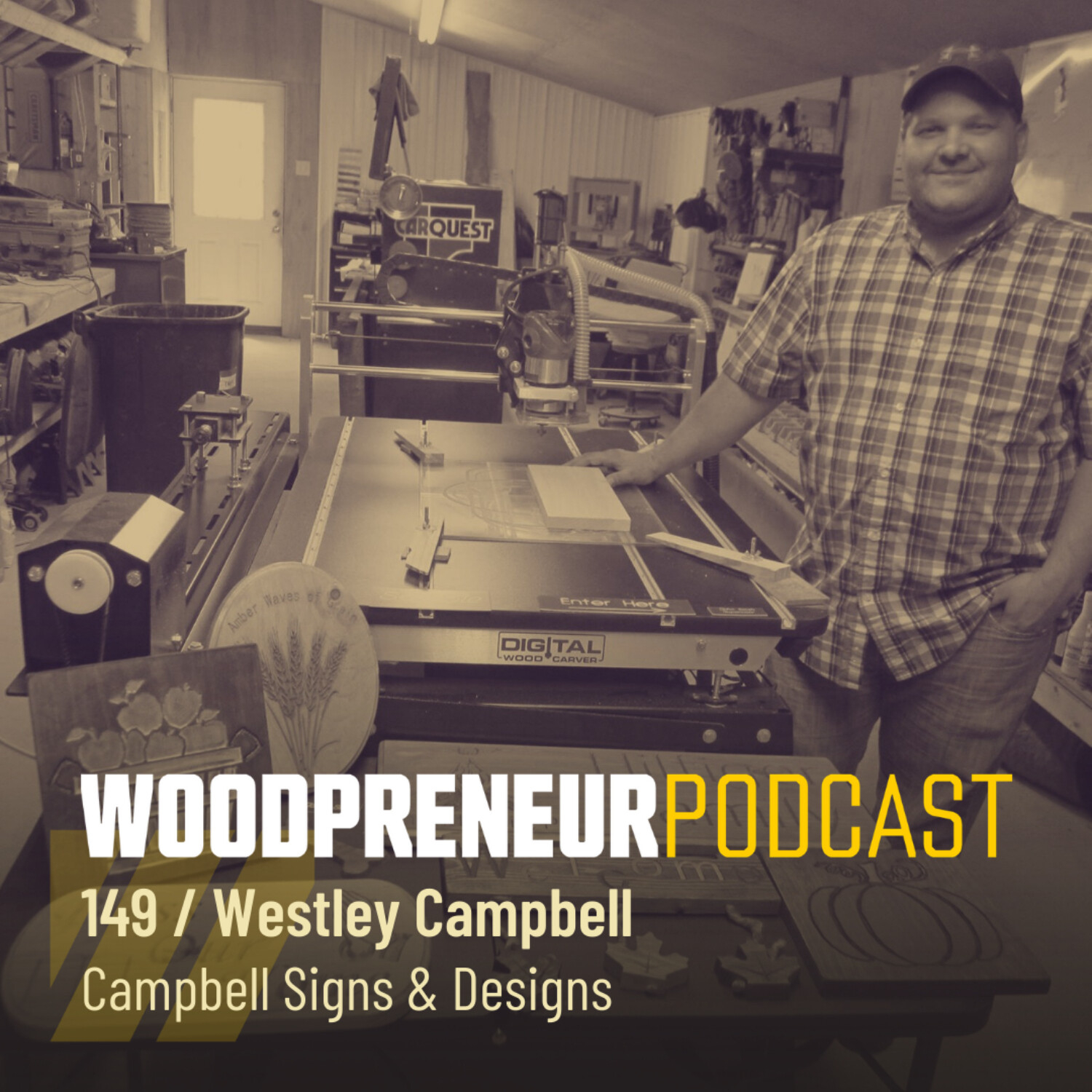
S2 Ep 149Westley Campbell: Campbell Signs and Designs
Today we’re excited to have Westley Campbell from Campbell Signs and Designs on the show! What started as a hobby sign business has now grown into a multifaceted company with several different specialties. In the shop, there’s a woodworking area, several CNC machines, a laser system for laser etching, and even a vacuum kiln. Westley says he likes to do a little bit of everything. While sign making was the first step, Campbell Signs and Designs has grown and diversified to accommodate the needs of the customers. Westley notes there are a lot of maple syrup producers in his area so he’s also branched out to doing laser work on glass bottles. Engineer by Day, Woodworker by Night Westley describes himself as a plastics engineer by day and part-time woodworker by night and weekends. Fortunately he works with robotics at his day job which lends well to the CNC capabilities as well as the laser machines. When Westley started his company he was focusing on small home decor signs that he largely made with a router tool. However, with a passion for growth and a desire not to turn down business, as more specific requests and new materials were discussed he decided to run with it. The business has continued to evolve as a result. A lot of the customer base started as folks that Westley would meet at craft shows while he was getting the word of mouth about his business out. Now, his customers are everyone from hobbyists to contractors. The Future For Campbell Signs and Designs One problem that Westley was facing earlier on was sourcing his wood and panels. As the shop was a bit sparse, Westley would need to source panels from other woodworkers which could occasionally slow down production. Some big investments for Westley was a large planer, joiner and sander which allowed him to do his own panels. Campbell Signs and Designs aims to be a one stop shop for custom projects, milling, and woodwork. Westley notes another volume of business he tends to do is Victorian reproductions as a lot of the homes in his area are older style homes that people want to preserve. Currently, the biggest challenge facing this small business is not enough time in the day, especially around the holidays it gets very hectic. The Evolution of a Wood Business Westley jokes that he doesn’t have a business plan and he’s just still getting his feet wet, but he does have some plans and aspirations for the future of his business, including moulding and more woodworking investments. Westley does note that if he could restart his business from scratch he would have liked more of a business plan, but now that he’s focusing on the sawmill side of things he clearly sees the vision for his shop. His plan is to stock lumber and do custom sawing and drying. Another long term plan for this year is the investment and acquisition of a moulding machine. Westley intends to have his own moulding line out this year. Business and Marketing Advice Corner Westley notes that as the business has evolved and started to branch into different specialties he worries that their name doesn’t convey everything that the company is capable of now. Steve remembers before his business was called Acres of Timber he too felt limited by his original name which drove him to make the switch, he offers this same advice to Westley. The two brainstorm some ideas and Steve reminds all entrepreneurs that they are allowed to change their minds and update their business and brand as they grow and as their company grows too. Steve explains the concept of maintaining the existing corporation but changing a DBA “doing business as” to operate a new name.. The advice Westley offers is to be flexible, embrace new things and to not get locked into doing only one thing. Website: https://www.campbellsignsanddesigns.com/
S2 Ep 148Sami & Cory: Avid CNC
Today on the podcast we’re thrilled to have Sami and Cory from Avid CNC. Avid CNC is an engineering and manufacturing company geared toward helping people be successful with their machine tools. The company offers a wide variety of machine sizes and different types of tools and attachments. As Cory says, the goal of Avid CNC is to provide great opportunities for people to automate some production or add precision to their workflow. The Origin Story Sami originally studied sculpture with a focus on digital fabrication, but she also got to work with her hands a lot. When she moved to Portland, she got a job as a CNC technician and a project manager in digital fabrication. Sami describes her passions as the intersection between educating and making, so getting to teach CNC at the local maker’s space on an Avid CNC machine was an incredible start. Eventually, her journey lead her to work with Avid CNC directly. Now she has the opportunity to teach CNC every day through Avid CNCs video production projects and by writing curriculum! In the coming year, Sami intends to make an entire YouTube series that will walk makers through everything they need to know about Avid CNC machines. Cory had similar origins, he was in precision sheet metal and machining fabrication prior to Avid CNC. He worked his way through a bunch of different types of machining and sheet metal work and Avid CNC (CNC Router Parts back then) at one time, was one of Cory’s customers. After realizing a shared passion and vision, Cory made a career change and he has been on the team since 2013. CNC Machines and Workflow There are so many different variations on wood businesses and workflows in this industry. While Sami, Cory, and Steve had a bit of a chuckle about Steve feeling like he was the last to hear about them, he follows up with a very important question, at what point in the woodpreneur journey do makers usually find Avid CNC? Sami explains that the way Avid CNC communicates and connects with the maker and fabricator community has largely been through word of mouth. There are so many different facets of production, she says it comes down to what makers want to achieve or how they want their business to run. The nice thing is that the machines Avid CNC makes are so adaptable they can grow and scale with wood businesses. In that way, it’s never really too early to start considering investing in a CNC machine. There is a wide variety of things that can be done with these machines and there are different roles they play based on the workflow of the businesses using them. A CNC machine is a part of the larger ecosystem of a woodshop and a large focus for Avid CNC has been developing their machines in such a way that they can grow and scale with the business as space and capacity grows.
S2 Ep 147Nolan Thompson: Nolanbuilt
Today on the show we have Nolan Thomson from Nolan Built! Talking through Nolan’s story was an awesome time and we have to give a shoutout to the IG algorithms for making it happen! The power of social media marketing at work. Today we talk about everything from submarines to taking leaps of faith. It’s a great ride! The Foundations of Nolan Built The story starts fifteen years ago when Nolan was building nuclear aircraft carriers and submarines in a job he got right out of High-School. While it wasn’t his passion, Nolan attributes this job to giving him his tool background and knowledge. Finally, when he bought his first home the love of woodworking started to emerge. Nolan ended up buying a 10 inch Hitachi miter saw while he was doing some work upgrading his house. From there, the love of tools and building his inventory struck. Every holiday, Nolan’s then-girlfriend, and now wife would give him a gift card to a Home Hardware Store or buy him one of the tools on his list of wants. Then in 2015, everything started to come together. Nolan had been woodworking as a hobby and making things for his friends, family, and church, but he also loved road biking. When he had $750 leftover from a tax return the question came down to, a new road bike or an LLC? Getting Out Of Your Own Way Unsurprisingly, he decided to invest in his woodworking and turn it into a true business. It took off from there. While in 2015 Nolan started the business originally to lock in the name, he didn’t start promoting or trying to get jobs until about 2 years ago. As his previous job required him to be gone about 9 months of the year, he knew it wasn’t the right time to start the business, but he started setting up as many things as he could in the interim. For Nolan, it was a progressive transition into running his business full-time. He did a lot of research and preparation and finally, it came to a point where Nolan realized that he was the one standing in his way. His wife was telling him to go for it, his friends, his clients, but ultimately Nolan was the one unsure. Fortunately, the moment he made the jump into working on creating his own legacy full time, he has not stopped getting phone calls. He has a four-month backlog at the moment which is what he was hoping for before he took the step. A clear sign that sometimes you can wait forever for something that would easily come if you just stopped waiting. The ability to trust yourself, or trust the highest power, or trust the people who have bought from you and have faith in you is something Steve notes as crucial for growing a business. Nolan agrees entirely and takes a moment to thank his beautiful wife for being so supportive. He doesn’t think he would be able to do what he does without her love and support. To see more from Nolan Built, check out his socials below! @NolanBuilt Nolan Built NolanBuilt.com
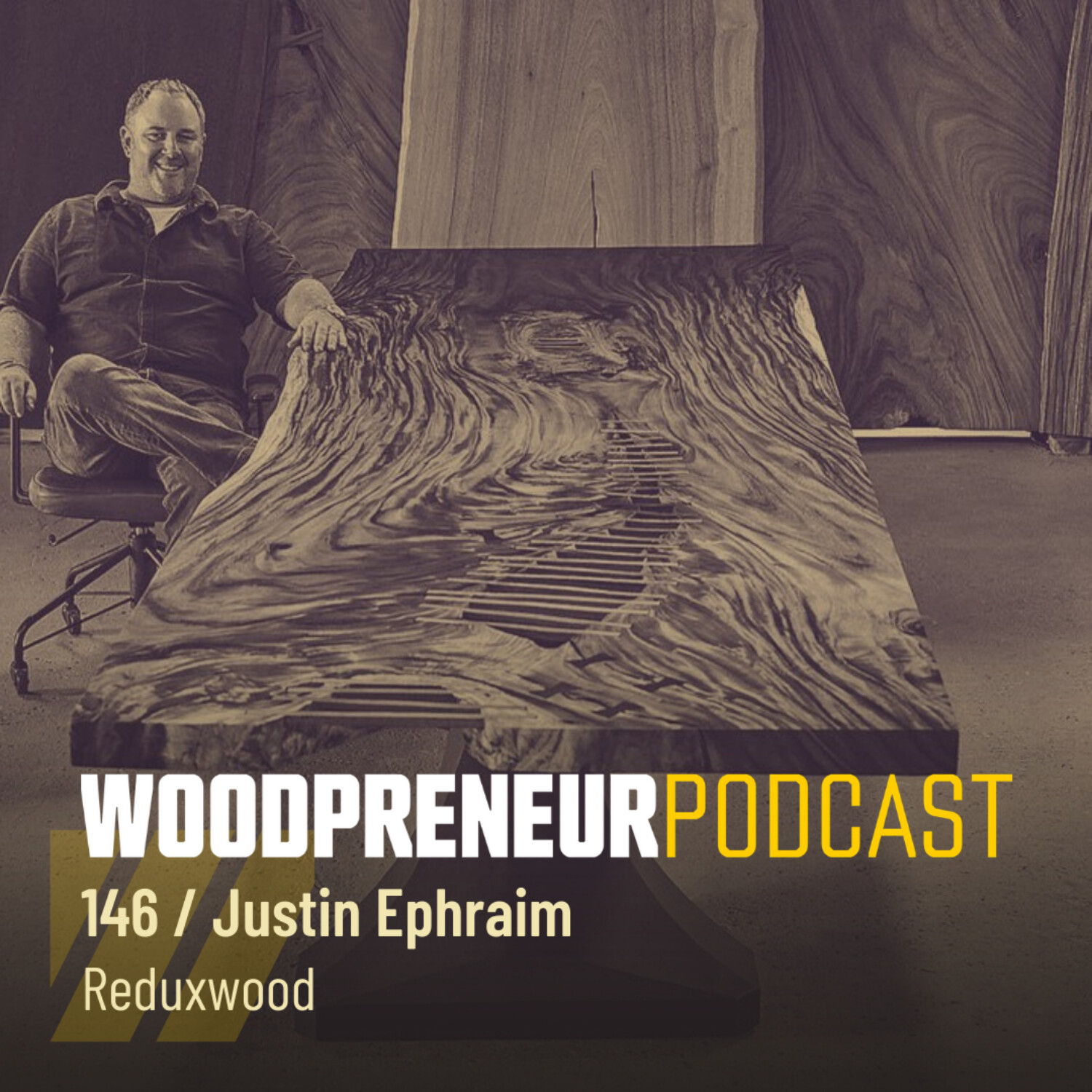
S2 Ep 146Justin Ephraim: Reduxwood
Today’s guest is Justin Ephraim from Reduxwood. Justin has a fascinating story and has been in the wood industry for over twenty-five years. From sourcing wood for Canadians from Panama, building luxury homes, and undertaking underwater excursions to check the quality of submerged woods, it’s been an incredible journey. From the start to the end of this episode it is packed with captivating stories, wonderful successes, and big moves. Justin and his story are nothing short of inspirational. He moved to Vietnam with two suitcases and a broken panini press (well, it broke on the way, but still.) and now has a multi-national business with twenty employees and the largest inventory of his product in the world. Continuing to Grow & How to Do So Reduxwood has grown to be an international company with an incredible team and a lifetime worth of networking, relationships, skill, and success under their belts. The inventory alone has taken about eight years for Justin to collect and grow. After doing the wholesale wood selling Justin stumbled into a table sale and that was a bit of an “aha” moment. Justin now employs about twenty people and has grown to a point where his business doesn’t just support him and his family, but also about 12 other families in Vietnam alone. He notes that a lot of this business is a people business because of the relationships and time that go into building good customer relationships. The biggest challenge has been getting people to know about Reduxwood when he is in Vietnam. Justin has been having an extremely difficult time figuring out the algorithms and he wishes he would have started working on Instagram a bit earlier than he did. Next, Justin plans to build a showroom in Vietnam and he is very excited about continuing to educate people about the standards, quality, and beauty of the products coming out of Vietnam. The end of this episode is an incredible think tank of branding and marketing ideas between Steve and Justin. Steve explains the dream 100 marketing strategy, breaks down the process, and adds his own valuable spin and twist to the method. Steve even gives a brief overview of the masterclass marketing method he will be teaching next month. The Woodpreneur Method is a tried and tested set of branding, community, and sales methods that have already grown hundreds of wood businesses and will grow thousands more in the future. To see more of Justin’s incredible story and projects please check him out: Website: http://reduxwood.com/ Instagram: @Reduxwood
S2 Ep 145Larry Smith: L&K Hardwood
Today’s guest is Larry Smith from L&K Hardwoods! Larry is part of our iDRY Conversations series where we interview iDRY customers and talk with them about their stories and business. Investing in the Dream Larry bought a Timber King 6000, the biggest machine that the company makes. The sawmill company is based in Kansas City and with Larry’s strong commitment to supporting local business, he couldn’t think of anyone else he would want to buy his first mill from. In terms of his biggest successes, Larry says his overall biggest success is his family, but for business, it was getting his dream piece of land to open his shop and build his investments on. L&K Hardwoods is on the national historic registry, the very first sawmill in Jackson Country Missouri was built in 1834 on the land. People would come from as far as New Orleans to buy flour and grain and supplies. The mill was 60 feet high and all built out of locally sourced black walnut gathered from the wooded area around where it would eventually stand. The mill itself operated until the civil war. It was then used as a battlefield hospital. After the civil war, the mill reopened but then closed its doors permanently in 1878. The mill then sat in ruins until 1923 when it was finally torn down. Larry says that he feels very blessed to have the land and to have been able to put a sawmill back on it. “It’s great to be able to do what you love and love what you do.” Promoting Community and Supporting Local Business Larry strongly believes in supporting the local woodworking community. When he was constructing the building his iDRY is stored in, he even built a whole upstairs area that will eventually act as a showroom for all of his customers and other local woodworkers. Larry has a lot of incredible role models like his grandfather, his father, and his father in law. He says hard work and the drive to keep innovating is in his DNA. Listening to Larry talk about his land and his passion for this industry, it’s easy to see how true that is. His work is an extension of him and who he is, and that’s why he puts his heart into it. L&K Hardwoods truly does have a focus on the local economy as well. The business offers a wide variety of locally sourced hardwoods, everything from ash to walnut, sugar maple, and even green leaf maple. Larry is also proud to offer sawmill services, custom milling services, tree to table programs, and vacuum kiln drying. Due to his great relationships with other wood entrepreneurs, Larry also has a connection to get sustainable exotic wood species as well. Kiln Impacts So Far Larry has already seen an impact since having the kiln even though they have only done three loads of drying. Through word of mouth alone L&K has been able to start drying wood for others. With the kiln on board, the sky is the limit. Every penny L&K Hardwoods has made is reinvested back into the company and Larry has a formidable drive for constantly innovating, building a growing his business. He plans on adding more equipment as time and money allow and he expects that the iDRY will not only help generate revenue but also improve the credibility of his business. Larry notes that people can tell he is serious and invested in his business because of the quality of the kiln and the equipment cost. L&K’s kiln cost more than Larry’s first house, so the kiln really shows that L&K is competing at a high level. Larry says it’s already given him an advantage when bidding for bigger jobs because the customer knows on-site that the quality will be to the level expected. For more from L&K Hardwoods check them out here: L&K Hardwoods @ L&KHardwoods

S2 Ep 144James Peglar: Lux Edge Furniture
Today we welcome James Peglar from Lux Edge Furniture to the show. James used to work in corporate America but always knew that he had the drive and mindset of an entrepreneur. Ultimately he decided to take everything he had learned about running a business and strike out independently. Lux Edge Furniture’s start was James making coffee tables out of his garage in October of 2014. It took off from there. James did a ton of marketing, and his products ended up in La Z Boy within a few months. He’s gone from a team of just himself and his wife making a small coffee table a month to having four in-house employees, some support staff, and producing 15-20 large products every month. Lux Edge Furniture also now ships all over the world. The Beginning James wanted to make his life as successful as his abilities. He knew that working for someone else imposed a limit that didn’t align with his personal goals. On top of that, he was surrounded by people who hated their jobs, and he decided that life really wasn’t for him. To grow the business in the early days, he would literally give away tables so people would have it in their showroom, and within the first six months, he was turning a profit. That’s about the time he knew he had a viable business. His proper start was with an Etsy account. At that point in time, there were two or three other people selling furniture through the website. It blew up automatically. In the first 12 months, James made almost $400,000 in revenue selling locally and through Etsy. It was the perfect combination for a huge success. James picked the right market at the right time, and he used the business knowledge he had gained from his corporate job to market the right way out the gate. Adding to his background in business, James also has a knack for sales and an eye for quality products. James notes that personally, he cares about quality and investing in things that are built to last. This mindset is one he shares with his customers giving them a great foundation and understanding. Great Business Mindset The best equipment investment that the team has made is a CNC machine that is 16 feet by 6 feet wide. James hunted for a while to find a machine that was capable of making larger tables, but in his words, by having the capacity, you tell the universe that you’re ready for it. Five years ago, when James talked about the farm he grew up on, he always said to his wife that they would buy it in the next 5-6 years. Sure enough, the shop is currently based on that very same farm. As an entrepreneur, you have to have a vision, and it is critical you make decisions based on where you want to be, not where you are right now. If you say you can’t do something you’re 100% correct, whether you’re actually right or wrong, if you focus on what you want and you visualize it and dream about it, you’re more likely to get there. For James, the biggest struggle in growing the business has been not being scared. Fortunately, he knows that a business owner is built differently than most people. Most people need to know where their next paycheque is coming from or their next meal, but for James, he knows even if he lost everything and had to restart tomorrow, he would be fine because he knows how to build a business. To see more from Lux Edge and James and the team’s awesome work, check them out here: Lux Edge Furniture Website @ LuxEdge
S2 Ep 143Alexander Wikström: Wikström interiors
Today on the Podcast we are thrilled to get a chance to catch up with Alexander Wikstrom of Wikstrom Interior. Alexander is based out of Sweden and has been in business now for seven years as a woodworker, authorized tool and product reseller and workshop owner. What was the spark for the business? It all started when Alexander’s wife saw a picture of a table online. The pair was in the middle of doing some home renovations and Alexander knew he had some spare construction wood laying around. After some time in the basement, he had created an admittedly rough around the edges table, but a table non the less. Eventually, they sold the piece and the idea of furniture creation began to take shape. Alexander spent about two years building tables in the basement while juggling a young family and full-time office job. Eventually, the waitlist for his tables was about a year-long and he knew that he was going to need to make a decision. Fortunately, he decided to build a workshop and started his own business, Wikstrom Interiors was born. “It was a lot to do, two full-time jobs, two kids and building a woodshop for the first time.” The Business Basics In terms of tools, Alexander has a bandsaw, hand tools and a kiln but he intends to build a bigger one this year. He has a lot of wood that needs to be dried so the kiln expansion is important, but overall he is happy with his investments. In terms of business and marketing struggles, Alexander said he would love some advice on how to portray value to customers. Trying to get them to understand exactly what they are paying for and why the price reflects the quality. Steve’s advice is to consider current brands that offer high-quality products and look at their marketing strategies. As an example, a high-quality clothing brand that releases infographics and transparent reports about the cost of their goods. Steve also suggests that Alexander add a voice to his brand and speak about the importance of quality and why what he offers is better than the cheap options. “The thing is nobody adds the voice. So the people who do add the voice they are the ones that are winning. If this is your craft and you’re dedicated to it, you add your face [and voice] to it.” In terms of advice he would give to the woodpreneur community, Alexander says: “Never give up, always pursue.” That’s the main thing with woodworking. You can get a lot of trouble on the way, with every table you’ll probably encounter some kind of problem, so never give up, keep going until it’s finished. Instagram: @wikstrominteriorsnickeri
S2 Ep 142Loren Bates: Rackensack Kilns
Today we had a great time talking with Loren from Rackensack Kilns! Two years ago, after considering the local market, Rackensack was born to answer the lack of kiln space and abundance of hardwood milling in the area. The business started with a few different avenues, including cabinetry, but ultimately processing wood started to become a main focus. What started from the necessity to get their own wood dried has now evolved into an entire tree to table business. Rackensack Kilns has the ability to process urban lumber into trim, furniture, flooring, and almost any other wood product you can think of. What Drives Your Business? Motivated by a desire to see less waste in the building process and the ability to use these viable wood products instead of seeing them chipped or mulched has been integral to the team. Another part of it is also the unique experience of opening up a tree and creating something entirely new that can’t just be purchased from a furniture store or even a hardware store. After about six months in the first year, once the kiln started getting booked and the word had gotten out, the team realized that their efforts had paid off and the business was beginning to be viable. Six months after that, they added another kiln, upgraded their shop size, and decided they were all in. Rackensack and Their Community Education is a big thing that Rackensack Kilns focuses on. Many people don’t realize that wood products tend to warp, splinter, or go to pieces without the drying process. Rackensack focuses on keeping an open and friendly atmosphere where they assist hobbyists and woodworkers with drying and other industry questions. They like to be considered “The Woodworkers Friend.” Loren says this approach has given them some wonderful opportunities to network and meet people who share the same passion for woodworking in the area. He also says that any project where a tree has a story behind it or a history has a special place in this crew’s hearts. The customers’ joy seeing the transformation of raw material to a beautiful piece of furniture that will last generations is a big win for this business. Equipment, Struggles and the Future In terms of struggles, Loren notes the difficulty behind the instant gratification mindset. Explaining to new customers that woodworking takes time can be difficult, but the team focuses on communication and transparency with the customer to overcome the hurdle. In addition to three iDry kilns, Rackensack also has a forklift, Wood Wizz, and contacts they outsource their milling needs to. Positioned in the heart of walnut country, there is no shortage of logs to be sourced. Word of mouth with the arborists and a community of woodworkers has been great for the business in terms of inventory. If Loren was to start from scratch, he says he would have wanted more space. Even with three kilns and a bigger shop, the kilns are always full, and there is always more wood to be dried. Ideally, in 2021 another kiln purchase is on the horizon. The hope is that in the spring, the shop can start hosting their Slab Saturdays again, which acts as an open house for woodworkers and artisans. Community Events and woodworkers getting the opportunity to learn from more experienced craftsmen is something this team loves to facilitate and promote. How to Prepare for a New Market In terms of marketing, the question is where one would find the market for a more streamlined furniture line? Currently, every piece of furniture produced is a one-off custom project. Steve suggests reaching out to designers, architects, and customers as well as researching competitors. After the research is done, it’s a good idea to do a digital mockup and then invest in marketing and press before making the physical line. To work with Rackensack or see their beautiful creations, please visit them on Instagram or Facebook, or give their shop a call! @rackensackkilns Rackensack Kilns on Facebook +1 918-850-8003
S2 Ep 141Brent & Devin: Texas Urban Sawmill & Refined Elements
Today we’re excited to have Brent and Devin from Texas Urban Sawmill and Refined Elements on the show. Challenges of Running Two Businesses A big challenge with running the two businesses and only two full time employees has been time and manpower. Specifically bringing on the right people who understand the vision and have a passion for the work being done and not someone just looking for a 9-5 job. So much goes into the business, from identifying the type of tree and what product it’s going to be good for to know how it needs to be cut, through the actual furniture making itself. Every single day is different and overall it’s an industry with a very steep learning curve. Brent believes that the biggest reward is being able to see the reactions to the incredible finished pieces they make and then on the sawmill side it’s equally rewarding to be the first person to see what is inside the log. The crew has an intention to publish videos on every new species of tree they work with to share that magic with others as well. For the team, a constant motivation is creating high-quality products for people, helping the environment through carbon sequestering and the relationships that they have built with their incredible customers. The Sawmill Side Currently the sawmill does custom cutting, lumber sales and also of course mills wood for the furniture business. Texas Urban Sawmill runs a Woodmizer, WM1000 that can process up to 6 feet in diameter logs and functions essentially as a slabbing monster. They also run a Baker Blue Streak that focuses on dimensional lumber and smaller pieces. The baker was chosen because of it’s incredible speed, high-quality cuts and production capabilities which has been working well for the sawmill. Between Facebook, Instagram and the website that is where the majority of the traffic comes from, but word of mouth has been huge for this team. The focus that they have on customer satisfaction and doing right by their customers has made them stand out from the rest. Another key aspect has been establishing local relationships and networking. What is Next For Texas Urban Sawmill and Refined Elements? The current goal is to see the business grow by 50% every year for the next five years, which is on track so far. Covid hasn’t had a negative impact to the growth of the business which is fortunate for this team, and they are now hoping to grow the sawmill even more because of the love for milling that has taken hold. Texas Urban Sawmill also specializes in adaptive tree reuse projects which has been a focus since 2019. The goal is to work with large commercial projects that need to remove trees for building, specifically historical or heritage trees. The team then does the removal and turns these urban trees into wood products that can be shared and enjoyed by the public. The furniture side is a labor of love, and it’s not something that is going to go anywhere but the eventual hope is that all of the furniture coming out of Refined Elements will be from these adaptive tree reuse projects. It’s also worth note these large projects are typically 3-5 years in production. We can’t wait to see where this innovative team is in a couple of years and strongly recommend you check out their website and social media channels to see some beautiful urban lumber projects. Website: Txurbansawmill.com Refinedelements.com @TXurbansawmill @RefinedElements
S2 Ep 140Steve Larosiliere: New Years Special
It has certainly been a long year, but amidst the difficult times there have still been a lot of good times too and successes to be celebrated. For the final Woodpreneur Podcast of the year, we’re looking forward and planning to start 2021 on a high note as we hit the ground running! There has been a lot of growth this year and more than ever we realize how fortunate we are to be in this industry. In this episode we’re focusing on tactical goal setting. Both for business goals and personal goals too. We break down the hurdles that often come up when trying to achieve a goal or resolution and offer some insight and tips on how to set goals that are achievable and measurable. Our ethical bribe is that if you join our Facebook Group, you will also get the video recording and slides of this Goal Setting Workshop. Our big goal for 2021 is to grow and nurture this community of Woodpreneurs. This new Woodpreneur Facebook group will be a hub for the community and will feature everything from informative articles to marketing workshops, in addition to being a platform to network and promote your wood business. Our aim has always been to provide Woodpreneurs with the tools and knowledge that they need to grow and sustain their businesses, and now we’re running with it in 2021. Thank you so much for being a part of our community this year, and we can’t wait to see what 2021 brings to the Woodpreneur Podcast. Thank you for listening!
S1 Ep 139Steve Larosiliere: Christmas Recap
On today's show, Steve sits down to reflect on this last year in a special Christmas Edition of the Woodpreneur Podcast. We started as the sawmill business podcast, and then we found that sawyers do many different things and grew from there. Last year Steve had the privilege of attending Workbench Con and also traveled to Sweden to interview more woodpreneurs, to say the least, it has been an incredibly transformative time. To celebrate how much the podcast has given him, the incredible people he's gotten to interview, and all you wonderful woodpreneurs listening, Steve will be recapping the top 11 downloaded podcasts from the last year. Website: https://www.dreamacreswood.com/our-team Instagram: @dreamacreswood
S1 Ep 138Alexandra Climent
Today on the show, we had the incredible privilege of getting to talk with Alexandra Climent, a woodpreneur who specializes in working with some of the densest wood in the world. Alexandra is a self-taught woodworking artist who fell in love with jungle wood's beauty while sourcing it for construction uses. This changed her entire future and career path significantly. What Drew You To The Urban Wood Industry? Between trips to the jungle to collect and source felled wood for her creative projects and her time back home in New York, Alexandra started creating a unique and beautiful story about her life and brand through Instagram. The Arrival of the Wood and the Future it Held It took a lot of work and patience for Alexandra to finally have enough wood that it could be shipped to the United States, and she had to deal with a lot of hurdles and red tape to get it there, but finally, the wood arrived. For many woodpreneurs, the wood's story in itself is part of the entire package, and that holds especially true in this case. Alexandra describes how she was in the jungle, seeing where all this wood came from and the animals and organisms that were living amongst the trees for so many years. Her desire to share that story, to share that feeling with someone who couldn't physically be in the jungle, serves as a continuing motivation for these products. Sustainability is also of enormous concern to this exotic woodworker. She focuses on exporting wood for design purposes that most people have never seen before. This focus on less popular species means that she puts less pressure on trees and their associated biomes that are in high demand, which ultimately protects the trees and nature as a whole. The advice Alexandra has to offer other woodworkers focused on sustainability in this industry is to use species that are not in high demand. Learning to Work with this Rare Wood Surprisingly getting the wood from far away jungles wasn't even the most challenging step in this journey. As an entirely self-taught artist and woodworker, Alexandra also had to find shop space and learn how to work with this incredibly difficult material that is exceedingly rare in the industry on her own. Once the wood arrived, Alexandra would spend any spare time off from her full-time job working with her materials and honing her craft. Eventually, she got a few clients and decided to leap into her business full-time. Steve sums it up perfectly: "You had this job, and the dream was making its way on a container someplace over to you, and then when it got there, you bet on yourself." What Have Some Of the Challenges Been? It has been a journey even after going full time to frame her business in a way that makes sense with the product she works with. Many woodpreneurs have multiple projects on the go or produce content in a steady stream, which can be intimidating. Still, while it is all woodworking, it's a very different industry when you consider the medium. The wood Alexandra works with is extraordinarily dense and requires specialized tools, care, and crafting to produce stunning results. A Look at the Past and Future If Alexandra were to start her business over again from scratch, she thinks she might have benefited from a business plan of sorts. Even now, her biggest focus is on how not to waste time and money with broad marketing efforts. For 2021 the goal is expanding the business and ideally getting to do more speaking engagements about her story and passion for this industry while taking into account the restrictions that have been imposed by the global pandemic. Instagram: @alexandracliment Facebook: https://www.facebook.com/amoonfox Website: https://www.alexandracliment.com/?fbclid=IwAR2kSii5Nra-Z5Oi1HeHOpUt-UpV2_n3-irUqrrrlxLTb9WQ7LlHPkfAgRE
S1 Ep 137Bernardo Urbina: Costa Rica Mill
Today on the show, we have the pleasure of speaking with Bernardo Urbina, the owner and founder of Costa Rica Sawmill. Bernardo has been a furniture designer for over ten years. He started his studies at the Pratt Institute in Brooklyn, New York, focusing on industrial design and furniture design. His journey continued to Italy, where he proceeded to do a master's program in industrial design and architecture. After that, he spent three years in the Philippines before moving home to Costa Rica and opening a furniture shop and design studio. Having worked with extremely high-quality products throughout his journey, Bernardo found he was having difficulty sourcing kiln-dried wood in Costa Rica as the standard is air drying. This demand for high quality, kiln-dried lumber and slabs is what drove Bernardo to start milling and drying his own supplies. From there, he realized there was a market for exotic Costa Rican wood that was being sold for ridiculous prices to woodworkers in the United States. Bernardo knew he had the logistics and ability to help counteract this problem. He decided to increase his inventory and start sending high-quality wood abroad. "If I wouldn't use it in my shop, I wouldn't offer it to you for yours." Now he runs two sister companies, his mill, and his furniture business. Bernardo keeps the two separate in his mind, even though they are interrelated in some aspects. The way he sees it, the lumber supply wouldn't exist without the woodshop because of the risk involved. As he has his own woodshop and can use all the products he mills, there is less risk associated with sitting on inventory. If nobody else has a use for the wood, that's fine because he and his team will use it eventually. If they do, then he has quality materials he can provide. One of the biggest focuses for Bernardo is sustainability. He doesn't waste any material and believes that it isn't right to use trees without giving back and replenishing them. For every $100 that Bernardo makes, he donates it back to make sure a tree is planted. The entire design company actually started based on this concept of sustainability. Bernardo would make art from overlooked materials, like slabs with holes that were rejected by sawmills or other debris and fallen trees he could upcycle and repurpose. Discussing the concept of Urban Wood, Bernardo says transparency is critical. The first two things he always asks for when he sources wood is to see the permits and a receipt. It is crucial to keep everything above board, pay the proper taxes, and not try and get around the system. The goal for Costa Rica Sawmill is to eventually be able to offer single slabs to woodworkers in the United States. Currently, shipping is done in large orders, but he would like to be the "Amazon" of Urban Costa Rican wood one day. Staying connected and working with other woodpreneurs keeps Bernardo inspired and motivated. He loves hearing about the projects he can help source wood for. As for business advice, Bernardo wonders how to remind clients or potential clients that he's out there and can help them with their urban wood or furniture needs without being too pushy. Steve's advice is to implement a monthly newsletter where Bernardo can compile all of the stories from the lumber supply part of things and the furniture making side. He can have an avenue to talk about his sustainability efforts and feature other woodpreneurs to continue networking while simultaneously giving his customers content and a gentle nudge to remind them he's there. Also, Steve suggests to send a follow-up DM once in a while to previous customers and check in with how they're doing. To see some of Bernardo's beautiful work and his user-friendly website system, check him out here: Instagram: @costaricamill Website: https://costaricamill.com/ Email: [email protected]
S1 Ep 136Bardo Lodder: XXLBoomstamtafels
Like many starting Woodpreneurs, Bardo from XXL Boomstamtafels in the Netherlands began working with urban lumber as a hobby. Around seven years ago, he and his wife began building a house for themselves from scratch. During that time, he was at a friend's house and saw a live edge table, uncommon in that area. This table made a significant impression on Bardo, and it triggered his journey to find beautiful slabs. He went around to different wood sellers and inquired about large slabs, and every single place he visited showed him the largest pieces of wood they had, but all of them were cut into straight lumber and didn't even come close to what he was imagining. After a while, Bardo started visiting sawmills directly in an attempt to track down the slabs he needed. At one of these mills, he saw a massive log in the corner, and when he asked them why they hadn't milled it yet, they told him that they didn't have the right saw for the job. Bardo purchased the log from them and took it home to figure out how to mill it. Once he had purchased a sawmill for, he cut the log open and was amazed at how beautiful the interior was; he describes it as being "like opening a present." After milling that first log, he began visualizing the interior of every log he encountered, and the desire to continue milling these giant trees took hold of him. The transition from a hobby to a business came about when the pile of wood on his property became so high he could no longer see his neighbor's house through his window. Originally, Bardo had a very romanticized idea of milling logs and building live edge tables from home to spend time with his children. Unfortunately, the local government prevented him from operating a commercial business in his residential area. This restriction required him to rent a commercial property to continue working on his passion, which forced him to turn his hobby into a business that would pay for the space required. Bardo credits his business's success partially to the free advertising he gets just from acquiring logs in the first place. Since he likes to get huge trees, it requires equally giant cranes, and the process of removing trees creates such a spectacle in town that he gets a lot of publicity right from the start. People often say that he shouldn't bother getting the massive logs because they are too big, and Bardo acknowledges that he doesn't sell very many of the wide tables he creates from these trees. Still, by drawing attention to these extreme things, he can then sell something more standard-sized. With XXL in the company name, customers often ask if he sells small pieces, and he always responds by saying, "big trees can always make little slabs." Bardo mentions that the biggest challenge he encountered when starting his business was getting comfortable with asking for the right price for his work. He is happy to speak with anyone interested in his designs, but he is adamant about not discounting the labour, talent and processes that goes into his creations. He states that if customers want something cheap, they should go somewhere else. That being said, he doesn’t like to be unkind to anyone, even those who don’t do business with him. His friendly nature creates a good rapport, and he often gets referrals from customers who talk to their friends about how nice a time they had speaking with Bardo. If he could restart his business and do things differently, Bardo says that his only regret is missing out on individual logs. Every tree has a story, and while some of the logs he has acquired have caused him a lot of trouble, he wouldn't change that for anything. The stories themselves are precious to him, and he says that if this work ever gets boring, he might do something else, but it never gets boring, so he will likely never stop. Website: https://www.xxlboomstamtafels.nl/ Instagram @xxlboomstamtafels
S1 Ep 135Steve Larosiliere: Thanksgiving Special
Happy Thanksgiving everyone! On this episode of the podcast, we’re taking some time to reflect on the last five years in the wood business and discuss this incredible journey. The goal of this podcast has always been to give a voice to the woodpreneur community and the growth we have seen is incredible, thank you to each and every one of you. We’re so thankful for the amazing guests we have had over the years and everything their stories have shared with us and taught us. Also seeing people who have used this podcast to network and grow their own businesses has been so inspirational. We wanted to take some time to connect with you all and to hear your feedback. If you’ve gotten something out of this podcast, if you’ve been inspired by a story, been helped by some of the advice, or used it to network or grow please let us know and drop your Instagram @ in the comments below. We’ll be reading them on the next podcast, doing a giveaway, and encouraging even more networking! As many of you know I’ve moved to Michigan and am working a few days a week with my Father in Law helping with his sawmill business. We’ve done a lot of marketing, and search engine optimization and it’s been blowing up! He’s literally at the point he has too much business coming in. Lately, I’ve also been helping to streamline and automate his business to be more efficient. When thinking about your business, it’s important to make sure you are providing something of value, something that the industry or people around you are in need of. That is why we are so excited to tell you guys about what we have coming up. In 2021 we have a woodpreneur brand we will be launching in full, as well as a Customer Relationship Management app designed specifically for the wood industry. We are currently in the testing phase so please let us know if you want more information, we’ll be officially launching it in 2021. This is a fully rounded CRM app, it streamlines a lot of different communication platforms so that all of your Facebook messages, Instagram DM’s, etc will be in one place. It also will help you collect more data about your business and will analyze your marketing efforts. You’ll get information on where leads are coming from, what leads you need to follow up with, what each lead is worth, and it even has a website and landing page builder. This CRM has already dramatically changed business for some of our clients and we’re so excited to see how it improves the lives of other woodpreneurs and their businesses. If there is one thing we have learned over the years it’s that woodpreneurs like to figure things out on their own, but sometimes if you want to grow a little faster, or you don’t know what you don’t know, or you want some help it’s a really good call to reach out. So something we want to say right now is if you are struggling, want to know how to grow, how to add more marketing, how to position yourself as an influencer, grow your brand, grow your sales, any of that at all, reach out. “I can help you, I’d love to help you. Send me an email” [email protected] It has been a crazy year for a lot of people but the goal from us is the same as it has always been: to help woodpreneurs get paid to do what they love. Steve has room for one or two more coaching clients and a ton of resources available to anyone who needs them, so please reach out if you need, let us know what you love about this podcast, and have a great Thanksgiving! [email protected] @acresoftimber Acres of Timber on Facebook
S1 Ep 134Jake Latvala: Ol Loggin Sawmill
Featuring a blast from the past, we catch up with Jake Latvala of Ol Loggin Sawmills and discuss the growth and changes he's seen in the past three years in terms of business and mindset. After twenty years with one company, Jake decided to take the leap and follow his woodworking passion. He would never have imagined this is where that passion would lead him. "It's such a scary thing to do, but it turned out the be the best decision I've ever made in my life." Even once he had the equipment, he was still patient, working evenings and weekends on his woodworking, but keeping his day job until he was confident and ready to try his hand at being a full-time woodpreneur. Since his last time on the podcast in 2018, not only has the vision of the company changed, but his entire mindset has grown and evolved as well. The original bar Jake set for himself was to be making at least as much as he used to make at his 9-5. Now, he has increased his earnings by 300% in the last two years, and grown Ol Loggin into a full brand and scalable business. The business isn't just a person anymore, it’s not just me, it's a brand, Jake notes. Initially, Jake recalls he didn't want to be big, but now with thousands of active Facebook followers and nearly 13k followers on Instagram invested in his journey, he's realized the passion isn't just woodworking. It's also teaching. For Jake, pursuing his love of woodworking opened him up to new things that energize and excite him like teaching and marketing. The teaching came from creating content about his business and projects and, most importantly, a community mindset over a scarcity one. Jake teaches people to do exactly what he does and, in many cases, learns with his followers when it comes to new projects. When people ask if he's worried about creating competition for himself, all he can do is laugh. "I'm motivated to inspire people on how to do this stuff. I want to start doing a class where I teach people how to do it." There is more than enough prosperity in this industry to go around, and networking is one of the essential parts of being successful in this industry. Jake mentions as an example how reaching out to Steve for marketing advice helped him build his Instagram following, and how the next step is having his own platform of customers via his website, so he doesn't have to rely on a third-party platform to connect him to his community. It’s about building, connecting, and realizing just because you can do it all, doesn’t mean you necessarily should. Jake collaborates with local kiln owners and mills in his area and hopes to connect with more woodworkers and spread the wealth in terms of projects too. Other big plans include a bigger shop so that he can get his own vacuum kiln as well as more cinematic videos of his process and woodworking. In this way, Jake has perfectly shown the power of diversified revenue streams and also the importance of outsourcing and networking. By being the lumber yard, epoxy distributor, and teacher, he knows that he offers value to his followers and customers. He also knows the importance of quality, both in terms of the physical products he offers and the content he creates. In terms of the next steps and advice, Steve says the number one thing is to get liability insurance. In fact, any business making some decent money should make sure they invest in that aspect. Steve elaborates that this kind of investment has significant returns not only for being insured in the event of something unexpected happening but also in terms of being able to bid on big jobs for corporations, universities, etc., With so much to look forward to, big exciting projects on the horizon, and now equipped with some excellent business advice, we can't wait to see where Jake and Ol Loggin Sawmill is the next time we have them on the show. Website: www.ollogginsawmill.net/ Instagram: @ollogginsawmill Facebook: Ol Loggin Sawmill
S1 Ep 133Doc Wright: The Wright Edge
On this episode of the Woodpreneur podcast, we have the pleasure of listening to Doc Wright of The Wright Edge Custom Woodwork. Specializing in handcrafted custom woodwork & exotic live-edge tables, Doc has made a name for himself in the high-end custom market in less than 4 years of operation. Doc studied geology at Texas Tech University and immediately began working in the oil industry. He always enjoyed working with his hands and began doing woodworking on the side as a hobby. Approximately three months after that, he was offered a job for $134,000 to build five custom conference tables, each with a different style and made from a different material. At that moment, Doc made the decision to take a risk and jump into woodworking full time. His client was so impressed with the work, they immediately commissioned a sixth table as well. After completing this first project over the course of seven months, Doc explains that he had a panic attack and realized he needed to figure out how to make this new leap into a fully-fledged business. Despite enduring condescending remarks from friends and family, Doc recognized that he did not want to build small projects for small prices, he wanted to remain focused on the high-end custom market. This self-awareness paid off as he ignored the negative noise from others, and spent his time and money developing the image and business practices of his company. As he states, “If you want high-end clients, you have to look high-end.” With his background in science and research, Doc focused on refining the aspects of the business to remove bottlenecks. By reducing the time spent harvesting, milling, and drying his wood he was able to focus on build times and acquiring clients. With this early understanding of his vision and investing time and money into his high-end brand, from business cards to his website and marketing materials, Doc was able to secure contracts from large companies like Ritz Carlton and JW Marriott. Doc has learned from experience how to connect with the right people to do business in an appropriate manner. He was originally importing wood from a company in Los Angeles who would sell him a full container, which he would pay for as he used it. After almost two years, The Write Edge became their largest buyer, and he attempted to negotiate prices every few months. He was then approached by his current friend and associate Bernardo, who’s transparent business dealings helped Doc cut his overhead by almost half by simply bypassing the middle man. This sense of honesty and transparency is important to Doc and The Wright Edge and guides their business practices. Doc explains that The Wright Edge is not a furniture maker; They create an entire experience. By taking pictures, and videos and providing updates to their clients of the entire construction experience, and subsequently providing those materials along with the actual product to their clients they create a true emotional connection to the finished creation that sets Doc and his team apart from their competitors. Some of the best advice Doc was given comes from a friend in the high-end menswear industry. He was taught never to offer discounts or sales on his products, as that ultimately shows that they are not worth the marked price. He was also taught that when times are good, plan for the bad times, and when times are bad, be prepared to upscale when things turn around again. Doc’s understanding of who he is has allowed him to find the success that he has achieved, and as he moves into the new year, The Wright Edge will continue to grow and flourish with each step they take. Website: https://thewrightedge.com/ Socials: https://www.instagram.com/thewrightedge/
S1 Ep 132PJ Fetscher: Evolution of Tables
PJ Fetscher is one of the only primary sawyers in southern Florida as well as an educator and custom furniture maker. He's gone from picking up branches that could fit in the back of his truck to running a lumber yard and custom furniture business. Amazingly enough, it all started with a passion for looking at the inside of a tree. PJ owns The Evolution of Tables and has been in business for nine years. What started as a hobby that got out of control has turned into this incredible multi-faceted company. His journey from hobbyist to professional and the equipment and dedication he started acquiring for woodworking he refers to as "a bit of a sickness, but a fun sickness". His first investment was a Granberg Alaskan Chainsaw Mill with a 16-inch bar but in hindsight that was really just the kiddie pool of mills for PJ. The next acquisition was an MS 880, the big dog chainsaw and finally a Lucas Mill. This was a big leap, but one PJ says was logical, he got comfortable on the small stuff, and it built confidence. Nothing about milling is easy work and you can't really comparison shop for a sawyer, so it's frustrating to try and explain the cost to those who don't understand this labour-intensive industry. PJ is fortunate that he gets to name his price for the most part, but also notes that he turns a lot of people away who don't understand the cost breakdown of slabs. Still, even with the frustrating parts of the industry, PJ loves what he does and always tries to evolve his craft. The best investment for The Evolution Of Tables, he says has to be the Lucas Mill. There are different mentalities between Woodmizer users and Lucas Mill users, and PJ notes the benefits and downfalls of both saws. Ultimately the value for money has to go to the Lucas Mill. PJ did a lot of research into what he wanted to be creating and what was going to be the best machine for him and went back and forth a few times. With the Lucas Mill though, he's able to cut much larger slabs than a standard 32 inch which was a critical decision point for him, that and the great attachments. Since quarantine PJ has noticed an uptick in rough sawn slab sales because of people wanting to try DIY projects, he also mentions that about 70% of people he sells live edge material to end up coming back and asking him to finish the project. This again comes back to education; most people don't know the skill, time, materials, equipment and effort that goes into making beautiful furniture. Once they try it themselves, the thousand-plus dollar price tag doesn't seem so high anymore. Currently, PJ describes it as two different companies, running a lumber yard and also a custom furniture business. Sometimes he can get pulled in a lot of different directions, but he's staying busy and loves it. He even does some milling services. People will call if they want lumber milled from a sentimental tree, for example. Even though he can sometimes end up with too much on his plate or complicated projects, he knows that he needs to make sure the frustration never comes to the customers' experience. For his customers, it's a unique thing getting to have a custom table designed, and from them picking out the tree or slab all the way through to the finished product PJ makes a great experience the priority. He describes the philosophy as similar to the one he has for teaching for his woodshop, biology and weight training classes. You can't phone in a year, because for that group of kids that is the only year you have to reach them, and it's the same with a project for a customer. Even if it's PJ's hundredth table, it's often their first, and that's always exciting. For more information, check out. @PJ_Fetscher on Instagram And The Evolution of Tables on Facebook
S1 Ep 131Ryan Hawkins: Westcoastboards
On this episode of the Woodpreneur Podcast, we’re talking to wood crafter, Ryan Hawkins of West Coast Boards. West Coast Boards specializes in creating unique cutting boards that are personally made for each customer. Ryan began by being introduced to woodworking at the age of 19 while he was at trade school. The first piece Ryan ever made was a solid oak and maple computer desk. Ryan has been creating different pieces out of wood ranging from farming houses to custom furniture. The idea of creating hand made pieces out of wood became of interest to Ryan after making his first piece and his passion was fueled after he created his first cutting board. Ryan stated: “I believe finding passion and purpose in life is a trial-by-fire process. In life, you must keep trying new things, to find what truly fuels you. To discover your ‘why’. Working intimately with wood for nearly 13 years has provided me the opportunity to try many things and wander down many avenues. It has allowed me to discover my ‘why’.” Check out West Coast boards and the custom cutting boards they have for sale. Ryan also accepts custom orders where he will create a personalized piece to add to your kitchen.
S1 Ep 130Mark Peacock: Deer River Craftsman
On this episode of the Woodpreneur Podcast, we’re talking to wood worker, Mark Peacock of Deer River Craftsman. Deer River Craftsman focuses on designing, creating and selling custom furniture. Mark began by first making personal pieces followed by commissioned work for friends and family which lead to him expanding his services to everyone. Mark has been making custom pieces for over 20 years using various materials such as wood, metal, plastic, glass, and leather. It has always been a dream for Mark to become a professional craftsman which is why in 2018 he built his own workspace to build custom pieces and became a professional maker. After accomplishing his dream, Mark strove to elevate his knowledge while giving back to the maker community. Mark accomplished this by joining the “maker community” which features a global network of like minded artists where he can be both teacher and student. The authenticity of being a genuine maker is something that runs through Mark's blood and this authenticity is exactly what the maker community needs. Check out Deer River Craftsman and their handmade pieces they have for sale. If you have something particular in mind you can also reach out to him for a custom piece for your home or garden. https://deerrivercraftsman.com/ https://www.instagram.com/deer_river_craftsman/

S1 Ep 129Aaron Weideman: Weideman Woodworks
On this episode of the Woodpreneur Podcast, we’re talking to former Marine, Aaron Weideman of Weideman Woodworks. At Weideman, they focus on creating and selling live edge countertops, tables, and also the niche style of Shou Sugi Ban furniture. Aaron began seeing traction in his business once he started posting his work to Instagram. The unique and non-mainstream style of Shou Sugi Ban Furniture combined with Aaron’s natural artistic skill with a camera began pulling followers in and soon he hit 10.k. A marine with a business finance degree, Aaron wasn’t a woodworker by trade. Because of this, he continuously strives to learn the ins and outs of his passion and is constantly pulling scraps of wood to practice on if he’s asked by a client to create something that he hasn’t done before. This isn’t to say that the work he has already created isn’t incredible and incredibly made. Looking through his feed and hearing the excitement in his voice as he talks about his journey so far, is enough to make one commission a piece before the episode ends... Check out Weideman Woodworks and their merch line where 10% of apparel sales is given to support veterans in need through the Wounded Warrior Project. In addition, they plant a tree for every table sold. If that wasn’t enough, Aaron sources his materials out of fallen trees gathered in the local area or by repurposing thrown out pallets. https://www.weidemanwoodworking.com/ https://www.instagram.com/weidemanwoodworking/