
The Woodpreneur Podcast
515 episodes — Page 10 of 11
S1 Ep 65Steve Larosiliere: Podcast Update!
You may have noticed that we’ve recently started using Acres of Timber as the logo on our website and in our hashtags... Well... we are officially changing the name of our podcast and Instagram account! Going forward, you can listen to our podcast titled - The Woodpreneur podcast, and check out our blog and other resources on our new website - www.acresoftimber.com! WHY CHANGE THE NAME? When he first started Sawmill Business, our host, Steve Larosiliere, ran it with the vision of serving the portable sawmill community and helping to grow awareness of that field to potential clients. Along the way, he started working with entrepreneurs (just like yourselves) and other woodworkers and business owners that didn’t actually own sawmills, but were still woodworkers, manufacturers, and people selling slabs and all types of different creations to the public. THE EXPANDING GOAL The ultimate goal is to empower the entrepreneur. However, Sawmill Business infers that we only want to help a limited audience. This is not the case, and we want to extend our reach to more types of people within the woodworking industry- not just sawmill owners, but tree service workers, hardwood flooring experts, and the like. With a strong desire to connect more people with the Urban Lumber Network, we hope to unite woodworkers with salvaged and reclaimed wood products. Branching both of these aspects together, The Urban Lumber Network and People who make money in the wood industry, we see a future full of sustainability and impact. SO, WHAT’S NEXT? As things progress at Acres of Timber, we plan on bringing you relevant resources and pertinent information that can help grow your business. By providing you with the tools and training that you need to scale, we hope to help you grow your business to six figures and beyond. If you haven’t joined our mailing list, you should! Go to www.acresoftimber.com to sign up!
S1 Ep 64Q&A: The Power Of Using A Website For Your Business
On this podcast - we’re back with more Q&A! This week - we’re answering these questions... How important is a website? I have no idea how to create a website. Where do I start and what’s the most affordable? A few years ago, it seemed that having a website was the be all - end all and the only thing that anyone ever talked about. Then, over the past few years, people have started opting out of a website and instead relying solely on Instagram, Facebook, and email. So, is a website really necessary? Total honesty... YES. You absolutely need a website! Really, what you need is a way to collect leads. Websites are important for blogs, galleries, and sales - and you can still link it to your Instagram and Facebook as well. Google, the current alpha of the web, tracks and ranks websites. You can draw in a ton of traffic and leads JUST from search engines directing people to your site. This is something that you simply can’t do with social media alone. Another thing to remember, if you put all your eggs in the Instagram, Facebook, or Twitter basket - you are setting yourself up for failure. Algorithms change, platforms change, and audiences change. What’s popular today in the social media world, may be completely irrelevant by this time next year. Grow that email list! One of the most important keys to business growth is building your email list and connecting it with your website. These leads are people you do business with, people you want to do business with, and people that want to do business with you. I can’t stress this enough - COLLECT EMAILS!! You can do this by creating opt-ins, using Click Funnels, and putting a sign-up form on your website. Additionally, make sure that you are asking all of your clients or potential clients for their email addresses as well. So, I know it sounds scary, but building a website is NOT as complicated as it seems. There are easy to use and intuitive programs that can help you get your site up and running (for about $20.00 a month) within 48 hours. To sum everything up- Collect Emails Build a website (Or have us build one for you) Create “lead magnets” to gain more emails You got this!
S1 Ep 63Q&A: Growing Your Wood Business Client Base & Your Social Following
As i’m in the middle of a transition and re-brand of the Sawmill Business, I’ve been asking our audience a lot of questions. Why? Because I want to know what you’re thinking, feeling, and doing in your businesses so that I can identify your problems and challenges and in turn, help you grow your business. As you may recall, the Sawmill Business Podcast started because of my involvement with my father-in-law’s wood biz, Crosscut Lumber. Over the years that I’ve been a part of his family, I’ve helped him grow his business, and he’s let me pick his brain. I’ve seen what it takes to grow a wood business, and I want to help you. Today’s question comes from a member of our audience, and it’s a good one... Q. I’ve started my wood related business, and I have a few clients. However, I want to continue growing my client base while increasing my social media following. How do I do this? A. Here’s the thing, you shouldn’t do these two things separately. They go hand in hand and should be done at the same time for optimal results. When it comes to social media, documenting all of your work is king- the work you create, the business conversations you have, the wood you cut, all of it! Remember - The way to grow your social media following is by showcasing your work and your brand. For example, if you’re a sawyer and you’re in the middle of a milling job, set up a tripod and record yourself working! Or, if your customer is there, ask them to take a picture! Did you cut some massive slabs recently? Take a picture and post it! Again and again, you’ll hear me say this - “You HAVE to get in front of the camera sometimes!” In order to build your brand and your client base, people need to see who you are and what you do. The more often you put value, content, and goodwill into the marketplace, the more people will tend to think of you the next time they need your services. It’s unfortunate, but in this day and age, good work is simply not enough to grow a business. To truly gain traction and a constant stream of inbound leads, you have to focus on networking and growing your social media following. How else can I grow my client base? When you’re thinking about how to grow your client base, think to yourself - Who are the types of people that you would consider your ideal customers? Ask yourself - Who are your past customers?Who did you like working for?Who else have you done work with? Once you’ve answered these questions, make a profile of the answers. What age do your clients tend to be?Gender?What type of car do they drive?What type of lifestyle mindset do they have? If you’re not happy with the answers, remember this - “The types of customers that you're attracting are being attracted to the type of business brand that you personify.” Another Key Is To Utilize Past Clients. If you’ve done good work and your client was satisfied, ask them these questions - How was it working with me?Would you mind giving me a testimonial?When you ask for a testimonial, ideally you want it on video. One of the smartest and simplest things that you can do for your wood business is to build a community around your current client base. Add value to their life by becoming a part of it! Summer BBQ’s, fall bonfires, restaurant dinners, and sports-related gatherings are just some of the ways in which you can network, while becoming a community pillar at the same time. The idea is, if they're thinking about you, they're more likely to talk about you!
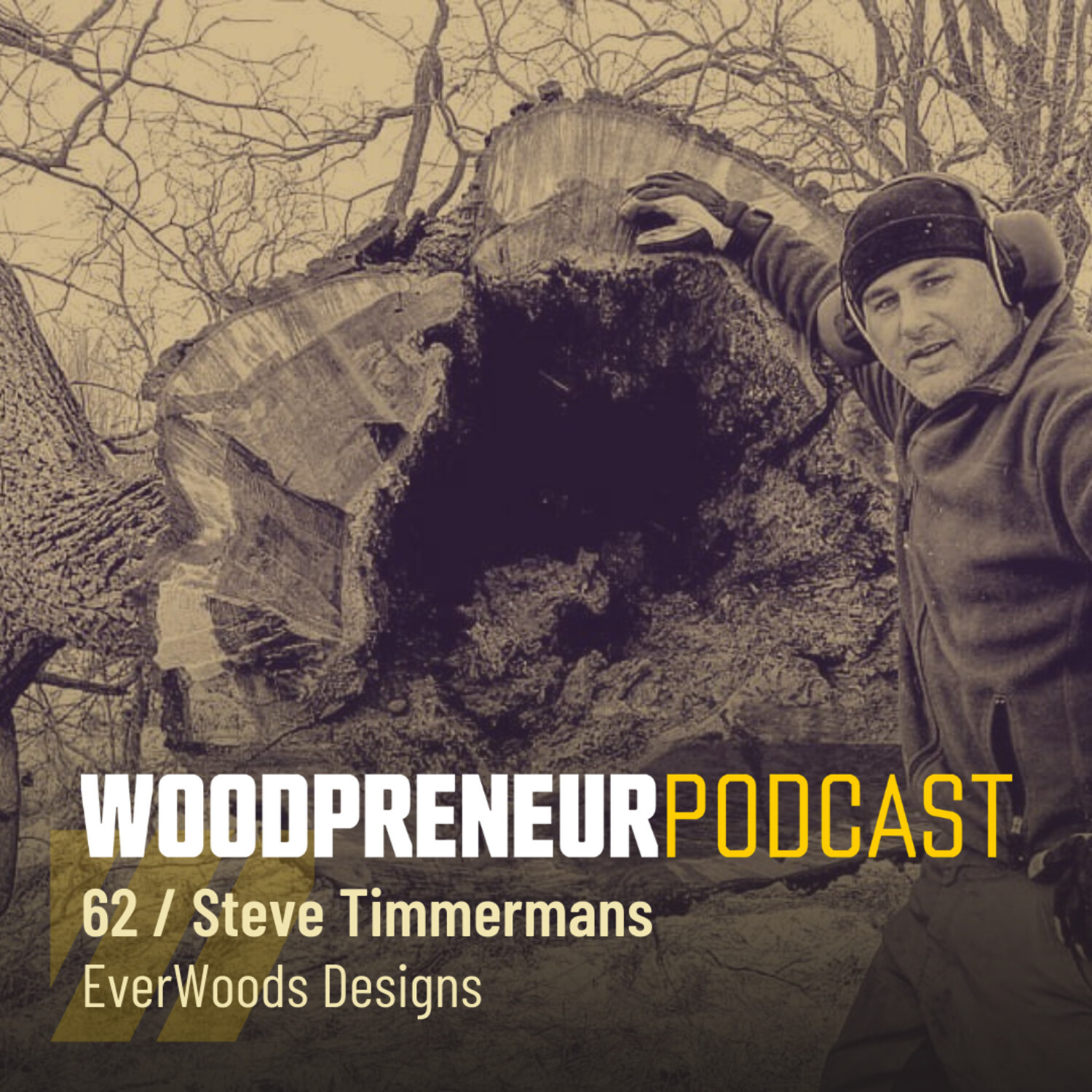
S1 Ep 62Steve Timmermans: EverWoods Designs
HOW THE BUSINESS STARTED Today, we're talking to Steve Timmermans from EverWoods Designs. Starting part-time in early 2000, Steve decided to acquire his own logs for lumber at the same time that live edge was making a comeback. As a former biologist, with a background in ecology, he transitioned from this profession into the woodworking career by gradually building his business over the past 13 years. Steve started sawing slabs back in 2002, and in 2014 he decided to go full-time with his business, EverWoods. Starting with a staff of two additional employees to help build the business, they were off to a great start. In the beginning, they were milling mainly for their own supplies. It came naturally for them to source their own logs and this kept them pretty busy. Staying primarily on site, they were able to saw enough logs to sustain their own sales and furniture division. ESSENTIAL TOOLS The first piece of equipment that Steve bought was a Granberg Alaskan Chainsaw Mill. Using a double ended bar with a Makita 70cc on each end, he then synchronized the throttle on those by using a hand throttle and was able to get even rpms that way. Using the Granberg, a Woodmizer, and their Nile kilns, storage to protect these valuable tools became essential. In the beginning, they were fortunate enough to have a large pole barn that they used as their warehouse. As the business grew, they added to their space by erecting buildings known as "hoop houses" for further storage. They now have about 200 linear ft of hoop houses covering some of their inventory and increasing their expansion ability. TRANSITIONING TO FULL TIME Since the business has been developing gradually, the transition to a full-time focus on the business happened very organically and without much of a conscious decision. Keeping an eye on the markets and following the business trends in the industry, Steve kept at his work until it became a financially sustainable business. He also found it helpful that he continued to hold onto side-jobs that provided partial income while the business grew, in addition to his wife working full-time in her career. THE SHOWROOM Depending on the time of year, EverWoods Design has between 3-8 employees. Recently, in March of this year, they added a showroom to their business. The 7500 sqft showroom is located in St. Thomas and it's a sight to behold! This expansion has brought in quite a bit of exposure and interested clients, as well as beautiful Instagram posts! Located about 15-20 minutes from their milling site, it's not too bad of a drive either. FUTURE PLANS AND CURRENT CHALLENGES Steve hopes to develop things further so that they have a smoother business flow that enables them to better serve the furniture and slab industry. As far as personal desires, EverWoods is hoping for increasing autonomy to use their own creativity with products and create one of a kind items. The kind of items that help "drive the ship" and define a business. Of course, they are still always interested in taking on their client's custom requests! CURRENT CHALLENGES The number one challenge at EverWoods Design right now is making choices about the future. Steve says that It really comes down to deciding where one wants the business to go. With this thought, he notes that sticking to a business plan, deciding if you want to go bigger or stay small, and looking at the future while planning for the day is sometimes tough. However, the company is looking forward to what the future has in store! Links Mentioned Instagram: https://www.instagram.com/EverWoods_designs/ Website:http://www.EverWoods.ca/

S1 Ep 61James Vann: Summer Hill Woodworking
On this episode, we’re talking to James Vann of Summerhill Woodwork. Based in the south east of England, James diversifies his business by utilizing his wood skills in several areas. When he’s not running his sawmill, he also does tree and forestry work. HOW THE BUSINESS STARTED When he was fourteen, James started selling firewood as a side job. With a carpenter for a father, James was also brought up around woodworking and using the tools in his dad’s workshop. While selling the firewood, James kept coming across pretty pieces of wood that he started picking out for projects. This is where his passion was cultivated. As he grew up, James knew that he wanted to be an entrepreneur and run his own business, free from working for other people. At first, he would underbid and take on projects that he wasn’t sure if he could do. However, the work he did was so well-done that the customers asked him back for more. Things took off from there! GROWING HIS SKILLSET Since learning new techniques and evolving in his style, James has had a website created where he showcases his handmade furniture. Included in this online portfolio are some of his favorite pieces to work with, large dining room tables! LOVING HIS CHAINSAW MILL In the beginning, James started with a smaller sized Granberg Alaskan Chainsaw Mill, as he started growing his client base he upgraded to a larger version. Even still, whenever slabbing, he prefers to continue using his Granberg. LOVING THE WORK One of his favorite aspects of his business is the variety of work that he does. Combining woodworking projects, sawmilling, and other forestry work keeps him busy and not bored. GROWING A FULL-TIME SAWMILL BUSINESS Looking through Instagram to stay inspired and up to date with what other people in the industry are doing, James keeps himself well taught and current by networking with other woodworkers on the platform and getting their opinions on equipment and materials. What's his advice to others hoping to grow their business into a full-time gig? Be Patient, do good work to the best of your ability, build a reputable reputation, and grow your portfolio by being flexible with your rates and taking on jobs that showcase your talents! LINKS Instagram: @james.270 Website: www.summerhill-woodwork.com
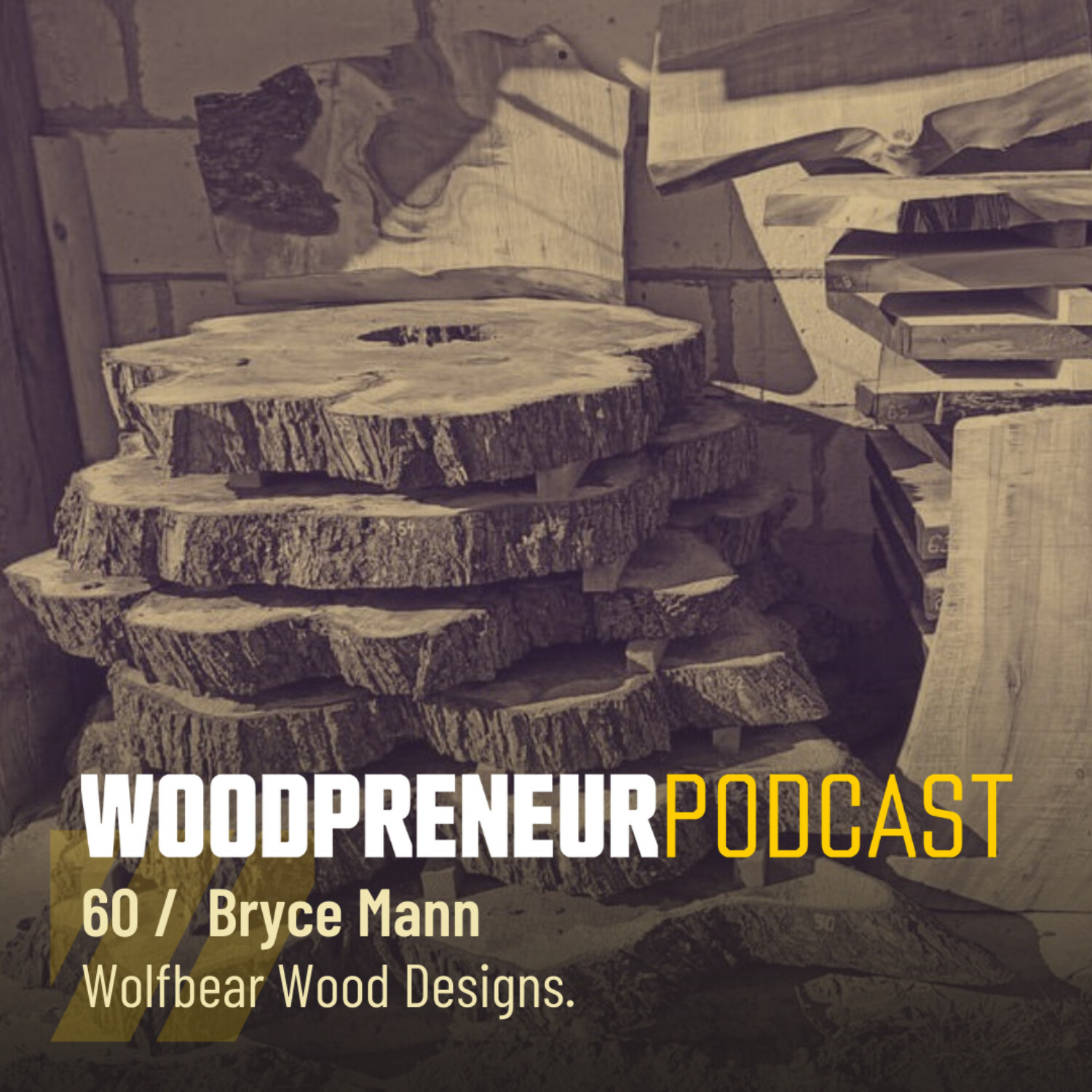
S1 Ep 60Bryce Mann: Wolfbear Wood Designs.
HOW THE BUSINESS STARTED. Today, we’re talking with Bryce Mann of Wolfbear Wood Designs. About two years ago, Bryce started as a woodworking hobbyist. As he started piecing small projects together and began to learn more about the work, he soon felt confident enough to start selling. DEVELOPING AND MARKETING THE BUSINESS. The main marketing mediums that Bryce uses are social media and word of mouth. So far, Wolf Bear has gained enough traction to start started selling in a local store! FAVORITE ASPECTS OF THE BUSINESS Bryce loves the learning aspect of the work. Looking at what he’s learned and how far he’s come, inspires him to keep creating and growing. Without a business background, Bryce is working on expanding his marketing skills and business skills. CURRENT PROJECTS Recently, Bryce has been working with live-edge products. Specifically, a computer desk that was originally supposed to be a coffee table! Excited to make things that he never has before, his excitement about this challenge is high! SOURCING THE WOOD Bryce worked in the Forestry Department for over ten years. Having a good relationship with the local forest management company, they gave him a letter of permission to mill any non-merch logs. With this, he’s able to source all of his wood locally. Using his Granberg Alaskan Chainsaw Mill, Bryce goes out, cuts the wood, and brings it home. Loving his mill, Bryce says the portability of it is very helpful in his work. FUTURE PLANS Before the end of the year, Bryce hopes to have a website up and running and to make this business his full-time job. Looking to push his boundaries and testing himself, Bryce hopes to move on to some more challenging projects and continue getting his name out there. LINKS MENTIONED Instagram: @wolfbearwooddesigns Email: [email protected]
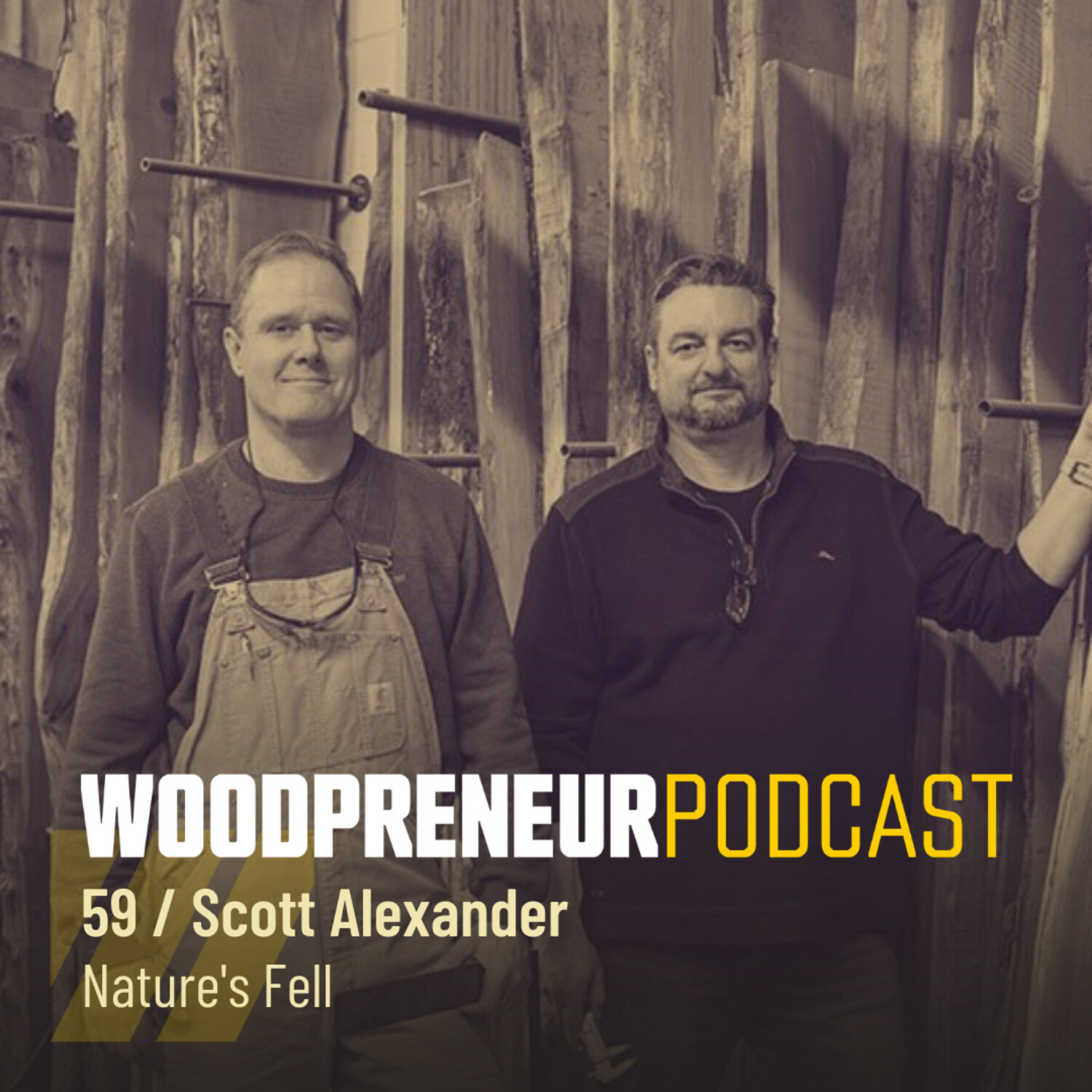
S1 Ep 59Scott Alexander: Nature's Fell
HOW THE BUSINESS STARTED Located in North Central, New Jersey, Scott started Nature’s Fell with his stepbrother, Bob Snyder. With a background as a professional chef, Scott spent years in the foodservice industry. After Hurricane Sandy hit and wiped out the restaurant where he worked, Scott bought a sawmill, learned how to use it, and grew his hobby into a business. Back in 2012, with the hurricane destruction providing plenty of lumber, there was a huge learning curve on Scott’s end when it came to using the sawmill. Over the span of 6 months, they milled enough lumber that they needed a place to store it. After acquiring a storage space, equipment such as a kiln and other milling materials started filling out the shop. GROWING THE BUSINESS For the last four years, Nature’s Fell has been working on tapping into the demand for slabs and unique pieces. Using word of mouth, Instagram, and other forms of social media they’ve grown the business quite a bit. Along with being a sawmill business, Nature’s Fell also creates custom furniture such as wooden barn-style doors and other interesting items. When asked if he felt like his handle on the profession was solid, he responded with “ Woodwork is two parts knowledge and skill, and one part fixing your mistakes!” CUSTOMER BASE The company sees a wide range of customer personalities such as residential, corporate locations, bulk sales, and individual furniture designs. Nature’s Fell prides themselves on the sustainability and uniqueness of their products. FUTURE PLANS Currently, they’re focusing on growing the business through social media, their webpage, and Google Adwords. Since starting the campaign the phone has started to ring even more, which is a good thing during the slower summer months. Also, they are currently fine-tuning their focus into live edge products and flooring. CURRENT CHALLENGES With the current challenge being that Scott is the only operations employee, he struggles to find the right labor workers to help him with the loading and distribution of the logs. Hopefully, this will work itself out and he can stop pulling his marketing guru out of the office to help! LINKS MENTIONED Instagram: https://www.instagram.com/naturesfell/ Facebook: https://www.facebook.com/naturesfell/ Website: https://naturesfell.com
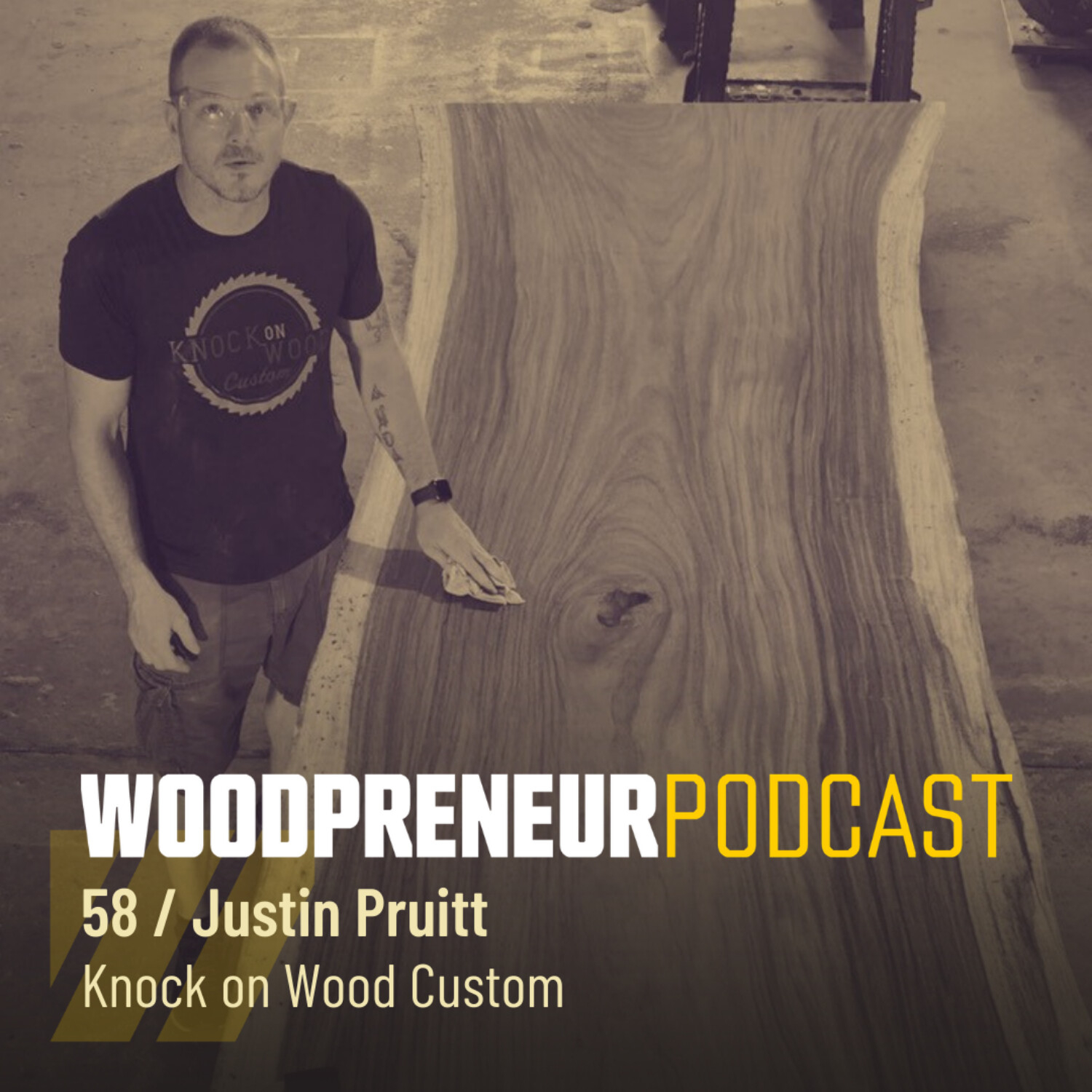
S1 Ep 58Justin Pruitt: Knock on Wood Custom
How He Got His Start Today, we’re talking to Justin Pruitt of Knock on Wood Custom. Justin came into the ownership of Knock on Wood by happenstance. It was four years ago that he met with an older gentleman to help him with some sawing work. It was at this moment that he fell in love with the work. Seeing the light in his eyes, the older man (and original owner) invited him back and started training him on the milling process. After some serious health issues came up for the man, he gave Justin the reins and lead in the business. Passion For The Business Justin started his career in construction, but running Knock on Wood is his true passion. From the customers to the work itself, he loves everything about it, especially the “organically unique” projects that they do. These are projects that can’t be reproduced because each and every slab is unique. Knowing this, Justin doesn’t look at other woodworkers and think of them as competition. He sees them as fellow craftsmen making their own unique projects. Initially located in Tulsa, Oklahoma, Justin got the business name out there by piggybacking off of his mentor’s great reputation and large client base. The business continued to grow when he branded Knock on Wood, and he started grinding even harder to produce beautiful materials. The Customer Base With a client base consisting largely of people who have been introduced to live edge wood through Pinterest and other media outlets, Justin tries to showcase their failures and their successes. He wants people to understand how the products actually develop. Continuing to educate their clients that places like Lowes and Home Depot won’t carry the same array of products that they do has been essential in getting the word out about the business. Future Plans Currently, they’re in the process of opening an online market for the purchasing of slabs. He’s hoping to put himself out there as the business that offers reasonably priced slabs that people can afford. Links Mentioned Instagram: @knockonwoodcustom Facebook: www.facebook.com/knockonwoodcustom
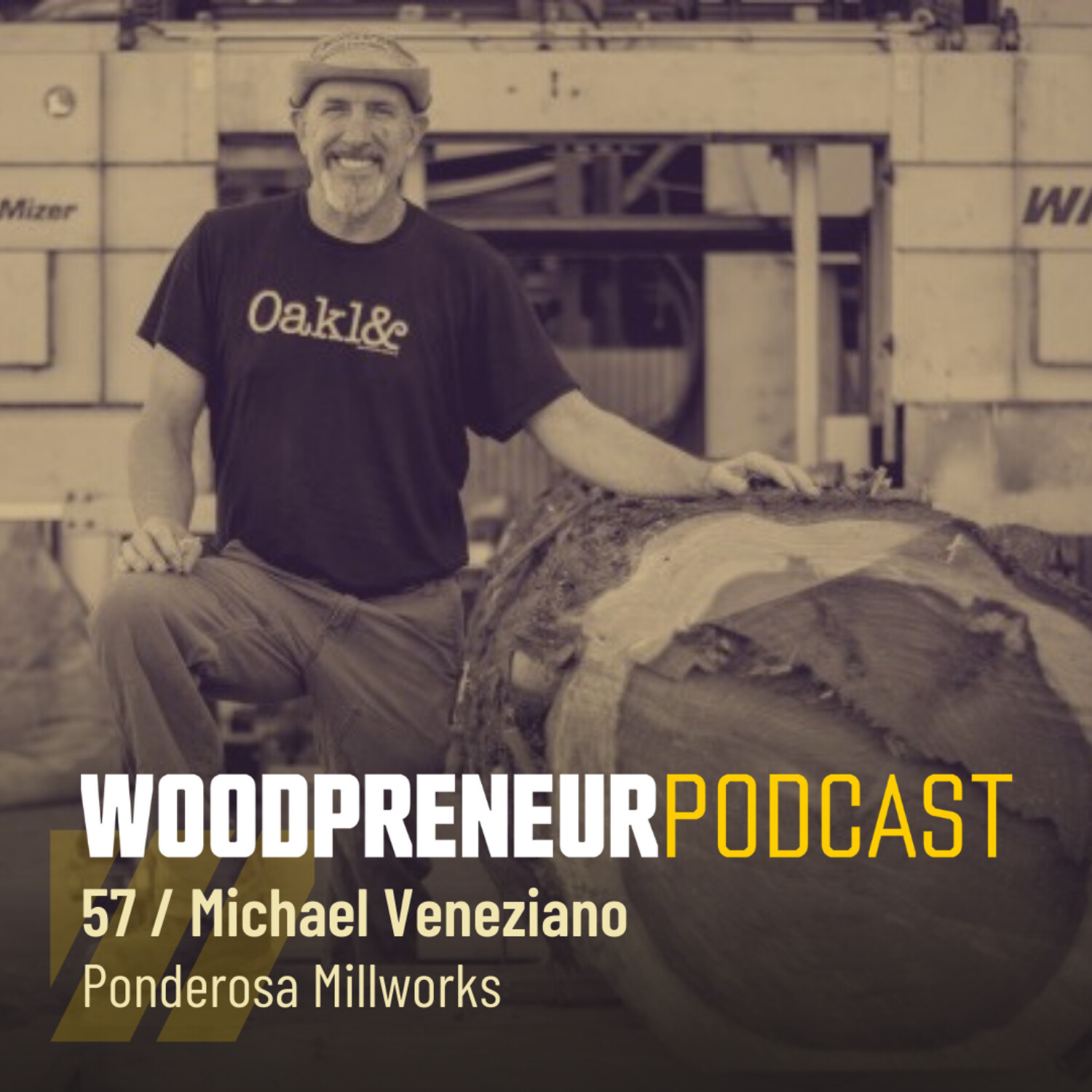
S1 Ep 57Michael Veneziano: Ponderosa Millworks
HOW THE BUSINESS STARTED Today we’re talking with Michael Veneziano from Ponderosa Millworks! They are located in Oakland, right across the bay from San Francisco. At seventeen, Michael was busy landscaping when a tree service worker came up to him and asked for his help “wrangling” some trees. The worker turned out to be from Ponderosa Tree Service, and in 1991, Michael bought the company. After 35 years in the tree service, Michael retired last year. PONDEROSA MILLWORKS When he sold his tree service last year, he left a clause in the contract that he would continue to receive all of the logs. With an endless supply of slabs, Michael finds his niche in this area. Coming in faster than he can mill and sell, he mostly sells slabs in his showroom, showcasing hundreds of slabs all on display. Architects and designers bring in their client to peruse and purchase the wood. PARK COMMISSIONER EXPERIENCE For many years, Michael also worked a volunteer position as a park commissioner. In this position, he was able to involve himself in community projects like gardening, tree service, and mentoring youth. As part of his work as the park commissioner, he was able to help create policies that changed the way that trees are maintained, not just clearing them in ways that lead to problems in the long-run. FINDING THE CONNECTION BETWEEN TREE SERVICE AND MILLING Michael sees tree service and sawmilling as industries that go hand in hand. Throughout most of his tree service years, he didn’t see much of a connection aside from saving money until the person that he was selling the logs to retired and asked him if he wanted to run his sawmill. After working the mill, Michael wished he had been doing it for much longer. This is where and when he finally realized the connection. His tree service experience helped him to know exactly how he should cut and handle trees in a way that would preserve them and allow them to be milled. CUSTOMERS In the beginning it was mostly weekend warriors coming in- people with varying levels of experience. Now though, it’s evolving into architects and designers bringing in their clients to select their own wood. With six full-time employees at the sawmill, they stay busy. CHALLENGES Going from the tree service to running a sawmill, Michael finds the ebb and flow of the business sometimes hard to grapple with. Keeping the right amount of employees on staff during the right season can be difficult. Mostly though, he finds the questions from customers to be the most challenging! Maintaining his customer service positivity and not growing tired of explaining the cost of slabs and how they are measured can be a test! ADVICE If you’re looking to make the switch from Tree Service to Milling, it’s an amazing career transition. However, you need to have the ability to bridge the financial gap. There is a sizable investment to drying slabs, so it takes time and money to get started. Also, make sure that you do your homework and that there’s not another business in your area already taking up the oxygen. Additionally, look inwardly. Is customer service something that you’re interested in? Many sawyers love working with the wood but hate selling it. Make sure sales is something that you’re ready to be heavily involved in. LINKS MENTIONED Instagram: @ponderosamillworks Website: ponderosamillworks.com
S1 Ep 56Jake Latvala: Ol Loggin Sawmill
Background Starting off as a hobby, Jake Latvala started making coffee tables. As his products started to sell, he would invest the profits into new tools or equipment he needed. Jake liked what he was doing so much that he invested in a sawmill as well. Realizing that he wanted to make a career out of his passion, he started taking all of the bonuses that he would get from his full-time job (of 20 years!), paid everything off, and started working full time for his company, Ol’ Loggin Sawmill, with barely any overhead. Getting his name out there After putting his first ad on Craigslist, Jake sold out of everything he had made in less than 15 minutes. On the wave of this momentum, one thing led to another and soon, out of necessity, he was buying a forklift, truck, and a pole barn! Once Jake posted an ad on Facebook and started utilizing social media, everything really exploded. Besides social media, Jake explains that word of mouth is huge for him, as well as business cards! Initially, he assumed business cards were a thing of the past, but having a significant amount of older clientele who don’t use social media, the cards come in handy, and he uses them often. Sourcing the wood Jake gets logs from a few different sources. He has a small business logger that will clear land and then bring the logs to Jake. He also works with Tree Service Companies who would have otherwise taken the logs to a landfill. Instead, they now take them to Jake. Future of Old Logging Saw Mill Growing quickly, his company now has two mills and a lumberyard. Currently, Jake is getting ready to build a 60x60 shop. Additionally, the company now has onsite Maple, Oak, Cherry, and Walnut with the plan to keep expanding their selection so that they will have something for everyone. Links Mentioned Instagram: @ol_loggin_sawmill Facebook: @fatherssonsawmill
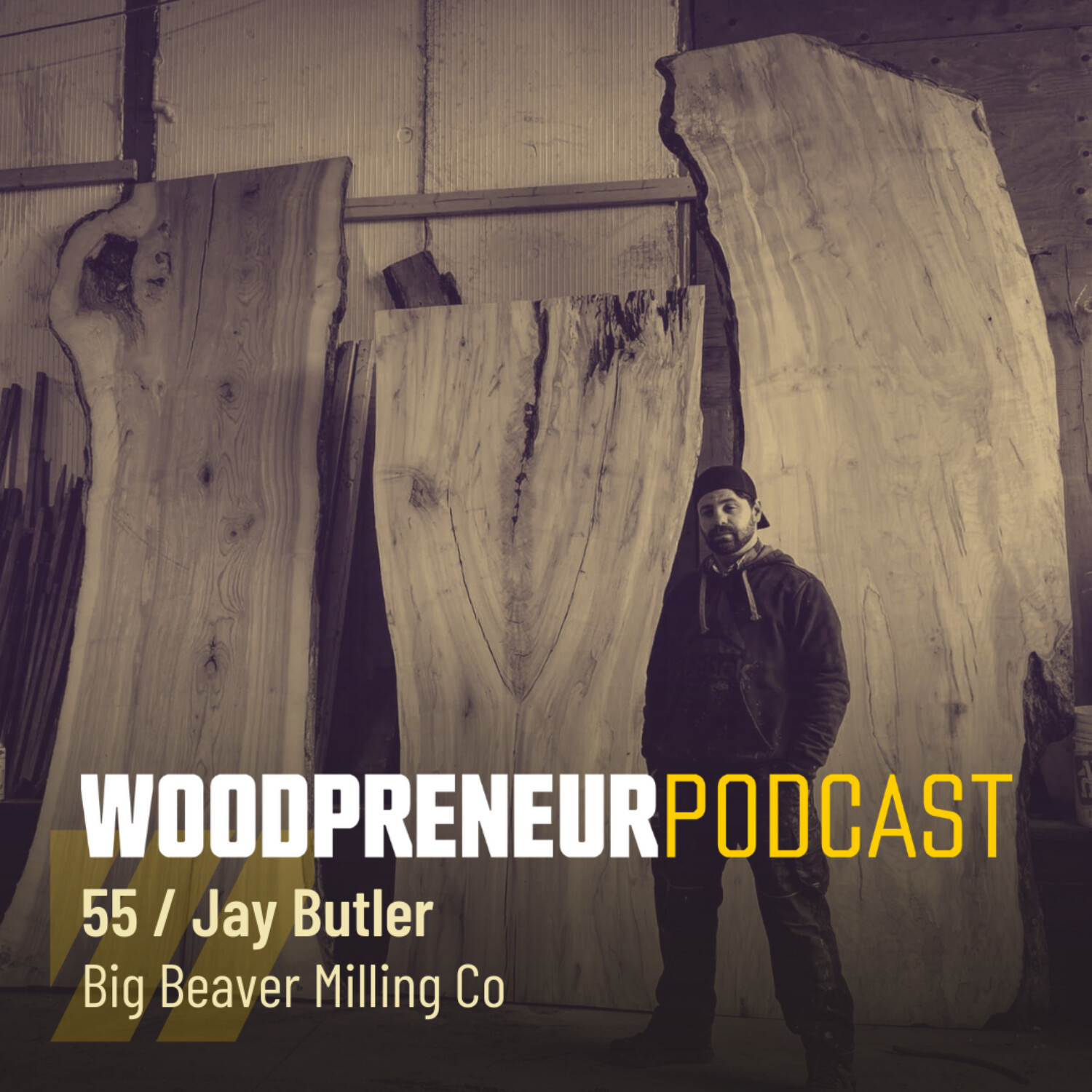
S1 Ep 55Jay Butler: Big Beaver Milling Co
HOW THE BUSINESS STARTED Now a family business, Big Beaver Co. started out as a hobby. Owner, Jay Butler was tired of paying big money for the same items that he was passionate about creating himself. Jay started this business with his family. His brother is his Arborist and co-worker and while leaning on family and friends, Jay hasn’t been let down. INCOME GENERATION From a hobby to a business about a year ago, Jay is 100% self-taught. Specializing in live edge milling, He takes Urban Lumber destined for the chipper and turns it into something beautiful. From start to finish, he’s involved. He knows the wood, cuts it, and puts it in the kiln. Jay started out milling for other people and soon realized that it was much more profitable to mill for himself. Jay figured this out by breaking metal on other people’s logs and losing a day’s profit on logs for other people. Realizing that it made more sense to keep the profits, he began mill for himself. Currently, Big Beaver Co. is linked up to sawmills on the West Coast, a place where hardwoods are hard to come by. Doing 30 to 40 slab orders once a month pays the bills and enables him and his family to sustain their current lifestyle. On the other side of the coin, they also coach mom and pop stores on selling their wood products. Jay says that taking the time to get a feel for the customer's specific needs and directing them down the right avenue helps everyone to leave the sale happy. WHY HE DOES IT Explaining that he’s not destroying trees, but instead removing ones that are about to die and turning them into pieces that can be handed down generation to generation. Jay says, “You let the wood do what it wants to do, don’t rush the work, and work with the wood. It’s a beautiful thing.” Loving what he does, Jay’s decision to pursue milling is a choice that he doesn't regret. At the end of the day, It’s what he truly loves and is passionate about. BUSINESS ADVICE If you do good by one person, they’ll tell people and then those people will come to see you. Be a person that people like and trust and your business will grow. A month ago, an order for 55,000 boards was placed (that’s about 150 dump trucks worth of lumber a year!) A million dollar order in their first year of business... However, Jay and his family aren’t in this for the money, it’s for the enjoyment that comes from doing work that they’re passionate about. Knowing that this order would take over their schedule and lives, they passed on it for the opportunity to maintain their current lifestyle. One in which they spend time with their family and continue living a quiet and content life. Influencers In his area, all of the people in the sawmill industry meet after work for beers and to hang out together. His relationship with his other competitors is more of a brotherhood and he loves it. It’s a tight-knit community and he’s humbled to be a part of it. LINKS MENTIONED Instagram - https://www.instagram.com/big_beaver_milling_co/ Facebook - www.facebook.com/bigbeavermilling
S1 Ep 54Stephen Beaulac: SB Design Co
HOW THE BUSINESS STARTED. Today we’re talking with Stephen Beaulac of SB Design Co. Stephen has always been interested in building things with wood and loves spending hours in his shop creating. Planning to retire from his day job in November, he plans on pursuing his woodworking business full time. Stephen says that the look on someone’s face when they see something that he’s created is one of the things that truly inspires him to continue doing what he does. DEVELOPING AND MARKETING THE BUSINESS. So far, all of SB Design Co. clients have come by word of mouth. Even without a website, he’s still been able to sustain his business by selling direct and having a stand at large craft shows. Stephen uses chainsaws and sanding when he sources his wood. Stephen finds the reclaimed wood that he uses through ads and by following leads. FUTURE PLANS. SB Designs is going to grow! Beaulac says he plans on setting up his website, developing his sales team, and using good old-fashioned cold calling. Stephen can’t wait to see what he can do in his future clients’ homes with reclaimed wood and the pieces he’s made. His plans are to continue growing his business to the point where he can hire several employees and move into a larger shop. ADVICE. Stephen says not to let yourself be intimidated by other people’s work. Instead, enjoy it. There’s so much out there, and it’s all beautiful and inspiring. LINKS MENTIONED Instagram Facebook [email protected]
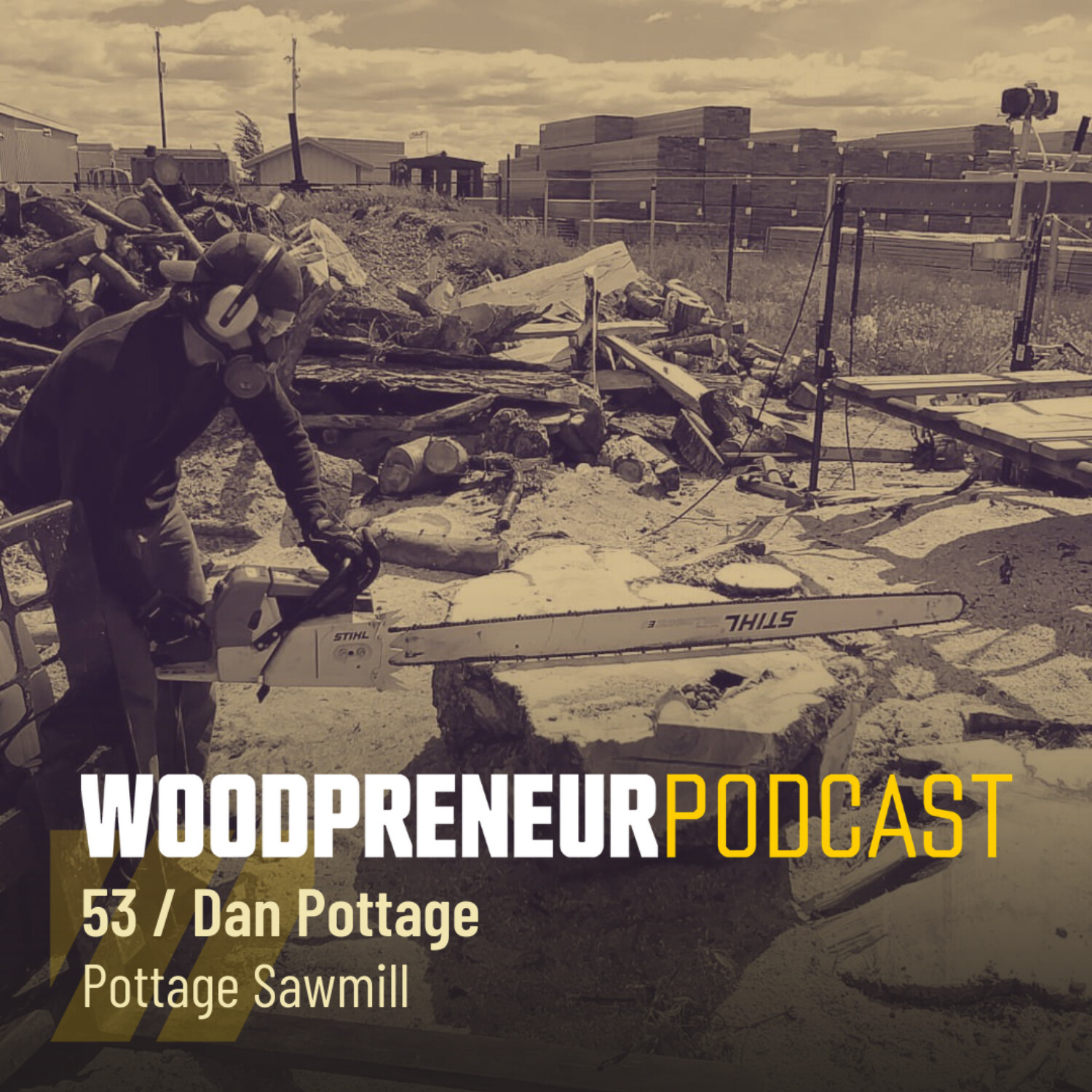
S1 Ep 53Dan Pottage: Pottage Sawmill
HOW THE BUSINESS STARTED. Today, we have Dan Pottage of Pottage Sawmill. Dan started out as a landscaper, but being based in Alberta, Canada the cold wouldn’t allow him to do landscaping as much as he wanted. Instead, he took classes and started working in tree removal. Starting with the Grandberg mill, he began milling and drying the slabs in less than a month’s time. DEVELOPING AND MARKETING THE BUSINESS. Currently, he’s milling, drying, and selling slabs. Still keeping the Grasberg mill, Dan also set up a dehumidification kiln to dry his slabs faster as compared to air drying. Even though the business still young, Dan’s use of Instagram and Facebook has helped to grow his business and connect him with other people in the industry. FUTURE PLANS. Through social media, Dan has found amazing people that he plans to connect and work with. He also will continue doing more slab work as well as making tables. ADVICE. He advises people interested in the business to set up a dehumidification kiln because of its major benefits. LINKS MENTIONED Facebook: Pottage Sawmill Website: Pottagesawmill.com Instagram: @pottagesawmill Email: [email protected]

S1 Ep 52Danielle: Sail Cargo
HOW THE BUSINESS STARTED Today, we have Danielle of Sail Cargo. She started out as a tall ship sailor, then later came up with an idea to build a full wood cargo-only sailing vessel. This was an inspiration from another vessel she experienced in which she loved their concept and mission. She went ahead and started the project. The vessel is one of its kind, coming in at 150 ft. Danielle's vision is to nurture traditional woodwork skills in the timber industry, while at the same time conserving the forest. CHALLENGES OF RUNNING THE PROJECT The project has been pretty smooth sailing for Danielle and her team. Her only issue is getting people to understand the concept of the project since it’s a people funded project. HIGHLIGHTS OF THE BUSINESS One of Danielle’s exciting moments was when she got large amounts of a Del Monte hardwood. This was perfect for building the core part of the ship, but most importantly, it was a great way to help Hurricane Otto victims by purchasing the wood from that area. She also has people who ask her to clear trees in large pieces of land for them, and in turn keep the wood she gets from them, which she appreciates. IMPORTANCE OF THE BUSINESS Danielle, who is passionate about keeping traditional skills alive in the timber industry, also wants to create awareness of the damage the shipping industry is doing. In an effort to do this she shows the value of practicing sustainable forestry as well as offering emission-free shipping services, in which 10% of the profit goes to support ecological practices, namely deforestation. LINKS MENTIONED Website: sailcargo.org Email:[email protected]
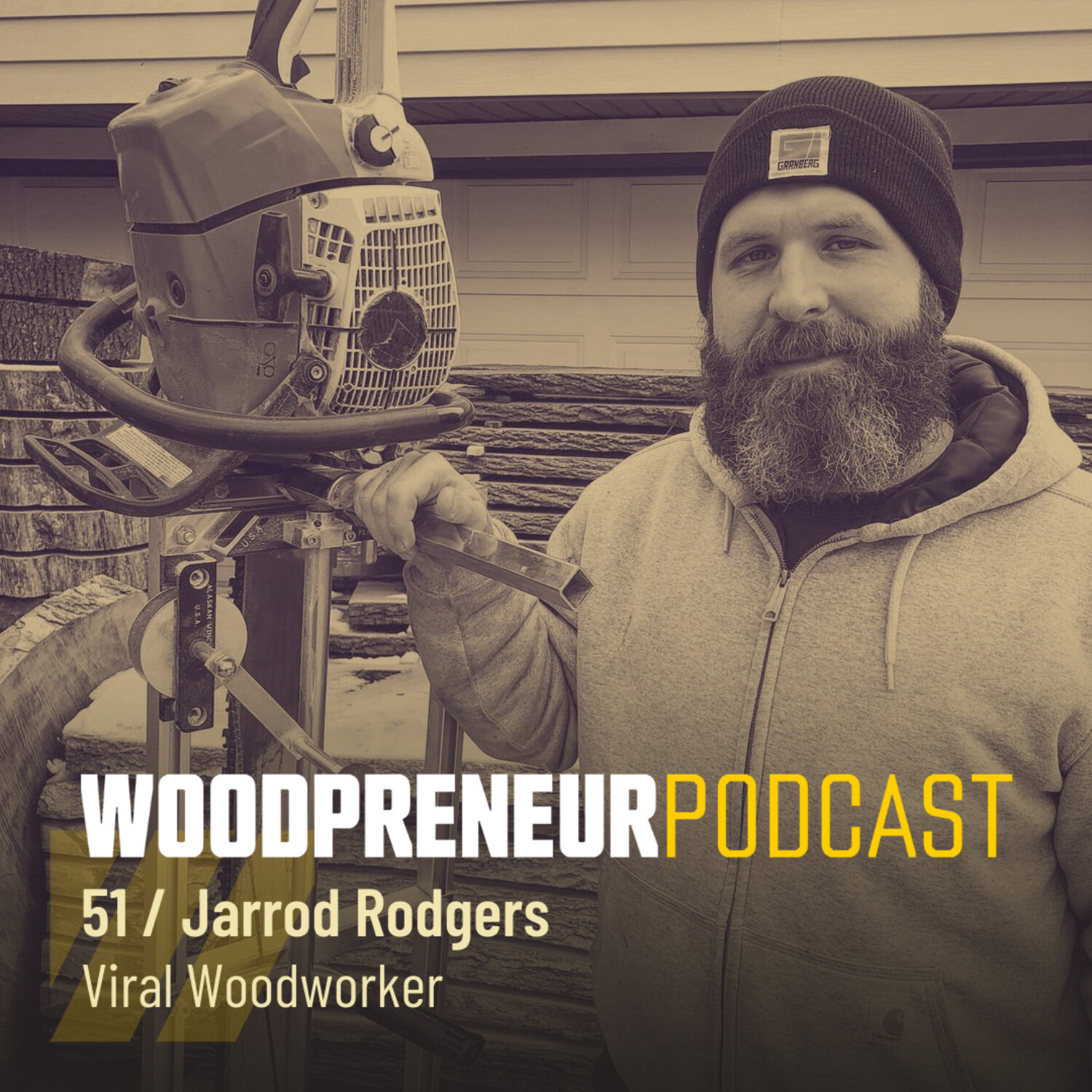
S1 Ep 51Jarrod Rodgers: Viral Woodworker
HOW THE BUSINESS STARTED Still working a day job, Jarrod Rodgers considers himself an “extreme hobbyist”. Completely self-taught, Jarrod deals in woodworking, commision work, and also chainsaw milling. Chainsaw milling was something that Jarrod stumbled into almost by accident. When asked by a client for a “live edge” coffee table, Jarrod made his way to the local slab supplier. When they couldn’t meet the slab needs for the project, Jarrod decided to start producing his own. A miller was born. INCOME GENERATION & WOOD SOURCING With a day job, Jarrod has to manage his time extremely well and limit the side projects that he takes on. Aside from this constant balancing act, living in a “tree desert” also creates more hurdles for Jarrod. It’s only through time spent on scouting areas, working with local tree services and wood shops, social media, and continuous networking with other millers, that he is able to source the wood that he needs to continue producing. THE VIRAL VIDEO Jarrod also has one of the highest viewed chainsaw milling clips online. Turns out, it was a video he almost didn’t make. After debating to himself, he decided to go ahead and film it. As the video posted to Youtube, he thought about what great exposure it would be if he could at least get 10,000 or so views. However, after his 30-second video went viral (15,000,000 views), Jarrod was left speechless. Not only did this video open business avenues for Jarrod, it’s also been key in creating awareness and interest in the chainsaw milling world. People now come to Jarrod on his Youtube channel to ask different questions about milling products and techniques, to which Jarrod happily responds, sometimes even telling the stories behind the products he’s created. FUTURE PLANS Future plans include growing his Youtube channel and Instagram while expanding his business. He also hopes to expand his storage space as he’s currently running out of room! Jarrod also plans to continue using Youtube as a means to answer questions people have about the work he does and the products he uses. Using social media as a way to connect with people, while also giving them a glimpse into the milling world, is something that he enjoys and hopes to continue. LINKS MENTIONED Instagram- @secondlifedesign https://www.youtube.com/user/renchbender83

S1 Ep 50Jennifer Alger: Urban Lumber Movement
In an effort to save our natural resources and cut down on waste, Jennifer Alger started the Urban Lumber Network. The Network is a coalition formed by people who share the same idea of not wanting to see the wood and natural resources that we have current access to be chipped or sent to a landfill, while we still continue to import other hardwood from overseas. PEOPLE WITHIN THE BUSINESS People in the Urban Lumber network include landowners with wooded acres, sawmill owners who repurpose the trees, woodworkers who turn the wood into pieces of art, and laborers who can take part in the process of removing and breaking down the trees. IMPORTANCE OF THE BUSINESS As part of the “Urban Tree Rescue Program”, Urban Lumber uses any wood not harvested for their timber value (such as “beetle kill salvage”), repurposes it, and then markets it to the American consumer- all while maintaining the philosophy that not only is wood one of the greenest options that you can choose, but every time we can save a natural resource from being wasted, we’re helping the environment. ROLE OF THE BUSINESS Not only does Jennifer’s Urban Lumber Network help the environment, it also helps her fellow timber industry workers to network, and by extension, grow their business. Through networking, Jennifer also advises people that are interested in starting a woodworking business. She takes the time to walk them through the steps that they can take, as well as connecting them with people who can help them along the way. URBAN LUMBER SUMMIT In response to Jennifer’s inspired work, the Sawmill Business Community has joined forces with the Urban Lumber Network and organized a summit. This summit will mainly focus on educating people about marketing techniques for their wood business, the various types of kiln drying processes, and money saving ideas on those processes. Also present will be speaker Sam Sherrill, author of Urban Harvesting Timber, a leader and expert in the urban lumber industry. LINKS MENTIONED Website: urbansalvagedwoods.com Website: urbanlumbernetwork.com Tickets for the Urban Lumber Summit: urbanlumbersummit.com
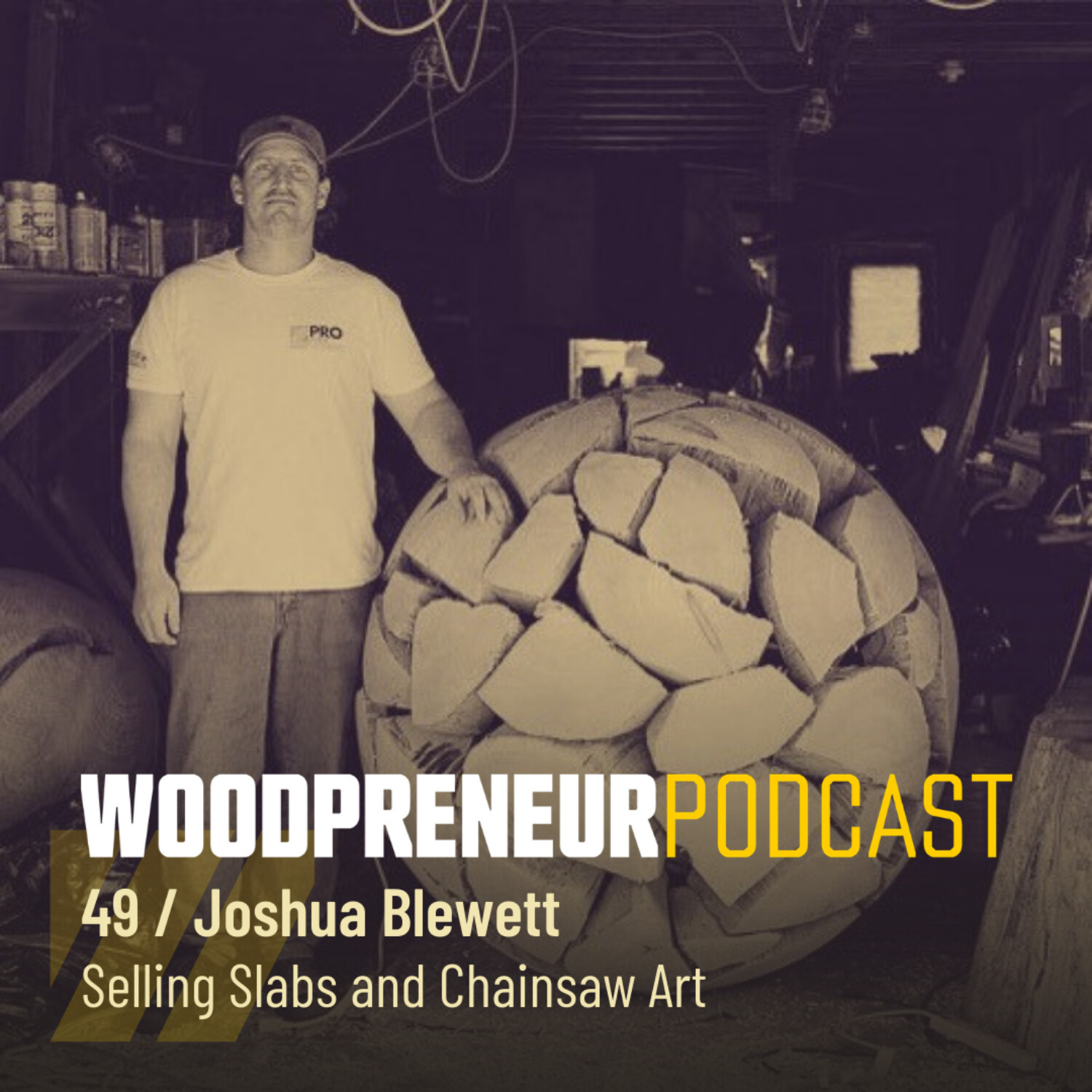
S1 Ep 49Joshua Blewett: Selling Slabs and Chainsaw Art
HOW THE BUSINESS STARTED Joshua Blewett is an artist who has been creating wood carvings and sculptures as a side hobby for 25 years. As a kid, he used to love drawing and painting. His stepfather is a wood carver and was the first professional artist he’d ever seen. Joshua used to help him with carvings and this type of influence helped grow his love for carving. BUSINESS MARKETING & IDEAL CUSTOMERS Joshua mostly finds his clients from word of mouth and referrals, but lately, he’s been using Instagram to market his work. Instagram is his favorite marketing channel since it's incredibly visual. Aside from that, he also goes to carving shows and exhibitions. CHALLENGES OF BEING AN ARTIST One of the most challenging aspects of Joshua’s business is that each piece is handmade and a one-off. Remaking every piece to order requires an intense amount of precision and attention to detail. Getting logs for these carvings can also be quite a hassle. In addition to that, they're heavy to transport or lift around, and it becomes difficult to make a carving out of them. One of the milling machines he uses is a 30 inch Granberg Alaskan sawmill. LINKS MENTIONED Instagram: Joshua Blewett Facebook: @artistjoshuablewett Website: joshblewett.com
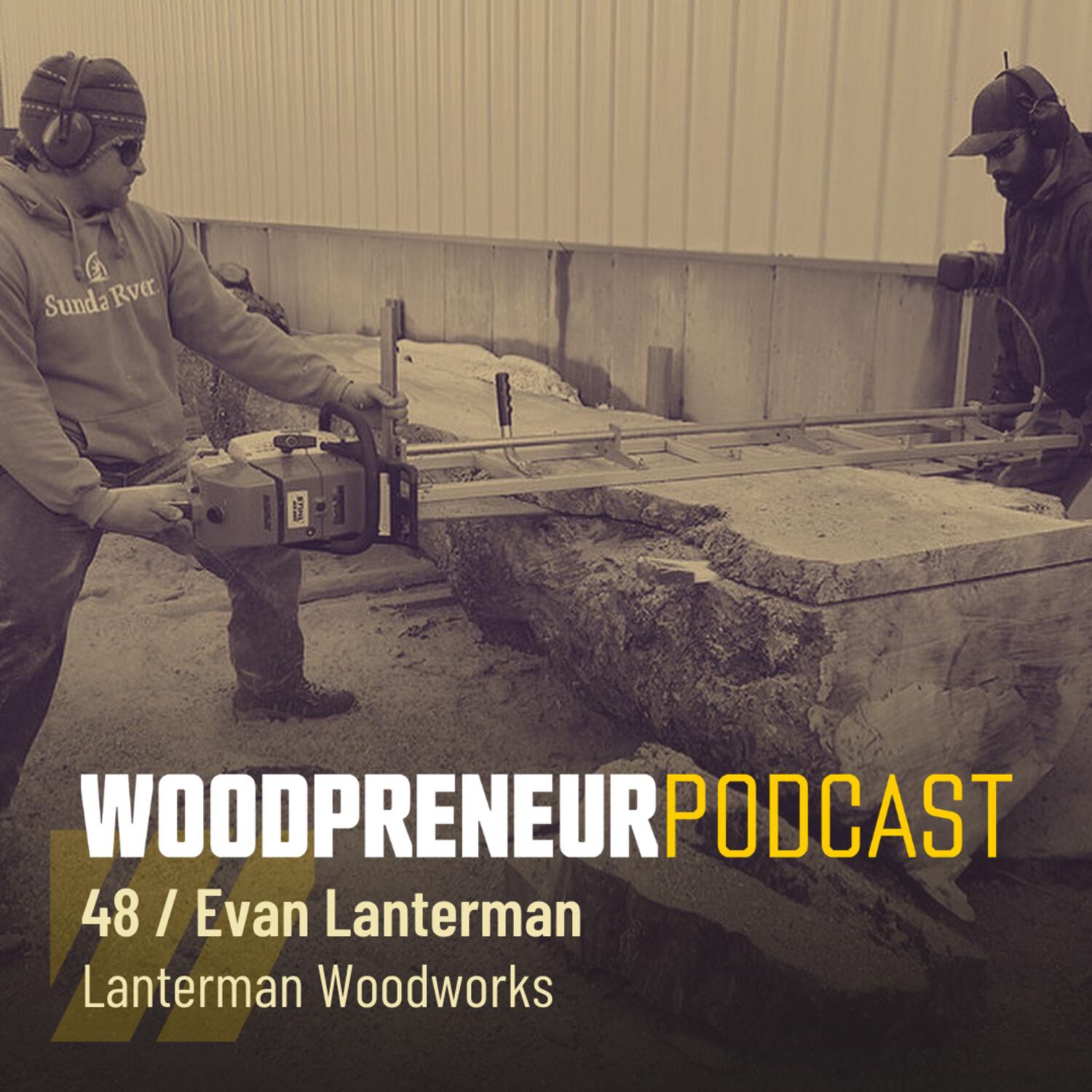
S1 Ep 48Evan Lanterman: Lanterman Woodworks
HOW HE STARTED THE BUSINESS On this episode, we have Evan Lanterman of Lanterman Woodworks. Evan’s college education was in Industrial design and he wanted to have hands-on experience after he finished his schooling. He started out by building timber frames, general contracting and the carpentry business. In 2011, he slabbed a tree that had come down at a nearby park and this turned out to a game changer for him. After opening the tree up, he discovered a new way of working with wood. He obviously didn’t want to waste the products and this is how he shifted from the type of work that he was doing. At the moment he’s focusing on ways to utilize the mill and the material that comes from it to create furniture although he minimally still does residential carpentry. PRODUCT AND SERVICES Currently, Evan is focused on building pieces through his creativity hoping clients will be impressed and will buy them from him. He has a network of local designers and a few homeowners that he’s been working for over the years, of whom he hopes will refer him to other clients. His products include cabinets, tables, desks, and shelving units. He’s thrilled by the idea of free-standing objects as they're easily portable. BUSINESS MARKETING Most of his business comes from referrals and word of mouth mainly from his clients and friends in the design industry. However, he’s striving to market himself a little bit more through Instagram and is also positioning his website to be able to receive orders. PASSION He loves seeing the end product of his work and to experience the joy of a customer. Not only is this mutually beneficial, but also one of the best feelings to have as a business owner. CHALLENGES OF RUNNING THE BUSINESS Lately, the hardest part of running the business has been managing time. He’s the sole person in the business and he’s always receiving calls, marketing, creating products, and interacting with clients. It's becoming overwhelming but he’s trying hard to balance them all. 5 TOP TOOLS ESSENTIAL FOR THE BUSINESS His number one tool would be proper eyewear protection. He’s got a Bluetooth eyewear that keeps him occupied both mentally and physically. The second tool would be for dust collection and dust management and in the admin sector, the spreadsheet is really important in his business. The last two tools would be stable internet and have active social media accounts. FUTURE PROJECTS Evan hopes to start making live edge products from the material he’s been drying up over the past few years. He’s quite motivated and excited to get his hands on this project. LINKS MENTIONED Email: [email protected] Website: Lantermanwoodworks.com Instagram: @lantermanwoodworks

S1 Ep 47Sean O’Brien: Pacific Coast Lumber
Today we have Sean O’Brien from Pacific Coast Lumber. The business is located in San Luis Bispo, California right between LA and San Francisco on the Coast. The business has been around for almost 23 years but Sean bought it only 2 ½ years ago from Don Seawater. Dan owned a commercial lumber yard where he was selling commodity lumber until he realized it wasn't working for him anymore. He decided to generate a new industry of urban forested lumber. He had noticed that bio mass resources were being underutilized. They were left to decay or were used as firewood or wood chip which was a high waste of resources as far as Dan was concerned. He then bought a lumber mill and started retrieving the materials locally and developed the demand for it. When he was ready to retire, he approached Sean and his wife to buy off the business which they gladly did. Before buying the business, Sean had been a software engineer for 25 years with no milling background. His wife on the other hand was an auditor for about 23 years and didn’t have the passion for her work anymore. She therefore decided to follow her passion and started a company called The Place to Grow where she takes reclaimed doors, windows, wood and metal elements and creates outdoor lifestyle structures. Her shop was located opposite of Don Seawater’s business and that’s how he sold the business to the couple when he was ready to retire.
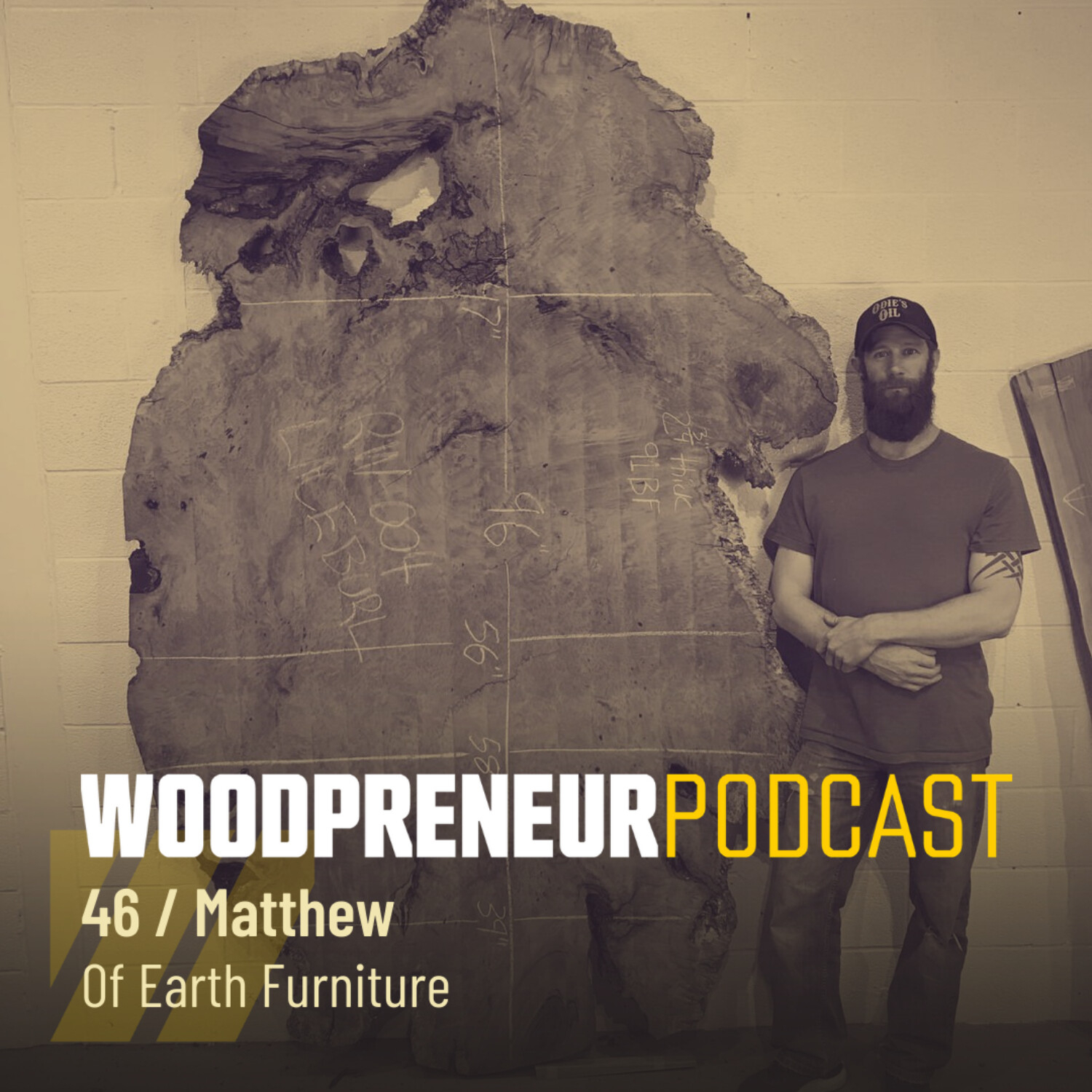
S1 Ep 46Matthew: Of Earth Furniture
HOW THE BUSINESS STARTED Today, we have Matthew from Of Earth Furniture. Matthew has been in the wood working industry for over 20 years now. At 17, he started doing custom wood turning while working under a certain gentleman for 4 years. He acquired great skills and work ethic from this mentors experience. After turning 21, he left the job and begun hunting for another. He checked out a few shops but wasn't impressed by how they worked. He was more of a hands-on man but all he saw around was automated processes. He picked up a few jobs here and there until he broke off to start his own business, Of Earth Furniture. Of Earth Furniture is just a small company of two people at the moment. It has been a lifelong dream for Matthew to do custom solid wood furniture and that’s what Of Earth Furniture deals in. He sometimes does commercial work, but mostly custom does wood work. His work consists of his own designs but he’s very open to a customers’ design and custom tailor pieces. CHALLENGES OF RUNNING A BUSINESS Matthew is extremely good with handling people and sales and he always makes sure they're happy by providing high quality products. His hands work like magic but running the business side of things deems a little challenging. He has no formal business training in terms of marketing, branding, and sales. He is however working hard to learn all the business tips and tricks to be able to have a successful business. LESSONS LEARNED His perfectionist nature requires him to make sure everything happens according to plan. As much as this is a good trait, not everything goes to plan and on time. His biggest lesson is learning to let go and let things take their course. STAYING INSPIRED Matthew was not tech savvy before and wasn't mesmerized by the Instagram idea. However, one of his workers opened an account for the business and started posting content consistently. This grabbed Matthew’s attention and he’s now an Instagram junkie. He gets most of his inspiration from checking out other people’s amazing work on the app. One of them is Canadian Woodworks. He’s cautious of getting the shiny object syndrome from this, though, as everything always seems perfect on the site. FUTURE PLANS He’s working on his branding this year, so he’s looking to create a logo, a webpage, and deal with the marketing. He’s also putting up a product line for Of Earth which will include products such as candles, natural bees wax, pottery, and other products that can tie in with the Of Earth brand. LINKS MENTIONED Instagram: @ofearthfurniture Email: [email protected]
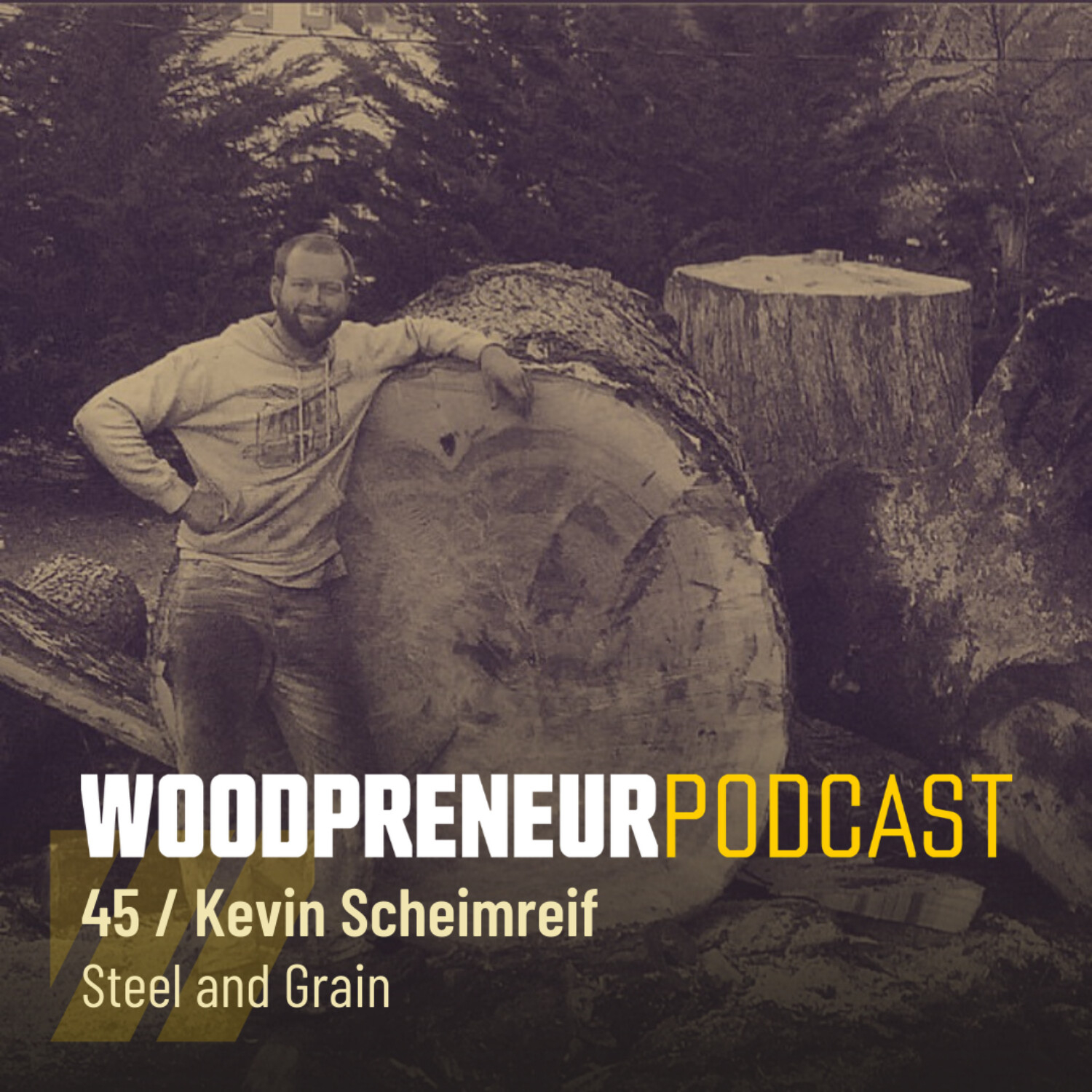
S1 Ep 45Kevin Scheimreif: Steel and Grain
HOW THE BUSINESS STARTED Today, we have Kevin Scheimreif from Steel and Grain. When Kevin was a kid, his dad had a construction business and he would go help him. He worked in the shop and on the jobs during summer break, where he learned how to do everything from electrical, plumbing, additions etc. He vividly remembers how he built his first nightstand when he was 11. After high school, he realized he really didn’t like the business. He then went to work for someone else for a couple of years as a mason. He left this job and took many other jobs but he never quite felt satisfied with himself. One of his friends, Kevin, later asked him to help build his house. This wasn't something Kevin knew how to do but was up for the challenge. He did this work for some time but construction still wasn't satisfying to him, so he decided to start building custom furniture. He started the business in his garage and inherited some woodworking tools from his dad after he closed his business a few years before. This is how Steel and Grain was born. It’s been his fulltime job now for 5 years. Kevin is passionate about furniture and he does high-end woodworking where he incorporates steel metal work into almost every piece. MARKETING & BUILDING SOCIAL MEDIA FOLLOWING When he started Steel and Grain, one of his friends, Abby, convinced him to get into Instagram. He wasn't conversant with the app at the time but he was willing to try it out. He would post his work and connect with other wood workers, checking out their stuff while getting inspiration. Before he knew it, his videos were going viral and his network grew tremendously. He has also been going to arts festivals where he markets his products. Although some shows don’t end up converting to sales, there are really good ones out there. Social media and art shows split 50-50 in sales conversion. SHIPPING PRODUCTS Most of his shipping orders are through social media. His first order was a $6000 desk being shipped to California. All the other orders are 3-4 hours away from his workshop. ADVICE When he started out, he had no clients, no social media accounts or anything. He just quit working in construction and started building furniture hoping they would sell. Now, he wishes he would’ve done things differently by first getting a customer base, hustling in the evenings and weekends, and building some income before quitting the day job. He didn’t make a penny for the first two years and would live off credit cards which he awfully regrets. CURRENT PROJECTS He’s currently building new stuff for upcoming shows this year. He believes he’s going to gain new skills from this project. Even though he’s never done anything with drawers and edges, he wishes to gain skills from them this year. Aside from this, he’s got other projects like rough cut coffee tables, walnut tables, and others. LINKS MENTIONED Website: Steelandgrain.com Facebook: https://www.facebook.com/SteelAndGrain/ Instagram: @steelandgrain or @steelandgrainslabs Email: [email protected]

S1 Ep 44Blaise Brogan: How to Supplement Your Tree Business
Blaise Brogan started cutting trees when he left school at 16 years. He was working for various tree companies and eventually started his own. He first bought a middle skid steer boxer machine which he’d imported from America. He was impressed with the first product he made and decided it was something he could actually do. HOW THE BUSINESS STARTED He was working for a firm on week days and then work on the weekends cutting trees. He’d just bought a house and was working on it every evening trying to completely renovate it. One day in 2001, he decided to quit his job and just do his own thing. Blaise has only been serving clients in his little village in North London. They love him because he creates unique products and is quite affordable. When he started, he was trying to save the wood by cutting the hedges since there is a big reduction in trees. Afterwards, he started cutting the trunks in the yard after which required him to buy a milling machine. He mainly does tree trimming, but also does milling. DEVELOPING MARKET FOR HIS PRODUCTS In the UK, the market is quite different from USA. People prefer buying things like antiques from stores rather than having them made from scratch. It’s a more of a younger market that is growing. He’s got a really big stock which is a good opportunity for him. He feels that in the next five years, his business is going to take off. He’s trying to get into some design agencies and talk to people, and also push a mixture in materials as well, such as getting metal cast into the pieces. He’s been experimenting with that a lot. GROWING THE MILLING BUSINESS For Blaise, it’s really about getting the woods to use and getting the word out there. For example, he is specializing in big stuff like conference tables and he works really hard to make them outstanding since it’s the kind of product he’s pushing for. FUTURE PLANS He just got a new work shop which is ten times bigger than the old, which has now created a bigger working space. He can now work on more stuff and he also has a small kiln that he made to keep the wood dry and cared for. Twitter: @BlaiseBrogan Instagram: Blaiseintrees Facebook: Blaise Brogan
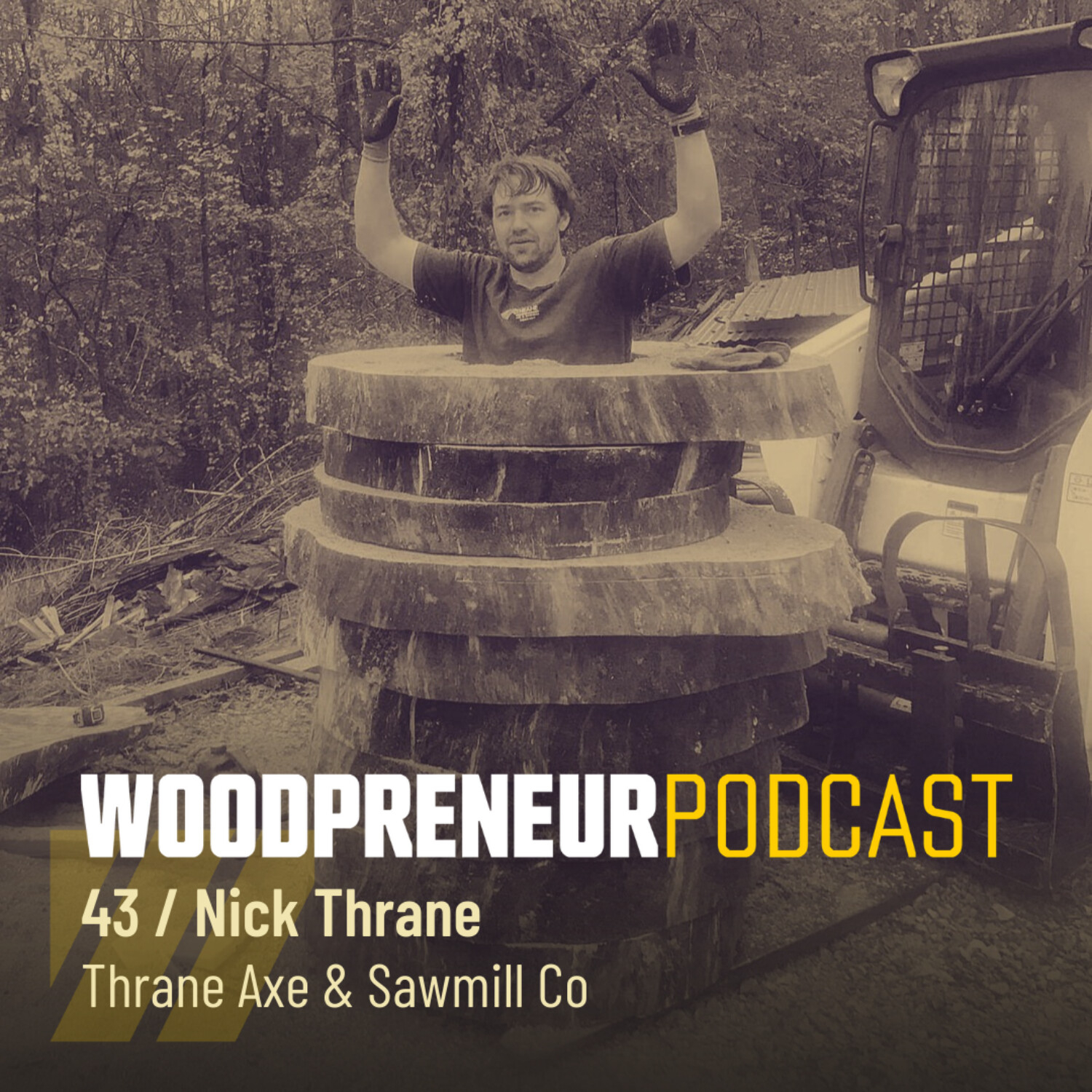
S1 Ep 43Nick Thrane: Thrane Axe & Sawmill Co
Thrane Axe and Sawmill company is all about axe restorations, making blanks for people who want to curve their own handles and making wood wedges. HOW THE BUSINESS STARTED. In the beginning, Nick had never used axes before and was curious of where to buy. He found old ones from different marketplaces and started collecting them. It reached a point where he felt as though he was hoarding them and he slowly began selling. Because he was frustrated of buying factory made handles which only fit certain size axes, he started Thrane Axe & Sawmill. He knew there are so many different axes and sizes of the eye where the handle goes in and that’s why he decided to start making his own. He would buy wood and cut it himself using an lt10 sawmill but he’s now upgraded to a powerful hydraulic sawmill. He’s been in business for about 4 years now and the reception has been great. The wedges have been selling so fast because no one else makes the variety of wood types, of wedges. ROLE THE SAWMILL PLAYS IN THE BUSINESS. The Sawmill plays a big part in producing the wood to make everything for the business. It helps to cut different thicknesses of wood that might be impossible to buy anywhere. MARKETING & GROWING THE BUSINESS Being a very niche product, it's quite tricky to get the word out. Mainly, he pays for keyword searches and advertising through Google. Nick has found it challenging to grow the business because of up and coming competition. They creep up fast and sell products at a cheaper price. Currently, he’s trying to build the inventory of dry wood which he’ll use in future. This gives him unlimited options as to what he can do. WOOD SOURCING He gets his wood wherever he can locally because there are a lot of rules and regulations if you go to other states to transport logs. But mostly, he gets Ash trees in Maryland along the railroad, or a canal, or a river, and also a lot of people contact him when they have logs. HOW HE STAYS MOTIVATED As much as it can be hard, he really tries to motivate himself. He tries not to get up early because that makes him more tired. He makes sure to eat a good breakfast, drink coffee, and take his dog for a walk. This helps him kick start the day and keeps him motivated. FUTURE PLANS He’s been collecting logs which have now piled up and he needs to air dry them to use them later. Also, he knows a lot of places with ash trees and he would like to cut as much as he can since he foresees it's about to get scarce. LINKS MENTIONED Website: Thraneaxeandsawco.com Instagram: @Thraneaxeandsawmillco
S1 Ep 42Mike Rupich: End Grain Furniture
HOW END GRAIN FURNITURE BUSINESS STARTED Mike Rupich first started all by himself doing custom furniture. He thinks is his parents really trusted him when they let him run around with big power tools when he was younger! He would build stuff and work with tools and as he got older, this became a passionate hobby although he never thought he could ever make money from it. For years, he built himself furniture because he couldn’t afford the ones he wanted. Then one person after another wanted to buy his furniture and it surprisingly turned out to be a full business. He’s acquired different sawmills over the 10 years he’s been in business and now it's a full-scale metal and wood fabrication shop. In addition, they also sell the wood that they mill themselves. BUSINESS CHALLENGES & INVESTMENTS Being just a passionate man with no business skills, handling the day to day business operations was quite a task for Mike. It's one thing to burst with talent and skills, it's another to handle the business side of things. He knew he didn’t want to be a starving artist so he tried learning the ropes of having a reasonable pricing point while building quality stuff. 10 employees later, he still struggles a bit having to handle the managerial tasks especially book keeping. After building all that up for years, two years ago his neighbor’s shop caught fire which resulted to his business being taken out. Out of this calamity, End Grain Lumber was born. Not everything was ruined and they had truckloads of lumber that they needed to give a purpose, which they started turning into products such as flooring to complement the furniture business. Mike is a big fan of buy once cry once while making investments. He made a huge investment to purchase a Tenon table saw which he recalls was the best thing he ever bought at the time. But as time went by other better machines cropped up and it was no longer as fancy as he thought. In this industry, though, he suggests you buy the best quality of what you can afford. SAWMILLS In the beginning, most of the items he was asked to make required the right boards or right sizes. He always had a hard time having to look for them which and he figured it would be best to buy the correct sawmills. Compared to what he was spending on the materials at the time, this was a wise business decision. He now owns a Woodmizer 30 and an Oscar 52. BUSINESS LESSONS AND MOTIVATION. His motivation comes from looking around and seeing how many talented people there are now. Everyone has a different perspective on what could be built and how they should be built which keeps him on his toes and inspired. His first lesson is realizing that this is one of the harder professions. You have to buy expensive machines and put in so much labor, but he’s never put down by that fact. Other lessons learned, it's important to buy only what you need, when you need it, and in the best quality as well as make sure to stand behind your work. FINDING HIS FIRST CLIENT. Currently, most of his clients are interior designers, architects, and designs build companies. He believes he found his clients through hard work and luck. All what he’s doing now stemmed from one referral. While he was working in his garage, he got introduced to an amazing interior designer who opened doors for him for bigger projects. That work introduced him to other people and it’s been a swift ride with consistent projects from then. FUTURE PLANS Previously, they’ve always done one-off stuff and collaborating with people to build pieces. Now, they want to enhance that on the lumber side and also having a small collection of their own pieces. LINKS MENTIONED Instagram: End Grain Furniture / End Grain Lumber Website: Endgrainfurniture.com / Endgrainlumber.com Location: Bloomfield, New Jersey.
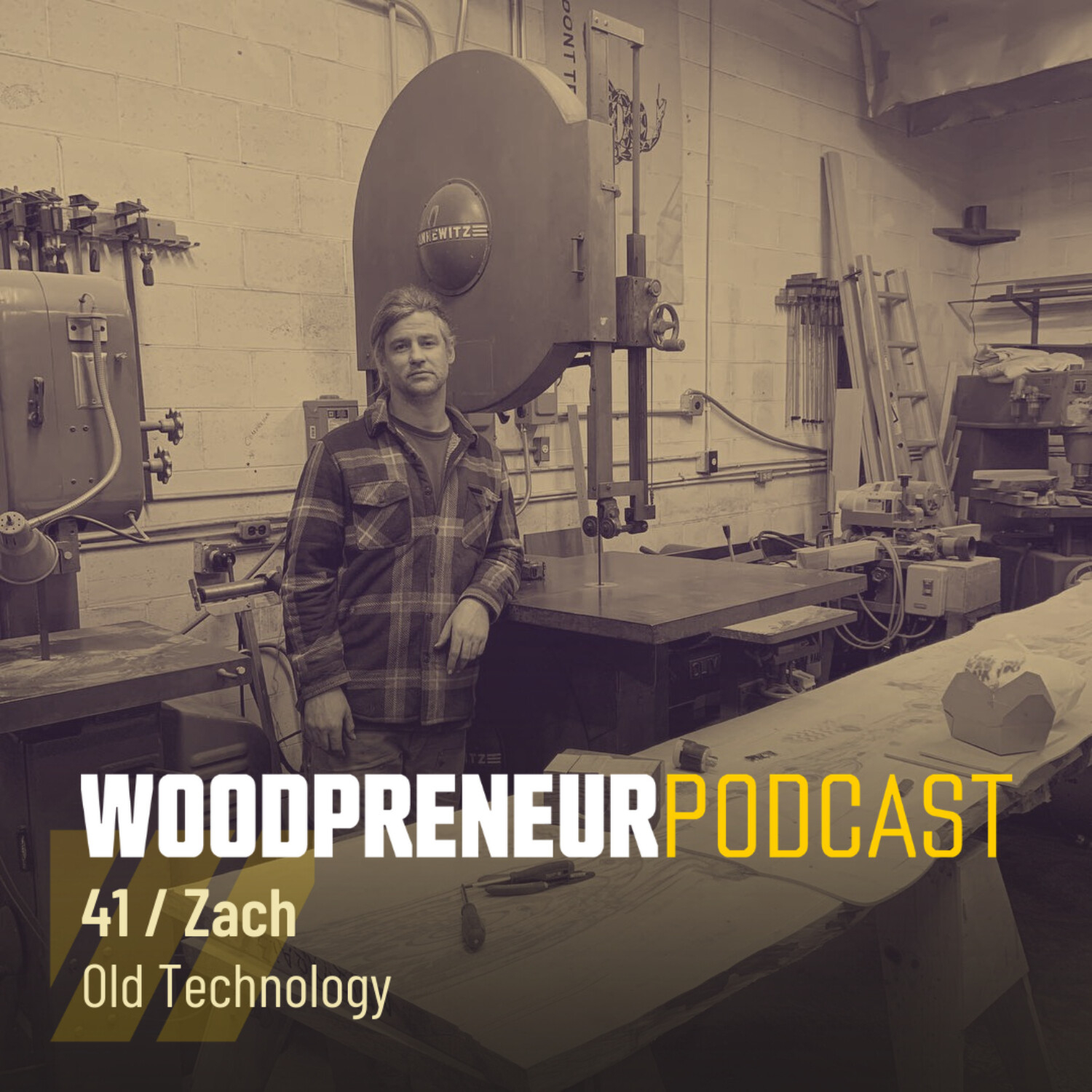
S1 Ep 41Zach: Old Technology
How Zach got started Zach, from Old Technology, got started when his friends in the tree service started giving him the trees they were removing from properties. He first invested in a chainsaw mill to start milling these trees, then bought a kiln for drying and is now producing his own furniture from his wood. Originally a general contractor with a passion in woodworking, as interest grew he was able to go full-time. Investing in Equipment The first piece of equipment Zach invested in was a backhoe to assist with the removal of the trees. As the trees started to pile up in his yard he found a lot and started milling and air-drying the wood. The game changer for Zach was buying an Alaskan Chainsaw Mill. It meant they could mill the trees on-site, in places that were inaccessible to heavy equipment and would be able to get the wood out. How Zach funded the business Zach's business was all self funded. He began with savings and then as he started selling wood, reinvested the money in his business. This was a long road requiring a lot of patience but Zach was determined to work within his means. He continued to work as a general contractor during this time as he built the business. As Zach gained experience and found clients, things started to snowball and he had to turn down contracting jobs in order to work on the business. Going full-time in the business was the natural next step. The Most Profitable Part of Zach's Business In partnership with tree service companies, Zach provides a 'mill and return' service to the home owner where he mills the tree and returns it to the homeowner. These trees have been apart of the home and have history. This service enables homeowners to keep a piece of that. He finds that the tree services have a lot of success selling his milling services to home owners. His company also makes a lot of high end furniture and make commercial furniture for restaurants and coffee shops. How Zach Markets his Business Unusually, Old Technology does not have a website. They do have an Instagram and find that 50% of contact comes via Instagram with word of mouth being the other main source of leads. The Equipment Zach uses Panther MillCannon BarsStihl MS 880Granberg Ripping Chain Does Zach want a bigger mill? Zach is currently running a sawmill business with an Alaskan mill. Although Zach would like a bigger mill in the future, they are currently investing money in other areas such as a kiln and a CNC machine. He is then looking to purchase a Lucas or a Peterson mill. How Zach is planning to grow He has recently moved into a new warehouse with a full service wood and metal shop. They are transforming part of it into a slab showroom and will also have a showroom for finished furniture. Old Technology Instagram https://www.instagram.com/old_technology/?hl=en
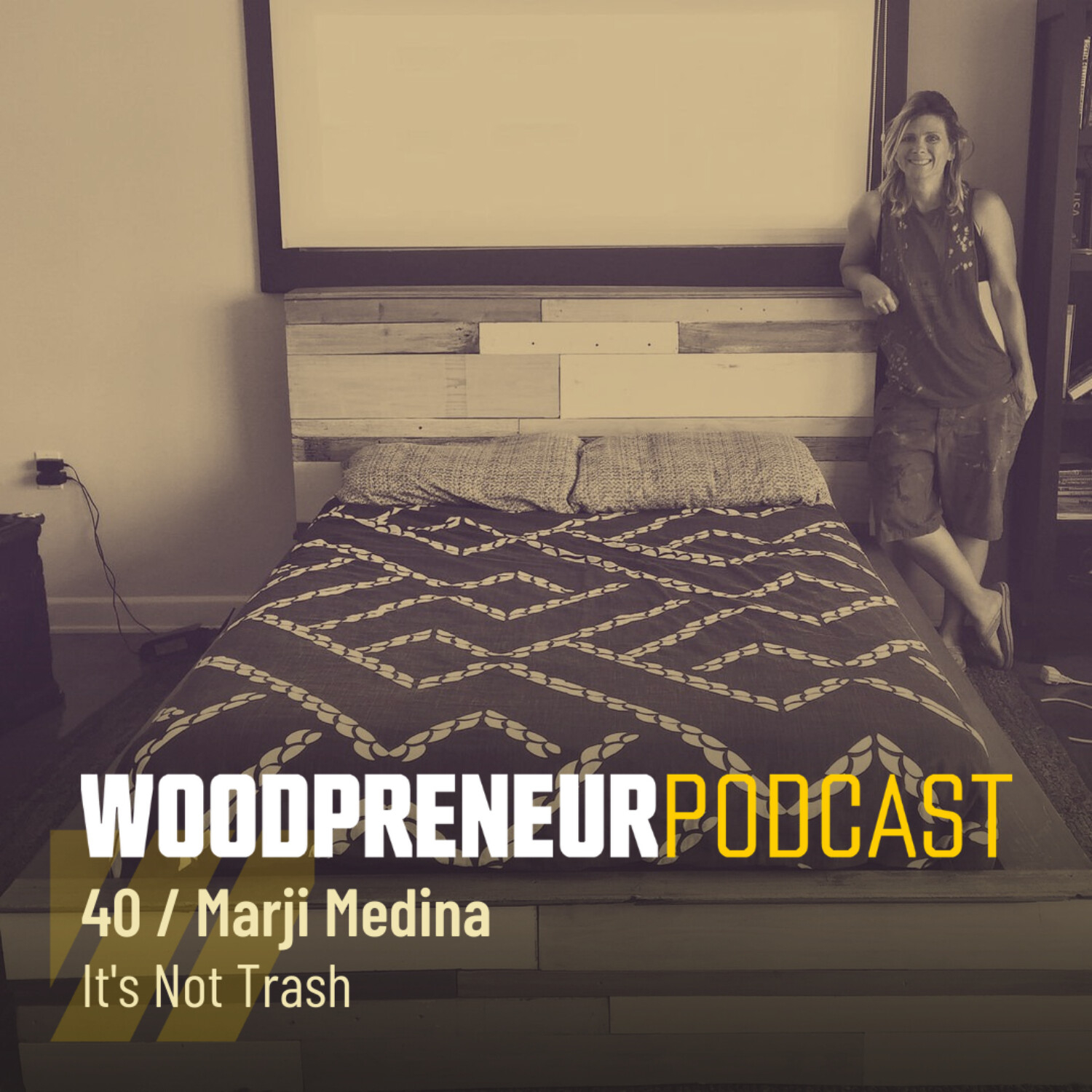
S1 Ep 40Marji Medina: It's Not Trash
HOW IT'S NOT TRASH STARTED. Today, we have Marji Medina from It's Not Trash, a reclaimed wood design company. Marji was working as a VP in sales consultant for a hospital for quite a while but was not satisfied with it. Coming from a wood work family, she missed getting her hands dirty with physical labor which resulted in her furnishing her first apartment with making her own pieces. After that, she created a side business on Craigslist which made an extra hundred dollars a month. Around 2014, her wife, as she calls her, (never actually married) was getting a 2nd degree and everything was so tight. Coincidentally, people kept on telling Marji she needed to make her own furniture designs. She thought of taking broken stuff like IKEA designs and fixing them, she tears them apart and makes her own. This brilliant idea was supposed to only fund their wedding but within 4 months they were already making over $3000 a month. In a year, she was able to fully fund the wedding and fully pay her wife’s college fees. Surprised that it worked out so well, she quit her job and fully committed to the furniture business. DEVELOPING HER SKILLS & BUILDING CUSTOMER RELATIONSHIPS. She was the ‘tomboy’ kid who made stuff with her best friend. They would pick up wood and create little things that increased her woodwork skills. Up to now, her love for fixing things is almost a problem because she always wants to fix everything. In her college years, Marji did door to door sales which she ended up doing for 13 years. She says she can’t trade that experience for anything. It taught her so much that she later implemented in her business. People love buying her products because they feel like they just bought them from a friend as Marji is so friendly, and informative to her clients. HOW SHE SOURCES HER PRODUCTS In the early beginnings of the business, she loved driving around and throwing the wood in the back of her truck when she saw broken things. However, right now she doesn't have enough time to either drive around or even build as much as she used to. Her staff have now taken the role of doing almost everything but she always oversees them. She doesn't go to get wood anymore unless she’s sure of getting a truckload. This has resulted to her buying wood from Home Depot for some of her stuff. She has established a great relationship with guys who work at Home Depot who always call her when they have stuff to dispose. HOW CUSTOMERS FIND THEM & THEIR IDEAL CUSTOMER It all started from Craigslist when she was fixing broken stuff and sell the finished pieces. Later, she added on a Facebook and Instagram. She didn’t have a website till a year later since web optimization cost an arm for small businesses. She jokes her ideal customer is someone who doesn't send her a West Elm bed on repeat. She wants someone who is willing to take multiple pictures and have them all mashed together to create something new and just let her burst with creativity to deliver something amazing. ADVICE TO ANYONE ENTERING THE RECLAIMED BUSINESS. First, understand that it's not the best-writing author but the best-selling author. It’s not about waiting to have everything in place before getting started, it's about starting immediately and doing the best you can with what you have and getting better as you fail. Secondly, you are never going to get more money than the market can bear. Figure out how much it costs to make your widget. Find something you can make with a profit margin within a time frame that is going to pay you what you're worth hourly. LINKS MENTIONED IN PODCAST Instagram: @itsnottrash Website: Www.itsnottrashdesigns.com

S1 Ep 39Clay Klener: Evolutia
HOW CLAY STARTED THE BUSINESS. Clay Klener, from Evolutia, specializes in reclaimed wood. They started salvaging large textile mills in the South East in the early 2000s as a family business. Although they’re from Birmingham, Alabama the first project they did was in South Carolina. A lot of the textile mills they were after were in South Carolina, Georgia, or Alabama. What they did was dismantle old structures, salvage the wood and bricks, bundling and tag it, inventory it and sell it wholesale. Now, they are more on the retail side and they salvage wood from all over the country as well as buying wood from brokers. They then put out finished products like architectural pieces and other products for most interior applications. Starting the business was very difficult because, as it's a new industry, there are no standards or standardization like there is with new lumber. The business is rewarding, however, you might encounter issues with purchasing or salvaging material, having a large waste factor, or getting material that may have some damage. TAKING BUSINESS TO THE NEXT LEVEL. The number one thing that must have taken the business from the beginning stages to a better level is better and proper equipment. This enabled them to stop outsourcing when trying to produce certain orders. It allowed more control and consistency in whatever they were doing. The other thing is increased inventory. They’re always dismantling, salvaging, or purchasing reclaimed material so having it on hand was very helpful. Customers like to see what they're getting and this really helped push the business forward. WHAT HAS KEPT THEM MOTIVATED OVER THE YEARS In such a business, every day is different and this is a motivating factor. Also, everyone in the business enjoys the history of the salvaged materials. They’ve done large commercial projects that they were really proud to be a part of. THEIR IDEAL CUSTOMER They have several ideal customers. First being contractors because they bring repeat business and totally understand their material and how to use them. They’ve also been involved in restaurants where they give materials and do tabletops for them. Although it's hard to downsize to the ideal customer, they deal with contractors, homeowners, and architects and designers. LESSONS LEARNED Over the years, reclaimed has become harder and harder to find. Clay wishes they’d collected more wood over the time they’ve been in business and especially the first years. This has caused them to miss out on some pretty huge deals in the past because of lack of inventory. Also, the material holds so much value now and he wishes they’d done more large projects. Knowing how to manufacture the material, in the beginning, could have saved them tons of money but it's all a learning curve. FUTURE PLANS & ADVICE. They hope to bring in more profits with the booming economy at the moment. He would advise anyone getting into the business right now to tread lightly. There's a lot to learn in this business and unfortunately, there's no instruction manual. Things like getting the correct materials, learning your own process, etc. Most importantly, pay attention to your bottom line, get adequate equipment and employees, and make sure you're consistent in what you're putting out. Check out Evolutia Made at: https://evolutiamade.com Or on Instagram at: evolutiamade
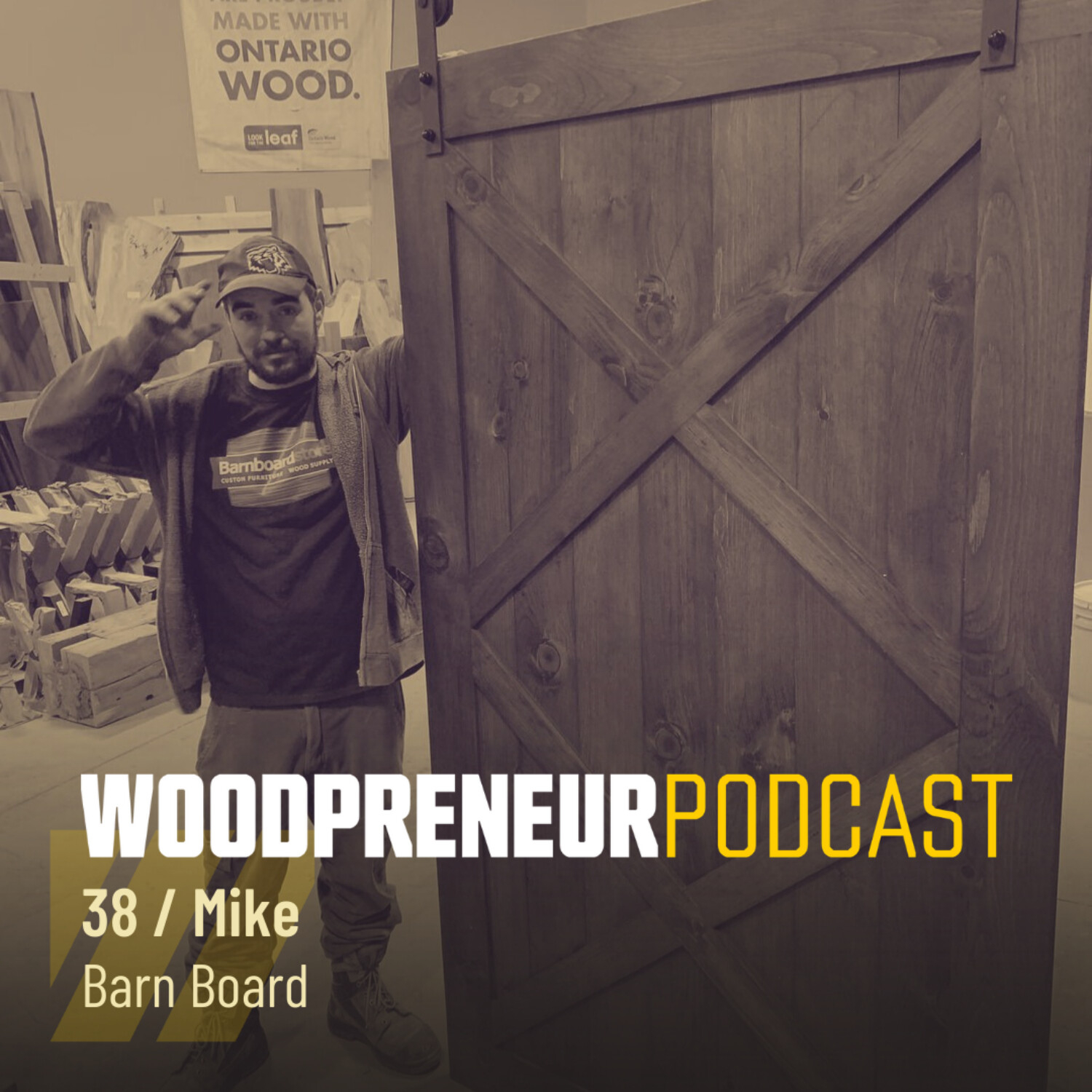
S1 Ep 38Mike: Barn Board
HOW BARN BOARD STORE STARTED About 16 years ago, Mike and his wife bought a house that had the worst-looking garage at the back of the house and he wanted to do something about it. Later, a barn had blown over at a friend’s town and Mike together with his wife rented a truck and bought all the barn boards. He then collaged the garage in barn boards and made it look like a barn. Fast forward to 6 years later, they needed to expand the garage and they ended up tearing it all down. There was this barn board that was in still in good shape after all this time and he couldn’t really dispose of it. He opted to sell it on Craigslist where he got a massive response. Days later, he would still get requests from people asking where they could get barn board and that’s when the business idea came to mind. TAKING THE LEAP OF FAITH After tearing the garage and getting requests for barn boards, Mike would work with barn boards during the weekends and sell them off. Luckily at the same time, his career in management in a tech company hit a wall and he calmly transitioned to the barn wood business that was already booming. BARN BOARD’S PRODUCT SERVICES AND REVENUE STREAMS They mostly sell raw barn boards and reclaimed lumber and people can do whatever it is they want with it. Alternatively, they can make stuff for their clients. The first component of their business is sales and fabrication of reclaimed wood and the second component from demand was dried slabs. They’ve developed that part of the business incredibly, and have a lot of live edge slabs. Same as the reclaimed lumber, they can either sell it as raw or could create anything as per the client’s expectation. The third thing they do is custom furniture which a client gives specifications of whatever it is they need. They source their wood from tons of suppliers and barns in the Province of Ontario in which he tries his best to handpick the best materials. He’s noticed reclaimed materials are more popular and more appreciated now as opposed to before where furniture was pre-manufactured. People are flexing their creative muscles and it gets exciting every single day. CHALLENGES OF RUNNING RECLAIMED BUSINESS The number one challenge his business experiences are clients having extremely high expectations in terms of product delivery. Some clients think their order will be started on right away, which is hardly the case. The overflow of orders delays the timeframe in which an item will be completely done. Figuring out the market and what the customers want has not been as stressful for them as they pride themselves on being good listeners. They’ve got clients who are super creative but have distinctively different tastes. From regular people, homeowners, restaurants, and commercial companies, this diverse group needs quite a good ear and someone who’s open-minded. MARKETING HIS BUSINESS It’s obvious from their website and Instagram account that they’ve mastered the art of marketing. For the past two years, Instagram has been driving quite a huge number of clients to their stores. Mike believes it's important to have beautiful products but it's also equally important to have clients knocking on your door buying products. He’s invested in a good team which he requires to be all rounded. It’s important to him that everyone he hires be passionate about woodwork as well as sales and other business techniques. FUTURE PLANS They just recently opened up their Durham store and are cautiously looking to grow more. His main concern is not to grow too much at once and not be able to meet clients’ expectations. Visit them at http://www.barnboardstore.com https://www.instagram.com/barnboardstore/

S1 Ep 37Ryan Walsh: Lumber Lust Designs
HOW THE BUSINESS STARTED. Ryan Walsh started lumber lust designs about 2 years ago. His background is in media and marketing and his other business was going through some economic changes due to technology and political climate. He had been doing woodwork as a hobby for his home and when his son was about to be born, he and his wife decided to replace all their furniture with those that were more vintage style. He self-taught wood finishing and restoration for anything that needed some changes. That is how Lumber Lust design was born. He incredibly improved his skills and most of his orders are now custom orders furniture pieces and installations according to the customer’s needs and style. However, his business style is more of the West Coast vibe combined with a rustic wooden element with the modern geometric modern framework. MARKETING AND HOW HE RUNS THE BUSINESS When you start a business everyone wants to see what your style is. At first, Ryan and his wife built up a lot of inventory just to get exposure and to let people see their style and quality. In the first one and a half year of business, they were featured 4 times in different magazines. They then sold them on Etsy, on their website, Amazon, and boutiques. Currently, they work with custom-commissioned pieces where the customers dictate the size, design, and color of the furniture. They also design furniture according to what sells more and limiting it to a timeless look where they won't go out of style in a few years. They started off as an Instagram brand, therefore, it is their main source of marketing. Ryan’s background in media and marketing and also as a commercial photographer has helped them produce amazing online content and studio images for the website and for apps like Instagram, Pinterest, Houzz etc. Also, they do postcard mailers reaching out to existing clients as well as networking with folks around their community that understand their mission with reclaimed wood. FUTURE PLANS They're looking to reach more customers outside the Phoenix area. It was easy for them to ship smaller items to other states but the big hurdle was when they had to ship huge and heavy furniture. After intensively searching for a shipping company they could talk to one on one, they recently teamed up with a local transport service which will enable them to ship large items. They successfully transported a large coffee table to Kansas and he believes this has opened the door for more outside Phoenix deliveries. Website: Lumberlust-designs.com

S1 Ep 36Tim Williams: South East Reclaimed
HOW TIM STARTED THE BUSINESS Tim believes he got into this space by mere chance. He was in a really bad wreck in 2013. He was in a wheelchair for 7 ½ months and during that time is when he started building stuff, which resulted in building some stuff with reclaimed wood. They then contracted their first barn, saw how they were handling their woods and that’s how South East Reclaimed was born. They’ve done 60 barns in the last 2 years but what’s shocking is that they never find the barn, the barns find them. Aside from being in the barn harvesting industry, they’re also on the manufacturing end. They're trying to produce wall material by processing the lumber out and process it into wall materials. As a company, they don’t build anything. They stick to the aspect of the barn and that’s by providing the material which they do around the areas of South Carolina, Tennessee, and Virginia. TAKING THE LEAP OF FAITH He was still working fulltime for a builder until it got too hard to juggle the two. Tim called his manager to share the news that he was quitting. Although the manager was shocked, he let him go and Tim is incredibly happy with the decision because the business is so fun and doesn't feel like a job to him. BUSINESS CHALLENGES AND WHAT HE’S LEARNED AS A BUSINESS OWNER. The biggest challenge to the business has to be moving stock. In South Carolina, it’s risky to leave lumber to sit outside for a day. This could mean getting mildew on it in a few days. So storing the lumber and moving them fast has to be the number one challenge. Another challenge is educating people on reclaimed lumber. People know of its existence but they don’t really think they can get it. Unfortunately, there are some people who don’t really understand the meaning of barn wood and they’re selling all other kinds of wood calling it barn wood. Tim feels some real education is needed to avoid misinformation. As a business owner, he’s learned to never lose sight of why he started the business. It gets overwhelming when sorting out aspects of the day to day running of the business, but understanding why you started it in the first place keeps you grounded and the business moving. FUTURE In future, they're looking to diversify more into possibly everything since reclaiming seems to be a passing trend. He believes there are issues in the sawmill industry where the small ‘guys’ cannot be trusted by the big ‘guys’. They’re looking into being a full-service company and cater to the little guys and eradicate the problems they're currently facing. Website: Southeast.reclaimed.com Phone: 704-728-5424
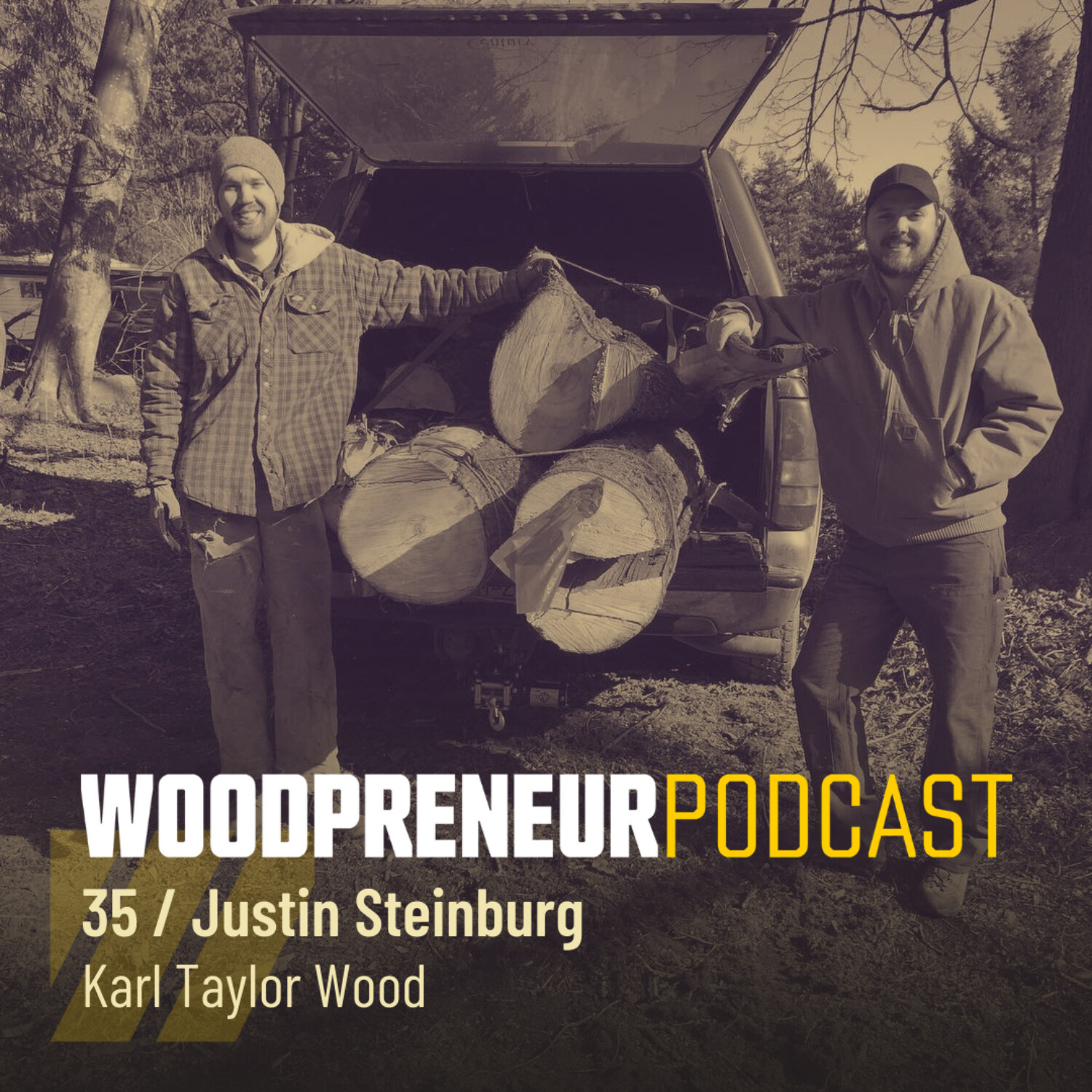
S1 Ep 35Justin Steinburg: Karl Taylor Wood
A LITTLE ABOUT KARL TAYLOR WOOD Karl Taylor wood is owned by Justin Steinburg and is Located in Abbotsford, an hour from Vancouver, British Columbia. They offer people kiln dried slabs. Drying the slabs takes 6-8 weeks, which they later sell the rough slabs. No sanding or finishing is done on them but just sold as is. In addition to that, they also do coffee tables, headboards, and are currently starting on table projects. HOW JUSTIN GOT STARTED IN THE BUSINESS A year and a half ago, Justin did a couple of projects for his local church and thought it would be fun and interesting if he would make his own wood to use for projects. He spent some time researching and later on they got the saws and started cutting wood, drying it, and started on some projects. TAKING THE LEAP OF FAITH The research he did, in the beginning, made him realize there was a market for what he was making. It was then that he decided to just get into the business with his brother. They would cut and dry stuff and later put ads on craigslist but there was no response for a couple of months. However, they did not lose hope and it so happened that they suddenly blew up. People started emailing and texting asking about prices and that’s when the business really picked up. RUNNING THE BUSINESS AND FUTURE PLANS Working as a graphic designer for his church, Justin is involved in the business for only 3 days a week. Similarly, his brother, who is his business partner, works during the evening hours and on Saturdays. This has been the biggest challenge for them because no one is fully available for the business. In spite of that, they recently launched their website which hopefully will take the business to the other level and make it grow. For Justin, though, it's quite challenging for him to do the sales. He feels he’s a more behind the scenes person but it's mandatory for him to do the sales since his brother is mostly absent. Being the artsy person, he grows his skills in different ways by doing online researching and asking knowledgeable people questions, but most of it has truly been trial and error. In future, they're hoping to sell more furniture, and make their own wood which would definitely be money saving. Website: KarlTaylorWood.com Instagram: @karltaylorwood Facebook: @karltaylorwood
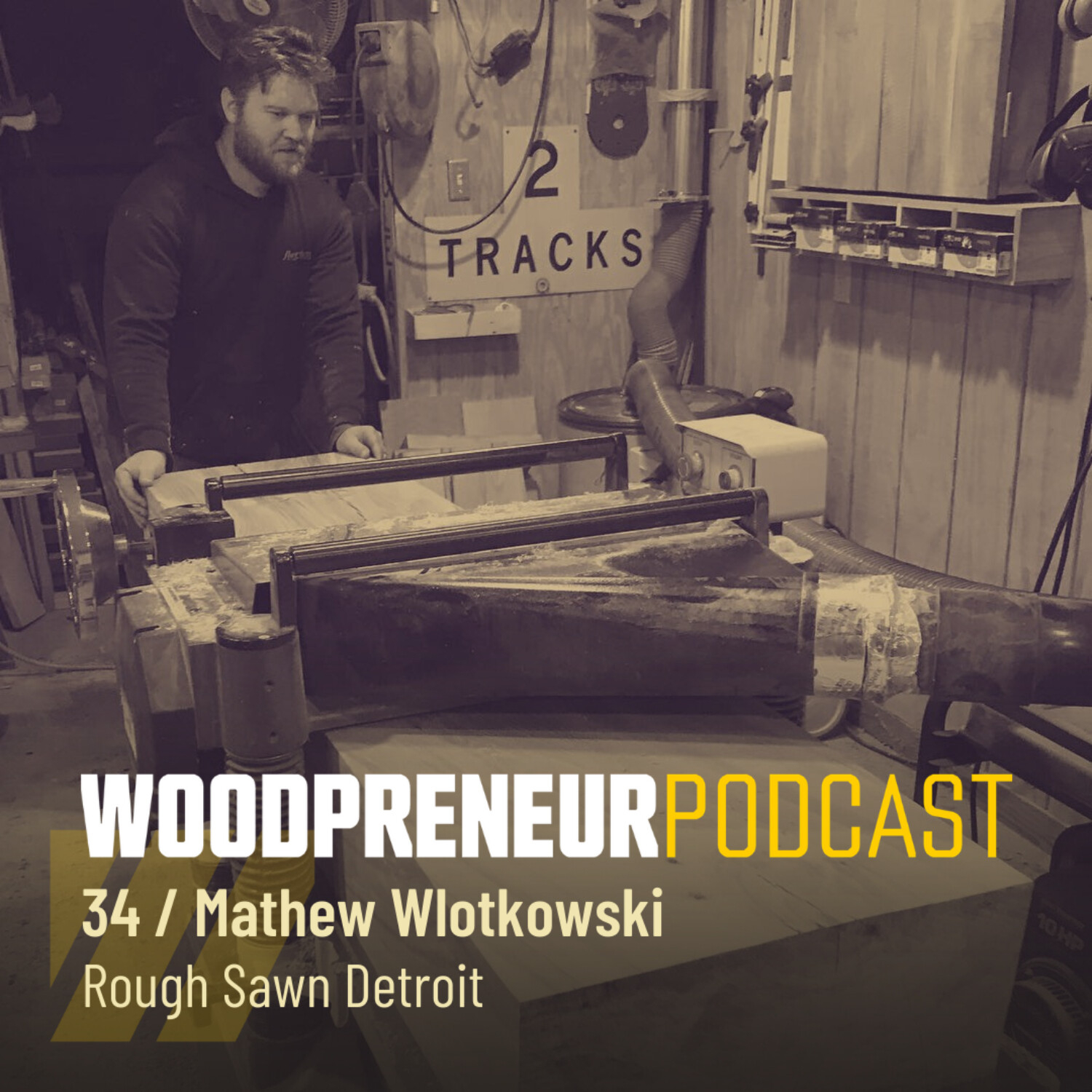
S1 Ep 34Mathew Wlotkowski: Rough Sawn Detroit
HOW THE BUSINESS STARTED On this episode, I chat with Mathew Wlotkowski of Rough Sawn Detroit. For Mathew, the business started out as a hobby. He had and wanted to get into cutting lavage material he had been buying for a while for his own stuff like tables, but later on, figured it would be best to get some cash out of it. He’d been going through the Detroit area sourcing his material from trees that had fallen or cut out from people putting up houses. He then started posting pictures on social media in order to get his products out there and that is where he sourced his customers. RUNNING THE BUSINESS AND CHALLENGES FACED Currently, his biggest challenge is getting time to get his projects done on time and building the business because it's a side hustle for him. He’s been practicing landscaping for 15 years now, but his new business is growing at a faster rate than he thought. Due to this challenge of lack of time to really engage in projects, he is milling wood to provide to other makers and woodworkers in the area. LEARNING HIS SKILLS Mathew was one time watching a video on building and he saw a person cut down a tree and take his chainsaw, which had a funky attachment at the end of it, and the person began to mill the material to build his house. This was so cool to him and so he thought it was something he could get into. He then did some research on Granberg and bought a chainsaw that he has been using. The most popular thing he sells is vinyl record stands but he had to pull out of selling them because he couldn’t keep up with the orders that were being made at that time. Aside from that, he also makes candles holders and some oaks. FUTURE PLANS He plans on going a notch higher and get more into building lavage tables, single slab tables and maybe 10 foot long tables. Instagram: @roughsawnDetroit
S1 Ep 33Kyle Schloss: Southern Grain Craftsmen
HOW THE BUSINESS STARTED Kyle Schloss, the owner of Southern Grain Craftsmen, had done a few different jobs in his lifetime but was really passionate about woodwork ever since he was in middle school. He used to build things in his garage and one time he found an old cabinet shop from an owner who had run out of business. Luckily, he knew him and he called to ask whether he could move in which he accepted. He then moved in swung right into work. TAKING THE LEAP OF FAITH Starting this business was a huge risk for him as he didn’t know what lay ahead. This move meant that he had to partake responsibilities such as having to pay for rent and other costs that came with the business. He obviously didn’t know where his next check would come from or if he’d actually get paid for his work, but he just hoped that his work would speak out for itself, and it did. RUNNING THE BUSINESS, LESSONS LEARNT AND MOTIVATION The business has been running for a year, which has three workers but is seeking to employ more. The biggest lesson for him is learning to let the customers see his work. For his website, he didn’t want to use photos from his previous jobs, so building the brand and having customers to trust that was a little difficult. Another lesson that took a while to understand would be finding the pricing for a product. Trying to balance between being fair-priced, paying himself for all the hard work, and getting a profit proved to be a little bit tricky. He gains motivation by following people on social media who talk mostly about woodwork and sees what other people are creating out there. Also, lovely customers who appreciate his work and build a business relationship with him give him the will to continue working. FUTURE PLANS With 10 acres of land available, Kyle expects to fully expand the shop in the near future. He started with fabrication first unlike many other businesses so he now wants to invest in sawmill which he feels will catapult his business. He’s slowly building his brand and he hopes will be fully appreciated in future. ADVICE Anyone who wants to turn their hobby into a full-time job should go for it and stay passionate about it and regardless of the tribulations they go through, they should remain motivated and persistent. GET SOCIAL ON: Facebook: Southern Grain Craftsmen Instagram: Southern_grain_nc Website: www.Southerngraincraftsmen.com
S1 Ep 32Danny Torres: Deadwood Revival
For episode 032, our guest is Danny Torres of Deadwood Revival Design. DANNY TORRES TURNED AN INTEREST INTO A BUSINESS Danny Torres turned an interest into a true passion called Deadwood Revival Design. It is a testing, wood and steel fabrication outfit out of San Luis Obispo, CA, serving customers for a year and a half. While talking with a guy he met, Danny discovered that he had a Granberg Mill, with plans to learn how to cut so that he could start his own woodworking business. This inspired Danny and he committed to buying his own his own Granberg Mill, though he didn’t have any experience in woodworking. It wasn’t until he met Scott Romain that things started falling into place of what would eventually become Deadwood Revival Designs. Danny knew people who work to combat forest fires which exposed him to to the problems the country has with big fires. During his off time, he put down some hazard trees and realized that they could be utilized and converted into lumber. His interest in woodworking began to grow. GETTING OFF THE GROUND Initially, Scott was Danny’s original partner until he introduced Danny to his current partner Pepe (Steel Fabricator) and Deadwood Revival Design was born. They got their first project came by way of Scott & Pepe’s architecture school professor. Their former professor had put in the designed for a coffee shop called Contraband and recommended the team for the job. A bid was placed and the emerging company won the bid. THE HUSTLE Both partners still have day jobs, but find time to push their passion and work long hours on Deadwood Revival Designs projects. Growth will allow them more freedom in the process by being able to hire some people to take items off of their plate. Danny believes in continuing his education and is taking a welding class at night to be of more service to his business. He is putting his all into it - along with Pepe. THE VERSATILITY OF THE GRANBERG MILL Deadwood Revival is strictly run off of the Granberg Mill. The feeling is that Granberg definitely makes things more user-friendly. It is very easy to work with, everything works seamlessly with each other. It is a very accurate mill. The team are not in a position to be stationary. It is all about mobility for them. GROWING THE BUSINESS Danny and Pepe are looking to get more into marketing. Right now, everything is produced to order. Deadwood Revival are using their website and social media to promote. They are looking to grow beyond word-of-mouth by going into the community and be present at more local events. They are also partnering with the American Forest and the National Forest Foundation to plant new trees from their proceeds. For every dollar they give, a new tree is planted. They are committed to having their customers be a part of the entire story of what is being created with the lumber. Photos are taking every step in the process and is shared with the customer to create a full experience. They love the idea of a customer bringing more nature inside and in doing so, each sale gives life to a new tree. Instagram: @deadwoodrevival Website: http://deadwoodrevivaldesign.com/
S1 Ep 31Brodye Chappell: Brodye Chappell Builds
HOW BRODYE CHAPPELL GOT STARTED IN THE BUSINESS Brodye worked in his father’s custom home building business for 15 years. He humbly began by selling lumber but quickly worked his way up to being the lead finish carpenter in his crew. Dedicated to his work and building some really cool stuff, his friends started noticing him and would ask for a hand in their businesses. Some clients would even specifically just ask for him. Brody then started taking some time off in the evenings and weekends and it wasn't long before he got really busy to the point he would ask his dad for some days off. Reluctantly, he accepted his plea. Things then got really busy and it was then he decided to start his own business away from his dad. TAKING THE LEAP OF FAITH. Brodye gave his all in whatever he did and everything would just click. He felt happy in his work. Of course, clients noticed this. The compliments he received from them made him feel as though he was capped in his father’s business. With all the ideas he had in mind and incredible overflow of work, he did the hardest thing he’s ever done and broke away from his dad’s business and started his own. HOW HE DEVELOPS HIS SKILLS AND WHAT HE’S LEARNED AS A BUSINESS OWNER. He learned the basic residential carpentry stuff from his dad and uncle but when it came furniture pieces he would study online and would test them out in his small shop. However, translating what he learns to make a physical product is not always easy and needs a lot of trial and error. Away from that, as a business owner, getting the estimate of things and also the paperwork has been a bit taxing for the two years he’s been alone. He thinks of himself as more creative with his hands than dealing with the other business side of things. His father always did that when he was working for him so it was something entirely new the moment he got into his own business. FUTURE PLANS Currently, he does all the work by himself which is proving to be a little challenging as the business is growing at an alarming rate. He now plans to hire a creative person either full-time or part-time in the near future. He also hopes to get a bigger chainsaw after Granberg body extension and eventually as the business expands and grows bigger, he’ll get a bigger mill. Although he’s not made any money yet from the Granberg as he’s building his inventory, he’s quite positive that it will pay in due course. Instagram: @Brza
S1 Ep 30Joshua Kincaid: Slumberyard Handcrafted
Get insights, and motivation from incredible interviews from people inside the sawmill business industry. Get the marketing and business skills that you need to be able to grow you sawmill business. In this episode Host, Steve interviews Joshua Kincaid a sawmill business owner from Rockford, Illinois. [00:00:53] Woodworking with his grandfather as a child he saw his passion. In 2016 he started his own woodworking business creating custom furniture. He climbed the ladder from woodworking small furniture to getting a Granberg Alaskan mill and started a sawmilling business! [00:02:24] Joshua started his business with Granberg after doing some research. Granberg is one of the best products out there. Granberg was most appealing to Joshua mainly because it is a brand that stands behind their product, and is a decent expenditure. [00:02:32] While in the grind stage he is actively doing things to grow his business and get his name out there. In the area he lives he goes door to door giving out his business card. Especially after violent storm hits. [00:04:16] The grand vision for growing his business is upgrading equipment since right now he just uses a lot hand me downs. He plans to get better power tools to increase production and improve quality. [00:04:52] He plans to be more in control of the business process. From knowing where the tree came from, dried, and how it was treated the whole way through. To deliver the product to the customer. He finds having that control very appealing and efficient. [00:05:24] Joshua tries to follow other business on Instagram, Youtube, and internet articles to see what is working best, and then model his own business practices after what works. He stays unbiased, meaning he wants to see what everyone's best practices are. [00:07:25] He gives the best advice by saying start small with better, quality tools. There is no need to go big right out of the gate. Meaning, don't buy lower quality tools. Save yourself frustration by working your way up when you can afford big equipment that is also quality and efficient. [00:08:13] Joshua talks about how you have to 100% connect to the influential individuals in the sawmill industry, keep up with the latest trends, and be looking for better ways of doing things. Keep teaching yourself and be open to education that will make your practices better. [00:09:10] He talks about his prototype for a Greenland kayak paddle. After creating the blueprint with his friend he was finally able to get started. Creating this prototype was a big achievement. [00:10:46] For the future he plans to grow his business by investing in bigger, more efficient equipment! Out with the hand-me-downs and small tools so that he can mill larger logs. [00:11:41] Granberg stays together really well and is lightweight so you don't have to worry about getting tired easily. This product is ready right out of the box and only takes 10 minutes to assemble. [00:12:26] One thing that will keep him a Granberg customer is staying engaged on social media. [00:13:22] Get in touch with Joshua through social media. Find him at: Instagram: @slumberyardhandcrafted Facebook: facebook.com/slumberyardhandcrafted Website: www.slumberyardhandcrafted.com

S1 Ep 29Victor Sarudi: The Stump Shop
On this week's episode we interview Victor from The Stump Shop. Hailing from Toronto, Ontario in Canada he runs a small wood shop business that repurposes tree stumps and reclaimed wood and makes them into furniture. What's amazing is that he takes the overlooked and often discarded part of the tree and found a niche to build a successful business. Are there parts of the tree or pieces of wood that fell off the mill that you had ideas for? Well make it happen! Visit The Stump Shop at: https://www.instagram.com/thestumpshop/
S1 Ep 28Rick Siewert: Wood From the Hood
This week's episode we talk with Rick from Wood From The Hood -- a sawmill and wood business in Minneapolis. They've been around for almost 10 years and he talks about how he started the business on a dare.... and how that was one of the best decisions ever. Wood From The Hood has been able to skillfully outsource some of the sawmilling so they can stay focused on drying, processing, and sales of wood products. They have 2 main revenue streams, small wood products like cutting boards that sell in over 50 locations in their city. The other is working on architectural products like tables and flooring. They've also been lucky enough to work on large scale products involving the city government and sporting centers. This is a super inspiring episode. For more information on Wood From the Hood visit: https://woodfromthehood.com https://www.instagram.com/woodfromthehoodmpls/ For more information on Sawmill Business visit: http://sawmillbusiness.com
S1 Ep 27Dan Richfield: RE-CO BKLYN
Today's guest is Dan Richfield from RE-C0 BKLYN. Dan has a sophisticated approach to running his business, something we will take a deep dive into learning about on this podcast. Who Are Re-Co Bklyn And How Did They Get Started? The company officially started in January 2012. Dan's business partner, Roger had been learning and experimenting with a chainsaw mill and a homemade kiln for a few years prior to starting up the business. Dan, however, was a software/web developer. Using his 10 years experience as a successful businessman, Dan partnered with Roger and invested in a kiln, sawmill, bandmill and a yard. Urban lumber has come a long way since the early days of a small group of sawyers to the highly competitive market on the upscale across the states including the New York metro area. Both Dan & Roger are furniture makers and understand what a furniture maker wants to get from milling and drying wood. Armed with the requisite knowledge, they seek out the right types of logs and mill the right types of cut to make their bespoke products. Meticulous learning of the processes involved in lumber production has lent itself to the sophisticated style of RE-CO BKLYN. Tracking The Journey From A Log To A Finished Product. A vast amount of trees are chipped in Brooklyn, NYC. It was the interest in re-purposing these fallen trees that prompted the idea to start up RE-CO BKLYN. Each log is documented at the time of harvesting. The milling process of each documented log is photographed up to the final slab. Over time, the company has built up a good reputation and is frequently contacted by governmental agencies to carry out tree services. RE-CO BKLYN were commissioned to produce furniture from one of New York City's largest trees, a European Elm Tree that had come to the end of it's life cycle after a century and a half. Running An Efficient Lumber Business. Dan and Roger are highly efficient and organized when it comes to running the yard, stocking inventory and drying lumber. The client base is a diverse one that includes consumers, home/business owners, designers, architects plus private and public organizations. They enjoy producing lumber and the revenue that comes with it but enjoy making finished products the most. Additional Wood Products And Services The additional wood products and services Re-Co offer create more up upsell from a single lead. While the business model has been focused on producing slabs in recent times, Dan & Roger are branching back into reclaimed wood. Another offshoot being ventured into is dimensional lumber, quarter and rift sawed chair and leg stock, and green Red Oak Roubo workbench kits. What Roles Do Roger & Dan Have At RE-CO BKLYN? Currently, Dan runs the yard and the drying operation in Ulster County while taking care of the marketing side of things. Roger focuses on the sales aspect of Re-Co which enables him to manage products seamlessly while taking care of the customers.

Ep 26Robert Rising: NY City Slab
For episode 026 Robert Rising of NY City Slab is our guest. A bit about NY City Slab At NY City Slab, Robert and his team mill urban lumber from what might seem an unlikely source. The idea began when Robert was building a house and wanted to use local wood. Robert found that trees in his locality were being used for mulch and wanted to put those cut down trees to better use. Robert started off using a Lucas mill but it found it slow in terms of production. At a woodsmen show, Robert bought the biggest mill he could buy with his money at the time. He went for a 14 inch bandsaw mill and built a 50ft track to go with it that enabled him to cut through 6-8 logs in a day. How Robert Got Into Milling After working in the White House, Robert decided to take a u turn from his planned career in politics. His initial goal for building a house was to use it to restore old Volkswagens and Porsches. Gradually, work transitioned from fixing cars to milling logs. The very first log Robert milled sat for 3 years before being sold on Ebay. Seeing the interest in milled logs from clients, Robert began collecting old machinery that he could use for cutting more logs. It was Robert's continuous drive to milling work that self taught him. Robert would happily do what others wouldn't in terms of hard graft and this gave him an edge over his competitors. He believes in planning and due diligence and was ready to give up a $120k a year job at the Four Seasons Hotel to devote himself completely. Over a long period of time, Robert researched extensively, drove hundreds of miles collecting logs and built an inventory that was drying all the time. He was able to make money off a basic website up until he realized he could make money locally by setting up a yard where his extended network could come to him and bring him trees. Stepping Into The Unknown Robert took a big risk that paid off by going all in. It was this vision that led him to leave a dream job with all the perks and build up a successful milling business from the ground up. What NYC Slab does Robert and his 8 employees have a daily briefing to assign tasks before going to the yard. From here the organization of drying logs in the kiln, selecting premium logs and other tasks take place. Robert has always been fiercely independent and has a unique take on marketing. People who saw him with his trailer would refer to him as the 'Black Lumberjack' which just happened to be an available domain name! But what shines through most of all is the pride and care that goes into the work of NYC Slab. Everything is databased and recorded on display for all to see. Rather than milling for hire, Robert will mill for clients on the spot when required but the core of the business is the custom furniture and slabs. Robert has overcome major trials including a fire that meant moving spaces and rebuilding. It is a testament to the resilience of this man that has come through this and continues to work hard with what he has. Robert hopes to build a custom mill and work on building container homes to ship all over the world sourced and constructed with local lumber.
Ep 25Tom Loeschner: GreyWood Design
For episode 25, our guest is Tom Loeschner from GreyWood Design. GreyWood Design specializes in commission based furniture and some milling work. Tom provides a 'tree to table' service which is very popular with customers who love the concept of having a table crafted from the tree in their backyard. Tom has a strong background in metal work which translates to his furniture pieces, almost all of which have metal bases. Tom used to live overseas in West Africa doing consulting in sustainable forestry practices and advising on the proper running of sawmills. This inspired Tom to create his own slabs back at home in the United States. While Tom's primary line of product has been live edge slabs, he is currently diversifying into metal and wood designs and expanding into different types of wood for his furniture making. Along with the much favored pine, Tom is producing items made from red and white fir trees and experimenting with textures and surfaces. Having a mill of his own allows Tom to control the process of furniture production straight to the customer without the need for outsourcing. It also allows Tom complete control over sizes and specifications and more room for bespoke designs requested by clients. Tom started with a Granberg chainsaw mill before moving up to a Wood-Mizer LT15 Wide sawmill and mobilizing it with a trailer. Tom benefited from the Sawmill Business marketing course, it helped him realize the importance of putting time and effort into proper marketing of his business, something not all sawmill companies do but they really should in order to be successful. The current demand for sustainable and urban forest products and quality hand crafted goods is a golden opportunity that will bring good returns with commitment. Tom talks about some of the positive takeaways from joining up to the Sawmill Business course, how it gave him a thorough understanding of how marketing techniques from other facets of business can cross over into the sawmill industry. Tom continues to use the private forums set up as part of the course to ask questions to peers and build a value rich network. Other takeaways from this class include the inspiration for Tom to hire a photographer. Tom now understands how professional images of his work can boost sales through his Instagram and sending them to potential clients. Since taking the class, Tom has gone on to capture his biggest job to date, a large commercial order for 20 tables. He invested in a skid steer and GreyWood Design is now on the brink of being cash positive. A proper targeted campaign on Instagram is pushing up the followers and a steady network of Sawyers is growing by the day. Tom recommends the Sawmill Business course for sawyers who don't have a strong understanding of the digital realm. The clearly laid out worksheets and how to's that form the curriculum of the course offer a precise path to marketing a sawmill business effectively to generate real profit. Visit him at http://greywooddesign.com

Ep 24Jeff Perry: Angel City Lumber
For episode 24, we're getting to know Jeff Perry from Angel City Lumber. Angel City Lumber was born out of the need to make the somewhat ad hoc sawmill services in LA more streamlined. The business grew from a small idea: sourcing trees marked for landfill and harvesting them for lumber to a full scale operation in supplying raw materials. For now, Jeff is committed to milling based on his assessment of his local community's needs. He stresses how imperative it is to create awareness of this need for urban lumber. Jeff's business partner, Charles found the current location for Angel City Lumber in Boyle Heights. This has allowed them to set up a structured professional working space and a network that has given the business legitimacy. Jeff feels it was always best to 'go all in' and learn as the business grew. Having good start up capital and a helpful and supportive local sawyer community was a huge boost in confidence. The consensus of feedback convinced Jeff & Charles to pick a Lucas sawmill as their first piece of machinery, the portability and convenience of using one perfectly suited tree service/harvesting work. Jeff & Charles invested cautiously in the early days of Angel City Lumber and have always planned carefully going forward. Perfecting the technique of drying wood using the dehumidification kiln to produce flat slabs has been a learning curve, something Jeff & Charles are working hard to improve on. A lot of orders have been coming in for custom dimensional lumber from landscape architects. Jeff feels very pleased with this upturn in business and is enjoying seeing the process through from start to completion. Jeff feels he is still figuring out where the bulk of the market is for Angel City Lumber. He would like to be selling larger orders of slabs and dimensional boards that would put urban lumber on the map as a viable material. Jeff sees their Lucas sawmill, vacuum kiln, 6 x 12 CNC router table and 'Nina', their forklift as the essential tools of Angel City. They take good care of 'Nina' and see her as the heart of the business!!!! Other vital tools include 'Greg', their Dodge 3500 Cummins pickup truck for transporting logs and 'Flynn' the 16ft trailer!!! With the help of 'Greg' and 'Flynn' plus a built in winch system, Jeff & Charles can quickly respond to call outs to harvest trees and bring them back for processing. In the future, Jeff would like Angel City Lumber to be able to work with contractors/architects on larger commercial structures delivering volume orders. At this time, Jeff & Charles' main customers are homeowners with very old trees. The homeowners who get in contact with Angel City Lumber have great emotional attachment to these trees and are invested in having them milled in order to be saved and re-purposed. Jeff see's a mixture of these homeowners and the larger commercial jobs as the ideal and desirable balance he would like to achieve. For more information go to: http://www.angelcitylumber.com/
Ep 23Shane: Cape Cod Sawmill Company
On this episode we're getting to know Shane from Cape Cod Sawmill Company Cape Cod Sawmill is located in Bourne, Massachusetts, the company started in April, 2016. Shane started the business with his brother in law, Brian, a tree surgeon who wanted to do something positive with the timber rather than see it consigned to landfill. Shane and Brian started putting together a business plan, Shane dealt with the financial side of things while Brian took care of the creative side. From there, they went on to source their equipment and set up their sawmill company. Brian had a lot of the equipment needed to start Cape Cod like skid steers, trucks and trailers. it was simply a case of purchasing a Wood-Mizer LT40. Shane readily acknowledges his struggle to learn the ropes of sawmill work. Having a brother in law who is not just an expert but has wood cutting down to a science is highly advantageous and has helped Shane become adept in the field himself. What makes Cape Cod a well oiled business machine is Brian's expertise and ability in wood cutting, transportation of logs plus his extended network of contacts for sourcing combined with Shane's own expertise in marketing and finance. Shane & Brian are currently working on fine tuning their processes along with research and development into potential markets before they properly focus on targeted leads. The primary functions right now at Cape Cod are building inventory including a stock of creative slabs. Cape Cod is actively breaking into the woodwork market and have formed a partnership with JL Crafters to create high end products. Shane recognized the need to get into the sawmill community, to touch base with interior designers, homeowners, real estate agents and other related clients. Shane & Brian are really focused on Eco-Friendly Sustainable Lumber and slabs right now and look to make inroads within those markets through their use of eye catching content on Instagram. Shane admires brands like Berkshire Products for their incredible slabs and great looking website, things that Shane aspires for Cape Cod to become in 10-15 years. Shane believes the Sawmill Community needs more of a voice and larger presence on social media. Greater presence on the socials would help smaller localized sawmill business get their name out to interior designers and bigger companies. While he feels he is still finding that untapped market, he enjoys making the slabs. All of Cape Cod's inventory comes from locally sourced trees cut and brought in by Brian. Despite Brian cutting down a tremendous amount of trees, Shane is aware of the need to find more suppliers as business grows. They are in contact with local suppliers who are willing to support this growing need for stock. Shane is very keen to keep everything locally sourced. Cape Cod has a wide variety of tree species to utilize for salvaging and producing sustainable products. Shane's parting advice is keep sharing great sawmill work related content on the social media. Visit: http://www.capecodsawmillcompany.com/

Ep 22Vinny Walsh: Walsh Woodworks
On today's show, we get to know Vinny Walsh of Walsh Woodworks. Vinny is from Grand Rapids, Michigan. Vinny started Walsh Woodworks in 2016. He wanted to return to his upbringing working on the sawmill. In this podcast we will learn How Vinny Walsh set up his sawmill business after 18 years working in the film industryWhat Vinny loves about working with woodHow Granberg tools compliment and enhance his work How And Why Vinny Walsh Set Up Walsh Woodworks Vinny's father was a carpenter and a young 8 year old Vinny would work with him during the summer. Vinny spent 18 years in the film industry working as a lighting technician before setting up Walsh Woodworks in his home town, Michigan back in 2016. He was shocked at the cost of lumber board when he went to buy maple Boards from a local supplier for a picture frame project. This inspired Vinny to source his material from scratch and cut it himself. What Inspires Vinny Walsh? Vinny gets inspired by the entire process of sourcing wood from trees and cutting slabs, not knowing how the end results will come out or what customers will use his slabs for. He takes pride in rescuing logs from simply being thrown in landfills and giving them a purpose as opposed to being nothing but waste or firewood. What Does Chainsaw Milling Mean To Vinny? Vinny enjoys the instant gratification of selecting trees and identifying the potential contained therein. This combined with the ability to cut lumber in a very short time in pretty much any location without difficulty are the positives of chainsaw milling Vinny appreciates. Why Vinny Chose A Granberg Over Many Other Brands A process of elimination through viewing other products on social media that didn't quite match up to Vinny's requirements brought him round to the benefits of using a Granberg sawmill such as it's ease of use and lightness in comparison to other similar products. The consensus of positive online reviews convinced Vinny to invest in Granberg. The Value Vinny Walsh Gets From Granberg Tools Vinny values the reputation and prestigious history of Granberg. He knows he can rely on them to resolve any possible issues that may arise. Goals And Aspirations Vinny cites his goal to make his business a self sustaining one that allows him to work with his hands for the rest of his life Challenges And Obstacles Vinny realizes a need to expand in terms of storage space and is currently working on this How Granberg Tools Create Value For Walsh Woodworks Granberg tools help Vinny through enabling him to source timber, turning it into lumber, selling that lumber on or conserving it for future projects. How Granberg Can Support Vinny's Business Goals Vinny would like to be able to contact Granberg should he need any kind of modifications and send them his saw for bespoke customizations. He also believes a fast turnaround in repairs to his sawmill would be a good feature. Get in touch with Vinny at: https://www.instagram.com/walshwoodworks/

Ep 21Daniel West: Big Ass Slabs
The Sawmill Business Podcast: Interview With Daniel West of Big Ass Slabs In this episode, we are introduced to Daniel West of Big Ass Slabs Chainsaw,Milling & Timber works just outside London, Ontario, Canada. Daniel operates a 60 inch Granberg Alaskan sawmill plus a 48 inch model for smaller logs. He works with a local network of sawmills and furniture makers who each specialise in a particular aspect of the production chain. How Daniel Got Into The Sawmill Business Daniel has been running Big Ass Slabs for a year or so. Prior to that he worked for a local farmer with an older Woodmeiser LP40 model. Daniel has 14 years worth of experience in sawing and now works for himself as part of his extended network in London, Ontario, Canada What Chainsaw Milling Means To Daniel For Daniel, chainsaw milling is an opportunity to make use of logs and trees normally used for firewood and produce stunning slabs from them. Through his work, Daniel helps protect the environment by making good use of potential waste material. Why Daniel Chooses Granberg Products Daniel prefers Granberg products for their portability and chose to use them after seeing other workers reaping their benefits. The simplicity and robustness of Granberg tools coupled with their durability make them a perfect fit for his work. Affordability also factored into the equation as Daniel was able to purchase all his necessary equipment for $5000 Training Taken By Daniel To Operate Alaskan Sawmill Daniel drew on his years of experience operating a Woodmeiser plus 25 years of using a chainsaw and cutting firewood. He took this applied knowledge and implemented it into the nuances of cutting slabs and the overall production process. What Does The Granberg Brand Mean To Daniel? For Daniel, Granberg has developed a reputation for producing equipment that is solid to operate, reliable and effectively simple. Having very little downtime is one praiseworthy aspect of Granberg Alaskan sawmills that Daniel mentions here. Business Goals Daniel's goals include a sustainable income to support his family, growing his network of customers and providing a high quality product that craftspeople can turn into beautiful heirloom items. Daniel wants to take the product from start to finish for potential customers and grow and compliment each aspect of the cooperative businesses within his sphere. How The Granberg Sawmill Makes Money For Daniel's Business The Granberg generates revenue for Daniel through custom sawing & milling and enables Daniel to procure and cut an inventory of slabs for sale throughout the year. Daniel suggests more how to videos from Granberg and a hand winch for the mill as two potential improvements. Daniel would like to have a better understanding of marketing and proper pricing for specific products along with targeting the right demographic. He has been able to grow his customer base using Facebook and Instagram and is currently working on a website. He is keen to learn more about leveraging these assets to best market his sawmill services to potential buyers. Get in touch: https://www.instagram.com/bigassslabs/
Ep 20Erik Granberg: Granberg International
The Sawmill Business Podcast With Special Guest: Erik Granberg In this episode of The Sawmill Business Podcast our host, Steve introduces his guest, Erik Granberg. Erik is the president of Granberg International, the founders of the original Alaskan Sawmill. Introductions Erik talks about the new initiatives currently happening at Granberg International including CNC technology, new packaging for sawmills up to 36 inches in length, a new design on the mill and increased productivity. The History Of Granberg Erik talks of his father Elof's invention of a chainsaw sharpener in the early 50s. Erik's father was a logger from British Columbia and one of the first to carry the portable chainsaws we see today. The sharpener would clap on to the saw bar allowing quicker and more efficient filing of chains that led to a large increase in production throughout the sawmill industry. This turned into a business beginning in 1954/55 with product sales in Canada and California which became large scale with the introduction of the original Alaskan Mill in 1962. Erik explains how Granberg's first customers were based up in the mountainous regions in the US where lumber cutting presented a number of obstacles from the cutting itself through to transportation issues. The business also expanded to other parts of the world where similar conditions hindered the lumber industry at the time. Next it was the craftsmen who realised they could cut perfect slabs using the Alaskan mills to make beautiful furniture. The development of new tools such as planes, jointing devices and saws by Granberg caused a break through into the billion dollar woodwork market cementing the company as a leader in the field. How Erik Kept Up With The Competition Erik talks about the challenges he faced when he took over the running of the business. One of those challenges being an increasingly competitive market due to replicas of the filing and sharpening objects pioneered by Elof Granberg. The company initially struggled to compete with mass producing replica businesses but the internet provided the perfect solution to these problems. Direct access to Granberg's products via the internet combined with consistent positive reviews boosted sales once again. Why Do Customers Love Granberg? Erik attributes the almost cult like status of his company sawmills to the sense of inspiration experienced by loggers as they cut eye pleasing slabs from large gnarly logs. He notes that the older generation who can now afford their own workshops enjoy the 'back to earth' experience of working with the tools they grew up around. The Benefits Of Buying Granberg Products Our host, Steve explains why Granberg International's full range of American made Alaskan chainsaw mills are perfect for every budget and for all business sizes and requirements in the woodwork, lumber and sawmill industry. What Customers Should Know About Granberg Granberg values and takes care of its employees, supports the local economy and places importance on manufacturing a true quality product. They strive to work with their customers through improvement and technical innovation. Visit granberg.com for more information http://instagram.com/granberginternational

Ep 19Mark Sundermeier: AA Wood products
In this episode we talk with Mark Sundermeier and his business AA Wood products. Check him out at http://www.aawoodproducts.biz/ or on instagram at https://www.instagram.com/aawoodproducts/
Ep 18Joseph Nefsky: Out of the Woods Custom Woodworking
In this week's episode, we interview Joseph Nefsky from Out of the Woods Custom Woodworking out of Ontario, Canada. In this episode, Joseph talks about how he's used Instagram to grow his following, to learn new skills, document projects, and connect and get motivated with the woodworking and sawmill business community. If you want to learn specifically how to grow your following, listen to this. Follow him at http://instagram.com/outofthewoods.
Ep 17Eric Florip: Florip Toolworks
In this episode of the Sawmill Business Podcast, we interview Eric Florip of Florip Toolworks! Eric drops a ton of knowledge about how he got started in the business, how he diversifies his income by buying and selling wood, making tools, and leveraging digital technology to grow revenue. This is a great episode and super inspiring for those who aspire to be a tree hustler! Follow him on Instagram.

Ep 16Jennifer Alger: Far West Forest
In this episode, President of Far West Forest Products, Jennifer Alger breaks down how she runs her business, how she spends her time and gives the blueprint and plan to start your own sawmill business. She's also the exclusive Woodmizer sales person for California and Nevada so she has a ton of experience finding the right sawmill for people and has educated and taught people how to get started. This is a great episode. Give it a listen. Also follow them on instagram.