
The IR thinker
132 episodes — Page 1 of 3
Azerbaijan's Energy Geopolitics — John M. Roberts
Uncertainty, Intentions and Great Power Conflict — Sebastian Rosato
Who Controls Africa’s Food? Rethinking Food Security, Trade & Agriculture — David Luke
The Future of Global Governance: BRICS, AI, Middle Powers & World Order — Miles Kahler
Revista Brasileira de Política Internacional: Brazilian IR Journal — Haroldo Ramanzini Júnior
America's Role in Post-Soviet Russia: The Untold Story — Daniel Satinsky
Racism Without the Word — Somdeep Sen
When AI Fights, the War Never Ends — Myriam Dunn Cavelty
African Affairs - Jonathan Fisher | Ep. 17 (2026)
Regional & Federal Studies - Davide Vampa & Mariely Lopez-Santana | Ep. 16 (2026)
Poland's New Strategic Culture - Piotr Pietrzak | Ep. 15 (2026)
African Agency in Climate Governance - Carl Death | Ep. 14 (2026)
Contemporary Security Policy - Myriam Dunn Cavelty & Nicole Jenne | Ep. 13 (2026)
Problems of Post-Communism - Dmitry Gorenburg | Ep. 12 (2026)
Myanmar - Geopolitics & Security - Wai Yan Phyo Naing | Ep. 11 (2026)
Biopolitics - Sergei Prozorov | Ep. 10 (2026)
Russian Soft Power in Africa, Asia & the Middle East - Vladimir Liparteliani | Ep. 9 (2026)
South Africa's Nuclear Energy - Kelvin Kemm Final | Ep. 8 (2026)
S2026 Ep 7British Journal of Politics and International Relations - Jack Holland | Ep. 7 (2026)
Today, we are hosting an episode that provides an opportunity to present a research journal together with its editor. The aim is not only to introduce the journal, but also to offer a critical assessment of suitable venues for publishing research articles. In this context, we turn our attention to the British Journal of Politics and International Relations (BJPIR).Impact Factor: 3.4 / 5-Year Impact Factor: 3.4Indexed: Scopus / Web of Science First Decision: 6 daysAcceptance Rate: 18.7%14th out of 169 journals in the field of International Relations and 36th out of 322 in Political Science(Source: https://essl.leeds.ac.uk/education-social-sciences-law/news/article/2242/bjpir-celebrates-rise-in-impact-factor-and-25th-anniversary)The journal is a leading peer-reviewed academic journal in the fields of political science and international relations. Established in 1999 and published by SAGE Publications on behalf of the Political Studies Association, it has developed a strong international reputation for high-quality scholarship.The journal has six editors, all of whom are based at the University of Leeds in the United Kingdom. Today, we are speaking with one of them, Professor of Global Security Challenges at the University of Leeds, Jack Holland.Jack Holland also serves as Pro-Dean for Research and Innovation in the Faculty of Social Sciences. His research focuses on United States, United Kingdom, and Australian foreign and security policy. He is an expert on AUKUS, for example, he has been invited as a witness to the House of Commons Foreign Affairs Select Committee, and he regularly provides media commentary for British and international news organisations.Content00:00 - Introduction02:24 - The Journal’s Intellectual DNA04:05 - Political Science vs International Relations: Balance in Published Research05:24 - From Political Studies Association Flagship to Global Journal: Institutional Influence08:31 - Political Studies Association09:47 - Editorial Limits: Is There a Maximum Number of Articles per Issue?11:36 - Maintaining Coherence in a Broad-Scope Journal12:48 - Editorial Board: Selection, Roles, and Responsibilities16:25 - University of Leeds: The Journal’s Institutional Connection18:08 - Methodological Pluralism: Supporting Underrepresented Scholars21:04 - Current Intellectual Trends in Submissions22:53 - Undersubmitted Topics: Areas the Journal Wants More Of24:13 - AI, Frameworks, and Consulting: Reality Behind Publishing Claims26:15 - Common Author Mistakes in Journal Submissions31:00 - Encouraging Junior Scholars to Submit33:51 - Global South Scholars and Barriers36:13 - Editorial Lessons: Decisions Seen Differently Today38:22 - Suggesting Reviewers: Should Authors Do It?39:39 - Future Vision for the Journal Hosted on Acast. See acast.com/privacy for more information.

S2026 Ep 6Understanding China-Russia Relations - Philip Snow | Ep. 6 (2026)
This episode features a conversation with the historian Philip Snow on the evolution of relations between Russia and China. Drawing on archival research, the discussion traces the relationship from the early border settlements at Nerchinsk and Kyakhta to contemporary geopolitical and economic cooperation, highlighting how frontier regions such as Manchuria, Mongolia, and Xinjiang have shaped interaction between the two powers.The interview examines key turning points, including the Sino-Soviet split, as well as structural constraints (geography, distance, and technology) that have historically limited escalation along the border. It also explores post-Soviet asymmetries, energy interdependence, and projects such as Power of Siberia 2.Finally, the conversation considers the implications of contemporary Sino-Russian alignment, addressing their views on multipolar order, persistent frictions in the Russian Far East, and China’s potential capacity to lead globally without Russia.Philip SnowPhilip Snow has been travelling in Russia and China since the 1960s, and has spent nearly two decades researching what is arguably the most consequential bailateral relationship of our era.Selected Publications:Snow, P. (1989). The star raft: China’s encounter with Africa. Cornell University Press.Snow, P. (2003). The Fall of Hong Kong: Britain, China, and the Japanese occupation. Yale University Press.Snow, P. (2023). China and Russia: Four Centuries of conflict and Concord. Yale University Press.Content00:00 – Introduction01:10 – Archival Research and Interpreting Russian–Chinese Narratives06:21 – Nerchinsk and Kyakhta: Origins of Long-Term Stability10:46 – Manchuria, Mongolia, and Xinjiang as Strategic Pivot Zones14:18 – Mongolia’s Role in Sino-Russian Relations14:51 – Structural Constraints on Escalation and Major War18:51 – The Role of Distance and Technology in Military Encounters19:28 – Manchuria and the Historical Foundations of Chinese Strategic Mistrust24:17 – The Sino-Soviet Split and the Limits of Ideological Alliances27:05 – Energy Interdependence and Post-Soviet Asymmetry31:20 – Power of Siberia 2: Economic Logic and Geopolitical Stakes32:12 – Why Sino-Russian Decision-Making Is Often Slow32:40 – Surface Alignment vs Structural Frictions in the Russian Far East39:54 – Sino-Russian Alignment in Opposition to the West42:45 – Do Russia and China Share a Vision of Multipolar Order?45:44 – China’s Capacity to Lead Without Russia46:45 – Critiquing Philip Snow’s Interpretation48:21 – How to Study China and Russia More Effectively Hosted on Acast. See acast.com/privacy for more information.

S2026 Ep 5The Changing World Order - Mark N. Katz | Ep. 5 (2026)
This interview with Professor Mark N. Katz explores one of the central debates in contemporary international relations: the transition from unipolarity to a more complex multipolar world. Drawing on historical cases and current geopolitical developments, the discussion examines whether multipolarity is truly the global norm, how great powers are defined, and what the post-Cold War “unipolar moment” tells us about today’s shifting balance of power.The conversation also addresses the rise of emerging actors such as BRICS, the strategic behaviour of smaller states, and the evolving role of alliances, norms, and regional rivalries—from the Middle East to the Global South. Ultimately, it offers a nuanced assessment of whether a multipolar world necessarily produces a stable and coherent international order, and highlights key research questions shaping the future of global politics.Mark N. KatzMark N. Katz is Professor Emeritus of Government and Politics at George Mason University’s Schar School of Policy and Government, where he taught from 1988 until his retirement in 2024. A specialist in Russian foreign policy, great-power competition, and the international politics of the Middle East, his research has long focused on Soviet and Russian engagement with the developing world and revolutionary movements in international politics. Publications:Personal BlogAmerican Foreign Policy: Can the U.S. Get Out of a Difficult Situation?The Multipolar World Is Nothing New: Why the Return of Many Powers Does Not Mean the Birth of a New OrderThe Soviet Roots of Putin’s Foreign Policy Toward the Middle EastThe Third World in Soviet Military ThoughtThe USSR and Marxist Revolutions in the Third WorldContent00:00 – Introduction02:03 – Is Multipolarity the Historical Norm?04:08 – The Liberal Order During the Cold War04:53 – What Makes a Country a Great Power?09:36 – Understanding the Unipolar Moment12:19 – When Did Unipolarity End?15:41 – 9/11, Terrorism and the Limits of Polarity Theory21:51 – The Sino–Soviet Split and a Brief Tripolar World25:26 – BRICS and the Rise of Multipolarity27:25 – Multipolar World vs Multipolar Order30:27 – Global South Views on Multipolarity33:15 – How Small States Play Great Powers Against Each Other38:00 – If China Dominates...41:25 – Do Alliances Limit a Country’s Power Ambitions?43:45 – Iran, Saudi Arabia and Israel in a Multipolar Middle East47:06 – What the Arab Spring Reveals About Multipolarity50:49 – Do International Norms Still Matter?53:12 – Key Research Questions on the Future of Multipolarity Hosted on Acast. See acast.com/privacy for more information.

S2026 Ep 4Catalonia's Pursuit of Self-government - Marc Sanjaume-Calvet | Ep. 4 (2026)
In this interview, political scientist Marc Sanjaume‑Calvet examines the constitutional status of Catalonia, the distribution of powers within the Spanish state, and the evolving debates surrounding Catalan autonomy and identity. The discussion also explores Catalonia’s external action, from its relations with the European Union and international organisations to the constraints imposed by Spanish constitutional law, including the legacy of the 2017 referendum and Article 155.Marc Sanjaume-CalvetMarc Sanjaume-Calvet is Associate Professor of Political Science at Pompeu Fabra University. He has also served as an advisor at the Self-Government Studies Institute, a research centre linked to the Government of Catalonia. His work sits at the crossroads of federalism, self-determination, and territorial conflict, with broader interests in national and ethnic conflicts. Publications:Asymmetry as a Device for Equal Recognition and Reasonable Accommodation of Majority and Minority Nations. A Country Study on Constitutional Asymmetry in SpainThe Political Use of de facto Referendums of Independence The Case of CataloniaDefensive Federalism: Protecting Territorial Minorities from the "Tyranny of the Majority"The Exodus That Never Was? An Empirical Analysis on Territorial Conflict and Foot-VotingThe Politics of Independence Referendums: Never Mind the BallotsContent00:00 – Introduction01:50 – Constitutional Status of Catalonia05:21 – Identity and Demography in Catalonia08:15 – Distribution of Competences11:46 – The Future of Catalan Autonomy16:10 – “Unity of Foreign Action” in Spanish Constitutional Law and Its Constraints on Regional Diplomacy21:04 – Coordination and Tension between Catalonia’s External Action and Spain’s Ministry of Foreign Affairs23:39 – Catalonia and the European Union29:40 – International Agreements and Catalonia’s Network of External Delegations33:53 – Catalonia’s Interaction with International Organisations and Multilateral Forums37:51 – The 2017 Independence Referendum and Article 15544:21 – Emerging Research Agendas in the Study of Catalonia’s Autonomy Hosted on Acast. See acast.com/privacy for more information.

S2026 Ep 3The New Constructivism - David McCourt | Ep. 3 (2026)
In this episode, Professor McCourt unpacks the foundations of New Constructivism: where it came from, what it demands of researchers, and where it's heading. From the theory/method distinction to the practice and relational turns, from C. Wright Mills to Multiple Correspondence Analysis, this is a wide-ranging conversation about how social science can move beyond positivist inheritances without losing analytical rigor. We also explore New Constructivism's blind spots, its uneven development across the US and Europe. David McCourtDavid McCourt is a Professor in the Department of Sociology at the University of California, Davis, where he teaches sociological and international theory. His research sits at the intersection of political sociology and international relations, with a focus on the social foundations of state action in world politics. Empirically, his work centres on the foreign policies of the United Kingdom, the United States, and the European Union. Theoretically, he usually draws on constructivist, practice-based, and relational approaches to examine how states define and enact their roles on the international stage.Publications:Constructivism’s Contemporary Crisis and the Challenge of ReflexivityPractice Theory and Relationalism as the New ConstructivismDomestic Contestation Over Foreign Policy, Role-based and Otherwise: Three Cautionary CasesThe New Constructivism in International Relations TheoryThe End of Engagement: America’s China and Russia Experts and U.S. Strategy Since 1989The Dragon Defined: How Washington, Canberra, and London Reimagined ChinaContent00:00 - Introduction02:37 - Core Principles of New Constructivism19:24 - Is the Theory/Method Distinction Itself a Positivist Inheritance?24:00 - Methodology vs. Methods: The Root of Constructivist Misreadings33:33 - Constructivism as Classic Social Analysis: The C. Wright Mills Connection37:25 - Broadening the Methodological Repertoire Without Fetishising Technique41:27 - What Must Stay Constant as Constructivism Evolves?46:14 - Multiple Correspondence Analysis (MCA) as a Constructivist Tool52:15 - The Practice Turn and Relational Turn in New Constructivism57:23 - Diverging Trajectories: New Constructivism in the US and Europe01:00:43 - New Constructivism, Global South Scholarship, and Postcolonialism01:05:11 - The Weakest Link: Where New Constructivism Falls Short01:07:54 - The Limits of New Constructivism: Where It Should Not Be Applied Hosted on Acast. See acast.com/privacy for more information.

S2026 Ep 2New Zealand's Geopolitics - Reuben Steff | Ep. 2 (2026)
In this episode, together with Dr Reuben Steff, we explore how New Zealand’s geographic isolation, colonial legacies, and small-state status have shaped a distinctive strategic culture; one that combines alliance cooperation with a persistent commitment to autonomy, non-nuclear norms, and multilateralism.Reuben SteffReuben Steff is a Senior Lecturer at Mendel University in Brno whose scholarship engages some of the most pressing questions in contemporary international relations and security. His research spans the implications of artificial intelligence for the global balance of power, the interaction between nuclear deterrence theory and ballistic missile defence within the security dilemma, New Zealand and United States foreign policy, and the dynamics of great-power competition between the United States and China. Publications:New Zealand’s Geopolitics and the US-China Competition‘Our region is now a strategic theatre’: New Zealand’s balancing response to ChinaThe strategic case for New Zealand to join AUKUS Pillar 2US Foreign Policy in the Age of Trump: Drivers, Strategy and TacticsEmerging Technologies and International Security: Machines, the State, and WarExamining the immanent dilemma of small states in the Asia-Pacific: The strategic triangle between New Zealand, the US and ChinaHard Balancing in the Age of American Unipolarity: The Russian Response to US Ballistic Missile Defense during the Bush Administration (2001–2008)Content00:00 – Introduction: Conceptualising New Zealand’s Strategic Posture02:03 – Geographic Isolation and the Evolution of New Zealand’s Strategic Culture13:56 – From the South Pacific to the Indo-Pacific: Regional Order and Strategic Repositioning18:06 – The Treaty of Waitangi and Its Implications for External Partnerships21:47 – Strategic Autonomy, Nuclear-Free Norms, and the AUKUS Question30:44 – Domestic Debates on Nuclear Policy and National Identity34:21 – ANZUS (1951) in Contemporary Perspective: Alliance Politics and Strategic Recalibration36:25 – Trans-Tasman Relations: Convergence, Friction, and Structural Asymmetry40:38 – Economic Interdependence with China and Security Alignment with Western Partners45:22 – Engagement with India and ASEAN: Diversification and Indo-Pacific Strategy49:23 – The European Union and New Zealand: Trade, Norms, and Strategic Convergence53:54 – Hedging in Practice: Small-State Strategy Amid Great-Power Competition56:34 – The War in Ukraine and Its Implications for New Zealand’s Foreign Policy01:01:11 – Multilateralism, Liberal Order, and China’s Parallel Institutional Architecture Hosted on Acast. See acast.com/privacy for more information.

S2026 Ep 1Decolonising Norms in IR - Charlotte Epstein | Ep. 1 (2026)
In this episode, Professor Charlotte Epstein reflects on how postcolonial perspectives reshape the study of norms in international relations, challenging conventional accounts of diffusion, compliance, and legitimacy. The conversation explores colonial inheritances embedded in contemporary normative orders, while examining positionality, experience, and the epistemological stakes of critical scholarship.Charlotte EpsteinCharlotte Epstein is Professor at Tokyo College, University of Tokyo, where her work examines how language and political power have jointly constituted the modern international order.Publications:The power of words in international relations: Birth of an anti-whaling discourseWho speaks? Discourse, the subject and the study of identity in international politicsConstructivism or the eternal return of universals in International Relations. Why returning to language is vital to prolonging the owl’s flightThe postcolonial perspective: an introductionAgainst international relations norms: Postcolonial perspectivesBirth of the state: The place of the body in crafting modern politicsContent00:00 – Introduction01:42 – Colonialism and Postcolonialism: Conceptual Clarifications04:08 – Rationale for Employing Postcolonial Perspectives07:22 – Postcoloniality as Positionality Beyond Historical Periodisation12:29 – Studying Norm Diffusion and Compliance Beyond Coercion22:50 – Why Norms Reveal Colonial Inheritances More Sharply than Concepts27:53 – From Norms as Practices to Norms as Epistemological Categories32:25 – Situated Perspectives, Critical Authority, and the Risk of Relativism35:42 – The Role of Experience in Postcolonial Norm Research39:26 – Key Sources on the Concept of Experience43:02 – ‘Norming’ and ‘Re-Norming’ in a Foucauldian Perspective47:54 – The Ambivalences of Research Success50:39 – Principal Challenges in Postcolonial Approaches to Norms Hosted on Acast. See acast.com/privacy for more information.

S2025 Ep 31Transformative Realism - Marc Saxer | 2025 Episode 31
In this episode, we sit down with political analyst Marc Saxer to explore his theory of Transformative Realism and why he believes we’re living through a profound systemic crisis. From the erosion of international norms to the urgent need for reimagined statecraft, Marc offers a compelling framework for understanding the forces reshaping our world and what political leadership must look like in response.Marc SaxerMarc Saxer is a political analyst, strategist, and writer with two decades of experience in international relations. He heads the Asia Pacific office of the Friedrich-Ebert-Shtiftung and convenes the Asia Strategic Foresight Group.Publications:Transformative Realism: How to overcome the system crisisGeopolitical Conflict in the Wolf World: Great Power Competition and the Illiberal Revolt against the Liberal OrderContent00:00 - Introduction01:38 - Understanding Transformative Realism04:50 - Defining Systemic Crisis07:39 - Marc’s Most Compelling Crisis Case Study15:08 - The Erosion of International Norms and Rules18:24 - Recognizing the Signs of Systemic Crisis20:18 - The Role of Agency in Transformative Realism28:18 - Reimagining Statecraft and Political Leadership33:44 - The Crisis in Modern Statecraft Education Hosted on Acast. See acast.com/privacy for more information.
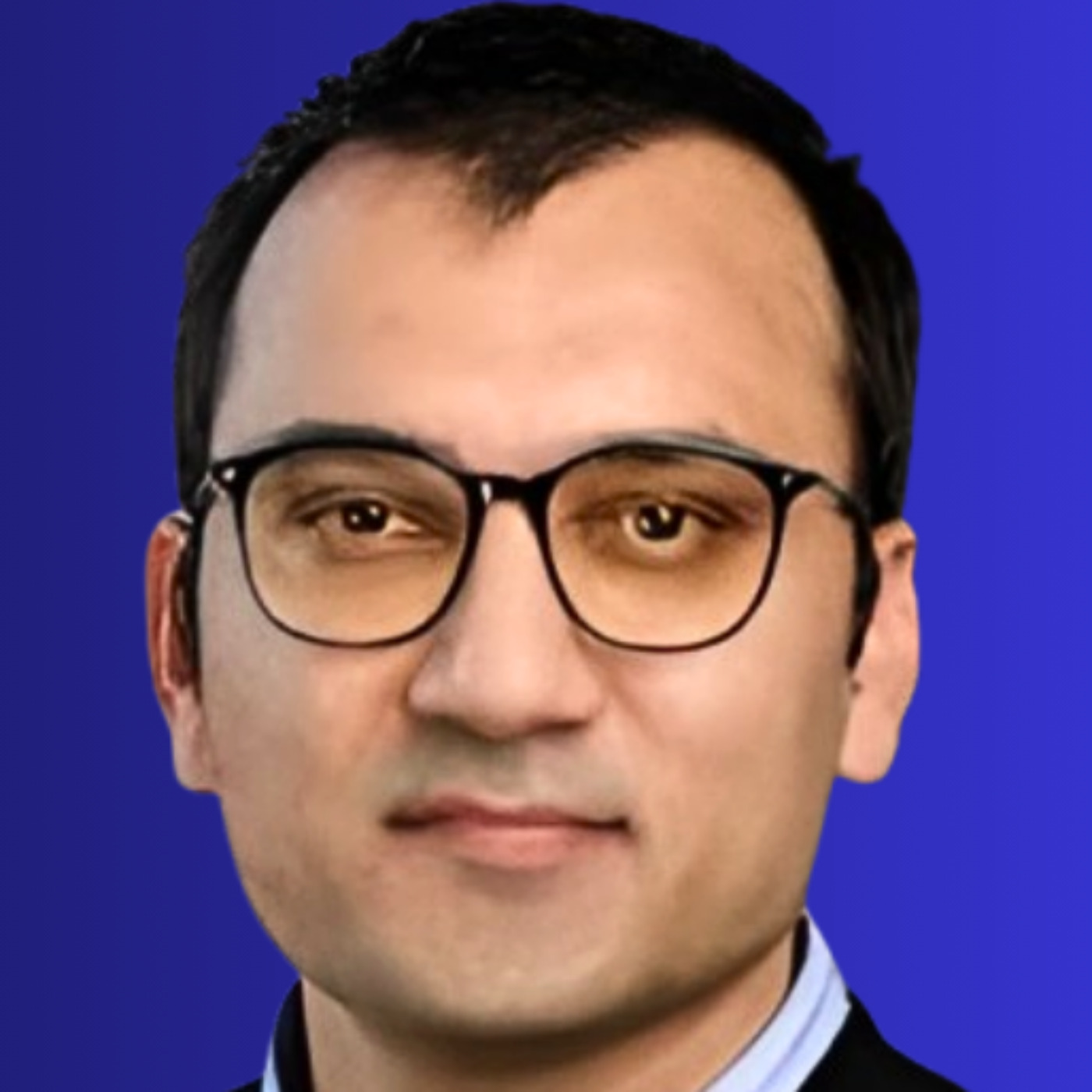
S2025 Ep 30India's Diplomacy - Vineet Thakur | 2025 Episode 30
In this episode, Vineet Thakur unpacks the historical and intellectual foundations of Indian diplomacy. We discuss classical strategic traditions, civilisational and colonial legacies, caste and elite networks in diplomatic culture, non-alignment and strategic autonomy, neighbourhood diplomacy, and India’s contemporary practice of multi-alignment amid shifting great-power rivalries.Vineet ThakurVineet Thakur is a University Lecturer in International Relations at the Institute for History, Leiden University. He received his doctorate from Jawaharlal Nehru University, New Delhi, in 2014 and has held academic positions and fellowships across India, South Africa, and the United Kingdom. His professional experience includes teaching appointments at Ambedkar University Delhi, the University of Johannesburg, and the School of Oriental and African Studies, following which he joined Leiden University in 2017. He has been a fellow at the University of Cambridge, the Netherlands Institute for Advanced Study, and Rhodes University.His research is situated in postcolonial international relations, with a particular focus on the politics of knowledge, disciplinary hierarchies, and the global intellectual history of International Relations, especially in the Indian context.Publications:V.S. Srinivasa Sastri: A Liberal LifeIndia’s First Diplomat: V.S. Srinivasa Sastri and the Making of Liberal InternationalismPostscripts on Independence: Foreign Policy Discourses in India and South AfricaContent00:00 – Introduction and Framing of India’s Diplomatic Trajectories02:03 – Mandala Theory and Kautilya’s Arthashastra as Lenses for Contemporary Regional Policy05:10 – Intellectual and Historical Inspirations Behind India’s Diplomatic Traditions06:32 – Civilisational State Narratives Versus Colonial Administrative Foundations of Indian Diplomacy10:53 – Social Stratification and the Influence of Caste Networks on Diplomatic Recruitment and Culture22:12 – Nehruvian Idealism and Non-Alignment as Strategy: Autonomy, Hedging, and Principled Neutrality27:55 – Overlooked and Marginalised Practices in India’s Cold War Diplomatic History30:30 – The Strategic Logic and Practical Outcomes of the “Neighbourhood First” Diplomatic Doctrine35:18 – Structural Constraints and Policy Stalemate in India–Pakistan Diplomatic Engagement37:34 – China’s Strategic Shadow and Its Effects on India’s Diplomatic Posture Towards Pakistan39:08 – India’s Diplomatic Approach to Tibet in Historical and Contemporary Perspective43:29 – Multi-Alignment as Strategy: Balancing Great Powers in India’s Contemporary Foreign Policy47:45 – The Absence of a Permanent United Nations Security Council Seat and Its Diplomatic Consequences51:15 – India–Africa Relations and the Underdeveloped Economic Dimension of South–South Diplomacy54:21 – Hindu Nationalism and Its Influence on the Ideational Foundations of Indian Diplomacy58:24 – Neglected Themes and Under-Researched Domains in the Study of Indian Foreign Policy*** at 10:29, there is a missing word ‘overstated’ Hosted on Acast. See acast.com/privacy for more information.

S2025 Ep 29Bulgaria's Energy Security - Martin Vladimirov | 2025 Episode 29
In this episode, Martin Vladimirov unpacks Bulgaria’s evolving energy landscape in the aftermath of the war in Ukraine. We discuss shifts in the country’s energy mix, offshore wind prospects in the Black Sea, the strategic role of gas pipelines and interconnectors, and the future of key assets such as the Chiren gas storage facility, the Maritsa Iztok lignite complex, and potential new nuclear reactors.Martin VladimirovMartin Vladimirov is Director of the Energy and Climate Program at the Center for the Study of Democracy (CSD), where his work focuses on European and Balkan energy security, energy transition pathways, and the geopolitical dimensions of Russian and Chinese economic influence. He has extensive experience as an energy analyst for The Oil and Gas Year, contributing in-depth reports on Kazakhstan, Azerbaijan, and Saudi Arabia, and has consulted for international oil companies across the GCC and MENA regions. Martin is also an affiliated expert with the European Geopolitical Forum in Brussels and previously worked as an energy and economic analyst for CEE Market Watch, covering Iran and Central Asia.Publications: Managing Assets Under OFAC SanctionsEnergy and Climate Security in Europe: From Crisis Response to Structural TransformationThe Kremlin Playbook in Mexico: Asymmetric InfluenceThe Imperative to Weaken the Kremlin’s War Economy: What the West Can DoClosing the backdoor: The new TurkStream is here. Can the West stop it?Content00:00 – Introduction01:38 – Bulgaria’s Evolving Energy Mix after the War in Ukraine09:07 – Exploring Bulgaria’s Offshore Wind Potential12:45 – Strategic Energy Pipelines Crossing Bulgaria17:16 – Bulgaria’s Relationship with Gazprom and Gas Contracts24:14 – The Greece–Bulgaria Gas Interconnector (IGB)27:05 – Alexandroupolis LNG Terminal and Regional Gas Connectivity28:53 – The Role of Chiren Underground Gas Storage34:31 – The Future of the Maritsa Iztok Lignite Power Complex40:50 – Assessing the Feasibility of Two New Nuclear Reactors Hosted on Acast. See acast.com/privacy for more information.

S2025 Ep 28EU Citizenship - Dimitry Kochenov | 2025 Episode 28
This episode of The IR thinker features a wide-ranging conversation with Professor Dimitry Kochenov on what it really means to “belong” in a world where citizenship is conditional, unequal, and sometimes absent altogether. We unpack the paradox of citizenship as both a legal fiction and a lived necessity, probing whether institutions truly “grant” citizenship, what it means to live as stateless, and whether “real” EU citizenship exists beyond the rhetoric. The discussion traces how EU citizenship can simultaneously empower individuals, through mobility, rights, and protection, while also hollowing out democratic accountability in member states. We examine “market citizenship” and the monetisation of legal status, asking whether citizenship-by-investment schemes that effectively sell access to the EU should be abolished, and close with a critical look at multiple citizenship: is it an emerging path towards global justice or simply an additional layer of privilege for the already mobile?Dimitry KochenovProfessor Dimitry Kochenov is a leading scholar of global citizenship and constitutionalism, with a particular focus on the rule of law, EU federalism, and external relations law. He heads the Rule of Law research group at the Democracy Institute of Central European University in Budapest and teaches Global Citizenship at CEU’s Department of Legal Studies in Vienna. Through his work on statelessness, EU citizenship, and the political economy of “citizenship for sale”, he has become a key voice in contemporary debates on how legal status shapes human dignity, mobility, and the evolving architecture of international order.Publications:EU enlargement and the failure of conditionality: pre-accession conditionality in the fields of democracy and the rule of lawCitizenshipCitizenship and residence sales: rethinking the boundaries of belongingUkraine and the EU enlargement: what is the law and which is the way forward?Content00:00 - Introduction02:02 - The Paradox: Can Institutions Grant Citizenship?06:23 - Living Stateless: Can Humans Exist Without Citizenship?16:56 - Does “Real” EU Citizenship Actually Exist?36:06 - Democracy’s Double Edge: How EU Citizenship Both Empowers and Undermines50:26 - Market Citizenship: When Human Worth Becomes Economic Value56:39 - Citizenship for Sale: Should the EU abolish those schemes?01:08:06 - One Citizenship or Many? The Multiple Citizenship Debate Hosted on Acast. See acast.com/privacy for more information.

S2025 Ep 27Contemporary Meaning of Nuclear Weapons - Stephen Herzog | 2025 Episode 27
This episode of The IR thinker offers a clear and structured tour of contemporary nuclear strategy with Dr Stephen Herzog, moving from the basic categories of nuclear weapons to the political struggles surrounding their control. We unpack the logic of existential and extended deterrence, alliance commitments and escalation management, and examine how arms control agreements and the Non-Proliferation Treaty sustain, yet also entrench, a great power nuclear monopoly. The conversation tackles aspirant nuclear states, debates over “how many is enough”, and the tension between confidence and overconfidence in crisis signalling, before turning to how emerging technologies are reshaping verification, command-and-control, and the broader governance of nuclear weapons.Stephen HerzogDr Stephen Herzog is Professor of the Practice at the James Martin Center for Nonproliferation Studies at the Middlebury Institute of International Studies at Monterey and an Associate of the Project on Managing the Atom at Harvard Kennedy School. A leading specialist in nuclear non-proliferation and arms control, he combines academic expertise with policy experience gained as a technical nuclear arms control official at the U.S. Department of Energy, where he worked directly on the implementation and verification of nuclear agreements. His work bridges theory and practice to illuminate how deterrence, treaty regimes and technological change interact in shaping global nuclear security.Publications:Atomic Backfires: When Nuclear Policies FailArtificial Intelligence and Nuclear Weapons Proliferation: The Technological Arms Race for (In)visibility‘What about China?’ and the threat to US–Russian nuclear arms controlAtomic responsiveness: How public opinion shapes elite beliefs and preferences on nuclear weapon useWinning Hearts and Minds? How the United States Reassured During the Russo-Ukrainian WarThe Trilateral Dilemma: Great Power Competition, Global Nuclear Order, and Russia’s War on UkraineContent00:00 – Introduction01:57 – Types and Categories of Nuclear Weapons08:40 – Tactical Nuclear Weapons: Historical and Contemporary Contexts10:32 – Understanding the Concept of Existential Deterrence16:39 – Extended Deterrence and the Logic of Alliance Security25:54 – The NPT and the Persistence of Great Power Monopoly31:53 – Treaty Reform or Status Quo? The Politics of Nuclear Governance33:12 – Aspirant States and the Quest for Nuclear Capability34:47 – Escalation Control: Between Arms Agreements and Overconfidence43:15 – The Dilemma of Quantity: Many vs. Few Nuclear Weapons50:38 – Authority and Legitimacy: Who Decides Nuclear Access?55:58 – Technological Challenges to Nuclear Security and Control Hosted on Acast. See acast.com/privacy for more information.
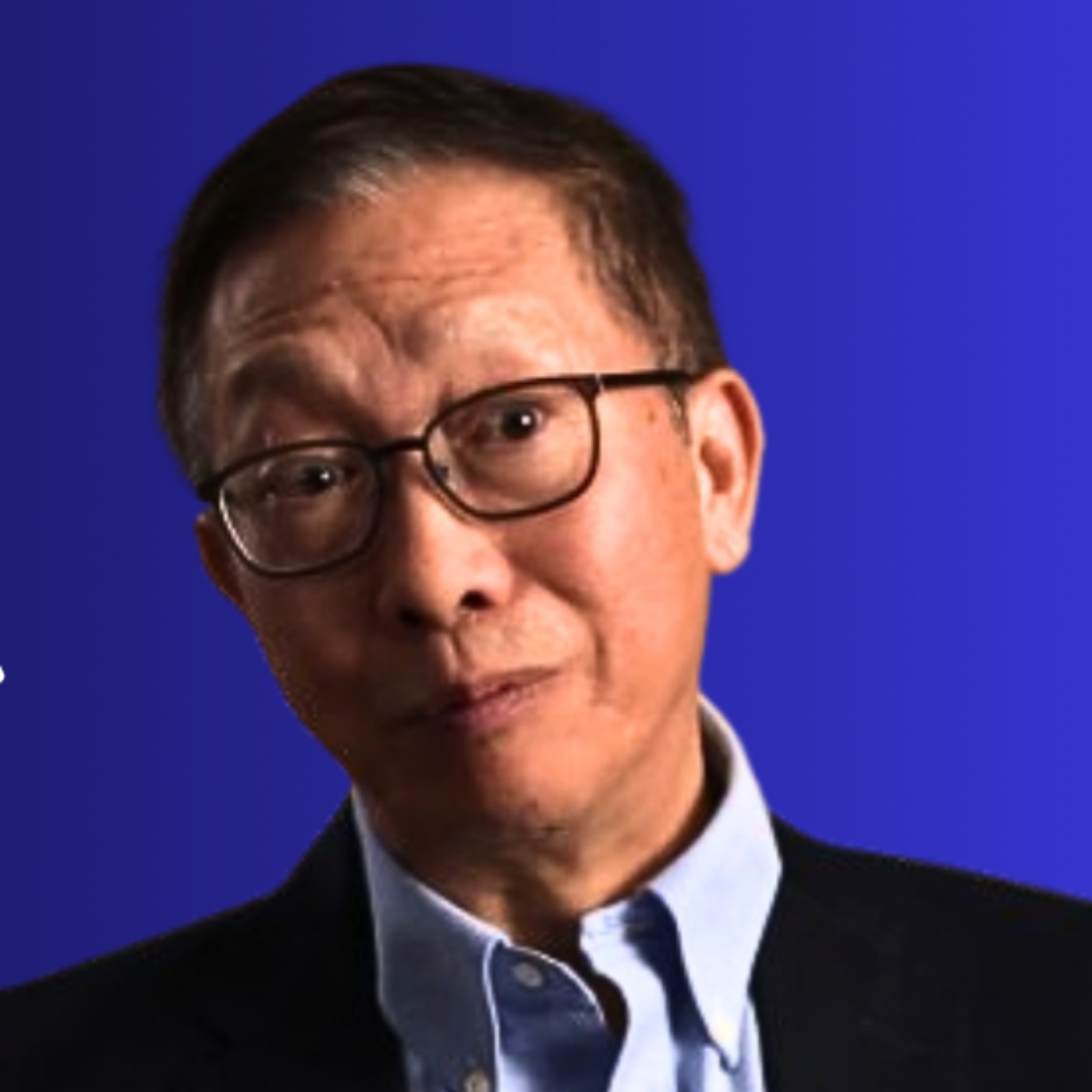
S2025 Ep 26China's Institutional Genes - Chenggang Xu | 2025 Episode 26
This episode of The IR thinker features Professor Chenggang Xu on the conceptual and empirical foundations of his book Institutional Genes: Origins of China’s Institutions and Totalitarianism. The conversation unpacks what he means by “institutions” and “institutional genes”, how this framework helps to open the black box of political change, and why certain systems prove remarkably resilient over time. We explore the notion of “stemness”, the contrasts between imperial China and European monarchies, and how specific “genes” in the Russian system shaped Bolshevism. Professor Xu then traces Mao’s fusion of Marxism with the legacy of Qin Shi Huang, the institutional differences between Soviet and Chinese communism, and whether contemporary China should be understood as totalitarian or authoritarian. The discussion closes by examining tyrannical incentive structures, the risks of Soviet-style stagnation, and how the institutional genes framework can be extended beyond domestic politics to foreign policy and other domains of global governance.Chenggang XuProfessor Chenggang Xu is a Senior Research Scholar at the Stanford Center on China’s Economy and Institutions (SCCEI) and a Visiting Fellow at the Hoover Institution. A leading scholar of institutional economics, political economy and the Chinese political–economic system, he is widely known for developing the concept of regionally decentralised authoritarianism and, more recently, for his work on institutional genes and the historical roots of Chinese totalitarianism. His research is extensively cited in both academic and policy circles, and he has been awarded the China Economics Prize and the Sun Yefang Economics Prize in recognition of his contribution to the study of institutions, development and authoritarian governance.Publications:The fundamental institutions of China’s reforms and developmentIncentives, information, and organizational formIndustrial clustering, income and inequality in rural ChinaClustering, growth and inequality in ChinaContent00:00 - Introduction01:45 - Why this book? The story behind ‘Institutional Genes’06:34 - Defining ‘institution’ in the institutional genes framework10:45 - Opening the black box: How institutional genes explain political change16:29 - The concept of ‘stemness’ explained20:01 - Imperial China vs European monarchies: Why China was more autocratic28:28 - The three Russian genes that created Bolshevism33:43 - Mao’s fusion: Marx plus Qin Shi Huang38:58 - Soviet vs Chinese communism: Key institutional differences42:23 - Totalitarian or authoritarian? Defining modern China48:35 - Tyrannical incentive-compatibility: How totalitarian systems motivate53:01 - Will China face Soviet-style economic stagnation?58:52 - Applying institutional genes to foreign policy01:03:16 - Beyond domestic politics: Where else can we apply this framework? Hosted on Acast. See acast.com/privacy for more information.
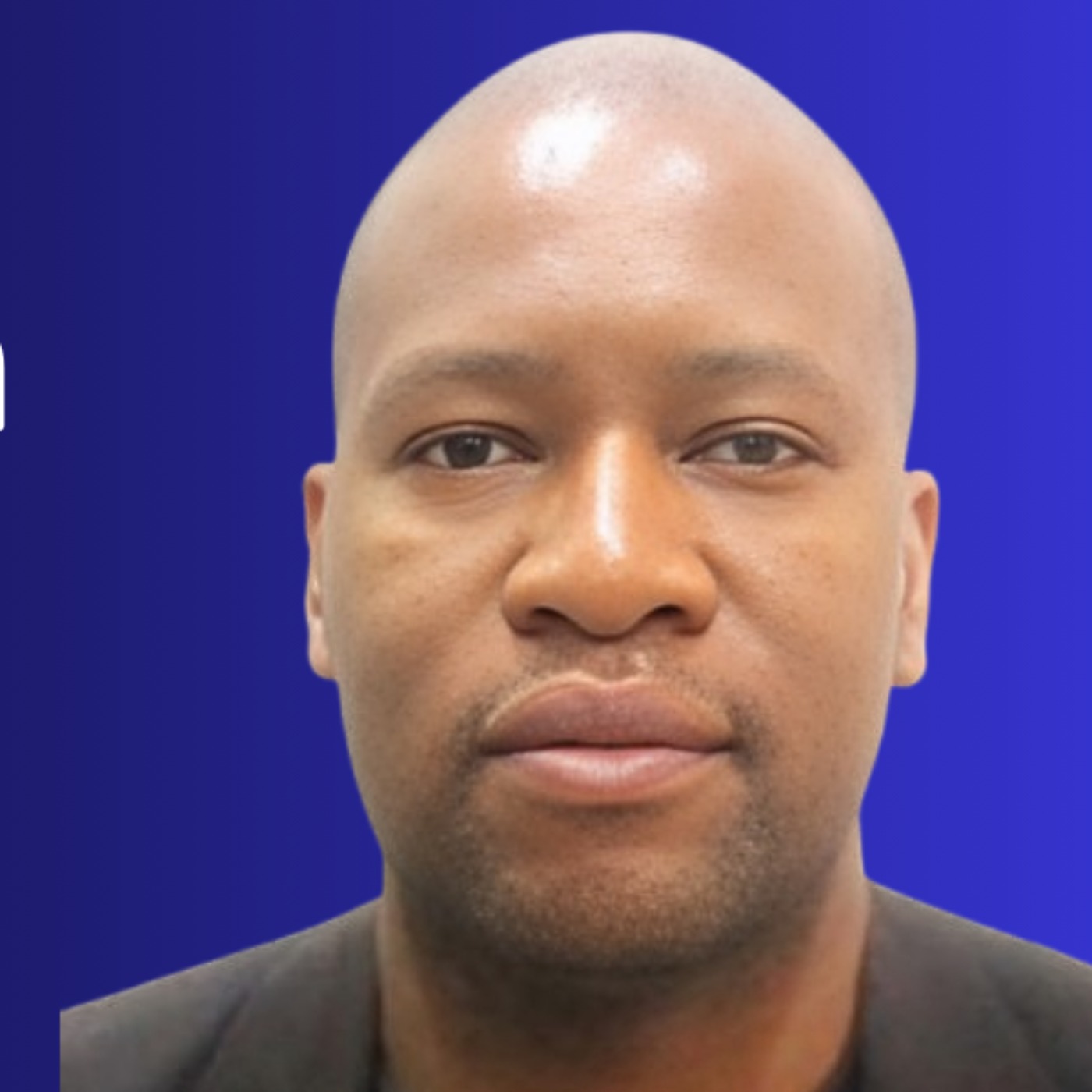
S2025 Ep 25Does African IR Theory Exist? - Madalitso Zililo Phiri | 2025 Episode 25
This episode of The IR thinker features an incisive conversation with Dr Madalitso Zililo Phiri on what it means to think International Relations from Africa rather than merely about Africa. We interrogate whether an African IR theory exists, how concepts such as Ubuntu, communalism and non-statist authority can reframe sovereignty and power, and what this implies for applying African ideas beyond the continent. The discussion probes Africa’s marginalisation in multilateral decision-making, the contemporary mutations of Pan-Africanism, and South Africa’s foreign policy through a realist lens. We also explore how liberal and mainstream constructivist IR traditions have historically excluded African experiences, what a decolonial constructivism might look like in practice, and whether scholars should pursue a distinct “African school” or treat Africa as a generative site for pluralising the discipline as a whole.Madalitso Zililo PhiriDr Madalitso Zililo Phiri is a Post-Doctoral Fellow in the South Africa–United Kingdom Bilateral Research Chair in Political Theory at the University of the Witwatersrand. A former Visiting Fellow at the Centre of African Studies and Research Associate at Wolfson College, University of Cambridge, and a Carnegie Corporation Fellow via the SSRC’s Next Generation of Social Science in Africa programme, his research spans the political economy of racialised welfare in South Africa and Brazil, the sociology of race, and Black political thought. He has taught African Studies, Sociology, Politics and Research Methods at Cambridge, Wits, Pretoria and Rhodes universities, bringing a decolonial and critical theoretical lens to the study of power, knowledge and global order.Publications:The Colour of Inequality in South Africa and Brazil: making sense of social policy as reparationsMonuments and Memory in Africa: reflections on coloniality and decolonialityAgainst Imperial Social Policy: Recasting Mkandawire’s Transformative Ideas for Africa’s LiberationHistory of Racial Capitalism in Africa: Violence, Ideology, and PracticeContent00:00 – Introduction02:05 – Does African IR Theory Exist? Epistemologies Beyond the West06:27 – Ubuntu, Communalism, and Reimagining Sovereignty10:45 – Applying African Concepts to Non-African Issues15:01 – Authority Beyond the State: African Approaches to Power19:48 – Africa’s Exclusion from Multilateral Decision-Making25:13 – Pan-Africanism in 2025: Dead or Evolving?29:26 – South Africa’s Power Politics Through a Realist Lens34:24 – Liberal IR Theory’s Historical Exclusion of Africa37:46 – Constructivism: Opening or Limiting Space for African Voices?41:22 – Postcolonialism and Decolonizing IR Theory47:22 – Which IR Theory Dominates African Scholarship Today?50:14 – The Risks of Essentializing “African IR Theory”52:57 – Continental Focus vs. State-Centric Analysis in African IR56:54 – Distinct African School or Contribution to Global Pluralism? Hosted on Acast. See acast.com/privacy for more information.

S2025 Ep 24Natural Gas in Germany: Security, Supply, Transition - Andreas Schroeder | 2025 Episode 24
This special 100th episode of IR thinker revisits Germany’s gas security with Andreas Schroeder, the very first expert to appear on the channel in January 2023. We trace how Germany has reshaped its gas architecture since the war in Ukraine, from the shift towards short-term pipeline contracts and the rapid expansion of LNG import capacity to changes in storage policy and declining domestic gas consumption. The discussion examines plans for new gas-fired power plants, the security implications of the nuclear phase-out, and Germany’s emerging role as a gas hub and exporter in competition with neighbours such as Poland. We also explore the country’s growing dependence on US and Norwegian supplies, the debate over Russian LNG, and the prospects of sourcing gas from Africa, Qatar and Canada, before assessing the key risks that will define Germany’s natural gas security in the years ahead.Andreas SchroederAndreas Schroeder is Head of Energy Analytics (Quantitative) at Independent Commodity Intelligence Services (ICIS), where he leads an international team analysing global energy market dynamics. His work combines quantitative modelling with market intelligence to assess gas flows, contract structures and price formation across Europe and beyond, and he regularly contributes to analytical reports and media commentary on European gas security and energy transition challenges.Content00:00 – Introduction03:13 – Current Natural Gas Flows to Germany and Contract Structures05:08 – The Logic Behind Short-Term Pipeline Contracts07:27 – LNG Imports and the Expansion of German Infrastructure09:47 – Gas Storage Developments Since the War in Ukraine14:03 – Declining Gas Consumption in Germany: Causes and Implications16:58 – New Gas-Fired Power Plants in Germany19:32 – The Impact of the Nuclear Phase-Out on Energy Security22:20 – Innovative Gas Procurement Strategies for the German Market24:42 – Germany’s Role as a Gas Exporter26:43 – Export Infrastructure and Capacity28:23 – Competition Between Germany and Poland in Gas Trade30:43 – Dependence on US and Norwegian Gas After the Russian Cut-Off33:26 – Can the EU Operate Without Russian LNG?35:24 – The Potential of African Gas for Germany36:53 – Qatar’s Role in Germany’s Gas Supply39:53 – Canada as an Emerging Gas Partner for Germany41:52 – Future Challenges for Germany’s Natural Gas Security Hosted on Acast. See acast.com/privacy for more information.

S2025 Ep 23Mongolia's Energy Security - Telmen Altanshagai | 2025 Episode 23
This episode of The IR thinker explores Mongolia’s evolving energy landscape with policy analyst Telmen Altanshagai, focusing on how a landlocked state navigates dependence, diversification and development. The conversation maps Mongolia’s current energy mix and security challenges, from coal reliance, heating and grid issues in Ulaanbaatar to infrastructure gaps in rural areas, before turning to governance structures and policy coordination. We examine the strategic implications of projects such as the Power of Siberia 2 gas pipeline and India’s investment in Mongolia’s first oil refinery, alongside China’s expanding role and the prospects for regional connectivity through concepts like the East Asian Power Grid. The episode also considers energy poverty and inequality, the impact of climate change, constraints posed by national debt, and what policy priorities a Mongolian prime minister should pursue to strengthen energy security and harness the global energy transition for long-term, broad-based development.Telmen AltanshagaiTelmen Altanshagai is a Washington, D.C.–based independent policy analyst and Energy and Climate Intern at Observer Research Foundation America, as well as a Fellow at the Global Policy Institute. Her work focuses on energy security and development economics across the Global South, with particular expertise on Mongolia, where she analyses how shifting global energy systems affect economic stability and long-term development trajectories. Publications:Mongolia’s Gas Pipeline Diversification Comes With RiskMongolia seeks new markets in EurasiaMongolia’s Precarious Energy SecurityContent00:00 – Introduction01:31 – Overview of Mongolia’s Energy Mix and Security Landscape04:13 – Pathways for Energy Diversification07:08 – Can China Serve as a Source of Energy Diversification?08:44 – Heating Infrastructure and Urban Electricity Challenges in Ulaanbaatar11:05 – Persistent Dependence on Coal14:02 – Energy Access and Infrastructure in Rural Mongolia16:03 – Structure and Dynamics of Energy Governance18:59 – Potential Benefits of the Power of Siberia 2 Pipeline for Mongolia22:46 – Domestic Expertise and Policy Debate on Power of Siberia 224:32 – Assessing the Need for an Oil Pipeline from Russia25:32 – India’s Investment in Mongolia’s First Oil Refinery27:31 – Mongolia’s Broader Energy Investment Strategy31:32 – Domestic Investment Climate and Incentives for the Energy Sector34:30 – China’s Expanding Energy Investments in Mongolia35:59 – The East Asian Power Grid Concept and Regional Connectivity37:59 – Energy Poverty and Socioeconomic Inequality41:22 – Climate Change Impacts on Mongolia’s Energy Security43:48 – Building Human Capital for Energy Security46:18 – National Debt and Its Implications for Energy Policy49:12 – Comparing Africa and Mongolia: Mining Wealth and Public Benefit51:47 – Policy Priorities: What Should a Mongolian Prime Minister Do to Strengthen Energy Security?54:54 – Future Directions and Research Opportunities Hosted on Acast. See acast.com/privacy for more information.

S2025 Ep 22Australia's Security - Risks & Realities - Peter Layton | 2025 Episode 22
This episode of The IR thinker offers a sharp, policy-focused tour of how Australia is recalibrating its security posture in an era of intensifying regional competition, with strategist and defence analyst Dr Peter Layton. The conversation examines the evolving logic of alliances with the United States and Japan, the growing reliance on multilateral formats, and the strategic stakes of AUKUS and submarine procurement for Australia’s long-term force structure. We also explore the potential and limits of the Quad and security cooperation with ASEAN, the dilemmas created by deep economic ties with China alongside mounting security concerns, and the vulnerabilities and trade-offs highlighted in the 2024 National Defence Strategy. The episode closes by assessing defence spending priorities, the challenge of diversifying supply chains, and under-researched aspects of Australia’s middle-power role in a more contested Indo-Pacific.Peter LaytonDr Peter Layton is a Visiting Fellow at the Griffith Asia Institute, Griffith University, an Associate Fellow at the Royal United Services Institute (RUSI), and a Fellow of the Australian Security Leaders Climate Group. A former RAAF officer with extensive experience in aviation and defence planning, he received the US Secretary of Defense’s Exceptional Public Service Medal for his work on force structure at the Pentagon and has held a research fellowship at the European University Institute. His research focuses on grand strategy, national security policy with a particular emphasis on middle powers, defence force structure concepts and the implications of emerging technologies, bringing together practitioner insight and academic analysis on Australia’s strategic choices.Publications:Non-Western Airpower: Diverse, Dissimilar and DisruptiveWarfare in the robotics age: Studies in technology and security: innovation, impact, and governanceGrand StrategyThe Idea of Grand StrategyContent00:00 – Introduction02:00 – Alliances with the US and Japan: Security Gains or Strategic Constraints?04:16 – Multilateralism in Australia’s Security Strategy07:02 – AUKUS and the Future of Australian Defence15:50 – Submarine Procurement: Strategic Rationale and Implications23:02 – The Quad and Australia’s Security Role29:54 – Making the Quad More Effective and Productive33:03 – Security Cooperation with ASEAN: Opportunities and Limits41:52 – Managing the Dual Relationship with China: Economics vs Security50:26 – Assessing the 2024 National Defence Strategy and Middle-Power Vulnerabilities55:51 – Military Spending: Balancing Capability and Sustainability01:01:06 – Diversifying Australia’s Defence Supply Chains01:07:52 – Under-Researched Dimensions of Australia’s Security Hosted on Acast. See acast.com/privacy for more information.

S2025 Ep 21Georgia's Energy Security - Murman Margvelashvili | 2025 Episode 21
This episode of The IR thinker traces Georgia’s journey from Soviet-era infrastructure to today’s contested energy landscape with Professor Murman Margvelashvili. The conversation examines how Georgia’s energy mix has evolved up to 2025, the geopolitical risks attached to different sources, and the ownership and control of key hydropower assets. We explore prospects for hydrogen, the remaining headroom for renewables, and the political, technical and feasibility debates around nuclear power. The discussion also unpacks how conflicts in Abkhazia and South Ossetia affect the grid, how Tbilisi balances Azerbaijan, Türkiye, Russia, the EU, China and the United States to preserve strategic autonomy, and whether additional transit pipelines from the Caspian to Europe are really needed. Finally, we look at untapped domestic potential, the reinvestment of transit revenues, resilience to blackouts and supply shocks, and the governance gaps and under-researched areas that will shape Georgia’s next energy chapter.Murman MargvelashviliProfessor Murman Margvelashvili is a leading Georgian energy policy expert with more than thirty years of experience in the sector, specialising in energy security, sustainability and the geopolitics of the energy transition. He is Director of Energy Studies at World Experience for Georgia, Associate Professor at Ilia State University, and Director of the Energy and Sustainability Institute, and has been closely involved in drafting the National Energy Policy, the National Energy and Climate Plan and the conceptual foundations of Georgia’s National Hydrogen Strategy.Publications:The Role of Black Sea Security in Shaping the Green Energy CorridorEnergy Ties in Occupied Abkhazia as a Potential Threat to Georgia’s Western AspirationsSystemic Approach to Energy SecurityContent00:00 – Introduction01:58 – From Soviet system to 2025: evolution of Georgia’s energy mix05:03 – Dependency and geopolitical risk across Georgia’s energy sources09:17 – Ownership and control of Georgian hydropower10:53 – Hydrogen in Georgia: prospects and pathways15:16 – Have renewables peaked? Headroom for additional capacity17:18 – Nuclear power in Georgia: options, debates, feasibility19:52 – Abkhazia and South Ossetia: implications for Georgia’s power grid22:48 – Balancing Azerbaijan, Türkiye, Russia, the EU and China: safeguarding strategic autonomy32:53 – Expanding Caspian gas to Europe: do new Georgian transit pipelines need to be built?34:51 – Armenia’s role in Georgia’s energy geopolitics36:50 – United States interests in Georgia’s energy sector38:51 – Türkiye–Azerbaijan energy cooperation: impacts on Georgia43:03 – Untapped and hidden energy potential in Georgia45:40 – Reinvesting transit revenues into energy modernisation50:20 – Supply shocks and blackouts: resilience and response53:21 – Assessing the effectiveness of Georgia’s energy strategy56:35 – Governance gaps and failures: lessons for reform01:02:14 – Under-researched energy topics in Georgia Hosted on Acast. See acast.com/privacy for more information.

S2025 Ep 20Ireland's National Security Strategy - Kenneth McDonagh | 2025 Episode 20
This episode of The IR thinker explores Ireland’s historic shift from a long-standing tradition of military neutrality towards a more structured national security strategy, with Dr Kenneth McDonagh. We discuss why a neutral state is now formalising its approach to security, the key domestic and external drivers behind this move, and whether neutrality will remain central or gradually erode. The conversation examines Ireland’s defence capabilities and investment choices, the protection of critical infrastructure, coordination between the Defence Forces, Gardaí and intelligence services, Ireland’s deeper integration into EU security structures, its relationship with the United States, cybersecurity posture, UN peacekeeping role, and how developments in Northern Ireland and the lingering threat of terrorism shape the new strategic debate.Kenneth McDonaghKenneth McDonagh is Associate Professor of International Relations at the School of Law and Government, Dublin City University. His research focuses on EU foreign policy, the Common Security and Defence Policy, and the intersections of gender and international security, bringing a nuanced understanding of how small European states such as Ireland navigate evolving security architectures at both regional and global levels.Publications:Ireland’s Foreign Relations in 2023Translating the Women, Peace and Security Agenda into EU Common Security and Defence Policy: Reflections from EU PeacebuildingThe Next European Century?‘Talking the Talk or Walking the Walk’: Understanding the EU ’s Security IdentityRisk, Global Governance and SecurityContent00:00 – Introduction01:53 – Reinterpreting Ireland’s Policy of Military Neutrality05:43 – Why Develop a National Security Strategy in a Neutral Country?08:14 – Key Drivers Behind Ireland’s Security Strategy10:23 – Will Military Neutrality Remain Central?11:58 – Is This a Step Towards NATO Membership?14:07 – Understanding the Capacity of Ireland’s Defence Forces19:00 – Is There Willingness to Invest in the Army?21:12 – Private Initiatives for Defence Development23:34 – Protecting Critical Infrastructure: Cables, Energy, Ports, Airports26:18 – Coordination of Defence, Gardaí, and Intelligence Without a Strategy28:11 – Ireland’s Integration into EU Security Structures31:37 – Could EU Forces Be Deployed on Irish Soil?33:38 – Is Ireland Viewed as a Strategic Territory by the EU?36:10 – US–Ireland Relations on Security39:25 – Expanding Security Cooperation with the US41:29 – Ireland’s Cybersecurity Posture45:17 – Presenting the Cyber Sector as a Deterrent48:02 – Ireland’s Role in UN Peacekeeping and Security54:05 – Northern Ireland and the New Security Strategy59:01 – Terrorism in Northern Ireland and Its Security Impact01:02:17 – Under-researched Areas in Ireland’s National Security Hosted on Acast. See acast.com/privacy for more information.

S2025 Ep 19Georgia's EU Accession Journey - David Bujiashvili | 2025 Episode 19
This episode of The IR thinker asks what Georgia’s EU integration really means for democracy, regional security and great power competition, in conversation with David Bujiashvili. The discussion traces the historical and normative drivers behind Georgia’s European choice, the EU’s response to Tbilisi’s membership application, and how narratives around democracy, the rule of law and human rights are communicated – or distorted – at home, including via Russian disinformation. We look at early reform challenges, the current stage of the accession process and why it has stalled, as well as the practical impact of the Association Agreement, the DCFTA and visa liberalisation. The episode also examines the future of Abkhazia and South Ossetia, the lessons Georgia has drawn from Central European accessions, the effects of the war in Ukraine, and how shifting roles of Russia and China in the South Caucasus feed back into EU–Georgia relations and the Union’s own enlargement strategy.David BujiashviliDavid Bujiashvili is a distinguished expert on European affairs with more than 25 years of experience in EU integration and assistance coordination. He holds a PhD in Economics and a Master’s in International Economic Relations, combining academic depth with extensive diplomatic and policy practice.At the Ministry of Foreign Affairs of Georgia, he served as Director of the EU Assistance Coordination and Sectoral Integration Department, where he played a pivotal role in overseeing the implementation of the EU–Georgia Association Agreement and the Deep and Comprehensive Free Trade Area (DCFTA). His work focused on aligning Georgian legislation with the EU acquis, ensuring inter-institutional coordination through sectoral working groups, and drafting key EU-related strategies and action plans.Dr Bujiashvili has chaired Association Committees and Sub-Committees in negotiations with the European Commission, coordinated Georgia’s EU Accession Questionnaire (2021–2022), and organised strategic communication and public outreach campaigns on EU integration. He has also worked extensively with civil society and the business community on sectoral reforms, while serving as focal point for major EU assistance tools such as Twinning, TAIEX, SIGMA, INTERREG, and anti-fraud mechanisms in cooperation with OLAF.Publications:EU-Georgia Association Agreement and Visa Liberalization Under QuestionContent00:00 – Introduction02:37 – Historical and Normative Drivers of Georgia’s EU Integration14:10 – EU Response to Georgia’s Membership Application17:01 – Democracy, Rule of Law, and Human Rights Narratives18:26 – Public Access to EU Information During Accession21:22 – Example of Russian Disinformation Campaigns23:31 – Early Challenges of Reform and Implementation26:19 – Current Stage of Georgia–EU Accession29:37 – Why Has the Accession Process Stalled?32:32 – Georgian Representation in the EU Today34:56 – The Future of Abkhazia and South Ossetia37:03 – Deep and Comprehensive Free Trade Area (DCFTA)39:34 – EU Visa Liberalisation and Georgia43:17 – Learning from Central European EU Accession Experiences45:26 – Forms and Practice of Regional Cooperation48:03 – Impact of the War in Ukraine50:37 – Russia’s Changing Role in the South Caucasus52:32 – China’s Influence on EU–Georgia Relations54:02 – Lessons for the EU from Georgia’s Accession Experience Hosted on Acast. See acast.com/privacy for more information.

S2025 Ep 18Brexit and EU Hegemony - Patrick Holden | 2025 Episode 18
This episode of The IR thinker explores how the European Union exercised power throughout the Brexit process, in conversation with Dr Patrick Holden. Working from a neo-Gramscian perspective, the discussion examines how communication, institutional design and rhetorical strategy combined to generate structural power in the EU–UK negotiations. We unpack surprising findings about how EU institutions shaped the options available to London, how norms and “EU values” functioned as tools of influence, and who better understood the vulnerabilities of European integration. Particular attention is given to the negotiation and communication styles of Michel Barnier and Stefaan De Rynck, what their rhetoric reveals about EU hegemony, and what reforms to the EU’s external action machinery may be needed if Brussels is to preserve its leverage and credibility beyond 2025.Patrick HoldenDr Patrick Holden is Associate Professor in International Relations at the University of Plymouth, where he leads the online Master’s programme in International Relations: Security and Development. His research focuses on the European Union’s external relations, international political economy and development policy, and he is widely published on Europe’s role in the international system. Combining theoretical depth with engagement in contemporary policy debates, he offers a nuanced perspective on how the EU projects power, manages relations with non-members and navigates a changing global order.Publications:In Search of Structural PowerIrreconcilable Tensions? The EU’s Development Policy in an Era of Global IlliberalismWhat kind of hegemony? The European Union in its regionStrongholds of Liberalism? The Reaction of Regional Integration Institutions to the Pandemic Trade CrisisContent00:00 – Introduction01:54 – Why link the EU with hegemony? A Neo-Gramscian view04:56 – EU power during Brexit: communication and political actions07:28 – Structural power: how EU institutions shaped Brexit11:43 – Surprising findings on EU structural power13:42 – EU values vs. interests: norms as a tool of influence16:10 – UK rejection of EU principles and vulnerabilities of integration20:04 – Who understood vulnerabilities better: the EU or the UK?21:25 – Researching vulnerabilities as a scholar23:18 – Barnier, De Rynck, and rhetorical strategies in Brexit talks26:56 – Power balance in EU–UK negotiations28:47 – Barnier and De Rynck: communication styles and strategy31:39 – Lessons from Barnier and De Rynck’s negotiation styles33:05 – Why rhetoric matters: qualitative insights on EU hegemony34:49 – Have scholars studied Brexit enough?37:30 – Brexit’s impact on EU relations with non-members43:18 – Should the EU’s External Action Service gain more power?45:15 – Brexit as a test of EU hegemonic resilience49:31 – EU hegemony in the shadow of US hegemony56:20 – What EU hegemony needs in 2025 Hosted on Acast. See acast.com/privacy for more information.
S2025 Ep 17Radicalisation in the Global North - Tahir Abbas | 2025 Episode 17
This episode of The IR thinker examines how radicalisation is evolving across Western democracies, in conversation with Professor Tahir Abbas. Moving from the storming of the US Capitol and far-right online mobilisation in the United States, through post-Brexit identity politics and the Prevent strategy in the United Kingdom, to intergenerational tensions and social unrest in Western Europe, the discussion unpacks how online ecosystems, crises of capitalism, migration debates and gendered vulnerabilities interact to produce diverse pathways into extremism. The episode explores the blurred boundaries between extremism and terrorism, the rise of the incel subculture, transnational networks behind riots and protests, and the “Gaza effect” on British Muslim politics.Tahir AbbasProfessor Tahir Abbas is Professor of Criminology and Global Justice at Aston University in Birmingham, and formerly Professor of Radicalisation Studies at the Institute of Security and Global Affairs at Leiden University. His interdisciplinary work spans criminology, sociology, politics, Islamic studies and critical terrorism studies, with a particular focus on radicalisation, extremism and political violence in Western contexts. He has authored and edited around twenty books, delivered lectures in over one hundred cities worldwide, and led the EU H2020 DRIVE project, which investigated how social exclusion, disenchantment and marginalisation shape polarising ideas, values and beliefs in north-western Europe.Publications:Capitalism, State Power, and the Production of ExtremismGlobal counter-terrorism: A decolonial approachVoices of Gen ZProtecting the people: populism and masculine security in India and HungaryIslamophobia and Radicalisation: A Vicious CycleMuslim Britain: communities under pressureContent00:00 – Introduction02:07 – Online platforms, far-right mobilisation, and the January 6 attack (USA)05:30 – Online communication patterns preceding offline violence (USA)08:33 – Framing extremist groups as terrorist organisations: unintended consequences (USA)10:46 – Drawing the line between extremism and terrorism (USA)14:32 – The rise of the incel subculture and gendered vulnerabilities (USA)19:13 – Summary of US radicalisation22:32 – Post-Brexit identity politics and the Prevent strategy (UK)31:11 – Transnational networks and the 2023 riots (UK)34:57 – The Gaza effect, British Muslim identity, and electoral mobilisation (UK)39:31 – Summary of UK radicalisation42:51 – Intergenerational differences within migrant and minority communities (Western Europe)48:44 – Youth, information exposure, and latent radicalisation risks (Western Europe)51:33 – Crises of capitalism, migration debates, and social unrest (Western Europe)54:02 – Summary of Western European radicalisation56:06 – Researching Radicalisation: Challenges and Reflections Hosted on Acast. See acast.com/privacy for more information.
S2025 Ep 16China-Africa Engagement - Emmanuel Matambo | 2025 Episode 16
This episode of The IR thinker looks beyond the clichés about “debt-trap diplomacy” to examine how Africa–China relations actually function in practice, in conversation with Dr Emmanuel Matambo. The discussion contrasts Western narratives with the pragmatism of African elites, explores China’s media portrayal of Africa, and examines persistent trade imbalances, industrialisation prospects and value addition on the continent. We consider whether African negotiation styles offer advantages, how technology transfer and the energy crisis shape Beijing’s role in Africa, and whether it matters if digital and energy infrastructure is sourced from Western or Chinese firms.The conversation also addresses non-interference versus conditional aid and their implications for governance in fragile states, China’s influence in and around the African Union, the quality of Chinese diplomatic engagement, and the impact of Confucius Institutes, cultural outreach and labour practices.Emmanuel MatamboDr Emmanuel Matambo is Research Director at the Centre for Africa–China Studies (CACS) at the University of Johannesburg, specialising in Africa’s evolving relationship with China. Working within a broadly constructivist framework with a particular focus on people-to-people relations, he investigates how ideas, identities and everyday interactions shape what are often portrayed as purely strategic or material partnerships. He holds a PhD in political science from the University of KwaZulu-Natal, where he later served as a postdoctoral fellow, and has been a fellow of the Wilson Center’s Africa Program and the Atlantic Council’s Millennium Leadership Program. From 2026 he will be an Iso Lomso Fellow at the Stellenbosch Institute for Advanced Study (STIAS), conducting research on Zambia’s shifting perceptions of China at both state and subnational levels.Publications:South Africa-China Relations: A Constructivist PerspectiveConstructing China’s identity in Zambian politics: a tale of expediency and resignationContent00:00 – Introduction01:55 – Pragmatism vs. “Debt-Trap Diplomacy”: How African Elites and Western Narratives Differ07:29 – Africa’s Image in Chinese Media10:17 – Trade Imbalances, Industrialisation, and Value Addition in Africa–China Relations15:06 – Negotiating with China: Is African Directness an Advantage?18:51 – Technology Transfer, the Energy Crisis, and China’s Role in Africa24:54 – Western vs. Chinese Technology: Does the Source Matter for Africa?29:07 – Non-Interference vs. Conditional Aid: Implications for Governance in Fragile States34:20 – China’s Geopolitical Influence on the African Union36:37 – The Calibre of Chinese Diplomats and Officials in Africa39:14 – Confucius Institutes and Their Impact in Africa43:05 – Is There a South African Equivalent of the Confucius Institute in China?46:16 – Chinese Cultural and Media Outreach: Shaping African Youth Perceptions49:07 – Labour Rights and Chinese Companies in Africa: Current Trends and Improvements51:05 – The African Diaspora, China Research, and New Avenues of Cooperation53:55 – Research Priorities of the Centre for Africa-China Studies, University of Johannesburg Hosted on Acast. See acast.com/privacy for more information.

S2025 Ep 15Global Maritime Security - Timothy Edmunds | 2025 Episode 15
This episode of The IR thinker explores the changing landscape of maritime piracy and security with Professor Tim Edmunds, tracing how piracy has evolved from traditional coastal raiding to more organised, networked forms of criminality at sea. The conversation examines the structure and scale of pirate groups, the onshore political and economic conditions that sustain them, and the mixed record of international anti-piracy measures. It then turns to wider challenges for the global maritime order, including “grey-zone” tactics at sea, strategic competition around chokepoints and artificial islands, debates over updating UNCLOS, and growing vulnerabilities linked to critical undersea infrastructure, highlighting some of the most pressing and under-researched questions in contemporary maritime security.Timothy EdmundsProfessor Timothy Edmunds is Professor of International Security and Head of the School of Sociology, Politics, and International Studies at the University of Bristol. A leading specialist in security policy, capacity building and security sector reform with a particular focus on the maritime domain, he is co-director of the SafeSeas Network and has played an advisory role in UK policy processes, including work on the 2022 UK National Strategy for Maritime Security. His research on maritime security has been supported by the UK Economic and Social Research Council, the British Academy and the EU’s Horizon 2020 programme, and he previously served as founding Editor-in-Chief of the European Journal of International Security for Cambridge University Press and BISA.Publications:Understanding maritime securitySecuring the Seas: A Comprehensive Assessment of Global Maritime SecurityPragmatic ordering: Informality, experimentation, and the maritime security agendaInnovation and New Strategic ChoicesBlue crime: Conceptualising transnational organised crime at seaBeyond seablindness: a new agenda for maritime security studiesContent00:00 - Introduction02:10 - Evolution of Maritime Piracy10:11 - Organization of Pirate Groups13:27 - Structural Conditions Fuelling Piracy20:16 - Size and Scale of Piracy Groups24:08 - Effectiveness of Anti-Piracy Measures31:04 - Defining Assertiveness in Maritime Spaces36:33 - Grey-Zone Tactics at Sea43:50 - Innovating UNCLOS for Maritime Order53:05 - Maritime Chokepoints: Ownership and Control59:25 - Artificial Islands and Maritime Security01:01:43 - Threats to Undersea Infrastructure01:07:02 - Most Challenging Areas in Maritime Security Research Hosted on Acast. See acast.com/privacy for more information.

S2025 Ep 14Universities as EU Diplomatic Actors - Marina Cino Pagliarello | 2025 Episode 14
This episode of The IR thinker examines how universities and academics operate as informal diplomatic actors in the European Union’s foreign policy, in conversation with Dr Marina Cino Pagliarello. The discussion explores the growing role of “academic diplomacy” in contexts such as the war in Ukraine and EU–Africa relations, highlighting how higher education partnerships, mobility schemes and research collaborations can project EU norms on human rights, sustainability and rule of law, while also advancing strategic interests. We look at the tensions between academic autonomy and foreign policy objectives, the specific challenges of engagement in authoritarian or contested environments, and the ways programmes such as Erasmus+, Horizon Europe and the Marie Skłodowska-Curie Actions might be reformed to respond more effectively to geopolitical pressures, reduce elitism and address underexplored dimensions of inclusivity and hierarchy in EU academic outreach.Marina Cino PagliarelloDr Marina Cino Pagliarello is a strategic adviser and consultant specialising in academic diplomacy, university positioning and international partnerships. She is currently a Marie Skłodowska-Curie Research Fellow at the European University Institute and a Senior Research Associate at LSE Consulting, working at the intersection of EU politics, public policy and transnational higher education. Drawing on extensive experience in European university alliances and high-level institutional engagement, she helps universities and public bodies design and implement international strategies that make effective use of education and research as tools of soft power in an increasingly competitive global landscape.Publications:Integration theories and European education policy: Bringing the role of ideas back inIdeas and European education policy, 1973-2020: Constructing the Europe of knowledge?Unpacking ambiguity in ideational change: The polysemy of the ‘Europe of Knowledge’Chapters00:00 – Introduction01:43 – Universities as Informal Diplomatic Actors in EU Foreign Policy07:43 – Academic Diplomacy During the War in Ukraine13:32 – Balancing Academic Autonomy and EU Foreign Policy Goals19:37 – Challenges in Authoritarian or Contested Environments25:00 – EU–Africa University Cooperation Frameworks28:31 – Promoting EU Norms: Human Rights, Sustainability, and More33:04 – EU Funding Mechanisms: Erasmus+, Horizon, MSCA40:50 – Reforming and Strengthening EU Academic Programmes44:54 – Institutional Hierarchies in Academic Diplomacy48:15 – Geopolitical Pressures on Academic Engagement53:36 – Inclusivity vs. Elitism in EU Academic Deployment01:00:12 – Gaps and Underresearched Areas in Academic Diplomacy Hosted on Acast. See acast.com/privacy for more information.
S2025 Ep 13Why Japan & the Philippines Are Closer Than Ever - Satoru Nagao | 2025 Episode 13
This episode of The IR thinker explores the deepening strategic partnership between Japan and the Philippines with Dr Satoru Nagao, tracing the evolution from post-war reparations to a mature security and economic relationship in today’s Indo-Pacific. The conversation examines how Tokyo’s Free and Open Indo-Pacific vision is understood in Manila, why the Philippines is not part of the Quad, and whether Japan is doing enough on defence cooperation in the face of shared challenges such as North Korean missiles and Chinese assertiveness. We unpack the significance of the Reciprocal Access Agreement, Japan’s economic role and “new capitalism” in the Philippine context, the security implications of Japanese radar grants, and the dynamics of Japan–US–Philippines trilateral ties, before turning to what is often overlooked in this relationship and where future research on Japan–Philippines cooperation should be heading.Satoru NagaoDr Satoru Nagao is a non-resident fellow at the Hudson Institute and a leading expert on Indo-Pacific security. He holds a PhD from Gakushuin University and has advised Japan’s Ministry of Foreign Affairs and Ministry of Defence, as well as holding research positions at prominent strategic institutes in Japan, the United States, India and Sri Lanka. His work focuses on defence cooperation, maritime security and emerging strategic partnerships across the Indo-Pacific, with particular attention to how regional actors such as Japan and the Philippines respond to shifting great-power competition.Publications:Strategies for the Indo-Pacific: Perceptions of the U.S. and Like-Minded CountriesAmerica Is on the Road to Win in the Competition with China. What Should the Quad Do?What Should India Do Now to Fight China’s Provocations?India, Japan, and the Dragon’s Fire: Making the Quad WorkJapan’s Bold Steps to Emerge as Main Security Provider in Indo-Pacific Region amid China’s ExpansionismThree legacies left by former PM Abe: What comes next?Content00:00 – Introduction01:59 – From War to Partnership: The Legacy of Reparations05:30 – Japan’s Indo-Pacific Vision: What It Means for Manila17:41 – Why Isn’t the Philippines in the QUAD?20:21 – Defence Ties: Is Japan Doing Enough?25:59 – North Korea’s Missiles: A Shared Security Challenge30:56 – What the Reciprocal Access Agreement Really Means36:00 – Japan’s Economic Power in the Philippines38:32 – New Capitalism vs. Inclusive Growth42:18 – Radar Grants and Regional Security45:26 – Trilateral Ties: Japan, US & the Philippines under Trump48:45 – What Everyone Overlooks in Japan–Philippines Cooperation51:58 – Underresearched: Future Directions for Scholars Hosted on Acast. See acast.com/privacy for more information.
S2025 Ep 12Trump's US Foreign Policy - Hussein Banai | 2025 Episode 12
This episode of The IR thinker offers an in-depth tour of American foreign policy under Donald Trump’s second term with Associate Professor Hussein Banai, tracing the shift from disruption to a more confident, unilateral consolidation of “America First” abroad. Moving across key regions – from the Korean Peninsula and the Middle East to Europe, Russia, China and Latin America – the conversation unpacks how presidential style, US political culture, and the think-tank ecosystem shape decision-making inside institutions such as the National Security Council. The episode culminates in an extended discussion of the 2025 Israel–Iran conflict, including the recent US strikes on Iran’s nuclear infrastructure and what they reveal about Trump’s approach to coercion, alliance management and strategic risk in a more fragmented international order.Hussein BanaiDr Hussein Banai is Associate Professor of International Studies at the Hamilton Lugar School of Global and International Studies, Indiana University, a Research Affiliate at the Center for International Studies at MIT, and currently a visiting fellow at the Perry World House, University of Pennsylvania. In autumn 2024 he was the Zahedi Family Fellow at the Program in Iranian Studies at Stanford University. His work bridges international relations and political theory, with a particular focus on political ideologies, conflict, diplomatic history and practice, and the politics of modern Iran.Publications:Hidden Liberalism: Burdened Visions of Progress in Modern IranRepublics of MythContent00:00 - Introduction02:17 - From Disruption to Consolidation: Trump’s Second Term Strategy07:45 - Trump’s Confident Unilateralism in Foreign Policy10:54 - American Political Culture and the Think Tank Ecosystem15:18 - America First Policy: Domestic Appeal and Implementation22:16 - The Strategic Use of “America First” Despite International Concerns24:29 - Inside the National Security Council: Roles and Functions30:23 - Personnel Quality in US Foreign Policy Decision-Making35:01 - Decoding US Foreign Policy Statements: Research Challenges38:56 - North Korea Diplomacy: Prospects for a Second Trump-Kim Summit41:38 - Middle East Triangulation: US-Israel-Iran Relations and Trump-Netanyahu Dynamics50:11 - Steve Witkoff’s Contrasting Negotiation Mandates53:16 - Trump’s Scepticism Toward Multilateral Institutions and Frameworks57:27 - Neighbours First - Trump’s Approach to Canada, Mexico, and Latin America01:04:03 - Understanding Trump’s Foreign Policy Through IR Theories01:09:12 – EU vs. Member States: Trump’s Fragmented View of Europe01:14:37 – Trump’s Geopolitical Take on the EU: Weakness, Irrelevance, or Rival?01:20:28 – China Policy: Strategic Rivalry Meets Economic Interdependence01:25:33 – Taiwan’s Role in Trump’s China Strategy01:29:23 – Trump and Putin: Personal Chemistry and Strategic Ambiguity01:37:20 – U.S. Sanctions on Russia: Tools of Pressure or Leverage for a Deal?01:42:25 – Why Trump Believes Iran Must Never Go Nuclear01:47:32 – Iran in Trump’s First Term: Maximum Pressure, Minimal Results?01:57:58 – 2025 Israel-Iran Conflict - U.S Strike on Iran’s Nuclear Infrastructure Hosted on Acast. See acast.com/privacy for more information.

S2025 Ep 11The Zones of Peace Concept - Arie M. Kacowicz | 2025 Episode 11
This episode of The IR thinker asks why some regions become durable zones of peace while others remain mired in recurrent conflict, in conversation with Professor Arie M. Kacowicz. Drawing on his work on the Zone of Peace concept, the discussion traces its theoretical origins, engages with and moves beyond notions such as security communities, and asks how perspectives from the Global South can help to decolonise peace theory. Comparing cases such as South America, West Africa, ASEAN and the Middle East, the episode explores the conditions under which regional orders transition from conflict to stable peace, how norms of non-interference and regional solidarity operate in practice, and what the framework can offer to contemporary policy debates, including the tension between democracy, authoritarian stability and the preservation of peace.Arie M. KacowiczProfessor Arie M. Kacowicz holds the Chaim Weizmann Chair in International Relations at the Hebrew University of Jerusalem, where he has taught since 1993. A leading peace scholar, he has served as Chair of the Department of International Relations and as President of the Israeli Association of International Studies. His research spans alternative pathways for resolving the Israeli–Palestinian conflict, the role of international society, the international relations of Latin America, globalisation and International Relations theory. His current programme focuses on the normative dimensions of international relations, peace research and regional orders, with particular attention to how zones of peace emerge, endure and may be replicated in other parts of the world.Publications:Peaceful Territorial ChangeExplaining Zones of Peace: Democracies as Satisfied Powers?Zones of Peace in the Third World: South America and West Africa in Comparative PerspectiveThe Impact of Norms in International Society: The Latin American Experience, 1881 - 2001Content00:00 - Introduction02:28 - The Genesis of Zone of Peace Theory: From Regional Puzzles to Global Concepts06:21 - Why Study Peace Over Conflict? A Scholar’s Perspective07:58 - Theoretical Foundations: Which IR Schools Shaped Zone of Peace Theory?12:25 - Beyond Security Communities: Distinguishing Zones of Peace from Deutsch’s Framework19:28 - Decolonizing Peace Theory: Addressing Global South Perspectives in IR23:36 - South America vs West Africa: Why Some Regions Achieve Lasting Peace29:01 - ASEAN’s Peaceful Paradox: Non-Interference Despite Internal Tensions35:48 - From Conflict to Peace: Can the Middle East Transform Its Security Dynamics?48:01 - Practical Applications: Using Zone of Peace Theory in Today’s World58:49 - Authoritarian States and Peace: Navigating Democracy vs Stability Hosted on Acast. See acast.com/privacy for more information.

S2025 Ep 10Rebuilding Syria - Joseph Daher | 2025 Episode 10
This episode of The IR thinker looks ahead to the political and economic future of Syria in a post-Assad scenario, in conversation with Dr Joseph Daher. The discussion explores whether a new order would genuinely break with Syria’s entrenched war economy or merely reconfigure existing networks of power and patronage, and what might happen to Assad’s inner circle. It examines the current state of Syria’s economy, the role of technocrats, expatriates and the wider diaspora in any reconstruction process, and how religion may shape post-conflict politics and social life. The episode also considers potential income sources for reconstruction, contrasts the likely approaches of Middle Eastern and Western states, and assesses the roles of Russia, China and regional dynamics involving Turkey and the Kurds in reshaping Syria’s diplomacy and external relations.Joseph DaherDr Joseph Daher is a scholar of the contemporary Middle East specialising in political economy, political Islam and modern regional history, with a particular focus on Syria, Lebanon, Egypt and Palestine. He is an associate researcher at the Bonn International Centre for Conflict Studies and, between 2018 and 2024, was a visiting professor at the European University Institute in Florence, where he contributed to and co-led major research projects on the Syrian war economy and post-conflict trajectories. He has published widely in English, French and Arabic in academic journals and research outlets, and is the founder of the blog Syria Freedom Forever, a platform dedicated to critical analysis of Syrian politics and society.Publications:Hezbollah: The political economy of Lebanon’s Party of GodSyria after the uprisings: The political economy of state resilienceThe deep roots of the depreciation of the Syrian poundSyria’s manufacturing sector: The model of economic recovery in questionState institutions and regime networks as service providers in SyriaWater scarcity, mismanagement and pollution in SyriaContent00:00 - Introduction02:50 - Post-Assad Order: Continuity or Break from Syria’s War Economy?07:34 - Fate of Assad’s Inner Circle: Where Are They Now?12:02 - Current State of Syria’s Economy21:47 - Technocrats and Expatriates in Syria’s Government: Redistribution of Resources28:17 - Role of Syrian Diaspora and Leaders in Exile31:38 - Religion’s Influence in Syria’s Reconstruction and Post-Assad Era36:52 - Main Potential Income Sources for Syria in Reconstruction43:34 - Approaches of Middle Eastern States vs. Western Economies towards Syria: Solidarity or Profit-Driven?47:00 - Role of Russia and China in Syria’s Reconstruction52:48 - Geopolitical Triangle: Turkey, Syria, and the Kurds58:04 - Strengthening Syria’s International Diplomacy Hosted on Acast. See acast.com/privacy for more information.

S2025 Ep 9Good Governance in Africa - Gilbert A. Ang'ana | 2025 Episode 9
This episode of The IR thinker explores the evolving landscape of governance in Africa with Dr Gilbert A. Ang’ana, focusing on how institutional weaknesses, intra-governmental collaboration and decentralisation shape political and developmental outcomes across the continent. The conversation examines how “good governance” is defined and received in different African contexts, the often-neglected importance of coordination within and between state institutions, and the role of the African Union in addressing structural constraints. It also considers responsible negotiation as an alternative to traditional conflict resolution, the influence of tribes, minorities, donors and corporations on policy choices, and how digitalisation, tech competition and basic infrastructure – especially electricity access – will condition the success of future governance reforms.Gilbert A. Ang’anaDr Gilbert A. Ang’ana is a leadership and governance researcher and practitioner specialising in African contexts. He is CEO of Accent Leadership Group and Executive Director of the Accent Global Initiative, a think tank promoting good governance and policy innovation, and currently a Policy Leader Fellow at the European University Institute in Florence. In addition, he serves as Chair of Learning Facilitation for Rotary International District 9212 and is an adjunct lecturer in Strategic Leadership and Management at ACT University in Kigali, Rwanda, combining academic insight with practical experience in capacity-building and institutional development.Publications:Re-thinking good governance in Africa : the strategic role of intra-government collaboration and responsible negotiationFrom external focus to internal reflection : enhancing intra-government collaborative governance in AfricaContent00:00 – Introduction01:56 – Defining “Good Governance” in the African Context05:44 – Reception of Good Governance Models Across African States07:53 – Intra-Government Collaboration: An Overlooked Pillar of Governance11:13 – Case Studies: Successes and Failures in Intra-Governmental Collaboration12:56 – Institutional and Political Barriers to Effective Collaboration16:42 – Roots of Institutional Weakness and the Role of the African Union20:24 – Centralisation vs. Decentralisation of Power in Africa22:27 – Challenges in Decentralising Key Governance Elements25:58 – Intra-Governmental Collaboration as Mediator or Moderator of Governance Outcomes?30:21 – Governance Education and Capacity-Building Initiatives in Africa34:45 – “Responsible Negotiation” vs. Traditional Conflict Resolution Methods39:44 – Role of Tribes and Minorities in Shaping Good Governance43:31 – Navigating Donor Influence and Corporate Pressure: Striving for Epistemic Autonomy47:26 – Digitalisation’s Role in Advancing Governance in Africa51:26 – Competing Interests: International vs. Local Tech Enterprises55:28 – The Power Challenge: Electricity Access as a Prerequisite for Digital Progress58:50 – Key Governance Reforms Needed for Africa’s Future Hosted on Acast. See acast.com/privacy for more information.

S2025 Ep 8Kazakhstan's First Nuclear Plant - Eldaniz Gusseinov | 2025 Episode 8
This episode of The IR thinker asks whether nuclear power is set to become a cornerstone of Kazakhstan’s energy strategy, in conversation with political analyst Eldaniz Gusseinov. The discussion examines the country’s position as a major uranium producer, domestic debates over renewables versus traditional energy sources, and how decisions on nuclear power are actually made within Kazakhstan’s political system. It explores the legacy of Soviet-era nuclear plans and former test sites, the role of civil society and external consultants in shaping public consent, and the broader geopolitical stakes as Russia, China, France and South Korea compete for the anticipated reactor contract. The episode also considers security concerns, the possibility of a multinational consortium, and the often-overlooked dimensions of Kazakhstan’s energy security in a shifting regional and global context.Eldaniz GusseinovEldaniz Gusseinov is a Non-Resident Fellow at the Heydar Aliyev Centre for Eurasian Studies at Ibn Khaldun University and co-founder of Nightingale Intelligence International. His work focuses on EU–Central Asia relations, foreign policy analysis and Eurasian geopolitics, with particular attention to how external powers engage with the region’s energy and infrastructure choices.Content00:00 – Introduction01:38 – Is Nuclear Power Essential for Kazakhstan?04:06 – Public Opinion on Renewable versus Traditional Energy in Kazakhstan07:38 – Who Makes the Decisions on Nuclear Power Plants in Kazakhstan?12:01 – The History of Kazakhstan’s Nuclear Power Plans: Why Wasn’t a Soviet Plant Built?17:28 – The Current State of Kazakhstan’s Former Nuclear Test Sites19:20 – The Role of Civil Society in Nuclear Power Decision-Making23:52 – Will Kazakhstan Engage a Third-Party Consultant for Its Nuclear Plans?25:01 – Kazakhstan’s Uranium Production and Its Role in Nuclear Strategy31:43 – Implications if Russia Wins the Nuclear Power Contract41:49 – Implications if China Wins the Nuclear Power Contract43:36 – Implications if France Wins the Nuclear Power Contract44:51 – Implications if South Korea Wins the Nuclear Power Contract46:37 – Could a Multinational Consortium Build Kazakhstan’s Nuclear Plant?48:07 – Timeline for Kazakhstan’s Final Decision on the Nuclear Plant49:03 – Security Concerns Related to Kazakhstan’s Nuclear Power Project55:39 – Public Perceptions of the Nuclear Power Development Process58:22 – Overlooked Dimensions of Kazakhstan’s Energy Security Hosted on Acast. See acast.com/privacy for more information.

S2025 Ep 7Russia Africa Relations - Steven Gruzd | 2025 Episode 7
Critical Update: In Memory of Steven Gruzd Steven Gruzd was abducted and murdered in Johannesburg, South Africa, in what authorities described as an 'express kidnapping'. He disappeared on 27 March 2026 and was found dead two days later by the police. Steven was a great supporter of this channel and often promoted new potential experts to be interviewed. More importantly, he was one of the brightest foreign policy experts, frequently connecting people and project ideas. Steven will always be with us through an episode we recorded together. Rest in peace.The Original Episode DescriptionThis episode of The IR thinker examines why Russia is deepening its engagement with Africa and what it can realistically offer, in conversation with Steven Gruzd. The discussion traces how Soviet-era ties shape contemporary relations, unpacks Russia’s security footprint through actors such as the Wagner Group, and assesses the significance of arms sales, stalled energy projects and limited trade compared with China and other partners. We also explore the diplomatic symbolism and substance of the Russia–Africa summits, the interaction with BRICS diplomacy, Moscow’s use of soft power, media and foreign aid, and the under-researched dimensions of Russia’s evolving role across the continent.Steven GruzdSteven Gruzd is Head of the African Governance and Diplomacy Programme and the Africa–Russia Project at the South African Institute of International Affairs (SAIIA). He has written widely on Russia–Africa summits, BRICS cooperation and the resurgence of Russian influence in African foreign policy, and brings long-standing expertise on governance and diplomacy in the region. In addition to his policy work, he contributes to the South African Jewish Report, where he writes on international affairs, governance and Jewish community issues, combining analytical depth with a clear, journalistic eye on complex geopolitical developments.Publications:The Russian invasion of Ukraine still sends ripples into AfricaWhy African leaders have a blind spot for RussiaRussian and African Media: Exercising Soft PowerRussia in Africa: Who is courting whom?Content00:00 – Introduction01:47 – The Soviet Legacy: Shaping Russia’s Modern Foreign Policy Towards Africa05:40 – Post-Soviet Space and Africa: How Africa Views Former Soviet Republics08:44 – Russia’s Security Presence in Africa: The Role of the Wagner Group14:13 – Arms Deals and Military Influence: Russia’s Weapon Sales to Africa16:23 – Russia vs. China: Economic Influence in Africa19:40 – Why is Russia’s Trade in Africa Still Lagging Behind?23:23 – Russian Energy Companies in Africa: Opportunities and Challenges26:18 – Do African Countries Seek Energy Partnerships with Russia?28:56 – The Russia-Africa Summit: A Diplomatic Platform for Russia’s Interests35:26 – Russia-Africa Summit vs. BRICS: Diverging Approaches to Russian Interests in Africa40:59 – Russia’s Soft Power in Africa: Academic and Cultural Initiatives44:48 – Peacekeeping and Counterterrorism: Russia’s Role in African Stability49:30 – Russian Foreign Aid to Africa: Aid or Influence?55:19 – Russian Media’s Influence in Africa: Shaping Public Opinion59:23 – Under-Explored Research Areas in Russia-Africa Relations Hosted on Acast. See acast.com/privacy for more information.