The Glenn Show
461 episodes — Page 8 of 10

John McWhorter and Randall Kennedy — Say It Loud!
This week’s TGS features two incomparable guests: John McWhorter and Randall Kennedy. John, of course, needs no introduction. Randy is a professor at Harvard Law School and the author of many books, the latest of which is Say It Loud!: On Race, Law, History, and Culture. In this episode, we get into it pretty much immediately. Randy admits to being “thrown” by Donald Trump’s election and to finding his campaign openly racist. I, as you may know, think that is an oversimplified explanation of Trump’s appeal in 2016. We go on to discuss how a certain amount of racism will be with us for the foreseeable future, and we’ll just have to deal with it. Given that the situation will never be perfect, what would constitute an “acceptable” level of racism? We then go on to discuss two of the “big issues”: Policing and affirmative action. There’s a lot of intensity in this conversation, and I’m excited for you to hear it!This post is free and available to the public. To receive early access to TGS episodes, an ad-free podcast feed, Q&As, and other exclusive content and benefits, click below.0:00 Randy: “I feel torn and, frankly, bewildered” about the state of race in the US 7:17 Can we blame Trump for the tenor of racial discourse today? 17:27 Crediting the achievements of black Americans after Emancipation 25:46 Is the criminal justice system as discriminatory as it appears? 34:55 Glenn: We need to deracialize the conversation about policing 45:54 Taking account of culture in debates about racial inequality 56:49 Affirmative action with an asterisk 1:08:29 Does affirmative action require lowering standards?Links and ReadingsRandy’s new book, Say It Loud!: On Race. Law, History, and CultureW.E.B. Du Bois’s book, The Philadelphia NegroGlenn’s conversation with Wai Wah ChinGlenn’s book, The Anatomy of Racial Inequality This is a public episode. If you'd like to discuss this with other subscribers or get access to bonus episodes, visit glennloury.substack.com/subscribe
Thoughts on the Persistence of Racial Inequality in America
I know this week everyone is expecting one of my conversations with John McWhorter. But due to some unforeseen events, we ended up shifting things around a bit. Next week you can expect to see John and I speak with Harvard Law School professor Randall Kennedy, where we’ll engage issues of systemic racism, among other topics. Two weeks after that, John and I will be back to have our own discussion about systemic racism. We said we wanted to formulate serious responses to those who believe systemic racism is still the cause of racial inequality in the US, and you can expect to see that in the coming weeks.For this week’s episode, I’m presenting a recent lecture I gave at Baylor University and the Q&A session that followed. The lecture distills some of my ideas about social capital, the bias narrative and the development narrative, and the problems that beset urban black communities. The students and professors also offered some fantastic questions that provoked me to think about intersectionality and mass incarceration, the language of racial discrimination, and whether my critiques of the bias narrative offer aid and comfort to the enemy. I’m grateful to Baylor for having invited me, and I’m pleased to be able to offer the lecture to you here.Note: If you’re listening to the free audio version of this conversation, you’ll notice that there are now ads. I explain why I’ve started to take on advertisers at the beginning of the episode. If you’d like to continue receiving the podcast without ads, you can subscribe below for access to the ad-free podcast feed, as well as monthly Q&As with John McWhorter and me, early access to TGS episodes, and other subscriber benefits. 0:00 A quick announcement 2:00 “Structural racism is an empty category” 4:35 The bias narrative vs. the development narrative10:43 Race as a social phenomenon 19:10 Racism is not the cause of behavioral problems in black communities 27:41 “White people cannot give black people equality” 32:31 Q&A: How has economic thinking about racism and the market changed? 39:20 Q&A: What strategies will help people engage in modes of development? 43:00 Q&A: What are the prospects for improvements? 48:54 Q&A: How has the language of racial discrimination changed? 53:12 Q&A: Is intersectionality a factor in racial inequality? 1:02:03 Q&A: Do Glenn's claims reinforce white prejudice against blacks? This is a public episode. If you'd like to discuss this with other subscribers or get access to bonus episodes, visit glennloury.substack.com/subscribe
Wai Wah Chin — The NYC Exam School Controversy
In this week’s TGS, we’re talking about an issue that seems local but has big national implications. Wai Wah Chin is the Charter President of the Chinese American Citizens Alliance of Greater New York, and she joins me to discuss an ongoing controversy in New York City’s exam schools. These schools are rigorous public high schools that focus on STEM subjects, and admission is determined by student performance on a single exam. If you can excel on one test, you can get access to a free first-rate education, regardless of income, race, zip code, or even past academic performance. This is especially important in a city where top private schools often charge tens of thousands of dollars in tuition. Historically, exam schools have been a triumph of colorblind meritocracy. They’ve brought untold numbers of talented but under-resourced students to the attention of top universities. But, as Wai Wah explains, the exam school system is currently under threat from advocates who regard the high numbers of Asian American students (over 50% in some cases) at these schools as evidence of de facto segregation that excludes blacks. Wai Wah explains why proposed changes to the exam school admissions system discriminate against Asians, and why parallel attempts to eliminate the Gifted and Talented Program for New York students will only exacerbate racial disparities in the education system. Finally, Wai Wah connects discrimination against Asians in education to the disturbing increase in violence against Asians across the country.Wai Wah is a passionate advocate for her cause. I can tell you this is not the last time I’ll be discussing these crucial matters on TGS. A New Home for TGSI’ve started a new YouTube channel, and I invite you to subscribe to it (and click the bell button!) now so that you don't miss future offerings. This newsletter will continue to publish as usual with the same benefits for subscribers.This post is free and available to the public. To receive early access to TGS episodes, Q&As, and other exclusive content and benefits, click below.0:00 What are NYC exam schools? 5:25 The recent attempt to change exam school admissions 11:50 Wai Wah: Changes to exam schools will discriminate against Asian students 17:40 Wai Wah's attempts to expand the Gifted and Talented Program 27:26 Are exam schools "segregated"? 39:29 Eric Adams's support for increasing the number of exam schools 42:00 Wai Wah: Asians are being scapegoatedLinks and ReadingsThe Chinese American Citizens Alliance of Greater New York Dream Factories, a mini-doc about NYC exam schools This is a public episode. If you'd like to discuss this with other subscribers or get access to bonus episodes, visit glennloury.substack.com/subscribe
John McWhorter — Authentically Black
In this episode of The Glenn Show, I’m back with my friend John McWhorter, and we have much to discuss. John joins me fresh from a day trip to Brighton Beach, a neighborhood in Brooklyn where Russian language, food, and culture abound. He talks about teaching himself Russian and the benefits of the Glossika language-learning tool. Then, in a continuation of last week’s conversation with David Kaiser, we move on to the history of redlining, which is quite a bit more complex than some recent commentaries would have you believe. A recent edition of John’s New York Times newsletter addressed the issue, and it received some criticism from the distinguished historian Thomas Sugrue. This leads us to discuss the problems of authority and perception that attend writing from the Olympian heights of the paper of record. From there, I give a progress report on my memoir, delving into my life, my break from conservatism in the ‘90s, and the difficulty of living in good faith. The temptation to “play to the crowd,” to seek affirmation by repeating the common sense of your tribe, is very powerful, and it can work on you in subtle ways. Heterodox thinkers like John and I have to check ourselves constantly to make sure we’re being true to our own thought and principles. In that spirit, we end on a question that’s sure to ruffle some feathers here at my Substack: How can we start seriously addressing questions about “systemic racism” and stop simply disregarding them as just so much wokespeak? As always, I’m curious to hear your thoughts! A New Home for TGSThe video for this episode is hosted on my new YouTube channel, which is now the home of The Glenn Show. I invite you to subscribe to this channel (and click the bell button!) now so that you don't miss future offerings. This newsletter will continue to publish as usual with the same benefits for subscribers.This post is free and available to the public. To receive early access to TGS episodes, Q&As, and other exclusive content and benefits, click below.0:00 John's linguistic adventure in Brighton Beach 7:59 The complex racial and economic dynamics of redlining 17:30 The problem with John's NYT “megaphone” 26:40 A progress report on Glenn's memoir 41:29 The temptations of playing to the crowd 46:43 What, if anything, does it mean to be “authentically black”? 51:13 Taking "systemic racism" seriouslyLinks and ReadingsThe language-learning tool GlossikaJohn’s column about GlossikaJohn’s piece about redliningGlenn’s conversation with historian David E. KaiserThomas Sugrue’s Twitter thread about John’s redlining pieceJohn’s book, Authentically Black: Essays for the Black Silent Majority This is a public episode. If you'd like to discuss this with other subscribers or get access to bonus episodes, visit glennloury.substack.com/subscribe
David E. Kaiser — The Case against "The Case for Reparations"
In this episode of The Glenn Show, I’m talking to David E. Kaiser, author of many books about American and international political history. As a distinguished professional historian, David has seen many changes in the way history is written both inside and outside the academy, not all of them for the better. In this conversation, David talks about why Ta-Nehisi Coates’s highly influential 2014 essay “The Case for Reparations” and the view of race and American history it represents leaves out many crucial facts about how we came to be where we are.We begin in a slightly counterintuitive place, with a discussion of how many historians’ views of the Cold War changed after Vietnam. In David’s telling, it became more and more common to see historians placing blame for escalating hostilities on the U.S.’s foreign policy rather than the U.S.S.R.’s. David sees a similar sort of revisionism at work in contemporary historians’ perspectives on the New Deal, which is now sometimes described as a purposefully racially discriminatory enterprise. David pushes back against this interpretation, pointing to the South’s pursuit of industry and cheap labor as a better explanation for the New Deal’s flaws than racial animus. We also discuss statistics indicating that, while blacks did earn significantly less money than whites, the years after World War II saw tremendous economic growth in black communities. And, while redlining policies certainly did have a negative impact on the ability of blacks to acquire wealth, those policies alone only tell part of the black economic story. Finally, David ends our discussion by reading from a fascinating 1940 editorial in the black newspaper the Chicago Defender that endorses FDR for a third term. I truly enjoyed this conversation, and I hope you will as well! A New Home for TGSThe video for this episode is hosted on my own new YouTube channel, which is now the home of The Glenn Show. I invite you to subscribe to this channel (and click the bell button!) now so that you don't miss future offerings. This newsletter will continue to publish as usual with the same benefits for subscribers.0:00 Intro 2:35 The post-Vietnam reevaluation of the Cold War 13:12 David: Academic historians largely have abandoned the idea of objective truth 18:23 Were black people really excluded from the New Deal? 32:06 The fortunes of black veterans after WWII 40:19 Why redlining doesn't tell the whole story about the racial wealth gap 49:49 Why the Chicago Defender endorsed FDR in 1940Links and ReadingsDavid’s memoir, A Life in HistoryDavid’s book, No End Save Victory: How FDR Led the Nation into WarDavid’s book, American Tragedy: Kennedy, Johnson, and the Origins of the Vietnam WarGlenn’s conversation with Daniel Bessner, “American Empire before and after 9/11”Ira Katznelson’s book, When Affirmative Action Was White: An Untold History of Racial Inequality in AmericaTa-Nehisi Coates’s essay, “The Case for Reparations”The Chicago Fed’s paper, “The Effects of the 1930s HOLC ‘Redlining’ Maps”Andrew Fenton’s article, “WTF happened in 1971 (and why the f**k it matters so much right now)” This is a public episode. If you'd like to discuss this with other subscribers or get access to bonus episodes, visit glennloury.substack.com/subscribe
John McWhorter — The Past and Future of Black Political Leadership
For this week’s episode of The Glenn Show, we’ve upped our production game a little. In late August, John McWhorter and I met up for an all-too-rare in-person conversation in Manhattan, and the filmmaker Rob Montz and his crew were on hand to record it. It was wonderful to be able sit face-to-face with John, and Rob did a wonderful job capturing the energy in the room. It wouldn’t have been possible to pull all of this together without the support of the subscribers here: Thank you! We’re hoping to create more special content like this in the future, so your contributions are greatly appreciated. John and I begin by discussing his gig writing for the New York Times, in particular a recent piece about Harold Arlen and Johnny Mercer’s Blues Opera. It’s never been produced, and John is assisting in trying to usher it to the stage. We move from the blues to matters that are just plain blue: The word “motherfucker,” which began as black vernacular and has since been absorbed into the English language at large. This naturally leads us to talk about the treatment of sex and money in the TV show Billions. From there we move to more serious matters: The New York City mayor’s race. John is not a fan of the probable winner, Eric Adams, and I press him as to why. We get into it over the squandered opportunities of the Obama years, and we really get into it over Al Sharpton. John is ready to forgive him for the deplorable behavior that defined the first half of his career, and I’m not. And finally, we look at the Jacob Blake shooting a year after the fact. What do we know now that we didn’t know then?We had a lot of fun doing this one, and I hope you have just as much watching it. Let me know what you think here or on Discord.Next week I’ll be posting a conversation with historian David E. Kaiser about the role of “racial justice” in the politicization of historical studies. If you’d like a preview, you can find a previous conversation of ours here. A New Home for TGSThe video for this episode is hosted on my own new YouTube channel, which is now the home of The Glenn Show. I invite you to subscribe to this channel (and click the bell button!) now so that you don't miss future offerings. This newsletter will continue to publish as usual with the same benefits for subscribers.This post is free and available to the public. To receive early access to TGS episodes, Q&As, and other exclusive content and benefits, click below.0:00 Some posh new (temporary) digs for The Glenn Show 1:08 The challenges and liberties of John's New York Times gig 5:24 John's efforts to help mount an unproduced black opera 14:45 The deracialization of “motherfucker” 16:58 The erotics and economics of Billions 20:58 Why John didn't support Eric Adams for NYC mayor 31:04 What undermined the potential of the Obama years? 43:22 Can Glenn ever forgive Al Sharpton? 55:16 Will Eric Adams be able to operate effectively as mayor?59:58 The Jacob Blake shooting, a year laterLinks and ReadingsJohn's NY Times piece, "How 'Woke' Became an Insult"John's NY Times piece, "Can White Men Write a Black Opera?"John's book, Nine Nasty Words: English in the Gutter: Then, Now, and Forever This is a public episode. If you'd like to discuss this with other subscribers or get access to bonus episodes, visit glennloury.substack.com/subscribe
Robert Wright — Non-Zero-Sum Thinking on the World Stage
For this edition of The Glenn Show, I’m joined by someone who may be familiar to long-time viewers: Bob Wright. Bob is a distinguished journalist and the author of many books, including The Moral Animal, Nonzero, and Why Buddhism is True. He also happens to be the co-founder of Bloggingheads, the platform on which The Glenn Show was born and has flourished. In our conversation, Bob walks us through the early days of Bloggingheads and the flash of inspiration that led him to create the site. We then move on to discuss Bob’s ideas about evolution and international relations, and how they’re influenced by game theory (something I know a bit about). Bob’s ideas about the nature of conflict and cooperation have a number of implications for combating the sort of nasty political tribalism that we see so much today, both domestically and internationally. Of course, more non-zero sum thinking could possibly help us turn down the temperature in conflicts over race in the US, which would be a welcome change. And finally, we turn our attention to new developments in the relationship between The Glenn Show and Bloggingheads. Both Bob and I are excited about what’s to come! A New Home for TGSThe video for this episode is hosted on my own new YouTube channel, which will soon become the home of The Glenn Show. I invite you to subscribe to this channel (and click the bell button!) now so that you don't miss future offerings. This newsletter will continue to publish as usual with the same benefits for subscribers.This post is free and available to the public. To receive early access to TGS episodes, Q&As, and other exclusive content and benefits, click below.0:00 Subscribe to The Glenn Show on YouTube 0:26 The origins of Bloggingheads 11:30 Non-zero-sum thinking on the global stage 20:30 Bob: We’re not focusing on the most pressing foreign policy dilemmas 29:13 Bridging the globalist vs. nationalist divide 34:13 Could more cognitive empathy ease racial tensions? 45:00 Changes afoot for The Glenn Show and BloggingheadsLinks and ReadingsBloggingheads.tv The Wright ShowBob’s Substack newsletter, The Nonzero NewsletterThe Nonzero Newsletter, “The Last Word on GWOT”Bob’s book, The Moral Animal: Why We Are the Way We Are: The New Science of Evolutionary PsychologyBob’s book, Nonzero: The Logic of Human DestinyBob’s book, Why Buddhism Is True: The Science and Philosophy of Meditation and Enlightenment This is a public episode. If you'd like to discuss this with other subscribers or get access to bonus episodes, visit glennloury.substack.com/subscribe
Daniel Bessner — American Empire before and after 9/11
In this week’s TGS, I’m joined once again by intellectual historian Daniel Bessner. Given Daniel’s area of scholarly expertise—US foreign relations—it should be no surprise that the recent withdrawal from Afghanistan colors our discussion. But we range much further than that. We debate Daniel’s conception of “American empire” and its origins in the Cold War. He is quite critical of American foreign policy during that period (and beyond), and I do push back on some of his more pointed critiques. We go on to discuss the course of America’s engagement with the world after the Cold War’s end, and Daniel offers a theory as to why the 1990s saw so much popular interest in World War II. We move on to discuss climate change as a particular kind of foreign policy problem. I out myself not exactly as a “climate skeptic,” but as someone who thinks we may be panicking prematurely. And yet, I think that changes in the climate may force us to radically rethink where and how we find meaning in our lives. Finally, since we’re both professors, we talk about Covid and the state of the modern university. As you’ll see, Daniel and I have some very stark disagreements. But he’s a sharp, erudite, and good-natured debating partner, and it’s always a pleasure having him on the show. And if you’re intrigued by his arguments, subscribe to his podcast, American Prestige. I’m sure you’ll have some comments on this one, and I’m looking forward to reading them. This post is free and available to the public. To receive early access to TGS episodes, Q&As, and other exclusive content and benefits, click below.0:00 Daniel’s new podcast, American Prestige10:22 Did the US needlessly prolong the Cold War? 14:59 Daniel: The Cold War actually limited political liberty within the US21:27 The cultural logic of American empire 32:59 Global inequities and existential threats40:52 The spiritual challenges of climate change50:34 Glenn: Capitalism is “the natural order of things”55:23 What Covid reveals about the modern American universityLinks and ReadingsDaniel’s new podcast, American PrestigePaul Thomas Chamberlin’s book, The Cold War’s Killing Fields: Rethinking the Long PeaceDaniel Rodgers’ book, Atlantic Crossings: Social Politics in a Progressive AgePeter Novick’s book, The Holocaust in American LifePeter Novick’s book, That Noble Dream: The “Objectivity” Question and the American Historical ProfessionRoosevelt Montás, Rescuing Socrates: How the Great Books Changed My Life and Why They Matter for a New Generation Glenn Loury’s Intellectual Origins (with Daniel Bessner)Part OnePart TwoPart ThreePart Four This is a public episode. If you'd like to discuss this with other subscribers or get access to bonus episodes, visit glennloury.substack.com/subscribe
John McWhorter — Reckoning with the Relics of Racism
John McWhorter is back for this week’s episode of The Glenn Show. In it, we discuss John’s new gig writing a newsletter for the New York Times. Anyone wondering whether he’s being stifled by the paper’s editorial sensibilities will be glad to hear the answer is a definite “no.” We spend a while discussing John’s recent piece about the removal of a “racist” rock from the University of Wisconsin-Madison’s campus after administration gave in to student activists. From there we move on to a broader discussion of the historical relationship between the slave trade and American universities. We ask whether modern universities are morally culpable for the sins of the distant past. The scope broadens even further as we ask whether we can ever truly extricate the benefits of the modern world from histories of brutality and genocide. And finally, we move on to a discussion about black conservatives and accusations of “selling out.” This has particular relevance for the case of Larry Elder, a black conservative who is currently nipping at the heels of Gavin Newsom in the California governor’s recall.This is a deep and provocative discussion, and I hope you’ll join in by commenting below. Let me know what you think!This post is free and available to the public. To receive early access to TGS episodes, Q&As, and other exclusive content and benefits, click below.0:00 John's new gig writing for the New York Times 5:01 Wisconsin students get a "racist" rock removed from campus 16:39 Are present-day universities morally accountable for their involvement in the slave trade? 26:38 Debating the legacy of Christopher Columbus 40:18 Can we extricate modernity's benefits from its history of brutality and genocide? 50:52 Is California gubernatorial candidate Larry Elder a sellout? LinksJohn's new New York Times newsletterJohn’s piece, “The Performative Antiracism of Black Students at the U. of Wisconsin”John’s piece, “Let’s talk about ‘Sellouts’” This is a public episode. If you'd like to discuss this with other subscribers or get access to bonus episodes, visit glennloury.substack.com/subscribe
Nikita Petrov — Psychedelic Economics
Here’s something different for you. In this episode of The Glenn Show, I sit down with artist, writer, and TGS Creative Director Nikita Petrov to discuss two fundamental questions: “What the hell is going on?” and “What is to be done?” If those questions sound both deep and broad, there might be a reason. They occurred to Nikita in the wake of a recent psychedelic experience. Not your typical TGS fare, to be sure!The conversation begins with Nikita explaining what he’s learned from working with me and observing my relationships with others. I confirm his suspicions: I am in a very exciting and satisfying stage in my life and career. Nikita then goes on to describe the meditations on human interconnectedness he experienced during his trip. He wants to know: How can we tell a healthy connection from an unhealthy one? Can we formulate a theory as to how to make such a distinction? And how can we apply such a theory to my own present area of concern, the rise of CRT? I try to explain why I think CRT promotes “unhealthy” human connections, and why it risks shutting us off from the richness of human art, culture, thought, and knowledge. We then discuss the relationship between ideology and identity, and we find some parallels between Russian and African American history and politics. And finally, we try to get to the heart of what makes a “Glenn rant” a Glenn rant.I’d love to know what you think. Let me know in the comments. And don’t forget to check out Nikita’s YouTube channel and his newsletter, Psychopolitica!This post is free and available to the public. To receive early access to TGS episodes, Q&As, and other exclusive content and benefits, click below.0:00 Glenn's book leave1:45 A psychedelic experience inspires Nikita to talk to Glenn 16:23 Healthy vs. unhealthy human connection 23:12 Glenn: Critical race theory is “self-absorbed and small”38:03 Rising above “sectarian obsession” 49:14 A brief history of Russian political infantilization 57:28 Is Glenn the Jimi Hendrix of ranting?LinksGlenn’s conversation with Cornel West and Teodros KirosCixin Liu, The Three-Body ProblemIrving Howe, A Margin of Hope: An Intellectual AutobiographyNikita’s newsletter, Psychopolitica This is a public episode. If you'd like to discuss this with other subscribers or get access to bonus episodes, visit glennloury.substack.com/subscribe
John McWhorter — A Walk Down Memory Lane
Today, I’ve got a special treat for TGS fans: my first ever recorded conversation with John McWhorter, which occurred on (brace yourselves) November 7, 2007. People who started following John and me in recent years may not be aware of how long we’ve been at this, but it’s been almost 14 years. As you might expect, while the topics we discuss are familiar, our positions relative to each other have changed. In 2007, I was clearly to John’s left! One thing that hasn’t changed is John’s superhuman productivity. He notes at the beginning that he is just finishing up writing two books.We begin by talking about John’s gig as a columnist for the New York Sun. I put the screws to John and ask him in a purposefully un-nuanced way if he is a conservative, and he answers with a typically nuanced response. We discuss John’s then-recent resignation from UC-Berkeley (a very gutsy move) before moving on to broader concerns like globalization’s impact on the black working class, the prospects for cross-racial class solidarity, and how to address racial disparities in education in a more targeted fashion than simply crying “more funding.” At the conversation’s end, we both remark on how much fun it was to talk with each other (even on ancient technology like John’s cordless phone). I’m happy to report that it’s still fun. And I am extremely curious to know what you all think about the differences and similarities between where we started and where we are today. Let me know in the comments!This post is free and available to the public. To receive early access to TGS episodes, Q&As, and other exclusive content and benefits, click below.0:00 A walk down memory lane1:02 John's gig as a columnist4:38 The black intellectual's challenge 17:17 John: There is life outside the academy 34:00 Disappearing factories and black poverty 40:53 Glenn calls for cross-racial working-class solidarity 51:39 Is unequal school funding a red herring? This is a public episode. If you'd like to discuss this with other subscribers or get access to bonus episodes, visit glennloury.substack.com/subscribe

Briahna Joy Gray — Are Disparities Caused by "Culture"?
Recently I had a rich, deep conversation with lawyer, Current Affairs contributing editor, and former Bernie Sanders National Press Secretary Briahna Joy Gray on her podcast Bad Faith. Briahna and I occupy very different ideological spaces, so I thought TGS viewers would be interested in watching the discussion. She has generously given me permission to share it here.We begin by debating the possible causes of racial disparities and my own ideas about what we should do about it. More funding for social services is often floated as a possible remedy, but I have questions. This segues into a discussion of my essay “The Case for Black Patriotism.” Briahna asks whether my vision of patriotism necessarily entails a belief in American exceptionalism, and this leads into an exploration of capitalism and socialism more broadly. Finally, Briahna asks me a question that many people wonder about: Given my political views (and the fact that I’m not shy about proclaiming them into a microphone), how do my Bernie-supporting wife LaJuan and I keep the peace at home? Briahna and I had a real debate here, but I was surprised by how many concerns we actually share. I hope you enjoy listening to the conversation as much as I enjoyed participating in it! This post is free and available to the public. To receive early access to TGS episodes, Q&As, and other exclusive content and benefits, click below.0:00 Intro 1:40 The bias narrative vs. the development narrative7:02 What are the causes of “behavioral maladies” in black communities?11:36 Will more funding for social services reduce violent crime? 20:37 Glenn: The clock is ticking for the least advantaged African Americans31:44 Debating black patriotism 43:40 American exceptionalism and the dominance of capitalism54:47 The necessary checks on capitalism1:01:41 The call (from Bernie Sanders) is coming from inside the houseLinks Glenn’s essay, “The Bias Narrative vs. the Development Narrative”Glenn’s essay, “The Case for Black Patriotism”Nikole Hannah-Jones’ introduction to the 1619 ProjectNathan J. Robinson’s Current Affairs essay, “Why Critical Race Theory Should Be Taught in Schools” This is a public episode. If you'd like to discuss this with other subscribers or get access to bonus episodes, visit glennloury.substack.com/subscribe
John McWhorter — What’s “Systemic” about “Systemic Racism”?
On this edition of TGS, John McWhorter is back for one of our twice-monthly conversations. We take a long, critical look at the concept of "systemic racism"—what it is, what it isn't, and why it's become so popular in progressive discourses about race in the US. We focus attention on institutions of higher education, drawing on our own experience to question whether this concept really applies at the elite institutions (Brown/Berkeley/Columbia) with which we have been associated. We open on a laconic note: neither of us were in the best of moods when we had this conversation. We close by inviting you to suggest topics for our future discussions that are, a) not about race, and, b) areas where John and I are likely to disagree. We hope you'll take us up on this!This post is free and available to the public. To receive early access to TGS episodes, Q&As, and other exclusive content and benefits, click below.0:00 Intro2:19 Does systemic racism still exist in the US?12:26 Addressing “racial inequities” rather than “systemic racism”18:30 John: “The idea that modern colleges and universities are racist spaces is false”29:18 Race and the academic job market34:40 Why does anger persist even after progress toward racial redress?44:57 The (possible) origins of the recent wokeness wave52:55 Glenn and John agree to disagreeLinksKhalil Gibran Muhammad, The Condemnation of Blackness: Race, Crime, and the Making of Modern Urban America This is a public episode. If you'd like to discuss this with other subscribers or get access to bonus episodes, visit glennloury.substack.com/subscribe
Lara Bazelon — Parents, Children, and Systemic Racism
Above you’ll find my conversation with University of San Francisco law professor Lara Bazelon. She specializes in criminal law and has won exoneration for wrongfully convicted incarcerated people. We discuss systemic racism in the criminal justice system and debate the pros and cons of various reform efforts. We go into the details of Yutico Briley’s wrongful conviction case in which Lara and her sister Emily were involved (you can read Emily’s piece about it here). Then we shift gears and discuss the challenges of writing fiction. We talk about Lara’s absorbing new novel A Good Mother and my memoir-in-progress. These are pretty deep waters, as we reflect on how our writing has forced us to confront some hard questions about our roles as professionals and parents. As always, I’m interested in your thoughts! Let me know in the comments!This post is free and available to the public. To receive early access to TGS episodes, Q&As, and other exclusive content and benefits, click below.0:00 How Glenn and Lara each approach systemic racism 6:46 Lara: The Yutico Briley case exposes the roots of systemic racism 17:32 Trying to understand the equities and inequities of crime and punishment 28:20 The differing perspectives on justice involved in the Briley case 34:44 Are progressive criminal justice policies having an impact? 46:16 Lara's new novel, A Good Mother 54:37 Glenn and Lara's experiences of parenthood 1:01:08 Why Glenn really left Harvard's economics department 1:05:16 Glenn's rocky road as a fatherLinksBari Weiss’ forum on systemic racismGlenn’s book, Race, Incarceration, and American ValuesGlenn’s “intellectual obituary” of James Q. WilsonLara’s novel, A Good Mother This is a public episode. If you'd like to discuss this with other subscribers or get access to bonus episodes, visit glennloury.substack.com/subscribe
Jason Riley and John McWhorter — The Life and Work of Thomas Sowell
This week John and I have something a little different for you: An interview with Wall Street Journal columnist and Manhattan Institute Senior Fellow Jason Riley about his recent book, Maverick: A Biography of Thomas Sowell. We discuss Sowell's ideas, their influence, and his place within the pantheon of American (and black America), intellectuals. Among his innumerable contributions, Sowell's books—especially A Conflict of Visions, Knowledge and Decisions, and Basic Economics—are a particular focus of this wide-ranging conversation. We also get into a broader discussion about black intellectuals, conservatism, and the academy. And don’t worry, Substack subscribers, John and I will be posting our monthly Q&A later this week. Stay tuned!As always, I’m curious to know what you think. Let me know here and on Discord.0:00 Intro 1:10 Comparing the legacies of Thomas Sowell and George Schuyler 5:27 Making the case for Sowell’s significance 16:55 The task of the popularizer 23:55 Why Sowell’s book A Conflict of Visions is important 31:15 The norm of inter-group disparity 40:47 What happened to Glenn’s generation of heterodox Black intellectuals? 50:12 Why it’s hard to be a conservative in academia 59:54 Where is the left-wing critique of progressive racial politics? LinksJason’s book, Maverick: A Biography of Thomas SowellSowell’s book, A Conflict of Visions: Ideological Origins of Political StruggleMatt Taibbi and Katie Halper's talk with Adolph Reed This is a public episode. If you'd like to discuss this with other subscribers or get access to bonus episodes, visit glennloury.substack.com/subscribe
Richard Epstein — Contesting Obama's Footprint
Here is my conversation with NYU law professor Richard Epstein. In this conversation, Richard talks about his involvement with a legal action aimed at stopping construction on the currently planned site of the Obama Presidential Center in Chicago. We discuss the legal issues. We also talk about critical race theory—its origins in the legal academy of the 1970s and 80s, its foundational ideas, its impact on American education, and whether it should be banned by law. We conclude with Richard, who urged Trump to resign in January 2017(!), decrying what he sees as a lack of "comity" on the part of the Biden administration.I hope you enjoy the conversation! As always, I’m curious to know what you think. Let me know here and on Discord. 0:00 Why Richard is trying to stop the construction of the Obama Presidential Center on its present site10:20 Richard's stymied attempt to stop alterations to Chicago's Soldiers Field 15:12 Raising questions about the OPC's environmental impact 31:16 Richard's account of critical race theory 39:35 A legal history of racial redress in the US 48:59 Richard: Biden exhibits less comity than Trump did This is a public episode. If you'd like to discuss this with other subscribers or get access to bonus episodes, visit glennloury.substack.com/subscribe
John McWhorter — Thinking Critically about Critical Race Theory
Here is my latest conversation with John McWhorter. We begin with a review of our respective academic careers and how being black has affected our work. We also assess the recent involvement of Al Sharpton and Benjamin Crump in the case of a white Arkansas man who was shot dead in June, under suspicious circumstances, by a police officer during a traffic stop. We close with an extended discussion of critical race theory, which we define carefully and evaluate thoroughly. We agree that CRT should not be banned by law, but we endorse the efforts of parents to weigh-in with their local schools against it.And, in case you haven’t seen it, we are now taking questions for our next Q&A. Let us know what’s on your mind! 0:00 John McWhorter, master of his craft5:18 Is John a “black linguist”? Is Glenn a “black economist”? 13:45 Al Sharpton and Benjamin Crump address police violence against white victims24:25 What we talk about when we talk about CRT35:35 Is the CRT debate comparable to other debates in education? 43:43 Glenn: It is tyrannical to ban the teaching of CRT This is a public episode. If you'd like to discuss this with other subscribers or get access to bonus episodes, visit glennloury.substack.com/subscribe
Burdens of Freedom
Today I’m posting something a little different than normal. This is a conversation with NYU political scientist Larry Mead. It’s part of his series “Culture and Poverty,” and he’s generously allowed me to repost it here at The Glenn Show. We discuss some ideas from Larry’s book, Burdens of Freedom: Cultural Difference and American Power. Larry argues, among other things, that one of the major distinctions between “Western” and “non-Western” cultures is the role of individualism. Larry sees Western culture—as exemplified by the US—as predominately individualist in its orientation. When immigrants from non-Western cultures struggle to assimilate, he argues, it’s often because they have problems adjusting to this individualist orientation.There are certainly merits to this argument. But in this discussion, I push back on Larry’s description of African American culture as basically non-Western. This, it seems to me, ignores a number of important facts about African American social and political history after the Civil War. It’s a lively back and forth, and I’m curious what you think. 0:00 Intro 2:04 Larry's view of Western and non-Western culture 5:32 Is African American culture "non-Western"? 14:57 Larry: "Freedom is a threat" to Black and Latino families 24:08 African American individualism after emancipation 36:00 The "paradox" of Asian academic success 48:26 What are the origins of European political development? This is a public episode. If you'd like to discuss this with other subscribers or get access to bonus episodes, visit glennloury.substack.com/subscribe
Rejecting Racial Determinism
Here, John and I begin with an assessment of a sharp, thoughtful Quillette piece by black intellectual Aaron Hanna which is critical of black conservatives. (Both John and I have written responses which Quillette will publish.) This lead us into philosophical terrain, where we engage questions about free will, ethnic/racial differences in culture and so on. We go on to discuss critically a recent New York Times piece by Jenée Desmond-Harris, “Which Black People Should You Listen To?” Her answer, which we dispute: not people like us! We critically assess Thomas Sowell's "black rednecks" argument, that black culture reflects the legacy of Scotch-Irish norms common to Southern/Appalachian enclaves. And we agree to disagree about the merits of Charles Murray's new book, Facing Reality, where I find more merit than does John.As always, I’m curious to know what you think.I originally posted this earlier this week for paying subscribers. I’m now releasing it for the general public. If you want to get the full episodes early, plus other exclusive content and benefits, please subscribe now. Let’s keep doing the work!0:00 A peek inside Glenn’s writing process3:31 Aaron Hana’s critique of Thomas Sowell and Shelby Steele13:50 Extending the presumption of free will to black communities19:31 Who gets to opine on race matters?32:09 Black rednecks44:31 Is the “acting white” phenomenon real?53:58 A critique of Charles Murray’s new book …1:12:12 … and a defense of sameIf there's a short segment (under 2:20) from this episode that you thought was especially good, please share the timestamps in the comments—we’re looking to spread the word on Twitter. This is a public episode. If you'd like to discuss this with other subscribers or get access to bonus episodes, visit glennloury.substack.com/subscribe
Facing Reality
Here is my conversation with Charles Murray (of The Bell Curve fame) about his new book, Facing Reality: Two Truths about Race in America. We review the argument of his book—that the "American Creed" of fair play and equal treatment for all is imperiled by a failure to reckon with the actual differences across racial groups in measured intelligence and participation in violent crime. We explore the evidence for his claim about racial differences, the extent to which these facts are being denied, and the plausibility of his concern that said denial threatens to undermine the republic. We also discuss the effectiveness of policy interventions aimed at reducing racial disparities. As always, I’m curious to know what you think. 0:00 Intro 1:37 How Charles deals with his notoriety 5:26 Charles's new book, Facing Reality: Two Truths about Race in America 13:49 Grappling with the fact of group disparities 21:04 Threats from the left, threats from the right 27:33 The shift in white attitudes toward race since the 1950s 35:11 What would happen if white people revolted? 41:13 Charles: Black people are not genetically inferior 50:36 Why small differences in ability can have major consequences 54:29 Charles: We need universal, not race-based, public policy solutions This is a public episode. If you'd like to discuss this with other subscribers or get access to bonus episodes, visit glennloury.substack.com/subscribe
Race and Classics
Here’s my latest conversation with John McWhorter. Our talk ranges over a number of seemingly unrelated subjects. We discuss the decision by Princeton's classics department to stop requiring students to master Greek and Latin (which John sees as a lowering of standards). We analyze the general problem Black students face of deciding whether to "dispel" doubts about their abilities through outstanding performance on the tests, or to "dismiss" those doubts by rejecting the tests as intrinsically biased. We also talk about my appearance on Tucker Carlson's Fox News platform (which John had advised against). And we conclude, anticipating the upcoming Father’s Day celebrations, with some reflections on fatherhood.0:00 Intro 1:30 John takes issue with antiracism in Princeton’s classics department 15:48 Glenn: Black people should embrace and exceed institutional standards 25:22 Meeting the challenge of academic performance 33:57 Stepping outside yourself 40:28 Glenn’s recent appearance on Tucker Carlson Today 51:14 Glenn and John remember their fathersI need your help …Now that we've got a community of listeners, readers, and viewers coalescing around the Glenn Show, I'd like to ask for your input. If you've got a favorite segment from this episode or any other video that I post here, let me know. Is there a minute or two (but no longer than 2:20) that grabs you? If so, comment below with a time stamp from the video or audio. This is a public episode. If you'd like to discuss this with other subscribers or get access to bonus episodes, visit glennloury.substack.com/subscribe
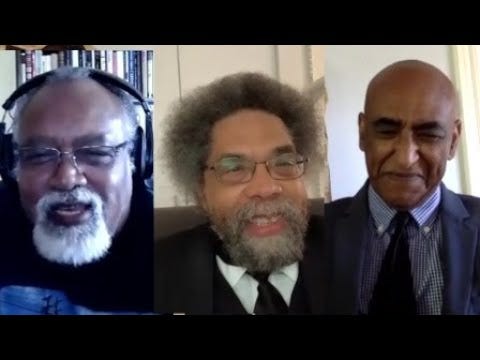
Cornel West, Teodros Kiros & Moving to Substack
Last week, I have announced at Patreon that I’m moving the operation to Substack. I gave every Patron a complimentary subscription for the first month. If you’re reading this, chances are you are such a person, with a comp that will run out on July 2. At that date, you will have to decide if you want to continue getting subscriber-only posts for $7/month or $70/year. I hope the things you’ll see in this first month will convince you to stay.Some of you have already made up your mind. I see that several hundred people have switched to a paid option and made the first payment. Many have chosen an annual rather than a monthly subscription, which is cheaper for you and costs less in transaction fees for us. Some people have opted for a “founding member” plan, which allows you to pay a custom, bigger amount. All of this is deeply appreciated.This post is the first TGS episode published through Substack. It’s my conversation with noted philosopher and public intellectual Cornel West and philosopher Teodros Kiros.We discuss their book, Conversations with Cornel West. Along the way we engage vigorously with one another on themes of religion, politics, aesthetics, identity, and nationalism. We find many points of agreement. It is a rich and intensive exchange.Some timestamps:0:00 Teodros's new book, Conversations with Cornel West 1:04 Cornel offers spiritual counsel to Glenn 11:06 Between commercialization and democratic decay 20:52 Glenn: “The glass is way more than half-full” for Black Americans 29:26 The centrality of Black music to Black experience 36:03 Cornel’s Chekhovian Christianity 43:40 What system, if any, can replace American capitalism? 56:42 The meaning of 1776Notice that this post doubles as a podcast episode. To subscribe to the RSS feed in your podcast app, click on the "listen in podcast app" link in the audio player, which will generate a private RSS for you, or you can access it from your account settings. There, you’ll need to click on a link called "Set up your podcast app."Please, let me know in the comments if the new system is working, and if you have any questions or requests.I’m looking forward to experimenting with different kinds of content, paid and unpaid, here at Substack. I’m excited to embark on this new chapter with you! This is a public episode. If you'd like to discuss this with other subscribers or get access to bonus episodes, visit glennloury.substack.com/subscribe
Falling into the Fiscal Gap (Glenn Loury & Laurence Kotlikoff)
Larry's concerns about the debt-to-GDP ratio ... On the general relativity of fiscal language ... Why would anybody buy U.S. treasury bonds? ... Larry's defense of fiscal hawkishness ... A critique of Biden's COVID relief funding ... How to raise taxes while maintaining incentives to work ... There is no such thing as a corporation ... This is a public episode. If you'd like to discuss this with other subscribers or get access to bonus episodes, visit glennloury.substack.com/subscribe

The Etiology of Victimology (Glenn Loury & John McWhorter)
John's appearance on "Real Time with Bill Maher" ... Why John's 2000 book Losing the Race remains relevant today ... The "noble victim complex" ... The counterproductivity of victim narratives ... Where do you draw the line in calling out nonsense? ... Trading agency for victim status ... The exciting roster of upcoming TGS guests ... This is a public episode. If you'd like to discuss this with other subscribers or get access to bonus episodes, visit glennloury.substack.com/subscribe
How Mothers are Working to End Street Violence (Glenn Loury & Sylvia Bennett-Stone)
The founding of Voices of Black Mothers United ... How the criminal justice system failed Sylvia's daughter ... Sylvia's work: advocacy, community intervention, and positive policing ... What is the role of systems and structures in street violence? ... How Voices of Black Mothers United is branching out ... Sylvia's book, Mind Fields: A Healing Journey to Survive the Murder of a Child ... This is a public episode. If you'd like to discuss this with other subscribers or get access to bonus episodes, visit glennloury.substack.com/subscribe
Anti-Anti-Racism in U.S. Schools (Glenn Loury & John McWhorter)
Critical Race Theory's prevalence in American schools ... What’s at the root of racial disparities in education? ... Destandardizing the standards for success ... The evolution of how we communicate about race ... Kendi and the cops; Bazelon and systemic racism ... ... This is a public episode. If you'd like to discuss this with other subscribers or get access to bonus episodes, visit glennloury.substack.com/subscribe

The Work: a New Frontier for The Glenn Show (Glenn Loury & Nikita Petrov)
The impact of the Glenn Show and new initiatives ... How to reach out to the Glenn Show: [email protected] ... The current climate: how afraid are people and how afraid should they be? ... The current climate: how afraid are people and how afraid should they be? ... Seeking to engage productively with opinions we may not understand ... Glenn's interactions with his graduate and undergraduate students ... This is a public episode. If you'd like to discuss this with other subscribers or get access to bonus episodes, visit glennloury.substack.com/subscribe
The Slippery Slope to Hell (Glenn Loury & John McWhorter)
Fighting through Covid-19 and the pandemic ... Daunte Wright and how police violence goes beyond race ... The "fake" narrative about Black people and the cops ... The tremendously high stakes of race matters in the U.S. ... America's "badass motherfucker" problem ... Woke hypocrisy as the Chauvin verdict nears ... This is a public episode. If you'd like to discuss this with other subscribers or get access to bonus episodes, visit glennloury.substack.com/subscribe

What Happened to Civil Rights? (Glenn Loury & John McWhorter)
Life as a university professor during Covid ... What happened to the civil rights movement? ... Glenn and John disagree on voter suppression ... Debating Stacey Abrams’ approach to politics ... The exaggeration of victimhood ... How social media has changed academia ... This is a public episode. If you'd like to discuss this with other subscribers or get access to bonus episodes, visit glennloury.substack.com/subscribe
John Rawls at 100 (Glenn Loury & Joshua Cohen)
Who was moral and political philosopher John Rawls? ... Why Rawls' "A Theory of Justice" is such an important text ... Is taxation an infringement on liberty? ... Understanding the freedom vs. liberty paradox ... Focusing on the poor to improve human well-being ... Accounting for earned success or failure ... This is a public episode. If you'd like to discuss this with other subscribers or get access to bonus episodes, visit glennloury.substack.com/subscribe
Racism at Georgetown? (Glenn Loury & John McWhorter)
The contentious origins of Glenn and John's relationship ... Cancellations at Georgetown and racial disparities in academic performance ... What is to blame for racial disparities in academic performance? ... The quality-fit tradeoff and the mismatch effect ... Is racism widespread in American universities? ... Cornel West's departure from Harvard ... This is a public episode. If you'd like to discuss this with other subscribers or get access to bonus episodes, visit glennloury.substack.com/subscribe
Glenn Loury's Intellectual Origins, Part 4 (Glenn Loury & Daniel Bessner)
Patreon Q&A announcement ... Glenn's initial impressions of BLM ... How should racial justice advocates advance their interests? ... The problem of colleges as "spaces of consumption" ... The pros and cons of cancel culture ... Cancel culture as a "weapon of the weak" ... Glenn's feelings about Trump's presidency ... This is a public episode. If you'd like to discuss this with other subscribers or get access to bonus episodes, visit glennloury.substack.com/subscribe
In Defense of Knowledge (Glenn Loury & John McWhorter)
New anti-racist guidelines for teaching math in Oregon ... Defending the ideals of the Enlightenment ... What anti-racists get wrong about knowledge and achievement ... Why class matters more than race for improving education in the U.S. ... The Capitol riot and the threat(s) of political extremism ... Possible new frontiers for the Glenn Show ... This is a public episode. If you'd like to discuss this with other subscribers or get access to bonus episodes, visit glennloury.substack.com/subscribe
How to Avert the Apocalypse (Glenn Loury & Robert Wright)
Changing the narrative on race in America ... Navigating the increasingly polarized landscape ... Why Glenn takes issue with the 1619 Project ... Bob’s new Apocalypse Aversion Project ... Confronting nationalism and identity politics ... Globalization, privilege, and "meritocratic hubris" ... The evolution of Bloggingheads.tv ... This is a public episode. If you'd like to discuss this with other subscribers or get access to bonus episodes, visit glennloury.substack.com/subscribe

The Pitfalls of Dissent (Glenn Loury & John McWhorter)
Do Glenn and John over-discuss race and racism? ... The hurdles to hosting debates on TGS ... The guys consider their role in the national discourse on race ... The challenges of being a contrarian ... Confronting in-school violence among Black youth ... The New York Times' "contemptible" treatment of Donald McNeil ... This is a public episode. If you'd like to discuss this with other subscribers or get access to bonus episodes, visit glennloury.substack.com/subscribe
Wokeism's Postmodern Roots (Glenn Loury & James Lindsay)
Tracing wokeism's origins to mid-century postmodernism ... Determining the right historical narrative on race ... Do progressives have a problem confronting their own racism? ... What can and can't be said about the 2020 election ... Can the insurrectionists be defended? ... Biden vs. Trump on critical race theory ... James challenges Glenn's recent mea culpa on Trump ... This is a public episode. If you'd like to discuss this with other subscribers or get access to bonus episodes, visit glennloury.substack.com/subscribe

Wokebusters (Glenn Loury & John McWhorter)
Monthly Q&A with Glenn and John ... TGS 2.0, new newsletters, and John's new book ... Critiquing the Biden administration's first moves ... The excesses and dangers of critical race theory ... The latest stories of woke hysteria on campus ... The performative outrage of anti-racist crusaders ... Campus wokeism vs. corporate wokeism ... This is a public episode. If you'd like to discuss this with other subscribers or get access to bonus episodes, visit glennloury.substack.com/subscribe
What's Driving the Upsurge in Urban Homicides? (Glenn Loury & Robert Cherry)
Robert's work on rising homicide rates in U.S cities ... The connection between work, school, and crime ... How some criminal justice reform attempts have failed ... Why the massive upsurge in crime in U.S. cities in 2020? ... The challenge of "engaging the family" in the U.S. ... The surprising data on gender in single-parent homes ... Did the summer 2020 protests lead to the rise in crime? ... This is a public episode. If you'd like to discuss this with other subscribers or get access to bonus episodes, visit glennloury.substack.com/subscribe

Reckoning with the Capitol Riot (Glenn Loury & John McWhorter)
Glenn Show 2.0 and reactions to the storming of the Capitol ... What if it was BLM protesters that stormed the Capitol? ... Glenn: I was wrong about the threat Trump posed to democracy ... The tectonic plates shifting beneath American society and politics ... Glenn and John debate the merits of impeachment ... This is a public episode. If you'd like to discuss this with other subscribers or get access to bonus episodes, visit glennloury.substack.com/subscribe
Glenn Loury's Intellectual Origins, Part 3 (Glenn Loury & Daniel Bessner)
The three books that pushed Glenn away from the right ... A crisis of identity: who is Glenn Loury and what is his project? ... Glenn's left-leaning moderatism and work in the 90s ... The link between Glenn's economic work and his social theory ... The evolution of Glenn's perspective on Obama ... The Iraq War, the 2008 crash, and how "the elites failed us" ... The current and future state of the American university ... This is a public episode. If you'd like to discuss this with other subscribers or get access to bonus episodes, visit glennloury.substack.com/subscribe
Glenn Loury's Intellectual Origins, Part 2 (Glenn Loury & Daniel Bessner)
Glenn's rightward shift in the early 80s ... A feeling of alienation from the Black elite ... Glenn and Daniel discuss neoliberalism and the "American empire" ... Glenn's emergence as a public intellectual ... How Glenn earned a unique place in public discourse ... Glenn's hiatus from and return to economic theory ... How Glenn helped coin the term "social capital" ... This is a public episode. If you'd like to discuss this with other subscribers or get access to bonus episodes, visit glennloury.substack.com/subscribe

Who's Afraid to Debate Glenn Loury? (Glenn Loury & John McWhorter)
Why won't Jones, Kendi, and others come on the Glenn Show? ... The need for more discussions between black intellectuals who disagree ... The dilemma faced by contrarian black intellectuals ... John and Glenn ponder their niche ... What can't be said about race ... Will we see a more honest discourse on race after Trump? ... John explores the current controversy at the Dalton School in NYC ... This is a public episode. If you'd like to discuss this with other subscribers or get access to bonus episodes, visit glennloury.substack.com/subscribe
Glenn Loury's Intellectual Origins, Part 1 (Glenn Loury & Daniel Bessner)
A working-class undergrad with a job, a wife, and two kids ... Why Glenn was drawn to economics ... How studying economics shaped Glenn's politics ... Anti-Semitism at Harvard and the origins of MIT economics ... Why Glenn believes in meritocracy ... Glenn discusses his influential early work ... This is a public episode. If you'd like to discuss this with other subscribers or get access to bonus episodes, visit glennloury.substack.com/subscribe
The Warm Cloak of Victimhood (Glenn Loury & John McWhorter)
Coleman Hughes named to Forbes' "30 Under 30" ... The predictable platitudes of John's critics ... The waning of wokeness ... Should Thomas Jefferson have known better? ... What is driving today's race crusaders? ... The denial of Black agency ... Nikole Hannah-Jones and the “1619 Riots” ... This is a public episode. If you'd like to discuss this with other subscribers or get access to bonus episodes, visit glennloury.substack.com/subscribe
The Dark Matter of Developmental Psychology (Glenn Loury & James Heckman)
The political landscape in Chicago in 2020 ... How do you improve a human being? ... What "The Bell Curve" missed about human development ... How teaching and empowering parents positively impacts children ... The taboo of family-focused anti-poverty efforts ... What is the source of implicit bias? ... James: Politicians on both sides cultivate and exploit racial turmoil ... This is a public episode. If you'd like to discuss this with other subscribers or get access to bonus episodes, visit glennloury.substack.com/subscribe

Calling Out Ibram X. Kendi (Glenn Loury & John McWhorter)
Welcome to the Glenn Show 2.0 ... A path to forgiveness for the canceled ... John’s upcoming book and wokeism after Trump ... Why is it so easy to get away with junk sociology today? ... John speaks his mind on Ibram X. Kendi ... The mass delusion of the anti-racism movement ... What is required of public intellectuals? ... This is a public episode. If you'd like to discuss this with other subscribers or get access to bonus episodes, visit glennloury.substack.com/subscribe
'Liberties,' a New Journal (Glenn Loury & Leon Wieseltier)
Leon's new journal Liberties and the current political climate ... Leon: Art "should not be subjected to a political standard" ... Glenn and Leon disagree on Trump ... Leon, an “unrepentant interventionist,” discusses foreign policy ... What's inside the first edition of Liberties? ... Leon defends the idea of Zionism ... America and Israel: two experiments in moving past anti-Semitism ... Thoughts on America's moment of racial reckoning ... This is a public episode. If you'd like to discuss this with other subscribers or get access to bonus episodes, visit glennloury.substack.com/subscribe
The Creators of "What Killed Michael Brown?" (Glenn Loury, John McWhorter, Eli Steele, and Shelby Steele)
Glenn announces a new version of The Glenn Show ... Eli and Shelby's new documentary, What Killed Michael Brown? ... "Why is it so hard to see the truth here?" ... Shelby: Post-'60s liberalism is the culprit ... What changed in black communities between 1950 and 1980? ... White guilt as a drug ... Eli: BLM had an agenda and was waiting for a tragedy to exploit ... Shelby: The solutions lie in old-fashioned values ... A father and son collaboration ... This is a public episode. If you'd like to discuss this with other subscribers or get access to bonus episodes, visit glennloury.substack.com/subscribe
Trump's Democrats (Glenn Loury & Jon Shields)
Jon's new book, Trump's Democrats ... Doing ethnography in the Rust Belt, an Italian-American suburb, and Appalachia ... Jon: Trump is a familiar figure to these voters ... How Trump embodies honor culture ... Trump's flouting of the norms of the professional class ... Why this style works better locally than nationally ... Jon: Race is not as important as place ... Will Trump's Democrats defect to Biden? ... This is a public episode. If you'd like to discuss this with other subscribers or get access to bonus episodes, visit glennloury.substack.com/subscribe
Free Speech in Academia (Glenn Loury, Carlos Carvalho, and Richard Lowery)
Glenn critiques attempts to make race a part of academic hiring ... "Optics equality" and the denial of group differences ... Improving low-income primary schools ... Topics on which you can't challenge the consensus ... Glenn's letter denouncing his own university's president over BLM ... Can academics "cite inclusively"? ... Will online education disrupt colleges? ... Advice for a nontenured professor with heterodox views ... What should a university administrator do? ... ... This is a public episode. If you'd like to discuss this with other subscribers or get access to bonus episodes, visit glennloury.substack.com/subscribe