The Glenn Show
461 episodes — Page 7 of 10
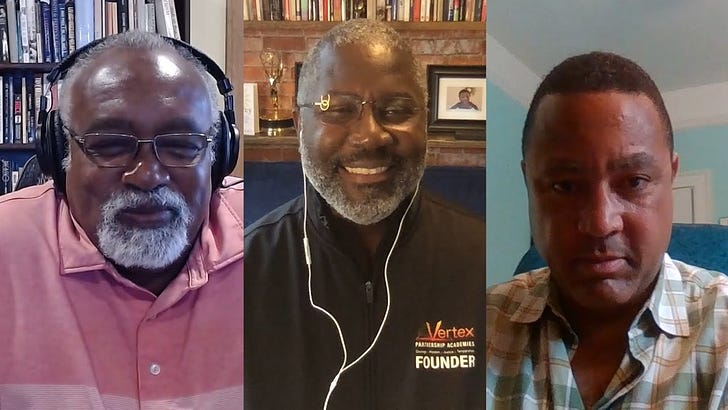
John McWhorter & Ian Rowe – F.R.E.E. Agency
This week, John McWhorter and I welcome special guest Ian Rowe to TGS. Ian is a senior fellow at the American Enterprise Institute, the founder and CEO of Vertex Enterprise Academies, and author of the new book Agency: The Four Point Plan (F.R.E.E.) for ALL Children to Overcome the Victimhood Narrative and Discover Their Pathway to Power. Ian is doing outstanding work establishing charter schools throughout New York City, so John and I invited him on to discuss his efforts, among other topics. We begin by discussing how the Rodney King beating and the LA riots that followed the acquittal of the officers involved led Ian and Nique Fajors to make a documentary, which, decades later, developed into their podcast Invisible Men. Ian thinks that two related and competing narratives—“blame the system” and “blame the victim”—place pressure on black teens and young men, and his work at the Vertex Enterprise Academies’ charter schools tries to help them grow in another direction. Ian stresses marriage as a central component in long-term success, but I push him to explain how marriage can correct for dysfunctional patterns present in husband and wife that have been present since childhood. John introduces the issue of academic success and “acting white”—can Ian’s schools overcome cultural barriers to black academic excellence? Ian then talks more generally about the ins and outs of running a group of charter schools in New York and their recent legal victory over a teacher’s union that tried to block their funding. And finally, we talk about the recent Old Parkland Conference, which Ian and I had a hand in organizing. He’s got some exciting things planned for the next phase in that project.Ian is out there on the front lines of education reform. It’s heartening to see someone with his intelligence and drive fighting the good fight. I’m very much looking forward to your comments on this one. Featured Content from City JournalJason Riley discusses the upcoming midterm elections, analyzing the impact of this summer’s SCOTUS decision on Roe and the prospects for the GOP to retake power in DC. This post is free and available to the public. To receive early access to TGS episodes, an ad-free podcast feed, Q&As, and other exclusive content and benefits, click below.0:00 How Rodney King led to Ian’s podcast, Invisible Men 7:31 Blaming the system and blaming the victim 13:20 Ian: I run schools to show my students they can do hard things 17:16 What’s so special about marriage? 29:24 Glenn: Right living is its own reward 41:34 The problem of success and “blackness” 40:26 Ian’s experience running Vertex 45:41 How Ian funds his schools 55:46 The bureaucratic opposition to charter schools 58:47 What comes after the Old Parkland Conference?Links and ReadingsIan’s book, Agency: The Four Point Plan (F.R.E.E.) for ALL Children to Overcome the Victimhood Narrative and Discover Their Pathway to PowerIan’s charter school group, Vertex Partnership AcademiesIan and Nique Fajors’s podcast, The Invisible MenIan and Naomi Schaefer Riley’s podcast, Are You Kidding Me?Milton Friedman and Thomas Sowell speak at the 1980 Fairmont Conference Video from the Old Parkland Conference Glenn, Ian, and Robert Woodson’s appearance on Peter Robinson’s Uncommon Knowledge This is a public episode. If you'd like to discuss this with other subscribers or get access to bonus episodes, visit glennloury.substack.com/subscribe
Larry Kotlikoff – What Explains Persistent Racial Inequality?
Source post0:00 Introducing Glenn Loury8:50 What is “social capital”?19:24 Racial inequality and self-segregation 30:01 Glenn: “The jig is up” on affirmative action39:45 Balancing preferences and colorblindness 45:35 Rethinking the welfare state55:41 Why Glenn’s forthcoming memoir is titled The Enemy Within This is a public episode. If you'd like to discuss this with other subscribers or get access to bonus episodes, visit glennloury.substack.com/subscribe
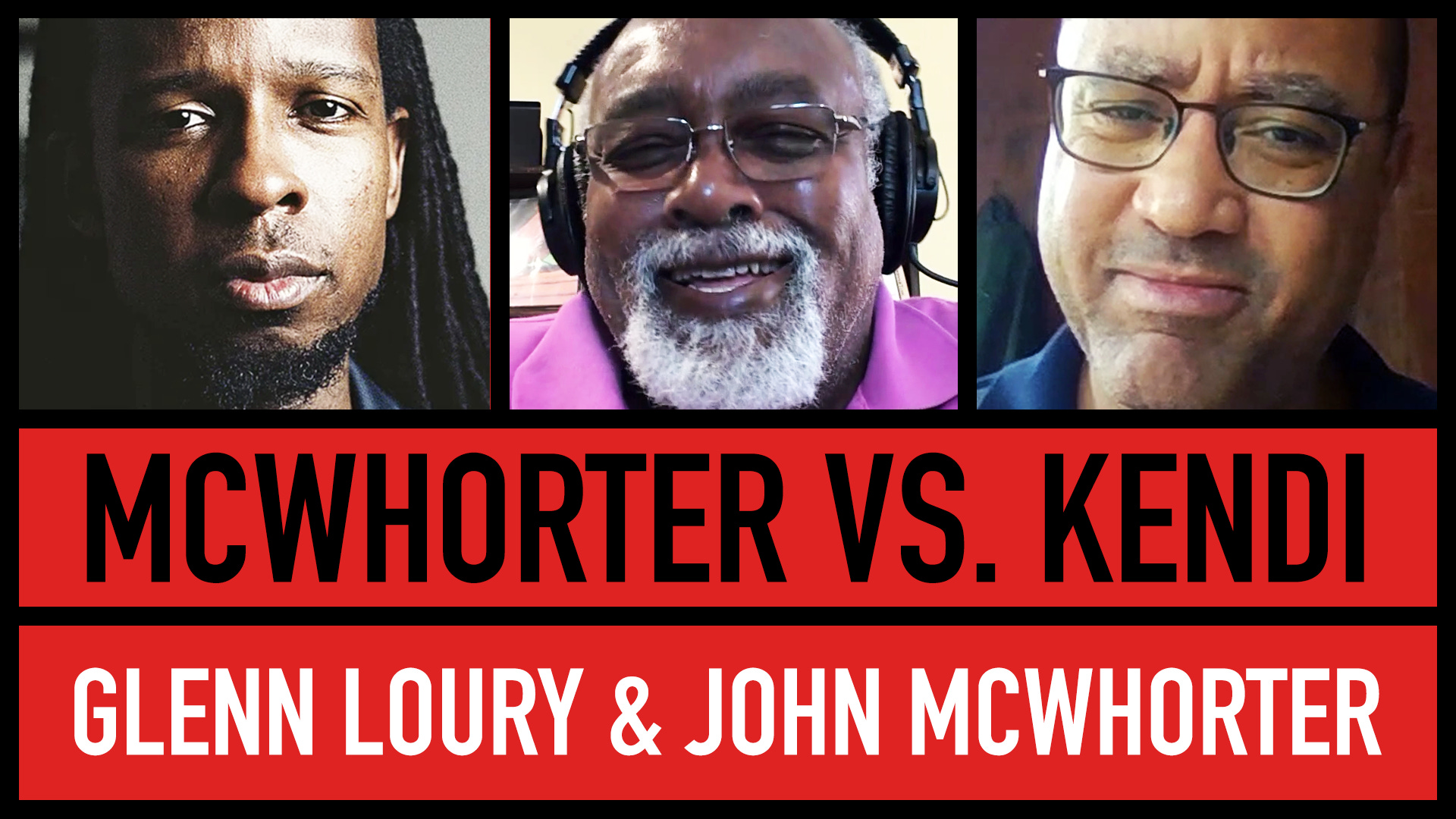
John McWhorter – Maintaining Standards in Standardized Testing
0:00 What’s on the menu for Glenn’s birthday party 4:49 John’s Twitter spat with Ibram X. Kendi 14:05 What do we lose by changing testing standards? 20:39 Glenn: If groups matter, then culture matters 32:04 How to prove a racist wrong 39:19 The ballad of Glenn and Woody 51:50 Mitchell S. Jackson’s Esquire essay about Clarence ThomasLinks and Readings John and Ibram X. Kendi on Twitter, part oneJohn and Ibram X. Kendi on Twitter, part two John’s NYT piece, “Lower Black and Latino Pass Rates Don’t Make a Test Racist” John’s NYT piece, “Proving Racists Wrong Is Not a Trivial Pursuit”Glenn’s 1992 Commentary essay, “Free at Last?”This American Life segment on Glenn and WoodyMitchell S. Jackson’s Esquire essay, “Looking for Clarence Thomas”Barry Bearak’s 1997 NYT profile of Ward Connerly This is a public episode. If you'd like to discuss this with other subscribers or get access to bonus episodes, visit glennloury.substack.com/subscribe

Steve McIntosh – The Cultural Dimensions of American Conflict
Normally this week I would post a conversation with John McWhorter. However, due to unforeseen circumstances, we were unable to record. He’ll be back next week. This week, I’m presenting my conversation with Steve McIntosh, President, Co-Founder, and Director of the Institute for Cultural Evolution. I’ve already spoken with two ICE fellows this year—Stephanie Lepp and Greg Thomas—so this TGS episode constitutes a continuation of the series. I ask Steve about his latest book, Developmental Politics: How America Can Grow into a Better Version of Itself, which he delivers as a primer on “cultural evolution.” He traces out a historical narrative that takes us from traditionalism to modernity to our present moment of “progressive postmodernity,” and I ask him whether the more excessive elements of our era should be fought or viewed as a stepping stone to the next phase of cultural development. Steve’s answer: “both.” He discusses his account of the last 300 years mostly in terms of Europe and North America, so I ask him how the rise of East Asia fits into the evolutionary processes he discusses. The recent attack on Salman Rushdie leads me to wonder how a cultural evolutionist framework can help us deal with radically anti-modern movements like violent Islamic fundamentalism, and Steve advocates for the promotion of moderate forms of Islam that are in-step with the rest of the world. Steve includes worrying identitarian movements like Black Lives Matter and Kendiesque anti-racism within the progressive postmodern paradigm, but he also thinks that many good things—like gay rights—have come out of it. We close our conversation by considering what a cultural evolutionist has to say about the increasingly dire political polarization we’re experiencing in the US and development within African American communities. I don’t know that I’m wholly convinced by the grand historical narrative Steve offers, but we need as many new ideas as we can get in the discourse, and cultural evolution does have many virtues (like its praise of economic liberty). I look forward to reading your comments. Featured Content from City JournalStephen Eide discusses homelessness in New York City, the immigration related surge in shelters, and Mayor Adams sparring with Texas Governor Abbot. This post is free and available to the public. To receive early access to TGS episodes, an ad-free podcast feed, Q&As, and other exclusive content and benefits, click below.0:00 A scheduling announcement from Glenn 1:28 Steve's latest book, Developmental Politics: How America Can Grow into a Better Version of Itself 7:54 From modernity to progressive postmodernism 15:18 Are we in the midst of cultural evolution or culture war? 19:02 The work of the Institute for Cultural Evolution 30:52 “Modernist consciousness” in East Asia 37:07 Steve: “Force is necessary but not sufficient” to combat violent Islamic fundamentalism 44:01 The positive side of progressive postmodernism 49:15 Can cultural evolution overcome political polarization in the US? 55:38 A cultural evolutionary perspective on the African American development narrative Links and ReadingsInstitute for Cultural EvolutionSteve's latest book, Developmental Politics: How America Can Grow into a Better Version of Itself Steve’s book with John Mackey and Carter Phipps, Conscious Leadership: Elevating Humanity Through BusinessBari Weiss’s recent speech to University of Austin studentsGlenn and John McWhorter’s conversation with Richard WolffSteve’s white paper on political polarization in the wake of the Charlie Hebdo massacre This is a public episode. If you'd like to discuss this with other subscribers or get access to bonus episodes, visit glennloury.substack.com/subscribe
Amy Wax – Freedom of Inquiry on the Line
This week, one of the most controversial TGS guests of all time returns: Penn Law professor Amy Wax. She’s currently in a dire predicament. Her job is on the line. Whatever you think of Amy’s positions, there are issues at play in her case that have implications for people of all political persuasions, and she deserves to be heard out. Amy begins by recounting the events that have led up to her conflict with the administration at Penn Law and taking issue with the charges leveled at her by the school’s dean, Theodore Ruger. Some of those charges are quite serious: racism, sexism, and xenophobia. But Amy contends that they are overblown and implausible. Amy thinks this conflict began when she questioned the efficacy and ethics of affirmative action in public. If the LSATs and other standardized tests predict classroom performance, we shouldn’t be surprised when students admitted with low test scores don’t perform well. That’s a perfectly logical position, yet Amy has been pilloried for taking it. And I agree with her! But I tell her I do feel a little uncomfortable when I’m confronted by students who take my analysis of affirmative action personally. It’s clear that, even though Amy has tenure, her job is at risk Despite the very strong free speech protections guaranteed by tenure, she may be fired for speaking her mind in public. While I don’t agree with her on many issues, I think that would be a disaster. It could open the door to the evisceration of free inquiry within the American university. Amy has said and done many controversial things, including inviting the white nationalist Jared Taylor to speak with to her students. But Amy teaches a course on conservative political and legal thought, and Taylor is an influential figure in some far-right circles. I do press Amy on this, because she has espoused interest in the kind race realism associated with Taylor, and she argues that his ideas at least merit serious consideration.Amy and I are friends, but it wasn’t always so. I recall our first encounter, when she challenged some of my claims about race and mass incarceration. I wasn’t pleased at the time, but I’m now glad she had the freedom to make the comments she made (even though I still think I’m right). As she says, reality is often upsetting and uncomfortable, and if we choose to hide our heads in the sand rather than confronting reality, we can’t say we’re interested in the truth. That I do agree with. And I stand with her in fight to pursue the truth, even if we differ on where it may be found. If you want to support her, she provides some ways you can do that.The comments section is always explosive after Amy appears on TGS, so I’m looking forward to seeing what debates emerge. Let me know what you think!This post is free and available to the public. To receive early access to TGS episodes, an ad-free podcast feed, Q&As, and other exclusive content and benefits, click below.Featured Content from City JournalCharles Fain Lehman & Renu Mukherjee on why support for the Democratic Party among high-skilled Asian-Americans is not immutable, which opens opportunities for Republican lawmakers to grow their voter base.0:00 Amy’s recent conflict with the Penn Law School administration 7:38 Amy responds to her dean’s charges of racism, sexism, and xenophobia 16:38 Should we take students’ feelings into account when discussing race and admissions? 27:34 Glenn: If Amy is fired, it will be an outrage beyond belief 34:53 Why Amy invited Jared Taylor to speak with her students 44:28 Amy’s defense of race realism’s legitimacy 50:25 Glenn and Amy’s first encounter 53:36 Amy: Sometimes reality is upsetting and offensive 58:58 How to help AmyLinks and ReadingsDean Theodor Ruger’s letter to the Penn Faculty Senate asking for a review of Amy’s conductAmy’s past conversations with Glenn Donate to Amy’s legal defense fund This is a public episode. If you'd like to discuss this with other subscribers or get access to bonus episodes, visit glennloury.substack.com/subscribe
John McWhorter – Rewriting the Script on Race
John McWhorter is back, reporting from his Catskills bungalow for the latest installment in our ongoing conversation. Let’s get into it. While I’m at home rather than a bungalow, I’m fresh off a wonderful vacation in North Carolina, which I spent surrounded by my wife, children, and grandchildren. Two of my granddaughters are now young women in college and law school, and they had some questions for me about some of the public positions I’ve taken. I recount the discussions I had with them about the Harvard-UNC affirmative action case and the Supreme Court’s abortion ruling. John recounts how calls for proportionate racial representation in the performing arts are leading not only to backstage disruptions but to the elevation of theatrical works that, in John’s view, lack quality but have the “right” political message.John thinks that intellectual insecurity sometimes plays a part in calls for “racial reckoning,” especially on campus. He notes that he never sees his most high-achieving and intellectually confident black students at Columbia involving themselves in campus activism of that kind, and I’ve had the same experience at Brown. All John’s stories about attempts to accommodate racial uprisings within the performing arts makes me wonder when someone is going to say “enough is enough.” Democratic politicians don’t seem willing to do it, but what about CEOs, heads of foundations, and other leaders in the private sector? It’s time for them to opt out of the DEI game.We end by returning again to the arts. John has written an excellent column arguing that, in most cases, we shouldn’t let the flawed personal views of artists stop us from enjoying their art. And we close with the disturbing case of Salman Rushdie, who is still in the hospital following last week’s attempt on his life.As always, I look forward to reading your comments.This post is free and available to the public. To receive early access to TGS episodes, an ad-free podcast feed, Q&As, and other exclusive content and benefits, click below.Featured Content from Manhattan Institute ScholarsOn this episode of the Hoover Institution’s Uncommon Knowledge, Peter Robinson talks with Manhattan Institute fellows Roland Fryer and Rafael Mangual about what is and is not working in policing and law enforcement in the U.S. 0:00 A report on the Loury family reunion 9:22 Identity politics onstage and backstage 19:22 Insecurity-driven campus grievance 27:01 Glenn: When will non-right-wing leaders say “Enough!” to racial grievance? 36:16 John: People with ugly opinions can also produce great art … 52:35 … but are there significant figures whose views disqualify them from public honor? 56:38 Considering fundamentalist Islam and human nature after the Salman Rushdie assaultLinks and Readings We See You, White American Theater’s “Principles for Building Anti-Racist Theatre Systems”New York City Center Encore!’s page for The LifeJames Baldwin’s 1949 essay, “Everybody’s Protest Novel”John’s NYT column, “Let’s Have Fewer Cancellations. Let People Take Their Lumps, Then Move On.”James Baldwin and William F. Buckley’s 1965 debate at Cambridge UniversityJames Baldwin’s 1962 essay, “Letter from a Region in My Mind” This is a public episode. If you'd like to discuss this with other subscribers or get access to bonus episodes, visit glennloury.substack.com/subscribe
Reihan Salam – Meet the Manhattan Institute
As I announced last week, we here at the newsletter and The Glenn Show have a new partner: the Manhattan Institute. I realize some of you may not be familiar with the Institute’s work and point of view, so today I’ve got Manhattan Institute President Reihan Salam on the show to talk about what the Institute does and how some of its scholars and fellows are thinking about the problems facing New York and other American cities today. The Manhattan Institute is often regarded as a conservative place, but as you’ll hear, there’s nothing predictable or partisan about how Reihan understands those problems and their potential solutions. Reihan begins by talking a bit about how he first became aware of me and my work. He’s a formidable thinker himself, so I have to say I’m pretty flattered! After discussing how he came to take on his current role at the Manhattan Institute, Reihan talks about some of the changes in crime rates in US cities necessitate a renewed focus on public safety. New York City Mayor Eric Adams, a Democrat, has shifted more resources to public safety-oriented initiatives. Reihan talks about what that shift might mean for the city. In many ways, Adams’s approach to governing doesn’t line up with Democratic national policy positions, and Reihan talks about how dissenters within political parties and movements (both left and right) can create needed change. Some of that change, Reihan argues, needs to come from more investment in certain government-run agencies, including those that comprise the criminal justice system. For example, he wants to see safer streets for ordinary citizens but also safer prisons for the incarcerated. The conversation moves on to education, and Reihan describes what he sees as the positive developments in New York schools under Michael Bloomberg, which languished under Bill de Blasio’s mayorship. And finally, we turn to race matters. Reihan is deeply skeptical that flattening out racial and ethnic identity under the banner of “BIPOC” actually helps ethnic minority communities, and he’s equally skeptical of the ways that racial identity has become central to how so many people think of themselves today. I agree, but I also wouldn’t want to discard the valuable histories and traditions that go along with our conception of race and identity. Maybe I want it both ways, but shouldn’t I be able to have that? If this conversation is any indication, TGS and MI have got a long, fruitful collaboration ahead of us. I’m looking forward to all the good work to come. This post is free and available to the public. To receive early access to TGS episodes, an ad-free podcast feed, Q&As, and other exclusive content and benefits, click below.Featured Content from City JournalRenu Mukherjee on San Franscisco's misguided effort to do away with standardized testing for its most selective public high school—how it undermined merit and hurt many of the kids it intended to help. 0:00 Glenn’s impact on Reihan 5:38 How Reihan became president of the Manhattan Institute 11:15 What is the Manhattan Institute’s relationship to Eric Adams’s administration? 18:40 The value of dissenters 22:07 Reihan: We’ve underinvested in our criminal justice system 29:31 What constitutes a quality high school education? 36:38 Michael Bloomberg’s education initiatives 41:58 Reihan’s concerns about racial reification 50:08 The uses and abuses of racial identityLinks and ReadingsTariq Modood, Steven Teles, and Glenn’s book, Ethnicity, Social Mobility, and Public Policy: Comparing the US and UKRafael Mangual’s book, Criminal (In)Justice: What the Push for Decarceration and Depolicing Gets Wrong and Who It Hurts MostIsmail K. White and Chryl N. Laird’s book, Steadfast Democrats: How Social Forces Shape Black Political BehaviorMatt Feeney’s book, Little Platoons: A Defense of Family in a Competitive Age This is a public episode. If you'd like to discuss this with other subscribers or get access to bonus episodes, visit glennloury.substack.com/subscribe

John McWhorter & Richard Wolff – Capitalism and Democracy in Post-Industrial America
This week on The Glenn Show, John McWhorter and I are joined by Richard Wolff, Professor Emeritus of Economics at the University of Massachusetts, Amherst and Visiting Professor of International Affairs at the the New School. Richard is Marxian in his orientation and I am not, so we do some debating here. And while we may not agree on much as far as economics goes, we do share some concerns about the direction of the left in this country. Before the conversation, I make an important announcement: Beginning today, I’m partnering with the Manhattan Institute to bring you The Glenn Show and this newsletter. I lay out what this means in my introduction and in conversation with John at the end of the show, but here are two important takeaways. First, I will maintain full editorial independence over all the content on the podcast and at the newsletter. And second, we’re lowering the cost of the newsletter. For monthly subscribers, fees will drop from $7/month to $6/month. The price of an annual subscription will drop even more substantially, from $70/year to $50/year. For those of you who already have an annual subscription, we’ll extend it by three months to make up the difference. I’m having success here at TGS, and I want to share it with you.And with that, let’s get into it. Richard begins by describing his student days and early career, when he was relatively quiet about his Marxism, the post-Occupy Wall Street environment that made him into a public intellectual, and his origins in Youngstown, Ohio, where the flight of capital devastated the formerly thriving industrial city. He argues that capitalism is not only bad for democracy but inherently anti-democratic, since it allows unelected CEOs and boards of directors to determine the economic fate of huge swathes of the populace. I take some issue with this. First, I ask Richard to respond to Friedrich von Hayek’s claim that markets will always allocate information and resources more efficiently than centrally planned economies. Second, I raise the point that business owners are entering into a contract with employees. It’s a standard exchange of goods and services. Why should employees have any right to the business owner’s property beyond an agreed-upon wage or salary? There is also the matter of socialism’s historical track record, which Richard defends. Richard and I do find some common ground in our skepticism toward the contemporary left, which sometimes seems to have abandoned the working class in favor of identity politics. Once Richard departs, John and I discuss my new partnership with the Manhattan Institute. He and I both want to make clear that John himself is not employed by the Manhattan Institute, though he used to be, and he still respects what they do. There’s a lot happening in this episode and in TGS World. As always, I look forward to reading your comments.This post is free and available to the public. To receive early access to TGS episodes, an ad-free podcast feed, Q&As, and other exclusive content and benefits, click below.0:00 A special announcement from Glenn 3:47 Richard’s journey from quiet Marxist to public intellectual 9:08 Why Youngstown, Ohio was left behind 12:04 Richard: Capitalist ownership is inherently anti-democratic 15:41 Richard’s critique of Hayekian libertarianism 21:44 Pecuniary externalities vs. objective externalities 23:49 Socialism’s historical track record 31:07 Employees as stakeholders 34:36 The rise of the right in the wake of the New Deal and WWII 42:00 The Glenn Show’s new partnership with the Manhattan InstituteLinks and ReadingsThe Manhattan InstituteRichard’s book (with Stephen Resnick), Class Theory and History: Capitalism and Communism in the USSR Glenn and John on Herschel WalkerClifton Roscoe’s critique of Glenn and John on Herschel WalkerJohn’s NYT column about Walker This is a public episode. If you'd like to discuss this with other subscribers or get access to bonus episodes, visit glennloury.substack.com/subscribe

Stephon Alexander – Fear of a Black Universe
This week, we’re getting into cosmic terrain here on The Glenn Show with my guest and Brown University colleague, theoretical physicist Stephon Alexander.Steph takes his inspiration not just from other physicists but from artists and musicians as well. And I can report from personal experience that he is a tremendous jazz saxophonist. For him, there’s nothing superficial about the relationship between science and art. His first book, The Jazz of Physics, explores the connection between music and the elemental forces that hold our universe together. Steph’s project reminds me of one of my favorite books, Douglas Hofstadter’s Gödel, Escher, Bach: An Eternal Golden Braid, which explores the role of self-reference in science, art, and music. Apparently I’m on the money, and Steph explains the central role of self-reference in his books. Steph and I both work in quantitative fields that demand measurable excellence of their participants, so I ask Steph what he thinks of racial and ethnic disparities in math-heavy areas of study. He describes his own experience as a teacher and as an undergrad, and how he learned that he would not only have to master the material but overcome lowered expectations that would only have held him back. Steph takes us through his latest book, Fear of a Black Universe: An Outsider’s Guide to the Future of Physics, which looks at the role of innovative “outsiders” (among whom Steph counts himself). Blacks may be “outsiders” in physics now, but the same was once true of Jews, and Steph talks about the inspiration he takes from the great Jewish physicists. This leads us to discuss some of my own ideas about stigma, and we have a good laugh about the times when stigma has led people to underestimate us. And finally, the question you’ve all been waiting for: What exactly is the Higgs boson, and why is its discovery such a big deal? I’ve learned a ton from talking to Steph, and I hope you will, too. I’m sure this isn’t the last time you’ll see him on TGS. This post is free and available to the public. To receive early access to TGS episodes, an ad-free podcast feed, Q&As, and other exclusive content and benefits, click below.0:00 Glenn and Steph’s jam session 2:29 Steph’s adventures in the multiverse 6:40 The parallels between black art and physics 12:34 The centrality of self-reference in Steph’s work 18:26 Is there a racial dimension to how excellence reveals itself in students? 32:34 How Steph learned to level up 41:04 Steph’s new book, Fear of a Black Universe: An Outsider’s Guide to the Future of Physics 48:50 Steph’s admiration for prior generations of Jewish physicists 56:48 How Glenn and Steph navigate stigma 1:10:43 What is the Higgs boson?Links and ReadingsSteph’s first book, The Jazz of Physics: The Secret Link between Music and the Structure of the UniverseSteph’s latest book, Fear of a Black Universe: An Outsider’s Guide to the Future of PhysicsUltramagnetic MCs’ “Watch Me Now”Douglas Hofstadter’s book, Gödel, Escher, Bach: An Eternal Golden BraidGlenn’s book, The Anatomy of Racial Inequality This is a public episode. If you'd like to discuss this with other subscribers or get access to bonus episodes, visit glennloury.substack.com/subscribe
John McWhorter – Race and Conservatism: Walker, Thomas, and Wax
John McWhorter is back again for one of our twice-monthly conversations. This is a hot one, so let’s get into it. In this week’s episode, we discuss three controversial figures: Herschel Walker, Clarence Thomas, and Amy Wax. We begin with John’s outstanding column about Walker, the Republican candidate for Senate in Georgia. John pulls no punches. He sees Walker as an insultingly underqualified contender meant solely to attract Georgia’s sizable black vote. John argues that Walker seems to have no meaningful knowledge of any relevant policy issue, and he’s apparently uninterested in trying to make it seem like he does. I do my best to present the case for Walker, but John does have a point. Robert Woodson and I wrote an open letter decrying recent ugly, racist (let me say again, racist) attacks on Justice Clarence Thomas, and John has signed on. I argue that, no matter what you think of Thomas’s conservatism, he is undeniably a towering figure in American jurisprudence. His influence and ideas will be felt for generations, and his life story as an African American born under Jim Crow who has risen to the pinnacle of the legal system is iconic. The attempt to write him out of black history just because he’s a conservative is disgraceful. It’s hard to find someone who has been the subject of more controversy than Thomas, but my friend Amy Wax has got to be in the running for second place. John is disturbed by reports that Amy allegedly brings some of her edgier ideas about race into the classroom when she teaches. I certainly don’t endorse all of Amy’s positions, and I think that one must be especially thoughtful when speaking in front of a classroom. But I can’t abide the idea that Amy would be punished simply for holding views that some people don’t like. That’s why I’m inviting her back to The Glenn Show.I’m sure everyone’s going to have a lot to say about this one. I can’t wait to read your comments, so fire away!This post is free and available to the public. To receive early access to TGS episodes, an ad-free podcast feed, Q&As, and other exclusive content and benefits, click below.0:00 John: Republicans’ elevation of Herschel Walker is an insult 9:43 If Walker is so inept, why does he have so much support? 15:16 Where’s the outrage over racist attacks on Clarence Thomas? 24:55 Thomas’s historical significance 36:03 The Clarence Thomas (and Al Sharpton) we don’t see 41:31 Are Amy Wax’s views beyond the pale? 53:59 John: “Amy should know better” 1:09:13 Amy Wax’s return to The Glenn Show Links and ReadingsJohn’s NYT column, “When Republicans Backed Herschel Walker, They Embraced a Double Standard”Glenn and Robert Woodson’s open letter on Clarence ThomasThurgood Marshall’s Bicentennial Speech Gerald Early’s Common Reader essay, “Black Conservatives Explain It All! or Princes and Powers 2.0”Glenn’s most recent conversation with Amy WaxAmy Wax’s book, Race, Wrongs, and Remedies: Group Justice in the 21st CenturyGlenn’s Daily Pennsylvanian column in support of Amy Wax This is a public episode. If you'd like to discuss this with other subscribers or get access to bonus episodes, visit glennloury.substack.com/subscribe
Rajiv Sethi – Our Gun Problem
My guest this week is my friend Rajiv Sethi. Rajiv is Professor of Economics at Barnard College, Columbia University and External Professor at the Santa Fe Institute, and he writes an occasional newsletter at Imperfect Information. He’s published widely on problems of crime and segregation, among many other topics, and as you’ll hear in this conversation, he’s done some deep thinking about an area that is sadly pertinent to our society today: gun violence. I first ask Rajiv to catch me up on how economists are thinking about the state of financial markets today, and in short, things aren’t looking good. You don’t need a PhD in economics to know that. Just look at your stock portfolio. But Rajiv makes an interesting connection between the economist John Kenneth Galbraith’s analysis of the stock market crash of 1929 and the ongoing, much-publicized cryptocurrency crash. Rajiv talks about his blogging and his Substack, including his critique of Sundhil Mullainathan’s analysis of bias and police violence. We move on to the recent Supreme Court gun ruling and attempts by gun control advocates to float policies intended to reduce gun violence. Rajiv is critical of many of these policies, not because he doesn’t want to reduce gun violence but because he thinks the policies won’t be consequential enough. Much gun violence takes place amongst African Americans, but Rajiv wants to separate, to de-essentialize, race and violence. He draws on some of my own work on these issues to ask how we can look at the conditions that render acts of violence in high-crime areas, in some sense, rational. Certain conditions must make violence seem like the right solution to a given problem. Rajiv argues that we’re all—all Americans—involved in creating those conditions, and so we cannot simply say that the problems of high-crime black communities are their problems and not ours. I’m very much against racial essentialism, but we see it everywhere, including in our school with CRT-influenced policies and practices. While Rajiv acknowledges the excesses, he sees an equal threat coming from the anti-CRT backlash, and points to the case of Cecilia Lewis as an example. Along the same lines, he thinks that many critiques of the 1619 Project miss something important about the true depth and length of American history. And finally, we return to the problem of gun violence and bias in policing. Rajiv’s got an interesting idea to disincentivize illegal gun sales and some theories about why we see such stark racial disparities in the commission of gun crimes. Yesterday, I posted a conversation with John McWhorter that addressed civil and constructive disagreement. Rajiv and I certainly disagree about some things, but his arguments can’t simply be brushed aside. I’m quite interested to know what you all think of this one. Let me know!This post is free and available to the public. To receive early access to TGS episodes, an ad-free podcast feed, Q&As, and other exclusive content and benefits, click below.0:00 The cryptocurrency bezzle 6:52 Rajiv’s critique of the contact hypothesis 12:53 Will popular proposed gun control measures meaningfully reduce homicides? 19:08 Can we talk about culture without becoming essentialists? 30:19 Rajiv: I find self-censorship and anti-CRT mobs equally disturbing 43:28 Debating the 1619 Project 51:00 Rajiv’s idea to reduce illegal firearm sales: gun insurance 1:02:35 Why do we see such racial disparities in gun violence? Rajiv has some theories 1:11:02 What did we learn from the second Justice Department investigation in Ferguson? Links and ReadingsJohn Kenneth Galbraith’s book, The Great Crash 1929Rajiv’s Substack, Imperfect InformationRajiv’s post about The Anatomy of Racial InequalitySendhil Mullainathan’s NYT piece, “Police Killings of Blacks: Here Is What the Data Say” Rajiv’s post about Mullainathan’s claims Rajiv and Brendan O’Flaherty’s book, Shadows of Doubt: Stereotypes, Crime, and the Pursuit of JusticeRajiv’s conversation about guns with Bari Weiss and David French Glenn and Hanming Fang’s paper, “‘Dysfunctional Identities’ Can Be Rational” Glenn’s Cato Unbound essay, “A Nation of Jailers” and responses Nicole Carr’s ProPublica piece, “White Parents Rallied to Chase a Black Educator Out of Town. Then, They Followed Her to the Next One.” Ralph Ellison’s essay, “What America Would Be Like Without Blacks” Albert Murray, The Omni-Americans: Some Alternatives to the Folklore of White SupremacyJill Leovy’s book, Ghettoside: A True Story of Murder in AmericaGlenn’s conversation with Robert Woodson and Sylvia Bennett-Stone Voices of Black Mothers United This is a public episode. If you'd like to discuss this with other subscribers or get access to bonus episodes, visit glennloury.substack.com/subscribe
Bonus Episode: Glenn and John at Heterodox Academy
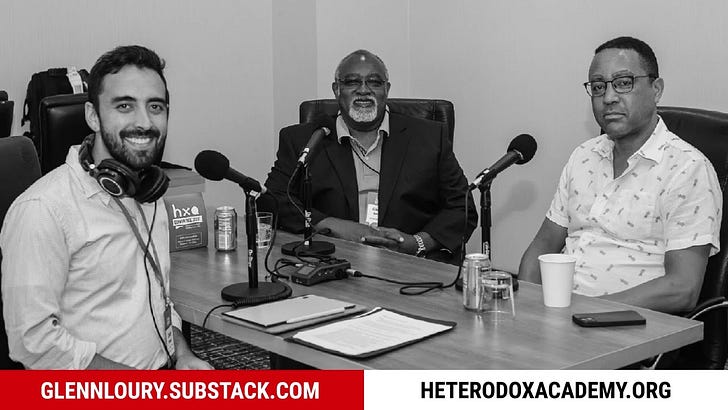
Last month, John McWhorter and I participated in Heterodox Academy’s 2022 conference in Denver, Colorado. We spoke in front of an audience and discussed how to model constructive disagreement. But before that, we had a bit of a warm-up session with Zach Rausch, host of the Heterodox Out Loud podcast. Zach had us in to talk about our long relationship as conversation partners, civil discourse, and the purpose of the university. Newer listeners may be interested to hear about my “origin story” with John. While we’re good friends now, that wasn’t always the case. We’ve had our ups and downs, and we’ve switched sides on some issues. (Here’s our first recorded conversation, from November 2007.) But we keep coming back because we enjoy talking to each other too much to quit, and because we believe if we don’t have the kind of conversations we have, they might not happen at all. This post is free and available to the public. To receive early access to TGS episodes, an ad-free podcast feed, Q&As, and other exclusive content and benefits, click below.JOHN MCWHORTER: There's another thing actually, which is, you should distrust if you can look into yourself, a feeling that you're arguing for a point because doing so is what makes you a good person. You should strive to get away from the belly and stick with the head.GLENN LOURY: We come to the university as black or white or Latino or gay or trans. That's not who we are. Our essence is much broader and finer and deeper and richer and human than that. ZACH RAUSCH: Glenn Loury and John McWhorter on Heterodox Out Loud. I'm Zach Rausch. Today, a special conversation with both of them. This was recorded at Heterodox Academy's 2022 Conference in Denver. For those who could not be at the conference, we got your back. We recorded a few exclusive conversations with our featured speakers to give you a taste of the extraordinary conversations that were had. Our guests today are Glenn Loury, professor of the Social Sciences and Economics at Brown University, and John McWhorter, professor of Linguistics at Columbia University. John has authored over 20 books on issues of race and language and writes a widely read biweekly newsletter for the New York Times. Glenn has published numerous influential books on race, inequality, and economics. He's also the well-known host of the podcast The Glenn Show on BloggingheadsTV, where John is a regular guest. In our interview, we discuss the future of higher education and how we can improve our collective discourse. It was recorded on the morning of their talk at the conference. I asked Glenn what they'd be discussing. GLENN LOURY: I haven't got any idea. All I know is that the subject matter is how do you have productive conversations? I take it that John and I, in our podcast practice, model productive conversation. And so we're going to be reviewing the nuts and bolts and the foundation of how it is that we're able to discuss contentious matters with one another productively. In 2007, a guy called Josh Cohen, a philosopher at Stanford, invited me onto Robert Wright's platform Bloggingheads to discuss some lectures that I had given on mass incarceration at Stanford that year. That was my first exposure to any kind of podcasting. I came on. I had a couple of conversations with Josh. They were well received. Bob Wright invited me to be a regular contributor to his platform, hosting a variety of people of my choosing, and John was one of those people. This is 2007, at the height of the Democratic Party primary contest, which Barack Obama ultimately won. So John and I started having conversations prompted by the events of the day around questions of race. And my association with Bloggingheads developed such that I was doing a post once a week or so at Bloggingheads, and John would be a guest once a month or so on the platform that I was developing with Robert Wright at Bloggingheads. And that went on from 2007 continuously until the present day. We've expanded our reach, moved from the Bloggingheads platform to Patreon to Substack, and talk now every other week on a regularly scheduled basis, John and I, the black guys. JOHN MCWHORTER: Glenn and I were not exactly chummy for a lot of the aughts, and, not enemies, but we were not warm and fuzzy. And when we had our first conversation, it was amidst that context, and I think both of us knew it. And in terms of the fact that apparently Glenn and I have conversations that somebody might want to model their own after, which is something that I don't think either one of us ever thought about consciously, but that's what people seem to see, I think part of the way that probably we may have something to offer in that is that for our first session, it's not like it was two friends talking. We were coming from different places, and yet neither one of us were angry. It didn't get ugly. And so, for example, to take an instructive contrast—and this has nothing to do with settling scores—during that same era

Glenn and John Live at the Comedy Cellar
A couple weeks ago, The Glenn Show returned to New York’s Comedy Cellar. This time I was joined by John McWhorter and a trio of fantastic comics: Sherrod Small, Jon Laster, and Nimesh Patel. There were a lot of laughs and a lot big questions addressed, so let’s get into it.John and I begin with a comment left on one of our previous conversations from an economically disadvantaged white man who recounted his frustrated attempts to get into law school. Affirmative action helps elevate women and racial minorities, but shouldn’t it focus more on socioeconomic factors than “diversity”? John and I are always trying to move the needle on issues like this, and it’s sometimes hard to tell whether our conversations are having an effect. The crowd seems to think they are! John brings up charter schools, and I advance an argument in favor of more school choice. We then move onto racial disparities. I think that most people know on some level that “systemic racism” is not really the cause of racial disparities in the commission of violent crimes, and yet it’s so hard to have an honest conversation about it in casual circumstances. John argues that the real core of the race debate in America has to do with the relationship between black people and the police, at which point Sherrod, Nimesh, and Jon come out to join us. Laster tells us about the Jon Laster Challenge, in which he asked black men he knew to recount bad run-ins with the police and his app, which promotes black-owned businesses. Next, Sherrod shows off his crowd work chops and riffs with the audience. One audience member asks what draws the people who become police to the job, and I ask Jon what he really thinks we should do about violent crime in black communities. Finally, we end the event with some questions from the audience. I had a a lot of fun up there onstage, and I was so happy to meet the subscribers who came up to say hello afterward. If you missed us this time around, don’t worry. You’ll have another chance. Watch this space for more.Note: There were some slight technical difficulties with the recording. As a consequence, the first minute or so of the conversation is missing. Many apologies.This post is free and available to the public. To receive early access to TGS episodes, an ad-free podcast feed, Q&As, and other exclusive content and benefits, click below.0:00 Why do race and gender trump socioeconomics in affirmative action considerations? 9:03 Are Glenn and John making a difference in the race debate? 11:30 The argument for charter schools 19:54 Glenn: Nobody really believes that racism is the cause of racial disparities in crime 23:05 The difficulty of having an honest conversation about race and crime 28:15 Seizing the possibilities of our freedom 38:22 John: The race debate is about the cops 40:02 The Jon Laster Challenge 45:00 Sherrod talks to the crowd 47:27 Why do cops become cops? 54:41 Jon: Money is the biggest problem in black communities 1:03:16 Can poverty account for violence in black communities? 1:08:49 Q&A: Do we need more black police? 1:10:45 Q&A: Have Glenn and John gotten credit for highlighting The Trayvon Hoax? 1:16:59 Q&A: John clarifies his position on the Georgia voting law Links and Readings Ian Rowe’s book, Agency: The Four Point Plan (F.R.E.E.) for ALL Children to Overcome the Victimhood Narrative and Discover Their Pathway to PowerJon’s app, BlappSherrod’s podcast, Race Wars This is a public episode. If you'd like to discuss this with other subscribers or get access to bonus episodes, visit glennloury.substack.com/subscribe
Nikita Petrov – Who Is Responsible for the Russia-Ukraine War?
As many of you know, Nikita Petrov, Creative Director of The Glenn Show and this newsletter, is Russian. He left his country after the invasion of Ukraine. Since then, the war and the role of Russian individuals in it have been weighing heavily on his mind, along with broader questions about responsibility and belonging. In this episode of The Glenn Show, Nikita and I discuss the problems of group affiliation and government action. When large-scale political and civil conflict fragments a society, how do we decide who “our people” are? And relatedly, how much responsibility do we bear for the actions of “our people” and our governments? This leads us to discuss racial and ethnic group belonging. I’m black, but how does that affect how I regard my relations with others of my race? One of “the people with three names” seems to think I’m not “authentically black” because I no longer live on the South Side of Chicago. But what does “authenticity” even mean in this case? From there we move into a broader historical register to consider the long and the unfinished work of emancipation, both that of African Americans and Russians (the serfs were freed in 1861). While, in my view, many blacks are still grappling with American democracy, Nikita notes that Russia experienced only a brief window of democracy between the Cold War and Putin’s rise. We conclude with a discussion of Russian and American wars, and the US’s role in amplifying executive power under Boris Yeltsin. Nikita is wrestling with some complicated questions, and I enjoyed talking them through with him. We’re both interested to hear your thoughts, so let us know in the comments.Want to keep the TGS talk going? We’ve had a Discord server for a while, but it was previously available only to paying Substack subscribers. Now we’re opening it up to everyone. So if you want to connect with other TGS fans to talk about the show or any topic related to it, click the button below to get in on the conversation. This post is free and available to the public. To receive early access to TGS episodes, an ad-free podcast feed, Q&As, and other exclusive content and benefits, click below.0:00 Nikita asks: Who are “my people”? 14:09 How much responsibility do we bear for the actions of our governments? 21:53 The problem of racial affiliation 26:39 The use and abuse of group identity 35:00 Is Glenn “authentically black”? 40:39 The incomplete project of emancipation 50:28 Why was Russia’s period of true democracy so brief? 56:36 Democracy and “the Russian soul” 1:03:55 Can we compare antiwar Americans and antiwar Russians? 1:14:38 Glenn: Why would the US risk nuclear war with Russia over Ukraine? 1:20:09 The US’s involvement in drafting Russia’s constitution Links and ReadingsNikita’s Substack, PsychopoliticaGlenn’s essay in City Journal, “The Case for Black Patriotism”Glenn’s speech at the National Conservatism Conference The Woodson CenterGlenn’s conversation with Sylvia Bennett-Stone and Robert WoodsonVoices of Black Mothers United This is a public episode. If you'd like to discuss this with other subscribers or get access to bonus episodes, visit glennloury.substack.com/subscribe
John McWhorter – Rejecting the Tokenism of "Diversity"
John McWhorter is back again for the latest installment in our ongoing, nearly decade-and-a-half-long conversation. Let’s get into it. John starts out telling us about his current whereabouts: a Dirty Dancing-style bungalow in the Catskills. We move on to a developing story out of Princeton, New Jersey, where a group of parents has written an open letter protesting the school district’s “dumbing down” of the math curriculum in the name of DEI. John and I are on the same page on this one: How much longer are we going to pretend that this is doing any good for the students? The way that the Princeton school district went about implementing these curriculum standards was, at best, deceptive. Don’t parents have the right to know how decisions that affect their kids are being made? Of course, DEI is a business, one that has created thousands of jobs for administrators and consultants who spend their days rooting out racism. And as John points out, if someone’s job depends on finding instances of racism, they’re going to “find racism,” whether it’s really there or not. This incentive structure makes John despair. He also suggests that my theory of social capital may provide the conceptual underpinnings for some present-day arguments in favor of affirmative action. But I point out that, while social capital may partially explain disparities in outcome, it doesn’t excuse disparities in outcome. After all, we can see that, some historically disadvantaged groups regularly over-perform when high academic performance is incentivized within their community. But incentives for middling academic performance tend to produce middling academic performance, and I fear that we’re incentivizing middling academic performance in our young black students. Is there a way out of this mess? Is John right to despair? I close on a note of hope from my Brown University and Heterodox Academy colleague John Tomasi. This post is free and available to the public. To receive early access to TGS episodes, an ad-free podcast feed, Q&As, and other exclusive content and benefits, click below. 0:00 John reports on his rustic Catskills bungalow 2:40 Parents protest Princeton public schools “dumbing down” their math curriculum 17:11 How much educational transparency is owed to parents? 25:07 How many DEI initiatives and administrators do we actually need? 33:50 John: I don’t think we can fix what’s broken in DEI 40:49 Glenn’s theory of social capital may explain (but does not excuse) some disparities 48:56 Cultures of achievement vs. disincentive effects of affirmative action 58:19 What do we know about what kids know about the world? 1:04:46 Glenn offers some reason for hope from John TomasiLinks and ReadingsJohn’s NYT piece, “Sometimes ‘Proper’ Speech Isn’t Correct Speech”The open letter from Princeton, New Jersey parentsBard College at Simon’s RockJohn’s book, Losing the Race: Self-Sabotage in Black AmericaJennifer Lee and Min Zhou’s book, The Asian American Achievement Paradox This is a public episode. If you'd like to discuss this with other subscribers or get access to bonus episodes, visit glennloury.substack.com/subscribe
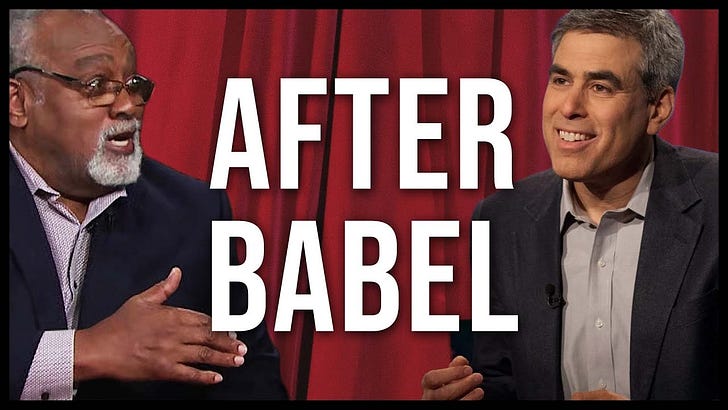
Jonathan Haidt – After Babel
For this week’s episode, I’m joined by NYU psychologist Jonathan Haidt, author of several books, including (with Greg Lukianoff) The Coddling of the American Mind: How Good Intentions and Bad Ideas Are Setting Up a Generation for Failure and The Righteous Mind: Why Good People Are Divided by Politics and Religion. Jonathan is also the co-founder of Heterodox Academy, where I serve on the advisory council. Despite that connection, this is our first extended public conversation. This is not, however, the first time I’ve engaged with Jon. After a talk some years ago, I asked Jon a question during the Q&A session, which I reintroduce here. Heterodox Academy’s mission is very important, but does focusing exclusively on viewpoint diversity prevent us from acknowledging that some viewpoints are more cogent than others? Jon’s recent Atlantic article “Why the Past 10 Years of American Life Have Been Uniquely Stupid” generated a lot of discussion, and he elaborates on his theory of “structural stupidity” here. He claims that, at the national level, the Republican Party’s hostility to moderation has made it structurally stupid and unable to examine its own premises, while left-dominated “epistemic institutions,” like journalism and academia, are mired in their own kind of structural stupidity. I find the structural analysis compelling, but I think it elides the fact that some of the Republicans’ policy position are not, in themselves, stupid at all. Jon is concerned that increasing intolerance on the left, especially on college campuses, may be caused by generational changes in child development. Gen Z is the first generation to have had access to social media as children, and they also had far less unsupervised free play than previous generations. I ask Jon whether this shift can account for groupthink around COVID-induced school shutdowns and drastic changes in attitudes toward trans and racial issues in the US. While the academy no doubt leans left, there is much more viewpoint diversity in economics departments than other areas. Jon has some interesting ideas about why. And finally, I ask Jon whether religion could play a role in increasing viewpoint diversity. It was great to finally connect with Jon. I hope and suspect it won’t be the last time we sit down for one of these conversations. This post is free and available to the public. To receive early access to TGS episodes, an ad-free podcast feed, Q&As, and other exclusive content and benefits, click below.0:00 Glenn asks: Is Jon’s heterodoxy insufficiently pugilistic? 5:23 Jon’s theory of social media-driven “structural stupidity” 16:18 Do the Republican Party’s structural flaws negate its policies? 26:53 The rise of social media and the disappearance of free play for kids 35:42 Race, trans issues, and the future of the country 45:34 Why are economists uniquely heterodox thinkers in the academy? 48:08 What fills the “God-shaped hole” in the hearts of putatively secular Americans?Links and ReadingsHeterodox AcademyJon’s Atlantic article, “Why the Past 10 Years of American Life Have Been Uniquely Stupid” Jon’s book, with Greg Lukianoff, The Coddling of the American Mind: How Good Intentions and Bad Ideas Are Setting Up a Generation for FailureElizabeth Noelle-Neumann’s book, The Spiral of Silence: Public Opinion—Our Social SkinBrown University President Christina Paxson’s letter about racial justiceGlenn’s rebuttal to Paxson in City JournalJon’s childhood independence advocacy organization, Let GrowJon’s social media researchJames A. Morone’s book, Hellfire Nation: The Politics of Sin in American HistoryJohn Tierney and Roy F. Baumeister’s book, The Power of Bad: How the Negativity Effect Rules Us and How We Can Rule ItJohn McWhorter’s book, Woke Racism: How a New Religion Has Betrayed Black America This is a public episode. If you'd like to discuss this with other subscribers or get access to bonus episodes, visit glennloury.substack.com/subscribe
John McWhorter – Race and Inequality across the Atlantic
John McWhorter is back once more for an episode of The Glenn Show, so let’s get into it. I begin by reporting on my current “European Tour.” Last week I spoke at the London School of Economics, and I’m currently headed from Toulouse, France to Marseille to deliver the keynote address at the International Conference on Public Economic Theory. It’s been quite an enlightening experience so far, as I’ve gotten a look at how young black European economists are thinking about inequities within and without their profession. John and I discuss a recent report from the Commission on Race and Ethnic Disparities, which offers a picture of racial disparities in the UK that differs greatly from that of the US. But as John notes, the impression that people abroad have of our problems is often distorted. One of our real problems is our tendency to filter all thinking about race and ethnicity through “blacks and whites.” The US is a much more diverse place that that, and John and I ask how long the concerns of African Americans will determine the national agenda for all “people of color.” Next, John asks a big question: What is the real cause of racial disparities in the commission of violent crime? We know that black perpetrators are responsible for a disproportionate amount of violent crime, but we need to understand why. I gently chide John for missing the recent Old Parkland Conference, but he’s got a good excuse: He was busy recording a series of lectures about the history of the alphabet for the Great Courses! I am utterly fascinated by this project, and I convince John to give us a preview. And finally, I offer a critique of John’s recent column, which addresses school shootings. This one is buoyant and weighty in equal measure. As always, I want to hear your thoughts. Let me know in the comments!This post is free and available to the public. To receive early access to TGS episodes, an ad-free podcast feed, Q&As, and other exclusive content and benefits, click below.0:00 Race and economics in the UK 14:26 How long will the concerns of native-born black Americans drive the race conversation? 23:15 The shaky “people of color” coalition 27:51 Trying to account for racial disparities in the commission of violent crime 39:44 Reclaiming moral agency from white people 42:37 The Old Parkland conference 44:37 John’s forthcoming lectures on the alphabet 51:47 Glenn’s critique of John’s school shooting columnLinks and ReadingsThe “Sewell Report” from the UK’s Commission on Race and Ethnic DisparitiesAmy Chua and Jed Rubenfeld’s book, The Triple Package: How Three Unlikely Traits Explain the Rise and Fall of Cultural Groups in AmericaEzra Klein’s interview with Reihan SalamGlenn and John’s conversation with Randall KennedyIan Rowe’s book, Agency: The Four Point Plan (F.R.E.E.) for ALL Children to Overcome the Victimhood Narrative and Discover Their Pathway to PowerJohn’s recent NYT column, “Gun Violence Is Like What Segregation Was. An Unaddressed Moral Stain.” This is a public episode. If you'd like to discuss this with other subscribers or get access to bonus episodes, visit glennloury.substack.com/subscribe
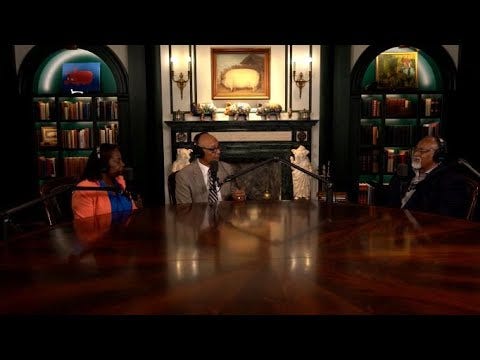
Robert Woodson & Sylvia Bennett-Stone – Voices of Black Mothers United + Glenn's Bradley Prize Acceptance Speech
Earlier this year, I announced that I would be donating 10% of the net income from this newsletter to the Woodson Center to support the vital work that they do. I also want to use the newsletter and TGS as a platform to promote the work of Woodson Center-affiliated organizations that are making change on the ground in communities around the country. My first guest in what I hope will be a long ongoing series is Sylvia Bennett-Stone, Director of Voices of Black Mothers United, who is joined by Robert Woodson himself. Sylvia and Bob were on hand at the recent Old Parkland Conference, where I had the honor of speaking, so we sat down for an in-person discussion. (You can also read the great essayist Gerald Early’s account of the conference). I had Sylvia on the show last year, but VBMU’s work supporting mothers who have lost children to violent crime is so powerful and so important that I thought it appropriate to have her back. Bob begins by introducing the mission of the Woodson Center, which provides support to “social entrepreneurs” who work within communities to help solve the toughest problems facing them today: crime, poverty, academic achievement, and many others. Sylvia then talks about a recent five-city tour that she undertook with VBMU to support victims of violence and to raise awareness for victims’ rights. Sylvia recounts how the loss of her daughter moved her to reach out to help other mothers who are suffering. Sylvia is clear that, in order to prevent more deaths, more police are needed in black communities, and good relations need to be maintained between law enforcement and the people they serve. As Bob points out, contrary to what many progressive activists claim, efforts to defund the police are unpopular in black communities with high crime rates. The subject of forgiveness comes up more than once in this conversation. Sylvia and Bob tell me about instances in which the mothers of slain children not only forgive the perpetrators but sometimes reach out to them in prison. This remarkable fact suggests to me that there is a strong Christian influence in VBMU, which Sylvia and Bob affirm, though Sylvia notes that they support whoever needs their help, regardless of religious affiliation. I wonder why, given the importance of Christianity in many black communities, we hear so little about it in the media. We end with a final word from Sylvia, who urges anyone struggling with the pain of losing a child to reach out to VBMU.Sylvia and Bob are doing vital, necessary work, and I am so proud that all of us here are able to support them. And if you want to make additional donations, please visit the websites for the Woodson Center and Voices of Black Mothers United.Unfortunately, we only had a little over a half hour for our conversation. So to round out this week’s episode, I’m including a speech I delivered when I accepted the Bradley Prize in a ceremony in Washington, D.C. earlier this month. It was a tremendous honor, and I want to share the moment with all of you here. Ten percent of net revenue from this newsletter goes to support the Woodson Center and programs like Voices of Black Mothers United. To help support these absolutely essential organizations, become a subscriber to this newsletter, or donate directly to the Woodson Center and Voice of Black Mothers United.0:00 The work of the Woodson Center 2:26 Sylvia’s recent five-city tour to support victims of violence 4:40 How tragedy moved Sylvia to start Voices of Black Mothers United 9:29 Sylvia: We must work with the police in our communities 13:38 What role does race play in VBMU’s work? And where are the fathers? 18:20 The importance of forgiveness in the healing process 22:07 How VBMU is reaching out beyond black communities 25:23 Sylvia: The pain of mothers who lose children to police violence is no different than mine 28:39 Glenn: Why do we hear so little about Christian faith’s role in healing? 34:10 Glenn's Bradley Prize acceptance speech, May 17, 2022LinksThe Woodson CenterVoices of Black Mothers United This is a public episode. If you'd like to discuss this with other subscribers or get access to bonus episodes, visit glennloury.substack.com/subscribe
John McWhorter – The Immigration Debate after Buffalo
This week, I’m back with my friend John McWhorter. A lot has happened since we last spoke, so let’s get to it. We begin by discussing the horrific, racially motivated mass shooting in Buffalo, New York. John states that, among other things, the event makes him wish we had a word besides “racism” to help us distinguish between truly racist acts like that shooting and situations where there may be racial disparities but no actual racism present. One of the shooter’s motivations was so-called “great replacement” theory, or the idea that there is a conspiracy on the part of Democrats or Jews or whoever to “replace” large parts of the white population in the US with Latino immigrants. Tucker Carlson has given much airtime to a version of this theory (though without any overt antisemitism), and I’ve appeared on one of Tucker Carlson’s shows in the past. John asks me if I think Tucker is indirectly responsible for stirring up ugly sentiments toward immigrants of the short held by the shooter. I respond that, while I don’t endorse everything Tucker says on his show, I don’t believe him to be a racist. After all, Democrats often point to the impact that the country’s shifting demographics may have on elections. We need to be able to debate the immigration issue on its merits. It’s perfectly legitimate to believe that we need tighter controls on who is allowed to live in this country, and one ought to be able to say so without being charged with racism or xenophobia. We move on to last week’s Bradley Prize ceremony, where I received the honor and delivered a speech. John recounts a time when a white woman condescendingly gave him a book by Walter Mosley in an attempt to “educate” him. The incident turned John off of Mosley’s writing, but he’s come back to it, and he is delighted by what he’s found. (When is Mosley going to get a Pulitzer or a National Book Award? It’s past time!) And finally, we discuss the difficult problem of mass shootings, mental illness, and the second amendment. I grab hold of more than one third rail in this one. As always, I want to hear your thoughts. Post them below!This post is free and available to the public. To receive early access to TGS episodes, an ad-free podcast feed, Q&As, and other exclusive content and benefits, click below.0:00 John: We need a word besides “racism” to distinguish racial inequities from what happened in Buffalo 10:49 Glenn: I don’t agree with everything Tucker Carlson says, but he’s not a racist 20:22 Demographic change is happening in the US, but how should we understand it? 28:07 What does Tucker think he’s doing and what is he actually doing? 36:21 Glenn: We should be able to freely debate immigration policy without evoking racial tropes 46:31 Glenn accepts the Bradley Prize at the organization’s gala 51:13 How a white woman’s condescension stopped John from reading Walter Mosley 57:42 Can we disentangle incidents like the Buffalo shooting from ideology? 1:02:34 A correction from GlennLinks and ReadingsJohn’s book, Woke RacismGlenn Greenwald’s Substack post, “The Demented - and Selective - Game of Instantly Blaming Political Opponents For Mass Shootings”Part 1 of the NYT’s series on Tucker Carlson Glenn and John discussing whether Glenn should appear on Tucker Carlson’s showA partial transcript of Glenn’s appearance on Tucker Carlson’s showGlenn and John discussing Glenn’s appearance on Tucker Carlson’s showJohn’s NYT column on Walter Mosley This is a public episode. If you'd like to discuss this with other subscribers or get access to bonus episodes, visit glennloury.substack.com/subscribe
Daniel Kaufman – What Is Social Science?
This week’s episode is a throwback to 2015, when Daniel Kaufman, professor of philosophy at Missouri State University, editor of the online magazine the Electric Agora, and (at that time) a mainstay on bloggingheads.tv and meaningoflife.tv, invited me onto his show Sophia. I stumbled across this video again last month, and I think it remains an illuminating discussion that addresses some fundamental questions about economics and the social sciences. We begin by discussing the “science” part of the social sciences. I explain that we economists tend not to philosophize about our discipline as much as other social scientists. But many major economic thinkers (think Keynes, Marx, and others) elaborate concepts that do ask fundamental questions about the nature of economics. To call a discipline a “science” implies that its findings are testable and replicable, that its insights are able to predict future conditions from present conditions. Does economics do that? I argue that it does. Of course, since much economic data is drawn from real-world behavior rather than controlled experiments, it can be difficult to isolate variables in a way that would satisfy, say, a physicist. This is because markets exist within particular cultures and under particular social arrangements that are not themselves purely economic in nature. And cultural values are going to affect, at least to some extent, how people behave within markets. The idea that people will try to maximize utility in a rational way is important to economics, but of course we know that humans often behave in ways that seem irrational. How does economics incorporate irrationality into its methodology? And finally, Dan and I were speaking at a time when the (still ongoing) replication crisis was all over the news. Is replication as seemingly dire a problem in economics as it is in psychology? Dan’s training in philosophy helps him to ask some really deep questions here, and I think you can tell I relished the opportunity to answer them. Love to know what you think about this “classic” episode. This post is free and available to the public. To receive early access to TGS episodes, an ad-free podcast feed, Q&As, and other exclusive content and benefits, click below.5:44 How scientific are the social sciences? 11:20 Glenn defends the reliability of economic predictions 29:47 The strengths and weaknesses of “natural experiments” 36:48 How much does culture affect economic behavior? 50:06 New insights from behavioral economics 58:12 Dan: We trust the social sciences too muchLinks and ReadingsDan’s website, the Electric AgoraThe Electric Agora on YouTubeSendhil Mullainathan and Eldar Shafir’a book, Scarcity: The New Science of Having Less and How It Defines Our Lives This is a public episode. If you'd like to discuss this with other subscribers or get access to bonus episodes, visit glennloury.substack.com/subscribe
John McWhorter & Edmund Santurri – Cancellation at St. Olaf College
This week’s plan for the show was to have Edmund Santurri, professor of philosophy and religion at St. Olaf College, join John McWhorter and I to talk about his soon-to-be terminated appointment as the director of the college’s Institute for Freedom & Community. Ed’s situation is the latest instance of a college’s administration folding to pressure from left-wing activists (more on that below). Unfortunately, Ed was only able to join us for the very beginning of this episode before tech glitches had their way with us. Ed’s story is important, and I do wish we had been able to carry on a full conversation, but it was not to be. We do make some headway, though. Ed begins by explaining how, after he invited a series of speakers viewed by some as controversial, St. Olaf’s administration announced that they would remove him from his role as director of the Institute for Freedom & Community a year earlier than had been agreed upon. One might ask: What good is an institute devoted to free inquiry if it refuses to engage with controversial ideas? Ed begins to explain the recent history of student protests at the college, but we’re then forced to whittle our trialogue down to a dialogue. John expresses his disgust for the St. Olaf administrators responsible for Ed’s removal (which I share) and talks about the important work of FIRE, the Foundation for Individual Rights in Education. We then debate whether there is a right-wing equivalent to left-wing campus cancel culture. I don’t think there is, but John thinks one can be found in attempts to remove books dealing with gender and sexuality from public grade schools and attempts to remove trans, nonbinary, and gender fluid teachers from classrooms. He’s not that worried about nonbinary gender identity in children. But I have to confess, I think the performative dimension of that sort of expression may be an indicator of a worrisome direction in our society. We then move on to something about which everyone can agree: My house is awesome. John visited it for the first time last week when he was in Providence for my festschrift, a conference held in my honor in which many of my dear and distinguished friends gathered to discuss my work and its impact. It was a moving and humbling event, and we’re hoping to post some video from it here soon. We finish our conversation with an extended debate about the Supreme Court’s upcoming decision that will almost certainly overturn Roe v. Wade and the political environment that led to a draft of Samuel Alito’s majority opinion being leaked to the press. It’s good to have John back after his absence. I know you’ll all have some things to say about this one, so don’t hesitate to post a comment. This post is free and available to the public. To receive early access to TGS episodes, an ad-free podcast feed, Q&As, and other exclusive content and benefits, click below.0:00 Why Ed is being removed from the directorship of the Institute for Freedom & Community 11:39 The pressure campaigns waged against past Institute events 17:43 John: Administrators at St. Olaf should be ashamed of themselves 19:50 Are right-wing campaigns against openly trans and nonbinary elementary school teachers the equivalent of left-wing cancel culture? 29:05 What are the social determinants of gender identity in young people? 37:53 Glenn’s awesome house 41:18 A festschrift for Glenn 48:08 Can we separate jurisprudence from the lived consequences of overturning Roe v. Wade? 56:12 Do the ends now justify the means in American politics?Links and ReadingsInside Higher Ed on Ed’s removal from the Institute for Freedom & CommunityFIRE, the Foundation for Individual Rights in EducationFIRE’s letter to St. Olaf’s president protesting Ed’s removal This is a public episode. If you'd like to discuss this with other subscribers or get access to bonus episodes, visit glennloury.substack.com/subscribe
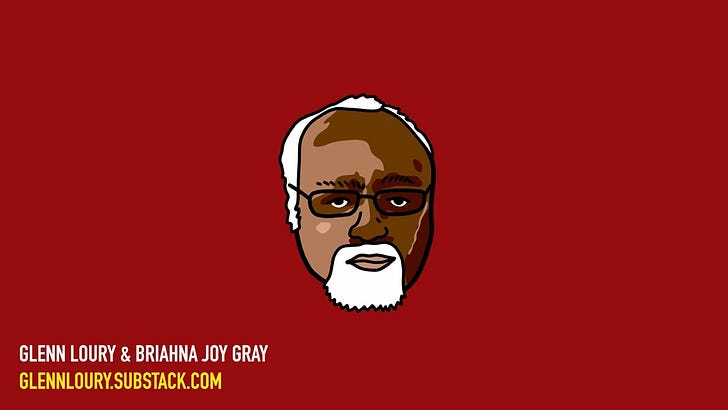
Briahna Joy Gray – Debating Progressive Policy
This week, I welcome Briahna Joy Gray to TGS. I’ve appeared on her podcast, Bad Faith, and now she’s here to return the favor. Briahna and I have some pretty pronounced political differences—she’s the former National Press Secretary for Bernie Sanders’s presidential campaign, after all. But we get along anyway, because we both believe in the importance of free speech and open debate. And make no mistake, there is a lot of debate in this episode. [Note: We recorded this conversation at Brown’s Watson Institute for International and Public Affairs, and there was no video equipment on hand. Instead, Nikita Petrov has created an animation version of me to provide some visual stimulation.]I may be uncomfortable saying that I’m a “man of the right,” but I’m certainly “conservative for a black guy.” But Briahna points out that there are many black people who have benefited from America’s economic opportunities and know it. They may vote Democrat, but they’re hardly socialists. Many conservatives say that their voices are shut out of mainstream discourse, and the left has a similar complaint. I point out that the Democratic Party has repeatedly undercut Bernie Sanders’s presidential campaigns, and Briahna explains why Democrats have been and continue to be hostile toward progressive policies and politicians. She argues that neither Democratic nor Republican policies reflect the actual desires of the majority of voters, as political parties no longer need to vie for broad majorities in order to win elections. After that, the debate begins in earnest. We address three major points of contention: increasing taxes on the very rich in order to expand the social safety net, Medicare for All, and student debt cancellation. I’m skeptical of all of these policies, to varying degrees, while Briahna believes they’re necessary in order to remedy the (admittedly vast) disparities we see all around us. We wrap up by discussing the fascinating convergence between certain factions of the left and right in criticizing what appears to be a march toward escalating US intervention in Ukraine. I enjoy a good debate, and I suspect that Briahna does, too. Maybe that’s why, despite our differences, we get along so well. Let me know what you think in the comments. This post is free and available to the public. To receive early access to TGS episodes, an ad-free podcast feed, Q&As, and other exclusive content and benefits, click below.0:00 Acknowledging the black middle class 14:04 How the Democratic Party works against progressives 21:11 Briahna: The interests of political parties no longer reflect the interests of voters 26:53 Should we increase taxes on the very rich in order to fund the social safety net? 34:51 Briahna makes the case for Medicare for All 43:21 Should we cancel student debt? 54:30 The left-right alliance over intervention in UkraineBad Faith’s Patreon pageBen Carson’s book, Gifted Hands: The Ben Carson StoryMartin Gilens and Benjamin Page’s 2014 study, “Testing Theories of American Politics: Elites, Interest Groups, and Average Citizens”Vann R. Newkirk II’s Atlantic piece, “The American Health-Care System Increases Income Inequality” This is a public episode. If you'd like to discuss this with other subscribers or get access to bonus episodes, visit glennloury.substack.com/subscribe
Greg Thomas – A Future for Black Tradition
Normally I would post one of my bi-weekly conversations with John McWhorter today, but John and I had too many scheduling conflicts to find time to talk this week (he’ll return in two weeks). So in his stead, I’m talking with Greg Thomas, co-founder of the Jazz Leadership Project and senior fellow at the Institute for Cultural Evolution.We begin by discussing Greg’s work with the Jazz Leadership Project, which uses the principles of jazz to train leaders within businesses and organizations. He’s got some big-league clients, so I was interested to know how Greg implements ideas and strategies from an originally African American art form within a corporate environment. Greg was a friend of the great critic, poet, and novelist Stanley Crouch, and I ask him about how they came to know each other. This leads us to discuss the intellectual lineage that runs from Ralph Ellison and Albert Murray through Crouch. These thinkers were deeply rooted in black art, culture, and politics, but they were also, to varying degrees, skeptical of race as a foundational concept. Is there anyone now continuing this tradition? Greg talks about his own efforts in that direction, but he also notes that the modern Enlightenment tradition, which sought a scientific foundation for knowledge and institutions, has been at least partially displaced by postmodern thought, which seeks to critique the Enlightenment. Greg argues that such a critique is fine, so long as we don’t abandon modernity’s gains. He then introduces some ideas from integral theory and from the philosopher Anthony Appiah that he believes can help reconcile the need both to preserve culturally specific traditions and to claim membership in a broader cosmopolitan community. And finally, Greg tells me about some of his daughter’s impressive accomplishments, including building the We Read Too app. I really enjoyed having Greg on as a guest, and I hope to have him back on for an episode with both John and I soon.This post is free and available to the public. To receive early access to TGS episodes, an ad-free podcast feed, Q&As, and other exclusive content and benefits, click below.0:00 Greg’s work with the Jazz Leadership Project 12:35 How does a “black” art form operate within a corporate environment? 17:27 What’s left of the legacy of Ralph Ellison, Albert Murray, and Stanley Crouch? 25:04 Black culture after the postmodern turn 32:45 Greg’s work with the Institute for Cultural Evolution 36:40 Greg’s critique of Black Lives Matter 40:48 Rooted cosmopolitanism and the “Faustian bargain” of whiteness 50:46 Greg’s very accomplished daughterLinks and ReadingsThe Jazz Leadership ProjectThe Institute for Cultural EvolutionGreg’s Substack post, “Why Race-Based Framings of Social Issues Hurt Us All” Stanley Crouch’s Notes of a Hanging Judge: Essays and Reviews, 1979-1989 Video from Combating Racism and Antisemitism TogetherSteve McIntosh’s Developmental Politics: How America Can Grow Into a Better Version of ItselfCharles Love’s Race Crazy: BLM, 1619, and the Progressive Racism MovementKwame Anthony Appiah’s, Cosmopolitanism: Ethics in a World of StrangersDanielle Allen Resmaa Menakem, My Grandmother's Hands: Racialized Trauma and the Pathway to Mending Our Hearts and BodiesKaya Thomas Wilson’s We Read Too app This is a public episode. If you'd like to discuss this with other subscribers or get access to bonus episodes, visit glennloury.substack.com/subscribe
Stephanie Lepp – The Responsibilities of the Public Intellectual
On this week’s episode of The Glenn Show, I welcome my old friend Stephanie Lepp, the Executive Producer at the Center for Humane Technology. I first met Stephanie through her husband, Nathaniel, who was a student of mine at Brown. Stephanie produced a podcast called Reckonings, which told the stories of how people transform their worldviews. I went on the show in 2015 and told the story of the evolution of my own political worldview (links below). Since then, we've been wanting to do another round. It's time! This time, Stephanie joins me on The Glenn Show, to once again help me wrestle with how my views have changed and with my responsibilities as a public intellectual.Stephanie begins by asking me to step back and consider a big-picture question: What is my goal as a public intellectual? It’s not something I often ask myself in such explicit terms, and Stephanie pushes me to articulate a response. Stephanie engages me on the affirmative action question in order to get me to speak not just about my critique of preferences, but to think about whether critique is enough. It’s one thing to criticize a program or idea, she says, and another to propose a solution. I agree, of course, but the critique does have to be made, and not just in the case of affirmative action. I see it as my job to make clear that the systemic prejudices affirmative action programs were designed to ameliorate are largely in the past. When we see large-scale failure in black communities today, the responsibility for those failures rests, to a great extent, on the shoulders of the members of those communities. Stephanie suggests that, given my position as a public intellectual, when I speak about these problems, I not only describe social reality but actually influence it. If that is true (and I’m not sure to what extent it is), should I reorient my way of engaging with matters of public concern? Stephanie says, “Evolution is beautiful, but it’s not pretty.” This leads me to wonder: Is our present political turmoil an ugly but necessary process that will result in improvement over time, if properly attended to? I'm doubtful. Finally, I offer a critique of Stephanie’s own brand of “promiscuous pragmatic pluralism.”It was such a pleasure to reconnect with an old friend and talk through these issues. I’m looking forward to your thoughts!This post is free and available to the public. To receive early access to TGS episodes, an ad-free podcast feed, Q&As, and other exclusive content and benefits, click below.0:00 What is Glenn’s goal as a public intellectual?11:12 Glenn has his critique of affirmative action … 21:57 … but is articulating the critique enough? 27:23 Glenn: My raison d’être is to give voice to my contempt for the failures of my people 36:36 Stephanie: At a certain point, you’re not describing reality, you’re influencing it 43:02 The case for integralism 51:39 “Evolution is beautiful, but it’s not pretty” 1:00:06 Glenn’s critique of Stephanie’s “promiscuous pragmatic pluralism” 1:06:47 A preliminary look into the married life of the LourysReckonings, “The Conscience of a Public Intellectual, pt. 1”Reckonings, “The Conscience of a Public Intellectual, pt. 2”Reckonings, “The Enemy Within”Chloé Valdary’s Theory of EnchantmentKen Wilber’s A Theory of Everything: An Integral Vision for Business, Politics, Science, and Spirituality This is a public episode. If you'd like to discuss this with other subscribers or get access to bonus episodes, visit glennloury.substack.com/subscribe
John McWhorter – Trayvon Martin, 10 Years Later
This week, John and I are talking about the ten-year anniversary of the Trayvon Martin shooting, one of the most politically consequential events of the 2010s. A decade later, are we in a better place than where we started? John and I begin by discussing the New York Times’s recent package commemorating the event, which features a written piece by Charles Blow and video interviews with Barack Obama, Henry Louis Gates, and Al Sharpton. All of them reinforce the mainstream narrative about Martin’s death—that he had been senselessly attacked by Zimmerman for no reason. Yet much evidence supports Zimmerman’s story: that he shot Martin in self-defense after Martin assaulted him. John discusses how his skepticism toward the mainstream Trayvon Martin narrative contributed to the end of his relationship with The Root. My own skepticism continues to pose challenges for me, as many of my students resist when I ask them to consider the facts of the case rather than the “poetic truth” the case has come to represent. John suggests that we can learn from recalling how the O.J. Simpson trial unfolded. The public story about the trial had more to do with race and the cops than it did with the brutal murder of two innocent people, even if most people now acknowledge that Simpson’s not guilty verdict was mistaken. There are people contesting the mainstream narratives around Martin and Michael Brown, including excellent documentaries by Joel Gilbert and Shelby and Eli Steele. These counternarratives are vital correctives, but where are the consequences for those who continue to push bogus information? And we end with a bit of a palate cleanser, with John taking us through the life and work of Scott Joplin. Is there a way, at this late date, to turn the narratives about Martin, Michael Brown, and others around? How can we turn back the tide unleashed by these events and their political afterlife? Let me know your thoughts. This post is free and available to the public. To receive early access to TGS episodes, an ad-free podcast feed, Q&As, and other exclusive content and benefits, click below.0:00 The NYT commemorates the tenth anniversary of Trayvon Martin’s death 7:20 What really happened between Martin and George Zimmerman? 14:35 How John’s relationship with The Root frayed 19:33 Learning from the O.J. Simpson case 32:24 Trayvon Martin and Michael Brown on the big and small screen 40:55 Where are the consequences for those who get it wrong? 46:00 Remembering Scott JoplinLinks and ReadingsThe NYT’s Trayvon Martin anniversary package Joel Gilbert’s book, The Trayvon Hoax: Unmasking the Witness Fraud That Divided AmericaJoel Gilbert’s documentary, The Trayvon Hoax: Unmasking the Witness Fraud That Divided AmericaEli and Shelby Steele’s documentary, What Killed Michael Brown?Rest in Power: The Trayvon Martin StoryJason Riley’s WSJ opinion piece, “Will Amazon Suppress the True Michael Brown Story?”The 2015 DOJ statement announcing the closure of the investigation of the Trayvon Martin shootingJohn’s NYT piece, “Scott Joplin’s Ragtime Is Ambrosia. Here’s Why It Matters.” This is a public episode. If you'd like to discuss this with other subscribers or get access to bonus episodes, visit glennloury.substack.com/subscribe
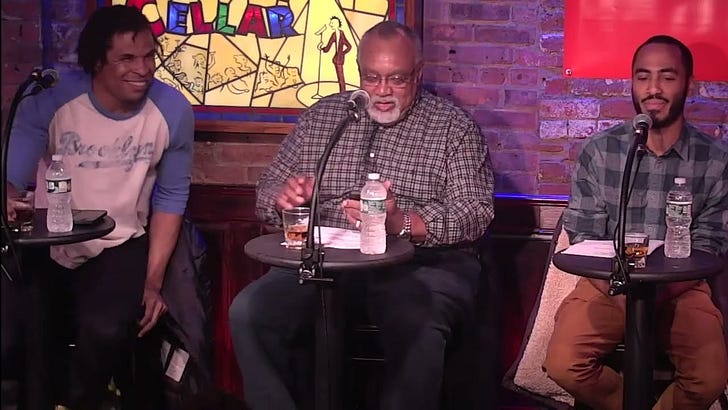
TGS Live at the Comedy Cellar
Over the last couple years, I’ve been in communication with Noam Dworman, the owner of the Comedy Cellar in New York, which is one of the most influential comedy clubs in the country. He suggested that we collaborate and put together a show that would explore the relationship between truth, free speech, and comedy. After a lot of back and forth, we came up with the idea of putting non-comedian intellectuals into conversation with professional stand-up comics. We weren’t quite sure what would happen, but we both sensed the idea had great potential.And so, last month, The Glenn Show held its first live event. Roland Fryer, Coleman Hughes, and I served as the “serious” participants, and Noam invited the comics Andrew Schulz, Judy Gold, Shane Gillis, T.J., and Rick Crom to come up and offer their thoughts. The event also included special appearances from Nikki Jax and the stellar Sam Jay. Noam and I wanted to know, are there certain truths that only comics can get away with telling? Can delivering a potentially unsettling idea in comedic form make people more receptive to it? The place was packed—tickets sold out in just a few days. The atmosphere was electric. After I introduced the event and kicked things off with an opening provocation, the show took on a life of its own. As you’ll see, the comics took the idea and ran with it. There are moments of chaos, moments of profundity, and a lot of laughs. I couldn’t have asked for a better live debut for TGS, and I am excited to be able to share with all of you who made it possible through your support.We’re planning on doing more of these events in the future, so let us know what you think!Many, many thanks to Noam Dworman for his hard work, generosity, and for providing video and audio of the event. The title sequence was created by our own Nikita Petrov. This post is free and available to the public. To receive early access to TGS episodes, an ad-free podcast feed, Q&As, and other exclusive content and benefits, click below.0:00 Some unspeakable truths 8:07 Are comics now afraid to speak their minds onstage? 19:38 The difference between telling the truth and getting a laugh 28:42 Can jokes actually do harm? 36:50 Nikki Jax on comedy and trans issues 43:34 Who actually “cancels” comics, audiences or corporations? 50:26 Sam Jay on artistic freedom and mob mentality 55:55 Q&A: I’m worried people won’t understand that my one-woman show is satire. What should I do? 58:42 Q&A: Does comedy have real power or is it ‘just jokes’? 1:06:35 Q&A: Do comics sometimes inadvertently reinforce wrongheaded points of view? 1:10:23 Q&A: Why are Ivy Leaguers so unfunny? 1:13:13 Q&A: Are college campuses inhospitable environments for comedy? 1:16:45 Q&A: What got Roland suspended at Harvard? 1:20:20 Q&A: Does the general public need social media training? 1:22:31 Q&A: Is there a way to stop corporations from folding to social media pressure campaigns? This is a public episode. If you'd like to discuss this with other subscribers or get access to bonus episodes, visit glennloury.substack.com/subscribe
Sam Harris – Matters of Race, Matters of Mind
This week I welcome Sam Harris to TGS. Sam is a neuroscientist and philosopher, the host of the podcast Making Sense, and the proprietor of the meditation app Waking Up. He’s a searching, truly open-minded thinker who follows the evidence where it leads, even if that means admitting that he was wrong about a previously held position. We begin by discussing Sam’s uncertainty about how to navigate some aspects of the discourse on race. He wants a world in which race simply doesn’t matter all that much, but he’s unsure of how to bring that world into being. Sam highlights the stakes of the affirmative action question by asking us to imagine that we have to undergo brain surgery at the hands of a surgeon who got through medical school despite relatively low performance. Would we want this surgeon operating on us or our children? (I raised a similar concern in the past.) We then move on to Charles Murray, who Sam has had as a guest on his podcast. Sam was appalled by Charles’s treatment at Middlebury College, where he was violently deplatformed by a group of student protesters. Sam shares my view that nobody, and especially not a figure as significant as Charles, should be prevented from airing their views in public, no matter how wrongheaded we might find them. (For the record, I don’t find Charles to be “wrongheaded.”) If you disagree with a speaker, argue with them. We know that certain groups perform worse on tests and other quantifiable measures of academic performance than others, but we’re not yet sure why. Sam asks an intriguing question: Are there certain things we’re better off not knowing? If we knew that a given group had an inherent, perhaps ineradicable disadvantage on quantifiable measurements of performance, would we want to know? Could the social ill that such knowledge might produce make us worse off than the social good that would come from it? We then consider whether there are still circumstances in which affirmative action is necessary. From there, we pivot to God. Sam is, famously, a critic of organized religion. But religion is one thing and belief in God another. Sam frames the question of belief as one that can be addressed through mindful introspection. But at the level of community, it seems more difficult to find a secular alternative to the networks of support and spiritual sustenance that many find in temples, churches, synagogues, and mosques. I had a great time thinking along with Sam. There is much more that we could have discussed had time allowed, so hopefully he’ll join me again soon.Note: We encountered some problems with Sam’s audio. As a result, the sound quality on his end is less than optimal. Many apologies. This post is free and available to the public. To receive early access to TGS episodes, an ad-free podcast feed, Q&As, and other exclusive content and benefits, click below.0:00 The principle that race shouldn’t matter and the fact that it does 6:17 The high stakes of affirmative action 17:00 In defense of Charles Murray 25:35 Are there facts we’re better off not knowing? 36:30 When does affirmative action make sense and when is it counterproductive? 48:01 Is belief in God irrational? 52:32 Suffering and the illusion of self 1:00:27 Finding meaning in secular communityLinks and ReadingsSam’s booksSam’s podcast, Making SenseSam’s app, Waking Up This is a public episode. If you'd like to discuss this with other subscribers or get access to bonus episodes, visit glennloury.substack.com/subscribe
Matt Taibbi and John McWhorter – What Is Putin Thinking?
This week on The Glenn Show, John McWhorter and I are joined by the journalist Matt Taibbi. Many of you are likely familiar with Matt from his many books, his political journalism for Rolling Stone (among other outlets), his Useful Idiots podcast, and now his outstanding Substack newsletter, TK News. Matt lived and worked in Russia and the former USSR for several years, so I thought he’d be an excellent source for some insight into the war in Ukraine. We begin by discussing Matt’s brief career playing in the MBA—that’s the Mongolian Basketball Association. We then move on to more pressing matters. Like many journalists and experts, Matt had been confident that Putin would not invade Ukraine. Unlike many journalists and experts, he issued an apology to his readers for making the wrong call and explained what led him to make it. Even after the invasion, it’s not clear why Putin is pushing as far west as he is—we talk about the difficult of getting inside his head. I ask if the media’s portrayal of Putin as a true autocrat is accurate, and Matt affirms that, while it’s hard to know what’s really going on inside the Russian government, Putin does seem to have more or less total control of domestic and military policy. The best way to deal with Russia is to first understand how it sees the world, so how do we put ourselves in its geopolitical shoes? This exercise leads John to reflect on his own lack of tribalistic feelings, and how tribalism is driving Russian and Ukrainian responses to the war. Shouldn’t all this feel a little familiar to Americans? Can we apply the lessons we learned (or should have learned) in our own disastrous wars in Afghanistan and Iraq to Ukraine? Matt was an early and vociferous critic of Russiagate, the discredited idea that Russian interference swung the 2016 election in Trump’s favor. But has the hangover from Russiagate made it difficult to view Russia’s actions clearly? And why have those who were wrong about Russiagate (and many, many other things) continued to exert influence in the media despite never admitting to the kind of errors that would have ended careers not so long ago? Matt argues that journalism is no longer about reporting news but about building narratives, and that media outlets are now rewarded primarily for keeping their viewers angry. We then move on to cultural matters. I’m a great fan of classic Russian literature, and I ask Matt to recommend some modern Russian writers. And finally, the big question: Who’s going to triumph in the NBA Eastern Conference, the Celtics or the Nets? Many thanks to Matt Taibbi for dropping in. Hopefully we’ll be able to get him back on TGS in the not-too-distant future. This post is free and available to the public. To receive early access to TGS episodes, an ad-free podcast feed, Q&As, and other exclusive content and benefits, click below.0:00 Matt’s brief career as a professional basketball player in Mongolia 5:45 What drove Putin to invade Ukraine? 14:54 Are there limits to Putin’s power in Russia? 19:33 Putting ourselves in Russia’s geopolitical shoes 27:35 The appeal of Russian nationalism 30:55 Did we learn anything from Iraq and Afghanistan? 36:25 Did Russiagate obscure Americans’ ability to see Russia’s actions clearly? 40:08 The value of public apologies 41:28 Matt: Journalists are now in the narrative business 49:45 The foreign policy language barrier 55:00 Matt’s recommends some modern Russian writers 58:18 Matt answers the most pressing question of our time: Celtics or Nets?Links and ReadingsMatt’s newsletter, TK NewsKatie Halper and Matt’s podcast, Useful IdiotsMatt’s mea culpa on the Russian invasion of UkraineWesley Lowery’s NYT piece, “A Reckoning Over Objectivity, Led by Black Journalists” This is a public episode. If you'd like to discuss this with other subscribers or get access to bonus episodes, visit glennloury.substack.com/subscribe
Daniel Bessner – Ukraine and American Decline
With the war in Ukraine escalating, I thought it would be a good idea to bring on a guest with some expertise in international relations. So I called on Daniel Bessner, an intellectual historian, associate professor at University of Washington’s Henry M. Jackson School of International Studies, and a co-host of the American Prestige podcast. Daniel is a man of the left, so we spend a lot of time here arguing, and we have a great time doing it.Note: We recorded on February 22, 2022. Between then and now, the situation in Ukraine has changed quite a bit. In order to avoid confusion, we have edited out a portion of the conversation that is no longer up-to-date.Daniel and I begin by discussing what Putin’s invasion of Ukraine might tell us about the US’s standing in the world. Daniel argues that Putin’s willingness to ignore the US’s warnings reflects the decline of America’s global hegemony. He compares the present situation to America’s geopolitical position in the wake of World War II, arguing that the US imputed unrealistic hegemonic ambitions to the Soviet Union in order to justify the Cold War. He worries that the lesson many nations will draw from Ukraine is that the best way to forestall aggression from a stronger state is to acquire nuclear weapons. Unfortunately, this strategy makes a lot of sense to me. We then take a hard turn away from war to talk about Whoopi Goldberg. Daniel and I agree that the outrage over her remarks about the Holocaust is completely overblown. But he sees in this outrage the sign of a frustrated populace with no other way to express its political will. I’m skeptical of the idea we should want a return to mass politics, though. We shouldn’t throw the fate of our institutions to the political winds. We then debate the role of private industry in administering services to the public. We agree that our public schools are in bad shape, but Daniel thinks that market logic is at the root of the problem, whereas I think the market can help offer solutions. The question of meritocracy emerges, and Daniel argues that real meritocracy is impossible within a highly unequal society. No doubt that’s a problem, but I think abandoning meritocratic principles would be a huge mistake. And finally, we get into a debate over the uses (and possible abuses) of game theory.I truly enjoyed this good-natured sparring match with Daniel, and I hope you do, too!This post is free and available to the public. To receive early access to TGS episodes, an ad-free podcast feed, Q&As, and other exclusive content and benefits, click below.0:00 Daniel: Putin’s actions in Ukraine demonstrate the decline of American global hegemony 7:02 Did the Soviet Union have the same expansionist ambitions as the US? 16:01 How the war in Ukraine could increase nuclear proliferation 23:46 Daniel: It’s absurd that people got so upset about Whoopi Goldberg’s Holocaust comment 27:27 Does the US have “mass politics” anymore? If not, is that a bad thing? 34:35 When does it pay to privatize? 38:55 What’s so bad about utopianism? 44:18 Is true meritocracy possible within a highly unequal society? 58:04 The uses (and possible abuses) of game theoryLinks and ReadingsGlenn’s Intellectual Origins, a series of interviews with DanielDaniel’s podcast, American PrestigeDaniel’s most recent appearance on Chapo Trap HouseStephen Wertheim’s book, Tomorrow, the World: The Birth of U.S. World SupremacyPaul Chamberlin’s book, The Cold War’s Killing Fields: Rethinking the Long PeaceDerek Masters and Katharine Way’s book, One World or None: A Report to the Public on the Full Meaning of the Atomic BombDaniel’s essay, “The End of Mass Politics”Walter Lippmann’s book, Public OpinionWalter Lippmann’s book, The Phantom PublicGlenn’s book, The Anatomy of Racial InequalityDaniel Markovitz’s book, The Meritocracy Trap: How America's Foundational Myth Feeds Inequality, Dismantles the Middle Class, and Devours the EliteKenneth Arrow’s book, Social Choice and Individual ValuesPaul Erickson’s, The World the Game Theorists MadeS.M. Amadae’s book, Rationalizing Capitalist Democracy: The Cold War Origins of Rational Choice LiberalismRobert Fogel and Stanley Engerman’s book, Time on the Cross: The Economics of American Slavery This is a public episode. If you'd like to discuss this with other subscribers or get access to bonus episodes, visit glennloury.substack.com/subscribe
John McWhorter – Capital Offenses
It’s John McWhorter time once again here at The Glenn Show. Let’s get into it. John and I are both busy guys, but people might not realize how much juggling it takes to manage life as both an academic and a public intellectual. I talk about why I may soon wind down my role at Brown University and devote myself more fully to public endeavors. We then move on to discuss psychiatrist Jeffrey Lieberman, who has been fired or suspended from several academic and medical appointments after referring to Sudanese model Nyakim Gatwech as a possible “freak of nature” in a tweet. It was a tacky, poorly worded tweet, no doubt. But clearly Lieberman was attempting to compliment Gatwech in the same way one might might refer to an unusually gifted athlete as a “freak.” John and I ask, does Lieberman really deserve to have his life destroyed over this? We then move on to discuss how the word “Negro” is now getting the n-word treatment in some quarters. To me, there is absolutely no justification for eliminating the word “Negro” from our lexicon, especially since it was once used to confer dignity on black people. Relatedly, John reports that efforts to replace “Latino” and “Latina” with “Latinx” are not faring well outside of academic circles. The question of when to capitalize “black” comes up, and I discuss why we don’t do so here at the Substack and why I’m opposed to doing so in general. We ask why children who come from families with highly varied racial and ethnic backgrounds are still often raised as “black” in the US if even one of their parents or grandparents is black. Why does blackness take precedence? We close on two unrelated topics. The first addresses whether or not academic tenure is necessary. The second addresses the very grim situation in Ukraine and Europe more broadly.It’s always a pleasure to talk with John, and I hope you enjoy the conversation!This post is free and available to the public. To receive early access to TGS episodes, an ad-free podcast feed, Q&As, and other exclusive content and benefits, click below.0:00 Glenn contemplates exiting academia 7:28 Why should Jeffrey Lieberman lose his jobs over a tacky tweet? 15:11 The historical significance of the word “Negro” 24:05 The revolt against “Latinx” 27:49 Why Glenn doesn’t capitalize “black” 34:04 Why does “blackness” take precedence? 40:09 Glenn: Tenure without mandatory retirement can be a problem 49:31 Will the US send troops to Ukraine?Links and ReadingsJohn’s NYT piece, “One Graceless Tweet Doesn’t Warrant Cancellation”William Levi Dawson’s Negro Folk SymphonyThe New York Times book, How Race Is Lived in America: Pulling Together, Pulling ApartJohn’s NYT piece, “I Can’t Brook the Idea of Banning ‘Negro’”John’s NYT piece, “Capitalizing ‘Black’ Isn’t Wrong. But It Isn’t That Helpful, Either.”Thomas Chatterton Williams’s book Self-Portrait in Black and White: Family, Fatherhood, and Rethinking RaceStanley Crouch’s book, Notes of a Hanging Judge: Essays and Reviews, 1979-1989 This is a public episode. If you'd like to discuss this with other subscribers or get access to bonus episodes, visit glennloury.substack.com/subscribe
Matt Rosenberg – What Next, Chicago?
This week, I welcome Matt Rosenberg to TGS. Matt is a journalist who grew up in Chicago’s Hyde Park neighborhood and the author of the recently published book What Next, Chicago?: Notes of a Pissed-Off Native Son. The book delves into the causes and effects of the city’s recent, alarming rise in crime and also chronicles those who are trying to address the problem. As a native of Chicago’s South Side, I share Matt’s concerns, and I highly, highly recommend that everyone read his book. We begin by talking about Matt’s personal connection to the city, and his memories of the Yippie protests at the 1968 Democratic National Convention. Matt explains what drove him to return to Chicago after leaving the city years ago. He then gets into the deep relationship between street crime and political corruption in the city. He notes that he’s not the only person covering these stories, but there are few journalists making systematic efforts to connect the dots between them. It’s not all bad news from Chicago, though. Matt discusses a few organizations that are making change at the grassroots level, including Corey Brooks’s outstanding Project H.O.O.D. We move on to one the city’s most pressing problems: schools. Matt underscores the necessity of school choice and charter school funding in a city where many public schools are underserving students and parents. One under-discussed but important story Matt covers is Chicago’s sizable and thriving Latino communities. He finds them full of hard-working, family-oriented folks who are making the most out the opportunities afforded them. We then move on to talk about the problem of crime and enforcement. Is a highly punitive crackdown on the crime the best way to combat rising crime? Matt doesn’t think it’s that simple. We know that incarceration is linked to the break-up of traditional family structures, but is it really the primary cause? Matt introduces us to Darryl Smith, a remarkable man who did time in prison but came out and turned his life around while helping out his neighbors in Englewood and staging nonviolent protests that resulted in construction unions opening their ranks to local black laborers. We end the discussion by taking a broad view of the South Side’s decline and talking about what can be done to reverse the damage. This is a subject near and dear to my heart, and one that has broader significance to other troubled communities across the country. This post is free and available to the public. To receive early access to TGS episodes, an ad-free podcast feed, Q&As, and other exclusive content and benefits, click below.0:00 Matt’s new book, What Next, Chicago?: Notes of a Pissed-Off Native Son 8:48 Piecing together the puzzle of race, crime, and corruption 18:53 Some Chicago success stories 23:19 Matt: Charter schools are a necessity in Chicago 34:16 Chicago’s thriving Latino communities 40:35 Is increased enforcement the best way to solve Chicago’s crime problem? 54:08 What is disrupting traditional family structures in Chicago’s black communities? 59:02 Darryl Smith, the (unofficial) Mayor of Englewood 1:03:43 The decline of the South Side and the efforts to revive it 1:14:42 So, what’s next for Chicago?Links and ReadingsMatt’s book, What’s Next, Chicago?: Notes of a Pissed-Off Native SonCorey Brooks’s Project H.O.O.D.University of Chicago’s Crime LabNorthwestern University sociologist Andrew PapachristosJane Jacobs’s classic book, The Death and Life of Great American Cities This is a public episode. If you'd like to discuss this with other subscribers or get access to bonus episodes, visit glennloury.substack.com/subscribe
John McWhorter – The Problem with Racial Preferences
John McWhorter is back, just like you knew he would be. This week we’re talking about the future of affirmative action.We begin by discussing Steven Spielberg and Tony Kushner’s new film adaptation of the classic musical West Side Story. John argues that people who dismiss the musical as just “something some old white people wrote” are far too simplistic and limited in their view. I haven’t yet gotten a chance to see the new adaptation, but I’m a fan of the music and lyrics, so I’m inclined to agree with him. We then move on to affirmative action. When the Supreme Court takes up the Harvard admissions case next term, there’s a good chance they’ll end up declaring affirmative action unconstitutional. If that happens, John and I agree that we’ll likely see fewer black students admitted to elite universities, though I think administrators unwilling to scale back their focus on diversity will find ways to admit black students who may not be academically on-par with their peers. John and I are deeply concerned that orienting academic standards—from undergrad admissions to the hiring and tenure process—around diversity and identity will have disastrous consequences for the university system, for the long-term health of the nation, and, yes, for black people. As an object lesson, John presents a (rigorously anonymized!) account of a star black academic who, in John’s account, derives their profile more from their ability to represent their race than their scholarly achievements. Is this person respected by their colleagues for the quality of their work? More worrying, will people simply assume that all black students, academics, and professionals—even those who are truly accomplished—achieve their status due to their race? John worries that people will condescend to his young daughters in that way. If I had young children, I’d worry, too. Things get a little heavy this time out, but that’s because the issues themselves are heavy. I want to know your thoughts—tell me about them in the comments. Correction: In the video, I say that Lisa Cook studied under Paul Romer at Berkeley. This is an error. She was David Romer’s student. This post is free and available to the public. To receive early access to TGS episodes, an ad-free podcast feed, Q&As, and other exclusive content and benefits, click below.0:00 John: Don’t dismiss West Side Story just because it was written by “old white people” 14:59 If the Supreme Court strikes down affirmative action, will higher education “resegregate”? 24:34 Are meritocracy and racial diversity initiatives inherently opposed to each other? 35:41 What, if anything, are we losing when we give significant weight to racial preference? 47:19 John: Certain black academics are valued for the way they represent their race rather than their scholarly achievements 56:54 The perils of the DEI industry Links and ReadingsJohn’s NYT piece, “Yes, Some Musicals Are Unwoke. That’s Not a Writ to Rewrite Them.”John’s NYT piece, “The Gilded Age’ Is Depicting Black Success. More TV Should.”Heather Mac Donald’s City Journal piece, “March of the Revisionists” This is a public episode. If you'd like to discuss this with other subscribers or get access to bonus episodes, visit glennloury.substack.com/subscribe
Remembrance of Glenns Past
As many of you know, I’m in the midst of writing a memoir. I’m now calling it The Enemy Within, but its earlier title was Changing My Mind, an allusion both to my intellectual development and to my shifting political orientations. In the course of thinking through my past, I’ve wondered how much the new, more conservative Glenn would have to say to the more liberal Glenn of the ‘90s and ‘00s. So I decided to stage a little “debate” between us. Mark Sussman, my editor here at the newsletter, went through a lecture I delivered at Baruch College in 2000 where I laid out the argument that would become The Anatomy of Racial Inequality. He picked a few clips emblematic of the Old Glenn’s positions, where he thought there might be room for some interesting agreement and disagreement (you can watch the whole lecture here). We then recorded my reactions, with Mark “moderating” between me and my prior self. It turns out that the Old Glenn and the New Glenn agree about a lot of things (though not, of course, everything). If present-day progressives approached problems of racial inequality in the way I recommended then, I still might not sign onto their program today, but there would be much more shared ground where compromise between opposing sides could be reached. Certainly the Old and New Glenns agree about a great deal. It all makes me wonder: Is it too late to abandon the hectoring tone of racial discourse today and have a serious discussion about history, outcomes, and incentives? Despite my own pessimism, I have to hope that it isn’t, and that, at the very least, the Old Glenn still has some allies out there. This is a public episode. If you'd like to discuss this with other subscribers or get access to bonus episodes, visit glennloury.substack.com/subscribe
Steven Rhoads - The Economist's View of the World
On this week’s show, I’m talking to the political scientist Steven Rhoads, author of the influential book The Economist’s View of the World, which was recently reissued in a substantially updated edition. Steven thinks the fundamental principles of economics can help even non-economists see the world in a more rational and solution-oriented way, and I have to say, I agree!I begin by asking Steven how a political scientist came to write a book extolling the virtues of economics—why not write one about his own discipline? After all, economists are constantly saying unpopular things that can sound a little heartless (at least if you don’t understand the reasoning). Steven explains what attracts him to economics. We get into the concept where all modern economics begins: the market. Steven asks, if, as some people suppose, only right-wing ideologues champion the efficiency of markets, why do left-wing economists like Paul Krugman and Joseph Stiglitz praise them (with qualifications)? We then approach three ideas fundamental to the study of economics: opportunity costs, incentives, and marginalism. We approach these ideas through practical problems, like why it’s sometimes necessary to make roads and public spaces less safe. (Hint: It’s not because economists are walking calculators devoid of human feeling!) We end the conversation by talking through some pressing questions where economists really should be listened to. Is it a good idea to pay out unemployment benefits to individuals indefinitely? Is it rational to rely on nuclear power when we know the dangers of radiation and nuclear catastrophes? Should individuals be able to undergo as many medical tests and procedures as they want? And, finally, are we overcounting the number of deaths caused by COVID? If you’re wondering how to start thinking like an economist, Steven’s book and this conversation are great places to start. This post is free and available to the public. To receive early access to TGS episodes, an ad-free podcast feed, Q&As, and other exclusive content and benefits, click below.0:00 Steven’s recently reissued and updated book, The Economist’s View of the World: And the Quest for Well-Being 5:28 Why is Steven, a political scientist, interested in how economists think?9:41 The virtue of markets 17:24 Opportunity costs explained 27:07 If everyone needs water and almost no one needs diamonds, why are diamonds more expensive than water? 35:10 Prices, incentives, and compensation 45:43 Would unlimited unemployment benefits help or harm unemployed people? 50:47 Is it rational to expand our reliance on nuclear power? 52:58 The difficulty of reducing healthcare costs 56:58 COVID’s opportunity costsLinks and ReadingsSteven’s book, The Economist’s View of the World: And the Quest for Well-Being This is a public episode. If you'd like to discuss this with other subscribers or get access to bonus episodes, visit glennloury.substack.com/subscribe
John McWhorter – Race, Representation, and the Supreme Court
I’m back with my friend John McWhorter for one of our regular conversations. A lot has happened on the race and politics front over the last two weeks, so we’ve got a full docket of topics to discuss.And speaking of dockets, after overcoming some technical difficulties, we spend a good chunk of time on matters relating to the Supreme Court. Ilya Shapiro, the incoming director of Georgetown University’s Center for the Constitution, was put on leave by the school after tweeting criticism of Joe Biden for passing over his preferred candidate for the Supreme Court in favor of a “lesser black woman.” Shapiro refers to Biden’s promise to nominate a black woman to fill Justice Stephen Breyer’s seat on the Supreme Court when he retires later this year. Was Shapiro’s tweet racist? Neither John nor I think so, though it was poorly phrased. We go back and forth over the how much representation should play into the composition of the Supreme Court. We’re talking about an extremely elite institution with very few people on it, so I don’t think proportional representation is possible or necessarily even desirable, but it’s a complex matter. I say if Biden had simply nominated a black woman instead of announcing he was going to do so ahead of time, this wouldn’t even be an issue. How much do ordinary black people care about representation on the Supreme Court, anyway? The nomination of Clarence Thomas is an instructive case. We then move on to discuss Whoopi Goldberg’s unfortunate comment about race and the Holocaust. Was she mistaken to say that Nazi persecution of the Jews had nothing to do with race? Absolutely. Do John and I think she should be pilloried for saying it? No. It’s a case of ignorance, not antisemitism. She apologized, and she should be allowed to get on with her life and career. The Joe Rogan affair is next. A montage of the comic and podcast host using “the n-word” several times over the years went viral last week. John raises the point that he wasn’t directing the word at anybody, he was citing it. There’s a difference between hurling a racial slur at someone and uttering a racial slur in order to discuss it. The word itself should not be off limits for the purposes of discussion, and we both think that anyone who simply can’t bear to hear it in any context needs to grow up. As you can see, we take our role as “The Black Guys” seriously in this one. Let us know what you think!This post is free and available to the public. To receive early access to TGS episodes, an ad-free podcast feed, Q&As, and other exclusive content and benefits, click below.0:00 Ilya Shapiro’s controversial tweet about Biden’s imminent Supreme Court nomination 6:03 John dips out and Glenn delivers a soliloquy13:22 John returns and clarifies his academic resume 17:40 Why John thinks that Georgetown shouldn’t fire Ilya Shapiro 23:07 Why should race be a factor in Biden’s Supreme Court pick? 33:43 Should Biden have announced the gender and race of his pick ahead of time? 40:55 John: “There’s real ideological diversity in the black community” 47:34 How bad was Whoopi Goldberg’s statement about the Holocaust? 55:07 Glenn and John agree that Joe Rogan’s use of the n-word is not cause for cancelation Links and ReadingsJohn’s NYT piece, “Don’t Assume Ilya Shapiro’s ‘Lesser Black Woman’ Tweet Was Racist”John’s NYT piece, “It’s Time to End Race-Based Affirmative Action”John’s NYT piece, “End Affirmative Action for Rich White Students, Too”Glenn’s audio essay, “The Call of the Tribe”John’s book, Woke Racism: How a New Religion Has Betrayed Black AmericaDahlia Lithwick and Mark Joseph Stern, “The Nasty Double Standards That Make This SCOTUS Nomination So Toxic”James Scott’s book, Weapons of the Weak: Everyday Forms of Peasant Resistance This is a public episode. If you'd like to discuss this with other subscribers or get access to bonus episodes, visit glennloury.substack.com/subscribe
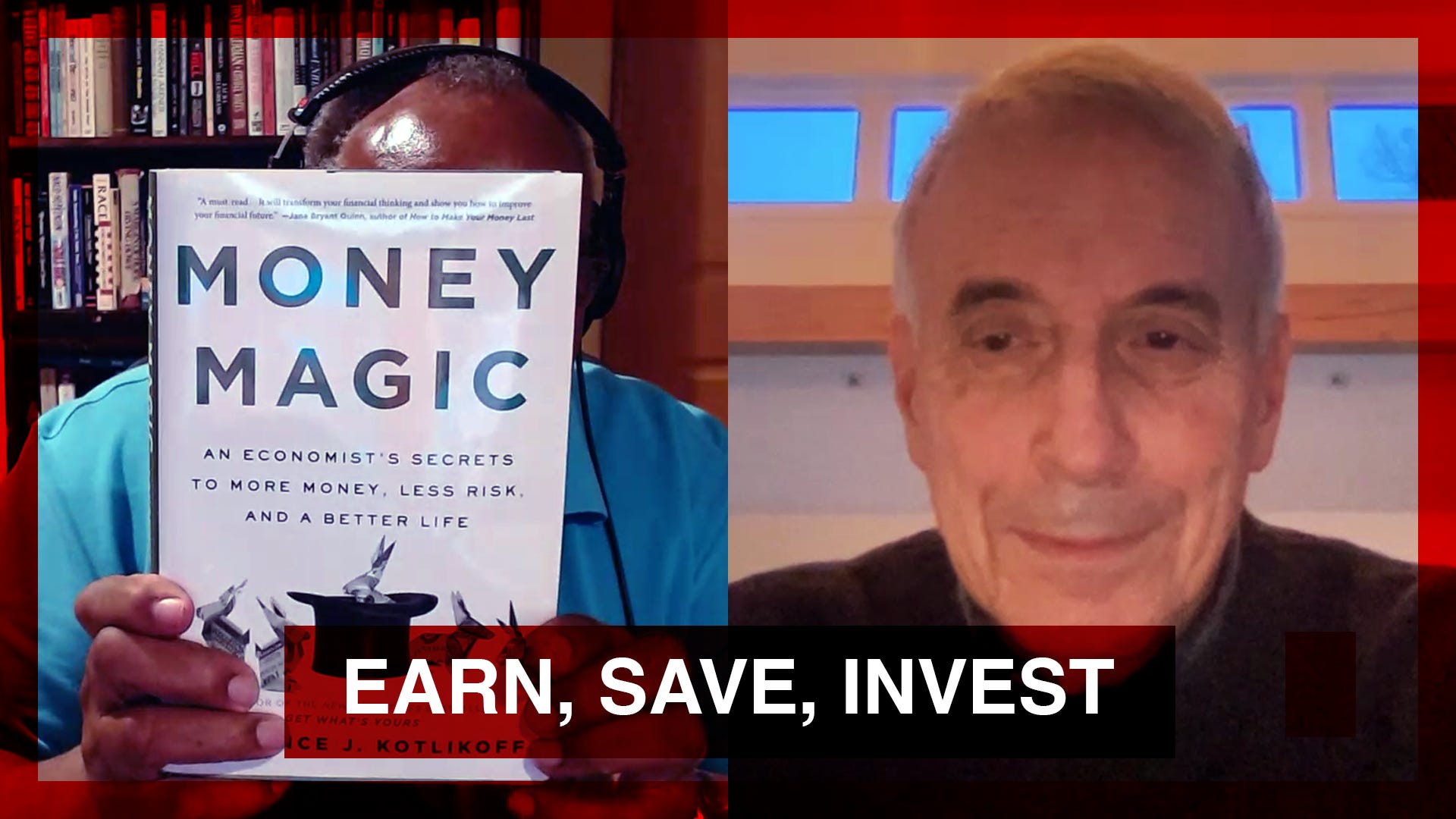
Laurence Kotlikoff – Money Magic
Here at The Glenn Show, I’m taking a little break from politics and culture to talk dollars and cents. My good friend and former Boston University colleague Larry Kotlikoff is here to discuss his new book, Money Magic: An Economist’s Secrets to More Money, Less Risk, and a Better Life. In it, Larry brings his knowledge and expertise as an economist to bear on the everyday problems of spending, saving, and investing. In this episode, he shares some of that advice with TGS viewers.But, wait a minute. Larry is a serious academic economist. Why did he write an advice book? He explains what he’s trying to accomplish with Money Magic. Larry talks about why investing in stocks may not be the best use of your money even when the market is up (especially if you’re carrying debt). I ask Larry about some of my own recent experiences managing my money, and he breaks things down in a way that non-economists can understand. For example, he says, if someone (including the U.S. government) is trying to sell you on a financial product that seems really, really complicated, it’s probably a swindle. What about major life decisions, like divorce? Even then, Larry says, you’re better off balancing the costs and benefits than making a decision without considering the financial consequences. We then get into education. Millions of people in this country carry unmanageable loads of student debt. But Larry thinks you can get an elite education without going into debt at all, and he explains how. Why does the federal government issue student loans, anyway? And is there a more equitable way it could arrange for repayment? Finally, Larry and I get into our personal history and talk about what makes successful individuals the way they are. Whether you’ve got pressing financial questions or not, you’ll want to hear what Larry has to say. This post is free and available to the public. To receive early access to TGS episodes, an ad-free podcast feed, Q&As, and other exclusive content and benefits, click below.0:00 Larry’s new book, Money Magic: An Economist’s Secrets to More Money, Less Risk, and a Better Life 4:36 Why did Larry, a serious academic economist, write a financial advice book? 14:23 Why investing in stocks may not be as safe as it seems in the long term 24:17 Larry: If a personal finance product is complicated, it’s a swindle 29:34 An economist’s guide to divorce 32:48 Is a free online Stanford education more valuable than a debt-laden traditional degree? 44:20 Why does the government offer student loans? 51:12 Larry: “We’re all self-made people at some level”Links and ReadingsLarry’s new book, Money Magic: An Economist’s Secrets to More Money, Less Risk, and a Better LifeGlenn’s classic 1981 paper, “Intergenerational Transfers and the Distribution of Earnings” This is a public episode. If you'd like to discuss this with other subscribers or get access to bonus episodes, visit glennloury.substack.com/subscribe

John McWhorter – The Burdens of Black Freedom
John McWhorter and I often find ourselves aligned on the issues we discuss on The Glenn Show. We’ve even received criticism for how much we agree with each other! This episode should please those critics, as John and I actually find ourselves in stark (though productive and friendly) disagreement on a few matters. Let’s get into it. We begin by talking about Joe Biden’s recent press conference. Personally, I think he performed pretty badly, as the White House subsequently had to walk back several of his statements. Are these just more of Biden’s characteristic gaffes, or do his misstatements reflect a deeper confusion within the administration? What values does Biden’s presidency represent, anyway? We go on to discuss voting rights and election legislation. We disagree about proposed changes to state-level voting laws: John thinks they're racist in their intent, and I remain to be convinced of that. We also disagree about the meaning of their effects. I have no problem with voter ID requirements, tightening the enforcement of existing laws, and other reasonable ballot security measures. But John is wary. He seems to be concerned that Republicans’ voting security measures are veiled attempts to increase their relative share of the turnout in certain contested districts by decreasing the participation in elections of (reliably Democratic) black voters. Why, he wonders, has ballot security become such an issue now? Of course, I have my responses! I then ask John what he thinks about New York City Mayor Eric Adams’s performance in his first weeks on the job. John was quite critical of Adams last time we talked, but he’s changed his mind. Finally, we get into the Amy Wax issue. Her recent TGS appearance and its aftermath lead us to discuss crucial questions about speech, platforming, and teaching. My fellow John Stuart Mill fans will want to pay close attention to this section.This is a rich exchange that I’m sure will provoke much commentary, so please do weigh in. This post is free and available to the public. To receive early access to TGS episodes, an ad-free podcast feed, Q&As, and other exclusive content and benefits, click below.0:00 What political values does Joe Biden represent? 8:53 Do new election laws amount to race-based voter disenfranchisement? 23:00 Glenn: Black people are free. But what should we do with that freedom? 36:06 John changes his mind about Eric Adams 42:21 John addresses linguistic informality and Sidney Poitier in his recent columns 44:28 Amy Wax: heterodox thinker, provocateur, or racist?Links and ReadingsBill Maher, “New Rule: First Lady Barack Obama” John’s NYT piece, “Don’t, Like, Overanalyze Language”John’s NYT piece, “On Sidney Poitier, Code Switching and the Black Voice”Amy Wax’s Race, Wrongs, and Remedies: Group Justice in the 21st Century This is a public episode. If you'd like to discuss this with other subscribers or get access to bonus episodes, visit glennloury.substack.com/subscribe

Heather Mac Donald – Which Black Lives Matter?
This week we’ve got Heather Mac Donald on The Glenn Show. Heather is a fellow of the Manhattan Institute, a contributing editor to City Journal, and author of several books, including The Diversity Delusion, The War on Cops, and The Burden of Bad Ideas. Heather’s writing combines meticulous research and sharp, uncompromising prose. Her positions on crime and policing have led some on the left to regard her as a bit of a boogeyman. But while she is a fierce critic of failing progressive policies, she’s also a deep and surprising thinker, as you’ll see here. We begin by exploring Heather’s recent readings in African American literature, and her reflections on the behavior of white people in this country through the mid-twentieth century. We then move into one of Heather’s area of expertise: crime and policing in American cities. She points out that those who blame rising violent crime rates on the Covid pandemic are neglecting data from other countries. The virus hit Peru, for example, much worse than it hit us, but they saw their violent crime rates drop. Why? Heather goes on to ask, if progressive activists, politicians, and media figures are so concerned with “black lives,” why do we see so little coverage of black children harmed or even killed by violent crime? You can be sure we’d hear about it if they were white. We then get into the difficult matter of family structure in black communities. Out-of-wedlock births and fatherless households are often extremely detrimental to child development. These phenomena are particularly pronounced in black communities, but they’re a problem everywhere. In fact, it’s such a problem that it seems like virtually no one has the moral authority to try to fix it. We go on to discuss the civilizational threat posed by the dissolution of academic and professional standards, the lack of responsible black leadership in the U.S., and the oft-forgotten fact that the loudest advocates for harsh drug penalties during the crack epidemic were black leaders and voters.Hope you enjoy!Note: When we discuss the work of my friend Alice Goffman, I mistakenly say that she attended graduate school at the University of Wisconsin. She actually went to Princeton. This post is free and available to the public. To receive early access to TGS episodes, an ad-free podcast feed, Q&As, and other exclusive content and benefits, click below.0:00 Heather’s deep dive into African American literature 14:23 The impact of George Floyd on violent crime rates 22:26 Heather: Why doesn’t the mainstream media cover the violent deaths of black children? 28:07 The difficulty of addressing black out-of-wedlock birth rates 39:44 Who has the moral authority to advocate for traditional family structures? 46:17 Heather: Giuliani was one of America’s greatest mayors 51:39 Glenn: Lowering academic standards threatens the foundation of our civilization 1:00:21 Looking for black leadership 1:08:54 Was the reaction to the crack epidemic a “moral panic”?Links and ReadingsVideo of Glenn’s National Conservatism Convention keynote, “The Case for Black Patriotism” The text of “The Case for Black Patriotism” in First ThingsGene Dattle’s Reckoning with Race: America’s FailureFrederick Douglass’s 1852 speech, “What to the Slave Is the Fourth of July?”Alice Goffman’s On the Run: Fugitive Life in America This is a public episode. If you'd like to discuss this with other subscribers or get access to bonus episodes, visit glennloury.substack.com/subscribe

John McWhorter – Are There More Capitol Riots to Come?
John McWhorter is back for our first conversation of 2022. Let’s get into it!We begin by discussing the death of the groundbreaking black actor Sidney Poitier. Portier was best known for his roles in films like The Defiant Ones, Lilies of the Field, In the Heat of the Night, and Guess Who’s Coming to Dinner. John puts forward the fascinating theory that Poitier’s Caribbean origins and mannerisms made him acceptable to white American audiences who were unaccustomed to seeing black men in dramatic leading roles. We also recently lost the legal scholar Lani Guinier, who was involved in a political controversy in the ‘90s when Bill Clinton nominated her for Assistant Attorney General for Civil Rights and then pulled the nomination after receiving political pressure from the right. Though Lani and I were on different ends of the political spectrum, she was an important legal thinker, and I think what happened to her was terribly unfair. Of course, while her views were controversial then, John and I note that they’re widely accepted now. We then go on to discuss a question it hadn’t previously occurred to me to ask: Why don’t we see more women in the ranks of heterodox black public intellectuals? (If you know of some I’m forgetting, let me know in the comments!) We then turn to the anniversary of the January 6 riot. John and I agree that it didn’t rise to the level of an “attempted coup” or an “insurrection,” but it doesn’t bode well for the stability of our elections or the country itself. Are we going to see more violence of this kind in future elections? And finally, John we do a quick review of some of John’s prodigious recent output for the New York Times and his podcast, Lexicon Valley. It’s great to be back with John after a month-long hiatus. Let us know what you think of the conversation!This post is free and available to the public. To receive early access to TGS episodes, an ad-free podcast feed, Q&As, and other exclusive content and benefits, click below.0:00 The significance of Sidney Poitier’s Caribbean origins 9:27 Revisiting the Lani Guinier controversy 24:09 How Guinier’s views eventually triumphed 29:50 Where are the “heterodox” black women? 38:36 Glenn: I’m worried about the stability of our electoral process 49:12 Are we on the precipice of violent political conflict? 1:01:04 An update on John’s prodigious outputLinks and Readings“They call me Mr. Tibbs.”Susan Sturm and Lani Guinier, “The Future of Affirmative Action: Reclaiming the Innovative Ideal”Abigail Thernstrom, Whose Votes Count?: Affirmative Action and Minority Voting RightsCarol Swain, Black Faces, Black Interests: The Representation of African Americans in CongressDavid Brooks’s NYT column, “Why Democrats Are So Bad at Defending Democracy” John’s NYT newsletter post, “I Can’t Brook the Idea of Banning ‘Negro’”John’s NYT newsletter post, “Stephen Sondheim Wrote My Life’s Soundtrack”John’s NYT newsletter post, “Yes, the Classics Make Us Better People”The new home of John’s language podcast, Lexicon Valley This is a public episode. If you'd like to discuss this with other subscribers or get access to bonus episodes, visit glennloury.substack.com/subscribe
Robert Woodson – How to Restore Impoverished Communities
This week I’m honored to have the distinguished Robert Woodson on the show. Since joining the civil rights movement as an activist and organizer in the ‘60s, Bob has dedicated himself to finding solutions to the problems of poverty and dysfunction in America. Through the Woodson Center, Bob helps fund and advise programs that are on the ground and working to solve some of the toughest problems in American communities. He’s got more awards and achievements than I can possibly list here, and there’s no telling how many lives he’s changed over the years. In this conversation, Bob and I talk about some of the problems with large-scale anti-poverty funding. Bob argues that, while big programs and studies may have their hearts in the right place, they are plagued by inefficiency and often vulnerable to misappropriation. Moreover, welfare programs can introduce perverse incentives into vulnerable communities, creating cycles of dependency that prevent recipients from achieving self-sufficiency. Bob emphasizes the importance of working with people from within those communities, especially those who use faith as a starting point for practical reform. I ask Bob how local programs like this can scale up, especially when they’re religious in nature, and he points to a heartening example in Philadelphia. Bob then takes us through some of the programs the Woodson Center is partnered with and describes the phenomenal work they do. Finally, I announce in public something that has been in the works for a while here at TGS. Starting this year, 10 percent of The Glenn Show’s net earnings will be donated to the Woodson Center to help fund programs of the kind Bob describes. I’ll also periodically have some of the people behind those programs on as guests to talk about their work. I’m grateful for all of the success I’m having here, and it feels right to pay it forward.This post is free and available to the public. To receive early access to TGS episodes, an ad-free podcast feed, Q&As, and other exclusive content and benefits, click below.0:00 Bob: “There is no monolithic ‘Black Community’”8:27 How much anti-poverty spending actually goes to poor people? 19:35 Recalibrating welfare’s perverse incentives 25:15 Can community faith-based interventions scale up? 34:37 The moral inconsistencies of progressive policy 42:24 What should we focus on instead of race? 46:54 How the Woodson Center is working to restore communities 1:01:59 Why is there no religious dimension to current racial justice movements? 1:05:00 The Glenn Show gives backLinks and ReadingsThe Woodson CenterThe Piney Woods SchoolVoices of Black Mothers UnitedVBMU’s Sylvia Bennett-Stone on The Glenn ShowProject H.O.O.D.Hope for Prisoners This is a public episode. If you'd like to discuss this with other subscribers or get access to bonus episodes, visit glennloury.substack.com/subscribe
John McWhorter – The Best of "The Black Guys" 2021
It’s been a big year here at The Glenn Show. So as 2021 draws to a close, I thought it would be a nice idea to round up some choice selections from the conversations I’ve had with John over the past year. This episode is a kind of “best of” compilation of segments that got a big response from viewers or that I personally thought were important or noteworthy. I couldn’t include all of the highlights, but I think these clips give a good sense of what my conversations with John were all about in 2021.I must also offer my thanks and gratitude to everyone who read, listened, watched, and commented this year, and especially to those of you who continue to support TGS by subscribing to this newsletter. We wouldn’t be able to do it without you. So from the bottom of my heart, thank you!I’m sure I left out things that regular viewers think were worthy of inclusion. What were some of the segments that resonated with you over the last year? What caused you to think, changed your mind, or made you laugh? Post ‘em in the comments!This post is free and available to the public. To receive early access to TGS episodes, an ad-free podcast feed, Q&As, and other exclusive content and benefits, click below.0:00 A special “thank you” from Glenn 6:23 Race and classics (June 18)18:20 Maintaining domestic tranquility in the face of political differences (March 22)36:06 The “badass motherfucker” problem (April 19)46:31 An “aria” on free will and community (July 2)51:04 Responding to “Simone” (November 19)56:18 Glenn: “I was wrong” about Trump (January 22)1:09:37 Reflections on Obama's legacy (October 1)1:18:32 Finding hope amidst wokeness (November 19) This is a public episode. If you'd like to discuss this with other subscribers or get access to bonus episodes, visit glennloury.substack.com/subscribe

Amy Wax – Contesting American Identity
On this week’s show, I talk with Professor Amy Wax of the University of Pennsylvania Law School. As you might have guessed, we get into some very controversial territory. But that’s why I enjoy talking to Amy—she doesn’t pull her punches.Amy begins by talking about her position at Penn Law, where a group of alumni are attempting to get her fired. It’s not the first time people have tried this—as Amy notes, she’s been “canceled” many times, but she’s still here. We move on to a discussion of immigration. While I think the U.S. has benefitted from the talent and value of non-Western immigrants and will require more of them in the future if we’re going to compete, Amy is more skeptical. She wonders whether immigrants from South Asia and East Asia have democratic sensibilities that are compatible with American culture. She worries, too, that these immigrants will adopt woke political positions. But is it necessary to look abroad for a supply of talented, technically minded people? Why can’t we find them here? Amy and I both think that would be a good idea. Amy asks me how conservatives should deal with the problem of wokeness. I tell her that we have to fight these battles as they come. We spend the last third of our conversation talking about the extremely contentious issues of white identity, European history, and colonialism. It wouldn’t be a conversation with Amy Wax if we didn’t push every possible hot button. I’m very curious to know what you all think of the conversation. Let me know in the comments!This post is free and available to the public. To receive early access to TGS episodes, an ad-free podcast feed, Q&As, and other exclusive content and benefits, click below.Want to give the gift of The Glenn Show this holiday season? Click below to purchase a subscription for a friend or loved one. 0:00 The latest attempt to get Amy fired from Penn Law 5:41 Should we be worried even about elite non-Western immigration? 19:21 Amy: “There’s nothing wrong with stereotyping” when it’s done correctly 26:28 Glenn: America need immigrants if we’re going to compete 34:23 Why aren’t we looking harder for technical talent in America? 40:09 The problem with “equal representation” 47:15 Glenn: Wokeness is a political problem that must be fought politically 59:38 The collective action problem of “commonsense” race politics 1:02:36 Is Charles Murray right to worry about white identity politics? 1:18:12 Glenn: “We need to abandon the identitarian matrix altogether” 1:26:37 Was European colonialism especially bad or an expression of broader human tendencies?Links and ReadingsGlenn’s 2021 National Conservatism Conference speech, “The Case for Black Patriotism” in First Things.A transcript of Amy’s 2019 National Conservatism Conference speechMatt Taibbi, “The Red-Pilling of Loudoun County, Virginia”Yuval Levin, “The Changing Face of Social Breakdown”Michael Anton, “Unprecedented” Adam Hochschild, King Leopold’s Ghosts: A Story of Greed, Terror, and Heroism in Colonial Africa This is a public episode. If you'd like to discuss this with other subscribers or get access to bonus episodes, visit glennloury.substack.com/subscribe
John McWhorter – Unsettling the "Settled Questions"
The “common sense” of the Woke Left sees so many issues, from the historical effects of redlining to the relationship between race and IQ, as matters that no longer require discussion. “Redlining is responsible for present-day racial wealth disparities, period. There is no relationship between race and IQ, period. End of discussion.”But the discussion is not over, these matters and many others are not settled. Treating them as such just papers over matters of vital concern that require serious thinking. John and I have in some sense made it our mission to unsettle these so-called settled questions. And in the course of doing it, we’ve unsettled the people that consider the questions settled as well. We talk a bit about in this week’s conversation.I begin by talking to John about reaching what may be the current high-water mark of his fame: He was a clue on a recent episode of Jeopardy. There are perhaps more data-driven ways of understanding how fame works, but if the writers on Jeopardy know who you are, you must be exerting some kind of influence on the culture. We then move on to discuss attempts by activists to change math curricula in order to (these activists claims) make them more accommodating to black students. Some argue that these changes don’t alter the fundamental character of math education, but John strongly disagrees. Which is not to say that considerations of diversity have no place in the sciences. Graduate programs in technical fields could take more risks in who they admit to their programs without lowering their overall standards. Doing so might net them the next Roland Fryer (or even the next Glenn Loury). We then return to the small screen. John talks about going on The View to promote Woke Racism, and I talk about debating Michael Eric Dyson on Bill Maher’s Real Time. With the Jussie Smollett verdict in, we reflect on the bizarre story the Empire actor tried to sell and his maybe even more bizarre refusal to admit he lied. We then go on to discuss America’s “black-white” racial binary. With so many people of so many different backgrounds, ethnicities, and colors now populating the country, does this mindset still make sense? And finally, we ask why cultural explanations for racial disparities are still taboo for so many people.As always, this was a stimulating, deep, and fun conversation with my good friend. I hope you enjoy it! This post is free and available to the public. To receive early access to TGS episodes, an ad-free podcast feed, Q&As, and other exclusive content and benefits, click below.Want to give the gift of The Glenn Show this holiday season? Click below to purchase a subscription for a friend or loved one. 0:00 This regular TGS guest was recently a clue on Jeopardy 2:23 Is race-conscious math education as radical as it sounds? 14:17 Why diversity, when done right, can be an asset 19:55 John on The View, Glenn on Bill Maher 26:34 The strange case of Jussie Smollett 43:42 Does the American “white-black” binary make sense anymore? 49:39 If America is irredeemably racist, why do so many non-white people immigrate here? 58:18 What’s the matter with “culture”?Links and ReadingsJohn’s appearance on Nathan Robinson’s podcast Stephon Alexander’s Fear of a Black Universe: An Outsider’s Guide to the Future of PhysicsDavid Austen-Smith and Roland Fryer, “An Economic Analysis of ‘Acting White’”Andrew Sullivan, “The Woke: On the Wrong Side of History”Matt Taibbi, “The Red-Pilling of Loudon County, Virginia” This is a public episode. If you'd like to discuss this with other subscribers or get access to bonus episodes, visit glennloury.substack.com/subscribe
A Response to "Simone"
The audiovisual experiments continue here at The Glenn Show. In some of our recent conversations, John McWhorter and I talked about how we would reply to “Simone,” a fictionalized version of one of my students at Brown who believes that systemic racism causes most or all of the racial disparities in the US. I think Simone is wrong about that, but this idea is so widespread that John and I agreed that we can’t just brush it aside. We need to address and refute it head on. We attempted to do that in this conversation. And I think we did a pretty good job! But in a comment, a reader, Adam, pointed out that we neglected to anticipate some very strong arguments that Simone might have made in her own defense. I replied to Adam, but I think our exchange deserves a more prominent place, so I recorded an audio version and Nikita Petrov created some visuals to go along with it. We’re looking to produce more content like this in the future, but we’d love your input. Let me know what you think in the comments!This post is free and available to the public. To receive early access to TGS episodes, an ad-free podcast feed, Q&As, and other exclusive content and benefits, click below.Want to give the gift of The Glenn Show this holiday season? Click below to purchase a subscription for a friend or loved one. This is a public episode. If you'd like to discuss this with other subscribers or get access to bonus episodes, visit glennloury.substack.com/subscribe
Rav Arora – Race and Crime after the Summer of 2020
This week on TGS we’ve got Rav Arora. He’s a compelling writer on race matters in the US. He’s also a college undergraduate, though it would be a mistake to underestimate him. He’s already published in a number of widely read outlets, including the New York Post, Quillette, and City Journal. He’s also got a Substack called Noble Truths, where he writes about psychedelics, meditation, and cultural trends. I begin by inquiring into Rav’s intellectual background. What is this young guy from Canada doing writing about race and crime in the US, anyway? Rav talks about how the summer of 2020 led him to rethink his views and begin writing about them for the public. Rav is quite critical of the way that race, crime, and policing are covered in the US media, but he’s got a nuanced view of things. He talks about why he thinks we need police reform and also more police on the streets. We then move on to a discussion of systemic racism. I say it’s not inconceivable that a police department with a disproportionately high number of black officers could perpetuate racial inequality, though Rav doesn’t seem quite convinced that’s the case. From there, we discuss the misguided claim that violent crime in some black communities is driven solely by poverty. When the question of genetic factors in crime rates comes up, I don’t demure. I don’t know whether there actually is a genetic component, but I’m not ready to dismiss it out of hand. And we round out the discussion by touching on alternatives to incarceration, the increasing earning power of Asian American women, and the recent historic rise in US homicide rates. Rav and I covered a lot of ground in this one. He’s a vital new voice, one I’ll be paying close attention to—I hope you will, too. This post is free and available to the public. To receive early access to TGS episodes, an ad-free podcast feed, Q&As, and other exclusive content and benefits, click below.Want to give the gift of The Glenn Show this holiday season? Click below to purchase a subscription for a friend or loved one. 0:00 How Rav got his start on the crime, policing, and identity politics beat 10:33 Why is a Canadian college student writing about race and crime in the US? 21:30 Rav: We need police reform but also more police in black communities 31:34 Will hiring more black police officers make police departments “less racist”? 43:26 Glenn: It’s ridiculous to say that violent crime is driven only by poverty 50:04 Is it possible that racial disparities in crime rates have a genetic basis? 55:09 Are there any effective alternatives to prison? 1:00:52 Why Asian American women are out-earning white men 1:10:23 What’s behind the historic rise in homicide rates?Rav’s Substack, Noble TruthsAldon Morris’s Scientific American essay, “From Civil Rights to Black Lives Matter”Rav’s Quillette piece, “A Peculiar Kind of Racist Patriarchy” Urban Labs’ Becoming a Man program David Frum’s 2016 interview with Barry Latzer about crime wavesLast year’s famous study of the “Minneapolis effect”The Marshall Project’s analysis of race and victimization in 2020 This is a public episode. If you'd like to discuss this with other subscribers or get access to bonus episodes, visit glennloury.substack.com/subscribe

John McWhorter — Anger, Shame, Sadness, and Race in America
John and I often talk about how we feel about race in America, but we rarely delve into why we feel the way we feel. What factors in our own lives primed us for those emotional responses? While John and I often agree about where the politics of race have gone wrong, we just as often experience very different feelings about these matters.I start the discussion off by raising a question a friend put to me recently: are we wasting our time engaging with “red meat” issues in the race debate? Should we stick to the hard data before wading into the culture war? This leads us to discuss our very different emotional responses to the people we disagree with. I tend to go to anger and John tends toward empathy. We look to our respective pasts to try to understand why we diverge in this way. In fact, we stay in the past for a while, looking back on our exposure to Afrocentrism and black radicalism in our youths and to the skepticism that often attended those encounters. Finally, we work our way back around to “Omar.” Personally, I believe that the Omars of the world can and must lay claim to their agency. That they often refuse to is source of constant frustration and, yes, shame. It’s an intense episode. It’s also one marred by technical difficulties. John lost his connection at several points during the conversation, and finally what had been a dialogue became a monologue. Apologies for the rough edges!Want to give the gift of The Glenn Show this holiday season? Click below to purchase a subscription for a friend or loved one.0:00 Are Glenn and John wasting their time by talking about race? 10:36 How Glenn and John’s families shaped their attitudes toward race 20:42 Looking back on past radicalism 27:15 Glenn: Is my anger necessary? 33:26 Can “Omar” change his ways? This is a public episode. If you'd like to discuss this with other subscribers or get access to bonus episodes, visit glennloury.substack.com/subscribe
Laurence Kotlikoff — Fending Off Inflation
In this week’s TGS, my old friend Larry Kotlikoff, an economist at Boston University, is back to talk about some of our most pressing economic concerns. Chief among them is the inflation rate, which has hit a 30-year high. By some accounts, inflation is now threatening to do major, possibly longterm damage to the US economy. But are things as bad as they seem? Larry will take us through his analysis and talk about some other looming economic troubles. If you want to understand how these things work, Larry is your guy.We begin by discussing just why high inflation poses such a dire threat to the economy. Obviously it’s something to be concerned about, but will it get bad enough to send us the way of Weimar Germany? This leads us to discuss Biden’s recent policy decisions, including the $1.2 trillion infrastructure bill. Larry argues that it’s not as costly as it sounds when you consider that it’s parceled out over the course of a decade. Larry is much more concerned about the fiscal gap, which is enormous and, according to Larry, could eventually lead the US into insolvency. Larry sees this as a problem that can only be solved by responsible political leadership, but we have trouble naming any current politicians with the influence to get it done. It’s always great to have Larry on the show (even if he has a tendency to make some pretty frightening predictions about the future). As always, I’m interested to know what you think!This post is free and available to the public. To receive early access to TGS episodes, an ad-free podcast feed, Q&As, and other exclusive content and benefits, click below.Want to give the gift of The Glenn Show this holiday season? Click below to purchase a subscription for a friend or loved one. 0:00 Why high inflation is a potentially dire problem 9:00 Are we headed the way of Weimar Germany and Argentina? 20:37 How short-term government spending can function as a longterm investment 30:02 The looming threat of the fiscal gap 37:08 Why is the US’s fiscal gap so large compared to that of other countries? 41:30 Larry: We’re on the path to becoming a second-rate country 46:37 Why Larry thinks we should index taxes to inflation 53:36 Can we pay for what we’re spending without printing money?Links and ReadingsSteven Rattner’s NYT guest essay, “I Warned the Democrats about Inflation”Larry Summers’s WaPo op-ed, “On inflation, it’s past time for team transitory to stand down”Larry’s website This is a public episode. If you'd like to discuss this with other subscribers or get access to bonus episodes, visit glennloury.substack.com/subscribe

The Double Life, Once More
A couple weeks ago in this space, I published an autobiographical sketch called “The Double Life.” It elicited such a strong reaction from readers that I wanted to revisit it, so I recorded an audio version and Nikita Petrov, my creative director, created a video feature to go along with it. I plan to do more of these audio/video pieces in the future, mostly for subscribers. Let me know what you think of this new feature in the comments!This post is free and available to the public. To receive early access to TGS episodes, ad-free versions of the podcast, Q&As, and other exclusive content and benefits, click below. This is a public episode. If you'd like to discuss this with other subscribers or get access to bonus episodes, visit glennloury.substack.com/subscribe
John McWhorter — Systemic Racism's Greatest Hits
This week, John and I continue our discussion of systemic racism, which was kicked off when one of my students wrote a searing critique of some of my positions. John and I agreed that “Simone” (not her real name) deserved a real, intellectually serious response. We can’t just blow off Simone and people like her—that is, sober-minded, sincere, intelligent progressives and leftists who happen to think that systemic racism is responsible for all or most of America’s racial disparities. In responding to their critiques, we hope to persuade them that there are more accurate ways to describe the situation. The first part of this attempt came by way of our conversation with Randy Kennedy. This is the second entry. In our next conversation, John and I hope to move from outlining the problems to proposing some solutions.This conversation kicks off with the revelation that demand for John has outstripped supply—he simply doesn’t have time to talk about his book Woke Racism on podcasts anymore. We then set the table a bit and outline our broad critique of theories of systemic racism. We talk about whether it still makes sense to attribute racial disparities to black people’s status as victims of perpetual injustice. Are we really victims? Or has that story gotten old? We then move on the racial wealth gap, where we debunk claims about redlining and discuss why comparing the median incomes of whites and blacks makes no sense if you want to see what’s important about wealth disparities. We then move on to a slightly trickier subject: crack and powder cocaine sentencing disparities and incarceration. This is an area where I really do think there’s probably something to accusations of systemic racism, though that is not the only issue at play. John wants to know whether academic historical analyses of systemic racism can offer any counsel to ordinary people today. We end the discussion proper on the question of a racist white backlash against the excesses of woke politics.I think many of you will find this one quite satisfying. I’m interested to hear what you think!This post is free and available to the public. To receive early access to TGS episodes, an ad-free podcast feed, Q&As, and other exclusive content and benefits, click below.0:00 John takes a step back from podcasting 3:29 Confronting the critique of systemic racism 14:18 The persistence of victimhood 19:36 Accounting for the racial wealth gap 31:50 Glenn: When it comes to incarceration, we have to take systemic racism seriously 46:29 Can analyses of historical systemic racism offer us counsel today? 51:52 John: Certain members of "the Elect" would be pleased to see an alt-right backlashLinks and ReadingsMatthew Desmond’s piece on plantation slavery from the 1619 ProjectMichael Fortner’s book, The Black Silent Majority: The Rockefeller Drug Laws and the Politics of PunishmentJames Forman, Jr.’s book, Locking Up Our Own: Crime and Punishment in Black America This is a public episode. If you'd like to discuss this with other subscribers or get access to bonus episodes, visit glennloury.substack.com/subscribe
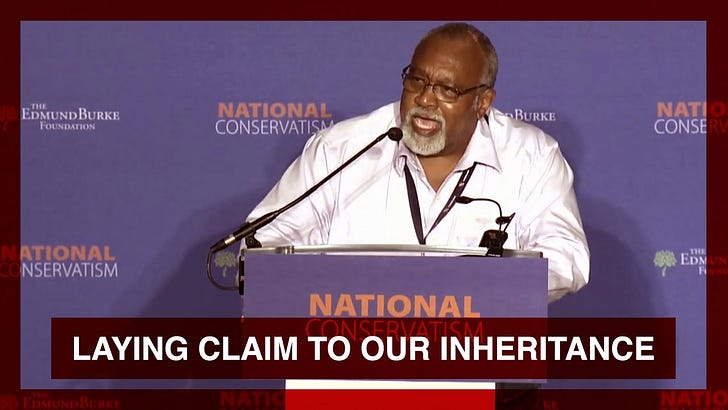
Whose Fourth of July?: Black Patriotism and Racial Inequality in America
Recently, I was asked to deliver a speech at the National Conservatism Conference, which was held in Orlando, Florida. It was high-profile affair with many prominent conservative intellectuals, media figures, and politicians speaking and in attendance. And I don’t mind saying I had a prime speaking slot! I used the speech to develop some ideas I’ve aired here on TGS, and I think many of you will be gratified by the reaction they get from the crowd. But make no mistake: I’m not just telling them what they want to hear. In the speech, I try to make the case for black patriotism, the forthright embrace of American nationalism by black people. I argue that, ultimately, most black people want the same things as most other Americans: safety, a shot at improvement, a fair and just government, and personal freedom. Black people share a common culture with the rest of the country—emphasizing racial difference obscures that essential fact. I also argue that conservatives need to go beyond making generic, color-blind claims about America and leaving it at that. Racial inequality is real, and there do need to be initiatives put it place to remedy it. I then go on to outline some “unspeakable truths” about race pertaining to four topics: racial disparity, the racialization of police violence, the threat of white backlash, and American equality. I end by engaging with Frederick Douglass, who gave a famous address about slavery and the Fourth of July. The Fourth is, indeed, “ours”—all of ours. This post is free and available to the public. To receive early access to TGS episodes, an ad-free podcast feed, Q&As, and other exclusive content and benefits, click below.0:00 “Tolstoy is mine. Dickens is mine. Newton, Maxwell, and Einstein are mine” 4:13 “Our Americanness is much more important than our blackness” 7:39 Conservatives cannot go back to "business as usual" on race9:22 A conservative prescription for persistent racial inequality 11:38 The roots of racial disparity 17:17 Putting police killings of black Americans into perspective 23:58 From white guilt to white backlash 28:10 The “lie” that the American Dream doesn’t apply to blacks 34:47 Black people “must seize equal status” This is a public episode. If you'd like to discuss this with other subscribers or get access to bonus episodes, visit glennloury.substack.com/subscribe