The Essay
1,128 episodes — Page 12 of 23
To The Lighthouse
Dr Rita Charon traces parallels between the portents of war in Virginia Woolf's novel and the responses of her New York City patients to the 9/11 attacks. This is part four of The Essay's five-part series, Narrative Medicine - a term coined to describe the capacity to recognize, absorb, metabolize, interpret, and be moved by stories of illness. Simply, it's medicine practised by someone who knows what to do with stories. Part of the BBC's NHS at 70 season. Warning: this episode deals with serious medical issues and trauma.
The Wings of the Dove
Dr Rita Charon finds a model physician in the pages of Henry James: someone who though on the sidelines of a person's life remains a loyal advocate. This is part two of The Essay's five-part series, Narrative Medicine - a term coined to describe the capacity to recognize, absorb, metabolize, interpret, and be moved by stories of illness. Simply, it's medicine practised by someone who knows what to do with stories. Part of the BBC's NHS at 70 season. Warning: this episode deals with serious medical issues and trauma.
The Underground Railroad
Dr Rita Charon explains how Colson Whitehead's 2016 novel about American slavery is used to train medical students, encouraging them to "write what can't be told".This is the final part of The Essay's five-part series, Narrative Medicine - a term coined to describe the capacity to recognize, absorb, metabolize, interpret, and be moved by stories of illness. Simply, it's medicine practised by someone who knows what to do with stories. Part of the BBC's NHS at 70 season. Warning: this episode deals with serious medical issues and trauma.
Sonny's Blues
How James Baldwin's short story helped a doctor and her patient break down the divisions of class, age and race. This is part one of The Essay's five-part series, Narrative Medicine - a term coined to describe the capacity to recognize, absorb, metabolize, interpret, and be moved by stories of illness. Simply - it's medicine practised by someone who knows what to do with stories. Part of the BBC's NHS at 70 season. Warning: this episode deals with serious medical issues and trauma.
Elizabeth Cady Stanton and Women's Rights
170 years ago one woman launched the beginning of the modern women's rights movement in America. New Generation Thinker Joanna Cohen of Queen Mary University of London looks back at her story and what lessons it has for politics now. In the small town of Seneca Falls in upstate New York, Elizabeth Cady Stanton wrote The Declaration of Sentiments, a manifesto that took one of the nation's most revered founding documents, Jefferson's Declaration of Independence, and turned its condemnation of British tyranny into a blistering attack on the tyranny of American men. But why did Stanton choose to rebrand her claim for rights with the power of sentiment?Recorded with an audience at the York Festival of Ideas.New Generation Thinkers is a scheme run by the BBC and the Arts and Humanities Research Council to select ten academics each year who can turn their research into radio programmes. Producer: Jacqueline Smith.
John Gower, the Forgotten Medieval Poet
The lawyer turned poet whose response to political upheaval has lessons for our time - explored by New Generation Thinker Seb Falk with an audience at the York Festival of Ideas The 14th century's most eloquent pessimist, John Gower has forever been overshadowed by his funnier friend Chaucer. Yet his trilingual poetry is truly encyclopedic, mixing social commentary, romance and even science. Writing 'somewhat of lust, somewhat of lore', Gower's response to political upheaval was to 'shoot my arrows at the world'. Whether you want to be cured of lovesickness or learn the secrets of alchemy, John Gower has something to tell you.New Generation Thinkers is a scheme run by the BBC and the Arts and Humanities Research Council (AHRC) to select ten academics each year who can turn their research into radio. Producer: Jacqueline Smith.
Sarah Scott and the Dream of a Female Utopia
A radical community of women set up in 1760s rural England is explored in an essay from New Generation Thinker Lucy Powell, recorded with an audience at the 2018 York Festival of Ideas.Sarah Scott's first novel, published in 1750, was a conventional French-style romance, the fitting literary expression of a younger daughter of the lesser gentry. One year later, she had scandalously fled her husband's house, and pooled finances and set up home with her life-long partner, Lady Barbara Montagu. Her fourth novel, Millennium Hall, described in practical detail the communal existence of a group of women who had taken refuge in each other's company and created an all-female utopia in rural England. On Lady Bab's death, in 1765, Scott would attempt to create this radical community in actuality. Lucy Powell will explore the life, work, and far-reaching influence of this extraordinary writer. New Generation Thinkers is a scheme run by the BBC and the Arts and Humanities Research Council (AHRC) to select ten academics each year who can turn their research into radio. Producer: Jacqueline Smith.
The Forgotten German Princess
The most famous imposter of the seventeenth century - Mary Carleton. John Gallagher, of the University of Leeds, argues that the story of the "German Princess" raises questions about what evidence we believe and the currency of shame. Her real name was thought to be Mary Moders and she became a media sensation in Restoration London, after her husband's family, greedy for the riches they believed her to be concealing, accused her of bigamy and put her on trial for her life. Her life, and what remains to us of it, forces us to ask hard questions of the sources from her time. Whose word do we trust? Recorded with an audience at the 2018 York Festival of Ideas. New Generation Thinkers is a scheme run by the BBC and the Arts and Humanities Research Council (AHRC) to select ten academics each year who can turn their research into radio. Producer: Jacqueline Smith.
Rehabilitating the Reverend John Trusler
Sophie Coulombeau tells the story of John Trusler, an eccentric Anglican minister who was the quintessential 18th-century entrepreneur. He was a prolific author, an innovative publisher, a would-be inventor, and a 'medical gentleman' of dubious qualifications. Dismissed by many as a conman and scoundrel, today, few have heard of the man but his madcap schemes often succeeded, in different forms, a century or two later. In his efforts we can trace the ancestors of the thesaurus, the self-help book, Comic Sans, professional ghostwriting, the Society of Authors, and electrotherapy. New Generation Thinker Sophie Coulombeau argues that telling his story can help us to reinterpret and rehabilitate the very idea of 'failure'. Recorded with an audience at the York Festival of Ideas 2018.New Generation Thinkers is a scheme run by the BBC and the AHRC to select ten academics each year who can turn their research into radio. Producer: Jacqueline Smith.
Forest Fire
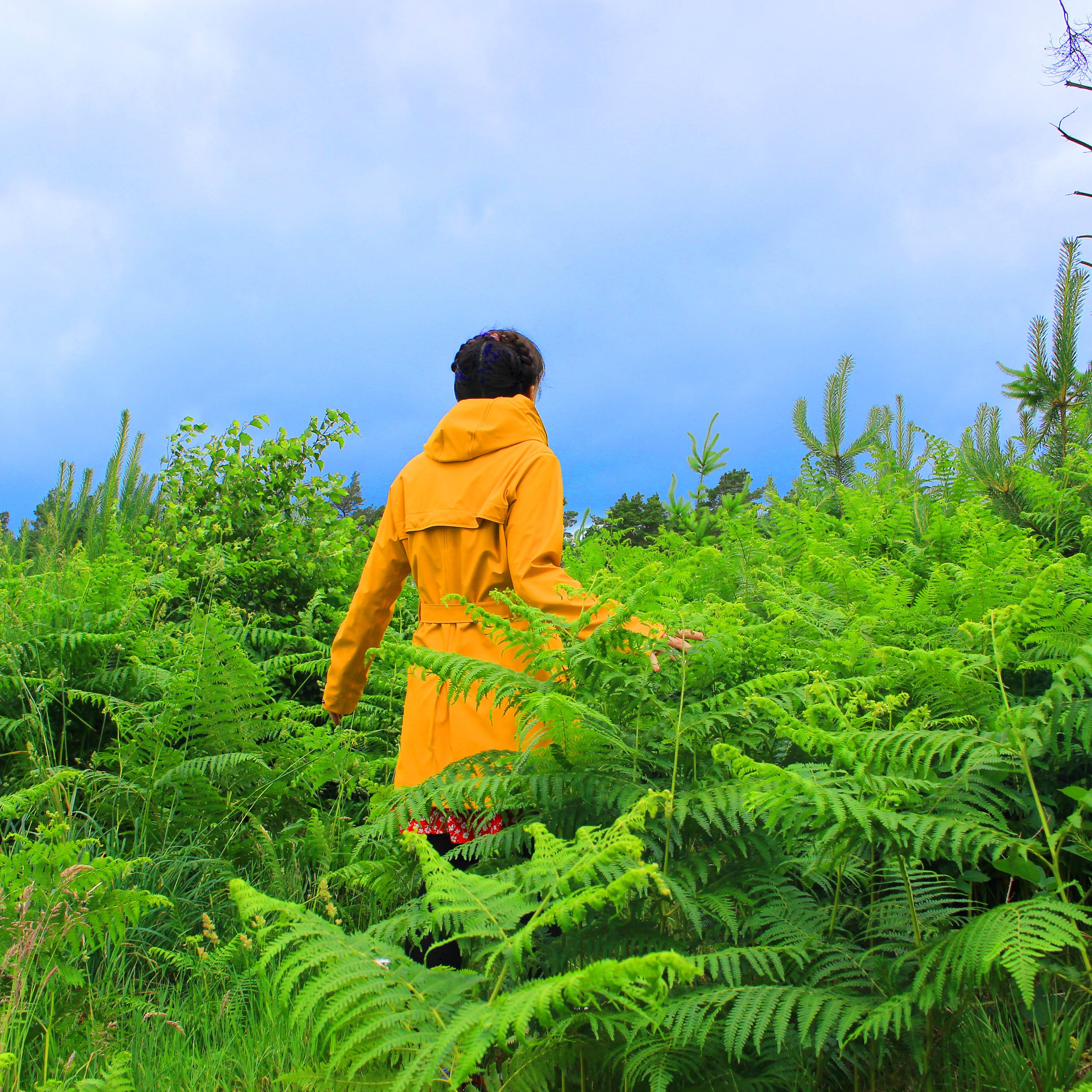
Forests are a potent source of inspiration for artists, writers and composers but the truly creative force in the forest is fire. Andrew C Scott from Royal Holloway, University of London is the author of 'Burning Planet'. He stands in awe of the power of fire to reshape our forests and the ability of nature to bounce back, offering fresh space for new plants and animals to colonise.Andrew takes Eleanor Rosamund Barraclough for a walk through Swinley Woods in Berkshire, site of a spectacular fire in 2011 that, for one terrible day, threatened Windsor Castle and thousands of homes.Producer: Alasdair CrossIn midsummer week, Radio 3 enters one of the most potent sources of the human imagination. 'Into the Forest' explores the enchantment, escape and magical danger of the forest in summer, with slow radio moments featuring the sounds of the forest, allowing time out from today's often frenetic world.
Forests of the Imagination
What is it about forests that inspires our imagination? In this series of Essays for our Into the Forest season, Eleanor Rosamund Barraclough takes five woodland walks with writers and artists who find themselves moved by the sounds, textures and smells of the forest.She's joined first by Fiona Stafford, author of 'The Long, Long Life of Trees' and expert on the Romantic poets. Fiona is fascinated by the moment in the late 18th century when Britain's great forests were swept away by the demands of the Royal Navy and the Enclosure Acts. As the dark forests with their brigands and wild beasts disappeared, novelists and visual artists were free to conjure up their own dappled glades, to create spaces of romantic imagination.Producer: Alasdair CrossIn midsummer week, Radio 3 enters one of the most potent sources of the human imagination. 'Into the Forest' explores the enchantment, escape and magical danger of the forest in summer, with slow radio moments featuring the sounds of the forest, allowing time out from today's often frenetic world.
Mab Jones on Jane Eyre
Recorded at this week's Hay Festival 2018, Mab Jones introduces us to her favourite female character in literature - Charlotte Bronte's Jane Eyre, with whom she identifies most - and extracts the lessons we could all learn from her.Mab is a poet and a recent recipient of a Creative Wales Award, and a frequent presenter of BBC radio documentaries, including 'Hiraeth' and 'The Black Chair'. Mab is also the coordinator of International Dylan Thomas Day, consisting of 62 events around the globe. Her publications include 'Poor Queen' and 'take your experience and peel it'.In this series of The Essay, five female writers offer a personal guide to favourite and well-known female fictional characters - extracting the lessons we could all learn from them.The writers in this series include broadcaster Afua Hirsch, historian Bettany Hughes, poet Fiona Sampson and award-winning novelist Francesca Rhydderch.With Lunchtime Concert, In Tune, Free Thinking, The Verb and The Listening Service all broadcasting from the festival, The Essay is part of Hay Week at BBC Radio 3.
Francesca Rhydderch on Orlando
Recorded at this week's Hay Festival 2018, Francesca Rhydderch introduces us to her favourite female character in literature - Virginia Woolf's, arguably, most playful and ground-breaking character Orlando from her novel 'Orlando: A Biography' - and extracts the lessons we could all learn from her.Francesca is an Associate Professor at Swansea University, with her area of expertise in creative writing. Her debut novel, 'The Rice Paper Diaries', won the Wales Book of the Year Fiction Prize 2014 and her novel 'The Taxidermist's Daughter' was shortlisted for the BBC National Short Story Award in the same year.In this series of The Essay, five female writers offer a personal guide to favourite and well-known female fictional characters - extracting the lessons we could all learn from them.The writers in this series include broadcaster Afua Hirsch, historian Bettany Hughes and poets Fiona Sampson and Mab Jones.With Lunchtime Concert, In Tune, Free Thinking, The Verb and The Listening Service all broadcasting from the festival, The Essay is part of Hay Week at BBC Radio 3.
Fiona Sampson on Mother Courage
Recorded at this week's Hay Festival 2018, Fiona Sampson introduces us to her favourite female character in literature - Bertolt Brecht's anti-heroine Mother Courage, from his play 'Mother Courage and Her Children' - and extracts the lessons we could all learn from her.Fiona is an award-winning poet and writer, who has published nearly 30 books, including collections of poetry and works on writing process. She contributes articles to newspapers including The Guardian, Sunday Times and The Independent. Her most recent publication is 'On the White Plain: the search for Mary Shelley'. Fiona was awarded an MBE in 2017.In this series of The Essay, five female writers offer a personal guide to favourite and well-known female fictional characters - extracting the lessons we could all learn from them.The writers in this series include broadcaster Afua Hirsch, historian Bettany Hughes, award-winning novelist Francesca Rhydderch and poet Mab Jones.With Lunchtime Concert, In Tune, Free Thinking, The Verb and The Listening Service all broadcasting from the festival, The Essay is part of Hay Week at BBC Radio 3.
Bettany Hughes on Helen of Troy
Recorded at this week's Hay Festival 2018, Bettany Hughes introduces us to her favourite female character in literature - Helen of Troy; a character written about in fiction for millennia - and extracts the lessons we could all learn from her.Bettany is an historian, author and broadcaster, with her speciality in classical history. She has written a number of books including 'Helen of Troy: Goddess, Princess, Whore' and has presented for BBC Radio 3 for the Sunday Feature strand, for 'The Romans in Britain' in 2011 and for BBC Radio 4 in for a 3-part series 'Amongst the Medici' in 2006.In this series of The Essay, five female writers offer a personal guide to favourite and well-known female fictional characters - extracting the lessons we could all learn from them.The writers in this series include broadcaster Afua Hirsch, poets Fiona Sampson and Mab Jones and award-winning novelist Francesca Rhydderch.With Lunchtime Concert, In Tune, Free Thinking, The Verb and The Listening Service all broadcasting from the festival, The Essay is part of Hay Week at BBC Radio 3.
Afua Hirsch on Maggie Tulliver
Afua Hirsch introduces us to her favourite female character in literature - Maggie Tulliver from George Eliot’s ‘Mill on the Floss’ – and extracts the lessons we could all learn from her. Recorded at this week’s Hay Festival 2018,Afua is a writer, broadcaster and journalist; she is also a barrister with a speciality in international development. Her first book, titled ‘Brit(ish): On Race, Identity and Belonging, was published in January 2018.In this series of The Essay, five female writers offer a personal guide to favourite and well-known female fictional characters - extracting the lessons we could all learn from them.The writers in this series include historian Bettany Hughes, poets Fiona Sampson and Mab Jones and award-winning novelist Francesca Rhydderch.With Lunchtime Concert, In Tune, Free Thinking, The Verb and The Listening Service all broadcasting from the festival, The Essay is part of Hay Week at BBC Radio 3.
Rome
Joanna Robertson is a journalist and mother who has lived in five foreign countries, where she has observed that local shopping habits tell you a lot about the place. In these Essays, she argues that when people go shopping, they don't just purchase goods, they also buy into something else. Joanna Robertson takes us shopping with the locals and explores these ulterior motives and what they reveal about the residents of five cities: Rome, New York, Berlin, Tirana and Joanna's current home, Paris. When Romans shop for traditional foods and delicacies in local family-run businesses, they also buy into a local identity - that's now under threat.Italy was only unified in the nineteenth century, and local roots and identities often go deeper than national ones. One way that Romans express and nourish this local identity is by shopping in traditional family-run businesses that take pride in their products. The "forno" bakery on Campo de' Fiori has counted the Borgias and Rossini among its regulars. In the Trastevere area, Romans queue up for the pizzas and black cherry tarts of the Boccioni kosher bakery that dates back to the eighteenth century. However, many traditional shops are selling up because the children head into professions rather than behind the counter, or because of cash offers from mysterious buyers that the owners can't refuse. Previously legitimate family businesses like bars and restaurants are being taken over by the mafia, who keep the names and decor, but put in their own staff, and use ingredients from mafia controlled farms. Romans are deeply distressed by how unrecognisable their city has become, and the erosion of identity that this has brought. Producer: Arlene Gregorius.
Berlin
Joanna Robertson is a journalist and mother who has lived in five foreign countries, where she has observed that local shopping habits tell you a lot about the place. In these Essays, she argues that when people go shopping, they don't just purchase goods, they also buy into something else. Joanna Robertson takes us shopping with the locals and explores these ulterior motives and what they reveal about the residents of five cities: Rome, New York, Berlin, Tirana and Joanna's current home, Paris.In this edition, she finds that shopping for toys in Berlin reveals an attitude to childhood and nature that's unique to Germany. Germany's concept of nature is deeply rooted in the concepts of nineteenth-century German Romanticism, which in turn is reflected in German toys, and childhood. The child is the Wanderer, journeying through the boundless realms of creativity and dreams, close to the beauty, teachings and wonders of Nature. It's a childhood of great freedom, and responsibility. Producer: Arlene Gregorius.
New York
Joanna Robertson is a journalist and mother who has lived in five foreign countries, where she has observed that local shopping habits tell you a lot about the place. In these Essays, she argues that when people go shopping, they don't just purchase goods, they also buy into something else. Joanna Robertson takes us shopping with the locals and explores these ulterior motives and what they reveal about the residents of five cities: Rome, New York, Berlin, Tirana and Joanna's current home, Paris. Thus book-shopping in New York is also about intellectual validation - or, as Joanna found when shopping for books with the late Susan Sontag, about building intellectual bridges to Europe. Producer: Arlene Gregorius.
Tirana
Joanna Robertson is a journalist and mother who has lived in five foreign countries, where she has observed that local shopping habits tell you a lot about the place. In these Essays, she argues that when people go shopping, they don't just purchase goods, they also buy into something else. Joanna Robertson takes us shopping and explores these ulterior motives and what they reveal about the residents of five cities: Rome, New York, Berlin, Tirana and Joanna's current home, Paris. In Tirana, after the fall of Communism, people dream of buying luxuries and achieving the kind of wealth they've seen on Italian TV. They buy and sell what they can, and are inventive about ways to make money, particularly in the main square. Someone takes their bathroom scales and charges customers ten lek a go to weigh themselves. Whole families come and see it as a treat. But when virtually the entire nation tries to finance its dreams of wealth through pyramid schemes, the dreams turn into nightmares. In the town of Gramsh, virtually all that remains for sale - are guns. Producer: Arlene Gregorius.
The Shopping News: Paris
Joanna Robertson is a journalist and mother who has lived in five foreign countries, where she has observed that local shopping habits tell you a lot about the place. In these Essays, she argues that when people go shopping, they don't just purchase goods, they also buy into something else. Joanna Robertson takes us shopping with the locals and explores these ulterior motives and what they reveal about the residents of five cities: Rome, New York, Berlin, Tirana and Joanna's current home, Paris. When Parisians shop for, or sell, traditional, locally produced high-quality food, it's not just because they revere it, but also because it's part of a deeply entrenched culture that dates back to the nineteenth century. Owners of specialist food shops like Madame Acabo and her to-die-for chocolates are the heirs of key individuals like the lawyer, politician and gastronome of genius, Brillat-Savarin (whose Physiology of Taste, published in 1825, has never been out of print), and the aristocrat Grimod de la ReyniÃre who wrote not only gastronomic almanacs and journals, but also reviews of the new phenomenon called "le restaurant" - one of which, a very successful one using only locally sourced ingredients, he set up himself. Producer: Arlene Gregorius.
Japan Refusal
Christopher Harding asks if mental illness in Japan may actually be a sign of a rejection of a narrowly conceived modernity? From the neurasthenia of the great novelist Natsume Soseki to the "hikikomori" or acute social withdrawal of the 1990s, he questions whether these conditions may actually be a rational response to a tightly governed society: "their deep disorientation may be the result of living in a rapidly changing society and possessing an almost pathological degree of clear-sightedness." This is the final episode in a series of essays in which he explores the doubts and misgivings which have beset the rapid modernisation of mainstream life in Japan.Producer: Sheila Cook
The Art of the Heist
Christopher Harding tells the story of a famous crime, the robbery of hundreds of millions of yen in 1968 - which also serves as a metaphor for the theft of postwar promises of liberty and openness in 1960s Japan. The country's "radical moment" was purloined in the interests of rapid economic growth and embrace of an American alliance.Producer: Sheila Cook
Rebranding the Buddha
Christopher Harding examines how Buddhism was reimagined in early 20th-century Japan in the service of militarism and nationalism. At risk of terminal decline and blamed for an economic and imaginative stranglehold on the population, its standing was transformed by the former Buddhist priest turned philosopher, Inoue Enryo, who turned "philosophical somersaults to find a basis in Buddhism for war".Producer: Sheila Cook
Happy Families
Delving further into the darker sides of Japan's recent history, Christopher Harding explores two starkly contrasting models of ‘family’ in turn-of-the-century Japan. One was a neo-Victorian idyll, epitomised by the emperor serving as the benevolent head of a national family; the other was symbolised by a woman who joined a group of anarchists plotting to assassinate the emperor and by feminists who opposed "the heavy investment of powerful people in this familial ideal."Producer: Sheila Cook
Deer Cry Hall
Christopher Harding begins his exploration of some of the darker sides of Japan's recent history by reflecting on popular doubts and misgivings about mainstream modern life through the story of a building: Deer Cry Hall. The rise and fall of this single, iconic piece of late 19th-century architecture represented Japanese concerns about foreignness and fakery in the new world their modernising leaders were creating. Producer: Sheila Cook
Secret Admirers: Kate Molleson on Eliane Radigue
Radio 3 presenter Kate Molleson celebrates a composer whose music is particularly important to her: the Frenchwoman Eliane Radigue, whose calm and long-form sense of perspective Kate finds inspirational.
Secret Admirers: Andrew McGregor on Thomas Tallis
Radio 3 presenter Andrew McGregor reflects on the powerful Lamentations of English composer Thomas Tallis and their special place in his life.
Secret Admirers: Kathryn Tickell on Percy Grainger
Radio 3 presenter Kathryn Tickell celebrates a composer whose music is particularly important to her: the Australian-American folksong fanatic Percy Grainger.
Secret Admirers: Tom McKinney on Olivier Messiaen
Radio 3 presenter Tom McKinney celebrates the birdsong-inspired music of the 20th-century French composer Olivier Messiaen and its special place in his life.
Secret Admirers: Penny Gore on Leoš Janáček
Radio 3 presenter Penny Gore celebrates a composer particularly important to her: the Moravian Leos Janacek, whose music is shot through with the uncertainties of life.
Episode 3
Harland Miller is an artist whose word-play and dexterous brushwork has won him acclaim. He reveals how past decades have informed his work: After art school and a stint at 'Pop World', Harland is whisked off to New York and promised a show organised by the Steinitz brothers. Anxieties about accommodation ensue. Then a night spent at Jerry's café seems to crystallize his 'vision' for the future..Producer Duncan Minshull
Episode 2
Acclaimed artist and writer Harland Miller reveals how an eventful past has fed into his work:2. The late 1970s and Harland ends up in a class at school below the 'worst' group. This group is called 'Peanuts' and with guidance from his teacher Miss Stow he discovers a passion for art and an early talent for painting. There's also a side-career in 'customising' clothes, thanks to Big Kevin.Producer Duncan Minshull
Episode 1
Acclaimed artist and writer Harland Miller reveals how an eventful past has fed into his work: 1. The 1970s and early art influences may have presented themselves after the graffiting of THIN LIZZY on someone's fence. At home there were father's yearnings for the culture of Venice, though the family lived in Naburn, Yorkshire. Which flooded a lot.Producer Duncan Minshull
Inua Ellams on Terry Pratchett
The poet and playwright describes how he was influenced by the comic novel "Pyramids". "When I opened the first few pages...it is no exaggeration to say my whole world changed," he recalls. As a twelve-year-old Nigerian migrant to London, Ellams found that Pratchett's hilarious fantasy world helped him in his transition to his new homeland. "If I could give myself and belong so completely and entirely to his world, which mirrored Britain, then perhaps I could belong to Britain itself." Producer: Smita Patel.
Alastair Campbell on 'Madame Bovary'
Tony Blair's former spokesman, on how Gustave Flaubert's novel gave him a lifetime love of French culture. "It is a love that has endured. I like reading French, speaking French, listening to French. Every year of my adult life, I have spent a part of it in France, and the older I get, the more freedom I seem to have to go there, and so the more I exploit that freedom." Producer: Smita Patel.
Zarah Hussain on The Arabian Nights
Zarah Hussain explains how The Arabian Nights inspired her as an artist. On discovering the book as a child, she found "the book was absolutely beautiful...There was a border of pink and blue arabesque flowers and a central image of a King wearing a gold crown and beautiful robes in conversation with a Queen similarly bedecked in robes. The floor and walls were covered in repeating geometric patterns. ...they came from a different world, a faraway place, but a place that was somehow familiar to me." Producer: Smita Patel.
Henry Marsh on 'War and Peace'
Neurosurgeon and writer Henry Marsh on how "War and Peace" by Leo Tolstoy began a teenage love affair with all things Russian. "I burned the plastic coating off my NHS spectacle frames to reveal the revolutionary intellectual steel inside. And bought a young Communist League badge which I could wear on my black polo neck pullover." Marsh later drove across Europe to begin the first of many stints as a volunteer surgeon in Ukraine. "My life might easily have careered off in an entirely different direction if it had not been for Tolstoy," he says. Producer Smita Patel Editor Hugh Levinson.
Afua Hirsch on 'Wide Sargasso Sea'
Journalist and writer Afua Hirsch discusses "Wide Sargasso Sea" by Jean Rhys, the story of the forgotten first wife of Mr Rochester in Charlotte Bronte's novel Jane Eyre. Encountering Rhys's novel aged 14, Hirsch detested her account of a Creole girl growing up in 1830s Jamaica. Re-reading it much later in life, she came to believe that "it is one of the most perfect books ever written in the English language. The sparsity of Rhys's painfully meticulous sentences, which so alienated the teenage me, touches me now - a writer myself - as the work of a genius." The novel helped shape her thinking on Britishness. "Race is everywhere. Its legacy is real and traumatic. You can't opt out of it or - as so many people in contemporary Britain attempt to do - claim not to see it."Producer Smita Patel Editor Hugh Levinson.
Paul Morley
Paul Morley would be happy to sign up to the notion that music is a civilising force were it not for the fact that everywhere he finds it co-opted for purposes that have precious little to do with the common good. Making a journey in a lift more relaxing, easing the stress of the shopping experience and luring people towards a purchase do not seem to him to be the hallmarks of civilisation. Paul finds much to rejoice at in the way technology has made music available to so many but calls for a vigilance in the easy assumption that all music is good.
Jameela Siddiqi
Jameela Siddiqi remembers her own relatively late discovery of the power of Indian classical music in the hands of the Sufi singer Nusrat Fateh Ali Khan. A successful TV news producer with a stable job and a casual enthusiasm for music from Bach to the Beatles she found her world turned upside down by a concert by Khan in the late 1980s. She describes what happened to her, the musical world into which she felt inducted and the qualities of that world that she believes are entirely civilising.
Professor Kofi Agawu
Professor Kofi Agawu of Princeton University provides the third in The Essay series running in parallel to the BBC TV series Civilisations. Once again he is responding to the question of whether or not music is an entirely civilising force, and he does so having just returned from a visit to west Africa. Prof Agawu wonders how the musicians of the Asante kingdom, the sophisticated drummers, poets and singers, might respond to the idea that what they do is civilising, but he also tackles the colonial notion that the music of the colonisers was somehow superior to indigenous music and with that civilising. It's not a theory that stands the test of time when he recalls the four-part Lutheran hymns he remembers from his youth with the highly sophisticated rhythmic and poetic structures of Asante music which are now used in serious and popular music around the world.
Professor Alice Roberts
Professor Alice Roberts chooses to look thousands of years back in human and pre-human history for signs and signals that music was not so much a civilising as a humanising force. Her exploration takes her to ancient archaeological sites where traces of early instruments have been found and the evidence of shifts and re-shapings in our pre-hominid ancestors which suggest some kind of musical interaction long before language developed.
Sir Roger Scruton
In the first of five essay's responding to the BBC's TV series Civilisations, Sir Roger Scruton explores the notion that music might be a civilising force. His response draws on his own boyhood experiences of Classical Music as well as the nuanced thoughts and conclusions of Plato. He also tackles the uneasy relationship between history's less savoury music enthusiasts, Stalin and Hitler, and the lack of any civilising impact it had on them. There are no pat answers to these serious and challenging questions, but Sir Roger's conclusions rely for the most part on his responses to music and the potential he sees in it alongside religion, morality and love in any encounter with darker forces.
What Do You Do If You Are a Manically Depressed Robot?
New Generation Thinker Simon Beard, from the Centre for the Study of Existential Risk, looks at AI and what the writing of Douglas Adams tells us about questions of morality and who should be in control. This year is the 40th anniversary of BBC Radio 4's Hitchhiker's Guide to the Galaxy. Recorded with an audience at Sage Gateshead as part of BBC Radio 3's Free Thinking Festival. New Generation Thinkers is a scheme run by BBC Radio 3 and the Arts and Humanities Research Council to select ten academics each year who can turn their research into radio.Producer: Fiona McLean.
Kids With Guns
New Generation Thinker Emma Butcher looks at what we learn about war from the writing of child soldiers in The Battle of Trafalgar and the childhood writings of the Bronte family who were avid readers of newspaper accounts of battles and memoirs of soldiers. Does their fantasy fiction show an understanding of PTSD and the impact of battle on fighters before such conditions were diagnosed? Dr Emma Butcher, literature historian at the University of Leicester, uncovers the history of Robert Sands, a powder monkey in the Battle of Trafalgar,. Does his experience muddy our sense of what childhood is ? New Generation Thinkers is a scheme run by BBC Radio 3 and the Arts and Humanities Research Council to select ten academics each year who can turn their research into radioProducer: Torquil MacLeod.
Speaking Truth to Power in the Past and Present
From Monarchs to Presidents. Joanne Paul on satire, flattery and document leaks in the C16 and C17 centuries and the relevance of strategies for telling truth to those who hold power over us now. Five hundred years ago a miscalculation on this front could leave you without a head. Today, the personal stakes may not be as high, but globally, we've never had so much to lose. Renaissance historian and New Generation Thinker Dr Joanne Paul, from the University of Sussex, takes us back to the 16th and 17th century techniques for challenging the establishment and the writings of Gegorge Puttenham, Thomas More and Sir Thomas Elyot and debates over the merits of flattery versus honesty, and whether it was better to lead or to compel. Recorded with an audience at Sage Gateshead as part of BBC Radio 3's Free Thinking Festival. New Generation Thinkers is a scheme run by BBC Radio 3 and the Arts and Humanities Research Council to select 10 academics each year who can turn their research into radioProducer: Torquil MacLeod.
When Shakespeare Travelled with Me
April 1916. By the Nile, the foremost poets of the Middle East are arguing about Shakespeare. In 2004, Egyptian singer Essam Karika released his urban song Oh Romeo. Reflecting on his travels and encounters around the Arab world, New Generation Thinker Islam Issa, from Birmingham City University, discusses how canonical English writers (Shakespeare and Milton) creep into the popular culture of the region today. Recorded with an audience at Sage Gateshead as part of BBC Radio 3's Free Thinking Festival in 2018.Islam's Issa's book, Milton in the Arab-Muslim World, won the Milton Society of America's 'Outstanding First Book' award. His exhibition Stories of Sacrifice won the Muslim News Awards 'Excellence in Community Relations' prize.New Generation Thinkers is a scheme run by BBC Radio 3 and the Arts and Humanities Research Council to select ten academics each year who can turn their research into radio. There are now 100 early career academics who have passed through the scheme. Producer: Fiona McLean.
A War of Words
A fashion show in Buenos Aires was put on for propaganda but football fixtures were deemed too risky. New Generation Thinker Dr Christopher Bannister, from the University of Manchester, looks at attempts to influence opinion about World War II in Latin America. Although relatively untouched by violence, support in such a strategically important region was vital to the British war effort. Bombs and bullets were no use here, so fashion shows, book launches, soap operas and films became the British Ministry of Information's weapons of war as New Generation Thinker Dr Christopher Bannister, from the University of Manchester, explains. Recorded with an audience at Sage Gateshead for BBC Radio 3's Free Thinking Festival. New Generation Thinkers is a scheme run by BBC Radio 3 and the Arts and Humanities Research Council to select ten academics each year who can turn their research into radio.Producer: Jacqueline Smith.
Doing Nothing
Alistair Fraser talks about teenagers, street life and filling time. Doing nothing has become the mantra of twenty-first century life. In an accelerated world, we yearn for a space where minds are emptied, iPhones left at the door. But doing nothing is not always a choice. For young people, bored on the streets, it's all there is. And for them doing nothing is always doing something. New Generation Thinker Alistair Fraser, from the University of Glasgow, has written books including Gangs and Crime: Critical Alternatives and Urban Legends: Gang Identity in the Post-Industrial City, which was awarded the British Society of Criminology Book Prize.Recorded with an audience at Sage Gateshead as part of BBC Radio 3's Free Thinking Festival. New Generation Thinkers is a scheme run by BBC Radio 3 and the Arts and Humanities Research Council to select ten academics each year who can turn their research into radio.Producer: Jacqueline Smith.