The Essay
1,128 episodes — Page 13 of 23
Educating Ida
Gilbert and Sullivan gave university-educated women the English comic operetta treatment in their eighth collaboration, Princess Ida (1884) but why did the most famous musical duo of their day choose to make fun of them? To find out, New Generation Thinker Dr Eleanor Lybeck, from the University of Oxford, looks at protests, popular culture and a group of pioneering Victorian women who saw education as the first step towards emancipation. Recorded with an audience at Sage Gateshead as part of Radio 3's Free Thinking Festival. New Generation Thinkers is a scheme run by BBC Radio 3 and the Arts and Humanities Research Council to select ten academics each year who can turn their research into radioProducer: Zahid Warley.
Does Trusting People Need a Leap of Faith?
Tom Simpson looks at a study of suspicion in a 1950s Italian village and the lessons it has for community relations and social tribes now. Edward Banfield's book, The Moral Basis of a Backward Society, depicts a village where everyone is out for themselves. New Generation Thinker Tom Simpson is Associate Professor of Philosophy and Public Policy at the Blavatnik School of Government, University of Oxford. He argues that we are losing the habits of trust that have made our prosperity possible. Unless we learn how to reinvigorate our cultures of trust, we ourselves have a future that is backwards. New Generation Thinkers is a scheme run by BBC Radio 3 and the Arts and Humanities Research Council to select ten academics each year who can turn their research into radio. Producer: Luke Mulhall.
Art for Health's Sake
An apple a day is said to keep the doctor away but could a poem, painting or play have the same effect? Daisy Fancourt is a Wellcome Research Fellow at University College London. In her Essay, recorded with an audience at Sage Gateshead for the Free Thinking Festival, she looks at experiments with results which which prove that going to a museum is known to enhance neuronal structure in the brain and improve its functioning and people who play a musical instrument have a lower risk of developing dementia. What does this mean for our attitudes towards the arts and what impact are arts prescriptions having ?Daisy Fancourt has published a book called Arts in Health: Designing and researching interventions .New Generation Thinkers is a scheme run by BBC Radio 3 and the Arts and Humanities Research Council to select ten academics each year who can turn their research into radioProducer: Zahid Warley.
Welling Up: Women and Water in the Middle Ages
Hetta Howes looks at male fears and why Margery Kempe was criticised for crying and bleedingMedieval mystic Margery Kempe's excessive, noisy crying made her travelling companions so irritated that they wanted to throw her overboard, while others accused her of being possessed by the devil. But Kempe believed she was using her tears as a way to connect with God, turning the medieval connection between women and water into a form of bodily empowerment and a holy sign. New Generation Thinker Hetta Howes, from City, University of London, explores the connections between medieval women and water. New Generation Thinkers is a scheme run by BBC Radio 3 and the Arts and Humanities Research Council to select ten academics each year who can turn their research into radio.Recorded at the 2018 Free Thinking Festival.Producer: Luke Mulhall.
The Last Wolf
With its title drawn from an essential work by ARB Haldane, 'New Ways through the Glens' is Kenneth Steven's personal reflection on the changes brought to the people and landscape of the Scottish Highlands by the arrival of roads and canals in the 18th and 19th centuries.In his final Essay, he finds that the new routes are opening up the Highlands to tourists for the first time and a romantic view of the lochs and mountains was born. The mission had been to bring the Highlands in to the United Kingdom, to civilise a landscape and a people that had for too long been allowed to remain wild and unaccountable. There is no doubt that change had to happen, but it came at a high price. As Kenneth points out, 'It's little wonder that most of the songs of the Gaels are about loss.'
The Great Glen
With its title drawn from an essential work by ARB Haldane, 'New Ways through the Glens' is Kenneth Steven's personal reflection on the changes brought to the people and landscape of the Scottish Highlands by the arrival of roads and canals in the 18th and 19th centuries.In this Essay, he looks at the ambitious project to build a canal through the heart of the Highlands along the Great Glen, linking east and west.
The Moss Lairds
With its title drawn from an essential work by ARB Haldane, 'New Ways through the Glens' is Kenneth Steven's personal reflection on the changes brought to the people and landscape of the Scottish Highlands by the arrival of roads and canals in the 18th and 19th centuries.In the second in the series, he explores how the central belt of Scotland was transformed by land clearance, just where the Highlands meet the Lowlands.
The Dark Years
With its title drawn from an essential work by ARB Haldane, 'New Ways through the Glens' is Kenneth Steven's personal reflection on the changes brought to the people and landscape of the Scottish Highlands by the arrival of roads and canals in the 18th and 19th centuries. In the first programme, he looks at the road-building programme of General Wade, who was determined to pacify the warring clans.
Louise Welsh
Writer Louise Welsh reflects on the theme of the Uncanny in the writing of Muriel Spark through her story "The House of the Famous Poet." Muriel Spark was a Scot, an exile, a poet, a codebreaker, a convert to a particularly Calvinist form of Catholicism from a particularly low-key Judaism and the cosmopolitan author of slender, sophisticated novels whose bestselling book mined her own schooldays in the Edinburgh of the 1930s. She may be most famous for "The Prime of Jean Brodie" but she wrote more than 20 novels, plus poems and plays. She is a writer of many facets, all of them glittering, and is now recognised as the most important Scottish writer of the 20th century. In this series, five Scottish women writers give five very different takes on the novels and life of Mrs Spark.
Val McDermid
In "Dial M for Muriel" crime writer Val McDermid discusses Muriel Spark - crime novelist. Muriel Spark was a Scot, an exile, a poet, a codebreaker, a convert to a particularly Calvinist form of Catholicism from a particularly low-key Judaism and the cosmopolitan author of slender, sophisticated novels whose bestselling book mined her own schooldays in the Edinburgh of the 1930s. She may be most famous for "The Prime of Jean Brodie" but she wrote more than 20 novels, plus poems and plays. She is a writer of many facets, all of them glittering, and is now recognised as the most important Scottish writer of the 20th century. In this series, five Scottish women writers give five very different takes on the novels and life of Mrs Spark.
Janice Galloway
Muriel Spark worked as a black propagandist during the war. Janice Galloway discusses two novels influenced by that work, The Comforters, and The Hothouse by the East River. Muriel Spark was a Scot, an exile, a poet, a codebreaker, a convert to a particularly Calvinist form of Catholicism from a particularly low-key Judaism and the cosmopolitan author of slender, sophisticated novels whose bestselling book mined her own schooldays in the Edinburgh of the 1930s. She may be most famous for "The Prime of Jean Brodie" but she wrote more than 20 novels, plus poems and plays. She is a writer of many facets, all of them glittering, and is now recognised as the most important Scottish writer of the 20th century. In this series, five Scottish women writers give five very different takes on the novels and life of Mrs Spark.
Kate Clanchy
Muriel Spark is best known for her witty novels but she began as a poet, and her gravestone describes her as "poeta." Poet Kate Clanchy discusses Muriel Spark - poet. Muriel Spark was a Scot, an exile, a poet, a codebreaker, a convert to a particularly Calvinist form of Catholicism from a particularly low-key Judaism and the cosmopolitan author of slender, sophisticated novels whose bestselling book mined her own schooldays in the Edinburgh of the 1930s. She may be most famous for "The Prime of Jean Brodie" but she wrote more than 20 novels, plus poems and plays. She is a writer of many facets, all of them glittering, and is now recognised as the most important Scottish writer of the 20th century. In this series, five Scottish women writers give five very different takes on the novels and life of Mrs Spark.
Ali Smith
Ali Smith presents the first in a series of essays from five Scottish women writers on Muriel Spark. Muriel Spark, was a Scot, an exile, a poet, a codebreaker, a convert to a particularly Calvinist form of Catholicism from a particularly low-key Judaism and the cosmopolitan author of slender, sophisticated novels whose bestselling book mined her own schooldays in the Edinburgh of the 1930s. She may be most famous for "The Prime of Jean Brodie" but she wrote more than 20 novels, plus poems and plays. She is a writer of many facets, all of them glittering, and is now recognised as the most important Scottish writer of the 20th century. In this series, five Scottish women writers give five very different takes on the novels and life of Mrs Spark.
Lavinia Greenlaw
Five writers consider the pleasures of viewing a phenomenon or social activity closely:Lavinia Greenlaw is on the road in 'intense darkness'. She's visualising what it's like to walk along it and drive along it too. What insights and treasures are revealed ahead?Producer Duncan Minshull.
Rachel Cooke
Five writers consider the pleasures of viewing a phenomenon or social activity closely:Rachel Cooke considers the way people eat, what it says about them that is good and bad and amusing. Yet her starting line is unnerving - "the optics of eating are inherently violent." How so?Producer Duncan Minshull.
Nicholas Shakespeare
Five writers consider the pleasures of viewing a phenomenon or social activity closely:Every year Nicholas Shakespeare visits the River Hodder in Lancashire. The aim is to catch sea-trout. But to catch sea-trout you have to understand them, and to understand them you have to read their river - expertly.Producer Duncan Minshull.
Lauren Elkin
Five writers consider the pleasures of viewing a phenomenon or social activity closely:Lauren Elkin reckons that the way people walk, their gait, is a signifier. It also tells us something about ourselves as we watch people file past us, the quick and the slow. And it makes her think of George Sand strolling Paris.Producer Duncan Minshull
James Fox
Five writers consider the art of viewing a phenomenon or social activity closely:Art historian James Fox drew a yellow disc and put a face on it, he was very young at the time. Since then he has been beguiled by the star that gives our planet light and warmth. And, as he says, looking up to the sky, "there is much that is god-like about it." Producer Duncan Minshull.
Clay Bricks
The poet Fiona Hamilton contrasts the different states of clay before and after it's baked hard. The satisfying tactile quality of clay squished in the hand, compared to the dry ordinariness of a brick. It's part of this week's series of Cornerstones - nature writing about how rock, place and landscapes affect us. Mud bricks are as old as civilisation, and have been used throughout the world, but in England they underpinned the Industrial Revolution, enabling the rapid, cheap construction of mills, factories, terraced housing and the bridges and viaducts of an expanding rail network. Whilst bricks are mundane and ubiquitous, they derive from the deposits left across large parts of England after the last Ice Age, and so are surely the youngest 'rock' of all.Producer: Mark Smalley
Gypsum and Alabaster
The artist and archaeologist Rose Ferraby gets to grips with something that is always around us, but which we almost never stop to consider: gypsum, the chief constituent of the plaster on the walls around us. It's part of this week's series of Cornerstones - nature writing about how rock, place and landscape affects us. Gypsum's use dates back to at least the ancient pyramids of Egypt. Rose explains how gypsum, being highly soluble, is responsible for the notorious sinkholes around the city of Ripon, frequently causing subsidence and damage to homes. She also considers alabaster, a soft, luminous stone composed of gypsum, and which was used to stunning effect for medieval memorials and sometimes even in place of stained glass in windows. Among the other Cornerstones essays this week, the writer Alan Garner takes flint, the stone that has enabled human civilisation, and Esther Woolfson contrasts Aberdeen's granite solidity with the decline of the North Sea oil and gas industry, on which its economy has relied for the last 40 years. Producer: Mark SmalleyImage: Courtesy of the artist Rose Ferraby
North Sea Oil and Gas
The writer Esther Woolfson contrasts the solidity of Aberdeen, the 'Granite City', with the decline of the North Sea oil and gas industry, on which its economy has so relied since the 1970s. It's part of this week's series of Cornerstones - nature writing about rock, place and landscape. Author of 'Field Notes from a Hidden City', about her encounters with Aberdeen's wildlife, Esther reflects on the city's relationship with the North Sea hydrocarbons industry, and how much the city has been affected by the waning oil boom. She contrasts the city's big, public granite Victorian edifices with the slow creation in past millennia beneath the seabed of the oil and gas hydrocarbons which have powered the modern world. Among the other Cornerstones essays this week, the writer Alan Garner reflects upon flint, the stone that has enabled human civilisation, and Sara Maitland considers Lewisian gneiss, so much a rock of ages that it is two-thirds the age of the earth itself. Producer: Mark Smalley Image: Courtesy of the artist Rose Ferraby
Lewisian Gneiss
The writer Sara Maitland conjures with a rock of ages, Lewisian gneiss. Two-thirds the age of the earth itself, and the oldest stone in the UK, it makes up parts of the Northwest Highlands and the Western Isles. It's part of this week's series of Cornerstones - nature writing about rock, place and landscape. Sara reflects on how the gneiss began its slow journey across the face of the earth more or less where Antarctica is today. It is still moving northwards, at about the same speed as our nails grow. 'Gneiss' comes from the German word meaning to sparkle, and Sara wonders whether it's this quality that convinced Neolithic builders to construct the Callanish stone circle on Lewis from this distinctive, ancient stone. The other Cornerstones essays broadcast on Radio 3 this week hears different writers reflecting on how other rocks shape landscapes and us, such as flint, North Sea oil and gas, gypsum, which is the main constituent of plaster, and the clay bricks that define our urban landscapes. Producer: Mark SmalleyImage: Courtesy of the artist Rose Ferraby
Flint
The writer Alan Garner sparks with flint, the stone that, perhaps more than any other, has enabled human civilisation. It's a stone that has featured in some of his novels, such as Red Shift, where the same Neolithic hand axe resurfaces across different times to haunt his characters. And it is time and evolution that he looks at in this essay: "My blood walked out of Africa ninety thousand years ago. We came by flint. Flint makes and kills; gives shelter, food; it clothes us. Flint clears forest. Flint brings fire. With flint we bear the cold." Alan's essay is the first of five Cornerstones this week in which different writers reflect on how a particular rock shapes both people and place. Producer: Mark SmalleyImage: Courtesy of the artist Rose Ferraby
Watershed
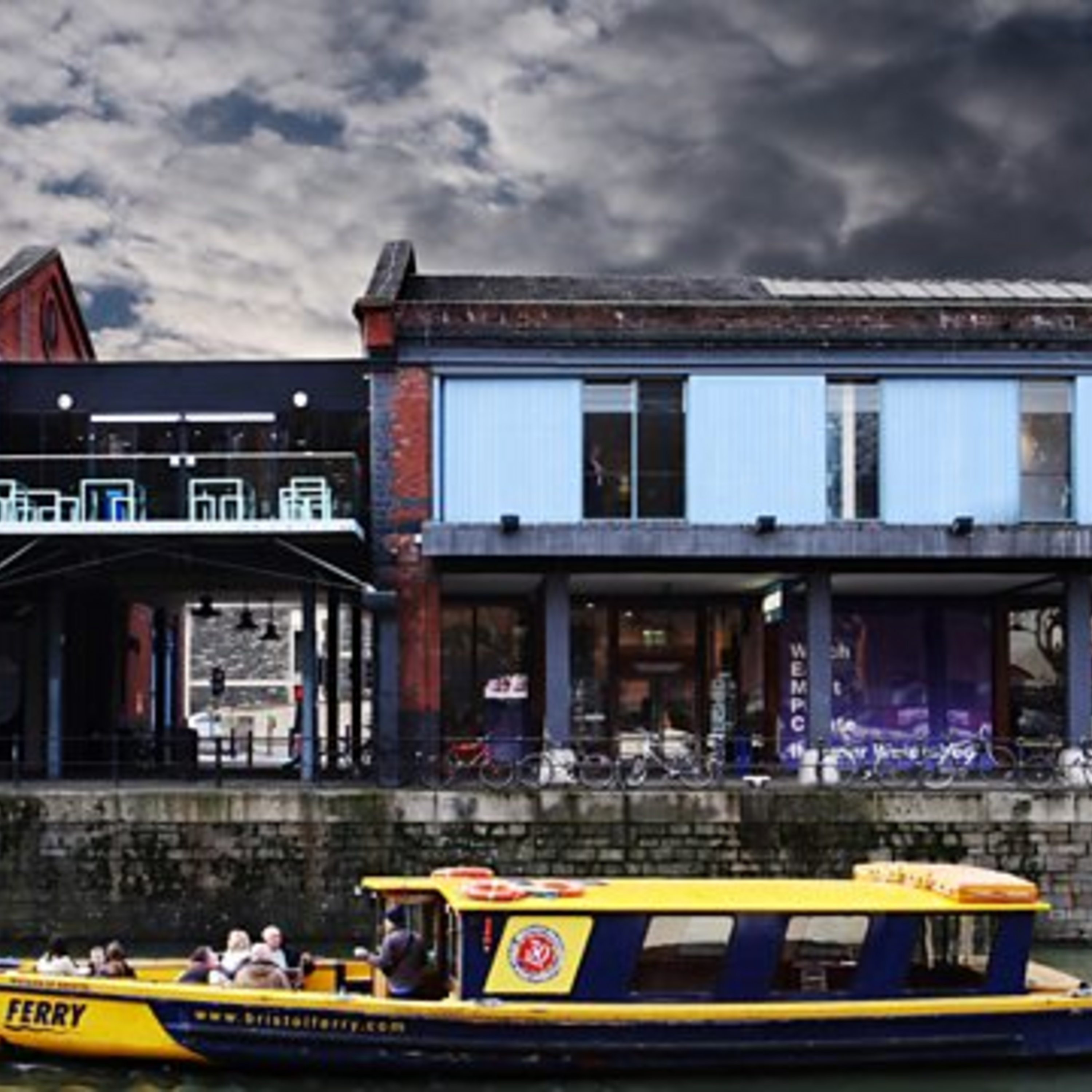
Nikesh Shukla on Watershed in Bristol and how it helped him fall in love with the city. 5/5 Nikesh edits Rife magazine for young people in the building and explains how the spirit of Watershed is summed up in the community who use the space. "People are generous with their time, their ideas and their skills. People can be interrupted and can interrupt." Producer Clare Walker.
Hafod Eryri
Travel writer Phoebe Smith on Hafod Eryri - the visitor centre on Mount Snowdon's summit. 4/5 Phoebe explains how despite herself, Hafod Eryri has grown on her, and that she has found unexpected joy at being able to drink hot chocolate on top of a mountain. Its presence says something about our chutzpah in putting a building where it doesn't belong. Producer Clare Walker.
Chingle Hall
Andrew Hurley on the haunting qualities of Chingle Hall, a 17th-century manor house near Preston. 3/5 Andrew describes the disturbing histories of the inhabitants of the hall and the many paranormal experiences of visitors. As repositories of memories and secrets, are buildings themselves sentient things and places of shifting realities? Producer Clare Walker.
Gladstone's Library
Novelist Melissa Harrison on the joy of 'sleeping with books' at Gladstone's Library in North Wales, the only residential library in the UK.2/5 Melissa explains why the building allows her to sink into a state of uninterrupted concentration, allowing a thread of thought to persist not only over hours but days. Producer Clare Walker.
Wigmore Hall
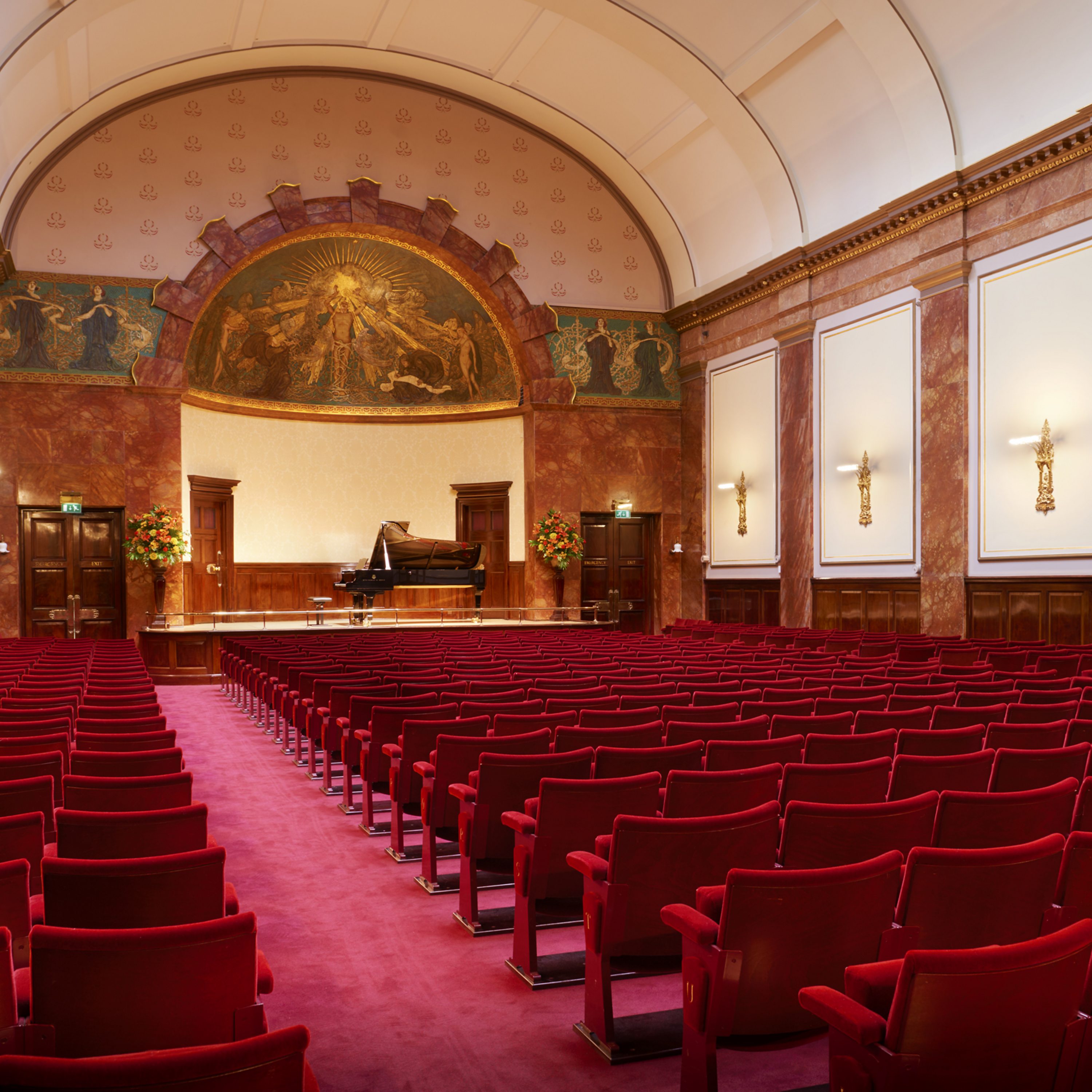
Pianist Stephen Hough on Wigmore Hall in London and how its "shoebox" design catches the ear.1/5 Stephen describes the hall in which he has performed and listened to numerous concerts and how its design ensures "every sound is beautifully focused."This week's Essays are celebrating British architecture. Each writer has a passionate connection with the building, revealing how our long past and complex present have led to a built environment unlike anywhere else on the planet. Producer Clare Walker Image of Wigmore Hall courtesy of Peter Dazeley.
Dear William Trevor
Ian Sansom writes to Irish novelist and playwright, William Trevor
Dear Mary Shelley
Ian Sansom writes to Frankenstein author, Mary Shelley, to ask her how on earth she coped
Dear Oscar Wilde
Ian Sansom is in the gutter looking at the stars as he writes to Oscar Wilde
Dear Dante
Ian Sansom drops a quick line to Dante
Dear Marianne Moore
Ian Sansom writes to poet Marianne Moore and asks her about that tricorn hat
10 Eisenstein
Ten contemporary cultural specialists look back at the impact of the Russian Revolution of 1917 on artists of the time - in film, theatre, poetry, dance and beyond. Writer, composer and silent movie accompanist Neil Brand weighs up propaganda versus artistic invention in the re-enactment of the Revolution at the heart of Eisenstein's classic film October. Part of Breaking Free: A Century of Russian CultureProducer Alison Hindell BBC Cymru Wales.
9 Moisei Ginzburg
Ten contemporary cultural specialists look back at the impact of the Russian Revolution of 1917 on artists of the time - in film, theatre, poetry, dance and beyond. Political commentator and historian Tariq Ali recalls a tour of Constructivist Moscow in the 1980s that introduced him to the work of revolutionary architect Moisei Ginzburg.Part of Breaking Free: A Century of Russian CultureProducer Alison Hindell BBC Cymru Wales.
8 The State Porcelain Factory
Ten contemporary cultural specialists look back at the impact of the Russian Revolution of 1917 on artists of the time - in film, theatre, poetry, dance and beyond. Ceramicist Claire Curneen tells the strange story of the Imperial Porcelain Factory in Petrograd that was renamed the State Porcelain Factory in 1917. She examines two dinner plates, now held at the National Museum of Wales, that were originally designed for aristocrats but then repurposed after the Revolution.Part of Breaking Free: A Century of Russian CultureProducer Alison Hindell BBC Cymru Wales.
7 Akhmatova and Tsvetaeva
Ten contemporary cultural specialists look back at the impact of the Russian Revolution of 1917 on artists of the time - in film, theatre, poetry, dance and beyond. Poet and biographer Elaine Feinstein compares the impact of the Revolution on the contrasting lives of the two great poets, Anna Akhmatova and Marina Tsvetaeva. Part of Breaking Free: A Century of Russian CultureProducer Alison Hindell BBC Cymru Wales.
6 Mosolov
Ten contemporary cultural specialists look back at the impact of the Russian Revolution of 1917 on artists of the time - in film, theatre, poetry, dance and beyond. Musicologist Tamsin Alexander considers the music of Alexander Mosolov, which was inspired by the industrial sounds of the newly forged Soviet Union, and who was the only composer to be sent to the Gulag.Part of Breaking Free: A Century of Russian CultureProducer Alison Hindell BBC Cymru Wales.
5 Tatlin
Ten contemporary cultural specialists look back at the impact of the Russian Revolution of 1917 on artists of the time - in film, theatre, poetry, dance and beyond. Academic and art historian Christina Lodder describes the work and influence of visionary sculptor Vladimir Tatlin, whose major revolutionary design would never be realised.Part of Breaking Free: A Century of Russian CultureProducer Alison Hindell BBC Cymru Wales.
4 Meyerhold
Ten contemporary cultural specialists look back at the impact of the Russian Revolution of 1917 on artists of the time - in film, theatre, poetry, dance and beyond. Director and writer Richard Eyre appraises the impact of the Russian Revolution on the life and career of theatre director Vsevolod Meyerhold. Initially, an enthusiast for the Bolshevik cause, he later fell foul of the system.Part of Breaking Free: A Century of Russian CultureProducer Alison Hindell BBC Cymru Wales.
3 Nijinsky
Ten contemporary cultural specialists look back at the impact of the Russian Revolution of 1917 on artists of the time - in film, theatre, poetry, dance and beyond. Former ballerina Deborah Bull looks at the impact of Nijinsky's revolutionary ballet, The Rite of Spring, which in dance terms, pre-empted the events of October 1917 by several years.Part of Breaking Free: A Century of Russian CultureProducer Alison Hindell BBC Cymru Wales.
2 John Reed, Eye-Witness
Ten contemporary cultural specialists look back at the impact of the Russian Revolution of 1917 on artists of the time - in film, theatre, poetry, dance and beyond. 100 years to the day since American journalist John Reed witnessed first-hand the momentous events in revolutionary Petrograd, writer and historian Helen Rappaport reappraises his classic account, Ten Days That Shook the World. Part of Breaking Free: A Century of Russian CultureProducer Alison Hindell BBC Cymru Wales.
1 Choices
Ten contemporary cultural specialists look back at the impact of the Russian Revolution of 1917 on artists of the time - in film, theatre, poetry, dance and beyond. Journalist and writer Martin Sixsmith opens the series with a consideration of the choices, good and bad, open to artists during and after the Revolution.Part of Breaking Free: A Century of Russian CultureProducer Alison Hindell BBC Cymru Wales.
Memory and the landscape
Claire woke up one morning to discover that overnight she had lost her memory as a result of a viral infection. Dr Catherine Loveday, a neuropsycholgist at the University of Westminster, has worked with Claire for many years and shares what life is like when you can only live in the present.Programme image courtesy of Sarah Grice, Wellcome Collection.
The Tricks of Memory
Professor David Shanks is an expert in memory and learning at UCL and investigates how the brain makes memories. This has implications for exams and for how people can learn a language, in this essay David looks at how we can influence our memories and tells us about the more unusual ways to remember.Programme image courtesy of Sarah Grice, Wellcome Collection.
The Fallibility of Memory
Eyewitness accounts are crucial in court cases but how reliable are people's memories? Forensic psychologist Professor Fiona Gabbert researches the reliability, suggestibility and fallibility of memory to discover how errors are made. And while most people think their memories are their own, social influences can cause "memory conformity" when people discuss their shared experiences together. Fiona's research leads to tips on how to cue up the brain to improve how memories are made.Programme image courtesy of Sarah Grice, Wellcome Collection.
False Memories
We all remember where we were as a child when a particular world event took place; depending on your age it could be the killing of J.F. Kennedy, the bombing of the twin towers in New York or the death of Diana, Princess of Wales. Chris French is Professor of Psychology at Goldsmiths and is interested in the nature of early childhood memories. Some memories when we interrogate them are clearly not believable and others can be implanted, so how reliable are our memories?Programme image courtesy of Sarah Grice, Wellcome Collection.
Touching the Void
Neuroscientist Adam Zeman on how amnesia leads to a loss of self and how the lives of two men, Peter and Marcus, have been affected by their lack of a past. As Professor of Cognitive and Behavioural Neurology at the University of Exeter, Adam works with people with epilepsy who experience loss of memory. His work leads him to examine how memories are formed and ask whether autobiographical details are the only part of our sense of self that matters. Part of Why Music? The Key to Memory at Wellcome Collection which launches on Friday with In Tune. Programme image courtesy of Sarah Grice, Wellcome Collection.
My Mother's House
How do you deal with a house worth of "stuff" when the family home needs to be cleared after the death of your mother? And when you're living in a small flat that has little room for heirlooms? While in the depths of grief, and faced with difficult decisions about what to do with everything, Joanna Robertson ponders the true meaning of things once their beloved owner has gone. Apart from their obvious sentimental value, do these objects provide us with a deeper connection to our history and identity? Or are they just "stuff" to get rid of?
Books and Letters
Many people feel they're drowning in stuff, and try to declutter. Joanna Robertson is one of them. And in the fourth part of her series on "stuff", she finds that trying to get rid of books and personal letters is a whole other story. What to do with books brought home from faraway places, and with once-treasured love letters? Producer: Arlene Gregorius.