The Essay
1,128 episodes — Page 9 of 23
4: The Living Artwork
Ross Sutherland takes us to the birth of modern art as he traces the extraordinary life of Arthur Cravan. Cravan's anarchic art heralded Dada , surrealism, situationism, punk rock and alternative comedy. His whole life was an extravagant show and his influence spreads right across the 20th century.Cravan went through life using multiple mysterious personas. He was the nephew of Oscar Wilde, a boxing champion, a notorious art critic, a scandalous performer, a deserter, the husband of modernist poet Mina Loy, and was pursued by the CIA.This mystery story, led by writer Ross Sutherland, tracks across twenty countries as Cravan's outlandish persona shifts between incarnations. Ross's journey leads him to Cravan's greatest riddle of all - his disappearance in the Gulf of Mexico.In this episode Ross investigates why Cravan is known as the father of performance art.Writer and Presenter: Ross Sutherland Produced for the BBC by Melvin Rickarby Music by Jeremy WarmsleyExcerpt from Cravan's Weird Seance courtesy of Daniel Oliver
3: The Most Hated Art Critic in France
Ross Sutherland takes us to the birth of modern art as he traces the extraordinary life of Arthur Cravan. Cravan's anarchic art heralded Dada , surrealism, situationism, punk rock and alternative comedy. His whole life was an extravagant show and his influence spreads right across the 20th century.Cravan went through life using multiple mysterious personas. He was the nephew of Oscar Wilde, a boxing champion, a notorious art critic, a scandalous performer, a deserter, the husband of modernist poet Mina Loy, and was pursued by the CIA.This mystery story, led by writer Ross Sutherland, tracks across twenty countries as Cravan's outlandish persona shifts between incarnations. Ross's journey leads him to Cravan's greatest riddle of all - his disappearance in the Gulf of Mexico.In this episode Ross investigates Cravan's work as a notorious art critic.This programme contains very strong language.Writer and Presenter: Ross Sutherland Produced for the BBC by Melvin Rickarby Music by Jeremy WarmsleyExcerpt from Cravan's Weird Seance courtesy of Daniel Oliver
2: The Boxer
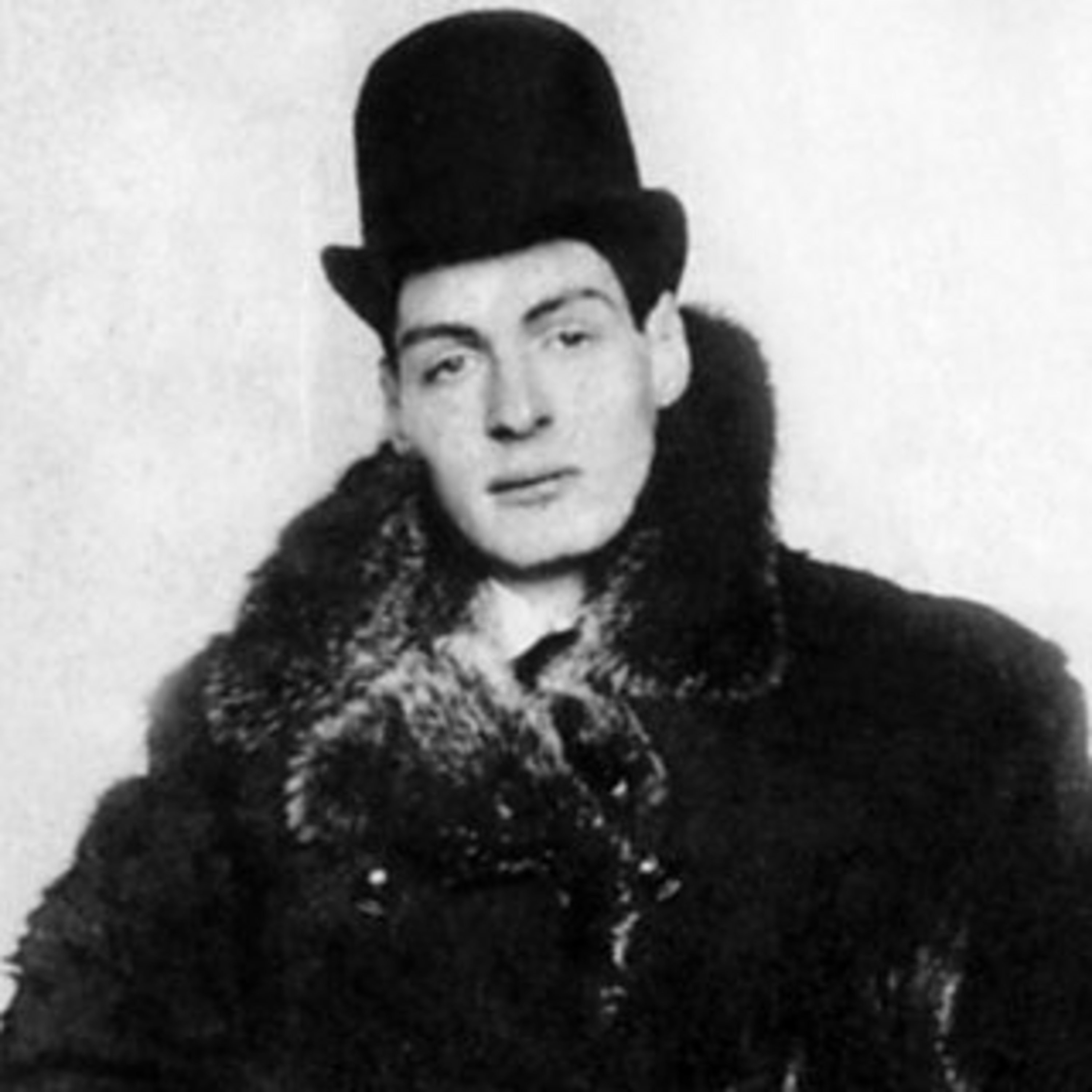
Ross Sutherland takes us to the birth of modern art as he traces the extraordinary life of Arthur Cravan. Cravan's anarchic art heralded Dada , surrealism, situationism, punk rock and alternative comedy. His whole life was an extravagant show and his influence spreads right across the 20th century.Cravan went through life using multiple mysterious personas. He was the nephew of Oscar Wilde, a boxing champion, a notorious art critic, a scandalous performer, a deserter, the husband of modernist poet Mina Loy, and was pursued by the CIA.This mystery story, led by writer Ross Sutherland, tracks across twenty countries as Cravan's outlandish persona shifts between incarnations. Ross's journey leads him to Cravan's greatest riddle of all - his disappearance in the Gulf of Mexico.In this episode Ross investigates how Cravan's career as a boxer influenced his art.This programme contains very strong language.Writer and Presenter: Ross Sutherland Produced for the BBC by Melvin Rickarby Music by Jeremy WarmsleyExcerpt from Cravan's Weird Seance courtesy of Daniel Oliver
1: The Poet
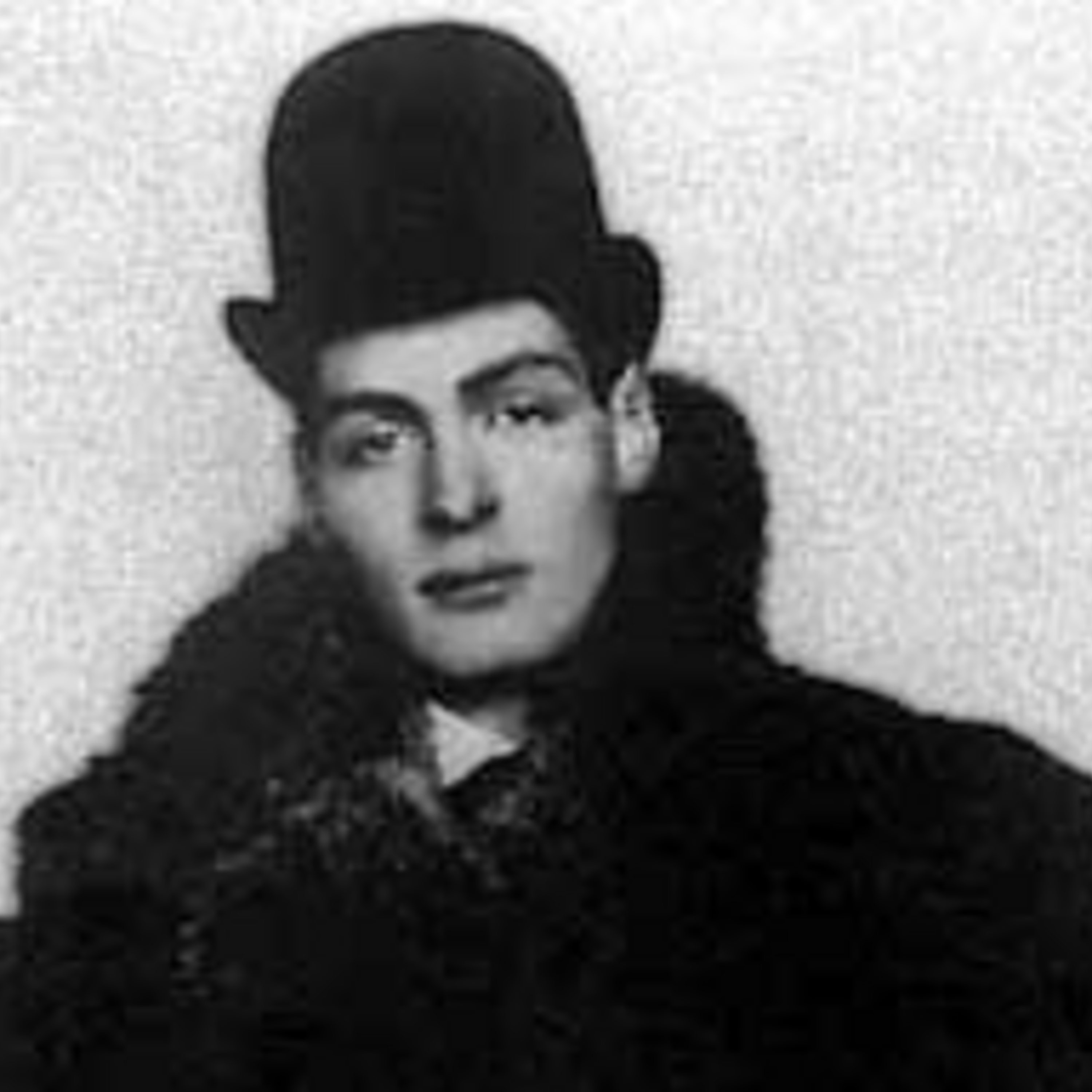
ERoss Sutherland takes us to the birth of modern art as he traces the extraordinary life of Arthur Cravan. Cravan's anarchic art heralded Dada, surrealism, situationism, punk rock and alternative comedy. His whole life was an extravagant show and his influence spreads right across the 20th century. Cravan went through life using multiple mysterious personas. He was the nephew of Oscar Wilde, a boxing champion, a notorious art critic, a scandalous performer, a deserter, the husband of modernist poet Mina Loy, and was pursued by the CIA.This mystery story, led by writer Ross Sutherland, tracks across twenty countries as Cravan's outlandish persona shifts between incarnations. Ross's journey leads him to Cravan's greatest riddle of all - his disappearance in the Gulf of Mexico. In this episode Ross comes to terms with Cravan's brazenly offensive poetry.This programme contains very strong language.Writer and Presenter: Ross Sutherland Produced for the BBC by Melvin Rickarby Music by Jeremy Warmsley
Philippa Gregory on Jane Eyre
Five leading writers pick a novel they love and then write an original piece of fiction imagining what happened to the characters after the story ends.When she first encountered Jane Eyre in the classroom, Philippa Gregory was looking for a love story - between Jane Eyre and the brooding Mr Rochester. Years later, she reads the book very differently. Join Philippa as she explores the nuances within Charlotte Brontë's classic and writes an original scene, a new ending, for the book. Producer: Camellia Sinclair
Elif Shafak on Anna Karenina
Five leading writers pick a novel they love and then write an original piece of fiction imagining what happened to the characters after the story ends. Award-winning British-Turkish novelist Elif Shafak first glimpsed Leo Tolstoy's Anna Karenina on a bookshelf at school. It was only years later that she managed to get her hands on a copy. The experience stirred her soul. The romance was raw, wrong and real. But the book's ending came as a surprise. For this Boxing Day edition, Elif imagines what would happen if Anna were able to meet her creator, Tolstoy himself, after the novel's final page. Producer: Camellia Sinclair
AL Kennedy on The Wind in the Willows
Five leading writers pick a novel they love and then write an original piece of fiction imagining what happened to the characters after the story ends.For the six-year-old AL Kennedy, Kenneth Grahame's The Wind in the Willows provided firelight calm and comfort. She still has her childhood copy, bound up in green cloth with gold lettering, the only hardback she possessed at that age. This Christmas Day, she imagines what might have happened to Mole, Rat and Badger years after the Battle of Toad Hall. Producer: Camellia Sinclair
Bernardine Evaristo on Mrs Dalloway
Five leading writers pick a novel they love and then write an original piece of fiction imagining what happened to the characters after the story ends.Man Booker Prize winner Bernardine Evaristo first encountered Virginia Woolf's writing as a teenager, reading To the Lighthouse for her English Literature A Level. She loathed the book. But a few years ago, she gave Woolf another go, reading Mrs Dalloway. As a writer who experiments with language and form, she marvelled at the inventiveness, how Woolf's characters float in and out of the prose. In this Christmas Eve edition of Open Endings, Bernardine reveals her admiration for Woolf's work and imagines a different end for Clarissa Dalloway's extravagant party. Producer: Camellia Sinclair
Ian Rankin on Lord of the Flies
Five leading writers pick a novel they love and then write an original piece of fiction imagining what happened to the characters after the story ends.In the first essay of the series, the crime writer Ian Rankin picks William Golding's Lord of the Flies. Like many students, Ian first encountered the novel at school but certain scenes and moments have stayed with him for the past 40 years. In this essay, Ian explores his relationship with the work as a teenager of the 1970s and imagines what might have happened to two of the shipwrecked boys, Ralph and Jack, once they reach adulthood.Producer: Camellia Sinclair
John Ocansey
In April 1881, a young African man named John Ocansey set sail from the Gold Coast (modern-day Ghana) for Liverpool in order to try and discover what had happened to goods that his father had dispatched to a Liverpudlian agent. The Africans had not received the two and a half thousand pounds they were owed in exchange for the goods, and rather than sit at home and accept the fact that they had most likely been swindled, young John Ocansey had decided to journey to the world-famous port of Liverpool and claim the money that rightfully belonged to his father. Trading between Africa and Liverpool had been established for over two centuries, and was based on the slave trade in which it was understood that Africans had no rights. Even after the abolition of the trade such attitudes persisted, but Ocansey was determined that he would not be treated as a slave.Producer Neil McCarthy
Mary Prince and Sally Hemings
To mark the 400 years since the arrival of African slaves to America, Jamaican-born author Anne Bailey reflects on two remarkable women pertinent to this commemoration and discusses how they have influenced her journey as a Black female historian. Mary Prince, a West Indian slave who after enduring incredible hardships at the hands of several masters obtained her freedom and wrote an abolitionist narrative that was published in Britain. And Sally Hemings - the enigmatic enslaved mistress of Thomas Jefferson who never officially received her freedom and who never wrote her own story, yet as a historical figure looms large in history and in memory.Anne Bailey reflects on how each of them represented freedom in their own way.Producer Neil McCarthy
Sarah Forbes Bonetta
To mark 400 years since the arrival of African slaves to America, David Olusoga reflects on the life of Sarah Forbes Bonetta. As a young Dahomeyan girl called Ina, she was sold into slavery and, in an extraordinary twist of fate, was gifted to Queen Victoria and became her goddaughter Sarah Forbes Bonetta.Producer Neil McCarthy
Isaac
To mark 400 years since the arrival of African slaves to America, the author Daina Ramey Berry reflects on Isaac, who led a rebellion, and whose life ended in a final act of defiance.Reflecting on the 400-year anniversary of African arrivals in America and the legacy of slavery, Daina Ramey Berry is drawn to an enslaved man she met while researching her book The Price for their Pound of Flesh. His name is Isaac and she learned about him through a 19th century newspaper that recorded his remarkable story. He is someone she thinks of often because of his expression of soul values which enslaved people clung to and used to resist the commodification of their bodies. Daina shares Isaac’s story, his powerful statement, and legacies of slavery that reverberate today. Producer Neil McCarthy
Philip Quaque
To mark the 400 years since the arrival of African slaves to America, the author and playwright Caryl Phillips reflects on the life of one individual.In February 1766, a twenty-five year old African man, Philip Quaque, arrived back in his native Africa, with an English wife. He had been taken to England as a teenager to be educated as a Christian missionary. In England he had been ordained into the church, and married, and now the young man was to serve in a slave fort as both a missionary to his own African people, and a Chaplain to the English troops and merchants stationed on the coast. His was an impossible situation, trapped as he was between the hostility of his own people and the disdain of the English. For nearly half a century he managed to maintain a life balanced between these two opposing groups, and he recorded the anxieties visited upon him in a remarkable series of letters that he dispatched back to his employers in England.Producer Neil McCarthy
Episode 5
In the last of five personal takes on the Weimar Republic, Ute Lemper looks at the enduring appeal of Weimar music and song.
Episode 4
Film critic Clarisse Loughrey looks at the cinema of the Weimar Republic.
Episode 3
Katie Sutton, author of The Masculine Woman in Weimar Germany looks at sexuality in the Republic.
Fiery the Angels Fell - David Thomson
Blade Runner's future is now 40 years old. 5 writers explore the impact and legacy Ridley Scott's 1982 classic film where replicants escape to a retrofitted Earth only to meet their end at the hands of the washed out, titular Blade Runner played by Harrison Ford. Adapted from Philip K. Dick's equally classic 1968 novel Do Androids Dream of Electric Sheep.Both film and book are meditations on what it is to be human but we have been looking through the eyes of the film ever since it plunged us into its acid rain, neon coated, West Coast nightmare of flaming night skies, commercial ziggurats, flying cars and fake animals. Now its future is our present. We live in a world of mass species die off, environmental crisis, rapidly developing A.I., all powerful corporations and extreme divides between rich and poor The legendary writer on film, David Thomson, takes a long hard look back at Ridley Scott's rain soaked mash up of existential noir and artificial souls. "Maybe you’ve never seen Blade Runner – but you think you have. It’s one of those films in our dreams and feeble memory. I used to think it was what it claimed to be, the story of a sour bounty hunter charged to eliminate or retire some dangerous escapees from the old scheme of how the universe was run. "Producer: Mark Burman
Zhora and the Snake - Dr Beth Singler
Blade Runner's future is now 40 years old. 5 writers explore the impact and legacy Ridley Scott's 1982 classic film where replicants escape to a retrofitted Earth only to meet their end at the hands of the washed out, titular Blade Runner played by Harrison Ford. Adapted from Philip K. Dick's equally classic 1968 novel Do Androids Dream of Electric Sheep.Both film and book are meditations on what it is to be human but we have been looking through the eyes of the film ever since it plunged us into its acid rain, neon coated, West Coast nightmare of flaming night skies, commercial ziggurats, flying cars and fake animals. Now its future is our present. We live in a world of mass species die off, environmental crisis, rapidly developing A.I., all powerful corporations and extreme divides between rich and poor.Film and book have bled into our culture in many different ways. Dr Beth Singler, Junior Research Fellow in Artificial Intelligence at Homerton College, Cambridge asks what is real and fake in A.I. sex and love."Simulation forces us to think about how we can the ‘real’ that we seem so often to be confident about. Confident enough perhaps to reassure ourselves that the use of ‘fake’ humans as slave labour and sexbots is alright to be skimmed over in the dialogue of the human characters in Blade Runner. What does it say about the society in the world of Blade Runner that it is okay with slave replicants who fight our off-world wars and fulfil sexual needs for colonists? It gets worse. What does it say about a society that is okay with slave replicants who are only two years old?"Producer: Mark Burman
The Year of Blade Runner 3: More Human Than Human - Ken Hollings
Blade Runner's future is now 40 years old. 5 writers explore the impact and legacy Ridley Scott's 1982 classic where replicants escape to a retrofitted Earth only to meet their end at the hands of the washed out, titular Blade Runner played by, Harrison Ford. Adapted from Philip K. Dick's equally classic 1968 novel Do Androids Dream of Electric Sheep.Both film and book are meditations on what it is to be human but we have been looking through the eyes of the film ever since it plunged us into its acid rain, neon coated, West Coast nightmare of flaming night skies, commercial ziggurats, flying cars and fake animals. Now its future is our present. We live in a world of mass species die off, environmental crisis, rapidly developing A.I., all powerful corporations & extreme divides between rich and poor.Film and book have bled into our culture in many different ways. The writer Ken Hollings takes the Voight Kampff test as he examines the ethical barriers between us and the machine. "According to both the novel and its film adaptation, androids are committing a crime simply by not being human. And in the world of 2019, Blade Runner reveals, the punishment is enforced ‘retirement’ – or legal execution. This is the extent to which humanity holds itself responsible for its creations. "Producer Mark Burman
The Year of Blade Runner 2: Sounds of the Future Past
Blade Runner's future is now 40 years old. 5 writers explore the impact and legacy Ridley Scott's 1982 classic where replicants escape to a retrofitted Earth only to meet their end at the hands of the washed out, titular Blade Runner played by, Harrison Ford. Adapted from Philip K. Dick's equally classic 1968 novel Do Androids Dream of Electric Sheep.Both film and book are meditations on what it is to be human but we have been looking through the eyes of the film ever since it plunged us into its acid rain, neon coated, West Coast nightmare of flaming night skies, commercial ziggurats, flying cars and fake animals. Now its future is our present. We live in a world of mass species die off, environmental crisis, rapidly developing A.I., all powerful corporations & extreme divides between rich and poor.Film and book have bled into our culture in many different ways. Frances Morgan, writer and researcher into electronic music at the Royal College of Art, pierces the sound barrier of a film that defined the future not only in the way it looked but in the ways we heard tomorrow through Vangelis' extraordinary fusion of music, sound & image."the first thing I think of is the film’s sonic environment. The main character, the Blade Runner Rick Deckard, moves through the city, from its murky streets up to its corporate penthouses, against a constant backdrop of hissing rain, distant explosions, synthesized voices from billboard-sized screens, bleeping machines, hybrid pop music, multilingual chatter and the buzz of neon. Music ebbs and flows around him: deep drones swelling into gauzy synthetic strings. His apartment pulses with a low hum. Blade Runner is suffused, saturated with sound."Producer: Mark Burman
Los Angeles 2019
Blade Runner's future is now 40 year's old. Ridley Scott's 1982 classic SF vision of replicants escaping to a retrofitted Earth and meeting their end at the hands of the washed out, titular Blade Runner, Harrison Ford as Rick Deckard, is adapted from Philip K Dick's equally classic 1968 novel Do Androids Dream of Electric Sheep.Both film and book are meditations on what it is to be human but we have been looking through the eyes of the film ever since it plunged us into its acid rain, neon-coated West Coast nightmare of flaming night skies, commercial ziggurats, flying cars and fake animals. Now its future is our present. We live in a world of mass species die-off, environmental crisis, rapidly developing AI, all-powerful corporations and extreme divides between rich and poor. Just that neon umbrellas never caught on and flying cars are still a luxury.Film and book have bled into our culture in many different ways and in this series of The Essay 5 writers explore what it is to be human or a machine, the sonic reaches of the film, the contradictions of sex robots, the cinematic legacy. And we begin with Deyan Sudjic, emeritus director of the Design Museum, considering the filmic city of Blade Runner's Los Angeles and its bleed-out beyond the screen into architecture and design."The film offers a deeply ambiguous spectacle. Blade Runner is a vision of a world in which mankind has blotted out the sun and nature has gone extinct. We know that we are meant to be horrified. And yet at the same time it’s thrilling to look at, like taking in the view at midnight from a bar on the 60th floor of a Shanghai skyscraper, nursing a vodka martini in an iced glass."Producer: Mark Burman
Episode 2
Camilla Smith looks at the art of the Weimar Republic.
Episode 1
In the first of five personal takes on the Weimar Republic, historian Jochen Hung presents his view of the Weimar Republic from Berlin.
Philip Hoare - The Haunted Sea
The annual Arts Over Borders festival reaches into rural and urban communities on both sides of the Irish border. Curated with a strong sense of place and extending across four counties – from Fermanagh to Donegal, Tyrone to Derry/Londonderry- the border itself looms large in the festival.Recorded in front of live audiences at the 2019 Arts Over Borders festival in Enniskillen and Derry/Londonderry, five writers explore the theme of boundaries. At the Royal Grammar School, Enniskillen, the author Philip Hoare transcends the elements and talks about being shaped and reshaped by the sea. Producers: Ophelia Byrne & Cathy Moorehead
Ed Vulliamy - Forever Young
The annual Arts Over Borders festival reaches into rural and urban communities on both sides of the Irish border. Curated with a strong sense of place and extending across four counties – from Fermanagh to Donegal, Tyrone to Derry/Londonderry- the border itself looms large in the festival.Recorded in front of live audiences at the 2019 Arts Over Borders festival in Enniskillen and Derry/Londonderry, five writers explore the theme of boundaries. At Derry's Guildhall, the writer and journalist Ed Vulliamy talks about the musicians transgressing the perceived barriers between youth and age, from John Cale and Bob Dylan, to Leonard Cohen and Joan Baez.Producers: Ophelia Byrne & Cathy Moorehead
Wendy Erskine - Knock Knock, Who's There?
The annual Arts Over Borders festival reaches into rural and urban communities on both sides of the Irish border. Curated with a strong sense of place and extending across four counties – from Fermanagh to Donegal, Tyrone to Derry/Londonderry- the border itself looms large in the festival.Recorded in front of live audiences at the 2019 Arts Over Borders festival in Enniskillen and Derry/Londonderry, five writers explore the theme of boundaries. At the Royal Grammar School, Enniskillen, the writer Wendy Erskine takes us through doorways as portals into other worlds in art, literature and life.Producers: Ophelia Byrne & Cathy Moorehead
Stephen Sexton - The Tory Islanders
The annual Arts Over Borders festival reaches into rural and urban communities on both sides of the Irish border. Curated with a strong sense of place and extending across four counties – from Fermanagh to Donegal, Tyrone to Derry/Londonderry- the border itself looms large in the festival.Recorded in front of live audiences at the 2019 Arts Over Borders festival in Enniskillen and Derry/Londonderry, five writers explore the theme of boundaries. At the Guildhall in Derry/Londonderry, poet Stephen Sexton is prompted by a description of a traditional Tory Island wedding, to talk about the margins between language and image.Producers: Ophelia Byrne & Cathy Moorehead
Sinead Gleeson - Pain, Borders and Averting Our Gaze
The annual Arts Over Borders festival reaches into rural and urban communities on both sides of the Irish border. Curated with a strong sense of place and extending across four counties – from Fermanagh to Donegal, Tyrone to Derry/Londonderry- the border itself looms large in the festival.In this series of The Essay, recorded in front of live audiences at the 2019 Arts Over Borders festival in Enniskillen and Derry/Londonderry, five writers explore the theme of boundaries. At the Royal Grammar School, Enniskillen, Irish writer and broadcaster Sinéad Gleeson talks about the ways in which pain, inequality and borders can separate us.Producers: Ophelia Byrne & Cathy Moorehead
Mirkwood
There’s a shadow creeping across the forest in the works of JRR Tolkien. Nature may be incorruptible but the creatures of the forest cannot withstand the relentless march of evil. Slowly but surely the songbirds are replaced by giant spiders, black squirrels and rampaging goblins. Eleanor Rosamund Barraclough is joined by Mark Atherton from Oxford University for a walk through Tolkien’s forest, uncovering the influence of Anglo-Saxon legends and Middle English poems in the creation of Middle Earth.Producer: Alasdair Cross
The Wood Beyond the World
Lose yourself in a forest of fair maidens and knights with suspiciously shiny armour. This is a forest where the romantic couplings may be fantastical but the backdrop is meticulously drawn. Each leaf, each clump of moss is taken directly from nature. This is the mediaeval forest as reimagined by late Victorian aesthetes aghast at the grit and grime of industrialisation.Eleanor Rosamund Baraclough is joined by Ingrid Hanson from Manchester University for a walk through this Pre-Raphaelite forest. Their spirit guide is William Morris, the writer and designer who helped create the forest in his works of fantasy fiction such as The Wood Beyond the World, beating a path to be followed by Tolkien, C.S. Lewis and J.K. Rowling.Producer: Alasdair Cross
Scents of the Forest
As he enters a woodland, perfumer, Roja Dove can be overwhelmed. This legendary nose of the perfume industry can identify 800 different scents blindfolded. Place him in a forest and he can sense narratives of sex, birth, decay and death. Roja joins Eleanor Rosamund Barraclough for a walk in the woods to discuss how the base notes of the forest scent inspire him. The foundation of damp moss and rotting wood is warm and comforting, but a change in the breeze can bring fresh inspiration to excite the senses, just the kind of effect Roja looks for when he formulates a new perfume.Producer: Alasdair Cross
Outlaws of the Forest
Forests are the perfect place for outlaw artists to enact their vision. Just fourteen stops from Soho on the Central Line, Epping Forest provides a particularly convenient place to lose yourself and hide from worldly distractions.Sculptor, Jacob Epstein used Epping as artistic inspiration and venue for innumerable affairs. But was he lost in the forest or hiding there? John Clare was incarcerated there in an asylum, a place where he lost his status as the peasant poet but found a new identity. First he believed himself to be Lord Byron, latterly he was William Shakespeare. Skip forward a hundred years and the forest continued to intrigue, sheltering the Punk collective, Crass from Big Bang London and providing a surreal playground for theatrical provocateur and forest pixie, Ken Campbell.Eleanor Rosamund Barraclough is joined on a walk through the artistic hotspots of Epping Forest by Will Ashon, author of 'Strange Labyrinth', a cultural guidebook to the lungs of North-East London. Producer: Alasdair Cross
Forest Folk
The folk singer, Nancy Kerr joins Eleanor Rosamund Barraclough for a walk in the woods. Forests play a vital role in folk music, as a refuge for romantic outlaws, as a metaphor for freedom and as a space for sexual couplings, usually with the traditionally tragic ending.Nancy explains how the early folk song collectors such as Cecil Sharp and Ralph Vaughan Williams found a vibrant folk vocabulary bristling with bushes and briars, stout oaks and wily willows. She understands just how powerfully symbolic trees and forests can be, composing her own songs of the woods and interpreting classic tales of sylvan sensuality.Producer: Alasdair Cross
Kate Molleson on Eliane Radigue
Radio 3 presenter Kate Molleson celebrates a composer whose music is particularly important to her: the Frenchwoman Eliane Radigue, whose calm and long-form sense of perspective Kate finds inspirational.
Andrew McGregor on Thomas Tallis
Radio 3 presenter Andrew McGregor reflects on the powerful Lamentations of English composer Thomas Tallis and their special place in his life.
Kathryn Tickell on Percy Grainger
Radio 3 presenter Kathryn Tickell celebrates a composer whose music is particularly important to her: the Australian-American folksong fanatic Percy Grainger.
Tom McKinney on Olivier Messiaen
Radio 3 presenter Tom McKinney celebrates the birdsong-inspired music of the twentieth-century French composer Olivier Messiaen and its special place in his life.
Penny Gore on Leoš Janáček
Radio 3 presenter Penny Gore celebrates a composer particularly important to her: the Moravian, Leoš Janáček, whose music is shot through with the uncertainties of life.
Petroc Trelawny on Lennox Berkeley
Radio 3 presenter Petroc Trelawny celebrates a composer whose fascinating life story and music are particularly special to him: the Englishman Lennox Berkeley.
John Toal on Maurice Ravel
Radio 3 presenter John Toal the French composer Maurice Ravel, whose music had a special place in his life long before he discovered an unexpected connection.
Clemency Burton-Hill on George Enescu
Clemency Burton-Hill celebrates the Romanian composer George Enescu, whose philosophy of the profound importance of music in all areas of life has been a particular inspiration to her.
Ian McMillan on Ralph Vaughan Williams
Radio 3 presenter and poet Ian McMillan celebrates the English composer Ralph Vaughan Williams, whose music has been particularly special to him ever since he first heard The Lark Ascending at the age of eight.
Fiona Talkington on Joseph Canteloube
Radio 3 presenter Fiona Talkington celebrates the French composer Joseph Canteloube, whose famous Songs of the Auvergne have become particularly important to her during her experience of cancer.
Rame Head Chapel
The author Natasha Carthew on Rame Head Chapel, near Whitsand Bay, in south east Cornwall.5/5 Natasha describes how she would write here in the wild as a child and how the chapel symbolised hope.This week's Essays are celebrating British architecture. Each writer has a passionate connection with the building featured, revealing how our long past and complex present have led to a built environment unlike anywhere else on the planet.Image courtesy of Natasha CarthewProducer: Clare Walker
Trinity Theatre
The writer Bridget Collins takes us backstage to Trinity Theatre, Tunbridge Wells.4/5 Bridget reflects on repurposing old buildings and the links between church and theatre. This week's Essays are celebrating British architecture. Each writer has a passionate connection with the building featured, revealing how our long past and complex present have led to a built environment unlike anywhere else on the planet.Producer: Clare Walker
Malcolm's Place, Uig, Isle of Lewis
Author James Rebanks, the Lake District shepherd, talks about Malcolm's place, Taigh na Trathad (The Beach House) in Uig on the Isle of Lewis.3/5 James describes how the history and sense of community on Lewis has informed the buildings and that it is "not the ‘edge of the world’, but the centre of another that we have chosen not to see".This week's Essays are celebrating British architecture. Each writer has a passionate connection with the building featured, revealing how our long past and complex present have led to a built environment unlike anywhere else on the planet.Image courtesy of Alistair MacCallumProducer: Clare Walker
Rochdale Town Hall
Novelist Beth Underdown on Rochdale Town Hall.2/5 Beth describes how her family's personal history is tied up with the building and how Hitler reputedly admired it so much that he ordered it spared during the Second World War. This week's Essays are celebrating British architecture. Each writer has a passionate connection with the building featured, revealing how our long past and complex present have led to a built environment unlike anywhere else on the planet.Producer: Clare Walker
Glasgow School of Art
Author Louise Welsh reflects on Charles Rennie Mackintosh’s Glasgow School of Art.1/5 Louise describes her memories of the building before it was ravaged by two fires. This week's Essays are celebrating British architecture. Each writer has a passionate connection with the building featured, revealing how our long past and complex present have led to a built environment unlike anywhere else on the planet.Image courtesy of Alan McAteerProducer: Clare Walker
The Hard Man in the Call Centre
A song about a Glaswegian tough guy begins this Essay from New Generation Thinker Alistair Fraser. Recorded with an audience at the York Festival of Ideas. To hear audience questions download the Essay as an episode of the BBC Arts&Ideas podcast. The image of the hard man runs like an electric current through Glasgow's history. Unafraid, unabashed, with outlaw swagger, he stalks the pages of countless crime novels and TV dramas. The unpredictable tough guy, schooled in both fist and knife, a symbol of the city's industrial past. But what does being a hard man mean in the Glasgow of today, now call-centre capital of Europe? And what lessons can be drawn from his changing fates and fortunes to understand masculinity and violence elsewhere?Alistair Fraser is Senior Lecturer in Criminology at the Scottish Centre for Crime and Justice Research, University of Glasgow and a BBC/AHRC New Generation Thinker. He has spent the last fifteen years studying youth gangs and street culture around the world, and is author of two academic books, Urban Legends: Gang Identity in the Post-Industrial City (2015, Oxford University Press), and Gangs & Crime: Critical Alternatives (2017, Sage). He makes regular contributions to public debate on gangs and youth violence, and has appeared on BBC Radio 3 and 4 on Thinking Allowed, More or Less, and Free Thinking.Alistair Fraser in a Free Thinking Festival debate about gangs https://www.bbc.co.uk/programmes/b09w7qqg Alistair Fraser looks at Doing Nothing https://www.bbc.co.uk/programmes/b09v66bh Audience questions of this Essay are found here https://www.bbc.co.uk/programmes/p02nrvk3/episodes/downloads Producer; Jacqueline Smith