The Email Marketing Show
316 episodes — Page 4 of 7

Ep 210Latest Gmail Update (Dec 2023) - The End Of Email Marketing?
EIs the latest Gmail update (December 2023) going to kill your email marketing for good? Everyone's reacting to this update like it's the big apocalypse of email marketing. But is that true? Let's talk about whether this update does or doesn't affect you, and how you can go about it. Ready to find out the honest truth about this? Let's go!SOME EPISODE HIGHLIGHTS: (0:15) Want a FREE resource to get more clicks on your emails? Check out Click Tricks.(4:09) The latest Google update - what is it all about?(7:50) Let's talk about your email deliverability.(8:49) Hard bounces and your sender's reputation.(11:01) What can we do about the latest Google update?(12:35) Don't make any decisions based on your open rates.(14:27) Google isn't trying to kill your email marketing!(15:59) It's all about those clicks!(17:53) Subject line of the week.[podcast_subscribe id="7224"]The latest Google update - what is it all about? Gmail is making a technical change, which, on the surface, is going to be the death of email marketing. Again! There’s going to be a lot of email marketing chaos at the back of this Gmail policy that's to be enforced from the 1st of December 2023. Google rolled it out into their new terms in July 2023, when they announced that any Gmail account that hasn’t been logged into for two years will be deleted.So what does this mean? First thing first, the impact of this change might not be as big as you think because “logged in” could also mean that people are using their Google Calendar or Google Drive, for example. And as long as they are, even if they're not accessing their Gmail, their accounts will stay. Only truly dormant accounts will be deleted.And that’s fair enough because these could be email addresses that people created for a particular project or business venture and then either never used them, or they stopped checking them at some point. Why are they being deleted? Because all these accounts take up a lot of space on Google servers, so a clean-up exercise is now in order. You can imagine that renting space out for free to people on the Internet is expensive, so Google is cutting some costs and trying to become more efficient. And that's not a bad thing!Let's talk about your email deliverabilitySo let's talk about why this could be an issue for some people. If you've been in our world for a while, you'll know that one of the things we always talk about is that the technical side of email deliverability is not all that important. It's not weighted that heavily when it comes to most of us day-to-day – not for marketers who have email lists of the size we or our clients have.What truly matters when it comes to email deliverability is engagement management, which has to do with making sure you’re not emailing people who aren’t real accounts or who haven’t opened or engaged with your emails in some time.Hard bounces and your sender's reputationWhen the Google update kicks in in December, if you're still sending emails to accounts that Google has now deleted, your emails will hard bounce. Your email platform is going to send emails out to these deleted addresses, and your emails are going to hit a stone wall and bounce back again. And that's bad for your sender's reputation, yes.But it's only bad if you've been emailing these accounts all along regardless of the fact these people weren't engaging with your emails! If these people were on your list and hadn't used their Gmail in two years, surely they hadn't been clicking on the links in your email for a long time (if ever).So when it comes to your sender's reputation, this was already a bad scenario for you. But from now on, with these addresses completely deleted, you're going to see a much stronger message coming back to your domain reputation. Once the update kicks in in December, if you keep emailing these accounts, you'll hit a brick wall.But the truth is that this isn't affecting the number of people you're actually reaching with your email marketing - your reach is no different! All that’s happening is that you’re going to see the people who don’t exist anymore in a much firmer and more solid way. But even before the Google update, these people weren’t listening. So if you think about the goal of getting your message through to people, you simply weren’t!What can we do about the latest Google update?So how can we all prepare for these changes? If you’ve been in any of our programmes or followed our work, you’ll know about our engagement monitoring method. We talk about it more in the episode called How To Create THE Most Successful Re-Engagement Email Campaign (And Smash Your Sales Targets).If someone’s not clicked on a link in the last 60 days, we’re going to put them through a 14-day re-engagement campaign called the LOL Revival sequence. And if people don't re-engage with our emails during that period by clicking on one of our links, we stop sending them emails altogether. We remove the tag they’re under and take them out

Ep 209Best Email Marketing Campaigns? Grab The Paparazzi Flash Sale!
EWherever we go and whatever we do, we keep being asked about the BEST email marketing campaigns people can run to make tonnes of cash.Well, we have the perfect campaign for you. It's called the Paparazzi Flash Sale campaign, and our clients are seeing some amazing results with it right now. Wanna know more and get your mitts on it? Let's go. SOME EPISODE HIGHLIGHTS: (0:12) Want a FREE resource to get more clicks on your emails? Check out Click Tricks.(2:41) What is the THE best email marketing campaign EVER?(4:08) What is the Paparazzi Flash Sale email campaign?(5:52) What do you need in order to launch your Flash Sale email campaign?(7:55) Add a countdown timer and bonuses!(9:28) How does our Flash Sale email campaign work?(12:15) Always have a strong reason why.(14:14) Why does the Paparazzi Flash Sale campaign work so well?(15:44) Go grab our flash sale campaign - join The League!(16:43) Subject line of the week.[podcast_subscribe id="7224"]What is THE best email marketing campaign EVER? This is a hard question to answer, especially as we have over 40 email marketing campaigns (and counting) inside our membership The League. But ONE campaign definitely that stands out (because our members can’t stop raving about it) is The Paparazzi Flash Sale campaign.We’re consistently seeing our clients use this campaign and getting incredible results. For example, Hillary-Marie ran two versions of this campaign at two separate times and made $16,000 on each one - with a 20-21% conversion rate.Brad joined our membership in February, ran this campaign straight after, and made $3,915 in sales. Plus, he also got a bunch of new sign-ups for his membership, which stacks up additional recurring income too! And then Marc ran the campaign and made over $1,000 selling $10-$30 low-ticket products. This campaign is a BEAST!What is the Paparazzi Flash Sale email campaign?The Paparazzi Flash Sale campaign is our take on the flash sale or fire sale (as it's sometimes referred to). It's a 4-day campaign that helps you sell a boatload of stuff at a discounted price and with an added bonus or two. But let's take a step back to understand how this helps you sell. Sticking a discount on something doesn't necessarily mean you're suddenly going to make lots of sales. That's why you need a well-thought-out email campaign structure behind it. You probably already know this from experience – a discount is no magic spell that makes people buy! Because you're never going to convert 100% of the people who see it. What you need is anticipation and moments in your campaign where you change direction. In other words, a campaign needs to have a flow to it. And the reason why our Paparazzi campaign works and is so successful is that it’s a really simple campaign to deploy. So let's break it down. What do you need in order to launch your flash sale email campaign? The first thing you need to have in place is a sales page that's converting. As you know, we're in the business of email marketing here – not sales pages. So we’re going to assume you’ve created a good sales page that’s already converting well.Once you have that page, you're going to duplicate it. You simply create a copy of it, which will become your flash sale version. Then you're going to make changes to that version only. So don’t go and tweak your actual sales page with the intention of changing it back once the flash sale is over. Instead, create a separate page for your flash sale. Once you've done that, you need to change the price of your product to the discounted price. But don't just delete the old price and replace it with the one one. Because if you do that, psychologically, people won’t know you’ve applied a discount! What you want to do instead is to cross out the full price and put the new price next to it. That shows people that, without a doubt, this is a sale. And you’re proving this. We like to say that a lot – if you’re going to say something, prove it.With the price sorted, make sure that all the buttons on your flash sale page point to a place where people can buy your offer at the discounted price. Add a countdown timer and bonuses!And finally, another thing you can do is to add a countdown timer to the page. This is animated and ticking down and shows how long people have left to take advantage of the discounted price before the flash sale ends. A countdown timer is important because it helps you add some urgency to your sale. It’s no longer just about the discount (and people love a discount!) – it’s also about making it high on people's priority list to go and grab that discount right now. If you want to make your discount even more effective, you can also add bonuses. And the reason this works is that you’re hitting a whole bunch of psychological triggers. Most importantly, all these factors combined have a compound effect - and that's what makes this campaign so powerful.How does our Flash Sale email campaign work?We run the Paparazzi campaign by sending 6 email

Ep 208Email Marketing And Storytelling - Write Emails To Sell Like Crazy
EHow do email marketing and storytelling go together? Should you share stories in your emails? If so, when and how? What type of stories should you tell and where does the inspiration come from? Also, when is it not good to tell a story?Want the Secret Sauce on all this?Let's get it!SOME EPISODE HIGHLIGHTS: (0:12) Want a FREE resource to get more clicks on your emails? Check out Click Tricks.(4:39) Why do we need to tell stories in our emails?(6:41) More reasons to tell stories in your emails.(8:31) What if you're in a more serious and 'boring' industry?(10:33) What makes a good email marketing story?(12:46) What are some tips to help you get started?(15:01) Common mistakes people make when telling stories through email (and how to fix them).(17:06) How often should you use stories in your emails?(17:33) Learn how to use storytelling in your email marketing inside The League.(17:57) Subject line of the week.[podcast_subscribe id="7224"]Why do we need to tell stories in our emails? You probably already know by now that our whole approach to email marketing is story-driven. In other words, we try and weave some storytelling into almost every email we send (with a couple of exceptions). One of the big reasons is that there are only so many things you can say or so many ways you can talk about the product or service you sell. But there are unlimited stories you can relate to your offer and to the problem that your product solves.Case in point, as Rob was thinking about the idea for a story based on something that happened to him recently, he realised that the lesson he'd pulled out of the story was the same one he'd taught in the email from the day before. And that's okay! Because the lesson may have been the same, but it was framed in a different way because the story was different. Plus, not everyone would have seen Rob's email from the previous day. And even if they had, some people might relate more to one story and not the other.This means you could potentially have the same lesson every day but frame it with a different story. And that's great if you think about it. Because there are only so many core lessons you can teach or things someone needs to learn before they buy your product. And if you can only talk about a limited set of features and benefits, you'll run out of things to say! So storytelling allows you to continue to talk about your product and what it does in different ways.More reasons to tell stories in your emailsAnother benefit of storytelling is that stories are usually about things that are happening or have happened in your life. So using stories helps you build rapport with your audience - it means they can get to know you. That’s also why we share interesting, silly facts about ourselves at the start of each podcast episode. Because people get to learn more about us, and this helps us become three-dimensional. We’re not just the people who talk about email marketing all the time – we're real people doing things with our families and living our lives outside of work like everyone else. The other reason why we love storytelling is that people emote with stories. And this doesn't happen with facts, features, or benefits, for example. On the other hand, with stories, you can make people feel different emotions – afraid, anxious, excited, etc. Plus, physically, stories take up more space in people's heads and brains than pretty much any other medium.What if you’re in a more serious or ‘boring’ industry?One thing we can tell you from experience is that storytelling works for everything and everyone. It doesn't matter whether you're in a serious, 'boring', dry industry where you don't think your audience cares about stories. We’ve helped businesses in the government space, insurance, accountancy, and other niches that are quite dry, and we know storytelling works for them too. Because, ultimately, we are humans in a human’s inbox, and these people want to hear from you!So what if everyone else in your industry is dry and boring? Even better! It means you can stand out by sharing stories and becoming the most engaging email marketer in your industry. That's the experience you can create through storytelling. And it doesn’t mean you have to be wacky and funny in everything (if that's not your brand). But you can at least be interesting.People like reading stories, and if you’re a 'faceless' brand or a big corporation, you can still pick someone within your team to be the face of your brand. In fact, make a point of sending your emails from yourself or a member of your team because people buy into the person behind the brand. Look at Virgin, for example. Even a huge, massive, multi-vertical brand has a face to it through Richard Branson. And it's one of the best decisions they've ever made. So make things personal. What makes a good email marketing story? A good story has to either:Share something new - for example, teach something people didn’t know.Or include something

Ep 207How To Achieve A Successful Launch - With Melissa Litchfield
EDid you just launch a new membership, course, or programme? Was it a successful launch? Or did you not hit your targets? You're probably looking at the sales and revenue you made, but what about all the other metrics? You could have a traffic problem, an issue with your offer, or perhaps with your conversion. But how do you find out?Our guest Melissa Litchfield tells us exactly what metrics we need to look at and what they all mean.Ready to find out?Let's go!SOME EPISODE HIGHLIGHTS: (0:13) Want a FREE resource to get more clicks on your emails? Check out Click Tricks.(3:20) Did Melissa really cry for one hour when one of her favourite Nemo slippers got covered in vomit?(5:39) How can you tell if your launch was successful?(8:08) What's hiding behind your numbers?(9:41) What metrics help you decide whether your webinar was successful?(14:39) What about your email metrics?(17:33) Remove friction and make buying from you easy!(20:44) Ask for one action at the time.(22:00) Should you focus on your email list growth?(28:10) Subject line of the week with Melissa Litchfield.[podcast_subscribe id="7224"]How can you tell if your launch was successful? Our friend Melissa helps people with launches, and more often than not, her clients will tell her they had a 'failed launch' because they only made a certain amount of sales. They’re looking at the end result, i.e. the revenue or how many students or members they brought into their program. But that's not all there is to it!And that's why Melissa asks a lot of questions about what went on during the launch. For example, how many people showed up live at your webinar? How many dropped off within the first 5 minutes? If a lot of people do, then you might have a 'hook' issue. How many people stayed until the end of the webinar, and how many spots of your program did you sell live?When you're making sales on a live webinar, it means you're hitting your audience's pain points and helping them see that you've got the perfect solution for them. But if you find you didn't sell a lot of spots, then maybe you need to re-work your pitch.And if your webinar was absolutely perfect, great! But what about your email metrics? What are your open rates and click-through rates like? Did enough people open your emails? And did at least 2% of them click through to the offer page? It's only when you're able to look at several steps within your funnel and your email sequence that you can fully nail down what you need to tweak or fix to have a more successful launch next time.What's hiding behind your numbers?If you feel you didn't make enough sales because you didn't have enough people on your webinar, how many people had registered? If that number's less than 100, maybe you have a traffic issue. And that means you need a bigger pool of people signing up for your free event.Often, Melissa finds, you'll have multiple things happening within your sales funnel, so it's important you don't just look at the end result and the money that was generated. You've probably spent a lot of time preparing for a launch, and if it doesn't go the way you'd hoped, it doesn't mean you've wasted your efforts. You might have a messaging problem on your sales page, for example. You just need to know what needs tweaking so you can improve your funnel and make more sales in your next launch.What metrics help you decide whether your webinar was successful?One of the first things Melissa asks her clients when checking whether they had a successful launch is how many people were registered for the webinar or other 'hype event', such as a masterclass or a challenge. Once you know that, you can start diving into the metrics of the live event. For example:What was the engagement rate?How many people showed up for the event?How much did you make per person? I.e. what were your 'earnings per registrant'? You can work this out by dividing how much you made in your launch by the number of people who registered for your webinar. And how many people dropped off within the first 5 minutes?One thing worth pointing out, Melissa says, is that metrics do change when her clients automate their webinars and make them evergreen after having a couple of successful launches. In Melissa's experience, running traffic to a recorded webinar can create different results. What about your email metrics?When it comes to evaluating email metrics, open rates and click-through rates are important. For a live successful launch, the typical click-through rate on a sale email is between 2-6%. But you may need to lower your expectations for automated webinars, where the excitement and engagement aren't as high because there's no active set time after which the cart is closing.Your click-through rate gives you an indication of how strong your offer is, but there are other things to look at. For example, what's your call to action? Are you giving people something for free to download? Or is it a paid offer? And if so, is it clear tha

Ep 206The BEST Email Marketing Membership Retention Strategies
EAre you a membership site owner who worries about how to keep your members interested and engaged so they never leave? Then you're about to find out exactly what membership retention strategies you can use to retain your members month after month.We know you've worked really hard to get those people in, and we all feel sad when our members decide to cancel. So let's find out what you can do to stop people from ever wanting to leave and how your email marketing can help with that.Let's go!SOME EPISODE HIGHLIGHTS: (0:21) Join our FREE Facebook Group.(4:05) Why retaining members can feel like an uphill battle.(8:00) Create an awesome onboarding sequence.(10:51) Set the right expectations with your marketing.(13:11) Create a level of community within your membership.(15:18) How does email marketing help with retention in your membership?(16:38) Don't stop with the marketing and offer an upgrade.(22:20) How often should you email your members?(25:02) Should you send your members a round-up newsletter?(29:24) Subject line of the week.[podcast_subscribe id="7224"]Why retaining members can feel like an uphill battleIf you have a membership, you’ll see the number of active subscribers go up and down all the time, and that's normal. But when you see people starting to leave, naturally, you want to stop that from happening. So you start looking for strategies for retention. When we started our membership, The League, we definitely made the mistake of focusing on retention too soon and too quickly.Why? Because retention strategies (if employed too soon and before you have a good number of members) are small needle movers. Sure, you can always think of things to do to help your members stay, but the maximum amount of money you'll ever be able to make if you only focus on retention is whatever those existing members are worth to you every month.But if you focus on gaining more members instead, then there’s no ceiling to how much you can make. There's certainly one on retaining members, but there's no ceiling on growth. And that’s why you have a membership in the first place, right? Because it’s scalable. You'll have more gains by focusing on growth, so you need to work on acquisition first, and then you start looking at membership retention strategies. Remember - selling is the bigger lever you have to grow your business. But also, the more data you have (and you’ll have more data when you acquire more members), the more you’ll know what’s working and what you need to tweak as a result.What are some best practices for retaining members? 1. Create an awesome onboarding sequenceIf you find that people are joining your membership and immediately asking for a refund or cancelling after seeing the content, then you need to address that first. This isn't a retention problem - it's an onboarding problem. Because as soon as people join, you want them to enjoy themselves and find what they’re supposed to find.So the first thing we recommend you do is to create the best onboarding sequence you can. You want people to have a good experience and not feel overwhelmed by all the content you have. What's the first thing you want them to do? Let them know by creating an email sequence that orientates them, welcomes them, and resells your membership. If you want to find out more, head over to the episode, How To Create A Member Onboarding Sequence That Your Members Will Love. And, as we said before, remember that when people first join your membership, they’re not members yet. They might still leave within the first month or so - by cancelling and asking for a refund. So you still have to get them over the psychological hurdle of going from being a new customer to being a member. And a great onboarding sequence will help with that. 2. Set the right expectations with your marketingThe next thing you need to do is to ensure that you set the right expectations with your marketing. For example, we could sell our membership by promising people they would turn into billionaires by tomorrow. And that might drive up our front-end conversions, but it would really damage our retention because that's not how email marketing works! So that's not what we should promise (and we don't) because if people joined based on that promise, they would cancel and ask for refunds very quickly. So we do the opposite. We tell people the truth - email marketing isn’t a quick fix! But we are also clear on what can happen 3, 6, or 12 months down the line if people join and choose to do the work. So before someone's even made the decision to join (pre-sale) we're using our emails and our sales pages to set the right expectations. We tell them they're going to want to do email marketing for a long time and ask them to hang around.3. Create a level of community within your membershipWe'll caveat this one by saying that creating a community might help with your retention, but if it's not your style, it's not the be-all-end-all. We've all hea

Ep 205How To Create A Successful Re-Engagement Email Campaign
EAre your subscribers not interacting with your emails? Are they not clicking on your links and buying from you? Is it time to launch a re-engagement email campaign? What does that even do anyway? Let's find out, shall we? SOME EPISODE HIGHLIGHTS: (0:15) Want a FREE resource to get more clicks on your emails? Check out Click Tricks.(4:00) Have you been neglecting your email list?(7:03) Collect some data before you launch a re-engagement campaign.(7:36) Focus on clicks - not open rates!(10:05) Are people disengaged from your list? (11:15) What to include in your re-engagement email campaign.(13:30) Why you should get rid of those who don't engage.(15:22) Don't be afraid of deleting subscribers from your list!(16:32) Subject line of the week.[podcast_subscribe id="7224"]Have you been neglecting your email list? A lot of people who start working with us admit they've been neglecting their email list for a while. This happens a lot, to a lot of marketers, and for a lot of different reasons.But the good news is that we've got a campaign for that exact scenario. It's called The Terrible Friend, and it works like this: you show up and tell your subscribers that you've been a terrible friend. Because you know that people on your list get value from the topic you teach, but you've still gone and ignored them. So you tell them that the plan going forward is to email them regularly. You'll email on specific days of the week (ideally every day) with valuable information.And the important bit about this campaign is that you give them a blatant way of saying no. If they’ve moved on and are no longer interested in your solution, you give them the option to click on a link and remove themselves from your email list (i.e. to opt out). Because chances are that if you haven't emailed in a while, some people have forgotten who you are.And that makes sense. If you haven't emailed anyone for ages, launching this campaign gives you the opportunity to step things up and start emailing regularly again. So be humble and admit it's you who didn't get in touch. People will relate and connect with the human element of this mistake.Collect some data before you launch a re-engagement campaignIf you haven't emailed your list in a while, you haven't really been in a position for your subscribers to disengage. So before you launch a re-engagement email campaign, you want to send some emails and collect some data. We recommend you gather at least one month of data from the emails you send (especially if you email daily) as this will give you a good indication of where people are after you’ve ignored them for ages. You do this to find out whether people are opening your emails and clicking on your links.Focus on clicks - not open rates!When you look at your data, focus on clicks rather than open rates. Because Apple and Android are blocking what they’re allowing to be reported back to the email marketing platforms. For example, Apple might mark all of your emails as open while Android may make it look like none of your emails were delivered. Technology is always changing, and you can't rely on open rates - not on a contact-by-contact basis.But by looking at clicks, you can decide to re-engage the people who haven't been engaging and delete those who are no longer interested. There's one downside to clicks though. Some larger corporations use phishing protection antivirus systems to make sure the email lists their employees sign up to are safe. This piece of software clicks on the links in your emails and checks where the page goes. So to you, it looks like a click from a human being, but it's not. Having said that, there's a way around this. We use a bit of technology inside our Automate Hero suite of tools (included for free in our membership The League) that lets us know that a real person was on our website for a bunch of seconds. And we know that’s a human being because a bot would click on the link and come back out in about one second. But if someone stays on the page for 8-9 seconds, we know they're an actual person. We call this ‘proof of life’ because it tells us that there's a real individual behind the email address. And if they click on our links, it's likely they still want to keep hearing from us. Are people disengaged from your list?Once you start emailing regularly again, you want to check that people are clicking on the links inside your emails. And to do that, you need to include links that people can actually click on! As a side note, let's not forget that when people click on the unsubscribe link in your emails, that's still a click. And it counts towards your engagement, rather than it being logged as spam. If people aren't clicking on your emails, you need to decide what disengagement means to you. You can set your own parameters (something that makes sense in your business), but for us (because we email every day) if someone hasn't clicked on a link in any 60-day period,

Ep 204Is Email Nurturing A Waste Of Time (And How Do You Do It)?
EIs email nurturing a big waste of time? Do you really have to keep someone on your list for years and years before they buy anything from you?The answer is no. There's a better way to make sales in your business and use email marketing to your advantage. Want to know how?Let's find out. SOME EPISODE HIGHLIGHTS: (0:15) Want a FREE resource to get more clicks on your emails? Check out Click Tricks.(3:11) Check out our sponsor Poster My Wall.(3:50) What do we mean by nurturing your email list?(6:23) What should you actually do to nurture your email list?(9:11) Our SCORE email engine.(11:46) Nurturing your list with your daily emails.(14:02) How you 'keep people warm'. (15:07) The 'penny-drop' moment.(16:52) What you shouldn't do to nurture your list.(20:01) Subject line of the week.[podcast_subscribe id="7224"]What do we mean by nurturing your email list? A lot of people think that the whole idea of email marketing is to get people on your email list and then spend the next 20 years making them think that maybe one day they might buy from you because you’ve been such a lovely person to them for so long. And for those people, this is their entire email marketing strategy.But that’s not a strategy.That's hoping, praying, and wishing.And that's not what nurturing is in our book. Nurturing isn't about turning subscribers into customers via long-term sequences of a million emails that are designed to get people to buy over a number of years. If you do that, you're accepting these people into your world and then effectively putting them 'in the oven'. You're trying to 'keep them warm' until one day they may or may not buy from you. That's not what we mean by nurturing your email list. And if you're doing it that way, you are wasting your time. What should you actually do to nurture your email list? What you should do instead is to have sales campaigns that are designed for people to buy from you right now. And if they don’t buy, by all means, you carry on with nurturing sequences that 'keep them warm’ but only to glide back into another sales campaign at some other point.When someone joins our list, they go through our email engine, which is designed to sell. If they get to the end of a sales sequence and don’t buy, they go into our closest thing to long-term nurture, which is our day-to-day emails. But they don’t particularly know or notice that - they'll simply feel like an offer has come to an end because there's no huge difference in how the various emails look and feel. And every 5-8 weeks, we’ll run another sales campaign. Most people buy within the first 60 days of joining your listWhen you think about it, the reason why anyone joins an email list is because they have a problem that they want to solve. They want to learn about the thing you teach. And when we looked at the data in our business, it’s no surprise we found that if people don’t buy from us in the first 60 days of joining our email list, their chance of ever buying from us plummets to less than 5%.And this makes perfect sense. If someone joins your list to learn about how to train their puppy, for example, they need to fix that problem now - not two or six months down the line! If your marketing strategy is based on nurturing these people for 90-180 days (or even longer), you’re missing out on the time during which your subscribers need to solve their problems. So you have to tell them about your core product or service right now and give them a chance to buy. Our SCORE email engineThis is what we do with our SCORE email engine, which is a bunch of 5 different email campaigns, where each campaign is made up of several emails (between 6 and 25). Every subscriber on our list goes through it in the first 60 days of joining.Each campaign represents a different phase of our SCORE engine, which means it appeals to a different type of buyer or subscriber. So here are the 5 campaigns making up the SCORE acronym/engine:S for Sales. The first campaign appeals to your more urgent buyers – they want to solve their problem right now. That's why we kick off our chain of campaigns with a sales-led one.C for Content. Then we move to a content-led campaign. We lead with education but turn that into an offer. It’s not content for content’s sake - it's not distracting people or adding more overload.O for Objection-handling. This is specifically created to address the objections that people have to buying. For example, it could be that they don’t believe the product or service will work for them or that they don't have what it takes to get results. R for Risk reversal or Risk removal. This is where we reduce or remove the risk of buying. Because sometimes people think that the risk of investing is way higher than their ability to get the results they need.E for Engagement. And finally, the last campaign is designed to generate engagement. By this point (and by the end of the 60 days), we've given someon
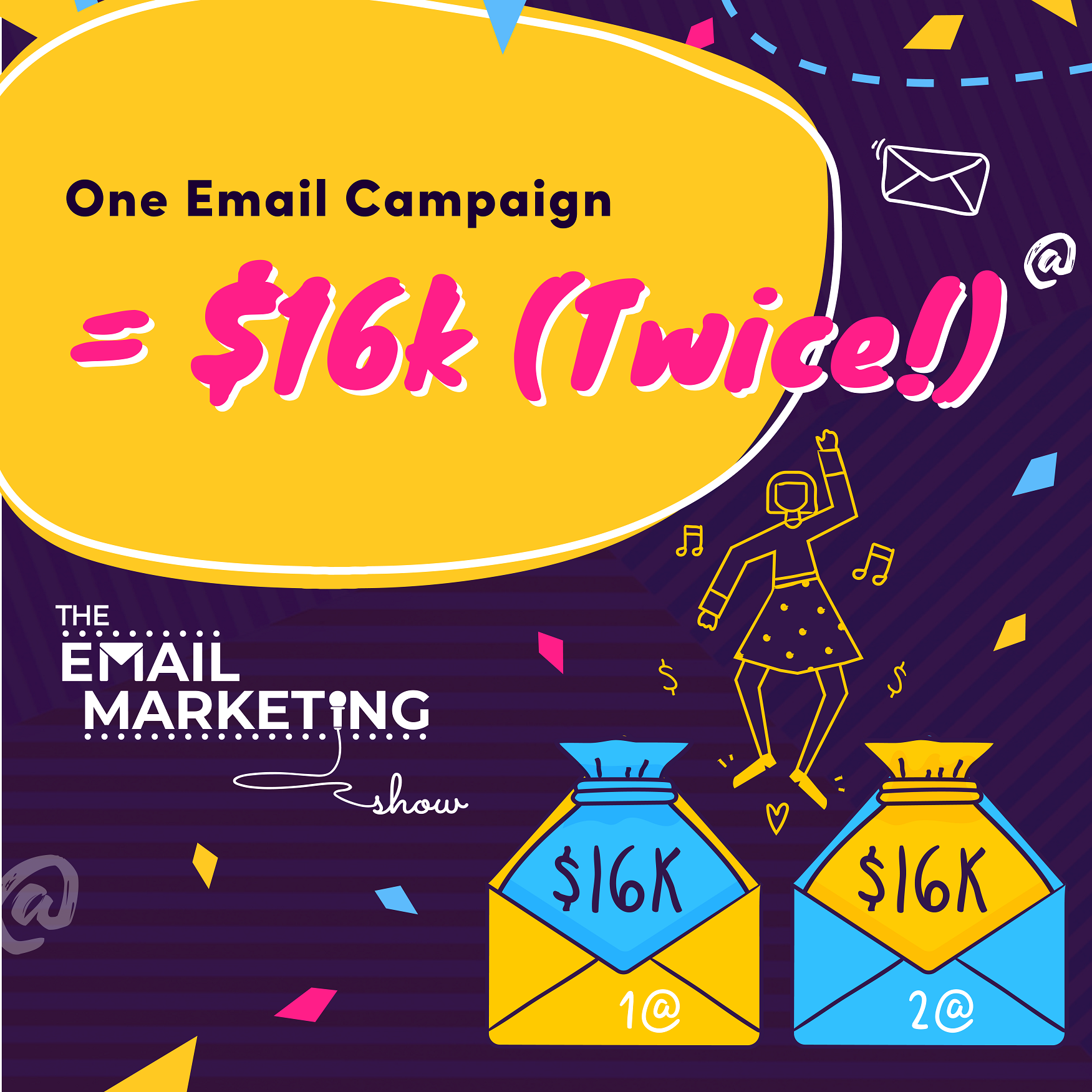
Ep 203Making Sales With ONE Email Marketing Campaign - Hillary's Story
EOur awesome client Hillary-Marie recently made $16,000 worth of sales with an email marketing campaign she implemented from being part of our membership The League. And you know what's even better? She copied and pasted that campaign, ran it again for a different segment of her list, and made another $16,000!Want to find out Hillary-Marie's success story?SOME EPISODE HIGHLIGHTS: (0:18) Join our FREE Facebook Group. (3:45) Check out our sponsor Poster My Wall.(4:25) Who is League member Hillary-Marie?(7:14) When did email marketing become a part of Hillary-Marie's business?(9:55) What did Hillary-Marie's email marketing look like before she joined The League?(13:47) What was the first change Hillary-Marie implemented when she joined The League?(17:59) What results did Hillary-Marie experience in her business?(22:55) What ONE action had the most impact on Hillary-Marie's email marketing?(24:21) What's next for Hillary-Marie and in her business and email marketing?(26:31) Subject line of the week.[podcast_subscribe id="7224"]Who is League member Hillary-Marie?Hillary-Marie (here she is on Instagram) runs a business called iTapOnline - an online tap dance school where she helps teachers and adults around the world unlock the joy of tap dance. Hillary-Marie has a membership that gives people access to all her courses and classes and also runs a certificate 10-week programme for teachers once a year. What Hillary-Marie sells is a super affordable B2C proposition. It can be a hobby for some people, but for the teachers who are enrolling in the certificate programme, their participation often comes from a desire to serve the needs of their students while enjoying their own tap dance journey along the way.Hillary's students are anywhere from absolute beginners to advanced and are often people who don’t have access to a local tap class at their speed or level. So Hillary-Marie tapped (see what we did there?) into the opportunity to segment her two audiences (adult students and teachers) and serve them both simultaneously with the same exact offer.When did email marketing become part of Hillary-Marie’s business?Hillary-Marie started her membership in 2016, and email marketing was always a part of her journey. From the start, she used email marketing to ask people to buy from her, so she started collecting email addresses straight away. But at that time, she was only reaching out to her audience when she had something free to offer or a product she wanted people to buy. Looking back, Hillary-Marie can see that only getting in touch when she had something to sell wasn't the best approach.About a year ago Hillary-Marie came to a crossroads in her business. As an artist and a dancer, she had always relied on social media quite heavily. But she came to the realisation that she'd either have to 'sell her soul' to social media (and spend all her time on Instagram, TikTok, YouTube, etc.) to churn out as much organic content as possible, or she could invest her time, energy, and money into email marketing instead. And not sell her soul!Thankfully, email marketing is the route that Hillary-Marie decided to take. And she's glad she did because email has given her an opportunity to share stories in a way that feels honest and genuine, rather than just playing the game of the algorithm in social media.What was Hillary-Marie’s biggest barrier to doing email marketing?Hillary-Marie can see now that she tried to make email marketing more complicated than it needed to be. When she joined The League, she started sending out our daily 'snowball' emails. But (contrary to our advice to write and send the emails daily), she decided to write and schedule 30 emails at a time. That was not the easiest option. And we're all glad to report that Hillary-Marie switched to our way of thinking and now writes and sends her emails live on a daily basis.In hindsight, she knows now that she was trying to make things more systemised and complicated than they needed to be. And while there’s definitely a place for systems, software, integration, and segmentation, she didn’t need all of that to get started.What did Hillary-Marie’s email marketing look like before she joined The League?Before joining The League, Hillary-Marie was following the product launch formula for her certificate programme once a year. So she'd create a lot of pre-launch content and send that out via email with multiple videos. It involved a lot of content creation that didn’t yield great results. And because this was only done once a year, there was a lot of pressure on this process – Hillary-Marie felt she couldn’t really mess this up!Hillary-Marie also hosts a podcast, and back then she was using email marketing to ask people to check out her latest podcast episode. Or, whenever she created a free lead magnet, she’d email her list to let them know so they wouldn’t miss out on the free goodness. But she wasn't even promoting her membership - she only had a very soft a

Ep 202The Biggest Email Marketing Copywriting Mistakes You're Making
EAre you making any of these email marketing copywriting mistakes? Curious to know what we're talking about? If you're keen to improve your email copy, we've got some super-easy tips here for you. Check them out!SOME EPISODE HIGHLIGHTS: (0:09) Want a FREE resource to get more clicks on your emails? Check out Click Tricks.(4:30) Check out our sponsor Poster My Wall.(5:09) Is successful email marketing all about copywriting?(12:06) Boring subject lines.(13:01) The wall of text.(14:58) Beating around the bush.(16:10) Sounding like you're writing your English coursework.(17:31) Not using stories or making them too long.(19:59) Assuming your audience knows your industry the way you do.(22:20) Doing 'back referencing' the wrong way.(26:10) Subject line of the week. [podcast_subscribe id="7224"]Is successful email marketing all about copywriting?First thing first, let's get this out of the way...Do you need to be a great writer/copywriter to be successful at email marketing? In our opinion, no. Because no one likes to receive emails from the slick copywriter (unless that’s what you do). Rather than having perfectly written and polished copy, you want to connect with your audience!And when you think about it, this is true of sales copy too. Because the minute you say something that doesn't resonate with your readers, you lose them - they'll close the page and be gone forever. With email though, if the person's on your list, you get more attempts than just one to grab and hold their attention.You don't have to write one big thing with a beginning, a middle, and an end – it’s not a long journey! Email marketing is done in short bursts, so it doesn’t matter if you get lost along the way because you'll get another crack at it tomorrow. But there's another reason why email marketing isn't all about the copy. And it's this...The 3 elements of successful email marketingThere are 3 key elements to email marketing:The words/copy. The structure.And the strategy.The copy is what you say in your emails to make people engage with you and feel things. And that only accounts for 20% of the impact an email can have. This is true for any form of communication because it's all to do with the para language, i.e. what runs parallel to the language. In other words, it's about how you say something or the context in which you say it. Structure is way more important than copy, and it's about how many emails you send, when you send them, how long you wait in between emails, who you send them to, etc. And strategy is about the hooks and the angles in your emails.Remember, we're talking about strategy here - not tactics. Tactics are things you do, i.e. individual points of action. A strategy strings together lots of tactics in a specific way - it's where the tactics compound one another. If you have a bunch of tactics that are not compounding the results of each other, then you don't have a strategy. So if you’re worrying about the words, don’t. Because you can have the best words in the world, but if the structure and the strategy aren’t there, your email marketing isn’t going to work. Instead, you could use the simplest, dumbest words you want, but if you’re talking about something that’s concise and resonates with people, those emails are going to win every time over perfect words that end up disengaging your audience. In other words, you're better off sending out a well-structured campaign made of 12-20 fairly average emails compared with one flawlessly-written email based on good-practice copywriting.Common mistakes in email marketing copywritingHaving said that words only account for 20% of your email marketing, you want to get that right! So here are some common mistakes we see people make in their email marketing copy (and how to fix them). The snooze-fest and writing boring subject linesIf you’re writing subject lines based on formulas (i.e. which look and sound formulaic), then stop! Because everyone’s seen them and is using them. We have specific training to help you write subject lines that make sales, and we can teach you how to come up with original, innovative, provocative, and attention-grabbing subject lines.The best tip we can give you is to look at your emails (once you've written them) and then tease out your own unique subject lines that display your personality and use compound curiosity.The wall of text (More white space, please!)White space on emails is a great thing. Think about it - when you're sending 'real' emails (i.e. transactional emails back and forth with someone), you don’t do a lot of interesting stuff with the format. Generally, you just take it from left to right and all the way across. You write and hit send.With email marketing though, while you want to try and create the feel, the personality, and the personal nature of a real transactional email, you want to keep short sentences. The emails Rob sends out, for example, are often made of one-sentence
Ep 201How To Promote Your Book Launch With Email Marketing
EAre you thinking of writing a business book? Or maybe you have already? Want to find out how you can promote your book launch with email marketing?Let's have a bit of a chat about that, shall we?SOME EPISODE HIGHLIGHTS: (0:18) Want a FREE resource to get more clicks on your emails? Check out Click Tricks.(4:28) Check out our sponsor Poster My Wall.(5:08) Should you write a business book?(10:53) How to use your book to bring in thousands of email subscribers!(16:35) How to make your business book profitable.(22:07) Pre-launch business book email ideas.(24:48) Business book launch email ideas.(27:10) Create scarcity with special editions.(30:18) Business book buyer email sequence.(32:02) Subject line of the week.[podcast_subscribe id="7224"]Should you write a business book?A lot of business owners write books these days because we all recognise that some people like to learn by reading a book (while others prefer courses or videos). And it's definitely something that's on our radar for the future too. However, it's not something we're planning to do straight away because the way we teach tends to be very visual.Having said that, when our clients ask us about writing a book for their business, our first question is always to check where their book fits within their business. Do they want to write a book because it gives them status? Or is it a step towards being noticed by a big brand like Netflix, for example? Is the book something they'll use on their front end so they can capture email addresses and send people through some sort of sales funnel? Before you even think of writing a book, you need to know exactly where it fits in your business. And if you decide to go ahead, you definitely want your book to help you with your list building and your sales.Here's how.How to use your book to bring in thousands of email subscribers! Something we think is key when writing a book is having the ability to collect the email addresses of your readers. Whether you're going through traditional publishing or the self-publishing route, you want email addresses that you can market to.A few years ago, Kennedy wrote a book in the magician niche. And in every chapter of the book he included a call to action asking people to opt into his email list. How? Simply by inviting them to grab a free resource related to the topic in that chapter in exchange for their email address. Whether it's diagrams, cheat sheets, or videos (i.e. anything that adds value to your book), use that as an excuse to bring in email subscribers.This is valuable to you because once people are in your world, you can acquire them as customers. If you self-publish your book on Amazon and collect money from the sales but are none the wiser as to who your readers are, you're missing a trick! Because you can't market them directly. It's only by getting your readers to opt in that more opportunities open up for you.So make sure that you:Do the advertising and bring people to your platform.Seed things throughout the book that boomerang people back to you and your world. And now, let’s talk about what a book funnel might look like.How to make your business book profitableA book funnel obviously has the book as its starting point - you want people to come into your world and grab the book as the first thing they do. It can be a paid-for product or it can be free. If it's free, you can ask customers to pay for the cost of shipping and handling. And if you do, be mindful of how you phrase that, as you don’t want the “free + shipping” option to be more expensive than buying the book on Amazon! So definitely play with the economics of it.You can then have a bumper offer on the shopping cart where, just before they buy, you’re offering the customer to buy something else together with the book for an extra, say, $17-27. This could be the audiobook, an additional chapter, or a digital workbook with exercises, for example. It’s something extra that’s complimentary to the book, rather than content you’ve taken out of it. So, again, be careful of how you frame that and make sure that whatever your bumper offer is, it’s not a physical product that’s going to cost you more to produce or send out.Use one-click upsell offersAnother thing you can do is to have a one-click upsell on the next page. This is where you may be offering a course version of the book for $97, for example. Or you could even present a more expensive upsell, such as an implementation session for, say, $297, or a trial to your membership if you have one.Another thing we've seen that we think works really well is to present a webinar registration form that offers an implementation session related to the content of the book. The idea is that people print off some worksheets and come to the webinar to learn how to apply the teachings of the book to their specific situation. Pre-launch business book email ideas Before you launch your book, you can build some excitement in advance and g

Ep 2005 MAJOR B2B Email Marketing Problems (And Fixes)
EAre you a B2B marketer? Are you struggling to make email marketing work for your business? Let's talk about the five B2B email marketing problems we see all the time. Of course, we won't leave you high and dry. We'll share the reasons why these problems are so common but also give you some practical tips on how to fix them.Ready to get all the good stuff on this? SOME EPISODE HIGHLIGHTS: (0:11) Join our FREE Facebook Group. (5:12) Check out our sponsor ZeroBounce. (7:00) What do we mean by B2B?(10:40) Solve the problem of the PERSON working for the business.(12:13) One - no one is joining your B2B email list.(15:23) Kennedy's case study.(19:49) Two - you're getting A LOT of unsubscribes.(29:38) Three - you're not making enough sales.(32:51) Four - your subscribers aren't opening your emails.(38:29) Five - your subscribers aren't clicking on the links in your emails.(40:25) Subject line of the week.[podcast_subscribe id="7224"]What do we mean by B2B?First things first, we have a slightly different philosophy on B2B. We actually think there are two types of B2B marketing - b2b (smaller business to smaller business) and B2B (business to big business).We make this distinction because we believe that in b2b, the businesses you’re marketing to make decisions just like consumers. Take us, for example. We sell a business solution, but often our customers are people who are spending their own money on their businesses. They spend and invest money like consumers. In fact, some of the people who buy from us have such a small business (or their business is so new) that they’re not even making any money yet! They're investing their own money by putting it into the business.So the first thing we recommend you do is to evaluate whether you fit in the traditional B2B category. Are you selling to someone who works for a big business (B2B) or are you selling to a small business owner who's currently alone in their venture (b2b)? The advice that follows is mainly about B2B. But if you’re a b2b marketer, everything else we talk about on our podcast and blog will apply to you. Focus on this, and we promise it'll change the way you communicate with your audience. It definitely did for us, and it made a huge difference.Solve the problem of the PERSON working for the company If you consider yourself a B2B marketer, the first thing to remember is that you're still selling to human beings - people who have busy days and lives. They might have short attention spans, but they still have emotions! They have stuff they care about. And when it comes to the work they do, they still want to do a good job and get good results for their boss.In fact, because they're so busy and pulled in all directions (in their personal and professional lives), they want to get their job done in the easiest way possible. Because that can perhaps relieve some stress and alleviate pressure. And this is where you come in.So with that in mind, let's look at the 5 major problems we see with B2B marketing and how to fix them. Problem One - No one is joining your B2B email listIf people aren't joining your list, it's worth pointing out that the person you're talking to (i.e. the ideal prospect for your list) might be someone who works in a specific department for a big company. You want to get their attention so they join your email list. But getting your emails adds a new layer of distraction to their (already busy) personal and professional lives. In other words, they have a lot going on, and you're coming along asking them to join your list. Put yourself in their shoes. Why would they want to do that? You must present them with a really exciting reason for them to want to give you their work email address, which is already bombarded with a lot of other stuff.If the reason why they should join your list isn't interesting enough, then you're fighting a losing battle. So you need the most compelling positioning and messaging to get someone to pay attention and then join your list. Simply asking a person who works in a big company to join your newsletter isn't going to cut it! However you position your lead magnet, quiz, newsletter, or whatever you're offering, needs to be more compelling than you think. You can't grab people's attention with something dull and bland - they simply won't care! Kennedy's case study When Kennedy first started working as an entertainer, he was selling to big corporations with multiple locations and over 200 staff. Typically, the ideal subscriber for his list would be someone working for the CEO of the company - someone with the job to organise a big sales or marketing conference, for example. Kennedy was aware that this job might not be that person's main focus - it was just something they were tasked with. So what would be helpful for that person? What might they need or want? Perhaps a lead magnet along the lines of “Six ways to get the most value from the next entertainer you hi

Ep 199Stop Landing In The Spam Folder & Immediately Skyrocket Your Email Deliverability - With Brian Minick
EDo you know how many of the email addresses on your list are invalid? What happens when your subscribers mark your emails as spam rather than unsubscribing? How can you improve your sender reputation and your email deliverability? And did you know that you're losing approximately 22% of your subscribers every single year? We discuss this (and more!) with Brian Minick from ZeroBounce. And we guarantee you - you want to know what Brian has to say here. So listen or read on, and you can thank us later! SOME EPISODE HIGHLIGHTS: (0:12) Want a FREE resource to get more clicks on your emails? Check out Click Tricks. (3:10) Check out our sponsor ZeroBounce. (4:58) Did Brian really jump from the side of a cruise ship?(6:20) What is email validation and why do you want to do it?(9:44) Why deliverability rates aren't accurate.(11:43) The truth about disposable email addresses.(16:08) How to deal with typos.(19:50) Other reasons why email addresses aren't valid.(24:33) How to build an email list based on quality and not quantity.(26:47) Make informed business decisions with ZeroBounce.(31:40) Subject line of the week.[podcast_subscribe id="7224"]What is email validation and why do you want to do it? Having validated over 18 billion email addresses over the years to check if emails to those addresses are deliverable, ZeroBounce did some research back in 2022. And they found that, on average, about 22% of email lists are decaying year on year. This means that next year you won't be able to deliver 22% of the emails you delivered this year.And part of the reason why is because of job shifts and email addresses getting shut down or abandoned. But there's more, and we're going to go into details with Brian a little later. But for now, let's let that number sink in - it's a terrifying statistic! Sure, if you have more personal accounts on your email list (rather than business ones), you're looking at a slightly slower decay. But that number could be higher if you're B2B. Brian confirmed that ZeroBounce (who are B2B) are seeing their own database reduce by 32% every year!If you've been following our work for a while, you'll know that our approach to email marketing is based on building a list over time and nurturing those people. We make offers from the start, but not everyone will buy straight away - some people can take a couple of years before they become customers. And if these people aren't even going to be on your list next year, you definitely want to sell to them quickly! You want to turn them into paying customers to keep them in your world. Because when they become customers, they're more likely to get in touch and let you know if they changed their email address, for example.But let's get into more detail... Why deliverability rates aren't accurateWhen your emails aren't getting delivered, you might see your bounce rate increase. However, Email Service Providers (ESPs) don't do a great job of explaining why that is. ZeroBounce, in their analysis, focuses on deliverability. When your emails are delivered, it means they've landed in someone's inbox. ESPs, on the other hand, will consider an email as delivered when it's left their system and has gone somewhere. In reality, it could be in someone's spam folder (blocked by a spam filter) or the Promotions folder. All it means is that the email has been sent.The reason why ESPs report on 'sent' rather than 'delivered' is that they can't tell the difference! But also, this way, they show you a great-looking number. What you really want to know though, is whether your emails end up in the subscriber's actual inbox. But what are some of the other reasons for email list decay? The truth about disposable email addresses A lot of websites out there let people create disposable email addresses - these are valid email addresses that give you access to an inbox and allow you to send and receive emails. People typically use them to get past gated content that requires an email address (like a lead magnet or a coupon) but without using their real email address. These are anonymous.But once the person has grabbed the piece of content they wanted, they leave that website, and they're gone. That email address is no longer a marketable contact. So if you send emails to that address, they'll either bounce or go unread. It's a completely useless contact because it's just like a 'burner email address' with a one-time use. The good news for us marketers is that disposable email addresses can be detected. So, as a business, you can make some decisions. If you're a charity that accepts donations from anonymous people, then this use case works for you. It’s a valid and safe scenario for accepting disposable email addresses onto your list. But otherwise, if the emails are bouncing, and you're never getting engagement, you're building a list of vapour!From a marketer’s point of view, these email addresses are a waste of space because these

Ep 198Cold Email Outreach - Is The Technique Sleazy or Super Effective?
EWhat is cold email outreach? Is it a necessary technique or a spammy annoyance? And how do you even do it? Let's talk about the ins and outs of cold outreach emails. Are they really as icy as people think? Not if you do it right... So let's find out!SOME EPISODE HIGHLIGHTS: (0:23) Join our FREE Facebook Group. (4:28) Check out our sponsor ZeroBounce. (6:17) A chilly introduction - what is cold email outreach?(7:55) Is cold email outreach the same as spam?(8:54) Why cold email outreach isn't as 'frosty' as you think.(11:29) Why do cold emails sometimes feel sleazy?(13:43) Cold outreach done wrong.(16:08) Using social proof in your cold outreach emails. (17:44) What's the difference between inbound marketing and cold outreach? (19:38) Running cold outreach to a lead magnet.(23:51) Subject line of the week.[podcast_subscribe id="7224"]A chilly introduction - what is cold email outreach? A lot of people ask us about cold email outreach. And the truth is that this technique isn't really email marketing. With cold outreach, people aren't joining your list - you're emailing them out of the blue (i.e. cold). It's a type of prospecting and email lead generation. It’s about finding people you want to work with or who will buy from you.We believe that this practice only fits a certain type of business – certainly, we wouldn’t use cold outreach to try and sell a $37 course about how to send daily emails! However, we would use it (and have used it) for something specific - like being invited to speak on a podcast.Is cold email outreach the same as spam?Spam refers to unsolicited emails sent out by some sort of automation programme to people who were not expecting or wanted your email. And to be fair, the practice of cold outreach seems to fit all those parameters! Because effectively, you're taking a bunch of people, dropping them into some sort of automation system (doing it manually sounds like a lot of work and effort), and then sending them a series of emails (let's say 3-7) that they weren't expecting.And to make matters worse, there's probably no 'unsubscribe' link at the bottom because this isn't an email list they joined. If people aren’t interested in what you have to sell, you simply ask them to hit reply and let you know so you can take them out of the automation. So that's how cold email outreach works.Why cold email outreach isn't as 'frosty' as you think Despite all this, cold outreach isn’t as big of a problem as you may think. It doesn’t have to be as 'frosty' as receiving a DM from someone offering help with something that’s completely irrelevant to you!And while we’re not cold email outreach experts, we have used this technique in a specific way in order to get booked on podcasts and do training in other people’s communities. Otherwise, we use referral introductions and our network of friends and contacts we've made from being part of various groups and masterminds. It's also worth pointing out that, when we do cold outreach, we don't use our existing email marketing platform - we use a specific cold outreach email automation tool. Why? Because email marketing platforms are opt-in systems. That means that if you start loading a bunch of email addresses and send emails to people out of the blue, you'll definitely hurt your own email deliverability. So we use a specialist outreach tool and then ask people to opt into our list.Effectively, we think of outreach as another ads channel – it’s the same methodology as running Facebook or YouTube ads, for example. It's just a different type of ad that lands in people’s email inboxes. And if people want more information, then they can take a step into our world and opt-in to receive our email marketing.Why do cold emails sometimes feel sleazy? The reason why a lot of cold outreach sucks is that it’s devoid of any personality – it’s robotic and sounds like ChatGPT! So whenever we do cold outreach, we drip it in personality. Even if what we’re talking about is of no interest to the person we're reaching out to, we still want to elicit replies and give people emotional value. We want to get some sort of reaction – whether that’s to say we’re fun, crazy, or even a bit extra! We are ourselves “plus 5” in those emails - amped up. And that's because we want to grab people’s attention and make our audience feel like they can’t ignore us.And yes, we do get a handful of complaints. But that’s still good because it means our emails are so full of personality that it's only natural some people won't like them. If everyone liked us or felt indifferent to our content, it'd mean our emails are too bland and don't have enough personality. Not everyone likes our style, and if people are offended by it, that's okay - people are offended for different reasons. Cold outreach done wrongSo why is the cold outreach most people send out terrible? Because it uses personalisation in the wrong way. If you’re sending someone an email t

Ep 197How Brad 10x'd His Ad Spend In One Month - A Case Study
ECan email marketing help you get a crazy ROI in advertising? Brad Gouldemond - a member of The League - shows that you can. When Brad started his business, he invested in ads, he got a few thousand people to join his challenge (which he run and managed with email marketing), and the rest, as they say, is history!Well, not really.He made a lot of money.That's the rest of the story. Wanna hear it? SOME EPISODE HIGHLIGHTS: (0:18) Join our FREE Facebook Group. (3:39) Check out our sponsor ZeroBounce. (5:27) Who is Brad Gouldemond?(8:15) When did Brad introduce email marketing in his business?(10:22) What was Brad's biggest barrier with email marketing when he first started?(13:16) What did Brad's email marketing look like before he joined The League?(15:36) How did things change for Brad when he joined The League?(21:33) How does Brad feel about his email marketing now?(23:32) What ONE thing had the biggest impact on Brad's email marketing?(25:51) Does Brad feel like email marketing has taken over his life?(32:09) Subject line of the week.[podcast_subscribe id="7224"]Who is Brad Gouldemond?At the time of our chat, Brad's been in business for about three years. A musician and a speaker, he started his business during Covid. Brad is now based in Nashville and mentors aspiring Christian artists and songwriters to learn how to write better songs. He gives them connections but also teaches them how to find great producers and release their music in a way that feels authentic to them. A lot of artists don't have the confidence to put themselves out there with their music and their songwriting, so Brad's membership helps with that.This shows that if you're a coach or sell courses or a membership, you're not just helping people with information, tools, techniques, and strategies. You're also giving your audience the permission, inspiration, and desire to do what they want to do. And email marketing can help with that. If you want to connect with Brad, you can find him on Instagram or sign up for his FREE Christian Music Workshop.When did Brad introduce email marketing in his business?In March 2020, Brad launched his business without an email list. All he had was $5,000 (out of his retirement fund) that he put into Facebook ads. He ended up with a whopping 3,000 people joining his challenge, and that's when he started email marketing. Because he had to welcome them and communicate with them about the challenge.After that, he soon created a page for his academy, decided how much to charge, and came up with a 5-day sales sequence. And he made TEN TIMES his ad spend back during that challenge - in one month! But what to do next? Brad could see the value of email marketing clear as day, but he had no idea how to get results intentionally, consistently, and predictably through it. What was Brad's biggest barrier with email marketing when he first started? The biggest challenge Brad had when he first got started is that he didn't know about email marketing at all. It'd worked really well for him when he first launched his business, but he felt he had no idea how to get the same results again.At the time of starting up in business (during lockdown), ad costs were low. Brad leaned into that and got a crazy ROI on advertising! But how could he take his skills in communication and music and make them work consistently for his business by using email marketing?The answer, Brad said, was to find people (just like us) who are good at what you want to learn (i.e. email marketing) and take their advice, which is what Brad eventually did...What did Brad’s email marketing look like before he joined The League?Before he joined The League, Brad’s emails were sporadic. He was running challenges three times a year and sending emails around those. But otherwise, he'd be ignoring his list for 3-4 months. And that's simply because he didn't know what to send them. As many business owners do, he was more focused on serving his paying clients (and making money) and didn't pay enough attention to nurturing people on his list. He just didn't know how to do it! So instead of sending automated email sequences, he'd create broadcast-type emails. He didn't know what worked or what to say, and he felt it was really hard for him to get the ball rolling with email marketing. At the time, Brad had an evergreen webinar he wanted to launch, but he just didn't know how to use email marketing to make that convert. Part of it was because of the (then) prohibitive cost of ads, but a big reason was down to Brad not being able to figure out his emails and copy. And that's where we come in... How did things change for Brad when he joined The League?Brad found us through a web search while looking for email marketing advice to be able to create great sequences without hiring an expensive copywriter. He came across our webpage and noticed how we stand out – our copy shows personality, it’s interesting, and

Ep 196Member Growth Strategies: How to Attract New Members Using Email Marketing!
EDo you have a membership and are interested in finding out how to get more members? We all do, right? So let's talk about member growth strategies that work and will help you attract MORE customers with your email marketing.They work.Seriously.It's the stuff we do.Ready to find out more?SOME EPISODE HIGHLIGHTS: (0:10) Join our FREE Facebook Group. (4:25) Check out our sponsor ZeroBounce. (6:12) How can membership site owners build their email list?(10:43) Do you need a big email list?(12:59) Do the things with the biggest impact for best results!(14:51) Focus on getting more out of your existing subscribers. (17:24) What strategies can membership site owners use to increase sales? (19:49) Sell from different angles and use psych sequencing. (22:30) How did we grow our membership using email marketing(24:39) Subject line of the week.[podcast_subscribe id="7224"]If you have a membership, go and check out our friends Mike and Kelly over at The Membership Geeks. They run The Membership Academy, which is a membership about having memberships, and they host an awesome podcast too. You'll love them as much as we do!How can membership site owners build their email lists? As a membership site owner trying to attract more members using email marketing, your first job is to build and grow your email list. And you can do that by either investing time or money into it. You can also buy subscribers or buyers (i.e. customers who have bought something).And in reality, you probably want both. Because buyers have proven not only that they’re interested in your niche and what you sell, but also that they’re willing and able to pay for it - they have the disposable cash to invest right now.Driving traffic to a low-cost offerOne way to grow your email list is to drive traffic to a low-cost offer. For example, we run ads from Facebook and YouTube into our Splinter offer to a piece of software called Countdown Hero. It’s a low-cost item, and through our email campaigns, we offer people a bunch of upsells to upgrade what they get with the tool and, ultimately, to join our membership, The League.Driving traffic to a free opt-inAnother way to build your email list is to drive traffic to a free opt-in. You add people to your list, and you then make them an offer for a paid product. And if they don't buy it, they go into what we call our SCORE email engine. We do that because it's important that you turn subscribers into members as fast as humanly possible - the longer it takes for people to buy from you for the first time, the less likely they are to buy from you ever. So this is really key!The moment people make their first contact with you is when they're at their highest level of intent - what you sell is the most important to them. So your job is to send them to a free lead magnet and then try and convert them as soon as possible. These strategies all work, but it’s about bringing the right types of people in, i.e. those who show the highest level of intent to solve the issue you address with what you sell. Do you need a big email list? A membership can feel like a huge, ongoing commitment. And a lot of people think that in order to sell one, you need a big email list. That's what we're being told by marketers everywhere. But that’s simply not true. The truth is that you need to make more money from every subscriber you already have on your list. It's about maximising sales from your existing audience, and that's what we teach inside our very comprehensive membership, The League. Do the things with the biggest impact for best results!So what do you do to make more money from every subscriber? You need to have your email marketing do the heavy lifting for you. Let's look at some figures as an example. If you sell a membership for $27 per month, and the average time someone stays with you is 3 months, that customer will make you less than $100. So you can't afford to spend more than $100 to acquire a new lead. Plus, once they're gone, you need to start again. But when your email marketing does the work for you, then every subscriber you have becomes more profitable. And at that point, it doesn't matter if the cost of ads grows. Because you know you can convert well. So the key is for you to have a great conversion system that allows you to make money from someone in the first 7 days. The more money you make from each subscriber-turned-customer, the more you can spend on your ads to make sure your offers get seen over someone else's. Focus on getting more out of your existing subscribersWe made our first 6 figures in our business from about 2,000 subscribers on our list. People often think that because we live and breathe email marketing we must have a monster list. But we don’t. We do well because we focus on how we serve and on creating the most value for the list we have.And what even is a big list anyway? List size is all relative, and it depends on the n

Ep 195How To Prevent Buyer Remorse And Turn Customers Into Raving Fans!
EHow do you prevent buyer remorse and get your customers to buy from you over and over again? What can you do to make sure the people who buy from you never regret it? And how exactly do you turn them into repeat buyers and raving fans?!We spill ALL the beans today. Are you ready for it?SOME EPISODE HIGHLIGHTS: (0:33) Join our FREE Facebook Group. (4:34) Check out our sponsor ZeroBounce. (6:22) What is buyer remorse?(7:43) What's the psychology behind buyer remorse and why does it happen?(11:44) Remorse is a natural physiological response.(15:48) How the heck can email marketing help with buyer remorse?(16:39) Resell people on the product to gain the ability to sell more to them!(21:03) Teach the best bits first!(22:49) How to prevent buyer remorse in your onboarding sequence.(25:44) Subject line of the week.What is buyer remorse?Buyer remorse is a sense of regret that happens at the back of people buying something. It can happen immediately, as soon as they bought the product, or after it's been delivered. But it can also kick in quite a long time down the road, like a year later, for example.What's the psychology behind buyer remorse and why does it happen? Buyer remorse can happen for a number of reasons. People don't have confidence in themselvesIf you sell a course, a membership, or coaching, buyer remorse could happen when someone loses confidence in themselves. Doubt creeps in and the person who bought your product suddenly isn't sure whether they can do the work. You (as the vendor) may have done everything you needed to do to sell it, but your customers are now doubting their own ability to get the work done. And so they start to regret buying your product.People have been burnt out beforeAnother reason why people experience buyer remorse could be that the minute the money leaves their account, they're triggered into a time when they were burnt in the past.Maybe they bought something, but the person who sold them the product didn't deliver on their promise. Or maybe the product wasn't good. We've all had bad experiences in the past, and we're all jaded somehow. So sometimes people regret buying from you, but it's not because of something you did. Rather, it's because someone else may have done something not as ethical or good as you. The product isn't what it promised to beWhat could also happen is that someone buys a course, and they're excited about it. But then they get started and realise the programme isn't what it said in the advertising. Sure - any good marketing is meant to get people excited. But that should never be to the detriment of content. People worry about what others might thinkAnother reason for buyer remorse is that people buy something but then start worrying about what others might think. This is all to do with the fear of being judged by others!Remorse is a natural physiological responseRemorse can also be a natural physiological response to all the tension and excitement that kicks in if you've been thinking about buying something for a long time, for example. At some point, you may feel apprehension, and that can be disguised as excitement. Because, physiologically, we have very little ability to tell the difference between terror, tension, or anxiety and excitement – they feel the same to us! So it's when we've paid for something (and the money's gone) that suddenly all the doubts appear, and we feel remorse.For a lot of people though, buyer remorse boils down to that moment when they start to realise that what's standing in between them and getting the results they want is their own ability to do the work - to make time to prioritise, study, and apply whatever it is they bought. People might start to understand that it's up to them to make your teachings work in their situation, and suddenly they doubt themselves. How the heck can email marketing help with buyer remorse?Over the years, we’ve come up with a few strategies to use email marketing to prevent buyer remorse. The first one is to make sure we do a really damn good job of reselling how amazing the product is. We want to tell them how it's going to help them get the outcome they want.How do you do that? You repaint the transformation you promised them. We do that in our series of Thank You videos but also in our follow-up sequence called the Refund Reduction campaign, which is available inside our membership The League. The campaign is designed to get people to consume your product. But even if they don’t consume it, they’ll still feel the benefits and won't ask for their money back. Resell people on the product in order to gain the ability to sell more to them!Basically, your marketing doesn’t stop when someone buys. Because, first of all, you want to make people feel great about what they just bought. But also, you want them to buy something else from you in the future. And it’s going to be a lot harder to get someone over the hump of buying something else if they wish

Ep 194What Is The ‘Foot-In-The-Door’ Technique And Why Does It Work So Bloody Well?!
EWhat on earth is the foot-in-the-door technique, and why does it work so bloody well every single time? If you want to find out how to make more sales with this incredibly simple technique, you're in the right place! Let's get this show on the road! SOME EPISODE HIGHLIGHTS: (0:25) Join our FREE Facebook Group. (3:43) Check out our sponsor ZeroBounce. (5:32) What is the foot-in-the-door technique?(7:22) Why does this technique work so well? (11:56 ) You get to upgrade buyers. (13:15) An example of the foot-in-the-door technique.(14:58) When does the foot-in-the-door technique fail? (27:05) Ascension vs descension marketing.(31:54) How can the foot-in-the-door technique be used in your email marketing?(37:28) How to use the foot-in-the-door technique if you sell a membership.(39:16) Subject line of the week.What is the foot-in-the-door technique? The foot-in-the-door technique is a marketing tool that gets someone to make a small commitment with you in order to increase conversions for a larger commitment. In other words, you want people to do a simple, easy thing and then you encourage them to buy something more. It's about getting people 'in motion' because something that's already moving (as opposed to something that's static) has momentum to keep going.Why does this technique work so well?It creates momentumWe all know that momentum works. It's not magic or psychology - it's just physics! If you've ever tried to push a broken-down car, getting the wheels to start turning at first is really hard. But when you get the car going (and it's in momentum) it gets much easier. And human beings are exactly the same.So as a business owner, you want to get people into motion. Because when human beings commit to something, they're more likely to be consistent with it. Robert Cialdini talks about this in his book Influence: The Psychology of Persuasion, and he calls it the Commitment Consistency Principle. It’s the idea that if we say or do something that makes us internally back it up, we’ll stand by it. Because we like to be seen as consistent - to ourselves and others.So if someone bought a small product from you (like an eBook or a paid-for lead magnet), they're more likely to buy a course you have on the same topic when you offer it to them. And that's because they've already committed to something and shown their interest. You only show your main offer to pre-qualified peopleAside from putting people in momentum, the foot-in-the-door technique works because it allows you to show your main offer to the people who've already told you they're interested. If you have a new programme and email your whole list about it (several times, as the case might be), some people might leave because they're not interested. But if you only email the people who already showed you they have an interest by making a small commitment (like watching a video about that topic), then you can tell them about your offer and be more confident they'll buy. For example, if you've made a video about a particular topic, and someone's watched 80% of it, they must be interested, right? So tell them about your paid offer. Because they already have their foot in the door, and they're more likely to keep going after that. You get to upgrade buyers The other benefit of using this technique is that if you have a front-end offer (smaller commitment), you can then upsell buyers and sell them something else. For example, if you have a membership that's available at a monthly offer, definitely show them the annual option too. Having said that, if you have multiple products or offers and show them all at once, people might get confused in trying to understand what they need. So rather than packaging all your products up as different options and leaving people to figure out what they need, get them to make a small commitment first, and then upgrade them later.An example of the foot-in-the-door-techniqueA good example of this comes from our friends Martin and Lyndsay from Jammy Digital, who sell Content Marketing services around blogging and SEO. They sell blog templates for around $47 but also have a done-for-you service at a much higher price point. And 60% of the people who buy their done-for-you service bought the $47 product first. They put their foot in the door first by buying a low-resistance product and only then made a larger commitment.And this is interesting, right? Because all these people first bought templates to write blog posts themselves and then decided they didn't have the time, patience, or inclination to do it and hired an agency to do it for them. It goes to show there’s no real logic to a lot of marketing, sales, or people’s buying habits! So don't assume that because someone bought a certain product from you, they won't be interested in more. When does the foot-in-the-door technique fail? The higher-commitment offer is 'blind' or unrelatedThis technique doesn't always work. In fa

Ep 192What's The BEST Email Marketing Course On The Planet?
EIf you're thinking of buying an email marketing course, what should you look out for? What should a course even help you do? Should you invest in one? And what will you learn?If you want answers to all these questions, well, you're about to get them! Check this out! SOME EPISODE HIGHLIGHTS: (0:18) Join our FREE Facebook Group. (4:45) What can an email marketing course help you do?(11:19) Can an email marketing course save you time?(15:01) The 3 key elements of a good email marketing course - strategy.(18:54) Email marketing campaigns. (22:32) Technology.(25:46) The best email marketing courses.(26:36) The best email marketing copywriting courses.(28:22) The best sales funnels courses.(29:52) Subject line of the week.What can an email marketing course help you do? What can an email marketing course help you do? Why would you invest in an email marketing course? You might be someone who does email marketing quite 'loosely' at the moment. That means you might have a list of people who bought something from you, and you send them a newsletter (sometimes) with some random information and a link to your website. Every time you send an email, you hope for the best. And (no offense, but...) you're probably not getting great results from your email marketing. If you’re currently sending emails of any description to anybody at scale, and you're not getting results, chances are there’s something strategically off somewhere. And it’s probably nothing to do with your copywriting skills – because that’s one of the smaller elements of email marketing. By studying a good email marketing course, you’ll learn a better system for doing email. And we don’t mean the tech here - it's about the systematic way in which you approach your email marketing.For example, you might learn a way that’s easier than what you’re currently doing, which may be a collection of different things you’ve put together based on what you've seen others doing. And that's probably not working very well. If you go ahead and buy an email marketing course, you should be clear on the outcome. And the way we see it, ultimately, is that a course has to help you make more money from each subscriber you already have on your list. What if you don't have an email list yet? You may be someone who's just getting ready to start so you don't have an email list yet. A lot of people who join our membership The League are at this point – they either don’t have a list or they have a 'small one' (of 400-500+ people) and want to do more with it. In reality, only about 20% of our members are people who do email marketing 'the perfect way'. Yes, it would be ideal to have everything set up and up and running before you even gain your first subscriber. That would mean that every single person you bring in is not having enough time to get disengaged. It would also mean that everyone would be going through a well-put-together bunch of campaigns that maximise the value of each subscriber.The bottom line is that email marketing courses help people at different stages. Whether you're starting your email list from scratch, or you already have one and want to get better results and earn more per subscriber, an email marketing course can help.Can an email marketing course save you time? You're probably wondering if an email marketing course can save you time compared to how long it'd take you to figure things out for yourself. And the answer is yes. A lot of our members tell us that without our teachings, they'd still be going around in circles. We're all busy, and we all think we don't have enough time to invest in a course. But just like when you outsource anything, you have to first invest that time upfront so you can reap the benefits later. In other words, you do the work now to free up some time down the line. So a good email marketing course will save you time by cutting out the learning curve. With a course, you don't have to figure things out yourself and can go straight to the results.You'll also save time because you'll know exactly what to do, when to do it, where, why, and how. The way we teach email marketing allows you to build a bunch of assets that run for you forever. Realistically, the only thing you have to do on a daily basis is to send a daily email, which takes less than half an hour. But with email marketing, you're creating an asset that's going to serve you forever and give you returns like nothing else. When you create email marketing automations, you make sales week after week while you're doing something completely different - whether in your business or your personal life. Because automating your campaigns means your emails will be sent and sales will be made. The 3 key elements of a good email marketing courseNot all courses are created equal, obviously. Different courses have different elements, so what are the 3 key components that make a good email marketing course?Here's our ta

Ep 191The Simple Formula For Coaches To Sell On Autopilot With Email Marketing
EAre you a coach or consultant? Then you need to learn how to build a system that helps you sell on autopilot so you don't have to hustle to fill your next coaching group or programme. This is why we're here to tell you all you need to know about email marketing for coaches. Ready to learn how to get more of the right clients in less time and with less work? Let's do this!SOME EPISODE HIGHLIGHTS: (0:10) Join our FREE Facebook Group. (6:10) Why should coaches focus on email marketing?(8:56) How email marketing helps coaches and consultants.(13:57) Email marketing helps you move people towards buying from you.(16:31) Create an email engine to sell on autopilot. (17:55) The typical sales funnel for a coach.(21:29) What happens when people don't qualify?(24:51) The best lead magnets for coaches. (26:34) Social media vs email marketing for coaches.(29:39) How can coaches sell using email marketing?(31:37) Subject line of the week.Why should coaches focus on email marketing? Coaches who sell high-ticket items, small-group coaching, or one-on-one coaching often worry about how email marketing might apply to their specific businesses. And coaching is indeed different.First of all, as a coach, you’re selling high-ticket items, so you tend to have a much more intimate relationship with your audience. You're giving more personal attention and help. And that requires someone to have a high level of trust in you before they go ahead and spend that amount of money. For example, we have a coaching programme called The Email Engine Accelerator. This is a larger investment and an intensive experience. And we use email marketing to communicate to people that they can trust us and that the process works.Another reason why coaching businesses are different is that often service providers feel they need to hustle for the next client. Long before we were working together and even figured out how to do email marketing, we both had a high-ticket coaching business for small groups. And it always felt like we had to hustle to find the next cohort of clients or fill any spots. How email marketing helps coaches and consultantsWith email marketing, you can replace the idea of hustling. Email helps you generate leads, so you're attracting new prospects for your coaching programmes. But it also helps you nurture those leads and build both the perceived value of the outcome and people's confidence at the same time. You need to give people reassurance and make sure they believe that your progamme works and will give them results despite what they have or haven't tried before. Through simple, automated email sequences, you need to give people confidence in your, your system, the results they can get, and the fact that they can successfully follow your approach. And the way to do that is by overcoming objections. Show people how your programme works in spite of their previous failings or the fact they might have no experience of doing this before. If you have a coaching business (or have a coaching element in your business), you can write emails (once) that will move people from one place to the next. Focus on building people's confidence and moving them through the stages of becoming paying clients. The great thing is while you're busy serving your clients and delivering a round of your coaching programme, you are also nurturing future clients. You could be selling all your spots for the next cohort way in advance! With email, you no longer have to hustle because your coaching clients are already lined up. This benefits your cash flow too because people pay in advance, and you can use that money to generate more leads. With email marketing, you can sell on autopilot. Filling your coaching programmes is completely hands-off.Email marketing helps you move people towards buying from youOne of the reasons why this works so well is because with coaching often you don’t know where anybody is in your world. How close are they to buying from you? That’s why you feel you have to hustle. So the reason why we say coaches specifically should focus on email marketing is that you want to move each person towards their next step.Through email, you can send people specific content, such as a video where you pitch, for example. Or the link to a webinar or to an application form. You want to drive people towards applying to work with you, and that might have to be done in stages. First, they book a call, then you get them to attend the call, and then you close them on the call. And while all of this happens, you also want people to renew or join you for the next cohort, or whatever the case might be. It's a whole process. And if notice that people are dropping out at specific phases, maybe you need to reassess and look at what you do closely to understand where you can spot opportunities for improvement. Create an email engine to sell on autopilotThe great thing about all this is that you write your emails once, and you have a co

Ep 190How Emily Made Over $14k In 7 Days With Just ONE Email Marketing Campaign
EWould you like to find out how our member Emily Moncuit from Emily’s Notebook made over $14k in only 7 days by using ONE of our email marketing campaigns?It sounds too good to be true, doesn't it? You join a membership, do one thing, and make a whole bunch of money. And when you implement the next action, you make more money! Mindblowing!But let's hear it from Emily... SOME EPISODE HIGHLIGHTS: (0:20) Join our FREE Facebook Group. (3:25) Who is League member Emily Moncuit?(5:59) When did Emily get started with email marketing?(8:29) What was Emily's biggest barrier to making email work for her?(9:35) What did Emily's emails look like before she joined The League?(12:54) What were the first changes that Emily made when she joined The League?(16:37) What impact has email marketing had on Emily's revenue and sales?(19:03) How does Emily feel about her email marketing now?(22:30) The one action that had the most impact on Emily's email marketing.(25:12) Subject line of the week.Who is League member Emily Moncuit?Emily teaches people how to draw (step-by-step) with a particular emphasis on supporting their well-being and integrating a drawing habit into their day. Emily used to sell a high-level ticket offer in the form of a course, but she's now transitioning into a membership model. Her business is evolving because there's a massive demand for drawing, as people have been disconnected from their creativity.Drawing is something we might be good at when we're in school, but traditionally and culturally at some point, it gets discouraged. And people are told to get "a proper job". That's when drawing becomes a hobby, and if we treat it like a hobby it's not part of our creative reasoning and evolution as human beings. So there’s a deeply rooted psychological connection that people have with drawing.When did Emily get started with email marketing?Emily started drawing in 2019 after her divorce to find a way to cope. At the time, she worked as a director in a government position where she was involved in community regeneration. Overnight, she started her creative journey by drawing every day, and at some point, she decided to do this as a career. Emily tells us her email journey before joining The League is pretty shocking. She would send emails sporadically and about once a week. Ironically, while she was used to doing a lot of face-to-face work to build communities on the ground, she didn’t know how to translate that to the online space. She had a mental block to community building and thought she needed the face-to-face, live context every week. As a result, her emails were very unfocused and with no real call to action.When she first implemented our first sequence of tasks, Emily says, it was like stepping into the light! She had a busy first month after she met us. In fact, she was as resentful as she was elated because she got results but also had loads of questions about how to do things.What was Emily’s biggest barrier to making email work for her?The biggest barrier for Emily was psychological - she didn't believe she could connect with people via email because in order to do that, people need to open your emails. And what if they don't? So she thought she needed to do social media instead. And this is no surprise because we know that everyone thinks their business and audience are different from everyone else's. What did Emily’s emails look like before she joined The League?Before she started working with us, Emily wasn't truly understanding what her audience’s challenges were or didn't know how to create a conversation with them. She was throwing spaghetti to the wall hoping it'd stick. And that approach gave her no real results and definitely no consistent revenue from email marketing.Emily was only sending one email a week, and that wasn't frequent or consistent enough. Every week, she'd publish a blog post and then send an email out with the link, encouraging people to read her work and sign up for her free weekly event. But that was it. She had no direction or strategy, and her emails felt very random. Plus, these were all live emails – Emily didn’t use any automation. Speaking of automation and systems, that's one of the reasons Emily said she resented us when she first came into our world. She realised that her existing email marketing platform couldn't do what she wanted, and she needed to switch. Thankfully, through our amazing community, we were able to put her in touch with an expert who could help. And Emily attributes part of her success to our community as well as to our teachings. What were the first changes Emily made when she joined The League?The first thing Emily did when she joined The League was to change her email signature – she added links for paid products to her footer and found that people do click on those links! Adding links to the footer of your emails is one of the things we encourage people to do on our Success Tracker. That way, even if y
Ep 189Use THIS Free-Trial Email Sequence To Turn Your Subscribers Into Paying Customers
EDo you run free trials for your membership, course, or product? If you want to know if a trial offer is a good idea and want to get your hands on a free-trial email sequence for your business, here are some of the strategies we use to sell our own membership, The League. And there's some really juicy stuff in here! Ready?SOME EPISODE HIGHLIGHTS: (0:20) Join our FREE Facebook Group. (5:00) Should you run a free trial?(8:29) Trials help with risk reversal.(11:37) A trial isn't a discount!(14:28) Should you give full or limited access?(17:38) Do you need a free-trial email campaign?(21:14) The elements to include in your free-trial email campaign.(25:54) To bill or not to bill?(28:44) Free-trial email sequence key elements.(32:13) Subject line of the week.Should you run a free trial?If you have a membership, getting people into it is probably your main focus. And trials can definitely help with that. They are exciting, and any type of trial (free or paid) will get more people into your membership. The problem with a free trial is that many of those who join might leave afterwards. And that's because they haven't invested or overcome any sort of barrier to be there. So they're not likely to start doing the work. And without that, they can't get any results, which means there's no value for them in staying after the end of the trial. But when people invest in your membership, they'll do the work. The fact they paid money to join shows commitment because people won't want to lose the money they invested. Trials help with risk reversalOne of the big pros of running a trial is that it acts as a risk reversal strategy. In our SCORE email engine, the R stands for Risk Reversal. (And if you're wondering, the whole acronym stands for Sales, Content, Objection Handling, Risk Reversal, and Engagement). How does a trial take care of the risk reversal element?There are different ways of running a trial and lots of possibilities and combinations that go from a free trial to charging the full price of the membership. In other words, you could charge someone any amount you decide for them to join for 2 days, a week, a month, or however long you want. A trial allows people to try out the membership at a lower risk (or no risk). And how much you charge may have an impact on retention (i.e. whether people stay at the end of the trial). So you may need to play around with the duration and the price of the trial to understand what works for your business.And another decision you may want to make is around whether you give people full or limited access to your membership. The key is to find the combination that gives you the most money. If your trial is priced higher than free or $1, you're going to get fewer people signing up. But at least you get some money in your pockets. If you charge $1 or run the trial for free, then obviously you're not making much money in the process. We suggest you work out how much someone is worth to you over the lifetime of that person being a customer. And if that’s hard to calculate, try to work out on average how much someone is worth to you over a year. Look at the gross number per person.A trial isn't a discount!In our business, we currently have a $1 trial. But we've also tested offering a full-month trial as well as a 14-day trial. The idea is that you could run a trial and give access for however long you choose. What's important is the way you frame it. You want to make sure people understand they're joining for $1, for example, and that gives them access for X amount of time. But after that, they will continue staying members.Membership site owners are often reluctant to run trials because they don't want to offer discounts. But a trial isn't a discount! It's a strategy to reduce risk to help people understand whether your membership is the right choice for them. Will it work for them? Will they like it? And will they get results? By offering a low-risk trial, you help them answer these questions. So when you encourage people to take the trial, you need to use language that doesn't suggest that they'll take the trial and leave. What you do instead is to ask them to join the membership for $1 for the first month, for example, and then stay on at the full price. It sounds like the language of a discount, but the emotional trigger that makes people jump on the offer is risk reduction. Should you give full or limited access?When running trials, you also want to think about what type of access to your membership you'll give people. What we do, for example, is an access-all-areas trial for $1 for 14 days. This means we allow people to get into entire membership for 14 days for $1. It means they can join, access, implement, and run our campaigns or use our Automate Hero tools and make money during that period of time for $1. And to us, that's great. Because people who get results will want to stick around. The alternative is to run a limited-access tria
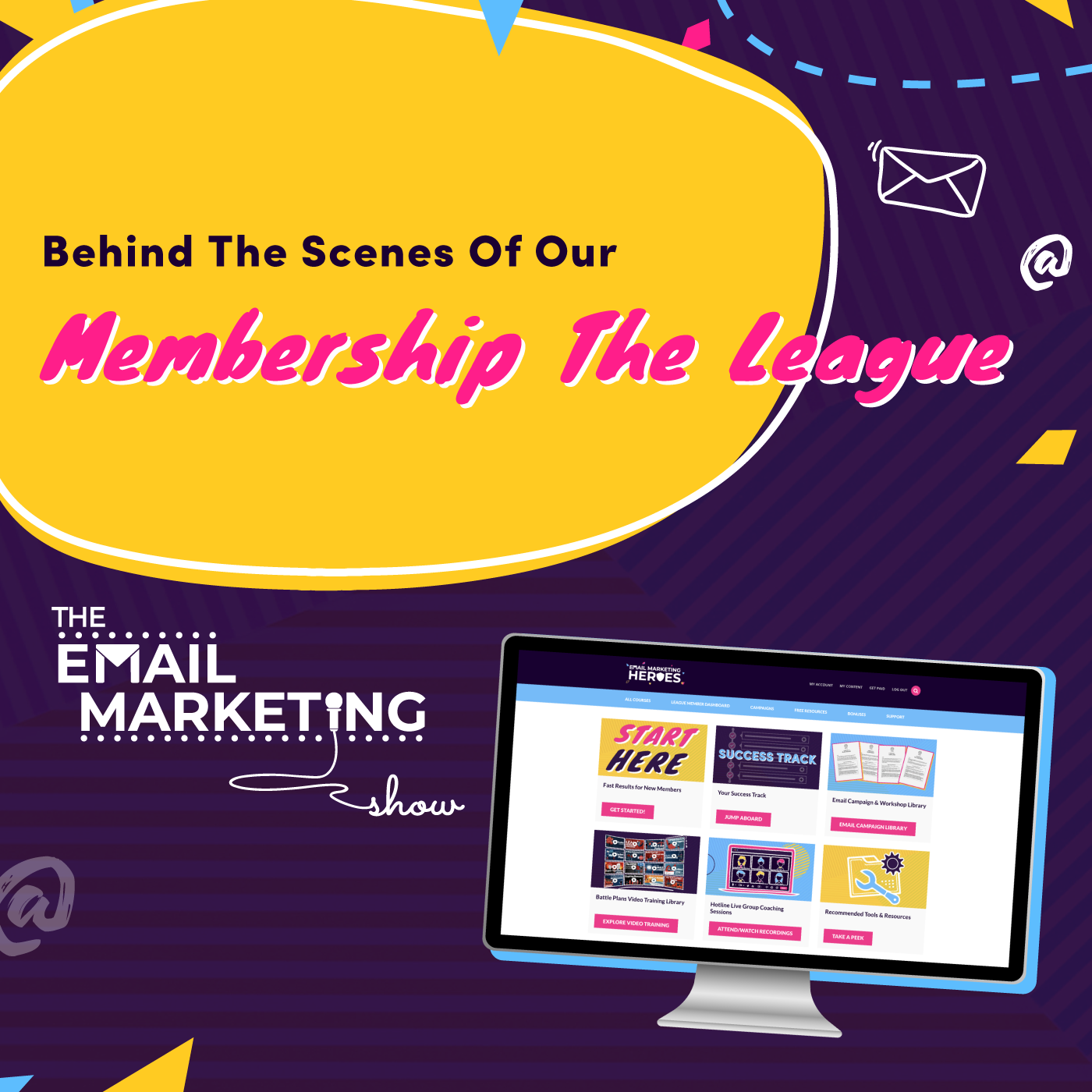
Ep 188Everything You Need To Know About Our Membership The League (THE Behind The Scenes!)
EWant the behind-the-scenes of all the behind-the-scenes? Then let's talk about everything you need to know about our awesome membership The League.(Spoiler alert - this is some pretty cool stuff!)SOME EPISODE HIGHLIGHTS: (0:10) Join our FREE Facebook Group. (4:20) What is our membership all about?(6:04) Why we created The League.(9:25) People buy for different reasons.(13:07) Why you want to sell from different angles.(16:23) The 'trifecta' of features you get inside The League.(22:36) What about the technical aspects of email marketing?(26:59) And we have Battle Plans too!(29:20) Who's The League for?(30:54) Subject line of the week.What is our membership all about?People ask us questions about our membership all the time. How does it work? Will it work for me? Well, first things first, its full name is The League of Email Marketing Heroes. When we first launched it, we didn’t know what to call it, and it was one of our members (shoutout to Fifi Mason!) who suggested the name we're using.And we might be biased, but we genuinely think it's the best email marketing resource on the planet that teaches you to make more sales (and more predictably) in your business using email marketing. And we obsess over improving it. All. The. Time. Why we created The League?People buy for different reasons, so you need different ways to sell and present your offers. But also, there's a benefit to selling a smaller number of products - it's more profitable and efficient in many ways. For example, if you only sell one thing, you only need one sales page and not 10! When you sell a smaller number of products, you need to sell them to more people, which means having to get more first-time subscribers to become customers and then having more of those customers buy another product. That’s how you make more sales from the same product and the same people – you sell more of your products to the people who are already your customers and maximise your customer value along the way. And then you bring in the next set of subscribers and do the same thing again. This is how we sell. And that's also what we teach inside our membership. And the great thing about this method is that people don't end up feeling overwhelmed about which of your products they want to pick. Because there's only one! That's why we only sell our membership The League, our programme Accelerator, and our Email Writing Agency. We have a few front-end products to get people to our main services, but broadly speaking, we don't need to switch our promotions up to talk about different things.And that means we're great at understanding our core product - our membership The League. We know how to talk about it and to make sure it's the best email marketing membership on the planet because we're not distracted by other things. We're able to focus on this one product, make it better, and fill it with deep content. People buy for different reasonsIf you have people on your email list who haven't bought yet, it's because they haven't heard the angle that makes the penny drop. They haven't yet realised why they need to buy and take action right now. So your job is to keep communicating about the thing you sell in different ways until someone hears something that makes them want to buy. If you don't have at least 20-30 different angles (or campaigns) to sell your one thing, then you’re doing your product a disservice. Because it means you haven’t said what you need to say in all the different ways it could be said!If you only have one campaign, you may be able to handle some objections. Or share some social proof. Or even create some urgency. But that’s only from that one angle. And the motivators (the psychological reasons why people buy things) are different.Someone might buy a new pair of shoes because they’re the latest model from their favourite designer. But someone else might want those shoes only because there’s a discount. And that's their motivator. A third person might want to buy because there’s an offer where you buy one and get one half-price. We created our method (and that's what we teach inside The League) because it works. And because no one else was doing it! Why you want to sell from different anglesWe sold as many spots of our membership using a whole lot of campaigns. What would have happened if we only had one campaign? If it’s taken that much effort and variety of campaigns to get as many people in, imagine what would happen if we only created one and then moved on? By running one campaign we sold $27,000 worth. But when we added what we call our SCORE email engine (which is basically more campaigns), we sold over $500,000 worth of spots in a number of months. So the difference in the results you get from talking about something from different angles is astronomical!Since 2006, we have built a bank of proven campaigns, and that’s how our membership The League started - we give others the same campaigns we use and see su
Ep 187The Stupidly Simple Emails That Make Webinars Convert Like Crazy with Dave Dee
EDo you run webinars in your business? Whether you do or you don't, you need to check out this conversation with Dave Dee about selling with webinars and email marketing. Dave's tried-and-tested tips (and this exact email sequence) work a treat and will help you convert like crazy. Trust us - you do want all the details (and wording!) of this stupidly simple email campaign. Here we go.SOME EPISODE HIGHLIGHTS: (0:10) Join our FREE Facebook Group.(3:03) Did Dave really embarrass himself trying to speak Italian at a presentation in Italy?(5:06) The killer webinar & email marketing combination.(7:03) Crafting the perfect live webinar email sequence.(10:54) How to increase your webinar show-up rate.(13:53) The first email of the sequence.(17:27) Writing the second email of the sequence.(19:38) The third and fourth email of the sequence.(26:41) Subject line of the week with Dave Dee.(28:38) Get this FANTASTIC gift from Dave Dee!The killer webinar & email marketing combinationIf you want to make sales in your business you need two things - email marketing and a conversion mechanism. Dave Dee is an expert at webinars - his choice of conversion mechanism to be used in conjunction with email marketing. Dave believes that live webinars (not pre-recorded ones) are a tremendous way to build your list. You can generate leads using Facebook, LinkedIn, or other methods and drive them to webinars to build your list and convert leads into appointments (if you're a coach, for example) or sales. Dave's model is based on running a live webinar once a month and driving traffic to that webinar via email. It's great for list building but also for sales, especially if you sell a higher-ticket item. In fact, Dave's even sold a $100,000 product with this exact system by driving people to a landing page and inviting them to a live webinar.Crafting the perfect live webinar email sequenceWe're all familiar with webinars as, post-pandemic especially, they're everywhere – not just in B2B spaces but also in B2C. So to stand out, you have to use email in a more efficient and effective way. And here’s the exact sequence you want to use to promote your next (or first, if you haven't done one before) webinar. Typically, Dave runs his webinars on a Thursday, so his emails go out from Monday to Thursday. Dave finds that if you start emailing a lot earlier than that, people will register but then forget and not show up. So 4 days is plenty of time - in fact, a lot of people will sign up on the last day! In the four days leading to the webinar, Dave sends out a daily email (at 6:30 am) where he'll promote the webinar in the PS (and drive people to the registration page). On top of that, he sends out a solo email to promote the webinar (at 2:30 pm) - and that's what helps to increase registration. And here's a big tip. Everyone teaches that once someone registers for a webinar, you need to put them on a separate list and stop emailing them the invitations. Don't. Do. That. What you want to do instead is to send the entire sequence of invitation emails to everyone on your list - including the people who already registered. Sounds crazy and counterintuitive? Maybe. But it works. How to increase your webinar show-up rateThe people who register for your webinar will also go on a separate reminder sequence, but you want to keep sending them your regular emails too. And the reason for that is to increase your show-up rate. Dave typically gets a 50-60% show-up rate to his live webinars, which, for context, is very high!So people who have already registered for the webinar receive daily emails but also a reminder sequence where they'll be notified that the webinar is coming in 3 days, 2 days, one day, one hour’s time, etc. Of course, sending so many emails may make you feel a little uncomfortable at first, but the economics of the final result (making more sales because you have more people showing up) are worth doing, even if you get a few complaints or people unsubscribing. And that's if you get any at all! Because, as Dave points out, if you have a good relationship with your list where you're delivering value with your daily emails (with infotainment and loads of personality) people won't complain or leave! The first email of the sequenceThe structure of the emails is important, and the first one - your core email - is everything. Your whole campaign is built on that one email, so make sure you come up with a super hot title for your webinar. Without that, none of this matters because people won't opt-in. The webinar title is mission-critical!Then your first email (following Dave's method) will go out on a Monday with the subject line: “Big announcement.” And it'll say something along the lines of:“Hey, on Thursday I’m doing this live masterclass/webinar/training titled X. And I would like to invite you to attend as my guest. Here’s what you’re going to discover.”To that, you add 5 or 6 bullet points
Ep 186How To Create A Member Onboarding Sequence That Your Members Will Love
EDo you run a membership or are thinking of putting one together? How do you welcome new members and make sure they feel reassured they're in the right place and know what to do next? Today we share how you can create an onboarding sequence for memberships that your customers will absolutely LOVE!Since launching our membership, we've had many different approaches to onboarding. And we can tell you this - simply giving people their login details isn't enough. New members need more hand-holding than that! So let's take you behind the scenes of our onboarding process and show you why it works so well. Ready?SOME EPISODE HIGHLIGHTS: (0:10) Join our FREE Facebook Group. (2:42) What is a member onboarding sequence?(5:03) Being new to something is terrifying! (9:12) Why you shouldn't treat a brand new person like a member just yet.(11:30) The 3 key steps we use in our onboarding sequence.(12:59) Make sure each step leads to the next one in the sequence.(15:23) The email we send in our onboarding sequence.(19:36) Example of the first email in a member onboarding sequence.(22:35) Create an onboarding sequence your members will love!(23:22) Subject line of the week.What is a member onboarding sequence? Simply put, when someone joins your membership, you need to onboard them so they don’t get lost. You don’t want someone leaving because they feel overwhelmed, right? So you've got to take care of them. That's what an onboarding process is. If someone joins our membership The League, we have over 40 campaigns, 20 video trainings, and lots of unique phrases and terminology. So we understand that someone can easily get overwhelmed. And that's why we have an onboarding sequence to avoid that.When you become a customer of something new for the first time, it's terrifying! If you don’t have a grasp of the thing you’re learning you just don’t know what you don’t know. And you'll have to ask questions. Sometimes you don't even know if you're in the right place. Are all the things you need even in the membership?People who join your membership know what problem they have and the promise you made them. But they don't necessarily know the solution. So as a membership owner, it's your job to make it simple for your members. You want to make it easier for them to learn what you teach and fit it into their lives. Email onboarding best practicesWhy you shouldn't treat a brand new person like a member just yetThe first thing we'd like you to think about is that there's a difference between someone who joins your membership for the very first time and a member. To us, the job of the onboarding process is to take someone from being this new person who dipped their toe in the waters for the first time to being a fully-fledged member. It’s an interesting mindset switch, but it's so important that we even recommend you tag these two categories of people in completely different ways in your system.For example, when people buy things on the Internet, sometimes they ask for refunds. And we always used to think it was a bit painful to make a sale and then have someone ask for the money back 29 days later. But then we reframed our mindset and started thinking of that money as not being ours at all during those first 30 days. Imagine you're only holding the money for a while. That way, in the rare event they ask for a refund, you don't take it personally because you don't see that money as yours yet.So a brand new person isn't a 'member' just yet. And when you think of it that way, you can treat those people differently and take even better care of them. If we gave you a drink in a plastic sippy cup, for example, you wouldn't take as much care of it as you would of Rob's grandmother's china! So think of anyone new as a delicate china cup that needs to be handled with extra care and managed carefully. If you do this, you'll create an awesome onboarding process that doesn't make people feel overwhelmed or puts them off. All you want to do is to have a series of short, easy steps that nudge new people across to become members. The 3 key steps we use in our onboarding sequenceWe have 3 steps to help us turn a brand-new person into a member:On our Thank You page, we ask people to fill in a survey so we can respond to them differently.We ask people to watch 3 welcome videos which we call the Start Here videos. These are designed to reinforce the beliefs that made people buy and combat buyer's remorse. And finally, we encourage people to get started on our Success Track so they can get results quickly. What's worth pointing out here is that we also have a small email sequence for each step. Why? Because in a dream world, most members would complete these 3 steps within an hour of joining. But that's not true for everyone, so we create small email sequences to remind people to take these steps. We do this to make sure no one ever finds themselves at a dead end. If there was no handover between one step and the next, people would

Ep 185Buyer Psychology in Email Marketing - Make MORE Email Sales
EHow can you make your email marketing more effective? How do you sell more? By using buyer psychology in your email marketing.We're Kennedy and Carrie, and we're sharing all the good stuff about that.Ready? Then buckle up!SOME EPISODE HIGHLIGHTS: (0:30) Want to carry on with the conversation? Join our FREE Facebook group. (1:25) Share stories. (7:58) Address people as if they're already your customers. (11:05) Tell people what to do next. (13:55) Share social proof. (19:34) Use scarcity and urgency. (25:23) Join The Email Hero Blueprint. (25:58) Subject line of the week.Useful Episode ResourcesRelated episodesHow to Do Deadlines Well and Ethically.EVERYTHING You Need To Know About Email Marketing And Storytelling To Write Emails That Sell Like Crazy.Comedian’s Secrets to Storytelling – With Kevin Rogers.FREE list to improve your email marketingIf you want to write better emails, come up with better content, and move your readers to click and buy, here's how. Here's a list of our Top 10 most highly recommended books that will improve all areas of your email marketing (including some underground treasures that we happened upon, which have been game-changing for us). Grab your FREE list here.Join the FREE Facebook groupDo you want to chat about how you can maximise the value of your email list and make more money from every subscriber? There's a way! Every business is different, so come and hang out in our FREE Facebook group, the Email Marketing Show Community for Course Creators and Coaches. You'll find a lot of training and resources, and you can talk about what you're up to.Try ResponseSuite for $1This content is sponsored by ResponseSuite.com, the survey quiz and application form tool that we created specifically for small businesses like you to integrate with your marketing systems to segment your subscribers and make more sales. Try it out for 14 days for just $1.Join The Email Hero Blueprint Want more? Let's say you're a course creator, membership site owner, coach, author, or expert and want to learn about the ethical psychology-based email marketing that turns 60-80% more of your newsletter subscribers into customers (within 60 days). If that's you, then The Email Hero Blueprint is for you.This is hands down the most predictable, plug-and-play way to double your earnings per email subscriber. It allows you to generate a consistent sales flow without launching another product, service, or offer. Best news yet? You won't have to rely on copywriting, slimy persuasion, NLP, or ‘better' subject lines.Want to connect with Carrie?You can find Carrie on her website or at Fully Leveraged Business. Subscribe and review The Email Marketing Show podcastThanks so much for tuning into the podcast! If you enjoyed this episode (all about how to use buyer psychology in email marketing) and love the show, we'd appreciate you subscribing and leaving us a review of the show on your favourite podcast player.Not only does it let us know you're out there listening, but your feedback helps us to keep creating the most useful episodes so more awesome people like you can discover the podcast.And please do tell us! What do you really fill your working days with if you don't spend time on email marketing? We'd love to know!
Ep 184How To Take Email Marketing Split Testing To The Next Level, With Matt Bacak
EDo you split test? How do you do it? What kind of things do you split test and what do you do with the data? These are some of the questions we answer in this conversation with the awesome Matt Bacak about taking split testing for email marketing and taking it to the next level. Are. You. Ready? SOME EPISODE HIGHLIGHTS: (0:12) Join our FREE Facebook Group.(3:15) Does Matt really make animals out of paper?(7:23) Split testing vs optimisation.(10:52) Testing is like a game - can you win?(11:34) What should you split test?(18:23) What is radical testing?(24:29) Examples of radically different split tests.(28:41) Tracking and managing data for split testing.(35:19) Be better than you were yesterday.(41:21) How to connect with Matt Bacak.Split testing vs optimisationA lot of marketers say they split test. But what most people do, in Matt’s opinion, isn’t split testing - it's optimisation. A direct-response copywriter, for example, might 'split test' two different headlines. But if you're only making slight variations, that's an optimisation technique. So according to Matt a lot of marketers are 'optimisers' rather than 'testers'. When Matt talks about testing, he means trying things that are radically different. For example, different angles, variations, or offers - such as a beautifully designed page created by a graphic designer vs a basic, ‘ugly’ one created by a direct response marketer.Testing is like a game - can you win? To Matt, split testing in email marketing is like a game. Can you 'win' against someone else or yourself? Testing is closely linked to increasing profits, and Matt doesn't go one day without split testing anymore. He'll often run tests that 'fail', where the thing Matt thought was going to work doesn't. But he'll still gain knowledge and get answers to the question he asked himself on a particular day. Matt's been doing email marketing for 25 years. And this is how he makes it fun - by testing radically different variations. What should you split test? We asked Matt how he comes up with ideas. And a recent test Matt did was around trying to work out who out of some big-name players has better study points when it comes to webinars. Typically, when people find something that works, they tend to repeat it several times. In fact, as a rule of thumb, Matt starts paying attention if he sees something 3 times or more. Because that means the thing works. So, as an example, he decided to test a few options he'd seen for the 60-minute webinar reminder email against each other.And every time Matt tests, he’ll learn something new. He likens testing to driving down the road at night time. You may know the destination, but you can't always see what’s in front of you until you shine your lights on it. And when someone shines a light through something they’re doing, Matt feels compelled to pay attention. In fact, Matt even looked at what type of emails the US presidents send. And a fun fact he shared is that President Obama had 25 people on his split testing team while he was in office! So for Matt, split testing is all about shining the light brighter on the things that get repeated often. He'll monitor people who are hard to beat because they're the ones on his radar - the ones he's paying attention to. And he'll always test things that are already proven to work. What is radical testing?We asked Matt to tell us more about the idea of radical testing. And he explained that the easiest thing to change when split-testing two emails is using different subject lines. However, he's talking about two radically different subject lines. And when looking at the data, it's not about open rates. Open rates are for egos, Matt says! What matters is that you get the right people to open your emails at the right time and do the right thing.Sure, you might send an email and a lot of people open it. But if someone feels like your email wasn't meant for them when they open it, they're going to unsubscribe. They'll immediately find themselves in the wrong frame of mind at the start of the conversation (and before they even read the email). And that's not the reaction you want! If you send an email that sounds amazing but turns out to be a let-down, you'll get different reactions from people. And none of them will be what you want!So the easiest thing to do when testing (the thing with the most dramatic impact) is to take radically different subject lines. This means you're completely changing the words and having radically different conversations.Examples of radically different split testsFor example Matt once sent out a question to his audience about calling webinar replays 'reruns' instead - just like with TV shows. As he describes it, Matt will always come from 'a place of zero'. With every test, he assumes he doesn't know anything. Because he doesn't know how something will go until he tests it. And he finds he's normally wrong 80% of the time! Often, what he be
Ep 183How To Create An Effective Lead Magnet Email Sequence That Gets Your Subscribers To LOVE You!
EDo you use a lead magnet to grow your email list? Does the strategy work for you? How can you make it work even better? We're Kennedy and Carrie, and today we're sharing how to create a lead magnet sequence that will get your subscribers to love you.And grow your list.And your business.Ready?SOME EPISODE HIGHLIGHTS: (0:35) Want to carry on with the conversation? Join our FREE Facebook group. (2:14) Check out our sponsor - Zerobounce! (2:46) Treat your lead magnets with reverence. (5:15) Don't deliver your lead magnet on your Thank You page (7:00) Create an awesome lead magnet consumption sequence. (11:38) Use your consumption sequence to make people love you. (15:38) Your lead magnet sequence is different from your Welcome sequence.(18:19) Join The Email Hero Blueprint. (18:57) Subject line of the week.Useful Episode ResourcesRelated episodesLanding Pages For Lead Generation – How To Create The Most AMAZING Landing Pages To Attract More Subscribers To Your Email List.The 7 Proven And Essential Email Campaigns To Add To Your Marketing Strategy And Elevate Your Business.Mistakes You’re Making With Your Email Marketing Automation Strategy.FREE list to improve your email marketingIf you want to write better emails, come up with better content, and move your readers to click and buy, here's how. Here's a list of our Top 10 most highly recommended books that will improve all areas of your email marketing (including some underground treasures that we happened upon, which have been game-changing for us). Grab your FREE list here.Join the FREE Facebook groupDo you want to chat about how you can maximise the value of your email list and make more money from every subscriber? There's a way! Every business is different, so come and hang out in our FREE Facebook group, the Email Marketing Show Community for Course Creators and Coaches. You'll find a lot of training and resources, and you can talk about what you're up to.Try ResponseSuite for $1This content is sponsored by ResponseSuite.com, the survey quiz and application form tool that we created specifically for small businesses like you to integrate with your marketing systems to segment your subscribers and make more sales. Try it out for 14 days for just $1.Join The Email Hero Blueprint Want more? Let's say you're a course creator, membership site owner, coach, author, or expert and want to learn about the ethical psychology-based email marketing that turns 60-80% more of your newsletter subscribers into customers (within 60 days). If that's you, then The Email Hero Blueprint is for you.This is hands down the most predictable, plug-and-play way to double your earnings per email subscriber. It allows you to generate a consistent sales flow without launching another product, service, or offer. Best news yet? You won't have to rely on copywriting, slimy persuasion, NLP, or ‘better' subject lines.Want to connect with Carrie?You can find Carrie on her website or at Fully Leveraged Business. Subscribe and review The Email Marketing Show podcastThanks so much for tuning into the podcast! If you enjoyed this episode (all about how to create an effective lead magnet sequence that will get people to love you) and love the show, we'd appreciate you subscribing and leaving us a review of the show on your favourite podcast player.Not only does it let us know you're out there listening, but your feedback helps us to keep creating the most useful episodes so more awesome people like you can discover the podcast.And please do tell us! What do you really fill your working days with if you don't spend time on email marketing? We'd love to know!
Ep 182Fix Your Traffic Problem For Good, With Todd Brown
EAre you struggling to build your email list? Do you think you have a traffic problem? Then think again! Because today, Todd Brown explains exactly why list building has absolutely nothing to do with traffic (zero, nil, null) and everything to do with maths and economics. Ready to learn how to fix your traffic problem for good? If you do nothing else, just pay attention to this. You'll never look at your business the same way again. Honestly! SOME EPISODE HIGHLIGHTS: (0:22) Join our FREE Facebook Group.(2:44) Did Todd really work in a bakery?(5:12) You are an investor in your own business.(9:58) Is your traffic too expensive?(13:58) The 'Golden Ratio'.(18:28) The true economical foundation of your business.(20:40) You don't have a traffic problem!(23:09) Decrease costs or increase value?(30:00) It's a game of iteration.(37:23) Subject line of the week with Todd Brown.You are an investor in your own businessThis is probably one of the most important marketing principles you’re going to learn. Ever. It doesn't matter what product you sell, in what marketplace, and at what price point. If you’re an entrepreneur, you are an investor. Because you are investing in the acquisition and development of assets. And these assets are your customers or clients. The day you acquire a new customer (or new buyer), they'll spend a certain amount of money with you in their first transaction, and that's the average value of that new buyer. If they buy from you more than once, that value increases - that's the future value of that asset.There's also a cost (to you) attached to acquiring that customer. Maybe you're paying for social media ads? As a business owner and therefore an investor in your own business, you need to know these two numbers - the cost and the value of acquiring a new buyer. Is your traffic too expensive? So with that cleared up, it's easier to understand that when most entrepreneurs complain they have a 'traffic problem', they're really saying that the traffic to acquire a new buyer is too expensive. If it costs you $100 to run Facebook ads to acquire one buyer who only spends $50 with you, you're losing money. Simply because acquiring that customer is costing you more than what they'll spend with you.But if you get that buyer to spend more with you in their first transaction (and also to buy from you again and again), then you increase the value of that asset to your business. And then you can easily pay for the traffic to acquire them in the first place. So if your traffic is too expensive, you need to increase the value of your asset. And you no longer have a traffic problem! Because you're now able to pay to acquire that customer. It’s a simple mathematical equation!Conversion rates, opt-in rates, upsell rates, and lots of other performance metrics tell you whether a marketing campaign is working. But what they don't tell you is whether that campaign is financially viable. Because as an investor in your own business, something is only viable for you if you're making money back. And in order to know if you do, you need to know the cost and value of each asset. When you're able to manipulate those two numbers, the game becomes easier. And it doesn't matter if you're paying an arm and a leg to get a click, a lead, or a sale. If the asset is worth that amount and more, you're winning. If your customers have a high lifetime value that's more than what you're paying to acquire them, you no longer have a traffic problem!The 'Golden Ratio'We think it’s great that Todd talks about small and micro business owners such as the people we serve (i.e. those who sell courses, memberships, and coaching) as investors. Because it’s important to emotionally detach yourself from the product or service you created. Sure, you want it to be good quality and good value. But if you were 'just a money person’ investing money into your business, you'd only continue to do so if it made financial sense.Todd talks about this concept of the 'Golden Ratio'. For every $1 you spend on Facebook ads (or other traffic sources), you want to make at least $1 in sales revenue. You can replace that $1 with any number, but as long as the two numbers in that equation match, you have your Golden Ratio, which means you're acquiring a new buyer for free.Dan Kennedy once said something along the lines of "the typical marketer or entrepreneur will get a customer to generate a sale. But the savvy direct-response marketer thinks about generating a sale to make a customer. " This may sound like a simple play on words, but, as Todd pointed out, it's very profound! As direct-response marketers, we are running campaigns designed to turn prospects into buyers. The point of all front-end marketing campaigns is to turn cold traffic, visitors, or prospects into new buyers. In other words, the aim of the front end is gaining the maximum number of new buyers - it's not about maximum profit or contribution to the bottom line. You’
Ep 181WTF Is An Automated Customer Journey? Use the SCORE Method
EWTF is an automated customer journey and why do you need to worry about it? We’re Kennedy and Fifi, and today we’re going to dig into what automated customer journeys really are, why they work, and how to build them into your email marketing strategy. Plus, we’ll even peel back the curtain on the SCORE Method, our proven framework for engaging subscribers and turning them into buyers, without all the fuss and confusion.Let's do this.Useful Episode ResourcesRecent episodesHow to Come Up With Your Next Email Campaign (Without Overthinking It)The Surprising Thing That REALLY Impacts Your Email Deliverability.Why You Need to Avoid These Email Marketing Mistakes. FREE list of the top 10 books to improve your email marketingIf you want to write better emails, come up with better content, and move your readers to click and buy, here's how. We put together this list of our Top 10 most highly recommended books that will improve all areas of your email marketing (including some underground treasures that we happened upon, which have been game-changing for us). Grab your FREE list here. Join our FREE Facebook groupIf you want to chat about how you can maximise the value of your email list and make more money from every subscriber, we can help! We know your business is different, so come and hang out in our FREE Facebook group, the Email Marketing Show Community for Course Creators and Coaches. We share a lot of training and resources, and you can talk about what you're up to.Try ResponseSuite for $1This week's episode is sponsored by ResponseSuite.com, the survey quiz and application form tool that we created specifically for small businesses like you to integrate with your marketing systems to segment your subscribers and make more sales. Try it out for 14 days for just $1.Join The Email Hero BlueprintWant more? Let's say you're a course creator, membership site owner, coach, author, or expert and want to learn about the ethical psychology-based email marketing that turns 60-80% more of your newsletter subscribers into customers (within 60 days). If that's you, then The Email Hero Blueprint is for you.This is hands down the most predictable, plug-and-play way to double your earnings per email subscriber. It allows you to generate a consistent sales flow without launching another product, service, or offer. Best news yet? You won't have to rely on copywriting, slimy persuasion, NLP, or ‘better' subject lines.Want to connect with Fifi?Fifi is a personal brand and visibility coach who works primarily with introverted coaches and impact makers. She helps quieter people – those who have ideas they want to share with the world but struggle to put them out there. Fifi empowers them to find a way to share in a way that aligns with who they are. You can find Fifi on her website.Subscribe and review The Email Marketing Show podcastThanks so much for tuning into the podcast! If you enjoyed this episode (all about the psychology of marketing and the 9 things we use in all our email campaigns) and love the show, we'd really appreciate you subscribing and leaving us a review of the show on your favourite podcast player.Not only does it let us know you're out there listening, but your feedback helps us to keep creating the most useful episodes so more awesome people like you can discover the podcast. And please do tell us! If you don't spend time on email marketing, what do you really fill your working days with? We'd love to know!
Ep 180EVERYTHING You Need To Know About AI For Email Marketing
ECan you use AI for email marketing? Everyone is talking about ChatGPT at the moment. Unless you live under a rock, you'll have seen or heard something about AI or even tried it yourself. So can tools such as ChatGPT help with your email copywriting? Let's dive into all this! SOME EPISODE HIGHLIGHTS: (0:48) Join our FREE Facebook Group. (5:55) Should you use AI software like ChatGPT for email?(9:29) Can this new AI software create stories for your emails?(16:04) Where could you use AI for your email marketing?(21:04) What is the best AI email marketing copywriter?(24:25) What are the drawbacks of using AI email marketing software?(26:35) What happens when you combine our powerful email templates with AI?(28:01) Writing your own emails makes you a better marketer.(29:48) Only you can craft better messaging for your marketing.(33:32) Subject line of the week.Should you use AI software like ChatGPT for email? Last year we did a podcast episode about AI called Write Emails Using Artificial Intelligence (AI). But AI is such a hot topic right now that it felt it needed revisiting. Are emails written by AI 'good enough'? The fact they're written by a computer is great, yes. Only a few years ago, the thought of this happening would have been ludicrous. But now these things are possible, and that's amazing. The real question is - if you'd paid an email marketing agency to write an email for you, and you got something along the lines of what you get from an AI tool, would you be happy? The answer is no. Because it's amazing that a computer can take a prompt and write an email for you that not only makes sense but also covers the topic appropriately. But is it as good as what a human could write? Is it as good as what an agency could produce? Or even as good as something that you could write yourself with our teachings and frameworks? No. To borrow an expression from our friend Jon Benson, when you read an email out loud that was written by AI, it's a bit like hearing the radio announcer's voice in your head. You know that tone - it sounds artificial. And humans connect with other humans. They connect with your personality. So as soon as you put AI in the mix, you're taking that humanity away. And that's a big loss. Can this new AI software, such as ChatGPT, create stories for your emails?We’re not saying AI has no place in marketing – it’s actually extremely useful. But can it create the stories we include in our emails? A lot of our approach is based on storytelling because stories are compelling and persuasive. And yes, AI can help you find stories.In fact, Rob did a little experiment and asked ChatGPT to come up with a story that happened to him that day that he could tell his friends down the pub. And when the software started typing about elephants dancing in the streets, Rob had to stop it. The tool was writing a dream. So Rob asked the tool to try again, but this time to make the story believable. It had to be something that could happen in real life, be logical, and follow the laws of physics and nature.In the end, the tool came up with the story about Rob seeing a cat in the street. Initially, the cat seemed a bit shy and cautious. But then Rob found something in his pocket and fed the cat, and the cat became friendlier. All good here. Then Rob asked the tool to relate that story to a lesson about email marketing. And sure enough, the tool came back very quickly saying that the story about the cat was a bit like building relationships with your subscribers. When they first come into your world, they’re going to be cynical and skeptical because they don’t quite know what to make of you. But over time, by delivering value, rewarding them, and treating them well (like Rob did with the cat) you nurture the relationship. And, just like the cat, your subscribers become more trusting.Do you really want to share stories that aren't true? So the tool did it! It created a story that could work. However, if you ask AI to create stories for you, they're not going to be true. This story was realistic, but it didn’t really happen to Rob!And for us, the real superpower of great marketing is that it’s founded in truth. When people come up to us at events and mention things we’ve said or shared, we don’t have to scrap our heads trying to remember. Because what we say isn't made up or fictional - it's real! And we make sure that what we share is always real because we want to build trust. So, as more and more people use tools such as ChatGPT or Jasper, you have a real opportunity to stand out by telling stories that are real. Plus, your individual style is also unique and something that will stand out over anything AI-generated. A piece of software can write your stories for you, but by writing them yourself (and ensuring they're true) you can stand out both through content and style. Where could you use AI for your email marketing?With that said, there are a few
Ep 179Mindblowing Techniques To Connect More Deeply With Your Email Readers With Rob Marsh & Kira Hug
EHow do you connect more deeply with your audience when sending out emails? Rob Marsh and Kira Hug from The Copywriter Club tell us all about the persuasive copywriting techniques that professionals use in order to build and maintain strong relationships with their email readers. And you can start using these techniques too. Straight away! Ready to take notes? SOME EPISODE HIGHLIGHTS: (0:17) Join our FREE Facebook Group.(2:27) Did Kira really eat a hamster once? (4:31) The importance of using your real voice.(7:36) The persuasion technique called LIKING.(12:41) The persuasiong technique called SIGNIFICANCE. (15:43) When should you add persuasion techniques to your writing?(17:38) Do persuasive techniques only work in email marketing?(18:47) The persuasion technique of ANCHORING.(20:35) Building trust with your audience. (21:45) Subject line of the week with Rob Marsh and Kira Hug.The importance of using your real voiceRob and Kira help people become copywriters or improve their copywriting skills, and a huge part of that is teaching people how to connect with their audience. Because if you’re not establishing a strong connection with your subscribers and are just throwing copy into the wild, people are going to ignore you!So the first thing we all need to do in order for people to feel the emotion coming through their screens when they read our emails is to create a brand voice that reflects the way we talk. That means not polishing yourself to sound like a super sleek marketer. Because who would trust that person? Instead, pull your own voice into the copy. And to do that, you want to almost imagine you're dictating an email to yourself. This also means not worrying too much about misspellings and grammatical mistakes. Because guess what? Most people won't notice. And those who will might reply back to point out an error, which is good for you because it creates engagement. And engagement with your emails tells Gmail and the other platforms that your emails are worth reading and responding to. In other words, you're increasing your credibility as an email sender! And that's why copywriters and marketers sometimes make mistakes on purpose in order to generate that engagement. At the end of the day, if you're delivering value, typos shouldn't matter that much. The persuasion technique called LIKINGRobert Cialdini, in his book "Influence: The Psychology of Persuasion" talks about the technique of liking. You help people liking you through exposure and repeatedly showing up and sharing personal details. This helps people connect with you.For example, we (Rob and Kennedy) do this by sharing personal facts about ourselves at the start of each podcast episode. And people tend to remember those about us. Another example is that Rob Marsh had a lot of responses when he shared about his mother passing away. Of course, it doesn't have to be something as deep as personal as that - the time he shared about giving up Coke Zero worked just as well. Sharing personal details helps you create personal connections, which is vital because people buy from people they like and trust.Evoking nostalgia and using pop cultureWhen it comes to sharing personal details, think about putting boundaries in place that you’re comfortable with so you don't suddenly feel completely vulnerable and exposed to the world. You might not be comfortable sharing something as deep and meaningful as a personal loss, so Kira recommends you think about things that evoke nostalgia. To do that, you can use pop culture. If you mention The Simpsons in an email, for example, people don't need to be super fans to be able to get your reference. For the most part, they'll be aware of the show. And as soon as you start talking about something that everyone knows about, you open a doorway for people to come in quickly and connect with you. And that's very different from sharing a personal story about when you were 10 years old that you might not be too comfortable talking about. It's not even about whether people agree with you or not - all that matters is that they understand the reference. Because that's what helps you build the relationship. And it doesn't even need to be something super significant - it could be something as small as sharing someone's birthday. That is enough to create a connection with someone. So when sharing personal details and stories about yourself, put barriers around the things that are part of your world that you don't want to talk about. You can choose what you talk about and not talk about with your audience. The persuasion technique called SIGNIFICANCEAnother copywriting technique Rob and Kira recommend is significance. This helps the person you’re talking to feel they’re important. So when you create any type of copy, make your audience feel like you understand and empathise with what they're going through.A way to apply this is by using flattery. This works because when you say something go
Ep 1786 Things You Didn't Know Your Email Marketing Platform Could Do
EWhat if your email marketing platform could do more than you think it can? What if there was a super simple way for you to do some things that sound very technical - and something that only big companies with huge budgets could do? Well, we're here to show you 6 amazing things that the best marketing email platforms can do (thanks to a little sprinkle of magic from us). Ready to have your mind blown and your business changed for the better? SOME EPISODE HIGHLIGHTS: (0:10) Join our FREE Facebook Group. (5:18) Introducing our software - Automate Hero.(7:33) Tracking where your customers are coming from.(12:29) Showing people the right offers.(15:20) Creating urgency for every subscriber.(18:33) Offering hot leads the product they're after.(22:38) Targeting subscribers based on their browsing behaviours.(26:58) Increasing the consumption of your sales videos.(29:00) Want access to these tools? Join our membership The League. (33:27) Subject line of the week.Introducing our software - Automate Hero Automate Hero is a tool we created for our members inside The League that plugs into your existing email marketing platform and adds some technical capabilities that sound complicated but are really really easy to do. So here are the 6 amazing things that our members can do by using Automate Hero. 1. Tracking where your customers are coming fromThis is all about being able to know for sure how someone first came into your world and when and how they first became a customer by buying one of your products or services. Automate Hero gives you the ability to track this inside your email marketing platform. And it doesn't use pixels or cookies. Because we know those things are often inaccurate and not easy to use. Installing Automate Hero takes 10 minutes, and then it'll be up and running forever. But the key here is that you'll be able to track the information with accuracy. So if a podcast listener decides to download one of our lead magnets and then a month later joins our membership via a link in one of our emails, we can track that. Do more of what's working and stop doing what isn't! And this is really powerful because it allows you to accurately review your activity over a period of time and determine what's working in your business. If you relied on the data from the ads reporting platforms, for example, you'd never get anywhere because the numbers often don't even add up! As we always say, knowing what works in your business is key, so you can do more of what's working and stop doing what isn't. This is why, at the end of 2022, we stopped investing in our Instagram strategy. Because when we looked at the data, we realised that less than 1% of our members were coming via that route. So we redirected all that time, money, and effort into strategies that give us a return on investments. And knowing where people originally come from and when they buy is important because the buyer's journey is hardly a linear one. If someone becomes a customer years down the line, we'll still be able to track it!2. Showing people the right offersThe second functionality that Automate Hero allows your marketing email platform to perform is sending people the right offers instead of showing them something they already bought. So imagine someone opts into your lead magnet and is presented with an offer for a product or service they’ve already bought. When that happens, you're not only missing out on an opportunity to direct this person to something they might actually want to buy. But if you're showing them something they already have, they'll also end up disengaging and not paying as much attention.Through our tool Redirect Hero, you can check (in real-time) which products or services a particular subscriber has bought from you by verifying the tags or list against that person inside your email marketing platform. Based on that, you get to send them to different sales pages. And that means you show fewer irrelevant offers to people. It also means that you can dynamically and automatically increase how much someone spends with you, which translates to a more profitable business. 3. Creating urgency for every subscriberWhat do you do when you have an evergreen product or service that is always available to buy? How do you create urgency? Simple. You add countdown timers. Our software Automate Hero allows you to post a countdown timer on any page you host and say there are only X amount of products available at a particular price. And suddenly, whatever you're selling becomes more desirable. People have to jump off the fence and buy now because the offer is soon going away. We use this strategy and tool for our own membership, The League, which is an evergreen product. To create urgency, we use email campaigns with special offers and countdown timers. Because we want everyone who joins our list to have the same opportunities, no matter when they join, each timer is
Ep 177Turn Every Client Into Two More Using Simple Referral Marketing
EHow do you grow your business by turning each and every client into two more? Today we share our proactive referral marketing strategy, which is something that will help you grow your business exponentially. Ready to go through the steps to do this? SOME EPISODE HIGHLIGHTS: (0:13) Join our FREE Facebook Group. (6:03) Creating a memorable hook.(8:59) Creating more memorable hooks.(12:32) Step One - planting the seeds.(17:43) Step Two - watering the seeds.(20:05) Step Three - asking for the referral.(22:14) Rewarding the referral.(24:09) Sending a gift that doesn't fit in a drawer.(27:30) Offering double-ended incentives.(30:12) Subject line of the week.Creating a memorable hook Having a referral strategy is a great way to grow your business, especially if you work with clients on a one-to-one basis or in small groups. If you have a service-based high-touch business that serves a small number of clients, this referral strategy works like a dream. But we're going to show you how to use this strategy that Kennedy's been using for his entertainment business for over 15 years for a membership, course, or programme as well. The first thing you want to do is to create a memorable hook for your products, services, or brand. For example, for our podcast (The Email Marketing Show) we have a tune that sticks in your head. It's annoying and simple, and that's done on purpose. Because that's the whole point of marketing - you want to create something that people will talk about.Creating more memorable hooksWith our podcast, we didn't stop at the tune. That's why we came up with a secondary memorable hook - Email Marketing Wednesday. It's so obtuse and weird (and purposely a bit crap) that it becomes memorable. It also allows to create some tension and conflict, which is memorable in people's minds. We don't disagree much on our show otherwise. While we might not agree on everything in business and life, there's no tension or friction between us - there's no real drama on the show. So we created some through a memorable hook. Also, at the start of each episode, we read out a fact about each other. And we know that some of these things stick in people's minds because they come up to us at events and tell us they remember! And having something that people remember about your product or your brand helps you create more referrals because it means they have something to tell their friends and family about. Another thing we do on the podcast is to play a game with our guests where one of us has to guess one true fact about our guest. It's something interesting to describe the podcast by, so think about giving people a pre-loaded 'script' to talk about you and your products or services. But memorable hooks aren't the only thing you need. If you want to grow your business exponentially, you need a proactive referral strategy. Your intention here is to turn every gig or client into two more. So how will you do that? Step One: Planting the seedsThe first stage of Kennedy’s referral marketing technique is all about planting seeds. And you do that as soon as someone gets in touch to enquire about becoming a client. You ask them how they heard about you. And if they say they found you on the internet or via an ad, you act surprised and let them know that actually most of your work comes from customers recommending you to others. That does two things for you. First of all, it plants the seed that people do refer you. That means that once you've worked with this client and you ask them for a referral, you're going to feel less bad for asking them. Plus, they're going to be more open and less guarded about your request because you already informed them that people normally refer you.The second thing you do when you tell someone that most of your work comes from referrals is to give them social proof. If people recommend you, you must be really good! You're having this conversation with someone before they've even worked with you, so by telling them that your existing and previous customers refer you all the time, you're encouraging this client to go ahead and work with you. So don't overlook the importance of asking this question and talking about referrals, but also acting surprised. It helps the conversation stand out, and they're more likely to remember it. Step Two: Water the seedsWhen you're working with this client, make sure you mention referrals again. Did someone actually refer you to this client? Ask them who it was again and tell them you want to make sure you send a little Thank You note or a gift to that person. Right now, you're watering the seeds and reminding this person again that referring you is something that people do all the time. It helps build that belief that you're someone who gets referred again and again. Step Three: Asking for the referralIf you mention referrals before you start working together and then while you're working with them (as per the p
Ep 176How to Create 3 Big Sales Spikes During Your Launch with Mara Glazer
EHow do you create a sales spike during your launch? Do you rely on making the majority of your sales on the last day? What if we told you there's a way to generate not ONE spike but at least THREE during the launch of your new product or service? Genius copywriter Mara Glazer tells us how.If you have a membership, coaching programme, or course, you're going to want to take notes. Ready?SOME EPISODE HIGHLIGHTS: (0:14) Join our FREE Facebook Group.(4:05) Does Mara Glazer really hold the record for the most push-ups in her old high school?(6:31) Why you need 'copy choreography'.(8:51) Create a priority notification list. (9:41) Give them an idea of the price but don't tell them what it is. (11:30) Keeping people engaged during the pre-notification period. (12:33) Opening the doors. (16:37) Creating the last sales spike. (18:39) Using the 'micro-membership' concept and the 24-hours special bonus. (24:19) Subject line of the week with Mara Glazer.Why you need 'copy choreography'One of the things that Mara helps people with is launching programmes, memberships, and courses. And if you've ever launched anything, you'll know that most people tend to rely on a big sales spike or boost on the very last day. But if you get really smart and use what Mara calls copy choreography, you can create sales spikes throughout your launch - not just at the last minute. All you need to do is to ensure you have the right components in the right places. In other words, you want to think about the sequencing of events that need to happen (and in what order) to create more than one sales spike throughout your campaign.And that means your first step is to brainstorm the copy choreography before sending out your email campaigns. Makes sense, right?So here's what you do. Create a priority notification listOnce you've planned the sequence of events, you need to think about building anticipation with your audience before the cart opens. One way Mara does this with her clients is by creating a priority notification list that people can sign up for in order to be informed when the doors to the membership or course open for the first time. If you're launching a brand new membership, here you're giving people the chance to join as founding members and be grandfathered in at the best possible price. The key here is to encourage people to sign up for the pre-notification list by offering an awesome sexy bonus. This is how you create the first sales spike. Give an idea of the price but don't tell them what it isAnother great tip from Mara here is to give an indication of what's included in the membership but without giving an exact price. Instead, you can give an idea. For example, you could say that the price of the membership is less than a casual dinner with their best friend. This tells people that the membership is affordable and inexpensive. But the bonus is what will make them go ahead and buy. It's as if you were selling the bonus harder than the product itself by lifting it on a pedestal for the people who sign up for the pre-notification list. Keeping people engaged during the pre-notification periodThe pre-notification list is promoted for about 2-3 weeks. During this time, to keep people engaged and interested, Mara will send out relevant videos that help position the membership through email marketing and social media. Each video sits on its own page with an opt-in underneath to give people the chance to sign up for the pre-notification list if they haven't already. Opening the doorsOnce the doors open, people have three days to join and claim their priority notification bonus. After this time, the bonus disappears, but people can still join. There is, however, a difference in price. If the founding members got to join the membership at the price of $37 per month, for example, once the pre-notification period of three days ends, the bonus disappears and the price goes up to $47. This price then remains available for one week, and people in the email list receive:2 emails a day for the first 5 days;3 emails a day on the sixth day;4 emails on the last day.And with only a handful of hours left to sign up, that's where the copy choreography skills really come into play. Creating the last sales spikeAfter seven days have passed, the cart stays open for another week. But what's really key here is that it's clear that there are 'consequences' for people who didn't take action within a certain window of time. For example, if someone doesn't buy within the first three days, they miss out on the bonus and the founding price. If they don't sign up within the first seven days, they miss out on the early-bird price. Using the 'micro-membership' concept and the 24-hour special bonusAnd after the second week, Mara explains, that's typically the end of the promotion. However, in a recent launch that Mara and her team managed for a client, they extended it a little longer. Out of an email list of 10,000 s
Ep 175Email Marketing vs Social Media (Why We Keep Ditching Our Social Media)
ESocial media vs email marketing. Is one better than the other? Want to know what we really think about all this? And yes, we might be a bit biased towards email, but there are specific reasons why we keep ditching social media platforms - want to know what they are? Let's find out! (0:32) Join our FREE Facebook Group. (5:10) We don't hate social media!(7:54) Why knowing your numbers matters.(10:36) Find out what your top sources are.(12:15) What is social media really good for?(15:18) Social media vs email marketing in action.(18:15) Don't have time for email marketing? Think again!(20:35) Do email marketing first.(22:53) Subject line of the week.We don't hate social media!We always get accused of being haters of social media. But we're not! We are on social media. Daily! If anything, we love hanging out in our free Facebook group. And we recognise that social media has its place (and its own set of rules) when it comes to making sales and growing your business.Some people may use email marketing to build their lists and tap into an audience, while others use it to nurture their community. Inside the private Facebook group for our membership, The League, for example, we discuss how people use our email marketing campaigns, and we help them refine their work. So we don’t hate social media - we actively use it. We even used to run a Twitter chat, and we've certainly dabbled with Instagram.But the only social media we use now is our Facebook group. And that’s because that allows us to nurture relationships and keep the conversation going. Facebook isn't an outbound platform for us. Instead, it's something that allows people to lean into us. We get to connect with the people who are excited about our work and want to come into our world to learn from us. Why knowing your numbers mattersHaving said that, we keep ditching social media platforms. We stopped our Twitter chat and don't invest in our Instagram as much anymore. And that's because of what the numbers are telling us. We always look at data to see what's working and what isn't. We track everything we do by using UTMs. These are bits of code that we add at the end of every link we share. So when people subscribe to our email list or become customers, we know how they came into our world. Can you say the same about your subscribers or customers? Where are they coming from? If you're a member of The League, we have some training on UTMs and tracking in the Battle Plans area. We even have some specific tools within our Automate Hero software to help our members track their numbers. (And it's all free!)Why does looking at data matter? Because if you know how people come into your world, you can do more of what's working. And if you don't, it means you're running blind. Without tracking, you won't know if you're moving in the right direction and towards your destination. Because you can’t fully rely on gut instinct to do that. You need to know for a fact that what you're doing is working. Find out what your top sources are In our business, we check our numbers every 90 days to identify the top 10-15 traffic sources that brought subscribers into our business. We evaluate our sources based on how much money they brought in, i.e. on how many paying customers they generated. And a lot of the time, you'll see the 80/20 rule apply here. That means that approximately 80% of the sales come from two or three of your traffic sources. And that tells you where you can zero in so you can focus on what’s helping you grow your business.When we recently looked at our figures, we noticed that barely any of our sales came from Instagram or Twitter – less than 1% of our members originally came from these social media platforms. For us, the truth when it comes to social media vs email marketing is that people who come through our social media channels don't buy from us quickly enough to give us a return on investments. And that meant we had to think about social media differently because our Facebook group and our podcast, for example, work really well for us. What is social media really good for?We think of social media as a way to tap into an existing audience so we can get in front of people and then move some of them onto our email list. Because your email list is where the selling happens.And at the start, we were worried about only having our Facebook group. But then we realised that many businesses that are wildly successful don’t close any sales on social media – not without having an email list as well. Because with email marketing you have full control - you won’t be a victim of the latest algorithmic changes. And those are happening all the time!We believe social media gives you a pool of people you can tap into, but in order to make sales and make your business successful, you need to sell by email. And that’s where the argument between social media vs email marketing happens. Because if you put 10% mor
Ep 174How Brad Brown Made $90k By Automating Webinars
EDo you run live webinars and promote them through your email marketing? Have you ever thought about switching to automated webinars? Oh, the possibilities...You see - one of our members, Brad Brown, went from running two live webinars a week to an automated one. And here he shared the story of how he made $90k in the process. He not only increased his sales and profits but also smashed his ad spend and freed up his time to grow his business in different ways. What's not to love here? Ready to hear exactly what Brad did (and what you can do in your business)? SOME EPISODE HIGHLIGHTS: (0:19) Join our FREE Facebook Group.(4:23) When did Brad start using email marketing in his business?(9:11) What were the biggest barriers to email marketing?(10:24) Why did Brad join The League?(12:55) Switching to automated webinars.(18:16) Implementing other email campaigns.(20:34) The ONE action with the most impact.(22:28) What's next for Brad and email marketing? (23:14) Has email marketing taken over Brad's life?(25:26) Subject line of the week.When did Brad start using email marketing in his business?Brad and his business partner run an online coaching business where they help people become the best runners they can be - no matter whether they're new to running or they're professional athletes. When they first started, Brad and his business partner would travel around South Africa helping the organisers of a famous running race, and ten years or so ago, they ended up setting up a business together. Like many, they started with one-on-one coaching, but in order to leverage their time, they eventually built a training platform that connects with all the main running apps and created a community of engaged runners around the world. So when did they start with email marketing? Quite early on. Brad had a lead magnet that he used to grow his email list. From selling digital training plans that would be emailed out to runners, he built an online platform in late 2018 where he's been relying on email regularly and consistently. What were the biggest barriers to email marketing? Brad believes that, at first, he struggled with messaging. They were creating a lot of content (YouTube, podcast, etc.) and that felt a bit like bombarding their audience. They had no real strategy around selling through email marketing, and as a result, they dabbled with different promotions or webinars to find something that worked. Emails would all be live (broadcast and not automated) at that point and mainly around the YouTube videos that were published every week. The barrier was that nothing was selling on an ongoing basis. Why did Brad join The League?Before Brad joined The League, their business was purely event-based, which means they helped people train for events and marathons. But when Covid hit, people stopped training, and that brought the business to a halt. So Brad and his partner started looking at what they could do to grow while people couldn’t train for events.While focusing on the over-50s as a niche, Brad and his partner decided to run a live webinar. That became so successful that over the following two years, they delivered a staggering 60 live webinars, with the aim to accommodate the most time zones possible. And that meant they were up early in the morning and then late at night. The team was burning out. On top of that, they were also spending $45k a month on Facebook ads. And while the ads were generating a return on investment, their model wasn’t sustainable. So they started looking for a way to automate things. It was around that time that Brad heard us being interviewed on a podcast and started following us. He joined our membership with the intention of setting up automated email marketing sequences, so the first thing he did after joining The League was to start building his email engine. And the first thing he did was to implement our Getting To Know You sequence, which is our version of the welcome sequence. Switching to automated webinarsWhen Brad started creating email marketing campaigns, the whole thing was messy. People were getting multiple emails a day, Brad and his business partner were still running live webinars around the clock, and their costs were climbing. In June 2022 Brad finally turned on the Evergreen Webinar sequence, which means he switched to automated webinars. And that completely changed their business. Because people in different time zones could now choose a suitable time to attend the automated webinars, the attendance rate increased. Brad found success in using a warm-up sequence prior to the webinar starting and also in sending out a workbook, with a view to delivering extra value to their audience. When running webinars, there are three distinct actions you're asking people to take. You have to get them to register, attend, and then convert (i.e. buy). While evergreen/automated webinars have a reputation for converting less than live on

Ep 173How Do You Get Your Customers To Buy And Buy Again?
EReady to tackle one of the biggest challenges in the world of online business?With rising ad costs and stiff competition for new leads, maximising the lifetime value of every customer is more important than ever.Let’s take a deep dive into how we can turn new customers into repeat customers that keep coming back for more and more.Useful Episode ResourcesFREE list of the top 10 books to improve your email marketingIf you want to write better emails, come up with better content, and move your readers to click and buy, here's how. We put together this list of our Top 10 most highly recommended books that will improve all areas of your email marketing (including some underground treasures that we happened upon, which have been game-changing for us). Grab your FREE list here. Join our FREE Facebook groupIf you want to chat about how you can maximise the value of your email list and make more money from every subscriber, we can help! We know your business is different, so come and hang out in our FREE Facebook group, the Email Marketing Show Community for Course Creators and Coaches. We share a lot of training and resources, and you can talk about what you're up to.Try ResponseSuite for $1This week's episode is sponsored by ResponseSuite.com, the survey quiz and application form tool that we created specifically for small businesses like you to integrate with your marketing systems to segment your subscribers and make more sales. Try it out for 14 days for just $1.Join The Email Hero BlueprintWant more? Let's say you're a course creator, membership site owner, coach, author, or expert and want to learn about the ethical psychology-based email marketing that turns 60-80% more of your newsletter subscribers into customers (within 60 days). If that's you, then The Email Hero Blueprint is for you.This is hands down the most predictable, plug-and-play way to double your earnings per email subscriber. It allows you to generate a consistent sales flow without launching another product, service, or offer. Best news yet? You won't have to rely on copywriting, slimy persuasion, NLP, or ‘better' subject lines.Subscribe and review The Email Marketing Show podcastThanks so much for tuning into the podcast! If you enjoyed this episode (all about the psychology of marketing and the 9 things we use in all our email campaigns) and love the show, we'd really appreciate you subscribing and leaving us a review of the show on your favourite podcast player.Not only does it let us know you're out there listening, but your feedback helps us to keep creating the most useful episodes so more awesome people like you can discover the podcast. And please do tell us! If you don't spend time on email marketing, what do you really fill your working days with? We'd love to know!
Ep 172Get Your Emails Opened Using NLP - With Jon Benson
ECan you use NLP for marketing to get more of your emails opened? This week we talked to Jon Benson from Copy Pro and EPIC Email about using NLP (Neuro-Linguistic Programming) in your email marketing to grab your audience's attention and get more of your emails opened.Ready to find out a handy trick or two to sell more and ethically? SOME EPISODE HIGHLIGHTS: (0:18) Join our FREE Facebook Group.(3:00) Is Jon really allergic to pollinated fruit?(4:47) Who is Jon Benson?(6:47) What is NLP and why does it matter in email marketing?(8:15) Creating a pattern interrupt.(9:50) How to grab people's attention. (12:04) How to 'promote' in your emails.(16:50) How to create links people will want to click on.(19:26) You don't need to create new content all the time.(21:52) Subject line of the week with Jon Benson.Who is Jon Benson? Jon Benson is known as the person who invented the video sales letter and was the first to sell copyrighting software. Somewhere along his business journey, Jon also started thinking about ways he could apply the same NLP and persuasion tactics to emails. Known for successfully employing and teaching techniques such as pattern interrupt and future pacing, Jon introduced these concepts into the world of email marketing. And that's how EPIC Email was born. What is NLP and why does it matter in email marketing?But first thing first, what is Neuro-Linguistic Programming (NLP)? Jon sees NLP as a tool to help you make sales. It's based on the idea that human beings can be persuaded to take action through simple language commands - all without being manipulated.We all know that the word 'manipulation' has a negative connotation, but it’s not necessarily bad. Parents 'manipulate' their children into eating their vegetables all the time after all! For Jon, selling is the art of ethical manipulation or persuasion, and NLP is a building block for that.Creating a pattern interruptOne of the things we have to do at the beginning of every sales conversation (no matter the medium) is to grab attention. Because without the attention of your audience, you’re shouting into a void!When it comes to emails, grabbing attention is not as active as it would be if you were standing on stage. So to grab the attention of your subscribers and get them to pay attention to your emails, you want to create a pattern interrupt.Jon will typically start an email with just one or two sentences that either seem out of place or that direct someone into something they’re not normally used to seeing in an email. For example, an email that converted well for Jon started with the phrase “Look around your room”. That’s not a request – it's a command.How to grab people's attentionThe idea here is that you can use words that create patterns where you engage someone’s mind without them knowing you’re doing it. This is NLP, and it works because it's unusual - it's not something you tend to write at the start of an email. Another email starter Jon used in the past is “What’s the one thing you remember the most about your father?” So it's all about starting your emails with something interesting or a story, so people want to click on the email and read more.What we just described with this idea of grabbing your audience's attention is the E in the EPIC Email acronym, which stands for 'Engaged'. How do you grab attention and engage someone? You do that by disengaging them from their current pattern of thoughts. And this is a necessity for all email marketers because people are bombarded with messages, emails, texts, etc. So you want to do something that breaks that pattern and 'forces' them to pay attention. To come up with ideas for this, ask yourself what your audience is generally doing when they read your emails. How can you interrupt whatever activity they might be doing? You can do that by shouting something outrageous, but that's not the only way of doing it. How to 'promote' in your emailsThe P in EPIC Email stands for 'Promote'. Of course, if you have no engagement first, promotion falls on deaf ears. So make sure you grab your audience's attention first.For Jon, promotion is about persuading at the highest level, ethically. It's not about ripping people off and trying to sell them something they don't need. Instead, you want to tell people what they're going to gain by buying your product or service. Persuasion is benefit-driven, so tell your prospective customers what the benefits of using your product are. And in order to do that, consider their values. Who are you speaking to and what do they value? Because knowing that will inform the terminology you're going to use. But you also need to be able to show them how you can help them through logical statements, such as studies, for example.And then finally, you use fear, which is normally reserved for the last part of the email. This is where you explain what could happen if someone doesn't take action. And in order to do this, you need to know and understa

Ep 171Mistakes With Your Email Marketing Automation Strategy
EDo you automate your emails? Did you know you could (unknowingly) be making these very common mistakes with your email marketing automation?We’re Kennedy and Fifi, and today we're going to share what you can do better with your automated email sequences.Ready?Let's go.SOME EPISODE HIGHLIGHTS: (1:06) Want to carry on with the conversation? Join our FREE Facebook group. (1:31) Check out our sponsor - Zerobounce! (4:51) Not showing your personality. (9:03) Not sending emails out 'live' first. (11:55) Not checking the data. (13:31) Having too many offers in your automations. (17:43) Spending too long creating your automations. (18:58) Subject line of the week.Useful Episode ResourcesRelated episodesHow To Use Summits To Get Visible (Even If You’re An Introvert) And Build Your Email List, With Fifi Mason.Useful Strategies To Stop Procrastinating RIGHT NOW To Get Your Email Marketing Done!How To Build The Most Impactful Email Marketing Strategy Plan To Make More Sales In Your Business.FREE list to improve your email marketingIf you want to write better emails, come up with better content, and move your readers to click and buy, here's how. Here's a list of our Top 10 most highly recommended books that will improve all areas of your email marketing (including some underground treasures that we happened upon, which have been game-changing for us). Grab your FREE list here.Join the FREE Facebook groupDo you want to chat about how you can maximise the value of your email list and make more money from every subscriber? There's a way! Every business is different, so come and hang out in our FREE Facebook group, the Email Marketing Show Community for Course Creators and Coaches. You'll find a lot of training and resources, and you can talk about what you're up to.Try ResponseSuite for $1This content is sponsored by ResponseSuite.com, the survey quiz and application form tool that we created specifically for small businesses like you to integrate with your marketing systems to segment your subscribers and make more sales. Try it out for 14 days for just $1.Join The Email Hero Blueprint Want more? Let's say you're a course creator, membership site owner, coach, author, or expert and want to learn about the ethical psychology-based email marketing that turns 60-80% more of your newsletter subscribers into customers (within 60 days). If that's you, then The Email Hero Blueprint is for you.This is hands down the most predictable, plug-and-play way to double your earnings per email subscriber. It allows you to generate a consistent sales flow without launching another product, service, or offer. Best news yet? You won't have to rely on copywriting, slimy persuasion, NLP, or ‘better' subject lines.Want to connect with Fifi?Fifi is a personal brand and visibility coach who works primarily with introverted coaches and impact makers. She helps quieter people - those who have ideas they want to share with the world but struggle to put them out there. Fifi empowers them to find a way to share in a way that aligns with who they are. You can find Fifi on her website.Subscribe and review The Email Marketing Show podcastThanks so much for tuning into the podcast! If you enjoyed this episode (all about the biggest mistakes you're making with your email automation strategy) and love the show, we'd appreciate you subscribing and leaving us a review of the show on your favourite podcast player.Not only does it let us know you're out there listening, but your feedback helps us to keep creating the most useful episodes so more awesome people like you can discover the podcast.And please do tell us! What do you really fill your working days with if you don't spend time on email marketing? We'd love to know!
Ep 170How We Used A Facebook Group To Build Our Email List From Scratch
EFacebook group, email list. Can you use one to grow the other? We certainly did. And here's exactly how we built our email list to make the first $100k+ in this business in 12 months using a FREE Facebook group. Want to know how you can do that too in your business? Let's dive in. SOME EPISODE HIGHLIGHTS: (0:15) Join our FREE Facebook Group.(3:53) Our Facebook group - how we started.(6:41) Our Facebook group - how we captured people's attention.(10:36) Stop doing things that aren't working.(12:34) Why we created a traffic loop.(14:53) Try different types of posts.(17:27) Your Facebook group is full of your ideal clients!(19:47) Use traffic loops to make more sales. (22:31) Check out our new course - Group Loops.(24:45) Subject line of the week.Our Facebook group - how we startedWhen we first started our business, we thought having a Facebook group was a cracking idea. And the reason for that was (and still is) that we wanted to leverage Facebook’s massive audience. Because there are billions of people on the platform! And we wanted some of those people to see our offers. Back then, we couldn't afford to pay for ads though. And in order to do what we do, we had to build our email list.So we started a free Facebook group. Then we bought a bunch of courses to learn about the conventional wisdom that other people were teaching. We even put a member of staff in charge of our Facebook group. But the whole thing just failed. Our Facebook group was tumbleweed – a ghost town. People weren’t joining, there was no engagement, and the Facebook group wasn't doing anything for us.Of course, we didn’t want to have a Facebook group for the sake of having one. We wanted to leverage the algorithm by genuinely doing what Facebook wants to do. And that's to attract people to communities and keep them on the platform. We wanted to leverage Facebook to build an email list. So what we're sharing here is how to create and run a Facebook group that helps you get people onto your email list and make sales.Our Facebook group - how we captured people's attentionAt first, we couldn’t get the Facebook group to work for us. People simply wouldn't engage or post. So we gave up. But then we realised that in the previous 18 years of running various businesses, we'd never been able to make a lot of conventional wisdom work for us – certainly not around email marketing. And the same happened with Facebook marketing.So we decided to figure this Facebook group thing out ourselves. We needed people to join our email list and having a Facebook group seemed to be the only thing that would allow us to do that for free and at scale - in a way that would bring in people consistently and could be scalable. Unfortunately, we didn't have the luxury of having a large email list that would allow us to launch a Facebook group and make it popular. We were at a disadvantage there. So Kennedy took on this task - he made it his obsession to figure it all out. He started out by making two posts every single day, even if at first he was shouting into the void because the community wasn't engaged. Often, Kennedy would post twice a day and get no responses. But he kept going. And it wasn't until we hit 100 members that people started to comment. When we hit 300 members, people started to post themselves, and that was a real milestone. We got to that point by posting consistently and talking about our Facebook group wherever we were - during podcast interviews, training in other communities, etc. We treated our Facebook group as our lead magnet and started mentioning it in every conversation. Eventually, it all started working. Facebook started recommending our group to people as something they might want to join, and that’s when we started capturing people’s attention.Stop doing things that aren't workingAnother thing we did was to stop doing the things that were not working. A lot of conventional wisdom was giving us tips that weren’t working for us for any sustained period of time. So we started testing other strategies instead. And that's what made all the difference. One of the things we wanted was to make sure we didn’t rely on just one method of getting people's email addresses. We knew that the Facebook group wasn't going to be our business model – we wanted people inside our email list! So we’d ask people who joined our Facebook group to also give us their email addresses and join our list.And as the group started growing, we started thinking of different ways to move people from the group and onto our list. We'd give people the option to give us their email addresses when joining the group, but would also create specific posts in the Facebook group to recommend our lead magnets so people would join our list by downloading those. In other words, we'd give people more opportunities to join our list because that's our ultimate destination. That's how we grow our business. Of course, you have to get the balance right he
Ep 169Stop Wasting So Much On List Building by Using Traffic Loops
EWhat's the secret to building email lists in less time? Well, it's easy. If you want to save money and time with list building, you need to use Traffic Loops. Want to know what that's all about? Let's find out! SOME EPISODE HIGHLIGHTS: (0:11) Join our FREE Facebook Group.(5:22) You need both social media AND an email list to grow an audience.(7:48) Social media and email marketing amplify each other.(10:44) Make sure people see your offers at different times and in different states.(12:04) How traffic loops increase engagement.(14:16) People buy when they're ready - let them go!(16:43) When you use traffic loops you can sell more in your emails.(19:21) Grab our new course - Group Loops.[INSERT LINK](20:04) Subject line of the week.You need both social media AND your email list to grow an audienceWe used to think that social media is what you need in order to build an audience. Then somehow you move people to your email list and sell them things. The problem is that we used to see this relationship between social media and email marketing as a one-way road when in reality it's a two-way road. What do we mean by that? That the best way to build a big social media following is to leverage your email list. It's a loop. Your email should be helping you grow your social following, and your social following can help you grow your email list.Think about it. Sending an email is the best way to send traffic to anything – not just your sales page, but your podcast, your social media, your webinar, or whatever you’re trying to enhance. The absolute best way to build a social media following is with an email list. And the best way to build an email list is from the traffic that includes social media. So as you can see, this becomes a lovely circular relationship where one element supports the other and helps you deepen the relationship with your audience. That way, you get to become a three-dimensional influencer, personality, or business to follow.Social media and email marketing amplify each otherWhen you do that, email amplifies social media and vice-versa. So if you’re launching a new programme, for example, you’ll post about it on social media and then also send emails to your list. That means you're minimising the chances of someone in your world missing the fact you’re launching something. And yet, how many times have you launched and promoted a product or service, and within a matter of days or weeks someone got in touch to say they missed it? It happens. Because the social media algorithms didn't show someone your posts on a particular day. Or maybe that person didn’t see your emails. So your job is to do both – social media and email. Because one amplifies the other.This is getting more and more important as we’re seeing the cost of getting people into our world skyrocketing through the price of advertising. Even organic growth is difficult – it’s now a lot harder to get your posts seen by a good number of people. Both the financial cost and the cost of your efforts are increasing.Let’s say you’re running ads to get people to join your Facebook group. That money is now spent, and there’s nothing you can do to recoup it unless you keep that effort and impact going by creating a loop. In other words, you want to keep this process in momentum and give it motion. And the way to do that is by moving someone who joins your social media onto your email list.Also, when people come through a lead magnet, a freebie, or sign up to your email list to get your newsletter, you want to move them to your social media. That way, they end up in a loop. This helps you amplify the size of the audience but also their engagement.Make sure people see your offers at different times and in different statesWhen you post about your products and services on social media and also send emails, people are seeing your offers in different ways through different media and modalities. This could easily mean different times, different places, and while in different mindsets. A lot of the time, the places where people check their email are going to be different from when they’re casually scrolling on social media. Checking emails could be a more regimented activity and something you do less frequently and with a bit more intent. Or maybe for some people it’s the other way around – they might check their emails mindlessly and pay more attention to social media.Whichever way, you want your subscribers to see your offers in different places and in different states. Because sometimes they’re in a passive state (just scrolling) and others in a more active one (with their credit card in hand and ready to buy).How traffic loops increase engagementWhen it comes to engagement, if someone reads your email, you can send them to your Facebook group to check out a post. Once they're there, they might leave a comment. And your Facebook group suddenly becomes more active. That, in turn, makes your group stand out with the Facebook algorithm,

Ep 168How Facebook Groups and Webinars Make Matthew Harrington a Happy Man
EIs there a link between Facebook Groups, webinars, and email marketing? Can they all work together? We asked League member Matthew Huntington from the Behaviorist Book Club how he used his Facebook group to welcome new members and convert them into paying customers following our advice. Matthew's story is phenomenal. He went from hardly being able to afford a monthly membership to hiring his first member of staff. After joining The League, he made some simple changes to his business that created a massive wave in results. (And in case you're wondering, we're talking about money and sales here!) You're going to want to take notes here! SOME EPISODE HIGHLIGHTS: (0:24) Check out our brand new course - Group Loops. (4:03) Why did Matthew decide to join The League?(7:50) Matthew's mind-blowing results with his Facebook group from using Group Loops.(11:20) When did Matthew first get started with email marketing?(12:24) How does Matthew feel about his Facebook group compared to how he felt before?(14:44) The ONE action Matthew recommends you take in your business.(16:31) What are the next steps for Matthew in his email marketing?(20:10) Does Matthew feel like email marketing has taken over?(22:11) Grab our new course - Group Loops. (23:23) Subject line of the week.Check out our brand-new course Group LoopsBefore we get into Matthew's story, we want to tell you about the course he used that was directly responsible for his success. It's called Group Loops, and it's our brand new programme. It’s a full multi-module course that gives you everything you need and allows you to build an incredible Facebook community to help you grow your email list and make more sales.In this course, you'll find everything we’ve learnt, honed, and refined over time to build our own Facebook group with thousands of members, make six figures in sales, and gain thousands of subscribers on our list. The programme includes everything that works and cuts out everything that might be conventional wisdom but just doesn’t work. It’s available right now, so if you want to check out the details and build a Facebook group without having to pay for ads, here's the link. Why did Matthew decide to join The League? Matthew Harrington has been in our membership for about six months. After trying out a few other memberships, he decided to stick around with us, and he's now in for the long haul! Matthew educates behavioural analysts and therapy professionals to continue their education. His primary product is a membership (a research library with resources, in fact), but he also has courses that funnel into his membership.We remember a post that Matthew shared in our private community to say that he'd only been a member of The League for a couple of months (after initially thinking he couldn't afford it) and had already had some amazing results. Before joining us, Matthew had a revenue of $400-$500 per month from his membership. Understandably, he didn’t feel like he had a lot to spare, so when he joined our membership (based on our credibility alone), he took a huge risk by practically erasing his monthly profit!And did it pay off? For sure! Within three weeks, Matthew implemented our webinar campaign and made multiple times his initial investment, and fixed his cash flow issue. Matthew's mind-blowing results with his Facebook group from using Group LoopsOne of the things that Matthew did was switch things around in his Facebook group after being one of the beta testers for our new programme Group Loops. Matthew remembers watching the entire course in one sitting in the middle of the night when we first released it. And the next morning he got up early and changed the whole direction of his Facebook group.Before our course, Matthew was treating his Facebook group like you would a blog – people would come in, read something, and then leave. There was no community aspect to it, and Matthew was only sharing research articles but not encouraging any conversation.Our course, however, gave Matthew permission to change things up and shift the focus from something that resembled a blog to something that looked like a community. And Matthew credits a lot of that to the 20+ post examples we shared in the course. The idea behind these is to make it fun and generate engagement and comments. As a result, Matthew's Facebook group started growing, and it's never stopped - he's now at 3,600 members!Getting to his first 1,000 members before implementing our programme had felt like a slow, long grind for Matthew. There was no easy transition from Facebook group to sales for him. The fact he had a group of that size felt significant to him, but he wasn't able to tap into it. It was only when he adopted our tips that he started collecting more and more members. Moving people from your Facebook group to your email listAnd what's even better is that Matthew is now able to add people from his Facebook group to his email list and direct them to his
Ep 167Predictions of Email Marketing For 2023
EWhat does the future hold for email marketing? What's going to happen in the next year and beyond? As we crack open this brand-new 2023, let's go and find out. Here are our predictions for email marketing in 2023. Be warned - some of these things might change the way you view your marketing. Ready to get planning for an explosive 2023?SOME EPISODE HIGHLIGHTS: (0:13) Come and talk to us inside our FREE Facebook group.(4:07) The importance of having a direct line with your customers.(8:32) The tech in email is going to improve.(10:07) AI writing tools will get smarter.(14:17) Readership of email on mobile devices is going to continue to grow.(15:10) More businesses will make email marketing their top priority.(17:38) The introduction of algorithms for individual inboxes.(19:38) People who don't take email marketing seriously will be left behind.(21:04 ) Want to learn how to make email marketing work for you in 2023 and beyond?(21:38) Subject line of the week.The importance of having a direct line with your customersThe first shift we see happening when it comes to email marketing in 2023 is the fact that having a direct line with your customers is going to become more important than ever. Why? Because the social media algorithms are going to continue to throttle organic reach in favour of ads, which are getting a lot more real estate on those platforms. Advertising costs continue to increase because social media platforms have limited space and inventory to display ads. With more and more businesses advertising and usership going down as people switch to other platforms, we've definitely seen a huge shift over the past few years. Take Facebook, for example. We all used to see a lot more posts from our friends and only a few ads from big companies. But now the balance has tipped in favour of ads because that's how the platforms make their money. And the reach for organic social posting is pitifully low. We knew it was tough before, but if you put great value out there, back then you could go viral. And if you decided to run ads, the return was a lot higher. Still, not as high as the return for email marketing, which is about $80-$90 for every $1 you spend. So having that direct line where you can talk to your customers through a channel that you own (email) and lands directly onto their phones is going to be super important. There is no scalability issue with email marketingIn a nutshell, with demand for advertising being at an all-time high, social media has become an unpredictably unscalable business. But there's no scalability issue with email because every single person who is on your list can have a one-way conversation with you. You have as much space in their inbox as they’re willing to give you. At any point, they can choose to unsubscribe, but until then, you can have a back-and-forth conversation with your audience. The tech in email is going to improve Another prediction for email marketing in 2023 is to do with tech. In the next few years, technology is going to allow us to put more and more interactive elements into emails, such as surveys and videos. And it's going to become more accessible too.As a result, more people are going to be attracted to the world of email marketing because of the Shiny Object Syndrome phenomenon. In fairness, email hasn't evolved much from a tech perspective for a long time - not much has changed in terms of what's possible. So the changes will come in. But we're not convinced that the advancement in tech is going to be a phenomenal idea. Because email has one job to do. And that's to deepen the relationship with your customers and get them to click on the links in your emails to take some sort of action (either to register for something or to buy from you).And we're not sure that the ability to put more into your emails is going to help you make more sales. In fact, it might become a form of distraction for both marketers and their subscribers. In other words, just because we can do more, should we? Artificial Intelligence (AI) writing tools will get smarterOne of the things that are going to improve in the tech space is Artificial Intelligence - AI writing tools are definitely going to become smarter. We did some testing of existing tools earlier this year, and the results weren't great. But as the software does get better, more people will start to use AI tools and automate more of their email marketing. Introducing more automation is obviously an attractive proposition, but is it really going to serve you? Because, in a world where algorithms are writing emails, your personality is what's going to stand out. Things written by an algorithm are going pale in comparison to a human-written email that has your personality. When people get our emails, they often tell us they can hear our voices in their heads as they read - it's a psychological thing called subvocalization. People read things and 'hear voices in their
Ep 166The Email Marketing Show 2022 - Our Favourite Moments
EWhat a year 2022 has been! We have loved delivering the Email Marketing Show week after week, and for the last (Email Marketing) Wednesday of the year, we thought we'd share some of our favourite moments from this past year. There were too many to choose from, but we're sure you'll enjoy the little snippets we've chosen for you. In fact, we absolutely dare you to listen to this without laughing along and experiencing FOMO (if you're not a League member just yet). Enjoy! (And if you have any favourite bits, come and tell us in our Facebook group or on Instagram!)SOME EPISODE HIGHLIGHTS: (0:09) Want to make your sales from your email marketing? Grab our Click Tricks.(1:23) 12 Things That We Use On Stage That Help Our Email Marketing.(2:32) Grab people's attention and generate engagement to keep people's attention.(4:59) Tell stories and paint pictures in people's brains.(6:54) How To Get Back On The Email Wagon When You Fall Off (Back To School Edition)(12:54) Why you need to get back to your email marketing (if you've fallen off the wagon).(15:01) Comedian’s Secrets to Storytelling - With Kevin Rogers.(17:50) The joke formula in comedy (and marketing).(21:19) Tell Me You're A Member Of The League Without Telling Me You're A Member Of The League.(22:52) They have fresh ideas, templates, and an automated email engine. (23:52) They get excited about Email Marketing Wednesday. (26:07) People are in a love square with Rob and Kennedy and get told off for saying they have a small list.Want to get more sales from your email marketing?We put a little something together for you. It's really cool and it's FREE (yes, it's cool and free – we're nice like that). If you want to make more sales from your email marketing, you need more clicks on the things that you're selling!That's why we're giving you 12 creative ways to help you get more clicks in every email you send. It's a FREE download, and it's called Click Tricks. You can grab it here. 12 Things That We Use On Stage That Help Our Email MarketingWe opened up with some snippets from episode 12 Things That We Use On Stage That Help Our Email Marketing. This is a particular favourite of ours as we talk about some of the strategies that we use in our other careers as a Stage Hypnotist (Rob) and a Mind Reader (Kennedy) that also impact our email marketing. We teach (and do) psychology-driven email marketing, and there are things that we do on stage that we directly apply to our email marketing. Here are some snippets from the episode.Grab people's attentionWith your email marketing, you want to ensure you have the attention of your audience, just like we do on stage. If you don't have people's attention at the beginning of the show or at the start of your relationship with your subscribers, they’re going to talk all the way through (at a show) or not pay attention. And you don't want that – you want their attention.So how do you do it? First of all, you show up with something that’s attention-grabbing. In the world of email marketing, this is done by giving people a promise when they first opt-in and making sure you deliver on that promise. And the first thing you have to always deliver on is your name – it needs to be the same whose list people subscribed to. We see that mistake a lot with business owners using a different name in their emails compared to what they have on their website.Generate engagement and keep people's attentionAnother tip we have for you is to grab and keep attention through subject lines. They set an expectation, they grab someone's attention right from the start, and they help you keep it. When it comes to our shows, for example, we keep people’s attention by making sure our events are fast-paced and interesting. If we used a boring, corporate voice with no personality, people’s attention would immediately drop.So keep it pacey, get to the point, stop waffling, and don’t give people too many things to think about at once. That’s why we suggest you don’t put too many points or offers in one email – one email is one offer, just like on stage you give one instruction at the time. Otherwise, it gets confusing and people can’t keep up or remember, so they don’t do anything. It's about being clear in your instructions to keep people engaged.Tell stories and paint pictures in people's brainsWe talk about this a lot. On stage, Rob, for example, will paint a picture and create a story to give people suggestions about what he's asking them to do. He talks them through the narrative of a story so they can paint that picture in their brain. And he does it that way because stories allow people to make connections that are emotional, real, and interesting.So you could build stories around how your product or service was created, how it can be used, or how it should never be used (that would be interesting!). Or maybe you could create a story around why your business is more credible t

Ep 165How To Build An Impactful Email Marketing Strategy Plan
EHow and why should you create an email marketing strategy plan? What are the pros and cons? What can planning help you achieve in your business?We're Kennedy and Carrie, and you're about to find out how planning your email marketing activities can be super simple and effective.Ready?SOME EPISODE HIGHLIGHTS: (0:32) Want to carry on with the conversation? Join our FREE Facebook group. (3:23) How do you create an email marketing strategy? (6:23) Why is having an email marketing strategy effective? (9:55) What to look out for when building your email marketing strategy. (14:07) Why plan your strategy quarterly. (18:25) What if you only have ONE product? (23:31) Think of your subscribers as 3 separate segments. (26:23) Link your promotions to your financial goals. (29:21) Join The Email Hero Blueprint. (29:46) Subject line of the week.Useful Episode ResourcesRelated episodesThe 7 Proven And Essential Email Campaigns To Add To Your Marketing Strategy And Elevate Your Business.Mistakes You’re Making With Your Email Marketing Automation Strategy.7 New Ideas To Build Your Email List In 2024 (With Extra Tips!)FREE list to improve your email marketingIf you want to write better emails, come up with better content, and move your readers to click and buy, here's how. Here's a list of our Top 10 most highly recommended books that will improve all areas of your email marketing (including some underground treasures that we happened upon, which have been game-changing for us). Grab your FREE list here.Join the FREE Facebook groupDo you want to chat about how you can maximise the value of your email list and make more money from every subscriber? There's a way! Every business is different, so come and hang out in our FREE Facebook group, the Email Marketing Show Community for Course Creators and Coaches. You'll find a lot of training and resources, and you can talk about what you're up to.Try ResponseSuite for $1This content is sponsored by ResponseSuite.com, the survey quiz and application form tool that we created specifically for small businesses like you to integrate with your marketing systems to segment your subscribers and make more sales. Try it out for 14 days for just $1.Join The Email Hero Blueprint Want more? Let's say you're a course creator, membership site owner, coach, author, or expert and want to learn about the ethical psychology-based email marketing that turns 60-80% more of your newsletter subscribers into customers (within 60 days). If that's you, then The Email Hero Blueprint is for you.This is hands down the most predictable, plug-and-play way to double your earnings per email subscriber. It allows you to generate a consistent sales flow without launching another product, service, or offer. Best news yet? You won't have to rely on copywriting, slimy persuasion, NLP, or ‘better' subject lines.Subscribe and review The Email Marketing Show podcastThanks so much for tuning into the podcast! If you enjoyed this episode (all about how to build an impactful email marketing strategy plan) and love the show, we'd appreciate you subscribing and leaving us a review of the show on your favourite podcast player.Not only does it let us know you're out there listening, but your feedback helps us to keep creating the most useful episodes so more awesome people like you can discover the podcast.And please do tell us! What do you really fill your working days with if you don't spend time on email marketing? We'd love to know!

Ep 167Bonus: Stupid Festive Quiz
EBonus: Stupid Festive Quiz
Ep 164The Only Email Marketing Campaign Types You'll Ever Need
EDid you know there are only THREE email marketing campaign types you'll ever need to know about and use in your business?That's right. Inside our membership The League we have more than 30 email campaigns that our members can literally copy and deploy in their own businesses. But they all come down to these three main types. And once you understand these, you'll see your emails in a completely new way. Ready to find out more? SOME EPISODE HIGHLIGHTS: (0:10) Want to make your sales from your email marketing? Grab our Click Tricks.(4:48) The only THREE types of email marketing campaigns.(6:13) Examples of functional campaigns.(7:30) Collect testimonials and get paid on time. (9:33) Direct sales campaigns.(10:44) How to sell in a valuable way.(12:19) The advantage of running different direct sales campaigns.(13:06) Content-led campaigns.(15:31) Want access to all our email marketing campaigns? Join The League.(17:31) Subject line of the week.Want to get more sales from your email marketing?We put a little something together for you. It's really cool and it's FREE (yes, it's cool and free – we're nice like that). If you want to make more sales from your email marketing, you need more clicks on the things that you're selling!That's why we're giving you 12 creative ways to help you get more clicks in every email you send. It's a FREE download, and it's called Click Tricks. You can grab it here. The only THREE types of email marketing campaignsRunning email marketing campaigns can seem overwhelming and complicated. But at a basic level, there are only THREE types of campaigns you'll ever need in your business.And they are: Functional campaigns.Direct sales campaigns.Content-led campaigns.Examples of functional campaignsFunctional email marketing campaigns are those that relate to the core functions that need to take place in your business.For example, you'll need some sort of funnel campaign that delivers your lead magnet when someone opts in to download it. When you run a campaign of this type, you don't just want to deliver the product - you want to do it with purpose. You want to remind your subscribers about the value they're going to get from your download. They were so excited to get your lead magnet that they gave your their email address. Now your job is to remind them of that excitement and that value - tell them how implementing your teachings will help them solve the problem they might have, for example. This email delivery sequence marks the start of building a relationship with people, and that's super important. Collect testimonials and get paid on timeAnother functional email marketing campaign you can have in your business is one that helps you collect testimonials. Why have a campaign for this? Because you want to systemise and automate the process of reaching out and getting testimonials that you can then use to sell your product to other people. Doing manually isn't very efficient - you might forget to ask, or too much time will have passed. So you need to have an automated process to reach out to your existing customers to ask for testimonials, and a campaign will help you do that. You also want to have systems in place to make sure you get paid on time. If you're invoicing your customers, you want to email them a bill. And if that bill is overdue or if someone's payment has failed, you need a system in place to remind them or let them know. And that doesn't mean these (functional) emails can't be valuable or interesting!So these are examples of functional campaigns you might want to implement. They will vary from business to business, which is why we have a whole range of them available inside our membership. Direct sales campaignsThe second type we want to cover are direct sales email marketing campaigns. As the name suggests, in these emails, you'll have a link that someone's going to click to get to a sales page. While reading the email, people know that when they click on the link they'll be taken to an offer. And of course, you have different categories of subscribers, i.e. people who are at different stages of their journey with you and who need different offers. Some people are ready to buy (we call them 'high-interest') - they already know what they want and just need the link. So when you put an offer in front of these types of subscribers, you don't need to do a great deal of marketing. In fact, you want to make sure you don’t do anything that gets in the way of this person buying from you!How to sell in a valuable wayA lot of marketing advice you'll find 'out there' will give you the idea that if someone joins your list today, you have to then nurture them for ages without selling them anything. At some point, 'reciprocity laws' will kick in, and they’ll buy. But we don't think that's how it works at all! What you want to do instead is to sell in a valuable way. You want to run direct sales campaigns that are
Ep 163How To Increase Your Open Rates (They're Wrong But…)
EWant to know how to increase the open rate of your emails? We talked about open rates before. And you'll probably already know that we believe they're wrong. But regardless of what the data says (and whether it's right or wrong), you still want people to open your emails.So how do you do that? Here you go.You're welcome! SOME EPISODE HIGHLIGHTS: (0:11) Want to make your sales from your email marketing? Grab our Click Tricks.(5:23) Why your open rates are wrong.(10:12) Your reputation is what gets people to open your emails.(15:00) Create compound curiosity and use open loops.(18:54) Write shorter emails.(20:15) Be regular and become a habit in someone's life. (25:48) Remove benefits from your subject lines.(28:41) Build a list of people who want to read your emails.(31:12) Vary the lenght of your subject lines and break patterns.(35:36) Subject line of the week.Want to get more sales from your email marketing?We put a little something together for you. It's really cool and it's FREE (yes, it's cool and free – we're nice like that). If you want to make more sales from your email marketing, you need more clicks on the things that you're selling!That's why we're giving you 12 creative ways to help you get more clicks in every email you send. It's a FREE download, and it's called Click Tricks. You can grab it here. Why your open rates are wrong We’ve been talking for years about the fact that open rates are wrong, and now we're telling you how to improve them? Don't worry - we haven’t changed our minds. Generally speaking, open rates are wrong - they might be higher or lower than whatever number you see in your email marketing platform. It's probably lower, but it's hard to tell.And you certainly should never make any decisions at the back of an individual subscriber opening (or not opening) an email. Because the technology used to track open rates is flawed. Some platforms (like Apple) tend to mark all emails as open and others (like Android) mark them all as unopened. So you can't trust that number.But what you can do is look at the overarching number of emails sent over a certain period of time and work out whether the open rate was up or down relative to the previous day. Open rates are consistently inaccurate, but they're incorrect relative to one another. Having said that, if you notice your open rates have gone up over the last few months, it may not mean you're doing something brilliantly. It could be because everyone's open rates have gone up in the reporting over the past few months. This is simply a change in the number displayed by your email platform - it doesn't mean more people are opening your emails.But while we don't want to pay too much attention to that number, we do need people to open our emails. So let's talk about the strategies to your subscribers to do just that, regardless of what your open rates say. Your reputation is what gets people to open your emailsThe first thing we want you to realise is that what gets your emails opened is not your subject line – it’s your reputation. And the evidence of that is in the fact that if you get an email from a friend or family, you’ll open it – regardless of what’s in the subject line (or even if that’s empty). But if the email comes from a source that doesn’t sound trustworthy or beneficial to you, you'll leave it (and might even hit the spam button) - no matter what the subject line is.This proves that what counts is your reputation - that's what gets your emails opened. Seeing your name in their inbox triggers a deep, subconscious, reflex response to make someone open your email and read it. And they'll do that because they know you're not a spammy person and because they'll get value or entertainment out of your email. So don't trick people with your subject lines by saying it's going to be about something and then make it about something else! That will ruin your reputation, and people won't trust you again. How to improve your reputationTo improve your reputation, make sure you send good emails that aren't predictable. What is the emotion people experience when they read your emails? Do they feel let down? Or are they left feeling like what they read was good, interesting, and valuable? Did they learn something or get something out of it?If you trick someone into opening your emails today, you might get a better open rate tomorrow. But your overall open rate will be hugely damaged. So think about your subject lines as a tool that gives people a reason to read today's email as opposed to yesterday's or tomorrow's. Always try to come up with more interesting ones, but also be aware that your subject lines aren't going to be the best every single day - you may have days when you send very factual ones and not see a spike in open rates, compared to the days when you send really witty ones. And that's okay. Because your reputation is what gets your emails opened - not your subject line
Ep 162How A League Member Made Over $10k With Just ONE Email Campaign - Case Study With Aidan O'Sullivan
EWant to find out how League member Aiden O'Sullivan made over $10,000 using our price increase email template? That's right - Aidan, who is an entertainer magician by trade and also supports other entertainers, implemented our Price Hike campaign and made £9,000 in just a few days. Want to know how email marketing changed his business and his life? If you're stuck in the hustle and the day-to-day grind and want a more predictable, automated way of getting leads and sales in your business, check this out! SOME EPISODE HIGHLIGHTS: (0:12) Join our FREE Facebook group.(4:07) When did Aidan start using email marketing in his business?(7:28) The first change Aidan made when he joined The League.(9:34) What gap was Aidan trying to fix with email marketing?(12:00) The first thing Aidan implemented when he started email marketing.(14:02) Implementing systems to support his email campaigns.(16:14) The amazing impact of running the Price Hike campaign.(20:20) The ONE action that had the most impact on Aidan's business.(21:48) Aidan's future plans with email marketing.(24:23) Subject line of the week.When did Aidan start using email marketing in his business?Aidan started doing email marketing just over 18 months ago. Before that, he had an email list but had never done anything with it. In fact, at the time, Aidan thought that email marketing was spammy! Plus, being a magician and entertainer, it'd never occurred to him that he could use email as part of his marketing strategy as a tool to help him book more gigs. At that point, his biggest barrier to getting started with email marketing was working out what to say to his subscribers other than just asking people to book his gigs. He didn't know how to come up with interesting topics that wouldn't annoy people. He was far from thinking that people could actually enjoy receiving emails, so he was mainly using social media. The first change Aidan made when he joined The LeagueWhen he first joined The League, Aidan started sending emails out to his list regularly. The switch for him was understanding how he can provide entertainment to his audience even when he doesn't have anything to sell. And that's something Aidan didn't even think was possible - being in 'entertainment mode', wasn't something he associated with email marketing. But he managed to overcome the mindset hurdle that made him believe that emails were spammy and annoyed people. Once he joined our membership, Aidan realised that email marketing could be done in many different ways. And it's not about sending an email and hoping for the best! Now Aidan enjoys experimenting and playing with new ideas and seeing things work from different angles. This is what got Aidan's attention and curiosity at first. He knew that email marketing was something he wanted to try and make work for his business - he appealed to Aidan as a project he could get involved with. What gap was Aidan trying to fix with email marketing? Before he started using email marketing, Aidan didn't have enough leads coming through in his business. He had people on his list who had opted in to hear from him, but no one was booking him. So at first, Aidan started exploring email marketing as a way to be more productive, rather than simply sitting back and hoping sales would come through. With a coaching side to his business, he wanted a way to make sales more consistently as he was relying heavily on social media and felt trapped in that rat race where he was plastering content on every platform and working over 100 hours every week just to make ends meet! He was stuck in the hustle mentality and thought that was the only way to grow a new business. But that meant he nearly worked himself into the ground! And in retrospect, he now knows that mindset was ridiculous and a waste of his time and energy.The emphasis was on working harder rather than smarter in a way that was sustainable. Instead of working so many hours, Aidan wished he'd just focused on what was working well in his business. The first thing Aidan implemented when he started email marketingWhen he started sending emails out regularly, Aidan decided to focus on building campaigns, rather than sending individual emails and hoping to make some money.Campaigns allowed him to build an argument (email after email) that helped him sell the master classes and one-off products he was offering at the time. Email templates and automation have a beginning, middle, and end and all lead to the direction of selling a particular offer. So rather than focusing on individual emails, Aidan started putting his efforts into tweaking and improving his campaigns. And the immediate effect of running more email sequences was that he started making more sales. Also, over time, his click- and open rates increased and stayed high. As an effect of implementing email campaigns, Aidan now has people paying attention to what's being offered and has been able
Ep 161Lies You've Been Told That Are Stopping You From Making Money In Your Business
EHow do you run a business with profit? Because let's face it - a business is there to make you money. And yet, there's so much 'advice' out there that we think is probably holding you back from making a profit. Basically, you've been lied to. And we're here to expose these lies and tell you exactly what's stopping you from making money in your business. Ready to have your mind blown? SOME EPISODE HIGHLIGHTS: (0:14) Check out our Black Friday sale here (offer valid between Black Friday and Cyber Monday 2022).(3:53) Lie 1: The job of your business is to make SALES.(7:21) Lie 2: You need to stop being salesy.(11:36) Why you should sell hard.(14:25) Lie 3: Bro marketing is the way forward.(16:47) Why deadlines, bonuses, and novelty work.(18:33) Lie 4: It's too salesy!(20:50) Measure your EPSPM.(22:50) Lie 5: People leaving your list is a bad, bad thing!(25:51) Subject line of the week.Check out our Black Friday deal!If you're reading this between Black Friday and Cyber Monday 2022, go and check out our amazing Black Friday deal! Lie 1: The job of your business is to make SALESWe know a lot of people who start their online businesses based on a hobby or passion they have. The intention is maybe to be able to work less and spend more time with family or retire early. But what a lot of people don't anticipate is that once you start the business, you actually have to run it. That means ensuring your business makes a profit, which is the one and only job your business has. And the only way you can make a profit is by offering products or services to your marketplace of higher value than what they’ll pay. In other words, you have to offer something really valuable.Because your business needs to make a profit sustainably. And to do that, you need customers who love buying from you. They know that every time they spend money with you, they’re going to feel good and have a great outcome. And if at any point that stops happening, they’ll stop buying. So your job is to treat your customers well and give them value.But the key thing to remember here is that the job of a business is not to make sales – it’s to make a profit, which means you have to sell things for more than they cost.Lie 2: You need to stop being salesyWe see this piece of advice all the time – stop being salesy! But if you’re not selling, what are you doing? Because everything you share (your content, your emails, etc.) needs to always be moving people towards buying.Of course, you don't want to send the same emails over and over asking people to buy your stuff. But what you do say in your emails needs to move your audience towards the product you're selling. Otherwise, it means your emails are just a distraction - a shiny object that’s distracting people from buying from you. And if you’re a business (and not a hobby) you need to sell.Take us, for example. We truly believe that what we offer inside our membership The League works. If you stopped doing anything else and only used what we teach you, we're confident you’d make more sales more predictably and generate more income. That’s the reason we sell – because we believe that our product makes a difference.And this is important. Because you definitely shouldn’t do any selling or marketing until you’re confident that what you’re selling is good. But once you know that your product or service solves a problem and is more valuable than the price you're asking people to pay, then sell and market as aggressively as possible. If you believe you have the answer to someone’s problem, then sell!We know that people who buy from us value our products more than those who download our free lead magnets, for example. Because when people pay for a product, they hold it in higher regard and think it’s going to be better and of higher quality.Why you should sell hardWe believe that often the unwillingness to sell comes from the fear that your product isn’t that good - it's a lack of confidence in what you’re doing. If implementing our campaigns can earn you as much as $50,000 in sales in three months (this happened to real people inside our membership!), and you only spend a few hundred dollars to have access to our resources, then it's a no-brainer. We know that you’re better off being a League member than not, and that’s why we sell as hard as we do. Because if didn’t, people wouldn’t take a chance on us.And it's the same for you. If you put your heart and soul into something and know it's the best it can possibly be (that it'll help people in their journey) then you have to show up and use every ounce of enthusiasm to passionately tell people about it. Because if anyone's telling you to stop being salesy, they're stopping you from growing your business. Selling is the thing your audience is trusting you to do because a business without a profit won't be around to help people for long.Lie 3: Bro marketing is the way forwardHave you ever seen business owners sharing photos of themselv