
The Dr Louise Newson Podcast
354 episodes — Page 6 of 8
105 - Living with Premature Ovarian Insufficiency and starting a family
Emily Fisher had always known her mother experienced an early menopause and was wary the same could happen to her. When she went to the doctors with her concerns, she was merely given the advice to 'have children young', but she wasn't ready to take this step in her early 20s and decided to look into her fertility options. Investigations did indeed confirm her fears and with the help of a fertility specialist with an interest in POI, she was able to become pregnant. After having twins, Emily suffered with multiple symptoms that could have been explained away as related to post-pregnancy hormones, but she knew there was more to it. Specialists offered conflicting advice on how best to manage her very low mood, brain fog and hot flushes. With the help of a POI specialist, Emily had to advocate for herself to get the right type and dose of HRT, and she's now becoming more confident to talk to family and friends about what she has gone through and about the treatment she takes. Emily's tips for young women who may have POI: 1. Find out your family history, ask your mother, aunties, cousins, grandmothers what age they were when they started menopause. If any of them had it when young, try and speak to a healthcare professional about it. If you're having any trouble getting pregnant, act early and if you can afford it, see a fertility specialist that specialises in POI. 2. Do not give up! If you think something's not right, see another doctor if you have to, or a nurse specialist. 3. Talk to you partner, tell your friends and family. Don't be embarrassed, we need more women to speak about this. Doing this will help you feel less alone. You can follow Emily on Instagram at @motheringandthemenopause
104 - Mindfulness and Menopause with yoga teacher Claudia Brown
Back for a second time on the podcast, Dr Louise Newson is joined by yoga teacher, Claudia Brown who runs workshops at Newson Health Menopause and Wellbeing Centre. Claudia is an Om Yoga magazine columnist and runs classes, workshops and retreats in Cheshire and the West Midlands. She is currently launching, ‘The Ultimate Wellness Experience – Mindfulness and Menopause.’ She also works with professional footballers, teaching yoga at a number of football clubs! Together, Dr Newson and Claudia discuss mindfulness, what it is and what it isn’t, why compassion and embodied cognition are so important during your menopause journey, and they discover that Louise is actually an advanced mindfulness practitioner! Claudia’s 3 Top Tips for your mindfulness practice are as follows, STOP. Build time into your day / schedule to stop, breathe, move, and treat it like you would treat an important meeting. Make an event of it! When you have decided what works for you (for eg, a mindful shower or a mindful walk) really make an event of it and take in all 5 senses, sound, sight, taste, touch and smell) BE KIND TO YOURSELF! Tame that Inner Critic and remember, you can have awareness but without compassion it isn’t mindfulness. Claudia Brown Email: [email protected] Instagram: yogabyclaudia Facebook: www.facebook.com/yogabyclaudiauk
103 - Dr Radhika Vohra: When will women’s health become a priority?
In this episode, Dr Louise Newson talks to GP and Trustee of The Menopause Charity, Dr Radhika Vohra. Radhika is a GP with a special interest in women's health, particularly the menopause and perimenopause. She is also an educator for GP trainees and other healthcare professionals. Together they discuss the current landscape of menopause care in the UK, the poor profile menopause has in healthcare, training and research and the improved appetite professionals now have for more menopause education. Radhika shares her insights from a women's health perspective and hopes the work of The Menopause Charity will be a voice for everyone. Radhika's 3 hopes for menopause across the globe: Greater recognition of the impact of perimenopause and menopause on women's lives More education for women and healthcare professionals alike Better support for women and professionals working with menopausal women.
102 - Melanie Martins: Treat me like a patient but there’s no ’one size fits all’
This episode features a very open and honest account from GP and Newson Health doctor, Melanie Martins. Mel was diagnosed with breast cancer at the age of 34 and, after a further diagnosis and chemotherapy, found herself 'flung' into the menopause with very little warning or discussion with the health professionals caring for her at the time. Dr Martins shares with Dr Louise Newson why she believes every woman's experience of breast cancer is unique to them and a 'one size fits all' approach must be avoided. She shares about her own quest for help with persistent and worsening genitourinary symptoms and the psychological process of navigating evidence and making a decision to take vaginal estrogen, when she had avoided contact with this hormone for years. Dr Martin's 3 pieces of advice for women experiencing menopause after breast cancer are: Read this booklet and listen to the podcasts on menopause doctor website: https://d2931px9t312xa.cloudfront.net/menopausedoctor/files/information/601/Been%20through%20breast%20cancer%20(with%20links).pdf If you're troubled by vulval and vaginal symptoms, stop using soap or shower gel and use an emollient wash instead. You can buy this over the counter in any chemist. These symptoms tend to worsen over time, don't struggle on and get desperate, seek help for them. Vaginal estrogen is safe, it can be used in the long term, alongside HRT, or on it's own. Find accurate information about menopause and treatments after breast cancer. And then make a decision that's right for you and you alone. You need to be at peace with that decision, and remember it's not set in stone forever. We can only make decisions based on the information we have and how we feel at the time, so don't look back with regret about what you did or didn't decide to do.
101 - Dorothy Byrne: Speaking out about the menopause at work
Dorothy Byrne is the Editor at Large at Channel 4 and was Head of News and Current Affairs for 17 years at the channel. In this podcast episode, she speaks with Dr Louise Newson about her own experience of speaking up about the menopause at work. Dorothy gave a MacTaggart lecture at the TV industry's biggest event of the year, The Edinburgh Television Festival, and received an overwhelming response for talking about the menopause in such a setting.(The lecture is available to watch in full on Edinburgh Television Festival's YouTube channel). Dorothy and Louise also discuss the debilitating effects of some of the long-term consequences of the menopause such as a lack of sleep and osteoporosis, and the challenges of getting testosterone prescribed on the NHS. Dorothy's 3 top tips: Go and see your doctor if you're suffering. Tell them you need to know more about your treatment options and get advice. Ask them to discuss HRT with you rather than it being quickly dismissed. Not sleeping is a serious lifestyle and medical issue. Don't put up with it, the long-term effects on your health from a lack of sleep are considerable. Going through the menopause and being an older woman can be great. You can be more confident, you receive less unwanted attention from men, you don't have to worry about getting pregnant, there are so many upsides. Don't accept the consequences of menopause when you can have another 20, 30, or even 40 years of a great life ahead of you.
100 - Reflecting on Dr Newson’s and Dr Lewis’ achievements for women
Newson Health celebrates its 100th podcast episode with the Clinical Director of Newson Health, Dr Rebecca Lewis. When Dr Louise Newson began these podcasts with the aim of reaching more women, she didn’t envisage doing more than 10 episodes, let alone 100! In this emotional episode, Dr Lewis and Dr Newson reflect on their joint menopause mission to help women globally with the perimenopause and menopause, as they talk about how their worlds have dramatically changed from being GPs within the NHS, to owning and running the largest menopause clinic in the world. Their joint aims for the next decade: 1. See more women getting the right treatment for their menopause. Currently, only 14% of women in the UK take HRT despite it holding benefits for many more women. The Newson Health doctors would like to see 60 - 70% of women receive this safe and effective treatment. 2. Continue to raise the profile of perimenopause and menopause, not only medically but in society - especially in the workplace. 3. Raise the profile of menopause globally; many countries don't have a word for it let alone access to treatment.
099 - Kate Muir: I cannot let this happen to other people
Journalist and menopause activist, Kate Muir joins Dr Louise Newson in this podcast episode to discuss Kate's experience of her own menopause journey and what propelled her to make the Channel 4 documentary, Sex, Myths and Menopause. Kate shares how she struggled to find the right information about her symptoms and HRT, and after an unsuccessful spell taking compounded bioidentical hormones, she was shocked to realise how little advice was out there and how limited healthcare professionals' knowledge is of up-to-date treatments. Kate thought if she, as an educated woman with an enquiring mind was fumbling in the dark, how much harder is it for other women from all walks of life to get the right menopause care and treatment? Kate's 3 messages for listeners: Body identical HRT saves your life, it saves your work, it saves your relationships, it makes your body work. It's fantastic. The research on the long-term benefits of HRT is fascinating. If you're in a family with a history of osteoporosis, heart disease, or dementia, I would be paying very close attention to the evidence on the benefits of taking body identical HRT for your future health. Tell your story. Every woman has a unique story to tell of their perimenopause or menopause. We need to talk about it more and more.
098 - Davina McCall: Making a menopause documentary left me in tears
Davina McCall makes a welcomed return appearance to the Newson Health podcast to discuss what she has learnt from making Channel 4's taboo-smashing documentary, 'Sex, Myths and Menopause'. Dr Newson and Davina discuss a broad range of topics such as the role of estrogen in our bodies, types of HRT, the huge need for more research, and the gaps in menopause care across the country. If you listen to this episode when first released, please note Davina's documentary airs on Channel 4 on Wednesday 12th May at 9pm. Davina's 3 reasons to watch her documentary: Someone you love, someone you know, or someone you work with will be going through what this programme is about. You may end up with a much greater understanding of that person If you're pro-women, in any way, there are ways you can get out there and make a noise for positive change. You will be informed about something that half the nation will go through. Everybody should know about it
097 - Trying to right 20 years of misinformation and hysteria about HRT - Professor Rob Langer and Dr Louise Newson
Dr Newson speaks with Professor Robert Langer in this episode. Robert Langer is Professor Emeritus in Family and Preventive Medicine at the University of California in San Diego. He was also an investigator of the Women's Health Initiative (WHI) Study. Together, they discuss how the WHI Study from 2002 turned the world upside down for women and how they have both been trying to right it ever since. Professor Langer describes in detail what was understood about the benefits of hormone replacement therapy before the WHI study, how the notorious study came about and why it was finished prematurely and so badly misreported in the media. His unique account of how the events unfolded helps listeners to understand the bigger picture of why healthcare professionals and women remain unaware of the benefits of HRT and are often overly cautious of the perceived risks to this day. Professor Langer's 3 top tips are: 1. All of the evidence shows that for women who are within 10 years of their menopause, or under the age of 60, if she has reason to take HRT, there is absolutely no need to be concerned about HRT. For these women the benefits strongly outweigh the risks. 2. There's no reason to stop taking HRT at any age, if you've been taking it from the time of your perimenopause or within 10 years of your menopause. 3. With a knowledgeable practitioner, there's no reason that a woman who is past her menopause or over 60, can't start taking HRT, as long as the clinician is aware of how to start slowly and get hormone levels to the right point.
096 - I have taken HRT for nearly 50 years and won’t ever stop it - Kay Anderson and Dr Louise Newson
Dr Newson has a fascinating conversation with Kay Anderson, a woman in her 80s who began taking HRT after a hysterectomy in 1972, when she was only 36. Kay remembers the frightening and devastating depression that suddenly engulfed her, as a mum with 3 young children, and how her gynaecologist agreed to use her as a 'guinea pig' and let her have some HRT. They discuss the different types of HRT that Kay has taken and prescribing trends over the last 50 years, and Dr Newson explains how safe modern types of estrogen is through the skin, and how it can protect the health of your heart, bones and mind as you age. Kay has been the only one of her friends to take HRT and is also the only one who doesn't have to take any other medications! Kay's top 3 tips: See another doctor if they won't give you HRT or try and make you stop taking it. Don't feel pressured to stop taking it, because if you do you will probably be right back where you started. Tell your friends and family what you want, so they can support you to get the right help for you.
095 - The Lorraine effect: menopause in the public eye. Lorraine Kelly and Dr Louise Newson
Lorraine Kelly joins Dr Louise Newson in this podcast episode and they discuss their shared experience of talking about the menopause on that infamous couch! Lorraine talks openly about her own menopause and how treatment radically changed her work life, relationships, and emotional wellbeing. Every time menopause is discussed on Lorraine's show, they have an overwhelming response from women who are struggling with their symptoms and can't get the help they need. Dr Newson outlines some of the ways she is trying to counteract the misinformation around HRT and general lack of awareness from the public and healthcare professionals. They discuss how attitudes are slowly changing around menopause and share their frustrations at the uphill battle they face in trying to get more help for more women. Lorraine's top 3 tips for women who are thinking about getting help: Get all the information you can and read up on everything you might need to know. Don't be fobbed off when you go and try and get help. Remember you're doing it for you, to feel better, but you're also doing it for everyone that loves you. If you're given HRT and you don't think it's working , don't give up, keep trying with it, or discuss changing the dose or type, it might take a while to find what suits you. Just go for it and be empowered. Follow Lorraine on Instagram - @Lorrainekellysmith
094 - Breast cancer treatments induced my menopause: what help is there now? - Caroline and Dr Louise Newson
Just before her 40th birthday, Caroline was given the unexpected diagnosis of breast cancer. The grueling treatments brought on the menopause and she endured a miserable seven years as a 'functional wreck'. Nine years on, Caroline reflects on this experience. She describes her search for help for the awful menopausal symptoms that were making her feel so unlike her usual, outgoing self and shares how she came to the decision to take HRT, despite being surrounded by advice to the contrary. Dr Newson outlines the complex and little understood relationship between breast cancer and estrogen, and reminds listeners that once accurate information is shared, the choice about menopause treatments after breast cancer ultimately belongs to the individual. Caroline's three tips: Keep an honest record of how you are really feeling and look back on it. If you notice menopausal symptoms and you're just getting through the day, see your doctor. If they suggest antidepressants, don't agree straight away, find out more about how effective they are for menopausal women. Talk to someone who specialises in the menopause, even better, someone who treats menopausal women who've had breast cancer. Then you know you're getting gold standard information. Don't beat yourself up if all you're worried about is the cancer coming back. It's normal to feel like that. But also allow yourself the possibility of a better, brighter future. You need to know there is hope and help out there - you deserve it.
093 - The midlife method to losing weight and feeling great - Sam Rice and Dr Louise Newson
Food and health writer, Sam Rice joins Dr Louise Newson in this episode to discuss eating well in midlife. Sam tells of her unconventional route into nutrition and wellness, and how living in Bali inspired her to write the Midlife Kitchen with her good friend and best-selling author Mimi Spencer. After the success of the Midlife Kitchen, Sam has recently published her follow up book, The Midlife Method, which supports women who have made the transition to healthier eating but struggle to shift the weight they would like to lose. She urges us to turn away from toxic diet cultures and worrying about our dress size, and focus more on our microbiomes, and having a healthy, happy gut. Sam’s three top tips are: Think about the balance of food you’re eating, you don’t need to cut out whole groups of food, just focus on your complex carbs, lean proteins and healthy fats. In your regular exercise routines, don’t forget to include strength training with weights and resistance, as well as your cardio activities like walking or Zumba. Embrace eating with awareness. Give yourself permission to eat well and allow yourself to enjoy food. The Midlife Kitchen: Health Boosting Recipes for Midlife & Beyond http://www.amazon.co.uk/Midlife-Kitchen-health-boosting-recipes-midlife/dp/1784723185 The Midlife Method: How to Lose Weight & Look Great After 40 http://www.amazon.co.uk/Midlife-Method-weight-great-after/dp/147227893 Instagram: @midlifekitchen Blog: http://www.midlifemethod.co.uk
092 - Menopause care and education in the United States and Britain - Heather Hirsch and Dr Louise Newson
In this episode, Dr Newson has a lively discussion with Heather Hirsch, the Clinical Programme Director for the Menopause and Midlife Clinic at Brigham and Women’s Hospital in Boston. Heather was shocked to see, during her fellowship, that what was being taught about menopause principles and care was actually wrong and realised that menopause was the biggest gap in women’s healthcare across America. The experts discuss the problem of unregulated compounded bioidentical hormones and the reasons why 2-3 thirds of American women use this type of non-approved hormone treatment, rather than FDA approved body identical HRT that is prescribed by doctors in the UK. They reflect on the shift away from using HRT over the last 2 decades, and the devastating consequences to women’s health because of this, and offer practical advice on how to educate other healthcare professionals to unlearn the pervasive myth that estrogen is dangerous. Heather’s three take away messages are: Medical students should spend time with a menopause doctor and see how they help women. Menopause care is a team effort and a global effort; everyone has to come together. Tell a friend, colleague or family member about evidence-based sources of menopause information such as podcasts, youtube channels, or social media. Help spread the truth about HRT. IG @hormone.health.doc Website: heatherhirschmd.com YouTube: Health by Heather Hirsch Podcast: Women's Health by Heather Hirsch
091 - Being Young & Menopausal - Hayley Etherington & Dr Louise Newson
In this podcast, Dr Louise Newson chats to Hayley Etherington, a young woman who has been menopausal since the age of 14. Hayley talks openly with Dr Newson about her experience and how, even though she was given HRT as a teenager, she has been struggling with many different symptoms for so many years. Hayley's GP didn't make the connection between her symptoms and her menopause diagnosis and never suggested that she may be on the wrong type or dose of HRT. Since having a virtual consultation with Dr Newson at the Newson Health clinic, Hayley is now on a new regime of HRT and says she feels like a new person, one who feels well and is full of energy. Hayley has decided that now is the time to speak out about her premature menopause which she held inside for 25 years, in the hope that it may help others who are experiencing something similar. Hayley's Three Take Home Tips: You know your body - not the doctor. Be persistent if you feel you are not getting the right help. Get a second opinion, try other GPs or see a menopause specialist if you can. Find your tribe of ladies. There is support out there for you - you are not alone. Follow Hayley on Instagram: @prematuremenopause14 Read Hayley's blog: https://hayleysmenopause14.blogspot.com/
090 - Talking About Menopause with Women From Ethnic Minorities - Rushna Mia & Dr Louise Newson
In this episode, Dr Louise Newson talks to Rushna Mia about her menopause experience and how she is aiming to increase awareness of the menopause and support for women and their families within her local Asian community. Rushna works in a primary school, is a busy mother of 4, grandmother of a 3-year-old and helps run her family’s businesses. She is passionate about supporting women within her community and takes a lead in various women’s groups. Rushna describes the particular issue of the menopause as a taboo within Asian communities and says it is mostly swept under the carpet and not spoken about. It took Rushna around 8 years to recognise that the symptoms she was experiencing were due to the menopause and the doctors she saw did not raise this possibility either. After seeing Dr Sarah Ball at the Newson Health Menopause and Wellbeing Centre and feeling so much better on the right treatment, Rushna now wants other women to know the right help is available. Rushna's Three Take Home Tips: Use social media, there’s lots of free information out there that can be really helpful regarding your symptoms. Speak to your GP or try the Nurse again, ask if there are any local women’s groups. Women should work together to help other women and their families. It's important that everyone knows that help and support is available.
089 - The Benefits of HRT - Professor Isaac Manyonda & Dr Louise Newson
Professor Isaac Manyonda is a professor of obstetrics and gynaecology at St George's Hospital in London with a major interest in the menopause. In this very detailed discussion, Prof Isaac and Dr Newson talk about the huge benefits of oestrogen in HRT and how many ways oestrogen can improve future health and prevent disease. They discuss the misinformation and misunderstanding of HRT over the last 20 years and how this has led to so many women being inappropriately denied HRT. Prof Isaac also speaks very eloquently about the perceived risks of HRT and also how oestrogen on its own can lead to a lower future risk of developing breast cancer and also dying from breast cancer. Dr Newson says that the information discussed in this podcast is evidence based and it is essential that all women listen carefully! Professor Isaac Manyonda's Three Take Home Tips: HRT prevents many of the health problems that women can develop after the menopause and it does so in a very simple, cheap and effective way. In terms of the menopausal symptoms that women often experience, there is no better intervention than HRT. Here is a hormone that is essentially like 'magic bullet' - it really can help improve quality of life.
088 - Endometriosis and the Menopause - Chris Mann & Dr Louise Newson
In this podcast, Dr Louise Newson is joined by Chris Mann, a consultant gynaecologist and one of the world's leading experts in endometriosis. Chris has received extensive training in many countries in the surgical treatment of endometriosis from some of the world's leading laparoscopic surgeons. He talks to Dr Newson about this condition, which affects around 10% of women and explains how, for many women, it takes seven years for a diagnosis. Far too many women do not seek medical help and those that do are often dismissed and given inappropriate advice or treatment. Chris and Dr Newson talk about the different treatment options available for endometriosis and how women with endometriosis can be given different types of HRT during the perimenopause and menopause. He recommends that any woman who is not receiving adequate help should persevere and see another doctor. We are releasing this podcast the first week in March to coincide with Endometriosis Awareness Month. Taking place across the world, Endometriosis Month exists to help increase awareness and highlight the symptoms of this debilitating condition that affects an estimated 176 million women worldwide. Chris Mann's Three Take Home Tips: If you suspect that you may have endometriosis and the symptoms are negatively impacting your life then please seek help. Too many women suffer in silence. If you are not getting anywhere with your GP then you can ask for a second opinion. If you still are not getting the right help then book a private consultation with a specialist, if you can afford it. A specialist can then write to your GP and advise them on your treatment going forward. Don't give up! For too long, too many women have been fobbed off. It isn't something to just 'put up with' and there are now more of us out there that want to help. Visit Chris Mann's website: https://www.theendometriosisclinic.com/christopher-mann/
087 - Menopause Education for GPs - Dr Tosin Taiwo & Dr Louise Newson
In this episode, Dr Louise Newson is delighted to chat to Dr Tosin Taiwo who is a doctor currently in his third year of GP training. Dr Tosin has an orthopaedic background as he used to work as an orthopaedic registrar before changing to general practice. Since beginning his training as a GP, Dr Tosin has developed a keen interest in lifestyle medicine. Dr Tosin discusses menopause education for GPs and how much he learnt from Dr Newson's 'Confidence in the Menopause' online education programme with FourteenFish. He feels like it should be renamed the “epiphany video”! Despite his busy career in General Practice, Dr Tosin also hosts his own Podcast series, called 'Dr Tosin's Podcast - Healthy Living Beyond Medicine.' Dr Tosin's Three Take Home Tips for fellow GPs in training: Watch Dr Newson’s 'Confidence in the Menopause' video in the FourteenFish programme HRT reduces the future risk of Cardiovascular disease in women who take HRT, within 10 years of the menopause, by up to 50% Always have perimenopause/ menopause in mind when seeing women in their mid 40s, especially those that present with non-specific symptoms or 'tired all the time' symptoms Listen to Dr Tosin's Podcast here Find Dr Tosin on Instagram: @dioscuri2 YouTube: Dr Tosin
086 - Lockdown & Weight Loss - Emma Ellice-Flint & Dr Louise Newson
In this episode, Dr Louise Newson and Newson Health nutritionist, Emma Ellice-Flint discuss habits that might help with weight loss and general weight balance. During the UK’s third lockdown, many women are finding it difficult to feel motivated to exercise and eat well. Many are having to home school their children; some are working harder than ever due to the pandemic. Plus the UK’s winter weather discourages outside exercise and movement. Dr Newson and Emma discuss what a woman might do to try and help herself during this time. In particular they discuss the link between what a person eats and their mood and energy. Emma talks about prebiotic foods that help to feed the good gut microbes, such as rocket, garlic, onion, leek and more. They also discuss some healthy eating ideas and meals that the kids/teens at home might like too! Emma's Three Take Home Tips for Weight Balance: Avoid snacking in the evenings - Eat a satisfying evening meal so that the craving for snacking into the evening is less. The habit of evening snacking is more likely to lead to weight gain, than at any other time. Avoid alcohol - Drinking alcohol regularly can contribute to weight gain. Where possible, try to make your own food rather than buy in pre-prepared food. This way you can be in control of what exactly goes into your meals. Emma is a Nutritionist and former chef. She works at Newson Health seeing clients for nutrition/food, weight balance and gastrointestinal health related issues. She runs monthly online food and health workshops, plus she shares her recipes regularly on social media and on her website. Find Emma on Instagram here: @emmas_nutrition Facebook: @emmasnutrition https://emmasnutrition.com
085 - Medical Menopause - Emma McAuley & Dr Louise Newson
In this episode, Dr Louise Newson is joined by Emma McAuley, a young woman who was thrust into a medical menopause at age 24, after undergoing treatment for breast cancer. Emma speaks openly to Dr Newson about her experience and how she was told very little about the menopause before her treatment. Emma expected a few hot flushes and instead experienced a vast range of menopause related symptoms and issues. Dr Newson and Emma also discuss their first meeting at an event held by young adult cancer support charity, Trekstock. Dr Newson was speaking at the event, titled 'Lifting the Lid on Cancer and the Menopause' and Emma talks about the effect it's had on her to finally feel safe enough to ask questions and be able to get the correct advice. Emma's Three Take Home Tips: In terms of hot flushes - layers are your friend! Even in the winter, wear items that are easy to take off and put back on. Speak to everyone you can - whether that's your peers or a medical professional. Knowing you are not alone can be a huge help. Even though other people around you may be complaining about their periods - it's okay to miss having your own. Talk to your friends about how you are feeling. Take a look at this booklet from Dr Newson - 'A Young Woman's Guide to Menopause After Treatment for Cancer'
084 - Menopause and Health - Dr Annice Mukherjee & Dr Louise Newson
Dr Annice Mukherjee is a U.K. hormone specialist with almost 3 decades of experience in hospital medicine. From the early days, her specialism in hormones has always focussed on optimising quality of life in hormone diseases, imbalances and deficiencies. Her knowledge helped her hugely when she went through an early menopause due to a cancer diagnosis ten years ago. Annice is the author of “The Complete Guide to the Menopause” which is hot off the press, having been published by Penguin Random House on 28th January. In this episode, Dr Newson and Annice discuss how different hormones in the body interact with each other and the importance of using holistic approaches in managing menopause alongside HRT, as well as for those of you who do not take it. She emphasises that in the context of today’s world, lifestyle approaches are all the more important and should be adopted by every women in menopause to optimise wellbeing and long-term health. Annice’s Three Take Home Tips: Menopause affects every system in the human body and all hormones interact with each other. Improving your overall health can help with hormone balance and your menopause experience. Understanding how to do this is key. Stress is more prevalent and relentless in today’s world and acknowledging and addressing your stress, even with tiny lifestyle tweaks, downtime and applying selfcare can be transforming, both in terms of menopause symptoms and your overall health. Exercise, good nutrition, good sleep habits, stress management and some complementary therapies can work as well as, or better than the many of the alternatives to HRT and don’t have any of the down sides or side effects. You can buy Annice’s book here: https://linktr.ee/annicemd Find Annice on Instagram: @the.hormone.doc Facebook: @thehormonedoc
083 - The Importance of Lifestyle During the Menopause - Amanda Thebe & Dr Louise Newson
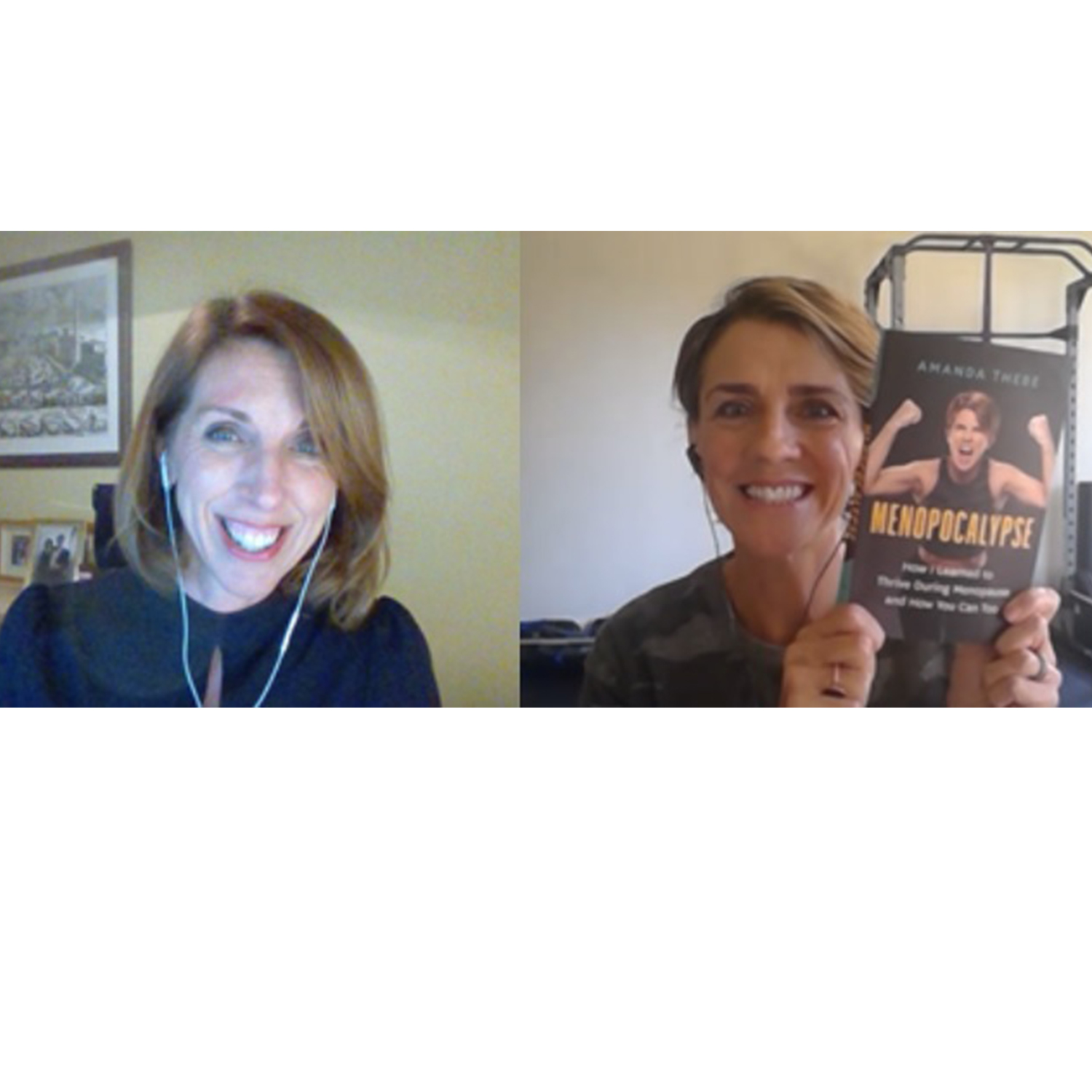
Amanda Thebe is a personal trainer and nutrition coach, with nearly 3 decades in the health and wellness industry. She is the author of 'Menopocalypse: How I Learned To Thrive During Menopause and How You Can Too!' Dr Newson actually helped Amanda with the HRT chapter in the book. Amanda (who is British) joins Dr Newson from her home in Texas, USA. In this episode, Dr Newson and Amanda discuss how menopause awareness differs across the Atlantic, yet despite our different medical organizations, women still are not being helped through menopause. Women are still being dismissed by doctors or misdiagnosed, so there is still much work to do. As well as a discussion about the role of HRT in menopause management, they discuss the importance of lifestyle changes that are integral to supporting menopause and bulletproofing women into aging against the major diseases like diabetes, CVD, osteoporosis and Alzheimers. They also discuss: Living a movement based life vs a sedentary life. Knowing there is an entry point into exercise for everybody. Making small changes that develop into lifelong habits. Simplifying nutrition to support your body. Cutting through misformation in the health and wellness world Adding things of benefit rather than deprivation and restriction. Amanda Thebe's Three Reasons to Buy Her Book: It's giving you knowledge and knowledge is power! There is a 12 week strength training programme in the book - it's great for during lockdown. The book contains advice on how to age resiliently. This is about how to live your life based on your strengths! Buy Amanda's book 'Menopocalypse' here: www.fitnchips.com/books/ Find Amanda on Instagram: @amanda.thebe
082 - The Personal & Professional Costs of the Menopause - Chris Oglesby & Dr Louise Newson
Chris Oglesby is the chief executive of Bruntwood, which remains a family-owned and run company founded on a belief that its success comes from the success of its colleagues, customers and the communities in which it operates. He works tirelessly helping cities such as Manchester to thrive in many ways including by improving health inequalities, funding research and by supporting cultural and community initiatives. Chris talks to Dr Newson about how his wife, Jane, really struggled during her perimenopause and menopause and how difficult it was for him to watch her experience various symptoms. He also speaks openly about his sister, who also found it difficult to receive adequate help and treatment for her menopause. Dr Newson and Chris explore ways in which menopause in the workplace can be addressed to improve organisations and also about how poor menopause care is a global health problem which urgently needs to be addressed. Chris Oglesby's Three Take Home Tips for employers: Start with your own awareness, do your research and learn more about how the menopause may affect your staff. Then you can roll out a programme of awareness within your business to benefit all colleagues, both male and female. Look at pathways into providing your female staff with high quality treatment and menopause advice.
081 - Pilates & the Menopause - Dinah Siman & Dr Louise Newson
In this episode, Dr Louise Newson is joined by Dinah Siman who is a Yoga and Pilates teacher and the founder of Menopause Pilates. Dinah chats to Dr Newson about the history of Pilates and how the method arrived in the UK with Alan Herdman, and how it is now established as a tried and tested system for functional body work. Dr Newson shares her experience of Pilates during her last pregnancy and talks with Dinah about the huge benefits of muscle strengthening, bone loading, flexibility and proprioception it brings during menopause and beyond, and the focus on breathing and pelvic floor health. Dinah also talks to Dr Newson about the one-day Menopause Pilates course that she has have created for Pilates teachers and fitness professionals. The course contains evidence based information and exercise and educational resources and will be launching early in 2021. Dinah has been teaching Pilates to women in the menopausal transition for over 23 years, this combined with her own experience of menopause and passion for sharing menopause education has resulted in this unique one-day course. Dinah's Three Take Home Tips: Try to view the menopause as an opportunity to learn Pilates, it will also benefit your long term health and fitness. If possible, start learning Pilates with a 1:1 session or shared private lesson for a bespoke approach, before joining a class. And finally - give it time. It can seem like learning a new language and that doesn't happen overnight, so have patience! Follow Dinah on Instagram: @menopausepilates Email: [email protected]

080 - ”How My Work Was Affected by the Menopause” - Kate Halfpenny & Dr Louise Newson
In this episode, Dr Louise Newson talks to Kate Halfpenny, who was a celebrity stylist and designer for over 20 years. Kate now has a globally successful, British-made bridal brand, Halfpenny London, which she launched in early 2000. Kate had her first and only child, Sylvester, at 40 and talks to Dr Newson about how her perimenopausal symptoms started a year or two after that. Now 45 and 6 months into her body identical HRT regime from Dr Newson and Newson Health, she has started to feel like the powerhouse she once was, managing to keep a few balls in the air again and not struggling as much to communicate and be the business woman/mother/wife/friend she knew she could be. Kate Halfpenny's three Take Home Tips and signs that you may have low hormone levels: If you're experiencing unexplained fatigue even after a good night's sleep then it may be down to your hormones. Another sign can be a lack of mental clarity, if you are struggling to multitask or concentrate on more than one thing at once. Loss of libido - this is also a common symptom of the perimenopause and menopause.
079 - Media & the Menopause - Nadia Sawalha & Dr Louise Newson
In this episode, Dr Louise Newson is joined by Nadia Sawalha. Nadia is a well-known British actress and TV presenter and has been part of Loose Women from the outset. While talking to Dr Newson, Nadia is very open and candid about her menopause experience and how frightened she was. She talks about how she has always been a very positive and outgoing person and found herself becoming very negative and argumentative. She has had some very dark thoughts which, understandably, were very scary to her. Nadia talks to Dr Newson about how little she knew about menopause in the past and how important it is that women have access to evidence-based information and treatment. Nadia is determined to talk more openly going forwards to educate more women about the symptoms and also the numerous health risks associated with low hormone levels. Nadia Sawalha's Three Take Home Tips: As women we have to talk about it, share information and be open to changing our minds about the menopause and HRT. Spread positive messages and don't be judgemental about the choices of other women. We need to challenge the myths and negativity surrounding the menopause and HRT.
078 - Urogenital Symptoms of the Menopause - Lavinia Winch & Dr Louise Newson
In this episode, Dr Louise Newson is joined by Lavinia Winch, Ambassador for YES organic vaginal moisturisers and lubricants and a patient representative for all aspects of women’s gynaecological health, but especially for menopausal urogenital symptoms. Lavinia shares her story and talks openly about the 30 years of misdiagnosed vaginal and vulval symptoms which were eventually resolved by choosing responsibly formulated lubricants and vaginal moisturisers. Also touched on is Lavinia’s diagnosis of endometrial cancer, and the importance of recognising the signs and symptoms, of which the most common is post-menopausal bleeding. Dr Newson and Lavinia discuss the lack of progress since 2000 in terms of healthcare professionals’ training and treatment of menopausal symptoms, both for vaginal health and for the wider range of symptoms. The difference between bio-identical unregulated hormone therapy and the regulated body identical HRT available on the NHS is another topic covered, and the importance of women using self-knowledge and seeking evidence-based information in order to work collaboratively with GPs to reach individualised solutions. Lavinia’s Three Take Home Tips: Be aware of the main menopausal symptoms but particularly those relating to urogenital function. Learn about the make-up of our vaginas and vulvas and how to maintain a healthy intimate environment. Seek out a GP or specialist who has a real interest in women’s health and continue until you get the help and support that’s right for you. Don’t give up!
077 - Spoon-Fed: Food & Tim Spector - Tim Spector & Dr Louise Newson
Tim Spector is a Professor of genetic epidemiology at King's College in London and also co-founder of Zoe. In this podcast, Dr Louise Newson talks to Tim about his newly published book, Spoon-Fed. This ground-breaking and informative book really leads the reader to question their current diet and their relationship with food. Dr Newson and Tim discuss the importance of gut health and gut biodiversity, in particular with respect to our mental and physical health. Many diseases could be prevented by having the right knowledge of food and cooking from scratch rather than eating processed foods. They also talk about simple ways to improve health and nutrition. We are all individuals and our way of eating can be individualised to optimise our health. Tim Spector's Three Take Home Tips: Try and eat 30 plants a week, that includes nuts, seeds and herbs. Think diverse! Have some fermented foods every day. Think the Three K's: Kombucha, Kefir and Kimchi but also yoghurt and cheese. Look at fasting and the timing of how you eat. The longer you can rest your microbes overnight, the better your metabolism is. Trying to rest between 12 and 14 hours a night can really help you. Click here to find out more about Tim's new book 'Spoon-Fed' Find Tim on Instagram: @tim.spector Twitter: @timspector
076 - Menopause and Employment Law - Victoria Duddles & Dr Louise Newson
Dr Louise Newson is delighted to welcome Victoria Duddles, solicitor and Principal Associate at Weightmans LLP. Dr Newson and Victoria Duddles first met when they were both guest speakers at a Birmingham CIPD event all about menopause in the workplace. In this podcast, Victoria talks with Dr Newson about the employment law implications for employers when managing and supporting women in the workplace who are going through the menopause and in particular how the Equality Act 2010 may apply. Victoria Duddles' Three Take Home Tips for employers: Put in place menopause policies and training and communicate these with your workforce. Make sure the menopause conversation is open for all staff, but especially for those during discussions about performance or absence. There are lots of resources available for employers, from bodies such as CIPD and ACAS. As a manger or even supervisor, you can look at these and educate yourself on how to best support the women in your workplace. Instagram: @weightmans_law
075 - Premature Menopause & Fertility - Dr Rebecca Gibbs & Dr Louise Newson
In this episode, Dr Louise Newson is joined by Dr Rebecca Gibbs, an Obstetrics and Gynaecological Consultant at The Royal Free Hospital in London. Dr Gibbs is also an ambassador for The Daisy Network, a charity dedicated to providing information and support to women diagnosed with Premature Ovarian Insufficiency. In this podcast, Dr Gibbs and Dr Newson have an in-depth conversation about the challenges of being diagnosed with Premature Ovarian Insufficiency (premature menopause) whilst going through fertility treatment. They also discuss the reality of menopause education for gynaecologists in the U.K. and why it’s so important that women take their HRT when diagnosed with the menopause younger than expected. Dr Rebecca Gibbs' Three Take Home Tips for women dealing with POI: Take your HRT. You may well feel much better. Take your HRT. It’ll prevent long term health problems. Don’t be afraid to push for the help that you need when dealing with healthcare professionals. Find out more about The Daisy Network: www.daisynetwork.org [email protected]
074 - HRT Prescriptions in England - Dr Sarah Hillman & Dr Louise Newson
In this episode of the Newson Health podcast series, Dr Louise Newson is joined by Dr Sarah Hillman, a GP and clinical lecturer in Primary Care at the University of Warwick. Sarah talks about a piece of research she has recently published that looks at HRT prescriptions in England. The research shows that women in deprived areas are less likely to be prescribed HRT and Sarah talks to Dr Newson about why this matters. Sarah and Dr Newson also discuss a menopause event at Warwick University and how important engagement is within women’s workplaces. Dr Sarah Hillman's Three Take Home Tips: Speak to your GP about your menopause, and ask which GP has an interest in women’s health. Have a look online for evidence-based research. including the new Balance app. Make time to think about your body and how to get help through the menopause, it’s hard to always find time, but you need to be well in order to look after others and function at work.
073 - Menopause in the Media - Kaye Adams & Dr Louise Newson
In this podcast, Dr Louise Newson is joined by Kaye Adams, a radio and television presenter and regular panellist on ITV's Loose Women. Kaye has recently co-authored the book called Still Hot in which 42 women have written about their own menopause experiences. Kaye and Dr Newson talk about the ways journalists and the media obtain their information and how, for many years, any information they have obtained about the menopause has been incorrect. They also discuss how the incorrect prescribing of antidepressants is so common for menopausal women and how this can be reduced in the future. Kaye talks openly about her own menopause experience and the reservations she had. She talks about how she came to consider HRT because she's the type of person who needs to read and ascertain the research, which she found to be so different from what she, like many women, had wrongly been told in the past. Kaye's Three Take Home Tips: Don't feel like you have to keep your head down and soldier on. Stand back and take the time to really assess how you are feeling and what you need to feel better. Prioritise yourself and don't feel selfish for taking that time for you! Follow Kaye on Instagram: @kayeadamsofficial Twitter: @kayeadams Facebook: @kayeadamsprogramme
072 - The Menopause Charity - Vanessa Barnes & Dr Louise Newson
In this podcast, Dr Louise Newson chats with Vanessa Barnes, fellow trustee and Chief Executive of their newly formed Menopause Charity. Vanessa describes in detail her own menopause journey and her experiences of being perimenopausal and how she came to first meet Louise when trying to find treatment for herself over three years ago. Louise and Vanessa discuss the lack of information, knowledge and awareness surrounding the perimenopause and menopause and the apparent stigma attached to it. There is a very real need for this to be addressed and Louise and Vanessa explain how The Menopause Charity can help to do this. Louise and Vanessa also discuss the wider impact of oestrogen deficiency and the general lack of information and knowledge about the very vital part that oestrogen plays in women’s health. The need for a menopause charity to be set up is something that Louise has been thinking about for some time and now, thanks to the collaboration and efforts from a wide variety of people who are working on The Menopause Charity team, Louise and Vanessa are hugely excited to be in the position where they have now received official registration as a charity from the Charity Commission! The whole team are looking forward to the future and getting the funding needed to get The Menopause Charity website built and to start the process of helping more women to get the support, information and help that they deserve. Click here to find out more about The Menopause Charity Vanessa’s Take Home Tips about why The Menopause Charity is essential: The Menopause Charity will benefit millions of women and will make a positive impact on the lives of so many perimenopausal and menopausal women (and indirectly on their partners!) The Menopause Charity has been set up by a very special team of people who come from a wide variety of backgrounds and skill sets but who are all united in their passion to improve the quality of menopause care are raise awareness about it. As a result of this collaborative effort, this expert team will work to ensure that The Menopause Charity will be the very best that it can be. The Menopause Charity is essential as it will raise awareness about the menopause and will help to remove the stigma attached to it. Through the charity, we will encourage society to embrace the change!
071 - Women’s Health Magazine - Claire Sanderson & Dr Louise Newson
In this episode, Dr Louise Newson talks to Claire Sanderson, the editor-in-chief for Women's Health magazine. Claire talks openly about her mental health and the struggles she has faced in the past in the past. She also talks with Dr Newson about the perimenopause and how so many women are incorrectly offered or given antidepressants for their low mood - a symptom that usually occurs as a result of changing hormone levels. Dr Newson and Claire discuss how HRT can be beneficial for so many women and they also explore the benefits of regular exercise and nutrition. Claire talks about ways that celebrities can help to empower women with knowledge about their perimenopause and menopause and give them confidence that taking HRT is not something to be scared of. Together, they also talk about sexuality and body confidence issues related to low hormone levels. Claire Sanderson's Three Take Home Tips: Find evidence-based information, such as that on menopausedoctor.co.uk, and take it to your doctor. You can demand the right treatment, don't be deterred. Look at your health generally, the changes you make now can benefit you for the rest of your life. Do you need help managing your weight, sleep etc? Put yourself first, preserve your armour so you're ready for battle! Speak to your friends and the women around you. Lean on your squad and be open and honest - others around you may be struggling too and you can help each other. Find Claire on Instagram: @clairesanderson Twitter: @c_l_sanderson www.womenshealthmag.com
070 - Bone Health & World Osteoporosis Day - Julia Thomson & Dr Louise Newson
In this podcast released on World Osteoporosis Day, Dr Louise Newson welcomes Julia Thomson, who manages the Royal Osteoporosis Society's Specialist Nurses Helpline. Together, they discuss what exactly osteoporosis is and identify some of the major risk factors of osteoporosis. Julia and Dr Newson also talk about the various treatments options available for people at high risk of fracture; including hormonal therapies and non hormonal treatments such as bisphosphonates. DEXA scans are also an effective method of diagnosing osteoporosis and Julia discusses this along with the importance of a well balanced, calcium rich diet and regular exercise throughout life. Dr Newson chats to Julia about her work at The Royal Osteoporosis Society and what the charity can offer people with concerns about their bone health and World Osteoporosis Day. Julia's Three Take Home Tips: Make sure you and your family are getting the nutrition you need to keep your bones healthy. Remember that bone likes to be exercised! Always try to keep as active as you can. Talk to your GP if you feel you may be at risk of osteoporosis. Find out more about The Royal Osteoporosis Society here.
069 - Managing Menopause as a New GP - Gregory Monk & Dr Louise Newson
In this podcast, Dr Louise Newson is joined by Dr Gregory Monk, a newly qualified GP. Gregory chats to Dr Newson about his experience dealing with the menopause so far in his career and during his training. They go on to discuss Gregory's perspective of the menopause how this has changed during his time as a GP - particularly his perception of HRT and how Dr Newson's work has been a key factor in this. Dr Newson and Gregory also talk about the importance of GPs learning and understanding more about the menopause and the need for HRT to be considered a low risk treatment with significant health benefits - rather than a high risk treatment surrounded by negativity and fear. Gregory also stresses that it should not matter whether your doctor is a man or woman; all doctors should be able to offer a good standard of menopause care to women. Dr Gregory Monk's Three Take Home Tips: For Patients - Keep Knocking On The Door! There is increasing awareness of menopause in primary care and the health benefits of treating it. If you think you are having troubles related to the menopause, go and see your doctor! For Health Professionals - You are never too experienced to put your hand up and ask for help. Information regarding the menopause, its diagnosis, treatment options and safety are getting more and more accessible. Take the opportunity to use some of the great resources out there and consider the benefits of treatments rather than just the risks . For Everyone - Talk about it. The more you talk about it, the more doctors will talk about it and the more doctors talk about it, the better menopause care will be.
068 - Going Through a Teenage Menopause - Ellie Waters & Dr Louise Newson
When Ellie Waters was 14 years old, she was diagnosed with a soft tissue cancer that required intensive and lengthy treatment. The interventions saved her life, but they also stopped her ovaries working for good. With little menopause information or support from her medical team, Ellie found herself on a journey of self-discovery and empowerment. In this episode, Ellie talks to Dr Newson about her story, what it was like going through the menopause at such a young age and how finding the right treatment has turned her life around. In her own words, "At first, I was elated at the prospect of no periods, but as time went on, I realised that the menopause is much more than your periods stopping; I realised that it meant a life of suffering with night sweats, joint pain, vaginal atrophy and hot flushes. During a time when I was meant to be happy that I survived cancer, my mental health was spiralling with the burden of the menopause. But, thankfully, I got an appointment with Dr Newson and I am now receiving the HRT that I need. Before, I felt like I was 18 going on 80, but now I feel like superwoman!" Ellie's Three Take Home Tips: You are entitled to be referred to a menopause specialist, even on the NHS. Your doctor, surgeon or endocrinologist may not have sufficient information for you. Empower yourself with information - you know yourself and your symptoms the best so be your own advocate when it comes to healthcare professionals. Entering relationships as a younger woman going through menopause can be difficult. Make sure you know your own worth and see yourself as a whole. You are more than your menopause. Follow Ellie on Instagram: @teamellie_blog
067 - Genitourinary Syndrome of the Menopause - Professor James Simon & Dr Louise Newson
In this podcast, Dr Louise Newson is talking with Professor James Simon about Genitourinary Syndrome of the Menopause which affects the majority of women after the menopause and can include symptoms such as vaginal discomfort, irritation, dryness and pain during sexual intercourse. However, only the minority of women currently receive treatment and this needs to change. Treatment with localised oestrogen can be very effective for the majority of women and is very low risk. Other symptoms related to this condition include urinary symptoms and Prof Simon talks with Dr Newson about how common urinary infections and consequent sepsis can be and how this can be avoided by using vaginal oestrogen. Professor James Simon's Three Take Home Tips: Bring it up with your health professional and be direct. Speak to them about about when you are experiencing pain. If one treatment doesn't work for you - make sure you don't give up. Speak to your doctor about an alternative and remember that women often need more than the standard dose. Remember that urinary tract infections and urinary symptoms are part of the whole syndrome. You can treat those symptoms and infections by taking care of the vagina and vulva as a whole. Find out more about Professor Simon by visiting his website here. Find Professor Simon on Facebook: @IntimMedicine Twitter: @IntimMedicine Instagram: @menopause.whisperer
066 - Gut Health and Addiction - Lindsey Beveridge & Dr Louise Newson
Dr Louise Newson chats to Lindsey Beveridge, nutritional therapist and founder of Recovery Nutrition, in this episode of the Newson Health podcast series. Lindsey talks openly about her recovery from alcohol addiction in her late 40s and how that drove her to study nutritional therapy and then change careers. Alcohol and sugar are both substances which affect our guts, brain health, as well as every other body system, but it’s hard to remove them as they are both so addictive. Quite often these self-destructive habits escalate in our 40s – a time when we are possibly experiencing bereavement, financial pressures or relationship challenges, as well as experiencing hormonal fluctuations, so we reach for substances that temporarily make us feel better. It’s important to recognise patterns of destructive behaviour so we can make changes. Breaking habits and making changes require commitment and hard work, but also a degree of self-compassion and Lindsey and Dr Newson share some tools to help with this. Lindsey beveridge's Three Take Home Tips: Be honest with yourself! If you think you are drinking too much or having too much sugar then think about if it's still bringing you joy. If it's not then open your mind to change. Educate yourself as much as possible. Recognise that you don't need to do it by yourself - everyone struggles in some way and you can ask for help. Find Lindsey on Instagram: @recoverynutrition www.recovery-nutrition.co.uk
065 - HIV, Menopause & Sophia Forum - Sophie Strachan, Dr Nneka Nwokolo, Dr Jacqui Stevenson & Dr Louise Newson
In this podcast, Dr Louise Newson is speaking with Sophie Strachan, director of Sophia Forum, Dr Nneka Nwokolo, honorary HIV clinician and menopause specialist, and Dr Jacqui Stevenson, researcher and advocate for Sophia Forum. Together, they talk about the charity Sophia Forum and their 'We Are Still Here' campaign which is calling for: Opportunities to pass on experiences Peer networks for older women Holistic services and standards of care Dr Jacqui Stevenson recently carried out research exploring women’s experiences of ageing with HIV in London. Many of these women were experiencing menopausal symptoms yet were often receiving inadequate advice and help. Understandably, many women were worried that their symptoms were related to their HIV or their treatment and a large number of women expressed frustration in not receiving the right support or treatment. The expert guests in this podcast discuss how important it is for women to receive education about potential symptoms of the menopause and also health risks related to their low hormones. Jacqui talks in more detail about her research and ways of potentially improving access to evidence-based information worldwide to women living with HIV. Sophie Strachan, Dr Nneke Nwokolo & Dr Jacqui Stevenson's Three Take Home messages: Women living with HIV should expect the same care and menopause support as women without HIV. These women should not have any less expectations that they can have their symptoms managed. It's important that we break down the silence around issues like HIV and menopause and provide the space for women to demand the care, support and information that they deserve. In the context of health professionals, don't be afraid in how to look after your patients living with HIV. We are asking you to get educated about this condition as we have had to and start having menopause conversations with your patients when they are in their 30s - not 50s! Find out more about Sophia Forum at: www.sophiaforum.net www.instagram.com/sophiaforum/ www.facebook.com/SophiaForum/ Click here for more information about the We Are Still Here campaign.
064 - Early Menopause and Fertility - Jon Hughes & Dr Louise Newson
In this podcast, Dr Louise Newson is speaking with Jon Hughes, a gynaecologist who specialises in fertility and endometriosis. Jon and Louise discuss the various reasons why women may have reduced fertility, including women who have an early menopause or Premature Ovarian Insufficiency (POI). Jon talks about his work and details the possible ways that fertility can be improved. Jon has recently joined the team here at Newson Health and is now offering individualised advice to women with fertility problems or potential fertility issues as a result of their early perimenopause and menopause. Jon is the lead clinician for Worcestershire Fertility, which is part of Oxford Fertility. Oxford Fertility is part of TFP, with 37 fertility clinics across the UK and Europe. Jon Hughes' Three Take Home Tips for young women with potential fertility issues: When trying to start a family, try and live as healthy a lifestyle as possible. Try to maintain a healthy weight, stop smoking and moderate any alcohol. Talk to your mum, aunties, grandmothers, and find out if there is any history of POI or early menopause in your family. If so, it may be helpful to start thinking and talking to your GP about your fertility. Keep an eye on the symptoms! If your periods are becoming irregular and you are planning on having a family, it may be worth getting everything checked out. Find out more about Jon's clinic at Newson Health here.

063 - Psychosexual Medicine and Menopause - Dr Stephanie Goodwin & Dr Louise Newson
In episode 63 of the Newson Health podcast series, Dr Louise Newson is joined by Dr Stephanie Goodwin, a london-based GP, menopause specialist and specialist in Psychosexual medicine. Together, Dr Newson and Dr Goodwin discuss the possible consequences of cancer treatment on women’s sex lives. Often sex isn’t discussed at the outset of treatment and it isn’t until much later that women have the opportunity to get advice. Dr Goodwin also speaks about vaginal changes during the menopause and the importance of intimacy and keeping channels of communication open with your partner if sex becomes difficult during this time. Vaginal dryness is a very common problem that is easy to treat so don't be afraid to seek out advice. Dr Stephanie Goodwin's Three Take Home Tips: If you are having cancer treatment, ask for advice about the possible impact on your sex life at the start. Find someone in the team who is comfortable discussing that with you. There are lots of resources available that can be helpful - Macmillan, Cancer Research UK, The Daisy Network (for younger women under 40) and The Institute of Psychosexual Medicine. Don’t be afraid to ask if you need help! That’s not just for cancer patients but for any women having sexual difficulties. If you don’t get help the first time, try someone else and keep asking. www.drstephaniegoodwin.co.uk Find Dr Goodwin on Instagram: @drstephaniegoodwin
062 - Menopause and Contraception - Dr Philippa Kaye & Dr Louise Newson
In this podcast, Dr Louise Newson chats to Dr Philippa Kaye - GP, journalist and author. Dr Kaye has just released a new book titled 'The M Word: Everything You Need to Know About the Menopause' and she talks to Dr Newson all about it and explains why she decided to write a book about this area of a woman's life. Dr Newson and Dr Kaye discuss a number of women's health topics in this informative podcast, including safe sex, STD prevention and contraception around the time of the menopause and perimenopause - when you can stop, when you need protection and the different options available. Dr Newson also chats to Dr Kaye about the taboo surrounding women's health in general and why it's important that we change the narrative surrounding the menopause. Dr Philippa Kaye's Three Take Home Tips about Contraception and Menopause: You probably need it no matter how old you are! You will need contraception up until 55 depending on when your menopause was and then afterwards as a barrier against STDs. Some of that contraception can be used as part of HRT, such as the mirena coil. Even if you are going or have gone through an early menopause, you may still need contraception. If you have the right menopause treatment and your libido improves, that's great! But we need to make sure we stay safe. 'The M Word: Everything You Need to Know About the Menopause' by Dr Philippa Kaye is available on Amazon and waterstones.com, as well as in most bookstores. www.drphilippakaye.com Find Dr Kaye on Twitter: @drphilippakaye Instagram: @drphilippakaye
061 - The Hormone Pharmacist - Lindsey Lester & Dr Louise Newson
In this episode, Dr Louise Newson is joined by Lindsey Lester who is a pharmacist with special interest in the menopause and founder of The Hormone Pharmacist. Lindsey set up The Hormone Pharmacist, after much encouragement from Dr Newson, to provide affordable expert menopause advice, which enables women to make an informed choice about the treatment they would like. Lindsey offers a 45 minute consultation which covers the risks and benefits of the treatments available, as well as general health advice which ultimately saves the time of women and their GPs and ensures they receive the safest, evidence based options. In this podcast, Lindsey and Dr Newson discuss the large number of women aged 40+ that are prescribed antidepressants and also older women receiving antibiotics repeatedly for urinary tract infections, both of which are often menopause related. Lindsey is a member of The British Menopause Society and she talks to Dr Newson about why it's so important that women make sure the health professional they speak to has undertaken specific training in menopause. In many cases, even a GP or Gynaecologist might not have had enough training to give the right information or treatment. Lindsey Lester's Three Take Home Tips: Talk! Talk to everyone; friends, family, daughters, nieces. It can be so helpful if your healthcare professional has an interest in the menopause - check their credentials first. Don't suffer - there's no medal at the end! Find the right treatment for you, it doesn't have to be HRT just make sure you have all the evidence before you decide. Take charge of your own destiny and be informed! Lindsey is now offering consultations here at Newson Health, click here to find out more. Find Lindsey on Facebook: @thehormonepharmacistUK Instagram: @thehormonepharmacistUK
060 - Menopause Education & Fourteen Fish - Dr Mark Coombe & Dr Louise Newson
Dr Mark Coombe is the educational director of Fourteen Fish, a UK based company specialising in medical appraisals. They provide education for over 40,000 GPs and healthcare professionals in the UK. In this podcast, Mark and Dr Newson talk about a new menopause education programme they are developing together which has just been launched and is available for healthcare professionals. Dr Newson has created the content with three other GPs with a special interest in the menopause, Dr Rebecca Lewis, Dr Alice Duffy and Dr Sarah Ball. Frustratingly many healthcare professionals have little or no formal education in the menopause which results in women being given the wrong advice and treatment. Education for healthcare professionals needs to be done in an evidence-based and non-biased way. It is also important that healthcare professionals are monitored and assessed regularly for their education so this platform is ideal for launching the menopause education programme on. Dr Mark Coombe's Three Take Home Tips About the Menopause Education Programme: This programme is evidence-based and current. The information is fresh and right up to date. It is online and so easily accessible. You can pick it up and put it down whenever suits you and can focus on specific modules. "We will be working towards helping you provide evidence in your appraisals so you can justify being looked upon as someone with a specialist interest in menopause and HRT." www.fourteenfish.com
059 - PMS and the Menopause - Dr Hannah Short and Dr Louise Newson
In this episode, Dr Louise Newson is joined by Dr Hannah Short, who is a GP and menopause specialist. She also has a particular interest in premenstrual syndrome (PMS) and Premenstrual Dysphoric Disorder (PMDD) which is very common yet not well managed. Many women need individualised advice and treatment which is often a combination of lifestyle changes and taking hormones. Hannah openly talks about her own experience of having a surgical menopause when she was younger. She talks to Dr Newson about ways of improving awareness of this condition so women do not have to suffer both physically and mentally as a result of inadequate support and treatment. Dr Hannah Short's Three Take Home Tips: Track your symptoms by using apps or online downloadable trackers. Use the internet to find useful resources. Firstly https://iapmd.org/ which is a US based site and http://www.pms.org.uk/ to read the UK guidelines. You do not need to solve this alone, look for support. Be kind to yourself. https://drhannahshort.co.uk/ Find Hannah on Instagram: @dr.hannah.short Read this booklet from Dr Newson for more information about PMS and menopause.
058 - Changing the Perception Around HRT - Davina Mccall & Dr Louise Newson
In this podcast, Dr Louise Newson chats to one of Britain's best loved TV presenters, Davina Mccall. Davina talks openly and honestly about her own menopause experience and how she had no idea that she might start to experience symptoms when she was just 44. Davina and Louise talk extensively about the perception of HRT in the media, how women are often needlessly scared and ashamed when they hear those three letters and why it's so important that this starts to change. It's essential that women have access to evidence-based menopause information - we all have the right to make informed choices about our own care and treatment. Davina Mccall's Three Take Home Tips: Inform yourself! You have the right to choose the best treatment for you, but make sure you find out all the correct information beforehand. Find a supportive community and exercise. Whether it’s a weekly class or an online platform like Own Your Goals – exercise can be great for your mental health. Judgement is often a reflection of how we are feeling within ourselves. Every woman has a story and has the right to make their own choices without fear of judgement. Find Davina on Facebook: @DavinaMccall Twitter: @ThisIsDavina Instagram: @davinamccall www.thisisdavina.com Click here to watch Dr Newson and Davina discuss 'All Things Menopause'
057 - The Irish Menopause - Sallyanne Brady, Claire Peel & Dr Louise Newson
The Irish Menopause was set up by Sallyanne Brady and Claire Peel - two ladies who suffered horrendously with their own menopause symptoms and met in an online support group. Ireland was lacking in knowledge, support and evidence based information, for women in particular, so they founded The Irish Menopause in April 2019 and the group now has 2700 members! Sallyanne and Claire chat to Dr Newson about the stories they hear day after day that are heartbreaking and unnecessary and how they are striving for change in Ireland. Sallyanne's Three Take Home Tips for women in Ireland: Join The Irish Menopause - it's evidence-based support and you might find something you relate to. Find a doctor - if your doctor doesn't listen or you're not happy with what they have said, go to the next doctor and keep trying! Reach out - share, talk to others. You're not going mad, it's not just you, it's every other woman. Claire's Three Take Home Tips on how women can help themselves: Talk to other people, go online and find support groups like The Irish Menopause. Look after yourself, don't feel guilty for taking time to yourself. Rest! Give Yoga a try! It can do wonders during this time of your life. Find The Irish Menopause on Instagram: @theirish_menopause Sign #TheIrishMenopauseMission petition online here.
056 - ’balance’ Menopause App - Jane Oglesby & Dr Louise Newson
In this podcast, Dr Louise Newson is talking with Jane Oglesby, whom she first met at Manchester University when they were both medical students together. Dr Newson and Jane then reconnected a few years ago when she visited the Newson Health clinic as she had been really struggling with menopausal symptoms and was unable to receive the right help and treatment. Jane now works a trustee for The Oglesby Charitable Trust and she is passionate about tackling health inequalities, amongst other issues, and she is also a Director of both Focused Care and the Shared Health Foundation. Jane has kindly personally donated money to enable us to develop and produce a brand new menopause app called 'balance' which has just been launched. The aim of this app is to provide evidence based and non-biased information about the perimenopause and menopause to as many women as possible worldwide. Dr Newson and her team have been working hard for the past year with the most incredible team at Magnetic North in Manchester and is really excited to announce that it is now available to download. Click here to find out more and download 'balance' today! Jane Oglesby's Three Favourite Things About 'balance': We have asked women what they want! The app has been designed with that as the main objective - it gives women what they have asked for. The app is a free resource full of information. We want it to stay accessible for all women. balance demonstrates a collaborative effort from a great group of women and I'm very proud of it!