The Digiday Podcast
513 episodes — Page 7 of 11
How the Betches founders turned a blog into a multi-platform media company for young audiences
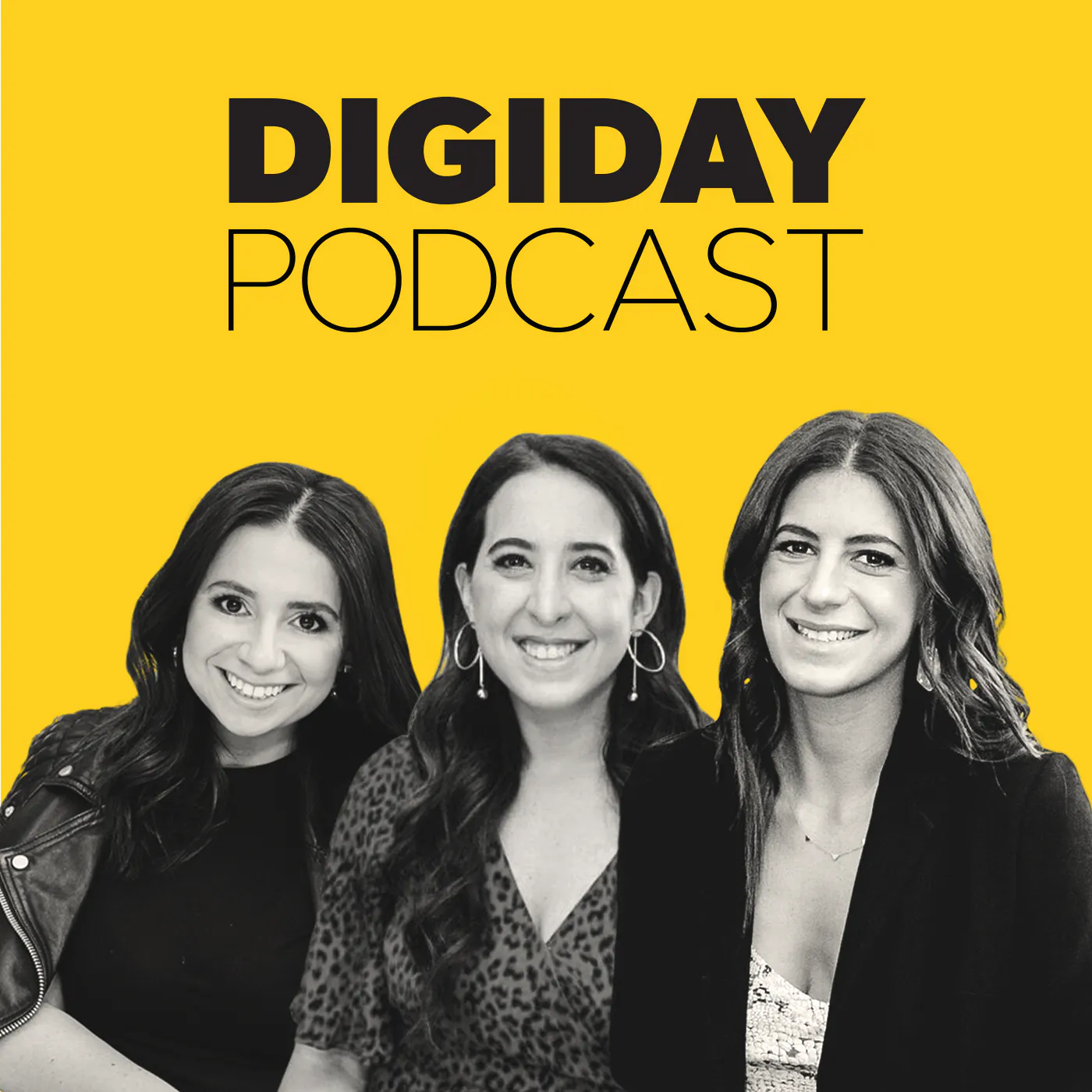
A decade ago, Cornell students Jordana Abraham, Aleen Dreksler and Samantha Sage created a satirical blog called Betches to share their observations of student life. Now in 2021, the blog has become a multi-platform media company for millennial women that reaches a monthly audience —they tout — of 43 million. The blog grew with its audience, said Dreksler on the latest episode of the Digiday Podcast, allowing major life events for their audience to dictate new content verticals, podcast subjects and video series, including Betches Moms and Betches Brides. But above all, entertainment and humor led the company’s content strategy. As such, social media has become a key growth platform for the media company over the years. Like many media companies, Betches has had a lot to consider over the past year, including what its role would be on emerging platforms, how to continue serving its audience who was spending significantly more time online and how to create content for the ever-growing Gen Z demographic.

Vox Media’s Marty Moe and Preet Bharara are building a business that extends beyond podcasting
Vox Media has been on something of a shopping spree over the past two years. After acquiring Epic to boost its TV production business, New York Media to expand its publishing portfolio and Coral to add to its publishing technology, in April the media company picked up Cafe Studios — the podcast company co-founded by former U.S. Attorney Preet Bharara — to round out its podcast network. However, for both Vox Media and Cafe Studios, the motivation behind the deal extends beyond the world of audio. “There’s lots of things we’re thinking about and planning on, not just continuing additional audio podcasts [including narrative series] in the future,” said Bharara, who was joined by Vox Media Studios president Marty Moe, in the latest episode of the Digiday Podcast. The companies are also looking to extend Cafe Studios into documentary television and live events. Meanwhile, Cafe Studios moves its new parent company further into the subscription business. Vox Media already sells subscriptions via New York Magazine and dabbles in donations via its news publication Vox. But Cafe Studios, which sells subscriptions through its Cafe Insider program, introduces it into the world of subscription-based podcasting. “One of the attractive things about Cafe is learning from [Cafe Insider] and learning how we can potentially extend that to more of our podcasting business, but frankly how we can connect it to and use learnings for other parts of our subscription business,” said Moe.
NTWRK is taking NFTs into the livestream shopping model
The livestream shopping model is coming back around in the U.S. and is not limiting itself to the traditional television channels and "call-now" directives that QVC and HSN have done in past decades. NTWRK, a livestream shopping company aimed primarily at Gen Z and millennial audiences, launched in late 2018 and has accumulated 2 million consumers since then on its iOS and Android apps, which are currently the only platforms that shoppers can transact on. By 2025, the goal is to increase that number to 50 million, as well as make more than $1 billion in revenue, said Aaron Levant, CEO of NTWRK, on the latest episode of the Digiday Podcast. The livestream shopping platform sells physical products like art, sneakers, and limited edition products that are created in collaboration with hand-selected artists vetted by NTWRK's merchandising team. But after seeing a surge of interest around NFTs and learning the reasons behind why people pay for digital ownership of online products, Levant said his team realized that physical collectors and digital collectors overlap quite nicely within the NTWRK consumer base. As a result, this month NTWRK we'll be launching an NFT extension on its platform to further tap into these new shopping behaviors.

With a unique insight into e-commerce behavior, Klarna's marketing strategy focuses in on being a part of the cultural conversation
Klarna -- the buy now, pay later fintech company -- is trying to build its user base by becoming part of the culture conversation. The Swedish-based platform already has a significant base of 90 million global shoppers with 18 million specifically in the U.S., which Klarna CMO David Sandström said is the company's fastest growing market. With access to that many consumers, the past year has been a treasure trove of new data on online shopping behavior, given the pandemic wildly increasing the number of people transacting on the internet. That said, with more online shoppers, there has been an additional need for Klarna to put its checkout option (paying in up to four payments, versus one) in front of significantly more people, which Sandström said in the latest episode of the Digiday Podcast, led to his team accelerating its advertising strategy in the second half of 2020. Its marketing team has been tasked with leading that charge by getting creative on emerging social media platforms as well as working with media brands and celebrities to tap into its preexisting, trusted audiences and fanbases.
'Trying to push boulders up a hill': The Plug's Sherrell Dorsey on winning the support of advertisers as a Black-owned media company

Why Hearst's digital-native food brand Delish is getting into print
When Hearst created its internet-inspired food brand Delish six years ago, its product strategy was entirely digital, which was unique within the publisher's portfolio of legacy magazines. And while Delish may not be one of the "Hearst titans," its playful nature has helped grow the brand's audience and hone a group of super fans who are willing to pay to be closer to the brand in more ways than one, according to Delish editorial director Joanna Saltz on the latest episode of the Digiday Podcast. Now, Hearst is bullish on building out its reader revenue lines by installing paywalls on its websites and securing more product licensing opportunities tied to its brands. Delish is not exempt from that strategy. After it successfully created cookbooks and bookazines, the brand will launch a quarterly print magazine as a way to build out its membership offering. Delish is also seeking a stronger connection to its audiences' kitchens with everything from branded ice cream to kitchen appliances, said Dan Fuchs, Delish's vp and CRO.

How the Try Guys took their YouTube channel and turned it into a media company and a TV deal
The Try Guys brand was formed in 2014 by four BuzzFeed producers who wanted to be funny on their company's YouTube channel. Within four years, the group — Ned Fulmer, Keith Habersburger, Zach Kornfeld and Eugene Lee Yang — realized the brand had enough of a fanbase to buy the rights from BuzzFeed and set out on their own. Now the Try Guys' company, 2nd Try, has a staff of nearly two dozen, a YouTube channel with more than 7.5 million subscribers, numerous product lines (including hot sauces, teas and a cookbook), a movie, and an upcoming special on the Food Network, all of which have come to fruition since 2018. In the fourth and final episode of the Digiday Podcast's creator series, Fulmer, Habersberger and Kornfeld talk about how passion is key to growing their company earnestly and organically and how being independently owned allows each other the flexibility for experimentation.

How Sienna Mae Gomez turned into one of TikTok’s top stars
Sienna Mae Gomez is a definitive overnight sensation. In August, she posted a video to her secondary TikTok account that attracted hundreds of thousands of views within hours and led her to become one of the platform’s biggest stars. “I gained a million [views] like every three days. It was crazy. It was just going so fast. From the span of August to maybe October-November-December, I was gaining a million [followers] like every week or two weeks,” Gomez said in the latest episode of the Digiday Podcast. Gomez’s rapid rise has hardly slowed. If anything, its pace has picked up. In the eight months since posting that video in August, she has accrued more than 22 million followers combined across her two TikTok accounts, signed with Hollywood talent agency ICM Partners, attracted deals with brands including Maybelline and Levi’s, launched a YouTube channel, started her own bathing suit line and is set to star in a reality show on Netflix. The third guest in a four-part series on individual content creators, 17-year-old Gomez represents a generation who grew up seeing YouTube stars chart a career out of creating videos and posting them online. She also symbolizes how the business of being a creator has matured and how creators today have solidified themselves as part of the Hollywood firmament. “I think if you told someone back in the 50s, ‘Oh, there’s gonna be an app, and it’s gonna create celebrities.’ They’d be like, ‘That’s literally insane.’ But times are changing,” Gomez said.

Heated founder Emily Atkin shows what it takes to make the transition from staff writer to Substacker
The allure of Substack has lured many journalists away from their traditional newsroom roles to a position of becoming their own editors, artists, marketers, accountants, and most importantly, bosses. Emily Atkin was one of the first to feel the draw, leaving her position as a staff writer at The New Republic in September 2019 to launch her climate change-focused newsletter, Heated, that same month. "I definitely did not have the idea beforehand. I was at the place in my job at the time where I wanted to make a move. I weighed my options [and Substack] seemed like that was what made me the most excited," said Atkin. "I was trying to trust what would be the thing that brought me the most joy and sort of sense of purpose. And that's where the idea came from." A year and a half later, Heated has more than 40,000 free subscribers and boasts a conversion rate of free to paid subscribers between 8-12%, which Atkin said is the metric she obsesses over to indicate her path to success. With that proof point, she said she is ready to add to her team to deliver more value to the paid subscribers, who represent Heated's sole source of revenue. She did not say how many paid subscribers the newsletter has. This episode is the second of a four-part series on independent content creators that includes interviews with YouTubers, TikTokers and Substackers. The aim of the series is to show how these individuals — commonly labeled bloggers and vloggers, influencers and freelancers — are essentially turning their passions and hobbies into their own media companies, as well as highlight how this segment of the media industry is becoming more mainstream and setting standards for how digital media companies should approach these platforms themselves.
YouTube stars Alisha Marie and Remi Cruz show how creators have become their own class of media company
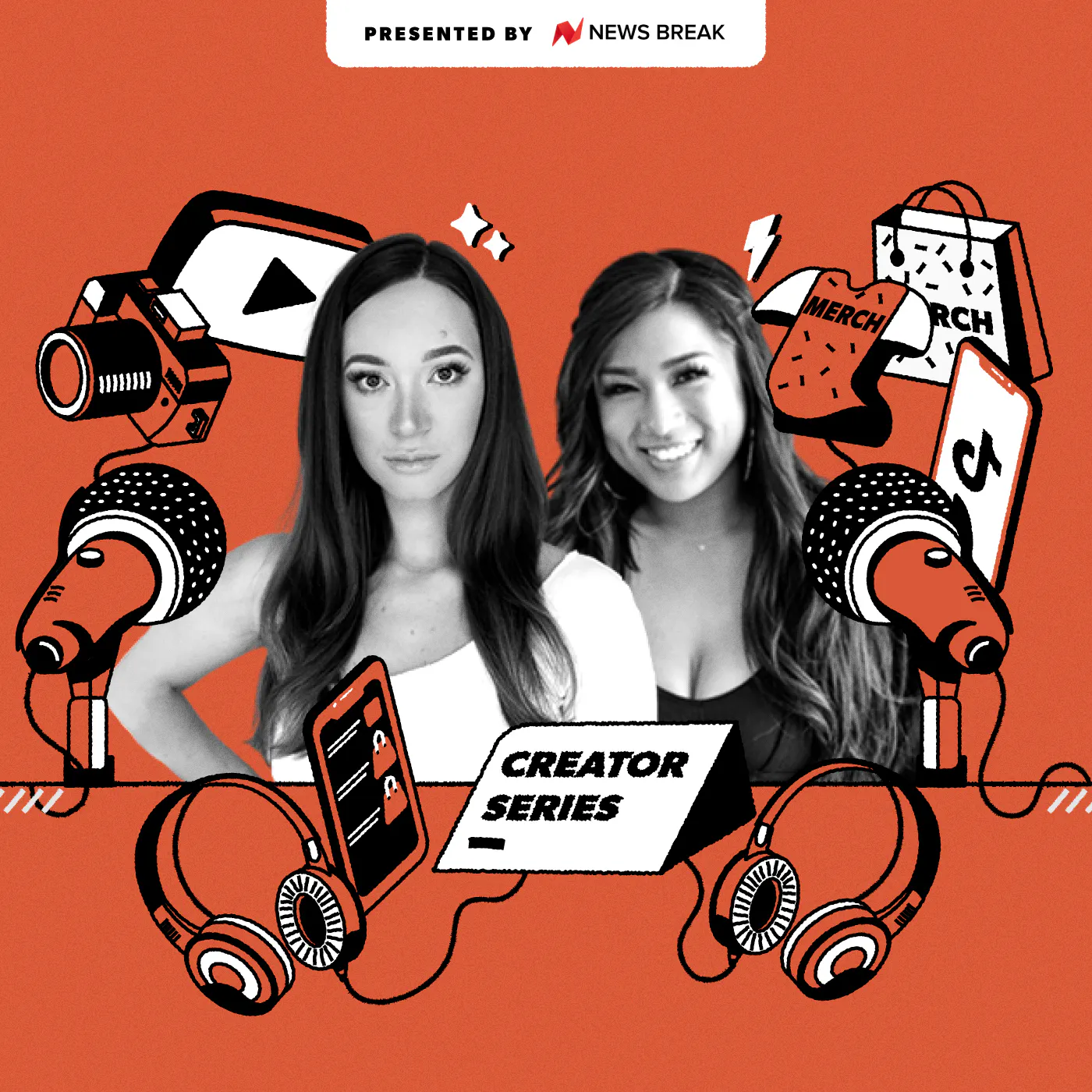
Alisha Marie and Remi Cruz have built their careers by posting videos to YouTube. But their businesses have grown beyond Google’s digital video platform. Since Marie launched her YouTube channel in 2008 and Cruz debuted hers in 2012, they have diversified to other platforms and revenue sources, including commerce and a joint podcast called “Pretty Basic” that the pair premiered in October 2018. “Being entrepreneurs or the businesswomen we are today was never the goal or the mindset. It kind of just evolved slowly,” said Marie in the latest episode of the Digiday Podcast. This episode kicks off a series in which Digiday Podcast co-hosts Kayleigh Barber and Tim Peterson will interview independent content creators, including a Substack writer and a TikTok star. The aim of the series is to show how these individuals — commonly labeled bloggers and vloggers, influencers and freelancers — are effectively forming their own media companies as this segment of the media industry becomes more and more mainstream.

TikTok’s Khartoon Weiss wants brands to stop overthinking their platform strategy
TikTok has risen rapidly from being a new platform for marketers to kick the tires on to becoming a staple in some advertisers’ social budgets. “Curiosity, for sure, has exploded. We were a test partner, I would say, in 2020, and 2021 is the year that we want to be trusted,” said TikTok’s head of global agency & accounts Khartoon Weiss in the latest episode of the Digiday Podcast. The latest sign of that trust is a three-year deal that TikTok has signed with IPG Mediabrands. The deal marks the second arrangement that the ByteDance-owned company has struck with a major agency holding company this year, following a deal with WPP announced in February. The agency holding company deals signal that TikTok has reached a new crest in its relationships with advertisers and agencies — two groups that may still be figuring out how to use the platform — but are invested in that education. Through IPG Mediabrands’ deal with TikTok, the agency group and platform will hold quarter-long “creator camps” for popular TikTok users to provide feedback on brands’ TikTok strategies and campaigns as a part of a broader program called “creator collective.” “It’s a new initiative that connects brands with forward-thinking and diverse creators who will advise on strategies and best practices, which is what we honestly get asked about most,” Weiss said.
How Turner Sports is using new platforms and content to widen its audience aperture
Turner Sports is using the recent return of sporting events to bolster new initiatives in both advertising and audience building. In the heat of March Madness, which has returned this year after taking a 2020 hiatus, Tina Shah, evp and general manager at Turner Sports, said her team has been integrating innovation in both production and content for the event’s ad campaigns after seeing a strong return of interest from advertisers. Beyond that, Shah said in the latest episode of the Digiday Podcast that these events mark the perfect time to try and engage both younger — and female-skewing audiences — after recognizing the linear coverage of live sports is not quite cutting it. Bleacher Report’s House of Highlights is leading that charge by creating new livestream competition shows while B/R is working to champion representation of women athletes across its site — something both fans and advertisers appreciate, she said. At the end of the episode, Shah also spoke about her experience as a woman building a career in sports media and how representation of women both on screen and behind scenes on the business side is important to creating a successful, impactful business.

How Trusted Media Brands is using first-party data beyond advertising
A successful first-party data strategy incorporates data into every facet of the business — from advertising to affiliate to licensing. At least that’s how Trusted Media Brands’ CEO Bonnie Kintzer is approaching the company’s first-party data strategy. So far the company's notable revenue growth is proving this to be a good move. The company’s advertising revenues have been up 40% year over year, with particular growth in programmatic business since the beginning of TMB’s fiscal year July 1, Kintzer said. Meanwhile, its affiliate commerce business has seen 75% growth year over year, with January coming in at double its revenue from the same month the previous year, she added. “We may have been a little bit late to the [affiliate] party, but [we’re] making up for lost time,” Kintzer said.

How The Weather Channel is using weather patterns and AI to inform ad campaigns
There is a reason why most conversations start by addressing the weather. It's a universal talking point that affects everyone, regardless of backgrounds and demographics, making it an easy icebreaker. Marketers love the topic too and publishers like The Weather Channel end up benefiting greatly because they attract large audiences that span whatever targets an advertiser is hoping to reach. In February alone, The Weather Channel's website and app reached 430 million active users, according to Sheri Bachstein, the global head of Watson Advertising and The Weather Company, owned by IBM. Bachstein discussed the ways in which The Weather Channel and IBM are making the most of its audience and first-party data, including creating an AI-based data offering and launching a subscription product on its app to diversify revenue with the help of nearly 1 million super weather fans.

GroupM’s Kieley Taylor and Amanda Grant are on the lookout for the future of identity in advertising
The digital advertising industry is in the midst of an identity crisis. Between the third-party cookie’s impending demise and Apple’s mobile app tracking crackdown, advertisers and agencies are having to figure the future of identity in digital advertising. Fortunately, that future has been a long time coming. “For better or worse, the crystal ball has been decently clear that this is the direction we’re going from regulatory pressures, from a consolidation in terms of who is owning and controlling experiences through the lens of a browser, through the lens of an operating system. So we take solace in that there’s been a bit of a head start,” said GroupM global head of partnerships Kieley Taylor in the latest episode of the Digiday Podcast. Taylor was joined by GroupM global head of social Amanda Grant. Further helping advertising figure out the identity situation is Apple’s mobile app tracking crackdown. That change is expected to take place this spring and is “giving us really good training wheels for the cookie-based changes that are going to come about,” Taylor said. However, what that experience is showing so far is that advertisers may want to exchange the training wheels for off-road tires as they try to navigate the bumpy trails ahead. Although Apple has been fairly clear in saying that apps will need people’s permission in order to continue to track them for advertising purposes, “the platforms are all interpreting that very differently as it impacts their platforms. So it’s not like we have a single rules of the road for social activation moving forward,” said Grant.

Social media ‘wild, wild west’: How Harper’s Bazaar follows digital trends to retain its authority in fashion
Harper's Bazaar is a 153-year-old legacy magazine using social media platforms to help it become a modern, digital fashion authority. The brand's digital presence not only helps amplify its print stories, but diversify revenue through e-commerce and advertising — turning fans of the magazine into digital consumers of luxury fashion and beauty. And three months ago, Nikki Ogunnaike rejoined the magazine as its new digital director to help strategize ways it can grow and monetize its audience, including staying on top of digital trends. "Now is this weird, sort of wild, wild west time" of new social media platforms that Harper's has to consider in its digital strategy, including Clubhouse and Twitch, said Ogunnaike on the latest episode of the Digiday Podcast.
'We shouldn't have to go on so many first dates': How Bustle Digital Group is wooing advertisers
The ways in which publishers solved their 2020 problems vary, but Bustle Digital Group's approach included reestablishing longterm relationships with advertisers in a variety of categories and leaning on retail partners like Amazon to bring in incremental commerce revenue. During the first quarter of 2020, Bustle Digital Group was projected to be up 40% in revenue over 2019 by the end of the year, according to Jason Wagenheim, BDG's president and chief revenue officer. But by March, reality of what the year would hold had set in and that projection was thrown out the window. "We had the darkest 72 hours in our company's history where literally tens of millions of dollars just cancelled within a three day time period," said Wagenheim in the latest episode of the Digiday Podcast. "There was a lot of panic at the start of the pandemic." Ultimately, BDG ended the year about 5% up from 2019, thanks to its position in a myriad of advertising categories. Wagenheim did not provide exact revenue figures. "It's the importance of being able to satisfy retail as much as tech as much as auto as much as fashion," he said.
CBS News Digital’s Christy Tanner doesn’t expect to see a ‘Trump Slump’ in news consumption
News outlets experienced a surge in traffic and viewership during Donald Trump’s presidency right through to when he left office in January. In fact, between the inauguration of President Joe Biden and the attack on the U.S. Capitol, CBS News Digital received more readers to its site and attracted more viewers to its video programming in January than in any previous month in its history, according to CBS News Digital evp and gm Christy Tanner. But now that Trump is out of office — and hopefully without another Capitol attack on the horizon — news outlets have been faced with the question of whether people’s interest in the news would subside. In other words, whether the Trump Bump would turn into a Trump Slump. “I do not expect to see a slump. We still have some major, major compelling stories that are not going anywhere anytime soon,” Tanner said in the latest episode of the Digiday Podcast. The election may be over, but there remains a pandemic, a racial reckoning and a climate crisis for news organizations to cover, said Tanner. “In many ways, what I’m happy about is we can focus on these really important stories now that we have a different president in office and a different type of news cycle,” she said.

'Proactive is the path': Group Nine's Geoff Schiller on his selling strategy
Last year proved to be one of the most challenging years on record for the media industry with ad revenue drying up in the second quarter, but for Group Nine, it was magnified by its entry into its first full year following the merger with PopSugar. In the first few weeks of the merger, the company’s chief revenue officer Geoff Schiller came onto the Digiday Podcast to talk about the vertical sales strategy he implemented at the beginning of 2020 that required sellers to have a deep endemic focus — a strategy carried over from his time leading sales at PopSugar. This would allow sales expertise that normally fits with a brand like PopSugar — like entertainment — transfer to a brand like Thrillist, after main sponsors in the travel and restaurant industry took a big hit and pulled back from advertising in 2020. Navigating last year helped Schiller realize the horizontal focuses all of Group Nine’s titles needed to account for as advertisers’ needs shifted throughout the year. Pivoting to include the horizontal with the vertical, Group Nine’s revenue in 2020 was flat with 2019, according to Schiller, but the fourth quarter ended up being the best on record for the company.

'Urgency around the community': How Pop-Up Magazine pivoted to (even more) experimental storytelling
By March 16, theater doors around the country shut their doors. The Pop-Up Magazine touring production, which had just completed its first (and only) national tour of 2020, had to figure out where to go from there. The publisher, known for its on-stage renditions of original magazine stories that rethought the performance of storytelling, had not previously filmed its shows. But the pandemic forced the publisher to experiment with a virtual format like many others and in true Pop-Up form, it came with a twist. The publisher premiered its Spring show on YouTube Live, with performers filming themselves from home alongside animations and illustrations. And then wanting to push the experience even further, the company created a $70 issue-in-a-box and organized community groups and virtual experiences that could continue convening the show's fanbase despite not being in a shared theater space. "The silver lining for us about 2020 and the pandemic is it was an opportunity for us to be very experimental with storytelling in different formats," said Chas Edwards, the president, publisher and co-founder of Pop-Up Magazine Productions. "And most importantly 2020 gave us permission to get closer to our audience in a variety of ways."
The New York Times’ Ben Smith saw the alt-right’s rise and sees a new era for social platforms
Ben Smith has an enviable view of the current media landscape. Before The New York Times announced in January 2020 that the publication had hired Smith to be its media columnist, he had eight years as the editor-in-chief of BuzzFeed, a period during which the meme publisher matured into a media company that retained its social savvy while also operating a news business. And before BuzzFeed, Smith had covered politics as a reporter and blogger at Politico. That experience helped Smith to see the coming rise of alt-right media outlets using social platforms to spread misinformation coming before many others. “I think was increasingly aware of it at BuzzFeed. Because we were swimming in those waters, we were very quick to see the rise of the alt-right, and we covered the hell out of it in 2014 and 2015,” Smith said in the latest episode of the Digiday Podcast. Lately Smith has been reflecting on media in the early days in the internet. Specifically he has been thinking about he and others learned how to use the web to get around gatekeepers like the big, traditional media companies and inadvertently “opened a kind of Pandora’s box,” he said. He continued, “It’s not that we didn’t see that it had a dark side, but I think we misunderstood the balance.”

'Convince the gatekeepers': How The Week Jr. is growing its U.S. subscriber base
The Week Jr. was set to debut in the U.S. last spring but the day that the first run of the children's magazine went to the printer, much of the country went into lockdown. That threw a wrench not only in the magazine's editorial plans, but also in the marketing strategy for how the U.K.-based, Dennis Publishing-owned title was meant to enter the western hemisphere. Despite the initial hiccups, Andrea Barbalich, editor-in-chief of The Week Jr. U.S. and Kerin O'Connor, chief executive of The Week said on the most recent edition of the Digiday Podcast that the weekly news magazine for kids has already surpassed its initial run of 50,000 issues and now reaches 75,000 subscribers in the U.S. This is in part thanks to 2020 having one of the most intense news cycles on record, which Barbalich said her team was diligent about covering in a way that kids could easily digest and in a manner that parents might not be able to do on their own. Within about three or four issues we had The Week Jr. being read in every state in America," said O'Connor.

‘You’ve got to earn that’: Mike Hume of The Washington Post’s Launcher on covering gaming and esports inside a mainstream publication
For years, gaming has been categorized as a niche form of entertainment. But that’s been changing over the better part of the past decade, including within the realm of gaming journalism. In addition to longstanding gaming publications like Kotaku and IGN, mainstream outlets have invested in covering gaming and esports, as The Washington Post did in debuting Launcher in October 2019. And their coverage extends beyond console reviews and game play tips. As Launcher editor Mike Hume explained on the Digiday Podcast, Launcher covers the business and culture surrounding and inside video games, from esports competitions that have formed around games to people holding their weddings within games to the legal standoff between Apple and Fortnite maker Epic Games. Rather than focus on legitimizing gaming to The Washington Post’s broader audience, Launcher has had to take care to legitimize itself to that core gaming audience. “We’re not going to be the Kool-Aid guy breaking down the wall and being like, ‘The Washington Post has come. Gamers rejoice. Now you have a mainstream outlet.’ No, you’ve got to earn that. That’s what a lot of our focus was in year one,” Hume said.

How Future PLC’s audience-first strategy grew revenue in 2020
While 2020 was a year of struggle and strife for many publishers, London-based Future PLC ended its 2020 fiscal year up 65% in total revenue from last year, bringing in a total of just under £340 million (approximately $459 million), according to the company’s 2020 annual report. As a special interest-based publisher, Future PLC has the advantage of having niche, passionate audiences that trust the publications they read. But with over 130 titles, the company also has the scale of a mass media company, with a total audience consists of upwards of 400 million monthly unique users. That extensive database of user behavior, interests and shopping habits is what the company’s CEO Zillah Byng-Thorne said helped the company grow over the past year. In the latest episode of the Digiday Podcast, Byng-Thorne discusses how Future positioned itself over the last year to grow not only its e-commerce business during the coronavirus pandemic-induced online shopping boom, but also its advertising business.

Coronavirus-induced change and accelerations: Digiday’s top trends for 2021
In this week’s episode of the Digiday Podcast, our editorial team takes a look ahead at what 2021 may have in store for the publishing and marketing industries, from what Zoom fatigue means for the virtual conference to why perks aren't what they used to be.

'Using all parts of our business as innovation': Vox Media Publisher Melissa Bell on recent departures and future content
It's a new era for Vox Media. The company is a year into its merger with New York Magazine, and in recent weeks has seen some of its leading journalists and founders leave for such legacy companies as The New York Times as well as upstart destination Substack. "I think it's a sign of success," Vox Media publisher Melissa Bell said on the Digiday Podcast. "I see it as a benefit that folks can come to Vox and work with Vox Media or Vox and add a really big gold star to their resume." Beyond the talent chase, Bell said Vox Media has ambitious multi-platform plans. "We are going to actually produce simultaneously podcasts and TV shows when we really know the idea is super strong," Bell said. "It allows us to reach audiences in the way that they want to be reached. Some people are audio listeners, or learners and some people are visual learners." Vox's podcast audience has grown by 45% this year, Bell added. And then there are CTV and streaming plays. "We're going to be starting to look into the OTT streaming platforms for Vox," she added. "We just announced that we're doing a new deal with HBO [and] we're still heavily partnered with Netflix. So you'll see a lot of growth there."

Google's Amy Adams Harding on why digital newsrooms should 'act like an e-commerce player'
As Google continues to partner with newsrooms to help boost their traffic and revenue, the company's Amy Adams Harding has one recurring piece of advice: "making sure that you're employing e-commerce-like tactics." "Even though you're a news publisher and your journalism is core to what you do, you are, at the end of the day, selling that journalism," said Adams Harding, Google's director of analytics and revenue optimization for news and publishing, on the Digiday Podcast. Those tactics include offering a low, middle and high-budget option for content (the middle is most likely to net buyers, Adams Harding says). The esthetic of the offer matters, too. Adams Harding suggests orange "squovals" (that's square ovals) has proven to drive engagement, as well as making these offers more prominent. "The number of sites that we've come across where they've got this tiny, little upper right hand side, 'subscribe to us' button — that's not going to build your reader-direct revenue strategy." Adams Harding also suggests hiring more like an e-commerce player. "I can't tell you the number of meetings I've had with CEOs of news companies, and they say 'well, I want to launch a reader direct revenue monetization strategy. Who should I hire?' And I say, 'well, for goodness' sake, don't hire anyone from the news industry, hire someone from Amazon, right?' You need to be able to act like an e-commerce player, because those are the ones that are having success online." But Google's partnerships aren't just about dispensing pat advice. The company works with thousands of news organizations in more than 100 countries via News Consumer Insights, a digital product launched this summer to help newsrooms parse the mountains of they're sitting on. "It allowed us to create our version of a user engagement funnel, specifically for news," Adams Harding said. "All it did was re-visualize the data in Google Analytics, so that it made sense to a news partner."
'I believe enough in this to try to do it myself': CollegeHumor owner Sam Reich on the brand's future potential
Despite the name, CollegeHumor isn't a spring chicken anymore. Founded in 1999, the comedy site was acquired by IAC in 2006 and grew into one of the most successful video publishers on YouTube. It also went premium with shows for TV like Adam Ruins Everything, and launched a subscription streaming service called Dropout. But whereas CollegeHumor succeeded in terms content side, business has been another story. In January, IAC decided it was no longer willing to finance CollegeHumor and laid off more than 100 employees and then sold the business to Sam Reich, who had joined the company in 2006 to build out its original video business. In his estimation, there's a helpful paradox at the center of the company's content strategy. "When we began, it was with what we thought was a really mature thesis for how to run a subscription business: We're going to a have our acquisition content and our attention content," Reich said on the Digiday Podcast. The acquisition content had higher budgets and shorter run time, but in the end, the cheaper, longer-form stuff outperformed it on all fronts. "In other words, the most expensive content was less effective in getting people in or keeping them there than the less expensive content," Reich said. "And if that hadn't been the case, I don't know that we would have taken over the company."

'Profitability in the back half of next year': BuzzFeed CEO Jonah Peretti (and Verizon Media CEO Guru Gowrappan) on their big merger
Two of digital media's biggest players are merging into one, with the announcement last week that BuzzFeed will be acquiring HuffPost in an all-stock deal. This episode of the Digiday Podcast hears from both sides of the transaction. First, senior reporter Kayleigh Barber interviews BuzzFeed CEO Jonah Peretti, who will be leading both companies as they remain separate but share resources on fronts including advertising and content syndication. Senior media editor Tim Peterson then follow with an interview with HuffPost’s seller — Verizon Media CEO Guru Gowrappan— about the complementary audiences, products and goals he envisions for the two sites. "What I've told Jonah is, 'now it's your time to take this and grow. And we want to make sure we are syndicating and we are working with you on ads, working with you on commerce," Gowrappan said. "That's how we're going to measure success." Verizon Media will have a minority stake in BuzzFeed, though Gowrappan is keeping its size a secret. For his part, Peretti believes "there's a strong possibility of profitability in the back half of next year."
'People give when they're excited about good things': Grist CEO Brady Piñero Walkinshaw on what drives member support
With a Biden administration set to take over in January, one arena for policy whiplash is the environment. The president-elect has promised to rejoin the Paris Agreement against global warming on the day he's sworn in, and campaigned on the existential threat that is climate change. What does that mean for Grist, a news non-profit focused on environmental issues, and which has experienced a "Trump bump" just like many news organizations covering the White House over the past four years. "I think sometimes people give when they're excited about good things too," Grist CEO Brady Piñero Walkinshaw said on the Digiday Podcast. "And folks are excited about good things [on environmental policy], not just attacks or assaults" on it. Grist's staff of 50 depends on around 5,000 "low-dollar members," Walkinshaw said. Five percent of the company's six to seven million dollar budget comes from advertising, but the majority is via partnerships with foundations. "The climate is increasingly one of the top-of-mind issues to a growing, growing, growing number of Americans," Walkinshaw said.

Shine co-founders Naomi Hirabayashi and Marah Lidey on how mental health went mainstream
Whatever else can be said about the year 2020, it has at least led to a renewed focus on issues of mental well-being for those open to discussing it. "Even in 2019 there wasn't this spotlight on mental and emotional health," said Marah Lidey, co-founder of wellness-focused company Shine, on the Digiday Podcast. "The pandemic is helping to destigmatize conversations around mental health," her co-founder Naomi Hirabayashi added. Founded in 2016, Shine offers guided exercises and community around mental wellness. "This summer, we knew it was really important to prioritize, you know, Black mental health, specifically, in response to what was happening in our country," Hirabayashi said. Their app notifies users of a daily theme and meditation exercise and is available in both free and paid tiers (at either $12 a month or $54 for a year). According to Lidey and Hirabayashi, the company reaches 4 million users.

Activision Blizzard Esports' Jack Harari on how the energy and pageantry of gaming is enduring the pandemic
If there was one mode of international competition that wasn't to be disrupted much by the global coronavirus pandemic, it's esports. "One of the unique things about gaming is that our players don't have to be in the same place," Activision Blizzard Esports VP Jack Harari said on the Digiday Podcast. Still, elite video game competition benefits from the same trappings that established league sports do, from pre-game pageantry to fan cams and a real sense that competitors are squaring off against one another even as they sit at their computers. "It adds more energy, creates some really unique production opportunities," Harari said. He joined Activison Blizzard — the creator of esport staples like Call of Duty, Overwatch and StarCraft — after five years with the NBA. Like most media businesses, the company hopes to resume physical events next year, the company, Harari said, hopes to resume physical events next year, but has proved highly engaging in a media economy forced to be remote. One clear differentiator between the company's Overwatch League and a traditional sports league is that Activision Blizzard owns the game from top to bottom. Avid fans of the sci-fi shooting game can go from watching the world's best to playing the exact same game themselves, albeit with different stakes. In a week, the average fan watches four to five hours of professional esports while playing the company's games for more than 20 hours, according to Harari. Activision Blizzard is hoping to monetize that high level of engagement in a way other sports can't. Last year, the category brought in more than $1 billion globally for the first time.
The 74’s publisher Jim Roberts on bridging equality divides in education and making trust bonds with audiences
For the 74's publisher, nothing has been hit as hard by the pandemic as education: "Overnight, kids were basically told 'everything changes," said Jim Roberts, publisher of The 74, on this week's edition of the Digiday Podcast. Launched in 2015, The 74 — short for the estimated 74 million children in the United States — is a nonprofit covering education and now, the extent it has been disrupted and transformed by the coronavirus crisis. One of The 74's central focuses before the pandemic was the achievement gap — along socio-economic and racial inequalities —and other entrenched problems in America's education system. "That crisis to me just exploded exponentially as a result of the pandemic," Roberts said. "If you were poor and disadvantaged before the pandemic and you were struggling to get a quality education, I can imagine that it is just exponentially more difficult now." Roberts is new to the nonprofit game — he joined The 74 earlier this month. But he sees one common goal for any publication looking to survive — get people to click, make them feel rewarded for doing so and get them to come back for more. The 74 is supported by the Bill & Melinda Gates Foundation, the Chan Zuckerberg Initiative, the Walton Family Foundation and other groups.

'Retention has been one of our best stories of the year': Bob Cohn on steering The Economist through the crisis
Bob Cohn joined The Economist Group in February after more than a decade at The Atlantic, where he served on both sides of the fence -- as its digital editor and later as its president. As president and managing director, his stated remit was to grow The Economist's global readership and open up new commercial opportunities in North America. Of course, merely six weeks into the job, the coronavirus pandemic hit. With it came a surge of subscribers as readers looked to the Economist to unpick the impact on the economy, politics, culture and more. "We did see, for a few months back in the spring, new subscribers coming [in] at about twice the rate that we expected," said Cohn on the Digiday podcast. Subscriptions and circulation made up around two-thirds (£204 million;$265 million) of the £326 million ($423 million) The Economist Group generated in revenue in the year to Mar. 31 2020. In recent months, pre-pandemic, the company had already shifted its subscription strategy from focusing on acquisition to more of a retention push. The surge in subscribers during the coronavirus crisis created "a kind of urgency" to keep the newly acquired users. "We were an acquisition machine; we were not focused as diligently as we could on retention," prior to Cohn's arrival, he said. "We came into this year with a determination to be better at that and embrace best practice and go beyond best practice." Some of the new efforts have involved the creation of subscriber-only digital events (some 27,000 subscribers tuned in to watch a Bill Gates interview,) increasing the price of its introductory offers and exclusive subscriber newsletters. The number of subscribers in The Economist's "highly engaged" category increased 21% last year, Cohn said Looking ahead, The Economist plans to roll out a new customer experience platform and create more products at a wider price range to tap a more diversified user base. "Retention has been one of our best stories of the year," Cohn said.
Diversity 'is a commercial imperative now': Brand Advance CEO Chris Kenna
Brand Advance, the three-year-old media network that helps marketers reach diverse audiences, has marked a sharp uptick in business in 2020, according to its CEO and cofounder Chris Kenna. Advertisers spending through Brand Advance's network increased 400% between mid-March through June. "If Brand Advance was to be formed now everybody would say 'that is the most timely company,'" Kenna said. "The need wouldn't be questioned. Back then, it was questioned. It took a global pandemic for people to actually realize that diversity [should be] a main staple of every media plan." Kenna has unique bona fides on this front, telling Digiday he was the first Black person born on the U.K.'s the Isle of Man. "I got a certificate for that. I don't remember getting it, obviously," Kenna said. Diversity has grown into a "commercial imperative" in the last 10 to 15 years, Kenna said. To meet it, he advises companies to create their products and campaigns with diverse consumers in mind from the start, not as an afterthought. He also said that so-called test campaigns for companies to know whether this or that segment is worth reaching often miss the mark. "I'm not testing being Black, I was born it. And LGBTQ+ people aren't testing being LGBTQ+, they just are. We don't understand why you have to test if we're a good consumer," Kenna said.

'Scale for scale's sake is almost meaningless': Axios CEO Jim VandeHei
For Axios CEO Jim VandeHei, the unquenchable firehose of outrageous news from the Trump White House — and the 2020 presidential election in general — is a distraction. "My hope is we do very little coverage or analysis after the next debate if there's nothing substantive to say," VandeHei said on the Digiday Podcast (a few days before the president's coronavirus diagnosis would put future debates into question). He added that Axios won't be "made or broken by whether Trump wins or loses" in November. For him, the major stories of the 21st century include artificial intelligence, climate change and China's actions on those issues — and in the world at large. And Axios seems to be proving there is in fact a market for the concise coverage it provides on those issues and more. The company will make a small profit for the third year in a row, VandeHei said. For 2020, he forecasts revenue above the Wall Street Journal's recent estimate of $58 million. That has made an optimistic CEO out of VandeHei, which is new. "I've been a pessimist about a lot of media for a long time," he said. "What we are seeing are a couple of trends that are really positive for high quality media companies." For one, her said, Google and Facebook have gone from threat to being "a net asset" for companies like Axios as they can bring big audiences and are themselves big sources of a specific kind of advertising. "Call it corporate image or corporate social responsibility type advertising, which is ads from companies about something other than selling a product," VandeHei said. "It's 'what do we stand for? what are we trying to do as a company as a corporate citizen?' That's a boom market. That market has turned out to be a lot bigger than we had anticipated."
'All taking a chance on each other': Jasper Wang on Defector Media's collective ownership structure
In recent years, unionizing newsrooms has given journalism-focused media companies a bit more say over how their workplaces are run. But Defector Media is something else entirely. The group of 18 former Deadspin employees — who quit the company after a bitter clash with management last year — have launched the company with a much more collective ownership structure. Like its predecessor, Defector Media focuses on sports and culture. With a two thirds majority, they have the power to vote out the site's editor-in-chief — or this week's guest on the Digiday Podcast, Defector's vp of revenue and operations, Jasper Wang. "Is it a little bit more stressful? Sure. But they're all taking a chance on each other, and they're taking a chance on me. So I gotta bet on myself, too," Wang said on the podcast. "I think probably more executives should feel on their toes and beholden to the experiences that their employees are having." For now, employees and shareholders are one and the same. Anyone who joins the company will have the same voting rights. Defector also provides full transparency on how much everyone is making, which "has driven some awkward conversations. But you're just getting that out at the beginning rather than along the way," Wang said. Beyond its unique housekeeping model, the site is betting on subscriptions. Defector, which launched just this month, had a "dare to dream" target of 30,000 paying members by the end of the year, Wang said, for which they're ahead of schedule. Part of Wang's calculus is that Deadspin's brand resided not just in the Gawker umbrella that owned it, but in the names of its writers, most of whom are now at Defector. By the same token that Substack is proving highly remunerative for certain journalists on staff and the Deadspin pedigree should attract subscribers who miss the old site's irreverence and coverage of both sports and politics. "It was clear that the dedicated following would be there," Wang said.

'One beat in an ongoing movement': BET+ general manager Devin Griffin on the streamer's evolution
BET+ launched a year ago this week, making Black Entertainment Television a competitor in the increasingly crowded video streaming race. "I think what BET means now to the younger generation is different than what it meant to me 25 years ago," Devin Griffin, the OTT service's general manager, said on the Digiday Podcast. "At the time I was plugged into BET, there were very few images of Black people on television outside of what was happening Thursday night on NBC, and besides sports," he said. BET helped change that when it was founded in 1980. Fast forward 40 years and market research conducted in the lead up to launching BET+ found that there's still a lot of unmet demand for stories centering on Black experiences and characters. "Black consumers watch more long-form video content than anybody else across American society. There's a really big appetite there," Griffin, who previously worked at Netflix, said. That isn't to say that Black viewers are the only target audience. Griffin said that non-Black viewers are tuning in, too. BET+ is a standalone offering separate from the BET channel, though both are owned by ViacomCBS. It costs $10 a month and carries more than 2,000 hours of programming, including original programming such as "things that come from the BET 'legacy library,' things that come from VH1, TV Land, Comedy Central, other brands across the ViacomCBS family," Griffin said.
Fortune CEO Alan Murray on taking the conference business to a larger audience (and with a higher price tag)
There is a finite number of CEOs who can tune into Fortune’s CEO Initiative virtual conference. And there are only 50 leaders who can be on Fortune’s World’s 50 Greatest Leaders list. Those communities are limited. But communities drive revenue. And there is an entire untapped grouping of emerging and aspirational leaders that Fortune has identified who can benefit from the information it has cultivated over years of conferences and coverage — and would be willing to pay to gain access. "In the Time Inc. era, we only had the extremes of the funnel," said Fortune CEO Alan Murray. "We had all the free content, and then we had these very expensive, $15,000 executive conferences, and we had nothing in between. One year later, we have a paywall and subscription level," he said on the Digiday Podcast. On October 5, Fortune is launching an online learning platform and community called Fortune Connect that will target mid-tier, vp and senior manager executives in a highly monetized way. The membership to Connect is priced at $2,500 per year per person, with an option for companies with 50 or more approved employees to have an enterprise discount.

Wonder Media Network CMO Shira Atkins on making (and selling) branded podcasts
Scroll through Apple's list of top podcasts and you'll see a lot of big names (including actual Hollywood celebrities). Within that landscape, Wonder Media Network has managed to make critically acclaimed podcasts without the A-listers. "That's kind of a silly media strategy, honestly. How are you supposed to build an audience with non-celebrity?" said company CMO Shira Atkins on the Digiday Podcast. "But we're just testing to see if this is viable." One way its managing that is by dedicating a lot of resources to branded podcasts, which offer the possibility of scale. "The ideal scenario is, 'let's get Microsoft to sponsor a podcast and also promote the podcast.' Because they look good being attached to the show; we get the audience and we get the money so that we can create the good content and it's a beautiful cycle," said Atkins. One recent example: Fiverr, a freelancers' platform, paid for a month-long takeover of the company's Encyclopedia Womannica podcast, a five-minute daily that tells stories of notable women in history. For weekend episodes, they switched up the formula to focus on women involved with Fiverr instead (including the company's CMO). Fiverr also got post-rolls ads on every episode, and in addition, "we did some PR with them, and they promoted nearly every day on all of their social media," Atkins said. Overall, Wonder Media Network, which was founded in 2018, is a purpose-driven media brand that performs a balancing act between activism and non-partisan story-telling. "Our full mission is to amplify under-represented voices and to inspire action and promote empathy," Atkins said.
Daily Maverick founder Branko Brkic on the hard-hitting journalism that sells memberships in South AfricaBranko Brkic
Paywalls and digital subscriptions may be on the rise at digital media companies around the U.S., but South Africa presents a different case. "Our competitors went behind paywalls, and they didn't have a good experience," said Branko Brkic, founder of the South African online news site Daily Maverick, which covers politics and business from their newsroom in Johannesburg. "You can't debate the issue that you need income from your readers to be part of your stream of income. But we really do not believe that the paywall is a way to go," Brkic said on the Digiday Podcast. The site instead relies on a model akin to the Guardian's — make the content free, but ask your readers for support at every turn. "What we say with Maverick Insider is 'help us actually make this possible for people who cannot pay. Be part of something bigger, be part of something really beautiful,'" he said. "It's an emotional decision." And in Brkic's telling, it's worked. Over last two years, the company has gained 13,000 paying members, each paying at least 75 South African Rand (or about $4.50) per month. The site drew 4,500,000 this past May, its highest monthly figure. Brkic founded the Daily Maverick in 2009, the year after the financial crisis decimated the digital advertising market and taking his previous publication — a magazine simply named Maverick —out of commission in December 2008. The day it was announced that they were going out of business, Brkic said he began designing Daily Maverick. Employees of the defunct Maverick joined the enterprise. The magazine's online successor delivers shoe leather reporting in a country with insular news organizations and reporters who failed to go beyond stenography. "What South African media for many, many years got used to is basically going to press conferences," Brkic said. Brkic's bolder take on journalism included an award-winning investigation into the police killing of 34 striking miners in 2012. "South African people need to know the truth," Brkic said. "And as matter of principle, I really don't think we should let only people that have a checkbook be able to know what the truth is."
'We have to grow this responsibly': Tenderfoot TV co-founder Donald Albright on the podcasting's bright (but consolidated) future
Podcast's ad dollars may be growing, but Tenderfoot TV founder Donald Albright knows how cagey buyers can be. "Even though the numbers are steady, the advertisers are thinking: 'people aren't spending money, so I'm not going to spend money advertising to them," Albright said on the Digiday Podcast. Albright co-founded Tenderfoot TV —named before its pivot to audio — with filmmaker Payne Lindsey in 2016. The production company is behind true crime hits like Atlanta Monster and Up and Vanished. "For us, a company with 500 million downloads and six number one podcasts... they don't always just jump right in," Albright said about advertisers. The company's listenership hasn't suffered much from the disappearance of the commute — prime podcast listening minute— that many stakeholders feared. "When I look at our data, most of our podcasts are consumed on desktop or laptop, not in cars," Albright said. And he's optimistic about the industry's ability to create more jobs and attract the kind of top talent that in a previous era would have opted to work for Netflix or other giants in video storytelling. Albright himself hadn't listened to a podcast until Tenderfoot's own Up and Vanished — podcasting is his second career, after one marketing and producing music (Lindsey comes from the world of video too). Tenderfoot counts 10 employees, including its two founders. And As podcast companies get acquired left and right, Albright emphasizes the need to preserve the creative independence that podcasts nurtured well so far. "My fear is that now everything that you do is going to be through the lens of a corporate entity," Albright said. "Not just them having legal control of what you can and can't say, which in some cases I understand, but creative control. That's something we'll always push back on no matter who our partners are." Tenderfoot TV itself has teamed up with the iHeartPodcast Network on a slate of nine podcasts.

'People want to take back their mind': Substack CEO Chris Best on the growing appetite for paid newsletters
Substack is the newest savior for independent publishing, powering an array of subscription newsletters that give hope to the rise of a new class of journalist entrepreneurs. "On Substack there are people paying more for one individual newsletter than they pay for all of Netflix," CEO Chris Best said on the Digiday Podcast. "And it doesn't really make sense if you think about it just in terms of dollars per hour of entertainment or dollars per word that I read or something like that. There has to be something else going on there." People "want to take back their mind" from the social media platforms that have dominated digital ad dollars, Best added. The service launched in 2017 with just one newsletter: Sinocism, a newsletter on China by Bill Bishop that brought in over $100,000 on its first day (Substack takes a 10% cut of subscriber revenue). "We think that we can make the writers much more money, and much more reliable money, by the way," Best said. "A lot of publications have seen their advertising revenue just tank over the course of the crisis, but people who have a subscriber base -- you know, it's much more steady as you continue to provide value." To help them do that, the company has also been piloting Substack Defender, a resource for journalists who have been threatened by a "scary-looking letter on official-looking letterhead from a lawyer saying a bunch of blustery stuff," in Best's description. Often these letters do the trick, intimidating writers who might not have the knowledge to know a legitimate case from a bogus one.

Craigslist founder Craig Newmark on why he's donating millions to journalism
There's a cliche that tech industry founders are bent on reckless growth all because their aggressive entrepreneurial tendencies weren't tempered by any college coursework in the humanities. But Craig Newmark, who founded the eponymous Craigslist in 1995, learned some useful lessons in sociology even before he got to college. "In the 1970s, my high school U.S. history and civics teacher taught us about the importance of a free press," Newmark said on the Digiday Podcast. "A trustworthy press is the immune system of democracy." Newmark has gone on to donate millions to journalistic programs and schools via Craig Newmark Philanthropies. His beneficiaries include the Poynter Institute, NPR, Consumer Reports and two journalism schools in New York City — those at Columbia and the City University of New York (the latter of which changed its name to The Craig Newmark Graduate School of Journalism at the City University of New York its name in his honor). Dollars go a long way, but Newmark says he also helps generate conversations within his network, especially among "frenemies" working against the same big issues like cybersecurity or the online harassment of women (especially journalists). Or, for that matter, disinformation (it's no coincidence that he created his philanthropic foundation in 2016 when Russia tampered with the U.S. Presidential election). Beyond supporting high quality news, Newmark has taken an active role against bogus political information, "particularly disinformation regarding voting by mail," Newmark said. "And so I'm working with people in journalism, people who are the experts in voting, I'm helping them fight back and to take the battle to the enemy." Social media giants are partly to blame, according to Newmark, even as they've tightened their speech regulations and political policies in recent months. "The social media platform[s] know who the bad actors are. They know who the foreign adversaries are, they know who their domestic allies are," Newmark said. "They should take action against all of them." But what about Newmark's own career, as the IBM programmer who went on to create a free digital version of the classifieds that ate into a traditional (and lucrative) preserve of local newspapers? "Newspaper revenue [declined] starting in the early ’50s. It went down precipitously in 2008 and 2009 when the big guys started getting things done. And that's about it. I asked [economists] to show me what blip I could see due to Craigslist, and they couldn't show me one. I mean, my instincts tell me Craigslist must have had some effect, but the economists have not been able to show me one," Newmark said.

TikTok's Blake Chandlee on surviving a post-techlash world (and White House)
TikTok is coming of age in a post-techlash world. But unlike Facebook and Google, it has the added challenge of doubling as a political football in the Trump administration's clashes with China. Last Friday President Trump told reporters he was considering a ban on the video app, which is owned by ByteDance, a Chinese company. Over the weekend Reuters reported the company may be looking to divest from its U.S. operations completely — perhaps in a sale to Microsoft — in order to avoid such a ban. Like other tech giants, ByteDance has also hired lobbyists in Washington in an effort to keep its access to a massive U.S. market — and its 100 million existing American users, according to the company. The Trump administration's nominal concern is TikTok's possible ties to Beijing — last fall leaked documents revealed how the app had censored topics that the Chinese Communist Party deems unacceptable, like Tiananmen Square or Tibetan independence. In some cases, TikTok has apologized. Blake Chandlee, TikTok's vp of global business solutions in Europe and the US, downplays any compromising ties between the company and its country of origin. "TikTok is clearly an independent company and we've given people lots of reassurances," Chandlee said in an interview recorded last Thursday, a day before Trump's remarks. "We built the whole company outside of China. Data sits outside of China, it sits in the U.S. and then it's got redundancy in Singapore," he added. Chandlee argued that the company is more concerned with data privacy than its established rivals. "We've watched what's happened and we can kind of see where the world's going," Chandlee said. "People are becoming increasingly aware and educated. How to manage data and privacy is something that we've certainly learned from." Last summer Chandlee was hired away from Facebook, where data collection practices have drawn scrutiny from the press, Capitol Hill and even some users, after 12 years at the company. With Chandlee, TikTok is hoping to prove indispensable for brands eager to market to the app's massive and young set of users. "Brands get it," he said in reference to their willingness to work with the company despite the political scrutiny. "There aren't many brands that have stepped back, stepped away from TikTok because of it," he said, adding "most of these big brands have a presence inside of China. They understand, once we give them reassurances. We explain the corporate structure and how decision-making takes place." TikTok's new "Creator Marketplace" connects advertisers with influencers, a transaction the app sometimes participates in. Last week, before Trump ratcheted up tensions, the company announced it would spend $1 billion on a fund for creators in the U.S. over the next three years — and more than twice that around the world. Beyond that, Chandlee was coy on the upcoming ways TikTok will help brands spend money (and creators make it) in a way that breaks with the precedent of its big tech competitors. "Stay tuned on that one," he said.

Hot Pod creator Nick Quah on the 'massive gap' between podcast monetization and engagement
The question of whether podcasts have hit the American mainstream is kind of like asking the same about Major League Soccer. Both have grown for more than 20 years, but remain smaller than their counterparts in media or sports. In the case of podcasts, advertising revenues grew by nearly 50% last year, to $708 million, according to an IAB/PwC report published this month. The figure is expected to grow by another 15% in 2020, despite the coronavirus crisis that temporarily put a dent in listenership numbers. That remains much smaller than traditional TV's shrinking but still massive $61 billion for 2020, according to a recent estimate by GroupM. Plus, "there remains this massive gap between monetization and the actual engagement of it," said Nick Quah, creator of the industry-tracking newsletter Hot Pod and host of LAist Studios' "Servant of Pod." Still, the industry has proven attractive enough for traditional players to make significant investments. "The past six years has largely been the story of capital coming in and different legacy institutions finding their positions in it," Quah said. Those six years cover the time since "Serial," the true crime podcast, captured enough mainstream attention to merit a spoof on Saturday Night Live. The team behind it, Serial Productions, will be acquired by The New York Times Company, it was announced last week. Quah joined the Digiday Podcast to talk about that acquisition, Spotify's recent spree of purchases (including a massive $100 million deal with Joe Rogan) and whether there's a place for paid subscription podcasts.

'We need to be ready to help': Lion Publishers head Chris Krewson on assisting the local news industry
The coronavirus recession hit the local news industry hard at a time when it hadn't even recovered from the previous crisis in 2008. "We're certainly coming up on or in the middle of something even bigger," Lion Publishers executive director Chris Krewson said on the Digiday Podcast. "So I don't see much hope of them recovering from this one either." Krewson obviously isn't rooting for a slow recovery, even as he predicts one. "That's what we've identified as the trend that we need to be ready to help on," he said. Lion — which stands for local independent online news and has staffers outside Philadelphia and in Vermont, Washington State and Kansas — is aimed at helping small news organizations, whether for or not-for-profit, reach sustainability. To that end, it encourages experimentation and a break with the staid business models that lost out to the ad dollar dominance of Google and Facebook. "There's a lot of ways that the future of news is going to look, and we just have to be more forgiving and open and able to see more of these experiments so that we can see which of them are worth continuing and adding fuel to," Krewson said. In Memphis, for instance, two Lion members are adopting different approaches. The Daily Memphian has set up a traditional shop, betting on a subscription model and hiring a few dozen reporters to challenge the Gannett-owned incumbent with broad coverage of metropolitan news, from education to the NBA's Memphis Grizzlies. In a nutshell, "the overhead is high," Krewson said. Not so with MLK50, a smaller team focused on covering "poverty, power and public policy," in its own words. It recently teamed up with ProPublica for high-impact reporting that led to large-scale debt forgiveness in the city. "I'm not saying either approach is better than the other. I'm just saying there's a lot of ways to slice the ways that local news can have an impact," Krewson said. "And it doesn't necessarily have to be with 30 plus people replacing what the newspaper used to do, just without print."

South China Morning Post CEO Gary Liu on navigating a perilous time for Hong Kong
Hong Kong's South China Morning Post has covered the territory's role as a unique link between China and the rest of the world since the newspaper's founding in 1903. But that link has grown fraught as China continues to crack down on dissent and pro-democracy protests via the national security law it drafted and passed late last month. Gary Liu, the English-language newspaper's CEO since 2017, worries that its independence depends on that of the territory. "If the laws of this city and the judiciary that protects those laws change to the point where there is no longer press freedoms in this city, the South China Morning Post will change," Liu said. "And I think that would be a very, very sad day for this city, it would be a very sad day of course for the Post, and it would be an unfortunate day for the world." The coronavirus pandemic presents an additional challenge. Though Hong Kong was hardened by its experience with the SARS outbreak in 2003, the virus has combined with the protests that began last year to shut down the industries, including tourism -- Hong Kong has been the world's most visited city for years, according to Euromonitor -- that the SCMP depended on for advertising revenue. These obstacles follow years of readership growth for the South China Morning Post. Alibaba bought the paper in 2015, and brought its paywall down shortly after. Liu said this allowed the media property to have "far exceeded" the scale it had set out to meet. The English-language paper went from 4 million monthly active users, when the paywall came down, to more than 50 million in recent months, according to Liu. Now, said Liu, "it's about when do we believe we have the right product for us to ask some audiences around the world to start paying for the South China Morning Post again?" For him, financial success is "the only way long-term to ensure and protect editorial independence." A third of its readers are in the United States, he added. The pandemic has accelerated initiatives to grow reader revenue, with SCMP aiming to organize 40 virtual events this year as opposed to the 10 in-person ones they'd been planning on. The Post is also launching SCMP Research, a paid vertical. "China is unique because it's so important and yet it is still a closed information ecosystem. And there are not a lot of people who can properly extract and can properly parse and can properly distribute the information within China to the rest of the world. And we happen to be able to do that," Liu said.

'I don't ever get the benefit of the doubt': Blavity founder Morgan DeBaun on running a Black media business in 2020
These should be banner days for a Black media site that has long covered social injustice for a young audience. But Blavity CEO and founder Morgan DeBaun describes challenges that start at the initial difficulty of raising investment as a Black company. "For me, the systemic racism comes in the fact that I don't ever get the benefit of the doubt," DeBaun said at the Digiday Publishing Summit. As DeBaun sought funds in Silicon Valley, she recalls how investors didn't believe her site's strong organic growth, achieved without investing in Facebook ads. "They're like 'well, we need access to your Google Analytics,'" DeBaun said. "It's all of this diligence that certainly is the process, but the question is, would you run the exact same media company through this process if they weren't Black?" Blavity was founded in 2014 and raised a $6.5 million Series A round in 2018. As for 2020, DeBaun said that advertisers have obviously cut their spending. They're also wary of having their ads presented alongside coverage of racial injustice or social unrest. "We have 'Black' and 'African American' and 'police' and 'brutality' on all of our news articles. So we can't run ads on them," DeBaun said. "I'm taking so many financial hits for doing what's right and covering what's right — and what's true, most importantly." Fortunately for DeBaun, Blavity doesn't depend on display advertising beyond covering its editorial and freelance budget ("our real bread and butter comes with the experiential, 360 deals," she said). "I'm grateful that we have a diversified business where we can kind of float it. But it is a weird moment where I want to ramp up and hire more, but it's not always the best business decision," DeBaun said.
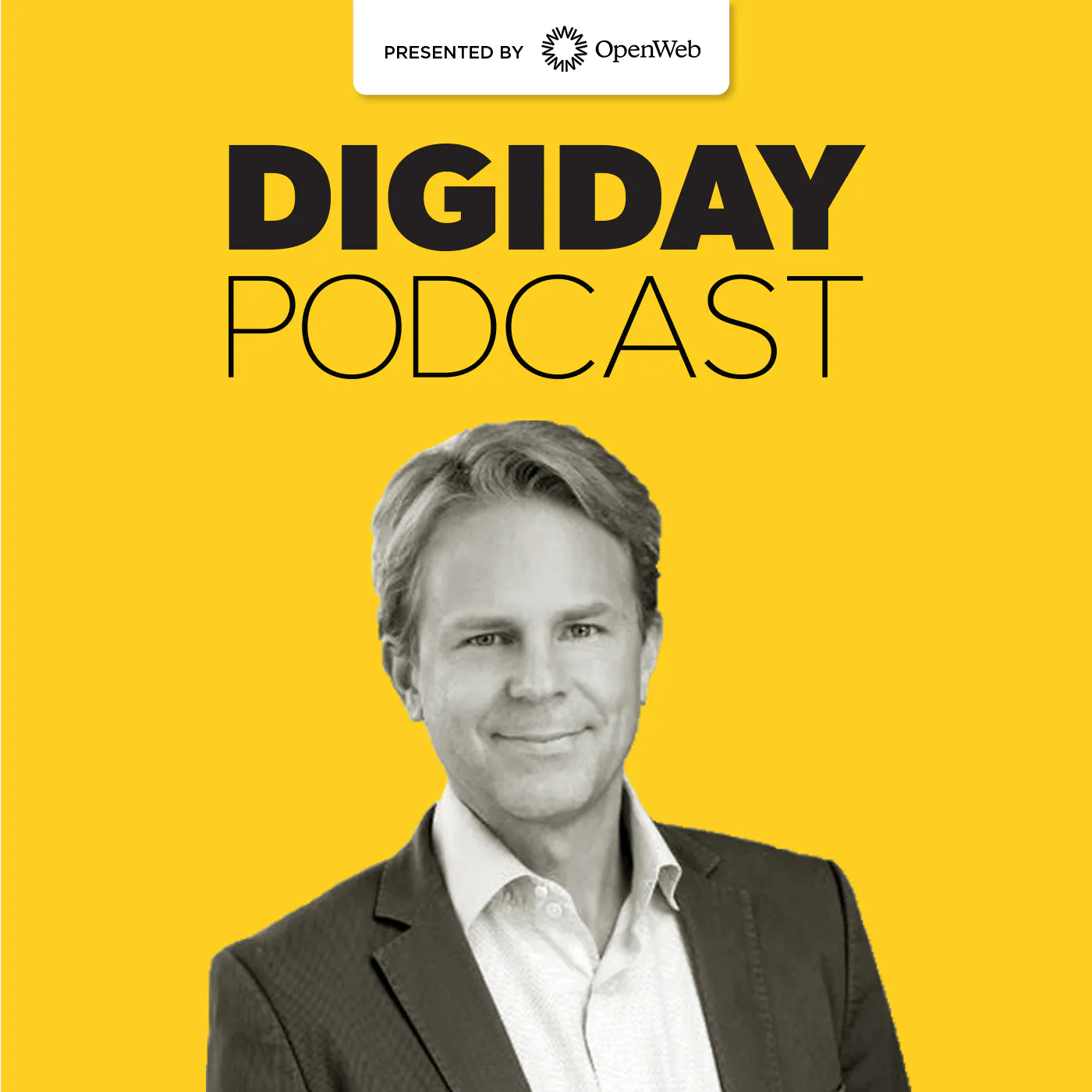
'Significant growth': Bloomberg Media Group CEO Justin Smith on the accelerated shift to subscriptions
Subscriptions are gaining ground as a major source of revenue for Bloomberg. "We're seeing significant, significant growth and gains," Bloomberg Media Group CEO Justin Smith said at the Digiday Publishing Summit. And that growth in the first and second quarter has proven sticky, according to Smith. "Some of the churn rates are consistent with previous churn rates. This is not just a short-term thing," he said. His forecast is that subscriptions will make up a rising and significant part of Bloomberg's revenue, especially as income from advertising diminishes. Bloomberg started its subscription business in May 2018, and Smith credits its "first phase" growth to the long brand-building that preceded it. "The introduction of our paywall benefited from 25-30 years of Bloomberg LP growing out one of the largest newsrooms in the world, creating amazing content," Smith said. His outlook for future revenue also lies in live events, and he's confident that the events business "will come back very, very strongly" once it's safe to convene in big groups again. "There's a big opportunity to capture more market share as we go through this lost year in events -- to come back with a much more aggressive slate of event programming and also a whole new range of opportunities tied to virtual events, which will become much more of a complement to the live event experience."