The Digiday Podcast
513 episodes — Page 4 of 11
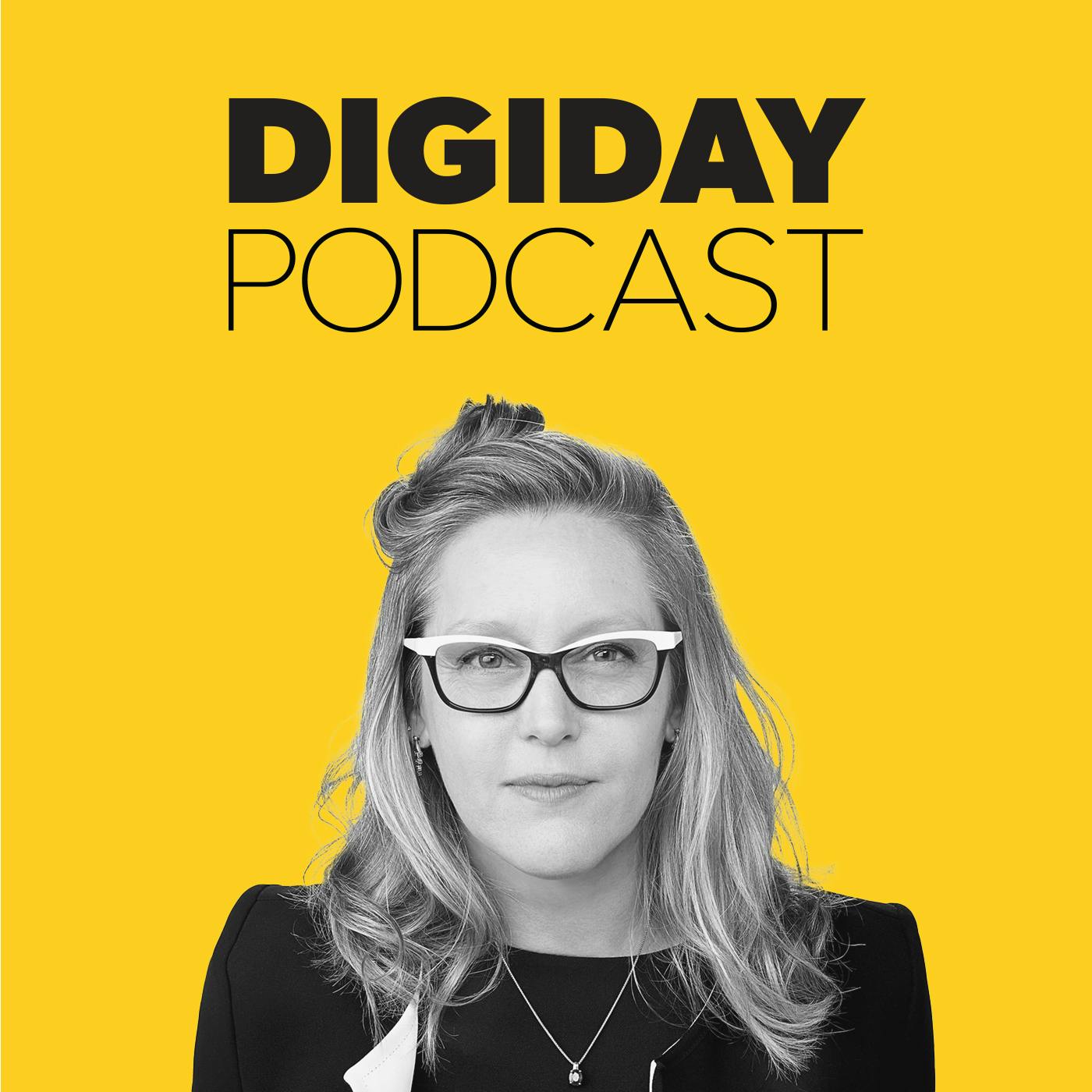
Bloomberg Media’s Christine Cook on strengthening advertiser relationships in 2024
Bloomberg Media made some changes to its sales operations last year in an effort to stay on top of the tumultuous ad market, including hiring Christine Cook as its new global chief revenue officer. Under Cook’s leadership, the events business hired a new head of event sales to put more intentional focus on that revenue stream, a client council was created to produce a more effective feedback loop from advertisers and more original video content turned into an opportunity to sell new audiences. Coming up on her one year anniversary at Bloomberg Media, Cook is hopeful that the changes that were made in 2023 will carry the media brand through what remains an unpredictable time in the ad market. “I’m a little weary … about the volatility. Maybe I’m past worry, I just maybe I’m just expecting it now,” Cook said on the latest episode of the Digiday Podcast. “[But] we’re geared and aligned to be prepared if that carries on. I feel really good about what we’re doing. Don’t take any client for granted. Be very thoughtful and listen. Bring more to bear.”
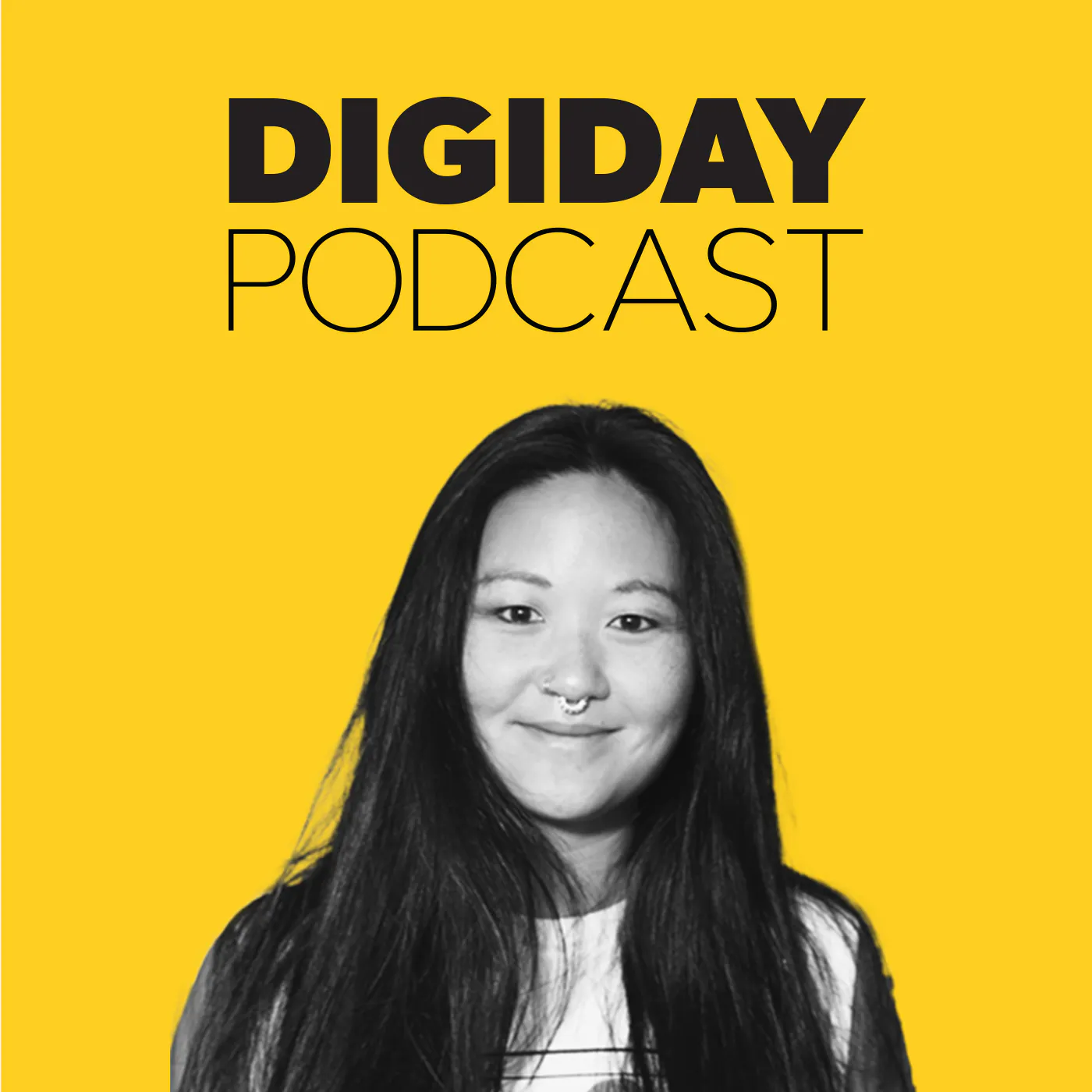
Duolingo's head of global social strategy, Katherine Chan, talks about making unhinged content work and learning from mistakes
Social media is in its so-called unhinged era, where social media managers are breaking the digital fourth wall and speaking the language of the internet from branded accounts. At the helm of the unhinged social media movement is a big green owl, Duo, brand mascot for the language learning app Duolingo. Duo has made a name for itself on TikTok with funny skits as the social media team behind the owl works to humanize the brand. But sometimes, like Icarus, Duo sometimes found itself flying too close to the sun. Last year, the brand came under fire for a comment on a TikTok about Johnny Depp and Amber Heard’s defamation trial. It’s been a lesson in toeing the line, learning what works and what doesn’t. Experimentation may be the cornerstone of Duolingo’s social media strategy, but Duo’s unhinged personality is here to stay for now with the company planning to explore other character personalities from the Duolingo universe in the future, said Katherine Chan, head of global social and influencer strategy at Duolingo. “We have a running rule that we have no rules,” Chan said on the most recent episode of the Digiday Podcast. “We basically have a set of guardrails in terms of absolute no's for the brand. But outside of that, there’s a lot of freedom and empowerment to try to draw the shortest line from ideation to post.”
‘More volatile now’: Digiday editors share top takeaways from 2023
This year was another one for the advertising and media history books, but not for the ways that marketers and media execs hoped for at the start of 2023. Brands’ advertising budgets never quite found their footing and the competition for ad revenue only got steeper. On top of that, the platforms are no longer reliable places to drive traffic or revenue but competing with their scale is a losing game. Plus generative AI is quickly finding its way into virtually every facet of the industry — for worse or better. In this final episode of the year of the Digiday Podcast, senior marketing editor Kristina Monllos and senior media editor Tim Peterson join co-hosts Kimeko McCoy and Kayleigh Barber to discuss some of the top trends from the past year and which challenges and opportunities are expected to continue in 2024.

Digiday’s History of Ad Tech: Episode 4 with Ana Milicevic
bonusThe final episode of Digiday’s History of ad tech discusses how the digital media industry has moved faster than those charged to keep it in check, with Ana Milicevic of Sparrow Advisers sharing her insights. In this episode, she discusses how the blurred lines between data management platforms, customer data platforms, and now, data clean rooms have only served to confuse matters. Now that legislation such as GDPR and CPRA have come into force, privacy is a top-line matter. Digiday’s History of Ad Tech charts its development. In this episode, she discusses: How data management and ad tech started to blur How the creeping tide of privacy legislation influenced investment in ad tech Big Tech’s role in the future of the space

Justin Smith explains how Semafor achieved profitable months in its first full year
Semafor is about to close the book on its first full calendar year, having launched in October 2022 as a media and events company. And despite launching during a tumultuous time for any media organization, Semafor’s co-founder and CEO Justin Smith said that his team had profitable months this fall, even coming close to breaking even in the fourth quarter of 2023. This accomplishment was made possible thanks, in part, to a combination of designating events as a core segment of the business as well as keeping the team as lean as possible for as long as possible, Smith said on the latest episode of the Digiday Podcast. And in the coming year, a continued focus on events, expanding the brand to additional international markets and investing in the website are all central to Semafor’s second year growth strategy.

Digiday’s History of Ad Tech: Episode 3 with Joanna O'Connell
bonusJoanna O’Connell is one of the most recognizable names in ad tech, a fame she built over the course of three decades as an industry analyst, and marketer, among other roles. O’Connell is now evp of innovation at R3. In this episode of Digiday’s Oral History of Ad Tech, she speaks with Seb Joseph about her role in helping to build one of the media industry’s first agency trading desks at Publicis Groupe during her role at Razorfish in the mid-to-late 2000s. In this discussion, she covers The desire to illuminate the black box of programmatic advertising Holding companies’ desire to use ad tech as a means of carving out new revenue in austere times How the ‘agency-friendly’ model of ad tech prevailed In the coming weeks, Digiday’s History of Ad Tech, produced by Digiday Media’s audio producer Sara Patterson, lifts the lid on some of the key undercurrents in ad tech over the last 20 years with Seb Joseph, senior news editor, and Ronan Shields, senior reporter, advertising technology, in conversation with some of the key players during that time.

Airbnb’s global head of marketing Hiroki Asai talks returning to big, bold campaigns and owning the brand narrative
In the wake of measurement woes and data privacy initiatives muddying digital targeting capabilities, a number of companies have pivoted to become less reliant on targeting customers via third-party cookies to generate quick sales via performance marketing. Instead, they've become more focused on boosting brand awareness to re-familiarize customers with their brand. Airbnb is one of those companies that has made that pivot, moving up the marketing funnel to more brand awareness tactics to bring new customers to Airbnb, said Hiroki Asai, global head of marketing at Airbnb. Notably, the company has recently been grappling with local government efforts to squash short term rentals and consumer backlash over increased pricing. In the midst of those things, the company is looking to carve out its own share of voice and better own its brand narrative. “We have a lot of messages that we want to put out there that are our messages,” Asai said on the most recent episode of the Digiday Podcast. “When you’re over reliant on those performance channels, you end up either reacting to other people’s messages, or in that vacuum, other people will just create stories and messages about you that you can't control."
Digiday’s History of Ad Tech: Episode 2 with Ari Paparo
bonusThere are few better placed to critique and narrate the history of the digital media landscape, never mind the sub-sector of ad tech, than Ari Paparo. The serial entrepreneur and ‘first influencer of ad tech’ – sorry @AdtechGod – now helps to demystify and humanize the often dry milieu of digital media PR in his missives over at Marketecture. This week, he speaks with Digiday reporter Ronan Shields in the second installment of Digiday’s Oral History Of Ad Tech in a conversation that focuses on the state of the industry during the opening decade of the 21st Century. His insights include: The hustle that was ad tech in the 1990s Paparo’s input to DoubleClick’s turnaround, and eventual sale to Google The incredible business model of ad networks in the 2000s How the rise of the ad exchange became the fall of the ad network And just who invented what in ad tech In the coming weeks, Digiday’s History of Ad Tech, produced by Digiday Media’s audio producer Sara Patterson, lifts the lid on some of the key undercurrents in ad tech over the last 20 years with Seb Joseph, senior news editor, and Ronan Shields, senior reporter, advertising technology, in conversation with some of the key players during that time.

Spill co-founder Alphonzo Terrell on attracting advertisers to marginalized social communities
Big advertisers are seemingly ready to abandon X (formerly Twitter) for good this time thanks to owner Elon Musk’s latest antics and an uptick in anti-semitic posts on the platform. In X’s absence, advertisers may once again find themselves looking for the social media’s next town square after failing to be wooed by X alternatives like Mastodon and Bluesky earlier this year. Enter Spill. It’s been just over a year since the iOS social media platform with a ‘meme-forward’ aesthetic launched with former Twitter employees Alphonzo "Phonz" Terrell and DeVaris Brown at the helm. It’s not that the duo are trying to re-create Twitter. In fact, Terrell says Spill is an online safe space for LGBTQIA+, POC and other historically marginalized communities. The two have spent the last year on product developments for users as well offerings for advertisers in hopes to mark Spill’s territory in a rapidly changing social media landscape. “There's been some very organic integrations and opportunities for brands to plug in and put some shine on what the [Spill] community is already doing,” Terrell said on the most recent episode of the Digiday Podcast, “and also create some new opportunities to just have really rich, fun conversations.”
Digiday’s History of Ad Tech: Episode 1 with Brian O’Kelley
bonusOne of the Godfathers of ad tech on creating an industry, competing with Big Tech, and exactly why he didn’t join AT&T, plus much more Few would argue Brian O’Kelley’s right to claim the title of being one of the Godfathers of ad tech, for what is still one of the nascent spaces of the media industry, his tenure in the sector dates back three decades. During this time, O’Kelley has helped build two of the most notable independent ad tech companies that later sold to the biggest names in telecoms and internet history, and now at the helm of Scope3, he aims to decarbonize digital media. However, in the first episode of Digiday’s four-part history of ad tech podcast, hear his first-hand, candid account of some of the most crucial industry developments. These include how O’Kelley: – helped build the first ad exchange at Right Media, only to feel the burn after its $680 million sale to Yahoo, and then later built one ad tech’s most iconic companies – brushed shoulders with (as well as ruffled the feathers of) Madison Avenue titans in AppNexus’ toe-to-toe battle with Google in the ad tech power game – walked away from AT&T, after its $1.6 billion purchase of his company, over concerns on the telco’s strategic misalignment In the coming weeks, Digiday’s History of Ad Tech, produced by Digiday Media’s audio producer Sara Patterson, lifts the lid on some of the key undercurrents in ad tech over the last 20 years with Seb Joseph and Ronan Shields in conversation with some of the key players during that time. Subscribe to the WorkLife podcast now on Apple Podcasts, or wherever you get your podcasts.

Google’s 2024 cookie deprecation deadline is still on, says vp of global advertising Dan Taylor
Between the Department of Justice’s antitrust suit against Google and the impending self-imposed deadline for removing third-party cookies from its Chrome browser, there is a lot on the technology megacorp’s plate. But Dan Taylor, the company’s vp of global advertising, is confident that nothing will change the timeline that Google has set for cookie depreciation: “Cookies will be phased out completely from Chrome at the end of 2024.” On the latest episode of the Digiday Podcast, Taylor discusses how he and his team are continuing to get the third-party cookie alternative solutions off the ground and testing their efficacy ahead of the end of year 2024 deadline. He also speaks on why he’s confident that the ad business will remain intact despite the DOJ lawsuit addressing its dominance in ad tech infrastructure. “We disagree with the DOJ’s claims. We have no intention of selling or divesting this business. In fact, we’re focused more than ever on helping our publisher partners and our advertiser partners deliver great ROI and great monetization, especially in a time of economic and geopolitical and many other types of uncertainty that we’re all living in today,” said Taylor.

From AI voice cloning to personalized playlists, how SiriusXM Media’s Lizzie Widhelm is automating audio ad sales
The podcasting advertising industry looks a lot different today than it did even two years ago thanks to programmatic audio ads. While the bread and butter host-read ad format still packs a punch when it comes to driving listener engagement and conversions, those ads aren’t scalable, said Lizzie Widhelm, svp and head of ad innovation and B2B marketing at SiriusXM Media. And in 2023’s slow ad market, the ability to target large swaths of audiences based on their demographics and interests rather than a specific show is what helped SXM Media maintain positive revenue momentum in 2023. As of November, SXM Media has “already exceeded our [revenue] goal in podcasting,” said Widhelm. “We’re doing more revenue now – dramatically more – than last year. We have almost a 90% increase in programmatic revenue specific to podcasting … So it’s exciting to be where we are at today, but there is still road to go.” In the latest episode of the Digiday Podcast, Widhelm chats about the advantages of selling audio ads programmatically and what the next stages are for improving audience targeting capabilities in the medium, as well as how generative AI can be used to automate the programmatic audio ad sales process even further.

Thrive Market's CMO Amina Pasha credits marketing on TikTok for membership surge
At this point, TikTok has gone from an experimental digital channel to a must-have in most marketing strategies. Ad spend on TikTok is expected to grow in the coming year — as much as 25% over this year — as the short-form video app looks to bridge the gap between its cultural impact and ad revenue. While TikTok has become a staple within the culture of social media, agencies and brands are still figuring out what to make of the platform’s marketing and advertising potential. Spend on the platform has yet to reach Meta or Google levels. But one of the brands making a bet on TikTok and shelling out ad dollars there is Thrive Market, a membership-based online grocer. Doubling down on the last two years of organic growth, Thrive Market scaled its TikTok spend across influencer marketing and paid ad units by more than 250% this year versus last year, according to Amina Pasha, Thrive Market's CMO. (She did not disclose further specifics.) In the latest episode of the Digiday Podcast, Pasha talks about how TikTok spurred membership growth for the grocer, plans for ad spend on the platform next year and testing into connected television.
Why Chobani's new CMO Thomas Ranese is taking a tech-driven approach to CPG marketing
Augmented and virtual reality are well on their way to becoming a mainstream marketing tactic as technology democratizes the space, making it a QR code away for brands and consumers alike. At this point, the industry has gone well beyond flower crown and dog-eared Snapchat filters with Meta, Apple and other tech giants rolling out wearable augmented and virtual reality headsets. (Find a look into Snapchat’s recent AR efforts — and why they’re still a work in progress as far as marketers are concerned — here.) Now, Chobani is looking to get in on the growth, hoping to break through in a crowded digital landscape and get in front of a younger audience. At the helm of these efforts is Chobani’s new CMO, Thomas Ranese, who brings with him a background in tech, having previously served in marketing leadership roles at Uber and Google. In the latest episode of the Digiday Podcast, Ranese talks through his new role, plans to drive product awareness beyond the yogurt section of the grocery store and balancing brand purpose with profits.

Joy Robins on how she's steering The New York Times' ad business into the wave of change
The New York Times tapped Joy Robins as its global chief advertising officer this past spring and six months later, Robins is leading her team through a number of industry-wide changes. Previously chief revenue officer of the Washington Post, Robins is not unfamiliar with the challenges that news publications are facing when it comes to brand safety concerns and monetizing news coverage. And at the Times, she and her team are working to incorporate attention metrics as KPIs for client campaigns and pitching new clients thoughtfully in order to stay on top of the volatile ad market. What’s more, this month, Insider reported that the Times reversed its decision to remove open programmatic advertising from its app earlier this year, which Robins said was due to the fact that audiences say those ads were not disruptive after all. In the latest episode of the Digiday Podcast, Robins chats about how she’s leading her team to incorporate new attention metrics and how reopening the open programmatic revenue valve can only stand to benefit the Times’ business.

Why Bleacher Report’s Bennett Spector is going all-in on live video
Sports media was built on live coverage of games, but younger generations are increasingly less interested in watching sporting events as they happen. That doesn’t mean that the live video format isn’t still appealing to this demographic, though. At least that’s what Bleacher Report’s general manager, Bennett Spector, is finding. Spector’s team spent this past year investing heavily in building a roster of live video content creators ranging from sports enthusiasts to athletes, as well as a wide slate of livestream programming that includes creators’ musings on upcoming trades and their thoughts on teams’ performances for the season. The monetary appeal is that live video still commands an audience and, therefore, sponsors, Spector argued. But the fact that Bleacher Report’s livestreams are filmed and managed by the creators themselves also saves a lot of money from a production standpoint. “You can make more money from [longer form video] advertising, but we were challenged with production budgets, because to make video on the internet, you still have to spend a lot of money,” Spector said on the latest episode of the Digiday Podcast. And to make live video a lower production lift, B/R built an in-house streaming tech stack to further eliminate the need for control rooms and technical operations common in broadcast productions. Now that the technology is in place and the revenue potential is there, Spector talks about how he and his team are actively looking to grow the number of creators in B/R’s network.

IPG's Channing Martin on stalled DE&I efforts and why conversations must continue
The industry’s stalled DE&I progress has been a point of critique. Despite the promises, media companies are still mostly hiring white people as of this year. In 2022, 90% of agency leaders identified as white, up from 73% in 2021, according to the 4A’s 2023 Diversity in Agencies Survey Report. Meanwhile, DE&I positions are drying up after a surge in hiring, with those positions facing the brunt of budget cuts in times of economic crisis, according to the Society for Human Resource Management. In response, DE&I execs in the ad industry say it's a work in progress. The year 2020 and the murder of George Floyd were inflection points for marketers, advertisers and the industry at large. But with no set way to measure DE&I success and no alignment on how to tackle challenges within the space, lasting change is easier said than done, according to Channing Martin, IPG's global chief diversity and social impact officer. “A lot of people knew, but there are centuries of systemic racism, exclusion, prejudice that is built into every system that we live and operate in in this country,” Martin said on this episode of the Digiday Podcast. “Part of the problem is that we’re focused on trying to solve for everything.”
Introducing The Return Season Two
Digiday Media and WorkLife is proud to present season two of The Return, a podcast about what it’s like for Gen Z to enter the workforce for the first time in a post-pandemic world. In season one, The Return followed an Atlanta-based advertising agency as the company returned to the office after a two-year pandemic hiatus. There were clear challenges among this population of workers who knew what a “normal” office used to look like. But what about a generation that is entering the workforce post-pandemic and has nothing to compare it to? That’s what we uncover across eight episodes in season two of The Return. We see headlines repeatedly accusing this generation of being lazy, unmotivated, quiet quitters. But what's the real story behind this generation's attitude about work? In season two of The Return, we speak with Gen Zers across the country to lift the lid on what motivates and inspires this young generation of workers, and how they’re not as work-shy as they’re often depicted. We also speak with seasoned workplace experts who can put the changing expectations of these young professionals into context. We dive into why values are so important to Gen Zers, whether or not they are loyal to their employers, how they use TikTok for career advice, what it means to be a young professional who is a boss to older workers, and so much more. Season two of The Return is hosted by Cloey Callahan, a Gen Zer and senior reporter at Digiday Media’s WorkLife, and produced by Digiday Media's audio producer Sara Patterson. Subscribe to the WorkLife podcast now on Apple Podcasts – or wherever you get your podcasts – to hear the first episode on Wednesday, Oct. 18.

Martin Pagh Ludvigsen, Goodby, Silverstein & Partners' director of creative technology, on the 'philosophy' of the fediverse
Today’s social media landscape is an increasingly fragmented one, where legacy platforms are faltering, giving way to challengers. Within that landscape, social media advertisers and professionals are tasked with experimenting and potentially building audiences as they go. Enter the fediverse. The fediverse is best described as a group of social media networks that are independent but still able to communicate with one another. Theoretically, brands wouldn’t be under the thumb of today’s monolithic social media platforms, and could instead have more control over their communities. Back in July, Meta’s Threads announced a fediverse integration, potentially bridging the gap between advertisers and the fediverse. While advertisers are still scratching the surface of the next iteration of social media, Martin Pagh Ludvigsen, director of creative technology and AI at Goodby, Silverstein and Partners is ready to pitch the innovation to clients, hopeful for innovation in the space. “I’d love to conduct some experiments in the fediverse with some of the brands that we have in house,” he said. “But in order [for clients] to give us permission to do that, they need to find out what the benefits could be for them.”
The Digiday Podcast welcomes Kimeko McCoy as its new co-host
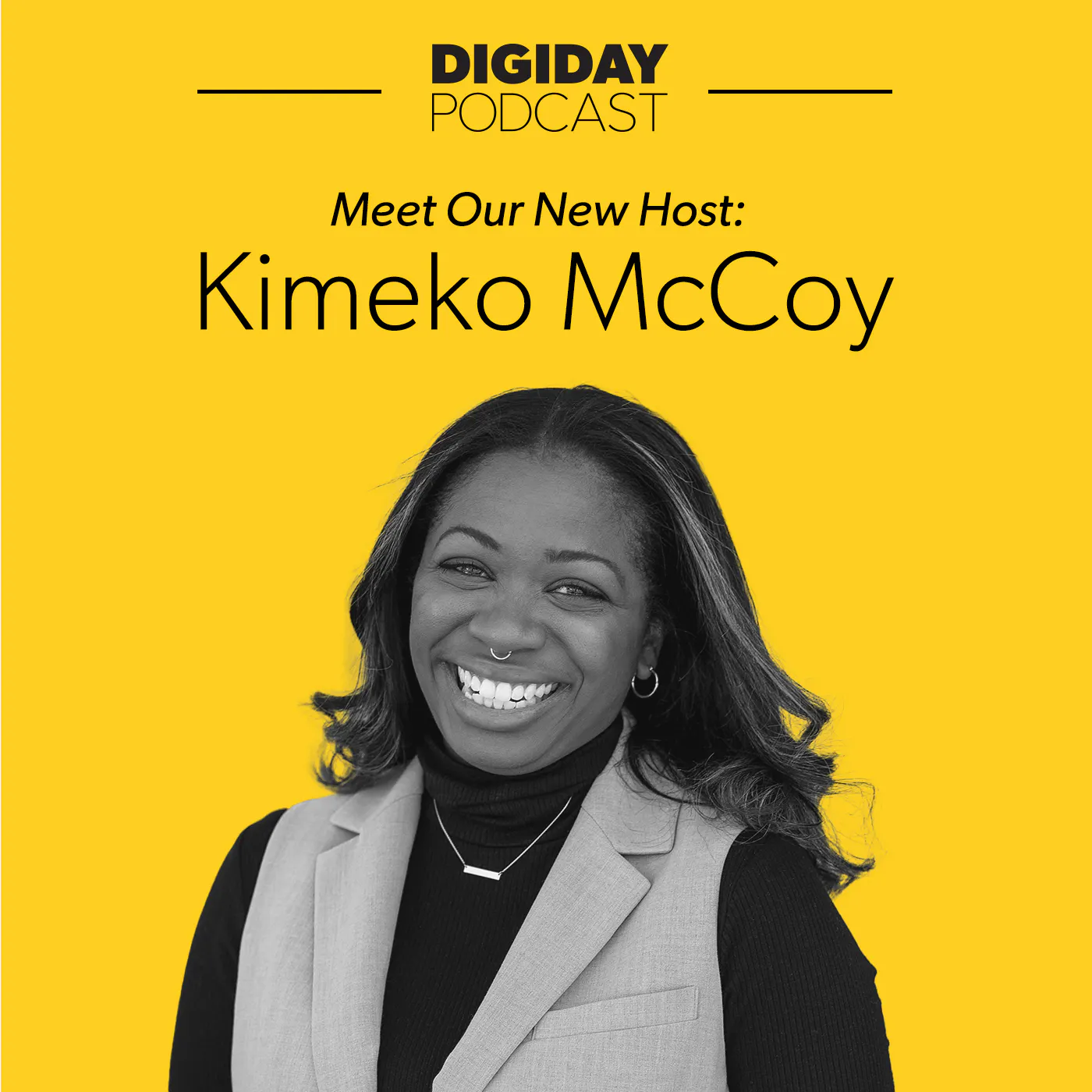
The autumn season is ushering in some change to the Digiday Podcast. As of this week, Digiday’s senior media editor Tim Peterson will step down from his role as co-host of the podcast after nearly three years at the helm. Kimeko McCoy, Digiday’s senior marketing reporter, will succeed Peterson and serve as the new co-host of the Digiday Podcast alongside media editor Kayleigh Barber. With this change comes an expansion of coverage within the podcast. McCoy brings her expertise around how leading marketers and brands approach everything from social media platforms and influencer marketing to holistic media buying and digital marketing strategy. Listeners can expect to hear interviews with top CMOs, marketing strategists, platform execs and many other industry professionals to cover macro trends in digital ad dollars as well as learn about the professionals themselves. During this week’s episode, Peterson and Barber chat with McCoy about her reporting coverage area and what topics she’s eager to explore on the podcast. Early subjects she will cover in her episodes include the fediverse, fourth quarter marketing trends, the role of diversity, equity and inclusion in the ad industry and much more.
The Independent’s Blair Tapper & Thomson Reuters’ Josef Najm are trying to break down advertisers’ news blocks
Advertisers’ aversion to the news seems to be a neverending issue for news publishers. Tales of advertisers’ overly broad keyword blocks continue to pop up, as they did during a live recording of the Digiday Podcast at the September 2023 Digiday Publishing Summit. “Another one we just saw was around the U.S. Open, actually, when Coco [Gauff] won and we had advertisers blocking [articles containing the word] ‘shot.’ But it’s a tennis shot, not a bullet shot,” said Blair Tapper svp for the U.S. at The Independent. Joining Tapper on stage was Josef Najm, director of programmatic and partnerships at Thomson Reuters, who shared a similar story. Climate change-related catastrophes have dominated recent news cycles, and advertisers have created new brand-safety segments to block their ads from running against news publishers’ climate change coverage. “It’s kind of the inverse of how advertisers are also talking about sustainability and their efforts with it. So there’s almost a little bit of hypocrisy that’s taking place there, where they’re trying to say, ‘Hey, we’re supporting something, but at the same time, we don’t want to be surrounded around the news that’s really affecting them,’” said Najm. This issue is likely to become a bigger problem over the next year ahead of the U.S. presidential election. To get ahead of it, Tapper and Najm are trying to have more conversations with advertisers and agencies about their brand-safety efforts, such as ensuring that their keyword blocklists are updated and that ad buyers are acknowledging the nuances between news cycles and brand safety concerns. “To sort of go back to just saying, ‘Block all this, block all that’ — it’s really sort of rudimentary when so much else has evolved so quickly, and there’s been so much more development, and it seems like this bit has stalled,” said Tapper.
Hearst Magazines’ Lisa Howard says advertiser requests for 2024 are on the upswing
Plenty can change in a year, particularly in the publishing industry. A year after the media business slipped into a downturn, the upswing seems to have started, at least for Hearst Magazines. “We’re actually seeing more [requests for proposals from advertisers] for 2024 than we had seen at this time last year,” Hearst Magazines evp and global chief revenue officer Lisa Howard said on the latest Digiday Podcast episode. In another positive sign, the publisher is also seeing more interest in upper-funnel, brand awareness options for advertisers after a year-plus of brands prioritizing lower-funnel, performance-oriented tactics. “I am hearing from brands that they, in some cases, do feel like they over-rotated to that lower-funnel, more just juicing sales strategy because everybody was — we were all fearful of a recession,” said Howard. For its part, Hearst Magazines made a similar shift toward lower-funnel, performance-oriented sales. After Howard joined Hearst from The New York Times in October 2022, the publisher decided to cut back on “big, complex, long-lead content programs” in favor of a “maniacal focus ... on digital media that works and can work quickly for our advertisers,” she said. While Hearst has continued to sell those long-lead content campaigns, it has seen fewer requests from advertisers for those opportunities compared to standard ad buys with shorter lead and flight times. That’s not to say that Hearst Magazines is pulling the plug on the big content deals, such as a program sponsored by Cartier for Harper’s Bazaar that launched this month and plans for an upcoming franchise tied to Women’s Health and timed to next year’s Olympic Games. Those deals are “not our primary focus, but where the need calls for it, we’re building programs,” said Howard.

Georgia-Pacific’s Laura Knebusch breaks down CPG giant’s spending shift away from traditional TV
A few years ago, at least two-thirds of Georgia-Pacific’s ad dollars went to traditional TV. Now the channel accounts for less than 50% of the CPG giant’s spending. “That has been a pretty big shift out of linear TV into more digital channels over the last few years,” said Laura Knebusch, vp of marketing at the parent company of brands including Angel Soft, Brawny and Dixie, said on the latest Digiday Podcast. As Georgia-Pacific’s traditional TV spending has decreased, its investment in digital channels — specifically video, social and audio — has increased. And the marketer’s approach to those channels mimics TV with a digital twist. Video, social and audio “are three areas that we’ve continued to be able to deliver a broader reach but do it even in a more targeted way against our consumer target,” she said. That being said, Knebusch noted that Georgia-Pacific is still spending more money on traditional TV than on streaming specifically. One inhibitor to its brands’ spending more money on streaming is the fact that there are “still a lot of challenges when you look at cost and quality and making sure you can get the right reach and frequency,” she said.

Reuters' CRO discusses the role of political advertising and AI within the news organization
Several publisher CROs are optimistic that ad revenue is coming back in a positive way in the back half of 2023 and Reuters CRO Eric Danetz is no exception. Beyond rebounds in ad categories like finance, as well as growing strength in auto and travel, 2024 presidential election campaigns are starting to kick off and as a result, political advertising revenue is flooding back into the digital media ad market. Wanting to take advantage of that revenue influx but also needing to maintain an unbiased position as a news organization, Danetz said his team has to carefully consider where and how campaign ads are placed. On the latest episode of the Digiday Podcast, Dantez discusses how the ad market is performing within his large news media organization and burgeoning technology, like generative AI, can play a role both in the newsroom and on the business side of Reuters.

Digiday editors discuss the top trends from summer 2023
It was the summer of acronyms based on the major trends that Digiday reported on over the past four months: MFAs (made-for-advertising sites) became a pain point in programmatic advertising circles. Publishers and marketers started experimenting with generative AI technology and debating over its uses. The SAG-AFTRA (actors’ union) and WGA (writers’ union) went on strike. Many publishers started prioritizing ARPU (average revenue per user) in their subscription businesses. Altogether, those letters spelled a busy summer for publishers and marketers alike. On the latest episode of the Digiday Podcast, editors Kayleigh Barber and Tim Peterson recap the happenings from the summer and how those trends are likely going to impact the back half of 2023.

Ad agency Pereira O’Dell budgets for contingencies in clients' 2024 campaign strategies
Rather than relying on the continual quarter-by-quarter or even month-by-month sales cycle trends to guide their 2024 campaign strategies, the clients of ad agency Pereira O’Dell are already thinking ahead to 2024, almost six months ahead of time. But in order to accurately plan in an otherwise murky ad market, factoring contingency plans into their 2024 budgets will be a critical step, according to the agency’s president Natalie Nymark. Lately, her job has been centered around adding flexibility to clients’ long term campaign plans in order to keep those initiatives on track, even if the economy has other plans. “This is going to consume me for the next couple of months,” Nymark said on the most recent episode of the Digiday Podcast, adding that 2024 planning began as early as July this year.

Digitas North America’s Ariel Sims assesses the Threads and X era of the social ad market
For all the attention being paid to X (née Twitter) these days, Ariel Sims is keeping a closer eye on Meta’s Threads at the moment. Between the two text-based social platforms, the latter is the one that the svp and head of paid social at Digitas North America said she’s spending more time talking with clients about and thinking about. “We’re having more conversation around [Threads]. But because my remit is typically in paid [advertising and] there’s no paid advertising on Threads, it’s more of a POV around what are you seeing, what’s the usage looking like, how do we play in that space,” Sims said on the latest Digiday Podcast episode. Threads usage appears to have gone down significantly since its launch in early July. According to Sensor Tower, daily usage was down 82% in less than a month. Nonetheless, Sims sees Threads staying in the conversation for “at least the next six, eight months.” At which time Meta may finally introduce ads on Threads after playing coy on its ad plans with ad buyers so far. “All we know is that it’s not this year [when Meta will introduce ads to Threads]. That’s the only thing that we’ve heard,” Sims said.

Privacy expert Raashee Gupta Erry educated the FTC on advertising
In 2020, the U.S. Federal Trade Commission put out a call for advertising experts to advise the regulatory body on advertising and privacy. Raashee Gupta Erry, then a director at GroupM’s Essence, answered that call. Gupta Erry initially took an interest in the privacy side of the ad industry in 2018 when working with clients to prepare for Europe’s General Data Protection Regulation privacy law. Joining the FTC offered an opportunity for her to get a U.S. perspective on privacy regulation from the inside — and for the government regulator to get a peek under the hood of the ad industry from an insider whose experienced spanned brand side at Volkswagen and Samsung, agency side at Essence and Digitas and ad tech side at Neustar. “The FTC wanted to have somebody from the industry who understands all the sides of the ecosystem, who understands how the players operate, what are the sort of systems [and] processes [and] workflows. So it was an opportunity for me to help them, educate them and strengthen their work as well as learn about the privacy world,” Gupta Erry said on the latest Digiday Podcast episode. Gupta Erry’s initial task at the FTC was mapping out the mechanics of the advertising ecosystem. Eventually her remit broadened to involve her in the organization’s investigation and enforcement efforts that related to advertising and privacy. “[I] got to dig into some of the topics that we all in the industry grapple with, like [Google’s] Privacy Sandbox or [Apple’s anti-tracking feature] ATT, algorithmic harm, AI bias,” she said. Having left the FTC last fall, she is now back to working with advertising companies on their privacy practices through her consultancy Uplevel Digital. And given the flurry of privacy laws taking effect in the U.S. this year, there’s no shortage of work that companies need to do to keep in compliance, especially as enforcement efforts by regulators including the FTC ramp up. “We’re looking at 11 or 12 [state-level privacy laws] at this point. So as more of them come into place, there’s going to be more regulators, state regulators, looking at these companies,” said Gupta Erry.

How BDG is threading together communities on its social media platforms
A lot has changed in the social media ecosystem over the last couple of weeks: Meta launched its Twitter competitor, Threads, Twitter was rebranded to X and TikTok announced its new e-commerce endeavor designed to compete with Shein and Temu. Understanding how these changes impact creators on those platforms, like publishers, can help shed some light on what the larger media and marketing industries will face in the fallout of these shifts. Enter BDG’s Wesley Bonner, svp of social and audience development, who has overseen the social strategy for the publisher’s portfolio of brands, including Bustle, Inverse, Romper and W, for the past six years. The launch of a new major social media platform has kept his team busy the past few weeks, but has also represented a new opportunity to connect with audiences in a more conversational way. On the latest episode of the Digiday Podcast, Bonner talks about how his team is approaching posting on Threads to build engagement before monetizing, as well as how this new platform plays into the company’s larger strategy of creating original social media content both on set with celebrities and through its creator network.

How Wirecutter’s social strategy led to increased Prime Day affiliate revenue
This year’s Amazon Prime Day was a boon for many commerce publishers’ affiliate revenue streams. Take Wirecutter, for instance, which saw order revenue and overall earnings for Prime Day sales increase by “high double-digits” year over year, according to Leilani Han, executive director of commerce at The New York Times’s Wirecutter, on the latest episode of the Digiday Podcast. While Han declined to share exact growth rates or revenue figures, she did say that this surpassed expectations for the two-day shopping event that took place July 11-12. Growth this year can be partially credited to the quality of deals that were available during the sale. “We were actually able to be even pickier than we already are with what we were going to choose to feature because the pricing was really that great,” said Han. Publishers, like Wirecutter, also focused on audiences who come from platforms other than search. Han said these shoppers, coming from social media platforms and on-site traffic coming funneled through The New York Times’s website, were particularly impactful to increase pageviews of commerce content. In addition to this, Han’s team leaned into a content franchise called Odes, which is “a short love letter to Wirecutter picks that have been beloved over time,” she said. When featured on Instagram Stories, these product spotlights were also particularly impactful in driving both traffic and sales.

Ray Chao explains how Vox Media is building up a podcast subscription business
Two years after Vox Media entered the podcast subscription business through the Cafe Studios acquisition, the publisher has “tens of thousands of active paying podcast subscribers,” said Vox Media svp and gm of audio and digital video Ray Chao on the latest Digiday Podcast. “We acquired Cafe a little over two years ago, and we’ve learned a ton from just operating that business over the last two-plus years,” Chao said. Vox Media’s broader subscription business continues to grow as it adds more podcast subscription options. In June, the publisher introduced a subscription program for narrative crime podcast “Criminal Plus.” And it followed with a subscription-based tier for “Where Should We Begin? With Esther Perel.” Vox Media is prioritizing acquiring subscribers directly but has been exploring third-party subscriber acquisition sources. For example, “Where Should We Begin?” sells subscriptions through Apple Podcasts at $4.99 per month or $41.99 per year. Chao said that third-party subscription sellers like Apple provide a means of capturing “lower propensity subscribers,” i.e. people who may be unwilling to go through the full direct sign-up funnel. Looking ahead, Chao has an eye on how Vox Media may differentiate the subscriptions it offers directly from those offered through third parties as a way to incentivize subscribers to sign up directly, such as by offering access to email newsletters and events, but still have a compelling pitch to those lower propensity subscribers, such as by providing access to exclusive audio content that is also available to direct subscribers. Vox Media has already implemented the dual-subscription option with Cafe Studios’ podcasts. “An early learning for us is how do we work with both [subscriber acquisition] paths and maximize our consumer revenue business and engage more of our subscribers,” Chao said.

Emerson Collective’s Raffi Krikorian explains why he’s technically optimistic about AI’s societal implications
Raffi Krikorian would have a better than average read on the artificial intelligence landscape, including as it pertains to potential regulation. Not only is the Emerson Collective CTO also the CEO of conversational AI company SpeakEasy AI, but the former Twitter and Uber executive was also the former CTO of the Democratic National Committee. And even Krikorian is unsure whether the U.S. Congress will be able to institute any guardrails around the new technology. “We are still so far away from being able to understand the nuances. I think there’s only one person in the House of Representatives right now [Rep. Jay Obernolte] that has an advanced degree in artificial intelligence,” said Krikorian on the latest Digiday Podcast episode. Nonetheless, Krikorian leans toward optimism, not only in the potential for Congress to regulate AI but in the potential for AI overall. His recently launched podcast is called “Technically Optimistic” after all. The show debuted in late June with a five-part series centered on AI and the nuances of the subject that could prove helpful not only to members of Congress but to anyone trying to wrap their heads around the technology’s implications for society. “The world divides itself in two ways when it comes to AI these days. There is the world [of] ‘We’re going to live in a sci-fi future where everything is miraculous,’ and then there’s the doom and gloom. And I think there’s a lot of gray in the middle,” Krikorian said. “However, I think that, as people learn to understand the gray, we can get to a place where we all can be optimistic.”

What’s going on with the media and advertising industries at 2023’s midway point
If you’re feeling a little punch-drunk by all the economic downturn talk through the first six months of 2023 (and really, through the last six-plus months of 2022), you’re not alone. Digiday editors and Digiday Podcast co-hosts Kayleigh Barber and Tim Peterson are feeling it too. At the year’s midway mark, the pair compare notes on the state of the media and advertising industries. The discussion ranges from the decline in ad spending to the rise of generative AI, with the duo delving into how the ad sales cycle has changed and to what extent those changes are temporary or permanent.

How Salon, TVTropes and Snopes improved programmatic CPMs with traffic shaping
As the CRO of Salon.com, Justin Wohl is a self-proclaimed programmatic purist, meaning that when it comes to ad sales, the news publisher is almost entirely monetized through the open programmatic marketplace. After joining Salon in 2017, Wohl said that it was clear direct-sold advertising wasn’t performing and his team reconfigured to focus exclusively on the open marketplace. Two years later, Salon achieved profitability. Today, Wohl — who also serves as the CRO of TVTropes and Snopes — is using traffic shaping to maintain which ad inventory is being sold across each brand. n the latest episode of the Digiday Podcast, Wohl talks about why he’s willing to take a short-term gross revenue hit (of “a few percentage points”) to purify how his brands are sold in the programmatic open marketplace and ultimately improve the CPMs that his team can charge.
From Cannes: Why emissions need to be taken seriously today, not tomorrow
bonusThe final episode of the Digiday podcast at Cannes centered around a topic which everyone on the planet — but especially the digital marketing ecosystem — should be thinking and doing something on: sustainability and carbon emissions reduction. Recording once again from Spotify's podcast studio along the beach of the Croisette, Anne Coghlan, co-founder and COO of Scope3, explained not only all three "scopes" of emissions that companies must assess (and most have a handle on scopes 1 and 2), but outlined some steps that can be taken to reduce their scope 3 emissions. And those publishers that do not make serious attempts to mitigate their impact on the environment could see the business they hope to attract get reduced over time. The fact is, digital advertising is still reckoning with the fact that it's not only wasteful from an inventory point of view, but its massive need for energy to run itself is larger than many realized. And that will only get worse when — no longer if — generative AI gets adopted as quickly as Cannes conversations imply. "There is this need to be skeptical and ask the right questions here, and be thoughtful about making sure that sustainability is brought into businesses decisions," Coghlan told Digiday, "and it's not a separate column at the side that has a checkbox at the end." And that wraps up the Digiday at Cannes podcasts. If you missed any of the first four, they include conversations with S4 Capital's Sir Martin Sorrell/HP's Tara Agen, Zambezi's Jean Freeman and Grace Teng, PMG's George Popstefanov, and programmatic analyst Tom Triscari. Till next year.

From Cannes: Analyzing the ad-tech firms along Yacht Row with Tom Triscari
bonusOn a blustery day at Cannes Lions (which prevented us from recording outside), I walked along Yacht Row, well known for the plethora of ad-tech and mar-tech firms that rent the floating party boats moored in Jetée Albert Edouard just astride the Palais des Festivals. I was accompanied by Tom Triscari, an independent analyst who covers the programmatic and ad-tech scene -- and was once worked in the industry. Together we chose several companies for Triscari to assess in terms of potential and challenges, including IAS, DoubleVerify, Magnite, OpenX, Criteo, Cognitiv and Experian -- but the conversation naturally brought up some of the biggies that didn't rent yachts but still make their presence felt in the ad-tech market (such as The Trade Desk). "If you're on Yacht Row, you're there to close out some deals, because revenue is tight, there's consolidation, and you know, I think there's some concern out there around that top line growth," Triscari explained. "And therefore what what are you left with? You're left with maybe some cost cutting if you're going to make your number. So they're all out there trying to make deals for the investment they put into the yachts, which is not cheap." Tune in tomorrow for Digiday's final podcast from Cannes Lions. And if you missed them, please give a listen to Digiday's conversations with Sir Martin Sorrell and HP's Tara Agen, Zambezi's Jean Freeman and Grace Teng, and PMG's George Popstefanov.
From Cannes: How PMG plans to keep building its tech (with AI) to blend media and creative
bonusIn our third episode of the Digiday podcast here in the south of France, I chatted with George Popstefanov, founder and CEO of independent agency PMG, which is best known for beating out several holding-company agencies for Nike's North American media business. Popstefanov is proud that his agency started in 2010 with several engineers as part of its core — and tech and engineering remain a vital part of what PMG does for its clients. But he's also very interested and active in finding ways to put generative artificial intelligence to use simplifying functions and helping to iterate the thousands of versions of content and advertising that personalized communication promises. Recorded in Spotify's studio on the beach at Cannes Lions, here's my conversation with Popstefanov.
As Twitch backpedals rev share policy, UTA’s Damon Lau thinks creators are poised to win
The gaming industry has experienced its fair share of ups and downs over the last few years, much like the rest of the media space. But it seems that the chips have fallen in a way in which gaming creators, specifically those who stream their content on live platforms like Twitch, YouTube and Kick, are in a position of power. At least, that’s how Damon Lau, head of gaming and esports at United Talent Agency, is measuring the recent trajectory of the industry. With video streaming platforms like Twitch constantly changing the revenue share models for creators on the platform, competing platforms like YouTube, Kick and even TikTok are stepping up to try and win over creators’ exclusive streaming rights. On the latest episode of the Digiday podcast, Lau discusses how his clients are thinking about their partnerships with streaming platforms, as well as how advertisers are starting to go to creators themselves for native advertising deals, rather than going through the platforms with their ad dollars.
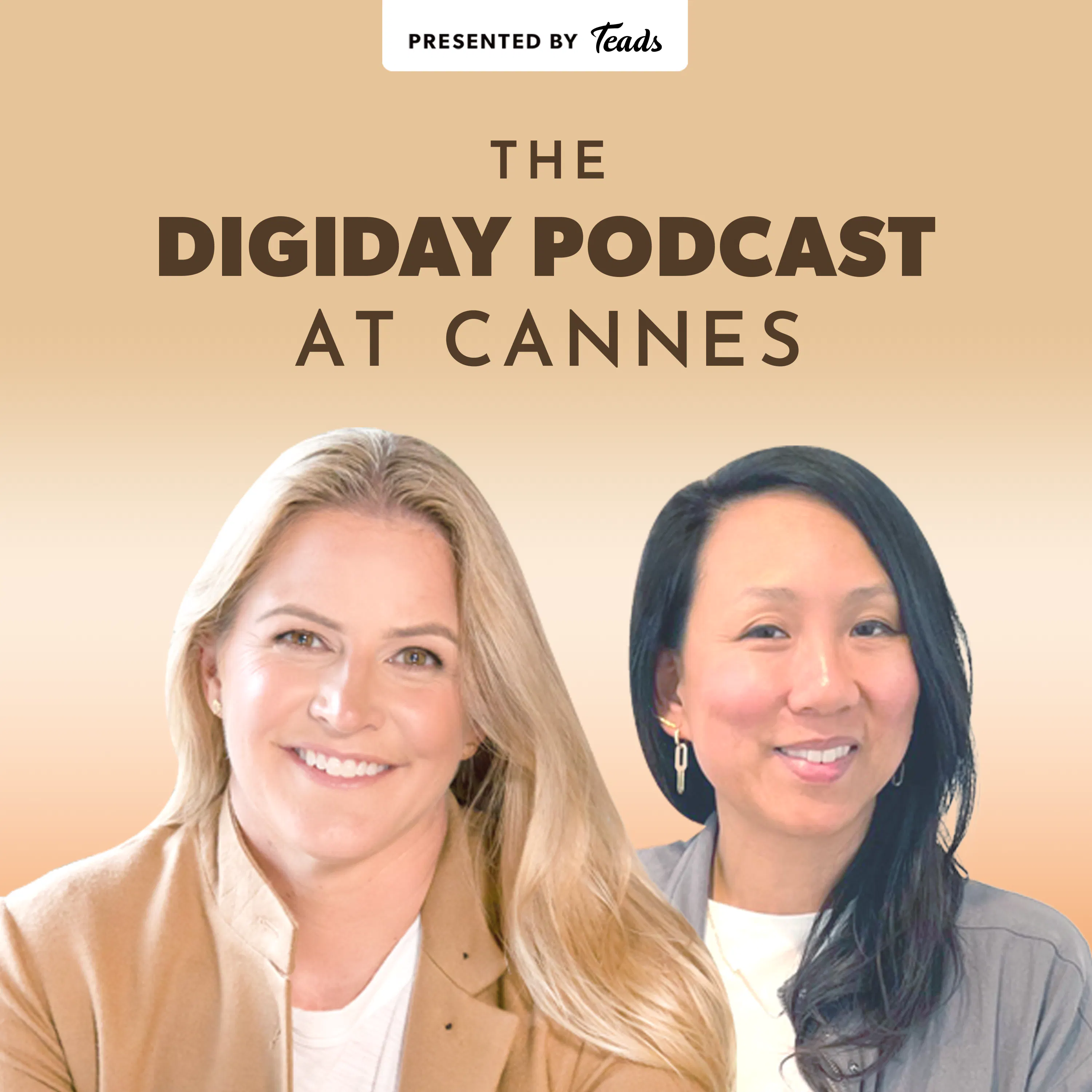
From Cannes: How to deal with the reaction to 'woke' culture
bonusDay two of the Digiday podcast at Cannes Lions, and our guests were Jean Freeman, CEO and principal of L.A.-based Zambezi agency, accompanied by Grace Teng, who runs Scale by Zambezi, the agency's media unit. In an era where rebundling is back on the table, creative shop Zambezi was a bit ahead of the curve by launching Scale by Zambezi back in 2018, and both Freeman and Teng shared their thoughts on how media innovation has made the creative stronger and more engaging, while creative inspired media to try new activations using data and analytics. On the hot topic of AI, Teng shared her experiences playing with Chat GPT for a health drink client. "We've actually just been playing around with it and had recommendations for clients recently, which have been pretty positively received," said Teng. Being a women-owned company hasn't come easily, but Freeman said that while she's in France, she's looking to expand on Own It, the group she co-founded to help raise awareness about the still-small number of women-run agencies. Make sure to tune in tomorrow for the next Digiday podcast at Cannes.
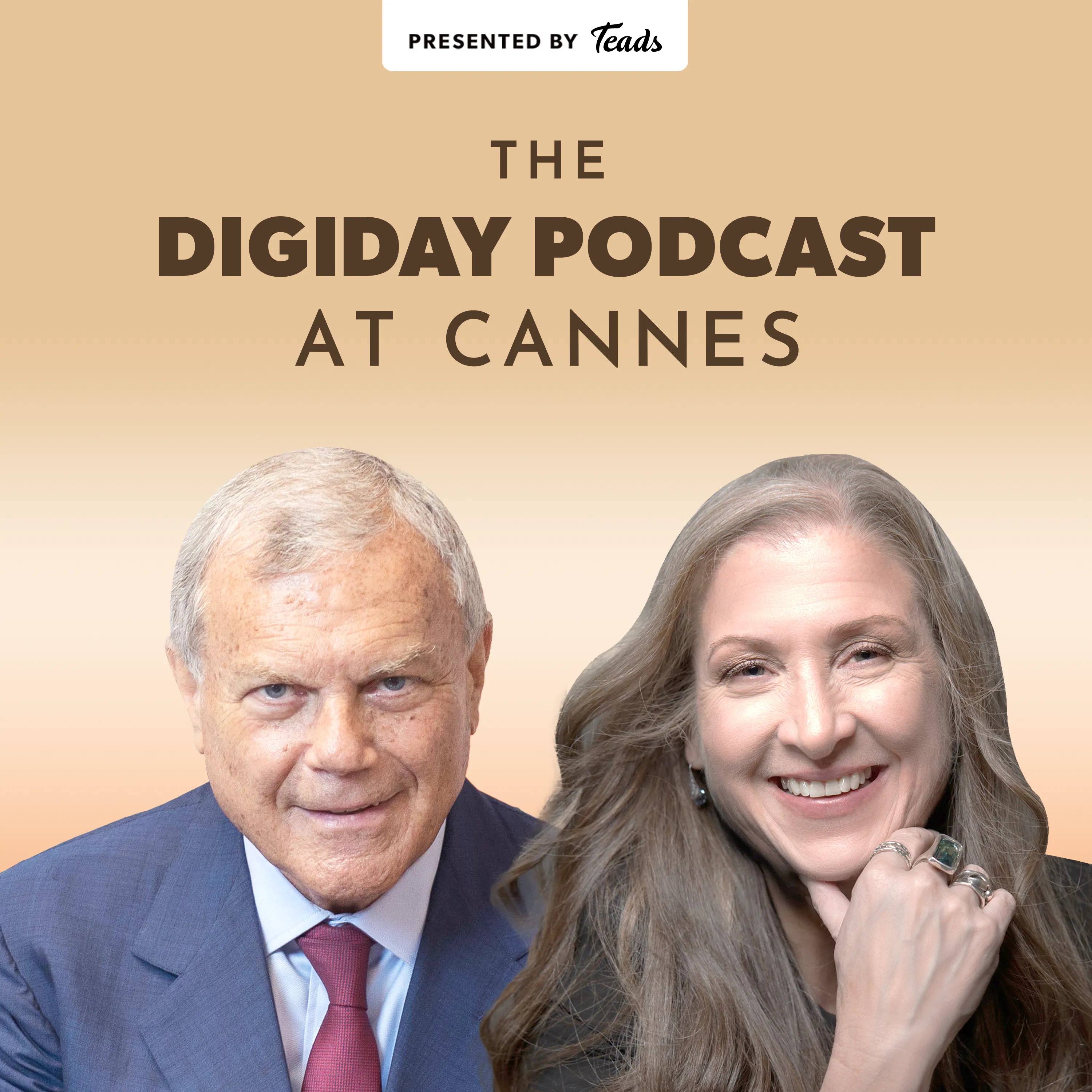
From Cannes: Sir Martin Sorrell and HP's Tara Agen on the power and influence of AI
bonusWelcome to The Digiday’s Podcast at Cannes. The first guests are Sir Martin Sorrell, founder and chairman of S4 Capital, parent of Media.Monks digital agency network, and Tara Agen, head of marketing operations and martech for HP, which is a Media.Monks client. In a wide-ranging conversation that touched on encouraging diverse hiring, economic prospects for the second half of the year and favorite Cannes restaurants, the topic that dominated was AI and its impact on the marketing ecosystem. In fact, Sorrell and Agen traded questions and insights with each other. Sorrell laid out five things he sees AI impacting, while Agen noted that AI already had been a part of HP’s processes for years.

Spotify’s Lee Brown talks up the platform’s latest advertiser pitch
Spotify will head to this year’s Cannes Lions festival with a new product to peddle to advertisers: Spotify Ad Analytics. The measurement tool aims to provide advertisers with reporting on how their ads are performing on Spotify as well as the impact they are having on advertisers’ businesses outside the platform through the corresponding introduction of the platform’s own tracking pixel. “It’s taking the incredible understanding that we have from [Spotify-acquired podcast measurement service] Podsights and extending it beyond just pods, bringing it to music, bringing it to all regions and enabling it for free. And giving that service to advertisers to let them have better understanding, better depth of insights against how their campaigns are performing not only on Spotify but anywhere their audio is running with the opportunity to introduce the Spotify pixel to help them in one dashboard track all of their audio and all of their analytics against audio in one place,” Spotify vp and global head of advertising business and platform Lee Brown said on the latest Digiday Podcast episode. The new measurement tool is part of Spotify’s plan to get its advertising business to eventually represent 20% of its overall revenue. Since the fourth quarter of 2021, its advertising business’s share has hovered between 10% and 14%. Growing its advertising business will also be an important component to growing its podcast business, which has seen growth but contributes a smaller percentage of ad revenue compared to ads airing against music content. Spotify’s podcasting organization underwent a round of layoffs earlier this month that included the cancelation of six original shows. During the annual advertising confab, Spotify will also show off the AI DJ that it unveiled earlier this year and that is designed to provide personalized recommendations for the platform’s users. “The way I like to describe it is it’s like the voice of our algorithm,” said Brown. Spotify has yet to apply generative AI technology to its advertising business, but Spotify head of podcast innovation and monetization Bill Simmons recently teased that the company is developing an AI-generated ad product. Asked about Spotify’s AI-based ad plans, Brown said, “We’re still in the early stages of developing out the long-term strategy. I think we’re testing across several different vectors within that space, whether it’s automating translation, automating scriptwriting, automating the creative process.”

Project X Entertainment’s Paul Neinstein breaks down the writers’ strike and its implications for Hollywood productions
The TV and movie industry is once again on the verge of a production pause, at least for scripted projects. The Writers Guild of America’s ongoing strike has put the brakes on the pre-production process, and while the Directors Guild of America reached an agreement with film and TV studios on June 4 to avert a strike, the Screen Actors Guild could still strike and bring about a work stoppage come July 1. To break down the issues at hand and the strike’s (and potentially strikes’) implications for the industry, Project X Entertainment co-CEO Paul Neinstein joined the Digiday Podcast. [Editor’s note: This interview was recorded on May 31, before the DGA announced its agreement.] While not a member of the organizations on either side of the negotiating table, he laid out what issues are on that table, which can be distilled to writers being in a position where they are working more for less or limited money, as in the case of streaming services curbing the residual payments that writers can receive for the distribution of shows and movies. “One of the big categories is the residuals issue. This affects both film and TV writers and really is related to streamers more than the more traditional sort of avenues for release of films and TV series,” Neinstein said. Meanwhile, the strike and potential work stoppage is already affecting the broader film and TV industry. For example, Project X Entertainment — a production company whose credits include Netflix’s “The Night Agent” and the recent revival of the “Scream” film franchise — has already had to make adjustments. “We’re a small, independent film-and-TV company. We live and die on making stuff. And fortunately we had something [in production before the writers’ strike started], but we have three other projects that were lined up to start between August and September that are now uncertain,” Neinstein said.

How chef influencer Tue Nguyen works with the BuzzFeed Creator Network
Content creator, chef and soon-to-be restaurateur Tue Nguyen (who goes by @TwayDaBae on her social media accounts) started working with BuzzFeed as the host of its Tasty show, "Making it Big," in 2022. After filming two seasons of the show, and recording monthly videos for the cooking brand's channels as part of her role within the BuzzFeed Creator Network, Nguyen is now developing a new show with Tasty that will better showcase who she is as a content creator. In the past year, Nguyen has signed a cookbook deal, started the process of opening a fine dining restaurant in Los Angeles and both maintained and grew her owned-and-operated channels, all in addition to her partnership with BuzzFeed. BuzzFeed's CEO Jonah Peretti has stated that the company's path to growth will be largely dependent on its work with content creators like Nguyen, but Nguyen said during the latest episode of the Digiday Podcast that she has grown a lot as an individual creator because of what she learned while working with the digital media company.

How the digital ad industry is creating standards for sustainability
Advertisers are beginning to see the financial benefits of reducing the carbon emissions created in their digital advertising businesses, but there is still a long way to go before sustainability becomes a shared point of focus across the media and marketing industries. Still, a lot of progress has been made by brands, agencies and publishers alike to at least begin measuring the scope of their carbon footprints. And the more carbon footprints are measured and discussed among digital advertising stakeholders, the easier it will be to create benchmarks and thresholds for the industry to ultimately reduce its impact on the environment. At least, that's how Kris Doerfler, head of innovation at CMI Media Group, sees it. On the latest episode of the Digiday Podcast, Doerfler discusses how far the digital advertising ecosystem has come thus far in the journey to becoming more sustainable, and what's still left to accomplish — from helping smaller publications and brands make changes they can't make on their own, to creating shared standards for carbon emissions measurement.
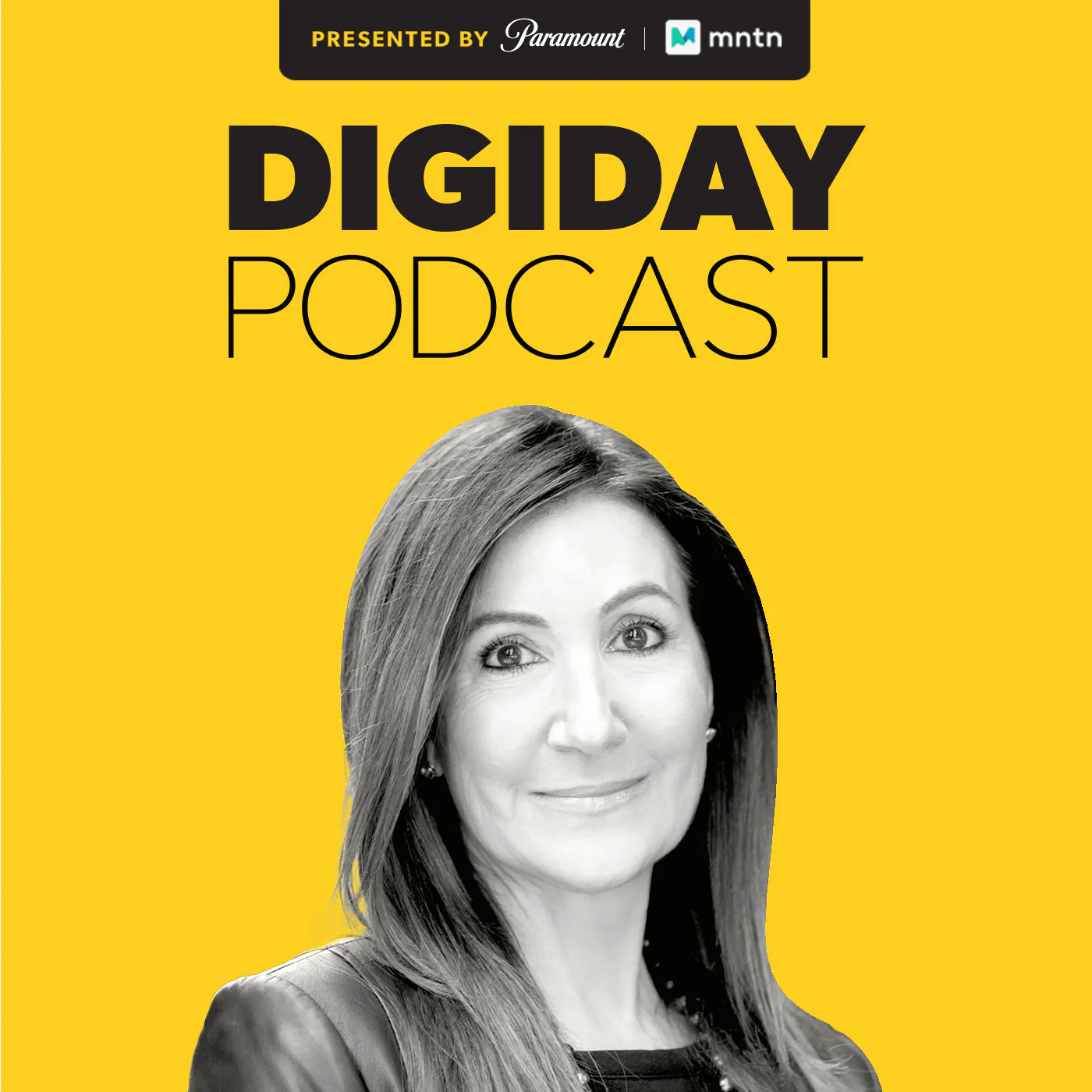
TelevisaUnivision’s Donna Speciale sees TV’s measurement shift shoring up underrepresentation issue
The TV advertising industry is in the midst of a measurement overhaul, and Donna Speciale sees signs that the measurement landscape will more accurately account for diverse audiences. “With the current dataset, which is panel[-based], there has been underrepresentation for minority audiences, and everyone has known it. It was hard to quantify, but everybody realized it,” Speciale, TelevisaUnivision’s president of U.S. sales and marketing, said on the latest Digiday Podcast episode. But as TV’s measurement system shifts from panel-based measurement to measurements based on data — such as viewership tracked against logged-in audiences and smart TV’s automatic content recognition technology — and TV network owners like TelevisaUnivision test the latter measurement systems, Speciale said she has been able to quantify how much Hispanic audiences have been historically undercounted. “We’ve had like six to seven months of data that we’ve been analyzing, and it’s astonishing how much the Hispanic audience was underrepresented,” said Speciale. She added, “Now we know that there’s numbers that are basically showing that [panel-based measurement] was really off. And I’m not talking 2%. I’m talking 20-30-35%, depending on how you look at it. That’s not a statistical error.” In light of that undercounting, Speciale said she feels an urgency to adopt measurement systems that offer an alternative to the traditional panel-based methodology. And so it has become a focal point in her and her team’s conversations with advertisers and agencies heading into this year’s annual upfront negotiations. “Just like every negotiation, we’re going one by one, holding company by holding company, talking to each of their investment leads and their research leads and talking about leaning into the big data set,” she said.

Content creator Sarah Palmyra says influencers want more affiliate options on short-form vertical video
For beauty influencer Sarah Palmyra, Instagram Reels has historically packed the most punch when it comes to driving sales of her favorite products. Last June, Palmyra posted an unsponsored, short-form vertical video about her love of Soft Service's Smoothing Solution product. It was originally posted on TikTok, and later republished on her Instagram Reels account, and according to the company, the product sold out due to an overwhelming number of customers coming to the site via her Instagram post. And yet, most of the brands Palmyra works with still want her to create ads for her TikTok channel, rather than Instagram. As of now, the platform where her brand deals run doesn't so much matter to her, given the fact that even viral videos, like the one about Soft Services, don't often translate to much in the way of affiliate commerce commissions. The inability to easily link to product pages within a short-form vertical video on TikTok or Reels tends to result in broken affiliate links and lost attribution, she explained. "[Commerce] is just a small piece of the pie for me," said Palmyra on the fourth and final episode of the Digiday Podcast's Creator Series. But it's a revenue stream she said she'd like to see grow. "It would allow all of us to take on less sponsorships, which I know our followers would love as well. I only sponsor products that I absolutely love, but still I know that my audience would love to see much less," she said. In this episode, Palmyra discusses how Instagram is able to accomplish much of what advertisers in the beauty industry are hoping to achieve with their social media campaigns, but still seem to prioritize TikTok. She also covers how earning money as a content creator in the short-form vertical video boom is still heavily dependent on said brand deals.

Why creator Jorge Soto prioritizes YouTube Shorts over TikTok
Like many short-form video creators, Jorge Soto got his start on TikTok. But a year and a half after uploading his first video to TikTok in March 2020, he gave YouTube’s TikTok clone a try. “In two months, I gained a million subscribers, which is crazy,” Soto said in the third episode of the Digiday Podcast’s four-part series on short-form vertical video creators. Initially, Soto would repurpose his TikTok videos — skits and what he calls “storytimes” — as YouTube Shorts. But eventually he shifted to producing first for YouTube Shorts and repurposing those videos for TikTok. “I felt like, me as a creator, I was better off on YouTube because I had the access to long-form and the algorithm is a little — I don’t want to say it’s easier on YouTube Shorts, but it just makes sense,” said Soto. For example, his storytime format, in which he recalls a story from his life, performs reliably well on YouTube, and he’s able to see if one storytime video does well, then a similar one should perform similarly. But as Soto implied, Shorts is not the be-all, end-all of his YouTube strategy. Shorts are a means of driving viewership for his long-form videos. Those long-form videos bring in the bulk of the money Soto makes on YouTube, whereas through the YouTube Shorts ad revenue-sharing program, Soto receives five to six cents per thousand views. “It’s already a privilege to make money off short-form, so anything I’ll just take, frankly. But the way that I see it is short-form brings the audience,” Soto said.

How creator Alyssa McKay made $1M from Snapchat mid-roll ads
If Snapchat wants to prove to creators that they can make serious money by posting videos on its short-form vertical video platform, it may not need much more evidence than Alyssa McKay. “I’m on this Snapchat mid-roll [ad] program, which I’ve been part of since last May. I’ve made over a million dollars from Snapchat mid-roll,” McKay said in the second episode of the Digiday Podcast’s four-part series on short-form vertical video creators. She added, “Snapchat changed my life entirely.” Last week Snap expanded that mid-roll program to more creators who can receive a share of revenue from ads running against their Snapchat Stories. TikTok and YouTube Shorts have similarly stood up ad revenue-sharing programs for short-form video creators in the past year, but neither platform has yet had much to show for how much money creators can make directly from their platforms. With 2 million followers and an average 2.5 billion monthly views on the platform, McKay is showing the story may be different on Snapchat. “I definitely make the most on Snapchat. There’s revenue streams of course from YouTube and the TikTok Creator Fund, but Snapchat definitely has been the lion’s share of my revenue this past year,” she said.

Why creator Kat Stickler isn't worried about a possible TikTok ban
In the possible scenario in which TikTok gets banned in the United States, TikTokers like Kat Stickler will need to rely on other platforms to maintain their followings and their brand partnerships. But Stickler, who has almost 10 million followers on TikTok, isn’t worried. That’s partially due to the fact that she already has over 1 million Instagram followers, 268,000 YouTube subscribers and 116,000 followers on Facebook. She's also heartened by brands already shifting their influencer marketing dollars to other platforms for fear that the ads they buy on TikTok won’t be as evergreen as they once were. On the latest episode of the Digiday Podcast, Stickler kicks off the third-annual Creator Series — a four-week-long span of episodes — that will look at the rise of short-form vertical video and how creators, like Stickler, have been able to grow sizable followings.

How VentureBeat's new chief strategy officer is focusing on diversity, innovation to grow events and ad revenue
Publishers' events businesses have been a bright spot in an otherwise grim economic climate. While trade publishers and consumer publishers have different approaches to how events fit in their portfolios, both are benefiting from advertisers wanting face-to-face impressions with prospective customers. VentureBeat’s total revenue increased by 50% year over year from 2021 to 2022. And despite having an events business for more than 15 years, the company’s events revenue increased by about 100% during that same time period, said Gina Joseph, the company’s newly appointed chief strategy officer, who was promoted last month, though she did not provide exact figures. In Joseph's five years at VentureBeat, she implemented VB Lab, a structure for how the company’s sales team custom would build campaigns for each individual advertiser. During the latest episode of the Digiday Podcast, she discussed how VB Lab’s impacted VentureBeat’s bottom line in the four-and-a-half years since its launch, as well as how her appointment to CSO marks DE&I history in the publishing industry.