The Digiday Podcast
513 episodes — Page 5 of 11

How Leaf Group is selling advertisers on larger event sponsorships
Advertising has been a tumultuous business for some time now, but the one section of that market that’s been holding its own for publishers is events. Part of the reason for that is that brands themselves are realizing that they need to differentiate themselves with consumers, which — according to Lindsey Abramo, the recently appointed CRO of Leaf Group, who was a guest of a live taping of the Digiday Podcast during the Digiday Publishing Summit in Vail, Colorado last month — has opened up an opportunity for Leaf Group to sell it’s existing event franchises to sponsors. Leaf Group’s art and commerce side of the business, which includes art marketplaces Society6 and Saatchi Art, is not reliant on advertising revenue, according to Abramo. That’s a revenue stream that’s pretty much specific to its media arm, which includes its editorial brands Hunker, Well + Good and Livestrong brands. But now, advertising is being added to Leaf’s other art- and commerce-based events including The Other Art Fair, and through that addition, events have become one of the more lucrative areas of the business, she said. “Not only are our ticket sales up 25%, but so are sponsorship fees, and this is not over last year, this is up over 2019 prices,” said Abramo.
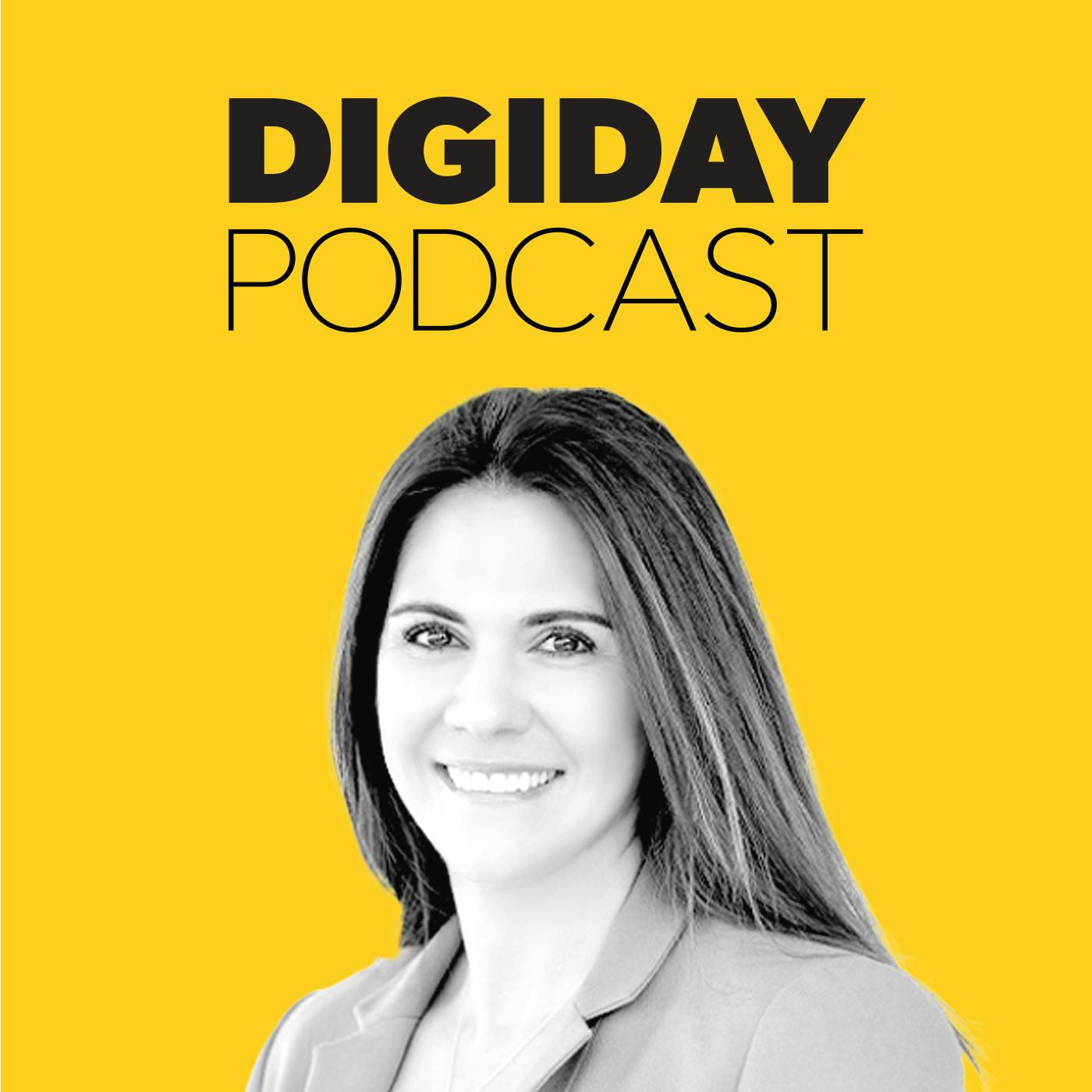
Fubo’s Lynette Kaylor typifies the modern TV ad sales exec
Lynette Kaylor’s background does not mirror that of a traditional TV ad sales boss. But her history in data and identity technology does indicate the makeup of a modern TV ad sales boss. Before joining Fubo as the streaming pay-TV service’s svp of advertising sales last August, Kaylor worked at Dentsu’s data arm Merkle where she worked on identity tech partnerships with publishers and platforms — which is kind of a perfect pedigree for someone overseeing a streaming ad business today. “Data is only going to become more and more important. And given my background, obviously I feel that way. But it makes sense to me from a buyer and seller [perspective],” Kaylor said in the latest Digiday Podcast episode. “From a seller perspective, let me show you why you want to buy my audience, look at what makes them unique and great. From the buy side, it’s like, ’Oh yeah, I want to stop wasting money,’” she added. Among Kaylor’s most immediate tasks is building Fubo’s first-party data strategy as advertisers seek to make their streaming campaigns more targeted and more measurable. That includes developing the company’s data clean room strategy, which has become more of a focal point among TV and streaming ad businesses over the past few years. “A big conversation right now is clean rooms and where do those fit in. When I was at Merkle, those were kind of just starting out, and now they seem to be in every conversation,” said Kaylor.
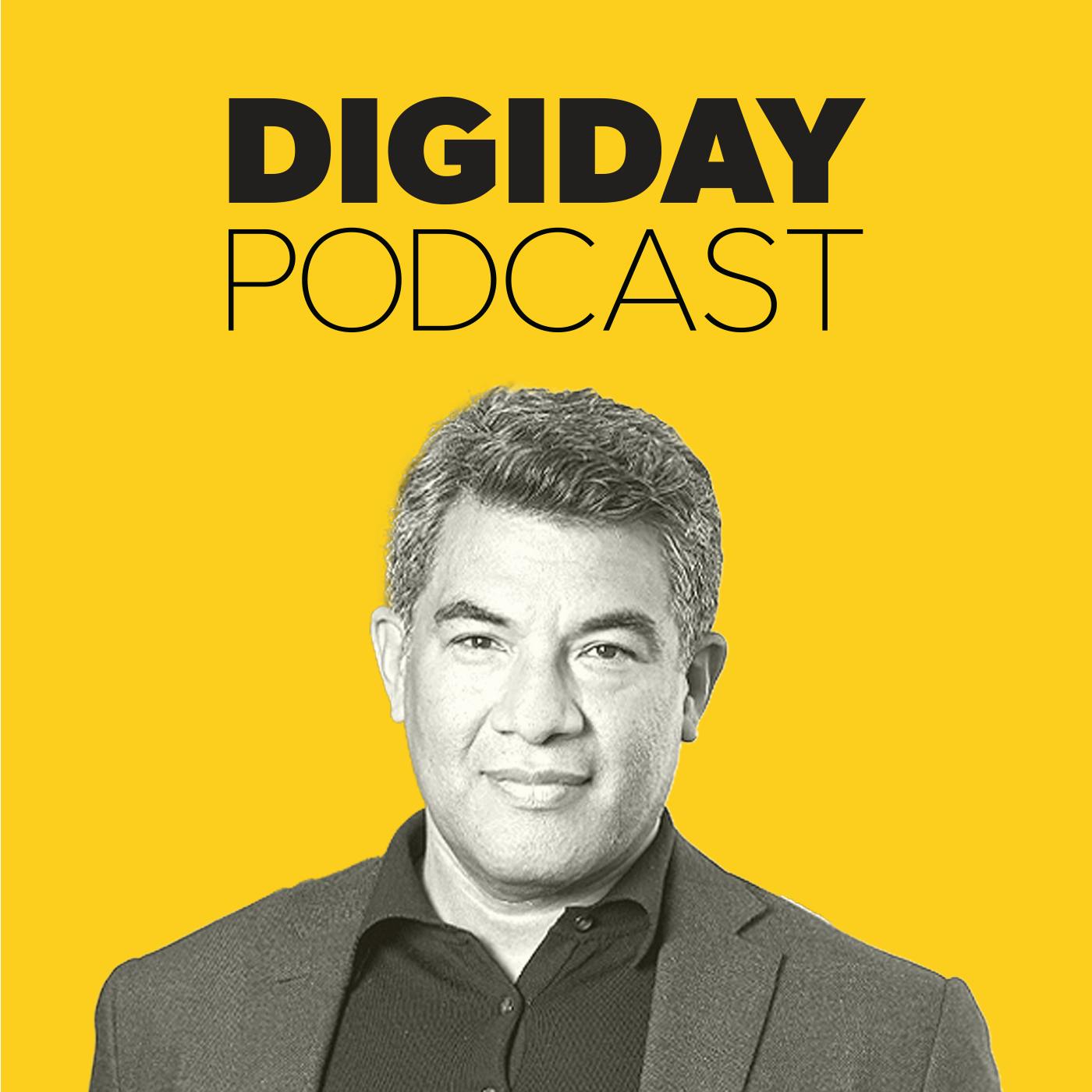
How The Guardian’s Luis Romero is selling the legacy U.K. publication in the U.S.
As The Guardian’s fiscal year concludes on March 31, Luis Romero, the publication's svp of advertising in North America, acknowledged that his team has had a “late start” to receiving RFPs and budget planning with advertisers and agencies for the rest of 2023. However, those conversations picked up in the “last couple of weeks,” with several of last year's major advertisers starting to talk about renewing deals this year. Outside of the macroeconomic pressure on advertisers’ budgets, Romero’s team has been challenged by keyword blocklists. Advertisers’ brand safety concerns outweigh the desire to market to news publishers’ large and lucrative audiences, causing them to all but eliminate news content from their programmatic buys. But for advertisers still willing to place ads on news publishers’ sites, like The Guardian, third-party verification firms are added to the equation, putting the publishers through the brand safety ringer to grade how safe and reliable that content ends up being before advertisers are willing to commit. All this ladders up to The Guardian’s CPMs getting lowered by 25% when content is deemed unsafe, according to Romero on the latest episode of the Digiday Podcast. “Typically [about 1% of] our inventory is flagged for unsafe content on any given day, but when there's a major news event, like the Syrian-Turkish earthquake, it swells up to 10 to 15%. We lose revenue,” he added. With the saga of challenges around the programmatic open marketplace persisting — though his team is working with other industry players to try and fix these issues — focusing on direct-sold advertising and programmatic direct in the meantime is the name of the game. In tandem with this strategy, Romero’s team is pushing more sponsorships around tentpole world events and less on breaking news content in order to try and resolve some of the advertisers’ brand safety concerns, as well as upsell them on larger, more cohesive offerings.
Digiday editors expect AI, programmatic and privacy to be top trends at the Digiday Publishing Summit
At the end of this month, publishing executives from around the country with gather together in Vail, Colo., for the three-day Digiday Publishing Summit to discuss the various challenges facing the media industry, including how the economic downturn has affected advertising revenue, how the launch of new artificial intelligence technology is impacting content production and how more privacy laws mean it's time to buckle down on first-party data practices. During those three days, publishers will also be learning from each other about different strategies to navigate this tumultuous time. In this week's episode of the Digiday Podcast, Digiday's senior media editor Tim Peterson, senior reporter Sara Guaglione and media editor Kayleigh Barber share some of the on-stage sessions that they are most excited about and chat through the trends they expect will come up at DPS. Digiday will have a variety of coverage around the summit, including session recaps, overheard round-ups and a live podcast recording with Michelle DeVine, svp of programmatic and client partnerships, retail, at BuzzFeed, which will go live on Tuesday, April 4. Stay tuned for more insights coming out of DPS later this month.
How NBC News’ Devan Joseph and Stephanie Scrafano cover the news on TikTok
NBC News has taken a two-pronged approach to TikTok. In addition to adapting news videos posted to other platforms for the short-form vertical video app, the Comcast-owned news organization creates original videos specifically for TikTok. NBC News executive producer of original social video Devan Joseph and director of social platforms Stephanie Scrafano joined the Digiday Podcast for a deep dive into the news outlet’s multi-faceted TikTok strategy. The primary poles of that TikTok strategy are the newsier videos produced by Scrafano’s nine-person team and then the feature-esque explainers created by Joseph’s six-person team. Overall, the work spreads across the teams — into more of a spectrum. “It’s kind of like the news will start with my team and that step-forward, that deeper dive will come from Devan’s team. So it’s a nice split between our teams because we can do it all in some way,” said Scrafano. “We’re live-clipping moments as they happen and then Devan’s team might come in and do the explainer or push the story forward in some way.” “It’s weird when we try to explain our teams to outside people because to us, day to day, it feels like we’re just one giant team,” said Joseph. He added, “It is shocking how smooth the process is, considering there’s so many people from different parts of the org working together.”

Revolt’s Detavio Samuels says advertisers have fallen short on commitments to Black-owned media companies
Nearly three years after advertisers and agencies pledged to diversify their spending to support Black-owned media companies, there remains a shortfall in the amount of money actually making it to Black-owned media businesses. “We’ve definitely seen movement and momentum. But without question, I think that they have fallen very short from the promises that they’ve made. And even this year, with all the talk about the recession and with all of the cuts, I think even their desire to deliver on those commitments are even smaller,” said Detavio Samuels, CEO of Revolt on the latest episode of the Digiday Podcast. As a Black-owned media company that was founded by Sean Combs and operates a TV network as well as streaming and digital properties, Revolt has worked to address one of advertisers’ top complaints: “That there was not enough inventory in Black-owned media in order to deliver against the commitments,” Samuels said. Among those efforts have been Revolt’s launches of free, ad-supported streaming TV channels across services including most recently Vizio’s WatchFree+. “There are thousands of FAST channels that exist today. But when you look at those FAST channels, most of the platforms that have FAST channels have somewhere between zero to maybe two Black content-focused channels. And so we see that as a massive opportunity,” Samuels said. Despite advertisers’ DE&I shortcomings and the overall shrinking of the traditional TV business, Revolt’s revenues have continued to grow, and its digital revenue has surpassed its linear TV revenue despite the latter revenue stream continuing to grow. “Now our digital revenue is much larger than our linear revenue. Over the last few years, we’ve seen our digital revenue growth about 9x to 10x, whereas our linear revenue has probably grown closer to 4x to 5x. And so streaming and digital is without question the biggest portion of our business right now,” Samuels said.
How Reset Digital's new programmatic marketplace aims to help Black-owned newspapers sustainably grow
At the beginning of February, advertising agency Reset Digital launched a new programmatic marketplace for the National Newspaper Publishers Association (NNPA), a trade organization that represents more than 200 Black-owned newspapers in the U.S., including the Sacramento Observer, The Philadelphia Tribune and the Dallas Examiner. The goal of the marketplace was to connect large advertisers like Procter & Gamble and Verizon with publications that hadn’t been equipped to run national programmatic ad campaigns, which ultimately led them to miss out on critical revenue. On the latest episode of the Digiday Podcast, Reset Digital’s CEO Charles Cantu said that this collaboration with the NNPA went beyond the creation of a marketplace, to provide these news publications with the tech stacks necessary to run ads, as well as teach them how to sustainably build their online audiences.
As display ad revenue falls flat in the media industry, Blavity Inc diversifies revenue with new commerce-first vertical ‘Home & Texture’
A reckoning that most media companies contend with, Blavity Inc has started the revenue diversification efforts of moving from a display advertising-first business model to include more reader revenue options, like commerce. To help with the transition, Melody Brown was hired as Blavity Inc’s new associate vp of consumer media in Sept. 2022 from Travel + Leisure to help with the construction of this revenue stream, including launching a new home interior brand “Home & Texture.” But the push into commerce doesn’t stop there. Brown said on the latest episode of the Digiday Podcast that the company’s lifestyle brand 21Ninety and travel title Travel Noire were both also pivoting to a commerce-first business model to both bring in a new revenue stream, but also to give readers more assistance from the content they’re already reading. “We're shifting from display first advertising, because we've seen that the effectiveness of that form has really dropped. Readers and audiences are focused more on the content that they desire. The focus here is commerce-first, not display ad-first,” said Brown.

The Athletic's Sebastian Tomich is looking beyond ads and subscriptions to reach profitability
Last September, The Athletic introduced ads to its business model for the first time (aside from podcast and newsletter ads that've been in the mix since the publication's origins in 2016). This opened a door to revenue diversification, something the subscriptions-centered business had been lacking. The path to profitability was originally set for 2023, and was later pushed back to 2025 after The New York Times bought the sports publication. To achieve this profit goal, The Athletic's chief commercial officer Sebastian Tomich is focused on more than just selling ads directly to prospective advertisers. Programmatic advertising, ticket sales, sports betting partnerships, and licensing intellectual property to streamers to produce documentaries and scripted series are all priorities for 2023, he said on the latest episode of the Digiday Podcast.

Why TheSoul Publishing’s Victor Potrel isn’t overthinking how YouTube Shorts will share ad revenue with creators and publishers
For as big as the short-form vertical video market has become over the past few years, 2023 is poised to be a monumental one. YouTube will start sharing ad revenue with Shorts creators on Feb. 1, as TikTok continues to open the revenue-sharing program it introduced last year to more creators. TheSoul Publishing -- the media company behind 5-Minute Crafts and 123 Go! -- is among the short-form video makers welcoming the capital infusion. “The important thing here is that kind of direction where platforms are putting more effort into wanting to reward creators for the economic creation and so they can reinvest some of the earnings into what they do and continue to grow with this format,” said Victor Potrel, vp of content distribution at TheSoul Publishing, in the latest Digiday Podcast episode. Excited as TheSoul Publishing may be, the company isn’t about to overhaul its strategy to capitalize the YouTube Shorts revenue-sharing program. Part of the reason for that is it remains to be seen how much revenue Shorts creators will actually reap. YouTube will be using some complex calculations to determine how to divvy out ad dollars to creators and publishers that raise the question of to what extent Shorts makers’ revenue splits will be rewarded or penalized for using music in their videos. “Even if you don’t use music, then your [share of the revenue] pool may be smaller because everyone else has used music,” said Potrel. “So we’re not going to overthink that. It’s obviously good to understand the system. But I wouldn’t want to drastically change what we do based on this.”
Why entertainment expert Eunice Shin is watching streamers’ subscriber churn rates
Earnings season is officially under way, and Eunice Shin has her eye on streaming service owners’ abilities to retain their subscribers. “In a world where economic uncertainties still exist, where the quality of content continues to be hits-based and a lot of bombs, how are we thinking about churn and how are these streaming platforms keeping the customers they’ve worked so hard to gain in an increasingly competitive and price-competitive world?” said Shin, a partner at strategy consulting firm Prophet who has consulted for companies including Disney, Warner Bros. and NBCUniversal, in the latest episode of the Digiday Podcast. It’s a big question, made all the more urgent considering the streaming market’s shift in emphasis from subscriber growth to profitability. Following the pandemic-induced streaming subscriber surge, that growth started to slow in 2021 and further in 2022, to the point that Netflix actually shed subscribers. Then, with the economic downturn and looming threat of a potential recession, investors’ pivoted their attentions to how much money companies are spending -- and often, losing -- on their streaming businesses, questioning whether streamers’ subscriber counts justified their programming costs. Which is why Shin is keeping vigil on streamers’ subscriber churn rates. “If you think about all of these streamers as they’ve launched -- most of them during the pandemic -- as people have spent a lot of money to acquire these customers, meaning not just marketing dollars but content dollars in content investments to be able to lure people onto those platforms, how are they doing in keeping them.... As much as you think about subscriber growth, if your churn number is high, it’s like one step forward, two steps back,” she said.
How Betches Media is using short form, vertical video to continue growing in 2023
Many publishers pivoted to short form vertical video in the past year as platforms prioritized those content formats in their algorithms. Betches Media, however, invested more in its social-first content strategy that it’s had since its creation in 2011, according to co-founder and CEO Aleen Dreksler, to continue reaching its audience of primarily millennial and Gen Z women. It seems to have paid off in 2022, despite how challenging the ad market was for many publishers’ businesses. Betches Media saw a 40% increase in revenue year over year, according to David Spiegel, the recently appointed chief revenue officer who joined the company last July who did not provide specific figures. Despite having a long history of producing short form vertical video, Dreksler and Spiegel both said on the latest episode of the Digiday Podcast, that there is more learning that needs to be done, especially on emerging platforms like YouTube Shorts — which has been particularly helpful in the company’s launch of video podcasts.
How Geoff Schiller is pitching Vice Media Group to the ad market amidst an economic downturn
Vice Media Group ended 2022 behind where it thought it was going to be — about $100 million short of the revenue goal of $700 million set by its leadership at the beginning of the year. But Geoff Schiller, VMG’s global EVP of commercial & sales strategy is optimistic that events, intellectual property and digital video will be the sellable assets that carry the company forward in 2023. That’s because in his first quarter on the job (Schiller joined VMG in September after leaving Group Nine/Vox Media in June after almost three years), those products were the top areas of focus for advertisers, including partnering with VMG’s brands at Art Basel in Miami. Where other publishers reported growth in quick-turn campaigns and ads, like programmatic during the fourth quarter, Schiller said branded assets were still top of mind for Vice’s clients. In the latest episode of the Digiday Podcast, Schiller discusses his team’s strategy for selling new products in 2023, like Refinery29’s Twitch programming, as well as his philosophy on how hard to lean into revenue-share programs on social media.
Digiday's top media trends to watch in 2023
The media industry is heading into 2023 faced with a lot of uncertainty, thanks to a less than stellar 2022. But based on the conversations Digiday Podcast co-hosts Tim Peterson and Kayleigh Barber have had with media executives and brand-side leaders, the murky waters could be tricky to cross without taking on collateral damage. Hear from the editors on Digiday's media beat about the top trends they'll be following in the new year.
'The shine has definitely come off': Digiday's top takeaways from 2022
This year ended up looking quite different from what was predicted by Digiday’s editors at the beginning of 2022, but it made for a fascinating saga to follow. In this final episode of the year of the Digiday Podcast, hear from some of our reporters and editors on the media and media buying beats chat about their top takeaways and trends from 2022, ranging from the struggling advertising market to the ongoing battle between publishers and platforms.
Group Black’s Travis Montaque outlines company’s media M&A ambitions
Group Black launched in June 2021 with the goal of getting advertisers to deploy $500 million in ad dollars to Black-owned media businesses by the end of 2022. And the media company has further indicated its ambitions with multiple reports this year that it’s looking to buy either BDG, Vice Media Group or Vox Media. “We hired J.P. Morgan [Chase] and Lazard to help us in our efforts a couple months ago. We’re actively out in market looking at acquisitions to make,” said Group Black co-founder and CEO Travis Montaque in the latest episode of the Digiday Podcast. During the interview, Montaque laid out how acquiring a scaled media company would fit into Group Black’s strategy. The company’s strategy splits into three core areas: creating access to ad dollars and audiences for Black-owned media businesses; providing infrastructure — such as Group Black’s own ad exchange — for those businesses; and investing in growing Black-owned media businesses. But, you might be thinking, BDG, Vice Media Group and Vox Media are white-owned media businesses? Correct. But they are also large, general-interest media businesses that have built up the means of distributing content to large, general-interest audiences. In other words, acquiring a media company of their scale would be an investment that would help to create access and provide infrastructure to help grow the Black-owned media businesses that Group Black supports, with Group Black among them. “We are actively in market looking at scaled assets to acquire for the purpose of creating larger infrastructure for our collective to be able to grow their business. That growth means scaled distribution and other assets that will enable us to accelerate the reach and scale of Black-owned media overall,” said Montaque.
IAB’s David Cohen teases updates to trade group’s standard terms and conditions
The Interactive Advertising Bureau provides a set of standard terms and conditions governing digital advertising deals. And starting next year, those standards will be in the process of being updated for the first time since 2010. “It’s time for a refresh,” said IAB CEO David Cohen in the latest episode of the Digiday Podcast. “We started this year with a survey to the industry [asking] what are the things that need to be changed, what are the things that need to be fixed, what should we focus on? We are starting an endeavor in 2023 to redo the terms and conditions.” Updating the IAB’s terms and conditions is “a pretty gnarly process,” Cohen said. The process involves other industry trade organizations, including the Association of National Advertisers (ANA) and the American Association of Advertising Agencies (4A’s) and establishes a set of generally accepted provisions that ad buyers and sellers can adopt in their contracts, such as payment terms and cancelation options. To be clear, the IAB’s terms and conditions are more recommendations than requirements. Companies can choose to not adopt them. For example, some TV network owners have opted not to support the IAB’s cancelation terms for their streaming inventory. That cancelation option is among the terms on the table for an update, though any changes are unlikely to be introduced ahead of next year’s upfront negotiations. Cohen said he expects the forthcoming update to be a two-year effort. “We’re kicking off the project in earnest in Q1, and I think just realistically it’s going to be more than a year to get this done. So it will be a 2023-24 initiative,” he said.
How Fandom's first-party data, FanDNA, is expanding to improve recommendations for advertisers and audiences
Wikipedia for all things fictional, fantasy and entertaining, Fandom has unique insight into how passionate internet users are about different shows, movies and video games. But the data doesn’t stop at the behavioral data around those curiosities. Fandom’s plethora of user generated content and community boards have also lended itself to the company’s first-party data collection. And after 18 years of accumulating data on favorite characters, plot lines and cross-over interests, that first-party data, called FanDNA, is sold to advertisers to inform everything from traditional ad campaigns to research & development on new projects and merchandise. On the latest episode of the Digiday Podcast, Stephanie Fried, CMO of Fandom, discussed how her team started categorizing this data into four, affinity-based groups to help clients understand where to invest and how to best reach their target audiences. She also covered why Fandom is interested in developing the top-of-funnel, discovery side of its business. This year, the company acquired seven brands from Red Ventures, including TV Guide, to start building out data around how audiences find new programming, and is also building a new personalization tool to help recommend content and ads based on previous searches.
How Apartment Therapy's Riva Syrop is pivoting its events business around the economic climate
For Apartment Therapy, it just makes sense to bridge its events business with commerce. Not because the expectation is to make $10 million from affiliate commissions, according to the company’s president Riva Syrop, but because it’s only fair to give attendees every opportunity to make a purchase as possible – the struggle she often faced when attending industry trade shows. So during this year’s flagship shopping event Small/Cool, as well as smaller co-sponsored events like Dine By Design, Sryop’s team worked to figure out how this model worked both for consumers and sponsors alike, including using transaction data as a KPI. That said, as the economy toughens and advertisers look for more bottom-of-funnel advertising strategies, experiential – regardless of how transaction-focused it is – is one campaign type that might get put on the back burner until late 2023. “[2022 has] definitely not been my favorite year, if I’m being honest. It has been a slog.” said Syrop during the latest episode of the Digiday Podcast. “Advertising was very difficult. A lot of our normal, big partners pulled back in the back half. So we did fine this year, but I feel much more optimistic about what's to come [in 2023] than what we're coming out of,” she added. Apartment Therapy earns about 70% of its revenue from advertising, equally split between the direct and programmatic businesses. Commerce contributes 15% and events contributes another 10%, with the remaining 5% coming from the company’s licensing businesses, which includes product and content licensing through a number of partnerships. To give more “breathing room” to both advertisers and consumers, Syrop said that Small/Cool will be moved from its Q2 timing to the back half of the year in 2023, with the hope that the economic downturn will have bounced back by then. “What we often see is consumer content consumption behaviors change, you sometimes see consumer purchasing behavior change, sometimes the advertiser behaviors change, but rarely do they all change at the exact same time. So this was definitely a readjustment year for us,” she said.
Privacy expert Sarah Bruno breaks down how the California Privacy Rights Act will affect the U.S. privacy landscape
To anyone hoping that California’s updated privacy law would help to simplify privacy compliance in the U.S., sorry. That doesn’t seem to be the case. Instead, the California Privacy Rights Act (CPRA), which takes effect on Jan. 1, seems set to muddy the privacy landscape even more. “CPRA is this unique kind of beast that has complicated privacy significantly for organizations in the U.S.,” said Sarah Bruno, a partner at the law firm Reed Smith, on the latest Digiday Podcast. One aspect of the CPRA needing clarification is the difference between the law’s “contractor” and “service provider” labels. “A contractor is a company that you make data available to, and a service provider’s a company that processes the data on your behalf. That’s not super clear, is it? We need more clarity on that,” Bruno said. The CPRA does clarify some aspects of California’s existing privacy law, the California Consumer Privacy Act (CCPA), which took effect in 2020. It covers the sharing of data for cross-contextual behavioral advertising purposes, which helps to resolve the CCPA’s Rorschach-esque definition of sale that caught Sephora in the crosshairs of California’s attorney general. The CPRA’s addition of sharing data has “eliminated the question that we had with [the CCPA’s definition of] sale,” said Bruno. Besides, for as much as the CPRA may mix up the U.S. privacy picture for companies, the more prominent complicating factor remains the absence of a comprehensive federal privacy law. “We’re still going to have these nuances until there’s a federal law that addresses this,” Bruno said.
Essence Global's Therran Oliphant assesses the development of data clean rooms in 2022
In recent years, data clean rooms have grown in importance to media and advertising companies' businesses. But this year has been "a step-change year where clean rooms became more sophisticated," Therran Oliphant, svp of data and technology at Essence Global, said during the latest episode of the Digiday Podcast. The (supposedly) impending demise of the third-party cookie and increasing scrutiny from privacy regulators have pressed advertisers, agencies, tech platforms and media companies to adopt data clean rooms as a means of protecting their first-party data while activating it for advertising purposes. Already a fixture in major advertisers' dealings with tech platforms like Google, Meta and Amazon, this year data clean rooms were a key component of TV upfront ad buyers' and sellers' negotiations. Then, in October, Google announced its Publisher Advertiser Identity Reconciliation program to facilitate advertisers' and publishers' use of clean rooms for programmatic buying and selling. And in December, IAB Tech Lab plans to release its first draft of standards for clean rooms. Despite all the developments -- or maybe because of the developments -- the data clean room remains an enigmatic aspect of the advertising business because of its broad application. "There is really no one ultimate application of that data," said Oliphant. "It could be that this particular data might be used for advanced analysis. Or to join data sets together so that a brand could understand more attributes about their user. Or so that they can go to market and activate media against those users."
Condé Nast's Craig Kostelic credits 2022 revenue growth to global ad sales, despite operational hiccups
Condé Nast's third quarter was seemingly better than what other media companies have reported, at least according to Craig Kostelic, the company's global chief business officer. In August, Axios reported that Condé Nast is on track to surpass 2021 revenues, equating to more than $2 billion, which is inclusive of both advertising and consumer revenue. Kostelic confirmed this report on the latest episode of the Digiday Podcast and added that even just the commercial and advertising side is "definitely going to exceed last year's total," though he declined to share hard revenue figures for that business in particular. This growth is primarily credited to the company's ongoing globalization process, according to Kostelic. Through this process, the sales teams in both the U.S. and Western Europe have started working in tandem, versus being siloed, to sell larger global campaigns to advertisers -- a reorganization that Kostelic has been overseeing since entering this role in 2018. Starting in the New York City office, he said the first step was switching the sales team from being brand focused to category focused, meaning instead of one salesperson only selling ads for one title like Wired or Vogue across a number of advertising categories, an individual salesperson is now category specific and has the ability to sell ads on any and all parts of the company's portfolio. Not immune to challenges, Kostelic said that while starting to replicate this same transition with the Western European teams this year, he's needed to learn from the mistakes in the first go around and really focus on clarity and transparency with the sales team to make sure that people feel supported in their new roles, especially during an economic downturn.

Why Semafor's CRO Rachel Oppenheim is putting clients first while building an entirely ad-based revenue model
Semafor launched on Oct. 18 with a business model that’s entirely reliant on direct-sold advertising and event sponsorship revenue – a risky business in some eyes during the current economic climate. But the company’s founding CRO Rachel Oppenheim is confident that her team’s client-centric approach, which prioritizes “innovative” branded content and running ads against “experimental” editorial products, will be the wind in Semafor’s sails, she said on the latest episode of the Digiday Podcast. Not only that, but focusing on the pockets of advertisers’ budgets that are directed to corporate reputation building will help insulate the company from the ebbs and flows of consumer and product advertising, which for now, is not a priority in the sales team’s selling strategy. Programmatic is also not a part of Semafor’s advertising mix, once again, preferring to build relationships with clients that are hopefully long term, according to Oppenheim. While having launched with partners like Verizon, Mastercard and Pfizer, Semafor recently came under criticism for having gasoline manufacturer and distributor Chevron as an advertiser on the company’s Climate newsletter in its second week, to which many criticized as tone deaf and irresponsible in the coverage of climate change. Oppenheim said post-interview in an email to Digiday that “advertisers have no bearing on our editorial coverage and we maintain a strict separation between news and third-party advertisement."

UM Worldwide’s Stacey Stewart assesses the state of the advertising market
Let’s be clear: The advertising market has hit a rough patch amid the broader economic downturn. But that hit has not necessarily been a full-on body blow. “We’re seeing some shifts [in advertisers’ spending] but not necessarily dramatic cuts,” said UM Worldwide’s U.S. chief marketplace officer Stacey Stewart in the latest episode of the Digiday Podcast. To be clear, she added, “Don’t get me wrong when I say there hasn’t been many cuts. They’re still cuts. They just haven’t been as dramatic as I think we all had feared.” Typically, advertisers are cutting ad dollars from deals that provide less flexibility, such as those earmarked for traditional TV. “That’s where we saw a lot of the cuts,” Stewart said. To an extent, advertisers are holding on to those dollars, but they are also redirecting them to places that provide greater flexibility for advertisers to cancel deals as well as more performance-oriented ad opportunities.“There’s definitely a shift to more immediate results — lower-funnel metrics if you will — focusing on revenue in the short term versus branded-building,” said Stewart.

Why LinkedIn is stepping up its original video and audio content ambitions
More than a decade ago, Dan Roth left the world of traditional journalism to join LinkedIn as the business-centric social platform’s executive editor. Eleven-plus years later, the former managing editor of Fortune.com and now editor-in-chief and vp at LinkedIn has built up the platform’s news operation into one that bears some of the hallmarks of a traditional outlet. “I had a lot of belief in what the company could create, but I didn’t know how it was going to work out. And I wasn’t entirely sure what I was getting into,” Roth said on the latest episode of the Digiday Podcast. Under Roth, LinkedIn’s news division has been getting into producing more original content, from newsletters to podcasts and videos. In September, the platform announced the hire of former CNN executive Courtney Coupe to be its first head of original programming, which appears to portend the next phase of LinkedIn’s editorial ambitions, which were already raised earlier this year with the formation of the LinkedIn Podcast Network. “The hiring of Courtney Coupe is designed to push us in a more professional way through creating original video and audio content,” Roth said. “There are about 180 people on the editorial team at LinkedIn. But half that team comes from a business journalism background, and almost all of those who come from a business journalism background come from mostly writing. So it’s a text-heavy team. When you’re creating audio [and] creating video, there’s something unique about creating that content.”

'Do whatever it takes': How the NewsGuild of New York is training journalists to create strong unions
Unionization has been on the rise at media companies over the last nearly three years after the pandemic upended the way publishers work. But it seems that the list of concerns shared amongst journalists, editors and other media employees is only growing and few resolutions have been met during that time. It's all created a need for more communication, community rallying and strategic training, to get workers the most leverage possible when communicating with management, said Susan DeCarava, president of the NewsGuild of New York, which represents unions including The New York Times, Insider, The New Yorker. In the latest episode of the Digiday Podcast, DeCarava discusses why unionization is on the rise and how her team has implemented programs like the Strike School to help embolden media employees to make change within their companies, be it around the return to the office, equitable pay or ensuring equal treatment amongst employees.

A year after coming under Axel Springer's control, Politico's Europe and North American businesses are closer than ever
It’s been nearly a year since German-based Axel Springer acquired Politico for over $1 billion, which included both the U.S. and EU iterations of the brand, in addition to the almost 3-year-old technology-focused title Protocol. Since that acquisition, the Politico brand has started undergoing a merger of sorts internally as well. Despite sharing a brand name and founder — Robert Allbritton — Politico U.S. and EU have operated as separate businesses until earlier this year. Now, Politico EU’s chief revenue officer Nicolas Sennegon said the Washington, D.C.-based and Brussels-based teams have developed global ambitions that include working together to sell ads across both regions, bundle subscriptions and find ways to editorially cover unfolding political news for readers around the world. Most of the cross-brand collaboration has originated at the advertising level, which represents about one-third of Politico EU’s revenue currently (the other two-thirds come from its subscriptions business, which runs about €17,000 per year), according to Sennegon. But as the brand pursues its global expansion, he added that there are opportunities to further link those two sides of the business, by turning subscribers into advertisers, where Politico EU already sees about a 50% overlap. On the latest episode of the Digiday Podcast, Sennegon said that over the next year, Politico will be further branching the two brands together, though he would not disclose exactly what a global Politico will look like or when we can expect its launch.

Why Hearst is building a commerce marketplace
Publishers’ commerce businesses can take many forms nowadays, from earning small commissions with in-article affiliate links to creating an entire direct-to-consumer (DTC) product line that turns a publisher into a retailer. But given commerce revenue is down this year for some media companies and the economic slowdown has put restraints on shoppers’ wallets, publishers may need to rethink their commerce strategies. Take Hearst which is in the process of launching a new marketplace in the fourth quarter. The marketplace is meant to be the new hub for the company’s DTC products and licensed products, but it will also be a new sales channel for the brands and products that readers of Hearst’s media brands regularly shop for as well, according to Sheel Shah, Hearst’s svp of consumer products and partnerships on the latest episode of the Digiday Podcast, which was recorded in front of a live audience at the Digiday Publishing Summit on Sept. 20. This is an expansion of the media company’s current commerce shop strategy, which consists of 20 individual online branded shops for nearly all media brands in the Hearst portfolio, including the Oprah Daily Shop and Good Housekeeping Shop. The shops currently sell branded merchandise and licensed goods and are collectively on track to make 500,000 transactions this year, a 15% increase over the previous year’s transactions, according to the company, which declined to share hard revenue figures. Ultimately, Shah hopes that the marketplace can tie together the company’s commerce business — from DTC and licensed products to affiliate links to direct brand deals — and ultimately drive digital subscriptions to the brands in Hearst’s portfolio.

Why Wonder Media Network won't sell its podcast ad inventory programmatically
Advertising is taking a hit from the economic slowdown. For some advertisers with podcast and audio budgets, they want to reach more listeners efficiently rather than invest in expensive custom branded content. For Wonder Media Network, however, programmatic advertising isn't part of its inventory. There are certain instances where programmatic advertising in audio makes sense, according to Shira Atkins, CRO and co-founder of podcast company Wonder Media Network, such as targeting people who are in one specific region versus running national ads. But on the latest episode of the Digiday Podcast, Atkins said she still believes that programmatic is “a tragedy for the podcasting ecosystem at large." Her team does not sell any of its ad space programmatically. Instead, the podcast network uses its branded content studio to make bespoke audio ads, which Atkins said creates memorable ads that listeners are less likely to skip over.

The season of change: Digiday's editors recap summer 2022's top trends in media
The summer can be a slow period for many companies, however the economic downturn, supply chain issues, rising inflation rates and world events like the Russian invasion of Ukraine didn’t take time off when the rest of us did. Now heading into the fall, a lot of media execs are trying to strategize for a business environment that doesn’t reflect how it used to look even six months ago. At Digiday, we spent the summer following these subtle – and not so subtle – changes to the industries we cover and narrowed down key trends that either emerged or expanded during the past few months. On the latest episode of the Digiday Podcast, my co-host Tim Peterson and I unpacked the biggest takeaways from that time period as well as chatted through what this could mean for media companies’ fourth quarter and the start of 2023.

How CBS News’ co-presidents Neeraj Khemlani and Wendy McMahon are stepping up their streaming news outlet
CBS News is adding more traditional TV talent to its streaming outlet. After rebranding its streamer as CBS News Streaming Network in January and adding a show hosted by “CBS Evening News” anchor Norah O’Donnell, the Paramount-owned news organization is now updating its streaming service’s primetime lineup by having former “Face the Nation” host John Dickerson anchor CBS News Streaming Network’s 7 p.m. slot. In the latest Digiday Podcast, CBS News and Stations co-presidents and co-heads Neeraj Khemlani and Wendy McMahon discussed the new nightly primetime news program and the streamer’s development since its November 2014 debut. “We’re now lapping a year working together across CBS News and Stations, and the momentum’s been awesome,” said Khemlani. After accumulating more than 1 billion streams in 2021, CBS News Streaming Network is averaging more than 80 million streams per month — the number of times people have started streaming a video on the service — with viewers spending 1.4 billion minutes, on average, in aggregate per month watching the service’s programming, according to a CBS News spokesperson. CBS News is also plying the streaming service with more programming from its local news stations. At the start of this year, the news organization set the goal of increasing its live local coverage on CBS News Streaming Network by 15,000 hours to 45,000 hours by the end of 2022. But it has updated the amount, coinciding with the upcoming launch of CBS News Detroit in November, which will mark its fourteenth local channel on CBS News Streaming Network. “It’s quite the expansion effort, not only through the lens of more channels but also through the lens of the number of hours we’re producing live now across those channels. Nearly 46,000 hours annually of live coverage on those 14 streams by the end of the year,” McMahon said.

Dentsu Media’s Mark Prince is pushing advertisers to diversify their media mixes to support minority-owned publishers
There has been plenty of talk among advertisers and agencies about the need for brands to move ad dollars to minority-owned publishers to ensure they are reaching as many potential customers as possible. As svp and head of economic empowerment at Dentsu Media, Mark Prince is charged with turning that talk into action. “We’re guiding our internal investment and strategy teams to make sure that we have the framework that really fosters the inclusion of our diverse-owned outlets, working hard to remove the barriers that have long existed depending on the type of media that we’re working with in this space and also making sure that our diversity vendors are heard,” Prince said in the latest episode of the Digiday Podcast. An important aspect of Dentsu’s economic empowerment team is that it doesn’t sit in a silo but is part of the media agency’s investment group. “It was really important that we have a seat at the table where the dollars are being allocated,” Prince said. The economic empowerment team’s involvement in Dentsu clients’ investment strategies will play a role in ensuring that the agency group is able to meet its goal of 15% of its annual budget across media, creative and customer experience management to be spent with diverse-owned suppliers by 2025.

How BuzzFeed Inc.’s Edgar Hernandez is preparing for a recession while seeing signs of recovery
BuzzFeed Inc. chief revenue officer Edgar Hernandez and his team have been preparing for a potential recession since May. “We did some recession planning and presented that to senior leadership back in June. And so we’ve been playing the game as if we are in a recession,” he said in the latest episode of the Digiday Podcast. That recession planning boils down to two focuses with respect to BuzzFeed’s advertising business: “efficiency and innovation,” said Hernandez, who was CRO of Complex Networks before BuzzFeed acquired the media company last year as the latter company went public. “Efficiency” effectively means making it easy for advertisers to spend money with BuzzFeed and to see returns on that investment. “Innovation” means pitching them ad opportunities -- such as a new video programming slate that BuzzFeed’s sales team started pitching advertisers on in recent weeks -- that will help brands to stand out and capture audiences’ attention at a time when consumer confidence has ebbed. While BuzzFeed has seen the economic downturn’s impacts, as evinced by its most recent quarterly earnings report, the media company is also starting to see signs of an advertising recovery. The volume of pitch requests -- or RFPs -- for fourth-quarter ad opportunities that BuzzFeed is currently receiving is comparable to last year. That includes RFPs from advertiser categories such as consumer electronics and retail that have been soft throughout 2022. “There is a good signal in market right now that there’s increased opportunity going into Q4 and that especially some challenged categories like consumer electronics are being more active than they’ve been the other three quarters,” Hernandez said.

How The Washington Post's Joy Robins is using lessons from 2020 to handle the current economic slowdown
The Washington Post is starting to feel the squeeze on its advertising business but CRO Joy Robins is relying on lessons learned from the 2020 revenue slump to mitigate its impact on the business this time around. Similar to the previous guests of The Evolving CRO series on the Digiday Podcast this month, Robins said her role as revenue chief at the Post has changed tremendously, even in just the past year. This January, Robins added subscription revenue to her purview to develop how the revenue category could interact with advertising to gather more first-party data to produce more leads of paid readers. Ad clients are expecting faster turnaround times in their campaigns once their marketing budgets are released, according to Robins. And while certain categories are spending less now than they were in previous months, ignoring those clients is a critical error, she said on the latest episode of the podcast.

Vox Media's Ryan Pauley explains how expanding the CRO role beyond ad sales improves ad sales
In March, Vox Media expanded the purview of Ryan Pauley's role as chief revenue officer beyond ad sales to also encompass consumer revenue, affiliate and commerce businesses. Rather than diluting the role of ad sales, the broadening was designed to give the media company's advertising business a boost by connecting it more directly with Vox Media's other revenue streams. "There was a historical expectation that diversifying revenue meant the business lines were in competition with one another. In fact, what I'm realizing and what many companies are realizing is that they can really benefit from one another on the advertising side," Pauley said in the latest episode of the Digiday Podcast. By overseeing Vox Media's various revenue streams, Pauley said he feels more informed on how the revenue sources relate, which in turn helps him connect with the brand CMOs that Vox Media sells to. "I feel much more informed now when I go talk to a CMO about marketing strategies. We have a large paid acquisition team and budget, and we have the same challenges on how much do we prioritize brand versus performance and how do you bridge the attribution gap between the two," he said. That insight may help Vox Media as, like every other media company, it contends with the economic downturn and its impact on advertising. Pauley acknowledged that Vox Media has not been immune from that advertising drawdown, but he said the company is seeing ad dollars move to programmatically sold inventory, which is more performance-oriented for advertisers. "We're definitely seeing the lean towards more performance," he said.

'It takes ingenuity to survive': How The Daily Beast's Mia Libby is bracing for an economic slowdown
The job description for a chief revenue officer at a media company doesn’t resemble what it used to a decade ago. “There was a time where the lion's share of my job was just going out on sales calls,” said Mia Libby, revenue chief of The Daily Beast, who’s held that position for nearly five years. That was back when she considered the CRO title as more of the head of ad sales given the fact that advertising was the primary source of revenue for the company. Now, about half of her time is spent in internal meetings with the product, editorial, audience and subscription teams, in addition to sales, to find a healthy balance of how advertising, subscriptions, licensing and commerce all work together, Libby said on the latest episode of the Digiday Podcast. Heading into 2022, The Daily Beast wanted to find a more efficient method of monetizing the site’s users, from one-time visitors to paid subscribers. This meant creating more of a pipeline for converting readers to subscribers, but also by finding ways to collect first-party data in the process. With an economic slowdown creeping up on the horizon, however, Libby said that strategy is being looked to as the way of withstanding the potential headwinds, which could last a lot longer than the pandemic-induced recession of 2020. This episode marks the first of a four-part series on the Digiday Podcast, which explores how media CROs are leading their companies through turbulent times and are taking on new responsibilities as companies batten down the hatches with new revenue streams.

How Slate's Charlie Krammerer is prioritizing frequency to boost podcast revenue
Slate has been in the podcast business for nearly two decades, but refreshed its strategy this year to increase the frequency of its most popular shows. “Slowburn,” “Decoder Ring” and “One Year” are all narrative podcast series at Slate that will move from one season per year to two or three, to increase listenership as well as give advertisers the opportunity to advertise in those products at different points of the year. Meanwhile, some of the publisher’s weekly series will increase to a biweekly schedule to achieve the same goal of having more sellable inventory. On the latest episode of the Digiday Podcast, Slate’s CRO and president Charlie Krammerer discussed why his team has prioritized the frequency of existing shows instead of chasing scale like other podcast networks, as well as how his team of sellers is prioritizing a specific mix of custom content ads while investing in the host-read model. Making up about half of the company’s revenue, the podcast business is primarily advertising-dependent, although there has been a trend of podcast listeners turning into paid subscribers with Slate putting certain episodes of its most popular series behind its paywall.
A 2022 privacy regulation primer with Mayer Brown’s Dominique Shelton Leipzig
Don’t sleep on privacy regulation. So far 2022 may be lacking 2018’s one-two punch of the General Data Protection taking effect in Europe and the California Consumer Protection Act being passed in the U.S., but a spate of recent regulatory jabs could be setting up for a right hook. Consider the privacy regulation moves of the past couple months. The recently introduced American Data Privacy and Protection Act is the latest congressional bill proposing a federal privacy law in the U.S. The California Privacy Protection Agency released a draft of proposed regulations for enforcing California’s privacy law. Europe has passed the Digital Markets Act and Digital Services Act, each of which covers targeted advertising and data management. And GDPR enforcement is picking up. “The canary in the coal mine of what is triggering all this attention is the digital advertising ecosystem,” said Dominique Shelton Leipzig, a partner at the law firm Mayer Brown where she serves as the lead for global data innovation as well as ad tech privacy and data management. In the latest episode of the Digiday Podcast, Shelton Leipzig surveyed the current privacy regulation landscape and interpreted what it portends for the digital ad industry. Her verdict? “With all the regulation, there’s a minefield for companies approaching the space,” Shelton Leipzig said.
Introducing The Return
trailerDigiday is proud to present The Return, a podcast about what the return to the office can look like as corporate America adapts to the new, not quite post-pandemic normal. The Return follows the staff at one Atlanta-based advertising agency through Covid outbreaks, as well as the highs and lows of transitioning to hybrid work after two years of pandemic lockdown and working remotely. While the future of work is still under construction, employees across the country are forging their own paths to determine what that future looks like amidst parenthood, corporate mandates, long commutes and an ever-looming pandemic. The Return is hosted by Kimeko McCoy, senior marketing reporter at Digiday, and produced by Digiday audio producer Sara Patterson. Listen to The Return on Apple Podcasts, Spotify, or wherever you get your podcasts.

Why The Wall Street Journal is centering personal finance on its new commerce site Buy Side
The Wall Street Journal is finally entering the commerce space after spending a year figuring out what that business will look like for Dow Jones. Launched last month, Buy Side from WSJ is a standalone site whose newsroom operates separately from the Journal, but has the same focus of helping people make financial decisions -- a shared mission for Dow Jones’ other properties including MarketWatch and Barron's, according to the company's chief revenue officer Josh Stinchcomb. The timing of Buy Side's launch -- which is likely taking place right before a recession -- could be a unique challenge for most commerce publishers, with audiences starting to pinch their pennies and brands reconsidering their affiliate marketing budgets. But Leslie Yazel, head of content for Buy Side, believes that these circumstances could benefit her team's editorial strategy, thanks to the personal finance focus featured in each article. On the latest episode of the Digiday Podcast, Stinchcomb and Yazel discuss how Buy Side is balancing consumer product recommendations with detailed budgeting breakdowns to help readers make purchase decisions through the lens of value, as well as setting sights on striking up affiliate partnerships with financial institutions.

GroupM’s Bharad Ramesh explains why TV advertising’s measurement shift is only getting started
Heading into this year’s annual TV advertising upfront negotiations, the big story was whether TV ad buyers and sellers would move en masse away from using Nielsen’s measurements as the currency for their upfront deals. They didn’t. However, that doesn’t mean the measurement makeover wave has ebbed, GroupM executive director of research and investment analytics Bharad Ramesh said in the latest episode of the Digiday Podcast. “I don’t know if things have quieted down. They may be quiet publicly, but we know internally — and I know speaking for some of our other agency peers — internally there’s a lot of work going on in terms of lining up tests or talking to networks about shadowing currencies or even, in the case of another agency, piloting for the upfront with an alternative currency,” said Ramesh. Much of the industry’s measurement work currently revolves around testing the various measurement providers in order to assess their pros and cons. For example, GroupM has been running tests with more than a dozen of its largest clients to evaluate measurement providers — including iSpot.tv and Comscore as well as Nielsen’s upcoming revamped measurement system Nielsen One — so that in the first quarter of 2023, WPP’s ad buying arm and its clients can decide on which to use as currencies in next year’s upfront market. “Essentially we’re taking a campaign that’s scheduled to run in Q2 and Q3 of this year, and we want to be able to capture the campaign with the alternate providers where possible,” said Ramesh. However, he added, “the goal is not to compare and contrast as much as to understand where each of these currencies are in terms of their readiness.”

Bustle’s Charlotte Owen is on a mission to turn around Elite Daily
BDG has been on a mission to revamp the brands in its lifestyle division for the past few years, by increasing the exclusivity in its events business, acquiring new luxury-focused fashion brands and adding shoppable elements to its content. But editorially, BDG’s namesake brands Bustle and Bustle UK have been undergoing a content transformation too, led by editor-in-chief Charlotte Owen. Taking a page from the tried-and-true playbook of magazines in the industry, Owen’s team has started going after a higher caliber set of celebrity interviews in the form of monthly digital covers, only her strategy for interviewing goes against the standard formula she sees practiced by other publications. Owen, who helped launch Bustle UK in May 2018, was promoted to lead both the U.S. and U.K. editions of the site in January 2020, and two years later in April 2022, was tapped as the editor-in-chief of BDG’s Gen Z-focused media brand Elite Daily as well. Elite Daily, which was acquired by BDG in April 2017, after its former parent company Daily Mail General Trust deemed it all but worthless at the end of 2016, has been on a steep uphill climb to regain the authority it once had over 18-24-year-olds. The site had achieved profitability one year after its launch in 2012, leading it to be bought for over $40 million in January 2015 by DMGT, but like many digital publications of the time, fell victim to Facebook’s algorithm changes shortly thereafter. On the latest episode of the Digiday Podcast, Owen discusses how she is applying the leadership lessons and editorial strategy that’s worked at Bustle to Elite Daily in hopes of restoring the brand’s authority within the college-aged demographic once again.

From Cannes: Jellyfish CEO Rob Pierre believes in prioritizing platform partners as much as clients
In the final installment of the Digiday Podcast from the 2022 Cannes Lions Festival of Creativity, I was joined by Rob Pierre, the irrepressible CEO and co-founder of Jellyfish, a network of agencies and marketing services that specialize in digital work and transformation. Pierre distinguishes Jellyfish's operating philosophy from the agency holding companies on a two key levels. For one, Jellyfish operates off one single P&L — no regions, no divisions — and for another, the network prioritizes the major platforms as importantly as it does its clients. "It sort of started with us thinking that we would love our clients to treat us like partners, not vendors. And, of course, if that's what we would like for us, you know, we can't treat our vendors any differently," said Pierre, who started Jellyfish in 2005. "And then it became apparent that if they're both partners, why would you treat them any differently? ... So yeah, I actually think our business turned around when we decided, as an example, to treat Google like our best client." New forms of connecting with consumers have gotten Pierre's, and consequently Jellyfish's, attention, and he said he wants to be sure to put in the work to figure out how and when to reach them. "If advertising is the monetization of attention .. it's much harder to grab someone's attention because it's so disparate," he said. "It's on so many different platforms on different devices for very short periods of time. So, but where are people going to spend? Where are the eyeballs going to be in the future? [W]e're thinking the metaverse is one of them."

From Cannes: IPG's data chief Arun Kumar wishes there was a Hippocratic oath for marketers
The Cannes Lions Festival of Creativity is well underway, as the crowds along the Croisette clearly indicate. But a lot of the action, and heady conversations, are also taking place in the suites and conference rooms of the big hotels that dot the main boulevard of Cannes -- not to mention in the yachts parked in the Vielle Port alongside the Palais where Cannes content and awards are taking place. I was fortunate to have one of those conversations with Arun Kumar, chief data & marketing technology officer for IPG, who's also CEO of IPG's marketing intelligence engine Kinesso, who was my guest on the latest installment of the Digiday Podcast. He's essentially the principal data architect for the entire holding company. Kumar is an outspoken defender of marketers' right to gather data on consumers in ethical ways, and is a big believer that now is the moment for marketers, agencies and ad-tech companies to speak up before further privacy legislation is crafted that could limit or hamper the ability to understand consumer patterns. His concern is that, without input from the industry, legislators will craft rules promoted mostly by privacy advocates. "As an industry we've let ourselves down by not being present at the table," said Kumar, who thinks there should be national standards for privacy rules. "What the marketing industry has done is stood up, and basically put its head over the parapet, got itself shot at, and not done anything to disabuse anyone of those notions [of abuse of data] ... We've now conflated cookies with privacy." If only the marketing world had devised some sort of Hippocratic oath at the outset of the digital era, the industry wouldn't have come under the degree of scrutiny it is getting from legislators. He looked to the medical world as an example to be emulated, where all doctors are held to the fundamental ethical base of do no harm, which influences all their actions. "One of the places we should look forward to is medicine," said Kumar. "No matter where you go in medicine, no matter what you discover, there are certain ethics surrounding it, which come from the principles [the Hippocratic oath]. We as an industry ... have not aligned on what those principles are, we're asking ill-prepared legislators and bureaucrats to solve the problem, and the reality is when you step into the metaverse or other places ... there is going to be more data exhaust that comes out of that."

From Cannes: Forrester's Joanna O'Connell on fraud, data, walled gardens and networking again
The Digiday podcast this week is coming to you live from the Cannes Lions, where the media, marketing, ad tech and creative worlds have come together for the first time in person in two years. The guest for today's podcast is Joanna O'Connell, vp and principal analyst with Forrester Research, who offered an unvarnished view of the ills of the industry while crediting some corners of ad tech for trying to make things better. "In the 25 years of digital advertising, innovation has outpaced thoughtful, methodical, careful assessment of what could be done versus what should be done," said O'Connell, sitting in the lobby of the famed Martinez hotel at the far end of the Croisette, the main boulevard that links all major hotels to the Palais (where Cannes-Lions-sanctioned content is held). "There's a lot happening that's shining a light on what we do that gives us a moment, or should give us a moment, of pause," added O'Connell. "And I say this to the biggest brands and to the biggest media platforms in the world because it is their responsibility, ultimately, to be shepherds of great experiences for consumers." O'Connell also address the flood of new tech innovations that create "a lot of noise," the causes of continued fraud in the industry, what the walled gardens may face from brands, and why the idea of consumers ultimately owning data is a much more nuanced issue than it appears.

From Cannes: PHD's Philippa Brown on transforming the media agency to serve clients more effectively
Welcome to the Cannes Lions, which is meeting in-person for the first time since 2019. This week is going to be equal parts exhausting and exhilirating. Although the Lions celebrate all of advertising, the media agency world has taken more of a center-stage position in recent years. "Rather than just talking about servicing our clients and understanding our clients' business, what we're really doing more about and talking more about now is how we can help them in their journey of transformation, and I think that has been the thing that I've really seen the language shift over the years," said Brown, a 15-year veteran of Omnicom. Brown addressed the realities of dealing with scope creep from clients, citing the need to be straightforward and honest when having those discussions. "We need to be paid fairly ... More and more clients today realize they're asking a lot of us, and realize that we're not a charity -- that we do need to pay our people fairly and also have a return for our shareholders like they have to have a return for their shareholders." Brown has had to adjust to a new boss in Florian Adamski, who took over less than a year ago from Daryl Simm as global CEO of Omnicom Media Group. Flo, as he's known in the company, "is very much in the detail .. and very much a roll-up-sleeves executive, which I appreciate," said Brown. "He's also incredibly future facing, which again is really important, and sets a very clear vision for us moving forward." The digital industry's focus on performance marketing that comes so easily with a lot of newer innovations can be a dangerous path to go down if one overlooks the importance of brand, Brown explained. "A couple of the watch-outs are that you move too far into performance marketing and you forget about the brand, the strength of the brand," she said. "And that's what you'll see coming through in Cannes, I hope. The brand hasn't gone anywhere -- it still needs to have great ideas behind it, [and] it needs to capture the imagination of consumers and cut through. Sometimes I do worry that over the years we've gone too lower-funnel, performance, and we've forgotten about the brand." What does she hope to get out of Cannes Lions most of all? Connecting with people in-person again. "The number one thing for me is to see people," Brown explained. "There are some clients who are going to be there that I've only seen ever on a screen because they started their jobs during the pandemic ... so for me, that's one of the most exciting parts of the festival." Check out other upcoming podcasts from Cannes with agency leaders and analysts this week.

Magnet’s Danielle Johnsen Karr explains why Team Whistle’s social content agency is not a branded content studio
In February, digital video publisher Team Whistle unveiled Magnet. The Eleven-owned media company billed Magnet as a social content agency rather than the more typical branded content studio label that publishers have opted for in the past. In the latest episode of the Digiday Podcast, Magnet lead Danielle Johnsen Karr explained that the company felt the studio label could constrain the roughly 35-person agency’s prospective client base. Magnet provides a lot of the same services as the typical publisher branded content studio, such as short-form video production and editing down clients’ long-form content, Johnsen Karr acknowledged. But the social content agency also provides influencer marketing and channel management services and is looking to secure longer-term relationships with advertisers that extend beyond the scope of a given campaign. “We felt like if we landed in that studio space, while we do all have those offerings, it might just sort of limit us in where we were going to reach some prospective clients, especially when we wanted to get into those longer-term remits with certain opportunities,” said Johnsen Karr. If Magnet does not fashion itself a branded content studio and describes itself as a social content agency, does that put it in the realm of traditional creative agencies? That designation would fit Johnsen Karr’s background, having come from the agency world and worked for agencies including McCann NY, Deutsch NY and 360i. “Good question. We’re probably not seeing ourselves as your typical creative agency. We do offer a lot of the services. What we don’t want to be doing is more of that day-to-day management,” Johnsen Karr said. Social content agency it is.

Google’s David Temkin sheds light on the company’s preparations for disabling third-party cookies
Google is keeping to its end-of-2023 deadline for disabling the use of third-party cookies in its Chrome browser, the company’s senior director of product management, ads privacy and user trust David Temkin said in the latest episode of the Digiday Podcast. Of course, that timeline could still change, as it has before. But part of Google’s decision to extend its previous deadline was to give the company time for testing and tweaking, said Temkin. “We’ve got a pretty good line of sight to the endpoint. We’ve got a good plan to get there, and we’re making rapid progress,” he said. Much of that plan centers on Google’s Privacy Sandbox, which spans the company’s collection of cookie-replacing technologies. That includes contextual targeting proposal Topics and retargeting tool FLEDGE. And technically, Google has two Privacy Sandboxes: the web-oriented Privacy Sandbox for Chrome and the recently introduced mobile-minded Privacy Sandbox for Android. Considering the development of the connected TV advertising ecosystem and CTV’s reliance on the cookie-like IP address, CTV would seem ripe to eventually receive its own Privacy Sandbox — a possibility that the Google executive entertained. “At some point in time, could solutions be delivered on CTV that would deliver the same kind of relevant advertising that you can see on these other identifier-free platforms? Yes,” said Temkin.

How Front Office Sports is leveling up its branded content business through educational courses
Born out of a college class project in 2017, Front Office Sports is entering its fifth year with an eye on growth. Earlier this year in February, FOS got a round of funding from Crain Communications, which bought a 20% stake in the company on a $25 million valuation. Founder and CEO Adam White said that the company is on a path to profitability this year between the investment and the success it's seen in revenue streams like its year-old learning business. In total, FOS is projected to earn eight-figures of revenue this year. On the latest episode of the Digiday Podcast, White talked about using the influx of revenue and investment to grow the FOS team, which is now at 40 full-time employees, including the recent hire of Lisa Granatstein as its chief content officer from Adweek where she served in the same role. Earning 99% of its revenue from advertising still, Granatstein will be responsible for finding more sponsorship opportunities on editorial projects, as well as growing the Pro subscription product that’s still in its beta phase.

Future plc’s Jason Webby says U.K. publisher wants to be a dominant player in the U.S.
In the roughly two years since Jason Webby joined Future plc as chief revenue officer for North America, the U.K. publisher has acquired eight companies — including Marie Claire U.S., a portfolio of Dennis Publishing properties and data platform Waive — and the pace of acquisition is unlikely to slow in the short term given the company’s ambitions. “The shopping spree we’ve been on is pretty prolific. And most of that is really geared towards being one of the dominant media players in the United States and North America,” Webby said in the latest episode of the Digiday Podcast. While the bulk of Future plc’s buys have been purchases of publications, the strategies behind them have not solely been about adding like inventory and like audiences. That was the case with its deal for WhoWhatWear, announced in May, to bolster the publisher’s portfolio of women’s lifestyle publications. But its acquisition of entertainment publisher CinemaBlend last year opened the company up to entertainment advertisers that hadn’t yet become part of its client base, Webby said. Meanwhile, the March acquisition of Waive will help the company to build on its first-party data platform Aperture as Future plc develops its own identifier, Future ID, which is designed to not only help the publisher prepare for the demise of the third-party cookie but also capitalize on its burgeoning U.S. business. “We feel really good about our ability to not have to rely on cookies at all. And we have that ability today. One of the benefits of having such a vast user base that’s all on our same owned-and-operated platform is we’re already reaching one out of every three U.S. online adults,” said Webby.