The Creative Process · Arts, Culture & Society: Books, Film, Music, TV, Art, Writing, Creativity, Education, Environment, Theatre, Dance, LGBTQ, Climate Change, Social Justice, Spirituality, Feminism, Tech, Sustainability
1,260 episodes — Page 1 of 26
Taking Back Control in the Age of AI: Creativity, Transhumanism & The Myth of Machine Consciousness
Reincarnation, Food & Memory: AMITAV GHOSH on What Connects Us in an Age of Climate Crisis
The Body in Motion: Art, Science & Healing w/ Siri Hustvedt, Master Shi Heng Yi, Anil Seth, Noelani Pantastico…
From Extraction to Regeneration: Redesigning Our Relationship with Nature
There is No Freedom Without a Free Press: Journalists, Writers, Activists, Political Scientists, Economists & Filmmakers Discuss Democracy & The Fight for Truth
Creativity, Improvisation & Learning to See with DR. KEITH SAWYER
The Future of Architecture & Cities of Tomorrow w/ CARLO RATTI, Director of MIT's Senseable City Lab
The Cognitive Cost of AI: Surveillance Capitalism, The Future of Work & Democracy
MUSKISM—Its Roots, Nature & How to Fight It w/ QUINN SLOBODIAN & BEN TARNOFF
LAND GRAB UNIVERSITIES: Dispossession, Indigenous Futures & the True Cost of Higher Education w/ TRISTAN AHLONE, ANDREW HERSCHER, ROBERT WARRIOR
The Atlas of Resonance: How does architecture shape the way we think, learn & remember? SALWA & SELMA MIKOU - Highlights
Building Bridges Between Memory, Nature & Architecture with SALWA & SELMA MIKOU
Art, Imagination & the Search for Connection: Max Richter, Iain McGilchrist, Ami Vitale…16 Artists & Writers on Creativity
Daydreaming, Spycraft & Writing The Gray Man - Author MARK GREANEY
Understanding Global Conflict, AI, The Future of War & Crafting Characters - NYTimes Bestselling Author MARK GREANEY - Highlights
Writers On Memory & the Human Condition: Siri Hustvedt, Ada Limón, Paul Lynch, T.C. Boyle…Share their Stories
A Handbook for Climate Hopefuls with Veteran Environmental Journalist FRED PEARCE
We Are Becoming Earth: Scientists, Writers, Musicians, Environmentalists & Indigenous Voices on the Living World
We Are Becoming Earth - Scientists, Writers, Musicians, Environmentalists & Indigenous Voices on the Living World
The Fight for the Future: AI, Privacy & Power with CARISSA VÉLIZ
Why Do We Listen to the Talkers More Than the Builders Saving the Planet? - Physicist, Designer, Investor TOM CHI - Highlights
Climate Capital: Investing in the Tools for a Regenerative Future - TOM CHI, Google X Co-founder, Founding Partner At One Ventures
Listening to the Living World: Biologist DAVID GEORGE HASKELL on Flowers, Forests & Songs of Nature - Highlights
How Flowers Made Our World: DAVID GEORGE HASKELL on Deep Time, Plant Intelligence & Listening to the Living World
"Note from Non-People": Kurdish History, Language & Culture with SERHAT TUTKAL & HEVIN KARAKURT
How the Pandemic Exposed the Cruelties of Incarceration w/ VICTORIA LAW
Science in Resistance: Direct Action for Climate Justice, Democracy in Education w/ FERNANDO RACIMO
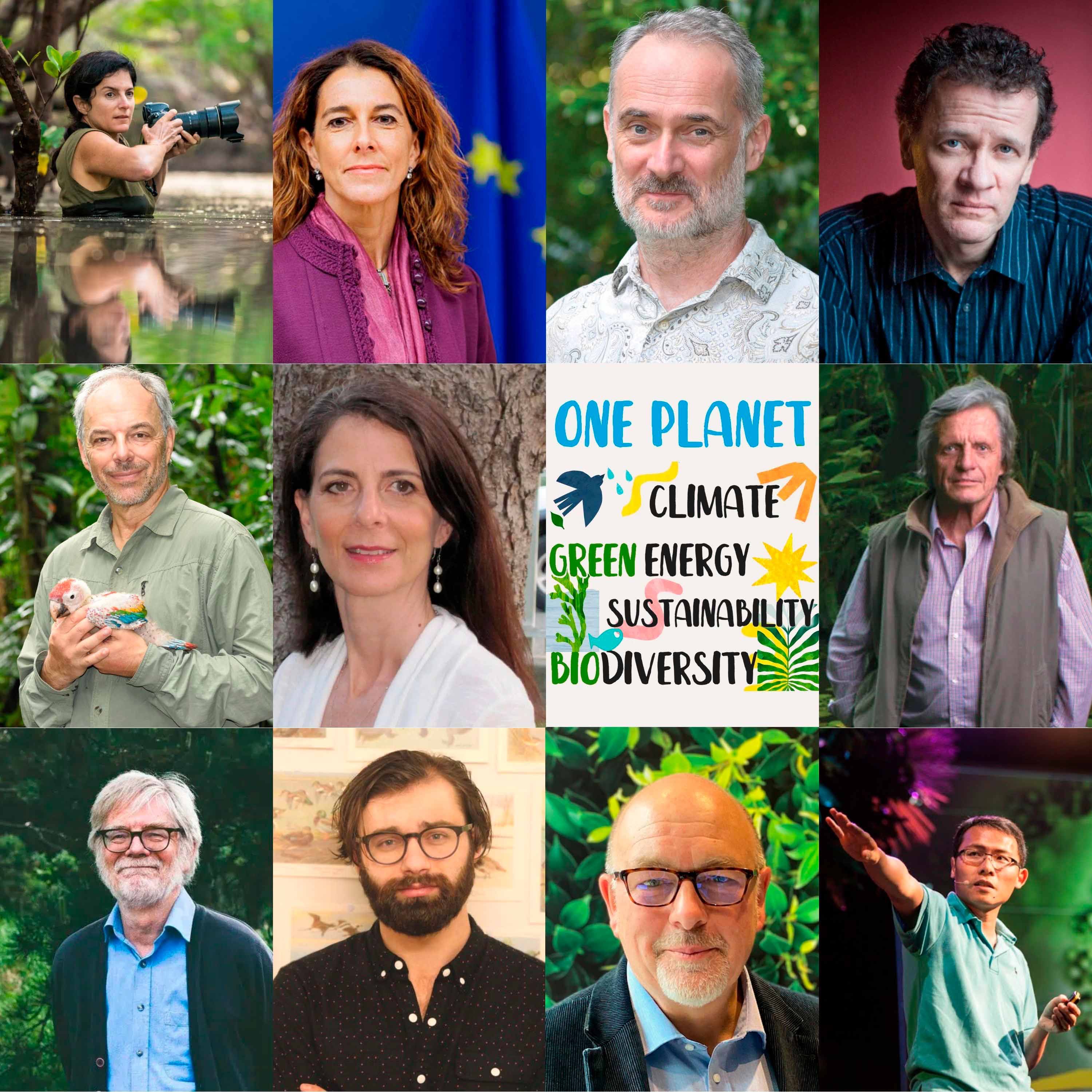
S16 Ep 1233Listening to the Living World: Ami Vitale, Yann Martel, Carl Safina, David George Haskell & Others on Climate Change & The Rights of Nature
Today, we hear from writers Yann Martel, Carl Safina and David George Haskell on the practice of listening to the living world. Tom Chi discusses the dangerous volatility of a one-degree shift. Clayton Aldern explores how climate change alters brain health and behavior, while Ami Vitale,Osprey Orielle Lake and Martín Von Hildebrand remind us of the kinship we share with nature. Fred Pearce discusses 40 years as a journalist reporting on climate from around the world, while Richard Black of the environmental think tank Ember and Paula Pinho, European Commission’s Chief Spokesperson, talk about policy, hope and the radical empathy required to protect the planet for future generations.(0:00) Clayton Page Aldern – Finding awe and beauty in the world(0:40) David George Haskell – On consequences of humans tuning out the sounds of the living world(2:11) Yann Martel – How animals ask us to step out of our humanity(3:12) Carl Safina – The interior lives of non-human animals(5:08) Ami Vitale – Environmental collapse and human conflict(6:37) Martín von Hildebrand – Indigenous views of nature(8:00) Richard Black – Transition to clean energy and massive fossil fuel subsidies(10:01) Tom Chi – Climate destabilization(11:07) Paula Pinho – Europe’s vision for energy independence(14:04) Osprey Orielle Lake – Māori concept of "I am the river and the river is me”(16:08) Bill Hare – On limiting global warming to 1.5 degrees(17:19) Fred Pearce – A realistic path to hope through nature’s resilienceTo hear more from each guest, listen to their full interviews.Episode Websitewww.creativeprocess.info/pod@creativeprocesspodcast
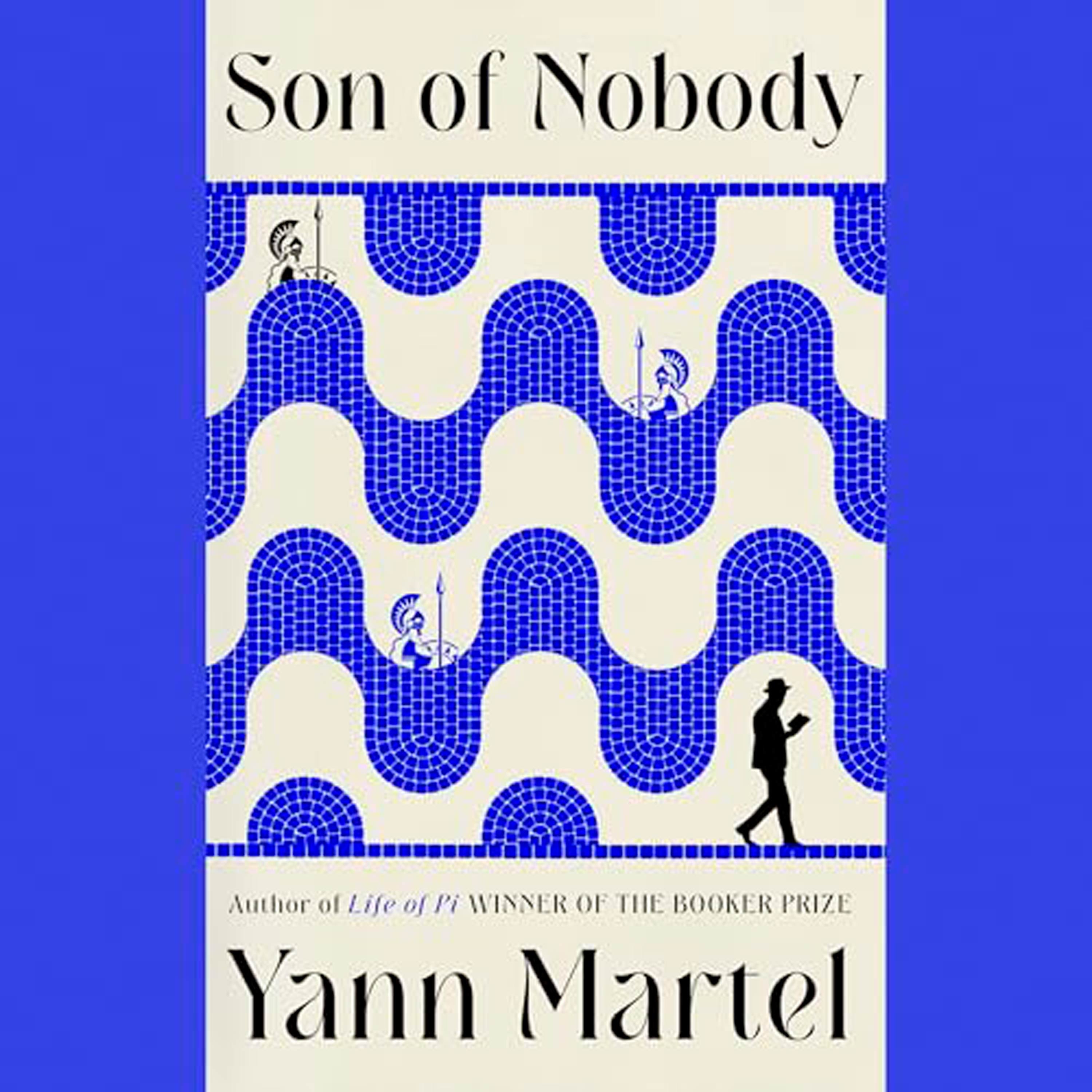
S16 Ep 1232War, Grief, Love & the Human Cost of Conflict - YANN MARTEL - Highlights
“Storytelling, which is a very whole person kind of activity, is one that delivers all kinds of truths. It's on the factual ground of reality that we build our cathedrals and our castles that we live in. And those are not just made of facts. They're made of other kinds of truths that make the stories of who we are, the cities we live in, the languages we speak—these are made of fact and fiction together, and those are the stories that define our lives.”My guest today is Yann Martel,the internationally acclaimed author best known for his Booker Prize-winning Life of Pi and weaving philosophy, imagination, and profound human questions into unforgettable stories. His new novel, Son of Nobody, is a feat of literary imagination. Written in Homer-esque verses and layered with footnotes, the book draws us into the voice of a Greek storyteller while simultaneously mirroring our own present moment. It’s a work rich with history and intertextual echoes—ancient stories resurfacing in modern life, reminding us how deeply the past still speaks through us.At its heart, Son of Nobody isa meditation on life, death, grief, and the fragile ways our human vanity can cloud our search for meaning. Through myth, memory, and philosophical storytelling, Martel explores what it means to long for home, to wrestle with ambition, and to confront loss. It’s a deeply moving reflection on how ancient tales—told and retold across centuries—can still teach us compassion, humility, and perhaps the courage to recognize that we can be nobody and still matter. It’s a beautiful, sometimes haunting story about what we can learn from the past when it comes to homesickness, love, grief, and ambition—and about remembering to value what we have before the search for more blinds us to it.(0:00) Why is there human suffering? Why humanizing conflict is essential to understanding it(5:48) The Limits of Rationality & Magical Thinking Why pure logic fails to answer life's deepest philosophical questions(6:41) Education is Everything(8:59) Why War Needs Stories How individual narratives help us comprehend the true tragedy of conflict(9:44) Facts vs. Truth in Storytelling How psychological and emotional truths surpass factual accuracy(11:47) The Iliad vs. The Gospels (15:21) The Heroism of Translators(16:03) AI vs. Human Creativity(17:07) Animals as Ambassadors of the Wild (18:08) Art, Religion and Ways to Go BeyondEpisode Websitewww.creativeprocess.info/podInsta @creativeprocesspodcast
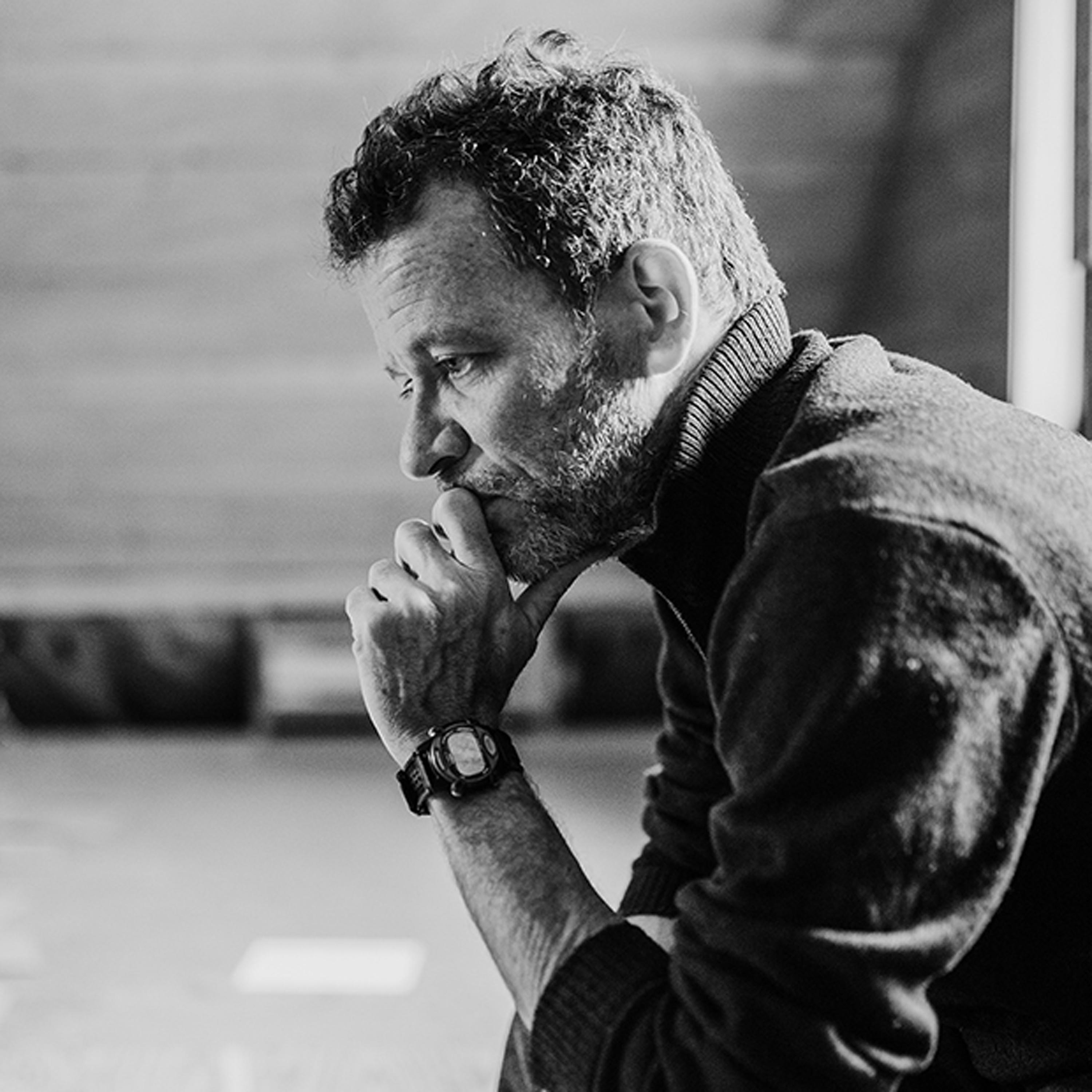
S16 Ep 1231The Limits of Rationality & the Enduring Power of Myth with YANN MARTEL
Why do ancient myths still hold the answers to our modern anxieties? When faced with inexplicable grief or the incomprehensible scale of modern war, where does rationality fail us? Can the stories of our past save our future?My guest today is Yann Martel, the internationally acclaimed author best known for his Booker Prize-winning Life of Pi and weaving philosophy, imagination, and profound human questions into unforgettable stories. His new novel, Son of Nobody, is a feat of literary imagination. Written in Homer-esque verses and layered with footnotes, the book draws us into the voice of a Greek storyteller while simultaneously mirroring our own present moment. It’s a work rich with history and intertextual echoes—ancient stories resurfacing in modern life, reminding us how deeply the past still speaks through us.At its heart, Son of Nobody is a meditation on life, death, grief, and the fragile ways our human vanity can cloud our search for meaning. Through myth, memory, and philosophical storytelling, Martel explores what it means to long for home, to wrestle with ambition, and to confront loss. It’s a deeply moving reflection on how ancient tales—told and retold across centuries—can still teach us compassion, humility, and perhaps the courage to recognize that we can be nobody and still matter. It’s a beautiful, sometimes haunting story about what we can learn from the past when it comes to homesickness, love, grief, and ambition—and about remembering to value what we have before the search for more blinds us to it.(0:00) Why is there human suffering? Why humanizing conflict is essential to understanding it(02:14) Introduction to Son of Nobody, Yann Martel’s latest mythic novel(04:20) The Limits of Rationality & Magical Thinking Why pure logic fails to answer life's deepest philosophical questions(09:48) Why Greek Myths Still Speak to Us The universal relevance of ancient stories(13:38) The Heroism of Translators(18:32) Facts vs. Truth in Storytelling How psychological and emotional truths surpass factual accuracy(21:23) Why War Needs Stories(24:38) Reflections on Iran and Modern Conflict(30:35) The Iliad vs. The Gospels(41:26) What Do You Do with the Sadness of Mortals?(45:52) How Life of Pi Changed Martel’s Spiritual Beliefs(51:58) AI vs. Human CreativityEpisode Websitewww.creativeprocess.info/pod@creativeprocesspodcast
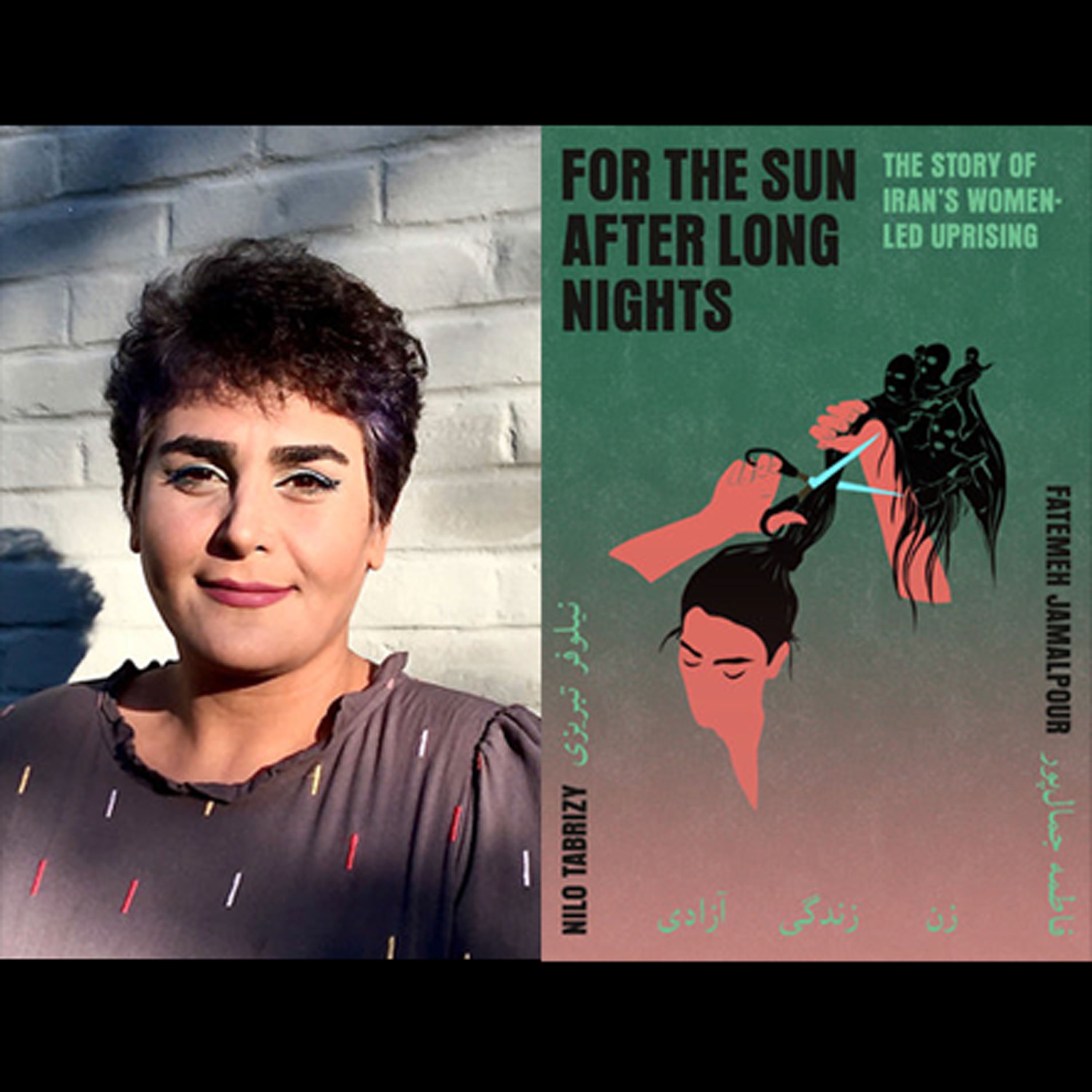
S16 Ep 1230For the Sun After Long Nights: Iranian Women Leading Fight for Freedom w/ FATEMEH JAMALPOUR
In the face of devastating state violence, the people of Iran continue to find new ways to resist. From a female marathon runner pacing her cell in prison, to an underground concert staged in defiance of the law, the fight for a free Iran is fought daily with bodies, art and solidarity.In this episode of the Speaking Out of Place podcast, Professor David Palumbo-Liu speaks with journalist Fatemeh Jamalpour about her book, For the Sun After Long Nights, which she wrote with fellow journalist Nilo Tabrizy. In September 2022, the world learned of the murder of a young Kurdish woman in Iran, Mahsa Jina Amini. Her death, while a captive of the Iranian state, sparked the Woman, Life, Freedom protests. Fatemeh and Nilo’s book frames those protests in the deep tradition of Iranian women leading political movements for rights and freedom, that date back at least a century. They also provide incredibly detailed and moving accounts of the everyday lives of people in Iran who are part of a collective movement under the most oppressive and violent conditions imaginable. Fatemeh talks about the significance of the many ethnic minorities in Iran, the unique role of Gen Z in the protests, and the many ways that women’s bodies have become a powerful weapon in the fight for collective freedom, in places as diverse as prisons and illegal music concerts. Clearing up myths and lies about Iran and the resistance, this is an especially important episode of Speaking Out of Place.(0:00) A Century of Resistance Fatemeh discusses the deep historical roots of the Iranian women's movement(2:58) Becoming a voice for suppressed women(4:15) Sisterhood and Co-Authorship Meeting Niloufar Tabrizi and collaborating across borders(7:15) Interrogations and Writing Documenting state interrogation as an act of defiance and survival(12:45) The Diversity of Iran Highlighting the vital roles of Kurdish, Turkish, Arab, and Baluchi minorities in the struggle(16:15) Personal Freedom vs. Collective Liberation Why returning to a "broken country" was an act of profound love and solidarity(21:15) Gen Z Gamers in the Streets How young Iranians are using online strategy to fight security forces(26:15) Turning Grief into Resistance(29:15) Correcting Western Media Myths(31:15) The Body as a Weapon Women reclaiming their agency through public presence without a hijab(32:20) The Imaginary Concert The story of an illicit, breathtaking public performance in Iran(35:15) The Future of Iranian JournalismEpisode Websitewww.palumbo-liu.comhttps://speakingoutofplace.comBluesky @palumboliu.bsky.social@speaking_out_of_place
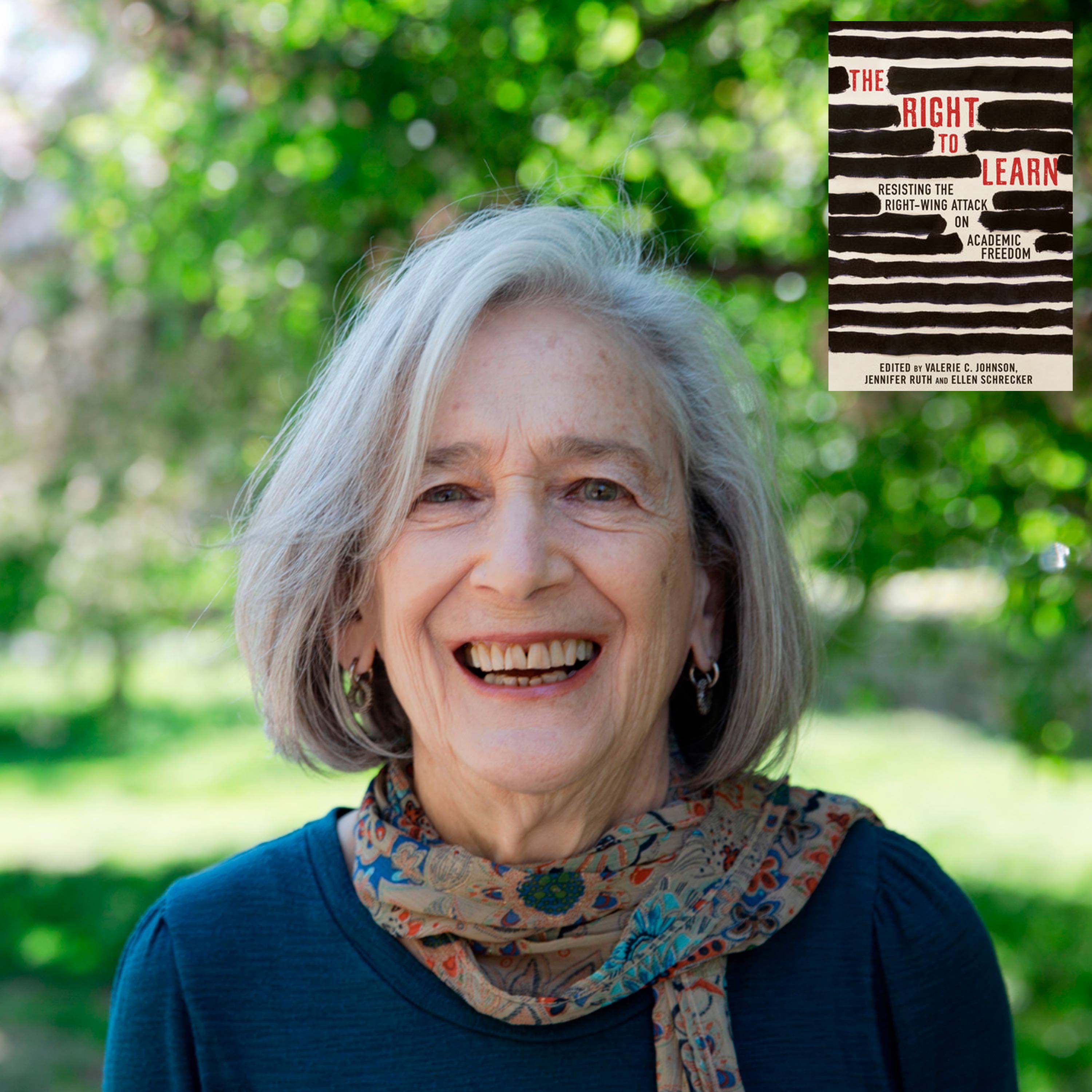
S16 Ep 1229Much Worse than McCarthyism: Resisting the Right-Wing War on Academic Freedom w/ ELLEN SCHRECKER
“We're looking at a lot of bad things in American history that we should have been thinking about over the past 50 years. What McCarthyism did, what it targeted with regard to the academic community—and that's really what I know the best—is that during the late 1940s and early 1950s, the focus of political oppression was on people who once were, had previously been near or were affiliated with the American Communist Party. It was focused on individuals who had once been in or near the Communist Party and who were refusing to cooperate with the witch hunt. That was it. That was what McCarthyism did. Today, what we're seeing is an attack on everything.”In this episode of the Speaking Out of Place podcast, Professor David Palumbo-Liu speaks with Ellen Schrecker, who has been referred to as “the dean of the anti-anti-Communist historians.” Well known for her classic studies of McCarthyism, today Schrecker explains how much worse Trump’s regime is than what we saw in the 1950s and 60s. A fierce defender of democracy, Ellen explains the central role education plays in creating a public culture and in maintaining democracy. Our conversation takes many paths, including an indictment of Capitalism, of the dominance of economistic thinking and values, of the ways university leaders are bending a knee to Trump. We talk about the value of the humanities, the importance of autonomous forms of education and mutual support such as we saw in the pro-Palestinian encampments, and one of the most remarkable differences between the days of McCarthyism—the phenomenon of mass protests like #NoKingsDay.(0:00) The Prequel To The Civil War The threats to education today compared to the 1950s(7:20) Democracy And Education(13:40) Capitalism And Anti-Science How corporate interests fund the suppression of climate science and universities(23:20) The Capitulation Of Leaders Why modern university administrators are giving in to authoritarian blackmail(33:40) The Loss Of Cultural Capital The targeted elimination of the humanities and the arts in higher education(39:20) Unprecedented Resistance Finding hope in modern student politicization and mass protestsEpisode Websitewww.palumbo-liu.comhttps://speakingoutofplace.comBluesky @palumboliu.bsky.socialInstagram @speaking_out_of_place
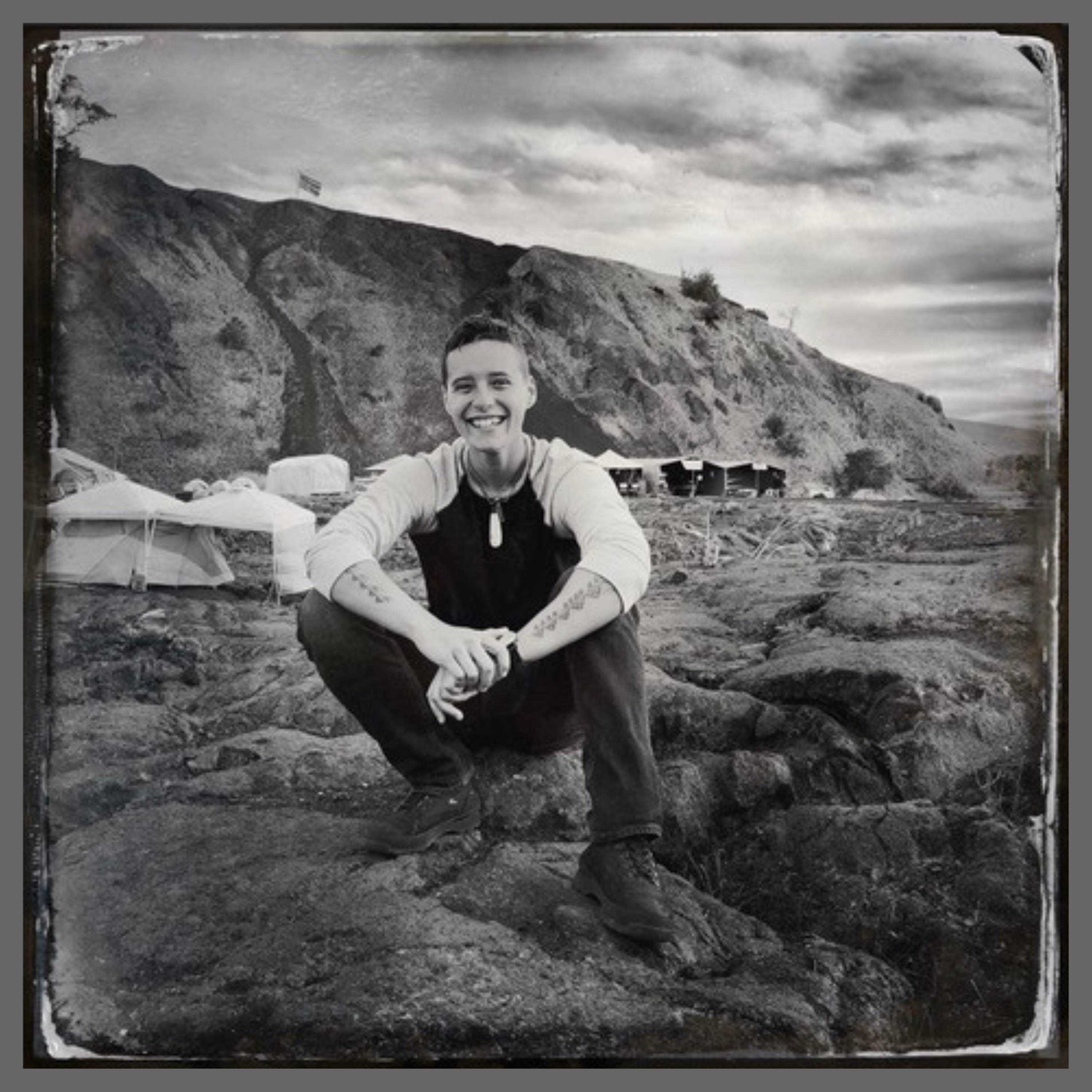
S16 Ep 1228Poems on Gaza—Contemplating the Impossible & Being Steadfast in Solidarity w/ JAMAICA OSORIO
"I am a poet without language and an empath without root. I am overflowing in something I do not recognize... something like terror, but still not quite that."In this episode of the Speaking Out of Place podcast, Professor David Palumbo-Liu talks with poet, activist, and scholar Jamaica Osorio. Shortly after October 7, 2023, she began to write a series of astonishing poems about the war in Gaza and the genocide. Osorio graces us with readings of some of those poems, and engages in a rich, complex, and deeply moving discussion of what went into their composition. Throughout, we talk about the power of poetry to suspend time and allow us the space to contemplate the impossible. We talk about the nature of not knowing, of the inexpressible, and the ways certain poems can give us the strength, energy, and commitment to persist in working for the liberation of all peoples, even when dwelling in grief.Dr. Jamaica Heolimeleikalani Osorio is an Associate Professor of Indigenous and Native Hawaiian Politics at the University of Hawaiʻi at Mānoa. Her award-winning poetry and activism were the subject of the Sundance Film Festival documentary This is the Way we Rise, and she is the author of Remembering our Intimacies: Moʻolelo, Aloha ʻĀina, and Ea, published by The University of Minnesota Press. She believes in the power of aloha ʻāina and collective action to pursue liberatory, abolitionist futures.(0:00) Intro(2:00) The Silence After October 7, Jamaica Osorio discusses the struggle to find language and the pressure to speak out(5:00) The Sounds of Empire in Hawaiʻi Connecting the military helicopters over Pālolo Valley to the skies of Gaza(7:00) Reading "For Palestine"(13:00) Lingering in the Inexpressible Why poetry must offer questions and suspensions rather than simple answers(18:00) Taking Risks and Earning Trust The vulnerability of sharing deeply personal, grief-stricken art with the public(24:30) Reading: "It's Time to Dance" A beautiful meditation on holding the joy of a child alongside the terror of a genocide(29:00) Children as Ancestors and Teachers How Osorio’s daughter teaches her to be fully present in both grief and joy(37:00) Reading: "Rafah Burns" A raw poem about parenthood, weeping with a newborn, and the global resonance of loss(42:00) Finding Connection in the Dark The shared emotional vocabulary of crying when the world becomes incomprehensible(44:00) ʻOnipaʻa: To Be Steadfast(46:00) The Ungovernable Belief in a Better World Why the organizers and poets will outlast the empires that try to dominate themEpisode Websitewww.palumbo-liu.comhttps://speakingoutofplace.comBluesky @palumboliu.bsky.socialInsta @speaking_out_of_place
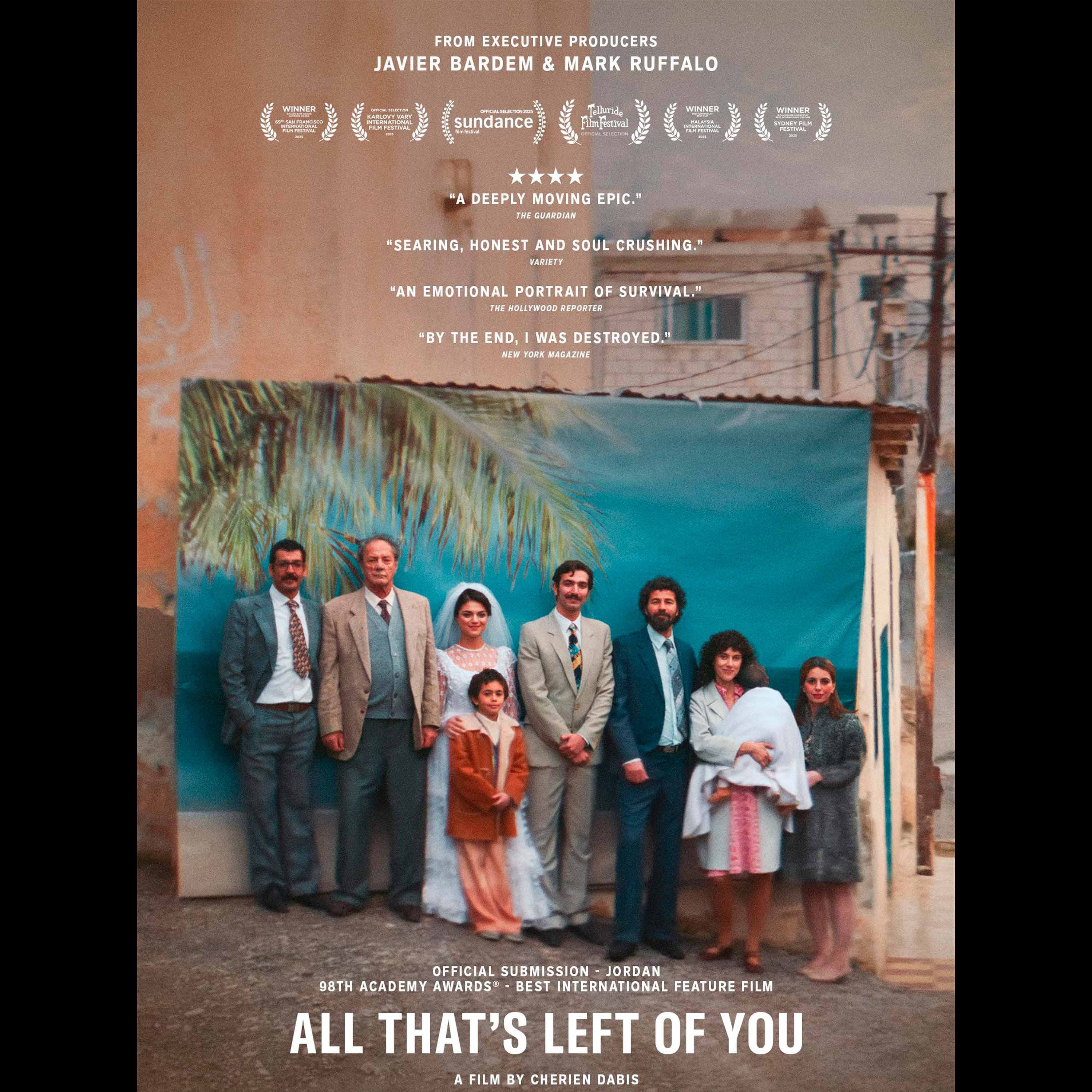
S16 Ep 1227Palestinian Experiences & Generational Trauma: CHERIEN DABIS on Directing All That's Left of You - Highlights
Two weeks away from filming her most ambitious film to date, Cherien Dabis and her crew were forced to evacuate Palestine as the devastating events of October 2023 began. Instead of abandoning the project, they adapted, filming across Cyprus, Jordan, and Greece, creating a cinematic love letter to the resilience, joy, and humanity of the Palestinian people.My guest today is Cherien Dabis. She’s a filmmaker and actress who has spent much of her career trying to fill the silences in the American narrative. In 2022, she became the first Palestinian to receive an Emmy nomination. She has worked on everything from The L Word to Ozark, Only Murders in the Building to the hit Netflix series Mo, always with an eye toward breaking the one-dimensional mold that has historically defined Arab representation in the West. But her latest project is perhaps her most ambitious yet. It’s a film called All That’s Left of You. It follows one Palestinian family across three generations, beginning in 1948 and ending in 2022. It is a story of exile and memory, and it’s Jordan’s official submission for this year’s Academy Awards.(0:00) The Inheritance of Trauma Cherien Dabis discusses how collective trauma is passed down and the importance of showing Palestinian resilience and humanity(1:50) Inherited Trauma: Identity And History The passage of trauma requires a multi-generational lens to truly understand how history and political events shape people(2:37) The Bakri Acting Dynasty: Collaborative Lineage Collaborating with four generations of the Bakri Family brought immense authenticity to the screen(4:02) Filming The Nakba: Art Imitating Crisis Evacuating Palestine weeks before shooting forced the crew to adapt amidst devastating, ongoing events(7:09) The Moment Of Activation: Racism In Ohio Experiencing severe racism during the first Gulf War ignited a lifelong drive to challenge dangerous media stereotypes(9:34) Psychological Violence: Impact Of Humiliation The film explores how non-physical harassment and humiliation leave devastating, long-term relational scars(10:48) Broken Distribution: Industry Gatekeepers Navigating systemic fear and gatekeeping in Hollywood distribution remains a profound challenge for Palestinian cinema(11:37) Previous Films, Television And Craft Directing television hones the craft and expands the creative capacity needed for ambitious feature films(12:28) Truth Seekers: The Next Generation Hope lies with young people who refuse to accept the broken systems and hidden truths of previous generationsEpisode Websitewww.creativeprocess.info/podInstagram:@creativeprocesspodcast
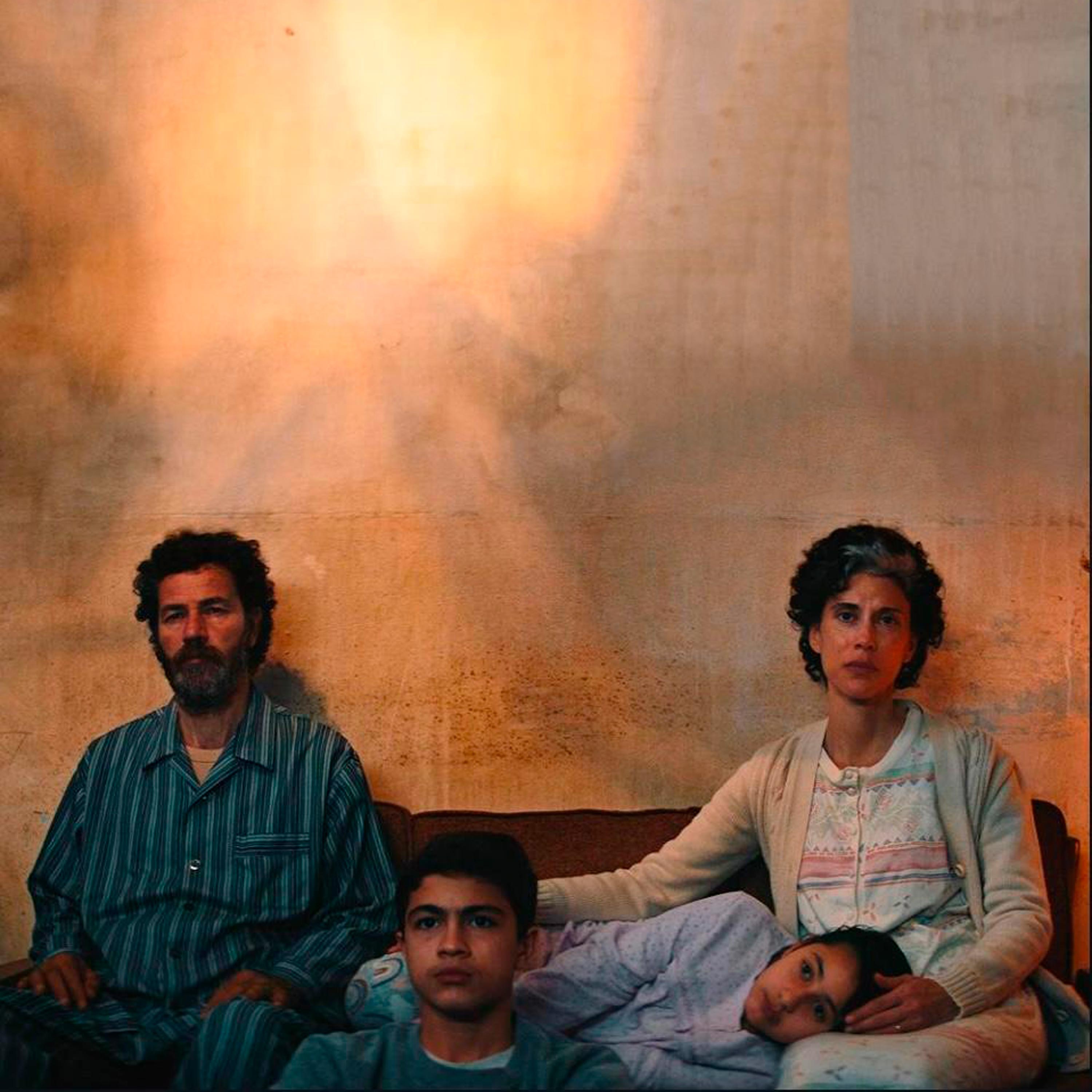
S16 Ep 1226The Psychological & Emotional Impact of Occupation w/ Actress, Director CHERIEN DABIS
“These oppressive structures are built to strip us of our humanity. One of the ways they do that is by filling us with anger and hatred. If we allow ourselves to stay there, we're doing the job of the oppressor for them by slowly killing ourselves. I wanted to make a movie that would remind people that we can't allow them to win by giving up our humanity. We have to hold onto our humanity and try in these impossible circumstances.”My guest today is Cherien Dabis. She’s a filmmaker and actress who has spent much of her career trying to fill the silences in the American narrative. In 2022, she became the first Palestinian to receive an Emmy nomination. She has worked on everything from The L Word to Ozark, Only Murders in the Building to the hit Netflix series Mo, always with an eye toward breaking the one-dimensional mold that has historically defined Arab representation in the West. But her latest project is perhaps her most ambitious yet. It’s a film called All That’s Left of You. It follows one Palestinian family across three generations, beginning in 1948 and ending in 2022. It is a story of exile and memory, and it’s Jordan’s official submission for this year’s Academy Awards.(0:00) The Inheritance of TraumaCherien Dabis discusses showing the multifaceted humanity of Palestinians beyond just pain and suffering(3:41) Inherited Trauma: Identity And History The film explores how collective trauma is passed down across generations and shapes individual identities(5:52) The Bakri Dynasty: Collaborative Lineage Working with the legendary Bakri Family brought deep, authentic relational dynamics to the screen(9:25) Filming The Nakba: Art Imitating Crisis The crew faced severe challenges and had to evacuate Palestine during the October 2023 escalation(16:10) Representation Gap: Dehumanization In Media Growing up in Ohio, Cherien Dabis witnessed the dangerous misrepresentation of Arabs in Western media(21:24) The Moment Of Activation: Racism In Ohio The stark racism experienced during the first Gulf War ignited her passion to become a filmmaker(33:40) Psychological Violence: Impact Of Humiliation The film depicts how psychological harassment under occupation leaves devastating, long-term impacts on families(38:23) Broken Distribution: Industry Gatekeepers Despite international success, systemic fear and gatekeeping in the US distribution market remain significant obstacles(45:28) Previous Films, Television And Craft Directing television shows like Only Murders in the Building expanded her creative capacity and adaptability(51:45) Truth Seekers: The Next Generation Cherien Dabis shares her profound hope for young people who refuse to accept the broken systems of the pastEpisode Websitewww.creativeprocess.info/podInstagram:@creativeprocesspodcast
S16 Ep 1225Game Over: Metrics, Big Data and Why We Need to Stop Keeping Score w/ C. THI NGUYEN - Highlights
"To be in the process of making things, to be in the process of talking to people about what things mean. The creative process is actually, I think, the most meaningful part of life, but it's very hard to measure. When we get shoved towards a world that demands easy measurables, it's very hard to optimize away from the creative process and optimize towards things that are more static."On this episode of The Creative Process, philosopher C. Thi Nguyen joins us to discuss his new book, The Score: How to Stop Playing Somebody Else's Game. He unpacks the profound concept of "value capture"—the moment we stop caring about the rich, subtle experiences of life and start obsessing over simplified, external metrics like grades, likes, and screen time.Beyond the trap of quantification, C. Thi Nguyen explores the liberating power of games and art. We discuss how true play requires us to step lightly between different rule sets, the difference between art and craft, and how reclaiming our creative process might just be the ultimate meaning of life.(0:00) THE TRAP OF VALUE CAPTURE How external metrics and scoring systems hijack our personal values and creativity(7:09) THE LOGIC OF QUANTIFICATION Why simple numbers travel well but strip away vital human context, from screen time to grades(11:58) THE MAGIC CIRCLE OF PLAY Understanding the difference between a gamified life and the true, disattached beauty of struggle(14:57) ART, CRAFT, AND METRICS Why taking the hard way leads to genuine creative expression, and how to spot value-laden systems(19:34) THE POLITICS OF MEASUREMENT Questioning the assumption that complex human traits, like IQ or consciousness, can be quantified on a single scale(21:31) THE SPIRIT OF PLAY Using constraints to boost collaborative storytelling and learning to step lightly between different rule worldsEpisode Websitewww.creativeprocess.info/podInstagram:@creativeprocesspodcast

S16 Ep 1224 The Score: How to Stop Playing Somebody Else's Game with C. THI NGUYEN
We live in a world obsessed with tracking. From our sleep scores to our social media engagement, invisible systems constantly quantify our worth. But when we replace our deepest values with these thin, easily measurable numbers, we lose a part of our humanity. It is time to step outside the magic circle of optimization and reclaim the unstructured joy of being alive. C. Thi Nguyen is a philosopher whose work gets to the heart of the invisible structures that define modern life. He first established himself as a food writer, exploring the sensory world, before turning his intellectual gaze toward the philosophy of games and agency. He’s the author of Games: Agency As Art.His new book is The Score: How to Stop Playing Somebody Else's Game.He argues that when we simplify our values for the sake of a leaderboard, something inside the human spirit begins to die. In it, he explores a concept called "value capture"—the moment we stop caring about the experience and start obsessing over the metric. He joins me now to discuss how we can lead a playful, spontaneous life without getting lost in the scoring systems of the 21st century.(0:00) THE MEANING OF LIFE IS THE CREATIVE PROCESS Why the most valuable parts of life are impossible to measure(6:46) VALUE CAPTURE DEFINED How external metrics and institutional scoring systems take over our personal values(11:38) THE METRICS WE LIVE BY The invisible toll of screen time, credit scores, and daily optimization(19:44) THE LOGIC OF QUANTIFICATION Why simple numbers travel well but strip away vital human context(24:13) THE MAGIC CIRCLE OF PLAY Understanding the difference between a gamified life and the true beauty of struggle(31:56) ART AS A GAME How taking the hard way and avoiding efficiency leads to genuine creative expression(38:48) THE POLITICS OF TECHNOLOGY Why tools and systems like factories and databases are never truly value-neutral(44:23) AI AND HUMAN CREATIVITY Navigating the tension between automated efficiency and expressive human art(50:44) THE POLITICS OF IQ Questioning the assumption that complex human traits can be measured on a single scale(1:01:12) NARRATIVE SCAFFOLDING How structured constraints in role-playing games can actually boost collaborative storytelling(1:10:00) THE SPIRIT OF PLAY Stepping lightly between different rule worlds and reclaiming our agencyEpisode Websitewww.creativeprocess.info/pod@creativeprocesspodcast

S16 Ep 1223The Politics of Collecting: Race & the Aestheticization of Property with EUNSONG KIM
Are the walls of our most celebrated museums actually monuments to wealth extraction and labor suppression? How did the violent union-busting tactics of the 19th-century robber barons pave the way for modern philanthropy? And what happens when we expose the hidden racial capitalism behind the "genius" of modern art?In this episode of the Speaking Out of Place podcast, Professor David Palumbo-Liu talks with Eunsong Kim about her stunning book, The Politics of Collecting: Race & the Aestheticization of Property. It is remarkable in its theoretical conceptualization, argument, and archival work. Kim argues that the beginnings of elite art collection in the United States coincided with the rise of the robber barons and the suppression of the labor movement. She connects this to Taylorism and the idea of scientific management, that further extenuated the rift between the mind and the body, between intellectual activity and labor. Not coincidentally, this distribution of kinds of work created a new distribution of value. In each case, Kim argues, race played a fundamental role. Ranging from the “found” art of Duchamp to the pseudo-Marxist conceptual art of Sierra, Kim eviscerates both pretention and cruelty, and restores the laboring body and what it produces to prominence, along with a truly reinvigorated and capacious sense of the Imagination outside of the constraints of neoliberal aesthetics.(0:00) The Politics of Collecting(2:16) The Rise of the Museum Form How art spaces are fundamentally tied to racial capitalism and settler colonialism(5:18) Carnegie, Frick, and the Homestead Strike, Violent de-unionization of steelworkers that preceded modern philanthropic projects(10:04) Taylorism and Scientific Management How Frederick Taylor's experiments sought to separate "mind work" from "hand work"(13:00) The De-skilling of Labor(16:11) The PR of Robber Barons(19:42) Duchamp and the Illusion of Meritocracy(26:17) Racial Violence and the "Ready-Made" Reading Duchamp's Fountain through the lens of segregation and white freedom(32:26) Santiago Sierra and Neoliberal Aesthetics Critiquing art that replicates capitalism by enacting humiliation on marginalized and precarious workers(43:12) Artists vs. Workers at the Whitney, 1969 anti-Vietnam War protest(47:58) Professors as Managers On private university labor laws, unionization, and the weaponization of the "manager" title(51:24) AI and the Alienation of ThoughtEpisode Websitewww.palumbo-liu.com https://speakingoutofplace.com Bluesky @palumboliu.bsky.social@speaking_out_of_place

S16 Ep 1222The Salt Stones: Seasons of a Shepherd’s Life with HELEN WHYBROW
Have we forgotten how to truly participate in the natural world? What can the ancient practice of shepherding teach us about ecological healing? How does physical labor connect us to the land, memory and belonging?In this episode of the Speaking Out of Place podcast, Professor David Palumbo-Liu speaks with Helen Whybrow about her book, The Salt Stones: Seasons of a Shepherd’s Life. Besides being a detailed account of the day to day, season by season life on her farm, where she and her family raise sheep, build a broad community, and maintain Knoll Farm, a center for activists, writers, artists and others to share ideas on how to promote healthier and more just ways of living together and in the environment, The Salt Stones is at base about the ways we are losing a sense of belonging, not only with others and with other forms of life on this planet, but also with the cycles of existence, of life and of death. Whybrow shows time and again that it is mostly a matter of developing ways of seeing and noticing what is all around us, and learning about and respecting the ways that generations of people and non-human animals have existed together in sustainable and mutually-dependent ways.Helen Whybrow is a writer, editor and organic farmer whose book about shepherding, land and belonging, The Salt Stones, was longlisted for the National Book Award and chosen as a New Yorker Best Book of 2025. Her other titles include Dead Reckoning (W. W. Norton, 2001) and A Man Apart (Chelsea Green, 2015). She has a master’s in journalism and has taught writing at Middlebury College and the Breadloaf Environmental Writer’s Conference. She and her family farm and steward a refuge for land justice at Knoll Farm in Fayston, Vermont.(0:00) The Salt Stones(2:50) A Lifelong Love of Land and Language(6:50) The Cord: A Story of Lambing and Life(13:40) Literary Influences and Jean Giono(18:15) The Erased Work of Nature(20:30) Radical Intimacy and Participation(23:45) Measuring Diminishment and Listening to Nature(25:15) Lita the Ewe and Complex Ecosystems(29:17) Kulning: The Lost Art of Herding Songs(32:15) Embodied Memory and Physical Labor(37:45) The True Meaning of Belonging(43:30) Radical Hospitality at Noel Farm(46:15) Kinship Episode Website www.palumbo-liu.comhttps://speakingoutofplace.com Bluesky @palumboliu.bsky.social Instagram @speaking_out_of_place

S16 Ep 1221Exile, Empire & Resistance: YURI HERRERA on Benito Juarez & Today's Political Crises
What happens when Mexico's future president lands in New Orleans, a city of operas, slave markets, and radical musical invention? A man who spoke a variant of Zapotec and read the French philosophers of the Enlightenment finds himself adrift in the hallucinatory swamps of New Orleans.In this episode of Speaking Out of Place podcast, Professor David Palumbo-Liu speaks with novelist, essayist, and scholar Yuri Herrera about his new novel, Season of the Swamp, which is a deeply researched and dazzlingly imagined account of Benito Juarez’s time spent in exile in New Orleans. We learn about what that time and place offered to Juarez’s understanding of a world coming into being—one of créolité and carnival, of mixedness and multiplicity, and what these sometimes hallucinatory moments offered his political vision. They talk about what kinds of new visions of freedom are discovered in the midst of forms of slavery that horrify Juarez. We hear how all of this relates to the present day—to the genocide in Gaza, the violent ICE attacks in the United States, and the descent into unbridled, and unmasked fascism.Yuri Herrera's first three novels have been translated into several languages: Kingdom Cons, Signs Preceding the End of the World, and Transmigration of Bodies. In 2016 he shared with translator Lisa Dillman the Best translated Book Award for the translation of Signs Preceding the End of the World. That same year he received the Anna Seghers Prize at the Academy of Arts of Berlin, for the body of his work. His latest books are A Silent Fury: The El Bordo Mine Fire, Ten Planets, and Season of the Swamp. He is a professor of creative writing and literature at Tulane University, in New Orleans.(0:00) The Season of the Swamp(3:55) Benito Juarez’s Life, his indigenous roots and his conflict with dictator Santana.(7:00) Yuri Herrera's relationship with New Orleans and the theme of extreme migration.(11:00) An Accidental Avant-Garde How the clash of European classical music and African drumming in Congo Square created a new space for imagination.(15:30) Individual Freedom vs. Slavery(19:30) Ocampo the Socialist Vampire Slayer Symbolic dreams in the novel and the rebellious resilience of New Orleans.(24:10) The Art of Translation(27:25) Reading from the novel(33:30) Democratizing the Gaze Why the author chose not to use Juarez's name in order to strip away the monument and reveal the tender, perceptive migrant.(39:30) Modern Fascism and Cruelty Connecting history to the ICE attacks and global resistance.(45:00) The Last Gringo Reflecting on a short story about language, power and the changing face of America. www.palumbo-liu.comhttps://speakingoutofplace.com Bluesky @palumboliu.bsky.social @speaking_out_of_place

S16 Ep 1220On Agency and the Female Gaze: Writers, Artists, Filmmakers & Activists Share Their Stories
Today, on International Women's Day, we hear from writers, artists, filmmakers and activists who have used their work to question old hierarchies and give expression to the fullness of women’s experiences.(0:00) Manuela Lucà-Dazio (Exec. Director, Pritzker Architecture Prize · Fmr. Exec. Director, Dept. of Visual Arts & Architecture · Venice Biennale) on Analyzing and Acting(2:01) Siri Hustvedt (Novelist, Scholar, Memoirist · Author of ‘Ghost Stories’ and ‘What I Loved’) on Listening and the Essence of Dialogue(3:35) Hala Alyan (Psychologist, Author of I'll Tell You When I'm Home)(5:11) Ana Castillo (Novelist & Poet) On Xicanisma and Indigenous History(6:55) Sharmeen Obaid-Chinoy (Academy Award-winning Filmmaker) Film As A Tool For Change(8:37) Sara Ahmed (Scholar) On The Feminist Killjoy(10:40) Marilyn Minter (Artist) on Owning Sexual Agency(11:23) Ellen Rapoport (Showrunner, Writer, HBO’s Minx) on Feminism and Sexual Expression(12:07) Intan Paramaditha (Author) on Tiger Mothers, Monsters and So-called Bad Women(15:07) Ada Limón (24th U.S. Poet Laureate) Motherhood, Grief And Poetry(18:11) Ami Vitale (Photographer & Filmmaker) How Being a Woman Gave Her Access to Different StoriesTo hear more from each guest, listen to their full interviews.Episode Websitewww.creativeprocess.info/pod@creativeprocesspodcast

S16 Ep 1219Trust, Education & Writing as Resistance w/ AL KENNEDY - Highlights
"The thing that puzzled him was why people don't agree to be fully expressed while they're alive. Why does it only happen in their last moment? Why wouldn't you live being fully expressed?"My guest today is AL Kennedy. She is one of Britain’s most acclaimed and versatile literary voices, a writer who can inhabit the internal life of a soldier in a POW camp, as she did in her Costa Book Award-winning novel Day, as easily as she can navigate the "professional lying" of a modern civil servant.Her latest novel, Alive in the Merciful Country, takes place during the 2020 lockdown. It tells the story of a primary school teacher who receives a confession from an undercover police officer who infiltrated her life decades earlier. It’s a provocative investigation into state power, the "Spy Cops" scandal and the search for mercy in an age of surveillance. It’s a book about the breakdown of trust. We talk about her life, her activism, and why she believes fiction is the only way to tell the truth when the facts are forbidden and how she balances the truth of her novels with the relief of stand-up comedy.(0:00) Finding Your VoiceOn the Alfred Wolfsohn voice method and the power of being fully expressed(2:30) Reading from Alive in the Merciful CountryKennedy shares a passage from her latest novel, exploring hope and resilience in dark times.(4:43) The Myth of Shrinking Attention SpansChallenging the narrative that modern audiences cannot focus, and the importance of engaging storytelling.(6:22) Education and the Foundation of DemocracyThe dangers of dismantling education and how critical thinking protects us from fascism.(10:26) The Spy Cop Scandal and State SurveillanceUnpacking the reality of undercover police infiltrating peaceful protests and intimate lives.(13:59) Lockdown: A Global Pause and the Inrush of EmpathyThe fleeting moment of unified humanity during the pandemic and how it was ultimately betrayed.(17:34) Writing Without Theft: The Ethics of Character CreationKennedy explains her imaginative process and why she refuses to steal details from real people's lives.(28:16) AI, Digital Slop, and the Loss of TrustReflections on artificial intelligence as an unstable plagiarism machine and its impact on truth.(30:03) Nature, Spirituality, and the Merciful CountryFinding healing in the natural world and navigating the future with love and awareness.Episode Websitewww.creativeprocess.info/podInstagram:@creativeprocesspodcast

S16 Ep 1218The Art of Fiction, Democracy & Truth with AL KENNEDY
What happens when the state infiltrates your most intimate relationships? How do we protect the innocence and imagination of children in an increasingly authoritarian world? "If you have love, eventually you're going to win. It's not that people aren't going to die. It's not terrible things aren't going to happen. But if you stay with that and you stay centered in that, you'll get through and you will not have turned into a monster in order to overcome monsters.”My guest today is AL Kennedy. She is one of Britain’s most acclaimed and versatile literary voices, a writer who can inhabit the internal life of a soldier in a POW camp, as she did in her Costa Book Award-winning novel Day, as easily as she can navigate the "professional lying" of a modern civil servant.Her latest novel, Alive in the Merciful Country, takes place during the 2020 lockdown. It tells the story of a primary school teacher who receives a confession from an undercover police officer who infiltrated her life decades earlier. It’s a provocative investigation into state power, the "Spy Cops" scandal and the search for mercy in an age of surveillance. It’s a book about the breakdown of trust. We talk about her life, her activism, and why she believes fiction is the only way to tell the truth when the facts are forbidden and how she balances the truth of her novels with the relief of stand-up comedy.(0:00) Finding Your Voice On the Alfred Wolfsohn voice method and the power of being fully expressed(2:17) Education and the Foundation of Democracy The dangers of dismantling education and how critical thinking protects us from fascism.(5:14) The Myth of Shrinking Attention Spans Challenging the narrative that modern audiences cannot focus, and the importance of engaging storytelling.(8:23) Reading from Alive in the Merciful Country Kennedy shares a passage from her latest novel, exploring hope and resilience in dark times.(17:45) The Spy Cop Scandal and State Surveillance Unpacking the reality of undercover police infiltrating peaceful protests and intimate lives.(22:07) AI, Digital Slop, and the Loss of Trust Reflections on artificial intelligence as an unstable plagiarism machine and its impact on truth.(28:29) The Power of the Powerless: Radical Whimsy How absurdity, humor, and inflatable costumes can disrupt authoritarian mindsets and potential violence.(33:13) Lockdown: A Global Pause and the Inrush of Empathy The fleeting moment of unified humanity during the pandemic and how it was ultimately betrayed.(42:53) Writing Without Theft: The Ethics of Character Creation Kennedy explains her imaginative process and why she refuses to steal details from real people's lives.(1:29:40) Nature, Spirituality, and the Merciful Country Finding healing in the natural world and navigating the future with love and awareness.Episode Websitewww.creativeprocess.info/podIG @creativeprocesspodcast

S16 Ep 1217SIRI HUSTVEDT on Love, Grief & Her Late Husband PAUL AUSTER - Highlights
“Grief is a particular kind of unrequited love. It wasn't unrequited in the past. Usually, we think of unrequited love as you never got to do it, you never had it for yourself. But, in fact, there can be requited love, which is then unrequited love in the paroxysms of grief.”Today, we are honored to welcome a writer whose work has long explored the intimate landscapes of the mind, memory and the heart. Siri Hustvedt’s writing moves between the personal and the philosophical, the literary and the deeply human. Her work bridges collections of essays, non-fiction, poetry, and seven novels, including the international bestsellers What I Loved and The Summer Without Men. Recipient of the Princess of Asturias Award for Literature and the Gabarron Prize for Thought, her work has been translated into over thirty languages. Her new memoir, Ghost Stories, is a reflection on forty-three years shared with her late husband, the writer and filmmaker Paul Auster. In its pages, we encounter not only love and loss, but the quiet persistence of presence, memory, and language itself.(0:00) “We were hugely important to the drama of becoming in our own lives”(2:04) Grief as Unrequited LoveSiri explores the emotional reality of living without Paul Auster, noting that grief occurs because love does not stop when a person dies.(3:19) The Shared Space of a 43-year Marriage(4:36) Reading from Ghost StoriesSiri reads the opening passage of her memoir, detailing how the loss of her husband deranged her sense of time and bodily rhythms.(7:02) How Loss Changes Our Sense of Time(11:24) How Powerful Emotions and a Person's Life Can Play a Role in Illness(13:04) Believing in a Reality that Transcends the Individual(20:06) Physical Love in MarriageOn the importance of physical intimacy in long-term marriages, a reality often left out of grief memoirs.Episode Websitewww.creativeprocess.info/podInstagram:@creativeprocesspodcast

S16 Ep 1216Ghost Stories: A Memoir of Love & Grief with SIRI HUSTVEDT
“Grief happens because you don't stop loving the person who died. The person doesn't exist in your reality anymore. The everyday is not colored and shaped by this other human being, but you don't stop loving the person. So grief is a particular kind of unrequited love. And probably without that dynamic relationship with this person, I would be someone else. And he would've been someone else. I mean, Paul died before me. But we were, I think, hugely important to the drama of becoming in our own lives.”Today, we are honored to welcome a writer whose work has long explored the intimate landscapes of the mind, memory and the heart. Siri Hustvedt’s writing moves between the personal and the philosophical, the literary and the deeply human. Her work bridges collections of essays, non-fiction, poetry, and seven novels, including the international bestsellers What I Loved and The Summer Without Men. Recipient of the Princess of Asturias Award for Literature and the Gabarron Prize for Thought, her work has been translated into over thirty languages. Her new memoir, Ghost Stories, is a reflection on forty-three years shared with her late husband, the writer and filmmaker Paul Auster. In its pages, we encounter not only love and loss, but the quiet persistence of presence, memory, and language itself.(0:00) Grief as Unrequited LoveSiri explores the emotional reality of living without Paul Auster, noting that grief occurs because love does not stop when a person dies.(4:00) Facing Death with CourageThe importance of not hiding from mortality and how discussing end-of-life wishes offered a necessary perspective.(12:37) Reading from Ghost StoriesSiri reads the opening passage of her memoir, detailing how the loss of her husband deranged her sense of time and bodily rhythms.(18:41) The Phantom Limb: ” The beloved is taken away and it feels as if you're amputated or gutted.”(21:50) Grandfather, Father and Son: Generational Traumas Behind Paul Auster's Writing(24:11) How Powerful Emotions and a Person's Life Can Play a Role in Illness(30:09) Feeding the Earth "Paul very pointedly told me that he wanted to be buried in the Jewish mode. And the phrase he used was, “I want my body to feed the earth.”(44:23) Physical Love in MarriageOn the importance of physical intimacy in long-term marriages, a reality often left out of grief memoirs.(54:00) The Philosophy of the Between: How relational existence is foundational to life.(1:00:16) The Hubris of Controlling Nature(1:12:00) The Dark History of Statistics(1:32:12) The Art of Learning vs. AI“I think we have to ask ourselves, what is education?Episode Websitewww.creativeprocess.info/podIG @creativeprocesspodcast

S16 Ep 1215The Healing Power of the Arts: Longevity, Immunity & Wellbeing w/ DAISY FANCOURT - Highlights
"Within society, we seem to have separated the arts out, so they're not so much a part of our daily lives. Often there's something that we feel we should do as a kind of leisure activity or hobby if we have enough time or if we have enough money to engage in them. And this is so fundamentally different to how humans engaged with the arts. When we look back thousands of years, it just was part of the everyday, and I feel like that's a major loss within contemporary societies."Daisy Fancourt is a Professor of Psychology & Epidemiology at UCL and the author of Art Cure: The Science of How the Arts Transform Our Health. A pioneer in the field of psychoneuroimmunology, she directs the WHO Collaborating Center on Arts and Health, where her research influences global health policy and the integration of the arts into medical care.(0:00) The Healing Power of the Arts: Longevity, Immunity & Wellbeing(1:17) Singing to Daphne: How Daisy used singing to comfort her premature daughter in the ICU(2:47) The Story of Russell: How a stroke survivor used art classes to reclaim his life, health, and identity(5:23) A Planet of 8 Billion Artists: Tracing the evolutionary origins of creativity back 40,000 years(8:58) Psychoneuroimmunology. Defining the biological mechanisms: how art reduces inflammation and cortisol(12:42) Art & Longevity. How arts engagement can slow biological aging and alter gene expression(18:24) Safeguarding Creativity. Why we should use AI for routine tasks but protect the human joy of the creative processEpisode Websitewww.creativeprocess.info/podInstagram:@creativeprocesspodcast

S16 Ep 1214ART CURE: How the Arts Can Transform Our Health with DAISY FANCOURT
Did you know that visiting a museum can lower your cortisol levels? Or that singing can bond a group faster than almost any other activity? We tend to think of the arts as entertainment, but science tells a different story. Today, we explore why creativity is hardwired into our biology and how it can be used to treat everything from postnatal depression to stroke recovery.Daisy Fancourt is a Professor of Psychology & Epidemiology at UCL and the author of Art Cure: The Science of How the Arts Transform Our Health. A pioneer in the field of psychoneuroimmunology, she directs the WHO Collaborating Center on Arts and Health, where her research influences global health policy and the integration of the arts into medical care.(0:00) The Healing Power of the Arts: Longevity, Immunity & Wellbeing(4:14) The Story of Russell: How a stroke survivor used art classes to reclaim his life, health, and identity(9:01) A Planet of 8 Billion Artists: Tracing the evolutionary origins of creativity back 40,000 years(15:30) The Chemistry of Connection. Why singing evolved before language and how it accelerates group bonding(20:32) Psychoneuroimmunology. Defining the biological mechanisms: how art reduces inflammation and cortisol(25:57) The Professional Paradox: Balancing the wellbeing benefits of art with the pressures of a creative career(30:03) Predictive Coding & Play: Why the human brain needs improvisation and why we shouldn't outsource creativity to AI(33:26) Singing to Daphne: How Daisy usedsinging to comfort her premature daughter in the ICU(37:55) World Health Organization, Public Policy & Social Prescribing(46:04) Art & Longevity. How arts engagement can slow biological aging and alter gene expression(58:17) Finding Artistic Reverence in NatureEpisode Websitewww.creativeprocess.info/podInstagram:@creativeprocesspodcast

S16 Ep 1213Humans as Storytelling Animals: Poets, Novelists & Musicians on the Power of Writing
Why do we write? Is it to capture a memory before it vanishes or to build a bridge between the person we are and the stories we've been told? In this episode of The Creative Process, we explore the practice of writing as an awakening and tool for discovery with a group of celebrated poets, novelists, musicians and thinkers.We hear from neuroscientist, dancer and author Julia Christensen on how literature inspires transformative aesthetic experiences. Award-winning poet and clinical psychologist Hala Alyan discusses navigating displacement through narrative, while bestselling author Andre Dubus III reflects on the honest labor of the writer and the willingness to fail.Pulitzer Prize-winning poet Jericho Brown shares how the sounds of American vernacular guide his work and Fmr. US Poet Laureate Ada Limón discusses holding hope within frightening thoughts about the future of our planet. NYT Bestseller Aimee Nezhukumatathil speaks on tenderness towards the natural world and naturalist Sy Montgomery shares how animals have been her greatest teachers.The conversation expands with poet Max Stossel on finding humanity in conflict, Tiokasin Ghosthorse on the ancient energy of the earth and Julian Lennon on art as a collective human endeavor. Finally, composer Erland Cooper takes us to the landscape of his youth, where the sound of the sea informed his creative voice.To hear more from each guest, listen to their full interviews.Episode Websitewww.creativeprocess.info/podInstagram:@creativeprocesspodcast

S16 Ep 1212On Truth & Civil Society: Richard Wolff, Jeffrey Sachs, Educators & Artists' Stories
How do we restore trust and defend democracy when the very foundations of truth are shifting? Today we look at truth, the decline of the American Empire and buiding a shared future through the eyes of educators and economists, artists and philosophers.(0:00) Lee McIntyre (Philosopher, Author) On Disinformation: How to Fight for Truth and Protect Democracy(2:21) Richard D. Wolff (Economist, Founder of Democracy at Work) on Ideological Control and the Decline of the American Empire(4:36) Kathleen Rogers (President, Earth Day Network) Why climate literacy should be a core requirement for school(5:11) Todd Kashdan (Psychologist, Author of The Art of Insubordination) on Critical Thinking in Education(6:17) Howard Gardner (Psychologist, Co-Director of The Good Project) on the Synthesizing Mind(7:34) Alan Poul (Emmy Award-winning Director/Producer of Six Feet Under, Tokyo Vice) on Paul Schrader, Stephen Sondheim and the Importance of Mentorship(9:15) Jeffrey Sachs (Economist, President of UN SDSN) on Sustainable development and global citizenship for all(10:29) Jericho Brown (Pulitzer Prize-winning Poet of The Tradition) “When you are a writer, you are a person of power.”(11:38) Peter Singer (Moral Philosopher, Author of The Life You Can Save) on Altruism and How to Live a Good LifeTo hear more from each guest, listen to their full interviews.Episode Websitewww.creativeprocess.info/podInstagram @creativeprocesspodcast

S16 Ep 1211Muse Cells & The Future of Health: Why Stars like Chris Hemsworth & Tony Robbins Turn to Regenerative Medicine
“They're kind of like a hidden superhero in your body and we just didn't know they existed. Muse cells eat the damaged cells, and they can actually turn into new cells using the cellular machinery.”Dr. Adeel Khan is a global thought leader in regenerative medicine. He is the CEO and Founder of and founder of Eterna Health, whose work with MUSE cell therapy—developed in collaboration with its discoverer, Professor Mari Dezawa—has made him the go-to expert for world leaders, athletes, and celebrities Chris Hemsworth, Kim Kardashian, and Tony Robbins. In this episode, we move beyond the hype of "anti-aging" to explore the hard science of Muse cells (Multilineage-differentiating Stress-Enduring cells). Dr. Khan breaks down how these unique cells differ from the "medicinal signaling cells" (MSCs) found in most clinics and how they act as a bridge to a future where tissue regeneration is standard care.(0:00) The "Repair Guys" & The Muse Difference Dr. Khan explains why traditional stem cells (MSCs) often disappoint and how Muse cells offer the "best of both worlds": safety and pluripotency.(2:19) Smart Cells: How They Find the Damage Understanding the "homing mechanism" that allows Muse cells to sense inflammation and instinctively travel to injured areas like the brain or heart.(3:11) Curing the Incurable: Diabetes & Alzheimer's The potential of the "cure triad"—stem cells, gene therapy, and FMT—to treat complex autoimmune diseases within the next decade.(4:40) Biological Noise & The Symphony of Health How "static" in our gene expression indicates aging, and how cellular therapy can reduce this noise to restore the body's harmony.(6:40) The Viral Monkey Study Dr. Khan discusses a recent study showing significant de-aging in monkeys through high-frequency cell dosing.(7:32) Unshakeable Foundations: Lifestyle as Medicine Why advanced therapies must be paired with purpose, community, and mindfulness to create a "bulletproof" body.(8:44) From Sketchy to Standardized Navigating the regulatory landscape: why Muse cells are being classified as a drug in regions like the UAE and the path toward FDA approval.(12:24) A Personal Mission Dr. Khan shares the origin of his journey: trying to find solutions for his mother's chronic illness when traditional medicine failed.(14:16) The Cancer Hunter Unlike other pluripotent cells that risk tumor growth, Muse cells have a unique mechanism that can detect cancer cells and trigger their death.(18:30) Future Outlook: AI, Nature & Blue Zones Reflections on the risks of AI, the importance of "Blue Zone" city design, and reconnecting with nature in a post-human world.Episode Websitewww.creativeprocess.info/podInstagram:@creativeprocesspodcast