Show overview
The Content Universe has been publishing since 2024, and across the 2 years since has built a catalogue of 51 episodes, alongside 1 trailer or bonus episode. That works out to roughly 10 hours of audio in total. Releases follow a fortnightly cadence, with the show now in its 41st season.
Episodes typically run ten to twenty minutes — most land between 10 min and 16 min — though episode length varies meaningfully from one episode to the next. None of the episodes are flagged explicit by the publisher. It is catalogued as a EN-language Business show.
There hasn’t been a new episode in the last ninety days; the most recent episode landed 4 months ago. The busiest year was 2024, with 42 episodes published. Published by Montanus ApS.
From the publisher
🧑🏼🚀 The Content Universe: Your Daily Guide to Mastering Content CreationWelcome to The Content Universe, the podcast that’s your daily companion on the journey to mastering content creation!Hosted by Mikkel Svold, a seasoned expert in content production, this podcast delivers almost daily check-ins packed with tips, tricks, and insights you can use to elevate your content game.Whether you're crafting content for knowledge-driven companies in engineering, science, technology, or advisory sectors, or just looking to enhance your own creative projects, we've got you covered.Each episode dives into practical advice on podcasting, longform and short form writing, graphic design, efficient workflows, and so much more. Learn from real-world examples, discover the latest trends, and unlock the secrets to creating engaging, high-quality content that stands out.Tune in to The Content Universe and transform the way you produce content. 🚀
Latest Episodes
View all 51 episodesStop Inventing a Why | Ep 51
Danfoss MarCom Director: Where Industrial Marketing Is Going in 2026 | Ep 50
49: Why Content Needs a New Superpower
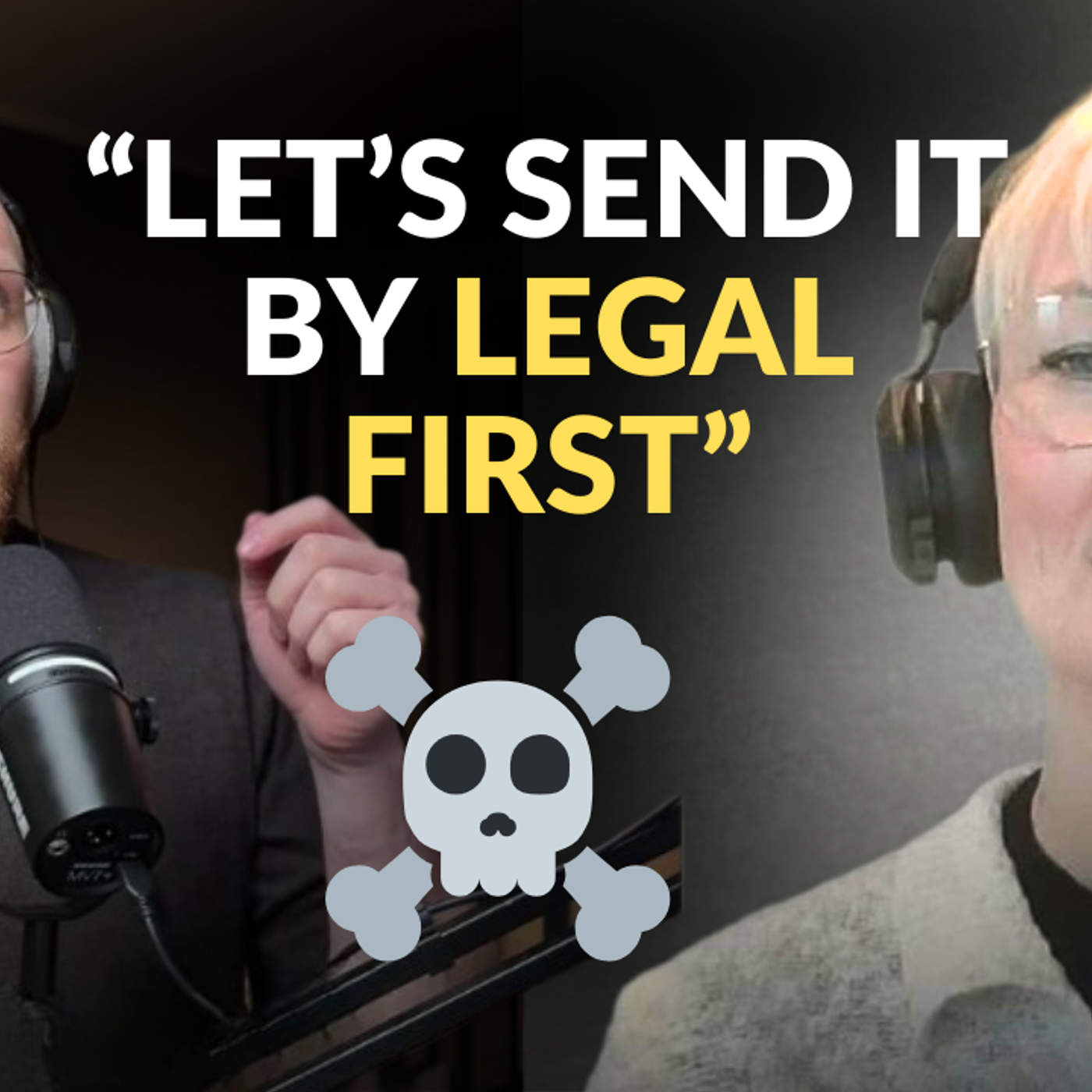
Ep 4848: Medical Company: "We cannot promote the products we make" – How ALK runs marketing anyway
How do you communicate when the rules are fixed and not up for discussion?In this episode, Mikkel Svold is joined by Maiken Riise Andersen, Head of Corporate Communication and Branding at ALK, to talk about what content creation actually looks like inside a highly regulated industry. Where compliance is not a guideline, but legislation.They discuss how ALK works with clear frameworks, structured approval flows, and mandatory training to make sure employees can communicate with confidence rather than hesitation. Not by tightening control, but by making the rules understandable and usable.The conversation covers employee advocacy, content planning, and approval processes, and why structure often becomes the foundation for creativity rather than a limitation. Especially when the alternative is uncertainty.This episode is for anyone working with content, communications, or branding in an environment where you cannot just “post and see what happens”. And for those who are starting to realise that clear boundaries are sometimes what make participation possible.# In this episode you’ll learn:Compliance is not the enemy. Unclear rules are.Rules work best when people understand what they can do, not only what they cannot.Training creates confidence. Confidence creates participation.Employee advocacy fails when people are afraid of doing something wrong.Clear frameworks turn restrictions into workable boundaries.Planning ahead is not bureaucracy. It is what makes speed possible later.Most content can be prepared long before it is published. Even in regulated industries.When compliance is systemised, creativity does not disappear. It becomes usable.# Chapters00:00 Introduction to Marketing Challenges in Pharma01:54 Differences in Corporate Communication03:59 Navigating Compliance Regulations07:10 Training Employees on Social Media Compliance12:10 Creating a Positive Compliance Culture18:37 The Shift in Employee Engagement22:24 Approval Processes in Pharmaceutical Marketing29:30 Recommendations for Effective Communication StrategiesThis podcast is brought to you by Montanus.
S1 Ep 4747: What to copy from our content strategy in 2026
About This EpisodeMost companies on LinkedIn are doing the same thing: posting whatever comes to mind. A workshop photo here, a quick thought there, a team dinner shot on a Friday afternoon. It feels like staying active. It looks like content. But if you step back and look at the whole feed, there's usually no thread. No pattern. Nothing that tells a potential client what you actually stand for or what you're trying to achieve.In this solo episode of the Content Universe, Mikkel Svold makes the case for content categories, a simple but surprisingly underused framework for giving your company's social media a backbone. Not a complicated editorial calendar, not a 30-page content strategy document. Just three to five defined buckets of content, each tied directly to what your business is trying to accomplish.This is a short, sharp episode: part provocation, part practical framework. If your company is producing content that feels disconnected from your strategy, or if you have a nagging sense that your LinkedIn presence isn't doing the positioning work it should be, this one is worth your time.In This EpisodeWhy posting the "idea of the day" is a trap, even when those posts get good engagementThe strategic logic behind building content categories tied to your business objectivesThe four content buckets Mikkel recommends for most B2B companiesWhy knowledge sharing posts position you as an expert, but social posts don't, and why you need bothThe content category most B2B companies neglect: services and productsA simple test for whether your clients actually know what you can do for themHow content categories remove ideation paralysis and make batch content creation possibleKey Quotes"By all means, do all of those posts. But when it comes to building thought leadership, especially on LinkedIn, I find that these one-off idea-of-the-day kind of posts, they are a little bit insufficient just by themselves.""I don't actually sell what I'm doing right now. I'm not selling doing this video. I'm not earning money doing this video. I earn money from selling marketing, helping marketing departments for producing content for them.""I bet you they only know that single thing because what you do only takes up like one percent of their daily work, and what you do takes up 100% of your daily work."About Mikkel SvoldMikkel Svold is the founder of Montanus, a B2B content production agency based in Aarhus, Denmark. He works exclusively with knowledge-driven engineering, technology, and science companies, turning a single monthly expert interview into a full content universe: podcasts, videos, blog posts, LinkedIn posts, email newsletters, and more. The Content Universe is his personal thought leadership channel: a space to share the frameworks, tools, and thinking he applies daily with his clients.Contact & FollowQuestions, topic ideas, or guest suggestions: [email protected] more episodes at montanus.co
Ep 4646: Building Thought Leadership at Ramboll with Susanne Wellington Hansen
In this episode, Mikkel Svold engages with Senior Communication & Marketing Manager at Ramboll Energy, Susanne Wellington Hansen, to explore the evolving landscape of thought leadership in knowledge-driven companies.They discuss the shift from traditional technical focus to a broader societal relevance, the importance of activating thought leadership through various channels, and the challenges of measuring its impact. Susanne emphasizes the need for visionary leadership and the role of personal branding in establishing credibility. The conversation also touches on the integration of AI in content creation and the future of thought leadership in an increasingly complex world.The takeaways from this episode are:Thought leadership has evolved from a technical focus to societal relevance.Activating thought leadership requires a multi-channel approach.The primary goal of thought leadership is to address client pain points, not direct sales.Gathering feedback from clients and stakeholders is vital for refining strategies.Training and support for personal thought leaders enhance their effectiveness.The future of thought leadership will emphasize experience and personal connection.Episode content:00:00 Introduction to Thought Leadership in Knowledge Companies02:51 Evolution of Thought Leadership: Past vs Present06:32 Activating Thought Leadership: Beyond LinkedIn10:28 The Goals of Thought Leadership: Understanding Client Needs14:31 Measuring Success in Thought Leadership18:29 The Role of Leadership in Thought Leadership Strategies22:43 The Importance of Personal Branding for Thought Leaders26:05 Rapid Fire Questions: Insights on Thought Leadership30:22 The Future of Thought Leadership and Content Sharing
45: Thought Leadership is NOT about you
I’m sorry. But thought leadership is not about you . It never was. It’s a mistake that many companies do when they try to promote a thought leadership strategy in their marketing . And even that sentence doesn’t really make sense. Because thought leadership is not marketing thought leadership is branding. So stop trying to sell your products . Stop trying to push your services. And start delivering industry specific value. In today’s episode you’ll get my approach to tackling thought leadership.
44: The 4 Basics of Your Podcast Success
how long should my podcast episodes be? How often should I release a new episode? Should I have guests or not? And really, why do I need a podcast at all? These questions are the foundation of every podcast and they are questions that you should be able to answer before starting the first recording. In this episode, I give my view on these four questions so jump in and get your answers so you can get started tomorrow.
43: Is AI in Content Production already Dead?
all across different kinds of media, different kinds of channels, different business areas and industries we see the same trend. A trend pointing out that we are already as a consumer, as a client, and as a human being, tied out from reading and watching AI generated content. Maybe it’s just me? Maybe you feel it too? But yet another shift in how we produce content is around the corner - let’s hope we can rehumanize stories and content.
42: Budget Cuts for 2025? Here's Your Must-wins
we’re at the doorstep of 2025 and that means budgets. It also Means that many marketing departments have to cut down. But how do you handle budget cuts in your marketing? And how do you prioritise the remaining resources you have? They have four bullets I wanna go through with you to maximise your value for money on a tight marketing budget. This is what we talk about today in this episode of a The Content Universe See you inside.
41: 3 things I've Stopped Doing on LinkedIn and Why
LinkedIn's a peculiar place. So many untold rules and conventions. So much focus on standing out by breaking the rules.It's contradictory. And this is why I've assembled three things, I used to do– because it was best practice – but have now stopped.Tell me, which rule is your favorite LinkedIn-rule to hate?
40: Automate Your Content Workflow with These 4 Methods
sometimes it feels like you spend all day copying and pasting from one program to another. Pushing out content on your social media platforms involves tedious and dull tasks that you need to do. But no more. Automation has become easier than ever. And with only a few clicks. A few one of set ups. You’ll be good to go with a fully automated distribution system that removes the trivial copying and pasting of your content . That’s what we talk about in this episode. See you inside.
39: Setting Up my Home Studio: Here's How
The convenience of recording from home is significant. But how do you decorate your room to avoid clutter yet still keep a professional look? Today I’ve been working in my own home studio trying to make it look nice on camera from three different angles. And that’s what we talk about in this episode. See you inside.
38: The 3 (Content) Pillars Developing You Business
Where's your primary focus: Sales? Marketing? Or branding? Rarely do I see all three get equal attention. And that’s a mistake. Sales is needed for obvious reasons. Marketing is what drives leads to sales. But branding -the often forgotten child- is what positions you in the market. Could you have a business without branding? Yes. But not as prosperous as you could have had.
37: How to Succeed with Corporate Thought Leadership
Thought leadership is a real buzzword these days. Yet most companies do it wrong. Here’s why. Thought Leadership is not about your product. Thought leadership is not about your service. Hell, it's not even about your company. It’s about industry knowledge. About what pushes the boundaries of what’s possible. Own an agenda. Own the category. Forget your product. That’s what true thought leadership is about. And that’s what we talk about in this episode of The Content Universe
36: AI Mass Produces, But Where's The Value?
AI already mass produces content. But is it valuable?Is it valuable in a year? And is it valuable in five years?Honestly, no one really knows. But there’s no question that the amount of AI produced content is on a rapid rise right now and will be even faster in the future. Near future that is.So what actually will have value in five years? In this episode, That’s what we discuss.See you inside.
35: Writers Block is Not Real. Here's Why.
Ever experienced that white frightening paper that just keeps blinking into your eyes without helping you put any words on it whatsoever? Ever tried writing writing writing and then suddenly out of nowhere your brain stop. No more words? Then you experienced writers block. And today I’m telling you that writers block does not exist. Who am I? What an idiot. Well, to me writers block is a sign of not knowing completely what the story that you are trying to tell. And if you don’t know the story, I can easily understand you have a hard time telling it. In this episode, I’ll give you my tricks to overcome, actually never experience, writers block ever again. See you inside.
34: Single Tasks or Production Windows. Here's why I've changed my production modus
ever looked at your to do list and just lost your mind? Or looked at your calendar and felt the need to breathe? We’ve changed from working with single tasks in our content production process to working with production windows. In this episode, I’ll take you through why this is a good idea. See you inside.

33: AI Generated Podcasts and All the Dilemmas
AI generated Podcasts is now a reality. I’m completely excited. Confused. Baffled. Worried. And I must say a tiny bit afraid. What’s going to happen to the human to human interactive podcast? Do people care whether it is real humans talking to each other? Does it add value that the podcast episode is based on real human experience, human emotion? Or will AI take over yet another creative discipline and possibly make human podcasts redundant. I surely hope not. But that’s what we talk about in this episode. See you inside.
32: Eliminate Non-Value Adding Tasks and become a Content Machine
we all do them. Non-value adding tasks in our content production. What might’ve looked good in the idea phase suddenly became yet another insignificant time-consuming boring task that you now have to do to push out content. And no one cares. In this episode, I’ll give you a couple of examples of non-value adding tasks that I’ve encountered in my content production and a quick idea on how you can eliminate your trivial tasks — and push out more content. See you inside.