The Colonial Department
119 episodes — Page 1 of 3
S8E12 Borderline Bureaucrats: An Early History of La Union
INTERVIEW: Mapping a life on time—the making of a historian
S8E11: We're Off to the 1924 Paris Olympics!
S8E10 In Paracale, the Faintest Gleam of Gold
S8E9 White-Hot Heat: Climate and Culture in the Late 1800s
INTERVIEW: What was it like to commute in Manila 100 years ago?
S8E8 Pacific Sick Ships: Medicine Aboard the Galleons
S8E7 The Fractured Plateau: Bukidnon in World War II
INTERVIEW: Making a Magellan Comedy Manga
S8E6: After the Black Ships Departed
S8E5: Rajio Taisō; Or, How to Get Fit in a Time of War
INTERVIEW: Restoring historical markers with Project Panandito
S8E4: Edison’s Cameras, Manila’s Trenches
S8E3: Nobody Expects the Philippine Inquisition!
S8E2: Riding a Tram in 1911 Manila
S8 Ep 3INTERVIEW: Exploring the food history of the Philippines
<html><p>“There’s a message to it: It’s our responsibility to keep Filipino food popular!”</p><p>At the launch for her book <em>What Recipes Don’t Tell: Philippine Food History in Fifty Words, </em>author and historian Felice Prudente Sta. Maria talked to a rapt audience at the Philippine Book Festival about a long career of writing about food. What new things can food tell us about our own history? How did we adapt techniques and ingredients from abroad… while still preserving our own? And how should we nurture this knowledge for future generations?</p><p>Joining her in this panel were publisher and editor Karina Bolasco, graphic designer and fellow food scholar Ige Ramos, and printmaker Marz Aglipay. Through their shared history with Felice, they deepened the conversation with their own perspectives on creativity, design, and the space for food in the publishing landscape. </p><p>Special thanks to the Ateneo de Manila University Press for inviting me to moderate this panel, and for letting me record this conversation.</p><p></p><p>Support the podcast: <a href="https://patreon.com/thecolonialdept" target="_blank">patreon.com/thecolonialdept</a></p><p>Follow us on IG: <u><a href="https://www.instagram.com/thecolonialdept/" target="_blank">@thecolonialdept</a></u></p><p>Follow us on TikTok: <u><a href="https://www.tiktok.com/@thecolonialdept" target="_blank">@thecolonialdept</a></u></p><p>Email us: <u><a href="mailto:[email protected]" target="_blank">[email protected]</a></u></p><p></p><p><em>The Colonial Dept. Interview is a series where I talk to researchers and authors shining a light on our past.</em></p></html>
S8 Ep 1S8E1: The Philippine Sour-chipelago
<html><p>Sourness, according to Doreen Fernandez, “is a favored Philippine flavor.” Just how sour is sour? “Sour enough to savor, to make the lips pucker and the eyes squint slightly, and yet not too sour—just at the point of perfection.”</p><p>In the spectrum of sensation, sourness can be both sharp and sudden, an acetic shudder down the spine. Asim, the Tagalogs call it. From the earliest written records about the Philippines, it is this taste that has come to define our cooking. “Spanish colonials from the 1500s through the 1800s described indio food as primarily salty and sour,” writes food historian Felice Prudente Sta. Maria. “Both tastes can induce sweat in hot climates and remind the body to keep hydrated and its electrolytes balanced.” Let us trace the pathways of this taste as it evolved in three key dishes: sinigang, kinilaw, and adobo.</p><p></p><p>Follow us on IG: <u><a href="https://www.instagram.com/thecolonialdept/" target="_blank">@thecolonialdept</a></u></p><p>Follow us on TikTok: <u><a href="https://www.tiktok.com/@thecolonialdept" target="_blank">@thecolonialdept</a></u></p><p>Email us: <u><a href="mailto:[email protected]" target="_blank">[email protected]</a></u></p><p></p><p>References:</p><p>Sta. Maria, Felice Prudente (2025). <em>What Recipes Don't Tell: Philippine Food History in Fifty Words. </em>Ateneo de Manila University Press.</p><p>Fernandez, Doreen G. (1988). “Culture Ingested: Notes on the Indigenization of Philippine Food.” <em>Philippine Studies, 36</em>(2), pp. 219-232.</p><p>Fernandez, Doreen G. (1994). <em>Tikim: Essays on Philippine Food and Culture. </em>Anvil Publishing.</p><p>Frank, Hannah E. R.; Amato, Katie; Trautwein, Michelle; Maia, Paula; Liman, Emily R.; Nichols; Lauren M.; Schwenk, Kurt; Breslin, Paul A. S.; Dunn, Robert R. (2022) “The evolution of sour taste.” <em>Proceedings of the Royal Society B: Biological Sciences, 289</em>(1968). <u><a href="https://royalsocietypublishing.org/rspb/article/289/1968/20211918/79292/The-evolution-of-sour-tasteEvolution-of-Sour-Taste" target="_blank">https://royalsocietypublishing.org/rspb/article/289/1968/20211918/79292/The-evolution-of-sour-tasteEvolution-of-Sour-Taste</a></u></p><p>Shaw, Sterling V. Herrera (30 August 2024). “Adobo is ‘paksiw,’ and other terms in Filipino food history.” <em>Philippine Daily Inquirer. </em></p><p>Ladrido, R.C. (1 July 2022). “Tapayan, Gusi, or Martaban: Tales of Stoneware Jars in the Philippines.” <em>VERA Files.</em></p><p>Newman, Yasmin (11 May 2023). “Kinilaw, the age-old dish of the Philippines (and why it's not ceviche).” <em>SBS Food. </em><u><a href="https://www.sbs.com.au/food/article/kinilaw-the-age-old-dish-of-the-philippines-and-why-its-not-ceviche/4alb6pswa" target="_blank">https://www.sbs.com.au/food/article/kinilaw-the-age-old-dish-of-the-philippines-and-why-its-not-ceviche/4alb6pswa</a></u></p><p>Trinidad, Bea. (16 August 2025). “Say ‘kilawin’ instead of ‘Filipino ceviche’, okay?” <em>The Philippine Star. </em><u><a href="https://www.philstar.com/lifestyle/2025/08/16/2465728/say-kilawin-instead-filipino-ceviche-okay" target="_blank">https://www.philstar.com/lifestyle/2025/08/16/2465728/say-kilawin-instead-filipino-ceviche-okay</a></u></p><p>Banez, George (31 August 2025). “Sinigang Through Time: The Filipino Sour Soup with Many Faces, One Soul.” <em>Pressenza Philippines</em></p><p>Pigafetta, Antonio (ca. 1525). “Primo viaggio intorno al mondo.” In Blair, Emma Helen, and Robertson, James Alexander (eds.), <em>The Philippine Islands, 1493-1898</em> (Vol. 33), Arthur H. Clark Company.</p><p>Wertz, S.K. (2013). “The Elements of Taste: How Many Are There?” <em>The Journal of Aesthetic Education,47</em>(1), pp. 46-57 <u><a href="https://www.jstor.org/stable/10.5406/jaesteduc.47.1.0046" target="_blank">https://www.jstor.org/stable/10.5406/jaesteduc.47.1.0046</a></u></p><p>Ferguson, Priscilla Parkhurst (2011). “The Senses of Taste.” <em>American Historical Review, 116</em>(2), pp. 371-384. <u><a href="https://www.jstor.org/stable/23307701" target="_blank">https://www.jstor.org/stable/23307701</a></u></p></html>
S7 Ep 28An important announcement about the future of The Colonial Dept.
<html><p>Before we start Season 8, I have an important announcement about this little podcast. For more info, <a href="https://www.instagram.com/p/DVPjYWmk3Nx" target="_blank">check out this Instagram post</a>.</p></html>
S7 Ep 27INTERVIEW: Twin timelines, entangled histories
<html><p>“What does it take for a culture that has caused a lot of pain and suffering to have any chance at redemption… or any sense of justice?”</p><p>Tom Sykes’ riotous new book—a collision of a neon-powered 1980s Manila and a disaster-stricken barangay in the 1570s—attempts to answer the question… with many seedy side quests in between. How did he attempt to write his wild, genre-bending vision of the Philippines? And how does <em>Back to the Future</em> figure into it?</p><p>The Colonial Dept. Interview is a bonus show where I talk to researchers and authors who are shining a light on our past.</p></html>
S7 Ep 26INTERVIEW: Sungka as a wargame?
<html><p>What a folk game can tell us about how a datu waged war. An interview with Micah Perez of the UP Diliman Department of History. </p><p>The Colonial Dept. Interview is a bonus show where I talk to researchers and authors shining a light on our past. Know a historian or author I should talk to? Email me at [email protected].</p><p>Thumbnail image: Usernameko/Wikimedia Commons</p></html>
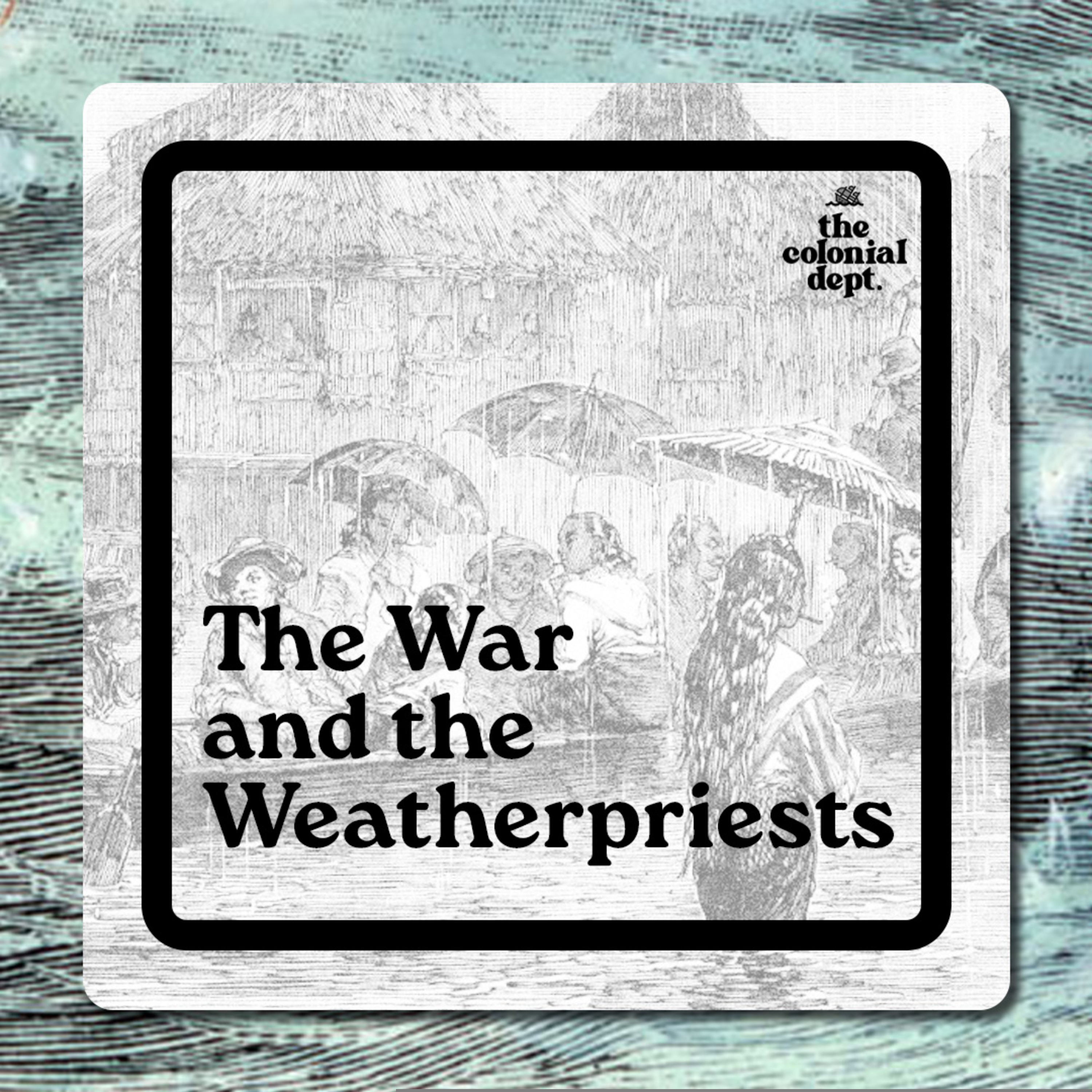
S7 Ep 24S7E13: The War and the Weatherpriests
<html><p>Ever since its founding in the 1860s, the Manila Observatory had stood watch against the typhoons and hurricanes that threatened to strike the Philippines. But decades later, they were unprepared for a different kind of approaching storm: the Second World War!</p><p>Cover photo from the Illustrated London News.</p><p>Additional audio from British Pathe. </p><p><br/></p><p>Follow us on IG: <u><a href="https://www.instagram.com/thecolonialdept/" target="_blank">@thecolonialdept</a></u></p><p>Follow us on TikTok: <u><a href="https://www.tiktok.com/@thecolonialdept" target="_blank">@thecolonialdept</a></u></p><p>Email us: <u><a href="mailto:[email protected]" target="_blank">[email protected]</a></u></p><p><br/></p><p>References:</p><p>Warren, James Francis (2024). <em>Typhoons: Climate, Society, and History in the Philippines. </em>Ateneo de Manila University Press.</p><p>Hidalgo, Angel (1967). “Miguel Selga, 1879-1956: Priest and Scientist.”<em> Philippine Studies</em>, <em>15</em>(2), pp. 307-347.</p><p>Bocar, Efren Cyril (19 November 2024). “‘Signs of disaster’: How weather lore holds up against typhoons and science.” <em>Rappler. </em></p><p>Biolong, Fr. Raymundus Rede, SVD (1996). “The Ivatan Cultural Adaptation to Typhoons: A Portrait of a Self-Reliant Community from the Indigenous Development Perspective.” </p><p>Ribera, Pedro; García-Herrera, Ricardo; Gimeno, Luis (2008). “Historical deadly typhoons in the Philippines.” <em>Weather, 63</em>(7), pp. 194-199.</p></html>
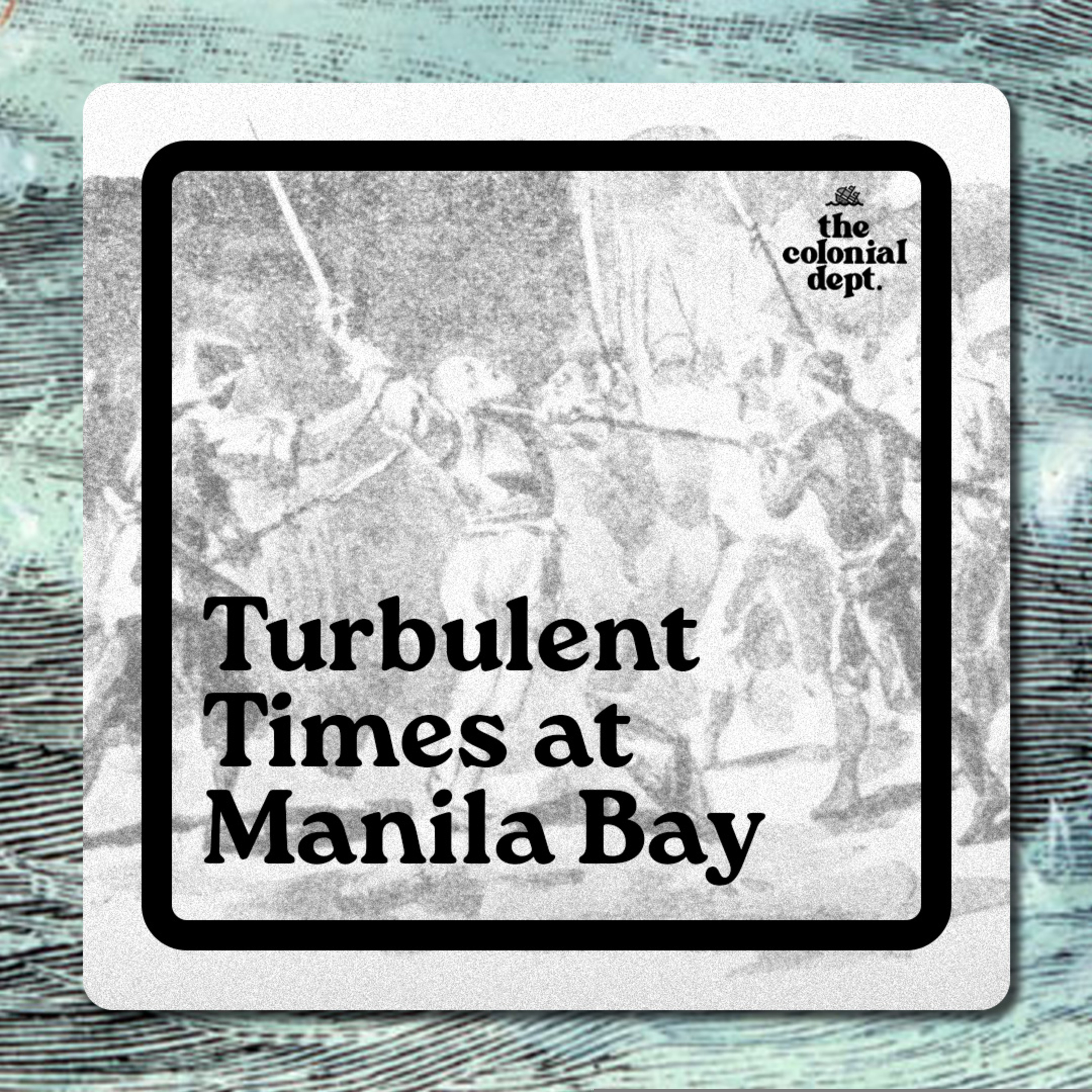
S7 Ep 22S7E12: Turbulent Times at Manila Bay
<html><p>In the late 1500s, sultans, kings, and outlaws alike all wanted a little slice of Manila. And over two turbulent decades, everyone from faraway Spain to neighboring Brunei asserted their claims over the rajahs and datus that lived there. This is the turbulent origin story of the city that we know today.</p><p><br/></p><p>Follow us on IG: <a href="https://www.instagram.com/thecolonialdept/" target="_blank">@thecolonialdept</a></p><p>Follow us on TikTok: <a href="https://www.tiktok.com/@thecolonialdept" target="_blank">@thecolonialdept</a></p><p>Email us: <a href="mailto:[email protected]" target="_blank">[email protected]</a></p><p><br/></p><p>Cover photo from “Ataque de Li-ma-hong a Manila en 1574” by Juan Caro y Mora</p><p><br/></p><p>References:</p><p>Patanne, E.P. (1993-1996). “Old Tondo and the Lakandula Revolt of 1574.”<em>Historic Manila: Commemorative Lectures. </em>Manila Historical Commission.</p><p>Majul, Cesar Adib (1999). <em>Muslims in the Philippines </em>(third edition). University of the Philippines Press.</p><p>Elsa Clavé, Arlo Griffiths (2022). “The Laguna Copperplate Inscription: Tenth-Century Luzon, Java, and the Malay World.” <em>Philippine Studies: Historical and Ethnographic Viewpoints,</em> <em>70</em>(2), pp.167-242.</p><p>Postma, Antoon (1992). “The Laguna Copper-Plate Inscription: Text and Commentary.”</p><p><em>Philippine Studies,</em> <em>40</em>(2), pp. 183–203.</p><p>“Paghinumdom: Retrospection of the Hindu-Buddhist Cultural Influences Based on Tangible Finds in the Caraga Region.” (2022) <a href="https://www.nationalmuseum.gov.ph/2022/09/30/paghinumdom-retrospection-of-the-hindu-buddhist-cultural-influences-based-on-tangible-finds-in-the-caraga-region/" target="_blank">https://www.nationalmuseum.gov.ph/2022/09/30/paghinumdom-retrospection-of-the-hindu-buddhist-cultural-influences-based-on-tangible-finds-in-the-caraga-region/</a></p><p>Velez, Genesis (2020). “Chinese Merchants in Late Pre-Hispanic Cebu: Context, Issues, and Possibilities.” <em>Philippine Quarterly of Culture and Society, 48</em>(3/4), pp. 125-155.</p><p>Shutz, J. Travis (2019). “Limahong’s Pirates, Ming Mariners, and Early Sino-Spanish Relations: The Pangasinan Campaign of 1575 and Global History From Below.” <em>Philippine Studies: Historical and Ethnographic Viewpoints, 67</em>(3/4), pp. 315-342.</p></html>
S7 Ep 20S7E11: Paint Me By Your Name
<html><p>The nineteenth century—steamships, family names, world trade, foreign firms, liberal ideas. Great tides of change are roiling Manila. In the middle of the chaos, a new art trend captures the imagination of local elites. How are these letras y figuras holding a mirror to Philippine society?</p><p><br/></p><p>Cover Photo from the Ayala Corporation Collection.</p><p><br/></p><p>Follow us on IG: <a href="https://www.instagram.com/thecolonialdept/" target="_blank">@thecolonialdept</a></p><p>Follow us on TikTok: <a href="https://www.tiktok.com/@thecolonialdept" target="_blank">@thecolonialdept</a></p><p>Email us: <a href="mailto:[email protected]" target="_blank">[email protected]</a></p><p><br/></p><p>References:</p><p>Blanco, John D. (2009). <em>Frontier Constitutions: Christianity and Colonial Empire in the Nineteenth-Century Philippines. </em>University of the Philippines Press.</p><p>Santiago, Luciano P.R. (December 1991). “Damian Domingo and the First Philippine Art Academy.” <em>Philippine Quarterly of Culture and Society, 19</em>(4), pp. 264-280. </p><p>Flores, Patrick D. (17 November 2011). “Everyday, Elsewhere: Allegory in Philippine Art.” <em>Contemporary Aesthetics, (0)</em>3 (Special Issue). </p><p>“Lot 46. Jose Honorato Lozano, c. 1815-1885.” (2021) Salcedo Auctions. </p><p>Quirino, Carlos (1961) "Damian Domingo, Filipino Painter." <em>Philippine Studies: Historical and Ethnographic Viewpoints, 9</em>(1), pp. 78-96.</p><p>“Jose Honorato Lozano (c. 1815-c. 1885).” (undated) Christie’s.</p><p>Sorilla IV, Franz (8 February 2021). “Letras y Figuras: The 19th Century Philippine Art Form’s Origins and Legacy.” <em>Tatler Asia.</em></p><p>Buenconsejo, Jose S. (2018). “Keyboards in the Nineteenth-Century Philippines.” In Tan, Arwin Q. (ed.), <em>Saysay Himig: A Sourcebook on Philippine Music History</em>, University of the Philippines Press, pp. 234-242.</p><p>Navarro, Raul Casantusan. (2018). “Opera in the Philippines, 1860s-1940s.” In Tan, Arwin Q. (ed.), <em>Saysay Himig: A Sourcebook on Philippine Music History</em>, University of the Philippines Press, pp. 234-242.</p><p>Mallat, Jean (1846). <em>The Philippines: History, Geography, Customs, Agriculture, Industry, and Commerce of the Spanish Colonies in Oceania</em> (Pura Santillan-Castrence, Trans.) (2021). National Historical Commission of the Philippines.</p></html>
S7 Ep 18S7E10: Abaca World War
<html><p>It was the Great War, the War to End All the Wars… and Philippine abaca merchants were raking in sky-high profits. The world’s most powerful navies relied on this plant—which is native to the Philippines—to keep their warships in battle-ready shape. But what the First World War giveth, the First World War also taketh away.</p><p><br/></p><p>Follow us on IG: <u><a href="https://www.instagram.com/thecolonialdept/" target="_blank">@thecolonialdept</a></u></p><p>Follow us on TikTok: <u><a href="https://www.tiktok.com/@thecolonialdept" target="_blank">@thecolonialdept</a></u></p><p>Email us: <u><a href="mailto:[email protected]" target="_blank">[email protected]</a></u></p><p><br/></p><p>References:</p><p>Dacudao, Patricia Irene (2023). <em>Abaca Frontier: The Socioeconomic and Cultural Transformation of Davao, 1898-1941. </em>Ateneo de Manila University Press.</p><p>Crapo, G.R. (February 1926). “The Philippine Fiber Industry.” <em>Proceedings, 52</em>(2). <u><a href="https://www.usni.org/magazines/proceedings/1926/february/philippine-fiber-industry" target="_blank">https://www.usni.org/magazines/proceedings/1926/february/philippine-fiber-industry</a></u></p><p>Layton, J. Kent (undated). “Lusitania 100 years later: never forget.” National Museums Liverpool. <u><a href="https://www.liverpoolmuseums.org.uk/stories/lusitania-100-years-later-never-forget" target="_blank">https://www.liverpoolmuseums.org.uk/stories/lusitania-100-years-later-never-forget</a></u></p><p>Jose, Ricardo Trota (1988). “The Philippine National Guard in World War I.” <em>Philippine Studies, 36</em>(3), pp. 275-299. <u><a href="https://www.jstor.org/stable/42633097" target="_blank">https://www.jstor.org/stable/42633097</a></u></p><p>Nagano, Yoshiko (2012). “The Philippine National Bank and Credit Inflation after World War I.” Global COE Hi-Stat Discussion Paper Series gd11-216, Institute of Economic Research, Hitotsubashi University.</p><p>Ybiernas, Vicente Angel (2012) "Philippine Financial Standing in 1921: The First World War Boom and Bust."<em> Philippine Studies, 55</em>(3), pp. 345-372.</p></html>
S7 Ep 16S7E9: Running of the Bulls, Part Two
<html><p>In the second part of our look at the lost sport of Philippine bullfighting, we go deep into its heyday in the 1800s, with social clubs, provincial arenas, and matadors with nicknames like “Fatiguitas.”</p><p>Then, we look at how and why bullfighting faded away in our archipelago.</p><p><br/></p><p>Follow us on IG: @thecolonialdept</p><p>Follow us on TikTok: @thecolonialdept</p><p>Email us: <a href="mailto:[email protected]" target="_blank">[email protected]</a></p><p><br/></p><p>References:</p><p>Vibal, Gaspar (2022).<em> Bullfighting in the Philippines, 1602-2022. </em>Vibal Books<em>. </em></p><p>Cornwell, Zach (Host).<em> (</em>13 December 2021). “Gore: The Brutal History of Bullfighting” [Audio podcast episode]. In<em> Conflicted, </em>Evergreen Podcast.</p><p>Amano, N., Bankoff, G., Findley, D. M., Barretto-Tesoro, G., &amp; Roberts, P. (2020). “Archaeological and historical insights into the ecological impacts of pre-colonial and colonial introductions into the Philippine Archipelago.” <em>The Holocene, 31</em>(2), pp. 313-330. <a href="https://doi.org/10.1177/0959683620941152" target="_blank">https://doi.org/10.1177/0959683620941152</a></p><p>Mudar, Karen (1997). “Patterns of Animal Utilization in the Holocene of the Philippines: A Comparison of Faunal Samples from Four Archaeological Sites.” <em>Asian Perspectives, 36(</em>1), pp. 67-105.</p><p>Davis, Janet M. (2013) “Cockfight Nationalism: Blood Sport and the Moral Politics of American Empire and Nation Building.” <em>American Quarterly, 65</em>(3), pp. 549-574.</p></html>
S7 Ep 15S7E8: Running of the Bulls, Part One
<html><p>In fiestas in a bygone age, the corrida de toros—the coursing of the bulls—would always be part of the festivities and celebrations in town plazas across the Philippines. Why did this tradition disappear from our shores?</p><p>In this two-part episode, we examine the history of bullfighting in the Philippines. In Part One, join Antonio Luna as he watches his first bullfight… and then travel back in time to the very start of the Spanish occupation, when the fiesta de toros became a fixture in our holidays!</p><p><br/></p><p>Follow us on IG: <a href="https://www.instagram.com/thecolonialdept/" target="_blank">@thecolonialdept</a></p><p>Follow us on TikTok: <a href="https://www.tiktok.com/@thecolonialdept" target="_blank">@thecolonialdept</a></p><p>Email us: <a href="mailto:[email protected]" target="_blank">[email protected]</a></p><p><br/></p><p>References:</p><p>Vibal, Gaspar (2022). B<em>ullfighting in the Philippines, 1602-2022. </em>Vibal Books. </p><p>Hemingway, Ernest (1927). <em>Fiesta; or, The Sun Also Rises. </em>Jonathan Cape Ltd.</p><p>Hartwell, Rafael Ernest (2019). “Bad English and Fresh Spaniards: Translation and Authority in Philippine and Cuban Travel Writing.<em>” Unitas, 92</em>(1), pp. 43-74.</p><p>Cornwell, Zach (Host). (13 December 2021). “Gore: The Brutal History of Bullfighting” [Audio podcast episode]. In <em>Conflicted, </em>Evergreen Podcast.</p></html>
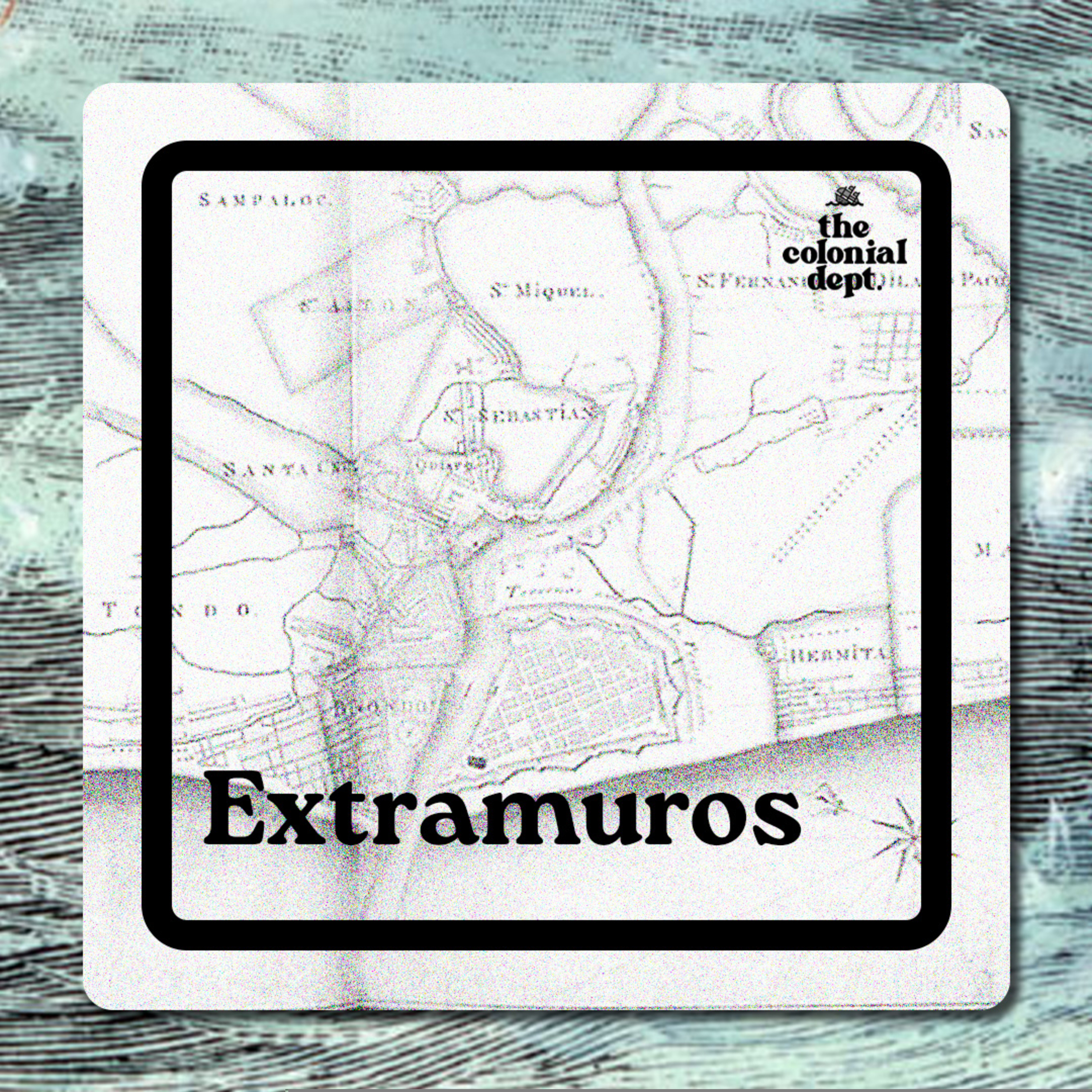
S7 Ep 13S7E7: Extramuros
<html><p>For centuries, Spain ruled the Philippines from within the closed, claustrophobic walls of Intramuros—the walled city of Manila. But right outside these walls, Manila, too, grew and developed, following the contours of migration, enterprise, and yes, even conflict. Let’s track the evolution of the districts and arrabales outside the walls, or <em>extramuros.</em></p><p><br/></p><p>Follow us on IG: <u><a href="https://www.instagram.com/thecolonialdept/" target="_blank">@thecolonialdept</a></u></p><p>Follow us on TikTok: <u><a href="https://www.tiktok.com/@thecolonialdept" target="_blank">@thecolonialdept</a></u></p><p>Email us: <u><a href="mailto:[email protected]" target="_blank">[email protected]</a></u></p><p><br/></p><p>References:</p><p>Camagay, Ma. Luisa (1993-1996). “Urban Development of Manila During the 19th Century.” In Victoriano, Enrique L. (ed.), <em>Historic Manila: Commemorative Lectures, </em>Manila Historical Commission.</p><p>Wise, Edwin (2019). <em>Manila, City of Islands. </em>Ateneo de Manila University Press.</p><p>Eng Sin Kueh, Joshua (2014). <em>The Manila Chinese: Community, Trade, and Empire, c. 1570-1770</em> [doctoral dissertation]. Georgetown University.</p><p>Fish, Shirley (2003). <em>When Britain Ruled the Philippines, 1762-1764: The Story of the 18th Century British Invasion of the Philippines During the Seven Years War.</em> FirstBooks Library.</p><p>Banyard, Laurence (16 May 2025). “Manila Port City – A Story of Mutual Interdependence and Competing Self-interest.” <em>PortCityFutures. </em><u><a href="https://www.portcityfutures.nl/news/manila-port-city-a-story-of-mutual-interdependence-and-competing-self-interest" target="_blank">https://www.portcityfutures.nl/news/manila-port-city-a-story-of-mutual-interdependence-and-competing-self-interest</a></u></p><p>Cubeiro, Didac (2017). “Modernizing the Colony: Ports in Colonial Philippines, 1880-1908.” <em>World History Connected. </em><u><a href="https://worldhistoryconnected.press.uillinois.edu/14.3/forum_cubeiro.html" target="_blank">https://worldhistoryconnected.press.uillinois.edu/14.3/forum_cubeiro.html</a></u></p><p>Enano, Jhesset O. (25 June 2019). “Metro Manila’s green spaces continue to shrink.” <em>Philippine Daily Inquirer. </em><u><a href="https://newsinfo.inquirer.net/1133654/metro-manilas-green-spaces-continue-to-shrink" target="_blank">https://newsinfo.inquirer.net/1133654/metro-manilas-green-spaces-continue-to-shrink</a></u></p><p>De Villa, Kathleen (1 May 2025). “21 Manila Bay reclamation projects equal area of 2 cities.” <em> Philippine Daily Inquirer. </em><u><a href="https://newsinfo.inquirer.net/2057082/21-manila-bay-reclamation-projects-equal-area-of-2-cities" target="_blank">https://newsinfo.inquirer.net/2057082/21-manila-bay-reclamation-projects-equal-area-of-2-cities</a></u></p></html>
S7 Ep 11S7E6: Shisōsen—A Japanese Propagandist Confronts the Filipino Psyche
<html><p>Beyond the bullets, the tanks, the planes, the bombs, the Japanese also brought other weapons to bear against the Filipinos: Typewriters. Radio waves. Movie theaters.</p><p>Here is one story from the frontlines of shisōsen, or "the thought war."</p><p><br/></p><p>Follow us on IG: <u><a href="https://www.instagram.com/thecolonialdept/" target="_blank">@thecolonialdept</a></u></p><p>Follow us on TikTok: <u><a href="https://www.tiktok.com/@thecolonialdept" target="_blank">@thecolonialdept</a></u></p><p>Email us: <u><a href="mailto:[email protected]" target="_blank">[email protected]</a></u></p><p><br/></p><p>References:</p><p>Campoamor II, Gonzalo (2017). “Re-Examining Japanese Wartime Intellectuals: Kiyoshi Miki during the Japanese Occupation of the Philippines.” <em>Asian Studies: Journal of Critical Perspectives on Asia, 53</em>(1), pp. 1-38.</p><p>Terami-Wada, Motoe (1990). “The Japanese Propaganda Corps in the Philippines.” <em>Philippine Studies, 38</em>(3), pp. 279-300.</p><p>Lagmay, Alfred (1977). “Bahala Na!” In Pe-Pua, Rogelio (ed., 2018), <em>Handbuk ng Sikolohiyang Pilipino, Bolyum I: Perspektibo at Metodolohiya, </em>University of the Philippines Press.</p><p>Jose, Ricardo T. (1998). <em>The Japanese Occupation. </em>In <em>Kasaysayan: The Story of the Filipino People. </em>Asia Publishing Company Limited.</p><p>Griggs, Alyson (2020). <em>There Were Children on the Battleground: Japanese and Filipino Youth in the Second World War</em> [masteral dissertation]. Utah State University.</p></html>
S7 Ep 9S7E5: Inside Tom’s Dixie Kitchen, Prewar Manila’s Hottest Restaurant
<html><p>Governors and gangsters, spies and socialites—it seemed that all of Manila dined out at the two-floor restaurant that rose above the bustle of Plaza Goiti. Inside, waiters handed you menus with more than three hundred dishes on offer, and, for special guests, directed you to special themed dining rooms upstairs. But there was enough entertainment on the first floor. There was a jazz band playing live music. There was a boxing promoter hamming it up at the next table. There was a steady stream of VIPs coming in through the front door.</p><p>This is the story of Tom’s Dixie Kitchen.</p><p><br/></p><p>Follow us on IG: <a href="https://www.instagram.com/thecolonialdept/" target="_blank">@thecolonialdept</a></p><p>Follow us on TikTok: <a href="https://www.tiktok.com/@thecolonialdept" target="_blank">@thecolonialdept</a></p><p>Email us: <a href="mailto:[email protected]" target="_blank">[email protected]</a></p><p><br/></p><p>References:</p><p>Manila Electric Co. (1932). “City of Manila and Suburbs [map].”</p><p>Mount, Guy Emerson (2018). “Soul Food, Stir Fry, and Citizenship.” In Mount, <em>The Last Reconstruction: Slavery, Emancipation, and Empire in the Black Pacific </em>[doctoral dissertation], The University of Chicago.</p><p>Mount, Guy Emerson (2018). “An Open Door: The Geopolitical Possibilities and Pitfalls of Black Colonization to the Pacific.” In Mount, <em>The Last Reconstruction: Slavery, Emancipation, and Empire in the Black Pacific </em>[doctoral dissertation], The University of Chicago.</p><p>Ngozi-Brown, Scot (1997). “African-American Soldiers and Filipinos: Racial Imperialism, Jim Crow and Social Relations.” <em>The Journal of Negro History, 82</em>(1), pp. 42-53.</p><p>Lee, Ira (17 March 2020). “How Racism Pushed This U.S. Soldier to Join Filipino Guerrillas.” <em>Esquire Philippines. </em></p><p>Department of Agricultural and Commerce (1934). <em>Philippine Statistical Review. </em>Bureau of Printing.</p><p>Pritchard vs. Republic, Case Digest (G.R. No. L-1715) (1948).</p></html>
S7 Ep 7S7E4: The Plague Years
<html><p>Smallpox was one of the deadliest diseases known to man—and not even the Philippines was immune to its virulent dangers! But how did the dreaded disease arrive on our shores? And what devastating effects did it have during the long centuries of our occupation?</p><p><br/></p><p>Follow us on IG: <u><a href="https://www.instagram.com/thecolonialdept/" target="_blank">@thecolonialdept</a></u></p><p>Follow us on TikTok: <u><a href="https://www.tiktok.com/@thecolonialdept" target="_blank">@thecolonialdept</a></u></p><p>Email us: <u><a href="mailto:[email protected]" target="_blank">[email protected]</a></u></p><p><br/></p><p>The thumbnail image, which dates from the 16th century, depicts Aztec victims of smallpox.</p><p><br/></p><p>References:</p><p>Newson, Linda A. (2011). <em>Conquest and Pestilence in the Early Spanish Philippines. </em>Ateneo de Manila University Press.</p><p>Fenner, F.; Henderson, D.A.; Arita, I.; Jezek, Z.; Ladnyi, I.D. (1988). <em>Smallpox and Its Eradication. </em>World Health Organization.</p><p>“Termination of Smallpox Vaccination.” DOH Memorandum Circular, May 08, 1980.</p><p>Herzog, Richard (23 September 2020). “How Aztecs Reacted to Colonial Epidemics.” <em>JSTOR Daily. </em><u><a href="https://daily.jstor.org/how-aztecs-reacted-to-colonial-epidemics/" target="_blank">https://daily.jstor.org/how-aztecs-reacted-to-colonial-epidemics/</a></u></p><p>Mursell, Ian. (7 April 2020) “IN THE NEWS: epidemic, self-isolation, dedication and the preservation of memory.” <em>Mexicolore. </em><u><a href="https://www.mexicolore.co.uk/aztecs/spanish-invasion/epidemic-self-isolation-dedication-and-the-preservation-of-memory" target="_blank">https://www.mexicolore.co.uk/aztecs/spanish-invasion/epidemic-self-isolation-dedication-and-the-preservation-of-memory</a></u></p><p>Thein, M.M.; Goh, L.G., Phua, K.H. (1988). “The Smallpox Story: From Variolation to Victory.” <em>Asia Pacific Journal of Public Health, 2</em>(3), pp. 203-210.</p><p>Wise, Edwin (2019). <em>Manila, City of Islands. </em>Ateneo de Manila University Press.</p></html>
S7 Ep 5S7E3: A Short Philippine History of Beverages
<html><p>Coffee. Tea. Cocoa. The three have a surprisingly rich, complex, and layered history in the Philippines. How did they arrive here, and what effect did they have in the archipelago’s colonial period?</p><p><br/></p><p>Follow us on IG: <u><a href="https://www.instagram.com/thecolonialdept/" target="_blank">@thecolonialdept</a></u></p><p>Follow us on TikTok: <u><a href="https://www.tiktok.com/@thecolonialdept" target="_blank">@thecolonialdept</a></u></p><p>Email us: <u><a href="mailto:[email protected]" target="_blank">[email protected]</a></u></p><p><br/></p><p>Thanks to <a href="https://www.instagram.com/beachreads.kap" target="_blank">Beach Reads Book Club</a> (based in <a href="https://www.instagram.com/thebeachhousekapitolyo" target="_blank">The Beach House</a> cafe in Kapitolyo) for hosting the live premiere of this episode last July 5. </p><p><br/></p><p>References:</p><p><br/></p><p>Acabado, Stephen (4 May 2025). “[Time Trowel] A drunk history of the Philippines.” <em>Rappler. </em><u><a href="https://www.rappler.com/voices/thought-leaders/time-trowel-drunk-history-philippines/" target="_blank">https://www.rappler.com/voices/thought-leaders/time-trowel-drunk-history-philippines/</a></u></p><p>Edgar, Blake (2010). “The Power of Chocolate.” <em>Archaeology, 63</em>(6), pp. 20-25. <u><a href="https://www.jstor.org/stable/41780626" target="_blank">https://www.jstor.org/stable/41780626</a></u></p><p>Doeppers, Daniel (2016). <em>Feeding Manila in Peace and War, 1850-1945. </em>Ateneo de Manila University Press.</p><p>Topik, Steven (2003). <em>The World Coffee Market in the Eighteenth and Nineteenth Centuries, from Colonial to National Regimes. </em>GEHN Conference, Bankside, London.</p><p>Sonnad, Nikhil (11 January 2018). “Tea if by sea, cha if by land: Why the world only has two words for tea.” <em>Vox.</em></p><p>Chia, Lucille (2006). “The Butcher, the Baker, and the Carpenter: Chinese Sojourners in the Spanish Philippines and Their Impact on Southern Fujian (Sixteenth-Eighteenth Centuries).” <em>Journal of the Economic and Social History of the Orient, 49</em>(4), pp. 509-534.</p><p>Lanzona, Claudine (2019). “The Search Party.” <em>Grid. </em></p><p>“Cocoa (cacao).” (n.d.) <em>Plant Village. </em><u><a href="https://plantvillage.psu.edu/topics/cocoa-cacao/infos" target="_blank">https://plantvillage.psu.edu/topics/cocoa-cacao/infos</a></u></p><p>Crawford, John (1852). “History of Coffee.” Journal of the Statistical Society of London, 15(1), pp. 50-58.</p></html>
S7 Ep 3S7E2: An Ottoman Emissary in Mindanao
<html><p>As the United States moves to take over Mindanao, both the Americans and the Moros invoke the name of the Ottoman Empire—seat of the Caliph—to support their campaigns. But in 1914, an actual Ottoman emissary arrives in Zamboanga. How will the American occupiers react to his visit?</p><p><br/></p><p><br/></p><p>Follow us on IG: <a href="https://www.instagram.com/thecolonialdept/" target="_blank">@thecolonialdept</a></p><p><br/></p><p>Follow us on TikTok: <a href="https://www.tiktok.com/@thecolonialdept" target="_blank">@thecolonialdept</a></p><p><br/></p><p>Email us: <a href="mailto:[email protected]" target="_blank">[email protected]</a></p><p><br/></p><p><br/></p><p>References:</p><p><br/></p><p>Dwight, H.D. (1915). <em>Constantinople: Old and New. </em>Charles Scribner’s Sons.</p><p><br/></p><p>Inanc, Yusuf Selman. “Abdulhamid II: An autocrat, reformer and the last stand of the Ottoman Empire.” <em>Middle East Eye. </em><a href="https://www.middleeasteye.net/discover/abdulhamid-ii-last-stand-ottoman-empire" target="_blank">https://www.middleeasteye.net/discover/abdulhamid-ii-last-stand-ottoman-empire</a></p><p><br/></p><p>Göksoy, Ismail Hakki (2024). “The Ottomans’ Shaykh Al-Islam of Philippines, Mehmet Vecih Efendi: His Life, Duties and Activities.” In Göksoy, Kadi (eds.), <em>Studies on the Relations Between the Ottoman Empire and Southeast Asia</em>, YTB Publications.</p><p><br/></p><p>Charbonneau, Oliver (2021).<em> Civilizational Imperatives: Americans, Moros, and the Colonial World. </em>Ateneo de Manila University Press.</p><p><br/></p><p>Amirell, Stefan Eklöf (25 August 2022). “‘An Extremely Mild Form of Slavery … of the Worst Sort’: American Perceptions of Slavery in the Sulu Sultanate, 1899–1904,” <em>Slavery &amp; Abolition, 43</em>(3), pp. 517-532.</p><p><br/></p><p>Vatin, Nicolas (19 December 2017). “The Death of Ottoman Sultans.” <em>Politika. </em><a href="https://www.politika.io/en/notice/the-death-of-ottoman-sultans" target="_blank">https://www.politika.io/en/notice/the-death-of-ottoman-sultans</a></p></html>
S7 Ep 1S7E1: Foreign Piano Devils
<html><p>It’s the late 1800s, and all across the Pacific seaboard, in places like Singapore and Yokohama, Medan and Selangor, the music of town bands drifts across the esplanades. Many of these groups proudly hail from one port of call: Manila. This is their story.</p><p><br/></p><p><br/></p><p>Follow us on IG: <a href="https://www.instagram.com/thecolonialdept/" target="_blank">@thecolonialdept</a></p><p><br/></p><p>Follow us on TikTok: <a href="https://www.tiktok.com/@thecolonialdept" target="_blank">@thecolonialdept</a></p><p><br/></p><p>Email us: <a href="mailto:[email protected]" target="_blank">[email protected]</a></p><p><br/></p><p><br/></p><p>Audio of “Wiener Schwalben Marsch” is from the Discography of American Historical Recordings.</p><p><br/></p><p><br/></p><p>References: </p><p><br/></p><p><br/></p><p>Affan, Muhammad (2023). “From Riverside Hub to Urban Center: Understanding The Metamorphosis of The Sultanate of Deli's Capital Landscape.” Al-Tsaqafa: Jurnal Ilmiah Peradaban Islam, 20(2), pp. 194-203.</p><p><br/></p><p><br/></p><p>“The history of Medan” (26 December 2020). Stories from Deli—Chinese coolies life in Deli. <a href="https://storiesfromdeli.com/2020/12/26/the-history-of-medan/" target="_blank">https://storiesfromdeli.com/2020/12/26/the-history-of-medan/</a></p><p><br/></p><p><br/></p><p>Columbia matrix 87055. Wiener Schwalben Marsch / Kapelle Militär. (2025). In Discography of American Historical Recordings. Retrieved May 15, 2025, from <a href="https://adp.library.ucsb.edu/index.php/matrix/detail/2000112570/87055-Wiener_Schwalben_Marsch" target="_blank">https://adp.library.ucsb.edu/index.php/matrix/detail/2000112570/87055-Wiener_Schwalben_Marsch</a>.</p><p><br/></p><p><br/></p><p>Birgit Krohn Albums, Vol. 2 (n.d.) “Porpourri Populaire, George Renaud (1835-1913).” Furman University Scholar Exchange. <a href="https://scholarexchange.furman.edu/krohn-album2/8/" target="_blank">https://scholarexchange.furman.edu/krohn-album2/8/</a></p><p><br/></p><p><br/></p><p>Yamomo, Mele (2015). “Brokering Sonic Modernities: migrant Manila musicians in the Asia</p><p><br/></p><p> Pacific, 1881-1948.” Popular Entertainment Studies, 6(2), pp. 22-37.</p><p><br/></p><p><br/></p><p>Castro, Christi-anne (2018). “Colonized by Rote: Music Education at the Outset of the US Colonial Era in the Philippines.” In Tan, Arwin Q. (ed.), Saysay Himig: A Sourcebook on Philippine Music History, University of the Philippines Press, pp. 39-44.</p><p><br/></p><p><br/></p><p>Chua, Maria Alexandra Iñigo. (2018). “The Appropriated Villancico Filipino in the Rituals of Philippine Christmas.” In Tan, Arwin Q. (ed.), Saysay Himig: A Sourcebook on Philippine Music History, University of the Philippines Press, pp. 91-99.</p><p><br/></p><p><br/></p><p>Chua, Maria Alexandra Iñigo. (2018). “Music Printing and Publishing in Urban Colonial Manila, 1858-1942.” In Tan, Arwin Q. (ed.), Saysay Himig: A Sourcebook on Philippine Music History, University of the Philippines Press, pp. 215-223.</p><p><br/></p><p><br/></p><p>Buenconsejo, Jose S. (2018). “Keyboards in the Nineteenth-Century Philippines.” In Tan, Arwin Q. (ed.), Saysay Himig: A Sourcebook on Philippine Music History, University of the Philippines Press, pp. 234-242.</p><p><br/></p><p><br/></p><p>Tan, Arwin Q. (2018). “Social Networking in Musicians’ Unions and Musical Associations.” In Tan, Arwin Q. (ed.), Saysay Himig: A Sourcebook on Philippine Music History, University of the Philippines Press, pp. 365-371.</p><p><br/></p><p><br/></p><p>Jando, Dominique (n.d.) “Giuseppe Chiarini: Equestrian, Circus Entrepreneur.” Circopedia. <a href="https://www.circopedia.org/Giuseppe_Chiarini" target="_blank">https://www.circopedia.org/Giuseppe_Chiarini</a></p><p><br/></p><p><br/></p><p>“The Overseas Market for Filipino Entertainers (March 2004).” TESDA. <a href="https://www.tesda.gov.ph/About/TESDA/60" target="_blank">https://www.tesda.gov.ph/About/TESDA/60</a></p><p><br/></p><p><br/></p><p>Ng, Stephanie Sook-Lynn (n.d.) “Ove
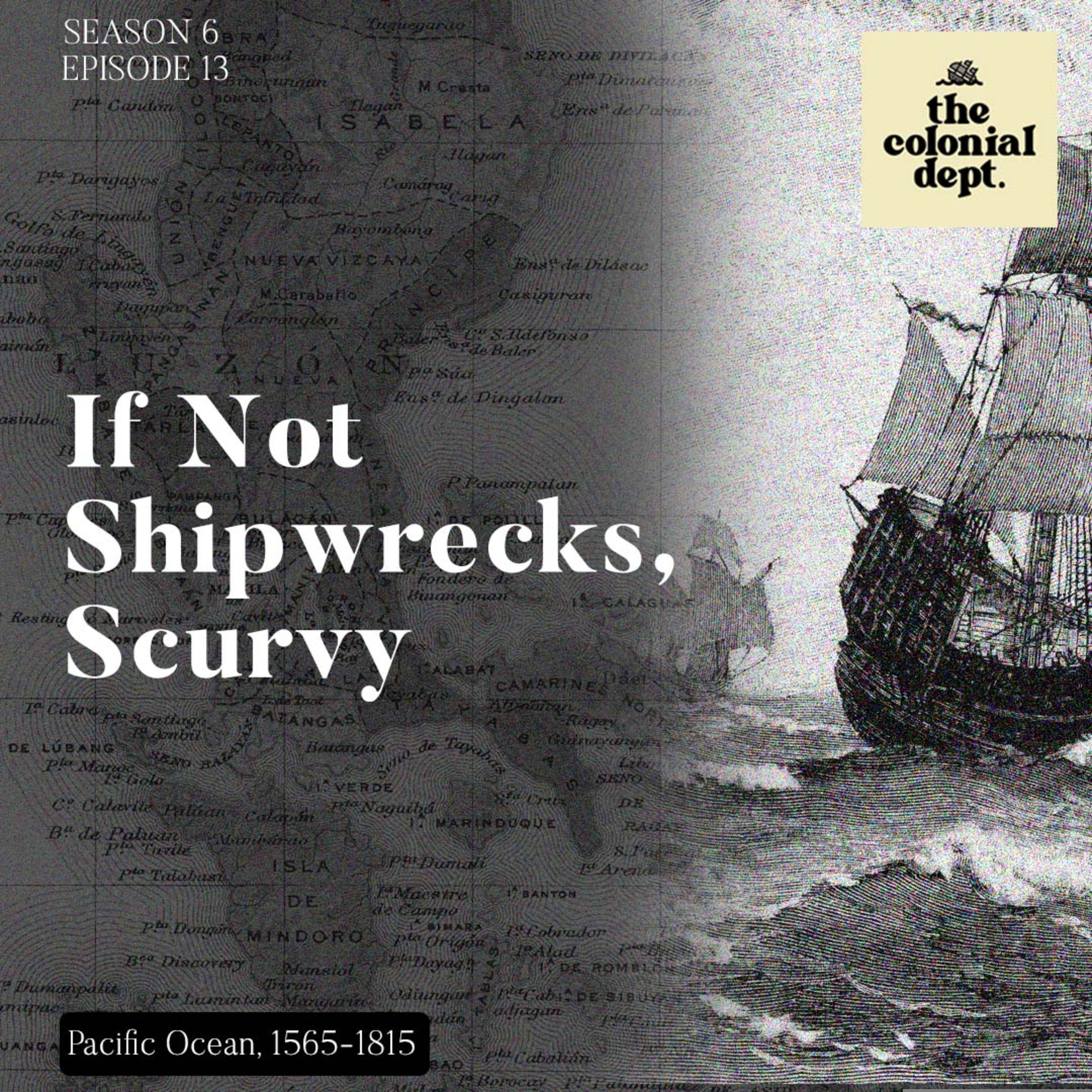
S6 Ep 28S6E13: If Not Shipwrecks, Scurvy
<html><p>The route of a Spanish galleon from Manila to Acapulco was littered with the wrecks of ships that sailed before—hit by storms, hammered by tides, preyed on by pirates. Meanwhile, on the filthy decks, hunger and disease stalked the ranks of the sailors, slaves, and passengers. Spanning thousands of kilometers, every voyage of the Galleon Trade was grueling and lethal… but for the investors who bet fortunes on the trade ships, the payoff was worth every dead body. </p><p>In this episode, let’s sail aboard a galleon as it makes its way from Manila to Mexico. Will we make it to the end alive?</p><p><br/></p><p>Follow us on IG: <a href="https://www.instagram.com/thecolonialdept/" target="_blank">@thecolonialdept</a></p><p>Follow us on TikTok: <a href="https://www.tiktok.com/@thecolonialdept" target="_blank">@thecolonialdept</a></p><p>Email us: <a href="mailto:[email protected]" target="_blank">[email protected]</a></p><p><br/></p><p>References:</p><p>Casabán, José Luis (2014). “The Reconstruction of a Seventeenth-Century Spanish Galleon.” <em>2014 Underwater Archaeology Proceedings.</em></p><p>Legarda, Benito J. (1999). <em>After the Galleons: Foreign Trade, Economic Change and Entrepreneurship in the Nineteenth-Century Philippines. </em>Ateneo de Manila Press.</p><p>Seijas, Tatiana (2014). <em>Asian Slaves in Colonial Mexico: From Chinos to Indians. </em>Cambridge University Press.</p><p>Isorena, Efren B. (2015). “Maritime Disasters in Spanish Philippines: The Manila-Acapulco Galleons, 1565-1815.” <em>International Journal of Asia Pacific Studies, 11</em>(1), pp. 53-83.</p><p>Schurz, William Lyle (July 1918). “Acapulco and the Manila Galleon.” <em>The Southwestern Historical Quarterly, 22</em>(1), pp. 18-37.</p><p>Hayes, Lieutenant John D. (December 1934). “The Manila Galleons.” Proceedings of the US Naval Institute, 60(12).</p><p>Worrall, Simon (15 January 2017). “A Nightmare Disease Haunted Ships During Age of Discovery.” <em>National Geographic. </em><a href="https://www.nationalgeographic.com/science/article/scurvy-disease-discovery-jonathan-lamb" target="_blank">https://www.nationalgeographic.com/science/article/scurvy-disease-discovery-jonathan-lamb</a></p><p>Morris, David Z. (17 May 2016). “Cruel ships of prosperity.” <em>Aeon. </em><a href="https://aeon.co/essays/the-manila-galleons-that-oceaneered-for-plague-and-profit" target="_blank">https://aeon.co/essays/the-manila-galleons-that-oceaneered-for-plague-and-profit</a></p></html>
S6 Ep 26S6E12: The Skull Photographers
<html><p>When the Americans arrive to take over the Philippines, amateur photographers take pictures of every possible inch of their new possession. Snapshots soon emerge from inside the cemeteries of towns and cities, showcasing an eerie and macabre trend. It seems that not even the most private places of the dead would be spared from the camera’s roving, ravenous, pinhole eye. </p><p><br/></p><p>Follow us on IG: <a href="https://www.instagram.com/thecolonialdept/" target="_blank">@thecolonialdept</a></p><p>Follow us on TikTok: <a href="https://www.tiktok.com/@thecolonialdept" target="_blank">@thecolonialdept</a></p><p>Email us: <a href="mailto:[email protected]" target="_blank">[email protected]</a></p><p><br/></p><p>Additional audio from Marques Brownlee, Dave 2D, and The Verge.</p><p><br/></p><p>References:</p><p>Capozzola, Christopher (2017). “Photography and Power in the Colonial Philippines - 1.” Visualizing Cultures at the Massachusets Institute of Technology.</p><p>Lutz, Peter (1994-2024). “Beginners Guide To Understanding And Using A Brownie Box Camera.” <em>Brownie-camera.com. </em><a href="https://www.brownie-camera.com/articles/petelutz/article.shtml" target="_blank">https://www.brownie-camera.com/articles/petelutz/article.shtml</a></p><p>Williams, Nigel (17 July 2021). “Early Cameras, a Timeline.” <em>A Flash of Darkness. </em><a href="https://flashofdarkness.com/early-cameras-timeline/" target="_blank">https://flashofdarkness.com/early-cameras-timeline/</a></p><p>The Curious World (7 February 2024). “Taking pictures with a nearly-100 year old camera | Kodak No. 2 Brownie” [video]. YouTube. <a href="https://www.youtube.com/watch?v=TXoSRDVJ3B4" target="_blank">https://www.youtube.com/watch?v=TXoSRDVJ3B4</a></p><p>Stricklin, Krystle Elaine (2022). “Grave Visions: Photography, Violence, and Death in the American Empire, 1898 – 1913” [dissertation]. Dietrich School of Arts and Sciences, Florida State University.</p><p>Rafael, Vicente (2000). <em>White Love and Other Events in Filipino History. </em>Ateneo de Manila University Press.</p><p>Barretto, Grace (2000). “A Survey of Literature on Indigenous Archaeological Practices and Their Archaeological Implications." <em>Indigenous Peoples, 15</em>(2).</p><p>Dakudao, Michelangelo (1998). “The Development of Cemeteries in Manila Before 1941.” <em>Philippine Quarterly of Culture and Society, 26</em>(1-2), pp. 254-271.</p></html>
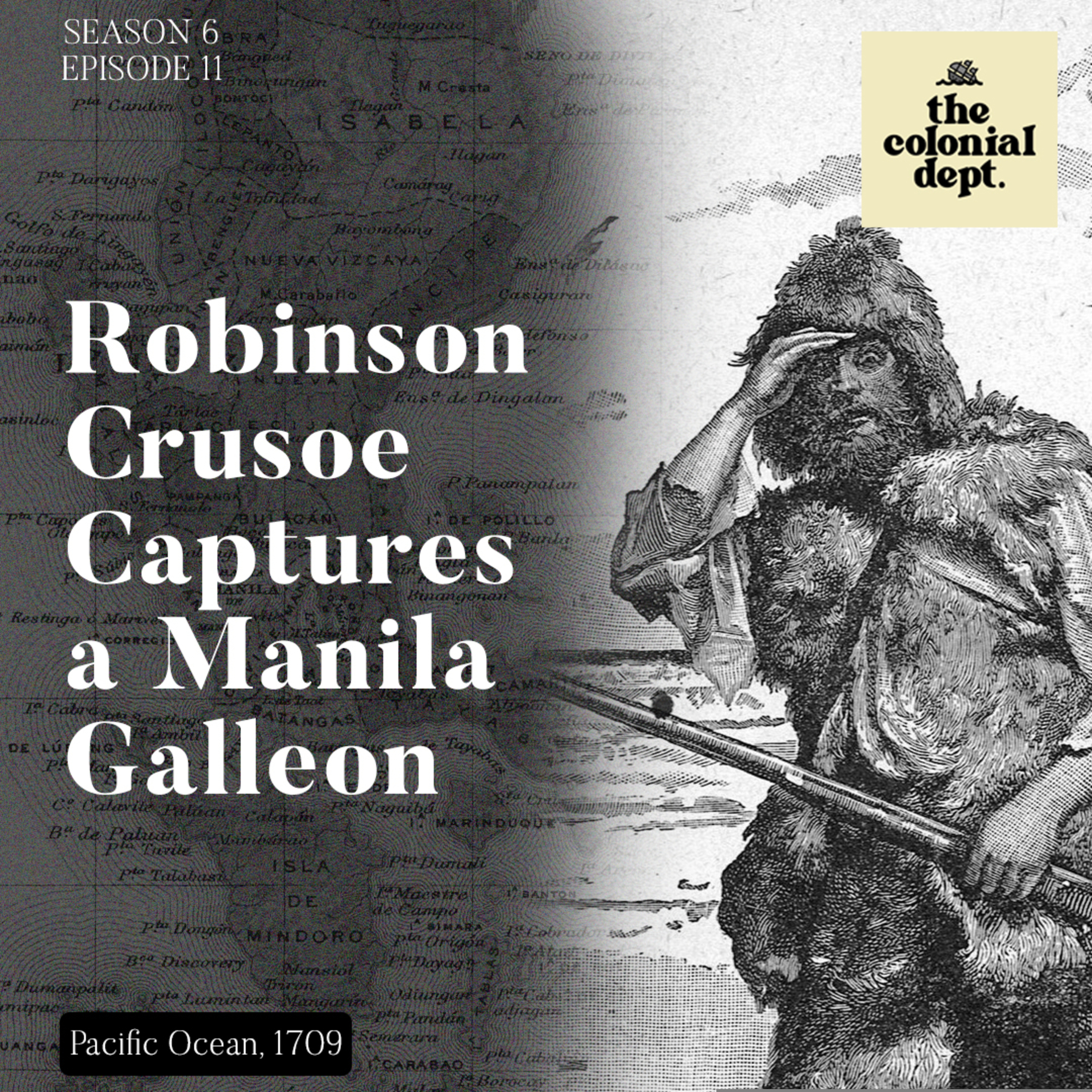
S6 Ep 23S6E11: Robinson Crusoe Captures a Manila Galleon
<html><p>In 1719, a book appeared on London shelves—and became an instant bestseller. Its cover featured the now-iconic image of a man, trapped in a deserted island, dressed only in goat skins. Daniel Defoe, author of <em>Robinson Crusoe</em>, never confirmed nor denied that his massive hit was based on the life of Alexander Selkirk, a Scotsman marooned for years on a tropical island… but the parallels were undeniable.</p><p>But before Selkirk made his way back to the Western world and became a celebrity, he was roped in by his rescuers for their deadly piratical mission: to hunt the greatest treasure ship of the high seas—the Manila galleon!</p><p><br/></p><p>Follow us on IG: <a href="https://www.instagram.com/thecolonialdept/" target="_blank">@thecolonialdept</a></p><p>Follow us on TikTok: <a href="https://www.tiktok.com/@thecolonialdept" target="_blank">@thecolonialdept</a></p><p>Email us: <a href="mailto:[email protected]" target="_blank">[email protected]</a></p><p><br/></p><p>References:</p><p>Kamen, Henry (2004). <em>Empire: How Spain Became a World Power, 1492-1763. </em>Harper Perennial.</p><p>Rogers, Woodes (1928). <em>A Cruising Voyage Round the World. </em>The Seafarer's Library. (Original work published 1731). </p><p>Severin, Tim (2002). “Marooned: The Metamorphosis of Alexander Selkirk.” <em>The American Scholar, 71</em>(3), pp. 73-82. <a href="https://www.jstor.org/stable/41213335" target="_blank">https://www.jstor.org/stable/41213335</a></p><p>Ball, Phillip (1 May 2019). “The many afterlives of Robinson Crusoe.” <em>The New Statesman. </em><a href="https://www.newstatesman.com/culture/2019/05/the-many-afterlives-of-robinson-crusoe" target="_blank">https://www.newstatesman.com/culture/2019/05/the-many-afterlives-of-robinson-crusoe</a></p><p>McInelly, Brett C. (2003) “Expanding Empires, Expanding Selves: Colonialism, the Novel, and ‘Robinson Crusoe’.” <em>Studies in the Novel, 35</em>(1), pp. 1-21. <a href="https://www.jstor.org/stable/29533546" target="_blank">https://www.jstor.org/stable/29533546</a></p><p>Peterson, Andrew. “What Really Made the World Go Around?: Indio Contributions to the Acapulco-Manila Galleon Trade.” <em>Explorations: A Graduate Student Journal of Southeast Asian Studies, 11</em>(1), pp. 1-18.</p></html>
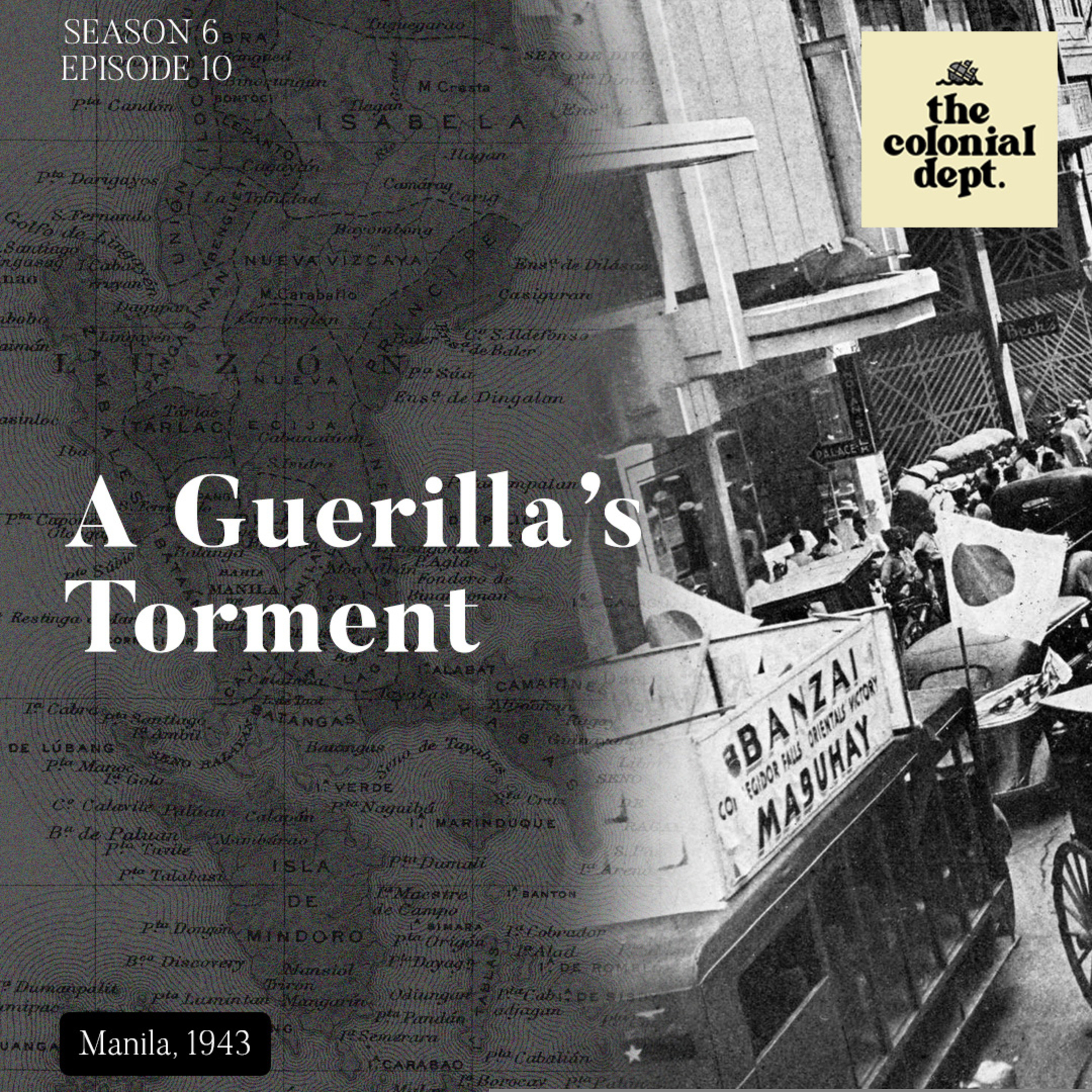
S6 Ep 21S6E10: A Guerilla’s Torment
<html><p>When the Japanese invaded the Philippines, young military cadet Gustavo Ingles tried to hitch a ride with the upperclassmen to the front lines in Bataan. But officers told him to go home. Undeterred, he founded a guerilla group called the Hunters ROTC to continue the fight against the new occupiers. </p><p>Then, in 1943, Ingles was caught by the secret police. </p><p><br/></p><p>Follow us on IG:<a href="https://www.instagram.com/thecolonialdept/" target="_blank">@thecolonialdept</a></p><p>Follow us on TikTok:<a href="https://www.tiktok.com/@thecolonialdept" target="_blank">@thecolonialdept</a></p><p>Email us:<a href="mailto:[email protected]" target="_blank">[email protected]</a></p><p><br/></p><p>My voiceover partner-in-crime, Anya, is on leave this week, so I’ll be reading quotes from references and sources. When she’s able to record her lines, I’ll update the episode to include them.</p><p><br/></p><p>References:</p><p>Ingles, Gustavo (1992).<em>Memoirs of Pain.</em>Mauban Heritage Foundation. </p><p>Guillermo, Mai &amp; Guillermo, Lucky (Producers) &amp; Logroño, Bani (Director). (2015)<em>Unsurrendered 2: The Hunters ROTC Guerillas. </em></p><p>“Philippine Military Academy: History, Traditions and General Information.”<a href="https://www.pma.edu.ph/about.php" target="_blank">https://www.pma.edu.ph/about.php</a></p><p>Luci-Atienza, Charissa (9 June 2019). “Tales heroes’ children tell.”<em>Manila Bulletin.</em><a href="https://mb.com.ph/2019/06/09/tales-heroes-children-tell/" target="_blank">https://mb.com.ph/2019/06/09/tales-heroes-children-tell/</a></p><p>Alcazaren, Paulo (4 March 2016). “Manila’s Plaza Goiti: From postcard pretty to urban mess.”<em>The Philippine Star.</em><a href="https://www.philstar.com/lifestyle/modern-living/2016/03/04/1559451/manilas-plaza-goiti-postcard-pretty-urban-mess" target="_blank">https://www.philstar.com/lifestyle/modern-living/2016/03/04/1559451/manilas-plaza-goiti-postcard-pretty-urban-mess</a></p></html>
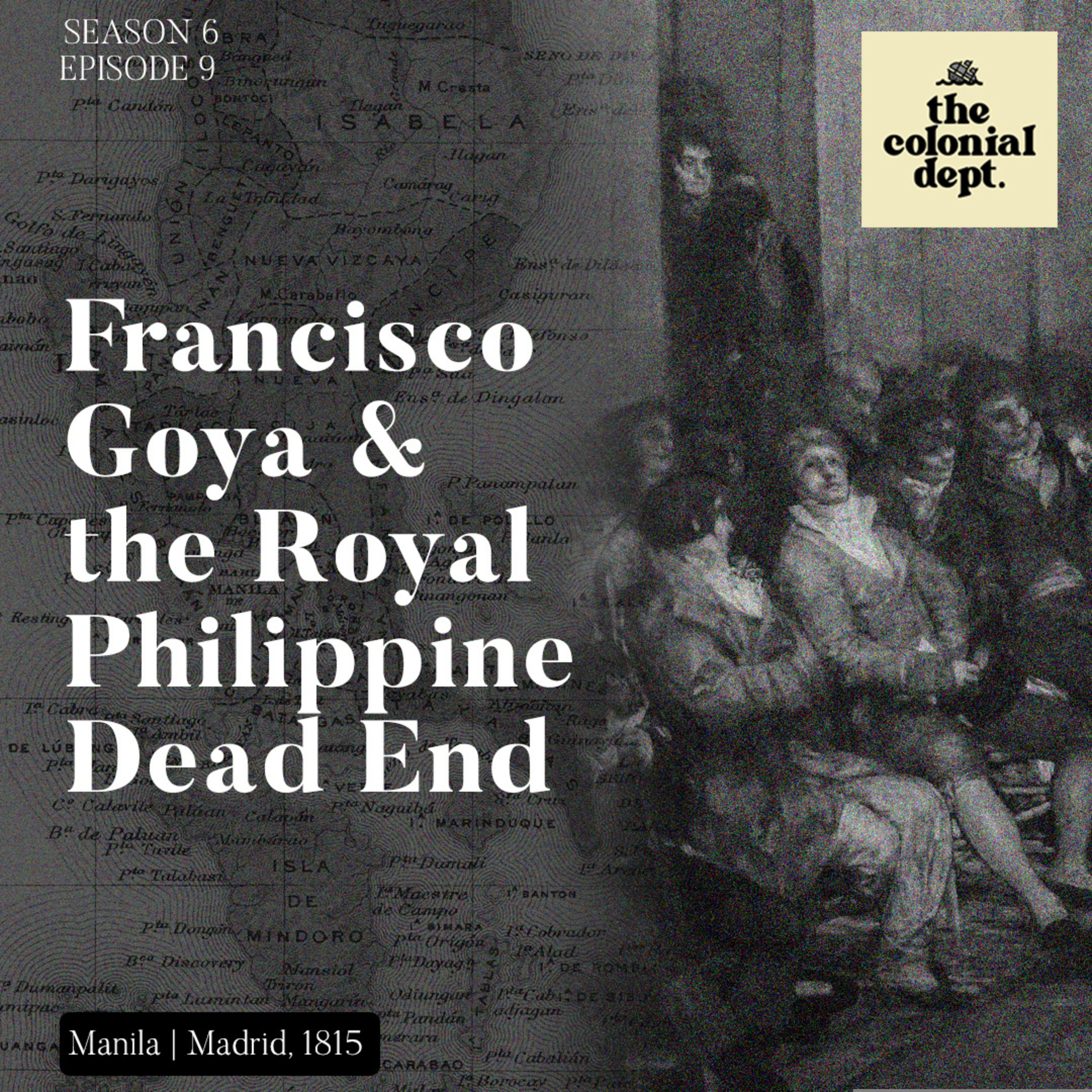
S6 Ep 19S6E9: Francisco Goya and the Royal Philippine Dead End
<html><p>In Francisco Goya’s painting <em>Junta de Filipinas</em>, sinister, shadowy figures preside over a stockholders’ meeting of the Royal Philippine Company. What was this Royal Philippine Company—and what was so important about it that Goya made a painting of one of its meetings? And more than that, what was Goya trying to say about this tumultuous period in Spanish and Philippine history?</p><p><br/></p><p>Follow us on IG: <a href="https://www.instagram.com/thecolonialdept/" target="_blank">@thecolonialdept</a></p><p>Follow us on TikTok: <a href="https://www.tiktok.com/@thecolonialdept" target="_blank">@thecolonialdept</a></p><p>Email us: <a href="mailto:[email protected]" target="_blank">[email protected]</a></p><p><br/></p><p>Additional audio from the Ville de Castres YouTube page, and The Social Network, © 2010 Columbia Pictures. </p><p><br/></p><p>References: </p><p>Legarda, Benito J. (1999). <em>After the Galleons: Foreign Trade, Economic Change and Entrepreneurship in the Nineteenth-Century Philippines. </em>Ateneo de Manila Press.</p><p>Miranda-Chou, Teresita (1996). “Art as Political Subtext: A Philippine Centennial Perspective on Francisco Goya’s Junta de la Real Compañía de Filipinas.”<em> Philippine Quarterly of Culture and Society, 24</em>, pp. 187-215.</p><p>Alford, Roberta M. (June 1960). “Francisco Goya and the Intentions of the Artist.”<em> The Journal of Aesthetics and Art Criticism, 18</em>(4), pp. 482-493.</p><p>Ville de Castres (26 April 2022). “L'OEUVRE A LA LOUPE : La Junte des Philippines #1.” [Video] YouTube.com. <a href="https://www.youtube.com/watch?v=pdv9bs207cs" target="_blank">https://www.youtube.com/watch?v=pdv9bs207cs</a></p><p>Prodger, Michael (26 September 2015). “From princes to paupers: how Goya’s portraits tell the story of Spain.” <em>The Guardian</em>. <a href="https://www.theguardian.com/artanddesign/2015/sep/26/francisco-de-goya-portraits-national-gallery-london" target="_blank">https://www.theguardian.com/artanddesign/2015/sep/26/francisco-de-goya-portraits-national-gallery-london</a></p><p>Dalrymple, William (2019). <em>The Anarchy: The Relentless Rise of the East India Company.</em> Bloomsbury Publishing.</p><p>Harai, Yuval Noah (2015). <em>Sapiens: A Brief History of Humankind</em> . Harper.</p></html>
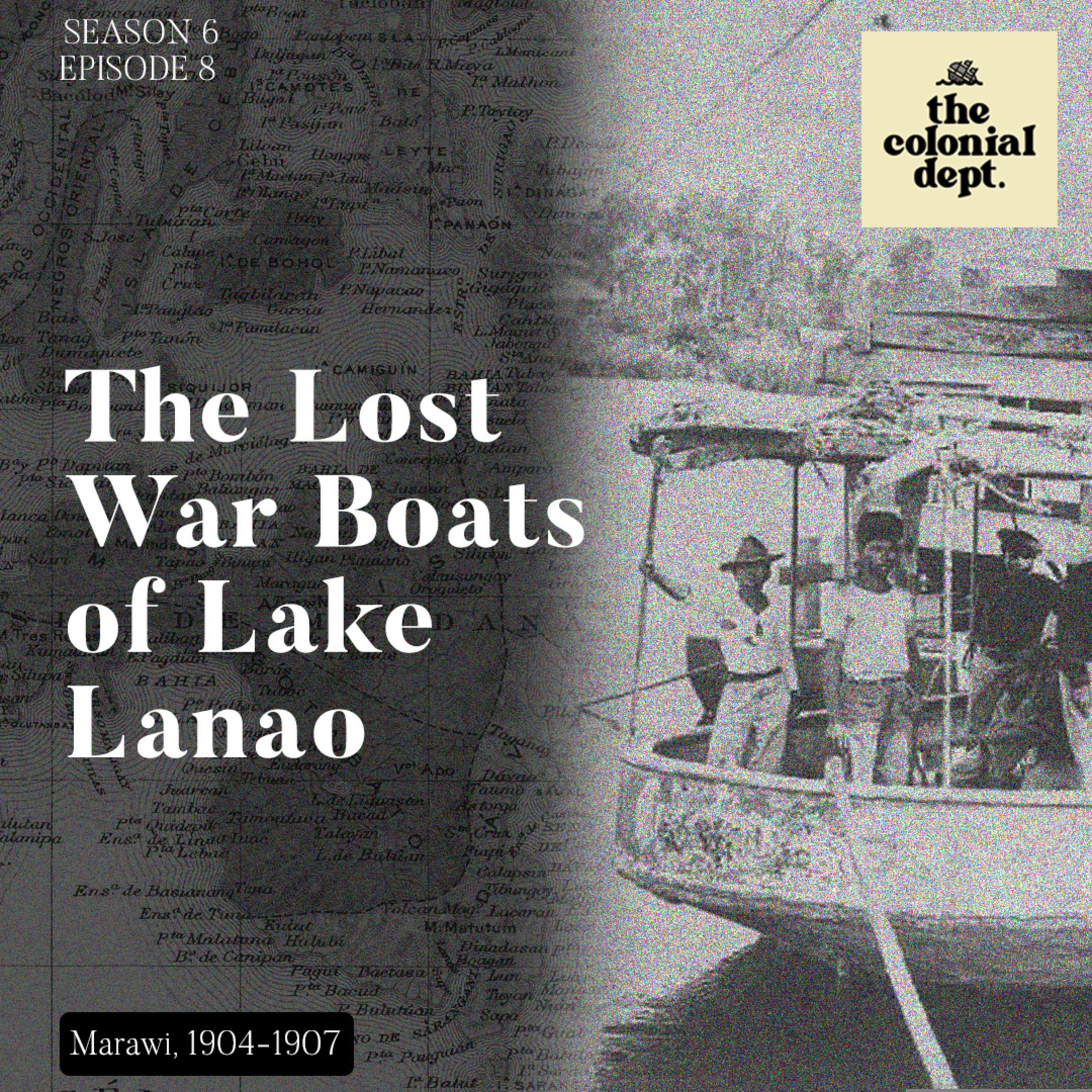
S6 Ep 17S6E8: The Lost War Boats of Lake Lanao
<html><p>As Spain departed the Philippines, it abandoned four gunboats to a watery grave. For years, they slumbered at the bottom of Lake Lanao, their existence only a rumor back up on the surface. But when the Americans arrive in Marawi, they are determined to bring these ghost ships back to life. </p><p><br/></p><p>Follow us on IG: <a href="https://www.instagram.com/thecolonialdept/" target="_blank">@thecolonialdept</a></p><p>Follow us on TikTok: <a href="https://www.tiktok.com/@thecolonialdept" target="_blank">@thecolonialdept</a></p><p>Email us: <a href="mailto:[email protected]" target="_blank">[email protected]</a></p><p><br/></p><p>References:</p><p>Hitt, Parker (February 1938). “Amphibious Infantry—A Fleet on Lake Lanao.” <em>US Naval Institute Proceedings, </em>pp. 1-6<em>.</em></p><p>Mastura, Datu Michael Ong (2023). <em>The Rulers of Magindanao in Modern History, 1515–1903: Continuity and Change in a Traditional Realm in the Southern Philippines. </em>Ateneo de Manila University Press.</p><p>Ibrahim, Noralia U. &amp; Ali, Abubacar A. (January 2023). “A Short History of Lanao and the Origin and Arts of their Traditional Weaponry.” <em>International Journal of Recent Advances in Multidisciplinary Topics, 4</em>(1), pp. 73-81.</p><p>Mitiuckov, Nick (1996-2023). “Spanish 3rd Class Gunboats.” <em>Spanish American War Centennial Website. </em><a href="https://www.spanamwar.com/span3rdclassgunboats.htm" target="_blank">https://www.spanamwar.com/span3rdclassgunboats.htm</a></p><p>Teideman, Jess. “The bends: anatomy of decompression sickness.” <em>Australian Geographic.</em></p><p>Naga, Pipilawan O. (2011) “Lake Lanao: An Ancient Lake in Distress.” <em>Shiga University Environmental Research Center Annual Research Report</em>, <em>8</em>(1), pp. 25-33.</p></html>
S6 Ep 16Special: The Colonial Dept. 2024 Year in Review
<html><p>Show highlights. Favorite episodes. Behind-the-scenes bits. Think of this as The Colonial Dept. Wrapped.</p><p><br/></p><p>2024 has been an amazing year for the podcast. I released a book version of the podcast, I've grown to more than 2,000 subscribers, and I've heard from fans from as far away as Spain, Singapore, and France. Thanks for sharing in my love for Philippine history, and for embarking on this project with me. YOU are the ones who made this year great!</p><p><br/></p><p>See you next year!<br/><br/><br/></p></html>
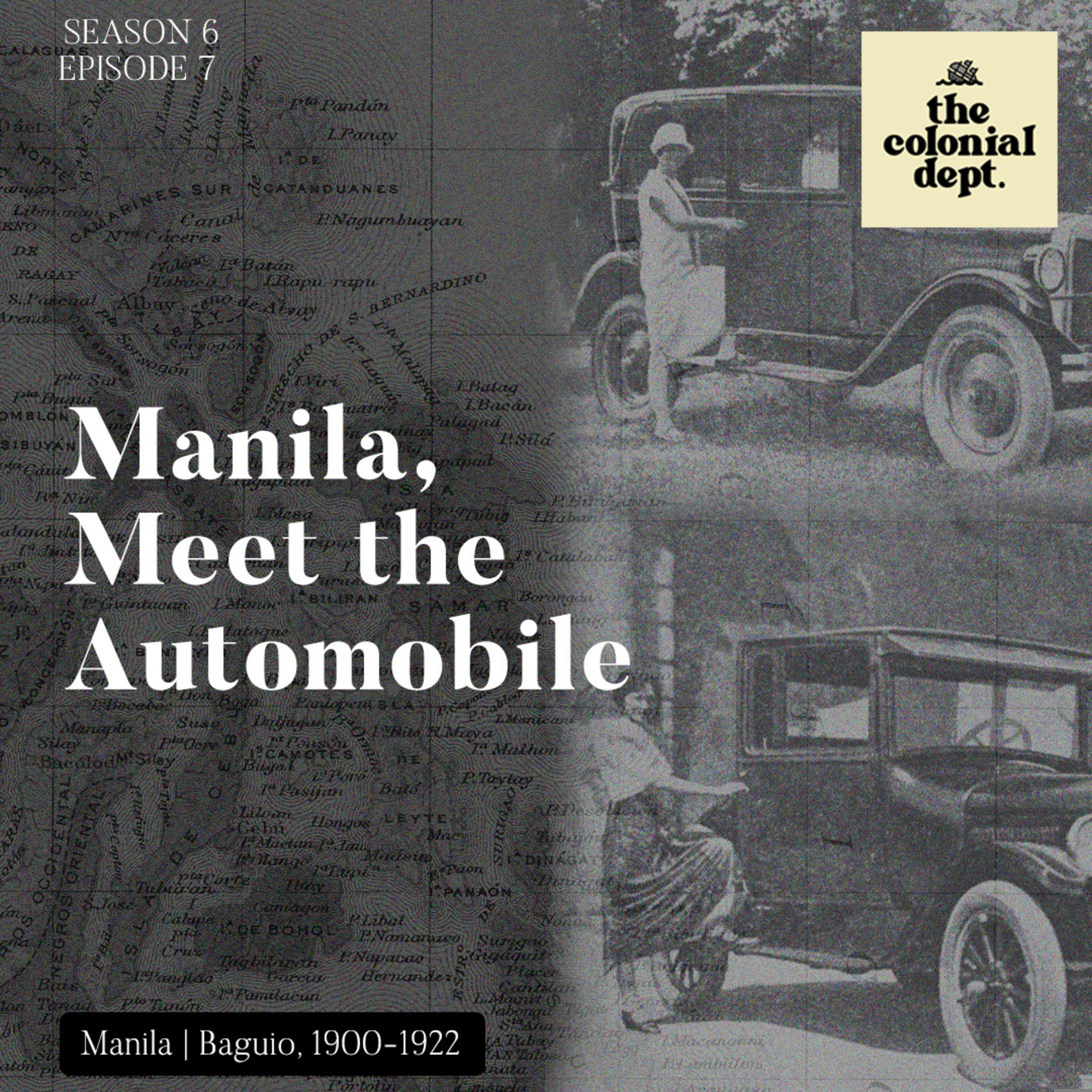
S7 Ep 14S6E7: Manila, Meet the Automobile
<html><p>Soon after the American takeover of the Philippines, Manila witnesses the coming of its first-ever car—a three-and-a-half horsepower, single-cylinder, wire-wheel Richard-Brasier. From then on, it’s full speed ahead for the wide-scale adoption of the automobile in the capital city and beyond. Packards and Studebakers roar through newly constructed Manila streets, while Stanleys chug up the Benguet highlands to reach Baguio. But what does the coming of the automobile mean for the former kings of the colonial roads—the coachman, the carriage, and the horse?</p><p><br/></p><p>Follow us on IG: <a href="https://www.instagram.com/thecolonialdept/" target="_blank">@thecolonialdept</a></p><p>Follow us on TikTok: <a href="https://www.tiktok.com/@thecolonialdept" target="_blank">@thecolonialdept</a></p><p>Email us: <a href="mailto:[email protected]" target="_blank">[email protected]</a></p><p><br/></p><p>Additional audio from the Philippine Daily Inquirer and <em>Back to the Future Part 2 </em>© 1990 Universal Pictures.</p><p><br/></p><p>References:</p><p>Spector, Robert M. (1966). “W. Cameron Forbes in the Philippines: A Study in Proconsular Power.” <em>Journal of Southeast Asian History, 7</em>(2), pp. 74-92</p><p>Carlova, John (February 1959). “The Stanleys and their Steamer.” <em>American Heritage. </em><a href="https://www.americanheritage.com/stanleys-and-their-steamer" target="_blank">https://www.americanheritage.com/stanleys-and-their-steamer</a></p><p>“Ex-St. Louisan Listed as Held by Japanese” (31 March 1942). <em>St. Louis Post-Dispatch. </em></p><p><em>The United States v. Otis G. Freeman. </em>G.R. No. L-3779 (13 November 1907). </p><p>Cole-Jett, Robin (15 September 2023). “The Good Roads Movement.” <em>Red River Historian</em>. <a href="https://www.redriverhistorian.com/post/the-good-roads-movement" target="_blank">https://www.redriverhistorian.com/post/the-good-roads-movement</a></p><p>The American Chamber of Commerce of the Philippine Islands (July 1926). “Yesterday and Today in Manila’s Motor World.” <em>The American Chamber of Commerce Journal</em>.</p><p>Clymer, Floyd (1971). <em>Treasury of Early American Automobiles, 1877-1925.</em> Bonanza Books.</p><p>LaFontaine Automotive Classic Cars (3 May 2024). “The History of the Packard Car Company.”</p><p>Zaldarriaga, Joe (18 April 2024). “On track for positive change.” <em>The Philippine Star. </em></p><p>Brigham, Albert Perry (1904). “Good Roads in the United States.”<em> Bulletin of the American Geographical Society, 36</em>(12), pp. 721-735.</p><p>Gamble, Adrian (2017). “Manila's Long-Lost 'Tranvias' Once the Envy of Asia.”<em> Skyrise Cities. </em><a href="https://skyrisecities.com/news/2017/03/manilas-long-lost-tranvias-once-envy-asia" target="_blank">https://skyrisecities.com/news/2017/03/manilas-long-lost-tranvias-once-envy-asia</a></p><p>Pante, Michael D. (2022). “The Calesa Vote: Street Politics and Local Governance in 1930s to 1940s Manila.” <em>Sojourn: Journal of Social Issues in Southeast Asia, 37</em>(2), pp. 201-229.</p><p>Pante, Michael D. (2012). “The "Cocheros" of American-occupied Manila Representations and Persistence.” <em>Philippine Studies: Historical &amp; Ethnographic Viewpoints, 60</em>(4)<em>, </em>pp. 429-462.</p><p>Pante, Michael D. (2016). “Urban Mobility and a Healthy City Intertwined Transport and Public Health Policies in American-Colonial Manila.” <em>Philippine Studies: Historical &amp; Ethnographic Viewpoints, 64</em>(1), pp. 73-101.</p><p>Mohacek, Bozi (2003). <em>Stanley Steamers and Yorkshire Steam Wagons in 1908 Philippines, Part 2. </em>Surrey Vintage Vehicle Society. <a href="https://www.svvs.org/philippines2.shtml" target="_blank">https://www.svvs.org/philippines2.shtml</a></p><p>Poco, Leandro Nicholas Ranoa (2019). <em>Enclave Sub/Urbanism: A Historical and Configurational Assessment of Metro Manila’s Centres of Exclusion and Their Surrounding Spatial Fabric </em>[masteral dissertation]. Bartlett School of Architecture, University College London.</p><p>Dacudao, Patricia Irene (2023). <em>Abaca Frontier: The Socioeconomic and Cultural Transformation of Davao, 1898-1941. </em>Ateneo de Manila University Press.<br/><br/></p></html>
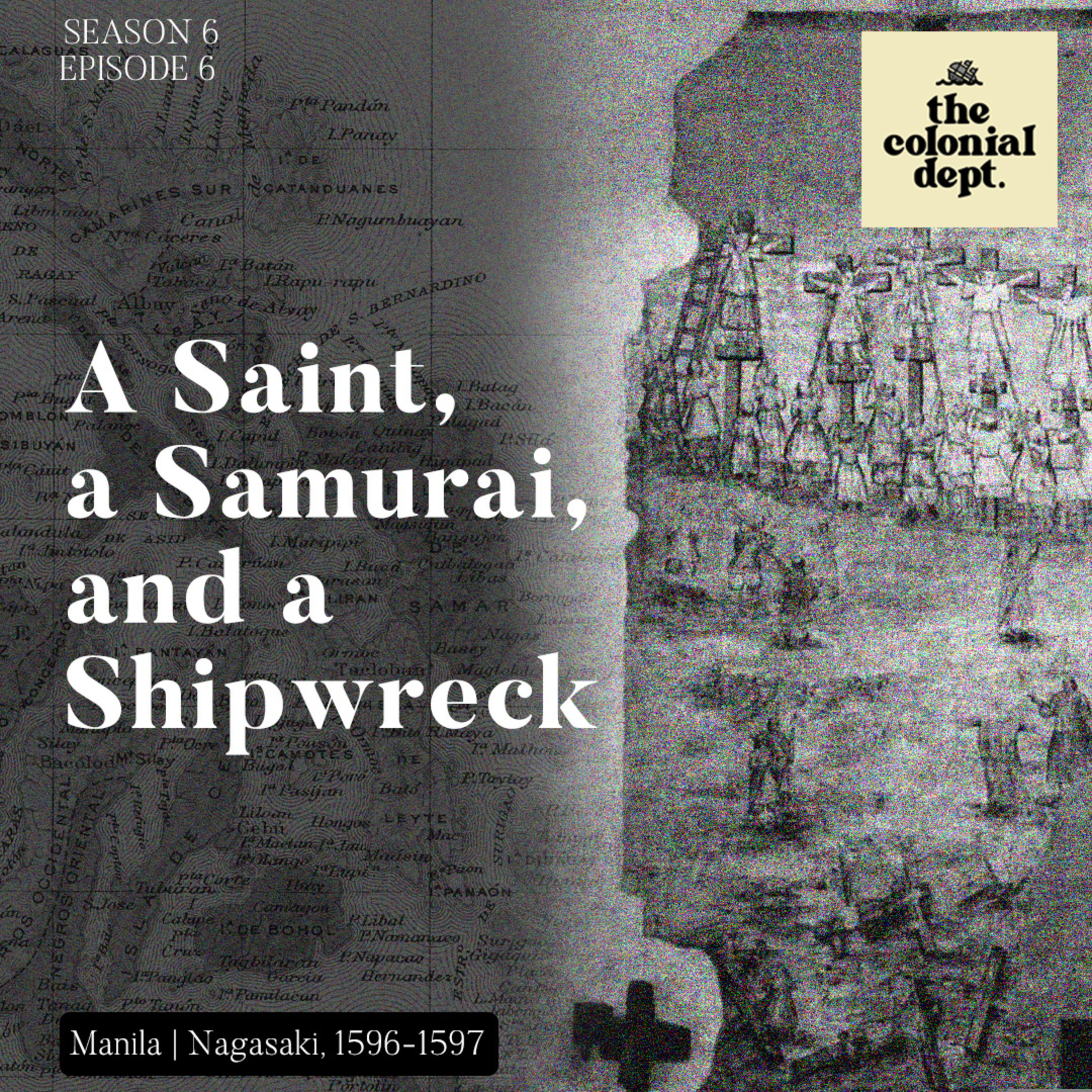
S6 Ep 12S6E6: A Saint, a Samurai, and a Shipwreck
<html><p>In a time when both God and gold define the tense relations between Japan and Manila, the galleon <em>San Felipe</em> gets stranded in the land of the rising sun. There, the fate of its passengers now lies in the hands of the most powerful warlord in Japan: Toyotomi Hideyoshi! </p><p>Follow us on IG: <a href="https://www.instagram.com/thecolonialdept/" target="_blank">@thecolonialdept</a></p><p>Follow us on TikTok: <a href="https://www.tiktok.com/@thecolonialdept" target="_blank">@thecolonialdept</a></p><p>Email us: <a href="mailto:[email protected]" target="_blank">[email protected]</a></p><p><br/></p><p>Image: Mural from Cuernavaca, Mexico, published in the Academy of Christian Art.</p><p>Additional audio from Shogun, © FX.</p><p><br/></p><p>References:</p><p>Kamen, Henry (2004). <em>Empire: How Spain Became a World Power, 1492-1763. </em>Harper Perennial.</p><p>Conover, Cornelius (2011). “Saintly Biography and the Cult of San Felipe de Jesús in Mexico City, 1597-1697.” <em>The Americas,</em> <em>67</em>(4), pp. 441-466.</p><p>O’Hara, Luke (5 February 2022). “The Galleon, the Tyrant and the 26 Martyrs of Nagasaki.” <em>National Catholic Register. </em></p><p>Boscaro, Adriana (December 1973). “Toyotomi Hideyoshi and the 1587 Edicts Against Christianity.” <em>Oriens Extremus, 20</em>(2), pp. 219-241.</p><p>“The Edicts of Toyotomi Hideyoshi: Excerpts from ‘Limitation on the Propagation of Christianity’, 1587; Excerpts from ‘Expulsion of the Missionaries,’ 1587.” <em>Asia for Educations, </em>Weatherhead East Asian Institute, Columbia University. <a href="https://afe.easia.columbia.edu/ps/japan/tokugawa_edicts_christianity.pdf" target="_blank">https://afe.easia.columbia.edu/ps/japan/tokugawa_edicts_christianity.pdf</a><br/></p></html>
S6 Ep 10S6E5: Who Murdered Señor Villegas?
<html><p>When the guardia civil forced the Intramuros house of Victor Villegas open, they found a trail of blood that led all the way to a bathroom. Inside was the bloody corpse of the señor, his head smashed in, his body stripped to his underclothes. The police’s immediate suspects? The houseboys.</p><p>Follow us on IG: <a href="https://www.instagram.com/thecolonialdept/" target="_blank">@thecolonialdept</a></p><p>Follow us on TikTok: <a href="https://www.tiktok.com/@thecolonialdept" target="_blank">@thecolonialdept</a></p><p>Email us: <a href="mailto:[email protected]" target="_blank">[email protected]</a></p><p><br/></p><p>Thumbnail Image: "Panguingue (Natives Playing Cards)." Jose Taviel de Andrade, ca. 1895. In Jose Maria Carino (2004), <em>Islas Filipinas 1663-1888, </em>Ars Mundi.</p><p><br/></p><p>References:</p><p>Sayno, Mariano (20 March 2016). “Subic Spanish Gate: Sentinel of History in Olongapo’s Naval Legacy.” <em>Beauty of the Philippines. </em><a href="https://www.beautyofthephilippines.com/subic-spanish-gate/" target="_blank">https://www.beautyofthephilippines.com/subic-spanish-gate/</a></p><p>Bankoff, Greg (1992). “Servant-Master Conflicts in Manila in the Late Nineteenth Century.” <em>Philippine Studies</em>, <em>40</em>(3), pp. 281-301.</p><p>Bankoff, Greg (1993). “Inside the Courtroom: Judicial Procedures in Nineteenth Century Philippines.” <em>Philippine Studies, 41</em>(3), pp. 287-304.<em> </em></p><p>Coo, Stephanie (2019). <em>Clothing the Colony: Nineteenth-Century Philippine Sartorial Culture, 1820-1896. </em>Ateneo de Manila University Press.</p><p>Mallat, Jean (1846). <em>The Philippines: History, Geography, Customs, Agriculture, Industry, and Commerce of the Spanish Colonies in Oceania</em> (Pura Santillan-Castrence, Trans.) (2021). National Historical Commission of the Philippines.</p><p>“Reglamento Provisional para la Policia de la Servidumbre Domestica” (1881). <a href="https://bibliotecadigital.aecid.es/bibliodig/es/catalogo_imagenes/descargarImprimir.do?id=descarga_1014590-1728387479953&amp;multiple=false&amp;idGrupo=1014590" target="_blank">https://bibliotecadigital.aecid.es/bibliodig/es/catalogo_imagenes/descargarImprimir.do?id=descarga_1014590-1728387479953&amp;multiple=false&amp;idGrupo=1014590</a><br/></p></html>
S6 Ep 8S6E4: When Giants Walked the Philippines
<html><p>In the 1600s, a friar chronicled wild stories of titans who carried spears the size of tree trunks, waded all the way to Surigao, got slain by small warriors, or even traveled to Manila. Where did this titanic fascination come from—and what do stories of giants tell us about the world of our colonizers and our ancestors?</p><p>Follow us on IG: <a href="https://www.instagram.com/thecolonialdept/" target="_blank">@thecolonialdept</a></p><p>Follow us on TikTok: <a href="https://www.tiktok.com/@thecolonialdept" target="_blank">@thecolonialdept</a></p><p>Email us: <a href="mailto:[email protected]" target="_blank">[email protected]</a></p><p>Thumbnail art adapted from a map depicting the giant Patagonians of South America, from Gutierrez, Diego (1554-1569). “Americae sive quartae orbis partis nova et exactissima descriptio.” Lessing J. Rosenwald Collection (Library of Congress)</p><p>References:</p><p>Madarang, Catalina Ricci S. (5 May 2021). “Inches for height, hours for distance: Filipinos use our own set of measurement systems.” <em>Interaksyon</em>. <a href="https://interaksyon.philstar.com/trends-spotlights/2021/05/25/192465/inches-for-height-hours-for-distance-filipinos-use-our-own-set-of-measurement-systems/" target="_blank">https://interaksyon.philstar.com/trends-spotlights/2021/05/25/192465/inches-for-height-hours-for-distance-filipinos-use-our-own-set-of-measurement-systems/</a></p><p>Tim Reynolds (2023). “Victor Wembanyama officially listed at 7-foot, 3.5-inches tall.” Associated Press.</p><p>St. Augustine, <em>City of God </em>16.8, “Whether Certain Monstrous Races of Men Are Derived from the Stock of Adam or Noah’s Sons.”</p><p>Fernández-Armesto, Felipe (2022). <em>Straits: Beyond the Myth of Magellan. </em>Bloomsbury Publishing.</p><p>Reilly, Brandon Joseph (2013). “Collecting the People: Textualizing Epics in Philippine History from the Sixteenth Century to the Twenty-First.” [Doctoral dissertation] University of California, Los Angeles.</p><p>Morales, Resil (1997). “Imagining Giants.” In <em>House of Memory. </em>Anvil Publishing.</p><p>Mojares, Resil (2013). “Men With Tails.” In <em>Isabelo’s Archive. </em>Anvil Publishing.</p><p>Turban, Manon (31 December 2021). “Cartographic Monsters and the Rise of Empiricism.” <em>XVII-XVIII [En ligne], 78.</em></p><p>Clark, Jordan (13 November 2017). “The Legend of the Agta, the Eastern Visayan Tree-Dweller.” <em>The Aswang Project. </em><a href="https://www.aswangproject.com/agta/" target="_blank">https://www.aswangproject.com/agta/</a><br/></p><p>Scalice, Joseph (2018). “Pamitinan and Tapusi: Using the Carpio legend to reconstruct lower-class consciousness in the late Spanish Philippines.” <em>Journal of Southeast Asian Studies, 49</em>(2), p. 250-276.<br/><br/></p></html>
S6 Ep 6S6E3: Rada's Dilemma
<html><p>One of the most low-key and long-lived eateries in Makati’s central business district is the humble ‘jolly jeep’ known as SisigSaRada, which, as you can tell from the name, is located inside Rada Street. But who is this “Rada” the road is named after? To answer that, we travel four and a half centuries back in time. What can the story of Fray Martin de Rada tell us about the early history of Christianity in the Philippines?</p><p><br/></p><p>Follow us on IG: <a href="https://www.instagram.com/thecolonialdept/" target="_blank">@thecolonialdept</a></p><p>Follow us on TikTok: <a href="https://www.tiktok.com/@thecolonialdept" target="_blank">@thecolonialdept</a></p><p>Email us: <a href="mailto:[email protected]" target="_blank">[email protected]</a></p><p><br/></p><p>References:</p><p>Sitoy, T. Valentino Jr. (1985). <em>A History of Christianity in the Philippines: The Initial Encounter, Volume 1. </em>New Day Publishers.</p><p>“An ordinance prescribing rules and regulations for the operations of mobile-canteens in Makati City…”, City Ordinance No. 2002-07 (2002).</p><p>Tikim TV (2023). <em>Sisig Sa Rada Story | Legendary Jolly Jeep in Makati | Filipino Street Food Icon | Tikim TV. </em>YouTube. <a href="https://www.youtube.com/watch?v=2DAU-Qig-SI" target="_blank">https://www.youtube.com/watch?v=2DAU-Qig-SI</a></p><p>Macdonald, Charles J-H (2004). “Folk Catholicism and Pre-Spanish Religions in the Philippines.” <em>Philippine Studies, 52</em>(1), pp. 78-93.</p><p>Macdonald, Charles J-H (2012). "Cleansing the Earth: The Pänggaris Ceremony in Palawan," <em>Philippine Studies</em>, <em>45</em>(3).</p><p>Jocano, F. Lando (1968). “Notes on Philippine Divinities.” <em>Asian Studies: Journal of Critical Perspectives on Asia</em>,<em> 6</em>(2).</p><p>Bulatao, Jaime (1965). “Split-level Christianity.” <em>Philippine Sociological Review, 13</em>(2), pp. 119-121.</p><p>“4364 Martin de Rada.” <em>AugNet.net. </em><a href="http://www.augnet.org/en/history/people/4364-martin-de-rada/" target="_blank">http://www.augnet.org/en/history/people/4364-martin-de-rada/</a></p><p>Ocampo, Ambeth (6 December 2023). “To See and Notice.” <em>Philippine Daily Inquirer. </em><a href="https://opinion.inquirer.net/168776/to-see-and-notice" target="_blank">https://opinion.inquirer.net/168776/to-see-and-notice</a></p></html>
S6 Ep 4Bonus: The Philippine book launch... LIVE!
bonus<html><p>We interrupt our regularly scheduled programming to give you this audio recording, straight from the Philippine launch of <em>Silk, Silver, Spices, Slaves: Lost Tales from the Philippine Colonial Period</em>, which is the book version of this podcast!</p><p>This event was a long time coming, and I'm happy we finally got to make it happen this August 31. Much love to everyone who took the time out of their Saturday to pick up the book or hear me speak. Special thanks to <a href="https://www.instagram.com/everythingsfineph" target="_blank">Everything's Fine</a>, the amazing independent bookstore that hosted the event; my publisher Shu Wen Chye of <a href="https://www.instagram.com/factionpress" target="_blank">Faction Press</a>, who flew all the way from Singapore to be here; and fellow history podcaster <a href="https://www.instagram.com/ceejtheday" target="_blank">Ceej Tantengco-Malolos</a> (host of <a href="https://www.instagram.com/history.rebooted" target="_blank">What's AP?: Araling Panlipunan Rebooted</a>) for moderating the launch.</p><p><br/></p><p>*Audio has been edited and condensed for clarity.</p></html>
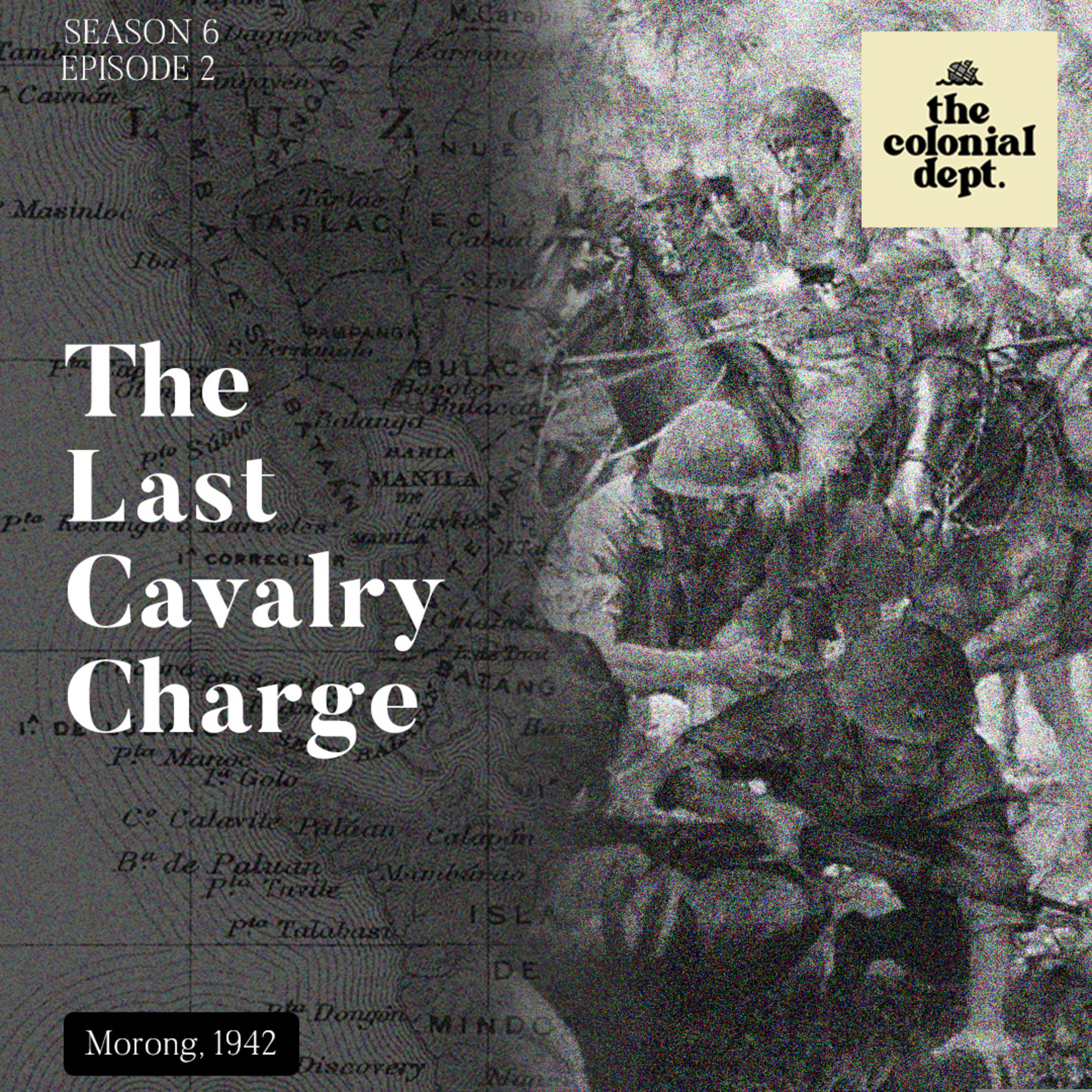
S6 Ep 3S6E2: The Last Cavalry Charge
<html><p>One month after Pearl Harbor, the Philippine army is in tatters after the relentless Japanese assault. The 26th Cavalry Regiment—one of the few cavalry units left in the US army that still hadn’t traded in their horses for tanks or halftracks—had the thankless task of guarding the defensive lines against Imperial flank attacks. In the town of Morong, Lt. Edwin Price Ramsey and the rest of E Troop face off against an invading force… and charge into history in the final mounted cavalry charge in the annals of the American armed forces.</p><p><br/></p><p>Follow us on IG: <a href="https://www.instagram.com/thecolonialdept/" target="_blank">@thecolonialdept</a></p><p>Follow us on TikTok: <a href="https://www.tiktok.com/@thecolonialdept" target="_blank">@thecolonialdept</a></p><p>Email us: <a href="mailto:[email protected]" target="_blank">[email protected]</a></p><p><br/></p><p>Cover Art: "The Last Charge" © John Solie</p><p><br/></p><p>References:</p><p>Ramsey, Edwin Price &amp; Rivele, Stephen J. (1990, 2016). <em>Lieutenant Ramsey’s War: From Horse Soldier to Guerilla Commander. </em>University of Santo Tomas Publishing House.</p><p>“Cavalry Drill Regulations, Horse.” (13 March 1944) War Department Field Manual (FM2-5), United States Printing Office.</p><p>Bankoff, Greg (2004). “Horsing around: The life and times of the horse in the Philippines at the turn of the 20th century.” In Boomgaard, P. &amp; Henley, D. (eds.), <em>Smallholders and Stockbreeders Histories of Foodcrop and Livestock Farming in Southeast Asia</em>, KITLV Press, p. 233–255.</p><p>Quirino, Carlos (1988). “The Spanish Colonial Army: 1878-98.” <em>Philippine Studies</em>, <em>36</em>(3), pp. 381-386.</p><p>“The 4th U.S. Cavalry at Manila, Philippines.” [Photo] Strohmeyer &amp; Wyman, publishers. US Library of Congress. <a href="https://www.loc.gov/item/2023634531/" target="_blank">https://www.loc.gov/item/2023634531/</a></p><p>Plante, Trevor K. (2000). “Researching Service in the US Army During the Philippine Insurrection.” <em>Prologue, 32</em>(2), National Archives. <a href="https://www.archives.gov/publications/prologue/2000/summer/philippine-insurrection.html" target="_blank">https://www.archives.gov/publications/prologue/2000/summer/philippine-insurrection.html</a></p><p>Olson, Col. John E. (2020-2021). “A Brief History of the Philippine Scouts.” Philippine Scouts Heritage Society, <a href="https://www.philippinescouts.org/the-scouts/history/a-brief-history" target="_blank">https://www.philippinescouts.org/the-scouts/history/a-brief-history</a><br/></p><p>Quezon, Manuel L. (1946). <em>The Good Fight</em>. D. Appleton-Century Company, Incorporated.</p></html>
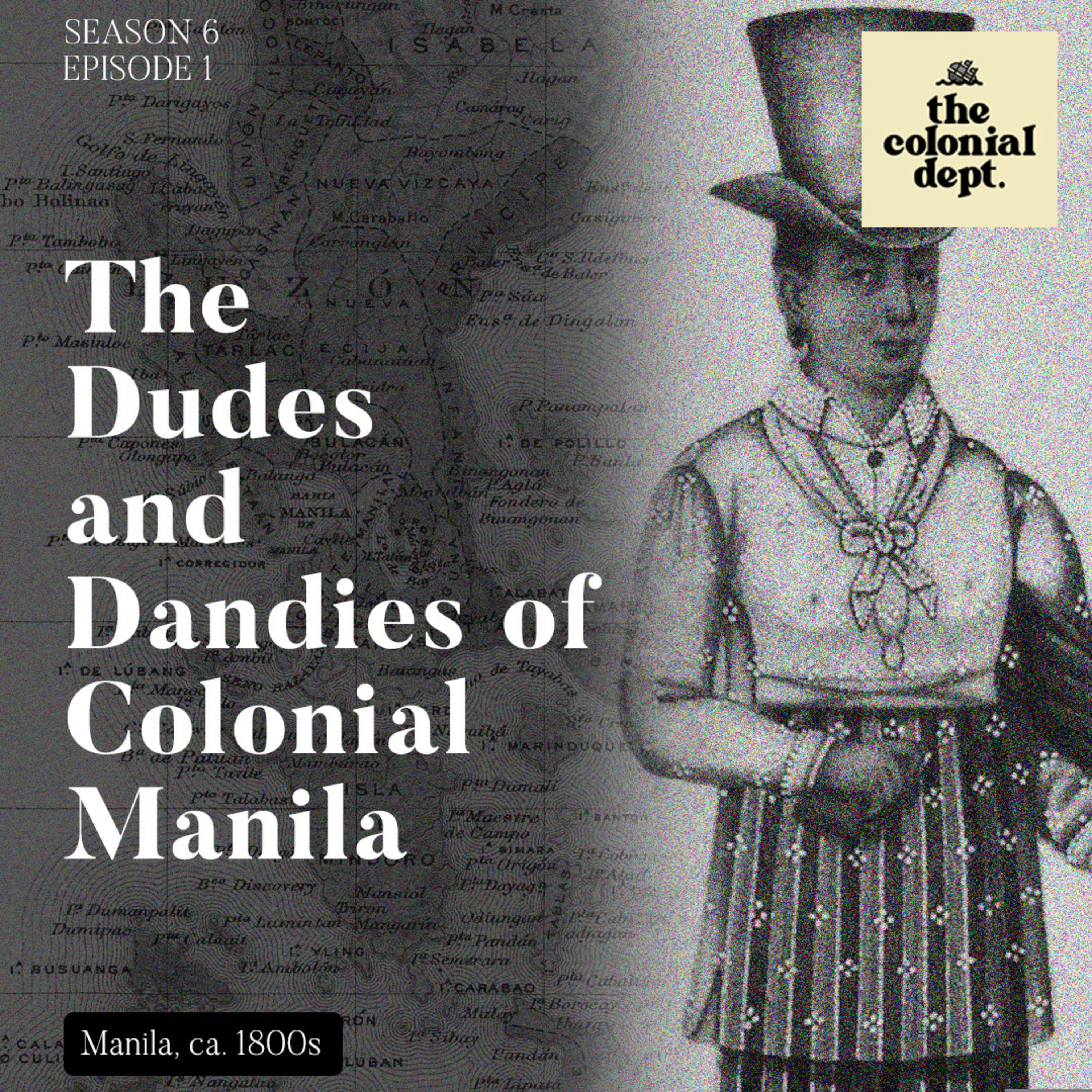
S6 Ep 1S6E1: The Dudes and Dandies of Colonial Manila
<html><p>Cravats. Top hats. Barongs. Striped pants. Wide, wide waistbands. Well-dressed men are on the prowl in Luneta, turning heads and inciting whispers. Let’s meet these fashionable fops, shall we?</p><p>Follow us on IG: <a href="https://www.instagram.com/thecolonialdept/" target="_blank">@thecolonialdept</a></p><p>Follow us on TikTok: <a href="https://www.tiktok.com/@thecolonialdept" target="_blank">@thecolonialdept</a></p><p>Email us: <a href="mailto:[email protected]" target="_blank">[email protected]</a></p><p><br/></p><p>Audio from <em>Austin Powers: The Spy Who Shagged Me </em>from New Line Cinema.</p><p><br/></p><p>References: </p><p>Coo, Stephanie (2019). <em>Clothing the Colony. </em>Ateneo de Manila University Press.</p><p>Silvestre, Ma. Patricia Brillantes (2018). “The Manila Tertulia in the Spanish and American Periods: From Private to Public Sphere.” In <em>Saysay Himig: A Sourcebook on Philippine Music History, 1880-1941 </em>(Arwin Q. Tan, ed.), University of the Philippines Press.</p><p>Arias, John Manuel (25 June 2020). “Like the Salons It’s Named For, ‘Tertulia’ Is a Political Meeting Disguised as a Party.” <em>Electric Lit</em>. <a href="https://electricliterature.com/like-the-salons-its-named-for-tertulia-is-a-political-meeting-disguised-as-a-party/" target="_blank">https://electricliterature.com/like-the-salons-its-named-for-tertulia-is-a-political-meeting-disguised-as-a-party/</a></p><p>Ayala Museum [@ayalamuseum] (9 December 2020). “This painting is called Un Indio de Manila bestido de gala after Damian Domingo…” <em>X.com. </em><a href="https://x.com/ayalamuseum/status/1336545689757646849/photo/1" target="_blank">https://x.com/ayalamuseum/status/1336545689757646849/photo/1</a></p><p>Uler, Gulsun (1 July 2022). “Tertulia: The Spanish Word for Social Meetings with Literary or Artistic Flavors.” <em>Words of the World. </em><a href="https://wordsoftheworlds.substack.com/p/tertulia-a-spanish-word-for-a-social" target="_blank">https://wordsoftheworlds.substack.com/p/tertulia-a-spanish-word-for-a-social</a></p><p>Simpson, Mark (July 2002). “Meet the Metrosexual.” <em>Salon.com.</em></p><p>Simpson, Mark (29 July 2022). “Meet the Metrosexual—Twenty Years On.” <em>MarkSimpson.com</em>. <a href="https://marksimpson.com/2022/07/29/meet-the-metrosexual-twenty-years-on/" target="_blank">https://marksimpson.com/2022/07/29/meet-the-metrosexual-twenty-years-on/</a></p></html>
Trailer: What is the Colonial Dept.?
trailer<html><p>Are you ready to plunge into the archives of Philippine history?</p></html>
Special: The book launch... live!
bonus<html><p>Last weekend, the book version of this podcast, 'Silk, Silver, Spices, Slaves', was launched in a small event at Book Bar SG along Duxton Road in Singapore. Of course, I got into a funny little accident right before it happened. Listen to scenes from the Singapore book launch here! My publisher and I talk about how the book came into being, how The Colonial Dept. tries to teach history, and what my process is for writing episodes and essays.</p><p><br/></p><p>Follow us on IG: <a href="https://www.instagram.com/thecolonialdept/" target="_blank">@thecolonialdept</a></p><p>Follow us on TikTok: <a href="https://www.tiktok.com/@thecolonialdept" target="_blank">@thecolonialdept</a></p><p>Email us: <a href="mailto:[email protected]" target="_blank">[email protected]</a></p><p>The book version of this podcast is called <em>Silk, Silver, Spices, Slaves: Lost Tales from the Philippine Colonial Period, 1565-1946</em>. <a href="https://www.faction.press/product-page/silk-silver-spices-slaves-philippines-history" target="_blank">Purchase here</a>. (An ebook version is <a href="https://www.amazon.com/Silk-Silver-Spices-Slaves-Philippine-ebook/dp/B0D5JSXC5M" target="_blank">also available in Amazon</a>.) </p></html>