Season 6 · Episode 3
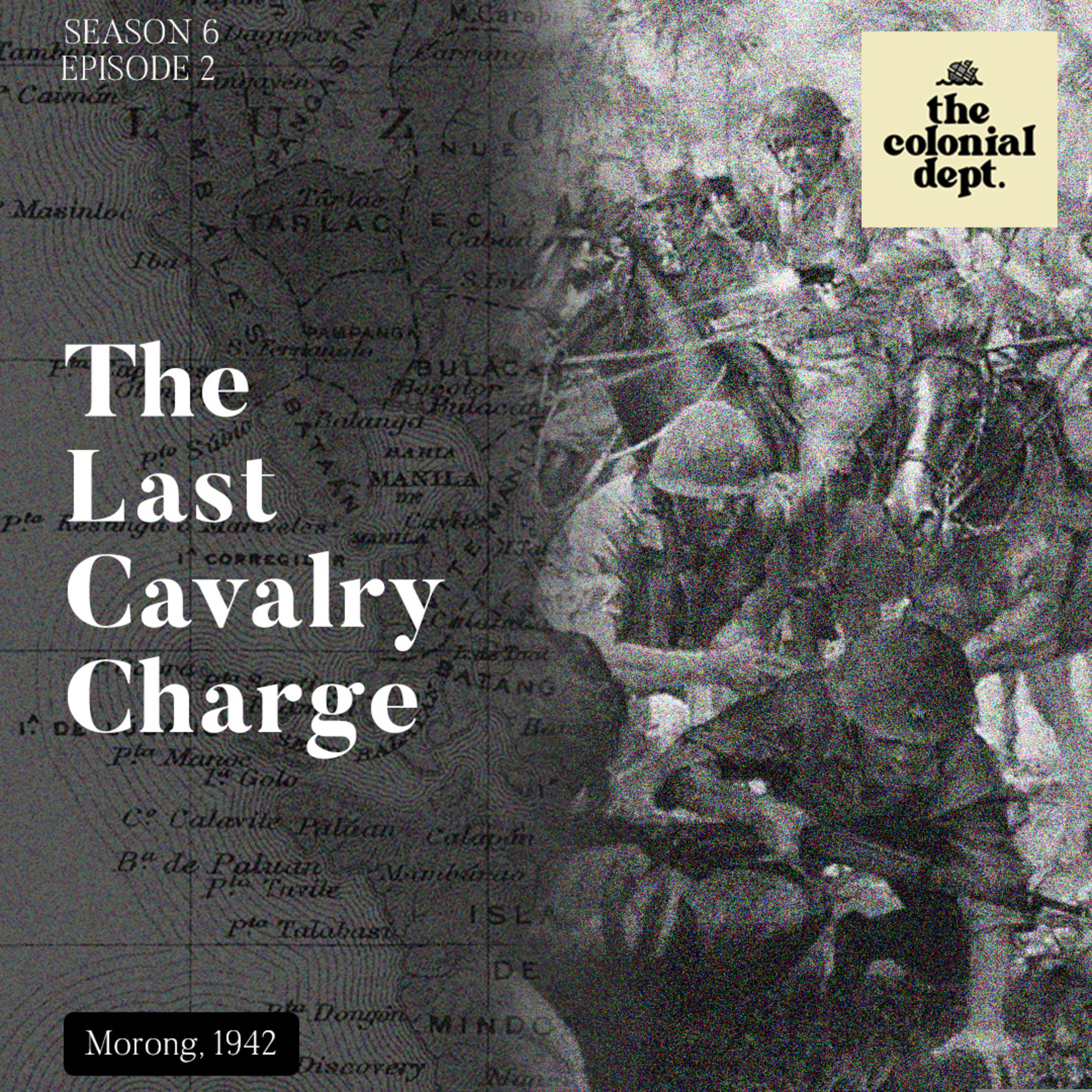
S6E2: The Last Cavalry Charge
The Colonial Department · The Colonial Department
August 22, 202415m 12s
Audio is streamed directly from the publisher (c10.patreonusercontent.com) as published in their RSS feed. Play Podcasts does not host this file. Rights-holders can request removal through the copyright & takedown page.
Show Notes
<html><p>One month after Pearl Harbor, the Philippine army is in tatters after the relentless Japanese assault. The 26th Cavalry Regiment—one of the few cavalry units left in the US army that still hadn’t traded in their horses for tanks or halftracks—had the thankless task of guarding the defensive lines against Imperial flank attacks. In the town of Morong, Lt. Edwin Price Ramsey and the rest of E Troop face off against an invading force… and charge into history in the final mounted cavalry charge in the annals of the American armed forces.</p><p><br/></p><p>Follow us on IG: <a href="https://www.instagram.com/thecolonialdept/" target="_blank">@thecolonialdept</a></p><p>Follow us on TikTok: <a href="https://www.tiktok.com/@thecolonialdept" target="_blank">@thecolonialdept</a></p><p>Email us: <a href="mailto:[email protected]" target="_blank">[email protected]</a></p><p><br/></p><p>Cover Art: "The Last Charge" © John Solie</p><p><br/></p><p>References:</p><p>Ramsey, Edwin Price & Rivele, Stephen J. (1990, 2016). <em>Lieutenant Ramsey’s War: From Horse Soldier to Guerilla Commander. </em>University of Santo Tomas Publishing House.</p><p>“Cavalry Drill Regulations, Horse.” (13 March 1944) War Department Field Manual (FM2-5), United States Printing Office.</p><p>Bankoff, Greg (2004). “Horsing around: The life and times of the horse in the Philippines at the turn of the 20th century.” In Boomgaard, P. & Henley, D. (eds.), <em>Smallholders and Stockbreeders Histories of Foodcrop and Livestock Farming in Southeast Asia</em>, KITLV Press, p. 233–255.</p><p>Quirino, Carlos (1988). “The Spanish Colonial Army: 1878-98.” <em>Philippine Studies</em>, <em>36</em>(3), pp. 381-386.</p><p>“The 4th U.S. Cavalry at Manila, Philippines.” [Photo] Strohmeyer & Wyman, publishers. US Library of Congress. <a href="https://www.loc.gov/item/2023634531/" target="_blank">https://www.loc.gov/item/2023634531/</a></p><p>Plante, Trevor K. (2000). “Researching Service in the US Army During the Philippine Insurrection.” <em>Prologue, 32</em>(2), National Archives. <a href="https://www.archives.gov/publications/prologue/2000/summer/philippine-insurrection.html" target="_blank">https://www.archives.gov/publications/prologue/2000/summer/philippine-insurrection.html</a></p><p>Olson, Col. John E. (2020-2021). “A Brief History of the Philippine Scouts.” Philippine Scouts Heritage Society, <a href="https://www.philippinescouts.org/the-scouts/history/a-brief-history" target="_blank">https://www.philippinescouts.org/the-scouts/history/a-brief-history</a><br/></p><p>Quezon, Manuel L. (1946). <em>The Good Fight</em>. D. Appleton-Century Company, Incorporated.</p></html>