
The Business of Sport
182 episodes — Page 4 of 4
Ep 32Careers In Sport Podcast - Claudio Borges - Global Director Digital Planning - Adidas
Ep 31Careers In Sport Podcast - Jorge Mowinckel Sagnier - Director of Strategy and International Relations - Spanish Football Federation
Ep 30Careers In Sport Podcast - Shah Zeib Ahmed - Ticketing Operations Lead - Rugby World Cup 2021
Ep 29Careers In Sport Podcast - Lee Hemmings - Managing Director - Player Lens
Ep 28Careers In Sport Podcast - Geoff Pearson - Senior Lecturer - University Of Manchester
Ep 27Careers In Sport Podcast - Chris Fortuin - Lecturer - University Of Johannesburg

Ep 26Careers In Sport Podcast - Beatriz De Andrade - Brazilian Sports Management Expert
Ep 25The Business Of Sport Podcast - Richard Lewis - Chief Executive - All England Club
Richard Lewis, the outgoing chief executive of the All England Club, organiser of the annual Wimbledon tennis championships, is Callum Murray's guest on this edition of the Business of Sport Podcast with the International Sports Convention. A former player himself – he competed 13 times at Wimbledon – Lewis joined the club eight years ago, witnessing some great moments during his tenure, including Britain's own Andy Murray winning the men's singles title in 2013 and then again in 2016, the first Briton to do so since Fred Perry in 1936. What he didn't expect was that his departure would come amid an unprecedented period of crisis management at the club, which took the difficult decision on 1 April to cancel this year's championships because of the coronavirus pandemic. Was that decision made too early? Couldn't Wimbledon, like the French Open at Roland Garros, have been postponed until later in the year? No, says Lewis. The French Open is played on clay, which means that the 'window' in which it can take place is much longer than Wimbledon's, which is dictated by the weather, the light and the fact that it is played on grass. "There's a very limited window for staging the championships," Lewis explains. "It's no coincidence that we are pretty much focused around the longest days of the year in the UK." The decision to cancel was facilitated by the fact that, unusually for a major sporting event, Wimbledon was insured against the effects of a major pandemic, such as COVID-19, meaning that its 'surplus' – the profit that it is distributed to grassroots tennis via the Lawn Tennis Association, the sport's national governing body – is largely protected. Other elements of the club's work, such as its Wimbledon Recreated campaign, which aims to involve fans in tennis-related activities in their own homes during lockdown, were not covered by the policy, but represent an investment as well as a cost, Lewis adds. Lewis also addresses broader issues in tennis, including a proposed merger of the men's ATP and women's WTA organisations ("If it's a merger of equals, you can easily see how there can be cost savings and efficiencies, given the financial strain that both tours are under," he says) and a more collective model for the present, fragmented sale of tennis broadcast rights. Having a "forum, or a panel or a board" that was drawn from the sport's seven main stakeholders – the ATP, the WTA, the International Tennis Federation, and the four Grand Slams, Wimbledon, and the Australian, French and US Opens – would make sense, according to Lewis, but he draws the line at the collective sale of the rights for the Grand Slams, pointing out that Wimbledon has been able to triple the prize money for players in the last decade, thanks to its commercial ,success. "You need to be very careful about breaking a business model that's working," he concludes. "I'd be pretty confident that one collective deal would lead to less income. Where there's low-hanging fruit is where the sport is undervalued, and I don't think it's undervalued at Grand Slam level. I think it's [undervalued] on the tours."

Ep 24The Business Of Sport Podcast - Mary Harvey - Chief Executive - Centre For Sport and Human Rights
Callum Murray's guest on this edition of the Business of Sport podcast with the International Sports Convention is Mary Harvey, who graduated from playing in goal for the US women's national soccer team that won both the inaugural Women's World Cup in 1991 and gold medals at the 1996 Olympic games, to her present role as chief executive of the recently established Centre for Sport and Human Rights, a human rights organisation for the world of sport. In between, she worked for Fifa and then the successful joint bid by USA, Canada and Mexico to host the 2026 men's World Cup, There couldn't be a more timely and pivotal moment to discuss issues of human rights in sport, and, asked if the Black Lives Matter campaign that's sweeping the world presents an opportunity for the Centre to raise and amplify human rights issues in sport that might have been going unheard previously, Harvey replies: "Absolutely. I'm asking for a paradigm shift in every part of our lives. I'm not a person of colour, I'm white, but" – and here she quotes a banner she saw while attending a Black Lives Matter protest march the day before the interview – "silence equals privilege." Harvey says she regards athletes who have staged high-profile protests, such as Colin Kaepernick and Megan Rapinoe, as "human rights defenders, rather than troublemakers," commending them for standing up for what they believe in, even though it might mean putting their livelihoods and their physical safety at risk. In the wake of the COVID-19 lockdown, she adds: "I really hope that sport now has an opportunity to look at itself and say, "We can do better by these people'." In the interview, Harvey also discusses other contemporary human rights issue in sport, including the plight of migrant workers helping to build the infrastructure for the 2022 Fifa World Cup in Qatar and the case of Larry Nassar, the disgraced USA Gymnastics doctor who sexually abused dozens of young athletes, and how they can be prevented from recurring ("First thing is, don't bury your head in the sand," she says, with reference to the Nassar case. "It's there. It's in all walks of life and it's a question of, let's get serious about safeguarding.") The funding of bodies involved in sport integrity – combating doping, match-fixing and the abuse of athletes – also comes under the microscope, with Harvey pointing out that the anti- doping movement is by far the best funded of the three. "I think we have to look at that," she says. "It's disproportionate. Harvey applauds the IOC's moves towards gender parity in appointments to its commissions and in the athletes taking part in its events, but, for her, the "bible" on human rights in sport is The Ruggie Report, written in 2016 by John Ruggie, Patron of the Institute for Human Rights and Business. "The Ruggie Report stands up over time in terms of what sports bodies can do to really embrace human rights…", she says. "Any sports bodies that are listening to this, that really is a fantastic piece of work – and it's public."

Ep 23The Business Of Sport Podcast - Insights From The Football Industry - Henry Menezes
Henry Menezes has over 35 years experience in Indian Football. Starting as a national team goalkeeper as well as a variety of football development, administration and business experience. He is currently Deputy Chairman of the All Indian Football Association Technical Committee. In this edition of inside the Football Industry we will explore: Football Development and Grassroots structure in India Football Competitions including Baby Leagues and the Indian Super League FIFA U17 Competitions Opportunities and Challenges for European Clubs in developing commercial partnerships Elite Football in India and ambitions in AFC and FIFA Tournaments FIFA 2034 World Cup Bid? It's a full overview of Indian Football – Grassroots, Competitions, Commercial and Partnerships.

Ep 22The Business Of Sport Podcast - Giampiero Rinaudo - CEO and Co-Founder - Deltatre
If you've never heard of Deltatre, and you're a sports fan, you've almost certainly seen their work, whether in the form of statistics, graphics, some of the world's top sports websites and mobile applications, or in the burgeoning OTT market for streaming live sports. Historically, the Turin-based TV technology company has been involved behind the scenes in some of sport's greatest events, from Olympic Games to Fifa World Cups. In our latest episode of the Business of Sport Podcast with the International Sports Convention, Callum Murray's guest is Giampero Rinaudo, Deltatre's chief executive and co-founder. In this episode, we look at sports broadcasting after the lockdown and ask Giampiero: 'How will the way the industry delivers sport and the way we watch it have changed?' Founded 34 years ago, "not before the internet, but before the PC," as Rinaudo puts it, Deltatre has grown up alongside the sports broadcasting industry, often pioneering the changes that have conditioned the way we watch sport on TV. With 50 per cent of its workload now deriving from the OTT industry, its workforce is now over 1,000 strong, based at its HQ in Turin, in London and in other centres across the world. Since Bruin Sports Capital, the US sports investment group, took a 75-per-cent stake in the company in 2015, that workload is increasingly focused on US sports – all four of the US major leagues are Deltatre clients. Notably, the company is responsible for handling technical delivery worldwide of NFL Game Pass, the league's international OTT service, as well as delivering the websites of all 32 of the NFL's teams. In December, Bruin also acquired Two Circles, the UK-based data-driven marketing agency, opening up new opportunities for Deltatre to use data to interact with TV viewers. "We are going to become more and more a data-led platform to collect and understand the behaviour of the users," says Rinaudo. Deltatre is also helped in this ambition by the recent launch of its own data-driven, real-time platform mtribes. Using mtribes, Deltatre is able to analyse viewers' habits to discover that, for example, a viewer is interested in certain players, or only wants to watch highlights. This enables Deltatre to 'personalise' a digital offer. "I can show you something that is different from what I show to somebody else, because I know that you like this particular content. And all this is done in real time," says Rinaudo. One remaining sports media sector in which Deltatre is not yet involved is e-Sports, and Rinaudo says that the company is seeking to find a role and to invest in this area. "I've been watching some Formula 1 virtual races," he adds, "and they are fun. That's something that will continue to grow in the future. This is something where Deltatre should have a major role." As for his management style, Rinaudo's policy is unchanged, despite the growth of the company from its three founders to its present scale. "I tend to delegate," he says. "My motto is that for any specific task, there is always somebody better than me. I think I'm good at choosing, maintaining and orchestrating a strong management group."

Ep 21The Business Of Sport Podcast - Insights From The Sports Tourism And Events Industry - Tim Ramsberger
Tim Ramsberger is Chief Operating Officer for Visit St.Pete / Clearwater In this edition on Sports Tourism and Events, we explore: The destination of St.Pete and Clearwater within the state of Florida Sports Events past and future in St.Pete and Clearwater Sports Tourism – Strategy, Impact and Measurement Long term focus – The Brand Marketing B2C, B2B NFL SuperBowl, Tampa 2021

Ep 20Business Of Sport Podcast - Insights From The Football Industry - Pavel Klymenko
Our guest today is Pavel Klymenko, Head of Policy – Global Monitoring and Human Rights. In this edition we focus on: FARE – Football Against Racism in Europe – Origins and remit of FARE and what FARE does Campaigning as an important component of FARE and cases from: Eastern European Development Project, Erasmus Plus Sport Projects and Football v Homophobia. Sport as a means for social change Examples of reducing racism and inequality in football A Case study with the German Football Association (DFB) Why leadership in sport is missing representation from ethnic minority groups and why this is important for the future of sport

Ep 19The Business Of Sport Podcast - Insights From The Sport Industry - Misha Sher
This is the Business of Sport Podcast with the International Sports Convention. Our Show on careers in sport giving you insights, expertise and guidance. Our guest is Misha Sher. Misha is WorldWide Vice President at MediaCom. In this edition we cover: How a mindset of being curious is Misha's mantra and what this really means in the world of sport and business An in depth Case study on Pele, developing brand and commercial assets for the worlds greatest ever footballer and forging partnerships with the likes of Proctor and Gamble, Hublot, Gillete and Coca-Cola. Great insight in this podcast is given to sport sponsorship and brand activation. Why Winston Churchill and Michael Jordan are the two people Misha would have dinner with.
Ep 18The Business Of Sport Podcast - Insights From The Football Industry - Dariusz Mioduski
Dariusz Mioduski, is owner and chairman of Legia Warsaw. He is also Vice-Chairman of the European Club Association and member of the board of administration for UEFA Club competitions and member of UEFA club competitions committee. In this edition of the Football Industry podcast we explore: Legia Warsaw brands and culture Legia ambitions on the field – national, European and the development of the youth academy Growing the business with a focus on entertainment, media, women, youth, e-gaming and community. The campaign – Ready to Help Understanding the DNA of Warsaw, its fans but with an eye for change and development. What success really means and how it can be quantified. The future of European Club Club competitions

Ep 17The Business Of Sport Podcast - Franz Jung - Vice President of China's Envision Group and Chairman of the Board of Envision Virgin Racing
Franz Jung, Vice President of China's Envision Group and Chairman of the Board of Envision Virgin Racing, the team that competes in the Formula E electric motor racing series, is our latest guest on the Business of Sport Podcast with the International Sports Convention. What is the future of motor sport in a climate emergency? With Envision Group, the world- leading greentech company as the team's majority owner, Jung, whose career before joining Envision was with luxury car brands like Mercedes, BMW and Porsche, is uniquely placed to answer that question. "We will see a steep increase of electro-mobility racing in future," says Jung. "I can't imagine that there will be no more [fossil] fuel-powered racing, but electro-mobility races will grow a lot over the next 10 years." Speaking to Callum Murray, he explains that Envision decided to invest in a Formula E team because it has "exactly the same vision" as the race series, which he summarises as: "Being clean', being hi-tech, being powered by battery, being powered by computing… Possibly Envision, within the entire Formula E teams, is the only company which is 100-per-cent sustainable – and this is one of the major reasons why we acquired two years ago the majority stake." In its first season, 2018-19, the Envision team finished in third place in the team standings, out of 10 teams, Jung points out proudly, a highly commendable result for a non-OEM (original equipment manufacturer – or major car brand-backed team). Other teams on the grid count the likes of Nissan, BMW, Jaguar, Mercedes-Benz and Audi as backers. However, rubbing shoulders with such brands also gives Envision the opportunity to introduce them to its own technology solutions, especially its Artificial Intelligence of Things-powered batteries (for those unfamiliar with AIoT, Jung provides a useful explanation). The technology also helped the team to win last year's race in Paris, according to Jung, enabling it to predict "almost by the minute, when it is raining and where on the circuit." The 14-race 2019-2020 Formula E season was suspended in mid-March after five races, as a result of the COVID-19 crisis. With a possible resumption of racing behind closed doors scheduled for July, the Envision Virgin team, like others, is taking part in a virtual e-Sports Formula E racing series, the 'Race at Home Challenge', in the meantime. Competing in Formula E is expensive, Jung admits, but media revenue growth of between 300 and 400 per cent from season to season justifies the cost, while budget caps imposed by the FIA, the sport's world governing body, and Formula E ensure that smaller, non-SEO teams like Envision Virgin Racing can remain competitive. Jung, who says he never reads management books, also discusses his own management style, after over 20 years of leadership roles in the automotive industry, saying it is built on trust: "I'm not a micro-manager at all. 'You have your job to do. Please go and do it, and come back to me if you have a problem. And as long as I don't hear anything, everything goes well'."

Ep 16The Business Of Sport Podcast - Insights From The Football Industry - Robin Russell
Robin Russell is CEO and Chairman at Sports Path. In 2005 after 26 years with The Football Association (the FA), Robin left to start his own business in e-learning specialized in football and also to become UEFA Football Development Consultant for whom he still works. He has also acted as a consultant on coach education and football development projects with FIFA, CONCACAF, Asia Football Confederation and a number of national football associations and professional clubs. In this edition of the Football Industry podcast, Robin explains: Growth and retention, the need for innovation in football participation. Why retention is important Why participation is important Which groups are most at risk Relative Age Effect, ie late birthdates The underlying problems in retention Linking video games to practical football Coach Quality and retention Free play – facilitate but not coach Numerous case studies and examples are drawn upon globally. Stay tuned.

Ep 15The Business Of Sport Podcast - Insights From The Football Industry - Stefan Gunnarsson
Stefan Gunnarsson is head of marketing and commercial at the Icelandic Football Association. In this edition of the Football Industry podcast Stefan explains: The marketing and commercial structure at the Icelandic FA Some of the key initiatives with sponsorship partners -Opportunities for commercial growth, the development of esports How the fans and supporters are the DNA of the national team and current national identity How fan engagement matters and what digital and brand activation has been successful Stay tuned.
Ep 14The Business Of Sport Podcast - Vincent Gaillard - CEO & Director General - European Professional Club Rugby
Vincent Gaillard, CEO and Director General of European Professional Club Rugby, is our latest guest on the Business of Sport Podcast with the International Sports Convention. EPCR, based in Lausanne, Switzerland, is responsible for the two top, annual pan-European rugby union clubs competitions: the Heineken Champions Cup and the European Rugby Challenge Cup. Speaking to Callum Murray, Gaillard discusses the challenges facing EPCR, as it wrestles with the implications, sporting and financial, of the COVID-19 lockdown in place across Europe. Both of the EPCR-run competitions have been halted at the quarter-final stage, but, says, Gaillard, "We remain absolutely committed to the completion of the current 2019-20 season as soon as it is practical to do so, according to the guidance of the governmental authorities. We're looking at a late summer, early autumn window to play those last three weekends." Canal Plus, the French pay-TV broadcaster, was recently reported as withholding the final tranche of its rights fee payments for the season to the country's Top 14 league, because of the failure to complete its own season, but Gaillard insists that EPCR's broadcast partners have made no such threats because its two competitions intend to complete their seasons in the late summer or early autumn – even if this means playing the quarter- and semi-finals and finals behind closed doors. This option is, however, one that one that "we hope to avoid at all costs – a last resort," according to Gaillard. Gaillard is also frank about the problems facing rugby in general. "There is absolutely no question that the financial implications of the crisis will be challenging for all," he says, "perhaps for some more than others. The risk of collapse of some clubs is real. I think it's going to get worse before it gets any better, for sure. In the wider business one of the knock-on effects of this crisis is to question the value of everything we do." The 21 employees of EPCR itself are presently working reduced hours during the lockdown, albeit, "Right now, the only known impact on our revenues is on ticketing," Gaillard says. To put this in context, 85 per cent of the revenues for the Champions Cup and Challenge Cup come from broadcast rights fees, with sponsorship and ticketing making up the rest, in the proportion of roughly two-thirds to one-third. Earlier this week, it was revealed that talks are under way to create a Club Rugby World Cup. One possibility, Gaillard says, is a competition taking place once every four years and replacing the knockout stages of the Champions Cup, with the eight clubs qualifying for the quarter-finals playing off, instead, against eight clubs from the southern hemisphere. "This is not for next season, and possibly not for the one after, but hopefully not too long after that," says Gaillard. There were reports that World Rugby, the international governing body, wanted an annual competition, but, says Gaillard, "It has to stay something rather exceptional, something rather rare, and that's why we don't believe doing it every year is right." Meanwhile, he dismisses the possibility of World Rugby intervening, saying: "We have been reassured by World Rugby that there is no opposition to EPCR owning and running such a competition."

Ep 13The Business Of Sport Podcast - Insights From The Football Industry - Mats Theie Bretvik
Mats is currently head of efootball and gaming at the Norweigan Football Federation. In this edition of the Football Industry podcast: Mats explains efootball and gaming and what the status is currently in Norway and how efootball is growing. The link between social media, digital activation and e-football, and the collaboration between professional players and pro gamers. The opportunities of sponsorship through efootball and how this transpired and the benefits to sponsors such as Santandar. The friendly efootball match between Norway and Germany. Fan engagement and looking at differences between to the two genders in terms of participation and efootball and much more. Stay tuned.
Ep 12The Business Of Sport Podcast - Insights From The Sports Tourism And Events Industry - David Font
In this edition on Sports Tourism, we will explore: Catalonia as a sports destination Catalonia Events strategy Catalan Athletes acting as ambassadors The diversity of Sports as an attraction for tourism and business tourism The region as a Technology hub, reviewing esports as priority - Public and Private partnerships 2030 plan – Pyrenees-Barcelona candidature of the 2030 Winter Olympics We review Sanchez Casal Academy and of course their flagship brand FC Barcelona Insight into Catalonia marketing, communication and partnership strategy to continuously develop and build Catalonia as a hub for tourism through sports Stay tuned.
Ep 11The Business Of Sport Podcast - Insights From The Football Industry
Our guest today is Stuart Larman. Stuart is currently director of Club Licensing and Club Development at the UAE Pro League. He has had previous roles with FIFA, the Asian Football Confederation and worked for numerous development projects in Japan. Stuart supports local team Southend United in the lower divisions of the English professional football. In this edition, Stuart explains football development and best practice in Asia. His role at FIFA in overseeing and implementing infrastructure projects. Insights into the benefits of artificial turf pitches and small-sided football. Information and football development insights on England, Japan, China and the UAE.
Ep 10ISC Podcast Daily Show 6
Today we will focus on Esports Sport fans engaged with Sports because of all the positive vibes conveyed by the energy created by a racing start's "lights out", a basketball slam dunk or a football last minute screamer. With the arriving of Covid-19 al those feelings have been taken away leaving the spectator with a void. Can eSports fill that void? Is it now the time for eSports to grab all the consideration from the major sports institution? Virtual gaming is surely a passionate pastime among the youngest generation, and during this time, is also re-attracting all those people who grew up with a Joypad in the hands. As we discover eSports as a new "reality" full of competition, we see that, in the last years, many clubs from different sports have already placed a bet on this new kind of sector. Football teams joined eGaming in order to increase their followers around Asia where, it is believed, there is the most educated audience in terms of technology among the youngest generations. Anyway, during this first weeks of quarantine, several leagues, clubs and TV channels broadcasted Online gaming all around the world. An Italian TV Channel organized a FIFA 20 online tournament between legends of football; MotoGP saw a virtual race, with professional commentators, between its major bikers including current world champion Marc Marquez; The American TV broadcaster NBC is displaying previously-scheduled games of the Washington City sides of hockey and basketball, respectively the Washington Capitals on NHL 20 and the Washington Wizards on NBA 2K20; NFL featured in the Fox Esports Maddel NFL Invitational, where 8 American Football stars competed in an elimination tournament. NBA aired a tournament where each team will have its own players representing them. The highlight sport is now occupied by eSports with no other competition in the sports industry. But, with this huge necessity to keep the fans engaged, it is still unclear how virtual sports should be taken. Most of the digital content proposed is, indeed, pure exhibition. NBA itself has its own separated eSports competition, with professional eGamers, called the NBA 2K League and many are already questioning on how the tournament between real players, previously mentioned, can create help in increasing awareness toward the official virtual championship. Formula 1, also, is delivering a week special show concentrating all the hype on the figure of the current McLaren's driver Lando Norris. A couple of weeks ago the "Challenge Lando" invitational saw actual fans racing against Norris. Virtual Championships are already established in the top European football leagues, but promoting them during Covid-19 period is the key to gain success in the future. In Germany the Bundesliga launched the Virtual Bundesliga on last 28th and 29h of March where 26 professional clubs were represented on the game FIFA 20 by a team formed of one professional eGamer and one real footballer (Only FC Bayern Munich was missing from this initiative since the club is partner with competitors of Konami). This way, the German football league kept the fans engaged with their idols and promoted, at the same time, the competition between the professional eSporters giving them such a high spot. As more eyeballs will continue in getting attracted by the gaming competitions, more sponsors will follow, maybe not now but in the future and post COVID-19. COVID-19 presents a window of opportunity for e-sports.
Ep 9ISC Podcast Daily Show 5
Today we will focus on how the Spanish Sports industry is facing up the Covid-19 outbreak. So far Spain is the second most hit country in the world behind Italy with more than 15 thousands of fatalities and government is taking more strict measures on the country. La Liga is now studying on how to finish the championship. But questions are many: How to take care of the budget for the next season? What happens with the agreed TV deals? Jaume Roures, founder of the Spanish TV Broadcaster MediaPro, stated that, if the championship doesn't find a solution in concluding, the losses due TV deals will increase up to 700 million euros. MediaPro contribution to the league is 800 million euros, with a contract till 2024. La Liga's table is seeing Barcelona on the top fighting with Real Madrid for the championship. With only 11 games remaining, there is still optimism on finishing the tournament over 2 months, between July and August. But as the time passes, the uncertainty about the future is still the same. In the meantime, FC Barcelona has already announced a cut of 70% of their players' salaries in order to help all the employers of the club. Meanwhile, the legendary stadium "Santiago Bernabeu" opens the gates for all the medical furniture that has been donated to the city of Madrid. The structure will be used as a warehouse for all this financial and material contributions which will be used by the Spanish ministry of health. On the other side of the city, Atletico Madrid launched the campaign "Lo Damos Todo", with coach Diego Simeone, where funds have been raised to help the Capital's Red Cross to copy against the tremendous epidemic of Coronavirus that put the city and the whole region of Madrid on its knees, since this is the most hit area of Spain. Simeone was quickly joined by the directors and players of the club, and the campaign is still growing attracting also music and movies celebrities. This initiative, accompanied by many others, are constantly involved inside the social media world as well as in the eGaming one where, for example, Denis Suarez, player of Celta Vigo, is donating medical supplies and food, of an amount of 60 thousand, to his hometown's hospital by organizing charity tournaments on the game FIFA 20. With the Olympics of Tokyo 2020 postponed, some Spanish athletes have to face the fact that they won't be able to participate to what could be the highest moment of their career. Captain of Spanish Handball national team, Raul Entrerrios, is one of those. Entrerrios, aged 39, after missing the last Olympics of Rio 2016, was planning the retirement from the sport after Tokyo 2020. The man's misfortune is only one many examples that happened to this category of athletes all around the world. In response to this, the Superior Counsel of Sport, in collaboration with the Spanish agency of sports health protection, launched a new service that wants to help all these Spanish athletes who must deal with the trauma of this year's postponement. A psychological training will have the priority to increase the well-being of this group of people and to show that institutions are tightened around them in this current period.
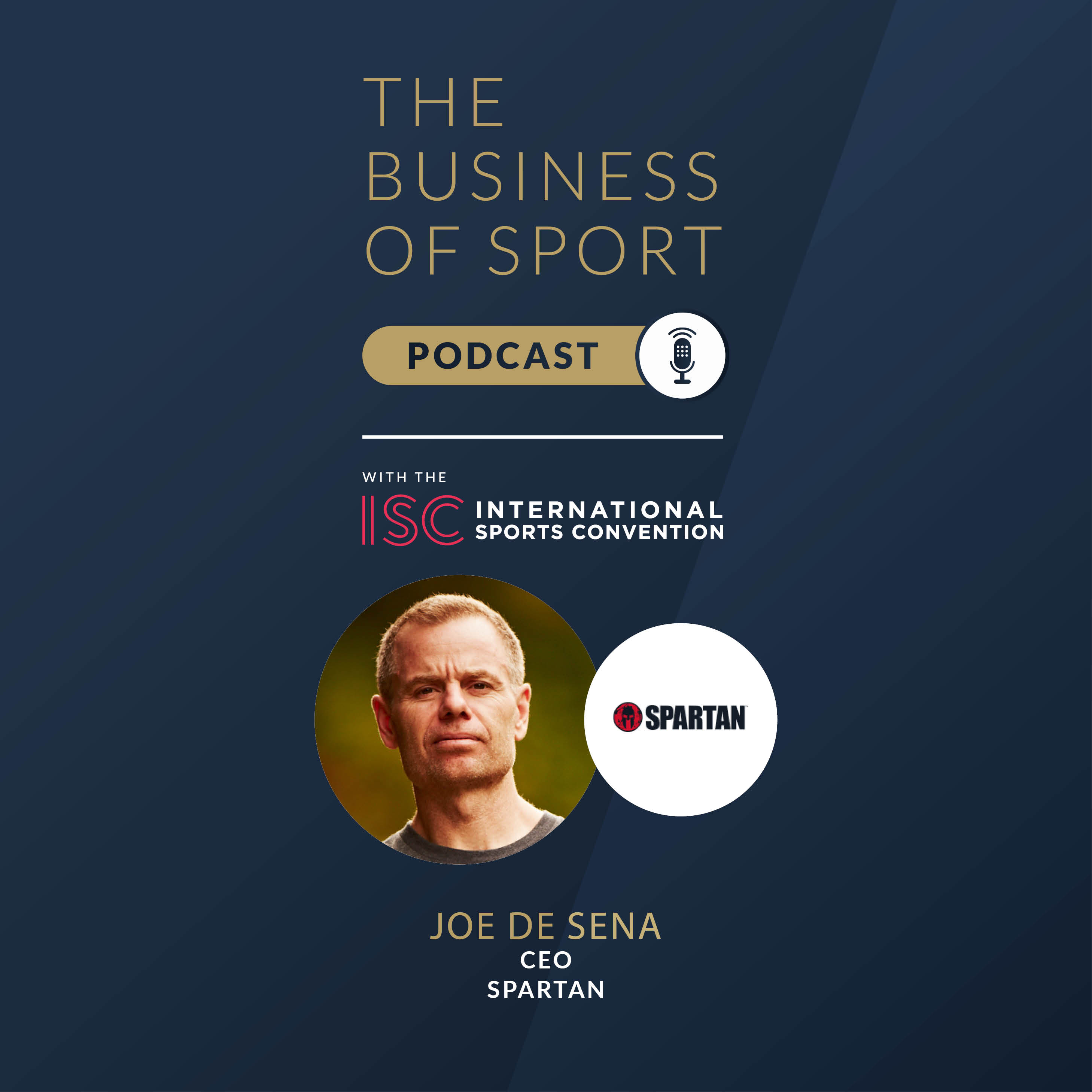
Ep 8The Business Of Sport Podcast - Episode 4 - Joe de Sena - CEO, Spartan Race
Joe de Sena, founder of Spartan Race, the USA-based obstacle-racing series that has just taken over its rival, Tough Mudder, is Callum Murray's latest guest on the Business of Sport Podcast with the International Sports Convention. Joe started Spartan Race two decades ago while working on Wall Street, having participated in many adventure races and triathlons himself, concluding that: "Humans were not meant to sit on a couch operating a remote control. We become our best when the blood is flowing, and we're sweating and we're breathing heavy. You've got to activate every muscle in your body, and you've got to do it in a way that makes you uncomfortable." Now, with events in over 45 countries and over 1.5 million participants, he's facing a new challenge in the shape of the coronavirus pandemic which has forced the postponement of all Spartan Race and Tough Mudder events. "I don't think there can be an industry in the world hit harder than our industry of participatory sport," he says. "We are the actual opposite of social distancing." The group has been forced to place staff on furlough as it anticipates the possible resumption of events on 1 July. But in the meantime, de Sena says he's encouraged by a 300-per-cent increase in merchandise sales, presumably driven by the fact that loyal customers are sitting at home in front of their computers with time on their hands to order goods. Could the coronavirus actually benefit the stronger companies in the saturated mass-participation sports market in the long run, by forcing the collapse of weaker competitors? De Sena's answer is to quote Charles Darwin, who, he says, pointed out that: "It's not the strong; it's those that are agile and able to pivot that survive." De Sena regards himself as an inveterate entrepreneur after a tough upbringing in Queens, New York in which the primary sport was making money. "Win or lose," he says, "I just love going from the whiteboard to Main Street." Nevertheless, he's frank about the fact that he spent years operating Spartan Race unprofitably. "But," he says, "it was about finding my purpose, finding my true north. And for me it clearly was my true north to rip people off the couch. It makes you feel alive, it makes you feel like a human being. And so I just kept losing money., before finally reaching enough volume to break even in 2011-12." Yet even now, he says, "The economics come from merchandise, nutrition sales, training. The events themselves are loss-leaders." From watching the fall of the Twin Towers on 9:11 from a neighbouring tall building, to having the idea for Spartan Race when he nearly died in temperatures of minus 25 on an adventure race in northern Quebec, de Sena has built a philosophy that he summarises as: "Attack life, don't be sleep-walking through life. Tough Mudder and Spartan are religions, they're cults. But they're very healthy cults. It's about being the best version of yourself."
Ep 7ISC PODCAST DAILY SHOW 4
The IOC have announced today that the Tokyo Olympic and Paralympic Games will be postponed until 2021. Many are asking, why did the IOC take so long to make the decision? UEFA made a swift call to postpone Euro 2020, but the Olympic Games is a far more complex beast. Here are just some of the considerations that the IOC will have been mulling over in recent weeks: The Host City Contract As is typical with an event of the magnitude and appeal of the Olympic Games, the Host City Contract between the IOC, Tokyo City and the Japanese Olympic Committee strongly favours the interests of the IOC and there will have been little room for negotiation on its terms. Consequently, the IOC has the final say on the scheduling of the Games, a right to terminate where participants' safety might be threatened and limits the host's legal remedies. Whilst there are no express provisions around postponement, it seems clear that the IOC has a strong argument for imposing a change of date or even terminating the contract. However, that would have been the last thing that the IOC wanted to do. The business of the IOC relies on hosting the Summer and Winter Olympic Games in each cycle; and the trust and reputation of the IOC and the Games in the eyes of hosts, participants, audiences, broadcasters, sponsors and a multitude of stakeholders is critical. As with many rights holders at this time, whilst it is of course important to understand the contractual position, finding a workable solution, involving the host, and trying to keep as many of those stakeholders as possible happy, will be the IOC's number one priority – even if the IOC has to spend some money to do so. Tokyo Huge amounts of money, resources, manpower, marketing and political capital have already gone into planning for the delivery of the Olympic Games in Tokyo in 2020. Postponement will have a significant impact in all of those areas. The Tokyo budget before this crisis was reported as being around $12.6 billion. Of course, much of this will not be wasted with postponement. However, some will. Expect the final budget to be far higher. Key commitments such as government budget underwrites and tax and immigration undertakings will have to be extended by a further year. Major facilities and infrastructure will have to be secured for the alternative dates. In the case of the athletes' village, for example, this may well require postponing commitments to private tenants. Contractors will have to be engaged for longer than anticipated; hotel block bookings and pricing commitments will have to be deferred and secured for the new dates; equipment will have to be deferred or alternatively stored for a further 12 months. Some other 2021 events, both sporting and non-sporting, may have to be postponed or cancelled in Tokyo and more widely in Japan to accommodate. All of that and a gubernatorial election for Tokyo likely at some point this year, gives a flavour for some of the logistical headache for the host city. National Olympic Committees The National Olympic Committees of each participating nation, and their sponsors, rely on the IOC and the Olympic Games for their income. Planning for the Games is done many months in advance and money on travel, accommodation, staffing and equipment will have been spent and committed in anticipation of the Games going ahead this year. Athletes The safety of athletes must of course be paramount. With the spread of the COVID-19 pandemic accelerating around the world their health and safety can't be assured – this is undoubtedly the main reason why the Games could not go ahead this summer. Athletes across all sports usually taper their training programmes and events to peak in the summer of for an Olympic Games. The postponement will at least allow athletes to resume training and work towards the rescheduled Games, albeit many may not feel that they are at their peak. For many athletes, 2020 was set to be a bumper year for revenues from ambassador partnerships with brands, particularly following recent easing of Rule 40 restrictions on personal sponsor communications around the Games. Many of these deals will now be on hold. Finally, it is inevitable that the postponement may rob some athletes of their Olympic dream altogether, whether due to health, selection or conflicting commitments. International Federations The 33 International Federations representing the Summer Olympic sports all oversee packed calendars of National, Regional and International championship events built around the 4-year Olympic cycle. The postponement will put these out of synch and likely to require multiple major events (and their associated hosting and commercial arrangements) to also be postponed or even cancelled. The most notable of these is the World Athletics Championships due to take place in Eugene, Oregon in 2021. Broadcasters Broadcasters will have planned their summer schedules around the Games and have sold advertising revenue around the event. NBC, the
Ep 6ISC PODCAST DAILY SHOW 3
Today we will focus on how Italian Sports industry is facing up the outbreak. After more than a month from the outbreak, Italy has now the highest death toll of the world with more than 10 thousands victims. The country, still completely quarantined, was the first country in Europe to take serious measures toward sports events. All Sport leagues in the land had to stop. While the main heads of the various leagues are still questioning when, or if, restart the season, the Italian Rugby Federation (FIR) is the first to announce the cancellation of the whole season with no assignment of the 'Scudetto' (the Italian Championship). This involves also no promotions and no relegations. Health of the players and their communities was the main reason that brought to the decision. The championship saw more of 50% of the games done and the side Rugby Rovigo on the top of the table, 7 points over their rivals. The common thought in Italy is pretty pessimistic toward the possibility of the recovery of most of the sports leagues. Everyone is still talking about Serie A's fate. Where the "Scudetto" is contended by Juventus, SS Lazio and FC Inter. With the Rugby federation taking such a decision, the Italian Football Federation has now more pressure than before in considering the idea of not assigning the championship. Lazio, who is fighting for the championship for the first time in 20 years, is pushing the Italian league to find a way and conclude the season during summer taking advantage of the Euro 2020 postponement. Many clubs and institutions are going against Lazio declaring the season over. The Italian government doesn't seem to help either since it announced the extension of the stop of every kind of sport activity to undefined date. Also the Italian referee's association is stating that they will return on the field only under the safest conditions. Atalanta fans, who are in the epicenter of Italian outbreak in Bergamo, said that the season is for them over, asking their team to abandon the championship proclaiming the moment as "Historical Massacre". Atalanta, by reaching quarter finals in UEFA Champion's League, has touched the highest point of their history. Juventus, meanwhile, announced that its players will reduce temporary their salaries. The agreement, which was proposed by Bianconeris' captain Giorgio Chiellini, includes the months of March, April, May and June, giving more than a sign to the perception that football in Italy won't recover till the end of June. Juve's gesture aims to give an example to the rest of Serie A's teams who are already speaking to their players to find an agreement. The word "sacrifice" is the common word used in this negotiations. As many Italian sport clubs, players and fans are helping local Hospitals with donations, buying thousands of masks and new ventilators (or even producing them as in the case of Ferrari), social media activity is still on trying to entertain the fans closed home by sharing content from the archive such as anniversaries, but, most importantly, by paying homage to doctors and nurses who are fighting the pandemic. AS Roma has launched a campaign where pictures of doctors and nurses are shared on their social media with a big caption that says "Heroes". Moreover, the company has founded a public charity called "Roma Cares" back in 2014. This foundation, which aims to promote social solidarity, was active during these days of emergency taking care of all season ticket holders aged over 75. More than 200 boxes were left at the elderly fans' door with medical supplies, food, beverages and a scarf of their favorite team, ready to be held high at the next game.
Ep 5ISC PODCAST DAILY SHOW 2
"The ball is still rolling on the pitch in Belarus" Who would ever thought that FC Minsk vs Dynamo Minsk would be the only match broadcasting in Europe? Belarus Premier League are still playing. The derby of Minsk with an attendance of 3000 inside the stadium, attracted also foreign watchers. Someone even entitled it as the "the only football match on the earth". With fans all around the world left with nothing to watch, Belarus Football Federation secured broadcasting deals with sports network from 10 countries, including Israel and Russia. The rest of the top European clubs have to deal with the economic consequences of the pandemic: FC Barcelona has been the first team in Spain to consider alleviating the economic impact by cutting up to 70% of their players' salaries as the lockdown lasts. This intention would apply to every player in the teams inside the Catalan's conglomerate (Basket team and Women team as well). Lionel Messi himself announced that the cut of the salary would allow the 100% of the salary for all staff members of the company, this way all the members of the company would still have their paid job. La Liga's teams of Espanyol and Atletico Madrid announced that cuts will be applied especially to those members of the staff who received a big reduction impact on the working hours. There are no details of the extent of the cuts applied. Germany's giants of Bayern Munich and Borussia Dortmund have already agreed to 20% wagecut while the season is put on hold by the Covid-19 crisis. Title contenders of Borussia Monchengladbach saw a volunteer approach by the players themselves proposing a salary cut. This move made the rest of the staff to join them. But, besides this internal club's issues, Major German's clubs decided to take care of German Football. Indeed, the top four clubs of the league, which were participants of the current Champion's League, Bayern Munich, Borussia Dortmund, Bayer Leverkusen and RB Leipzig, will finance smaller clubs with 20 million euros in order to help them cope this lockdown situation. This money will be collected by foregoing next year's TV rights revenue. Meanwhile no agreement has been taken in UK for the premier League, but the idea of players cutting their wages, following the previously mentioned European Examples, seems maturing day by day. The FA, EFL and Premier League are outlining a strategy which promises "difficult decisions". Yes, economical system is facing up to a huge crisis… but, at the moment, it is more important to help the medical emergency. There are numerous initiatives in sports industry that are trying to tighten around the NHS. Arsenal donated to the local charities and organizations. Barcelona, Manchester City and other big clubs are offering their facilities to host medical emergency structures. Athletes around the world are giving their support. La Liga players, combining with singers, joined La Liga Santander Fest and helped in raising more than 600k euros. Tennis star Rafa Nadal and NBA hero Paul Gasol launched a new fundraising with the aim to reach over 11 million Euros to help Spain, one of the most hit countries by the outbreak. With the season put on hold and the entertainment moved on the virtual racing, Formula 1 announces that their 7 teams based in UK will join together 'Project Pitlane'. Their skills and abilities in developing new technologies will be used in the production of ventilators in response of the government's call for companies to provide assistance due Covid-19 emergency in UK. NFL draft appears to move on this April despite Coronavirus break. The audience will not be allowed, but the display will be broadcasted on television. However, fundraising will happen related to the event in order to give a charitable effort for those impacted by the pandemic.
Ep 4ISC PODCAST DAILY SHOW
The coronavirus pandemic is the defining crisis in the modern sports event industry. Like me, you will have had the conversations with colleagues, clients and assorted sector experts, where you go in search of precedents. We want to gauge how bad this is, to put some sort of order on the chaos as it unfolds. That list probably that starts at the 2007 banking crisis, then 9/11, and on through a catalogue of natural, human and economic disasters until you get to the Second World War. So, make no mistake, this is a massive moment, the implications of which we'll be living with for years, probably decades. We are all waiting for the heroes of the medical and science community to do their work and report back. So anyone trying to offer solutions or predict the new normal for the sports market is not to be trusted. But here are some things that are true: 1. SPORT IS IMPORTANT Economically, culturally, socially. Sometimes we take it for granted or argue over attempts to quantify its importance. But even the anti-sport brigade can see and feel the impact of its absence. Its roots in communities are broad and deep. 2. HOST CITIES ARE UNDER APPRECIATED Most of the early industry conversation has been about the second level impacts on sports rights holders' relationship with broadcasters and sponsors. Do not forget that government money drives the sports economy. The sector's biggest financial investor is not the media, corporate sponsorship nor the fans who buy the tickets. The single biggest contributor to the sports economy is the public sector, which pays out tens of billions of dollars every year globally, mainly via city and national governments which pay hosting fees and associated costs to put on major events. 3. THE SPORTS EVENT MARKET IS OVERSUPPLIED An uncomfortable truth, but there will be a shakeout in the event sector. The calendar will be different. The market will look anew at which events really matter and which are 'nice to have'. 4. THERE WILL BE HUGE LOSSES Across the sports event sector, small and medium sized supply businesses will cease to exist. People will suffer real hardship at every level. We must act as a community to help in any way we can. We are interconnected. 5. ECONOMICS IS NOT FAIR Events that do not deserve to go under will vanish. Others will get lucky and survive, even thrive. Success and failure will be allocated in an inefficient way. We are conditioned to think in narrative stories that suggest a logical chain of cause and effect. But the reality is closer to messy chaos. It always is. 6. THERE WILL BE THOSE WHO SUFFER MORE AND THOSE WHO SUFFER LESS The next few months are an opportunity. That is how capitalism works, it is brutal and simple. As businesses fail their assets will be feasted upon by others. There will be people whose careers will be made over the next few months. Amid the debris there will be some very undervalued events, relationships, rights and brands going for a song. 7. RADICAL IDEAS WILL BECOME MAINSTREAM Virtual sports events, esports, remote fans. Some of the stuff we have been talking about as 'future gazing' will make commercial sense for the first time. 8. GOVERNMENTS WILL MAKE EXPENSIVE MISTAKES Government money is the engine of the event sector. Those in charge of the public purse will allocate funds to try to help. This process is inexact and unreliable and it will make some of us angry. Who will they choose to bail out, who will they leave alone? 9. TRUST TAKES TIME Some rights holders enjoy long-term relationships with their host cities, broadcasters and commercial partners that have reaped broad and real mutual benefit for years, even decades. Others are short-term, transactional relationships of convenience. 10. NUMBER ONE CANNOT BE REPEATED ENOUGH – SPORT IS IMPORTANT In our 14 years as an active player in the sports industry, The Sports Consultancy and TSC Legal have worked throughout some of the biggest shifts the industry has seen, some of which have been seismic in scale. It is true that we're in new territory and there are few precedents to compare to where we are today. Yet our experience has taught us that global sport is a resilient, endlessly creative and supportive community, and we'll come out of this stronger.
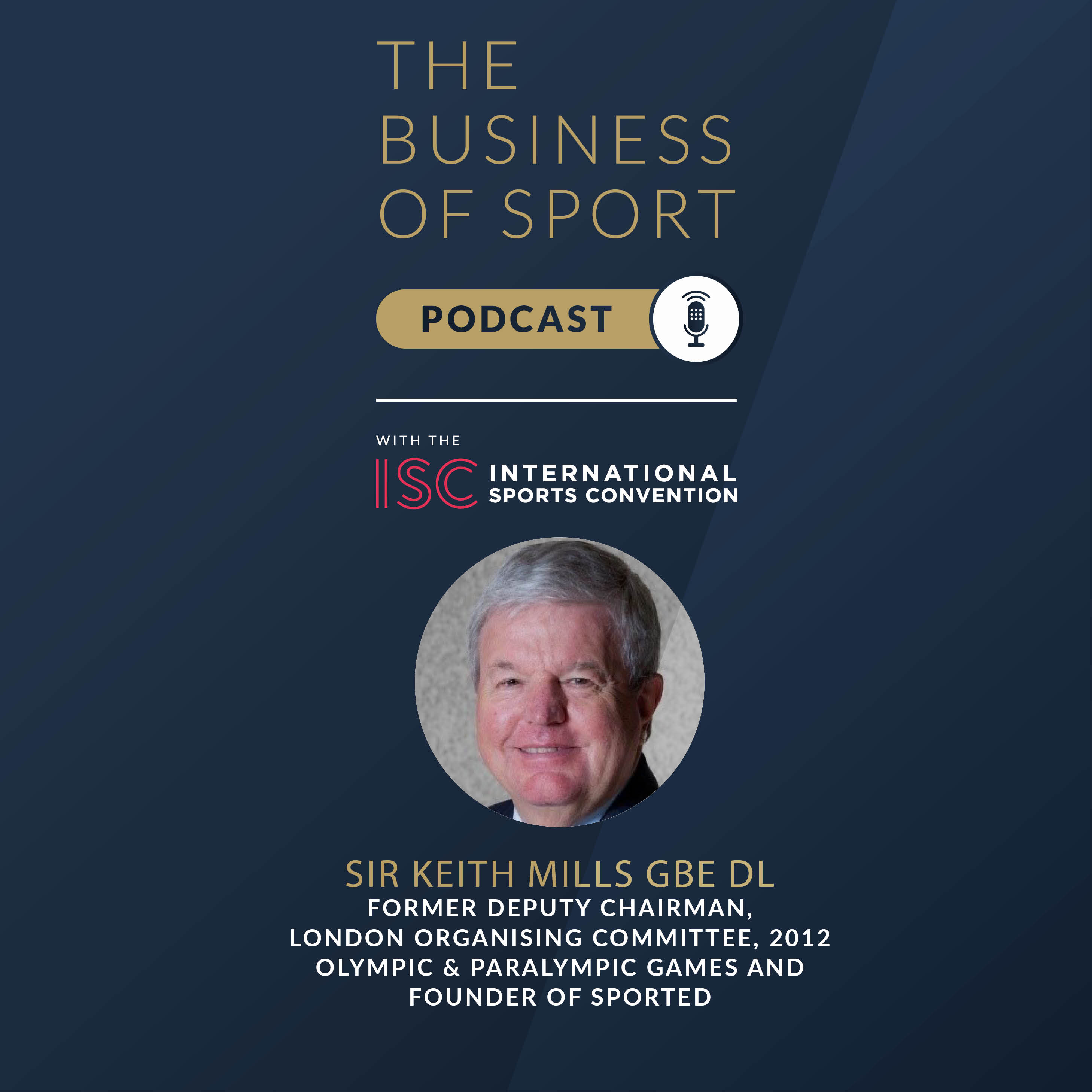
Ep 3The Business Of Sport Podcast - Episode 3 - Sir Keith Mills GBE DL - Former Deputy Chairman, London Organising Committee, 2012 Olympic & Paralympic Games and Founder of Sported
Sir Keith Mills, successful businessman, America's Cup entrant, founder of a charity helping children through sport, and former leader of the London 2012 Olympic Games, is Callum Murray's guest on the third edition of the Business of Sport Podcast with the International Sports Convention. With a background in advertising and marketing, Sir Keith, who also chairs the Invictus Games for wounded ex-servicemen and women, and owns several companies involved in sports marketing, especially in sailing, is uniquely placed to talk about the relationship between business and sport. For example, one of his companies was involved in the birth of the new SailGP series, a grand prix sailing series for America's Cup-style foiling catamarans, organising the British stop on the series, which is entering its second season. The series, led by top America's Cup sailor Russell Coutts, has got off to a good start, but, cautions Sir Keith, "It will take several years for a new circuit in any sport to build the momentum necessary to make it commercially attractive." Sir Keith also chairs Five West, a sports consultancy specialising in the sailing and marine industry, and from this perspective he describes the market for sports sponsorship and marketing as "very crowded." However, he points out that Hugo Boss, the fashion brand that his company works with, has produced a retail range that derives from hi-tech clothing developed for use of sailors in the Vendee Globe race. Similarly, sailing sponsors, such as Nokia and Bell Labs, "are not doing it for branding at all. They're using the team to test their technology," says Sir Keith. "Sports properties need to understand the marketing objectives and challenges of the companies they're talking to and find ways in which their sport can help solve those challenges." The London 2012 Olympics were widely recognised as a huge success, but despite their promise to 'Inspire a Generation' official figures showed that sport participation in the aftermath of the games actually fell in the UK, and continues to fall. Sir Keith acknowledges and regrets this fact, laying some of the blame at the feet of government which, he says, needed to commit more investment to build on the uplift in sporting awareness that the games created. However, he lists a series of other benefits and advantages that the UK gained from hosting the games, including: a change in the perception of disability in the UK, through the success of the Paralympic Games; the regeneration of east London; and the financial return to the UK from staging the games, which he describes as "phenomenal." This year's Olympics in Tokyo are facing a grave threat in the shape of the coronavirus, and Sir Keith says that there are no easy contingencies, in case the virus means that they cannot take place as scheduled. He lists the IOC's probable options as: cancelling the games entirely (which he describes as "highly unlikely"); staging a "TV-only" games, with a restricted number of spectators, or none at all; or postponing the event for three or six months: "possible, but very, very difficult," according to Sir Keith. To hear the interview, including Sir Keith's views on the future of the America's Cup, how to win a sceptical public round to the idea of hosting the Olympics, and his most memorable sporting moment, click here.
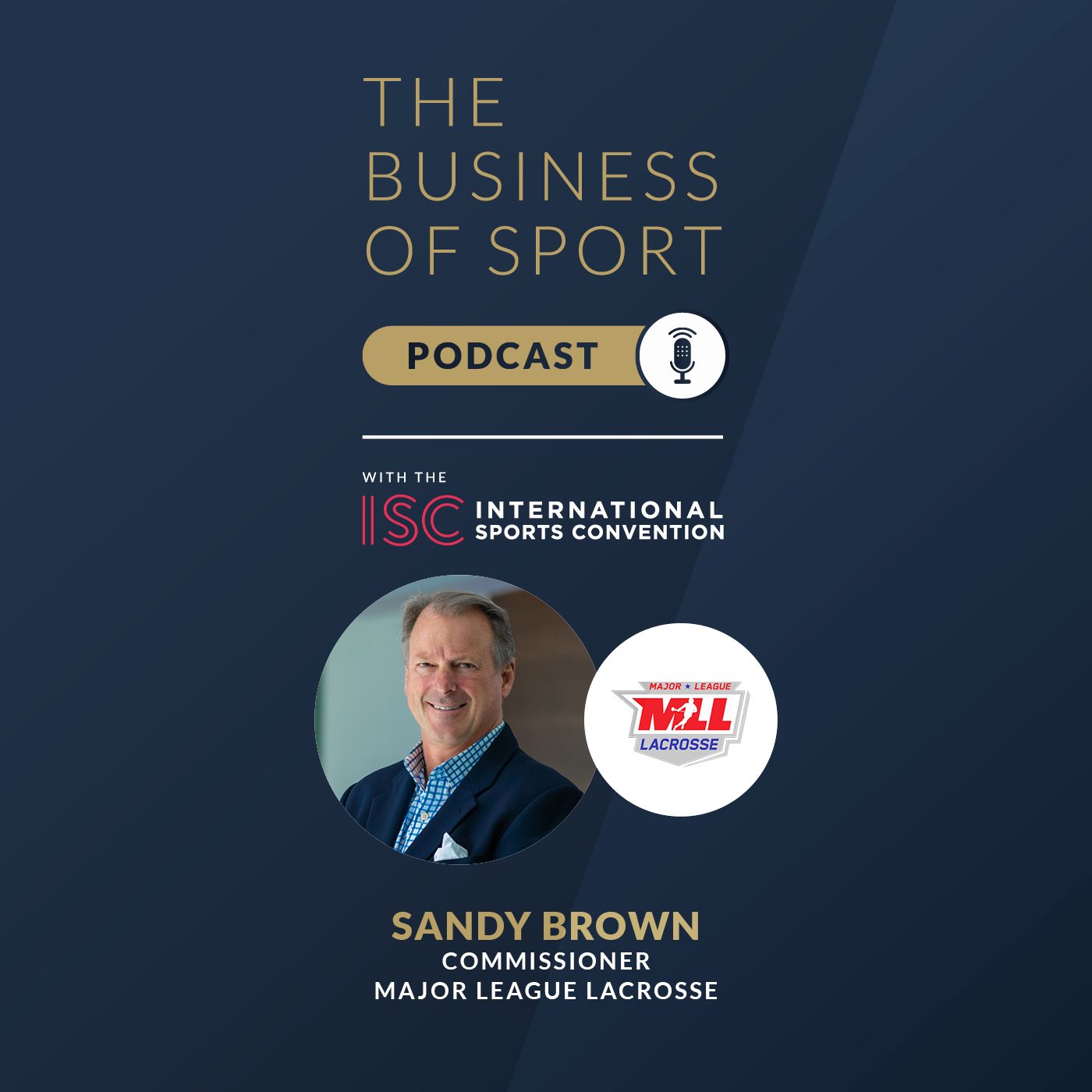
Ep 2The Business Of Sport Podcast - Episode 2 - Sandy Brown - Commissioner, Major League Lacrosse.
In the second edition of the Business of Sport Podcast with the International Sports Convention, Callum Murray talks to Sandy Brown, Commissioner of USA's Major League Lacrosse. The podcast airs at a pivotal moment in MLL's 20-year history, with the league having just voted to become a single-entity league, discarding the franchise model on which it was founded. The change, which means that the league now owns all six of its teams, comes with MLL facing a major challenge to its business model from the rival Premier Lacrosse League, which launched last year and is competing with MLL for both fans and sponsors. The switch to a single-entity model was made with the aim of saving money through centralising operations, says Brown, adding: "The advent of another outdoor professional league caused us to re-evaluate to become as efficient as possible in how we run our business. We're trying to create greater efficiencies and run a smarter business." Brown is open in his opinion that the market cannot support two competing pro leagues in a second-tier sport such as lacrosse in USA (he compares its status in the country with that of rugby). So, will there eventually have to be a merger between the leagues? Brown doesn't rule out this option, but in the meantime insists that, to enhance its competitiveness, MLL must learn from the likes of the NFL and NBA and create an entertainment 'experience' around its games. "The entertainment value, the action off the pitch, has got to be even better than what happens on the pitch," he says. "If you're a paying customer at any NFL, NBA or MLS game, you've come to expect a certain standard of entertainment and value for your entertainment dollar. The basic principles of the fan experience are going to be critical going forward." The "bifurcation" of the lacrosse fanbase and sponsorship base between the rival leagues "has not been healthy for the sport," according to Brown. "It's been incredibly disruptive," he continues, adding, however, that "out of disruption you can ultimately end up seeing stronger entities." A top college lacrosse player himself, Brown joined MLL in February 2018 after a lengthy career in sport and TV that has included working with the legendary sports agency ProServe, working under David Stern at the NBA, and a 15-year spell in Asia with ESPN, before returning to USA with sports broadcasters Univision Sports and One World Sports. Other topics discussed in this podcast include: lacrosse's push to join the Olympics; MLL's decision to take back control of its own media rights; and what makes the sport special and different from other US pro sports. "With my international sport background," says Brown, "I've seen the greatest cricketers, rugby players and soccer players. I'll put our guys up against anybody. Lacrosse is often called the fastest game on two feet. It has all the speed, agility and contact of gridiron, but none of the head injuries." And Brown's top sporting hero? Michael Jordan, a client when he was at ProServe. "Time and time again, when the chips were down," Brown says, "he always delivered. Obviously, his business acumen has been very, very strong too."
S1 Ep 1Business Of Sport Podcast Episode 1 - Sarah Lewis OBE, FIS
In the first in a series of Business of Sport podcasts with the International Sports Convention, Callum Murray speaks to Sarah Lewis, secretary general of the FIS, the international ski federation. One of the very few women in a senior administrative and governance role in an international Olympic sport federation, Sarah joined the FIS in 1994, having been a member of the British Alpine Ski Team from 1982 to 1988 and competed in the 1987 FIS Alpine World Ski Championships and 1988 winter Olympic Games. With a reputation for strong opinions and plain speaking, Sarah begins by addressing the Corona virus epidemic, after the FIS was forced to cancel one of its World Cup events scheduled to be held in China this spring, as a result of the outbreak. The event was due to be the first-ever FIS World Cup in China, as well as a test event for the 2022 winter Olympic Games in Beijing, but the FIS took the advice of its own medical commission, as well as the local organising committee and the Chinese Olympic Committee in making the difficult decision to cancel the event. The FIS will now consider how and when to reschedule the event, Sarah explains. Two weeks before the podcast was recorded, Sarah had attended the third edition of the winter Youth Olympic Games, held in the Olympic capital of Lausanne, Switzerland. What does the FIS gain from participation in those games, and what did Sarah herself, a member of the IOC's co-ordination commission for the games, learn from them? For FIS, says Sarah, the games "provide a great opportunity to underline the importance of the development pathway for youth sports in a very high-profile setting, which is what the Olympic brand gives you." The games also offer the opportunity to showcase new formats and create a workshop for the overall revised Olympic model, including decentralisation and the use of existing facilities. The FIS has just launched its own eSports game, World Cup Racing, and Sarah goes on to discuss the eSports phenomenon. There has been some controversy over the IOC's apparent flirtation with eSports. Some think computer games simply encourage inactivity; others regard eSports as valid sports in their own right. Could playing World Cup Ski Racing ever persuade a couch potato to put skis on and try the real thing? Yes, says Sarah, there's research that shows that up to 10 per cent of games players could be provoked to try out skiing for real, albeit "perhaps not on a World Cup downhill course for their very first experience!" The game represents "a new platform to promote skiing globally, a tool to reach out to an audience that we wouldn't normally have daily contact with," Sarah says, as well as an additional revenue stream, with skiing brands providing the prizes, while revenues from in-game purchases are shared between the FIS, the game developer and national ski associations. Just two weeks after its launch, the game had received 50,000 unique installs from 170 countries, with 16,000 hours played, Sarah reveals. In May 2020, there will be a FIS presidential election, with GianFranco Kaspar, the long-serving incumbent, due to step down after 22 years in the role. What are Sarah's hopes for his successor, and could that person be a woman, for the first time in the FIS's history? A new president should remain true to the FIS's core mission to develop snow sports throughout the world, despite an increasing emphasis on developing revenues, Sarah says, while pointing out that the federation is already practising positive discrimination in favour of women, with at least three places set to be reserved for women on its board in future. Sarah also addresses the future of snow sports in an era of climate change, admitting that some low-lying resorts have been hard-hit, but stressing that many have diversified their income sources, by becoming year-round facilities catering for walkers and mountain bikers, as well as skiers. Meanwhile, the production of artificial snow has become much more efficient, using less water and less energy. Sarah concludes the podcast with advice to young people seeking a career in sports administration, her most memorable sporting moment, her top sporting hero and an answer to the difficult question: 'What is sport for?'