
The Business of Fashion Podcast
660 episodes — Page 5 of 14
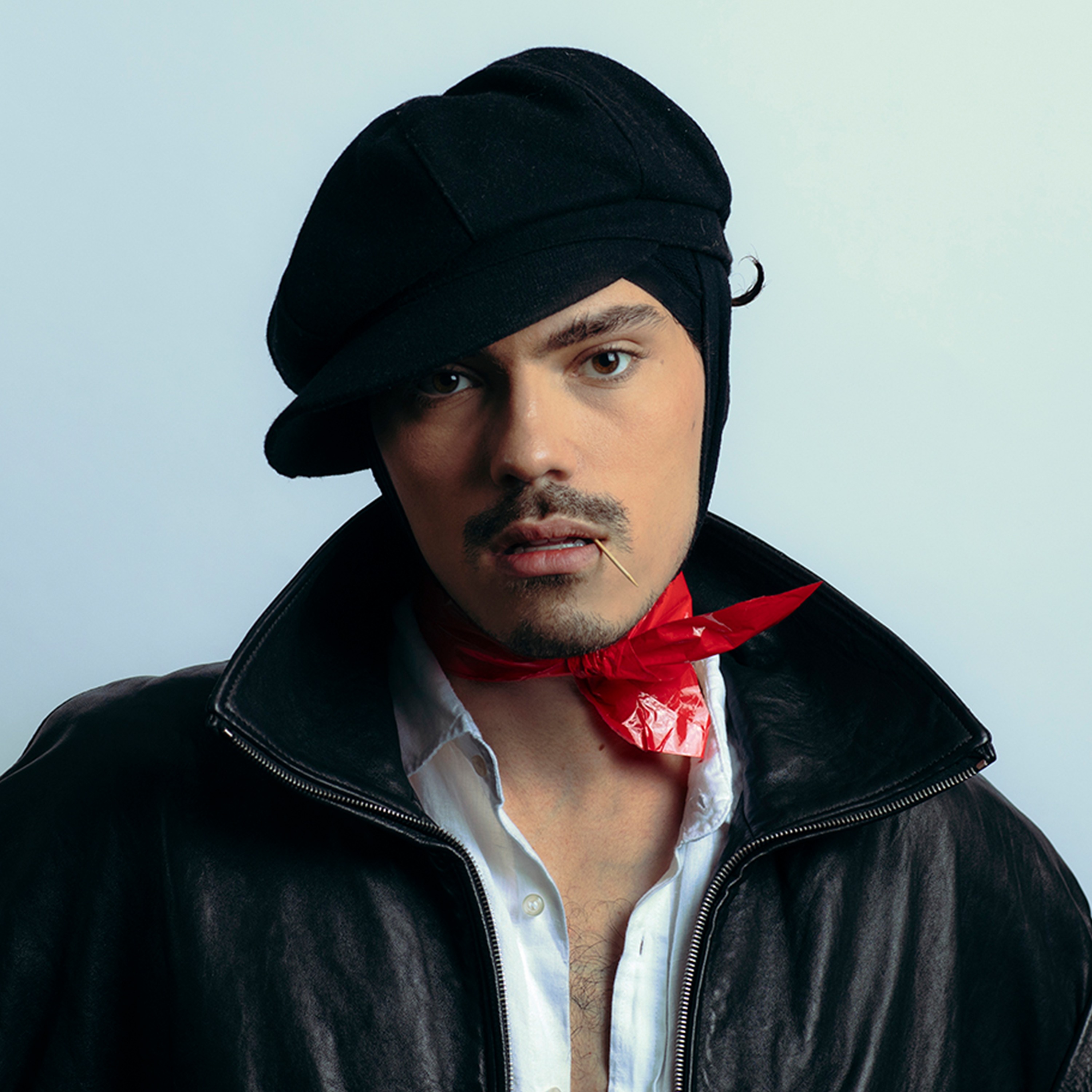
Lyas on the Enduring Power of Fashion Storytelling
Fashion narrator Lyas is one of the most compelling and authentic fashion communicators to have arrived on the scene, and whose takes on fashion shows and editorials are incisive, honest and well-informed. “I think we’ve lost the mindset of thinking that it’s possible to be creative and make money for the company, because the golden age of designers is over,” he says. “Now, every designer is disposable. It’s like musical chairs—every month, there’s someone leaving, someone coming.”Lyas’s journey has been shaped by his belief in the emotional power of storytelling, which he sees as central to fashion communication. Using TikTok and Instagram to communicate his thoughts and opinions, his fashion roulette videos and witty runway dissections have captured the attention of hundreds of thousands of viewers. Recently, he has bemoaned the dilution of creativity across the fashion industry.Key Insights: Growing up in France and studying drama, Lyas was first drawn to the visual world filmmaking. Frustrated by the rigid criteria of the film industry, Lyas found freedom in fashion, where he could create personas and critique without fitting into predefined moulds. He connected with fashion insiders at parties, building his presence through social media and discovering a space that allowed his voice and persona to thrive. "I didn't find the sense of belonging in that cinema crowd, so I started going out with fashion people,” he said. “It became this way of creating this superstar persona at night and I fell in love with that."Lyas quickly noticed the gap between private opinions and public silence in the fashion world. He began voicing unfiltered critiques, challenging the industry's hypocrisy. This unapologetic stance led to temporary blacklists but also opened doors, proving the value of staying true to his voice. “I started just saying it like it is on my TikTok... the first Sabato de Sarno I really didn't like, and I think most of the industry did not like it, but no one wanted to say it, so I took the bullet."Lyas is critical of the corporatization of fashion, where creativity is often sidelined for profit. "We've lost the mindset of thinking that it's possible to be creative and make money for the company, " he said. “The golden age of designers is over. Now any designer is disposable. We've seen it, it’s like musical chairs."On advice, Lyas keeps it simple. “Have no fear. But it's very easy to say, but I think fear is the biggest issue for anyone's confidence. … Just be fearless and if you're scared of doing it, do it.”Additional Resources:Commercialising the Zeitgeist: Crafting a Successful TikTok Strategy | BoFWhy Brands Are Inviting Customers on Influencer Trips | BoF Finding Fashion Consumers Beyond Instagram | BoF Hosted on Acast. See acast.com/privacy for more information.

How Nike Ran Off Course
Nike’s streak as the undisputed leader in the activewear category spans generations, but the brand is facing its most significant hurdles in decades. However, recent shifts in leadership, oversupply issues and a botched direct-to-consumer strategy have chipped away at its once-untouchable brand image. As challengers like Hoka and On gain ground, and archrival Adidas surges, Nike faces mounting pressure to innovate and reconnect with consumers. “Nike remains a behemoth, … but all is not well,” says Miller. “The brand is on course for its worst financial performance in over a quarter of a century, and unfortunately for Nike, trouble is happening everywhere, all over the brand.”This week on The Debrief, BoF executive editor Brian Baskin and senior correspondent Sheena Butler-Young sit down with sports correspondent Daniel-Yaw Miller to explore how Nike fell off track and the strategic moves it’s making to reclaim its market dominance.Key insightsNike’s reliance on retro sneaker lines like Air Force 1 and Dunks is driving consumer fatigue, as these once-coveted styles now languish on shelves. “At one point not so long ago, they were like gold dust,” says Miller. “But now they’re sitting on shelves for months and sometimes being discounted.” This overabundance is diluting the brand’s appeal and paving the way for smaller, more agile competitors to capture the spotlight.Despite substantial investment in R&D, Nike’s innovation efforts have faltered, allowing rivals to define the next wave of sneaker trends, like performance sport styles and technology-driven designs. “Nike didn’t really have any new products to turn to and point consumers towards,” says Miller. Brands like On and Hoka have gained traction with innovations such as On’s CloudTec Technology and Hoka’s MetaRocker running silhouette.The “Winning Isn’t For Everyone” campaign marks a return to Nike’s swaggering marketing playbook of the 90s and 2000s, and a potential early sign of the brand’s resurgence. “It wasn’t just one simple video; it was meant to communicate a new brand ethos,” Miller explains. “This Nike campaign needed to be divisive. Consumers are looking for brands that have a point of view, and that’s what Nike is trying to bring back.”Additional resourcesHow Nike Ran Off CourseInside Nike’s Big Marketing Vibe ShiftThe Rise of Sportswear’s Challenger Brands, in Four ChartsThe Debate Over Nike’s CEO Bursts Into the Open | BoF Hosted on Acast. See acast.com/privacy for more information.

Kamala Harris and the Politics of Style
As the first female, Black, and South Asian Vice President of the United States, Kamala Harris’s every move is closely watched — from her policy decisions to her wardrobe. With Harris now leading the Democratic ticket in the 2024 presidential election, her style and beauty choices — from her for her sleek silk press hairstyle to her endless variety of pantsuits — have sparked renewed discussion. “She is communicating something, even if it's not remarkable,” said BoF senior correspondent Sheena Butler-Young. “No one truly opts out of signalling something with how they present themselves.”This week on The Debrief, BoF executive editor Brian Baskin sat down with Butler-Young and editorial apprentice Yola Mzizi to explore how Harris’s beauty and fashion choices are being interpreted by different audiences across the political spectrum, and what that means for the future of political style. Key Insights:Harris’s signature silk-pressed hairstyle has deep roots. “It's a centuries old way of straightening hair, and it's been around for generations upon generations. Most people associate it with just the hair that they have to have for Easter Sunday, or the style that the grandmothers would have,” Mzizi explains. Despite the history, Black Gen-Z voters have embraced the style, calling it the presidential silk press. “It's a way to support her candidacy in a fun way,” said Mzizi. Harris’ wardrobe choices are being closely scrutinised, which has led her to more streamlined, straightforward ensembles. “The pantsuits, specifically the colour schemes — black, grey, navy blue, or just blues, with an occasional pastel, a pump as the shoe, or occasional Converse and pearls — are very much in line with how politicians dress,” said Butler-Young. Meanwhile, male politicians, like Harris’s vice-presidential nominee, Minnesota Governor Tim Walz, have more freedom to experiment. “You look at her running mate Tim Walz, and his ability to sort of play around with style with those well-worn red wing boots, the camouflage hats, rather than being distracting, they actually endear some voters to him. … Kamala, for all intents and purposes, doesn't seem to have the licence to do that.” The 2024 election has highlighted the growing role of fashion and beauty in politics. Black-owned beauty brand BLK/OPL was centre stage at the DNC providing makeup services as the event’s first beauty sponsor. “Harris's candidacy is opening up new avenues for different kinds of brands to have their say in this larger conversation,” Mzizi notes.Should Harris win the presidency, she could use her platform to further influence the intersection of fashion and politics. Harris has already hinted at this with her past choices by wearing Black designers like Christopher John Rogers and Sergio Hudson. “She'll have more leeway to [support minority designers] when she's empowered. Right now, I think she's constrained … by this idea of having to cater to this broad, collective public palette.”Additional resourcesHow Kamala Harris’ Signature Tresses Became a Gen-Z Hit | BoF Why Kamala Harris Isn’t Making Bold Fashion Choices – Yet | BoF Hosted on Acast. See acast.com/privacy for more information.

How Tweens Took Over the Beauty Aisle
2024 has brought forth the arrival of the “Sephora tweens,” which refers to members of Gen Alpha (roughly defined as those born between 2010 and 2024) who have enthusiastically taken to buying up skincare and makeup. This phenomenon, driven largely by beauty-related chatter on social media, has resulted in a new wave of brands catering specifically to this younger demographic.“There are now teen brands, tween brands, 20-something brands, 30-something brands. … I think we can thank the DTC movement and everything that happened from 2014 on for this kind of innovation,” Rao says. “There's been a total disruption in beauty overall with challenger brands like Glossier that have come and really taken market share away from the big conglomerates and companies … that have been household names for a really long time.”This week on The BoF Podcast, senior correspondent Sheena Butler-Young and executive editor Brian Baskin sat down with Priya Rao, executive editor at The Business of Beauty at BoF, to delve into how tweens have taken over the beauty aisle and what this means for the future of the industry.Key Insights Kids have long experimented with beauty products, but today, they’re starting earlier and earlier. "If you look at social media today, it's not just 10-year-olds or 11-year-olds. There are 5- and 6-year-olds putting on makeup and trying different lipsticks and lip glosses," shared Rao. This early engagement with beauty is not just a passing trend, but is becoming a norm, fueled by the accessibility of products to try in stores like Sephora and the influence of social media platforms like TikTok.Another driving force behind this trend is the rise of celebrity-led beauty brands that resonate with young people. For example, Rare Beauty, founded by Selena Gomez, not only offers products but also promotes mental health awareness. "Tweens and teens can identify with these brands not just because of the products, but because of what they stand for," explained Rao.The proliferation of skincare products has also led to some confusion and concern, with tweens using products like retinol that are meant for an older demographic. Brands and influencers play a crucial role in teaching young consumers what’s right for their skin. "Fear is not the way to lead here. It's about education first," advised Rao. Brands must strike a balance between engaging young consumers without overwhelming them with too many steps or products.As the beauty industry continues to evolve, brands that wish to stay ahead will need to be responsive to the needs of Gen-Z and Gen Alpha consumers. "Smart companies have to be agile and constantly communicate with their customers," noted Rao. This means reflecting the diverse experiences of young consumers back to them, whether through representation in ad campaigns or through the products themselves.Additional resources How Tweens Took Over the Beauty Aisle | BoFHow Should We Feel About Tweens at Sephora? | BoFTweens Obsessed With Skin Care Drive Brands to Say: Don’t Buy Our Stuff Hosted on Acast. See acast.com/privacy for more information.

What Happens When It’s Too Hot to Make Fashion?
Many of fashion’s largest manufacturing hubs, particularly in South and Southeast Asia, are increasingly at risk of dangerous, record-breaking heatwaves. As extreme heat becomes more frequent, more intense and longer-lasting, what is the cost to industry and how will we adapt to the growing climate risks?Senior correspondent, Sheena Butler-Young and executive editor, Brian Baskin sat down with BoF sustainability correspondent Sarah Kent to understand what rising global temperatures means for the future of garment production.“We have to assume that it’s the new norm and or at least a new baseline. It’s not like every year will necessarily be as bad, but consistently over time, the expectation is things are going to get hotter for longer,” says Kent. “We both have to take steps to mitigate and prevent things getting worse, and we have to accept that we have not done enough to stop things getting this bad - and so we have to adapt as well.”Key Insights:Extreme heat leads to productivity problems, including increased instances of illness and malfunctioning machinery — even air conditioning units. The reason this isn’t surfacing as a significant supply chain issue is that it occurs in short, sharp bursts. “The supply chain is flexible enough and sophisticated enough that it can be papered over for the moment, particularly at a time when demand is not at its peak,” shared Kent. “Not all factories are working at full capacity all the time, so if your productivity isn’t 100% you can manage that for a few days or a week.”When it comes to working conditions in garment factories, climate also tends to take a backseat, both for manufacturers and, often, the workers themselves. “The biggest issue for a worker is going to be okay, I’m not earning enough to feed my family, my job isn’t secure, and then it’s really hot and that’s making it worse,” Kent recalled hearing from union representatives in Bangladesh.Whilst brands understand the interconnectivity between their emissions and supply chain issues, the drive to produce what consumers want as swiftly and cheaply as possible doesn’t leave much room for manufacturers to prioritise investments to improve their environmental footprint or adapt their factories to be more resilient to climate extremes. “We’re going to need to raise the prices in order to do that. That becomes a very tricky conversation very quickly,” says Sarah. “The disconnect is between the delightful picture of peace, love, Kumbaya, green planet that the industry would like to suggest that it is gunning for, whilst at the same time paying prices that in no way support that.”Additional Resources:Why Hotter Weather Matters for Fashion | BoFWhat Happens When It’s Too Hot to Make Fashion? | BoF. Too Hot to Handle? | BoF Hosted on Acast. See acast.com/privacy for more information.
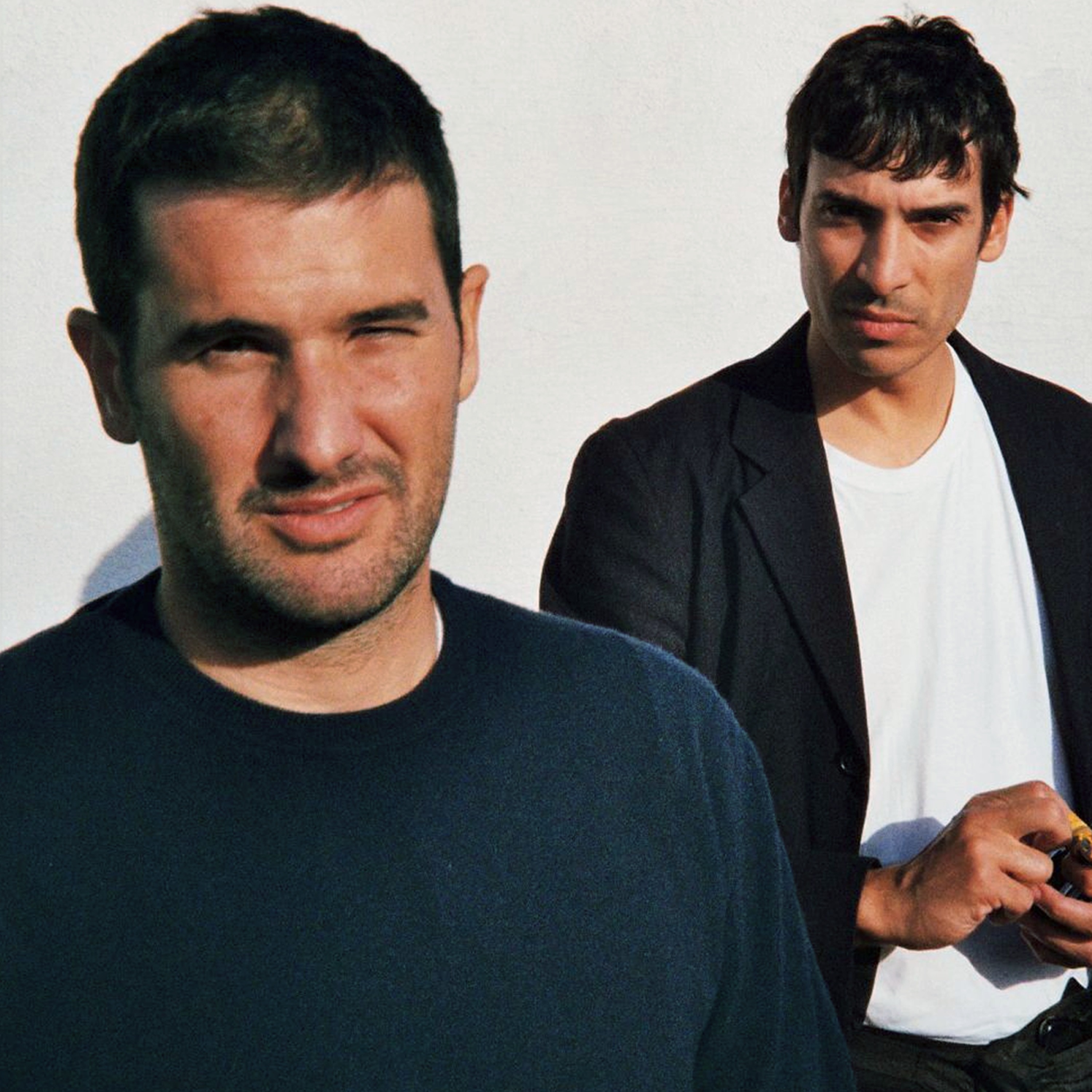
Convoy on How to Create Fashion Moments
Creative directors and brand strategists Juan Costa Paz and Nordine Benotmane, who founded Paris-based creative agency Convoy in 2012, are paid to think outside the box for clients from Nike to Louis Vuitton. “We care about having conversations outside of the fashion echo chamber,” said Costa Paz. “I like to create tension, even if people don't like things, because I do think that it's good to try to create the conversation,” added Benotmane. This week on The BoF Podcast, Costa Paz and Benotmane join BoF founder and editor-in-chief Imran Amed to discuss how they do it and their paths to fashion.Key insights:Convoy’s Costa Paz and Benotmane came to fashion from the worlds of music and cinema, respectively, and that’s a good thing. “The fact that both Nordine and I come from different spaces, we don't tend to abide by the rules of what makes a fashion moment,” said Costa Paz. “We're a little bit kamikaze in the way that we try to not think as the brand wants us to think,” added Benotmane.Over the years, Convoy has produced content around fashion shows for brands like Miu Miu, Vuitton and Balmain. Describing these moments as, “like going to war”, Paz Costa believes there is an element of both care and challenge that is required when realising ambitious ideas with clients. “Sometimes you just need to hold hands with your clients and jump together into the void. I think that we usually land very well when there is communication and transparency.”Convoy also leads creative direction for Condé Nast’s Vogue World, which kicked off Paris Couture Week with a pre-Olympics sports-themed extravaganza. “This is a new way of seeing media,” said Benotmane. At the same time, he recognises there is always still space to explore. “Maybe this is a new way of doing the media, but we could have told stories of the athletes, the way they prepare for the competition, their relationship to fashion, a lot of things that we maybe didn't manage to do this time because it's still a new project and it's very ambitious.” Offering advice for up-and-coming creatives, Benotmane said: “Don't be scared, do it your own way.” Added Costa Paz: “Being a little bit punk also doesn't hurt.”Additional resources Vogue Names Juan Costa Paz as Global Creative Director | BoF‘Vogue World’ Takes on Paris — and Sports | BoFVogue World to Kick Off Couture Week With Olympics Tribute | BoF Hosted on Acast. See acast.com/privacy for more information.
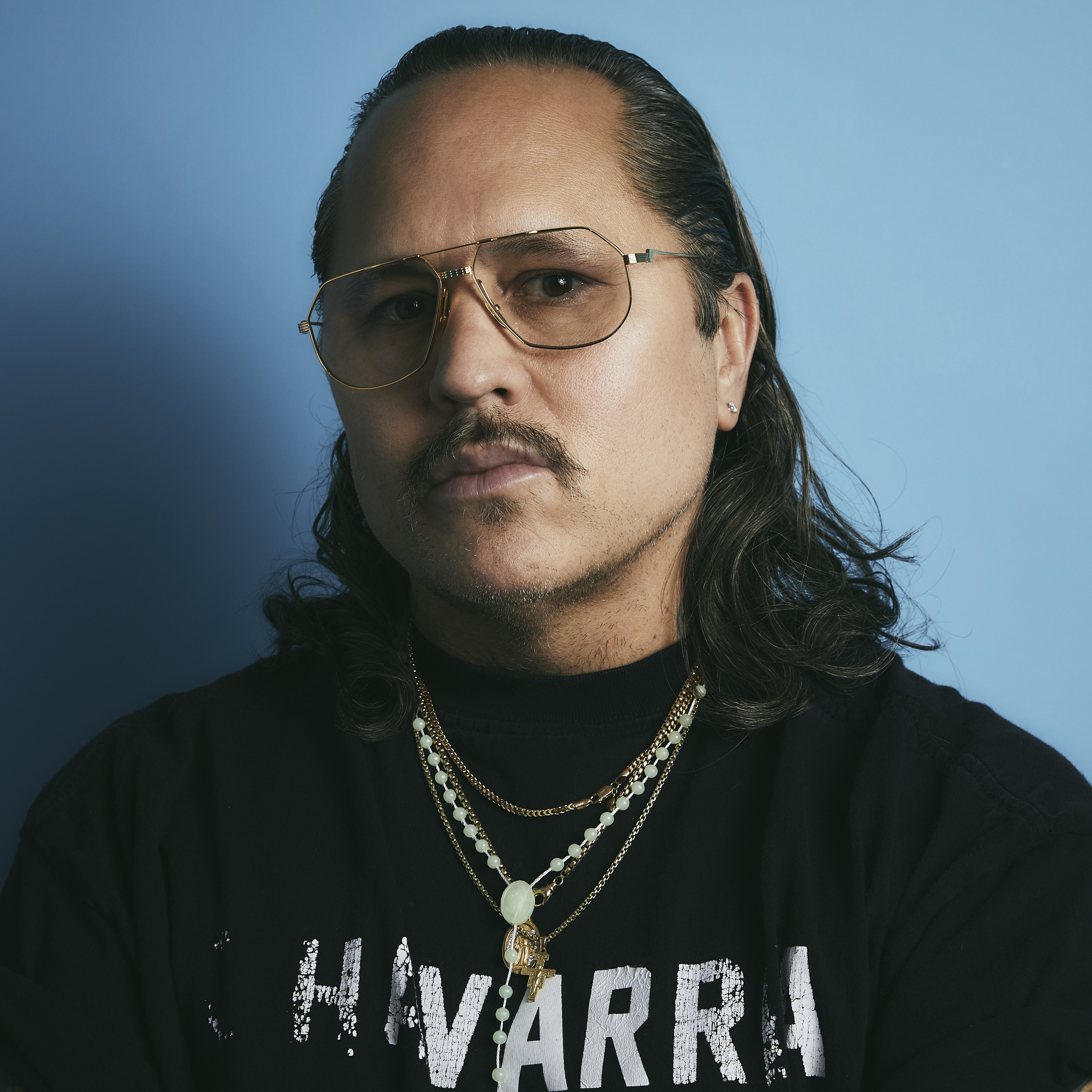
Willy Chavarria on Promoting Social Justice Through Fashion
Willy Chavarria has become a force in American fashion, known for his Chicano-inspired take on menswear. Last year, Willy broke through, winning the CFDA award for Menswear Designer of the Year. For more than two decades before that, Willy worked behind-the scenes in major American fashion companies like Ralph Lauren, American Eagle and Calvin Klein.But now, he is focused on building his own business. At the centre of his designs is a focus on community and equality: “I sat with my team before we actually started the Willy Chavarria label and I said that this is how we're going to move forward with this brand. Everything that we do is going to be aimed to raise people up and to make people feel good and to celebrate human dignity,” he said. “That will be the foundation of the brand.”This week on The BoF Podcast, Willy joins me to discuss his journey from the San Joaquin Valley into the fashion big-time in New York City, his commitment to social justice, and how the American fashion industry is evolving today.Key InsightsChavarria has always been fascinated by the way people dress. Growing up in the San Joaquin Valley in California, he was far away from the centres of fashion, but still paid close attention to style around him. “Part of my personal outlook was the way people chose to dress themselves in order to project an inclusion in a particular group,” he recalls. “The women in the family, I think of them in the red lipstick and the dark floral dresses getting ready for mass every Sunday, the black veils for the widows and the men with their fine pressed shirts.”Growing up half white and queer in a macho, predominantly Latinx environment, Chavarria often felt out of place. “I was always looking at my surroundings as an outsider. It was difficult when I was young, but now I look back on it and I'm so grateful because it gave me a perspective that was highly visual, very analytical, and it gave me so much time to work on my own creativity and to be just kind of in my own world as I grew up.”Chavarria says the American fashion system is in flux, and industry leaders need to meet customers where they are in order to stay relevant. “Our lives are so different now than they were ten years ago. It's so important for business leadership to be much more flexible and much more challenging with ideas in order to stay on top. People really need to be touched in a way that's more personal and more emotional and more connected to where people are,” he shared, adding that he believes that work involves “being communicative about social issues.”Chaavarria’s advice for young designers is simple: “Experience is your best friend, because what you learn in school is not what you're going to learn in the real world,” he says. “I suggest that people get jobs in every level of fashion for the experience. Even if it's a job you hate, stick it out for a year. It doesn't matter if you hate it, because that's where you're going to learn the most.”Additional Resources:Willy Chavarria | BoF 500 | The People Shaping the Global Fashion IndustryWhat Does the American Dream Look Like Today? | BoF Hosted on Acast. See acast.com/privacy for more information.
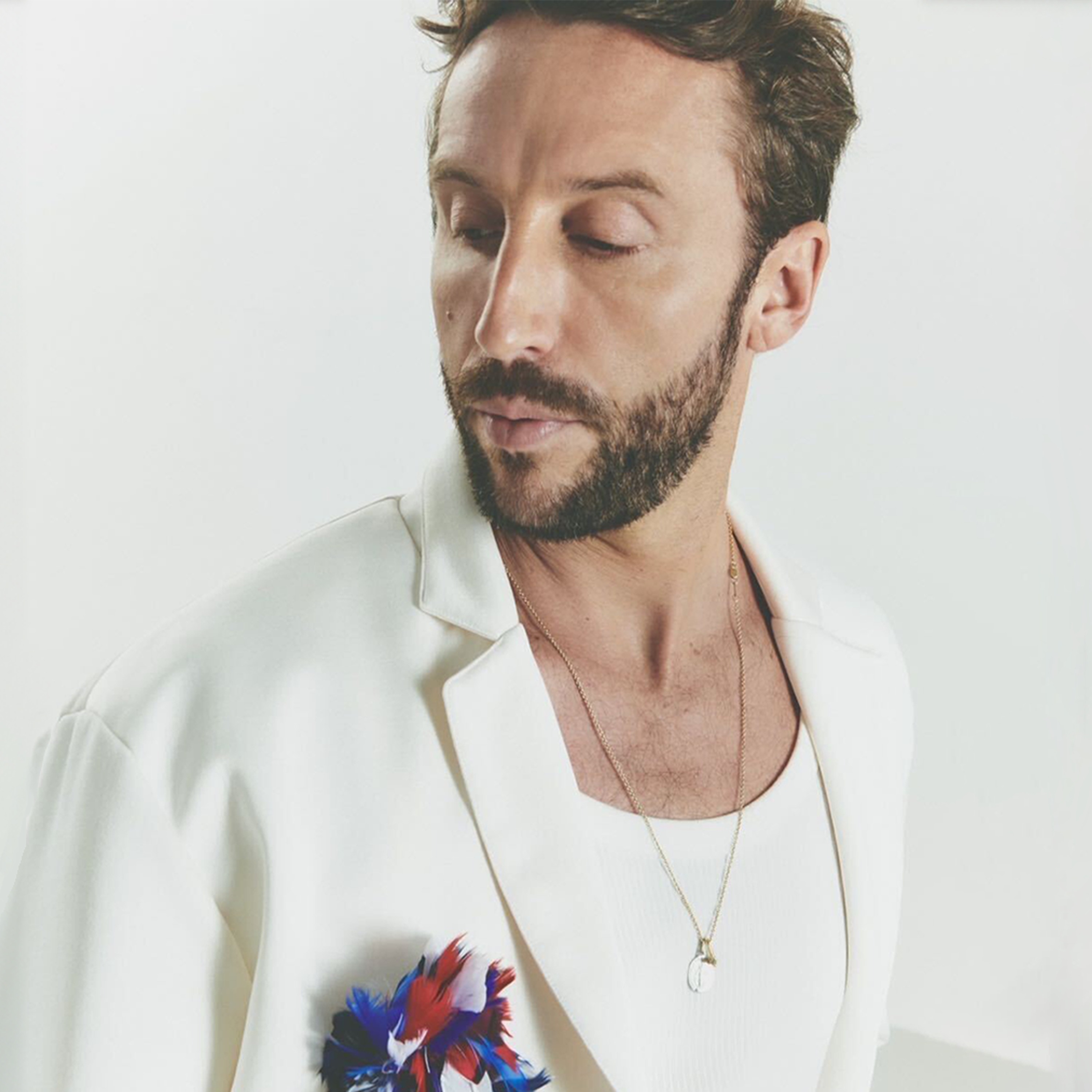
Stéphane Ashpool on Fashion, Sports and the Paris Olympics
Sport and fashion have always been a part of Stéphane Ashpool’s life: He was raised watching his artistic parents socialise with designers like Claude Montana in Paris, while simultaneously falling in love with basketball watching the LA Lakers on TV. He followed both of these passions into adulthood, eventually launching streetwear brand Pigalle in 2008 and going on to collaborate with brands like Nike. “I have as much curiosity for couture as I have for sport kit,” said Ashpool. “I knew I wanted to kind of blend those things spontaneously. I had no clue what it was going to bring me but that's why I started to put things together.”This week on The BoF Podcast, Ashpool joins BoF founder and editor-in-chief Imran Amed to share his journey with clothing brand Pigalle and how his unconventional path into fashion led him to designing the French national team’s Olympic uniforms.Key InsightsRaised in the Parisian suburbs with his dancer mother and artist father, Ashpool was deeply rooted in the worlds of sport and fashion from a young age. “I had this charming home, and when I went in the streets, I had this more masculine type of vibe. And that was related to the sport I love the most, which is basketball,” he says. “My mother and her friends were dancers, so I've been surrounded by a lot of the gay community, people coming from all over the globe, eccentricity, people that really embrace style.” Established in 2008, Ashpool’s brand Pigalle was named for the Parisian neighbourhood he grew up in and born with the district’s multi-dimensional spirit in mind. “I didn't exactly know what I was doing, but what I did know was the best of both worlds. I like to blend, so I have as much curiosity for couture as I have for sports kits,” he shares. “[At the start] we didn't know how to handle things, to organise ourselves, but the fire was burning. It was really exciting to enter a lane that no one really did before.”When Ashpool was approached by Le Coq Sportif to design the uniforms for the French Olympic team, it came with new challenges and constraints, but Ashpool relished this learning experience. “I really embraced it because even though they put you in a frame, if you managed to break the frame even a little bit, you always got more than what they gave you. I made sure I was pushing the boundaries.”For young creatives, Ashpool’s advice is simple. “Dream big, but manage your expectations. Create your own lanes, be inspired, but don't let yourself be someone else. If you start something, you need to finish it. Don't teach yourself to not finish something. Otherwise, it's going to enter your DNA,” he warns. “Be nice to people. It works. Be yourself. It works. Be patient. It works.”Additional resources Indie Brands Are Making This Fashion’s Biggest Olympics Ever | BoFVogue World to Kick Off Couture Week With Olympics Tribute | BoFHow the Paris Olympics Will (Really) Impact Fashion Week | BoF Hosted on Acast. See acast.com/privacy for more information.
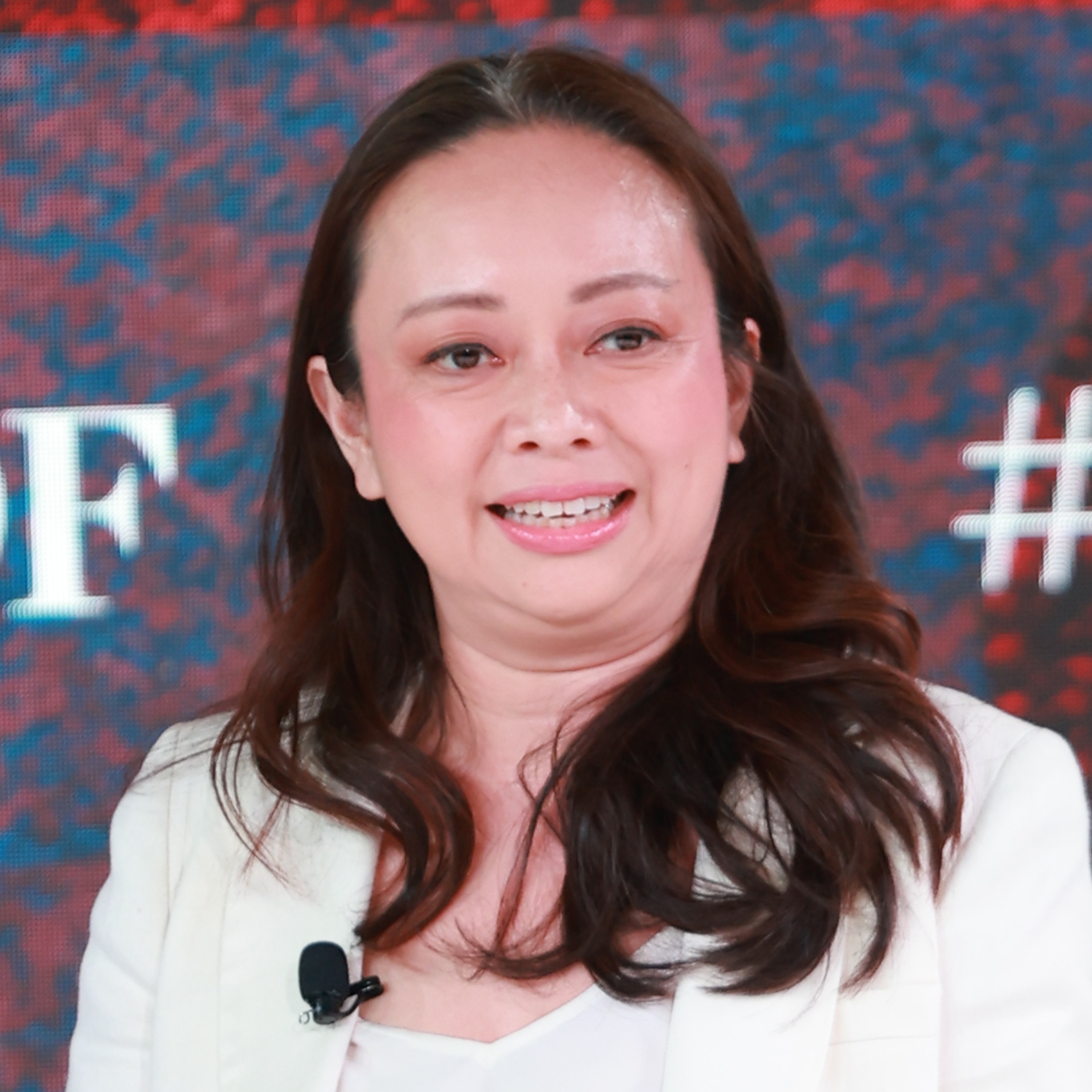
Vennette Ho on the Future of Beauty M&A
2024 has the potential to be a dynamic year for dealmaking in beauty, as brands including Makeup by Mario, Kosas, Merit and even Selena Gomez’s Rare Beauty begin exploring their strategic options. But strategic buyers and private equity firms are also adopting more selective acquisition strategies.At The Business of Beauty Global Forum 2024, Vennette Ho, managing director and global head of beauty and personal care at investment bank Financo Raymond James shared her expert views on this year’s M&A scene in the beauty industry. Vennette is the industry’s most respected investment banker, so when she talks, the beauty industry listens.“M&A happens when there's a fundamental change in the consumer. The consumer needs and the consumer wants are something that the strategics today don't have,” Ho explained. “Every time there's an evolution of a consumer need or want or expectation, M&A has to become a necessity for large strategies to look at.”This week on The BoF Podcast, Imran Amed, BoF founder and editor-in-chief sits down with Ho to discuss the evolving nature and market of the beauty industry. Key Insights: According to Ho, consumer expectations for beauty brands have changed, as well as how they engage with them. Acquiring indie brands helps conglomerates meet those expectations. “A lot of the big companies don't have … the ability to incubate internally, they don't have the ability to come up with something. It really comes honestly from the hearts of founders and it comes from private companies. As a result, M&A becomes really necessary,” she says.Ho advises founders to get to know lots of potential acquirers when considering a potential acquirer, in order to understand who shares your values before making a deal. “It also goes for the other side that they feel like they know you and you can have a better alignment from the beginning,” she adds. .The perfect exit process is not just about the closing of the deal but also what happens after. “What happened six, 12 months, three years after the deal happened? Are people still feeling the same way? I think that's where we get the most pride and say, ‘Okay, this actually impacted the industry in some huge way that went beyond just that moment of the deal,’” says Ho. Looking towards the future of the industry, Ho believes we’ll continue to see the breakdown of beauty category silos. “I think some of the most interesting and most disruptive companies don't actually fit into that mould and don't actually fit into a traditional thing,” she said. “The consumer doesn't think, ‘Is this a prestige brand? Is this a mass brand? Is this a skincare brand?’. They're thinking, ‘Is this a brand that I want to engage with that engages me in a certain way?’ There's a really exciting democratisation of things where brands can exist in different channels at the same time.”Additional Resources:Why L’Oréal Is Investing in Niche Chinese Fragrance Brands | BoF The Changing Shape of Beauty M&A | BoFBeauty’s Top M&A Targets | BoF Hosted on Acast. See acast.com/privacy for more information.

Why the Fashion Industry Needs a Makeover
In a special episode, BoF founder and editor-in-chief Imran Amed joins Bob Safian on the Rapid Response podcast, part of the respected Masters of Scale series.“The most interesting thing you can do, if you look at historical photos going back 50 or 100 years, is to look at what people are wearing. It gives you a sense of what's happening in the world at that time,” said Amed. “When we look back to 2024, and see the Hoka sneakers, the athleisure, and the streetwear looks that people are wearing, these are a reflection of what's happening in the world right now. That's what makes fashion so powerful.”In their conversation, Amed and Safian discuss the rapid growth of the global fashion business, the dominance of the megabrands and the resulting crisis of creativity and challenges faced by independent fashion brands, as well as the impact of ultra fast fashion brands like Shein and Temu. Key Insights: According to Amed, the fashion industry's focus on business growth is stifling creativity, leading to a homogenised market, where innovation is increasingly scarce. "Creatives are being put into boxes and forced to work in ways that are all about meeting the demands of these large, now publicly traded companies that are analysed by all the same investment banks and analysts as Procter & Gamble and Apple. When you're in these big public companies, every quarter you have to show growth, and it really puts a drain on creativity."Independent designers are facing significant hurdles in a market dominated by mega brands. "The big brands in this industry have become so big, so dominant that it makes it really hard for younger independent designers,” Amed explains. “Lately, I've just had this feeling that the early stage part of our industry is not very healthy. There's been a lot of things happening in the industry that have just made it really, really hard."Amed believes artificial intelligence is poised to revolutionise the fashion industry. "It's going to be really interesting to see how leaders on both the creative and the business side of fashion begin to integrate AI tools and processes into the way they run the business but also the way they run the creative process. Some of the designers I'm talking to are already using some of these tools."Additional Resources: The Fashion System Is Creaking. Will It Collapse? | BoFThe BoF Podcast | Imran Amed: ‘It Is in Our Struggles That We Find Our Purpose’ Hosted on Acast. See acast.com/privacy for more information.
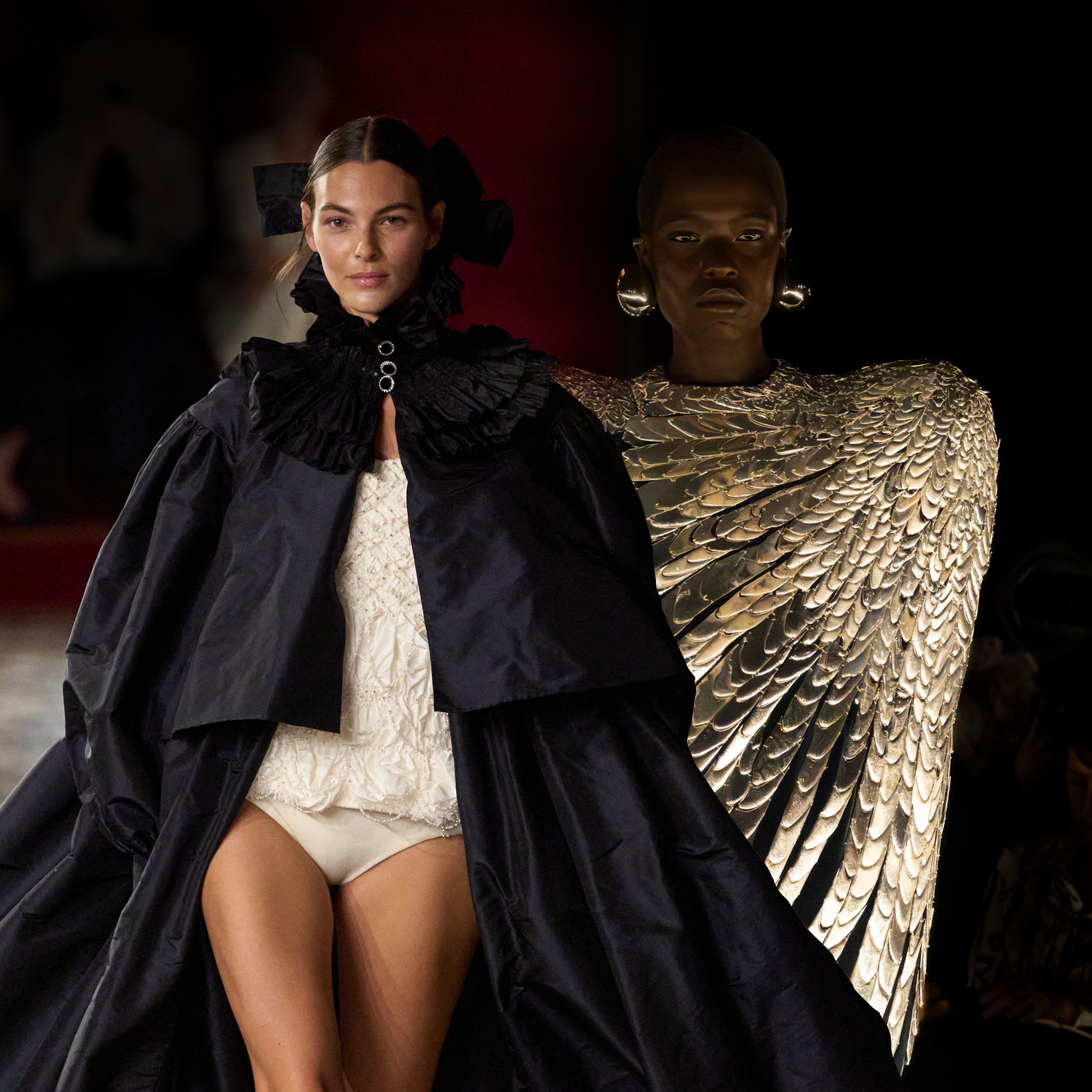
Tim Blanks and Imran Amed on Haute Couture Week A/W 2024
Paris Couture Week has come to a close, and Tim Blanks and Imran Amed sat down for their seasonal review of all the most important collections — from Schiaparelli to Armani, the standout looks, and of course the designers who brought them to life. They also discuss the significance of Dries Van Noten’s final collection, which was the most important moment during the menswear shows, and also how the brand will take things forward now that Dries is stepping back. “Alain Gossuin, the first model on the catwalk, was the first model in Dries’ first show. They had to dig for those models. They had to really get out there and find all these people and it was spectacular. All of that was very emotional, but I think Dries really kept the lid on it with the way that he came out at the end and waved as if to say, ‘maybe I'll be back soon.’” Key Insights: Down to the way the models moved, Daniel Roseberry's collection for Schiaparelli was a cinematic spectacle, merging traditional haute couture craftsmanship with futuristic design elements. “When [the models] stared at you it was challenging. They weren't staring at you to welcome you into their world.They were imperious. It's quite piercing but it was so deliberate that it felt like a different element in the show,” shared Blanks.In light of Virginie Viard's departure, there is now a significant opportunity for change at Chanel. “If they want to take a chance on change, it's an amazing time to do that. Chanel is codes — and whoever goes in there has to understand those codes — but there's stuff you can do with those codes,” remarked Blanks.At Gaultier, Nicolas di Felice’s interpretation of the French house left a lasting impression. “The intensity of the audience's engagement with him was so genuine you could see the future,” said Blanks. “He's quietly created an authentically cultivated real sense of goodwill amongst people. I think people in the industry are really rooting for him.”Additional Resources:Couture Day One: Americans in Paris | BoFCouture’s Cross-Generational Masterclass | BoFChanel and Dior’s Haute Couture Loses Heat | BoF Hosted on Acast. See acast.com/privacy for more information.
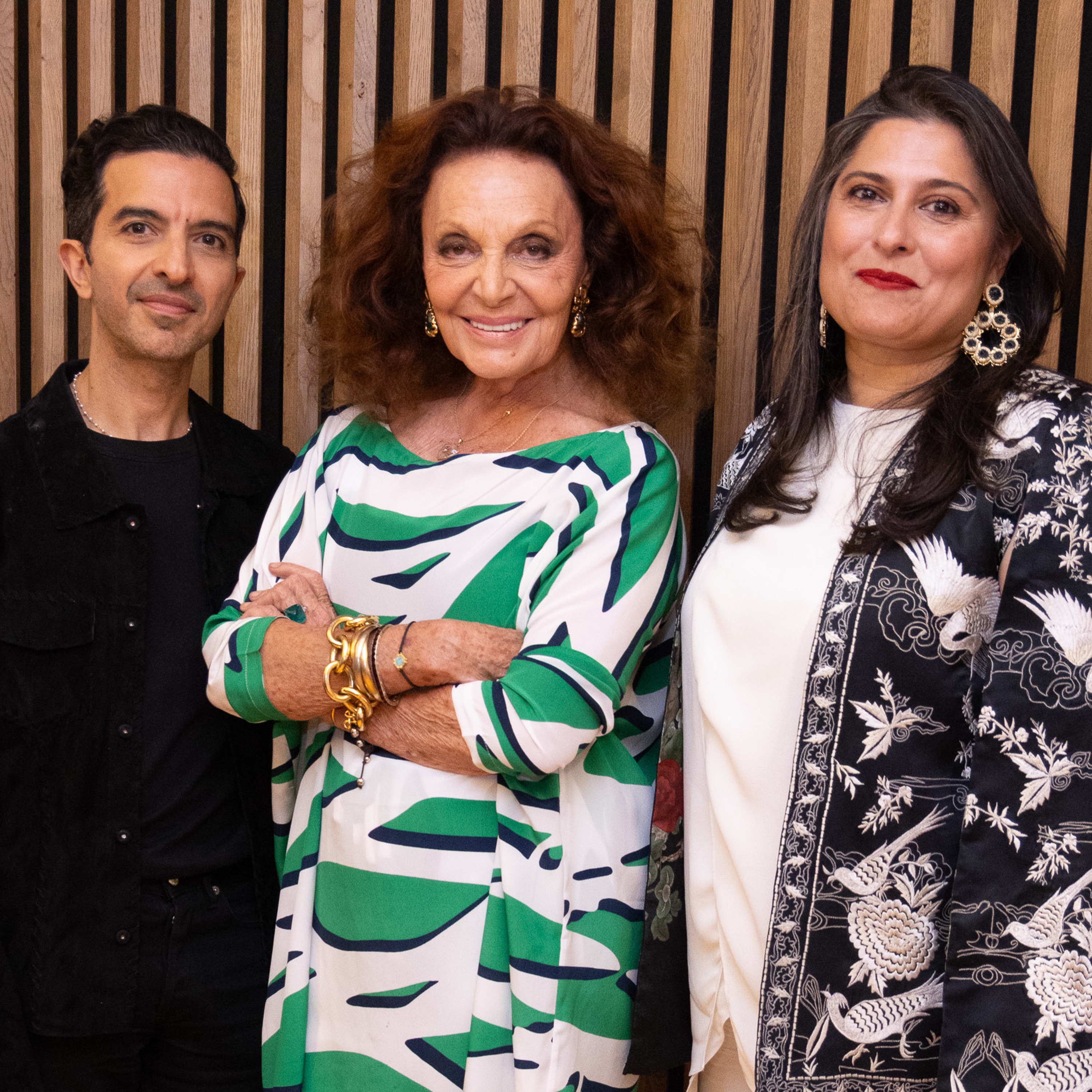
Diane von Furstenberg on the Making of Her New Documentary
From her miraculous birth as the daughter of a Holocaust survivor to becoming a fashion powerhouse with her signature wrap dress, Diane von Furstenberg's remarkable journey is one of resilience, innovation, and empowerment. In a new documentary about her life called "Diane von Furstenberg: Woman in Charge,” Academy Award-winning filmmaker Sharmeen Obaid-Chinoy combines archival footage and intimate interviews with von Furstenberg’s closest friends and family to paint a vivid picture of a woman who has always been true to herself and her vision.“The most important thing is to work hard at being true to yourself and liking yourself. If you are true to yourself, you are free,” shared von Furstenberg. “Women are defined by society and placed in boxes and labels, and sometimes are forced to make decisions that they don't want to,” added Obaid-Chinoy. “Diane's story coming at a time like this is so important because it is an anthem of freedom.”This week on The BoF Podcast, von Furstenberg and Obaid-Chinoy speak to BoF founder and editor-in-chief Imran Amed at the London premiere to share their experience of making the documentary and the new learnings this process surfaced about a life well lived. Key Insights: When creating documentaries, Obaid-Chinoy’s goal is to carefully peel back the layers of a person until reaching their core. After countless hours of conversation and travel with von Furstenberg, she believes she succeeded. “This is a story about a woman who faced adversity and rose up each time. I feel like all my films are about women who are faced with extraordinary circumstances. And Diane fits right at the heart of it.”For von Furstenberg, the documentary also tells a crucial tale of her mother and her legacy. “It's about this woman who refused to die, who refused to be a victim, who told me never to be afraid, who never told me to be careful, who wanted me to have a big life,” she shared. “when you have a strong mother, you know, and you're being told that you are her torch of freedom. That torch could be heavy. But that's what was given to me. And I honoured her.”Themes of gender, autonomy and power are central to the film, but ultimately, for von Furstenberg, the ability to connect with oneself is paramount. “Being in charge is not an aggressive thing; it's owning who you are. … The most important relationship is the relationship we have with ourselves.” Additional Resources:The Tragedy and Triumph of Diane von Fürstenberg | BoF The BoF Podcast | Diane von Furstenberg on the Power of a Little DressDiane von Furstenberg Makes a (Profitable) Comeback | BoF Hosted on Acast. See acast.com/privacy for more information.
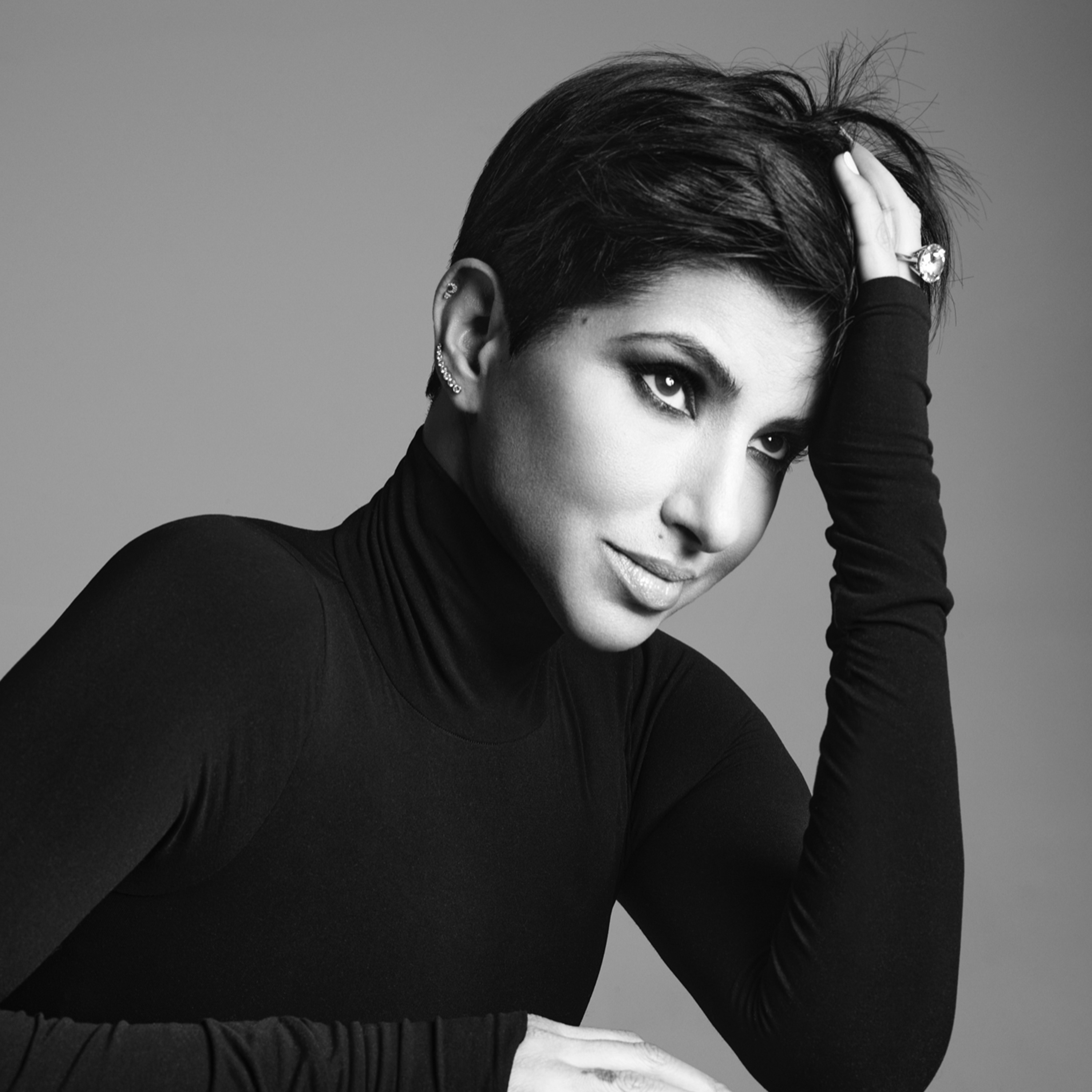
Deena Aljuhani Abdulaziz on Redefining Arab Fashion Media
Deena Aljuhani Abdulaziz was drawn to fashion from a young age, devouring issues of Vogue and Tatler. This led her to set up D’NA, a members-only boutique based in Saudi Arabia and Qatar. 10 years later when she closed her boutique, she became the founding editor in chief of Vogue Arabia – but soon parted ways with the publication due to a misalignment in values.Now, Aljuhani Abdulaziz is back with her own media publication, on her own terms. ‘Deenathe1st.com’ is an editorial lifestyle website dedicated to fostering a creative community that celebrates Arab culture. “What I hold dear is what anybody would hold dear. Representing my culture correctly and fairly,” she says. “And it's not trying to show off Western ideas to the region. It's the other way around. It's showcasing the region and what we share creatively with the rest of the world.”This week on The BoF Podcast, Aljuhani Abdulaziz joins BoF founder and editor-in-chief Imran Amed to share her career journey, the lessons she’s learned about fostering culture and community, and why the fashion community needs a new publication. Key InsightsBorn in California but raised between the US and Saudi Arabia, Aljuhani Abdulaziz is an expert code switcher who’s always felt able to act like a cultural bridge between the two worlds. “It never felt like an effort. It just came naturally. I think that's part of what makes me who I am in a sense,” she shares. “It's not just in figures of speech, but also in how you would interact with people, because there are different customs and traditions in different regions and in different households. It's really about a state of mind.”Aljuhani Abdulaziz’s first fashion influence was her mother, who she describes as “still very, very chic.” As a child, her discovery of Tatler magazine pushed this passion even further. “I picked it up and I opened up its pages and I was like, ‘Oh my goodness, this is it!’ I was just so grateful and happy that it existed.” Aljuhani Abdulaziz’s stint at Vogue Arabia ended abruptly after just two months. “I understood the responsibility of being a voice for a very big region, being Arab myself,” she said. “I think there was a point when that didn't align and the visions were not parallel.”Looking to the future, Aljuhani Abdulaziz says she is building her editorial lifestyle platform ‘Deenathe1st.com’ on the basis of community, shared values, and kindness. “I think that it's super important to remind people that you don't have to be nasty to be stylish or to be in fashion or to be chic,” she said. “I would love to continue my love letter to Arabia. That's really what I'm trying to do with this site.”Additional resourcesDeena Aljuhani Abdulaziz Exits Vogue Arabia | BoF Vogue Arabia Appoints Manuel Arnaut as Editor-in-Chief | BoF A New Era of Arab-Led Fashion Media | BoF Hosted on Acast. See acast.com/privacy for more information.
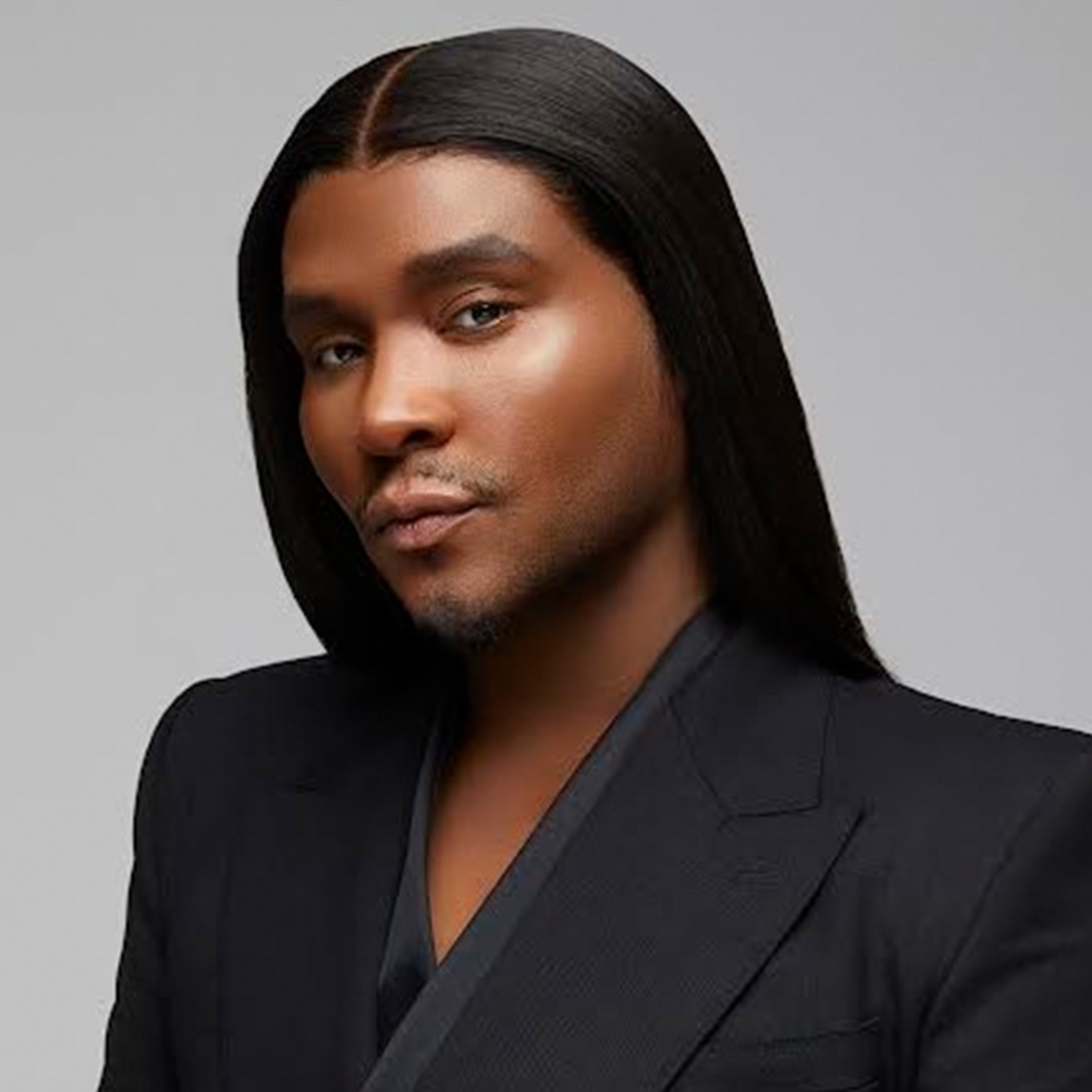
Law Roach on Keeping Busy After ‘Retirement’
As a self-styled “image architect”, Law Roach has earned global recognition for the red carpet looks he has created for some of the most famous — and most photographed — women in the world. But in 2022, when he suddenly announced his retirement on Instagram, writing “If this business was just about the clothes I would do it for the rest of my life but unfortunately it’s not! The politics, the lies and false narratives finally got me! You win…I’m out.”While Roach continues to work with top clients Celine Dion and Zendaya — he was the mastermind behind Zendaya’s tennis-inspired “Challengers” press tour earlier this year — he’s also pursuing his entrepreneurial ambitions. Later this year, he will launch a new online learning platform to train the next generation of stylists. “It was hours and hours of me talking with a script writer and being recorded to get out all my processes, from the way I set up a room to style and the psychology of choosing the right dress. So it's super comprehensive and I'm super proud of it. And we’re launching it with me as the very first instructor.”This week, on the BoF Podcast, Roach joins me to trace his career right from the beginning when he was selling thrifted clothes from the trunk of his friend’s car in the South Side of Chicago and to exclusively share the details of his new online learning platform and what he hopes people will learn from it.Key Insights:Roach’s first memories of fashion are from his childhood in Chicago. “My first runway show was church on Sunday morning, watching those women with the hats and the outfits, but high fashion had always been something that was very aspirational but also seen very unattainable at the same time.” He then began his career selling vintage pieces from the trunk of a friend’s car before moving to a brick-and-mortar storefront. “That turned into a revenue stream for me and which then turned into a boutique, which turned into Kanye West coming in one day,” he said. That celebrity attention led to “global recognition about this little store in Chicago.”Roach has worked with his most high-profile client, Zendaya, since she was a teenager. Back then, he had trouble finding brands that were willing to dress her, which forced him to get creative. “She became one of the best dressed, most looked at stars on the red carpets and had not even worn any of these brands. So at that point I was like, ‘I kind of don't need you.’ We had just worked so hard to make her this thing that everybody wanted without using the traditional tools of getting there,” he shared. With his new online learning platform, Roach wants to encourage greater representation and open up opportunities in the industry. “Ours is a comprehensive collegiate level, educational, educational coursework. Everything that I've used to become who I am is in there.”Despite the various challenges in his career, Roach’s unwavering self-belief has carried him to where he is today. “No matter how many doors are closed, no matter how many times people ask me to get out of my seat at a fashion show, no matter how many times people say no, I came to L.A. to be considered the best or one of the best, and there was no way that anybody could deter me from that. I really, honestly believed in myself.”Additional Resources:The Business of Being Law RoachBlack Stylists Form Collective for Support and Advocacy Hosted on Acast. See acast.com/privacy for more information.
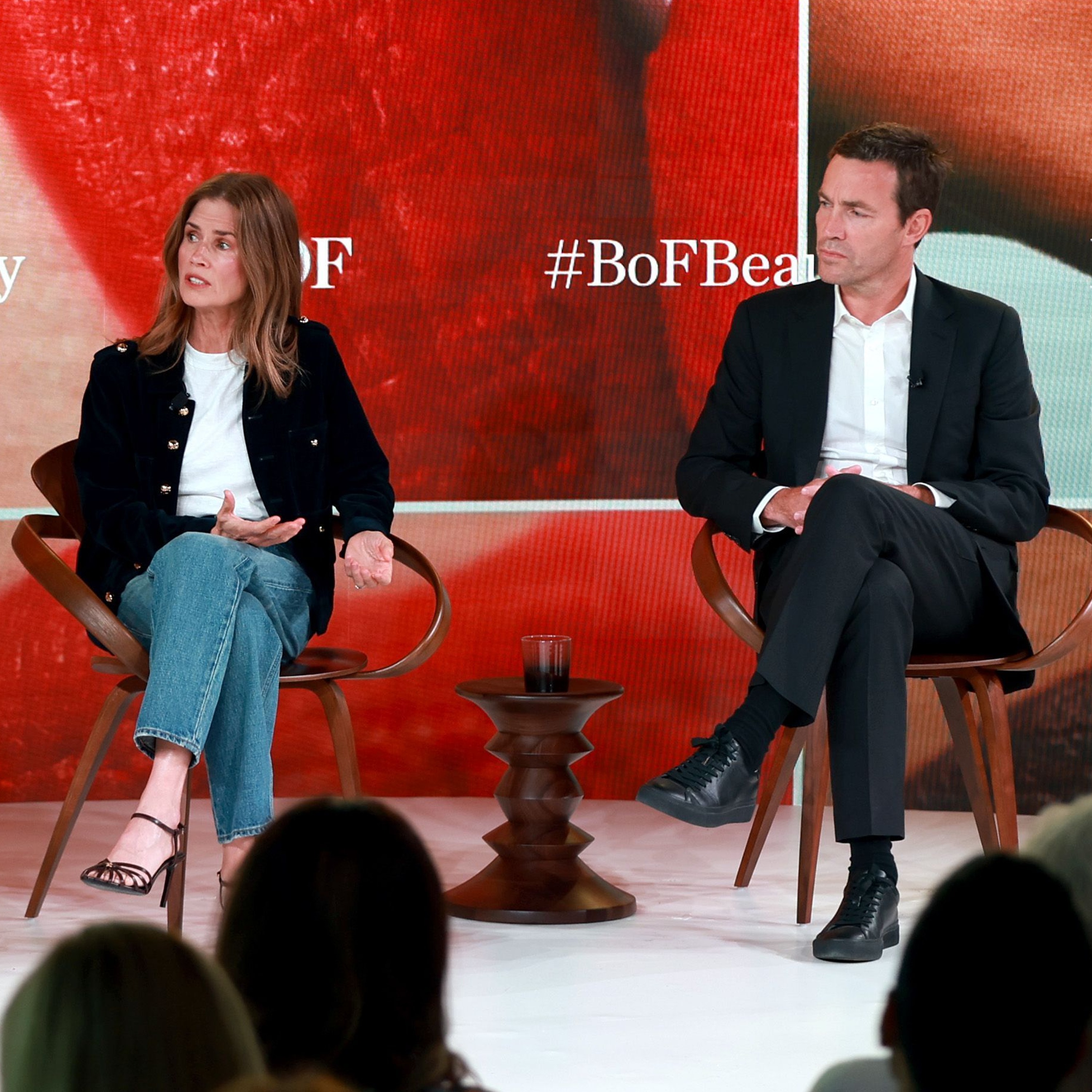
Gucci Westman and David Neville on Creating a Luxury Beauty Brand That Lasts
Husband and wife duo Gucci Westman and David Neville’s luxury beauty label Westman Atelier has become an industry favourite, winning fans for its curated collection of cosmetics, holistic approach to beauty and strong focus on ingredients.“Our customer knows that she's getting something that is clean, is going to perform, is going to be good for her skin, and is going to be a luxury experience she hasn't had before,” said Westman. “We think about brand-building in the literal sense of building a brand brick by brick. Every day we are building our team, building our capacity, building our assortment, introducing new products,” shared Neville. In this conversation from The Business of Beauty Global Forum 2024, Priya Rao, executive editor of The Business of Beauty, sits down with Westman and Neville to discuss how they’re building a multidimensional luxury beauty brand that lasts.Key insights:Growing up in Sweden, Westman said that the importance of high quality ingredients was instilled in her at a young age. “The Swedish lifestyle is all about value over quantity, having a slow burn and really savouring that experience. I think that really informed my ideas around what we should do and how we should do it,” she shared. Neville believes that a product focus is crucial to longevity. “We spent about three and a half years prior to launching in the market just developing with a singular focus on our products. That mentality has been with us all along this journey.” Westman highlights trust as another essential ingredient to their brand formula. “Our customer knows that she's getting something that is clean, is going to perform, and is going to be good for her skin. I think we've established this sort of loyalty and trust is imperative in this kind of thing.”To build a brand that lasts, Westman Atelier’s strategy is to take it all one step at a time. “We think about brand-building in the literal sense of building a brand brick by brick. Every day we are building our team, building our capacity, building our assortment, introducing new products. We're building awareness through new customer acquisition, whether that be direct to consumer or through our retail relationships,” said Neville. Additional resourcesHow I Became… A Makeup ArtistCan Gucci Westman Build the Next Great Luxury Beauty Brand? Hosted on Acast. See acast.com/privacy for more information.

Héctor Bellerín on Football, Fashion and His New Brand, Gospel Estudios
Footballer Héctor Bellerín first made a name for himself with his defensive skills on the pitch but it’s his outspoken views and distinctive personal style that have transformed the Spanish right-back into a cultural trailblazer.Now, Héctor, who has been called “the world’s best-dressed footballer”, is launching a new label, Gospel Estudios, which has served a creative outlet as he continues to play football.“This was a way to recharge my battery. It was a way of learning something new, do stuff with my hands, trying new things. It was a process of discovery and learning and trial and error,” he says.This week on The BoF Podcast, Héctor sits down with me to talk about the burgeoning relationship between fashion and football, how he developed his strong sense of personal style, and to share his plans for the launch of Gospel Estudios for the first time on The Business of Fashion.Key Insights:After starting his career in Barcelona, Bellerin moved to London in 2011 to play for Arsenal. During his nine years at the club his off-duty style gained him both media admiration and criticism. “I got a lot of stick when I was at Arsenal and things didn’t go well, a lot of people used to say he’s not playing well because he’s focused on fashion,” he says.Héctor Bellerín looked to another footballer, David Beckham, as an example of how to bridge the gap between fashion and sport. “He opened doors for everyone. And I think not just in football, but for men overall … In these very masculine places it’s very hard to be different.”At Gospel Estudios, dependence, rather than independence, is the foundation upon which Bellerín is building his sustainable brand. “My mom works in the studio. My friend’s dad works in the studio. My granddad repaired sewing machines back in the day so he repairs the same machines,” he says. “It’s important to let people know that we are dependent. We are dependent on a lot of people.”Sharing his philosophy on responsible consumption, Bellerín encourages potential buyers of Gospel Estudios to really think about the item in question before they buy it. “Take the time to just breathe and think, is this something that I am ready to have a relationship with? Because this is what it is.”Additional Resources:Inside the Big Business of Styling Athletes: NBA stars and footballers are leaning on a network of powerful style consultants to help shape their personal brands outside of their day jobs, laying the groundwork for lucrative brand deals.Why Luxury Brands Want in on Football: Despite the rocky history between fashion and football, luxury brands from Moncler to Dior are looking to benefit from the cultural power and global audience of the world’s most popular sport.How Athletes Became Fashion Week Royalty: It’s not just sports superstars sitting front row at fashion week. Today, luxury labels are looking to work with emerging athletes from niche sports, giving rise to new dealmakers who match brands with eager skateboarders, boxers and rugby players. Hosted on Acast. See acast.com/privacy for more information.

Charles Jeffrey on 10 Years of Loverboy
In 2014, in a nondescript basement club in East London, Charles Jeffrey’s Loverboy was born. At the age of 18, the Scottish-born designer moved from Glasgow to London to pursue a BA in Fashion Design at Central Saint Martins and has since earned his place in the long line of highly creative fashion designers coming from the city. With an upcoming exhibition at Somerset House, the one time upstart is ready to look back on 10 years of his brand.“I'm Charles Jeffrey, I'm not Alexander McQueen, I'm Charles Jeffrey, I'm not Gareth Pugh. I'm Charles Jeffrey, I'm not John Galliano,” he said. “I have a way of looking at fashion and I want to nurture that and see it to its end.”This week on The BoF Podcast, Jeffrey joins me to share his journey into London’s fashion scene and reflect on the past, present and future of Loverboy, underscoring that he has his own unique vision to contribute to fashion. Key Insights:Jeffrey credits video games for sparking his interest in fashion design. “I was a big geek and me and my friends would play in the forests and play Lord of the Rings with sticks. I would sit and draw the outfits and characters that we would all be. We all had our own alter egos and we would just really live in that world.” Since the inception of Loverboy, Jeffrey was conscious of building a brand, and chose not to name the brand after himself. “I could have had a business that was just called Charles Jeffrey but I wanted to keep that Loverboy thing because I felt it was a sticky kind of concept. I could apply it to products, Loverboy tartan, Loverboy polka dot, Loverboy pinstripe, or the Loverboy beanie,” he said. “All these things, you start to give them names; it's the psychology of business and brands and advertising.”Jeffrey understands that creating core hero products is essential to creating brand loyalty and drawing in customers to discover other products. “How can I make a beanie, which is a bit of a novelty and a throwaway, something that people will buy from us for another ten years? How do you change the perspective of that to somebody so that they come to us for that but then the psychology of this novelty beanie also makes them think, ‘I bet they do great jumpers or I bet they do a really nice bag’.” Looking to the future, Jefrrey’s aim is to create a sustainable, independent business. “My goal, in the next three to five years, is to build an element of the brand that's not reliant on a wholesale model, that's not relying on the fashion model, per se.” he says. “You can push the brand into all these spaces but if the sell-through isn't right, if you've not got the story behind it, if you've not got the relationship with the clients, it just dies a death.”Additional resources Charles Jeffrey on What It’s Like to Be a Rising Designer in the Midst of a Pandemic Charles Jeffrey Loverboy’s Furious Physicality A Tang of Revolution at Charles Jeffrey Hosted on Acast. See acast.com/privacy for more information.

How Esteban Cortázar Got His Groove Back
Esteban Cortázar first fell in love with fashion as a teenager growing up in Miami. Over the years, his career in fashion has come with lots of ups and downs. After he became one of the youngest designers to ever present at New York Fashion Week he had to shut his label down. He went on to become the creative director of Emanuel Ungaro at just 22 years old, before leaving after he disagreed with the owners’ plans to bring on Lindsay Lohan as a consultant. He relaunched his eponymous fashion house but it closed during Covid. Now, Esteban is launching ‘Donde Esteban,’ a new brand on his own terms, on his own schedule, celebrating his roots in Colombia, Miami and Ibiza. “Where we can lack as young designers or as designers doing independent brands is that it's really like a puzzle,” says Cortazár. “And you have to have all of the pieces in place for it to work. Having an investor is certainly not enough, you really need to have all of the different angles in place, especially today, to be able to sustain a business.”This week on The BoF Podcast Esteban joins me to share his career journey and the lessons he’s learned about building an independent fashion business today.Key insights:Born to a Colombian painter and former British jazz singer, Cortazár’s childhood straddled continents, lifestyles, and subcultures, all of which has greatly influenced his artistic sensibilities. “I grew up around a very bohemian environment through my family and my parents — colours and paints and oils and instruments. That already set the tone of a very artistic point of view from a very early stage,” he says. Emulating what he saw in the fashion magazines he devoured as a teenager, Cortazár’s early shows were always organised to a professional standard despite his young age and lack of training.Cortazár jumped at the opportunity to become creative director of Ungaro at the age of 22. “I knew how much questioning there was going to be from the industry about me and my age, my experience, my lack of experience. I just took it and I went for it because I knew that that kind of opportunity wouldn't just continue to come like this.”Heavily influenced by his upbringing, Cortazar’s new label Donde Esteban is somewhat of a homecoming. “My take on fashion has changed and evolved and I wanted to create something that felt so authentically me, that really celebrated the multicultural aspect of my life. The fact that I was born in Colombia, grew up in Miami, then went to New York, then went to Paris, that I spent all my summers in Ibiza.”Additional resources:Turning Point | Esteban Cortazar, Comeback Kid | BoFEsteban Cortázar Tackles Fashion's Timing Gap | BoFUnlikely Directions at Esteban Cortazar | BoF Hosted on Acast. See acast.com/privacy for more information.

Vanessa Friedman on the Past, Present and Future of the Met Gala
The first Monday in May has become synonymous with the Met Gala. Every year, celebrities and brands come together on the steps of the Metropolitan Museum of Art. This year’s theme was The Garden of Time and attendees went to enormous efforts to try to catch the spotlight amid one of the busiest red carpet moments of the year, orchestrated by Anna Wintour, global chief content officer of Conde Nast and editor-in-chief of American Vogue.“Anna Wintour has raised the ante every year to the extent that this Met Gala made $26 million in one night,” says New York Times fashion critic Vanessa Friedman on this week’s episode of The BoF Podcast. “The amount of social media impressions it generates is beyond compare. The guest list that she curates, because it is an entirely curated guest list, is like nothing else.”.Friedman joins BoF founder and editor-in-chief Imran Amed to share her journey into fashion journalism, reflect on what this year’s Met Gala says about the state of fashion and culture and of course, dissects the standout looks of the night.Key Insights:Over the past few decades, fashion has become a pillar of popular culture thanks to the rise of social media and our image-first culture, said Friedman. “We now communicate globally more through imagery than we communicate through words or papers or speeches or books,” she says. “We are constantly making judgments based on the images we see … and those images are intrinsically connected to fashion … It's a language that we all think we speak and therefore we can use as communication.”The Spanish luxury house Loewe, owned by LVMH, was one of the evening’s sponsors, which for Friedman is an embodiment of the culture-shaping ethos held by LVMH chairman Bernard Arnault. “He doesn't want his brands to be just fashion brands. He wants them to be culture brands. It's going past luxury into shaping culture at large.”This year’s Met Gala raised an impressive $26 million, but Friedman says this raises questions about the event’s future. “Has this party reached its apogee? Is it possible to make more than $26 million in one night?”Reflecting on her 20 plus years in the fashion industry, Friedman’s advice to aspiring critics is to think beyond the industry. “Learn as much as you can about things that aren’t fashion. Broaden your viewpoint and think about the world in as wide and exciting and curious a way as possible.” Additional resources:Met Gala 2024 Beauty Trends: Boho Princesses and Bling Queens Embrace Garden FairytaleAt the Met Gala, the Fantasy Was Intact The Met Gala’s TikTok Headache Hosted on Acast. See acast.com/privacy for more information.

Stan Herman on a Lifetime in Fashion
Stan Herman may be 95 years old, but the designer, activist and former president of the Council of Fashion Designers of America remains an unstoppable force. His recent memoir, “Uncross Your Legs: A Life in Fashion” details his journey through the American fashion industry, including bringing New York Fashion Week to Bryant Park. This week on The BoF Podcast, Herman joins BoF founder and editor-in-chief Imran Amed to reflect on his remarkable life and career, and to talk about how big business has changed the fashion industry.“With so much money being floated out there, it's changed the whole nature of the business,” he says.“Once we anointed designers as superstars, once big business and Wall Street put their cashmere gloves on, fashion was not the same.”Key InsightsHerman, who grew up in a Jewish family in New Jersey, traces his initial interest in fashion to his parents. His father owned a number of silk stores. His mother died when he was only 12 years old, but in writing his book he discovered that she was a talented seamstress. “I found things about her that I had never known. How she sewed, how she made patterns on the floor, how she knew how to cut a bias dress,” he recalls. “We didn't have very much money at the time and she made lots of house dresses that she lived in.”Herman’s career includes stints designing ready-to-wear under the label Mr. Mort and creating uniforms for America’s largest corporations. “I lived this life of a designer with an intellectual school teacher and I plotted my life,” he says. “I worked for eight years in companies, then I was first a third designer, second designer. I learned the hard way.”In 1991, Herman became the president of the Council of Fashion Designers of America, a position he held for 16 years. During his time at the CFDA, New York Fashion Week was born, initially staged in a cluster of white tents in Bryant Park. “That park has become for me my life in New York,” he said. “It's never been the same since they left Bryant Park. But that's okay, things do change.” Additional resources:Thom Browne Named CFDA ChairmanWhat Tom Ford’s CFDA Post Means for American Fashion Hosted on Acast. See acast.com/privacy for more information.

How Calvin Klein Taps Into Culture
On January 4th of this year, when Calvin Klein dropped its new spring 2024 campaign with a shirtless Jeremy Allen White wearing the brand’s signature underwear, it set the internet ablaze. Social media feeds flooded with reaction videos and media outlets covered the campaign widely. The following week, Calvin Klein saw a 30 percent year-over-year increase in underwear sales.While the brand could never have predicted the gigantic response the campaign would generate, Calvin Klein’s chief marketing officer Jonathan Bottomley says the brand did everything it could to put the strategy in place for it to do so.“In a culture that's very flat, how do you create those spikes … we adopt what we call an entertainment mentality,” said Bottomley on stage at the BoF Professional Summit in New York. This week on The BoF Podcast, BoF founder and editor-in-chief Imran Amed sits down with Bottomley to unpack Calvin Klein’s marketing strategy and how they cut through the noise to create cultural moments.Key Insights:Calvin Klein’s entertainment mentality can be broken down into three main parts. “Firstly, we put a lot of focus on creating stories and creating content that people are going to want to spend time with. The second thing is we think really hard about the talent, not just in terms of reach of engagement, but the opportunity to create a cultural character, show them in a way that maybe you haven't seen before,” Bottomley explains. “And then the third thing is media. We work with real intention to blend the media mix, to try and game the algorithm and and really to cut through.” Bottomley stresses that the brand does not aim to court controversy. “There's an authenticity to what we do, which is partly the DNA as a brand. This idea of sensuality and empowerment, they go together,” he says. “It's much more to do with partnership, creative expression, and this idea of a character that we feel is going to work, but that our partner really believes in.”On balancing brand marketing and performance marketing, Bottomley believes the two are intertwined. “The way we think about it is that everything is brand and everything is performance. … The imperative of a brand is to lead and to say from within the confines of where culture is going, ‘how can we step outside that and excite people with something?’”Additional resources:Calvin Klein, Levi’s and the Real Value of MarketingWhy Calvin Klein Ads Still Get People TalkingCalvin Klein’s New Strategy: Don’t Market the Dream, Market What Sells Hosted on Acast. See acast.com/privacy for more information.

Willy Vanderperre on Youth Culture and His New Exhibition in Antwerp
For more than 30 years, photographer Willy Vanderperre has been fascinated with youth. Vanderperre has carved a niche for himself in the fashion industry, capturing the youthful essence of models like Julia Nobis and Clément Chabernaud for fashion houses including Dior, Prada and Givenchy.“It would be bordering on pretentious to say that I understand youth. I am 53 years old and I am fully aware of that. It's impossible to understand youth nowadays. I can just have an interpretation of what I think youth is through my eyes and through the experiences I have with those kids,” says Vanderperre.Ahead of the opening of his exhibition “Willy Vanderperre Prints, Films, a Rave and More…” at MoMu – Fashion Museum Antwerp, Vanderperre sits down with BoF editor-at-large Tim Blanks to discuss this approach to image-making his creative collaborations with Raf Simons and Olivier Rizzo, and more.Key InsightsWhilst studying photography at Antwerp's Royal Academy of Fine Arts, Vanderperre first encountered the friends who would become his closest collaborators: Raf Simons, Olivier Rizzo and Peter Philips. “We all grew up in different parts of Belgium, we all have very different backgrounds, we also come from different subcultures, so I think it's also that that linked us together at one point.”A rave and hedonistic subculture is an essential component of his body of work. “Of course we had to include the rave. My main focus has always been youth, and it will always be. I am from that generation of Belgian kids that when the rave scene was big, I was young and I indulged in that lifestyle,” he shared.Vanderperre views challenge, both for himself and his audience, as a defining characteristic of his work. “What is a beautiful picture? Does it always have to be beautifully lit or perfectly lit? … Technique is important, but it's a means and I think we should play with that,” he explains. As for his work philosophy, Vanderperre keeps it simple: “I like the idea of observing, creating and bringing that character to life and being genuinely interested in that person in front of the camera” he says. “I think the last three decades we’ve just been trying to translate youth through our eyes.”Additional Resources:Willy Vanderperre: ‘Youth Is an Emotion. Youth Is the Breaking Point’ Willy Vanderperre Has a New Instagram Project Hosted on Acast. See acast.com/privacy for more information.

The Assoulines on Thirty Years of Fashion Publishing
Prosper and Martine Assouline’s business began with a passion project: A book dedicated to their love for La Colombe d’Or, a boutique hotel in the South of France; Martine produced the images and Prosper was responsible for the text. But since publishing that first title 30 years ago, Assouline Publishing has gone on to capture the history and visual memory of places like Ibiza and Jaipur, industry icons such as Estée Lauder and Valentino Garavani, as well as fashion houses like Saint Laurent and Louis Vuitton. “The idea was to make a book about the spirit of a place, … to mix the past, the present, the people, and all the DNA,” says Martine. “I always say to my team in the art department that when a book is finished, we need to start it. … You think it's finished but it’s just beginning,” says Prosper.This week on The BoF Podcast, founder and editor-in-chief Imran Amed sits down with the Assoulines to learn how this fixture of fashion publishing was born and how they intend to maintain that original creative spark while growing it into a global lifestyle business. Key Insights: While Assouline may be a leading luxury publishing house today, Martine and Prosper were outsiders without prior experience or contacts in this world. They had to learn along the way. “We learned that it was a real job. A real industry, a club where everyone knew each other,” said Prosper Assouline. “We learned while doing - everything,” added Martine. Prosper Assouline says the process of creating a new book is architectural and the magic lies in the details. “We didn’t just want to do books because Amazon is full of proposals and other publishers are full of proposals.” For Martine, the continual consumption of culture and arts is a key ingredient in Assouline’s formula. “You have to eat culture. You have to go to a museum. You have to see films of today, of yesterday. You have to look at magazines, hear music, all kinds of different books. It's very important.”In the Assoulines’ view, what they’re doing is much bigger than simply publishing books. “The idea was not just to make books, it was to create a luxury brand on culture,” said Prosper Assouline.Looking towards the future, the luxury publishing house is narrowing its focus on lifestyle. “Lifestyle is the project. It’s our way to live and work, it has always been our direction,” said Martine Assouline. Additional ResourcesIn Age of Online Inspiration, Fashion Creatives Still Love Beautiful BooksThe Business of Fashion Books Hosted on Acast. See acast.com/privacy for more information.

Jordan Brand’s Larry Miller on the Power of Second Chances
Starting in 1999, Larry Miller worked alongside Michael Jordan to build Nike’s Jordan brand, which today generates more than $5 billion in revenue for Nike. But his journey to the C-suite was a unique one.Growing up in West Philadelphia, Miller joined a gang, which led him to serve multiple prison sentences for a series of crimes, including second-degree murder.Through a rehabilitation programme, he was able to begin his college education while in prison, and upon release, he was able to start his career with an accounting job at the Campbell Soup Company. In 1997, Miller started working for Nike under founder Phil Knight, and became the first Black vice president of apparel at the company before going on to become president of the Jordan brand in 1999.But it wasn’t until years later that he went public about his backstory with the publication of his book, “Jump: My Secret Journey From the Streets to the Boardroom.”At BoF VOICES 2022, Miller sat down with UTA executive Darnell Strom to share his story, talk about the power of second chances and explain how he found redemption.“I’ve come to the realisation that a lot of times we are afraid to talk about the obstacles that we overcome. But in reality there’s no shame in overcoming obstacles,” said Miller.Key Insights:“When I was 16, I shot a kid and he died and I was charged as an adult at 16 years old… pleaded guilty to second-degree murder, was sentenced to four and a half to 20 years,” Miller revealed at BoF VOICES 2022.Once he had revealed his story, Miller says Michael Jordan and Phil Knight were supportive and encouraged him to share his story. “It’s been amazing to me the response that I’ve gotten from people who I’ve known and worked with and who have just encouraged me and embraced the fact that I’ve got this past.”Following the release of his book, Miller apologised to the family of Edward David White, the man he killed. In White’s honour Miller created a foundation for his descendents to attend university or trade school.“I think I’m a perfect example of the fact that a person can change if given the right opportunities… the right chance. But it starts inside of you. You have to believe that you can change,” said Miller.Additional Resources:A Nike Executive Seeks a Family’s Forgiveness for a 1965 Murder: The New York Times the story of the impact of Larry Miller, chairman of the Jordan Brand Advisory Board, and his actions as a 16-year-old.Jump: My Secret Journey from the Streets to the Boardroom: “Jump” written by Larry Miller and his daughter, Laila Lacy, shares the story of Miller’s life from the streets of West Philadelphia to the Nike boardroom.How Larry Miller Went from Prison Valedictorian to Nike Executive: Freakonomics interviews Larry Miller on his journey from his childhood in West Philadelphia, to serving time in prison and finally to running the Jordan brand. Hosted on Acast. See acast.com/privacy for more information.

Owen Eastwood and Tim Brown on Building High Performing Teams
As a performance coach to England’s national football team, the Royal Ballet and more, Eastwood taps into his Māori heritage to help groups foster a sense of togetherness and drive performance. For Allbirds co-founder and chief innovation officer Tim Brown, co-founder and chief innovation officer at Allbirds, a company that has gone on a rollercoaster of ups and downs since it IPO in 2021, his former life as a professional football player for New Zealand has taught him lessons he’s brought from the pitch to the boardroom. “When we want to create a high performing environment, we make an undertaking to each other that we will do nothing to diminish the dignity of every person, and when we all leave this experience or whatever it is together, our dignity will be enhanced,” Eastwood told Brown stage at BoF VOICES 2023. “For me, therefore, you need to understand the story of the people you work with.”This week on The BoF Podcast, Brown and Eastwood unpack how companies can drive high performance while maintaining a supportive culture.Key Insights:While working with the British Olympic team, Eastwood encouraged the athletes to find a level of investment in their own story by creating a film which showcased various Olympians all the way back from 1896. “The Olympians themselves just took selfies the whole time with these images of those ancestors who they in particular could relate to, maybe something that shared their own identity story. I think it opened their eyes.”Allbirds was founded in 2024 with a mission to make sustainable footwear, but 10 years on, Brown said that he’s learned how important it is to stay true to that internal story, both in communicating with employees and consumers. “As a creative person, as a storyteller, are we doing enough within our organisations to tell stories internally in the same way that we're telling them outside of the organisation?” he asked. Eastwood said those sorts of strong, dynamic, internal stories are key for everyone on a team. “You've got to create rituals and traditions where it's reiterated because actually it's not just for the benefit of new joiners, it's for the benefit of us who have been here a long time.” Additional resources The BoF Podcast | Allbirds’ Tim Brown on Learning to Lead With ResilienceAllbirds Co-CEO On Why DTC Brands Are Going MultichannelAre DTC Brands Pulling Off Brick-and-Mortar? Hosted on Acast. See acast.com/privacy for more information.

The Retail Philosopher Creating Waves in Egypt and Beyond
Amir Fayo, the founder of 69 Group, marries brand architecture and art direction to create retail and hospitality concepts rooted in culture and connection. Best known for operating Egyptian stores Maison69 and Villa Baboushka, Fayo breaks with conventions to create immersive store experiences that resonate with consumers on an emotional level. Everything starts by not thinking of himself as a retailer.“I don't know how to do retail. Retail is structured. Retail is data. Retail is numbers. … I connect to people, to how they feel, what makes them tick, what makes them be interested,” he says. This week on The BoF Podcast, BoF founder and editor-in-chief Imran Amed sits down with Fayo to discuss his innovative attitude toward retail.Key Insights:Fayo, who was born in Wales and raised in Egypt, says his architectural style is heavily influenced by his multicultural upbringing. “Egypt gave me a heart, the UK gave me my creativity and the US gave me my thinking process.”There are three pillars to how Fayo approaches a project. The first is building an environment in which people can form an emotional memory. The second is creating a sense of social intimacy. Finally, he remains focussed on the idea of elevating the everyday. ‘I want to elevate [mundane moments] to be something that people remember, that people want to come back to,” Fayo explains.When designing retail spaces, the idea of home is kept at the forefront. “When we started to define that code, I said, where is that space where there is no right and there is no wrong? It should be home,” says Fayo. “We're going to design homes because homes should be welcoming. Homes should create belonging. Homes should create easy connections.”Additional resourcesVogue Arabia's Editor-in-Chief on the Diversity of Urban Markets in the Middle EastAll Eyes on EgyptBoF Insights | Fashion in the Middle East: Optimism and Transformation Hosted on Acast. See acast.com/privacy for more information.

Tim Blanks and Imran Amed Reflect on Autumn/Winter 2024
This fashion month was all about looking ahead. At several major brands, newly-appointed creative directors ushered in a new era, including Seán McGirr at Alexander McQueen, Adrian Appiolaza at Moschino and Chemena Kamali at Chloé. But beyond the creative director premieres, recurring motifs of technology and the pared down everyday reflected the current state of the world — and what’s to come. “Early on, I detected this rather peculiar strain of sci-fi,” says Tim Blanks, BoF’s editor-at-large. “There is that incipient sense of apocalypse lurking and I think if you step back and take a really long view of what was happening, you could feel that kind of anxiety,” says Tim Blanks, BoF’s editor-at-large. Following the conclusion of the Autumn/Winter 2024 shows, Blanks sits down with BoF founder and editor-in-chief Imran Amed to discuss the highlights of fashion month.Key InsightsAt Louis Vuitton, Phillippe Parreno’s immersive set design and Nicolas Ghesquière’s futuristic garments left lasting impressions. “There was a lot of white and a lot of reflection, a lot of shiny stuff. They could have been heading off to a space station. And the sound was insane. The sound makes you want to go home and open a nightclub in your living room,” says Blanks. Undercover’s Jun Takahashi featured a poem about a single mother raising her eight year old child, written by German filmmaker and playwright Wim Wenders. “Every detail is just so beautiful and evocative and then Jun Takahashi showed the collection to go with that; everyday clothes, but completely transmogrified by his insane ingenuity,” recalls Blanks. At Alexander McQueen, Seán McGirr’s first show displayed his energetic direction for the house following Sarah Burton’s departure. “I think that as a creative director debuting at a house, it's much harder to create new energy than it is to create merchandisable clothes. And I think that's what he succeeded in doing; he created a new energy around that brand,” says Amed.Following the sudden passing of David Renne, Moschino welcomed new creative director Adrian Appiolaza, who looked to the roots of the brand for his first show. “If you detail Franco Moschino's iconography, Adrian Appiolaza went down the list and ticked every box. I think that that was probably the most joyful show of the whole season. … I think he celebrated the work of [Franco Moschino], in such a way that I'm really looking forward to seeing what he does next,” says Blanks. At Chloé, Chemena Kamali’s charisma shone through on the runway. “You could see her really embodying the new Chloé and being that kind of ambassador for Chloé in a way that maybe some of the more recent creative directors never were really able to do,” says Amed.Additional resources:Paris Fashion Week Says ‘So Long, Farewell’ With Chanel, Miu Miu and Louis VuittonImran Amed and Tim Blanks Go Backstage at Milan Fashion WeekBackstage Pass | Rick Owens’ Life Mission: Inclusion Hosted on Acast. See acast.com/privacy for more information.

Avery Trufelman on the Meaning Behind the Clothes We Wear
On her award-winning podcast “Articles of Interest,” host and producer Avery Trufelman dives deep into the stories behind the clothes we wear. From the evolution of prep to the origins of wedding dresses, Avery guides her listeners through the multi-faceted layers behind the aesthetics of fashion. “It's crops, it's the earth, it's handwork, it's culture, it's society. You tug on a thread and you get everything,” she said. “That's what I'm slowly realising [about fashion].”This week on The BoF Podcast, BoF founder and editor-in-chief Imran Amed sits down with Trufelman to discuss her path into podcasting, taking her lifelong passion for clothes and what they mean into an audio format, and what she’s learned about fashion along the way. Key Insights: A self-proclaimed “public radio nepo baby,” Trufelman has audio in her blood — her parents met working at New York Public Radio. But while she grew up with audio, she didn’t start experimenting with fashion until she was a teenager, expressing herself through quirky thrifted fashion ensembles, much to the confusion of her peers. “I knew in the back of my mind that it was too much, that I was sort of alienating people,” she says. “It just made me realise how powerful clothing was. That dressing in this wild way sort of set me apart.”Trufelman initially came up with the idea for “Articles of Interest” while interning at the design and architecture podcast “99% Invisible.” Presenting a fashion podcast to an audience more focussed on architecture, Trufelman began to see the ways in which fashion touched every facet of life. “In the beginning, fashion was sort of a dirty word for me,” she says. “Now it's all about fashion because everything has fashion. Buildings have fashion, cars have fashion, colours have fashion. Fashion is just taste over time and the most easy way to measure that when you look at a picture of any era, it's the cars maybe, but mostly the clothes.”Four seasons into “Articles of Interest,” Trufelman now finds herself with a rich archive to draw upon. “I don't ever kill stories. I love to reuse interviews that I collected years ago. I'm always cutting them up and revisiting them because I believe that knowledge isn't like one and done. It isn't a single use thing. I believe in making this a long sustainable living archive.” Trufelman also sees the parallels between podcasts and fashion in the ways in which both allow us to engage with the world. “People are listening to your voice while they're walking down the street and they're like noticing what people are wearing or they're noticing what people are doing. It's not undivided attention. It is divided attention. It's beautiful.”Additional Resources:The BoF 500: Avery TrufelmanRalph Lauren is Traveling Back in Time to Bring Back Preppy Chic Hosted on Acast. See acast.com/privacy for more information.

Arizona Muse on Modelling and Fashion’s Dirty Roots
In 2010, model Arizona Muse was catapulted into the fashion spotlight. After opening and closing Prada’s Spring/Summer 2011 show, she was signed as a face of the brand. But after years of the modelling, grind and some serious personal reflection, the British-American model has swapped the glamour of the runway for environmental activism.“[Modelling] nearly destroyed me. You pretend you enjoy it because everyone wants you to enjoy it. But the truth is, you'd prefer to be doing something else.”This week on The BoF Podcast, BoF founder and editor-in-chief Imran Amed sits down with Muse to discuss her journey to the fashion runway, her reflections on fashion’s contribution to the climate crisis and why she sees self-care as a form of environmental activism. Key Insights: While Muse is grateful for modelling career, she said it caused immense strain on her mental health. “It's been a blessing in so many ways, but it also nearly destroyed me. It really nearly destroyed my mental health,” she shares. “What's hard about modelling is people are judging you all the time on what you look like … They don't even judge you on what you wear. It's just purely what you look like.”The model first tapped into her passion for environmental activism after being invited to a charity lunch where she learned that textile materials were grown in soil by farmers. “Working at the centre of this industry, working with all the most amazing fashion houses that we've all heard of, how is nobody talking about the farmers who grew our clothes for us?” she says. She also sees her own self-care as part of her activism. “How can I take the best care of my being so that my being can be in the best shape that it can be, to be in service to the other beings around me who are human, to the other beings around me who are non-human, and to the biggest being of us all who is the earth?”Muse recognises the need for governments to support organisations like DIRT, she also insists there is a level of personal responsibility for those privileged enough to make sustainable choices. “If you're like I am, and you're one of those lucky people who has money in your pocket right now, it is your responsibility to spend it with sustainable businesses who are making things in a more responsible way,” she says.Why Big Brands Are Pushing Back Against Sustainability RegulationsThe Problem with Sustainability DataThe BoF Podcast | Ending Climate Colonialism in Fashion Hosted on Acast. See acast.com/privacy for more information.

Kevin Macdonald Probes John Galliano’s Soul
In the world of high fashion, few names have commanded as much attention — and controversy — as John Galliano. Throughout the 1990s and 2000s, his sensual designs and runway theatrics earned him worldwide acclaim.But Galliano’s career imploded in 2011 when a video of him emerged using antisemitic slurs. In a new documentary, “High & Low: John Galliano,” BAFTA-winning director Kevin Macdonald examines Galliano's meteoric rise, scandalous downfall, and the role of forgiveness and redemption.“If there's one thing that people could take away from the film, it is [that] things are never that simple. The grey predominates in life and in morality,” says Macdonald.This week on The BoF Podcast, BoF editor-at-large Tim Blanks sits down with McDonald to discuss the phenomenon of cancellation and his own feelings about Galliano after completing the documentary. Key InsightsAlongside archive footage and interviews with industry insiders, the film features extensive conversations with Galliano himself. Macdonald says Galliano seemed to forget the series of events and antisemitic remarks he said. “I think he genuinely blotted that out. I don't think he's pretending not to remember. I think that it's a sign of him creating a story for himself about things that have happened … to get by,” Macdonald says.According to Macdonald, Galliano does not expect total forgiveness but hopes for understanding. “He knows some people will never forgive him for the antisemitic comments he made, but he wants people to understand who he is and where that came from and what part it had in the way it played in his life.” Macdonald attributes the attention the film has received prior to its release to nostalgia for a bygone era. “I think there's a romance about this past where people were misbehaving and being creative geniuses and led to crash and burn and didn't have to answer to HR,” he says.High & Low – John Galliano opens in cinemas on 8th March 2024.Additional resourcesJohn Galliano: ‘I Feel Much Freer’John Galliano: Fashion’s Greatest Showman Turns Ciné-AuteurA Penitent John Galliano Talks to Charlie Rose About Childhood, Addiction and McQueen's Suicide Hosted on Acast. See acast.com/privacy for more information.

Pat Boguslawski Is the Secret Weapon Behind John Galliano’s Fashion Drama
Pat Boguslawski is setting the fashion world in motion. The Polish movement director at Maison Margiela is the creative mastermind behind some of fashion’s most memorable runway moments. From German model Leon Dame’s viral runway stomp in 2020 to the seductive strides of corseted characters in John Galliano’s triumphant 2024 Maison Margiela couture show, Boguslawski is redefining the role of the model and bringing back the spectacle of the show. “I always tell the models that it's better to give more than to give less,” he told BoF editor-at-large Tim Blanks, on this week's podcast.Key InsightsGrowing up in Poland in the nineties, Boguslawski devoured fashion content on TV and in print. But as he watched everything turn into a product, he felt the storytelling essence of fashion diminish. “I started doing my job because I got bored. I just didn't like the direction we were going towards. … I promised myself that I'm gonna start bringing that energy back to fashion and create major runway moments.”Boguslawski is a multi-faceted creative. He started training as a dancer at age 15, transitioned to modelling and also studied drama and acting for four years before shifting to movement direction. “I'm so grateful that I was so curious because now I kind of use everything that I did in the past at my job,” he says. Directing the movement for the 2024 Maison Margiela couture show, Boguslawski encouraged the tightly-corseted models to channel their pain and discomfort into their characters. "I remember saying, 'Use that pain, use that suffering in your character. Just use whatever you're feeling right now. … Don't try to be perfect. Just let me see the suffering,'" he recalls.For Boguslawski, a connection with the audience is a key part of the show. “I like when the audience feels intimidated. It's exciting and I love the adrenaline that comes with it.” He recalls the impact of his direction during a rehearsal before the show. “I remember we were watching the main rehearsal and they were wearing their own clothes and the corsets. The whole rehearsal got a standing ovation by everyone who was in the room.”Additional resourcesDifferent Takes on Future Perfect at Fendi and Maison MargielaA Dream of Defiance at Margiela Hosted on Acast. See acast.com/privacy for more information.

Brandice Daniel on Making Room for Diversity in Fashion
As founder of Harlem’s Fashion Row, Brandice Daniel is a change agent. For more than 15 years, she has been working to bridge the gap between the fashion industry and Black and Latinx designers who often don’t come from famous fashion schools like Parsons or FIT. Following the surge in interest in diversity, equity and inclusion following the murder of George Floyd, there are growing headwinds which are stalling progress.“We've regressed so far, so fast. It is really disappointing, especially in an industry that is supposed to be cutting edge … How can you be innovative without addressing DEI?” she says.This week on The BoF Podcast, BoF founder and editor-in-chief Imran Amed sits down with Daniel to discuss how the industry can foster real change. Key Insights:Harlem’s Fashion Row was founded in 2007 — long before DEI became a corporate buzzword — after Daniel noticed how little diversity there was at US department stores. “[I] realised that less than 1 percent of the designers that were on those websites at the time were designers of colour, however … African-Americans were spending $22 billion a year on apparel. And that was when I really got my aha moment.”2020 was a pivotal year for Harlem’s Fashion Row. After George Floyd’s murder sparked global conversations around racism and representation, more fashion and retail brands opened the door to diversity. “It was very easy to tell during those days who was wanting to do very performative work versus who actually was interested in doing the work,” Daniel explains. “The companies who were doing the work before 2020, they are still doing the work.”Still, despite the momentum that 2020 brought, she’s been disappointed in the lack of long-term action. “We've regressed so far, so fast. It is really disappointing, especially in an industry that is supposed to be cutting edge … How can you be innovative without addressing DEI?” she says. When it comes to finding your sense of purpose, Daniel believes in focusing on your goal, rather than the nitty-gritty of the process of achieving it. “Don't worry about the how. Just worry about the what and the why. If you focus on the what and the why and just allow the how to unfold as you just take one step forward, you will see that so many incredible things will happen.”Additional Resources:UK Fashion Industry Isn’t Making Progress on Leadership Diversity, Report FindsA New Lawsuit Puts Fashion’s Corporate Diversity Efforts in the Crosshairs Protecting Fashion’s DEI Efforts During Market Disruption Hosted on Acast. See acast.com/privacy for more information.

Ending Climate Colonialism in Fashion
The fashion industry is responsible for up to 8 percent of global greenhouse gas emissions. But the most profitable fashion companies are often headquartered in the countries that have historically generated more emissions, while the nations with a smaller carbon footprint often find themselves more severely impacted by extreme weather driven by the climate crisis.“The industry is structured in a way that's very colonial … it's the rich countries that are reaping all the rewards and benefits, and it's the poor countries that have kept this industry profitable,” says Ayesha Barenblat, the founder and CEO of Remake, a non-profit that advocates for sustainable practices in the fashion industry. This week on The BoF Podcast, BoF chief sustainability correspondent Sarah Kent sits down with Barenblat, sustainable fashion designer Sammy Oteng and Vidhura Ralapanawe, executive vice president at manufacturing company Epic Group at BoF VOICES 2023 to discuss how to end climate colonialism in the fashion industry. Key Insights: In fashion, the climate crisis appears in colonial structures that perpetuate unequal distributions of power and profit. According to Barenblat, companies act as “glorified marketeers, telling production nations how to deal with the climate crisis. They're setting science-based targets, but they're not paying for it … let's flip the script and actually have a conversation around the people who create value for this industry and how we centre them in the conversation.”Countries in the global South have become dumping grounds for low-quality clothes from the global North. An estimated 40 percent of the textiles that arrive in Ghana are discarded as waste, however the true scale of excess garments is unknown. “We don't even know how much we are producing in terms of fashion. We say 100 billion to 150 billion [garments produced each year], that's a 50 billion gap,” explains Oteng. “Until we understand a problem that we have, we can't move on to having … that one solution.”Alongside climate mitigation, it is important to also address climate adaptation. “Every brand and retailer wants to talk about mitigation because they want to make money off the climate crisis, but our communities need climate adaptation resources,” says Barenblat, adding that philanthropic contributions are not enough. “What we want are equitable ways to make these communities whole … we can't just sit around and have conversations anymore.”The fashion industry needs to halve its emissions by 2030 to meet global climate goals, a timeline that is already unrealistic. As Ralapanawe says, “We haven't even started. There's no way that any brand or any manufacturer will hit their 2030 targets now.” Additional Resources:The Year Ahead: Why Fashion Can No Longer Ignore the Climate CrisisThe Multi-Billion-Dollar Question for Sustainable FashionSustainability Comes At a Cost. Fashion Isn’t Paying. Hosted on Acast. See acast.com/privacy for more information.

Matthieu Blazy’s Creative Alchemy at Bottega Veneta
Matthieu Blazy has been a quiet but powerful force in the fashion industry for years, having worked under powerhouse designers like Raf Simons and Phoebe Philo. But in 2021, he earned that status on his own when he was named the creative director of Bottega Veneta. Since then, he’s developed a reputation for pushing creative boundaries; BoF editors named his carnivalesque Autumn/Winter 2023 collection, which featured tank tops and jeans made of leather, as their favourite show of the season. “I was very interested in this idea of boring clothes. How can we push it so it really becomes something precious and luxurious?” Blazy says.This week on The BoF Podcast, Blazy sits down with BoF editor-at-large Tim Blanks at BoF VOICES 2023, where he opened up about his creative processes and work at Bottega Veneta. Key insights:For Blazy, collaboration and a close connection with his teams are paramount for creativity. Before taking the creative helm of Bottega Veneta, Blazy spent four years at Maison Martin Margiela. “The way I work with the team is quite emotional. … When I arrived at Margiela I took my office out of the studio and I put it inside the atelier. It was nice because it was not just me thinking on my own. We were actually making it together,” he shares.Whilst Blazy recognises the power of technology in fashion, at Bottega Veneta, he still puts the emphasis on craftsmanship first. “When you make something by hand, it will always have a little mistake, which is not a mistake, which is part of the process. … so when you go to the store, you won't find twice the same product. You have the idea of a theory, of course, but it's never the same. One artisan cannot finish the work of another artisan.”As a global brand, Blazy hopes customers around the world will be able to see themselves in Bottega Veneta under his creative direction. “Fundamentally I want [global customers] to also find something where they also recognize themselves in the story that is not just Italian.” Additional resources: Who Is Matthieu Blazy, Bottega Veneta’s New Creative Director?Bottega Veneta: Everything Old Is New AgainBottega Veneta’s Everything, Everywhere Essence Strikes Fashion Gold Hosted on Acast. See acast.com/privacy for more information.

Dan Levy and Jonathan Anderson on Balancing Creativity and Commerce
The delicate dance between artistic integrity and commercial viability is a challenge Dan Levy and Jonathan Anderson know well. Levy's Emmy Award-winning Netflix show Schitt's Creek harmonises creative brilliance with mainstream appeal, while at the luxury label Loewe, Anderson’s refreshingly original designs have earned him both critical acclaim and commercial success. What unites their work is a real commitment to personal vision.“I can't think of something more heartbreaking than starting with an idea that I loved, allowing people to change it to the point where it loses its DNA, then it goes out into the world and either succeeds or fails, and I have to look at that and say, ‘Well, that's not me,’” says Levy. “You can never get that back. The fight to protect that [idea] is so important.” This week on The BoF Podcast, Levy and Anderson speak with BoF editor-at-large Tim Blanks about how they balance creativity and commerce in a conversation from BoF VOICES 2023. Key Insights: "Schitt's Creek" began as a bare-bones-budget Canadian production and became a worldwide sensation during the pandemic. “We went and made something with absolutely no outside opinions, and because the stakes were so low, we were able to really kind of make the show for ourselves,” he says. “So what we made was quite pure.”Through his work at Loewe and his namesake label, Anderson has realised that designers can’t be afraid of backlash. “Sometimes you have to make the decision that you may have to give the audience what they don't want to annoy them. Because there's nothing better when people are annoyed because then they think.”For both creatives, the pandemic was a watershed moment. Anderson recalls, “it destroyed every formula that there ever was,” whilst Levy explained, “it also gave the consumer or the audience the freedom to find what they liked.” To find creative success, Anderson puts it simply: “I think for something to be successful, you have to give everything you have.”Additional resources:At Loewe, Jonathan Anderson Thinks Outside the Box. Literally.How Loewe Became One of Fashion’s Hottest BrandsThe Jonathan Anderson Experiment Hosted on Acast. See acast.com/privacy for more information.

Diane von Fürstenberg on the Power of a Little Dress
Diane von Fürstenberg has been synonymous with women’s empowerment since she first unveiled her revolutionary wrap dress in 1974. But for her, the garment became much more than a symbol, it became the key to her own independence.“I did not know what I wanted to do, but I knew the kind of woman I wanted to be,” von Fürstenberg told author and spiritual wellness advocate Deepak Chopra, her friend of three decades, on stage at BoF VOICES 2023. “I wanted to be in charge. I wanted to be free. I mean freedom. I wanted to be my own person. And I wanted to have a man's life in a woman's body. And the way I became that woman was a little dress.”This week on The BoF Podcast, von Fürstenberg and Chopra look back on the designer’s journey from princess to fashion powerhouse, and share their collective wisdom on finding meaning in life.Key Insights: Born in Belgium, von Fürstenberg is the daughter of a Romanian father and Greek-born, Jewish mother who survived the Holocaust. “She taught me that fear was not an option,” von Fürstenberg says of her mother. “That no matter what, you could never be a victim.” Despite her decades-long career in fashion, it wasn’t until von Fürstenberg received the Council of Fashion Designers of America’s lifetime achievement award in 2005 that she considered herself a designer. “Because I didn't go to fashion school, I thought I wasn't a designer,” she recalls. “But the one thing I know I am, I can design life … You're not in charge of your destiny, but you can navigate your destiny.”Von Fürstenberg's work with various causes and non-profits is as close to her heart as her namesake business. “I never really loved the word philanthropy because it sounds like landscaping. You feel like you need an expert, but it is about being human. And it is about paying attention to others.”Additional Resources:Diane von Furstenberg Makes a (Profitable) ComebackDiane Von Furstenberg’s CEO on Building a Career in FashionDiane von Furstenberg Shutters Rental Service Hosted on Acast. See acast.com/privacy for more information.

Brunello Cucinelli on Humanistic Capitalism in an Age of AI
Since 1978, Brunello Cucinelli’s namesake brand has been a standard-bearer for both luxury clothing and a more responsible way of doing business. At a time of great change, Cucinelli believes that businesses must strike a balance between embracing technological innovation that could threaten livelihoods, like AI, to push creativity forward while also keeping humanity at the heart of business.“I believe in a kind of contemporary way of capitalism. We are a listed company. We do want to make a profit, but a fair profit at that. There should be a balance between profit and giving back,” he explains.This week on The BoF Podcast, Brunello Cucinelli speaks with BoF founder and editor-in-chief Imran Amed about ethical business building, artificial intelligence and his philosophy of “humanistic capitalism” during conversation at BoF VOICES 2023.Key Insights: Cucinelli’s approach to labour is guided by his working-class upbringing and seeing his father was demeaned and belittled at work. “I saw tears in his eyes and that was my source of inspiration to have a completely different vision of the world,” he says. “I wanted my human beings to be surrounded by pleasant places. I wanted them to make handsome money. And I wanted them to be treated like thinking souls.”This philosophy of ‘humanistic capitalism’ also extends to customers. “We need to redress the balance. Shoppers want to know exactly where a specific item has been made, how it's been made, whether creation has harmed it along the process. We need a new social contract with creation,” he explains.Mr Cucinelli believes artificial intelligence offers both solutions and challenges. “Technology is a blessing from creation, but sometimes it steals the soul that creation bestowed upon us,” he says. However, he adds, when used correctly, “AI will be just a partner for us, and we will rediscover the value of truth and human beings.”When it comes to planning for the future of his company, Cucinelli hopes his successor will share his humanistic ethos. “I would like my company to still be there for the coming 100, 200 years. And I would like whoever runs it to keep believing in a contemporary capitalism, to make a fair profit while respecting human beings and creation.”Additional Resources:Brunello Cucinelli Insists on Balance at His BusinessChanel and Brunello Cucinelli to Take Stake in Italian Yarn ManufacturerBrunello Cucinelli Acquires 43% Stake in Italian Cashmere Supplier Hosted on Acast. See acast.com/privacy for more information.

Richard Dickson on How to Recapture the Magic of Gap
This year, Barbie-mania swept the globe. A key architect of that phenomenon was Richard Dickson, who served as president and chief operating officer of Barbie’s parent company, Mattel, for almost a decade. There, he revived Barbie, a name that had lost its cultural relevance, and brought it firmly back into the zeitgeist. Now, Dickson is taking his talent for revitalising fading icons to Gap, where he was appointed CEO in July 2023. “Evolution keeps the brand relevant, but purpose makes a brand immortal,” says Dickson.This week on The BoF Podcast, Dickson joins BoF founder and editor-in-chief Imran Amed to discuss the power of brands and his vision for rebooting Gap in a live conversation from BoF VOICES 2023. Key Insights: When Dickson arrived at Mattel, the Barbie brand was at a low point, with lagging sales and diminished relevance. Dickson pushed the brand to embrace dolls with different body types and ethnicities. “The process itself was really going back to the roots, going back to the purpose … What made it so great to begin with? The origin story of the brand was that it was designed to inspire the limitless potential of girls,” he explains.Determining purpose is what fuelled his work at Mattel; now, he’s applying the same mindset at Gap. “There can be nothing more inspiring than taking that cue and figuring out how to create that cultural conversation today, using our brands as a platform to actually create a better world.”Dickson recognises that Gap needs a stronger point of view. “We're not going to get to where we want overnight. But we have extraordinary people. We have a culture that is going to be unlocked with extraordinary creativity… and I am privileged and honoured to be the leader at this particular time,” he says.Additional Resources:Richard Dickson at VOICES 2023: Perpetual Relevance in the Age of DistractionIs Gap’s CEO ‘Kenough’ for Investors Seeking a Turnaround?Breaking Down the Barbie Phenomenon, From Mattel to ChanelGap Surpasses Expectations in Early Win for New CEO Dickson Hosted on Acast. See acast.com/privacy for more information.

Ashley Graham on Breaking Fashion Industry Barriers
After she was scouted in a modelling competition in Lincoln, Nebraska at the age of 12, Ashley Graham went on to break barriers in the fashion industry by becoming the first plus-size model to appear on the covers of both Sports Illustrated’s swimsuit issue and American Vogue.“It started shifting the minds of agents, casting directors, art directors, editors to say, ‘Oh, this is where we're going. The zeitgeist is turning, and it's not just about what has been deemed beautiful for so long. Maybe we should think about what else is out there,’” she says.This week on The BoF Podcast, BoF founder and editor-in-chief Imran Amed sits down with Graham to learn how she became the most recognisable face of a global cultural movement and understand the personal philosophies that have guided her along the way.Key Insights: Raised in Lincoln, Nebraska, Ashley Graham's career began when she was scouted at a local mall at the age of 12. Though she hadn’t seen her body type represented in media before, her upbringing equipped her with the self-confidence to pursue the path. “Because I had come from a very confident home, I was able to look at my body in the mirror and be okay with it,” she says.Graham’s breakthrough moment came in 2016, when she landed the cover of Sports Illustrated’s swimsuit issue. A year later, Vogue came calling. “Vogue saw that there was an opportunity for monetising a size as well as different races and ages… the impact was so great for other plus-size models,” she recalls.Despite her success, Graham recognises that fashion still has a long way to go when it comes to representation, particularly when it comes to the clothes themselves. “There are so many designers that don't know how to cut around a breast, a hip or a butt because they just have not understood what that actually means,” she says. When it comes to discovering your own confidence, Graham believes its internal validation that matters most. “If more people went inward instead of searching out for everything and really leaned into prayer, meditation, quietness, then they would have more enlightenment and confidence.”Additional Resources:Squeezed by Rivals, Spanx Taps Ashley Graham to Embrace Celebrity MarketingOp-Ed | Fashion Needs to Drop Its Elitism and Accept Plus-SizeA New York Fashion Week Mystery: What Happened to All the Plus-Size Models? Hosted on Acast. See acast.com/privacy for more information.

Angelina Jolie’s Unexpected Journey to Fashion
Having dominated Hollywood's cinematic landscape for decades, Angelina Jolie is now moving into uncharted territory — the world of fashion. This week, she opened the doors to Atelier Jolie, a multi-purpose brick-and-mortar workshop at 57 Great Jones Street in New York, once a home to art world legends Andy Warhol and Jean Michel Basquiat. The historic location reveals the motivations, philosophies and aspirations of Jolie’s new venture. Atelier Jolie aims to provide a global group of artists and designers — including immigrants and refugees — a collaborative space for creating garments, including custom pieces, entirely out of deadstock materials. “I don't think of it as fashion. I think about it as self-expression and community,” Jolie says of her new business. This week on The BoF Podcast, Imran Amed sits down with Angelina Jolie to explore her creative journey and the personal philosophy that has led her to focus on ethical and sustainable fashion. Key Insights: Jolie’s vision for Atelier Jolie is to allow small-scale artisans a chance to develop and grow their craft, and be able to support themselves . “Giving opportunities for people to work for themselves is the best thing we can all do for everyone. To me, doing business globally and partnering … matter to me more than just donations and charities,” she says.Jolie wants the creativity of others to be front and centre at Atelier Jolie. “I'm not interested in becoming a known designer,” she says. “I'm interested in being a part of a good family. … I built more of a home and I'm one of the creators that play in the home.”A sense of playfulness is also key to the business, which Jolie imagines as a space for free expression. “You have to make a mess and you have to figure out what you really love,” she says, adding that “I think for a long time … I haven't found the joy of [dressing up] because there was so much that was bothering me about the business. But now I want to play.”The New York location features a retail space, a café and a design studio. The plan is to adapt the format to new markets. “I would like to partner with people in different countries, and I'd like them to share ownership of the place and of the designs,” she says, noting that for example “the atelier that will be in Japan should feel very different, should be owned differently, should be run differently, but same principles.”When it comes to turning personal passions into projects that make a tangible impact on the world, Jolie’s advice is straightforward: “You know what it is that really stirs your soul and makes you upset. … Whatever that is, you find other people that share that same feeling and spend time with them and go deeply into the work.” Additional Resources:Angelina Jolie Launches Fashion VentureAngelina Jolie’s Atelier Jolie Opens Its First StoreWhy Celebrities Are Buying Their Brands Back Hosted on Acast. See acast.com/privacy for more information.

Leena Nair on Leading Chanel Into the Future
At every juncture of her extraordinary professional journey, Leena Nair has authored a series of 'firsts’. Growing up in her home country of India, she was part of the first cohort of female students at her school, at Unilever she was the first woman to lead global human resources, responsible for 150,000 employees and in January 2022 she became Chanel’s first-ever global CEO of Indian-origin — making her the only woman of colour leading a major global luxury brand. Nair is leaning on the lessons from her people-centric career to lead Chanel into the future as the post-pandemic luxury boom comes to an end. “I really believe if you look after people, their growth and development, their dreams and aspirations, they will look after the business. They will help you with ideas and really care about the institution they're a part of,” says Nair.Nair sat down for her first public talk with BoF founder and editor-in-chief Imran Amed at BoF VOICES 2023 to share her vision for Chanel, philosophies on leadership and advice for women who feel like outsiders. Key Insights: Growing up in her home country of India, Nair frequently battled gendered stereotypes. “After a point I had to stop listening. …Gender roles were so strong. …One of the most [common] comments I would get is, ‘You're so talented. You should have been a boy,’” she recalls. Acknowledging that she is a fashion-industry outsider, Nair is conscious of fostering a supportive and inclusive work environment. “Lift as you climb. … I feel the responsibility of making it easier for those who come after me,” she explains. Nair intentionally welcomes insights from diverse perspectives. “I really feel the days of the superhero leader with all the answers is way behind us. … How can one individual have the answers?” she asks. “Collective problem solving, collective creation, collective ideation … is really important to me.”Sharing her vision for Chanel, Nair outlined her three pillars for the brand’s future. “One is to have a positive impact in the world. … The second is, in the world of AI, to be relentless in protecting human creation, human creators, human relationships. And third, to always be part of what's next, to shape what's coming.”Nair’s advice to young women finding their voice in whichever industry they are drawn to is straightforward: “Be unafraid to try and express your ambition and what you want to do. … Be intentional to say I want this, because if you can't express ambition in those words to yourself, to your CEO, to your mentor, to someone who supports you, how can it ever be translated into reality?”Additional Resources:Chanel’s Three Pillars for the FutureWhat Fashion Can Learn From Chanel’s New Global CEOChanel to Double Capital Investments, Bolster ‘Ultimate Luxury Experience’ as Sales Surge Hosted on Acast. See acast.com/privacy for more information.

Gabriella Karefa-Johnson on Building a Better Fashion Industry
The stylist and fashion editor reveals to BoF founder and editor-in-chief Imran Amed why she resigned from Vogue and how she is channelling her influence and energy to support that next generation of fashion talent.Background:In the dynamic world of fashion magazines, Gabriella Karefa-Johnson stands out. Karefa-Johnson has always stood out, growing up as a self-described loud, weird, driven kid. Karefa-Johnson’s first Vogue cover was Paloma Elsesser for the January 2021 issue of Vogue, photographed by Annie Leibovitz. Later that year, she worked on the cover shoot featuring US Vice President Kamala Harris. But recently, Karefa-Johnson decided to leave Vogue. “The truth of the matter is we grow and sometimes our containers don't grow with us. And so I am excited to build a new container for all of these ideas and this energy,” Karefa-Johnson says.This week on The BoF Podcast, Karefa-Johnson joins BoF founder and editor-in-chief Imran Amed to discuss her professional journey, how she harnesses her creative energy in a high-pressure industry and why she is laying the foundation for the next generation of fashion creatives. Key Insights: On excelling in the demanding, hyper-creative world of fashion media, Karefa-Johnson avoids burnout by focusing on her inner self. “Staying true to who you are and… really maintaining the purity of that creative exchange is something that keeps me grounded,” she says.Looking back at some of her most challenging assignments, Karefa-Johnson recalls the 2021 cover shoot during the Covid-19 pandemic with US Vice President Kamala Harris. “It's very hard to communicate with your subject, which is super crucial in executing an image. You need to have a relationship and a rapport and there needs to be mutual trust,” she explains. “But it's hard to establish that between 15 masks, because it was during Covid, 14 secret service agents, a press secretary and a chief of staff.” Reflecting on her decision to leave Vogue, Karefa-Johnson is excited about what lies ahead. “I just hope that whatever comes to be of this career of mine is something that models possibilities for the next Gabriella Karefa-Johnson,” she explains. “I can't wait to take those tools and apply them in ways that are really just true to who I am, serve me and serve people who look like me.”Karefa-Johnson is passionate about nurturing emerging talent and has used her network to support the development of Central Saint Martins graduate Torishéju Dumi. “It's very easy to feel invisible in these cities as a young designer, period. Full stop. But as a young black female designer, I knew that the hurdles she was up against would be exponentially bigger than some of her colleagues,” Karefa-Johnson says. “I wanted to be able to bridge the gap. I wanted to be able to give her a leg up, which I think in a lot of ways is something that has produced so many of the most enduring young designers.”Additional Resources:Poet Laureate Amanda Gorman Appears on Cover of American Vogue | BoF Ye Lashes Out at LVMH and Vogue Editor After ‘White Lives Matter’ T-Shirt Draws Criticism Hosted on Acast. See acast.com/privacy for more information.

Es Devlin on Collaboration, Creativity and Stagecraft
The pioneering set designer speaks to BoF founder and editor-in-chief Imran Amed about how she’s set the stage for some of fashion’s most talked-about immersive experiences.Background:In the world of set design, Es Devlin is a trailblazing, unstoppable force. Her remarkable career has seen her craft stages for global superstars like Beyoncé, U2 and Adele as well as immersive experiences for Louis Vuitton, Saint Laurent and most recently, Gucci which recently brought its Cosmos exhibition to London’s 180 The Strand.But to describe Es as a set designer only feels somewhat reductive. She is a deep thinker who approaches her work like a creative philosopher, examining critical questions about the world.This week on The BoF Podcast, Devlin joins BoF founder and editor-in-chief Imran Amed to discuss her career and her impressions of fashion — as well as her advice for young creatives. Key Insights: Devlin approaches work through multiple lenses. “The practice is to see it through my own eyes, then see it through my collaborators eyes, then finally to see it through the audience's eyes,” she said. “Building on all of those converging and colliding… viewpoints… I think it's a very helpful muscle to learn just in living.”In creating bespoke environments, narrative is a central part of Devlin’s process, particularly in working with fashion companies. “What I've learned… is how to tell a story about the history of a house through an experience that an audience will walk through,” she says.For creatives who may not have the budget of established fashion houses, Devlin encourages leaning on scarcity as a tool to harness creativity. “You can make a gesture by picking a place and turning all the lights out. You could make a gesture by just doing everything in one colour,” Devlin says. “Make your limitations… be the point, be the advantage.”As AI plays a bigger role in her own work Devlin is studying the technology to learn more, rather than work with it without context. “My approach generally is to learn to read as much as I can rather than speaking from a position of inaccuracy or ignorance.”Additional Resources:Gucci Cosmos Exhibition Arrives in LondonAt Saint Laurent, Far From Fashion Week Hosted on Acast. See acast.com/privacy for more information.

Re-imagining Indian Beauty
BoF founder and editor-in-chief Imran Amed sits down with Anaita Shroff-Adajania, Bandana Tewari, Lakshmi Menon and Bollywood superstar Katrina Kaif to explore the country’s evolving beauty landscape.Background:It’s been 16 years since Vogue India’s inaugural issue put a global spotlight on India’s fashion and beauty industries. Today, the beauty sphere in particular is in the midst of a transformative shift, embracing inclusivity and making an impact far beyond its borders. “This is a 5,000-year-old culture of great style and heritage,” said Bandana Tewari, journalist, former fashion features director of Vogue India. “We had to do things to tell the outside world … what our cultural heritage of style and fashion is, that it existed over time.” This week on The BoF Podcast, Imran Amed explores the changing dynamics of the Indian beauty industry through conversations with Tewari as well as Anaita Shroff Adajania,former fashion director of Vogue India; model Lakshmi Menon and Bollywood superstar Katrina Kaif on stage at the second annual Estée Lauder Beauty & You Awards in Mumbai, India. Key Insights: Featuring Australian model Gemma Ward front and centre, flanked by actresses Bipasha Basu and Priyanka Chopra, the first cover of Vogue India “did not really nail diversity, did not nail India. It was trying to package India into some kind of modern context without any of its own culture in play,” Menon says.On the other hand, an inside story shot by Prabuddha Dasgupta showcased traditional Indian beauty, rather than in contrast to the westernised interpretation on the cover. “We had a lot of freedom because it was a space where the western powers didn't know what I was meant to do, so we were left to be ourselves and we were ourselves and we celebrated it,” says Tewari. Colourism is still an issue in the Indian beauty industry. The industry is driven by skin whitening products and Menon recalls a time she turned down a contract which included whitening cream. “It's not always about the money. It's also about who you are and how you want to put yourself out there, especially coming from a country like India, you know, who's had a huge colonial past.” Over time, the need for greater diversity in all aspects of the beauty industry is also essential, beginning in product development. “One thing that came out repeatedly was that there's no research on women of our skin colour. … I feel [the global industry] underestimates the power of the beauty revolution that's happening here,” says Shroff Adajania.For Kaif, authenticity is the key for success in the beauty market in India and beyond. “No amount of advertising can substitute the fact that the consumer and our audiences can see the truth. … They can sense what has been sold to them and what is genuinely coming from a place of authenticity,” Kaif says.Additional Resources:Decoding The Indian Beauty Landscape: Amazon Bets on Indian Beauty BrandHow India’s Nykaa Aims to Beat Sephora Hosted on Acast. See acast.com/privacy for more information.

Conformity Is the ‘Enemy of Progress, Creativity and Business’
This week on The BoF Podcast, Condé Nast Britain’s chief business officer speaks with purpose and intuition coach Mory Fontanez about leading as an outsider in the modern workplace.Background:In 2017, Vanessa Kingori became British Vogue’s first female publishing director. Since then, she has become a mother, received an MBE and stepped into the additional role of chief business officer of Condé Nast Britain.At BoF VOICES 2021, Kingori shared her leadership lessons with Mory Fontanez, purpose and intuition coach and founder of consultancy 822 Group. They discussed the importance of trusting intuition in the workplace to bolster data-driven decisions while also challenging conformity to allow for creativity.“With the wonderful thing that is hindsight, I’ve realised it’s okay to be intuitive,” said Kingori. “It’s actually great to lean into your differences rather than try to push to assimilate too much.”Key Insights: Throughout her life, Kingori has leaned into being a newcomer, “I think I've been extremely fortunate in that I have lived a life where I am used to being an outsider. I've been in an organisation now for over 12 years and in every single facet of my work at Condé Nast, I've been the outsider,” Kingori says. For Kingori, being different has not only been personally beneficial, but also forms part of her business philosophy. “I think conformity is the enemy of progress and creativity in business. It's completely strange that we're all sort of desperately trying to belong to a tribe, think the same, and all of those things.” Intuition is a cornerstone of Kingori’s leadership philosophy. “Let your intuition be the starting point. Intuition is about a subconscious understanding of something, but that subconscious understanding comes from somewhere. It's not magic… It's that you have experienced or observed something that underpins a strong belief,” she says.BoF VOICES, our annual gathering for big thinkers, returns from Nov. 28 to Nov. 30, 2023. The entire event will be livestreamed for BoF Professional All-Access members. Register now to join us.Additional Resources:Power Moves | Vanessa Kingori’s New Role at Condé Nast, Everlane’s Founder Leaves CEO RoleVanessa Kingori’s Commercial Reboot of British VogueThe September Issue Gets an Overdue Makeover Hosted on Acast. See acast.com/privacy for more information.

Adut Akech’s Journey From Refugee Camp to Runway
The South Sudanese model reflects on her path from a Kenyan refugee camp to travelling the globe as an international top model.Background: South Sudanese model Adut Akech has made her mark on fashion, having appeared on countless international magazine covers and on the runway for brands including Chanel and Prada. But Akech’s story begins worlds away from fashion shows and Vogue cover shoots: The model was born while her family was fleeing war in South Sudan and spent her early years in a Kenyan refugee camp."I will always be a refugee, because that's who I am," she told BoF's editor-at-large Tim Blanks on stage at BoF VOICES in 2018. "No amount of money or my status or how famous or whatever the case is... I'm always going to be a refugee and I'm proud of who I am."This week on The BoF Podcast, revisit Akech and Blanks’ conversation, where they discuss Akech’s childhood and journey to the fashion industry. Key Insights: Though she spent part of her childhood in a refugee camp, Akech recalls those years being mostly happy. “I didn’t know I was in a refugee camp, I had cousins there, I had friends… some of the best memories are just running around and playing,” she says. Her first experience modelling was in a small fashion show put on by her aunt, who was a fashion designer. That moment made her realise she wanted to model professionally. “I just fell in love instantly," she says. "When I’m on the runway, I’m a whole different person."Growing up, Akech idolised Black models Naomi Campbell and Alek Wek. Now, she serves as a source of inspiration for the next generation of Black models. "I have people messaging me saying I inspired them to love their Black skin, that I inspired them to chase their dreams," she says.BoF VOICES, our annual gathering for big thinkers, returns from November 28 to November 30, 2023, uniting the movers, shakers and trailblazers of the fashion industry with the thought leaders, entrepreneurs and inspiring people shaping the wider world. The entire event will be livestreamed for BoF Professional All-Access members. Register now to join us.Additional Resources:Adut Akech, Top Model: On InclusivityDapper Dan, Adut Akech, Pierpaolo Piccioli and Chika Are Our #BoF500 Cover StarsHow Valentino Embraced Diversity Hosted on Acast. See acast.com/privacy for more information.

Christian Louboutin on Balancing Personal Identity and Public Brand
Christian Louboutin opens up to Rozan Ahmed at BoF VOICES 2021 about identity, passion and building a brand worth $2.7 billion from the ground up.Background:Christian Louboutin’s iconic red-soled stilettos have made him one of fashion’s most recognisable names. But few know the story of the multi-faceted man behind the Christian Louboutin brand.Louboutin spoke with writer and cultural activist Rozan Ahmed at BoF VOICES 2021 about how his identity and upbringing have shaped how he approaches business. A major factor in understanding that identity was Louboutin’s discovery later in life that he was actually the child of his French mother and her Egyptian lover.“To belong to different cultures, to different places makes you understand from the very beginning that the world has a lot of different points of view,” Louboutin said. “When you have different ethnicities, different cultures you’re not divided, you’re multiplied.”Key Insights:Throughout his life, Louboutin felt an affinity for Egypt, but it wasn’t until his older sister probed his interest in the country that he was able to discover the reason why. “She asked me why I love Egypt so much… she said, ‘You could be looking for something’. I said, ‘Looking for what?’. She said, ‘Your father.’”Louboutin sold a 24 percent stake in his business in March 2021, a point he was able to arrive at through the work of many. As a leader, Louboutin doesn’t accept all the credit for the success of his company. He explains, “When you're working with people and you respect them and you have everyone doing their thing the best because they like what they do, then you end up having a great team so you don't need to be a good leader.” On sustaining personal joy alongside professional success, having excitement in whatever he is doing is paramount for Louboutin. “I feel that passion comes first. And if passion comes first, you will never waste your time because you will always be happy with what you are doing. And if success is happening, it's a cherry on the cake,” he says.Despite his success, Louboutin never imagined building a multi-billion business — or giving up a stake in it. “I started the company three years ago with my two best friends, and I never thought of selling a part of the company,” he says. “I was not even necessarily interested in the fashion industry… I just wanted to have a shop with nice shoes. That’s it.”BoF VOICES, our annual gathering for big thinkers, returns from November 28 to November 30, 2023, uniting the movers, shakers and trailblazers of the fashion industry with the thought leaders, entrepreneurs and inspiring people shaping the wider world. The entire event will be livestreamed for BoF Professional All-Access members. Register now to join us.Additional Resources:Learn From Industry Icons, Cultural Disruptors and Business Moguls at BoF VOICES 2023VOICES 2021: Live Your Best LifeFrom Tiffany Blue to Louboutin Red: The Power of Owning a Colour Hosted on Acast. See acast.com/privacy for more information.

Pharrell Williams On His Vision for Louis Vuitton
BoF’s founder and editor-in-chief Imran Amed sits down with the men's creative director of Louis Vuitton to discuss his journey into the luxury industry and his plans for the world’s largest luxury brand.Background:Pharrell Williams has been part of the global cultural consciousness for the better part of two decades as a rapper, songwriter and music producer. But earlier this year, when he was named men’s creative director for Louis Vuitton, his career took on a whole new trajectory. This week on The BoF Podcast, Williams joins BoF founder and editor-in-chief Imran Amed to discuss his new vision for luxury at Louis Vuitton as part of a BoF 500 cover story, examining his journey into the luxury industry, his vision for Louis Vuitton and how he is thinking about stepping into the shoes of his predecessor Virgil Abloh.“He has giant shoes for one to try to fill. But that's not what I'm here to do. I'm not here to fill my brother's shoes. My brother's shoes are his shoes. And the steps that he took are his steps. And I would never want to get in the way of that.” Key Insights: Williams is approaching the design process from the point of view of a customer. “When I got here, I was so excited and I knew all the things that I wanted to do because I am the consumer,” he says. “I know what it is that I'm looking for so I design from the lenses of what it is that I'm going to need.”Williams has his eye on expanding the Louis Vuitton brand, not just in terms of sales volume, but also the brand’s core values and who it aligns itself with, hinting at forming new partnerships. “Growth is not just in sales growth, it’s also growth in perspective,” he says. At the core of Williams’ mission is to make Louis Vuitton menswear centred around people, both its customers and those who work for the brand. “The material items that we offer are important, and these are beautiful objects, but they are the result of something more valuable, which is the humans and their ideas that work here … that's what you're buying.”For those looking to find their own creative path , Williams’ advice is simple. “When you see a block, there's a way around it…Curiosity is going to be the fuel to help you do that,” he explains. “And don't look back. For what? You can see how far you come later.”Additional Resources:Pharrell Williams: The Future of Luxury Is ‘Freedom’Louis Vuitton’s CEO Answers Key Questions on Pharrell’s DebutPharrell at Louis Vuitton: When Fashion Became EntertainmentPharrell at Louis Vuitton: Has Luxury Outgrown Fashion? Hosted on Acast. See acast.com/privacy for more information.

Tim Blanks and Imran Amed on the Fashion Month Gone By
BoF’s editor-at-large and founder and editor-in-chief look back at the key moments of fashion month, from Sabato de Sarno’s debut at Gucci to Sarah Burton’s farewell show for Alexander McQueen.Background: This season, fashion month saw several highly-anticipated debuts (Sabato de Sarno at Gucci, and Peter Hawkings at Tom Ford) as well as goodbyes (Sarah Burton at Alexander McQueen, Fabio Zambernardi at Prada and Miu Miu, and Gabriela Hearst at Chloé). But, beyond those headline-making moments, the highlights included the slyness and humour at Prada where models walked down a runway against a backdrop of dripping slime, the spine-tingling soundtrack at Dries Van Noten and models at JW Anderson in plasticine-made hoodies.“The best shows make you think and make you feel a little uncomfortable or they evoke some kind of emotion — but they also make you want to shop,” says Imran Amed, BoF’s founder and editor-in-chief. Following the conclusion of Paris Fashion Week, Amed sat down with BoF’s editor-at-large Tim Blanks to discuss the highlights of the Spring/Summer 2024 season and the hallmarks of a great fashion show. Key Insights:Sabato de Sarno’s much-anticipated debut at Gucci, which included a change of venue from the streets of Milan’s Brera district to Gucci’s headquarters forced by inclement weather. “If those girls had been walking on cobblestones just like people going somewhere, seeing those clothes in a real environment, it would have taken on a different kind of life,” says Blanks. Alexander McQueen said goodbye to Sarah Burton, who served as a steward for the brand for more than 10 years after the death of its namesake designer. ( “ She was so umbilically connected with [McQueen] that the brand ethos was sustained to a remarkable degree. I would hate to see McQueen now become one of those brands where no one really knows what to do with it and it's in play,” says Blanks. Rick Owens show featured plumes of coloured smoke and bursts of rose petals — and a collection full of thought-provoking statement pieces. “There is really no one like him in fashion, and I don’t know if there has ever been anyone like him in fashion,” says Blanks. Blanks calls Undercover’s Jun Takahashi one of the industry’s most fascinating designers. This year, Takahashi showed a provocative collection that played with proportions and layering, with a finale that included “terrarium” skirts, filled with plants and live butterflies. “He makes clothes that … people might consider to be avant garde, but they're so beautiful and wearable as well,” says Blanks.Prada was the “show of the season.” A few years into Miuccia Prada and Raf Simons’ collaboration as co-creative directors, the show’s success was a convergence of elements beyond the collection itself — from the soundtrack (Alfred Hitchcok’s “Vertigo”) to the set. “It reminded us of Prada in its full glory where there was that slyness and humour and perverse glamour,” says Blanks. Hosted on Acast. See acast.com/privacy for more information.
Peter Hawkings on His Tom Ford Debut
Tom Ford’s new creative director opens up to Imran Amed about his progression in the fashion industry and his first womenswear collection for the brand.Background: When Tom Ford started his namesake brand in 2004, his longtime deputy at Gucci Peter Hawkings was his first call — and his first employee. Fast-forward to April 2023, Hawkings’ phone rang again. Only this time, Ford said he was stepping down and putting Hawkings forward for the top job. “I didn't sleep for the first two nights. It was crazy,” Hawkings said of his reaction to the news that he would step into his longtime boss’ shoes and become creative director of the eponymous brand he created. “But after all of that subsided, I realised that Tom [Ford] was giving me the opportunity of a lifetime. And I am, to this day, super grateful to him for giving me this chance to continue the legacy.”This week on The BoF Podcast, BoF founder and editor-in-chief Imran Amed sits down with Hawkings, the new creative director of Tom Ford following his runway debut at Milan Fashion Week to discuss his origins and journey into the fashion industry — and his plans to continue the Tom Ford legacy.Key Insights:It was in 1998 that Hawkings first met Ford, after finishing his master's course at Central Saint Martins. The then-24-year-old applied to the assistant menswear designer position at Gucci, where Ford was the brand's creative director. This would launch a 25-year partnership with the two designers and eventually lead to Hawkings becoming the creative director of the Tom Ford brand. Hawkings, who previously designed Tom Ford’s menswear collections, said that he leaned on his wife when designing womenswear for the first time. “It's been invaluable, you know, having that conversation with her. Her trying clothing on, trying shoes on … for me, it's so important, comfort and fit and all of those elements that are so important when you're designing for a woman,” says Hawkings. During Hawkings’ career, he had the opportunity to learn from not just Ford, but also other fashion talents, such as British designer Louise Wilson, who was one of his professors at Central Saint Martins. “I always go back … to the advice that Louise [Wilson] always gave me, which was one: work hard, absorb knowledge and give knowledge, understand what manners are and deploy them. Take risks. Failure is okay. You can learn from failure, for sure. Have at least one skill and develop it,” says Hawkings. Additional Resources:Peter Hawkings Named Creative Director of Tom Ford: With the sale to Estée Lauder complete, Tom Ford’s longtime colleague and collaborator will take the creative helm at his namesake brand.The Miuccia-ness of Prada, the Gucci-ness of Tom Ford: Brand DNA is marketing speak until it isn’t, as the latest Prada and Tom Ford collections proved. Hosted on Acast. See acast.com/privacy for more information.