
The Business of Fashion Podcast
660 episodes — Page 2 of 14

How Oil Shock Fears Are Rippling Through Fashion
As conflict between the US, Israel and Iran escalates, the threat to shipping through the Strait of Hormuz has pushed energy prices sharply higher. That matters to fashion far beyond the pump: oil and natural gas helps power factories, move goods and produce synthetic fabrics used across the industry. Shayeza Walid and Cathaleen Chen join hosts Sheena Butler-Young and Brian Baskin to explain how the immediate pressure of spiralling oil prices is showing up differently across the supply chain and consumer markets, and why even a short-lived shock can deepen existing strains on manufacturers, retailers and shoppers.Key Insights:The closure of the Strait of Hormuz has immediate and severe consequences for Asian manufacturing hubs, which rely on the Gulf for approximately 60 per cent of their crude oil. Walid notes that for many producers, “it’s a supply issue and a logistics issue before it’s a cost issue right now.” She continues: “Every single person is dealing with the fact that oil and gas supplies are not coming through to their countries.” In that sense, the first pressure point is not simply higher prices, but whether manufacturers can secure the energy needed to keep production moving at all. Beyond the physical scarcity of fuel, the lack of insurance for shipping companies has created a logistical bottleneck that prevents essential energy supplies from reaching factories in China, India, and Bangladesh. As polyester and other man-made fibres are intrinsically tied to oil, manufacturers focused on synthetics are feeling the pressure quickly. Walid says the impact is already visible in India and China, where producers are seeing both reduced supply and rising prices. “Man-made fibre prices were already going up,” she says. In some Indian manufacturing clusters, she adds, “those areas could very well be crippled if the crisis continues because they only use that type of fabric.”Chen argues that the more immediate consumer effect is not necessarily higher apparel prices, but weaker confidence. She points out that many retailers are still working through existing inventory, so any inflationary effect on clothing would likely come later. “The more immediate effect on the consumer economy is simply psychological,” she says. Even before prices move materially, “consumer anxiety around inflation, even if inflation isn’t here yet, that’s going to affect how much they’re willing, how much they’re happy to spend on things like a pair of jeans.”Both reporters suggest fashion is more used to volatility than it was before the pandemic, but this kind of disruption still reveals how exposed supply chains remain. Chen says many companies have become “very nimble in the situation of crisis”, while Walid points to the need for more durable supplier relationships and stronger local support. “It’s increasingly important to consider local dynamics for their suppliers and where their clothes are being manufactured,” she says.Additional Resources:Oil Shock: What Fashion Needs to Know | BoF War in the Gulf Tests Resilience of a Rare Bright Patch for Luxury | BoF When War and Luxury Collide | BoF Hosted on Acast. See acast.com/privacy for more information.
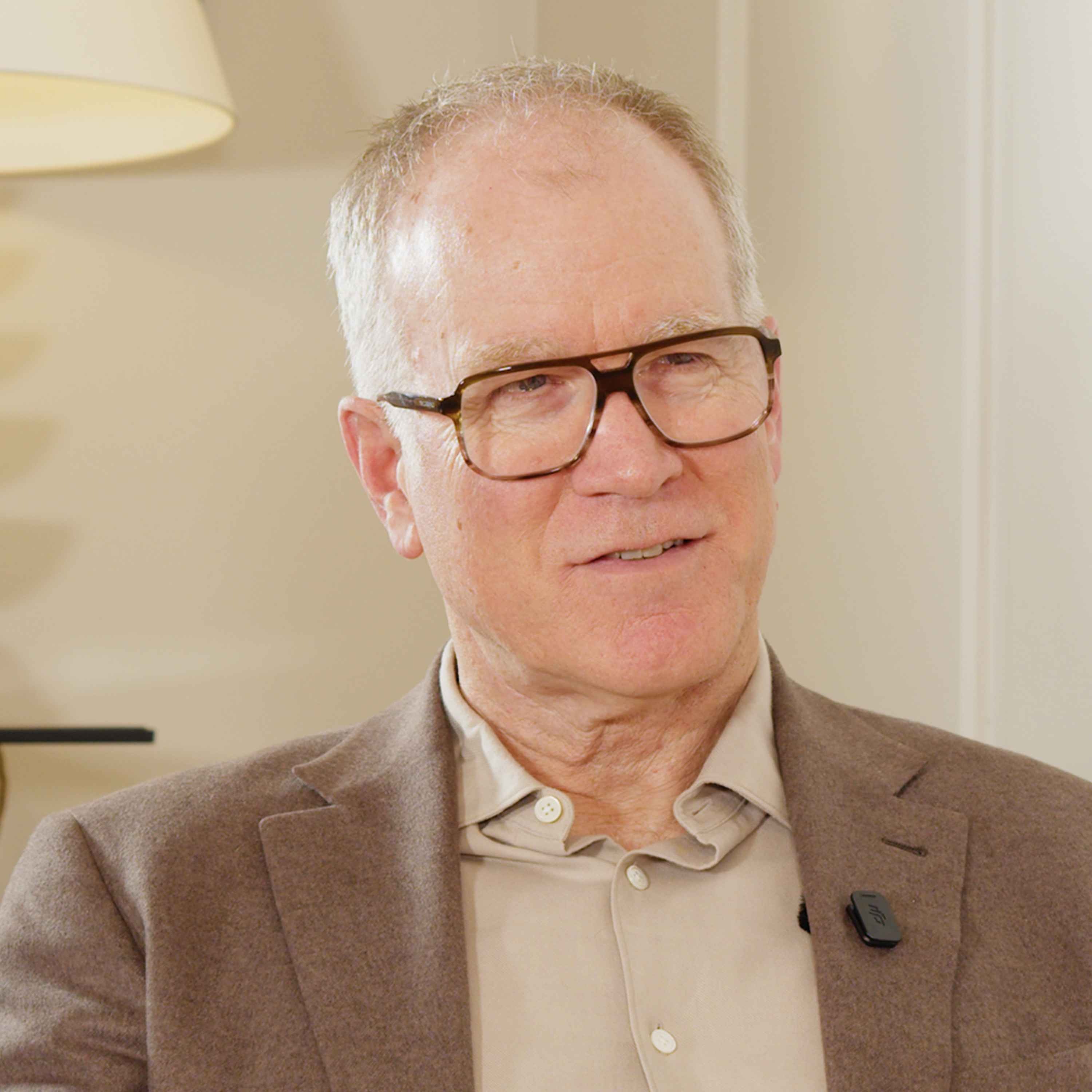
Pete Nordstrom on the Enduring Power of Retail’s ‘Best Mousetrap’
This year marks the 125th anniversary of Nordstrom — a company that began as a small shoe store in Seattle founded by a Swedish immigrant and has grown into a $16 billion retail juggernaut.At a moment when the American department store sector is under enormous pressure — with bankruptcies, consolidation and changing consumer behaviour reshaping the landscape — Nordstrom has taken a different path.Last year, the Nordstrom family partnered with Mexican retailer Liverpool to take the company private, a move Pete Nordstrom says allows the business to move faster and focus on the long term.Pete began working in the Nordstrom stockroom at age 12 and has held roles across merchandising, buying and store management before becoming co-president alongside his brother Erik. Pete remains sanguine about Nordstrom and the future of department stores:“It's the best mousetrap. We've got the ability to have a curated breadth of offer. We have an online ecosystem that's integrated with the store, an off-price division with a practical exhaust for things that we don't sell at full price, and then there's scale. If you're big enough, you can be the first call for those brands,” he says. “We can create enough scale and leverage to make your digital business profitable. That's how I would pitch our thing: we think we offer a good solution for a modern customer and how they shop.”This week on The BoF Podcast, Pete Nordstrom joins BoF founder Imran Amed to discuss the company’s 125-year history, why he believes the department store model still works and how taking the company private is shaping Nordstrom’s next chapter.Key Insights: Nordstrom describes the business as “a company with heritage” rather than a “heritage company,” prioritising modern relevance over tradition. The move from shoes into apparel in the 1960s and the national expansion in the 1970s established a blueprint for organic growth, always anchored in service and a focus on the customer.Taking the company private was a move to secure long-term stability and efficient decision-making. Nordstrom notes that public markets often undervalue department stores due to the sector's lack of a “growth arc” compared to tech-driven industries. By partnering with Liverpool, the family retains 51 percent control, allowing them to lead without the “cumbersome processes” of public market expectations. He maintains that the business is improving not because of the “trappings” of being private, but because the structure allows the team to “lean in with more energy and focus around customers”.Despite the negative narrative surrounding American retail, Nordstrom highlights the necessity of an integrated “Omni view,” where physical stores and digital platforms share a single inventory. Curation remains vital to compete with independent boutiques, balancing relevance with inspiration, or the discovery of new brands. “We have the ability to have a curated breadth of offer,” he says, adding that the most successful modern closets mix high-fashion houses like Chanel with performance brands like On Running and Nike.Nordstrom emphasises that successful retail leadership is built on a foundation of tangible, varied experiences rather than academic credentials alone, arguing that there is no shortcut to developing the necessary judgment for the industry. “You’re valuable to a company because you’ve done things that have worked and things that haven’t worked,” he notes, advising the next generation to focus on building a broad professional perspective over immediate gratification.Additional Resources:Pete Nordstrom | BoF 500 | The People Shaping the Global Fashion Industry Can Department Stores Save Themselves? | The Debrief American Department Stores Have a Beauty Problem Hosted on Acast. See acast.com/privacy for more information.

How Fashion Picks Its Hip Hop Style Icons
Hip-hop has served as a primary pipeline for fashion’s entry into pop culture for decades, transitioning from organic street-level references to high-stakes global partnerships. Brands have historically leaned on a select group of superstar "style icons" to drive visibility, with A$AP Rocky emerging as the definitive case study for this crossover. However, as Gen Z consumer habits shift and the traditional music-to-market pipeline evolves, the industry faces questions about its over-reliance on a few familiar names.Takanashi joins hosts Sheena Butler-Young and Brian Baskin to discuss the tension between the safety of established stars and the cultural necessity of finding fresh voices.Key Insights:Takanashi positions A$AP Rocky as the case study of hip-hop’s interaction with fashion, whose organic love for runway brands transformed him into a definitive bridge between hip-hop and luxury. He recalls how Rocky name-checked designers in his breakout moment, and how that shifted what young fans even understood as fashion. “On this breakout single ‘Peso’, [Rocky] said that he was into Rick Owens and Raf Simmons,” Takanashi says. “He came out the gate as this rapper who really declared that he was into high fashion.” This authenticity created a bridge that allowed luxury brands to feel comfortable moving beyond traditional streetwear.However, fashion houses frequently default to known quantities like Pharrell, Travis Scott, or A$AP Rocky because their long resumes provide predictable results for risk-averse marketers. This creates a feedback loop where the same faces appear across multiple, sometimes competing, brand categories. “A marketer can just point to several examples they’ve done in the past and they could see the result of it,” Takanashi explains. The industry’s tendency to "glom onto certain familiar names" risks diluting the unique identity of the brands themselves.On the other hand, niche fan bases offer a more potent alternative to mainstream superstars. Some of the most successful recent collaborations have bypassed the Billboard charts in favour of artists with highly engaged, specific communities, such as Action Bronson with New Balance. Takanashi highlights that there is “a lot of strength in just kind of collaborating with artists that aren’t necessarily like charting super high.” Smaller artists with highly engaged and loyal fans can move the needle more effectively than a mass-market star who may feel interchangeable.While brands are happy to dress rising talent for red carpets or front-row appearances, the leap to a global campaign remains a "slow burn." Takanashi points out that many decision-makers lack a deep investment in the culture, leading them to extract value rather than nurture new talent. “Fashion is a business that extracts culture, but doesn’t necessarily give back to it as much as we’d like,” he says. Without more diverse perspectives in positions of leadership, the industry struggles to identify which younger artists possess genuine, long-term cultural resonance.Additional Resources:How Fashion Picks Its Hip-Hop Style Icons Breaking Down Chanel’s A$AP Rocky Partnership What’s Next for Hip-Hop and Fashion Hosted on Acast. See acast.com/privacy for more information.

Andrew Mukamal and the Rise of Method Dressing
Over the past two years, press tours for films like Barbie and Wuthering Heights have become strategic fashion narratives — moments that extend a film’s story far beyond the screen.At the centre of that shift is Andrew Mukamal, the stylist for Margot Robbie who has become synonymous with what’s become known as “method dressing” … aligning a film’s character, fashion history and brand partnerships into a cohesive red carpet story.“Method dressing, to me, is really just about putting a bit of extra thought and consideration into what you wear,” says Mukamal. “With modern marketing, the way people consume media and the evolution of the ‘super-press tour’, it’s now one of the options for how to approach this.”This week on The BoF Podcast, Andrew Mukamal joins BoF founder and CEO Imran Ahmed to speak about the rise of the super press tour, the business dynamics between stylists, studios and fashion houses, and how method dressing has reshaped celebrity marketing.Key Insights: Mukamal’s entry into the industry is rooted in assisting and learning on set, from photo shoots to the unglamorous logistics of the fashion wardrobe, and he argues that an apprenticeship remains the clearest training ground. The work is emotional, interpersonal and fast-moving; assistants learn by seeing how decisions get made under pressure. “The only way to really learn how to deal with those things is to be part of a team where you’re seeing all of that happen,” he says. “You have to be very limber and flexible and ready for somebody to call you and say, ‘Maybe we need to pivot.’”Mukamal defines method dressing as intentionality, not a gimmick. “Method dressing is just about putting a bit of extra thought and consideration into getting dressed – you’re not just grabbing something off a rack.” In his view, most actors are already doing it because red-carpet presentation is fundamentally different from everyday life; the difference is whether you use that gap to build a narrative. “They don’t walk around their normal lives looking anything like what you see them on these public carpets,” he says. Done well, he positions it as performance and persuasion — “a living, breathing billboard” that sustains attention between the trailer and the release, and gives audiences “a daily reminder” of the story they’re being invited into.The Barbie tour was more than a marketing stunt.. Mukamal went back to the original mood boards of the Mattel designers to find the high-fashion references they used in the 1950s and 1960s. He explains, “Putting myself back in their heads and saying, ‘OK … What was the brand that they were inspired by for this Barbie?’ Now I need to go to that brand and [close] the loop. It was kind of just magic.”After the global vibrancy of Barbie, Mukamal shifted into a dark, psychological aesthetic to match the tone of Wuthering Heights. He describes this evolution as a “complete gear shift,” returning to his “fashion goth” roots to build a narrative grounded in the 1847 novel’s intensity. By sourcing vintage Victorian accessories and collaborating with designer Dilara Findikoglu, he orchestrated a moment that merged archival history with a “tone of the coolness and, like, darkness” appropriate for the story.Mukamal frames styling as an apprenticeship-based industry where you absorb judgement, communication and crisis management by watching someone else do it – and then debriefing afterwards. He says, “The only way to really learn how to deal with those things is to be part of a team where you’re seeing all of that happen.” He adds: “Stick around, because you didn’t learn everything in a year or two … I really am a tiny little tadpole in this pond, and I should keep learning while I can.”Additional Resources:What Makes a Red Carpet Moment in 2024 | BoF Have We Hit Peak Red Carpet? | BoF Case Study | How to Create Cultural Moments on Any Budget | BoF Hosted on Acast. See acast.com/privacy for more information.

Tariffs Are Down, But Uncertainty Is Back
Nearly a year after President Donald Trump’s “Liberation Day” tariffs sent shockwaves through the fashion industry, the Supreme Court ruled he did not have authority to impose the sweeping levies. For an industry that imports billions of dollars in clothing, footwear and accessories into the US each year, the decision initially felt like relief. But that optimism narrowed almost immediately as new tariffs were introduced at 10 percent, with Trump indicating they could be raised to 15 percent over the weekend.Key Insights:While a drop to a 15 percent tariff technically represents a rate reduction, the sudden policy reversal has plunged the industry back into a state of operational paralysis. Executives are struggling to form long-term strategies when the foundational rules of global trade shift from week to week. “The problem isn’t even the difference in the rate of tariffs,” Chen explains. “It’s that the uncertainty makes decisions so much harder than if we knew exactly what that rate was going to be, even if it was higher than before.” This volatility forces companies to make reactive, shipment-by-shipment choices rather than fortifying their businesses for the future.The sheer scale of the disruption means that import duties can no longer be managed as a siloed logistical issue. Navigating the changing rules requires constant, cross-departmental negotiation to align product adjustments with consumer messaging. As Bain notes, “In the past, with something like this you would talk to your supply chain manager and come up with a plan with them. Now, you get everyone in the C-suite together into a war room … it’s just constant negotiation within your company and with your consumers.” Despite social media chatter suggesting that brands and consumers are owed money for the now-illegal tariffs, the reality of recouping those funds involves a looming legal nightmare. The government is expected to aggressively fight payback efforts by demanding extensive paperwork or proof that costs were not passed onto shoppers. “Refunds are a possibility, but it's not going to be a simple process,” Bain says. “It's not like returning your e-commerce order online where you fill out a form and you get a bunch of money back.”Fashion has experienced significant sticker shock over the past few years, but brands that successfully raised prices without losing consumer demand are unlikely to surrender those gains now. If the cost of production decreases under the new tariff structure, powerful labels will likely absorb the difference to improve their margins. “I think it's a possibility that some brands and retailers will lower their prices, likely in the form of discounting, rather than lowering retail prices,” Chen says.Additional Resources:The Supreme Court’s Tariff Ruling: What Fashion Needs to Know | BoF US Supreme Court Overturns Trump’s Emergency Tariffs | BoF Will Prices Come Down With Trump’s Tariffs? It’s Complicated | BoF Hosted on Acast. See acast.com/privacy for more information.
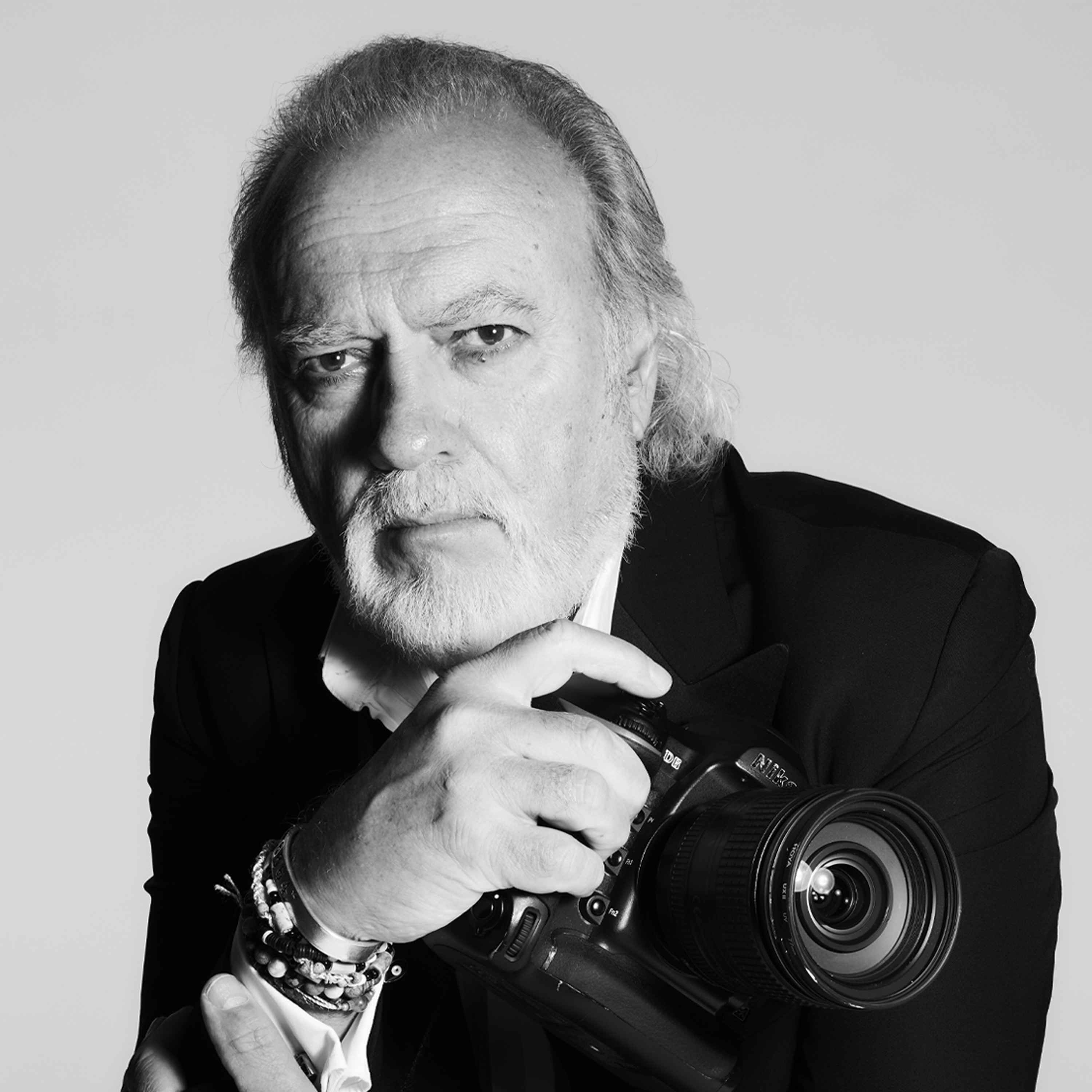
London’s Premier Party Photographer on the Art of Working a Room
If you’ve been to a major party in London, Paris or Los Angeles, chances are that Dave Benett was there too. For nearly four decades, Benett has been a constant presence, documenting the evolution of celebrity, society and style in all the spaces and places where culture is happening. From concerts with Madonna and Prince to after-parties with Princess Diana and the rise of fashion as a pillar of culture, Benett has seen it all and become an expert at the art of working a room.“Journalists can miss something [and] be told about it. Photographers can’t,” he says. “Whatever you’re doing, you’ve got to make sure your eyes are everywhere.”This week on The BoF Podcast, Benett joins Amed to talk about what it really takes to cover an event, how party photography has changed in the era of smartphones and Instagram, and why relationships — not just access — are everything.Now he is launching the Dave Benett Agency — a boutique model designed to protect quality, mentor a new generation of photographers and adapt to an era where everyone has a camera, but very few know where to stand.Key Insights: Born in Mauritius in 1958, Bennett moved to the UK as a child and by his late-teens was honing his photography skills at the Daily Mirror and Thames TV, covering riots and crime before pivoting to the social scene. He witnessed the cultural shift where fashion merged with music and celebrity: “We started to see it when Kate Moss, Naomi [Campbell], Vivienne Westwood and the The Fashion Awards all started to happen.” Bennett operates as what he calls a "society photographer," a role built on mutual respect and long-term relationships. He explains, "we were recording what society was doing. We photographed the royals but when they came into our world and that relationship really did make a difference.” This trust was exemplified by his interactions with Princess Diana at private events. “I would just photograph her arriving and meeting the host and then she could go off and chat to all her friends. She felt safe ... and it really paid off for us as the doors closed later on."While the digital revolution has democratised image-taking, Dave argues that there is a distinct gap between a personal snapshot and a professional photograph. He acknowledges that "the power of the individual has increased massively," but maintains that the industry still relies on a specific editorial eye. "The good thing for me is that they still need what we do, because we're shooting for a client ... and there's a skill that comes with that — how you take a photo, what you're looking for in the photo. When you've got people with their own cameras, their own phones, taking their own pictures, they practically have only one use — for themselves."Benett describes event photography as a tactical exercise, mapping arrivals, tracking key players and staying on his feet for hours. To capture the right moments, he explains: "You work out exactly where you need to be for the initial arrival or where they come, then you work the room as and when new people arrive. You can actually spend four hours just campaigning the room, just making sure you're in the right place at the right time." Additional Resources: The Return of Old-School Celebrity Campaigns | BoFHow Celebrity Image-Makers Capitalise on the Red Carpet | BoF . Hosted on Acast. See acast.com/privacy for more information.

How Dior and Chanel Are Winning Back Aspirational Shoppers
After raising prices aggressively during the post-pandemic boom, luxury brands are now confronting slower growth and a shrinking aspirational customer base. According to Bernstein, average luxury price hikes reached 36 percent between 2020 and 2023, with Dior and Chanel raising prices by 51 percent and 59 percent, respectively. Now, as Bain estimates that more than 50 million aspirational shoppers have left the category, both houses are adjusting their pricing architecture and product mix in an attempt to rebuild volume without sacrificing exclusivity.BoF reporter Joan Kennedy joins The Debrief to unpack how Dior and Chanel are recalibrating pricing and product strategy to win back aspirational shoppers. Key Insights:Dior and Chanel are among the brands that leaned hardest into post-pandemic price increases, prioritising margin expansion and high-net-worth clients. That strategy helped fuel growth at the time, but it has also intensified the industry’s current reckoning. “Pricing has really emerged as this key concern,” Kennedy says. “At Dior and Chanel, prices rose 51 per cent and 59 per cent, respectively.” Products that once served as entry points are increasingly out of reach for aspirational shoppers: “The Chanel medium flap has nearly doubled in price since 2019,” she says.To pull aspirational shoppers back into stores, Dior and Chanel are rebuilding the lower end of their offer – from small leather goods and accessories to playful add-ons. As Kennedy puts it, “brands have been introducing these fun little whimsical items at the bottom, which have a good psychological effect on all shoppers.” And even when the ticket doesn’t shift, brands are trying to make the value proposition feel stronger through newness and storytelling: “maybe the price isn't changing, but it’s trying to hammer home that there's a little bit more value … and really ride the momentum brought by these new creative directors.”Even if excitement around creative directors Jonathan Anderson and Matthieu Blazy reignites interest, the economic backdrop may limit how far that enthusiasm translates into sales. “It’s definitely a big open-ended question – how much of this is a problem with desire versus ability to purchase?” Kennedy says. “Maybe a lot of these shoppers do want these products and are really excited by them, but just don’t have the ability.” In that sense, the reset is only partially in luxury’s control. Products can restore aspiration, but macro conditions ultimately determine movement.Additional Resources:How Dior and Chanel Are Tackling Fashion’s Pricing Problem | BoF The Great Fashion Reset | Can Designer Revamps Save Fashion? | BoF Ready for Relaunch? Jonathan Anderson’s Dior Challenge | BoF Hosted on Acast. See acast.com/privacy for more information.
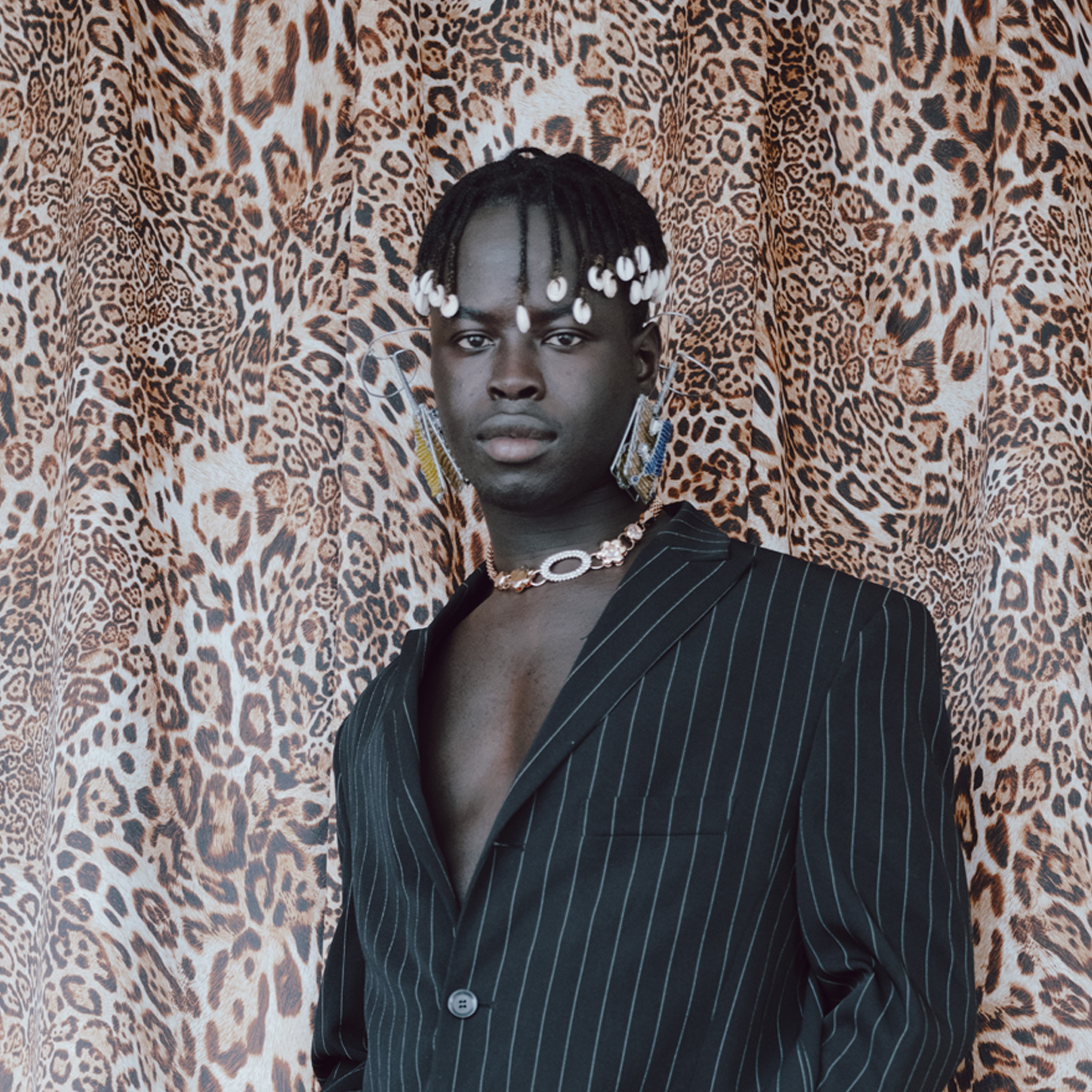
Ib Kamara: ‘Europe Is Not the Centre of Everything. Where You Come From Matters.’
From a childhood in Sierra Leone to navigating London as a teenage immigrant, Ib Kamara traces the cultural shocks that shaped his creative identity. He recounts hiding his artistic ambitions while studying science, breaking through with a Beyoncé commission in his early 20s, redefining Dazed as a global publication and ultimately stepping into the role of art and image director at Off-White after the death of Virgil Abloh.BoF founder Imran Amed sat down with Ib Kamara in Abu Dhabi during the launch of T Magazine MENA. The conversation spans authorship, responsibility, design versus styling and why young creatives today must reject Eurocentric hierarchies and build with their peers. Key Insights: Kamara describes his move from Sierra Leone to London at 15 as both destabilising and transformative. Raised in a culture where authority was not questioned, he suddenly had to become outspoken and self-defined. That rupture, he says, forged his identity. “London was definitely a culture shock, but also the best shock that could have ever happened to me,” he reflects. “I think I needed that shock and that tension to be Ibrahim right now.”Kamara’s entry into fashion wasn’t through formal design training but through images. Growing up in Sierra Leone, he consumed discarded European magazines, absorbing visual storytelling. “I loved images and I was fascinated by how people put things together,” he explains. “I understood images quicker than design because there was no sort of a design school or artistic design language. You take what you’re given.” That instinct for narrative over product shaped his early styling career and later informed his editorial leadership at Dazed.Kamara approached Dazed as an editor with an immigrant’s vantage point and a global-first mandate, pushing the title beyond its London bias to reflect the way culture now moves online. “I realised London is so diverse and we all come from the most incredible places in the world. It will make sense for us to reflect that,” he says. In practice, that meant building an editorial agenda shaped by the same cross-border conversation happening among young audiences. “We’re at an age where the kids are all talking online, everyone is sharing and collaborating,” he continues. “So I set out to make a magazine that was global, has a sense of culture, has empathy and is brave enough to do stories that could potentially get me fired a couple of times … It’s a reflection of where I come from.”Taking the creative helm at Off-White after Virgil Abloh’s passing was not a straightforward decision. Kamara speaks candidly about fear, self-doubt and the weight of legacy. “It was not the easiest decision for me to make because no one can really fulfil someone else’s shoes,” he says. “There’s only one Virgil.” Ultimately, he chose growth over comfort: “I don’t think you can live life like that. I think you have to take a chance.” In moving from stylist to designer, he also discovered a harder truth about authorship: “With design you can’t cheat. I think with styling you can cheat in a picture … but design is respect – it’s a craft.”For young creatives navigating today’s instability, Kamara offers a clear directive to decentralise Europe and build locally with conviction. “Europe is not the centre of everything,” he says. “Where you come from matters. And taste is not subjective to one part of the world. It's a global taste.” His guidance is rooted in consistency and community: “Create with your people, bring your people up … There’s nothing more beautiful when you’re at a table and you’ve known these people for 20 years.” And above all, kindness: “Be kind as well. Be nice a little bit, if you can, please. We don’t need more monsters in the industry.”Additional Resources:Ibrahim Kamara | BoF 500 | The People Shaping the Global Fashion Industry How I Became… Senior Fashion Editor-at-Large of i-D Magazine | BoF Ib Kamara: Fashion’s Favourite Renaissance Man | BoF Hosted on Acast. See acast.com/privacy for more information.

How Fashion Brands Are Winning the Winter Olympics
While the Olympics remain one of the world’s biggest sporting stages, they are also one of the most tightly controlled marketing environments. Rules limit how sponsors can interact with athletes and advertise during the Games. As a result, fashion and sportswear brands are finding alternative ways to capitalise on the moment, from outfitting national teams and launching capsule collections to sending squads of influencers to experience the Games.BoF correspondents Haley Crawford and Mike Sykes join Sheena Butler-Young and Brian Baskin on The Debrief to unpack how the winterwear boom is reshaping the Olympic marketing playbook. Key Insights:Musician Bad Bunny’s choice of Zara for his Super Bowl halftime show outfit crystallises a broader tension in fashion marketing: the balance between cultural relevance and commercial perception. Whilst Sykes acknowledged the pushback from critics who found the use of a fast-fashion Spanish brand on such a global platform surprising, he also notes the strategic logic. “This performance is supposed to be about inclusivity, and part of that is accessibility and affordable products. And plus, Zara is also a Spanish brand... It makes more sense considering the cultural magnitude of the performance,” Sykes says.Crawford argues the Games are no longer just about logo placement on performance gear, but a broader spotlight on winter fashion as a growing category. “We've seen that consumers are interested, not only from a performance perspective, but also from a fashion-forward perspective, in having gear that's equally stylish as it is performance driven on the slopes,” she says. But Olympic marketing comes with strict limitations. As Crawford explains, official sponsors can use Olympic branding, but others must tread carefully. For non-sponsors like Canadian label Roots, that means linguistic gymnastics: using phrases like “rooting for Canada” without explicitly referencing the Games.With broadcast advertising and official branding tightly controlled, being visibly present at the Games can be the most direct route to global reach. Sykes points to Adidas’ scale: “We’ve seen a bunch of brands like Adidas…that launched this 700-piece collection.” Even if it is not a traditional campaign, the visibility is enormous. “Just to have your logos on some of these athletes as they perform, while millions of people are watching across the globe, that is the sort of marquee way we’re seeing brands participate,” he says.As leagues and federations try to expand their audiences, fashion-forward fan wear has become a strategic priority. Crawford says Off Season’s approach to Team USA illustrates the shift: rather than just jerseys, brands are creating “wearable jackets and sweaters and things that fans can actually wear in their day-to-day.” Sykes sees the trend as part of a wider evolution across sport. Off Season’s product “reminds me of what the Starter jackets used to be in the 90s,” he says, predicting that more brands will build momentum by “taking team logos and putting them on unique products that aren't just a jersey.”While the Olympic window is tightly controlled, brands often see their biggest opportunities once the closing ceremony ends. Crawford points to the Paris Olympics breakout star Ilona Maher, who “popped off for creating all this viral behind-the-scenes content in the Olympic village,” then landed deals with Maybelline and Paula’s Choice. For fashion, Suni Lee is a recent template. After Paris, she started campaigns for LoveShackFancy and Victoria’s Secret Pink and attended the CFDA Awards with a designer partner. “She really built this whole other part of her public persona,” Crawford says – showing how medals and momentum can translate into longer-term brand equity.Additional Resources:How the Winterwear Boom Reshaped Fashion’s Olympic Playbook | BoF Which Winter Olympians Will Score Beauty Deals? | BoF Hosted on Acast. See acast.com/privacy for more information.
Ask Imran Anything: Luxury’s Flop Era, Global Market Dynamics, Fashion Careers and more
In this Ask Me Anything episode, Imran Amed answers questions submitted by listeners from around the world, spanning luxury’s current downturn, the collapse of major wholesale platforms, the realities facing emerging designers, and how global growth narratives in India and Africa are often misunderstood. The conversation later zooms out to hear Amed’s advice on education and training, fashion journalism, and the skills needed to build a lasting career in an industry undergoing structural change.Key Insights: Amed frames the current downturn in luxury as fundamentally different from previous crises, arguing that this moment is rooted in structural choices made by the industry itself. Years of overexpansion, inflated pricing and relentless product drops have weakened trust and eroded meaning, leaving consumers disengaged. “The moment we’re in now feels different to me, because what’s happening is coming from inside the industry,” he says, pointing to oversaturation and a breakdown in perceived value. Despite the democratisation promised by direct-to-consumer channels, Amed believes this is one of the most difficult environments in decades for independent brands to gain traction. The collapse of key multi-brand platforms, combined with slow payment terms and intense competition, has made growth and cashflow management increasingly precarious. Yet, he sees opportunity for designers offering clarity and restraint where big brands have overreached. Smaller brands can compete by offering real value — “beautifully designed, high-quality products…that come from a sense of quality,” he explains, positioning scarcity and sensible pricing as advantages rather than constraints.Amed cautions against simplistic narratives that frame India or Africa as the next, immediate growth engines for Western luxury. In India’s case, he argues that expectations often ignore deep-rooted cultural and economic realities. “India already has a luxury industry that goes back hundreds of years,” he says, pointing to longstanding traditions in jewellery, tailoring and textiles that continue to shape consumer behaviour today. Africa, meanwhile, represents enormous long-term potential, driven by demographics, creativity and cultural influence — but much of luxury’s engagement still happens outside the continent. “Africa has more than a billion people and the fastest-growing population in the world — there’s no doubt that’s a huge future opportunity,” he says.Amed rejects the idea that there is a single route into fashion, but he is clear that success today demands a broader skill set than creativity alone. For designers, technical understanding and business literacy are increasingly essential if you want to build something sustainable. For journalists, Amed argues that a “point of view is the single most important thing in fashion journalism today.” He summarises: “ The one thing that’s true, whether you go to journalism school or not, is you just need to practice. If you’re a writer, you need to write every day. If you're a creator, you need to create every day. The more you write, the more you create, the more you’ll develop your own voice and the more you’ll feel confident in what you’re doing.”Additional Resources:Why India Will Not Be The Next China for Luxury | The BoF Podcast The Emerging Designers Pushing Fashion Forward | BoFThe Great Fashion Reset: Can New Designers Still Build a Business? | The Debrief | BoF Hosted on Acast. See acast.com/privacy for more information.

The New Rules for Influencer Marketing
Influencer marketing in 2026 is a different beast. Once dominated by follower counts and splashy sponsored posts, the sector is now shaped by richer performance data, new monetisation models and growing consumer scepticism toward overt selling. As BoF publishes a new case study on the creator economy, Pearl joins hosts Sheena Butler-Young and Brian Baskin to unpack how creators and brands are adapting to a more disciplined, competitive and AI-saturated landscape.Key Insights:One of the most profound shifts in influencer marketing is how success is measured. Where follower size once acted as a blunt proxy for reach, brands now have access to granular data that shows who actually drives traffic and sales. Pointing to platforms like ShopMy and LTK that allow brands to see “exactly what creators were driving sales for them,” Pearl says that visibility has reshaped spending decisions. She explains: “Having more data has totally changed the game. It really is incredibly varied today and there is no one baseline KPI. It’s really just about what are your goals and who’s the best to help you achieve that.”As consumers grow wary of constant selling, trust has emerged as the defining asset creators bring to brands. “Trust is the most important thing,” Pearl says. “If you don’t have your audience’s trust, nothing else matters.” What brands are really buying is not visibility, but a relationship. “What a creator really brings to the table is not necessarily the size of their following; it’s that relationship they have with their audience,” Pearl explains.As the sector professionalises, creators are actively reducing their dependence on single revenue streams. Affiliate marketing, subscriptions and owned platforms are increasingly central to sustainable creator businesses. “Affiliate marketing really provides that base foundational income that you can rely upon,” Pearl says. Substack, meanwhile, offers something brands cannot. She explains: “It brings back some of that intimacy and community that they felt was missing in this TikTok/Instagram world.” This diversification also changes the power balance. “They don’t want to rely too much on one particular partnership,” Pearl says. The upshot is a creator economy that is less fragile – and less easily dictated by brand budgets.Pearl argues the relationship between brands and creators is moving from transactional campaigns to longer-term collaboration. As creators become central to marketing in fashion and beauty, brands are changing how they work with them – and what they ask them to do. Brands can no longer dictate terms “like they used to,” Pearl says, because creators are now “recognised as being a really important part of the marketing puzzle.” That recognition is also changing what brands value: “You’re not just hiring this person for their following… you hire them because they’re a creator. They create great content. They know how to engage an audience.”Additional Resources:From Hype to Discipline: The New World of Influencer Marketing | Case Study Why There Are So Many Influencer Collaborations Right Now | BoF How Creators Can Avoid Being Replaced by AI | BoF Examining 20 Years of Fashion’s Influencer Economy | The BoF Podcast Hosted on Acast. See acast.com/privacy for more information.
The Couture Season That Cut Through
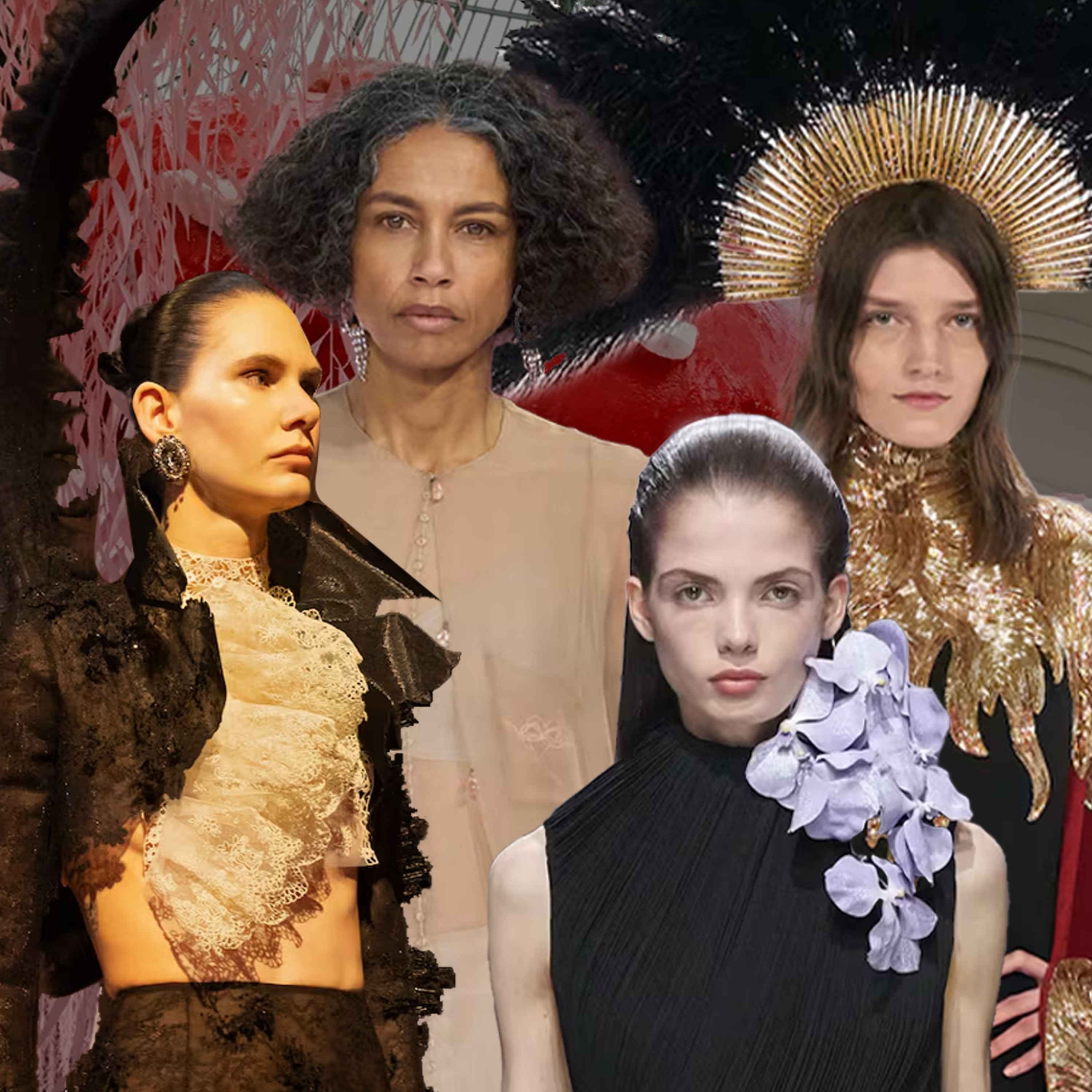
Editor-at-large, Tim Blanks and editor-in-chief, Imran Amed are back from the Haute Couture Spring/Summer 2026 shows where the biggest moments of the week lived up to all the anticipation.Jonathan Anderson’s debut at Dior reframed couture as a six-month creative lab — a backbone that can feed the entire maison with technique, emotion and ideas. At Chanel, Matthieu Blazy stripped away the obvious codes to put construction, movement and the body first — the kind of couture you only fully understand up close. There was also Valentino’s “panorama” staging and Schiaparelli’s turbocharged push for spectacle — all playing out against a tougher luxury backdrop this year’“Something that struck me about this season is the energy that everybody was evoking,” Blanks says. “The words people used to describe their feelings — it was Jonathan talking about having a lot of anger he needed to get out, or Mathieu talking about nature, or Alessandro talking about fantasy and fashion, and then Daniel Roseberry talking about turbocharging Schiaparelli.”Key Insights: Departing from the codes of previous designers, Blanks was struck by how much of Anderson’s own sensibility made it onto the Dior runway, from Magdalene Odundo’s vase forms to historic textiles and witty, collectible accessories. “I felt like there was real synthesis … I think he showed some of the most beautiful things he’s ever shown, and some of the most joyful clothes.” Within 90 minutes of the show, the full collection was installed at Villa Dior for clients to handle and order, underscoring Anderson’s structured, end-to-end planning. As Amed notes, “He’s operational … he thinks about the way it all works together. That’s quite rare in a designer.”Mathieu Blazy pared Chanel back to construction and movement, dialling down overt couture signatures to foreground cut and daytime dressing. The result read as a wardrobe built on the body rather than surface effect, with exquisitely fine details – budgies perched on pocket anchors, bird-on-mushroom motifs, slingbacks with tiny avian heels – that reward close looking. The Grand Palais spectacle amplified the tension between intimacy and scale, but as Blanks notes, “it does underscore in a very graphic way that couture is the ultimate private pleasure.”Alessandro Michele’s Specula Mundi for Valentino revived the 19th-century Kaiserpanorama to slow the audience’s gaze and amplify detail. Reading from Alessandro’s letter, Blanks highlights: “We continue to work within this space not to fill an absence, but to preserve it. Only by accepting such a void, with no intention to fill it, can Valentino’s legacy remain what it has always been.” Another line reads: “There is no fantasy without beauty, and there is no freedom without beauty and fantasy.”A common thread this season is that designers are newly humbled by the expertise of the craft. “Everybody was talking about their ateliers, all these ready-to-wear designers being confronted with what a couture atelier is capable of,” Blanks says. After visiting Valentino, he notes: “There were five separate ateliers working on the clothes… I can’t thread a needle, but I got kind of palpitations walking through – it’s just so incredible, that kind of artistry.” Anderson himself calls Dior’s workrooms a “mini city” of ultra-specialists.Additional Resources:Couture Has Entered a New Era. What Does It Mean? | BoF Blazy’s Chanel Couture Was a Slam Dunk! | BoF Exclusive: How Jonathan Anderson Is ‘Rebooting’ Couture at Dior | BoF The Beating Heart of Haute Couture | BoF Hosted on Acast. See acast.com/privacy for more information.

Making Sense of Fashion’s Brutal Job Market
Across fashion, companies that once embraced remote or hybrid work are increasingly pushing employees back into the office, with some moving towards four or even five days a week. At the same time, competition for jobs, particularly at entry level, is intensifying amid layoffs, slower industry growth and the rise of AI. On this episode of The Debrief, senior correspondent Sheena Butler-Young and executive editor Brian Baskin are joined by BoF Careers’ Sophie Soar to unpack why the power balance has shifted back to employers, how different generations feel about being in the office, and what practical routes still exist for early-career talent trying to get a foot in the door. Key Insights:During COVID, companies found people could be “just as, and in some cases, more productive” at home – but that was when productivity meant output. Now, Butler-Young argues that employers are widening the definition: “Productivity should also include collaboration, morale, people being together… face time with leaders.” And with the labour market tightening following economic pressure, layoffs and AI taking some jobs, leaders have more leverage to enforce it. “In 2025 and now into 2026, it’s looking more like an employer’s market,” Butler-Young says.While some executives argue that in-person work improves collaboration and reduces errors, Butler-Young warns that motivations are not always benign. She points to a growing sense that mandates can act as a quiet form of workforce reduction. “One way you can get people to effectively fire themselves is to make them come to the office,” she says, noting that some companies may prefer attrition to public layoffs. She also cautions against copy-and-paste policies. “If you’re seeing productivity high and morale high at one to two days a week, you need to ask yourself, what am I hoping to accomplish if I move it to four or five?” Despite a difficult labour market, Soar stresses that fashion companies have not stopped hiring altogether. Instead, they are being more selective, particularly when it comes to junior roles that can be automated. "There definitely is a squeeze on the ones that are considered more rote work,” she says. “Those are the roles you could potentially automate or replace with AI.” However, some employers are still investing in early-career talent. “Those who are still hiring for entry-level roles recognise the benefit that that talent can bring,” Soar explains, pointing to diversity, long-term retention and fresh perspectives.Additional Resources:Fashion Is Done With Remote Work | BoF How to Get Ahead in Fashion’s Stagnant Job Market | BoFHow Fashion Brands Are Making Remote Work Permanent | BoF Hosted on Acast. See acast.com/privacy for more information.
How Jonathan Anderson is Refashioning the House of Dior
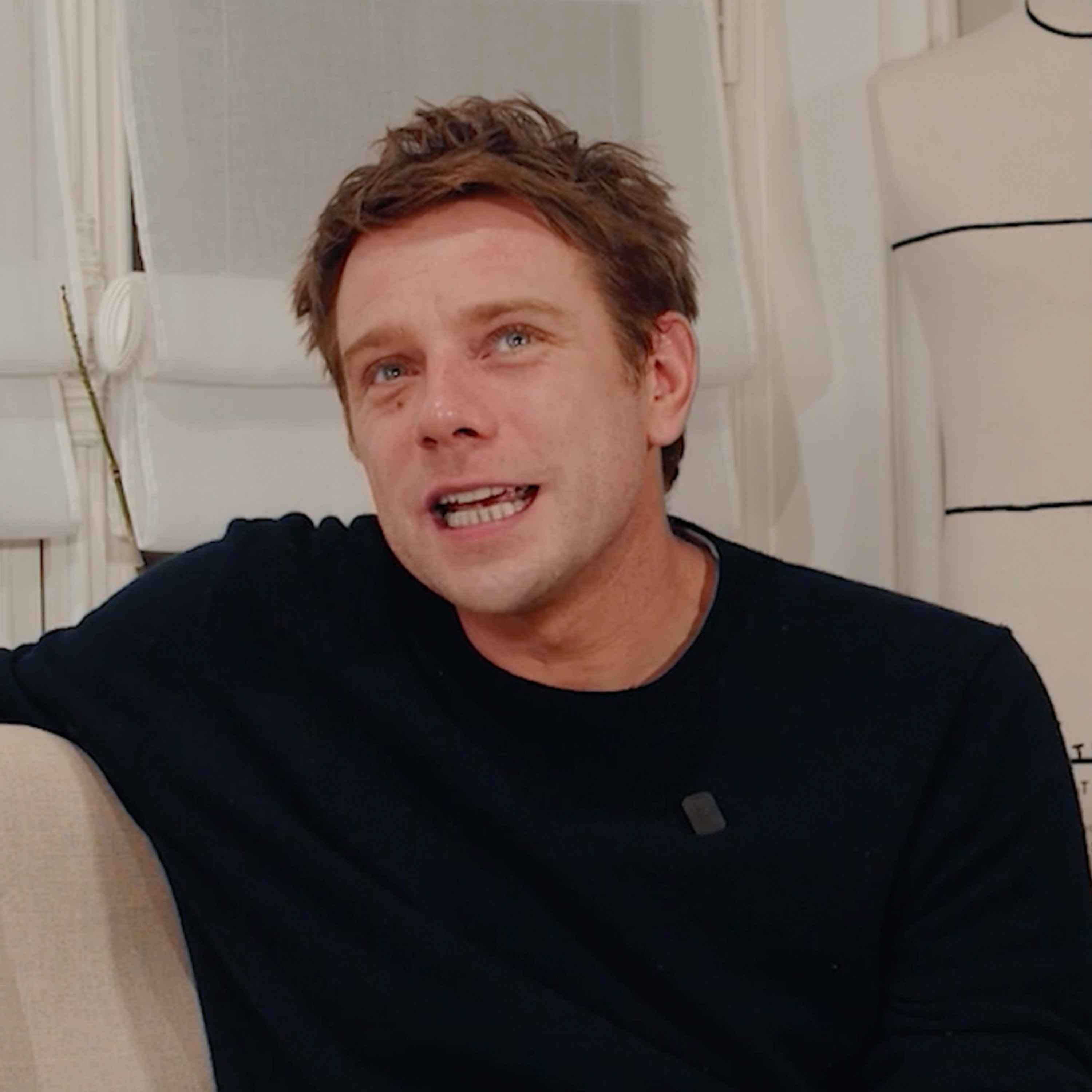
On Monday Jan. 26, Jonathan Anderson debuted his first couture collection for Christian Dior.In December, BoF founder Imran Amed travelled to Paris to meet with Anderson to get a first look, and to take stock of his journey thus far. Anderson is unveiling his first Dior couture collection while orchestrating a sprawling calendar across men’s, women’s and accessories. He explains how couture went from “irrelevant” in his mind to an emotional, craft-first engine for the house — and why he’s reshaping how Dior makes, shows and shares couture with clients and the public.“Couture is an endangered craft," he says. In this conversation, Anderson reflects on why couture exists, how endangered craft can be protected and the very human reality of leading a global fashion machine.Key Insights: Anderson admits that a year ago he never saw himself in couture. Now he describes fittings as an education within a living French institution. “I joke every time I’m in a fitting, I feel like I am doing a PhD in couture,” he says. Seeing the atelier at work reframed it entirely: “Couture is kind of like an endangered craft. What Dior is doing is protecting this as a national symbol of making,” says Anderson. “Once I got into that mind space, then I was able to work out, okay, well, what do I want from it? Or what is new for Dior in a landscape that’s had some of my heroes in it.”Anderson is reframing couture as an experience to be studied, not just scrolled — extending the 15-minute show into a three-part journey. Act I: the runway. Act II: intimate cabinet presentations at Villa Dior, where clients handle every component with the atelier team on hand, followed by days of selling. Act III: a free public exhibition that places the new collection in dialogue with Christian Dior and artist Magdalene Ndondue — an invitation to witness technique, context and provenance up close. As he puts it: “A photograph will never tell you that a dress took 4,000 hours. ... I’m inviting people to see something physical, because it may change your mind — it might change your opinion of it.”Before unveiling his first Dior women’s collection, Anderson invited John Galliano to privately view the work — a full-circle moment with a hero who helped define Dior in the public imagination. Galliano arrived with two bunches of wild cyclamen tied with black ribbon, a gesture that became talismanic for the Spring/Summer 2026 show’s pink-and-black mood and forest-floor set details. More than the symbolism, it was Galliano’s counsel that stuck: “The more that you love Dior, the brand, the more it will give you back,” recounts Anderson. Anderson argues for real transparency around the people off-camera who turn an idea into a product and a show into a business. He highlights merchandisers, window teams, logistics, finance and operations — all of whom translate creative vision into reality. “It may not be creative, but they work in a creative business; they have to try to work out how to make a designer’s dream come true. If we want to pull the veil down, we have to do it in all categories. A fashion show is not just me; I am the conductor,” he says. “I have a responsibility to the hundreds, thousands of people who work here to make sure it works. It’s a balancing act.”Anderson wants each show to have its own energy while still speaking a shared Dior language. “I will build a vibe or a kind of culture around a brand, but then… the energy of each show has to be a different energy.” He adds: “They all also have to be linked. There is a language that is built.” Working with Dior chief executive Delphine Arnault, Anderson is trying to “put down concrete blocks”. Some will “end up being sand and then you’ll have to rebuild it,” he says.Additional Resources:Jonathan Anderson | BoF 500Clothes for Life or Clothes as Costume?Louis Vuitton, Dior and What Luxury Means Today Hosted on Acast. See acast.com/privacy for more information.

Lessons on Purpose, Restraint and Responsibility
Speaking at the Institut Français de la Mode graduation ceremony in Paris, BoF founder and CEO Imran Amed reflected on his own personal journey that led him to create The Business of Fashion, starting with a chance encounter with a stranger in the New Delhi airport.“That moment was the beginning of my search for purpose, to build a life and career with meaning in service of something greater than myself,” he says. “It was during that course that I realised I was living a life built to impress others, not to express myself or use my creative talents.”Fashion is currently in a moment of reckoning: technology is reshaping behaviour, old rules are persisting as the world accelerates, and trust is shifting away from gatekeepers. Amed’s message to graduates: clarity of purpose.Key Insights: “There will be disruptions and external forces completely outside your control. But if you are clear about your purpose, that can guide you every day as the world changes around you — it becomes your North Star, the compass that helps you to find your way in a world of turmoil and change,” says Amed.Graduating into a downturn once hindered Amed’s own fashion ambitions until the early days of the internet and social media opened an unexpected route.Amed used these new tools to join and shape the global fashion conversation. “By using a new technology, I was able to create something to read around the world, helping an entire industry navigate two decades of change,” Amed says. For today’s graduates, moments of flux are “the greatest moments of opportunity.”According to Amed, there are currently three big problems in the fashion industry that graduates can make the biggest impact. The first is growth without meaning: “Growth has become a proxy for relevance, but the result wasn’t abundance – it was dilution,” Amed says. His prescription: “the most radical thing you can do in fashion is to practise restraint… create less, but better.” The second is values without systems: “The era of storytelling without systems is ending,” Amed says — supply chains should be designed to reduce waste, AI should be used for efficiency and workers’ rights should be foundational. The third, is authority without trust: power is migrating from headquarters to creators and communities. “Legitimacy is earned through trust and hard work,” Amed says, as consistency and context now confer authority.“You just need to choose one problem and serve it really, really well,” he says. “The future of fashion won't be decided by those who speak the loudest, but by those who choose to act with care, and are guided by a sense of purpose. This isn't something you find once and keep forever. Purpose will evolve just as you evolve.” Additional Resources:The State of Fashion 2026: When the Rules Change | BoFThe Emerging Designers Pushing Fashion Forward | BoF How Fashion’s Rising Stars Are Surviving the Luxury Slump | BoF Hosted on Acast. See acast.com/privacy for more information.

Have Sneakers Lost Their Cool?
Sneakers have driven growth for the sportswear industry for decades, in recent years accelerated by the pandemic and work-from-home culture. However, a recent Bank of America report sparked debate by suggesting the sneaker boom may be nearing an end, including a rare double downgrade of Adidas. On The Debrief, sports correspondent Mike Sykes joins hosts Brian Baskin and Sheena Butler-Young to examine whether slowing growth marks a genuine reversal of casual dressing, or a return to more sustainable demand shaped by price sensitivity, comfort and experimentation rather than hype. Key Insights:The Bank of America report struck a nerve because it questioned a decades-long growth story about the sneaker industry. “This one was the first one in a while that seemed to spell a bit of doom and gloom for the industry,” Sykes says. “Everyone has been on pins and needles for the last couple of years as Nike has been in its downturn… and Bank of America is saying, yeah, it’s over.” The double downgrade of Adidas amplified that anxiety. “If Adidas is getting the double downgrade here, what does that mean for everyone else?” Sykes asks. The implication was not just brand-specific weakness, but the possibility that the sneaker cycle itself had run out of road.However, slower growth does not necessarily mean sneakers are ‘over’. Instead, the data may reflect a market adjusting after years of abnormal acceleration. “Everyone else seems to feel like things are going at least okay,” Sykes says. “Maybe not perfect, but nothing is perfect in this economy right now.” He notes that among the analysts and industry figures he spoke to, there was little appetite for declaring the trend finished. “People are still into sneakers,” says Sykes. Sneakers and sportswear have lasted because they are easy to understand, easy to buy and relatively affordable compared to many fashion categories. “Sneakers are generally just accessible for people. It’s an easy trend to follow,” Sykes says. “You can easily spot which ones are cool and it’s very easy to hop on the bandwagon.” That accessibility matters even more in a strained economy. As Sykes highlights, with consumers weighing “do I wanna buy this next outfit or do I want to buy groceries,” sportswear’s practicality continues to anchor demand.For the sneaker cycle to truly turn, something has to replace it – either a new hit product within the category or a different footwear trend entirely. Right now, what is emerging is not a shift toward formality, but a widening of what casual footwear looks like, as displayed by the popularity of Nike’s ReactX Rejuven8 recovery clog. “Speaking to people who have wanted this shoe, it’s mostly about the comfort,” Sykes explains. “As far as ending the casualisation trend, this is not a shoe that would do that. This is a shoe that would entrench it.”Additional Resources:Have Sneaker Sales Finally Peaked? | BoF The Sneakers That Mattered Most in 2025 | BoFSneaker Resale Isn’t the Business It Used To Be | BoF Hosted on Acast. See acast.com/privacy for more information.
How Willa Bennett Is Reimagining Magazines for a Social-First Generation
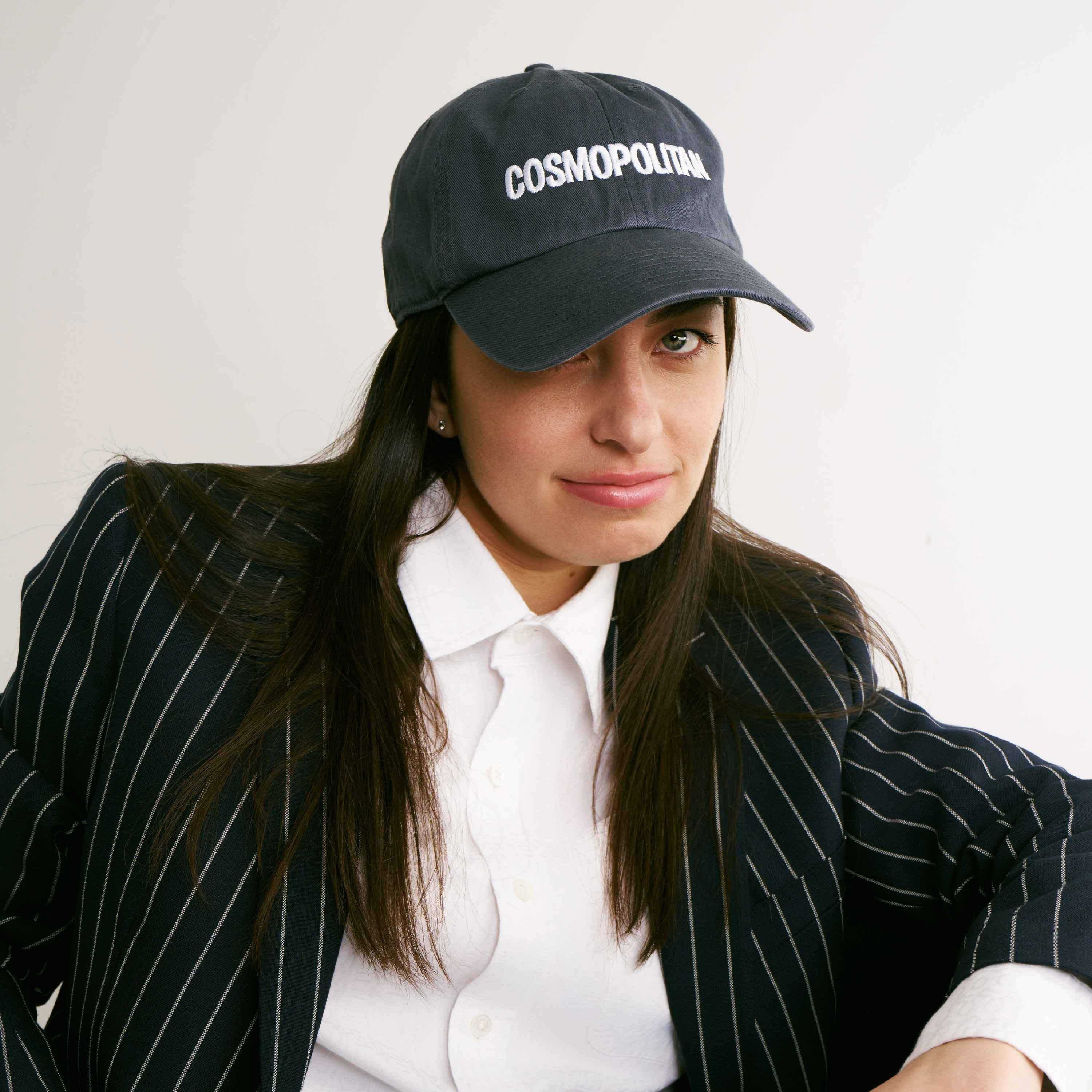
Willa Bennett is the editor-in-chief of Cosmopolitan and Seventeen — two of the most influential legacy media brands now being reimagined for a social-first, creator-driven era.Bennett grew up in Los Angeles, trained as a ballerina and studied journalism at Sarah Lawrence before building a standout career at Bustle Digital Group, GQ and Highsnobiety. Along the way, she’s helped redefine how youth culture is covered — not by chasing everything, but by sharpening point of view, taste and authority.“This generation has access to everything,” says Bennett, “which is exactly why there’s a real hunger for curation, real taste and a voice you can trust.”This week on The BoF Podcast, Imran Amed, founder and CEO of The Business of Fashion, sat down with Bennett to talk about what young audiences actually want from media today, why curation matters more than ever and how she’s refocusing Cosmopolitan and Seventeen — creatively, culturally and commercially — for the next generation.Key Insights: Bennett cold emailed her way into Seventeen, two weeks after graduating in 2013. Spotting social’s potential before it was prized, she asked: “Can I post the cover on Instagram?” and was told, “Yeah, sure – no one’s going to see it.” Later stints at Bustle and GQ sharpened her point of view, with a breakthrough at Highsnobiety. Putting Billie Eilish on her first cover of Highsnobiety “was so intuitive,” she says, and it was a signal she could match youth culture with editorial authority.Bennett argues the job of legacy media is selection, not saturation. “This generation has access to so much online, but that also means that there is a real hunger for curation – and real curation, not performative curation,” she says, adding that Cosmopolitan’s remit is to be “a place that young people can trust when it comes to love and relationships.”After an era of chasing scale, Bennett sees a return to meaningful, well-made stories: “We’re seeing real editorials again,” she says, while also noting Cosmopolitan’s social focus: “We’re up 500 percent year over year just in views on Instagram … That prioritisation of social media has been really important.”Bennett’s advice to new journalists is to publish everywhere while honing a distinctive point of view. “Use all the platforms now … get your voice out and really cultivate it,” she says. “As we figure out what this new era is, I think it’ll be even more important to have a very distinct point of view.”Additional Resources:Willa Bennett | BoF 500 | The People Shaping the Global Fashion Industry Inside Willa Bennett’s First Issue of ‘Cosmopolitan’ | BoF Hosted on Acast. See acast.com/privacy for more information.

Saks’ Bankruptcy and the Future of Luxury Retail
Saks’ bankruptcy was widely expected, yet still felt like a shock to the fashion system. The department store giant’s Chapter 11 filing outlines $1.75 billion in restructuring finance and $3.4 billion owed to as many as 25,000 creditors – including $136 million to Chanel alone. Who will get paid, and what Saks looks like at the other end of the bankruptcy process, is an open question. Former Neiman Marcus chief Geoffroy van Raemdonck will lead the reset. As BoF’s retail editor Cat Chen puts it, Saks will need to “shrink in order to grow,” curb discounting, and rebuild trust through clienteling and service.Key Insights:Missed vendor payments undermined confidence in Saks Global soon after it acquired Neiman Marcus and Bergdorf Goodman. “Even after Saks created these new payment terms, they weren’t able to stick to their instalments,” Chen says. Labels “stopped shipping to Saks entirely,” creating “a death spiral where Saks wasn’t getting good inventory, and this hurt their ability to attract customers,” and sales slid further.When Saks Global acquired Neiman Marcus, both companies were extremely levered going in, with savings being swallowed by interest. The plan pitched $500 million in cost savings, but Saks Global took on more debt — $2.2 billion in bonds. As Chen explains, with margins in multi-brand retail already slim, “they were ill-fated because… a chunk of whatever sales or savings they were able to generate would be going toward interest payments.” As Saks has 10,000 to 25,000 creditors, owed $3.4 billion, bankruptcy court will approve a list of critical vendors that are essential to Saks’s business. While conglomerates will cope, “it's really the smaller independent brands that might be owed less money, but the amount that they're owed are just so much more critical to their business operations. These are the players that are the most vulnerable right now,” Chen warns — and it’s not just brands. A model shared she’s “owed $46,000...and can’t pay rent now.”Now, Saks must reset its business. Van Raemdonck “took Neiman Marcus in and out of bankruptcy,” yet Chen is blunt about the reality of the situation: “Saks Global will have to shrink in order to grow.” That means closing stores, stabilising cash flow and getting ruthless about discounting. From there, Chen says Saks has to compete on experience, delivering the best customer service and catering to their VICs. Additional Resources:Saks Global Files for Bankruptcy After Monthslong Hunt for Cash | BoF Chanel, Gucci and Capri Holdings: The Brands Topping Saks’ Creditor List | BoF Hosted on Acast. See acast.com/privacy for more information.

Inside Beauty’s 2026 M&A Pipeline
2026 opens with real movement in beauty deals. As first reported by The Business of Beauty, Estée Lauder is exploring a packaged sale of Too Faced, Smashbox and Dr. Jart to free up cash and refocus the portfolio. Who’s next? Colour fatigue is depressing makeup valuations, while fragrance, bodycare and haircare are drawing the most credible buyer interest, particularly from beauty conglomerates. Executive editor of The Business of Beauty, Priya Rao joins Brian Baskin and Sheena Butler-Young to unpack what this year of beauty deals has to offer. Key Insights:With Estée Lauder exploring a bundled sale of Too Faced, Smashbox and Dr. Jart, this portfolio reset signals a valuation reality check. The goal is to free up cash and refocus on culturally relevant, digital-native brands like The Ordinary and Le Labo. As Rao notes, “Deciem sells more skincare products than all of Estée Lauder’s other skincare brands combined,” and “Le Labo is also continuing to be on fire, even though Santal 33 has been around for 15 years.” Colour fatigue is depressing valuations in makeup. Over the past few years, artistry and colour brands have gone to market to find a buyer, but quickly found a landscape already flooded with similar offerings. “There were so many colour brands on the market. People were waiting for the next great one, so they weren’t willing to make a bet on any of these brands until the full slate was out,” says Rao. The result was some colour brands being left in the market, on and off, for over a year. She explains: “It’s kind of like buying a house – why am I going to buy this house at a premium when I could be buying at a discount?”Fragrance, meanwhile, remains a booming, high-margin lane. “All these other beauty businesses – hair care, body and fragrance – are more incremental to a strategic,” says Rao. While private equity is trying across the board, Rao advises that “if you want L’Oréal, LVMH or Estée Lauder, you have to be in categories that add incremental value, rather than ones they’re still trying to figure out.”Haircare offers the clearest near-term upside for acquirers. “Amika has the number one or number two dry shampoo at Sephora,” and its move into Ulta taps “a huge haircare business because of their back bar program”, says Rao. In mass hair care, Not Your Mother’s, which has had its longevity questioned in the past, shows durability and runway. Focused on styling and texture, Rao notes that it “hasn’t even played with shampoo and conditioner yet – in mass hair care, that’s where you play to make the big bucks.”Additional Resources:Exclusive: Estée Lauder Companies Has Put Three Brands Up for Sale | BoF Prestige Hair Care’s Shampoo Problem | BoF Why Fragrance Is the Latest Red Carpet Accessory | BoF Hosted on Acast. See acast.com/privacy for more information.

Examining 20 Years of Fashion’s Influencer Economy
What began as scrappy self-publishing has become a finely tuned industry machine. Influencing is now big business. Four of the industry’s most influential creators came together at BoF VOICES 2025 to take a hard look at what influencing has become — and where it should go in the future. Susanna Lau opens the conversation by ditching the earnest tropes and asking a harder question: how can creators keep their integrity as agencies, briefs and budgets multiply?Bryan Yambao reflects on the pre-iPhone “wild west” — scanning magazines, posting affiliate links from his bedroom in Manila, and the shock of realising that the people he wrote about were suddenly reading him.Camille Charrière charts the shift from “do your thing” freedom to 30-page briefs and layered gatekeepers, arguing that creators must push back to preserve the audience trust that made them valuable in the first place.And through the lens of satire, Gstaad Guy challenges brands to confront what their communities are already saying — before they say it out loud.Together, they interrogate luxury’s malaise — and the need to recalibrate the industry around craft, community and credibility.Key Insights: Even with industry recognition, Yambao still feels like an outsider and uses that distance to stay candid. “I still feel like I’m an outsider,” he says, recalling the early days: “There was no roadmap. All I knew was that I had a voice.” The monetisation that followed, from early affiliate cheques to today’s industrialised commerce media, only reinforced his responsibility. “Since I kind of have a seat [at] the table, I want to say things with meaning and hold people to a higher standard,” he says.Charrière argues creators aren’t brand billboards — they’re people with convictions, and audience trust depends on that. After a year of speaking out, she recalls a major house “got me on a call with seven lawyers saying that now in my contract it was going to be written that I had to be neutral politically because I’d gone to a protest.” She continues, “I said, absolutely not.I’m not a brand. I’m an ambassador for you, but we are people, we are not brands … my online self is an extension of my offline self.”Gstaad Guy argues that credibility now depends on pre-empting audience scepticism. “Consumers are getting smarter, products are getting dumber,” he says. The remedy is to meet somewhere in between and let creators use their own language to test narratives honestly: “Have someone like [me] say something first so you can tell the story … the language of comedy and satire allows for that to be more digestible,” he says.Additional Resources:Susanna Lau, Bryan Yambao, Camille Charrière and Gstaad Guy: Twenty Years of the Influencer Economy in Fashion | BoF Gstaad Guy | BoF 500 | The People Shaping the Global Fashion Industry Camille Charrière | BoF 500 | The People Shaping the Global Fashion Industry Bryan Grey Yambao | BoF 500 | The People Shaping the Global Fashion Industry Hosted on Acast. See acast.com/privacy for more information.

The Themes That Will Define the 2026 Fashion Agenda
BoF and McKinsey’s annual State of Fashion report finds the industry entering 2026 with caution: 46 percent of executives expect conditions to worsen, citing geopolitics, macro volatility and the risk of shoppers pulling back. Yet there is also a pulse of optimism around AI-driven efficiency, luxury’s creative recalibration and fresh consumer interest in categories from smart glasses to fine jewellery.Tariffs remain the dominant near-term swing factor. Brands mitigated pain in 2025 by pulling forward inventory, but as that cushion runs out, the full impact shows up in 2026 in costs and pricing. More broadly, luxury’s era of price-led growth has run its course; as BoF correspondent Marc Bain puts it, if you ask customers to pay more, you have to “actually offer the value for the price.”Key Insights:The mood has shifted from “uncertain” in 2025 to “challenging” in 2026. Companies feel better equipped but are bracing for a tougher year. “Uncertainty was ‘we don’t know what’s going to happen’. The challenge is, we know what is going to happen and it’s going to be tough,” says Bain.Tariffs will continue to bite in 2026, and price hikes will be part of the playbook. Brands used a mix of mitigation tactics in 2025, but many still expect to pass on costs. “The strategy that the highest number of executives said was their way of mitigating the tariff impact was raising prices,” Bain notes. “To some degree, there's just no way around that. You can do it strategically, but at some point you're probably going to have to raise prices.”Jewellery is the consumer bright spot for the year ahead, as the category has steadily outperformed thanks to steadier, more gradual price rises, exciting design and a strong perception of value retention. “It’s hard luxury… you can wear it a lot and it can still be in good shape,” Bain says, adding that more women self-purchasing are reinforcing demand, with maximal accessories over minimal wardrobes adding another tailwind. He adds, “It sounds almost silly in 2026, but a big shift has been that more women are actually buying jewellery for themselves.According to Bain, 2026 is the year AI gets embedded into the fashion ecosystem. Expect a ‘two steps forward, one step back’ year where efficiency wins drive adoption even as mishaps make headlines. “Companies don’t feel like they can sit out AI,” Bain says. “It’s not like everyone by the end of next year is going to be using ChatGPT instead of Google, but the expectation is it'll be a significantly higher number than [2025]. And at a certain point, even if it's 5 percent of shoppers … it's still enough that you as a business have to start accounting for it. Additional Resources:The 10 Themes That Will Define the Fashion Agenda in the Year Ahead | BoF The Perfect Package: What It Takes to Be a Fashion Leader in 2026 | BoFThe Top Trends That Will Define Beauty in 2026 | BoF Hosted on Acast. See acast.com/privacy for more information.
DJ Black Coffee on Breaking Barriers and Building Global Credibility
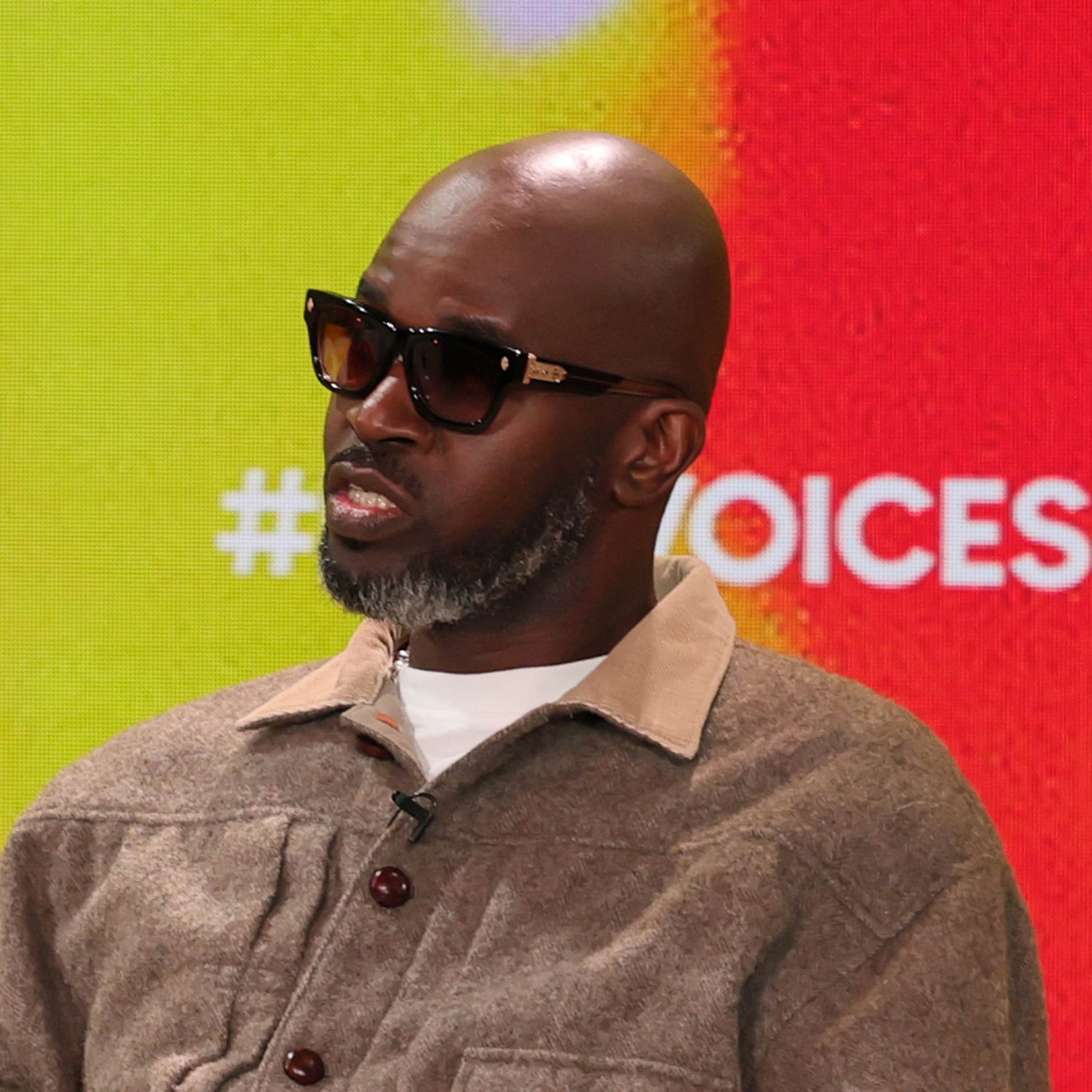
A DJ from South Africa who survived a life-altering accident on the night of Nelson Mandela’s release, Black Coffee has gone on to headline the world’s biggest stages. At BoF VOICES 2025, he reflected on building global credibility — and on reshaping how the African continent is seen. “If you Google a picture of Africa … it’s not going to be the most positive picture you see,” he says. “To be a DJ in South Africa, it’s one of the toughest things because almost every DJ is amazing. To be a DJ on the global level is way tougher because I come from a continent that was — or maybe still is — not seen as how it truly is.” In conversation with BoF founder and CEO Imran Amed, Black Coffee talk about rejecting pigeonholes, earning trust on a global level, and opening doors for the next generation. Key Insights: To compete beyond South Africa, Black Coffee says he had to work on the music and the optics of Africa on the global stage. The solution was rigorous self-presentation: “Whilst I was growing as a brand, fashion played a very big role for me. I was very conscious of how I presented myself,” he says. “The bigger the brand, the more intentional I was. It took a lot of work.” That mix of sound, style and discipline underpinned his transition from local star to international headliner.The night Nelson Mandela walked free changed his life forever. Struck in a crowd by a taxi and left with a nerve damage injury, he channelled his recovery into music and silence into resolve. “[Mandela’s] release from jail marked the beginning of a different journey for me, the first day of the beginning of Black Coffee,” he says. Speaking publicly about the accident only years later, he refused pity and insisted on being seen first as a musician with “passion and love for music.”Black Coffee is blunt about structural bias. “At the Grammys, instead of giving Tyla a number-one pop award, they will create a new genre or category where it’s best African,” he says. Reflecting on his own experience at the BET Awards, he recounts: “We were all given our awards on Friday and we were not invited on the main show on Saturday.”His advice to young creatives is simple and radical: “Just listen to your voice. That voice is the voice that will make you the greatest.” The mission is not only visibility but parity – moving African talent from a side-room to the main stage.Additional Resources: BoF VOICES 2025: Creativity as a Vehicle for Connection Black Coffee| BoF 500 Hosted on Acast. See acast.com/privacy for more information.
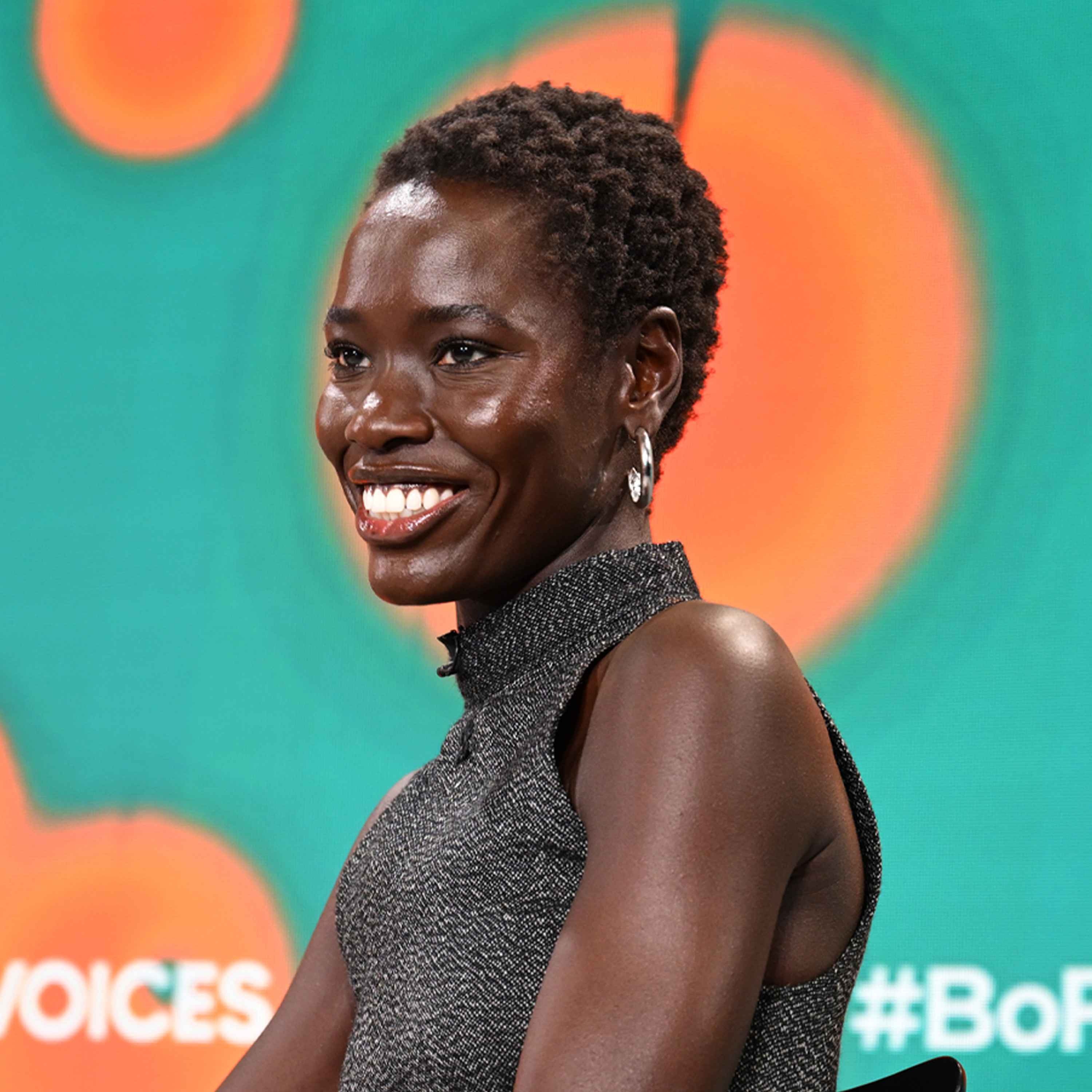
Awar Odhiang on Joy, Inclusion and Her Viral Chanel Moment
Born to South Sudanese parents and raised in Canada after arriving as refugees in 2002, Awar Odhiang grew up far from fashion’s orbit. She was studying health sciences and planning a career in medicine, when she was scouted at her first job. Her career began locally in Calgary, then accelerated fast after she launched internationally in 2019 — with early runway breaks, a packed show schedule and global campaigns. Then came the moment that stopped the industry when she closed the most-watched debut of the season at Matthieu Blazy’s Chanel show in October.“The moment that really allowed me to fill that space in that way was the freedom that I was given, truly,” she says. Backstage, Matthieu Blazy, Chanel’s new creative director encouraged her to own the moment. “I just felt so free, so confident, so beautiful. You can tell Matthieu loves women just by his designs.”In this conversation from BoF VOICES 2025, I speak with Awar about the gap between being celebrated publicly and understood privately, why inclusion has to extend to behind the camera and the boundaries she is setting to protect her sense of joy in an industry that rarely slows down.Key Insights:Odhiang recounts meeting agent Kelly Streit whilst working her first job in retail and her scouting story captures a pivotal shift in self-belief. “That was a moment that now I can look back at and realise that he believed in me before I even believed in myself,” she says. From folding sweaters at Old Navy to international runways by 2019, she frames the leap as an intentional decision to embrace an unexpected opportunity.As a high profile dark skinned model, her growing visibility hasn’t eliminated her feelings of isolation. “One of the darker sides of modelling I would say is really the [lack of] inclusion … the fact that we’re still talking about this today really shows how big of a problem that is.” She defines inclusivity as being allowed to be at ease rather than just token representation: “For me, inclusion is being able to be in a room and not have to translate yourself … where you’re not the only person who looks like you, where you’re not the only person who’s expected to speak on certain matters.”Moreover, whilst diverse campaigns can signal progress, backstage the culture still lags behind. “Being welcomed publicly and being understood privately —. I think they’re two very different things,” Odhiang says. “A lot of it [is] performative … behind the scenes there’s no diversity. There’s nobody who’s really understanding you, your story, how you’ve been treated. So that’s really dismissed a lot.” Her call is for decision-room diversity, consistency rather than trends, and respect for lived experiences.As attention intensifies, Odhiang is resolute about boundaries and community. “I would protect this joy, this joy in my heart, this joy of my soul, by continuing to set boundaries … by also keeping the company around me honest and close, and by also not allowing the pace of the industry to impact the pace of me as a human,” she says. For her, sustainability is emotional as much as professional — maintaining a human tempo amid fashion’s demands.Additional Resources:Awar Odhiag | BoF 500 Awar Odhiang: Choosing Joy Hosted on Acast. See acast.com/privacy for more information.

The Sneaker of the Year 2025
Choosing “sneaker of the year” has rarely been this contentious. In 2025 the debate has splintered opinion between incumbent players like Nike and contenders from Vans, Converse and New Balance as consumers test the field.Whilst Nike’s shadow looms and expands with new silhouettes, real-world volume is being driven by ‘regular’ pairs like ASICS’ black-and-silver GEL-1130.In this episode of The Debrief, BoF’s Sheena Butler-Young and Brian Baskin sit down with Mike Sykes to unpack the data, the storytelling and what this year signals for 2026.Key Insights:In a widening market, this year’s debate has splintered opinions. Unlike typical years with “two to three shoes,” 2025 felt like “it’s five, it’s six, it’s seven, it’s eight,” says Sykes. He frames it as consumers testing “Nike versus the field,” with many deciding, “I’m actually gonna try the field for once,” which explains why we have seen credible contenders from Vans, Converse, New Balance and more.At the same time, reports of Nike’s demise are overdone. “Nike has always – and, in my opinion, probably will always – be the industry standard. The company is just too big at this point; it makes too much money. Even when it fails, it’s still a notch above its competition,” says Sykes. The real question now is which Nike silhouettes win attention. A few years ago it was largely Jordan 1s, 3s and Dunks, however now styles like Infinite Archives 17, Awake’s Jordan 5, and Nigel Sylvester’s Jordan 4 are all taking space.Hype is increasingly powered by storytelling that feels personal rather than driven by pure scarcity. Nigel Sylvester’s Jordan 4 showed how “over the top” yet authentic activations made fans attach to Nigel beyond the sneaker. “He’s riding his bike, kissing babies, shaking hands,” says Sykes. It’s “absolutely marketing” but designed to connect on emotion.On sneaker resale marketplace StockX, beneath the headline-grabbing premiums, Asics is moving serious volume with everyday pairs. As Mike notes, “the black and silver Asics Gel-1130 is just a common shoe that you could probably just go to your Foot Locker and buy,” yet he sees “people just buying the shoe up.” Set against hype, the GEL-1130 shows how “regular everyday shoes that look cool” can dominate real-world sales even when they’re absent from sneaker-of-the-year shortlists.Additional Resources:The Sneakers That Mattered Most in 2025The Kicks You Wear: The Collab of the Year With Bimma WilliamsThe Kicks You Wear: The Death of Sneakers Is Overstated Hosted on Acast. See acast.com/privacy for more information.
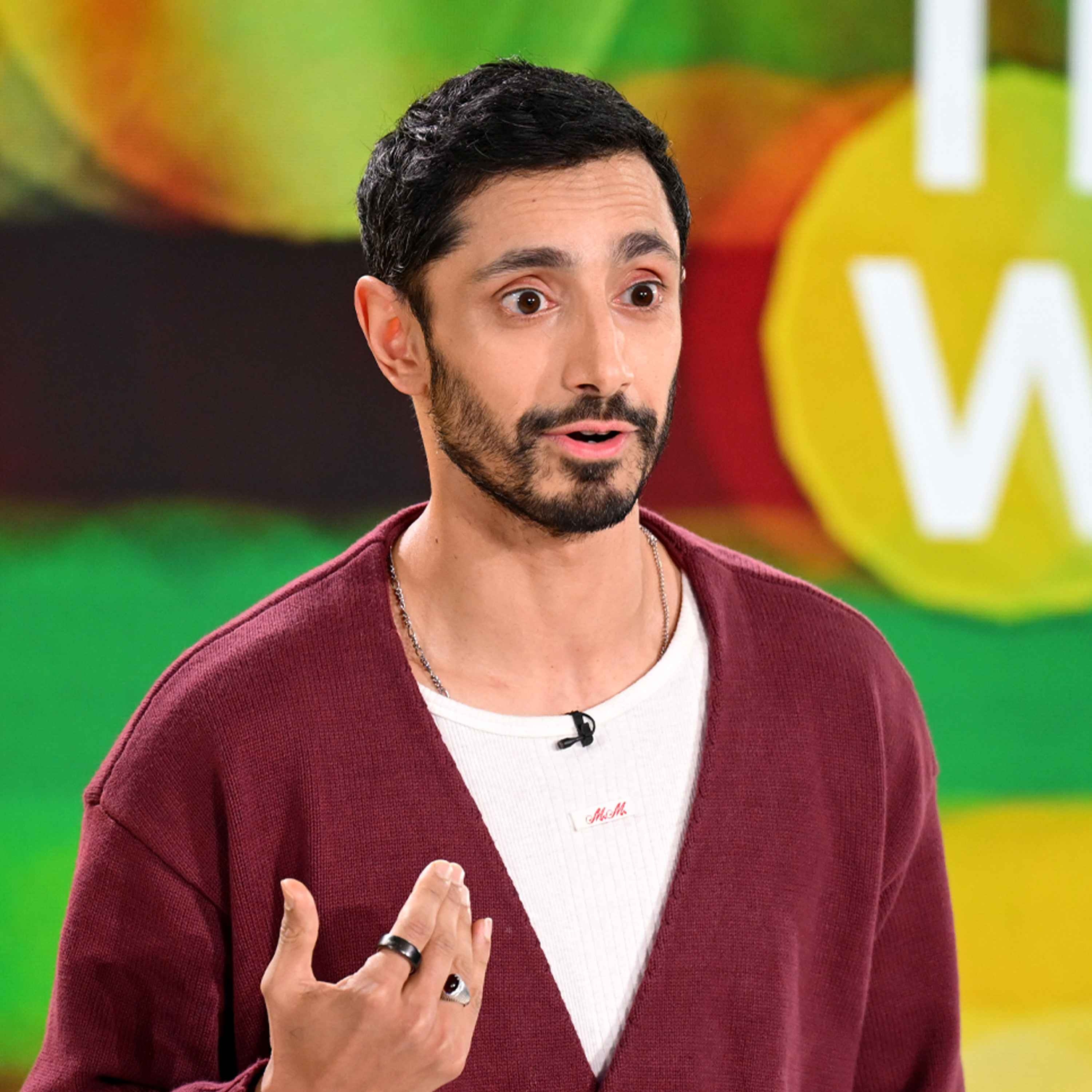
Riz Ahmed on the Radical Power of Storytelling
To close the first session of this year’s BoF VOICES on The Wider World, we wanted a voice that could cut through the noise and offer a clear, powerful call to action for human unity at a time when everything feels like it's breaking down. Few artists are better positioned to do that than Riz Ahmed.An Oscar and Emmy-winning actor, producer and musician, Riz has built a career at the intersection of culture, politics and humanity — from Sound of Metal to The Night Of, and through music and activism that challenge how stories are told, and who gets to tell them.Drawing on his upcoming adaptation of Hamlet, set in contemporary London, he argues that one of the most famous speeches in history — “to be or not to be” — has been misunderstood, de-radicalised and stripped of its original power. For Riz, Hamlet is not about despair or inaction. It’s about resistance, moral reckoning, and the fear that stops us from standing up when injustice feels overwhelming.This is a talk about grief, complicity and courage. About why stories endure. And about what it means to take responsibility — even when the cost feels high.Key Insights: Ahead of the theatrical release of the Ahmed-produced 2025 film “Hamlet” — its first cinematic adaptation starring a person of colour — the actor argues that the play’s famous soliloquy is not about suicide, but rather about summoning the courage to defy injustice. “‘To be or not to be’ is about resistance. The most famous lines ever written by a human being have been defanged, deradicalised. It’s about fighting back against oppression,” he says..The monologue, he argues, illustrates the importance of storytelling during a time when dominant cultural narratives attempt to divide people and to emphasise the illusion of in-groups and out-groups. “In the same way that we need to rediscover the radical truth of this speech, I believe we need to rediscover the radical purpose and truth at the heart of storytelling,” he says. “Storytelling has been lost to content and distraction and entertainment, but at its heart when it works best, it is reminding us of a very profound and very radical spiritual truth, which is that we are one.”Ahmed concludes that what people gain in achieving their purpose as storytellers — to believe in their shared humanity — is invaluable, despite the personal losses that may be incurred by doing so. “Honestly the things that we are afraid of, the things that we stand to lose were never really ours. We will lose them, but what we stand to gain when we step into our purpose is something so profound,” he says.“What does it mean to rediscover our radical purpose as storytellers, insisting on our oneness in a time when people might try and divide us?”Additional Resources:The BoF Podcast: Riz Ahmed on a Watershed Moment for the Fashion IndustryBoF VOICES 2025: Finding Connection in Turbulent Times Hosted on Acast. See acast.com/privacy for more information.

What Happens When Women Lead
Collectively, Clare Waight Keller and Maria Cornejo have over two decades of experience in the fashion industry. Waight Keller’s impressive career includes roles at Givenchy, Chloé and Gucci — and today, she serves as creative director at Uniqlo. Cornejo’s New York–based label, founded nearly three decades ago, counts Michelle Obama and Christy Turlington Burns among its most devoted fans.From deeply entrenched gender biases to the fear of returning to work after giving birth, women face a number of systemic barriers to reaching senior leadership positions in the fashion industry, insiders say. Today, some women designers have found success launching their own labels — and when they do land leadership roles at major houses, often make it a priority to create opportunities for other women, which remain few and far between.At the VOICES 10th anniversary, Waight Keller and Cornejo speak with senior correspondent Sheena Butler-Young about what it’s like to work in an industry where women are the muses and chief customers, but the top commercial and creative roles are dominated by men. Key Insights: Clare Waight Keller says that the inequalities between men and women in fashion are driven in part by the narrative that “men are often seen as the implementers of big change, and women of stability, and so with stability we’re often also cornered into a commercial sense of aesthetic.” Both Waight Keller and Cornejo push back against this notion, saying that women aren’t less creative but simply more considerate of how real women want to dress.Maria Cornejo feels that “there’s a big disconnect in fashion… from what's instagrammable and what is actual reality … all the women I know who have independent businesses… we’re making clothes that women wear.” Both designers say they have encountered inequities as women in fashion, prompting Waight Keller to intentionally assemble an all-women team at Uniqlo. “Women add so much richness into the conversation of clothing, we offer a completely different perspective which is equally powerful and equally relevant,” she says.Additional Resources:BoF VOICES 2025: Finding Connection in Turbulent TimesClare Waight Keller | BoF 500Maria Cornejo | BoF 500 Hosted on Acast. See acast.com/privacy for more information.
Can Luxury Brands Rebuild Trust With Customers?
Instead of his usual place in the host’s seat, BoF founder and CEO Imran Amed appears this week as a guest in an interview with Jonathan Wingfield, editor-in-chief of System Magazine, alongside Luca Solca, senior analyst of global luxury goods at Bernstein — as featured in the second issue of System Collections.Recorded in late October, their discussion maps a luxury market defined by expectation swings, tighter cost control and headline creative resets, with pricing and value now at the centre of the consumer equation. Amed and Solca examine how luxury groups are refocusing, why design-led and more accessibly priced players are gaining ground, and the conditions required for a genuine comeback at the top end.“Everyone seems to be fascinated with the ultra-wealthy spending, exorbitant amounts of money, but they are not the majority of the market — they are a portion at most,” says Solca.Amed agrees. “Nobody out there really thinks any of these prices are justified,” he says. “One of the big conundrums facing the industry is, how do they restructure that pricing pyramid? They can’t just reduce prices on the existing products that are in their core collection because that’s almost an admission of having broken that ceiling down.”Key Insights:After years of price hikes, the industry hasn’t just met its price ceiling — it “broke through that ceiling, smashed it to bits,” argues Amed. The core dilemma now is rebuilding the pricing pyramid without publicly walking back on prices. “I just think some of the executives in the industry are just completely out of touch with how the average customer feels. That’s not just aspirational middle-class customers, that’s also the ultra wealthy customers. Nobody out there really thinks any of these prices are justified,” says Amed.Solca warns that chasing the top end customer cannot be the only approach for brands. “Everyone seems to be fascinated with the ultra-wealthy spending exorbitant amounts of money, but...they are not the majority of the market. They are a portion at the most,” says Solca.However, price inflation at the very top has created space just below what’s considered traditional luxury for design-led brands with sharper value. “It’s opened up a really interesting opportunity for smaller brands that are highly creative,” Amed says. He points to labels “just below luxury and just above US contemporary,” where distinct product and accessible pricing meet demand for uniqueness.For Amed and Solca, the formula for success is for brands to bridge their DNA with the cultural zeitgeist and deliver real value to customers. Chasing trends that deny what a house stands for won’t work, like “Gucci trying to look quiet is like a zebra camouflaging as a lion,” says Solca. Amed adds the customer value test in “the relationship between what a customer pays and the perceived value of what they get in return.” If brands fail that test, “they’ll be less and less a part of that overall mix of what customers spend their money on.”Additional Resources:Jonathan Wingfield | BoF 500The Debrief | 5 Big Questions About LuxuryPrada’s Versace Acquisition Closes, Now the Real Work Begins Hosted on Acast. See acast.com/privacy for more information.

5 Big Questions About Luxury
Luxury’s most eventful year in some time is closing with a bang. From Prada’s Versace acquisition to Matthieu Blazy’s debut Chanel Métiers d’Art collection, seismic industry developments are landing on an almost daily basis.In this episode of The Debrief, senior correspondent Sheena Butler-Young and executive editor Brian Baskin are joined by BoF’s Luxury editor Robert Williams, who unpacks all of the industry’s most pertinent news, including the strategic implications of A$AP Rocky’s partnership with Chanel, the rise of the beaten up handbag, and the future of luxury in 2026.Key Insights: The luxury market’s forecast is cautiously optimistic, relying heavily on Chinese consumers and designer-led resets to revive the industry. Brands also need to grapple with justifying value after aggressive price increases in recent years. “Pricing’s certainly going to be an issue and it’s going to be a big issue in the US, which is a really key market for maintaining the brand’s top line,” Williams said.With Prada’s acquisition of Versace closing this week, it remains unclear as to whether the brand will continue with Dario Vitale’s new approach to Versace, or steer towards a more classic, glossy aesthetic. “[Versace] has gone through a pretty radical shift over the past couple of months and whether or not [Prada’s] going to want to continue with that is the biggest most urgent decision, and for them to clarify that for the market,” Williams said.Luxury dining is becoming increasingly popular across the world, but can luxury chains like Langosteria remain cool as they expand? “Fashion once upon a time was all made by your local tailor, your local couturier, and once they decided they could scale taste, that was more desirable than just having something that was more small-scale … In food it seems like it’s kind of the opposite,” Williams said.Originally inspired by Jane Birkin and Mary-Kate and Ashley Olsen, beaten up bags are everywhere in luxury fashion today. “There’s something about the fact that, no matter how much you wear out that bag and trash it, it’s still not going to break and fall apart. I think it just makes it a really cool style gesture. It shows you’re not someone who just bought into it yesterday,” Williams said.Additional Resources:Prada’s Versace Acquisition Closes, Now the Real Work BeginsHow Beat-Up Bags Became a Luxury Status SymbolBreaking Down Chanel’s A$AP Rocky Partnership Hosted on Acast. See acast.com/privacy for more information.

An Act of Love: Securing Franca Sozzani’s Legacy
Francesco Carrozzini grew up inside the rarefied world of Vogue Italia — not just observing it, but living it. As the son of Franca Sozzani, the magazine’s legendary editor-in-chief, fashion wasn’t just part of his surroundings, it was a language he was exposed to everyday.He became a photographer and filmmaker, but it was only later that he turned the camera towards the most personal and complicated subject in his life: his relationship with his mother. The documentary Franca: Chaos and Creation premiered in Venice just before her passing in 2016 following a battle with lung cancer. “When I asked her to take a look at the first cut of the film, she said, ‘This is the most mediocre thing I've ever seen. Do yourself a favor and find a point of view.’ That opened my eyes on the importance of always trying to find a point of view,” Carrozzini recalls. “In a regular relationship between mother and son, that might have been excruciating. In ours, it wasn't, because we treated each other like friends.”Since Franca’s passing, Carrozzini has been working to transform memory into meaning. He co-founded the Franca Fund for Preventive Genomics — an initiative advancing genomic screening to prevent the disease that took his mother’s life. BoF founder and CEO Imran Amed met Carrozzini in Doha, Qatar, where last weekend he hosted the fund’s first-ever gala and they spoke about what it means to honour someone not by preserving their legacy, but by evolving it.Key Insights: Growing up inside Vogue Italia shaped Carrozzini's eye and his expectations of 'normal'. He recalls going to the offices, and making his own magazines. "This was a time before computers so they were cutting up pictures and there was spray glue. [...] That's how magazines were made. I would go and do the same,” he says. "That was my special big extended family, because my mother's job was her life." Beyond the film itself, Carrozzini shared that it was the end-of-life collaboration that mattered the most. “The actual big stories were those last months of our relationship, finishing the film and then screening it in Venice,” he says. “All of a sudden the lights turn on and everyone's crying because some people know, some people don't, but we look at each other and we're like, ‘This is sort of like our last big moment together.’”Carrozzini clearly distinguishes tribute from true legacy. “Memory and legacy often get confused. Just remembering someone feels like you're carrying their legacy, but it's not. I really wanted something meaningful, as an act of love, taking something personal and making it collective.” That impulse led Carrozzini to genomics research with Harvard geneticist Dr Robert Green, backing pioneering newborn-genome studies and accelerating grants. Additional Resources:Fashion Trust Arabia Names Prize Winners in Qatar | BoF Franca Sozzani, 1950 - 2016 | BoF Hosted on Acast. See acast.com/privacy for more information.

Is This the Year Discount Mania Finally Ends?
As the holiday shopping season approaches, consumer sentiment is slumping, yet spending is bifurcated – the top end keeps buying while the bottom 80 percent is more cautious. With Black Friday looming, brands are recalibrating promotions around value, desirability and hero products rather than blanket discounts. In luxury, upheaval at several department stores has created white space for rivals to woo high-spending clients through aggressive clienteling and tighter, faster vendor partnerships. In this episode of The Debrief, hosts Brian Baskin and Sheena Butler-Young speak with BoF reporters Cat Chen and Malique Morris about how brands are planning the season.Key Insights: Consumer spending hasn’t vanished, but it’s shifted toward shoppers who still feel flush. As Chen notes, “people are not really feeling rosy about the state of the economy, but the irony is that they’re still spending money.” Since Covid, “spending has been driven by the wealthier segment,” and it’s clear that “what consumers want is value… they want to get a good deal, but they don’t want to buy a cheap product.” For retailers, that means “more sophistication around price architecture” and using AI “to price products perfectly.”“Black Friday–Cyber Monday is not a fix for a mediocre year,” says Morris. Instead, winners are “prioritising desirability over discounts,” introducing “new products specifically for this time” and pushing “hero best-selling product.” The old playbook is out, and “slapping a 50% off everything discount on Instagram is not gonna cut it,” says Morris. In the “age of curation,” even deal-hunters expect editing, storytelling and reasons to stop scrolling.Morris argues that even in a discount-driven moment like Black Friday, shoppers still want offers to feel edited and intentional, and brands are responding with more curated tactics rather than blanket markdowns. “We’re in the age of curation and so even when people are expecting deals, they don’t want to feel like they’re just getting slopped,” says Morris. Tariffs and margin pressure mean many brands cannot afford a race to the bottom, pushing them to plan inventory more carefully, introduce new products specifically for this period and reserve discounts for hero items.Chen explains that this holiday season is especially high stakes for luxury multi-brand retailers because a few big players are stumbling – and everyone else is trying to capitalise. “Saks and SSENSE and Luisa Via Roma are three players that have faced pretty bad challenges this year,” she says. “They have opened up white space for their competitors on healthier financial footing to come in and basically eat their lunch and acquire their customers, acquire their sales.” The response is an aggressive push on clienteling and talent: retailers are not just targeting wealthy individuals, but also the salespeople and stylists who already manage those relationships.Additional Resources:Brands Try to Get the Tone Right for Holiday 2025 | BoF Inside Luxury Retailers’ Bare-Knuckle Fight to Win the Holidays | BoF Black Friday Beauty Goes Beyond the Discount | BoF Hosted on Acast. See acast.com/privacy for more information.
Prada Group CEO Andrea Guerra on Fixing the Luxury Business Model
Over the last two years, demand for luxury fashion has softened as aspirational shoppers have pulled back and consumer fatigue has crept in. Yet, Prada Group has continued to grow, by prioritising brand DNA, employing disciplined curation and creating strong connections to contemporary culture.“Prada is culture, culture is discussion, culture is opinions. The more you’re discussed, the more you’re able to be influenced by other people's opinions. I think this is unbelievably fruitful,” says Guerra. “This is not a vertical thing; it's a total constant confrontation and change of opinions. This is how things are born in the Prada brand – and I love it.”This week on The BoF Podcast, BoF founder Imran Amed quizzes Mr Guerra on the luxury business model from developing pricing strategies to the importance of creative tension and cultural relevance.Key Insights: To navigate a shaky market, brands need to simplify and go back to their DNA. “Brands have gone all over in the past 10 years. And I think that today it's a time that you simplify and you do your own thing,” says Guerra. “Your brand has a DNA, and that DNA cannot be killed in the long term …This is where people are recognising you, so you need to go back there. There are certain things we need to do better again, but better again means to go back some years. ” On the industry’s post-pandemic price hikes, Guerra says “If I’m not able to sell you an emotion, then we discuss pricing. If we discuss pricing, then I’ve failed on the first part.” Some brands, he adds, have been spoilt by certain trends, like inflation. “At a certain stage for some brands it was easy just to increase prices,” he says. Now Guerra says, “we’re back to normal” — and the conversation should return to “creativity, innovation [and] our ability to tell people about emotions.”The decision to acquire Versace was a strategic, long-term bet.. “Versace is a fantastic Italian, authentic, unique, credible brand which has a huge complementary role inside our group … hitting different aesthetics, different consumer bases,” yet sharing roots in culture. The mandate is steady, patient value-building. “There are no broken things. We have an opportunity, and the opportunity is long term. I’m not expecting any sort of tangible numeric result tomorrow morning. We have fixed certain milestones which are very important, but it will take time. And we have the patience.”For Guerra, durable desirability is born from managed friction. “There is a history of relationship and tension between the DNA of a brand and a creative impulse, and this tension in the long term must be a positive equation,” he says. “When I talk about culture, we are doing culture ourselves … When you are buying a Prada product, you are buying an opinion, and I am happy that you’re buying an opinion.”Additional Resources:BoF VOICES 2025: Untangling the Fashion Industry’s Future Prada’s Lorenzo Bertelli to Become Versace Executive Chairman | BoF Hosted on Acast. See acast.com/privacy for more information.

Can Fashion Still Meet Its Climate Promises?
As COP30 gets underway in Belém, a port city on the edge of the Brazilian rainforest, the mood is sober. A decade after the Paris Agreement was adopted internationally to limit global warming, many of the world’s largest fashion companies have fallen short on emissions cuts — and some are moving in the wrong direction, emitting pollutants at an even higher rate than in previous years.In this episode of The Debrief, senior correspondent Sheena Butler-Young and executive editor Brian Baskin are joined by BoF reporters, Sarah Kent and Shayeza Walid, to examine why progress has stalled, how fast-fashion growth is reshaping the landscape, and what practical steps — from decarbonising supply chains to adapting factories to extreme heat — are needed next. Key Insights: Kent says, “I would not say any brand has a credible pathway right now to meet their targets for 2030,” “Even companies that have shown that they’re able to reduce their emissions to date, driving down their carbon footprint over the next five years is going to be harder, more complex and more costly… and really no one company can do that alone.”Kent highlights the industry’s deep structural bind: “The fundamental conflict at the heart of the fashion industry’s climate commitments is that you’ve got a business built on extracting stuff and producing stuff and selling stuff. The more stuff they sell, the better the business does, but the worse the environmental impact is,” “Profitability and sales growth are fundamentally at odds with the environmental commitments companies have made.”Short-term thinking still in the boardroom locks in higher climate impacts, adaptation costs and supply-chain risk. As Kent puts it, “On climate, if you don’t act, you don’t have to make these big investments, and you can keep growing your business and things will trundle along for some time. But the longer you wait to act, the worse the climate impacts you’re going to have to deal with are going to be, and the higher the cost of mitigating them, adapting to them, and trying to continue this business in a climate-constrained world.”Voluntary commitments aren’t enough at fast fashion’s scale. Walid points to Shein: “Shein’s case is very instructive. There’s limits to voluntary commitments, which is what the majority of these brands have made.” She continues, “When the business model is built on speed and volume… it just shows that voluntary commitments are maybe not enough for a fashion brand – especially a brand as big as Shein – to actually tangibly reduce its emissions when its entire business case doesn’t stand for that.”Climate impacts are now serious human and corporate risks. “It’s not just a corporate issue anymore,” says Walid. “People who have the visuals recognise the reality of what’s happening in these factories and the people who are making clothes at the end of the day.” Kent adds: “People who are suffering from heat stress are not as productive… floods are disruptive to production, to logistics, to supply chains. Just because we have not yet seen a major disruption to the apparel supply chain from these climate crises yet is more luck than anything else.”Additional Resources:Can Fashion Still Meet Its Climate Promises? | BoF The Frayed Edge: Is Fashion Quiet Quitting on Climate? | BoF Hosted on Acast. See acast.com/privacy for more information.
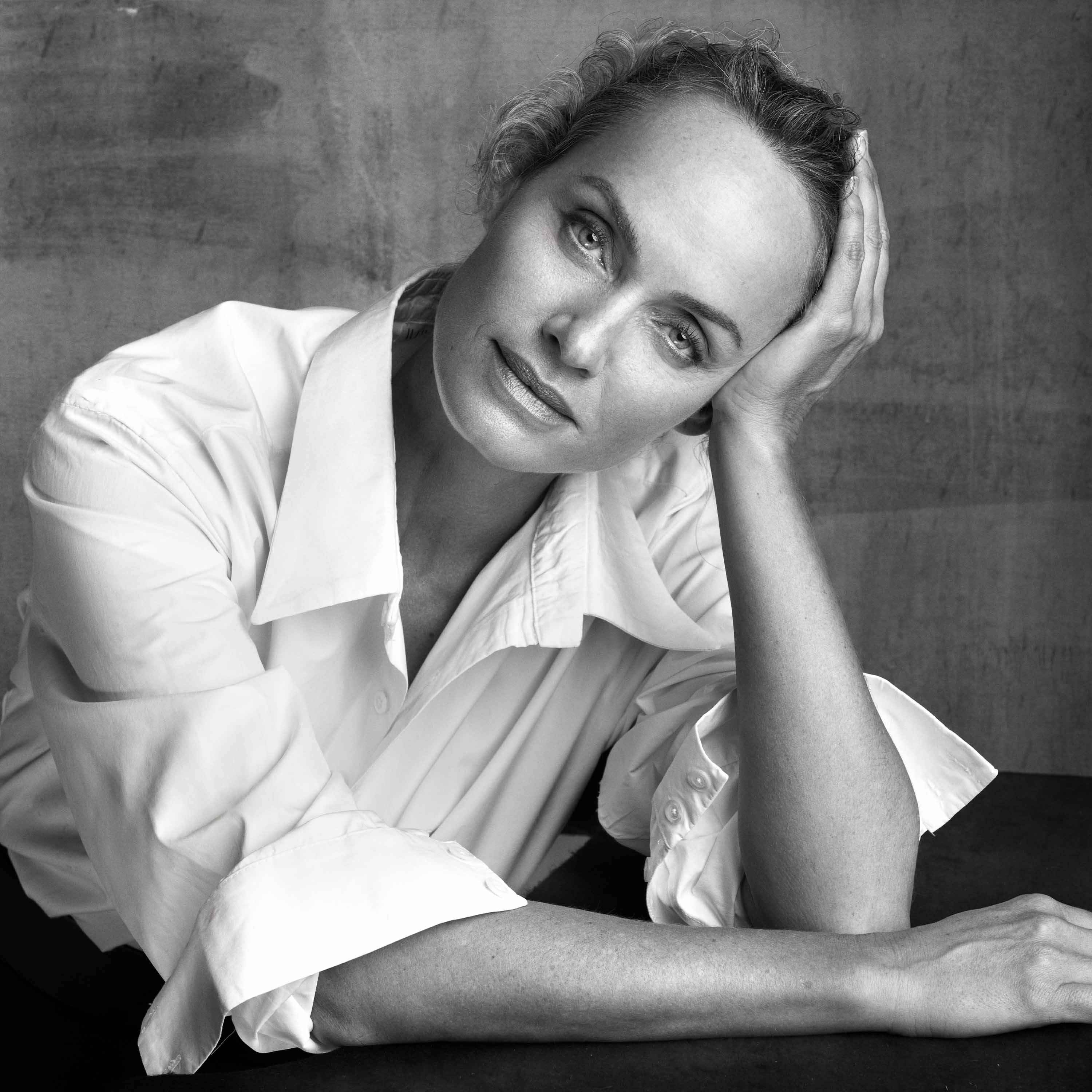
Amber Valletta: ‘Do What You Love. Serve a Higher Purpose.’
Amber Valletta grew up in Tulsa, Oklahoma, spending time on her grandparents’ farm. Her childhood was defined by open fields, a freshwater creek and a simple rule from her mother: go outside and use your imagination.At 15, a local modelling class set her on an unexpected path that would take her first to Milan, and then around the world. Within a few years, Amber became one of the defining faces of 1990s fashion — the Tom Ford Gucci era, the great editorials and the campaigns that shaped a generation’s idea of beauty.But by her mid-20s, success had taken its toll. Amber stepped away from modelling, got sober, became a mother, pursued acting and found purpose in environmental advocacy. Today, as a United Nations Environment Programme goodwill ambassador, she’s using her influence to push for real change on climate, biodiversity and pollution.“I don’t make my life all about me,” she told me. “I make it about other people too — about connection and love. When you have that, life is so much more enjoyable.” This week on The BoF Podcast, BoF founder Imran Amed sits down with Amber Valletta to trace her journey from Tulsa to the world’s fashion capitals, how sobriety transformed her life at 25 and why she believes fashion must finally take responsibility for its impact on the planet.Key Insights: Valletta’s childhood in nature forged a creative compass and the ability to adapt anywhere.That self-reliance became a career asset when she landed in Europe as a teenager: “I have this strange thing that I’ve always had — it’s like wherever you plant me, I grow. I’m like a weed or something, like an Oklahoma weed.” Those early years also taught her to observe and self-teach: “No one taught me. I just started figuring it out … you look, you watch, you listen.”Opening Tom Ford’s Gucci Fall/Winter 1995 show gave Valletta a once-in-a-career jolt. “When I walked out on the runway, it was probably one of the few times I’ve had that adrenaline rush … that spotlight came on and boom,” Valletta recalls. The moment was so impactful because it diverged from what dominated the time: “Nothing looked like that … it was like a shot of adrenaline for everybody,” she says.Valletta was recently named UN Environment Programme goodwill ambassador, where she is focused on climate change, biodiversity loss and on “fashion’s role as one of the biggest polluters.” The brief is practical: “We need to invest in innovation and investment in decarbonisation … We need all hands on deck. We need collaboration,” she says, warning, “If it doesn’t change, we’re going to implode on ourselves.”Valletta’s guidance for a fulfilling life is simple: “Do what you love. Serve a higher purpose. Enjoy the moment. Enjoy where you’re at.” She couples that with practical habits for staying power. “I ask questions, I show up with a lot of gratitude … I try not to do too much so that when I show up to work, I’m fully present for everybody.” Additional Resources: Amber Valletta | BoF 500 | The People Shaping the Global Fashion Industry Can Fashion Still Meet Its Climate Promises? | BoF Hosted on Acast. See acast.com/privacy for more information.

Why Is Everyone Obsessed With Accessories?
Colourful charms, Labubu-laden handbags and a ring on every finger – accessories sales are booming. A surge of necklace stacks, playful rings and quirky charms is being driven by Gen Z’s push for personal style, using add-ons to customise minimalist wardrobes on a budget. With apparel prices up, accessories act as “little luxuries” and entry points into brands. Retail is responding, with buyers widening small-leather-goods assortments and e-commerce shoots now styling bags with charms to encourage add-on purchases. BoF reporter Diana Pearl joins The Debrief to unpack what’s fuelling the accessory pile-on, how labels are capitalising on it, and how far the trend can go before the cycle turns. Key Insights: According to Pearl, Gen Z is reaching for accessories as a way to personalise their minimalist wardrobes. “Gen Z, which is really looking to define their sense of personal style, is leaning on accessories to do so, especially because minimalism in clothing is still very popular… but they also wanna have a little more fun and accessories are a way to do that,” she says. Regarding the longevity of this trend, Pearl adds, “I think we'll see a consumer that is primed to think of accessories as a more important part of their wardrobe – not just like a finishing touch, but a core element of it.”The Labubu craze captures the mood of the accessories trend – playful, collective and endlessly customisable. “There’s so many different Labubus. There’s a bit of that thrill of the hunt to try to find the right one. You can add it to an Hermès bag or a $100 leather tote from J. Crew,” says Pearl. For many shoppers, she says, “it really speaks to that desire for fun and adding a personal touch. People want things that make them feel good.”While luxury houses profit from entry-level add-ons, Pearl sees independent makers riding the wave. “I think it probably is helping luxury brands but I think even more than that, it’s helping small brands that really can make these cute accessories that feel distinct and different from what everyone else has, because I think a huge part of this is that quest for personal style, wanting something unique,” says Pearl. Pearl frames the moment as a behavioural shift rather than a transient trend. She argues, “trends go away, but they never fully go away. I think every trend leaves a lasting impact or impression on us. Maybe Labubus, toe rings, and bag charms won’t be quite as popular, but maybe they’ll evolve.” Crucially, “I think that this has unlocked something in people… it will have a lasting after effects of this trend, even if not everybody is wearing five necklaces at once in a year from now.”Additional Resources:How Far Can Fashion’s Accessory Obsession Go? | BoF Why Jewellery Feels Like a Better Deal Than a Handbag | BoFLuxury’s Untapped Opportunity in Men’s Jewellery | BoF Hosted on Acast. See acast.com/privacy for more information.
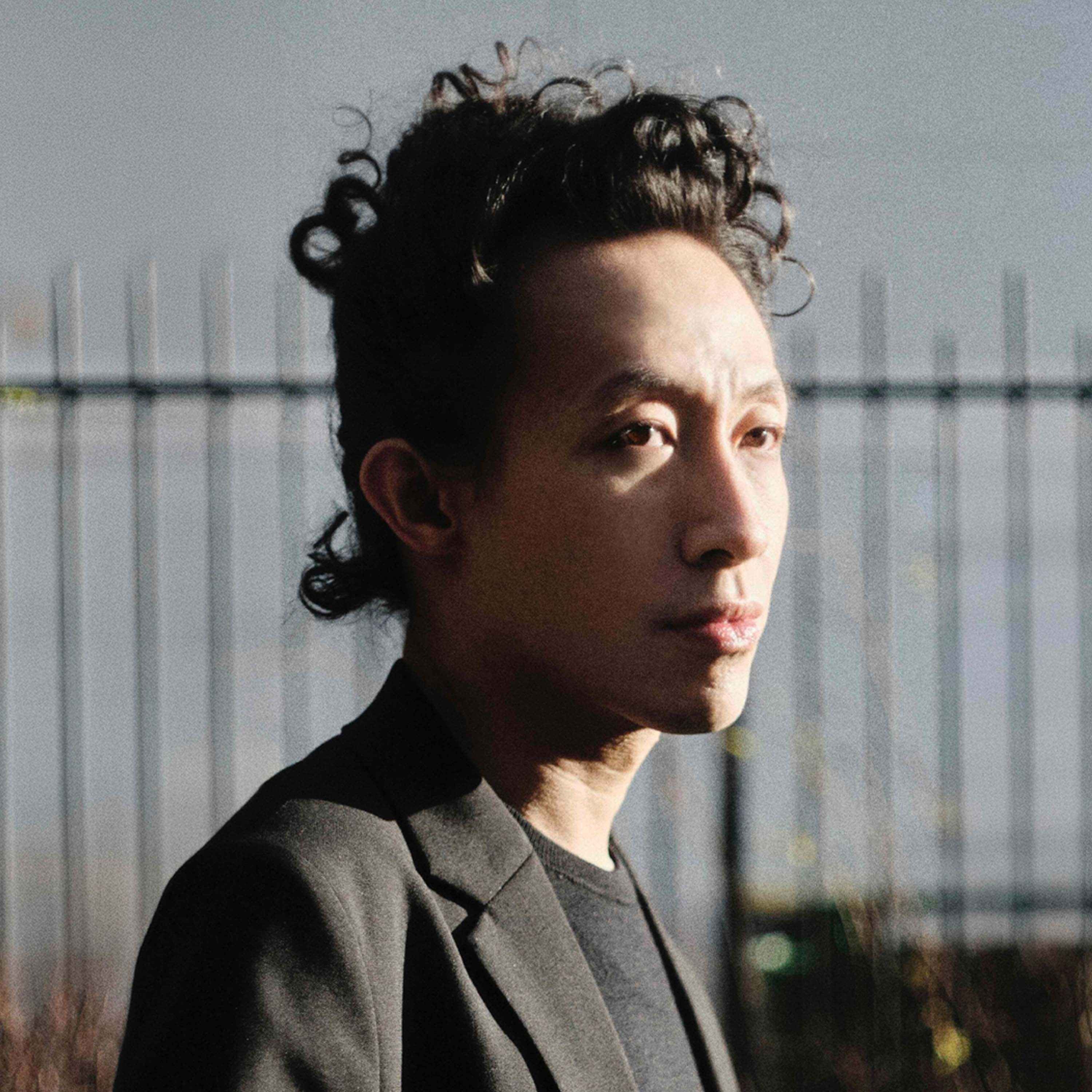
Why Robert Wun Ditched the Wholesale Model for Bespoke Creations
Soon after sharing his graduate work from the London College of Fashion online, Hong Kong-born Robert Wun was approached by Joyce Boutique to buy his collection. Like many other independent designers, he found navigating the wholesale model challenging and during the pandemic he pivoted to serving clients with one-off, customised designs with couture level pricing. “I realised that, in order for me to have a strong wholesale business model or grow a brand, this is not the time yet,” Wun says. “For me to sacrifice all these years – to leave my family, to come all the way to London, to chase my dream – everything I create needs to have a responsibility, not only for myself but also for the message that I’m trying to relay.”This week on The BoF Podcast, BoF founder Imran Amed sit down with Robert Wun to discuss his path from Hong Kong to London to Paris Couture Week, and how he’s building a client-first business that protects his creativity while staying commercially viable.Key Insights: Hong Kong’s cultural imprint shaped Wun's eye from an early age. Growing up in a city he saw as a creative engine, Wun points to icons like Wong Kar-wai as inspiration, adding that “Hong Kong is almost a symbol of cultural leadership when it comes to Asia.” Wun recalls discovering how deeply global fashion intersected with the city, from Joyce Ma championing new designers to Jean Paul Gaultier creating stage pieces for musicians in Hong Kong. "You always had this idea that creativity was powerful ... but I think what changed was a shift in culture and economic power," he says.When pandemic lockdowns halted the regular fashion calendar, it provided a reset for Wun. Being forced to release his Autumn/Winter 2021 collection with an iPhone shoot done in his studio kitchen, made him prioritise meaning and message. “Everything I create needs to have a responsibility, not only for myself, but also for the message that I’m trying to relay,” he says. That conviction pushed Wun to prioritise work that is no longer “to make money” but rather “to communicate and be honest.” Wun has shifted from wholesale to bespoke orders and selective collaborations. “We are a team of almost twelve now. We’ve turned from not making any profit at all to actually starting to make profit since last year, and we’re almost doubling in terms of turnover by the end of this year,” he says. The core is a loyal private clientele, and demand is anchored in the US — particularly New York and Los Angeles millennials and Asian Americans — plus art collectors and couples seeking modern ceremony wear. “Our average for those couture orders ranges from £45,000 to £60,000,” Wun says, a mix that allows him to protect his creativity while running a commercially successful business.Additional Resources: Robert Wun | BoF 500 | The People Shaping the Global Fashion Industry Robert Wun: From Dalston to Place Vendôme | BoFThe Emerging Designers Pushing Fashion Forward | BoF Hosted on Acast. See acast.com/privacy for more information.

The Human Cost of Trump's Tariffs
In late August, the US doubled duties on Indian goods to 50 percent, in what President Donald Trump described as a punishment for India’s purchases of Russian oil. Brands reacted immediately, postponing or cancelling orders and leaving factories in hubs like Tiruppur and Bengaluru half-filled. With shifts cut and workers laid off, the shock ricocheted through India’s export economy, exposing how little protection garment workers have while relief talks and trade diplomacy drag on.Senior correspondent Sheena Butler-Young and executive editor Brian Baskin are joined by BoF reporter Shayeza Walid to trace how trade policy in Washington quickly impacted the lives of India’s garment workers. Key Insights: The tariff that came into place at the end of August led some suppliers to feel “punished for something they didn’t have any hand in,” as Walid puts it. She adds: “That penalty was linked to India’s continued purchases of Russian crude oil,” and “it hit very fast because brands immediately reacted to it once the 50 percent came into place.”The disruption hit export hubs first and hardest. With brands reluctant to absorb the shock, factories have been left to “bear the brunt,” passing the pressure onto the most vulnerable link in the system. The result is workers facing furloughs, layoffs and open-ended uncertainty. “These workers are largely migrant workers who… don't have the power to collectively bargain and kind of demand what they have the right to”, says Walid. As a result, migrant garment workers are bearing the brunt through layoffs, furloughs and lost income. The response from Western brands has been silence and arm’s-length accountability, as most work through layers of sub-contractors in India. Walid says that, despite public rhetoric on labour rights, “in practice, there's not anything in place that would fix … these short-term contracts and brands not knowing where subcontracting factories are connecting with suppliers.” During Covid, watchdog pressure pushed some labels to repay cancelled orders, but “at this moment, that’s not something that we’re seeing,” Walid notes. In the meantime, a few large exporters are temporarily absorbing parts of the tariff to keep relationships alive – an approach suppliers themselves say is unsustainable – while smaller factories shut and workers absorb the shock.Beyond geopolitics, commercial terms and supply-chain opacity push risk onto workers. “It’s really the purchasing practice and the way contracts work in the supply chain. In the exporting industry, that leaves workers in this really helpless condition,” says Walid. Complexity of the system also weakens accountability: “It’s really extraordinarily difficult to get data and direct kind of causality from a particular brand,” and in hubs like Tirupur, “subcontracting factories are essentially the main suppliers to these bigger factories because they just get such large volumes.” Additional Resources:India’s Garment Workers Are Paying the Price for Trump’s Tariffs | BoF Trump’s 50% Tariff Sows Fear Inside Indian Apparel Hub | BoF Hosted on Acast. See acast.com/privacy for more information.
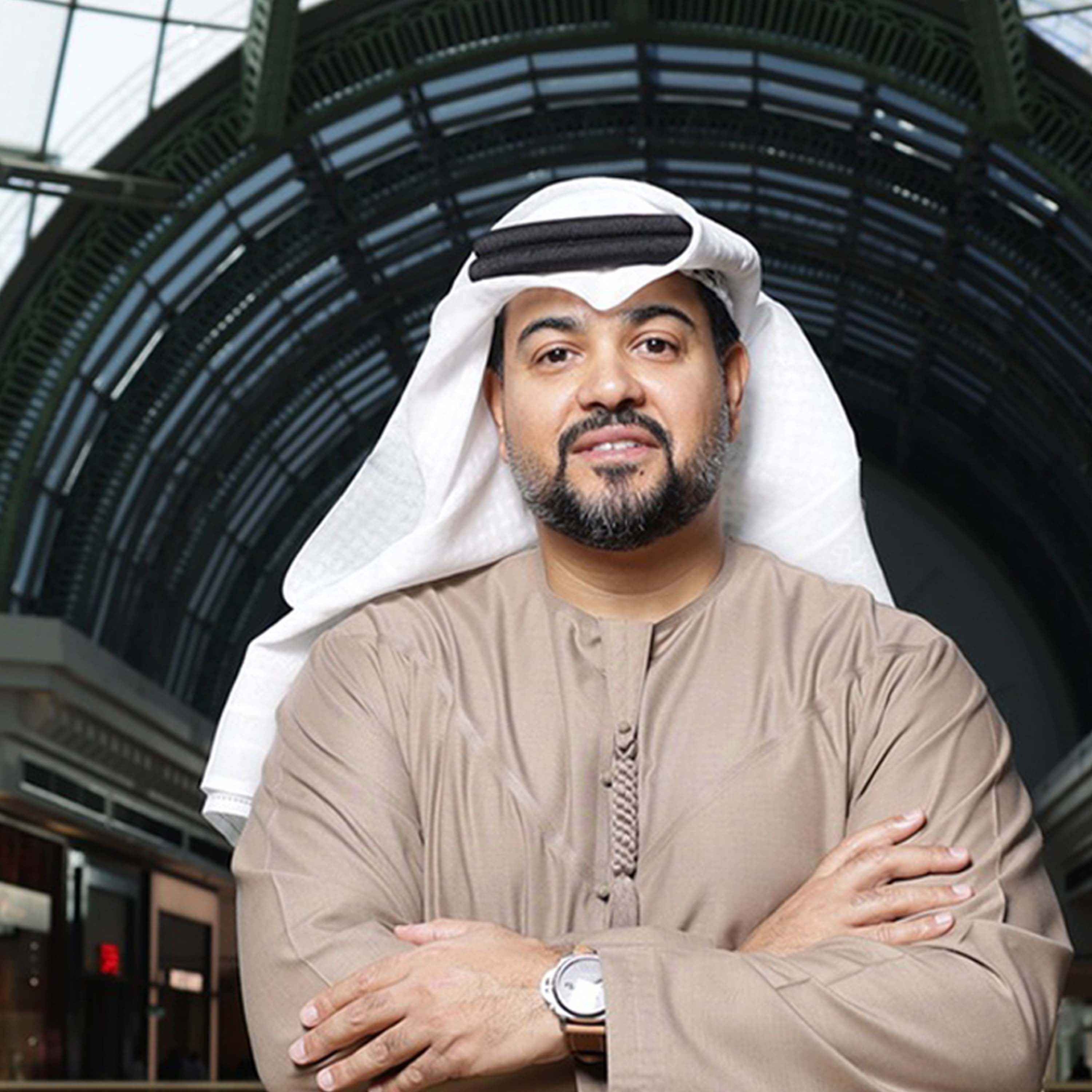
Khalifa Bin Braik on Dubai’s Transformation and the MENA Retail Playbook
Born in Dubai in 1978 when the city was still a modest trading port, Khalifa Bin Braik has witnessed the city’s rapid transformation into a 21st-century global hub – and helped shape its retail landscape as CEO of Majid Al Futtaim Asset Management. Majid Al Futtaim is behind the $1.4 billion transformation of Dubai’s second largest mall, The Mall of the Emirates, adding 20,000 sqm of additional retail space and 100 new stores with an enhanced mix of dining, wellness and cultural concepts. This development is in addition to its newest flagship destination, Ghaf Woods Mall: a first-of-its-kind concept merging retail experiences with the natural environment. Bin Braik reflects on Dubai’s’s post‑pandemic acceleration and the company’s move from bricks-and-mortar stores to immersive third places. “In just over four decades, the economy has grown circa 22 times. But what's even more remarkable is the mindset that has fueled this growth,” says Bin Braik. “Dubai gives you the power to dream, plan, and execute flawlessly, all in one lifetime, really. It's a place that teaches you that nothing is too ambitious.” In this conversation with BoF founder Imran Amed, Bin Braik unpacks Dubai’s evolution, the transformation of physical retail, and where growth in the MENA region is coming from next.Key Insights: Post-pandemic, Majid Al Futtaim has shifted retail from pure brick-and-mortar to a fully immersive, experiential destination creator. “Consumers today demand more experiential, more curated spaces, but most importantly, with an intent or a very deep meaning and purpose.” Their formula blends retail with dining, entertainment and, crucially, wellness: “[Our] DNA is curating an immersive lifestyle destination, blending retail with dining, wellness, … entertainment and, most importantly, community.”According to Bin Braik, it’s a misconception that malls across the GCC region are homogeneous or that “only luxury” drives Dubai. “Each country has unique customer dynamics … demographics and cultural nuances,” and the “mid‑market and convenience‑driven segments are equally very, very important.” Physical retail “continues to thrive,” supported by strong tourism and integrated experiences.Egypt is a key region for a next‑wave opportunity. “Today, Egypt’s luxury market is … half of its true potential.” Despite challenges with imports, tariffs and infrastructure, Bin Braik argues that growth can be unlocked through investment and modernisation, with stabilisation “[paving] the way for a more vibrant luxury ecosystem market.” He adds: “I think very soon we'll start seeing investments into the luxury space within the Egyptian market.” To win in the MENA region, Bin Braik’s best advice for global brands is to “strongly lean on localisation and the right partnerships,” and not to underestimate cultural nuance. “Finding the right local partner with similar aspirations is key, but a partner that deeply understands the market and cultural heritage is so important.” This episode of The BoF Podcast is part of a paid partnership with Majid Al Futtaim.Additional Resources:How Dubai Is Defying the Luxury Downturn | BoFInside the Fashion Opportunity in Dubai | BoF Hosted on Acast. See acast.com/privacy for more information.

Would You Let AI Shop for You?
A new wave of AI shopping agents has emerged as Big Tech and start-ups alike vie for dominance of this new market. OpenAI, Google and Perplexity are experimenting with search-to-checkout, while fashion-specific entrants like Vêtir, Phia and Gensmo are learning users' tastes before recommending and purchasing across retailers. But before they get off the ground, trust, accuracy, privacy and simple usefulness remain open questions.Senior correspondent Sheena Butler-Young and executive editor Brian Baskin are joined by BoF reporter Malique Morris to map the agentic ecommerce landscape. Key Insights: AI shopping agents aim to move beyond static recommendations to truly act on a shopper’s behalf. As Morris explains, “traditional e-commerce has algorithms that recommend items based on what you’ve already browsed or purchased,” whereas “an AI shopping agent is supposed to learn the shopper and can act on their behalf,” handle “very specific prompts” and, ultimately, complete the transaction.Agents are trying to replicate the best in-store experience for the ecommerce space. “They’re supposed to be about replicating the in-store salesperson, surfacing the right piece based on the conversation that you might have,” says Morris. As a result, “it’s not calling for brands to rethink how they’re designing their goods,” but more about tools that “help them sell them better and help them get into the hands of the people who are actually really going to want them.”Early users are avid shoppers who love new technology. Morris doesn’t expect a sudden tipping point, but rather gradual mass adoption. “Agentic commerce is [already] here because the tools are being built and experimentation is happening,” he says. “People are going to be conditioned the same way that they were conditioned when Netflix rolled out their algorithms, the same way TikTok and Instagram have with ‘for you’ pages. It’s here, it’s happening and it’s only going to get more efficient.”While the consumer should benefit from this new suite of AI shopping agents, Morris is blunt about power dynamics: “Outside of ‘the consumer is going to win,’ I think it’s going to be who has the resources to perfect this.” Consolidation is to be expected as many smaller platforms are “probably going to get consumed into an OpenAI or a Google or an Amazon. Those already huge [players] are probably going to be the ultimate winners.”Additional Resources:What It Will Take for Consumers to Let AI Shop For Them | BoF Hosted on Acast. See acast.com/privacy for more information.

Sinéad O’Dwyer: ‘The Glorification of Vulnerability in Fashion Is Really Bizarre’
Irish designer Sinéad O’Dwyer grew up in a household of creative entrepreneurs. Her father was a silversmith and a sculptor, her mother was a music educator and her grandmother knit and sewed uniforms. Until the age of fourteen, there were no screens in her home, not even a TV. Instead, she was encouraged to read, craft and spend time outdoors. After studying in the Netherlands and a formative stint in the fashion industry, she developed a critical stance on the industry’s narrow body ideals. “I saw quite a lot of models who were visibly ill. This glorification of vulnerability was really bizarre. It felt really insane to me that on the runway they look so pulled together, but then actually behind the scenes, there are so many emotional struggles happening,” she recalls. “When you are wearing a garment, you are actually wearing an imprint of another person's body. ... I don't think people really understand that the fit model for a brand is so important.”This week on The BoF Podcast, Imran Amed sat down with Sinead to discuss her practice which centres on diverse bodies and finding practical, sustainable routes to market through direct to consumer, bespoke clients, and carefully chosen retail partners.Key Insights: As a trainee, O’Dwyer saw the jarring gap between runway images and backstage reality: “I saw quite a lot of models who were visibly ill … this glorification of vulnerability was really bizarre,” she recalls. “It felt really insane to me that on the runway they look so pulled together … but then actually behind the scenes, there are so many emotional struggles happening.” At the RCA, with Zoë Broach’s ethos of fashion as critical practice, she reframed her work toward contribution and change, interrogating fashion’s harmful beauty ideals. O’Dwyer’s MA research used live silicone casts of friends and family to visualise that “when you are wearing a garment, you are actually wearing an imprint of another person’s body.” She critiques reliance on a single fit model and historic blocks, instead creating new blocks “through my own gaze as a woman,” choosing what she finds beautiful and then cutting for that, before generalising across a collection.According to O’Dwyer, luxury brands tend to produce many styles in smaller quantities with fewer sizes. O’Dwyer’s answer to this problem is a mixed‑model delivery: keep wholesale tight, invest margin in made‑to‑order “at the same price as the ready‑to‑wear,” and prioritise pop‑ups and try‑on moments. The aim is fewer but better retail partners and closer relationships. Crucially, the industry-wise fix requires intent: “People have to care. There has to be an investment in the whole industry. Initially you will lose a bit of money because you have to invest in that customer and say, ‘we actually want to cater for you, we respect you’.”Additional Resources:The Emerging Designers Pushing Fashion Forward | BoF The Great Fashion Reset | Is Fashion Failing Emerging Designers? | BoFSinéad O’Dwyer | BoF 500 | The People Shaping the Global Fashion Industry Hosted on Acast. See acast.com/privacy for more information.
Does Fashion Still Know What Women Want?
This fashion month, models walked the tightrope between fantasy and function. On the runway, spectacle was dialled up to 100: Alaïa’s armless “straitjacket” dress, Margiela’s metal mouthpieces, and Jean Paul Gaultier’s naked male body prints were among the pieces to spark a wider debate. Some critics have asked what feels like an obvious question: do designers actually understand — or even care — how women dress in their real lives?BoF’s Diana Pearl and Cat Chen join senior editor Sheena Butler-Young to examine why criticism is intensifying now, the role of authorship and how brands can balance showmanship with wearability.Key Insights: Designers face backlash when spectacle eclipses women’s realities. As Pearl observes, “designers weren’t really designing for actual women — or at worst, designing clothes that felt almost disrespectful.” To Pearl, many runway moments “felt either like it was erasing the woman or immobilising them… like fashion is a form of torture.” Even if looks are “dramatized for the runway,” she says, “there’s still a message being sent” that can be interpreted as designers not respecting women. Chen doesn’t see this season as uniquely outrageous in a vacuum, but says context matters. She adds that criticism hits harder now amid other external circumstances, one of which is that many brands are struggling financially. “The fact that these designers had a commercial incentive to be more resonant with consumers and then created these collections that didn't hit at that level, I think that made these collections so much more perceptible to be criticised in this way,” says Chen. Body diversity is the more urgent gap to fix. Pearl says the ultra-thin casting “adds insult to injury… a parade of models that are all extremely thin and… unattainable,” compounding the sense that runways aren’t made with real women in mind. Chen goes further: “the lack of body diversity on the runway is a huge problem,” noting data that shows representation “falling straight down from 2023 to 2025.”Pearl notes perception shifts with who’s in charge: “Women aren’t represented at the top, so it makes us more primed to look at a mouthpiece and feel it’s sexist because it’s coming from a male designer.” Still, she points to shows that balance both: Chanel’s debut “felt very wearable” while staging delivered “otherworldly” theatre, and Khaite’s runways pair mood with pieces that, also, “feel very wearable.” Chen adds that smaller, women-led brands win by staying close to their customer: “It’s really not about spectacle, it’s about being in the same room as their customers.”Additional Resources:Does Fashion Know What Women Want? | BoF Fashion’s Musical Chairs Ends — With Men in Almost Every Seat. | BoF The Emerging Designers Pushing Fashion Forward | BoF Hosted on Acast. See acast.com/privacy for more information.

Kenya’s Katungulu Mwendwa on Building a Made-in-Africa Brand
Born and raised in Nairobi, Katungulu Mwendwa grew up cradled in the warmth and unpredictability of the bustling Kenyan capital and the hands-on craft traditions learned from her family — basketry, pottery, leather and beadwork. A childhood fascination with cherished garments led her to pursue fashion studies in the UK, giving her both a technical grounding and a view of the global system.Back home, she gave herself a double challenge: build a contemporary brand with deep cultural roots and make as much as possible on the African continent, working with local artisans and resource“The global fashion world doesn't operate in isolation. You have Paris Fashion Week, you have New York — why can't Nairobi be one of those places?” asks Mwendwa. “I'm not trying to run for president, but I'm now a fashion designer. So how can I have an impact on my environment? How can I be the change I want to see?” This week on the BoF Podcast, Imran Amed sits down with new BoF 500 member Katungulu Mwendwa to understand why making locally matters, how to design “everyday armour” people will keep for years, and what global buyers must change to unlock the potential of African fashion.Key Insights: For Mwendwa, producing locally isn’t a marketing line, it’s the whole point: to grow skills and value chains at home. That means insisting on using local resources, bringing artisans into contemporary products and accepting the grind of building capacity. “It was the most important thing … How can I be the change I want to see? I’m so adamant about working with local resources, because if we don’t, why would anything change?” she says. The answer is to work with local resources and revive knowledge that’s slipping from view: “A lot of our history is not easy to access … Some practices are forgotten or not celebrated as much, and I use my work to reimagine or re-establish those traditional practices.”Mwendwa designs garments meant to outlast trends. “I want to meet people [who] five years later, even ten years later, and hear they still have it in their closet and they’re hoping to pass it on because it’s so valuable, it’s well looked after,” she says. The goal is emotional durability: “This is a piece I’m going to treasure … I’ll wear [it] for special occasions, or because I just feel special today.” Building a fashion brand from Nairobi and starting in an ecosystem with little ready-made support means learning by doing. “You literally do everything — I was the tailor, pattern cutter, sales and comms,” Mwendwa explains. She also tapped into incubators and grants, selling through Nairobi retailers, lodges and select international stockists, but her message to global buyers is pragmatic and pointed: “Change the way you work … There’s a consumer who wants what’s on the continent — they just don’t know it yet. We’re not talking big batches — stop with, ‘We need 250 pieces.’ Offer a unique capsule batch for a period of time and see what that does.” Additional Resources: Katungulu Mwendwa | BoF 500 | The People Shaping the Global Fashion Industry The Emerging Designers Pushing Fashion Forward | BoF Hosted on Acast. See acast.com/privacy for more information.

Can a Shop Truly Be a “Third Place”?
Retailers are racing to repackage shops as “third places” — low-pressure spaces to linger between home and work — as post-pandemic footfall softens and social isolation rises. Sociologist Ray Oldenburg’s original idea centres on civic, low-barrier hubs like cafés and libraries rather than commercial destinations, yet brands are now adding seating, listening bars and in-store cafés to nudge dwell time, loyalty and favourable word of mouth. The best versions use subtle amenities that keep people comfortably in the space, but the sales impact is yet to be proven.In this episode, BoF retail editor Cat Chen joins The Debrief to unpack why scale matters, how to measure success beyond sales, and where third-place experiments risk sliding from community into pure branding.Key Insights: In their efforts to create third places, retailers are utilising food and beverage as subtle amenities that keep people lingering: it’s ‘not about creating food and beverage as a destination, but about simply getting people to spend more time in the store,’” says Chen. Done well, that “authentically [creates] a community,” and “when you have this really positive experience in their ecosystem, you will feel very positively about the brand.” Still, she cautions: “The idea of a third place as a way to drive sales for retailers is an unproven theory.”“Community building is authentic and not a branding exercise,” Chen says. The worst versions of third places feel “branded to death” and designed for photos more than social connection. “At the end of the day, it's not about the social experience of being there, it's about taking a photo of it and being able to consume this luxury brand. That's akin to the first step of being able to afford their $3,000 handbag.” It all goes back to commerce and “is very much the opposite of what Oldenburg meant.” Practical amenities in stores build goodwill. Western outfitter Tecovas’ “radical hospitality” includes a lounge and a free bar inside its store, Sephora succeeds with a hands-off approach when customers are trying samples, and Apple allows patrons to charge their phone or use the bathroom — a small service that leaves a positive halo. As Chen puts it, food and beverage in a third place should be low commitment, cheap and have a low barrier to entry. “There have been a lot of thinkpieces about private members’ clubs popping up in New York and how this is tied to this desire for third places. Private member clubs are not third places, they are the antithesis of third places." Additional Resources:Can a Store Ever Be a ‘Third Place?’ | BoF How Brands Make Community More Than a Buzzword | BoF Hosted on Acast. See acast.com/privacy for more information.
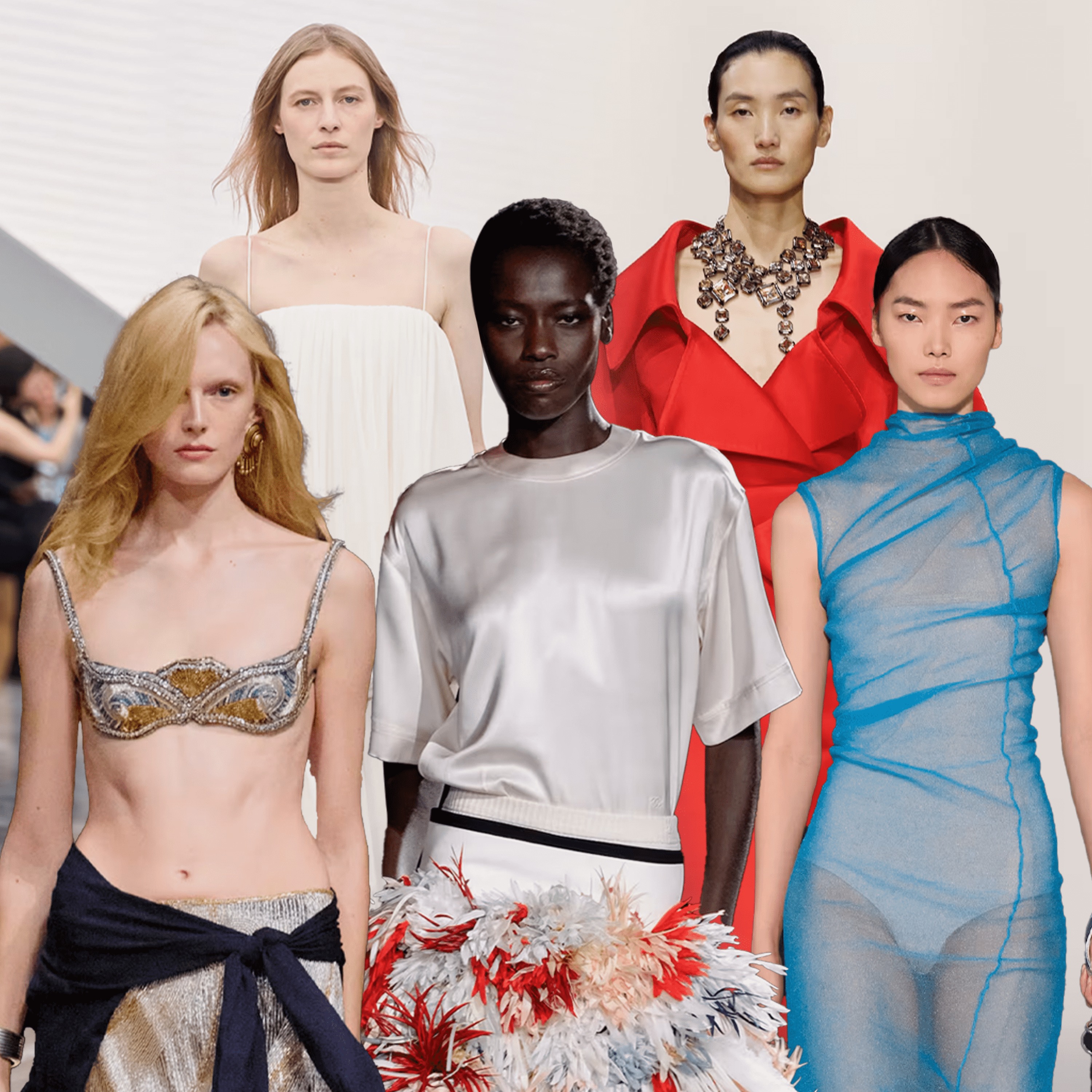
Tim Blanks and Imran Amed Reflect on the Biggest Fashion Month Ever
We’ve just returned from what was undoubtedly the biggest fashion month ever, a high-stakes season that saw new creative directors debut their visions for fresh creative leadership under the spotlight at Chanel, Dior, Jil Sander, Loewe, Jean Paul Gaultier — and many more.So what to make of it all? Much of it was about expectations. For some designers like Jonathan Anderson at Dior and Pierpoalo Piccioli at Balenciaga, expectations were running high making it almost impossible to please the industry and online critics. Others like Dario Vitale at Versace and Jack McCullough and Lazaro Hernandez at Loewe had been written off by some observers even before they showed — leaving them the opportunity to surprise, delight and overdeliver. Only one show seems to have unanimously impressed all around: Matthieu Blazy’s big debut at Chanel, the last big show at Paris Fashion Week.“It was the one show that incontrovertibly did what it had to do. Not just for the brand, but for the business, for the industry,” says Blanks. “And I think people could leave Paris on the second to last day on an upbeat note. Earlier in the week, some of the most anticipated shows, like Jonathan at Dior or Pierpaolo at Balenciaga had been incredibly polarizing, and I think there seems to be relatively universal agreement on Chanel.” This week on the BoF podcast, Imran Amed sits down with Tim Blanks to unpack the highlights of Fashion Month, the designer versus house debate, and why time and empathy matter this season. Key Insights: According to Blanks, Blazy “managed to do a Chanel that reflected [Coco Chanel], but also reflected his feelings about what she had done with his vocabulary, which is very craft-oriented, very experimental.” Crucially, Blazy struck a balance “between what Chanel was and what Chanel needs to be,” he adds. At Dior, Anderson opened with an audacious collaboration with filmmaker journalist Adam Curtis on a short film that blended fashion with slasher horror. “It was sort of an act of contextualisation for what he intends for the house,” says Blanks. Amed also welcomes Anderson’s measured exploration of the luxury house. “The Loewe that he built was built over time. It took 10 years. And so I think we should expect the same with him at Dior,” he says. “While maybe not everything in my view worked in that Dior show, I think that is the point because you learn from that.”For Duran Lantink, compatibility at Jean Paul Gaultier was never the issue. “His attitude to everything is so similar to Gaultier’s attitude. The sort of provocation, the sex games,” says Blanks. Yet he was left wanting more. “I wanted so much more from that show. And in the end, I did not feel that there was enough Gaultier or enough Duran.” Amid a debut-heavy season dominated by men, Sarah Burton’s second outing at Givenchy reads as a quiet counterpoint and a reminder of female authorship at the highest level. “She’s really got the imp of the perverse in her,” says Blanks, before praising a show that was “extremely elegant … I thought I could see women wanting those clothes. The way she elongated things was so flattering and simple.” He adds, “I really would love to see that collection take off.”Additional Resources:The Top 10 Shows of the SeasonDid Fashion’s Season of Change Actually Change Anything? Yes and No Hosted on Acast. See acast.com/privacy for more information.
Sports x Fashion: Who’s Really Winning?
From team-branded fashion shows to tunnel-walk capsules and luxury watch deals, sport and fashion are converging at speed. The NFL has rolled smaller licensing tie-ups into marquee partnerships, while the WNBA is emerging as a fertile ground for inventive brand-player collaborations. But alongside the growth is bloat: logo-slap collections, clearance-rack remnants and fuzzy KPIs.Senior correspondent Sheena Butler-Young and executive editor Brian Baskin are joined by BoF sports correspondent Mike Sykes to map the deals that resonate and the ones that miss — and how success of these partnerships are being measured beyond the momentary halo.Key Insights: The WNBA is a collaboration engine because players are the drivers, not passengers. “I think the WNBA right now is a breeding ground for some of these deals in part because the players are eager to find these other opportunities to spread their portfolio,” Sykes says. That unlocks new formats: partnerships “not just between teams and brands or the league and brands, but players themselves and the brands [that] manifest in really cool and unique ways.”Name, Image and Likeness (NIL) has supercharged women’s sports, and fashion is part of the bargaining. Sheena points out the 2021 shift when “college athletes could not monetise their name, image, or likeness” and then stars like “Angel Reese and Caitlin Clark were becoming brands in their own right.” That changes how teams and leagues engage players: “fashion deals can be a bargaining chip on both sides of that equation.”As sports and fashion collaborations become more ubiquitous, authentic propositions are needed to cut through the noise. As Butler-Young puts it, the best examples “take the collections seriously. They treat it like a real fashion product. ‘Anything will do’ – people see through that.” Sykes agrees: “To work with players, you have to work with teams that really want to do things the right way.” It has to make sense for the consumer, and when it doesn’t, the audience calls it out. “The Chelsea and OVO collection was kind of a logo-slap. Even the fans were like, ‘This isn’t it.’” For some brands and athletes involved in these collaborations, partnerships are judged on reach and relevance rather than immediate revenue as the key marker of success. Sykes points to the NFL x Veronica Beard blazers: “There’s still some of that product left and it’s 75 to 80 per cent discounted … you have to look at that as a failure.” Yet the league “takes a holistic view,” he says: even if one capsule doesn’t sell through, lessons on “what you produce, how much, where you produce it, who your core audiences are” feed the next partnership.Additional Resources:Sports and Fashion Are Tighter Than Ever. But Who’s Really Winning? Has Fashion’s Convergence With Sports Gone Too Far? How WNBA Players Are Using Merch to Underscore Their Value Hosted on Acast. See acast.com/privacy for more information.
Kiki McDonough on Changing How Women Buy and Wear Jewellery
Raised in a family of antique jewellery specialists, Kiki McDonough launched her namesake jewellery brand in 1985 with accessible pricing and pieces women could wear anywhere. Her early crystal-and-bow designs ended up in the V&A, while her growing client list came to include members of the royal family, and her brand has helped normalise women buying jewellery for themselves. At first, “a man would come in and buy a piece of jewellery for his wife,” she says. Soon the couple arrived together and she would choose. Today, the behaviour is normalised. “Now it’s just, ‘I need a pair of earrings for my daughter’s wedding’… I think it’s all changed.” This week on The BoF Podcast, McDonough joins BoF’s founder and CEO Imran Amed, to reflect on her resilience through recessions and a pandemic, the enduring appeal of coloured gemstones, and why jewellery’s longevity and the everyday joy it can inspire.Key Insights: When McDonough launched in 1985 she set out a clear price ladder that brought fine jewellery into everyday life. “I thought the prices should be under £1,000 … £95 to £950 and that’s where I started.” Her first pencil sketch became a heart crystal design that a Birmingham maker took “a punt” on and they’re now in the Victoria and Albert Museum. The moment matched a broader cultural shift. As she puts it, the 1980s had “an atmosphere … full of can-do” and women were “open to wearing something else.”She helped move jewellery from being gifted to being self purchased, a shift accelerated by social change and London’s Big Bang. At first, “a man would come in and buy a piece of jewellery for his wife,” she says. Soon the couple arrived together and she would choose. Today, the behaviour is normalised. “Now it’s just, ‘I need a pair of earrings for my daughter’s wedding’… I think it’s all changed.” McDonough says jewellery outperforms fashion because it carries both longevity and daily joy. Pieces become heirlooms that keep working across generations. “I’ve got lots of women now whose children are wearing the jewellery they bought from me 15 years ago,” she says. Four decades in, resilience and pacing have been McDonough’s strengths. “I’ve [been through] two recessions, a pandemic and 10 prime ministers,” she says, crediting “resilience, a sense of humour and common sense.” She built slowly and on her own terms. “People used to say to me how many shops have you got and I’d say, ‘I’ve got one shop and two children.’” The financial discipline needed for success, McDonough learned early. “Look after the pennies because the pounds look after themselves,” she says. Her advice to founders is to start carefully, test products, preserve cash and keep going. “It’s terribly important not to spend the money immediately … pace yourself,” because momentum that lasts beats scale for scale’s sake, she adds. Her last piece of wisdom? A good brand can outlive its founder. “I don’t believe that anyone is indispensable,” she says. Additional Resources:How Statement Earrings Became Generation Selfie’s Favourite Trend Queen Elizabeth II’s Style Legacy Hosted on Acast. See acast.com/privacy for more information.

Can Gen-Z Beauty Brands Grow Up?
Brands like Bubble, Starface and Byoma rode TikTok-native aesthetics to win Gen-Z hearts and Sephora shelf space with plush mascots, playful stickers and sensorial jelly textures. Founders close in age to their audience moved fast, crowd-sourced ideas and mastered algorithms. Now the oldest Gen Z consumers are nearing 30 and looking for fewer gimmicks and more proof that formulas work.In this episode, senior beauty correspondent Daniela Morosini unpacks what still resonates, where the “dopamine” look carries a credibility tax, and why channel strategy, product performance and smart casting matter more than ever.Key Insights: Gen Z brands broke through by moving at internet speed and co-creating with their audience. “These brands are all just so digitally native… and for a lot of them the founders were quite young themselves,” says Morosini. They were “small, scrappy businesses [with] shorter product launch cycles [and] really savvy marketing.” Crucially, they “did a lot of crowdsourcing, social listening, and were really plugged into internet forums,” so products felt made with, not just for, their audience.The ‘fun’ factor worked best online as visuals drove discovery: “Goopy, gloopy, sticky things… look good in a video. You see someone put that on their face and then you want to try it.” At the same time, expectations have climbed as “people are really quick to reject a product if it doesn’t perform exactly the way they want.” And bright, playful packaging can backfire for results-seekers: “Colourful, bright things we associate with play, silliness, youth and frivolity… you might think, ‘this is not a serious product.’”If stalwarts like Neutrogena and Clearasil have long dominated the teen aisle, why can’t today’s Gen-Z-first labels simply stay youth brands rather than trying to age up? As Morosini puts it, legacy names “have definitely ceded market share to some of these newer indies… these are brands you can find in every drugstore… [they’re] most teens’ or tweens’ introduction to the beauty category.” But “those brands are not cool,” and the Gen-Z pioneers “really want to be cool… and relevant,” not just “the thing that your mum might pick up… when you’re complaining about having a spot.” The challenge is clear: “it’s hard to be both legacy and cool.”Some labels are widening reach by changing where and what they sell. “Byoma went into some more premium retail pretty quickly,” Morosini notes, adding that “retailers really function as a marketing engine.” Others are broadening beyond a single hero. Ultimately, Morisini says survival hinges on utility. “It will come down to the brands that truly have replenishable products differentiated enough, at the right price point, and genuinely offer unique enough results that people will continue to return to them once any maybe the noise around the texture or the packaging has died down.”Additional Resources:Bubble Was Built on Gen Z. Now, It Must Grow Up. | BoF The Gen-Z Whisperer: How Julie Schott Made Acne a Laughing Matter | BoFHow to Keep the Gen-Z Fragrance Boom Going | BoF Hosted on Acast. See acast.com/privacy for more information.

Edward Buchanan on Being Written Out of Fashion History
Growing up in Ohio, Edward Buchanan always knew he would have a creative career.That interest first led him to art school at CCAD in Cleveland and then to the Parsons School of Design in New York, where he juggled jobs in visual merchandising with school and the city’s inspiring, pulsating nightlife. He got his big break in fashion when he was hired as the first design director at Bottega Veneta, which was then a small family-run business led by Vittorio and Lara Moltedo. He relocated to Italy in 1995 and has been building a professional career in fashion ever since, one of the few Black creatives in the Italian fashion system giving him a unique vantage point on the value of inclusivity.In this episode of The BoF Podcast, BoF founder and CEO Imran Amed sits down with Edward to retrace the designer’s formative years, look back at his time at Bottega Veneta and quiz him on how young creatives and people of colour can succeed in fashion today.Key Insights: “When I was at Parsons, I excelled. I really loved being there and learning, the core. The pattern making, the cutting, the fabric … the technical aspects of design I was just obsessed with,” Buchanan says. Even his time at Bottega was a learning process, “I was really learning luxury goods while I was working at Bottega Veneta … I went in with taste and an idea of understanding what this brand is or potentially what this could be.”After leaving Bottega Veneta, Buchanan wasn’t in contact with the brand for a long time; he felt his work went unrecognised. However, when he was included in the brand’s campaign to mark the 50th anniversary of the Intrecciato, a new relationship with the brand formed. “I thought that this is an honest way of saying you did that job, you were here, and we respect the work that you did.”Despite strides made, Buchanan believes the fashion industry still has a way to go in regards to diversity, particularly in Italy. Buchanan says he will always advocate for people of colour, “I feel like if I'm not encouraged and charged to speak in first person about my experience and reach out my hand to the others that look like me or are like me … then there's no one else that's gonna do it.”Buchanan encourages young creatives to not just study design, but the other aspects of fashion, too. “It’s necessary to be multifaceted as a creative and know the business … I always instill in my students [to] find the honesty in your design, find what is the thing that you really believe in.”Additional Resources:Black, Creative and Collaborating Across GenerationsProfile Hosted on Acast. See acast.com/privacy for more information.

Why Gen Z Isn’t Buying Luxury’s Story
Luxury is struggling to connect with Gen Z, a cohort raised on TikTok and YouTube who research before they buy, shop vintage and resale as a first stop, and question whether soaring prices match product quality. While Millennials fuelled the last luxury boom via streetwear crossovers and scarcity-led drops, today’s younger shoppers are more value-driven and sceptical of polished brand theatre. In-store, rigid service models feel alien to a generation used to conversational creators.This episode of The Debrief explores what “worth it” means to Gen Z and how brands can earn it. Greater transparency on materials and craftsmanship, content that feels real rather than aspirational, and participation in the second-hand ecosystem will be critical to rebuilding trust and lifetime value with younger consumers. Key Insights: Gen Z are not tuning out of fashion, they’re interrogating it. As Takanashi puts it, “[Gen Z] are so savvy. They can just look up what the Louis Vuitton bag is made of and see it’s actually canvas… Should I really spend a thousand dollars on that? Is there an alternative?” The backlash is philosophical as well as financial. Kwon says there’s a pervasive idea that luxury conglomerates are just trying to squeeze as much profit as possible. “There is real ire and resentment among Gen Z around price hikes. I think we’re a generation that cares a lot about value for dollar,” she says. When the price, materials and narrative do not align, younger shoppers default to vintage, resale or opting out.Price justification starts with transparency and proof. “Whether it's a thousand-dollar handbag or a $100 candle, you have to explain why luxury costs what it costs, that there’s this craftsmanship and heritage,” says Takanashi. But storytelling alone will not close the sale. “Even then, it’s just so hard to convince that customer that craftsmanship is worth the money. You also have to play into their cultural interests and what they’re passionate about.” That means moving beyond heritage talking points to show living communities, real processes and credible creatives who make the brand feel current.Digitally native Gen Z want real content, not polished marketing campaigns. “Our generation grew up on YouTube, ‘how to build an outfit 101’ – that’s how we got our style advice, not from magazines,” says Kwon, which is why they still “look to influencers and social media for trend analysis.” The tone matters as much as the channel. Takanashi argues that content should “feel real, like an unboxing, not a glossy marketing campaign. … Something that just feels like anyone could make it.” The formats that win are lo-fi, conversational and useful, with creators who will praise and critique in the same breath.Many first encounters with luxury now happen through second-hand, so brands need to embrace that ecosystem and give clear on-ramps back to full price. The product and the pitch must both feel meaningful. Kwon says Gen Z still wants “a very beautiful story” and to “feel like they’re a part of a movement.”Additional Resources:Why Luxury Needs to Rethink How It Speaks to Gen Z | BoF The Great Fashion Reset | Can Designer Revamps Save Fashion? | BoF Hosted on Acast. See acast.com/privacy for more information.

Glenn Martens: ‘Social Media Has Turned Fashion into the Hunger Games’
Belgian designer Glenn Martens grew up in Bruges, studied in Antwerp and cut his teeth in Paris, where lean years taught him every role from pattern cutting to PR. At Y/Project, he turned constraints into modular, shape-shifting design. At Diesel, he reset the brand around its founding spirit of joy, cheekiness and denim, replacing muddled codes with a clear manifesto and democratic shows that speak to a global community. Now balancing Diesel with Maison Margiela, Martens argues that fashion should make people happy while resisting the dopamine churn of instant judgement.“We are just consuming visuals and we don't really have the time to go deep into the clothes, the storytelling, the construction, where it comes from. It just needs to be like a hit. It gets a bit more superficial,” he shares with Imran Amed, BoF founder and CEO. “In 2025, a creative director has to be a socialite, has to be the king of social media and there's so many more things that all my colleagues and I have to do outside of that runway. The beauty of fashion is it's a process and it's a build-up and it’s not happening in one show – this is happening in three, four, five shows. So we need to respect that and celebrate that.”This week on The BoF Podcast, Amed sits down with Martens to talk about learning every job in the studio, rebuilding Diesel around its founding values, as well as the pressure and possibility of this high-stakes season.Key Insights: Martens argues that the industry’s chase for quick hits has flattened nuance, yet he is determined to hold the line on depth and craft. “There is definitely a big part of me that loves to deep-dive into storytelling and construction, that likes to challenge construction and try to find new ways to create beauty and new ways to create clothes. I am very easily bored; I need to challenge myself. I love experimentation and that makes me happy.”At Diesel, Martens began by reconnecting the house to its core DNA. “My biggest thing I did was resetting the whole thing and reminding everybody why Diesel was big in the first place. And I think that is something that is really important to never forget, that the success of a brand is the core reason why the brand is there and we should always connect to that and stay close to that.” He underscores the scale and breadth of the audience while keeping a unified voice. “We are so diverse in our markets, so we are basically talking to everybody. Every single person in the world could, in theory, be a Diesel person, but we do that with one message and with one collection.”Martens is now continuing to turn the runway into a democratic platform that includes the wider community, not just the front row. “I think a fashion show for us is very important because it accelerates the awareness of the brand and the direction you want to go. [Diesel] is talking about democracy. It is at heart a lifestyle brand.” For Diesel’s Spring/Summer 2026 show next week, Martens is pushing shows into public space to meet people where they are. “The launch of that collection will be in the streets of Milan. It is going to be a three-and-a-half-hour egg hunt, showing the whole diversity of the town, and everybody can participate.” Additional Resources:Glenn Martens | BoF 500 | The People Shaping the Global Fashion Industry Glenn Martens Has Come to Save Us | BoF Hosted on Acast. See acast.com/privacy for more information.

The Great Fashion Reset: Can New Designers Still Build a Business?
Department stores and major e-tailers once incubated new labels with consistent buys and patience; today those channels are shrinking or unstable. Social platforms still create viral moments, but conversion is patchy and fast-fashion copycats shorten the runway for hit products. Against that backdrop, some designers are rewiring distribution, tightening assortments and adding more accessible entry points, while cultivating closer, direct relationships with customers and specialty boutiques.The stakes are high industry-wide: without a healthy pipeline of young labels, fashion’s creative engine risks stalling. On this episode of The Debrief, BoF correspondent Joan Kennedy joins senior correspondent Sheena Butler-Young to discuss how emerging designers are rebuilding their product pipeline around creativity to survive the great fashion reset.Key Insights: Multi-brand partners that once incubated emerging brands are now demanding instant results, just as e-commerce economics have worsened. As Kennedy puts it, “Wholesalers and retailers want to see performance from the get-go. There's more pressure to just be in a store, be slotted in, immediately perform. At the same time, we've seen e-commerce fall apart under the rising costs of everything.” The pressure is systemic: “These retailers are really under pressure. After a few decades of being willing to take more risks, investors haven't seen the return on that. So it's hard to blame anybody; it's just what fashion is going through right now.”Visibility can soar while sales lag, creating a conversion gap designers must close with clearer paths to purchase. “Fashion has been this industry of smoke and mirrors, but in recent years that's been really exacerbated by the fashion hype machine,” Kennedy says. “It has led to this moment where designers have a lot of awareness on social media, not much of a business.” Many have “built these really big audiences online, [who] don't have ways to buy into the brand, or just don't buy the brand.”Without dependable wholesale, labels are rebuilding their direct-to-consumer pipeline through smaller boutiques and sharper merchandising. “A trend I've noticed is that more brands are going back to the trunk shows and creating intimate moments with their shoppers,” Kennedy notes. “Specialty stores and independent boutiques have a very close relationship with their own shoppers, too. It's a little bit closer to demand and you can build a good relationship with the buyer there.” On product, brands like New York-based Area, known for its crystal-embellished clothing, are adding accessible entries: “They’re introducing this line of basics with little rhinestones on them. It’s just more fun dresses at a more accessible price point.”As this fashion season unfolds, Kennedy points to creativity as the competitive edge. “The source of optimism is how evident the importance of creativity is to this industry and how key that is to fuelling sales and building good businesses,” she says. “You have to have a very specific product and focus your offering,” and remember that “if [consumers] are going to spend, they want to spend on something that means a lot to them and really stands out – something that is really unique.”Additional Resources:The Great Fashion Reset | Is Fashion Failing Emerging Designers? | BoF Hosted on Acast. See acast.com/privacy for more information.