
The Business of Fashion Podcast
660 episodes — Page 4 of 14
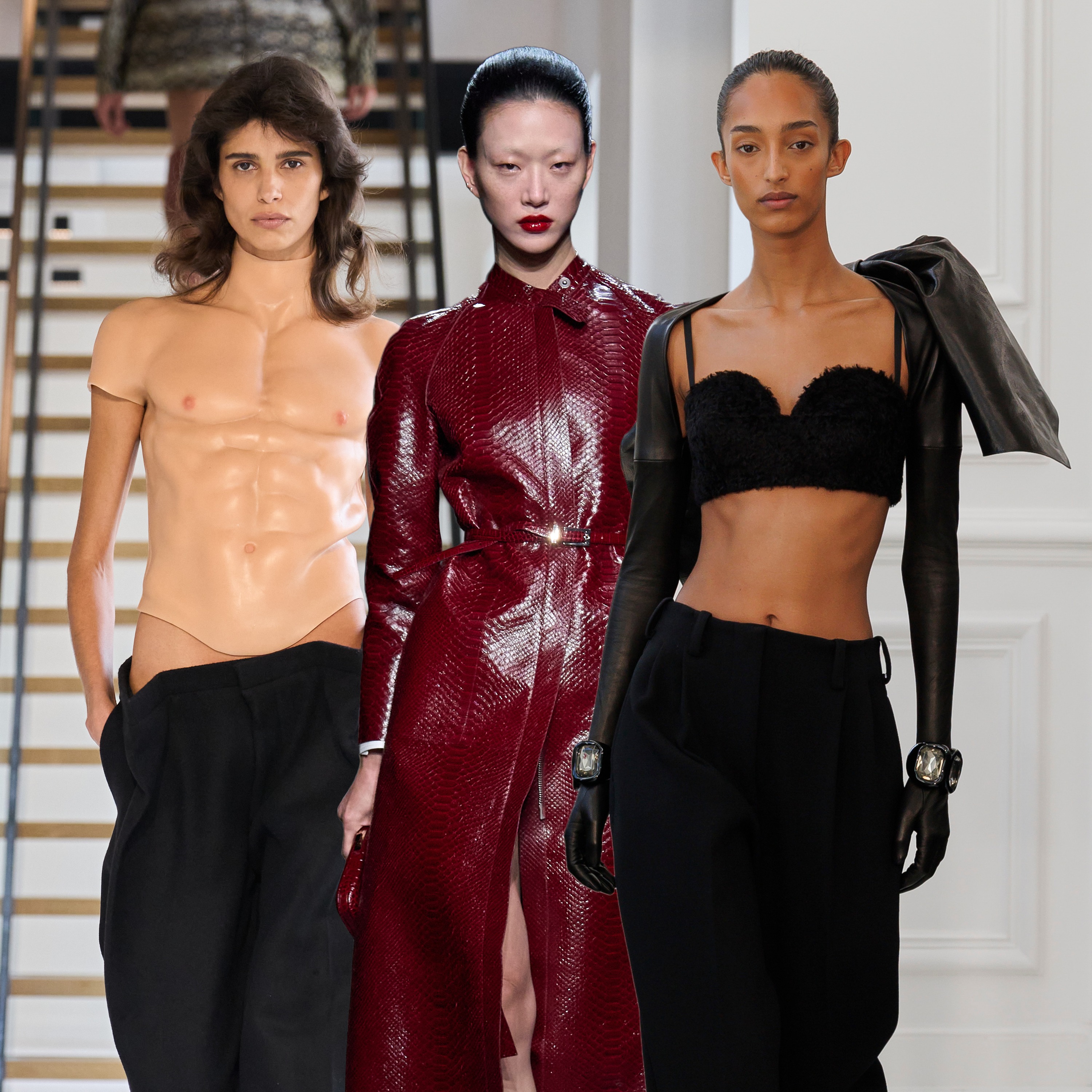
Tim Blanks and Imran Amed Reflect on Autumn/Winter 2025
This season, all eyes were on the debuts of Haider Ackermann at Tom Ford and Sarah Burton at Givenchy. Meanwhile, designs at Alaïa and Valentino continued to push boundaries with daring silhouettes that either stood away from the body or felt purposely incomplete. Behind the new faces and unconventional shapes was a deeper exploration of eroticism. From Ackermann’s sensual glamour at Tom Ford to what Tim Blanks calls the “quiet eroticism” of Burton’s Givenchy, designers seemed united by a playful fascination with the body — and a desire to subtly challenge its boundaries.“Fashion is a very fetishistic art form,” says Tim Blanks, BoF’s editor-at-large. “It has its fixations on the body and the way it fetishizes objects, but fashion is about fetishizing beauty and ugliness. A lot of these different things have been coming up over the last few years.”Following the conclusion of the Autumn/Winter 2025 shows, Blanks sits down with BoF founder and editor-in-chief Imran Amed to discuss the highlights of fashion month.Key Insights: Across the season, there was plenty of body on display. At Alaïa, Pieter Mulier presented striking new silhouettes that played with unusual proportions, creating shapes that stood away from the body. These exaggerated forms, described vividly by Amed as "body condoms," challenged the relationship between clothes and the body. At Duran Lantink, prosthetic pieces humorously toyed with ideas of eroticism. “What are they trying to say with these clothes?” asks Blanks. “There is a new body consciousness and people want to show off their svelte new forms.”Ackermann’s debut successfully merged Tom Ford’s famed sexual glamour with a reflective, intimate approach. “Tom is a sexualist and Haider is a sensualist, but there was a compatibility there in the erotic rigour in both of their work,” says Blanks. “I thought Haider did a wonderful job of doing a Haider Ackermann for Tom Ford collection; honouring the essence of one, but really bringing the dynamism of the new.”Also facing a house with a storied heritage, Burton’s debut collection for Givenchy returned to its earliest codes and patterns. “We haven't seen something that's projecting Givenchy into the future but also really grounded in the past. And I think that's what clicked, because the other attempts were either too much in the future and disconnected from the past, or too much in the past and not taking it anywhere new,” says Amed. “She proved what a great designer she is,” adds Blanks.Watching from home, Blanks was struck by the step-and-repeat that preceded the Off-White show, where attendees arrived in bold, expressive looks from the brand’s current collection. This real-life display of style, Blanks notes, “softened him up” for the actual runway. “You see the clothes on real people, so it's not like, ‘Who would wear this?’” he says. Amed highlights this as an added opportunity to capture customers watching online: “There's a step-and-repeat for what's available to buy now, and then there's the show for what's available for the future.”Additional Resources:Sarah Burton’s Givenchy Debut: First Principles Take FlightAckermann and Ford: A Deliciously Dangerous Liaison Hosted on Acast. See acast.com/privacy for more information.

Can You Sell Sexual Wellness Without Sex?
Executive editor Brian Baskin and senior correspondent Sheena Butler-Young speak with editorial associate Yola Mzizi about how regulatory restrictions and cultural conservatism are forcing sexual wellness brands to pivot their messaging in 2025. Hosted on Acast. See acast.com/privacy for more information.
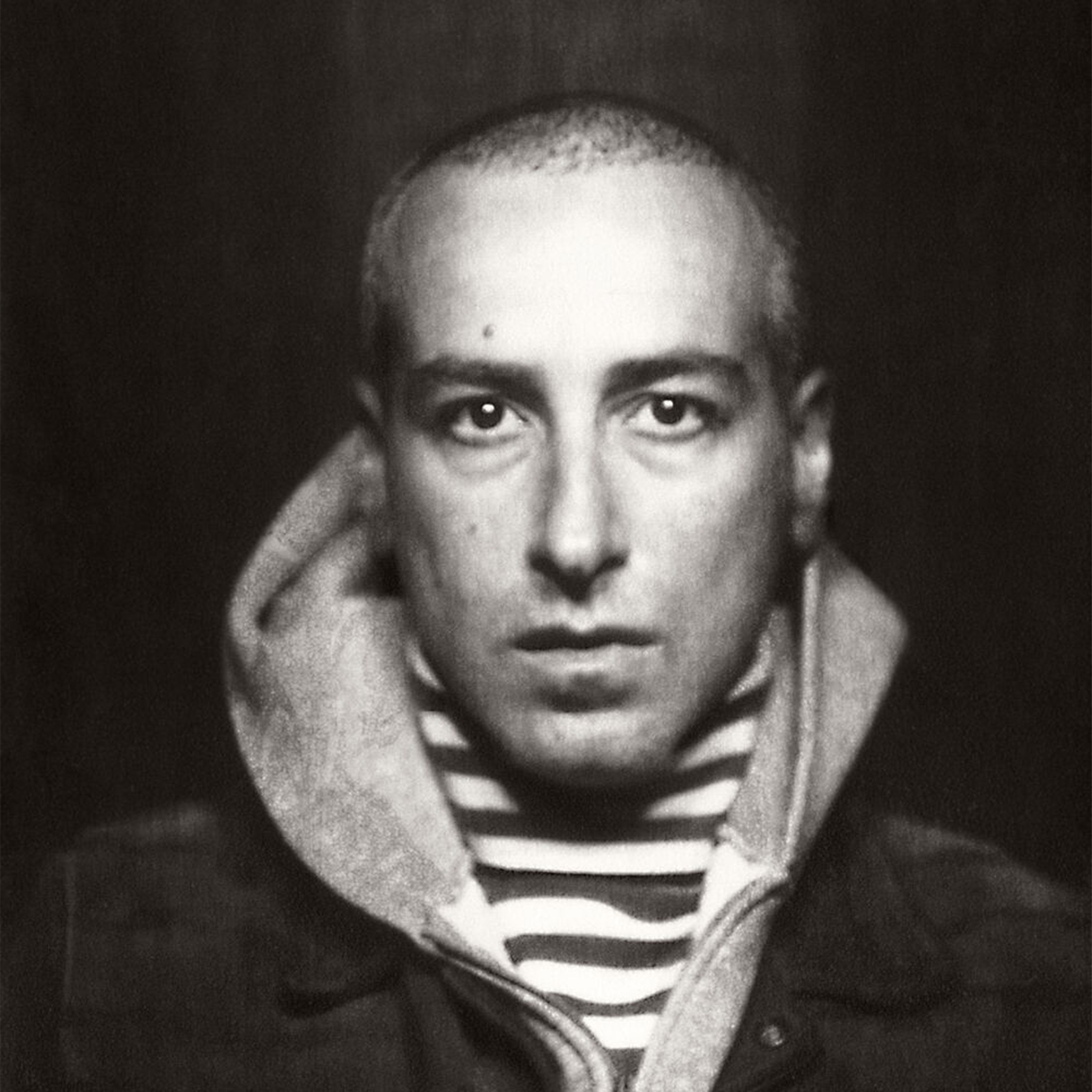
Francesco Risso Says Fashion Should Slow Down to Find Its Magic Again
Born in Sardinia on a sailing boat to self-described “adventurous” parents, Francesco Risso grew up in an environment that fostered independence, spontaneity and a deep need to create. After formative years at Polimoda, FIT and Central Saint Martins — where he studied under the late Louise Wilson — he joined Prada, learning firsthand how to fuse conceptual exploration with a product that resonates in everyday life.Now at Marni, Risso continues to embrace a method he likens to an artist’s studio, championing bold experimentation and surrounding himself with collaborators who push each other to new heights of creativity. “Creativity is … in the way we give love to the things that we make and then we give to people. I feel I don’t see so much of that love around,” says Risso. “We have to inject into products a strong and beautiful sense of making. That requires craft, it requires skills, it requires a lot of fatigue, it requires discipline.”Risso joins BoF founder and CEO Imran Amed to explore how his unconventional childhood shaped his creative approach, why discipline and craft remain vital to fashion, and how meaningful collaboration can expand the boundaries of what’s possible.Key Insights: Growing up in a busy, non-traditional household, Risso learned to express himself by altering and reconstructing clothing he found in family closets. “I started to develop this need to make with my hands as a means to communicate,” he says. “I would find something in my grandmother’s closet, start to disrupt it and collage it to something from my sister’s wardrobe and we have a new piece.” This early experimentation laid the groundwork for his vision of and approach to design.From Louise Wilson at Central Saint Martins to Miuccia Prada, Risso has absorbed the value of rigorous research, conceptual thinking and extended ideation. “You have to rely on your own strengths and your own capability to go and study, to go and research, to go and find your things,” he says. “That is key to me, to become a designer with a voice.”Whether partnering with artists through an informal “residency” or collaborating with brands like Hoka, Risso insists that a great tie-up is never about simply sticking art on a T-shirt or rushing a gimmick. “Processes are about learning from each other … and that generates a body of work that then becomes either art or clothes.” His focus on genuine exchange expands the creative horizon for both Marni and its collaborators.Risso’s advice to emerging designers is to appreciate the fundamentals of making in favour of more superficial aspirations. “I dare young people to be more focused on engaging with the making, rather than just projecting in the future,” he says. “A strong sense of making requires craft, it requires skills, it requires a lot of fatigue, it requires discipline.” This hands-on grounding, in his view, is essential for developing a lasting, meaningful design practice.Additional Resources:Francesco Risso | BoF 500 | The People Shaping the Global Fashion Industry Exclusive: Inside Hoka’s Fashion Ambitions | BoFBackstage Pass | Marni and the Thread of Beauty | BoF Hosted on Acast. See acast.com/privacy for more information.

Can Farfetch Be Fixed?
Once hailed as a pioneering platform for online luxury, Farfetch is now undergoing a dramatic operational overhaul. The South Korean e-commerce giant Coupang acquired the luxury marketplace in 2023, rescuing it from near-bankruptcy. Since then, Coupang has implemented sweeping cost-cutting measures that have narrowed losses significantly, but are eroding Farfetch’s footing in the luxury e-commerce space and alienating its core customers. DTC correspondent Malique Morris joins Executive Editor Brian Baskin and Senior Correspondent Sheena Butler-Young to examine Farfetch’s path to profitability.Key Insights: Coupang's relentless drive to push Farfetch toward profitability clashes with the premium expectations of luxury shoppers as cost-cutting is prioritised over customer experience. “Coupang is so hyper‐focused on getting Farfetch to profitability ... and when you're dealing with people who are spending $100,000 a year on the marketplace, it doesn't quite work that way,” explains Morris. “They’ve also cut teams dedicated to working with Farfetch’s VIP customers, who can make up as much as 30% of the company’s annual sales.” This tension between operational efficiency and delivering a high-end experience is at the heart of Farfetch's challenges.Farfetch’s “sold by Farfetch” programme highlights its growing disconnect with luxury brands. As luxury powerhouses like Celine, Alaia and Kering – which includes Gucci, Saint Laurent and Bottega Veneta — pull their collections from the platform, Farfetch has turned to a grey market tactic to maintain its inventory. “Instead of sending the goods straight from the retailers to the customers, the items are now going to a warehouse in Amsterdam to be repackaged,” says Morris. “It's not only a knock to Farfetch's relationship with top brands, but it also risks deteriorating customer service.” This move, intended to sidestep brand resistance risks undermining transparency and trust among high-end partners.Farfetch's biggest superpower is that many independent boutiques still rely on it. “If Farfetch can at least do right by those retail partners, then it probably has a shot of stabilising its footing in online luxury,” says Morris. “Coupang will eventually have to allow Farfetch to reinvest in their relationships with customers and brands. That might cost them a couple million, but hopefully with the renewed focus on just the marketplace, Farfetch won't go back into the red in the process.”Additional Resources:Inside Coupang’s Tug of War With Farfetch | BoFFarfetch Owner Coupang: Everything You Need to Know | BoF Hosted on Acast. See acast.com/privacy for more information.
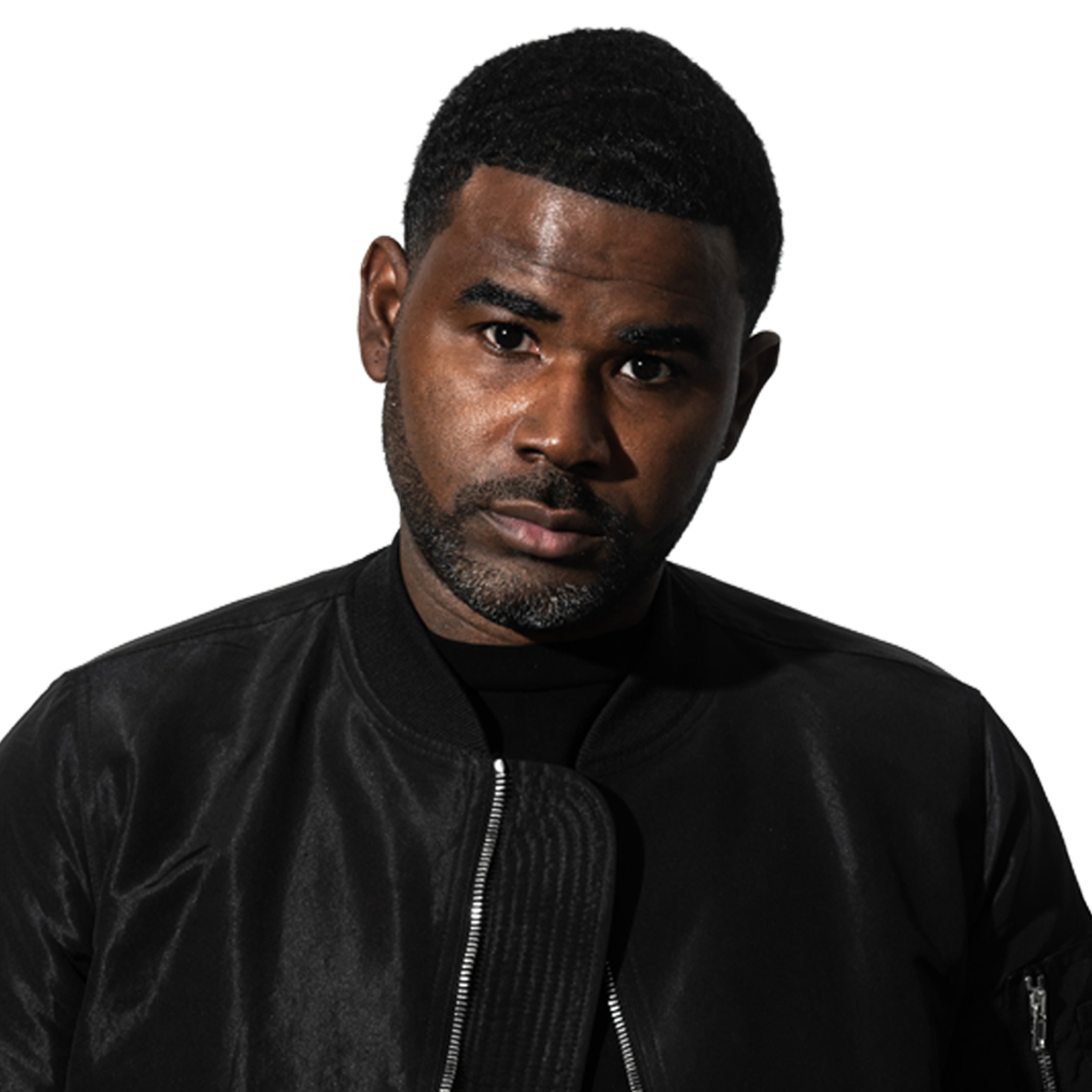
James Whitner on Culture, Community and Building Brands with Purpose
James Whitner — founder of The Whitaker Group and the visionary behind retailers such as A Ma Maniére and Social Status — reveals how culture, purpose, and empathy drive his approach to business. Whitner witnessed firsthand how marginalised communities often face limited options, shaping his commitment to serving communities typically overlooked by the fashion industry. “I think what helped me understand life is difficult, it's just seeing a difficult life, right? Watching people struggle and seeing that there is privilege in pain,” says Whitner, about growing up in Pittsburgh, Pennsylvania. “When I look at what we’re creating now, it has purpose and is about standing up Black culture at the centre,” Whitner adds. “Everything is about real experiences and connections to people.”This week on the BoF Podcast, founder and CEO Imran Amed sits down with Whitner to explore his journey, learn about the driving force behind The Whitaker Group’s community-centric retail experiences, and understand why authenticity and cultural connection are non-negotiables in today’s fashion landscape.Key Insights: Intentionality and human connection are integral to James Whitner’s approach to retail spaces. Rather than focusing solely on product or profit, he strives to shape how people feel and engage with his brands. “We want to be really intentional about how we make humans feel, our connection to humanity, and how we can build a community,” he explains, emphasising that empathy and shared purpose can help to forge vibrant, long-lasting communities.Whitner also contends that building authentic connections starts with recognising the integral role of culture and purpose. “We sit in brand experiences and purpose because you can't leave culture out. I think everything we do is centred in culture,” he says. A key to Whitner’s success is resisting the temptation to be “for everybody.” Instead, he focuses on aligning with partners who share his vision for serving specific audiences with integrity. “If you want to work with brands who want to be for everybody, that means you’re for nobody,” he explains.Whitner champions an unwavering optimism that stays intact even amid shifting political headwinds. “We have to wake up and work and we have to be optimistic about the things that we can accomplish. If not, we've already lost because an administration change doesn't mean that my feelings around the work we're doing has changed and it doesn't mean that we can't be as impactful as we've always been.”Additional Resources:Streetwear Maven James Whitner Launches A Ma Maniére’s First In-House Line | BoFWhere Are Fashion’s Black CEOs? | BoF Hosted on Acast. See acast.com/privacy for more information.

Why Can’t Fashion Fix Its Labour Exploitation Problem?
The revelation this year of child labour in India’s cotton fields and modern-day slavery in Taiwanese garment factories is the latest scandal concerning worker treatment in fashion’s supply chain. New abuses keep emerging despite efforts by brands, manufacturers, activists, and governments to set clear labour guidelines. Watchdog groups try new tactics to combat the problem, but they face systemic forces far beyond fashion.Sustainability editor Sarah Kent joins executive editor Brian Baskin and senior correspondent Sheena Butler-Young to discuss the problematic labour dynamics underpinning the fashion system.Key Insights: Persistent abuse in fashion’s supply chains is not merely about isolated incidents but reflects deep-rooted socio-economic challenges. In India’s cotton industry, for example, many farmworkers come from extremely marginalised and impoverished communities where exploitation is a norm rather than an exception. Families often work together under hazardous conditions, with little oversight or recourse. “So you're not just dealing with an issue of exploitation that is coming from the [fashion] industry, you're dealing with a culture that is ingrained in the way that community works – and that is a very difficult, complicated thing to try and manage, ” explains Kent. Transparency in supply chains remains critical. Despite decades of advocacy, many brands struggle to verify the origins of their cotton. The global cotton supply chain’s complexity—where materials pass through multiple suppliers and traders—makes tracing raw cotton back to its source extremely difficult. “The traders will have been getting the cotton from ginners who will have got raw cotton from … maybe hundreds of thousands of small family farms aggregated it, ginned it, sold it onto a trader who then sells it up through the supply chain. So by the time it even gets to a spinning factory, tracing it back to the farm where it came from is really, really difficult,” says Kent.In Taiwan’s textile industry, systemic issues like excessive recruitment fees burden migrant workers, yet change is stalling. Despite growing awareness and repeated calls for reform, manufacturers have little incentive to alter longstanding practices without coordinated industry action and regulatory intervention. As Kent notes, “Without other brands operating in Taiwan coming together and trying to do the same thing, the industry as a whole isn't going to move.” And without regulatory shifts, manufacturers have little reason to remove recruitment fee burdens from workers.Consumer trust in ethical claims is vital for brands that present themselves as responsible. However, when ethical certifications and claims are diluted by inconsistent practices and opaque supply chains, consumers quickly lose faith. This erosion of trust can undermine efforts to promote responsible consumption. “If consumers lose trust in what is meant to be a signifier of doing better, then you risk people not caring at all,” Kent warns. “No one's going to pay more for a product that promises to be more responsible and more ethical when it's when they don't believe that it is.”Additional Resources:‘Ethical’ Cotton Is Being Picked by Child Labourers in India, Watchdog Finds | BoFWhy Can’t Fashion Eliminate Labour Exploitation From Its Supply Chains? | BoF Hosted on Acast. See acast.com/privacy for more information.

Giles Duley Shares a New Lens on Purpose
Giles Duley began his photography career at an enviable pinnacle, shooting for GQ and Vogue and even touring with Oasis. Despite this early success, he found himself unfulfilled by the culture and sought a greater sense of purpose. Over time, his lens shifted from backstage glamour to the frontlines of conflict, where he began documenting the impact of war on ordinary lives. A life-altering moment came in Afghanistan when an IED explosion claimed three of his limbs, yet Duley returned to conflict zones with a renewed commitment to capturing stories of love and resilience.“There is a connection from where I started to where I am now which is stories and empathy,” he says. “There’s the story, there’s the storyteller, and then there’s the amplifier. And what brands and individuals can do is be those amplifiers to make sure those stories are heard around the world. … I've realised the way I live my best life is to make sure others are living their best life – and that is my purpose.” Through his Legacy of War Foundation, Giles demonstrates how creativity and empathy can break down barriers, urging each of us to use our own platforms and talents to enact meaningful change.Key Insights: Duley documents conflict zones, but he views his work through a radically different lens: “I’m not a war photographer. I photograph love,” he says, highlighting ordinary moments that reveal our shared humanity: “a grandmother brushing her granddaughter’s hair, a mother feeding her baby, a father on the floor doing lessons with his kids.” Though Duley lost three limbs after stepping on an IED in Afghanistan, he refused to let that trauma define his future. “The next day I woke up and I said, ‘I will never think about the things I can’t do, but I will focus on what I can and I will be the very best at that,’” he recalls, referring to the mantra that has guided him ever since. Duley went on to found an organisation that offers direct support to conflict-affected communities — underscoring his conviction that real change demands both bearing witness and taking action.Duley has faced enormous challenges in conflict zones and through personal injury, but he insists that creativity can outlast even the harshest setbacks. “As creative people, even in ultimate lockdown, we cannot be stopped,” he says. “Trust me, there is no barrier that can stop you … because creativity is greater than anything else.” This mindset, forged in dire circumstances, drives his commitment to show that imagination can break through the boundaries of physical limitations and societal constraints alike.Duley dedicates himself to telling the stories of conflict-affected communities, yet he believes the real impact comes from those who amplify these narratives. “There’s the story, there’s the storyteller, and then there’s the amplifier. What brands and individuals can do is be those amplifiers to make sure those stories are heard around the world,” he says. As for his own driving force, Duley affirms, “The way I live my best life is to make sure others are living their best life. And that is my purpose.”Additional Resources:BoF VOICES 2024: The Power of Purpose Hosted on Acast. See acast.com/privacy for more information.

Can Kering Fix Gucci?
Gucci has long been the shining star of Kering’s luxury portfolio, but the brand's recent struggles have exposed weaknesses in the conglomerate’s position. Gucci’s sales plummeted 24 percent in the fourth quarter of 2024, dragging Kering’s overall performance down by 12 percent. The shock departure of Creative Director Sabato De Sarno after less than two years only deepens the group’s instability.Luxury editor Robert Williams joins executive editor Brian Baskin and senior correspondent Sheena Butler-Young to discuss how Gucci’s downturn is affecting Kering’s broader portfolio, why its attempt at a creative reset didn’t resonate, and what’s next for the group as it searches for a new vision.Key Insights: Gucci's downturn has been severe, with sales falling by almost a quarter in 2024. This dramatic slide highlights the challenge of reinvigorating the brand. “[Gucci] has had a few really big booms, but then also some pretty big busts afterward. That creates additional complications for the group and how much they're able to invest in acquiring new brands, in developing the brands they have. And honestly, to also just continue to exist,” says Williams.Gucci’s identity has become muddled as it leans too heavily on its heritage, potentially limiting its appeal. “Gucci can stand for a lot of things and I think that's where they got a bit confused. It's the biggest Italian luxury brand and maybe they started to think that it was more of a heritage house than it should be,” Williams explains. Williams outlines a protective strategy where the group is preemptively selling off valuable real estate. He cites the sale of luxury jewellery house Boucheron headquarters and flagship store on Place Vendôme, stating, "choosing to cash in on the fact that this building is worth a lot of money is a bit worrying that they feel the need to get that treasury right now." Gucci’s potential for a rapid rebound hinges on securing the right creative leadership to tell a compelling story of the brand and leveraging its extensive assets. “I think real potential for the rebound is there if they can get the right person in place just to tell a very convincing fashion story. It can go very high, very fast again,” Williams says. “They have a lot of real estate, they have a lot of stores in great locations and they have a whole supply chain behind them that's really like rooting for their comeback because it's the biggest client for so many suppliers in the Italian fashion system.”Additional Resources: Can Kering Bounce Back From Its ‘Annus Horribilis’? | BoF The Problems with Gucci and Dior | BoF Hosted on Acast. See acast.com/privacy for more information.
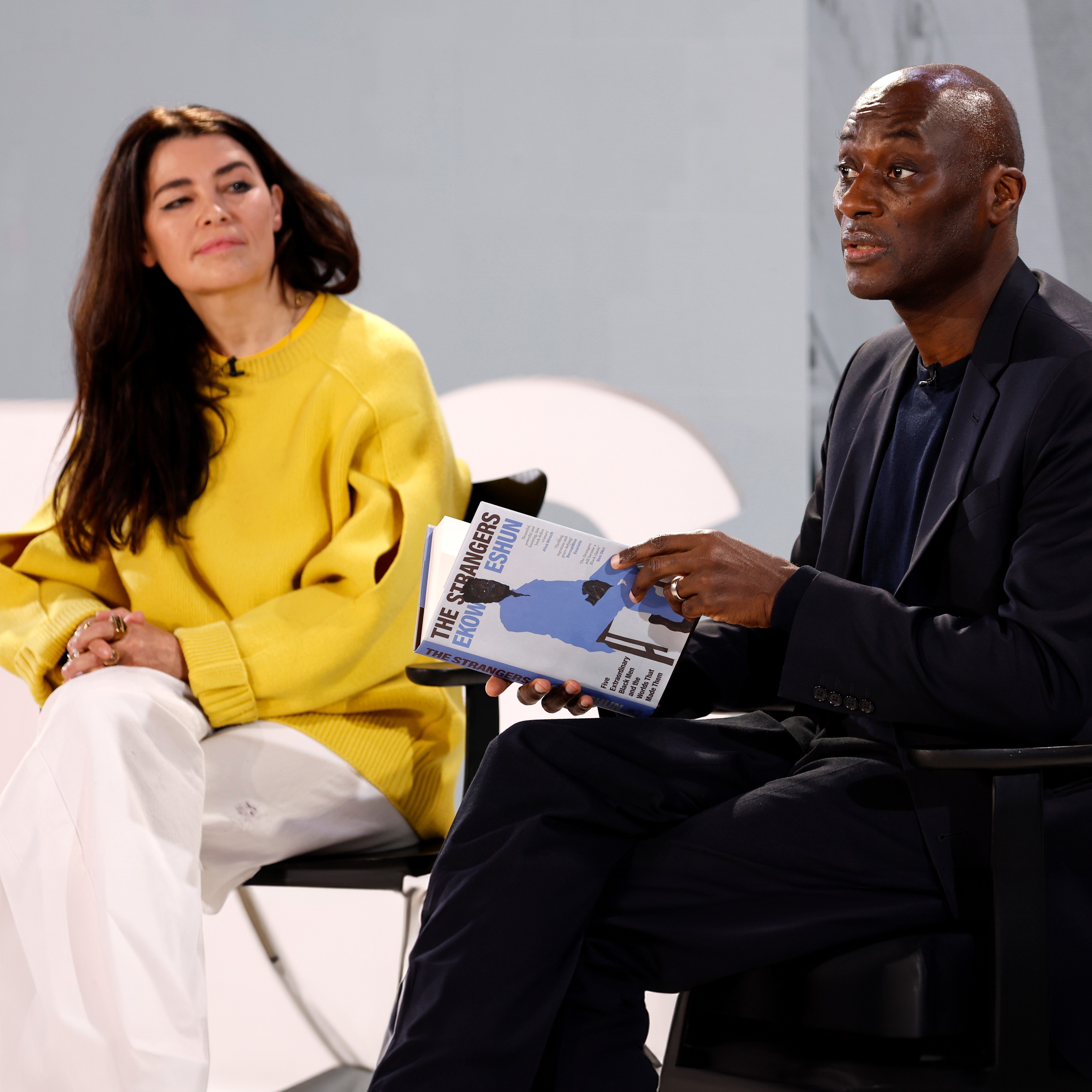
Es Devlin and Ekow Eshun on Belonging, Otherness and Identity
In an intimate conversation at BoF VOICES 2024, artist and stage designer Es Devlin and writer and cultural curator Ekow Eshun discuss the transformative potential of human connection. Emerging from a desire to confront her own biases, Devlin’s “Congregation” project invited 50 Londoners from immigrant backgrounds to be drawn and displayed inside St. Mary le Strand church in London. Eshun’s new book, “The Strangers”, likewise interrogates racial identity and belonging through the stories of five Black men spanning centuries and continents.“I'm not the same person at all,” says Devlin, reflecting on her experience. “I'm a bit more raw as a consequence of writing [The Strangers] because … you have to open yourself up to pain and fraughtness,” adds Eshun. Devlin and Eshun investigate how “otherness” shapes our sense of belonging and argue that true understanding requires a radical willingness to open ourselves to one another — and, in the process, rediscover parts of ourselves.Key Insights: For Devlin, bridging cultural divides begins with a fearless self-examination: “I wanted to encounter my own racism, my own bias, my own separation.” Considering how certain immigrants are welcomed while others are rejected, she admits, “If it's at work in my community, it must be at work in me. It must be work in my very person. Whether I think it is or not, I must encounter it.”Creative inquiry can be a path to self-discovery. “Almost any creative exercise in the end becomes about one trying to meet what’s inside you," Eshun explains. "It's easy enough to say, 'We're all one interconnected species.' But to do that, you have to put in some work along the way. That work is self-revelatory, but it's also a work of active imagination and broad empathy."For Eshun, genuine unity demands more than rhetoric—it requires a purposeful willingness to understand and embrace our differences. “It's easy enough to say, we're all one people, … but to do that, you have to do some work along the way. That work is a self revelatory work, but it's also a work of active imagination. It's also a work of broad empathy. It's also a presumption of intimacy or connection, which I think is sometimes hard to get to.”Additional Resources:BoF VOICES 2024: Global Culture and Creativity The BoF Podcast | Es Devlin on Collaboration, Creativity and Stage Craft Hosted on Acast. See acast.com/privacy for more information.

Can Estée Lauder Win Over the Modern Beauty Consumer?
Estée Lauder was long celebrated as a pioneer in prestige beauty, building a global empire on the strength of family legacy, innovative product lines, smart acquisitions and a high-touch in-store experience. However in recent years, the company has lost its wat on each of those strategies, leaving it poorly equipped to stay on top of rapidly shifting consumer tastes. In its latest earnings call, new CEO Stéphane de La Faverie candidly acknowledged that the company had “lost its agility,” and promised to quickly implement an ambitious modernisation plan. The Debrief explores how Estée Lauder’s legacy is now proving to be a burden, and how it can still overcome its challenges. Key Insights: Holding around 86% of the voting rights, Estée Lauder’s tight family control helped maintain a tight focus on prestige beauty, but has contributed to a risk-averse culture that caused the company to miss out on important trends. “A lot of their beliefs are around beauty being a prestige category and a prestige experience and that being the way to win,” says Morosini. “That message in the wider beauty consumer base has been diluted a little bit. People are much more open to shopping for products in different ways and from different kinds of founders. They didn't really let go of their values.” Estée Lauder also made a big bet on China, at one point deriving 25 percent of its sales from the market. However, when demand cooled post-COVID, it exposed weaknesses in its home market strategy. "Not only did the China business really, really sharply decline, but when the Chinese market took a really big hit, it exposed just how much they had neglected their home market of the US and just how much market share they had ceded without anyone really realising,” says Morosini.The company’s new CEO, Stéphane de La Faverie, is spearheading a major strategic overhaul with his "Beauty Reimagined" plan. This vision aims to reinvigorate the brand by streamlining the corporate structure, tripling the pace of innovation, and placing an obsessive focus on the consumer. "They've created more of a skincare brand cluster, a makeup brand cluster, and they've also really simplified the geographic way that they're dividing up the markets and who's overseeing them. I think that could lead to greater agility and better sort of more targeted marketing for each region," says Morosini.Estée Lauder’s model of fuelling growth through brand acquisitions is increasingly unsustainable in today’s volatile market. The company's ability to innovate and adapt has been hampered by heightened domestic competition and an unpredictable economic climate. "I think as time has gone on, it's just got harder and harder because the competition, especially in the US in their domestic market has really, really ramped up. And they don't seem able to accurately forecast what's gonna happen next,” says Morosini. “It's really hard to convince people that something that's been around for a long time is actually cool."Additional Resources:Estée Lauder Knows How to Cut Costs. Can It Also Rebuild Growth? A First-Day Agenda for Estée Lauder’s New CEO Hosted on Acast. See acast.com/privacy for more information.
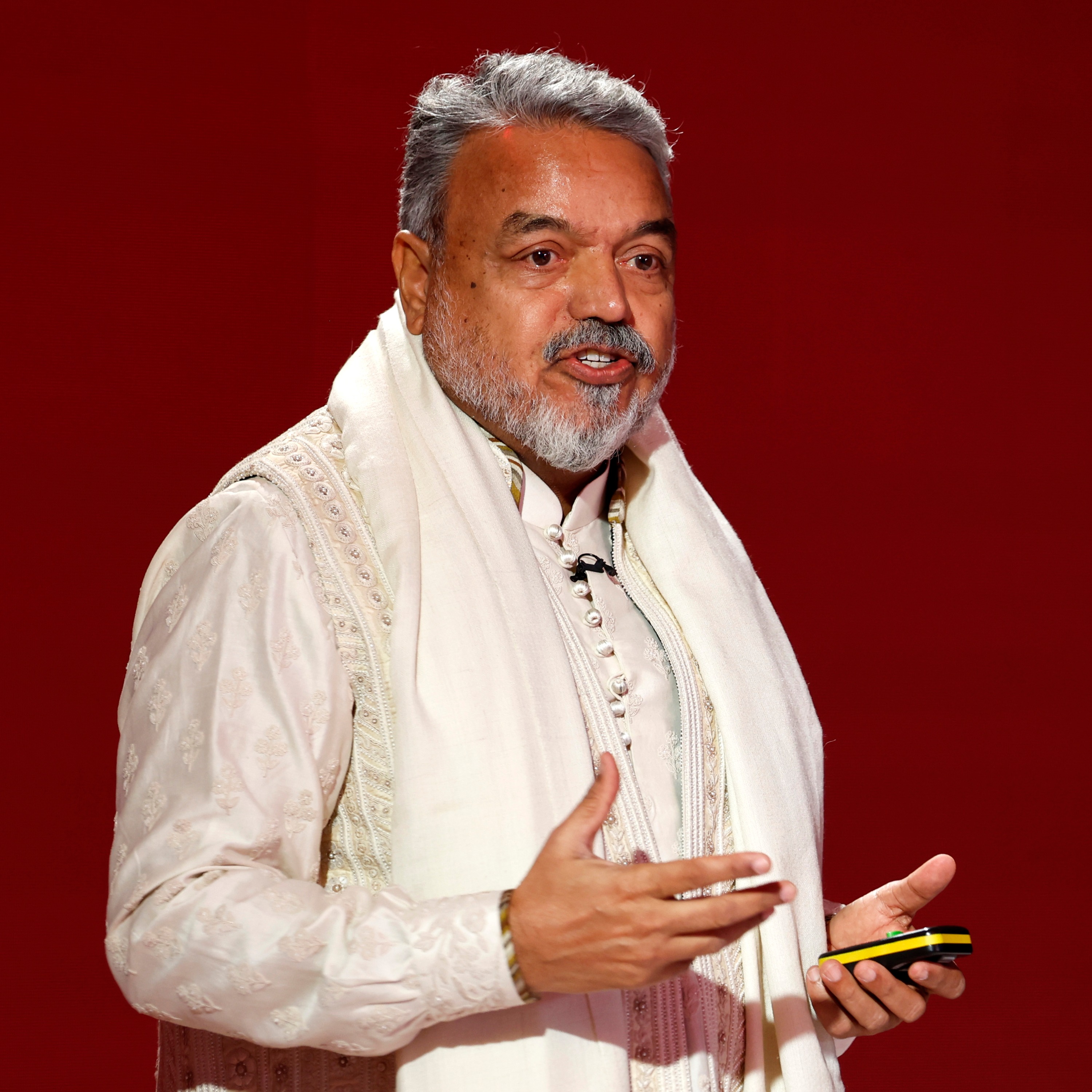
Why India Will Not Be The Next China for Luxury
“Will India be the next China?” is a question that’s circulated throughout the fashion industry for years. Even as its population and economy both surge, India’s cultural tapestry and fragmented retail landscape set it apart from its northern neighbour.At BoF VOICES 2024, Ravi Thakran drew on his experiences pioneering luxury growth for Swatch in 1990s China and leadership of LVMH in Asia to share his unique insights on the many differences between the world’s two most populous countries, and why European luxury brands have not yet managed to really crack the Indian market.“India is now across China and growing faster. But when it comes to the luxury market — talk of any brand, be it Mercedes-Benz, BMW, Louis Vuitton, Cartier — India is less than 1%,” says Thakran. “India's stupendous growth is right in front of us, but the bulk of that growth is led by a very young population with a very low per capita income. So if you are an aspirational player, go to India today. This will be your biggest play going forward. In luxury, you still have to work.”Thakran unpacks the dynamics of economic growth in India, explains why its path won’t mirror China’s, and shares insights on how to succeed in one of the world’s most complex yet promising markets.Key Insights: From garments to accessories, Asia has scaled production to supply most of the global market. Simultaneously, it’s also the top consumer region for many categories, making Asia pivotal in both supply and demand equations. Despite this, its share of value in these categories remains low: “Asia is now the largest market of the world and across [garments, accessories and watches], more than 50%. … How come its share of value in these categories is so low?” queries Thakran. “Value resides in brands. And where do these brands live? The brands today for these categories are still in Europe and the USA.” While India’s market is huge, it is fragmented and complex. Challenges for fashion brands include high import duties, limited retail infrastructure and a deeply rooted tradition of local attire. Western brands need to adapt to India’s cultural context if they hope to gain traction. “LVMH is not a luxury enough for India. … Indian luxury will always remain very Indian. Unless you Indianise, you're unlikely to crack that market,” says Thakran. Drawing on teachings from Buddah and Gandhi, Ravi underscores that Asia’s rising wealth need not translate into mindless consumption. Gandhi’s simple lifestyle and the Buddha’s teachings on desires offer a philosophical counterbalance that resonates in today’s sustainability-conscious world. “While we are trying to make India adapt to the West, I think there is a message for the West to adopt from India," says Thakran.Additional Resources:BoF VOICES 2024: Fashion’s Next Moves Where Fashion Is Finding Growth in Asia as China Stalls | BoF Luxury’s China Priorities in the Year of the Snake | BoF Hosted on Acast. See acast.com/privacy for more information.

Fashion’s M&A Market is Heating Up
After a prolonged slowdown, fashion’s M&A market is springing back to life. A combination of falling interest rates, shifting investor sentiment and optimism around economic policy has fuelled a wave of early 2025 deals. Within the first few weeks of the year, brands like True Religion and Kapital were acquired by private equity firms and holding companies, signalling renewed confidence in fashion investments.However, not all acquisitions are about aggressive growth. Some buyers specialise in “managed decline,” acquiring struggling brands to extend their lifespan through licensing or cost-cutting. Others, including private equity firms and strategic buyers, see opportunities to scale promising brands by injecting capital and expertise.“The key for a lot of these companies in finding buyers is proving that their brands are still worth it and can weather these economic cycles and lulls in the market,” shared e-commerce correspondent Malique Morris. Executive editor Brian Baskin and senior correspondent Sheena Butler-Young sat down with Morris to break down the latest deals, the brands poised for sale, and what it all means for fashion in 2025 and beyond.Key Insights: A number of converging factors are driving a new wave of fashion mergers and acquisitions in 2025. Falling interest rates, Trump’s re-election driving investor optimism, and shifting regulations have all played a part in fuelling new acquisitions. “Retailers reported strong holiday sales in 2024, and even though much of that was driven by discounting, it signalled that consumers were still spending,” says Morris. “That kind of activity gives investors more confidence in backing fashion businesses.”Buyers are looking for brands with strong customer loyalty, an engaged audience, and clear growth potential that can weather the ebb and flow of the market. Brands need “good stewards to help them find the best resources to expand without hurting their legacy, whether that be money, retail networks, or supplier relationships,” explains Morris. “It's important to have the resources you need to maintain relevance and compete for consumer attention.”Beauty remains a hotbed for M&A activity. “Unlike fashion, beauty hasn’t faced the same investor hesitancy,” says Morris. “Brands like Merit, Westman Atelier, and Makeup by Mario are seen as prime acquisition targets, while Rare Beauty could be the defining beauty deal of the decade.”Overall, buyers are prioritising brands with strong customer loyalty and cultural relevance. “They're seeking brands with ample customer loyalty and a passionate consumer base that will keep their names in the public consciousness, irrespective of what recent sales growth will look like,” says Morris. He adds, “The thing that is top of mind is, what is the value of your brand? That’s an honest conversation that I’m not sure all companies have with themselves, let alone with buyers.”Additional Resources:What’s Behind the 2025 M&A Wave | BoF Fashion’s Most Anticipated M&A Hot Spots in 2025 | BoF Hosted on Acast. See acast.com/privacy for more information.

The Luxury Crisis, Explained
In a special episode, BoF founder and editor-in-chief Imran Amed joins Bob Safian on The Rapid Response podcast.“This is probably the most severe crisis that I've seen in the luxury side of the fashion industry since the Great Recession of 2008,” says Amed. “The business model and approach that the luxury industry has been using for the last decade or so is running out of steam.”In their conversation, Amed and Safian discuss the cracks in the current luxury formula, the untapped potential in older demographics, and how brand and product innovation have the potential to revive the sector. Key Insights: Amed warns that the go-to strategies for luxury brands, such as over-expansion and relentless price hikes, are no longer sustainable. He highlights how the slowdown in Chinese consumer spending and a sharp drop in aspirational buyers who “gorged on luxury products during the pandemic” are exposing the cracks in this long-established playbook.While the industry has long speculated on whether India might be ‘the next China,’ Amed believes real growth is finally within reach. Thanks to a flourishing middle class, improved retail infrastructure and widespread mobile internet, international brands are eyeing India’s vast consumer base with renewed interest. However, success demands culturally informed approaches: “The smart brands are going to really find the right talent, Indian local talent, and empower those leaders,” says Amed. “The Indian market is on the precipice of something really big but it’s not going to be easy.”Amed acknowledges the widespread but often discreet adoption of artificial intelligence: “I think as with a lot of things AI, everybody’s using it, but not everyone’s talking about how they’re using it,” he said. However, he cautions that “to create something really, genuinely novel, interesting, disruptive, creative, and beautiful, a human has to be involved,” reminding brands that while AI can accelerate ideation, authentic creative vision remains the domain of designers themselves.Amed believes the current turbulence will drive fashion leaders to rethink their strategies: “What’s exciting about a time like this is it forces companies to innovate because the market isn’t growing super fast anymore,” he said. He explains that to thrive under tougher conditions, businesses “have to take market share from someone else,” meaning it is no longer enough to repackage old ideas. Pointing to brands like Miu Miu and Brunello Cucinelli, which are still achieving significant growth, Amed sees promise in those who offer “something different and special,” rather than relying on the template approach that has dominated fashion in recent years.Additional Resources:The State of Fashion: Luxury | BoFLuxury Slowdown Could Last Longer Than Previous Crises, Chanel Watches and Jewellery President WarnsThe BoF Podcast | The Great Luxury E-Commerce Reckoning Hosted on Acast. See acast.com/privacy for more information.

How to Future-Proof Your Fashion Career in 2025
The fashion workplace is evolving, shaped by a wave of technological advancements, leadership changes, and cultural dynamics. For many employees, adapting to these changes has become a challenge, while employers must navigate how to foster connection, retain talent, and drive innovation.Executive editor Brian Baskin sits with commercial features editorial director Sophie Soar and senior correspondent Sheena Butler-Young to unpack how businesses can create thriving workplaces in 2025, the role of soft skills in a tech-driven era, and what it takes to re-engage an increasingly disconnected workforce.“In the face of AI and more technology coming in, it is more important to have a human element. What does a human do well? That’s why soft skills are a huge focus,” says Butler-Young. Meanwhile, Soar highlights the growing challenges of employee disengagement, stating, “We are incredibly disengaged as a workforce. Trying to get employees to buy back into what they’re doing and be part of the workplace is going to be really challenging.”Key Insights:The turnover of leadership in fashion is reshaping workplace dynamics. “New leadership means change, even if they're using the same playbook,” explains Butler-Young. “Having someone new at the top of your company tends to affect morale for better or worse, or just makes people feel uncertain.” She adds, “Fashion workplaces are in this perpetual transition this year, which will inevitably shape culture.”In the wake of President Donald Trump’s executive orders targeting corporate DEI programmes, successful DEI strategies in 2025 will integrate horizontally across all business functions, rather than thinking about it as a vertical. “If something is horizontally integrated across the business and is a fundamental aspect of every single core pillar that this business touches upon, it's harder to roll back on those initiatives as a result,” says Soar. Butler-Young adds, “If you as a leader of any kind of organisation appear to flip-flop on your values based on the way the political winds blow, I think that's going to have a harmful effect on your workplace in the long term.”As AI becomes more prevalent, employers are placing greater emphasis on human-centric skills. “In the face of AI and more technology coming in, it is more important to have a human element to it. What does a human do really well? That’s why soft skills are a huge focus,” says Butler-Young. Soar adds, “It’s about engaging a workforce who are constantly striving to think about how they can take this particular tool or opportunity to the next stage and do so with that can-do, positive approach and attitude.”The impact of the attention economy has spread into our work lives. “We are incredibly disengaged as a workforce,” says Soar. “Trying to get employees to buy back into what it is that they're doing and be a part of the workplace is going to be really challenging, especially as they're navigating a hybrid or remote working environment.” Employers, Soar argues, need to address this to optimise their workforce for the future: “It is fundamentally changing the way that we are operating as people as well as employees.”Additional Resources:How to Future-Proof Your Fashion Career in 2025From Trump to Gen-Z, Fashion Faces a Culture QuakeBoF Careers Hosted on Acast. See acast.com/privacy for more information.

Tim Gunn on the Power of Staying True to Your Vision
Tim Gunn is best known as the wise, empathetic mentor on television’s Project Runway, but before he found himself guiding the next generation of designers on screen, he spent time teaching and shaping the fashion curriculum at Parsons, where he helped nurture some of the most influential names in American fashion. His journey began in Washington, D.C., where early struggles with bullying and a desire to understand his own creativity led him toward mentoring and educating others.Now, as the industry grapples with change on multiple fronts, Gunn offers his unique perspective on what it really takes to succeed today — in life and in fashion. “Life is a huge collaboration. We need other people. We’re not intended to be solos. And no one should think, ‘I can deal with this and solve this myself,’” says Gunn.This week on The BoF Podcast, Gunn opens up about how his early trials shaped his remarkable career, why he left his art practice behind to focus on teaching and mentorship, and how he sees the future of American fashion. Key Insights: A graduate of the Corcoran College of Art and Design, Gunn once dreamed of being a painter or sculptor, but after just a few years in the classroom, he realised guiding students gave him more satisfaction than making his own work. “After two years of teaching, I thought, ‘I feel so fulfilled and so sated through the teaching process, I don’t need to make the work,’” Gunn says . “This is what I love doing and I’m just going to keep doing it.”During his tenure at Parsons, Gunn served as both a teacher and an administrator — eventually rising to Associate Dean — and was tasked with revitalising the school’s struggling fashion program. “The curriculum had not changed since 1952,” he recalls. “No computers, no fashion history... I was completely and totally horrified.” Determined to better prepare students for the realities of the industry, Gunn helped introduce new business training, creative independence, and a broader perspective on design. “The former curriculum was all about being totally and wholly dependent upon the faculty. You couldn’t do anything without faculty approval. And I thought, ‘These students are incredibly talented and bright. We need to let them fly and see where it takes them.’”The producers of Project Runway learned about Tim Gunn from industry insiders who pointed to his transformational work at Parsons. Gunn initially resisted the idea of reality TV, but curiosity won out, and his background as an educator shaped his signature style of mentorship on the show. Gunn believes emerging designers need more real-world business training, collaboration partners and a firm grasp of their own creative DNA to survive. “If you insist upon making every garment yourself, just be resigned to having a little boutique and not making any money. If you really want something big, you’re gonna have to let go and you’re gonna have to collaborate with a lot of people,” Gunn advises. “Any one of us, either individually or collectively, can only be as successful as our ambitions and our resources allow us to be.”Additional Resources:Television's Power to Launch Fashion Brands Remains Unproven | BoFHow Independent Brands Can Thrive in a Fashion World Ruled by Giants Hosted on Acast. See acast.com/privacy for more information.

The Evolving Art of Brand Collaborations
Brand collaborations were once rare, highly anticipated events that generated significant buzz. But as they have become more frequent, the challenge lies in creating partnerships that genuinely resonate with consumers and cut through the noise.This week, executive editor Brian Baskin and senior correspondent Sheena Butler-Young sit down with BoF correspondent Lei Takanashi and editorial fellow Julia Lebossé to explore the state of brand collaborations, what makes them succeed or fail, and where they’re headed next.To work, collaborations need to feel authentic. For brands, “letting their collaborators take the wheel and just do what they want to do is really key,” says Takanashi. “When brands collaborate successfully, it’s often because they give creative freedom to the collaborator, allowing them to use the materials they want and tell a story that feels true to their audience,” adds Lebossé.Key Insights: Poorly thought-out collaborations often fail to connect with audiences and just won’t cut it anymore. “When it's done lazily, consumers can tell”, explains Lebossé. “We're becoming much smarter, really looking into brands and what they're doing and what makes sense. … That's why brands really have to step up in terms of what they're doing.”It’s not just big brands that can make waves with collaborations. Lebossé pointed to a sneaker collaboration between Bimma Williams and Saucony as an example where a smaller brand excelled. “They’re showing that, hey, we can do innovation,” explains Lebossé.Brands are finding even greater value in creating physical experiences around collaborations. Takanashi points to the Corteiz x Nike collaboration, where prospective buyers participated in scavenger hunts to buy the shoes. “If someone told me that kids would be lining up to buy Huaraches in 2025, I would not believe them at all,” he says. “But that’s the thing. This brand got kids waiting for hours in the freezing cold to buy their sneakers. It’s really that IRL experience that consumers are looking for when it comes to releases these days.”Additional Resources:Why Fashion Needs the Art World More Than Ever | BoFWhy Are Sneaker Collaborations So Boring? Hosted on Acast. See acast.com/privacy for more information.
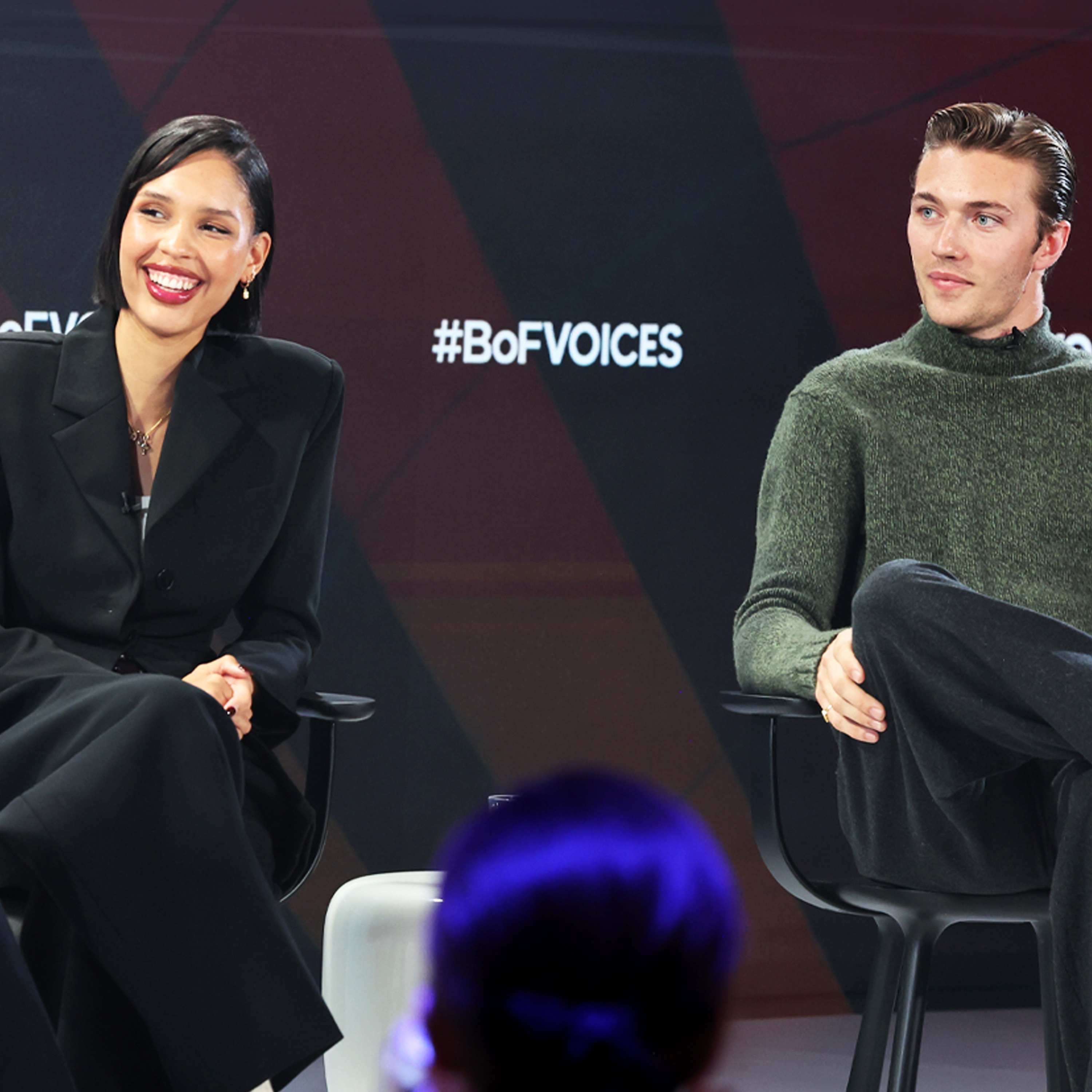
Nara Smith and Lucky Blue Smith on Living Authentically in Viral Moments
In today’s fashion landscape, many of us find ourselves caught in an infinite scroll of influencers. But in 2024, one couple captured the internet’s attention like no other: Lucky Blue Smith and Nara Smith.From making cereal from scratch to becoming one of fashion’s most sought-after duos, their rise has sparked both praise and criticism. For millions of people following online, their content offers a glimpse of domestic bliss and authenticity; for others, it raises eyebrows, stoking wild conspiracy theories. As a result, the young couple has found themselves in the glare of the social media spotlight.And as the Smiths revealed at BoF VOICES 2024, they’ve come to learn that not everyone will understand who they really are. “It’s the internet. You can’t believe everything you hear and see,” Lucky says. “People really see through all the fakeness. And if you're really authentic, then that's really compelling to a lot of people,” adds Nara. Key Insights: Lucky Blue Smith rose to fame at an extraordinarily young age. At 16, he became the male model of the moment with covers of major magazines and appearances on runways around the world. Reflecting on the challenges of early fame, he shares, “When you go through a big viral moment and you’re all over social media, you can kind of become, in a way, self-conscious … But meeting [Nara], it was like I felt like I could be my true self for the first time in a while in front of someone.” For Lucky, learning to navigate online scrutiny has been crucial. “It’s the internet. You can’t believe everything you hear and see … You just have to try to focus on the positive and move forward.”Nara Smith underscores the importance of authenticity in connecting with her audience. “As long as you’re authentic to yourself and you’re living your best life and not being fake, that’s kind of how you can get to a point where you might be a really successful influencer,” she says. “People really see through all the fakeness.” As an influencer, she said she credits honesty and transparency as key to her success in the creator economy.Despite the perfect-looking presentation in her videos, Nara Smith shares the often unseen effort and dedication required to succeed in the creator economy, challenging assumptions that content creation is easy or low-effort. “What you’re seeing on the screen is a minute and 30 seconds. But I’m in my kitchen seven hours a day cooking and then putting my kids to bed and then editing for another two hours. And that’s every single day. I don’t take days off,” she reveals. Reflecting on the evolving nature of personal growth and success, Lucky Blue Smith believes that living your best life is an ever-evolving journey. "I don’t think you’re ever going to land somewhere and say, ‘Yes, this is my best life.’ You always want to level up and move forward and challenge yourself,” he shares. His perspective highlights the importance of continuous growth and self-improvement, even amidst the pressures of fame and notoriety.Additional Resources:BoF VOICES 2024: The Power of Purpose BoF VOICES 2024 Concludes With Gala Celebration Hosted on Acast. See acast.com/privacy for more information.

How to Choose a PR Agency
Public relations in fashion has transformed drastically from securing magazine features to managing 360-degree brand storytelling. PR agencies now navigate everything from influencer partnerships to event management, social media strategies, and beyond. However, choosing the right PR agency is no small feat, especially for smaller brands or those at critical growth stages.“Having a PR agency that really feels like a genuine organic extension of your team … is what's going to enable you to plan together and collaboratively work on goals that you're super aligned on,” shared marketing correspondent Haley Crawford. Executive editor Brian Baskin and senior correspondent Sheena Butler-Young sit down with Crawford to discuss how brands can evaluate potential PR partners, the challenges and opportunities in the modern PR space, and how to ensure a successful collaboration.Key Insights: The PR industry has evolved significantly. In the past, PR agencies focused on securing mentions in traditional editorial formats, with the ultimate goal being a feature in Vogue or Harper’s Bazaar. Today, their capabilities have expanded. As Crawford explains, “this allows them to represent brands across the full spectrum of physical and digital spaces where shoppers are really interfacing with them and discovering them. … The agency's role is to facilitate telling a cohesive story across all these facets.”Building relationships remains central to PR success. “The ability to build and maintain relationships has always been such a central skill in PR, but it looks totally different today than it did a couple of years ago,” says Crawford. “Today, publicists really have to go above and beyond to use those relationship building skills to build communities around the brand. And I think what really helps is being passionate about the brands that you choose to work with as well.”As artificial intelligence increasingly influences brand strategies, PR agencies must adopt innovative, human-centric approaches to distinguish themselves. This involves “facilitating an unexpected partnership … bringing events to life that really bring consumers that much closer to the brands they love” and helping brands “ to get in front of new audiences that might be unexpected.”When you're meeting with a potential PR partner, Crawford advises to think of it as a job interview. “Could you see them being part of your in-house team? Are they clearly passionate about developing your brand story and taking it to the next level?” Additional Resources:How to Choose a PR Agency | BoFWhat Fashion PR & Communications Professionals Need to Know Today | BoF Hosted on Acast. See acast.com/privacy for more information.

Bethann Hardison: Model, Mother, Agent and Advocate
Bethann is a former model, agent, and advocate who has been agitating for a more inclusive fashion industry for more than half a century.Bethann launched her own modelling agency in 1984, pushing for representation and equal pay for Black and ethnic minority models. Meanwhile In her personal life, she was a working mom, and a woman that in her own words, “has no sense of retirement in her DNA.”"When I say racial diversity, I mean I want to still see a redhead. I don’t want an all-Black anything,” Hardison says. “I want to make sure our world remains completely integrated. That’s the most important thing.”This week on the BoF Podcast, we revisit conversation from BoF VOICES 2024 where Bethann spoke with London-based British-Jamaican designer Bianca Saunders about her inspiring career journey and the state of the fashion industry today. Key Insights: Hardison’s approach to diversity in the fashion industry was intentional from the start By strategically building an agency that mirrored the diversity of the world around her, Hardison disrupted the norms of a predominantly white industry. “I didn’t want to have a Black model agency,” she says. “I think it's very important when you have to compete, you have to compete against the people who are running it.” Her decision to compete directly with white agencies allowed her to challenge systemic biases from within, making representation a matter of strategy, not tokenism.For much of her career, Hardison worked tirelessly without stopping to reflect on her impact: “When people come up to me and say, ‘Thank you so much. I love you. You’re such an icon,’ … When you’re doing the work, you don’t think of it as significant. You just want to get things done.” This humility is paired with a newfound appreciation for her legacy, which she gained while working on the documentary Invisible Beauty. “When I decided to make the film about me and let the story be told, I finally realised the significance of what I’ve done.” Hardison’s vision of diversity extends beyond racial representation. She tells BoF she advocates for a truly inclusive world and challenges the concept of homogeneity in all forms to ensure that diversity remains expansive and reflective of the world’s richness. “The most important thing to me is to make sure our world remains completely integrated,” she says. “I don’t want an all-Black anything; I want to see redheads, I want to see diversity everywhere.” Additional Resources:BoF VOICES 2024: The Power of PurposeOp-Ed | Agencies Are Holding Back Models of Colour | BoFThe BoF Podcast: Bethann Hardison, Kerby Jean-Raymond, LaQuan Smith and Patrick Robinson: ‘We’ve Had Diversity, but Then It Disappeared’ Hosted on Acast. See acast.com/privacy for more information.

Luxury’s Italian Sweatshops Problem
Over the past year, the pristine image luxury brands have built on their links to artisanal craft, ethical manufacturing and quality has begun to crumble, buffeted by a scandal that has linked labels including Dior and Armani to sweatshops in Italy. According to investigators in Milan, factories producing for the brands were operating illegally and exploiting workers. Dior and Armani have said the allegations don’t reflect their commitment to ethical practices, but prosecutors say the issues uncovered by the probe are systemic and entrenched. Around a dozen more brands could still be implicated, with further cases expected in the coming months. This week, BoF senior correspondent Sheena Butler-Young and chief sustainability correspondent Sarah Kent discuss the findings of BoF’s own investigation into how exploitative practices persist in luxury’s supply chains and what the scandal means for the industry. Key Insights: Luxury brands use their high prices and Italian manufacturing to sidestep concerns over labour practices frequently levelled against lower-priced labels. But the problems pervade even Italy’s most exclusive supply chains. “This may seem shocking and surprising to those outside this part of the industry, but in Italian manufacturing, everyone knows,” said Kent. “It's an open secret.”BoF’s investigation found brands routinely turn a blind eye to labour exploitation, ignoring red flags raised by audits and sustainability teams in the interest of convenience and cost. New regulations mean the risks associated with such scandals will soon be much more severe. Under incoming European due-diligence rules, brands could be subject to penalties of up to five percent of global revenue if they fail to adequately monitor and prevent labour abuses in their supply chains. “There are still a lot of questions around how that's going to be enforced and what that might actually mean,” said Kent. “But that is a chunky piece of change for any big company.”Additional Resources:Inside Luxury’s Italian Sweatshops ProblemIs Luxury Finally Set for a Sustainability Reckoning?Are Luxury Brands Still Worth It? Hosted on Acast. See acast.com/privacy for more information.
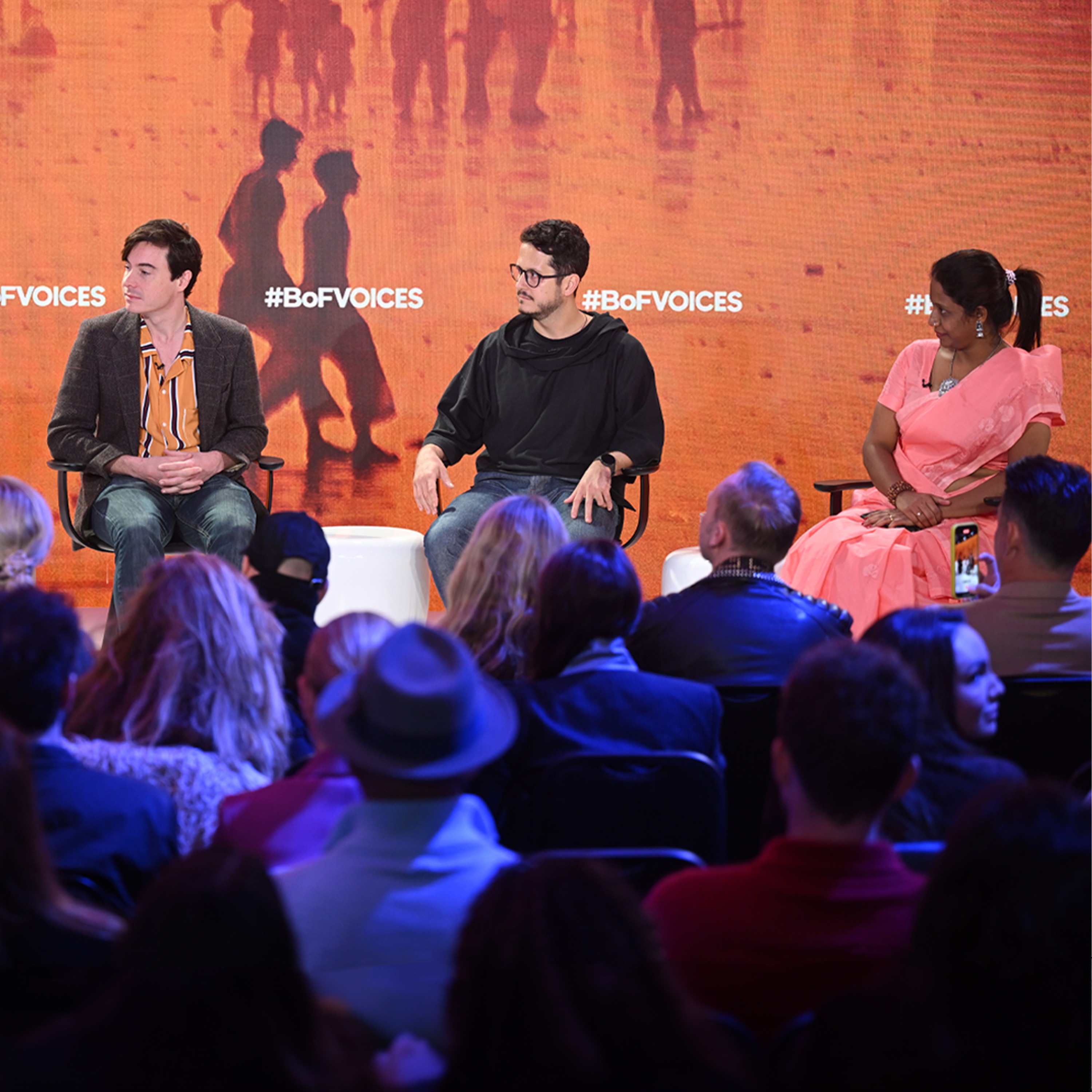
What Happens When It’s Too Hot to Make Fashion?
In recent years, extreme weather events have become commonplace catastrophes. And in an increasingly globalised fashion system, developing nations often bear the brunt of climate crises. For fashion and its complex global supply chains — which disproportionately depend on resources and labour from these countries near the equator — one of the most urgent issues is extreme heat. In April, the Philippines, Thailand, Bangladesh and India all experienced merciless and sometimes deadly temperatures, which shuttered workplaces and schools. According to the US National Centers for Environmental Information, Africa, Asia, and Europe all logged their warmest Julys since global records began in 1850. To discuss what this means for fashion, BoF’s chief sustainability correspondent Sarah Kent convened a panel of global experts:Laurie Parsons of Royal Holloway at the University of London, who focuses on the garment industry and climate vulnerability, explains: “What's at stake is the productivity of the industry, the health of the workers and as more and more of these stories come out, the reputation of an industry.” From Brazil, Beto Bina, the founder and CEO of supply chain consultancy FarFarm says: “Thinking as an ecosystem, you can be philanthropic, you can bring in public policies. It’s a job for innovation, for marketing, for sustainability. If you bring these teams together and develop an innovative project to start this new supply chain that could be amazing for everyone.”From Sri Lanka, Abiramy Sivalogananthan, country coordinator at Asia Floor Wage Alliance, who adds: “The freedom of association should be ensured. Workers should be able to talk to be part of the union, to fight for their rights with the factory’s management.” Key Insights: Workers in garment factories face a range of challenges that often go unaddressed, particularly in the Global South. Sivalogananthan highlights the critical need for collective bargaining to give workers a voice in addressing these issues. “They should be able to talk to whom they need to talk. They need to talk with the unions who should be part of it. And then as a collective, they should be able to talk to the supplier and of course able to talk to the fashion brands.” While many fashion brands are proud of their sustainability initiatives, these efforts overwhelmingly focus on reducing emissions, neglecting the immediate impacts of climate change on workers. Parsons points out this glaring gap, stating, “almost every brand focuses on decarbonisation, but there is an infinitesimally small amount of sustainability policies that actually focus on the populations affected by climate change.”Bina further emphasises the interconnectedness of fashion brands and the broader environmental and social systems they rely on. “If you buy cotton, you are part of the agriculture industry,” she says. “We need to start to recognise this is part of the business and the brand.” Instead of viewing climate impacts as externalities, brands must integrate systemic accountability into their operations to ensure long-term viability and ethical production, she added. Additional Resources:Why Hotter Weather Matters for Fashion What Happens When It’s Too Hot to Make Fashion? | BoF Hosted on Acast. See acast.com/privacy for more information.
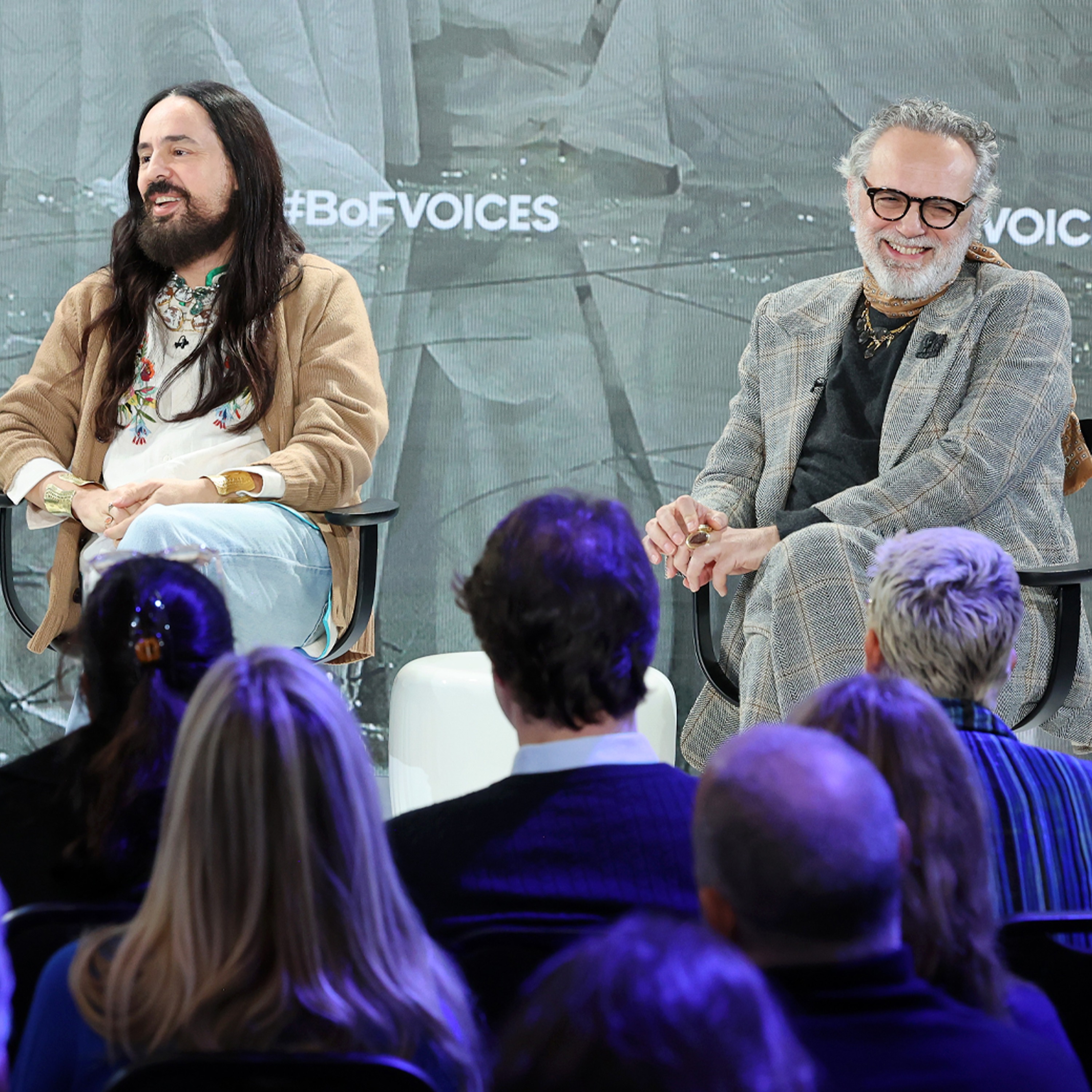
Alessandro Michele and Jacopo Venturini on the New Valentino
Over the summer, BoF editor-in-chief Imran Amed and editor-at-large Tim Blanks both spent time with Valentino’s new creative director Alessandro Michele to learn about his vision for the fabled Roman couture house.One thing became clear in those conversations. Alessandro was drawn to Valentino in part because it would reunite him with Valentino’s CEO, Jacopo Venturini. Alessandro and Jacopo first made magic at Gucci, alongside CEO Marco Bizzari, when the luxury megabrand quadrupled its profits after a period of slow growth in the post-Tom Ford era. There is a special symbiosis in their pursuit of creativity and business, based on a strong emotional connection and a shared passion for creating beautiful things together.In their first-ever joint talk, Alessandro and Jacopo joined Tim Blanks at BoF VOICES 2024 to share their plans for Valentino and go inside their unique creative process.Key Insights: Michele describes his approach to Valentino as a blend of honouring its heritage while infusing it with his own perspective. "I try to be gentle … It’s not my place, it’s me working in that place,” he explains. “There is always a conversation [with Valentino].” Michele acknowledges that his work divides opinions, especially online. “Some people feel aggressive in front of the freedom of someone else … I’m happy with myself because I am free.” Finishing the thought, Venturini says Michele’s work embodies “genius creativity that starts with real freedom … He has eyes that open the eyes of someone else.” Venturini further highlights how creativity fuels not just design but the entire business ecosystem. “Our company is really human-centric and creativity-centric,” he says. “The goal is to translate this energy into the real world without losing any of it."Michele embraces the inherent unpredictability of the fashion industry, stating, "I’m understanding that you cannot really plan in fashion." He likens his role at Valentino to cultivating a "beautiful garden" where experimentation and creative freedom allow for growth and innovation. Additional Resources:Alessandro Michele’s Valentino Vision | BoF The BoF Podcast | Alessandro Michele: ‘There Is Always Mr. Valentino Somewhere With Me.’Alessandro Michele’s Valentino Debut: Lightness, Luxury and ‘Fireflies Seeking Love’ | BoF Hosted on Acast. See acast.com/privacy for more information.

BoF’s Top Stories of 2024
As the year comes to a close, BoF’s executive editor Brian Baskin and senior correspondent Sheena Butler-Young look back on some of their favourite articles from 2024. The stories include topics that dominated industry conversations throughout the year, as well as some that have had key updates since publication.The four articles they discuss are “How Nike Ran Off Course” by sports correspondent Daniel-Yaw Miller, Butler-Young’s three-part Black beauty series, “The Fight for Influencer Marketing Dollars Heats Up” by senior news and features editor Diana Pearl and “Inside Luxury’s Italian Sweatshops Problem” by sustainability correspondent Sarah Kent. The conversation wraps up with a set of predictions for what’s to come in 2025.Key Insights:Miller’s “How Nike Ran Off Course” topped the list of key stories from 2024. It was a trying year for the brand, marred by declining sales quarter after quarter. Many pointed to former CEO John Donahoe as the source, with marketing and product feeling stale since he joined in 2020. “This was the year where it really crystallized that there were viable alternatives to Nike in the market,” said Baskin, with competitors encroaching from all sides. Looking ahead, Butler-Young said “Nike is not resting on its laurels” and is doing a lot to try to “turn around a very large ship,” starting with selecting a new CEO, longtime Nike executive Elliott Hill.Sarah Kent’s story, “Inside Luxury’s Italian Sweatshops Problem,” digs into this year’s viral scandal surrounding luxury brands’ labour practices. “It found that luxury brands that manufacture in Italy…routinely turn a blind eye to labour exploitation in their supply chain,” said Butler-Young. “They ignore red flags raised by audits and sustainability teams for the sake of convenience and cost.” Dior in particular faced social media backlash for “the disparity between what people pay for products and then some of the things that happen in the supply chain,” said Butler-Young. Next year, brands will face penalties for failing to comply with new European due diligence regulations.Baskin and Butler-Young shared predictions for the industry in 2025. For Butler-Young, ESG and DEI will be key to watch as they “attempt to continue to take shape in a very hostile political environment,” said Butler-Young. Early adopters of DEI who stick with it despite ebbs and flows might benefit by being the most innovative in the space down the line. For Baskin, “My prediction is one of these big struggling brands … is going to successfully pull out of its slump,” he said, pointing to Nike as a potential winner. Hosted on Acast. See acast.com/privacy for more information.
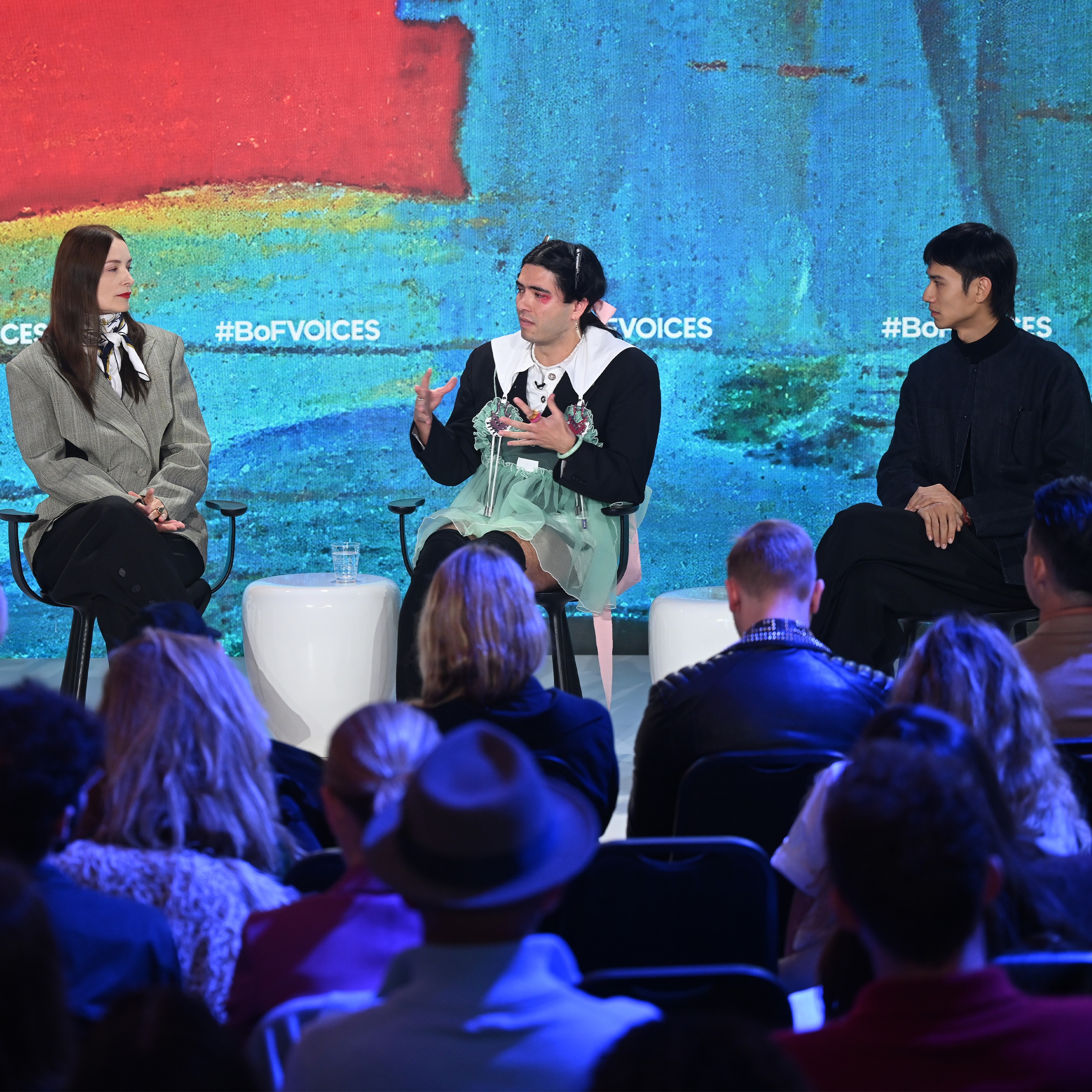
How Independent Brands Can Thrive in a Fashion World Ruled by Giants
Background:In a slowing luxury and fashion market, it’s not just the big brands and e-commerce companies that are being impacted. Independent fashion designers around the world — from China to the US to Europe — are facing a barrage of challenges too. As more multi-brand retailers shut down, this not only puts tremendous cash flow pressure on small fashion businesses, but they are also losing their main channels to reach customers. Alongside other factors like inflation, Brexit and growing geo-political turmoil, it becomes almost impossible to build a sustainable, independent fashion business.But there is hope. According to London-based designer Roksanda Ilincic, “the beauty of an independent brand is that you can quickly adapt, quickly change. You can try to find a solution, maybe even quicker than a big giant.”To examine this topic at BoF VOICES 2024, 1 Granary founder Olya Kuryshchuk hosted a panel on independent fashion, with Ilincic, publicist and consultant Bohan Qiu, and the designer and Antwerp Royal Academy director Brandon Wen. Key Insights:The traditional reliance on multi-brand stores and fashion shows is shifting, with young designers exploring direct-to-consumer models and leveraging emerging technologies. Qui notes that new opportunities are coming from grassroots movements and emerging markets. “I feel like there is going to be this next movement where it’s coming from the streets, it’s coming from the underground, it’s coming from the youth culture that are so sick and tired of the current system. They want to overthrow and build something so strong that our current system can no longer neglect it.”For Wen, fashion education must evolve to prepare students for the realities of a saturated market. While fostering creativity, institutions should also teach practical skills like budgeting and business management to ensure graduates can navigate the industry successfully. “They need a lot more business advice and opportunities … they also should know how to use Excel, make a budget sheet, and … learn how the big machines work so that they’re not struggling with their own machine.”Independent brands must focus on the unique value they bring to the industry, such as craftsmanship, small-scale production, and authentic creativity. Ilincic highlights the importance of educating consumers about these distinctions, explaining, “the quantities that we produce are much smaller than the quantities of the big brands. So just understanding that you’re buying a very unique and specific product. That should be championed.” Hosted on Acast. See acast.com/privacy for more information.

The Future of DEI and ESG in a Hostile Political Environment
In the late 2010s, and particularly after George Floyd’s murder in 2020, the fashion industry appeared to embrace a progressive awakening on issues like racial justice and climate change. Diversity, equity, and inclusion (DEI) departments were established, and companies announced ambitious sustainability targets. Yet, from the outset, critics - often from the same communities these initiatives aimed to support - questioned the authenticity of this activism, suggesting it was more about marketing than meaningful change.Now, those sceptics may have been proven right. Following the 2023 Supreme Court ruling against affirmative action, companies have begun scaling back hiring initiatives, grants for Black founders, and other DEI efforts. Sustainability commitments are also under scrutiny, with the industry far behind its climate goals and facing a hostile political environment in the US. Executive editor Brian Baskin is joined by sustainability correspondent Sarah Kent and senior correspondent Sheena Butler-Young to untangle the future of DEI and ESG (environmental, social, and governance).Key Insights: Diversity and inclusion in fashion was built on already fragile foundations. “Most companies didn’t have a DEI department before George Floyd,” Butler-Young points out. She explains that these departments were often created hastily and emotionally, which left them vulnerable to becoming performative. “We never moved beyond that conversation into ‘how is this good for business? Why does this matter for a company beyond social good?’”"The acronym DEI has become so politicised,’” continues Butler-Young. "Something that started off as having some good intentions and some really value-driven tenets, and suddenly it's co-opted and becomes something almost derogatory." Companies are now moving away from the language, but that often means moving away from the work as well. The story in the world of sustainability contains some parallels. “What we’ve begun to see in a handful of cases is a quiet reframing of sustainability commitments, making them less ambitious and, in some ways, more realistic,” says Kent. This includes “the restructuring of sustainability teams, significant layoffs, and a shifting focus.” Although sustainability efforts are losing traction in the US, Kent points out that European regulations will keep the pressure on global brands. “From an investor standpoint, this is a compliance issue - companies need to meet laws or face significant penalties, which is obviously not good for business.”Additional Resources:What Fashion’s Advocacy Will Look Like in the Trump EraTrump’s Impact on Fashion Takes Shape | BoF Hosted on Acast. See acast.com/privacy for more information.
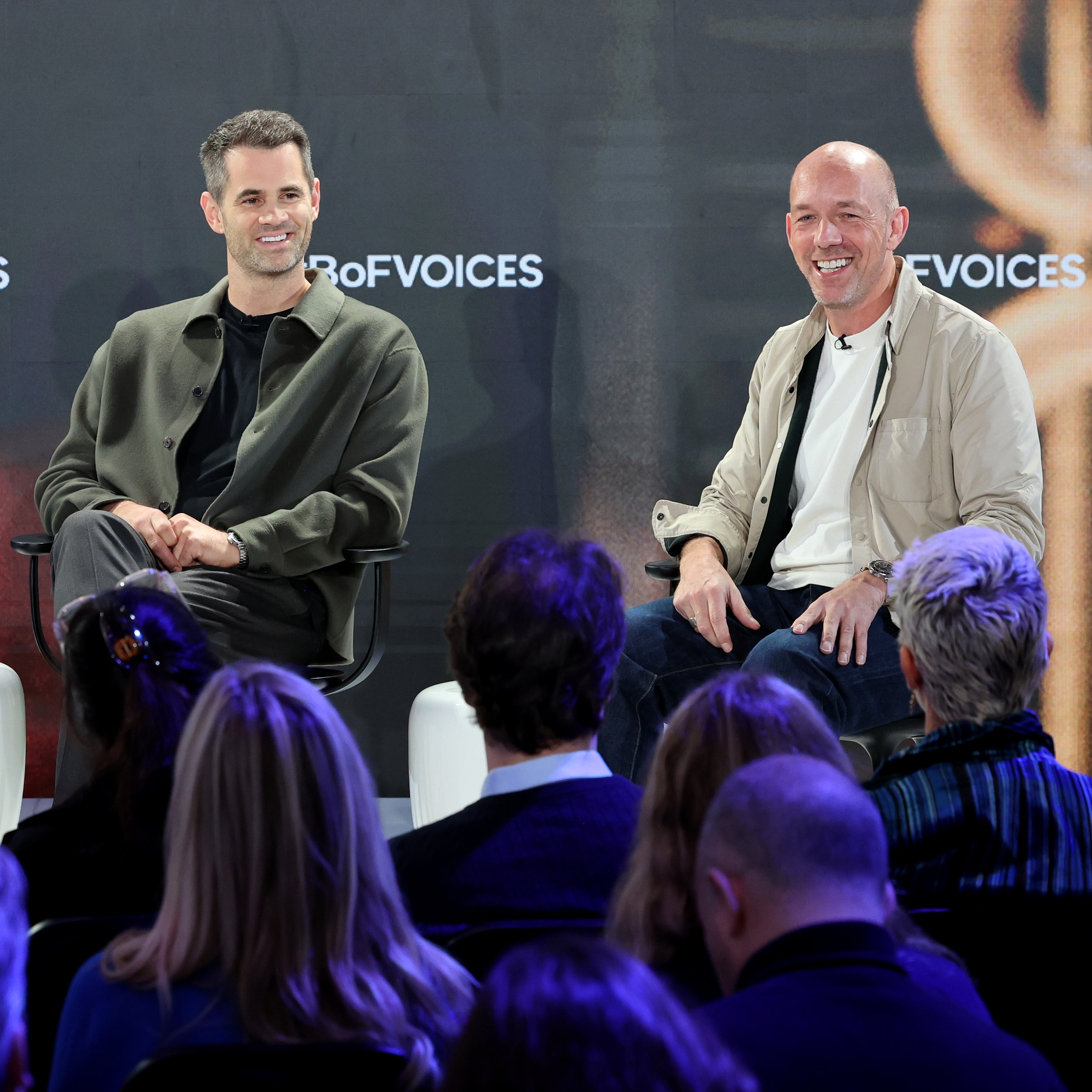
How Skims and On Create Cultural Relevance
Many fashion brands are realising that operating across multiple cultural sectors is a business necessity. In our social feeds, fashion competes with music, film, and sports for our attention.Learning how to tap into other cultural sectors is something that many fashion brands are trying to do, but few have done it better than this week’s guests.At BoF VOICES 2024, BoF founder and CEO Imran AmedI spoke with Jens Grede, co-founder and CEO of Kim Kardashian’s Skims, the shapewear brand and David Allemann, co-founder and executive co-chairman of the Swiss sportswear company On, to learn how they’ve tapped into the cultural zeitgeist, especially at the growing intersection of sports and fashion. Key Insights: For both Grede and Allemann, the foundation of a successful brand lies in creating exceptional products. Grede emphasises the critical importance of innovation, crediting Skims’ success to years of fabric development before launching the brand. “Before a brand, there are products, and you can’t build a great brand without a great product,” he explains. Similarly, Allemann shared On’s origins, which began with a makeshift prototype crafted from a garden hose to test their signature “cloud tech” soles. Sports and fashion have become deeply interconnected, reflecting how cultural and personal identity have evolved. Allemann notes that, over the past 15 years, sportswear has transitioned from functional equipment to an extension of one’s personality, becoming a new uniform. “Because it becomes part of our personality, it’s elevated to a whole different level, and so in a sense, [sport] becomes fashion.” Athletes now use fashion as a platform to build their personal brands, with Grede describing it as “a superpower” that amplifies their influence beyond their sport. Tapping into culture is essential for brands looking to stay relevant and expand their influence. Grede describes building a brand as finding “a little part in this moment in popular culture,” which requires an understanding of the zeitgeist. For Skims, partnerships like their recent collaboration with Dolce & Gabbana push the brand into uncharted aesthetic territory while providing customers with something entirely new. On takes a similarly thoughtful approach, having turned Roger Federer from an ambassador into an investor. As brands grow, the decision to go public can be a significant milestone, but timing is critical. Grede acknowledges that Skims will eventually become a public company but stressed the importance of focusing on expansion and building away from the scrutiny of the public eye. Allemann shared advice from On’s IPO journey, describing the need to stay close to the customer: “On really tries to be very close to the consumer and be the brand that helps the explorers and the dreamers and probably even the rebels to ignite their spirit. I think that's what's really important right now.”Additional Resources:BoF VOICES 2024: Global Culture and Creativity The BoF Podcast | Jens Grede on Building Skims, Frame and the Future of FashionWhy On Running Could Be Worth $6 Billion | BoF Hosted on Acast. See acast.com/privacy for more information.

The Future of Resale
Resale is no longer confined to thrift stores or niche platforms; it has grown into a roughly $50 billion industry in the U.S. alone, by some measures. Platforms like Poshmark, The RealReal and Vestiaire Collective have transformed the experience, making it more accessible and attractive to consumers at every price point. At the same time, brands are increasingly stepping into the space, with some launching their own programs to resell returned or used merchandise, transforming what was once a reactive practice into a strategic business opportunity. And new start-ups hope to create a new secondhand market out of brands’ returned merchandise. Retail editor Cat Chen and e-commerce correspondent Malique Morris join senior correspondent Sheena Butler-Young and executive editor Brian Baskin to unpack the evolving resale landscape. Key Insights: The destigmatization of secondhand fashion is closely tied to convenience. “A large part of the equation is how easy it is to shop and sell secondhand,” explains Chen. “There are dozens of platforms that do peer-to-peer shopping options where you can buy something secondhand for, you know, at a fraction of the cost of retail where you can sell something that you've had for a while.… When resale is top of mind like that, I think the market adapts to that acceptance mentality.”But establishing a leading position in the market has proven difficult, despite rapid adoption. “The learning for operators of these platforms is that there’s very little consumer loyalty in this space,” says Chen. “When I consider selling something, I’m going to look at every single platform - whichever one gives me the quickest sale, the easiest sale, and the most money.” This dynamic has created a fiercely competitive landscape, with platforms racing to attract sellers by offering the best incentives. Bazar is taking a different approach to resale, stocking its marketplace with returned, goods brands would struggle to restock without refurbishment, including some fast fashion. “Bazar doesn’t go through the trouble of necessarily fixing items. It’s kind of listed as is, and customers get a ‘what you see is what you get’ experience,” says Morris. Additionally, Bazar allows fast fashion brands like Cider to offload inventory, which many traditional resale platforms avoid. “There is a level of transparency there which is supposed to be a part of the proposition of sustainability and a part of the proposition of resale as well.”As the industry develops, Morris envisions brands taking more ownership of resale, as platforms like Revive are already helping brands create their own resale programs to handle returned merchandise. Such efforts could turn resale into a sustainable, profitable venture, making it a key part of brand operations. “If resale can prove that it is an avenue for [brands] to achieve profitability … I can see it becoming a bigger priority brands which will make the shopping experience all the better for consumers."Additional Resources:Fashion’s Big Opportunity in Reselling the Unsellable | BoFShould Brands Stop Offering Free Returns? | BoF Hosted on Acast. See acast.com/privacy for more information.
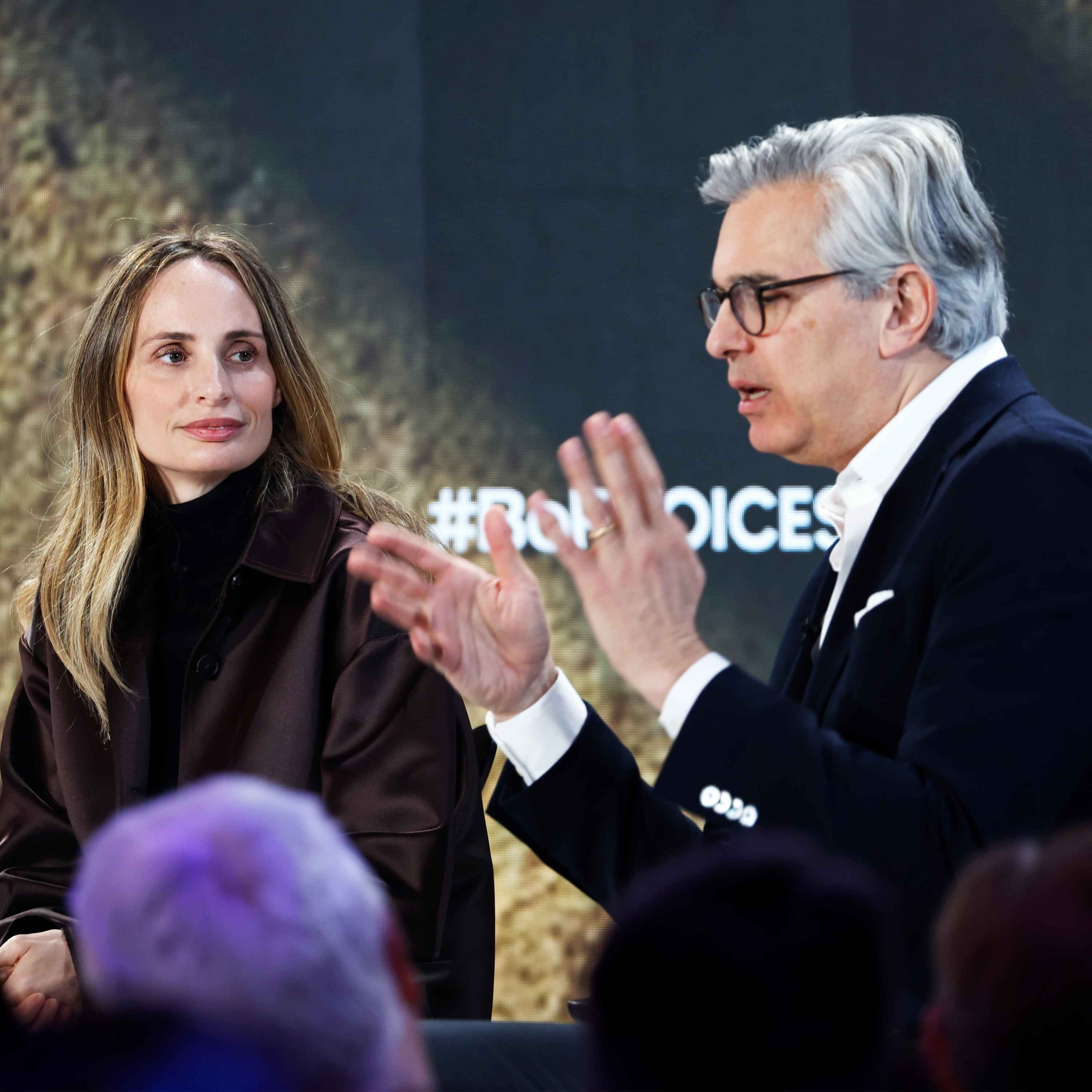
The Great Luxury E-Commerce Reckoning
In 2024, luxury e-commerce faced a harsh reckoning. A pandemic-era boom gave way to a bruising downturn that exposed deep-seated weaknesses, as rising marketing costs, excessive discounting, outdated technology management and intensifying competition hit profitability. MatchesFashion went into administration at the start of the year, shortly after it was sold off in a fire sale to Frasers Group. Farfetch’s share price plummeted by 98 percent, bringing the company to the brink of bankruptcy, only for it to be rescued by South Korea’s Coupang. Richemont sold off Yoox Net-a-Porter to rival luxury e-tailer Mytheresa in October, ending a years-long effort to offload the struggling business.This week on the podcast, Mytheresa CEO Michael Kliger and Lauren Santo Domingo, co-founder and chief brand officer of Moda Operandi, join BoF Founder and CEO Imran Amed on stage at BoF VOICES 2024. Together, they explore what went wrong in the luxury e-commerce sector, how they are navigating the ongoing luxury slowdown, and what comes next for the industry.“We didn’t know that this big slowdown in aspirational demand would happen, but we were well prepared,” Kliger said.Key Insights: What separates the winners and the losers in the luxury e-commerce reckoning comes down to preparedness, said Kliger. Mytheresa also “felt the pressures,” but the business was better suited to handle an environment laden with high inflation, high interest rates and middle-income shoppers retreating. Kliger added that he still believes in the viability of the luxury e-commerce model because “there is a consumer that wants to shop like that.” “Rumours of our demise have been greatly exaggerated,” added Santo Domingo. Despite the challenging market environment, some customers are still spending. E-tailers need to create desirability and find ways to attract shoppers to their platforms through curation, storytelling and other forms of differentiation. “They want from us more experience than just access to product,” said Kliger. “That’s why the brands want to be with us. We are brand enhancing,” echoed Santo Domingo. Mytheresa has also invested in optimising its marketing funnel to identify customers who are more likely to remain loyal over the long-term. “We’re not bidding for traffic. We’re not bidding for revenue. We’re bidding for customers,” said Kliger. The business built an algorithm to predict based on past purchases, addresses, types of payment, and time of purchase, whether a customer is likely to return, and they focus their marketing efforts accordingly. Additional Resources:BoF VOICES 2024: Fashion's Next Moves: Industry insiders including designers Simon Porte Jacquemus and Glenn Martens, H&M CEO Daniel Ervér, e-commerce executives Lauren Santo Domingo and Michael Kliger and more spoke about key challenges and opportunities for their businesses and fashion at large. Meanwhile, McKinsey provided an outlook for 2025. Hosted on Acast. See acast.com/privacy for more information.
Jacquemus: A Coming of Age Story
When Simon Porte Jacquemus came on to the scene in 2009, he did so with a bang. The French designer’s playful take on Parisian fashion draws inspiration from 20th century sculpture, the French New Wave, and sunny afternoons in Marseille. His creations have catapulted him and his label into stardom, with the brand’s campaigns often going viral on social media. “It’s [all about] having fun,” said Jacquemus. “Having fun is being creative, it's going one step aside and it's playing with the system.”Jacquemus has been able to build on the social media buzz and create an independent label garnering more than 200 million euros ($210 million) in annual turnover. His fashion shows have been staged in picturesque locations across France, including the Chateau Versailles. In October, he opened his first store in New York City, drawing crowds akin to those mostly reserved for movie stars. This month, he opened another location in London, part of the designer’s plans for a global retail expansion. At VOICES 2024, BoF founder and CEO Imran Amed sits down with Jacquemus to discuss how the designer has been able to build a successful independent business in the competitive luxury sector and amidst a consumer downturn. Key Insights: Jacquemus credited creating attention and buzz in unconventional ways for the success of his brand and his ability to remain independent for 15 years. The designer recalled staging his debut runway show disguised as a fake protest outside of a Dior boutique on Avenue Montaigne as a media stunt that gained him notoriety early in his career. “I only had one rule when I [started]. I need to be visible,” he said. Jacquemus said his love for imagery and the hit TV show “Sex and the City” inspired to go into fashion. “I wanted to build images and create the sensation of a young boy looking at magazines,” the designer said. This fascination with imagery has translated to the brand’s social campaigns, namely the CGI versions of the label’s signature purse Le Bambino roaming through the streets of Paris. The brand’s design codes deviate from traditional luxury fashion, in that Jacquemus wanted his designs to appeal to ultra-luxury shoppers as well as mass consumers. “I [wanted] to do something everyone can understand – the post guy, my grandmother. And references to niche things.”Now, the designer wants to transport his feelings of familial bliss and his childhood in the south of France to his retail locations around the world. “I want them to feel like home,” he said. The design elements of the brick-and-mortar stores call back to Provence with soft linens, high windows and traditional furniture. As the CEO of the brand, Jacquemus said he finds he may often lean more toward the business side than the creative side. This is something he wants to balance in the near future. “I’m interested in everything,” he said. “I wake up every morning looking at the sales, not because I love money but because I want my work [to become] something real.”Additional Resources:Jacquemus: A Fashion Star's Business VisionJacquemus Is Seeking a Minority InvestorThe Debrief | What Makes Jacquemus So Successful? Hosted on Acast. See acast.com/privacy for more information.

What Happened to Beauty’s Billion-Dollar Brands?
The beauty industry has witnessed a wave of disruptors rise and fall. Brands like Anastasia Beverly Hills, Glossier and Morphe leveraged social media and influencer marketing to achieve rapid success and unicorn valuations. But maintaining momentum has proven challenging, and some of these disruptor brands have seen sales fall and financial hurdles mount. As Glossier proves, there is the possibility of a second chance, but it requires radical changes to the business to pull off. As beauty correspondent Daniela Morosini points out, “The barriers to entry have been removed. You can get a critical mass of fans and build an aesthetic for your brand quite quickly. Making it stick is more difficult.” In today’s crowded market, sustainable growth and a deliberate strategy are essential for standing out.Key Insights: Slower growth in a crowded market can ensure longevity. “It’s the ones that are maybe growing a little bit slower, not having this initial huge rush and then a massive drop-off,” says Morosini. While brands can gain a critical mass of fans and build an aesthetic quickly, sustaining that momentum is much harder in today’s saturated market. “You go on TikTok, and there are 50 brands fighting for your attention. You go to Sephora, there's another 50,” Morosini adds. By focusing on steady, intentional growth, brands are better equipped to stand out and thrive in an environment where consumer choices are overwhelmingly abundant.In a saturated market, having a knowledgeable and authentic founder can differentiate a brand and build trust with consumers. “Brands that had a founder with expertise as a makeup artist or some other kind of professional qualifications helped bear out the brand and add a little bit more credence to it,” says Morosini. These founders often bring a personal approach to their brand, which resonates with consumers.Glossier’s success shows the value of balancing adaptation with staying true to a brand’s core mission. Despite being digital-first, the brand quickly established a physical presence, which “helped enmesh them and establish themselves with more the kind of quote unquote, middle-American consumer, just like a general shopper versus someone who is like a die-hard beauty fan,” explains Morosini. By moving away from an exclusively direct-to-consumer model, Glossier also refocused on its product assortment and customer needs. “Giving up on the DTC-only thing probably allowed them to take a hard look at their product assortment and build out more products that people were really interested in,” Morosini adds.A key lesson for emerging beauty brands is to prepare for both boom and bust cycles. As Morosini explains, “You’re probably going to be getting your most attention both from consumers and investors or acquirers during your fat years. And you need to be ready for the lean years because they're going to come.” She emphasises the importance of hedging strategies, noting, “No matter how well things are going, there will be a competitor snapping at your heels around the corner. Making sure that you’re keeping your strategy and product assortment broad enough to weather that.” Flexibility and foresight are essential to navigating inevitable market shifts.Additional Resources:How Anastasia Beverly Hills Lost Its Footing | BoFUrban Decay’s ‘Naked’ Relaunch Is a Hit. Now Comes the Hard Part. | BoF Hosted on Acast. See acast.com/privacy for more information.
Tina Brown on the Role of Journalism in the Age of Donald Trump
Tina Brown is a force of nature in the world of journalism, offering unflinching and sometimes provocative glimpses into the lives of the world's most famous figures. Born in England and educated at Oxford, she stormed the traditionally male bastions of print media, becoming editor-in-chief of Tatler at just 25. A few years later, she ushered in a new era as editor-in-chief of Vanity Fair, which was tens of millions of dollars in debt when she took over. Her unique formula of seductive storytelling, combined with hard-hitting journalism, increased the magazine’s monthly circulation from 200,000 to 1.2 million.As an editor, Tina has never been afraid to push boundaries or challenge the orthodoxy, and she has not lost her magic touch. Last month she launched a weekly Substack newsletter, “Fresh Hell: Tina Brown’s Diary.” where she has already opined on trending topics from the Menendez Brothers to the re-election of Donald Trump. Right now, one of her main pre-occupations is around the future of journalism. “More serious than anything is the death of truth and what that can do to a society,” she warns. “The resistance is going to have to come from the media.’At VOICES 2024, Brown reflects on the seismic shifts in media, what this means for truth and democracy, and the role of journalism in the age of Donald Trump. Key Insights: “I love the art of magazines … but I don’t read them anymore,” Brown admitted, echoing the sentiments of a changing audience. She argues that while print media might be fading, the real battle is to sustain investigative journalism, which remains critical to democracy. “What matters is that we have thoughtful, curious, truth-telling journalists in the roles that matter.”Brown criticises tech companies for profiting from journalism’s decline. “Twenty years ago, traditional media was too passive in the face of digital disruption,” she explains. “Content was taken for free and monetised by tech platforms, and we’re seeing it happen again with AI.” Highlighting the existential threat posed by the erosion of public trust in journalism, Brown calls for tech companies to take responsibility and invest meaningfully in journalism. On the battle between creativity and technology, Brown lamented the undervaluation of human creativity in an increasingly algorithm-driven world. “I do not know why writing sentences is not valued more than writing code, because they last longer, that's for sure. One Shakespeare sonnet - beat that algorithm.” Reflecting on Trump’s influence on both media and politics, Brown describes him as “the world’s great showman”. “He ran a campaign that was just endlessly watchable and was so extraordinarily sort of resourceful on improvising all the time,” she notes. However, Brown questions this approach to politics as entertainment. “We've become so debased by entertainment values that we now require our politicians to be entertainment,” she argued. “I actually question whether the old style politician will ever be in favour again.”Additional Resources:BoF VOICES 2024: Confronting an Age of Uncertainty Hosted on Acast. See acast.com/privacy for more information.

Inside Luxury's Slowdown
For nearly a decade, the luxury sector has experienced what seemed like limitless growth, with brands like Louis Vuitton, Gucci, and Chanel pushing product prices higher — and seeing consumers pay up. However, recent quarterly reports have marked a sudden shift, with even industry giants reporting disappointing revenue. As luxury editor Robert Willliams explains, “These brands are omnipresent and people are seeing them everywhere. Whether consumers finally pull the trigger is so much about their economic confidence, this feel-good factor. Are things going to be better for me next month than they are today?”This week, BoF executive editor Brian Baskin and luxury editor Robert Williams discuss the forces contributing to this downturn, the implications for top brands and potential strategies luxury players are exploring to reignite growth.Key Insights: Global economic uncertainty has hit U.S. and European luxury spending hard. “Whether they finally pull the trigger [on a big purchase] is about economic confidence,” explains Williams, noting that factors like inflation, wage stagnation, and election cycles have consumers second-guessing expensive purchases. There are similar issues in Europe, with proximity to conflicts in the Middle East, Ukraine and Russia additionally impacting consumer sentiment and spending power.However, according to Williams, the biggest issue is China pulling back on this type of spending. China’s luxury market has always been a growth engine, but changing economic sentiments and less travel due to COVID are affecting luxury sales. “[Chinese consumers] are really holding out for when they feel better about the economy. … They’re holding out for when they can feel like they can get a deal because prices are higher in China than most of the world for luxury brands,” says Williams. Many consumers are frustrated with steep price increases, as seen with Dior’s Lady Dior bag, which has jumped 76% in price since 2019. “Customers are quite fed up with how dramatic the price increases have been often for like for like products,” Williams states, adding that consumers often feel they’re “spending a lot more for something that’s not necessarily as good.” Even if quality hasn’t declined, the perception has, especially with social media spotlighting any issues. “With the way our Internet culture works, if someone has an issue with the product, they can make that so public in a way and really disenchant a lot of people and their audience and make them question, is this high price worth it?”Facing a saturated market after years of rapid growth and price hikes, many forecast that 2025 and 2026 are to be similarly stagnant or negative periods for sales.” Even if it wasn't just a question of the prices or if there weren't these other macroeconomic factors, there could be a sense of having saturated the market, of people needing to be bored with fashion a bit so that then they can rediscover it. I'm not sure that it's the right time to introduce the next big idea if you were the one who had it,” says Williams. “Because if you're among the brands whose sales are quite negative … then how much can you really invest in telling the world that you're the one who has the next big idea?”.Additional Resources:Inside Luxury’s Slowdown | BoFWhy Some Luxury Groups Are Doing Better Than Others | BoF Hosted on Acast. See acast.com/privacy for more information.

Sammy Basso on the Power of Positive Thinking
Sammy Basso left an indelible mark on our community last year at BoF VOICES 2023. Sammy had a rare genetic condition called Progeria that accelerates ageing, affecting only one in 20 million people, with an average life expectancy of 13-and-a-half years. Last year at VOICES, Sammy celebrated his 28th birthday with us, and shared his extraordinary resilience and passion, for life and for research. “To be a patient and scientist is beautiful for me because it is a great antidote against fear,” he reflected. “Never think you are not enough to make a difference ... So many people said it’s impossible to do research into such a rare disease. But now thanks to that, we are opening ways to treat so many others. We are making a difference.”This week on The BoF Podcast, Basso in conversation with friend Annastasia Seebohm Giacomini about the importance of his research and his philosophy of how to live a full life.Key Insights: When asked how he maintains such a positive outlook despite the daily challenges of his condition, Basso explains, “I must be positive, because if I won’t be, I would limit my life more than progeria itself. My life is worth living, progeria or not. I love my life …This is the only possibility for the universe to be myself. And you are the only possibility for the universe to be in the stars. So we can’t waste this great opportunity. We need to be the best copy of ourselves.”Reflecting on his outlook toward life, Basso shares the importance of gratitude in his daily routine: “Progeria taught me not to believe anything to be granted. I’ve risked my life so many times, I’ve wished to die several times, so now every day for me is a gift. When I wake up in the morning, I have to be grateful for that day. I must be grateful for that day.” Basso finds strength in community and expresses his deep gratitude for the role of his family and friends in his life. “They are the reason why I wake up every morning. Sometimes when I’m too tired, I remember that my life is not only mine. So if I can’t do it for myself, I must wake up for them and do it.”Additional Resources:BoF VOICES 2023: Finding Hope in the DarkRegister now to join us at BoF Voices 2024, our annual gathering for big thinkers, streaming live from November 12 to 14 Hosted on Acast. See acast.com/privacy for more information.

Why Some Sports Win Big in Fashion — and Others Don't
In recent years, sports has provided a rich ground for fashion partnerships. Where even three years ago Dior’s tie-up with Paris Saint-Germain was relatively novel, today it’s harder to find luxury brands that aren’t at least dabbling in football, Formula 1 or other sports. These deals are also getting increasingly elaborate, with brands outfitting athletes, teams and even entire leagues on and off the field. This new wave of partnerships is about more than just looks or finding new audiences — it’s about cultural relevance. “Fashion brands have looked to [sports] to market their products to groups of consumers who maybe weren’t targeted by these brands previously, and athletes themselves have become major brands and media businesses in their own right,” says BoF sports correspondent Daniel-Yaw Miller.This week on The Debrief, Executive Editor Brian Baskin and Senior Correspondent Sheena Butler-Young sit down with Daniel-Yaw Miller to explore how the worlds of fashion and sports are colliding like never before.Key Insights: For a partnership to be successful, it must feel authentic. Arsenal's collaboration with London-based brand Labrum, which presented a runway show at Arsenal's stadium is a prime example. The jersey colours draw influence from the Pan-African flag and hint to the histories of the players and the club. "That partnership makes sense on a cultural level and fans can buy into that authentic messaging rather than just a logo swap,” he says.As individual athletes gain larger followings, brands see more appeal in creating tailored partnerships with rising stars like Coco Gauff and Angel Reese. “Athletes now have a direct bond with fans that the previous generation of stars never had,” Miller notes. “Sports fans have had insights into Coco Gauff and Naomi Osaka’s lives since they were teenagers. They’ve grown with them, and that’s at the very essence of their appeal to these brands.”The rise of women’s sports has opened doors for fashion brands that previously overlooked the sector. "And that's really opened up the sports industry, which has traditionally been extremely male dominated. So a whole range of luxury womenswear brands that previously never really had an entry point into the sports industry,” Miller explains. Some sports struggle to find traction in the fashion world. While Formula 1 has embraced luxury, baseball remains on the sidelines. “Baseball has never quite broken out to have true global appeal in a sense that fashion could leverage,” Miller says. “I think baseball is very similar to where Formula One was before the Liberty Media acquisition, where there was a strict atmosphere around showing an interest in things that are outside the direct line of business for a baseball organisation that's hampered how much the sport and the athletes have been able to be in fashion.”Additional Resources:Fashion’s Sports Obsession Is No Accident | BoF How Athletes Became Fashion Week Royalty | BoF.Inside the Big Business of Styling Athletes | BoF Hosted on Acast. See acast.com/privacy for more information.
Khalid Al Tayer on Driving Transformation in the GCC's Luxury Market
Khalid Al Tayer, Managing Director of Al Tayer Insignia and CEO of the luxury e-commerce platform Ounass, leads one of the Middle East’s most powerful retail networks. In his first public interview at Oud Fashion Talks, Al Tayer shares insights into the rapid evolution of the Middle Eastern luxury market, the region's growing influence on global trends, and how his business approaches e-commerce with a customer-first mindset. He also discusses the strategic importance of respecting and investing in the Middle Eastern customer while creating opportunities for regional talent to flourish in the luxury landscape.“The brands that have taken [the Middle Eastern] customer as a very important customer and respect them are seeing benefit. The ones that approach this customer as, ‘They’re just going to buy what we make, and we’re going to do … a good enough job because we’re busy somewhere else,’ are not benefiting. Respect the Middle Eastern customer,” shares Al Tayer.This week on The BoF Podcast, BoF founder and editor-in-chief Imran Amed sits down with Al Tayer to discuss the growing influence of the Middle Eastern luxury market and how businesses can succeed by prioritising the evolving needs of the regional customer.Key Insights: Despite challenges in global luxury, Al Tayer points to the Middle East as a resilient outlier in the industry, especially post-Covid. Brand investment in top-tier store experiences, thoughtful activations, and tailored assortments have fostered a deeper connection with the local customer. “The Middle East … has been a shining candle in the industry generally because of the resilience and the growing sophistication of the Middle Eastern customer,” Al Tayer notes, attributing this shift to brands recognising the importance of this loyal market.Al Tayer forecasts that e-commerce will soon make up half of all luxury retail in the region, with Ounass already pushing double-digit growth in this area. “In the next few years … 50 percent of the sales of retail will be online,” he says, describing an evolving model he calls “luxury convenience.” While physical stores will still offer unparalleled experiences, online platforms like Ounass meet the growing demand for digital access and seamless customer journeys.Al Tayer attributes his company’s success to “fanatical focus” and the dedication of his team. “First and foremost, it's all about team and surrounding yourself with the right people,” he says. “I try to build trust by allowing them to have ownership. When they have ownership, they really drive the business like it's their own.” In an industry that requires high levels of execution, he recommends patience and focusing on the details that matter. “Focus on what you’re doing and get it right,” he advises, urging new entrepreneurs to remain committed and data-driven.Additional Resources:BoF Insights | Fashion in the Middle East: Optimism and Transformation What Escalation in the Middle East War Means for the Industry | BoF Hosted on Acast. See acast.com/privacy for more information.

Can AI Make Shopping Online Less Annoying?
Online shopping promises convenience, but finding the right product among thousands – or hundreds of thousands – of options can often feel like a chore. To address this, retailers are experimenting with AI tools that aim to cut through the clutter with improved search capabilities and personalised shopping experiences. These models don’t just match keywords; they understand user intent and interpret complex search terms, moving closer to a more personal shopping experience online.“Search works really well when you know specifically what you're looking for,” senior technology correspondent Marc Bain notes, “but there’s potential for AI to bridge that gap when you don’t.”This week on The Debrief, BoF executive editor Brian Baskin and senior correspondent Sheena Butler-Young sit down with Bain to explore how AI is transforming e-commerce.Key Insights: New AI search tools are evolving past traditional keyword searches, enhancing users’ ability to find what they’re looking for online with greater ease. “These large language models could change search in a way that you can interact with it more naturally,” explains Bain. With AI’s advanced understanding of nuanced searches like “what should I wear to Burning Man?”, these systems can now deliver results based on context, location, and style preferences, making online shopping a more seamless, intuitive experience.AI in e-commerce aims to serve as an attentive, personalised assistant, but brands face the challenge of enhancing the customer experience while maintaining a respectful distance in the digital space. AI must fall on “the right side of the line between concierge and creepy,” Baskin explains. "The ideal is having an online sales associate … where it doesn’t feel like … it’s just throwing products at you to see what sticks,” continues Bain. The goal of AI in e-commerce is to make shopping more intuitive by simplifying search. As Bain notes, “search is notoriously terrible on retail e-commerce sites,” highlighting the need for improvement. However, despite these advancements, consumers may remain hesitant to fully trust AI-driven recommendations. Bain reflects this sentiment, adding, “I would probably look at what it says and then still go do my own research because I don’t fully trust it.” Additional Resources:The E-Commerce Search Bar Gets an AI Makeover | BoF How AI Could Change Online Product Search and Discovery | BoFCase Study | How to Create the Perfect E-Commerce Site | BoF Hosted on Acast. See acast.com/privacy for more information.

Robert Geller on the Power of Saying Yes
Growing up in Hamburg with a photographer father and a stepmother who ran a vintage boutique, Robert Geller was immersed in the world of fashion, art and creativity from a young age. His journey from Marc Jacobs intern to co-founder of cult New York fashion label Cloak to creative director at Rag & Bone is the result of his personal philosophy of saying yes to new opportunities. “The key thing is saying yes. Just do it and try it. It's always better to do something than not to do it,” shared Geller. “Even if it doesn't go right, you learn a ton from it. You're always better off going out and trying something."This week on the BoF Podcast, founder and CEO Imran Amed sits down with Geller to explore his journey, learn about the ups and downs of building an independent fashion label, and why he’s taken on his new role as creative director at Rag & Bone.Key Insights: Growing up, Geller was deeply influenced by his creative surroundings and his stepmother played a pivotal role in shaping his fashion sensibilities. “She owned a second-hand store in Hamburg, but she only sold Japanese fashion labels,” he recalls, pointing to brands like Comme des Garçons and Yohji Yamamoto. Trips with her to Paris, where she would take him to “beautiful boutiques,” ignited his passion for fashion. “At a very young age, I really enjoyed it. I sort of found the magic of fashion in these places and in these clothes.”Geller’s first major venture in fashion, Cloak, became a cult label in New York in the early 2000s. Geller left Cloak after the A/W 2004 collection, with the brand finally closing down in 2007. As Geller candidly explains, “We were not really focusing on making money. We didn’t know how to do it, but we knew how to make great clothes and how to put on fun shows.” The purity of vision behind Cloak was undeniable, but it ultimately lacked the business foundation needed for sustainability. While Geller has always embraced creativity, he also understands the importance of balancing it with the practicalities of running a business. “I respect the need for the sales and need for the business, that’s the fuel,” he says. “One cannot exist without the other. You can’t have a collection without getting the business right and having sales,” Geller adds.After years of running his own label, Geller made the leap to become creative director at Rag & Bone in 2023. Reflecting on his approach, he says, “It just needed another layer of excitement... I felt like it was lacking conversations, the exciting pieces, the layer on top that really exemplified the peak of the brand.” Geller’s vision involves integrating the brand's core strengths, like denim, with modern elements to create a cohesive, elevated collection. “It’s not a revolution... we're just trying to layer something on top that’s exciting.”Additional Resources:Groundhog Day at Rag & Bone | BoFMarcus Wainwright on Rag & Bone and Going It Alone | BoF A Different Kind of Dream at Rag & Bone | BoF Hosted on Acast. See acast.com/privacy for more information.

How Dupe Culture is Challenging Traditional Luxury
A growing number of direct-to-consumer brands are disrupting the luxury market by offering high-quality alternatives at more affordable prices. As traditional luxury brands focus on the ultra-wealthy and fast fashion dominates the budget market, these “dupe” brands cater to middle-class consumers who feel priced out of luxury but still want value for their money. Through transparent pricing and savvy use of social media, they are reshaping how consumers think about value and quality.“The term dupe stems from duplication, but it also does speak to consumer sentiment around pricing today - they do feel duped,” says e-commerce correspondent Malique Morris. “Luxury brands have exponentially raised their prices for hip products in a way that is locking out middle class shoppers who typically could splurge on a few nice bags or a few nice sweaters a year.” Key insights:As luxury brands continue to hike prices for their most popular products, middle-class consumers are feeling increasingly excluded from the luxury market. This sentiment is fueling the rise of brands like Quince and Italic. “Luxury brands have exponentially raised their prices for hip products in a way that is locking out middle class shoppers who typically could splurge on a few nice bags or a few nice sweaters a year,” says Morris. “The check is going to come due for luxury brands to explain why their prices are so high.”Dupe brands take advantage of this dynamic by being open about their costs, breaking down exactly how much it takes to produce their items and what they’re selling them for. “Dupe brands are almost annoyingly transparent about pricing in terms of breaking down,” Morris explains. “That’s refreshing for middle-class shoppers who are seeing the prices of things like milk and eggs rise inexplicably. Outside of this vague bogeyman of inflation, their dreams of owning a Chanel bag is moving further away with no real explanation on that front either.” Platforms like TikTok and Instagram have been instrumental in the rise of dupe brands, where influencers showcase cheaper alternatives to high-end products. However, the sustainability of this trend is uncertain. “If consumers stop caring about dupes and engagement goes down, then social media leverage on this front will die out for these brands, but right now, it really is a boon for them,” says Morris.While price is the main draw for dupe brands now, they will need to evolve beyond being simply the cheaper alternative. “What is our differentiator beyond offering good prices now? What is our storytelling? What are our products that are unique to us? If dupe brands can answer those questions, they’ll stop being seen as just cheaper versions,” says Morris. Additional Resources:What Luxury ‘Dupe’ Brands Get Right About Shoppers | BoF Is Dupe Culture Out of Control? | BoF Hosted on Acast. See acast.com/privacy for more information.
How Michelle Yeoh Conquered Hollywood — and Fashion
Michelle Yeoh has captivated audiences for decades, from her iconic role in Crouching Tiger, Hidden Dragon to her Oscar-winning performance in Everything Everywhere All at Once. Over her storied career, she has consistently pushed boundaries, proving her versatility both on and off the screen, breaking paths as an Asian woman on the global stage. Now, at the age of 62 Michelle has scored coveted global ambassador roles at not one, but two of fashion’s top luxury brands — Balenciaga and Bottega Veneta."Fashion has changed, and it’s not just about dressing younger people," Yeoh says. "You have to find representation across different generations, and I think what I represent is being proud that you are different, that you are older — and there’s nothing wrong with that. Just before the Oscars a silly television commentator said, ‘You’re past your prime because you’re 50-something.’ How dare you? How dare anybody tell you what you are capable of?”This week on The BoF Podcast, BoF founder and editor-in-chief Imran Amed sits down with Yeoh to discuss her winding journey to the big screen and why fashion is finally embracing older women.Key Insights: Yeoh’s path to stardom began with her early passion for dance, which she began as a child in Malaysia before travelling to England to study further. When she had to set her dance dreams aside due to injury, the shift opened the door to acting in action and martial arts films alongside actors like Jackie Chan, Sammo Hung and Jet Li. “I watched [Hung] do the choreography and the fighting, and I thought, ‘this is exactly like dance,’” she says. “This is choreography. We all know what we are doing, it's about how you transfer the energy and the speed of the rhythm.”On success and failures, Yeoh embraces the lows moment as opportunities to transform. “Failures are what make you learn. If you're only successful, how do you know that's the way? ... It's the journey, not just the destination," says Yeoh. "And in that journey, that's where you learn. That's where you grow, where you meet, where you engage, and that's where you have a full life.”Yeoh places a deep emphasis on trust and collaboration when choosing her creative partners. “Once I choose to work with you, then I have to trust you. I have to believe that you have the right vision,” she shares. “If I don’t trust you, then I don’t think I’ll be able to give you my best. I have to believe in your vision, that you know what you’re doing, and that we’re in this together."Additional Resources:How Michelle Yeoh Conquered Fashion | BoF Hosted on Acast. See acast.com/privacy for more information.

How Beauty Blunders Go Viral and What Brands Do Next
The beauty industry thrives on virality, but in the age of social media, that can be a double-edged sword. One viral TikTok video can catapult a brand to success — or bring it to its knees. From Youthforia’s foundation shade controversy to Huda Beauty’s mislabeling error, brands are discovering that managing customer expectations and addressing backlash swiftly is critical to their survival.“It happens pretty fast when it does happen. … Sometimes it’s an unknown creator who can make [a product] go viral for all the wrong reasons,” says beauty correspondent Daniela Morosini. “You have to be willing to listen when they tell you that you got it wrong.”Key InsightsBuilding a strong brand community involves more than just creating a product; it means engaging with your customers and allowing them to have a meaningful role in your brand’s development. “If you're going to create a community to help your brand grow, you need to understand that those customers want a seat at the table,” says Morosini. Listening to customer feedback, especially when things go wrong, is crucial. Being proactive in addressing customer complaints is crucial. As demonstrated by Huda Beauty’s mislabeling issue, taking responsibility early on and offering solutions can stop a backlash from spiralling. Morosini notes, “She took full accountability and offered to make everybody whole if they’d bought the wrong shade.”Hair care products, especially those tied to hair loss, tend to evoke emotional responses and intense scrutiny. The stakes are high as hair loss is a sensitive, deeply personal issue. As Morosini points out, “There are so many factors that can cause hair loss… people don't want to roll the dice if there's even a 1% chance a product could be the cause.”Complexion product mishaps can be particularly damaging for beauty brands, as they quickly highlight inclusivity gaps. “It’s just so obvious when a brand has missed the mark with complexion,” says Morosini. “Oftentimes the scandals that seem to cause a lot of blowback, they come back to that exclusionary point,” she adds. “Nobody likes to feel left out.”Additional Resources:What to Do When a Beauty Product Launch Goes Wrong | BoFWhy Beauty Brands Keep Getting Accused of Causing Hair Loss — and What They Can Do About It -Editor's Note: This podcast was amended on Oct. 17 2024 to clarify YSL as the maker of the blush product. Hosted on Acast. See acast.com/privacy for more information.
How Zac Posen is Reenergising Gap Inc.
Zac Posen burst onto the fashion scene in the early 2000s, gaining acclaim for his glamorous designs and dressing Hollywood's elite. After nearly two decades, Posen closed his label in 2019, finding himself at a crossroads that eventually led to a meeting with Richard Dickson, the new CEO of Gap Inc., and the chance to join the company as creative director. Now, he's on a mission to bring cultural relevance and excitement back to brands like Gap, Old Navy, Banana Republic, and Athleta.“Within five minutes [of meeting Dickson], I knew that there was something very special. It was a cosmic moment where there was like a magic connection, where I saw that I had met my dreamer,” Posen says.This week on The BoF Podcast, BoF founder and editor-in-chief Imran Amed sits down with Posen to explore his journey of redefining success, his transformative role at Gap Inc., and his vision for the future of fashion.Key InsightsClosing his eponymous fashion label forced Posen to reevaluate how he defined success, shifting his focus from external achievements to personal fulfilment and creative expression. "Success for me is about being able to inspire a larger public, to be able to work within my own creativity and to use that and what I represent to help a larger public be in touch with their own creativity” he says. “To me, creativity is as essential as sleeping and eating and everything else wonderful in life." Posen found new creative inspiration through returning to his roots of draping and garment creation. “I was back on a mannequin … and just expressing and sculpting in space, it felt exciting,” he shares, describing the joy of reconnecting with hands-on creative work in his father’s studio, the same place where his journey in fashion began. “It felt like a full circle moment.”As creative director of Gap. Inc, Posen is working to modernise brands like Old Navy and Gap by emphasising storytelling, redefining brand identities, and making subtle evolutions that reignite consumer interest. "Building a brand is about being part of the cultural conversation and moving at the speed of culture and actually being able to help move culture forward,” he says.Posen advises young designers to be patient, embrace the balance between art and commerce, and appreciate the opportunity to inspire others. “Creativity is a lifelong pursuit … You can't foresee the path and where it will take you,” he says. “If you are able to work in this industry, to be able to work in a creative field and … understand that fabulous, amazing, magical pendulum that has to be in balance, you are so lucky and so fortunate.”Additional Resources:The Gap Comeback That’s Actually Working | BoF Do Mass Brands Need Creative Directors? | BoFCreating Cultural Moments in the Age of Algorithms | BoF Hosted on Acast. See acast.com/privacy for more information.

How Influencers Make Money
The influencer landscape has shifted dramatically over the last decade. While the image of influencers posting flawless selfies on exotic, brand-sponsored trips still resonates, the reality has become far more complex. Influencers now host live shoppable streams, publish newsletters on Substack and engage in intimate group chats. Their goal is not just to build a following and wait for brands to come calling, but to establish multiple sources of income through affiliate links, brand deals, and subscription models.“Influencers and creators have realised that they need to diversify and be on multiple platforms. They need to be connecting with their followers in multiple ways and have a deeper relationship with their followers,” says Diana Pearl, senior news and features editor. “Even five years ago, there were people who didn't really take this industry very seriously and didn't realise the difference they could make for their brand. Now it is impossible to ignore.”Key Insights:In the evolving digital landscape, influencers and creators are no longer relying on a single platform for success. Diversifying their presence across platforms, from Instagram to Substack, is key. Pearl emphasises, “It’s really all just about diversification... not relying so much on one source, not having to rely so much on Instagram, the algorithm, affiliate links and brand deals.”While macro-influencers may reach a broader audience, smaller influencers often have more engaged, loyal followers. “Once you get so big and you've got millions and millions of followers, you can't have that type of relationship with 5 million people the way you can with 100,000,” says Pearl.The rivalry between influencer marketing platforms LTK and ShopMy highlights a shift in the landscape, with ShopMy offering influencers more control and transparency. Pearl explains that while LTK encourages creators to centralise their content on its app, ShopMy allows influencers to share across platforms. “We know our audience, we know what content resonates with them. But if you hand us this really detailed brief and expect us to act like a traditional ad agency... it’s just not going to come off as authentic,” Pearl explains.The industry is becoming more nuanced, with clear distinctions emerging between influencers and creators. While creators focus on producing unique, engaging content, influencers drive sales and hold sway over purchasing decisions. Influence remains the key asset in the industry, one that can be translated across platforms like Instagram, TikTok, or Substack. "At the end of the day, the most valuable commodity in this business is influence," Pearl explains.By understanding their goals and selecting the right partner to meet them, brands can optimise the impact of their influencer campaigns and better connect with their target audiences. “Brands just need to be smart about what are your goals, what’s the right type of person to achieve these goals or right type of partner and who should we go with from there?” says Pearl. Additional Resources:The Widening Gap Between Influencers and CreatorsThe Fight for Influencer Marketing Dollars Heats UpWhat’s Driving the Influencer Subscription Boom Hosted on Acast. See acast.com/privacy for more information.
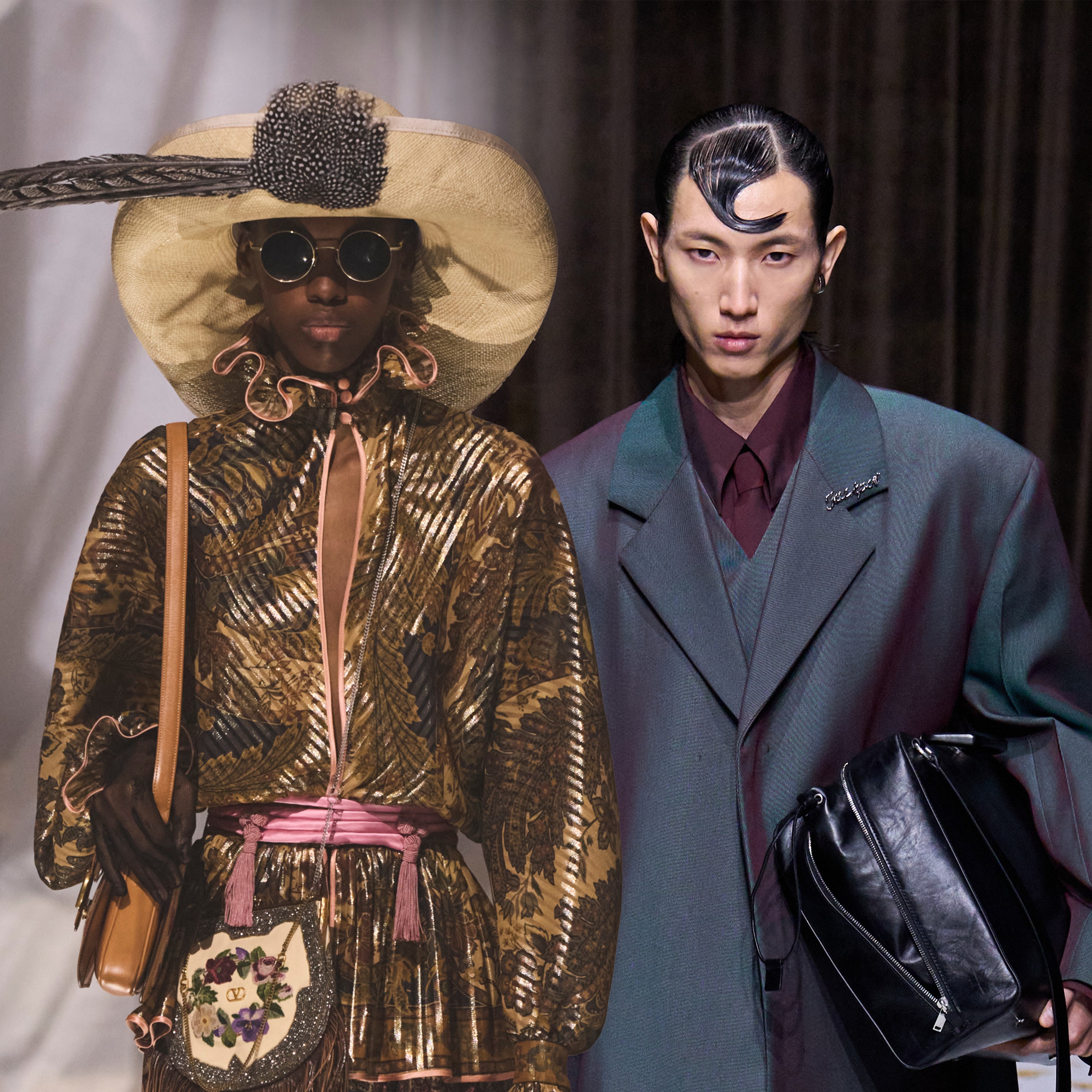
Tim Blanks and Imran Amed Reflect on the Spring/Summer 2025 Shows
Amid economic uncertainty, a global luxury industry slowdown, and conflicts erupting around the world, designers at the Spring/Summer 2025 shows balanced restraint and expression, resulting in collections that sought deeper emotional and intellectual impact. Megabrands scaled back fashion week festivities as they battened down the hatches with budget cuts and streamlined shows.“I think there's a general caution and a realignment. I think the state of the world is more conducive to reflection than extravagance,” says Tim Blanks, The Business of Fashion’s editor at large.It was the designers who took creative risks that stood out. At Marni, Francesco Risso created a cinematic spectacle, transforming cotton into expressive designs, emphasising simple beauty amid turmoil. Alessandro Michele made his anticipated debut at Valentino, honoring the legacy of Valentino Garavani while infusing his flair. At Loewe, Jonathan Anderson played with scale, encouraging audiences to rethink aesthetics.In this episode of The BoF Podcast, Imran Amed sits down with Tim Blanks to unpack the highlights of Fashion Month and discuss how the current global climate is influencing designers and brands.Key InsightsIn his eagerly awaited debut for Valentino, Alessandro Michele seamlessly integrated his unique creative approach with the storied heritage of the house. Blanks describes the collaboration as “a natural consummation ... like lovers meeting after decades of being apart and that kind of explosion of joy.”Sabato De Sarno's recent work at Gucci reflects the complexities of redefining a brand with a rich and influential legacy. While attempting to honor Gucci's heritage, his collections have faced criticism for lacking the distinctive and bold creative direction of his predecessors. Blanks remarks, “the problem is creating a new story for Gucci when the old stories are just so overpowering.”At Loewe, Jonathan Anderson pushed boundaries by experimenting with scale and perspective. His designs included oversized hoop skirts that seemed to hover. "He likes to challenge people's points of view," Blanks observes, adding that Anderson provokes thought "by showing them something that makes them wonder, how would I wear that? How would I sit in that?"Emerging designer Duran Lantink made a strong impression with his collection featuring extreme shapes refined into wearable forms. “Those clothes are a physical realization of independent thinking. What we need is more independent thought... fashion needs more of that," Blanks says.Amed echoes the importance of nurturing new talent, saying, “I think the future of the fashion industry is in good hands with some of these younger designers that haven't necessarily had a big role in a house yet but certainly deserve an opportunity to show what they can do. I think that's part of what we need in the industry—to move away from this lack of risk-taking. Safety and being safe, that's just boring.”Additional resourcesIn Paris, the Boys Can’t Help It!Beauty Is Still DefianceWhat Does Pressure Look Like in Milan? Hosted on Acast. See acast.com/privacy for more information.

Can Department Stores Save Themselves?
For decades, department stores were symbols of American retail success, but their shine has long since faded. Overexpansion that began in the 1990s, the growth of e-commerce and the decline of many malls has left a saturated market, with more stores than there is demand. Major department stores have been struggling for decades to adapt to changes in the way their customers shop, with little to show for it. "These challenges existed ten years ago, but the problem we have today is that it’s getting later and later, and more and more desperate for these department stores. Time is running out, and they still haven’t figured out the solution,” says retail editor Cat Chen.In this episode of The Debrief, BoF senior correspondent Sheena Butler-Young speaks with Chen about why department stores are struggling to stay relevant, how activist investors are complicating the picture, and whether following the approach of European department stores like Selfridges can save this iconic segment of the retail industry. Key Insights:Activist investors have been targeting department stores like Macy’s and Kohl’s, but they are more interested in these companies’ real estate portfolios than retail. Chen highlights the parallels with Sears, where the investor Eddie Lampert spun out Sears’ real estate into a separate entity, ultimately leading to its bankruptcy. “The sentiment in the industry is that if these companies were bought out by activist investors it would not be a good sign for the health of these department stores. There wouldn’t be a long-term strategy for maintaining their health,” she says.Nordstrom's strategy for revival includes focusing on experiential retail, enhancing customer service, and possibly going private under the Nordstrom family’s ownership. These moves would allow them to invest in the long-term health of the company without the pressure of quarterly earnings. “The Nordstrom family is really set on making some radical, transformative changes to Nordstrom that they just can't make as a public entity,” Chen explains.European department stores are a potential model for American department stores to replicate. “Look at Selfridges or look at Le Bon Marché. People love spending time in those stores — tourists but also locals,” Chen says. Explaining how European stores are treated like flagships, with significant investments in customer experience and meticulous attention to detail, she adds, “these companies invest in the layout of the store — fixtures, carpeting, lighting — all of these details matter, and European department stores have done a great job making it happen.” Additional Resources:Why Nordstrom’s Founding Family Wants to Take the Retailer Private | BoFInnovation Won’t Save Department Stores. The Right Products Will. | BoFCan Saks, Neiman Marcus and Amazon Save the American Department Store? | BoF Hosted on Acast. See acast.com/privacy for more information.
Alessandro Michele: “There is always Mr. Valentino somewhere with me”
Alessandro Michele’s whimsical, bold vision as creative director of Gucci revitalised the brand, turning it into a cultural juggernaut. Now, he’s attempting to do the same at Valentino, bringing his signature blend of nostalgia, craftsmanship, and artistic risk-taking to reimagine the Roman couture house. “This place has such a specific story,” he says. That name, Valentino—it’s a real name, with real life, with real love. … There is always Valentino somewhere with me.”This week on The BoF Podcast, BoF founder and editor-in-chief Imran Amed sits down with Michele to discuss his evolution as a designer, his deep connection to Valentino’s heritage, and the importance of passion and obsession in achieving creative success.Key insightsAs creative director, Michele said that the weight of Valentino founder Valentino Garavani’s legacy continues to inspire and guide him, even in the smallest details of his work. “When I'm working by myself, with the people of the studio, with Jacopo, there is always Valentino somewhere with me. … There is always an open conversation with him because I can feel the things talking to me, through the dresses, the walls," he said.Contemplating the meaning of success, Michele emphasises the importance of remaining true to himself as a designer. “It’s more moving left and right, rather than up and down. … Success is when you are in the right place, when you're free to be yourself,” he said. His approach to fashion is personal and deeply intuitive, and he protects his creativity by concentrating on his own creative fulfilment rather than trying to please everyone. “I don't need to be someone else. I think a big designer or a good designer needs to be himself.” Michele approaches his work with a deep understanding that creativity comes with taking risks, both in life and in fashion. He views risk as an essential element of growth and evolution in his designs. "You are taking beautiful risks, but they are risks,” he said. “I like myself also for the things I did wrong. … Now that I’m a big boy, I like the Alessandro who did so many wrong things.”For Michele, the magic of fashion and creating a collection lies in the uncertainty. "You put all the ingredients inside, and it’s going to be real only when the first person starts to walk on the catwalk. That’s the magic," he said. “You feel that you were pregnant, but now the baby has a proper life and you can no longer be in control. It's outside and it's gonna walk by himself or herself.”Additional Resources:Alessandro Michele, Michelle Yeoh, Francesca Bellettini, Zac Posen and Angel Reese Are Our BoF 500 Cover Stars‘Hyper Beauty’: Inside Alessandro Michele’s Surprise Valentino Collection | BoFThe Logic Behind Valentino’s Alessandro Michele Appointment | BoF Hosted on Acast. See acast.com/privacy for more information.

Why Does Menswear All Look the Same?
A style renaissance that changed how many men dress – mostly for the better – has congealed into a sea of sameness, at least in the eyes of a growing number of fashion critics and influencers. Too many interchangeable brands take the same approach, blending tailoring with casualwear in neutral-toned collections that are stylish but often fail to inspire. The look is often derided as a menswear “starter pack,” but remains popular with consumers. This week on The Debrief, Brian Baskin sits down with correspondents Malique Morris and Lei Takanashi to discuss why this “starter pack” approach works for the industry - but at the cost of long-term brand building and customer loyalty. Additionally, they probe what brands must do to recapture consumers' imagination.“Any brand can make a good product, but what makes a brand good, especially a good menswear brand, is having a great story that's worth telling,” says Takanashi.Key Insights:Menswear brands today are following a familiar formula, leading to a prevalence of “starter pack” lookbooks. “They all do some sort of version of this. Approachability, timeless, stylish and handsome but inoffensive look,” says Morris. This marketing playbook, popularised by brands like Aimé Leon Dore and followed by many others, has led to a lack of creativity and experimentation. As Morris puts it, “everything is good and nothing is great. So if everyone can dress well, then no one is actually cool.”What makes brands stand out over decades isn’t radical changes in design, but compelling storytelling and mythmaking. Morris argues consumers may not be loyal to today’s menswear brands in the long term if they're just buying into a trendy and easy to copy aesthetic. But Takanashi notes that for certain brands that are seen as authentically embracing this style, their best bet is stick to what’s worked: “I feel like in the case of brands like Aimé Leon Dore and Supreme, the long game for them is becoming a heritage label … they have such a distinct point of view that they will always have a core consumer.” As Morris puts it, “what brands should think about is just being themselves.”Additional resources:Why Menswear Is Getting a Marketing Refresh | BoFCan Off-White Get Back on Track? | BoFHow the Streetwear Customer Is Evolving | BoF Hosted on Acast. See acast.com/privacy for more information.
Skepta on Failing, Learning and Freedom in Fashion
The renowned grime MC and rapper Skepta knows that there’s no such thing as an overnight success. After the rapper launched his fashion brand, Mains, in 2017, it was put on pause after a split from his manufacturer before making a return to London Fashion Week last year. Progress, he believes, takes time and resilience. "Like anything in the world, the best way to learn is to do it and fail,” he said. “I know that it’s not a short road … you have to be in it to win. And it could take one pair of shoes. It could take a hat, could take one bag … If you don't carry on trying and failing, you won't get there." This week on The BoF Podcast, BoF founder and editor-in-chief Imran Amed sits down with Skepta to discuss Mains’ revival, his philosophy of perseverance and why he refuses to follow conventional rules in the fashion industry. Key InsightsSkepta’s love for fashion was sparked by his passion for underground music and the style he saw at garage events. “I'm getting turned away from clubs… and when I'm getting turned away, I'm looking in the queue and there's people wearing Versace, Moschino, Patrick Cox loafers,” he says. The way that clothes and music felt, tied together to shape his taste. “That was where I really fell in love with fashion. The aspiration of wanting to wear the clothes, but also listening to the music that you listen to when you wear the clothes."Skepta’s journey as a fashion customer, with a keen eye for garment construction and detail, led him to launch his own brand. "Years and years of experience of buying clothes and looking at stitches and the inside jackets, the panels, I just felt like I was experienced enough to give the tailoring expertise as well as the love and the true magical passion that's not taught in school. ... Paired with a great designer, Mikey Pearce, and team, it was almost like divine intervention for me to just do it."Skepta’s creative process is iterative. "With music, you can actually change the audio after it’s even out, but with clothes you definitely can’t, so until it’s out I'm always changing. I'm always adapting and figuring out,” he says. “I don't like putting boundaries on thought. I think we should always be able to adapt and change.”"I'm doing one show a year. Spring, summer or winter altogether. Boys and girls in my show, they're all wearing the same clothes." This creative freedom allows Skepta to fully enjoy the process, believing it's important to not take fashion too seriously. "It should be fun. And I see a lot of people that go into fashion and adhere to the rules that have been set, then they start having a bad time doing something that they love. That’s crazy to me."Associated Articles:In London, Plasticine and Messy Dressing | BoFHow to Bring a Personal Touch to PR | BoF Hosted on Acast. See acast.com/privacy for more information.

Luxury Fashion’s Designer Diversity Problem
Luxury fashion remains an exclusive club, where leadership positions are often filled from within tight, familiar circles. Despite industry-wide commitments to diversity and inclusion, the sector continues to struggle with gender and racial diversity in its top creative roles. Many luxury companies still operate within networks that favour traditional backgrounds, making it difficult for new, diverse talent to break through.“It's a role where I think people's unconscious biases really can come into play because whether or not they receive something as good design or bad design is going to be so much influenced by the person who told them that it's good design or bad design,” said BoF’s Luxury Editor Robert Williams. This week on The Debrief, BoF Senior Correspondent Sheena Butler-Young sat down with Williams to discuss the structural barriers that keep women and minorities from ascending to these coveted positions. They explore how the industry’s patriarchal business models perpetuate these challenges, the influence of consumer expectations in driving change, and how mass brands like Uniqlo are beginning to shift the narrative by appointing creative directors from unconventional backgrounds. Key Insights:The role of the creative director in luxury fashion has traditionally been defined by a singular, authoritative voice that dictates trends and tastes, often imposing what is considered "right" or "wrong" in design. Williams explains that this model, which elevates the creative director as a gatekeeper of style, makes it challenging for those who don't fit the traditional mould of authority in fashion to rise to the top.“The creative director defined in a very traditional sense … is so much about imposing this authority from the top. And while that's not how everyone operates a brand anymore, … when you have that tradition, that makes it harder for people who don't fit the bill of what someone is used to seeing as a person of authority and in power to rise up.” Women in creative leadership face unique challenges, needing to prove their creative vision with commercial success. Williams explains, “Women have had to maybe back up their creative contributions with commercial results. And I think when you look at the women at the top of the luxury industry, you have a group of women who really know how to say something on the runway and say something with the brand. But then also really to back that up with products that women will want to buy and wear.” This dual expectation places added pressure on women creative directors, which may not be applied to their male counterparts.Luxury fashion remains a highly insular industry, where hiring and promotion often occur within exclusive networks that favour familiar faces and traditional backgrounds. “Many luxury companies still operate within a very exclusive network, which makes it difficult for new, diverse talent to break in,” Williams notes. “It's a very contacts and relationship driven industry, and so reinforcing diversity is quite tricky. If the people in positions of power don't have a really diverse group around them, it's going to be less and less likely that they're going to find out about an interesting talent, someone that they want to kind of cut into the action in terms of their studio.”Additional Resources:Luxury Fashion’s Designer Diversity Problem Persists | BoFDo Mass Brands Need Creative Directors? | BoF Hosted on Acast. See acast.com/privacy for more information.
Clare Waight Keller on Finding Opportunity in Discomfort
Clare Waight Keller’s career in fashion has been defined by her versatility as a designer and desire to step outside her comfort zone. She started out specialising in knitwear at the Royal College of Art before taking on a role in knitwear at Calvin Klein, before moving on to Ralph Lauren. She returned to Europe to work at Gucci under Tom Ford, and then stepped into creative director roles at Pringle, Chloé and Givenchy. Last week, it was announced that she was becoming the creative director of Japanese clothing retailer Uniqlo, which is targeted at the masses, not the classes. Seeing new challenges as an opportunity to learn and grow, has led Clare to make many unexpected decisions from the start of her career. “Those moments when you are pushed to your boundaries and don't quite know how to navigate… bring a great sense of drive for me. I love the idea of being uncomfortable with what I'm working on because it makes me learn quickly,” she said. “I enjoy the process of change, and I guess that's why I've worked in so many different places.”This week on The BoF Podcast, BoF founder Imran Amed sits down with Clare to discuss her varied career path and her experience working in American, Italian, British, French and now Japanese fashion companies and how this has shaped her outlook on the industry.Key InsightsGrowing up in Birmingham, England, Waight Keller was captivated by the vibrant subcultures she encountered. That influence led her towards art school, and eventually, fashion. “I distinctly remember standing at a bus stop, going to college, with punks, skinheads or goths — people who really expressed themselves through fashion and took it to a real sense of identity,” she said. “They just seemed like the most interesting people. I wanted to be part of that.”After working for predominantly male creative directors, Clare felt it was time to express her own perspective, leading her to the creative director position at Chloé in 2011. “There's such a sensibility that women have in fashion because you try it on yourself, you wear it, you feel it,” she said. “I'm putting together what I believe to be my point of view of fashion."Waight Keller’s move to Uniqlo marked a shift from working in the world of luxury to mass fashion, which has required some adjustment. “Understanding the scale was just extraordinary. In luxury fashion, you work on a much smaller scale, even at big brands,” she said. However, with this came new opportunities. “With that scale comes incredible access to innovation, amazing fabric mills, and quality.” Even as her career flourished, Waight Keller came to discover the inherent gender bias women face in the industry. “It's still fairly male-dominated in management and across the business side of fashion ... I had to make my family work around my career because even a season out in fashion can put you back a year, and people look at you differently.” With that, her advice to fellow female designers is not to “be afraid of a challenge and having to learn on the ground."Additional ResourcesDo Mass Brands Need Creative Directors? | BoF The Logic Behind Givenchy's New Designer Appointment | BoFUniqlo Appoints Clare Waight Keller as Creative Director | BoF Hosted on Acast. See acast.com/privacy for more information.

Fast Fashion Disruption With Shein and H&M
Shein has fundamentally changed the fashion market, challenging fast fashion giants that were not so long ago in the disruptor position themselves. Once the category's upstart, H&M now finds itself struggling to keep pace as Shein redefines consumer expectations with ultra-low prices, endless selection and lightning-fast production. In response, H&M’s new CEO has unveiled a strategy to target the elusive middle market, hoping to position the retailer as more affordable than Zara but higher-quality than Shein. This week on The BoF Podcast, executive editor Brian Baskin sat down with Senior Sustainability Correspondent Sarah Kent and Retail Correspondent Cat Chen to delve into the contrasting paths of these two retail giants and what it means for the future of fashion.“H&M has been stuck in the middle with kind of a muddled identity … It's trying to figure out how to differentiate itself,” said Chen. Meanwhile, Shein’s breakneck growth comes with a heavy environmental toll, raising questions about the industry’s efforts to reduce emissions.“Shein’s growth is phenomenal, but its environmental impact has grown even faster than its sales… now outpacing all other large fashion companies,” Kent said.Key Insights:H&M’s CEO Daniel Ervér is focusing on a strategy to occupy the middle ground between ultra-budget brands like Shein and more premium fast fashion like Zara. The goal is to appeal to both ends of the market with a mix of affordable basics and higher-end pieces, as Ervér explained to Chen in her interview with the CEO. “[Ervér] said they were committed to this position of wanting to offer something to everybody.Shein’s rapid growth has turned it into fashion’s biggest polluter, surpassing even Inditex in emissions. The company’s production model, reliance on cheap polyester, and coal-powered manufacturing contribute heavily to its environmental impact. “Over the last three years, their emissions have tripled as their sales have grown hugely,” Kent explained. Shein’s rapid growth has turned it into fashion’s biggest polluter, surpassing even Inditex in emissions. The company’s production model, reliance on cheap polyester, and coal-powered manufacturing contribute heavily to its environmental impact. “Over the last three years, their emissions have tripled as their sales have grown hugely,” Kent explained. As Shein continues its rapid growth, the company faces increasing scrutiny from regulators and potential investors regarding its environmental and labour practices. But Shein is unlikely to face major restrictions on how it operates anytime soon. “The hand of regulation moves slowly, and so far, most companies are being asked to provide a bit more transparency,” Kent said. “No one's facing any real penalties for being the worst polluter at the moment.” Shein’s growth may be peaking, creating opportunities for competitors like H&M. The market is always evolving, allowing established brands to find ways to stand out. “We are at the end of the beginning for Shein and Temu. … And at the end of the day, there will always be new disruptors,” Chen shared.Additional resources:H&M’s Big Bet on Fashion’s Elusive Middle Shein Emissions: Fashion’s Biggest Polluter? Hosted on Acast. See acast.com/privacy for more information.