The Briefing Room
396 episodes — Page 5 of 8
Non-Fungible Tokens
When a collage of digital images was sold in New York earlier this year for £50 million, the art world was convulsed. The reason? The picture couldn't be hung on a wall and was only visible online. What had been bought and sold was the non-fungible token - or NFT - relating to the collage. David Aaronovitch and his guests discover how NFTs work for those who sell and those who buy them and also consider if NFTs are a passing fad or an aspect of our culture that is becoming increasingly common and might lead to the emergence of a future John Constable or Tracy Emin, eventually spreading to and influencing other art forms.Enter the Briefing Room and find out why collectors are investing in NFTs; how easy it is to spot a fake and what you can do about it; and whether non-fungibles will be an enduring part of the artistic - and investment - worlds in the years ahead.Those taking part include: Georgina Adam of The Art Newspaper; investor in NFTs and co-founder and chief executive of the Arts and culture portal Vastari, Bernardine Bröcker Wieder; and the art historian, former art dealer and presenter of the BBC FOUR series, Britain's Lost Masterpieces, Bendor Grosvenor.Producers Simon Coates and Bob Howard Editor Jasper CorbettImage: Visitors to "Machine Hallucinations - Space: Metaverse" by Refik Anadol, which will be auctioned online as an NFT at Sothebys, at the Digital Art Fair, Hong Kong Credit: REUTERS/Tyrone Siu
The UK's Energy Crisis
The Business Secretary, Kwasi Kwarteng, has said there is 'no question of the lights going out' this winter as a result of a huge rise in gas prices. But many smaller energy companies are struggling to stay afloat as they are unable to pass on the higher wholesale costs of gas to their customers because of the energy price cap. Labour has accused the government of complacency when it comes to energy supplies. Some Conservatives have warned of a tricky winter ahead. So what lies behind the current problems, and what can be done to stop it happening again? Joining David Aaronovitch are :David Sheppard, Energy Editor at the Financial Times Dr Sharon George, Senior Lecturer in Environmental Science, University of Keele Michael Bradshaw Professor of Global Energy at the Warwick Business School Sir Dieter Helm, Professor of Economic Policy at the University of OxfordProducers: John Murphy, Kirsteen Knight, Soila Apparicio Sound Engineer: Graham Puddifoot Editor: Jasper Corbett
Vaccine Passports and Booster Jabs
Government ministers have been blowing hot and cold about vaccine passports. Now the Westminster government says it is not planning to introduce them to England, though they're being kept as an option should things change. The Welsh government is thinking about them, while Northern Ireland has rejected them for now. In Scotland vaccine passports are coming in on October 1st for nightclubs and large venues. But booster jabs are coming across the UK. The roll-out for over-50s, frontline health workers and vulnerable groups will begin in days. Joining David Aaronovitch to ask if we need vaccine passports and boosters are:Laure Millet, head of the healthcare policy programme at the Institut Montaigne in Paris Melinda Mills, Professor of Demography at the University of Oxford and Director of the Leverhulme Centre for Demographic Science Azra Ghani, Professor of Infectious Disease Epidemiology, Imperial College London Natasha Loder, Health Policy Editor at The EconomistProducers: John Murphy, Kirsteen Knight, Soila Apparicio Editor: Jasper Corbett
Universal Credit: The Challenge Ahead
At the start of the first pandemic lockdown the government announced a £20 uplift for those receiving Universal Credit, the benefit designed to help those of working age with their living costs. It made clear at the time that the extra money was temporary and, in the coming weeks, payments will start to be reduced. But is a cliff-edge drop in the income of more than two-and-a-half million families the right step to be taking? And how best are the UK's poorest to be supported with the country still recovering from the pandemic?David Aaronovitch and his guests evaluate how well Universal Credit has been helping those in and out of work and what the uplift has achieved for families and single person households. Is giving more money to claimants the most effective way of helping them in the post-pandemic economy? Or, with prices rising for household essentials, should the government now be thinking about other measures to help those struggling to make ends meet?How do we help the least well-off while being fair to taxpayers and not subsidising employers paying low wages?Those taking part (in order of appearance): Fran Bennett of the Department for Social Policy & Intervention at Oxford University; Tom Waters, Senior Research Economist at the Institute for Fiscal Studies; Gemma Tetlow, Chief Economist at the Institute for Government; and Deven Ghelani, founder of the social policy business, Policy in Practice.Producers Simon Coates, Jim Booth and Kirsteen Knight Editor Jasper Corbett
The Afghan Refugee Crisis
The Taliban takeover over of Afghanistan has left millions of people internally displaced and hundreds of thousands more hoping to leave the country soon. Where will these Afghan refugees try to go and how will they be received by different countries?Joining David Aaronovitch in The Briefing Room are:Camille Le Coz, Policy Analyst with Migration Policy Institute.Michael Semple, Professor at the Mitchell Institute for Global Peace, Security and Justice at Queen's University Belfast and former UN co-ordinator for the Bamiyan region in Afghanistan.Peter Walsh, researcher in migration at the Migration Observatory.Dominic Casciani, BBC Home and Legal correspondentProducers: Ben Carter, Kirsteen Knight and Sharon Hemans Studio Manager: James Beard Production Co-ordinator: Iona Hammond Editors: Alison Gee and Jasper Corbett
HS2: On Track?
HS2, a high-speed railway linking up London, the Midlands and the North of England has been in development for more than a decade. It was described by Boris Johnson as the ‘spine’ of a new network to deal with the ‘great musculoskeletal problem of UK transport’. The ‘spine’ is costing an arm and a leg. In 2012 the project was priced at £32.7bn. That was revised to £55bn in 2015. Last year a review by civil engineer Doug Oakervee said the final figure could top £100bn. The Chancellor Rishi Sunak has already warned that Covid has severely damaged public finances and that will likely impact decisions made in the comprehensive spending review taking place this autumn. So how is HS2 progressing and is its completion threatened by its rising costs?Joining David Aaronovitch in The Briefing Room are -Nick Kingsley, Managing Editor of Railway Gazette International Bridget Rosewell, Commissioner, National Infrastructure Commission George Parker, political editor at the Financial Times Tony Travers, Professor in the School of Public Policy at the London School of EconomicsProducers: Ben Carter, Kirsteen Knight and Sharon Hemans Editor: Jasper Corbett Sound Engineer: Neil Churchill
What next for President Biden’s foreign policy?
‘The likelihood there’s going to be the Taliban overrunning everything and owning the whole country is highly unlikely,’ said President Joe Biden six weeks ago. This prediction has not aged well. One harrowing scene this week saw some Afghans trying to escape their new reality by clinging to the wheels of a US Air Force plane as it took off from Kabul airport. Some of them fell to their deaths.Amidst growing international condemnation of the United States, President Biden has remained unrepentant about the end of the US mission in Afghanistan, arguing it was never about nation building or creating a unified democracy. It was about preventing a terrorist attack on American homeland. But what impact will events in Afghanistan this week have on the President's future foreign policy decisions?Joining David Aaronovitch in The Briefing Room are:Alex Ward, National Security reporter at PoliticoDr Leslie Vinjamuri, Director of the US & Americas programme at Chatham House Madiha Afzal, Brookings Institution Prof Michael Clarke, former Director General of RUSI and Professor of Defence Studies at King's College LondonProducers: Ben Carter, Kirsteen Knight and Sharon Hemans Editor: Penny Murphy Sound Engineer: Graham Puddifoot
Who's supporting the Taliban?
The Taliban’s relentless march across Afghanistan continues – taking control of provincial capitals, rural districts and the financially lucrative border crossings. As the world watches on with increasing concern US President Biden has told Afghan leaders that it’s their battle to win and that they need to come together and fight for their nation. The female Afghan politician and diplomat Shukria Barakzai warned this week that her country is experiencing a ‘human catastrophe’ and Afghanistan will provide a safe haven for militants, which will cause the world huge problems. There’s also the prospect of a huge refugee crisis. But how are the Taliban succeeding and who’s helping them?David Aaronovitch is joined in The Briefing Room by: Laurel Miller, Director of International Crisis Group’s Asia Programme Ashley Jackson, Co-Director, Centre for the Study of Armed Groups Ahmed Rashid, Pakistani journalist and authorProducers: Ben Carter, Sally Abrahams and Kirsteen Knight Sound engineer: James Beard Editor: Penny Murphy
Taiwan and the Threat to Peace
Only a handful of small states officially recognise Taiwan as an independent country, though in many ways this democratic territory has the trappings of an independent nation. But Taiwan's giant neighbour, China, argues that the island is a renegade province that will one day reunify with the mainland - and Beijing reserves the right to use force to accomplish that if need be. In recent years the Chinese have built up their military forces substantially, including many aimed at Taiwan, and the rhetoric from Beijing remains that Taiwan belongs to China. Meanwhile calls within Taiwan for full independence have grown louder. The United States says it is committed to preserving the ambiguous status quo in the region and to opposing any Chinese coercion of the Taiwanese. Japan, too, has recently become more outspoken about supporting the US military forces in any possible conflict over Taiwan. So could the dispute over Taiwan trigger a war?Joining David Aaronovitch in the Briefing Room are:Margaret Hillenbrand, Associate Professor of modern Chinese culture and literature at the University of Oxford.Dr. Yu Jie, Senior Research Fellow on China in the Asia-Pacific Programme at Chatham House.J Michael Cole, Taipei-based Senior Fellow with the Taiwan Studies programme at Nottingham University.Bonnie Glaser, Director of the Asia Programme at the German Marshall Fund of the United States, Washington DC.Producers: John Murphy, Ben Carter, Kirsteen Knight, Jim Frank Sound Mix: Graham Puddifoot Editor: Jasper Corbett
Where Are All the Workers?
A supermarket chain is offering £1000 welcoming handshakes to new truck drivers - just one indication of the shortages in the haulage industry. The Road Haulage Association says that there is now a shortfall of 100,000 lorry drivers across the UK and other sectors of the economy are also finding it difficult to find workers, including in hospitality, construction and IT. The pandemic has shaken things up and Brexit has seen thousands of EU workers returning home - but is this a short-term problem or are there deeper structural changes happening?Joining David Aaronovitch in the Briefing Room:Dougie Rankine, editor of Truck and Driver magazine. Katherine Price, news editor of The Caterer.Tony Hill, Director of the Institute for Employment Studies.Yael Selfin, Chief Economist, KMPG UK.Torsten Bell, Chief Executive at the Resolution Foundation.Jane Gratton, Head of People Policy at the British Chambers of Commerce.Producers: John Murphy, Sally Abrahams and Kirsteen Knight. Sound Engineer: Graham Puddifoot Editor: Jasper Corbett
COP26: Floods, Fire, and the Future
Right across the world unpredictable and extreme weather has led to devastating consequences: homes washed away by floods in Europe and China with hundreds dead; extreme heat and giant wildfires in North America and in Siberia, and we now hear that the Amazon rainforest is emitting more carbon dioxide than it is soaking up. Scientists are clear that man-made climate change is playing a significant role in all this. In November senior representatives from 197 countries plus the European Union are supposed to be gathering for COP26 in Glasgow. Can this gathering - and the pronouncements made there - help save us from extreme climate change?Joining David Aaronovitch in the Briefing Room are:Alina Averchenkova, Distinguished Fellow from the Grantham Research Institute on Climate Change and the Environment at the London School of Economics.Michael Jacobs, Professor at Sheffield University’s Political Economy Research Institute.Carly McLachlan, Professor of Climate and Energy Policy, Manchester University, and Director of Tyndall Manchester.Dr. James Dyke, Senior Lecturer in Global Systems, University of Exeter.Presenter: David Aaronovitch Producers: John Murphy, Sally Abrahams and Kirsteen Knight. Sound Engineer: James Beard Editor: Jasper Corbett.Image: People wading through flood waters following heavy rains in Zhengzhou in China's central Henan province. Credit: STR/AFP via Getty Images
Stepping into the Unknown
Some are calling it Freedom Day. Others are much more circumspect. The lifting of Covid restrictions on 19th July in England is, to a certain extent, an experiment. The UK has one of the best vaccination rates in the world and far fewer people are now dying from coronavirus. But it also has one of the fastest rising infection rates. The development of the vaccines so quickly was, undoubtedly, an extraordinary scientific feat. It did also lead some scientists to predict that we would be through this pandemic by now. So why hasn't that happened? And what do we know about the risks involved in lifting restrictions now? Joining David Aaronovitch in the Briefing Room are:Azra Ghani, Professor of Infectious Disease Epidemiology, Imperial College, London Tom Chivers, Science journalist and author Linda Bauld, Professor of public health at Edinburgh University Thomas Hale, Associate Professor in Public Policy, University of OxfordProducers: John Murphy, Ben Carter and Kirsteen Knight Studio Manager: Graham Puddifoot Editor: Jasper Corbett
How Unsettled is EU Status?
European Union and European Economic Area citizens living in the UK should have applied for so-called settled status in Britain before July 1st. Over five million people have applied - a significantly higher figure than the British government originally estimated would be eligible. But there are fears that, for various reasons, tens of thousands of people failed to meet the deadline. In theory, this means they could lose their right to work, rent housing, or access certain hospital treatment, and are potentially subject to removal from the country. UK citizens living in EU countries are also having to prove their status. To examine what has happened so far - to EU citizens in the UK and to UK citizens in the EU - and what happens next, David Aaronovitch is joined in the Briefing Room by:Mark Easton, the BBC's Home Affairs Editor Michaela Benson, Professor of Sociology at the University of Lancaster Catherine Barnard, Professor of European Union and Labour Law, Cambridge University. Jill Rutter, former Treasury official and senior fellow at the Institute for Government.Producers: John Murphy, Ben Carter, Kirsteen Knight Editor: Jasper Corbett
The Ransomware Threat
You might receive an innocuous looking email – it might even look like it’s from your boss – asking you to click on a link. Watch out! It could be the start of a ransomware attack. Over the last year cybersecurity experts say that the number of ransomware attacks has grown exponentially. During the pandemic lockdowns criminal hackers have been able to exploit the vulnerabilities inherent in the increase in homeworking to infiltrate computer systems, shut them down and then demand a ransom to restore services, or even to stop publishing data they’ve stolen. Along with the increased volume of attacks, the level of ransom demands has grown. Using new technology and techniques, this has become a lucrative business for international criminal gangs, with individuals, businesses, schools, hospitals and charities all targeted. Joining David Aaronovitch in the Briefing Room to discuss ransomware attacks are:Emily Taylor, CEO of Oxford Information Labs and Editor of Chatham House's Journal of Cyber Policy Sadie Creese, Professor of Cyber Security at the University of Oxford Geoff White, investigative journalist and author and presenter of the BBC’s podcast series, The Lazarus Heist Susan Landau, Bridge Professor of Cyber Security and Policy at the Fletcher School of Law and Diplomacy and the School of Engineering, Department of Computer Science, Tufts University Producers: John Murphy, Sally Abrahams and Imogen Serwotka Sound Engineer: James Beard Editor: Jasper Corbett
Hamas
Gaza is one of the most crowded places on earth. Most of its two million residents live in refugee camps and around half are unemployed. Gaza is governed by Hamas, an organisation that many governments regard as a terrorist group. Hamas extended its control over the whole of Gaza in 2007, after it ousted Fatah, which is now based in the West Bank. Since then Hamas has been involved in a number of conflicts with Israel.. Its military capability has grown over the years. Joining David Aaronovitch to explore who Hamas are and what they want are:Jennifer Jefferis, Teaching Professor at Georgetown University's Security Studies program. She is also author of Hamas: Terrorism, Governance, and its Future in Middle East Politics. Dr Nina Musgrave from the Centre for Defence Studies, Kings College, London. She is the author of a forthcoming book, Hamas and the Arab Uprisings: resistance, allegiance, and the departure from Syria. Fabian Hinz, an independent open source intelligence analyst who specialises in Middle East missiles. Natan Sachs, Director of the Centre for Middle East Policy, Brookings Institution, Washington. Producers: John Murphy, Sally Abrahams, Luke Radcliff Sound Engineer: James Beard Editor: Jasper Corbett
Hong Kong: Beijing Tightens Its Grip
Hong Kong has long been at the centre of a tussle between mainland China and the outside world - certainly since the British took it as a colony in 1842. That heralded more than a century of "shame" for the Chinese - but in 1997 the British handed Hong Kong back to China with internationally agreed conditions. The so-called "one country, two systems" principle was meant to last until 2047, but in recent years Beijing has tightened its control over Hong Kong. Major pro-democracy demonstrations in 2019 were quashed and, in 2020, the authorities introduced a controversial and wide-ranging National Security Law to Hong Kong. Over recent weeks pro-democracy campaigners have been locked up, troublesome journalists have been censured or fired from their jobs, teachers have been told they will have to explain the benefits of the National Security Law to their pupils. Some argue that this is the end of Hong Kong. So why is Beijing and its supporters in the Hong Kong legislature taking this action now, and where might it end?Joining David Aaronovitch on this week's programme: Hugh Davies, a former diplomat who negotiated the return of Hong KongMary Hui, journalist for QuartzYuen Chan, Senior Lecturer, City University of LondonCharles Parton, Senior Associate Fellow at Royal United Services InstituteProducers: John Murphy, Sally Abrahams, Kirsteen Knight Sound Engineer: James Beard Editor: Jasper Corbett
India's Covid Catastrophe
In February India's governing party, the BJP, congratulated itself and its “visionary” leader, the prime minister, Narendra Modi,, for “defeating Covid.” Two months on India is in the midst of what one historian has termed “the gravest crisis the nation has faced since Partition” in 1947. Hundreds of thousands of new infections are reported every day and thousands of deaths. The peak may come in a few weeks. Meanwhile the country is short of hospital beds, oxygen and even wood for the funeral pyres. So what’s gone wrong? And what does India’s plight tell the rest of the world about the trajectory of the pandemic and when it might finally end?Producers: Tim Mansel, Kirsteen Knight, Paul Moss Studio Engineer: James Beard Editor: Jasper Corbett
Could Germany Go Green?
The German Chancellor Angela Merkel bows out of politics later this year after 16 years at the head of the German government. She seems likely to be replaced by one of two people; the man Merkel’s party, the CDU, has designated as her successor, Armin Laschet; or the relative political novice, Annalena Baerbock, from the Greens, a party with its origins in the environmental movement. Most commentators agree that however the cards fall after the September election the Greens will be in government, whether at the head of a coalition or as its junior partner. David Aaronovitch asks how the Greens have gained ground so dramatically in such a short time and what a Green German government might mean for Britain.Producers: Tim Mansel, Paul Connolly, Kirsteen Knight Sound Engineer: James Beard Editor: Jasper CorbettThe German flag flying in front of the Reichstag, home of the German parliament (Bundestag), Berlin, Germany. Credit BBC.
Northern Ireland: how fragile is the peace process?
There’s been violence on the streets of Northern Ireland in recent days, most of it in Protestant areas. On occasion it spilled over the sectarian divide. The proximate cause appears to be twofold: the refusal of the Northern Ireland prosecution service to bring charges against Sinn Fein members who apparently broke lockdown rules to attend a funeral last summer; and the Northern Ireland Protocol, which under the Brexit deal, means that checks apply to goods travelling from Britain to Northern Ireland. There are other, longer term grievances, in particular a perception that the Good Friday Agreement privileged the Catholic community at the expense of Protestants. Many fingers are now pointing at Westminster where the British government is accused of inactivity and indifference. More protests have been promised. So, how fragile is the peace process?Producers: Tim Mansel, Kirsteen Knight, Paul Moss Editor: Jasper Corbett
Global supply chains: is the UK vulnerable?
When the 400 metre long Ultra Large Container Vessel, Ever Given, got wedged diagonally across the Suez Canal at the end of March, it brought one of the world’s most important trade routes to a standstill for six days. Around ten per cent of global shipping passes through the canal. Shipping itself is responsible for some 90 per cent of global trade. The blockage served to revive worries that global supply chains have become a source of vulnerability for economies that rely on international trade. The immediate effect of the Ever Given accident for the UK may not become clear for several weeks. The Briefing Room asks what longer term vulnerabilities has it exposed and how might these best be mitigated?Presenter: David Aaronovitch Production team: Tim Mansel, Paul Moss and Kirsteen KnightSatellite image shows stranded container ship Ever Given in Suez canal. Egypt March 25th 2021. Credit: Reuters
Covid-19 and the World
No crisis has had the global reach and impact of Covid-19. There have been more than 120 million recorded cases of the Coronavirus and 2.7 million people have died and curbs on people’s freedoms have become a familiar part of daily life in many parts of the world. Just over a year since the world started to get to grips with the first global pandemic in more than a century, what can we say about how different countries have dealt it? Which countries have been worst-affected and why? Which public health systems have held up best? Why did test and trace work in some countries but not in others? Around the world governments have propped up their economies accruing eye-watering amounts of debt, but was it money well spent? Where and why has the vaccine roll out been most successful? And what could be the lasting legacy of the pandemic? Contributors: Dr.Thomas Hale, Oxford UniversityProf. Martin McKee, London School of Hygiene and Tropical Medicine.Nazmeera Moola, Ninety One, a South African asset management companyDr Monica DeBolle, Peterson Institute for International EconomicsJerome Kim, Director General of the International Vaccine InitiativeRasmus Bech Hansen, founder and CEO of AirfinityDr. Jennifer Cole, Royal Holloway, University of LondonKishore Mahbubani, Asia Research Institute at National University of SingaporeProducers: Tim Mansel, Paul Moss, Kirsteen Knight Sound Engineer: James Beard Editor: Jasper Corbett
Brexit Business
Britain's transition period with the EU ended on December 31st. For the first time since the inception of the single market in 1992, British companies were on the outside. A trade agreement was reached meaning that no tariffs would be paid on imports or exports, but it did mean that trade would no longer be entirely friction free. It’s still early days, but what do we now know about the extent of that friction and its possible consequences? How representative are the frustrations of Cornwall’s daffodil growers who say they can’t find labourers or UK companies that are now setting up production facilities in the EU in order to avoid red tape and its cost? To what extent have difficulties been mitigated by new trade deals that the UK is now free to negotiate. And what’s the view from the EU?With Peter Foster of the Financial Times; Sam Lowe of the Centre for European Reform; Vandeline von Bredow of The Economist; and Maddy Thimont Jack of the Institute for Government.Producers: Tim Mansel, Sally Abrahams, Kirsteen Knight Editor Jasper Corbett
Out of Lockdown
The prime minister is due to announce on Monday his plan for lifting the current lockdown in England. He says he wants progress to be cautious but irreversible. And he, like many, is saying that decisions on how and when to lift lockdown need to be driven by data not dates. So what are the risks, for example, in sending primary age children back to school? Of opening pubs? Of opening non-essential shops? To what extent would any of this be possible without the rollout of the vaccination programme? And why is vaccination alone not a magic bullet? With Professor Azra Ghani of Imperial College, London; Professor Stephen Reicher of St. Andrews University; and Dr. Mike Tildesley of Warwick University.Producers: Tim Mansel, Sally Abrahams and Kirsteen Knight Editor: Jasper Corbett
“Turmoil” in the SNP
The prospect of independence for Scotland may never have been brighter for the SNP. Elections to Holyrood are due in May and the party has promised to seek a new referendum on independence if it gains a majority. Yet, at the same time, a prominent SNP MP concluded this week that the “turmoil” within her party was “unprecedented”. Others have talked about the “fight to the death” that’s currently being waged between supporters of the leader, Nicola Sturgeon and supporters of her predecessor, Alex Salmond. The feud has its roots in a government investigation of Mr Salmond in 2018 that led to him being charged with a number of sexual offences. A jury cleared Mr Salmond on all counts in a trial last year. So what’s going on in the SNP? How can it be so apparently popular while being so deeply divided? And how might this affect its chances of realising its ambition of an independent Scotland?With BBC Scotland editor, Sarah Smith,; journalist Dani Garavelli; and Professor of Politics at Strathclyde University, Sir John Curtice.Producers: Tim Mansel, Sally Abrahams, Kirsteen Knight Editor: Jasper Corbett
GameStop Shock
There was pandemonium on the US stock market when shares in a chain of video game shops went through the roof. At one point GameStop’s stock, which averaged just seven dollars last year, was valued at more than 480 dollars. The frenzy was fuelled by cheerleaders on Reddit. Investors were being encouraged to buy the stock even as it became clear that they would probably lose most of their investment. There was a mood of rebellion online and clear hostility to millionaire hedge fund managers. Then one of the platforms that offered small investors free access to the market said it would temporarily no longer allow new purchases of GameStop stock. This prompted furious claims of unfairness; accusations that Wall Street had shut out the little guy; that there was one rule for the big investor and another for the amateur. So what did actually happen? Was this truly a battle between the Davids and the Goliaths of the financial world? What will happen next? And why does it matter?Contributors:Elizabeth Lopatto, The VergeSebastian Mallaby, The Council on Foreign Relations and Washington PostPhilip Coggan, The EconomistSusannah Streeter, Hargreaves LansdownProducers: Tim Mansel, Sally Abrahams, Kirsteen Knight Editor: Jasper Corbett
The Irish Question
This year marks 100 years since the creation of Northern Ireland, in May 1921. But in the light of Brexit, which has left Northern Ireland inside the EU’s single market and customs union, creating, in effect, a border in the Irish Sea, conversations about the possibility of Irish reunification are getting louder. One opinion poll suggested there is now a slender majority in Northern Ireland in favour of holding what’s known as a “border poll”, a referendum on the reunification of Ireland, within five years. So has Brexit made reunification any more likely? With Margaret O’Callaghan of Queen’s University, Belfast; Alan Renwick of University College London; Sam McBride of The News Letter; and Etain Tannam of Trinity College, Dublin.Presenter: David Aaronovitch Editor: Jasper Corbett Producers: Tim Mansel, Sally Abrahams, Kirsteen Knight
Putin vs Navalny
Millions of people have been watching a film in the past two days that was released by Alexei Navalny, Russia's leading opposition figure, even as he languished in a Moscow jail. The film, presented by Navalny, accuses the Russian president, Vladimir Putin, of embezzlement on the grandest of scales. Mr. Putin is said to be furious. Last year there was an attempt on Mr. Navalny’s life using the nerve agent, novichok. Fingers were pointed at the Kremlin, which has denied any involvement. Navalny went to Germany for hospital treatment and convalescence. He returned to Russia on Sunday and was arrested on arrival in Moscow. Navalny seems likely to find himself behind bars for several years, but he’s called on his supporters to take to the streets. The Kremlin’s reaction to his return indicates its nervousness. There are parliamentary elections later this year. So what has Vladimir Putin to fear from Alexei Navalny? With: Arkady Ostrovsky, Russia Editor at The Economist; Steve Rosenberg, BBC Moscow Correspondent; Catherine Belton, author of the book, Putin’s People; and Nikolai Petrov, Senior Research Fellow at Chatham House.Producers: Tim Mansel, Sally Abrahams, Kirsteen Knight Editor: Jasper Corbett
Covid and the NHS
More than 80 thousand people in the UK have now died with Covid-19; there are currently more than three million confirmed cases across the country and in the worst affected areas one person in 20 is infected. Even with the whole of the UK now in some form of lockdown, there are more than 35,000 people in hospital with the virus. That is around 50 per cent more than at the peak of the epidemic in the UK last spring. As hospitals reprioritise to deal with Covid cases, patients with other conditions are bearing the brunt, with one London hospital trust announcing it was cancelling some cancer operations. So how is the NHS coping with the Covid crisis?Contributors: Jennifer Dixon of the Health FoundationNigel Edwards of the Nuffield TrustSiva Anandaciva of the King’s FundDavid Salisbury, the former head of immunisation at the Department of Health.Producers: Tim Mansel, Sally Abrahams, Kirsteen Knight, May Cameron Editor: Jasper Corbett
America: what just happened?
The past day has been an extraordinary one in the history of modern America. Firstly, the Democrats secured a majority in both houses of Congress. Secondly, Congress certified Joe Biden’s election victory - although many Republicans challenged the votes of some states. Thirdly, while the political debates were underway, pro-Trump supporters stormed the Capitol and four people died. David Aaronovitch is joined by an expert panel of guests to examine what just happened and what does this mean for the United States, its institutions and its politics.Producers: Tim Mansel, Kirsteen Knight and May Cameron Editor: Jasper Corbett
Facebook's Monopoly Problem
US federal regulators and dozens of state prosecutors are suing Facebook accusing it of illegal actions in buying up rivals and stifling competition. It's one of the biggest antitrusts in US history and is one of several cases being taken against big tech companies. David Aaronovitch explores the case against Facebook and the evolution of antitrust law in the US. What is the basis on which these companies are being held to account, and is this law an outdated tool in confronting tech titans? GUESTS: Gilad Edelman - Political writer at Wired magazine Scott Hemphill - Professor of Law at the University of New York Lina Khan - Associate Professor at Columbia Law School Ariel Ezrachi - Professor of Law at the University of OxfordProducers: Serena Tarling, Viv Jones Editor: Jasper Corbett
The Climate Crisis: Are We Moving Fast Enough?
While the world’s attention has been distracted by Covid, the climate crisis has continued to pose an existential threat. But there have been significant developments this year, not least the announcement by China that it has set 2060 as the year when it will become carbon neutral. Joe Biden was elected president of the United States with promises to set a carbon neutral target of his own and to spend trillions of dollars on new green jobs and new green infrastructure. The EU, Japan and South Korea have all designated 2050 as the year they will reach net zero emissions. Meanwhile the world continues to get hotter. So is this all too little, too late? Hopefully not, especially, as we’ll hear, given the way that industry and finance are now reorganising.Contributors: Professor Mark Maslin of University College LondonByford Tsang of the climate change think tank E3GPete Ogden, who worked on climate change in the Obama White House and is now at the United Nations FoundationDr Gabrielle Walker, a writer and consultant to private industry on climate change adaptation.Producers: Tim Mansel, Sally Abrahams, Kirsteen Knight Editor: Jasper Corbett
Living with the Taliban
The war in Afghanistan has just entered its twentieth year. It has come at an enormous cost, most notably to Afghan civilians, but also to Britain. Nearly 500 British military personnel have lost their lives there since 2001. But now, for the first time the Taliban and the elected Afghan government are involved in direct peace negotiations. The talks in Doha, which have been going on since September, follow an agreement reached earlier this year between the US government and the Taliban. Under that agreement the US promised to withdraw its remaining troops within 14 months and the Taliban said it would cut all ties with terrorist groups, including Al Qaeda. The Taliban’s place at the negotiating table reflects its strength on the ground in Afghanistan as a fighting force; and it implies that it the way is open for a return to government in Kabul. But, given memories of public executions, the exclusion of women from public life, and the banning of music and kite flying, how acceptable will that be to the Afghan people? And how easy will it be for western governments to do business with the Taliban?David Aaronovitch is joined by: Lyse Doucet, the BBC's Chief International Correspondent Orzala Neemat, Director of the Afghan Research and Evaluation Unit, Annie Pforzheimer, a former deputy Head of Mission at the US Embassy in Kabul.Producers: Tim Mansel, Kirsteen Knight, Sally Abrahams Editor: Jasper Corbett
Brexit: Is It Oven Ready?
With just weeks to go till the Brexit transition period ends, David Aaronovitch and The Briefing Room team explore Britain’s readiness for 2021. What will it mean for you? What have supermarkets, airlines, businesses, ports and the government done to get ready – and will it be enough?Producers: Serena Tarling, Kirsteen Knight, Sally Abrahams Editor: Jasper Corbett
How Broke is Britain?
Thanks to the pandemic, Britain’s borrowing is forecast to hit nearly £400bn this year, and the economy is expected to contract by more than 11 per cent. How can we afford this, and what can the government do to bring public spending under control?David Aaronovitch is joined by:Jagjit Chadha - Director of the National Institute of Economic and Social Research (NIESR)Nicholas Crafts - Professor of Economics and Economic History at the University of WarwickAdam Posen - President of the Peterson Institute for International Economics (PIIE)Gemma Tetlow - Chief Economist at the Institute for GovernmentAbigail Adams-Prassl - Associate Professor of Economics at the University of Oxford
The President's In Tray
Whoever wins the US presidential election, what policy priorities await the next man in the White House?David Aaronovitch, asks what are the domestic priorities for an-coming President Biden or a second term President Trump and how do they go about rebuilding the US economy amid an ongoing Covid pandemic? On the international front, how might America's relationship with the rest of the world change with a new President and will this mean a greater commitment to tackling climate change? If President Trump wins a second term, where will he focus his international agenda? Contributors: James Fallows, National Correspondent, The AtlanticJared Bernstein, Senior Fellow at the Center on Budget and Policy Priorities and former Chief Economist and Economic Adviser to Vice-President Joe Biden.Leslie Vinjamuri, Director, US & Americas, Chatham HouseThomas Hale, Associate Professor of Public Policy, Oxford UniversityProducers: Richard Fenton Smith, Simon Coates, Kirsteen Knight Sound Engineer: Rod Farquhar Editor: Jasper Corbett
Education: A Testing Issue
Scotland has cancelled its National 5 school exams next summer - should the rest of the UK follow? On The Briefing Room David Aaronovitch asks if exams should go ahead next year, and can governments ensure assessments are fair? Contributors:Branwen Jeffreys, BBC education editorProf Anna Vignoles, Faculty of Education, University of CambridgeLaura McInerney, former editor of Schools WeekNatalie Perera, executive director at the Education Policy InstituteProf Lindsay Paterson, University of Edinburgh.Producers: Kirsteen Knight, Bob Howard and Rosamund Jones Editor: Jasper Corbett
Covid-19: Regional Differences
As the U.K. introduces more restrictions to stem the spread of Covid-19, why are there such marked regional differences in the infection rate?Contributors: Greg Fell, Director of Public Health, Sheffield City CouncilWendy Burke, Director of Public Health, North Tyneside CouncilDr Susanna Currie, Clinical Director for Cumbria Sexual Health Services at North Cumbria Integrated Care NHS Foundation Trust, Dame Anne Johnson, Professor of Infectious Disease Epidemiology at University College LondonDr Michael Tildesley, University of WarwickProducers: Rosamund Jones, Bob Howard and Kirsteen Knight. Editor: Jasper Corbett
Britain's Immigration Dilemma
As the Home Secretary Priti Patel promises to fix a 'broken' asylum system, what measures could the government take to reduce the number of migrants crossing the English Channel? Contributors: Professor Nando Sigona, Department of Social Policy, University of BirminghamKathleen Newland, co-founder of the Migration Policy InstituteRob McNeil, deputy director of the Migration Observatory at Oxford University, Producers: Ros Jones, Bob Howard, Kirsteen Knight Editor: Jasper Corbett
Covid-19: are we still following the rules?
As more restrictions are put in place regarding who we can meet and where we can go, to what extent are we following the rules? Is there any evidence of fatigue among the British public when it comes to adhering to government guidance designed to stop the spread of Covid-19?David Aaronovitch looks at the latest restrictions put in place around the UK and maps our behaviour since lockdown was first introduced back in March.What determines whether someone complies with the guidance or not? Will bigger fines encourage more people to fall in line? And to what extent do we actually understand what is being asked of us?Contributors:Dominic Casciani, BBC Home Affairs CorrespondentProf Daisy Fancourt, University College LondonProf Jocelyn Raude, EHESP French School of Public Health, RennesProf Linda Bauld, the University of EdinburghTeam: Richard Fenton-Smith. Bob Howard & Kirsteen Knight Studio Manager: Rod Farquhar Editor: Jasper Corbett
Sweden and the Pandemic
Sweden decided not to lockdown like other countries - was it the right decision?David Aaronovitch explores the Swedish experience of the pandemic and reveals that, for a country which didn't officially lockdown, it still introduced significant changes to everyday life, from school closures to social distancing and the cancellation of theatre shows and concerts.He looks at how the country's economy has fared compared to similar countries, and investigates whether claims it is in a better position to generate 'herd immunity' are accurate. Contributors:Maddy Savage, journalist in StockholmDr Emma Frans, researcher in medical epidemiology at Karolinska Institute, StockholmRichard Milne, Nordic and Baltic Correspondent at The Financial TimesMarcus Buggert, assistant professor at the Centre for Infectious Medicine at the Karolinska Institute, Stockholm,Martin McKee, Professor of European Public Health at the London School of Hygiene and Tropical Medicine Team: Richard Fenton-Smith, Bob Howard, Kirsteen Knight Studio Manager: Rod Farquhar Editor: Jasper Corbett
Covid-19: Six Months On
It's been six months since the coronavirus-induced lockdown was introduced across the UK - what have we learned about Covid-19 in that time? David Aaronovitch explores what we now know about the science of the virus, the symptoms it produces, and the policies which have been developed to tackle its spread.Contributors: Ravi Gupta, Professor of Clinical Microbiology, University of CambridgeTim Spector, Professor of Genetic Epidemiology. King's College LondonThomas Hale, Associate Professor in Global Public Policy, University of OxfordKeith Neal, Emeritus Professor in the Epidemiology of Infectious Diseases, University of Nottingham Team: Richard Fenton-Smith, Kirsteen Knight and Julie Ball. Studio Manager: Rod Farquhar Editor: Jasper Corbett
Will the US election be free and fair?
Allegations of potential postal voting fraud and voter suppression have raised questions about the fairness of November's US presidential election, but what evidence is there to suggest these fears will be realised and influence the vote?David Aaronovitch explores the prevalence of electoral fraud in America, and in a year when the polls suggest a tight race in several states, he asks what will happen if the election result is contested?Contributors: Anthony Zurcher, BBC North America reporterElaine Kamarck, director of the Center for Effective Public Management, Brookings Institution. Professor Carol Anderson, Emory University, AtlantaProfessor Jamal Greene, Columbia University, New YorkTeam: Richard Fenton-Smith, Julie Ball and Kirsteen Knight Studio Manager: James Beard Editor: Jasper Corbett
Football and the Pandemic
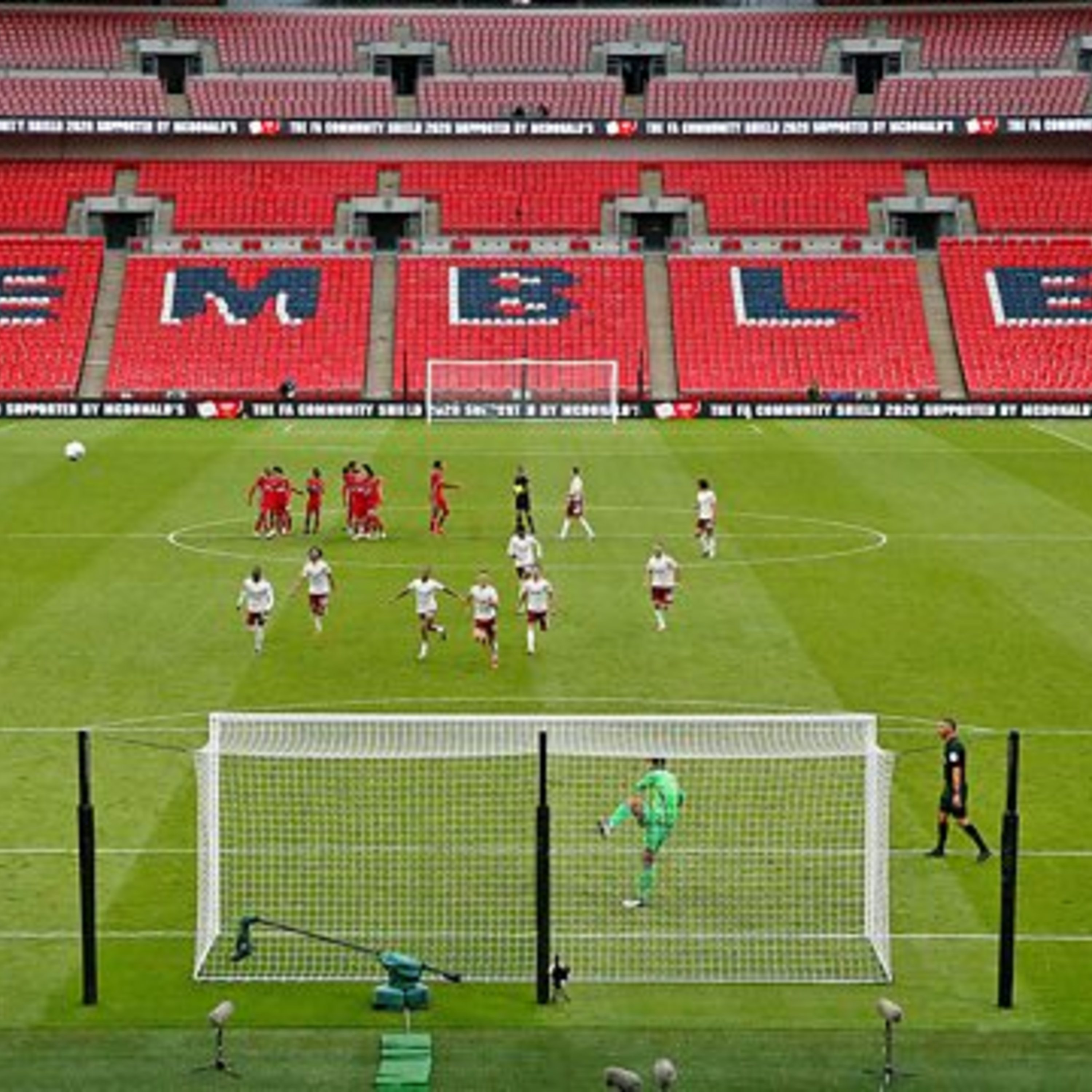
Like many other areas of life the pandemic has hit football where it hurts: revenues are down and there’s a danger that some clubs will go out of business. But if that were to happen, does it really matter? The Premier League has become a great British export and it generates billions pounds for the British economy. Beyond its monetary value, it is also something which millions of people enjoy watching and playing - but how important is it in the current crisis?Contributors: Kieran Maguire, Accountancy and finance Lecturer from the University of Liverpool.Alex Culvin, Senior Lecturer in Sports Business from Salford University. Stephan Uesrfeld, Germany correspondent from sports channel ESPN. David Goldblatt , Sociologist and Author. Helen Thompson, Professor of Political Economy, Cambridge University. Presenter: David Aaronovitch Producers: Jim Frank and Ben Carter. Editor: Jasper Corbett
Brexit: deal or no deal?
The EU has warned a trade deal with the UK now seems unlikely – is that just posturing to speed up negotiations or is ‘no deal’ now the most likely outcome? And how will Brexit affect you when the transition period ends – from the price of shopping, to pet passports and lorry parks, David Aaronovitch asks the experts:Katya Adler – BBC Europe Editor John Peet - Political and Brexit Editor, The Economist Maddy Thimont Jack - Senior Researcher. The Institute for Government Professor Anand Mennon – Director of the UK in a Changing Europe.Producers: Kirsteen Knight, Alex Lewis and Joe Kent Studio manager: James Beard Editor: Jasper Corbett.
Belarus: the end of a dictatorship?
Belarus is gripped by nationwide protests, triggered by what is seen as an unfair election, rigged in favour of the country’s authoritarian president, Alexander Lukashenko.Violent clashes have led to the arrest of more than 6000 people, with many reporting beatings and torture at the hands of the police. President Lukashenko has told protestors they would have to kill him before there was another election – but are the days numbered for the man described as Europe’s last dictator? Contributors:David Marples, professor of history, University of AlbertaBrian Klaas, associate professor in global politics, University College London Olga Dryndova, editor of Belarus-Analysen, University of Bremen Elena Korosteleva, professor of international politics, University of KentTeam: Richard Fenton-Smith, Beth Sagar-Fenton, Kirsteen Knight Studio Manager: James Beard Editor: Jasper Corbett
Covid-19: the return to school
This week children start to return to school in Scotland, with the rest of the UK due to reopen schools in September. For most students this is the first time they'll be setting foot inside a school since March - the longest interruption to schooling in living memory. But with the number of coronavirus cases back on the rise, how should we balance the risks of reopening schools, against the risks of keeping them shut? Contributors:Professor Bobby Duffy, Director of the Policy Institute at King’s College London. Professor Jonas Ludviggson, Department of Medical Epidemiology and Biostatistics at the Karolinska Institutet, SwedenRussell Viner, President of the Royal College of Paediatrics & Child Health and is a scientific adviser to the government as a member of SAGEProfessor Anna Vignoles, University of CambridgeInès Hassan, researcher at the Global Health Governance Programme at the University of EdinburghProducers: Kirsteen Knight, Beth Sagar-Fenton and Rosamund Jones Studio manager: Neva Missirian Editor: Hugh Levinson
Scottish Independence: Hope and Fear
Recent polls suggest a growing majority of people in Scotland now favour independence, so what’s behind the change since the 2014 referendum when 55% of voters chose to remain in the Union? How likely is another vote considering Boris Johnson has said it’s not going to happen and what issues are likely to dominate campaigning if it does?David Aaronovitch asks the experts:Allan Little reported widely on devolution and the questions around Scottish independence as a BBC special correspondent. Sir John Curtice is a Professor of Politics at Strathclyde University, and Chief Commentator on the What UK Thinks Jess Sargeant is a Senior Researcher at The Institute for Government where she focusses on devolution. Lynsey Bews, is a Political Correspondent for BBC Scotland Alistair Grant is a Political Correspondent for The Herald newspaper. Producers: Kirtseen Knight, Beth Sagar-Fenton and Joe Kent Studio manager: Neva Missirian Editor: Richard Vadon
How to beat obesity
The government says “tackling obesity is one of the greatest long-term health challenges this country faces” and has published a plan to help people in England lose weight. What’s in it, what’s not, and what more could be done?David Aaronovitch asks the experts:David Buck is a senior fellow at the health think tank The Kings Fund and used to work for The Department of Health Smitha Mundas is a doctor turned journalist and a health reporter for the BBC Susan Jebb is Professor of Diet and Population Health at the University of Oxford, and a member of the Public Health England Obesity Programme. Professor Corinna Hawkes is Director of the Centre for Food Policy at City University and Vice Chair of the London Child Obesity Task force. Producers: Ben Crighton, Kirsteen Knight and Joe Kent Studio Manager: James Beard Editor: Jasper Corbett.
The UK's place in the world
How can the UK shape its foreign policy in response to threats posed by the likes of Russia and China? And how does that fit with the government’s vision of ‘Global Britain'?David Aaronovitch asks the experts: James Landale: BBC Diplomatic Correspondent Lord Ricketts: former diplomat, ambassador and national security advisor Dr Leslie Vinjamuri: director of the the US & Americas programme at Chatham House Christopher Hill: Emeritus Professor of International Relations at Cambridge University and author of 'The Future of British Foreign Policy: Security and Diplomacy in a World After Brexit' Dr Victoria Honeyman: politics lecturer and specialist in British foreign policy at the University of Leeds. Producers: Kirsteen Knight, Simon Coates and Joe Kent. Editor: Jasper Corbett.
What is happening to the Uighurs in China?
The Chinese Communist Party is accused of locking up hundreds of thousands of Uighurs in internment camps. In the Uighurs' homeland in Xinjiang, the state operates a system of mass-surveillance and is accused of human rights abuses against the mainly Muslim minority including forced labour and compulsory birth control. China says the camps are not prisons but schools for ‘thought transformation’ and it continues to deny the abuse of human rights.David Aaronovitch asks leading experts what’s going on in Xinjiang and how is the rest of the world responding:Rian Thum, Senior Research Fellow at the University of Nottingham Dr Jo Smith Finley, Senior Lecturer in Chinese Studies at Newcastle University Josh Chin deputy China Bureau Chief for the Wall Street Journal Charles Parton Senior Associate Fellow at RUSIProducers: Kirtseen Knight, Beth Sagar Fenton, Joe Kent Studio manger: James Beard Editor: Jasper Corbett.