PLAY PODCASTS
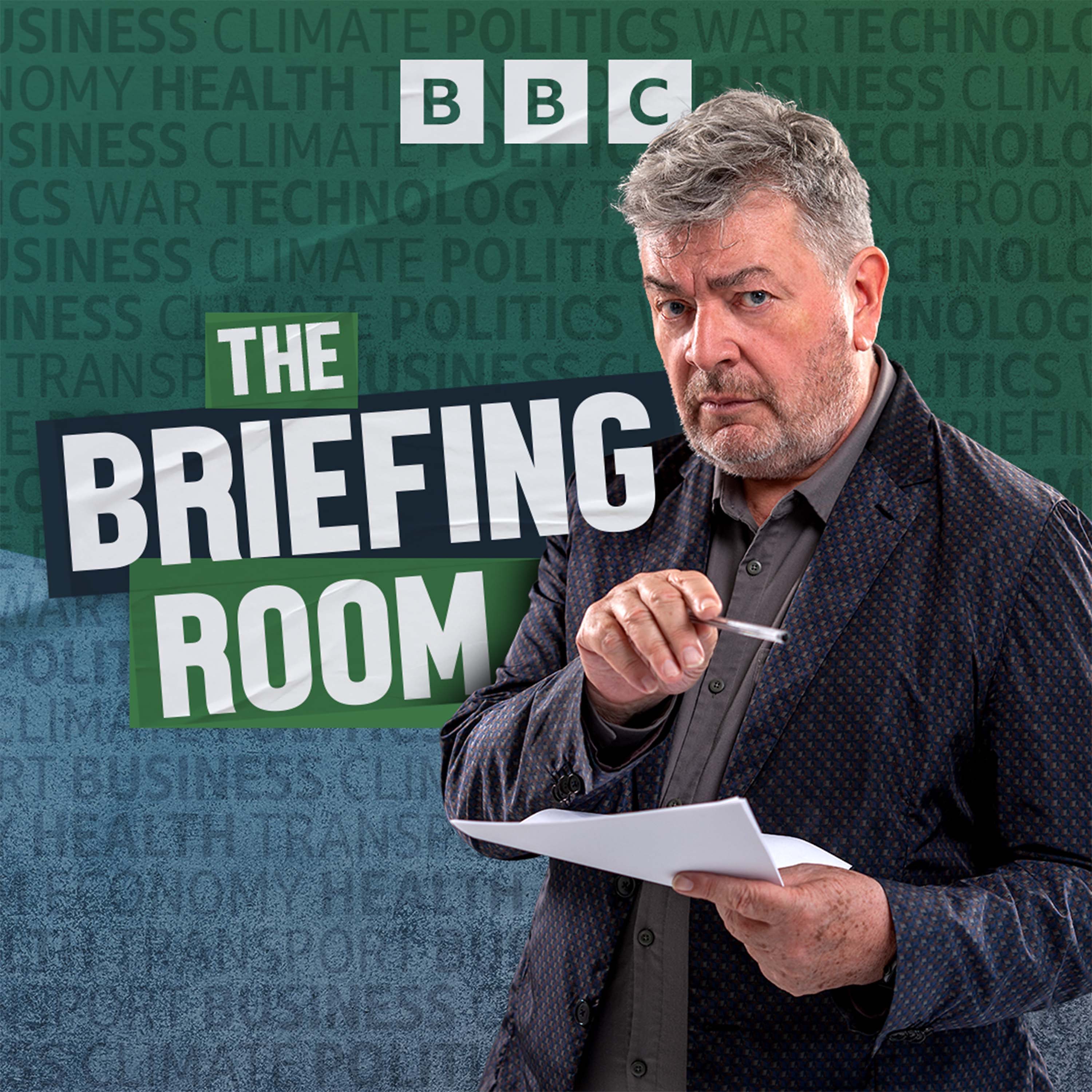
The Briefing Room

The Briefing Room

BBC Radio 4 · BBC

387 episodesEN

Show overview

The Briefing Room has been publishing since 2016, and across the 10 years since has built a catalogue of 387 episodes. That works out to roughly 190 hours of audio in total. Releases follow a fortnightly cadence.

Episodes typically run twenty to thirty-five minutes — most land between 28 min and 29 min — and the run-time is fairly consistent across the catalogue. None of the episodes are flagged explicit by the publisher. It is catalogued as a EN-language News show.

The show is actively publishing — the most recent episode landed earlier today, with 15 episodes already out so far this year. Published by BBC.

Episodes
387
Running
2016–2026 · 10y
Median length
29 min
Cadence
Fortnightly

From the publisher

David Aaronovitch and a panel of experts and insiders present in-depth explainers on big issues in the news

Latest Episodes

View all 387 episodes

Ten years of The Briefing Room

May 14, 202628 min

Are we still going to Mars?

May 7, 202628 min

Can Europe build digital sovereignty?

Apr 30, 202628 min

What's the conflict in Iran doing to the world economy?

Apr 23, 202628 min

Is the triple lock pension guarantee sustainable?

Apr 16, 202628 min

Will Trump take Cuba?

If you sail 90 miles from Key West in Florida you’ll make landfall on the island of Cuba, run by a regime that America has never liked. And since this is the year of bombs, drones and talk of regime change, the island has not escaped close attention. Donald Trump has talked about taking Cuba but could he? Would he? And And what would that even mean for Cubans and Americans? Step into the Briefing Room and together we’ll find out.Presenter: David Aaronovitch Producers: Ben Carter, Sally Abrahams and Kirsteen Knight Editor: Richard Vadon Production co-ordinator: Janet Staples Sound engineers: Rod Farquhar and Neil Churchill

Apr 9, 202628 min

What's happened to the Gaza peace plan?

The world’s attention is currently fixed on the US-Israel war with Iran and the effect it’s having on the Gulf region and global energy prices. But it was only six months ago that a ceasefire between Israel and Hamas was agreed and President Trump launched his 20-point peace plan. Since then we’ve heard little about progress beyond the return of Israeli hostages - the first phase of the plan. David Aaronovitch and his guests discuss what's happening to the citizens of Gaza and what has to happen next if the peace plan is to be followed through. Guests:Rushdi Abu Alouf, BBC Gaza Correspondent Anshel Pfeffer, Israel Correspondent, The Economist Tahani Mustafa, Lecturer in International Relations, Deptartment of War Studies, King's College, London Aaron David Miller, Senior Fellow, Carnegie Endowment for International PeacePresenter: David Aaronovitch Producers: Caroline Bayley, Nathan Gower, Kirsteen Knight Production co-ordinator: Maria Ogundele Sound Engineers: James Beard and Gareth Jones Editor: Richard Vadon

Apr 2, 202628 min

Why is youth unemployment in the UK so high?

It's a tough time for any young person looking for a job at the moment. While overall unemployment is running at just over 5 percent, there’s particular concern about a large group of 16 to 24 year olds - almost a million of them (12.8%) who are not in employment, education or training. And that includes recent graduates in that age bracket. They’re known as NEETS. David Aaronovitch and guests discuss why they're in this situation - is it down to the state of the economy, their own ability to work or that ever present fear - AI?Guests: Jack Kennedy, Senior Economist, Indeed Hiring Lab Lindsay Judge, Research Director, The Resolution Foundation Xiaowei Xu, Senior Research Economist, Institute for Fiscal Studies. John Burn-Murdoch, Chief Data Reporter, The Financial TimesPresenter: David Aaronovitch Producers: Caroline Bayley, Nathan Gower, Kirsteen Knight Production Co-ordinator: Maria Ogundele Sound Engineer: James Beard Editor: Richard Vadon

Mar 26, 202628 min

What's the current state of the UK's armed forces?

As contemporary hi-tech wars rage - Russia and Ukraine and the US-Israel war with Iran - The Briefing Room takes a hard look at the UK's armed forces. After telling his allies - including the UK - that he didn’t need them, President Trump called for them to help him open up the Strait of Hormuz, which has raised not just the question of should we, but could the UK do this? David Aaronovitch asks when it comes to big military operations what have we got? In this dangerous 21st century what do we need? Can we get it? And what about closer co-operation with other European countries? Guests: General Sir Richard Barrons, Senior Consulting fellow with the International Security Programme, Chatham House. Dr Jack Watling, Senior Research Fellow, Royal United Services Institute Shashank Joshi, Defence Editor, The Economist Ruth Harris, Executive Director for National Security and Data Science, RAND EuropePresenter: David Aaronovitch Producers: Caroline Bayley, Nathan Gower, Kirsteen Knight Production Co-ordinator: Maria Ogundele Sound Engineer: Neil Churchill and James Beard Editor Richard Vadon

Mar 19, 202628 min

Why does the war with Iran threaten the global economy?

It could be that the US-Israel war with Iran ends soon. That was the message from Donald Trump this week. But it may not. The longer the war continues the more collateral damage to the world economy. Mostly because of the impact of energy prices. But why are we all so vulnerable still to events in one small part of the world and one tiny channel, the infamous Strait of Hormuz? David Aaronovitch asks what it tells us about the problems of global energy and oil dependency and what could be done to alleviate them.Guests: Ben Chu, Policy and Analysis Correspondent, BBC Verify Duncan Weldon, Economist and author Bill Farren-Price, Senior Research Fellow and Head of Gas Research at the Oxford Institute for Energy Studies Rosemary Kelanic, Director of the Middle East Program at Defense PrioritiesPresenter: David Aaronovitch Producers: Caroline Bayley, Nathan Gower and Kirsteen Knight Production Co-ordinator: Maria Ogundele Sound engineer: Neil Churchill Editor: Richard Vadon

Mar 12, 202628 min

Why did the US and Israel launch a war with Iran, and what comes next?

It's less than a week since the start of the US-Israel war with Iran. And it's already spread across the Gulf region as Iran retaliates. Ayatollah Ali Khamenei, Iran’s supreme leader for 36 years, was killed in US and Israeli airstrikes on Saturday. The question now is who is in control in Iran and whether the regime in its current form will remain or if this will trigger major change. David Aaronovitch and guests discuss how the US-Israel war with Iran started and what comes next.Guests: Anshel Pfeffer, Israel Correspondent, The Economist Professor Ali Ansari, founding director of the Institute of Iranian Studies at St Andrews University Dr Burcu Ozcelik, Senior Research Fellow for Middle East Security at the Royal United Services Institute Laurel Rapp, Director of the US and North America Programme at Chatham House.Presenter: David Aaronovitch Producers: Caroline Bayley, Kirsteen Knight and Nathan Gower Production Co-ordinator: Maria Ogundele Sound engineer: Neil Churchill Editor: Richard Vadon

Mar 5, 202628 min

Four years of war in Ukraine - when will it end?

It’s four years this week since Vladimir Putin invaded Ukraine. And by this summer the conflict will have gone on for longer than the First World War. Casualties run into the hundreds of thousands. Peace talks brokered by the US have been off and on for the past few months, with President Putin demanding that Ukraine gives Russia full control of the eastern Donbas region, including the part it does not occupy. President Zelensky refuses. Meanwhile, Ukraine has experiened one of its harshest winters as its cities and energy infrastructure have been pounded by Russian drones and missiles. Still both sides fight on in a war which has become dominated by advanced drone technology. David Aaronovitch asks his guests whether anyone is winning and when and how this war might end. Guests:Mark Galeotti, head of Mayak Intelligence and author of "Forged in War: a military history of Russia from its beginnings to today." Dr Jack Watling, Senior Research Fellow for Land Warfare at the Royal United Services Institute and author of "The Arms of the Future: Technology and Close Combat in the Twenty First Century." Rebecca Lissner, Senior fellow for U.S. foreign policy at the Council on Foreign Relations and lecturer at the Jackson School of Global Affairs, Yale University. Christopher Miller, Chief Ukraine Correspondent, The Financial Times and author of "The war came to us: life and death in Ukraine."Presenter: David Aaronovitch Producers: Caroline Bayley and Kirsteen Knight Production Co-ordinator: Maria Ogundele Sound engineer: Neil Churchill Editor: Richard Vadon

Feb 26, 202628 min

Should the Government ban social media for young people?

Pressure is building in the UK for a ban on social media use for young people as countries across the world watch Australia, which introduced its own ban for under 16s last December. Meanwhile, the government here is launching a public consultation on children’s use of social media which will look at a range of options, including a ban. It also said this week that it wants to create new legal powers so it can take action quickly. David Aaronovitch asks what the evidence so far tells us about social media and harm to young people and what else could be done about it short of an outright ban.Guests: Katy Watson, Sydney Correspondent Luke Tryl, Director More in Common Professor Amy Orben, Programme Leader at the MRC Cognition and Brain Sciences Unit, University of Cambridge Professor Sonia Livingstone, Department of Media and Communications, London School of Economics Pete Etchells, Professor of Psychology and Science Communication, Bath Spa UniversityPresenter: David Aaronovitch Producers: Caroline Bayley and Kirsteen Knight Production Co-ordinator: Maria Ogundele Sound engineer: James Beard Editor: Richard Vadon

Feb 19, 202628 min

Iran - how vulnerable is the regime?

In early January street protests in Iran turned deadly - thousands were killed by Iranian forces. What started as a demonstration about economic conditions had turned into demands for regime change. President Trump said he would come to the aid of protesters. But so far he hasn’t. He’s amassed a US armada in the Gulf. And last Friday talks were held in Oman between American and Iranian officials about reducing Iran’s nuclear capacity. There’s been no agreement yet but more talks are expected. David Aaronovitch asks his guests what could happen next ? And how vulnerable the Iranian regime is, both inside the country and to a potential US attack? Guests: Kasra Naji,Special Correspondent, BBC Persian Arash Azizi, Writer and lecturer, Yale University Dr Burcu Ozcelik, Senior Research Fellow for Middle East Security at the Royal United Services Institute Dr Sanam Vakil, Director of the Middle East programme, Chatham HousePresenter: David Aaronovitch Producers: Caroline Bayley, Emma Close Production Coordinator: Maria Ogundele Sound Engineer: James Beard Editor: Richard Vadon

Feb 12, 202628 min

Venezuela – what now?

Following the dramatic capture of the President of Venezuela and his wife by US special forces on January 3rd, The Briefing Room asks what’s next for Venezuela? Nicolas Maduro and Cilia Flores have been indicted on drug trafficking and weapons charges in a New York court while in Venezuela the deputy president, Delcy Rodriguez has been sworn in as the country’s interim president. Meanwhile Donald Trump says he is in charge of Venezuela. David Aaronovitch and a panel of Latin American experts discuss who will actually govern Venezuela, what’s going to happen with the oil industry and what the implications are for the rest of the region.GUESTS Hal Hodson, Americas editor, The Economist Christopher Sabatini, Senior Research Fellow for Latin America at Chatham House Vanda Felbab-Brown Senior Fellow Foreign Policy, Brookings InstitutionPresenter: David Aaronovitch Producers: Caroline Bayley and Kirsteen Knight Production Co-ordinator: Maria Ogundele Sound Engineer: James Beard Editor: Richard Vadon

Jan 8, 202628 min

Should we worry about America’s security strategy?

As both the year and the current series of The Briefing Room draw to a close, Europe and much of the world have been digesting a lengthy document outlining the Trump administration’s view of foreign policy. The National Security Strategy covers much of the globe but extra special vitriol was reserved for Europe with dire warnings that the continent is facing “civilisational erasure” partly due to immigration. At the same time the growing influence of “patriotic European parties” (those on the far right) is welcomed. But there’s more - the US wants to dominate the “Western Hemisphere” - the Americas and countries on its doorstep. It wants more trade with Asia and China, as well as the Middle East. But there are notable absences -there's no talk of a significant threat from either Russia or China. David Aaronovitch and guests discuss what all this means and ask how worried we, in Europe, should be about the current US view of the world?Guests: Frank Gardner, BBC Security Correspondent Shashank Joshi, Defence Editor, The Economist Rebecca Lissner, Senior fellow for U.S. foreign policy at the Council on Foreign Relations and lecturer, Jackson School of Global Affair, Yale University. Dr Christoph Heusgen, Former Chairman Munich Security Conference and former German Ambassador to United NationsPresenter: David Aaronovitch Producers: Caroline Bayley, Kirsteen Knight, Cordelia Hemming Production Co-ordinator: Maria Ogundele Sound engineer: Neil Churchill Editor Richard Vadon

Dec 18, 202528 min

Why are early career doctors angry?

In a few days time resident doctors -who used to be known as junior doctors - will go on strike. Just before Christmas and with flu on the rise. This will be the 14th strike by the doctors’ union since March 2023. The ostensible reason is pay but coming up behind it as an issue for younger doctors is the question of their futures- they're very unhappy about their working conditions and their career paths. David Aaronovitch and guests discuss what's going on and ask what the problem is with the way we in Britain train our doctors?Guests: Hugh Pym, BBC Health Editor Sir Andrew Goddard, Consultant Gastroenterologist Professor Martin McKee, Professor of European Public Health, London School of Hygiene and Tropical Medicine Mark Dayan, Policy Analyst, Nuffield Trust.Presenter: David Aaronovitch Producers: Caroline Bayley, Kirsteen Knight, Cordelia Hemming Production Co-ordinator: Maria Ogundele Sound Engineers: Michael Regaard, Gareth Jones Editor: Richard Vadon

Dec 11, 202529 min

Are the old robbing the young?

In her budget the Chancellor increased the state pension by 4.8 % in line with the government's triple lock formula. It was good news for pensioners but is it good news for the young? A constant background to spending and economic decisions for well over a decade now has been an argument about generational injustice. That the young are getting poorer. David Aaronovitch and guests look at the facts and ask whether the old are robbing the young and if so what should be done about it?Guests: Bobby Duffy, Professor of Public Policy at King’s College, London Sophie Hale, Principal Economist, Resolution Foundation Xiaowei Xu, Senior Research Economist at the Institute for Fiscal Studies Jane Falkingham Professor of Demography, Southampton UniversityPresenter: David Aaronovitch Producers: Caroline Bayley, Cordelia Hemming, Kirsteen Knight Production Co-ordinator: Maria Ogundele Sound Engineer: James Beard Editor: Richard Vadon

Dec 4, 202528 min

What's happening with the Ukraine peace plan?

President Trump wants an end to the war in Ukraine. The Ukrainians want peace too - but not at any cost. The past week saw the emergence of a leaked US 28 - point- plan which was wholly unacceptable to President Zelensky and European leaders. But how it originated and why it looked like a Russian wish list has led to intense debate. ( It included Ukraine giving up territory it still holds in the east, as well as the area already occupied by Russia, a cap on the Ukrainian army of 600 thousand, a permanent ban on NATO membership for Ukraine and an amnesty on all war crimes. ) Talks hastily took place in Europe and Abu Dhabi and there’s now a revised version still to be agreed with Russia. President Zelensky wants to meet President Trump to agree the most sensitive issues.. So why did this latest attempt at peace in Ukraine emerge through a leaked document which many assumed had come straight from Russia? How has Europe and Ukraine responded and could it really mean an end to nearly four years of war?Guests: Angela Stent, Senior Fellow at the American Enterprise Institute and former National Intelligence Officer for Russia and Eurasia. Sir Lawrence Freedman, Emeritus Professor of War Studies at King’s College, London Christopher Miller, Financial Times’ Chief Ukraine Correspondent Sir Laurie Bristow, former UK Ambassador to Russia and President of Hughes Hall, Cambridge.Presenter: David Aaronovitch Producers: Caroline Bayley, Cordelia Hemming, Kirsteen Knight Production co-ordinator: Maria Ogundele Sound Engineer: James Beard Editor: Richard Vadon

Nov 27, 202528 min

What can the UK learn from the rest of Europe about asylum reform?

This week the government announced an overhaul of the UK’s asylum system with the stated aim of making Britain look a lot less attractive to those planning to make their way across the Channel on a small boat or outstay their visa if already here. A raft of proposals include ending a refugee’s effective right to stay in the country indefinitely, a quicker way of deporting those who fail in their asylum applications and a less sympathetic approach to refugee families. Denmark has been held up in recent days as an example of a country with much tougher asylum policies. So are we in the UK now part of a wider European trend of clamping down on asylum seekers? And what can we learn from the success or failure of other asylum policies across the continent.Guests: Dr Madeleine Sumption, Director of the Migration Observatory at Oxford University Professor Andrew Geddes, Director of the Migration Policy Centre at the European University Institute in Florence. Susi Dennison, Senior Policy Fellow at the European Council on Foreign Relations.Presenter: David Aaronovitch Producers: Caroline Bayley, Kirsteen Knight, Cordelia Hemming Production co-ordinator: Maria Ogundele Sound engineer: James Beard Editor: Richard Vadon

Nov 20, 202528 min
(C) BBC 2026