
The Beinart Notebook
274 episodes — Page 5 of 6

Can We Be Jimmy Carter?
Carter’s Break with the White South Over Civil Rights Offers a Model for JewsOur guest for the Zoom call this Friday, January 3rd, at 1 Eastern, for paid subscribers, will be Paul O’Brien, Executive Director at Amnesty International USA. We’ll discuss Amnesty’s new report accusing Israel of committing genocide in Gaza.My New BookKnopf will publish my new book, Being Jewish After the Destruction of Gaza, on January 28, 2025. I hope the book will contribute, in some small way, to changing the conversation among Jews about what is being done in our name. But I’m keenly aware of two things: first, Jewish voices like mine usually get more attention in the US than do Palestinian ones. Second, while I’m publishing my book, Palestinians in Gaza— and beyond— are suffering in unspeakable ways.So, while I hope you consider buying my book, I hope you also consider buying a book by a Palestinian author. I’m grateful to readers for offering their favorites. One reader suggested In Search of Fatima, by the British-Palestinian writer Ghada Karmi, which The New Statesman has called “one of the finest, most eloquent and painfully honest memoirs of the Palestinian exile and displacement.”Readers have also suggested additional charities working in Gaza. One is Donkey Saddle, which “has been providing ongoing support for over 15 extended families” in Gaza.Sources Cited in this VideoJimmy Carter’s 2006 book, Palestine: Peace Not Apartheid.Anti-Defamation League head Abe Foxman’s claim that Carter was “engaging in antisemitism.”Deborah Lipstadt’s 2007 Washington Post column, “Jimmy Carter’s Jewish Problem.”The attacks on Carter by Nancy Pelosi and Bill Clinton.The attacks on Carter’s book in The New York Times and Slate.“Great is repentance, which hastens redemption” from the Babylonian Talmud, Tractate Yoma (86b).Kenneth E. Morris’ biography, Jimmy Carter: American Moralist.Carter’s inaugural addresses as Georgia governor and president.Carter’s 1977 speech at Notre Dame questioning the Cold War.Things to Read(Maybe this should be obvious, but I link to articles and videos I find provocative and significant, not necessarily ones I entirely agree with.)In Jewish Currents (subscribe!), Will Alden details how, since October 7, foundations have withdrawn funding from groups that support Palestinian rights.Alan Dershowitz vs Norman Finkelstein, the musical.Doris Bittar on Christmas in Lebanon.For the Foundation for Middle East Peace’s “Occupied Thoughts” podcast, I interviewed two young Israelis who refused their country’s draft.I’ve written about Jehad Abusalim, a Gaza-born scholar currently based in Washington who is completing a PhD in history, Hebrew and Judaic studies at New York University. The warnings he issued about Israel’s response to October 7 have proven prescient and were tragically ignored by American media. He has now launched a newsletter on Substack. Please consider subscribing.See you on Friday, January 3,PeterVIDEO TRANSCRIPT:So, Jimmy Carter has died. It’s worth going back to the moment in 2006 when he published his book, Peace Not Apartheid, to remember what happened there. Abe Foxman, then the head of the Anti-Defamation League, said that Carter was ‘engaging in antisemitism.’ Deborah Lipstadt, who went on to be appointed by a Democratic president to be the antisemitism czar wrote a column in the Washington Post entitled ‘Jimmy Carter’s Jewish Problem.’ Carter was attacked by Nancy Pelosi and Bill Clinton. His book was attacked in reviews in the New York Times and Slate in large measure for using the term apartheid, a term which is now been endorsed by Israel’s own leading human rights organizations, B’Tselem and Yesh Din, and by the most prominent human rights organizations in the world, Amnesty International and Human Rights Watch.A couple of years ago, I did a newsletter actually suggesting that leaders of the organized American Jewish community like Foxman, but also American politicians like Clinton and Pelosi, should offer a public apology to Jimmy Carter. I quoted at that time a line from Tractate Yoma and the Babylonian Talmud, ‘Great is repentance which hastens redemption.’ But I think there are a great number of people who need to do Teshuva, who need to ask for forgiveness for their attacks on Carter for saying things that have been deeply vindicated by the course of events in the years since then, and in fact, if you look back at them, seem extremely tame. Because it’s worth remembering that Carter wasn’t actually accusing Israel of being an apartheid state in 2006. All he was saying was that it risked becoming one, which is also, by the way, something that Ehud Olmert and Ehud Barak and numerous Israeli security officials have been saying around that time. And yet, the man was viciously pilloried by people who I think at this point should have the decency to offer their apologies.But I think there is also something really important to say about Carter and the roots of his position on Palestinian free

American Jewish Fragility
Our Communal Leaders Keep Conflating Discomfort with UnsafetySomething happened earlier this month in December that might seem like—given the scale of all the magnitude of the horrors that are happening around Palestine and Israel—might not seem so significant, but I think really is emblematic of something that’s gone terribly, terribly wrong in the organized American Jewish community. This is a public episode. If you'd like to discuss this with other subscribers or get access to bonus episodes, visit peterbeinart.substack.com/subscribe
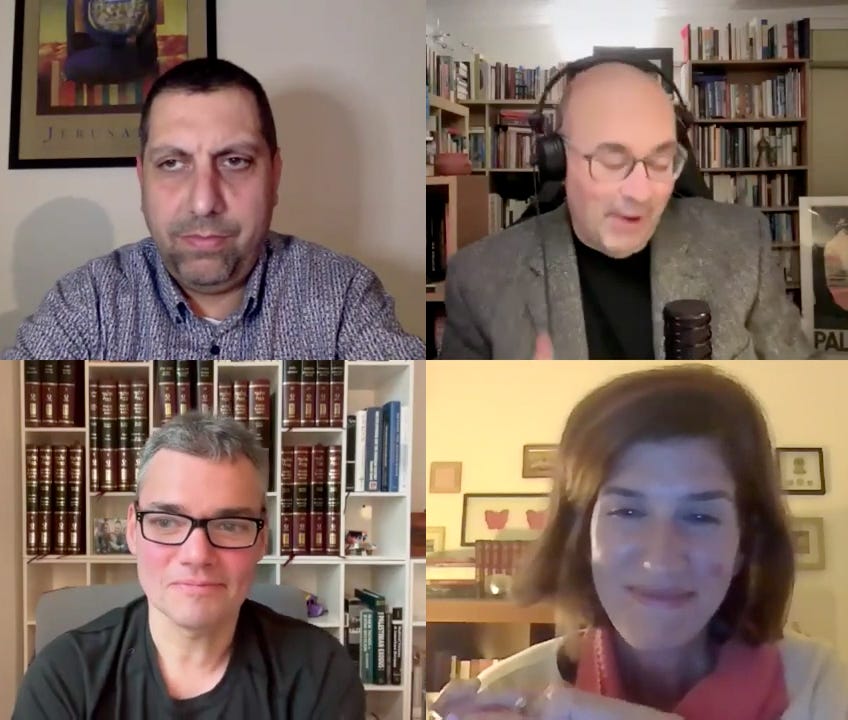
Daybreak in Gaza
This is a free preview of a paid episode. To hear more, visit peterbeinart.substack.comOur guests are Mahmoud Muna, Matthew Teller, and Juliette Touma, editors of the new anthology, Daybreak in Gaza: Stories of Palestinian Lives and Culture, which includes close to a hundred stories about the lives of people in Gaza, both before and after its recent destruction. This interview is co-sponsored with Jewish Currents.
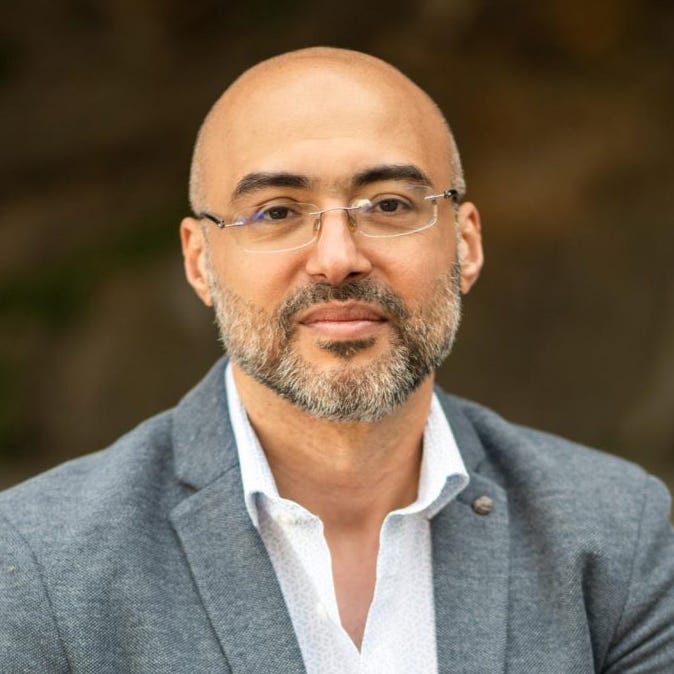
Syria and the Future of the Middle East with Iyad El-Baghdadi
This is a free preview of a paid episode. To hear more, visit peterbeinart.substack.comI talked with the Palestinian-Norwegian writer Iyad el-Baghdadi about the regional implications of the Assad regime’s fall in Syria and Israel’s military intervention there.

Why Israel’s Supporters Get So Mad When Critics Call Gaza a “Genocide”
It’s not about the legal definition. It’s about Western and Jewish exceptionalism. This is a public episode. If you'd like to discuss this with other subscribers or get access to bonus episodes, visit peterbeinart.substack.com/subscribe
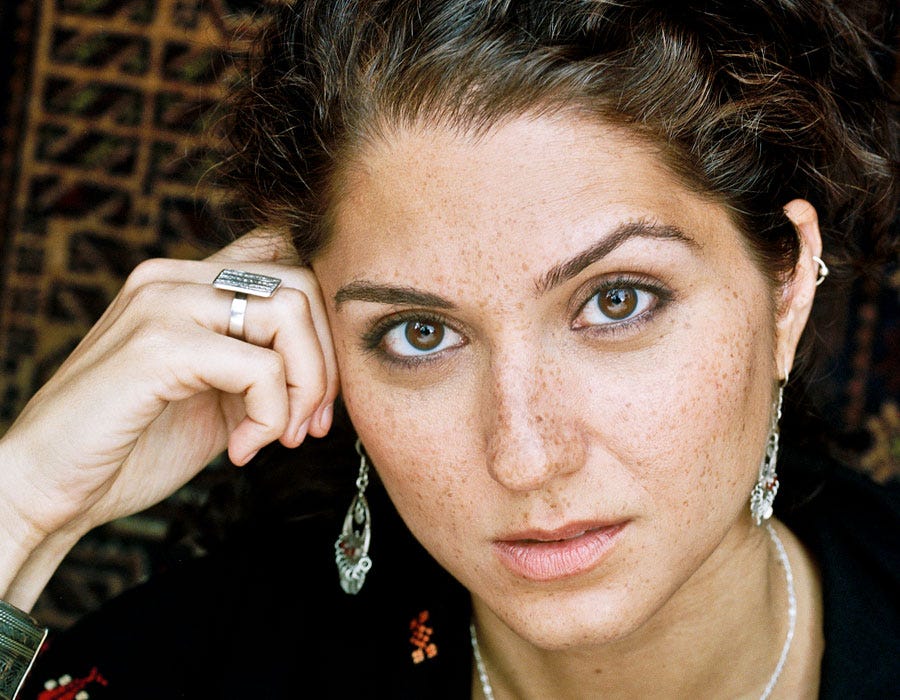
Alia Malek on Syria's Future
This is a free preview of a paid episode. To hear more, visit peterbeinart.substack.comI talked with my extraordinary CUNY colleague, the Syrian-American journalist Alia Malek, author of The Home That Was Our Country: A Memoir of Syria.

Syrians Deserve Freedom. So Do Palestinians.
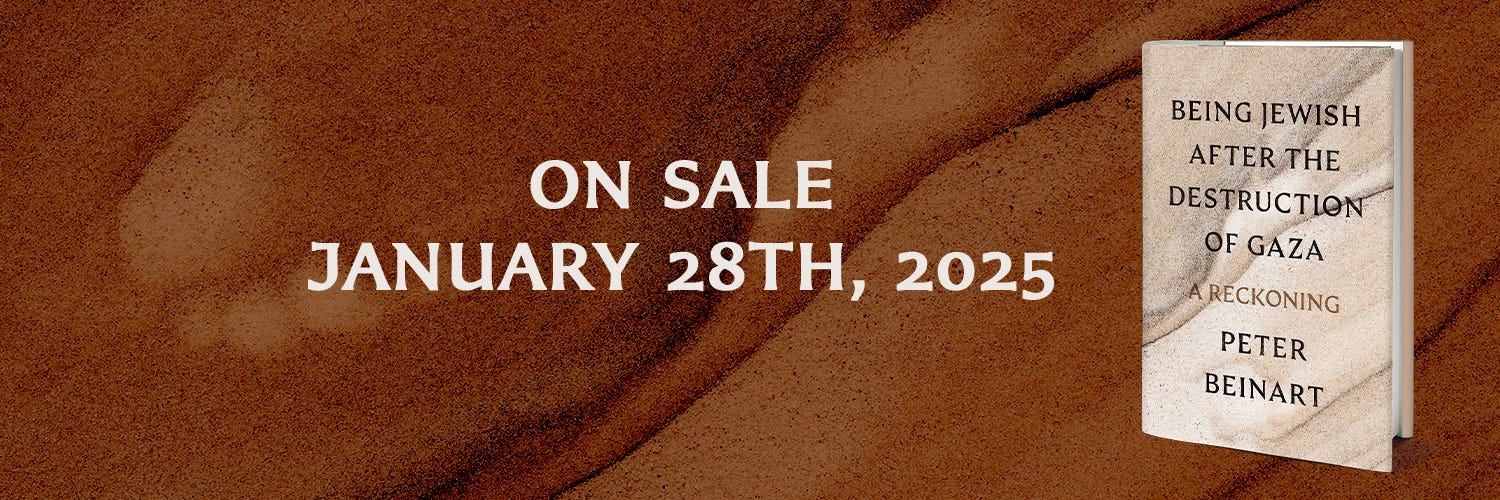
It’s Wonderful Assad is Gone. But Neither He, Nor Iran, Was Ever Israel’s Real Problem.There will be no Zoom call this Friday. We’ll resume on Friday, December 20 at 1 PM with a conversation with Mahmoud Muna and Matthew Teller, author of the new anthology, Daybreak in Gaza: Stories of Palestinian Lives and Culture.But I’ve recorded a Zoom interview (without a live audience) with my extraordinary CUNY colleague, the Syrian-American journalist Alia Malek, author of The Home That Was Our Country: A Memoir of Syria. Paid subscribers will get it today. They’ll also gain access to our library of past Zoom interviews with guests like Ta-Nehisi Coates, Rashid Khalidi, Rebecca Traister, Thomas Friedman, Ilhan Omar, Benny Morris, Noam Chomsky and Bret Stephens.My New BookKnopf will publish my new book, Being Jewish After the Destruction of Gaza, on January 28 of next year. I hope the book will contribute, in some small way, to changing the conversation among Jews about what is being done in our name. But I’m keenly aware of two things: First, Jewish voices like mine usually get more attention in the US than do Palestinian ones. Second, while I’m publishing my book, Palestinians in Gaza— and beyond— are suffering in unspeakable ways.So, while I hope you consider buying my book, I hope you also consider buying a book by a Palestinian author. I’m grateful to readers for offering their favorites. One reader recently recommended Naomi Shihab Nye’s young adult novel, Habibi, about Liyana, a Palestinian-American girl from St. Louis whose family returns to West Bank, a place she struggles to make home.Readers have also suggested additional charities working in Gaza. One is Donkey Saddle, which “has been providing ongoing support for over 15 extended families” in Gaza.Sources Cited in this VideoDiscussing Israel’s enemies in 1982, Benjamin Netanyahu said, “There is a major force behind most of these groups that is the Soviet Union. If you take away the Soviet Union, it’s chief proxy, the PLO, international terrorism would collapse.”The Nkomati Accords between South Africa and Mozambique.Things to Read(Maybe this should be obvious, but I link to articles and videos I find provocative and significant, not necessarily ones I entirely agree with.)In Jewish Currents (subscribe!), Gary Monroe chronicles the end of Jewish Miami Beach and the rise of Little Haiti.If you’re in New York, you can still catch the end of the always-excellent Other Israel film festival.I talked to The Atlantic’s Jemele Hill about the debate over Gaza.HousekeepingWe’re using a new system to share transcripts from Zoom interviews. They’ll no longer appear in emails but are still available for anyone who wants them by opening this post in your web browser (not the Substack app) and clicking the “transcript” button just below the video.See you a week from Friday,Peter This is a public episode. If you'd like to discuss this with other subscribers or get access to bonus episodes, visit peterbeinart.substack.com/subscribe
Muzaffar Chishti on Mass Deportation
This is a free preview of a paid episode. To hear more, visit peterbeinart.substack.comOur guest is Muzaffar Chishti, Senior Fellow at the Migration Policy Institute, and one of America’s foremost experts on immigration policy. We’ll talk about Donald Trump’s plans for the mass deportation of undocumented—and perhaps even legal— immigrants. We’ll talk about the human cost of such a roundup and what it might do to the United States.

American Fear
When Even Billionaires Are Afraid to Criticize Trump, What Does That Mean for the Rest of US? This is a public episode. If you'd like to discuss this with other subscribers or get access to bonus episodes, visit peterbeinart.substack.com/subscribe
Omer Bartov on Genocide and the ICC
This is a free preview of a paid episode. To hear more, visit peterbeinart.substack.comOur guest is the renowned, Israeli-born, Holocaust scholar Omer Bartov, who teaches at Brown University. In August, he described returning to Israel and encountering students whose “rhetoric brought to mind some of the darkest moments of 20th-century history.” This month he concluded that Israel was committing genocide in Gaza. We’ll discuss the genocid…
Why the International Criminal Court’s Warrant for Netanyahu Matters
It’s a Test of Whether International Law Applies to the West This is a public episode. If you'd like to discuss this with other subscribers or get access to bonus episodes, visit peterbeinart.substack.com/subscribe

Adam Serwer on American Cruelty
This is a free preview of a paid episode. To hear more, visit peterbeinart.substack.comOur guest is The Atlantic’s Adam Serwer, author of one of the most famous essays of the first Trump presidency, which he turned into a book: The Cruelty is the Point. We’ll talk about what is similar, and different, as Trump returns, and how Americans should respond to our country’s capacity for cruelty, both at home and abroad.

Brutalizing the Stranger
Our call this week, for paid subscribers, will be on Friday at 1 PM Eastern, our new regular time.Our guest will be The Atlantic’s Adam Serwer, author of one of the most famous essays of the first Trump presidency, which he turned into a book: The Cruelty is the Point. We’ll talk about what is similar, and different, as Trump returns, and how Americans should respond to our country’s enormous capacity for cruelty, both at home and abroad.Paid subscribers will get an email with the Zoom link, and then once it airs, they’ll get the video. They’ll also gain access to our library of past Zoom interviews with guests like Ta-Nehisi Coates, Rashid Khalidi, Rebecca Traister, Thomas Friedman, Ilhan Omar, Benny Morris, Noam Chomsky, and Bret Stephens.My New BookKnopf will publish my new book, Being Jewish After the Destruction of Gaza, on January 28 of next year. I hope the book will contribute, in some small way, to changing the conversation among Jews about what is being done in our name. But I’m keenly aware of two things: First, Jewish voices like mine usually get more attention in the US than do Palestinian ones. Second, while I’m publishing my book, Palestinians in Gaza— and beyond— are suffering in unspeakable ways.So, while I hope you consider buying my book, I hope you also consider buying a book by a Palestinian author. I’m grateful to readers for offering their favorites. One reader recently recommended Naomi Shihab Nye’s young adult novel, Habibi, about Liyana, a Palestinian-American girl from St. Louis whose family returns to West Bank, a place she struggles to make home.Readers have also suggested additional charities working in Gaza. One is Donkey Saddle, which “has been providing ongoing support for over 15 extended families” in Gaza.Sources Cited in This VideoRabbi Jonathan Sacks on Parshat Vayera.Parshat Vayera and the Pittsburgh shooting.Things to Read(Maybe this should be obvious, but I link to articles and videos I find provocative and significant, not necessarily ones I entirely agree with.)In Jewish Currents (subscribe!), Alex Kane details the Trump administration’s coming crackdown on campus speech.Progressive New York State Representative Zohran Mamdani interviews Trump voters in Brooklyn and Queens.Israeli reporter Barak Ravid tells the Jewish Federations of North America that “we are much closer to Israeli settlements being built in Gaza than hostages coming home from Gaza.”Upcoming TalksOn Tuesday, November 19, I’ll be speaking at the University of Massachusetts at Amherst about “Protest, Zionism and Gaza.”See you on Friday,PeterVIDEO TRANSCRIPT:Hi. So, Rabbi Jonathan Sachs tells this story about the sixth Lubavitcher Rebbe. And the sixth Lubavitcher Rebbe tells his students: ‘you must live according to the times.’ And the students are a little puzzled by what exactly that means. And the Sith Libavitcher Rebbe explains, and I’m paraphrasing here, essentially that what ‘live by the times’ means is that you should use the weekly Torah portion as a lens through which to understand your time. You should see it as a reflection of the events that are happening around you in the world. And I think that’s a very powerful concept right now.Yesterday, many Jews read in shul Parshat Vayera, and I want to read a little snippet from that week’s Torah portion. It goes: ‘G-d appeared to Abraham by the oaks of Mamre, as he sat at the entrance to his tent in the heat of the day. He lifted his eyes and looked, and lo, three men were standing over against him; and when he saw them, he ran to meet them from the tent entrance and bowed down to the earth.’ And Sachs makes the point that, as this passage is interpreted in Jewish tradition, the way it’s interpreted is that G-d comes to Abraham to speak to Abraham. And then Abraham sees these three men, these three strangers who are coming towards him, and he essentially tells G-d to pause. Says G-d, sorry, I can’t talk to you right now. There is a greater imperative that I have, which is to welcome these strangers. And then Abraham feeds them and bathes them. And from this passage, the rabbis in tractate Shabbat in the Babylonian Talmud take the principle that greater is hospitality than receiving the divine presence. And then as the story continues, those three men, who turn out to be angels after giving Abraham and Sarah the news that Sarah will have a child, they go on to Sodom, the city of Sodom, where Abraham’s relative Lot lives. And Lot also welcomes them into his home, but because the city of Sodom is ferociously hostile to strangers, to outsiders, the people of Sedon come and demand that Lot hand over these strangers to them so they can do violence, indeed sexual violence, to these strangers. And when Lot refuses, they threaten him, and then the angels take Lot and his immediate family out and the city is destroyed.I think to go back to the point of the sixth Lubavitcher Rebbe, to read these Parsha according to the times, it seems to me really hard not t

Rebecca Traister on Trump’s Victory and the Gender Divide
This is a free preview of a paid episode. To hear more, visit peterbeinart.substack.comOur guest is New York Magazine Editor-at-Large Rebecca Traister, among the best writers on gender and politics (and many other things) in America. This essay she wrote after Hillary Clinton’s defeat in 2016 still captures many painful truths about the brutal burden facing not only women presidential candidates, but American women as a whole. They talked…

November "Ask Me Anything"
These monthly conversations are usually reserved for Premium members, but given the gravity of this moment, we decided to make this one available to everybody. This is a public episode. If you'd like to discuss this with other subscribers or get access to bonus episodes, visit peterbeinart.substack.com/subscribe

Don’t Confuse Popularity with Truth
Just Because People Vote For Something Doesn’t Make It Right This is a public episode. If you'd like to discuss this with other subscribers or get access to bonus episodes, visit peterbeinart.substack.com/subscribe

Jason Stanley on American Fascism
This is a free preview of a paid episode. To hear more, visit peterbeinart.substack.comOur guest is Yale Philosophy Professor Jason Stanley, a world-renowned scholar of fascism and author of the new book, Erasing History: How Fascists Rewrite the Past to Control the Future. We talk about Donald Trump’s victory and what it means for liberal democracy in the United States.

Two More Reasons to Vote for Kamala Harris
Our call this week, for paid subscribers, will be on Friday at 1 PM Eastern. That will be our new regular time. (West Coast subscribers, we’ve heard you.)Our guest will be Yale Philosophy Professor Jason Stanley, a world-renowned scholar of fascism and author of the new book, Erasing History: How Fascists Rewrite the Past to Control the Future. We’ll talk about what happened in Tuesday’s election and the fate of the struggle between liberal democracy and fascism in the United States.Paid subscribers will get the link this Tuesday and the video the following week. They’ll also gain access to our library of past Zoom interviews with guests like Ta-Nehisi Coates, Rashid Khalidi, Thomas Friedman, Ilhan Omar, Benny Morris, Noam Chomsky, and Bret Stephens.My New BookKnopf will publish my new book, Being Jewish After the Destruction of Gaza, on January 28 of next year. I hope the book will contribute, in some small way, to changing the conversation among Jews about what is being done in our name. But I’m keenly aware of two things: First, Jewish voices like mine usually get more attention in the US than do Palestinian ones. Second, while I’m publishing my book, Palestinians in Gaza— and beyond— are suffering in unspeakable ways.So, while I hope you consider buying my book, I hope you also consider buying a book by a Palestinian author. As the weeks go by, I’ll offer different suggestions, but readers should feel free to email me their own. One of the books that helped me understand the Nakba better is Raja Shehadeh’s Strangers in the House, a beautiful portrait of a relationship between a father and his son in a political environment made impossible by expulsion and oppression.I also hope you’ll consider donating to a charity that works in Gaza. One good option is Medical Aid to Palestinians. If you have other suggestions, please send them.Responses to My Last VideoThe unnamed newsletter subscriber I cited in this week’s video about the interconnectedness between American liberal democracy and the movement for Palestinian rights is David Goldstein. Here’s how he made the case in an email to me:“We know that the trendlines among Democrats and independents are bending inexorably towards Palestinian support and away from blind Israel fealty. If those trendlines continue - and there’s every reason to believe they will – it’s only a matter of time before a democratic America stops financing Israel’s immoral/objectiveless wars and, in turn, conditions military support on reasonable behavior. It's inevitable. There’d be no way for a candidate to emerge from a Democratic primary without professing a saner and more humane stance on the issue. That's just where the party is.But if Trump is elected and America ceases to be a functioning democracy, this burgeoning groundswell of Palestinian support won’t have any influence on American foreign policy. A democratic regime, even a benighted spineless one, will have no choice but to respond to the political pressure an increasingly pro-Palestinian constituency exerts on it if it wishes to remain in power. A Trump-led totalitarian regime that doesn't have to worry about getting voted out of office will not only ignore this pressure, but likely criminalize it, unleash violence to suppress it. Put another way, the choice isn't just between the two candidates on the ballot; it's a choice between 1) voting to preserve a democratic political system in which pro-Palestinian support will inevitably change the fundamentals of the conflict and 2) voting to burn this system to the ground, thus rendering this political trend irrelevant and dooming future generations of Palestinians to the status quo or worse.So, a vote for Harris isn’t a tacit endorsement of her disappointing stance on the conflict; nor is it a willingness to countenance America’s financial support of war crimes; it’s a vote to allow an increasingly Pro-Palestinian sentiment to matter in the future. It’s about fighting for the greater long-term Palestinian (and, ultimately, Israeli) good. It’s not holding one’s nose and sacrificing principles; it’s about providing the groundwork and infrastructure to continue the fight, flawed as the vehicle to do so may be.” Another reader, Omar Khan, emailed to argue the opposite point:“I happen to disagree with you in a most profound way regarding your logic around voting for VP Harris for the presidential ticket. We have no argument that Trump is the far worse candidate by a long shot. The only trouble is that relativism is fairly useless here: both candidates are essentially pro genocide, which already takes up the entire moral discussion. *After* being complicit with genocide, whether one is then better on reproductive rights, immigrant issues, tax policy, and so forth – while not exactly a moot point, becomes morally much less relevant.Many years ago, I was privileged to be taught introduction to psychology at Penn by the professor who wrote the book – Dr. Gleitman. He had as a guest

Muhammad Shehada on Gaza’s Unending Agony
Our guest is Gaza-born journalist, Muhammad Shehada, whose writing has been indispensable over the last year. While we usually reserve audio of our Friday zoom calls for paid subscribers, Muhammad’s description of life in Gaza, and life outside of Gaza when your family is there, was so eloquent and haunting that I felt it needed as wide a distribution as possible. This is a public episode. If you'd like to discuss this with other subscribers or get access to bonus episodes, visit peterbeinart.substack.com/subscribe

If I Lived In a Swing State, I’d Vote for Harris
The Consequences of a Trump Presidency Are Simply Too DireThis Week’s Call: Palestinian-American political strategist Rania BatriceOur guest this week will be Rania Batrice, former deputy campaign manager for the 2016 Bernie Sanders campaign, and an advisor on paid media for the Uncommitted campaign. I don’t know if Rania agrees with my arguments for supporting Harris, but she’s one of the smartest and most ethical people in Democratic politics, and I’m keen to hear how she sees the election in its final days.Our call, for paid subscribers, will be at our normal time: Friday at 11 AM Eastern.Paid subscribers will get the link this Thursday to join the call live, as well as the video, which will go up later in the day. They’ll also gain access to our library of past Zoom interviews with guests like Ta-Nehisi Coates, Rashid Khalidi, Thomas Friedman, Ilhan Omar, Benny Morris, Noam Chomsky, and Bret Stephens.My New BookKnopf will publish my new book, Being Jewish After the Destruction of Gaza, on January 28 of next year. I hope the book will contribute, in some small way, to changing the conversation among Jews about what is being done in our name. But I’m keenly aware of two things: First, Jewish voices like mine usually get more attention in the US than do Palestinian ones. Second, while I’m publishing my book, Palestinians in Gaza— and beyond— are suffering in unspeakable ways.So, while I hope you consider buying my book, I hope you also consider buying a book by a Palestinian author. As the weeks go by, I’ll offer different suggestions, but readers should feel free to email me their own. One of the books that helped me understand the Nakba better is Raja Shehada’s Strangers in the House, a beautiful portrait of a relationship between a father and his son in a political environment made impossible by expulsion and oppression.I also hope you’ll consider donating to a charity that works in Gaza. One good option is Medical Aid to Palestinians. If you have other suggestions, please send them.Sources Cited in this VideoEric Levitz on why a Harris loss will push Democrats to the right.Alexandria Ocasio-Cortez on how she decides who to support for president. Things to Read(Maybe this should be obvious, but I link to articles and videos I find provocative and significant, not necessarily ones I entirely agree with.)In Jewish Currents (subscribe!), four Palestinians describe how they left Gaza.Natasha Gill on how Jews are abandoning their children to face a moral reckoning alone.A Palestinian and Israeli psychoanalyst talk about home.Upcoming TalksOn October 29, I’ll be speaking at the University of Victoria. The event is online.See you on Friday,PeterVIDEO TRANSCRIPT:Hi. So, I’ve kind of been putting this off because I’ve been really struggling with it at a number of levels but I want to explain why, if I lived in a swing state, I would vote for Kamala Harris. And I say this as somebody who thinks that Joe Biden and some of his top advisors should be brought before international courts as war criminals for their role in the utter destruction of the Gaza Strip. Surely, if I support the international proceedings that I hope will one day begin against the leaders of Hamas and against Benjamin Netanyahu and Israeli Defense Minister Yoav Golant, how could I not also support such proceedings against the top Biden administration officials who gave Israel the weapons that Israel has used to utterly destroy human life in the Gaza Strip.So, I say that as someone who feels that way about Biden’s policies, and also someone who’s found that Harris’s response during the campaign on this question of Palestinian humanity has been worse than I could have imagined, utterly depressing and infuriating. The fact that they could not do the bare minimum—by which I mean have a Palestinian American state representative who had endorsed Harris come to give a speech at the Democratic Convention in which she simply spoke about Palestinian suffering and about Palestinian humanity, about principles like equality and peace, principles that supposedly Democratic Party believes in—the fact that even that could not be done, showed to me a level of just kind of moral cowardice and political idiocy that still I find staggering.And I also want to say that I’m obviously saying this as a person with the good luck that my family is safe, you know. There’s no reason I deserve to be safe any more than the people whose families are in Gaza, or other parts of Israel and Palestine, and in Lebanon, whose families are being destroyed and living with daily terror of being killed. And, for those people, it is not my place to judge or lecture those folks. I can’t possibly imagine how I would be thinking and feeling were I in those circumstances. And I also want to say that I think that folks who are not in swing states and in safe blue states, I do think there is a case for registering a protest vote for president and voting Democratic for the other races.But I do
Efrat Machikawa and Boaz Atzili on the Hostage Families Movement
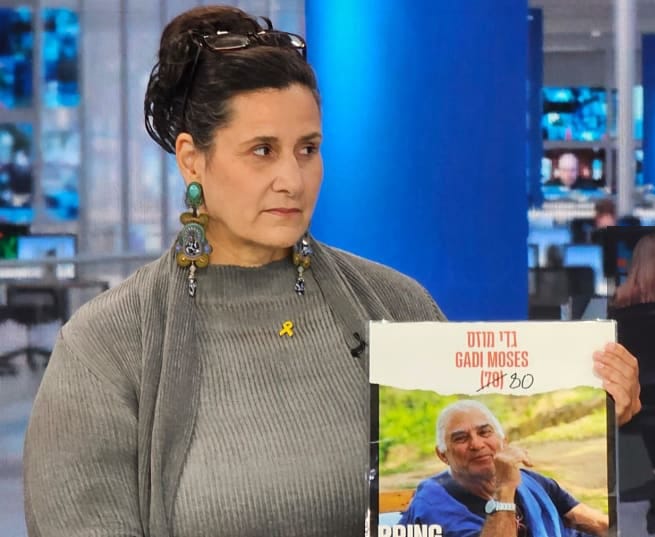
Our guests are Efrat Machikawa and Boaz Atzili. Efrat’s uncle, Gadi Mozes, was abducted on October 7. Boaz's cousin, Aviv Atzili, was killed on October 7th in Kibbutz Nir Oz and his body was taken to Gaza. Aviv's wife, Liat Atzili, was released in the ceasefire and hostages deal in November. Both Efrat and Boaz are activists for a ceasefire. I’m grateful to them for taking the time to talk to me in this agonizing and critical moment. This is a public episode. If you'd like to discuss this with other subscribers or get access to bonus episodes, visit peterbeinart.substack.com/subscribe

Israel’s Been Assassinating Palestinian Leaders For Decades
There will be no zoom call this week. We’ll resume on Friday, November 1 at 11 AM with Seth Anziska discussing Israel’s invasion of Lebanon.My New BookKnopf will publish my new book, Being Jewish After the Destruction of Gaza, on January 28 of next year. I hope the book will contribute, in some small way, to changing the conversation among Jews about what is being done in our name. But I’m keenly aware of two things: First, Jewish voices like mine usually get more attention in the US than do Palestinian ones. Second, while I’m publishing my book, Palestinians in Gaza— and beyond— are suffering in unspeakable ways.So, while I hope you consider buying my book, I hope you also consider buying a book by a Palestinian author. As the weeks go by, I’ll offer different suggestions, but readers should feel free to email me their own. I’ve been deeply moved by Fida Jiryis, Stranger in My Own Land, which charts her family’s painful and surreal journey, from Mandatory Palestine to Lebanon to Israel. It’s a book I wish I could make required reading in all the places, in America, Israel and beyond, where Palestinians are routinely dehumanized.I also hope you’ll consider donating to a charity that works in Gaza. One good option is Medglobal. I’m grateful to people who have sent suggestions. Please keep sending them.Sources Cited in this VideoA list of the Palestinian and Arab leaders Israel has assassinated since the 1950s.The Book of Ecclesiastes.Things to Read(Maybe this should be obvious, but I link to articles and videos I find provocative and significant, not necessarily ones I entirely agree with.)In Jewish Currents (subscribe!), Alex Kane talks to Daniel Levy about US policy and Israel’s military escalation.Adam Shatz on the Middle East after Hassan Nasrallah.Some listeners took issue with my praise for Ta-Nehisi Coates book, The Message, and sent me two essays critical of it. The first, in The Forward, criticizes Coates’ book for analogizing America’s treatment of Blacks to Israel’s treatment of Palestinians. The second, in The New Yorker, suggests that Coates’ has abandoned the commitment to reporting that characterized his prior work. They didn’t convince me but read them for yourself.Upcoming TalksI’m headed to Canada. On October 22, I’ll be speaking at the University of Alberta and on October 29 I’ll be speaking at the University of Victoria.See you a week from Friday,PeterVIDEO TRANSCRIPT:Hi. So, one of the things about observing Jewish holidays, especially this time of year when there’s a ton of Jewish holidays, is that it takes you offline. And so, big events happen in the world, and you kind of hear about them through the grapevine, but you don’t really fully experience them in the way that you would when you’re online. But you also have a little bit of distance from events and some time to think. And, sometimes, even the Jewish texts that you end up reading when you’re in synagogue can put those events in some kind of perspective.And this happened for me this Shabbat. This Shabbat, which is the Shabbat during the holiday of Sukkot, Jews read the book of Ecclesiastes, which is called in Hebrew, Kohelet. It’s a really fascinating text. There are a lot of famous kind of aphorisms that come from the book of Ecclesiastes, one of which is there’s nothing new under the sun. And early in Kohelet, in Ecclesiastes, there’s this line in which the author says, ‘sometimes there is a phenomenon of which they say, look, this one is new. But it occurred long ago, in ages that went by before us. Ergo, there is nothing new under the sun.’And that seemed to me pretty fitting to read a couple of days after the news that Israel had assassinated Yahya Sinwar, and then of course before that, Hassan Nasrallah. I don’t think many Americans today know who Abbas Al-Musawi was, or Abdel Aziz al-Rantisi, or Sheikh Ahmed Yassin. Well, al-Musawi was Nasrallah’s predecessor as the head of Hezbollah. He was assassinated by Israel in 1982. Sheikh Ahmed Yassin was the first chairman of Hamas’ Shura Council. He was assassinated by Israel in 2004. Abdel Aziz al-Rantisi was the second chairman of Hamas’ Shura Council. Israel assassinated him also in 2004, according to a tally by the Jewish Virtual Library. I don’t exactly know how they assembled this. Israel has assassinated 337 Palestinian and Arab kind of high-level leaders in a list that they have going back to 1956. For instance, in 1972, Israel famously—or infamously—assassinated Ghassan Kanafani, who was then a central command member of the Popular Front for the Liberation of Palestine. Israel has been doing this a really, really long time.And so, when you hear people in Israel, and Israel supporters, and folks in the American Jewish community saying what a huge victory this was, what an enormous accomplishment this was, and everyone kind of beating their chests about this and the military prowess and all of this stuff, just ask yourself a simple question: how did all those other assass
Ta-Nehisi Coates on Why He Wrote about Palestine and Israel
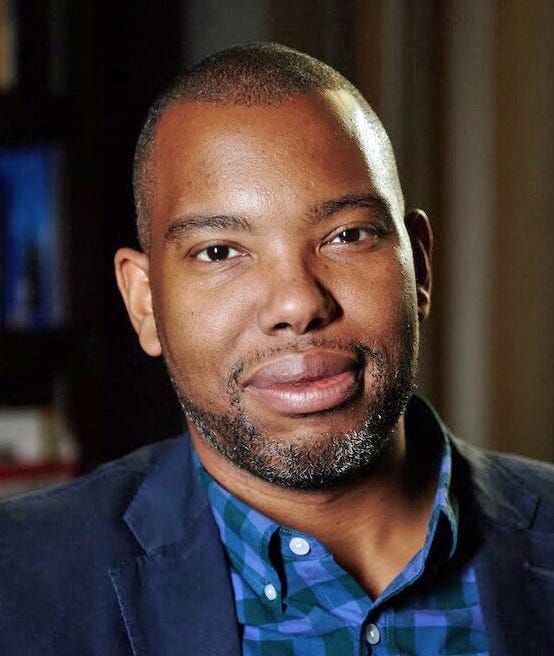
Our guest is the award-winning author and journalist, Ta-Nehisi Coates. His new book, The Message, chronicles his trip to Palestine and Israel (alongside trips to Senegal and South Carolina) and meditates on why some people’s stories are told and others are erased. We’ll talk about how he came to write about Israel-Palestine, about how victims become victimizers, about the backlash he’s experienced since the book came out, and about the forces that keep Black writers from shaping public debate about America’s role in the world.The event was cosponsored by Jewish Currents and the Foundation for Middle East Peace, so it’s free for all subscribers. To get conversations like this every week, and support my work, please consider upgrading to a paid subscription.Edited by Jesse Brenneman Intro/outro music by Nathan Salsburg This is a public episode. If you'd like to discuss this with other subscribers or get access to bonus episodes, visit peterbeinart.substack.com/subscribe
Trita Parsi on Iran, Hezbollah and Israel
Our guest will be Trita Parsi, executive vice president of the Quincy Institute and one of the most thoughtful and best-informed observers in Washington about the relationship between Israel, Hezbollah and Iran. We’ll discuss Israel’s recent attack, US policy and the danger of a regional war. This is a public episode. If you'd like to discuss this with other subscribers or get access to bonus episodes, visit peterbeinart.substack.com/subscribe

Two Final Thoughts about Ta-Nehisi Coates’ Book
Our call this week, for paid subscribers, will be at a special time: Wednesday at 11 AM Eastern.Our guest will be the Gaza-born journalist Muhammad Shehada, whose writing has been indispensable over the last year. I cited him in a recent essay in The Guardian, which noted that some of the most prescient predictions about what would happen if Israel invaded Gaza came from Palestinian commentators whose views were almost totally ignored in the US media. Here’s a fascinating piece Muhammad wrote recently about the way people in Gaza think about October 7. And his thoughts on the toll the last year has taken on him personally.Paid subscribers will get the link this Tuesday and the video the following week. They’ll also gain access to our library of past Zoom interviews with guests like Rashid Khalidi, Thomas Friedman, Ilhan Omar, Omar Barghouti, Benny Morris, Noam Chomsky, and Bret Stephens.There will be no zoom call on the week of Monday, October 21.My New BookClick image to preorder now.Knopf will publish my new book, Being Jewish After the Destruction of Gaza, on January 28 of next year. I hope the book will contribute, in some small way, to changing the conversation among Jews about what is being done in our name. But I’m keenly aware of two things: First, Jewish voices like mine usually get more attention in the US than do Palestinian ones. Second, while I’m publishing my book, Palestinians in Gaza— and beyond— are suffering in unspeakable ways.So, while I hope you consider buying my book, I hope you also consider buying a book by a Palestinian author. As the weeks go by, I’ll offer different suggestions, but readers should feel free to email me their own. I’ve been deeply moved by Fida Jiryis, Stranger in My Own Land, which charts her family’s painful and surreal journey, from Mandatory Palestine to Lebanon to Israel. It’s a book I wish I could make required reading in all the places, in America, Israel, and beyond, where Palestinians are routinely dehumanized.I also hope you’ll consider donating to a charity that works in Gaza. One good option is Medical Aid to Palestinians. If you have other suggestions, please send them.Sources Cited in this VideoThe Atlantic’s review of The Message.A transcript of Ezra Klein’s interview with Ta-Nehisi Coates.Jordan’s Foreign Minister refutes the claim that the Arab governments won’t accept Israel.The Arab Peace Initiative, which was endorsed by the 57 members of states of the Organization of Islamic Cooperation, and amended in 2013 to include land swaps.The legislation calling for equality proposed in 2018 by Palestinian members of the Knesset.Things to Read(Maybe this should be obvious, but I link to articles and videos I find provocative and significant, not necessarily ones I entirely agree with.)On the Jewish Currents (subscribe!) podcast, Noura Erakat, Fadi Quran, Dana El Kurd, Amjad Iraqi, and Ahmed Moor discuss the Palestinian liberation struggle.What American doctors, nurses, and paramedics saw in Gaza.Laura Kraftowitz on learning Arabic in Gaza.After years covering his native Gaza, Mohammed Mhawish has launched a newsletter. Check it out.I spoke recently to The Jewish Council of Australia, New York One and Slate.Upcoming TalksOn October 29, I’ll be speaking at the University of Victoria.See you on Thursday,PeterVIDEO TRANSCRIPT:Hi. I want to say a couple last things about Ta-Nehisi Coates’ book, The Message, and all of the controversy that’s been associated with it in the book tour that he’s been on, a couple of things that I think have not gotten the attention they deserve. The first is that one of the things that Coates has been saying as he’s been promoting the book is a very clear affirmation of the value of international law and the value of nonviolence and, particularly, the importance of not using violence that violates international law against civilians, including in reference to what Hamas did on October 7th.And he’s making a point that I think is really crucially important. This is from his interview with Ezra Klein. He says that he’s come to the feeling that ‘violence is corrupting, that the first thing you end up doing is folks end up killing each other,’ talking about people whose movements become accustomed to using violence against civilians, that that undermines the moral character of a liberation struggle and ultimately can lead to violence even against people on your own side. And he goes on to say ‘there was just no part of my politics at this point in my life that allows me to see a thousand people massacred and say, I don’t know, whatever the excuses are, I don’t have that. And I’m not saying that I really want to drill down on this. I feel like if you lose sight of the value of individual human life, you have lost something.’I think this is really important. Again, so much of the way his book is being discussed is this kind of like people on the left love him and pro-Israel folks are attacking him. But this message is a bit different th

Joshua Leifer on the Future of American Jews
Joshua Leifer is author of the new book, Tablets Shattered: The End of an American Jewish Century and the Future of Jewish Life. It’s the best history of American Jewish politics I’ve read and offers a provocative analysis of the American Jewish future. Josh’s launch event was cancelled the week of this discussion, when the bookstore that was hosting it objected because the moderator, Rabbi Andy Bachman, is a “Zionist.” We discussed that, and much more.Audio Podcasts unlock after six weeks for free subscribers. To get them right away, and support my work, please consider upgrading to a paid subscription. This is a public episode. If you'd like to discuss this with other subscribers or get access to bonus episodes, visit peterbeinart.substack.com/subscribe

Atoning for the Past Year
Our call this week, for paid subscribers, will be at a special time: Thursday at 11 AM Eastern.Our guest will be the award-winning author and journalist, Ta-Nehisi Coates. His new book, The Message, chronicles his trip to Palestine and Israel (alongside trips to Senegal and South Carolina) and meditates on why some people’s stories are told and others are erased. We’ll talk about how he came to write about Israel-Palestine, about how victims become victimizers, about the backlash he’s experienced since the book came out, and about the forces that keep Black writers from shaping public debate about America’s role in the world.This conversation will be cosponsored with Jewish Currents and the Foundation for Middle East Peace.Paid subscribers will get the link this Tuesday and the video the following week. They’ll also gain access to our library of past Zoom interviews with guests like Rashid Khalidi, Thomas Friedman, Ilhan Omar, Omar Barghouti, Benny Morris, Noam Chomsky, and Bret Stephens.Premium MembershipWe’ve added a new membership category, Premium Member, which is $179 per year (or higher, if you want to give more). In addition to our weekly Zoom interviews, Premium Members get access to a monthly live “ask me anything” zoom call and the video of that call the following week.Our next “ask me anything” will be this Wednesday, October 9 at 11 AM Eastern.If you’re interested in becoming a premium or regular member, hit the subscriber button below or email us with any questions.My New BookKnopf will publish my new book, Being Jewish After the Destruction of Gaza, on January 28 of next year. I hope the book will contribute, in some small way, to changing the conversation among Jews about what is being done in our name. But I’m keenly aware of two things: First, Jewish voices like mine usually get more attention in the US than do Palestinian ones. Second, while I’m publishing my book, Palestinians in Gaza— and beyond— are suffering in unspeakable ways.So, while I hope you consider buying my book, I hope you also consider buying a book by a Palestinian author. As the weeks go by, I’ll offer different suggestions, but readers should feel free to email me their own. I’ve been deeply moved by Fida Jiryis’ Stranger in My Own Land, which charts her family’s painful and surreal journey, from Mandatory Palestine to Lebanon to Israel. It’s a book I wish I could make required reading in all the places, in America, Israel and beyond, where Palestinians are routinely dehumanized.I also hope you’ll consider donating to a charity that works in Gaza. One good option is Medical Aid to Palestinians. If you have other suggestions, please send them.Sources Cited in this VideoNoam Chomsky’s American Power and the New Mandarins.Things to Read(Maybe this should be obvious, but I link to articles and videos I find provocative and significant, not necessarily ones I entirely agree with.)In Jewish Currents (subscribe!), Seth Anziska reflects on the lessons of past Israeli invasions of Lebanon for the one unfolding now.Al Jazeera’s powerful new documentary, Starving Gaza.Shane Burley details the purge of anti-Zionist staffers from American Jewish institutions since October 7.An October 7 reading list.Upcoming TalksOn October 29, I’ll be speaking at the University of Victoria.See you on Thursday,PeterVIDEO TRANSCRIPT:Hi. So, as it happens, the anniversary of October 7th falls in between Rosh Hashanah and Yom Kippur, in this period of time when Jews are expected to look inward and ask other people for forgiveness for the sins they’ve committed; and then, after doing that, then turn to G-d, and ask G-d for forgiveness for the sins that we’ve committed against G-d. And, famously in the al chet prayer, which appears ten times in the Yom Kippur liturgy, the confession of our sins is in the plural. So, for instance: for the sin which we have committed before you, openly or secretly; for the sin which we have committed before you, under duress or willingly. And I think there’s a tremendous power in the idea of a communal confession, that we are all responsible for each other’s misdeeds. But if you are a kind of critic of the American Jewish establishment and the Israeli government like me, there’s always also a danger, I think, that in the sense that you focus so much on the critiques of the community writ large, and its established leaders, and it’s easier to do that sometimes than to focus on one’s own misdeeds, one’s own sins.And as I look back on this October 7th for the past year, I feel both a sense of a need to repent and ask for forgiveness in very, very different, and sometimes, I feel like, dichotomous ways. On the one hand, I feel a tremendous sense of guilt that I did not reach out more regularly, and with deeper concern and deeper urgency, to Israelis that I knew immediately after October 7th. I think that one of the things that this year has done is that it has created, I would say, a kind of a chasm between Israeli Jews and Ame
Abdullah Hammoud on the Presidential Campaign in Michigan
Abdullah Hammoud is the mayor of Dearborn, Michigan, the largest city with an Arab-American majority in the United States. We talked about how residents of Dearborn have reacted to the war in Gaza and whether Kamala Harris is doing enough to win their votes.Audio Podcasts unlock automatically after six weeks for free subscribers. To get them right away and support my work, please consider upgrading to a paid subscription. This is a public episode. If you'd like to discuss this with other subscribers or get access to bonus episodes, visit peterbeinart.substack.com/subscribe
Rania Batrice and Matt Duss
After Joe Biden’s decision to drop out of the presidential race, we talked to two Democratic strategists about what happens now, and what impact it could have on US policy towards the Gaza War. Rania Batrice is a Palestinian-American political consultant. She served as deputy campaign manager for Bernie Sanders’ 2016 presidential campaign and this year has been the media consultant for the Uncommitted campaign. Matt Duss is executive vice-president of the Center for International Policy and served as foreign policy advisor to Bernie Sanders from 2017-2022. Audio Podcasts unlock after six weeks for free subscribers. To get them right away and support my work, please consider upgrading to a paid subscription. This is a public episode. If you'd like to discuss this with other subscribers or get access to bonus episodes, visit peterbeinart.substack.com/subscribe
Tactical Success, Strategic Failure
I know why Israelis are happy Nasrallah is dead, but this war will make everyone less safe. This is a public episode. If you'd like to discuss this with other subscribers or get access to bonus episodes, visit peterbeinart.substack.com/subscribe

Laila Al-Arian on “The Night Won’t End”
Laila Al-Arian is an investigative journalist and executive producer of Fault Lines, an Emmy and Peabody award-winning show on Al Jazeera English. She’s also the executive producer of “The Night Won’t End,” an extraordinarily powerful documentary about three families in Gaza during this war. We talk about how the documentary was made, what it reveals about how Israel is waging this war and about how the media is covering it. If you know anyone who might enjoy these conversations, please encourage them to subscribe. (Or buy them a gift subscription.)Audio Podcasts unlock after six weeks for free subscribers. To get them right away and support my work, please consider upgrading to a paid subscription. This is a public episode. If you'd like to discuss this with other subscribers or get access to bonus episodes, visit peterbeinart.substack.com/subscribe
Mouin Rabbani on the Danger of a Regional War
Given the growing chance of a regional war in the Middle East, our guest will be one of the best analysts of Palestinian and Middle Eastern politics, Mouin Rabbani, Co-Editor of Jadaliyya, a publication of the Arab Studies Institute, and a Non-Resident Fellow at the Center for Conflict and Humanitarian Studies. We’ll talk about the attack in Majdal Shams, the spate of recent Israeli assassinations and the potential for a conflict that envelopes the entire region.If you know anyone who might enjoy these conversations, please encourage them to subscribe. (Or buy them a gift subscription.)Audio Podcasts unlock after six weeks for free subscribers. To get them right away and support my work, please consider upgrading to a paid subscription. This is a public episode. If you'd like to discuss this with other subscribers or get access to bonus episodes, visit peterbeinart.substack.com/subscribe
Why is Joe Biden Allowing This?
Among Other Things, Israel’s War in Lebanon Could Help Elect Trump This is a public episode. If you'd like to discuss this with other subscribers or get access to bonus episodes, visit peterbeinart.substack.com/subscribe
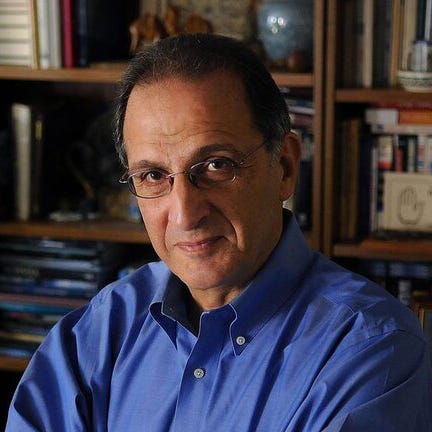
James Zogby
James Zogby is founder of the Arab American Institute, and a longtime member of the Democratic National Committee. He recently offered a proposal for how to replace President Biden as the Democratic Party’s nominee. We’ll talk about the pressure inside the party on Biden to bow out, and what might happen if he does. Interview co-sponsored with Jewish Currents. This is a public episode. If you'd like to discuss this with other subscribers or get access to bonus episodes, visit peterbeinart.substack.com/subscribe

What I Wish Kamala Harris Had Said About Immigrants, and Herself
Her Own Life Story Disproves Trump and Vance’s LiesKamala Harris never spoke to the camera and said, you know what, my parents are immigrants. And they contributed a lot to this country. And we have something to thank them for, and immigrants actually make this country better. This is a public episode. If you'd like to discuss this with other subscribers or get access to bonus episodes, visit peterbeinart.substack.com/subscribe
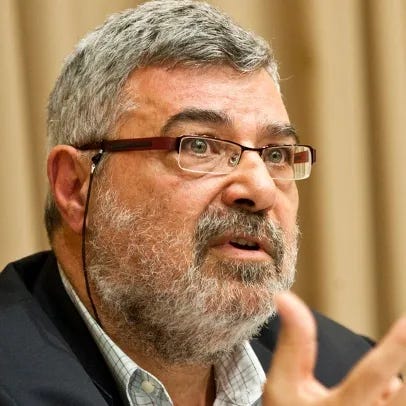
Rami Khouri
Rami Khouri is a Distinguished Public Policy Fellow at the American University of Beirut, a Non-Resident Senior Fellow at the Arab Center in Washington, DC, and a regular columnist for Al Jazeera Online. Rami lived in Beirut for 17 years and has for many years written about relations between Israel and Lebanon. This is a public episode. If you'd like to discuss this with other subscribers or get access to bonus episodes, visit peterbeinart.substack.com/subscribe

The Biden Administration’s Backdoor Ethnonationalism
Shouldn’t the US Care as Much about Americans Killed by the IDF as it Cares about Americans Killed by Hamas?Our call this week will be at our new regular time: Friday at 11 AM Eastern.Our guest will be Simon Fitzgerald, a trauma surgeon in Brooklyn who has worked in telemedicine in Gaza, particularly at Nasser Hospital in Khan Younis with Dr. Khaled Alser. According to colleagues, Dr. Alser has been abducted by Israeli forces and tortured at Ofer Prison and at the notorious Sde Teiman prison camp in the Negev Desert. Dr. Fitzgerald will talk about his experience doing telemedicine in Gaza and about the fate of Dr. Alser.Paid subscribers will get the link this Tuesday and the video the following week. They’ll also gain access to our library of past Zoom interviews with guests like Rashid Khalidi, Thomas Friedman, Ilhan Omar, Omar Barghouti, Benny Morris, Noam Chomsky, and Bret Stephens.LIVE DEBATE CHATI’ll be hosting a live chat during this Tuesday night’s presidential debate for paid subscribers. I’ll be participating along with all of you. Just click the “Join chat” button below:PREMIUM MEMBERSHIP - ASK ME ANYTHINGWe’ve also added a new membership category, Premium Member, which is $179 per year (or higher, if you want to give more). In addition to our weekly Zoom interviews, Premium Members will get access to a monthly live “ask me anything” zoom call and video of that call the following week.Our next “ask me anything” will be on Thursday, Sept 17 at 11 AM Eastern.If you’re interested in becoming a premium or regular member, hit the subscriber button below or email us with any questions.Sources Cited in this VideoThe Americans injured or killed by Israeli troops in the West Bank.Things to Read(Maybe this should be obvious, but I link to articles and videos I find provocative and significant, not necessarily ones I entirely agree with.)On the Jewish Currents (subscribe!) podcast, Arielle Angel talks with Ben Lorber and Shane Burley, authors of Safety Through Solidarity: A Radical Guide to Fighting Antisemitism, about antisemitism and the left.The Biden administration’s double standard on “river to the sea.”Israel’s Radio Rwanda.Orly Noy on the death of Hersh Goldberg-Polin.Remembering Rabbi Michael Lerner.On September 25, I’ll be speaking at Vanderbilt University.Please consider supporting a scholarship fund for displaced students in Gaza who want to study in the US.See you on Friday,PeterVIDEO TRANSCRIPT:Hi. So, last week, my video was about Hersh Goldberg-Polin and the other Israeli hostages that were killed by Hamas. And Hersh Goldberg-Polin got a particular a lot of attention in the United States because he was American. His parents spoke of the Democratic National Convention, and he became someone who many, many Americans knew. And many Americans mourned his murder by Hamas, which is as it should be. I mean, we should care about all human lives. And we have, as Americans, a particular right to be concerned about the fate of other Americans.And now we found that an American has been shot and killed in the West Bank by Israeli forces. On Friday, an American activist named Aysenur Eygi was shot while she was protesting at an Israeli settlement in the West Bank. And this has been happening fairly frequently in recent years. Several weeks earlier, another American, Amado Sison, was struck by live ammunition in the back of the leg by Israeli forces. Earlier this year, two 17-year-old Palestinian Americans were killed in the West Bank: Tawfic Abdel Jabbar from Louisiana and Mohammad Khdour from Florida. In 2020, a 78-year-old Palestinian American, Omar Assad, was dragged from his car by Israeli forces bound and blindfolded, and then had a heart attack, while in Israeli custody after he’d been left under those conditions for like an hour so by Israeli forces. In 2021, a prominent Palestinian journalist, Shireen Abu Akleh, was killed by an Israeli sniper while she was wearing a press vest, covering an Israeli Defense Forces raid in the Jenin refugee camp in the West Bank.There is, I think, by any honest assessment, a tremendous difference between the way in the United States in public conversation, and indeed the American government, respond when American Jews are killed in Israel versus what happens when Palestinian Americans, or in the case of this young woman, Aysenur Eygi, a Turkish American, were killed in the West Bank. The US government does not respond in the same way. There’s not the same level of public outcry, and there’s not the same level of demand by the US government that the people who committed these killings be held responsible.And what disturbs me about this so much, and I think makes this so important beyond the preciousness of the individual lives at stake, is that the Biden administration—and remember, all of these deaths have been happening, these killings by Israelis of Americans, have been happening under the Biden administration. The Biden administration is engaged in a fight against
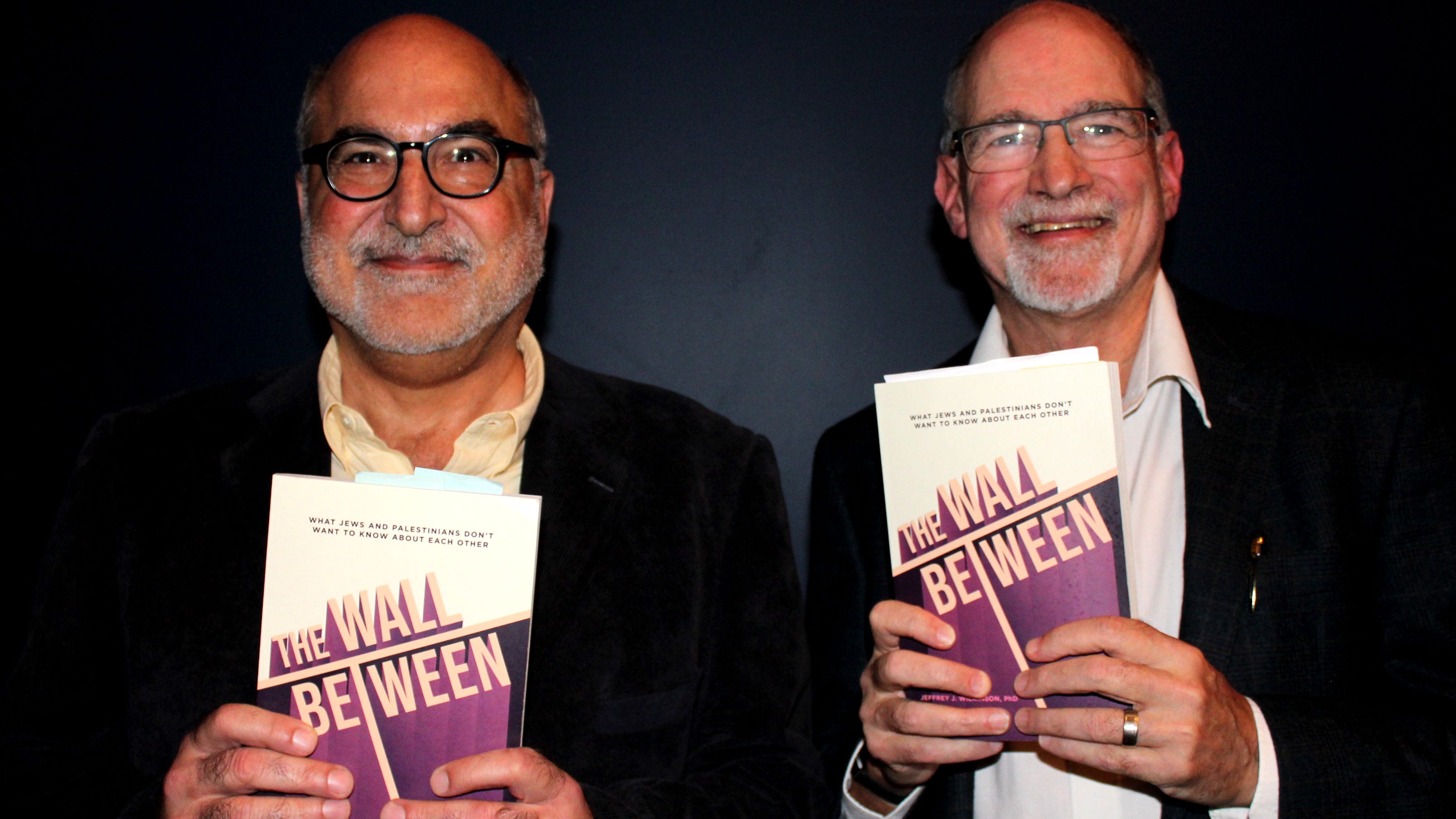
Raja Khouri and Jeffrey Wilkinson
Raja Khouri and Jeffrey Wilkinson are co-authors of the book, The Wall Between: What Jews and Palestinians Don’t Want to Know About Each Other. Since October 7, dialogue between Palestinians and Jews has become even more difficult, and there are those in both communities—and on the left and right—who question its value. I’m excited to ask Raja and Jeffrey to respond to those criticisms, and to explain how they believe that greater dialogue between Palestinians and Jews can contribute to the struggle for equality, freedom, and safety for everyone. This is a public episode. If you'd like to discuss this with other subscribers or get access to bonus episodes, visit peterbeinart.substack.com/subscribe

Let Zionists Speak
Our call this week will be at a special time: Wednesday at 11 AM EasternOur guest will be Trita Parsi, executive vice president of the Quincy Institute and one of the most thoughtful and best-informed observers in Washington about the relationship between Israel, Hezbollah and Iran. We’ll discuss Israel’s recent attack, US policy and the danger of a regional war.Paid subscribers will get the link this Tuesday and the video the following week. They’ll also gain access to our library of past Zoom interviews with guests like Rashid Khalidi, Thomas Friedman, Ilhan Omar, Omar Barghouti, Benny Morris, Noam Chomsky, and Bret Stephens.We’ve added a new membership category, Premium Member, which is $179 per year (or higher, if you want to give more). In addition to our weekly Zoom interviews, Premium Members will get access to a monthly “ask me anything” zoom call.Our first “ask me anything” will be this Thursday, August 29 at 11 AM Eastern. Premium Subscribers will get a Tuesday email that includes links to both our Wednesday call with Trita and the “ask me anything” on Thursday. (If you have any questions, email me).If you’re interested in becoming a premium or regular member, hit the button below.We’re also slightly increasing the prices of regular paid subscriptions. It’s the first time I’ve done this since I launched the newsletter a few years ago. Starting September 1, regular subscriptions will be $79 per year (up from $72) and $7.99 per month (up from $7). This will apply to all new subscriptions and to everyone whose subscription renews. If this increase creates a hardship for you, email me and we’ll figure it out.Sources Cited in this VideoThe cancellation of Joshua Leifer’s book launch event.A poster calls for “Zionists” to leave a London neighborhood.Mira Sucharov’s study of what American Jews mean by the word “Zionist.”Things to Read(Maybe this should be obvious, but I link to articles and videos I find provocative and significant, not necessarily ones I entirely agree with.)In the Jewish Currents (subscribe!), Maya Rosen investigates the Israelis who want to settle southern Lebanon.Ta-Nehisi Coates and Jon Stewart on the exclusion of Palestinian speakers at the DNC.A Black and Palestinian Mississippian reflects on the Democratic conventions of 1964 and 2024.Benjamin Netanyahu never pays the bill.Please consider supporting a scholarship fund for displaced students in Gaza who want to study in the US.See you on Wednesday at 11 AM,PeterVIDEO TRANSCRIPT:Hi. There was a fair amount of attention last week to the experience of my friend, Josh Leifer, who’s launch event for his excellent new book, Tablets Shattered, was closed because the bookstore wouldn’t permit him to be speaking alongside a moderator who was a ‘Zionist’ rabbi. It produced a lot of commentary. And I do think this is something which is growing as a tendency, this tendency to say that if you are a Zionist, then you are kind of excluded from conversations. There was even a thing that happened in the UK where there was a march, which said that Zionists had to leave a certain neighborhood in London.I wanna explain why I think this is self-defeating and unwise. The first reason is that Palestinians, and Jews who support Palestinian freedom, have been excluded from a very, very long time, and still are, sometimes even by force of law. And the argument against that is that these are restrictions on free speech, and that people should have the right to be heard, and to make their case. So, this is what many of us have argued about: the rights of, you know, Jews who don’t support a Jewish state to speak at Hillel, for instance, or the rights of Palestinians to express their point of view and not be called antisemites just because they don’t support a Jewish state.And I do think you undermine the clarity of that argument when people on the Left turn around and then basically say, Zionists are not allowed to have a platform in our spaces, right? I think it undermines the effort, the really important effort to say that in other spaces, whether they’re establishment Jewish spaces or kind of more mainstream American political spaces, that Palestinians—the vast majority of whom, of course, don’t support the idea of a Jewish state, or other people who don’t support a Jewish state—should have the right to speak, right. That was something that tragically didn’t happen at the Democratic National Convention. But I think it makes it harder to make that case if you’re excluding people on your own turf.Secondly, I of course understand the logic, which would say, well, Zionism is the ideology of the state. This state is classified as an apartheid state by a lot of human rights organizations. It’s therefore racist ideology, and we wouldn’t have, you know, white supremacists come and speak in our bookstores, or whatever. But I think there are some important differences, and some problems with that logic. The first is that for many Jews, Zionism has an intimate, and o

Joe Biden is Not a Hero
Our call this week will be at our new regular time: Friday at 11 AM Eastern.Our guest will Joshua Leifer, author of the new book, Tablets Shattered: The End of an American Jewish Century and the Future of Jewish Life. It’s the best history of American Jewish politics I’ve read and offers a provocative analysis of the American Jewish future.Paid subscribers will get the link this Tuesday and the video the following week. They’ll also gain access to our library of past Zoom interviews with guests like Rashid Khalidi, Thomas Friedman, Ilhan Omar, Omar Barghouti, Benny Morris, Noam Chomsky and Bret Stephens.We’ve added a new membership category, Premium Member, which is $179 per year (or higher, if you want to give more). In addition to our weekly Friday calls, Premium Members will get access to a monthly “ask me anything” zoom call.Our first one will be on Thursday, August 29 at 11 AM Eastern.We’re also slightly increasing the prices of regular paid subscriptions. It’s the first time I’ve done this since I launched the newsletter a few years ago. Starting September 1, regular subscriptions will be $79 per year (up from $72) and $7.99 per month (up from $7). This will apply to all new subscriptions and to everyone whose subscription renews. If this increase creates a hardship for you, email me and we’ll figure it out.Things to Read(Maybe this should be obvious, but I link to articles and videos I find provocative and significant, not necessarily ones I entirely agree with).In the Jewish Currents (subscribe!), Alex Kane profiles Florida State Representative Randy Fine, one of a new breed of MAGA Jewish Republicans.In The New York Times, I argued that Kamala Harris could radically change Joe Biden’s policy on Gaza by simply enforcing US law.Israeli-born Holocaust scholar Omer Bartov on how Jewish Israelis justify what he now considers a genocide.An Uncommitted delegate who grew up being bombed by Israel on what it’s like to watch the destruction of Gaza.Please consider supporting a scholarship fund for displaced students in Gaza who want to study in the US.See you on Friday at 11 AM,PeterTRANSCRIPTSo Monday night at the first night of the Democratic Convention. It's going to be devoted to Joe Biden, and I think to say it will be a love fest is probably an understatement. There will be raucous applause and tears, and the whole thing will be devoted to the heroism, the courage, the magnanimity of Joe Biden, what he's achieved, particularly the fact that he was willing to abandon his own ambition to step aside and give the Democrats a better chance of defeating Donald Trump. And, to be clear, I do think it's a very good thing that he did that. But I don't think he should be celebrated. Certainly not in that unambiguous way.And it really bothers me that so many people in the US center, even center-left people, will be doing that tomorrow night. They'll be saying, "Joe Biden is that rarest of person in American politics, someone who really puts country above himself as an individual." I just don't think when you're analyzing a Presidency or a person, you sequester what's happened in Gaza. I mean, if you're a liberal-minded person, you believe that genocide is just about the worst thing that a country can do, and it's just about the worst thing that your country can do if your country is arming a genocide. And it's really not that controversial anymore that this qualifies as a genocide. I read the academic writing on this. I don't see any genuine scholars of human rights international law who are saying it's not indeed there. People like Omer Bartov, holocaust scholar at Brown, who initially were reluctant to say that, and now, indeed, have said that they consider it a genocide. So if you believe that a genocide is just about the worst thing that America can do in terms of its foreign policy, arming and funding at genocide, how can you simply say that you're gonna put that aside even for a night, and focus entirely on the fact that Democrats now have a better chance of beating Donald Trump? I see so many people in media who somehow feel like they get to define their work as focused on the election, focused on the mechanics of the election, and those domestic issues. And somehow Gaza is not their beat. They don't focus on that. They don't write on foreign policy. That's difficult. That's controversial. And they're making these moral judgments as if they don't have to take a position on this. And I just don't think it makes any sense. I really don't. If you're gonna say something about Joe Biden, the president, Joe Biden, the man, you have to factor in what Joe Biden, the president, Joe Biden, the man, has done, vis-a-vis Gaza. It's central to his legacy. It's central to his character. And if you don't, then you're saying that Palestinian lives just don't matter, or at least they don't matter this particular day, and I think that's inhumane. I don't think we can ever say that some group of people's lives simply don't mat

Hamas Is Not Iran’s “Proxy”
Our call this week will be at our new regular time: Friday at 11 AM Eastern.Our guest will Abdullah Hammoud, the mayor of Dearborn, Michigan, the largest city with an Arab-American majority in the United States. We’ll talk about how residents of Dearborn have reacted to the war in Gaza and whether Kamala Harris is doing enough to win their votes.Paid subscribers will get the link this Tuesday and the video the following week. They’ll also gain access to our library of past Zoom interviews with guests like Rashid Khalidi, Thomas Friedman, Ilhan Omar, Omar Barghouti, Benny Morris, Noam Chomsky, and Bret Stephens.We’re slightly increasing the prices of paid subscriptions. It’s the first time I’ve done this since I launched the newsletter a few years ago. Starting September 1, subscriptions will be $79 per year (up from $72) and $7.99 per month (up from $7). This will apply to all new subscriptions and to everyone whose subscription renews. If this increase creates a hardship for you, email me and we’ll figure it out.We’ve also added a new category, Premium Member, which is $179 per year (or higher, if you want to give more). In addition to our weekly Friday calls, Premium Members will get access to a monthly “ask me anything” zoom call, which will start later this month. If that interests you, or you’d just like to do more to support the newsletter, please consider signing up. Whatever you decide, I appreciate it.Sources Cited in this VideoBenjamin Netanyahu’s 1982 interview with Pat Robertson.Merriam-Webster’s definition of “proxy.”When Hamas broke with Iran over Syria.Things to Read(Maybe this should be obvious, but I link to articles and videos I find provocative and significant, not necessarily ones I entirely agree with.)In Jewish Currents (subscribe!), Raphael Magarik spoke to Rania Batrice about what Jewish texts can teach us about whether to vote for the lesser of two evils.For the Foundation for Middle East Peace, I spoke to Harrison Mann, who resigned from the Defense Intelligence Agency to protest his office’s support for Israel’s war in Gaza.In The New Yorker, David Remnick writes about Yahya Sinwar.Help Abir Elzowidi rescue her brother from Gaza.See you on Friday at 11 AM,PeterVIDEO TRANSCRIPT:Hi. I recently came across an interview that Benjamin Netanyahu did all the way back in 1982. So, this was before his political career, before his diplomatic career at the United Nations, and at the Israeli embassy in the United States. Back then, he was really known in 1982 fundamentally as the brother of Yoni Netanyahu, who famously died in the Entebbe raid. And Bibi had kind of fashioned himself as an expert on international terrorism. And so, he’s doing this interview with the evangelical broadcaster, Pat Robertson. And Robertson asks, ‘what is the source of terrorism?’ And Netanyahu replies, ‘the more we look, the more we found that terrorist incidents are not just isolated. There is a major force behind most of these groups that is the Soviet Union. If you take away the Soviet Union, it’s chief proxy, the PLO, international terrorism would collapse.’So, of course, as it turned out, within a decade of that interview, the Soviet Union itself had collapsed. But the PLO had not collapsed. And international terrorism—whatever exactly Benjamin Netanyahu meant by that, presumably he meant armed actions against Israel or against the West—had not collapsed either, right? Because, in fact, the PLO was not a proxy of the Soviet Union. It wasn’t being controlled by the Soviet Union. It was getting weapons from the Soviet Union. But the PLO was fundamentally an organization that emerged out of Palestinian opposition to Israel and Zionism, which went back a very, very long time, and grew out of the Palestinian experience, and indeed existed before the Soviet Union was supporting that resistance and continued after the Soviet Union ceased to exist.So, why bring this up now? It’s because when one hears about the relationship between Iran and Hamas, one very frequently in the American media—if you listen to American politicians, or Israeli politicians, or kind of American Jewish communal discourse—you will hear again and again this word: proxy. The same word that Netanyahu used to describe the PLO’s relationship with the Soviet Union. Now, a proxy, according to the Merriam-Webster Dictionary, is ‘a person authorized to act for another.’ Some of the synonyms are: agent, surrogate, representative, stand- in. So, the idea is there is a person or an entity that has the authority. It makes the decisions. And it authorizes, it delegates some other entity to do a certain action for it, right? So, when you say that Hamas is a proxy for Iran, what you’re saying is that Iran is making the decisions. Iran is the fundamental actor here. And Hamas is basically doing its bidding and acting as an agent, a surrogate, a delegate, a proxy, right?In fact, I think this completely misunderstands the relationship between Hamas and Iran. It’

If You Can’t Win One War, Start an Even Bigger One
Our call this week will be at our new regular time: Friday at 11 AM Eastern.Given the growing chance of a regional war in the Middle East, our guest will be one of the best analysts of Palestinian and Middle Eastern politics, Mouin Rabbani, Co-Editor of Jadaliyya, a publication of the Arab Studies Institute, and a Non-Resident Fellow at the Center for Conflict and Humanitarian Studies. We’ll talk about the attack in Majdal Shams, the spate of recent Israeli assassinations, and the potential for a conflict that envelopes the entire region.Paid subscribers will get the link this Tuesday and the video the following week. They’ll also gain access to our library of past Zoom interviews with guests like Rashid Khalidi, Thomas Friedman, Ilhan Omar, Omar Barghouti, Benny Morris, Noam Chomsky, and Bret Stephens.Sources Cited in this VideoIsraeli columnist Nadav Eyal on Israel’s lack of preparedness for a Hezbollah assault. (His comments are near the end of the podcast. In my video, I’ve slightly compressed his remarks, but the substance is the same.)Even Israeli security officials admit that Israel can’t destroy Hamas.Things to Read(Maybe this should be obvious, but I link to articles and videos I find provocative and significant, not necessarily ones I entirely agree with.)In the Jewish Currents (subscribe!), Nicola Perugini and Neve Gordon discuss Israel’s use of “human shields” as a justification for the Gaza war.Why Iran may not want a regional war.The problem with Josh Shapiro.Joe Biden’s long relationship with AIPAC.Help Abir Elzowidi rescue her brother from Gaza.See you on Friday at 11 AM,PeterVIDEO TRANSCRIPT:Hi. I’m recording this on Sunday. So, by the time people see it on Monday or later, there may have been more serious retaliation by Hezbollah and/or Iran for Israel’s recent spate of assassinations of a Hezbollah operative in Lebanon, of Ismail Haniyeh, the Hamas leader in Iran, and perhaps even for the Hamas leader Mohammed Deif in Gaza. This whole trajectory is not only so frightening, but I find it so deeply depressing for so many reasons. One of which is just that, for me, as someone who cares about the safety of Israelis, worries about that a lot, I think that what Benjamin Netanyahu is doing just from the perspective of the safety of Israelis is incredibly, incredibly reckless, a kind of Trump-level action of just complete disregard for the safety of your own people.And I just want to give a quote. This is from Nadav Eyal, who’s a columnist at the Israeli newspaper, Yedioth Ahronoth. Not a leftist by any means. Someone with very, I think, generally establishment views. Very close to the Israeli security apparatus. And he’s talking about the question of whether Israel is prepared for the kind of attack that Hezbollah is capable of. Remember, Hezbollah has a much stronger arsenal, a more formidable arsenal than Hamas, one that could really overwhelm the Iron Dome system, devastate Tel Aviv. And this is what Nadav Eyal is saying about whether the Israeli security officials believe that Israel is prepared for what Hezbollah might do in response, or Iran. And Nadav Eyal says—and this is from Dan Senor’s podcast, Call Me Back—Eyal says, we have numerous reports by the defense community that the home front isn’t ready. I didn’t see any report saying that the home front is to any extent ready. And by ready, I mean, I’m talking about electricity. I’m talking about infrastructure. The Israeli administration is saying to itself that they’re not ready. That Israelis are not prepared from the perspective of civil defense for the kind of retaliation that Israel and Benjamin Netanyahu would have had to know was very likely after this spate of assassinations, which followed the attack of the Druze town of Majdal Shams earlier. But it’s part of this larger cycle that’s been going on since October 7th. And I’ve been worried about this for a few months now because if you listen to Israeli officials and kind of commentators who are close to the Israeli government, the dynamic of their conversation in the past few months, if you notice, has really changed. If you listen to Israeli discourse and kind of pro-Israel discourse in the US in, you know, in the winter, even into, let’s say, the early spring of this year, you heard people saying, we have to destroy Hamas, right? That of course was the Israeli government line. We are gonna go into Gaza. We’re going to destroy Hamas.But I started to notice over the last few months a real shift. And some of this even came from official Israeli spokespeople. Like Daniel Hagari, the spokesperson, said, ‘we can’t destroy Hamas.’ And you notice that people started to kind of acknowledge, or at least implicitly stop saying we’re going to destroy Hamas because it’s becoming more and more obvious that Israel cannot destroy Hamas. It may ultimately end up with a situation where Hamas is no longer in charge of picking up the garbage in Gaza. But there’s lots of reporting that Hamas doesn’

You Can’t Claim to Defend Liberal Democracy and Attend Netanyahu’s Speech to Congress
Paid subscribers will get the link to Friday Zoom calls on Tuesdays and the video and podcast the following week. They’ll also gain access to our library of past Zoom interviews with guests like Rashid Khalidi, Thomas Friedman, Ilhan Omar, Omar Barghouti, Benny Morris, Noam Chomsky, and Bret Stephens.Sources Cited in this VideoSenator Josh Hawley’s speech at the National Conservativism Conference.Suzanne Schneider discusses Israel’s model for the nationalist right.Jeremy Scahill’s interview with Dr. Mohammed Al-Hindi, the deputy leader of Palestinian Islamic Jihad.Benjamin Netanyahu’s response to the International Court of Justice.Things to Read(Maybe this should be obvious, but I link to articles and videos I find provocative and significant, not necessarily ones I entirely agree with.)On the Jewish Currents (subscribe!) podcast, Jonathan Shamir interviews Hana Morgenstern, Yaël Mizrahi-Arnaud, and Moshe Behar about Arab-Jewish identity.Help Abir Elzowidi rescue her brother from Gaza.Last week the Knesset voted to reject the two state solution. Not a single Knesset member from a Jewish party opposed the resolution.Pete Buttigieg on J.D. Vance.PeterVIDEO TRANSCRIPT:Hi. You’ll notice that if you listen to defenders of the Israeli government, one of the things—in the United States in particular—one of the things they hate the most is when people make analogies between Israel’s treatment of the Palestinians and basically any other place in the world, whether it’s apartheid South Africa or, you know, Black Americans. They hate these analogies. And I think it’s because the defense of what Israel is doing requires a kind of an exceptionalization of Israel. That if you step back, and you actually just try to apply kind of broad basic principles—you know the idea of equality under the law irrespective of race, religion, ethnicity, etc.—if you see Israel and the Palestinians in that light, according to some kind of universal criteria that you apply to all places, you’re going to have a big problem with what Israel’s doing.So, this exceptionalization of what Israel does is really, really important to defending what Israel does because it’s a way of saying, basically, you have to check those universal principles at the door because this is so complicated, sui generis, whatever, basically that you have to look at it in a completely different light. But I think it’s really important to de-exceptionalize this conversation and see the things that it has in common with many other struggles in the world today. Of course, every place is different in its own way, but the idea that there are common universal principles that one applies in all circumstances, I think, is really important.And in this regard, I want to try to draw an analogy between Benjamin Netanyahu and the things that he believes, and that he’s going to speak about in Congress on Wednesday, and two other figures that one might not immediately think of as having a lot in common with him. And those two other figures are: Senator Josh Hawley from Missouri, and Mohammad Al-Hindi, who’s the deputy leader of Palestinian Islamic Jihad. And I want to give three quotes: one from Hawley, one from Al-Hindi, the head of Palestinian Islamic Jihad, and then one from Netanyahu to illustrate this common point. All three of these people basically believe that countries should be dominated by members of a particular ethnic, religious, racial group. And those people can be trusted to treat everybody else fairly, even though those other people will not have equality under the law. And this is a huge central struggle in our time across the world, between the idea of equality under the law, and the idea that basically countries are properties of one particular tribe, whether they’re defined racially, religiously, ethnically, or some combination of both. And those tribes can be trusted—because they are somehow benign—to treat everybody else well, even those other people who are not equal members of the nation.So, let’s start with Josh Hawley. This is Josh Hawley from the National Conservatism Conference, which, not coincidentally, who’s guiding spirit, Yoram Hazony, is actually an Israeli who’s taken a lot of the ways he thinks about Israel and is exporting them to the United States, but also Hungary, India, many other places. There is a great podcast discussion of this, which I’ve linked to with Suzanne Schneider. And so, this is Hawley. Hawley says: ‘I’m calling America a Christian nation. Some will say I’m advocating Christian nationalism. And so I am.’ And then he goes on: ‘Religion unites Americans. Most Americans share broad and basic religious convictions: theistic, biblical, Christian. Working people believe in God. They read the Bible. They go to church, some often, some not. But they consider themselves, in all events, members of a Christian nation.’ And he goes on to say that other people are gonna be treated fine who are not Christians. But they have to recognize that the

This is Why the Two Parties Are Not the Same
Our call this week will be at our new regular time: Friday at 11 AM Eastern.In light of Joe Biden’s decision to drop out of the presidential race, we’re going to talk to two Democratic strategists about what happens now, and what impact it could have on US policy towards the Gaza War. Rania Batrice is a Palestinian-American political consultant. She served as deputy campaign manager for Bernie Sanders’ 2016 presidential campaign and this year has been the media consultant for the Uncommitted campaign. Matt Duss is executive vice-president of the Center for International Policy and served as foreign policy advisor to Bernie Sanders from 2017-2022. I’m excited to talk to them both.Paid subscribers will get the link this Tuesday and the video the following week. They’ll also gain access to our library of past Zoom interviews with guests like Rashid Khalidi, Thomas Friedman, Ilhan Omar, Omar Barghouti, Benny Morris, Noam Chomsky, and Bret Stephens.Things to Read(Maybe this should be obvious, but I link to articles and videos I find provocative and significant, not necessarily ones I entirely agree with.)On the Jewish Currents (subscribe!) podcast, Jonathan Shamir interviews Hana Morgenstern, Yaël Mizrahi-Arnaud, and Moshe Behar about Arab-Jewish identity.Help Abir Elzowidi rescue her brother from Gaza.Last week, the Knesset voted to reject the two state solution. Not a single Knesset member from a Jewish party opposed the resolution.Pete Buttigieg on J.D. Vance.See you on Friday at 11 AM,PeterVIDEO TRANSCRIPT:Hi. So, I’m recording this on Sunday. Just heard the news that President Biden is gonna drop out of the presidential race. And obviously there’ll be just a tremendous amount of commentary and all this. I would just say, for me, this is the first thing that’s happened in a while that kind of reminds me why—with all its flaws—the Democratic Party is still the party that I associate with. And it’s because both of these parties faced a situation in which they were under pressure to deny basic reality. In the case of the Republican Party, the denial of reality is the idea that Donald Trump is not what he palpably is, which is: an authoritarian racist, misogynist, pathological liar. And the Republican Party has really coalesced around denial of those really obvious truths.And the Democratic Party was headed down a path of doing something which was in some ways similar, which was that the leadership of the party was going to coalesce around the denial of the reality that Joe Biden is no longer fit to be a presidential candidate, in the sense that he cannot vigorously make a case for himself to the American people, and I think cannot be, certainly for years going forward, an effective president. Because part of the job of being present is making a case to the public to rally them in support of what you want to do—sometimes rallying the entire world behind a certain policy—and being forceful in private, whether it’s foreign leaders, or members of Congress.And we were entering this situation, and what was so profoundly depressing was to see the Democratic Party, which I thought is the more benign of the two parties and the more in touch with reality of the two parties, essentially going down that same road of denial of reality that the Republican Party was. And what we saw was because of the different constituency groups in the Democratic Party, because of its different relationship with the media, because of its different relationships with members of Congress, for variety of reasons, that Democrats were able to force Joe Biden to face this reality in a way that Republicans have never been able to do vis-à-vis Donald Trump. And so, that to me is just a sense of tremendous relief. Of course, there are very, very, very major concerns about Kamala Harris—assuming she is the nominee—above all, for those of us who care about Israel-Palestine, the fact that she was still implicated in this administration’s just horrific policy towards the Gaza War.But I at least think that there is the hope that this recognition of reality in the party could perhaps be the beginnings of a reckoning with other kinds of reality. The reality that just as the party cannot continue to deny the reality of the fact that Joe Biden is no longer fit to be a presidential candidate, he’s not fit to serve as president for the next four years, that it will move towards—under pressure again from the from the party, from members of the party coalition—that it could move towards the recognition that this claim that this war is just and necessary is a denial of reality as well. And so, it shows that there is just some possibility that the Democratic Party can be moved to the place where it faces things as they actually are, as opposed to the Republican Party, which is living in a very, very dangerous fantasy about who Donald Trump is, and indeed what America is.And so, it’s for that reason that I would say this is the first time that I felt hopeful about

Calling Trump an Authoritarian Doesn’t Incite Violence
Our call this week will be at our new regular time: Friday at 11 AM Eastern.Our guest will be Laila Al-Arian, an investigative journalist and executive producer of Fault Lines, an Emmy and Peabody award-winning show on Al Jazeera English. She’s also the executive producer of “The Night Won’t End,” an extraordinarily powerful documentary about three families in Gaza during this war. We’re going to talk about how the documentary was made, what it reveals about how Israeli is waging this war, and about how the media is covering it. Paid subscribers will get the link this Tuesday and the video the following week. They’ll also gain access to our library of past Zoom interviews with guests like Rashid Khalidi, Thomas Friedman, Ilhan Omar, Omar Barghouti, Benny Morris, Noam Chomsky, and Bret Stephens.Sources Cited in this VideoJoe Biden and Barack Obama’s response to the attempted assassination of Donald Trump versus Trump’s response to the attack on Nancy Pelosi’s husband.J.D. Vance and House Majority Leader Steve Scalise claim that Democrats are inciting violence by calling Trump a threat to democracy.Czeslaw Milosz’s The Captive Mind.Things to Read(Maybe this should be obvious, but I link to articles and videos I find provocative and significant, not necessarily ones I entirely agree with.)In Jewish Currents (subscribe!), Maya Rosen reports on the rise of October 7 tourism.Although overshadowed by the horror in Gaza, many Palestinians in the West Bank have grown desperate economically as Israel has further restricted their right to travel and work since October 7. Please consider supporting this crowdfunding campaign for two West Bank families in dire need.Muhammad Al-Zaqzouq on burning books for fuel in Gaza.For the Foundation for Middle Peace, I talked to Professor Rashid Khalidi about the threat to his family’s library in Jerusalem.A new podcast about Palestinian citizens of Israel.In the Jewish News of Northern California, Ben Linder writes about the bulldozing of the West Bank village of Umm al-Khair.Professor Alon Confino died last month. I got to know him when I began writing about the Nakba and how it is—or isn’t—remembered by Israeli Jews. I was struck not only by the depth of his knowledge but by the quality of his spirit. Here is a memory of him by a colleague. And here is a lecture he gave about antisemitism and Zionism in Italy, the country of his grandparents’ birth. May his memory be a blessing.See you on Friday at 11 AM,PeterVIDEO TRANSCRIPT:Hi. So, every time it seems like things can’t get worse in American politics and American society, they do. And now we have the attack, the assassination attempt, on Donald Trump, which is just a catastrophe for a variety of reasons.First of all, it’s a catastrophe because political violence is simply wrong. Period. It doesn’t matter who it’s against. It’s very, very dangerous for this to be kind of re-injected into American politics. So, that’s the most important thing. No matter how one feels about Donald Trump, it’s just appalling that someone tried to murder him. Secondly, it’s a disaster because this will help Trump, I think, who was already clearly ahead, maybe even heading towards a landslide victory, and now defeating him will be that much harder. And thirdly, because I think everything we know about Donald Trump, and the entire Republican party at this point, suggests that they will use this as an excuse for further authoritarian crackdowns on their enemies.And so, it’s really I think important to kind of be clear about the political environment in which this actually took place, right? That this is not a political environment in which the two parties have equal relationships to the question of violence and the question of conspiracy theories, right? So, Joe Biden, you know, responded to this as any decent politician would. He said, ‘there’s no place in America for this kind of violence. Everybody must condemn it.’ He took down his television ads. Barack Obama said, ‘there’s absolutely no place for political violence in our democracy,’ right?It is worth contrasting that with Donald Trump’s reaction when a man attacked Nancy Pelosi’s husband with a hammer in his home. And Trump said, ‘it’s weird things going on in that household. The glass it seems broken from the inside to the out. So, it wasn’t a break in. It was a break out,’ playing into various conspiracy theories that were floating around in the Republican party at that time, right? So, it’s just important to remember that there is a difference between the way the leaders of the two political parties respond to acts of violence.And it’s also extremely important that people reject this line, which is now coming out from Republicans, which is to say that because Democrats were saying they were worried about Trump as a threat to democracy, that that emboldened or is responsible for this shooter right? So, you had J. D. Vance—I mean, gosh, J. D. Vance. I mean, there’s so many people who one can loo

Biden’s View of the World is Also Too Old
Our call this week will be at our new regular time: Friday at 11 AM Eastern.Our guest will be James Zogby, founder of the Arab American Institute, and a longtime member of the Democratic National Committee. Last week he offered a proposal for how to replace President Biden as the Democratic Party’s nominee. We’ll talk about the pressure inside the party on Biden to bow out, and what might happen if he does.Paid subscribers will get the link this Tuesday and the video the following week. They’ll also gain access to our library of past Zoom interviews with guests like Rashid Khalidi, Thomas Friedman, Ilhan Omar, Benny Morris, Noam Chomsky, and Bret Stephens.Sources Cited in this VideoThe transcript of Biden’s interview with George Stephanopoulos.Things to Read(Maybe this should be obvious, but I link to articles and videos I find provocative and significant, not necessarily ones I entirely agree with.)In Jewish Currents (subscribe!), Rabea Eghbariah talks about why the Harvard and Columbia Law Reviews tried to censor his article on the Nakba as a legal concept.Although overshadowed by the horror in Gaza, many Palestinians in the West Bank have grown desperate economically as Israel has further restricted their right to travel and work since October 7. Please consider supporting this crowdfunding campaign for two West Bank families in dire need.A long and fascinating interview with Rashid Khalidi in The New Left Review.Olivia Nuzzi on the conspiracy of silence to conceal Biden’s decline.See you on Friday at 11 AM,PeterVIDEO TRANSCRIPT:It seems pretty clear at this point, to me, that Joe Biden is probably not going to be the Democratic nominee, that there’s been a kind of a tipping point that’s gonna play out in the days to come. And I almost—almost—feel a little bad for Biden because he wasn’t that bad in the George Stephanopoulos interview on Friday compared to the debate. He was, actually, I think significantly better. But people now realize they’re judging him on such a low bar and have so little faith that he can come back and defeat Donald Trump.And I think the media is in a kind of remorse because they didn’t actually put more pressure on this question earlier in the reporting, has now swung into in a direction where they’re basically just nitpicking every single phrase, looking for some signs of mental decline that I just don’t see how this is sustainable. And I think that’s a good thing. I think the Democrats are a lot better off rolling the dice, and at least giving themselves a chance of beating Donald Trump since I just don’t see how Joe Biden could change the dynamics of this race and make it a race about Trump because it is now really a race about his fitness to serve. And even many of the people who tend to agree with him ideologically just don’t think he is.But what I thought was interesting about the Stephanopoulos interview that’s gotten less attention was less what it revealed about Biden’s mental decline in the kind of how old he is, but more just about the way his thinking is very old. And I think this is a problem that still hasn’t gotten enough attention. This is a man who, I think, when he thinks about America’s relationship with the world, is really in a Cold War paradigm that I’ve always thought was very, very dangerous, and since the war in Gaza just seems to me even more so.So, in that interview, when he was trying to tell George Stephanopoulos why he had been a good president and why Americans needed to reelect him, if you notice the thing that Biden kept coming back to again and again—he mentioned it six times—is NATO. He says, ‘I was the guy that expanded NATO.’ He talked about what he’s doing in Europe with regard to expansion of NATO. ‘I’m the guy that put NATO together,’ he says. ‘I’m doing a hell of a lot of other things, like wars around the world, like keeping NATO together. Who’s gonna be able to hold NATO together like me?’He talks about NATO again and again and again. And it seems to me somewhat disconnected from reality. Where is the chorus of people in America who want to be expanding NATO? I think, morally, the case for defending Ukraine was a very strong case. But it’s really clear at this point that that policy on Ukraine has not really been a success. Maybe it was a success initially in preventing the Russians from taking Kyiv. But the sanctions have not basically been able to get Russia to stop this war. And Ukraine is closer to losing than it is to winning. And there’s gonna have to be some peace agreement that’s probably gonna leave Ukraine worse off than it was before this war.And so, I think that this notion that what he’s falling back on again is the fact that they kept pushing NATO forward rather than, in retrospect, thinking that maybe actually some kind of negotiation with the Russians—at least in retrospect—might have been a better deal just to me suggests a disconnection from reality, and a way in which this Cold War kind of great power competition really

Why Are Democrats Afraid to Fight for Freedom?
Our call this week will be at our new regular time: Friday at 11 AM Eastern.Our guest will be Rami Khouri, Distinguished Public Policy Fellow at the American University of Beirut, Non-Resident Senior Fellow at the Arab Center in Washington, DC, and a regular columnist for Al Jazeera online. Rami lived in Beirut for 17 years and has for many years written about relations between Israel and Lebanon. We’ll talk about the terrifying reports that a full-scale war may break out between Israel and Hezbollah.Paid subscribers will get the link this Tuesday and the video the following week. They’ll also gain access to our library of past Zoom interviews with guests like Rashid Khalidi, Thomas Friedman, Ilhan Omar, Benny Morris, Noam Chomsky, and Bret Stephens.Sources Cited in this VideoEzra Klein, Ross Douthat, and Michelle Cottle on whether Biden can not only win, but govern.Jonathan Sacks on the fear of freedom.Things to Read(Maybe this should be obvious, but I link to articles and videos I find provocative and significant, not necessarily ones I entirely agree with.)In Jewish Currents (subscribe!), Alex Kane explains why ceasefire talks between Israel and Hamas are stuck.Although overshadowed by the horror in Gaza, many Palestinians in the West Bank have grown desperate economically as Israel has further restricted their right to travel and work since October 7. Please consider supporting this crowdfunding campaign for two West Bank families in dire need.Al Jazeera’s chilling new documentary, “The Night Won’t End: Biden’s War on Gaza.”An extraordinary essay by Ayelet Waldman about her family’s history and the delusions of liberal Zionism.A Pennsylvania voter pledges to vote Biden even if he’s dead.A fascinating thread on the scholarship of Raz Segal, the Israeli-born genocide scholar whose appointment at the University of Minnesota is now in doubt.Former Shin Bet chief Ami Ayalon says the occupation puts Israelis in danger.Last week, I talked to MSNBC’s Joy Reid about Jamaal Bowman’s congressional primary.For the Foundation for Middle East Peace, I interviewed Hebrew University Professor Yael Berda about Israeli Finance Minister Bezalel Smotrich’s de facto annexation of the West Bank.John Judis, one of the writers I admire most, has launched a Substack. Please check it out.See you on Friday at 11 AM,PeterVIDEO TRANSCRIPT:Hi. I’m beginning to fear that when we look back at this moment in history, people will look at Democrats, influential people in the Democratic Party, and ask the question of why it was that they lacked courage? Why it was indeed that their lack of courage was perhaps their essential defining characteristic, and it had disastrous and historic consequences? It’s interesting because, throughout the Trump era, so many of us have talked about the lack of courage of Republicans. That there was, you know, again and again reporters would say, you know, that privately Republican politicians would laugh about Trump, denounce Trump, that many of the same people who had even publicly earlier on when Trump wasn’t so formidable said that he was an autocrat, a dictator, then became these obsequious fawning supporters of him. So, we got used to—as people who were more progressive kind of denounced these people for their lack of courage.But I actually think, at this point, Democrats are actually showing even less courage than Republicans. Because, in a way, the Republican Party has transformed itself, certainly among people in Congress. I think there are fewer actually of those people who snicker about Trump privately because this has become a Republican party, more a party of true believers. I think, actually among Republican voters, there is a genuine tremendous amount of support for Trump. Now that’s horrifying. It’s incredibly frightening, but it’s not actually cowardice. It’s a kind of psychosis to me. It’s an embrace of white Christian nationalism, authoritarianism. But it’s not exactly cowardice because I actually think that in the Republican Party today, compared to the Republican Party let’s say five years ago, there’s actually more a broader sense of true belief for Trump. Many of the members of Congress who really didn’t like Trump, most are no longer in Congress.Whereas among Democrats, I think you actually have a situation where people genuinely don’t believe that Biden should be the nominee. But they’re too afraid to do anything about it. And it’s not just with Biden. I think there is a kind of parallel between the party’s response to Gaza and the party’s treatment of Trump. Which is, on Gaza too, I think if you put a lot of Democratic members of Congress to a lie detector test—and a lot of people in the Biden administration to a lie detector test—and they said, is American policy on this war in Gaza, is it ethical? Is it ethical? They would say: no! And yet, they shrug their shoulders and they go through their day because they want to preserve their political support. They don’t want to end up like

Jamaal Bowman’s Courage
I made a second video this week because I wanted to say something about Jamaal Bowman, who lost his primary race for Congress last night. He lost because he had the courage to visit the West Bank and speak about what he saw. He lost because he’s an unusual politician. He has moral courage.Sources Cited in This Video:A Politico article about Bowman’s trip to the West Bank.A Jewish Currents article I wrote about how Pro-Israel groups keep US foreign policy white.Our guests this Friday at 11 AM will be Raja Khouri and Jeffrey Wilkinson, co-authors of the book, The Wall Between: What Jews and Palestinians Don’t Want to Know About Each Other. Since October 7, dialogue between Palestinians and Jews has become even more difficult, and there are those in both communities—and on the left and right—who question its value. I’m excited to ask Raja and Jeffrey to respond to those criticisms, and to explain how they believe that greater dialogue between Palestinians and Jews can contribute to the struggle for equality, freedom, and safety for everyone.Paid subscribers will get the link this Tuesday and the video the following week. They’ll also gain access to our library of past Zoom interviews with guests like Rashid Khalidi, Thomas Friedman, Ilhan Omar, Benny Morris, Noam Chomsky, and Bret Stephens.See you on Friday,PeterVIDEO TRANSCRIPT:So, last night, Jamaal Bowman lost his race for re-election to Congress. And I wanted to say something about him and that race. Now, it’s important not to be willing to overlook the flaws of people just because you profoundly agree with them on really important policy issues. So, I don’t want to suggest that Jamaal Bowman didn’t make any mistakes in this race. I think it was unfortunate when he said that Jews in Westchester segregate themselves. If you look at the context, I think you can understand what he was trying to say, which was essentially that people would understand him better if people live together more, and that would actually break down antisemitism. But still, I think it was probably a territory that he shouldn’t have ventured into. But that said, again, even though we need to be willing to be critical of people we disagree with, it’s also important that we not be naive.And that comment had nothing to do with the onslaught that Jamaal Bowman faced from AIPAC and other pro-Israel groups. That onslaught was fundamentally about one thing. It was about the fact that Jamaal Bowman was a passionate supporter of Palestinian freedom. When members of Congress are staunch supporters of Israel, they can say things that are far, far more problematic vis-à-vis Jews than anything that Jamaal Bowman ever said, and get a complete pass. The reason that Jamaal Bowman had a target on his back was really simple. It’s because he went to see what life was like for Palestinians in the West Bank. Now, that might not seem like a big deal, but it actually is because the vast majority of members of Congress avert their eyes. They make a conscious choice to go to Israel on AIPAC junkets that don’t show them the reality of what it’s like for Palestinians to live their entire lives without the most basic of human rights. I suspect perhaps they just don’t want to know because they know that if they did see, it would only cause problems for them. But Jamaal Bowman went to see. He even went to Hebron, which is perhaps the most brutal of all the places in the West Bank, a place where Palestinians can’t even walk on certain streets in their own city. And he had the courage to see. And he had the courage to talk about it. And that’s unusual for a member of Congress. And the thing you always need to remember about these people, you know, who spent untold amounts of money, unprecedented amounts of money, on trying to defeat him—the people who gave all this money to AIPAC and other pro-Israel groups to defeat him—is that, overwhelmingly, they have not seen the things that Jamaal Bowman has seen. I have lived in proximity to those people my entire life. I’m telling you they may have been to Israel 40 times. But those kind of AIPAC donors, they don’t go to see what life is like for Palestinians who have lived their entire lives in the West Bank without the right to vote for the government that has life and death power over their lives under a different legal system, a military legal system, while they’re Jewish neighbors enjoy free movement, and due process, and the right to vote, and citizenship. If they had gone to see those things, I think many of them would not be AIPAC donors because it would shake them to their core. But one of the reasons I think they find the kind of things that Jamaal Bowman says so frightening is because they haven’t had the courage to go and actually face these realities for themselves. But Jamaal Bowman did go to face these realities and then he took it upon himself to talk about what he had seen. And he paid a political price.The second thing I want to say about Jamaal Bowman and t

What if Americans Saw Palestinian and Jewish Israeli Lives as Equal?
Our call this week will be at our new regular time: Friday at 11 AM Eastern.Our guests will be Raja Khouri and Jeffrey Wilkinson, co-authors of the book, The Wall Between: What Jews and Palestinians Don’t Want to Know About Each Other. Since October 7, dialogue between Palestinians and Jews has become even more difficult, and there are those in both communities—and on the left and right—who question its value. I’m excited to ask Raja and Jeffrey to respond to those criticisms, and to explain how they believe that greater dialogue between Palestinians and Jews can contribute to the struggle for equality, freedom, and safety for everyone.Paid subscribers will get the link this Tuesday and the video the following week. They’ll also gain access to our library of past Zoom interviews with guests like Rashid Khalidi, Thomas Friedman, Ilhan Omar, Benny Morris, Noam Chomsky, and Bret Stephens.Sources Cited in this VideoMehdi Hasan’s interview with Representative Dean Phillips.The New York Times’ investigation of Israel’s Sde Teiman detention center. Hasan’s reference to a prisoner who reportedly died by rape comes from an UNRWA interview with a 41-year-old detainee who gave an account similar to the one that Younis al-Hamlawi gave The New York Times about being forced to sit on a hot metal stick. That prisoner claimed another detainee subjected to the procedure had died as a result.Why the history of Israel’s restrictions on movement from Gaza dates back to 1991.Things to Read(Maybe this should be obvious, but I link to articles and videos I find provocative and significant, not necessarily ones I entirely agree with.)In Jewish Currents (subscribe!), Shane Burley and Jonah Ben Avraham explain the flawed methodology that the ADL uses to measure antisemitism.Like so many people with family in Gaza, the political analyst Khalil Sayegh has endured unthinkable agony since this war began. He’s seen his father and sister killed. He’s trying to bring his remaining family members to safety. If you can help, please do. Please also consider helping the Alshawa family, which is sheltering in central Gaza and hoping to evacuate to safety.Aziz Abu Sarah on the absurdity of pro-Palestinian demonstrators protesting Alexandria Ocasio-Cortez.The deputy assistant secretary for Israeli-Palestinian affairs resigns after opposing Biden’s policies on the war.Israel’s military spokesman says “anyone who thinks we can eliminate Hamas is wrong.”See you on Friday at 11 AM,PeterVIDEO TRANSCRIPT:Hi. I wanted to say something about an extraordinary interview that Mehdi Hassan did last week with Congressman Dean Phillips from Minnesota, who had been a candidate for president against Biden this year. This was for Mehdi’s new platform, Zeteo. What makes the interview so remarkable, I think, is that it kind of offers a glimpse of what American public and media discourse about this war, and about Israel and Palestine more generally, might be like if Palestinian lives were considered equal to Israeli lives.So, Mehdi Hassan starts by asking Dean Phillips: was it okay in your view for Israel to kill all of these Palestinians, including many children in the military operation that freed for Israeli hostages? And Philip says, ‘it’s an unacceptable price, but I think it’s a price that has to be paid.’ So, he says, basically, it was really awful, but it was necessary. And then, Mehdi Hasan takes the question in a direction that I really don’t think Dean Phillips was expecting because it’s so rarely asked. And he says, ‘if you’re saying that to free people from the clutches of horrible captivity’—this is Mehdi Hasan speaking—‘hostages, people possibly being abused in captivity to free them, you have to pay a price, a horrible price. Does that ratio work the other way?’And then, Medhi Hasan continues: ‘how many Israelis can Palestinians kill to free Palestinian detainees who are currently being tortured in Israeli captivity, some of them being raped to death according to the New York Times last week. Can they kill 200 Israelis to free four Palestinians who are being tortured in an Israeli prison?’ And Phillips’ response is kind of remarkable. And by the way, I don’t think Phillips is a dumb guy. I actually think if you listen to the interview, he’s probably more thoughtful on these issues than your average member of Congress, although that may be a low bar. And to give him credit, he’s also appearing on an interview with Mehdi Hasan, which he probably knew was going to be a really challenging interview.But so, here’s what Dean Phillips says. He’s quite startled. You can listen in the interview. He’s clearly surprised by the allegation. He says—Philips says—‘you said Palestinian prisoners are being raped to death by Israeli soldiers? I don’t believe that to be true,’ right. Hasan has just quoted The New York Times, which is about as respectable a media outlet as you can have. And then Philips said, ‘I don’t believe that to be true.’ And then Mehdi Hasan goes

Apocalyptic Thinking and Israel’s Looming War in Lebanon
Our call this week will be at a special time: Thursday at 11 AM Eastern.Our guest this week will be Geoffrey Levin, Assistant Professor of Middle Eastern and South Asian Studies at Emory University and author of the new book, Our Palestine Question: Israel and American Jewish Dissent, 1948-1978, which explores a largely unknown history of American Jewish criticism of Israel in the first decades of its existence, and how it was quashed. It’s a particularly relevant history today given the rise of Jewish organizing against the war in Gaza. Paid subscribers will get the link this Tuesday and the video the following week. They’ll also gain access to our library of past Zoom interviews with guests like Rashid Khalidi, Thomas Friedman, Ilhan Omar, Benny Morris, Noam Chomsky, and Bret Stephens.Things to Read(Maybe this should be obvious, but I link to articles and videos I find provocative and significant, not necessarily ones I entirely agree with.)The Jewish Currents (subscribe!) podcast discusses the challenges of being part of an American synagogue community during this war.Like so many people with family in Gaza, the political analyst Khalil Sayegh has endured unthinkable agony since this war began. He’s seen his father and sister killed. He’s trying to bring his remaining family members to safety. If you can help, please do. Please also consider helping the Alshawa family, which is sheltering in central Gaza and hoping to evacuate to safety.A beautiful statement by the Deputy Permanent Observer of the State of Palestine to the United Nations, Majed Bamya, about Noa Argamani’s release from captivity.Is the global outcry over Israel’s actions starting to hit its high-tech sector?What happens to Palestinian Gandhi’s?Masculinity and the New York Jewish Intellectuals.Wajahat Ali’s new newsletter, Left Hook.See you on Thursday at 11 AM,PeterVIDEO TRANSCRIPT:Hi. As I’ve been following the news of the increased escalation between Israel and Hezbollah, which is really terrifying, my mind has kept going back to a conversation I had with an Israeli friend soon after October 7th. And my friend said, ‘you don’t understand, Peter. If we don’t destroy Hamas, people will never feel safe living in the south of Israel again. And we will have lost that part of our country.’ And what he was saying made a huge amount of sense, it seems to me, in terms of Israeli political culture, Israeli political psychology given the trauma of what had happened after October 7th. And so, he was saying because that is non-negotiable, we have to defeat Hamas. And what I was thinking was: but I don’t think you can defeat Hamas. I think that’s non-negotiable. So, we were essentially at loggerheads because he was saying that, for a political reason, Israel had to do something militarily that I didn’t think could be done. And now, more than eight months later, I think it seems clear to me that it cannot be done.And so, now I feel like there’s a version of this playing out in terms of Israel’s debate in its north vis-a-vis Hezbollah, but in some ways with even more frightening stakes. Which the argument is: Israelis cannot return to the north because all of these people have been displaced from their homes unless we push Hezbollah away from that border. And that beyond that, Israel can no longer accept the kind of situation that it accepted before October 7th, which is to say the precariousness, the uncertainty, the unsatisfactory nature of the fact that Hezbollah was always there with this huge arsenal. That was acceptable before October 7th. We can no longer accept these things now because we have a greater sense of threat and also perhaps because we have lost our deterrent, and it needs to be re-established.This reminds me a lot of the debate in the United States around Iraq after September 11th where people were saying maybe we could muddle through with Saddam Hussein, who we thought was kind of rearming and, you know, eluding the sanctions regime. Maybe that was okay before September 11th. But now, given that we’ve seen the potential peril—and given that we look weak—we need a decisive answer. Again, but like my friend in Israel, it all assumes that a decisive answer is possible, right? It’s as if to say, militarily, this has to become possible because politically we need it to be possible.And yet, I have not heard—just as I did not hear as Israel was going into Gaza—anyone offering a convincing explanation of how Israel was going to defeat and destroy Hamas. I haven’t heard anyone say that about how Israel is going to destroy Hezbollah, force Hezbollah off of Israel’s borders. Again, it seems to me more like this situation of kind of you start from a political necessity, and then you assume that there’s a military solution. And to me, what this suggests is that the way in which Israeli Jewish leaders, and Israeli Jewish political discourse—and much Jewish discourse in the diaspora because it tends to often kind of follow along—has a sense of th