The Beinart Notebook
274 episodes — Page 4 of 6
On the Preciousness of Life
This is a public episode. If you'd like to discuss this with other subscribers or get access to bonus episodes, visit peterbeinart.substack.com/subscribe
The Moral Abdication of the American Jewish Establishment
This is a public episode. If you'd like to discuss this with other subscribers or get access to bonus episodes, visit peterbeinart.substack.com/subscribe

Khaled Abou El Fadl on Muslim Ethics in an Age of Authoritarianism and Slaughter
This is a free preview of a paid episode. To hear more, visit peterbeinart.substack.comKhaled Abou El Fadl is a professor of law at UCLA and one of America’s preeminent Islamic scholars. He’s also a passionate critic of authoritarianism in the Muslim world who has paid a significant price for challenging tyrannical regimes. I recently had the privilege of appearing alongside him in a discussion about Jewish and Muslim obligations in the wake of Israel’s destruction of Gaza. I felt I was in the presence of a profound religious voice.
What I’ve Learned on My Book Tour
For the next few weeks, most of my book events for Being Jewish After the Destruction of Gaza are outside the US. You’ll find a list of book-related events below.I’m happy people are reading my book. But I know that many talented Palestinian authors don’t get the same attention. So, I hope people who buy my book also buy one by a Palestinian author. For instance, Daybreak in Gaza: Stories of Palestine Lives and Culture, edited by Mahmoud Muna and Matthew Teller with Juliette Touma and Jayyab Abusafia.I hope readers also donate to people in Gaza. For instance, Hossam and Mariam Alzweidi, who were severely injured along with their four children by Israeli bombs and have been displaced ten times since October 7th. They’re trying to raise the money to seek medical care in Egypt. Their GoFundMe page is here.Here is a message from Hossam, sent by his sister Abir, last Wednesday:Yesterday, I received an invitation from the Palestinian Authority for Development for my children to attend recreational activities and psychological support sessions. My 9-year-old daughter, Malak, and her neighborhood friends were overjoyed—finally, a chance to play and feel like children again after days in shelters.Tragically, at 11:30 AM, the site was bombed by an F-16. The blast shook our neighborhood. Malak and the other children ran in terror to escape the shrapnel. In the chaos, Malak fell, injuring her arm. She now suffers from a deep bruise and severe joint pain.Hospitals are overwhelmed, and care is delayed as medical staff attend to the most critical cases. We wait with patience and faith, hoping Malak’s condition will improve soon.Please keep Malak—and all the wounded children—in your prayers. Your continued support means everything to my family. Even in fear, we hold on to hope. Together, we will survive this war and one day heal and rebuild.Friday Zoom CallThis Friday’s Zoom call, for paid subscribers, will be at a special time: 12:30 PM Eastern. Our guest will be Khaled Abou El Fadl, a professor of law at UCLA and one of America’s preeminent Islamic scholars. He’s also a passionate critic of authoritarianism in the Muslim world who has paid a significant price for challenging tyrannical regimes. I recently had the privilege of appearing alongside him in a discussion about Jewish and Muslim obligations in the wake of Israel’s destruction of Gaza. I felt I was in the presence of a profound religious voice.After this Friday, we will take a break. There will be no newsletter on Monday, May 19 and no Zoom call on Friday, May 23, as I’ll be travelling in Australia. We will resume on Monday, May 26 and Friday, May 30.Book Tour(We’ll update this every week.)On Monday, May 12, I’ll be speaking at Parkdale Hall in Toronto.On Tuesday, May 13, I’ll be speaking at the Woodstock Jewish Congregation.On Sunday, May 25, I’ll be speaking with Debbie Whitmont at the Sydney Writers Festival in Sydney, Australia.On Tuesday, May 27, I’ll be speaking at the Wheeler Center in Melbourne, Australia.Things to Read(Maybe this should be obvious, but I link to articles and videos I find provocative and significant, not necessarily ones I entirely agree with.)In Jewish Currents (subscribe!), the Palestinian legal theorist Raef Zreik writes about the legacy of German-Jewish religious thinker, Martin Buber.I spoke about Being Jewish After the Destruction of Gaza at Harvard Divinity School and via Zoom with Barnett Rubin at the Willoughby Wallace Memorial Library.Eric Alterman on the “Coming Jewish Civil War over Donald Trump.”A former West Bank settler on why he refused to serve in the IDF.See you on Friday,PeterSo, the kind of American part of my book tour is pretty much over. I’m actually recording this from Canada, and then I’m going to Australia and the UK and Ireland. And I don’t have many more book events in the United States. I’ve been traveling around the US for like more than three months now. And one of the really interesting things about doing that is I get a kind of a sense of the conversation about Israel-Palestine at maybe at a more grassroots level than I would otherwise. And it’s especially interesting because I can compare what I see now to what I saw when I wrote this book called The Crisis of Zionism 13 years ago, back in 2012, just to see how things look different when I go out and speak to lots of different folks than they I did back then.Reflecting on it, two things really struck me. Two differences have really struck me. The first is a kind of collapse of what you could call the kind of liberal pro-Israel position. In 2012, when my book came out—and that was a less radical book. I mean, I still supported two-state solution of a Jewish state next to a Palestinian state back then. But the book was still pretty harshly attacked by a bunch of people—journalists, commentators—who were kind of liberals in good standing, you know, and they thought I was being too harshly critical of Israel. And, you know, those were the most important cri

Omar El Akkad - One Day, Everyone Will Have Always Been Against This
This is a free preview of a paid episode. To hear more, visit peterbeinart.substack.comOur guest is novelist and journalist, Omar El Akkad, author of the new book about Israel’s destruction of Gaza, One Day, Everyone Will Have Always Been Against This. He’ll talk about what it’s like to live as an Arab-American in a moment in which the US—and the West more generally— are destroying any pretense of believing in the moral principles they claim to hold dear.

Is the Antisemitism Awareness Act Antisemitic?
I’ll be on book tour for Being Jewish After the Destruction of Gaza for a few more weeks. You’ll find a list of book-related events below.I’m happy people are reading my book. But I know that many talented Palestinian authors don’t get the same attention. So, I hope people who buy my book also buy one by a Palestinian author. For instance, Daybreak in Gaza: Stories of Palestine Lives and Culture, edited by Mahmoud Muna and Matthew Teller with Juliette Touma and Jayyab Abusafia.I hope readers also donate to people in Gaza. For instance, Hossam and Mariam Alzweidi, who were severely injured along with their four children by Israeli bombs and have been displaced ten times since October 7th. They’re trying to raise the money to seek medical care in Egypt. Their GoFundMe page is here.Friday Zoom CallThis Friday’s zoom call, for paid subscribers, will be at 1 PM Eastern, our regular time. Our guest will be the novelist and journalist Omar El Akkad, author of the new book about Israel’s destruction of Gaza, One Day, Everyone Will Have Always Been Against This. He’ll talk about what it’s like to live as an Arab-American in a moment in which the US—and the West more generally— are destroying any pretense of believing in the moral principles they claim to hold dear.Book Tour(We’ll update this every week.)On Monday, May 6, I’ll be speaking at Stanford University.On Monday, May 12, I’ll be speaking at Parkdale Hall in Toronto.On Tuesday, May 13, I’ll be speaking at the Woodstock Jewish Congregation.On Sunday, May 25, I’ll be speaking with Debbie Whitmont at the Sydney Writers Festival in Sydney, Australia.On Tuesday, May 27, I’ll be speaking at the Wheeler Center in Melbourne, Australia.Sources Cited in this Week’s VideoTommy Lapid and Yeshayahu Leibowitz on “Judeo-Nazis.”Things to Read(Maybe this should be obvious, but I link to articles and videos I find provocative and significant, not necessarily ones I entirely agree with.)In Jewish Currents (subscribe!), Sheetal Chabria offers a leftist guide to tariffs.In The New York Times, I wrote about how Trump and establishment Jewish organizations are redefining Jewishness to silence protest against Israel.On Seven Minute expert, I talked (or tried to talk) with Columbia University Professor Shai Davidai about Israel and antisemitism.Ben Rhodes and Tommy Vietor on how American politicians can support the horror in Gaza.Being Jewish After the Destruction of Gaza was reviewed in the magazine ARC and I discussed with Barnett Rubin.Check out Ben Barber’s book, No Way But Forward: Life Stories of Three Families in the Gaza Strip.See you on Friday,PeterVIDEO TRANSCRIPT:So, the Antisemitism Awareness Act is currently being debated in the US Senate. It’s passed the House. And it’s now in committee in the Senate. And if it passes through the committee, it will go on to the Senate floor. And this would kind of be Congressional instruction to the Department of Education to use this particular definition when it evaluates alleged antisemitism on college campuses.And so, it’s just worth, I think, saying something about one particular element of the International Holocaust Remembrance Alliance definition, IHRA definition of antisemitism, to show how I think perverse it is and how in a certain kind of very strange way. It’s very dehumanizing of Jews, this definition of antisemitism. It’s dehumanizing of Jews because it suggests that it is antisemitic to imagine that Jews could act the way in which other human beings act, right?And so, in particular, one of the examples of the IHRA definition of antisemitism is that it could be an example of antisemitism if you draw comparisons of contemporary Israeli policy to that of the Nazis. And now, obviously, there are many analogies between Israel and the Nazis that will be very, very stupid and incorrect, and potentially even offensive analogies, right? Benjamin Netanyahu, for all his sins, is not Adolf Hitler. Israel, despite the horrors that it’s committing in Gaza and the West Bank, has not established death camps in the West Bank. So, obviously, those would be very incorrect, and I think problematic analogies.But the Nazis did many, many other things besides creating death camps, right? The Nazis took power in 1933. There was a whole system of kind of discourse and processes that the Nazis put in place—some of which was consistent with other fascist movements—that eroded liberal democracy, that ultimately eroded the rule of law and the rights of various different people. And we understand that implicitly, right, because the United States media is filled with comparisons of the Trump administration to the Nazis, right? And the vast majority of these comparisons are not suggesting that that Donald Trump has set up death camps in the United States, right, but they’re looking to this historical parallel to try to understand and analyze the dangers and also the rhetorical formulations, the relationship between a fascist movement and big corporatio

Joy Reid Pulls Back the Curtain on the News
This is a free preview of a paid episode. To hear more, visit peterbeinart.substack.comOur guest is Joy Reid, former MSNBC host and author of the Joy’s House Substack. We talk about how the mainstream media covers Israel-Palestine, and how it covers America.

The Gaza Template
I’ll be on book tour for Being Jewish After the Destruction of Gaza for the next couple of months. You’ll find a list of book-related events below.I’m happy people are reading my book. But I know that many talented Palestinian authors don’t get the same attention. So, I hope people who buy my book also buy one by a Palestinian author. For instance, Daybreak in Gaza: Stories of Palestine Lives and Culture, edited by Mahmoud Muna and Matthew Teller with Juliette Touma and Jayyab Abusafia.I hope readers also donate to people in Gaza. For instance, Hossam and Mariam Alzweidi, who were severely injured along with their four children by Israeli bombs and have been displaced ten times since October 7th. They’re trying to raise the money to seek medical care in Egypt. Their GoFundMe page is here.Friday Zoom CallThis Friday’s zoom call, for paid subscribers, will be at 1 PM Eastern, our regular time. Our guest will be Joy Reid, former MSNBC host and author of the Joy’s House Substack. We’ll talk about how the mainstream media covers Israel-Palestine, and how it covers America.Book Tour(We’ll update this every week.)On Monday, April 28, I’ll be speaking at Princeton University.On Tuesday, April 29, I’ll be speaking twice in Washington, DC: with Khaled Abu El Fadl at Noon at Georgetown University and at 6 PM with Mehdi Hasan at Busboys and Poets.On Wednesday, April 30, I’ll be speaking with Barnett Rubin via Zoom to the Willoughby Wallace Memorial Library.On Sunday, May 4, I’ll be speaking at Kehilla Synagogue in Oakland/Piedmont, California.On Monday, May 6, I’ll be speaking at Stanford University.On Monday, May 12, I’ll be speaking at Parkdale Hall in Toronto.On Tuesday, May 13, I’ll be speaking at the Woodstock Jewish Congregation.On Sunday, May 25, I’ll be speaking with Debbie Whitmont at the Sydney Writers Festival in Sydney, Australia.On Tuesday, May 27, I’ll be speaking at the Wheeler Center in Melbourne, Australia.Book ReviewsI discussed Being Jewish After the Destruction of Gaza on Public Research with Daniel Schwartz. The book was reviewed in the Times Literary Supplement and Moment Magazine.Sources Cited in this Week’s VideoIndia’s denial of water to Pakistan.Things to Read(Maybe this should be obvious, but I link to articles and videos I find provocative and significant, not necessarily ones I entirely agree with.)In Jewish Currents (subscribe!), Alex Kane reports that the New York Police categorized keffiyehs as symbols of antisemitism.Karen Attiah on why Columbia cancelled her class.Jacobin interviews Omer Bartov about Gaza.A conversation between the director of The Encampments and a pro-Israel influencer.See you on Friday,PeterVIDEO TRANSCRIPT:So, last week there was an armed attack by militants in Indian-controlled Kashmir. And India is accusing neighboring Pakistan of having a role in it. And in retaliation, it has now suspended a water treaty from 1960, in which rivers that pass through India provide Pakistan a very large percentage of its water. And for the first time since 1960 India is now saying it’s suspending this water treaty in retaliation, which really could devastate the Pakistani agriculture and the Pakistani population more generally. So, this would be an act of very, very serious collective punishment against the people of Pakistan. And this is really the kind of thing that I think people have been warning about since Israel’s assault on Gaza. Which was that the things that Israel was doing in Gaza would become templates for countries around the world.And so, one of the things Israel has done in Gaza—starting before October 7th, but more dramatically since October 7th—is a policy of collective punishment of the entire population, right? So, Israel has now been denying all humanitarian into Gaza since the collapse of the last ceasefire agreement. And from the very beginning, Israel said very clearly that it would deny significant amounts of humanitarian aid into Gaza. And indeed, it did, which is one of the reasons that there’s been many, many reports of starvation in Gaza, of lack of medical care. One of the reasons that so many children have had their limbs amputated, according to my friend Ahmed Moore who wrote a long piece about this in The Guardian, is that Israel has denied the ability of people to Gaza to bring in the medical supplies and medicines that might have allowed doctors to be able to be able to save those limbs.So, this policy of collective punishment that Israel has been pursuing in Gaza now is echoing in the policies that India is pursuing in Pakistan. I can’t prove that India is doing this because of what Israel is doing in Gaza. But I think if we look at the tire of the last 20-25 years of world history, you can see the way in which when a norm is eroded by one government, it becomes easier for other governments to also erode these norms. So, for instance, we know that Vladimir Putin in justifying his invasion of Ukraine, and his invasions of Georgia also has kind of

Jonathan Freedland Has Issues with my Book
This is a free preview of a paid episode. To hear more, visit peterbeinart.substack.comOur guest is Guardian columnist Jonathan Freedland. I’ve known and liked Jonathan for years, and we agree on many things. But he also has criticisms of my book. He thinks that in my rejection of the very idea of a Jewish state, I’ve gone too far. We talk about that, and about the way being a British—as opposed to an American—Jew shapes his perspective. I’m grateful to him for joining us.
Oops
The Anti-Defamation League Now Opposes Trump’s Abductions. But It Helped Enable Them. This is a public episode. If you'd like to discuss this with other subscribers or get access to bonus episodes, visit peterbeinart.substack.com/subscribe

NYC Mayoral Candidate Zohran Mamdani
This is a free preview of a paid episode. To hear more, visit peterbeinart.substack.comOur guest is NYC mayoral candidate Zohran Mamdani, whose campaign to make the city more affordable for the working class is currently polling in second place. I ask Zohran about his vision for New York City during the second Trump presidency, and the challenges he anticipates, his perspectives on Israel/Palestine, and how they shape his work. This talk is co-sponsored by Jewish Currents.
Against “Even-Handedness”
The Inane Justification For Destroying America’s Universities This is a public episode. If you'd like to discuss this with other subscribers or get access to bonus episodes, visit peterbeinart.substack.com/subscribe

Rev. Munther Isaac on the Christian Response to Gaza
This is a free preview of a paid episode. To hear more, visit peterbeinart.substack.comMunther Isaac is a renowned Palestinian minister from Bethlehem. We discuss his new book, Christ in the Rubble: Faith, the Bible and the Genocide in Gaza. We also dig into why so many American evangelicals unconditionally support Israel, and what Christians should do to honor the dignity of everyone between the Jordan River and the Mediterranean Sea.

Israel Says It’s Only Fighting Hamas
I’ll be on book tour for Being Jewish After the Destruction of Gaza for the next couple of months. You’ll find a list of book-related events below.I’m happy people are reading my book. But I know that many talented Palestinian authors don’t get the same attention. So, I hope people who buy my book also buy one by a Palestinian author. For instance, the latest work by the brilliant essayist, Raja Shehada, What Does Israel Fear from Palestine?I hope readers also donate to people in Gaza. For instance, Hossam and Mariam Alzweidi, who were severely injured along with their four children by Israeli bombs and have been displaced ten times since October 7th. They’re trying to raise the money to seek medical care in Egypt. Their GoFundMe page is here.Friday Zoom CallThis Friday’s zoom call, for paid subscribers, will be at 1 PM Eastern on Friday, our regular time. Our guest will be Munther Isaac, the renowned Palestinian minister from Bethlehem. We’ll discuss his new book, Christ in the Rubble: Faith, the Bible and the Genocide in Gaza. We’ll also discuss why so many American evangelicals unconditionally support Israel, and what Christians should do to honor the dignity of everyone between the Jordan River and the Mediterranean Sea.Friday’s zoom call is for paid subscribers.Book Tour(We’ll update this every week.)On Monday, April 7, I’ll be speaking at the Harvard Divinity School.On Tuesday, April 8, I’ll be speaking at the Harvard Kennedy School, and then later that night, at First Parish in Cambridge, Massachusetts, with the Palestinian human rights activist, Issa Amro.On Wednesday, April 9, I’ll be speaking at United Parish in Brookline, Massachusetts.On Wednesday, April 16, I’ll be speaking via Zoom to Scientists for Palestine.On Monday, April 21, I’ll be speaking with Sahar Aziz at the University of Wisconsin at Madison.On Tuesday, April 22, I’ll be speaking with Pankaj Mishra at New York University.On Tuesday, April 29, I’ll be speaking twice in Washington, DC: with Khaled Abu El Fadl at Noon at Georgetown University and at 6 PM with Mehdi Hasan at Busboys and Poets.On Wednesday, April 30, I’ll be speaking with Barnett Rubin via Zoom to the Willoughby Wallace Memorial Library.On Sunday, May 4, I’ll be speaking at Kehilla Synagogue in Oakland/Piedmont, California.On Monday, May 12, I’ll be speaking at Parkdale Hall in Toronto.On Tuesday, May 13, I’ll be speaking at the Woodstock Jewish Congregation.On Sunday, May 25, I’ll be speaking with Debbie Whitmont at the Sydney Writers Festival in Sydney, Australia.On Tuesday, May 27, I’ll be speaking at the Wheeler Center in Melbourne, Australia.Book ReviewsBeing Jewish After the Destruction of Gaza was reviewed (along with ten other books!) by Omer Bartov in The New York Review of Books.Things to Read(Maybe this should be obvious, but I link to articles and videos I find provocative and significant, not necessarily ones I entirely agree with.)In Jewish Currents (subscribe!), I wrote about Chuck Schumer’s new book about antisemitism.For the Foundation for Middle East Peace’s Occupied Thoughts Podcast, I interviewed Ahmed Moor about his Guardian article about child amputees in Gaza.A video of last week’s Smol Emuni (Religious Left) Conference in New York.The children of Columbia’s first Jewish president denounce its capitulation.See you on Friday,PeterVIDEO TRANSCRIPT:So, there’s been a lot of attention in the press to these protests against Hamas. I’d encourage people who are interested in the conversation to listen to the video I did on Friday, the interview I did with Mohamed Shahada, who I thought had really, really interesting insights into that whole dynamic. But, you know, it will reinforce the tendency of some supporters of Israel to say, this is a war of Israel against Hamas, not against the Palestinian people. After all, look, these Palestinians in Gaza are protesting against Hamas. They don’t like Hamas. And, as Mohammed pointed out to me when we talked, it’s certainly true. There have been protests that many Palestinians don’t like Hamas. There have been protests against Hamas for a bunch of years now. Hamas is authoritarian, you know, incompetent in various ways. Many people rightly don’t like their Islamist ideology, which they feel as considered to be illiberal and oppressive.But I still think it’s just fundamentally wrong to say that the war that Israel is waging is against Hamas for a number of reasons. First of all, if you just look at the military tactics that Israel is using, they’re clearly—some of them—not only directed at Hamas. So, Israel has been for the last month now denying humanitarian aid into Gaza—to everyone in Gaza, not just to the Hamas people, to everyone in Gaza. Israel is always also actively advocating the idea of mass migration, mass expulsion out of Gaza for everybody, not just for members of Hamas. And Israel is also repressing pretty brutally the West Bank, where Hamas is not in charge. There have been tens of thousands, accordi

Muhammad Shehada on the Gaza Protests
This is a free preview of a paid episode. To hear more, visit peterbeinart.substack.comOur guest is the Gaza-born political analyst Muhammad Shehada, who I’ve long admired for his ability to criticize Israel without exonerating Hamas and to criticize Hamas without exonerating Israel. We talk about the recent protests in Gaza against Hamas, and for an end to Israel’s slaughter.

Jenner Stands Firm
I’ll be on book tour for Being Jewish After the Destruction of Gaza for the next few months. You’ll find a list of book-related events below.I’m happy people are reading my book. But I know that many talented Palestinian authors don’t get the same attention. So, I hope people who buy my book also buy one by a Palestinian author. For instance, the latest work by the brilliant essayist, Raja Shehada, What Does Israel Fear from Palestine?I hope readers also donate to people in Gaza. For instance, Hossam and Mariam Alzweidi, who were severely injured along with their four children by Israeli bombs and have been displaced ten times since October 7th. They’re trying to raise the money to seek medical care in Egypt. Their GoFundMe page is here.Here’s an update from Hossam’s sister, Abir:I check on them at least six times a day. Every time they don’t answer, my heart drops, fearing the worst. Their hearts are heavy with grief, mourning the loss of loved ones and friends. My brother Hossam prays constantly—for an end to the war, for his family’s safety, and for all the innocent people suffering in Gaza. He told me they wake up and fall asleep to the sounds of bombs, ambulances, and the cries of women and children begging God for mercy. They are fasting for Ramadan, praying, and waiting—either for the war to end or for their lives to. It is heartbreaking to realize that this is their reality. That their lives feel as if they hold no value. That no one is standing up for them in the face of such injustice. Because of your generosity, Hossam was able to rent a small two-bedroom apartment, buy new clothing, mattresses, and some canned food—for his family and anyone in need after they leave. He had also begun the process of gathering the necessary medical and personal documents to leave. But now, everything is on hold. Please continue to support his campaign so that we can get them to safety as soon as the war ends. They need us now more than ever. Please keep them in your prayers.Friday Zoom CallThis Friday’s zoom call, for paid subscribers, will be at 1 PM Eastern on Friday, our regular time. Our guest will be the Gaza-born political analyst Muhammad Shehada, who I’ve long admired for his ability to criticize Israel without exonerating Hamas and to criticize Hamas without exonerating Israel. We’ll talk about the recent protests in Gaza against Hamas, and for an end to Israel’s slaughter.Friday’s zoom call is for paid subscribers.Book Tour(We’ll update this every week.)On Tuesday, April 1, I’ll be speaking at Penn State.On Monday, April 7, I’ll be speaking at the Harvard Divinity School.On Tuesday, April 8, I’ll be speaking at the Harvard Kennedy School, and then later that night, at First Parish in Cambridge, Massachusetts, with the Palestinian human rights activist, Issa Amro.On Wednesday, April 9, I’ll be speaking at United Parish in Brookline, Massachusetts.On Tuesday, April 29, I’ll be speaking twice in Washington, DC: at Noon at Georgetown University and at 6 PM with Mehdi Hasan at Busboys and Poets.On Sunday, May 4, I’ll be speaking at Kehilla Synagogue in Oakland/Piedmont, CaliforniaOn Sunday, May 25, I’ll be speaking with Debbie Whitmont at the Sydney Writers Festival in Sydney, Australia.On Tuesday, May 27, I’ll be speaking at the Wheeler Center in Melbourne, Australia.Book Reviews and interviewsBeing Jewish After the Destruction of Gaza was reviewed (negatively) in Britain’s Fathom Journal. I also discussed it on Budd Mishkin’s podcast.Sources Cited in this Week’s VideoJenner Stands Firm.Things to Read(Maybe this should be obvious, but I link to articles and videos I find provocative and significant, not necessarily ones I entirely agree with.)In Jewish Currents (subscribe!), Alex Kane details the shifting focus of the Anti-Defamation League.Rashid Khalidi and Adam Shatz on Columbia University’s surrender.Etan Nechin on how the right took over Israeli media.Hossam Shabat’s last article.See you on Friday,PeterVIDEO TRANSCRIPT:So, I’ve spent the last couple of months since Trump returned to power, I guess you know, in a state of some shock and some despair, and also perhaps some shame, if I’m honest about it, because I don’t really feel like I have done enough in my own really small way to respond to with this really naked effort at establishing an authoritarian regime in the United States. I mean, I did speak at one protest. But I really haven’t been out kind of out in the streets and, you know, and again I can make excuses like everybody else about other things that I’m doing. But I really just have felt like I haven’t really in my own way, kind of risen to the occasion. And so, I feel a little bit like I’m throwing stones from a glass house when I condemn others.But I do think that, you know, one of the excuses I might make or one of the reasons I think in general we haven’t seen the kind of mass movement against Trump that we need is that I think a lot of people have been demoralized by seeing how many peop

Arab Barghouti on his Imprisoned Father
This is a free preview of a paid episode. To hear more, visit peterbeinart.substack.comOur guest is Arab Barghouti, the youngest son of Marwan Barghouti, the Palestinian political leader who has been in prison in Israel for the last 23 years. Arab is the head of international relations for the international campaign to release his father and all Palestinian political prisoners.
What if Columbia Were Investigated for Anti-Palestinianism?
I’ll be on book tour for Being Jewish After the Destruction of Gaza for the next few months. You’ll find a list of book-related events below.I’m happy people are reading my book. But I know that many talented Palestinian authors don’t get the same attention. So, I hope people who buy my book also buy one by a Palestinian author. For instance, Fida Jiryis’ beautiful memoir, Stranger in My Own Land.I hope readers also donate to people in Gaza. For instance, Hossam and Mariam Alzweidi, who were severely injured along with their four children by Israeli bombs and have been displaced ten times since October 7th. They’re trying to raise the money to seek medical care in Egypt. Their GoFundMe page is here.Friday Zoom CallThis Friday’s zoom call, for paid subscribers, will be at 1 PM Eastern on Friday, our regular time. Our guest will be Arab Barghouti, the youngest son of Marwan Barghouti, the Palestinian political leader who has been in prison in Israel for the last 23 years. Arab is the head of international relations for the international campaign to release his father and all Palestinian political prisoners.Friday’s zoom call is for all paid subscribers.Book Tour(We’ll update this every week.)On Monday, March 24, I’ll be speaking at the University of Vermont.On Tuesday, March 25, I’ll be speaking at Middlebury College.On Monday, April 7, I’ll be speaking at the Harvard Divinity School.On Tuesday, April 8, I’ll be speaking at the Harvard Kennedy School, and then later that night, at First Parish in Cambridge, Massachusetts, with the Palestinian human rights activist, Issa Amro.On Wednesday, April 9, I’ll be speaking at United Parish in Brookline, Massachusetts.On Tuesday, April 29, I’ll be speaking twice in Washington, DC: at Noon at Georgetown University and at 6 PM with Mehdi Hasan at Busboys and Poets.On Sunday, May 4, I’ll be speaking at Kehilla Synagogue in Oakland/Piedmont, California.On Sunday, May 25, I’ll be speaking with Debbie Whitmont at the Sydney Writers Festival in Sydney, Australia.On Tuesday, May 27, I’ll be speaking at the Wheeler Center in Melbourne, Australia.Book Reviews and interviewsBeing Jewish After the Destruction of Gaza was reviewed (positively) in South Africa’s Daily Maverick and (negatively) in Britain’s Jewish Chronicle. I also discussed the book with Nathan Robinson of Currents Affairs and with Brown University’s Glenn Loury.Sources Cited in this Week’s VideoA few years ago, I wrote about the absence in mainstream US discourse of the concept of “anti-Palestinianism.”ResponseIn response to my video last week suggesting that Trump and establishment Jewish organizations are redefining what it means to be a Jew, Barnett Rubin suggests that this constitutes a Jewish version of the Islamic notion of “takfir.”Things to Read(Maybe this should be obvious, but I link to articles and videos I find provocative and significant, not necessarily ones I entirely agree with.)Jewish Currents (subscribe!) translates and republishes Tawfiq Da’adli’s story “On the Squeezing.”For the Foundation for Middle East Peace, I talked to Naji Abbas, Director of the Prisoners and Detainees Department for Physicians for Human Rights Israel, about Israel’s detention and torture of health care workers in Gaza.In The Atlantic, Princeton President Christopher Eisgruber details the dangers of the Trump administration’s attack on Columbia.A Jewish student at Columbia writes about his friend, Mahmoud Khalil.Daniel Levy’s comments on Gaza at the United Nations.Muhammad Shehada on what would happen if Hamas left Gaza.See you Friday,PeterVIDEO TRANSCRIPT:So, Columbia University has essentially capitulated to the Trump administration’s demands, and with implications for the future of Colombia and other American universities that would be very far reaching. We don’t know the full repercussions yet. But I think it’s just important to understand that—although Donald Trump is doing this because he wants to domesticate and cripple universities just because they could be centers of resistance and critical thought against his authoritarian rule in the same way that he wants to cripple and domesticate independent media, or law firms that might sue him, or the Justice Department that might be independent of his control, all these things, even though that’s clearly Trump’s motivation—his ability to use antisemitism effectively rests on the fact that there is a discourse about antisemitism that has existed long before October 7th, but then intensified since the October 7th massacre, that has been endorsed by many, many Democrats and therefore makes them kind of complicit in this.And I think the critical thing we have to understand about what’s wrong with this discourse of antisemitism, which has helped lead us to this place, is not that it’s wrong to be very concerned about antisemitism. Of course, we should be very concerned about antisemitism. The problem is that when you discuss antisemitism in the context of the Israel and Pales
Nadia Abu El-Haj: “Mahmoud is Not Safe”
We continue our discussion of the assault on academic freedom, especially for pro-Palestinian activists, with Columbia University’s Nadia Abu El-Haj. She is a Professor at Barnard College and Columbia University and Co-Director of the Center for Palestine Studies. She just published an essay in The New York Review of Books entitled, “Mahmoud is Not Safe,” about the detention of Columbia student Mahmoud Khalil. This is a public episode. If you'd like to discuss this with other subscribers or get access to bonus episodes, visit peterbeinart.substack.com/subscribe
You Are No Longer a Jew
In Their Attack on US Universities, Trump and the ADL are Trying to Redefine Jewishness Itself This is a public episode. If you'd like to discuss this with other subscribers or get access to bonus episodes, visit peterbeinart.substack.com/subscribe
James Schamus on the Crisis at Columbia
This is a free preview of a paid episode. To hear more, visit peterbeinart.substack.comBecause of the free speech crisis engulfing Columbia University, we changed the topic of today’s Zoom call.Our new guest is Columbia Professor James Schamus, award-winning screenwriter, producer, and author of this public letter to fellow Jewish faculty at the university.We discuss the Trump administration’s assault on pro-Palestinian protest and on Ame…
Columbia Professor Joseph Hawley on the Federal Assault on His University
This is a free preview of a paid episode. To hear more, visit peterbeinart.substack.com
Trump’s Attack on Universities Rests on a Lie
I’ll be on book tour for Being Jewish After the Destruction of Gaza for the next few months. You’ll find a list of book-related events below.I’m happy people are reading my book. But I know that many talented Palestinian authors don’t get the same attention. So, I hope people who buy my book also buy one by a Palestinian author. For instance, Fida Jiryis’ beautiful memoir, Stranger in My Own Land.I hope readers also donate to people in Gaza. For instance, Hossam and Mariam Alzweidi, who were severely injured along with their four children by Israeli bombs and have been displaced ten times since October 7th. They’re trying to raise the money to seek medical care in Egypt. Their GoFundMe page is here.Even Palestinians from Gaza who have made it to the United States can use assistance. For instance, Salah El Sadi, who is looking for help finding work in his field. He writes:“I am originally from Gaza, Palestine. I arrived in the United States as a Fulbright Scholar in mid-September 2023 to participate in a professional training program. However, due to the outbreak of war in Gaza, I have been unable to return home and currently find myself in a challenging situation. My wife and two children were evacuated to Oman, while many of my relatives remain in Gaza under extremely difficult conditions. Despite these challenges, I remain committed to my professional journey and contributing my expertise in meaningful ways. I have a strong background in environmental sustainability, water purification, chemistry, laboratory management, and climate resilience. I am currently seeking job opportunities, research collaborations, or consulting roles where I can contribute my expertise in environmental sustainability, chemistry, laboratory science, or climate innovation.”If you can help Salah, his resume and contact information are here.Friday Zoom CallThis Friday’s zoom call, for paid subscribers, will be at 1 PM Eastern on Friday, our regular time. This Friday is the holiday of Purim, in which Jews read the Book of Esther, a fascinating and troubling text whose themes of political intrigue, imperial power and catastrophic violence are deeply relevant to contemporary Jewish discourse about the destruction of Gaza. Our guest will be Rabbi Lexie Botzum, a faculty member at Yashrut, who last year authored this provocative essay about Purim, “Discarding Haman’s Garb: Refusing the Roles of Empire.”Friday’s zoom call is for paid subscribers.Book Tour(We’ll update this every week.)On Monday, March 10 and Tuesday, March 11, I’ll be giving four talks in Michigan. On March 10 at the University of Michigan at Ann Arbor and at St David’s Episcopal Church, and on March 11 at St. Matthew’s & St. Joseph’s Episcopal Church and at T’chiyah synagogue.On Monday, March 17, I’ll be speaking at Mishkan Shalom synagogue in Philadelphia.On Tuesday, March 18, I’ll be debating an old classmate, Michael Rubin of the American Enterprise Institute, on the proposition “The oppression of Palestinians in non-democratic Israel has been systematic and profound” at the Soho Forum in New York.On Tuesday, March 25, I’ll be speaking at Middlebury College.On Monday, April 7, I’ll be speaking at the Harvard Divinity School.On Wednesday, April 9, I’ll be speaking at United Parish in Brookline, Massachusetts.On Tuesday, April 29, I’ll be speaking twice in Washington, DC: at Noon at Georgetown University and at 6 PM with Mehdi Hasan at Busboys and Poets.Book InterviewsI talked with the Haaretz and Wisdom of Crowds podcasts about Being Jewish After the Destruction of Gaza.Sources Cited in this Week’s VideoThe Trump administration’s attack on Columbia University.The University of Chicago’s 2024 study on campus antisemitism and anti-Zionism.Professor Eitan Hersh and Laura Royden’s 2021 study of antisemitism and political ideology in the US.Things to Read(Maybe this should be obvious, but I link to articles and videos I find provocative and significant, not necessarily ones I entirely agree with.)On the Jewish Currents (subscribe!) podcast, Alex Kane talks to Tariq Kenney-Shawa and Mouin Rabbani about Trump’s fantasy of expelling Palestinians from Gaza.Raef Zreik, Monica Marks and 972Mag on the Palestinian Campaign for the Cultural and Academic Boycott (PACBI)’s claim that the Oscar-winning film, No Other Land, violates the BDS movement’s guidelines on “normalization.”For the Foundation for Middle East Peace’s “Occupied Thoughts” podcast, I talked with Palestinian analyst Mouin Rabbani about Israel’s plans for Gaza and Syria, and the film No Other Land.Cartoonists Art Spiegelman and Joe Sacco on Gaza.Fewer than half as many Democrats hold a favorable opinion of Israel as did four years ago.See you on Friday, March 14,PeterVIDEO TRANSCRIPT:So, the Trump administration is making an example of Columbia University. They’re saying they’re going to cut $400 million in federal aid to Columbia University, thus throwing the university into financial turmoil because of the claim th
Jordan Elgrably on Palestinian Steadfastness
Our guest is Jordan Elgrably, Editor in Chief of The Markaz Review and co-editor with Malu Halasa of the new anthology, Sumud: A New Palestinian Reader. We talk about themes in contemporary Palestinian writing and how that writing can help us better understand the horrors in Gaza and across Palestine and Israel. This is a public episode. If you'd like to discuss this with other subscribers or get access to bonus episodes, visit peterbeinart.substack.com/subscribe

Susie Linfield on Why She Doesn’t Like My Book
This is a free preview of a paid episode. To hear more, visit peterbeinart.substack.comThe NYU Professor wrote a negative review of Being Jewish After the Destruction of Gaza. She joined me to discuss her criticisms.
Why Trump Treats Zelensky Differently than Netanyahu
I’ll be on book tour for Being Jewish After the Destruction of Gaza for the next few months. You’ll find a list of book-related events below.I’m happy people are reading my book. But I know that many talented Palestinian authors don’t get the same attention. So, I hope people who buy my book also buy one by a Palestinian author. For instance, Rashid Khalid’s classic exploration of the roots of Palestinian nationalism, Palestinian Identity: The Construction of Modern National Consciousness.I hope readers also donate to people in Gaza. For instance, Hossam and Mariam Alzweidi, who were severely injured along with their four children by Israeli bombs and have been displaced ten times since October 7th. They’re trying to raise the money to seek medical care in Egypt. Their GoFundMe page is here.Here is a new message about Hossam’s condition from his sister, Abir:“Hossam has been diligently reaching out to various offices, holding on to hope for the progress of his passport application. Recently, he visited the hospital where he and his son, Moayad, spent a challenging four months undergoing treatment. The hospital staff informed him that the archives and reception department would be reopening next week, which filled him with optimism. Hossam has scheduled an appointment to discuss Moayad's case and to collect the essential reports needed for his treatment in Egypt.Additionally, Hossam has requested the latest reports on his son Momen and his daughter Malak's hearing aids, as he wishes to consult with specialists in Egypt. During this challenging journey, please continue to support Hossam and his family as they seek a brighter, more peaceful future filled with dignity and relief from their struggles. Your compassion truly makes a difference in their lives.”Friday Zoom CallThis Friday’s zoom call, for paid subscribers, will be at 1 PM Eastern on Friday, our regular time. Our guest will be Jordan Elgrably, Editor in Chief of The Markaz Review and co-editor with Malu Halasa of the new anthology, Sumud: A New Palestinian Reader. We’ll talk about themes in contemporary Palestinian writing and how that writing can help us better understand the horrors in Gaza and across Palestine and Israel.Friday’s zoom call is for paid subscribers.Book Tour(We’ll update this every week.)On Monday, March 3, I’ll be speaking with Professor Atalia Omer at Notre Dame University.On Monday, March 10 and Tuesday, March 11, I’ll be giving four talks in Michigan. On March 10 at the University of Michigan at Ann Arbor and at St David’s Episcopal Church, and on March 11 at St. Matthew’s & St. Joseph’s Episcopal Church and at T’chiyah synagogue.On Monday, March 17, I’ll be speaking at Mishkan Shalom synagogue in Philadelphia.On Tuesday, March 18, I’ll be debating an old classmate, Michael Rubin of the American Enterprise Institute, on the proposition “The oppression of Palestinians in non-democratic Israel has been systematic and profound” at the Soho Forum in New York.On Monday, March 24, I’ll be speaking at the University of Vermont.On Tuesday, March 25, I’ll be speaking at Middlebury College.On Monday, April 7, I’ll be speaking at the Harvard Divinity School.On Wednesday, April 9, I’ll be speaking at United Parish in Brookline, Massachusetts.Things to Read(Maybe this should be obvious, but I link to articles and videos I find provocative and significant, not necessarily ones I entirely agree with.)In Jewish Currents (subscribe!), Alex Kane details a progressive nonprofit’s refusal to grapple with the assault on Gaza.For the Foundation for Middle East Peace’s Occupied Thoughts podcast, I talked to Harvard Medical School Professors Eman Ansari and Aaron Shakow about censorship on campus.In Haaretz, Israeli human rights lawyer Michael Sfard suggests that “Israel Is losing the justification for its existence,” a statement that could be considered an example of antisemitism under the IHRA definition recently adopted by Harvard University.Juan Cole on the way Trump’s treatment of Zelensky resembles US treatment of the Palestinians.Joy Reid speaks after the cancellation of her show on MSNBC.Basel Adra and Yuval Abraham’s comments upon winning an Oscar.See you on Friday, March 7,PeterVIDEO TRANSCRIPT:So, Donald Trump and J.D. Vance’s kind of public humiliation of Ukrainian President Volodymyr Zelensky at the Oval Office was the kind of most extreme version of the way Donald Trump treats a lot of foreign leaders, a lot of foreign countries. Which is, he basically says were being ripped off by you and we’re going to extort you, right? Basically, if you want America’s continued help or if you frankly just don’t want us to destroy your economy through tariffs, or you don’t want us to take over your land in the case of Greenland or Panama, basically you just have to start giving us stuff. In the case of Ukraine, your mineral resources. Or with, you know, in the case of Colombia, you have to take our migrants. Or with Canada and Mexico, it seems to chang

Rabbis Alissa Wise and Jill Jacobs
This is a free preview of a paid episode. To hear more, visit peterbeinart.substack.comOur guests are two important progressive American rabbis who disagree on some fundamental questions regarding Palestine and Israel. Rabbi Alissa Wise, Lead Organizer of Rabbis for Ceasefire, former Co-Deputy Director at Jewish Voice for Peace and co-author of Solidarity is the Political Version of Love: Lessons from Jewish Anti-Zionist Organizing, is anti-Zionist. Rabbi Jill Jacobs, CEO of T’ruah: The Rabbinic Call for Human Rights, supports partitioning Israel-Palestine into Jewish and Palestinian states. Despite these differences, they both signed a recent letter in The New York Times titled “Jewish People Say No to Ethnic Cleansing.” We talk about the ideological differences that separate “anti-Zionist” and “progressive Zionist” Jews, and whether, despite them, there are opportunities for cooperation in the age of Netanyahu and Trump.
Khalil Sayegh on Hamas, the Left and the Ceasefire
This is a free preview of a paid episode. To hear more, visit peterbeinart.substack.comI spoke with my friend, political analyst, and president of The Agora Initiative, Khalil Sayegh, about why he condemned Hamas’ treatment of the Bibas family and other Israeli civilians, and why that angers some on the global left.
Inhumanity is a Choice
I’ll be on book tour for Being Jewish After the Destruction of Gaza for the next few months. You’ll find a list of book-related events and reviews below.I’m happy people are reading my book. But I know that many talented Palestinian authors don’t get the same attention. So, I hope people who buy my book also buy one by a Palestinian author. For instance, Daybreak in Gaza: Stories of Palestinian Lives and Culture, edited by Mahmoud Muha and Matthew Teller with Juliette Touma and Jayyab Abusafia.I hope readers also donate to people in Gaza. For instance, Hossam and Mariam Alzweidi, who were severely injured along with their four children by Israeli bombs and have been displaced ten times since October 7th. They’re trying to raise the money to seek medical care in Egypt. Their GoFundMe page is here.Here is a message about Hossam’s condition from his sister, Abir:“Hossam reached out to the passport office to inquire about the resumption of services. In a glimmer of hope, he learned that officials are anticipating the start of the second phase of the armistice agreement, which could lead to the reopening of travel offices and border crossings as early as the beginning of March. This news brings a sense of relief to many who have been waiting for this opportunity.However, Hossam is also facing another daunting task. He is diligently working to recover the medical reports that were tragically lost during the raid on the displacement camp, which was completely devastated. These documents are crucial for their medical journey to Egypt.Through all of this, Hossam and his family are holding on to the hope that your kindness has instilled in them. Your support means the world to them and plays an essential role in their journey toward healing.”Friday Zoom CallThis Friday’s zoom call, for paid subscribers, will be at 1 PM Eastern on Friday, our regular time. Our guests will be two important progressive American rabbis who disagree on some fundamental questions regarding Palestine and Israel. Rabbi Alissa Wise, Lead Organizer of Rabbis for Ceasefire, former Co-Deputy Director at Jewish Voice for Peace and co-author of Solidarity is the Political Version of Love: Lessons from Jewish Anti-Zionist Organizing, is anti-Zionist. Rabbi Jill Jacobs, CEO of T’ruah: The Rabbinic Call for Human Rights, supports partitioning Israel-Palestine into Jewish and Palestinian states. Despite these differences, they both signed a recent letter in The New York Times titled “Jewish People Say No to Ethnic Cleansing.” We’ll talk about the ideological differences that separate “anti-Zionist” and “progressive Zionist” Jews—I’m using quotation marks because even the terms are contested— and whether, despite them, there are opportunities for cooperation in the age of Netanyahu and Trump.Friday’s zoom call is for paid subscribers.Book Tour(We’ll update this every week.)On Monday, February 24, I’ll be speaking with Washington Post columnist Karen Attiah at the Politics and Prose bookstore in Washington, DC.On Monday, March 3, I’ll be speaking with Professor Atalia Omer at Notre Dame University.On Monday, March 10 and Tuesday, March 11, I’ll be giving four talks in Michigan. On March 10 at the University of Michigan at Ann Arbor and at St David’s Episcopal Church, and on March 11 at St. Matthew’s & St. Joseph’s Episcopal Church and at T’chiyah synagogue.On Monday, March 17, I’ll be speaking at Mishkan Shalom synagogue in Philadelphia.On Tuesday, March 18, I’ll be debating an old classmate, Michael Rubin of the American Enterprise Institute, on the proposition “The oppression of Palestinians in non-democratic Israel has been systematic and profound” at the Soho Forum in New York.On Monday, March 24, I’ll be speaking at the University of Vermont.On Tuesday, March 25, I’ll be speaking at Middlebury College.On Wednesday, April 9, I’ll be speaking at United Parish in Brookline, Massachusetts.Book InterviewsLast week, Being Jewish After the Destruction of Gaza was reviewed critically from the right in Quillette and from the left in Middle East Eye and Religion Dispatches.Here’s a video of my discussion last week at San Diego State University with Professors Jonathan Graubart and Manal Swarjo and in Los Angeles with Professor David Myers.NPR chose Being Jewish After the Destruction of Gaza as its book of the day.Sources Cited in this Week’s VideoMuhammad Shehada on Hamas’ treatment of the Bibas family.Khalil Sayegh on Hamas’ treatment of the Bibas family and other Israeli hostages.Khalil Sayegh on his late father.“Don’t call for revenge-call for peace,” retweeted by We Are All Hostages.Commentary editor John Podhoretz on the people of Gaza (27 minutes in).Rabbi Jonathan Sacks on Parshat Mishpatim.Things to Read(Maybe this should be obvious, but I link to articles and videos I find provocative and significant, not necessarily ones I entirely agree with.)In Jewish Currents (subscribe!), Nora Caplan-Bricker reviews Rachel Kushner’s No Exit.Matt Duss and Jeffre

Ethan Leib
This is a free preview of a paid episode. To hear more, visit peterbeinart.substack.comPalestinian legal scholar Raef Zreik is a senior research fellow at the Van Leer Jerusalem Institute. Sometimes the most penetrating analysts of a society are those who see it from below because they are members of an oppressed caste. I’ve often found that Raef, as a Palestinian citizen of Israel, has striking insights about Israeli Jewish society. So, in this horrifying moment, in which so many Israeli politicians and pundits have embraced mass ethnic cleansing, I wanted to hear his views.

Mahmoud Muna on the Attack on his Bookstore
On Sunday, February 9th, Israeli police raided both branches of the East Jerusalem Educational Bookstore and arrested its owners, Mahmoud and Ahmed Muna. They were released on bail after two days in jail, but are banned from entering their stores for the next two weeks. During this difficult time, Mahmoud graciously agreed to talk with me about his experience. This is a public episode. If you'd like to discuss this with other subscribers or get access to bonus episodes, visit peterbeinart.substack.com/subscribe
The Next Assault on Gaza Will Be Worse
My new book, Being Jewish After the Destruction of Gaza, is (still) on The New York Times Bestseller List.You’ll find a list of book-related events, interviews and reviews below.I’m happy people are reading my book. But I know that many talented Palestinian authors don’t get the same attention. So, I hope people who buy my book also buy one by a Palestinian author. For instance, the latest work by the essayist Raja Shehada, What Does Israel Fear from Palestine?I hope readers also donate to people in Gaza. For instance, Hossam and Mariam Alzweidi, who were severely injured along with their four children by Israeli bombs and have been displaced ten times since October 7th. They’re trying to raise the money to seek medical care in Egypt. Their GoFundMe page is here.Friday Zoom CallThis Friday’s zoom call, for all paid subscribers, will be at 1 PM Eastern on Friday, our regular time. Our guest will the Guardian columnist and novelist Jonathan Freedland. I’ve been looking for opportunities to discuss my book publicly with Jews who disagree with my criticisms of Israel, and it’s been hard. Almost everyone I’ve asked has said no. I’m grateful that Jonathan is an exception. He’s critical of Israel himself but still disagrees with aspects of my book. I’m looking forward to hearing those criticisms this Friday.Friday’s zoom call is for paid subscribers.Book Tour(We’ll update this every week.)On Monday, February 17, I’ll be speaking at San Diego State University.On Tuesday, February 18, I’ll be speaking with UCLA historian David Myers at the Lumiere Music Hall in Los Angeles. (The venue was changed after the Skirball Cultural Center cancelled the event).On Monday, February 24, I’ll be speaking with Washington Post columnist Karen Attiah at Politics and Prose bookstore in Washington, DC.On Monday, March 3, I’ll be speaking with Professor Atalia Omer at Notre Dame University.On Tuesday, March 11, I’ll be speaking at T’chiyah synagogue in metro Detroit.On Tuesday, March 18, I’ll be debating an old classmate, Michael Rubin of the American Enterprise Institute, on the proposition “The oppression of Palestinians in non-democratic Israel has been systematic and profound” at the Soho Forum in New York.On Monday, March 24, I’ll be speaking at the University of Vermont.On Tuesday, March 25, I’ll be speaking at Middlebury College.On Wednesday, April 9, I’ll be speaking at United Parish in Brookline, Massachusetts.Book InterviewsLast week, I spoke about Being Jewish After the Destruction of Gaza with The New Yorker, The Forward and Rumble. And in a public conversation sponsored by Jewish Currents with Ta-Nehisi Coates.The book was reviewed in The Financial Times, Jacobin, the Sydney Morning Herald and Good Faith Media.Sources Cited in this Week’s VideoDan Senor’s podcast conversation with Israeli journalists Nadav Eyal and Amit Segal.Amos Harel in Haaretz on Israel’s new war plan.Finance Minister Bezalel Smotrich says “Preparations have begun with the Americans for implementing voluntary migration. I estimate that migration will begin within weeks.״Things to Read(Maybe this should be obvious, but I link to articles and videos I find provocative and significant, not necessarily ones I entirely agree with.)In Jewish Currents (subscribe!), I reviewed the antisemitism reports recently issued by task forces at Columbia, the University of Pennsylvania, UCLA, and the University of Washington.David Brooks on Trump and Musk’s reign of terror and incompetence inside America’s government.In The New Yorker, Mosab Abu Toha outlines a plan for Gaza’s reconstruction.In the London Review of Books, Alex de Waal discusses Israel’s use of starvation as a weapon of war.See you on Friday, February 21,PeterVIDEO TRANSCRIPT:When things are already really horrible, it’s often hard for people to imagine that they could get even worse. Perhaps it’s especially hard for people to imagine that if those people, like many White Americans, have kind of grown up in relatively comfortable and secure environments. But I think we need to face the very real possibility that, in the weeks to come, Israel will renew its military assault on Gaza, that the ceasefire will end, and not just that Israel will renew its military assault, but that that military assault would be more ferocious, more savage than anything we have seen so far. And I want to suggest why I think there’s a real possibility of that terrible prospect.One of the podcasts that I listen to is a podcast by a guy named Dan Senor called Call Me Back. Now, Dan and I kind of morally operate in really, I would say, fundamentally different kind of universes. I mean, we see Israel-Palestine in just fundamentally different ways. But I get a lot from listening to his podcast because Dan is very, very plugged in in Israeli political and national security circles. And he has guests on who are very, very plugged in.And I think it’s really important for anybody, regardless of your political views, to not just listen t
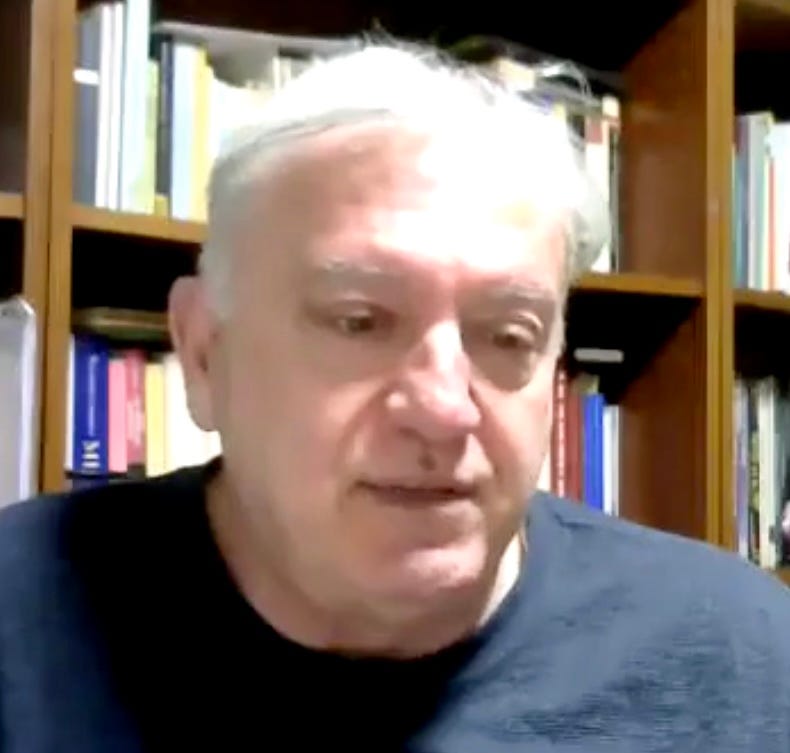
Raef Zreik on Why Israeli Jews are Embracing Mass Ethnic Cleansing
This is a free preview of a paid episode. To hear more, visit peterbeinart.substack.comPalestinian legal scholar Raef Zreik is a senior research fellow at the Van Leer Jerusalem Institute. Sometimes the most penetrating analysts of a society are those who see it from below because they are members of an oppressed caste. I’ve often found that Raef, as a Palestinian citizen of Israel, has striking insights about Israeli Jewish society. So, in this horrifying moment, in which so many Israeli politicians and pundits have embraced mass ethnic cleansing, I wanted to hear his views.
The Banality of Evil
The Israeli and American Jewish establishments embrace mass ethnic cleansing. This is a public episode. If you'd like to discuss this with other subscribers or get access to bonus episodes, visit peterbeinart.substack.com/subscribe
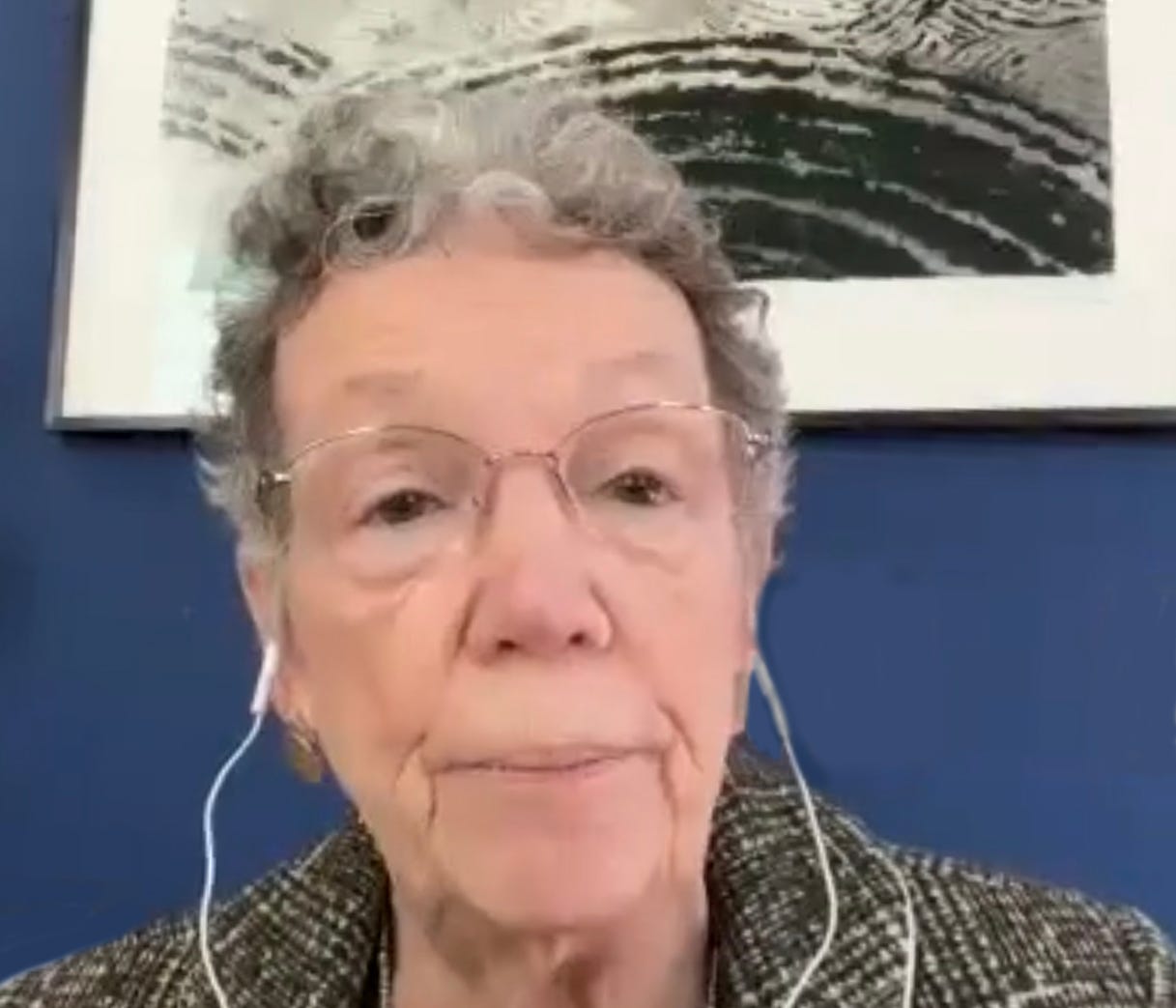
Debra Dash Moore
This is a free preview of a paid episode. To hear more, visit peterbeinart.substack.comDeborah Dash Moore is a Professor of History and Judaic Studies at the University of Michigan. She’s been studying a number of surveys of American Jewish opinion which suggest that the American Jewish establishment’s claims that an overwhelming percentage of American Jews support the concept of a Jewish state—even if it denies Palestinians’ basic rights—is wrong.
Daniel Immerwahr on Why American Imperialism isn't Hiding Anymore
This is a free preview of a paid episode. To hear more, visit peterbeinart.substack.comDaniel Immerwahr is a professor of history at Northwestern University and a contributing writer at The New Yorker. He is the author of How to Hide an Empire. We spoke about Trump’s shocking announcement on Gaza and what it might mean.
From Greenland to Gaza
What Greenland and Gaza Have in CommonThe New American Imperialism This is a public episode. If you'd like to discuss this with other subscribers or get access to bonus episodes, visit peterbeinart.substack.com/subscribe
Elise Stefanik Is Wrong
This is a free preview of a paid episode. To hear more, visit peterbeinart.substack.comThe Bible Doesn’t Grant Jews Unconditional Sovereignty Over the West Bank
Rashid Khalidi
Palestinian-American historian Rashid Khalidi discusses my new book and the state of the struggle for Palestinian liberation. This is a public episode. If you'd like to discuss this with other subscribers or get access to bonus episodes, visit peterbeinart.substack.com/subscribe
Idolatry
This is a free preview of a paid episode. To hear more, visit peterbeinart.substack.comGaza is What Happens When You Treat a State Like a godThis Tuesday, Knopf will publish my new book, Being Jewish After the Destruction of Gaza.You’ll find a list of book-related events, interviews and reviews below.

Jamaal Bowman on What He Learned in Congress
This is a free preview of a paid episode. To hear more, visit peterbeinart.substack.comJamaal Bowman lost his seat in Congress last year after his support for Palestinian rights prompted a ferocious attack by AIPAC and other pro-Israel organizations. Very few politicians risk their careers on questions of moral principle. I ask Jamaal why he did, and what it would take to convince other Democrats to do the same.

Muhammad Shehada
This is a free preview of a paid episode. To hear more, visit peterbeinart.substack.comI spoke with my friend, the brilliant, Gaza-born, political analyst Muhammad Shehada, about the ceasefire agreement, the horrific conditions in Gaza, and what might come next.

For a Moment, Joy
Romi, Emily, and Doron Are HomeOur Zoom call this week, for paid subscribers, will be on Friday, January 24, at 1 PM Eastern, our regular time.Our guest will be Jamaal Bowman, who lost his seat in Congress last year after his support for Palestinian rights prompted a ferocious attack by AIPAC and other pro-Israel organizations.I’ve met many politicians. Very few risk their careers on questions of moral principle. I want to ask Jamaal why he did, and what it would take to convince other Democrats to do the same.I’ve also recorded another Zoom video, without a live audience, with my friend, the brilliant Gaza-born political analyst Muhammad Shehada. He explained why this agreement shows that Israel never really had a strategy against Hamas. He argued that the ceasefire just might endure. And when he described conditions in Gaza, I put my head in my hands. As much as I try to understand the horror there, I’m reminded again and again that its worse than I even imagine. We will send out my conversation with Muhammad to paid subscribers on Wednesday.Ask Me AnythingOur next “Ask Me Anything,” for premium subscribers, will be on Monday, January 27, at 1 PM Eastern. I’ll answer questions about the ceasefire, the Trump administration, and anything else on your mind. We’ll do another “Ask Me Anything,” in February, about my new book.Book TourKnopf will publish my new book, Being Jewish After the Destruction of Gaza, on January 28, in just over a week. I’ll be honored if readers buy it. But I hope you’ll also consider buying a book by a Palestinian author given that Palestinian writers still get much less exposure in the US media. (Here are some suggestions). And that you’ll also consider donating to a charity that works in Gaza.In the coming weeks, I’ll be doing many book-related events. We’ll be adding them as they go online. Here’s what we have so far:On Wednesday, January 29, I’ll be speaking with MSNBC’s Ayman Mohyeldin at the New York Society for Ethical Culture. The event is being sponsored by Jewish Currents and the registration link is here. Paid subscribers can view a code at the very bottom of this page (after video transcript) to receive a free ticket or a discounted price on the ticket plus the book.On Tuesday, February 18, I’ll be speaking with UCLA historian David Myers at the Lumiere Music Hall in Los Angeles.On Monday, February 24, I’ll be speaking with Washington Post columnist Karen Attiah at Politics and Prose bookstore in Washington, DC.On Monday, March 3, I’ll be speaking with Professor Atalia Omer at Notre Dame University.On Tuesday, March 18, I’ll be debating an old classmate, Michael Rubin of the American Enterprise Institute, on the proposition “The oppression of Palestinians in non-democratic Israel has been systematic and profound” at the Soho Forum in New York.Sources Cited in this Week’s VideoRabbi Abraham Joshua Heschel’s book, The Prophets.Things to Read(Maybe this should be obvious, but I link to articles and videos I find provocative and significant, not necessarily ones I entirely agree with.)In Jewish Currents (subscribe!), Ussama Makdisi revisits Edward Said to understand Israel’s destruction of Gaza.Dave Chappelle talks about Gaza.Tamer Nafar asks where God was during Gaza’s destruction.A new poll suggests that anger over Gaza may have dissuaded people from voting in 2024.The farewell tour continues. Antony Blinken speaks to David Remnick and Jake Sullivan speaks to Ezra Klein.See you on Friday, January 24 and Monday, January 27,PeterVIDEO TRANSCRIPT:So, there’s a lot to say about the ceasefire agreement between Israel and Hamas, whether it will continue, whether Israel has achieved the goals of this catastrophic war, all of these things. But I don’t think that’s the conversation for today. At least it’s not where my heart is. I’m just thinking about the three Israeli hostages that have been released: Romi and Emily and Doron.And I want to suggest that I think that for this particular day, for those of us who are Jews, that that’s okay. It’s okay to have one day where we put aside our very, very harsh criticisms of the Israeli government, and of the horrifying things that it does. And even, we put aside for a moment our anger and fury about the destruction of Gaza. And we just participate in the relief and solidarity and joy of the Jewish people as we see three people being relieved from captivity, knowing that the release of hostages is among the most sacred principle in Judaism, and is meant to unite Jews across whatever divides we face.I think that if the danger of the mainstream public discourse about Israel is that it loses sight of the humanity of Palestinians, which happens again and again and again, there is another danger that can exist on the Left that people on the Left lose sight of the humanity of Israelis. And this is a moment to make sure that that does not happen.It’s also, I think, important to remember that if in the mainstream kind of establishment Jewish discour
Jamil Dakwar on Free Speech and Authoritarianism
This is a free preview of a paid episode. To hear more, visit peterbeinart.substack.comJamil Dakwar is the director of the American Civil Liberties Union’s Human Rights Program and a former senior attorney at Adalah, which defends the rights of Palestinian citizens of Israel. We talk about the Trump administration’s coming crackdown on pro-Palestinian speech and activism.
Mairav Zonszein on the Israel-Hamas Ceasefire Deal
This is a free preview of a paid episode. To hear more, visit peterbeinart.substack.comMairav Zonszein is Senior Israel-Palestine Analyst for the International Crisis Group. She kindly agreed to talk with me about this breaking news.

Gideon Levy on Being Hated
This is a free preview of a paid episode. To hear more, visit peterbeinart.substack.comGideon Levy is an Israeli journalist and author. He has long written a weekly column for Haaretz. In our conversation, Gideon tells about his younger days, how he evolved away from racism, and how he now lives in a society he regularly accuses of grave crimes. I was struck by his openness and intimacy and expect you will be too.

Jake Sullivan’s Mental Prison (A Sequel)
The Outgoing National Security Advisor’s Orwellian Interview at the 92nd Street YOur Zoom call this week, for paid subscribers, will be on Friday, January 17, at 1 PM Eastern, our regular time.Our guest will be Jamil Dakwar, director of the American Civil Liberties Union’s Human Rights Program and a former senior attorney at Adalah, which defends the rights of Palestinian citizens of Israel. We’ll talk about the Trump administration’s coming crackdown on pro-Palestinian speech and activism.I’ve also recorded another Zoom video, without a live audience, with the longtime Haaretz columnist Gideon Levy. I have long wanted to ask Gideon what it’s like to be one of Israel’s most hated men. And how he lives in a society that he regularly accuses of committing grave crimes. I was struck by the openness and intimacy of his answers. He told me, among many other things, that every morning when he goes for a jog in the park, he sees the same woman jogging alongside him. And that every morning she greets him with the same phrase: “traitor.”This video is for paid subscribers too.My New BookOn January 28, Knopf will publish my new book, Being Jewish After the Destruction of Gaza. I hope the book will contribute, in some small way, to changing the conversation among Jews about what is being done in our name. But I’m keenly aware of two things: First, Jewish voices like mine usually get more attention in the US than do Palestinian ones. Second, while I’m publishing my book, Palestinians in Gaza— and beyond— are suffering in unspeakable ways.So, while I hope you consider buying my book, I hope you also consider buying a book by a Palestinian author. I’m grateful to readers for offering their favorites. One reader suggested In Search of Fatima, by the British-Palestinian writer Ghada Karmi, which The New Statesman has called “one of the finest, most eloquent and painfully honest memoirs of the Palestinian exile and displacement.”Readers have also suggested additional charities working in Gaza. One is Donkey Saddle, which “has been providing ongoing support for over 15 extended families” in Gaza.Sources Cited in this VideoJake Sullivan’s interview at the 92nd St Y.The new Lancet study on the number of dead in Gaza.Oxfam’s comparison of deaths in Gaza to those in Ukraine, Sudan, and elsewhere.Things to Read(Maybe this should be obvious, but I link to articles and videos I find provocative and significant, not necessarily ones I entirely agree with.)In Jewish Currents (subscribe!), Maya Rosen chronicles the movement to establish Jewish settlements in southern Lebanon.Former Representative Cori Bush explains why it was worth losing her seat to defend Palestinian rights.Vivian Silver’s son denounces Israel’s president for exploiting his mother’s memory.See you on Friday, January 17,PeterVIDEO TRANSCRIPT:So, we’re in this interesting moment where top Biden administration foreign policy officials are kind of going out into the country, trying to craft a public narrative about what they did in office as they prepare to leave office. There was Antony Blinken’s interview with the New York Times a week ago or so, which I commented on last week. And then, recently I just came across the video that was put out of a public conversation that Jake Sullivan, the national security advisor, did at the 92nd Street Y with Ian Bremmer.And these are really remarkable documents because they are really exercises in what George Orwell wrote about so famously, which is, the creation of a kind of dishonest and euphemistic language to try to defend things that if stated in kind of clear concrete ways, would clearly be too brutal for most people to accept. And so, I think they’re worth looking at at the level of language, which is what Orwell urged political writers to do to challenge the dishonesty of language as a way of getting at the brutality of government and the action of people in power who act brutally.So, I want to quote something from what Sullivan says at the 92nd Street Y. He’s asked about Israel’s policies vis-a-vis the people of Gaza. And he says: ‘We believe Israel has a responsibility as a democracy. As a country committed to the basic principle of the value of innocent life, and as a member of the international community that has obligations under international humanitarian law, that it do the utmost to protect and minimize harm to civilians.’So, the formulation is really fascinating, right. He’s being asked about what Israel’s doing, but he starts by just stipulating a set of assumptions, right, which don’t need to be proved, right, because these are the assumptions that he begins with, right. And they’re never challenged by the interviewer. The first is that Israel is a democracy. Again, something one hears constantly, but if you think about it, it’s not a democracy for Palestinians, right?About 70% of the Palestinians who live under the control of the Israeli government, those in the West Bank and in Gaza and in East Jerusalem. And n

Rachel Shabi and the Truth about Antisemitism
This is a free preview of a paid episode. To hear more, visit peterbeinart.substack.comIsraeli-born British journalist Rachel Shabi is the author of the new book, Off-White: The Truth about Antisemitism. Last week, she published a column on the subject in The Guardian. She’s particularly knowledge about antisemitism, and its weaponization, in Britain, a subject of ferocious contention since Jeremy Corbyn’s time as Labour leader.

Mikhael Manekin, Sermons from the Abyss
This is a free preview of a paid episode. To hear more, visit peterbeinart.substack.comIsraeli religious thinker and activist Mikhael Manekin is one of the founders of smol emuni, the faithful left. We discuss Mikhael’s new book, so far available only in Hebrew, entitled, Sermons from the Abyss, which uses the five Megillot that Jews read during the year in synagogue to reflect on the horrors of the last several years. I don’t know of any…

Antony Blinken’s Mental Prison
The Outgoing Secretary of State’s Astonishing Interview with the New York TimesOur Zoom call this week, for paid subscribers, will be on Friday, January 10, at 1 PM Eastern, our regular time.Our guest will be the Israeli-born British journalist Rachel Shabi, author of the new book, Off-White: The Truth about Antisemitism. Last week, she published a column on the subject in The Guardian. She’s particularly knowledge about antisemitism, and its weaponization, in Britain, a subject of ferocious contention since Jeremy Corbyn’s time as Labour leader. We’ll discuss all that on Friday.I’ve also recorded an interview with the Israeli religious thinker and activist Mikhael Manekin, one of the founders of smol emuni, the faithful left. We discussed Mikhael’s new book, so far available only in Hebrew, entitled, Sermons from the Abyss, which uses the five Megillot that Jews read during the year in synagogue to reflect on the horrors of the last several years. I don’t know of any Jewish thinker who is grappling more deeply than Mikhael with the theological ramifications of Israel’s destruction of Gaza. This call, which I’ll post this Wednesday, is for paid subscribers too.My New BookOn January 28, Knopf will publish my new book, Being Jewish After the Destruction of Gaza. I hope the book will contribute, in some small way, to changing the conversation among Jews about what is being done in our name. But I’m keenly aware of two things: First, Jewish voices like mine usually get more attention in the US than do Palestinian ones. Second, while I’m publishing my book, Palestinians in Gaza— and beyond— are suffering in unspeakable ways.So, while I hope you consider buying my book, I hope you also consider buying a book by a Palestinian author. I’m grateful to readers for offering their favorites. One reader suggested In Search of Fatima, by the British-Palestinian writer Ghada Karmi, which The New Statesman has called “one of the finest, most eloquent and painfully honest memoirs of the Palestinian exile and displacement.”Readers have also suggested additional charities working in Gaza. One is Donkey Saddle, which “has been providing ongoing support for over 15 extended families” in Gaza.Sources Cited in this VideoThe New York Times’ interview with Antony Blinken.Things to Read(Maybe this should be obvious, but I link to articles and videos I find provocative and significant, not necessarily ones I entirely agree with.)In Jewish Currents (subscribe!), Theia Chatelle details the Yale police department’s crackdown on pro-Palestinian protesters.An extraordinary interview with Muhammad Shehada about realities in Gaza.A song about living in a society that is committing genocide.I talked to the CBC about why Jimmy Carter deserves an apology.See you on Friday, January 10,PeterVIDEO TRANSCRIPT:So, outgoing Secretary of State Antony Blinken did a big interview with the New York Times this weekend about his legacy, the Biden administration’s legacy. And a big part of that interview was about Gaza. And I think it’s worth noting a number of things he said because I think they show the way in which people like Blinken live inside kind of intellectual and moral prison, in which basic truths are things that they cannot bring themselves to see or will not bring themselves to see. And they end up saying these things which are completely, utterly incoherent, and I think just morally inexcusable.And so, the first thing that’s striking if you listen to Blinken’s comments on Gaza is that for him, the problem of Gaza and Palestinians in Gaza is a problem that begins on October 7th. He says, ‘since October 7th,’ this is Blinken, ‘we’ve had some core goals in mind. And what are those goals,’ he says, ‘make sure October 7th can’t happen again, prevent a wider war, and protect Palestinian civilians.’ Now, what he means by make sure October 7th can’t happen again, and he says it explicitly, is destroying Hamas’s military capacity, right. There’s no recognition that October 7th doesn’t just happen because Hamas has a bunch of weapons. October 7th happens because Palestinians are living in what Human Rights Watch calls an open-air prison, what the UN has said is a place that’s unlivable. This is before October 7th. That Palestinians are living in what all the world’s major human rights organizations call an apartheid state, right. All of that is completely absent.So, Blinken thinks that the problem that he’s trying to solve begins on October 7th. And then he says astonishingly, he says, ‘when it comes to making sure that October 7th can’t happen again, I think we’re in a good place.’ No, you’re not in a good place. Not only because Gaza has been utterly destroyed, but you’re not in a good place in terms of making sure that things like October 7th can’t happen again because the fundamental reason behind the horror of October 7th isn’t just because Hamas has a bunch of weapons, it’s because Palestinians don’t have freedom, and because their ethical and l