
Tech, Innovation & Society - The Creative Process: Technology, AI, Software, Future, Economy, Science, Engineering & Robotics Interviews
308 episodes — Page 6 of 7
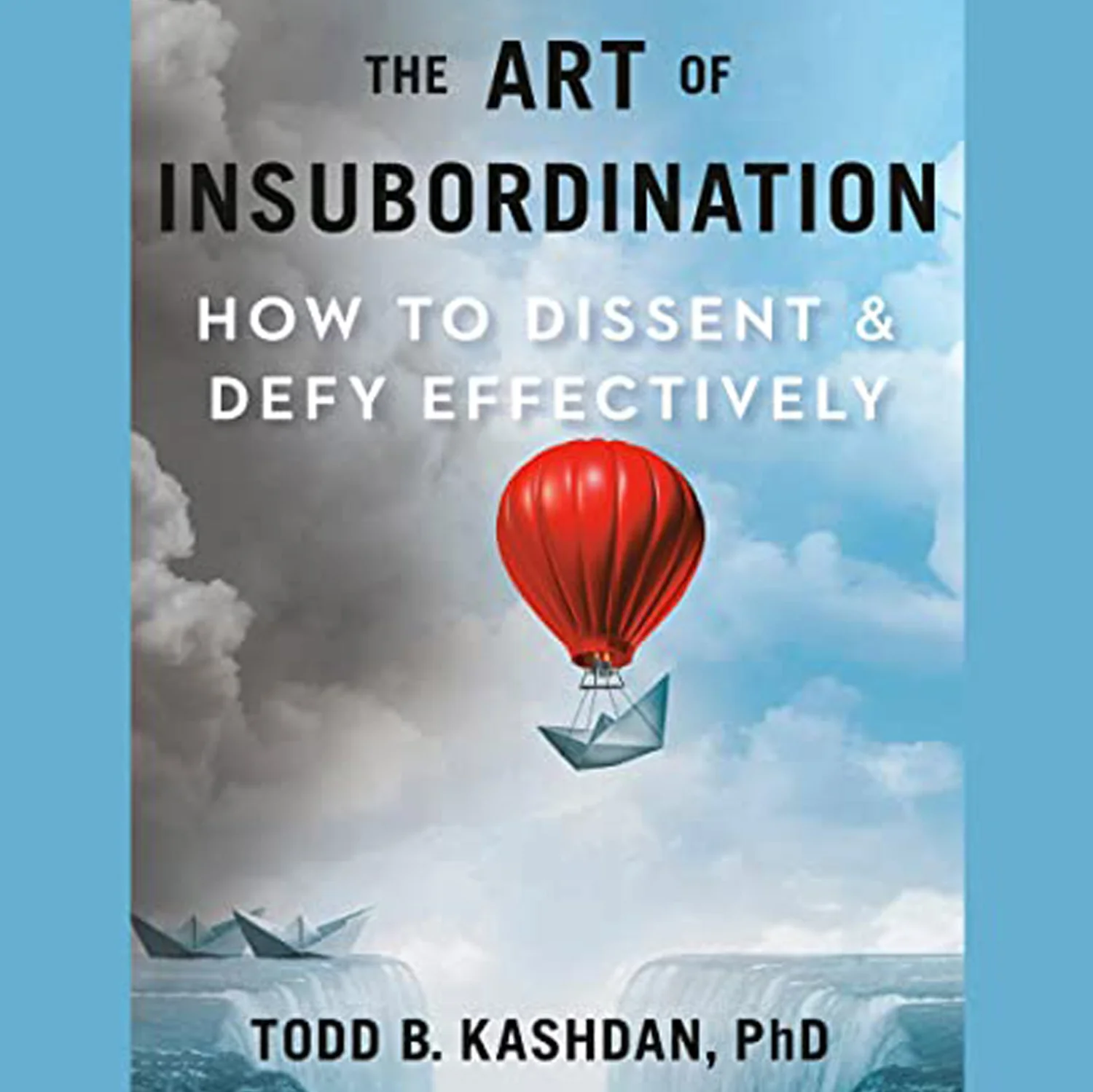
Highlights - Todd Kashdan - APA Award-winning Author of The Art of Insubordination, and Curious?
"Better than mindfulness, curiosity and the willingness to be open to other perspectives and reveal diversion of perspectives, it's linked with more innovation, it leads to willingness for greater social support for your ideas. So you're talking about finding allies more work, family integration, less burnout, more engagement, and then a greater tendency to experience flow where you lose yourself in your work in the workplace. And there's these wide-ranging benefits that occur. And what you find is the two dimensions of curiosity that are the most beneficial in the workplace, one is called joyous exploration. And that's really just this pure pleasurable sense of wonder that there's a lot of interesting things in the world, and I just know less than I think I do, and I want to be exposed to that novelty. The second one gets less attention. It's what we call stress tolerance. It's that when you have the lure of the novel, the divergent, and you know, the mysterious and complex, there's always a level of anxiety. You are moving away from the knowns and the own unknowns, and you are going into the face of acknowledging there's uncertainty, and you don't know how things are going to turn out. The people that can better tolerate that without trying to close and reach an answer quickly, they're the ones that are more likely to be creative, more likely to be innovative."Todd B. Kashdan, Ph.D., is professor of psychology at George Mason University, and a leading authority on well-being, curiosity, courage, and resilience. He has published more than 220 scientific articles, his work has been cited more than 35,000 times, and he received the American Psychological Association’s Award for Distinguished Scientific Early Career Contributions to Psychology. He is the author of several books, including The Art of Insubordination: How to Dissent and Defy Effectively, Curious? and The Upside of Your Dark Side, and has been translated into more than fifteen languages. His research is featured regularly in The New York Times, The Atlantic, and Time, and his writing has appeared in the Harvard Business Review, National Geographic, and other publications. He is a keynote speaker and consultant for organizations as diverse as Microsoft, Mercedes-Benz, Prudential, General Mills, The United States Department of Defense, and World Bank Group. https://toddkashdan.comwww.penguinrandomhouse.com/books/690674/the-art-of-insubordination-by-todd-b-kashdan-phd/www.creativeprocess.infowww.oneplanetpodcast.orgInstagram @creativeprocesspodcast
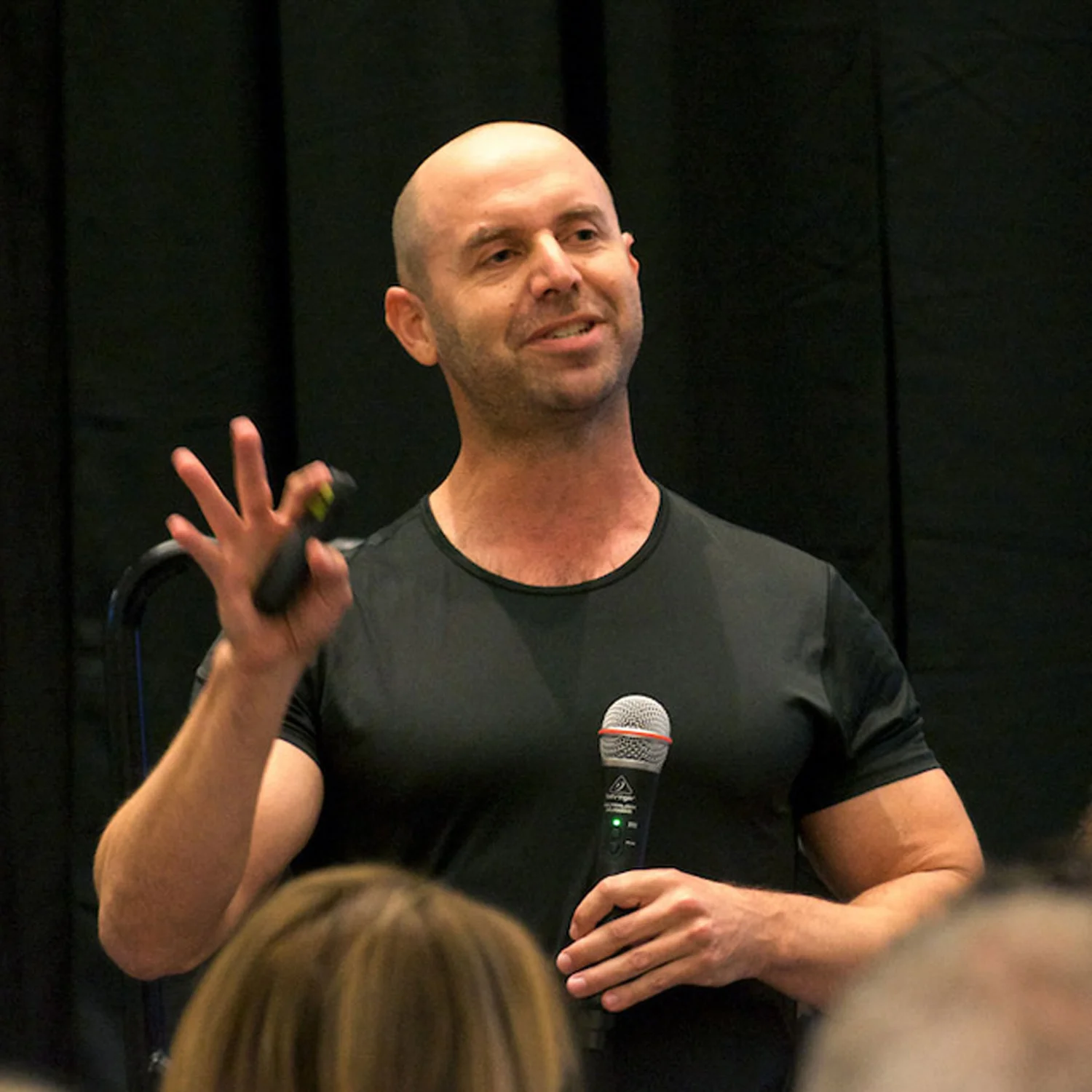
Todd Kashdan - Award-winning Author of “The Art of Insubordination: How to Dissent and Defy Effectively”
Todd B. Kashdan, Ph.D., is professor of psychology at George Mason University, and a leading authority on well-being, curiosity, courage, and resilience. He has published more than 220 scientific articles, his work has been cited more than 35,000 times, and he received the American Psychological Association’s Award for Distinguished Scientific Early Career Contributions to Psychology. He is the author of several books, including The Art of Insubordination: How to Dissent and Defy Effectively, Curious? and The Upside of Your Dark Side, and has been translated into more than fifteen languages. His research is featured regularly in The New York Times, The Atlantic, and Time, and his writing has appeared in the Harvard Business Review, National Geographic, and other publications. He is a keynote speaker and consultant for organizations as diverse as Microsoft, Mercedes-Benz, Prudential, General Mills, The United States Department of Defense, and World Bank Group. "Better than mindfulness, curiosity and the willingness to be open to other perspectives and reveal diversion of perspectives, it's linked with more innovation, it leads to willingness for greater social support for your ideas. So you're talking about finding allies more work, family integration, less burnout, more engagement, and then a greater tendency to experience flow where you lose yourself in your work in the workplace. And there's these wide-ranging benefits that occur.And what you find is the two dimensions of curiosity that are the most beneficial in the workplace, one is called joyous exploration. And that's really just this pure pleasurable sense of wonder that there's a lot of interesting things in the world, and I just know less than I think I do, and I want to be exposed to that novelty. The second one gets less attention. It's what we call stress tolerance. It's that when you have the lure of the novel, the divergent, and you know, the mysterious and complex, there's always a level of anxiety. You are moving away from the knowns and the own unknowns, and you are going into the face of acknowledging there's uncertainty, and you don't know how things are going to turn out. The people that can better tolerate that without trying to close and reach an answer quickly, they're the ones that are more likely to be creative, more likely to be innovative."https://toddkashdan.comwww.penguinrandomhouse.com/books/690674/the-art-of-insubordination-by-todd-b-kashdan-phd/www.creativeprocess.infowww.oneplanetpodcast.orgInstagram @creativeprocesspodcast
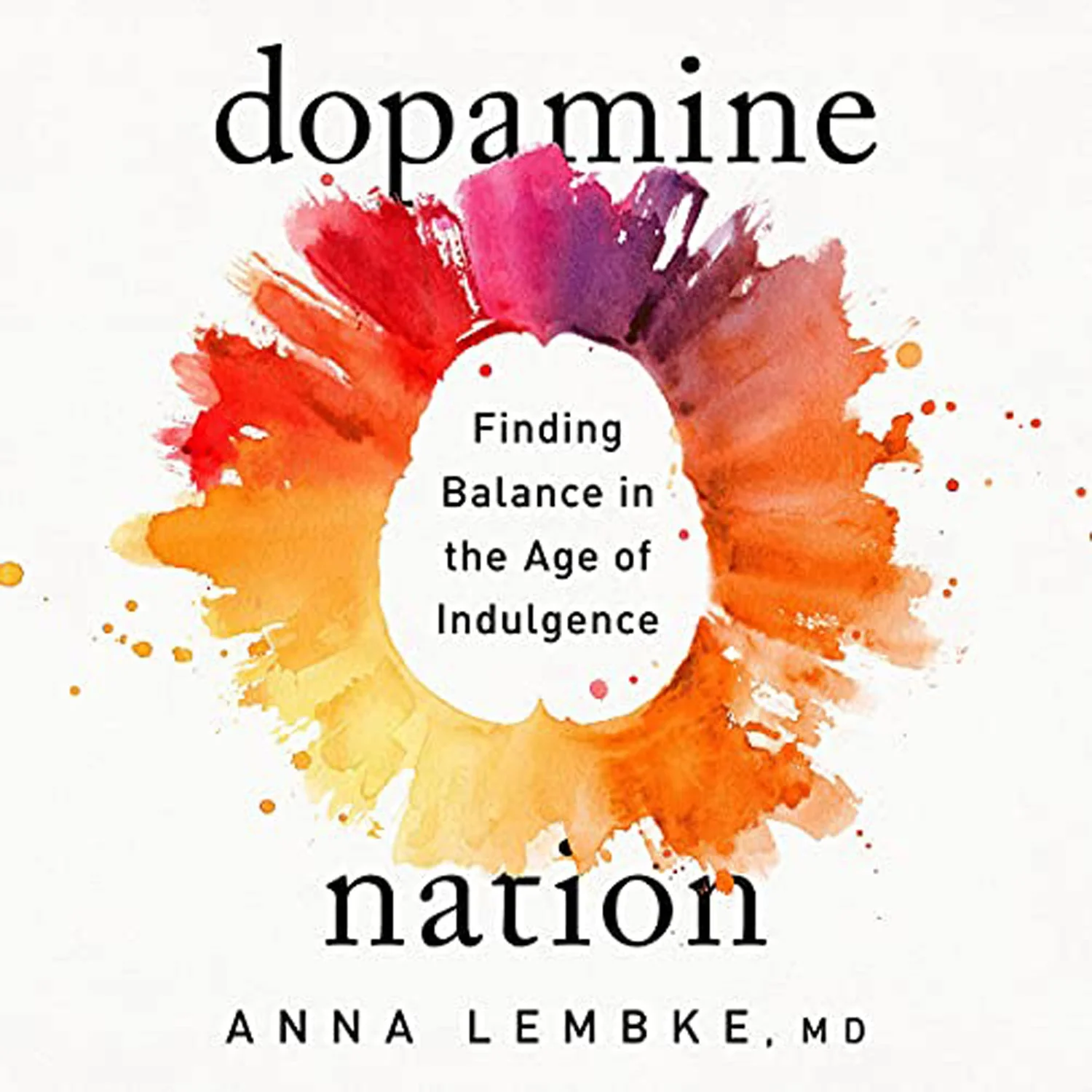
Highlights - Dr. Anna Lembke - Author of Dopamine Nation - Chief of Stanford Addiction Medicine Dual Diagnosis Clinic
"There's a ton of work now looking at how we can re-engineer or patch the AI that's currently sort of driving these interfaces to make it easier for people to manage their consumption. But so far there's not a lot of evidence that it's working. So the time management things, unfortunately, people just tend to override those or not want to look at the amount of time that they're spending on their devices. So I'm not seeing a lot of encouraging stuff there. And basically what you have is you have a fundamental structural problem. These technologies are engineered literally to keep us clicking and swiping. You can't ask them...in a way, it's very difficult for them to have their product that's not engaging. Now there's a big push to do this, to see, Okay, well what if we get rid of the likes, or what if we eliminate the bottomless scrolls? Or what if we get rid of the alerts and the push notifications, or what if we go to grayscale and make the images...? And I think all those can work as nudges and be helpful, but I think we also need to start looking more proactively at having time where we literally are just not touching our device. Distance from the actual device itself. And so I think there's some movement in that direction as well."Dr. Anna Lembke is professor of psychiatry at Stanford University School of Medicine and chief of the Stanford Addiction Medicine Dual Diagnosis Clinic. A clinician scholar, she has published more than a hundred peer-reviewed papers, book chapters, and commentaries. She sits on the board of several state and national addiction-focused organizations, has testified before various committees in the United States House of Representatives and Senate, keeps an active speaking calendar, and maintains a thriving clinical practice. Dr. Lembke explores how to moderate compulsive overconsumption in a dopamine overloaded world in her NYTimes bestselling book Dopamine Nation: Finding Balance in the Age of Indulgence. Her previous book Drug Dealer, MD – How Doctors Were Duped, Patients Got Hooked, and Why It’s So Hard to Stop was highlighted in the New York Times as one of the top five books to read to understand the opioid epidemic.www.annalembke.comhttps://med.stanford.edu/psychiatry/patient_care/addiction.htmlwww.penguinrandomhouse.com/books/624957/dopamine-nation-by-anna-lembke-md/www.press.jhu.edu/books/title/11360/drug-dealer-mdwww.creativeprocess.infowww.oneplanetpodcast.org
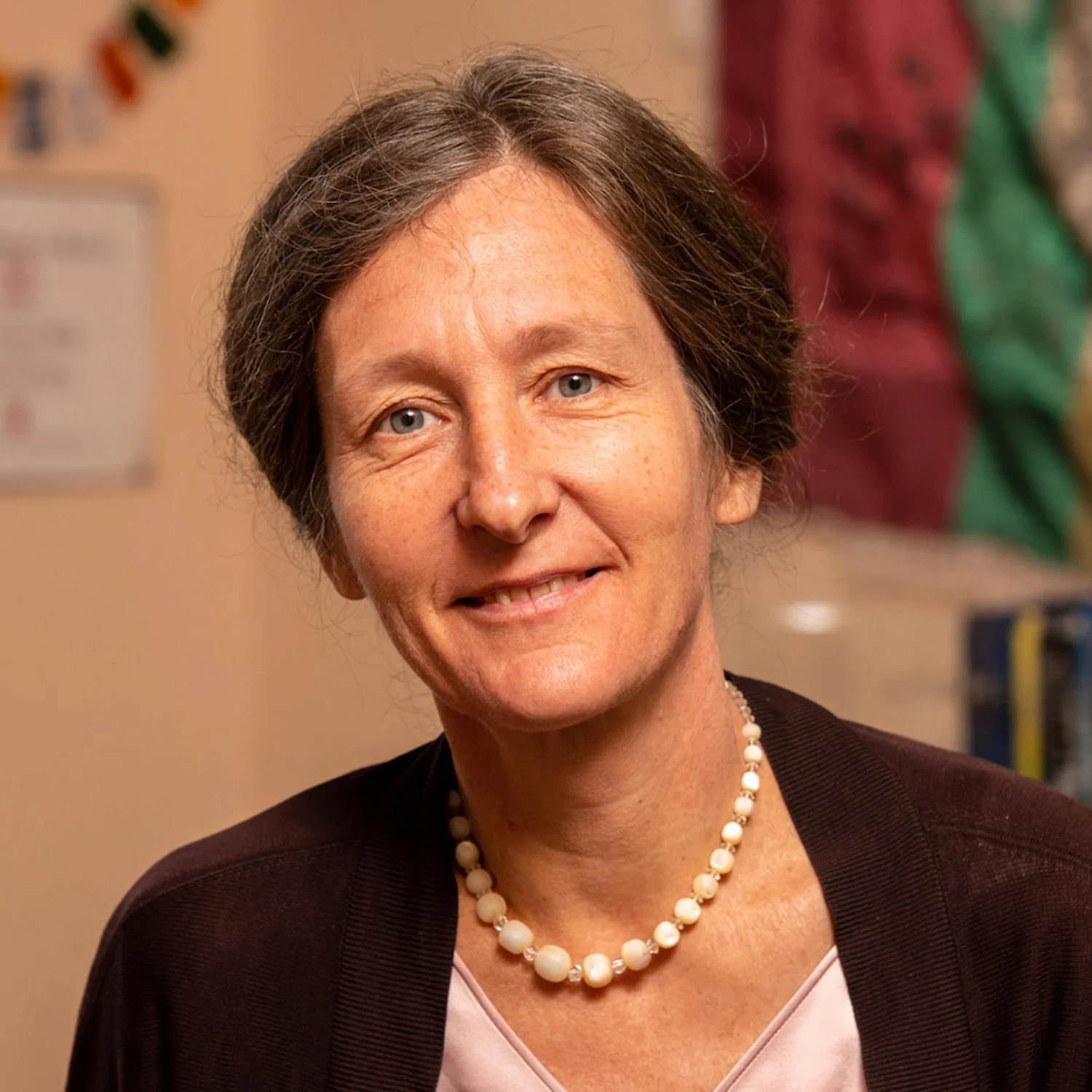
Dr. Anna Lembke - Author of Dopamine Nation: Finding Balance in the Age of Indulgence
Dr. Anna Lembke is professor of psychiatry at Stanford University School of Medicine and chief of the Stanford Addiction Medicine Dual Diagnosis Clinic. A clinician scholar, she has published more than a hundred peer-reviewed papers, book chapters, and commentaries. She sits on the board of several state and national addiction-focused organizations, has testified before various committees in the United States House of Representatives and Senate, keeps an active speaking calendar, and maintains a thriving clinical practice. Dr. Lembke explores how to moderate compulsive overconsumption in a dopamine overloaded world in her NYTimes bestselling book Dopamine Nation: Finding Balance in the Age of Indulgence. Her previous book Drug Dealer, MD – How Doctors Were Duped, Patients Got Hooked, and Why It’s So Hard to Stop was highlighted in the New York Times as one of the top five books to read to understand the opioid epidemic."There's a ton of work now looking at how we can re-engineer or patch the AI that's currently sort of driving these interfaces to make it easier for people to manage their consumption. But so far there's not a lot of evidence that it's working. So the time management things, unfortunately, people just tend to override those or not want to look at the amount of time that they're spending on their devices. So I'm not seeing a lot of encouraging stuff there. And basically what you have is you have a fundamental structural problem. These technologies are engineered literally to keep us clicking and swiping. You can't ask them...in a way, it's very difficult for them to have their product that's not engaging. Now there's a big push to do this, to see, Okay, well what if we get rid of the likes, or what if we eliminate the bottomless scrolls? Or what if we get rid of the alerts and the push notifications, or what if we go to grayscale and make the images...? And I think all those can work as nudges and be helpful, but I think we also need to start looking more proactively at having time where we literally are just not touching our device. Distance from the actual device itself. And so I think there's some movement in that direction as well."www.annalembke.comhttps://med.stanford.edu/psychiatry/patient_care/addiction.htmlwww.penguinrandomhouse.com/books/624957/dopamine-nation-by-anna-lembke-md/www.press.jhu.edu/books/title/11360/drug-dealer-mdwww.creativeprocess.infowww.oneplanetpodcast.org

Highlights - Jay Famiglietti - Exec. Director - Global Institute for Water Security, Host of “What About Water?” Podcast
"The research that I've done with these NASA satellites - they’re called the Grace Mission, Gravity Recovery and Climate Experiment Mission, and they're really unusual in that they're able to weigh, using small variations in the pull of gravity that water exerts on the satellites. Satellites are like a scale. They move up and down in the sky depending on how much water there is on the ground. So we can map out these places that are gaining or losing water on a monthly basis. And you know, now the satellites have been flying for 20 years, so we can see these trends.""So there's lots of interesting stuff that's happening out there. Technology that helps industry. There's going to be a big push and a lot of pressure on industry to do more reporting. The technology to do optimal water and nutrient delivery at the plant scale, like just using the optimal amount of water and fertilizer at the plant scale, so down to the plant scale within huge farms is being rapidly developed. So these things are all game changers. And that's without talking about financial innovations. So financial innovations are also not necessarily technology, but when we think about what innovations we need, some of those are financial, whether it's incentive packages or the need to work with investors. So just like we did with carbon that has been so successful working with investors who invest in the big agricultural companies, the big food and beverage companies, we've gotten great traction on the carbon side driving these companies, huge multinational companies to net zero carbon. We need to be doing the same thing on the water side. And so that investor push is a financial innovation."Jay Famiglietti is a hydrologist, a professor and the Executive Director of the Global Institute for Water Security at the University of Saskatchewan, where he holds the Canada 150 Research Chair in Hydrology and Remote Sensing. He is also the Chief Scientist of the Silicon Valley tech startup, Waterplan. Before moving to Saskatchewan, he served as the Senior Water Scientist at the NASA Jet Propulsion Laboratory at the California Institute of Technology. From 2013 through 2018, he was appointed by Governor Jerry Brown to the California State Water Boards. He has appeared on CBS News 60 Minutes, on HBO’s Real Time with Bill Maher, as a featured expert in water documentaries including Day Zero and Last Call at the Oasis, and across a host of international news media. He is the host of the podcast What About Water?https://jayfamiglietti.comWhat About Water? podcast with Jay FamigliettiTwitter @WhatAboutWaterGIWS https://water.usask.cawww.waterplan.comwww.oneplanetpodcast.orgwww.creativeprocess.info
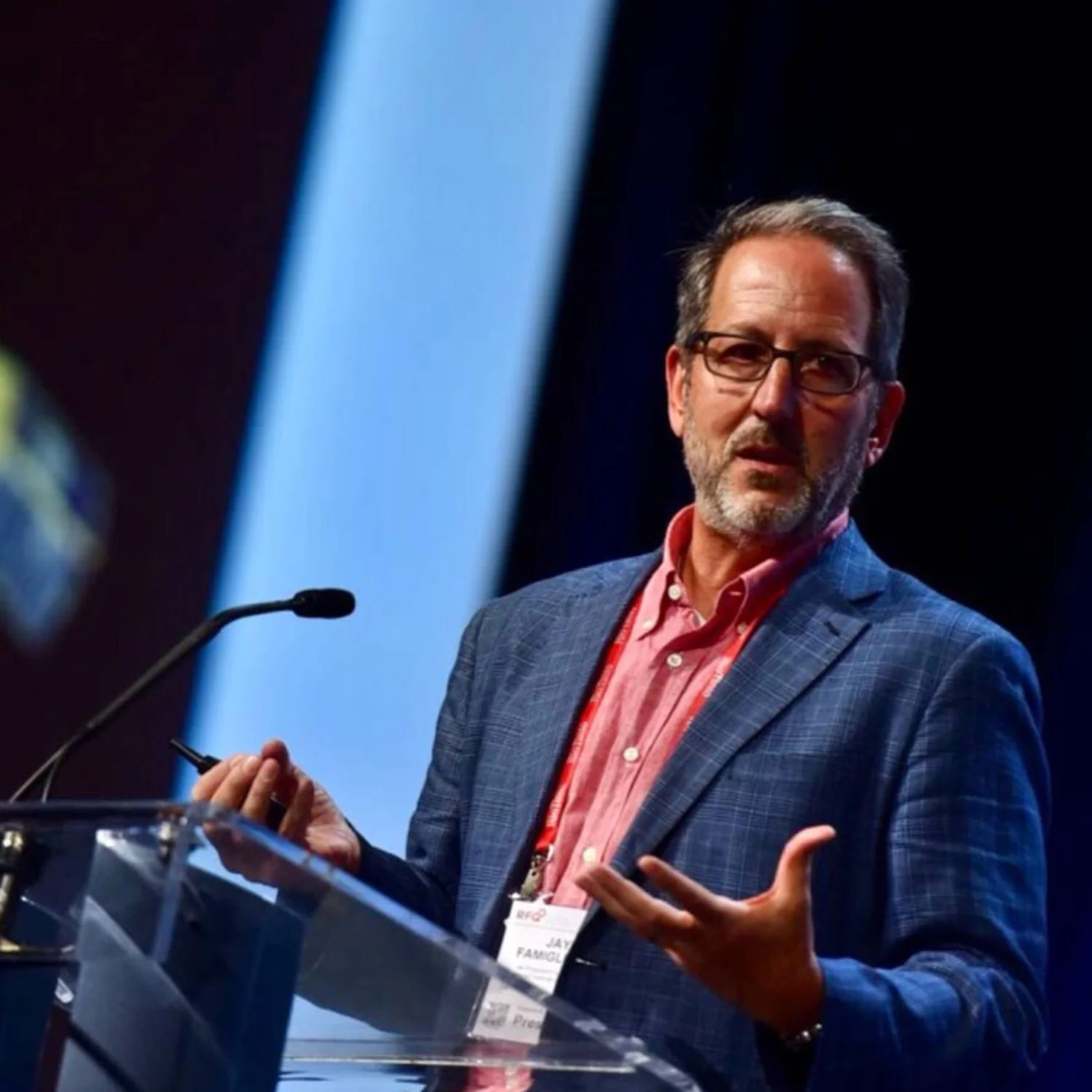
Jay Famiglietti - Hydrologist, Exec. Director - Global Institute for Water Security, Host of "What About Water?" Podcast
Jay Famiglietti is a hydrologist, a professor and the Executive Director of the Global Institute for Water Security at the University of Saskatchewan, where he holds the Canada 150 Research Chair in Hydrology and Remote Sensing. He is also the Chief Scientist of the Silicon Valley tech startup, Waterplan. Before moving to Saskatchewan, he served as the Senior Water Scientist at the NASA Jet Propulsion Laboratory at the California Institute of Technology. From 2013 through 2018, he was appointed by Governor Jerry Brown to the California State Water Boards. He has appeared on CBS News 60 Minutes, on HBO’s Real Time with Bill Maher, as a featured expert in water documentaries including Day Zero and Last Call at the Oasis, and across a host of international news media. He is the host of the podcast What About Water?"The research that I've done with these NASA satellites - they’re called the Grace Mission, Gravity Recovery and Climate Experiment Mission, and they're really unusual in that they're able to weigh, using small variations in the pull of gravity that water exerts on the satellites. Satellites are like a scale. They move up and down in the sky depending on how much water there is on the ground. So we can map out these places that are gaining or losing water on a monthly basis. And you know, now the satellites have been flying for 20 years, so we can see these trends.""So there's lots of interesting stuff that's happening out there. Technology that helps industry. There's going to be a big push and a lot of pressure on industry to do more reporting. The technology to do optimal water and nutrient delivery at the plant scale, like just using the optimal amount of water and fertilizer at the plant scale, so down to the plant scale within huge farms is being rapidly developed. So these things are all game changers. And that's without talking about financial innovations. So financial innovations are also not necessarily technology, but when we think about what innovations we need, some of those are financial, whether it's incentive packages or the need to work with investors. So just like we did with carbon that has been so successful working with investors who invest in the big agricultural companies, the big food and beverage companies, we've gotten great traction on the carbon side driving these companies, huge multinational companies to net zero carbon. We need to be doing the same thing on the water side. And so that investor push is a financial innovation."https://jayfamiglietti.comWhat About Water? podcast with Jay FamigliettiTwitter @WhatAboutWaterGIWS https://water.usask.cawww.waterplan.comwww.oneplanetpodcast.orgwww.creativeprocess.info
Highlights - Johnjoe McFadden - Author of “Life is Simple” - Prof. Molecular Genetics, Assoc. Dean - U of Surrey
"And you can make extremely intelligent computations and very complex computations, but you don't get a mind out of it. You don't get consciousness out of it. You get a computer, and that's what's driving my hands waving around, driving my lips and my tongue, and all that kind of stuff, it's a computer; it's our non-conscious mind. But on top of that, we have the stuff we're aware of, and that's where our creativity lies. That's where our emotions lie. We can't think of being creative without using our conscious mind. And that's where stuff comes together because the difference between what happens in our conscious mind and in our non-conscious mind – in our non-conscious mind, everything is dissected."Johnjoe McFadden is the author of Life is Simple, How Occam’s Razor Set Science Free and Shapes the Universe. He obtained his PhD at Imperial College London and went on to work on human genetic diseases and then infectious diseases, at the University of Surrey. Professor McFadden has specialised in examining the genetics of microbes such as the agents of tuberculosis and meningitis. His other books are Quantum Evolution: Life in the Multiverse, and Life on the Edge: The Coming of Age of Quantum Biology (co-authored with Jim Al-Khalili). He has published more than 100 articles in scientific journals on a wide range of subjects and lectures around the world. His present post is Associate Dean (International) and Professor of Molecular Genetics at the University of Surrey.www.surrey.ac.uk/people/johnjoe-mcfaddenhttps://johnjoemcfadden.co.ukwww.basicbooks.com/titles/johnjoe-mcfadden/life-is-simple/9781549112119www.creativeprocess.infowww.oneplanetpodcast.org
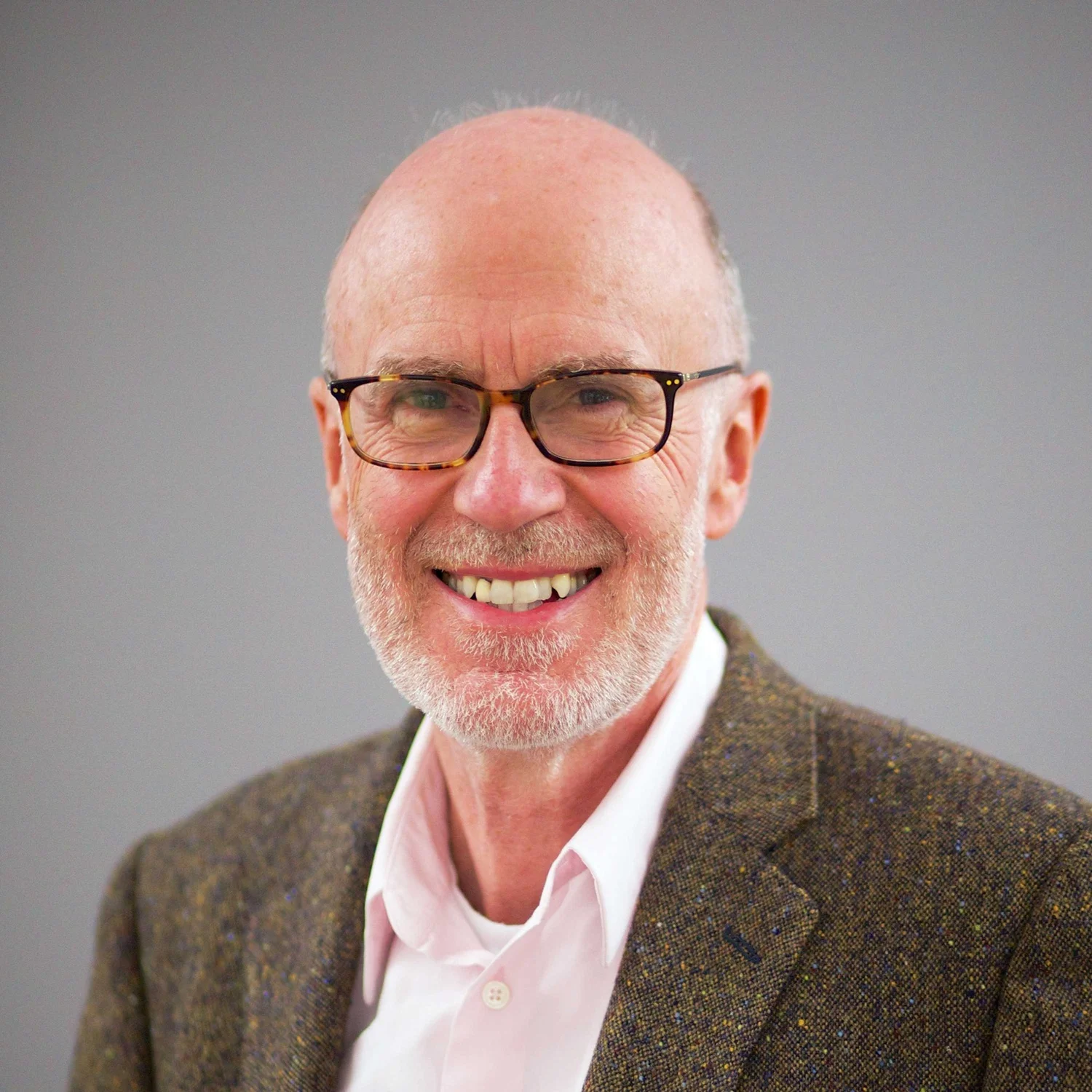
Johnjoe McFadden - Author of “Life is Simple: How Occam’s Razor Set Science Free and Shapes the Universe”
Johnjoe McFadden is the author of Life is Simple, How Occam’s Razor Set Science Free and Shapes the Universe. He obtained his PhD at Imperial College London and went on to work on human genetic diseases and then infectious diseases, at the University of Surrey. Professor McFadden has specialised in examining the genetics of microbes such as the agents of tuberculosis and meningitis. His other books are Quantum Evolution: Life in the Multiverse, and Life on the Edge: The Coming of Age of Quantum Biology (co-authored with Jim Al-Khalili). He has published more than 100 articles in scientific journals on a wide range of subjects and lectures around the world. His present post is Associate Dean (International) and Professor of Molecular Genetics at the University of Surrey."And you can make extremely intelligent computations and very complex computations, but you don't get a mind out of it. You don't get consciousness out of it. You get a computer, and that's what's driving my hands waving around, driving my lips and my tongue, and all that kind of stuff, it's a computer; it's our non-conscious mind. But on top of that, we have the stuff we're aware of, and that's where our creativity lies. That's where our emotions lie. We can't think of being creative without using our conscious mind. And that's where stuff comes together because the difference between what happens in our conscious mind and in our non-conscious mind – in our non-conscious mind, everything is dissected."www.surrey.ac.uk/people/johnjoe-mcfaddenhttps://johnjoemcfadden.co.ukwww.basicbooks.com/titles/johnjoe-mcfadden/life-is-simple/9781549112119www.creativeprocess.infowww.oneplanetpodcast.org

Highlights - Karina Manashil - Pres. of Mad Solar - Exec. Producer of “Entergalactic”, “Pearl”, “X”
"Scott [aka Kid Cudi] sees music in color, so what the visuals of music meant to him. So he wanted to create a new experience and that alongside Kenya Barris and ideating what it could be led to Entergalactic, which essentially Scott wrote an original album, which is his 10th Studio album, and pieced those songs in before the creation of this love story, which runs 90 minutes from start to finish, and essentially the two parts exist simultaneously. So you've got the album on its own, and then you've got the event, which allows you to hear beats of each piece of music in all of these key beats of Jabari (Scott's character) and Meadow’s (Jessica Williams' character) love story. Scott had tweeted out that Entergalactic was the greatest piece he's ever created. This is the thing he's most proud of. Scott feels that this was an opportunity to create that new moment for his audience where they're going to get to experience something that they'd never had the opportunity to before because it feels so new.""Scott lives in between the notes. So the things that you would expect, he lives right in the center, which is why his music is so interesting. The nuance and creativity of his choices is so indicative of the way that he hears sound."Karina Manashil is the President of Mad Solar Productions. She began her career in the mailroom at WME (William Morris Endeavor) where she became a talent agent. She represented notable clients including Scott Mescudi, known by his stage name, Kid Cudi, and built her career taking talent into new arenas. In 2020, she partnered with Mescudi and Dennis Cummings to launch Mad Solar, which is backed by BRON Studios. Manashil then went on to Executive Produce SXSW fan-favorite X and its sequel, Pearl, directed by Ti West. Manashil is an Executive Producer on the Netflix animated series Entergalactic directed by Fletcher Moules. Entergalactic was created by Kid Cudi and features voiceover from Jessica Williams and Timothée Chalamet. It was released alongside its album of the same name from Kid Cudi on September 30th. Manashil is a native of Los Angeles and graduated from Chapman University with a BFA in Film Production.Manashil www.imdb.com/name/nm3556462/?ref_=nv_sr_srsg_0 www.kidcudi.comMad Solar https://www.imdb.com/search/title/?companies=co0831164 Entergalactic www.netflix.com/title/81053303Pearl www.imdb.com/title/tt18925334/X www.imdb.com/title/tt13560574/?ref_=tt_trv_trvwww.creativeprocess.infowww.oneplanetpodcast.org

Karina Manashil - President of Mad Solar - Creative Confidante for Kid Cudi - Exec. Producer of “Entergalactic”
Karina Manashil is the President of Mad Solar Productions. She began her career in the mailroom at WME (William Morris Endeavor) where she became a talent agent. She represented notable clients including Scott Mescudi, known by his stage name, Kid Cudi, and built her career taking talent into new arenas.In 2020, she partnered with Mescudi and Dennis Cummings to launch Mad Solar, which is backed by BRON Studios. Manashil then went on to Executive Produce SXSW fan-favorite X and its sequel, Pearl, directed by Ti West. Manashil is an Executive Producer on the Netflix animated series Entergalactic directed by Fletcher Moules. Entergalactic was created by Kid Cudi and features voiceover from Jessica Williams and Timothée Chalamet. It was released alongside its album of the same name from Kid Cudi on September 30th.Manashil is a native of Los Angeles and graduated from Chapman University with a BFA in Film Production."Scott [aka Kid Cudi] sees music in color, so what the visuals of music meant to him. So he wanted to create a new experience and that alongside Kenya Barris and ideating what it could be led to Entergalactic, which essentially Scott wrote an original album, which is his 10th Studio album, and pieced those songs in before the creation of this love story, which runs 90 minutes from start to finish, and essentially the two parts exist simultaneously. So you've got the album on its own, and then you've got the event, which allows you to hear beats of each piece of music in all of these key beats of Jabari (Scott's character) and Meadow’s (Jessica Williams' character) love story. Scott had tweeted out that Entergalactic was the greatest piece he's ever created. This is the thing he's most proud of. Scott feels that this was an opportunity to create that new moment for his audience where they're going to get to experience something that they'd never had the opportunity to before because it feels so new.""Scott lives in between the notes. So the things that you would expect, he lives right in the center, which is why his music is so interesting. The nuance and creativity of his choices is so indicative of the way that he hears sound."Manashil www.imdb.com/name/nm3556462/?ref_=nv_sr_srsg_0 www.kidcudi.comMad Solar https://www.imdb.com/search/title/?companies=co0831164 Entergalactic www.netflix.com/title/81053303Pearl www.imdb.com/title/tt18925334/X www.imdb.com/title/tt13560574/?ref_=tt_trv_trvwww.creativeprocess.infowww.oneplanetpodcast.org

Highlights - Lee Jaffe - Author of “Jean-Michel Basquiat: Crossroads” - Artist, Musician, Poet
"I remember in the early 2000s, we had so much hope for the internet that it was going to democratize the distribution of music, especially when file sharing started. We said, Oh, wow. This is great. At that time, there were five major record companies, and then they conspired with MTV to give MTV all this free, big production content, and you couldn't really sell a lot of records unless you were on MTV. And unless you had this big budget for this video. And it started, artists were exploited from the beginning of radio. So I thought, Oh wow, now we're going to have file sharing, and we have the internet, and there's going to be all this information. This is going to transform the world. We're going to have this incredible end of poverty. And instead, we get Fascism. We get Bolsonaro, and it's really scary. On the other hand, listening to some of your podcasts - which I've been doing a lot recently - it's really pushed me to try to be optimistic because the pessimism is very oppressive. It makes me not want to work. So I'm really pushing myself to be consciously optimistic."Lee Jaffe, a cross-disciplinary visual artist, musician, and poet, took photos of his friend, Jean-Michel Basquiat, when they traveled abroad in 1983. As a photographer, Jaffe had a connection to Basquiat, and their time spent together resulted in an archive of imagery that captured one of the art world’s true legends through an unfiltered and authentic lens. “For me, watching him [Jean-Michel] paint reminded me of the times I would sit and play harmonica while Bob Marley, with his acoustic guitar, would be writing songs that were eventually to become classics,” Jaffe says. “With Jean and Bob, it seemed like they were channeling inspiration coming from an otherworldly place.”Basquiat and Jaffe connected over reggae music. It was the early 1980s in New York. Jaffe had been a member of Bob Marley’s band, producer on Peter Tosh’s first solo album. and collaborated with art world figures Helio Oiticica, Gordon Matta Clark, and Vito Acconci. Jaffe is the author of Jean-Michel Basquiat: Crossroads.www.leejaffe.comwww.rizzoliusa.com/book/9780847871841/www.creativeprocess.infowww.oneplanetpodcast.org
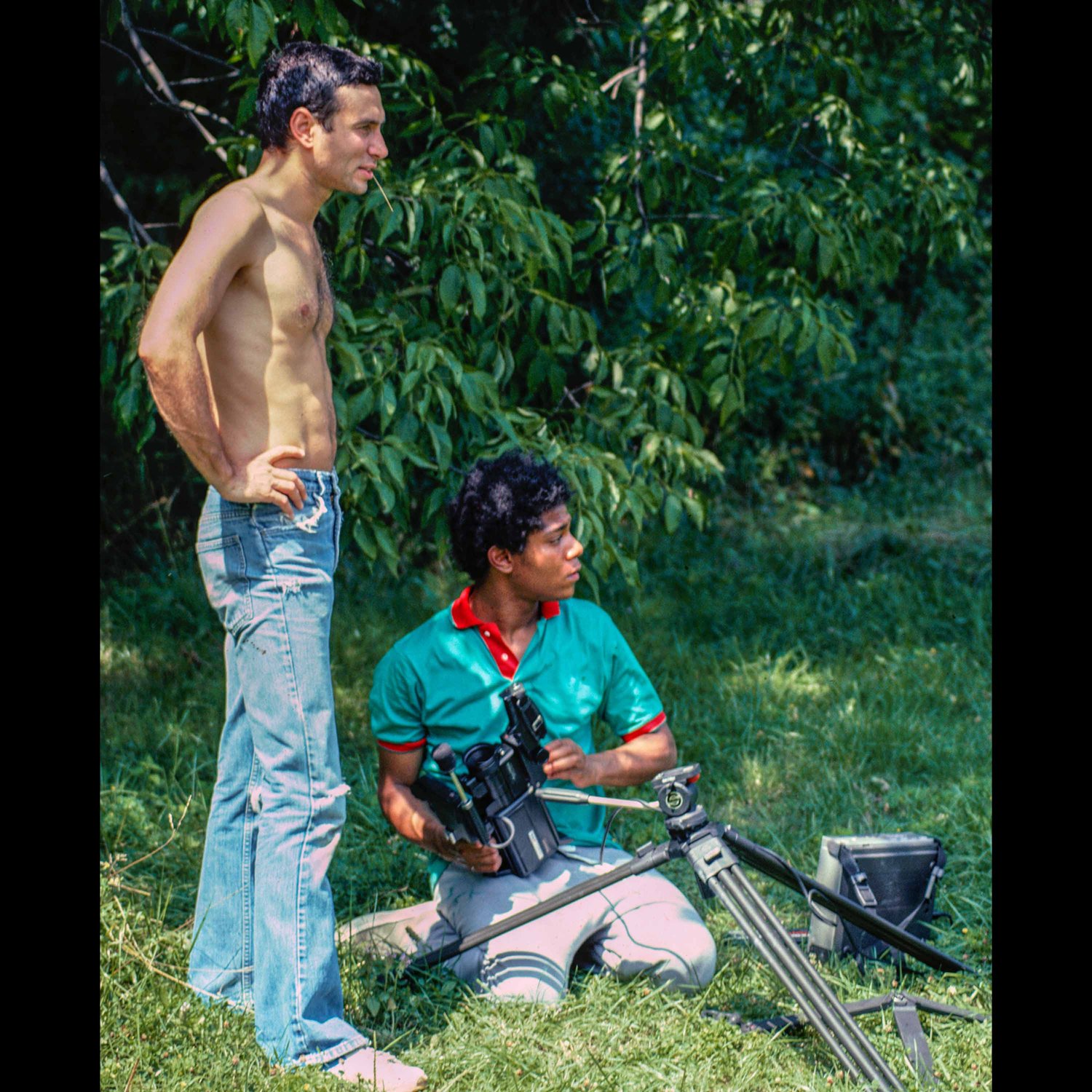
Lee Jaffe - Author of “Jean-Michel Basquiat: Crossroads” - Artist, Musician, Poet
Lee Jaffe, a cross-disciplinary visual artist, musician, and poet, took photos of his friend, Jean-Michel Basquiat, when they traveled abroad in 1983. As a photographer, Jaffe had a connection to Basquiat, and their time spent together resulted in an archive of imagery that captured one of the art world’s true legends through an unfiltered and authentic lens. “For me, watching him [Jean-Michel] paint reminded me of the times I would sit and play harmonica while Bob Marley, with his acoustic guitar, would be writing songs that were eventually to become classics,” Jaffe says. “With Jean and Bob, it seemed like they were channeling inspiration coming from an otherworldly place.”Basquiat and Jaffe connected over reggae music. It was the early 1980s in New York. Jaffe had been a member of Bob Marley’s band, producer on Peter Tosh’s first solo album. and collaborated with art world figures Helio Oiticica, Gordon Matta Clark, and Vito Acconci. Jaffe is the author of Jean-Michel Basquiat: Crossroads."I remember in the early 2000s, we had so much hope for the internet that it was going to democratize the distribution of music, especially when file sharing started. We said, Oh, wow. This is great. At that time, there were five major record companies, and then they conspired with MTV to give MTV all this free, big production content, and you couldn't really sell a lot of records unless you were on MTV. And unless you had this big budget for this video. And it started, artists were exploited from the beginning of radio. So I thought, Oh wow, now we're going to have file sharing, and we have the internet, and there's going to be all this information. This is going to transform the world. We're going to have this incredible end of poverty. And instead, we get Fascism. We get Bolsonaro, and it's really scary. On the other hand, listening to some of your podcasts - which I've been doing a lot recently - it's really pushed me to try to be optimistic because the pessimism is very oppressive. It makes me not want to work. So I'm really pushing myself to be consciously optimistic."www.leejaffe.comwww.rizzoliusa.com/book/9780847871841/www.creativeprocess.infowww.oneplanetpodcast.orgPhoto credit: Paige Powell, Lee Jaffe and Jean-Michel Basquiat recording the installation of “Inverted Oak” : Carmel, New York
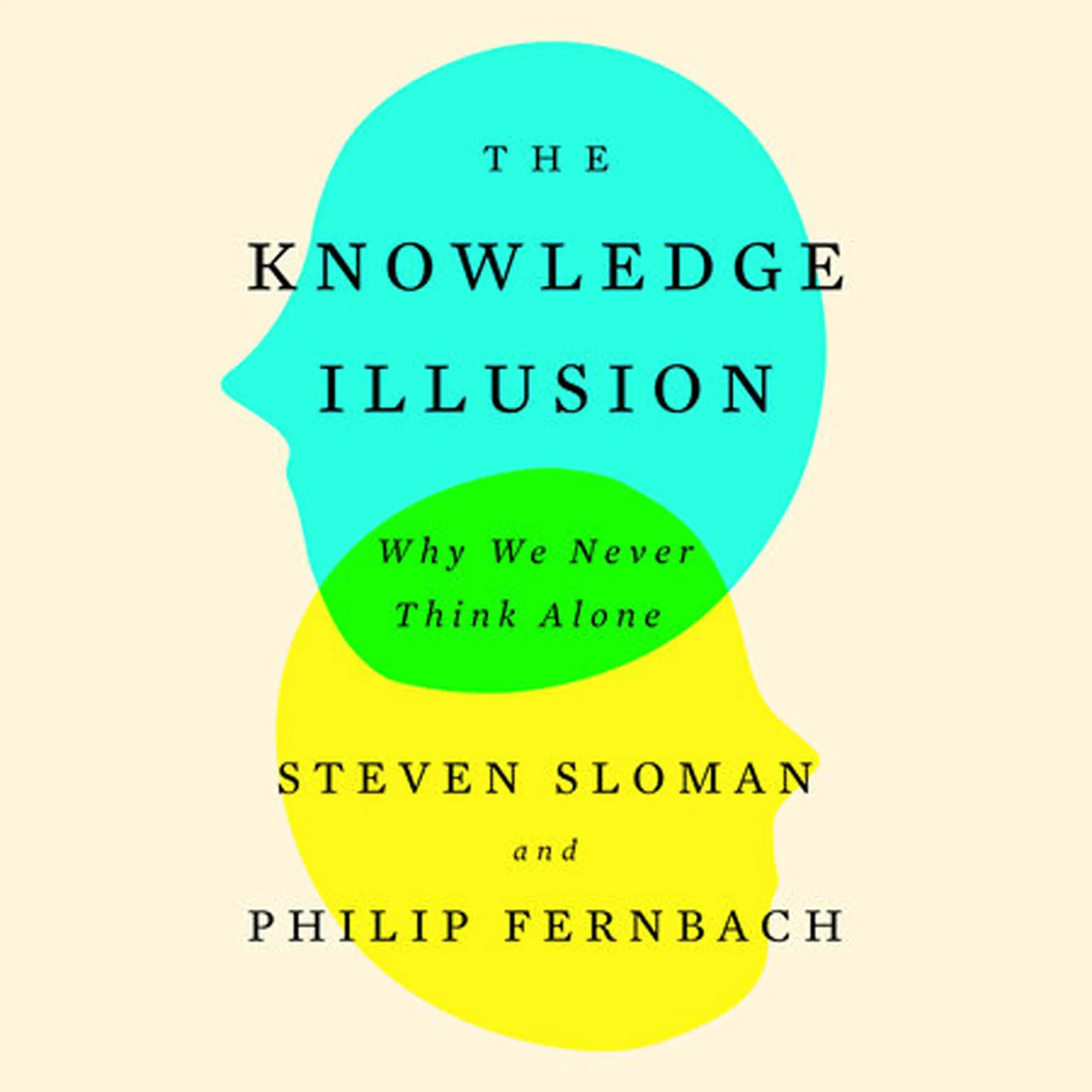
Highlights - Philip Fernbach - Cognitive Scientist - Co-Director, Ctr. for Research, Consumer Financial Decision Making - Co-author, “The Knowledge Illusion”
"I admit to being just a dyed-in-the-wool kind of techno-optimist. I don't know why that is, but I'm just very hopeful and optimistic about the future. And I know people are scared of like superintelligence taking over and everything. I just don't think that we're close to anything like that yet. It's not impossible, and it's something that I think we should take very seriously, but I really see AI as being this incredibly powerful, wonderful thing that is going to unlock incredible huge amounts of economic value. Maybe an optimist bordering on idealistic, but I kind of believe in this idea of abundance. And the idea of abundance is we sort of have this zero-sum perspective about economic activity, where if some people have a lot of wealth, other people can't.But if you look at the size of the world economy – and you can actually go on Wikipedia and look at estimations of this going back to something like 2000 BC – the size of the economy in terms of economic activity is an exponential function, and it's like a perfect exponential function.What exponential function means, as opposed to a linear function, it grows in a percentage basis, not an absolute way over time, which means that to double from one to two is going to take a certain amount of time, but then the same amount of time, not to go from two to three, but to go much higher.The problem is not actually the generation of economic activity. It's allocation of that activity. And I really believe we're on the cusp of that. And AI is one big reason because if you can get rid of a lot of labor, of drudgery, and jobs that people don't want to do, and you can run a factory with a bunch of robots where people don't have to intervene that makes food or makes products or extracts resources...you can unlock a huge amount of economic activity. So, that has the potential, I think, to usher in an era of great abundance."Philip Fernbach is an Associate Professor of Marketing and Co-Director of the Center for Research on Consumer Financial Decision Making at the University of Colorado, Boulder, Leeds School of Business. He’s published widely in the top journals in cognitive science, consumer research and marketing, and received the ACR Early Career Award for Contributions to Consumer Research. He’s co-author with Steve Sloman of The Knowledge Illusion: Why We Never Think Alone, which was chosen as a New York Times Editor’s Pick. He’s also written for NYTimes, Harvard Business Review, and his research has been featured in the Wall Street Journal, The Washinton Post, National Public Radio, and the BBC. He received his Ph.D. in cognitive science from the Department of Cognitive, Linguistic and Psychological Sciences at Brown and his undergraduate degree in Philosophy from Williams College. He teaches data analytics and behavioral science to undergraduate and Masters students.www.colorado.edu/business/www.philipfernbach.comThe Knowledge Illusionwww.creativeprocess.infowww.oneplanetpodcast.org
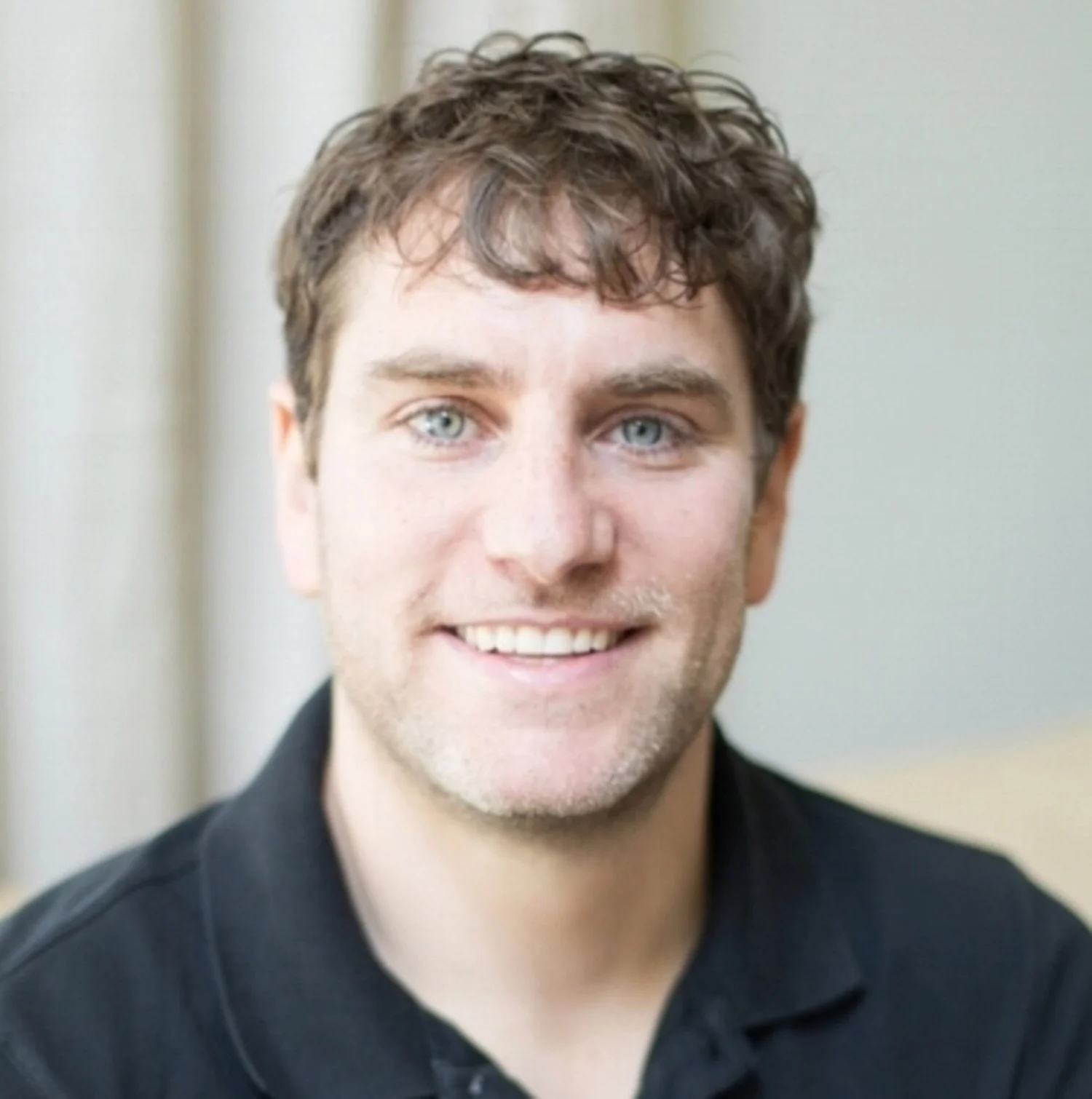
Philip Fernbach - Co-author of “The Knowledge Illusion” - Cognitive Scientist - Co-Director of Ctr. for Research on Consumer Financial Decision Making
Philip Fernbach is an Associate Professor of Marketing and Co-Director of the Center for Research on Consumer Financial Decision Making at the University of Colorado, Boulder, Leeds School of Business. He’s published widely in the top journals in cognitive science, consumer research and marketing, and received the ACR Early Career Award for Contributions to Consumer Research. He’s co-author with Steve Sloman of The Knowledge Illusion: Why We Never Think Alone, which was chosen as a New York Times Editor’s Pick. He’s also written for NYTimes, Harvard Business Review, and his research has been featured in the Wall Street Journal, The Washinton Post, National Public Radio, and the BBC. He received his Ph.D. in cognitive science from the Department of Cognitive, Linguistic and Psychological Sciences at Brown and his undergraduate degree in Philosophy from Williams College. He teaches data analytics and behavioral science to undergraduate and Masters students."I admit to being just a dyed-in-the-wool kind of techno-optimist. I don't know why that is, but I'm just very hopeful and optimistic about the future. And I know people are scared of like superintelligence taking over and everything. I just don't think that we're close to anything like that yet. It's not impossible, and it's something that I think we should take very seriously, but I really see AI as being this incredibly powerful, wonderful thing that is going to unlock incredible huge amounts of economic value. Maybe an optimist bordering on idealistic, but I kind of believe in this idea of abundance. And the idea of abundance is we sort of have this zero-sum perspective about economic activity, where if some people have a lot of wealth, other people can't.But if you look at the size of the world economy – and you can actually go on Wikipedia and look at estimations of this going back to something like 2000 BC – the size of the economy in terms of economic activity is an exponential function, and it's like a perfect exponential function.What exponential function means, as opposed to a linear function, it grows in a percentage basis, not an absolute way over time, which means that to double from one to two is going to take a certain amount of time, but then the same amount of time, not to go from two to three, but to go much higher.The problem is not actually the generation of economic activity. It's allocation of that activity. And I really believe we're on the cusp of that. And AI is one big reason because if you can get rid of a lot of labor, of drudgery, and jobs that people don't want to do, and you can run a factory with a bunch of robots where people don't have to intervene that makes food or makes products or extracts resources...you can unlock a huge amount of economic activity. So, that has the potential, I think, to usher in an era of great abundance."www.colorado.edu/business/www.philipfernbach.comThe Knowledge Illusionwww.creativeprocess.infowww.oneplanetpodcast.org

Highlights - Aniela Unguresan - Champion of Diversity, Equity, Inclusion in the Workplace - EDGE Cert
"For a very long time, the tech industry was publishing their numbers year after year, and the numbers stayed very much the same. And they were throwing their hands in the air and saying, 'Well, okay, we are measuring. We are publishing the numbers, numbers look bad. There's nothing we can do about it.' So there was transparency, but there was not the accountability of yes, there is something we can do about those numbers. It might take longer, and the progress might not be as fast as we can do, but there is something we can do about it. And here is the place we would start. But when the stakeholders start to have a voice then that accountability is created for organizations to move from intention to action and from action to impact."Aniela Unguresan is Co-founder of EDGE Certification, the leading global assessment methodology and business certification standard for gender equality. Launched at the Annual Meeting of the World Economic Forum in 2011, EDGE Certification measures where organizations stand in terms of gender balance across their pipeline, pay equity, and effectiveness of policies and practices to ensure equitable career flows, as well as the inclusiveness of their culture. EDGE Certification has been designed to help companies not only to create an optimal workplace for women and men, but also to benefit from it. EDGE stands for Economic Dividends for Gender Equality and is distinguished by its rigor and focus on business impact. Their customer base consists of 200 large organizations in 50 countries across five continents, representing 30 different industries.Prior to co-founding EDGE Certified Foundation, Aniela acquired extensive professional experience as a consultant with Arthur Andersen and Andersen Consulting, as a trader and project manager with TXU Europe and SIG Geneva, and as the CEO of CT Technologies.https://edge-cert.orgwww.creativeprocess.infowww.oneplanetpodcast.org

Aniela Unguresan - Co-founder, Economic Dividends for Gender Equality - EDGE Cert. Foundation
Aniela Unguresan is Co-founder of EDGE Certification, the leading global assessment methodology and business certification standard for gender equality. Launched at the Annual Meeting of the World Economic Forum in 2011, EDGE Certification measures where organizations stand in terms of gender balance across their pipeline, pay equity, and effectiveness of policies and practices to ensure equitable career flows, as well as the inclusiveness of their culture. EDGE Certification has been designed to help companies not only to create an optimal workplace for women and men, but also to benefit from it. EDGE stands for Economic Dividends for Gender Equality and is distinguished by its rigor and focus on business impact. Their customer base consists of 200 large organizations in 50 countries across five continents, representing 30 different industries.Prior to co-founding EDGE Certified Foundation, Aniela acquired extensive professional experience as a consultant with Arthur Andersen and Andersen Consulting, as a trader and project manager with TXU Europe and SIG Geneva, and as the CEO of CT Technologies."For a very long time, the tech industry was publishing their numbers year after year, and the numbers stayed very much the same. And they were throwing their hands in the air and saying, 'Well, okay, we are measuring. We are publishing the numbers, numbers look bad. There's nothing we can do about it.' So there was transparency, but there was not the accountability of yes, there is something we can do about those numbers. It might take longer, and the progress might not be as fast as we can do, but there is something we can do about it. And here is the place we would start. But when the stakeholders start to have a voice then that accountability is created for organizations to move from intention to action and from action to impact."https://edge-cert.orgwww.creativeprocess.infowww.oneplanetpodcast.org

Highlights - Kent Redford - Co-author, ”Strange Natures: Conservation in the Era of Synthetic Biology”
"The field of synthetic biology, which is known by some as extreme genetic engineering – that's a name mostly used by people who don't like it - amounts to a set of tools that humans have developed to be able to very precisely and accurately change the genetic code, the DNA of living organisms in order to get those organisms to do things that humans want. So the applications in medicine are predominantly devoted to trying to make us healthier people, and they range from some really exciting work on tumor biology to work on the microbiome, which is all of the thousands and tens of thousands of species that live on our lips, our mouths, our guts, our skin. And in agriculture, it's primarily directed at crop genetics, trying to improve the productivity of crops, the nutritional value of crops, the ability of crops to respond to climate change, and a whole variety of other things. Some people may have heard of one of these tools called CRISPR used to very precisely alter the sequences of DNA.This book that Bill and I wrote is about the impending intersection between synthetic biology and the field of nature conservation, not an examination of the technologies per se, but an examination of the way that we are going to end up needing to think about the intersection between our ability to change DNA, and what it means to be natural, and what it means to conserve things and whether or not we want to conserve things that we have altered."Kent H. Redford is a conservation practitioner and Principal at Archipelago Consulting established in 2012 and based in Portland, Maine, USA. Archipelago Consulting was designed to help individuals and organizations improve their practice of conservation. Prior to Archipelago Consulting Kent spent 10 years on the faculty of University of Florida and 19 years in conservation NGOs with five years as Director of The Nature Conservancy’s Parks in Peril program and 14 years as Vice President for Conservation Science and Strategy at the Wildlife Conservation Society. For six years he was Chair of IUCN’s Task Force on Synthetic Biology and Biodiversity Conservation. In June 2021 Yale University Press published Kent’s book with W.M. Adams: Strange Natures. Conservation in the Era of Synthetic Biology.https://yalebooks.yale.edu/book/9780300230970/strange-natures/ https://archipelagoconsulting.comwww.oneplanetpodcast.orgwww.creativeprocess.info

Kent Redford - Co-author of "Strange Natures: Conservation in the Era of Synthetic Biology”
Kent H. Redford is a conservation practitioner and Principal at Archipelago Consulting established in 2012 and based in Portland, Maine, USA. Archipelago Consulting was designed to help individuals and organizations improve their practice of conservation. Prior to Archipelago Consulting Kent spent 10 years on the faculty of University of Florida and 19 years in conservation NGOs with five years as Director of The Nature Conservancy’s Parks in Peril program and 14 years as Vice President for Conservation Science and Strategy at the Wildlife Conservation Society. For six years he was Chair of IUCN’s Task Force on Synthetic Biology and Biodiversity Conservation. In June 2021 Yale University Press published Kent’s book with W.M. Adams: Strange Natures. Conservation in the Era of Synthetic Biology."The field of synthetic biology, which is known by some as extreme genetic engineering – that's a name mostly used by people who don't like it - amounts to a set of tools that humans have developed to be able to very precisely and accurately change the genetic code, the DNA of living organisms in order to get those organisms to do things that humans want. So the applications in medicine are predominantly devoted to trying to make us healthier people, and they range from some really exciting work on tumor biology to work on the microbiome, which is all of the thousands and tens of thousands of species that live on our lips, our mouths, our guts, our skin. And in agriculture, it's primarily directed at crop genetics, trying to improve the productivity of crops, the nutritional value of crops, the ability of crops to respond to climate change, and a whole variety of other things. Some people may have heard of one of these tools called CRISPR used to very precisely alter the sequences of DNA.This book that Bill and I wrote is about the impending intersection between synthetic biology and the field of nature conservation, not an examination of the technologies per se, but an examination of the way that we are going to end up needing to think about the intersection between our ability to change DNA, and what it means to be natural, and what it means to conserve things and whether or not we want to conserve things that we have altered."https://yalebooks.yale.edu/book/9780300230970/strange-natures/ https://archipelagoconsulting.comwww.oneplanetpodcast.orgwww.creativeprocess.info

Highlights - Carl Safina - Author of “Becoming Wild: How Animal Cultures Raise Families, Create Beauty, and Achieve Peace”
"We are the extreme animal. We're certainly, technologically speaking, there's no comparison to what humans can do among all the animals that make some tools, even though we should keep in mind that for close to 200,000 years, humans who were essentially identical to us had no tools that were more complicated than a bow and arrow.I think the most crucial thing is that while we are such extraordinary tinkerers that we can keep creating unbelievable kinds of technologies, we are not very smart about what we do with those things or seeing them through to the implications of what happens when we do these things. If we were wiser about it, we would conduct ourselves much more differently than the all-out charge that we conduct, where often we just follow some technology along without worrying about the implications of what will happen ultimately, or caring about what will happen ultimately, or denying what is happening as a result of the overuse of those technologies or the overpopulation of the world by human beings. And those are causing many of the problems that we have."Carl Safina’s lyrical non-fiction writing explores how humans are changing the living world, and what the changes mean for non-human beings and for us all. His work has been recognized with MacArthur, Pew, and Guggenheim Fellowships, and his writing has won Orion, Lannan, and National Academies literary awards and the John Burroughs, James Beard, and George Rabb medals. Safina is the inaugural holder of the endowed chair for nature and humanity at Stony Brook University, where he co-chairs the steering committee of the Alan Alda Center for Communicating Science and is founding president of the not-for-profit Safina Center. He hosted the 10-part PBS series Saving the Ocean with Carl Safina. His writing appears in The New York Times, National Geographic, Audubon, CNN.com, National Geographic News, and other publications. He is the author of ten books including the classic Song for the Blue Ocean, as well as New York Times Bestseller Beyond Words: What Animals Think and Feel. His most recent book is Becoming Wild: How Animal Cultures Raise Families, Create Beauty, and Achieve Peace.www.safinacenter.orgwww.carlsafina.orgwww.oneplanetpodcast.orgwww.creativeprocess.infoPhoto: Carl Safina in Uganda
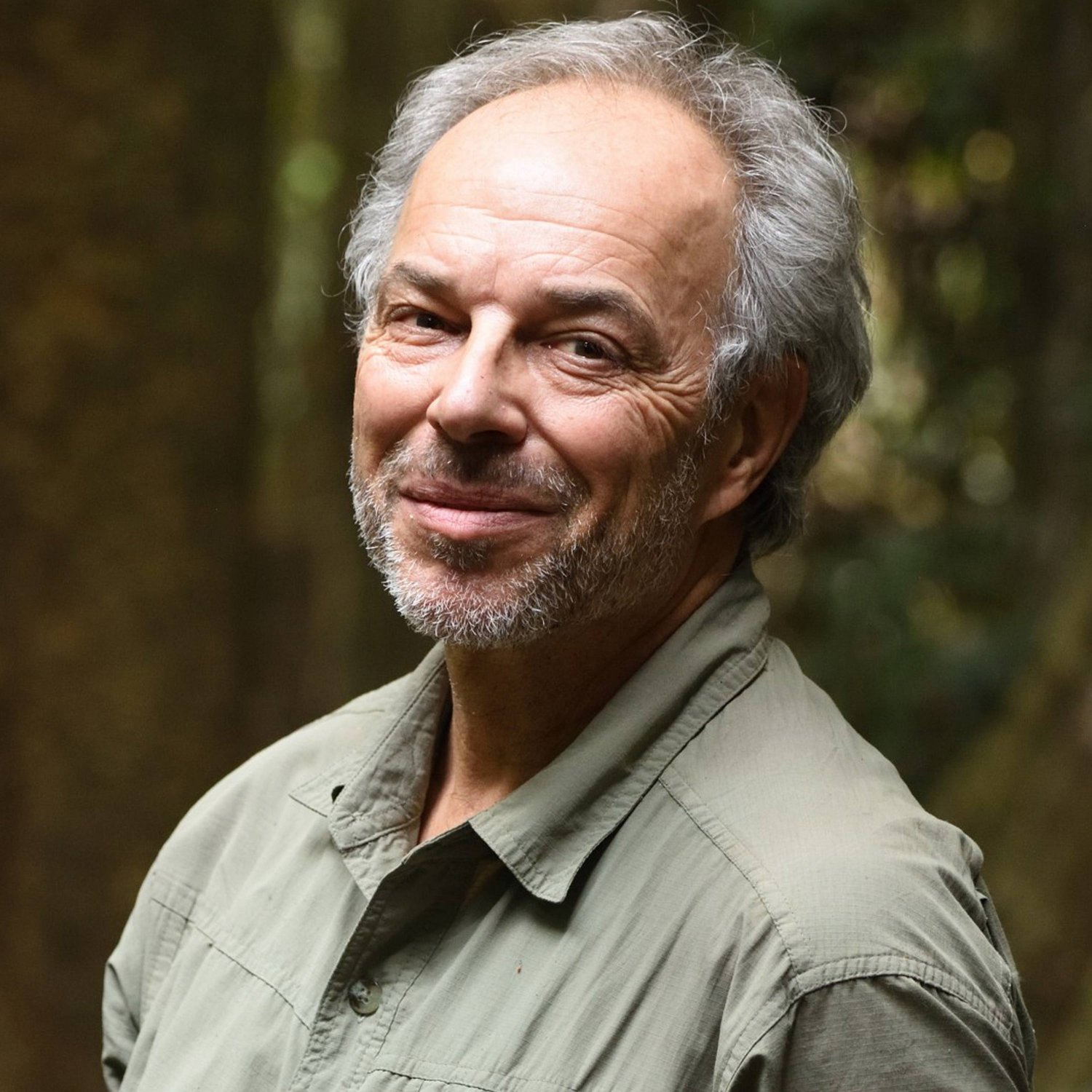
Carl Safina - Ecologist - Founding President of Safina Center - NYTimes Bestselling Author
Carl Safina’s lyrical non-fiction writing explores how humans are changing the living world, and what the changes mean for non-human beings and for us all. His work has been recognized with MacArthur, Pew, and Guggenheim Fellowships, and his writing has won Orion, Lannan, and National Academies literary awards and the John Burroughs, James Beard, and George Rabb medals. Safina is the inaugural holder of the endowed chair for nature and humanity at Stony Brook University, where he co-chairs the steering committee of the Alan Alda Center for Communicating Science and is founding president of the not-for-profit Safina Center. He hosted the 10-part PBS series Saving the Ocean with Carl Safina. His writing appears in The New York Times, National Geographic, Audubon, CNN.com, National Geographic News, and other publications. He is the author of ten books including the classic Song for the Blue Ocean, as well as New York Times Bestseller Beyond Words: What Animals Think and Feel. His most recent book is Becoming Wild: How Animal Cultures Raise Families, Create Beauty, and Achieve Peace."We are the extreme animal. We're certainly, technologically speaking, there's no comparison to what humans can do among all the animals that make some tools, even though we should keep in mind that for close to 200,000 years, humans who were essentially identical to us had no tools that were more complicated than a bow and arrow.I think the most crucial thing is that while we are such extraordinary tinkerers that we can keep creating unbelievable kinds of technologies, we are not very smart about what we do with those things or seeing them through to the implications of what happens when we do these things. If we were wiser about it, we would conduct ourselves much more differently than the all-out charge that we conduct, where often we just follow some technology along without worrying about the implications of what will happen ultimately, or caring about what will happen ultimately, or denying what is happening as a result of the overuse of those technologies or the overpopulation of the world by human beings. And those are causing many of the problems that we have."www.safinacenter.orgwww.carlsafina.orgwww.oneplanetpodcast.orgwww.creativeprocess.infoPhoto: Carl Safina in Uganda

Highlights - Nick Bostrom - Founding Director, Future of Humanity Institute, Oxford
"I think what we really face is an even more profound change into this condition where human nature becomes plastic in the sense of malleable, and we then have to think more from the ground up - What is it that ultimately brings value to the world? If you could be literally any kind of being you chose to be, what kind of being would you want to be? What constraints and limitations and flaws would you want to retain because it's part of what makes you, you. And what aspects would you want to improve? If you have like a bad knee, you probably would want to fix the knee. If you're nearsighted, and you could just snap your fingers and have perfect eyesight, that seems pretty attractive, but then if you keep going in that direction, eventually, it's not clear that you're human anymore. You become some sort of idealized ethereal being, and maybe that's a desirable ultimate destiny for humanity, but I'm not sure we would want to rush there immediately. Maybe we would want to take a kind of slower path to get to that destination."Nick Bostrom is a Swedish-born philosopher with a background in theoretical physics, computational neuroscience, logic, and artificial intelligence, as well as philosophy. He is the most-cited professional philosopher in the world under the age of 50.He is a Professor at Oxford University, where he heads the Future of Humanity Institute as its founding director. He is the author of some 200 publications, including Anthropic Bias, Global Catastrophic Risks, Human Enhancement, and Superintelligence: Paths, Dangers, Strategies, a New York Times bestseller which helped spark a global conversation about the future of AI. He has also published a series of influential papers, including ones that introduced the simulation argument and the concept of existential risk.Bostrom’s academic work has been translated into more than 30 languages. He is a repeat main TED speaker and has been on Foreign Policy’s Top 100 Global Thinkers list twice and was included in Prospect’s World Thinkers list, the youngest person in the top 15. As a graduate student he dabbled in stand-up comedy on the London circuit, but he has since reconnected with the heavy gloom of his Swedish roots.https://nickbostrom.comhttps://www.fhi.ox.ac.ukwww.creativeprocess.infowww.oneplanetpodcast.org

Nick Bostrom - Philosopher, Founding Director, Future of Humanity Institute, Oxford
Nick Bostrom is a Swedish-born philosopher with a background in theoretical physics, computational neuroscience, logic, and artificial intelligence, as well as philosophy. He is the most-cited professional philosopher in the world under the age of 50.He is a Professor at Oxford University, where he heads the Future of Humanity Institute as its founding director. He is the author of some 200 publications, including Anthropic Bias, Global Catastrophic Risks, Human Enhancement, and Superintelligence: Paths, Dangers, Strategies, a New York Times bestseller which helped spark a global conversation about the future of AI. He has also published a series of influential papers, including ones that introduced the simulation argument and the concept of existential risk.Bostrom’s academic work has been translated into more than 30 languages. He is a repeat main TED speaker and has been on Foreign Policy’s Top 100 Global Thinkers list twice and was included in Prospect’s World Thinkers list, the youngest person in the top 15. As a graduate student he dabbled in stand-up comedy on the London circuit, but he has since reconnected with the heavy gloom of his Swedish roots."I think what we really face is an even more profound change into this condition where human nature becomes plastic in the sense of malleable, and we then have to think more from the ground up - What is it that ultimately brings value to the world? If you could be literally any kind of being you chose to be, what kind of being would you want to be? What constraints and limitations and flaws would you want to retain because it's part of what makes you, you. And what aspects would you want to improve? If you have like a bad knee, you probably would want to fix the knee. If you're nearsighted, and you could just snap your fingers and have perfect eyesight, that seems pretty attractive, but then if you keep going in that direction, eventually, it's not clear that you're human anymore. You become some sort of idealized ethereal being, and maybe that's a desirable ultimate destiny for humanity, but I'm not sure we would want to rush there immediately. Maybe we would want to take a kind of slower path to get to that destination."https://nickbostrom.comhttps://www.fhi.ox.ac.ukwww.creativeprocess.infowww.oneplanetpodcast.org

Highlights - Mona Sarfaty - Medical Society Consortium on Climate and Health | Ed Maibach - Communication Scientist
“Humanity needs to do three things if it wants to continue to flourish, and it will. The three things that humanity needs to do are decarbonize the global economy, drawdown, capture, harvest much of that heat-trapping pollution that we've already pumped into the atmosphere over the past hundred years because as long as it's up in our atmosphere, we're going to have continued warming. And the third thing that humanity needs to do is become more resilient to the impacts of climate change, which unfortunately will continue for the next several generations at least, even as we succeed in decarbonizing the global economy and harvesting that heat-trapping pollution from the atmosphere.So these are the three things that have to happen. These three things will happen. The open question is how rapidly will they happen? Any business that can play a vital role in making any one or two or all three of those things happen, those are businesses that are going to flourish going forward. And any business that's sitting on the side and not contributing to one of those three areas, I really think they will become increasingly irrelevant, if not completely antiquated and increasingly understood to be harmful.”Dr. Mona Sarfaty is the Executive Director and Founder of the Medical Society Consortium on Climate and Health, comprised of societies representing 70% of all U.S. physicians. She founded the Communication in 2016 in conjunction with the George Mason University Center for Climate Change. Under her leadership, the Consortium has grown into a nationwide coalition of societies, organizations, and advocates mobilizing support for equitable policies that address the health impacts of climate change.Edward Maibach is Director of the George Mason University Center for Climate Change Communication, a distinguished University Professor and communication scientist who is expert in the uses of strategic communication and social marketing to address climate change and related public health challenges. His research – funded by NSF, NASA, and private foundations – focuses on public understanding of climate change and clean energy; and the psychology underlying public engagement. In 2021, Ed was identified by Thompson Reuters as one of the world’s 10 most influential scientists working on climate change.https://medsocietiesforclimatehealth.orghttps://twitter.com/docsforclimatewww.climatechangecommunication.org/all/climate-change-american-mind-april-2022/www.climatechangecommunication.org/all/politics-global-warming-april-2022/www.oneplanetpodcast.org

Dr. Mona Sarfaty - Medical Society Consortium on Climate and Health | Dr. Ed Maibach - Communication Scientist
Dr. Mona Sarfaty is the Executive Director and Founder of the Medical Society Consortium on Climate and Health, comprised of societies representing 70% of all U.S. physicians. She founded the Communication in 2016 in conjunction with the George Mason University Center for Climate Change. Under her leadership, the Consortium has grown into a nationwide coalition of societies, organizations, and advocates mobilizing support for equitable policies that address the health impacts of climate change.Edward Maibach is Director of the George Mason University Center for Climate Change Communication, a distinguished University Professor and communication scientist who is expert in the uses of strategic communication and social marketing to address climate change and related public health challenges. His research – funded by NSF, NASA, and private foundations – focuses on public understanding of climate change and clean energy; and the psychology underlying public engagement. In 2021, Ed was identified by Thompson Reuters as one of the world’s 10 most influential scientists working on climate change.“Humanity needs to do three things if it wants to continue to flourish, and it will. The three things that humanity needs to do are decarbonize the global economy, drawdown, capture, harvest much of that heat-trapping pollution that we've already pumped into the atmosphere over the past hundred years because as long as it's up in our atmosphere, we're going to have continued warming. And the third thing that humanity needs to do is become more resilient to the impacts of climate change, which unfortunately will continue for the next several generations at least, even as we succeed in decarbonizing the global economy and harvesting that heat-trapping pollution from the atmosphere.So these are the three things that have to happen. These three things will happen. The open question is how rapidly will they happen? Any business that can play a vital role in making any one or two or all three of those things happen, those are businesses that are going to flourish going forward. And any business that's sitting on the side and not contributing to one of those three areas, I really think they will become increasingly irrelevant, if not completely antiquated and increasingly understood to be harmful.”https://medsocietiesforclimatehealth.orghttps://twitter.com/docsforclimatewww.climatechangecommunication.org/all/climate-change-american-mind-april-2022/www.climatechangecommunication.org/all/politics-global-warming-april-2022/www.oneplanetpodcast.org
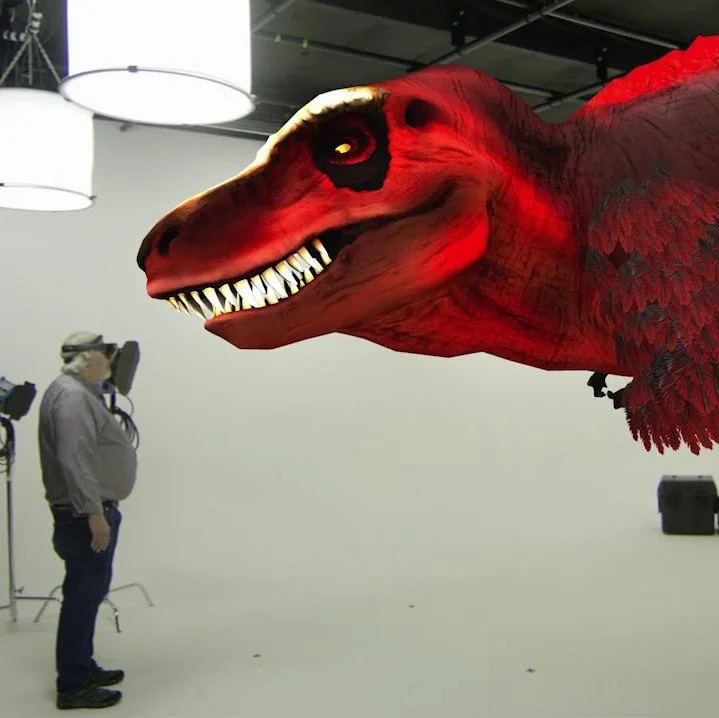
Highlights - Jack Horner - Renowned Paleontologist - Technical Advisor, Jurassic Park/World Films
"I'm an educator, and I'm interested in educating people about what dinosaurs were really like. One of the ways to do that is through working on exhibits for museums, working with some of these other companies that make things like exhibits, working with them to try to update their ideas of what dinosaurs were like. Modern exhibits oftentimes have a lot of VR in them and a lot of computer graphics and things like that.So we have to work together with companies that are interested or are doing that sort of thing. We started working early on with Microsoft to make these virtual dinosaurs that you could put on a VR mask and see these dinosaurs. We also made a little VR game that kids could play and dig up dinosaurs. We're just trying to figure out ways to go beyond what we can do at universities and see if we can figure out ways of just sharing all this new information."Jack Horner is a severely dyslexic, dinosaur paleontologist. He attended the University of Montana for 14 semesters without receiving a degree. He has since received two honorary doctorates of science and a plethora of awards including a MacArthur Fellowship. Jack was Curator and Regent’s Professor of Paleontology at Montana State University in Bozeman, Montana for 34 years. He has more than 300 publications. He was the technical advisor for all of the Jurassic Park/ Jurassic World movies. At Chapman University where he now teaches, Jack encourages his honors students and dyslexic mentorees to challenge their preconceived ideas.https://jackhornersdinosaurs.comHorner Science Groupwww.creativeprocess.infowww.oneplanetpodcast.org

Jack Horner - Renowned Dinosaur Paleontologist - Technical Advisor, Jurassic Park/World Films
Jack Horner is a severely dyslexic, dinosaur paleontologist. He attended the University of Montana for 14 semesters without receiving a degree. He has since received two honorary doctorates of science and a plethora of awards including a MacArthur Fellowship. Jack was Curator and Regent’s Professor of Paleontology at Montana State University in Bozeman, Montana for 34 years. He has more than 300 publications. He was the technical advisor for all of the Jurassic Park/ Jurassic World movies. At Chapman University where he now teaches, Jack encourages his honors students and dyslexic mentorees to challenge their preconceived ideas."I'm an educator, and I'm interested in educating people about what dinosaurs were really like. One of the ways to do that is through working on exhibits for museums, working with some of these other companies that make things like exhibits, working with them to try to update their ideas of what dinosaurs were like. Modern exhibits oftentimes have a lot of VR in them and a lot of computer graphics and things like that.So we have to work together with companies that are interested or are doing that sort of thing. We started working early on with Microsoft to make these virtual dinosaurs that you could put on a VR mask and see these dinosaurs. We also made a little VR game that kids could play and dig up dinosaurs. We're just trying to figure out ways to go beyond what we can do at universities and see if we can figure out ways of just sharing all this new information."https://jackhornersdinosaurs.comHorner Science Groupwww.creativeprocess.infowww.oneplanetpodcast.org
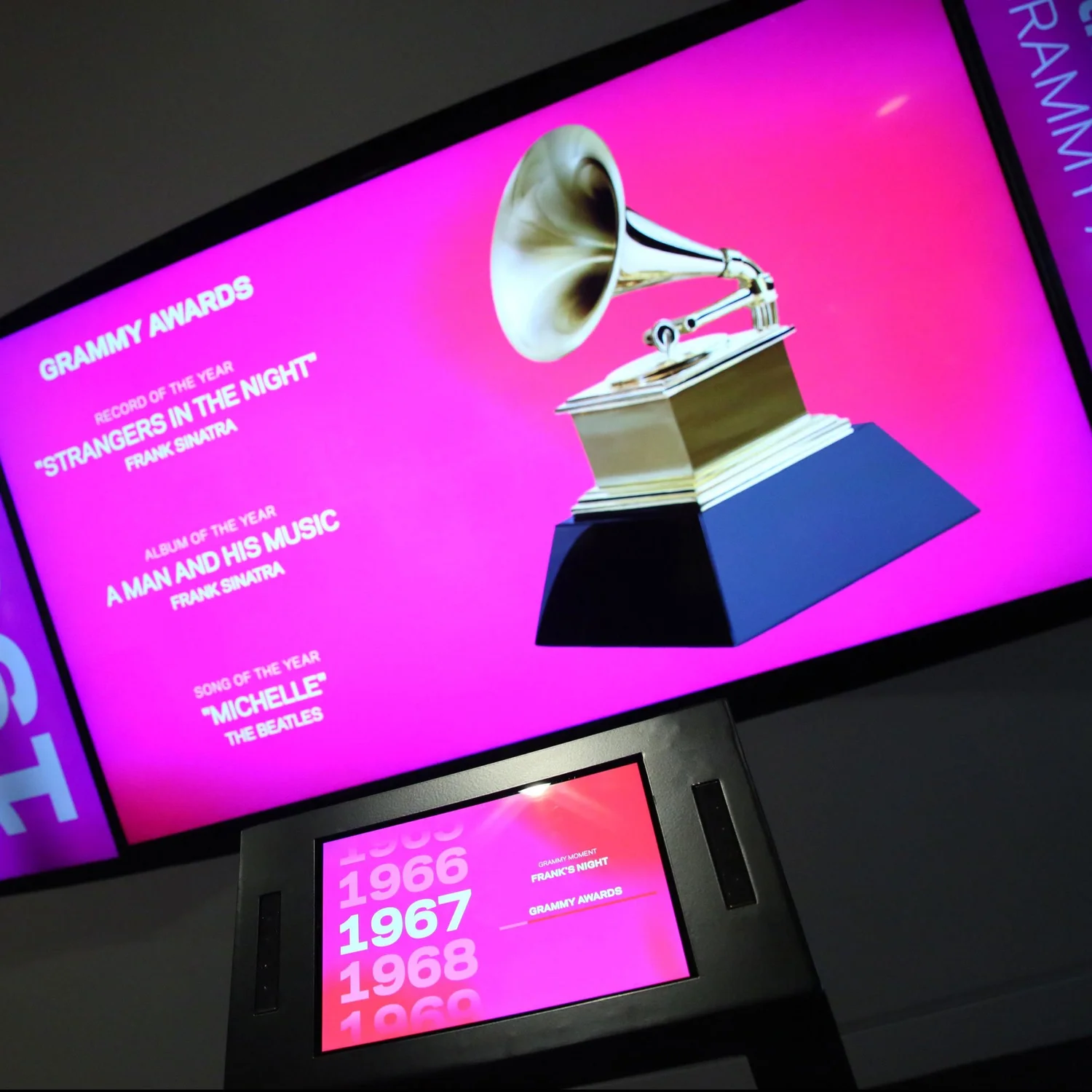
Highlights - Michael Sticka - President/CEO of the GRAMMY Museum
"It's one of our more popular experiences at the GRAMMY Museum. We have something called Mono to Immersive, which actually takes a Bruno Mars and Cardi B performance at the GRAMMY Awards, and we put guests/listeners into a room, and they watch this performance. And we had Grammy-winning engineers mix these performances. What would that Bruno Mars and Cardi B performance sound like if it were mono sound - so records, wax cylinder? Think about that. And then what about on cassette? And then what about on MP3? And then now on streaming? And then what we call immersive, which is surround sound? So we really try to walk visitors through the history of recorded sound and how much technology has changed, not just the recording process, but the listening experience as well."The GRAMMY Museum believes that music is a gateway to learning. Their mission is to explore and celebrate the enduring legacies of the creative process behind all forms of music through immersive and interactive exhibits and essential music education programs. Michael Sticka serves as President/CEO. He’s responsible for the creation of the Museum's growth and sustainability as an independent nonprofit arts organization, overseeing the Museum Foundation™’s national programming, including GRAMMY In The Schools®, grants for music research and preservation and national affiliates. Their many projects include the multimillion-dollar renovation of the Museum in downtown Los Angeles, building the only gallery dedicated to Latin music in California; GRAMMY Museum at Home, a collection of virtual exhibits, artist programs and educational content available free to educators and music lovers worldwide; and their official streaming service COLLECTION:live™. An advocate for accessibility, the GRAMMY Museum became the only museum named as a Certified Autism Center™ in California. Prior to joining the Academy, Sticka consulted for nonprofit organizations and co-founded the Zoot Theatre Company in Dayton, Ohio.Grammymuseum.orgIG, FB, TW: @grammymuseumwww.creativeprocess.infowww.oneplanetpodcast.org
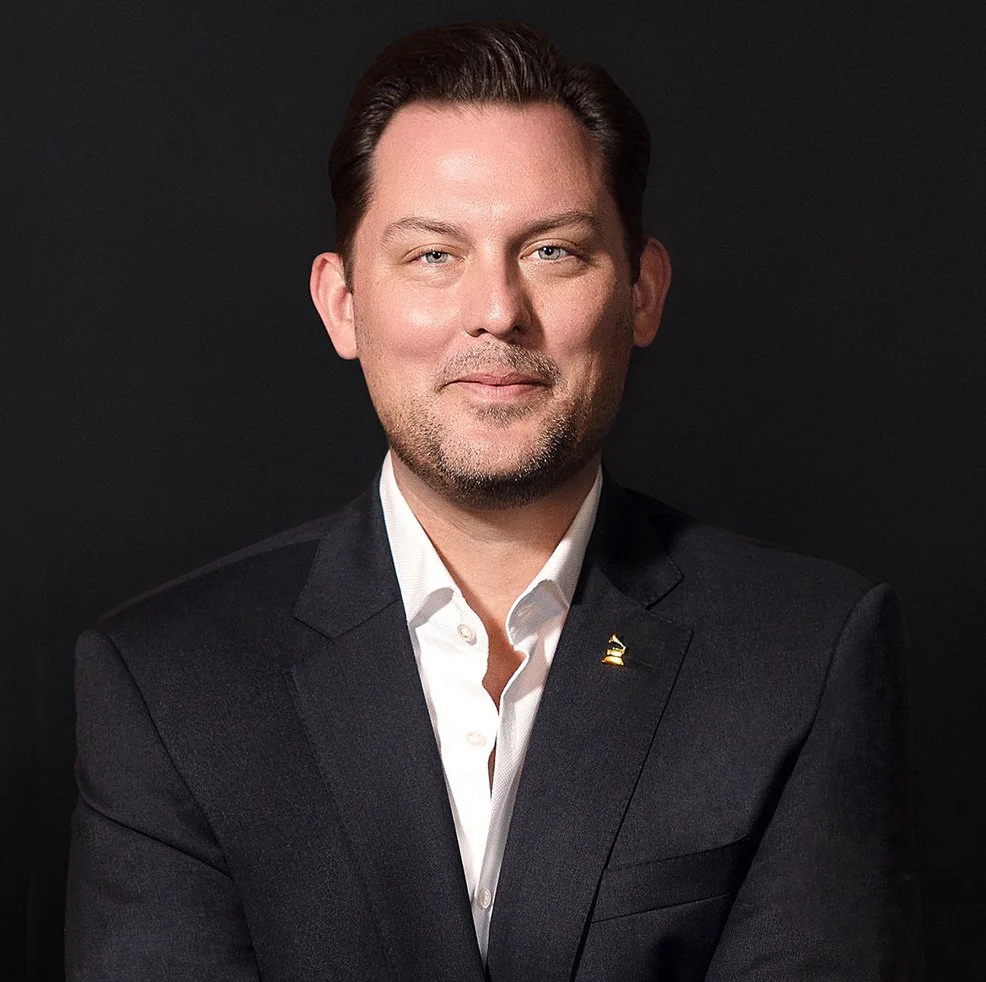
Michael Sticka - President/CEO of the GRAMMY Museum
The GRAMMY Museum believes that music is a gateway to learning. Their mission is to explore and celebrate the enduring legacies of the creative process behind all forms of music through immersive and interactive exhibits and essential music education programs. Michael Sticka serves as President/CEO. He’s responsible for the creation of the Museum's growth and sustainability as an independent nonprofit arts organization, overseeing the Museum Foundation™’s national programming, including GRAMMY In The Schools®, grants for music research and preservation and national affiliates. Their many projects include the multimillion-dollar renovation of the Museum in downtown Los Angeles, building the only gallery dedicated to Latin music in California; GRAMMY Museum at Home, a collection of virtual exhibits, artist programs and educational content available free to educators and music lovers worldwide; and their official streaming service COLLECTION:live™. An advocate for accessibility, the GRAMMY Museum became the only museum named as a Certified Autism Center™ in California. Prior to joining the Academy, Sticka consulted for nonprofit organizations and co-founded the Zoot Theatre Company in Dayton, Ohio."It's one of our more popular experiences at the GRAMMY Museum. We have something called Mono to Immersive, which actually takes a Bruno Mars and Cardi B performance at the GRAMMY Awards, and we put guests/listeners into a room, and they watch this performance. And we had Grammy-winning engineers mix these performances. What would that Bruno Mars and Cardi B performance sound like if it were mono sound - so records, wax cylinder? Think about that. And then what about on cassette? And then what about on MP3? And then now on streaming? And then what we call immersive, which is surround sound? So we really try to walk visitors through the history of recorded sound and how much technology has changed, not just the recording process, but the listening experience as well."Grammymuseum.orgIG, FB, TW: @grammymuseumwww.creativeprocess.infowww.oneplanetpodcast.org
Highlights - Bruce Mau - Award-winning Designer, Author of “Mau MC24…24 Principles for Designing Massive Change”
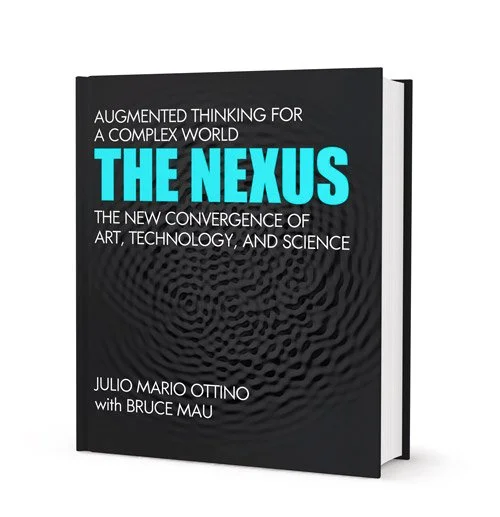
"Cities are certainly a great place to start because the way that we do them - you can see it if you go up in an airplane and look down - you can see that they're built against nature. You can see it in the color of the city. It's interesting. We reflect it in our maps. Cities are gray, and the rest of the world is green. We build them against the natural world, and the way that we do it - concrete - is one of the worst environmental materials we could use, and we have no intention, at the moment, of changing that.And we're going to add roughly two more billion people, almost all of whom will live in cities. The scale of that problem is absolutely staggering, and we intend to put them in buildings. No one I've found is willing to say, No, actually you've got to stay outside. No, we're going to put them in buildings. And we're going to build about half the world again to accommodate it. So all of that has to change, and the good news is that there's huge effort being made, huge innovation projects all over the world."Designer, author, educator and artist Bruce Mau is a brilliantly creative optimist whose love of thorny problems led him to create a methodology for life-centered design. Across thirty years of design innovation, he’s collaborated with global brands and companies, leading organizations, heads of state, renowned artists and fellow optimists. Mau became an international figure with the publication of his landmark S,M,L,XL, designed and co-authored with Rem Koolhaas, and his most recent books are Mau MC24: Bruce Mau’s 24 Principles for Designing Massive Change in Your Life and Work and, with co-author, Julio Ottino, dean of Northwestern University’s McCormick School of Engineering, The Nexus: Augmented Thinking for a Complex World – The New Convergence of Art, Technology, and Science. Mau is co-founder and CEO of Massive Change Network, a holistic design collective based in the Chicago area.www.massivechangenetwork.comwww.Brucemaustudio.comMau MC24The NexusImage Courtesy of Massive Change Networkwww.creativeprocess.infowww.oneplanetpodcast.org

Bruce Mau - Author of "Mau MC24…24 Principles for Designing Massive Change in Your Life and Work”
Designer, author, educator and artist Bruce Mau is a brilliantly creative optimist whose love of thorny problems led him to create a methodology for life-centered design. Across thirty years of design innovation, he’s collaborated with global brands and companies, leading organizations, heads of state, renowned artists and fellow optimists. Mau became an international figure with the publication of his landmark S,M,L,XL, designed and co-authored with Rem Koolhaas, and his most recent books are Mau MC24: Bruce Mau’s 24 Principles for Designing Massive Change in Your Life and Work and, with co-author, Julio Ottino, dean of Northwestern University’s McCormick School of Engineering, The Nexus: Augmented Thinking for a Complex World – The New Convergence of Art, Technology, and Science. Mau is co-founder and CEO of Massive Change Network, a holistic design collective based in the Chicago area."Cities are certainly a great place to start because the way that we do them - you can see it if you go up in an airplane and look down - you can see that they're built against nature. You can see it in the color of the city. It's interesting. We reflect it in our maps. Cities are gray, and the rest of the world is green. We build them against the natural world, and the way that we do it - concrete - is one of the worst environmental materials we could use, and we have no intention, at the moment, of changing that.And we're going to add roughly two more billion people, almost all of whom will live in cities. The scale of that problem is absolutely staggering, and we intend to put them in buildings. No one I've found is willing to say, No, actually you've got to stay outside. No, we're going to put them in buildings. And we're going to build about half the world again to accommodate it. So all of that has to change, and the good news is that there's huge effort being made, huge innovation projects all over the world."www.massivechangenetwork.comwww.Brucemaustudio.comMau MC24The NexusImage Courtesy of Massive Change Networkwww.creativeprocess.infowww.oneplanetpodcast.org

Highlights - Donald Hoffman - Author of “The case against reality: Why evolution hid the truth from our eyes”
"So the idea of the multiverse, as you all know, is a pretty big idea in physics right now. Many physicists are thinking about interpreting quantum theory in terms of the multiverse or many-worlds interpretation. Max Tegmark, for example, has the idea that there's what he calls a Level IV multiverse. He thinks that mathematics is fundamental. So the fundamental reality is just mathematics, and in some sense, Gödel's incompleteness theorem says that there's endless mathematics. There's no end to mathematical exploration. And so that's Tegmark's multiverse: whatever is mathematically possible is actual."Donald D. Hoffman is a Professor of Cognitive Sciences at the University of California, Irvine. He is the author of The case against reality: Why evolution hid the truth from our eyes. His research on perception, evolution, and consciousness received the Troland Award of the US National Academy of Sciences, the Distinguished Scientific Award for Early Career Contribution of the American Psychological Association, the Rustum Roy Award of the Chopra Foundation, and is the subject of his TED Talk, titled “Do we see reality as it is?”http://www.cogsci.uci.edu/~ddhoff/The Case Against Realitywww.creativeprocess.infowww.oneplanetpodcast.org
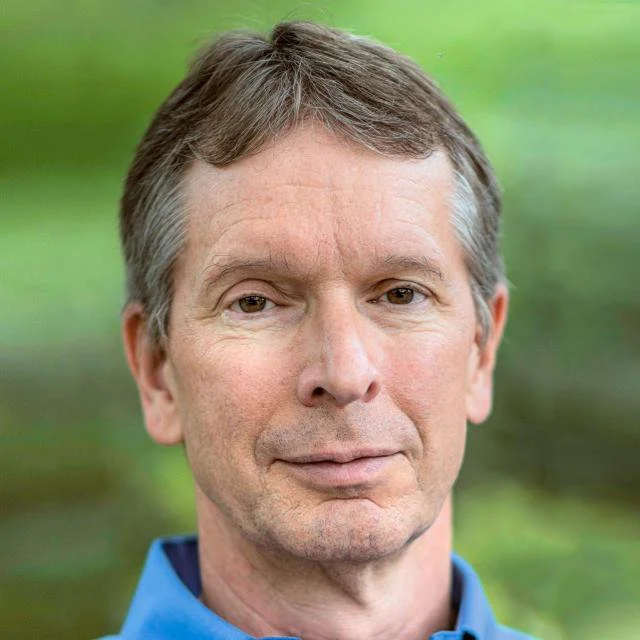
Donald Hoffman - Prof. of Cognitive Sciences, UC Irvine - Author of “The case against reality”
Donald D. Hoffman is a Professor of Cognitive Sciences at the University of California, Irvine. He is the author of The case against reality: Why evolution hid the truth from our eyes. His research on perception, evolution, and consciousness received the Troland Award of the US National Academy of Sciences, the Distinguished Scientific Award for Early Career Contribution of the American Psychological Association, the Rustum Roy Award of the Chopra Foundation, and is the subject of his TED Talk, titled “Do we see reality as it is?”"So the idea of the multiverse, as you all know, is a pretty big idea in physics right now. Many physicists are thinking about interpreting quantum theory in terms of the multiverse or many-worlds interpretation. Max Tegmark, for example, has the idea that there's what he calls a Level IV multiverse. He thinks that mathematics is fundamental. So the fundamental reality is just mathematics, and in some sense, Gödel's incompleteness theorem says that there's endless mathematics. There's no end to mathematical exploration. And so that's Tegmark's multiverse: whatever is mathematically possible is actual."http://www.cogsci.uci.edu/~ddhoff/The Case Against Realitywww.creativeprocess.infowww.oneplanetpodcast.org

Highlights - Kevin Trenberth - Nobel Prize Winner - Author of “The Changing Flow of Energy Through the Climate System”
"I think certainly we're going to go through 1.5 degrees Celsius. I think the best estimate is probably somewhere around 2032 or thereabouts, the early 2030s. And at the current rate we're going, we'll go through 2 degrees Celsius in the mid to late 2050s. Now there's certainly time to slow that rate of increase down, and we could easily push the 2 degrees Celsius threshold out to 2070 or 2080. And with really strong efforts, we might be able to hold the overall global mean surface temperature increase to something maybe close to that. Although, whether it goes past it and then comes back a little bit to it, remains to be seen. So this relates to current policies and what nations are committed to doing.Certainly, if everyone's current policies and what they're committed to doing were in place, we would be in a much better situation than we actually are because a lot of those policies have been mentioned, but there are no implementation plans in many countries. There was a recent report I saw, which said that maybe two countries in the world, out of 190 something countries, are maybe on track to meeting their obligations on the COP26 meeting in Glasgow last year.”Kevin Trenberth is a Distinguished Scholar at the National Center of Atmospheric Research (NCAR) in Boulder and an Honorary Academic in the Department of Physics, Auckland University in Auckland, New Zealand. From New Zealand, he obtained his Sc. D. in meteorology in 1972 from Massachusetts Institute of Technology. He was a lead author of the 1995, 2001 and 2007 Scientific Assessment of Climate Change reports from the Intergovernmental Panel on Climate Change (IPCC), and shared the 2007 Nobel Peace Prize which went to the IPCC. He served from 1999 to 2006 on the Joint Scientific Committee of the World Climate Research Programme (WCRP), and chaired a number of committees for more than 20 years. He is the author of "The Changing Flow of Energy Through the Climate System".The Changing Flow of Energy Through the Climate Systemwww.ipcc.chhttps://www.cgd.ucar.edu/staff/trenbertwww.oneplanetpodcast.orgwww.creativeprocess.info
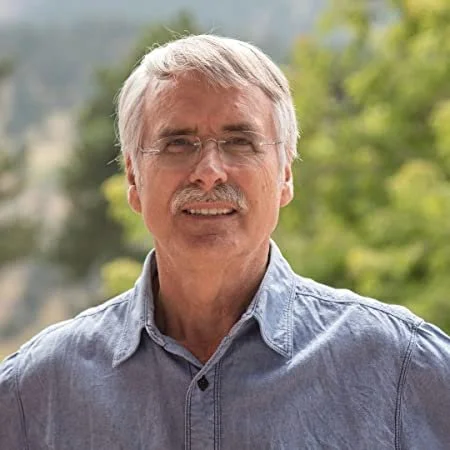
Kevin Trenberth - Nobel Prize-winning Climate Scientist - Author of “The Changing Flow of Energy Through the Climate System”
Kevin Trenberth is a Distinguished Scholar at the National Center of Atmospheric Research (NCAR) in Boulder and an Honorary Academic in the Department of Physics, Auckland University in Auckland, New Zealand. From New Zealand, he obtained his Sc. D. in meteorology in 1972 from Massachusetts Institute of Technology. He was a lead author of the 1995, 2001 and 2007 Scientific Assessment of Climate Change reports from the Intergovernmental Panel on Climate Change (IPCC), and shared the 2007 Nobel Peace Prize which went to the IPCC. He served from 1999 to 2006 on the Joint Scientific Committee of the World Climate Research Programme (WCRP), and chaired a number of committees for more than 20 years. He is the author of "The Changing Flow of Energy Through the Climate System"."I think certainly we're going to go through 1.5 degrees Celsius. I think the best estimate is probably somewhere around 2032 or thereabouts, the early 2030s. And at the current rate we're going, we'll go through 2 degrees Celsius in the mid to late 2050s. Now there's certainly time to slow that rate of increase down, and we could easily push the 2 degrees Celsius threshold out to 2070 or 2080. And with really strong efforts, we might be able to hold the overall global mean surface temperature increase to something maybe close to that. Although, whether it goes past it and then comes back a little bit to it, remains to be seen. So this relates to current policies and what nations are committed to doing.Certainly, if everyone's current policies and what they're committed to doing were in place, we would be in a much better situation than we actually are because a lot of those policies have been mentioned, but there are no implementation plans in many countries. There was a recent report I saw, which said that maybe two countries in the world, out of 190 something countries, are maybe on track to meeting their obligations on the COP26 meeting in Glasgow last year.”The Changing Flow of Energy Through the Climate Systemwww.ipcc.chhttps://www.cgd.ucar.edu/staff/trenbertwww.oneplanetpodcast.orgwww.creativeprocess.info

Highlights - Bertrand Piccard - Explorer, Founder, Solar Impulse Foundation: 1000+ Profitable Climate Solutions
“All the holders of solutions, all the innovators could be a startup or a big company, can submit their solution to us, and the solution will be analyzed by our group of experts. We have external and independent experts, about 370 of them, and they will observe three criteria: Is it a solution that exists today and is credible today? Because we don't want to have vague ideas for the future. We want to have solutions for today. Then it needs to be economically profitable for the company who produces it and for the consumer. The people buying the solution must save money, otherwise it's not profitable. And it needs to protect the environment, either because it's much better than anything else existing today, or because it's clearly a new business opportunity to protect the environment.If you have these criteria that are all three positive, then the experts will give a recommendation that we give the label, and then they will receive the label. The Solar Impulse Efficient Solution Label is currently the first and only label in the world that certifies the profitability of an environmentally friendly product.”Psychiatrist, aviator and explorer, Bertrand Piccard made history in 1999 by accomplishing the first ever non-stop round-the-world balloon flight, and a number of years later the first round-the-world solar-powered flight. Piccard has dedicated his life to demonstrating sustainable development opportunities. He is Founder and Chairman of the Solar Impulse Foundation, which has assembled a verified portfolio of over 1400 actionable and profitable climate solutions. As a pioneer of new ways of thinking that reconcile ecology and economy, he uses his exploration feats to motivate governments and industries to take action. He is a United Nations Goodwill Ambassador for the Environment and Special Advisor to the European Commission. He’s author of Réaliste, Changer d’Altitude, and other books.Solar Impulse Foundationbertrandpiccard.comSolar Impulse Solutions Explorer (1400+)RéalisteChanger d’altitudePhoto credit: Solar Impulse/ StefatouAbu Dhabi, UAE, March 1st, 2015, Solar Impulse 2 second test flight over Abu Dhabiwww.oneplanetpodcast.orgwww.creativeprocess.info

Bertrand Piccard - Explorer, Founder, Solar Impulse Foundation: 1000+ Profitable Climate Solutions
Psychiatrist, aviator and explorer, Bertrand Piccard made history in 1999 by accomplishing the first ever non-stop round-the-world balloon flight, and a number of years later the first round-the-world solar-powered flight. Piccard has dedicated his life to demonstrating sustainable development opportunities. He is Founder and Chairman of the Solar Impulse Foundation, which has assembled a verified portfolio of over 1400 actionable and profitable climate solutions. As a pioneer of new ways of thinking that reconcile ecology and economy, he uses his exploration feats to motivate governments and industries to take action. He is a United Nations Goodwill Ambassador for the Environment, Special Advisor to the European Commission, and is author of Réaliste, Changer d’Altitude, and other books.“All the holders of solutions, all the innovators could be a startup or a big company, can submit their solution to us, and the solution will be analyzed by our group of experts. We have external and independent experts, about 370 of them, and they will observe three criteria: Is it a solution that exists today and is credible today? Because we don't want to have vague ideas for the future. We want to have solutions for today. Then it needs to be economically profitable for the company who produces it and for the consumer. The people buying the solution must save money, otherwise it's not profitable. And it needs to protect the environment, either because it's much better than anything else existing today, or because it's clearly a new business opportunity to protect the environment.If you have these criteria that are all three positive, then the experts will give a recommendation that we give the label, and then they will receive the label. The Solar Impulse Efficient Solution Label is currently the first and only label in the world that certifies the profitability of an environmentally friendly product.”Solar Impulse Foundationbertrandpiccard.comSolar Impulse Solutions Explorer (1400+)RéalisteChanger d’altitudewww.oneplanetpodcast.orgwww.creativeprocess.infoPhoto credit: Philipp Böhlen

Highlights - Dr. Charles D. Koven - Lead Author - IPCC Report - Earth System Scientist
"How do we actually get deployment of clean technologies everywhere around the world with the urgency that's needed, at the scale that's needed is an incredibly daunting challenge. We do have a lot of the technologies. We haven't deployed them as fast as we would hope, but that seems to be changing. Solar is the fastest growing energy source in the world right now. We are starting to see movement in terms of the replacement of our light duty passenger vehicle transport system away from gasoline-powered cars and towards electric cars. So we're starting to see important movements happening.”Dr. Charles D. Koven is an Earth System Scientist, working in the Climate Sciences Department at the Lawrence Berkeley National Laboratory. He investigates feedbacks between climate and the carbon cycle. Dr. Koven’s primary research focus is on high-latitude feedbacks to climate change, and in particular the role of soil carbon in permafrost soils, and its response to changing climate. Dr. Koven is a lead author on the IPCC report as part of Working Group I, The Physical Science Basis of Climate Change.Charles D. Kovenwww.ipcc.chwww.oneplanetpodcast.orgwww.creativeprocess.info
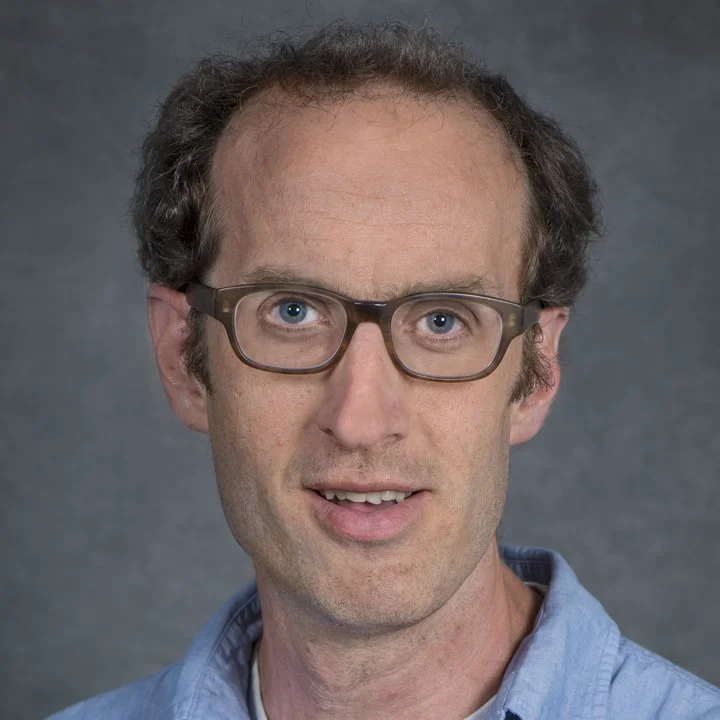
Dr. Charles D. Koven - Earth System Scientist - Lead Author on the IPCC Report
Dr. Charles D. Koven is an Earth System Scientist, working in the Climate Sciences Department at the Lawrence Berkeley National Laboratory. He investigates feedbacks between climate and the carbon cycle. Dr. Koven’s primary research focus is on high-latitude feedbacks to climate change, and in particular the role of soil carbon in permafrost soils, and its response to changing climate. Dr. Koven is a lead author on the IPCC report as part of Working Group I, The Physical Science Basis of Climate Change."How do we actually get deployment of clean technologies everywhere around the world with the urgency that's needed, at the scale that's needed is an incredibly daunting challenge. We do have a lot of the technologies. We haven't deployed them as fast as we would hope, but that seems to be changing. Solar is the fastest growing energy source in the world right now. We are starting to see movement in terms of the replacement of our light duty passenger vehicle transport system away from gasoline-powered cars and towards electric cars. So we're starting to see important movements happening.”Charles D. Kovenwww.ipcc.chwww.oneplanetpodcast.orgwww.creativeprocess.info
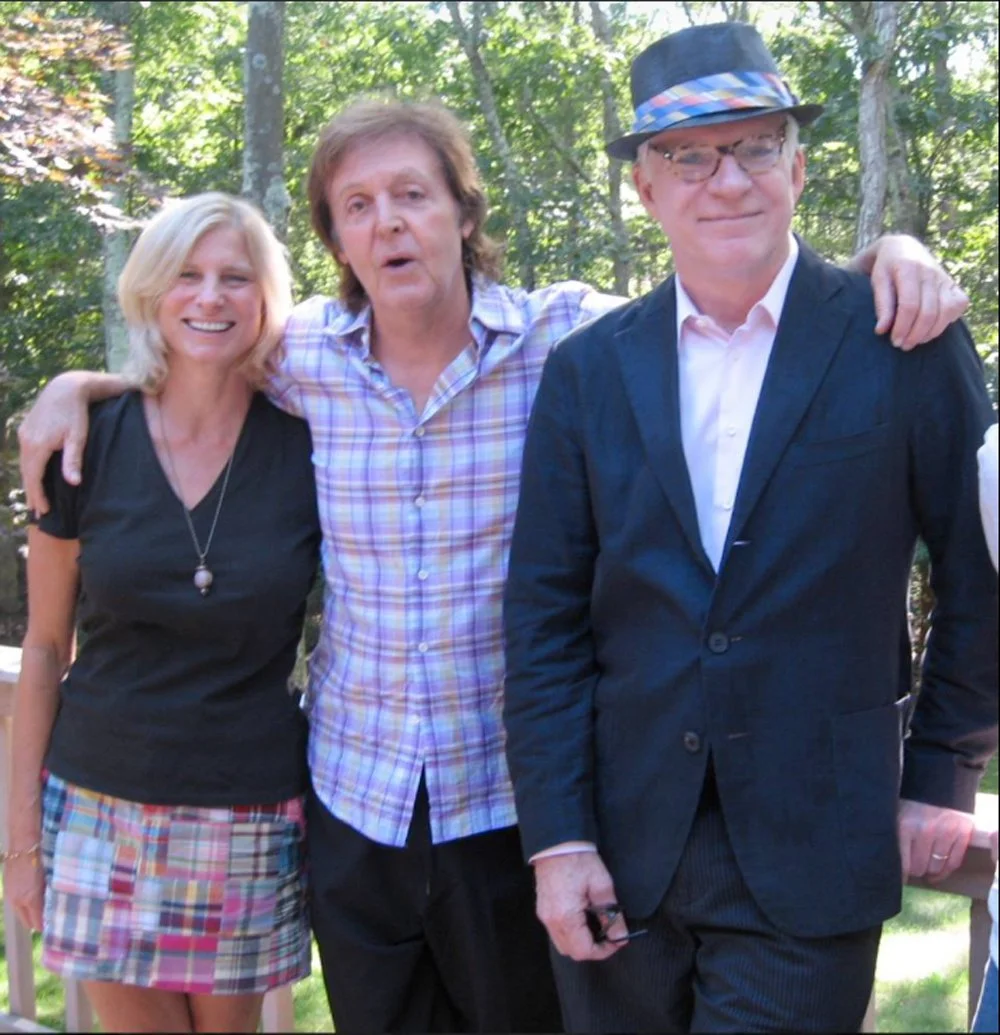
Highlights - Cynthia Daniels - Grammy - Emmy Award-winning Producer, Engineer, Composer
“One thing I do know is that over-compressed music is distorted music and distortion has an introduction of harmonic frequencies that absolutely create an inurement and inability to discern certain sounds and basically make people deaf. Bottom line, new music is over-compressed, ultra-distorted, and even at low levels, will create deafness. And it's a scientifically proven, and that means we've got this entire generation…Somehow I feel like with all the internet and the attention disorder that we discussed, we’re synthesizing into new human beings. ‘Something is happening here but, you don't know what it is.’ That's to quote an old Bob Dylan song. ‘...do you, Mr. Jones?’ And there's always something happening, and you don't know what it is.”Cynthia Daniels is a Grammy and Emmy award-winning producer, engineer and composer working extensively in film, television, and music. Her career has led her around the world, initially specializing in orchestral pop from Big Band Jazz to Broadway, and then crossing over into producing records for young and seasoned artists in the rock, country, and folk-rock world. She is owner and chief engineer at The Hamptons first world-class recording studio, MonkMusic. She has hosted or engineered sessions for Chaka Khan, Beyonce, Coldplay, Paul McCartney, Nile Rogers, Alec Baldwin, Julie Andrews, Sarah Jessica Parker, and Billy Porter.www.cynthiadaniels.netMonk Music Radiowww.creativeprocess.infowww.oneplanetpodcast.org
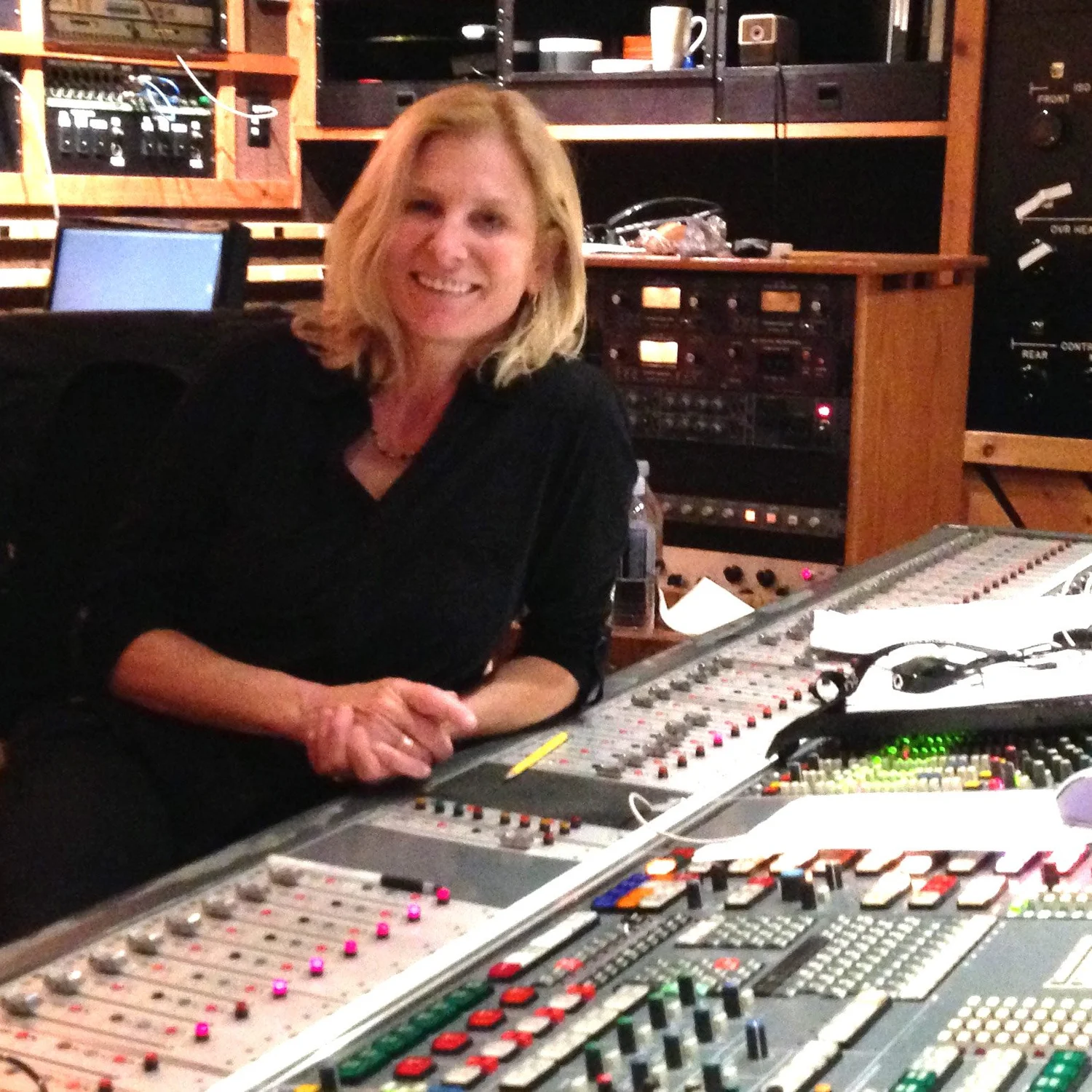
Cynthia Daniels - Grammy and Emmy Award-winning Producer, Engineer, Composer
Cynthia Daniels is a Grammy and Emmy award-winning producer, engineer and composer working extensively in film, television, and music. Her career has led her around the world, initially specializing in orchestral pop from Big Band Jazz to Broadway, and then crossing over into producing records for young and seasoned artists in the rock, country, and folk-rock world. She is owner and chief engineer at The Hamptons first world-class recording studio, MonkMusic. She has hosted or engineered sessions for Chaka Khan, Beyonce, Coldplay, Paul McCartney, Nile Rogers, Alec Baldwin, Julie Andrews, Sarah Jessica Parker, and Billy Porter.“One thing I do know is that over-compressed music is distorted music and distortion has an introduction of harmonic frequencies that absolutely create an inurement and inability to discern certain sounds and basically make people deaf. Bottom line, new music is over-compressed, ultra-distorted, and even at low levels, will create deafness. And it's a scientifically proven, and that means we've got this entire generation…Somehow I feel like with all the internet and the attention disorder that we discussed, we’re synthesizing into new human beings. ‘Something is happening here but, you don't know what it is.’ That's to quote an old Bob Dylan song. ‘...do you, Mr. Jones?’ And there's always something happening, and you don't know what it is.”www.cynthiadaniels.netMonk Music Radiowww.creativeprocess.infowww.oneplanetpodcast.org

Highlights - Neil Grimmer - Brand Pres. - SOURCE Global - Drinking Water Made from Sunlight and Air
“So at SOURCE, we have one core technology, which is called a SOURCE Hydropanel. If you look at it, it looks like a solar panel, but what it really does is it pulls the water vapor out of the air, and then condenses it into liquid water, which we then mineralize for health and taste, and then bring to the end customer - whether that's a village in a remote part of the world or an office building or a hospital that needs water - we plumb it directly in so that people can have access to clean, safe drinking water, and it's done completely off the grid.”Neil Grimmer is Brand President of SOURCE Global, innovator of the SOURCE Hydropanel, a renewable technology that uses the sun to transform water vapor in the air to clean, safe and perfectly mineralized drinking water. The Public Benefit Company’s mission is to bring perfect drinking water to every person, every place, and Neil leads its marketing, consumer packaged goods and last-mile water solutions for community, consumer and commercial customers in more than 50 countries.www.source.coHow it Workswww.source.co/team/neil-grimmerwww.oneplanetpodcast.orgwww.creativeprocess.info

Neil Grimmer - Brand President - SOURCE Global - Innovator of the SOURCE Hydropanel
Neil Grimmer is Brand President of SOURCE Global, innovator of the SOURCE Hydropanel, a renewable technology that uses the sun to transform water vapor in the air to clean, safe and perfectly mineralized drinking water. The Public Benefit Company’s mission is to bring perfect drinking water to every person, every place, and Neil leads its marketing, consumer packaged goods and last-mile water solutions for community, consumer and commercial customers in more than 50 countries.“So at SOURCE, we have one core technology, which is called a SOURCE Hydropanel. If you look at it, it looks like a solar panel, but what it really does is it pulls the water vapor out of the air, and then condenses it into liquid water, which we then mineralize for health and taste, and then bring to the end customer - whether that's a village in a remote part of the world or an office building or a hospital that needs water - we plumb it directly in so that people can have access to clean, safe drinking water, and it's done completely off the grid.”www.source.coHow it Workswww.source.co/team/neil-grimmerwww.oneplanetpodcast.orgwww.creativeprocess.info

Highlights - Roy Scranton - Author of “Learning to Die in the Anthropocene”
"Capitalism and technological innovation have brought a higher standard of living and greater health to the people of the world. That's inarguable. That's absolutely true. It's a combination of capitalism, imperialism, and technological innovation that have raised all boats in their way and increased standards of living and so on. People like Stephen Pinker make this argument. There are various kinds of Just So Stories about how we're all better off now because of capitalism and technological development than humans were in 1784. The thing that all these stories ignore, however, is two things. One is that this trendline parallels various other trend lines that measure our devastation and exploitation of the earth. This trendline is real, right? In terms of human wealth and general quality of life as measured in numerical terms. The costs for that are also manifest and have largely been externalized."Roy Scranton, is the award-winning author of five books, including Learning to Die in the Anthropocene: Reflections on the End of a Civilization, Total Mobilization: World War II and American Literature, and We’re Doomed. Now What? He has written for the NYTimes, Rolling Stone, The Nation, and other publications. He was selected for the 2015 Best American Science and Nature Writing, has been awarded a Whiting Fellowship, a Lannan Literary Fellowship, and other honors. He’s an Associate Professor of English at the University of Notre Dame, and is director of the Notre Dame Environmental Humanities Initiative.http://royscranton.netNotre Dame Environmental Humanities Initiative sites.nd.edu/ehum www.oneplanetpodcast.org www.creativeprocess.info
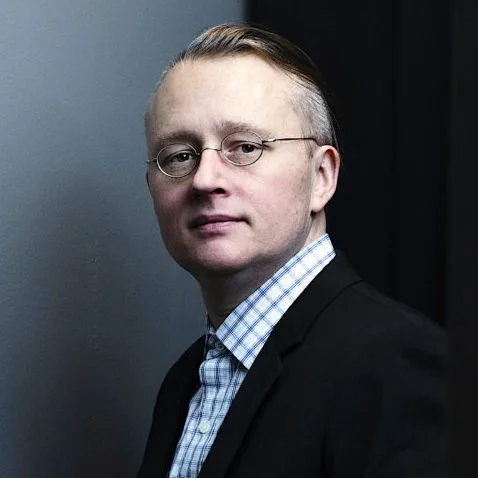
Roy Scranton - Author of “Learning to Die in the Anthropocene” - “We’re Doomed, Now What?”
Roy Scranton, is the award-winning author of five books, including Learning to Die in the Anthropocene: Reflections on the End of a Civilization, Total Mobilization: World War II and American Literature, and We’re Doomed. Now What? He has written for the NYTimes, Rolling Stone, The Nation, and other publications. He was selected for the 2015 Best American Science and Nature Writing, has been awarded a Whiting Fellowship, a Lannan Literary Fellowship, and other honors. He’s an Associate Professor of English at the University of Notre Dame, and is director of the Notre Dame Environmental Humanities Initiative."Capitalism and technological innovation have brought a higher standard of living and greater health to the people of the world. That's inarguable. That's absolutely true. It's a combination of capitalism, imperialism, and technological innovation that have raised all boats in their way and increased standards of living and so on. People like Stephen Pinker make this argument. There are various kinds of Just So Stories about how we're all better off now because of capitalism and technological development than humans were in 1784. The thing that all these stories ignore, however, is two things. One is that this trendline parallels various other trend lines that measure our devastation and exploitation of the earth. This trendline is real, right? In terms of human wealth and general quality of life as measured in numerical terms. The costs for that are also manifest and have largely been externalized."http://royscranton.netNotre Dame Environmental Humanities Initiative sites.nd.edu/ehum www.oneplanetpodcast.org www.creativeprocess.infoPhoto by Ola Kjelbye

Highlights - David A. Banks - Dir. of Globalization Studies - SUNY Albany
"All of the technologies necessary to solve a great deal of problems have already been done. The issue is having the political will to make them actually happen. Capital won't do that because it's more advantageous financially to have the problem continually move and then just kind of fix it here and then move it over there and then fix it over there and then move it back over here.”David A. Banks is the Director of Globalization Studies at the University at Albany, SUNY and the author of the forthcoming book The City Authentic: How the Attention Economy Builds Urban America published by University of California Press. He is also a delegate to the Troy Area Labor Council and the co-host of the podcast Ironweeds.www.davidabanks.orgwww.e-flux.com/architecture/software/337954/where-do-you-live/ https://reallifemag.com/true-ish-grit/ www.reallifemag.com/new-haunts/ The attention economy of authentic cities https://doi.org/10.1080/09654313.2021.1882947https://ironweeds.podbean.com
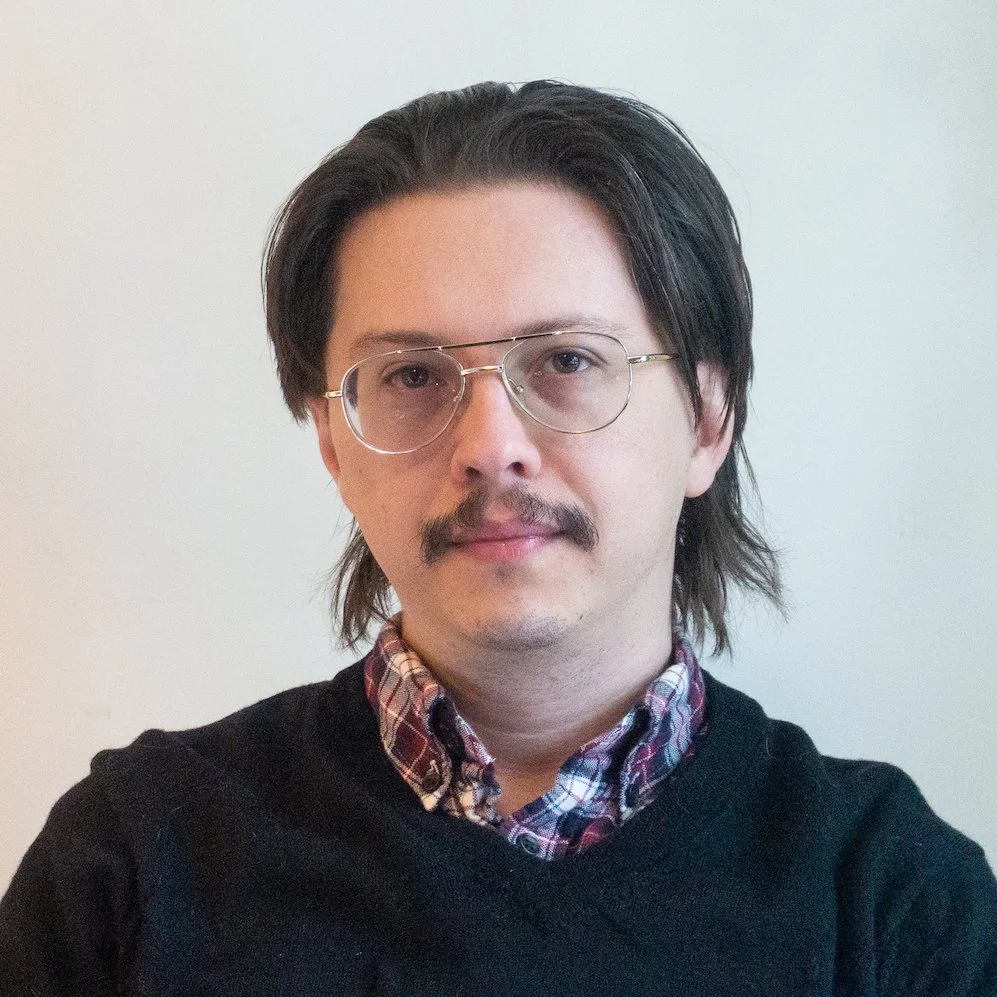
David A. Banks - Dir. of Globalization Studies - SUNY Albany - Author of “The City Authentic”
David A. Banks is the Director of Globalization Studies at the University at Albany, SUNY and the author of the forthcoming book The City Authentic: How the Attention Economy Builds Urban America published by University of California Press. He is also a delegate to the Troy Area Labor Council and the co-host of the podcast Ironweeds."All of the technologies necessary to solve a great deal of problems have already been done. The issue is having the political will to make them actually happen. Capital won't do that because it's more advantageous financially to have the problem continually move and then just kind of fix it here and then move it over there and then fix it over there and then move it back over here.”www.davidabanks.orgwww.e-flux.com/architecture/software/337954/where-do-you-live/ https://reallifemag.com/true-ish-grit/ www.reallifemag.com/new-haunts/ The attention economy of authentic cities https://doi.org/10.1080/09654313.2021.1882947https://ironweeds.podbean.com
Highlights - KC Legacion on Degrowth, Technology and Social Media
"There's actually an entire subfield of degrowth scholarship that's called degrowth and technology, which looks at technology's role in these sociological transformations pursued by degrowthers.My master's research focuses on looking at social media through a degrowth lens. Specifically, I'm using concepts in the literature called "conviviality", which was first formulated by Ivan Illich, an Austrian-born priest, critic, and philosopher who wrote a number of texts in the 1970s that sharply analyzed industrial ways of life...I collected data on six social media, Facebook, TikTok, Twitter, Decidim, Mastodon, and iNaturalist, and I'm using this lens of conviviality to analyze the different components of social media.”KC Legacion is a Master of Environmental Studies candidate at the University of Pennsylvania. His research presents a reimagined understanding of social media through the lens of degrowth—this project will culminate in a short film set to premiere in September of this year. Outside of their research, KC is a team member of the web collective degrowth.info and a member of a nascent housing cooperative in West Philadelphia.www.degrowth.infowww.kclegacion.comwww.decidim.orgwww.joinmastodon.orgwww.iNaturalist.orgwww.oneplanetpodcast.orgwww.creativeprocess.info
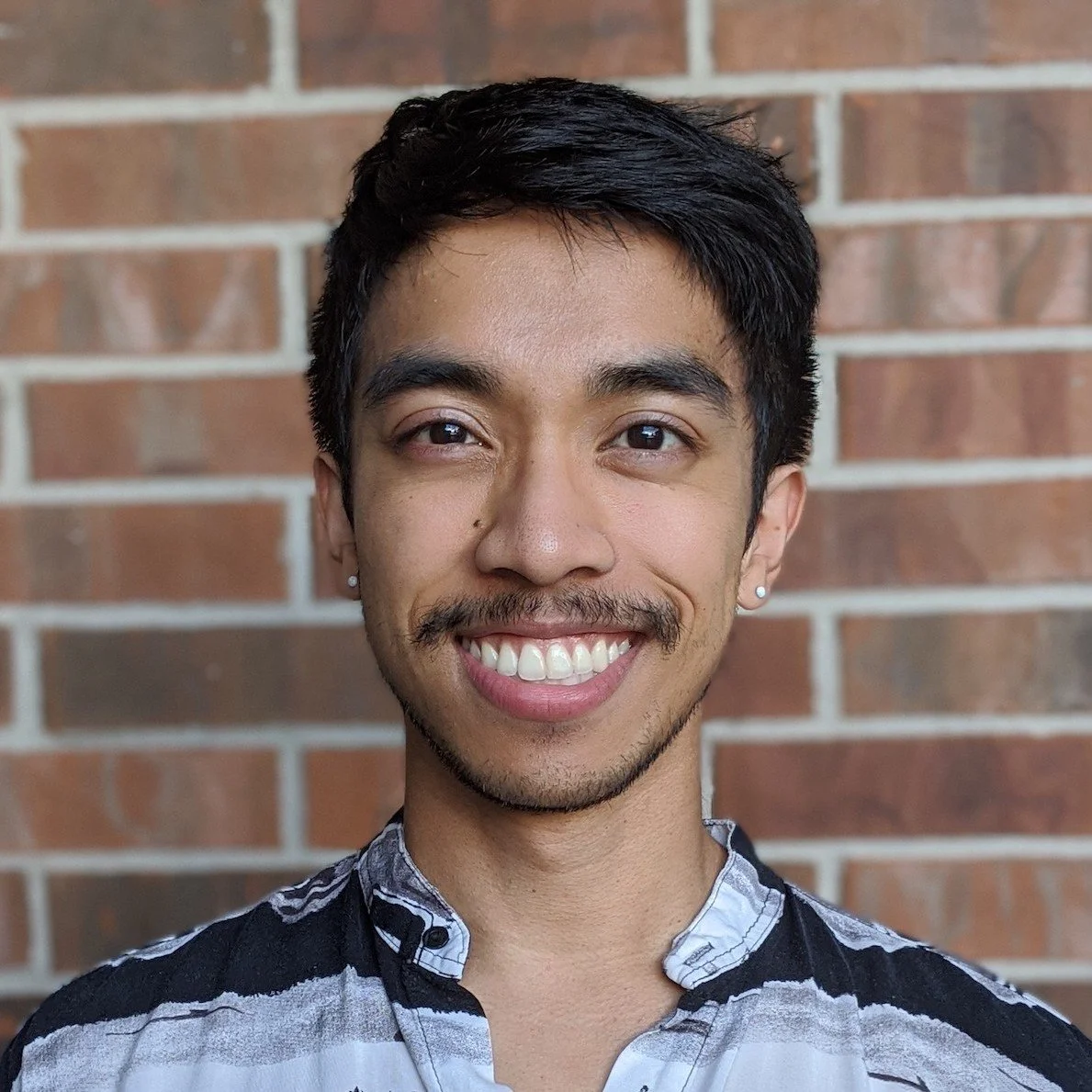
KC Legacion on Degrowth, Technology and Social Media
KC Legacion is a Master of Environmental Studies candidate at the University of Pennsylvania. His research presents a reimagined understanding of social media through the lens of degrowth—this project will culminate in a short film set to premiere in September of this year. Outside of their research, KC is a team member of the web collective degrowth.info and a member of a nascent housing cooperative in West Philadelphia."There's actually an entire subfield of degrowth scholarship that's called degrowth and technology, which looks at technology's role in these sociological transformations pursued by degrowthers.My master's research focuses on looking at social media through a degrowth lens. Specifically, I'm using concepts in the literature called "conviviality", which was first formulated by Ivan Illich, an Austrian-born priest, critic, and philosopher who wrote a number of texts in the 1970s that sharply analyzed industrial ways of life...I collected data on six social media, Facebook, TikTok, Twitter, Decidim, Mastodon, and iNaturalist, and I'm using this lens of conviviality to analyze the different components of social media.”www.degrowth.infowww.kclegacion.comwww.decidim.orgwww.joinmastodon.orgwww.iNaturalist.orgwww.oneplanetpodcast.orgwww.creativeprocess.info

Highlights - Chris Funk - Dir., Climate Hazards Center - Author of “Drought, Flood, Fire…”
“I guess the work that we're doing here at the Climate Hazards Center is trying to build out the science to cope with a two-degree world. And I think that we can do that. It's not going to be easy, but I think that's definitely within our capabilities, and it is already making human beings be smarter together in very empowering ways. And these are examples of people in Boulder, Colorado getting ready for the next big flood event and having conversations between the National Weather Service and local communities, or me on a zoom call at seven in the morning with my friends in East Africa as they're getting ready to cope with the next extreme. There are great examples of radio clubs in Niger who are working with their meteorological agencies and local farming communities that are pulling data that we're producing here in Santa Barbara, precipitation estimates, but then using them to decide whether they should fertilize their millet crops or not. And so there are ways that we can counter climate hazards and weather hazards by being smarter.”Chris Funk is the Director of the Climate Hazards Center (CHC) at UC Santa Barbara. He works with an international team of Earth scientists to inform weather and famine-related disaster responses. Chris studies climate and climate change while also developing improved data sets and monitoring/prediction systems. He’s the author of Drought, Flood, Fire: How Climate Change Contributes to Recent Catastrophes and co-author with Shrad Shukla of Drought Early Warning and Forecasting. While his research interests are quite diverse, a central theme uniting Chris’ work is developing both the technical/scientific resources and the conceptual frameworks that will help us cope with increasingly dangerous climate and weather extremes.www.chc.ucsb.eduwww.chc.ucsb.edu/people/chris-funkDrought, Flood, Fire: www.cambridge.org/core/books/drought-flood-fire/96E0EB1519F5175B68079D294D0B0E93www.oneplanetpodcast.org www.creativeprocess.info

Chris Funk - Director, Climate Hazards Center - Author of “Drought, Flood, Fire…”
Chris Funk is the Director of the Climate Hazards Center (CHC) at UC Santa Barbara. He works with an international team of Earth scientists to inform weather and famine-related disaster responses. Chris studies climate and climate change while also developing improved data sets and monitoring/prediction systems. He’s the author of Drought, Flood, Fire: How Climate Change Contributes to Recent Catastrophes and co-author with Shrad Shukla of Drought Early Warning and Forecasting. While his research interests are quite diverse, a central theme uniting Chris’ work is developing both the technical/scientific resources and the conceptual frameworks that will help us cope with increasingly dangerous climate and weather extremes.“I guess the work that we're doing here at the Climate Hazards Center is trying to build out the science to cope with a two-degree world. And I think that we can do that. It's not going to be easy, but I think that's definitely within our capabilities, and it is already making human beings be smarter together in very empowering ways. And these are examples of people in Boulder, Colorado getting ready for the next big flood event and having conversations between the National Weather Service and local communities, or me on a zoom call at seven in the morning with my friends in East Africa as they're getting ready to cope with the next extreme. There are great examples of radio clubs in Niger who are working with their meteorological agencies and local farming communities that are pulling data that we're producing here in Santa Barbara, precipitation estimates, but then using them to decide whether they should fertilize their millet crops or not. And so there are ways that we can counter climate hazards and weather hazards by being smarter.”www.chc.ucsb.eduwww.chc.ucsb.edu/people/chris-funkDrought, Flood, Fire:www.cambridge.org/core/books/drought-flood-fire/96E0EB1519F5175B68079D294D0B0E93www.oneplanetpodcast.org www.creativeprocess.info