
Tech, Innovation & Society - The Creative Process: Technology, AI, Software, Future, Economy, Science, Engineering & Robotics Interviews
308 episodes — Page 2 of 7

S14 Ep 1089On Regulating the Attention Market & Prevent Algorithmic Emotional Governance w/ FABIEN GANDON & FRANCK MICHEL
“The fact that technologies are being used and combined to capture our attention is concerning. This is currently being done with no limitations and no regulations. That's the main problem. Attention is a very private resource. No one should be allowed to extract it from us by exploiting what we know about the human mind and how it functions, including its weaknesses. We wrote this paper as a call to regulate the attention market and prevent algorithmic emotional governance.”Computer scientist Fabien Gandon and research engineer Franck Michel are experts in AI, the Web, and knowledge systems. Fabien is a senior researcher at Inria (Institut national de recherche en sciences et technologies du numérique), specializing in the Semantic Web, while Franck focuses on integrating and sharing data through Linked Open Data technologies.Together, they’ve written Pay Attention: A Call to Regulate the Attention Market and Prevent Algorithmic Emotional Governance. Their research unpacks how digital platforms are monetizing our attention at an unprecedented scale—fueling misinformation and division and even threatening democracy and affecting our emotions and well-being.Episode Websitewww.creativeprocess.info/podInstagram:@creativeprocesspodcast

S14 Ep 1088PAY ATTENTION: A Call to Regulate the Attention Market & Prevent Algorithmic Emotional Governance
AI competes for our attention because our attention has been commodified. As our entire lives revolve more and more around the attention economy, what can we do to restore our autonomy, reclaim our privacy, and reconnect with the real world.Computer scientist Fabien Gandon and research engineer Franck Michel are experts in AI, the Web, and knowledge systems. Fabien is a senior researcher at Inria (Institut national de recherche en sciences et technologies du numérique), specializing in the Semantic Web, while Franck focuses on integrating and sharing data through Linked Open Data technologies.Together, they’ve written Pay Attention: A Call to Regulate the Attention Market and Prevent Algorithmic Emotional Governance. Their research unpacks how digital platforms are monetizing our attention at an unprecedented scale—fueling misinformation and division and even threatening democracy and affecting our emotions and well-being.“The fact that technologies are being used and combined to capture our attention is concerning. This is currently being done with no limitations and no regulations. That's the main problem. Attention is a very private resource. No one should be allowed to extract it from us by exploiting what we know about the human mind and how it functions, including its weaknesses. We wrote this paper as a call to regulate the attention market and prevent algorithmic emotional governance.”Episode Websitewww.creativeprocess.info/podInstagram:@creativeprocesspodcast

S14 Ep 1083Are We Witnessing the Decline of the American Empire? RICHARD D. WOLFF - Highlights
“The position of the United States in the world, economically and politically, is the weakest it has been in my lifetime. I was born in the middle of the 20th century, so I have watched the rise of the American empire and the success of American capitalism in the second half of the 20th century. However, over the last 20 years, I have watched that turn into its opposite—a decline. The decline is visible everywhere. Unless you live in the United States and consume mainstream media, there is a level of denial that will be recorded historically as one of the great examples, not just of a declining empire, which typically has people who cannot face it and who refuse to see it. You can go to Great Britain today and find quite a few people who think we still have the British Empire, even though everyone who isn't crazy knows that is silly. But we are earlier in the decline phase than the British are; they have had to endure it for a century while we have just had to do it for a couple of decades. It is fresh.”Richard D. Wolff is the co-founder of Democracy at Work and host of their nationally syndicated show Economic Update. He was formerly professor of economics at the University of Massachusetts Amherst, Yale University, the City College of the City University of New York, and the University of Paris Sorbonne. Currently, Wolfe is a visiting professor in the Graduate Program in International Affairs of the New School University in New York City.Episode Websitewww.creativeprocess.info/podInstagram:@creativeprocesspodcast
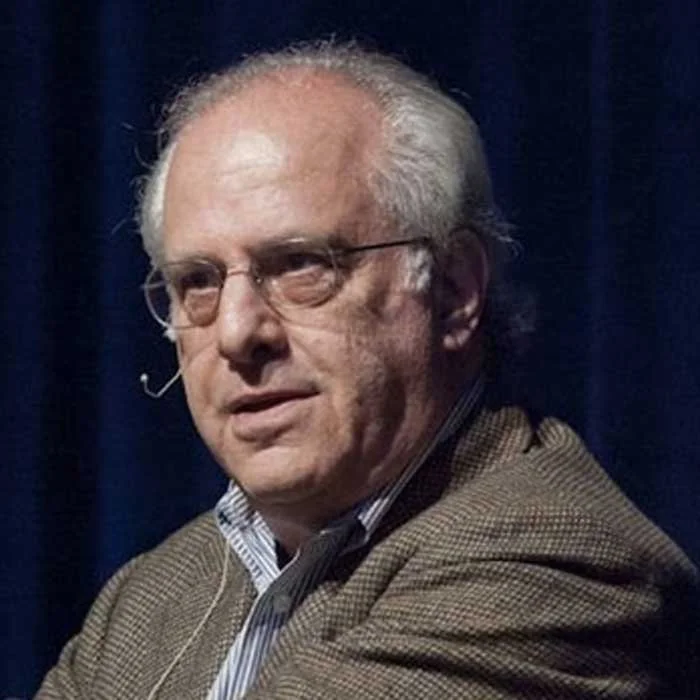
S14 Ep 1082Understanding Capitalism with RICHARD D. WOLFF - Co-founder of Democracy at Work
When capitalism stops serving the needs of the people, what can we do to create a fairer more equitable society? What can we learn from China's success and economic growth? Are we witnessing the decline of the American Empire and what comes next?Richard D. Wolff is the co-founder of Democracy at Work and host of their nationally syndicated show Economic Update. He was formerly professor of economics at the University of Massachusetts Amherst, Yale University, the City College of the City University of New York, and the University of Paris Sorbonne. Currently, Wolfe is a visiting professor in the Graduate Program in International Affairs of the New School University in New York City.“The position of the United States in the world, economically and politically, is the weakest it has been in my lifetime. I was born in the middle of the 20th century, so I have watched the rise of the American empire and the success of American capitalism in the second half of the 20th century. However, over the last 20 years, I have watched that turn into its opposite—a decline. The decline is visible everywhere. Unless you live in the United States and consume mainstream media, there is a level of denial that will be recorded historically as one of the great examples, not just of a declining empire, which typically has people who cannot face it and who refuse to see it. You can go to Great Britain today and find quite a few people who think we still have the British Empire, even though everyone who isn't crazy knows that is silly. But we are earlier in the decline phase than the British are; they have had to endure it for a century while we have just had to do it for a couple of decades. It is fresh.”Episode Websitewww.creativeprocess.info/podInstagram:@creativeprocesspodcast

S14 Ep 1080Who Defends the Defenders? UN Special Rapporteur on Environmental Defenders MICHEL FORST
“My mandate focuses on the protection of those trying to protect the planet. Protection of defenders is my main topic. When I'm speaking to states or companies, it's always related to cases of defenders facing threats, attacks, or penalization by companies or governments, like the recent case of Paul Watson (founder of Sea Shepherd) in Denmark… When I travel to places like Peru, Colombia, or Honduras and meet Indigenous people, I realize they have a relationship with nature that we don't have anymore. They express that the food they eat, the water they drink, and the air they breathe goes beyond just air and food; it represents what they call Pachamama or Mother Earth. This is a cosmovision shared across various communities, not only in Latin America but globally.”Michel Forst is a prominent human rights advocate and the UN Special Rapporteur on Environmental Defenders under the Aarhus Convention. He previously served as the Special Rapporteur on Human Rights Defenders (2014–2020) and has worked with Amnesty International, UNESCO, and the Global Alliance of National Human Rights Institutions, championing protections for activists worldwide. Forst’s career is marked by his unwavering commitment to defending those at risk for advancing justice, environmental protection, and human rights globally.Episode Websitewww.creativeprocess.info/podInstagram:@creativeprocesspodcast

S14 Ep 1078AI & The Limits to Growth w/ Co-President of The Club of Rome PAUL SHRIVASTAVA
“I think AI is sort of inevitable in some ways. It is not very intelligent right now; it is probably closer to artificial stupidity, but it's a question of time before it becomes smarter and smarter. We need to tackle the right to use question and the value question now as it is developing. It can amplify both the positive possibilities as well as the negative consequences, and we want to make sure that it benefits the largest number of people on Earth.And systems themselves. Are there guidelines? Are there principles? The Club of Rome group has subgroups who are looking at AI, proposing a constitution for AI, and trying to influence its development, understanding fully well that almost $300 billion has been poured into AI already by the United States venture capital, and it is going to start having impacts. We can't stop it, but while the train is moving, we are trying to make sure some guardrails get into place that everybody plays by. All these transformations cannot be done one by one; they have to happen together in order to have an overall impact, and that is the challenge that not a single organization like the Club of Rome or a university or somebody can accomplish alone. All of us need to get involved.”Paul Shrivastava is Co-President of The Club of Rome and a Professor of Management and Organisations at Pennsylvania State University. He founded the UNESCO Chair for Arts and Sustainable Enterprise at ICN Business School, Nancy, France, and the ONE Division of the Academy of Management. He was the Executive Director of Future Earth, where he established its secretariat for global environmental change programs, and has published extensively on both sustainable management and crisis management.Episode Websitewww.creativeprocess.info/podInstagram:@creativeprocesspodcast

Elon Musk, Putin's Russia, Murdoch's Fox News: How Billionaires Shape Our World with DARRYL CUNNINGHAM
What influence do billionaires have on politics, journalism, and the technology that shapes our lives? What drives people to seek absolute power, and how can we hold them accountable?Darryl Cunningham is a cartoonist and author of Science Tales, Psychiatric Tales, The Age of Selfishness, and Billionaires: The Lives of the Rich and Powerful. Cunningham is also well-known for his comic strips, which have been featured on the websites Forbidden Planet and Act-i-vate collective, among others. others. His more recent work includes a graphic novel on Elon Musk, titled Elon Musk: Investigation into a New Master of the World.“It's far too early to say how AI is going to shake out. A lot of it will come to nothing, like many new technologies. VR came along, and people thought it would be a big thing, but it became a niche for a few kinds of people. AI might find a place ultimately, but it has to come from people. We have to make choices. Will people be happy with processed movies done with a few keywords, or will they want to hear the actual voice of a human being? In the end, it's up to the audience, and that's us. We will shape it.”Episode Website with Feature Articlewww.creativeprocess.info/podInstagram:@creativeprocesspodcast
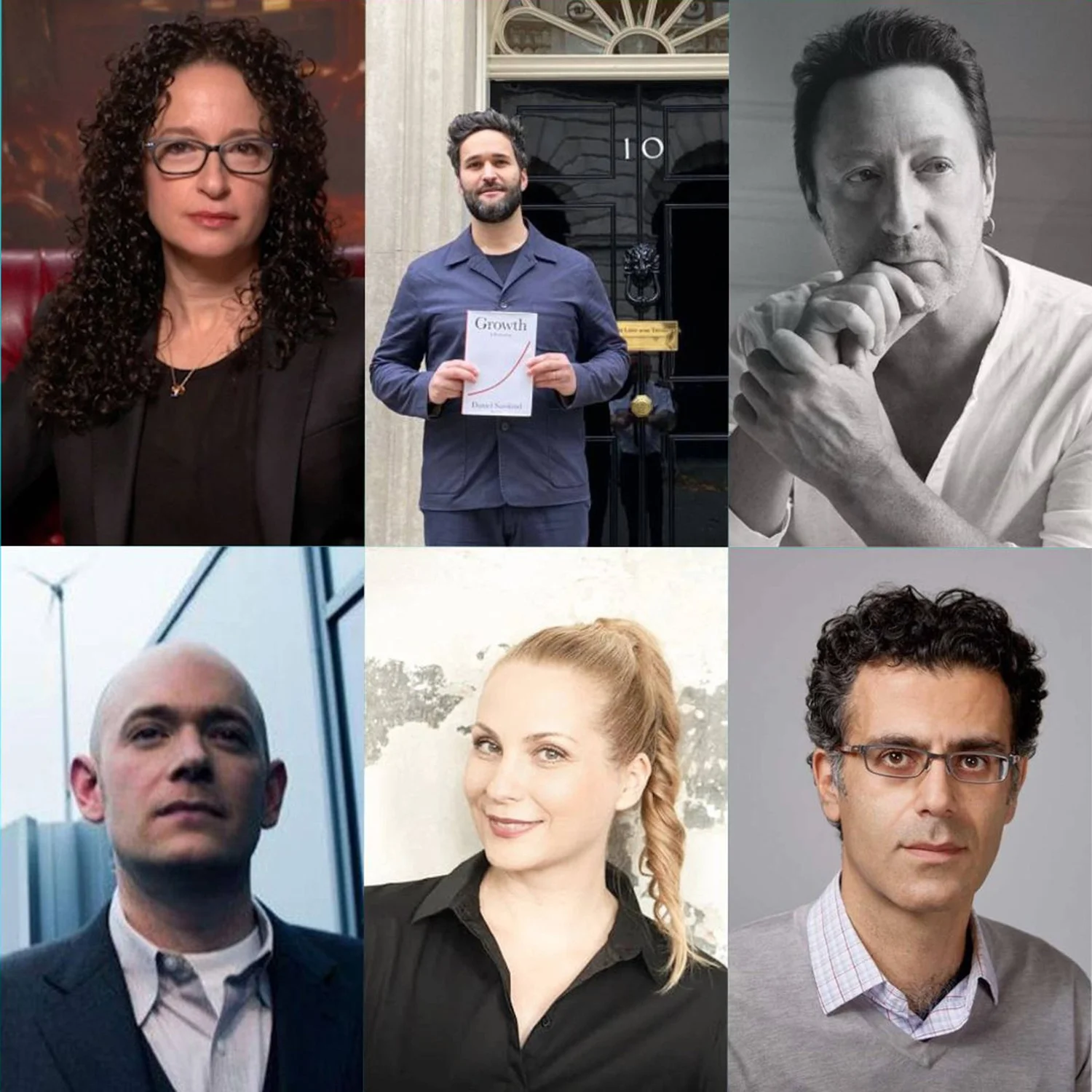
S13 Ep 1066AI, Technology, Art & Culture - Artists, Philosophers, Economists & Scientists discuss the Future
How can we shape technology’s impact on society? How do social media algorithms influence our democratic processes and personal well-being? Can AI truly emulate human creativity? And how will its pursuit of perfection change the art we create?Daniel Susskind (Economist · Oxford & King’s College London · Author of Growth: A Reckoning · A World Without Work) shares insights on the nature of growth driven by technological progress. He contends that while technology can accelerate growth, its impacts can be consciously directed to reduce environmental damage and social inequalities. According to Susskind, the current trajectory of technological progress needs reevaluation to mitigate potential adverse effects on future working lives.Arash Abizadeh (Professor of Political Science · McGill University Author of Hobbes and the Two Faces of Ethics · Associate Editor · Free & Equal) explores the ethical tensions between democratic needs and commercial imperatives of social media platforms. He highlights how algorithms designed to maximize engagement often foster outrage and fear, contrasting these commercial objectives with the requirements for a healthy democratic public sphere.Debora Cahn (Creator & Executive Producer of Netflix’s The Diplomat starring Keri Russell & Rufus Sewell · Exec. Producer Homeland · Grey’s Anatomy · Vinyl · Co-Producer The West Wing) toggles between apprehension and optimism about emerging technologies like AI. She reflects on her father's experience with nuclear technology and ponders the unpredictable impacts of AI, drawing parallels with the unforeseen transformation of the internet.Julia F. Christensen (Neuroscientist - Author of The Pathway To Flow: The New Science of Harnessing Creativity to Heal and Unwind the Body & Mind) examines the rise of AI and its influence on aesthetics in the arts. She argues that technology drives creators towards superficial beauty conforming to popular standards, thereby cluttering the mind and fostering an obsession with perfection fueled by dopamine signals.Julian Lennon (Singer-songwriter · Documentary Filmmaker · Founder of The White Feather Foundation Photographer/Author of Life’s Fragile Moments) discusses AI's potential in the medical field, highlighting recent advancements that are paving the way for novel treatments and cures. While acknowledging the importance of copyright issues, he remains optimistic about AI’s positive impact on healthcare.Brian David Johnson (Author of The Future You: How to Create the Life You Always Wanted · Director of the Arizona State University’s Threatcasting Lab Futurist in Residence · ASU’s Center for Science & the Imagination) emphasizes the importance of maintaining a human-centric approach to technology. He questions the purpose behind technological advancements, urging developers to always consider the human impact and clarify their objectives.To hear more from each guest, listen to their full interviews.Episode Websitewww.creativeprocess.info/podInstagram:@creativeprocesspodcast

Photographer & Musician JULIAN LENNON on AI, Art, Empathy & Creativity
“I think a lot of joy comes from helping others. One of the things that I've been really focusing on is finding that balance in life, what’s real and what’s true and what makes you happy. How can you help other people feel the same and have a happier life? I think whatever that takes. So if that's charity, if that's photography, if that's documentary, if that's music, and I can do it, then I'm going to do it.From traveling, especially in Ethiopia, Kenya, and even South America, we just see these scenarios and situations where they don't have enough support or finances. Anything I’m involved in, a good percentage goes to The White Feather Foundation. From what I witnessed, I just wanted to be able to help. My best teacher ever was Mum because I watched her live through life with dignity, grace, respect, and empathy. To me, those are some of the key things that are most important in living life. I think you have to love everybody and yourself. Respect is a real key issue, not only for people but for this world that we live in, Mother Earth. It's of key importance that we honor and respect this beautiful little blue ball that we live on.”Julian Lennon is a Grammy-nominated singer-songwriter, photographer, documentary filmmaker, and NYTimes bestselling author of the Touch the Earth children’s book trilogy. This autumn, Whispers – A Julian Lennon Retrospective is being presented at Le Stanze della Fotografia, culminating in the publication of Life’s Fragile Moments, his first photography book. It features a compilation of images that span over two decades of Lennon's unique life, career, adventures, and philanthropy. He founded The White Feather Foundation in 2007, whose key initiatives are education, health, conservation, and the protection of indigenous cultures. He was the executive producer of Kiss the Ground and other environmental documentaries and was named a Peace Laureate by UNESCO in 2020.www.creativeprocess.infowww.oneplanetpodcast.orgIG www.instagram.com/creativeprocesspodcastPhoto credit: © 2024, Julian Lennon. All rights reserved.Life’s Fragile Moments, published by teNeues, www.teneues.com, August 2024. 27,5 x 34 cm |10 5/6 x 13 3/8 in., 240 pages, Hardcover, approx. 200 color photographs, texts English & German ISBN: 978-3-96171-614-2

Connecting with the Earth: Changemakers, Scientists, Writers & Educators on Regenerating Earth’s Ecosystems
How and when will we transition to a clean energy future? How have wetlands become both crucial carbon sinks and colossal methane emitters in a warming world? What lessons can we learn from non-human animals about living in greater harmony with nature?Richard Black (Author of The Future of Energy · Fmr. BBC Environment Correspondent · Director of Policy & Strategy · Global Clean Energy Thinktank · Ember) addresses the substantial economic impact of fossil fuel subsidies, noting that the actual costs, when including climate change damages, reach up to six or seven trillion dollars annually, overshadowing the relatively small climate finance provided by Western governments.Euan Nisbet (Earth Systems Scientist · Royal Holloway University of London) explores the role of methane in the atmosphere, its historical importance in maintaining the planet’s temperature, and its current contribution to global warming. He explains the sources of methane, including natural processes and human activities, and discusses recent trends and challenges tied to rising methane levels.Julie Pierce (Vice President of Strategy & Planning · Minnesota Power) highlights her company's significant strides in sustainability. She outlines Minnesota Power's decade-long journey towards decarbonization, noting that they have transitioned from a 95% fossil-based portfolio to sourcing 50-60% of their energy from clean sources, including wind, solar, and hydropower.Arash Abizadeh (Professor of Political Science · McGill University Author ofHobbes and the Two Faces of Ethics · Associate Editor · Free & Equal) reflects on the future we are leaving for the next generations. He underscores the social and political challenges of ensuring that the technologies and resources needed to adapt to climate change are distributed equitably across all societies.Daniel Susskind(Economist · Oxford & King’s College London · Author of Growth: A Reckoning · A World Without Work) discusses the critical role of technological progress in driving economic growth. He advocates for a shift toward technologies that not only enhance prosperity but also protect the environment and promote social equity.Ian Robertson(Author of How Confidence Works: The New Science of Self-belief · Co-Director of the Global Brain Health Institute · Co-Leader of The BrainHealth Project) calls for young people to connect with nature and develop mastery over their minds. He envisions a future where individuals can access the joy of being conscious, embodied beings in a healthy, natural world.Ingrid Newkirk(Founder & President of PETA · People for the Ethical Treatment of Animals) emphasizes the shared traits between humans and other animals, advocating for a compassionate approach to all living beings. She urges listeners to recognize the personhood in animals and to treat them with respect and empathy.This episode brings together diverse voices discussing critical environmental and ethical issues. From the economic burden of fossil fuel subsidies to the equitable distribution of climate adaptation resources, the importance of technological progress, and the need for the ethical treatment of animals.To hear more from each guest, listen to their full interviews.www.creativeprocess.infowww.oneplanetpodcast.orgIG www.instagram.com/creativeprocesspodcast

AI & The Pathway to Flow with Neuroscientist, Fmr. Dancer DR. JULIA CHRISTENSEN
“So, syncopation is now the big thing. It will induce people to groove and to like your music more. So let's have a lot of syncopation inside your music and you'll sell a lot. By chasing superficial beauty, which is what AI gives us at the moment, it aims for perfect outcomes. Not that anything these models produce is perfect, because how do you evaluate perfection? But they are based on the data that most people want to see again. That's extremely important to bear in mind. When you say 'cluttered mind,' it's actually also a cluttered brain in terms of the neurotransmitters out and about. As we strive for that perfect coding and external beauty, our brain releases dopamine signals. Dopamine is good; it's a learning signal to the brain, but we need to know how to use it. Constantly swiping our phone and getting this beauty into our brain via our eyes or via the syncopations in the music teaches our mind to seek that all the time because that's a dopamine signal. It's a learning signal. So, striving after these shapes and sound cues repeatedly clutters your brain. That's why your mind is full.”Dr. Julia F. Christensen is a Danish neuroscientist and former dancer currently working as a senior scientist at the Max Planck Institute for Empirical Aesthetics in Germany. She studied psychology, human evolution, and neuroscience in France, Spain and the UK. For her postdoctoral training, she worked in international, interdisciplinary research labs at University College London, City, University London and the Warburg Institute, London and was awarded a postdoctoral Newton International Fellowship by the British Academy. Her new book The Pathway to Flow is about the science of flow, why our brain needs it and how to create the right habits in our brain to get it.https://www.linkedin.com/in/dr-julia-f-christensen-36539a144https://www.instagram.com/dr.julia.f.christensen?igsh=cHZkODgxczJqZmxlwww.creativeprocess.infowww.oneplanetpodcast.orgIG www.instagram.com/creativeprocesspodcast
Tech, The Future of Energy & Navigating Our Environmental Future
Have we entered what Earth scientists call a “termination event,” and what can we do to avoid the worst outcomes? How can we look beyond GDP and develop new metrics that balance growth with human flourishing and environmental well-being? How can the 15-minute city model revolutionize urban living, enhance health, and reduce our carbon footprint?Euan Nisbet (Earth Systems Scientist - Royal Holloway University of London) analyzes historical patterns that point to a potential termination event and emphasizes the urgency of addressing abrupt climate changes.Daniel Susskind (Economist - Oxford & King’s College London - Author of Growth: A Reckoning - A World Without Work) discusses the economic trade-offs involved in pursuing net-zero emissions and the growing public discontent with the costs.Carlos Moreno (Originator of the 15-Minute City concept - Author of The 15-Minute City: A Solution to Saving Our Time & Our Planet) explores how the 15-minute city model can enhance urban living, promote local commerce, and reduce our carbon footprint.Richard Black (Author of The Future of Energy - Former BBC Environment Correspondent - Director of Policy & Strategy - Global Clean Energy Thinktank - Ember) explains the future energy landscape, critiques the contributions of oil and gas companies to the clean energy transition, and emphasizes the need for a realistic clean energy transition.Carissa Carter (Academic Director at Stanford's d.school - Co-author of Assembling Tomorrow: A Guide to Designing a Thriving Future) highlights the importance of people critically interpreting climate data and understanding its emotional impact.Gordon Lambert (World Economic Forum Global Council - Energy and Sustainability - Former Member of Alberta’s Climate Change Advisory Panel) shares his personal reflections on the harmony of nature and the necessity of aligning business strategies with renewable energy goals.Dr. Ben Shofty (Functional Neurosurgeon - Professor - University of Utah) discusses the health benefits of exposure to nature and its positive impact on well-being and creativity.Julia F. Christensen (Neuroscientist - Author of The Pathway To Flow: The New Science of Harnessing Creativity to Heal and Unwind the Body & Mind) explores the neuroscience behind human interaction with nature and its restorative effects on the brain.The episode examines critical issues surrounding climate change, economic growth, and urban development. Euan Nisbet highlighted the urgency of addressing abrupt climate changes, while Daniel Susskind shed light on the economic complexities of achieving net-zero emissions. Carlos Moreno presented the revolutionary concept of the 15-minute city, and Richard Black emphasized the need for a realistic clean energy transition. Carissa Carter underscored the importance of understanding and visualizing climate data, while Gordon Lambert, Dr. Julia F. Christensen, and Dr. Ben Shofty provided personal and scientific insights into the benefits of integrating nature into our lives. These conversations give us a deeper look into the challenges and potential solutions for creating a sustainable future.To hear more from each guest, listen to their full interviews.www.creativeprocess.infowww.oneplanetpodcast.orgIG www.instagram.com/creativeprocesspodcast
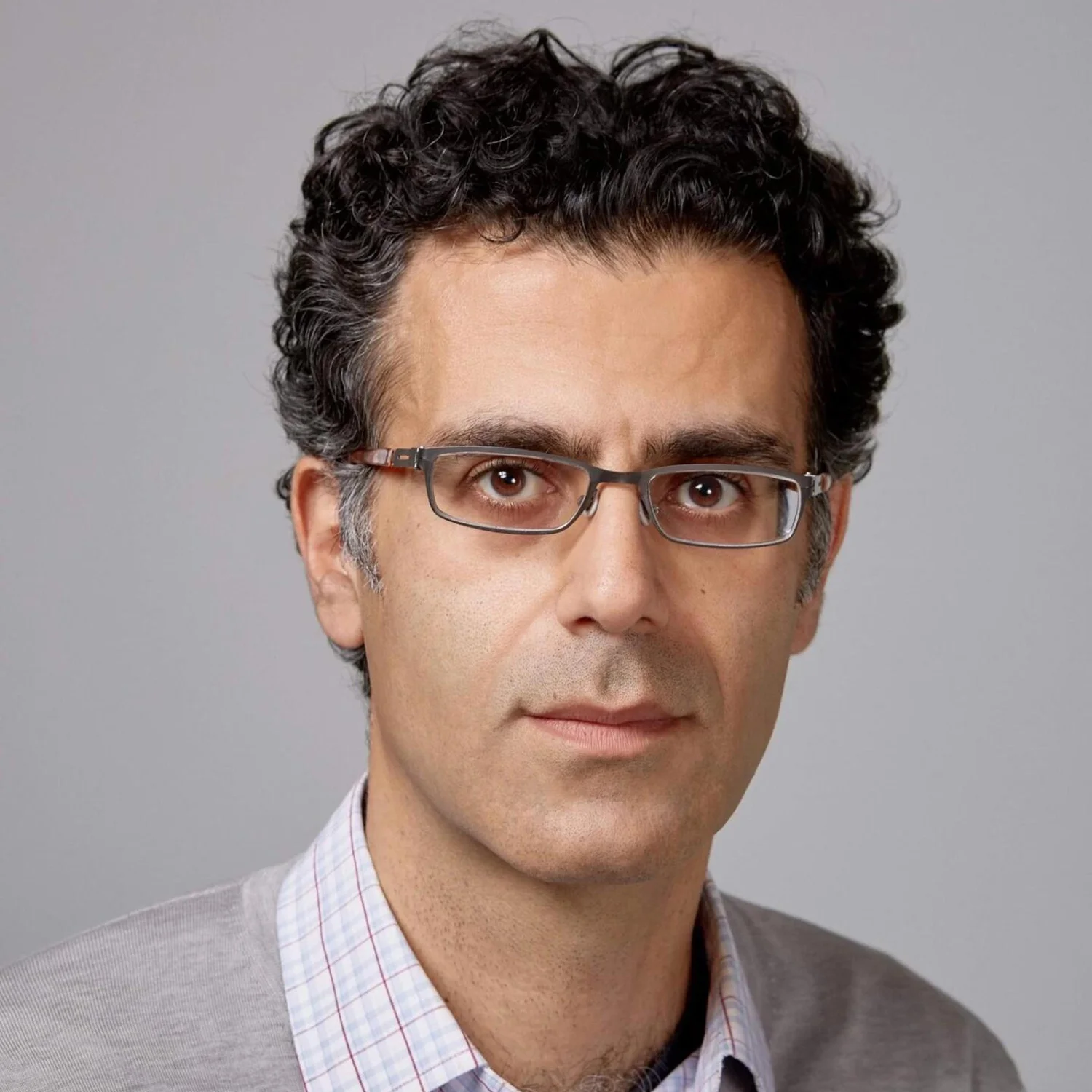
Social Media, Democracy & Economic Inequality w/ Philosopher ARASH ABIZADEH
How is economic inequality undermining our democratic systems? In what ways is social media reshaping political landscapes and democracy? Can we design political institutions that adapt to rapid social and technological changes while remaining stable? How is journalism critical for the health of our democracies?Arash Abizadeh is the R.B. Angus Professor of Political Science at McGill University. His research has focused on democratic theory, including topics such as immigration and border control. Abizadeh also specializes in 17th and 18th century philosophy and has recently published the book Hobbes and the Two Faces of Ethics. He is currently working on a book about social and political power and is the Associate Editor of Free & Equal: a Journal of Ethics and Public Affairs.“There's a tension between what democracy needs for a public sphere in order to sustain our democratic institutions and our liberties over the long run and what for-profit commercial corporations need to do to maximize people's time on social media to increase their profits. We know that some of the algorithms that, for example, Facebook was using tend to make prominent posts that engage people the most, often appealing to a sense of outrage, fear, or anger. This can affect the health of the deliberative public sphere.”https://abizadeh.wixsite.com/arashwww.cambridge.org/core/books/hobbes-and-the-two-faces-of-ethics/B565348CE9B53945F4F962784A5842C2https://freeandequaljournal.orgwww.creativeprocess.infowww.oneplanetpodcast.orgIG www.instagram.com/creativeprocesspodcast
AI, Technological Progress & the Growth Dilemma w/ Economist DANIEL SUSSKIND - Highlights
“The running theme in all of my work has been technology. The first book that I co-authored with my dad was published in 2015. The second book I wrote was A World Without Work: Technology, Automation, and How We Should Respond, published in 2020, just before the pandemic began. My new book Growth: A Reckoning is about growth, but also technological progress, because what drives growth is technological progress—we have a choice to change the nature of growth, and the same is true of our technological progress. To reach a dynamic economy capable of generating ever more ideas about the world, we need to use the technologies we have to generate new ideas about the world. One of the technologies I've been particularly excited by was AlphaFold, developed by DeepMind to solve protein folding problems in biology. Essentially, understanding the 3D shape of proteins is important for understanding disease and designing effective treatment, but incredibly difficult to figure out, and Alpha fold has solved this problem by providing the 3D structures of millions of proteins. As the only economist in The Institute for Ethics in AI, I’ve always found the moral, ethical side of technology interesting. I often get asked, “What can machines do, and what can they not do?” But I think one of the most troubling, but also one of the most fascinating things about technology is it is forcing us to ask the question “What does it really mean to be human? What is humanity?” For a long time, many people thought the core of what it means to be a human being is to be a creative thing. But with the arrival of generative AI in the last few years, I think that that has been really called into question. These AI systems are particularly good at creative tasks—coming up with original, novel text, images, and video. In fact, I actually use these AI systems to generate bedtime stories with my children—getting the kids to craft a good prompt is quite a fun, intellectually demanding exercise, and these technologies now give my children a storytelling capability that would have been unimaginable only a few years ago. So, one of the interesting philosophical consequences of technologies is that it's challenging some of the complacency and deep-rooted assumptions about what it really means to be a human being.”Daniel Susskind is a Research Professor in Economics at King's College London and a Senior Research Associate at the Institute for Ethics in AI at Oxford University. He is the author of A World without Work and co-author of the bestselling The Future of the Professions. Previously, he worked in various roles in the British Government - in the Prime Minister’s Strategy Unit, in the Policy Unit in 10 Downing Street, and in the Cabinet Office. His latest book is Growth: A Reckoning.www.danielsusskind.comwww.penguin.co.uk/books/446381/growth-by-susskind-daniel/9780241542309www.creativeprocess.infowww.oneplanetpodcast.orgIG www.instagram.com/creativeprocesspodcast
Growth: A Reckoning with Economist DANIEL SUSSKIND
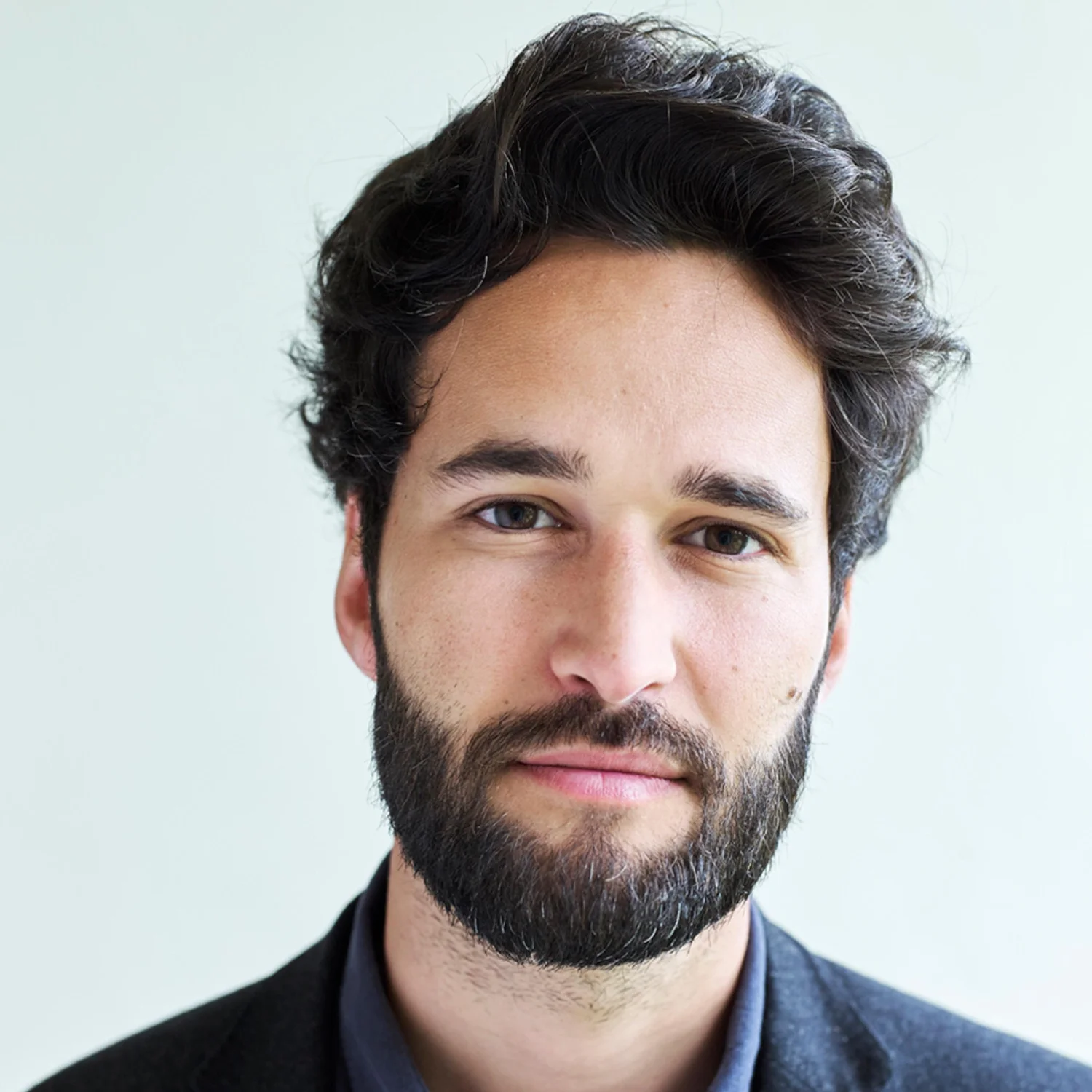
How can we look beyond GDP and develop new metrics that balance growth with human flourishing and environmental well-being? How can we be more engaged global citizens? In this age of AI, what does it really mean to be human? And how are our technologies transforming us?Daniel Susskind is a Research Professor in Economics at King's College London and a Senior Research Associate at the Institute for Ethics in AI at Oxford University. He is the author of A World without Work and co-author of the bestselling The Future of the Professions. Previously, he worked in various roles in the British Government - in the Prime Minister’s Strategy Unit, in the Policy Unit in 10 Downing Street, and in the Cabinet Office. His latest book is Growth: A Reckoning.“The running theme in all of my work has been technology. The first book that I co-authored with my dad was published in 2015. The second book I wrote was A World Without Work: Technology, Automation, and How We Should Respond, published in 2020, just before the pandemic began. My new book Growth: A Reckoning is about growth, but also technological progress, because what drives growth is technological progress—we have a choice to change the nature of growth, and the same is true of our technological progress. To reach a dynamic economy capable of generating ever more ideas about the world, we need to use the technologies we have to generate new ideas about the world. One of the technologies I've been particularly excited by was AlphaFold, developed by DeepMind to solve protein folding problems in biology. Essentially, understanding the 3D shape of proteins is important for understanding disease and designing effective treatment, but incredibly difficult to figure out, and Alpha fold has solved this problem by providing the 3D structures of millions of proteins. As the only economist in The Institute for Ethics in AI, I’ve always found the moral, ethical side of technology interesting. I often get asked, “What can machines do, and what can they not do?” But I think one of the most troubling, but also one of the most fascinating things about technology is it is forcing us to ask the question “What does it really mean to be human? What is humanity?” For a long time, many people thought the core of what it means to be a human being is to be a creative thing. But with the arrival of generative AI in the last few years, I think that that has been really called into question. These AI systems are particularly good at creative tasks—coming up with original, novel text, images, and video. In fact, I actually use these AI systems to generate bedtime stories with my children—getting the kids to craft a good prompt is quite a fun, intellectually demanding exercise, and these technologies now give my children a storytelling capability that would have been unimaginable only a few years ago. So, one of the interesting philosophical consequences of technologies is that it's challenging some of the complacency and deep-rooted assumptions about what it really means to be a human being.”www.danielsusskind.comwww.penguin.co.uk/books/446381/growth-by-susskind-daniel/9780241542309www.creativeprocess.infowww.oneplanetpodcast.orgIG www.instagram.com/creativeprocesspodcast

The Human Smart City: Balancing Ecology & Economy with CARLOS MORENO - Highlights
“This is the difference between a technological smart city and a real human smart city towards a 15-minute city as the expression of a human-centered urban approach. This is our challenge for the next decades and our target, to humanize our cities. The Olympic Games in Paris have shown the world that it is possible to recreate, to regenerate a really vibrant city with harmonious life between districts, different places, the role of the Seine River as nature in the presence of a lot of people for having more real livability and not an illusory computer life driven by social networks.”Carlos Moreno was born in Colombia in 1959 and moved to France at the age of 20. He is known for his influential "15-Minute City" concept, embraced by Paris Mayor Anne Hidalgo and leading cities around the world. Scientific Director of the "Entrepreneurship - Territory - Innovation" Chair at the Paris Sorbonne Business School, he is an international expert of the Human Smart City, and a Knight of the French Legion of Honour. He is recipient of the Obel Award and the UN-Habitat Scroll of Honour. His latest book is The 15-Minute City: A Solution to Saving Our Time and Our Planet.https://www.moreno-web.net/https://www.wiley.com/en-us/The+15-Minute+City%3A+A+Solution+to+Saving+Our+Time+and+Our+Planet-p-9781394228140www.creativeprocess.infowww.oneplanetpodcast.orgIG www.instagram.com/creativeprocesspodcast

The 15-Minute City: A Solution to Saving Our Time & Our Planet with CARLOS MORENO
How can the 15-minute city model revolutionize urban living, enhance wellbeing, and reduce our carbon footprint? Online shopping is turning cities into ghost towns. We can now buy anything anywhere anytime. How can we learn to stop scrolling and start strolling and create more livable, sustainable communities we are happy to call home.Carlos Moreno was born in Colombia in 1959 and moved to France at the age of 20. He is known for his influential "15-Minute City" concept, embraced by Paris Mayor Anne Hidalgo and leading cities around the world. Scientific Director of the "Entrepreneurship - Territory - Innovation" Chair at the Paris Sorbonne Business School, he is an international expert of the Human Smart City, and a Knight of the French Legion of Honour. He is recipient of the Obel Award and the UN-Habitat Scroll of Honour. His latest book is The 15-Minute City: A Solution to Saving Our Time and Our Planet.“This is the difference between a technological smart city and a real human smart city towards a 15-minute city as the expression of a human-centered urban approach. This is our challenge for the next decades and our target, to humanize our cities. The Olympic Games in Paris have shown the world that it is possible to recreate, to regenerate a really vibrant city with harmonious life between districts, different places, the role of the Seine River as nature in the presence of a lot of people for having more real livability and not an illusory computer life driven by social networks.”https://www.moreno-web.net/https://www.wiley.com/en-us/The+15-Minute+City%3A+A+Solution+to+Saving+Our+Time+and+Our+Planet-p-9781394228140www.creativeprocess.infowww.oneplanetpodcast.orgIG www.instagram.com/creativeprocesspodcast

Neuroscience, AI & The Future of Humanity - DR. BEN SHOFTY - Highlights
“I'm one of the people who believe that anything that we as human beings can imagine will eventually happen. So, if somebody has raised the question possibility of having brain implants that augment the brain and generate additional functions, I feel like it will eventually happen. There are a lot of private companies, like Elon Musk's Neuralink and others, that are busy designing these interfaces and planning these devices. Of course, nothing is available or even close to completion right now. The next step, of course, would be to modulate them. Just like any other thing in medicine, it will start or has already started with pathological states which we've talked about and people looking for potential interventions through TMS (transcranial magnetic stimulation). It doesn't necessarily have to be invasive, but of course the next step, especially when we're talking about the brain is to intervene and generate additional functions or to improve the way the brain functions. Many people are working on trying to generate memory augmentation, navigation augmentations, and a lot of other functions. I assume eventually it will reach a point where we'll be able to pick and choose what we want to augment about our own brains. I assume that the technology will be there eventually. And this is something that will be a part of the natural evolution of the human race.”Dr. Ben Shofty is a functional neurosurgeon affiliated with the University of Utah. He graduated from the Tel-Aviv University Faculty of Medicine, received his PhD in neurosurgical training from the Israeli Institute of Technology, and completed his training at the Tel Aviv Medical Center and Baylor University. He was also an Israeli national rugby player. His practice specializes in neuromodulation and exploring treatments for disorders such as OCD, depression, and epilepsy, among others, while also seeking to understand the science behind creativity, mind-wandering, and the many complexities of the brain.https://healthcare.utah.edu/find-a-doctor/ben-shoftyhttps://academic.oup.com/brain/advance-article/doi/10.1093/brain/awae199/7695856www.creativeprocess.infowww.oneplanetpodcast.orgIG www.instagram.com/creativeprocesspodcast

The Neuroscience of Creativity with DR. BEN SHOFTY
Where do creative thoughts come from? How can we harness our stream of consciousness and spontaneity to express ourselves? How are mind-wandering, meditation, and the arts good for our creativity and physical and mental well-being?Dr. Ben Shofty is a functional neurosurgeon affiliated with the University of Utah. He graduated from the Tel-Aviv University Faculty of Medicine, received his PhD in neurosurgical training from the Israeli Institute of Technology, and completed his training at the Tel Aviv Medical Center and Baylor University. He was also an Israeli national rugby player. His practice specializes in neuromodulation and exploring treatments for disorders such as OCD, depression, and epilepsy, among others, while also seeking to understand the science behind creativity, mind-wandering, and the many complexities of the brain.“I'm one of the people who believe that anything that we as human beings can imagine will eventually happen. So, if somebody has raised the question possibility of having brain implants that augment the brain and generate additional functions, I feel like it will eventually happen. There are a lot of private companies, like Elon Musk's Neuralink and others, that are busy designing these interfaces and planning these devices. Of course, nothing is available or even close to completion right now. The next step, of course, would be to modulate them. Just like any other thing in medicine, it will start or has already started with pathological states which we've talked about and people looking for potential interventions through TMS (transcranial magnetic stimulation). It doesn't necessarily have to be invasive, but of course the next step, especially when we're talking about the brain is to intervene and generate additional functions or to improve the way the brain functions. Many people are working on trying to generate memory augmentation, navigation augmentations, and a lot of other functions. I assume eventually it will reach a point where we'll be able to pick and choose what we want to augment about our own brains. I assume that the technology will be there eventually. And this is something that will be a part of the natural evolution of the human race.”https://healthcare.utah.edu/find-a-doctor/ben-shoftyhttps://academic.oup.com/brain/advance-article/doi/10.1093/brain/awae199/7695856www.creativeprocess.infowww.oneplanetpodcast.orgIG www.instagram.com/creativeprocesspodcast

What is good design? How AI is Shaping Our World? - SCOTT DOORLEY & CARISSA CARTER - Co-authors of Assembling Tomorrow - Highlights
“The way we understand the world and how the world actually works is just not mapped perfectly. That kind of leads to problems because we don't know exactly what we're doing in the world. We can't see all the repercussions of the things we create until later on. One silver lining about the technologies we're creating is that technologies like AI could be used to help us with this issue, with the fact that our mental models aren't exactly in line with how the world works. AI is actually very good at predicting and modeling outcomes. It could be used to understand climate change better so that we're able to understand it in a way that allows us to act. It could also help us predict the impacts of the things that we're making. So there's a bit of a silver lining in here, even though it can feel scary to be in a situation where your mental model and how the world works are not in line.”“I worry that AI is changing my thoughts and can control my thoughts, and that used to sound really far-fetched and now seems sort of middle of the road. I guarantee in a year's time that will sound like a very normal concern. Social listening is very sophisticated. All of the data in the websites that we visit, the data trails that we leave out in the world, are tracking us—our locations, our behaviors, and our habits such that there are many sites out there that can predict exactly what we're thinking and feeling and feed us advertising content or things that aren't even advertising content that can change what our next behaviors are. I think that's getting more and more sophisticated. We have already seen our political elections affected by mass attacks on our social media. When that comes down to our individual agency and behavior, I think that's something we do need to be concerned about. The way that we as individuals can combat it is to be aware that it's happening. Really start to notice the unnoticed, and I still feel optimistic amongst this concern.”Scott Doorley is the Creative Director at Stanford's d. school and co author of Make Space. He teaches design communication and his work has been featured in museums and architecture and urbanism and the New York Times. Carissa Carteris the Academic Director at Stanford's d. schooland author of The Secret Language of Maps. She teaches courses on emerging technologies and data visualization and received Fast Company and Core 77 awards for her work on designing with machine learning and blockchain. Together, they co authored Assembling Tomorrow: A Guide to Designing a Thriving Future.www.scottdoorley.comwww.snowflyzone.comhttps://dschool.stanford.edu/www.penguinrandomhouse.com/books/623529/assembling-tomorrow-by-scott-doorley-carissa-carter-and-stanford-dschool-illustrations-by-armando-veve/www.creativeprocess.infowww.oneplanetpodcast.orgIG www.instagram.com/creativeprocesspodcast

Can Design Save the World? - SCOTT DOORLEY & CARISSA CARTER - Co-authors of Assembling Tomorrow - Directors of Stanford’s d.School
How can we design and adapt for the uncertainties of the 21st century? How do emotions shape our decisions and the way we design the world around us?Scott Doorley is the Creative Director at Stanford's d. school and co author of Make Space. He teaches design communication and his work has been featured in museums and architecture and urbanism and the New York Times. Carissa Carteris the Academic Director at Stanford's d. schooland author of The Secret Language of Maps. She teaches courses on emerging technologies and data visualization and received Fast Company and Core 77 awards for her work on designing with machine learning and blockchain. Together, they co authored Assembling Tomorrow: A Guide to Designing a Thriving Future.“The way we understand the world and how the world actually works is just not mapped perfectly. That kind of leads to problems because we don't know exactly what we're doing in the world. We can't see all the repercussions of the things we create until later on. One silver lining about the technologies we're creating is that technologies like AI could be used to help us with this issue, with the fact that our mental models aren't exactly in line with how the world works. AI is actually very good at predicting and modeling outcomes. It could be used to understand climate change better so that we're able to understand it in a way that allows us to act. It could also help us predict the impacts of the things that we're making. So there's a bit of a silver lining in here, even though it can feel scary to be in a situation where your mental model and how the world works are not in line.”“I worry that AI is changing my thoughts and can control my thoughts, and that used to sound really far-fetched and now seems sort of middle of the road. I guarantee in a year's time that will sound like a very normal concern. Social listening is very sophisticated. All of the data in the websites that we visit, the data trails that we leave out in the world, are tracking us—our locations, our behaviors, and our habits such that there are many sites out there that can predict exactly what we're thinking and feeling and feed us advertising content or things that aren't even advertising content that can change what our next behaviors are. I think that's getting more and more sophisticated. We have already seen our political elections affected by mass attacks on our social media. When that comes down to our individual agency and behavior, I think that's something we do need to be concerned about. The way that we as individuals can combat it is to be aware that it's happening. Really start to notice the unnoticed, and I still feel optimistic amongst this concern.”www.scottdoorley.comwww.snowflyzone.comhttps://dschool.stanford.edu/www.penguinrandomhouse.com/books/623529/assembling-tomorrow-by-scott-doorley-carissa-carter-and-stanford-dschool-illustrations-by-armando-veve/www.creativeprocess.infowww.oneplanetpodcast.orgIG www.instagram.com/creativeprocesspodcastImage credit: Patrick Beaudouin

AI, Tech & The Future of Museums - STEPHEN REILY, Founding Director of Remuseum on Transforming Cultural Spaces
“The opportunity is that we have never had a public that is more passionate and obsessed with visual imagery. If the owners of the best original imagery in the world can't figure out how to take advantage of the fact that the world has now become obsessed with these treasures that we have to offer as museums, then shame on us. This is the opportunity to say, if you're spending all day scrolling on Instagram looking for amazing imagery, come and see the original source. Come and see the real work. Let us figure out how to make that connection.”Stephen Reily is the Founding Director of Remuseum, an independent research project housed at Crystal Bridges Museum of American Art in Bentonville, Arkansas. Funded by arts patron David Booth with additional support by the Ford Foundation, Remuseum focuses on advancing relevance and governance in museums across the U.S. He works with museums to create a financially sustainable strategy that is human-focused, centering on inclusion, diversity, and important causes like climate change. During his time as director of the Speed Art Museum in Louisville, KY, Reily presented Promise, Witness, Remembrance, an exhibition in response to the killing of Breonna Taylor and a year of protests in Louisville. In 2022, he co-wrote a book documenting the exhibition. As an active civic leader, Reily has been a part of numerous community organizations and boards, like the Reily Reentry Project, supporting expungement programs for Kentucky citizens, Creative Capital, offering grants for the arts, and founded Seed Capital Kentucky, a non-profit that aims to improve the food economy in the area.A Yale and Stanford Law graduate, Reily clerked for U.S. Supreme Court Justice John Paul Stevens before launching a successful entrepreneurial career, experiences he draws upon for public engagement initiatives.https://remuseum.orghttps://crystalbridges.orgwww.stephenreily.comwww.kentuckypress.com/9781734248517/promise-witness-remembrancewww.creativeprocess.infowww.oneplanetpodcast.orgIG www.instagram.com/creativeprocesspodcast

AI, Curiosity, Cognition & Creativity with Neuroscientist DR. JACQUELINE GOTTLIEB
“We have an onslaught of information the moment we open our eyes. We evolved to deal with an onslaught of information, and we are masters at focusing and ignoring vast amounts of information. Now, AI in this digital age is a relatively new stream of information, which is man-made, so we make it more salient. So, yes, it's harder to ignore it, but people can learn to ignore it, and indeed, it's a learning process. I think it will also require learning how to teach our children. I mean, we're raising generations of kids who will take AI and the digital world as a given. To them, it will be no different than a chair and a table were to us. So they will learn to not be so distracted by chairs and tables.”Dr. Jacqueline Gottlieb is a Professor of Neuroscience and Principal Investigator at Columbia University’s Zuckerman Mind Brain Behavior Institute. Dr. Gottlieb studies the mechanisms that underlie the brain's higher cognitive functions, including decision making, memory, and attention. Her interest is in how the brain gathers the evidence it needs—and ignores what it doesn’t—during everyday tasks and during special states such as curiosity.www.creativeprocess.infowww.oneplanetpodcast.orgIG www.instagram.com/creativeprocesspodcast

AI, Populism & Consumer Society with Historian FRANK TRENTMANN
“The bridge between Out of the Darkness and my previous work, which looked at the transformation of consumer culture in the world, is morality. One thing that became clear in writing Empire of Things was that there's virtually no time or place in history where consumption isn't heavily moralized. Our lifestyle is treated as a mirror of our virtue and sins. And in the course of modern history, there's been a remarkable moral shift in the way that consumption used to be seen as something that led you astray or undermined authority, status, gender roles, and wasted money, to a source of growth, a source of self, fashioning the way we create our own identity. In the last few years, the environmental crisis has led to new questions about whether consumption is good or bad. And in 2015, during the refugee crisis when Germany took in almost a million refugees, morality became a very powerful way in which Germans talked about themselves as humanitarian world champions, as one politician called it. I realized that there's many other topics from family, work, to saving the environment, and of course, with regard to the German responsibility for the Holocaust and the war of extermination where German public discourse is heavily moralistic, so I became interested in charting that historical process."What can we learn from Germany's postwar transformation to help us address today's environmental and humanitarian crises? With the rise of populism, authoritarianism, and digital propaganda, how can history provide insights into the challenges of modern democracy?Frank Trentmann is a Professor of History at Birkbeck, University of London, and at the University of Helsinki. He is a prize-winning historian, having received awards such as the Whitfield Prize, Austrian Wissenschaftsbuch/Science Book Prize, Humboldt Prize for Research, and the 2023 Bochum Historians' Award. He has also been named a Moore Scholar at Caltech. He is the author of Empire of Things and Free Trade Nation. His latest book is Out of the Darkness: The Germans 1942 to 2022, which explores Germany's transformation after the Second World War.www.bbk.ac.uk/our-staff/profile/8009279/frank-trentmannwww.penguin.co.uk/authors/32274/frank-trentmann?tab=penguin-bookswww.creativeprocess.infowww.oneplanetpodcast.orgIG www.instagram.com/creativeprocesspodcast

The SDGs & UN Summit of the Future - Highlights - GUILLAUME LAFORTUNE
“The SDSN has been set up to mobilize research and science for the Sustainable Development Goals. Each year, we aim to provide a fair and accurate assessment of countries' progress on the 17 Sustainable Development Goals. The development goals were adopted back in 2015 by all UN member states, marking the first time in human history that we have a common goal for the entire world. Our goal each year with the SDG index is to have sound methodologies and translate these into actionable insights that can generate impactful results at the end of the day. Out of all the targets that we track, only 16 percent are estimated to be on track. This agenda not only combines environmental development but also social development, economic development, and good governance. Currently, none of the SDGs are on track to be achieved at the global level.”In today's podcast, we talk with Guillaume Lafortune, Vice President and Head of the Paris Office of the UN Sustainable Development Solutions Network (SDSN), the largest global network of scientists and practitioners dedicated to implementing the Sustainable Development Goals (SDGs). We discuss the intersections of sustainability, global progress, the UN Summit of the Future, and the daunting challenges we face. From the impact of war on climate initiatives to transforming data into narratives that drive change, we explore how global cooperation, education, and technology pave the way for a sustainable future and look at the lessons of history and the power of diplomacy in shaping our path forward.Guillaume Lafortune joined SDSN in 2017 to lead work on SDG data, policies, and financing including the preparation of the annual Sustainable Development Report (which includes the SDG Index and Dashboards). Between 2020 and 2022 Guillaume was a member of The Lancet Commission on COVID-19, where he coordinated the taskforces on “Fiscal Policy and Financial Markets” and “Green Recovery”, and co-authored the final report of the Commission. Guillaume is also a member of the Grenoble Center for Economic Research (CREG) at the Grenoble Alpes University. Previously, he served as an economist at the OECD in Paris and at the Ministry of Economic Development in the Government of Quebec (Canada). Guillaume is the author of 50+ scientific publications, book chapters, policy briefs and international reports on sustainable development, economic policy and good governance.SDSN's Summit of the Future RecommendationsSDG Transformation CenterSDSN Global Commission for Urban SDG Financewww.creativeprocess.infowww.oneplanetpodcast.orgIG www.instagram.com/creativeprocesspodcast

How Can We Unite 193 Countries for a Sustainable Future? - GUILLAUME LAFORTUNE - VP, UN SDSN, Paris
How can we get 193 countries to move in the same direction for a better tomorrow?In today's podcast, we talk with Guillaume Lafortune, Vice President and Head of the Paris Office of the UN Sustainable Development Solutions Network (SDSN), the largest global network of scientists and practitioners dedicated to implementing the Sustainable Development Goals (SDGs). We discuss the intersections of sustainability, global progress, the UN Summit of the Future, and the daunting challenges we face. From the impact of war on climate initiatives to transforming data into narratives that drive change, we explore how global cooperation, education, and technology pave the way for a sustainable future and look at the lessons of history and the power of diplomacy in shaping our path forward.Guillaume Lafortune joined SDSN in 2017 to lead work on SDG data, policies, and financing including the preparation of the annual Sustainable Development Report (which includes the SDG Index and Dashboards). Between 2020 and 2022 Guillaume was a member of The Lancet Commission on COVID-19, where he coordinated the taskforces on “Fiscal Policy and Financial Markets” and “Green Recovery”, and co-authored the final report of the Commission. Guillaume is also a member of the Grenoble Center for Economic Research (CREG) at the Grenoble Alpes University. Previously, he served as an economist at the OECD in Paris and at the Ministry of Economic Development in the Government of Quebec (Canada). Guillaume is the author of 50+ scientific publications, book chapters, policy briefs and international reports on sustainable development, economic policy and good governance.“The SDSN has been set up to mobilize research and science for the Sustainable Development Goals. Each year, we aim to provide a fair and accurate assessment of countries' progress on the 17 Sustainable Development Goals. The development goals were adopted back in 2015 by all UN member states, marking the first time in human history that we have a common goal for the entire world. Our goal each year with the SDG index is to have sound methodologies and translate these into actionable insights that can generate impactful results at the end of the day. Out of all the targets that we track, only 16 percent are estimated to be on track. This agenda not only combines environmental development but also social development, economic development, and good governance. Currently, none of the SDGs are on track to be achieved at the global level.”SDSN's Summit of the Future RecommendationsSDG Transformation CenterSDSN Global Commission for Urban SDG Financewww.creativeprocess.infowww.oneplanetpodcast.orgIG www.instagram.com/creativeprocesspodcast

How Do Utopian Visions Shape Our Reality & Future? - Highlights - S. D. CHROSTOWSKA
“There’s the existing AI and the dream of artificial general intelligence that is aligned with our values and will make our lives better. Certainly, the techno-utopian dream is that it will lead us towards utopia. It is the means of organizing human collectivities, human societies, in a way that would reconcile all the variables, all the things that we can't reconcile because we don't have enough of a fine-grained understanding of how people interact, the different motivations of their psychologies and of societies, of groups, of people. Of course, that's another kind of psychology that we're talking about. So I think the dream of AI is a utopian dream that stands correcting, but it is itself being corrected by those who are the curators of that technology. Now you asked me about the changing role of artists in this landscape. I would say, first of all, that I'm for virtuosity. And this makes me think of AI and a higher level AI, it would be virtuous before it becomes super intelligence.”S. D. Chrostowska is professor of humanities at York University, Canada. She is the author of several books, among them Permission, The Eyelid, A Cage for Every Child, and, most recently, Utopia in the Age of Survival: Between Myth and Politics. Her essays have appeared in such venues as Public Culture, Telos, Boundary 2, and The Hedgehog Review. She also coedits the French surrealist review Alcheringa and is curator of the 19th International Exhibition of Surrealism, Marvellous Utopia, which runs from July to September 2024 in Saint-Cirq-Lapopie, France.https://profiles.laps.yorku.ca/profiles/sylwiac/www.sup.org/books/title/?id=33445https://chbooks.com/Books/T/The-Eyelidhttps://ciscm.fr/en/merveilleuse-utopiewww.creativeprocess.infowww.oneplanetpodcast.orgIG www.instagram.com/creativeprocesspodcast

Utopia in the Age of Survival with S. D. CHROSTOWSKA
As Surrealism turns 100, what can it teach us about the importance of dreaming and creating a better society? Will we wake up from the consumerist dream sold to us by capitalism and how would that change our ideas of utopia?S. D. Chrostowska is professor of humanities at York University, Canada. She is the author of several books, among them Permission, The Eyelid, A Cage for Every Child, and, most recently, Utopia in the Age of Survival: Between Myth and Politics. Her essays have appeared in such venues as Public Culture, Telos, Boundary 2, and The Hedgehog Review. She also coedits the French surrealist review Alcheringa and is curator of the 19th International Exhibition of Surrealism, Marvellous Utopia, which runs from July to September 2024 in Saint-Cirq-Lapopie, France.“There’s the existing AI and the dream of artificial general intelligence that is aligned with our values and will make our lives better. Certainly, the techno-utopian dream is that it will lead us towards utopia. It is the means of organizing human collectivities, human societies, in a way that would reconcile all the variables, all the things that we can't reconcile because we don't have enough of a fine-grained understanding of how people interact, the different motivations of their psychologies and of societies, of groups, of people. Of course, that's another kind of psychology that we're talking about. So I think the dream of AI is a utopian dream that stands correcting, but it is itself being corrected by those who are the curators of that technology. Now you asked me about the changing role of artists in this landscape. I would say, first of all, that I'm for virtuosity. And this makes me think of AI and a higher level AI, it would be virtuous before it becomes super intelligence.”https://profiles.laps.yorku.ca/profiles/sylwiac/www.sup.org/books/title/?id=33445https://chbooks.com/Books/T/The-Eyelidhttps://ciscm.fr/en/merveilleuse-utopiewww.creativeprocess.infowww.oneplanetpodcast.orgIG www.instagram.com/creativeprocesspodcast

AI’s Role in Society, Culture & Climate with CHARLIE HERTZOG YOUNG
The planet’s well-being unites us all, from ecosystems to societies, global systems to individual health. How is planetary health linked to mental health? Charlie Hertzog Young is a researcher, writer and award-winning activist. He identifies as a “proudly mad bipolar double amputee” and has worked for the New Economics Foundation, the Royal Society of Arts, the Good Law Project, the Four Day Week Campaign and the Centre for Progressive Change, as well as the UK Labour Party under three consecutive leaders. Charlie has spoken at the LSE, the UN and the World Economic Forum. He studied at Harvard, SOAS and Schumacher College and has written for The Ecologist, The Independent, Novara Media, Open Democracy and The Guardian. He is the author of Spinning Out: Climate Change, Mental Health and Fighting for a Better Future.https://charliehertzogyoung.mehttps://footnotepress.com/books/spinning-out/www.creativeprocess.infowww.oneplanetpodcast.orgIG www.instagram.com/creativeprocesspodcast
How and when will we transition to a clean energy future? - Highlights - RICHARD BLACK
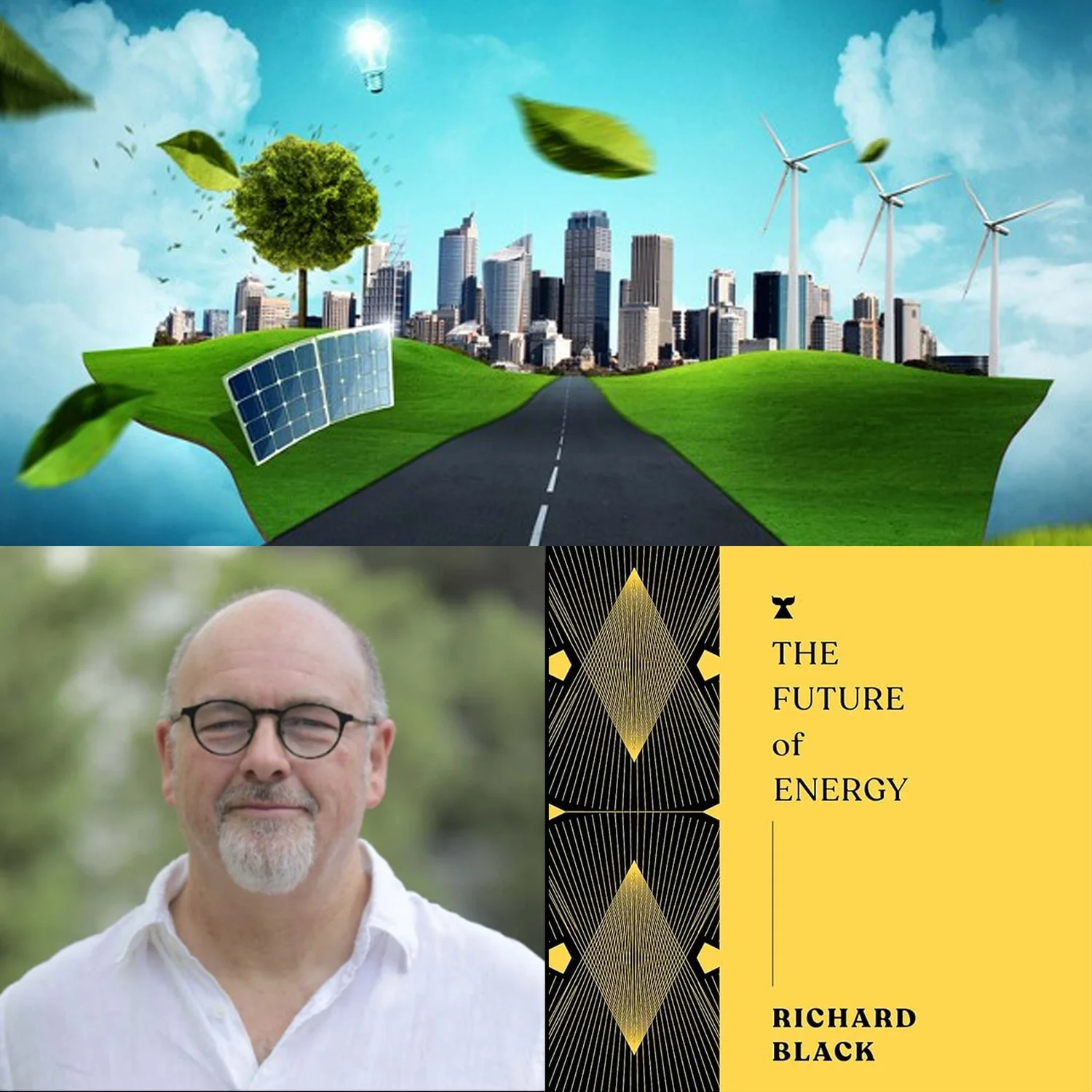
“The fact is you've got a lot of industrial and political muscle now coming behind clean energy, especially from China, which is the leading country deploying wind energy, the leading country deploying solar, and the leading manufacturer and user of electric vehicles by miles. As one recent report put it, ‘We have petrostates in the world. China is the first electrostate.’ And China is on its way to becoming the world's most powerful country. So, where China leads, the rest of the world is almost certain to follow. Yes, there are massive air pollution problems in China, of course, but I think it's more than that. It's also about seeing that this is the future that the world is going to have. And if these goods are going to be made anywhere, well, the Chinese government clearly would like them to be made in China. And they've set out, you know, industrial policies and all kinds of other policies for, well, at least a decade now, in pursuit of that aim. It's interesting now to see other countries, India, for example, and the United States now sort of deploying muscle to try and carve out a slice of the pie themselves as well.”The Five-pronged Clean Energy Future“I thought about it, and I was wondering, what do we actually need in the world? Because we don't need petrol and we don't need coal. We need energy to power various things. So, we need these energy services. So, what's the simplest way of providing all of the energy services? And it really seems to me that we can basically do it all with about five different types of goods. So the system of the future I put out in the book is first of all, you have the generation of electricity, which is mainly going to be with renewables, mainly with wind and solar because they are the cheapest and they're getting cheaper thanks to Wright's Law. Then you need energy storage and other means of sharing matching demand to supply. So, storage is the one that people will be most familiar with, which can be batteries, for example. And again, the price of batteries has also plummeted about 85 percent price reduction in a decade. And it continues because, again, we have mounting volumes. In a competitive market, there's lots of innovation going on in terms of battery design, in terms of construction, and all of this stuff, new materials coming into batteries. So, that's your first two, that's your renewable generation and your battery storage. Electric vehicles will be the main method of transportation. Already, they dominate sales in the two-wheeler market in China and India. They're already eating into global oil demand. They're taking about 1.5 percent of global oil demand already, and the sales are increasing exponentially in China and other countries as well. They are cost-competitive. It's just on the purchase price in some markets with some models now. And it's going to get cheaper again because battery costs will fall. Heating and cooling, which is a big demand for energy. We can use heat pumps, which are super efficient running on electricity…Hydrogen, that will probably be the fifth prong, but a smaller prong, rather like the little finger on your hand."Richard Black spent 15 years as a science and environment correspondent for the BBC World Service and BBC News, before setting up the Energy & Climate Intelligence Unit. He now lives in Berlin and is the Director of Policy and Strategy at the global clean energy think tank Ember, which aims to accelerate the clean energy transition with data and policy. He is the author of The Future of Energy; Denied:The Rise and Fall of Climate Contrarianism, and is an Honorary Research Fellow at Imperial College London.https://mhpbooks.com/books/the-future-of-energyhttps://ember-climate.org/about/people/richard-blackhttps://ember-climate.orgwww.therealpress.co.uk/?s=Richard+blackwww.creativeprocess.infowww.oneplanetpodcast.orgIG www.instagram.com/creativeprocesspodcast

The Future of Energy - RICHARD BLACK - Director, Policy & Strategy, Ember - Fmr. BBC Environment Correspondent
How and when will we transition to a clean energy future? How will the transition empower individuals and transform global power dynamics? How did China become the world’s first electrostate, leading the drive for renewable energy, and what can we learn from this?Richard Black spent 15 years as a science and environment correspondent for the BBC World Service and BBC News, before setting up the Energy & Climate Intelligence Unit. He now lives in Berlin and is the Director of Policy and Strategy at the global clean energy think tank Ember, which aims to accelerate the clean energy transition with data and policy.He is the author of The Future of Energy; Denied:The Rise and Fall of Climate Contrarianism, and is an Honorary Research Fellow at Imperial College London.“The fact is you've got a lot of industrial and political muscle now coming behind clean energy, especially from China, which is the leading country deploying wind energy, the leading country deploying solar, and the leading manufacturer and user of electric vehicles by miles. As one recent report put it, ‘We have petrostates in the world. China is the first electrostate.’ And China is on its way to becoming the world's most powerful country. So, where China leads, the rest of the world is almost certain to follow. Yes, there are massive air pollution problems in China, of course, but I think it's more than that. It's also about seeing that this is the future that the world is going to have. And if these goods are going to be made anywhere, well, the Chinese government clearly would like them to be made in China. And they've set out, you know, industrial policies and all kinds of other policies for, well, at least a decade now, in pursuit of that aim. It's interesting now to see other countries, India, for example, and the United States now sort of deploying muscle to try and carve out a slice of the pie themselves as well.”The Five-pronged Clean Energy Future“I thought about it, and I was wondering, what do we actually need in the world? Because we don't need petrol and we don't need coal. We need energy to power various things. So, we need these energy services. So, what's the simplest way of providing all of the energy services? And it really seems to me that we can basically do it all with about five different types of goods. So the system of the future I put out in the book is first of all, you have the generation of electricity, which is mainly going to be with renewables, mainly with wind and solar because they are the cheapest and they're getting cheaper thanks to Wright's Law. Then you need energy storage and other means of sharing matching demand to supply. So, storage is the one that people will be most familiar with, which can be batteries, for example. And again, the price of batteries has also plummeted about 85 percent price reduction in a decade. And it continues because, again, we have mounting volumes. In a competitive market, there's lots of innovation going on in terms of battery design, in terms of construction, and all of this stuff, new materials coming into batteries. So, that's your first two, that's your renewable generation and your battery storage. Electric vehicles will be the main method of transportation. Already, they dominate sales in the two-wheeler market in China and India. They're already eating into global oil demand. They're taking about 1.5 percent of global oil demand already, and the sales are increasing exponentially in China and other countries as well. They are cost-competitive. It's just on the purchase price in some markets with some models now. And it's going to get cheaper again because battery costs will fall. Heating and cooling, which is a big demand for energy. We can use heat pumps, which are super efficient running on electricity…Hydrogen, that will probably be the fifth prong, but a smaller prong, rather like the little finger on your hand."https://mhpbooks.com/books/the-future-of-energyhttps://ember-climate.org/about/people/richard-blackhttps://ember-climate.orgwww.therealpress.co.uk/?s=Richard+blackwww.creativeprocess.infowww.oneplanetpodcast.orgIG www.instagram.com/creativeprocesspodcast

DIANE VON FÜRSTENBERG: Woman in Charge & How AI Will Change Storytelling w/ Oscar-winning Director SHARMEEN OBAID-CHINOY
“I think it's very early for us to see how AI is going to impact us all, especially documentary filmmakers. And so I embrace technology, and I encourage everyone as filmmakers to do so. We're looking at how AI is facilitating filmmakers to tell stories, create more visual worlds. I think that right now we're in the play phase of AI, where there's a lot of new tools and you're playing in a sandbox with them to see how they will develop.I don't think that AI has developed to the extent that it is in some way dramatically changing the film industry as we speak, but in the next two years, it will. We have yet to see how it will. As someone who creates films, I always experiment, and then I see what it is that I'd like to take from that technology as I move forward.”Sharmeen Obaid-Chinoy is an Oscar and Emmy award-winning Canadian-Pakistani filmmaker whose work highlights extraordinary women and their stories. She earned her first Academy Award in 2012 for her documentary Saving Face, about the Pakistani women targeted by brutal acid attacks. Today, Obaid-Chinoy is the first female film director to have won two Oscars by the age of 37. In 2023, it was announced that Obaid-Chinoy will direct the next Star Wars film starring Daisy Ridley. Her most recent project, co-directed alongside Trish Dalton, is the new documentary Diane von Fürstenberg: Woman in Charge, about the trailblazing Belgian fashion designer who invented the wrap dress 50 years ago. The film had its world premiere as the opening night selection at the 2024 Tribeca Festival on June 5th and premiered on June 25th on Hulu in the U.S. and Disney+ internationally. A product of Obaid-Chinoy's incredibly talented female filmmaking team, Woman in Charge provides an intimate look into Diane von Fürstenberg’s life and accomplishments and chronicles the trajectory of her signature dress from an innovative fashion statement to a powerful symbol of feminism.“I think it's very early for us to see how AI is going to impact us all, especially documentary filmmakers. And so I embrace technology, and I encourage everyone as filmmakers to do so. We're looking at how AI is facilitating filmmakers to tell stories, create more visual worlds. I think that right now we're in the play phase of AI, where there's a lot of new tools and you're playing in a sandbox with them to see how they will develop.I don't think that AI has developed to the extent that it is in some way dramatically changing the film industry as we speak, but in the next two years, it will. We have yet to see how it will. As someone who creates films, I always experiment, and then I see what it is that I'd like to take from that technology as I move forward.”www.hulu.com/movie/diane-von-furstenberg-woman-in-charge-95fb421e-b7b1-4bfc-9bbf-ea666dba0b02https://www.disneyplus.com/movies/diane-von-furstenberg-woman-in-charge/1jrpX9AhsaJ6https://socfilms.comwww.creativeprocess.infowww.oneplanetpodcast.orgIG www.instagram.com/creativeprocesspodcast

Is AI capable of creating a protest song that disrupts oppression & inspires social change? - JAKE FERGUSON, ANTHONY JOSEPH & JERMAIN JACKMAN
“There's something raw about The Architecture of Oppression, both part one and part two. There's a raw realness and authenticity in those songs that AI can't create. There's a lived experience that AI won't understand, and there's a feeling in those songs. And it's not just in the words from the spoken word artists, if it's not in the instruments that are being played. It's in the voice that you hear. You hear the pain, you hear the struggle, you hear the joy, you hear all of those emotions in all of those songs. And that's something that AI can't make up or create.”Jake Ferguson is an award-winning musician known for his work with The Heliocentrics and as a solo artist under the name The Brkn Record. Alongside legendary drummer Malcolm Catto, Ferguson has composed two film scores and over 10 albums, collaborating with icons like Archie Shepp, Mulatu Astatke, and Melvin Van Peebles. His latest album is The Architecture of Oppression Part 2. The album also features singer and political activist Jermain Jackman, a former winner of The Voice (2014) and the T.S. Eliot Prize winning poet and musician, Anthony Joseph.“I think as humans, we forget. We are often limited by our own stereotypes, and we don't see that in everyone there's the potential for beauty and love and all these things. And I think The Architecture of Oppression, both parts one and two, are really a reflection of all the community and civil rights work that I've been doing for the same amount of time, really - 25 years. And I wanted to try and mix my day job and my music side, so bringing those two sides of my life together. I wanted to create a platform for black artists, black singers, and poets who I really admire. Jermain is somebody I've worked with for probably about six, seven years now. He's also in the trenches of the black civil rights struggle. We worked together on a number of projects, but it was very interesting to then work with Jemain in a purely artistic capacity. And it was a no-brainer to give Anthony a call for this second album because I know of his pedigree, and he's much more able to put ideas and thoughts on paper than I would be able to.”www.creativeprocess.infowww.oneplanetpodcast.orgIG www.instagram.com/creativeprocesspodcast

Does AI-generated Perfection Detach Us from Reality, Life & Human Connection? - Highlights - HENRY AJDER
“Having worked in this space for seven years, really since the inception of DeepFakes in late 2017, for some time, it was possible with just a few hours a day to really be on top of the key kind of technical developments. It's now truly global. AI-generated media have really exploded, particularly the last 18 months, but they've been bubbling under the surface for some time in various different use cases. The disinformation and deepfakes in the political sphere really matches some of the fears held five, six years ago, but at the time were more speculative. The fears around how deepfakes could be used in propaganda efforts, in attempts to destabilize democratic processes, to try and influence elections have really kind of reached a fever pitch Up until this year, I've always really said, “Well, look, we've got some fairly narrow examples of deepfakes and AI-generated content being deployed, but it's nowhere near on the scale or the effectiveness required to actually have that kind of massive impact.” This year, it's no longer a question of are deepfakes going to be used, it's now how effective are they actually going to be? I'm worried. I think a lot of the discourse around gen AI and so on is very much you're either an AI zoomer or an AI doomer, right? But for me, I don't think we need to have this kind of mutually exclusive attitude. I think we can kind of look at different use cases. There are really powerful and quite amazing use cases, but those very same baseline technologies can be weaponized if they're not developed responsibly with the appropriate safety measures, guardrails, and understanding from people using and developing them. So it is really about that balancing act for me. And a lot of my research over the years has been focused on mapping the evolution of AI generated content as a malicious tool.”Henry Ajder is an advisor, speaker, and broadcaster working at the frontier of the generative AI and the synthetic media revolution. He advises organizations on the opportunities and challenges these technologies present, including Adobe, Meta, The European Commission, BBC, The Partnership on AI, and The House of Lords. Previously, Henry led Synthetic Futures, the first initiative dedicated to ethical generative AI and metaverse technologies, bringing together over 50 industry-leading organizations. Henry presented the BBC documentary series, The Future Will be Synthesised.www.henryajder.comwww.bbc.co.uk/programmes/m0017cgrwww.creativeprocess.infowww.oneplanetpodcast.orgIG www.instagram.com/creativeprocesspodcast

How is AI Changing Our Perception of Reality, Creativity & Human Connection? w/ HENRY AJDER - AI Advisor
How is artificial intelligence redefining our perception of reality and truth? Can AI be creative? And how is it changing art and innovation? Does AI-generated perfection detach us from reality and genuine human connection?Henry Ajder is an advisor, speaker, and broadcaster working at the frontier of the generative AI and the synthetic media revolution. He advises organizations on the opportunities and challenges these technologies present, including Adobe, Meta, The European Commission, BBC, The Partnership on AI, and The House of Lords. Previously, Henry led Synthetic Futures, the first initiative dedicated to ethical generative AI and metaverse technologies, bringing together over 50 industry-leading organizations. Henry presented the BBC documentary series, The Future Will be Synthesised.“Having worked in this space for seven years, really since the inception of DeepFakes in late 2017, for some time, it was possible with just a few hours a day to really be on top of the key kind of technical developments. It's now truly global. AI-generated media have really exploded, particularly the last 18 months, but they've been bubbling under the surface for some time in various different use cases. The disinformation and deepfakes in the political sphere really matches some of the fears held five, six years ago, but at the time were more speculative. The fears around how deepfakes could be used in propaganda efforts, in attempts to destabilize democratic processes, to try and influence elections have really kind of reached a fever pitch Up until this year, I've always really said, “Well, look, we've got some fairly narrow examples of deepfakes and AI-generated content being deployed, but it's nowhere near on the scale or the effectiveness required to actually have that kind of massive impact.” This year, it's no longer a question of are deepfakes going to be used, it's now how effective are they actually going to be? I'm worried. I think a lot of the discourse around gen AI and so on is very much you're either an AI zoomer or an AI doomer, right? But for me, I don't think we need to have this kind of mutually exclusive attitude. I think we can kind of look at different use cases. There are really powerful and quite amazing use cases, but those very same baseline technologies can be weaponized if they're not developed responsibly with the appropriate safety measures, guardrails, and understanding from people using and developing them. So it is really about that balancing act for me. And a lot of my research over the years has been focused on mapping the evolution of AI generated content as a malicious tool.”www.henryajder.comwww.bbc.co.uk/programmes/m0017cgrwww.creativeprocess.infowww.oneplanetpodcast.orgIG www.instagram.com/creativeprocesspodcast

Resisting Fascism & Ecological Collapse with Writer-Organizer-Activist CHRIS CARLSSON
In this episode of the Speaking Out of Place podcast Professor David Palumbo-Liu talks with acclaimed author and activist, and San Francisco legend, Chris Carlsson about his new novel, When Shells Crumble. It begins in December 2024, when the US Supreme Court nullifies the popular vote in the Presidential election and awards the presidency to an authoritarian Republican, who proceeds to demolish democracy and install a fascistic state that hastens ecological havoc. The novel is much more than your usual dystopian tale—it focuses on how to resist political cynicism and defeatism, and rebuild on planetary wreckage. It is a world-building project filled with wisdom, sadness, and joy. We specifically put this fictional text in conservation with his brilliant non-fiction work, Nowtopia, which offers a radical redefinition of “work” that restores dignity and value to their proper places.Chris Carlsson, co-director of the “history from below” project Shaping San Francisco, is a writer, publisher, editor, photographer, public speaker, and occasional professor. He was one of the founders in 1981 of the seminal and infamous underground San Francisco magazine Processed World. In 1992 Carlsson co-founded Critical Mass in San Francisco, which both led to a local bicycling boom and helped to incubate transformative urban movements in hundreds of cities, large and small, worldwide. In 1995 work began on “Shaping San Francisco;” since then the project has morphed into an incomparable archive of San Francisco history at Foundsf.org, award-winning bicycle and walking tours, and almost two decades of Public Talks covering history, politics, ecology, art, and more (see shapingsf.org). Beginning in Spring 2020, Carlsson has hosted Bay Cruises along the San Francisco shoreline.His latest novel, When Shells Crumble was published by Spuyten Duyvil in Brooklyn, NY at the end of 2023. At the dawn of the pandemic, he published a detailed historical guidebook of the city, Hidden San Francisco: A Guide to Lost Landscapes, Unsung Heroes, and Radical Histories (Pluto Press: 2020). His full-length nonfiction work Nowtopia(AK Press: 2008), offers a groundbreaking look at class and work while uniquely examining how hard and pleasantly we work when we’re not at our official jobs. He published his first novel, After The Deluge, in 2004, a story of post-economic utopian San Francisco in the year 2157. He has edited six books, including three “Reclaiming San Francisco” collections with the venerable City Lights Books. He redesigned and co-authored an expanded Vanished Waters: A History of San Francisco’s Mission Bay after which he joined the board of the Mission Creek Conservancy. He has given hundreds of public presentations based on Shaping San Francisco, Critical Mass, Nowtopia, Vanished Waters, and his “Reclaiming San Francisco” history anthologies since the late 1990s, and has appeared dozens of times in radio, television and on the internet.www.palumbo-liu.comhttps://speakingoutofplace.comhttps://twitter.com/palumboliu?s=20www.instagram.com/speaking_out_of_place

How to Fight for Truth & Protect Democracy in A Post-Truth World? - Highlights - LEE McINTYRE
“When AI takes over with our information sources and pollutes it to a certain point, we'll stop believing that there is any such thing as truth anymore. ‘We now live in an era in which the truth is behind a paywall and the lies are free.’ One thing people don't realize is that the goal of disinformation is not simply to get you to believe a falsehood. It's to demoralize you into giving up on the idea of truth, to polarize us around factual issues, to get us to distrust people who don't believe the same lie. And even if somebody doesn't believe the lie, it can still make them cynical. I mean, we've all had friends who don't even watch the news anymore. There's a chilling quotation from Holocaust historian Hannah Arendt about how when you always lie to someone, the consequence is not necessarily that they believe the lie, but that they begin to lose their critical faculties, that they begin to give up on the idea of truth, and so they can't judge for themselves what's true and what's false anymore. That's the scary part, the nexus between post-truth and autocracy. That's what the authoritarian wants. Not necessarily to get you to believe the lie. But to give up on truth, because when you give up on truth, then there's no blame, no accountability, and they can just assert their power. There's a connection between disinformation and denial.”Lee McIntyre is a Research Fellow at the Center for Philosophy and History of Science at Boston University and a Senior Advisor for Public Trust in Science at the Aspen Institute. He holds a B.A. from Wesleyan University and a Ph.D. in Philosophy from the University of Michigan. He has taught philosophy at Colgate University, Boston University, Tufts Experimental College, Simmons College, and Harvard Extension School (where he received the Dean’s Letter of Commendation for Distinguished Teaching). Formerly Executive Director of the Institute for Quantitative Social Science at Harvard University, he has also served as a policy advisor to the Executive Dean of the Faculty of Arts and Sciences at Harvard and as Associate Editor in the Research Department of the Federal Reserve Bank of Boston. His books include On Disinformation and How to Talk to a Science Denier and the novels The Art of Good and Evil and The Sin Eater.https://leemcintyrebooks.comwww.penguinrandomhouse.com/books/730833/on-disinformation-by-lee-mcintyrehttps://mitpress.mit.edu/9780262545051/https://leemcintyrebooks.com/books/the-art-of-good-and-evil/https://leemcintyrebooks.com/books/the-sin-eater/www.creativeprocess.infowww.oneplanetpodcast.orgIG www.instagram.com/creativeprocesspodcast

On Disinformation: How to Fight for Truth & Protect Democracy with LEE McINTYRE
How do we fight for truth and protect democracy in a post-truth world? How does bias affect our understanding of facts?Lee McIntyre is a Research Fellow at the Center for Philosophy and History of Science at Boston University and a Senior Advisor for Public Trust in Science at the Aspen Institute. He holds a B.A. from Wesleyan University and a Ph.D. in Philosophy from the University of Michigan. He has taught philosophy at Colgate University, Boston University, Tufts Experimental College, Simmons College, and Harvard Extension School (where he received the Dean’s Letter of Commendation for Distinguished Teaching). Formerly Executive Director of the Institute for Quantitative Social Science at Harvard University, he has also served as a policy advisor to the Executive Dean of the Faculty of Arts and Sciences at Harvard and as Associate Editor in the Research Department of the Federal Reserve Bank of Boston. His books include On Disinformation and How to Talk to a Science Denier and the novels The Art of Good and Evil and The Sin Eater.“When AI takes over with our information sources and pollutes it to a certain point, we'll stop believing that there is any such thing as truth anymore. ‘We now live in an era in which the truth is behind a paywall and the lies are free.’ One thing people don't realize is that the goal of disinformation is not simply to get you to believe a falsehood. It's to demoralize you into giving up on the idea of truth, to polarize us around factual issues, to get us to distrust people who don't believe the same lie. And even if somebody doesn't believe the lie, it can still make them cynical. I mean, we've all had friends who don't even watch the news anymore. There's a chilling quotation from Holocaust historian Hannah Arendt about how when you always lie to someone, the consequence is not necessarily that they believe the lie, but that they begin to lose their critical faculties, that they begin to give up on the idea of truth, and so they can't judge for themselves what's true and what's false anymore. That's the scary part, the nexus between post-truth and autocracy. That's what the authoritarian wants. Not necessarily to get you to believe the lie. But to give up on truth, because when you give up on truth, then there's no blame, no accountability, and they can just assert their power. There's a connection between disinformation and denial.”https://leemcintyrebooks.comwww.penguinrandomhouse.com/books/730833/on-disinformation-by-lee-mcintyrehttps://mitpress.mit.edu/9780262545051/https://leemcintyrebooks.com/books/the-art-of-good-and-evil/https://leemcintyrebooks.com/books/the-sin-eater/www.creativeprocess.infowww.oneplanetpodcast.orgIG www.instagram.com/creativeprocesspodcast

How will AI Affect Education, the Arts & Society? - Highlights - STEPHEN WOLFRAM
“I think one very big example of this phenomenon is the computational irreducibility. This idea that even though you know the rules by which something operates, that doesn't immediately tell you everything about what the system will do. You might have to follow a billion steps in the actual operation of those rules to find out what the system does.There's no way to jump ahead and just say, "the answer will be such and such." Well, computational irreducibility, in a sense, goes against the hope, at least, of, for example, mathematical science. A lot of the hope of mathematical science is that we'll just work out a formula for how something is going to operate. We don't have to kind of go through the steps and watch it operate. We can just kind of jump to the end and apply the formula. Well, computational irreducibility says that that isn't something you can generally do. It says that there are plenty of things in the world where you have to kind of go through the steps to see what will happen.In a sense, even though that's kind of a bad thing for science, it says that there's sort of limitations on the extent to which we can use science to predict things. It's sort of a good thing, I think, for leading one's life because it means that as we experience the passage of time, in a sense, that corresponds to the sort of irreducible computation of what we will do.It's something where that sort of tells one that the passage of time has a meaningful effect. There's something that where you can't just jump to the end and say, "I don't need to live all the years of my life. I can just go and say, and the result will be such and such." No, actually, there's something sort of irreducible about that actual progression of time and the actual living of those years of life, so to speak. So that's kind of one of the enriching aspects of this concept of computational irreducibility. It's a pretty important concept. It's something which I think, for example, in the future of human society, will be something where people right now will think of it as this kind of geeky scientific idea, but in the future, it's going to be a pivotal kind of thing for the understanding of how one should conduct the future of human society.”Stephen Wolfram is a computer scientist, mathematician, and theoretical physicist. He is the founder and CEO of Wolfram Research, the creator of Mathematica, Wolfram|Alpha, and the Wolfram Language. He received his PhD in theoretical physics at Caltech by the age of 20 and in 1981, became the youngest recipient of a MacArthur Fellowship. Wolfram authored A New Kind of Science and launched the Wolfram Physics Project. He has pioneered computational thinking and has been responsible for many discoveries, inventions and innovations in science, technology and business.www.stephenwolfram.comwww.wolfram.comwww.wolframalpha.comwww.wolframscience.com/nks/www.amazon.com/dp/1579550088/ref=nosim?tag=turingmachi08-20www.wolframphysics.orgwww.wolfram-media.com/products/what-is-chatgpt-doing-and-why-does-it-work/www.creativeprocess.infowww.oneplanetpodcast.orgIG www.instagram.com/creativeprocesspodcast

What Role Do AI & Computational Language Play in Solving Real-World Problems?
How can computational language help decode the mysteries of nature and the universe? What is ChatGPT doing and why does it work? How will AI affect education, the arts and society?Stephen Wolfram is a computer scientist, mathematician, and theoretical physicist. He is the founder and CEO of Wolfram Research, the creator of Mathematica, Wolfram|Alpha, and the Wolfram Language. He received his PhD in theoretical physics at Caltech by the age of 20 and in 1981, became the youngest recipient of a MacArthur Fellowship. Wolfram authored A New Kind of Science and launched the Wolfram Physics Project. He has pioneered computational thinking and has been responsible for many discoveries, inventions and innovations in science, technology and business.“I think one very big example of this phenomenon is the computational irreducibility. This idea that even though you know the rules by which something operates, that doesn't immediately tell you everything about what the system will do. You might have to follow a billion steps in the actual operation of those rules to find out what the system does.There's no way to jump ahead and just say, "the answer will be such and such." Well, computational irreducibility, in a sense, goes against the hope, at least, of, for example, mathematical science. A lot of the hope of mathematical science is that we'll just work out a formula for how something is going to operate. We don't have to kind of go through the steps and watch it operate. We can just kind of jump to the end and apply the formula. Well, computational irreducibility says that that isn't something you can generally do. It says that there are plenty of things in the world where you have to kind of go through the steps to see what will happen.In a sense, even though that's kind of a bad thing for science, it says that there's sort of limitations on the extent to which we can use science to predict things. It's sort of a good thing, I think, for leading one's life because it means that as we experience the passage of time, in a sense, that corresponds to the sort of irreducible computation of what we will do.It's something where that sort of tells one that the passage of time has a meaningful effect. There's something that where you can't just jump to the end and say, "I don't need to live all the years of my life. I can just go and say, and the result will be such and such." No, actually, there's something sort of irreducible about that actual progression of time and the actual living of those years of life, so to speak. So that's kind of one of the enriching aspects of this concept of computational irreducibility. It's a pretty important concept. It's something which I think, for example, in the future of human society, will be something where people right now will think of it as this kind of geeky scientific idea, but in the future, it's going to be a pivotal kind of thing for the understanding of how one should conduct the future of human society.”www.stephenwolfram.comwww.wolfram.comwww.wolframalpha.comwww.wolframscience.com/nks/www.amazon.com/dp/1579550088/ref=nosim?tag=turingmachi08-20www.wolframphysics.orgwww.wolfram-media.com/products/what-is-chatgpt-doing-and-why-does-it-work/www.creativeprocess.infowww.oneplanetpodcast.orgIG www.instagram.com/creativeprocesspodcast

Can we have real conversations with AI? How do illusions help us make sense of the world? - Highlights - KEITH FRANKISH
“Generative AI, particularly Large Language Models, they seem to be engaging in conversation with us. We ask questions, and they reply. It seems like they're talking to us. I don't think they are. I think they're playing a game very much like a game of chess. You make a move and your chess computer makes an appropriate response to that move. It doesn't have any other interest in the game whatsoever. That's what I think Large Language Models are doing. They're just making communicative moves in this game of language that they've learned through training on vast quantities of human-produced text.”Keith Frankish is an Honorary Professor of Philosophy at the University of Sheffield, a Visiting Research Fellow with The Open University, and an Adjunct Professor with the Brain and Mind Programme in Neurosciences at the University of Crete. Frankish mainly works in the philosophy of mind and has published widely about topics such as human consciousness and cognition. Profoundly inspired by Daniel Dennett, Frankish is best known for defending an “illusionist” view of consciousness. He is also editor of Illusionism as a Theory of Consciousness and co-edits, in addition to others, The Cambridge Handbook of Cognitive Science.www.keithfrankish.comwww.cambridge.org/core/books/cambridge-handbook-of-cognitive-science/F9996E61AF5E8C0B096EBFED57596B42www.imprint.co.uk/product/illusionismwww.creativeprocess.infowww.oneplanetpodcast.orgIG www.instagram.com/creativeprocesspodcast

Is Consciousness an Illusion? with Philosopher KEITH FRANKISH
Is consciousness an illusion? Is it just a complex set of cognitive processes without a central, subjective experience? How can we better integrate philosophy with everyday life and the arts?Keith Frankish is an Honorary Professor of Philosophy at the University of Sheffield, a Visiting Research Fellow with The Open University, and an Adjunct Professor with the Brain and Mind Programme in Neurosciences at the University of Crete. Frankish mainly works in the philosophy of mind and has published widely about topics such as human consciousness and cognition. Profoundly inspired by Daniel Dennett, Frankish is best known for defending an “illusionist” view of consciousness. He is also editor of Illusionism as a Theory of Consciousness and co-edits, in addition to others, The Cambridge Handbook of Cognitive Science.“Generative AI, particularly Large Language Models, they seem to be engaging in conversation with us. We ask questions, and they reply. It seems like they're talking to us. I don't think they are. I think they're playing a game very much like a game of chess. You make a move and your chess computer makes an appropriate response to that move. It doesn't have any other interest in the game whatsoever. That's what I think Large Language Models are doing. They're just making communicative moves in this game of language that they've learned through training on vast quantities of human-produced text.”www.keithfrankish.comwww.cambridge.org/core/books/cambridge-handbook-of-cognitive-science/F9996E61AF5E8C0B096EBFED57596B42www.imprint.co.uk/product/illusionismwww.creativeprocess.infowww.oneplanetpodcast.orgIG www.instagram.com/creativeprocesspodcast

How Can We End the Climate Crisis in One Generation? - Highlights - PAUL HAWKEN
“We and all living beings thrive by being actors in the planet’s regeneration, a civilizational goal that should commence and never cease. We practiced degeneration as a species and it brought us to the threshold of an unimaginable crisis. To reverse global warming, we need to reverse global degeneration.”Can we really end the climate crisis in one generation? What kind of bold collective action, technologies, and nature-based solutions would it take to do it?Paul Hawken is a renowned environmentalist, entrepreneur, author, and activist committed to sustainability and transforming the business-environment relationship. A leading voice in the environmental movement, he has founded successful eco-friendly businesses, authored influential works on commerce and ecology, and advised global leaders on economic and environmental policies. As the founder of Project Regeneration and Project Drawdown, Paul leads efforts to identify and model solutions to reverse global warming, showcasing actionable strategies. His pioneering work in corporate ecological reform continues to shape a sustainable future. He is the author of eight books, including Regeneration: Ending the Climate Crisis in One Generation.https://regeneration.orghttps://paulhawken.comhttps://drawdown.orghttps://regeneration.org/nexuswww.creativeprocess.infowww.oneplanetpodcast.orgIG www.instagram.com/creativeprocesspodcast

Regeneration: Ending the Climate Crisis in One Generation with PAUL HAWKEN
Can we really end the climate crisis in one generation? What kind of bold collective action, technologies, and nature-based solutions would it take to do it?Paul Hawken is a renowned environmentalist, entrepreneur, author, and activist committed to sustainability and transforming the business-environment relationship. A leading voice in the environmental movement, he has founded successful eco-friendly businesses, authored influential works on commerce and ecology, and advised global leaders on economic and environmental policies. As the founder of Project Regeneration and Project Drawdown, Paul leads efforts to identify and model solutions to reverse global warming, showcasing actionable strategies. His pioneering work in corporate ecological reform continues to shape a sustainable future. He is the author of eight books, including Regeneration: Ending the Climate Crisis in One Generation.“We and all living beings thrive by being actors in the planet’s regeneration, a civilizational goal that should commence and never cease. We practiced degeneration as a species and it brought us to the threshold of an unimaginable crisis. To reverse global warming, we need to reverse global degeneration.”https://regeneration.orghttps://paulhawken.comhttps://drawdown.orghttps://regeneration.org/nexuswww.creativeprocess.infowww.oneplanetpodcast.orgIG www.instagram.com/creativeprocesspodcast
How Will Our Cities, Communities & Country Cope with Climate Migration - Highlights - ABRAHM LUSTGARTEN
“So, New York City will ultimately build a seawall that it estimates will cost somewhere in the order of 120 billion dollars. And, you know, the fact is that many cities in the United States will not be able to afford that, especially smaller ones and especially southern ones.A part of planning for this needs to include thinking about managed retreat from highly vulnerable areas. The tax base of that community that supports schools undermines the real estate market and the value of property, and it can lead to a spiral of economic decline that can be really dangerous for the people who remain. This can really hollow out a community and that's an enormous challenge to deal with, but one way to deal with it is to try to keep the resources and infrastructure in a community proportional to the population that's utilizing it and to maintain some energy and prosperity and vitality. So, I think a lot of places in the United States need to plan to get smaller, which is really the antithesis of the American philosophy of growth and economic growth.If you want to keep your community intact, you could move together, or you could move to a place where your neighbors have also moved or something like that. That's the kind of new idea that is being batted around that can help keep communities coherent.”Abrahm Lustgarten is an investigative reporter, author, and filmmaker whose work focuses on human adaptation to climate change. His 2010 Frontline documentary The Spill, which investigated BP’s company culture, was nominated for an Emmy. His 2015 longform series Killing the Colorado, about the draining of the Colorado river, was nominated for a Pulitzer Prize. Lustgarten is a senior reporter at ProPublica, and contributes to publications like The New York Times Magazine and The Atlantic. His research on climate migration influenced President Biden’s creation of a climate migration study group. This is also the topic of his newly published book, On The Move: The Overheating Earth and the Uprooting of America in which he explores how climate change is uprooting American lives.https://abrahm.comhttps://us.macmillan.com/books/9780374171735/onthemovewww.creativeprocess.infowww.oneplanetpodcast.orgIG www.instagram.com/creativeprocesspodcast
On The Move: The Overheating Earth & the Uprooting of America with ABRAHM LUSTGARTEN
An estimated one in two people will experience degrading environmental conditions this century and will be faced with the difficult question of whether to leave their homes. Will you be among those who migrate in response to climate change? If so, where will you go?Abrahm Lustgarten is an investigative reporter, author, and filmmaker whose work focuses on human adaptation to climate change. His 2010 Frontline documentary The Spill, which investigated BP’s company culture, was nominated for an Emmy. His 2015 longform series Killing the Colorado, about the draining of the Colorado river, was nominated for a Pulitzer Prize. Lustgarten is a senior reporter at ProPublica, and contributes to publications like The New York Times Magazine and The Atlantic. His research on climate migration influenced President Biden’s creation of a climate migration study group. This is also the topic of his newly published book, On The Move: The Overheating Earth and the Uprooting of America in which he explores how climate change is uprooting American lives.“So, New York City will ultimately build a seawall that it estimates will cost somewhere in the order of 120 billion dollars. And, you know, the fact is that many cities in the United States will not be able to afford that, especially smaller ones and especially southern ones.A part of planning for this needs to include thinking about managed retreat from highly vulnerable areas. The tax base of that community that supports schools undermines the real estate market and the value of property, and it can lead to a spiral of economic decline that can be really dangerous for the people who remain. This can really hollow out a community and that's an enormous challenge to deal with, but one way to deal with it is to try to keep the resources and infrastructure in a community proportional to the population that's utilizing it and to maintain some energy and prosperity and vitality. So, I think a lot of places in the United States need to plan to get smaller, which is really the antithesis of the American philosophy of growth and economic growth.If you want to keep your community intact, you could move together, or you could move to a place where your neighbors have also moved or something like that. That's the kind of new idea that is being batted around that can help keep communities coherent.”https://abrahm.comhttps://us.macmillan.com/books/9780374171735/onthemovewww.creativeprocess.infowww.oneplanetpodcast.orgIG www.instagram.com/creativeprocesspodcast

Working to Restore: Harnessing the Power of Business to Heal the Earth - Highlights - ESHA CHHABRA
“There’s a lot of greenwashing that's going on these days. It is great marketing. And that was really the reason why I wrote this book. I had started to see the patterns. You can start to tell them the companies that are genuinely doing it versus the companies that are just talking about it. So that was one indicator, you know, a company that would send out a press release about their goals and what they anticipated to do in the next 5 to 10 years was very different from companies who had said, you know what, this is what we've achieved. Regenerative started coming into the lexicon, the term in 2017, 2018. And regenerative means to regenerate, means to bring life into something. To sustain means to keep the status quo. And regenerative looks at things from a very holistic lens. You know, it's like if you're going to run a regenerative farm, it's all the different components of the farm and the ecosystem ideally come within the ecosystem.”Esha Chhabra has written for national and international publications over the last 15 years, focusing on global development, the environment, and the intersection of business and impact. Her work has been featured in The New York Times, The Economist, The Guardian, and other publications. She is the author of Working to Restore: Harnessing the Power of Business to Heal the Earth.www.eshachhabra.comwww.beacon.org/Working-to-Restore-P2081.aspxwww.creativeprocess.infowww.oneplanetpodcast.orgIG www.instagram.com/creativeprocesspodcast

How can Regenerative Business Help Heal the Earth? - ESHA CHHABRA
What is regenerative business? How can we create a business mindset that addresses social, economic and environmental issues?Esha Chhabra has written for national and international publications over the last 15 years, focusing on global development, the environment, and the intersection of business and impact. Her work has been featured in The New York Times, The Economist, The Guardian, and other publications. She is the author of Working to Restore: Harnessing the Power of Business to Heal the Earth.“There’s a lot of greenwashing that's going on these days. It is great marketing. And that was really the reason why I wrote this book. I had started to see the patterns. You can start to tell them the companies that are genuinely doing it versus the companies that are just talking about it. So that was one indicator, you know, a company that would send out a press release about their goals and what they anticipated to do in the next 5 to 10 years was very different from companies who had said, you know what, this is what we've achieved. Regenerative started coming into the lexicon, the term in 2017, 2018. And regenerative means to regenerate, means to bring life into something. To sustain means to keep the status quo. And regenerative looks at things from a very holistic lens. You know, it's like if you're going to run a regenerative farm, it's all the different components of the farm and the ecosystem ideally come within the ecosystem.”www.eshachhabra.comwww.beacon.org/Working-to-Restore-P2081.aspxwww.creativeprocess.infowww.oneplanetpodcast.orgIG www.instagram.com/creativeprocesspodcast
What can AI teach us about human cognition & creativity? - Highlights - RAPHAËL MILLIÈRE
“I'd like to focus more on the immediate harms that the kinds of AI technologies we have today might pose. With language models, the kind of technology that powers ChatGPT and other chatbots, there are harms that might result from regular use of these systems, and then there are harms that might result from malicious use. Regular use would be how you and I might use ChatGPT and other chatbots to do ordinary things. There is a concern that these systems might reproduce and amplify, for example, racist or sexist biases, or spread misinformation. These systems are known to, as researchers put it, “hallucinate” in some cases, making up facts or false citations. And then there are the harms from malicious use, which might result from some bad actors using the systems for nefarious purposes. That would include disinformation on a mass scale. You could imagine a bad actor using language models to automate the creation of fake news and propaganda to try to manipulate voters, for example. And this takes us into the medium term future, because we're not quite there, but another concern would be language models providing dangerous, potentially illegal information that is not readily available on the internet for anyone to access. As they get better over time, there is a concern that in the wrong hands, these systems might become quite powerful weapons, at least indirectly, and so people have been trying to mitigate these potential harms.”Dr. Raphaël Millière is Assistant Professor in Philosophy of AI at Macquarie University in Sydney, Australia. His research primarily explores the theoretical foundations and inner workings of AI systems based on deep learning, such as large language models. He investigates whether these systems can exhibit human-like cognitive capacities, drawing on theories and methods from cognitive science. He is also interested in how insights from studying AI might shed new light on human cognition. Ultimately, his work aims to advance our understanding of both artificial and natural intelligence.https://raphaelmilliere.comhttps://researchers.mq.edu.au/en/persons/raphael-millierewww.creativeprocess.infowww.oneplanetpodcast.orgIG www.instagram.com/creativeprocesspodcast

How can we ensure that AI is aligned with human values? - RAPHAËL MILLIÈRE
How can we ensure that AI is aligned with human values? What can AI teach us about human cognition and creativity?Dr. Raphaël Millière is Assistant Professor in Philosophy of AI at Macquarie University in Sydney, Australia. His research primarily explores the theoretical foundations and inner workings of AI systems based on deep learning, such as large language models. He investigates whether these systems can exhibit human-like cognitive capacities, drawing on theories and methods from cognitive science. He is also interested in how insights from studying AI might shed new light on human cognition. Ultimately, his work aims to advance our understanding of both artificial and natural intelligence.“I'd like to focus more on the immediate harms that the kinds of AI technologies we have today might pose. With language models, the kind of technology that powers ChatGPT and other chatbots, there are harms that might result from regular use of these systems, and then there are harms that might result from malicious use. Regular use would be how you and I might use ChatGPT and other chatbots to do ordinary things. There is a concern that these systems might reproduce and amplify, for example, racist or sexist biases, or spread misinformation. These systems are known to, as researchers put it, “hallucinate” in some cases, making up facts or false citations. And then there are the harms from malicious use, which might result from some bad actors using the systems for nefarious purposes. That would include disinformation on a mass scale. You could imagine a bad actor using language models to automate the creation of fake news and propaganda to try to manipulate voters, for example. And this takes us into the medium term future, because we're not quite there, but another concern would be language models providing dangerous, potentially illegal information that is not readily available on the internet for anyone to access. As they get better over time, there is a concern that in the wrong hands, these systems might become quite powerful weapons, at least indirectly, and so people have been trying to mitigate these potential harms.”https://raphaelmilliere.comhttps://researchers.mq.edu.au/en/persons/raphael-milliere“I'd like to focus more on the immediate harms that the kinds of AI technologies we have today might pose. With language models, the kind of technology that powers ChatGPT and other chatbots, there are harms that might result from regular use of these systems, and then there are harms that might result from malicious use. Regular use would be how you and I might use ChatGPT and other chatbots to do ordinary things. There is a concern that these systems might reproduce and amplify, for example, racist or sexist biases, or spread misinformation. These systems are known to, as researchers put it, “hallucinate” in some cases, making up facts or false citations. And then there are the harms from malicious use, which might result from some bad actors using the systems for nefarious purposes. That would include disinformation on a mass scale. You could imagine a bad actor using language models to automate the creation of fake news and propaganda to try to manipulate voters, for example. And this takes us into the medium term future, because we're not quite there, but another concern would be language models providing dangerous, potentially illegal information that is not readily available on the internet for anyone to access. As they get better over time, there is a concern that in the wrong hands, these systems might become quite powerful weapons, at least indirectly, and so people have been trying to mitigate these potential harms.”www.creativeprocess.infowww.oneplanetpodcast.orgIG www.instagram.com/creativeprocesspodcast