Talkhouse Podcast
642 episodes — Page 5 of 13
Tegan and Sara with Pamela Adlon
On this week’s Talkhouse Podcast, our guests begin as strangers and end their conversation as family: It’s Pamela Adlon chatting with Tegan and Sara Quin. Adlon has had an incredible career over the past 40 or so years; no matter what your pop culture diet, she has probably sneaked into your consciousness one way or another. Maybe you have vague memories of her character on The Facts of Life from the early ‘80s, or perhaps her roles on Californication and Louie in more recent years. Adlon has also had an incredible shadow career doing voices in animated shows, where she’s best known as Bobby Hill on King of the Hill. But perhaps the culmination of all that fantastic work is Better Things, the show that Adlon created, executive-produced, starred in, and let’s face it, gave birth to. Better Things just concluded its fifth and final season, and it stuck the landing so well. It’s one of those shows that hits that rare mixture of funny and true—and it definitely struck a nerve with the other half of today’s Talkhouse talk: Tegan and Sara. Tegan and Sara started making music as teenagers, and given that they’re twin sisters, it’s no wonder that they were immediately in sync with each other. The duo were sort of flung into the big time immediately, being signed to Neil Young’s record label and opening for him when they were basically still kids. But some sage advice that you’ll hear about in this chat helped Tegan and Sara navigate what’s become a fruitful and varied career: They’ve made a ton of great music, stuck their heads into the mainstream here and there, and kept their vision intact. They’ve also written a memoir called High School, which was recently adapted into an Amazon TV show. They’re unabashed with their love and respect for Better Things, which may have seeped into their own show. Their latest album is called Crybaby, the memoir and TV show are both called High School, and they’ve got a new graphic memoir called Junior High coming out later this year. Check out “Yellow” from Crybaby. In this delightful conversation, Tegan and Sara gush a little bit about Better Things and Adlon in general, and in turn Adlon offers to join their family. They talk about their various creative endeavors, the niceness of Neil Young, Sara’s recent parenthood, the “hairy edge” that Better Things walked, and lots more. Enjoy. Thanks for listening to the Talkhouse Podcast, and thanks to Pamela Adlon, Tegan Quin, and Sara Quin for chatting. If you liked what you heard, please follow Talkhouse on your favorite podcasting platform, and check out all the great stuff on our website and our podcast network. This episode was produced by Myron Kaplan, and the Talkhouse theme is composed and performed by the Range. See you next time!
Ambrose Kenny-Smith (King Gizzard & the Lizard Wizard) with Babe Rainbow
EFor our first brand new Talkhouse episode of 2023, we’ve got a short but great chat with three guys from the rollicking Australian rock scene: Ambrose Kenny-Smith, Jack “Cool Breeze” Crowther, and Elliot “Dr. Love Wisdom” O’Reilly. Yes, they have excellent names, and so do their bands. Kenny-Smith is part of the super-prolific King Gizzard & the Lizard Wizard, which since coming together in Melbourne in 2010 has released an incredible 23 albums—three of those in October of 2022 alone. The band has built up a manic following along the way, building up a whole universe—people call it the Gizzverse—of characters and sounds that range from extended rock jams to jazz to microtonal exploration. If you’re not already familiar, there’s no perfect place to start, though last year’s Ice, Death, Planets, Lungs, Mushrooms, and Lava is accessible in its own way. In addition to non-stop touring and recording with King Gizz, Kenny-Smith also leads another band, The Murlocs, which put out their sixth album, Rapscallion, just last year as well. To borrow a funny line from Pitchfork, being a King Gizzard fan can feel like a full-time job, but seems like a fun one to me. Check out “Iron Lung” from that album I mentioned above with the really long name. The other two gents in this conversation, Jack Crowther and Elliot O’Reilly, are part of Babe Rainbow, another hardworking Australian band. Though not quite as busy as King Gizzard, Babe Rainbow has managed to release five full lengths in just the last five or so years as well—including one produced by a member of King Gizzard. Theirs is a slightly more focused take on psychedelic rock—no less spacey but a bit more structured. Here’s “Inner Space” from their latest album, The Organic Band. In this conversation, these three friendly guys talk about recent flooding in Australia that involved some cat rescuing, as well as fashion, having babies, surfing, and lots more. Enjoy. Thanks for listening to the Talkhouse Podcast, and thanks to Ambrose Kenny-Smith, Jack Crowther, and Elliot O’Reilly for chatting. If you liked what you heard, please follow Talkhouse on your favorite podcasting platform, and check out Talkhouse.com for tons of great written pieces and other podcasts in our network. This episode was recorded and produced by Keenan Kush, and the Talkhouse theme is composed and performed by the Range. See you next time! This episode was recorded live at Desert Daze 2022. Special thanks to Desert Daze and to Dad Grass for making this episode possible.

Preview: Noble Champions with Santigold
bonusHappy Holidays. While we're on break, we'd love to share with you a recent addition to the Talkhouse Podcast Network, Noble Champions with Santigold. This episode originally aired on Nov. 7, 2022, and is titled "Questlove, Angela Yee and Tunde Adebimpe." Subscribe to Noble Champions with Santigold. In this episode, Santi rallies her longtime friends Questlove, Angela Yee, and Tunde Adebimpe, who are fellow artists, industry insiders, and cultural critics, to try to tackle the question, 'What exactly is Black Music?'. They discuss complex issues like what happens when you step out of the genre box - specifically when Black artists are making music that’s left outside the 'Black Music' box, who built the box, and what’s the bigger impact of caging in or boxing out music and the artists that make it? All this while geeking out about some of their favorite seminal recording artists like Bad Brains, Nina Simone, Fela Kuti, The Last Poets and more.
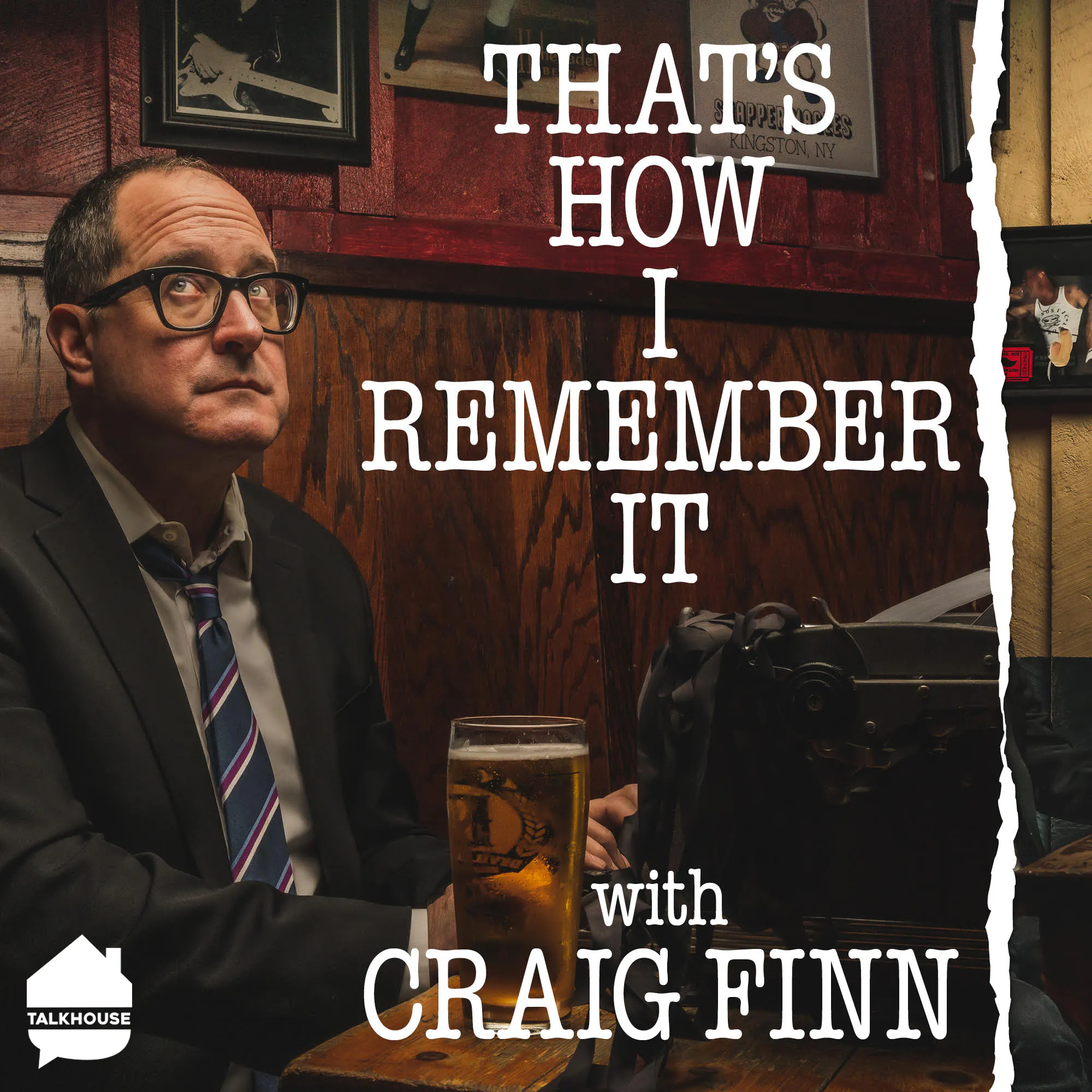
Preview: That's How I Remember It (with Craig Finn)
bonusHappy Holidays. While we're on break, we'd love to share a preview of another podcast on the Talkhouse Podcast Network, Craig Finn's That's How I Remember It. This episode originally aired on Sept. 1, 2022, and is titled "Adam Duritz (Counting Crows)." Subscribe to That's How I Remember It. Adam Duritz is my guest on this week’s That’s How I Remember It and I am quite psyched about it. Adam is obviously the singer and songwriter of platinum selling band Counting Crows, and has been making thoughtful and great music for decades now. I met Adam when Counting Crows took THS on tour in Europe/UK in 2009 and was so excited he agreed to do this. We talked about how the details matter so much in songs, each of our first trips to Asbury Park, loving Christmas music, that dog., last year's fantastic Counting Crows EP, bootlegs, and the way that light attaches to a girl. That’s a wrap on season one of That’s How I Remember It; we’ll be back with season two before long. Listen, subscribe, and keep your eye on this space for tour updates, etc. Stay Positive!
Nick Allbrook (Pond) with Josh Conway (The Marías)
EOn this week’s Talkhouse Podcast we’ve got a pair of guys who don’t know each other well, but who’ve crossed paths a few times over the years—most recently at the Desert Daze festival, Nick Allbrook and Josh Conway. Allbrook is the frontman of the Australian psychedelic rock band Pond, which is sort of inextricably linked with another Australian band, Tame Impala. Allbrook was actually a member of Tame for years while also playing with Pond—which includes some current members of Tame Impala. But Pond, which has been around about as long, has built a sound of its own, much more hard charging than that other band, and released a whopping nine albums of frenetic, fun, fuzzy rock. If you’ve never heard the band, their album titles give a hint as to what they’re all about, from Corridors of Blissterday to Man It Feels Like Space Again. Pond’s latest album has a much simpler title, it’s called 9, and among its fantastic tracks is this one, “Lights of Leeming.” Josh Conway is a huge fan of Pond, though his own band, The Marias, approaches music with a much gentler soul. Conway started the group with his significant other, the band’s namesake Maria Zardoya. Their beginnings are kind of funny: They tried to write songs for film and TV placements, none of which—as you’ll hear in this chat—were ever picked up. But, happy with what they’d written, Conway and Zardoya ended up releasing them anyway, and the Marias was born. Their alt-pop is miles from our other guest’s on today’s episode, with elements of jazz and even reggaeton sprinkled throughout a great debut album called Cinema. Check out “Hush” from that album right here. In this conversation, Allbrook and Conway talk about the work hours of Australians versus Catalonians, about how even a deliberate attempt to sell out can result in great creative work, and how taking a walk under the influence of molly and Outkast changed Conway’s outlook. Also, they declare, cheekily, that God is dead, and art is too. Enjoy. Thanks for checking out the Talkhouse Podcast, and thanks to Nick Allbrook and Josh Conway for chatting. If you liked what you heard, please follow Talkhouse on your favorite podcast platform. This episode was produced by Keenan Kush, and the Talkhouse theme is composed and performed by The Range.
Andy Falkous (Mclusky) with David Yow (The Jesus Lizard)
EOn this week’s Talkhouse Podcast, we’ve paired the frontmen for two gruff-sounding, kinda scary noise-rock bands, but who as it turns out are a couple of sweethearts: David Yow and Andrew Falkous. David Yow began his music life in the Texas band Scratch Acid, which built its own legend before burning out in the mid-1980s, and then took his maniacal presence to The Jesus Lizard. That band built a following in the next dozen years both for its confrontational music and for Yow’s intensity in their live shows. You’d often find him drunk and half-naked, howling into the faces of stunned crowds. First you were scared, and then you loved it. The Jesus Lizard benefited from the grunge explosion in the mid-1990s, but they were always too weird and scary for the mainstream—even when they got an inexplicable major-label deal with Capitol. (You know, home of the Beatles.) The Jesus Lizard split in 1999, but have reunited a few times since then, with demand for Yow’s insanity peaking every few years. There hasn’t been a Jesus Lizard show in a few years, though—or a “reenactment” as he calls their reunion shows—but Yow has been out recently singing for the early noise-punk band Flipper. You may also have seen him in bit parts in a few movies; the guy has led a varied, full life so far. Andrew Falkous unfortunately just had to postpone his own US tour-slash-reenactment with his band Mclusky, which was originally active from the mid-90s until 2006. An illness has affected his Falkous’ ability to sing, but he’s planning to reschedule very soon. In the years after Mclusky, Falkous made similarly brutish-but-incredible records both as the frontman of a band called Future of the Left and as a sort-of-solo artist under the name Christian Fitness. But as the legend of Mclusky snowballed and the 20th anniversary of their absolute classic of a second album Mclusky Do Dallas approached, he was coaxed to relaunch the name and to play those old songs again. Here’s hoping for a quick recovery and new dates soon. Here’s a little taste of what was certainly Mclusky’s biggest song, the charmingly titled “Lightsabre Cocksucking Blues.” In this spirited conversation, Yow and Falkous start by talking about Falkous’ recent battles with his own voice. They get into the nervousness of playing your first-ever show as a singer: Yow dealt with the jitters by handing out tabs of acid to the crowd, while Falkous wore a yellow T-shirt. They talk about beer and whether Australian children should be forced to live in wells. Yow casually slaughters some sacred cows of the alterna-rock world. And lest you think they’re too tough for their own good, you should know that I edited out 15 minutes where they talked about how much they love their cats. Enjoy. Thanks for listening to the Talkhouse Podcast, and thanks to Andrew Falkous and David Yow for chatting. If you liked what you heard, please follow Talkhouse on your favorite podcasting service and check out all the goodness at this very site. This episode was produced by Myron Kaplan, and the Talkhouse theme is composed and performed by the Range. See you next time!
Angelo Moore with Titus
EOn this week's Talkhouse Podcast we’ve got a lively conversation between two guys from different generations and geographical backgrounds, but some similar stories and experiences: Titus and Angelo Moore. Angelo Moore is the legendary frontman of the legendary punk-funk-ska-soul-etc. band Fishbone, which has been a frequently mutating unit since 1979. Fishbone were peers and friends with a who’s-who of that era’s Los Angeles scene, including Red Hot Chili Peppers, Jane’s Addiction, and plenty of others, and they’ve been a huge influence on innumerable bands over the years. It hasn’t been the straightest journey, and there’s a pretty great documentary about the band that came out about 10 years ago called Everyday Sunshine. In addition to fronting the band, which still plays shows worldwide, Moore has embarked on tons of other projects over the years, releasing music as both Dr. Madd Vibe and with a group he calls the Brand New Step. Beyond that, he’s been touring as a vocalist with a David Bowie tribute tour that’s led by Todd Rundgren and Adrian Belew. Titus, aka Randolph Newman, was a fan of Fishbone’s—no surprise for a guy who loves to blend genres, and who’s a person of color in a scene that isn’t known for a ton of diversity. Though they’re from different generations, they share some life experience, having grown up Black in largely white areas—and having ended up playing Warped Tour, though years apart. Titus’ music is less a stew than Fishbone’s: His two most prominent ingredients are pop-punk and hip-hop, with nods to titans of those genres like Taking Back Sunday and Lil’ Wayne. His latest release is an EP called Damned if I Do, and he also recently released a cover of Kate Bush’s Stranger Things-bolstered track “Running Up That Hill,” which is covered in this chat. Check out “Saddest Song” from Damned If I Do right here. Moore and Titus talk about their experiences on Warped Tour, their experiences growing up as outsiders, and drugs. Titus talks about the recent loss of his mother, which has understandably had a profound impact on him, and Moore talks about his days trying to kick some ass in the mosh pit. Enjoy. Thanks for listening to the Talkhouse Podcast, and thanks to Angelo Moore and Titus for chatting. If you liked what you heard, please follow Talkhouse on your favorite podcasting platform and check out all we’ve got on offer at Talkhouse.com. This episode was produced by Myron Kaplan, and the Talkhouse theme is composed and performed by the Range. See you next time!
Dina Amer with Ramy Youssef
On the latest episode of the Talkhouse Podcast, the creator-star of Hulu’s Ramy, comedian Ramy Youssef, talks with Dina Amer, whose debut feature as writer-director, You Resemble Me, is in theaters now. The film is a lightly fictionalized, emotionally resonant portrait of Hasna Aït Boulahcen, a radicalized Muslim who Amer covered as a journalist in 2015 when Boulahcen was implicated in the Paris terrorist attacks. In an engaging, wide-ranging conversation, Youssef and Amer – fellow Egyptian-Americans who have been friends for years – talk about the personal nature of You Resemble Me, the major deal Dina turned down, Spike Lee’s take on her doing the film her way, casting a “hot” actor as a terrorist, and much more. For more filmmakers talking film and TV, visit Talkhouse at talkhouse.com/film. Subscribe now to stay in the loop on future episodes of the Talkhouse Podcast.
Nigel Godrich with Fran Healy (Travis)
EOn this week’s Talkhouse Podcast we’ve got the Scottish singer and songwriter behind some of the catchiest songs of the past two decades along with the super producer who helped bring those songs into the world: Fran Healy and Nigel Godrich. Healy is the singer, guitarist, and chief songwriter of the band Travis, which really broke big with 1999’s The Man Who, scoring mainstream hits with songs like “Why Does it Always Rain on Me” and “Turn.” They’ve since created a deep catalog that numbers nine albums. But for today’s purposes we’re going to concentrate on 2001’s The Invisible Band, which Travis is giving a belated 20th birthday celebration for at the moment, including a US tour that starts this week. It can be difficult to follow up a massive success like The Man Who, and Travis turned once again to Godrich to help them chart the proper course. It wasn’t the beginning, but rather the continuation of a long and fruitful relationship. Check out “Sing” from The Invisible Band. Godrich, by the time Invisible Band came around, had found massive success as the producer of Radiohead’s OK Computer, and of course he would go on to be the sort of unofficial sixth member of that band—recording all of their albums and even playing music with Thom Yorke in Atoms for Peace. As you’ll hear in this conversation, Godrich had some solid advice for Healy heading into The Invisible Band, though it’s not necessarily advice he would give anymore. Beyond his work with Radiohead and Travis, Godrich has also produced classics by Beck—including Mutations and Sea Change—and Air and Arcade Fire and Roger Waters. The list goes on. In this conversation, the two old friends talk about their state of mind and state of life back when they commenced recording The Invisible Band in Los Angeles. They talk about Godrich’s recent revelatory experience seeing the Pavement reunion tour—he also produced that band’s swan song, Terror Twilight. There’s even a story about a baby goat peeing in a very expensive guitar case. Enjoy. Thanks for listening to the Talkhouse Podcast and thanks to Fran Healy and Nigel Godrich for chatting. If you liked what you heard, please follow Talkhouse on your favorite podcasting and social media platforms. This episode was produced by Myron Kaplan, and the Talkhouse theme is composed and performed by the Range. See you next time!
Frank Turner with KT Tunstall
EOn this week’s Talkhouse Podcast we’ve got a pair of singer-songwriters who don’t sound much alike, but who’ve traveled similar paths and have similar outlooks on life—oh, and who did a duet earlier this year—Frank Turner and KT Tunstall. Turner is a sort of folk-punk troubadour who’s built an incredible catalog and following over the past couple of decades from his home base in England. Like his hero Tim Barry of Avail or even Billy Bragg before him, Turner infuses truly catchy songs with a punk spirit, and he’s made a career buoyed by the fact that he never stops moving: He’s always on tour—including a recent “50 States in 50 Days” run—and always making new music. Not even the pandemic could stop him, though obviously it slowed down the live performance. During lockdown, Turner recorded his ninth album, a sort of back-to-basics affair called FTHC, which of course stands for Frank Turner Hardcore. Check out “A Wave Across a Bay” from that album, which was written as a tribute to Turner’s late friend, Scott Hutchison of Frightened Rabbit. Also on that album is a song called “Little Life,” which Turner decided after the fact that he’d like to invite someone else to sing on. Scottish singer-songwriter KT Tunstall perhaps wasn’t the most obvious choice, but then again, neither of these folks ever seems to make the obvious choice—and that’s definitely to their credit. Tunstall’s career, which stretches back to indie bands in the early 2000s, definitely started with a more mainstream-leaning trajectory, with BRIT awards and a Grammy nomination, even. But like Turner, Tunstall has a restless spirit, and some big life events not too long ago led her to sell everything she owns, move to Los Angeles, and dive into the world of musicals—where she has also, unsurprisingly, found success. And just last month, she released the final chapter in a trilogy of albums that were meant to convey the themes of “soul, body, and mind.” This one, called Nut—that’d be your mind—is great. Check out “Private Eyes” from that album right here. Turner and Tunstall have a really fun chat here, covering everything from The Clash and Bruce Springsteen to the weirdness of recording a song before you’ve ever played it live. The talk about the touring life a lot, and how that tribe of people have plenty in common, even when it seems like they don’t. They come up with a slogan for Tunstall’s career, and get into the reality of using a tour bus bathroom. Enjoy. Thanks for listening to the Talkhouse Podcast, and thanks to KT Tunstall and Frank Turner for chatting. If you liked what you heard, please follow us on your favorite platform, and don’t forget to check out all the other great podcasts in our network and written pieces on this very website. This episode was produced by Myron Kaplan, and the Talkhouse theme is composed and performed by the Range. See you next time!
Rhett Miller with Busy Philipps
On this week’s Talkhouse Podcast we’ve got a musician and an actor who also both happen to host their own podcasts—do they let just anybody do that now?—Rhett Miller and Busy Philipps. Miller is best known as frontman and primary songwriter for the Old 97’s, a band that’s celebrating its 30th year together in 2022 and which is at least partly responsible for the phrase “alt-country” coming into existence. But don’t hold Miller responsible for lazy genre tags: He has written literally hundreds of incredible songs that transcend any pigeonhole you might want to shove him in. In addition to a dozen Old 97’s records, he’s also put out eight solo albums, and he tours regularly both on his own and with the 97’s. All that and, like I said, he’s got a podcast: Wheels Off features Miller in conversation with other creative folks, talking about creativity—kinda like the chat you’re about to hear! Before that, check out “Go Through You,” from Rhett Miller’s new solo album The Misfit. You can see why Miller has won some diehard fans, among them actor Busy Philipps, who was introduced to the world via the cult classic TV show Freaks And Geeks back in 1999. (You’ve seen Freaks and Geeks, right? If not, please remedy that immediately.) Philipps went on to a ton of other TV and film roles, everything from ER to Cougar Town to her own chat show to her current gig on the very funny Girls5Eva on Peacock. She’s also built a passionate following by just being herself on the podcast Busy Philipps is Doing Her Best. If you’ve never heard it, you’ll get a little taste of what it’s like in this conversation with her friend Rhett. The two are amazingly all over the place in this chat, talking about everything from why the Target stores in New Jersey are better than those in the big city, about how Philipps is dealing with her pandemic divorce—very well, as it turns out—bad advice received from a genius, Jon Brion, and how much fun it is to read ads for your podcast. I can relate. They also go deep in discussing the genius of Taylor Swift, which results in what may be a Talkhouse Podcast first: real tears captured during an episode. It’s a really great chat between two really charming people. Enjoy. Thanks for listening to the Talkhouse Podcast and thanks to Busy Philipps and Rhett Miller for chatting. If you liked what you heard, please follow Talkhouse—and Wheels Off, and Busy Philipps is Doing Her Best—on your favorite podcasting platform. This episode was produced by Myron Kaplan, and the Talkhouse theme is composed and performed by the Range. See you next time!
Revisited: Aaron Dessner with Julien Baker
This episode originally aired on December 16, 2021. We’ve hosted some incredible Talkhouse Podcast conversations in 2021, and for our final brand-new episode of the year, we’ve got two people responsible for some of the best records of this year: Julien Baker and Aaron Dessner. Baker released her third album, Little Oblivions, back in February, and it’s a doozy. Expanding her sonic palette massively, Baker delivered her powerful, vulnerable songs with much bigger sounds. That might have felt like a gamble, but it paid off massively—she produced it herself and pushed herself into new spaces. Dessner is of course a founding member of the National, with whom he’s played for the past 20+ years. While his main band slowed down over the past couple of years, Dessner has been operating at hyperspeed. He was one of the main co-writers and producers on Taylor Swift’s Folklore and Evermore albums. He won an Album of the Year Grammy for the former, and was nominated for five more Grammys for the latter. He somehow also found time to release a new album with Bon Iver’s Justin Vernon under the name Big Red Machine called How Long Do You Think It’s Gonna Last? In addition to loads of guest singers, that record features Dessner on occasional lead vocals. These two have a fantastic conversation about creativity and, specifically, production: Aaron has done a lot of producing for other artists, and Julien is just getting into it. Julien talks about what it’s like to have a full live band backing her, rather than being a quote-unquote masochist and playing alone. They talk about what it was like to be deprived of live audiences for so long, and Aaron gets into how his studio setup has changed over the years. Also, they both know what it’s like when music can make you cry—that’s the kind of thing we love here at Talkhouse. Enjoy. Thanks for listening to the Talkhouse Podcast and thanks to Julien Baker and Aaron Dessner for having such a wonderful chat. If you liked what you heard, please follow Talkhouse on your favorite podcasting service and social media channels--we’re everywhere. This episode was produced by Melissa Kaplan and Keenan Kush, and the Talkhouse theme is composed and performed by the Range. See you next time!
The Tallest Man on Earth with Field Medic
On this week’s Talkhouse Podcast we’ve got a pair of singer-songwriters who’ve taken interesting names for what are essentially solo ventures: Kevin Sullivan, aka. Field Medic, and Kristian Matsson, better known as the Tallest Man on Earth. Matsson has been making music as the Tallest Man since about 2006, winning fans both with his largely spare, Bob Dylan-like songs and his incredibly forceful live shows. Though he’s from Sweden, Matsson is definitely influenced by the American folk tradition, especially on his early records, like the classic 2008 debut Shallow Grave. He’s since released a handful of excellent albums, and in this conversation with Kevin Sullivan, he drops some hints about a new one that he’s really excited about to be released in 2023. In the meantime, the Tallest Man on Earth just released his first all-covers album, and though he downplays it a little bit, it’s pretty amazing. It’s called Too Late for Edelweiss, and on it he covers songs written by everyone from Hank Williams to Bon Iver to the National. Kevin Patrick Sullivan, who records under the name Field Medic, has long been known for a pretty Spartan approach to recording: Most of his songs have been made super simply, in the folk tradition but with decidedly modern subject matter. For his upcoming fifth album, which has the deliciously long title grow your hair long if you’re wanting to see something that you can change, Sullivan decided to grow his sonic palette and bring in a producer. His confessional, put–it-all-out-there lyrics are still fully intact, of course. Field Medic will take these songs out for a headlining tour that features a full band this fall—a first for Sullivan. Check out the latest single from the new album, called “I Think About You All The Time.” This is a fun conversation given that these guys don’t know each other, but they’re quick to connect. Tallest Man was clearly an influence on Field Medic’s sound, and we get to hear about a long-ago fan interaction between the two that did not, I repeat did not, involve marijuana. They also chat about finding inspiration when it’s gone missing, about the wonder of the Milli Vanilli story, and about which of them wanted to be Bob Dylan in high school, and which wanted to be Lou Reed. Enjoy. Thanks for listening to the Talkhouse Podcast and thanks to Kevin Sullivan and Kristian Matsson for chatting. If you liked what you heard, please follow Talkhouse on your favorite podcasting platform and social media channel. This episode was produced by Myron Kaplan, and the Talkhouse theme is composed and performed by the Range. See you next time!
Eugene Hutz (Gogol Bordello) with Walter Schreifels (Quicksand)
EOn this week’s Talkhouse Podcast we’ve got a hardcore legend and a fierce Ukrainian bandleader who recently worked on a record together: Walter Schreifels and Eugene Hutz. Hutz is the founder, chief songwriter, and energetic frontman of Gogol Bordello, which has combined elements of punk, folk, Eastern European, Latin, and myriad other types of music for the past 20+ years. It’s a remarkable career that’s taken Hutz from his birthplace, Ukraine, to places as far flung as Vermont, Brazil, and New York’s Lower East Side. He’s also had forays into the film world, collaborated with everybody from Madonna to Primus, and gotten crowds jumping at pretty much every festival you can think of. The war in Ukraine has naturally been on Hutz’s mind, and he’s organized benefits and spoken up loudly about it this past year. At least one song on the brand new Gogol Bordello album addresses it directly. Speaking of that record, Solidartine, and Hutz’s penchant for collaboration, it was produced by Walter Schreifels. Check out “Fire on Ice Floe.” Schreifels isn’t just a producer; in fact, that job is probably like the tenth thing on his impressive resume. He was a pioneer of the New York hardcore scene as a member of both Youth of Today and Gorilla Biscuits, and from there he went on to sing and play guitar in Quicksand. A restless writer and performer, Schreifels formed half a dozen short-lived projects over the past couple of decades, in addition to reuniting sporadically with his various bands. Quicksand has released two great albums since getting back together in 2012; they’re heading out on a package tour soon with Clutch and Helmet. There’s also a reissue of a great record by another of Schreifels’ short-lived projects, Rival Schools, coming later this year. It’s hard to keep track of everything he does, but well worth the effort. These two NYC pals talk here about the city’s importance and vibe, as well as getting into deeper conversation about the war in Ukraine, how running can help prepare you for being in a punk band, and about how the pandemic might have led people back to hardcore music. Enjoy. Thanks for listening to the Talkhouse Podcast and thanks to Eugene Hutz and Walter Schreifels for chatting. If you like what you heard, please follow Talkhouse on your favorite podcasting platform, and check out all we have to offer on this very website. This episode was produced by Myron Kaplan, and the Talkhouse theme is composed and performed by the Range. See you next time!
Ti West with Tyler Bates and Tim Williams
On this week’s Talkhouse Podcast we’ve gathered three guys for a very focused discussion about one of the year’s most exciting horror movies: Ti West, Tyler Bates, and Tim Williams. Ti West is a director who’s made his name with a string of what I guess you’d call indie-horror movies—though I’m not sure that does justice to the kind of auteurist vision he has. With films like The House of the Devil and The Innkeepers, he revealed a truly singular style. He tried his hand at a Western with the wild and wooly In A Valley of Violence in 2016, but returned to his horror roots this year with a pair of movies filmed back to back: X, which came out in March, and its prequel, Pearl, which is just hitting theaters now. For these two movies, which both star Mia Goth, West hooked up with indie powerhouse A24, which as you’ll hear in this chat, made a big bet on these two films—and since this chat took place, have now committed to a third in the franchise. If you like creepy, stylish horror, definitely check them out. A big part of what makes both X and Pearl work is the music, and that’s where the two other guys on this chat come in. Tyler Bates is a composer who’s worked on music for an incredible array of films, from 300 to John Wick to Guardians of the Galaxy. But he knows horror, too, having worked on Rob Zombie’s string of early flicks as well. Bates is also a music producer, having recently done the new Starcrawler album, and he was, briefly, a member of Marilyn Manson. For the more old-fashioned orchestral score for Pearl, he recruited his friend and neighbor Tim Williams, who’s contributed to a ton of great film and TV scores over the past decade as well. This chat among these three gets wonderfully granular about the world of film sound. Pearl is a prequel that takes place in 1918, so West wanted Bates to come up with something very old-school. That meant real orchestrations and the kinds of instruments and musical cues you don’t really hear anymore—and it works remarkably well. As you’ll hear in this conversation, West really thinks like an auteur: He’s concerned with every aspect of his movies, right down to whether the sound of crickets is going to interfere every so slightly with the score. All of that care definitely shows on screen, and you can hear when these guys talk how much they care about getting things just right. Enjoy. Thanks for listening to the Talkhouse Podcast, and thanks to Ti West, Tyler Bates, and Tim Williams for chatting. If you liked what you heard, please follow Talkhouse on your favorite podcasting platform, and check out all the great written pieces on this very site. This episode was produced by Myron Kaplan, and the Talkhouse theme is composed and performed by the Range. See you next time!
A-Trak with Braxe & Falcon
On this week’s Talkhouse Podcast we have a pair of French electronic music pioneers who recently teamed up alongside a DJ who’s been responsible for some of the most exciting production of the past 20+ years: Braxe and Falcon with A-Trak. Alan Braxe and his cousin Stephane Quem—aka DJ Falcon—are legends of French house music going back decades: Braxe was one-third of the trio Stardust alongside Daft Punk’s Thomas Bangalter. They famously released just one song in 1998 before splitting up, but “Music Sounds Better With You” is a classic of the genre. Falcon’s biggest claim to fame might also be Daft Punk adjacent: He co-wrote and co-produced their song “Contact,” from 2013’s Random Access Memories. And though they’ve obviously been acquainted forever, Braxe and Falcon only recently came together for a project, and it’s pretty amazing. Their debut EP, Step By Step, includes a killer title track with an appearance by Panda Bear. Braxe and Falcon will make their live debut in November with two U.S. shows, one in New York and another in L.A. Check out “Step by Step” right here. That EP also features a remix by Braxe and Falcon’s old friend DJ A-Trak, a superstar of the electronic world whose resume makes me feel very lazy. As a young guy, he was a championship-level turntablist in his native Canada, which led to a years-long role on stage with Kanye West. His career continued as a headlining DJ and producer in his own right: He’s known both for creating his own sounds and remixing big names. He also runs the vaunted Fool’s Gold label and collaborates with lots of other folks, including Armand Van Helden in Duck Sauce. A-Track’s latest project is a collaborative album with elusive hip-hop icon Cam’ron called U Wasn’t There, which comes out September 23. Check out “All I Really Wanted” from that upcoming record. In this chat, Braxe, Falcon, and A-Trak talk about the sonic intersections of house music and old-school hip-hop, they discuss the ups and downs of the forced Covid break, and there’s a lot of gear talk—which is a whole different thing when you’re talking about samplers and keyboards instead of guitars and pedals. It’s a lot of fun, and I hope you enjoy it. Thanks for listening to the Talkhouse Podcast and thanks to Braxe, Falcon, and A-Trak for chatting. If you liked what you heard, please follow Talkhouse on your favorite podcasting platform, and check out Talkhouse.com for all kinds of great written features. This episode was produced by Myron Kaplan, and the Talkhouse theme is composed and performed by the Range. See you next time!
Marcus King with Neal Francis
On this week’s Talkhouse Podcast, we’ve got a conversation between two young performers who are just this week starting a huge tour together: Marcus King and Neal Francis. King is a blues-rock prodigy who, at 26, already has a lifetime of music under his belt—both as leader of the Marcus King Band and, more recently, as a solo artist. Though he wasn’t alive for the 1970s, King clearly has an affinity for that decade, with nods in his music to players like Jimi Hendrix and ZZ Top. He’s earned a huge following over the years, which makes sense since he’s been gigging since his teens. King’s first solo disc, 2020’s El Dorado, earned him a Grammy nomination, and for the brand new Youngblood he once again hooked up with producer Dan Auerbach of the Black Keys. It’s a scorcher. Check out a little bit of “Hard Working Man” from Youngblood, from a recent performance on Jimmy Fallon's show. Neal Francis is similarly enamored of 1970s sounds, though he leans more toward the funk and soul sides of things. Francis was in a band in his hometown of Chicago called The Heard, but graduated to more sophisticated sounds as a solo artist: Think Sly Stone and Elton John and you’re on the right track. His latest album for ATO Records is called In Plain Sight, and it was partly inspired by Francis’ time living in a haunted church in Chicago. Check out “Problems” from In Plain Sight right here. What both Marcus and Neal’s records share is a little more seriousness than you might immediately hear in what sounds like party-friendly music. Both have had their bouts with substance issues and messy breakups, and those things make it into their songs. They’re both also really interested in ghosts, as you’ll hear: King isn’t sure whether alcohol made him see a demon, but he’s definitely seen it. They also talk about growing up bluesy, how David Lynch might translate into music, and the time-honored tradition of drawing dicks on dressing room walls. Enjoy. This episode was produced by Myron Kaplan, and the Talkhouse theme is composed and performed by the Range. See you next time!
Doug Martsch (Built to Spill) with Kenny Becker (Goon)
EOn this week’s Talkhouse Podcast we’ve got a couple of fantastic songwriters from the indie-rock world: Kenny Becker and Doug Martsch. Martsch I’m guessing our listeners will know as the chief songwriter and sole consistent member of Built to Spill, the band that made Boise, Idaho famous. Built to Spill has been an ongoing concern since the early 1990s, releasing a ton of great albums at a fairly leisurely pace, including stone classics like There’s Nothing Wrong With Love and Keep it Like a Secret. The Built to Spill lineup has mutated a bunch of times over the years, and that’s never been more true than for the genesis of their latest album, When the Wind Forgets Your Name. Writing and recording the album was done with members of the Brazilian band Orua, but the latest live lineup features Martsch alongside a pair of incredibly talented young women from up-and-coming bands: Prism Bitch’s Teresa Esguerra and Blood Lemon’s Melanie Radford. They bring a new energy to this storied band. Check out the hilarious video for “Fool’s Gold” from When the Wind Forgets Your Name. Goon has a much shorter history than Built to Spill, having really started as Kenny Becker’s solo project around 2015. Along with some college friends, Becker recorded Goon’s dreamy debut album Heaven is Humming. But that lineup was slowly lost to attrition and now, like Martsch, Becker has an entirely new set of players alongside a brand new album, Hour of Green Evening. This new one was recorded in a more bandlike setting, as you’ll hear in this chat, and Becker even had some help from Alex Fischel of Spoon. Check out the sweet and tender “Emily Says” from that new record. In this chat, Becker and Martsch talk about recording in a studio versus recording at home; they talk about finding those eureka moments in the studio, Built to Spill’s recent cover of a Cate Le Bon song, and getting musical ideas from TikTok. Enjoy. Thanks for listening to the Talkhouse Podcast and thanks to Doug Martsch and Kenny Becker for chatting. If you like what you heard, please follow Talkhouse on your favorite podcasting platform, and check out all of the other Talkhouse network shows and written pieces at Talkhouse.com. This episode was produced by Myron Kaplan, and the Talkhouse theme is composed and performed by the Range. See you next time!

Introducing: Björk: Sonic Symbolism
bonusNew from Talkhouse: Join Björk in conversations with collaborators about her sound experiences. In the podcast you’ll learn about the moods, timbers, and tempos that vibrate through each album. Subscribe at: https://pod.link/bjork
Hamilton Leithauser with Ethan Hawke
On this week’s Talkhouse Podcast we’ve paired a couple of friends who recently worked together on an incredible project: Ethan Hawke and Hamilton Leithauser. Ethan Hawke you surely know as the Academy Award-nominated actor in a million great films, from Reality Bites to Training Day to Richard Linklater’s Before trilogy to 2018’s First Reformed. Hawke is also a writer and director, and the impetus for today’s conversation is his six-part HBO Max documentary The Last Movie Stars. The series tells the story of Paul Newman and Joanne Woodward, both their personal lives as a married couple and their professional lives as two monumental actors of their generation. Far from a typical documentary, The Last Movie Stars uses archival footage alongside dramatizations of interviews featuring current movie stars. It even gets a bit meta, with Hawke revealing some of his process during the series via Zoom calls with contemporaries. It’s a fascinating way to tell this incredible story. Another way that Hawke brought this story into the present was with music from his old friend Hamilton Leithauser, who’s best known as the singer of the Walkmen, and who’s had a fruitful solo career since that band went on hiatus a while back. As you’ll hear in this chat, Hawke had the idea that Leithauser would be great at soundtrack work ages ago, so when he started working on The Last Movie Stars, Leithauser immediately came to mind. There’s a lot of Leithauser in the doc, and one song that they cover in this chat quite a bit is called “1959,” from an album that Leithauser made with Vampire Weekend co-founder Rostam. Elsewhere in the chat, Hawke and Leithauser talk about their processes for this project: Hawke originally envisioned a two-hour feature, but quickly realized that he needed much more time to tell this huge story. They talk about Bob Dylan’s influence—musical good, acting not so much—and the greatest soundtracks of all time. That, and much more. Enjoy. Thanks for listening to the Talkhouse Podcast and thanks to Ethan Hawke and Hamilton Leithauser for chatting. If you liked what you heard, please follow Talkhouse on your favorite podcasting platform—and check out The Last Movie Stars on HBO Max. This episode was produced by Myron Kaplan, and the Talkhouse theme is composed and performed by The Range. See you next time!
Spiral Stairs (Pavement) with Kelley Stoltz
On this week’s Talkhouse Podcast, we’ve got a pair of old friends with a ton of records and history between them: Kelley Stoltz and Spiral Stairs. Spiral Stairs—aka. Scott Kannberg—is a founding member of indie-rock kingpins Pavement, a band he formed in Stockton, California with his high school friend Stephen Malkmus. What started as a noisy, ramshackle outfit bloomed into one of the most important and influential bands of the 1990s. Their albums have only grown in stature over the years, getting the sort of deluxe reissue treatment that was once reserved only for the gods of classic rock. And though Pavement split up in 1999, they’ve reunited twice—and are about to launch a pretty hefty tour of the US and Europe. Outside of Pavement, Kannberg has kept plenty busy releasing music under both his Spiral Stairs moniker and, for a while, as Preston School of Industry. He’s had an incredibly prolific last few years, too, releasing three albums since 2017—the latest is the fantastic Medley Attack!!! It was a record born of some hardship, including Covid, worldwide relocations, and most unfortunately, the sudden death of Kannberg’s bassist Matt Harris. But those events resulted in what’s probably his best solo outing yet. Check out a little bit of the song “Pressure Drop (End of the Hurricane)” right here. Kannberg enlisted the help of several friends in making that record, including the other half of today’s conversation, singer-songwriter Kelley Stoltz. Stoltz is one of those guys who just has a knack for writing incredibly tuneful pop songs. If they were recorded with more slickness, you might mistake them for radio hits of the ‘60s and ‘70s—I mean that as a high compliment. Stoltz recently released his seventeenth studio album, The Stylist, and it’s a great place to start in a catalog that includes plenty of stone classics. Check out “Your Name Escapes Me.” As you’ll hear in this conversation—though not necessarily in either of those songs—Stoltz and Kannberg first bonded over a mutual love of Echo & The Bunnymen. Stoltz actually recorded a full album cover of that band’s Crocodiles album, and Kannberg joined him on some live shows to perform it. Weirdly, that led to Stoltz, who as a teen worshiped Ian McCulloch, to a brief stint as rhythm guitarist for the British band. Talk about Echo leads to talk about copycat haircuts of their youth, formative years working in record stores, and lots more. And you’ll even get to hear two songs in very early stages—one that Kannberg (maybe) wants to bring to his Pavement bandmates, and one that Stoltz has started writing for his infant daughter. Enjoy. Thanks for listening to the Talkhouse Podcast, and thanks to Kelley Stoltz and Scott Kannberg for chatting. If you liked what you heard, check out both of their new albums, and of course follow Talkhouse on your favorite podcasting platform. This episode was produced by Myron Kaplan, and the Talkhouse theme is composed and performed by The Range. See you next time!
Revisited: Reggie Watts with Chino Moreno (Deftones)
To celebrate the release of the new Deftones album Ohms, we paired frontman Chino Moreno with his old friend and tourmate — and long-time Deftones fan! — comedian/musician Reggie Watts for a Talkhouse Podcast conversation. The guys were very psyched to catch up, and their freewheeling talk took in the making of the new Deftones LP; the ups and downs of long-term collaborations; their very different writing and recording approaches; and… bikes. Turns out they're both waaay into bikes. Check it out, and subscribe now to stay in the loop on future episodes of the Talkhouse Podcast. —Elia Einhorn, Talkhouse Podcast host and producer For this week’s episode, everyone you hear recorded themselves. Our producer is Mark Yoshizumi. The Talkhouse Podcast theme song was composed and performed by The Range.
Introducing: Listening
bonusIn Listening, a new series from Talkhouse and Mailchimp Presents, we invite some of the world’s most beloved and inventive musicians to create new compositions that allow us to intimately experience a time and a place in their lives. We’ll join each artist to hear about the creation of their piece, how deeper listening informs their process and how that practice can enrich all of our lives. Subscribe today!
Davey von Bohlen (Promise Ring) with Jim Adkins (Jimmy Eat World)
On this week’s Talkhouse Podcast we’ve got two old friends whose bands started around the same time, and who’ve had very different albums hit the 20-year-mark recently: Jim Adkins of Jimmy Eat World and Davey von Bohlen of the Promise Ring. I had the idea to pair these guys after seeing a bunch of “best of emo” lists floating around the internet ether lately, and it reminded me of the heady days of the late ‘90s and early 2000s, and how many fond memories I have of those times. I saw the Promise Ring and Jimmy Eat World plenty of times back then; full disclosure: I was then and am now friends with the guys in the Promise Ring. It occurred to me that while the two bands had been on similar trajectories back then, that they diverged right around 20 years ago in a really interesting way. I figured it’d be fun to reconnect them and see what they had to say about it. The Promise Ring were at the top of the emo heap in the late 1990s, though everybody hated that word with a passion back then. They were early fans of Jimmy Eat World’s music, and the bands toured together a few times over the years. By the end of the century, The Promise Ring had hit a weird rough patch: Von Bohlen had surgery for a brain tumor, and the band was naturally forced to slow down considerably. When they returned with their much anticipated fourth album, Wood/Water, it represented what felt at the time like a pretty intense left turn: The songs were slower and more melodic—not necessarily what fans were expecting, though the album has gotten a rightful reappraisal in the 20 years since its release. The Promise Ring split up soon after its release, and Davey went on to form the band Maritime with Promise Ring drummer Dan Didier, and they released a string of great records. Jimmy Eat World also found themselves at a crossroads 20 years ago; having parted company with a major label, they self-funded a new album. That album, 2001’s Bleed American, spawned a leftfield hit for the band, a song called “The Middle.” It launched Jimmy Eat World into the mainstream before they knew what hit them, and it’s one of those songs that to this day you might hear on the radio. It was a blip, of course, in a consistently fantastic career: Jimmy Eat World kept making records and touring—their latest is 2019’s Surviving. So it was an interesting point in time for both of these guys, who as you’ll hear remain fast friends after all these years. Playing music isn’t a huge part of von Bohlen’s life anymore, though he does point out that Maritime is technically still a band. These two chat about their 20-ish-year-old records, fatherhood, drinking, touring in the ‘90s, and lots more. Davey tells a great story I hadn’t heard before about the Promise Ring’s insane pact with each other in their earliest days. Sadly, Jim and Davey never get around to talking about Davey’s guest vocals on Bleed American, but maybe we’ll just have to have them chat again sometime. Enjoy. Thanks for listening to the Talkhouse Podcast, and thanks to Davey von Bohlen and Jim Adkins for chatting. If you liked what you heard, please follow Talkhouse on your favorite podcasting platform, and check out all the great written pieces elsewhere on this very site. This episode was produced by Myron Kaplan, and the Talkhouse theme is composed and performed by the Range. See you next time!
Joe Pera with Dan Wriggins (Friendship)
On this week’s Talkhouse Podcast we’ve got a comedian and a musician who recently joined forces to make a music video: Joe Pera and Dan Wriggins. Joe Pera is a stand-up comedian who’s best known as the star and creator of Joe Pera Talks With You, the Adult Swim TV show about the beautifully modest existence of a middle-school choir instructor in Michigan’s Upper Peninsula. It’s a show unlike anything else on TV, past or present, and it’s a direct reflection of Pera’s unassuming comedic persona: In other words, it’s hard to tell where Joe Pera the character ends and Joe Pera the guy begins. It’s also insightful, weird, and decidedly sweet. And while the show just finished its three-season run recently, it won’t be the last the world sees of Pera. In fact, he’s in the midst of a stand-up tour right now, and you can find dates at joepera.com. Oh, and he also just landed the role of James Bond, which you can hear all about on his recent Seth Meyers appearance. Seems like kind of a big deal. Yet Pera still has time to help out indie bands like Friendship, whose singer and songwriter Dan Wriggins is the other participant in today’s chat. Friendship is made up of old friends—no surprise there—though the band is actually named after a town in Maine near where they grew up. They’re currently based in Philadelphia, though Wriggins Zoomed in for this chat from Little Cranberry Island, Maine, where he also spent time as a kid. That island is also where Friendship and Joe Pera shot the video for “Hank,” from the band’s brand new album, Love The Stranger. It’s the band’s fourth full-length and first for the always reliable Merge Records. It’s a beautiful record full of straightforward but nuanced observations about life and love. Check out the video for "Hank" right here, which comes up in this chat quite a bit. As I said earlier, that “Hank” video comes up in this conversation, and it leads to Joe and Dan talking about craftsmanship, lobster fishing, and lots more. They talk about touring as a comedy act versus touring as a band, and about how each of them works hard to make their respective art look easy. Oh, and at the end of the chat, Joe finally reveals who his celebrity spouse is, so stay tuned for the whole thing! Thanks for listening to the Talkhouse Podcast, and thanks to Joe Pera and Dan Wriggins for chatting. If you liked what you heard, they’re both on tour—separately—right now. Please follow Talkhouse on your favorite podcasting platform, and check out all the great written features we’ve got on Talkhouse.com. This episode was produced by Myron Kaplan, and the Talkhouse theme is composed and performed by the Range. See you next time!
Taylor Bennett with Matt Johnson (Matt and Kim)
EOn this week’s Talkhouse Podcast, we’ve got what might seem at first to be an unusual pairing, but that has its genesis in some serious fandom: Taylor Bennett and Matt Johnson. Taylor Bennett is a musician, entrepreneur, and community activist who has helped guide the career of his older brother Chance the Rapper while also busting genres on his own records. Bennett is a restless musician, rarely content to make the same moves twice. He raps and sings, and has proudly been sample-free on his last few records. A few years back, he released Be Yourself, a manifesto of sorts that championed inclusivity and positivity—he also told the world around the same time that he’s proudly bisexual. For this year’s Coming of Age, Bennett once again found inspiration in all different kinds of music, even bringing in some guests from various areas on the musical spectrum. One guest he was particularly excited to work with was Matt Johnson of Matt and Kim, the New York indie duo behind some of the past two decades’ most invigorating songs. Johnson contributed vocals to “Kick Back,” from Coming of Age—check out that song right here. As I said, Matt Johnson is half of Matt and Kim—you can probably guess which half—the life-affirming duo behind one really big hit, “Daylight,” a breakthrough music video that you’ll hear about in this chat, the end-credits song in a Lego movie, and perhaps most importantly, the sort of we-did-it-our-way career that should be the envy of their peers. Matt and Kim have released six albums in their two decades together, and they’ve built a relationship with their audience through undeniably joyous live shows and a sense of gratitude you don’t always see in bands. Their energy is, to use a true rock cliche, infectious, and it’s a big part of their appeal—along with damn catchy songs, of course. The inability to get out in front of his fans has made Matt a little itchy over the past couple of years, which you’ll hear about in this chat. Johnson and Bennett also talk about giant dildos in this podcast, so prepare yourself for that. If that’s not enough to pique your interest, the two also talk about trying to separate the art from the artist, about the real reason to remain independent, and about what it’s like to get completely naked in Times Square in the dead of winter for a video shoot. It’s a lot of fun, and I hope you enjoy listening to it as much as I did. Thanks for listening to the Talkhouse Podcast, and thanks to Taylor Bennett and Matt Johnson for chatting. If you like what you heard, please follow Talkhouse on your favorite podcasting platform, and check out our great written pieces and vast podcasting network on this very site. This episode was produced by Myron Kaplan, and the Talkhouse theme is composed and performed by the Range. See you next time!
Sharon Van Etten with Jonathan Meiburg (Shearwater)
On this week's Talkhouse Podcast we’ve paired up a couple of old friends and onetime tourmates, Sharon Van Etten and Jonathan Meiburg. This pairing was especially fun for me, since I had the pleasure of putting these two together in a different context many years ago, when I was editor of The A.V. Club: Sharon and Jonathan performed an amazing version of the Tom Petty/Stevie Nicks duet “Stop Draggin’ My Heart Around” for the site’s A.V. Undercover series. Seeing their faces together brought back that fun memory, and it was great seeing them reconnect. Van Etten is a singer and songwriter who’s been making records for the past decade plus, growing and changing and taking chances in exactly the way you hope truly talented people will. Her amazing early records were quietly intense, very confessional affairs, but she burst from the seams with subsequent releases. In 2019, she released Remind Me Tomorrow, which brought in bigger sounds and colors and an entirely different kind of confidence to her songwriting and performance. She gives partial credit in this chat to producer John Congleton, who was recommended to Van Etten by none other than Jonathan Meiburg. Earlier this year, Van Etten released another incredible album called We’ve Been Going About This All Wrong, which puts into intense songs some of the feelings we’ve all been feeling the past couple of years. You know what I’m talking about. Check out “Mistakes” from that new album, and check out Van Etten on the Wild Hearts tour over the next few months, with Angel Olsen and Julien Baker. Today’s other guest, Jonathan Meiburg, is best known in the music world as the driving force behind the band Shearwater, which he started way back in the late ‘90s as an offshoot of his previous band, Okkervil River. But under this name, Meiburg has created a vast and varied catalog that combines his writerly mind with sometimes-moody, sometimes-joyous music. Shearwater just released their first album in six years: It’s called The Great Awakening, and it’s what a lazy podcast host might refer to as a return to form—or at least more austere earlier vibes. Don’t let that six-year gap fool you, though: Meiburg has been plenty busy. He’s got another band called Loma with the members of Cross Record, and they’ve got a third album on the way. Oh, and Meiburg wrote and released an incredible book called A Most Remarkable Creature: The Hidden Life and Epic Journey of the World’s Smartest Birds of Prey, which rolls up history, science, and travel into one really beautifully written piece. (Around Talkhouse HQ, we like to brag that Meiburg has written a bunch of pieces for us over the years.) As you’ll hear in this conversation, he’s already started working on another book. Check out “Empty Orchestra” from The Great Awakening. As you’ll hear, Van Etten and Meiburg are old friends who toured together long ago, but hadn’t seen each other in person until very recently, when Van Etten’s tour took her to Hamburg, where Meiburg is currently living. They talk about writing songs—and specifically about how gibberish can become lyrics, which I always find interesting. Meiburg remarks on Van Etten’s transformation as a stage performer over the years, and they even chat about Sharon’s son—specifically his relationship to the movie Cool Runnings. Enjoy. Thanks for listening to the Talkhouse Podcast, and thanks to Sharon Van Etten and Jonathan Meiburg for chatting. If you liked what you heard, please do follow Talkhouse on your favorite podcasting platform. This episode was produced by Myron Kaplan, and the Talkhouse theme is composed and performed by the Range. See you next time.
Revisited: Carly Rae Jepsen with mxmtoon
This week we’re revisiting a Talkhouse episode that was originally released in October of 2020, when perhaps you missed it because you had other things on your mind. It happens. This one features a great chat between two women at different phases in their careers: Carly Rae Jepsen and mxmtoon. You might recognize mxmtoon’s name from her podcast 365 Days, which is part of the Talkhouse Podcast Network. Speaking of, did you know we have a network full of other great shows, including Aquarium Drunkard Transmissions, Sing for Science, Craig Finn’s brand new podcast That’s How I Remember It, and What Had Happened Was with Open Mike Eagle? We do! Anyway, just before this episode, Carly Rae and mxmtoon had just collaborated on a track called “Ok on your own,” and they dove right into a great conversation about songwriting and much, much more. Check it out, and we’ll be back with a brand new episode next week! To celebrate Carly Rae Jepsen and mxmtoon's rad collab track "ok on your own," we paired the pop stars for what turned out to be a deep dive into the art of making music and learning to thrive in the complicated music industry. In this very warm and insightful conversation, Carly and Maia each share their (very different!) origin stories, and explore both the art of songwriting and live performance. Carly also shares clutch career wisdom. Check it out, and subscribe now to stay in the loop on future episodes of the Talkhouse Podcast. Plus, ICYMI: mxmtoon just kicked off her yearlong podcast project 365 days with mxmtoon in collab with Talkhouse, which features quirky stories from history that occurred on each day, old diary entries and more; it’s really fun, and like eight minutes long. —Elia Einhorn, Talkhouse Podcast host and producer For this week’s episode, Carly was recorded by Nick Theodorakis, and everyone else you hear recorded themselves. Our producer is Mark Yoshizumi. The Talkhouse Podcast theme song was composed and performed by The Range.
Jonathan Davis (Korn) with Danny Brown
EOn this Talkhouse Podcast, we’ve got one of those chats that feels like it’s going to lead to something bigger down the road: Jonathan Davis and Danny Brown. Neither of these guys probably needs an introduction, but here goes anyway: Jonathan Davis is the frontman of the band Korn, which basically invented a sound and subsequent genre about 30 years ago. I’m not sure if people still say “nu metal,” but whatever you want to call it, it never really seemed to leave the cultural zeitgeist once it took hold. Korn always seemed to have a wider variety of influences than some of their peers, taking bits and pieces from goth, metal, and hip-hop to make a strange new brew. They’ve released an impressive 14 albums, taking stylistic turns like 2011’s The Path of Totality, which incorporated dubstep and drum-and-bass elements. The band’s latest is Requiem, which was written and recorded during Covid’s enforced ban on touring. It’s a bit of a return to their classic sound, and it’s gotten incredibly positive reviews from fans and critics. Danny Brown is a rapper and, more recently, a comedian who broke out of his hometown of Detroit around 2010, and has released a series of groundbreaking, incredible records that never seem to sit still—just like him. He’s had huge singles and collaborated with everybody from Eminem to Purity Ring to Kendrick Lamar to A$AP Rocky. And though he hasn’t put out a proper album since 2019’s killer U Know What I’m Sayin’, Brown has kept busy making music, making his stand-up comedy debut, doing the hilarious Danny Brown Show on YouTube, and allegedly prepping a new record with the working title Quaranta. He’s described the record as “all over the place,” which makes sense considering Brown’s varied list of influences—one of which is Korn, which is how we got here in the first place. This genesis of this conversation, Davis and Brown’s first, was Brown covering Korn’s classic “Freak on a Leash” live in concert last year. Like I said, this is the first real conversation that Brown and Davis have ever had, and they get along great—great enough that they’re instantly talking about meeting up in person to collaborate at Davis’ Bakersfield, California studio. They get into Korn’s songwriting process, Covid-inspired depression, and how the internet provides the kind of instant rejection you had to work harder for in the old days. It’s a great chat, I hope you enjoy it. Thanks for listening to the Talkhouse Podcast, and thanks to Jonathan Davis and Danny Brown for chatting. If you liked what you heard, please subscribe via your favorite podcasting app, and while you’re already there, go ahead and rate us. This episode was produced by Myron Kaplan, and the Talkhouse theme is composed and performed by the Range. See you next time!
Stuart Murdoch (Belle and Sebastian) with Ramesh Srivastava (Voxtrot)
On this week’s Talkhouse Podcast we’ve got a pair of musicians who both suffer from the effects of LSD—that’s lead singer disease—Stuart Murdoch and Ramesh Srivastava. Ramesh was and is now again the lead singer and chief creative force behind the Austin, Texas band Voxtrot, which burned bright but maybe too quick in the early 2000s. They released a series of rapturously received EPs and one LP that were beloved by fans of deeply British institutions like Sarah Records and The Smiths. But the band had split by 2010, and Ramesh went on to release a pair of solo albums that didn’t quite have the impact his band did. For a while, he was content to leave Voxtrot in the past, but gathering material for two reissues gave him the spark to get thing going again. The next few months will see the release of both Early Music—which gathers the band’s beloved EPs—and Cut from the Stone, which features rarities and B-sides. And then, like some unstoppable force of nature, Voxtrot will tour the U.S. again. Dates can be found at voxtrot.net. And in case you’re not familiar, here’s a great Voxtrot song called “The Start of Something.” Do you hear a bit of Belle and Sebastian in that song? They’re a pretty clear influence on Voxtrot, and Srivastava met Stuart Murdoch while living in Glasgow in his younger days—you’ll hear about their meet-cute in this conversation. Belle and Sebastian, of course, have had an incredible career over the past quarter century or so. They started life as a school project for Murdoch, a shy young man whose feelings spilled out into his gentle songs in a way that seemed then—and now—to be almost magical. Over the years, Belle and Sebastian developed from a sort of bedroom-pop project to a massive pop machine, while never losing that spirit of playfulness and sincerity that Murdoch has always projected. The band recently released their ninth studio album, called A Bit of Previous. The title is a bit tricky in that it seems to reference the good old days but also Murdoch’s longtime interest in Buddhism, which he explored in greater depth during the pandemic. In this conversation, you’ll actually hear a bit about how both Ramesh and Stuart approach spirituality, both Christianity and Buddhism. You’ll hear how being a “gay brown person” pushed Ramesh away from religion for a long time. They talk about the aforementioned “lead singer disease,” and how that affects everyday life. And we get to hear about a young Stuart Murdoch making his way to the London flat of one of his musical heroes, but then deciding not to actually knock on his door. Enjoy. Thanks for listening to the Talkhouse Podcast, and thanks to Ramesh Srivastava and Stuart Murdoch for chatting. If you like what you heard, please follow Talkhouse on your favorite social channels and check out talkhouse.com for lots of great written pieces, too. This episode was produced by Myron Kaplan, and the Talkhouse theme is composed and performed by the Range. See you next time.
Martin Courtney (Real Estate) with Tim Darcy (Ought, Cola)
EOn this week’s Talkhouse Podcast we’ve got a pair of songwriters who are meeting for the first time, which we haven’t had in an episode in quite a while. Martin Courtney and Tim Darcy. Until recently, Darcy was the frontman of the band Ought, which released three fantastic, brainy art-punk albums from their home base of Montreal—despite the fact that Darcy is, in fact, “secretly American.” Ought split up pre-pandemic but that wasn’t really public news until the announcement of the existence of Darcy’s new band, Cola, which he started just a couple of years ago along with Ought bassist Ben Stidworthy and Weather Station/US Girls drummer Evan Cartwright. Just last month, Cola released their debut album, Deep In View, and it feels like a sort of back-to-basics take on their old band—but still fresh and exciting. Darcy is a guy who takes his lyrics seriously, and though he clearly had a great time making the record, there’s a darkness to it that recalls the best post-punk and trebly art-rock of the past 40 years, from Talking Heads to Parquet Courts. Martin Courtney is the singer and guitarist of Real Estate, the New Jersey-born band that has released five albums of songs that battle gently the urges toward pop-song structure and a slight psychedelic haze. Real Estate had particularly bad timing luck with regard to that worldwide pandemic we’ve all talked so much about over the past couple of years, releasing an album just weeks before the world shut down, resulting naturally in canceled tours and other plans. Instead of diving into another Real Estate album during the lockdown, Courtney decided to take a path of less resistance and record his second solo album. As he jokes in this conversation, most solo albums tend to be an excuse for an artist to indulge their more out-there impulses, but his impulses tend to lead him back toward more structured pop songs. He came up with a killer batch for this record, which is called Magic Sign. Darcy and Courtney hadn’t met before this chat, but that doesn’t stop them from getting into a great conversation: They talk about how podcasts might be boring—and how that’s okay (!?). They get into Courtney’s slight sense of disillusionment with music in general. Then they bring it back to creative desires: They are both guys itching with ideas and ready to get them out to the world. And, as fate would have it, both are going to be touring this summer, god willing. So get out there and see them, but first, check out this chat. Thanks for listening to the Talkhouse Podcast, and thanks to Tim Darcy and Martin Courtney for chatting. If you liked what you heard, please follow Talkhouse on your favorite podcast platform, and check out the great new records by both of this week’s guests. This episode was produced by Myron Kaplan, and the Talkhouse theme is composed and performed by the Range. See you next time!

Podcast Preview: Craig Finn's 'That's How I Remember It' featuring Patterson Hood
EHello Talkhouse listeners and readers. We’ve got a special treat for you this week: Instead of the usual Talkhouse Podcast, we’re featuring the debut episode of a podcast called That’s How I Remember It. Craig Finn, as you hopefully already know, is the singer of The Hold Steady as well as a solo artist. He’s got an excellent new solo record called A Legacy of Rentals, and it inspired him to start a new podcast that explores the intersection of memory and creativity. The Talkhouse gang helped him put it together, and we’re happy to present the first episode here. If you like it, which you undoubtedly will, please subscribe! Here it is, the first episode of That’s How I Remember It, featuring Craig in conversation with Patterson Hood of Drive-By Truckers. Enjoy, and we’ll be back to regular Talkhouse episodes next week! Subscribe to That’s How I Remember It to catch future episodes with Brian Koppelman, Fred Armisen, and many more.
Revisited: Michelle Zauner (Japanese Breakfast) with Rostam
Hello Talkhouse listeners; this week we’re resurfacing a talk featuring a frequent Talkhouse contributor who seems to be having yet another career moment: Michelle Zauner, aka. Japanese Breakfast. You may have caught Zauner and her band on the season finale of SNL, or playing your local theater, or on every playlist worth a dang. This talk, which originally ran on June 3, 2021—around the time the latest Japanese Breakfast album, Jubilee, came out—features Zauner in conversation with Rostam, the musician and producer best known as part of Vampire Weekend. If you like what you hear, there are two more Zauner-led Talkhouse Podcasts in the archives, one with Alex Cameron, and the other with Rachel Goswell of Slowdive. -------- Today’s Talkhouse Podcast started with a little bit of serendipity in the form of album release dates: Both of our guests, Michelle Zauner of Japanese Breakfast and producer/musician/former Vampire Weekend guy Rostam, have excellent records coming out on June 4. They’re also fans of each other’s work, so we figured it made plenty of sense to put them together. Zauner’s album, her third under the Japanese Breakfast name, is called Jubilee, and as you’ll hear in this conversation, it took a deliberate turn toward slightly happier themes than her first two. It comes hot on the heels of Zauner’s first book, a heartbreaking memoir called Crying In H Mart, that deals with her mother’s death—also a theme in her early music—and food, lots of food. It’s a really touching read, and an ideal companion to her musical catalog, which grew in really compelling ways with Jubilee. Rostam is best known as a founding member of Vampire Weekend, and even though he officially left the band a few years ago, he still contributes some songwriting and production work. He’s kept plenty busy otherwise, producing records and writing songs with an incredible array of other artists, from Hamilton Leithauser to HAIM to Clairo. His first proper solo album is the gentle, string-filled, fantastic Half-Light, which came out in 2017, and now he’s releasing Changephobia, which as you’ll hear ditches the string section and brings in a sax, among other things. These two jump right into a conversation that flits around from silly to deep: On one hand, they talk about childhood loves of chess and fencing and the importance of song five on an album. On the other, Zauner gets rightfully annoyed at interview questions she gets that other people don’t, and Rostam talks about being Persian in a band that was sometimes pegged as particularly white. It’s a funny, smart chat. Enjoy. This episode was produced by Melissa Kaplan. The Talkhouse theme was composed and performed by The Range.
Sofi Tukker with The Knocks
EOn this week’s Talkhouse Podcast we’ve got a pair of electronic-music duos whose histories, as you’ll hear, are intimately intertwined: The Knocks and Sofi Tukker. The Knocks—consisting of James Patterson and Ben Ruttner—just released their third album, and it’s once again dancefloor-ready and heavy on the collaborations with indie icons. It’s called History, and it’s their first since 2018’s New York Narcotic, which featured the massive Foster the People collaboration “Ride or Die.” The guys used the extra time granted them by the pandemic to refocus and make History exactly what they wanted it, and it shows. The album includes guest spots from Cold War Kids, Cannons, and another jam with Foster the People. Check out “Slow Song,” which features Dragonette. Speaking of features and collaborations, The Knocks have worked with Sofi Tukker—the duo consisting of Sophie Hawley-Weld and Tucker Halpern—a bunch over the years, and as you’ll hear in this conversation, Sofi Tukker might not even be a chart-topping outfit at all without the help and influence of James and Ben. Together they scored a bit hit with “Best Friend,” though if you only know one Sofi Tukker song it’s probably the massive “Drinkee.” But the duo has a brand new record out with the provocative title Wet Tennis, and they’re about to embark on a massive tour that includes two huge California shows with the Knocks as special guests. Check out “Kakee” from Wet Tennis. In this conversation, these four talk about their shared history in New York, right down to a specific building that the Beastie Boys used to own. They talk about the old days playing college shows and the new days playing the massive Greek Theatre. And you’ll hear them graciously compliment each other on their latest songs. It’s a regular lovefest. Enjoy. Thanks for listening to the Talkhouse Podcast, and thanks to Sophie, Tucker, Ben, and James for chatting. If you like what you heard, please follow Talkhouse on your favorite social channels and podcasting platforms. This episode was produced by Myron Kaplan, and the Talkhouse theme is composed and performed by the Range. See you next time!
Dana Margolin (Porridge Radio) with Joseph Mount (Metronomy)
On this week’s Talkhouse Podcast we’ve got a pair of musicians from the UK who recently collaborated for the first time, Dana Margolin and Joseph Mount. Mount has been the driving force behind Metronomy since 1999, and he’s found success not only with a series of winning electro-pop records, but also by remixing tracks for big names like Franz Ferdinand, Gorillaz, and Lady Gaga. If you’re unfamiliar with Metronomy, a good place to start is 2008’s Nights Out, which is a sort of concept album about, as you might guess, a night out. But Metronomy’s catalog is intriguingly all over the map; the band’s latest is called Small World, and it features a much gentler side of Mount’s songwriting personality overall. It also features a stunning duet with the other side of today’s conversation, Dana Margolin of Porridge Radio. Like Metronomy, Porridge Radio really started out as a solo project but grew into more of a band situation—though each is still the brainchild of one person. Margolin started recorded under the Porridge Radio name back in 2015, but it was her second proper studio album, 2020’s Every Bad, that really made the world stand up and take notice. It’s a powerful, intense record that stands alongside current heatseekers like Dry Cleaning and Wet Leg, but that has a stamina all its own. Margolin is just about to release the follow up to Every Bad, an equally bracing and incredible set of songs called Waterslide, Diving Board, Ladder to the Sky, once again on the Secretly Canadian label. In this conversation, Mount and Margolin talk about their collaboration, about the time that Mount almost but didn’t quite catch Margolin performing, and about the importance of lyrics—you’ll hear how eczema factors into a new song. They also get to Kierkegaard, Michael Stipe, and Margolin’s desire to—but inability—to write a “nice little love song.” Enjoy. Thanks for listening to the Talkhouse Podcast and thanks to Dana Margolin and Joseph Mount for chatting. If you like what you heard, please follow Talkhouse on your favorite podcast platform and all social media channels. This episode was produced by Myron Kaplan, and the Talkhouse theme is composed and performed by the Range. See you next time!
John Doe (X) with Shirley Manson (Garbage)
EOn this week’s Talkhouse Podcast, we’ve got a pair of guests who I can call legends without hesitation: Shirley Manson and John Doe. Doe is a founding member of the insanely influential punk band X, which started life way back in 1977 Los Angeles. They were part of a scene that leaned into hardcore punk, but X set itself apart by sneaking elements of country and Americana into their blistering records and live sets. And the chemistry between Doe and his co-lead singer Exene Cervenka was legendary: In fact, it still is. Though the band has split a few times over the years, they’re still actively rocking all these years later, and in fact released a really great record in 2020, called Alphabetland—it was their first in about 20 years. Doe has also been an active solo artist as well, and he’s got a great new album coming out May 20, 2022: It’s called Fables in a Foreign Land, and it’s a concept record whose tales take place in the 1890s. It’s dark and folky, and includes some songwriting help from a bunch of amazing folks, including today’s other guest, Shirley Manson. Manson of course is the singer and frontperson of Garbage, which she’s been a part of steadily since the early 1990s. Garbage was formed by producer Butch Vig—he of Nirvana’s Nevermind fame—and was a massive success right out of the gate, with hits like “Queer,” “Stupid Girl,” and “Only Happy When It Rains.” They even did one of the best James Bond themes in recent memory, “The World is Not Enough.” The band has released a steady stream of great records over the years, including last year’s No Gods No Masters. A bonus track from that album, “Destroying Angels,” was written with and features both John Doe and Exene Cervenka, and an entirely different version of it also appears on this great new John Doe record. In this chat, Manson grills Doe on his intentions as a songwriter, and he asks her about Garbage’s process as well. Manson wants to know whether Doe considers himself a singer or songwriter first, and she refers to Butch Vig more than once in her charming Scottish accent as "Butchie." They also talk about the afterlife, and how playing new music for the people closest to you can be a little deflating. Enjoy. Thanks for listening to the Talkhouse Podcast, and thanks to Shirley Manson and John Doe for chatting. If you like what you heard, please follow Talkhouse on your favorite podcast platform and all social media channels. This episode was produced by Myron Kaplan, and the Talkhouse theme is composed and performed by the Range. See you next time! CORRECTION: May 12, 6:17 PM Shirley claims via Twitter that she never referred to Vig as “Butchie,” and upon further review of the tapes, it seems I was misinterpreting a breath as another syllable. Apologies to Ms. Manson!
Mike Campbell with Margo Price
EOn this week’s Talkhouse Podcast we’ve got a legendary guitarist and songwriter in conversation with one of our favorite repeat guests: Mike Campbell and Margo Price. Campbell is best known as Tom Petty’s right-hand man, a position he proudly held for five decades until Petty’s untimely death in 2017. Together they wrote some of the Heartbreakers’ best known songs, including “Refugee,” “Here Comes My Girl,” and “You Got Lucky.” Campbell also produced a bunch of Petty solo and Heartbreakers songs, and has contributed his playing and writing skills to lots of other artists, too. I was surprised to learn just recently that Campbell co-wrote Don Henley’s massive “Boys of Summer,” too. Who knew? But even before the end of the Heartbreakers’ run, Campbell would spend time with his side band, the Dirty Knobs, where he not only plays guitar but also sings and writes the lyrics. The band recently released their second studio album, External Combustion, which is where today’s other guest comes in. Margo Price is a firecracker of a singer and songwriter who doesn’t exactly fit neatly into the world of country—which is perhaps why she’s been so embraced by folks outside of that world. Jack White’s Third Man Records released Price’s first two albums, including her killer debut from 2016, Midwest Farmer’s Daughter, and though she lives in Nashville, her sound is more old-school country than new. Her last album is 2020’s That’s How Rumors Get Started, though as you’ll hear in this chat, she’s been working on both new music and an upcoming memoir. She pulls no punches, so both should be great. Oh, and she found some time to help out with some vocals on The Dirty Knobs’ latest, specifically on a song called “State of Mind.” As a longtime fan of Tom Petty and the Heartbreakers, she was excited as hell to work with Campbell, and the feeling was mutual. Check out “State of Mind” here. Classic sounding, right? In this chat, Campbell and Price talk about getting back on the road after so long away. They talk about songwriting with other people: Price thinks it can be more personal than sleeping with someone. Campbell gets Price excited by revealing that he’s being joined on some dates by old-school Heartbreakers drummer Stan Lynch. And the two make plans to meet up on the road, specifically when they’re both opening huge amphitheaters for Chris Stapleton in June. Enjoy! Thanks for listening to the Talkhouse Podcast, and thanks to Margo Price and Mike Campbell for chatting. If you like what you heard, please follow Talkhouse on your favorite podcasting platforms and social media channels. This episode was produced by Myron Kaplan, and the Talkhouse theme is composed and performed by the Range. See you next time!
Melody Prochet (Melody's Echo Chamber) with Lila Ramani (Crumb)
On this week's Talkhouse Podcast we’ve got two leading lights of modern psychedelic indie-rock, Melody Prochet and Lila Ramani. Prochet is the creative force behind Melody’s Echo Chamber, whose evocative name is taken from a dream she once had. Her debut album under the name, which Prochet recorded with help from Tame Impala’s Kevin Parker, was released in 2012. She has since released two more full-lengths while bouncing around the planet and raising children. The new one, Emotional Eternal, was partly inspired by Prochet’s move from Paris to the idyllic quiet of the Swiss Alps. It features assists from members of the Swedish band Dungen, though it’s more spare and stripped down than that might suggest—and more spare than her past work, too. There are bits of psych in there, along with echoes of bands like Stereolab. Lila Ramani of the New York band Crumb shares some of those influences, and Melody Prochet’s music influenced what Ramani wanted to do in her band, too. Crumb got going while its members were still in college in 2016, but really picked up speed with their debut full length, Jinx, which came out in 2019. Crumb released a second album, Ice Melt, in 2021, further incorporating jazzy rhythms into their psychedelic stew. In this conversation, the mutual admirers talk about their personal lives, including Prochet’s side gig as an art therapist as well as Ramani’s childhood growing up near the Gowanus Canal. They chat about Coachella, “grinding vs floating,” and Prochet’s favorite American city—which will almost certainly surprise you. Enjoy. Thanks for listening to the Talkhouse Podcast, and thanks to Melody Prochet and Lila Ramani for chatting. If you liked what you heard, please subscribe to Talkhouse on your favorite platform, and tell your friends that we’re the best. This episode was produced by Myron Kaplan, and the Talkhouse theme is composed and performed by the Range. See you next time! View the full transcript of this podcast here.
Joe Goddard (Hot Chip) with Eno Williams (Ibibio Sound Machine)
On this week’s Talkhouse Podcast, we’ve got a lovefest between two musicians who came together to create one of the year’s most electrifying records: Eno Williams of Ibibio Sound Machine and Joe Goddard of Hot Chip. Ibibio Sound Machine has been mashing up sounds for just under a decade now, blending elements of Afrobeat and electronic music into a fierce combination that inspires dancing, chanting, and sweating—at least when they’re allowed to hit the road. Williams is a force of nature on their newest album, Electricity. She was born in London but grew up in Nigeria—specifically the Ibibio region—and was exposed to those incredible regional sounds before moving back to London for school and steeping herself in the electronic music happening there. Electricity captures her vision pretty perfectly, thanks at least in part to today’s other guest, Joe Goddard of Hot Chip. As you’ll hear in this chat, Goddard was a fan of Ibibio Sound Machine, having seen one of their incredible live performances at a festival, and the feeling was mutual. Goddard and his Hot Chip collaborators came in to produce Electricity, which was the first time Ibibio had used an outside producer. You can hear the Hot Chip fingerprints all over the record; it’s an amazing collaboration that both sides are clearly very happy with, as evidenced by this chat. And just moments ago—for me, anyway, it will be later for you—Hot Chip announced a brand new album as well. Freakout/Release will be out in August, and Hot Chip will play the second weekend of Coachella this Saturday. In this podcast, Goddard and Williams get deep into musical influences, including Nigerian electronic music pioneer Wiliam Onyeabor, Afrobeat legend Fela Kuti, and more. They also talk about how sometimes the audience doesn’t know you’re having a bad show, and about the “super synth power” they found while working together. Enjoy. Thanks for listening to the Talkhouse Podcast, and thanks to Eno Williams and Joe Goddard for chatting. If you like what you heard, please follow Talkhouse on your favorite podcasting platform. This episode was produced by Myron Kaplan, and the Talkhouse theme is composed and performed by the Range. See you next time! View the full transcript of this podcast here.
Blake Schwarzenbach (Jawbreaker) with J. Robbins (Jawbox)
EOn this week’s Talkhouse Podcast, we’ve got two veterans of ‘90s rock who went on to form bands that referenced air travel in their name and whose biggest bands both start with Jaw: Blake Schwarzenbach of Jawbreaker and J. Robbins of Jawbox. Sorry if that was confusing, I’ll clear it up for you. Blake Schwarzenbach was and is the singer and guitarist of the band Jawbreaker, which had its initial run from 1986 until 1996, at which time they acrimoniously splintered after longtime fans turned their backs on 1995’s Dear You, mostly because these dogmatic listeners were mad that the band had signed to a major label. These things were a big deal then, which seems kind of quaint now. History was incredibly kind to both Jawbreaker and Dear You, so much so that in 2017 they reformed to headline Chicago’s massive Riot Fest, and they’ve been playing together on and off ever since. In the intervening years, Schwarzenbach also played in other great bands, most notably Jets to Brazil, which is what I was referencing earlier. Jawbreaker is on tour now, and they’re bringing along some of their favorite bands to open, which brings us to… Jawbox, which followed a sorta similar trajectory to Jawbreaker. They came together in the late ‘80s, released a couple of incredible albums for a respected independent label, and then moved into the big leagues, with all the baggage and joy that might bring. Jawbox split in 1997, and Robbins went on to form Burning Airlines—are you seeing a pattern here?—but Jawbox reconvened in 2019. Those two bands certainly aren’t the beginning and end of Robbins’ amazing contributions to the world of music, though: Prior to Jawbox he was in Government Issue—you’ll hear them referred to as GI in this chat—he’s served as producer for a number of bands over the years, including Jets to Brazil, the Promise Ring, the Dismemberment Plan, Against Me, and other bands that make my 1990s heart sing. I hope you’ll notice I haven’t said emo once yet. In this conversation, J. and Blake talk about what it feels like to play shows together again after all these years—and all this pandemic. Blake compliments J. on his psychedelic guitar playing, and J. isn’t sure what to make of that. And we learn—I think for the first time—that Jawbox briefly considered calling themselves Jawbreaker, before J. discovered Jawbreaker’s first single at a record store and crossed it off his list. Enjoy. Thanks for listening to the Talkhouse Podcast, and thanks to J. Robbins and Blake Schwarzenbach for chatting. This episode was produced by Myron Kaplan, and the Talkhouse theme is composed and performed by the Range.
Sondre Lerche with AURORA
EOn this week’s Talkhouse Podcast, we’ve got a pair of Norwegian friends who both have excellent new records out this year: Sondre Lerche and AURORA. Lerche started writing gorgeous pop songs while he was still a teen in the suburbs of Bergen, Norway. It wasn’t too long before his music started finding its way out into the world, and he’s released a bunch of albums since the early 2000s. Though clearly starting from a pop background—his songs are incredibly catchy—Lerche has nimbly moved through various permutations over the years, flirting with jazzy sounds, more intimate acoustic numbers, touches of Brazilian sounds, and the occasional out-and-out new wavey rock. Not long before the pandemic, Lerche recorded Patience, which he intended to tour behind, but instead he ended up moving back to Norway from Los Angeles and recording another excellent album, called Avatars of Love. For this one, his tenth, Lerche recruited a bunch of friends to help out, including another Norwegian star from a younger generation, AURORA. Here’s a bit of the sensual duet they performed together for the album, it’s called “Alone in the Night.” As you can hear, AURORA has a kind of otherworldly quality to her voice, though on her own records it’s more often set against a more electronic backdrop: You may have heard her killer single “Cure for Me,” which came out last year and appears on her latest album, which came out earlier this year. It’s called The Gods We Can Touch, and she’s once again—like Lerche—supremely interested in lyrics, this time around going heavy on love and relationships. You’ll hear the two of them chat about the importance of love in this podcast, as well as their native Norway, earlobe hair, and more. One minute they’re deep into how music can help us overcome grief, and the next they’re talking about how religion and music are both like penises, in that they are beautiful and lovely, but you shouldn’t shove any of them in someone’s face. Enjoy. Thanks for listening to the Talkhouse Podcast, and thanks to AURORA and Sondre Lerche for letting us listen in on their fun. If you liked what you heard, please follow Talkhouse wherever you get your podcasts. This episode was produced by Myron Kaplan, and the Talkhouse theme is composed and performed by the Range. See you next time!
From Broken Record: Anthony Kiedis and John Frusciante of The Red Hot Chili Peppers Reunite
bonusI’m thrilled to share a special preview of the Broken Record podcast from Pushkin Industries. In honor of the Red Hot Chili Peppers new album, Unlimited Love, the band members sit with their legendary producer Rick Rubin to share exclusive insights about the band’s dynamic. In this preview, Rick, John, and Anthony discuss John rejoining the band after a 10 year hiatus and how right it felt to be playing together again. You can hear the full episode, and more from Broken Record at https://podcasts.pushkin.fm/brokenrecordrhcp?sid=talkhouse.
Ben Folds with Neil Hannon
EOn this week’s Talkhouse Podcast we’ve got a pair of songwriters who share a serious dedication to the craft, a slightly sardonic outlook on life, and deep, incredible catalogs: Neil Hannon and Ben Folds. Neil Hannon is from Northern Ireland, and it’s safe to say that he and the band that he’s fronted for the past 30 years, the Divine Comedy, are a bit better known in Europe than in the States. Under the Divine Comedy name, Hannon has released a dozen delightfully clever albums, the latest of which is 2019’s Office Politics. If you’re a newbie and that seems far too much to catch up on, you’re in luck: Just this year, the Divine Comedy released a fantastic greatest-hits set called Charmed Life. Hannon has also kept himself busy over the years writing an opera of sorts, as well as composing the theme songs to two beloved British sitcoms, The IT Crowd and Father Ted—the latter show comes up at the beginning of this conversation. Another thing you’ll hear Hannon reference in this chat is “Wonka money”—he’s referring to the fact that he’s composing the music for the upcoming Willy Wonka movie starring Timothee Chalamet. Not too shabby. Here’s a little bit of the Divine Comedy’s “The Best Mistakes.” Ben Folds, as you’ll hear in this conversation, is a huge fan of Hannon and his music. They’ve played together in the past and they plan to again; you’ll even hear them chatting about an orchestral series of concerts that Folds helps produce at the Kennedy Center. Folds, of course, is the piano-playing maestro who led the Ben Folds Five during the ‘90s, then struck out on his own for a vastly varied career in music. In addition to more pop-oriented albums, he’s collaborated with everyone from William Shatner to Weird Al; he’s written a piano concerto for the Nashville Symphony, released a well received memoir, and started a podcast in which he interviews interesting folks from various walks of life. Another guest who makes us all feel lazy. Damn it, Folds! For this chat, the old friends were in vastly different time zones: Hannon in Ireland and Folds in Australia, the former ready for bed and the latter just waking up. They talk about their admiration for each other—and how they don’t really understand current pop music, because they know they’re not supposed to. They talk about the downsides of ProTools and the upsides of the pandemic. And you get to hear Ben Folds say the phrase “getting on fucking Talkhouse and kissing ass,” which made my week. Enjoy. Thanks for listening to the Talkhouse Podcast, and thanks to Ben Folds and Neil Hannon for chatting. If you liked what you heard, please follow Talkhouse on your favorite podcasting platform. This episode was produced by Myron Kaplan, and the Talkhouse theme is composed and performed by the Range. See you next time!
Revisited: Alana Haim with Sasha Spielberg (Buzzy Lee)
Sometimes Talkhouse Podcast participants have never met, sometimes they're acquainted, and on rare occasions, they know each other really well. For this week's chat, it became clear pretty quickly that Sasha Spielberg—a.k.a. Buzzy Lee—and Alana Haim already spoke the same language. As it turns out, and you'll hear this in the conversation, they're close enough to share a Hulu account. The occasion for this conversation is the debut full-length from Buzzy Lee, the excellent Spoiled Love, which is out now. And of course, it's not too late to enjoy the latest album from HAIM, Women In Music Pt. III, which came out in 2020. The two old friends talk about young love, bat mitzvahs, "cozy boys," and songwriting. It's charming as hell.
Steve Albini with Max Collins (Eve 6)
EOn this week’s Talkhouse Podcast we’ve got a funny pairing that proves that good things do occasionally result from the existence of social media: Steve Albini and Max Collins. You almost certainly know Steve Albini’s name and probably some of his work, too, but I’ll share this brief summary anyway: As a musician, he has played in some incredibly influential bands, most notably Big Black and Shellac. As a producer/engineer/studio owner, he has helped make records by thousands of small independent bands and several huge mainstream ones, most notably Nirvana, with whom he recorded In Utero. (Other notable credits include PJ Harvey, Pixies, and the list goes on.) Albini is also a poker enthusiast who holds a World Series bracelet, though that part of his life doesn’t come up here. Throughout his career, Albini has been an outspoken champion of independence from the major-label system, and even penned a widely shared essay way back in the day about the general shittiness of the mainstream music business. Which makes it kind of funny that he’s speaking today with Max Collins, frontman for the band Eve 6, who were sort of a prime example of the major-label machinery in the ‘90s—though through no fault of their own. Signed to a huge deal just out of high school, the band had a pretty massive hit with a song called “Inside Out,” whose chorus features the phrase “heart in a blender.” Eve 6 largely disappeared after the turn of the century, but Collins found a hilarious new way to connect with fans during the pandemic: Twitter. His no-holds-barred tweets are funny and self-effacing, and they gained him an instant following. He refers to himself frequently—even once during this podcast—as the “heart in a blender guy,” and he openly shares his stories about other alt stars of the ‘90s, his opinions on current and older bands, and even some of his personal life. Albini, no stranger to no filter himself, became a fan after the two started playfully sparring about the relative merits of Counting Crows. A Twitter beef was born. If you don’t like that phrase, this is not the episode for you. Eve 6 has since started recording and releasing new music, and the two talk a bit about that in this episode. They also get into Eve 6’s financial history, the evils of major-label deals in the ‘90s, and for brief moment of non-playfulness, the idea of art as the antidote for the hellscape we all live in. Then there’s talk of starting a new beef, this time with Dave Grohl. Enjoy. Thanks for listening to the Talkhouse Podcast, and thanks to Steve Albini and Max Collins for chatting. If you liked what you heard, follow Talkhouse on your favorite podcasting platform, and please rate us—it actually does help. This episode was produced by Myron Kaplan, and the Talkhouse theme is composed and performed by the Range. See you next time!
Ben Gibbard (Death Cab for Cutie) with Meg Remy (U.S. Girls)
EOn this week’s Talkhouse episode, which we recorded as part of the On Air Festival, we’ve got a kind of unusually focused conversation about another person entirely: It’s Ben Gibbard of Death Cab for Cutie along with Meg Remy of U.S. Girls, talking at length about legendary artist Yoko Ono. It’s not just out of nowhere, though: Ben Gibbard, who you almost certainly know as the frontman of Death Cab For Cutie, whose impressive catalog has shaped indie-rock over the past two decades, recently curated a compilation that pays tribute to Ono’s music. He’s a man on a mission, which as you’ll hear is not to re-evaluate Yoko Ono’s vast catalog, but really to evaluate it in the first place. What people tend to know about Ono’s music doesn’t reflect the variety of her output, and her narrative as the villain in the Beatles story is ridiculous. To that end, Gibbard gathered a killer lineup to cover Ono’s songs for an album called Ocean Child. Musicians features in the collection include David Byrne with Yo La Tengo, Sharon Van Etten, Jay Som, Japanese Breakfast, the Flaming Lips, and of course Death Cab for Cutie themselves. Also included on Ocean Child is U.S. Girls, the musical project of Meg Remy. She’s been making music under the name for the past 15 years or so, amassing an impressive collection of records up to an including 2020’s Heavy Light–a Pitchfork best new music designee. She’s a perfect fit for a tribute to and conversation about Yoko Ono, since she’s not only a huge fan but clearly influenced by Ono’s sonic and political fearlessness. Before they get to chatting Yoko, Gibbard and Remy talk about Covid—there were some positives in it for Remy, who also gave birth to twins recently—and hotel notepads. Then it’s on to Yoko, whom they both deeply admire: They talk about her records, her art, and how the recent Get Back documentary kind of exploded the narrative on her vis a vis the Beatles. It’s a great chat about a worthy, misunderstood subject. Enjoy. Thanks for listening to the Talkhouse Podcast, and thanks to Meg Remy and Ben Gibbard for chatting. If you like what you heard, check out Ocean Child. And if you enjoyed the podcast, please follow, like, and rate Talkhouse on your favorite podcasting platform. This episode was produced by Myron Kaplan, and the Talkhouse theme is composed and performed by the Range. See you next time! View the full transcript of this podcast here.
Lou Barlow (Sebadoh, Dinosaur Jr.) with Ben Bridwell (Band of Horses)
EThis week's Talkhouse Podcast features a bit of a lovefest between two titans of the indie-rock world, Lou Barlow and Ben Bridwell. It’s a cliche, sure, but Lou Barlow probably doesn’t need an introduction around here. A founding member of Dinosaur Jr., he played on that band’s formative 1980s albums before not very amicably parting ways with frontman J Mascis. But Barlow found plenty of subsequent success in the 90s with Sebadoh, whose 1994 masterpiece Bakesale is referenced in this chat. Barlow also, weirdly, had kind of a mainstream hit with his side project Folk Implosion—and there’s some very interesting, unexpected Folk Implosion news in this podcast that I won’t spoil for you. Barlow eventually rejoined Dinosaur Jr. in 2005, and the band has found a fruitful third life, making vital new records. Speaking of vital records, the prolific Barlow has also found time to make new Sebadoh music and solo records. The latest Lou Barlow record came out just last year, and it’s called Reason to Live, and there was also an excellent Dinosaur Jr. album from 2021 called Sweep it Into Space. As Ben Bridwell points out in this chat, Lou Barlow has been making music in public for damn near 40 years, while the group that Bridwell leads, Band of Horses, is approaching 20 years now. As you’ll hear in this conversation, Bridwell moved from the South to various other cities, ending up in Seattle—and specifically at the legendary Crocodile Cafe—where he played in bands and listened to lots of music. He loved Sebadoh, as did pretty much everybody in the 90s, and it was one of the inspirations for Bridwell to launch Band of Horses, which subsequently found its own substantial fanbase—no surprise considering Bridwell’s passionate voice and fantastic songs. Band of Horses hasn’t put out a full length in more than five years—blame the pandemic for at least some of that delay—but is just now releasing a great new record that feels a bit more like their early stuff, and they’re about to head out on a huge tour supporting the Black Keys. The new album is called Things are Great. It’s clear from the very start of this conversation what a huge fan of each other these two guys are—and also that neither of them are very good at accepting compliments. Barlow talks about the magical moment he connected with Bridwell’s voice, Bridwell talks about discovering the power of that voice, they talk about how a Camel cigarettes tour brought them together, and eventually, Bridwell makes up his own segment for the Talkhouse Podcast called “rapid fire.” It’s a delight. Enjoy. Thanks for listening to the Talkhouse Podcast, and thanks to Lou Barlow and Ben Bridwell for chatting. If you like what you heard, please follow Talkhouse on your favorite podcasting platform and social media service. Oh, and rate us, too—it really does help! This episode was produced by Myron Kaplan and the Talkhouse theme is composed and performed by the Range. See you next time!
Chris Carrabba (Dashboard Confessional) with Jim Adkins (Jimmy Eat World)
As a music fan of a certain age, I can be a bit partial to the 1990s, and to that era’s emo-rock in particular, so this week’s Talkhouse pairing speaks to me: It’s Jim Adkins of Jimmy Eat World and Chris Carrabba of Dashboard Confessional. Jimmy Eat World started life in 1993 in Arizona, pretty much straight out of high school. Before they knew what hit them, they had a major label deal with Capitol and a hearty underground following for their catchy, raw songs. A rollercoaster of a career eventually led to a massive radio hit in 2001: “The Middle”—you know it, believe me—which launched them to new heights but didn’t really change the band’s fundamentals. They’ve continued making excellent records since, up to and including 2019’s Surviving. One of that album’s best songs is the focus of part of today’s podcast, too: “555.” Dashboard Confessional, which is the product of singer-songwriter Chris Carrabba, started life a little later in the ‘90s, but also with a bang. His heart-on-sleeve lyrics almost immediately inspired sold-out shows and tear-stained singalongs. In other words, the “emo” tag actually makes some sense for once. The pandemic cut short Carrabba’s touring look back at 20 years of Dashboard Confessional, but it allowed him to finish a brand new album called All the Truth That I Can Tell. Now Carrabba and Adkins aren’t just here because they’re pals and they come from similar backgrounds. They’re also bringing their bands together through March on a co-headlining tour dubbed “Surviving The Truth" and then both bands will be part of the When We Were Young festival in Las Vegas in October. All the dates can be found on either band’s website, naturally. Adkins and Carrabba chat a lot about songwriting here, specifically about techniques for letting a song find itself. They also ponder whether it’s better to have a big radio hit, like Jimmy Eat World did, or to be associated with a huge Spider-Man movie, as Dashboard Confessional was. And both seem delighted, even after all this time, to be able to make music their living. Enjoy. Thanks for listening to the Talkhouse Podcast, and thanks to Chris Carrabba and Jim Adkins for chatting. If you liked what you heard, check out Talkhouse on your favorite podcasting platform and social channels. This episode was produced by Myron Kaplan, and the Talkhouse theme is composed and performed by the Range. See you next time!
BadBadNotGood with Laraaji
This week’s episode, while not particularly hilarious, might set a new Talkhouse record for the sheer amount of laughter. You’ll see why when you listen: It’s the members of BadBadNotGood in conversation with Laraaji. BadBadNotGood is a Canadian band that straddles the line between jazz and instrumental hip-hop, but has gone well beyond those two things in the last decade, incorporating electronic elements, Brazilian sounds, and much more. They’ve collaborated with everyone from Kendrick Lamar, who sought them out after seeing them at Coachella, to Tyler the Creator to Ghostface Killah to Future Islands’ Samuel Herring. The list goes on and on. BadBadNotGood returned last year after a five-year album gap with a collection called Talk Memory. On it, they proved more collaborative than ever, bringing in a bunch of incredible musicians to expand their sound. One of the musicians they called on was the legendary yet under the radar Laraaji, who’s had a remarkable career over the past 40 years or so. After a winding road that included acting and stand-up comedy, Laraaji was eventually discovered while busking in Washington Square Park by none other than Brian Eno, who produced and released Laraaji’s Day of Radiance album as part of his Ambient series. Since then, he’s released dozens more recordings. Laraaji’s main instrument is an electrified zither, which as you’ll hear in this conversation, came to him in kind of a magical way. Once you hear him talk, though, that won’t surprise you: He’s obviously open to whatever experiences the world wants to bring him. On record that most recently includes a collaboration with the improvisational ensemble NOUS and his old friend Arji OceAnanda called Circle of Celebration. In this conversation, you’ll hear Laraaji laughing a lot, because in addition to his music, he leads laughter workshops—which are exactly what you might think they are. You’ll also hear about Laraaji’s past, about the brain that exists inside your abdomen, creative trances, and why the color orange has played a big part in his life. Enjoy. Thanks for listening to the Talkhouse Podcast, and thanks to Laraaji and the members of BadBadNotGood for chatting. If you liked what you heard, please follow Talkhouse on your favorite podcasting platform. This episode was produced by Myron Kaplan, and the Talkhouse theme is composed and performed by the Range. See you next time!
Britt Daniel (Spoon) with Billy Gibbons (ZZ Top)
On this week's Talkhouse Podcast, we’ve got an unlikely pairing of two performers who share a home state, but it would seem at first glance not too much else—though that’s just first glance: Britt Daniel of Spoon and Billy Gibbons of ZZ Top. Now the genesis of this conversation was actually a comment that Britt Daniel made around the time the band announced its new album, Lucifer on the Sofa. About the song “The Hardest Cut,” he simply said that he’d been listening to a lot of ZZ Top in the years leading up to the album’s recording. And while the song is certainly no tribute to ZZ Top, you can hear the snarl and bite coming through in its tones and lyrics as well as on a few other place on this collection. It’s album number 10 for Spoon, who have had an incredibly strong run over the past almost three decades. Lucifer on the Sofa is out this week, and it stands among their best—catchy, considered, and a bit more raw than recent records. Maybe that’s because they recorded it back in Britt’s home state, which of course is where the legendary ZZ Top was born as well. Billy Gibbons formed the band with Dusty Hill and Frank Beard way back in 1969, and the original trio rocked consistently for five decades until Hill’s death in 2021. The blues-inspired rock band gained traction in the ‘70s with songs like “La Grange” and “Tush,” then took off in the ‘80s as they became superstars of the early MTV era with “Sharp Dressed Man” and “Legs.” They were shoo-ins for the Rock and Roll Hall of Fame, of course, and not even Hill’s death could stop them: His guitar tech and friend Elwood Francis stepped in, and ZZ Top will play shows with Cheap Trick this April—all the dates, naturally, are at ZZTop.com. Daniel and Gibbons talk a lot about what they have in common, which is the state of Texas and specifically its myriad Mexican restaurants. Daniel asks about the legendary photo inside ZZ Top’s classic 1973 album Tres Hombres, and Gibbons gets a chance to talk about some of his contemporaries and friends, including Roky Erickson of the 13th Floor Elevators and Bo Diddley, with whom he collaborated on a guitar design, among other things. Enjoy. If you liked what you heard, please follow Talkhouse on your favorite podcasting platforms and social media channels. This episode was produced by Myron Kaplan, and the Talkhouse theme is composed and performed by the Range.