Talkhouse Podcast
650 episodes — Page 3 of 13

Podcast Preview: Jokermen - In Conversation: JOSH TILLMAN
This episode originally ran on January 6, 2025 on the Jokermen Podcast. Subscribe to Jokermen. The Jokermen and Josh Tillman discuss creative process, theories of schmaltz, The Beatles, mental health, fatherhood and breakfast, among other things Find more illuminating podcasts on the Talkhouse Podcast Network. Visit talkhouse.com to read essays, reviews, and more. Follow @talkhouse on Instagram, Bluesky, Twitter (X), Threads, and Facebook.
Margo Price with Lilly Hiatt
We’re going a little bit country again this week on the Talkhouse Podcast—gotta keep you on your toes—with a pair of Nashville singer-songwriters who share a sensibility, some history, and sobriety, as you’ll hear. One of them, Margo Price, you’ve hopefully heard on the podcast before; the other, Lilly Hiatt, is a first-timer, but you’d never know it. Price was a critical darling right out of the gate, and for good reason: Her debut album, released by Jack White’s Third Man Records, kicked some new life into country by looking both backward and forward. Since then, Price has released a series of great records as well as a phenomenal memoir called Maybe We’ll Make It. Last time she was on this podcast, Price was talking to former Tom Petty sideman Mike Campbell about a collaboration they did. That’s just the tip of the iceberg, and as you’ll hear in this chat, she’s got new music cooking, though nothing has been officially announced yet. Lilly Hiatt has a famous last name in the music world—her dad is John Hiatt—but she’s cut her own path through Nashville, too. She rides a more adventurous side of the musical line, getting almost alt-rocky at some points. She’s opened for everyone from Drive-By Truckers to Hiss Golden Messenger to the Mountain Goats, which should tell you something right there. This week Hiatt is releasing a new album called Forever, which is the result of some serious self-reflection and a different, entirely scrapped set of songs. The album was mixed by Paul Kolderie, known for working on early Radiohead and Pixies records. Maybe that’ll also tell you something. Check out “Kwik-E-Mart” right here. In this lively conversation, Price and Hiatt talk about getting back into the game, about working with their musician husbands—Jeremy Ivey and Coley Hinson, respectively—and they talk at length about getting and staying sober in a town where that’s not always so easy. I had never heard Nashville described as a “drinking town with a music problem” before. Enjoy. Chapters: 0:00 – Intro 2:13 – Start of the chat 3:34 – Trying to stay in good health 9:36 – Finding balance in your work life 11:20 – Being married to a musician 16:06 – A day in the life 21:26 – On Lilly Hiatt's new album, 'Forever' 23:36 – On Nashville 26:36 – Favorite songs on 'Forever' 30:40 – On Price's upcoming record 33:05 – On sobriety 43:50 – Everything else on the horizon Thanks for listening to the Talkhouse Podcast, and thanks to Lilly Hiatt and Margo Price for chatting. If you liked what you heard, please follow Talkhouse on your favorite podcasting platform, and check out all the good stuff in the Talkhouse Podcast Network. This episode was produced by Myron Kaplan, and the Talkhouse theme is composed and performed by the Range. See you next time! Find more illuminating podcasts on the Talkhouse Podcast Network. Visit talkhouse.com to read essays, reviews, and more. Follow @talkhouse on Instagram, Bluesky, Twitter (X), Threads, and Facebook.
Bayker Blankenship with Waylon Wyatt
EI’m stating the extremely obvious here, but the music business has changed a bit since I started listening to and even writing about music—in some bad ways for sure, but also in some that are pretty fascinating and welcome. You can complain all you want about lowered attention spans, but social media has allowed a lot of talented voices to essentially skip past all the gatekeepers and get right to people’s ears. Take today’s Talkhouse Podcast guests, Bayker Blankenship and Waylon Wyatt. They’re aspiring country stars from very small towns—Livingston, Tennessee and Hackett, Arkansas, respectively—who found fans—and each other—via TikTok. Both started out playing covers of big hits, but quickly pivoted to writing their own stuff, too. Blankenship has had viral hits with sweet, simple songs like “Tennessee Sunset” and “Maxed Out.” The two of them eventually met up in Nashville, convenient to both, and to the music world, and wrote a song called “Jailbreak,” which lit up social media. Check out that song right here. These guys are much younger than your average Talkhouse guest—much younger, really, than most musicians who’ve gotten as far as they have, and it’s fun to hear them chat about their inspirations and their goals, which seem pretty modest at the moment: good tours, being able to meet fans, eventually getting a tour bus. I imagine they’ll have all that and more soon enough. They also cover a funny topic that I think more seasoned musicians have already dealt with—what to do when you’re on stage and nature calls. And they both talk about an abiding love for their mommas, which I’m sure their mommas will appreciate. Enjoy. Chapters: 0:00 – Intro 2:05 – Start of the chat 4:38 – Upcoming 2025 gigs 8:40 – What to do when nature calls on stage 11:14 – Timing your sets 12:14 – Tour logistics 15:36 – Reflecting on finding success on TikTok 19:45 – Takeaways from 2024 Thanks for listening to the Talkhouse Podcast, and thanks to Bayker Blankenship and Waylon Wyatt for chatting. If you liked what you heard, please follow Talkhouse on your favorite podcasting platform, and check out all the other great shows in our ever-growing network. This episode was produced by Myron Kaplan, and the Talkhouse theme is composed and performed by the Range. See you next time! Find more illuminating podcasts on the Talkhouse Podcast Network. Visit talkhouse.com to read essays, reviews, and more. Follow @talkhouse on Instagram, Bluesky, Twitter (X), Threads, and Facebook.
Paul Banks (Interpol) with Frank Black (Pixies)
ESo picture this: It's 1994. The Pixies had been music-world darlings for half a decade or so, releasing some incredible records before fizzling to a stop. Their enigmatic singer, Black Francis, changes his name (again—his parents named him Charles Thompson) to Frank Black and embarks on a solo career that feels a little vexing at the time. His self-titled debut felt deeply connected to his old band, but for the next one, he struck an even richer songwriting vein: The songs kept coming and they turned into the double album Teenager of the Year, recorded with a crack studio band that included Eric Drew Feldman of Pere Ubu both as a player and producer. Teenager of the Year wasn't particularly well received upon its release 30 years ago, but it has slowly been recognized as a high point in Black's career, celebrated as his masterpiece by those paying the closest attention. It may not get the widespread attention that Pixies' Doolittle does, but the love it gets might even run a little deeper, both from its creator and his biggest fans. It's meaningful enough that Black and the original band that created it have just embarked on an anniversary tour during which they'll play the whole record, and it's being re-released on gold vinyl, a gold record that should have been. You can find dates online, they'll be hitting major US cities throughout January, ending in New York February 1 before heading to Paris and London. As a high school student, Paul Banks came to the Pixies via a love of Nirvana, and eventually found his way to Teenager of the Year, an album that—as you'll hear in this conversation—was massively important to him. Banks would of course go on to form the band Interpol, for which he has been the singer and guitarist since 1997. Their latest is 2022's The Other Side of Make-Believe, but Interpol has also been revisiting a beloved album recently, touring on the anniversary of their classic second record, Antics. These two have a great chat about Teenager of the Year here, plus they talk about Black's kids and their musical ambitions, lyric writing in general, and the time Black was asked to audition for the part of a serial killer in a David Fincher movie. They also get into some specifics about Teenager of the Year songs, including a great story about album opener "Whatever Happened to Pong?" Enjoy. Chapters: 0:00 – Intro 2:28 – Start of the chat 8:30 – Paul Banks on 'Teenager of the Year' 13:52 – The making of 'Teenager of the Year' 15:51 – How Frank almost became the Zodiac Killer (on the big screen) 18:10 – On characters in music 21:10 – On writing lyrics 24:15 – Film and book recommendations 28:22 – The formation of Frank Black's solo band 33:00 – On "Pong" and Pong 38:30 – Paul Banks on when he decided to become a musician 44:15 - The freedom of releasing music Thanks for listening to the Talkhouse Podcast, and thanks to Frank Black and Paul Banks for chatting. If you liked what you heard, please follow Talkhouse on your favorite podcasting platform and check out all the great shows on the Talkhouse Podcast Network. This episode was produced by Myron Kaplan, and the Talkhouse theme is composed and performed by the Range. Find more illuminating podcasts on the Talkhouse Podcast Network. Visit talkhouse.com to read essays, reviews, and more. Follow @talkhouse on Instagram, Bluesky, Twitter (X), Threads, and Facebook.
Revisited: Ethel Cain with Wicca Phase Springs Eternal (2023)
This episode originally aired on September 7, 2023. On this week’s Talkhouse Podcast we’ve got a pair of musicians who create with an air of mystery, but who have a fantastically straightforward chat here: Ethel Cain and Adam McIlwee. Ethel Cain is a character created by Hayden Anhedonia, though one that’s been sort of all-consuming. Anhedonia began releasing music under the name in 2019, finding her sound and her vibe over the next couple of years before releasing the absolutely epic Preacher’s Daughter in May of 2022. The album, a concept collection about the life and ultimate demise of Ethel Cain, skillfully moves through sounds from a sort of Gothic Americana to slowcore to ambient sounds to who knows what, exactly, other than it’s thoroughly engaging. The album was pretty quickly hailed as a masterful debut, and Cain found herself not only the darling of the music world, but with some prominent modeling gigs as well. As you’ll hear in this chat, though, the spotlight has gotten a little bit bright for her taste lately. She’s currently on the European festival circuit, though she’ll head back to the States in October for sold-out shows at really interesting venues. Check out “Crush” right here. Cain and today’s other guest, Adam McIlwee, go way back. He was an early supporter of her music, and appears on her Inbred EP under his most prominent alias, Wicca Phase Springs Eternal. Though he started his musical journey as part of the pop-punkish band Tigers Jaw, he’s moved in a dozen other directions since. He founded the emo-rap collective GothBoiClique back in 2012, which briefly counted Lil Peep among its members. As Wicca Phase, though, McIlwee combines synth-pop with more acoustic sounds and more hammering beats, depending on the track. His latest release under the name is self-titled, and it just came out in June. It’s well worth checking out. In fact, check out “Moving Without Movement” right here. Now for two people who’ve created such interesting mystiques, this is a refreshingly down-to-earth conversation in which they talk about trying to carve out space as middle-class musicians who don’t expect to conquer the charts with their music—but who’d love to be able to make a decent living at it. They talk about what to do when you hit a touring wall—this chat took place not long after Cain fainted onstage in Australia—and how great Vicks Steam Inhalers are for singers. Hey Vicks, you might have a couple of spokespeople here if you play your cards right. Enjoy. Thanks for listening to the Talkhouse Podcast, and thanks to Hayden Anhedonia aka. Ethel Cain and Adam McIlwee aka. Wicca Phase Springs Eternal for chatting. If you liked what you heard, please follow Talkhouse on your favorite podcasting platform, and check out all the other podcasts in our ever-expanding network. This episode was produced by Myron Kaplan, and the Talkhouse theme is composed and performed by the Range. See you next time! ------------------- Find more illuminating podcasts on the Talkhouse Podcast Network. Visit talkhouse.com to read essays, reviews, and more. Follow @talkhouse on Instagram, Bluesky, Twitter (X), Threads, and Facebook.
Matty Matheson (The Bear) with Jennifer Castle
One of the pleasures of putting the Talkhouse Podcast together is that the guests often leave their promotional hats at home and just dig into conversations about life, and that’s definitely what happened this week with Matty Matheson and Jennifer Castle. Matty Matheson you’ll surely recognize either as a superstar chef and restaurateur who appeared on a bunch of VICE shows way back when—or if not that then as a star and consultant on the hit TV show The Bear, where he plays the sublimely ridiculous Neil Fak. Matheson has lived several lifetimes, building a reputation as a wild partier in his youth, which eventually led to a heart attack at just 29—that’s touched on briefly in this conversation. He’s also authored a bunch of super down-to-earth cookbooks, including the great new Soups, Salads, Sandwiches—you can guess what that one covers. Matheson’s connection to singer-songwriter Jennifer Castle goes way, way back. They met working in Toronto restaurants and became good friends over the years: Castle sang at Matty’s wedding and she was a doula at the birth of his first child, a topic that comes up in this chat. Castle has been making music for the past 20 or so years, first under the name Castlemusic but more recently under her own name. Don’t let the gentleness of her indie-folk fool you; there’s a lot that cuts deep in her songs. Speaking of those songs, one of the songs from her latest album Camelot was featured in season three of The Bear—a great way for Matheson to help get the word out on the person he calls the greatest Canadian singer-songwriter ever. Check out “Blowing Kisses” right here. In this lovely conversation, Castle and Matheson talk about how music and food can both bring people together, but they get really excited talking about two other natural pursuits: childbirth and farming. (Matheson co-owns a farm called Blue Goose that you’ll hear a bit about.) Matheson talks a bit about his family and his current book tour, and Castle shows off a touching gift that Matheson gave her many years ago. Enjoy. 0:00 – Intro 2:09 – Conversation starts 2:59 – Matty’s airport adventures 6:12 – “Eat little shrimps!” 8:10 – Matty loves Jennifer’s music, as you’ll see 12:10 – Matty gets melancholy about their shared Toronto past 21:25 – The birth of children and the birth of Blue Goose 36:58 – Living the creative life Thanks for listening to the Talkhouse Podcast, and thanks to Matty Matheson and Jennifer Castle for chatting. If you liked what you heard, please follow Talkhouse on your favorite podcasting platform, and check out all the great stuff at Talkhouse.com. This episode was produced by Myron Kaplan, and the Talkhouse theme is composed and performed by the Range. See you next time! This episode is brought to you by DistroKid. DistroKid makes music distribution fun and easy with unlimited uploads and artists keep 100% of their royalties and earnings. To learn more and get 30% off your first year's membership, visit: distrokid.com/vip/talkhouse Find more illuminating podcasts on the Talkhouse Podcast Network. Visit talkhouse.com to read essays, reviews, and more. Follow @talkhouse on Instagram, Bluesky, Twitter (X), Threads, and Facebook.
Suki Waterhouse with Ashe
On this week’s Talkhouse Podcast we’ve got a pair of performers—and also friends—who recently collaborated on a great single: Suki Waterhouse and Ashe. Waterhouse came into the public eye as a model and later an actress, but she’s always had a passion for music: As you’ll hear in this chat, she started recording songs before she had any notion that they might end up out in the world. Her slightly subdued Sub Pop debut came out in 2022, after which she had a sort of unexpected viral hit with an older song called “Good Looking.” A second album, the more upbeat Memoir of a Sparklemuffin, came out just a few months ago, and she’s been on tour behind it while also juggling new motherhood. In fact, she Zoomed into this conversation while visiting her movie-star dude in Boston before heading out to play more shows. (You can Google the boyfriend if you must know.) The other half of today’s conversation is Ashe, a Nashville-based songwriter who had a pretty big hit with her 2019 song “Moral of the Story” and another a couple of years later with Finneas, “Till Forever Falls Apart.” But the grind of success forced Ashe to hit the brakes on her career for a bit in order to regroup and hang on to her sanity. But a collaboration with Waterhouse lit the spark for Ashe once again, and she came back this year with a great record called Willson—and retook the stage to perform their song, “Pushing Daisies” at the Greek Theater. Check out that song right here. In this lively chat, Waterhouse and Ashe talk about the intensity of performing live in front of thousands of people, about how Suki is having fun playing the more lively songs from her new record, and about the need to not overschedule yourself, even when the pressure is on. Enjoy. Thanks for listening to the Talkhouse Podcast, and thanks to Suki Waterhouse and Ashe for chatting. If you liked what you heard, please follow Talkhouse on your favorite podcasting platform, and check out all the great stuff at Talkhouse.com. This episode was produced by Myron Kaplan and the Talkhouse theme is composed and performed by the Range. See you next time! This episode is brought to you by DistroKid. DistroKid makes music distribution fun and easy with unlimited uploads and artists keep 100% of their royalties and earnings. To learn more and get 30% off your first year's membership, visit: distrokid.com/vip/talkhouse Find more illuminating podcasts on the Talkhouse Podcast Network. Visit talkhouse.com to read essays, reviews, and more. Follow @talkhouse on Instagram, Bluesky, Twitter (X), Threads, and Facebook.
Sound Influence - Episode 4: Andrea Cruz + Miguel Arteta
bonusRising singer-songwriter Andrea Cruz shares how she fell in love with folk music as a young girl in Aibonito. We hear about how the plants, birds and animals of Puerto Rico have shaped the fabric of her work, and the profound ways in which her art connects her to the island she calls home. Hollywood film director Miguel Arteta recalls his colorful childhood in Río Piedras, shares the Puerto Rican role model who inspired him to pursue a creative career, and teases his upcoming project, which is set on the island of birth.
Sound Influence - Episode 3: José Rivera
bonusOscar-nominated screenwriter and playwright José Rivera shares with us his rich memories, both old and new, of his time in Puerto Rico: of spiders, thunderstorms and a deep sense of community in his childhood town of Espino. We hear about the joy of watching one of his plays performed in Santurce alongside the family members who inspired it, and how the island has been a constant source of inspiration that has enriched so much of his work.

Sound Influence - Episode 2: Los Rivera Destino + Jaquira Díaz
bonusThe Río Piedras-based comedy band Los Rivera Destino talk about their musical childhoods, how making a music video in Bayamón changed their lives and careers forever, and the extremely unlikely place that has become their source of inspiration. Award-winning author Jaquira Díaz shares how salsa, bacalaítos and coquís defined her time growing up in the east coast towns of Humacoa and Fajardo. We also hear the wild story her grandmother told about aliens in El Yunque, and Jaquira describes the incredible sense of adventure she feels every time she explores the island.
Sound Influence - Episode 1: Rita Moreno + Pachyman
bonusLegendary actress, singer, dancer and EGOT winner Rita Moreno shares memories of sugar cane, coquís and parrandas during her idyllic childhood in Humacao and Juncos. We hear about her recent trips back with Lin-Manuel Miranda, and how she almost turned down West Side Story because of her loyalty to the island. Dub star innovator Pachy García (aka Pachyman) opens up about growing up in Guaynabo’s vibrant reggae scene, the integral role Puerto Rico plays in his music now that he lives in Los Angeles, and the “unmistakable breeze” that greets him every time he comes back home to the island.
Tucker Zimmerman with Tony Visconti
On this week’s Talkhouse Podcast we’ve got two guys with more than a hundred years of music-making experience between them and the endless stories to match: Tucker Zimmerman and Tony Visconti. You’ll be forgiven if you don’t recognize Tucker Zimmerman’s name: The songwriter existed on the fringes of the folk scene in the late 1960s but in spite of acclaim from fellow musicians—including David Bowie, as you’ll hear—he never broke out. That may be because Zimmerman left America for Belgium, where he’s continued to quietly create music and write for the past 40 years. But you can only keep a secret like Zimmerman for so long, and Big Thief’s Adrianne Lenker happened to hear one of his records a couple of year ago and was inspired enough that one thing led to another and Big Thief ended up creating an entire record with Zimmerman called Dance of Love, which came out earlier this year. It’s an odd, beautiful collaboration that’s well worth checking out. In fact, check out “Burial At Sea” from Dance of Love right here; it features Lenker and Zimmerman’s voices together. The other half of today’s conversation is a legendary musician and producer who also had a lot to do with bringing Tucker Zimmerman into the public consciousness. Tony Visconti is best known for his many, many collaborations with David Bowie, with whom he worked closely over Bowie’s entire career. Visconti has also produced records for T. Rex, Morrissey, Sparks, and way more others than I have time to list here. But for purposes of this conversation, we need to note that he helped created Zimmerman’s Ten Songs album back in 1968, which they get into in this chat. They’ve stayed in touch over the years, and you’ll hear the affection in their voices. Speaking of voices, the third person who pops up briefly in this chat is Tucker’s wife Marie Claire, who also appears on the cover of Dance of Love and contributes some vocals. Elsewhere in this conversation, Tucker and Tony talk about their early adventures together, include an acid trip facilitated by a guy named Dr. Sam. They chat about Bowie, of course, and Tucker gets a chance to thank Tony for helping him out over the years—and how he’s glad Tony didn’t agree to produce an ABBA record when he had the chance. Enjoy. Thanks for listening to the Talkhouse Podcast, and thanks to Tucker Zimmerman and Tony Visconti for chatting. If you liked what you heard, please follow Talkhouse on your favorite podcasting platform, and be sure to check out all the great stuff at Talkhouse.com. This episode was produced by Myron Kaplan, and the Talkhouse theme is composed and performed by the Range. See you next time! This episode is brought to you by DistroKid. DistroKid makes music distribution fun and easy with unlimited uploads and artists keep 100% of their royalties and earnings. To learn more and get 30% off your first year's membership, visit: distrokid.com/vip/talkhouse Find more illuminating podcasts on the Talkhouse Podcast Network. Visit talkhouse.com to read essays, reviews, and more. Follow @talkhouse on Instagram, Bluesky, Twitter (X), Threads, and Facebook.
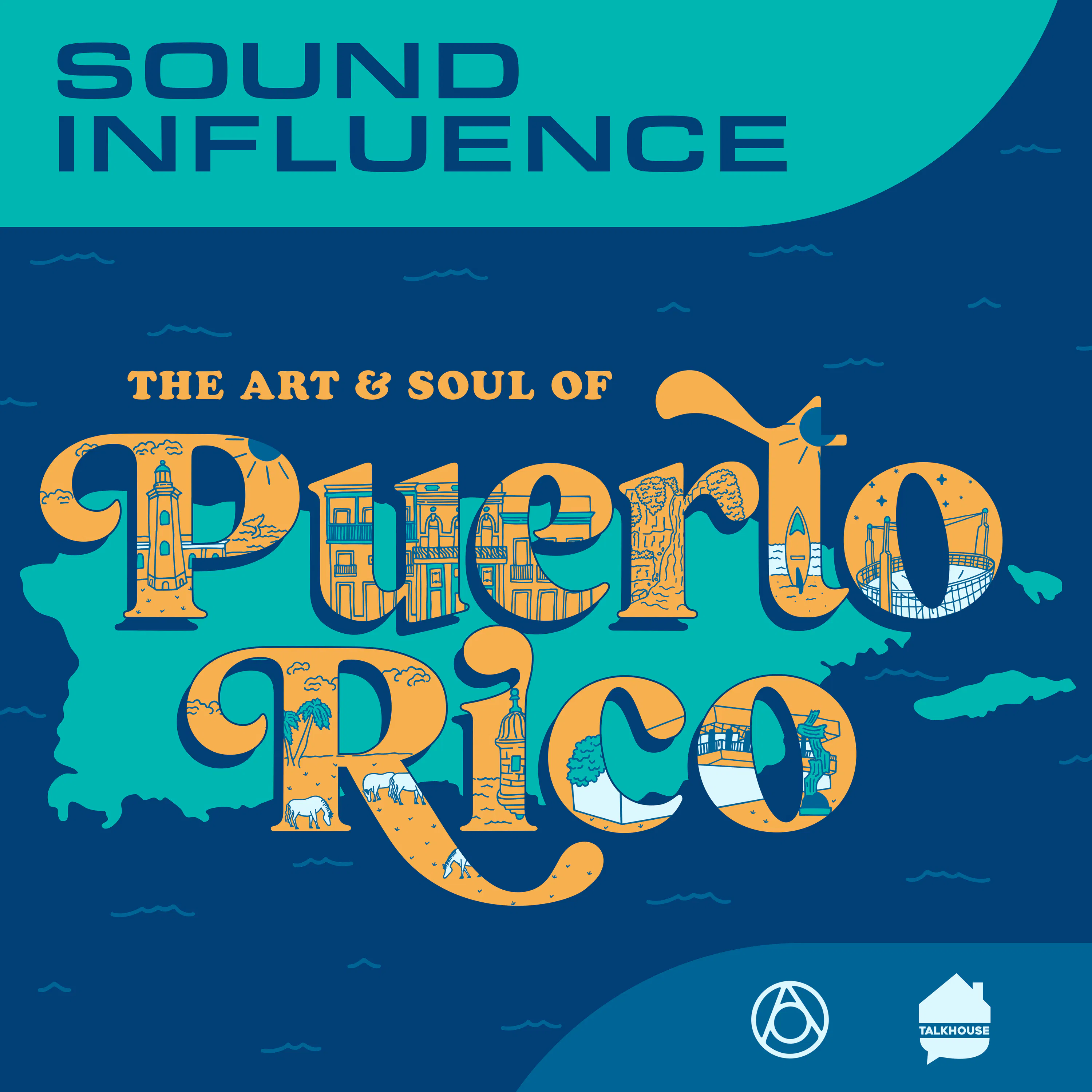
Podcast Preview: Sound Influence: The Art and Soul of Puerto Rico
bonusNarrated by Luis Guzmán, Sound Influence: The Art and Soul of Puerto Rico pairs stories from some of the Island’s most exciting musicians, including Los Rivera Destino, Pachyman, and Andrea Cruz, with major artists outside of music, such as Hollywood film director Miguel Arteta, Oscar-nominated screenwriter Jose Rivera, author Jaquira Diaz, and legendary EGOT Rita Moreno. Listeners will get to know Puerto Rico’s incredible towns, cities, beaches, rainforests, mountains, bars, and dance clubs that not only shaped their work but ultimately influenced global culture. Sound Influence: The Art and Soul of Puerto Rico is a production of Talkhouse and Atlas Obscura, presented by Discover Puerto Rico. Tap here to subscribe.
Matthew Caws (Nada Surf) with John Flansburgh (They Might Be Giants)
On this week's Talkhouse Podcast, we’ve got two of what I’m going to call alt-rock lifers, guys with vast catalogs and the stories to match, who’ve ridden the highs and lows over the years and continue to make fantastic music for dedicated fanbases: John Flansburgh and Matthew Caws. Flansburgh is half the core of They Might Be Giants, one of the two Johns—along with Linnell—who started making quirky pop records about 40 years ago. They’ve released nearly two dozen albums, wriggling their way into the mainstream on occasion, from “Birdhouse in Your Soul” to the Malcolm in the Middle theme to popular albums aimed at kids. It’s been a remarkable ride that shows no signs of stopping; They MIght Be Giants is still on tour, still making new music, and still seeming to have as much fun as they ever did. Their latest record is called Book—it’s available in many formats including, you guessed it, a giant book—and there are some sparklers on it, including one in particular that the guys talk about in today’s episode. Check out “Brontosaurus.” The other half of today’s conversation is Matthew Caws, singer and guitarist of the fellow New York band Nada Surf. Nada Surf had a really odd start to what’s turned into a long and fruitful existence. Their first album featured the song “Popular,” which turned into something of a novelty hit / summer anthem back in 1996. It wasn’t particularly representative of the band’s smart, layered pop—which is no knock on “Popular” itself—which confused their record label, Elektra. But after a bit of a slow period, Nada Surf found their way into indie-rock hearts with 2002’s Let Go, and they’ve earned a place in those hearts ever since. The tenth Nada Surf album came out earlier this year, and it’s among their best. It also features a surprisingly high number of more uptempo songs, as Flansburgh mentions in this chat. Check out “Second Skin” from Nada Surf’s newest album Moon Mirror. In this chat Flansburgh and Caws take a deep dive into the genesis of “Popular,” which Caws had no idea would be a hit but is happy to still play. They also chat about Flansburgh’s love of the new Nada Surf record, both of their time on the same major label in the 1990s, and whether it’s appropriate for a band to take a group bow at the end of a good show. Enjoy. 0:00 – Intro 2:42 – Start of the chat 2:58 – Welcome to Fresh Air 9:45 – The unusual origins of "Popular' 17:45 – Nada Surf's ignoble split with Elektra Records 22:40 – John's theory on Matthew's doubled vocals 32:21 – The ups and downs of sharing your political point of view as a musician Thanks for listening to the Talkhouse Podcast and thanks to John Flansburgh and Matthew Caws for chatting. If you liked what you heard, please follow Talkhouse on your favorite podcasting platform, and check out all the great stuff at Talkhouse.com. This episode was produced by Myron Kaplan and the Talkhouse theme is composed and performed by the Range. See you next time! This episode is brought to you by DistroKid. DistroKid makes music distribution fun and easy with unlimited uploads and artists keep 100% of their royalties and earnings. To learn more and get 30% off your first year's membership, visit: distrokid.com/vip/talkhouse
Julien Baker with Medium Build
EOn this week's Talkhouse Podcast we’ve got a timely conversation recorded just hours after the presidential election was called, and yes, it was on their minds. It’s frequent Talkhouse alum Julien Baker and her old friend Nick Carpenter, aka. Medium Build. Baker is a powerhouse singer and songwriter who’s best known these days as one third of the supergroup Boygenius—you’ll hear her refer in this chat to Lucy and Phoebe, her bandmates Lucy Dacus and Phoebe Bridgers. But we’ve been fans here since way before that; her amazing debut Sprained Ankle will be 10 years old next year, and she’s built herself an incredible catalog—and fanbase—since. Baker’s last solo album was 2021’s Little Oblivions, and I imagine there’s some new music coming in the not-terribly-distant future. She has loaned her powerful voice to other artists since, though, including her old friend Nick Carpenter’s project Medium Build—his new EP Marietta, out tomorrow, features a duet with Baker called “Yoke,” check out that song right here. Carpenter, who’s based in Alaska, has made five full-lengths as Medium Build, and his deeply personal songs strike a chord in the same way that Baker’s do: They have similar backgrounds, having grown up queer in religious households in the South. As you’ll hear in this chat, Carpenter explores his background in his music, and his honesty tends to melt audiences that let him in. I’ll be truthful: I thought these two were going to bail on chatting the morning after the election, and I wouldn’t have blamed them one bit. It doesn’t seem like the cheeriest time in America to be a proud member of a marginalized population. But I was so cheered up by listening to them talk: They’re not psyched, naturally, but they remain undeterred and committed to spreading honesty and love. Sure, there’s some earned cynicism about commercialism and the less pleasant parts of their jobs, but mostly it’s the joy of homies, sincerity, and consensual hugs with your local barista. Enjoy. Thanks for listening to the Talkhouse Podcast and thanks to Julien Baker and Nick Carpenter for chatting. If you liked what you heard, please follow Talkhouse on your favorite podcasting platform, and check out all the great stuff at Talkhouse.com. This episode was produced by Myron Kaplan, and the Talkhouse theme is composed and performed by the Range. See you next time! This episode is brought to you by DistroKid. DistroKid makes music distribution fun and easy with unlimited uploads and artists keep 100% of their royalties and earnings. To learn more and get 30% off your first year's membership, visit: distrokid.com/vip/talkhouse
MIZU and Asher White Talk About the New TRANSA Compilation Album
On this week's Talkhouse Podcast we’ve got a special episode recorded live just last weekend in New York featuring two artists that appear on an amazingly ambitious new conceptual compilation album called TRANSA, Asher White and MIZU. The album comes from our friends at the Red Hot organization, was conceptualized largely by Dust Reid and Massima Bell, and features more than 100 artists honoring trans and non-binary artists. There are huge names like Sade, Sam Smith, Andre 3000, indie heroes like Julien Baker and Laura Jane Grace, and incredible up-and-comers like today’s two guests, who worked on separate tracks. The whole thing comes out November 22, and you can pre-order it now. I won’t say much more because former Talkhouse producer Mark Yoshizumi was on hand to introduce Asher and MIZU at the event. Enjoy. 0:00 – Intro 1:39 – Producer Mark Yoshizumi Intro 5:01 – Start of the chat 12:20 – MIZU and Asher's differing musical backgrounds 20:00 – Ad break 22:20 – "The music that I made is aesthetically different than the music I consume" 25:15 – Musical processes 31:37 – The origins of MIZU and Asher's songs on the TRANSA comp Thanks for listening to the Talkhouse Podcast, and thanks to MIZU, Asher White, Mark Yoshizumi, and Honey Moon Coffee in Ridgewood. Also thanks to Urosh Jovanovich, who recorded the event, and Myron Kaplan, who produced this episode. The Talkhouse theme is composed and performed by the Range. See you next time! This episode is brought to you by DistroKid. DistroKid makes music distribution fun and easy with unlimited uploads and artists keep 100% of their royalties and earnings. To learn more and get 30% off your first year's membership, visit: distrokid.com/vip/talkhouse

Preview: Afrofuturism: How Human Imagination Shapes Our Future
bonusA preview of the new season of Santigold's podcast, Noble Champions. Subscribe now. Episode 1 with John Jennings and Terence Nance dives into Afrofuturism and the power of human imagination in shaping our future. In a time of global uncertainty, art that envisions a better world is essential. Santi sits down with acclaimed graphic novelist, comic book author, illustrator, and professor John Jennings, alongside artist, filmmaker, and musician Terence Nance (creator of HBO’s Random Acts of Flyness) for a rich discussion. Together, they explore the tools of imagination, the role of rituals, the concept of deindustrializing oneself, nonlinear time, and much more.
Revisited: Lake Bell with Santigold
Note: This episode originally aired on June 20, 2019. On the latest episode of the Talkhouse Podcast, two good friends, actor-writer-director Lake Bell and singer Santigold, sit down for a long-awaited chat together. The pair are both very busy performers – Bell is hard at work on the second season of her new show Bless This Mess and can be heard in the new animated feature The Secret Life of Pets 2, and Santi recently dropped I Don't Want: The Gold Fire Sessions and just came back from a U.S. tour – but are also highly involved mothers, and a large focus of their talk is on the challenges of balancing family life with creative work. They discuss how you can’t in fact do it all or have it all, how the making art changes after you have kids, how filmmaking and parenting are (kind of) the same thing, plus Santi’s social media struggles, where the roots of Lake’s comedy lie, what Lake is doing to address the current political situation, Santi’s move into directing, and much, much more. For more filmmakers musicians in conversation, visit Talkhouse at talkhouse.com and subscribe now to stay in the loop on future episodes of the Talkhouse Podcast. Episode recorded by Gideon Brower, and recorded and co-produced by Mark Yoshizumi at Hook & Fade Studios in Brooklyn. The Talkhouse Podcast's theme song was composed and performed by The Range. This episode is brought to you by DistroKid. DistroKid makes music distribution fun and easy with unlimited uploads and artists keep 100% of their royalties and earnings. To learn more and get 30% off your first year's membership, visit: distrokid.com/vip/talkhouse
Jay Som with Fashion Club
On this week's Talkhouse episode we’ve got a pair of talented musicians in a chummy chat about making songs and making a life while making songs. It’s Melina Duterte, aka. Jay Som, and Pascal Stevenson, aka. Fashion Club. Stevenson just released the second Fashion Club album, A Love You Cannot Shake, but it’s different enough than the first that it almost feels like a debut. That surely has something to do with the fact that it’s the first Fashion Club music since Stevenson’s gender transition; there’s a genre freedom that wasn’t as evident on the first one, which felt a bit closer to Stevenson’s indie-leaning band Moaning. A Love You Cannot Shake clearly honors big pop music but it frequently swerves before giving into any obvious trappings. She found some fantastic guests to add to the sideways fun, too, including Talkhouse Podcast alumni Perfume Genius and Julie Byrne as well as the other half of today’s conversation, Jay Som. Now Jay Som made a splash with her first couple of bedroom-pop albums in 2015 and 2016, and though she hasn’t released a new album since 2019’s fantastic Anak Ko, she’s been busy nonetheless, both starting some new projects, producing for other musicians, and playing bass for the indie-rock supergroup Boygenius. She’s been working on new material of her own as well, and she had a song on the soundtrack to the critically acclaimed movie I Saw the TV Glow alongside like-minded artists like Caroline Polachek and The Weather Station. And of course there’s her contribution to the Fashion Club record, “Ghost.” Check out that song right here. In this lively conversation, Stevenson and Duterte chat about songwriting, including Stevenson’s tendency to start with the biggest parts and Duterte’s opinion on what constitutes a “treat” while you’re producing. They tell each other toward the end of the conversation which pop star they’d most like to write for, and we learn that Stevenson’s specialty is what she calls “fucked-up ballads.” Enjoy. 0:00 – Intro 2:20 – Start of the chat 4:45 – On Fashion Club's album, A Love You Cannot Shake 9:20 – Melina loves Pascal's record 13:30 – Contrasting approaches to songwriting 16:36 – "Everyone's a little different when it comes to what I call 'treats'" 31:36 – "Do you think it's easier now to become a producer?" Thanks for listening to the Talkhouse Podcast, and thanks to Pascal Stevenson and Melina Duterte for chatting. If you liked what you heard, please follow Talkhouse on your favorite podcasting platform, and check out all the great stuff at Talkhouse.com. This episode was produced by Myron Kaplan, and the Talkhouse theme is composed and performed by the Range. See you next time! This episode is brought to you by DistroKid. DistroKid makes music distribution fun and easy with unlimited uploads and artists keep 100% of their royalties and earnings. To learn more and get 30% off your first year's membership, visit: distrokid.com/vip/talkhouse
Sylvan Esso with Libby Rodenbough
I’m gonna call this week’s Talkhouse Podcast a very special episode, since it’s focused on a specific topic and also offers a call to action and hopefully some inspiration for you, the listener. It certainly did that for me, the host guy. Our guests today are frequent Talkhousers Nick Sanborn and Amelia Meath, better known as Sylvan Esso, along with fellow North Carolina musician Libby Rodenbough, who’s played with a bunch of bands, most notably Mipso. These three share a home state, North Carolina, which as you know was hit hard by Hurricane Helene just a couple of weeks ago. The devastation that hit the western part of the state didn’t seem to get a ton of national media attention, perhaps because Helene was followed so quickly by Hurricane Milton. But as you’ll hear at the beginning of this conversation, parts of North Carolina have been affected in ways that will take years to bounce back from. Just days after the storm, Rodenbough—along with David Walker and Grayson Haver Currin and lots of others—conceived of a fundraising effort to feature musician friends, many of whom have deep ties to the area. The idea quickly ballooned into a 135-song compilation called Cardinals at the Window, available on Bandcamp and featuring previously unreleased music from huge names like R.E.M., Phish, Jason Isbell, and Sylvan Esso along with tons of other folks, both native to the area and from well beyond. In just over a week, the compilation has raised over $300,000 to provide direct relief to people whose lives have been turned upside-down by the storm. The area will need lots more than that, of course, to get back on its feet, but it’s a heartening reminder that when given the chance to help, people still do, even when folks seem hopelessly divided. That’s part of the focus of this chat: Meath, Sanborn, and Rodenbough have been out there helping people over the past couple of weeks, and while they’re crushed by the indescribable devastation that towns like Marshall, North Carolina have seen, they’re also heartened by the notion that its people have been quick to lend a hand to their neighbors. I found their actions and this conversation inspiring, and I hope you do, too. You can buy the compilation on Bandcamp or check out cardinalsatthewindow.org and lend a hand that way if you can. 0:00 – Intro 2:17 – Start of the chat 4:21 – For all you listeners out there, here's a summary of what's up. 10:23 – How being a touring musician inspires empathy 20:38 – "I've got a generator, and I've got room." 26:24 – Anarchy, anthropology, and helping each other Thanks for listening to the Talkhouse Podcast, and thanks to Libby Rodenbough, Amelia Meath, and Nick Sanborn for chatting. If you liked what you heard, please follow Talkhouse on your favorite podcasting platform, and definitely search Cardinals at the Window to see how you can help the people of North Carolina. This episode was produced by Myron Kaplan, and the Talkhouse theme is composed and performed by the Range. See you next time! This episode is brought to you by DistroKid. DistroKid makes music distribution fun and easy with unlimited uploads and artists keep 100% of their royalties and earnings. To learn more and get 30% off your first year's membership, visit: distrokid.com/vip/talkhouse
Pete Townshend (The Who) with The Wild Things
We’ve had legends on the Talkhouse Podcast before, but perhaps none quite as legendary as Pete Townshend, who’s in conversation on today’s episode with a younger band he recently worked with, The Wild Things. It seems a bit silly to offer a short bio of Townshend—after all, you have chosen to listen to a podcast about music, so you’re probably familiar—but here goes: Pete Townshend is the guitarist and primary songwriter of The Who, a band that cracked open the world of rock and roll in the early 1960s and inarguably changed the direction of popular music forever. He’s often credited as the first guitarist to treat feedback as an essential part of his sound, influencing the likes of Jimmy Page and Jimi Hendrix, among many others. And that was all 50 years ago: Townshend has built on the legacy of The Who since, continuing to make music with the only other surviving member, Roger Daltrey, as well as writing books, musicals, and opera. He also keeps his eyes and ears out for new music, even at age 79, which is where the other half of today’s chat comes in. Two members of the UK band The Wild Things, Sydney Rae White and Rob Kendrick, met Townshend when they were cast in the musical stage production of The Who’s rock opera Quadrophenia. Though she’s spent much of her career acting—you may have seen her in the Netflix series Uncle or the Michael Keaton movie American Assassin—White’s passion seems to be focused at the moment on the band, which also includes her brother Cameron White and drummer Pete Wheeler. When it came time to record new Wild Things music, Townshend offered his help both as a musical ear and a man with a studio, which resulted in the new album Afterglow. Fittingly for a man with Townshend’s history, Afterglow is something of a concept album, which is a big topic of discussion here. Check out “My Heart is in New York” from Afterglow, which features a guest vocal from Townshend. Townshend and the Wild Things talk about telling stories through your music, about concept albums, about working together to make Afterglow, about trying to connect with people in an overwhelming media world, and much, much more. Enjoy. 0:00 – Intro 2:32 – Start of the chat/the concept behind Afterglow 6:55 – Why Pete wanted to work with The Wild Things 16:06 – "You know, this is a real fucking Rick Rubin conversation!" 21:58 – The advantages to being able to experiment in the studio 29:15 – "The thing about Sid is that she can do fucking anything." Thanks for listening to the Talkhouse Podcast, and thanks to Pete Townshend and all of the Wild Things for chatting. If you liked what you heard, please follow Talkhouse on your favorite podcasting service, and check out all the great stuff at Talkhouse.com. This episode was produced by Myron Kaplan, and the Talkhouse theme is composed and performed by the Range. See you next time! This episode is brought to you by DistroKid. DistroKid makes music distribution fun and easy with unlimited uploads and artists keep 100% of their royalties and earnings. To learn more and get 30% off your first year's membership, visit: distrokid.com/vip/talkhouse
Reggie Watts with Delicate Steve
On this week’s Talkhouse Podcast we’ve got a great chat between two guys who’d never met before: Steve Marion, aka Delicate Steve, and the one and only Reggie Watts. Delicate Steve is one of those monikers that describes both a person and a band, though Steve Marion has been the only constant member over the past 15 years or so. His music is largely instrumental, but you don’t miss the singing since his intricate, emotional guitar lines tend to do the work that a vocalist might otherwise do. His latest album is cheekily titled Delicate Steve Sings, and it’s a nod to records like Willie Nelson’s Stardust, mixing original compositions with covers and putting Delicate Steve’s inimitable guitar tone atop them all. Check out “I’ll Be There” from Delicate Steve Sings. The career of today’s other guest, Reggie Watts, can be tough to describe. He’s part musician, part comedian, I guess, but that doesn’t begin to describe what it’s like to see his performances, which can include jokes, beatboxing, a variety of sampled sounds, and lots of improvisation. You may have seen Watts in his most mainstream role over the past decade as the announcer/bandleader for The Late Late Show With James Corden, where he was able to inject some spontaneity and weirdness into the late-night talk-show genre. His latest special is called Never Mind, and it seeks to warp the comedic spacetime continuum. I won’t spoil it by saying any more than that. This chat starts with Delicate Steve talking about a mindblowing Reggie Watts performance that he saw recently, and heads into conversation about busting out of genre constraints, finding the brilliance in even the most popular pop, the Kanye West/Delicate Steve collaboration that was then wasn’t, and how there’s no substitute for sincerity. Enjoy. 0:00 – Intro 2:22 – "You are like Jimi Hendrix to me." 12:09 – The dance-music festival that Reggie thinks is the ideal. 17:05 – The Kanye/Delicate Steve collab that wasn't. 29:20 – Art meeting capitalism keeps sincere stuff extra cool Thanks for listening to the Talkhouse Podcast, and thanks to Steve Marion and Reggie Watts for chatting. If you liked what you heard, please give us a review on your favorite podcasting platform and make sure you check out all the great stuff at Talkhouse.com. This episode was produced by Myron Kaplan, and the Talkhouse theme is composed and performed by the Range. See you next time! This episode is brought to you by DistroKid. DistroKid makes music distribution fun and easy with unlimited uploads and artists keep 100% of their royalties and earnings. To learn more and get 30% off your first year's membership, visit: distrokid.com/vip/talkhouse
Show Me The Body with High Vis
On this week’s Talkhouse Podcast we’ve got a couple of guys who are big parts of hardcore’s current wave: Julian Cashwan Pratt of Show Me The Body and Graham Sayle of High Vis. Show Me The Body was conceived when Pratt was still in high school in New York City, enamored of the town’s history of aggressive punk—and that music’s propensity for political lyrics. But Show Me The Body, like other current hardcore bands making waves in the past few years, doesn’t stick with the genre’s typical signifiers. For one, Pratt’s primary instrument is banjo, and it’s attached to sounds that draw not only from hardcore’s past, but also electronic blasts of noise and even some hip-hop. Show Me The Body’s latest album is called Trouble The Water, and it’s both tense and intense. It’s a hell of a listen, though the band needs to be seen live to fully experience it. The other half of today’s conversation is Graham Sayle, whose band High Vis formed in London around 2016, and whose version of hardcore dials in a healthy dose of British post-punk. They’ve been described as a mix of Factory Records and Cro-Mags—that’d be the legendary label that spawned Joy Division and New Order plus the legendary New York hardcore band—which is sort of perfect. There are elements of goth in there as well, but with a smart, sneering energy that’s tough to deny. Show Me The Body and High Vis just started a US tour together, and they collaborated on a song and accompanying video that was just released on an EP called Corpus II EP II. You can find tour dates at showmethebody.com, and check out a little bit of their collaborative track, called “Stomach,” right here. As hardcore dudes often do, these guys chatted about what hardcore means to them, including that sense of community you can’t get anywhere else. They also talk about how having a child has changed Pratt’s outlook a bit, but how he’s still fired up politically and ready to put it all out there on the stage. Enjoy. Thanks for listening to the Talkhouse Podcast, and thanks to Julian Cashwan Pratt and Graham Sayle for chatting. If you liked what you heard, please give the Talkhouse Podcast a review on your favorite platform, and don’t forget to check out all the good stuff at Talkhouse.com. This episode was produced by Myron Kaplan, and the Talkhouse theme is composed and performed by the Range. See you next time! This episode is brought to you by DistroKid. DistroKid makes music distribution fun and easy with unlimited uploads and artists keep 100% of their royalties and earnings. To learn more and get 30% off your first year's membership, visit: distrokid.com/vip/talkhouse
Sima Cunningham (Finom) with Helado Negro
On this week’s Talkhouse Podcast we’ve got a pair of fantastic songwriters in a sweet conversation about craft and life in general: Sima Cunningham and Roberto Lange. Lange has been making fascinating, lovely music under the name Helado Negro since 2009, mixing breezy indie-rock with electronic sounds, frequently with more than a passing nod to his Ecuadorian roots. His sonic world is always inviting, even as it’s sort of otherworldly, and he often matches those sounds with cool visuals—which is no wonder considering his background in computer art. Earlier this year, Lange released the eighth Helado Negro album; it’s called Phasor, and it’s among his best, mixing tranquil sounds with his searching spirit. You might be lulled and puzzled at the same time, which is a great feeling. Check out the song “Colores del Mar” right here. The other half of today’s conversation, Sima Cunningham, is best known as half the core of Chicago band Finom, originally known as OHMME. Finom released its Not God earlier this year, and it’s full of unexpected pop turns tied together by the harmony between Cunningham and her longtime musical partner Macie Stewart. But the occasion for today’s conversation is actually Cunningham’s second solo album, just out on Ruination Records. It’s called High Roller, and it explores a more personal side to her songwriter. For example, there’s a great song written for Cunningham’s brother Liam Kazar, himself a musician and one-time Talkhouse Podcast guest as well. Check out “For Liam” right here. In addition to that song, which Lange points out as a favorite on High Roller, these two chat about Cunningham’s adventures in Ireland, what it’s like to create an on-stage persona and interact with your audience, and how Cunningham’s new album was a 10-year journey that was worth the wait. Enjoy. 0:00 – Intro 2:40 – Start of the chat 5:56 – Sima’s mom is the most punk-rock person in their musical family 14:58 – Roberto on getting to a certain age in music 15:39 – Finding new ways to have a love affair with your audience 22:39 – Sima on figuring out how to be honest and vulnerable with her solo material 29:59 – Sima on playing new Finom songs and trying to figure out where to play solo Thanks for listening to the Talkhouse Podcast, and thanks to Sima Cunningham and Roberto Lange for chatting. If you like what you heard, please follow Talkhouse on your favorite podcasting platform, and be sure to check out all the great stuff at Talkhouse.com. This episode was produced by Myron Kaplan, and the Talkhouse theme is composed and performed by the Range. See you next time! This episode is brought to you by DistroKid. DistroKid makes music distribution fun and easy with unlimited uploads and artists keep 100% of their royalties and earnings. To learn more and get 30% off your first year's membership, visit: distrokid.com/vip/talkhouse
Lucinda Williams with M. Ward
On this week's Talkhouse Podcast we’ve got an absolute legend of a singer-songwriter in conversation with a guy who’s no slouch himself: Lucinda Williams and M. Ward. Williams has been writing and recording incredible songs since the late 1970s, though she didn’t really break through in a huge way until 1998’s stone classic Car Wheels on a Gravel Road, which garnered her the Best Contemporary Folk Album Grammy—her second Grammy—but also some of the most well-deserved critical accolades of that year. She certainly didn’t rest on those laurels, having released close to a dozen more revered albums since, many of which found themselves also at the Grammy and Americana awards ceremonies—as well as in the hearts of listeners and other songwriters. Last year, Williams released a fantastic memoir about her journey from small-town Louisiana to the music business and beyond. It’s a lovely look at a life well lived called Don’t Tell Anyone the Secrets I Told You. The other half of today’s conversation is M. Ward, another literate singer-songwriter with a varied career whose music can’t be easily pinned down—he’s been called folk, Americana, and indie-rock, none of which quite do his songs justice. Ward has been making records for 25 years now, and his discography includes not only thoughtful, beautiful solo records, but an entire catalog of albums made with actress Zooey Deschanel under the name She & Him. Ward’s latest is last year’s Supernatural Thing, another set of songs that feel like they exist out of time. Check out “Too Young to Die” from that album right here. In this conversation, Ward and Williams talk about the time they worked together, when Williams contributed vocals to an M. Ward record back in 2009. Then they get into Williams’ memoir and just scratch the surface on her incredible life and career before the conversation turns to their literary influences and more. Enjoy. 0:00 – Intro 2:33 – Start of the chat 4:30 – Williams on the hard part of writing a memoir 8:13 – Ward reads his favorite passage from Williams' book 12:58 – Williams recalls meeting famous writers as a child 23:50 – "I want to be James Joyce!" Thanks for listening to the Talkhouse Podcast and thanks to Lucinda Williams and M. Ward for chatting. If you liked what you heard, please follow Talkhouse on your favorite podcasting platform and check out all the great stuff at Talkhouse.com. This episode was produced by Myron Kaplan and the Talkhouse theme is composed and performed by the Range. See you next time! This episode is brought to you by DistroKid. DistroKid makes music distribution fun and easy with unlimited uploads and artists keep 100% of their royalties and earnings. To learn more and get 30% off your first year's membership, visit: distrokid.com/vip/talkhouse
Los Bitchos with Gaye Su Akyol
On this week’s Talkhouse Podcast we’ve got two women from different parts of the planet who share a common heritage and creative outlook: Serra Petale and Gaye Su Akyol. Petale is the guitarist for the multinational band Los Bitchos, which has been creating tough-to-pigeonhole instrumental music for the past seven years. The band’s membership and sound are both truly worldly: Petale is from Western Australia, and her bandmates are from Uruguay, Sweden, and the UK. As you’ll hear, they came together in London after Petale chased her musical dreams there, and they’ve made some incredibly fun music since, mixing sounds from Argentina, Turkey, and a sort of psychedelic surf-rock. Their first album, produced by Alex Kapranos of Franz Ferdinand, came with the incredible title Let The Festivities Begin!, and they just followed it with another album, the fully delightful Talkie Talkie. Check out that album’s “La Bomba” right here. The other half of today’s conversation joins us from her home base in Turkey. Gaye Su Akyol has been making music—not to mention painting—for the past decade, gaining a worldwide following for records that take the flavors of her country and expand them in a dozen directions. She’s been politically and artistically outspoken throughout her time in the spotlight, and you can tell that won’t be changing anytime soon. The title of her latest album translates to Anatolian Dragon, and here’s a song whose title I won’t butcher, but that translates roughly to, “I want to, but there’s no hurry.” Even if you don’t understand the words, it’s easy to catch its groove. I mentioned that these two share a background: Gaye grew up in Turkey, as did Serra’s grandparents—as it turns out pretty close to each other. So they chat a bit about that, and occasionally drop in some Turkish words as well. They chat about how women need to go the extra mile to get their art into the world, and about manifesting your dreams rather than waiting around. If that sounds a little rah-rah, Gaye actually says, jokingly, that they sound like a Nike commercial at one point. I found it fun and inspiring, and I hope you do too. Enjoy. Thanks for listening to the Talkhouse Podcast, and thanks to Serra Petale and Gaye Su Akyol for chatting. If you liked what you heard, please follow Talkhouse on your favorite podcasting platform, and check out all the great stuff at Talkhouse.com. This episode was produced by Myron Kaplan, and the Talkhouse theme is composed and performed by the Range. See you next time! This episode is brought to you by DistroKid. DistroKid makes music distribution fun and easy with unlimited uploads and artists keep 100% of their royalties and earnings. To learn more and get 30% off your first year's membership, visit: distrokid.com/vip/talkhouse
Kathleen Hanna (Bikini Kill) with Jim Andralis
On this week’s Talkhouse Podcast we’ve got a legend of ‘90s-era punk in deep conversation with a songwriter you might be hearing of for the first time: Kathleen Hanna and Jim Andralis. Hanna, of course, was a founding member of Bikini Kill, the band credited with starting the riot grrrl movement and inspiring an incredible number of young women to pick up guitars and claim their place in the rock universe. After Bikini Kill’s initial split, Hanna went on to perform in both The Julie Ruin and Le Tigre, though recent years have found her spitting fire with Bikini Kill yet again—they’re actually on tour now through September. Hanna also released an excellent memoir this year called Rebel Girl: My Life as a Feminist Punk, which is absolutely worth a read or an audiobook listen—Hanna reads it herself, and it’s awesome. Hanna’s people approached us about having her chat with songwriter Jim Andralis because, as you’ll hear in this chat, she might be his biggest fan. Andralis is a New Yorker whose day job is as a trauma-focused psychotherapist, but who’s been writing songs for the past 20 or so years. Considering Hanna’s fandom, it might surprise you to learn that Andralis doesn’t come out of the punk tradition at all: He’s a songwriter in the classic sense, meaning it’s tough to pin him into a genre box—Kathleen tries a little bit here, but doesn’t come to any conclusions. Andralis recently released his fifth album, Ghosts, check out a song they chat about toward the end of this episode, it’s called “Carnival.” Hanna and Andralis jump right into their chat here, and you can tell they’re old friends. As you’ll hear at the top, Hanna and her band were recently honored by Olympia, Washington with Bikini Kill Day, celebrating a lifetime of achievements. After that, Hanna gets straight to picking Andralis’ brain about his lyrics and songwriting. She interprets one song in particular that turns out to be… not quite right, but also exactly right? You’ll see. Enjoy. 0:00 – Intro 2:48 – Happy Bikini Kill Day! 9:26 – Kathleen tries to figure out what genre Jim's songs belong in 21:07 – Jim's song about political depression 32:48 – An appreciation of Jamey Johnson 39:05 – "What a dick, if I had written the song that way!" Thanks for listening to the Talkhouse Podcast and thanks to Kathleen Hanna and Jim Andralis for chatting. If you liked what you heard, please follow Talkhouse on your favorite podcasting platform and check out all the great stuff at Talkhouse.com. This episode was produced by Myron Kaplan, and the Talkhouse theme is composed and performed by the Range. See you next time! This episode is brought to you by DistroKid. DistroKid makes music distribution fun and easy with unlimited uploads and artists keep 100% of their royalties and earnings. To learn more and get 30% off your first year's membership, visit: distrokid.com/vip/talkhouse
David Pajo (Slint) and Cassie Berman (Silver Jews) with Tim Furnish (Crain)
On this week’s Talkhouse Podcast we’ve got a reunion of sorts, in celebration of a new release of old music: It’s David Pajo, Cassie Berman, and Tim Furnish. These three met in the fertile Louisville scene of the early 1990s. Pajo played guitar in the wildly influential band Slint and went on to play with Tortoise, Royal Trux, Stereolab, and Interpol at various times over the years—he’s currently a member of Gang Of Four. But the subject of this conversation is Pajo’s sorta-solo career, which went through various M-names, from just M to Papa M and Aerial M. As Aerial M, Pajo brought on some friends for a brief time to tour Europe, where they recorded a Peel Session—more on that in a minute. The friends that Pajo recruited to play in the Aerial M live band were Tim Furnish, whose legendary Louisville band Crain had broken up recently—and who has since recorded experimental rock with the band Parlour—as well as Cassie Berman and Tony Bailey. Berman had been kicking around in Louisville bands, too, and she would go on to join Silver Jews, the band fronted by her husband, David Berman. Drummer Tony Bailey, as you’ll hear, played in about a million bands in the area—he died, sadly, in 2009. The reason for today’s reunion of the lineup that burned bright but quick is the release of Aerial M’s new Peel Sessions album. In case you’re unfamiliar, BBC DJ John Peel used to invite the coolest bands of his day—from the ‘70s into the 2000s—to record a few songs specifically for his show, many of which were later released with the same striking artwork. In 1998, Aerial M stopped by and recorded three songs that would turn out quite different to the versions Pajo crafted in the studio, and would really be the only evidence that this lineup left of its existence. Pajo was recently reminded of this session, so he set about tracking down the tapes, sprucing them up, and handing them over to Drag City for a proper release—including an amazing replica of those original John Peel Sessions sleeves. Check out the song “Vivea” right here. I don’t think these three had sat down for a chat in a while, so it’s like sitting in on a reunion with three people who have a lot of fond memories. They talk about their '98 tour, including the recording of this record, plus they get into fond remembrances of Tony Bailey, racing Stereolab to the record store, and even what they’re up to now: Just a few days before this recording, Cassie Berman participated in a tribute to David Berman on the anniversary of his untimely passing, and Furnish has been working on some cool-sounding visual art for other bands. Enjoy. Thanks for listening to the Talkhouse Podcast, and thanks to David Pajo, Cassie Berman, and Tim Furnish for chatting. If you liked what you heard, please follow Talkhouse on your favorite podcasting platform, and be sure to check out all the great stuff at Talkhouse.com and in our wider podcasting network. This episode was produced by Myron Kaplan, and the Talkhouse theme is composed and performed by the Range. See you next time! This episode is brought to you by DistroKid. DistroKid makes music distribution fun and easy with unlimited uploads and artists keep 100% of their royalties and earnings. To learn more and get 30% off your first year's membership, visit: distrokid.com/vip/talkhouse
Revisited: Laurie Anderson with Darren Aronofsky
Hello Talkhouse listeners! Instead of new episode this week, we've revisiting a great chat from several years back between artist/musician/many other things Laurie Anderson and filmmaker Darren Aronofsky (Pi, Black Swan, The Whale, etc.). The reason? Anderson has a new album out in a couple of weeks called Amelia, and it's all about famed aviator Amelia Earhart. If that sounds odd, it probably is, and in the best ways: Anything Anderson touches is worth your time. We'll be back next week with a new episode. Enjoy! Note: This episode originally aired on January 26, 2016. On the latest episode of the Talkhouse Film podcast, in a special conversation recorded after a screening of Laurie Anderson's documentary Heart of a Dog, the acclaimed musician, artist, and filmmaker talks onstage with fellow New York director Darren Aronofsky, best known for his films Pi, Requiem for a Dream and Black Swan. The pair discuss Anderson's new film, which ponders questions of love, death, and language, and touch on such other diverse subjects as Herman Melville's discussions with his editor about Moby Dick and the problems that can come from putting batteries in one's mouth. Episode engineered and edited by Elia Einhorn. Additional editing by Myron Kaplan. This episode is brought to you by DistroKid. DistroKid makes music distribution fun and easy with unlimited uploads and artists keep 100% of their royalties and earnings. To learn more and get 30% off your first year's membership, visit: distrokid.com/vip/talkhouse
Perry Farrell (Jane’s Addiction) with Daniel Ash (Love and Rockets)
If you had told 15-year-old me I’d be doing a podcast with today’s two Talkhouse guests, I would have asked you what the hell a podcast was before getting truly excited: It’s Perry Farrell and Daniel Ash. Perry Farrell almost certainly needs to introduction, but here goes: He first found fame as the singer for Jane’s Addiction, a band that bridged the gap between glammy metal and some burgeoning genre called alternative rock, and is pretty largely responsible the latter becoming a thing. The end of Jane’s Addiction in the early 1990s was the beginning of Farrell’s other big creation, the Lollapalooza festival, which continues to this day—the U.S. version was just this past weekend in Chicago, as a matter of fact. Farrell has played with other people over the years, and the legendary Jane’s Addiction has reformed in various incarnations over the years. But the big news for 2024 is that the band’s original lineup has reformed both to play shows and even to record some new music. Check out the band’s brand new song, “Imminent Redemption.” This week, Jane’s Addiction will embark on a U.S. tour with the band of today’s other guest, Daniel Ash. Love and Rockets formed from the ashes of the legendary goth band Bauhaus, and features three of that band’s four members. The original Love and Rockets run, from 1985 until 1998, resulted in a legendary string of albums that was influential on an entire generation of tough-to-define bands, a list that definitely includes Jane’s Addiction. Love and Rockets has reformed a couple of times over the years, the latest being a successful run last year that marked their first shows in 15 years. It doesn’t seem like there’s any brand new music on the horizon for Love and Rockets, though last year’s My Dark Twin gathered some hard-to-find tracks. For now, why not refamiliarize yourself with their biggest hit, 1989’s “So Alive.” In advance of their co-headlining tour, Farrell and Ash talked about how they keep fit enough to rock this hard all these years later, which includes taking a day off between each show and utilizing superfoods instead of hard drugs. Ash talks about how three of the biggest songs of his career were written and recorded in one day each, as well as how Ziggy Stardust changed his life forever. They also chat about the joy of collaboration and the potential up and downsides of AI. Enjoy. Thanks for listening to the Talkhouse Podcast, and thanks to Perry Farrell and Daniel Ash for chatting. If you liked what you heard, please follow Talkhouse on your favorite podcasting platform and check out all the great stuff at Talkhouse.com. This episode was produced by Myron Kaplan, and the Talkhouse theme is composed and performed by the Range. See you next time! This episode is brought to you by DistroKid. DistroKid makes music distribution fun and easy with unlimited uploads and artists keep 100% of their royalties and earnings. To learn more and get 30% off your first year's membership, visit: distrokid.com/vip/talkhouse
Joe Keery (Stranger Things) with Wayne Coyne (The Flaming Lips)
We’ve got a bit of a strange one for you on this week's Talkhouse Podcast. Back during the darkest days of the pandemic, we hosted an Instagram live chat between Wayne Coyne of the Flaming Lips and actor/musician Joe Keery, who at the time was best known as part of the cast of Stranger Things. Keery is also a musician, having released music with his band Post Animal, and he was just starting to release music under the name Djo. Keery had a pretty big viral hit with a Djo song this year: You may have heard “End Of Beginning.” If you haven’t, check it out right here. Anyway, we figured that a lot of folks may have missed that conversation, so now would be the perfect time to resurface it in slightly edited podcast form. These two had never met, but they jump into a great chat about songwriting, Miley Cyrus’s house—which is where Coyne was dialing in from—and lots more, including how Coyne and his Flaming Lips bandmate Steven Drozd are like french fries and salt, about how listening is equally vital in music and acting, and much more. Enjoy. 0:00 – Intro 1:40 – "This is Wayne Flaming Lip" getting himself connected 6:25 – Joe's thoughts on the Flaming Lips' live show, which Wayne thinks isn't really about the band 10:57 – Wayne asks Joe how making music is different than being directed 22:52 – "You have to listen to your own music!" 29:41 – Making music and creating art shouldn’t be a sacrifice Thanks for listening to the Talkhouse Podcast, and thanks to Wayne Coyne and Joe Keery for time traveling from 2020 for this episode. It was produced by Myron Kaplan, and the Talkhouse theme is composed and performed by the Range. See you next time! This episode is brought to you by DistroKid. DistroKid makes music distribution fun and easy with unlimited uploads and artists keep 100% of their royalties and earnings. To learn more and get 30% off your first year's membership, visit: distrokid.com/vip/talkhouse
Oneohtrix Point Never with Gastr del Sol
On this week’s Talkhouse Podcast, we’ve got a fantastic chat featuring three boundary-pushing musicians that turns into a lovefest: It’s Daniel Lopatin, better known as Oneohtrix Point Never, along with David Grubbs and Jim O’Rourke, who were known together as Gastr del Sol. Lopatin has created an incredible body of experimental records over the past 20 or so years. His woozy, sample-heavy early material had him pegged as the inventor of vaporwave, but he never stays in the same musical place very long. He broke through to a different audience with soundtracks for the Safdie brothers’ movies Good Time and Uncut Gems, and Lopatin is also heavily responsible for the sound of The Weeknd’s records, where he’s credited as an executive producer. The tenth Oneohtrix Point Never album, called Again, came out late last year, and once again it found Lopatin utilizing a new set of inspirations, one of which was the post-rock movement of the 1990s, which figures heavily into today’s conversation. More on that in a minute, but first check out “Again,” the title track from the latest Oneohtrix Point Never album. Featured on that track was none other than Jim O’Rourke, an experimental musician and producer perhaps best known to the pop-music world for working on Wilco’s Yankee Hotel Foxtrot and A Ghost Is Born. But O’Rourke’s cv is far too vast to dive into here, and the focus of this conversation is his 1990s collaboration with fellow musician David Grubbs in a band called Gastr del Sol. That duo burned bright for a few years, amassing a catalog that’s difficult to pin down, ranging as it does from arch orchestral pop to more rangy, experimental songs. They disbanded in 1998, leaving the world on a high note with their poppiest yet perhaps weirdest set of songs, Camofleur. Gastr del Sol’s legend has only grown in the meantime, and they finally got around to releasing some new-old material just this year, in the form of a combination live album/rarities set called We Have Dozens of Titles. True to their ethos, it’s neither a standard odds and ends package or a greatest hits, but rather combines an excellent live recording—of what turned out to be their final concert—and songs that had been previously orphaned on various compilations. Check out “The Seasons Reverse” here, which is referenced in this chat. Speaking of this chat… Talkhouse conversations are usually more two-way streets than this one, but it turns out that Daniel Lopatin is a huge Gastr del Sol geek, so he ends up asking most of the questions. He’s got deep-seated opinions and interesting theories on their music: They chat about getting into music, about specific passages in Gastr songs, about the idea of indie-rock as a genre, and about the time Gastr del Sol was asked to license a song for a tentacle porn movie. Oh, and Daniel calls Gastr del Sol’s music trashy. Enjoy. Thanks for listening to the Talkhouse Podcast, and thanks to Daniel Lopatin, Jim O’Rourke, and David Grubbs for chatting. If you liked what you heard, please follow Talkhouse on your favorite podcasting platform, and check out all the great stuff at Talkhouse.com. This episode was produced by Myron Kaplan, and the Talkhouse theme is composed and performed by the Range. See you next time. This episode is brought to you by DistroKid. DistroKid makes music distribution fun and easy with unlimited uploads and artists keep 100% of their royalties and earnings. To learn more and get 30% off your first year's membership, visit: distrokid.com/vip/talkhouse
Rick Mitarotonda (Goose) with M.C. Taylor (Hiss Golden Messenger)
On this week's Talkhouse Podcast we’ve got what might seem like an unlikely pairing, but one that makes sense when you dive into it: Rick Mitarotonda from Goose and M.C. Taylor of Hiss Golden Messenger. If you’re not into the jam-band world, Goose might not be super familiar to you yet, but in that world, the Connecticut band is absolutely massive, moving from clubs to amphitheaters over the past few years. And while jam bands themselves are pretty common—the barrier to entry isn’t super high—very few have reached these heights, and after a decade Goose already find themselves in the vaunted company of bands like Phish and Dead and Company. It’s kind of obvious why: They are fantastic players, and their songs offer more than just extended noodling. It makes sense that they’re not influenced just by their jam forebears, but by jam-adjacent indie kingpins like Radiohead. And they’ve even got the stamp of approval of Vampire Weekend’s Ezra Koenig, who asked them to cover his band’s song “2021”—and to stretch it out to 20 minutes and 21 seconds. The latest Goose album is Dripfield from 2022, but as you’ll hear in this chat, they’ve got a couple more in the works. Check out their song “Give It Time” right here. As the primary creative force behind Hiss Golden Messenger, M.C. Taylor has amassed an incredible catalog over the past 15 or so years. He was initially lumped in with the alt-country scene and later with the likes of Will Oldham and Bill Callahan, Hiss records kind of defy categorization, though I should mention that 2019’s Terms Of Surrender was nominated for the Best Americana Album Grammy. Taylor’s latest album as Hiss Golden Messenger is called Jump For Joy, and the title is reflective of what’s inside: It’s looser and more playful and even groove-oriented at moments, a new move but not an unwelcome one for sure. Check out “Sanctuary” right here. In this chat, Rick and M.C. chat about making studio records versus playing live, and they get into the fundamental question of how songs are written. Answer: It’s different for everybody. They both reflect, oddly, on the Hare Krishna world, and Rick decides that Goose is more like a sitcom or a sports team than a band. Enjoy. 0:00 – Intro 2:48 – Start of the chat 4:04 – What are you listening to right now? 12:05 – Rick’s musical awakening 19:01 – Long songs versus short ones. “It’d be sick to have some short bangers.” 24:36 – Goose’s recent lineup change and how that might affect things. 36:16 – The difficulty of writing new songs while on tour. Thanks for listening, and thanks to Rick and M.C. for chatting. If you liked what you heard, please follow Talkhouse on your favorite podcasting platform. This episode was produced by Myron Kaplan, and the Talkhouse theme is composed and performed by The Range. See you next time! This episode is brought to you by DistroKid. DistroKid makes music distribution fun and easy with unlimited uploads and artists keep 100% of their royalties and earnings. To learn more and get 30% off your first year's membership, visit: distrokid.com/vip/talkhouse
Ruston Kelly with Sasha Alex Sloan
On this week’s Talkhouse Podcast we’ve got a pair of songwriters who’ve both been through some tough times and emerged all the better for them: Ruston Kelly and Sasha Alex Sloan. There was no disguising the fact that Ruston Kelly’s third album, last year’s The Weakness, was deeply informed by his divorce from singer-songwriter Kacey Musgraves, with lines like “My marriage ended and I moved up north to mend.” But the album isn’t weepy or wallowing; in fact, it’s musically the most lively piece of Kelly’s catalog so far, sonically bigger and wider than anything he’s done before. It’s one of those close-one-door-and-other-opens kind of records, at times contemplative—he once cheekily described his music as “self-help rock”—but also not afraid to be playful and catchy. The other half of today’s conversation is Kelly’s pal Sasha Alex Sloan, whose early career was kind of pop-focused. She had a co-write on a Juice WRLD song and did a huge duet with Sam Hunt that’s alluded to in today’s chat. But in spite of her pop leanings, Sloan’s music always has an undercurrent of self-examination. She left the major label that had released her first two albums recently and fully embraced a more inward-looking style for the new Me Again, which leans toward simplicity more than her past records. It’s still catchy as hell, of course, just with a more mature edge. The album also features a duet with Ruston Kelly on the fading-relationship song “Falling Out Of Like.” Check it out. In this candid conversation, Kelly and Sloan talk about the vulnerability of making music—and how Sloan is handling the anxiety of putting out a less pop-oriented set of songs. Kelly talks about the pros and cons of a recent stripped-down tour he did, and they both reflect on the challenges of opening for bigger artists. We also get thoughts on nicotine, Shark Tank, and more. Enjoy. 0:00 – Intro 2:22 – Start of the chat 6:40 – On parental TMI 13:37 – Sloan’s concerns about whether her new record is as commercial as her past work 24:05 – Kelly’s recent bare-bones tour, and what he learned 31:50 – "I feel icky talking out financial sh-t as an artist" 41:03 – “There were some 14 year olds there. There are braces happening. I’m up here singing about hardcore drug addiction.” Thanks for listening to the Talkhouse Podcast, and thanks to Ruston Kelly and Sasha Alex Sloan for chatting. If you liked what you heard, please follow Talkhouse on your favorite podcasting platform, and check out all the other great podcasts in our network. This episode was produced by Myron Kaplan, and the Talkhouse theme is composed and performed by the Range. See you next time! This episode is brought to you by DistroKid. DistroKid makes music distribution fun and easy with unlimited uploads and artists keep 100% of their royalties and earnings. To learn more and get 30% off your first year's membership, visit: distrokid.com/vip/talkhouse
Jerry Harrison (Talking Heads) with Carlos Arévalo (Chicano Batman)
The inspiration for the pairing on this week's Talkhouse Podcast goes back 40 years, to one of the greatest concert films—maybe the greatest concert film—ever made, Stop Making Sense. We’ve got Jerry Harrison and Carlos Arévalo. Harrison was of course the keyboard player and sometimes guitarist behind one of the most influential and groundbreaking bands of the 1970s and 80s, Talking Heads. The band’s legacy can’t be overstated; they made eight incredible studio albums before splitting up in 1991, they’re in the Rock and Roll Hall of Fame, and their impact on both other musicians and the culture at large has been enormous. And in addition to all of those studio records, Talking Heads—along with director Jonathan Demme—made Stop Making Sense, the audacious live document of the band from 1983. The film was lovingly restored for its 40th anniversary last year, with both the visuals and audio painstakingly refreshed—the latter in no small part due to Harrison’s efforts. Celebrating this reissue has been the closest thing to a Talking Heads reunion that the world has ever seen—or likely will see. They’ve gotten onstage together to talk about it, but the likelihood of them playing together again seems very slim. But during the band’s tenure and even more so afterward, Harrison made a career for himself as a producer for other bands, manning the boards for some incredibly successful records, some of which you’ll hear about in today’s chat. From Live to No Doubt and beyond, he’s had a hand in some really big ones. Along with the Stop Making Sense re-release came a star-studded tribute album called Everyone’s Getting Involved: A Tribute to Talking Heads’ Stop Making Sense, and that’s where today’s other guest comes in. The album features contributions from heavy hitters like Paramore, Lorde, and The National, but one of the best tracks is by Arévalo’s band, Chicano Batman. The Los Angeles group has been around since 2008, mixing up a genre-defiant stew of psychedelia and R&B with bits of indie-rock and Latin flair. On the trio’s latest album, Notebook Fantasy, they stretch out a bit more than usual, allowing some extra breathing room for the songs. That’s not necessarily the case for their contribution to the Talking Heads tribute album, though: They do a pretty faithful rendition of the frenetic “Crosseyed and Painless,” re-creating its indelible groove and then adding their own flavor. Check out that cover right here. In this conversation, Harrison and Arévalo talk about how Chicano Batman approached their Talking Heads cover—including the special guests they brought in to help. Then Arévalo, a budding producer himself, picks Harrison’s brain about some of the records he’s produced over the years, from Live to Les Butcherettes to No Doubt. Great stories abound, enjoy. 0:00 – Intro 2:34 – Start of the chat 4:06 – Jerry's thoughts on Chicano Batman's cover 8:28 – Talking about Jerry's production work, starting with the first Live album 19:20 – Carlos on <em>Notebook Fantasy</em> and studio techniques 24:05 – Producing No Doubt's "New" 34:40 – Jerry loses his car while mixing "Girlfriend is Better" 38:45 – On how Chicano Batman's cover of "Crosseyed and Painless" came to be Thanks for listening to the Talkhouse Podcast, and thanks to Jerry Harrison and Carlos Arévalo for chatting. If you liked what you heard, please follow Talkhouse on your favorite podcasting platform, and check out all the great stuff at Talkhouse.com. This episode was produced by Myron Kaplan, and the Talkhouse theme is composed and performed by the Range. See you next time! This episode is brought to you by DistroKid. DistroKid makes music distribution fun and easy with unlimited uploads and artists keep 100% of their royalties and earnings. To learn more and get 30% off your first year's membership, visit: distrokid.com/vip/talkhouse
Meshell Ndegeocello with David Harrington (Kronos Quartet)
On this week’s Talkhouse Podcast we’re diving deep into a chat inspired by two tribute albums to an incredibly influential musician, Sun Ra. Joining us are Meshell Ndegeocello and David Harrington. And oh man, do I have my work cut out for me in trying to introduce these incredible people and their careers—I won’t even scratch the surface. Meshell Ndegeocello’s biggest foray into the public consciousness, strangely enough, came on a duet with John Mellencamp in the mid-’90s, but that’s not at all indicative of her wide-ranging career, which also includes everything from go-go music to neo-soul to jazz to rapping on a Madonna song. These days, the Grammys had to create an entirely new category for what she does: She just won the first-ever Grammy award for Alternative Jazz for last year’s The Omnichord Real Book. It’s no surprise given her musical serachings that Ndegeocello is also deeply inspired by Sun Ra, the legendary out-there jazz composer and performer who traveled through time and space until leaving our planet in 1993. His legacy lives on, though, and Ndegeocello recently released Red Hot & Ra: The Magic City, which features new compositions, old sounds, and a fresh look not just at Ra’s work but his musical spirit. It’s hard to explain, but check out “Bedlam Blues” from The Magic City right here. Today’s other guest is David Harrington, founding member of Kronos Quartet, which has been expanding the music world for 50 years. I’d be a fool to try and sum up everything they’ve done and everyone with whom they’ve performed over the years, but do yourself a favor and Google them if you’re not familiar. I’ll just say that Kronos has pushed the envelope from just about every conceivable angle and expanded the scope and understanding of classical music, pop music, experimental music and much more. They’ve done film scores that you’ve definitely heard and deep dives into fringe classical compositions that you almost certainly haven’t. So it’s no wonder that they, too, like Ndegeocello, have found the wonder and mystery in Sun Ra’s music, and that they’ve put together their own tribute in the Red Hot and Ra series. Theirs is called Outer Spaceways Incorporated: Kronos Quartet and Friends Meet Sun Ra. The friends on their volume of the series include Laurie Anderson, Marshall Allen, Laraaji, Moor Mother, Terry Riley, and more. Check out “Outer Spaceways Incorporated,” which features Georgia Anne Muldrow, right here. I should mention too that both of these albums are being released by the Red Hot organization, which has been raising money and awareness for good causes—initially AIDS research, and now that and more—since 1989. The Red Hot and Ra series is just the latest in a long line of albums that push musical boundaries while also serving humanity, so kudos to them—and to former Talkhouse host Elia Einhorn, who’s been working with the Red Hot folks on these Sun Ra tributes. In this great conversation, Harrington and Ndegeocello talk, naturally, about Sun Ra, and they get granular with it, touching on MLK’s "I Have A Dream" speech and its relationship to this music. They also chat about bringing more women into composition—a Kronos mandate since the beginning—as well as how finding Sun Ra changed Ndegeocello’s musical path completely. Harrington also shares a great story about rehearsing with Ornette Coleman. Bonus! Enjoy. Thanks for listening to the Talkhouse Podcast, and thanks to Meshell Ndegeocello and David Harrington for chatting. If you liked what you heard, please follow Talkhouse on your favorite podcasting platform, and check out all the great stuff at Talkhouse.com. This episode was produced by Myron Kaplan, and the Talkhouse theme is composed and performed by the Range. See you next time! This episode is brought to you by DistroKid. DistroKid makes music distribution fun and easy. To learn more and get 30% off your first year's membership, visit: distrokid.com/vip/talkhouse
Marc Maron with Paige Stark
On this week’s Talkhouse Podcast, we’ve got a popular comedian, podcaster, and actor in conversation with a musician-slash-director who released their first song together earlier this year: Marc Maron and Paige Stark. Maron is of course the host of the long-running interview podcast WTF, but that’s really just the headline on a long and winding career. He was of course first known—and is still known!—as a top-tier stand-up comedian whose shows are often discursive explorations of his own psyche while also being wildly funny. He’s also an actor, having been a regular on the Netflix series GLOW and a lead in a couple of dramatic movies, including To Leslie, which comes up in this conversation, and Sword of Trust, which was directed by Maron’s girlfriend Lynn Shelton, who died unexpectedly in 2020. That fact worked its way into Maron’s latest stand-up special, last year’s brilliant From Bleak to Dark. Oh, and he also dabbles as a musician, having played guitar in bands in his school days, and keeping it up mostly as a hobby since. That’s where singer and songwriter Paige Stark comes in. A friend of Maron’s, she recruited him recently to play some "searing" guitar and duet with her on a cover of Love’s 1966 song “Signed DC.” Stark has been kicking around the L.A. music scene for years, most notably as part of the band Tashaki Miyaki, whose name is the subject of discussion in this podcast. Stark only recently began releasing music under her own name, including a bunch of singles this year that feature friends like Cherry Glazerr, Jon Brion, and of course Maron. Stark is also an actor and director who’s working on a narrative short at the moment. Busy busy. Check out the duet she did with Maron on “Signed DC.” This funny, wide-ranging conversation covers everything from the recording of this duet to Maron’s guitar setup to Stark’s substance-fueled nights out in Los Angeles. They also clearly love talking about music, dissecting everything from Nick Cave to Bob Dylan and beyond. Enjoy! 0:00 - Intro 2:27 - Start of the chat/Trying to figure out Talkhouse 8:14 - Periods of self-doubt and Maron's confidence in singing 20:16 - "I don't know that many comedians." 29:20 - Paige's party years 33:26 - "You're one of my favorite actors"—Stark 37:18 - Maron's junior high and high school bands 45:55 - New bands Maron has recently seen Thanks for listening to the Talkhouse Podcast, and thanks to Marc Maron and Paige Stark for chatting. If you liked what you heard, please follow Talkhouse on your favorite podcasting platform, and check out all the good stuff at Talkhouse.com. This episode was produced by Myron Kaplan, and the Talkhouse theme is composed and performed by the Range. See you next time! This episode is brought to you by DistroKid. DistroKid makes music distribution fun and easy with unlimited uploads and artists keep 100% of their royalties and earnings. To learn more and get 30% off your first year's membership, visit: distrokid.com/vip/talkhouse
Frank Turner with Billy Bragg
On this week’s Talkhouse Podcast we’ve got two singer-songwriters who both come from the tradition of socially conscious folk-punk. One of them you could credit with inventing the genre, the other may be its most popular current proponent: Billy Bragg and Frank Turner. Billy Bragg is a legendary British performer who came up just after the punk boom of the late 1970s and channeled that energy into the style of a solo troubadour. His early records were massively influential to all sorts of musicians, which is no surprise given their wit, their lyrical pointedness, and how beautifully they capture the spirit of youthful engagement. But that was 40 years ago, and Bragg has created an incredible body of work that’s always expanding but never losing that kernel of truth. It got really easy to catch up with the whole thing recently, as he released a massive 14-CD box set called The Roaring Forty, which you’ll hear a little bit about in this chat. Bragg also has some US dates lined up for this July. Check out a classic Bragg track right here, one that today’s other guest references in this chat. This is “Tank Park Salute.” Frank Turner mentions that song as well as some other Bragg classics in this chat, because he’s clearly a big fan. Turner has been doing it for two decades now, and he’s an absolute road warrior: Next week will mark his 3000th gig, a big number recently aided by a world record he set in which he played 15 shows in different cities in the span of 24 hours. True to his ethic, this wasn’t a publicity stunt, but also a way to support one of the many causes he believes in—in this case the Music Venue Trust. Those shows came hot on the heels of Turner’s tenth album, Undefeated, in which he reckons a bit with getting older but remaining true to himself and the things he believes in. That feeling is perfectly encapsulated in the relatively chill “Ceasefire,” check it out. In this great chat, Bragg and Turner talk about everything from Bragg’s first US tour to their moments of musical awakening. Turner hilariously talks about his inner 15 year old giving him shit for being successful, as well as an old punk mentor who came to see him at Wembley. They talk about how activism and understanding change over the years, and how one of Bragg’s biggest songs, “Sexuality,” has morphed in this age of trans visibility. And they talk about how music—especially live music—as a chance for communion, which is something I imagine most Talkhouse listeners can relate to. Enjoy. 0:00 - Intro 3:00 - Start of the chat 4:58 - Where to look while you're on stage performing 8:04 - Who's the most famous person in Frank Turner's phone? 16:11 - How to sustain yourself in the music industry 18:50 - Turner's upcoming 3000th gig 24:24 - Frank's 15-year-old inner punk judges his current chart success 29:45 - Staying true to your 25 year old self 44:58 - People choose the wrong Frank and Billy songs for their weddings Thanks for listening to the Talkhouse Podcast, and thanks to Frank Turner and Billy Bragg for chatting. If you liked what you heard, please follow Talkhouse on your favorite podcasting platform, and check out all the great stuff at Talkhouse.com. This episode was produced by Myron Kaplan, and the Talkhouse theme is composed and performed by the Range. See you next time! This episode is brought to you by DistroKid. DistroKid makes music distribution fun and easy with unlimited uploads and artists keep 100% of their royalties and earnings. To learn more and get 30% off your first year's membership, visit: distrokid.com/vip/talkhouse
Amelia Meath (Sylvan Esso) with Fabi Reyna (Reyna Tropical)
On this week’s Talkhouse Podcast we’ve got a favorite repeat guest alongside a newer name you perhaps haven’t heard yet: Amelia Meath and Fabi Reyna. Meath is half of the duo Sylvan Esso, which has been crafting gorgeous electro-pop for the past decade. It’s been amazing to watch Meath and her partner Nick Sanborn grow over the years, building a catalog and fanbase with songs that are equally enjoyable on headphones and in front of massive crowds. Speaking of massive crowds, Sylvan Esso has been trying to figure out for years how to play to all the people that want to see them in their adopted hometown of Durham, North Carolina, and this weekend marks their inaugural Good Moon Festival at a minor-league stadium. They’ll be joined by other great bands including co-headliner Fleet Foxes, plus a lineup of hand-picked bands including today’s other guest, Fabi Reyna. Reyna is the driving force behind Reyna Tropical, whose debut album Malegria was recently released on the Psychic Hotline label, which is run by none other than… Sylvan Esso. Reyna has long been an advocate for women in music; she’s not only a musician herself but also founder and editor of She Shreds Media. It’s a fantastic, bouncing album that plucks influences from all over the world: Reyna is Mexican-American, and she pulls sounds from all over the Southern Hemisphere as well as West Africa and sultry pop. Check out “Cartagena” from Malegria right here. In this great chat, Meath and Reyna talk about the upcoming Good Moon festival, about how playing in front of unfriendly audiences can sometimes be helpful, about the loss of Reyna’s musical partner Nectali Diaz, aka Sumohair, the just-released tenth anniversary reissue of Sylvan Esso’s great debut album and much more. Enjoy. 0:00 - Intro 2:14 - Start of the chat 3:42 - Anxiety, a constant companion. 5:58 - What to do when the audience isn't there for you. 12:26 - On naming the Good Moon festival. 15:20 - On Amelia's favorite part of a festival. 25:48 - On overcoming imposter syndrome. Thanks for listening to the Talkhouse Podcast, and thanks to Amelia Meath and Fabi Reyna for chatting. If you liked what you heard, please follow Talkhouse on your favorite podcasting platform and check out all the great stuff at Talkhouse.com. This episode was produced by Myron Kaplan, and the Talkhouse theme is composed and performed by the Range. See you next time! This episode is brought to you by DistroKid. DistroKid makes music distribution fun and easy with unlimited uploads and artists keep 100% of their royalties and earnings. To learn more and get 30% off your first year's membership, visit: distrokid.com/vip/talkhouse
Craig Finn with Matthew Houck (Phosphorescent)
Greetings, Talkhouse friends. Instead of a Talkhouse episode this week, I wanted to share another episode of my pal Craig Finn’s show, That’s How I Remember It, which is just starting its third season. Craig has an incredible array of guests lined up, and he’s switching to a new schedule where he’ll have new episodes every other week without a break. That means more amazing chats for you, including this one with Phosphorescent’s Matthew Houck. Craig and Matt chat about the philosophy behind That’s How I Remember It—it’s a podcast about creativity and memory—as well as an early meeting between the two, Phosphorescent’s mighty “Song For Zula” and much more. I’ll be back next week with your regularly scheduled programming, but for now, give That’s How I Remember It your attention. See you next week! 0:00 - Intro 2:41 - "Do you think you have a good memory?" 3:58 - The origins of That's How I Remember It 8:43 - Craig vs. Matt's approach to songwriting 13:14 - "Do you have a first memory of music? 23:00 - "Do you connect music with seasons?" 35:53 - Craig and Matt first meeting at SXSW 2010 36:52 - "Did the Full Moon Project ... affect your own songwriting?" 43:30 - "Song For Zula" - "Did it surprise you?" 46:45 - "Has traveling/moving changed your music?" This episode is brought to you by DistroKid. DistroKid makes music distribution fun and easy with unlimited uploads and artists keep 100% of their royalties and earnings. To learn more and get 30% off your first year's membership, visit: distrokid.com/vip/talkhouse
Bill Janovitz (Buffalo Tom) with Joe Pernice (Pernice Brothers)
On this week’s Talkhouse Podcast we’ve got two incredible singer-songwriters who sprung from the same fertile late '80s/early '90s scene, and who are still doing it right all these years later: Joe Pernice and Bill Janovitz. Joe Pernice first found notice in the country-ish pop band Scud Mountain Boys, whose home-recorded songs landed them a deal with Sub Pop in the mid-1990s. The Scuds weren’t around super long, but their end was the beginning of the Pernice Brothers, Joe’s long-running band that continues to put out excellent, often melancholy songs. The latest Pernice Brothers album—and by the way, he’s really the only constant member at this point—is called Who Will You Believe, and it stands up there with his incredibly durable catalog. In addition to writing and playing songs, Pernice wrote a great novel a while back called It Feels So Good When I Stop, and he even had a short stint writing for TV. But for now, he’s concentrating on music. Check out “December in Her Eyes” from Who Will You Believe. The other half of today’s conversation, Bill Janovitz, has been the singer and guitar player for the band Buffalo Tom since their inception back in 1986, and while there have been quieter periods in there, they’ve consistently released records, including the new Jump Rope, which comes out on May 31. Buffalo Tom came out of the same incredible Boston/Amherst music scene that birthed Pernice Brothers, Pixies, Dinosaur Jr., Sebadoh, and many more, and these guys dive right into reminiscing about those fertile days. In addition to making music, Janovitz is also something of a rock historian, having written the comprehensive Leon Russell book in recent years, as well as a volume on The Rolling Stones. His next book is about The Cars, which these guys talk about during this chat as well. Check out “Helmet” from the upcoming album Jump Rope right here. Like I said, these guys dive back into the Boston days, talking about mutual friends and collaborators like J Mascis and David Berman of Silver Jews. They also try to remember their first encounters, one of which involves Pernice being a little ornery, and they talk about selecting songs for records—and how they never know which ones people are going to react to. Enjoy. 0:00 - Intro 2:46 - Start of the chat 7:37 - Joe's legendary cousin 12:15 - Joe walks out of college and has "a mild nervous breakdown" 18:20 - "When did you meet [David] Berman?" 23:58 - "My first album was made for $60." 31:01 - Berman wants to hear Joe say the word "cocksucker." 42:12 - Craft versus hack, and writing for TV and film Thanks for listening to the Talkhouse Podcast and thanks to Joe Pernice and Bill Janovitz for chatting. If you like what you heard, please follow Talkhouse on your favorite podcasting platform, and make sure to check out all the goodness at Talkhouse.com. This episode was produced by Myron Kaplan, and the Talkhouse theme is composed and performed by the Range. See you next time! This episode is brought to you by DistroKid. DistroKid makes music distribution fun and easy with unlimited uploads and artists keep 100% of their royalties and earnings. To learn more and get 30% off your first year's membership, visit: distrokid.com/vip/talkhouse
Miki Berenyi (Lush) with Debbie Googe (My Bloody Valentine)
This week's Talkhouse Podcast brings together two important figures from the ‘90s shoegaze movement—and beyond—Miki Berenyi and Debbie Googe. Berenyi was one of the two women at the front of Lush, the powerhouse band that burned very bright from the late ‘80s to a difficult end in 1996. Their fascinating story—and much more—is told in Berenyi’s recent autobiography, the excellent Fingers Crossed: How Music Saved Me From Success. The book details everything from Berenyi’s childhood through a no-holds-barred look at her band’s successes and failures, from management woes to in-fighting to a stage dive on Lollapalooza that left her in literal stitches. Berenyi is about to launch a U.S. tour, her first in a while, that also marks the beginnings of a new band, the Miki Berenyi Trio. Details can be found at mikistuff.com. The other half of this conversation is Debbie Googe, best known as the bassist for My Bloody Valentine, perhaps the most legendary of the shoegaze bands. Googe was there almost from the volatile band’s start, both in their early, more rocking days—which you’ll hear a bit about in this chat—to its ongoing reunion. In the long stretches between My Bloody Valentine tours, Googe has played in other interesting bands, including Thurston Moore’s solo lineups and with Brix Smith of the Fall. Googe also recently started performing and recording more experimental music as da Googie, including a recent collaborative single with Too Many Things. As you’ll hear, Berenyi and Googe know each other from way back—from the days when their bands were small enough to be playing shows in squats, in fact. In this chat, they talk about what touring is like in Europe versus their UK home—better food in Europe—as well as Berenyi’s bandmate and partner Moose losing his passport recently. Googe tells the hilarious story of her My Bloody Valentine bandmate Bilinda Butcher auditioning for the band, which involves accidentally being interviewed for another, entirely different, job. Enjoy. Thanks for listening to the Talkhouse Podcast, and thanks to Miki Berenyi and Debbie Googe for chatting. If you liked what you heard, please follow Talkhouse on your favorite podcasting platform, and check out all the good stuff at Talkhouse.com. This episode was produced by Myron Kaplan, and the Talkhouse theme is composed and performed by the Range. See you next time! This episode is brought to you by DistroKid. DistroKid makes music distribution fun and easy with unlimited uploads and artists keep 100% of their royalties and earnings. To learn more and get 30% off your first year's membership, visit: distrokid.com/vip/talkhouse
Kevin Drew (Broken Social Scene) with Claire Rousay
This week's Talkhouse Podcast came together in a fun way, when a new-ish artist referenced the work of a more established band in a song, and the head of a legendary indie label thought they should meet. That sounds complicated, but don’t worry I’ll explain. Our guests are Claire Rousay and Kevin Drew. Kevin Drew is best known as one of the founders of Broken Social Scene, the influential Canadian band slash collective that’s been around for 25 years now. The band has amassed an incredible catalog that broke out with 2002’s unstoppable You Forgot It In People but all of its records reward a deep dive—as does the solo work that Drew has also released over the years. Last year he released a moving record about loss—among other things—called Aging, and as you’ll hear in this conversation, he hopes to reignite Broken Social Scene for one more run that includes some of the collective’s members that have gone on to big careers outside the band, like Leslie Feist and Emily Haines. I personally would love to see it. I imagine the other half of today’s conversation, Claire Rousay, would as well. The impetus for this conversation is her song “Lover’s Spit Plays in the Background.” In case you’re not familiar with the aforementioned Broken Social Scene album, You Forgot It In People, it features a song called “Lover’s Spit.” Rousay’s song is from her fantastic new album Sentiment, just out on Thrill Jockey Records, on which she leans more into song structure than on past releases, which have been tagged “emo ambient.” Rousay uses found sounds, hazy atmospherics, and Auto-Tune to tell sometimes crushingly depressing stories in a way that somehow turns out gorgeous. Check out “Lover’s Spit Plays in the Background” right here. This conversation ended up happening because Thrill Jockey’s Bettina Richards reached out to Drew to let him know about the nod on Rousay’s song, and the rest is history: As you’ll hear, they connected pretty quickly, and they chat about blackout curtains, influential record labels, the death of Kevin’s mom, and what Drew dubs Claire’s “beautiful, vulnerable, shadowy womb/sleeping bag of a record.” Enjoy. 0:00 - Intro 2:29 - Start of the chat 4:49 - On Claire's unusual introduction to Broken Social Scene's music 9:24 - On music as a lifesaver 13:47 - On the future of Broken Social Scene 17:35 - On being jealous of your peers 21:42 - On blackout curtains 31:27 - On signing to Thrill Jockey 36:46 - On negativity and career expectations Thanks for listening to the Talkhouse Podcast, and thanks to Claire Rousay and Kevin Drew for chatting. If you liked what you heard, please follow Talkhouse on your favorite podcasting platform, and check out all the goodness at Talkhouse.com. This episode was produced by Myron Kaplan, and the Talkhouse theme is composed and performed by the Range. See you next time! This episode is brought to you by DistroKid. DistroKid makes music distribution fun and easy with unlimited uploads and artists keep 100% of their royalties and earnings. To learn more and get 30% off your first year's membership, visit: distrokid.com/vip/talkhouse
Rostam with Jason Stewart (How Long Gone)
This week’s Talkhouse Podcast is actually taken from a conversation that served as the online launch party for the second issue of our print ‘zine, The Talkhouse Reader, which was lovingly put together by Talkhouse music editor Annie Fell. The issue, which you can order at store.talkhouse.com explores the intersection of food and music, so naturally this episode does as well. Our guests are Jason Stewart and Rostam. Stewart is, along with Chris Black, the host of the popular podcast How Long Gone, in which the two discuss pop culture, fashion, and whatever else happens to come to mind, often with great guests—recent ones include Jenny Lewis, Waxahatchee, and Isaac Brock—but frequently just the two of them gabbing like better-read versions of your hippest friends. They’re part of the fabulous Talkhouse Podcast Network, and you can catch the How Long Gone guys live this June if you’re lucky enough to live in one of the cities they’ll be visiting. Tour dates and their deep catalog of episodes can be found on their site. Today’s other guest is Rostam, who’s best known as a co-founder of Vampire Weekend and co-architect of that band’s sound. Rostam left Vampire Weekend a few years ago to pursue solo and production work, and he’s kept plenty busy. He made a great record with Hamilton Leithauser of the Walkmen as well as a fully solo record called Changephobia—you may have heard him on the Talkhouse Podcast talking about it with Michelle Zauner of Japanese Breakfast. He’s released a few standalone songs recently as well, and as always he’s a thoughtful conversationalist with something interesting to say. Since this conversation is focused largely on food, you can expect to hear about Rostam’s egg habits, a killer salmon recipe, and some talk about Rostam’s mom, who’s a well known chef of Persian food who once went toe-to-toe with Martha Stewart. Enjoy, and please check out the Talkhouse Reader issue two at store.talkhouse.com. Thanks for listening to the Talkhouse Podcast, and thanks to Jason Stewart and Rostam for chatting. If you liked what you heard, please follow Talkhouse on your favorite podcasting platform and check out all the goodness at Talkhouse.com. This episode was put together by Annie Fell and edited by Myron Kaplan, and the Talkhouse theme is composed and performed by the Range. See you next time! This episode is brought to you by DistroKid. DistroKid makes music distribution fun and easy with unlimited uploads and artists keep 100% of their royalties and earnings. To learn more and get 30% off your first year's membership, visit: distrokid.com/vip/talkhouse
Local Natives with Peel
On this week’s Talkhouse Podcast we’ve got a whopping four guys representing three bands, more or less: Ryan Hahn and Nik Ewing from Local Natives and Sean Cimino and Isom Innis from Foster the People but, perhaps more importantly for purposes of this chat, their side project Peel. Local Natives have been around since around 2005, but it wasn’t until their debut album Gorilla Manor hit shelves in 2009 that the California band had its first real moment. They rode a similar wave to bands like Fleet Foxes and Grizzly Bear, with bits of folk and punk and psychedelia all wrapped up in songs that are frequently undeniable earworms. They’ve built a really impressive catalog since, and the sessions for 2023’s Time Will Wait For No One were so fruitful that they actually yielded a companion record that’s just coming out now, called But I’ll Wait For You. It’s another gorgeously layered set of songs that feels even a little weirder than what came right before it. Check out the song “April” right here. The other half of this conversation is Sean Cimino and Isom Innis, who are best known as part of Foster the People, which had a huge hit straight out of the gate in 2010 with “Pumped Up Kicks,” and which has been chipping away at incredible pop-inflected songs since. But Cimino and Innis recently released their debut album under the name Peel, which takes a much more psychedelic approach to songs, creating dancey dream-pop that sometimes looks back at the ‘90s through some gauzy glasses. Check out one of the dancier tracks from Peel’s album Acid Star right here. This is called “Y2J.” In this chat, these old friends immediately head into a conversation about the relative merits of U2 and other bands that you should or should not be ashamed to love. They also chat about their history together, which goes way back, and of course about their latest records. Enjoy. Thanks for listening to the Talkhouse Podcast, and thanks to Sean Cimino, Isom Innis, Nik Ewing and Ryan Hahn for chatting. If you liked what you heard, please follow Talkhouse on your favorite podcasting platform, and check out all the great stuff at Talkhouse.com. This episode was produced by Myron Kaplan, and the Talkhouse theme is composed and performed by the Range. See you next time! This episode is brought to you by DistroKid. DistroKid makes music distribution fun and easy with unlimited uploads and artists keep 100% of their royalties and earnings. To learn more and get 30% off your first year's membership, visit: distrokid.com/vip/talkhouse
Jeremiah Fraites (The Lumineers) with Gregory Alan Isakov
On this week’s Talkhouse Podcast we’ve got two powerhouses in what I guess you might call modern indie-folk, though it’s a lot more than that: Gregory Alan Isakov and Jeremiah Fraites. Fraites is, along with Wesley Schultz, a founding member of the Lumineers, the band whose simple-yet-powerful take on folky Americana has been met with pretty massive success over the past couple of decades. The band’s catalog goes deeper than massive hits like “Ho Hey” and “Stubborn Love,” songs you’ve probably heard even if you’re not super familiar with the band. The Lumineers’ latest album is 2022’s Brightside, but that’s not Fraites’ latest: He just released his second solo album of intriguing, fantastic instrumental piano pieces—a big departure from the sound of his main gig, but great nonetheless. It’s called Piano Piano 2—you can probably guess what the first one was called—and it stretches into even more cinematic territory than the first. Plus, it features a guest vocal from the other half of today’s conversation. Gregory Alan Isakov may seem like an overnight sensation, but the Colorado-based singer-songwriter has been plugging away—sometimes quietly—for nearly two decades, building a fanbase for his intimate songs over the course of seven albums. His latest, Appaloosa Bones, came out late last year, and as you’ll hear in this chat, the songs ended up being a bit more fleshed out than those on his past records. He’s on tour now, and he’s featured on the new Noah Kahan single as well. So yeah, kind of a big deal. Oh, and as I mentioned a minute ago, he collaborated with Jeremiah Fraites recently, on a cover of Radiohead’s classic “No Surprises.” Check out a bit of the magic they wrung from making the song their own. In this chat, Fraites and Isakov talk about how songwriting never gets easier—sorry, budding songwriters—about Isakov’s teenage obsession with the Nintendo game Metroid, and what that has to do with music, and about finding intimate sounds in massive places like Red Rocks, aka the best venue in the universe. Enjoy. Thanks for listening to the Talkhouse Podcast, and thanks to Jeremiah Fraites and Gregory Alan Isakov for chatting. If you liked what you heard, please follow Talkhouse on your favorite podcasting platform, and check out all the great stuff at Talkhouse.com. This episode was produced by Myron Kaplan, and the Talkhouse theme is composed and performed by the Range. See you next time! This episode is brought to you by DistroKid. DistroKid makes music distribution fun and easy with unlimited uploads and artists keep 100% of their royalties and earnings. To learn more and get 30% off your first year's membership, visit: distrokid.com/vip/talkhouse
Joe Steinhardt and Marissa Paternoster (Screaming Females) with Jo Firestone
EOn this week's Talkhouse Podcast, we’ve got a rare trio episode for you, since two of our guests created something very cool together: Jo Firestone, Marissa Paternoster, and Joe Steinhardt. I’ll start with Jo Firestone, the actor, writer, comedian, podcaster, game inventor, and probably some other stuff that I’m forgetting, who you may have seen on the show Joe Pera Talks With You or, like a million other things. She’s done stand-up specials and albums, she’s written for The Tonight Show With Jimmy Fallon, and she hosts the game-centric podcast Dr. Gameshow. Firestone is currently the head writer on After Midnight, the comedy/game show hybrid that airs late every night on CBS. In other words, she’s busy. But not too busy to chat with her friends Marissa Paternoster and Joe Steinhardt about their new graphic novel, Merriment. You may recognize Paternoster are the singer and guitarist for the amazing, recently broken up band Screaming Females, and Talkhouse readers and listeners may even recognize her illustrations, which have appeared on the site over the years. Paternoster continues to make music, but the focus of this chat is Merriment, her first graphic novel. Paternoster put her eerie, singular images to a story by her old friend Joe Steinhardt, head of the long-running independent label Don Giovanni Records, which has been home to a number of incredible bands over the past two decades, including Screaming Females. These three have a fun, loose chat about Merriment, which in case I didn’t say it yet, you should definitely check out, as well as Steinhardt’s not-so-secret desires to be a comedian, Paternoster’s can’t-fail movie idea, how Firestone was once tasked with selling St. Louis pizza with a New York attitude, and a game I’d never heard of called “Somebody Pooped in the Salad.” Enjoy. Thanks for listening to the Talkhouse Podcast, and thanks to Jo Firestone, Marissa Paternoster, and Joe Steinhardt for chatting. If you liked what you heard, please follow Talkhouse on your favorite podcasting platform, and check out all the great stuff at Talkhouse.com. This episode was produced by Myron Kaplan, and the Talkhouse theme is composed and performed by the Range. See you next time! This episode is brought to you by DistroKid. DistroKid makes music distribution fun and easy with unlimited uploads and artists keep 100% of their royalties and earnings. To learn more and get 30% off your first year's membership, visit: distrokid.com/vip/talkhouse
John Grant with CMAT
On this week’s Talkhouse Podcast we’ve got two songwriters whose music bursts with personality, but in oddly different ways: CMAT and John Grant. CMAT is the stage name/alter ego of Ciara Mary-Alice Thompson, who’s already hit it pretty big in her native Ireland with funny, frank, and flamboyant songs about break-ups and time travel and everything in between, I guess you might say. She was recently nominated for a BRIT Award for Best International Artist—she wore a jaw-dropping dress to the ceremony—and her second album, Crazymad, For Me went to number one in her home country as well. Now she’s ready to take on the States a bit, to see if her music—queer-friendly, over-the-top pop—can make as big a splash here. Check out “Where are Your Kids Tonight,” which features today’s other guest John Grant, and catch CMAT on tour in the US right now. Dates are at cmatbaby.com. John Grant is a tough guy to explain: On the surface, his music can sound like party-friendly electro-pop, but the themes and lyrics run deep and often pretty intense. Grant started out in the Denver band The Czars, but it wasn’t until he spread his wings as a solo artist—starting with 2010’s Queen of Denmark, which he made with help from members of the band Midlake—that he really found his unique voice. Since then it’s been a series of fascinating records with a series of fascinating collaborators, including Cate Le Bon, who produced his 2021 album Boy From Michigan. Grant just announced the release of his sixth album, The Art of The Lie. It comes out in June, and it promises a no-punches-pulled look at America in 2024, yet with some funk to help ease the medicine. Check out the song “It’s a Bitch” right here, and you can pre-order the whole record at johngrantmusic.com. In this conversation, Grant and CMAT have pretty dissimilar demeanors—she’s brash, he’s a more quiet sort of intense—but it works: Clearly these two are fans of each other’s work, as you’ll see, and they have a great chat about language, the ugliness of social media—especially for queer and/or female artists—and CMAT’s ass crack, which was “pixelated by the Daily Mail.” Enjoy. Thanks for listening to the Talkhouse Podcast, and thanks to John Grant and CMAT for chatting. If you liked what you heard, please follow Talkhouse on your favorite podcasting platform, and check out all the goodness at Talkhouse.com. This episode was produced by Myron Kaplan, and the Talkhouse theme is composed and performed by the Range. See you next time!
Live at On Air Fest: Hamilton Leithauser (The Walkmen) with Randall Poster
This week’s Talkhouse episode was recorded live at the On Air Festival in Brooklyn recently—that explains why you’ll hear some audience questions at the end—and it features Hamilton Leithauser and Randall Poster, two interesting guys who were just meeting for the first time. Leithauser is best known as the frontman for The Walkmen, the New York band that put out a string of incredible records between 2000 and 2013 before going on a hiatus that lasted a decade—they reunited for a tour last year and have some festival dates lined up for this year. But Leithauser kept plenty busy during the band’s downtime, releasing three great records on his own—and he’s apparently got another one just about ready to go. Perhaps more relevant to this conversation, at least a bit, is the fact that he’s recently gotten into making music for film and TV. Avid Talkhouse listeners will remember that he was on the podcast last year talking with Ethan Hawke about a Paul Newman documentary they worked on together. Leithauser’s latest project in that realm is music for a doc series that just premiered at Sundance, and he also just finished up his yearly residence at the posh Cafe Carlyle. You may not immediately recognize the name of today’s other guest, but Randall Poster has almost certainly played you a song that you love at some point over the past few decades. As the go-to music supervisor for some incredible filmmakers, he’s helped set the mood for more than 200 movies. Perhaps most notably Poster has worked repeatedly with Wes Anderson, a director for whom the soundtrack is massively important. Watch the credits next time you love the song choices in a movie, and you might just see his name. Poster also recently curated a huge 20-LP box set called The Birdsong Project Collection, which you’ll hear about in this chat as well. Elsewhere, Leithauser and Poster talk about their jobs, about other podcasts—including one they had in common, called Call Your Grandmother. They get into the story of how Poster got into his unusual profession, and Leithauser talks about a Springsteen cover he recorded that may never see the light of day. Leithauser also talks about the time the presence of Christian Bale basically ruined a Walkmen show, though he can’t quite remember the movie it was surrounding: Guys, it was Terrence Malick’s already-kinda-forgotten film Song To Song. Enjoy. Thanks for listening to the Talkhouse Podcast, and thanks to Hamilton Leithauser and Randall Poster for chatting. If you liked what you heard, please follow Talkhouse on your favorite podcasting platform, and check out all the goodness at Talkhouse.com. This episode was produced by Myron Kaplan, and the Talkhouse theme is composed and performed by the Range. See you next time! This episode is brought to you by DistroKid. DistroKid makes music distribution fun and easy with unlimited uploads and artists keep 100% of their royalties and earnings. To learn more and get 30% off your first year's membership, visit: distrokid.com/vip/talkhouse
Ben Kweller with Brendan Benson
On this week’s Talkhouse Podcast we’ve got a pair of songwriters who broke out in the ‘90s and early 2000s and have had fruitful careers since—and who happen to be old pals—Ben Kweller and Brendan Benson. As you’ll hear in this chat, Kweller got his rock life started early, learning guitar as a teenager and hustling hard for gigs in the small Texas town where he grew up. His first band, Radish, got a big record deal while Kweller was still a kid, and while they never exactly blew up, there’s definitely some love out there for the band’s early records. Kweller went solo in the early 2000s with the classic album Sha Sha, which was an early release on Dave Matthews’ record label ATO—and which last year got the deluxe anniversary reissue treatment. He’s had a run of great solo records since, and was in a supergroup called The Bens with Ben Folds and Ben Lee. He also started a music collective called The Noise Company, which is a sort of hybrid studio/management/record label. They’re having a big blowout at this year’s South by Southwest, so if you’re down there, it’s at the Mohawk on March 15. Check out a little bit of a great Kweller song right here, “American Cigarettes.” Brendan Benson, as you’ll hear in this chat, is a bit older than Kweller, but he’s had a similarly remarkable career. Benson’s debut solo album came out back in 1996, but if you’re looking for a place to start with his driving rock songs, check out 2002’s Lapalco. Benson has eight solo albums to his credit, including 2002’s Low Key, but he might be best known as the co-frontman of The Raconteurs, along with his old friend, bandmate, and Detroit-area native Jack White. Check out a great Benson track for earlier days right here, “What I’m Looking For,” and catch him at the Noise Company showcase this weekend as well. These two old pals sound delighted to be chatting, and they jump right into an unplanned episode of Car Talk—Kweller, as it turns out, might get himself a Tesla Cybertruck. They also talk a lot of the spark of creativity that led them to their chosen careers, and they each mention the embarrassing first songs they ever wrote. Kweller tells a great story about hearing “Smells Like Teen Spirit” for the first time as well, and Benson admits that The Three Stooges have had a huge influence on how he harmonizes. Enjoy. Thanks for listening to the Talkhouse Podcast, and thanks to Ben Kweller and Brendan Benson for chatting. If you liked what you heard, please follow Talkhouse on your favorite podcasting platform and check out all the great stuff at Talkhouse.com. This episode was produced by Myron Kaplan, and the Talkhouse theme is composed and performed by the Range. See you next time!