SANDCAST: Beach Volleyball with Tri Bourne and Travis Mewhirter
551 episodes — Page 9 of 12
Ep 153Joe and Gage Worsley: 'Just figure out the best way to win'
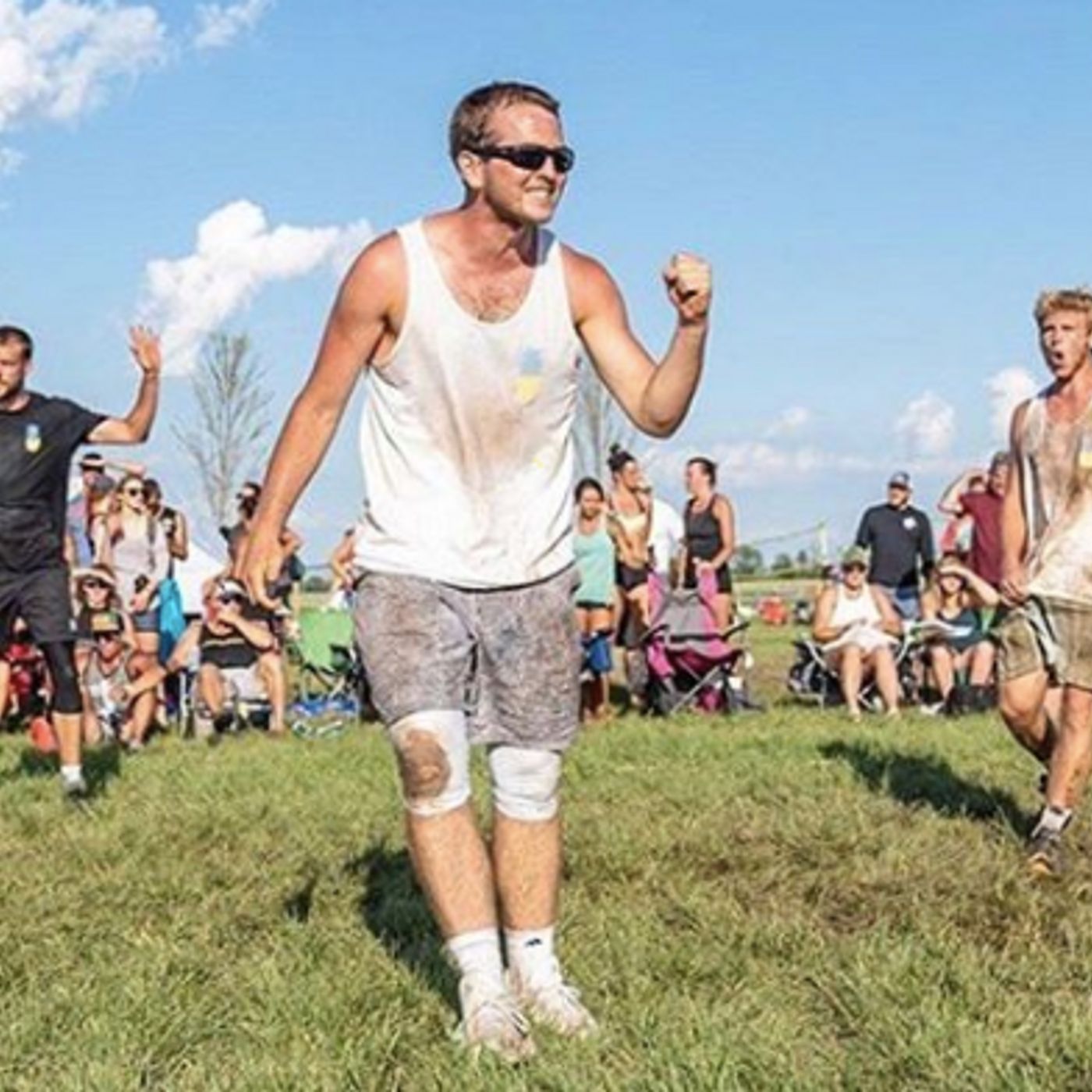
This episode of SANDCAST: Beach volleyball with Tri Bourne and Travis Mewhirter, takes a little turn off the beach and onto the grass. Two weekends ago, the legendary and annual Waupaca Boatride, known as the U.S. Open of grass volleyball, was held, and two brothers by the name of Joe and Gage Worsley took over, becoming the Cinderellas of the Boatride. Joe, who now sets in Germany, was one of the best setters in the United States while he competed for Hawai'i. Gage still has one more season at Hawai'i as a libero, and he proved that, yes, liberos can play offense too. On this episode of SANDCAST, we discuss - Joe and Gage's absurd, undefeated run through the best grass volleyball tournament in the world - Grabbing a drunk sub to finish their semifinals and finals after their middle, Dalton Solbrig, went down with an ankle injury - Joe and Gage's relationship, and how when they're fighting, it's actually a good thing - Joe's decision to commit to Hawai'i, before the program had returned to national prominence, over UCLA, Ohio State, and Pepperdine - Joe's difficult path to becoming one of the best setters in the country - How much fun grass volleyball is, and the creativity required As always, this episode is brought to you by Wilson Volleyball. To get 20 percent off Wilson products, use our discount code, Sandcast-20 SHOOTS Hosted by Simplecast, an AdsWizz company. See pcm.adswizz.com for information about our collection and use of personal data for advertising.
Ep 152Whose stocks are up after week one of the AVP Champions Cup?
On this episode of SANDCAST: Beach volleyball with Tri Bourne and Travis Mewhirter, the hosts discuss the first of the AVP Champions Cup Series, the Monster Hydro Cup. Bourne and his partner, Trevor Crabb, finished third in the event, which was won by Phil Dalhausser and Nick Lucena on the men's side, and April Ross and Alix Klineman on the women's. In this episode, Bourne and Mewhirter discuss: - How it felt to be competing again for Bourne, who hasn't played many AVPs in the past few years. - How the site setup in Long Beach was, and playing without fans. - What players performed the best over the weekend, including: Skylar del Sol, Sara Hughes and Brandie Wilkerson, Sarah Sponcil and Kelly Claes, Dalhausser and Lucena, Traci Callahan and Crissy Jones. - The improvement Bourne and Crabb have had on defense. - What the rest of this three-week sprint will look like. Thanks, as always, for listening to the show! This show is brought to you by Wilson Volleyball. To get a 20-percent discount on the best volleyball in the sport, head over to Wilson and use the code, Sandcast-20 for 20-percent off! Hosted by Simplecast, an AdsWizz company. See pcm.adswizz.com for information about our collection and use of personal data for advertising.
Ep 151Piotr Marcinak, Rafu Rodriguez look to rediscover 2017 magic in AVP Champions Cup
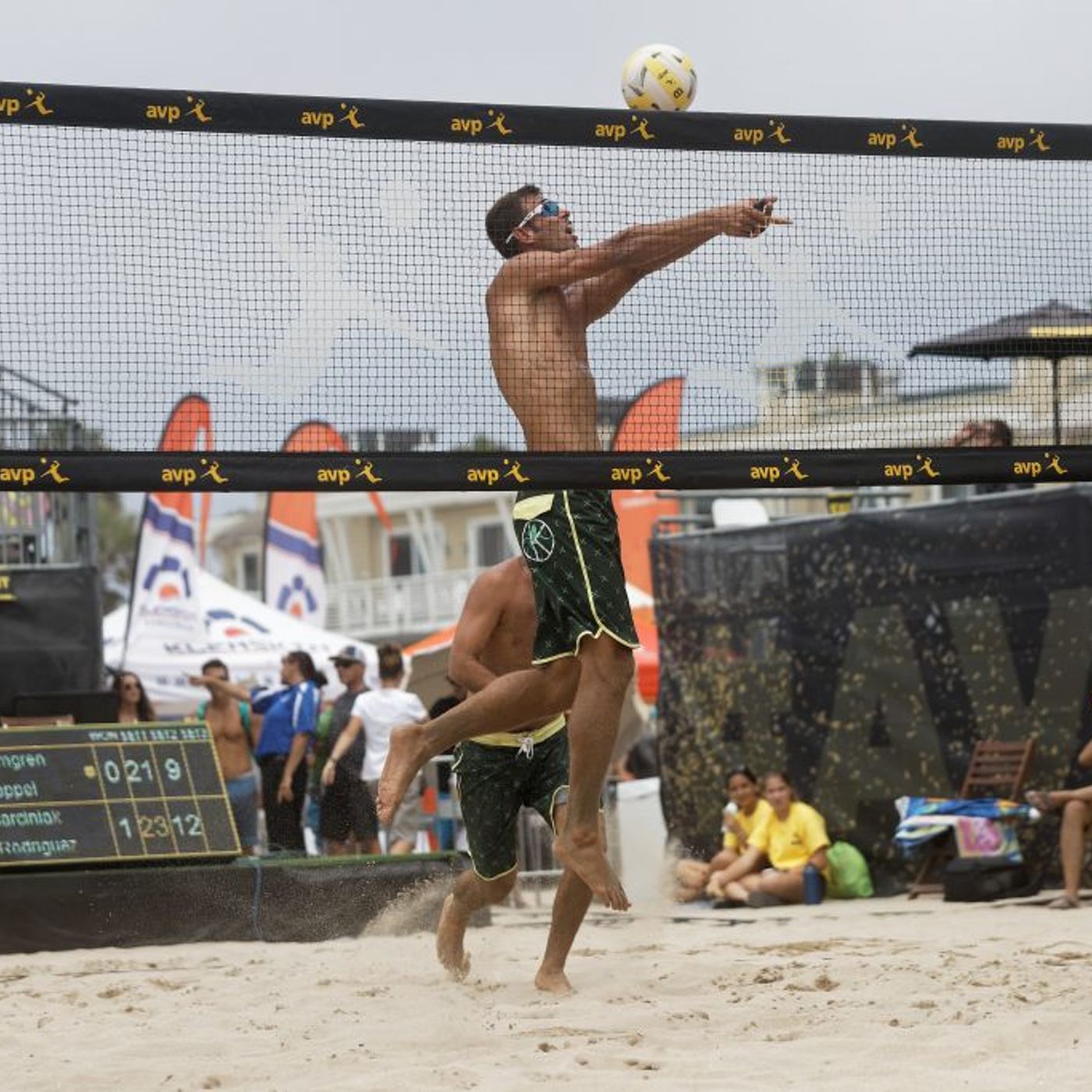
This episode of SANDCAST: Beach volleyball with Tri Bourne and Travis Mewhirter, features AVP professional beach volleyball players Rafu Rodriguez and Piotr Marciniak, former partners in 2017 who have agreed to compete together again during the AVP Champions Cup. On this episode, we discuss: - Rafu's recent cross-country move from Southern California to Florida. - Piotr's move from Poland to Florida, and the life he has been able to build there in the eight years since. - How much the two have been able to train and play in Florida, despite Covid-19 - Why they chose to partner up again in 2020 - Piotr and his wife, Kaya, and the success they had on the NVL from 2013-2016 - Piotr's transition into becoming a dad, and the blessings that have come from it - Piotr playing with so many different partners in the last two years, and the lessons he has learned Big thanks, as always, to listening to the show. And a big thanks, as always, to our sponsor, Wilson Volleyball, who makes the BEST ball in the game. To get a discount of 20 PERCENT OFF, use our code, Sandcast-20. SHOOTS! Hosted by Simplecast, an AdsWizz company. See pcm.adswizz.com for information about our collection and use of personal data for advertising.
Ep 150Casey Patterson is, and always has been, all in on this beach life
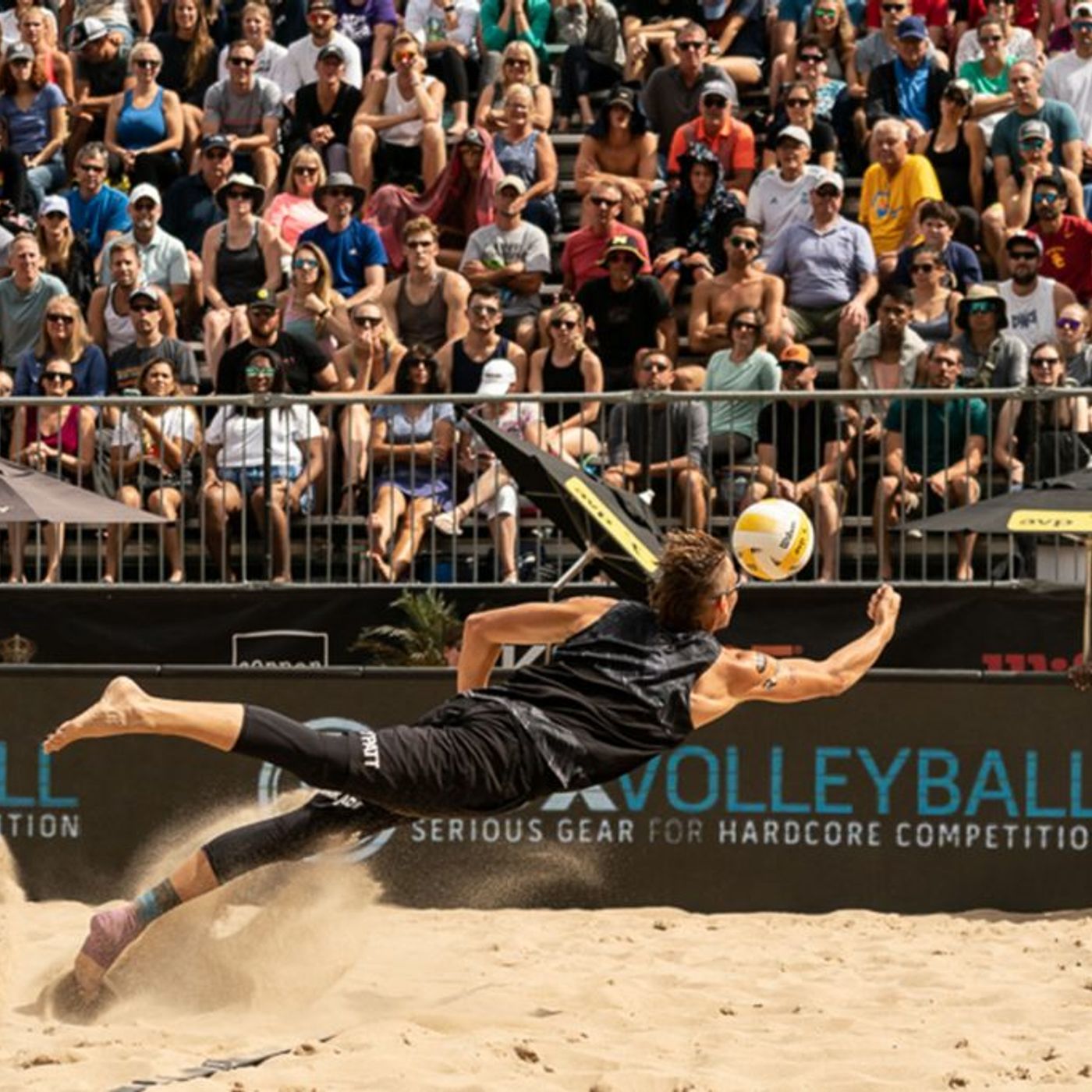
This episode of SANDCAST: Beach volleyball with Tri Bourne and Travis Mewhirter, features Casey Patterson, one of the biggest personalities and talents on the AVP Tour since Donald Sun brought it out of bankruptcy in 2012. In the past nine seasons, Patterson has won 14 AVPs, qualified for the Rio Olympics with Jake Gibb, and was named the AVP Team of the Year three times. He has since partnered with Stafford Slick, Theo Brunner, Chase Budinger and, once again, Theo Brunner. On this episode of SANDCAST, we discuss - Patterson's insane nine-day stretch in 2009 in which he won the Swedish Tour, flew back to California for the birth of his first child, flew to New York to win his first AVP with Ty Loomis. - His journey into volleyball, including riding the bench at BYU, and living on a floor in Hawai'i with $42 and a skateboard to his name. - The early grind of being a professional beach volleyball player, living, as he calls it, a "gypsy life," finding anyone who would play with him and doing it, no matter where in the world it would take him. - How the Covid-19 shortened season is different from the multiple bankruptcies Patterson has experienced in the sport. - His 2012-2016 run with Jake Gibb, and how his big personality was not only ok with Gibb, but encouraged - The development of Casey's "hype-man" personality, otherwise known to Patterson as going "full-Hulk mode." - His breakup with Chase Budinger, and how he handled it with more class and respect than he would have previously, because he's simply in a different phase of competing. - His thoughts on the AVP Champions Cup, and all of the crazy partner switches currently happening. This episode, as always, is brought to you by Wilson Volleyball. Use our discount code, Sandcast-20, to get 20 percent off on the best equipment in beach volleyball. Watch the full episode on our YouTube channel! In case you haven't heard, Tri Bourne and Travis Mewhirter wrote a book! It's called Volleyball for Milkshakes, and we'd love it if you picked up a copy and let us know how it is! You can buy on Amazon.com! Hosted by Simplecast, an AdsWizz company. See pcm.adswizz.com for information about our collection and use of personal data for advertising.
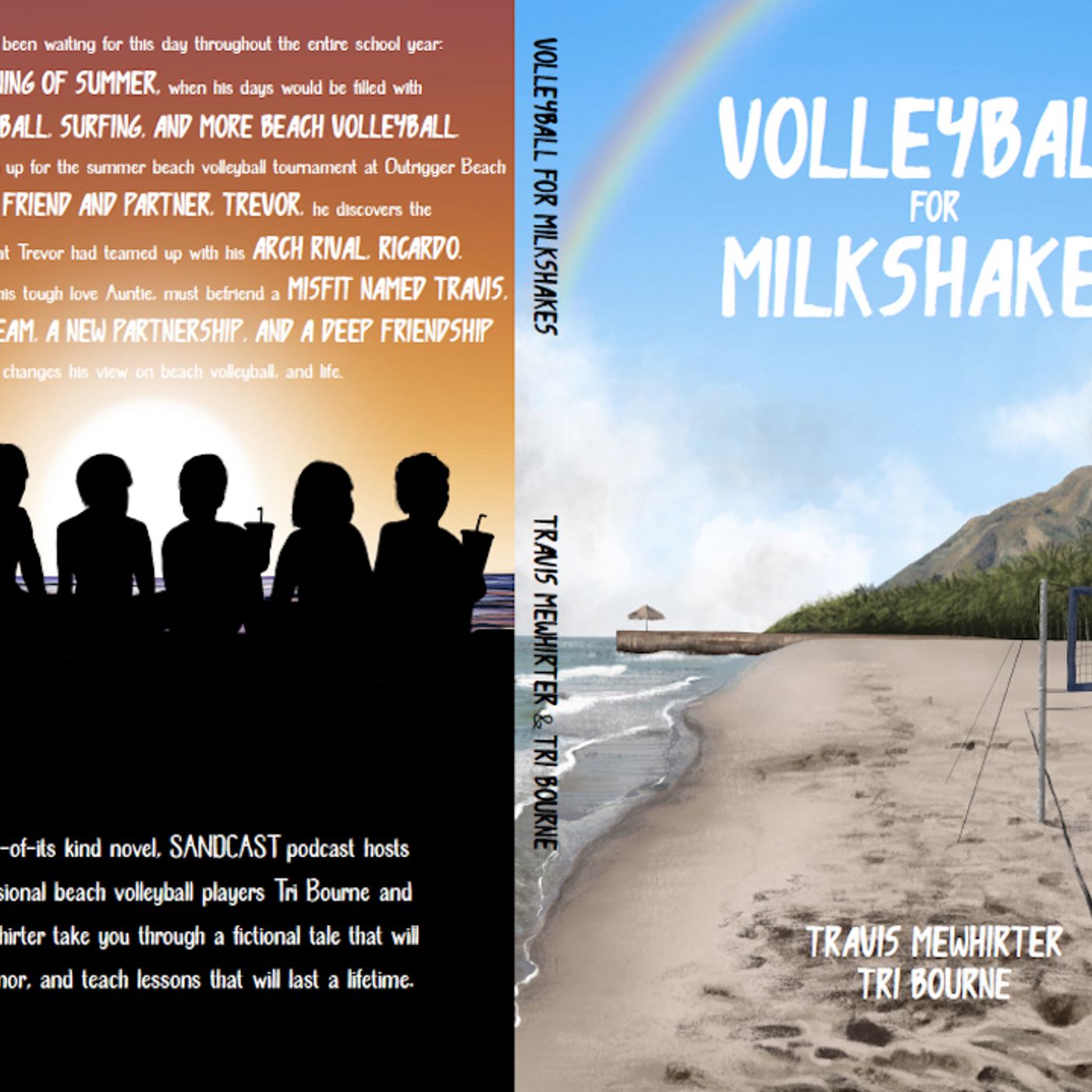
Ep 149Tri Bourne and Travis Mewhirter publish new book, Volleyball for Milkshakes!
This episode of SANDCAST: Beach volleyball with Tri Bourne and Travis Mewhirter, features a fun announcement from the hosts: They have co-written and published a book! Their book, Volleyball for Milkshakes, is out today! The easiest place you can find it is on Amazon, and the audio version will be out in a week or so! This episode covers, first and foremost, the book: how it came about, what it’s about, and how the podcast influenced the narrative. At the bottom of the show notes, we’ll provide the synopsis. We also answer a number of fan questions, so thank you to all who submitted them! We take a look at all the new teams signing up for the AVP Champions Cup, and why there are so many breakups happening despite no tournaments having been played just yet (hint: POINTS!) Who our underdog picks are to stand out during the Champions Cup If the AVP were to host a co-ed tournament, who would we pick as a partner? Tri’s perspective on the AVP’s Covid-19 precautions Who is our fantasy four-man team Who has been practicing regularly and who might be a bit rusty Which non-coastal city would we like to see the AVP host a tournament? Thanks as always for listening, and supporting the show. As always, this show is brought to you by our guys at Wilson Volleyball, the No. 1 source of equipment for all things beach volleyball. Use our discount code, Sandcast-20 for 20 percent off! SYNOPSIS OF VOLLEYBALL FOR MILKSHAKES Tri had anxiously been waiting for this day throughout the entire school year: The beginning of summer, when his days would be filled with beach volleyball, surfing, and more beach volleyball. But when he signs up for summer beach volleyball at Outrigger Beach with his best friend and partner, Trevor, he discovers the devastating news that Trevor had teamed up with his arch rival, Ricardo. Now Tri, with the help of his tough love Auntie, must befriend a misfit named Travis, building a new team, a new partnership, and a deep friendship that changes his view on beach volleyball, and life. In this first-of-its kind novel, SANDCAST podcast hosts and professional beach volleyball players Tri Bourne and Travis Mewhirter take you through a fictional tale that will inspire, humor, and teach lessons that will last a lifetime. Hosted by Simplecast, an AdsWizz company. See pcm.adswizz.com for information about our collection and use of personal data for advertising.
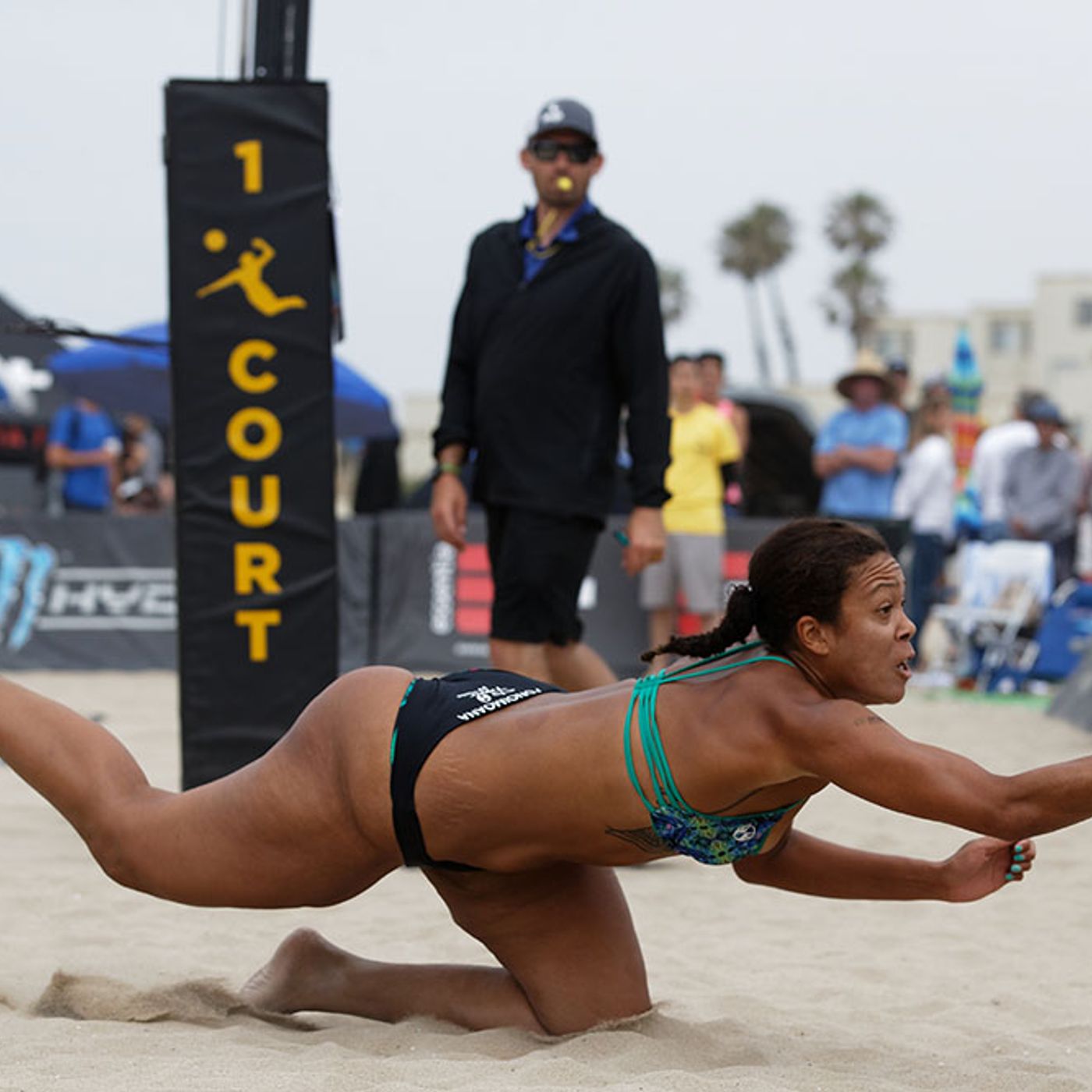
Ep 148Falyn Fonoimoana: Race, volleyball, and the importance of uncomfortable conversation
This episode of SANDCAST: Beach volleyball with Tri Bourne and Travis Mewhirter, features Falyn Fonoimoana. Times have, obviously, been a bit fraught lately. Between Covid-19, George Floyd’s murder and the ensuing riots, tension has been high. Fonoimoana, one of only a few black athletes on the AVP Tour, has been outspoken on social media on the racial issues throughout the United States. This conversaion on SANDCAST covered much more than the standard beach volleyball chatter typically featured on the show. On this episode, we discuss: Fonoimoana’s upbringing in the California South Bay, a predominantly white and affluent community, and her experiences growing up as one of only a few black individuals. Recent experiences she’s had involving racism, including a bizarre run-in at Lazy Acres, a grocery store in Hermosa Beach. Why she has been so active on social media, and what she’s hoping to achieve by it. What we as a volleyball community can do to continue having conversations on uncomfortable topics, no matter what your stance on these topics may be. Plans she has to improve this community, including launching a start-up non-profit business, similar to her uncle Eric Fonoimoana’s Dig For Kids Foundation. This episode, like all episodes, is brought to you by our guys at Wilson Volleyball. The beaches are opening up again, so it's about that time to get some new OPTX volleyballs, using our discount code, Sandcast-20, for 20 percent off! You can watch the full episode on our YouTube channel! Hosted by Simplecast, an AdsWizz company. See pcm.adswizz.com for information about our collection and use of personal data for advertising.
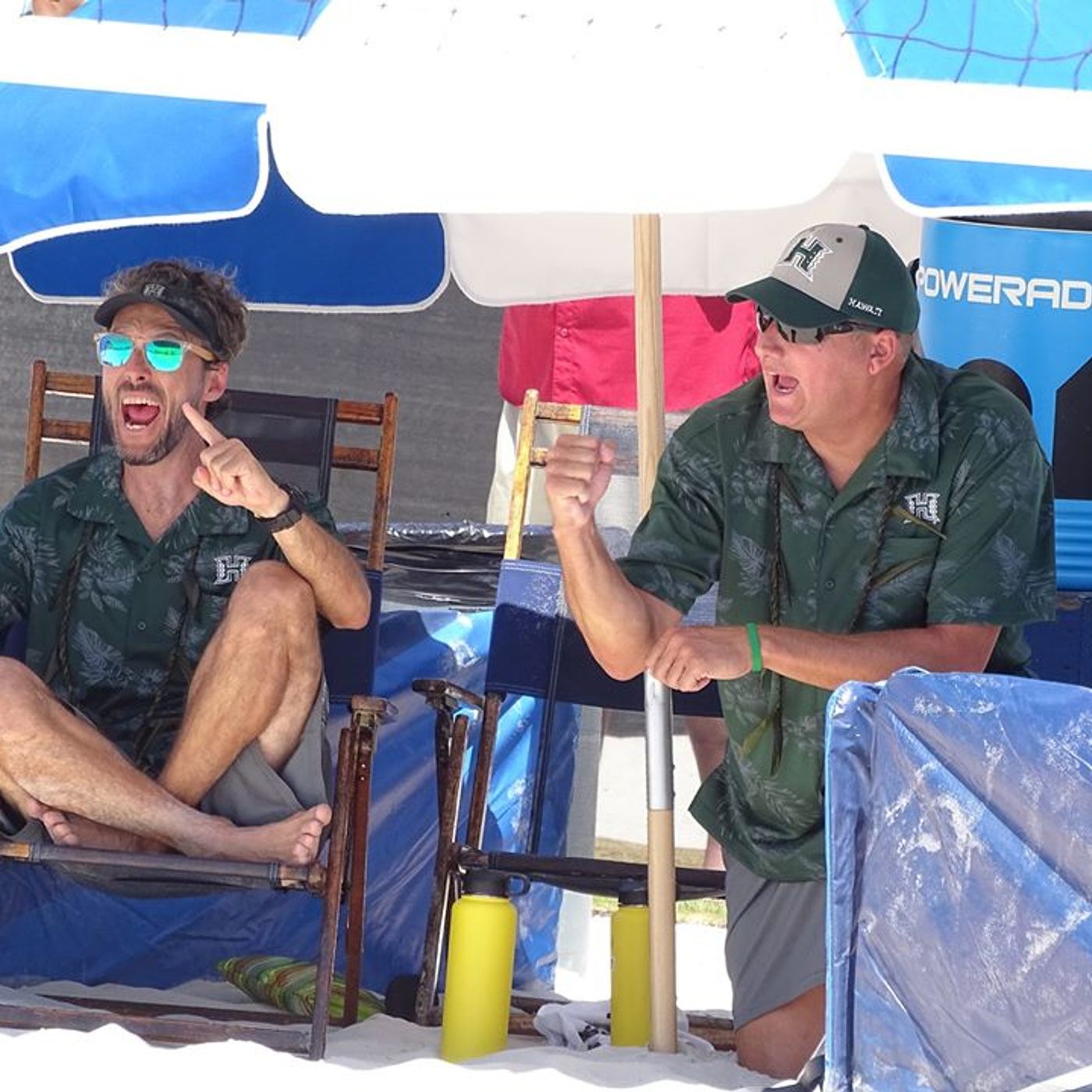
Ep 147SANDCAST: Evan Silberstein, the New Yorker who found his "medicine" in Hawai'i
This episode of SANDCAST: Beach volleyball with Tri Bourne and Travis Mewhirter, features University of Hawai'i assistant coach Evan Silberstein. Silberstein is a New York native turned full-blown Hawai'ian. He has been the assistant at Hawai'i for six years now, helping the Bows become one of the perennial powers in NCAA volleyball. In this episode, we cover: - How Silberstein came to Hawai'i from, of all places, New York City. - How he left his own law practice on the Island to take a volunteer position at the University of San Francisco - Taking his dream job at the University of Hawai'i, and how different that dream is from his initial dream of practicing law for a living. - The art and importance of developing rapport with his athletes. Indeed, it was Silberstein who drove a van nicknamed the "Vegan Vaagen" at Hawai'i, ensuring all of the more dietary conscious athletes got their needs fulfilled. - Why AVP Hawai'i is generally devoid of fans despite such a rich beach volleyball culture. - What the NCAA beach volleyball scene will look like following Covid-19. I hope you enjoy this episode of SANDCAST: Beach volleyball with Tri Bourne and Travis Mewhirter. As always give some love to our sponsor, Wilson Volleyball, and for a 20 PERCENT discount on all Wilson products, use our discount code, Sandcast-20 You can find the full video on our YouTube channel: SANDCAST Podcast The write-up is available at VolleyballMag.com! Hosted by Simplecast, an AdsWizz company. See pcm.adswizz.com for information about our collection and use of personal data for advertising.
Ep 146Megan Burgdorf and Michelle Meyer, serving the sport they love through a startup: Beach Volleyball Consulting
This episode of SANDCAST: Beach volleyball with Tri Bourne and Travis Mewhirter, features longtime beach volleyball coaches and advocates Megan Burgdorf and Michelle Meyer. The two have been involved in the sport in virtually every capacity. Both were players at the college level -- Burgdorf at Cleveland State, Meyer played club at UC Santa Barbara before an overseas career in Denmark -- and have coached at all levels of the game. With the advent of the college game, however, the sport has exploded in numbers, and Meyer and Burgdorf saw a number of opportunities for a business to bridge many of the gaps being created. Thus, they launched Beach Volleyball Consulting. It's a wide-ranging business, and in the episode, we discuss every corner of the game the two are covering, from grassroots to men's college beach to the AVP and FIVB. On this episode, we cover: - How Beach Volleyball Consulting was launched, and whom it serves - The advent of men's collegiate beach volleyball, and how Burgdorf and Meyer are spearheading an effort to make it happen - The importance of athletes building their own personal brands and adding value to their community - College athletes getting paid - The Pro Athlete Mentorship Program launched by Beach Volleyball Consulting that is connecting the top players in the country to juniors all over the United States Thanks, as always, for listening to the show. This episode, as all are, is sponsored by Wilson Volleyball, who makes the best ball in the game. Use our discount code, Sandcast-20, to get 20 percent off! Hosted by Simplecast, an AdsWizz company. See pcm.adswizz.com for information about our collection and use of personal data for advertising.
Ep 145The Wilson roundtable show with Stafford Slick, the McKibbin Brothers, and Tri Bourne
The idea for this episode of SANDCAST: Beach volleyball with Tri Bourne and Travis Mewhirter came, as most do, on a whim. Tri had been talking to Wilson, our main sponsor of the show and who also sponsors some of the most talented athletes on the AVP. Wilson wanted to know if we could do a roundtable of sorts: All seven Wilson athletes – Tri Bourne, Stafford Slick, Riley McKibbin, Madison McKibbin, Casey Patterson, Kelly Reeves, Sarah Sponcil, Irene Pollock – on a single podcast. Adding in my voice as a host of the show, making it eight in total, seemed crowded. A good idea, but a noisy one. We decided to cut the number down to four – five, including me, the moderator – and have a debate-style show, not unlike ESPN’s Around the Horn. You’ll have to let us know what you think. We cover 15 topics, including, but obviously not limited to: Why Stafford Slick, king of the NORCECA tour, thinks Wilson makes the best volleyball Does Ron Von Hagen belong on beach volleyball’s Mount Rushmore? Is the Last Dance the best sports documentary ever? Is Tim Bomgren the best player yet to win an AVP? Why Riley McKibbin thinks there should be a substitution rule in beach volleyball Let us know what you think. As we mentioned, it’s an experiment, and we have no idea if it was a mess, fun to listen to, or somewhere in between. SHOOTS! Hosted by Simplecast, an AdsWizz company. See pcm.adswizz.com for information about our collection and use of personal data for advertising.
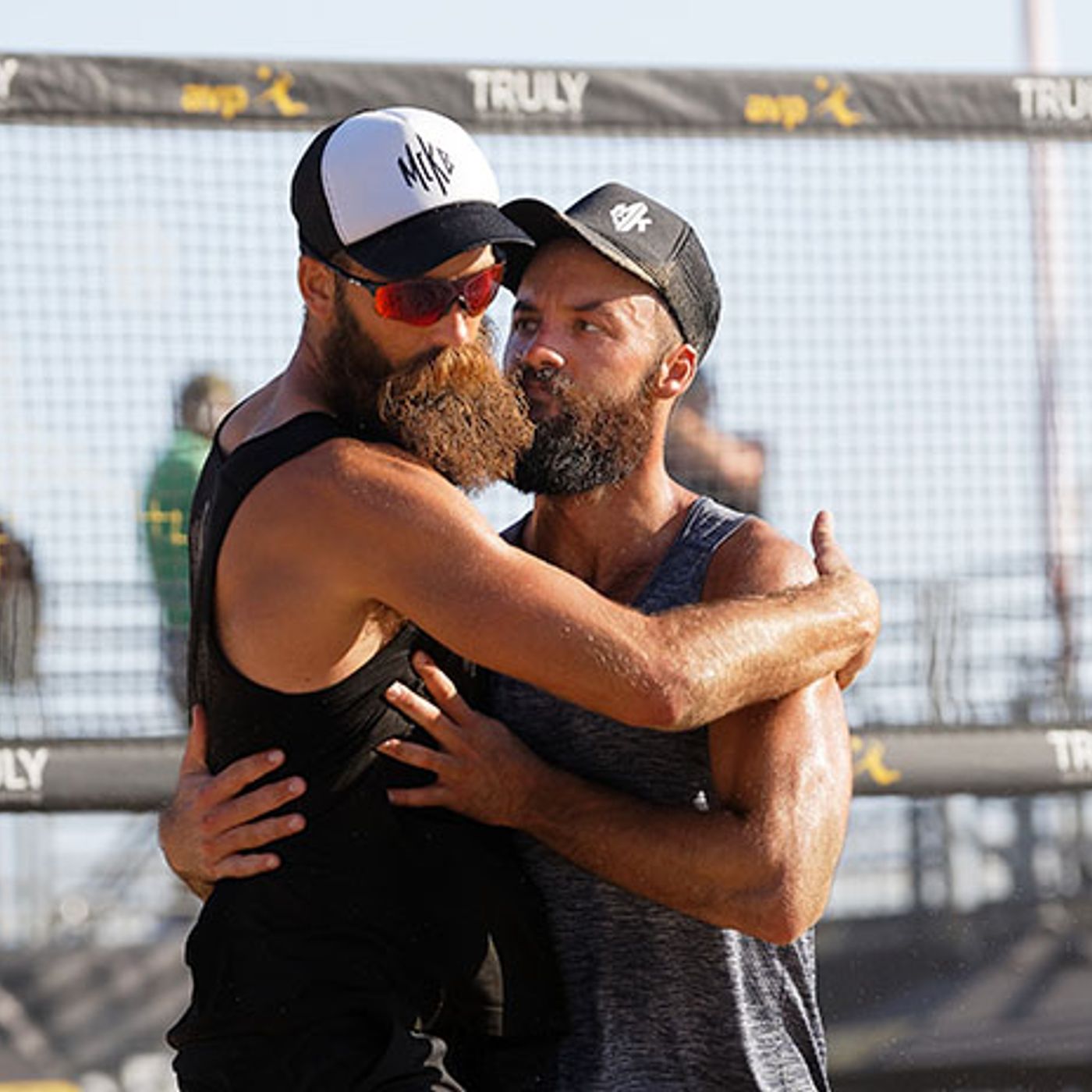
Ep 144Riley and Madison McKibbin: Filling the storytelling void in beach volleyball
Madison and Riley McKibbin can still remember -- with much amusement, as memories go – one of their first disasters as producers of beach volleyball videos on their eponymous YouTube channel. Not that it seemed like a disaster at the time – they rarely do. Riley probably thought it was a stroke of genius when the wind had muffled up the sound of one of those early videos, and rather than redo it, he simply recorded a voiceover, trying to match his cadence on screen. “You can really tell,” Madison said on SANDCAST: Beach volleyball with Tri Bourne and Travis Mewhirter. “It’s like an old, bad movie, like they’re speaking English words and it’s Japanese.” “There were some bad decisions that were made for sure,” Riley added, laughing. That’s the beautiful thing about being first in an industry with a large fanbase and what was at the time, and still sort of it, an almost entirely untouched gold mine of digital media: Even when bad decisions were made, they didn’t seem bad at the time. They seemed innovative, because the crux of their content was innovative, something that had never really been done before. When the McKibbins were initially tinkering with the notion of retiring from indoor volleyball, which they played professionally overseas – Madison finished in Greece, Riley in Italy – and switching to beach, they did what anybody in this current generation would do: They searched YouTube. They found what nobody in any future generation will now find: Little to nothing. Nothing that was great, anyway. There were some out there. But Riley, now 31 and coming off a career-best AVP season, knew he had found a hole. Why he knew that he and Madison thought they could be the answers to that problem is still a mystery to them. Riley had no prior experience editing film. Madison had little, though he did have a camera. An early issue there was that Riley couldn’t even turn the thing on. In spite of that, Riley said, “we somehow thought we could fill that void.” They have. And they have done it to such a spectacular degree because the foundation of virtually every video posted on The McKibbin Brothers YouTube channel has remained the same, whether it’s a hilarious voiceover edit, a tutorial on jumpserving, or a supremely well-done vlog: They’re telling stories that ought to be told. “The thing is,” Madison says in their video following filming the 2020 AVP Media Day, “all these people aren’t just beach volleyball players. They have these passions outside of beach volleyball, which are so differentiating, so spread out all over the place, which makes them them, sometimes these volleyball questions – they get asked every single Media Day.” They do things different. They don’t ask Alix Klineman what it’s like to transition from indoor to beach. They get her rolling on cooking, and food, to the point that Klineman, one of the more reticent individuals on Tour, actually asked the McKibbins to let her talk more. “Actually, I have one more,” she said. “I can really just keep going.” Nobody had ever gotten that story, because nobody had ever bothered. The McKibbins saw the void there. They were unqualified to fill that void. They didn’t care. They filled it anyway. “It’s been a long learning process and during that learning process we’ve discovered different avenues we could take it,” Riley said. “So it moved just from doing beach volleyball tutorials to workout videos to some blogs to some mini documentary kind of videos. It’s been a pretty crazy, great learning experience.” They’ve discovered the videos that are most fulfilling to them. The slow-motion replays of matches throughout the season are entertaining, and there is some benefit there, but there isn’t character building. No storytelling. There isn’t the reward of stringing together a narrative, drawing new fans into this sport, as a Formula One docuseries called “Drive to Survive” did for them. “That’s something me and Riley realized about our content recently,” Madison said. “The ones we’ve been super excited for, you can see it. The ones where we’re like ‘meh’ you can tell as a viewer.” “It’s almost like YouTube knows how much energy and how excited we are about the videos that we’re making,” Riley said. “When we’re super excited about a project, the views show it. When we’re throwing up filler content to hit that Wednesday quota, YouTube knows: ‘Nope, we’re punishing you. You only put in 75 percent effort’ and we’re like ‘Dammit!’” They’re back to their metaphorical drawing boards. They couldn’t elaborate on the specificity of future projects, because they don't know the exact direction of them just yet. There are vague ideas, visions – something big out there. They just don’t know precisely what it is. “Our main goal is to start innovating again,” Riley said. “I think one of the reasons we had such great success in the very beginning was because we spent a lot of time writing and trying to make the content at least somewhat entertaining.” They’ve accomplished that

Ep 143BounceBeach: How a 17-year-old high schooler created the most viral account in beach volleyball
The idea began, like all viral ideas do, with something so blatantly obvious it had been overlooked by everyone. Parker Conley was the rare type of teenaged boy in Arizona who was obsessed with beach volleyball. It isn’t entirely unheard of. A handful of professionals hail from Arizona, and the sport has a small presence. But it is rare, to be sure. Conley sought any resource he could to learn the sport. Namely, YouTube. He’d watch anything he could find, no matter the era – old school Sinjin and Karch, all things Taylor Crabb, American or international, male or female. He’d see highlight after highlight, realizing, to his own subtle surprise, that there was no Instagram account that shared them. Other sports – basketball, primarily – have thousands of social media accounts dedicated almost exclusively to highlights, sharing clips that go viral, the type you’d see on SportsCenter’s Top 10 plays. Beach volleyball had none of that. “I thought,” Conley said on SANDCAST: Beach volleyball with Tri Bourne and Travis Mewhirter, “I should do it.” Thus, BounceBeach was born. Maybe. He waffled between names for a bit, seeking something about beach volleyball and some kind of impressive play within the sport. Bouncing a ball is one of the more highlight-worthy plays – just ask Sean Rosenthal, who is still, 13 years later, asked about his “Vegas Line” – and the alliteration worked. Conley created the Instagram account, pouring over film from The Hague four-star in 2019 as his first event, and began creating highlights. “I posted six or seven videos, the quality was horrible, I had a huge watermark, you could hardly see the players,” Conley said, laughing at the memory of his first attempt. “I was like ‘I’m not letting those stay on my page.’” Nevertheless, the social media world took notice. When a sport is starved for content, particularly highlights that players can use to market their own brand, it doesn’t necessarily have to be the highest of quality. As Conley perfected his craft, the momentum only increased, a snowball careening down the mountain. Soon, the pros themselves, the same ones on which Conley had watched so many hours of film, began reaching out: Phil Dalhausser, Jake Gibb, Nick Lucena, Casey Patterson. Could Conley send over a few highlights they could use? After sitting down for half an hour, processing the fact that it was, indeed, that Phil Dalhausser who had messaged him, Conley would reply: Of course he’d send over a highlight. “I had no idea where it was going to go,” said Conley, who is 17 and enrolled in online classes both at a high school and Arizona State. “I’m still blown away by how many people are following it. I thought I would eventually hit the cap and I’d stop getting followers but I haven’t hit it.” If anything, BounceBeach is only picking up speed, taking on a life of its own. It’s morphed into something of an online forum, a place to discuss the highlights, where the best players in the world can beat their chest or poke fun of others. It’s its own subculture, in a way. When Conley posted a video of John Hyden digging a ruthless swing from Taylor Crabb, putting the ensuing transition point away with a jumbo poke that tagged the back line, Crabb commented, in jest, “Who won?” This ignited a string of amusing comments and debates, becoming its own chat room. “As I started growing, it’s been cool to see how the pros interact with it,” Conley said. “That was my goal, originally: to have my name known, build a brand for myself in a way. Having it be a forum in a way where pros will talk about highlights has been kind of surreal.” In less than a year and a half, Conley has amassed nearly 40,000 followers. More than that, he’s created something that virtually every beach volleyball player and fan turns to when seeking highlights. He tapped the latent gold mine of content, becoming essentially the exclusive source of viral clips. The FIVB took note, asking Conley to edit some highlights for them as well, joining the growing list of players. It’s become almost a competition among players to get their highlights featured on BounceBeach, which has become beach volleyball’s version of SportsCenter. “It’s been crazy, surreal to see people say ‘I got on BounceBeach!’ I never expected that,” Conley said. “It’s insane. It almost has become something on its own, where people consider it a brand. When I started, I was just posting highlights for the fun of it.” He’s still having fun with it. Still digging through YouTube, discovering gems with barely any views. “I’m like ‘How has nobody ever seen this?’” Conley said. With him, and BounceBeach, now everybody can. Hosted by Simplecast, an AdsWizz company. See pcm.adswizz.com for information about our collection and use of personal data for advertising.
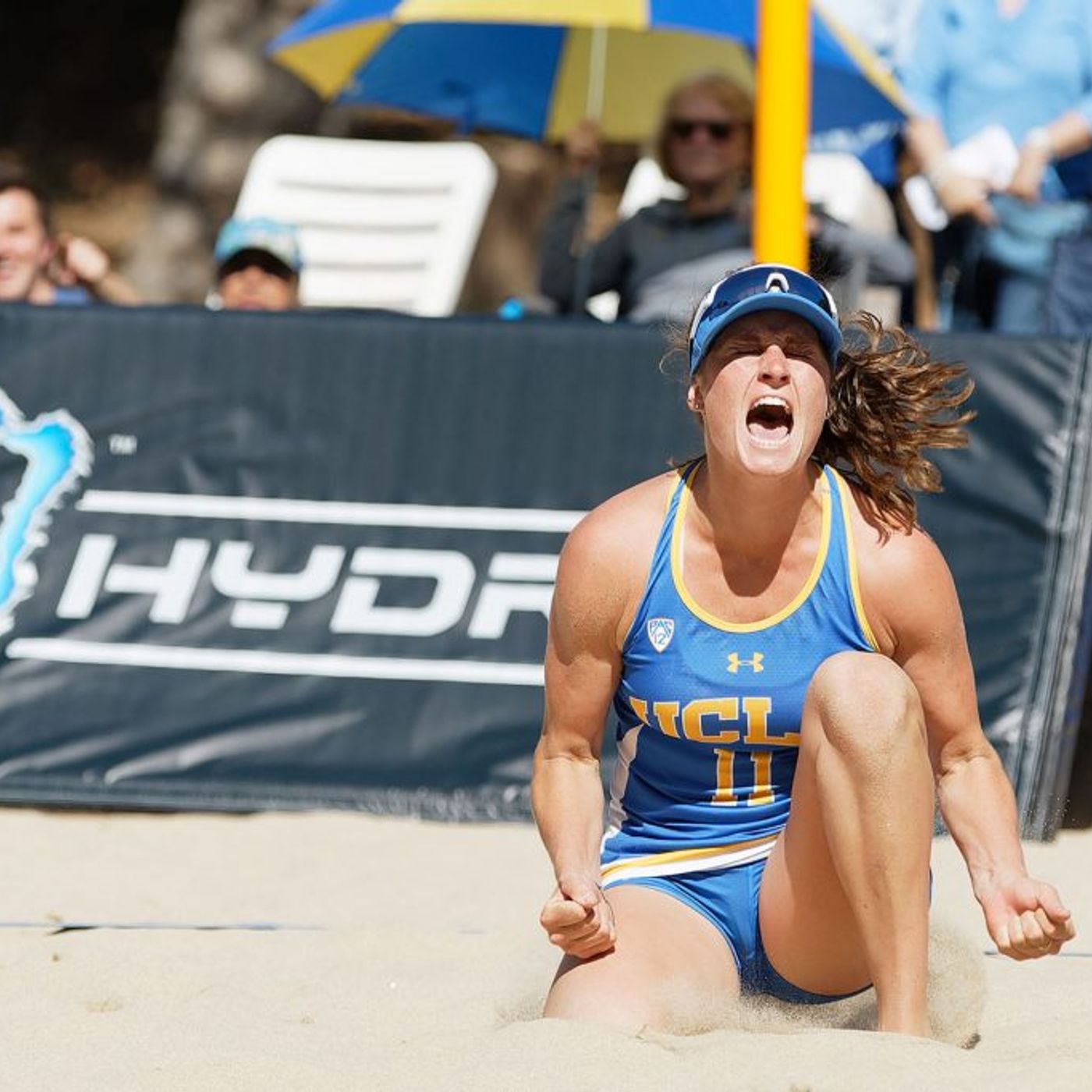
Ep 142Savvy Simo, UCLA's favorite 'pain in the butt,' returning for one more year
On the evening of January 14, UCLA women’s volleyball coach Mike Sealy had the mic. As he expounded on the tremendous careers of his seniors, of which there were just two – setter Cali Thompson and outside hitter Savvy Simo – he turned to Simo and, instead of gushing about her laundry list of accomplishments, said a joke. “You’re one of my favorite players I’ve ever coached,” he said. At least, Simo thought it was a joke. Over the past four years, she had been, by her own admission, a “pain in the butt,” something her beach coach, Stein Metzger, will readily, if not warmly, agree to. But Sealy didn’t laugh. Didn’t betray a single sign of amusement. He couldn’t have been more serious, and afterwards, he’d hug Simo and tell her that she’s the best, and to keep in touch. That’ll be easier to do than Sealy could have known. Savvy Simo’s coming back to UCLA for one more year. When the NCAA initially granted an extra year of eligibility for all spring athletes who had their 2020 seasons cut short, Simo had no designs on returning to Westwood. She’d done her four years, playing both beach and indoor. She’d won two NCAA Championships on the beach, piled up 91 wins, completed her sociology major. She was ready to move on. “When I found out everything was cancelled I was like ‘Screw it, I’m not coming back, I’m over college, I’ve had my time, I already feel old, I want to play AVP, I want to do interviews, I want to move on,’” said Simo, who went 13-2 on court one with Abby Van Winkle in the truncated 2020 season. Already, she had plans to move to the South Bay to room with LMU transfer Iya Lindahl. She was going to play on the AVP Tour, launch what is already a promising career in sports media. Move on with her life. As the reaction to Covid-19 spread, and the economy was shuttered and sports, including the AVP, were postponed indefinitely, if not altogether cancelled, reservation began to take root. With no AVP to play at the moment, few if any jobs readily available, many of her rivals – Kristen Nuss and Claire Coppola at LSU, for instance – returning to school, her roommate, Lindahl, remaining in college, was there any real reason to move on? It was a picture painted by Rachel Morris, Simo’s old coach at WAVE in San Diego, that ultimately convinced her. “Look, Savvy,” Morris, a former setter for Oregon, told her, “next May you’re going to be sitting on your couch watching your team compete for a national championship and, win or lose, you’re going to regret not being there.” “That,” Simo said, “was the tipping point for me. I was like ‘You’re so right, I cannot imagine watching this team play, knowing I could have had an opportunity.’” She called Metzger. She wanted to come back. It’s simple in concept, but not in execution. There was the academic side of things to work out, since Simo can’t exactly return with no classes on the schedule, only to play beach volleyball for a few months in the spring semester. There is still the thorny scholarship issue as well, something that schools around the country are dealing with. But there was zero chance Metzger would let that interfere with Simo returning. He’d make it work, because if there’s one thing UCLA could use most on its young and talented team, it’s the Bruins’ phenomenal pain in the butt leader. “I friggin love Stein, I love Jenny [Johnson Jordan], I think they’re both incredible humans,” Simo said. “Literally yesterday, I said ‘I’m sorry for being such a pain’ and he said ‘You really are a total pain but I love you kid.’ I’m so excited to come back.” The Bruins will be equally excited to have Simo back as well. Simo’s fellow seniors, Lily Justine and Madi Yeomans, are moving on, making Simo, already the vocal leader of the bunch, the de facto captain of a team that featured underclassmen in 50 percent of its starting lineup: Van Winkle (sophomore), Lindsey Sparks (sophomore), Lexy Denaburg (freshman), Devon Newberry (freshman), Rileigh Powers (freshman). “I took on the leadership role with the other seniors and it was a challenge but I just kinda took it and ran with it and no program is ever perfect but we were on the ups and it was a bummer it was cancelled but thankfully I’m back and I’m fired up to see the potential this team has,” Simo said. “Me and Stein, we have a really great relationship and I think a reason why we kinda go back and forth is because I do have a really high level of respect for Stein. I listen to everything he says and he is one of the best coaches I’ve had on the beach and he is so smart and I think especially this year, I wanted to win so bad and I know he did too. “I’ve learned and matured and figured out when to pick my battles and when to not. Even this year, there were times where I was like ‘Stein we need to be doing more of this’ and agree or disagree, I think we both have a common goal and we want to win. He has so much experience but I also have the side of the players and the team and we worked out a balance to find out what
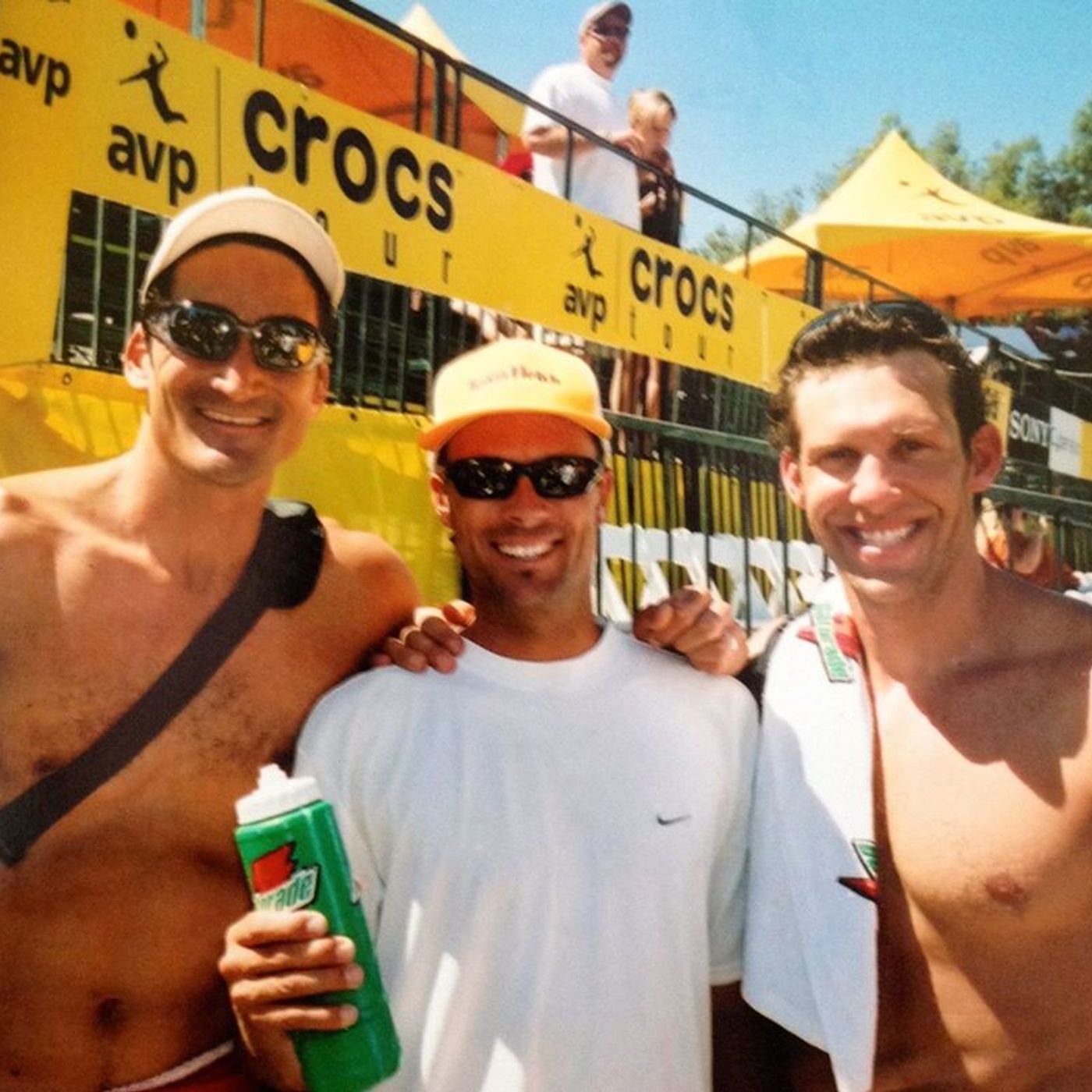
Ep 141Mike Lambert: The consummate teammate, still shining the spotlight on his partners
After a few minutes of cordial catching up and introductions, Mike Lambert paused, sitting in his office in Lucca, Italy, and wondered, on SANDCAST: Beach volleyball with Tri Bourne and Travis Mewhirter: “What should we talk about?” The conversation would be wide-ranging, covering a vast canvas of topics. Midway through, however, it became comically evident what Lambert didn’t want to talk about: himself. It is vintage Lambert. Though he may be nearly a decade since he last appeared in an AVP tournament, he is still very much the same man who, in his Beach Volleyball Hall of Fame write up – he was inducted in 2018 – was described as “a favorite of both fans and his fellow tour professionals, often bringing his guitar to the beach to play songs in-between matches and charming with an infectious smile. You would have to search far and wide to find someone with anything bad to say about Mike Lambert.” And, for that matter, you would likely have to search farther and wider to find a time Lambert said anything bad about anyone else. When he first posed the question of what we should discuss on the podcast, he immediately answered his own prompt: “Stein,” he said, referring to Stein Metzger, his childhood friend and partner for the 2006 season. “Let’s talk about that guy.” And then, unprompted, he sang the UCLA coach’s praises. “He was super special because he was so competitive, even back in the day,” Lambert said. “I think he would say that he’s not the most talented player, but he just wants to win more than the other guy. There’s so many memories of him, younger, and then in college and when he turned pro where he just wanted it more than the other player. That’s a fun guy to be partnered with. You get into battle and the trash talk starts going and he’s not going anywhere. He’s not backing down. He wants more of it.” He talked Metzger. He marveled at the discipline of John Hyden, with whom Lambert played on the 1996 and 2000 Olympic teams. Lambert, a Hawai’i native, complimented Bourne’s mother, Katy, a teacher on the Island. “Such a stud,” he said of the woman known for her penchant for excelling in long-distance events. Mostly, though, Lambert wanted to talk about Karch Kiraly. It was only Lambert’s second full-time year on the beach when he got the call from Kiraly, who by then was considered the greatest to ever play the game. Kiraly was in his early 40s, Lambert coming off a successful indoor career to win, improbably, both Rookie of the Year and Best Offensive Player in the same AVP season in 2002. Given that, “I thought I had played at a pretty high level,” Lambert said. “I had played in two Olympics and played against the best in the world indoor and on the beach but there are few people that are mentally just on a different level and they’ll never drop their game whether it’s practice or a game against a scrub team or a qualifier team or if he’s on center court against the best team. [Kiraly] keeps his level there. He never drops no matter who’s on the other side of the court or if he’s tired or where the sun is or what the wind is or this or that. He was always immovable. There were times where I was tired but I’d say ‘Look at my guy! He’s not tired so I’m gonna keep going.’ He was always there. Constant, just the north star. It was crazy.” To watch Lambert and Kiraly compete together – YouTube has plenty of fantastic match replays if you’d like to do so – is to witness exactly why Lambert is quick to praise others and slow to credit himself. If you were to only watch their celebrations, you’d never know who scored the point, who made the highlight, who put down the block or the big swing. When the ball hit the sand, they wouldn’t find the camera, or the crowd, but each other. That’s the point. There were occasions where Kiraly – 148-time winner, three-time Olympic gold medalist Karch Kiraly – would bow down to Lambert following a block. Dishing all the credit. Building up his teammate. “Any chance he had to throw the spotlight on me he did,” Lambert said. “It was because ‘Lambo did this’ and ‘Lambo started stuffing balls!’ He was always trying to put his partner in the spotlight. Not long ago, he asked me what he did well as a teammate, and I said he was always giving me props for everything we did, and not trying to take the spotlight from his teammate. When you do that, all of a sudden, I’m puffing out my chest, like ‘Yeah! I am the guy stuffing balls!’ And then I get more confident and become even more of what he wants. It’s almost like he’s feeding that. He was really good at that. He was really good at letting go of a great play and a terrible play because it was all about being in the moment. He had the same routine, whether he did something great or something terrible he’d either celebrate and move on or think about it and move on. He was always ready for the next play, which was super cool. “If you make a great play on the court, there’s a finite amount of seconds where you’ve got this cra
Ep 140Mailbag: Who are the top five blockers and defenders in the world? More fan questions
Typically, I’d be a bit neurotic by now. Short on sleep. Distracted. Mind ping-ponging back and forth, looking at the draw, then looking again – did it change did it change? This, of course, is not the typical pre-AVP Huntington Beach qualifier eve. This is just a Wednesday like any other in the off-season: no events on the foreseeable horizon. Nothing specific to train for. Sleep comes easy. In such a strangely uncertain sports world, Tri and I opened up SANDCAST: Beach volleyball with Tri Bourne and Travis Mewhirter, to fan questions, and we did our best to answer, or at least opine, on them. A few I’ve written our responses to. Because nobody wants to read 3,000 words of me answering questions, you can find our answers to the rest on our episode. Question one: Who are some younger players to watch out for (not obvious ones like Eric Beranek, etc.) Where do you think the season will begin? Where have you been training? (and we know you have, wink) This is always such a difficult list for the men, because there really aren’t many youngsters who would willingly commit to beach over indoor. Kawika Shoji discussed that very thing last week on SANDCAST, and the list of reasons is nearly endless, with financial security being the most obvious. However, there are a handful. Miles Partain is the obvious candidate here. At just 18 years old and still in high school, he already has a fifth-place AVP finish to his name, at AVP Chicago with Paul Lotman. He made the final three AVP main draws of the season – Manhattan, Chicago, Hawai’i – and trained the entire off-season under coach Tyler Hildebrand and our top national teams. He’s a can’t-miss up-and-comer. The women, meanwhile, are nearly endless. Peruse the top two courts at any of the top 15 or so college programs and you have AVP main draw talents. The names I’ll point you to, however, are these: Savvy Simo and Abby Van Winkle (UCLA), Alaina Chacon and Molly McBain (Florida State), Haley Harward (USC), Brook Bauer and Deahna Kraft (Pepperdine), Julia Scoles and Morgan Martin (Hawai’i), Delaynie Maple and Megan Kraft (committed to USC), Torrey Van Winden (Cal Poly), Reka Orsi Toth and Iya Lindahl (LMU), Sunniva Helland-Hansen and Carly Perales (Stetson), Dani Alvarez (TCU), Kristen Nuss and Claire Coppola (LSU), Mima Mirkovic (Cal). Of the bunch, my breakout selection would be Simo, UCLA’s dynamic court one defender and unquestioned leader of the team I would have bet a fair amount of American dollars to win the National Championship. She has all the potential to become this year’s version of a Sarah Sponcil, who made the finals in her first AVP event, or Zana Muno, another Bruin who made an AVP semifinal in her rookie season. Question two: Should the AVP start a Dino Division for players post 50 who still want to compete 3-4 times per year? Golf has masters, AVP has dino? I thought this question was hysterical in the best of ways. Idealistically, this sounds great. Who wouldn’t want to watch Tim Hovland yap with Sinjin Smith, while the always-quiet Mike Dodd digs balls and Randy Stoklos yells about how he was the first person to ever hand set? I’m game. But it is, let’s all be honest here, a bit quixotic. The AVP does well enough to put on eight events for the best, most explosive players in the world, and when compared to the major sports, there’s a niche market at best. Would there really be a market for old men with big mouths and small verticals? The dino is such a great event because it’s the only one – and it’s given a shot of life with younger players such as Tayor Crabb to help carry their older counterparts. It’s fun, competitive, and a little heartwarming. Golf’s Champions Tour works because guys like Tom Watson and Fred Couples can still compete at close to the same level they could when they were in their primes. There’s no impact on their bodies, and the level of play is still astonishingly high. Watson, for example, finished second at The Open Championship in 2009, losing in a four-hole playoff, 26 years after his most recent major win, when he was 60 years old. I have no doubt that Sinjin can still ball. But could he get out there with Stoklos and take Jake Gibb and Crabb to three sets in the finals of the Manhattan Beach Open? Doubtful. I think p1440 nailed an older-aged event when they hosted a four-on-four match featuring two legends and two current pros on either team. There’s certainly a market and space for something whimsical like that to happen a few times per year. Until then, keep the Dino the great, annual event that it is. Question 3: Will there be a new BVB book (got my copy signed by Tri in Hamburg)? Yes. Maybe. I can’t tell you for sure. But all I can say is that there could, potentially, be a possibility of an upcoming beach volleyball book to be released in early summer. Question 4: Rate your top 5 male defenders/blockers internationally. This was such a fun one to discuss. Everybody keeps talking about how much parity there is on
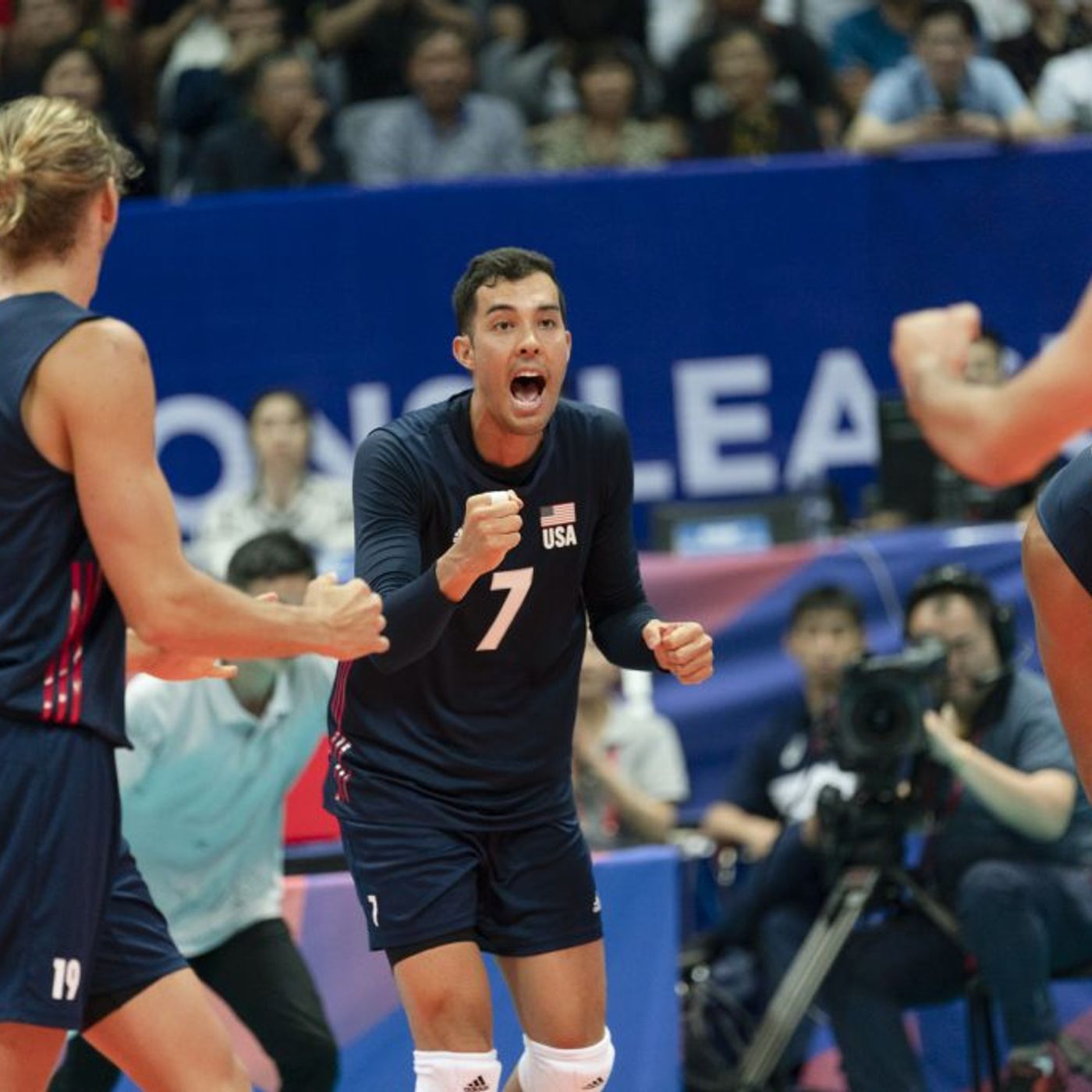
Ep 139Kawika Shoji: Leading the wildly talented Hawai'i generation of Olympians
A few weeks ago, Kawika Shoji and Taylor Crabb escaped the tedium of quarantine to do some hill sprints near their houses in Manoa. There is nothing new or special or spectacular about this. It is, actually, the most normal, mundane, practiced bit of Shoji’s life up to this point. It isn’t necessarily the hill sprints that are typical, but the fact that Shoji was there. Leading. Forever leading. Much has been justifiably made – and more needs to be made – of the current generation of Hawai’i volleyball players either currently or previously representing the United States in some professional capacity or other. There is Spencer McLachlin, a national champ at Stanford in 2010, Crabb’s first partner on the AVP Tour, currently a coach at UCLA. There’s Brad Lawson, McLachlin’s who put together one of the most complete performances in any collegiate national championship, leading the Cardinal to that 2010 title with 24 kills in 28 swings. He was named, alongside Shoji, his setter, the NCAA Tournament MVP. There’s Micah Christensen, Shoji’s current roommate and arguably the best setter on the planet. There’s Shoji’s younger brother, Erik, his teammate and libero on the United States National Team Then, on the beach, there’s Tri Bourne, one of the top blockers in the USA Volleyball pipeline and currently ranked second in the American race to Tokyo. And the Crabbs, both Taylor and Trevor, the former currently ranked No. 1 in the American Olympic race, the latter, Bourne’s partner, to be cemented on the Manhattan Beach Pier later this year. There’s the McKibbins, Riley and Madison, whose infectious personalities and talents both on the beach and in the YouTube studios have led them to become perhaps the AVP’s most recognizable and hirsute faces. There are two common threads here: Honolulu roots. And Kawika Shoji. “I was kind of the first generation to come over,” he said on SANDCAST: Beach volleyball with Tri Bourne and Travis Mewhirter. It is not difficult to see why Shoji is the one who cleared that path, from the Islands to California to anywhere in the world that might need a good volleyball player. The son of legendary coach Dave Shoji, who helmed the University of Hawai’i from 1975-2017, Kawika saw first-hand what it took to climb the ladder. Even as a kid, he realized that volleyball, be it on the beach or indoors, is “a skillful game, it’s an athletic game, but it’s also a game of intelligence and decision making and strategy,” said Kawika, who is 32, married and with a 2-year-old daughter, Ada-Jean. “That’s the biggest takeaway I have of my upbringing. Most of us from Hawai’i, especially Erik and I, are not genetic freaks. We’re not jumping out of the gym, not the tallest, not the strongest, but the ability to control the ball and the ability to make the right decisions are things we pride ourselves on and have carried us a long way. It’s something I have a lot of pride in.” His is an old-school mindset. He wasn’t raised in an era of social media highlight tapes, but in repetition-intensive practices. Ball control and decision-making was king. It’s how he became the first brick upon the Stanford foundation that would win that 2010 National Championship. Not with awe-inducing swings or bounce-blocks, but the two most fundamental aspects of the game: Controlling the ball, controlling your mind. “I still think the game needs to be played the right way, and if you look at the top players, you don’t get to the top unless you can control the ball,” he said. “That’s just the way it is. That came from my dad. He knew the importance of ball control. He was really skill focused and old school in that way: A lot of repetitions. It can definitely get a little monotonous for sure, but if you don’t put in those touches, those hours, you can’t master whatever skill you’re trying to master. You gotta find a way to touch the ball and feel the ball.” It wasn’t just volleyball that he espoused that mindset. As a standout on the Iolani School basketball team, he was named the Hawai’i State Player of the Year. He joked that his being named Player of the Year says more about the state of Hawai’i high school basketball than it does about his own skills on the court, but the one thing that he did point out was this: “I got it around just because of how smart I was on the court.” It is more than possible that this generation of Honolulu natives would enjoy the successes they had whether Shoji paved the way or not. But few can be roommates with the player who shares their position, fighting for the same spot, and see it not as an awkward pairing, but as a legitimate advantage. “I’m going to be ready if needed, and I’m going to do all of the little things to help our team win, help our team prepare, and that’s just understanding yourself, your strengths and weaknesses, your role, and valuing that role and what you do for others,” he said. “We all have service aspects of our life and our different roles in life and you have to value it
Ep 138Hector Gutierrez is building another college beach southeast power at TCU
Hector Guitierrez sat outside of his home in Fort Worth, Texas, a purple TCU sweatshirt protecting him from a cool breeze, and hat shading him from the sun. “You never know,” he said on SANDCAST: Beach volleyball with Tri Bourne and Travis Mewhirter, “what life can bring you, right?” Currently, everyone in the world, no matter location or industry or title, can empathize. This time of year is typically a critical period for Guitierrez at TCU, a burgeoning college beach program that was 11-4 and ranked No. 15 in the country when the season was cancelled due to Covid-19. Odd as these times are for the world, it is almost more confounding to Guitierrez that he is here at all, in Fort Worth, Texas, coaching a college beach volleyball team. A native of the Canary Islands, Guitierrez was raised primarily in Tenerife, Spain, which has become one of the most popular off-season training sites in the world for European beach volleyball teams. Guitierrez’s own professional journey was a precocious one. Debuting on the professional scene at the age of 17, Guitierrez competed for the C.V Orotava team that, in 2004, finished second in the FEV Spanish Volleyball League. He played indoors all over Europe, and in the summer, he’d return to the island and play beach. Fun as it was to be a professional athlete, getting paid to travel, compete, play volleyball all day long, Guitierrez knew his own limits. “When I was playing, around 27 or 28, it was an ‘I’m kind of done’ type of thing,” he said with a laugh. For some players, the transition to coaching is an arduous one. Jose Loiola, a member of the Beach Volleyball Hall of Fame and winner of 55 events in his career, struggled mightily, saying that “you have to kill the player inside.” Guitierrez chuckled at that notion. “I was a good player,” he said, “but I wasn’t at the level of Jose Loiola.” The coach in him was already more alive than the player. He volunteered to help a few indoor players competing in Switzerland transition to the beach, building from there. He coached indoor in Turkey, Azerbaijan, and Germany, which led to an up-and-coming German beach team, Karla Borger and Britta Buthe, taking him on as their coach. In 2012, they’d take a silver medal at the World Championships, finishing the season ranked No. 11 in the world. National teams took note. Slovakia hired Guitierrez, who helped Dominika Nestracova and Natalia Dubovcova to a bronze at the Stavanger Grand Slam. The U.S., too, brought Guitierrez on board, where he oversaw Brittany Hochevar and Heather McGuire and Hochevar and Jen Fopma. By then, the college game had begun building momentum, and Guitierrez accepted an offer to assist Florida State, a rising power in the southeast. But the Seminoles had already proven themselves. While Guitierrez certainly helped a great deal as they took second at the 2016 NCAA Championships, “it was already an established program,” Guitierrez said. “You’re going to Nationals all the time. You’re trying to win a National Championship.” TCU was not Florida State. Not yet, anyway. When Guitierrez received word, on Nov. 9, 2016, that he had been hired as the head coach of the beach volleyball program, it had only been in existence for one year. The Frogs hadn’t won a single match. “It’s a challenge but there’s a side of it that it belongs to me and my staff: We built this,” Guitierrez said. “We’re moving this train in the right direction.” There is no arguing that. The next season, Guitierrez’s first, the Frogs finished 18-7. In two of the next three, TCU produced 18 wins. Midway through the 2020 season, TCU, with quality wins over South Carolina and Arizona, was making a case – still an outside case, but a case nonetheless – for an East Region bid to the NCAA Championships, which would have been the first in school history. “We’re in a good situation but we need to catch up soon because we don’t want to be at the back of the train,” he said. “You need to be realistic with what we have and what we can build. I’m a really competitive coach and I want to build up quick. We’re accomplishing that right now.” Guitierrez will get two of his seniors back for one more year. He’ll also return 11 others from the 2020 team, including freshman Daniela Alvarez, who had made an immediate presence on court one partnered with LSU transfer Olivia Beyer. The Frogs have come a long way from 0-11 five years ago, just as Guitierrez has come a long way from the Canary Islands and much of Europe. “There’s a special moment in coaching where they players begin to trust what I see,” he said. “That’s the ultimate goal as a coach: If I can get you to trust me, we’re going to do great things.” Hosted by Simplecast, an AdsWizz company. See pcm.adswizz.com for information about our collection and use of personal data for advertising.
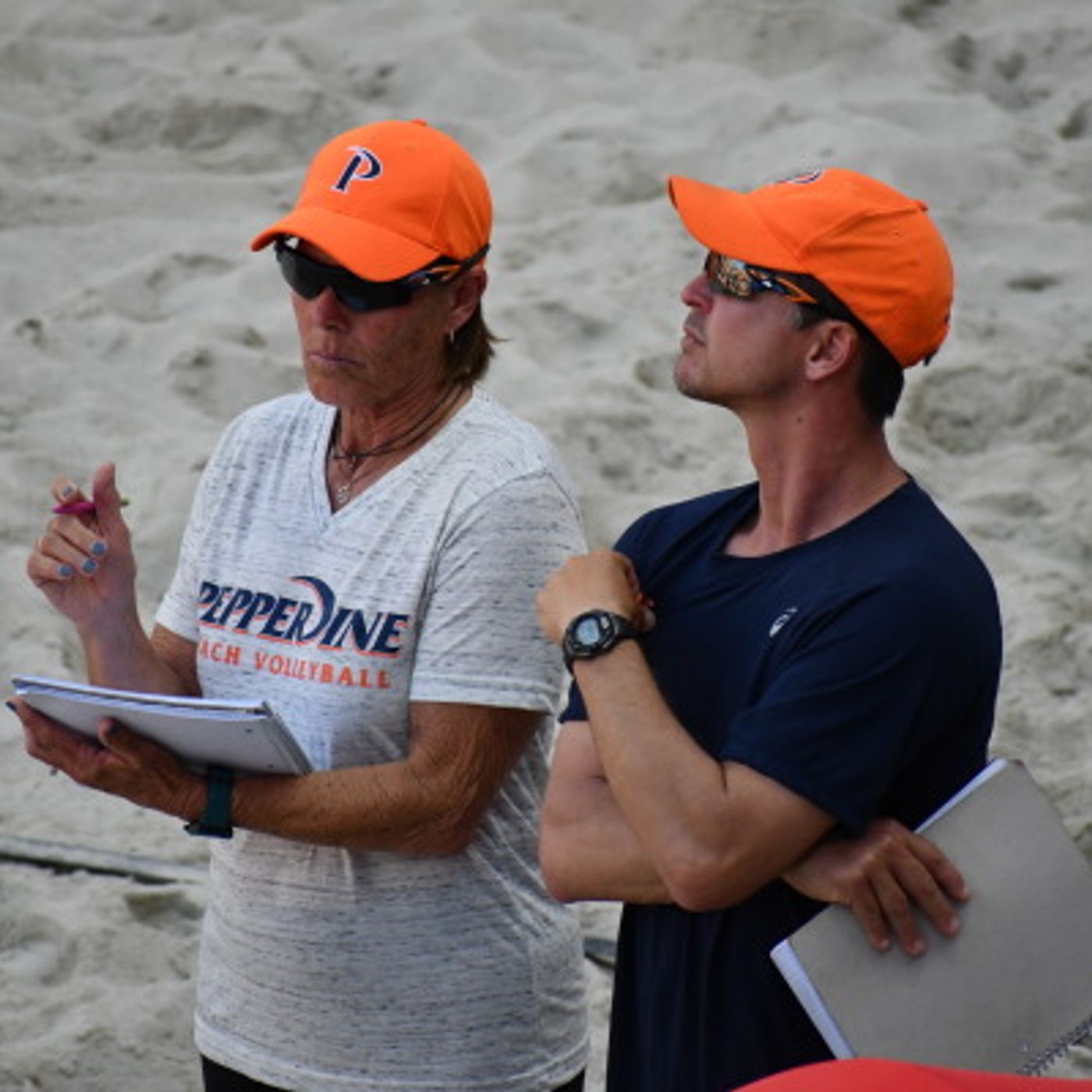
Ep 137Marcio Sicoli loves what he does: Coaching to Olympic medals, living vicariously through his players
It was 2005 when Tatiana Minello and Mimi Amaral needed a coach. Not just any coach. The natives of Rio de Janeiro were making the move to the AVP. They needed someone who could speak English. “You speak English!” they said to Marcio Sicoli. “Let’s use you!” The United States didn’t know it at the time, but one of the most successful beach volleyball coaches of this generation was about to cross its borders. Sicoli was more than just a 25-year-old who both knew his way around the beach and could speak English. Already, he had an Olympic silver medal, having coached Shelda Kelly Bruno Bede and Adriana Brandao Behar to a silver at the Athens Games. That would seem young, by American standards, to have risen to the top of any kind of hierarchy, be it in sports or business, at that age. It is not so in Brazil. “I was really involved in playing and at an early age, it was ‘Do you want to play or do you want to coach?’” Sicoli recalled on SANDCAST: Beach volleyball with Tri Bourne and Travis Mewhirter. Sicoli took stock of his frame: 5-foot-11. Not short, but also not the fast track to developing as an elite player in the perpetually deepening Brazilian pipeline. “Playing,” he said, “wasn’t an option.” He took his father’s advice and enrolled in the Federal University of Rio de Janeiro, setting for the indoor team but turning his focus mainly to his degree in Physical Education. He graduated in 2001, the same year he achieved a Level II certification in Brazilian Beach Volleyball, becoming the youngest to hold that title. “I knew, early on, that I was a personal person,” he said. “I wouldn’t be talking to machines, I wouldn’t be talking to computers. I didn’t like that. I knew that. It was natural. In college, my sophomore year, I was playing on a team and I got an internship with PE at a high school and that was it. It’s that passion: To be with people, and drive through other peoples’ success. That’s what coaching is. If you see a process and you see something really cool happening that is not with you but someone else, and when that happens, great, and you move onto the next one.” In 2007, his next move wasn’t an easy one. As it goes when you achieve certain levels of success, offers became coming in. Holly McPeak was one of the many to take note of Sicoli’s talents as a coach. The three-time Olympian offered him a full-time job, in the United States, to coach her and Logan Tom. She’d set him up with indoor contacts so he could make money during the off-season months. Here Sicoli was, with a “job for life” as a PE teacher in Rio, a wife and family in Brazil – and an incredible offer in the United States. “I talked to my dad and he looked at me and said ‘Worst case scenario, you’re coming back and I’ll be here for you,’” Sicoli recalled. “I said ‘Ok, let’s do it.’” McPeak and Tom fizzled, but the indoor contact McPeak set Sicoli up with was Tim Jensen, then an assistant coach at Pepperdine. “Twelve years later,” he said, smiling his cherubic smile. Twelve years later, Sicoli is living a life that would have been difficult to imagine as a PE teacher in Rio. He’s an American citizen now, something he takes immense pride in, and though you are not likely to get him to talk politics, he will tell you that he’s thrilled to vote in the upcoming election. He has remarried, with an infant, Max, and another on the way. He has coached in two more Olympics, winning gold with Kerri Walsh Jennings and Misty May-Treanor in London and bronze with Walsh Jennings and April Ross in 2016. He was promoted to head coach at Pepperdine in 2019, when Nina Matthies retired after an astonishing 35 years, one of the most successful individuals in the game. Sicoli has never talked to machines. He does not sit in front of computers all day long. He’s doing what he has always been enamored with: Working with people, building relationships, thriving on the success of those he helps. “I love what I do,” he said. “I don’t want to go anywhere. Hopefully I can do 20 more years then I can retire to the beachfront.” Hosted by Simplecast, an AdsWizz company. See pcm.adswizz.com for information about our collection and use of personal data for advertising.
Ep 136Christian Hartford is changing the culture at USA Volleyball
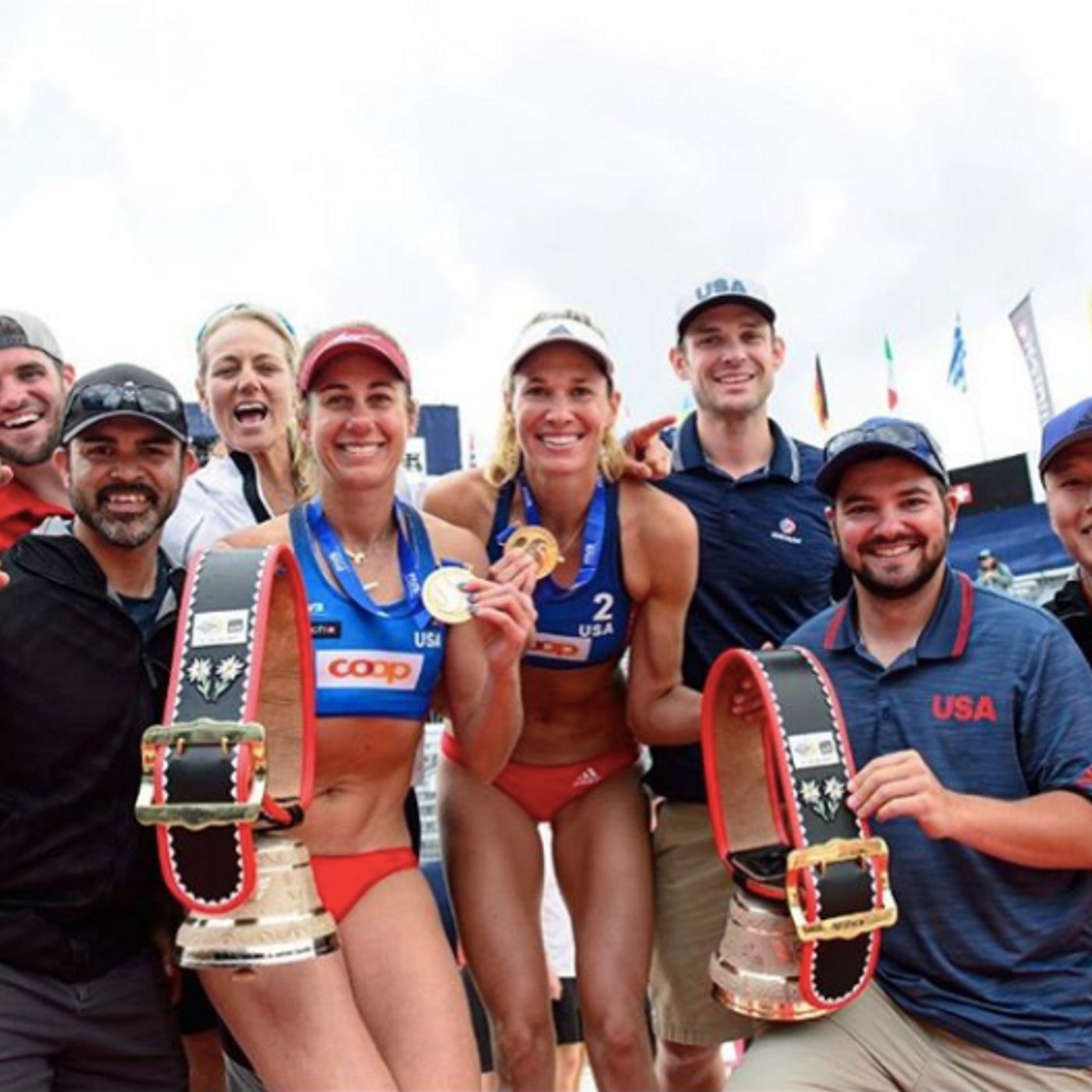
Alex Brouwer sought the source of the voice. The one that perpetually stood out from among 13,000 screaming Germans at the World Championships in Hamburg. The one that was always heard by any player competing against an American team. When he found the bearded face of Christian Hartford, the Dutchman pumped a fist and said “Let’s go U.S.A.!” That is but a brief but encompassing glimpse into the enthusiasm that Hartford has brought into the gym at USA Volleyball. “We’ll be on the bike, and he’s always screaming at you,” Tri Bourne said on SANDCAST: Beach volleyball with Tri Bourne and Travis Mewhirter. Never is Hartford screaming in a negative light. He’s not a Navy commander, barking orders. He’s lifting up, encouraging, pushing, to the point that even someone like Alex Brouwer, the defender on the Netherlands’ top team and a former World Champ, can buy in. “I remember my first couple months, Trevor [Crabb] was like ‘Who the hell is this guy? He never shuts up!’” Hartford recalled, laughing. “That was my job. I want to make that weight room the most positive, engaging environment possible. That doesn’t mean we’re going to have full out conversations of how your wife and kids are doing or your boyfriend or girlfriend. But when you walk through the door, I’m going to greet you. When you’re in there training, I’m going to engage and music is going to be blasting.” Hartford knows, both from personal experience as an elite athlete himself and from half a decade of training college teams, it’s not a one-size-fits all approach. His day might consist of working with 44-year-old Jake Gibb in the morning on the sand, shifting to helping 23-year-old Sarah Sponcil in the afternoon and prescribing a weight program for indoor convert David Lee in the evening. “We always talk about individualization and how you’re going to be able to do this program because as beach volleyball players, you’re all going to need certain characteristics,” said Hartford, who walked on to Wake Forest as a quarterback and received his masters from Northwestern. “Athlete A may get it a lot differently than Athlete B but also Athlete C might have a much different strength in their game that needs to be focused on than Athlete B. So you have to take into account all these individualizations.” In that sense, it is perhaps Hartford’s greatest strength that, prior to USA Volleyball, he had little to no experience on the beach, but was an expert in virtually every other sport. As a quarterback at Wake Forest, he knew how to train football players. As a strength and conditioning coach at Northwestern, he worked with 115 athletes across a wide variety of disciplines. At Maryland, he helped with gymnastics, women’s lacrosse, wrestling, softball, and indoor volleyball. All of that switching made his ability to pick up a new sport, reverting back to a beginner’s mindset, that much easier. He didn’t walk onto the beach proclaiming to know everything. Instead, he acknowledged he knew little. He asked questions, attaining his own unofficial Beach Volleyball Certification through coaches like Rich Lambourne, Jen Kessy, Jose Loiola and Tyler Hildebrand. “Being around all these different sports as the strength coach, you don’t have any other choice but to learn everything about that sport,” Hartford said. “Diving in headfirst into whatever sport you’re working with and being at practice and asking coaches questions, watching film, going to competitions to see the environment and just the pure nature of each sport, I think that type of diversity in my coaching background helped me a ton with the transition to the beach.” Most athletic performance coaches would be able to do that, in some form or other. Some might take longer. Some might pick it up as quickly as Hartford, who is immensely popular among the athletes, has. But what separates Hartford from the other candidates who sought the job is that he brings more than an ability to prescribe a quality training regimen. For the first time in Bourne’s memory, there’s a tangible culture being set at USA Volleyball. “When I got here I asked Tyler Hildebrand ‘What are we trying to create here, culture wise? What environment are we trying to create?’” Hartford said. “We were striving for a new culture.” He acknowledges that it won’t be akin to a college team, that he’ll be working with Gibb and Bourne at the same time, despite them both vying for the same spot in the Tokyo Olympics. But still, you can find Chaim Schalk and Sponcil competing in Spikeball contests in the weight room. Athletes cheering their fellow athletes in pull-up contests. Others pushing one another on the assault bike. “Try training 18 gymnasts at 5 in the afternoon after practice,” Hartford said. “You need as much positive energy as you can in that moment so I’m used to creating that and that’s always been a part of my mission is to create the most positive, productive training environment possible. “To be in this environment where we have 25-30 a
Ep 135How the 2020 Olympic postponement could impact each team in the race
On Tuesday morning, what seemed to be the inevitable alas became a reality: The 2020 Olympic Games were postponed, to sometime in 2021. For some, it’s heartbreaking. “I can understand why other people are devastated,” said Sarah Sponcil, who is third in the Olympic race with Kelly Claes. “They waited literally four years and now they have to wait five.” Notice that Sponcil said “others” when mentioning those who are devastated. For some, the Olympic postponement is devastating. For others, it’s a blessing not even in disguise: It’s just a blessing. This week on SANDCAST: Beach volleyball with Tri Bourne and Travis Mewhirter, we discussed, among a number of covid-19-related topics – is there anything else to discuss at this point, anyway? – how each team in the Olympic race could benefit or set them back from the postponement. We dug into how, depending on the FIVB schedule and any changes the IOC makes regarding the qualification process, the postponement could put additional teams in the race. Here’s a team by team breakdown of the impact the postponement could have. Women April Ross, Alix Klineman U.S.A. rank: 1 Points: 8,760 This one is difficult to pin down whether it hurts or benefits. On the one hand, Ross and Klineman were coming off their best season together, with five AVP finals in five tournaments and three wins on the world tour. They could have continued that upwards trajectory all the way to Tokyo. On the other hand, it gives Klineman another year to develop on the beach, which she has done at such a rate you’d be forgiven to think she hasn’t been playing on the AVP her entire volleyball career. It’s a bit neutral for these two, who are still all but a lock to go to Tokyo, no matter what year the Games are held. They didn’t seem to be in a hurry to play this year as it was, as they decided not to play in the Cancun four-star that was eventually cancelled, so perhaps this will be a good rest period to heal up the nagging injuries that build up. Until then, you can find Ross going viral with what has become the April Ross Challenge. Kerri Walsh Jennings, Brooke Sweat U.S.A. rank: 2 Points: 6,960 The immediate reaction when thinking of these two is that it would have to negatively impact them. But the more one would think about it, the more that might not be entirely accurate. Yes, Walsh Jennings and Sweat are on the older side of the athletic spectrum, at 41 and 33 years old, respectively. Yes, they have quite a list of injuries and surgeries on the ledger. But Sponcil said it best: “Kerri is a machine,” she said on Tuesday. “She’s just going to keep going all out.” If there is one athlete in the world who can take this and benefit from it, it might be Walsh Jennings, whose three gold medals and five Olympic appearances did not come by accident. That, and she gets time at home, with her family, when she would otherwise be circumnavigating the world. Sarah Sponcil, Kelly Claes U.S.A. rank: 3 Points: 6,640 There are two teams that I really don’t see any downside to this: Sponcil and Claes, and Kelley Larsen and Emily Stockman. For these two, it’s all upside. “Everyone’s been asking how we feel about it and I feel great because the last year I’ve just been like ‘Ok, let’s get as many points as we can, let’s pass Kerri, it’s crunch time,’” Sponcil said. “It would have been crunch time right now and now I have the time to process the opportunity I have in front of me. I’m trying my hardest to slow down and be like ‘Whoa this is an amazing opportunity having another year to get experience, to slow down a little bit, and take it all in.’ It’s the best thing for our team and for me personally.” It gives them more time to develop, both as players and professionals, and it allows them, as Sponcil mentioned, to finally slow down. Catch a breath. Sleep for a change. Sponcil has been competing at a breakneck pace for the previous few years, going from UCLA to the AVP then back to UCLA straight into the Olympic race. A break could be just what she needed. It could be exactly what the team needed. Kelley Larsen, Emily Stockman U.S.A. rank: 4 Points: 6,080 It is positively bananas that the fourth-ranked U.S. team is also the seventh-ranked team on the planet. America is deep. When you’re as good as Stockman and Larsen are, and you’re behind in the race, time and more events are what you need, and time and hopefully more events is what they’ll get. If they have a dozen more events to climb the ladder and take the second American spot, as they could, depending when the FIVB reschedules its laundry list of postponed events, they could very well do so. Their win in Warsaw proved they can compete with any team in the world. They just need some more time to do so. Now, they might have that time. Men Taylor Crabb, Jake Gibb U.S.A. rank: 1 Points: 6,680 It is hard to imagine how another year added to Gibb’s career would be a positive for these two, but it’s also hard to imagine how Gibb played some of his best volleyba
Ep 134The E and T Show goes to Cabo!
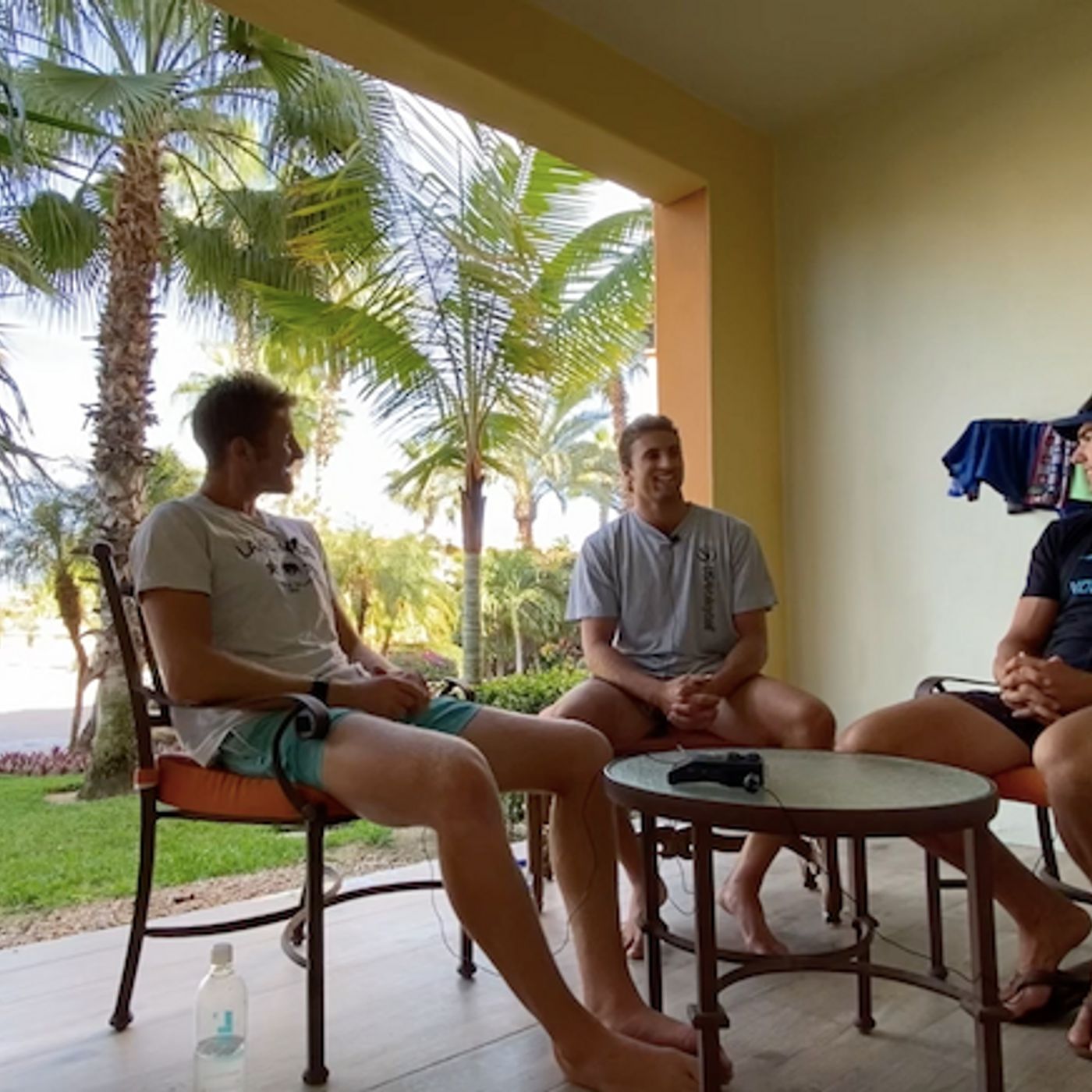
CABO, Mex. – When the final point was won, and Eric Beranek and Bill Kolinske moved on at AVP Hawai’i, a seam ace putting the final nail in the coffin for Troy Field and Tim Bomgren, there was no tantrum. No throwing of hats or punting balls. There was hardly even a shake of the head. Field simply walked under the net and wrapped up Beranek, his good friend, in a sandy, sweaty hug. “When you see your best friend having success,” Field said, pausing, sitting next to that very friend on a patio in Cabo, Mexico. “I was like ‘Dude, I am so, so proud of you.’ We play each other all the time. Every week. I’m happy for pretty much everyone. I love to share the success of my peers, whoever you are.” They are, mostly, happy for each other’s success in this sport. They are fellow grinders, Beranek and Field, two big, goofy, extroverted personalities with unlimited upsides, both as athletes and as personal brands. There is Field, with the pink hat, the astonishing vertical, the swings that so few can emulate it’s best not to try. And there is Beranek, a South Bay beach rat, with his fohawk mullet, blonde mustache, and a retro style of play and fashion that can really only be described as the Fresh Prince of Beach Volleyball. The E&T Show is what they’ve dubbed themselves. You can catch their irregularly scheduled programming mostly on Instagram and occasionally on the Amazon Prime livestream. Field was the first of the two to make his breakthrough, making three straight Sundays to begin the 2019 AVP season. Then came Beranek, who danced his way through the Manhattan Beach Open qualifier and into the semifinals. Eleven matches later, Beranek could finally rest those high-octane legs of his, a third place on the sport’s biggest stage now on the resume. Now they enter this season – or pre-season, perhaps – with as much hope as any up-and-comers on Tour. Beranek can feel the difference in practice. “It’s a little different of a vibe, like ‘I’m gonna try to kick your ass, and you know that I can,’” he said on SANDCAST: Beach volleyball with Tri Bourne and Travis Mewhirter. “Whether I do it or not, maybe it’s not up to me that day. I just gotta put the puzzle pieces together.” The pieces are coming together for both of them. This upcoming season will be the first time for both that they enter with a set partner with whom they can practice. Field has partnered with veteran and Olympian Casey Patterson. Beranek has chosen another younger player in Andy Benesh, whose breakthrough came in Hermosa Beach this past year. They’re still best friends, playing beach volleyball. But now they’re also professionals. This is, simply, what they do. “Casey’s my first partner where we’re consistently practicing,” Field said. “He’s seeing my bad moments, I’m seeing his bad moments. He’s seeing my great moments, I’m seeing his. We’re finding that balance of what the practice schedule looks like. I’m still working on my technique and getting better at all this other little stuff, whereas Casey has been there, done that, improving, staying ready, pushing himself to the season. “I’m learning a ton about him, learning how to be an athlete off the court, how to be a brand. I want to eventually provide for a family like he’s been doing.” What he learns, he’ll share with Beranek, and vice versa. That’s how they work: Rivals on the court, the best of brothers off it. While the season may be delayed until mid-June, rest assured, Beranek and Field will be putting in their work, waiting for the E&T Show to debut for another year on the beach. Hosted by Simplecast, an AdsWizz company. See pcm.adswizz.com for information about our collection and use of personal data for advertising.
Ep 133Melissa Humana-Paredes is gritting up
The lead was gone, momentum completely flipped, and Melissa Humana-Paredes was, in her own words, crapping her pants. That’s what she said to her partner after their 14-10 lead in the third set of the World Championship semifinals had disappeared. Nobody wants to be in that situation. Nobody asks to miss on four match points of the game’s biggest stage. And yet it was perhaps the most critical moment of the partnership for the team that would finish the 2019 season ranked No. 1 in the world. “Fourteen-fourteen was a really pivotal moment for Sarah and I because they had gotten three straight aces,” Humana-Paredes said on SANDCAST: Beach volleyball with Tri Bourne and Travis Mewhirter. “They weren’t even rallies. She had gotten an ace down the sideline, ace down the seam, it was ‘Wow.’ There was no time to think about anything, but she was able to see where I was mentally and she was able to relate to me and say ‘I’m a little nervous too. This is not ideal.’ Vulnerability is a beautiful thing and is such a necessary thing in beach volleyball. We’re out there and our weaknesses are exposed. There’s no one else to come in for you. You gotta figure it out, just you and your partner, so in that moment, when you express that vulnerability to your partner, and she shows up for you, she’s like ‘You know what, me too, but you got this.’ “She turned to me and she said ‘They’re going to serve you. You’re going to pass it, I’m going to set you, and you’re going to side out, because that’s what you can do.’ I was like ‘Wow, she’s really confident in you. Step up to the plate Mel.’ That was a turning point for us to grit up.” Humana-Paredes and Pavan would go on to win that semifinal over Switzerland’s Nina Betschart and Tanja Huberli, 19-17 in the third set, which would precede a 23-21, 23-21 epic of a final victory over April Ross and Alix Klineman. It became a theme for the season for the Canadians: When things were tight, when they were down, they just found a way to win. They “gritted up,” and in doing so, they only, oh, qualified for the Tokyo Olympics, became the first Canadian team to hold a World Champion title, cemented themselves on the Manhattan Beach Pier. They win gold on the road again in Vienna and at home in Edmonton. They finished their season fittingly: On a high, with a first in Hawai’i. All because, Humana-Paredes said, they found the ability to “grit up.” “Heading into World Champs, we weren’t feeling our best,” Humana-Paredes said. “We were coming off a couple rough finishes in Warsaw and Ostrava and we weren’t playing super clean ball. Even in the World Champs, even in pool play, they were gnarly, gritty games. We easily could have lost them. Even some games in our playoffs, we easily could have lost them, but we really, really were working hard, and were gritty and were resilient. I think that’s what the 2019 season was: full on grit and heart. It was like that for every tournament. Nothing came easy, and we just worked for it. We’re going into this season with that same mentality.” They’ll need it, too. This year, like no other, Humana-Paredes and Pavan will be the team everyone is looking to knock down. They’ve had the metaphorical target on their back before, following the brilliant 2017 season that finished with them ranked second in the world. “We were still in that period while having these new standards and expectations that everyone else was also having of us and to be honest I don’t think we handled it very well,” Humana-Paredes said of the 2018 season. “It was a bit of a roller coaster. We did win some tournaments. We won the Commonwealth Games, we won Gstaad, we won China, but we also had a couple uncharacteristic finishes. We had a couple seventeenths, and it was a huge roller coaster. We sat down at the end of the year and looked at what we accomplished and it was a lot better than it felt. We felt like we dropped the ball but when we looked back at our results we weren’t far from the goals we had set for ourselves. When you’re in it, you can be so hard on yourself and you don’t recognize what you’re accomplishing along the way. When you reflect back on the season, maybe we were too hard on ourselves, because look at what we did. So we took that mindset into this last season in 2019 which was probably our best season.” It may, in fact, be the most accomplished single season in Canadian beach history. In four months, Humana-Paredes and Pavan will have the opportunity to continue authoring history for the Canadian federation. They know the impact winning an Olympic medal would have on the Canadian beach community. They’ve seen it before, after World Champs, when dozens of girls reached out to let them know that they were the reason they were picking up beach. “We saw how it affected Canada and how they really took notice, and beach volleyball started to grow,” Humana-Paredes said. “We saw how it affected the growing generation in Canada for beach volleyball, which is ultimately what we
Ep 132Getting two points better, with Kim Hildreth and Sarah Schermerhorn
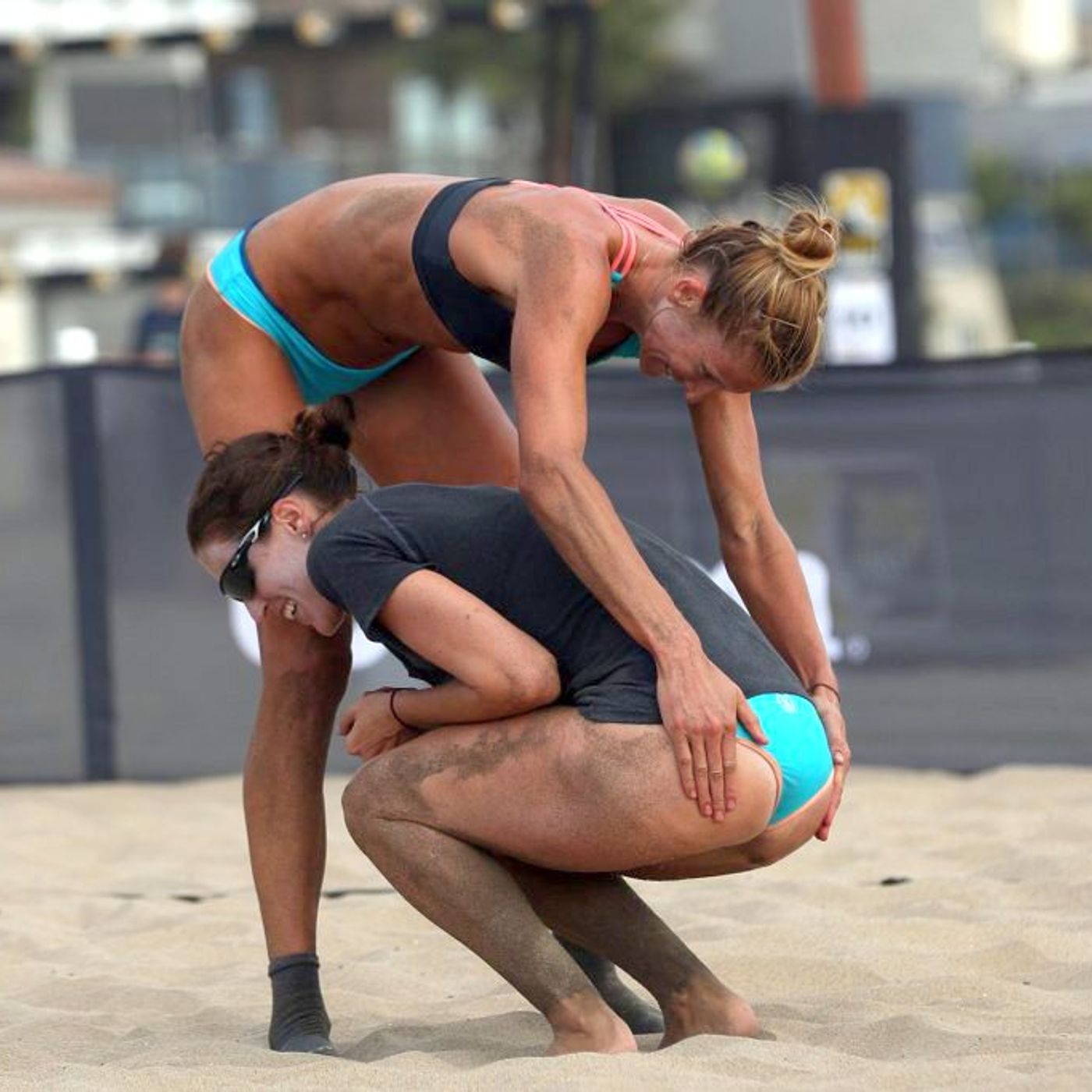
Kim Hildreth and Sarah Schermerhorn have been to California. They’ve seen the dozens of AVP main draw-level teams practicing up and down the Hermosa Beach strand. They are not unaware of the talent level in Hermosa Beach, in Huntington Beach, in Manhattan Beach. Which makes them quite familiar with the question they, and other top-level players living out of state, get year after year: When are you moving to California? “Well,” Hildreth said on SANDCAST: Beach volleyball with Tri Bourne and Travis Mewhirter, “we just bought a house, so…” So they’re not coming. They’re happy in Florida. More than happy. They’re thriving in St. Petersburg. “I’d say we’re ok out here,” said Schermerhorn, who won the AVP Rookie of the Year in 2019. In saying that, they are flipping every piece of conventional beach volleyball wisdom on its head. It is almost unanimously viewed as a requirement to live in Southern California to excel on the AVP Tour. If you’re to take this sport seriously, you have to pack your bags, stuff them in your Corolla or Camry or Civic or RV or plane, train, or automobile, and make the trek. Doesn’t matter if the inflated cost of living makes you broke, and you have to work three jobs, skip sleep, and live off of canned tuna and pasta. It’s a rite of passage. Hildreth looks at all of that and wonders the exact opposite of what people often wonder of her. She is often asked how she makes it as a professional beach volleyball player in Florida. She’s curious how in the world people do it in California. “I wouldn’t call it a disadvantage,” she said of living on the opposite side of the country from the beach volleyball capital of the country. “Seeing how the training and stuff here goes, I feel like unless you’re at where [Tri] is at, where you get to pick whoever you want to train with and you’ve got you’re full-time coach, but the girls where we’re at -- we’re main draw, qualifier range -- they’re maybe getting coached twice a week. I don’t know how you’re able to afford it with the cost of living out here. In Florida, we have a full-time coach, five days a week. It’s consistent. It’s five days a week. We know who’s going to show up to practice. It’s progressive.” Hildreth goes as far as to call it an advantage to live in Florida, and it’s fair to wonder: Is she wrong? In the AVP’s halcyon days, Clearwater was every bit as popular of a stop as any Southern California tournament not named the Manhattan Beach Open. Fort Lauderdale was the site of one of the world’s best tournament as the opening event of the Major Series. Its beaches are lined with beach volleyball courts, and there is a rich culture in every corner of the state, be it Orlando, where Phil Dalhausser and Nick Lucena train, or St. Petersburg, or Clearwater down to Miami and the cluster of beaches in the south. Dalhausser recently moved back to Florida, where he and Lucena first learned the game, for similar reasons that Hildreth and Schermerhorn are staying put: The cost of living, astronomical in Southern California, is maybe a quarter of what it is on the West Coast; the weather is excellent year-round; the talent level is high enough to produce bona fide AVP Sunday talents. Last season, two Floridian teams – Hildreth and Schermerhorn, Katie Hogan and Megan Rice – made AVP finals, in Austin and Hermosa Beach, respectively. Hildreth, a defender who played indoor at Eastern Michigan and a season of beach for North Florida, and Schermerhorn enjoyed the best seasons of their career, their prize money ballooning from $1,500 in 2018 to $17,000 in 2019. “We’re making it work,” said Schermerhorn, a 6-foot-1 blocker who played at Elon before a professional indoor career in Denmark and south France. “It’s not too hard to get out [to California, where there are three AVP stops per year, plus another in Seattle]. Our goal is to spend more time out here during season, playing with different people, training a little bit. But for the most part, it’s doable, and you got a decent amount of teams coming out of Florida that are making it happen.” This year, for the first time, they’re branching out of the domestic game and into the international. In February, they traveled to Siem Reap, Cambodia for a two-star and qualified. Currently, they are in Guam for a one-star, seeded fourth in the qualifier. “We’re ready to make those steps and if we need to jump into competition a little bit earlier then that’s what we’ll do,” Schermerhorn said. “We definitely shifted our training and what we were doing to prepare for match play earlier. It’s good to get one under our belt and we’re ready to get some more.” Hosted by Simplecast, an AdsWizz company. See pcm.adswizz.com for information about our collection and use of personal data for advertising.
Ep 131Stocks to buy for the upcoming 2020 AVP season
The coronavirus may be decimating the global and American stock markets, but one place you won’t find its impact is the annual SANDCAST Beach Volleyball Stocks to Buy. This week, as we did in 2019, Tri Bourne and I broke down the top up and coming prospects of the season as our stocks to buy this year. I’m only writing about 10 – five men, five women – so to find the rest, you can listen to our podcast, which also answered fan questions, discussed the new partnerships being formed, and talked a little college volley. Men’s stocks to buy Miles Partain How good is Miles Partain? He already has his own emoji among the beach volleyball community. He's emoji good. You can always identify when Partain is at a practice, as any video of him playing will include the baby emoji, referring to him as “baby Miles,” whereas Miles Evans would be the not so baby Miles. Baby or not, the 18-year-old UCLA recruit’s fifth-place finish in Chicago was no fluke. He’s spent the off-season training with the USA Volleyball groups, and has been called up into similarly high-level practices when he isn’t. Andy Benesh/Eric Beranek By now, I’m sure you’ve seen the Beranekquake that’s gone viral on social media, the one where he takes a back shoot set from his new partner, Benesh, and pounds it somewhere to Mexico. Granted, there was no defense, and their only tournament to date ended with a second in Treasure Island to Raffe Paulis and Ricardo, but this is a young, up-and-coming team with loads of potential and, better yet, dedication. They have a coach and what appears to be an organized, productive off-season heading into what could be a breakout year for both. Kyle Friend Last year was Friend’s first as a defender, and it was also the best of his career. After relieving himself of blocking duties, he scooped up Duncan Budinger and qualified in five of seven tournaments, tying a career-high ninth in Austin. Like Partain, Friend has been a regular in the USAV training sessions, and with a year of defending under his belt, his ceiling is only getting higher. Whether he gets pulled up by a bigger blocker or must begin again in the qualifiers remains to be seen, but he'll be a regular in the main draw this year. Dave Palm Palm alas made his AVP breakthrough last season, a much anticipated one after winning five NVL events and making an additional seven finals in four seasons. He and Dylan Maarek, who’s also having a terrific off-season, qualified in Hermosa Beach, stunning Chaim Schalk and Jeremy Casebeer in the second round on stadium court. He’s already straight into AVP Huntington Beach after winning Big Shots in Atlantic City this past fall with JM Plummer, another notable to watch this season, so he’ll have a big stage at the beginning of the season. Steve Roschitz/Pete Connole Connole had only won two AVP qualifier matches prior to last season. Then came New York, when, as the 20 seed in the qualifier, Roschitz and Connole engineered upsets over Andy Benesh and Adam Roberts, Maddison and Riley McKibbin, and Kyle Radde and Brad Connors. So quick was their improvement that by the end of the season, it’s possible that none of those wins could be labeled as an upset. They were straight into Manhattan and qualified again in Chicago, making more main draws than Connole had previously won qualifier matches. Other notables: DR Vander Meer John Schwengel Tim Brewster Branden Clemens Kevin Villela JM Plummer Ben Vaught Logan Webber Chris Austin Earl Schultz Jake Urrutia Silila Tucker Kacey Losik Women’s stocks to buy Kelly Reeves/Terese Cannon I’m big on this team this year, in large part because I think a breakout has been due for Kelly Reeves for a few years and it seems the pieces are coming in place for it. In just four events together as partners, the two have already logged a third at the Manhattan Beach Open, where their only losses were to Alix Klineman and April Ross and Melissa Humana-Paredes and Sarah Pavan; a ninth in Hawai’i; and a silver medal at the Siem Reap two-star. That is a heck of a start to a partnership that has upside, youth, hunger, and a strong all-around skill set. Corinne Quiggle/Falyn Fonoimoana Putting too much weight in early results can be a dangerous thing to do sometimes. The honeymoon phase is a real thing. But sometimes they can also be promising indicators, and the two NORCECAs that Quiggle and Fonoimoana have played were won in nearly flawless fashion, with just a single set dropped, and that includes the qualifiers they needed to play as well. Heading into 2020, they’ll both benefit from a full season as professionals under their belt and an entire off-season of training together. Geena Urango/Emily Hartong If I had any money to bet – I don’t, because weddings are expensive – and there was someone to take my bet on a team this season this would be the one. Partly because a tumultuous year would have driven the price of the Urango-Hartong stock way down, and therefore the value has the potential to jump q
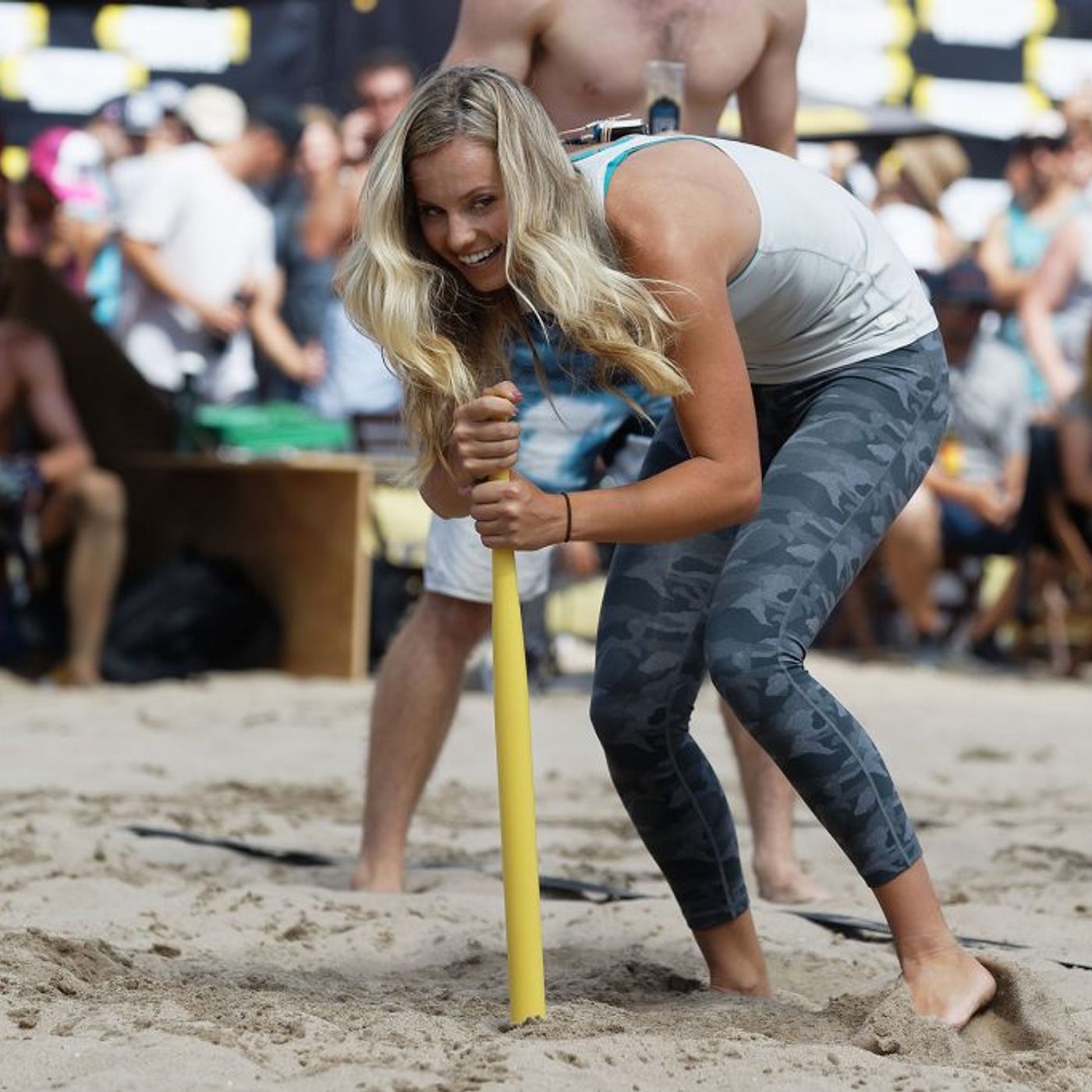
Ep 130Camryn Irwin is living the dream
It’s May 16, 2018, the eve of Camryn Irwin’s debut as an Amazon Prime broadcaster calling AVP tournaments. She gets a call from the AVP. They inform her that she’ll be calling play by play. “Ok!” Irwin says. “That’s new!” “We don’t know what the format is going to look like, we’re just going to figure it out as we go.” “Ok,” Irwin replies again. “Don’t screw up. This is our brand.” Now it’s Amazon on the horn, and they’re telling Irwin that “This is our Amazon brand. Don’t screw up.” “Ok,” Irwin says one more time. “Here we go. I’m calling play by play tomorrow!” A year and a half later, she’ll recall this experience on SANDCAST: Beach volleyball with Tri Bourne and Travis Mewhirter. And she’ll say “talk about fear,” because she’s human, and any human being would be more than a bit intimidated when put into those circumstances. But she did it all the same. And she’s still doing it, establishing herself as a popular and lovable personality on the AVP and Amazon, because this is Camryn Irwin, and she’s done all that before. Fear? No, fear isn’t the AVP and Amazon asking you to do something you know you’re talented at, that you know you’ll figure out, because you’re the queen of figuring things out on the fly. Fear is when load up on a block, jump, and, just as you’re about to peak, you feel your back “just release,” Irwin said. “There is nothing supporting me and there was nothing I could do. I landed and my whole spine went thwack. I went back to go serve the next point and I remember tossing it, I went to jump, and I couldn’t breathe.” This was in Sweden, just two years into her professional indoor career after a successful indoor stint at Washington State. It would take a month for Irwin to find out that she had a rupture in her back, that she had absolutely no business playing volleyball after that jump but she did so anyways because volleyball was what Irwin knew and volleyball was where her teammates and friends were. So she finished her season on her broken back, and when she returned, she figured she’d move onto the next phase of her life’s plan: Irwin was going to become a professional beach volleyball player on the AVP Tour. Until she began training, and she began to lose feeling in her legs. She is positive enough to label the injury a “total God thing,” because without that injury, she wouldn’t be spending her summers in the booth with her good friends Kevin Barnett and Dain Blanton. She wouldn’t be spending exponentially more hours in beach volleyball than the players she’s calling. She wouldn’t have a job she hesitates labeling a job because it’s just so much dang fun that it feels wrong to call it anything but a dream. “It’s literally a dream job, because it’s not just about volleyball, it’s not just about athletes,” Irwin said. “I get to work with two of my best friends and their amazing families on a regular basis. My job is to share your story, so you can impact someone else’s life. That’s the stuff that gets my engine going.” Irwin was one of the rare collegiate athletes who saw past her career in her respective sport. Even as a successful setter at Washington State with professional prospects down the line, she kindled her passion for storytelling, sacrificing sleep to shoot, edit and produce videos only a handful of people would watch. “I knew I had this gameplan: I want to tell stories, I want to shape lives,” Irwin said. “I was so driven. But even with that drive in my brain, I was like ‘How in the world do I do this? Where do I even start?’ I’m out from the sticks in Washington State. I grew up on a farm, there’s no network television. It’s not like there’s some guy saying ‘Get an agent, get a head shot.’ I just said ‘Grind it out. Connect with people. Talk to people, and fail 100 times a day and figure it out.’ Still to this day people will ask me how I got to where I am and I say a lot of hard work without knowing the outcome.” When she returned from Sweden to finish her degree at Washington State, she was able to call football games, learning under the legendary – and enormous personality – Mike Leach, one of the finest minds in the sport. So when she’s calling games for ESPN or the Pac-12 Network, she’s doing so with the education from men like Leach, who is 139-90 in his career with two Pac-12 division titles to his name, and Graham Harrell, the current offensive coordinator at USC. The jobs she was working paid $15 a piece; the education she gained continues to pay dividends, mapping out a rapidly ascending career as a broadcaster. “It was all about building relationships and writing stories on these guys and I was just hoping the Pac-12 would give me a chance and they did,” Irwin said. “There’s no training for this. You just have to be super ballsy, and you have to be ok sounding like an idiot and not knowing what you’re doing and just listen to yourself, critique yourself, be super hard on yourself, and trying to find out what your voice is.” Her voice, as creatives know, will
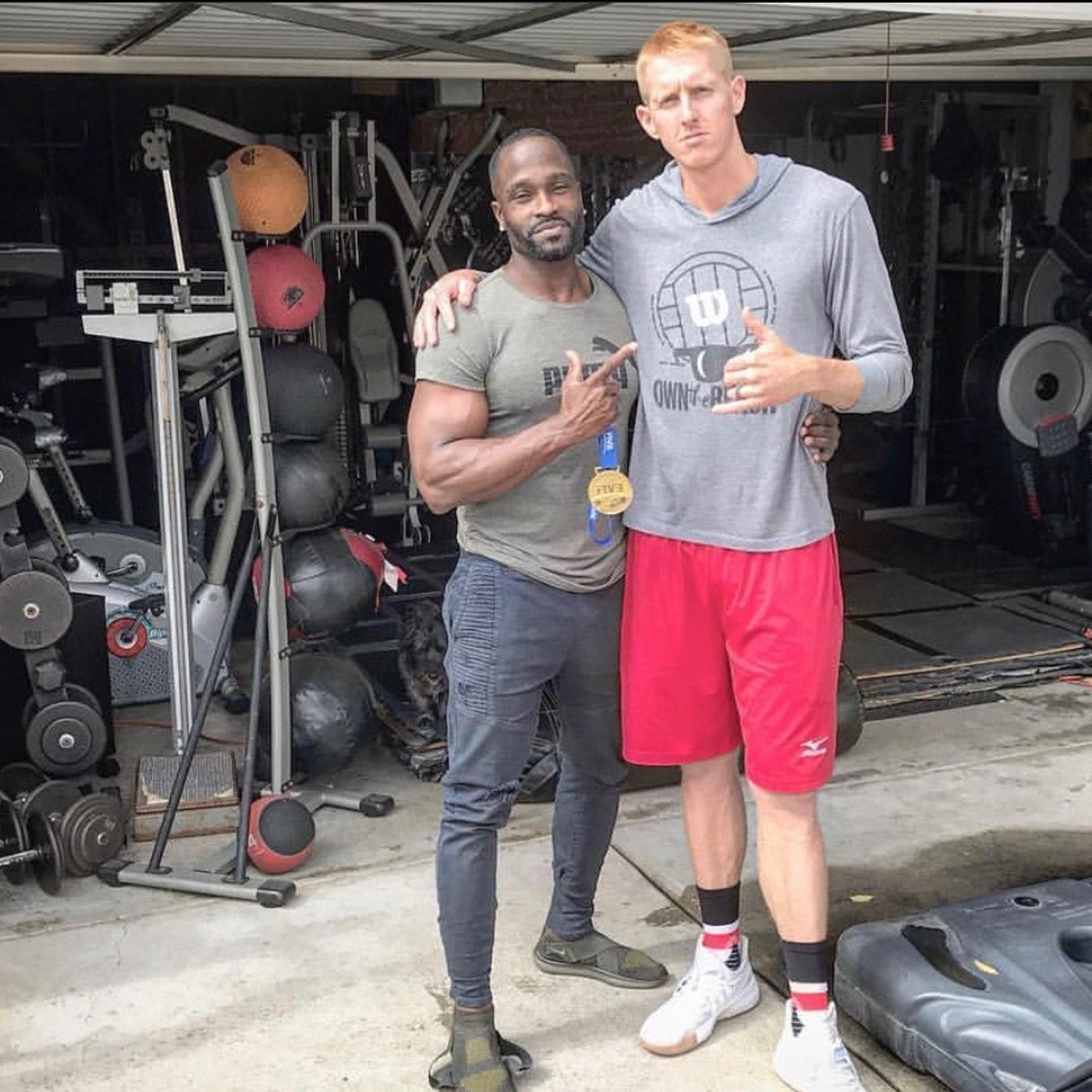
Ep 129The sweet music of trainer Mykel Jenkins
A GARAGE IN AN UNKNOWN LOCATION – It was all wrong. Mykel Jenkins is all about the soundtrack of not just sports, but life. He wants it to be beautiful, and when something is done right, it doesn’t just look beautiful, it sounds beautiful. It’s a symphony, with violins and cellos and tubas, all working in perfect harmony. And here was Tri Bourne, “thundering in here with his heavy feet, ‘Boom! Boom!’” Jenkins said on SANDCAST: Beach volleyball with Tri Bourne and Travis Mewhirter. “And I was like ‘Oh, my God, he’s going to break my self-made floor.’” Jenkins looked at John Hyden, the only beach volleyball player he was training at the time, and asked him what in the world he was doing. Hyden was 40 at the time, and he was bringing Jenkins a project? “Just look,” Hyden, fresh off a split with Sean Scott, with whom he had a wildly successful partnership, told him. Jenkins saw some things in the 22-year-old Bourne, yes. But it was maybe one out of every three jumps. Hyden wasn’t going to be beating Phil Dalhausser with this kid. Bourne had been walking out of the gym when he heard that. The PG version of this story reads that Bourne simply disagreed with that sentiment, and if you’d like the R-rated one, you can listen to the podcast. Either way, “once he did that,” Jenkins recalled, “I turned to Johnny and said ‘That’s the dude.’ From that point on, I knew.” And Jenkins had his second beach volleyball player as a client. He’s a difficult guy to track down, Jenkins. He is at once well-known and a secret in beach volleyball circles, and he likes it that way. He joked – maybe – that he was breaking protocol by having a podcast in his garage, the location of which we’re just going to keep secret because it seems that’s what Jenkins would like. Jenkins is responsible, in large part, for Hyden’s unprecedented longevity and Bourne’s blink-and-you-missed-it rise from 22-year-old kid who was barely qualifying to, in the span of a single season, a regular finalist. Initially the trainer for Hyden’s wife, Robin, Jenkins was “always inquisitive about an Olympic athlete with his notoriety and skill set,” he said. “And she’d talk about how certain things were hurting him and I’d mention a few things I’d do. As fate would have it, he got into a few situations where they were nagging him so she talked him to coming to see her ‘actor friend.’” Yes, the ‘actor friend’ is Jenkins. He’s acted in 17 movies and had a 13-week contract on General Hospital as Officer Byron Murphy. He’s currently in post-production on two of his own films where he’s producing, directing, and starring. You might say he’s a man who wears many hats, though here Jenkins will shrug and say that no, it’s all one hat. It’s all art. Jenkins is here to make something beautiful, be it on the big screen or on the beach. “The next time you watch an average athlete, listen to the sound of the game and listen to how sloppy it is,” Jenkins said. “It’s like somebody with a drumset who doesn’t know what they’re doing. Then go watch someone special and close your eyes and listen to the way that music plays in your ear. You don’t realize it because you’re caught up in what you see. The soundtrack of that – if you took the soundtrack off Rocky, you’re not watching it. It’s like [Floyd] Mayweather: There’s a sweet science. If the music is beautiful – that’s how I know you guys are playing well.” Which is why he hated Bourne’s thunderous feet that first afternoon in the gym. There was nothing beautiful about his boom booming all over the gym. While Hyden was flitting over the mats, fast and soft, Bourne was providing an unwelcome percussion to the concert. But then five months passed, and when Jenkins closed his eyes, listening to his team work out, he couldn’t tell who was who. “I knew we were onto something,” he said. And he was right. Bourne would pile up accolade after accolade: AVP Rookie of the Year, AVP Most Improved, FIVB Top Rookie, AVP Best Offensive Player. He and Hyden would win the AVP Team of the Year in 2015 and make nine finals from 2012-2016. They qualified for the 2016 Olympics but, because of the country quota allowing only two teams per country to compete, were left off, despite finishing the year ranked fifth in the world. Jenkins joked that Bourne needed a plight. While Hyden had “worked in oblivion” for ten years on the beach before reaching the top, Bourne had been plucked to it. And then that plight came, in the form of an autoimmune disease that sidelined Bourne for the better part of two seasons. Recalling that moment, Jenkins paused, fighting tears. And it is there that you can see why he only trains a select few, why he won’t take dozens of players and train them as he has Bourne and Hyden and, now, Kelley Larsen and Emily Stockman. “I don’t like heartbreak. I like Hollywood endings,” he said. “So if I don’t see a Hollywood ending, I’m not participating. I like champagne.” Which is why his list of players he trains includes three – Bourne, Stoc
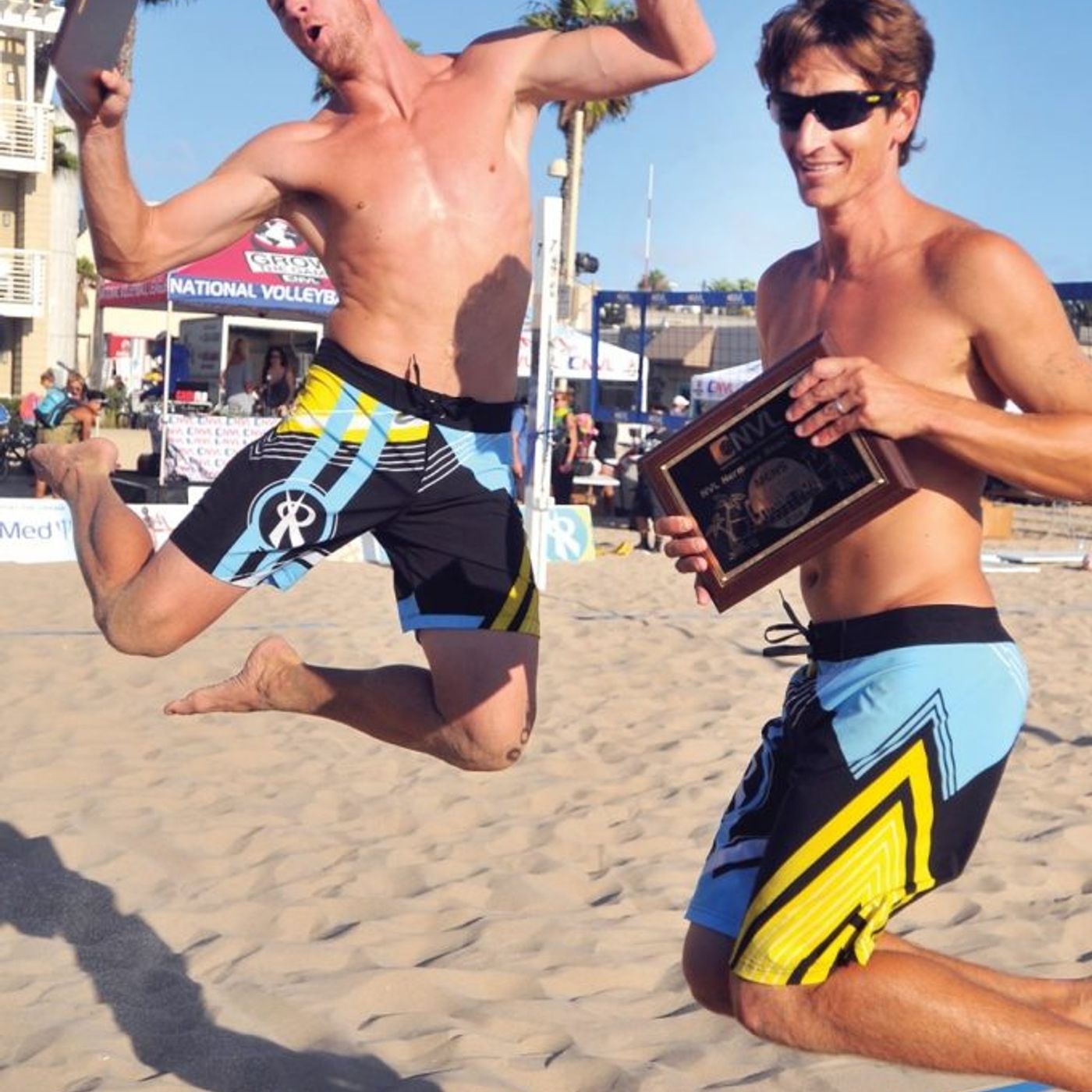
Ep 128Mike Placek: Diving deep into college beach volleyball
Mike Placek was just looking for the simple stuff. He didn’t need to know tendencies or flaws, what his opponent’s strongest and weakest shots were. He didn’t need to know serving habits or whether they preferred a backhand or a forehand. All he really wanted to know, as the top-ranked youth tennis player in Southern California, was whether he was playing a 5-foot-9 guy from Argentina or a 6-foot-6 monster from Australia. “When I went to play, there were zero scouting reports, and a lot of the guys were foreign, so the only way we’d have any idea of who we’d be playing in our next match was this college tennis site,” Placek said on SANDCAST: Beach volleyball with Tri Bourne and Travis Mewhirter. “It was super basic but it showed you who played for what school. It kept a super good data base, had a ranking based on an algorithm, and it was basically all I needed and all the tennis players lived on it.” Placek’s talent was in tennis, but not his passion. He’d go on to have a solid career at the University of California, Santa Barbara, but he didn’t have any designs on going pro afterwards. “I didn’t love it, but I was good at it,” he said. “Even watching the Australian Open right now, it makes me nervous.” Afterwards, then, he turned to where his heart resided: beach volleyball. He’d grown up around the courts in Del Mar, toted along by his mother. He idolized the guys there, such as Sean Scott, and when an AVP would stop in Southern California, there you could see Placek, sitting behind the court, watching 12 hours a day. “That’s how I learned how to play,” he said. “It was a life I wanted.” In a decade as a professional, Placek would make an AVP semifinal, in 2008 with Russ Marchewka, and in 2014 and ’15 he’d become one of the top players on the NVL, winning a third of the events he entered. But when his playing career came to a close, and his coaching career at WAVE Volleyball in Del Mar began to take off, he found himself staring down the same exact problem he once had as a tennis player. As he attempted to follow WAVE alum at the college level, he found nothing. “I’d have to go on the [school] website, go through a bunch of different things, go onto the next kid,” Placek said. “I was like ‘How is there nothing more simple than this?’ So I started talking to some indoor college coaches, asking them if there was really nothing more going on with the beach game and they said no, so I said ‘Ok.’” Placek recalled the tennis website he and every other youth tennis player lived off as a kid, and he created exactly that. He hired a programmer and up went collegebeachvb.com, which has become the one-stop shop for all things college beach volleyball. It’s simple and comprehensive. There, you can find every individual’s record: who they played and when, the results, their rank. Everything you’d need to know, from Division I to CCAAA, is but a few simple clicks. Three years in, it’s the most reliable site for good, objective information, incredibly beneficial for coaches, fans, and players alike. “It’s pretty cool and going back to where I started it, there’s all these college kids coming up, and if you’re a pro and don’t know who this kid is, maybe go on the website,” Placek said. “I’m hoping it’ll translate so maybe the juniors will look at the universities and see if they’re junior stacked or freshmen stacked. It’s for the college game but I’m hoping the juniors and parents of juniors can see what programs are out there and how many matches they play. I’m hoping it will be more of a resource for the youth.” Hosted by Simplecast, an AdsWizz company. See pcm.adswizz.com for information about our collection and use of personal data for advertising.
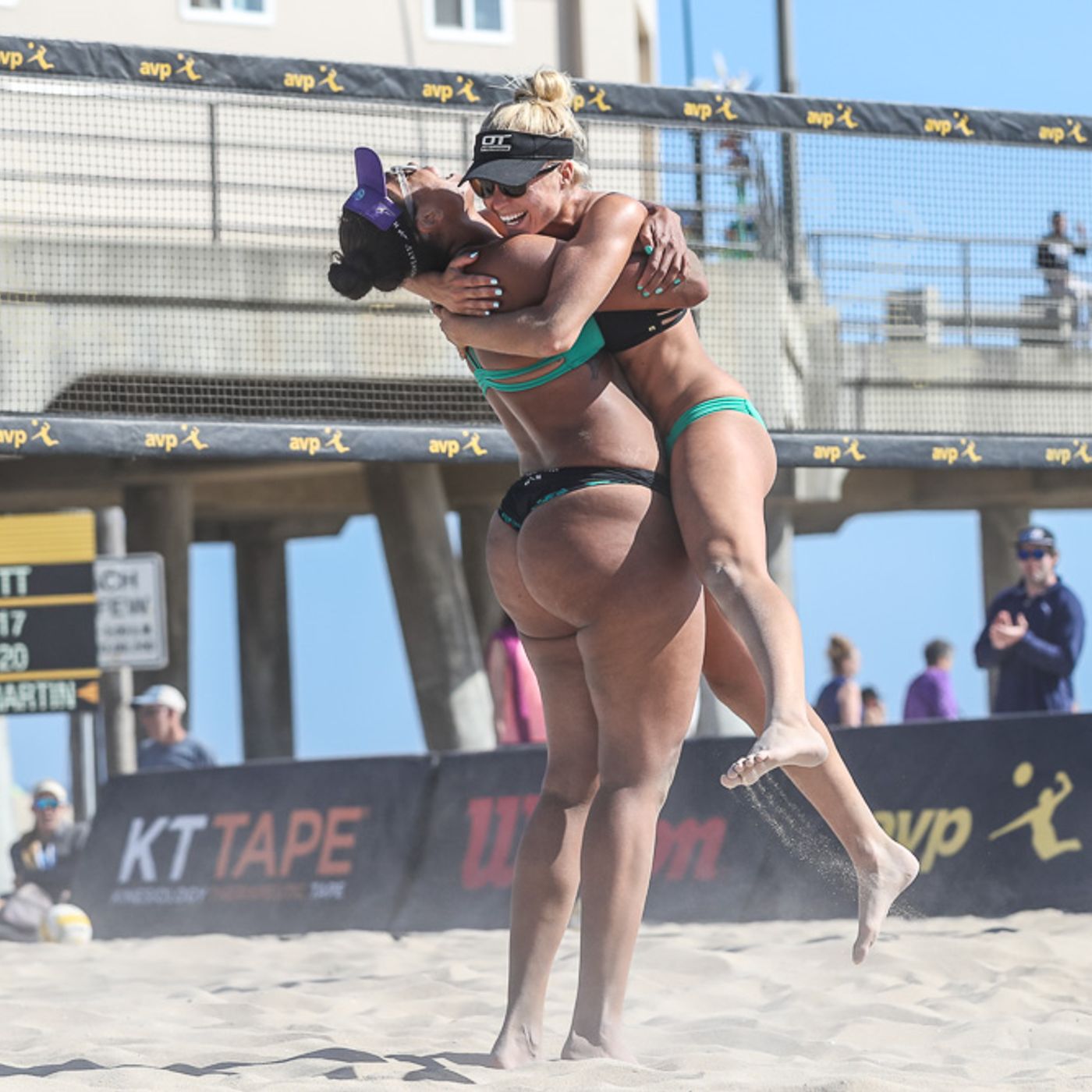
Ep 127It's nothin' but love with Falyn Fonoimoana
It’s a late Tuesday morning, and Falyn Fonoimoana has brought the goods again. She’s even brought some freshly baked banana bread, for her coaches, Arthur Carvahlo and Pompilio Mercadante, who smiles and says that happiness is bread and sugar. Happiness is a great many things for the 27-year-old Fonoimoana. It’s getting a big kill and celebrating it loudly, with a beat of the chest. It’s putting powdered-sugar boot prints for her 7-year-old son, Tavoi, on Christmas morning, showing physical evidence that Santa came. It’s ensuring that Nicolette Martin, all blonde hair and blue eyes, makes it through a throng of fans in Aguascalientes, Mexico. It’s talking a little trash, discovering the sassy side of her new partner, Corinne Quiggle. Mostly, though, happiness for Fonoimoana comes from being, simply, Mama Falyn. “Everyone calls me mama for a reason,” Fonoimoana said on SANDCAST: Beach volleyball with Tri Bourne and Travis Mewhirter. “I teach recovery, I bring magnesium, they used to make fun of me because I bring a huge suitcase where it’s all the remedies for A, B, C, D that could happen while you’re traveling. I try to be, ‘Hey, I have all this stuff here, if you need it.’ It all comes from things that I’ve experienced and it comes out of love. I love all of my partners that I’ve experienced. I’m invested.” Most on the beach scene have only seen this side of Fonoimoana, the loving, caring, doting partner who has a track record of bringing out the best in everyone she plays with. She is quick to admit this wasn’t always the case. The niece of both an Olympic butterfly swimmer and an Olympic gold medalist on the beach, Fonoimoana was, not surprisingly, one of the best on every team she ever played. She won a state and national championship at Mira Costa as a freshman, burying balls alongside Alix Klineman, and over the next four years she established herself as the No. 1 ranked high school player in the country. As a freshman at USC, she started in 31 of 34 matches, finishing second on the team in kills. This 19-year-old Fonoimoana, however, was not the one who brings magnesium and electrolytes and gluten-free banana bread to practice. This Falyn Fonoimoana was, by her own admission, “a crappy teammate when I was young.” And then, unexpectedly, wonderfully, life happened. Fonoimoana became pregnant with the boy that would change her life in all of the best ways motherhood can change an athlete of prodigious talent and limitless future and, somehow, almost unbelievably, none of the worst. It wasn’t her body that underwent the most lasting of changes – she was working out within five days of giving birth – but her mindset. “I think that was a huge part of not just growing up but finding who I am as a person and who I wanted to be,” she said. “Being young and volleyball just being everything for me, I didn’t know what life outside volleyball was. It helped me learn what kind of parent, what kind of woman I wanted to be, what kind of spouse, like these are all things that came to fruition once it happened because I have to show him who he wants to be through my actions, and I wanted it to always be positive and I wanted him to see those organic. “I’m still young, I’m only 27, but I’m really happy with where I am. I love my life, I get to help people, and I get to learn and be open minded about people. Thank God he gave me my son because mentally, he made me ten times stronger, to make me more empathetic, to make me more personable, to be able to slow down and not just think ‘go, go, go’ and really appreciate daily life. I owe my son the world because he makes me be better.” She extended her indoor career another five years, competing in Puerto Rico, Poland, and on the 2015 U.S. Pan American Games team that won gold, until she had to return home full-time to retain custody of Tavoi. The career move was not an unwelcome one. Fonoimoana had always known that beach was the long game. Being a full-time mom in the United States simply expedited her path. As it has gone throughout her athletic life, it didn’t take long for Fonoimoana to adjust. She qualified in six of seven AVPs in 2018 with Alexa Strange and Pri Piantadosi-Lima, won a NORCECA in Punta Cana with Molly Turner, with whom she also took third in p1440 Huntington Beach. In the second tournament of 2019, she made her first Sunday, finishing third in Austin with Martin. She piled up five more NORCECA medals, the final two of which were gold, with Quiggle, putting her on the international route she has set her goals on this upcoming year. “I knew that I wanted to play FIVB, but I was new to the beach game, I needed to figure it out,” she said. “My first year it was ‘Ok, get your feet wet with the AVP. Figure that out. Figure out the travel, how to get it paid for. If you can get to FIVBs, great, if not, get to as many internationals as you can.’ This year I want to get into three- and four-stars. “I’ve watched my uncle [Eric Fonoimoana] and several other famil
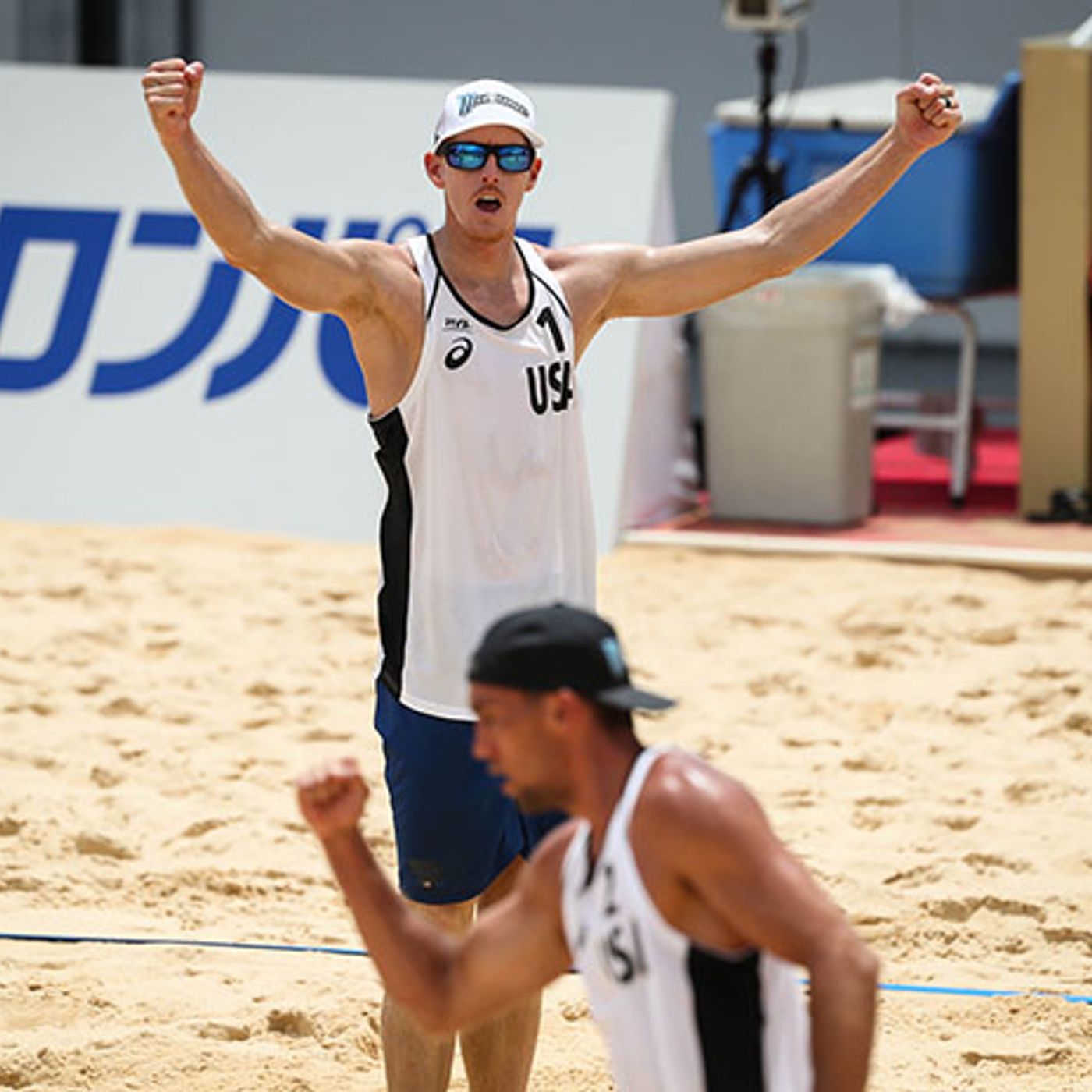
Ep 126Tri Bourne and Trevor Crabb are looking to improve upon first year’s foundation
Tri Bourne found a funny way to describe a learning moment he and Trevor Crabb had towards the end of the 2019 season, their first as partners and first as split-blockers. “Only at the end of the year did we figure out: ‘Oh, our timing is off. We’re not doing defense right,’” he said on SANDCAST: Beach Volleyball with Tri Bourne and Travis Mewhirter. Not doing defense right? And still finishing 2019 as the second-ranked American team in the Olympic race? Still being ranked tenth in the world, finishing the season with a bronze medal at the Chetumal four-star? “It seems simple, but when you’re in the middle of the game, it’s really hard to implement a high level, sophisticated defense with all the right movements and everything,” Bourne said. “So in the middle of the year we were learning and trying to apply it but only some of it stuck. Basically, we think of last year as our foundation and now it’s time to grow on that.” Bourne and Crabb may be in the most interesting position as any team in the United States, male or female. They enter the season as one of the coveted two American teams who, if the Olympics were to take place tomorrow, would be competing in Tokyo. But the race is close enough that it doesn’t really matter, because the Olympics are not going to take place tomorrow, and at the end of the day, it will likely come down to the Rome Major in June. What Crabb and Bourne do have is this: An upside – and downside – that is entirely unknown. As Bourne mentioned, neither of them really knew what they were doing on defense last year, and they still finished fourth at the World Championships, taking both Russia’s Viacheslav Krasilnikov and Oleg Stoyanovskiy and Norway’s Anders Mol and Christian Sorum to three sets. Who knows what the potential upside could be? Then again, who knows how quickly they can begin to, in Bourne’s parlance, do defense right? Such a quandary is not a quandary at all for either Jake Gibb and Taylor Crabb or Phil Dalhausser and Nick Lucena. Gibb, Dalhausser and Lucena have seven Olympics between them, and Taylor Crabb is on the short list of best defenders in the world. In other words: Defensively speaking, you know exactly what you’re going to get on their side of the net. With Bourne and Trevor Crabb? “There’s a lot of stuff to clean up,” Bourne said. “Continue to buy into the stuff that [coach] Jose [Loiola] is bringing to the table. We were spending so much time learning how to play this new style of volleyball that I don’t feel like I ever blocked the way I used to, not even close. So I’d like to get back to that for sure.” What Bourne is grateful for, at the moment, is the fact that he’s back in this situation at all: Six months of Olympic qualifying to go, sitting in the second American spot. It was only two years ago, sidelined with an autoimmune disease, that Bourne wasn’t sure if he’d be able to play beach volleyball again, let alone at a level that could qualify him for the Olympics. Now here he is, autoimmune disease under control, tenth-ranked team in the world – and he didn’t even “do defense right” the whole time. “If we play well and get better at volleyball, if we’re a better team, and we play better, and I become a better volleyball player, I’m good with the result,” Bourne said. “I’m gonna be pissed if we don’t make the Olympics. Don’t get me wrong. That is the goal, but what are you going to do? You got better. You improved. And these other teams did better? Ok, I’ll live with it. “Right after the last Olympic quad I was like ‘This is my time.’ It’s cool to be in this position and I’m super grateful and it’s going to be fun no matter what happens.” Hosted by Simplecast, an AdsWizz company. See pcm.adswizz.com for information about our collection and use of personal data for advertising.
Ep 125Life is a blast for Dain Blanton right now
Dain Blanton is smiling. For almost an hour and a half straight, sitting in a room talking about beach volleyball and a life that has revolved around it for almost three decades now, he smiles. At some point in the conversation, it just becomes almost impossible to be in anything but a great mood, because you’re around Dain Blanton, and Dain Blanton is, at 48 years old, living his best life, and he’s really, really happy about it. “I got a 22-month-old son, my first kid, and that’s keeping me busy,” he said on SANDCAST: Beach volleyball with Tri Bourne and Travis Mewhirter. “I got the new head coaching job at USC and that’s about four months old, so that’s been really busy. But I was telling Tri before we began the show, when you’re doing something that you love and it’s fun, you’re fired up to get up and get into work. It’s been awesome. It’s been really great.” The more you talk to Blanton, the more you wonder if there has ever been anything that wasn’t great. A Laguna Beach kid, he grew up as a dual-sport athlete, good enough in basketball and volleyball that he garnered scholarships for both. He opted for Pepperdine volleyball, and in 1992, he led the Waves to a National Championship. Five years later, he became the first African American to win an AVP event, when he and Canyon Ceman won the Hermosa Beach Grand Slam. That in itself would be a fine career for anyone. A college education, an historic win, decent prize money. And yet Blanton was only getting started. The next year, in 1998, he and Eric Fonoimoana began a push for the 2000 Olympic Games, in a men’s field that was as wide open as any, competing against some of the biggest names in beach history, including two who top the all-time wins list in Karch Kiraly, who was partnered with Adam Johnson, and Sinjin Smith, who was attempting to qualify for a second straight Games with Carl Henkel. No matter. Blanton and Fonoimoana, against all odds and most anybody’s prediction, pulled it off. Then they saved their biggest magic trick for last when they stunned one Olympic opponent after the next, shocking Ricardo Santos and Ze Marco de Melo in the gold medal match. “I remember going down to the Olympics and people were like ‘Take a lot of pictures, have fun’ you know what I mean?” Blanton said. “And you’re like ‘I see what you’re saying.’ And we went down there and we really enjoyed it. And Eric and I said ‘Let’s really immerse ourselves, we’re going to take it all in.’ It was awesome. Sydney was prepared so far in advance. They were so fired up to have it. “Me and Eric always said ‘Let’s bring home some jewelry, let’s bring home a medal.’ Bronze, silver, gold, we didn’t care. You want to win gold, but if you can focus one point at a time, and one match at a time, and that’s what we were able to do. And it’s cliché, you hear it a lot, but to actually do it, ‘next point, next point,’ but if you watch, Eric stuffs a point and he turns around and tackles me, I’m almost in shock because I’m so locked in to ‘We got another point.’” By now in Blanton’s life story, which at the Sydney Olympics was just 28 years in its authoring, it would be impossible to doubt anything Blanton would set his mind to do. What had he tried and not accomplished? So when he began to see the writing on his metaphorical beach volleyball wall, and he was tired of the travel, and his body wasn’t quite responding like he was used to, and he set out to pursue a broadcasting career, Blanton began like he did everything else: At the bottom of the ladder. And he relished it. He reached out to an executive producer at Fox Sports West named Tom Feurer and requested not job or a shot or a gig, but just to shadow. It took an entire year for the gold medalist Olympian to get a call back – to shadow high school football. “I went and I shadowed and they said the next yea next year we need a high school football sideline reporter. It was a cool thing to do, and a lot of people say how did you get involved in broadcasting and it was interesting to take a step back. People think ‘Oh you’re an Olympic gold medalist, you’re all this’ and you go and broadcast high school football,” Blanton said. “You have to leave the ego on the side, you want to learn a new trait, you’re late to the game, and it was the greatest place because you could totally mess up.” Here it all begins to make sense, why everything Blanton touches turns to gold. Why he was able to win Hermosa Beach, one of the biggest events on the AVP schedule, as the seven seed. Why he and Fonoimoana were able to pull off what Blanton labels, and not incorrectly, as the biggest upset in Olympic beach volleyball history. Heck, just to qualify for Sydney – leaping Kiraly and Johnson for the final spot – in the last tournament of the qualification period, he had to beat Jose Loiola and Emanuel Rego and then, immediately after, Sinjin Smith and Carl Henkel. Once in, most didn’t give them a chance. “Once we got in, people were like, ‘You know, Karch sh
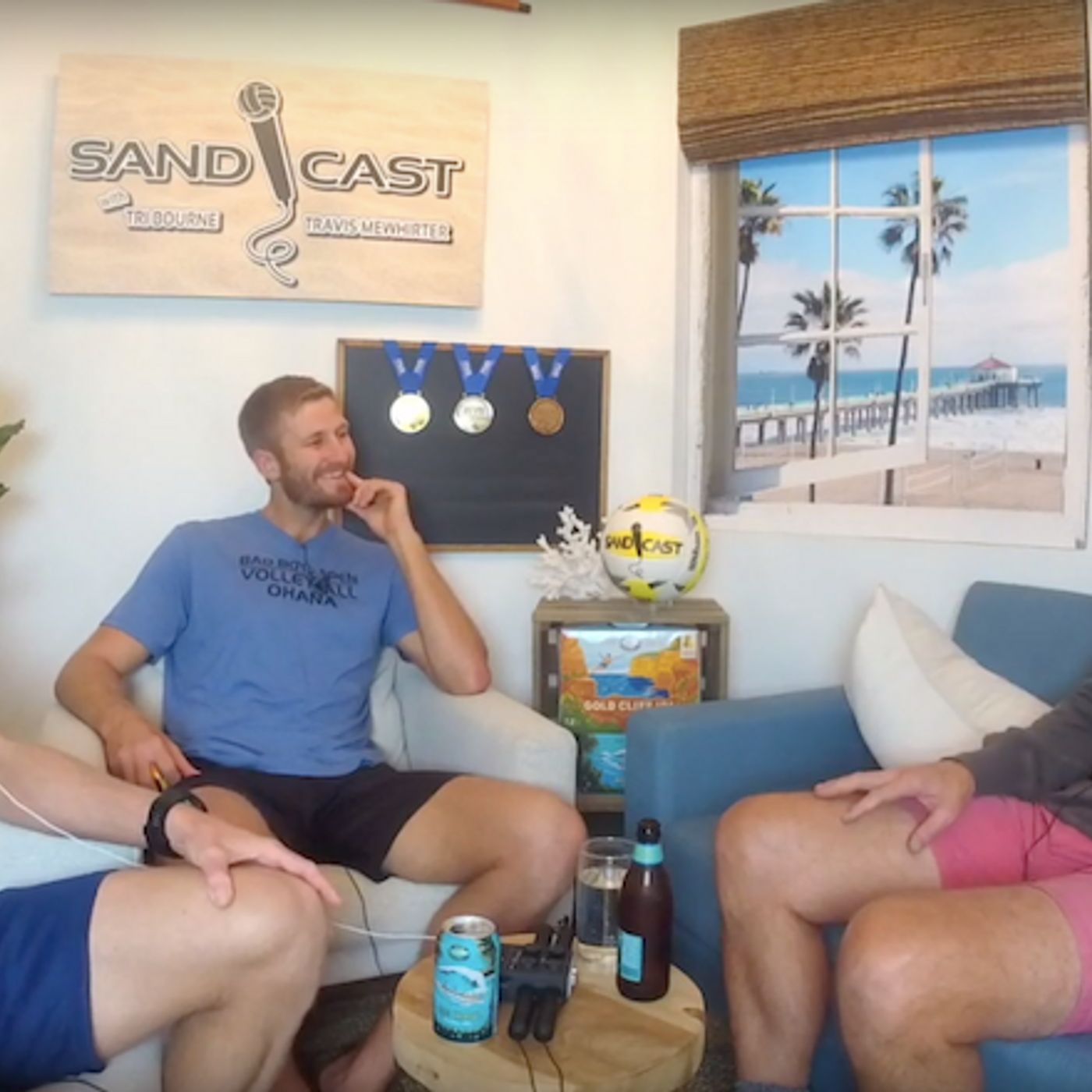
Ep 124Sinjin Smith, part two: 'You'd compete all day long'
Sinjin Smith knows the world is different now. That guys just can’t play volleyball for four hours, jump train for one, take a ride down to South Mission Beach and then play for another four. Jobs. Kids. Families and responsibilities and such. But he is curious. Curious as to why the beach volleyball culture has changed so much from his days. Days when he and the boys would put a ball down on center court and have at it for an entire day. No need for drills or simulated plays. You just played. And you never stopped playing. “You’d want to get on the No. 1 court, and you’d play all day,” Smith said on SANDCAST: Beach volleyball with Tri Bourne and Travis Mewhirter. “Eight hours! Imagine all those guys that set up matches, if they all went to Sorrento or Manhattan Beach. All of them. Or Santa Barbara. There’d be a group, and you’d be bummed out if you were third in line to get on center court. You wanted to be on the first court. You’d compete all day long.” And the guys who did that won. They won more than anybody in the history of beach volleyball has ever won. Mike Dodd, Karch Kiraly, Smith, Tim Hovland and Randy Stoklos – all members of the Hall of Fame, all of whom are proponents of the play all day ethos of training – combined to win 513 domestic tournaments in their careers. It might have been more difficult to get any of them to take a break from playing volleyball than it was to get them to lose. “If I won the tournament, I’d take Monday off. If I didn’t win, I’m going hard on Monday, all the way through,” Smith said. “We were winning quite a bit, and I’d feel bad sometimes. If it was an easy win, if I didn’t feel like I was totally torched, I’d go out on Monday anyway.” What Smith found was that the more he played, and the more he played, in particular, with Stoklos, the easier winning became. Why change? “He was a big 6-5,” Smith said of Stoklos, with whom he played 198 events and won nearly half. “He jumped so well for someone his size, and he played so much volleyball growing up that he had an incredible sense for the game. And of course, he had incredible hands, probably the best hands on the beach. He could set any ball from anywhere. We complemented each other very well. He was great at the net at a time when blocking was becoming more important for the game, and he could dig, but he was better as a blocker, and that freed me up to do in the backcourt to do what I do. We played to each other’s strengths. “Communication is so important, right? But it got to a point where we didn’t even have to talk. I knew what he was going to do in every situation, and he knew what I was going to do. When you play long enough together with somebody, that’s the beauty of it. You’re not running into each other. You know where he’s going to be, and you know where to go. And if he gets in trouble, I know exactly what to tell him and if I get in trouble he knows exactly what to do. “It didn’t seem like we had to do anything special or different. It was just natural for us to do what we did.” What they did was win more than any other partnership in American beach volleyball. When this point comes up, Smith shrugs. He doesn’t quite understand all the hype about the weight room, unless it’s to rehab an injury or work on a specific movement. He’s a proponent that you play on the beach, and the beach is therefore where you should train. He and Kiraly, with whom he played 14 events and also won a National Championship at UCLA, would put on weight belts when they played at South Mission. When Smith wanted to get a workout in, he’d just jump – jump with no approach, jump with a full approach, slide sideways for three shuffles, slide the other way for three, jump on one foot, jump on the other, then do it all over again. “We’d do that every day,” he said. “We couldn’t get enough volleyball, indoor, outdoor, it didn’t matter. We just wanted to play.” Not drill or lift or do yoga. Just play. Hosted by Simplecast, an AdsWizz company. See pcm.adswizz.com for information about our collection and use of personal data for advertising.
Ep 123Sinjin Smith: Building the sport of beach volleyball from the ground up
On April 10, 1995, Carl Henkel was studying for his law school finals when one of the strangest, most unpredictable and, at that time he would have likely surmised, miraculous phone calls rang in around four in the morning. “Hey,” said the voice on the other line. “I need you to play this weekend in Spain. Can you make it?” Henkel nearly dropped the phone. Was that Sinjin Smith on the other side of the line? That Sinjin Smith? Asking him to play? “How long do I have to think about it?” he asked. “Well,” Smith recalled telling him on SANDCAST: Beach volleyball with Tri Bourne and Travis Mewhirter. “You’ve got about ten seconds.” Ten seconds? Here was Henkel, a 25-year-old who had cobbled together a good but not great professional volleyball career. He had played in more than 30 AVPs, finishing in the top 10 twice, and was playing most of his volleyball on the four-man tour. Whittier Law School was, without question, the wiser career move. So Henkel did what anybody else would do when Sinjin Smith asked you to make a run at the 1996 Atlanta Olympics: “Of course!” Henkel recalled telling Smith, in an interview two winters ago. “Forget these finals. I don’t need these finals. I’ll meet you there!” Henkel called up his instructors and told them the situation. They worked out a plan to delay his finals. The next day, Henkel was on a plane bound for Marbella, to play a tournament with Smith, the man who had helped co-found both the AVP and FIVB tours and is still considered to be one of the greatest of all-time. You may, however, be wondering how Smith got here. From the late 1970s through the early 90s, until a bum knee began limiting him, Smith was arguably the best beach volleyball player in the world. Nobody had won more tournaments or more money than him, not even Karch Kiraly or Mike Dodd or Randy Stoklos or Tim Hovland. Nobody had done more for the game. So how did he end up with Carl Henkel, a guy who hadn’t finished better than ninth on the AVP Tour, who didn’t make the indoor national team, who had spent his most recent days in beach volleyball on the less-heralded four-man tour? Who was studying for a law school final, far away from a beach? The answer can be boiled down to one name: Ricci Luyties. A gold medalist on the 1988 indoor team in Seoul, Luyties was a sublime talent, a 6-foot-5 freak of an athlete out of Smith’s hometown, Pacific Palisades. He wasn’t quite the talent that Stoklos, Smith’s longtime partner and the first man to make $1 million in beach volleyball, was, but he had won seven AVPs. They had agreed to make a run for the 1996 Olympics, gunning for the berth that was guaranteed to the top American finishing team on the FIVB. He and Smith would be all but a lock. And then he pulled out with hardly any warning at all. On the morning of April 10, 1995, he simply left Smith a voicemail: The AVP had pressured him. He wasn’t going to play. He was sorry. That was the day they were supposed to leave for Spain. Smith had enough on his mind. His first son, Hagen, had just been born. And now he was supposed to find a partner to go to the Olympics? To give up the next year traveling the world on a tour that didn’t pay well? To drop everything and stay in hotels and planes and abandon whatever other responsibilities they had? And he was supposed to find him in a day? It was too late in the process to pluck someone from the AVP – which was perhaps the point of the AVP pressuring Luyties so late – so Smith turned to the emergency option: The four-man tour. “Carl was the first to call me back,” Smith said. The oddest team in beach volleyball, a legend and a clerk, was born. And they were going to make it. Smith laughs at all of this now, but still with a shake of the head. There was so much infighting then, just as there is now. It was Smith who, with the help of then-FIVB president Ruben Acosta, helped found the beach side of the FIVB Tour. And it was Smith who helped usher it to the Olympics, despite a heavy, though understandable, pushback from the AVP, a tour and union he also helped found. “We had an event alongside the ’92 Olympics in Barcelona, to showcase the sport for the IOC,” Smith said. “That’s the event that Randy and I were sanctioned $70,000 by the AVP for going [instead of competing at the AVP event in Seal Beach that weekend]. We happened to win that amount of money. And then the AVP kept us from playing in the biggest events of the season, events that we would win most of the time. “But from that, the sport became an Olympic sport, so it was all worthwhile in the end for us. They said ‘It’ll never be an Olympic sport, you’re just blowing in the wind.’ So it became an Olympic sport. It was awesome.” Smith and Henkel would go on to finish fifth at the Atlanta Games, though before they bowed out, they put on perhaps the greatest volleyball match of all-time, a 15-17 quarterfinal loss to Kiraly and Kent Steffes. “I remember that well,” Smith said. Some will. Some won’t. But nobody can a
Ep 121Joe Houde: How to keep beach volleyball players healthy on the road
Joe Houde had just begun his career with USA Volleyball, and there was a dead man was in the road. “Oh, yeah,” he said on SANDCAST: Beach Volleyball with Tri Bourne and Travis Mewhirter. “Just not a good day.” It was certainly one way to start his stint as USA Volleyball’s newest traveling physical trainer. His first trip with the U.S., to a NORCECA in Guatemala. First time to a third-world country. And there was a dead man in the street. “It was eye opening,” Houde said. “I got off the plane, and I had never been to a third-world country before, and I was like, ‘Alright!’” It didn’t end there, of course, because this was a NORCECA and nobody knows when the NORCECA adventures will begin or end, only that they will happen, as inevitable as a sunrise. When Houde and the men’s team cabbed back to the airport, a ride the driver expected to take around a half an hour, the ride kept going, and going…and going. A little less than three hours later, the players sprinted through the airport, just making it in time. Houde was stuck in Guatemala for another day and a half, where he’d fly to Florida, Dallas, and then home, to Boston. “That,” he said, “was my first trip with USA Volleyball.” Some may view that as the worst possible start to a trainer’s career with USAV. Look at it from another perspective, however, and it may have been the best. For now Houde has the mindset that his next trip, to China, “was great!” and he said it with such enthusiasm that he genuinely meant it, making him potentially one of the first representatives from United States Volleyball to describe a trip to China as great. “I just love to travel. It doesn’t matter where I go. It’s about enjoying it, being with these guys, helping them get to where they need to be,” Houde, a Boston native, said. “I’m not going for vacation. I’m going to work. It’s either, ‘Ok, hopefully everybody loses so I can have a trip.’ Well, I don’t want that to happen. Let’s get on the podium so I have to work hard. It’s humbling.” Houde was there, for the final event of the season, in Chetumal, Mexico, for the most successful event of the season. He helped keep Jake Gibb and Taylor Crabb and Tri Bourne and Trevor Crabb fresh enough to win a pair of medals, a gold and a bronze, respectively. It was the first time the American men had won a medal in a four- or five-star since Phil Dalhausser and Nick Lucena took silver in Doha in March. That’s what he’s about, Houde. He doesn’t get any medals, but he wants nothing more than to see the men and women he’s there to support to come home with them. That’s how he got the job in the first place, anyway. When Sara Hughes was breaking into the professional scene, she recommended Houde, as they were both located in Orange County and he primarily worked on her for recovery. His foot was firmly in the door. Not that he travels much. USA Volleyball’s budget only allows Houde to travel a few times per year. And so, in between trips where he navigates dead bodies in the road in Guatemala, he has his own practice, Paradigm Chirosport, and also works with the men’s field hockey team, which won its first medal at the PanAm Games in 24 years. Houde, of course, takes no credit. This is the guy who told the players to run through the airport so they could make it and he’d be stuck in Guatemala for an extra day and a half. “I’m a small one percent of their 99 percent,” he said. “It’s very humbling to work for these guys.” Hosted by Simplecast, an AdsWizz company. See pcm.adswizz.com for information about our collection and use of personal data for advertising.
Ep 120Mark Burik: Adventuring and the power of ripple effects
Mark Burik tried it. You will notice that to be a theme of his life: The man just tries everything. In this case, a young Burik was trying his best, as a freshman at the University of Delaware, to sell his father on a month-long semester in New Zealand. His father balked. Fourteen-thousand bucks? What was Mark going to learn in New Zealand that could possibly be worth $14,000? Well, Mark replied, we’re going to go zorbing. If you’re wondering what in the world zorbing is, allow Burik a moment to explain. “It’s when you get put in a clear bubble and they send you rolling down a hill,” he said on SANDCAST: Beach volleyball with Tri Bourne and Travis Mewhirter. So, no, Mr. Burik was not going to hand his son a $14,000 check to go zorbing in New Zealand. But he did have faith that Mark would find his way to New Zealand at some point, and he’d get to go zorbing or bungee jumping or hopping off of bridges or whatever else he would do – and studying was likely not one of them – on his own dime. “Once I got the volleyball bug,” Burik said, “I knew I was going to take it as far as I can.” He means far in every possible sense of the word. Physically, he has gone quite far, to the point that when his longtime girlfriend, Janell Haney, suggests what could be a fun overseas trip for the two, Burik will reply, “Oh yeah, that place is fun.” And then she’ll get frustrated, because she wants to go somewhere new, but finding a new place in the world for Burik to travel is quite a difficult endeavor these days. He’s gone bungee jumping in New Zealand. Played on the national tours in Austria, France, Norway and Sweden. He’s run volley camps in Germany, Spain, Switzerland. He’s flown in helicopters in Rio, been discouraged at the state of an FIVB one-star in Cambodia. “I’ve just had trouble saying no to tournaments and saying no to an adventure or trip,” Burik said. “It’s too much fun. There’s too much world to go and see to say ‘No.’ And if volleyball is either your ticket or your excuse, why not? “I think I love the fact that even if I’m going somewhere to travel, I’ll hunt down my local volleyball contacts, because if you’ve got a sport like volleyball, and you’re pretty good at it, you have built-in friends wherever you go. You don’t even have to do all the tourism stuff and wonder where you have to go because your built-in friends will bring you.” Burik now is one of those volleyball contacts for players all around the world who are looking for a place to play or train or build a community at any time of the year. Five years ago, Burik founded VolleyCamp Hermosa, a now-booming and wildly popular adult camp of sorts for players of all skills and ages. He founded it, of course, on some of the most ridiculous premises. He wanted it to be a volley hostel, where he’d find all of the broke and hungry 20-somethings in the sport, give them a bunk to crash in, a court to play on, and a bunch of guys to play with, and let it run wild. It worked for a bit. Burik rented three apartments, squeezing in four bunk-beds in the master bedroom of one. “It was so much fun and so crazy,” Burik said. “I was cleaning toilets at 3 a.m. getting ready for the next turnover.” To the surprise of perhaps only Burik, he was evicted from one of his houses – “I did it all legally,” he is adamant to assure you – and has since sent the VolleyCampers to local hotels, where he does not have to clean toilets at three in the morning. Though the hostel vision for VolleyCamp has since changed, the impact of it has only multiplied. Rare is the day you will not see Burik and his coaching staff on second street in Hermosa, teaching from sun-up to sundown, VolleyCampers rotating in and out of the courts the entire day, all year long. “It’s gotten to a point where it runs itself,” Burik said. This has allowed him to expand into other projects, all in the name of growing the sport. He’s building a YouTube channel, Betteratbeach, with an eponymous website, betteratbeach.com. He’s authoring webinars. Conducting film studies with players from all over the planet via FaceTime and screenshare. “If you get one, solid piece of advice from one great coach, that’s going to affect the rest of your career,” Burik said. “People think one piece of advice is just one piece of advice but it’s not. It’s thousands of points.” But it’s not just about improving as a player. It’s about building up this sport that has for so long needed a growth spurt. It’s about building the community that allows players to grab dinners with strangers in Austria, to crash on a couch in Rio, to know the best local spots in Spain, with the only connecting thread being the sport of beach volleyball. “It goes beyond beach volleyball for me,” Burik said. “It’s about getting a platform. My why is more – get the platform to start making the world better. I think I do that successfully with my coaching. I think I teach people how to be better partners, how to talk to each other better. I teach them how to talk t
Ep 119Gettin' jazzed with Kelly Reeves
There is a moment before every practice that is so innocuous, so easy to forget that it’s not all that uncommon for teams to go about practicing without remembering it at all: putting up the antennas. And yet it is that moment that Kelly Reeves loves – or, in her vernacular, “gets jazzed about” –as much as she loves anything, and allow us to inform you early in this story that Kelly Reeves loves a great many things. But before she can discuss how much she loves playing volleyball, how jazzed she gets about this game, how she loves the long rallies, getting a scoop on a hard-driven, or the feeling of her lungs searing at the end of a long, three-set match, she wants you to know how much she loves putting up those antennas each morning. “That’s my moment before practice, setting up the antennas,” Reeves said on SANDCAST: Beach volleyball with Tri Bourne and Travis Mewhirter. “It’s like ‘This is where I’m supposed to be.’ People overlook that. I always set the antennas up, but that’s something I just enjoy. I just look around at the bay and it’s like ‘Wow, life’s pretty good.’ It’s just what I do and I’m like ‘I love being here.’” It’s possible that Reeves, who won a national championship indoors at UCLA before starting her professional career on the beach, loves more aspects of volleyball, and life, than anyone you’ve met. Workouts that leave her heaving, worn out, walking gingerly out of the gym? Loves them. Rallies – even the ones she loses – that leave her caked in sand, sweaty, out of breath? Loves them. Heck, the 27-year-old even loved, in a weird sort of way, getting roofed by Alix Klineman on match point in the quarterfinals of the Manhattan Beach Open. “It was just so surreal playing against the top teams in the world like ‘What? This is awesome!’ What a fun experience,” said Reeves, who finished a career-high third in Manhattan with Terese Cannon, losing only to April Ross and Klineman and Melissa Humana-Paredes and Sarah Pavan. “And, obviously, we lost to both of those teams, and I give Alix a little [crap] because I got absolutely roofed on match point. I was like ‘Either way I’m going in to crank it and see what happens’ and there’s a photo of Alix just reaching her hand, dink, and I’m like ‘C’mon! You couldn’t give me just one?’ But I respect both of those teams and it’s elite volleyball, it’s high level volleyball, and that’s what you want, that’s how you get better.” Reeves understands the process more than most. It’s why she allows herself to stop and enjoy the peaks like in Manhattan. Where many, after achieving a career-high, seek the next high, Reeves is consciously aware to stop, as she did in Manhattan, and pause for a second to drink in the bliss. “I just looked around and smiled, like ‘I’m here. This is the biggest stage probably anywhere’ and I had to just soak up the moment,” she said. “It was so awesome.” And she loves the lows, too, in that strange sort of way that mature athletes do, understanding that there are moments of growth within those lows. She looks at Chicago, where her and Cannon, coming off that career-high in Manhattan, lost both matches and finished 17th. “You gotta go through the trenches a little bit to see the good and it’s been such a fun journey to be a part of and that’s why longevity for me, you can go forever in beach volleyball,” Reeves said. “There’s just so much you can learn every single day you step foot in the sand.” At the moment, Reeves is learning as much as she can in the gym. She’s in there, three hours a day, Monday through Friday. She’s playing the long game now, prepping her body for a career that she wants to last as long as possible. John Hyden’s still doing it at 47, Jake Gibb at 43, Kerri Walsh Jennings at 41. She has as much self-doubt as anyone, Reeves. But when those moments of doubt arise, and the numbers in her bank account are looking as if they’ve been on an extreme diet, she journals, does a little introspection: Where’s my bliss? And then it all comes rushing back, all the love she has for this sport and everything and everyone in it. In an hour-long interview, Reeves used the word “love” no less than 30 times. So it really doesn’t matter what her bank account looks like, because no amount of money in the world can buy that kind of bliss, that self-assurance that, yes, she’s exactly where she needs to be, doing exactly what she needs to be doing, with the people she needs to be with. “I just love the sport of volleyball,” she said. “I think it brings me joy, it’s made me the person I am, I just love stepping out on the court and sharing the game with anyone and everyone.” Hosted by Simplecast, an AdsWizz company. See pcm.adswizz.com for information about our collection and use of personal data for advertising.
Ep 118Mike Dodd: Finding the soul of the game
Mike Dodd apologized. He’d been getting all wound up, or as wound up as the man, labeled by anyone you ask as one of the nicest guys in the world, can get. He even dropped the f word not once, but twice. “Sorry about that,” he said on SANDCAST: Beach Volleyball with Tri Bourne and Travis Mewhirter. “I think I said the f word.” You can forgive the man for being impassioned. He’s seen beach volleyball in its every iteration, every stage of its growth, from infantile to colossus to broken to slightly built up once more. He competed when there was hardly any money in it at all, in the early 1980s, when he was fresh out of college and finished with a brief – very brief – stint in the NBA with the San Diego Clippers. He’d boycotted the 1984 World Championships, not only witnessing the formation of the AVP – then only a players’ union, not a tour – but playing an integral part of it. He’d won five consecutive Manhattan Beach Opens with Tim Hovland. He’d talked smack to Sinjin Smith and Randy Stoklos. He’d played in and won the only Olympic qualifier to date, securing a spot in the 1996 Atlanta Games with Mike Whitmarsh, where they’d win silver in one of the greatest shows of dominance the United States has had on the beach, on the men’s side, at least. And he’s since commentated (in 2000 and 2004) and coached (in 2008 and 2012) and you won’t ever find the man too far off the beach. He’s not one to preach about the old-school days, as some, mostly fans, are wont to do. But he does look at the current landscape of the game in the United States and wonder if there isn’t a simpler solution to the sometimes-complicated hierarchy. “If I were the czar of USA Volleyball, I would mandate that my eight best guys would just go down. Just go down for five hours in the afternoon, when it’s windy and [crappy] and it’s not little morning 9 a.m. perfect, no wind, no nothing,” he said. “Draw your lines, switch partners, and see who’s the fu***** best. See who’s the fu***** best. Keep score. Keep track. It’s an easy pick.” It was less about the money than it was about who won, who had bragging rights in an era of bombastic bragging and smack talk, and few won more than Dodd. Few, lest the tour returns to its halcyon days of 20-30 tournaments a year, ever will. Seventy-two times Dodd finished atop the podium in the United States, 73 if you include winning that Olympic qualifier in Baltimore in 1996, which Dodd does. “If you don’t think an Olympic trial prepares you for the Olympics,” he said, “you’re outta your mind.” Yet it hasn’t been done since. The FIVB has become the road through which U.S. teams must qualify for the Games. For now, at least. There are other countries who operate differently. Dodd has seen it himself. Prior to the 2016 Games, he was hired by the Italian federation as the beach program’s head coach. They rented a house in Southern California for the eight potential candidates, and what did Dodd do but bring them out to the beach, draw up some lines, and have them play. They’d mix partners, play in the wind, in the most imperfect conditions. And he’s see who wanted it most, who could just find a way to win, just as he used to do during those endless days when he was a 20-something kid out of San Diego State. He and Hovland and Karch Kiraly and Sinjin Smith would practice for four hours with the United States indoor national team, put in another hour of jump-training, then find the closest liquor store, pick up a couple of Mickey’s big mouth beers, and play beach until the sun went down. And they’d learn how to win. It is hardly a matter of coincidence that those four are now all in the Hall of Fame, four of the winningest players in history, four individuals where only a single name will do – Hov, Dodd, Sinjin, Karch – and you know exactly whom they mean. “It was just the jungle,” he said. “It was natural selection. Smith and Stokie, they’re winning, they’re great. Dodd and Hovland. Dodd and Whitmarsh. This team and that team. You migrated to each other and you did it by survivial because you had the best chance of winning. There was money and this but everybody just wanted to win. At the end of the day, it’s how many opens did you win.” And then, coaching those eight Italian players a little less than a decade ago, he saw those very same traits emerge again. A cocky, swaggering young player named Daniele Lupo was rooming with Paolo Nicolai, a 6-foot-8 blocker who had won consecutive youth world tour events in 2007 and 2008. When Dodd swung by the house, as he sometimes did, he saw them, after hours on the beach, dinking a ball back and forth in their room, competing still. “I had the analytics that said they were probably the best team,” he said. “But that’s what told me they would be the best. They just had the love for the game.” Sure enough, in 2012, Lupo and Nicolai would qualify for the London Games, stunning Phil Dalhausser and Nick Lucena in the first round. Then they’d claim silver in Rio in 2016. It’s t
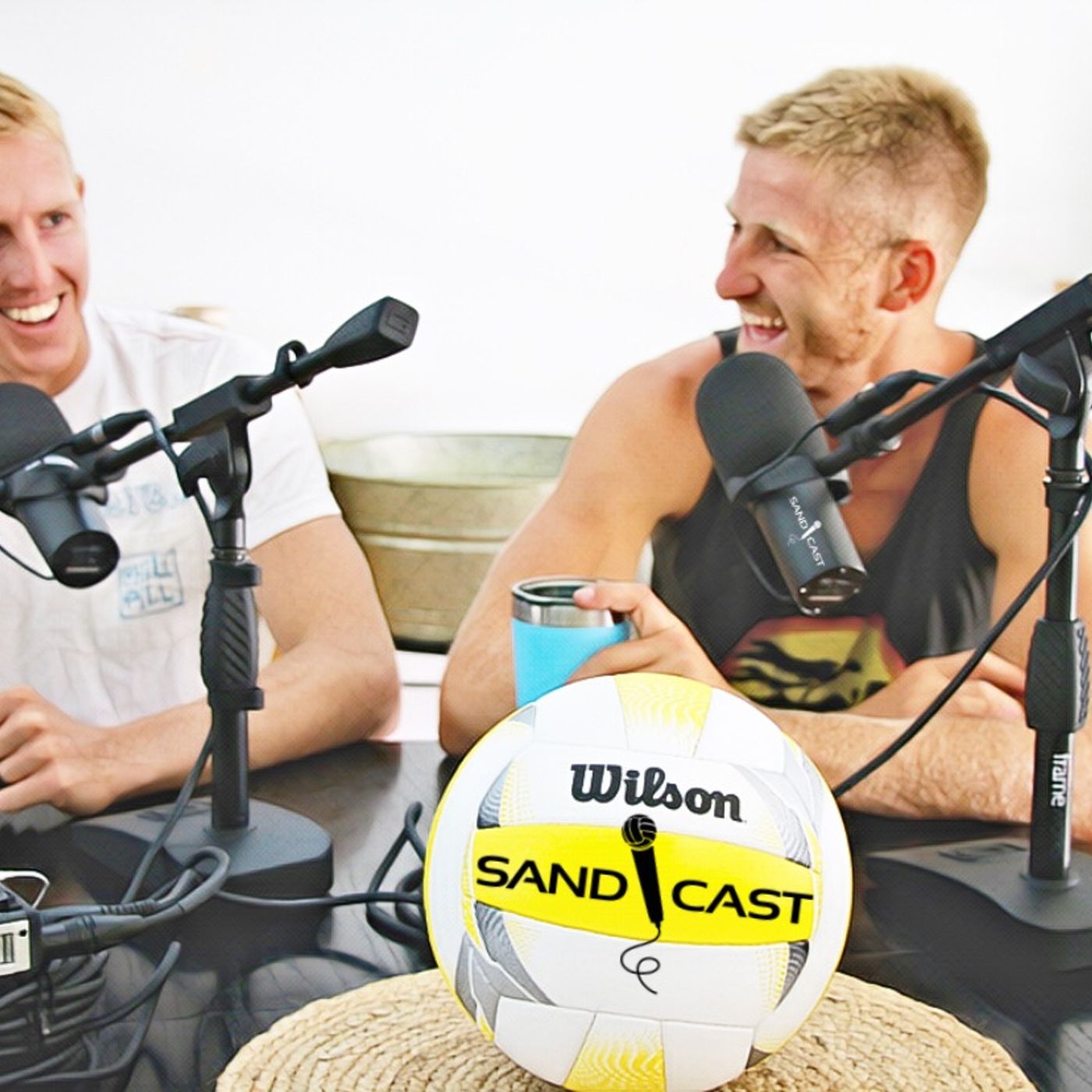
Ep 117The Free Agent Podcast: Who's playing with who in 2020
This week on SANDCAST, Tri Bourne and Travis Mewhirter break down all of the partner switches happening in United States beach volleyball. Hosted by Simplecast, an AdsWizz company. See pcm.adswizz.com for information about our collection and use of personal data for advertising.
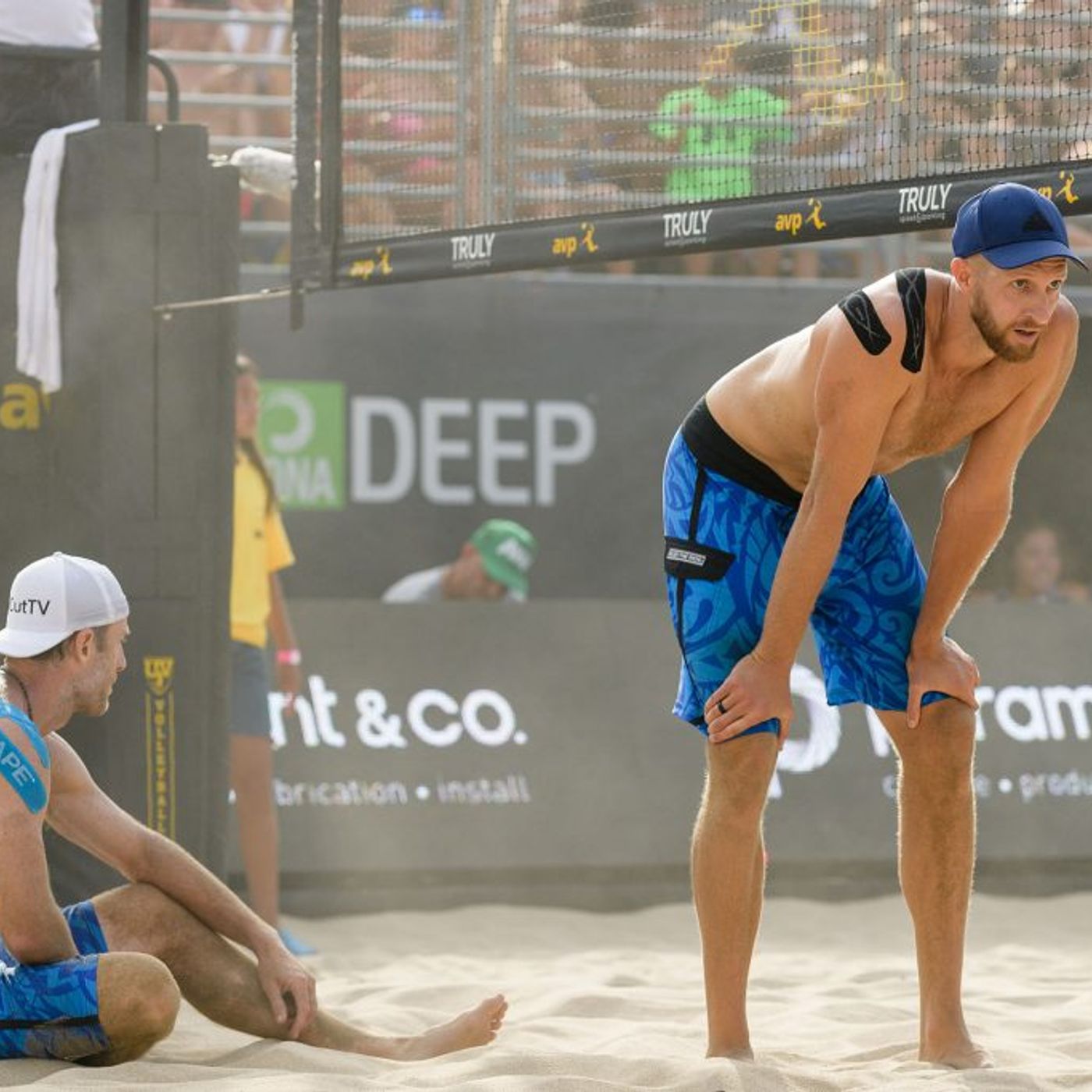
Ep 116Theo Brunner has undergone his beach volleyball 'rebirth'
Theo Brunner was in need, he says, of a rebirth. Not quite a religious ceremony, but something to revitalize a beach volleyball career that had, while not sunk, gone a bit sideways. There was the chronic calf injury that flared up, a nod to the fact that he hadn’t really taken a full off-season in several years. There were the flashes of success – a silver at the Kuala Lumpur three-star with Reid Priddy – sprinkled in with missed opportunities – two crushing three-set losses in country quotas in Gstaad and Rome. The proverbial rebirth came in the most unwelcome of places, at the most unwelcome of times. Funny how it works like that. Theo Brunner was thrown back into an AVP qualifier. “At first I was super-bummed,” he said on SANDCAST: Beach Volleyball with Tri Bourne and Travis Mewhirter, of he and John Hyden being seeded Q1 at AVP Chicago. “But then I thought, this is good for me. It’s good to remember what it’s all about, see what everybody else has to go through every tournament, stop being all high horse, who cares about the qualifier. To get back in there was a nice thing.” It’s easy to say that in retrospect, of course. It would not have been easy for him to say that midway through the afternoon of August 29, when he and Hyden were down one set to none – 15-21, no less – to Jake Urrutia and Earl Schultz in the final round of the qualifier. Losing the second or the third would have meant the first failed attempt at an AVP main draw since 2009, when he and Matt Heagy fell in the second round in Ocean City. “I was like ‘Ah crap, what am I doing?’” Brunner said. “But it was a good reminder of the love of the grind, which you can forget sometimes.” Throughout literature, any moment of rebirth, of finding a new identity or rediscovering an old one, requires a trial. Brunner had his. And he and Hyden prevailed, winning the next two sets, 21-13, 15-7. It wouldn’t be until three weeks later, though, when he and Hyden were put back into the qualifier again, that they would return to the championship winning team they had been a year prior. It had barely been more than a calendar year since they won AVP Hermosa, coming back at the freeze to beat Billy Allen and Ryan Doherty, 16-14, in the third. They did that, however, as the one seed. In Hawai’i, for the final event of the year, they’d do so also as the one seed – in the qualifier. Just as they did in Hermosa the year before, they returned to the final. And then the most poetic stories of the year came to a crashing halt. Hyden, at 47, would have broken his own record as the oldest to win an AVP title, in searing heat and shallow sand, no less. Had it not been for a Herculean performance from Taylor Crabb, Brunner and Hyden would have locked up the greatest storyline of the year. Alas, a 20-15 lead in the second set was undone by Crabb and Jake Gibb, just as another lead in the third was undone, thwarted once more by the Bug and Gibb. “Oh, Hawai’i,” Brunner lamented more than once on SANDCAST. “Still hurts.” And it will hurt for some time, to be sure, but never has there been a rebirth without a bit of discomfort. Brunner is now entering the off-season, his first blessed off-season in as long as he can remember, one of the most coveted free agents in the sport. Hyden has turned to Bill Kolinske, but after that, who knows where the chips may fall. Do Casey Patterson and Chase Budinger stay together? Billy Allen and Stafford Slick? Chaim Schalk and Jeremy Casebeer? Priddy? “It goes from the top down and I’ve been fortunate enough that I’m one of the guys people are waiting on,” he said. “I’ve been enjoying not being super focused on that stuff this off-season but I still have a bunch of people in mind and have chatted with a few different people. “My wife forced me to watch the bachelor and it just occurred to me that this is a lot like the bachelor. Just trying to find a mate for next season. It’s a lot like a relationship – this guy is really good at this, but I don’t know if we’d get along that well. It’s pretty funny.” And life, in beach volleyball, is fun again for Theo Brunner. Hosted by Simplecast, an AdsWizz company. See pcm.adswizz.com for information about our collection and use of personal data for advertising.
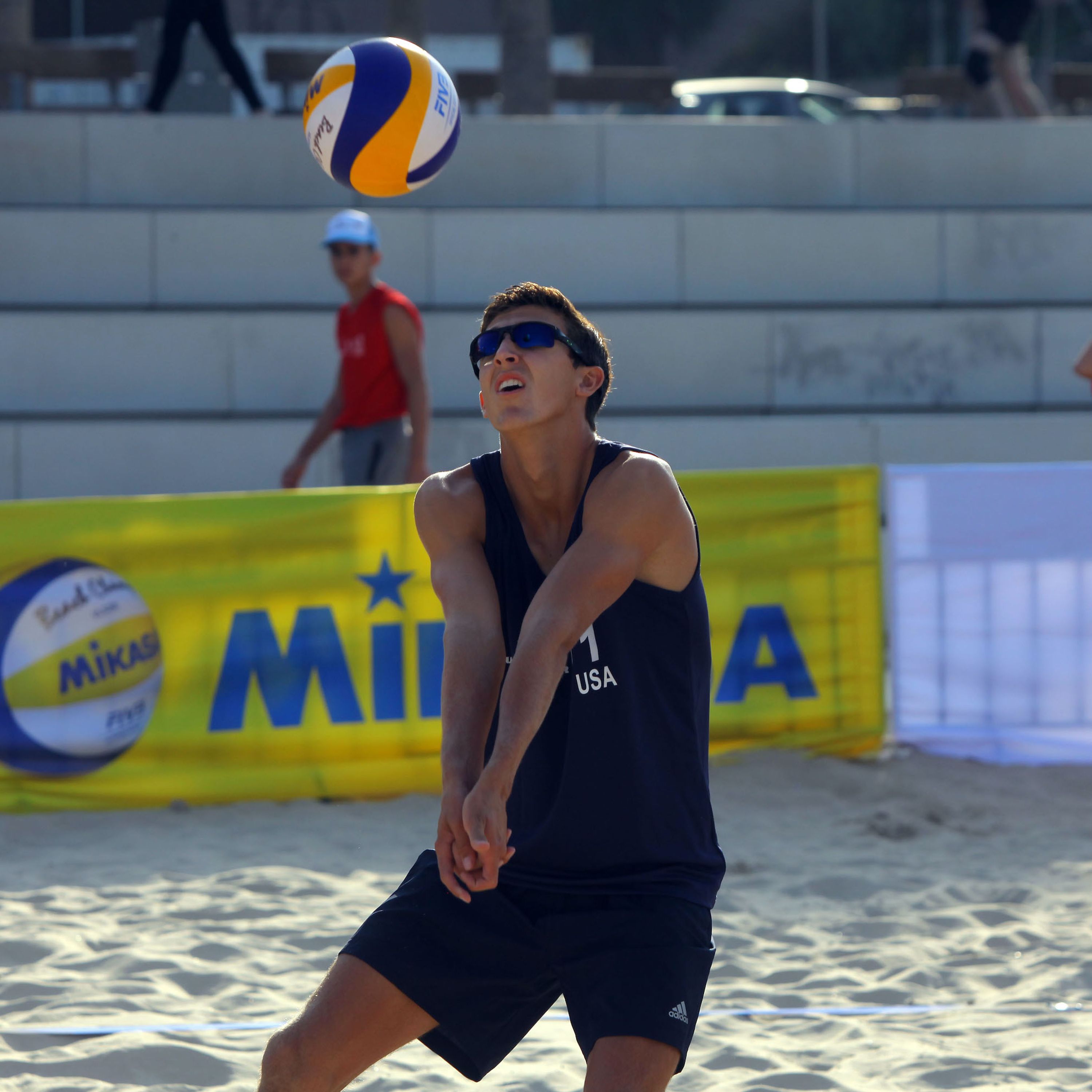
Ep 115Tim Brewster is getting his own type of education
TEL AVIV, Israel – Tim Brewster was thousands of miles from his classrooms at UCLA. His seat in his 300-plus-student lectures was empty again, as it had been for the previous two weeks while he was in the Dominican Republic and the Middle East. And yet, while his classmates and peers were in their seats like good students, listening to the professors, taking their notes, studying, Brewster was getting an education of his own, the same unofficial independent study he’d been getting for the previous three years. It is one thing to learn about the religions of the world, a class he took with that very name. It is entirely another to stroll the cobblestone streets of Jerusalem, to walk the Via Dolarosa, to see the 14 stations of the cross, to touch the Western Wall, to hear the calls for prayer at the site where Mohammed ascended and descended from heaven. It is one thing to learn of the poverty of countries like Cuba, and to listen to professors discuss the dangers of men like Fidel Castro. It is another to arrive on your first international beach volleyball trip as a 17-year-old in Havana, and to run out of running water one night, lose power for two, be bereft of functional wifi and any means of communication to the outside world, all the while being subjected to misleading government propaganda. No, Tm Brewster may not be in the classroom as much as his professors may like. But rest assured, he’s getting an education of his own. “Definitely more valuable than college,” he said on SANDCAST: Beach Volleyball with Tri Bourne and Travis Mewhirter. And he said this, of course, not from a classroom or anywhere close to it. He said it at the kitchen table in an AirBNB in Tel Aviv, where he played in his fifth one-star FIVB of the year, finishing with a career-high fifth. He said it after eating in Old Town Jaffa, after praying in the Garden of Gethsemane, after hearing gunshots ring out from war-torn Jordan as he floated in the Dead Sea. “I’m going to these places that I’ve learned about in school before, which is awesome. I’m getting the real-world experience of it,” he said. “I’m getting to see these cultures and learn a bunch, especially from the people I’m traveling with, because a lot of people I travel with are older. I wouldn’t miss this stuff for the world. “I took a religion class last quarter and it was all about Christianity, Judaism and Islam and it’s what we saw today, all day. I’ve never really experienced that. It was crazy.” Talk with Brewster and, aside from the boyish face and the body that hasn’t quite filled out yet, you would be hard-pressed to pin him as a teenager still finding his way in the world. This season alone, which coincided with his current sophomore year at UCLA, he competed in seven international tournaments. He’s competed against Olympians and AVP champions. He’s been coached by some of the all-time greats. He is 19 yet is surrounded by some of the most elite players and voices in the sport. “It’s weird because these are guys I’ve looked up to for the last five or six years since I was 14 and playing,” he said. “It’s weird that I’m playing against them now. I’m still not there yet but I can see the progress from where I’ve come from and where I’m heading and it’s pretty exciting. It’s really cool, though, getting to play guys at that high of a level and you get to see the things they do well that you don’t.” At 19, Brewster is considered precocious by U.S. standards in beach volleyball. Nearly every Olympic Games is a testament to the States’ delayed development system. In 2016, the four United States players – Phil Dalhausser and Nick Lucena, Jake Gibb and Casey Patterson – were surpassed in age only by one. Of the six players on the top three U.S. teams with a legitimate shot at making the Tokyo Games, four are older than 30, another, Trevor Crabb, is only a few months shy, and the other, Taylor Crabb, is 26. And yet there is Brewster, alongside his equally young and aspirational peers in John Schwengel, Miles and Marcus Partain, and Kacey Losik, the few youngsters in the U.S. breaking in before their mid-20s. This year was a watershed one for all: Brewster made his first FIVB main draw, Schwengel cracked into AVP Hawai’i for his first main draw, Marcus Partain made it in Manhattan Beach, Miles won the AVP Rookie of the Year. To the United States, they’re young, babies on tour. To the rest of the world’s 19- and 20- year olds, they’re quite normal. “There’s not a lot of guys my age who are committed only to beach,” Brewster said. “There’s John Schwengel and I, who are basically the only two who are only playing beach without playing indoor. “A lot of these [international] kids specialize early, and a lot of these countries have academies. We don’t really have anything like that. I think the high performance does a good job but it’s hard to compete with a country like Brazil who has their kids living in a facility, training year-round.” And so he has created his own development
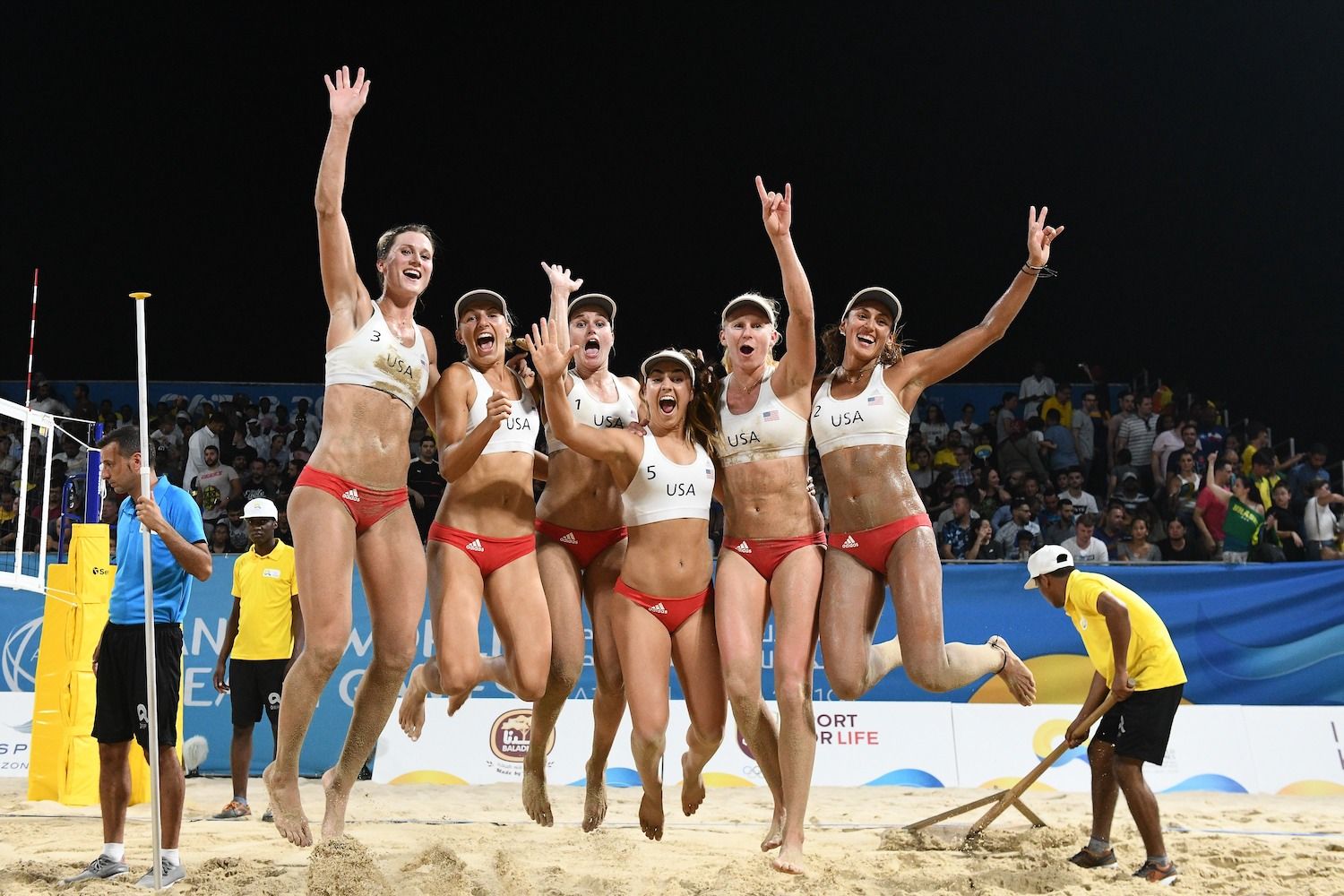
Ep 114Karissa Cook and Allie Wheeler: The Snow Dog Desert Queens of Weird
Karissa Cook is a self-dubbed “inside cat.” She doesn’t need to go anywhere to have fun. Doesn’t really need to see anybody, aside from her fiancé, Shayne Skov, and her pup. She’s good with that. So when Katie Spieler, her partner throughout the 2017 and 2018 beach volleyball seasons, asked if she wanted to play in a NORCECA playoff for a one-off event in a pinprick of an island named Martinique, she felt very little compulsion to do so. But she did, because Cook loves Spieler, and she does – though she rarely admits it out loud – love volleyball, event at the end of a year. She was in. And so began one of the strangest, world-crossing, successful years of Cook’s life. Her and Spieler would win gold in Martinique, which wasn’t so much a beach tournament as it was “jungle ball,” as she dubbed it on SANDCAST: Beach Volleyball with Tri Bourne and Travis Mewhirter, seeing as it was played in the middle of a tropical forest, in a grove of cleared out trees. In reality, it would be one of the most normal events Cook would play over the next calendar year. A month later, Cook and Spieler were chatting again, about a new, slightly absurd invitation to play snow volleyball in Russia in December. They added Allie Wheeler and Emily Hartong to the crew, and thus the “Snow Dogs” were born. “I feel like this year is still bookended by Moscow because that was the origination of the snow team,” Cook said. “Looking back on these 12 months, I’m like ‘How did we get roped into all these strange, amazing country trips and all these amazing environments?’ “Basically, USA keeps emailing and we keep saying yes. Every time, I’m like ‘I’m done for the year’ and then I get an email saying ‘Do you guys want to…’ and I’ll probably say yeah.” For Wheeler, there is never a hesitation. Not anymore. She said yes immediately to Moscow, and everything thereafter. Did she want to play snow volleyball in Austria and Italy, three weeks before the AVP season? Yes. And another in Argentina? Yes. How about a fours tournament at the inaugural World Beach Games in, of all places, Doha, Qatar? “It’s always just ‘Yes,’” Wheeler said on SANDCAST. It’s easy to see why, too. Every time she’s said yes, she’s returned home with gold. When she agreed to play a one-star FIVB in Vaudz, Liechtenstein, in August of 2018, as the No. 12 team in the qualifier, they wound up winning the whole thing. Perhaps her decision making is expedited by the fact that her goal is rarely about the winning, though for anybody as competitive as Wheeler, a national champ at USC, winning is always a plus. “For me, I think about it – in Liechtenstein, me and Lara were down, 13-12, in the third set in the quali, obviously terrible scenario, so we were like ‘Alright, it’s a win win. If you lose you get to travel. If you win you get to play more volleyball,’” Wheeler said. “We ended up winning and then won the whole tournament so it was pretty cool.” Everything about this year has been cool for the two. Cook has won events in a forest (Martinique) and in snow (Moscow). She won her first AVP, in Austin, and claimed gold at the Pan American Games with Jace Pardon in Lima, Peru. Together, her and Wheeler, adding Geena Urango and Kelly Reeves to the snow team, won the inaugural World Beach Games in Doha. “This year, I went into it with a lot of uncertainty, but my only two goals were to not get burned out and be really conscious with my limits and not doing too much because I feel like I have to,” Cook said. “And then just to play with really good people. I think getting slightly more points than opponents was cool, but it was just a cherry on top. Winning helps, it definitely makes it more fun, definitely preferable, but I can’t control that.” So here’s what they can control: The mindset and the team they bring with them. They’re all close friends now, the snow dogs, and the two “desert queens” in Urango and Reeves. Good friends and world champs. “Well they’re going to pay for us to go to cool places so long as we keep winning,” Cook said. “So let’s do it.” Hosted by Simplecast, an AdsWizz company. See pcm.adswizz.com for information about our collection and use of personal data for advertising.
Ep 113SANDCAST: Sponcil, Claes figuring it out -- on and off the court -- heading into Olympic year
It was somewhere in the space between the Gstaad Major and the Espinho four-star when the façade came crashing down. How long had it been since Sarah Sponcil had decompressed? Relaxed? Reflected on all that had happened in her life in the past six blurs of months? In that span, she and Lily Justine, her partner at UCLA, established themselves as the best No. 2 NCAA beach pair in the country. In May, the Bruins repeated as NCAA champions. Days later, Sponcil was on a flight with Kelly Claes, her professional partner, to Itapema, Brazil, for an FIVB four-star where they’d play Kerri Walsh Jennings and Brooke Sweat in a country quota. They lost in 28 minutes. “It’s such a surreal fast-paced experience, national championship to pro in three days, trying to adjust my game to match the opponents, the best in the world,” Sponcil said when she and Claes joined us on SANDCAST: Beach Volleyball with Tri Bourne and Travis Mewhirter. “I’m just speechless when I’m asked that question. You’re never ready. You never know what you’re really doing and if I didn’t (go for the Olympics), I’d regret it for the rest of my life.” On the outside, though, it very much appears as Sponcil is ready for all of this, as if she has keeping up with her rapidly-changing world, no problem. She and Claes rebounded from Itapema with four straight top-10 finishes, including a ninth at the FIVB World Championships. They didn't just look like they knew what they were doing. They made it look -- dare we say? -- easy. On top of all of that, in Warsaw the week before, while the rest of Sponcil’s teammates and classmates at UCLA were walking across the stage back home, Sponcil and Claes put on a comical photo shoot of Sponcil “graduating,” cap and gown included, diving for a ball on the sand. It can all look so glamorous sometimes -- the world traveling, the funny Instagrams, the hilarious videos of them running through airports and Sponcil walking around the world doing handstands -- that it’s easy to forget that she’s never done any of this before. “Sometimes I can’t even wrap my head around how stressful this year has been for her,” Claes said. “I think back to my first season coming out of college. We finished the USA Pairs Championship and jumped on a flight to Rio. We jumped on the world tour and it was so stressful and we had so many new things coming at me and I felt like my head was spinning and on top of that it’s an Olympic qualifying year for her.” And then, after dropping in the qualifier in Gstaad, now two months on the road with stops in Portugal, Tokyo, Vienna, and Moscow still looming, Sponcil let down her guard. “Sarah sent me a text to come outside and she’s balling,” Claes said. “And I’m like ‘OK, we’re doing this.’” They’re a fun-loving duo, Claes and Sponcil. They’re goofy and happy and wildly talented, two of the top players in the country despite being in diapers when Kerri Walsh Jennings, who they’re trying to beat out for the 2020 Olympics, was making her Olympic debut on the beach. But they are -- in spite of how magnificently tailored their lives may look at times -- human. Three months on the road is a monumental task for a human being, much less one who had never done any of this before. Full-time World Tour, Olympic race, figuring out flights and hotels and meals and how in the world to survive this thing. “Honestly, I felt like I had nothing together,” Sponcil said. “I was missing home, I felt like I was trying to change so many different things in my game, and you can’t change a whole lot and still feel like you’re playing free. Everything was just crazy in my mind, and definitely had some teary moments, and I was just honest with Kelly and open and vulnerable and I was like ‘I am not OK right now.’ “To get closer you have to be vulnerable in those positions and it sucks to acknowledge that you don’t have it all together, especially coming off of college where you had everything. You did so well and now you’re being pushed in ways you didn’t think you could be pushed because you won a month ago, on cloud nine, and now it’s ‘Oh, shiz.’ “But Kelly had been in the same position and her listening to me means everything. It was a step in the right direction to know if we win, we lose, whatever, we’re still in this together, and that’s really powerful. That was a huge moment for us.” Claes may be the perfect partner for Sponcil, old enough to have done this for three years now, young enough to still be able to fully empathize with where Sponcil is in life. Perhaps that explains why, once considered underdogs by many in this race, these two are eighth in the world in the Olympic ranks and third in the U.S. They trail only April Ross and Alix Klineman and Walsh Jennings and Brooke Sweat, with another 12 or so events -- depending on what they want to play -- left in the qualification period. Theirs is a chemistry wholly unique to them. Last October, Claes was still unsure with whom she was going to partner for this run. She
Ep 112Kelley Larsen and Emily Stockman: Making LAX your new home
There was a time – a very brief time in the middle of a jet-setting, globe-trotting season – where Kelley Larsen had the correct count of how many tournaments she and Emily Stockman had played at that point in the year. “We did count at one point,” Larsen, an Olympic hopeful with Stockman, said on SANDCAST: Beach Volleyball with Tri Bourne and Travis Mewhirter. “We did a certain amount in a row, we did – what was it? – ten back to back in a row. Ten in a row. I think that was our longest stretch. I don’t know how many tournaments it was this year. I think I lost count halfway through.” It’s easy to do when you’ve had a year like Larsen and Stockman. The official count, at the moment, with two more tournaments to play, is 19 tournaments in all – five AVP, 13 FIVB, one NORCECA. It has included competition in 13 countries, with a third trip to China coming up next week and a first to Mexico a week after that. “LAX is our home,” Larsen said, laughing. “It was a lot of travel this year. We were gone six or seven weeks straight at one point and then before and after that we would be at a tournament overseas then come back for a tournament, be home for a few days, and we’d be back and forth. So ever since May, we’ve been gone the majority of the time.” They knew they were getting themselves into this, Larsen and Stockman. When they both broke it off with their respective partners prior to the onset of the Tokyo race, they knew that international volleyball was the priority, that the Olympics were the goal, and that being anywhere from moderately to severely jet lagged would be the new default. “I knew her work ethic was already incredible,” Stockman, a Colorado native, said. “Every time I was in the gym she was there, so I knew she was working hard. But to sit down and be like ‘Our goals all align,’ that was huge for me.” For the most part, everything has seemed to align for Stockman and Larsen this season, both on the court and off. On the court, they won an enormously valuable silver medal at the Warsaw Four-Star and then followed it up with a win at AVP Seattle, Stockman’s first AVP victory. Off the court, their quiet yet warm, independent but caring personalities meshed perfectly. During downtime on the road, Stockman would wander for a good coffee shop; Larsen would take a walk. At home, Stockman retreats to the mountains, Larsen, somehow, still to the beach. And then they’re back at it, on the beach with coach Evie Matthews or in the gym with their new trainer, an ass-kicking, no-nonsense man recommended by Matthews. “There’s a lot of teams that sort of started breaking down a little bit and we felt good throughout the year,” Larsen said. “I think a lot of that is due to what we were doing in the gym, just conditioning wise. And all of our training was specific to you and to volleyball. Every movement we do in the gym is very related to volleyball and has a purpose for why we’re doing it. “His workouts are killer. You get your butt kicked and you don’t lift a single weight. It’s bizarre. It’s definitely helped us conditioning wise in matches this year.” They have but a few matches left, in China for an upcoming Three-Star in Qinzhou and then a Four-Star in Chetumal, Mexico. Then Stockman will take to the mountains, Larsen to the beach and planning her wedding with Manhattan Beach semifinalist Bill Kolinske. And then, before they know it, season will begin again. And they’ll be back on planes, back to their passports getting tattooed regularly, back in their new home-away-from-home: LAX. “We’re like the Brazilians now,” Stockman said. “Just nonstop.” Hosted by Simplecast, an AdsWizz company. See pcm.adswizz.com for information about our collection and use of personal data for advertising.
Ep 111SANDCAST-AVERSARY: Two years and a lifetime of lessons from the podcast
Of all the indelible moments we’ve had on SANDCAST these past two years – and there have been countless many, with massive lifetime milestones from both Tri Bourne and I – none stood out quite like the moments after our latest podcast, which published today. For the first year and a half, our typical post-show routine was a bit collegeish: We’d barbeque, drink a few beers, watch some football or a documentary or YouTube. Sometimes Trevor Crabb would come over and hang. Gabby Bourne, Tri’s amazing wife and resident ‘Pod Mama’ as we’ve affectionately dubbed her, would invariably be present, joining the boys. It’s not that those days are over, but things have certainly changed. After we recorded the show on Monday, an exasperated Pod Mama walked upstairs, a crying newborn Naia Zuri Bourne in tow. She passed him off to Tri, and now instead of cradling a Kona or a small glass of red, he was cradling his infant. Listening to Twinkle Twinkle Little Star. Anything to put Naia to sleep. Life comes at you fast. “That evolution of where I was, and all of the things that have happened since then, it all started with the SANDCAST,” he said, and he did say this jokingly, because, obviously, there are a lot more important things that have been changing the direction of Bourne’s life. But the podcast, in its 110th episode, has been there to document it all. It was there, on episode one, to document Bourne when he was deep in the throes of his now-famous autoimmune disease. “The New Tri Bourne: Buddha Tri Bourne,” is what we dubbed that episode, which, in retrospect, is a funny name, because now that is such an old version of Tri Bourne it hardly seems to exist anymore. That Tri Bourne wasn’t allowed to sweat – “I wanted to sweat,” he said, “but I literally wasn’t allowed to.” He wasn’t allowed to jump, or to lift weights, or to play the sport that is his lifeblood and his way of life, how he supports his growing family. Now he’s ranked No. 1 in the Olympic race among American teams. “Yeah,” he said, “that is crazy.” The podcast was there to document the publication of my first non-fiction book, We Were Kings, just as it was there to document my first main draw, in Austin of 2018 with Raffe Paulis. It was there to document Bourne’s return to beach volleyball, in Manhattan Beach of 2018, which seemed to just be a one-off with his buddy Trevor Crabb, but then it became more. It became a partnership for the next event, in Chicago, where they finished fifth, and the next, in Hawai’i, where they beat Phil Dalhausser and Nick Lucena and took third. Now, should they continue to play well on the World Tour, they could be Olympians in Tokyo in eight months. With an extra fan, Naia Bourne, cheering him on from phone. With a podcast to document the journey, as it has for the last two years. “In this situation,” Bourne said of the year-and-a-half in which his autoimmune disease sidelined him, “I had to rethink it all. I was like ‘Alright, all I know is, I want to come out of this better than I was before.’ So I just planned it out. Assuming I was going to get better, I had to stay solid to that mindset: ‘Ok, I’m going to get better, I’m going to get back to where I was, what do I want to have gained from this?’” He has gained more than he could have ever imagined. He’s switched partners, switched positions, switched roles in life from a newlywed to a dad of a baby girl. He’s written a forward for a book, come back from an autoimmune disease and, remarkably, recorded a career-high finished at World Championships, claiming fourth with Crabb in Hamburg, Germany. Meanwhile, when Tri and I launched the podcast, I didn’t own a passport. By the end of this year, I’ll have been to 10 countries. Life takes you places. This sport takes you places. And gosh is it fun to have a podcast to record every step of the ride. Hosted by Simplecast, an AdsWizz company. See pcm.adswizz.com for information about our collection and use of personal data for advertising.
Ep 110Lee Feinswog and Ed Chan: 'And that's how we became publishing magnates'
It took a matter of weeks for Lee Feinswog to rebound from being laid off. Not a month had gone by from the moment he received a call from the higher-ups at Turner, for whom he freelanced to write college volleyball stories on NCAA.com, when he began scrolling through his phone, idea and contact in hand. His passion for writing about the sport came as a surprise, even to him. Here was a guy who had covered LSU basketball in the Shaq days, who had written about the highest levels of the NBA, MLB, who ran in circles with some of the best writers in the country – and he was smitten by college volleyball. It’s possible that it was the novelty of it, at the time. He had watched his first men’s match only a year before, a semifinal of the NCAA Championship where, as fate would have it, he sat next to Hugh McCutcheon, then the head coach of the women’s national team and one of the most brilliant minds in the game. “I learned more that day than you could possibly imagine,” Feinswog said on SANDCAST: Beach volleyball with Tri Bourne and Travis Mewhirter. A few days later, he found himself in Anaheim, watching the women’s team practice at the invitation of McCutcheon. But Turner, which owned NCAA.com, was bleeding money, and the first to go were the freelancers, including Feinswog. McCutcheon, though, wasn’t the only contact Feinswog had made at that semifinal. He had also exchanged contact information with the editor at Volleyball Magazine, Aubrey Everett. “All of a sudden, I was like, ‘Wait, I sat next to the editor of Volleyball Magazine,’” Feinswog recalled. “I sent her a note and said ‘I’m a free agent, can you use me?’ “You guys have never seen Butch Cassidy and the Sundance Kid but it’s kinda like where he goes, ‘Well, considering I’m desperate and you’re exactly what I need…’ so I picked up with the magazine and wrote for them for four, five six years as a freelance writer.” Despite holding what was basically a monopoly over volleyball coverage, the magazine wasn’t immune to the downsizing of the journalism industry as a whole. The print edition was shrinking, circulation was down, the website was limited. Simply put: It wasn’t going to last long. Feinswog knew this, as did Ed Chan, who had subscribed to the magazine for more than 40 years and had been one of its most reliable freelance photographers. They agreed that, when the magazine hit a certain threshold of pain, it would be willing to sell. They’d be the ones to buy it. “It got to that point,” Chan said. “So I asked if they were interested in selling, and they said yes.” It was the simplest of business negotiations, almost to comical levels. Feinswog was driving down I-10 in Houston. Chan called and said “We can buy volleyball magazine, you want to buy it?” “Ok, sure.” “That was it,” Feinswog said, laughing. “That was our business negotiation. And that’s how we became publishing magnates.” He says this jokingly, but on a relative scale, Volleyball Magazine – since renamed VolleyballMag.com in Feinswog’s and Chan’s ownership of the publication – is without a doubt the most reliable and regular source of news coverage on all things volleyball, be it beach, indoors or otherwise. Their goal was to become the daily digital news source of volleyball, which is exactly what has happened. They cover college women. They cover college men. They cover the pros, to the point that Feinswog watched every single match during the 2016 Rio Olympics. Not just every American match. Every match. “And then I was like, ‘Wait, now college is about to start?’” he said. They have covered the AVP and the NVL and the World Series of Beach Volleyball and p1440 and CBVA and every other iteration of professional volleyball there has been on the beach. They have covered the college game. And while competitor sites such as Volleymob and FloVolley have either shrunk or folded, VolleyballMag has grown and expanded at an impressive, if not staggering, clip. The number of stories that are read through organic Google searches has exploded by 800 percent in the four years they’ve owned it. They’ve hired freelancers to cover whatever the two of them cannot, expanding to juniors and even to Brazil. It was Feinswog who named the very podcast on which he told this story. Yes, SANDCAST: Beach volleyball with Tri Bourne and Travis Mewhirter was as much Feinswog’s creation as it was Bourne’s and Mewhirter’s. Now a new chapter of VolleyballMag.com begins, as the magazine – “magazine” used loosely here, since there is no longer a print edition – has been acquired by p1440, equipping them with the resources they’ve long needed but haven’t possessed. “It’s amazing really,” Chan said. “It’s kind of like making the transformation from being a garage band to getting a recording contract. We had all these ideas. We wanted to expand to juniors. We wanted to expand to Brazil. Normally we would be ‘OK, how are we going to pay for this? Who are we going to get to buy into this? How are we going to promote it?
Ep 109Creating value with Kevin Barnett and Jeremy Roueche
Kevin Barnett has never been required to do just about anything he does in his current chapter of life. He doesn’t need to be out there on stadium court, swinging a homemade hammer at miniature volleyballs into a crowd of thousands. He doesn’t need to make art for the Amazon Prime set that becomes his home away from his Redondo Beach home for four months out of the year. He doesn’t need to dress up in gold and do the goofy dizzy bat skits and the shows at the technical timeouts. Just as he hasn’t needed to host a volleyball show called the Net Live on – most, as his and Jeremy Roueche’s joke goes – Mondays for the previous decade. He hasn’t needed to do any of that, though this is only partially true. From a work standpoint, he hasn’t. Amazon never told him to do anything, really – “I can basically do whatever I want,” Barnett said on SANDCAST: Beach volleyball with Tri Bourne and Travis Mewhirter. But his mind did. Two-time Olympians do not simply retire onto beach chairs and Coronas. And when Barnett retired from professional volleyball in January of 2006, not by choice but by the unrelenting demands of ticked off knees, he grew restless, and fast. He and his wife, Arian, flipped roles. She put her MBA to use and went to work while Kevin watched the kids, two boys then ages two and four. “My life,” he said, “was goldfish and sandwiches.” Which is fine, even idyllic, for a great many people. But Olympic athletes are wired differently. Their entire lives, up to that point, are predicated on solving problems, improving, beating out another guy for the spot – “suiting up with the mindset to go kill somebody,” Barnett said. There were days he’d sit there with the boys and think “‘Bro, I used to be somebody!’” he said. “Internally, I’m like I used to do something that people valued, and now I’m like ‘What am I doing here?’ There’s one night that sticks out. I was back in my former rental house in Redondo, and there was a bunch of moving boxes back there, and the moving boxes paid for my frustrations. I don’t know what the neighbors thought. I was spiking balls on an Olympic court a year ago and now what am I doing?” What he did was get back to work, not on anybody’s else’s terms but his own. What he did was create value where value was needed. His love for volleyball hadn’t waned; the only problem was, well, how in the world do people follow volleyball? If Tom Brady sneezes, ESPN reports on it. But if Reid Priddy sprains an ankle and is put on the bench for a few weeks, nobody knows why. “There was no talk between events, and on the indoor side in particular, the World League is happening every week,” Barnett said. “If you’re watching World League every week, you don’t know why the roster changes happen from one week to the next. You don’t know if somebody’s hurt. You don’t know if somebody’s trying to decide a spot. There’s no chatter.” And so began the next season of Barnett’s life: A season of creating. He, alongside Priddy, Dan Madden, and Chris ‘Geeter’ McGee, created a show, The Net Live, which would report on all things volleyball most Mondays out of the year. Together, they brought an element of news and entertainment that volleyball had never previously enjoyed, while Barnett began honing the skill set that would become his next career – announcing, hosting, analyzing. Creating. “My volleyball acumen and personality gave me a shot at being an analyst,” he said. “That was a hobby, not a career.” The Net Live, in essence, gave him the reps he needed to turn that hobby into a career. For three years, he stuck with it, adding Roueche to the team in 2011 after McGee left for a job with the Lakers and Priddy continued his professional playing career. Those reps, in part, earned him a shot at the London Olympics calling matches, which earned him a two-way with Dan Patrick, which earned him job offers as a studio host discussing high school football and a gig with ESPN. Kevin Barnett had himself a new career, born out of creating something where there was previously a void, creating something that nobody told him he needed to do but he just did it anyway, because that’s how things get done. “Volleyball needed it,” he said of The Net Live. “And I needed it. You have to bring value. That’s what you have to do.” And after 10 years, The Net Live has run its course. Roueche didn’t even intend to be on the show anyway. “I got duped,” he joked on SANDCAST. Priddy had initially asked him to be the sound guy, adding musical elements to the show, occasionally piping in with the one-liner here and there. But then Priddy left and Geeter was gone, and it was just Barnett and Roueche, a creator in his own right as the AVP’s longtime DJ, doing their thing. “I would just make fun of people once in a while,” Roueche said. “Then they all started dropping like flies and then it was just Kevin and I.” Though The Net Live will soon be finished, their work as partners is not. Barnett is the lead Amazon announcer for the AVP’s lives
Ep 108NORCECA adventures with Kyle Friend
This SANDCAST: Beach Volleyball with Tri Bourne and Travis Mewhirter is with Kyle Friend and was recorded in Bonaire, where Friend and Mewhirter are competing in a NORCECA. Hosted by Simplecast, an AdsWizz company. See pcm.adswizz.com for information about our collection and use of personal data for advertising.
Ep 107Trevor Crabb: It's time to rack 'em up, tally 'em up
It almost seemed as if Trevor Crabb couldn’t believe what was coming out of his own mouth, when he recalled his conversation with Casey Patterson following his victory at the Manhattan Beach Open. Crabb’s first AVP win came after seven losses in AVP finals. It came after the beach volleyball world populated the hashtag #NevorTrevor, where some pushed it in their posts seriously and others just jokingly. Everybody knew, of course, that Crabb would get his. One doesn’t simply make seven finals and lose all of the rest to come. Crabb claimed, on SANDCAST: Beach Volleyball with Tri Bourne and Travis Mewhirter, that there was no added pressure with each passing tournament and no title. What it did do, however, is build up that moment, when he sealed the seam with his right hand and blocked Patterson for the final point of his first win on tour, at the biggest beach volleyball tournament not named The Olympics, no less. The euphoria afterwards was so high, such a rush, in fact, he told Patterson that “I almost wish it didn’t happen, because I know the feeling and what it did so I want that same feeling again. It’s all downhill from here.” So where do we go from here, Trevor? “Just rack ‘em up,” he said. “Tally ‘em up. Win as many as possible.” It is funny, how that first win came. Tri Bourne had broken his hand at the Vienna Major, leaving Crabb not short of options but certainly short of his No. 1 option. He asked the AVP to allow Italian Alex Ranghieri, with whom Crabb is good friends and plays the Manhattan six-man, but they shot it down. He shot a text to Sean Rosenthal, with whom he had made the 2018 Manhattan Open finals, but that got shot down, too. Which left, of all things, a text from Rich Lambourne that went without reply. “Priddy-Crabb on the Pier, 2019?” Lambourne asked Priddy and Crabb in a group text. Nobody replied, though it remained in the backs of their minds. Crabb was going to reach out to Priddy before he did, so when Priddy gave Crabb the call, they were both all in. Didn’t matter if Priddy hadn’t blocked since 2017, for just a single event, or that they had never played together before, or that they had once shared some trash talk and brief rivalry. Crabb knew they could win. “To be honest, I knew it was definitely a possibility,” he said. “It was going to be tough to do but I knew that both of us really just wanted it bad. I’d been to the finals seven times, that was my eighth, lost all seven. Reid’s never made a final yet in his two years so we were both long overdue for that.” That win was more than just a victory for Crabb and Priddy, but a win for the mindset they share: To be the best, you cannot specialize in one element. You must be versatile. You must, as Crabb and Priddy proved, be able to play both sides, both positions. Basically: You just gotta get the job done, from anywhere, anytime, in any condition. And they did. “In order to call yourself a beach volleyball player, you have to be able to side out from anywhere on the court so I kind of took that on me and focused and learned how to side out on the right side,” Crabb said. “It’s a lot more challenging than the left. You have a lot less vision, you have to rely on a lot of things first. It’s going pretty good so far. I can’t say I miss the left at all though. It’s nice to play both sides. I think that’s what separates me from someone else.” And now the next chapter of his career begins. His AVP victory – his first, certainly not the last – is finished. Now it’s time to rack ‘em up, tally ‘em up, build ‘em up to the ultimate crescendo: The 2020 Olympic Games. The one victory he would never wish didn’t happen. Hosted by Simplecast, an AdsWizz company. See pcm.adswizz.com for information about our collection and use of personal data for advertising.
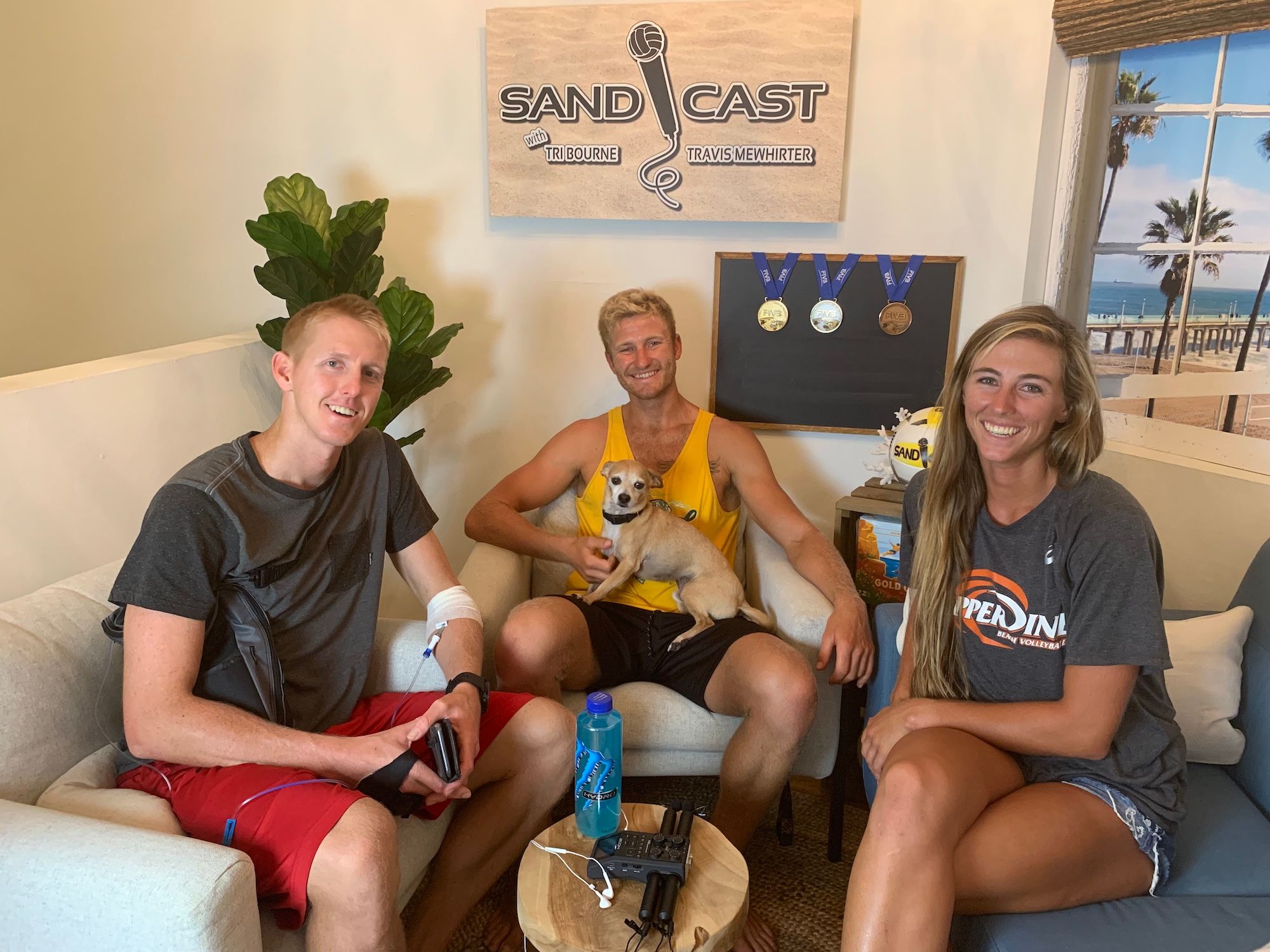
Ep 106Delaney Knudsen: If you can't have fun, then why are you doing it?
Good luck in your search. You can travel to every tournament, watch every match, pour over film for hours. Good luck finding a moment on a beach volleyball court in which Delaney Knudsen is not smiling. She’ll pop up smiling after losing a point, because what a rally it was. She’ll smile after making an error, because sometimes errors can be funny, you know? She’ll smile after her partner makes an error, because, gosh, what a good idea it was to hit that shot. But don’t allow that joyful demeanor to bely the competitor underneath the 1,000-watt smile and ubiquitous laugh. She’s a winner, Knudsen. Always has been, from the days she practiced with the boys team at Valencia High School to her All-American years at Pepperdine to the career year she’s currently having on the AVP Tour. It’s just not the wins that she lives for. “I think that if you don’t have fun playing this game, then why are you playing this game?” Knudsen said on SANDCAST: Beach Volleyball with Tri Bourne and Travis Mewhirter. “I don’t really see any other viable reason to be playing professional beach volleyball unless you have fun playing beach volleyball. There’s not enough money in it, there’s not the fame that you’re going to be recognized on the street for playing it. So if you can’t have fun, then why are you doing it? It’s been awesome to play with Katie because she gets that: If it’s not fun, then why are we doing it?” She has a blast with Spieler, truly. And we’ll get to her in a minute, and the friendship that has blossomed out of their love for this game. But Knudsen finds the fun in everything. She’ll laugh wildly at Jess Sykora’s jump-bump kills, and the memory of playing behind Sykora in New York City last season, when they stunned Canadians Melissa Humana-Paredes and Sarah Pavan in the qualifier. She’ll beam when recalling the grit and work ethic of Emily Hartong, with whom she qualified in Seattle a few months ago. But there is something, or dozens and dozens of things, about Spieler that Knudsen loves to her core. It makes sense, too. They grew up playing in the U.S.A. High Performance system together, every other year. They made their first main draws together, in Manhattan Beach of 2014, when they were both teenagers. They’ve got the same mindset, both on the court and off: Let this game, and life, be fun. “Just being able to laugh and have fun and work hard, which are all my favorite parts of the game, she loves those too, so it feels super comfortable to be out there with someone who has the exact same goals as I do,” Knudsen said. “I think that just the ability to push my body and to work really hard is my favorite part. I love getting to the end of a rally where you’re sandy and you’ve grinded out and bunch of one-handed scramble plays, and win or lose, I can’t come out of a rally like that not smiling, because just working and leaving it all on the court even in just one rally is my favorite part. We come out on top of most of those because we love that pressure and love that work that kind of gets on people’s nerves.” Spieler feels the same, too. After finishing 17th in Hermosa Beach earlier this season – a deceptively low finish, as they were the ones who sent Zana Muno and Crissy Jones, eventual semifinalists, into the contender’s bracket with a 21-14, 21-10 win – they met with their coach, who had made an interesting observation from Spieler. Last year she had taken a fifth, this year, 12 spots lower. Yet she was unquestionably happier after this one. “It was interesting to see what someone else could weigh in on our partnership and just the chemistry we had and just the way we played together and that I could kind of help foster that enjoyment of the game for her just as she was doing for me,” Knudsen said. “I would not have expected that we would have finished the season together but couldn’t be any happier that we are.” No, it was not the initial plan to finish as a left-side blocker. For the majority of her professional and college career, Knudsen has been a defender. While she’s always been adept at switching sides, she played on the right for most of 2018 with Sykora. Then came Spieler’s call to play Hermosa, and suddenly Knudsen was taking on a new position, a new side, and a style of play that can only be described as grind the other team into the ground. And then laugh about it. “If you would have told me I would have ended this season as a blocker I probably would have laughed and been really embarrassed because I don’t really consider myself to be a strong blocker,” said Knudsen, who finished AVP Chicago ranked second among all blockers in blocks per set. “I wouldn’t do it any other way, getting the opportunity to play with Katie and grow my game in such a unique way has been an incredible experience.” As much as she’s enjoyed the physical learning curve as a blocker, competing with a new but old partner, Knudsen is particularly enamored with the mental strides she’s made, and is making. “We can be down
Ep 105Reid Priddy is going for "double-black belt status"
Two years ago, maybe it would have worked. Maybe, when Miles Evans put a ball away, looked directly at Reid Priddy and Trevor Crabb, flexed and yelled with everything he had, “C’mon!” it would have done the trick. Thrown Priddy off. It had worked two years ago, from the guy who was now on the same side of the net as him. Crabb, in the semifinals of the Manhattan Beach Open, had famously run his mouth. It did a number on Priddy, then, though he couldn’t fully understand why. He didn’t understand where all that talk was coming from. Hadn’t all their previous interactions been cordial? Polite? Even friendly? Priddy didn’t know, at the time, that was just what Crabb does on the court. He talks trash. Doesn’t matter if you’re out of the qualifier or out of four quads with the indoor national team: You’re going to hear him. Afterwards, Priddy broke it down. “‘Why was I so mad?’” he wondered. “And it was ‘Well, he showed you disrespect,’” Priddy recalled on SANDCAST: Beach Volleyball with Tri Bourne and Travis Mewhirter. “But why should I have the expectation that somebody should respect me? So it was almost really great because I let go of that expectation at all, even if I subconsciously had it. It was probably that moment, that interchange, that I let it all go.” So when Evans buried the ball to close out the first set, and piled a little talk on top of it, Priddy didn’t mind. He’d been there before. He’d learned from it. And then he gave it right back. “From that moment on,” Priddy said, “it was just ‘All right, now we’re in it. Let’s battle.’” Let’s battle. If there are two words that could accurately summarize the mindset of William Reid Priddy for these past 41 years, those may be the ones to do it. He’s a self-proclaimed underdog story, but unlike a number of athletes who like to push that sometimes-false narrative, his is rather genuine. Raised on a steady diet of soccer, Priddy is the son of Ken and Sharon Priddy, who thought it was funny that, after 11 years of soccer, Priddy was going to try volleyball. “They were like, ‘All right, we’ll just come watch. We have nothing to offer,’” Priddy said. He was athletic enough to help Mountain Pointe High in Phoenix, Arizona, to the school’s first state title, in 1995. Still, the sport was so new to the state, in just its second year as a varsity sport, that Priddy was no blue-chip prospect or can’t-miss recruit. He was still the blue-collar kid who had played mostly soccer his entire life. It was enough, however, for LMU to offer him a spot on a team that recruited seven outside hitters and hadn’t yet developed a single All-American. In 2000, Priddy would become that All-American. Years later, after the program was shuttered, he’d become the first volleyball player to enter the LMU Hall of Fame. That was, in the grand scheme of his career, the easy part. At 6-foot-4, even by the standards of the early 2000s, he was undersized for an outside. Now he was set not to compete against of diamonds in the rough at LMU, but against the best in the country for a spot on the national team. It is that exact environment, though, where the kid who wasn’t the biggest, the one relegated to the “sandlot teams” growing up, the one who only got in fights with bullies because he just couldn’t see the bigger kids picking on the smaller ones, thrives. He didn’t spurn the odds but embraced them, clutched them to his chest. “Nobody ever looked at me and was like ‘That guy’s going to be great.’ I was never the blue-chip guy,” Priddy said. “Now I purposefully channel that. A lot of us, we could have these mental lapses of confidence, ‘Oh man, can I do this?’ Once I learned to channel the competitiveness, how I felt about myself was no longer relevant, because a job had to be done, I gotta put this ball away.” Oh, he would put balls away, all right. For 16 years, he’d represent the United States. He’d play in four Olympics, win a gold and a bronze. His tenure with Zenit-Kazan would be so wildly successful, in fact, that it almost felt weird, how expected it was to win. “That was a strange feeling,” he said. It went against everything his underdog upraising had fostered. If the expectation was to win then where did the satisfaction come from? It seemed, at times, that there was no real reward: Win and it’s what you were supposed to do; lose and what just happened? He’s not a fan of expectations, Priddy. Steals not only a lot of the joy of playing this game but from the purpose of it all. “I have tremendous self-belief but I don’t like expectations,” he said. “In my best years in indoor, my mental routine was do whatever I wanted to do. We could play cards on the bus and we’d be betting but there was always a moment in the locker room where it was ‘Ok, now it’s go time.’ “The shift that took place when my generation came in and with all of our coaches, it was very focused. We’re here, so let’s be here. All in. I really love that stuff.” But expectations, from the outside, anyway, are inevi
Ep 104Eric Beranek: Setback, setback, setback -- then massive breakthrough
You know what they say about plans. Some say that when God hears you making plans, he just laughs. Mike Tyson claims that everybody’s got plan, until they get punched in the face. Eric Beranek had plans this year. He was going to get a coach. Play the year with one guy. Do it the right way, finally. Then God chuckled, and Beranek was, proverbially, punched in the face. He began the year well enough, with Curt Toppel. Straight into main draw. But Toppel was, well, “Toppel,” Beranek said on SANDCAST: Beach Volleyball with Tri Bourne and Travis Mewhirter. He said this with a laugh, because Toppel is Toppel. Full-time job. Kids. Just had enough points to make main draw, so why not go out and play? Beranek knew, though, that Toppel wasn’t his full-time guy. Wasn’t into it like he was. So he turned to Marty Lorenz. That, too, went well enough at first. They made main draw in Austin. Played well, too. Only thing was, Beranek had a cyst on his tailbone. Didn’t tell anyone but shew wee, you should have seen that thing. Went to the hospital right after he got home, and the surgery seemed to go ok, until, an hour later, he was sitting in the bathroom, body rejecting everything, plunging into septic shock. He spent a few more days in the hospital. Had to skip New York, and then Seattle, though the latter turned out to be a bit serendipitous. When Lorenz called Beranek to tell him he couldn’t play Seattle, Billy Kolinske phoned no more than two minutes later, asked him to play the Pottstown Rumble, a big money grass tournament just south of Philadelphia. “I still wasn’t quite right,” he said, but he went anyway, and wouldn’t you know it, they made the finals. Won a good bit of cash, too. Maybe this year was looking up. Going to turn around, close on a high. Somewhere, God laughed. Maybe he knew Beranek was about to get punched in the face again. The day before AVP Hermosa, where he was set to partner with Lorenz again, Beranek’s girlfriend broke up with him. Then salt was poured in by Dylan Maarek and Dave Palm, who knocked him out of the final round of the qualifier. “I didn’t play two AVPs, don’t qualify, girlfriend breaks up with me, ‘I’m like, awesome! We’re back. All time low. Sweet!’” Beranek said, laughing. That’s the things about slamming into the bottom: You bounce. And he did. He set up a practice with Corey Glave, just the two of them. He told Beranek that the player he once knew only wanted to win. He needed to become the player who expected to win. “You gotta find that, and you gotta work super hard to get back,” he told him. “Ok,” Beranek said. “Here we go.” Here we go meant eighth seed in the AVP Manhattan Beach qualifier. No longer with Lorenz, Beranek was back with Kolinske, his Pottstown partner. Lorenz almost encouraged the move. He had trouble dialing in Beranek’s set in transition. Kolinske, who’s world-class at the art of transition setting, would be a better partner for him. That’s one plan God didn’t laugh at. Beranek was finished, for the weekend, at least, getting metaphorically punched in the face. They qualified, and then, after dropping their first match to Ed Ratledge and Rafu Rodriguez, they battled back to win a three-setter over Travis Mewhirter and Raffe Paulis. Their legs were toast. Didn’t matter. They rallied, one more time that day, to beat John Hyden and Theo Brunner. With six matches on their legs, they were moving onto Saturday. “Holy shit,” Beranek thought. “This tournament just started.” It would have been funny, for anyone in the stands, to see Beranek’s dad there. He’s made quite the turnaround. He’s his biggest fan now, Mr. Beranek, but a few years ago, to imagine his son competing on a Saturday at the AVP Manhattan Beach Open? No way. He’s got his own Aerospace manufacturing business. His son was set for life. Didn’t matter if he had dropped out of OCC, dismayed by grades and volleyball. Eric had a job. “You’re set!” he pleaded with his headstrong kid. His friends weren’t much different. When Beranek told them he wanted to play beach volleyball professionally, “they looked at me like I was crazy,” he said. “They said ‘Ohhh, you want to be an actor too? You probably have a better shot at that.’ That was a funny and weird thing I struggled with.” So his friends would laugh, and his dad would send his daily offer: Want me to help pay for trade school? Stay in the shop? Want to be a hairdresser? Nope nope nope. He may have dropped out of OCC, but he had his own kind of education in mind. He skipped work one day and biked down to the strand to find Holly McPeak. He asked if she knew of any coaching opportunities available, and she said no, but there’s this guy, always dressed in Pepperdine gear. Name’s Marcio Sicoli. He’d be down at 15th street tomorrow morning. Go find him. So he skipped work again, found Sicoli, and for the next four months, became the world’s most dedicated ball shagger. From 8-10, he’d be with Kerri Walsh Jennings and April Ross, and from 10-12 he’d work wit
Ep 103Brandie Wilkerson: 'The next thing you know, your goal is the Olympics'
In 2016, Brandie Wilkerson saw everything there was to see, up close and in person. She saw the ceremonies. The athletes, both beach volleyball and otherwise. She practiced on stadium court with the women. She practiced against the men. An alternate for the 2016 Rio Games with Melissa Humana-Paredes, she did just about everything all of the other beach players were there to do, save for compete and one other element of being a participant of the Olympic Games. She didn’t go to the Athletes Village. Not yet. “A part of me didn’t want to stay in the village, because I wanted to earn it,” Wilkerson said on SANDCAST: Beach Volleyball with Tri Bourne and Travis Mewhirter. “So I was like ‘I’m going to get there myself one day.’” Get there herself? Wasn’t this the 24-year-old who had only picked up beach volleyball less than five years ago? The one who was almost as likely to play rugby in college as she was volleyball? Anybody who hadn’t yet heard of Wilkerson may have been able to take that comment and shelve it into the legions of other players who make similar proclamations but don’t follow up. Yet this was not an athlete who belongs in a class of anyone else. Brandie Wilkerson is a class of her own. This was the daughter of Herb and Stephanie Wilkerson, the former an NBA draft pick of the Cleveland Cavaliers and, the latter a runner for Switzerland. A five-sport athlete in high school, winner of four volleyball championships and one in rugby. What would be one more sport for her? Actually, it was, shockingly, to Wilkerson, a bit difficult, though that only raised the appeal. For so long, sports had come so easy. Here was one that presented a worthy challenge. “Playing beach, it was ‘Whoa, there’s a lot more going on here,’” Wilkerson said. “I was attracted to that challenge, and with any competitive athlete, you just want to prove to yourself that you can do it.” She hit the NORCECAs first, 19 in all from 2013-2016, adding 15 FIVBs, making seven main draws. And then the breakthrough. The team for whom her and Humana-Paredes had been the alternates in Rio, Sarah Pavan and Heather Bansley, split. Pavan grabbed Humana-Paredes. Bansley, who had been named the best defender in the world, scooped Wilkerson. Gone were the qualifiers and in was an entire season of top-10 finishes, including a fifth at the Vienna Major. Her prize money tripled, her world ranking improving 90 spots, to 20th. “I just kept raising the bar and I looked up and it’s ‘Oh, I’m doing this full-time right now.’ I was pretty surprised two years ago, when I was stable, I never thought I would be here, and that’s kind of my whole theme with beach volleyball is that I never pictured myself here,” Wilkerson said. “I just knew I wanted to challenge myself and accomplish a goal and it was little goal, little goal, little goal, and the next thing you know, your goal is the Olympics, and it’s like ‘When did we get here?’” By the end of 2018, her and Bansley would be ranked No. 1 in the world. They’d win tournaments in Itapema, San Jose, Las Vegas, Chetumal. Wilkerson would be named the best blocker in the world. Suddenly a goal of reaching the Olympics that could have seemed like a stretch at first now looks more like an inevitability. “I feel extremely blessed,” she said. “I’ve had times where I was debating switching countries because it’s so difficult to be successful in Canada and I had so many other interests I could make a living doing. I wanted to impact the environment, and I can’t do that just playing sports. But I feel like if I have an opportunity to be young and physical and have those chances so many people don’t, I’d be silly to give it up and grow old doing the other things.” There’s only one way into the Athletes’ Village, after all, and it isn’t by doing other things. But still, there is work to be done, an entire season to be played before Tokyo 2020. “I haven’t proven myself consistently, which I think is really the epitome of being the best,” she said. “I think I can get there, and that’s my goal. Watching these people dominate and seeing that it can be done, it’s like ‘Well I want to do that.’” Hosted by Simplecast, an AdsWizz company. See pcm.adswizz.com for information about our collection and use of personal data for advertising.