
SANDCAST: Beach Volleyball with Tri Bourne and Travis Mewhirter
551 episodes — Page 10 of 12
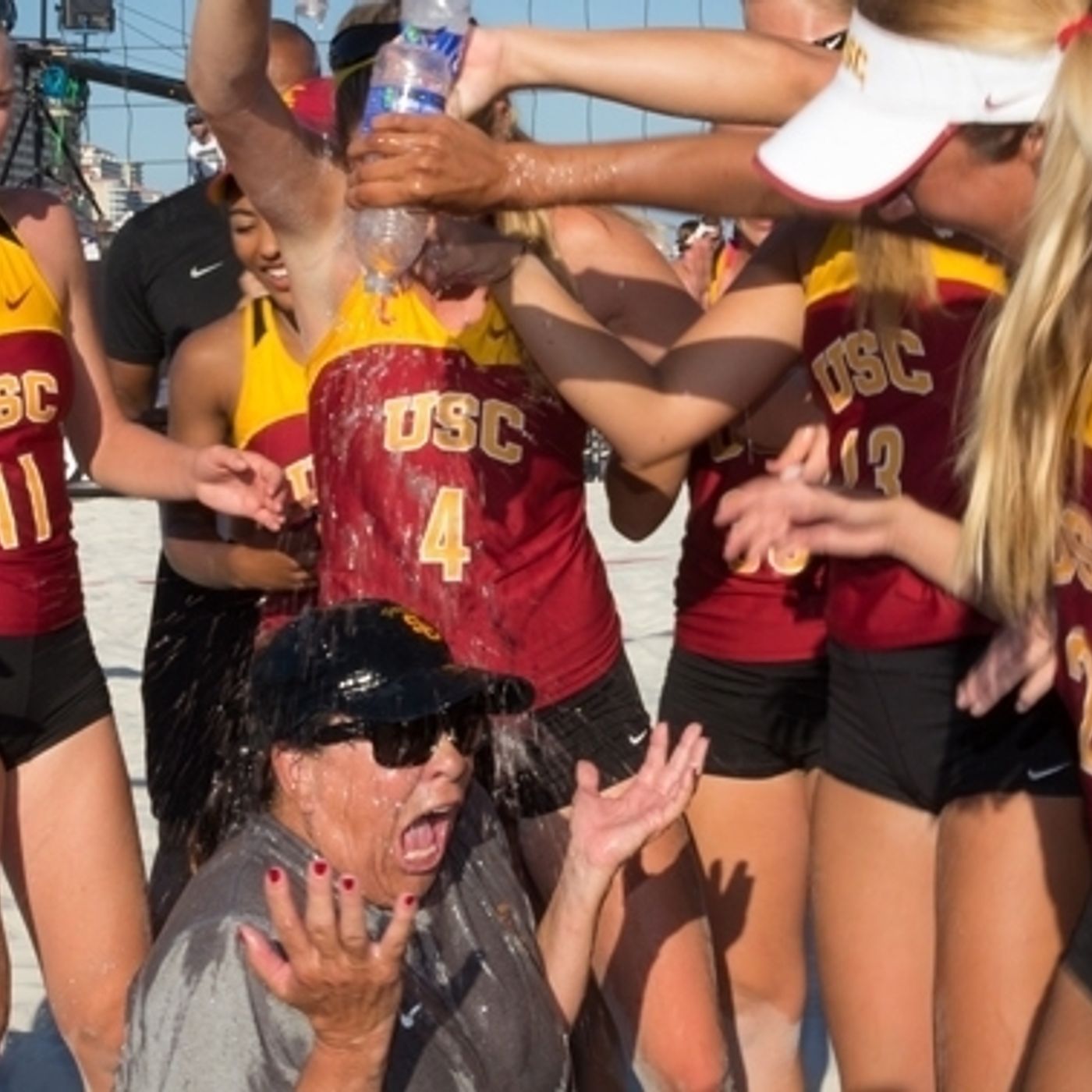
Ep 102Anna Collier: The Coaching Legend who's now a 'teenager with money'
Anna Collier is sitting on Tri Bourne’s couch, and she is – if you can believe it – relaxed. She hasn’t been to the beach in months, aside from when she rides her bike down the strand. She’s getting facials, going to the spa. Reconnecting with old friends. Getting fit. “Just call me Soccer Mom Anna Collier,” she said on SANDCAST: Beach Volleyball with Tri Bourne and Travis Mewhirter. For anyone who knows, or has known, Collier, this is a near-impossible thing to imagine. For the past four decades, Collier hasn’t had time for facials. Trips to the spa. Relax? How can you relax when your day job, for just shy of 40 years, included acting as the Athletic Director, compliance office and volleyball coach at Santa Monica College? Most coaches take the summers off, do they? Not Collier. That was for FIVB, for AVP, for juniors. Non-stop the coaching cycle went, around and around and around. Until, on June 6, it came to a halt. Collier announced her retirement from USC, where she had built not only a beach program, the first of its kind, but had played an integral role in building beach volleyball as a sport at the collegiate level. “It was time,” she said. There is never any one reason for such a monumental decision in one’s life. But as those reasons accumulate over the course of 40-plus years, sometimes it takes one gentle nudge, from a former protégé, to tip you over the edge. That came, in part, from Misty May-Treanor, whom Collier had once coached. “When,” May-Treanor wondered, “are you going to have won enough?” On Collier’s fingers, figuratively, were seven National Championship rings at USC. On her resume were 206 wins and only 38 losses at SC. To her name is virtually every coaching record one can imagine: 62 consecutive wins, an NCAA recore; two-time Coach of the Year; first head coach to reach 100 wins, and 150, and 200. Enough victories over rival UCLA for the rest of the university to be happy. The more Collier thought about it, the easier it became for her to admit, both to herself and to the public, that “it’s time.” And for the first time in as long as she could remember, she slept like a rock. No longer was her mind whirring over recruiting – Who to call, when to call them, who to look for – or how she could tinker with this lineup or that partnership. Her biggest decision, suddenly, was: “Do I take my bike this way, or that way?” And she loves it. “I haven’t had a summer off in a long time,” she said. “This is literally the first summer I’ve had off in four decades.” What she leaves behind is a legacy and coaching epoch that will be labeled as iconic. She, alongside similarly Hall of Fame caliber coaches such as Nina Matthies at Pepperdine, helped usher in an entirely new era of beach volleyball, growing the college game into the fastest growing sport in NCAA history. And it all began with crashing a golf cart. In 2013, Sara Hughes was one of the best indoor players in the country. A four-year starter at Mater Dei, an athletics powerhouse in Santa Ana, Hughes was named team MVP in three consecutive seasons, the Female Athlete of the Year. All-American. All-League. All-Everything. And Anna Collier had a shot. Hughes had grown up playing sand in Huntington Beach. When she was touring schools, she made a firm rule that it needed to have a beach program, which less than 20 in the country did when she was making her decision. USC had launched its program in 2012, with only one scholarship athlete, Geena Urango. Collier had no idea if she could even offer any others, but this was Sara Hughes. She’d find a way. There was only one problem: Her recruiting trip was a complete disaster. Collier loaded up Hughes and her father, Rory, in then-indoor coach Mick Haley’s golf cart, and off they went, driving around campus, which Collier was hardly any more familiar with than Hughes was. She was still working at Santa Monica College at the time, and hadn’t had much availability to learn USC’s campus outside of anything volleyball related. So they toured, and Collier “just made stuff up,” about the buildings, making a mental footnote to actually learn a thing or two. But she can’t make up the next part, about Collier coming to a structure of arches on campus – and crashing the golf cart directly into them. “She walks out the door and I look to my assistant and I’m like ‘We’ll never see her again. That’s it. We’re done,’” Collier said. She’s able to laugh about it now, because, as you know by this point, Hughes became a Trojan, launching one of the most dominant four years in all of college sports. And it wasn’t just Hughes. With five more scholarships than had been originally budgeted, a rapid increase thanks to “an anonymous tip,” Collier said, laughing a surreptitious laugh, she locked in Kelly Claes, Allie Wheeler, Nicolette Martin. Born was the indomitable power that would become USC beach volleyball. Now that power is in the hands of Dain Blanton, who coached under Collier for four seasons as the volunteer ass
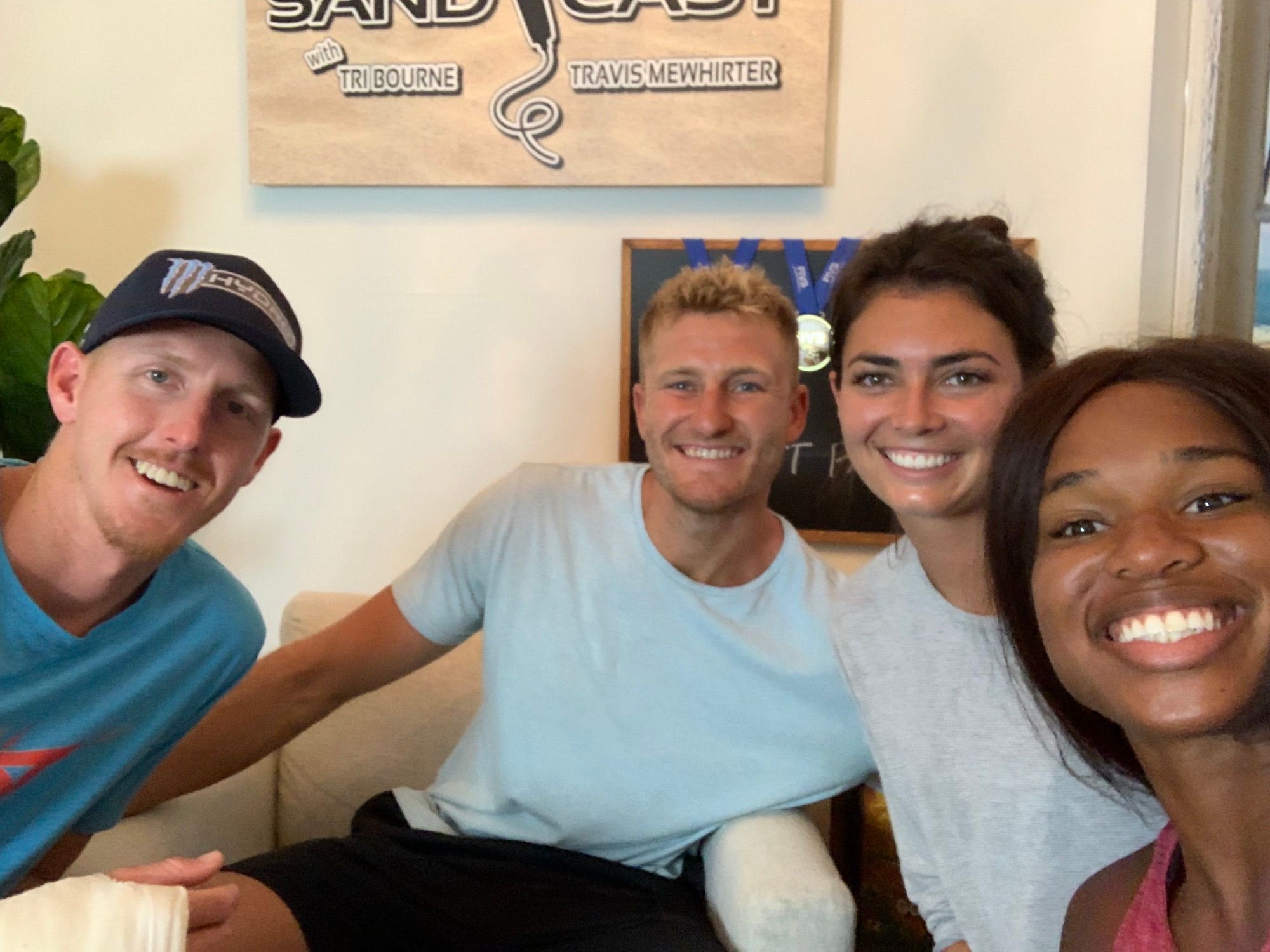
Ep 101Zana Muno and Crissy Jones: The 47 seed who crashed AVP Hermosa
It almost didn’t happen. The Cinderella run. The upsets over the 16, the four, the eight, the 22. The AVP semifinal that would be host to the highest seed – Q47 – in the tour’s history. The 8-3 jump Zana Muno and Crissy Jones would get on top-seeded Betsi Flint and Emily Day, on stadium court, on Sunday. All of that was nearly lost before any of it even got started. Towards the end of Jones’ and Muno’s fourth and final qualifier match for AVP Hermosa, Jones felt a cramp coming on, compiled by an awkward landing on her knee. They finished the match, of course. By that point, they’d come to far not to, and it was over quickly enough: 21-13, 21-7 over Lara Dykstra and Kim Smith, who were battling through injuries of their own. In that moment, they had done everything they had come to do. They qualified on the AVP Tour, something that eluded them in their only other professional event, in Seattle, where they fell in the third round to Janelle Allen and Kerri Schuh. They cried on the way home to the airport that weekend. “At the same time,” Jones said, “we were both really unsure with what we were capable of doing.” Both of them had proven more than talented enough indoors – Muno at UCLA, Jones at Washington -- to command a contract, with a salary, validation, stability, overseas. Their beach journey, at that point, had been the exact antithesis. Twice they had bought flights, booked hotels for qualifiers. Twice, in Austin and then New York, they didn’t get into the qualifier because of a lack of points. “I was like ‘Oh my God, this is so hard,’” Muno said, laughing. She’s able to laugh now, in retrospect. It’s easier to look in the rearview and smile when there’s a third place in that same rearview. They drew lessons from each, Seattle in particular. For four years at UCLA, Muno had been the favorite in virtually every match she played, finishing a brilliant career with two national championships, scoring the final point of the match that would seal the second. Now the role was flipped: Muno and Jones, a standout on court one at Cal Poly, which also enjoyed a historic season, were the underdogs, a role they embraced. “We came into Hermosa and said ‘Ok, this is our time to attack it and we’re going to go through a qualifier again and just stay present with every match we played,’” Jones said. So when they qualified, and there would be no teary exits, that was it. “Once you’re out of the qualifier you can breathe, you’re so free,” Muno said. “Once you’re in the main draw, now you have nothing to lose, you can play free.” Problem was: They almost didn’t play at all. Jones called Muno on their way to the site, told her that her knee was hurting pretty bad. She might not be able to do it. Muno, on the other end of the phone, put on a supportive look: “I’m like, ‘It’s ok, you gotta take care of yourself,’” she said, laughing – always laughing – again. Meanwhile: “I’m sobbing.” They figured they’d give it a try anyway. They told AVP tournament director Jeff Conover to pull them off of stadium court. Nobody wants to see a mid-match forfeit. So he put them on court five, and against Katie Spieler and Delaney Knudsen, a team they had beaten weeks earlier in the Santa Barbara Open, they lost 21-14, 21-10. It was the best thing that could have happened. In a 24-team draw, as Hermosa is, if you win your first round, you play almost immediately after. But if you win your first and lose your second, on minimal rest, you wind up in the exact same spot as if you had lost your first. So instead of playing a second match on hardly any rest, Muno and Jones were able to take six, seven hours off their feet. Put the legs up. Recover, finally. And then, match by match, the story of the weekend was written: a 15-10 third-set win over fellow collegians Morgan Martin (Hawai’i) and Iya Lindahl (Cal), a sweep of Meghan Mannari and Taylor Nyquist, another sweep of Brittany Hochevar and Maria Clara Salgado, a three-set win over Kim DiCello and Kelly Reeves, a thrilling three-set quarterfinal over wunderkinds Delaynie Maple and Megan Kraft. With each win, Jones would wonder to herself, “Is this really happening?” “I think the experience in general, because it was so unexpected, and because of all the adversity we had gone through to get there, we were so grateful for everything that happened and seeing all these people who had been kicking butt on tour, just giving it our best shot,” Jones said. They did that Sunday, too, but in their eleventh match, their legs finally gave in. The 8-3 lead they established on Flint and Day was flipped into a 14-21 loss. A valiant comeback in the second was thwarted. Flint and Day would go on to win. Muno would call her brother, JJ, a minor league baseball player who is currently in the Chicago White Sox system. He asked her what happened, and she said her legs just didn’t have anything left in the tank, a feeling he’s more than familiar with. Next week, though, in Manhattan Beach, they’ll have four less mat
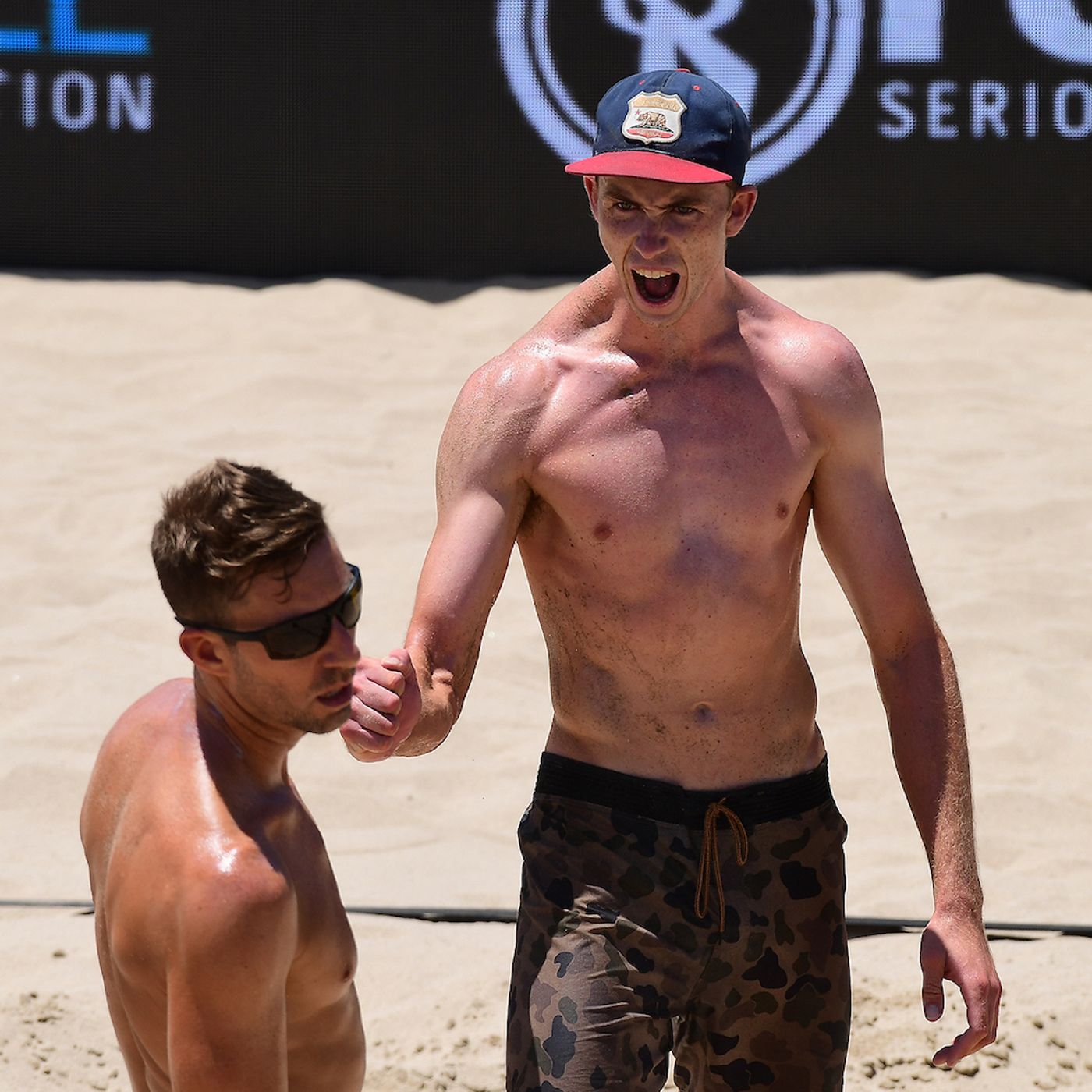
Ep 100Adam Roberts and Andy Benesh: From qualifier struggles to career finishes
The first notes on the Book of Andy Benesh came a little less than a year ago, about a six-hour drive north of Hermosa Beach. Adam Roberts was there to watch Benesh’s second-round match. Playing in just his second AVP qualifier, with little points to his name, Benesh came in as the 33 seed, meaning, after a pigtail round, he, with Cole Fiers, had top-seeded Myles Muagututia and Kyle Friend. “I saw him serve a ball, get to the net, get four blocks in a row, get an ace, and I was like ‘Who is this kid? Let’s see if he can set,’” Adam Roberts, Benesh’s current partner, said on SANDCAST: Beach Volleyball with Tri Bourne and Travis Mewhirter. “Standard big guy stuff, right? They serve Cole and he puts up a juicy set and I’m like ‘Man! What is his name? What is his number? I’m gonna tuck that one away.’” While Roberts had it tucked away, Benesh quietly made a few main draws. He wound up qualifying in San Francisco, upsetting Friend and Muagututia, 24-22, 21-17, and winning his next two matches. Then he and Fiers did it again in Hermosa. It was an auspicious start for Benesh’s beach career, one that really only began in earnest a few months prior to San Francisco. He had been an indoor kid, for the most part, growing up. Raised in Palos Verdes, he was named First Team All-American, put on the VolleyballMag.com Fab 50 list, All-Area, All-League, All-Everything. Those accolades earned him a spot as a middle at USC, where he started all 26 matches as a freshman, falling just shy of the Trojan hitting percentage record. So went the next three years at USC, where he continued to excel, eventually being named captain as a senior. But the only beach experience he had was messing around on the fours courts at 16th street. Which brings us back to Roberts’ key question for all big men: Could the kid set? Prior to AVP Huntington, Roberts set up a four-team practice, Benesh being one of the teams. There it was confirmed: Benesh could indeed put up a set, and after both failed to qualify in Huntington, both were looking for partners in Austin. Roberts turned back the clock to that day in San Francisco. Yes, Benesh would be quite the option. Their first two tournaments, though, they fell short. A few quirky plays in the third set of the final round of the AVP Austin qualifier kept them out of main draw. Then came a first-round exit in New York and all of a sudden doubt began creeping in. “You look at it, and it’s ‘Are we a good team or are we not?’ We’re kinda looking at it like ‘Maybe we’re not that good’ but I was thinking ‘Man, I really think we’re a good team,’” Roberts said. “Even if you look at the results, losing the round to get in, lose first round, lose first round, maybe they’re not that good, but I just kept thinking we really have something special here. To me, it doesn’t make sense when guys make lateral moves mid-season. I just kept thinking: I think we’re a good team, I think we’re a good team.” The past few months, they’ve proved as much. They flew from New York and directly into an AVP Next Gold Series in Colorado, winning the tournament and, subsequently, a bid into the Manhattan Beach Open main draw. In Hermosa, they qualified for their first main draw, marking Benesh’s first in a year and Roberts’ first since Chicago of 2017 with – here’s a good beach volleyball trivia tidbit – Mark Burik. They were ecstatic, to be sure. But not satisfied. Not yet. “I texted Adam Thursday night and said ‘We’re not done yet,’” Benesh said. “I’m not just here to go 0-2 in the main draw. I’m trying to win some matches, see if we can compete at that level.” Oh, they competed all right. They came out and won their first main draw match 21-17, 21-11, setting up a match with fourth-seeded Billy Allen and Stafford Slick. And on a packed stadium court, they delivered the first major upset of the tournament, 23-21, 18-21, 15-11. A day later, they’d deliver another, eliminating seventh-seeded Chase Frishman and Avery Drost, 15-21, 21-18, 15-13. “Obviously coming out of the qualifier we don’t have that opportunity every tournament,” Benesh said of upsetting main draw teams. “So when you do you want to take advantage of it. I don’t think there was a team in the draw that we were intimidated by.” They’ll be back in the main draw again, in Manhattan Beach, now with a seventh-place finish under their belt, and a God-blessed day of rest prior to the tournament. “It’s nice. It’s very nice,” Roberts said. “It kind of gives us a chance to really focus on a main draw. That extra day of rest is going to be very useful.” Hosted by Simplecast, an AdsWizz company. See pcm.adswizz.com for information about our collection and use of personal data for advertising.

Ep 99It's a good year to be Chaim Schalk -- American Chaim Schalk
It was an otherwise innocuous Monday when the Canadian beach volleyball community reached and unleashed its peak fury which, because it’s Canada, really wasn’t much fury at all. Tri Bourne had put up a picture of Chaim Schalk. No, no. Not just Chaim Schalk. “American Chaim Schalk,” Bourne put on Instagram. For nearly a decade, Schalk had represented Canada on the beach. He had been an Olympian for Canada on the beach. He had made international podiums for Canada on the beach. Raised in Red Deer, Alberta, with a habit of punctuating sentences with ‘eh?’ and a humility and affability that you just don’t find much in Southern California, Schalk was, by all accounts, Canadian to the core. So what was he doing, on Monday, May 6, wearing a USA Volleyball shirt, taking pictures, doing promos, looking like, well, “American Chaim Schalk”? Just running out the clock until his international volleyball purgatory is over. “I got a lot of messages on that,” Schalk said of Bourne’s post of Schalk at USA Volleyball’s Media Day. “A lot of people still didn’t know. They were like ‘What does this mean? Why do you have a USA shirt on? This is messed up!’” At the end of the 2017 FIVB season, Schalk announced that he would be making the transfer from Canada to the United States, competing for the Yanks instead of the Leafs. It meant a hefty fee and a two-year hiatus on the world tour, but it also meant access to USAV’s resources, the ability to live and compete and train full-time in Southern California, the opportunity to represent arguably the biggest powerhouse beach volleyball nation on the planet. And, while nobody wants to lose two years of their international careers, in what could be their prime, the timing was perfect for Schalk. In May, Schalk’s wife, Lane Carico, also a professional beach player, gave birth to their daughter, Koa. With Schalk unable to compete around the globe, he’s been able to spend time at home, helping with Carico, helping with Koa, witnessing the miraculous growth that is the first few months of a child’s life. “It’s been a blur the past couple months with the baby, just helping out as much as I can. It’s been so nice to be home and help out with Lane and it’s been so nice with the AVPs because I take off Thursday and then I’ll be back Sunday night,” Schalk said on SANDCAST: Beach Volleyball with Tri Bourne and Travis Mewhirter. “It’s been a perfect time to have a kid because I haven’t felt like I needed to be away and if I was away for a couple weeks that would be a little tougher for right now.” This is not to say that Schalk doesn’t get antsy. He watched World Championships in Hamburg. He watched the Gstaad Major. They’re his two favorite stops on tour. He saw the Instagram posts, the ones athletes just cannot help but putting up – cups of coffee in the mountains, the stunning green of Gstaad, the mountain biking, the crowds, the stadiums. “Everyone just has to do their water photo and the morning coffee, ‘Not a bad place to wake up to,’” Schalk said, shaking his head. “C’mon guys! That makes me itch a little bit.” In November, he can alas scratch that itch, getting back out onto the world tour, representing a different set of colors, a different flag, a different federation. So, Canada beach volleyball nation, soon enough, you’ll have to accept this simple reality. He’s not just Chaim Schalk anymore. He’s American Chaim Schalk. Hosted by Simplecast, an AdsWizz company. See pcm.adswizz.com for information about our collection and use of personal data for advertising.
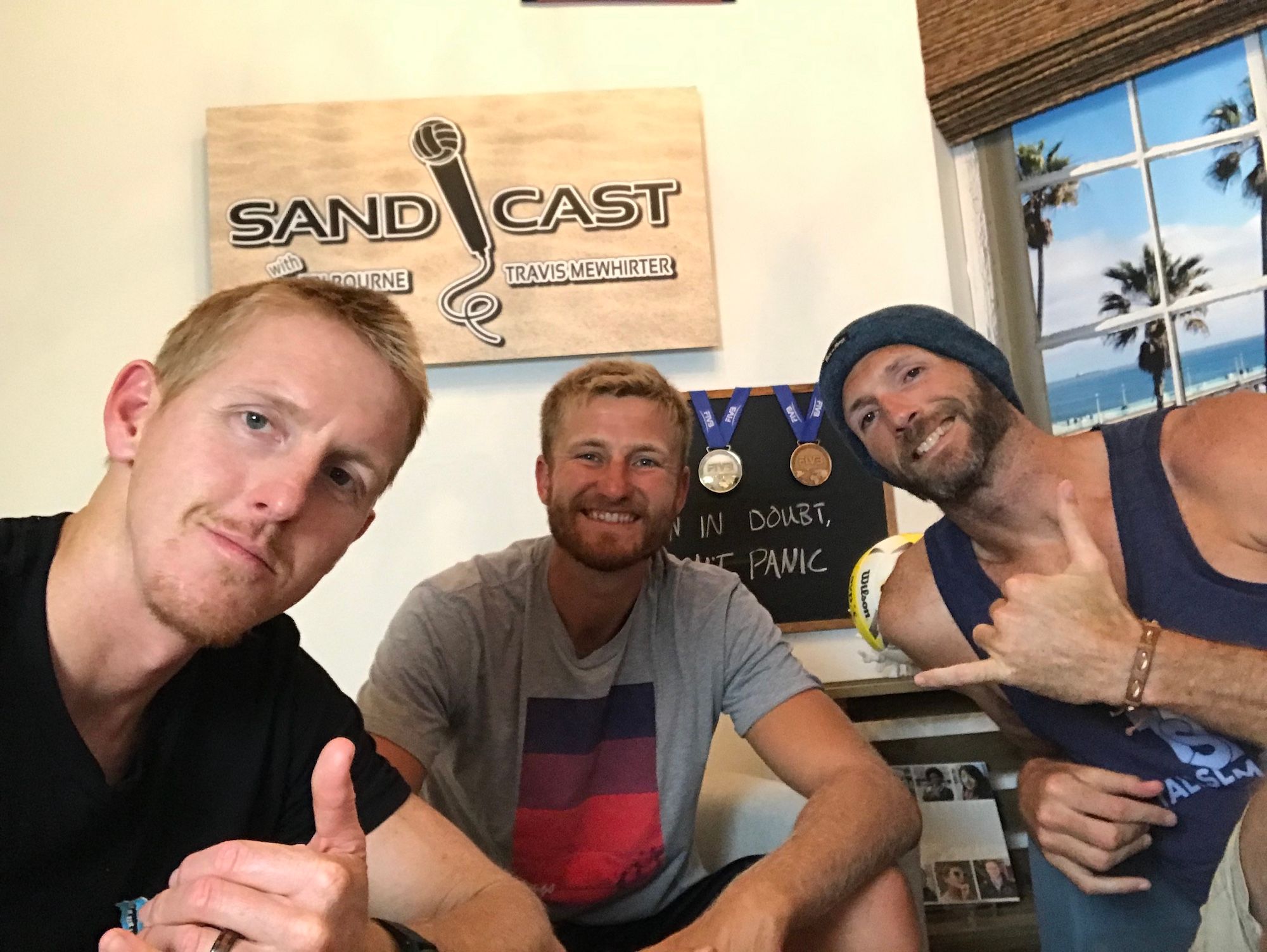
Ep 98The next chapter of Ryan Doherty's career begins in Hermosa Beach
The most difficult transition of Ryan Doherty’s new partnership, from John Hyden to Miles Evans, might not be the difference in playing style or personality or skill level or experience or energy level or setting preferences or serving or any of the other obvious tangibles that can make partner switching a sometimes-difficult ordeal. It might just be the high five. We joke, kind of, sort of. Because we’re also serious, kind of, sort of. “Our first couple times practicing, Miles kept coming in for the high five, and Hyden – we never high-fived,” Doherty said on SANDCAST: Beach Volleyball with Tri Bourne and Travis Mewhirter. “Miles would get an ace and I’d point and he’d be right behind me saying ‘Yeah! Let’s do this!’ “This is 9 a.m. on a Tuesday morning so I gotta get used to this puppy dog energy. I’m looking forward to it.” This is the next chapter of Ryan Doherty’s career, one that is nominated for the unofficial award of Most Likely to be Made Into a Movie. Since moving on from a professional baseball career that was beginning to flat line and making the cross-country trek to California, Doherty’s path was been wonderfully circuitous and, by all means, remarkably successful. His list of partners, despite not having a volleyball background, aside from pickup games against high schoolers in South Carolina and a few Great American Volleyball events in New Jersey, is a who’s who of the best American defenders of this generation. “I have been lucky enough to play with a murderer’s row of partners, some of the best defenders in the U.S,” Doherty said. “It started with Casey Patterson, Todd Rogers, Nick Lucena, Johnny Mayer, John Hyden, back to John Mayer, Billy Allen, and then John Hyden. I was always the younger one. As someone who tries to teach and I think I know a little bit about the game I think it might be fun to help out Miles a little bit, see if I can maybe guide him a little bit.” That group has combined for more than 150 professional wins and three Olympic appearances, five if you include Hyden’s two Olympics with the indoor national team in 1996 and 2000. That level was never Doherty’s goal. He’s not much of a goal guy. He’s always, simply, wanted to become the best beach volleyball player he can be, a path on which he’s still traveling. Now he’s playing a different role, from student and sponge, soaking up the knowledge of those who have been able to dispense it, to doing the same for the next generation of defenders, one who has a legitimate shot at making that Olympic level in the years to come. “He could easily move into that great category,” Bourne said, a sentiment with which Doherty agreed. “I’ve seen Miles play for a couple years,” Doherty said. “He’s getting better and better and I don’t know how he’s going to try to turn that corner in terms of being a good player into a great one, one of the top players in the country. His skills are there, it’s just the experience, the comfort of being at the top level. I think with his natural abilities being really physical and my calm demeanor being able to bring him down when he gets a little too ramped up, I think that might help us out a bit.” The change, in general, will likely help them both. Evans hasn’t competed in an AVP main draw since Huntington of 2016. Now, he’s straight into main with Doherty. Doherty, meanwhile, admitted this year hasn’t been his finest. Sometimes a change, not begat out of ill will but out of a need for something different, is exactly the thing. “I haven’t been playing at a very high level, so it’s one of those things where if you’re not playing really well and you’re kinda miserable, what’s the point?” Doherty said. “Let’s try to do something different, mix it up. I have no ill feelings. I hope [Hyden] keeps dominating till he’s 50 years old. I figured I’d try something new.” And so, in Evans, he is. And the next chapter of the fascinating book that is the life of Ryan Doherty begins. Hosted by Simplecast, an AdsWizz company. See pcm.adswizz.com for information about our collection and use of personal data for advertising.
Ep 97Melissa Humana-Paredes and Sarah Pavan: A team of Canadian firsts
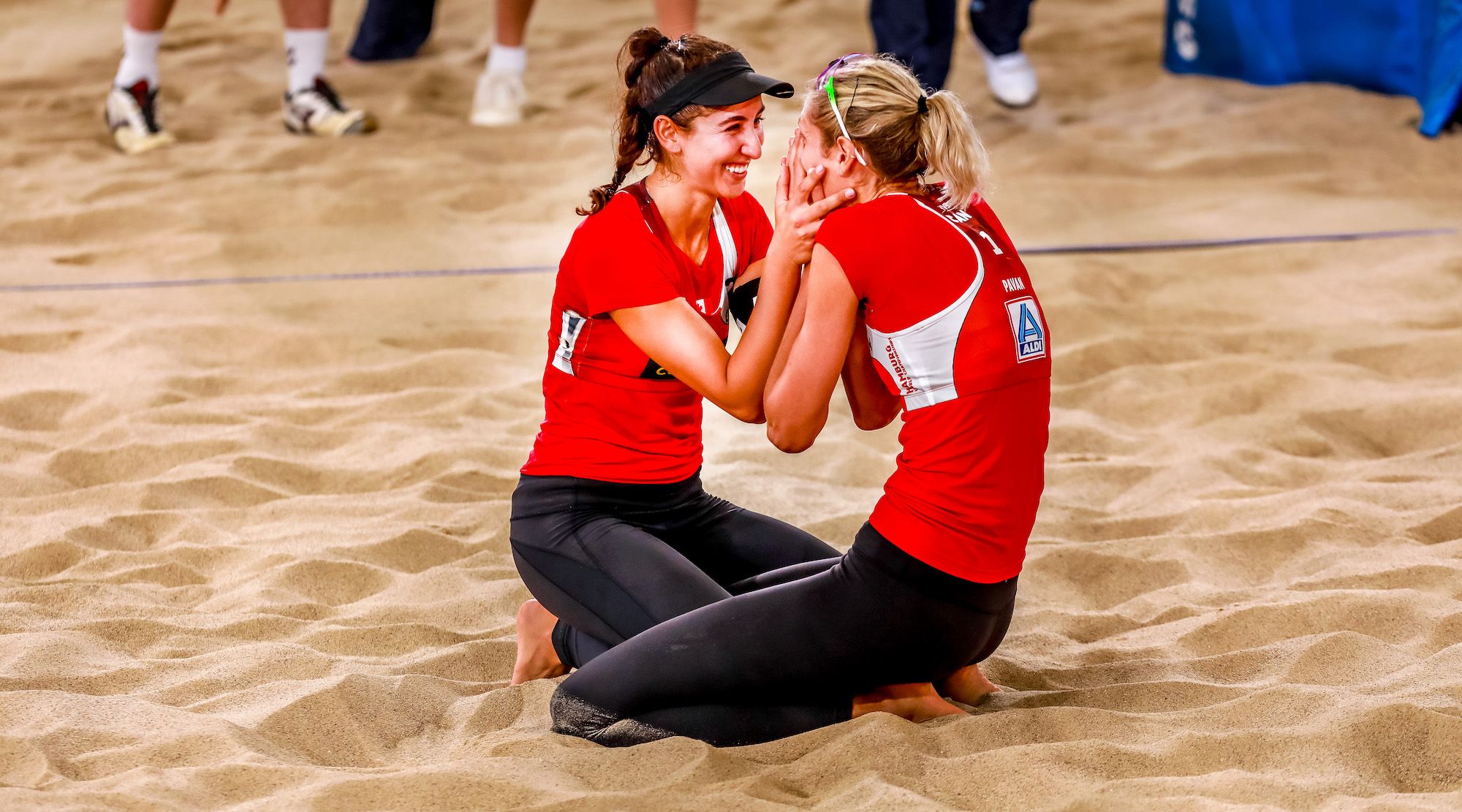
It wasn’t exactly an audacious start, was it? September 12, 2016. The first match of Melissa Humana-Paredes’ and Sarah Pavan’s partnership: A country quota against Brandie Wilkerson and – who else? – Pavan’s former partner, Heather Bansley, in Toronto, no less, the training center for the Canadian national team, where Pavan has played something of a revolutionary role. She did not, however, play that role on September 12 of 2016. On that day, her and Humana-Paredes, an affable young defender of 23 years at the time, lost, 21-23, 13-21. They wondered, almost incredulously, if they could feel such an emotion at the time, why a reporter had reminded them of that loss. He had reminded them in the moments after they had won the World Championship. It was Canada’s first. A momentous achievement not just for two individuals carving out history in a sport rich in it, but for a nation that is rapidly creating a foothold in a space traditionally dominated by countries south of the Canadian border. “Why would you remind us of that?” they wondered, simultaneously. Because it makes the narrative that much sweeter, the process that much more real. There is no relating to a story with a smooth beginning, steep curve in the middle and a World Championship at the end. They know it, too, even if they didn’t want to relive that country quota loss quite so soon after reaching a new pinnacle for Canadian beach volleyball. “Every failure,” Pavan said, “has led to this moment. Nobody sees the tough moments.” What most see is that Humana-Paredes and Pavan are currently doing for Canada, on their on relative scale, what Kerri Walsh Jennings and Misty May Treanor once did for the United States: They’re writing their own country’s history. It was at Gstaad, where the best players in the world are currently competing, a year ago where Pavan and Humana-Paredes claimed Canada’s first major title. Didn’t even lose a match, those Canadians, dethroning the countries that laid the foundation of beach volleyball’s traditional powers that be: 21-15, 21-15 over the United States, 14-21, 21-12, 15-13 over Brazil, 21-17, 12-21, 17-15 over Germany. Only months before that, they had become the first Canadian team to win a Commonwealth Games. It was last June when Humana-Paredes said, on SANDCAST: Beach Volleyball with Tri Bourne and Travis Mewhirter, that “we have so much more that we need to improve on and that we can improve on and I think our potential – it seems limitless right now." Prophetic words. It hasn’t all been pretty, and they knew it wouldn’t. Pavan knew she was taking a chance on Humana-Paredes then, who had been relatively unproven at the time. She knew the potential upside, an upside that is now paying dividends in the form of history, of major titles, of World Championships. “It happened much quicker than either of us expected,” Pavan said on that episode a year ago, and those same words ring true a year later. “It’s nice to see the grit and the fire of not being satisfied with making one semifinal or one podium or whatever.” And so they’ll continue to remain unsatisfied. So long as reporters continue to remind them of their humble beginnings, if not only to show them just how far they’ve come. “The things we have overcome this week, last week, this year, in the last two years, three years and now we’re world champions,” Humana-Paredes said. “I have no words.” No need for words when you have history. Hosted by Simplecast, an AdsWizz company. See pcm.adswizz.com for information about our collection and use of personal data for advertising.
Ep 96Tim Bomgren: The humblest grinder on the AVP Tour
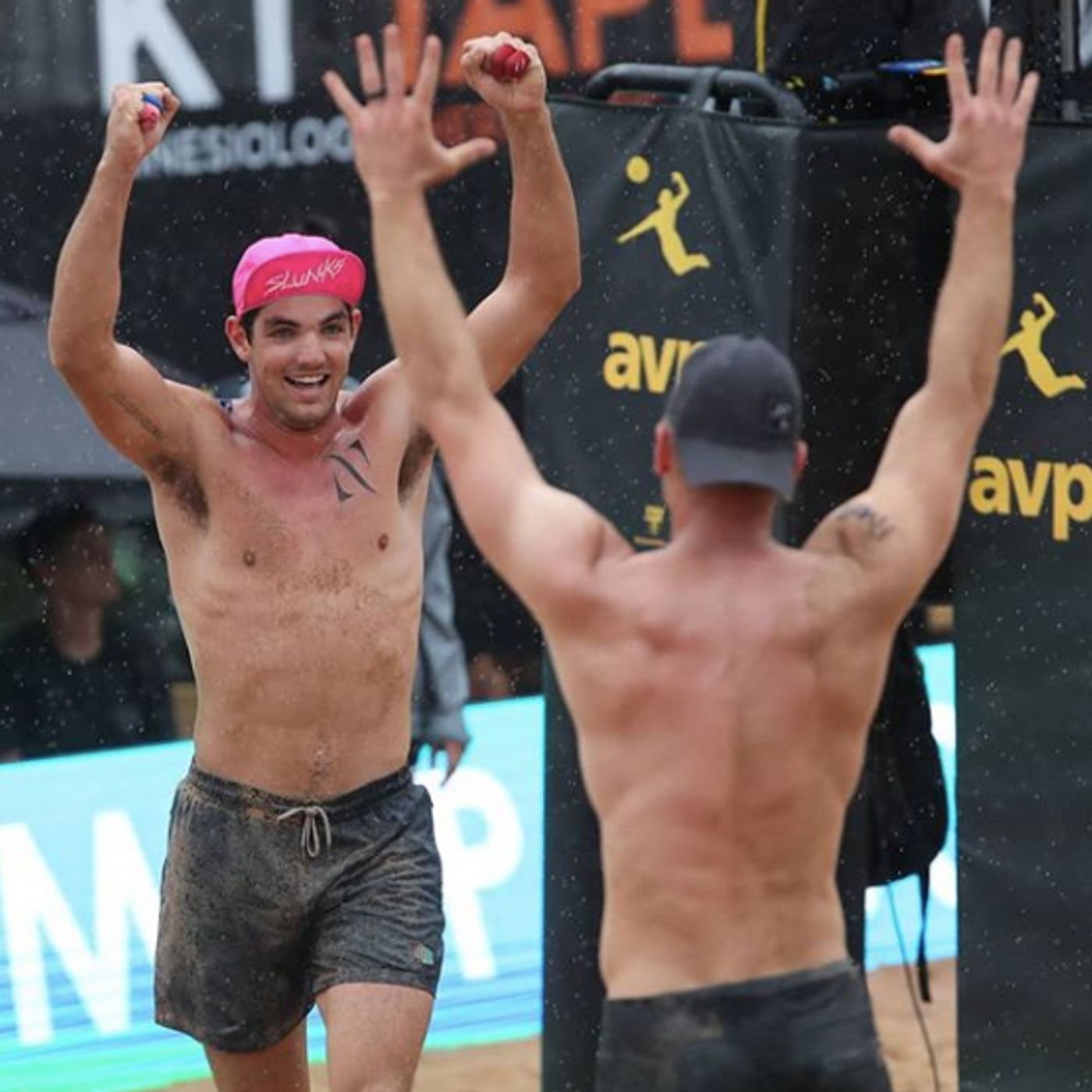
It was the running joke in the player’s tent of AVP New York: Nobody really wanted to play any of the teams on the bracket. Of the seven teams Tim Bomgren would end up playing in New York, five included Olympians, and the other two were teams currently pushing for Tokyo 2020. “I hadn’t thought of it like that,” Bomgren said on SANDCAST: Beach Volleyball with Tri Bourne and Travis Mewhirter. “You look at the bracket and you’re like ‘Ok, I’m not really happy about playing any of these teams.’ It’s just one of those.” Bomgren and his new partner, Troy Field, the social media maven with the big jumps and the pink hat, can officially be labeled as one of those teams nobody would particularly enjoy playing, in large part because of talent, but also because balls that should go down just don’t, as if they’ve got the remote control to gravity and have found a way to keep Wilson off the sand for just a tad longer. “Team never say die,” Camryn Irwin labeled them on the Amazon Prime livestream of New York, where Field and Bomgren produced highlights of viral potential like most teams produce regular side outs. “We both know we’re going to be as scrappy as we possibly can and we’re just going to work our tails off,” Bomgren said. “We might not be the smoothest side out players, we might not be the best setters, we might not be the best servers, but we’re going to scratch and claw our way to get whatever points we can. So far it’s worked out pretty well.” Don’t listen to him. Not even for a second. That’s the Minnesotan in him. By now you know Bomgren’s story: Minnesota born and raised, playing every sport there is to play. Picked up volleyball in college but was so darn athletic it didn’t matter he had a late start. Not all that much different from his partner, really. Field, too, had a late introduction to the sport and initially, sure, but by now both are deeply skilled enough that it’s the combination of a scrappiness begat from an initial need for it blended with a bona fide beach skill set that makes them one of the most exciting teams to watch. And one of the most consistently successful teams on tour. Without a single competitive match under their belt, they made the semifinals in Huntington Beach. They won their first match over Sean Rosenthal and Ricardo Santos, two Mount Rushmore-worthy candidates for their respective countries. They beat champs in Ed Ratledge and Rafu Rodriguez, and future Seattle winners Jeremy Casebeer and Chaim Schalk. Any thoughts of it being a honeymoon phase were quickly silenced when they did the same thing the following tournament in Austin, then slugged their way through the gauntlet of New York, where they made their first final, falling to Phil Dalhausser and Nick Lucena but not before gifting the Amazon Prime staff a coterie of highlights for the internet to enjoy. “Both him and I just love the game and love the competition,” Bomgren said. “Getting along with your partner and having fun with your partner is so key. I hope you guys can tell it, but Troy and I are having an absolute blast out there. It’s making some of our success feel that much easier because we’re having so much fun.” He still feels like an underdog, Bomgren. Partly because he’s still in Minnesota. Partly because, I mean, what the hell, he’s not shooting for the Olympics. Yet here he is anyway, grinding through matches against the world’s elite. He acknowledges that he knows he belongs, that it doesn’t really matter to him if he has an armada of coaches pounding balls at him five days a week. He just doesn’t need that many reps. And besides, he’s got his son, Brody, an affable two-year-old who wants nothing more than to play volley in the basement with dad after work. Not the most traditional program, but when has Bomgren’s success been traditional, anyway? “One of the things that’s eye-opening is when you finally see the success,” he said. “Getting that success is never easy. You have to work your tail off, and that’s kind of my game. I’m not the best passer, not the best setter, not the best hitter, but controlling the things I can control has been huge for me and I’m doing that better than I have before and compiling those things together has allowed me to play at the top level and make it to where I want to be. I’m ready to really play at the top level.” Hosted by Simplecast, an AdsWizz company. See pcm.adswizz.com for information about our collection and use of personal data for advertising.
Ep 95AVP mid-season awards, World Champs preview
With one, final Jeremy Casebeer – or Uncle Jer Bear, as he was known at Lake Sammamish – swing in Seattle, the AVP officially reached the midpoint of the 2019 season. It has, by any measure, been a rollicking success. Every event has been home to packed stadiums and sold out VIP areas and flowing beer gardens. Most importantly, it’s been home to excellent beach volleyball. Upsets have become the norm this season, a sign that the field, on both the men’s and the women’s side, is deepening. Qualifier teams have upset the one seed in the men and the women. Three different teams have won a men’s title and three different have won a women’s title. Two of those victors on the women’s end – Karissa Cook and Jace Pardon, Kelley Larsen and Emily Stockman – have been new winners, while one, Uncle Jer Bear and Chaim Schalk, has been a first-timer for the men. It’s made for a fun season to watch for fans, one in which new faces are emerging, older ones are being pushed, and people are coming out in droves to see it. On SANDCAST: Beach Volleyball with Tri Bourne and Travis Mewhirter, the hosts break down the mid-season AVP awards. MVP Men’s: Taylor Crabb Few have ever looked so indifferent when being introduced in an AVP final. Yet there Taylor Crabb sits, legs crossed, paying attention to seemingly everything but his name being called to play an AVP final. Such is the state of mind when you expect to be there, and it’s easy to see why Crabb does, indeed, expect to be there. Crabb and Gibb won the first two events of the season, in Huntington Beach and Austin, making it three straight when dating it back to Chicago of 2018. In the past two seasons, they’ve made eight finals in 10 events, not including the Hawai’i Invitational. Much of this is due, yes, to Gibb, but Crabb is playing at a level unmatchedon the AVP this season. In the running: Phil Dalhausser, Nick Lucena, Jake Gibb, Jeremy Casebeer Women’s: April Ross In discussing Ross, Bourne wondered when the last time the 37-year-old wasn’t only the best player in the country, but in the world. She has played two AVPs this season and won both. Her and Alix Klineman have played six FIVBs and won two. As with Crabb, much of the credit goes to Klineman’s 6-foot-4 presence at the net, but Ross is the engine, fueled by a serve that has earned her FIVB’s Best Server five times since 2013, and an all-around game that has awarded her four AVP MVP’s since the same year. In the running: Alix Kineman, Sarah Sponcil, Betsi Flint, Emily Day Rookie of the Year Men’s: Paul Lotman Of the many skills, both tangible and not, you cannot teach in beach volleyball, one is this: Being an Olympian. Lotman has that distinction, and it’s beginning to show, as his indoor game translates to the beach. A year ago, Lotman showed glimpses of his beach potential in a titanic serve and the physicality that earned him a spot on the 2012 Olympic team. But there were a few skills that needed grooming. Consider them groomed. Lotman and Gabe Ospina have qualified for three straight events, all small draws, and became just the second 16-seed to beat a one in AVP history, topping Gibb and Crabb in Austin. They don’t seem to be slowing, either. Now, with enough points to likely get them straight into Hermosa and Manhattan, they won’t have qualifier legs, but fresh ones prepared to make a move deeper into main. In the running: Gabe Ospina, Kyle Friend, David Lee Women’s: Terese Cannon Truth be told, I don’t know whether Cannon is still, technically, considered a rookie, because she’s made a handful of main draws prior to this season. But if she’s eligible, Cannon has a runaway case for Rookie of the Year. She took third in Austin – she skipped Huntington Beach for NCAA Championships – to begin the year and has taken a ninth and seventh since. Her and Irene Pollock have enough points where they’ll be in main draw for the remainder of the year, making Cannon the early, and heavy, favorite to win. In the running: Kim Hildreth, Sarah Schermerhorn, Falyn Fonoimoana, Emily Hartong Breakthrough Athlete Men’s: Troy Field Field’s rise on the AVP, both as a player and personality, has been meteoric. He has gone, in the span of two years, as that qualifier guy wearing a pink hat who could jump really high to a bona fide contender to winning AVPs. In four events this season, he and Tim Bomgren have made three Sundays, including a final, Field’s first, in New York City. With Hermosa and Manhattan expected to be a tad watered down, with teams skipping for Olympic qualifiers, odds are that Field and Bomgren will be back in the finals soon enough. In the running: Tim Bomgren, Chase Budinger, Jeremy Casebeer, Chaim Schalk Women’s: Jace Pardon A few weeks prior to Huntington Beach, Pardon wasn’t sure who she was going to play with. She had popped around with a few different partners in 2018, never really finding a consistent rhythm with any, one player. Then Karissa Cook freed up, and the rest, you could say, is history in th
Ep 94Remembering Eric Zaun aka Danny Fahrenheit aka Cookie Robinson aka Midnight Verde
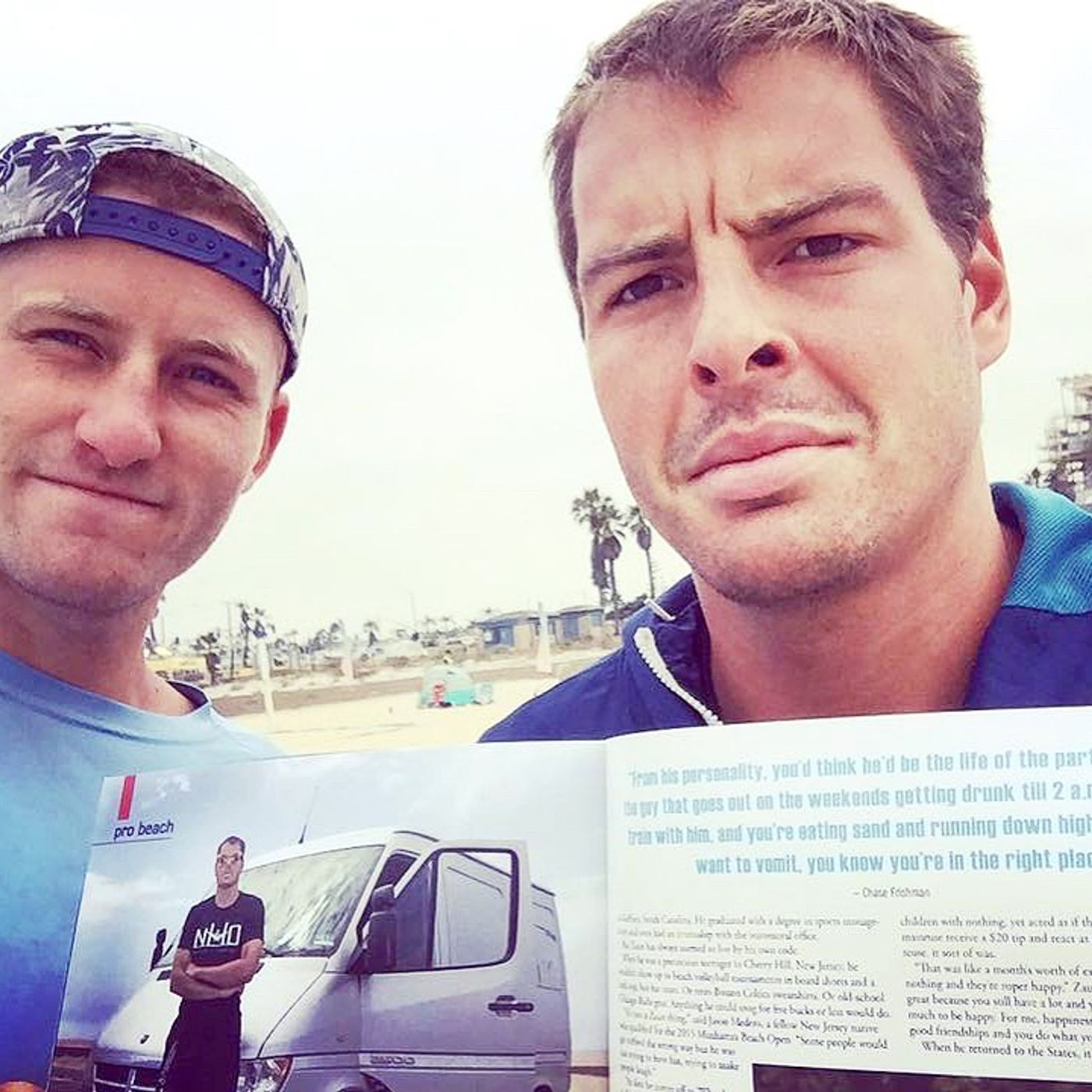
I’ve always been one for mythology. I loved reading the tales of Zeus and Poseidon, Hades and Hermes, Athena and even those of the Norse orient, Thor and Loki and Odin. One of my favorites has always been the myth of the Phoenix, that stunning bird that never really dies. It burns, sometimes spectacularly in in a show of flames and combustion, sometimes in a simple and subtle decomposition. Either way, the end result is invariable: From its own ashes, it rises again. I think that’s beautiful. And so the beach volleyball world must do the same. This past week we, as a whole, as a single community with a single, beating heart, have been reduced to ashes. The death of Eric Zaun has impacted the entirety of the AVP and those well beyond. In Virginia Beach, there was a moment of silence before an AVP Next Gold Series. Folks from the snow volleyball world expressed their condolences. The FIVB, too. The Pottstown Rumble, site of one of Zaun’s most famous and epic and wonderful temper tantrums, will honor the kid who once took a red-eye after Seattle to play on zero sleep but put down no small amount of cash on a match anyway. Everywhere you look, the beach world is rising. It is rising in its own unique way. Donald Sun reached out to every player on the AVP, expressing his condolences, encouraging players to reach out of there was anything the AVP can do to help its own. To help them rise. We at SANDCAST are doing the same. We’re replaying Zaun’s episode this week. Maybe it will help some. Maybe it won’t. The hope is that it can provide, if just for one, that first stirring amid the ashes, that maybe it can begin to lay the foundation to the first step in recovering. Not moving on, no. But moving up. Onward. Rising. This is not a good thing that has happened but good will come of this. I am sure of it. I am sure of it because I’ve already seen it. I’ve seen it in such abundance in only a week that it’s a wonder, should this spirit, this Zaunian spirit of an unbridled zest for life and fun and mischief carry on, what incredible things could come of this. Already, Ed Ratledge is pondering how the beach community can make an award, the Eric Zaun Grinder Award. Something to do with the van, Zaun’s hysterical but wonderful abode for a few years. He doesn’t know just yet. He doesn’t have to. Point it: It will be something good. Something new. That, above all, is what I love so much about the myth of the Phoenix. It’s never created entirely new, but from the ashes of its predecessor. It never loses pieces of itself but instead uses them to grow into something brighter than its previous self. And so, at AVP Seattle, at Pottstown, the beach volleyball world recovers from the previous version of itself this week, and all those that will follow. This week, the community rises together. Hosted by Simplecast, an AdsWizz company. See pcm.adswizz.com for information about our collection and use of personal data for advertising.
Ep 93Tri Bourne is back on the road again
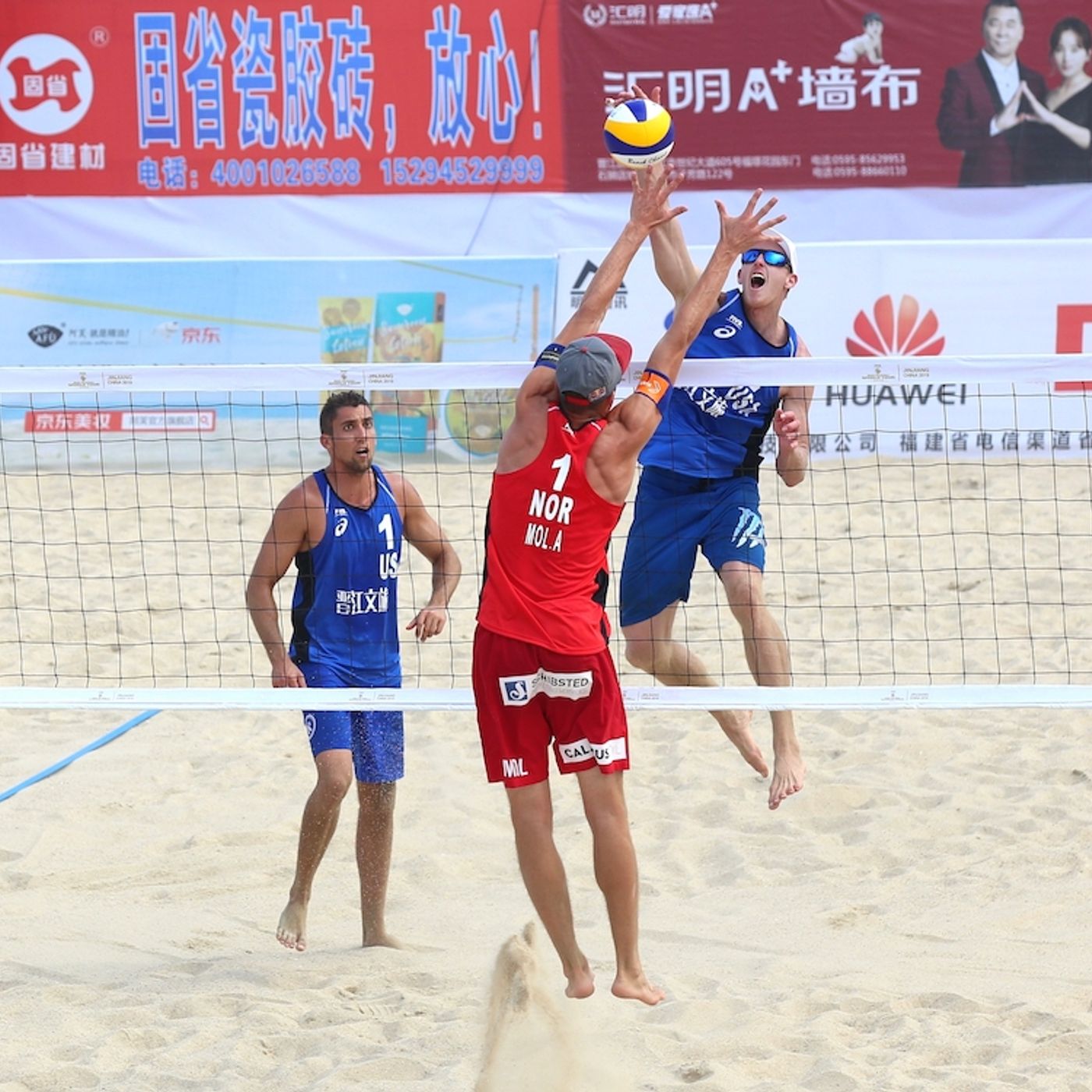
It seems an idyllic existence, to be a professional beach volleyball player. Travel the world. Explore the planet’s most breathtaking beaches. See everything there is to see, both inland and coastal. Play in front of thousands of adoring fans. Sign autographs. Take pictures. Live the life Instagram would love you to have. That’s all true, yes. Tri Bourne gets to travel the world. He gets to explore the planet’s most breathtaking beaches, eat all the world’s best and unique foods. He gets to see everything there is to see. Including 2 a.m. in Jinjiang, China. A world away from his family, his pregnant wife, running on two hours of sleep per night for the previous few nights, having just spent the previous 45 hours on planes and buses and shuttles, crammed into spaces not made for abnormally large men who need to use their bodies to make a living. That, and Bourne’s body has been notoriously rebellious these past two years, with an autoimmune disease that has made traveling the world to play a sport with exceptionally high demands on the body that much more stressful. Most don’t recognize that side of the sport. Bourne, back full-time on the world tour for the first time since 2016, is again feeling its effects. “I was up at 2 multiple times,” he said of his time at the Jinjiang four-star, where he and Trevor Crabb finished fourth. “Dude, just freaking lay there. It’s brutal. We kept losing time. We kept going the same direction without going back, so we were going around the world and you had to adjust. So when we got used to it being 7 a.m., we had to adjust.” Adjusting is the name of the game for professional beach volleyball players. As Kerri Walsh Jennings said from Ostrava, the tournament following Jinjiang – where her and Brooke Sweat claimed their first gold medal as a team – “jet lag doesn’t discriminate.” Then she was off to the sauna to sweat out some of that jet lag. Which brings up the next aspect of life on the world tour: Staying fit and healthy, maintaining those lean bodies seen on livestreams and TV, is not the easiest of tasks. Hardly. “It’s difficult,” Bourne said. “A lot of times, we’re using our matches to get us into shape. These tournaments where we’re going seven matches in, you have two days of travel and then you need to recover from that travel, then you have a day or two before you play, so you don’t really have any time. “Our lifts were super jet lagged. We were just trying to open the body up because everything is super locked up from the plane. And when you haven’t gotten great sleep, you’re sore, you don’t want to push it, because that’s how you hurt yourself. There’s really not much lifting or practicing.” So they play. They play in Brazil and China and Czech and, hey, last week they even had the chance to play in the United States, for AVP New York! It wasn’t home, necessarily, but it was as close as it gets for life on the world tour. Everyone speaks English. The food is familiar. There’s family. Gyms. And now, after a quick stay, Bourne and the rest of the U.S. Olympic hopefuls are back on the road, to Warsaw, Poland. Some had to play a country quota, hardly a day to prepare for the cut-throat nature of the single-elimination format. Others will be in the qualifier. Everyone will be fighting the same, tired, thrilling, exhausted, rewarding, wonderful battle. “You watch some video, you’re playing,” Bourne said, “then you’re back to preparation.” Hosted by Simplecast, an AdsWizz company. See pcm.adswizz.com for information about our collection and use of personal data for advertising.
Ep 92Kim DiCello: The art, and love, of being a good teammate
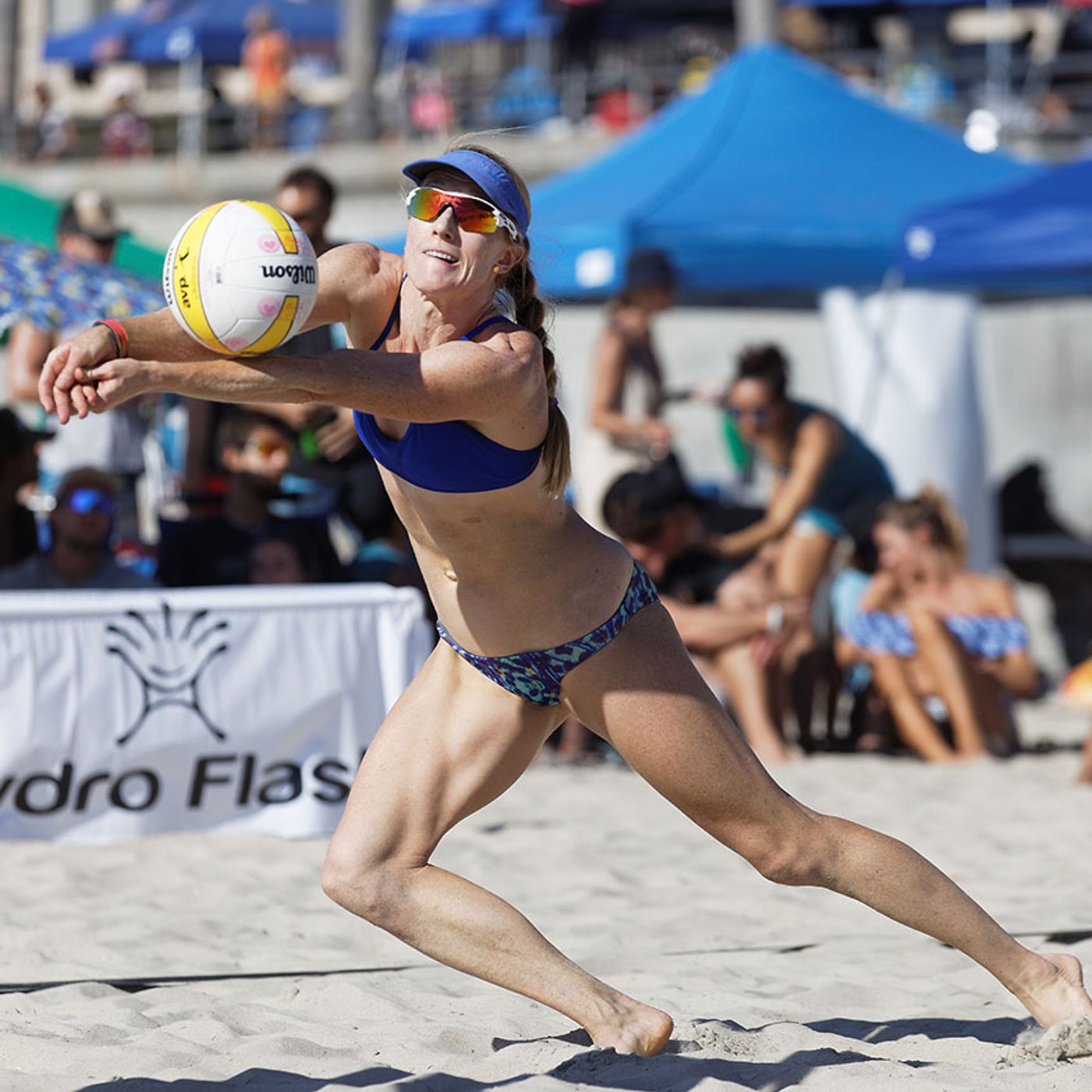
Kim DiCello was never a bad teammate, same as she has never been a bad co-worker, a bad wife, a bad anything, really. But she did have her moments where “I was this intense, fierce competitor,” she said on SANDCAST: Beach Volleyball with Tri Bourne and Travis Mewhirter. “Not angry, but a little feisty. Without meaning to, I probably gave a couple stare-downs here and there, just having that fierceness, that edge.” She didn’t think it would change when her son, Luca, would be born. She’d still be the same person. Same interests. Same passions. Same competitive, feisty spirit. “After having the baby, oh my gosh, this flipped,” she said. “All of a sudden I have this softness, this sweetness, this tenderness that I had no idea was in me. I don’t think anything else could have pulled it out other than having a baby. All of a sudden there’s this gentleness, this patience, this calmness. “I firmly believe those qualities make me a better person and in being a better person I can leverage those to being a better teammate and an athlete and competing at a higher level. I think it’s going to require reworking and figuring out how these pieces all work together now.” The timing of DiCello’s words couldn’t be better. Her focus on being a teammate, in a sport that is often viewed as an individual pursuit, seems an anachronism. The women’s side, after just two AVP tournaments this season, has been shaken up and shuffled and thrown into a blender, spitting out dozens of new teams, products of former ones that weren’t entirely unsuccessful but left something to be desired. DiCello was one of them, having split, not by choice, with Katie Spieler after two finishes. Which isn’t to say that all of those breakups didn’t have their fair and justifiable reasons. Spieler, for instance, is going to Brittany Howard, a close friend and roommate, who became available after a split with Kelly Reeves, with whom she played for a year and a half. Howard, at 24 and still relatively new to the beach game, has all the upside in the world. It’s easy to see the logic behind Spieler’s move, just as it’s typically easier to see the logic behind any partnership move. DiCello just thinks that sometimes these moves come too quick, that beach is a world of instant gratification rather than longterm gains in terms of partnerships. “I really love the team dynamic in our sport,” DiCello said. “The value I get out of the experience of being on a team is so great, and it can be frustrating and challenging but I welcome those frustrations and challenges because through them you develop these really strong connections with the people you compete with. And I’m still really close with Lane [Carico] and Emily [Stockman] and Kendra [Van Zwieten], the partners I’ve competed with the last few years. “It’s a relationship that’s different from the relationships you’ll have with anyone else because you battle together and you’ve been through those good times and bad times and they’ve seen you at your best and they’ve seen you at your worst. “I want this in all areas in my life. I want to bring out the best in my husband. I want to bring out the best in my little boy. Doing it on the volleyball court is just another space where I get to do that.” It’s possible that this mindset is a large reason why DiCello has been able to succeed with such a variety of partners. With Carico, who is also a new mother, she finished 13th but also made four semifinals. With Stockman, she finished 17th but also made a final. With Van Zwieten, she finished ninth and fifth twice but also won her first AVP and made at least the semifinals in seven others. The lows often precede the highs, so long as you can stick it out long enough to see the final product. Hosted by Simplecast, an AdsWizz company. See pcm.adswizz.com for information about our collection and use of personal data for advertising.
Ep 91Chris Geeter McGee: The Art of the introduction
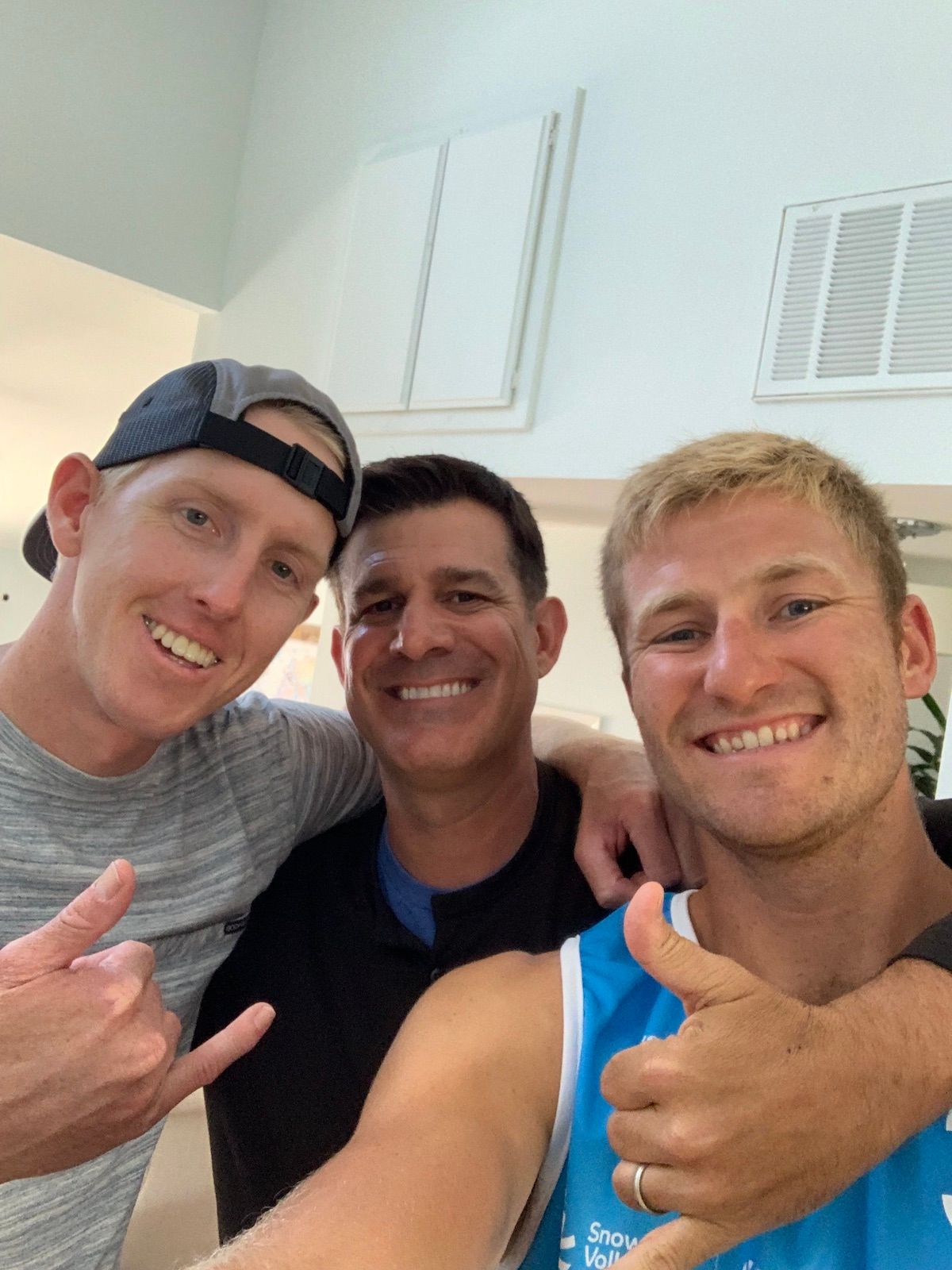
Chris Geeter McGee isn’t technically involved in the sport of beach volleyball anymore. He’s passed on his metaphorical emceeing torch to Mark Schuermann. But he’s still a South Bay guy, still plays in all the four-man tournaments, still watches the livestream and keeps up with the sport he’s still fully, unquestionably enamored with. So when there was a NORCECA qualifier this past spring, after the Los Angeles Lakers, for whom he does a variety of media work, were knocked out of the playoff hunt, Geeter went to check it out, see the play and some of the players he still has relationships with. At the Manhattan Pier that day was Billy Kolinske, whom Geeter kinda sorta knew in the way that those in beach volleyball kinda sorta know everyone, even if they haven’t officially met. “He said ‘I watched in Chicago. You were a big part of why I wanted to play,’” Geeter recalled. “‘If I ever make a final, I need you to do an introduction.’” The legend of the Geeter introduction lives on. A bar in Louisville. Just a small, eight-team tournament. This is the first chapter of the genesis story of the indelible Geeter introduction. “I was sucking beers down, raging,” Geeter said on SANDCAST: Beach Volleyball with Tri Bourne and Travis Mewhirter. “And they were like ‘Go down!’ So I go down. My whole thing was that I’d break dance but I went down, I was doing these intros, and I was just screaming in [Larry Witt’s] face. Screaming in his face. At a bar in Louisville. And then it was just ‘You’re doing that every time.’” To say that he did that every time would be such an understatement it would be an insult to the wild and unprecedented creativity that Geeter brought to the sport of beach volleyball. Suck down beers and yell a few intros? Ha! That wouldn’t be it. No, sir. Geeter ziplined into a Manhattan Beach Open final. Nevermind that he didn’t know how to do it, or what he was doing, dammit he was going to zipline into a Manhattan Beach Open final! With a van filming from the next lane over, he went 80 on a Harley down the highway and straight onto stadium court. “I’ve never been on a Harley before, I’m losing my shit,” Geeter said. Driving that Harley was “a big lady. A Harley lady. Well, she was a woman. She was on the Harley and she said ‘Hold onto these handle bars.’ That was part of the TV intro.” One doesn’t write that script. They invent it as they go. Which is exactly what Geeter did in his iconic epoch with the AVP: He invented everything as he went. Given the keys to run the Dig Show, he put his wide spectrum of creative ideas to full use. Hiking in Hawai’i, barbeques, “doing all kinds of stuff,” Geeter said. And it wasn’t just a gimmick. It was real entertainment with a splash of bona fide journalism, a combination that earned five local Emmy nominations. “I’m 0-5,” Geeter said, laughing. It is funny, though, what preceded all that charm and pizzazz and charisma and panache: pure, unadulterated panic. The first time he was given the microphone, in 1998 or 1999, to do an introduction, he handed it back. And then it got handed right back to him. Whether he liked it or not, Geeter was doing introductions. “I would just start talking, so my intros started to evolve, and then it became part of the show. I’m on the sand, I’m getting people going, and then I’m just learning, so I would just try to get you. How do I get you? How do I get you?” Geeter said. “And then the women said you gotta give us that, so I had to get them going. I always wanted to make sure I gave everything I had.” His genuinely close relationships with the players not only made it easier to do them as well as he did, but more authentic. He’d throw in inside jokes that only a few people in a crowd of thousands would understand, but that was part of the beauty of it all: The introductions weren’t for the fans, they were for the players. He’d make up random stats on Todd Rogers digs just to get a chuckle out of Phil Dalhausser. The fans wouldn’t know the difference, but a laugh from the Thin Beast is worth more than an uproar from a sold-out Sunday stadium. “I was a small part of it,” Geeter said. “I needed them. I helped facilitate everything, but it’s not like I was just running the show. The volleyball carried it. I just wanted to make it special. I wanted them to want to be there.” That goal has been well accomplished. Players who never had the opportunity to hear a Geeter intro – like Kolinske -- nostalgically seek them out. Even those outside of the beach world do, to the point that he is not infrequently requested to do wedding introductions – and then officiate those same weddings. He’s now officiated 17 weddings. His daughter sometimes asks him why he isn’t doing beach volleyball anymore. Like her dad, she’s a beach enthusiast, tuning into the Amazon livestream of all the AVPs, keeping up with the players. She doesn’t quite understand that “daddy’s with the Lakers,” Geeter said, laughing, and that working with the Lakers is quite a plush
Ep 90Corinne Quiggle: Winning medals via tuk-tuks
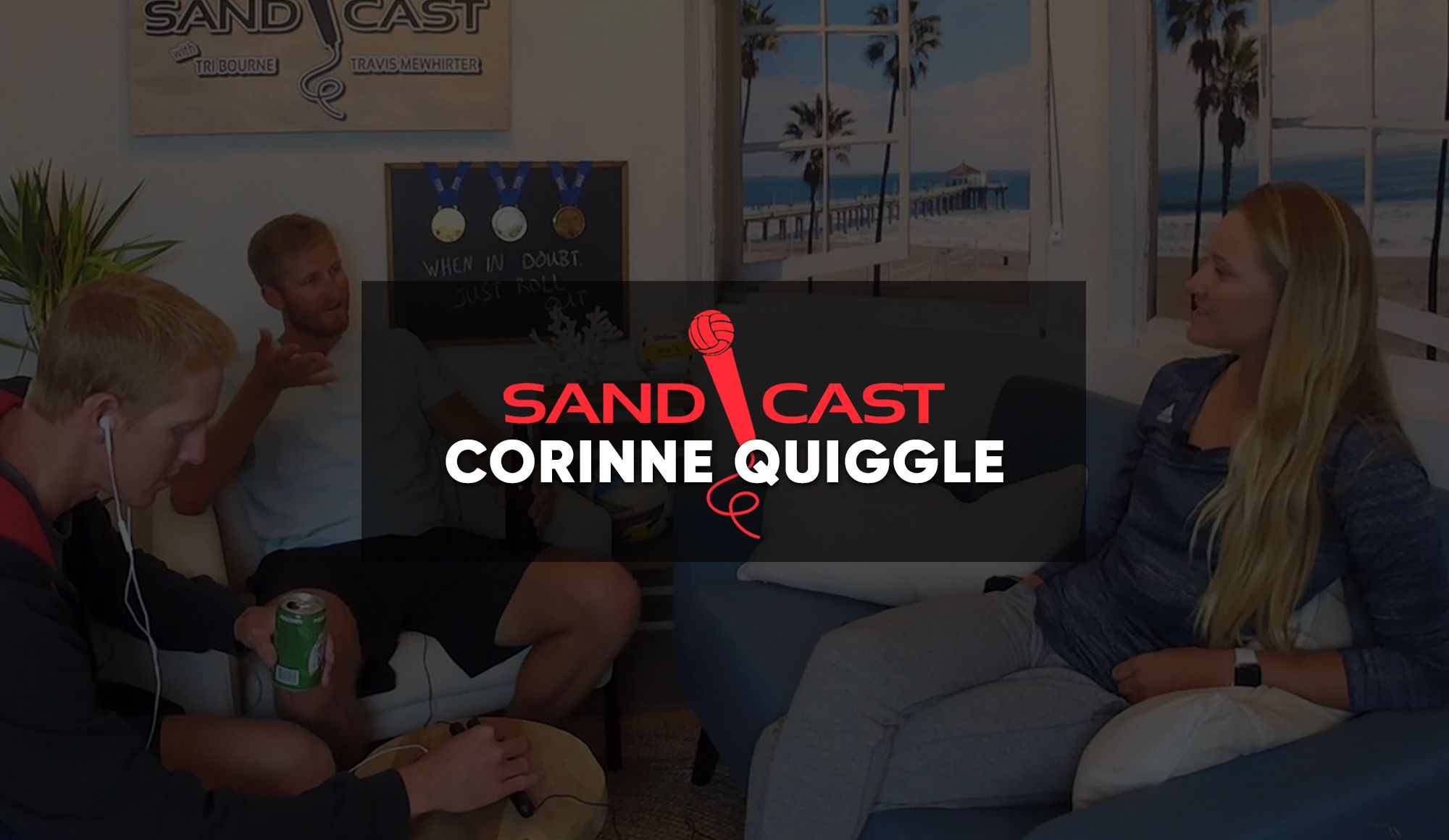
It was, of all places, Phnom Penh, Cambodia, where Corinne Quiggle discovered her ideal method of travel. It isn’t by car. Or Uber. Or ferry. Or train. Or plane. It is, instead, a tuk-tuk, a type of pulled rickshaw where most have three wheels. It’s how Quiggle and her partner, Amanda Dowdy, got around Cambodia for a two-star FIVB earlier this year. Maybe it’s the tuk-tuk, though it could just as easily be the memory that comes with the curious little vehicles: a silver medal on the FIVB Tour, Quiggle’s first in her young and burgeoning career. She did not travel, of course, to discover the novelty of a new means of getting from one place to the next, though it’s certainly a nice bonus. Traveling, not necessarily to see the world, but to experience life on the world tour, was Quiggle’s goal at the beginning of this season. Barely five months in, she’s replete with both experience and stories to tell. “It’s been my goal for as long as I’ve been in beach volleyball so I’m really just taking a good start on it,” Quiggle said on SANDCAST: Beach Volleyball with Tri Bourne and Travis Mewhirter. “I have to grow points right now so that’s why we’re kicking it out as early as we can, just so we have a chance to get into those bigger tournaments.” It’s why Quiggle and Dowdy were amiss for the season-opener in Huntington Beach, and why they’ll likely miss a few more. The FIVB, for this season at least, is taking precedent. Rather than battle through a fully-loaded AVP Huntington, they flew to Malaysia for a three-star FIVB, claiming fifth out of the qualifier. “It was a tough decision but for me it makes sense because if we want to get into these bigger tournaments down the rest of the year then we have to make that sacrifice,” Quiggle said. “There’s a ton of great teams so if we’re going to do it, then we have to put that above. We’re thinking ‘Hey we gotta do well in Malaysia so we can do well in those other tournaments.’” She’s viewing this season through the long lens. As in, a Hubble type distanced lens. She understands that to make it into Tokyo’s 2020 Games would be a bit of a stretch. That would be lovely if they made it, but she knows it’s far more reasonable to shoot for Paris in 2024 or Los Angeles in 2028. So she’s preparing now. She’s seeing the world, through tuk-tuks and planes and boats and hitched rides from random strangers in Cuba, while learning what life is like on the world tour. “This session of time is still a great learning period for me to know that this is what I have to do for 2024 and 2028,” Quiggle said. “We want to go and do as well as we can in these tournaments and if it doesn’t work out for 2020 I think it’s super important to go through that process. Knowing the process helps a lot.” An added bonus: In learning the process, Quiggle is enjoying one of her finest years yet. It makes sense, considering this is her first full-time year on tour, after competing for Pepperdine and graduating in 2018. Already, she has won her first FIVB medal, came home with another silver at a NORCECA in Mexico, taken a top-10 at AVP Austin. “It takes me a little while, like, ‘This is crazy. I’m going to Mexico for a little while, and then in three days I’m going to Malaysia,’” Quiggle said. “And to have the opportunity to play in Huntington, and then in Austin, it’s amazing to know that we’re going to be in there. We’re getting into these tournaments, even a three-star, even a qualifier, we have the opportunity to get into those tournaments. “We’re balancing them out as we go. As it goes with the life of a beach volleyball player, we don’t know until like the week before. 21 days out we get alerted that we’re in but we still have to figure out all the little things.” Hosted by Simplecast, an AdsWizz company. See pcm.adswizz.com for information about our collection and use of personal data for advertising.
Ep 89Nicole and Megan McNamara are taking on the world
You could have seen this path a long time ago, had you been paying close enough attention. When Nicole and Megan McNamara, identical twins from Vancouver, Canada, were on the same indoor team. One set, the other hit. Four others were on the court, sure, but “she would set me every ball,” Megan said, as the two broke out in fits of laughter. “And our coach was like ‘You gotta give other people some love.’” Not really, actually. There was beach, too. Nobody else to set. Nobody else to hit. Just the twins. Even in a quasi-team environment at UCLA, where they ushered in a new, small ball, fast movement offense that is becoming vogue in the college game, it was still just the McNamaras on court one. They could win and the Bruins could lose, or vice versa, which, Megan admitted, “is bizarre. It’s a bizarre feeling.” “You can win your match but then UCLA loses and you’re happy, then you’re bummed or vice versa,” Nicole said. “You’re all pissed about your loss but the team’s all stoked.” It was a bizarre and perfect four years in Westwood. Two National Championships. One of the most successful partnerships the game has seen in its nascent stages at the collegiate level. Now it’s back to their roots: Just the two of them. No scheduled practices with Stein Metzger and the crew. No team nutritionist or personal trainers or world class weight facilities. Just Megan and Nicole, taking on the world. That’s where they are right now, actually. Out in the world. Itapema, Brazil, specifically. Thousands of miles from home, whether that home be considered Vancouver or Westwood at this point. Recipients of the wild card, they’re straight into main draw, an excellent welcome to the tour gift from the FIVB, which is suddenly becoming replete with Canadians playing at a world-class level. Two different Canadian teams – Melissa Humana-Paredes and Sarah Pavan, Brandie Wilkerson and Heather Bansley – held the top spot in the world at one point last season. The McNamaras are already high enough in the world ranks that they’ve earned a spot in the World Championships during the last week of June and first of July, in Hamburg, Germany. “Our main goal for the summer was going to be to qualify for some of the bigger tournaments, and also to get settled with our new life in Toronto,” Nicole said. “Those were our main focuses so even qualifying for World Championships was amazing. We wouldn’t have expected that. If you would have told us that last year, we wouldn’t have believed you. It’s unbelievable.” What’s unbelievable now will be the standard soon enough. It would have been unbelievable, when they were freshmen Bruins, to conceive of a time when a school not named USC would win back-to-back national titles. Now that’s the new standard. It would have been unbelievable, when they were pre-teens, watching Kerri Walsh Jennings and Misty May Treanor, to conceive of a time when they’d not only be competing at their level, but pushing them. Now, after taking Walsh Jennings and Brooke Sweat to three in Mexico in October, that’s the new standard. So they’ll continue setting standards, blowing past expectations, making the unbelievable quite real quite regularly. And they’ll do so, as they’ve always done so, together. “If it’s just the two of us out somewhere in the world we just need to lean on each other a little more,” Megan said. “I think that kind of helps because we were kind of cushioned at UCLA with all the support, and also knowing that our two through fives have our back. Knowing we’ve invested a lot of time, money, it helps us come together.” Hosted by Simplecast, an AdsWizz company. See pcm.adswizz.com for information about our collection and use of personal data for advertising.
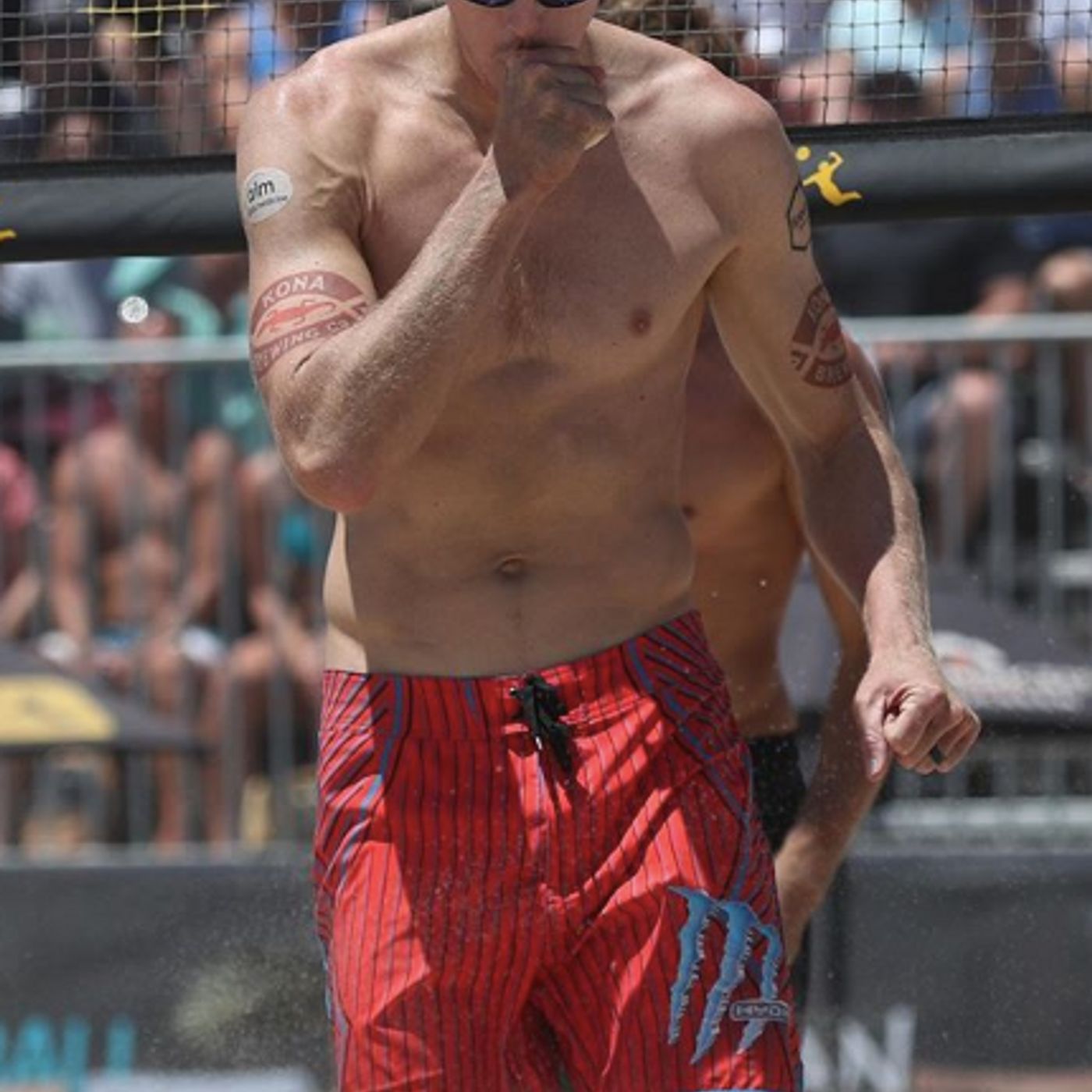
Ep 88AVP Huntington recap: Domestic beach volleyball is thriving
Let it sink in, if just for a second, that in a tournament where a pair of Sunday regular teams – John Hyden and Ryan Doherty, Reid Priddy and Theo Brunner -- were elsewhere in the world, Phil Dalhausser and Nick Lucena and Taylor Crabb and Jake Gibb were in an elimination match for fifth. Six of the eight AVP tournaments in 2018 were won by either Dalhausser/Lucena or Gibb/Crabb. And they had to play one another, in the contender’s bracket, on a Saturday evening, for fifth. Meanwhile, the eight seed – Tri Bourne and Trevor Crabb – had emerged unscathed from the upper half of the winner’s bracket, and the six – Casey Patterson and Chase Budinger – from the bottom half. Yes, yes, the one seed still won the tournament. In an event in which Crabb and Gibb didn’t really play their finest volleyball until that late Saturday evening, they still emerged victorious. But gone, possibly, are the chalk-walk days of the men’s AVP, where one can safely bet on few upsets, where qualifier teams are dismissed quickly, painlessly, where the mid-tiers are the mid-tiers and the top teams are untouchable. The same team that won the entire tournament was pushed to three sets in its first match, by qualifiers Kyle Friend and Duncan Budinger. Then they went three, again, with Riley and Maddison McKibbin, and again with Dalhausser and Lucena, and again in a semifinal rematch with Bourne and Crabb. This was a tournament where the 21 seed – qualifiers Logan Webber and Christian Honer -- beat the 11 – Chase Frishman and Piotr Marciniak – 21-11 in the deciding set, and that 21 then pushed the 14 – the McKibbins – to three. It was a tournament where Sean Rosenthal, one of the best defenders in United States history, paired with Ricardo Santos, one of the best blockers in the sport’s history, were relegated to the contender’s bracket after a first round loss to Troy Field and Tim Bomgren. “What kind of a draw is that?” Field said, laughing. It’s a draw begat from an ever-deepening talent pool, where the older establishment continues to win – “Old man Jake Gibb, still doing it,” Bourne said on SANDCAST: Beach Volleyball with Tri Bourne and Travis Mewhirter – and the younger generation, with the likes of Field, is pushing its way up. “I’d like to see a year where, unless it’s me, we see a new winner every time,” Bourne said. “We went for a while where it was always Phil or Jake and Casey.” That era may be gone. It wouldn’t be a surprise to see a record for new winners this year. Same goes, too, for the women’s side, which is seeing its average age of main draw players sink and sink and sink, as 16-year-olds Delaynie Maple and Megan Kraft qualified, along with high schoolers – and USC recruits – Audrey and Nicole Nourse. “We’re getting to a point where there’s no good draw,” Bourne said. “A few years ago, we were watching blowouts in the finals…the better our domestic tour is, it’s good for the sport. And if the AVP keeps growing, adding more prize money each year, more points, that’ll create enough opportunity for the back of the main draw players to stay afloat, to keep living. That’s the goal.” Hosted by Simplecast, an AdsWizz company. See pcm.adswizz.com for information about our collection and use of personal data for advertising.
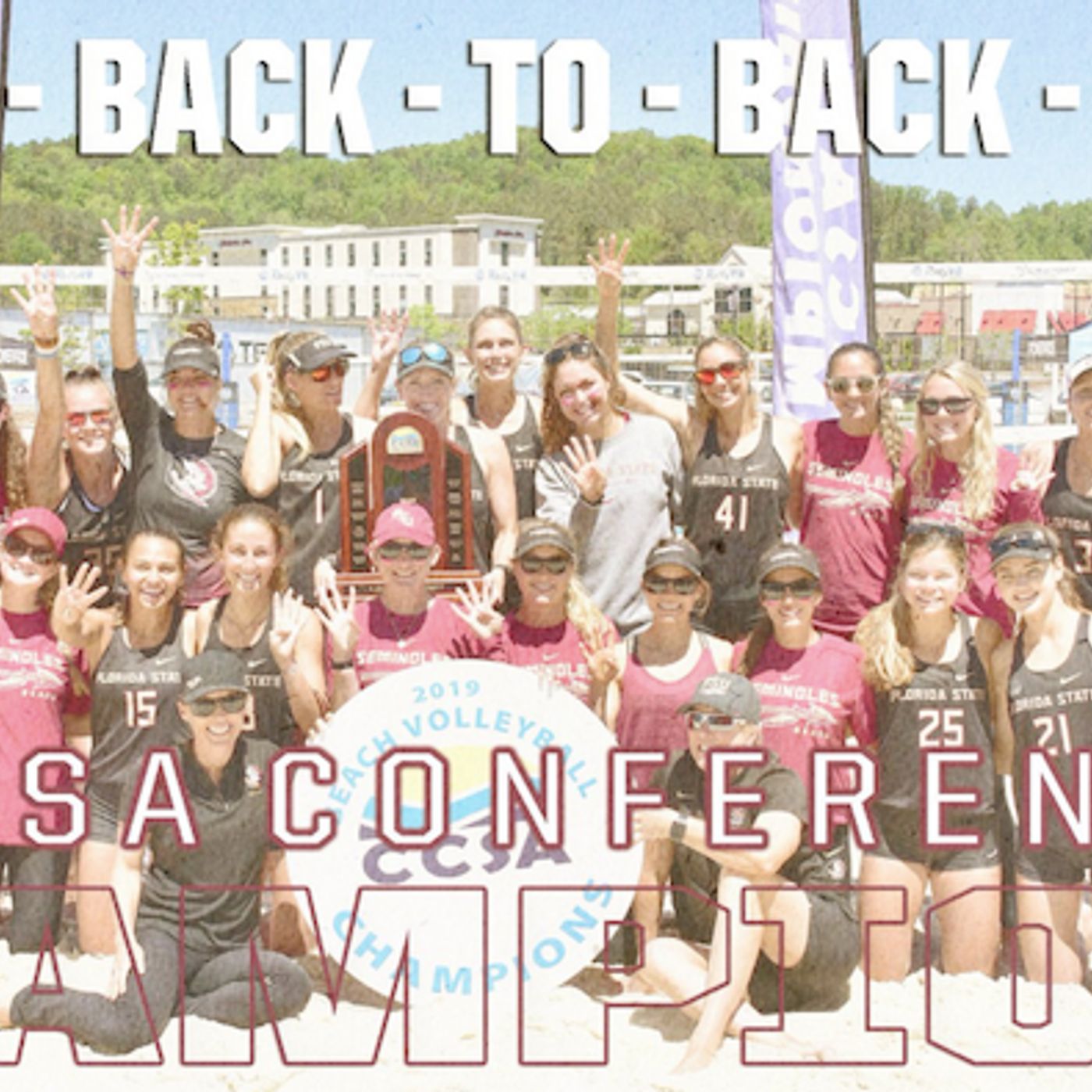
Ep 87Brooke Niles: Florida State's pieces are set for Gulf Shores
It was a little more than two months ago that Brooke Niles and the Florida State team suffered their first failure in a season without too many of them. Niles had made a commitment to herself, promising that she’d have the lineup figured out by the fall, before her Seminoles went off for winter break. It was mid-February. Days before the season-opener against LSU. She still had no idea. “There’s so many combinations,” she said back then. They’ve figured it out. The tinkering is, with just a few days before the NCAA Tournament, where Florida State is the three seed, alas finished. Lineup’s set. Three wins, potentially, to earn their first NCAA Championship. “Playing all the West Coast teams in the beginning, we thought we had the right pieces, we just didn’t have the right partnerships,” Niles said on SANDCAST: Beach Volleyball with Tri Bourne and Travis Mewhirter. “So we changed a lot, and the second time we played UCLA we had the right partnerships but they were still kinda new.” Nothing is new now. The five starters who replaced half of the team that graduated from the 33-7 team that fell in the NCAA finals from a year ago are now experienced. The fresh partnerships have settled in, and it has shown to the tune of 17 wins in their past 18 matches, including a sweep of LSU in the CCSA finals, the fourth straight conference title for the Noles. “Our goal is to get better every time we’re out on the sand whether it’s practice or a tournament, and I think we’ve been able to do that consistently over the last ten weeks or so,” Niles said. “It’s hard because a team could start off as your ones pair and other teams can progress at different rates. You’re supposed to set your lineup how it plays our in practice so those things, so we’ve had some teams progress at different rates than other teams and we’ve had new partnerships which has been exciting as a coach. You can drive yourself crazy with how many matchups you can have on your own team.” Niles has found the sweet spot with Alaina Chacon and Madison Fitzpatrick on one, Sara Putt and Payton Rund on two, Brooke Kuhlman and Avery Poppinga on three, Molly McBain and Payton Caffrey on four and Macy Jerger and Kate Privett on five. Each has found their stride, particularly courts two, four and five, all of which are the second-ranked pairings in the country on their respective courts. Rund and Putt have gone 13-2 since the switch; Caffrey and McBain are second-ranked on four trail only LMU’s undefeated Veronica Nederend and Emma Doud; Jerger and Privett are 14-1. Niles may have genuinely had no idea, as she said back in February, what her lineup would look like come May. With a 28-5 record, another CCSA championship, a three-seed heading into the final weekend of the year, it seems the Noles have figured it out just fine. “I’ve learned a lot in the past four years just being in that title game or close to it,” Niles said. “I want to treat every match the same way we’d treat a National Championship match. It’s just another beach, playing a different team across the net, and we just really want to focus on ourselves. We are getting better and better each time we’re on the sand.” Hosted by Simplecast, an AdsWizz company. See pcm.adswizz.com for information about our collection and use of personal data for advertising.
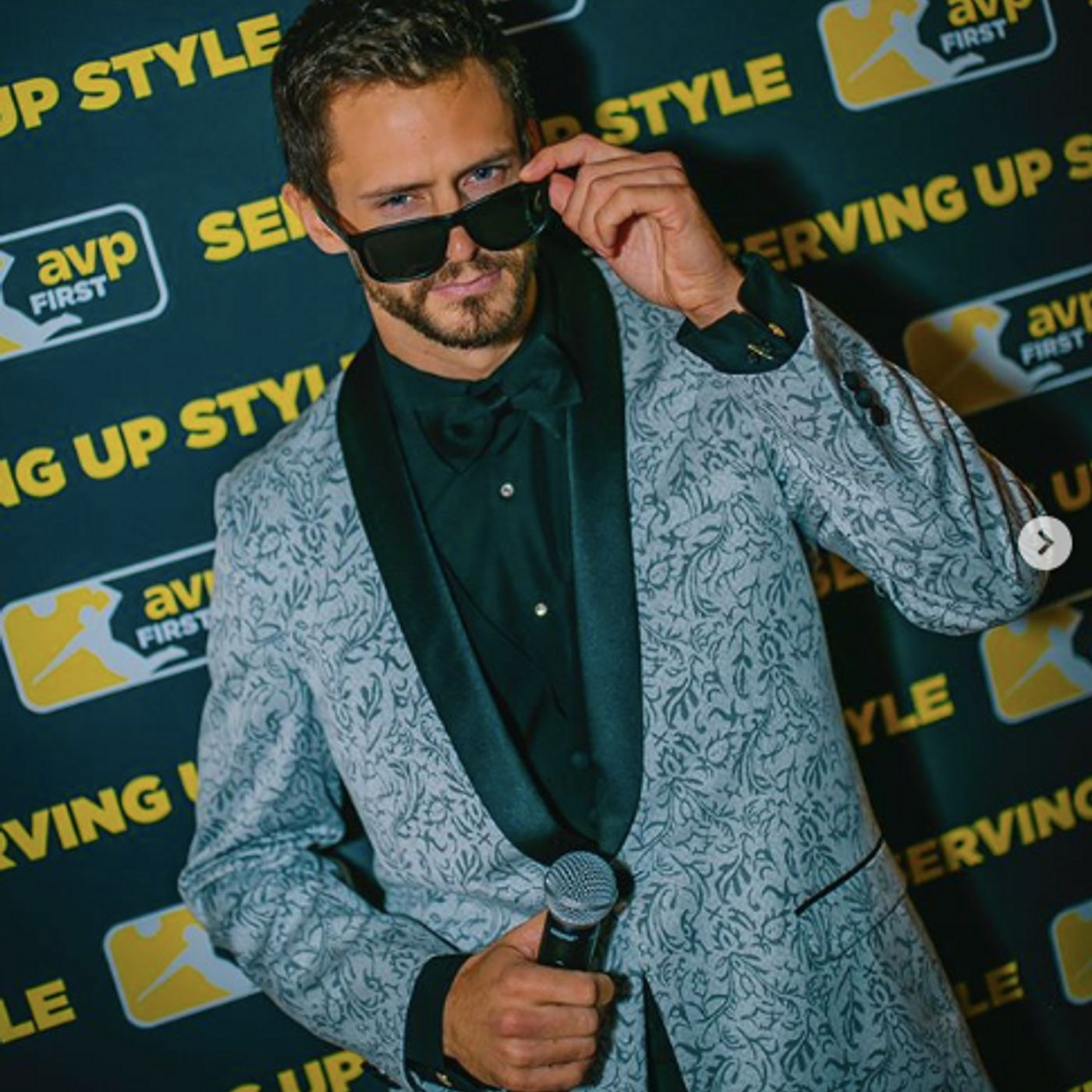
Ep 86Mark Schuermann: The voice of the AVP
The voice is feeling good. “Oh, yeah,” Mark Schuermann confirmed on SANDCAST: Beach Volleyball with Tri Bourne and Travis Mewhirter, and if you’ve listened to the episode and just those two words, you can confirm it as well. The voice of the AVP is ready to go. In eight days, the AVP season will begin. Which means that in eight days, listeners, fans, and viewers will be treated to the majestic baritone of Mark Schuermann. To describe Schuermann as the emcee of the AVP would be a great disservice to both Schuermann and the AVP. He’s far more than that. He’s the emcee, yes. But he’s also an entertainer. A man of the people. A volley nerd who just so happens to be equipped with a magnificent voice, a natural knack for commentating, and a microphone that will keep all on stadium court more than pleased. That was the idea, anyway: He wanted to call the matches like the fan he was. So you’ll hear him react like a fan – “What just happened?” Say things fans say – “Taylor Crabb, you are ridiculous!” And he’ll do it among the fans themselves. Inexhaustible. Indefatigable. Ever-enthusiastic. “You don’t want to distract from what’s going on,” he said. “You want to enhance what’s going on.” It’s largely self-taught, too, his one-with-the-fan style of calling matches. At Cal State Northridge, after experimenting with majoring in math – “I like math, but nobody wants to do that much match,” he said – and anatomy, Schuermann enrolled in a broadcast journalism class. As it can often go with epiphanies, “I knew,” he said, “in the first three minutes that ‘Yes, this is what I want to do.’” A classroom, though, can only take you so far. Much of journalism, whether it be print or broadcast or entertainment, is experimentation. Finding what works for you. Discovering your own voice and style. It’s for that reason that Schuermann is glad he went to Northridge over USC, which offers one of the most prestigious journalism schools in the country. The advantage CSUN held over USC? The fact that, while it was a good program, it didn’t attract droves of prospective journalism majors. It allowed for Schuermann to create his own opportunities, such as when he began calling CSUN indoor matches. “Still some of the most fun I’ve ever had,” he said. “I’m not sure I would have been able to do that at the well-oiled machine that is USC. CSUN said ‘Oh, jeez, this kid wants to put on a show? Great! Let’s do it!’” It’s such a practical major. The more you’re willing to do something, the more they’ll get behind you.” So before he became the voice of the AVP, Mark Schuermann was the voice of all things CSUN: water polo, soccer, basketball, volleyball, “probably ten different sports,” he said. From there, the branches of networking and talent and willingness to create began to intertwine. While his peers took jobs in smaller markets, Schuermann stayed in the Los Angeles area, taking a menagerie of jobs calling sports at Harvard Westlake, a sports powerhouse in Los Angeles, calling USA Volleyball matches, calling professional indoor matches. One such match took him to a World League event in Tulsa, Oklahoma. “That was a big moment for me,” Schuermann said. “When I got to those matches, something I never planned, something I never expected to happen – it was the second day of matches, and I was sort of bored. I was announcing, somebody else was running the music, I wasn’t running the music, I was like ‘Yeah, this is volleyball, I’m calling the game, but what else can I do?’ So I turned around to my supervisor and I was like ‘Hey, I know all the players’ names, I have a wireless mic, can I go into the crowd?’ And she’s like ‘Yeah, sure, whatever.’ So I went into the crowd and announced the rest of the match that day in the crowd, and it was so much fun. That’s when I realized ‘I really want to do this. I really want to get into entertainment.’ I’d never seen anybody do this. I might be onto something here.” And thus Broadcast Mark came into his own. In eight days, should you be in the stands, or on the beach, in Huntington, you’ll find him right there with you. The only difference is that he has a mic, his reactions are heard all over the beach, and, well, he’s probably having more fun. Hosted by Simplecast, an AdsWizz company. See pcm.adswizz.com for information about our collection and use of personal data for advertising.
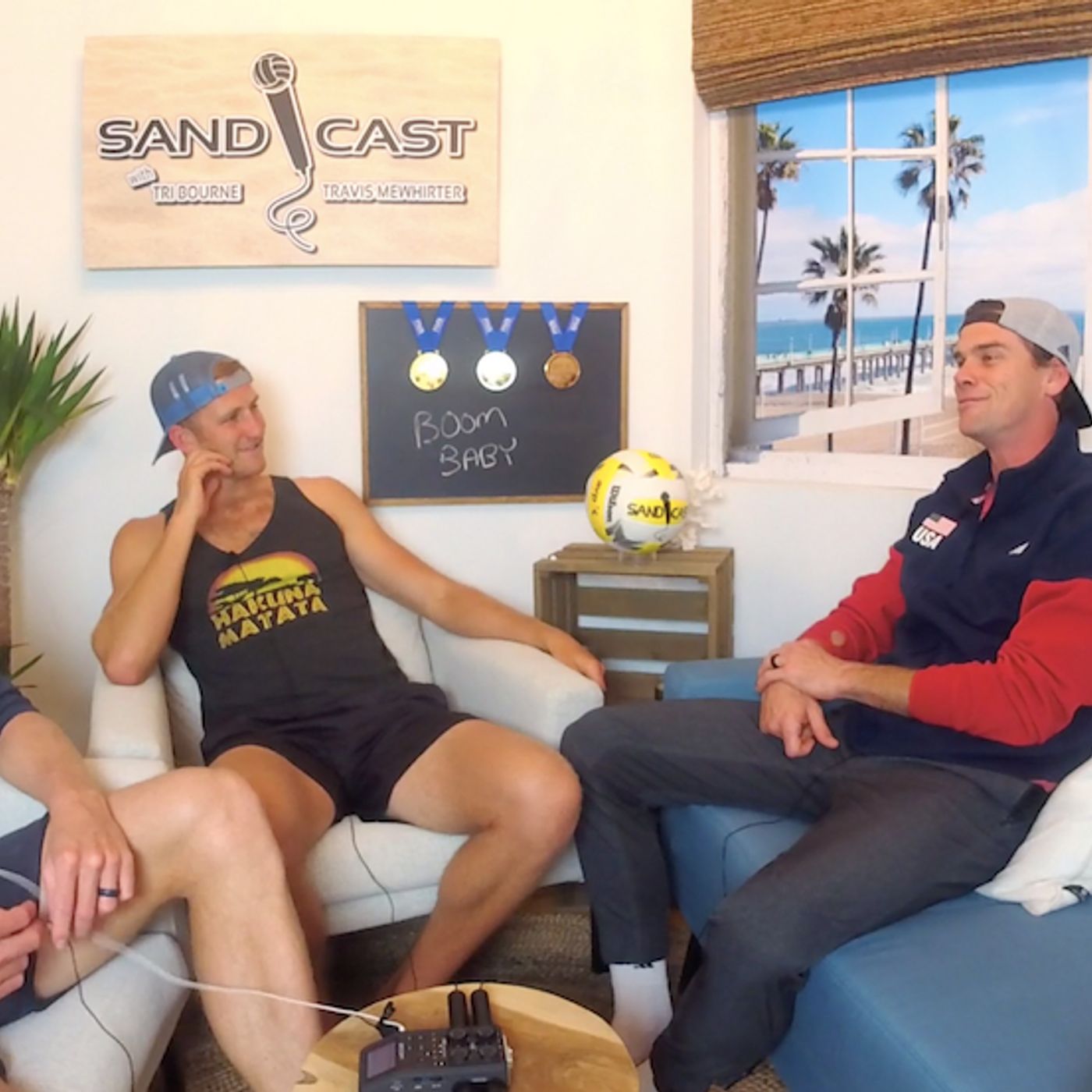
Ep 85Tyler Hildebrand: The most passionate man in beach volleyball
Tyler Hildebrand doesn’t really know what you should call him. “Official title is Director of Coaching,” he said of his new role at USA Volleyball. But they’re working on title changes because, candidly, nobody really knows what that means. “At the end of the day,” Hildebrand said on SANDCAST: Beach Volleyball with Tri Bourne and Travis Mewhirter, “who really cares? I think some people call it coach, head coach, director of coaching. I did some presentations at the AVCA and nobody knew what the heck the title was.” What matters is not the title Hildebrand takes – or doesn’t take – but the role he plays. He was hired by USA Volleyball, after just a year at Nebraska in which he won a national championship as an assistant coach, to push the United States back on top of the world of beach volleyball. Ask most any player, and you’ll get the same response: They picked the right guy. Hildebrand is what you could call a player’s coach. He was there at Long Beach State, his alma mater, last Friday night, watching the 49ers take on then-undefeated Hawai’i. He was there with Taylor Crabb, arguably the most promising and talented beach player in the United States. Beach in the morning. Indoor at night. Volleyball all day long. That, if nothing else, is why Hildebrand is so good at what he does. And he is good. After setting for Long Beach from 2003-2006, leaving as a three-time All-American, Hildebrand has enjoyed success everywhere he has gone. As an associate head coach for Long Beach in 2016 and 2017, he helped the Niners to consecutive NCAA semifinals. In his lone year at Nebraska, in 2017, the Huskers won an NCAA Championship. On the beach, he oversaw the most successful run of Casey Patterson’s career, there in the box as Patterson and Jake Gibb established themselves as the top team on the AVP Tour, winning more than double the next team. He was there for a Manhattan Beach Open win and an Olympic berth. But again: Don’t call him coach. Hildebrand doesn’t just oversee one team anymore – he oversees the development of all of the top teams and prospects in the USA Volleyball system, everyone from the established talents in Jake Gibb and John Hyden to the promising prospects in Carly Wopat and Troy Field. “Our vision right now at USAV Beach, it’s to be the best students at our craft,” Hildebrand said. “And I know that sounds like a big scoop of vanilla ice cream, blah blah blah. But the people who are really excelling right now are at the learning or technological edge.” Hildebrand has an old soul, but still: There’s a wealth of technology and statistics in the sport. It’s time the United States began using it to its advantage. Which is why, more often than not, you can find Hildebrand in the film room, either with the athletes or just by himself. It’s possible that nobody on Earth has watched more film in the past year than Hildebrand, who is constantly searching for trends – quick sets, shoot sets, options, jump serving, float serving, whatever. “In beach volleyball, what I realized when I came out here five or six years ago, it was like ‘Whoa, in indoor we would use video,’” Hildebrand said. But in the beach? “We’d watch maybe a set,” Bourne said. It’s something Hildebrand is trying to change. Not radically. Not revolutionarily. Just a bit here and there. An hour or so every few days. Watch yourself. Watch opponents. Just watch the game. See what you can find. “One thing I’ve been doing, probably more than any other coach in the United States, is watching the game,” Hildebrand said. “Watching the world. That’s the one I’m pushing big with our athletes and coaches. All of this stuff, maybe we’ll see something, ‘Wow! That’s useful!’ And then asking the question why. “The hardest part about beach volleyball is that everybody is on their own. You can have great practices. You can work really hard. You can be really tough. But in the middle of the game, how do we think through the game? Let’s say we watched a couple matches, we can think through them.” So he’ll pour over the film. He’ll find the trends. He’ll present them to the athletes and from there, they can make of it what they will. It’s not his job to coach every specific team now. It’s to simply put them in a position to be as successful as possible. So if there’s one thing you could label Hildebrand – not coach, not director, not a director of coaching – it’s this: He is, simply, one of the most passionate people in beach volleyball. Hosted by Simplecast, an AdsWizz company. See pcm.adswizz.com for information about our collection and use of personal data for advertising.

Ep 84Leon Abravanel: The unexplored benefits of mental training
It was Yogi Berra who best expounded upon the upside of mental performance in athletics: “Sports are 90 percent mental, and the other half is physical.” Questionable math aside, the former Yankee catcher, and indelible quote machine, had a point. Sports, and the majority of facets of life which require exceptional performance, are rooted vastly in mental strength and fortitude. It made for an intriguing question for Leon Abravanel, a former professional soccer player for the Kitsap Pumas, Los Angeles Blues and Athletico Paranese. If sports are, indeed, 90 percent, “even 99 percent,” Abravanel suggested, mental, “then why is nobody focusing on this stuff?” he said on SANDCAST: Beach Volleyball with Tri Bourne and Travis Mewhirter. “If it’s 99 percent of the game, of the performance you’re about to go do, why is there no training around this? And if there is, where do we find it?” His search led him, at first, to an alarmingly high price tag. Sports psychologists run about $250 an hour. And those are the low end. The top in the business can be as much as five figures. Abravanel was good at soccer, but he wasn’t five figures an hour for a sports psychologist good at soccer. As it can often go with retired athletes – Abravanel retired from soccer when he was 25 – his mind needed a new project, a new something at which to be exceptional. To sports psychology he went, partnering with former football coach and current Mental Performance Coach Zack Etter. Together, the two sought to make sports psychology more available. Available to athletes of all ages and sizes, of all socioeconomic statuses. Available via a book, “My Mental Playbook: The optimal performance system for athletes” which they co-authored and published this past October. “We tried to condense all the information that we would learn from 30 sports psychology sessions into one customizable mental performance playbook that you fill out,” Abravanel said. “It has tons of exercises to create your own routine, and that’s a huge piece of the sports psychology world. It can’t be cookie cutter. It has to be very specific to the particular athlete.” This is not your normal book you’d pluck off the shelves at Barnes and Noble (if anybody still shops at Barnes and Noble). For one, it’s only 70 pages long. Abravanel knows what it’s like to be an athlete. Two practices a day. Lifting. Recovery. By the time all of that is finished, most don’t have the time or the mental bandwidth left to read a 400-page non-fiction dive into sports psychology. Two, it’s more workbook than traditional book, two parts journal, one part reading. It provides leading questions for the athletes to answer, literally, in writing. “This kind of stuff can help you in so many other ways as well,” said Bourne, who has explored his fair share of mindfulness exercises throughout his recovery from an autoimmune disease. “You can easily translate everything you learn, from learning the mental aspects of sport to dealing with pressures and whatnot to any aspect of life, which is great. To actually put it on paper in a log or a journal is great, it’s something I’ve been meaning to do.” Hosted by Simplecast, an AdsWizz company. See pcm.adswizz.com for information about our collection and use of personal data for advertising.
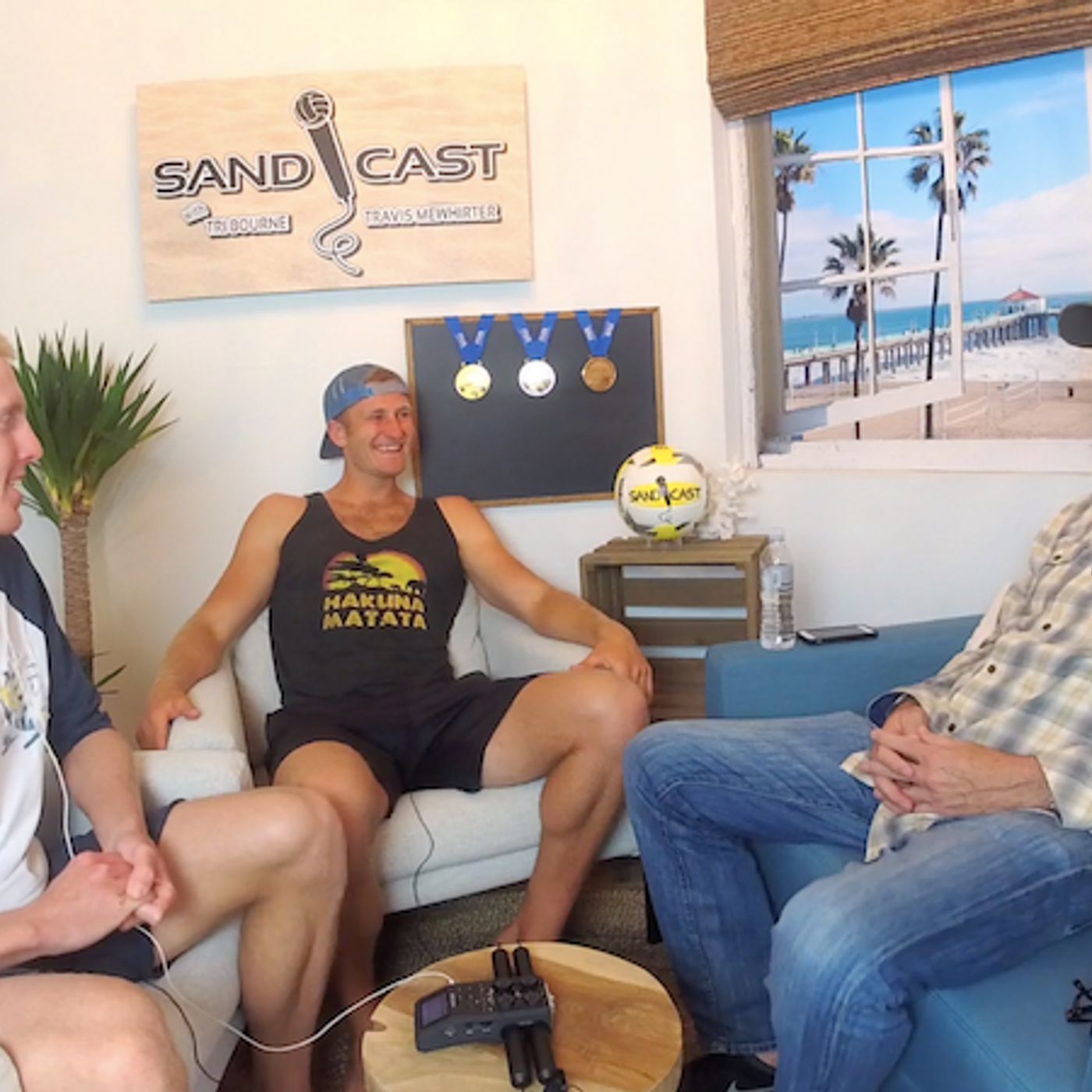
Ep 83Tim Hovland is still kicking ass
The Big Game Hunters. That’s what they’d call themselves. Sinjin Smith and Randy Stoklos and Brent Frohoff and Karch Kiraly could have the Rhode Islands. They could have Dallas. They could have Phoenix. But the big ones? Oh, no. Those were reserved for Tim Hovland and Mike Dodd. “We’d win Manhattan, Hermosa, the Cuervos,” Hovland said on SANDCAST: Beach Volleyball with Tri Bourne and Travis Mewhirter. “We had a lot of finals together, that’s for sure.” Eighty-one finals, to be exact. In 150 tournaments played together. A remarkable success rate for one of the most legendary and well-known partnerships in the game’s history. You can still find those boys together. They commentate on livestreams together. They play fours and sixes together. They talk trash together. “Can’t hit like we used to,” Hovland said. “But we go out there, lip them off the court, make them feel bad. Then destroy them on the dialogue. There’s been crying out there. A couple of guys never came back. It’s fantastic.” Sixty years young. Same old Hov. That was his thing. He was loud. He was brash. He had swagger. He knew he was going to beat you and he wasn’t going to hesitate to let you know it. “We showed up, we worked hard at it,” Hovland said. “We’d play all day. We’d get down there at 10 in the morning, we’d get our court at Marine, we wouldn’t lose a game, we would take pride in beating everybody down there, and everybody would come to us. We’d play seven hours of volleyball, hard games, and that was just normal. If you did that, you’d have to play seven hours on a Sunday to win an open, and these guys weren’t in that kind of shape, even though we were going out and running around. We were in great shape, and we’re bigger, faster, stronger than most of the guys anyway. They weren’t ready.” There was one team, for the most part, who always was: Smith and Stoklos, perhaps the only partnership with more sustained success than Hovvy-Dodd. In the first five seasons of the AVP’s existence, from 1984-1988, they met in the finals 43 times. In ’87, seven consecutive tournaments featured Smith-Stoklos vs. Hovland-Dodd in the finals. “It’s kinda like the old Boston Celtics and Los Angeles Lakers,” Hovland said in a previous interview. “You’re going to get through these other guys. They might get you once in a while, but very rarely. And when they did, you go through the loser’s bracket, and you’re only going to get better and better, because you’re playing more games and you’re not going to get tired. So we just had more determination. We worked harder. That’s the damn truth.” He’s seen every iteration and change and version of beach volleyball one can imagine. He’s seen the bikini contests during tournaments. He’s played under side out scoring. He’s played under rally. He’s played with a clock. He’s trained like a typical 9-5 work day – get to Marine Street, win games until one or two, grab lunch, win games until five, call it a day. It’s a different world now, for better or worse. He loves the development of the international game, talent he was able to see, first hand, commentating at p1440 Las Vegas and Huntington Beach. “It’s apples and oranges,” he said. “The game was so pure before. There’s some great athletes out there. It’ll just get better and better… These Norwegian guys are flat out good. These Russian kids can play. It’s a different time.” Indeed it seems it is. The Norwegians, Anders Mol and Christian Sorum, are the Big Game Hunters now. The trash talk is fading. Some things change. Some things change. Some things don’t. “I’ve been all over the world,” Hovland said. “But right here, the South Bay, is the best place in the world.” Hosted by Simplecast, an AdsWizz company. See pcm.adswizz.com for information about our collection and use of personal data for advertising.
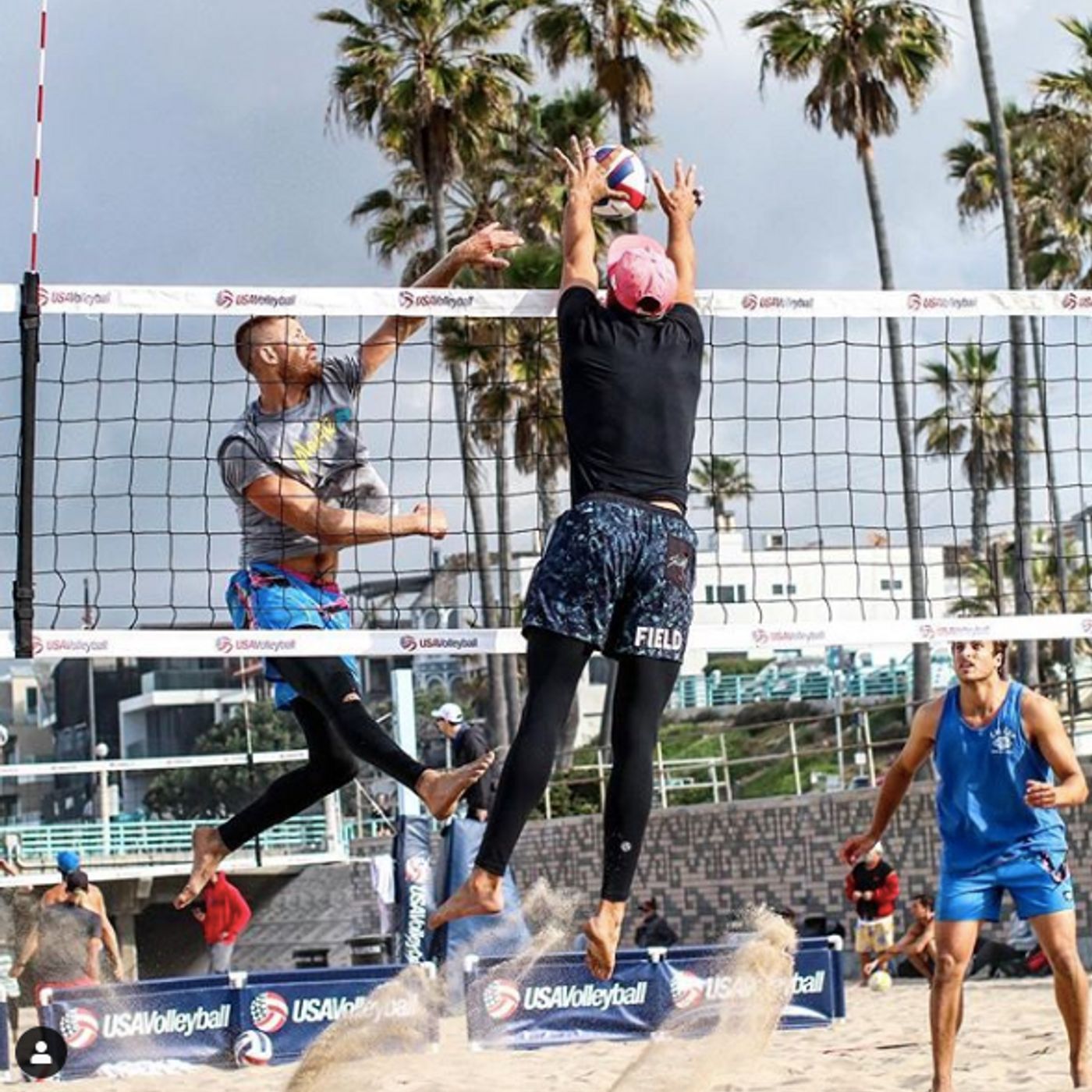
Ep 82Troy Field: More than the guy with the big vertical in a pink hat
Troy Field had to pause for a second on the set of SANDCAST to catch himself. “Back in the day,” he repeated, laughing. “Back in the day, like, three years ago.” It seemed to catch him off guard as much as it can oftentimes do to those who have seen Field play. Three years ago, nobody had seen the kid in the pink hat. Hadn’t seen him flying around with a vertical north of 40 inches out of sand. Hadn’t seen him reverse wind-milling, evoking images and comparisons to a young Sean Rosenthal. Hadn’t seen him at the South of the Border Volleyball Vacations. Hadn’t seen him medaling at NORCECA’s with Reid Priddy, one of the greatest the indoor game has known. Hadn’t seen him donning those signature Slunks boardshorts of his. Hadn’t seen all of that coalesce into his being named the winner of the Top Gun Award at the AVP banquet, given to the male and female who, well, most look the part of volleyball players in the Top Gun movie. “It’s been a roller coaster,” Field said. “Just up and down.” Mostly up. Both physically and metaphorically. Field’s matches invariably draw some of the biggest crowds to watch him go up up up. He wishes he could explain it, too, that massive, explosive, enviable vertical of his. Wishes he could give a legitimate answer to the legions of fans who ask how he jumps so high and if he can teach them. He feels bad that his only answer is really a shrug and a sheepish grin that implies the gift of God and genetics. "I feel so bad because I'm not that person who trained it out," Field said. "I'm not the guy who repped it out. That's kind of it." Field is more than an enormous vertical. Far more. When the AVP needs a volunteer for its AVP First events, Field is one of the first to sign up. During season, at the Sunday clinics, lest Field be playing in the semifinals or finals, he’ll be coaching the kids. This off-season, he’s been traveling back and forth, doing South of the Border Volleyball Vacations and multiple events in Texas. He’ll be the first to engage with fans, both in person and on social media. Shoot, the guy is the first to offer help to the guys he’s playing against. When he’s knocked out of tournaments, he’ll go grab a camera for the McKibbins or Casey Patterson. He’ll run up to the Amazon booth and hop on the mic with Camryn Irwin and Kevin Barnett. Immediately after finishing this podcast, he offered to do video, photo, whatever SANDCAST might need, just give him a call. Just Troy being Troy. “With the AVP 2018 season being his first full year on tour,” the AVP wrote on Instagram. “Troy Field immediately made his presence felt! Between incredible plays on the court, engaging with the AVP Family and working with the community through AVP First, Troy is becoming the ultimate AVP pro.” Three years ago – or, “back in the day,” as Field likes to say – such praise from beach volleyball’s biggest tour would have been unthinkable. Three years ago, Field had been playing ball in Doheny where "the youngest guy was, like, 45 years old." Working odd restaurant jobs. Watching enough film of Karch Kiraly that he eventually adopted his signature pink hat and the goofy-footed approach. “Now,” he said, “it’s onto the mental side of things… I went from qualifier, right on the cusp to a main draw athlete and now I have to be the guy who qualifiers are thinking about. I was that guy, like ‘I have to beat Tri and Trevor’ or ‘I have to beat Rosie.’ I don’t want to be the guy that people are watching film on. It’s weird. Roles have reversed and switched and doors have opened.” And they’ll continue to open, to the point that, not too far from now, he’ll look back on this story, laugh at where he was at that point in his career, and say “Back in the day…” Hosted by Simplecast, an AdsWizz company. See pcm.adswizz.com for information about our collection and use of personal data for advertising.
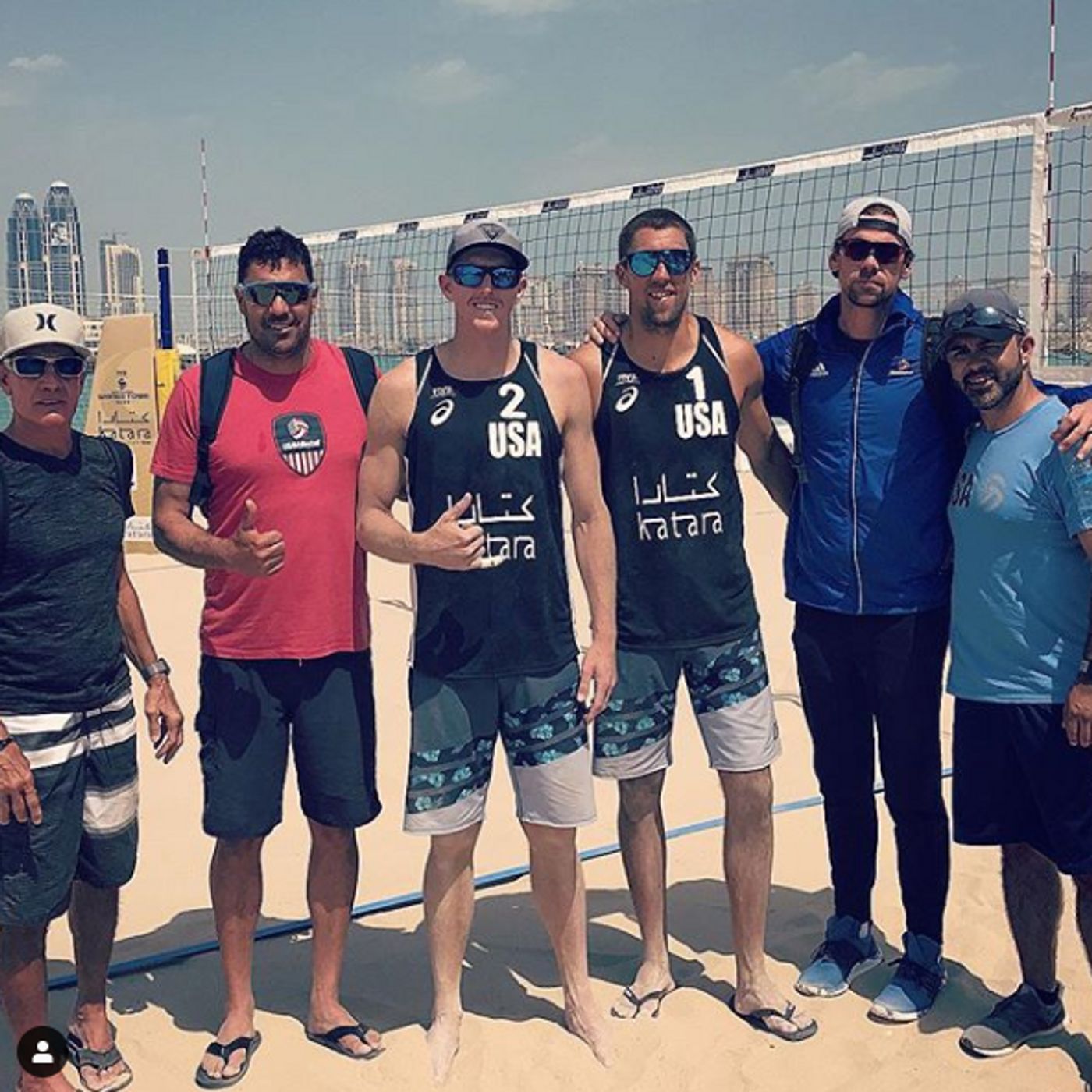
Ep 81State of the Beach Volleyball Union: Recapping Doha, Exciting AVP News, Partner Switches
There is no shortage of ways in which to describe the absurd depth on the World Tour. You can start with the obvious, the upstart Chileans who many might claim to have come out of nowhere but, really, they’ve been here, hiding in plain sight all along. In 2011, Esteban and Marco Grimalt – cousins, not brothers – played in their first FIVB event. In the time between then and Sydney, a three-star event in early March, they had competed in 59 tournaments. They never switched partners. Nor were they ever really much of a threat at all. And yet there they were in Sydney, winning six straight matches, including the gold medal, over qualifiers Enrico Rossi and Adrian Carambula. Though perhaps that should be your measurement of depth – the fact that Rossi and Carambula could march out of the qualifier and straight to the gold medal match. But just when you might think that’s impressive, the Grimalts one-upped them the following week, at a four-star in Doha. Now, it was their turn to begin in the qualifier, smoking a talented German team in Nils Ehlers and Lars Fluggen, 21-16, 21-13. It didn’t matter that every elimination match in the bracket rounds, save one, the finals, went three. Didn’t matter that they had played six matches the week before. By the time the finals rolled around, the Grimalts seemed as if they were playing their first match, not their 14th in 11 days, with international travel and time zone switches and all other manner of mental and physical obstacles to throw them off. “There’s no good draws,” Tri Bourne said on his eponymous podcast, SANDCAST: Beach Volleyball with Tri Bourne and Travis Mewhirter. “How many times do you see a qualifier team win it?” It happens, though it’s rare. Bourne and John Hyden did it in Berlin of 2014. Poland’s Piotr Kantor and Bartosz Losiak did it in Rio de Janeiro in 2016. Same goes for Alvaro Filho and Saymon Barbosa at the Fort Lauderdale Major in 2017. The difference with those teams, however, is that they were all new. The Chileans have been around for nearly a decade, and now, suddenly, they’re winning back-to-back tournaments, the second of which out of the qualifier. “It’s so gnarly,” Bourne said. “I was just talking to my agent about it and he was asking about, saying ‘Oh, seventeenth doesn’t sound very good for us, does it?’ And I was like, ‘Honestly, when any given team can win on any given week? It’s not like the top ten teams in the world are never taking seventeenths. The World Tour is just constantly getting mixed up.’” Perhaps the best measurement of depth, then, is to look at the bottom, not the top. At the gold medalists and world champs who, having already proven they are the best in the world at what they do, either barely cracked pool or didn’t even make it to pool play in the first place. A week after playing in the finals, Rossi and Carambula failed to qualify. Fellow Italians Alex Ranghieri and Marco Caminati fell to the same fate. Filho and Ricardo Santos, the most decorated blocker in beach history, didn’t make it past pool. Joining Bourne and Trevor Crabb in seventeenth were 2016 Olympic gold medalist Bruno Oscar Schmidt and 2017 World Champ Evandro Goncalves. Alongside them were former world No. 1 Alex Brouwer and Robert Meeuwsen. Bruno’s partner in those 2016 Olympics, Alison Cerutti? Another seventeenth, alongside Andre Loyola, one of the most promising talents in Brazil. Such is the state of the world tour. "I'm obviously not happy with our finish," Bourne said. "But I'm super happy with our team." Hosted by Simplecast, an AdsWizz company. See pcm.adswizz.com for information about our collection and use of personal data for advertising.
Ep 80Emily Day: The LMU Hall of Famer making a run at Tokyo 2020
Maybe Emily Day should just come on SANDCAST: Beach Volleyball with Tri Bourne and Travis Mewhirter, every week. The first time she hopped on, she did so with her partner, Betsi Flint, on the first on-site podcast, just behind an outside court at AVP San Francisco. Two days later, her and Flint were the last team standing, beating Geena Urango and Caitlin Ledoux in the finals, 21-17, 16-21, 15-7, marking their first win as a team. “We should do that more often,” she said, and whether she was talking about coming on the podcast or winning, either would have sufficed. In the next AVP, on Lake Sammamish in Seattle, her and Flint won again, no good luck podcast necessary, as they did in Haiyang, China, two weeks later. Then again, when she came back on SANDCAST for her second appearance, she left the studio and went straight to the podium again, returning home from a three-star in Sydney with a silver medal around her neck. “We tend to have that effect,” Bourne joked. In reality, of course, it is the ever-so-humble Day who has that effect on her own career. She always has. She’s won with virtually everyone she’s played with, on virtually every tour she’s played. Doesn’t matter if it’s the old-school Wide Open series with Heather McGuire or a NORCECA with Summer Ross or Whitney Pavlik or an AVP with Jen Kessy or the Manhattan Beach Open with Brittany Hochevar or internationally with Flint. She’ll win split-blocking or full-time blocking. She’ll win with loud partners and quiet partners and goofy partners and intensely competitive partners. And it is that ability to win, with personalities and skill sets of any shape or size, that recently helped land Day in the Loyola Marymount Hall of Fame. “I was honored,” she said. “Absolutely shocked. It was such a cool weekend, just felt a part of LMU athletics.” It’s no wonder that she still does. Though she finished competing for the Lions in 2008, her team is still very much an LMU one. Her partner, Flint, is in her fourth year as an assistant coach for the Lions after a beach career in which she was twice named All-American. When the college season ends, they’ll be helped by John Mayer, currently the head beach coach for LMU. As it stands right now, Team LMU is second in the world in the push for the Tokyo Olympics, behind only Brazilians Rebecca Cavalcanti and Ana Patricia Silva. This will be Day’s second attempt to qualify for an Olympic Games. The first was a shot at Rio de Janiero in 2016 with Kessy. They finished as the first team out, U.S. No. 3. “It was tough,” she said. “We had chances and opportunities but of course you always look back and think ‘If we would have done better in this one then our draw would have been better for this one. It’s a grind. It was a grind. A roller coaster.” Now it’s onto grind No. 2, roller coaster No. 2. “We just can’t let the highs get too high and the lows get too low,” she said. “I think something that Betsi and I have done well is – you go from winning San Francisco to a four-star in Poland and nobody cares that you won in San Francisco. The highs and the lows, you gotta stay even-keeled. You’re going to get good draws, and you’re going to get bad draws. It’s all about what you do with what you have in front of you.” Hosted by Simplecast, an AdsWizz company. See pcm.adswizz.com for information about our collection and use of personal data for advertising.
Ep 79HawaiiCast with Tri Bourne and Taylor and Trevor Crabb
The relationship between brothers is often too complicated for even brothers to fully understand, let alone communicate to the world beyond, especially when their immediate world beyond knows their life history – where they grew up and went to high school, where they went to college and what they’ve done since. When you throw into that the fact that the two brothers in mind – Taylor and Trevor Crabb – were, for a period of two years, also simultaneously maintaining the most volatile of relationships – business partners, roommates, volleyball partners, running among the same group of friends – it would have been quite curious if they didn’t fight a bit than to the extent they did. So yes, when Taylor and Trevor Crabb played beach volleyball together, as they did at the professional level in 2015 and 2016 and in various tournaments in 2011 and 2013, there were times they didn’t get along. And there were times – almost all the time, really – on the court, that it just didn’t matter. “It’s every partnership,” Taylor said on SANDCAST: Beach Volleyball with Tri Bourne and Travis Mewhirter. “The longer you’re with someone, the more stuff is going to get on your nerves. Being brothers just amplifies it that much more. For the most part we were able to put it behind us and perform, and we played great for the year and a half that we were together. But just like every partnership it gets harder and harder as it goes on.” Watch any sibling partnership and you will see much of the same. Nicole and Megan McNamara at UCLA “will say things to each other they would never say to a different partner,” former Bruin assistant coach Jeff Alzina said. But they’re able to snipe at each other, to demand more, because they’re sisters. The McKibbins, Riley and Maddison, are no different. This is just what siblings do. They demand more. Expect more. And besides, it’s not as if a true blood relationship is needed to dig at one another. Growing up, the Hawaiian crew – the Crabbs, Bourne, McKibbins, Brad Lawson, Spencer McLaughlin – simply labeled Taylor “little shit.” Nobody is quicker to talk a little trash to Trevor than Bourne, his own partner, and vice versa. “They still try to give me crap,” Taylor said, “but it’s getting harder to.” The point in their careers is a rare one for siblings of any sort in the sense that, 18 months from now, it is not all that unlikely to see both Crabbs in the Olympic Games, Tokyo 2020. Taylor and Jake Gibb are the No. 2 team in the U.S., Bourne and Trevor No. 3. “You really gotta stay present in it,” Bourne said. “It’s such a long process. As much as our sport weighs on Olympics, you want that label, that’s everyone’s dream, it’s literally one tournament of your whole career. If you get caught up in two years of that certain event putting pressure on every other event, you’re really wasting your time. You just had a great finish on the world tour? Enjoy that. Be there.” And so the process begins. Taylor and Gibb are in Sydney this week for a three-star, their first event of the Olympic push and of the 2019 season. Trevor and Bourne skipped Sydney, focusing instead on a four-star in Doha the following week. By 2020, three kids from the Outrigger Canoe Club could be donning the red, white, and blue. “It’s pretty nuts,” Bourne said. “We were – well, we still are – cocky little shits.” You see, whether the birth certificates say so or not, this Hawaiian bunch is a family. And, like most competitive siblings, the trash talk never stops, no matter what side of the net you’re on. Hosted by Simplecast, an AdsWizz company. See pcm.adswizz.com for information about our collection and use of personal data for advertising.
Ep 78Sean Rosenthal, and a career not measured by any normal standards
It was almost as if Sean Rosenthal didn’t believe the words that had just come out of his mouth. “Leaving Jake [Gibb] for Phil [Dalhausser],” he said on SANDCAST: Beach Volleyball with Tri Bourne and Travis Mewhirter, “might have been the worst volleyball decision of my career.” He smiled, laughed. Then said it again, as if to cement it into reality what he had just admitted. Rosenthal’s partnership with Dalhausser was a fascinating one, though the reactions to it, including Rosenthal’s own, are complicated. By conventional standards, they were the best team in the world, winning their first event together in 2013, piling on two more Grand Slam golds. Rosenthal had never won that many tournaments on the world tour in a single year. And then he did it again, as he and Dalhausser tacked on three more FIVB golds during a run of four consecutive finals appearances in Navanger, Gstaad, The Hague and Long Beach. Less than a month later, they won the Manhattan Beach Open. For two straight seasons, they were the leading gold medalists on the world tour and also took home the biggest domestic tournament. By any human standard, the partnership was incredibly successful. But Rosenthal isn’t considered human. No, this is the Son of Jorel, the kid from krypton. This is Superman we’re talking about here, and Superman doesn’t live by the mortal standards the rest of us do. “For two years, we were the best team in the world,” Rosenthal said of his partnership with Dalhausser. “I think a little bit of it is because we didn’t win as many tournaments on the AVP as we were expected, but we won a lot on the world tour. Leaving Jake for Phil was the worst volleyball decision of my career. It’s crazy, it’s hard to say, but I think it might be true.” It might be true not because Rosenthal and Dalhausser were disappointing – they played together two years, they were the best team in the world for two years – but because Rosenthal and Gibb were just that good. They had just won the FIVB Team of the Year. Rosenthal, in an era of Emanuel Rego and Alison Cerutti, of Dalhausser and Todd Rogers, of Reinder Nummerdor and Richard Schuil, was named the best player in the world. Even after the FIVB season closed, they followed it up with a win in Santa Barbara during the AVP’s truncated, two-event revival season under Donald Sun. And then Rosenthal gave Gibb the call. He had already been in touch with Dalhausser. He knew, no matter what happened in Santa Barbara, he was going with Dalhausser for the next season. “[Phil] was just like, ‘What do you want to do? Do you want to play together next season?’” recalled Rosenthal. “And I was just like, ‘Uh, yeah.’ If your boss comes up to you and asks you, ‘Do you want a raise?’ It’s not like, ‘No, I’m good where I’m at.’ It’s kind of one of those things, not only from prize money but sponsor money, which went way up, too. Got RedBull and UnderArmour and a couple others, like SmartCar, which were basically through Phil.” But would he do it again? “I’d probably do it again,” Rosenthal said. He’d do it again because Dalhausser is a name that belongs in discussions with those of Kiraly and Smith and Stoklos and Steffes, the best the game has ever seen. He’d do it again because, even with a rash of injuries and awful timing to both Rosenthal and Dalhausser, they still finished as the best team in the world in consecutive years. Such is the standard of Sean Rosenthal. When finishing as the top on the world tour is cause for questioning a partnership change. We are now in the final act of Rosenthal’s brilliant career, one in which he has accumulated more than 20 wins, compiled a resume that will rank him amongst the all-time greats and won with a playing style that will immortalize him in the South Bay community. His focus is still on volleyball, yes, but it’s turned more to his kids, constant bundles of energy. It’s turned to taking some time off. Golfing. Enjoying beach volleyball for what it is – a wonderful sport, an incredible way to make a career. More important, a way to get the kids out of the house and spend some energy. “We all,” Rosenthal said, “need to get down to the beach and practice.” One generation of Rosenthal gradually fades out. The next charges in. Hosted by Simplecast, an AdsWizz company. See pcm.adswizz.com for information about our collection and use of personal data for advertising.
Ep 77FloridaCast: Phil Dalhausser and Nick Lucena are all in for Tokyo 2020
To be honest, the sound bye you’re looking for in this podcast comes around the three-minute mark. You can fast forward there if you’d like. Tri Bourne, taking SANDCAST: Beach Volleyball with Tri Bourne and Travis Mewhirter on the road for a training camp in Florida, asks Phil Dalhausser and his coach, Jason Lochhead if they are all in for the upcoming quad. “Yep.” “Yep.” Two words. All you need to know. Dalhausser and Nick Lucena are all in for the two-year push for the 2020 Tokyo Olympics. Over the past few months, as it goes with beach volleyball, there has been no shortage of speculation in regards to the career plans of Dalhausser and Lucena. Rumors of retirement. Rumors of partner switching. Rumors of one final push. All of those rumors, dispelled with a simple yep. “It’s going to be quite a battle this time around,” said Bourne, who narrowly missed qualifying for the 2016 Olympics with John Hyden, edged out by Dalhausser and Lucena and Casey Patterson and Jake Gibb. With Dalhausser and Lucena confirming they’re intentions for the upcoming Olympic race, a battle is exactly what it will be. Dalhausser and Lucena will be slotted as the unquestioned favorites, followed by Jake Gibb and Taylor Crabb and then a mess of three to six teams – Bourne and Trevor Crabb, Billy Allen and Stafford Slick, Reid Priddy and Theo Brunner, Ryan Doherty and John Hyden, Miles Evans and Billy Kolinske, Casey Patterson and Chase Budinger – all of whom could reasonably make an international push. Which makes the preseason work all that more important. After the Fort Lauderdale Major was cancelled, Bourne and Crabb simply kept their tickets and decided to train with Dalhausser and Lucena, hence the Florida-based podcasts and a week of two-a-day practices and Brazilian BBQ with coach Jose Loiola and the girls team, Sara Hughes and Summer Ross, at night. “Jose saw we had a big break after Fort Lauderdale got canceled so he wanted to get us out of California and switch it up,” Crabb said. “It’s a good idea. You get, over and over again practicing the same thing for two months straight in California is a little much. Especially when you get the opportunity to train against Phil and Nick, one of the best teams in the world, it’s good.” Bourne and Crabb are still experimenting with their approach to an Olympic quad. They’re trying out a new system – split-blocking – new sides, new offenses, new everything. For Dalhausser and Lucena, who have a combined four Olympics between them, while Lucena had a narrow miss in 2012, this is nothing new. “When I come in, it’s not like I tell you what to do,” said Lochhead, who coached Canada in the 2016 Olympic Games. “It’s, ‘We have three minds, let’s check out ideas and what things are going to be the best.’ It won’t work if I just come home and tell them what to do. They have a ton of experience. They know what’s going on. I always think, if you tell someone what to do, in their mind, it’s hard for them to really do it because they don’t truly believe it but if you talk it out with them and hear their thoughts and hear their ideas it almost becomes their idea and their thought then they truly believe it and go 100 percent at it.” For one final Olympics, Dalhausser and Lucena are 100 percent in. Hosted by Simplecast, an AdsWizz company. See pcm.adswizz.com for information about our collection and use of personal data for advertising.

Ep 76Beach Volleyball stocks to buy prior to the 2019 season
Alas, we get our first look. It was supposed to come this past week, in Fort Lauderdale, Fla., site of the late Fort Lauderdale Major. But with the plug pulled on the season-opening Major of the beach volleyball season, we were forced to wait. For some, that wait ends this weekend, as four U.S. women’s teams, all new partnerships, will make the trip to Phnom Penh, Cambodia for a two-star FIVB. Typically, no, two-stars would not garner much attention, but the four pairs heading overseas are four of the more intriguing partnerships on the women’s side. While the men’s scene was turned upside down and shaken sideways, with all but two of the top teams breaking up, the women’s was relatively quiet. Nearly all of the top teams remained together, while the mid-tier partnerships, the ones seeking breakthroughs, sought new partners to make that jump. Four of those – Amanda Dowdy and Corinne Quiggle, Jessica Gaffney and Molly Turner, Brittany Hochevar and Carly Wopat, Caitlin Ledoux and Geena Urango – will be competing in Cambodia. It made for a unique episode of SANDCAST: Beach Volleyball with Tri Bourne and Travis Mewhirter, one in which the hosts break down what individuals and teams are primed to make the biggest strides this year. Now, we left out the blue chips that are unquestionable, the Dalhaussers and Rosses, Klinemans and Hughes, because they’re already blue chips. Our focus was on the players and teams to make the biggest moves. Here are the five best female and male beach volleyball stocks, either as individuals or team, to buy this year: Men Chase Budinger: It seems incredibly unappreciated, what Budinger was able to accomplish last season, his first on the AVP Tour. Not only was it his rookie year as a professional, it was the first time he had picked up a volleyball in a legitimately competitive arena since high school, and even then, it was indoor. And in just one season, Budinger was able to make a final? Beat Evandro? Win Rookie of the Year? With a full season under his belt, Budinger should be one of the biggest risers this year. Tri Bourne, Trevor Crabb: Every time Bourne won a match last season – and he won many, including one over Phil Dalhausser and Nick Lucena and two over the Spanish, whom he had never beat – a large part of me wanted to remind people how absurd it was that he was winning. For a year and a half, he basically couldn’t sweat. And now he was beating the best team in the U.S. and another he had never beat with John Hyden playing defense? Bourne and Crabb were an excellent team even before either had learned how to play defense. Now that they’ve had Jose Loiola coaching them for an entire off-season, and Bourne is healthy enough to, you know, sweat, who knows how high they can climb this season. Troy Field: The comparison I like to make with Troy, relative to the stock market, is Tesla. Here’s Tesla, a product of, honestly, genius. It has incredible upside, a potentially limitless ceiling. Sometimes it’s brilliant, and looks as if it could very well revolutionize the industry. Others, it busts. Anybody who has seen Field play has seen him make plays you simply can’t teach. It’s a rare type of athleticism that is going to win points, matches, attract partnerships (and sponsors). And then sometimes that athleticism gets a tad out of control, a bit like Elon Musk at Tesla, and he takes a few steps back. But he’s new to the game, and with two years of high level beach under his belt, a number of those odd mistakes should be smoothed out, and the ascent he’ll make this year will be quick. Eric Zaun, Jeremy Casebeer: This is without a doubt the most interesting beach volleyball team in the United States, mostly because any team with Eric Zaun on it will be interesting, but what a dynamic. Here we have two bombers from the service line, who swing upwards of 80 percent of the time, who are a bit combustible in both good ways and bad. This is a team that could just as likely dump two straight matches and take 13th as win an entire tournament. Currently, they’re training in Brazil, against the best in the world, getting team-focused reps. I wouldn’t voluntarily bet against them. Andrew Dentler, DR Vander Meer: It’s hard for me to lump these two together as a team, because qualifier teams are not exactly known for their longevity. But from what they’ve shown so far, this is going to be an excellent team. They’ve played in three AVP Nexts, winning one, placing second in another and fifth (I don’t know what happened there) in the next. Plus, Dentler, who was the unofficial adult of the year in 2018 – he got married, had a kid, finished his masters, bought a house – should have a little less on his plate to focus on volleyball. Others to watch Ben Vaught Eric Beranek Kacey Losik Miles Partain Logan Webber Tim Brewster John Schwengel Ian Satterfield Women Brittany Howard, Kelly Reeves Last year was really only the second year in which Howard’s focus was solely beach volleyball. She competed fo
Ep 75Brooke Sweat: From considering retirement to playing with the GOAT
It’s funny, sometimes, the path the universe can choose to take you. One minute, you’re lying on a training table, your torn shoulder being worked on. You’re pondering if this is it, the last tear. Perhaps it’s time to move back to Florida. Have kids. Raise a family. Move on. The next, you’re on a call with Kerri Walsh Jennings, the greatest to ever play the game, one of the most dominant athletes not only in the sport of beach volleyball but of all time. She’s looking for a partner, someone to make a run at the Tokyo Olympics. You’ve been to the Olympics before. You fell short, going 0-3. The sting is still there. You want more. So you take the offer. Your career isn’t over. In fact, this may just be the beginning. This could be the exact moment everything – the knee surgeries and shoulder tears, moving across the country to a state you never wanted to live to, making a career out of a game that you didn’t pick up until after college – has circuitously led to. Maybe this is the reason for all of that. Such is the story of Brooke Youngquist Sweat, one filled with tremendous adversity but magnificent toughness, both of the mental and physical sort. She never meant for beach volleyball to be a career. Her boyfriend in college, Nick Sweat, played. Every now and then she’d hop in. She gave it a go for a bit but didn’t like it much. Wasn’t for her. Then she tried again. Suddenly, the gal from Estero, Fla., the one who would work on her dad’s rock quarry over the summers, was moving to California. Suddenly she was traveling to AVP qualifiers. And then she was qualifying. And winning. Suddenly Brooke Sweat had become the very personification of all things Southern California, the one chasing a pipe dream on a beach, dropping everything to do so, traveling with the rolling circus of grinders and hopefuls that is the AVP Tour. Only it was working. It was in 2012 that Sweat moved to California. Not coincidentally, a year later, partnered with Jen Fopma at Huntington Beach, she won her first tournament. When she wasn’t winning, she was contending, as Sweat, in 2014 with Fendrick, made five straight finals, meeting the same foil every time: Kerri Walsh Jennings and April Ross. “I just wanted to be on the court against her, she’s always going to make me better,” Sweat said. “I never thought I would be playing with Kerri. Like, no. So it’s kind of cool to be in this position, especially after not knowing if I was going to be playing ever again.” So now here she is. Her knee is healthy. Her shoulder, as is Walsh’s notoriously troublesome shoulder, is rebuilt. On the road with them will be physical therapist extraordinaire Chad Beauchamp. The next two years will be the final push for both Sweat and Walsh Jennings. And then Sweat will return to Florida, where her heart has always been. It will have been a long and winding journey, though what else would you expect from this wonky universe of ours? What fun would the straight path have been, anyway? Hosted by Simplecast, an AdsWizz company. See pcm.adswizz.com for information about our collection and use of personal data for advertising.
Ep 74Chad Beauchamp: Not your everyday physical therapist
No matter the country or tournament or prize money on the line, it is never an especially difficult task to identify which is the room of Chad Beauchamp. It’s the one overflowing with overgrown humans, with massagers, tables, tape, ice. “Chad has a bed for the athletes, a table, his bed that we’re not supposed to use but most of us sit on it anyway,” Tri Bourne said, laughing on SANDCAST: Beach Volleyball with Tri Bourne and Travis Mewhirter. “We get legitimately excited when we know Chad is traveling with us.” Beauchamp is, among many roles, one of the physical therapists who travels for USA Beach Volleyball. It’s a position he stumbled into beginning in 2012 with a combination of a phenomenal education, innovative techniques, and, of course, a small dose of serendipity. “I had been doing some U.S. Surfing stuff,” Beauchamp said. “At that time, I got asked to do a tournament with USA Beach Volleyball.” They wanted to know if he could go to Germany in a month. He had no idea it was a $300,000 Grand Slam. That it was a critical tune-up for the London Olympics two weeks later. “I was like, ‘Alright,’” he said, shrugging his shoulders. “I just kind of got thrown in there.” Now he’s going on seven years with USA Beach Volleyball and is also the trainer tabbed to work with Kerri Walsh Jennings and Brooke Sweat, a pair of athletes with notoriously cranky shoulders. “This year is going to be cool,” he said. “I plan on going to Moscow with USA Volleyball but this year, specifically, Brooke is coming off her last surgery, it’s been challenging for her the past couple of years, so I’m going to travel a little more specifically with her and Kerri.” For the past several seasons, Beauchamp has been the man trusted with some of the most valuable shoulders in volleyball, from Casey Patterson and Jake Gibb in their leadup to the 2016 Olympics to Irene Pollock and now to Walsh Jennings and Sweat, who are making the push to Tokyo’s 2020 Games. “I’ve always looked at rehab and recovery as the glue that holds it all together, all the training and all that kind of stuff,” Beauchamp said, which is why stretching is as important as lifting, massaging as critical as setting, breathing as vital as hitting. “It’s all connected, and sometimes people don’t know, either. You may not even know that if you get a little more range of motion in your t-spine or if you can open up your hips a little more you can jump higher or cock your arm back more and can give you more power. Those are the things we’re looking for. We’re trying to find all of those things. “If you lack the range of motion in your hips, and you’re not getting the muscles firing in the right sequence, and if you’re not able to twist in your t-spine the right way or engage your core the right way, you’re losing power in your shoulder. And then what you try to do is you try to force it more and that’s when you start to tear your labrum and your rotator cuff and whatever else.” A conversation with Beauchamp is almost like a lesson in Kinesiology 101 combined with Meditation 101 combined with Weight Training 101, and that’s sort of the point. A visit with Beauchamp won’t result in a simple diagnosis and recovery plan – no more “ice and rest” advice. It will be specific, catered to each individual, an all-encompassing calendar hitting every aspect, from the mental side of things to the strengthening to the recovery. “Piecing all those components together,” he said, “is how we get the better performance.” And how his hotel room is the one perpetually overcrowded. Hosted by Simplecast, an AdsWizz company. See pcm.adswizz.com for information about our collection and use of personal data for advertising.
Ep 73Rich Lambourne: The humble, self-deprecating, sarcastic gold medalist turned coach
The talk always turned to Taylor. As Taylor Crabb and Jake Gibb grew and developed as a new team, climbing the world ranks, piling up wins that once could have been perceived as upsets – over 2017 World Champs Andre and Evandro, over Phil Dalhausser and Nick Lucena, over Italians and 2016 silver medalists Paolo Nicolai and Daniele Lupo – most looked to Crabb, the 26-year-old quicksilver fast defender, as the reason for that success. It’s a justifiable stance, and not entirely wrong. But Gibb, appearing on SANDCAST: Beach Volleyball with Tri Bourne and Travis Mewhirter, while giving Crabb his due, also pointed to another source of that success: Rich Lambourne. “We’ve got a guy with a gold medal around his neck,” he said. Not that you’ll hear Lambourne mention that gold medal, earned as a libero on the U.S. indoor team in the 2008 Olympics. In nearly an hour on SANDCAST, it came up just once, in passing. The vast majority of his many accolades went unmentioned as well – Best Libero of the World League in 2007, NORCECA Continental Championship 2007 gold medal, being named best libero as the U.S. won their first World League title in 2008, the fact that he played in every set of the Beijing Olympics in which the Americans won gold. No, that just wouldn’t be Lambourne, a paragon of humility, self-deprecation and sarcasm. A struggle of many players-turned-coaches is turning off the player inside them, one that Brazilian Jose Loiola admitted he struggled with. Lambourne laughed. He had no such struggle. “What’s been interesting to me, it’s been a huge and ongoing learning process for me because I don’t have personal, professional frame of reference to the game,” Lambourne said. “Jose has 20 years of repetitions and tournaments that he went through in this particular discipline of the sport, and I don’t. I have, I think, some technical expertise that has some high degree of transfer that I can bring, but the rest of it – strategy, how can we accomplish getting that team out of system, or how can we accomplish putting them in positions we want them to be in that are advantageous for us, it’s vastly different outside than it is inside. So all that stuff is stuff I had to learn, stuff that I’m still learning, that’s still evolving. “So that’s been the challenging, and what’s been fun.” They’ve created a collaborative dynamic, Lambourne, Gibb and Crabb, begat from three vastly different perspectives on the game. Lambourne is the indoor specialist with a sharp mind for the game. Gibb is one of the all-time greats, a three-time Olympian with a likelihood of making that four. Crabb has set himself firmly in the conversation as one of the best defenders in the world. “I try to bring what I have to them, and they try and fill in the gaps with, in Jake’s case, 20 years of experience at the highest level,” Lambourne said. “And in Taylor’s relatively short career, how much amazing stuff has he done? So I’m never going ‘Uh, no, let’s do this.’ I’m saying ‘Here’s what I think, here’s what you think, so let’s decide so we’re all on the same page.’” That same page, at the moment, has put Crabb and Gibb as arguably the best team in the United States. It's put them on track for Lambourne to appear in his third Olympics, Gibb his fourth, Crabb his third. Just don't expect Lambourne to take much, if any, credit. "No, I take full credit for Taylor's success," Lambourne said, laughing. So there it is, the only type of credit Lambourne will take: the sarcastic type, full of self-deprecation, and nothing about the gold medal hanging from his neck. Hosted by Simplecast, an AdsWizz company. See pcm.adswizz.com for information about our collection and use of personal data for advertising.
Ep 72Carly Wopat: Transitioning from indoor's highest level to beach's
Carly Wopat acknowledges that there are a number of skills that need to be refined, so be smoothed over, to be fully beached from their indoor counterparts. But she’s been an athlete all her life, a state champ in high school, an All-American at Stanford, a professional overseas. It’s simply a matter of time for most, and anyway, the majority of the fundamental skills are already there. There’s just one that gives her pause: setting, and hand setting. “Initially I just wasn’t squaring up,” she said on SANDCAST: Beach Volleyball with Tri Bourne and Travis Mewhirter. “It took a long time for me to just square up every time. I kept trying to angle the sets. I’m starting to get good at squaring up but I want to get better at hand setting and that’s the most difficult thing for me right now: hand setting. “The indoor hands are so different from the beach hands. I’ve gotten to the point where I know how to set a good ball, what it feels like, I just need to be able to do it consistently.” Anyone who might doubt Wopat’s ability to do so likely just doesn’t know much about Carly Wopat. This is a 26-year-old who, as a senior in high school, led Dos Pueblos to a CIF title and followed it up by setting a school record in the discus. This is a girl who, while majoring in human biology and dabbling with a minor in art at the most prestigious university in the country, led the Pac-12 in blocks per set (1.43) and hit .392 for her career, good for second all-time at Stanford. This is a girl who taught herself to play guitar, who speaks French and can also drop the occasional Turkish – “I don’t know why, but it just stuck with me,” she said – and Japanese. This is the daughter of a man who nearly qualified for the 1980 Olympics in track and field and a mother who competed as a gymnast in college. And hand setting could potentially be an issue? No way. In fact, it is the very difficulty of the sport, the fact that one couldn’t simply be a decent athlete and succeed, that drew her to volleyball in the first place. It is the need for these reps, the proverbial 10,000 hours, that she loves the most. “I like the speed of it,” she said of volleyball. “It’s an interesting sport. It takes a lot of skill. There are some sports where you can be really athletic and just go out and be really good at, like you can run and go be a track athlete or something like that. But with volleyball, there’s so much skill involved that it takes years and years to cultivate just hand-eye coordination and the feel for the ball. Just things that only come with experience I guess, perspective of the court and so I really liked that part of the game, that I could work on these skills and be really athletic and go out and play this game.” And in limited experience on the beach, she has already excelled, making two main draws – in San Jose and Huntington Beach – to end the 2018 season, taking fifth at p1440 Huntington Beach alongside Corinne Quiggle. With those resume points, despite zero FIVB points to her name but the desire to play overseas, she got a call from one of the most experienced United States defenders, Brittany Hochevar. “Hochevar messaged me while I was still playing in the p1440s and asked if I wanted to meet up,” Wopat recalled. “I think she had done her research and watched me a little bit and maybe talked to some people, so we met up and discussed playing together, and she just kinda has this dream to go to the Olympics for 2020 and we talked a lot about timing, and our partnership – I don’t know, just the timing of it all just works out really well. “The more I’ve gotten to know her spirit and energy – she’s just an amazing person. I just think we’re going to make an amazing partnership.” Hosted by Simplecast, an AdsWizz company. See pcm.adswizz.com for information about our collection and use of personal data for advertising.
Ep 71SNOWCAST: Emily Hartong and Katie Spieler
There they stood, the four Americans, bundled in four to five layers of UnderArmour and other form-fitting warm weather gear. Bundled in beanies and gloves, headbands and, underneath it all, hand and feet warmers tucked in their makeshift soccer cleats and gloves. They – Emily Hartong, Katie Spieler, Karissa Cook, Allie Wheeler – had descended upon Moscow, Russia less than a week before Christmas to play volleyball. It does not take an astrophysics major or scientist or really anybody with exceptional intelligence to determine that this was not the typical volleyball tournament. It wasn’t on a beach, where they are all pursuing careers. No, this was on snow, not a surface befitting three who earned degrees from the University of Hawai’i and another from USC. “We were compared to the Jamaican bobsled team,” Spieler said, laughing, on SANDCAST: Beach Volleyball with Tri Bourne and Travis Mewhirter. In a way, the comparison fits. Few would expect Americans to specialize in a sport that is legitimately never played on U.S. soil, aside from a lone exhibition at Mammoth Mountain in 2017. And yet, the comparison doesn’t really fit at all, for while the famed Jamaican bobsled team, which made their Olympic debut in 1988 and is the subject of the wonderfully popular film, Cool Runnings, was more of a gimmick, failing to finish their qualifying run, the Americans ran the table. Five straight matches they won, closing with a three-set win over Russia in the finals. “It was crazy,” Spieler said. “Definitely the best team we played was that Russian team we played in the finals. They were scouting us for at least an hour, with their coach, in the V.I.P. tent, so intense. Karissa had to go back to the tent to grab her bookbag and they went silent, like ‘Whoa.’ We were so confused at what they were scouting because we just had no idea what we were doing on the court. We were just kinda going for it out there.” It doesn’t really matter what surface it is for Spieler. She has won on the beach, as she did at Seaside, one of the biggest non-AVP or p1440 domestic events of the season, this year alongside Cook. She has won on dirt, as she did with Cook at a NORCECA in Martinique. And now she’s done so in the snow, though with a bit different of a wardrobe. “Hand warmers were super key,” Spieler said, to which Hartong agreed, mentioning she had two in her shoes. “All in the toes,” she said, laughing. “Arch was fine. It was all really interesting. It was fun, though. It was so much fun.” Hartong, too, has enjoyed success at every level, and now on every surface. She won a state title at Los Alamitos High School, was a two-time Big West Player of the Year at Hawai’i, named the Best Foreign Player on her pro team in Korea, qualified for the Hermosa and Manhattan Opens in her first year on the AVP, and is now a gold medalist on the snow. “We had a really good time, laughing on and off the court,” Hartong said. “I wouldn’t be surprised if it does become a sport.” Hosted by Simplecast, an AdsWizz company. See pcm.adswizz.com for information about our collection and use of personal data for advertising.
Ep 70Tri Bourne, Trevor Crabb: Making the split-blocking push to Tokyo
It began as something fun. Nothing much more than, well, why not? Why not put two childhood friends on the same team? Friends who play the same side, the same position, who had never played defense at a professional level. And yet there Tri Bourne and Trevor Crabb were, winning in Manhattan Beach, finishing with a seventh. Winning in Chicago, improving to fifth. Winning in China, claiming a gold medal. Winning in Hawaii, making a Sunday. Winning in Las Vegas, nearly stunning Russia’s top team, Viacheslav Krasilnikov and Oleg Stoyanovskiy, for a bronze medal. Winning despite Bourne not having played for nearly two years. Winning despite Bourne tweaking a rib. Winning despite neither of them really having any clue what to do on defense at the game’s highest level. Winning despite neither having played much right side in their careers. And now here we are, in 2019, with the Olympic race beginning in earnest this week at The Hague, and Bourne and Crabb, the team that few, even themselves, predicted to be legitimate contenders, or even a team at all, are training full-time, pushing for a berth to Tokyo in 2020. “We’re gonna stick with our plan,” Bourne said on SANDCAST: Beach Volleyball with Tri Bourne and Travis Mewhirter. “We’re still a new partnership, obviously. Last time we played in 2018 it was a honeymoon phase, even though me and Trevor have been playing against each other our whole lives. We had a lot to figure out, were just winging it at the end of 2018, so now we gotta figure out what our system is, figure out how the hell to play defense, and so I’m excited.” The commitment establishes Bourne and Crabb as the only split-blocking team in the U.S., and one of the few in the world at the game’s highest level. Currently, Spain’s Pablo Herrera and Adrian Gavira, Latvia’s Janis Smedins and Aleksandrs Samoilovs and Brazil’s Evandro Goncalves and Andre Loyola are the handful who have been able to succeed with neither partner specializing in either defensive position. “You just feel like you should specialize because the rest of the world is,” Bourne said. “I’m super excited about it. I’ve always taken a lot of pride in being able to do every skill. Indoors, I played libero a little bit at USC, played middle blocker, so I’ve taken a little skill set from each position indoors and that’s what’s developed me for beach. I didn’t like being a specialized blocker even though it’s my favorite skill and the one I probably took the most pride in the last five years. “But now I get to do it all. I’m stoked on that.” He knows there’s going to be a learning curve, that their quick success was perhaps aided by the unconventional style and the lack of preparation teams could do against them. Which is why the Olympic race is not a sprint, but a two-year international grind, one Bourne and Crabb are now set on doing together. “At the end of the year, we both took some time, and we weren’t for sure going to play with each other, we took time to figure out what was best for ourselves individually, but we both kind of came around – this is too fun,” Bourne said. “Why not, you know?” Hosted by Simplecast, an AdsWizz company. See pcm.adswizz.com for information about our collection and use of personal data for advertising.
Ep 69Jon Mesko: Thinking deeper and celebrating Festivus
Jon Mesko sincerely hopes you had a merry Christmas. He really does. He’s no Scrooge or Grinch. But there’s another holiday he loves, a “Festivus for the rest of us!” Those not indoctrinated with the classic Seinfeld episode, allow Frank Castanza, father of George Castanza, explain. “At the Festivus dinner, you gather your family around, and tell them all the ways they have disappointed you.” “Is there a tree?” “No, but there’s a pole. No decorations. I find tinsel distracting.” “Festivus is back!” Frank declares in the episode that aired on Dec. 18, 1997. He couldn’t have possibly realized that, indeed, 21 years later, it would be back, at Mesko’s new – and popular amongst the beach volleyball crowd – restaurant, Serve on Second. But does Mesko have any grievances to air? Any long held grudges with the beach volleyball community? “I’m here to air the grievances for Festivus,” he said, grinning, on SANDCAST: Beach Volleyball with Tri Bourne and Travis Mewhirter. “I got a lot of problems with you people and now you’re going to hear about it.” He said this with a smile, one that suggests he was half-joking, half-serious. If you’ve messed with his nets, or his courts, or his cables, well, you might be getting a grievance from Mesko, who is so particular about the heights of his nets – formerly located on eighth street in Hermosa, now on 35th – that, prior to this year’s Manhattan Beach Open, he went out on center court, measured it, and – aha! He knew it! – the net was an inch low. “The AVP has historically put it an inch and a half low, and the FIVB has put it an inch to an inch and a half high,” he said. “So what I decided was, ‘I’m going to walk out to the Manhattan Open final, right before Nick and Phil played Jake and Taylor,’ and it was one inch low, and that’s what the AVP sets it at, and that’s fine, so that’s what I set my net at now. I want to play what AVP, domestic tournaments are playing at.” It is, among other enviable traits, this borderline OCD attention to detail that has allowed Mesko to be so successful in so many endeavors, and in risky fields – beach volleyball, the restaurant business – too. “I enjoy just kind of making things a little bit better and improving things,” he said. “When I arrived at eighth street, it was pretty much just Rosie’s Raiders, hanging out and drinking, and I put out a new net and cables, putting down lines, and people just strted showing up to play. It culminated one day in 2012 with Brink and Reckermann and Jake and Rosie and the Russians and New Zealand and China and it was everybody. I just stood back and looked at it and thought it was pretty fun to watch. People just hung out after practice on my porch.” Ah, yes, Mesko’s porch. If you’re in beach volleyball, you have likely hopped the Strand wall in Hermosa Beach and hung out on Mesko’s porch, either talking volley, losing money in backgammon, betting on something or other, perhaps measuring your height on the once-famed wall, which has since been torn down with his old place on eighth. The wall grew so famous, in fact, it had its own spread in DiG Magazine. “The most amusing part for me was watching people tell Adam [Roberts] what they thought their height was and then seeing their real height,” he said. “Almost everybody was about an inch high except for Phil [Dalhausser], who said ‘I’m 6-9’ and, yeah, he was 6-9.” The wall. The backgammon. The porch. The set up. The constant, top-tier talent, both international and domestic, practicing on his courts. Not bad for a guy from Michigan who hadn’t played much beach volleyball prior to moving to California in 2002 and qualifying, for the first time, in 2006, seeded Q60 with Billy Allen. Since, he has played in more than 100 domestic tournaments, won the NVL Soul Award, enjoyed some NORCECA – don’t ask him about the net height in NORCECAs – success and built not one but two unofficial training centers, where players gravitate towards his courts like moths to a flame. “I’ve always been kind of a bigger picture, swing for the fences, shoot for the stars kind of guy, so I really try to ask the right questions,” Mesko said. “If you really want to play high level volleyball, you’re going to end up in the South Bay or Rio or Southeast Florida. That’s where you’re going to end up. “So at that time, 15 years ago, I was interested in girls and bikinis and playing really good volleyball and everything in between. That was Hermosa Beach. And I started looking around and thought it would be really cool to live on the Strand, so I started asking questions, ‘Well, what does it take?’ And a guy said ‘It’s going to cost $5 million dollars, minimum’ and I used that as a bar, ‘What would it take for me to make that much money?’ And I used that algorithm to maybe get there. I suppose we’re there now.” Hosted by Simplecast, an AdsWizz company. See pcm.adswizz.com for information about our collection and use of personal data for advertising.
Ep 68Billy Kolinske and Miles Evans: Climbing the world rankings by going all in
Bill Kolinske won’t forget looking at the hill, the one with his car parked at the top. Earlier that morning, he had parked there for his first beach volleyball tournament, and he did what he had always done for all of his grass tournaments: He lugged a cooler packed of food and drinks for the day. At the earliest, he’d be finished by one in the afternoon, maybe, if the day went well, 5 p.m. But this wasn’t grass. It was beach. And when Kolinske got spanked by a couple of guys in their mid-40s, his day was over by 9:15. “I remember I lost, and I was so pissed, and I’m like ‘I’m not lugging this thing all the way back up,’” Kolinske recalled on SANDCAST: Beach Volleyball with Tri Bourne and Travis Mewhirter. “I’m at least eating a sandwich. I remember that day, I lugged that cooler all the way back up, and I’m like ‘I’m figuring out how to play this game.’” He has since figured it out quite well. In 2016, just his third year playing multiple AVPs, Kolinske logged four top-10 finishes, including a third in New York with Avery Drost. This past year, he took to the FIVB full-time for the first time, making a $10,000 commitment at the start of the season, beginning a circuitous year with Miles Evans that took them from Morocco to China, Sydney to Iran, Lucerne to the Czech Republic. And, yes, it also took them to France and the Eiffel Tower. Just, uh, well, don’t bring that one up. “It was our second FIVB, which we didn’t actually end up playing,” Evans said, smiling ruefully. “Bill booked the flight, $2,000 bucks, probably could have been about $400. So we go down there, and it’s the first time that there’s a qualifier for a one star, so they have a 12 page document, and on the sixth page it says there’s a players meeting that we need to attend, and there’s never been a players meeting before. So we miss the players meeting, and we tell them 10 minutes after it ends that we’re there. We told them a week before that we’d be there, and they don’t let us into the tournament.” As it can sometimes go with international tournaments. Sometimes your bag gets delayed when playing in Morocco and you have to play in some hideous board shorts just to get something that matches. Sometimes you win a silver and a bronze medal in the Netherlands and Australia and still come away down more than $1,000. Such is the nature of the beach volleyball ladder: You invest $10,000. You get your finishes. You build your points. Now Evans and Kolinske are in four-star main draws, their first being at The Hague after the New Year. Now they’re one of the top teams in the United States. Now they’re playing against the best in the world, and holding their own when they do so. “It’s been an interesting year for us,” Kolinske said. “We’ve been playing tournaments these last 14 months pretty consistently, which I like playing year-round. I think it’s worked out well for us.” Hosted by Simplecast, an AdsWizz company. See pcm.adswizz.com for information about our collection and use of personal data for advertising.
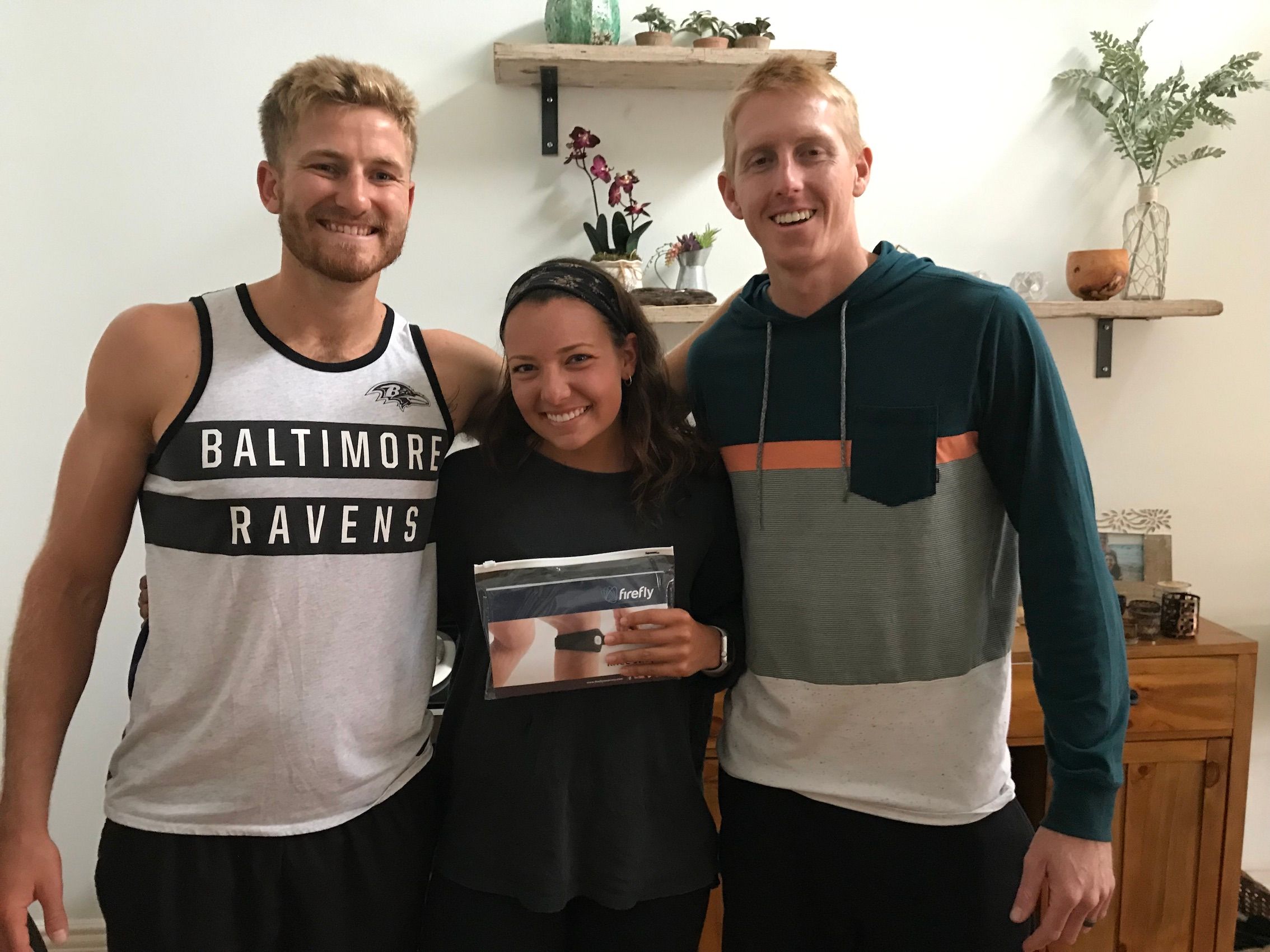
Ep 67Molly Turner: Following the perfectly unorthodox path to success
It’s difficult to blame Grand Canyon beach volleyball coach Kristen Rohr for forgetting. That when she looked around at her group of players, the one that began the 2018 season ranked No. 10 in the country, and said how they had chosen every one of them to come there, she forgot about Molly Turner. “I was like, ‘Not me,’” Turner said, laughing, on SANDCAST: Beach Volleyball with Tri Bourne and Travis Mewhirter. “I was the only one that wasn’t chosen by any of the coaches.” Coming out of a small club in Naperville, Illinois, a suburb west of Chicago, Turner wasn’t specifically chosen by any college program. Her first choice was more of a blanket choice: Any school in California would do. So she sent out emails to “every single school I could,” she said, naming, specifically, USC and Long Beach State. She didn’t hear back. So she tried the neighboring states, finding Grand Canyon University, a school in Phoenix with an enrollment of just more than 20,000. “I’ll pretty much do anything to be on your team,” she recalled writing the coach in an email. “She said ‘I can’t really guarantee anything’ so I went and took a risk. I kind of went for volleyball even though I didn’t really have a spot yet but I got invited to walk on and I just kept playing.” And playing quite well, quite fast. A 5-9 freshman season preceded an 18-8 sophomore campaign, one that began with an 8-match win streak. Then came a junior season in which Turner and Tjasa Kotnik won 22 matches to just three losses, culminating in All-American honors. “Honestly the only difference between my freshman, sophomore and junior seasons was that I moved to San Diego over the summer and trained there,” Turner said. “So maybe that was it.” Not that everyone noticed. “One time we went to practice at GCU and there were some people on the courts, and we had our jerseys on and asked them to leave so we could practice, and they were like ‘Well, who are you with?’” Turner said, laughing, per usual. “‘We’re the beach volleyball team.’ It was small when I originally got there but it’s grown so much.” As has Turner. To the point that, rest assured, after a sensational rookie season, one directly succeeded by her senior year at GCU, there is no more forgetting about Molly Turner. After losing early in qualifiers in Austin and New York City – granted, she had to play against then-top-ranked Canadians Melissa Humana-Paredes and Sarah Pavan in New York – Turner qualified in Seattle, San Francisco, Hermosa and Chicago. Three weeks after finishing 13th in her hometown, she played her first international tournament, a NORCECA alongside Falyn Fanoimoana, winning gold over UCLA’s Megan and Nicole McNamara. “I like the path I went through,” Turner said. “It was pretty tough, and it still is kinda tough.” Indeed. Turner still works three jobs. She trains four to five times a week to go along with conditioning and weight lifting. She’s learning how to recover. Not the most orthodox of systems, but then again, when has Turner’s path – cut from her indoor team, ignored by most every college aside from GCU, moving to San Diego on her own, to California for the AVP while working three jobs – has been orthodox, anyway? “I don’t want to stop,” she said. “I just enjoy it so much.” Hosted by Simplecast, an AdsWizz company. See pcm.adswizz.com for information about our collection and use of personal data for advertising.
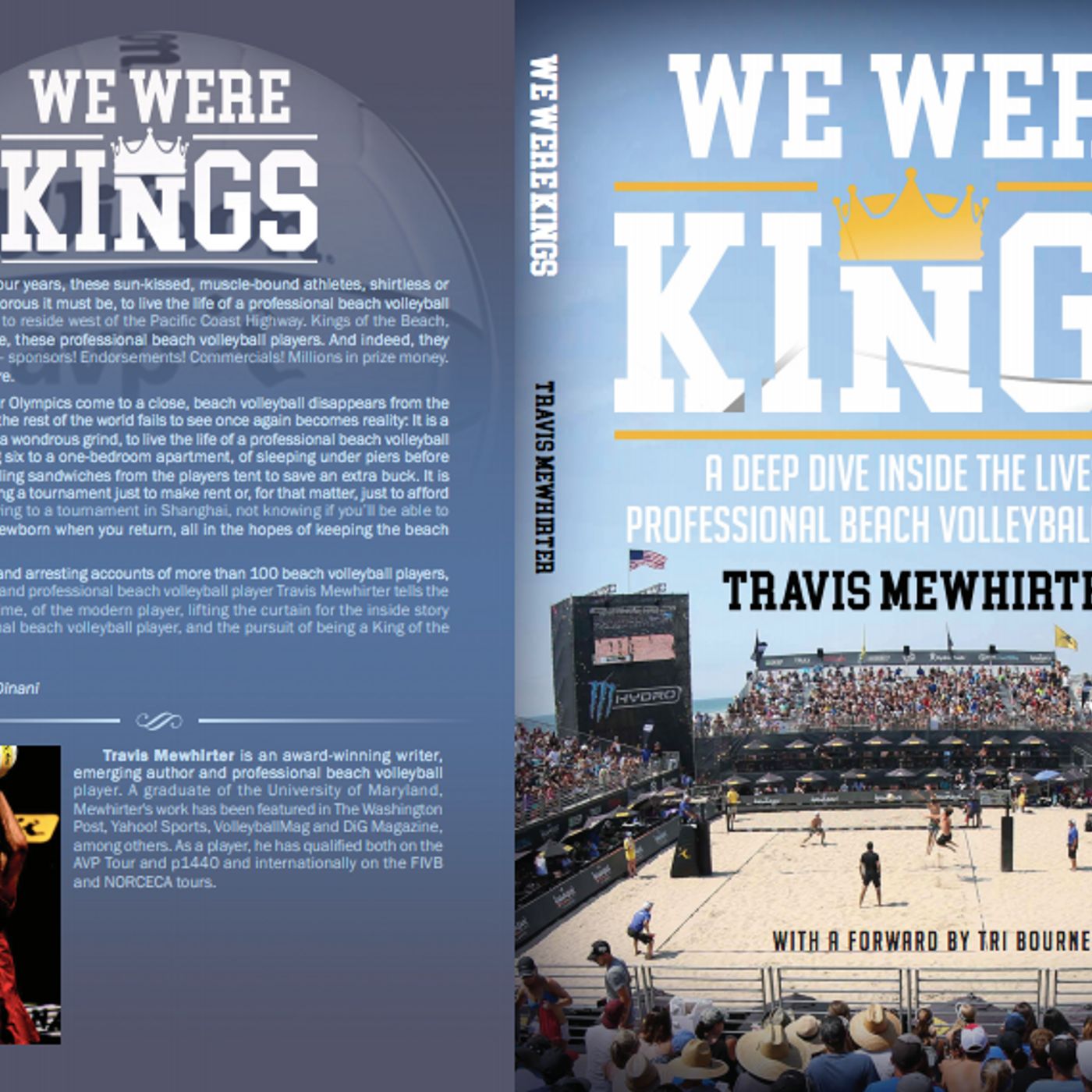
Ep 66Travis Mewhirter releases new beach volleyball book: We Were Kings
Travis Mewhirter published his book, We Were Kings, on December 5. You can order it on Amazon and Barnes and Noble! I’ll always remember the first interview. It was September of 2016. I was sitting on my bed in my studio in Newport Beach. That bed also doubled as my office, seeing as my apartment was roughly 600 square feet and had room for a bed, kitchen, and TV, all within arm’s length of each other. On the other end of the phone was Tri Bourne – Tri Bourne! The guy I watched roof John Mayer on match point of the 2015 AVP Huntington Beach Open on the first weekend I had moved to California. The guy I had dug deep into YouTube to watch virtually every snippet of film I could find. That Tri Bourne. And for an hour and a half, Tri talked about whatever it was that I wanted to talk about. You’re writing a book? Cool. What’s it on? It was a great question at the time, and it remained a great question over the next two years. The umbrella topic was easy enough: It was on beach volleyball. It was on beach volleyball because, when I had first picked up the game at a bar in Florida called Juana’s Pagodas, I had done what all good nerds do when assuming a new hobby: I went to Amazon and ordered every piece of literature I could on the topic. Which was nothing. There were drill books, sure, and instructional stuff. But I wanted to know about the game. I wanted its history, in all its rich detail. I wanted to know the players, the people, the events. I wanted to know everything. Only, in book form, there wasn’t much of anything to know. So my second interview was with a man named Kevin Cleary. My good friend, John Braunstein, set it up in a way. I told him I was working on writing a book o beach volleyball, and he told me Cleary was a guy I needed to talk to. So I sent Cleary a message on Facebook, waited a month or two for a reply, and when he did, we decided to play a AA CBVA in Manhattan Beach together. It wound up being an all-day affair, Cleary regaling me tales of beach volleyball’s past, how he became the AVP’s first president, how the AVP was formed in protest of rule changes, how things were done in the old-school days. Slowly, I began picking the contact lists of Bourne and Cleary. From Bourne’s list, I was digging into the modern player; from Cleary’s, the first generation of professionals. In a single week, I’d speak to Sinjin Smith and Carl Henkel, the 1996 Olympic team and the cause of so much unnecessary controversy, and also Riley and Maddison McKibbin. I’d talk to Karch Kiraly and Tim Hovland, followed up by Casey Patterson and Jake Gibb – the legends of past and present. Within a year, I had interviewed more than 100 players across various generations of beach volleyball, and when I sat down to look over the roughly 800 pages of notes, I still had absolutely no clue where to begin or what, exactly, I was doing with all of this information, which was pure, untainted beach volleyball gold. Becoming a player helped clarify that. To be clear, my name, in the context of playing beach volleyball, should not be mentioned in the same sentence as men like Bourne, Patterson, Gibb, Dalhausser, Lucena, all of whom have enormous roles in the book. But becoming a player, experiencing the wondrous grind of working up the ranks in beach volleyball as it stands today, illuminated exactly the project I wanted to publish: Why in the world do people spend so much time, energy and money and sacrifice so much of themselves to play beach volleyball? Financially, it makes no sense. The term fiscal responsibility is a paradox when spoken of in the realm of beach volleyball. In the mid-to-later playing days of Kiraly, Dodd, Smith, Stoklos – all the names you’ll see in the CBVA Hall of Fame – it wasn’t so incomprehensible, to be financially stable and a beach volleyball player. They could gross half a million in a single year. But over the years, with the AVP changing hands so frequently, from Leonard Armato to Jeff Dankworth to Jerry Solomon to Armato to Donald Sun with various hedge funds and financial institutions subbing intermittently in between, the game has struggled to find a firm footing. As such, it’s struggled to provide the type of consistency that its athletes could live off of, all of which served to create two fascinating questions for me: How do men even stumble into this game, and why do they continue to do it? I sent my first manuscript, a 120,000-word monster of a thing, to my wizard editor lady, Ann Maynard, who has overseen a number of New York Times bestsellers. The content was great, she said, and the stories captivating. But I covered too much ground too fast. She felt like she was in a literary drag race that was at once exhilarating and severely confusing. She gave me two options: Pick half the book and focus only on that, repurposing the other material for blogs, stories, magazines, whatever. Or just split the book in two – one digging into the modern player, the other detailing beach volleyball’s a
Ep 65Stafford Slick: Beach volleyball's Viking duck hunter
As if his path to beach volleyball wasn’t unique enough – raised in Minnesota, little to no volleyball background aside from a little club indoor, not a clue who men named Todd Rogers and Phil Dalhausser were – in his nine-year career thus far, Stafford Slick may have authored his own personal record book. Name another who has played with six different Olympians, including three gold medalists. Or anyone crazy enough to play in 17 – 17! – different NORCECAs with eight different partners. “We might have to do some fact checking,” Slick said on SANDCAST: Beach Volleyball with Tri Bourne and Travis Mewhirter. “But I think I’ve played with more Olympians than anyone else. I played with Dain [Blanton], retired him, put him out to pasture. I played with Rogie [Todd Rogers] in his last event, so I retired him. I played with Rosie [Sean Rosenthal], I played with Casey [Patterson], I played with Adrian [Carambula], who wasn’t an Olympian at the time, but he is now. And then I played with Reid Priddy. That’s another thing I might have a record for: I have a lot of partners too.” For an individual who has been playing beach volleyball for a hair over nine years, indeed, Slick has gone through his fair share of partners, though that’s less a detractor from his talent than it is an indicator of it. It’s only so often you get a coordinated, athletic, hand-setting 6-foot-8 blocker out of Minnesota. “I guess those guys saw something in me,” Slick said. And of all people, it was Blanton, a gold medalist, who saw it first. Slick was in his cabin in Minnesota for a July 4 getaway in 2010 when he got the call: Blanton, a gold medalist alongside Eric Fonoimoana in the 2000 Sydney Games, wanted to give Slick a shot. They’d be automatically in the main draw, Slick’s first. He wouldn’t even have to qualify. “It was huge for me,” Slick said. “Dain was kinda poking around, looking for a big man to play with because it was the tenth anniversary of his gold medal. So he was kind of connected with some of the people in the USA office and they dropped my name.” And just like that, Slick had his first of many accomplished partners. And yet, funnily enough, his unofficial Olympic partnership record may have never happened without his willingness to play in his unofficial record number of NORCECAs that, frankly, borderlines on absurd. “I don’t think that would happened without me playing all those NORCECAs,” he said. Because about those NORCECAs: They were on a lower international tier than they are now. When Slick moved to California in 2009, NORCECAs didn’t count for international points. The prize money, even if you won, wouldn’t cover the expenses for the majority of the tournaments. The incentive for American teams was, well, what was the incentive? In Slick’s case, to put your name on the map. “In 2009 and 2010, it was trying to scrounge and figure out a way to keep playing, and at the time, NORCECAs didn’t count for international points, so it was just sign up,” Slick said. “Back when I started playing it was ‘Hey can we play in this tournament?’ and they said ‘Great!’” So he did. He played with Mark Burik and Billy Allen, Even Engle and Will Montgomery, John Mayer and Casey Jennings, Priddy and Marcin Jagoda. Seventeen of them. Enough to get Slick on the map. Enough to get him a partnership with a gold medalist in just his second year attempting to qualify. Enough to kickstart a career that, two years from now, could turn Slick into an Olympian himself. Indeed, he has come a long way from the guy with the blonde Viking locks who didn’t know who Todd Rogers and Phil Dalhausser were. Back with Allen, with whom he won his first AVP tournament, Slick is no underdog to make Tokyo, should that be their goal. "When it came time to make that decision, it was something that just fit," he said. "It was something that just made sense. That was a big part of our conversation was 'Do our goals align? Are we making a run for Tokyo?' I"m excited. I'm hopeful." Popular on SANDCAST: SANDCAST: Eric Zaun, the Happy Gilmore of the AVP Tour SANDCAST: Taylor Crabb, AVP Seattle champion SANDCAST: Sarah Sponcil, Pac-12 Champ, National Champ, AVP Finalist SANDCAST: Jake Gibb ain't finished playing yet! SANDCAST: Tri Bourne is BACK ON THE BEACH Train like the pros, with the pros, at VolleyCamp Hermosa! Recover the right way with Firefly: Accelerated Athletic Recovery Choose the ball the pros use. Choose Wilson and use our discount code: WILSONSAND FOR 20 PERCENT OFF! Hosted by Simplecast, an AdsWizz company. See pcm.adswizz.com for information about our collection and use of personal data for advertising.
Ep 64John Mayer turns focus to full-time coaching
It’s fitting that John Mayer would spend much of his retirement podcast talking about everyone except John Mayer. Much of it was spent discussing Trevor Crabb, despite Mayer even catching himself midway through and mentioning that he didn’t want it to be “a full Trevor Crabb podcast.” It didn’t stop him from singing Crabb’s praises further, though, nor did it stop him from elaborating on the positives of former partners Jeremy Casebeer, Ryan Doherty, Brad Keenan as well as his podcast partner, Billy Allen. Almost anyone who Mayer came into contact with over the course of a career that spanned from 2003-2018, he made sure to bring up. It was a podcast as fitting as the manner in which he made his retirement known, which is to say, completely on accident. “I didn’t want to make a deal of it,” he said on SANDCAST: Beach Volleyball with Tri Bourne and Travis Mewhirter. “I had known this year – it’s just been so hard to do LMU and play at a high level, and I felt like I was being average at both. And plus, my passion’s gone to coaching. I just love it, I get consumed by it. I thought this might be my last year [playing]. I just thought I’d see how I feel in the off-season, if I felt like I was missing something. I still loved all the coaching and I wasn’t missing the lifting and conditioning. “I told my wife on our way to the AVP banquet, because she’s the one who would say something, just ‘Please don’t say anything. I don’t have a speech prepared, not that anyone would care’ but I knew she might say something to Mark [Schuermann, the AVP’s emcee]. She said ‘Oh, yeah, I won’t say anything,’ so the night was going through fine, ‘Alright, I’m off the hot seat, having a good time, just hanging out,’ and at the end of the night, Mark starts talking about me, and I’m like ‘What is he doing?’ And he says ‘Come up here!’ And I’m like ‘Why do I have to go up there?’ And he says ‘You gotta say something!’ My absolute nightmare.” The reception, of course, was warm across the board. Quiet and humble, soft-spoken and endearingly self-deprecating, Mayer is retiring as one of the most respected players in the country, both for the way he played and the manner in which he carried himself. Retiring, too, almost seems like a misnomer. He’s retiring as a player, yes, but Mayer actually might be on the beach more now than in the past decade. With the time he’d typically devote to the weight room, he’s now available to coach beach teams, the first of which to hire him is Billy Allen and Stafford Slick. He’s helping launch a beach division of Gold Medal Squared. He’s devoting more of himself to Loyola Marymount, the program he has helped improve from 6-17 to 15-14 to 22-14. And even the unquestionable, objective improvement he has overseen at LMU, he had to shed the credit. “I think I just scheduled more matches so we could get more wins,” he said, laughing. Ah, yes, it’s never to his own credit. The four AVP wins, two FIVB gold medals, 2015 AVP, 2015 Best Defensive Player – all a credit to someone else who helped him along the way, be it a coach (“I owe Tom Black everything,” he said), a partner, his wife, anyone. That’s Mayer. He even mentioned that perhaps he would have had a more successful career in spots had he chosen to focus on improving himself a little more as opposed to always, always, always attempting to bring the best out of his partner. But that just wouldn’t have been Mayer. He’s a coach, after all. Through and through. Now he’s set aside to become the best he can be at that, a role in which his own improvement will mean the inevitable improvement and development of those around him. A role befitting the man who has always put others first. Hosted by Simplecast, an AdsWizz company. See pcm.adswizz.com for information about our collection and use of personal data for advertising.
Ep 63SANDCAST anniversary episode: We made it!
It was funny, what kept happening over the course over the year, a comical little motif that never failed to boggle my mind. People would thank me. They thanked me in Austin. To the great amusement and bafflement of my parents, they thanked me in New York. They thanked me in San Francisco. One person went as far as to ask for my autograph in Seattle. Mark Schuermann thanked me during my introduction on my stadium court match in Hermosa. A few lovely Georgians expressed their gratitude in Chicago. Not for playing, mind you. No, for speaking. No, that’s not quite right, either. For asking questions, and then taking the audio answers of those questions from very accomplished individuals and putting them on iTunes, where people can then listen to them in podcast form. They thanked me for SANDCAST: Beach Volleyball with Tri Bourne and Travis Mewhirter, which as of a few weeks ago hit its one-year anniversary. These thanks have always been curious to me. Thank me? No, no. Thank Tri Bourne. The podcast was his idea, anyway. We initially met over the phone, the first interview I conducted for a book I’ve been working on that’s set to release this December. Then we met in person at the Manhattan Beach Open, where we did the livestream together. He loved it. I loved it, mostly because I got to talk to Tri Bourne – Tri Bourne! THE Tri Bourne! Ranked top-10 in the world Tri Bourne! He liked the give and take we had, with his deep knowledge of how to play the game and its various nuances and my geeky knowledge of the game and an abnormal capacity for random and mostly useless numbers on BVBinfo. So we met at the Ocean Diner a month later and hashed out some ideas. He needed something to do while he was recovering from an autoimmune disease. I was the only beach volleyball writer or media member or whatever it is you’d like to call me that he knew. He thought we’d make a good team. Turns out, he was right, the first of many times he has steered us in the correct direction. Thank me? No, no, thank the players. They’re the ones who voluntarily – though sometimes coaxed with wine and podsnacks – give up the two most precious things in life, the ones you cannot get back: time and stories. April Ross gave up two-plus hours despite a schedule I cannot begin to describe in terms of busyness. Same with Phil Dalhausser. Two of the most successful players in the history of beach volleyball volunteered a good chunk of their time for no other reason than because – well, I don’t really know why. But they’re two of the most popular episodes we’ve done, despite being so early in our podcasting journey. Ah, yes, the start of the podcast. For that, you can thank VolleyballMag, and the editor, Lee Feinswog, who oversees all of the stories that accompany the episodes. He’s the one who landed our initial sponsor, Marriott Vacation Club Rentals, which fronted the money for all of our equipment. It kept us from, at any point, going in the red. We launched a project without a single investment from our end. Thank me? No, thank the sponsors who have continued to climb aboard to keep the show running. Thank Firefly Recovery and Wilson. Thank Pacific Coast Wealth Management and VolleyCamp OC. Thank the anonymous donor who funded our pet project, the SANDCAST Wildcard. Tri and I had been looking for a way to truly help grow the game. So often we were thanked for the work we were doing, but what were we really doing? We were providing a platform, dispensing information, sure, but nothing to really help the players. We came up with the idea of a wildcard, a way to fund qualifier players to their next tournament, to remove the sting of the $500 plane ticket and $100 entry fee to maybe, maybe, make $1,000 in main draw. Only, we didn’t have the funding. Until we did. An email from a fan of the show, looking to help. And help he did, giving us the cash we needed to help 14 teams get to their next tournaments. A project that cost well into five figures, one that we didn’t fund on our own. And we got the credit? Nah, don’t thank me. Thank that guy (except he’s chosen to remain anonymous, so thank him mentally or something). We have not been a perfect show. We’ve had our fair share of mishaps and audio bungles, and for that, we thank you for your patience. I accidentally deleted what is quite possibly the best interview I’ve ever done in 11 years as a journalist. Thank me? Nah, thank Ed Ratledge, who delivered that perfect, perfect interview, and is willing to do another, despite my bungling of his first. We’re figuring this thing out, Tri and I. Our first few shows were clumsy at times, mostly because I used to loathe interviews with multiple interviewers. I typically have topics and paths I’d like to steer the interviews towards, which is why I hate press conferences and other multi-interviewer formats. Tri would want it to go one way, I’d take it another. It took a minute for us to develop a working rapport, a type of silent communication where I could

Ep 62Wilco Nijland, creator the King of the Court series
You’d have thought he was busy enough, Wilco Nijland. His plate of responsibilities includes only, oh, a 10-stop beach volleyball tour in the Netherlands, his role as the Controlling Operations Officer at Sportworx, and subbing in as the coach for the Dutch team of Sophie van Gestel and Marloes Wesselink. Why not add an entire new concept, a four-stop, international beach volleyball tour, on top of all that? In a year that was replete with new developments – a massive event to kick off the AVP season, a domestic invitational in Hawai’i, record FIVB events, the establishment of p1440 – Nijland’s brainchild, King of the Court, was the smash hit of 2018. “It was 15-20 tournaments in a row,” Nijland said on SANDCAST: Beach Volleyball with Tri Bourne and Travis Mewhirter. “It was a lot. And, of course, it was the first time with the King of the Court so there was a lot of pressure. And the world was watching us so at times it was very heavy, but most of the time it was very good.” All of the time, it seemed, it was very good. It was good for viewers, who packed stadiums in the Netherlands, Belgium, Hawai’i, and Huntington Beach for all four events. It was good for players, who were treated like, well kings, with hotels for a week, events every night – Dodgers games, dinners, parties, surf lessons, the works. It was good for the game, which received a jolt of fresh energy, a new format, new partnerships – the Netherlands’ Alex Brouwer and Russia’s Oleg Stoyanovskiy, for example, or Aleksandrs Samoilovs and Martins Plavins – and a pace of play that was at once exhilarating and fascinating. “It’s so extremely fast. If you take a look in the stadium and you’re sitting there for five minutes, you already saw three amazing rallies going on. It’s completely different from normal beach volleyball, which is already fun. It’s a next level thing, I guess.” Five teams play on a single court, in a hyper-speed display of offensive prowess and the occasional bicycle kick, the method used by Austria’s Alexander Horst to score a point in Utrect, the first event of the series. “It’s engaging the entire time,” Bourne said. “The fans are getting to watch three plays in the time it would normally take one, but you’re also thinking strategically: ‘What should this team be doing? What are they trying to do?’ You’re constantly looking at the score so the fans are engaged the entire time.” Bourne competed with Trevor Crabb in the Hawai’i and Huntington Beach King of the Court events, eliminated early in Hawai’i due to some alliances formed against them in order to push another team through to the next round. By the next event, such tactics were banned, as the rules are still in constant flux, able to change on the fly. “Each tournament did something a little better,” Nijland said. And there will continue to be more tournaments. Four more, which will be cooperatively scheduled with the FIVB, is the plan for 2019, with designs on adding events all the way up to 10. “Of course, there were things going wrong but it went very smooth and we succeeded in adding a different kind of beach volleyball format in the beach volleyball world,” Nijland said. “It was very successful because the players like it a lot, the fans like it a lot, the FIVB thought it was fantastic. We have some good partners. We can be very proud of our team and we can be excited about the possibilities we have.” Hosted by Simplecast, an AdsWizz company. See pcm.adswizz.com for information about our collection and use of personal data for advertising.
Ep 61Evie Matthews, beach coach and right-hand man of John Hyden
Tri Bourne and Evie Matthews are the first to admit it: They were not the thinkers of the trio between those two and John Hyden. Bourne was the up-and-coming player, a green, mid-20s blocker making his first rounds on the FIVB. Hyden was the veteran who preferred to fly on his own. Matthews was the coach who just preferred to fly with Bourne -- "A lot more fun," he said, laughing. That fun, of course, came with its share of hilarity. “One time,” Bourne said on SANDCAST: Beach Volleyball with Tri Bourne and Travis Mewhirter, “me and Evie are sprinting, our names are getting called, we’re dripping sweat, he’s running upstairs, getting through all of these places, going from Germany to Cincinnati, and we get to the gate, and I’m like ‘Thank God, we made it!’ I gave the lady my ticket, I walk through, and I go on the plane, sit down and like ‘I didn’t see Evie sit down, he must have been behind me.’ “Legit four hours into the flight I’m like ‘I wonder where he’s at. I’m gonna go walk around.’ I walk around the plane like four times, and I cannot find him and we got to the plane together. We made it. Has he been in the bathroom the whole time? “The whole flight happens, I land, and I check my phone. Evie didn’t make the flight. Somehow, he’s a foot behind me, sprinted to the gate, and didn’t make it.” Stories like that one are hardly in short supply for beach volleyball coaches, and they certainly are not so with Matthews, whose list of players continues to grow at every level of the game. Bourne estimates that four out of 10 flights they’d take – and they took many – they lost Matthews’ bag. In Qatar, they were stranded a full extra day because everyone on the trip forgot when their flight was. He’s funny, Matthews, with the stories to prove it. But he’s also exceptional at his craft. He’s worked with Hyden, one of the most successful beach players of the past two decades, for 15 years now. “I love his mindset,” Matthews said of Hyden. “You know when you show up to practice with him, we’re all in. We’re all in. There’s no B.S. It’s super-efficient.” In just their fifth international tournament as Team Bourne-Matthews-Hyden, they won a Grand Slam in Berlin, ushering in a quick-setting, spread offense where options were used regularly, an offense that has since become vogue on the FIVB circuit. “I really believe that he evolved the game,” Matthews said. “He started running stuff that people were like ‘Wait, what?’ The hard part is you know it’s going to happen but it’s still hard to deal with.” Everyone Matthews is working with is now becoming hard to deal with. Canadians Heather Bansley and Brandie Wilkerson, whom Matthews has coached, have established themselves as the best team in the world, winners of three straight, the most recent being in Chetumal, Mexico. Under Matthews' tutelage, Americans Miles Evans and Billy Kolinske have climbed from one-star qualifiers to four-star main draws. “You just have to find the right way to work with everybody,” Matthews said. “You’ve gotta be mindful. It’s been fun to coach other people and figure out how to make them better,” He’s working with everyone from the best in the world to the up-and-comers in the qualifiers to the veterans like Casey Jennings making comebacks to Canadian-American transfers in Chaim Schalk. He’s learning how to adjust his coaching style for each. He’s learning how to get his guys the right training, the right diet, the right playing weight. He’s watching film religiously. He is, in short, becoming one of the best in the world at what he does, in order to make those he works with the best in the world at what they do. “I think the game is starting to speed up,” he said. Now he’s the one helping to set the pace. Evie Matthews isn’t going to be left behind again. Hosted by Simplecast, an AdsWizz company. See pcm.adswizz.com for information about our collection and use of personal data for advertising.
Ep 60Jeff Alzina: Architect of beach volleyball powers
In 1997, there were six countries with beach volleyball coaches for their national teams. Perhaps one of the most unqualified to do so was one of them. Jeff Alzina had never coached on the beach prior to ’97, nor had he ever really played at much of a high level, having made just one AVP main draw, in Chicago of 1992. But he still trained with the top guys, setting up drills and competitive practices, making it so that his “biggest experience [on the beach] wasn’t necessarily competing at a high level, but training at a high level,” he said on SANDCAST: Beach Volleyball with Tri Bourne and Travis Mewhirter. Being the practice guy everyone turned to paid off far more than being one of the top guys there to practice. In September of 1997, the FIVB held a stop in Los Angeles, at the UCLA tennis center. Not long prior, Athens had been awarded the bid to the 2004 Summer Olympics, meaning Greece would have a bid for a beach volleyball team. Only, they didn’t have a team to send. So a few Greek representatives went to the U.S., then the unquestioned beach volleyball powerhouse of the world, to recruit someone who could launch their beach program. It would be someone young, preferably without a family, seeing as they’d have to relocate to Greece. Someone crazy enough to take on a beach volleyball program without a single beach volleyball player. Someone like Jeff Alzina. “They liked the way I worked with young people and thought I’d do a good job,” Alzina said. “So I was the national team’s director and head coach for men’s, women’s and junior volleyball.” He got an apartment, was assigned an assistant, and then began scouring the country for beach volleyball players, with the goal to recruit a team who might become good enough to be competitive by the time the 2004 Olympics rolled around. Alzina had a more expedited mission in mind. He found two indoor players by the names of Vasso Karadassiou and Efi Sfyri. They had played a few beach events, enough to be ranked 63 in the world. Within a year, they were ranked No. 12, qualifying for the Sydney Olympics. “It was surprising to a ton of people but I saw the talent in them right off the bat,” Alzina said. “To this day, I think the right-sider, [Karadassiou], was one of the best right-side defenders to ever play the game. They won a European Tour stop they had never won – they had never even medaled. So these girls just became national heroes and the federation went bananas too and went ‘Oh my God, let’s keep funding this thing. This is great.’ So the national tour grew, the juniors tour grew, those girls went on to be legends.” And the legend of Alzina began. In Sydney, Alzina ran into Barbra Fontana, one of the best to ever play the game for the U.S. She had seen the work Alzina had done with Greece and offered to hire him to coach her and Elaine Youngs. “After that hire, Elaine was good friends with Kevin Wong, Kevin said Elaine had only told him good things and…” the rest, you could say – and Alzina later would – is history. He was hooked. And because he still hadn’t been coaching for long, his learning curve remained steep. He watched 25 hours of film a week, cutting it up on VHS tapes he still has at home. He began statting matches, reading everything he could get his hands on. “It was like getting your 10,000 hours of coaching in one year,” he said. “It’s just a little bit of dumb luck, right place, right time, with some motivation.” Since leaving the Greek program, Alzina has coached nearly three dozen Olympians and several hundred professionals in 83 open finals and counting. He has coached the USAV’s Elite Developmental Program and is currently overseeing its youth teams, which recently returned from a successful trip in Argentina, with two top-fives from the boys and girls teams. This year, he helped with Trevor Crabb, who not coincidentally enjoyed the most successful year of his career internationally, with two gold medals and nearly a bronze in a four-star Olympic qualifier in Las Vegas. In January, he got the call from Stein Metzger, whom Alzina coached in the 2004 Olympics, asking if he’d like to be his volunteer assistant. Alzina left a post at Long Beach State, where he had helped turn a program around from 13-14 to 26-10 in two years, and took the volunteer spot with the Bruins. Metzger told the Daily Bruin that with Alzina, UCLA might be able to become a top-five team in the country. In May, they won their first National Championship. “I kinda thought Pepperdine was going to win it all and I thought USC had the talent to be in the finals again,” Alzina said. So it wasn’t going to be easy. He knew that. And when they lost in Gulf Shores to Florida State in their second match, he didn’t turn to the film, as he is wont to do, or to more reps, or to the weight room. No, one of the best coaching moves Alzina made as a Bruin was take the girls mini golfing. “After that game, one of our freshmen said ‘I got something to say,’” he recalled. “And she said ‘
Ep 59The view from the Top of the World, with Norway's Anders Mol and Christian Sorum
John Mayer stood outside the player’s tent, not looking particularly disappointed despite being knocked out of the Huntington Beach Open less than an hour prior. He and Trevor Crabb had played their best match yet, he said. Norway’s then-relatively unknown youngsters, Anders Mol and Christian Sorum, had simply played better. “The blocker,” Mayer said, “reminds me of Phil [Dalhausser].” A 20-year-old kid? Compared to Phil Dalhausser? Had it been almost anyone else making that statement, an eye roll, a sigh, would have been acceptable. But Mayer isn’t one to simply dole out hyperbolic comments or undeserved praise. By year’s end, his comparison didn’t seem absurd, rather prescient. Eight months later, Mol and Sorum are the undisputed best team in the world, and indeed, Mol was named the FIVB Blocker of the Year, with Sorum claiming Defender of the Year. As a team, they won Gstaad, and Vienna, and Hamburg, and then made yet another final in San Jose. “If you would have told me at the beginning of the year that anyone would win three tournaments in a row,” Sorum said on SANDCAST: Beach Volleyball with Tri Bourne and Travis Mewhirter, “I would have said absolutely not.” Perhaps only Mayer could have foreseen it. There’s no real reason anyone could have forecasted the breakthrough, not to these heights, at least. Prior to the Gstaad Major in mid-July, a Norwegian beach volleyball team hadn’t won a medal since 1997. The same year Mol was born. It was uncanny, their poise in such a moment. “We didn’t think about that at all,” Mol said. “You can’t think about that at all or you’ll lose. You have to stay in your own bubble. We don’t think about the crowd. We don’t think about what if we win and what can happen if we win. We just think about our game and the next ball and what we’re going to do and make a plan for every ball. “When you see the videos we are really calm and really focused and not that many emotions from us.” “We also,” Sorum added, “had a little bit of luck.” They’re endearing, these Norwegians. Impossibly humble for such accomplished athletes, ones who rose from the qualifiers to the top of the world in half a year’s time. It’s a humility begat from both being products of a small town – Mol’s village has 500 “inhabitants,” as he described it – and taking the time to see the world in all of its massive beauty. They’re volleyball players, yes, but they’ve taken on much more than that. They don’t simply bounce from hotel to hotel, AirBNB to AirBNB. There’s more to life than volleyball for them. “I was sad for like two minutes in Hawai’i,” Sorum said, “and then I was like ‘Yes! We get to go see Hawai’i!’” “I was stoked!” Mol’s brother, Hendrik, a University of Hawai’i alum, added. They’ve explored, drinking in not just the beach volleyball life but the lifestyle that comes with it. In the gap between Warsaw and Espinho, Portugal, they saw a good deal of Poland. After getting knocked out in Russia, they saw Jay Z and Beyonce. Between San Jose and Las Vegas, they’ve become honorary South Bay residents after checking Yosemite off the bucket list. It’s how they stay fresh, enthused, thrilled about this warp-speed lives their living. “I think that’s really important just to get our minds off of volleyball for a little,” Mol said. “There is so much volleyball and also, in our family, we talk volleyball all the time. It’s really good just to get some days off when we’re not playing. I think that’s really important to keep our minds fresh and not always think about volleyball.” While they give their minds a rest from volleyball, nearly everyone in volleyball is thinking about them. “This off-season,” Jake Gibb said, “there’s going to be a lot of Norwegian film going around.” You don’t have to look hard for it. They upload every match, along with highly entertaining vlogs of their travels, onto their YouTube channel, Beach Volley Vikings, for all the world to see. And that’s exactly the point: They want to grow the game. If they can put out information that will help others learn, that’s exactly what they’ll do. “Just watch some video of these guys,” Hendrik said. “It’s great learning from these guys. They’re great athletes, they have some of the best technique in the game. Check them out for sure.” Lord knows the rest of the world is. As for the Norwegians? They’re checking out the rest of the world. Hosted by Simplecast, an AdsWizz company. See pcm.adswizz.com for information about our collection and use of personal data for advertising.
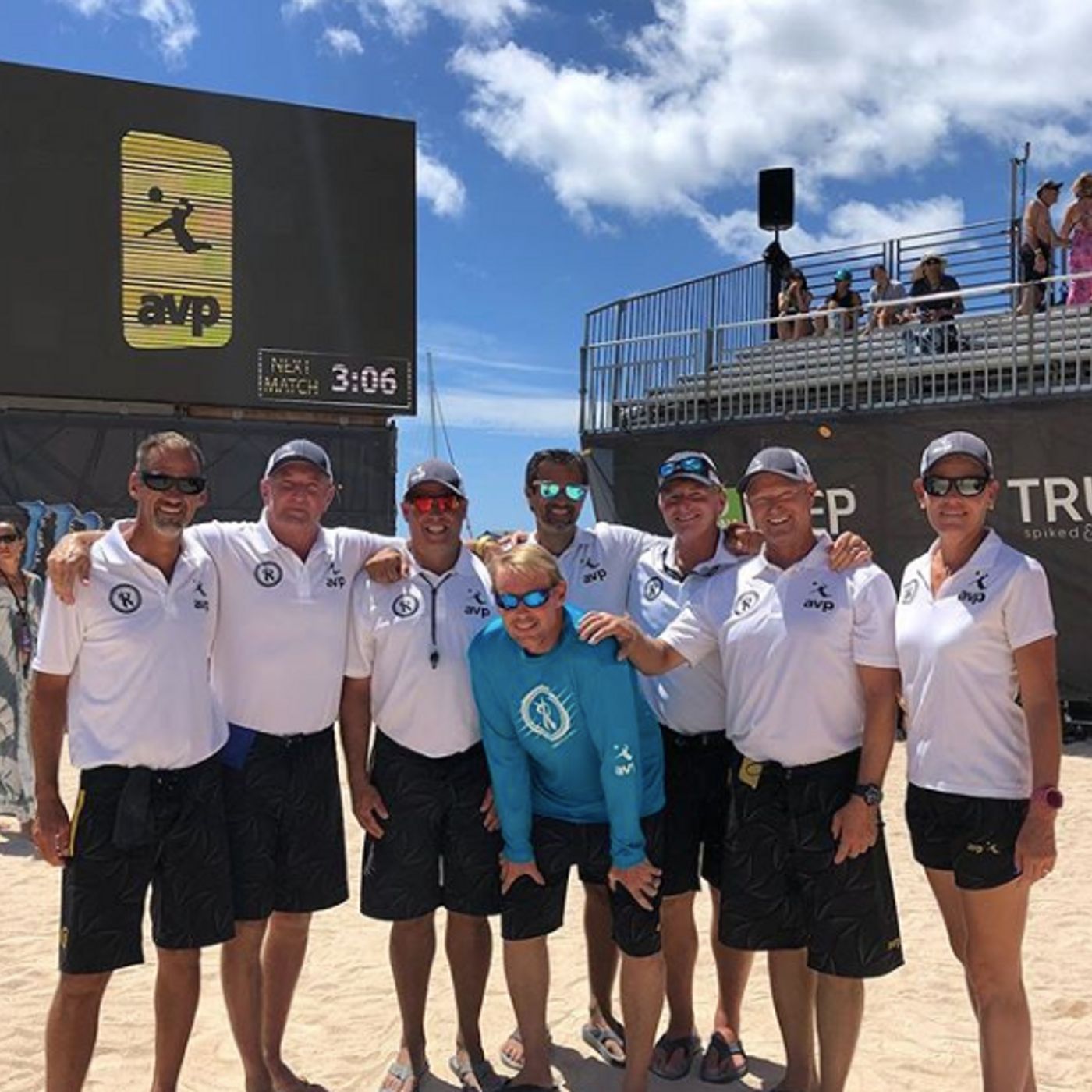
Ep 58Refs are people too! With John Rodriguez
Nick Lucena winked, and only one person in the stadium could have possibly seen it: head ref John Rodriguez. Lucena had always been known for his fiery demeanor, and though Rodriguez cannot recall the exact year of the wink, he estimates it came at a tournament in Florida, when Lucena and Phil Dalhausser were playing Matt Olson and Kevin Wong, which would date it to the mid-2000s, which also dates it to when Lucena’s temper was nearing its zenith. Or was that temper just theatrics? Something for the crowd to enjoy, an added element to an excellent match between one storied team and the next great one? Perhaps, as it goes sometimes, it’s a bit of both. “Phil [Dalhausser] chucked a set,” recalled Rodriguez, one of the most well-known and well-respected refs on the AVP Tour and p1440. “Which is rare but it happened, and I tweeted it. Nick [Lucena] comes – they were getting killed in the second set against Kevin [Wong] and Matty [Olson] – flying over to my stand.” And here is where the disconnect between crowd and players and refs begins, in that intimate space between ref stand and player, where only two individuals know what’s being said in the conversation. “He goes ‘John, give me a yellow card, I’ve gotta get fired up,’” Rodriguez, said, laughing. “And he’s flailing his arms at me, and I’m like ‘Oh, alright, this isn’t so bad.’ And he says ‘Play along with me’ and I’m pointing at him and he’s pointing at me, and we’re not going overboard with it, but he says ‘Give me one more second and then give me a yellow card.’ So I said ‘Just don’t slam my stand or hit anything because then I have to give you a red card.’ “So he goes around a little bit longer and finally I tweet, give him a yellow card, and the audience goes ‘Booooo!’ And Nick’s pointing back at me and then he winks at me. It was just a fun time.” Ah, yes, few on top of the stand, or maybe even in the entire game, players included, have as much fun as Rodriguez, this week’s guest on SANDCAST: Beach Volleyball with Tri Bourne and Travis Mewhirter. The paths for a male to become a professional beach volleyball player are few and far between, no two the same. The paths for a male to become a professional beach volleyball referee are even more circuitous. “We do not,” Rodriguez said repeatedly, “do this for the money. We do this because we love the game.” Rest assured, Rodriguez does not, or initially did not, get into the game for the money. For the first handful of years in which he was involved in the game, he was a volunteer, a 20-something-year-old ball shagger. “The opportunity as an adult ball shagger, I’m like this older guy amidst all these kids chasing balls next to me and just loving it, loving the game, getting to play afterwards on the pro courts,” Rodriguez said. He shagged balls for so many years, in fact, that the AVP finally shrugged its shoulders and figured why not get the guy involved in a few more capacities? Maybe put him in the information booth, chat with the VIPs? After a few more years of that, the head ref at the time approached him and said “Hey, I know you know the game, and you’re already traveling with the AVP, so I know you could save me a lot of money if I could just use you for one day, maybe two days if we use you as an official,” Rodriguez recalled. “’So I said ‘Yeah, sure, that’ll be cool.’” He worked Thursdays and Fridays as a ref, and when the bigger matches began, the more established refs were called in and Rodriguez, known affectionately as J-Rod among players and fans alike, would return to the information booths or wherever his talents and passion were needed. Soon enough, Rodriguez could no longer be found in information booths or with the VIPs. No, John Rodriguez was a ref, from Qualifier Thursday to Finals Sunday, culminating in his Twitter handle becoming @avpjrod. “I had no idea it would go on this path,” he said. “I’m loving it. And we do this because we love the sport. I think I’ve said that, sorry, but we enjoy what we do, and I think it shows from, all of us, sometimes we’re at the site from 6:30 to 7, whatever it is. It is a long day, but when we look back, and the day closes, we’re like ‘Hey, that was a great day! We had the best seats in the house, or standing, whatever it may be, we saw some amazing volleyball, and it’s all worth it.’ The fatigue seems to go away and you wake up in the morning, get on your horse, and do the same thing again. We really love it.” Hosted by Simplecast, an AdsWizz company. See pcm.adswizz.com for information about our collection and use of personal data for advertising.
Ep 57The World Tour-cast with Norway, Canada, Latvia, United States
Martins Plavins requested the mic from Aleksandrs Samoilovs. Had to set some matters straight. “I know,” Plavins said on Saturday night at p1440 San Jose, “that Edgars misses me.” He was joking – maybe, possibly, perhaps – but Sunday’s result, when the Latvians upended the world’s best in Norway’s Christian Sorum and Anders Mol in the finals, proved that there’s likely a bit of truth to the notion that Edgars Tocs, Plavins’ typical partner, may have been missing his defender. Plavins and Tocs, Latvia’s No. 2 team behind Samoilovs and the injured Janis Smedins, were one of the world’s most delightful surprises in the 2018 FIVB season. Entering the year, Tocs, a 29-year-old from Madona, had never eclipsed the five-figure threshold in prize money, with just three main draws to his name in all of 2017. Yet there they were, on podium after podium to begin the year – gold at The Hague in January, silver in Kish Island a month later. By the end of the year they had played in 13 events, nearly as many main draws as Tocs had played in his entire career. By season’s end, they were ranked fifth in the world, three spots behind Samoilovs and Smedins, and a country that is roughly the size of Nebraska in terms of population was suddenly home to two of the world’s beach volleyball powers. Not that Latvia is an upstart. Not by any means. Ten years ago, Samoilovs and Plavins authored arguably the greatest upset in Olympic beach volleyball history when they stunned Phil Dalhausser and Todd Rogers in the first round of pool play. In 2012, Plavins did it again, this time with Smedins, upsetting Jake Gibb and Sean Rosenthal – then the No. 1 team in the world – in the quarterfinals of the 2012 Olympics in London. “We used to play good together,” Samoilovs said. “[Martins] agreed to come to San Jose so I’m very happy he had a chance to join me.” In two years, for the second time in three Olympics, they might very well join each other as teammates on separate teams. While Plavins was winning a bronze medal with Smedins in 2012, Samoilovs took a ninth with Ruslans Sorokins. “Martins is one of the best defenders in the world,” Samoilovs said, which explained why, in San Jose, Samoilovs, typically a split-blocker, stayed at the net. “It doesn’t make sense to go block.” Indeed it seemed they found the right defensive system, as they lost just one set the entire weekend in San Jose, to Austrian Olympian Alexander Huber and Leo Williams in the first round. After that, it was dominant win after dominant win, over Piotr Marciniak and Canadian Olympian Chaim Schalk, Spaniards Adrian Gavira and Pablo Herrera, Americans Miles Evans and Billy Kolinske and the world’s best in Noway’s Mol and Sorum. More important for either than the winning, though, is the fact they have a chance to win anything at all. Samoilovs remembers what it was like post-2016, when the world tour had just eight events big enough for the best to play, when beach volleyball was somewhat of a wasteland. With the advent of the King of the Court series and p1440, as well as the extension of the FIVB season, the sport has become nearly year-round. “This is really great,” Samoilovs said. “I remember after the Rio Olympics, in 2017, it was a disaster. It was only eight World Tour events, so you spend three months preparation just to play eight weeks, two months, so for us players we’re relieved because of these tournaments. Our families live because of these tournaments. It’s important to have more opportunities and more tournaments to earn money and to have a better life.” Hosted by Simplecast, an AdsWizz company. See pcm.adswizz.com for information about our collection and use of personal data for advertising.
Ep 56Dane Selznick previews p1440 San Jose
Dane Selznick has seen it all. Seen every last one of beach volleyball’s many evolutions. He was there when players competed for little more than pride and maybe – maybe – a free dinner. He was there when two men named David Wilk and Craig Masuoka formed a promotional company named Event Concepts and began hauling in the Millers and Cuervos of the world and throwing legitimate prize money into tournaments. He was there when the AVP Tour was founded, in 1984, and when it collapsed, and when it formed again, and when it collapsed once more, to be revived in its current iteration under Donald Sun. He’s seen both the golden era, financially, when 10 players once banked more than $100,000 in prize money alone, and he’s seen the most dominant era, when Kerri Walsh-Jennings and Misty May-Treanor once rattled off 112 straight wins and three consecutive gold medals from 2004-2012. And now he is witness once more to the latest permutation in professional beach volleyball, the upstart event series, p1440, founded by Walsh-Jennings and her husband, Casey, and former college teammate Dave Mays. In March, Selznick, who had been a tournament director for the California Beach Volleyball Association (CBVA), founding the Gene Selznick Invitational, an eponymous nod to his father, was hired as p1440’s Director of Competition and Sport. “About a year ago, Kerri approached me and said ‘Dane I have a project I’d love for you to be a part of,’” Selznick said on SANDCAST: Beach Volleyball with Tri Bourne and Travis Mewhirter. “She gave me a little bit of background, I brought it to the head staff at CBVA, got their opinion to see if it would be a good fit, and here we are. Everything’s moved along pretty quickly.” Blindingly fast may be a more apt description. P1440 has announced dates for four events in its inaugural season, one of which will be an Olympic qualifier in Las Vegas, while the other three are partnered with the FIVB as international exhibitions. They’ve announced a lengthy list of sponsors that includes ROKA (eyewear), Alsa Energy (water), RX (protein bars), Brand X (strength and conditioning programs), AcuSpike (volleyball training), NormaTec (recovery), among a host of others. They’ve formed a developmental training program, replete with an armada of the finest coaches in the world, and a partnership with the CBVA, the pipeline from which many of the top players in the country cut their teeth, and where p1440 is now hosting what’s known as “satellite qualifiers,” allowing players to compete locally, weeks prior to the event itself, for a spot in the main draw. “They looked at our [CBVA] schedule extensively, and they were trying to select those certain events that they felt fit the mold to be a qualifying point-getter for the players,” Selznick said. “There are specific tournaments that we have that award you p1440 points. The qualifying satellites are enticing for the players because it gives them something more than playing in a tournament. Now they’re playing for a main draw spot in tournaments that offer high level competition, a lot more prize money – you’re guaranteed more money just getting into the tournament. I think being an alternative tour to what we’ve got going on, as long as it’s not conflicting, I see no problem with it, because it really gives players a lot more opportunities to make money.” More opportunities has been the theme of the past few months. In 2018, the AVP put on eight open events, one of which was partnered with the FIVB in Huntington Beach, before adding invitationals in Hawai’i and Huntington Beach. The upstart King of the Court series hosted another handful, to go along with upwards of 40 FIVBs of varying levels. And now there’s p1440, adding events at the end of September (San Jose), mid-October (Las Vegas), end of November and early December (San Diego) and mid-December (Huntington Beach), with events on the horizon in Texas, Florida and Los Angeles. “It seems like a pretty exciting time right now for the sport in general,” Tri Bourne said. “It’s cool, I think the sport is gaining a lot of momentum right now. There’s a lot of people like yourself and p1440 and AVP and King of the Court and FIVB and CBVA that are all kind of creating opportunities in their own way. I think it’s great. It seems like the sport is gaining some momentum.” That next opportunity begins Thursday, with the San Jose on-site qualifier, and extends through the weekend, in a domestic event that features the top two teams in the world of each gender – Norwegians Anders Mol and Christian Sorum and Brazilians Carolina Salgado and Maria Antonelli – as well as a host of the best talent in the United States – Sean Rosenthal and Chase Budinger, Jeremy Casebeer and Reid Priddy, Billy Allen and Theo Brunner, Chaim Schalk and Piotr Marciniak, Walsh-Jennings, Nicole Branagh and Lauren Fendrick, Kelley Larsen and Emily Stockman, Caitlin Ledoux and Geena Urango. “It’s just great to have more opportunity,” Selznick said. “
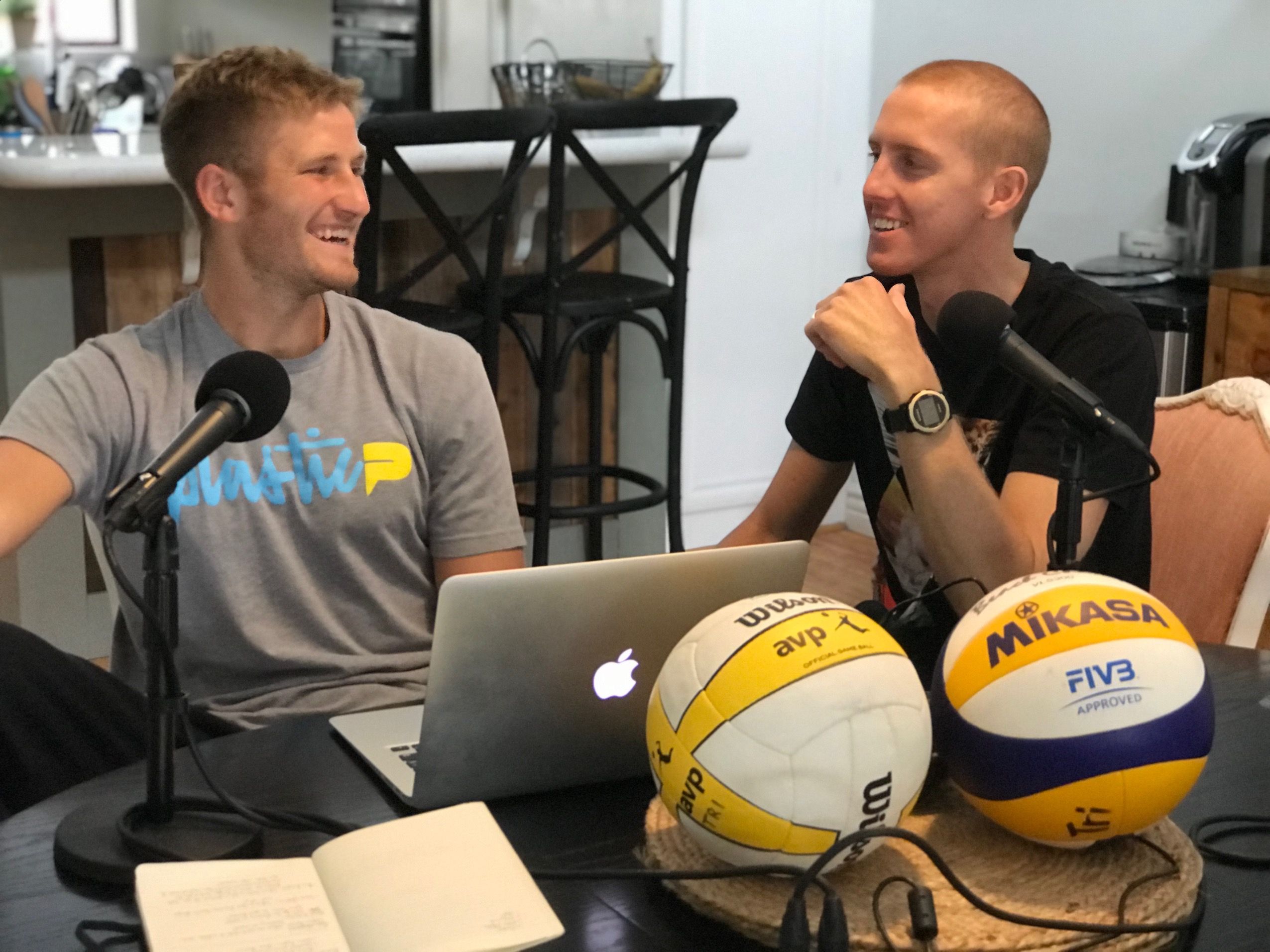
Ep 55SANDCAST roundtable: 'Play in as many tournaments as you can'
It became a recurring motif, though not exactly a conspicuous one. If you’re a regular listener to SANDCAST: Beach Volleyball with Tri Bourne and Travis Mewhirter, you’ll know that our final question to our guests is some iteration of: “If you had to give an up-and-coming beach volleyball player one piece of advice, what would that piece of advice be?” Some might expect a secret drill, a certain lift in the weight room, that one key to unlocking their potential, the secret formula to why Taylor Crabb always seems to be in the right place, at the right time, all the time (just watch the Manhattan Beach Open final and you’ll understand). The most common bit of advice, however, is as simple: Just play. This week, with Bourne home in Hawai'i and me in Maryland for an emergency trip home, we had to cancel the podcast, so we gathered advice from four of the best in the game -- Taylor Crabb, Rafu Rodriguez, Nicolette Martin, Katie Spieler -- on how, exactly, they became the best in the game. “Be a student of the game,” said Crabb, a likely candidate to win at least one of Most Valuable Player, Most Improved Player and Best Defender on the AVP Tour this season. “Be smarter rather than stronger, faster, bigger. It’s more important than the other things. Learnt he game, learn why things work, learn why things don’t work. The more you play, that’s when you get bigger, faster, stronger, going on the beach, just playing every day, you’ll train those muscles naturally. The gym does help also but the IQ of the game is the most important thing.” This season was, incredibly, only Crabb’s third on the beach. Just as he did in 2017, he enjoyed a career year in 2018, winning a pair of AVPs in Seattle and Chicago as well as claiming King of the Court in Hawai’i. His theory, too, was supported by three other SANDCAST guests – Spieler, Rodriguez, Martin – who all, not so coincidentally, enjoyed career-highs. “Just keep – just play every day,” said Martin, who claimed fifths in Austin and Seattle, narrowly missing her first Sunday. “We were talking about playing too much or whatever, but if you’re up and coming, I think it’s super important to get out to all those CBVAs on the weekend and just be playing as much as you can because it’s such an experience sport for sure. Just as much as you can touch a ball, the contacts, make sure when you’re going to the beach, get [phone] numbers, talk to people, that’s huge.” It has been for Martin, just as it has been for Spieler, a 5-foot-5 dynamo out of Hawai’i who made her first career Sunday in Austin, where her and Karissa Cook finished third. The founder and coach at East Beach Volleyball Academy, Spieler tells her girls to do exactly what she does over the summer: “Get out there and play as much as possible,” she said. “Growing up at East Beach, I would just go down and play with older guys or pickup games all day on the weekends and I think that’s when I really learned that I, a) loved the sport, and b) just a lot of different ways to score. So I don’t think you necessarily need to play for a club, even though that’s great if you have the resources to do so. Just that we are able to go down to the beach, grab a ball, maybe pick up a player and get better is great. So just get out there.” Rodriguez, the final guest on the SANDCAST radio hour of sorts, emphasized tournaments and pickup as well. He’s no stranger to CBVAs and AVP Nexts, despite winning an AVP in San Francisco this season, his first career AVP win. “Just go out and play in as many tournaments as you can,” he said. “Learn the game playing the game, right? Even me, I go out and play in CBVAs and all those one-day tournaments because you got to go out and play. Yeah, you have to train and learn the techniques, but you need to go out and play and play and play and play.” Popular on SANDCAST: SANDCAST: Melissa Humana-Paredes and Sarah Pavan SANDCAST: Taylor Crabb, AVP Seattle champion SANDCAST: Sarah Sponcil, Pac-12 Champ, National Champ, AVP Finalist SANDCAST: Tim Bomgren, the Minnesotan who could SANDCAST: Netherlands’ Brouwer and Meeuwsen go for gold or bust Train like the pros, with the pros, at VolleyCamp Hermosa! Recover the right way with Firefly: Accelerated Athletic Recovery Choose the ball the pros use. Choose Wilson and use our discount code: WILSONSAND FOR 20 PERCENT OFF! Hosted by Simplecast, an AdsWizz company. See pcm.adswizz.com for information about our collection and use of personal data for advertising.
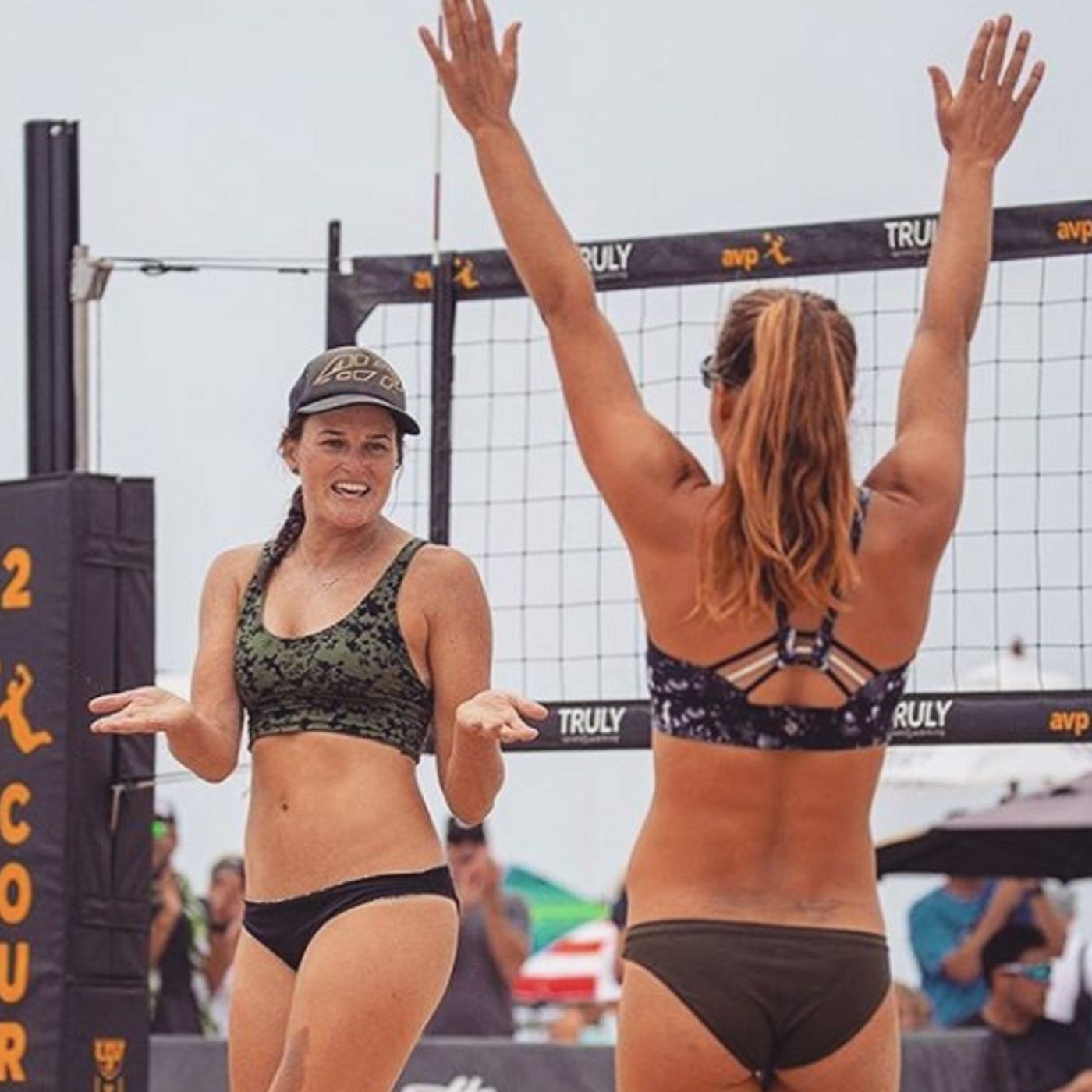
Ep 54Karissa Cook: Old fart, hood rat, awesomely effective volleyball
Call it old fart volleyball. Call it hood rat volleyball. Call it dirty or creative or funny or crafty or whimsical or whatever other name you’d like to label Karissa Cook’s decidedly awesome style of scoring points on a volleyball court. But you must, at the very least, call it this: effective. Effective enough that Cook and her partner, Katie Spieler, scored an invite to the AVP’s final event of the year, an invitational in Hawaii, where Spieler and Cook played their college ball. Effective enough to make her first career Sunday, at the AVP’s opening stop in Austin. Effective enough to avoid the qualifiers all year – “I had to do some beautiful mind calculations for New York,” she said, laughing – for the first time of her young career. “If it ain’t broke don’t fix it,” she said of her partnership with Spieler, last week’s guest on SANDCAST: Beach Volleyball with Tri Bourne and Travis Mewhirter. “We’ve just been playing together and the honeymoon phase hasn’t worn off two years later.” And Spieler’s contagious energy continues to rub off on Cook. After Chicago, where they finished seventh, Cook was about ready to shut it down. Time for rest and recovery. Off-season things. But the season wasn’t over. Not yet. There was a NORCECA qualifier to play, and an energetic – always energetic – and enthusiastic – always enthusiastic – partner who wanted to play. “I was like an angry cat,” Cook said, laughing. “We had played so many tournaments but we had so much fun, per usual. I 100 percent always love volleyball as soon as my feet touch the sand. You go and it’s the best decision you’ve ever made.” Seems so. Cook and Spieler breezed through the qualifier, and now they have few events on their 2018 schedule, to go along with the unexpected invite to Hawaii. “Katie was like ‘Let’s do it!’” Cook said laughing. “And I was like ‘Ok, fine.’ I just grom onto her and make her carry me with her wherever we go.” It appears that really isn’t too far from the case. Earlier this year, Spieler made the move from Santa Barbara to Hermosa Beach, cutting down on an obscene amount of drive time, able to get in with the top training groups in the country. Cook recently did the same, leaving her post as a Stanford beach coach, moving from Palo Alto to Manhattan Beach. Of course, some things are a bit different between the two as well. Cook is also moving to be closer with her brother, Brian, the hilarious and viral star of Instagram this season, with whom she’s helping found a start-up, a sort of “Uber for bartenders,” she said. Stanford kids. But mostly, she knows that, while beach volleyball is friendly to the body, she cannot play forever. Her window as an elite athlete is narrowing over the next five to 10 years. Coaching will be there forever. Gromming onto Spieler, qualifying to play events in countries she’d otherwise never visit, is here now. “I could have stayed there and been a padawan forever and been super happy,” Cook said of Stanford. “I adored [coaching] and I loved it and I’ll always be super grateful for it, and I do see myself going back and coaching but I wanted to really go for it for a couple years at least.” Hosted by Simplecast, an AdsWizz company. See pcm.adswizz.com for information about our collection and use of personal data for advertising.
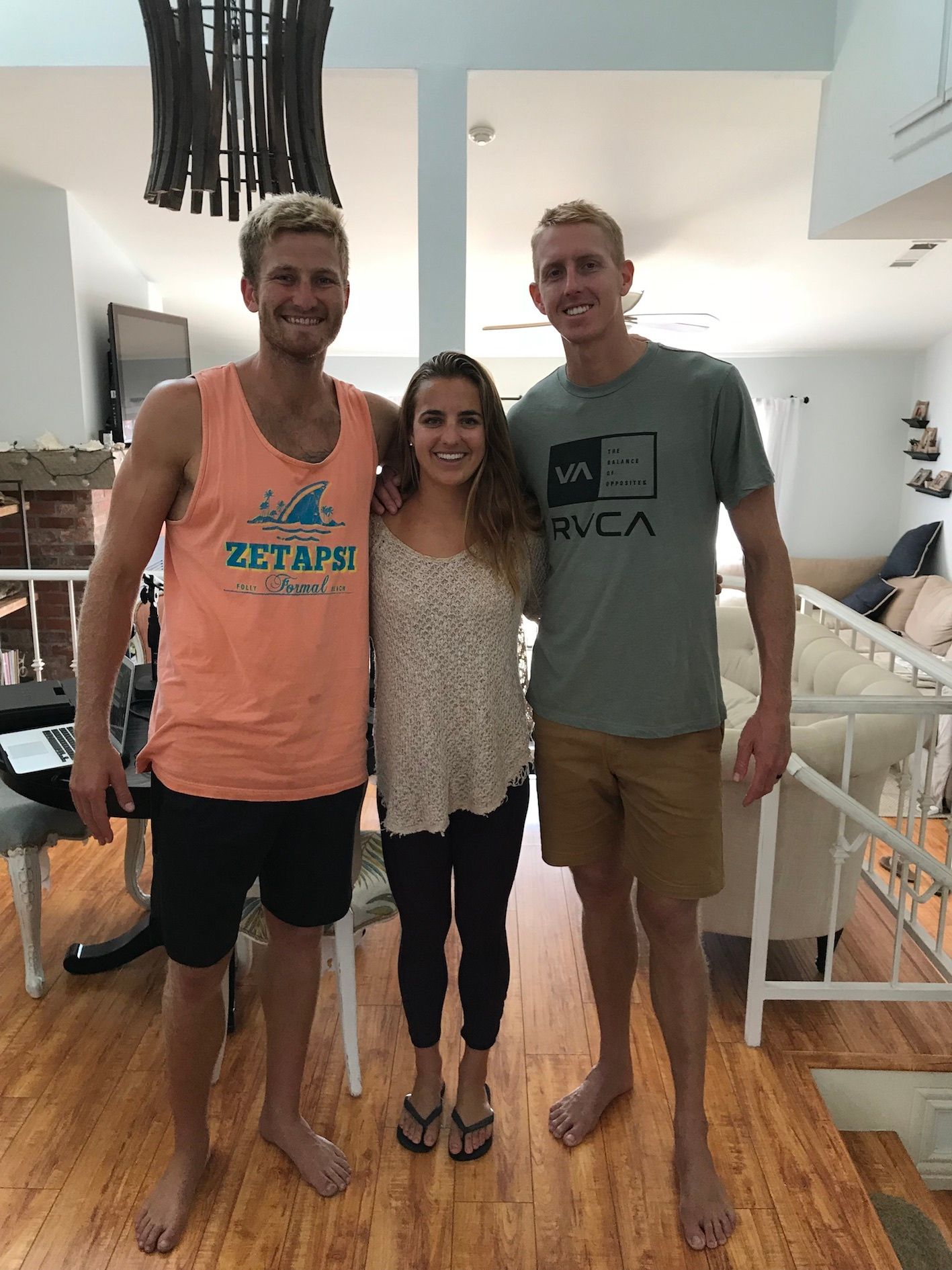
Ep 53Katie Spieler: 'Go out on the court and be you'
The beginning of the best year of Katie Spieler’s burgeoning career began at once brutally and spectacularly. The brutal, as it tends to go in sports, preceded the spectacular, setback was succeeded by breakthrough. “One of my worst matches was my first game in Austin,” Spieler said on SANDCAST: Beach Volleyball with Tri Bourne and Travis Mewhirter. “I was super bummed because I felt mentally not on, physically not on. I never call anyone on gamedays, but I called my sister and I was just like ‘I need your advice.’ Her advice was to just ‘Go out and be you. You don’t have to go out and try to be super confident and super aggressive. Just literally be yourself on the court and that’s when you’re going to play your best.’” That initial 13-21, 22-20, 11-15 loss to Jace Pardon and Brittany Tiegs in the rearview, Spieler and partner Karissa Cook won their next four matches. Just like that, Spieler had gone from minor identity crisis to her first career AVP semifinal, blowing well past her previous career-best of seventh, at Chicago of 2016, all the way to the semifinals, her first Sunday. “It felt way different,” Spieler said of the semifinal. “The vibes on a Sunday are totally different from even late on a Saturday. There’s so many fewer teams there and there’s a big crowd, and Austin was super weird because there was a rain delay. I think we’ve learned a lot since then just to take it as another match, but I think it was ‘Oh my gosh! We’re in the semis!’ Playing your game is just how you should approach every match.” And it seems their own game works just fine. In five of the next six tournaments, they’d match or improve upon that previous career-high, finishing seventh or better in the final five events of the year. “It was great learning with Karissa and getting better,” Spieler said. “Each tournament, unless you win, you end on a loss, so there’s always that, and there’s so much I want to work on and get better, but yeah, it was a great season.” It was a season in which Spieler more than doubled her career prize money from the previous four seasons combined. A season in which, for the first time in her career, she didn’t have to play in a single qualifier. A season in which, once again, her and Cook tossed out many of beach volleyball’s norms and won and grinded in their own decidedly unique style. “I don’t think it was one certain thing, but [Karissa] was coaching at Stanford all of last year so our practice was just playing in tournaments,” Spieler said. “That continued thoughout this season but for me this off-season I just worked on myself, and moving down [to Hermosa Beach] was huge. And [Karissa] just worked on herself this off-season and when we got together we were that much better because we had both worked on what we needed to and we got better as the year went on. It wasn’t one certain thing, we just both have a growth mindset and are working to get better individually.” With the AVP regular season over, Spieler is left with perhaps two tournaments remaining on the 2018 calendar: a Norceca qualifier – and potentially the three events for which it would qualify them – and, potentially, an AVP Hawaii wild card. Of the women’s teams vying for the wild card spot, it shouldn’t come as a surprise if the AVP taps Spieler and Cook, both of whom played for Hawaii, both of whom have a significant following on the islands. Wild card or not, Spieler is simply going to continue doing what she does best: find a way to keep on winning. “I don’t really set goals that I need to reach this goal by this date,” she said. “I don’t think I’ve ever been like that. It’s more like, ‘Ok, put my head down, grind it out, have fun, play,’ and then when I surface, it’s like ‘Oh, nice!’ If I did these things, great. My goal is just to keep playing at the highest level I can play for as long as I can play, because I just love playing volleyball.” Hosted by Simplecast, an AdsWizz company. See pcm.adswizz.com for information about our collection and use of personal data for advertising.