SANDCAST: Beach Volleyball with Tri Bourne and Travis Mewhirter
566 episodes — Page 12 of 12
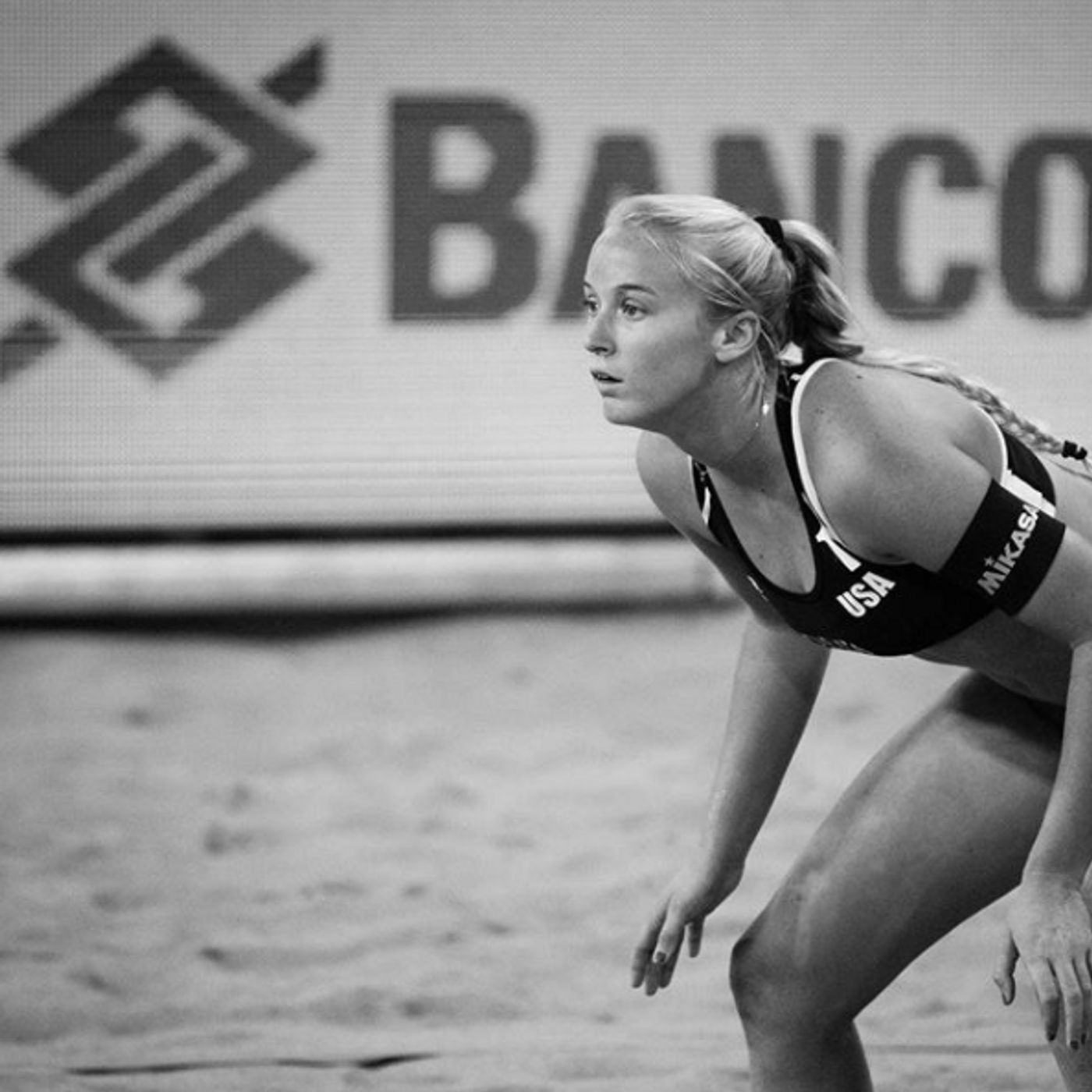
Ep 17Sara Hughes: Beach volleyball's next top role model, part 2
Perhaps you needed proof. Proof that Sara Hughes is, indeed, the one to fit the headline of this very podcast: That she is fit to become the next face of beach volleyball. Had you stopped by Huntington Beach last Friday morning, you’d have had all the proof you’d need. There, on court one, was Hughes, this week’s repeat guest on SANDCAST: Beach Volleyball with Tri Bourne and Travis Mewhirter, and partner Kelly Claes. There was coach Jose Loiola and mentor Misty May-Treanor. There was Ben Vaught and Tanner Woods, because, yes, Hughes and Claes train with professional men on occasion. And there, lining the court was a dozen or so girls, member of the Long Beach City beach volleyball team, watching, studying, looking on. Taking notes on Hughes. Yes, they were at the Huntington Beach Pier that day because they had practice – but a Long Beach-based team doesn’t necessarily need to come to Huntington Beach to practice. There were there because that’s where May-Treanor, the director of beach volleyball operations at LBC, was, and May-Treanor was there because, well, Hughes. There’s a reason Hughes and Claes have landed one Hall of Famer (Loiola) and another who could go down as one of the greatest talents in volleyball history as their coaches. It could be argued – and it often is – that Hughes and Claes, both 22 years old, have more potential than any individual or team in the world, more, even, than the precocious Duda, the 19-year-old Brazilian star and 2016 FIVB Rookie of the Year. Already, Hughes and Claes have won an AVP, the 2017 season-finale in Chicago. Already they have reached FIVB quarterfinals and landed some of the game’s top names as sponsors. Already they have broken previous goals and established new ones. In their first season as professionals, breaking pool in international play was the goal. In their first event, a four-star in Rio, they finished fifth. Now, in just one season as full-time professionals, and a truncated one at that, seeing as they had to miss the early season events while they wrapped up what figures to be the most dominant college run for quite some time, Hughes and Claes see anything less than a podium finish as a shortcoming. Finishes, though, are but one tangible measurement for the success of Hughes and Claes. There is no barometer through which to measure their “inspiration” to the next generation of beach volleyball players. For now, you can see it yourself, right there, on the sidelines of court one, watching, observing, taking notes – figuring out ways to become the Next Sara Hughes. Hosted by Simplecast, an AdsWizz company. See pcm.adswizz.com for information about our collection and use of personal data for advertising.
Ep 16Sara Hughes: Beach volleyball's next top role model, part 1
On one of the walls in Sara Hughes’ bedroom is a poster of Misty May-Treanor. It’s been there since she was little, when Hughes began getting into volleyball, serving as a reminder of what she might become one day should she continue to pursue this beach volleyball dream of hers. So it struck her when, during a tournament this season, a parent of a young fan approached her and told Hughes that, on one of the walls in her daughter’s bedroom, is a poster of Hughes. “I was like ‘No way that’s actually happening,’” Hughes recalled on SANDCAST: Beach Volleyball with Tri Bourne and Travis Mewhirter. “I am so grateful for that and I hope I can keep being a person young people can look up to for a long time and thank you to everyone who does.” Did you catch that, at the end? Hughes thanked the fans for looking up to her, not the other way around. In an era where celebrities grow more and more closed off, taking instead to social media to communicate behind iPhones and laptops, Hughes remains open, willing to talk to anyone, pepper with anyone, give back any way she can. “I’m always just trying to help people,” she said. “If anybody wants to ask, just come up to me, you can ask me directly.” No different than May-Treanor continues to treat her. When her age could still be measured with a single digit, Hughes would head down to the Huntington Beach Pier and sit on the wall, waiting for a chance, any chance, to simply shag balls for May-Treanor. Sometimes May-Treanor would let her pepper or hop in for a drill or two, creating an indelible memory that Hughes will cherish more than likely the rest of her life. “I love talking to people and I love talking to young girls because I don’t think I’d be in the position I am today if I didn’t have the coaches I had and people like Misty May taking the time to talk to me,” she said. “I love doing the same to everyone else.” She’s a sponsor’s dream, Hughes. She has the looks – blonde hair, blue eyes, Colgate smile – the smarts – she’s currently on a one-year track to earn her Master’s degree, just a year after delivering a graduation speech at USC – the media savvy, the talent, a voracious competitive drive juxtaposed with a disarmingly charming personality. Oh, yes. She has earned this position, the right to have Mikasa run her through photo shoots and turn those shoots into posters for young girls to hang on their walls, to point to each night and morning and say “I want to be like that.” Her accolades at USC could fill a small book’s worth of pages, and it’s a wonder if some of her records – four consecutive national titles, a winning streak that eclipsed 100 matches, a perfect 48-0 junior season, four-time All-American – will ever be broken. Justifiably, this drew no small amount of media coverage, and while she was appreciative – always thanking anyone for taking the time and interest in her – it drove her a bit insane, how those reporters would invariably walk right past her exceptionally talented teammates. On the occasion that the media showed interest in the rest of USC’s indomitable team, more often than not they’d ask questions not about how their match went, but what they thought about Sara and her partner, Kelly Claes. “I hated that when it was just ‘Oh! Sara and Kelly and Team USC!’” Hughes said. “I was like ‘No, you don’t realize, these girls who are on [teams] two, three, four, to the eighth team, they’re our support system. We would not be close to being good or successful without our teammates. They deserve just as much fame and respect as we do because we’re out there on the same hot court at USC and we’re training, every day, together.” Her teammates, as she said, were plenty talented, and a number of them – Nicolette Martin, Terese Cannon, Jenna Belton, Sophie Bukovic, Allie Wheeler, to name a few – have already begun making a name for themselves on the AVP Tour. Yet Hughes, as May-Treanor was, will be the name fans point to as the next in this massive wave of beach volleyball talent rising from the college ranks. She will be the one on the posters, and in the commercials for Oakley and KT Tape and Mikasa and any other sponsor wise enough to sign her. She’s becoming the next generation’s version of May-Treanor – the one everyone looks up to – quicker than she could have possibly realized. The final question of SANDCAST is reserved for the athletes to discuss anything else they’d like to discuss, anything the hosts may have missed. Most demur, maybe shout out a sponsor or two, thank us for the time. Hughes, instead, had a message for her fans: “For the young players and any parents who are listening, I love the indoor game and the beach game, of course. So a lot of players are making this decision where they love the indoor but they have to play the beach in college because they think that’s the only thing they can play. I just think it’s huge for young girls to play both if they love both.” You can teach any volleyball skill there is. But to become the next
Ep 15BONUS: Bourne is (almost) back on the beach, with Murphy Troy
In this episode of SANDCAST: Beach Volleyball with Tri Bourne and Travis Mewhirter, we discuss SANDCAST host Tri Bourne's current health situation as he continues to wait patiently for the doctors to clear him to play again. ‘Patience' is the word that continues to cross my mind as I keep my vision set on Tokyo 2020. We also dive into what it's like stepping away from the game of volleyball, both physically and psychologically, with 2011 NCAA Player of the Year and 2016 Rio Indoor Olympian, Murphy Troy. My blood test levels are back into the safe and normal range that the doctors and I have been waiting for. So now it's a waiting game to see if these results from the blood tests stay in this range as I wean myself off the medicine that got me here. If my body maintains the healthy levels once the medicine gets to a low enough dosage then the doctors will clear me to play. This would allow me to begin my comeback within five weeks -- just more than a month! Once I'm cleared by the doctors, I'll begin training with rehab in the gym to balance the body out, then move into light technique work, then weight/ resistance training and playing. Needless to say, I won’t be back on Tour immediately upon getting cleared. I have committed to training “smarter not harder” this time around. As you can imagine, being forced to step away from the game you’ve played your whole life in the prime of your career is very difficult, to say the least. While I can definitely give us an intimate perspective on what it like to be forced to undergo that processs, we were able to bring in a special guest who has also stepped away from the game in his prime but for for a different reason. Murph Troy, joins us to share his insight and perspective after voluntarily retiring from volleyball after the Rio olympics. Hosted by Simplecast, an AdsWizz company. See pcm.adswizz.com for information about our collection and use of personal data for advertising.
Ep 14SANDCAST No. 12: Talkin' sh** with Trevor Crabb
If you didn’t get to the Hermosa Beach Pier early on July 22, you would have been too late. There would have been no seats left, nowhere for you to watch the first clash of the Crabbs, Taylor and Trevor, brothers and former partners turned, it seemed, bitter rivals. This wasn’t even the final – that would be a day later. This was the quarters, an oft-ignored round, one normally you’d sit and watch should you be there but not one to schedule your day around. And, yet, of course, this was no ordinary quarterfinal. This was a can’t miss match, on a Saturday. The reason can be effectively summarized in two words: Trevor Crabb. *** You may not like Trevor. You may love him. There’s a better chance you’re in one camp or the other, and not in the gray area in between, which is as much a societal trend as it is one regarding the elder of the Crabb brothers. He likes that it’s quite possible he’s in a similar – relatively speaking – popularity category as Tom Brady and LeBron James, who are, paradoxically, both the most liked and disliked players in their respective leagues. He digs how much attention his verbal digs get – sand-throwing fools and goggle-wearing fools and a hungover fool. His mouth has earned him almost daily jabs on social media from Ty Loomis (the sand throwing fool) and the on-court animosity of his brother, Taylor (the hungover fool), who reserves stare downs across the net almost exclusively for Trevor. Maddison McKibbin was at his most vocal when he and Loomis played Trevor and Sean Rosenthal in Hermosa Beach on July 21. It wasn’t much of a match, with Crabb and Rosenthal winning 21-16, 21-13, and yet the interest in it never waned, so close were the possibilities for explosions. Thanks, in large part, to the fuses that Crabb had lit. He did not invent trash talk on the beach. But Crabb has done what we can to revive it in what has been a largely amicable half-decade for the AVP under Donald Sun. He still laughs at the attention it gets, because when you think about it, what, in the wide scheme of sporting trash talk, has Trevor Crabb really done? He called Loomis a sand-throwing fool, though Loomis is the first to take immense pride in his quirky celebrations, in which he is, indeed, making himself as sandy as possible, either by showering himself with it or rolling in it. Crabb called Slick a goggle-wearing fool, and indeed, Slick does wear military-grade goggles to shield his eyes. Taylor Crabb’s hard-partying ways are hardly breaking news. All three give it right back, too. Most of this is good-natured. Some of it flirts with the line of needling and perhaps a bit too far. He’s not altogether concerned either way. “That’s what makes it fun,” Crabb said on SANDCAST: Beach Volleyball with Tri Bourne and Travis Mewhirter. His most notorious rub is with Reid Priddy, a four-time indoor Olympian who, in his first year full-time on the beach, made the semifinals of the Manhattan Beach Open, where he met Crabb and Rosenthal. Crabb blocked Priddy early, and by Crabb’s accounting of the event, he waved for the crowd – and particularly to Rosie’s Raiders – to grow louder. Priddy, according to Crabb, told him to try to block the next one with his eyes open. Crabb says he told Priddy to go back to indoor. Some have said Crabb went further, that he made things personal. On SANDCAST, Crabb shrugged it off and said that was basically that. Either way, when the match ended, there was an icy standoff between the two. The beach volleyball world subsequently lost its collective mind, and had you been following it purely on social media, you might have thought they brawled instead of played. They simply walked opposite directions. It’s a wonder what the reaction would have been to a player like, say, Kent Steffes, or Tim Hovland or Steve Obradovich, some of the sharpest, brashest trash talkers the game has known, bastions of a bygone era. In 1992, three years after Crabb was born, Steffes, who remains one of the most well-known American beach volleyball players, told the Los Angeles Times that "I'd been taught aggressive, loud-mouthed, obnoxious volleyball. You try to humiliate the other team because they're trying to humiliate you. I didn't go out to win, I went out to destroy." And, much to the delight of beach volleyball fans – and there were tens of thousands of them back then – that in your face style made for some provocative matches, on the court and off. Later that year, Steffes had Randy Stoklos running so hot that Stoklos followed him to his hotel after a match and they nearly came to blows. Steffes told the New York Times the next day that "you know why Randy and I got in that fight? Because I blocked him at 13-all to break open the game, 14-13. And I went, 'Yeahhhh.' And I turned around and high-fived Karch. And he thought I shouldn't cheer when I blocked him, that he'd been involved in the sport for so long, he'd played for 10 years, that I ought to respect him enough not to cheer when I block him.
Ep 13SANDCAST Your Brains Out with Billy Allen and John Mayer, Part 2
It’s a wonder how they’re not brothers, John Mayer and Billy Allen. Similar demeanors – calm, collected, neither too high nor too low. Similar styles of play – crafty, ball-control-oriented, hyper-efficient. Similar hobbies – reading, coaching, dadding. Mayer thinks Allen has always been the better of the two. Allen thinks the same about Mayer. Any pandering to the crowd is done mostly in jest, Allen flexing after a float serve ace or a poke kill, though that’s more than Mayer will generally do. He might offer the slightest of smiles. One of their chief similarities one might notice – and will inevitably notice if you listen to their podcast, Coach Your Brains Out – is the importance they place on mindset, emphasizing the difference between a fixed mindset and a growth mindset. “One thing I’ve learned is that we all have fixed mindsets and we don’t even realize we have fixed mindsets,” Mayer says on SANDCAST: Beach Volleyball with Tri Bourne and Travis Mewhirter. “It’s really hard and the shift is never ending.” And neither, it’s become evident, is their improvement. Mayer, after making just three career AVP finals in his first 11 years on Tour – it should be noted that he also made a pair of Corona Wide Open finals in 2011 – made four in 2015 alone, winning in New Orleans with Ryan Doherty. It culminated in him being named AVP MVP. Allen has seen a similar ascent. From 2004-2015, he failed to make a single AVP final, which set up a breakout pair of seasons in 2016 and ’17, winning his first career AVP in Seattle in 2016 with Theo Brunner and following it up the next year with Stafford Slick. His win with Slick was sandwiched between a pair of finals appearances, the first in New York, where he fell to Taylor Crabb and Jake Gibb, and then San Francisco, where an injury limited Slick. Allen and Mayer discuss their ascents, their shifts in mindsets and what their future looks like on SANDCAST. Hosted by Simplecast, an AdsWizz company. See pcm.adswizz.com for information about our collection and use of personal data for advertising.
Ep 12SANDCAST BONUS EPISODE: Breaking down The Hague with Trevor Crabb
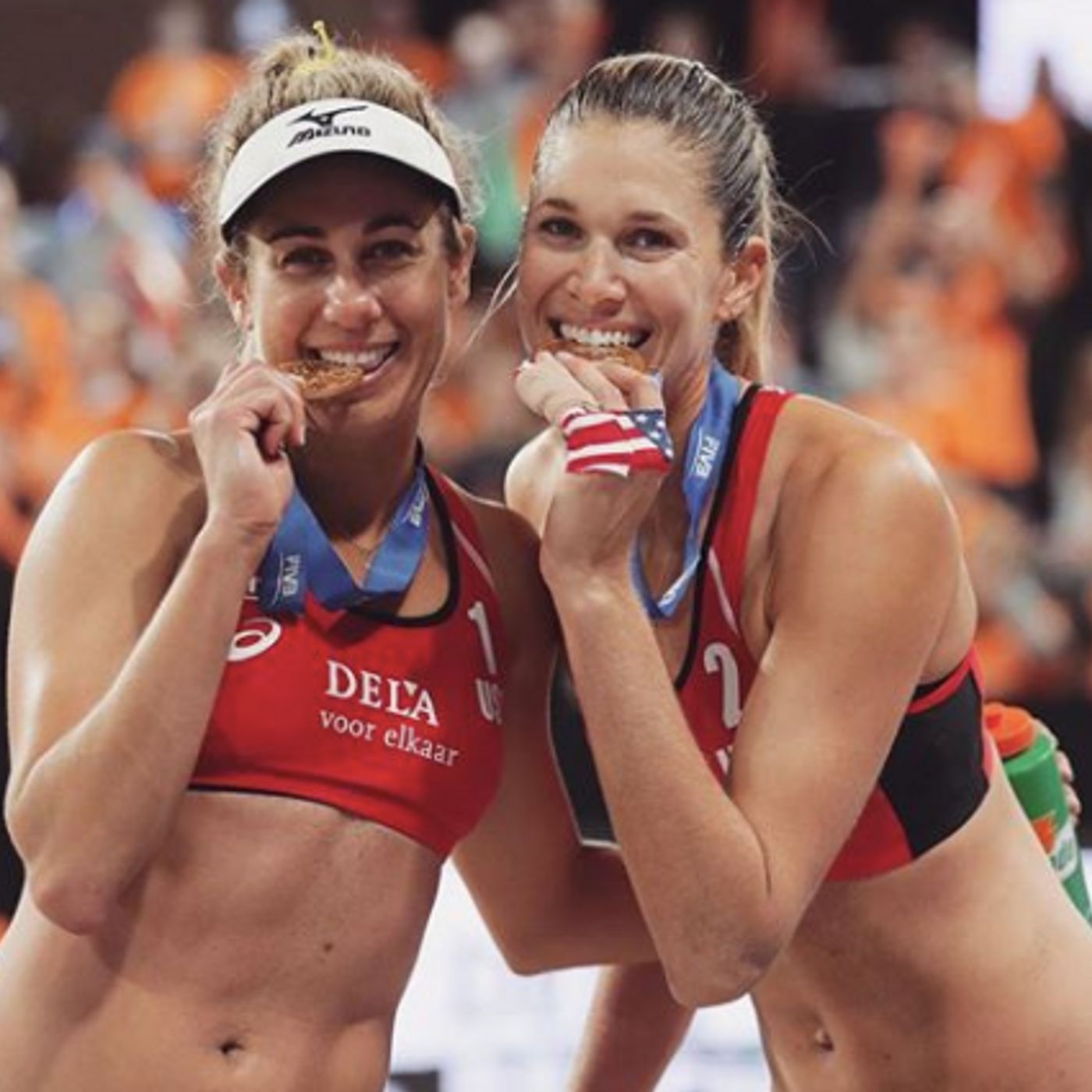
The 2018 beach volleyball season is, remarkably, upon us. In a way, at least. The FIVB kicked off the 2018 year in the very first week of the year, hosting an indoor beach tournament at The Hague, a four-star event to open the season, hauling in a variety of new partnerships and unfamiliar faces. One of those new partnerships, of course, was that of April Ross and Alix Klineman, who took the longest road possible, battling through a pair of country quota matches, two more in the qualifier, and then running off six straight-set wins in the main draw to claim gold, beating Brazil’s Maria Antonelli and Carolina Salgado – another team that came out of the qualifier – in the finals. “I’m going to be riding high on this win for awhile and this week in The Hague was a blast,” Ross wrote on Instagram afterwards. “Pretty excited or this journey.” It was Klineman’s first international beach tournament, though far from her first time on a big stage, having played on both the Brazil and Italian indoor leagues. As for the rest of the U.S. teams, though, it wasn’t quite the start to the year many would have desired. Sara Hughes and Kelly Claes finished ninth, while Brooke Sweat and Summer Ross took a 17th and Lauren Fendrick and Karissa Cook finished 25th. The men didn’t fare much better, with the new partnership of Billy Allen and Ryan Doherty claiming the highest finish of American teams at ninth. Casey Patterson and Stafford Slick and Miles Evans and Billy Kolinske both finished 17th. "It was definitely a little weird overall," said Trevor Crabb, who failed to make it out of the qualifier, on SANDCAST: Beach Volleyball with Tri Bourne and Travis Mewhirter. "Me and [Sean Rosenthal] pretty much decided we won't practice together before we left for the trip because I went back to Hawaii for the offseason and pre-season for six weeks, doing some training there, and I'm not exactly sure how much training he was doing. It was so early in the year, it's the end of off-season and beginning of pre-season, and it affected us for sure." Hosted by Simplecast, an AdsWizz company. See pcm.adswizz.com for information about our collection and use of personal data for advertising.
Ep 11SANDCAST Your Brains Out with Billy Allen and John Mayer, Part 1
Much to the disappointment of the listeners of Coach Your Brains Out and SANDCAST: Beach Volleyball with Tri Bourne and Travis Mewhirter, there will be no Anchorman-esc battle between the two podcasts. We’re now on the same team. That’s right. VolleyballMag.com is now the distributor for both podcasts, which are as similar as they are different, both focusing on the same sport while diving into it in vastly dichotomous angles. Coach Your Brains Out began as many podcasts do: A few friends with a similar interest, an iPhone, and a bit of editing know-how. John Mayer, Billy Allen and Nils Nielsen put an iPhone on a table and just talked about whatever volleyball and coaching topics came to mind. Allen would edit, they’d post, and, as they joke frequently on the show, maybe a few people would even listen. They enjoyed doing it. Soon, they realized more than a few actually enjoyed listening. The show expanded in every way a podcast could. The audience grew, the technology evolved from one iPhone to a few mics. Guests have been some of the top performers in their respective spaces, including the likes of volleyball legends Phil Dalhausser and Karch Kiraly, authors Joshua Medcalf and James Kerr, and coaches John Kessel and Tom Black, among dozens of others. It isn’t just coaching they analyze, but traits and features of high performing individuals and teams, digging into the various recipes for greatness, both physiological and psychological. “Around the time we were starting it we were turned on to ideas like Train Ugly’s website, a lot of ideas like motor learning and different ways to teach the game,” Allen said. “That was a lot of what sparked our first couple episode and we were fired up on that. Before we did the podcast it was fun to pick [John’s] brain and just talk, that kind of stuff, and now we’re still able to do that and get some great coaches from around the world too.” “We try to find people striving for mastery in whatever they do,” Mayer added. “Whatever ways we can find to be our best.” Coach Your Brains Out publishes on Thursdays, typically in 30-minute episodes. Hosted by Simplecast, an AdsWizz company. See pcm.adswizz.com for information about our collection and use of personal data for advertising.
Ep 10SANDCAST No. 9: Chase Frishman, and the next wave of AVP talent
It has become impossible to ignore: The top players in the United States are getting older. Nick Lucena is 38. John Hyden, ageless as he may be, is 45. Casey Patterson is 37, as is Phil Dalhausser and Sean Rosenthal. Jake Gibb is 41. “We’re definitely holding it down for USA Volleyball,” Phil Dalhausser said last week on SANDCAST: Beach Volleyball with Tri Bourne and Travis Mewhirter. Holding it down until a new wave of talent establishes itself to fill in for the longtime veterans and representatives of the United States on the world stage. Chase Frishman is one of the most likely members of that next wave, and he considers himself to be, as he should. In just his second year on the AVP Tour, Frishman, partnered with Avery Drost, made his first semifinal, in Hermosa Beach, where, he admits on SANDCAST, “we got our bell rung.” By year’s end, the 26-year-old nearly tripled the prize money from his Rookie of the Year campaign in 2016, taking five top-10 finishes in 2017 as compared to two in 2016. With Lucena, Hyden, Patterson and Rosenthal having, at most, one more quad left in them, Frishman sees himself as part of a group of four up-and-coming defenders under 30, including 25-year-old Taylor Crabb – “the golden boy,” Frishman says – 24-year-old Eric Zaun, and 28-year-old Miles Evans. He’s not wrong. One aspect the three of them have in common is a Rookie of the Year Award, with Frishman succeeding Crabb and Zaun succeeding him. Evans has only played in one AVP main draw, choosing instead to compete internationally this past season with Billy Kolinske. But Frishman, of course, has one element those three – or anyone else on tour not named Sean Rosenthal, for that matter – do not have: Ledge’s Legion. Aside from the infamous Rosie’s Raiders, Frishman boasts the largest, loudest, rowdiest crowd on tour. They’ve bestowed themselves the nickname ‘Ledge’s Legion’ as an eponym of Frishman’s nickname, ‘Ledge,’ doled out because, as his former partner Mike Brunsting said, “When you watch him play, he just looks like a legend.” Hosted by Simplecast, an AdsWizz company. See pcm.adswizz.com for information about our collection and use of personal data for advertising.
Ep 9SANDCAST No. 8: Phil Dalhausser has another mountain to climb
There is little that Phil Dalhausser has yet to accomplish in beach volleyball. He’s won more than 50 tournaments domestically and another 30-plus internationally. He’s won an Olympic gold medal and owns the longest active win streak on the FIVB Tour, having won a tournament in each of the past 12 years. But the 37-year-old Dalhausser isn’t finished. Not yet. He has a Defensive Player of the Year to win. Just kidding. Maybe. You’ll recall that Dalhausser did make the finals in the AVP’s season finale in Chicago split-blocking with Nick Lucena, and the one award that the Thin Beast has yet to win in his lavishly long list of awards is a Defensive Player of the Year. “If I could play with Evandro [of Brazil], we could just sit back and bomb serves and whatever, if we dig a ball it’s a bonus,” Dalhausser said on SANDCAST: Beach Volleyball with Tri Bourne and Travis Mewhirter. “And playing behind Evandro would be a lot easier than playing behind Nick.” He’s joking, though it speaks to Dalhausser’s brilliant career that he is devoid of just one accolade, for a position he doesn’t play. He has no plans – “no shot” – to split-block (Chicago is likely a one-time ordeal), for Dalhausser does indeed still have mountains to climb. He wants a World Championship. He wants another Olympic gold in Tokyo 2020. But first, he’s bidding farewell to California. Dalhausser and his family are packing up and moving to Orlando, just a few hours from Lucena in Tallahassee. “It’s a little bit of risk as far as volleyball goes,” he said on SANDCAST. “There will definitely be a transition.” A transition back to their roots. Dalhausser and Lucena have been close for more than a decade, having met playing against one another in Florida, when Dalhausser was at Central Florida and Lucena at Florida State. Their respective journeys have taken them from northwest Florida to South Carolina to Southern California and now, for the final act of their decorated careers, back home. “I’d like to grab the 2019 World Champs and 2020 Olympic gold,” Dalhausser said. “That’s the goal. We’ll see what happens.” Hosted by Simplecast, an AdsWizz company. See pcm.adswizz.com for information about our collection and use of personal data for advertising.
Ep 8SANDCAST No. 7: Geena Urango, the intern who dug her way to the top
Geena Urango didn’t expect to be playing on the AVP Tour. After playing volleyball for five years at USC – four indoors, one on the beach – Urango, who studied digital marketing, was just stoked to have a job: Interning with the AVP Tour. “My first day on the job I get called into Donald [Sun’s] office just to do a little meet and greet,” Urango recalled on SANDCAST: Beach Volleyball with Tri Bourne and Travis Mewhirter. “He’s like ‘Yeah, so you’re going to play too, right?’ And I was like ‘What?’ I didn’t even know that was an option. “Just that one sentence sparked it.” That question was both a blessing and a burden for Sun, who was able to retain Urango for a year and a half before Urango ultimately realized that she still had a passion for the game, to the point that she quit her job with the AVP to focus full-time on her career as a player. Her decision has proved to be prescient. Since concentrating on beach – she still freelances as a marketer – Urango has become one of the top defenders on the AVP Tour, making four finals over the course of the 2015, ’16, and ’17 seasons with partner Angela Bensend. It was a partnership that began on a last-minute scramble prior to the 2015 Manhattan Beach Open and has since become one of the most recognizable on Tour, both for their play, their nickname – “TexMex” – and garish bikinis, kudos of Goldsheep. “Benny and I, what was great about playing together, we were always on the same page, what our goals were for the season,” Urango said. “Each season we progressively got better and better, so it was ‘Why break what’s not broken?’ We had a great balance. She was fiery and brought a lot of energy and I was more calm and collected.” Bensend, however, has since moved to Philadelphia, and with a balky back her future on the beach is uncertain, leaving Urango one of the more talented free agents on Tour. For now, Urango is content traveling the world, snowboarding, spoiling her dogs. Find our full show notes at VolleyballMag.com. Hosted by Simplecast, an AdsWizz company. See pcm.adswizz.com for information about our collection and use of personal data for advertising.
Ep 7SANDCAST No. 6: A glimpse into greatness with April Ross, Part 2
The cat’s out of the bag: April Ross is playing with Alix Klineman, a 6-foot-5 blocker out of Stanford. On paper, the two will be a formidable pair, Ross one of the best defenders in the world, Klineman a standout indoor blocker who has an AVP final and a third under her belt. One problem: Klineman has just one year of full-time beach experience. The road to Tokyo 2020 will not be easy, though as Ross says on SANDCAST: Beach Volleyball with Tri Bourne and Travis Mewhirter, “it’s not supposed to be easy.” “What is the meaning if what you’re doing if you’re not being challenged?” she says. “If you don’t have these things that will help you grow and things to help you overcome, what’s the point?” On Part Two, Ross discusses the path ahead, the inevitable challenges ahead, her mindset moving forward, as well as pairing up with former partner Jen Kessy, who will be coaching Ross-Klineman through Tokyo, site of the 2020 Olympic Games. Ross and Kessy, of course, are one of the best teams in American beach volleyball history, medaling in 17 out of 20 FIVB tournaments in a stretch from 2008-2010, finishing with a silver medal in the 2012 Olympic Games in London, where they lost to Kerri Walsh and Misty May. Few, if any, in the game know Ross’ style better than Kessy. “One of the things I learned the importance of,” she said, “is building a like-minded team around yourself: having the same mentality, the same goals, the same work ethic are all really important. Alix and I don’t know each other very well but it’s funny how connected we feel.” The first glimpse the beach volleyball world will have of Ross-Klineman will be in The Hague on January 3, where Ross, who has won 21 international tournaments, will likely be in a country quota. “We’re training every day,” Ross said. “Doing everything we can to get better every day.” Hosted by Simplecast, an AdsWizz company. See pcm.adswizz.com for information about our collection and use of personal data for advertising.
Ep 6SANDCAST No. 5: A glimpse into greatness with April Ross, Part 1
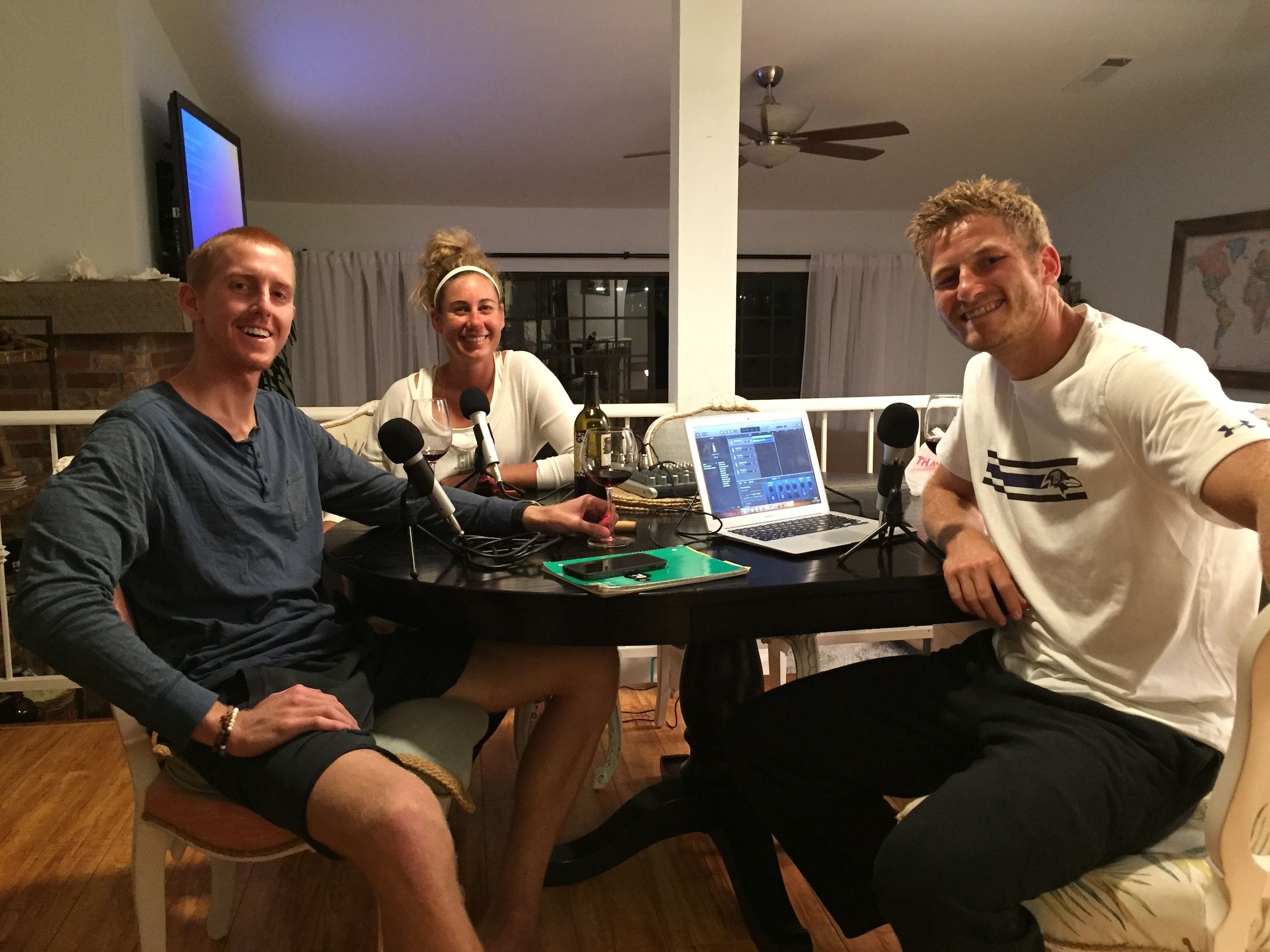
There has only ever seemed to be one gear for April Ross: Go. Such is how the Newport Beach native has garnered a laundry list of accomplishments that include, among others: A Gatorade National Player of the Year award at Newport Harbor High School; two national championships at USC (where she never even planned on playing, but more on that in Part 2); a two-year stretch with partner Jen Kessey between 2008-2010 in which she medaled in 17 of 20 FIVB events; an undefeated AVP season in 2014 with Kerri Walsh-Jennings; two Olympics medals, one silver, one bronze. And every time Ross thinks it’s time to unwind, to relax – well, there’s always another mountain to climb. “It’s so hard. It’s so hard. What I find happens is I convince myself to find that balance a little bit and not stress about it and not work so hard,” she said. “And then I’ll go to a competition, underperform, and I’m like ‘F this! I’m going to home, step it up. I’m not training hard enough, not focused hard enough. If you just want to win that bad – it’s so hard to take a step back and find that balance.” This season was, as Ross describes it on SANDCAST, full of “hiccups.” A last-minute breakup with Walsh-Jennings, with whom Ross won a bronze medal in the 2016 Olympic Games, along with a toe injury that had more of an effect that she realized until she watched video of her approach, made for a mercurial year, though certainly not a bad one – not by most standards, anyway. Ross still won a pair of AVP tournaments, in Austin split-blocking with Whitney Pavlik, and in New York defending for Lauren Fendrick. She still made the World Championship finals in Vienna, pushing the 2016 Olympic gold medalists Laura Ludwig and Kira Walkenhorst to three sets. But one of those hiccups – having a constantly-changing partner situation – is resolved for 2018. In Alix Klineman, the 2017 AVP Rookie of the Year, Ross has partner stability once more. “It was really hard to figure out what to do,” Ross said. “There weren’t many chances to compete and to try people out. It came down to really intangible things. I decided to go with Alix Klineman to take a shot at Tokyo.” Hosted by Simplecast, an AdsWizz company. See pcm.adswizz.com for information about our collection and use of personal data for advertising.
Ep 5SANDCAST No. 4: Welcome to the United States, Chaim Schalk
Chaim Schalk had been to the United States before. The Alberta native has actually been an American citizen his entire life -- his mother is an Iowan -- but as a kid raised in Red Deer, Schalk has been competing in the Canadian pipeline his entire life. Until now. After the 2017 season, Schalk, who finished fifth at the 2017 Beach Volleyball World Championships with longtime partner Ben Saxton, the 6-foot-5 defender made the decision to transfer to compete for the United States, homeland of his wife, Lane Carico, another top-flight U.S. defender whom he married on New Years Eve of 2015. “It was probably halfway through the season when I considered what my options were going to be,” Schalk said. “Me and Ben, we weren’t, I don’t think, were on the same page after a certain period of time. We had a really good run over five years but I was hoping we were going to become more consistent and we never actually won a tournament, and every team around our level has won a tournament. Every team. And that was one thing I wanted to do: I wanted to win. “We’d get into these tournaments where we were so close and every time, something happened. Not to say that’s the reason why I wanted to move on, because if it’s not Ben, who am I going to win with?” And that remains the No. 1 question for Schalk moving forward: Who will the erstwhile Canadian partner with? Because of an FIVB transfer rule, Schalk will have to sit out of FIVB tournaments until October of 2019. He’ll be an exclusively AVP talent, though it's possible he could compete in the World Series of Beach Volleyball, should it not fall under the FIVB umbrella, as it did not this past season. He hasn’t decided on anything; he hasn’t ruled anything out. It’s just as possible he plays with Brazilian blocker Ricardo Santos, with whom he played in AVP New York and stunned Phil Dalhausser and Nick Lucena in the first round, as with a young and developing blocker. For now, Schalk is rehabbing his pinky finger post-surgery, though the next time he steps on the sand, it’ll be as a member of USA Volleyball. WATCH: SANDCAST host Tri Bourne plays against SANDCAST guest Chaim Schalk in the Toronto semifinals: https://www.youtube.com/watch?v=t8BHlrar2wc&t=934s Where to find Chaim Schalk: Twitter: @chaimschalk Instagram: @Chaimer Website: ChaimSchalk.com Hosted by Simplecast, an AdsWizz company. See pcm.adswizz.com for information about our collection and use of personal data for advertising.
Ep 4SANDCAST No. 3: It's finally (finally) video game season for Kelly Claes
In a frenetic span of 120 days, Kelly Claes was able to accomplish what the vast majority of the beach volleyball world would be satisfied with in a career. She won a national championship with USC, which was preceded by the USAV Collegiate Beach Championships. She stunned 2016 Olympic gold medalists Laura Ludwig and Kira Walkenhorst to claim a bronze medal in the World Series of Beach Volleyball. She won an AVP during the season finale in Chicago, which came with the added bonus of boosted prize money, money she was alas able to accept. She even won a NORCECA qualifier – playing defense with Lauren Fendrick. And Claes isn’t done yet. Not even close. “I want to be the best blocker in the world,” she says repeatedly throughout the podcast. She’s not far off, despite playing professionally for less than one full season (she had to skip the AVP’s opener in Huntington Beach). While her and partner Sara Hughes, the FIVB Rookie of the Year, finished the collegiate season No. 1 in the country and national champs for the fourth straight season, they also finished No. 16 internationally and sixth on the AVP. On the podcast, Claes discusses her remarkable partnership with Hughes, which includes a record 103-match winning streak, and what she learned by playing with Fendrick and AVP MVP April Ross in an FIVB in China. “You can only learn so much from one person,” she says. “I feel like reaching into another hat is always helpful. I feel like I learned from both of them and I wouldn’t trade that for anything. It was a really cool experience.” With a little less than three months to go before the opening event of the 2018 season, in The Hague, Claes and Hughes are back on the sand. Claes discusses what her training looks like, what events she’s looking forward to in the 2018 season, her aspirations both immediate and long term, and how she plans on developing into the best blocker in the world. Where you can find Claes: Twitter: @kellyclaes3 Instagram: Kellyclaes3 Facebook: Kelly Claes Of course, this podcast would not be possible without our generous sponsors from Marriott Vacation Club Rentals, which offer the best vacation accommodations in the world’s best vacation destinations. Wherever you travel… Florida to Hawaii, Europe to California, choose to rest in our luxurious guest rooms, suites or villas for your next getaway. Villas offer all of the comforts of home including a full kitchen, living and dining area and separate bedrooms. Stay with the Marriott name you know and trust. Book Big Spaces in Great Places today. Visit www.MVCRentals.com! Hosted by Simplecast, an AdsWizz company. See pcm.adswizz.com for information about our collection and use of personal data for advertising.
Ep 3SANDCAST No. 2: Ryan Doherty, the Most Interesting Man in Beach Volleyball
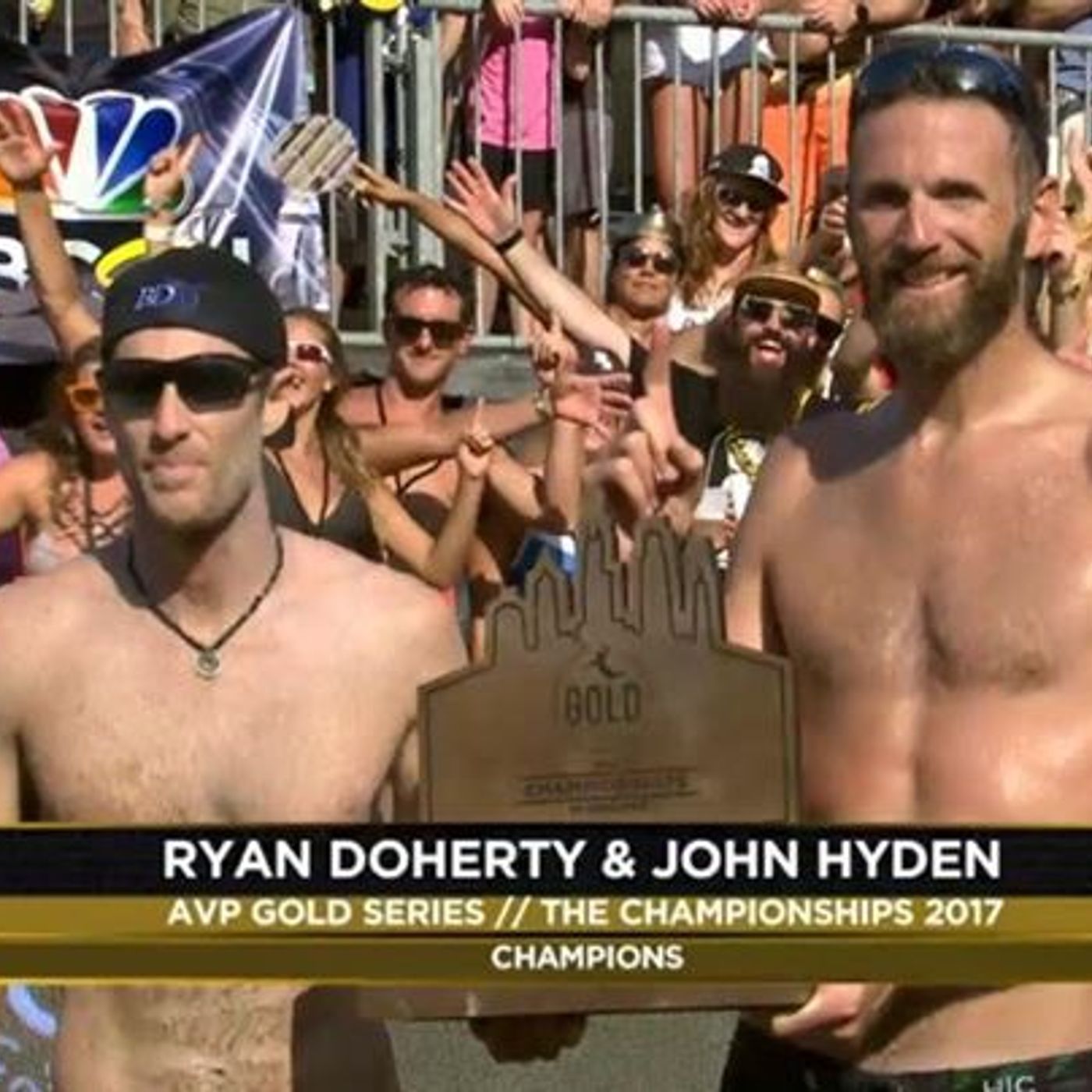
Dos Equis had it all wrong when the beer company casted actor Jonathan Goldsmith as its "Most Interesting Man in the World" campaign. It missed out on Ryan Doherty. Even amongst a group of peers with circuitous routes into beach volleyball, Doherty’s path has been exceptionally itinerant. A star pitcher out of the baseball-mad town of Toms River, New Jersey, Doherty threw for Notre Dame in college. He left early, going undrafted but getting scooped up by the Arizona Diamondbacks, where he spent two years in the minor leagues, years filled with long bus rides, pitching well, pitching not so well – until he got the call from the manager’s office. Doherty was cut. It was, as rock bottom moments can often be, a watershed moment for Doherty, as serendipitous as it was crushing. After couch surfing for a bit in South Carolina, where he was routinely beaten down in beach volleyball by high schoolers, Doherty had made up his mind: He was moving to California, and he was going to play professional beach volleyball. Since, the 7-foot-1 – well, 7-foot-and-a-half – blocker has partnered with Olympians Casey Patterson, Nick Lucena, Todd Rogers and John Hyden. He has beaten Phil Dalhausser. He has represented the United States internationally and domestically, becoming a mainstay on both the AVP and FIVB Tours. Doherty discusses all of that and a great deal more on SANDCAST: Beach Volleyball with Tri Bourne and Travis Mewhirter. Mentioned in the show: Doherty wrote a book, Avatar’s Guide to Beach Volleyball. You can get that on Amazon here: Where you can find Doherty: Twitter: @RyanDVolley Facebook: Ryan Doherty As always, this show would not be possible without the sponsorship of Marriott Vacation Club Rentals, who offers the best vacation accommodations in the world’s best vacation destinations. Wherever you travel… Florida to Hawaii, Europe to California, choose to rest in our luxurious guest rooms, suites or villas for your next getaway. Villas offer all of the comforts of home including a full kitchen, living and dining area and separate bedrooms. Stay with the Marriott name you know and trust. Book Big Spaces in Great Places today. Visit www.MVCRentals.com! Hosted by Simplecast, an AdsWizz company. See pcm.adswizz.com for information about our collection and use of personal data for advertising.
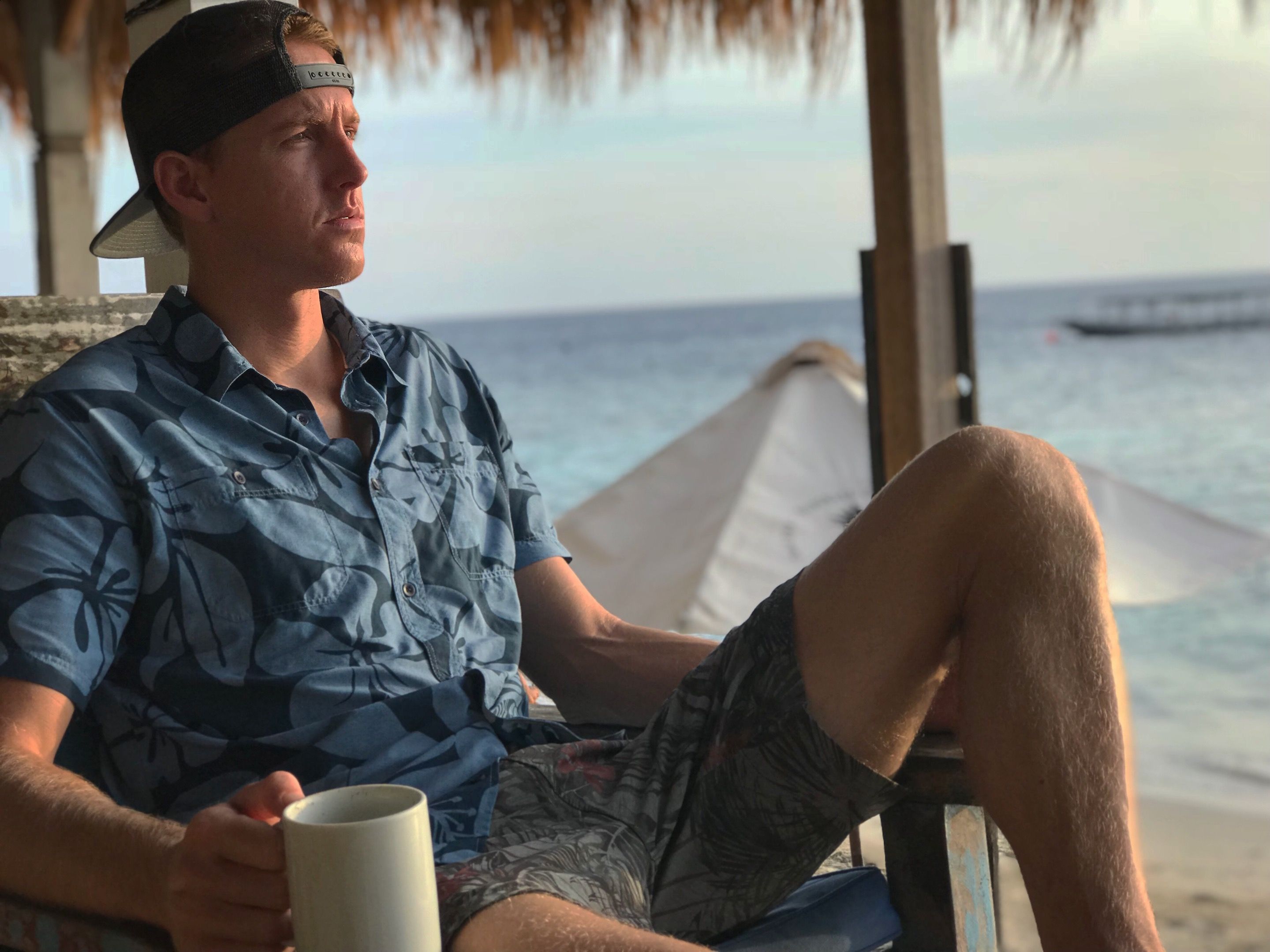
Ep 2The Sandcast: The new Tri Bourne -- Buddha Tri Bourne
Welcome to the first episode of The Sandcast: Beach volleyball with Tri Bourne and Travis Mewhirter, presented by Marriott Vacation Club Rentals and brought to you by VolleyballMag.com. The podcast will delve into all areas of beach volleyball, from the top players and talents across the globe to coaches, influencers and any individual who could bring valuable insight regarding the game of beach volleyball. The first episode is the podcast's host himself, Tri Bourne. After qualifying for the 2016 Olympic Games in Rio -- though missing the cut due to the country quota -- and finishing the year ranked No. 5 in the world alongside John Hyden. Recently, however, Bourne has been sidelined, out with an enigmatic autoimmune disease that kept him out for the 2017 season. It made for a bit of an odd year for Bourne: watching, not playing; commentating on the AVP livestream, not traveling the world; going to the doctor's office, skipping the beach. On the podcast, Bourne discusses how he has dealt with the adversity of an illness, being limited in terms of playing, and how he actually wouldn't trade his year. "It's funny," Bourne says. "At this particular moment, it kind of has been a great year." Indeed. Bourne hit the books, learning about mindset, sports psychology, meditation. He developed new talents, beginning with commentating on the AVP livestream, which was a smash hit throughout the year. "It's been fun," he says. "It's been cool. There's been highs and lows." This podcast, of course, is sponsored by Marriott Vacation Club Rentals, which offers the best vacation accommodations in the world’s best vacation destinations. Wherever you travel -- Florida to Hawaii, Europe to California -- choose to rest in our luxurious guest rooms, suites or villas for your next getaway. Villas offer all of the comforts of home including a full kitchen, living and dining area and separate bedrooms. Stay with the Marriott name you know and trust. Book Big Spaces in Great Places today. Visit www.MVCRentals.com! Where you can find Bourne: Twitter: @TriBourne Instagram: @tribourne Facebook: @tribournehi Let us know what you think -- it's just episode No. 1, so be kind. Hosted by Simplecast, an AdsWizz company. See pcm.adswizz.com for information about our collection and use of personal data for advertising.