
Restitutio
673 episodes — Page 14 of 14
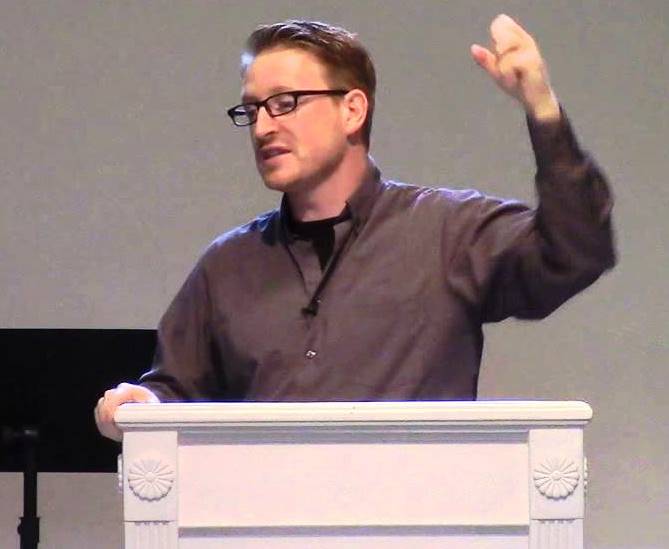
Podcast 24: Now Is Our Time To Speak (Victor Gluckin)
by Victor Gluckin In this fantastic evangelism sermon, Victor Gluckin lays out a biblical case for why we should reach out and share our faith with others. His zeal is contagious, his reasoning cogent, and his passion inspiring. If you are anything like me, you need to be encouraged in this area of your Christian walk. All too easily I lose focus from the mission Jesus gave his followers–the Great Commission. In this sermon Gluckin focuses on the parable of the minas, showing that Jesus has put us in charge of the “family business” while he is gone. He urges us to take responsibility for our part of the Great Commission, rather than just burying what we’ve received in the ground.

Podcast 23: Let Us Make Man (Sean Finnegan)
by Sean Finnegan In Genesis 1.26, God says, “Let us make man in our image.” Since this is the creation of humanity, he couldn’t have been speaking to any humans. So whom was God speaking to? One common interpretation is to say he was speaking to another person within his being–God the Son. But, this is quite a strange idea. Honestly, it sounds like a multiple personality disorder. In any other literature, when we encounter the word “us” we know it means the speaker and whomever he or she is speaking to. Why do we suddenly, go into theology land when God says “us.” Who else was there? The angels. Join me as I present the case for why Genesis 1.26 (and the other “us texts”) should be taken as God speaking to his heavenly court. The word “person” has multiple meanings. In normal conversation, it means simply a human being. However, in theological terminology (thanks to the council of Nicaea in AD 325) “person” means a being that has a mind (an independent consciousness). According to this definition, God is a person because He (note the personal pronoun) thinks, acts, and feels demonstrating his unique personality. Even so, the Trinity states that there are three persons in one God. Thus, each person - the Father, the Son, and the Holy Spirit - are independent in mind but are thought to share the same substance ( i.e. they are all considered to be fully God). “The Hebrew Bible and the New Testament contain well over twenty thousand pronouns and verbs describing the One God.”*[1] In order to grasp this statement, perhaps a brief grammar lesson will clarify. Personal pronouns are those little words that are used to refer to a person rather than repeating his or her name. There are both singular and plural personal pronouns. Plural personal pronouns include: we, us, our, ours, they, them, their, and theirs. Singular personal pronouns include: I, me, my, he, him, his, she, her, and hers. Back to the Bible: God is referred to by the words “he,” “his,” and “him” thousands of times. For example, perhaps the most famous verse in the whole Bible is John 3:16: “For God so loved the world that He gave His only begotten Son….” Notice the type of personal pronouns used for God - “he” and “his.” These pronouns are singular; thus, God is a singular person ( i.e. He is one). If God were a Trinity (three persons), then John 3:16 should read: “For God so loved the world that They gave Their only begotten Son….” Thus, the simple fact that God is always** referred to by singular personal pronouns is strong evidence that God is a single person! This is exactly what one would expect if the central creed of Jesus (the Shema) is taken seriously: “Hear O Israel, the LORD your God is one LORD” (Deut. 6:4; Mark 12:29). Yahweh is in a class by Himself (Deut. 4:35, 39; Is. 45:5 and 6). There is no one that even comes close to Him - He has no equals. He alone is the uncreated One, and He alone deserves all of our worship (Matthew 4:10; Luke 4:8; John 4:23 and 24). There are four “us” texts in the Bible (Genesis 1.26; 3.22; 11.7; Isaiah 6.8). These are verses in which God uses a plural pronoun when referring to something He will do. The most common example of this phenomenon is quoted below. “Then God said, ‘Let us make man in Our image, according to Our likeness’…God created man in His own image, in the image of God He created him; male and female He created them.” (Genesis 1.26-27) The traditional understanding is that these places prove that God is composed of multiple persons (the Father, the Son, and the Holy Spirit) who are conferring together to act.

Podcast 22: Allow Me To Reintroduce the Christ (Blair Wingo)
by Blair Wingo Authentic Christianity requires both believing the biblical gospel as well as following Christ. Too often today we want to believe in Jesus as savior without following as lord. In this moving poem Blair Wingo sets the record straight. She appeals to the bible as the source for reintroducing the real Christ rather than what pop-culture teaches. Never has there been a man who is at once so universally loved and lauded while simultaneously ignored and marginalized as Jesus in America today. Listen in as Wingo courageously exposes the rampant hypocrisy in Christianity.

Podcast 21: Should We Worship Jesus? (Sean Finnegan)
Most Christians never give worshiping Jesus a second thought. However, as biblical unitarians–those who believe the Father is the only true God–we do need to wrestle with this question. Some have argued that worshiping Jesus is tantamount to idolatry since we should only worship God. Others have taken the view that we can worship Jesus on a different level than God and that doing so is not only permissible but encouraged by God. I go through some of the words translated worship and serve, list out worship acts, and handle objections and limitations in an effort to see what the bible actually says about this important practice. Listen to the message to find out more. This sermon has a corresponding prezi, available here. Introduction There is only one God; His name is Yahweh; Jesus is not God; Jesus is not Yahweh[1] Be a Berean (Acts 17:11) Neither accepted nor rejected the message Until they checked it against the Scriptures Whatever the Bible says is what I want to believe Worship Vocabulary Bowing: shacha (שָׁחָה) or proskyneo (προσκυνέω) Of gods (Judges 2:12) Of humans (1 Samuel 24:8; Revelation 3:9) Of Jesus As respectful greeting (Matthew 8:2; 9:18) As submission/honor (Matthew 18:26; Mark 15:19) Serving: avad (עָבַד) or latrevo (λατρεύω) Of God (Acts 24:14) Of a nation (Jeremiah 27:6) Often used together Deuteronomy 5:8-9; Matthew 4:10 Worship Acts Submission: bowing, kneeling, prostrating (Hebrews 1:6) Adoration: love, devotion, gratitude (1 John 5:1) Veneration: respect, reverence, fear (Ephesians 6:5) Praise: recounting attributes, deeds, tongues (2 Peter 1:16-18) Meditation: contemplating, communing, fellowshipping (1 John 1:3) Sacrifices: animal, cereal, wine, candy, hair, money (Luke 8:1-3) Sacred texts: reading, reciting, chanting, memorizing (~25 references to SOM in James) Serve: follow laws, seek to please, lifestyle (Colossians 3:23-24) Singing: to/about (Revelation 5:9-10) Objections[2] Isn’t worshipping anyone other than God idolatry? Two definitions of idolatry Worshipping a statue/representation of a god Devotion that “takes attention away, detracts from, or takes the place of the glory of the only true God”[3] God has exalted Christ to His right hand, above the angels (Ephesians 1:20-23; Colossians 2:10; 1 Peter 3:22) Worshipping Christ actually gives God glory as the indirect recipient Philippians 2:9-11 In light of Phil 2:9-11 and Hebrews 1:6, Patrick Navas writes, “In fact, it would be fair to say—in accord with Scripture—that the worship, honor, glory and respect attributed to Christ is something that God not only allows but commands, is pleasing to him, and God himself is glorified in this…Yet the honor and adoration given to Christ is, in the ultimate sense, an honor and adoration given through Christ to the Father, the ultimate source of every blessing in Christ.” [4] (1 Peter 4:11; Hebrews 13:15) Christ’s transparency Christ’s words were really God’s (John 12:49-50) Christ’s actions were really God’s (John 5:36) Christ did the Father’s will (John 6:38) Christ admitted he could do nothing on h

Podcast 20: Shocking Youth Message (Paul Washer)
by Paul Washer In this convicting sermon Paul Washer exposes the unholiness that pervades much of Christian youth culture. Although I do not agree with much of what Washer stands for, this message of his significantly affected my life. It not only inspired me to live for God wholeheartedly, but also exposed the sneaky ways in which my culture subtly pulls me towards unholiness and sin. This sermon is a wake up call.

Podcast 19: Death Then What? (Sean Finnegan)
by Sean Finnegan What happens when people die? In this sermon I mention show the biblical “evidence” for heaven, hell, purgatory, ghosts, and reincarnation before revealing the overwhelming number of texts supporting the sleep of the dead. Focusing on John’s Gospel, I establish that (1) the dead are in their tombs asleep until they hear Christ’s voice to awaken in resurrection, (2) that resurrection will not occur until the last day, (3) that Jesus called Lazarus “asleep” when he was really talking about him being dead, and (4) that Mary was looking for Jesus not merely his body when she discovered the empty tomb. In the end we must ask ourselves, “Why should there be a resurrection of the dead if no one is really dead?” I used a prezi for this sermon, which you can access here. Acts 17:11 Bereans are not only noble-minded but courageous as well. They did not immediately accept Paul’s message about Jesus, nor did they reject it out of hand. They listened; then they checked it against the Scriptures to see if it was valid. What Happens at Death? Heaven (stare at God, become a star, become an angel, watch over relatives) Hell (tortured in a fire forever) Purgatory (tortured in a fire until sins are purged) Ghosts (live on earth among us without a body, possibly able to interact or possess) Reincarnation (at death, one’s memory is wiped, and they are reborn) Sleep (unconscious but able to be resurrected) Gone (their thoughts, feelings, experiences, etc. are gone forever) As Christians, we can test ideas to see which are correct by a standard − the Bible. John 5:26-29 The dead are in their tombs asleep. However, when they hear his voice, they will awaken. This is resurrection. John 6:38-44, 54 Four times over, Jesus clearly teaches that he will raise the dead on the last day, not the day of their death. John 11:11-27, 43-44 When Jesus spoke of Lazarus’ death, he said he was asleep and that he was going to awaken him, and yet he was really talking about death and resurrection. Did Jesus tear Lazarus away from bliss in heaven to return to this old earth? No, he brought him back to life—woke him up! John 20:11-18 Mary looked for Jesus, not merely his body. Jesus clearly says he had not gone to the Father in death. If Jesus did not go to heaven at death, then why should we think we will? Why should there be a resurrection of the dead if no one is really dead?

Podcast 18: Eternal Security: Steve Gregg vs. Tom Morris
Steve Gregg vs. Tom Morris Once you become saved can you lose your salvation? Listen to this debate to hear both sides of this important question. Admittedly, the debate does seem to be a bit of a mismatch, since Gregg is extremely well prepared and Morris could not answer many of Gregg’s points. Even so, this debate showcases what scriptures those of us who believe in Conditional Salvation use to make our case as well as how to respond to at least some of the stereotypical texts that eternal security proponents employ to justify their position. Overall the debate is cordial and worth your time.

Podcast 17: Follow (Sean Finnegan)
by Sean Finnegan According to Jesus no one should call him “Lord” if he or she does not do what he says. In other words, Christ says he wants followers not merely believers. Although hippie Jesus, one-and-done Jesus, American Jesus, prosperity Jesus, poverty Jesus, and part-time Jesus all vie for all attention, we encounter the real Jesus in the Gospels, which have confidence in today because of the massive number of manuscripts that have survived from antiquity. Following Jesus has massive benefits as well, including eternal life, forgiveness of sins, life transformation, and ultimate meaning for your life. The reasons not to follow Jesus pale in comparison. As a result, doesn’t it make sense to take the next step, to confess Jesus as Lord and begin following his teachings? Two requirements of Christianity Believe gospel Follow Jesus What it means to follow Jesus Calling Jesus “Lord” means doing what he says (Luke 6:46-49) Resisting the temptation to fashion a Jesus to suit our desires Getting at the real Jesus through Scripture Reasons to follow Jesus Eternal life (Matthew 19:27-30) Forgiveness (Ephesians 1:7-8) Transformation (Matthew 11:28-30) Reasons not to follow Jesus Too much commitment Don’t want to be called a Jesus freak Don’t believe it is true Taking the next step
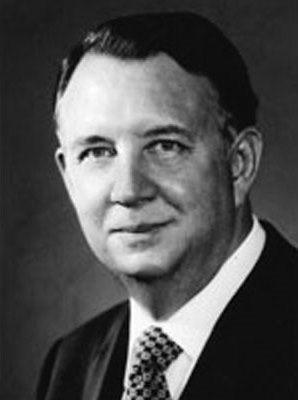
Podcast 16: Ten Shekels and a Shirt (Paris Reidhead)
by Paris Reidhead One of the most famous classic sermons of all time, Paris Reidhead’s “Ten Shekels and a Shirt” calls into question why you serve God? From his account of missionary work to his observations of historic Christian preaching to other movements occurring in his own day, Reidhead weaves together an inspiring and very convicting message relevant in any age. Are you a Christian because of what God will do for you or do you serve him because he is deserves it? Learn about the pervasive and subtle influence of humanism as well as the cure to such a blight.
Podcast 15: A Theology of Nonviolence (Sean Finnegan)
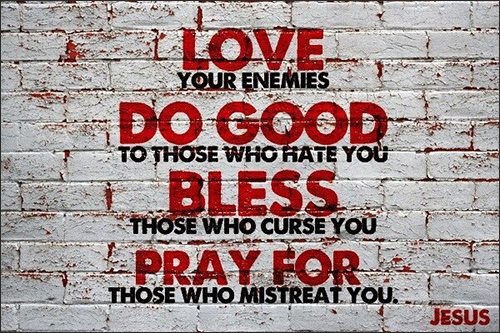
Here’s the original paper in pdf form. I presented this talk at the 18th Theological Conference held near Atlanta, GA. In it I present a case for the radical practice of loving our enemies. Whether you believe Christians can and should use violence to defend themselves or others or if you think more along the lines of Christian pacifism, this talk will familiarize you with the main reasons why some Christians hold to nonviolence. Essentially, my case finds its roots in taking Jesus’ command “love your enemies” literally along with the apostles instructions to never return evil for evil. My case is couched in proleptic ethics such that Christians are now, even before the kingdom arrives in all of its magnificent glory, embodying the kingdom in whatever ways we can. In other words, I believe God calls us to live the way we will live then now as a testimony of what is to come. Lastly, I tackle the issue of early Christian history and demonstrate that the writings we have from the first few centuries testify that the church was nonviolent. Please do not judge my position on this as liberal or cowardly (the two most common charges), but realize that I’m basing my beliefs on the testimony of scripture and that it takes a heck of a lot more courage to love one’s enemy than merely reciprocate violently. Below is the paper that went with this presentation along with a detailed set of responses to common objections. Introduction Is it right for Christians to volunteer in the United States’ military?[1] Should followers of Jesus join the police force? Can one who has been redeemed find employment as a security guard? Should disciples keep a loaded gun in the house in case an intruder enters? Is there ever a time when violence is justified? These questions and many like them, for Christians, center on whether or not we interpret the New Testament teachings to prohibit violence or permit it. This work seeks to provide a clear biblical theology for this critical subject.[2] From the title it is clear that my perspective falls on the side of those who see Jesus and the Apostles as teaching something new—the idea of nonviolent enemy love. Now, I realize that the moment I suggest that violence is wrong for Christians, a whole slew of questions and “what ifs” come to mind. Let me start by saying that these types of questions have good answers and we have collected a number of answers to difficult questions on our website.[3] However, it would not be prudent to handle all of the “objections” prior to laying out the case for nonviolence biblically, logically, and historically. Therefore, it is my intention to present both the clear biblical teaching on this subject and the theological framework into which this teaching fits. Though adherents to nonviolence are still unquestionably in the minority, as of late more and more leaders from non-Anabaptist[4] traditions are beginning to speak up. As I have researched this subject, in an effort to gain answers to the tough questions that face Christian pacifism, I have been surprised to find how central kingdom of God theology is to this topic.[5] It’s as if one cannot talk about nonviolence without talking about the kingdom. But, what is it about the kingdom of God that inspires peace-making rather than war-making? In order to see how Jesus understood and applied the kingdom of God theology to his life and ministry, we need to first look at how the kingdom was understood in the Hebrew Bible. The Kingdom of God in the Hebrew Bible Thou
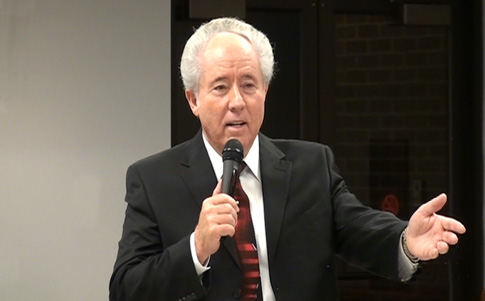
Podcast 14: My Story, His Glory (Joel Hemphill)
by Joel Hemphill In this short but revealing testimony, famed southern gospel singer Joel Hemphill tells his journey from oneness to one. Growing up in the “Jesus only” movement, he preached and sung about Jesus as God until the Father began to show him the light. His transparent honesty comes through as he narrates of how he courageously opened his mind to the possibility that maybe, just maybe, he had gotten the most important doctrine wrong for all of these years; he had misidentified God with Jesus and consequently robbed him of his glory. Now that Hemphill has seen the light, he writes and travels proclaiming the glory of God the Father with vigor and passion.

Podcast 13: What’s Your Script? (Sean Finnegan)
by Sean Finnegan According to Hebrew bible expert, Walter Bruegemann, all of us live by a script. He contends that our society is constantly scripting us with technological, therapeutic, consumer militarism. In the words of the Apostle Paul, we must fight this tendency by refusing to conform to this world but be transformed by the renewing of our minds. The gospel message itself offers us a whole new script. It’s hopeful rather than pessimistic, motivated by love rather than fear, characterized by abundance rather than scarcity, provides us an anchor to weather the storms of this life, gives us lasting purpose, and makes sense of morals. Ultimately, we all have to choose what kind of script we will live by. We are privileged and commissioned to give the world a foretaste of the kingdom through our actions and words, by modeling a new way of doing relationships, by performing outrageous acts of cross-shaped love to a world that is numb, consumeristic, obsessed with sexuality, terrified of extinction, and generally over busy, under paid, and bored. We offer the world a new script. We are the people of God who have a prophetic message to deliver—a message of hope and forgiveness, a message of value and purpose, a message of freedom about a God who is dedicated to fixing up this place and who will one day send his son to make everything wrong with the world right. The Good News kingdom origin is in Genesis creation promises to Abraham Davidic royal line chosen 2 Chronicles 17.11-14 pre-exilic prophets Isaiah 2.1-4 Isaiah 35.4-7 exilic prophets Daniel 2.44 Daniel 7.13-14, 18, 22, 27 post-exilic prophets Zechariah 14.6-9 John the Baptist Message of repentance in light of the coming kingdom Jesus’ ministry gospel proclamation (Luke 4.43; Matthew 4.23; 24.14) teaching the way of Jesus (i.e. Sermon on the Mount) healing/exorcisms radical acts of love to outcasts parables (Matthew 13) calling of 12 and promise to reign (Matthew 19.28) crucifixion 1 Peter 2.21-24 for our sins to show us the way of Jesus to enable us to die to sin and live the way of Jesus resurrection Jesus really is the Messiah (Acts 17.31) defeat of evil (Colossians 2.15) we too will be raised (1 Corinthians 15.20) holy spirit fire of God tongues, prophecy, healing, boldness (Acts 2.4) empowered to live the age to come now fruit of the spirit (Galatians 5.22-23) Effects of Believing the Gospel given a bright future 2 Timothy 1.10 given a new life to live now 2 Corinthians 5.17 Romans 6.4

Podcast 12: Don’t Let Them Go (Keith Daniel)
by Keith Daniel So often husbands make grandiose declarations in the heat of the moment whereby they bind themselves to a destructive or vengeful course of action that inevitably results in shipwrecking their marriages. In this powerful sermon Keith Daniel provides sage advice for husbands and wives to stick together through the toughest times. As always he illustrates the biblical principles he preaches with stories drawn from people who serve as examples for us–both positive and negative. Whether you are married or thinking about getting married one day, this message–though simple–has the power to save you from inestimable misery and pain.

Podcast 11: Wrestling against Spiritual Forces (Sean Finnegan)
by Sean Finnegan Ephesians 6.12 tells us our struggle is not really against other humans but against spiritual forces. Learn how malignant powers influence people both directly (through demon possession) and indirectly (through the culture). Hopefully, this message will open your eyes to what is happening behind the scenes as Satan works to keep people from believing the gospel message as well as take out those who already follow Christ. At the end, I offer 7 specific examples of how the devil gains a foothold in our lives. Even so, through the power of God we are able to shut down these vulnerabilities and overcome spiritual attacks. “Greatest trick the devil ever pulled was convincing the world he didn’t exist” –Keyser Söze, Usual Suspects Eph 6.12 ὅτι οὐκ ἔστιν ἡμῖν ἡ πάλη πρὸς αἷμα καὶ σάρκα ἀλλὰ πρὸς τὰς ἀρχάς, πρὸς τὰς ἐξουσίας, πρὸς τοὺς κοσμοκράτορας τοῦ σκότους τούτου, πρὸς τὰ πνευματικὰ τῆς πονηρίας ἐν τοῖς ἐπουρανίοις. Because the struggle for us is not against blood and flesh but against the rulers, against the authorities, against the world-powers of this darkness, against the wicked spirits in the celestial realm how is it that malignant spiritual powers are behind flesh and blood actions? direct influence of people indirect influence of people specific examples to watch out for direct influence Luke 4.31-36 31 And he went down to Capernaum, a city of Galilee. And he was teaching them on the Sabbath, 32 and they were astonished at his teaching, for his word possessed authority. 33 And in the synagogue there was a man who had the spirit of an unclean demon, and he cried out with a loud voice, 34 “Ha! What have you to do with us, Jesus of Nazareth? Have you come to destroy us? I know who you are– the Holy One of God.” 35 But Jesus rebuked him, saying, “Be silent and come out of him!” And when the demon had thrown him down in their midst, he came out of him, having done him no harm. 36 And they were all amazed and said to one another, “What is this word? For with authority and power he commands the unclean spirits, and they come out!” though you would think dealing with demon-occupied people would be harder, it’s actually easier we have authority in the name of Jesus to cast them out when the 72 returned they said, “Lord, even the demons are subject to us in your name!” (Luke 10.17) Paul cast out demon from girl in Ephesos (Acts 16.18) “I command you in the name of Jesus Christ to come out of her.” indirect influence wake you up to Satan’s influence on our world relevant scriptures about Satan’s massive sway over this age John 14.30: “the ruler of this world” 2 Cor 4.4 “god of this age” Rev 12.9 “the deceiver of the whole world” by nature we dance to the devil’s drumbeat Eph 2.1-3 1 And you were dead in the trespasses and sins 2 in which you once walked, following the course of this world, following the prince of the power of the air, the spirit that is now at work in the sons of disobedience– 3 among whom we all once lived in the passions of our flesh, carrying out the desires of the body and the mind, and were by nature children of wrath, like the rest of mankind. what indirect means does he use to infect us? horror movies: meditate on torture and evil music, especially rap and pop sing about committing sin where are the songs about how wonderful marriage is after a dozen years? where are the songs about raising children? where are the songs about finding satisfaction in working hard? tv

Podcast 10: Is Hell Forever? Chris Date vs. Phil Fernandez
by Chris Date & Phil Fernandez What does the bible teach about hell? In hell do the damned experience eternal conscious torment or are they annihilated? Phil Fernandes affirms the “traditional” view of a fiery torture chamber whereas Chris Date defends the proposition that God will destroy people in the fire. Obviously, I have a bias on this subject, having examined the many biblical texts that proclaim the wicked will vanish like smoke, be cut off, be no more, be destroyed, and perish. Even so, how do we deal with the two or three difficult texts that talk of an eternal fire or an eternal punishment? Listen in and hear one of the best conditional immortality apologists present a strong case for annihilationism while ably fielding objections and questions from Fernandes and the audience. For more resources by Chris Date, check out rethinkinghell.com: a site that has a spectacular podcast that I highly recommend.
Podcast 9: God and Jesus: An Overview (Sean Finnegan)
by Sean Finnegan What’s the difference between God and Jesus. Many Christians believe they are mysteriously one in being, but what do the scriptures teach? It turns out the bible clearly distinguishes between these two individuals and their attributes preclude their metaphysical oneness. Listen in to hear the evidence for why Jesus is the son of God not God the son. This lecture was part of a class called “Exploring Scripture.” To access more of this class, Exploring Scripture Class. Who is God? The people meet their God (Deuteronomy 4.32-39; 5.1-10, 22-26) The Shema (Deuteronomy 6.4-6, 13-15; Mark 12.28-34) Verses that speak of Yahweh as the only true God (2 Samuel 7.22; 2 Kings 19.19; 1 Chronicles 17.20; Nehemiah 9.6; Psalm 86.8-10; 135.5-7; Isaiah 37.16,20; 44.24; 45.5-7, 18, 21-22; 46.9-10; Jeremiah 10.10-16; Zechariah 14.9; Mark 10.18; John 17.3; 1 Corinthians 8.4-6; 1 Timothy 2.5; James 2.19; Jude 24-25) Who is God? Are there any other gods besides Yahweh? How many Yahwehs are there? Other words we use to refer to Yahweh: God, Father, Savior, Lord, Most High, Almighty, Redeemer, etc. Why do we call Yahweh Father? Yahweh had a son Who is Jesus? The birth of the Son of God (Luke 1.31-35) The king of the Jews (Matthew 2.1-6) Who did his followers think he was? (Mark 8.27-30) The Son of Man (Daniel 7.13-14, 18, 22, 27) The sacrifice for our sins (1 Corinthians 15.3-4; Galatians 1.4) The Lord at the right hand of God (Psalm 110) Shared Attributes of God and Jesus They are both called Lord, Savior, Redeemer, King, Judge, and Rock They both forgave sins, loved, will establish the kingdom and judge the world We could list many other commonalities between God and Jesus Chart of the Differences between God and Jesus (slide) May we worship the same God that Jesus worshiped (John 20.17; Revelation 3.12)

Podcast 7: The Secret Messiah & the Triumphal Entry (Sean Finnegan)
by Sean Finnegan Why did Jesus so often tell people to be quiet when they discovered he was the messiah? Christianity is all about telling the world this truth. In fact, Jesus’ last words–the Great Commission–include the mandate to spread the gospel around the world. So, why was it that in his own ministry he was so reticent about who he was? Was it because of humility or did he have another reason? Listen to this message to find out about the messianic secret and the glorious moment when Jesus publicly announced his messianic claim during his triumphal entry into Jerusalem. initial narrative (Mark 11.1-11) Hosanna is “Save now”, rejoicing! jubilation! excitement! turn to Zechariah 9 messianic secret examples of Jesus telling people not to tell about him (messianic secret) Demon in Synagogue at Capernaum (Mark 1.21-28) Raising Jairus’ Daughter (Mark 5.21-24, 35-43) Peter’s Confession (Mark 8.27-30) So, casting out spirits he told them “shhhh don’t tell” healing people like Jairus’ daughter he said “shhh don’t tell who I am” even his own disciples he said “shhh don’t tell” ALL THAT CHANGED WHEN HE ENTERED JERUSALEM the triumphal entry as revealing the ultimate secret JESUS IS MESSIAH! But what is a “Messiah?” is it a sensai like Woo who teaches spin-jitsu? is it a power ranger megazord robot? is it an Ariel sea horse? <<slide it is a King like David (1 Chron 17.11-14) three ways: (coded actions) riding the donkey (Zechariah 9.9-10 prophecy) palm branches called “Son of David”, “King of Israel” Gabriel promised Mary that Jesus would rule over Israel forever (Luke 1.31-33) “The Son of David”, “Hosanna! Hosanna in the highest!”, “The King of Israel” but the Romans, the bad guys, would not like that, because they wanted to stay in charge so any time someone called themselves a king the Romans would kill them we’ll talk about what happened to Jesus when the Romans found out about him being called the King of the Jews next week Jesus is Messiah! Jesus is Messiah! Jesus is Messiah! is this a secret? is it a secret in your life? we have an opportunity (Easter is coming up) best time to invite friends, relatives, co-workers
Podcast 6: My Godly Father (Keith Daniel)
by Keith Daniel Hailing from South Africa, Keith Daniel is one of the best preachers I’ve ever heard. His unmitigated passion and lived experience colors his biblical exposition in a way that urges the listener to be better for God. This sermon is not really a sermon but a biography of his father. In it Daniel recounts the remarkable life of his “daddy” who went through not only the Great Depression and World War II, but also came to make piles of money in the business world before realizing that he was about to lose his family due to his insane work habits and his alcohol addiction. Although the audio quality is not very good, the content couldn’t be better. Listen in to the phenomenal testimony of an unlikely man who changed so much that his wife once asked, “I don’t know who you are anymore,” since she was so overwhelmed by the dramatic change in his life.
Podcast 5: Miracles & Messiahs: How Jesus Best Fits Prophecy (Sean Finnegan)
by Sean Finnegan Why do we believe that Jesus is the Jewish messiah? What is our evidence? Taking a look at contemporary miracle workers like Honi the Circle Drawer and Hanina ben Dosa, Jesus of Nazareth stands out as an exceptional healer and exorcist. Taking our cue from ancient Jewish interpretations of Isaiah 53, we can see how Jesus of Nazareth best fits the prophesied suffering servant. These two lines of inquiry intertwine in the historical Jesus to produce a compelling case that he really is the long-awaited Jewish messiah. Miracles Isaiah 35: The prophet envisions a renewed world when the desert will bloom, the weak will find encouragement, the blind will see, the deaf will hear, the lame will leap, the mute will shout, and all will worship God joyfully. Isaiah 61: God acts bringing good news to the afflicted, liberty to the captives, vengeance to the wicked, and comfort to all who mourn. His people will rebuild, serve as priests, and possess a double portion in the land. As the earth brings forth sprouts, so God will cause righteousness and praise to spring up. Other miracle workers: Honi the Circle Drawer (1st century bc), Hanina ben Dosa (1st century ad) Messiahs Isaiah 53: He will not have a majestic appearance, but he will be despised, forsaken, acquainted with grief. He will bear our griefs and sorrows, be pierced through for our transgressions, be crushed for our iniquities. By his scourging we are healed. Oppressed and afflicted, he remained silent. He was cut off yet found his grave with the rich; thereby, he interceded for transgressors and justified the many. Jewish sources that thought Isaiah 53 referred to the Messiah: Babylonian Talmud ad 180 Targum Jonathan ad 200 Midrash Ruth Rabbah ad 850 Rabbi Moshe Maimonides ad 1200 Zohar via Moses de León ad 1290 Moshe Ibn Crispin ad 1375 Other leaders of messianic movements: Athronges (4 bc), Judah the Galilean (ad 6), the Samaritan Prophet (ad 36), Theudas (ad 45), the Egyptian Prophet (ad 58), Simon bar Giora (ad 69), Simon ben Kosiba (ad 132) Who best fits the Kingdom age and suffering servant prophecies?

Podcast 4: A Biblical Theology of Finance (Craig Blomberg)
by Craig Blomberg This is one of those areas where, as a preacher, I can’t help but be very sensitive. Although most pastors struggle with just enough to get by, a few have amassed great wealth or even embezzled people’s contributions. Because of some very public bad examples, people tend to be leery of listening to pastors talk about finances. However, it’s an extremely significant topic that the bible talks about quite a lot: both how to steward your possessions and how to give. Join Craig Blomberg as he surveys the bible, basing his remarks on his book Neither Poverty nor Riches. I think you will be surprised by the breadth of his presentation as well as gain some insight into this important topic.
Podcast 3: Between the Testaments (Sean Finnegan)
by Sean Finnegan Have you ever wondered what happened between the Old Testament and the New Testament? When the Old Testament closes the people have returned to their land after the 70 year captivity and are living under the Persian empire, though they have significant freedoms, including the right to worship God in the rebuilt temple. However, when we begin reading the New Testament, the whole scene is different. Now the Romans are in power and we encounter these new religious groups likes Sadducees and Pharisees. Where did they come from? What happened in between? Though you might assume the Romans just took over from the Persians, the story in ancient Israel is more complicated than that. The people fought and won their independence from their Greek overlords and established a kingdom that lasted over a century–called the Hasmonean dynasty. Often times historians refer to this time as the Maccabean period, named after the revolutionary freedom fighter, Judah the Maccabee. Understanding this interim is crucial for New Testament studies and explains why so many Judeans in Jesus’ day were naming their kids John, Judah (or Judas), and Simon. This lecture was part of a class called “Exploring Scripture.” To access more of this class, go to Exploring Scripture. If you can’t see the slides to this lecture, click here. Overview from Abraham to the Return from Exile Abrahamic Covenant Isaac, Jacob, Joseph, Egypt as a good place to sojourn Egyptian oppression, Moses, the 10 plagues, Red Sea Law given (10 commandments) Disobedience to enter the land (40 years wandering in the wilderness) Entering the land (Joshua and the Judges) First three Kings Kingdom Divides Israel taken into captivity Judah taken into captivity Judah returns Age of Empires Assyrian Empire Babylonian Empire Persian Empire Greek Empire Alexander the Great At 20 years old Alexander (son of Philip of Macedon) became king in 336 bc. military commander (undefeated in battle) defeated Darius III at the Battle of Issus in 333 bc conquered most of the world known to the ancient Greeks pressing east into India (map slide) Judah became a Greek province he founded Alexandria in Egypt In 331 bc, Alexander was welcomed as a liberator in Egypt and was pronounced the son of Zeus by Egyptian priests of the god Amun. From then on, Alexander referred to the god Zeus-Ammon as his true father. Alexander was a brilliant and fearless military strategist Aristotle was his personal tutor Hellenization: Alexander’s idea to make the world Greece Greece is “Hellas” or the “Hellenic” Republic in Greek he wanted to make the world like Greece, civilizing it. wanted people in his domain to speak Greek, act Greek, be Greek. Hellenizing: civilizing people to the Greek way of thinking and acting all conquered provinces were to be Hellenized method of indoctrination was simple & effective ordered his officers and men to intermarry with the native populations and to beget many children. in 10 years he founded 25 Greek cities in the Middle East most notably Alexandria He spread: Greek language, religion philosophy city structure recreation educational structures sports attitude towards the body (i.e. circumcision) by the time of Jesus Greek was the international language</

Podcast 2: James Ossuary (Ben Witherington)
by Ben Witherington III Have you heard about the controversial James Ossuary? An ossuary is a small coffin, often made of limestone, that the Jews in the second Temple period used for the bones of their deceased loved ones. Someone found an ossuary with the inscription “James son of Joseph, his brother is Jesus.” Could this find be the actual ossuary of Jesus’ brother, James? Join world class scholar, Ben Witherington, as he defends it’s authenticity. If Witherington is correct, this archaeological find is the best material evidence of early Christianity.

Podcast 1: Keys to a Meaningful Life (Sean Finnegan)
by Sean Finnegan What is the meaning of life? What is the reason to live? Why are you here? What are you living for? In what ways does your life make a difference? How do you lead a meaningful life? Listen to this message to discover not only what happiness experts says, but, more importantly, what Jesus’ purpose statements were and how that can affect your purpose today. Rick Warren’s Three Levels of Living survival success significance Martin Seligman’s Three Levels of Happiness pleasant life good life meaningful ilfe Both put purpose at the pinnacle of human experience. Jesus’ Purpose Statements to preach the kingdom of God everywhere (Luke 4.43; Mark 1.38) to seek and save the lost (Luke 19.10; 1 Timothy 1.15; also Luke 4 in Nazareth) to call sinners to repentance (Mark 2.17; Acts 3.26) to give his life a ransom for many (Matthew 20.28; 1 John 4.10) to provide others with an abundant life (John 10.10) As he was sent so he sends us (John 20.21) We are his witnesses (Luke 24.46-48) Our great commission (Matthew 28.18-20)