
Research To Practice | Oncology Videos
1,060 episodes — Page 6 of 22
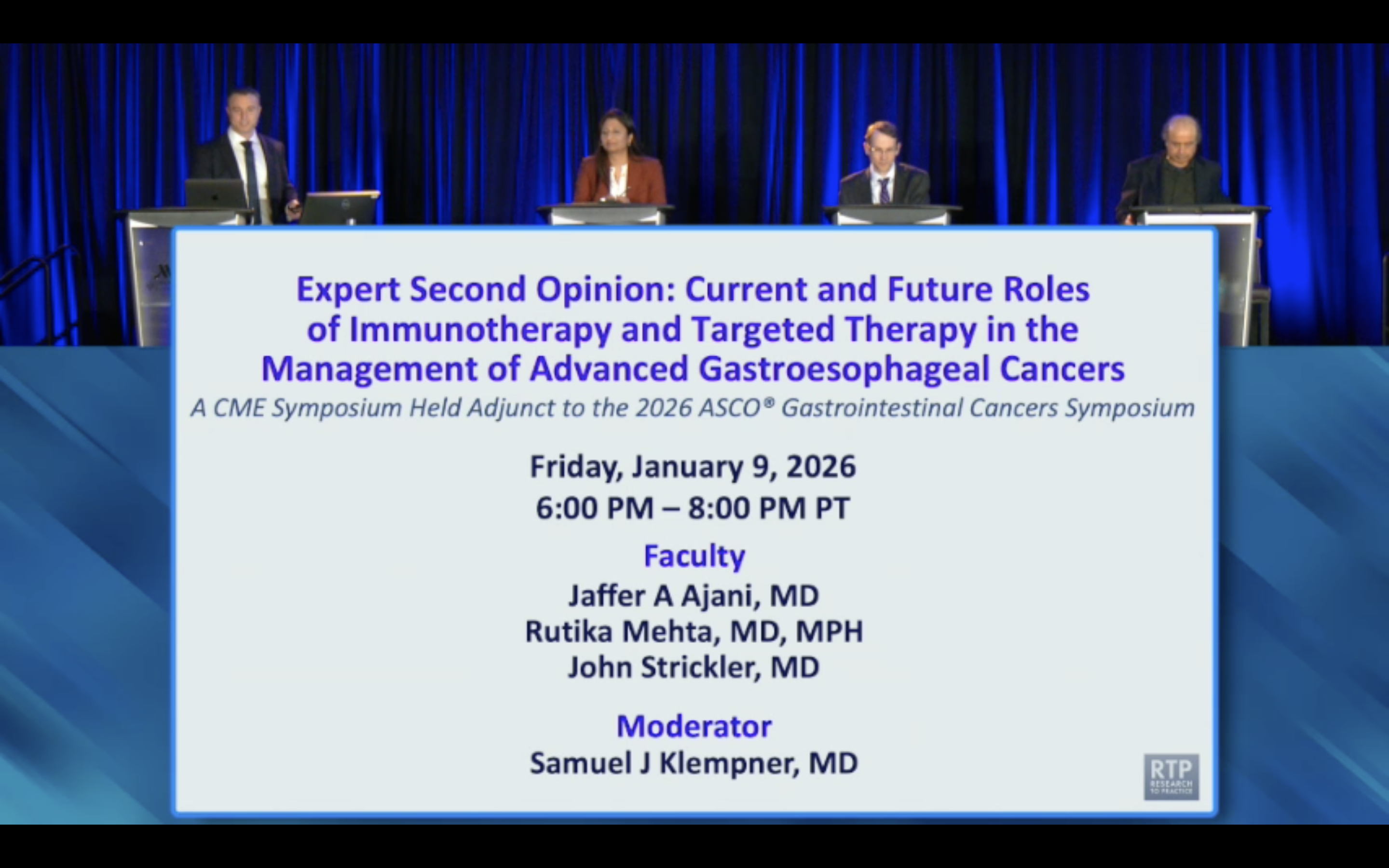
Immunotherapy and Targeted Therapy for Advanced Gastroesophageal Cancers — Proceedings from a Session Held Adjunct to the 2026 ASCO Gastrointestinal Cancers Symposium
Featuring perspectives from Dr Jaffer A Ajani, Dr Samuel J Klempner, Dr Rutika Mehta and Dr John Strickler, moderated by Dr Klempner, including the following topics: Introduction (0:00) HER2-Targeted Approaches for Advanced Gastroesophageal Cancers — Dr Ajani (2:02) Faculty Panel Discussion: Cases and Questions from the Community (14:13) Targeting Claudin 18.2 in Advanced Gastroesophageal Cancers — Dr Strickler (37:29) Faculty Panel Discussion: Cases and Questions from the Community (49:21) Optimal Incorporation of Immunotherapeutic Strategies into Treatment for Patients with Metastatic Gastroesophageal Tumors — Dr Mehta (1:09:56) Faculty Panel Discussion: Cases and Questions from the Community (1:22:02) Other Novel Agents and Strategies Under Evaluation for Advanced Gastroesophageal Cancers — Dr Klempner (1:44:23) CME information and select publications
Prostate Cancer — Microlearning Activity 1 with Dr Rana R McKay: ESMO Congress 2025 Review
Featuring patient case presentations by Dr Fern Anari and Dr Catherine Fahey, with commentary from Dr Matthew D Galsky, including the following topics: AKT inhibitors for PTEN-deficient de novo metastatic hormone-sensitive prostate cancer (0:00) Radioligand-directed therapy for PSMA-positive metastatic hormone-sensitive prostate cancer (8:18) Radiation therapy in combination with enzalutamide for high-risk localized prostate cancer (13:14) CME information and select publications

HER2-Positive Gastrointestinal Cancers — Proceedings from a Session Held Adjunct to the 2026 ASCO Gastrointestinal Cancers Symposium
Featuring perspectives from Dr Haley Ellis, Prof Eric Van Cutsem and Dr Zev Wainberg, moderated by Dr Lionel A Kankeu Fonkoua, including the following topics: Introduction (0:00) Biliary Tract Cancers — Dr Ellis (1:56) Gastroesophageal Cancers — Dr Wainberg (24:27) Colorectal Cancer — Prof Van Cutsem (59:13) CME information and select publications
Endocrine-Based Therapy for HR-Positive Breast Cancer — Proceedings from a San Antonio 2025 Symposium Series
Featuring perspectives from Dr Angela DeMichele, Dr Komal Jhaveri, Dr Erica Mayer, Dr Hope S Rugo and Dr Seth Wander, including the following topics: Introduction (0:00) 1985 NCI Consensus Conference on Early Breast Cancer: Sir Richard Peto, FRS (2:01) Current Role of Genomic Assays in Treatment Decision-Making for Localized Hormone Receptor (HR)-Positive Breast Cancer — Dr DeMichele (5:13) Case: A premenopausal woman in her mid 40s with an ER-positive, HER2-negative, node-negative infiltrating ductal carcinoma (IDC) after partial mastectomy/radiation therapy who enrolls in the prospective, observational FLEX study: MammaPrint® low risk — Laurie Matt-Amaral, MD, MPH (15:30) Case: A premenopausal woman in her mid 40s after modified radical mastectomy for T2N0 ER-positive, HER2-negative IDC with an Oncotype DX® Recurrence Score (RS®) of 19 — Swati Vishwanathan, MD Case: A woman in her mid 60s with locally advanced (19 cm) ER-positive, HER2-low (IHC 1+) Stage IIIB mucinous carcinoma breast cancer and an RS of 18 — Alan B Astrow, MD (22:40) Role of CDK4/6 Inhibitors and Other Novel Strategies in Therapy for HR-Positive, HER2-Negative Localized Breast Cancer — Dr Jhaveri (30:18) Case: A woman in her mid 50s with ER-positive, HER2-negative Stage IIB, T2N1 IDC after neoadjuvant dose-dense AC-T, lumpectomy and adjuvant radiation therapy — Eleonora Teplinsky, MD (42:14) Case: A woman in her mid 60s with ER-positive, HER2-negative breast cancer with a surgically removed solitary lung metastasis after 4 years of adjuvant letrozole — Eric Fox, DO (46:32) Evolving Up-Front Treatment Paradigm for HR-Positive, HER2-Negative Metastatic Breast Cancer (mBC) — Dr Rugo (49:45) Case: A woman in her early 80s with Type 2 diabetes, well controlled hypertension and recurrent ER-positive, HER2-negative mBC after 4 years of adjuvant letrozole — Sunil Gandhi, MD (1:02:30) Clinical Utility of Agents Targeting the PI3K/AKT/mTOR Pathway for Patients with Progressive HR-Positive mBC — Dr Mayer (1:06:37) Case: A woman in her late 60s with ER-positive, HER2-low (IHC 1+), PIK3CA-mutant mBC with disease progression after 2 years of adjuvant letrozole — Laila Agrawal, MD (1:20:22) Case: A woman in her early 60s with ER-positive, HER2-low PIK3CA-mutant mBC and disease progression on first-line palbociclib/fulvestrant — Dr Teplinsky (1:26:36) Results from the Global Phase III lidERA Breast Cancer Trial of Giredestrant versus Standard Endocrine Therapy as Adjuvant Treatment for ER-Positive, HER2-Negative Localized Breast Cancer (1:31:48) Current and Future Role of Oral Selective Estrogen Receptor Degraders for Progressive HR-Positive mBC — Dr Wander (1:42:30) Case: A woman in her early 100s with locally advanced ER-positive, HER2-negative breast cancer with disease progression on letrozole, now with an ESR1 mutation — Dr Astrow (1:57:51) CME information and select publications
Metastatic Bladder Cancer — Rapid Case Review Issue 1
Featuring patient case presentations by Dr Fern Anari and Dr Catherine Fahey, with commentary from Dr Matthew D Galsky, including the following topics: Case: A man in his early 60s with metastatic urothelial bladder cancer (mUBC) and medical history of tobacco use receives first-line enfortumab vedotin (EV) and pembrolizumab with excellent response after 3 cycles — Dr Fahey (0:00) Case: A woman in her early 80s with tumor mutational burden-high mUBC receives pembrolizumab with complete response and later discontinues after developing Grade 1 pneumonitis has no further evidence of disease — Dr Anari (9:19) Case: A man in his early 70s with mUBC who received single-agent EV develops neuropathy and hyperglycemia — Dr Anari (19:10) CME information and select publications
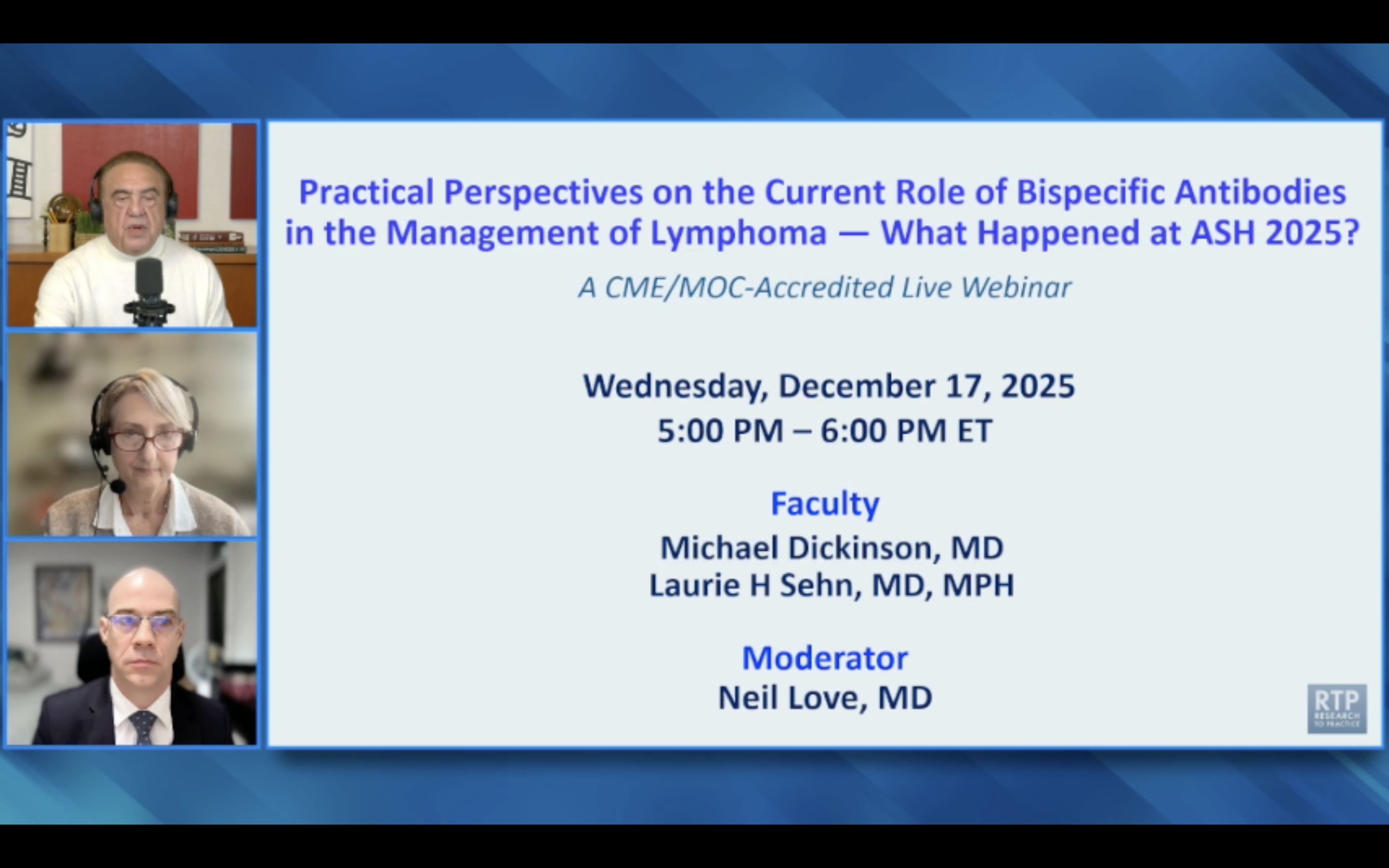
Bispecific Antibodies in the Management of Lymphoma — ASH 2025 Review
Featuring perspectives from Prof Michael Dickinson and Dr Laurie H Sehn, including the following topics: Introduction (0:00) Future Treatment of Non-Hodgkin Lymphoma (NHL) (2:24) Case: A man in his mid 60s with diffuse large B-cell lymphoma (DLBCL) and early relapse on axicabtagene ciloleucel receives glofitamab — Dr Sehn (8:10) Case: A man in his late 60s with Type 2 diabetes, congestive heart failure and chronic obstructive pulmonary disease receives glofitamab monotherapy after glofitamab with gemcitabine/oxaliplatin for relapsed GCB-type double-hit DLBCL — Matthew Lunning, DO (14:54) Practical Perspectives on the Current Role of Bispecific Antibodies in the Management of Lymphoma — Prof Dickinson (18:00) Case: A woman in her mid 50s with multiregimen-recurrent follicular lymphoma (FL) receives mosunetuzumab — Carla Casulo, MD (35:33) Case: A man in his late 70s with multiregimen-refractory FL receives mosunetuzumab with an ongoing complete response — Dr Sehn (40:05) FL and Other NHL Subtypes — Dr Sehn (45:30) CME information and select publications
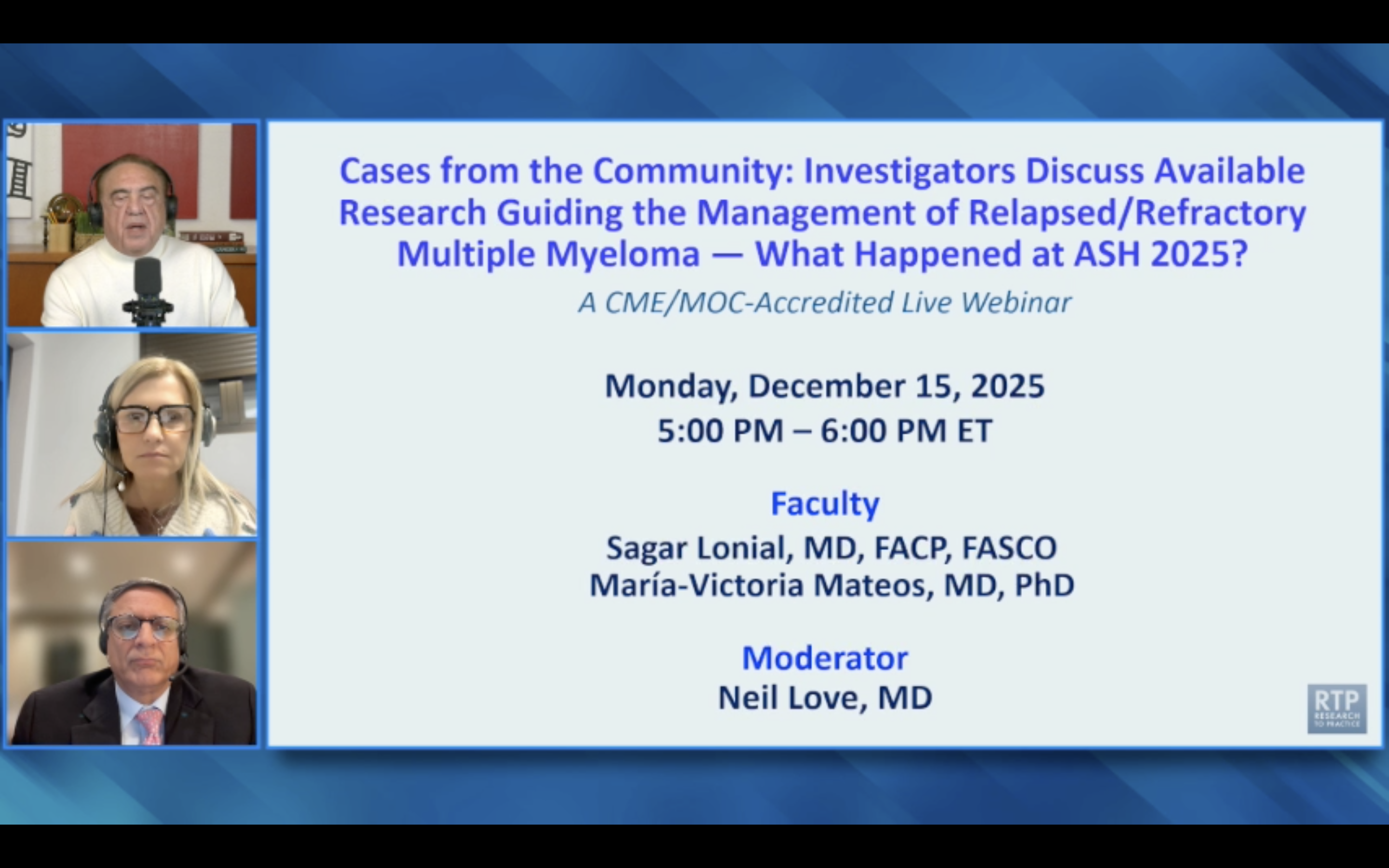
Relapsed/Refractory Multiple Myeloma — ASH 2025 Review
Featuring perspectives from Dr Sagar Lonial and Dr María-Victoria Mateos, including the following topics: Introduction (0:00) Best of ASH Multiple Myeloma (1:56) Case: A man in his late 50s with t(11;14) IgA kappa myeloma discovered during workup for new Stage IV kidney disease who has a chest wall plasmacytoma receives daratumumab with CyBorD and radiation therapy to the plasmacytoma with minimal response — Jeremy Lorber, MD (8:35) Antibody-Drug Conjugates and Other Emerging Novel Therapies for Relapsed/Refractory (R/R) Multiple Myeloma (MM) — Dr Lonial (16:58) Case: A man in his mid 80s with severe obesity and coronary artery disease, chronic heart failure and sleep apnea receives belantamab mafodotin with low-dose pomalidomide for multiregimen-relapsed myeloma — Neil Morganstein, MD (27:57) Case: A man in his mid 60s with a history of stroke with aphasia receives teclistamab for multiregimen-relapsed MM after daratumumab, proteasome inhibitors, immunomodulatory drugs and selinexor — Justin Favaro, MD, PhD (34:42) Integrating Chimeric Antigen Receptor (CAR) T-Cell Therapy and Bispecific Antibodies into the Management of R/R MM — Dr Mateos (39:09) Case: A man in his early 70s with kappa light chain myeloma experiences complete response on cilta-cel CAR T-cell therapy with hypogammaglobulinemia requiring IVIG and develops melanoma of the abdominal wall — Bhavana (Tina) Bhatnagar, DO (52:07) Case: A man in his mid 50s with heavily relapsed MM who received multiple prior lines of therapy, including CAR T-cell therapy, receives talquetamab — Priya Rudolph, MD, PhD (55:44) CME information and select publications
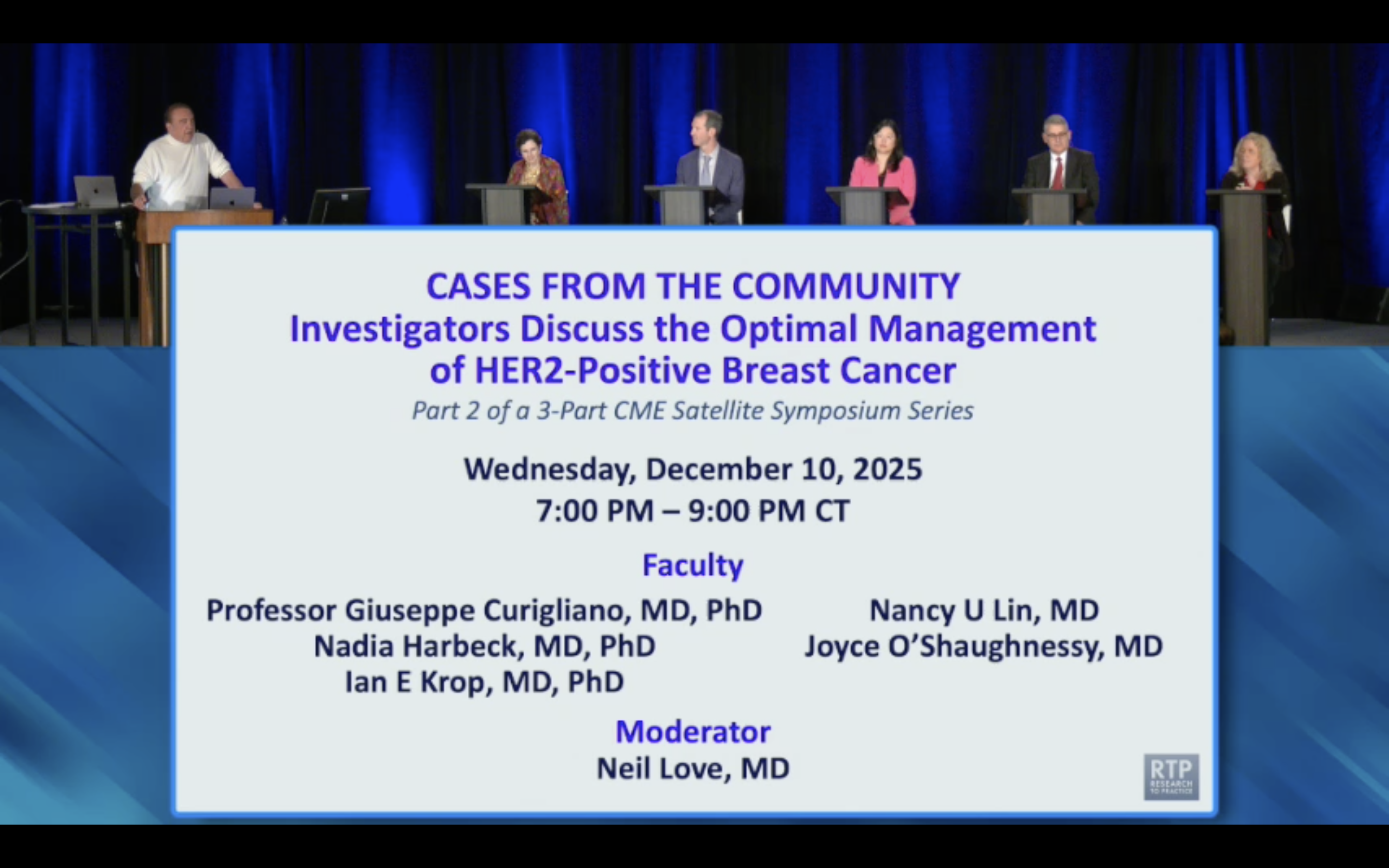
HER2-Positive Breast Cancer — Proceedings from a San Antonio 2025 Symposium Series
Featuring perspectives from Prof Giuseppe Curigliano, Prof Nadia Harbeck, Dr Ian E Krop, Dr Nancy U Lin and Dr Joyce O'Shaughnessy, including the following topics: Introduction (0:00) Considerations in the Care of Patients with Localized HER2-Positive Breast Cancer — Prof Harbeck (1:39) Case: A woman in her mid 50s presents with locally advanced ER-positive, HER2-positive breast cancer — Alan B Astrow, MD (12:52) Case: A woman in her mid 40s with ER-positive, HER2-positive Stage II breast cancer s/p neoadjuvant TCHP with residual disease receives adjuvant T-DM1 but discontinues due to neuropathy — Laila Agrawal, MD (20:02) Previously Untreated HER2-Positive Metastatic Breast Cancer (mBC) — Prof Curigliano (25:10) Case: A woman in her early 80s presents with de novo metastatic (bone-only) ER-positive, HER2-positive breast cancer — Zanetta S Lamar, MD (35:03) Optimal Management of Brain Metastases in Patients with HER2-Positive Breast Cancer — Dr Lin (46:20) Case: A woman in her early 60s with ER-positive, HER2-positive breast cancer develops a cerebellar metastasis while receiving adjuvant anastrozole after prior anti-HER2 therapy — Justin Favaro, MD, PhD (59:41) Case: A woman in her early 40s with ER-negative, HER2-positive mBC develops a headache shortly after neoadjuvant TCHP, surgery and postneoadjuvant T-DM1 and is found to have an isolated 4-cm brain metastasis — Dr Agrawal (1:05:36) Selection and Sequencing of Therapy for Relapsed/Refractory HER2-Positive mBC in the Absence of CNS Involvement — Dr Krop (1:12:00) Case: A woman in her early 40s with ER-positive, HER2-positive mBC receives THP (docetaxel/trastuzumab/pertuzumab) and maintenance tucatinib with trastuzumab/pertuzumab on a clinical trial and now has disease progression — Yanjun Ma, MD, PhD (1:23:04) Tolerability Considerations with HER2-Targeted Therapies — Dr O'Shaughnessy (1:29:32) Case: A woman in her mid 60s presents with localized ER-negative, HER2-positive infiltrating ductal carcinoma — Erik Rupard, MD (1:46:06) Case: A woman in her early 70s with recurrent ER-positive, HER2-positive mBC receives trastuzumab deruxtecan (T-DXd) and has concerning pulmonary symptoms but without findings on diagnostic imaging — Kimberly Ku, MD Case: A woman in her mid 40s with ER-positive, HER2-positive breast cancer metastatic to the brain and lung who received multiple prior treatments responds to T-DXd but develops Grade 1 interstitial lung disease — Richard Zelkowitz, MD (1:49:49) CME information and select publications
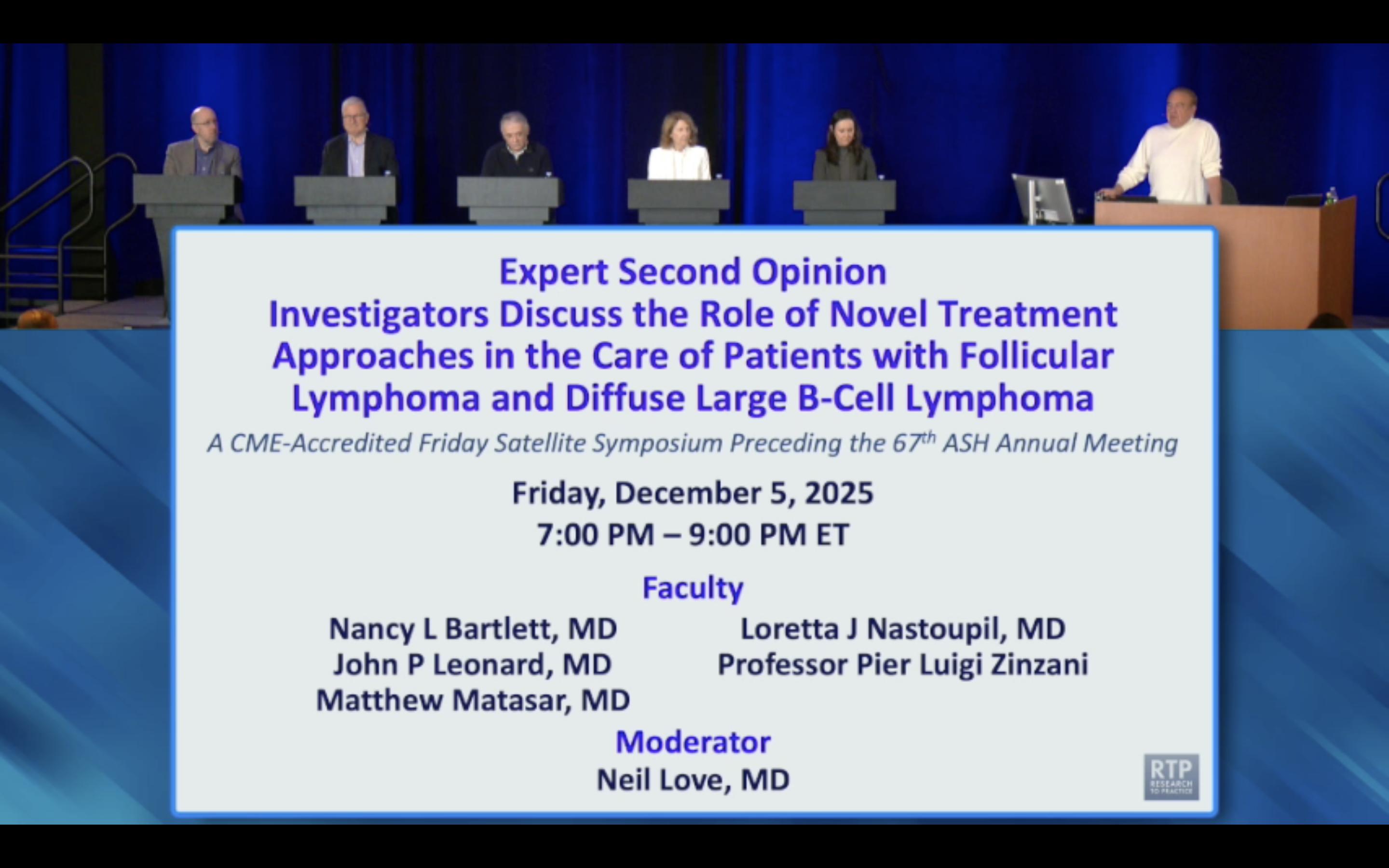
Follicular Lymphoma and Diffuse Large B-Cell Lymphoma — Proceedings from a Symposium Series Preceding the 67th ASH Annual Meeting and Exposition
Featuring perspectives from Dr Nancy L Bartlett, Dr John P Leonard, Dr Matthew Matasar, Dr Loretta J Nastoupil and Prof Pier Luigi Zinzani, including the following topics: Introduction (0:00) Rational Incorporation of Antibody-Drug Conjugates (ADCs) into the Management of Newly Diagnosed Diffuse Large B-Cell Lymphoma (DLBCL) — Dr Matasar (1:34) Case: A man in his late 50s who presents with left testicular swelling and abdominal discomfort is diagnosed with ABC-subtype Stage IV DLBCL — Laurie H Sehn, MD, MPH (11:27) Clinical Utility of CD19-Directed Monoclonal Antibodies for DLBCL and Follicular Lymphoma (FL) — Dr Leonard (19:00) Case: A woman in her early 80s with refractory DLBCL receives tafasitamab/lenalidomide — Carla Casulo, MD (32:50) Case: A man in his late 70s with chronic renal disease and relapsed cutaneous DLBCL receives tafasitamab and dose-reduced lenalidomide — Matthew Lunning, DO (35:51) Optimal Use of ADCs in the Treatment of Relapsed/Refractory DLBCL — Prof Zinzani (42:09) Case: A woman in her late 60s with relapsed DLBCL after polatuzumab vedotin with bendamustine/rituximab receives loncastuximab tesirine with partial response and develops a rash — Dr Casulo (57:45) Case: A woman in her early 40s with multiregimen-relapsed GCB-type DLBCL experiences disease progression on loncastuximab tesirine and receives brentuximab vedotin with lenalidomide/rituximab (1:03:07) Bispecific Antibody Therapy for DLBCL — Dr Bartlett (1:08:31) Case: A man in his mid 60s with DLBCL and early relapse on axicabtagene ciloleucel receives glofitamab — Dr Sehn (1:22:33) Case: A man in his late 60s with Type 2 diabetes, congestive heart failure and COPD receives glofitamab monotherapy after glofitamab with gemcitabine/oxaliplatin for relapsed GCB-type double-hit DLBCL — Dr Lunning (1:29:06) Bispecific Antibody Therapy for FL and Other Lymphoma Subtypes — Dr Nastoupil (1:35:34) Case: A woman in her mid 50s with multiregimen-recurrent FL receives mosunetuzumab — Dr Casulo (1:47:01) Case: A man in his late 70s with multiregimen-refractory FL receives mosunetuzumab and achieves an ongoing complete response — Dr Sehn (1:52:23) CME information and select publications

Colorectal Cancer — 5-Minute Journal Club Issue 2 with Dr Scott Kopetz: Current and Future Role of Tumor-Informed Circulating Tumor DNA Assays
Featuring an interview with Dr Scott Kopetz, including the following topics: Circulating tumor DNA (ctDNA)-guided adjuvant chemotherapy de-escalation in the treatment of Stage III colon cancer from the ctDNA-negative cohort of the DYNAMIC-III trial (0:00) Prognostic and predictive role of ctDNA in the management of Stage III colon cancer treated with celecoxib: Findings from the CALGB (Alliance)/SWOG 80702 trial (8:01) Phase III ALTAIR study comparing trifluridine/tipiracil to placebo for patients with molecular residual disease after curative resection of colorectal cancer (CRC); a methylation-based, tissue-free ctDNA test (12:51) ctDNA with locally advanced mismatch repair-deficient/microsatellite instability-high solid tumors; real-world evidence regarding ctDNA with resected CRC (17:31) CME information and select publications
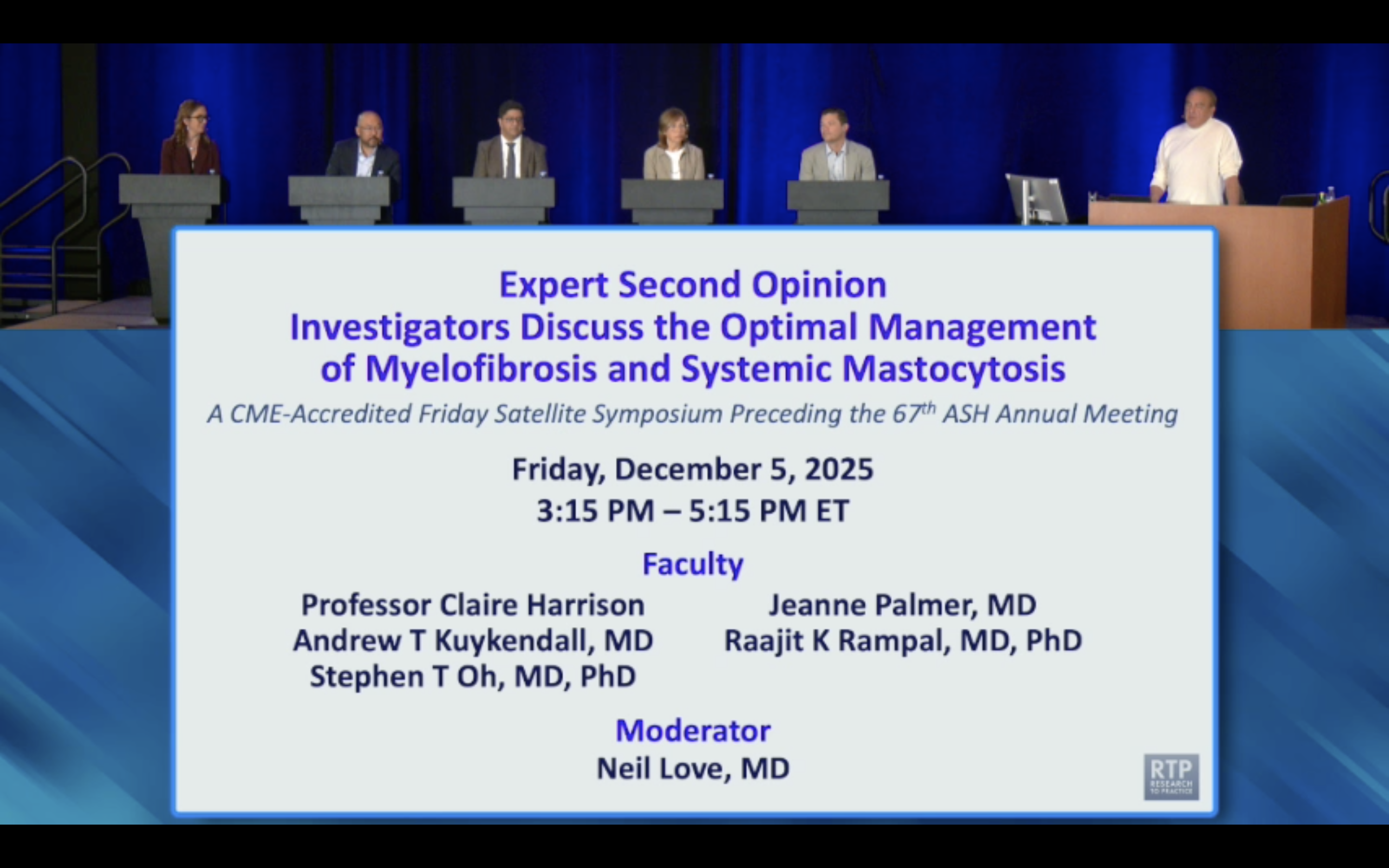
Myelofibrosis and Systemic Mastocytosis — Proceedings from a Symposium Series Preceding the 67th ASH Annual Meeting and Exposition
Featuring perspectives from Prof Claire Harrison, Dr Andrew T Kuykendall, Dr Stephen T Oh, Dr Jeanne Palmer and Dr Raajit K Rampal, including the following topics: Introduction (0:00) Current Clinical Decision-Making for Myelofibrosis (MF) in the Absence of Severe Cytopenias — Dr Palmer (1:46) Case: A woman in her mid 70s presents with symptomatic JAK2 V61F-mutant primary MF with mild anemia and normal platelet count — John Mascarenhas, MD (16:09) Discussion: Asymptomatic MF; re-reads of pathology reports; "triple-negative" MF; secondary causes — Laura C Michaelis, MD (22:47) Discussion: Ruxolitinib-associated dermatologic cancers and weight gain — Prithviraj Bose, MD (27:34) Managing MF in Patients with Anemia — Dr Oh (30:21) Case: A man in his early 70s with splenomegaly and mild fatigue is diagnosed with JAK2 V617F-mutant primary MF and receives momelotinib — Dr Michaelis (42:34) Discussion: Post-hoc analysis from the SIMPLIFY-1 trial — Dr Bose (46:20) Managing MF in Patients with Thrombocytopenia — Dr Rampal (49:57) Discussion: MF with moderate thrombocytopenia — Dr Michaelis Case: A man in his mid 60s with primary MF and anemia, thrombocytopenia and splenomegaly has a low JAK2 V617F allele frequency — Dr Mascarenhas (1:05:46) Promising Novel Agents Under Investigation for MF — Prof Harrison (1:11:21) Case: A woman in her late 70s with primary MF with CALR1 and SF3B1 mutations and anemia receives luspatercept — Dr Michaelis Discussion: Luspatercept for MF-associated anemia — Dr Bose (1:24:52) Discussion: Promising novel therapies — Dr Mascarenhas (1:28:24) Current and Future Management of Systemic Mastocytosis — Dr Kuykendall (1:32:40) Discussion: Initial assessment of patients diagnosed with systemic mastocytosis; avapritinib dosing — Dr Bose (1:49:12) Discussion: Systemic mastocytosis with associated hematologic neoplasm — Dr Bose (1:52:24) Discussion: Bezuclastinib for systemic mastocytosis — Dr Bose (1:55:23) CME information and select publications
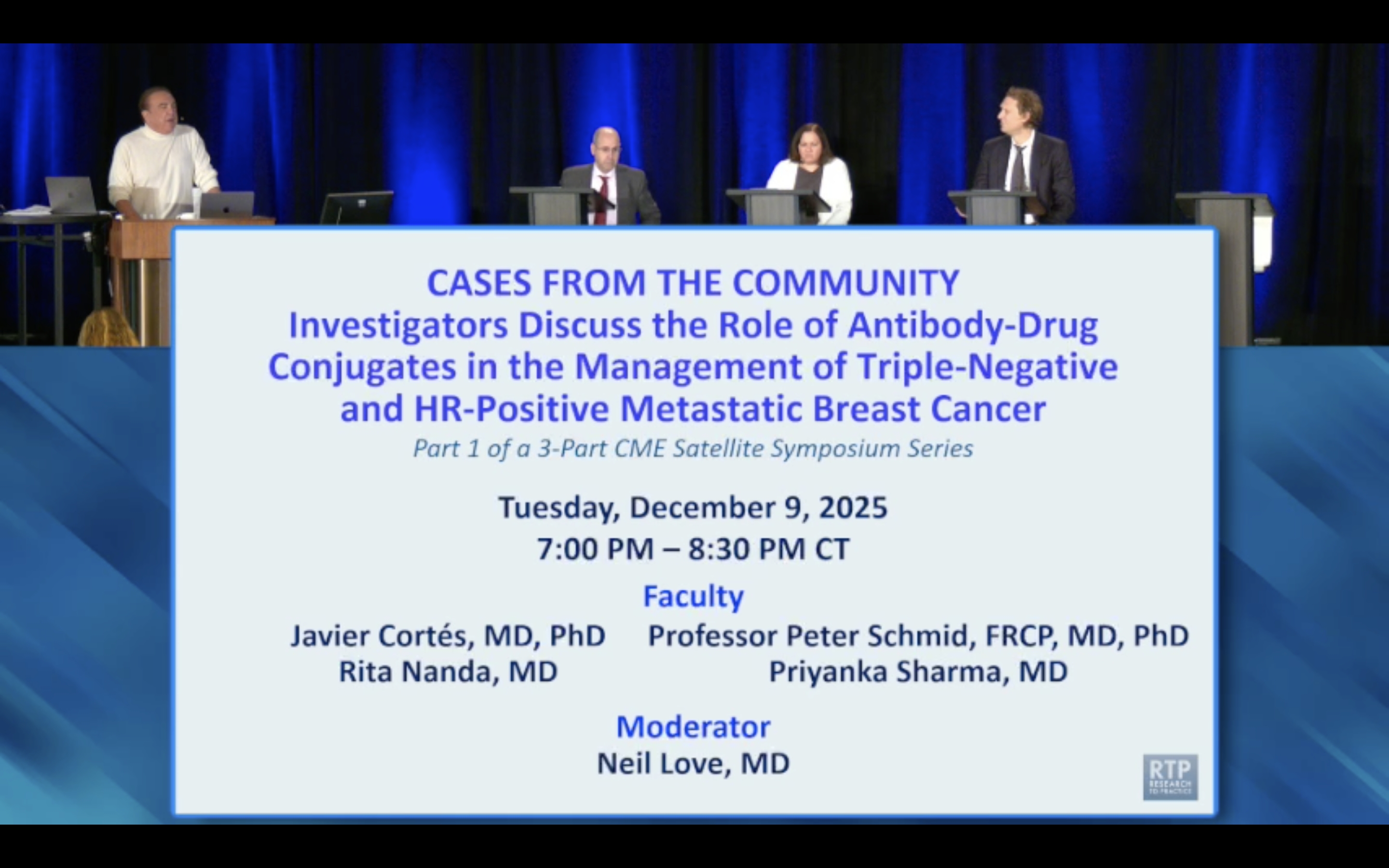
Antibody-Drug Conjugates for Breast Cancer — Proceedings from a San Antonio 2025 Symposium Series
Featuring perspectives from Dr Javier Cortés, Dr Rita Nanda, Prof Peter Schmid and Dr Priyanka Sharma, including the following topics: Introduction (0:00) Case: A woman in her early 80s with multiple comorbidities and triple-negative breast cancer (TNBC) develops bone-only metastases 4 months after declining capecitabine for post-neoadjuvant residual disease — Justin Favaro, MD, PhD (1:50) Case: A woman in her mid 70s with ER-negative, HER2-low (IHC 1+), PIK3CA-mutated, PD-L1-positive metastatic breast cancer (mBC) after receiving 3 cycles of neoadjuvant paclitaxel/carboplatin/pembrolizumab, which was discontinued — Alan Astrow, MD (6:47) Previously Untreated Metastatic TNBC (mTNBC) — Prof Schmid (10:47) Case: A woman in her early 80s with multiregimen-recurrent ER-positive, HER2-low (IHC 1+) ESR1-mutant mBC receives sacituzumab govitecan — Jennifer Yannucci, MD (27:19) Case: The role of datopotamab deruxtecan (Dato-DXd) for patients with ER-positive, HER2-low mBC who experienced disease progression on prior trastuzumab deruxtecan (T-DXd) — Ranju Gupta, MD; Case: A woman in her late 70s with bilateral recurrence in the lungs of ER-negative, HER2-low (IHC 1+) breast cancer (PD-L1 TPS 20%) receives Dato-DXd with durvalumab on protocol — Yanjun Ma, MD, PhD (31:35) Integrating Antibody-Drug Conjugates (ADCs) into the Management of Endocrine-Resistant Hormone Receptor-Positive mBC — Dr Sharma (36:31) Case: A woman in her early 70s with recurrent ER-negative, HER2-low (IHC 2+) mBC receives sacituzumab govitecan and achieves complete remission — Dr Gupta; Case: Management of neutropenia associated with sacituzumab govitecan — Gigi Chen, MD (50:30) Case: A woman in her late 60s with recurrent ER-negative, HER2-low (IHC 1+) mBC (HER2 V69L mutation) receives T-DXd and achieves a complete response but develops Grade 1 interstitial lung disease — Dr Gupta; Case: Management of T-DXd-related side effects — Laila Agrawal, MD (54:10) Selection and Sequencing of Therapy for Relapsed/Refractory mTNBC — Dr Nanda (58:59) Case: A woman in her early 40s with multiregimen-recurrent ER-positive, HER2-low mBC who has experienced severe nausea with past treatments is about to initiate T-DXd — Atif M Hussein, MD, MMM (1:12:40) Tolerability and Other Practical Considerations with ADCs and Other Cytotoxic Agents for mBC — Dr Cortés (1:18:10) CME information and select publications

Chronic Lymphocytic Leukemia — Proceedings from a Symposium Series Preceding the 67th ASH Annual Meeting and Exposition
Featuring perspectives from Dr Matthew S Davids, Dr Bita Fakhri, Prof Constantine Tam and Dr Jennifer Woyach, including the following topics: Introduction (0:00) Current and Emerging Approaches to First-Line Therapy for Chronic Lymphocytic Leukemia (CLL) — Dr Davids (1:42) Case: A man in his mid 70s with a plethora of comorbidities but good performance status requires treatment for CLL — Bhavana (Tina) Bhatnagar, DO (14:58) Case: A man in his early 50s, a Jehovah's Witness, under observation for IGHV-mutated CLL develops pulmonary emboli and worsening lymphadenopathy, undergoes anticoagulation and begins therapy with zanubrutinib — Jennifer Yannucci, MD Case: A man in his mid 70s with a history of atrial fibrillation on apixaban receives zanubrutinib — Zanetta S Lamar, MD (22:30) Optimal Management of Adverse Events with Bruton Tyrosine Kinase and Bcl-2 Inhibitors; Considerations for Special Patient Populations — Prof Tam (32:50) Case: A man in his mid 90s with CLL has concurrent locally advanced Merkel cell carcinoma of the scalp — Erik Rupard, MD (50:51) Case: A woman in her early 50s under observation for IGHV-unmutated CLL develops progressive splenomegaly and receives obinutuzumab/venetoclax — Sean Warsch, MD (54:28) Selection and Sequencing of Therapy for Relapsed/Refractory CLL — Dr Woyach (1:05:51) Case: A man in his mid 70s with high-risk (del[TP53]) CLL experiences disease progression on ibrutinib and then venetoclax/obinutuzumab — Dr Bhatnagar (1:27:23) Case: A man in his early 80s with IGHV-unmutated CLL who previously received FCR now experiences disease relapse after 5 years of acalabrutinib, and a BTK C481S resistance mutation is detected — Priya Rudolph, MD, PhD (1:29:34) Chimeric Antigen Receptor T-Cell Therapy and Other Novel Strategies for CLL — Dr Fakhri (1:34:08) Case: A man in his early 70s with multiregimen-relapsed CLL experiences an 18-month response to pirtobrutinib — Brian P Mulherin, MD (1:50:46) CME information and select publications

Colorectal Cancer — 5-Minute Journal Club Issue 1 with Dr Scott Kopetz: Current and Future Role of Tumor-Informed Circulating Tumor DNA Assays
Featuring an interview with Dr Scott Kopetz, including the following topics: Circulating tumor DNA (ctDNA)-based molecular residual disease (MRD) and survival among patients with resectable colorectal cancer (CRC) in the CIRCULATE-Japan GALAXY trial (0:00) ctDNA for detection of MRD in patients with CRC in the BESPOKE CRC and INTERCEPT trials (3:11) Clinical utility of including ctDNA monitoring in standard CRC surveillance (11:11) ctDNA analysis guiding adjuvant therapy for CRC in the DYNAMIC and CIRCULATE-North America trials (15:52) CME information and select publications
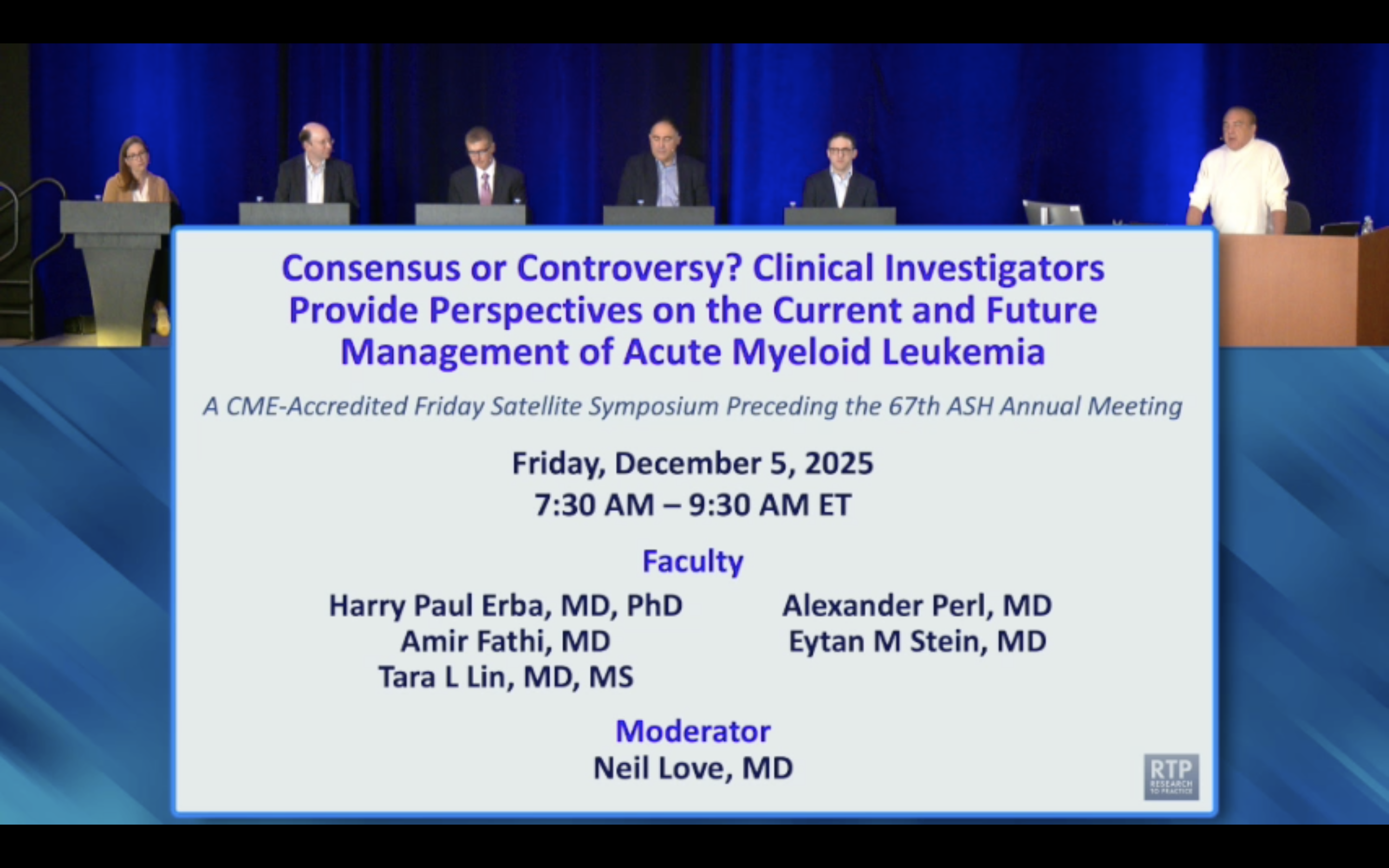
Acute Myeloid Leukemia — Proceedings from a Symposium Series Preceding the 67th ASH Annual Meeting and Exposition
Featuring perspectives from Dr Harry Paul Erba, Dr Amir Fathi, Dr Tara L Lin, Dr Alexander Perl and Dr Eytan M Stein, including the following topics: Introduction (0:00) Up-Front Therapy for Older Patients with Acute Myeloid Leukemia (AML) — Dr Lin (1:46) Selection of Therapy for Younger Patients with AML without a Targetable Mutation; Promising Investigational Strategies — Dr Perl (25:38) Role of FLT3 Inhibitors in AML Management — Dr Erba (48:27) Incorporation of IDH Inhibitors into the Care of Patients with AML — Dr Fathi (1:10:28) Current and Future Role of Menin Inhibitors in the Treatment of AML — Dr Stein (1:37:29) CME information and select publications

Toxicities Associated with Antibody-Drug Conjugates for Metastatic Breast Cancer — Clinical Investigator Perspectives on Actual Patient Cases
Featuring perspectives from Dr Lisa A Carey and Dr Rita Nanda, including the following topics: Overview: Molecular basis of antibody-drug conjugate (ADC) toxicities — Sequencing of ADCs and mechanisms of resistance (0:00) Case: A woman in her late 60s with localized triple-negative breast cancer develops myocarditis during neoadjuvant therapy with chemotherapy/pembrolizumab — Richard Zelkowitz, MD (8:22) Case: A woman in her mid 70s with recurrent ER-negative, HER2-low, PD-L1-positive metastatic breast cancer (mBC) who experiences disease progression on nab paclitaxel/atezolizumab responds to sacituzumab govitecan — Ranju Gupta, MD (26:43) Case: A woman in her early 80s with recurrent ER-positive, HER2-low (IHC 1+) mBC experiences disease progression on trastuzumab deruxtecan (T-DXd), then receives datopotamab deruxtecan and develops pulmonary symptoms — Laila Agrawal, MD (32:11) Data Review: T-DXd (37:51) Case: A woman in her early 70s with recurrent ER-positive, HER2-low (IHC 1+) mBC, including bladder metastases, experiences disease progression after palbociclib/letrozole, then capivasertib/fulvestrant, then nab paclitaxel — Justin Favaro, MD, PhD (44:02) Case: A woman in her late 70s with ER-positive, HER2-low mBC who experiences disease progression after 1 year of ribociclib/letrozole receives sacituzumab govitecan — Erik Rupard, MD (55:19) CME information and select publications

Advanced Gastroesophageal Cancers — Expert Perspectives on Actual Patient Cases: Part 2 of 2
Featuring perspectives from Dr Yelena Y Janjigian, including the following topics: Introduction (0:00) Case: A man in his early 60s with a history of Barrett's esophagus presents with HER2-positive metastatic esophageal adenocarcinoma and a PD-L1 combined positive score (CPS) of 3 — Jennifer Yannucci, MD (10:20) Case: A man in his early 60s with multiregimen-recurrent HER2-positive gastroesophageal junction (GEJ) adenocarcinoma (claudin 18.2-positive, PD-L1 CPS 0) — Neil Morganstein, MD (14:53) Case: A woman in her early 80s with dementia and newly diagnosed mismatch repair-deficient, PD-L1-positive metastatic GEJ adenocarcinoma — Brian P Mulherin, MD (25:55) Case: A man in his mid 60s with localized HER2-negative GEJ cancer (PD-L1 CPS 2, claudin 18.2-positive) and residual disease after receiving neoadjuvant chemoradiation therapy and undergoing surgery — Stephen "Fred" Divers, MD (32:18) Case: A man in his early 80s with metastatic recurrence of esophageal adenocarcinoma and a PD-L1 total proportion score of 75% 2 years after resection of localized disease — Susmitha Apuri, MD (40:28) Case: A man in his mid 70s with claudin 18.2-positive metastatic esophageal adenocarcinoma who develops progressive toxicities with FOLFOX and zolbetuximab — Sean Warsch, MD (52:54) CME information and select publications
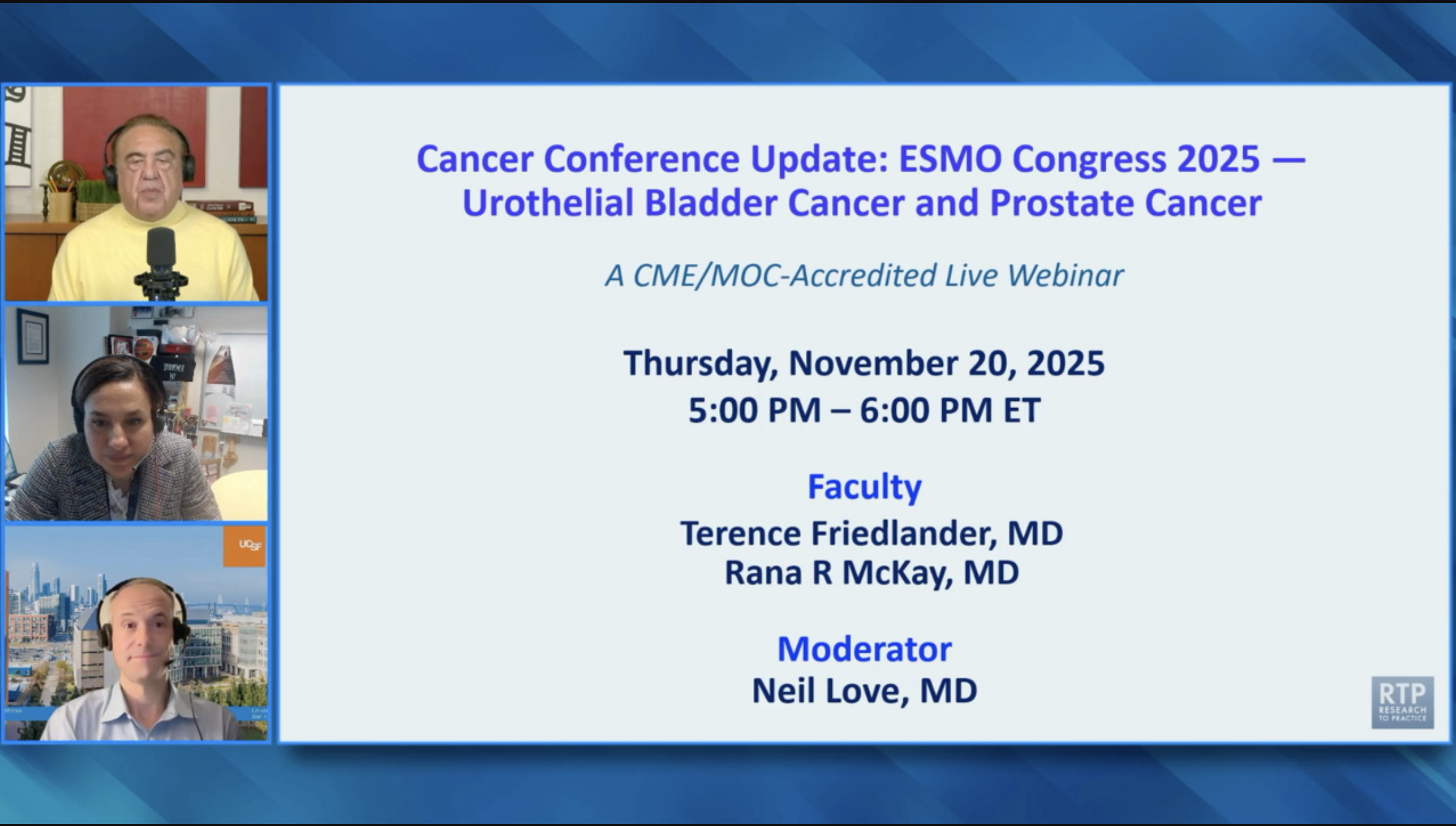
Urothelial Bladder Cancer and Prostate Cancer — Highlights from the 2025 ESMO Annual Meeting
Featuring perspectives from Dr Terence Friedlander and Dr Rana R McKay, including the following topics: Introduction (0:00) Prostate Cancer (1:44) Urothelial Bladder Cancer (29:18) CME information and select publications
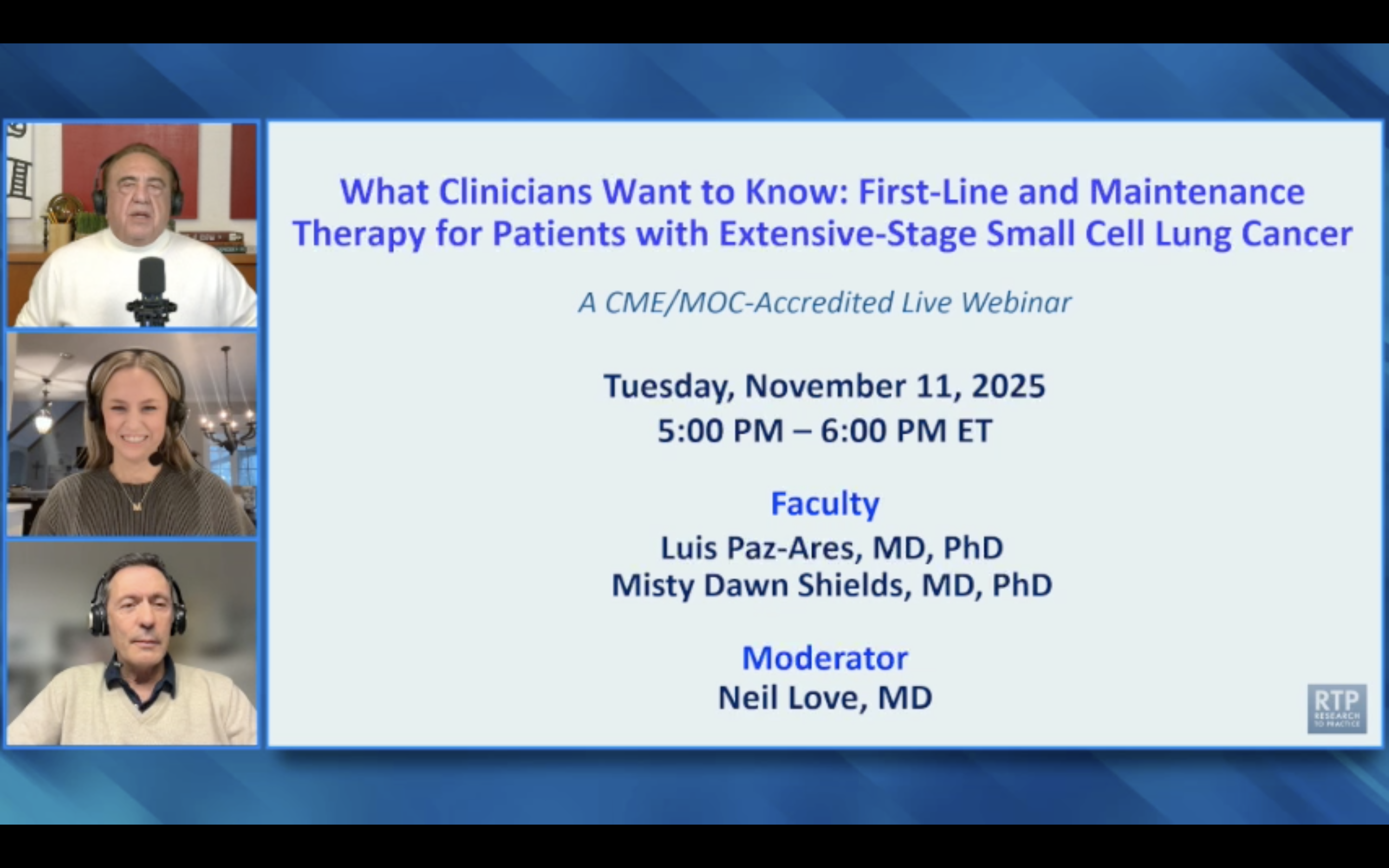
Extensive-Stage Small Cell Lung Cancer — What Clinicians Want to Know About First-Line and Maintenance Therapy
Featuring perspectives from Dr Luis Paz-Ares and Dr Misty Dawn Shields, including the following topics: Introduction: Tail on the Curve? (0:00) First-Line Chemoimmunotherapy (10:45) Maintenance Lurbinectedin (28:42) Second-Line Treatment, Tarlatamab (45:35) Ongoing Research (53:20) CME information and select publications
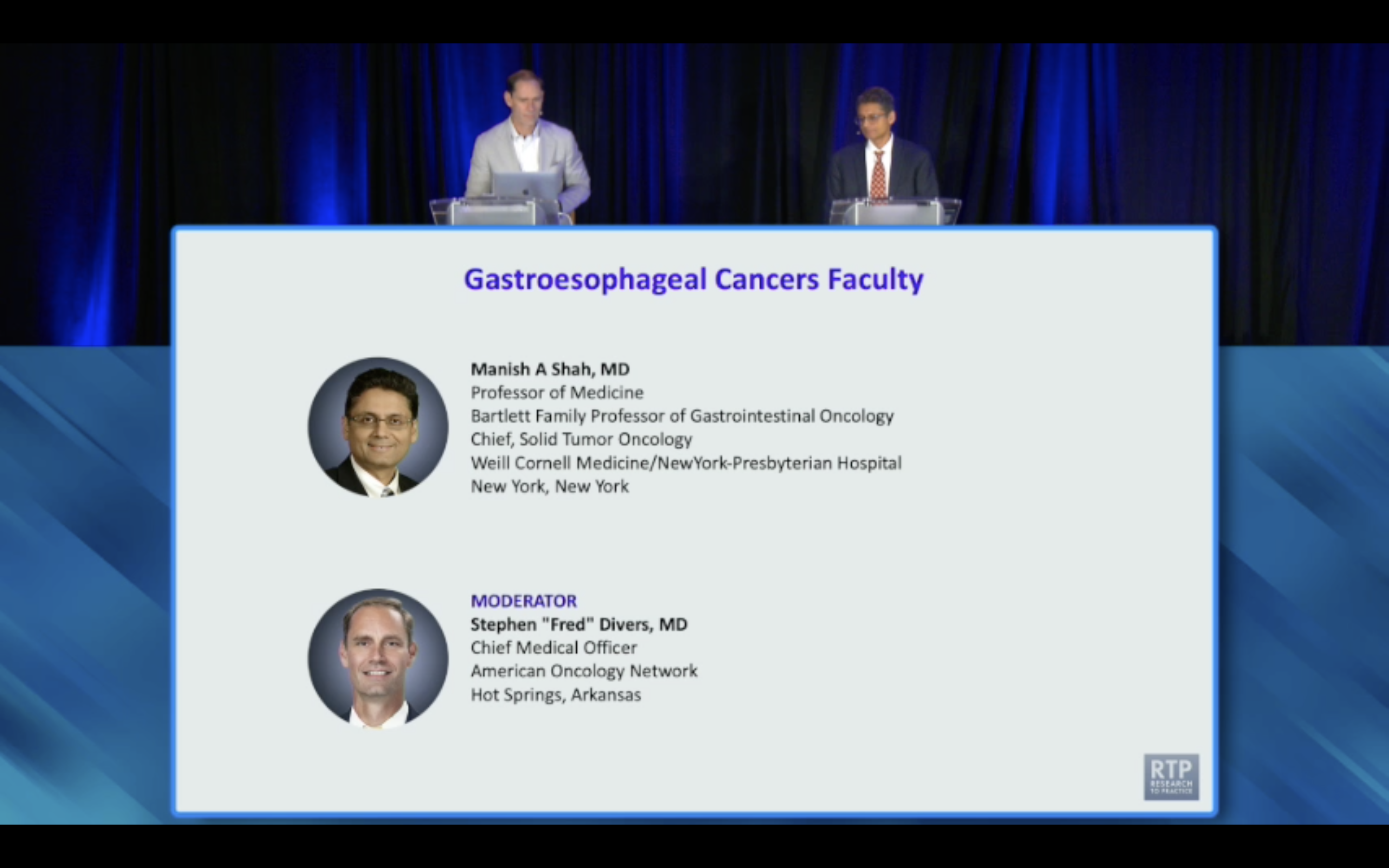
Gastroesophageal Cancers — Proceedings from a Symposium Held in Partnership with the American Oncology Network
Featuring perspectives from Dr Manish A Shah, moderated by Dr Stephen "Fred" Divers, including the following topics: Highlights and Principles of Management of Metastatic Gastric and Gastroesophageal Junction Adenocarcinoma — Dr Shah (0:00) Case: A man in his early 50s with microsatellite instability-high localized esophageal adenocarcinoma — Dr Mulherin (15:24) Case: A woman in her late 60s with HER2-positive (IHC 3+) and HER2 TKD-mutant metastatic esophageal adenocarcinoma — Dr Warsch (25:34) Case: A woman in her early 70s with HER2-positive (IHC 3+), PD-L1-negative, CLDN18.2-negative metastatic gastric cancer — Dr Mulherin (28:15) Case: A woman in her early 70s with metastatic gastroesophageal junction adenocarcinoma (PD-L1 CPS 15) who begins treatment with FOLFOX/nivolumab and subsequently is found to have CLDN18.2 overexpression — Dr Lamar (35:23) Case: A man in his mid 40s with CLDN18.2-positive metastatic esophageal adenocarcinoma (PD-L1 10%) who receives mFOLFOX6 and zolbetuximab — Dr Yannucci (42:54) CE information and select publications
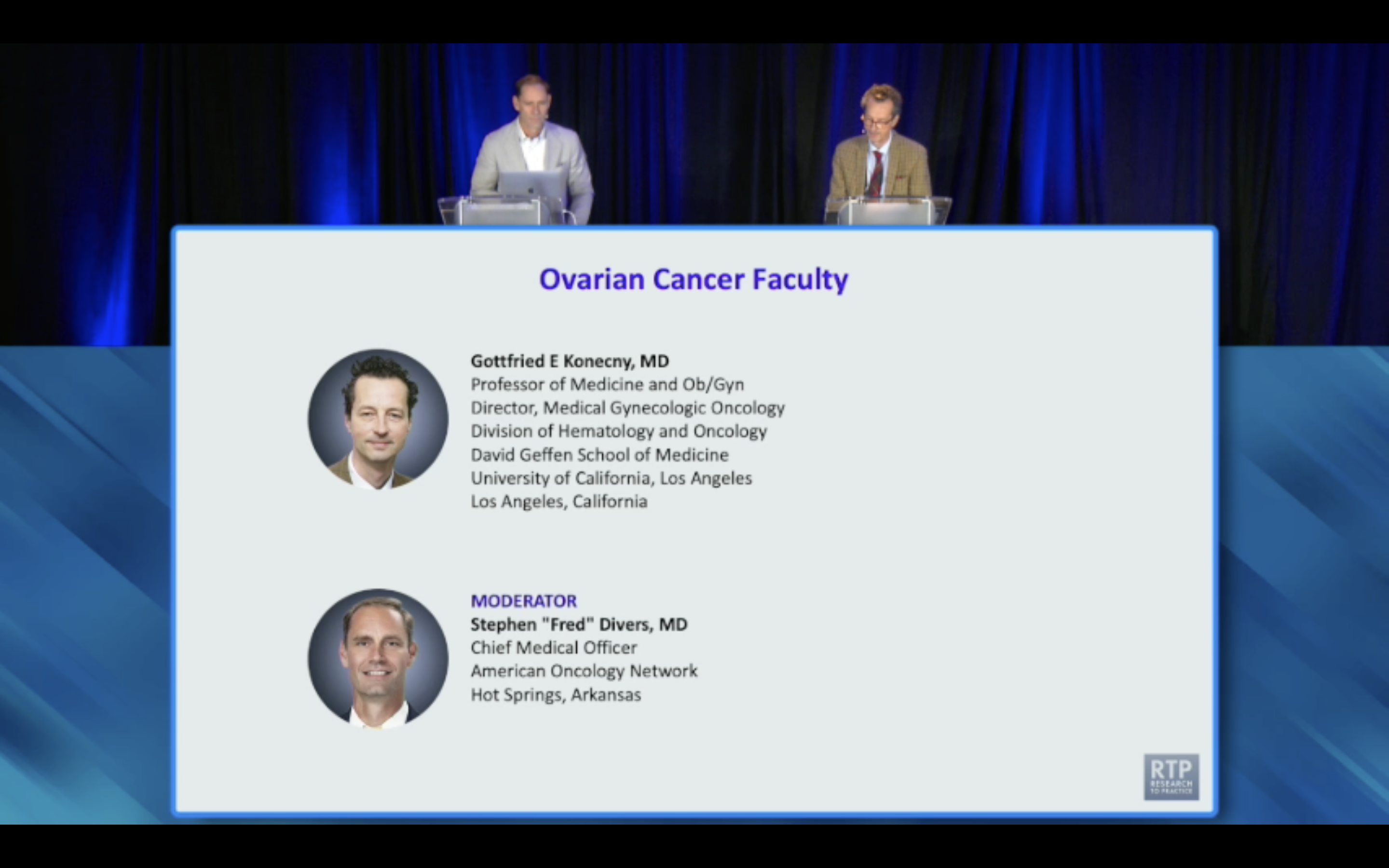
Ovarian Cancer — Proceedings from a Symposium Held in Partnership with the American Oncology Network
Featuring perspectives from Dr Gottfried E Konecny, moderated by Dr Stephen "Fred" Divers, including the following topics: Updates in Ovarian Cancer (OC) 2025 — Dr Konecny (0:00) Case: A woman in her mid 50s with ovarian cancer and a PALB2 germline mutation — Dr Mulherin (17:15) Case: A woman in her early 60s with Stage IVB fallopian tube carcinoma and a BRCA2 germline mutation — Dr Yannucci (26:27) Case: A woman in her mid 60s with OC and a BRCA2 somatic mutation who develops cytopenias on maintenance olaparib — Dr Lamar (35:47) Case: A woman in her early 70s with HER2 IHC 2+, ER-expressing, FOLR1-positive OC — Dr Warsch (42:54) CE information and select publications

Chronic Lymphocytic Leukemia — Proceedings from a Symposium Held in Partnership with the American Oncology Network
Featuring perspectives from Dr Kerry Rogers, moderated by Dr Stephen "Fred" Divers, including the following topics: Chronic Lymphocytic Leukemia (CLL) — Dr Rogers (0:00) Case: A man in his mid 70s with CLL and a history of atrial fibrillation — Dr Lamar (13:08) Case: A fit man in his early 80s with IGHV-unmutated, TP53-mutant symptomatic CLL — Dr Mulherin (21:16) Case: A woman in her mid 80s with IGHV-mutated recurrent CLL who receives pirtobrutinib — Dr Warsch (32:41) Case: A woman in her late 70s with recurrent del(17p) CLL who receives venetoclax/obinutuzumab — Dr Yannucci (44:52) CE information and select publications
Lung Cancer — Proceedings from a Symposium Held in Partnership with the American Oncology Network
Featuring perspectives from Dr Justin F Gainor, Dr Corey J Langer and Dr Misty Dawn Shields, moderated by Dr Stephen "Fred" Divers, including the following topics: Introduction (0:00) Targeted Therapy for Non-Small Cell Lung Cancer (NSCLC) — Dr Gainor, MD (5:32) Case: A woman in her mid 60s with ALK-mutant metastatic adenocarcinoma of the lung (PD-L1 TPS 70%) — Zanetta S Lamar, MD (17:59) Case: A woman in her mid 80s with EGFR exon 19-deleted adenocarcinoma of the lung with recurrence after 4 years of osimertinib — Jennifer Yannucci, MD (27:53) Case: A woman in her late 60s with HER2-mutant metastatic adenocarcinoma of the lung — Brian P Mulherin, MD (39:41) Case: A man in his early 70s with locally recurrent squamous cell carcinoma of the lung and a MET exon 14 skipping mutation — Sean Warsch, MD (46:39) Case: A woman in her early 70s with ROS1-mutant metastatic adenocarcinoma of the lung that responds to entrectinib and then to pembrolizumab/carboplatin/pemetrexed administered upon disease progression — Dr Yannucci (52:44) Nontargeted Therapy for NSCLC; Small Cell Lung Cancer — Dr Langer (58:16) Neoadjuvant, Perioperative and Adjuvant Anti-PD-1/PD-L1 Antibody-Based Approaches for Patients with Localized NSCLC — Dr Shields (1:14:14) Case: A man in his mid 60s with localized adenocarcinoma of the lung who receives neoadjuvant cisplatin/pemetrexed/pembrolizumab and achieves a pathologic complete response — Dr Mulherin (1:23:19) Case: A man in his early 60s with metastatic mixed adenosquamous NSCLC (PD-L1 TPS 50%) — Sunil Babu, MD (1:30:04) Case: A man in his late 50s diagnosed with extensive-stage small cell lung cancer who receives carboplatin/etoposide/durvalumab — Dr Warsch (1:34:07) CE information and select publications
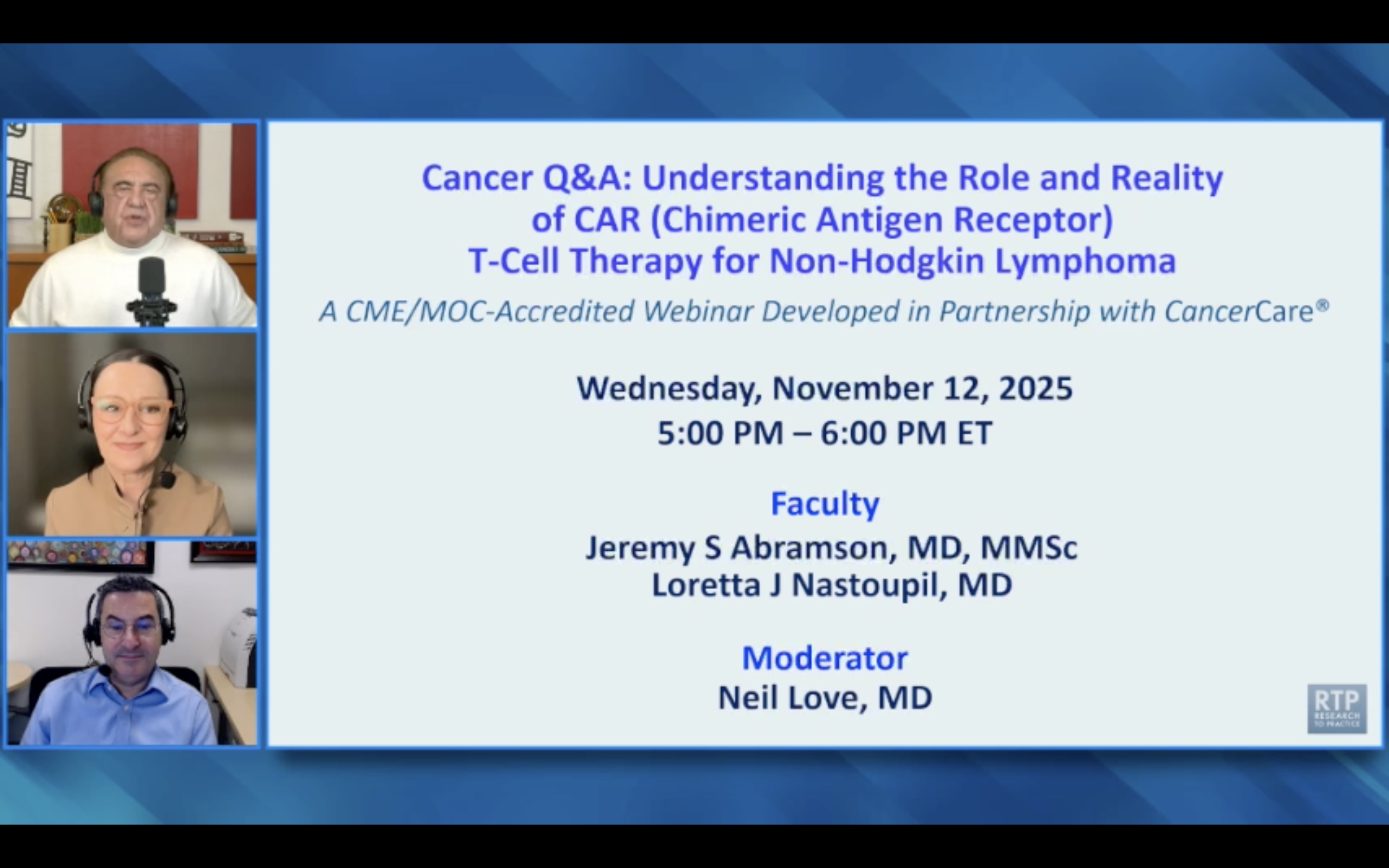
CAR T-Cell Therapy for Non-Hodgkin Lymphoma | Cancer Q&A — Discussing Common Questions Posed by Patients
Featuring perspectives from Dr Jeremy S Abramson and Dr Loretta J Nastoupil, including the following topics: Overview of Chimeric Antigen Receptor (CAR) T-Cell Therapy (0:00) Potential Treatment Benefits of CAR T-Cell Therapy (13:31) Cytokine Release Syndrome and Immune Effector Cell-Associated Neurotoxicity Syndrome (28:13) Finding Information About CAR T-Cell Therapy; Clinical Trials (36:28) Financial Issues; Risk of Infection (42:02) Coping with Anxiety; Healing and Moving On (53:27) CME information and select publications
HER2-Altered Non-Small Cell Lung Cancer — An Interview with Dr John V Heymach
Featuring an interview with Dr John V Heymach, including the following topics: Differentiating factors among various HER2 alterations in non-small cell lung cancer (NSCLC) (0:00) Activity of targeted agents across HER2 alterations in NSCLC (4:06) Available data with zongertinib and sevabertinib for HER2-mutant NSCLC (20:39) Case: A man in his late 40s with HER2-mutant NSCLC receives multiple lines of therapy, including trastuzumab deruxtecan (T-DXd) and zongertinib (29:23) Case: A woman in her mid 50s with HER2-mutant NSCLC receives zongertinib with durable response (34:23) Case: A woman in her late 50s with HER2-mutant NSCLC receives multiple lines of therapy, including sevabertinib and T-DXd (39:53) Investigational approaches in HER2-mutant NSCLC (46:31) CME information and select publications
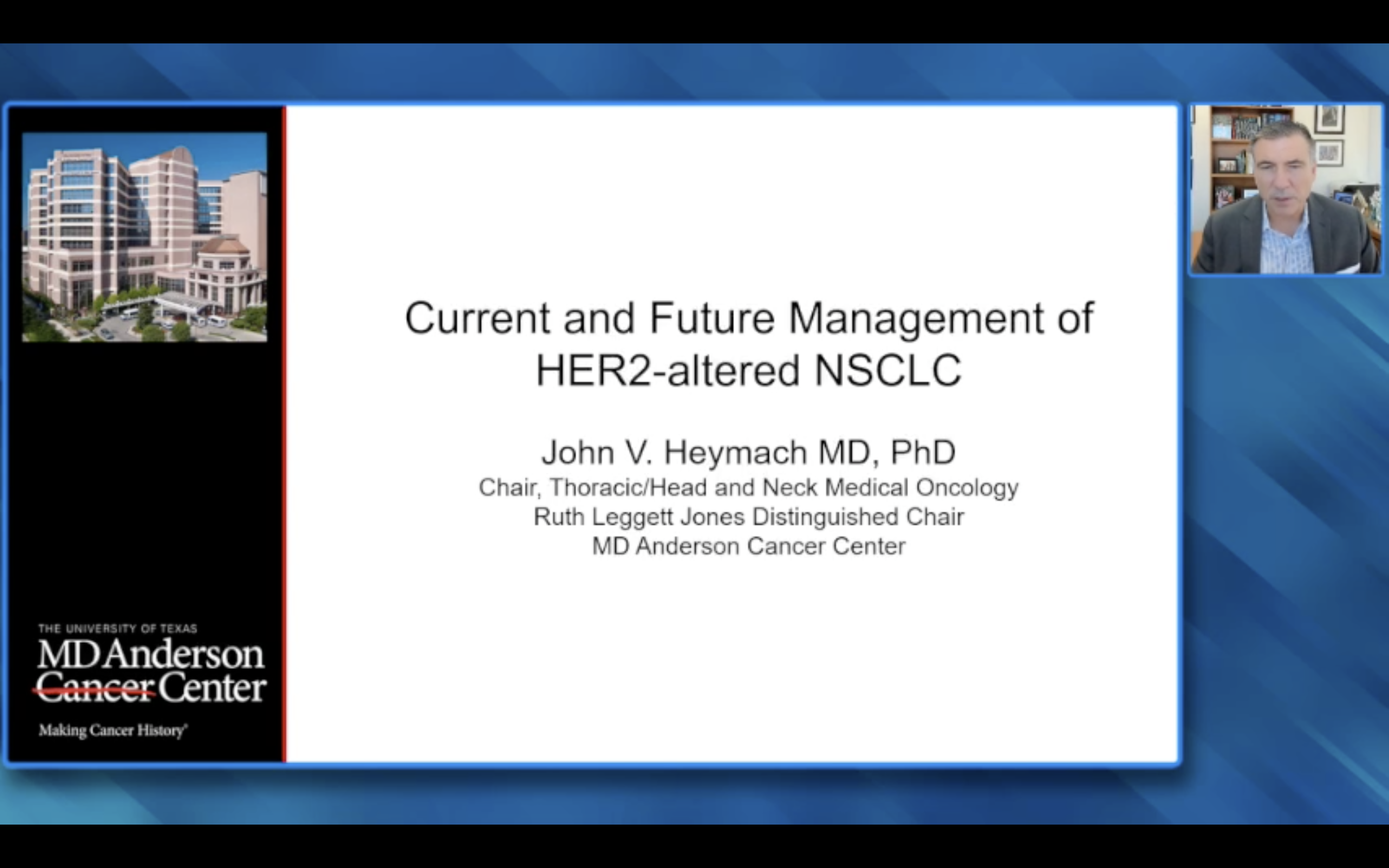
HER2-Altered Non-Small Cell Lung Cancer — An Interview with Dr John V Heymach (Companion Faculty Lecture)
Featuring a slide presentation and related discussion from Dr John V Heymach, including the following topics: Overview of the biology and treatment landscape of HER2-mutant non-small cell lung cancer (NSCLC) (0:00) Datasets evaluating trastuzumab deruxtecan for HER2-mutant NSCLC (5:03) Clinical data with zongertinib for HER2-mutant NSCLC (6:35) Emerging data with sevabertinib for HER2-mutant NSCLC (14:41) Other investigational strategies being evaluated for HER2-mutant NSCLC (19:10) Summary of the current and future treatment landscape of HER2-mutant NSCLC (21:52) CME information and select publications
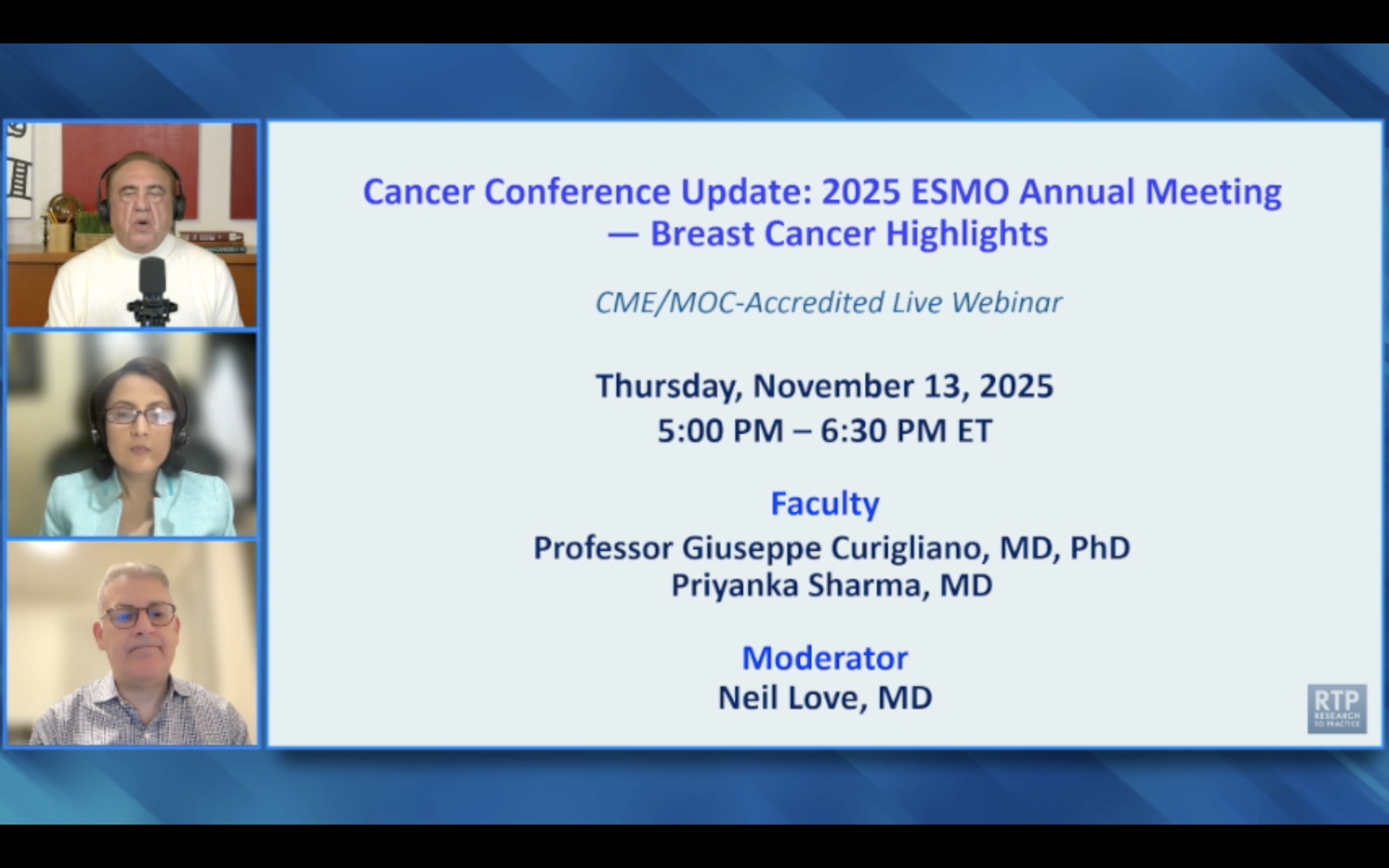
Breast Cancer — Highlights from the 2025 ESMO Annual Meeting
Featuring perspectives from Prof Giuseppe Curigliano and Dr Priyanka Sharma, including the following topics: HER2-Positive Breast Cancer (0:00) Hormone Receptor-Positive Breast Cancer (18:16) Triple-Negative Breast Cancer (1:05:23) CME information and select publications

Breast Cancer — Microlearning Activity 3 with Dr Priyanka Sharma: 2025 ESMO Annual Meeting Updates
Featuring an interview with Dr Priyanka Sharma, including the following topics: Endocrine therapy for hormone receptor-positive, HER2-negative high-risk localized breast cancer (0:00) Johnston SR et al. monarchE: Primary overall survival (OS) results of adjuvant abemaciclib + endocrine therapy (ET) for HR+, HER2-, high-risk early breast cancer (EBC). ESMO 2025;Abstract LBA13. Durvalumab in combination with neoadjuvant chemotherapy for localized triple-negative breast cancer (TNBC) (3:25) Loibl S et al. Durvalumab in combination with neoadjuvant chemotherapy in early triple-negative breast cancer (TNBC) – Long-term analysis from the GeparNuevo trial. ESMO 2025;Abstract 292MO. Efficacy and safety findings with TROP2-directed antibody-drug conjugates for metastatic TNBC (5:11) Cortés JC et al. Primary results from ASCENT-03: A randomized phase III study of sacituzumab govitecan (SG) vs chemotherapy (chemo) in patients (pts) with previously untreated advanced triple-negative breast cancer (TNBC) who are unable to receive PD-(L)1 inhibitors (PD-[L]1i). ESMO 2025;Abstract LBA20. de Azambuja E et al. Patient-reported outcomes (PROs) with sacituzumab govitecan (SG) + pembrolizumab (pembro) vs chemotherapy (chemo) + pembro in patients (pts) with previously untreated PD-L1+ metastatic triple-negative breast cancer (mTNBC) in the phase III ASCENT-04/KEYNOTE-D19 study. ESMO 2025;Abstract LBA22. Dent R et al. First-line (1L) datopotamab deruxtecan (Dato-DXd) vs chemotherapy in patients with locally recurrent inoperable or metastatic triple-negative breast cancer (mTNBC) for whom immunotherapy was not an option: Primary results from the randomised, phase III TROPION-Breast02 trial. ESMO 2025;Abstract LBA21. CME information and select publications
Toxicities Associated with CAR T-Cell Therapy — An Interview with Dr Matthew Lunning
Featuring an interview with Dr Matthew Lunning, including the following topics: Reflection on the advances made in chimeric antigen receptor (CAR) T-cell therapy (0:00) Overview of the CAR T-cell therapy administration process (4:40) Opportunities for referral for CAR T-cell therapy (10:05) Selection of a CAR T-cell therapy based on patient characteristics (16:09) Sequencing of CAR T-cell therapy for various non-Hodgkin lymphomas (23:23) Safety regulations and mitigation strategies for adverse events (30:36) Case: A woman in her early 80s with relapsed/refractory (R/R) diffuse large B-cell lymphoma receives lisocabtagene maraleucel (36:16) Case: A man in his early 60s with R/R mantle cell lymphoma receives brexucabtagene autoleucel (43:09) Case: A man in his early 60s with R/R multiple myeloma receives ciltacabtagene autoleucel (49:09) CME information and select publications
Toxicities Associated with CAR T-Cell Therapy — An Interview with Dr Matthew Lunning (Companion Faculty Lecture)
Featuring a slide presentation and related discussion from Dr Matthew Lunning, including the following topics: Overview of available chimeric antigen receptor (CAR) T-cell therapies (0:00) Toxicities associated with CAR T-cell therapy (4:03) Mitigation strategies for adverse events (22:02) Novel strategies for outpatient infusion (26:34) Changes to the CAR T-cell therapy safety regulations (30:23) CME information and select publications

Breast Cancer — Microlearning Activity 2 with Dr Priyanka Sharma: 2025 ESMO Annual Meeting Updates
Featuring an interview with Dr Priyanka Sharma, including the following topics: Patient-reported outcomes from the SERENA-6 trial of camizestrant with a CDK4/6 inhibitor for patients with HR-positive, HER2-negative advanced breast cancer and ESR1 mutations emerging during first-line endocrine-based therapy (0:00) Mayer E et al. Patient-reported outcomes (PROs) from the SERENA-6 trial of camizestrant (CAMI) + CDK4/6 inhibitor (CDK4/6i) for emergent ESR1m during first-line (1L) endocrine-based therapy and ahead of disease progression in patients (pts) with HR+/HER2– advanced breast cancer (ABC). ESMO 2025;Abstract 486MO. Imlunestrant and abemaciclib versus fulvestrant and abemaciclib for ER-positive, HER2-negative advanced breast cancer: An indirect treatment comparison of 3 Phase III trials (3:00) Bidard FC et al. Imlunestrant plus abemaciclib versus fulvestrant plus abemaciclib in estrogen receptor positive (ER+), human epidermal growth factor receptor 2 negative (HER2-) advanced breast cancer (ABC): An indirect treatment comparison (ITC) of three phase 3 trials. ESMO 2025;Abstract 496P . Giredestrant in the treatment of ER-positive, HER2-negative breast cancer: The Phase III evERA Breast Cancer and EMPRESS trials (5:39) Mayer E et al. Giredestrant (GIRE), an oral selective oestrogen receptor (ER) antagonist and degrader, + everolimus (E) in patients (pts) with ER-positive, HER2-negative advanced breast cancer (ER+, HER2– aBC) previously treated with a CDK4/6 inhibitor (i): Primary results of the phase III evERA BC trial. ESMO 2025;Abstract LBA16. Llombart-Cussac A et al. Preoperative window-of-opportunity study with giredestrant or tamoxifen (tam) in premenopausal women with estrogen receptor-positive (ER+)/human epidermal growth factor receptor 2-negative (HER2-) and Ki67≥10% early breast cancer (EBC): The EMPRESS study. ESMO 2025;Abstract 294MO. Capivasertib/fulvestrant as first- and second-line endocrine-based therapy for PIK3CA/AKT1/PTEN-altered HR-positive advanced breast cancer in the CAPItello-291 trial and gedatolisib/fulvestrant with or without palbociclib for HR-positive, HER2-negative, PIK3CA wild-type advanced breast cancer in the VIKTORIA-1 trial.(10:25) Rugo HS et al. Capivasertib plus fulvestrant as first and second-line endocrine-based therapy in PIK3CA/AKT1/PTEN-altered hormone receptor-positive advanced breast cancer: Subgroup analysis from the phase 3 CAPItello-291 trial. ESMO 2025;Abstract 526P. Hurvitz SA et al. Gedatolisib (geda) + fulvestrant ± palbociclib (palbo) vs fulvestrant in patients (pts) with HR+/ HER2-/PIK3CA wild-type (WT) advanced breast cancer (ABC): First results from VIKTORIA-1. ESMO 2025;Abstract LBA17. CME information and select publications
Metastatic Breast Cancer — Optimizing the Use of Oral Selective Estrogen Receptor Degraders: Part 2
Featuring perspectives from Dr Komal Jhaveri and Dr Virginia Kaklamani, including the following topics: Introduction: Oral Selective Estrogen Receptor Degraders (SERDs) for the General Medical Oncologist (0:00) SERD Monotherapy (13:34) SERD and CDK Inhibitor Combination — The EMBER-3 Study (35:58) SERDs for "Molecular Progression" — The SERENA-6 Study (41:25) CME information and select publications

Breast Cancer — Microlearning Activity 1 with Dr Priyanka Sharma: 2025 ESMO Annual Meeting Updates
Featuring an interview with Dr Priyanka Sharma, including the following topics: T-DXd versus trastuzumab emtansine for high-risk HER2-positive primary breast cancer with residual invasive disease after neoadjuvant therapy: Interim analysis of the DESTINY-Breast05 trial (0:00) Geyer C et al. Trastuzumab deruxtecan (T-DXd) vs trastuzumab emtansine (T-DM1) in patients (pts) with high-risk human epidermal growth factor receptor 2–positive (HER2+) primary breast cancer (BC) with residual invasive disease after neoadjuvant therapy (tx): Interim analysis of DESTINY-Breast05. ESMO 2025;Abstract LBA1. DESTINY-Breast11 trial: Neoadjuvant T-DXd alone or followed by paclitaxel/trastuzumab/pertuzumab for high-risk HER2-positive localized breast cancer (5:42) Harbeck N et al. DESTINY-Breast11: Neoadjuvant trastuzumab deruxtecan alone (T-DXd) or followed by paclitaxel + trastuzumab + pertuzumab (T-DXd-THP) vs SOC for high-risk HER2+ early breast cancer (eBC). ESMO 2025;Abstract 291O. Trastuzumab deruxtecan (T-DXd) and pertuzumab versus a taxane, trastuzumab and pertuzumab for HER2-positive advanced or metastatic breast cancer: Additional analyses of the DESTINY-Breast09 trial (10:00) Loibl S et al. Trastuzumab deruxtecan (T-DXd) + pertuzumab (P) vs taxane + trastuzumab + pertuzumab (THP) for patients (pts) with HER2+ advanced/metastatic breast cancer (a/mBC): Additional analyses of DESTINY-Breast09 in key subgroups of interest. ESMO 2025;Abstract LBA18. CME information and select publications
HER2-Positive Gastrointestinal Cancers — Clinical Investigator Perspectives on Actual Patient Cases
Featuring perspectives from Dr Tanios Bekaii-Saab and Dr Kristen K Ciombor, including the following topics: Introduction: Assessment of HER2 Status (0:00) Case: An otherwise healthy woman in her early 50s with HER2-positive metastatic gallbladder cancer and multiple intrahepatic metastases — Jeremy Lorber, MD (7:33) Case: A man in his late 60s with HER2-low metastatic gallbladder cancer — Brian P Mulherin, MD (11:58) Data Review: Biliary Tract Cancers (18:19) Case: A man in his mid 50s with HER2-positive metastatic rectal cancer — Sunil Gandhi, MD (26:25) Case: A woman in her early 60s with recurrent HER2-positive rectal cancer — Ranju Gupta, MD (31:31) Data Review: Colorectal Cancer (34:16) Case: An otherwise healthy man in his mid 50s with HER2-positive metastatic gastroesophageal junction cancer and several metastatic liver lesions — Shachar Peles, MD (38:06) Case: A man in his early 60s with recurrent HER2-positive, claudin 18.2-positive metastatic esophageal cancer — Susmitha Apuri, MD (43:21) Data Review: Gastroesophageal Cancer (46:55) Case: A man in his early 60s with HER2-positive esophageal cancer and isolated brain metastases — Priya Rudolph, MD, PhD (50:07) CME information and select publications

HR-Positive Metastatic Breast Cancer — An Interview with Dr Erika Hamilton on the Potential Role of PROTAC Estrogen Receptor Degraders
Featuring an interview with Dr Erika Hamilton, including the following topics: General overview of the mechanisms of action of endocrine-targeted therapies for breast cancer (0:00) Downregulation of estrogen receptor expression levels with endocrine therapy; therapeutic benefit of selective estrogen receptor degraders (SERDs) and proteolysis-targeting chimeras (PROTACs) in ESR1 wild-type and ESR1-mutant breast cancer (5:11) Mechanisms of resistance to endocrine therapy (10:08) Efficacy and toxicities observed with SERDs and PROTACs for HR-positive breast cancer (15:26) Other applications for PROTACs (24:24) Emerging data from the Phase III evERA trial (27:38) Perspectives on clinical investigator and general medical oncologist practice pattern survey results (30:51) CME information and select publications
HR-Positive Metastatic Breast Cancer — An Interview with Dr Erika Hamilton on the Potential Role of PROTAC Estrogen Receptor Degraders (Companion Faculty Lecture)
Featuring a slide presentation and related discussion from Dr Erika Hamilton, including the following topics: Mechanisms of endocrine resistance; incidence of ESR1 mutations in breast cancer (0:00) Testing methods for ESR1 mutations in patients with breast cancer; therapeutic options for patients with ESR1-mutant breast cancer (3:59) General overview of proteolysis-targeting chimeras (PROTACs); comparison of PROTAC estrogen receptor (ER) degraders and selective ER degraders (7:39) Early-phase data with vepdegestrant monotherapy or in combination with CDK4/6 inhibitors in ER-positive, HER2-negative metastatic breast cancer (mBC) (11:54) Phase III VERITAC-2 trial of vepdegestrant versus fulvestrant in ER-positive, HER2-negative mBC previously treated with endocrine therapy and a CDK4/6 inhibitor (17:48) Ongoing clinical trials evaluating vepdegestrant in novel combinations or treatment settings; other clinical applications of PROTACs (26:08) CME information and select publications

Patient Education Resource: Non-Hodgkin Lymphoma — Clinical Experts Address Common Questions Posed by Patients About CAR T-Cell Therapy
Featuring perspectives from Dr Jeremy S Abramson and Dr Manali Kamdar, including the following topics: Introduction: About This Program (0:00) Overview of Chimeric Antigen Receptor (CAR) T-Cell Therapy (3:10) Potential Treatment Benefits of CAR T-Cell Therapy (10:35) CRS (Cytokine Release Syndrome) and ICANS (Immune Effector Cell-Associated Neurotoxicity Syndrome) (34:32) Finding Information About CAR T; Clinical Trials (42:17) Financial Issues; Risk of Infection (48:11) Coping with Anxiety; Healing and Moving On (55:17) Educational and presenter information

ER-Positive Metastatic Breast Cancer — A Roundtable Discussion on the Current and Future Role of Oral SERDs
Featuring slide presentations and related discussion from Prof Francois-Clement Bidard, Dr Hope S Rugo, Dr Rebecca Shatsky and Dr Seth Wander, including the following topics: Optimal approach to biomarker testing for patients with ER-positive metastatic breast cancer (mBC) (0:00) Case: A woman in her early 70s with recurrent ER-positive, HER2-negative mBC receives elacestrant (15:15) Case: A woman in her early 60s with ER-positive, HER2-low, PIK3CA-mutated mBC receives inavolisib-based therapy and experiences no disease progression for 24 months (18:02) Role of oral selective estrogen receptor degrader (SERD) monotherapy in the treatment of progressive ER-positive, HER2-negative mBC (26:26) Case: A woman in her mid 60s with recurrent HR-positive, HER2-negative mBC receives elacestrant (44:12) Case: A woman in her early 50s with recurrent HR-positive, HER2-negative, PIK3CA-mutant mBC receives capivasertib and fulvestrant (45:33) Potential novel applications of oral SERDs in the management of ER-positive, HER2-negative breast cancer (51:25) Case: A woman in her mid 50s with recurrent ER-positive, HER2-negative, PIK3CA-mutated mBC experiences disease progression 18 months after starting first-line letrozole and ribociclib (1:03:46) Case: A woman in her mid 50s with ER-positive, HER2-negative breast cancer undergoes serial ctDNA monitoring during first-line therapy (1:06:54) Tolerability and other practical considerations with oral SERDs (1:14:30) Case: A woman in her early 60s with recurrent HR-positive, HER2-negative mBC receives elacestrant (1:33:26) Case: A woman in her early 60s with recurrent HR-positive, HER2-negative mBC receives elacestrant (1:37:38) CME information and select publications
Diffuse Large B-Cell Lymphoma and Follicular Lymphoma — Proceedings from a Multitumor Symposium in Partnership with Florida Cancer Specialists & Research Institute
Featuring perspectives from Dr Matthew Lunning and Dr Sonali M Smith, including the following topics: Which Driver and Which Race: CAR-T and Bispecific Antibodies for Relapsed or Refractory Diffuse Large B-Cell Lymphoma and Follicular Lymphoma — Dr Lunning (0:00) Available and Emerging Novel Therapies for Diffuse Large B-Cell Lymphoma and Follicular Lymphoma — Dr Smith (32:37) CE information and select publications
Colorectal Cancer — Proceedings from a Multitumor Symposium in Partnership with Florida Cancer Specialists & Research Institute
Featuring perspectives from Dr Emmanuel S Antonarakis and Dr Matthew R Smith, including the following topics: Current and Future Role of Immune Checkpoint Inhibitors in the Management of Colorectal Cancer — Dr Lieu (0:00) Other Biomarker-Based Strategies for Patients with Colorectal Cancer — Dr Strickler (36:39) CE information and select publications
Prostate Cancer — Proceedings from a Multitumor Symposium in Partnership with Florida Cancer Specialists & Research Institute
Featuring perspectives from Dr Emmanuel S Antonarakis and Dr Matthew R Smith, including the following topics: Introduction (0:00) Optimizing the Role of Hormonal Therapy in the Care of Patients with Prostate Cancer — Dr Smith (0:55) Available and Emerging Therapeutic Approaches for Metastatic Castration-Resistant Prostate Cancer — Dr Antonarakis (26:37) CE information and select publications
Breast Cancer — Proceedings from a Multitumor Symposium in Partnership with Florida Cancer Specialists & Research Institute
Featuring perspectives from Dr Harold J Burstein, Dr Matthew P Goetz, Dr Heather McArthur and Dr Rita Nanda, including the following topics: Introduction (0:00) Localized Hormone Receptor (HR)-Positive Breast Cancer; Initial Therapy for Metastatic Disease — Dr Goetz (4:48) Relapsed/Refractory HR-Positive Metastatic Breast Cancer — Dr Nanda (29:45) Management of HER2-Positive Breast Cancer — Dr Burstein (1:04:43) Antibody-Drug Conjugate Treatment Approaches for Triple-Negative Breast Cancer — Dr McArthur (1:29:53) CE information and select publications
Non-Small Cell Lung Cancer — 5-Minute Journal Club Issue 4 with Dr Aaron Lisberg: Defining the Role of TROP2-Directed Antibody-Drug Conjugates
Featuring an interview with Dr Aaron Lisberg, including the following topics: Prevention and Management of Adverse Events of Special Interest with Datopotamab Deruxtecan (Dato-DXd) (0:00) Rugo H et al. US expert Delphi consensus on the prevention and management of stomatitis in patients treated with datopotamab deruxtecan. Support Care Cancer 2025;33(9):756. Abstract Lisberg A et al. Datopotamab deruxtecan-associated select adverse events: Clinical practices and institutional protocols on prophylaxis, monitoring, and management. Oncologist 2025;[Online ahead of print]. Abstract Meric-Bernstam F et al. Prophylaxis, clinical management, and monitoring of datopotamab deruxtecan-associated oral mucositis/stomatitis. Oncologist 2025;30(3). Abstract Novel Strategies Combining Dato-DXd with Osimertinib (10:44) Lu S et al. TROPION-Lung14: A phase 3 study of osimertinib ± datopotamab deruxtecan (Dato-DXd) as first-line (1L) treatment for patients with EGFR-mutated locally advanced or metastatic (LA/M) non-small cell lung cancer (NSCLC). ASCO 2025;Abstract TPS8647. Nadal E et al. TROPION-Lung15: A phase III study of datopotamab deruxtecan (Dato-DXd) ± osimertinib vs platinum doublet chemotherapy in patients with EGFR-mutated locally advanced or metastatic non-small cell lung cancer (NSCLC) and disease progression on prior osimertinib. ELCC 2025;Abstract 124TiP. Intracranial Activity Observed with TROP2-Targeting Antibody-Drug Conjugates (15:14) Felip E et al. Brain metastases and actionable genetic alterations with sacituzumab govitecan versus docetaxel in metastatic non-small cell lung cancer: Subgroups of the phase III EVOKE-01 trial. ELCC 2025;Abstract 13P. Lisberg A et al. Intracranial efficacy of datopotamab deruxtecan (Dato-DXd) in patients (pts) with previously treated advanced/metastatic non-small cell lung cancer (a/m NSCLC) with actionable genomic alterations (AGA): Results from TROPION-Lung05. ASCO 2024;Abstract 8593. Pons-Tostivint E et al. Intracranial efficacy of datopotamab deruxtecan (Dato- DXd) in patients with advanced/metastatic NSCLC in TROPION-Lung01. WCLC 2025;Abstract OA10.01. CME information and select publications
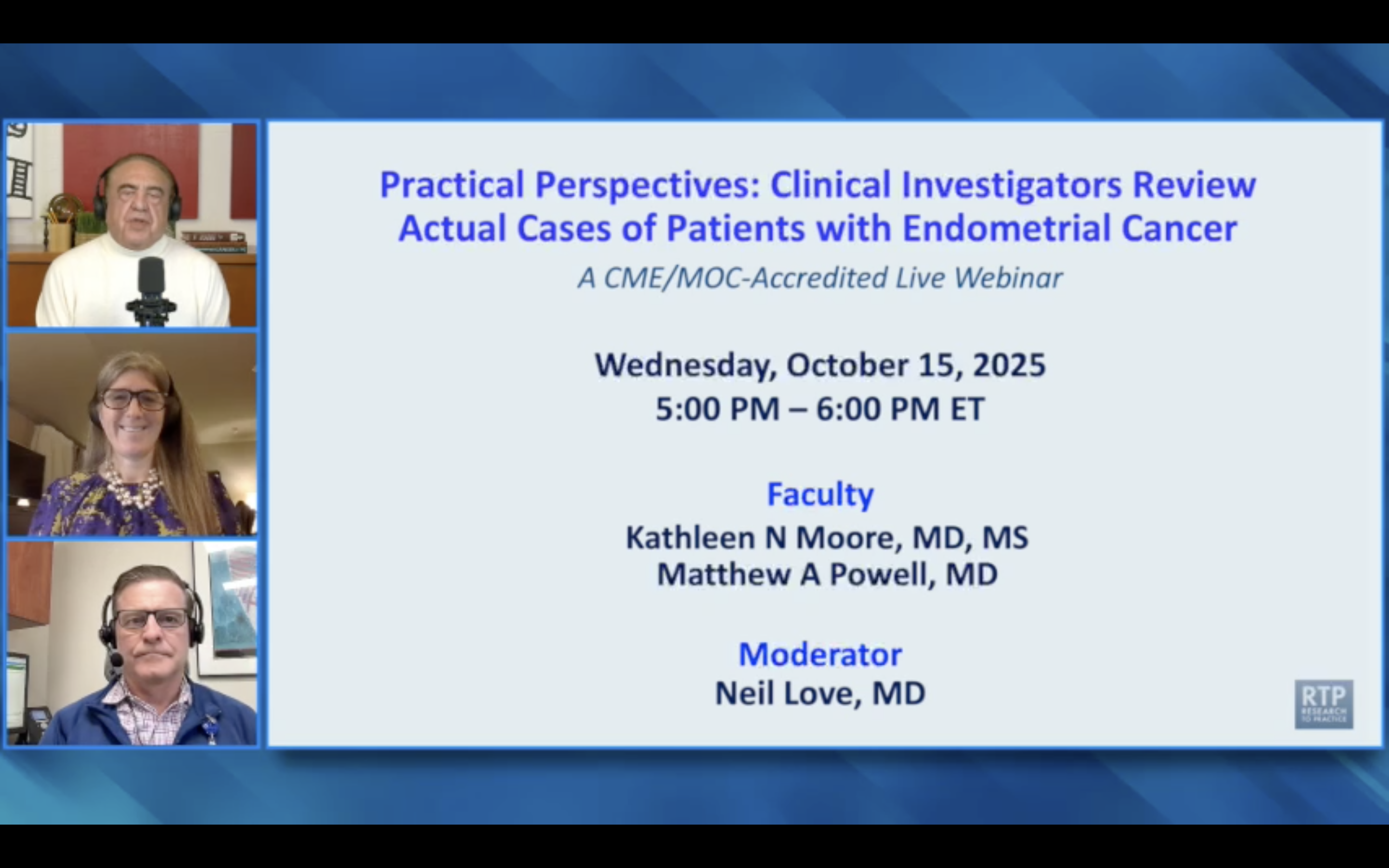
Endometrial Cancer — Clinical Investigator Perspectives on Actual Patient Cases
Featuring perspectives from Dr Kathleen N Moore and Dr Matthew A Powell, including the following topics: Introduction: A Pan-tumor Perspective on Microsatellite Instability (MSI)-High Disease — Immunotherapy for Localized Disease (0:00) Case: A woman in her early 60s with mismatch repair-deficient metastatic endometrial cancer (EC) and multiple positive metastases — Shachar Peles, MD (8:18) Case: A woman in her mid 60s with recurrent EC and a BRCA mutation — Stephen "Fred" Divers, MD (12:17) Data Review: Immune Checkpoint Inhibitors (15:26) Case: A woman in her early 30s with Stage I mismatch repair-proficient EC and multiple pulmonary metastases after receiving fertility treatments — Kellie E Schneider, MD (28:22) Case: A woman in her early 80s with EC and high blood pressure — Syed F Zafar, MD (34:24) Case: A postmenopausal woman in her late 60s with recurrent HER2-positive EC and unresectable carcinomatosis — Lyndsay J Willmott, MD (38:18) Case: A woman in her late 60s with EC and pericarditis — Karim ElSahwi, MD (44:28) Data Review: Novel Antibody-Drug Conjugates (51:38) Case: A woman in her early 70s with metastatic MSI-stable, HER2-negative EC with PI3 kinase and FGFR mutations wants to avoid treatment with chemotherapy — Victoria Giffi, MD (55:01) CME information and select publications

ER-Positive Metastatic Breast Cancer — An Interview with Prof Patrick Neven on the Role of Oral Selective Estrogen Receptor Degraders
Featuring an interview with Prof Patrick Neven, including the following topics: Emergence of ESR1 mutations in ER-positive, HER2-negative breast cancer (0:00) Observed toxicity profile of oral selective estrogen receptor degraders (SERDs) (3:57) Emerging data with novel oral SERD combinations (6:31) Challenges for a general medical oncologist in breast cancer (8:41) Sequencing and selection of therapies in ER-positive, HER2-negative breast cancer (12:16) Evaluating the strategy of switching to an oral SERD during first-line endocrine therapy upon "molecular progression" (23:16) CME information and select publications

ER-Positive Metastatic Breast Cancer — An Interview with Prof Patrick Neven on the Role of Oral Selective Estrogen Receptor Degraders (Companion Faculty Lecture)
Featuring a slide presentation and related discussion from Prof Patrick Neven, including the following topics: Biology of the estrogen receptor (ER) and mechanisms of resistance to therapy (0:00) Clinical trial data involving oral selective ER degraders (SERDs) for endocrine-resistant ER-positive, HER2-negative metastatic breast cancer (13:34) Utility of switching to an oral SERD before radiographic disease progression for patients receiving first-line endocrine treatment (23:12) Ongoing trials with oral SERDs for ER-positive, HER2-negative breast cancer (27:13) Case: Patient with ER-positive, HER2-negative breast cancer receives imlunestrant upon disease progression on first-line letrozole (32:34) Case: Patient with ER-positive, HER2-negative breast cancer receives imlunestrant/abemaciclib upon relapse on letrozole/abemaciclib (34:16) Case: Patient with ER-positive, HER2-negative breast cancer receives camizestrant after first-line tamoxifen (36:20) Case: Patient with ER-positive, HER2-negative breast cancer receives elacestrant after disease progression on first-line letrozole/palbociclib (38:11) CME information and select publications
Colorectal Cancer — An Interview with Dr John Strickler on Molecular Residual Disease Analysis
Featuring an interview from Dr John Strickler, including the following topics: Prognostic value of molecular residual disease (MRD) as detected by circulating tumor DNA (ctDNA) and optimal incorporation of MRD assays into the care of patients with colorectal cancer (0:00) Potential use of MRD assays for patients with microsatellite instability (MSI)-high localized colorectal cancer or those with delayed progression or metastatic disease (16:09) Tumor-informed MRD assays under clinical development (20:36) Predictive role of ctDNA in Stage III colon cancer treated with celecoxib; effect of low-dose aspirin on response to celecoxib in patients with PI3K pathway alterations (24:19) Case: A man in his late 50s with resected Stage IIA colon cancer (30:06) Case: A woman in her late 40s with Lynch syndrome and MSI-H colon cancer with a solitary, small hepatic metastasis (34:57) MRD as a future clinical trial endpoint for solid tumors; increasing incidence of colorectal cancer in younger people (40:24) Antibody-drug conjugates in the treatment of colorectal cancer (45:13) Perspectives on promising areas of clinical research in colorectal cancer (48:23) CME information and select publications
Colorectal Cancer — An Interview with Dr John Strickler on Molecular Residual Disease Analysis (Companion Faculty Lecture)
Featuring a slide presentation and related discussion from Dr John Strickler, including the following topics: Defining molecular residual disease (MRD); tumor-informed and tumor-naïve methods for assessing (0:00) GALAXY and BESPOKE CRC studies of a tumor-informed MRD assay to identify patients with localized colorectal cancer who have an increased risk of recurrence and those who are likely to benefit from adjuvant chemotherapy (6:56) Sustained circulating tumor DNA (ctDNA) clearance and disease-free survival outcomes for patients with localized colorectal cancer (13:21) DYNAMIC study of a ctDNA-guided approach to adjuvant chemotherapy for patients with Stage II colorectal cancer (16:17) ctDNA positivity and radiographic evidence of colorectal cancer (18:48) ctDNA-guided approaches to escalating or de-escalating adjuvant chemotherapy for patients with localized colorectal cancer (21:24) Predictive role of ctDNA assay results in Stage III colon cancer treated with celecoxib; low-dose aspirin for patients with Stage II to III colorectal cancer with a PI3K pathway alteration (26:02) CME information and select publications
Breast Cancer — 5-Minute Journal Club Issue 4 with Dr Kevin Kalinsky: Defining the Role of TROP2-Directed Antibody-Drug Conjugates
Featuring an interview with Dr Kevin Kalinsky, including the following topics: Prophylaxis, Monitoring and Management of Adverse Events of Special Interest with Datopotamab Deruxtecan (0:00) Lisberg A et al. Datopotamab deruxtecan-associated select adverse events: Clinical practices and institutional protocols on prophylaxis, monitoring, and management. Oncologist 2025;30(9). Abstract Meric-Bernstam F et al. Prophylaxis, clinical management, and monitoring of datopotamab deruxtecan-associated oral mucositis/stomatitis. Oncologist 2025;30(3). Abstract Clinical Data with Neoadjuvant Datopotamab Deruxtecan from the I-SPY 2.2 Phase II Trial (5:17) Khoury K et al. Datopotamab–deruxtecan in early-stage breast cancer: The sequential multiple assignment randomized I-SPY2.2 phase 2 trial. Nat Med 2024;30(12):3728-36. Abstract Shatsky RA et al. Datopotamab-deruxtecan plus durvalumab in early-stage breast cancer: The sequential multiple assignment randomized I-SPY2.2 Phase II trial. Nat Med 2024;30(12):3737-47. Abstract NeoSTAR: A Phase II Study of Response-Guided Neoadjuvant Sacituzumab Govitecan and Pembrolizumab for Localized Triple-Negative Breast Cancer (9:09) Abelman RO et al. A phase 2 study of response-guided neoadjuvant sacituzumab govitecan and pembrolizumab (SG/P) in patients with early-stage triple-negative breast cancer: Results from the NeoSTAR trial. ASCO 2025;Abstract 511. OptimICE-RD: A Phase III Study Evaluating Sacituzumab Govitecan with Pembrolizumab versus Pembrolizumab with or without Capecitabine for Residual Triple-Negative Breast Cancer (12:56) Tolaney SM et al. OptimICE-RD: Sacituzumab govitecan + pembrolizumab vs pembrolizumab (± capecitabine) for residual triple-negative breast cancer. Future Oncol 2024;20(31):2343-55. Abstract CME information and select publications
Acute Myeloid Leukemia — An Interview with Dr Eunice S Wang to Review Key Presentations from ASCO and EHA
Featuring an interview with Dr Eunice S Wang, including the following topics: Hypomethylating agent/venetoclax combinations for the treatment of acute myeloid leukemia (AML); integration in community practice (0:00) All-oral regimen of decitabine/cedazuridine with venetoclax for patients with newly diagnosed AML not eligible for intensive induction chemotherapy (9:39) Efficacy of targeted therapy options for AML; potential role of MRD (minimal residual disease) assays in monitoring treatment response (13:07) Treatment approach for patients with FLT3-mutant AML; mutation profiles and predicting response to quizartinib (20:14) Targeting the differentiation of AML tumor cells with IDH and menin inhibitors; associated differentiation syndrome (29:24) Efficacy and tolerability of the IDH inhibitors ivosidenib and olutasidenib (36:54) Key clinical data with approved and investigational menin inhibitors for AML; current and potential integration of menin inhibitors in the AML treatment algorithm (42:30) CME information and select publications