
Research To Practice | Oncology Videos
990 episodes — Page 5 of 20
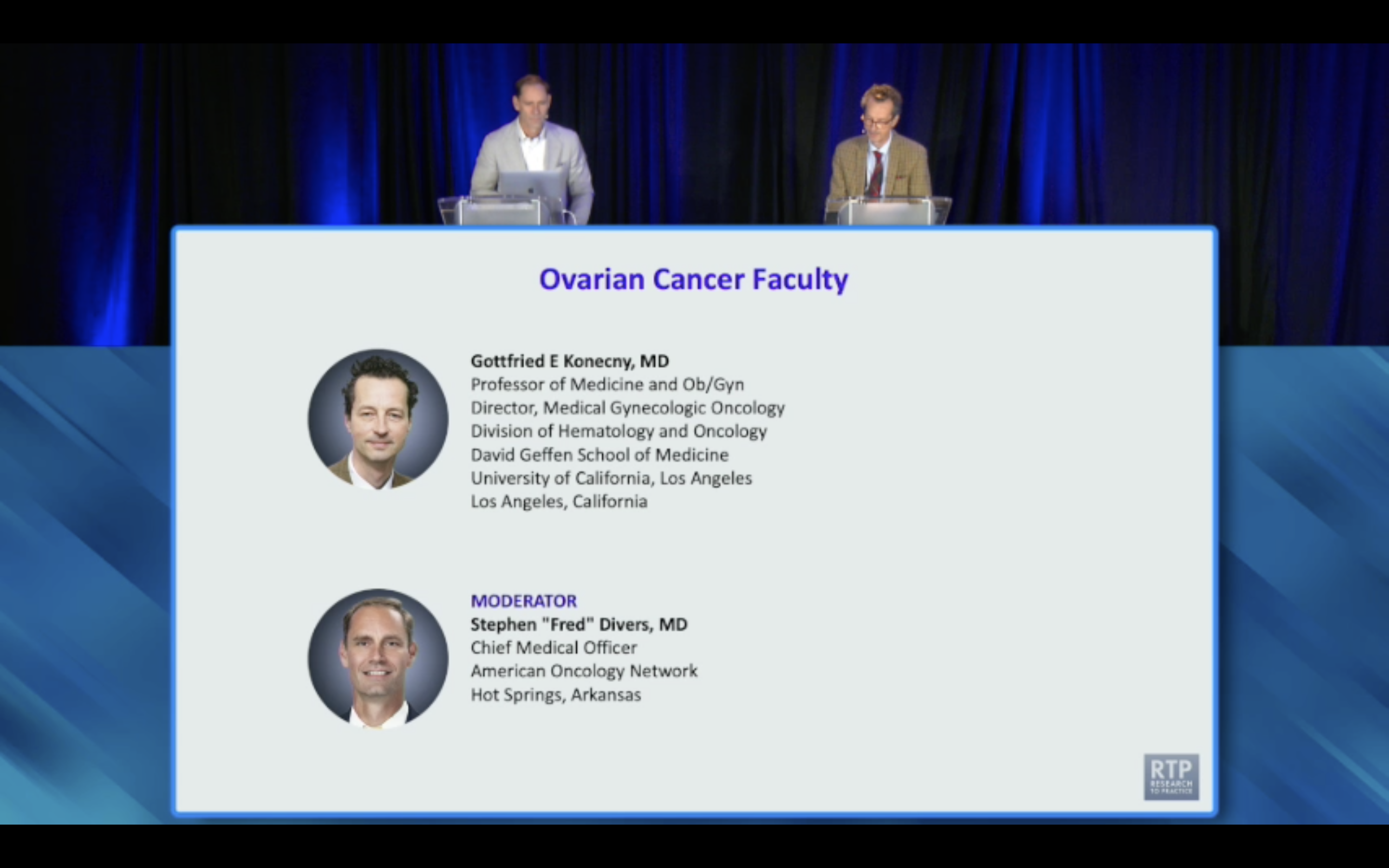
Ovarian Cancer — Proceedings from a Symposium Held in Partnership with the American Oncology Network
Featuring perspectives from Dr Gottfried E Konecny, moderated by Dr Stephen "Fred" Divers, including the following topics: Updates in Ovarian Cancer (OC) 2025 — Dr Konecny (0:00) Case: A woman in her mid 50s with ovarian cancer and a PALB2 germline mutation — Dr Mulherin (17:15) Case: A woman in her early 60s with Stage IVB fallopian tube carcinoma and a BRCA2 germline mutation — Dr Yannucci (26:27) Case: A woman in her mid 60s with OC and a BRCA2 somatic mutation who develops cytopenias on maintenance olaparib — Dr Lamar (35:47) Case: A woman in her early 70s with HER2 IHC 2+, ER-expressing, FOLR1-positive OC — Dr Warsch (42:54) CE information and select publications

Chronic Lymphocytic Leukemia — Proceedings from a Symposium Held in Partnership with the American Oncology Network
Featuring perspectives from Dr Kerry Rogers, moderated by Dr Stephen "Fred" Divers, including the following topics: Chronic Lymphocytic Leukemia (CLL) — Dr Rogers (0:00) Case: A man in his mid 70s with CLL and a history of atrial fibrillation — Dr Lamar (13:08) Case: A fit man in his early 80s with IGHV-unmutated, TP53-mutant symptomatic CLL — Dr Mulherin (21:16) Case: A woman in her mid 80s with IGHV-mutated recurrent CLL who receives pirtobrutinib — Dr Warsch (32:41) Case: A woman in her late 70s with recurrent del(17p) CLL who receives venetoclax/obinutuzumab — Dr Yannucci (44:52) CE information and select publications
Lung Cancer — Proceedings from a Symposium Held in Partnership with the American Oncology Network
Featuring perspectives from Dr Justin F Gainor, Dr Corey J Langer and Dr Misty Dawn Shields, moderated by Dr Stephen "Fred" Divers, including the following topics: Introduction (0:00) Targeted Therapy for Non-Small Cell Lung Cancer (NSCLC) — Dr Gainor, MD (5:32) Case: A woman in her mid 60s with ALK-mutant metastatic adenocarcinoma of the lung (PD-L1 TPS 70%) — Zanetta S Lamar, MD (17:59) Case: A woman in her mid 80s with EGFR exon 19-deleted adenocarcinoma of the lung with recurrence after 4 years of osimertinib — Jennifer Yannucci, MD (27:53) Case: A woman in her late 60s with HER2-mutant metastatic adenocarcinoma of the lung — Brian P Mulherin, MD (39:41) Case: A man in his early 70s with locally recurrent squamous cell carcinoma of the lung and a MET exon 14 skipping mutation — Sean Warsch, MD (46:39) Case: A woman in her early 70s with ROS1-mutant metastatic adenocarcinoma of the lung that responds to entrectinib and then to pembrolizumab/carboplatin/pemetrexed administered upon disease progression — Dr Yannucci (52:44) Nontargeted Therapy for NSCLC; Small Cell Lung Cancer — Dr Langer (58:16) Neoadjuvant, Perioperative and Adjuvant Anti-PD-1/PD-L1 Antibody-Based Approaches for Patients with Localized NSCLC — Dr Shields (1:14:14) Case: A man in his mid 60s with localized adenocarcinoma of the lung who receives neoadjuvant cisplatin/pemetrexed/pembrolizumab and achieves a pathologic complete response — Dr Mulherin (1:23:19) Case: A man in his early 60s with metastatic mixed adenosquamous NSCLC (PD-L1 TPS 50%) — Sunil Babu, MD (1:30:04) Case: A man in his late 50s diagnosed with extensive-stage small cell lung cancer who receives carboplatin/etoposide/durvalumab — Dr Warsch (1:34:07) CE information and select publications
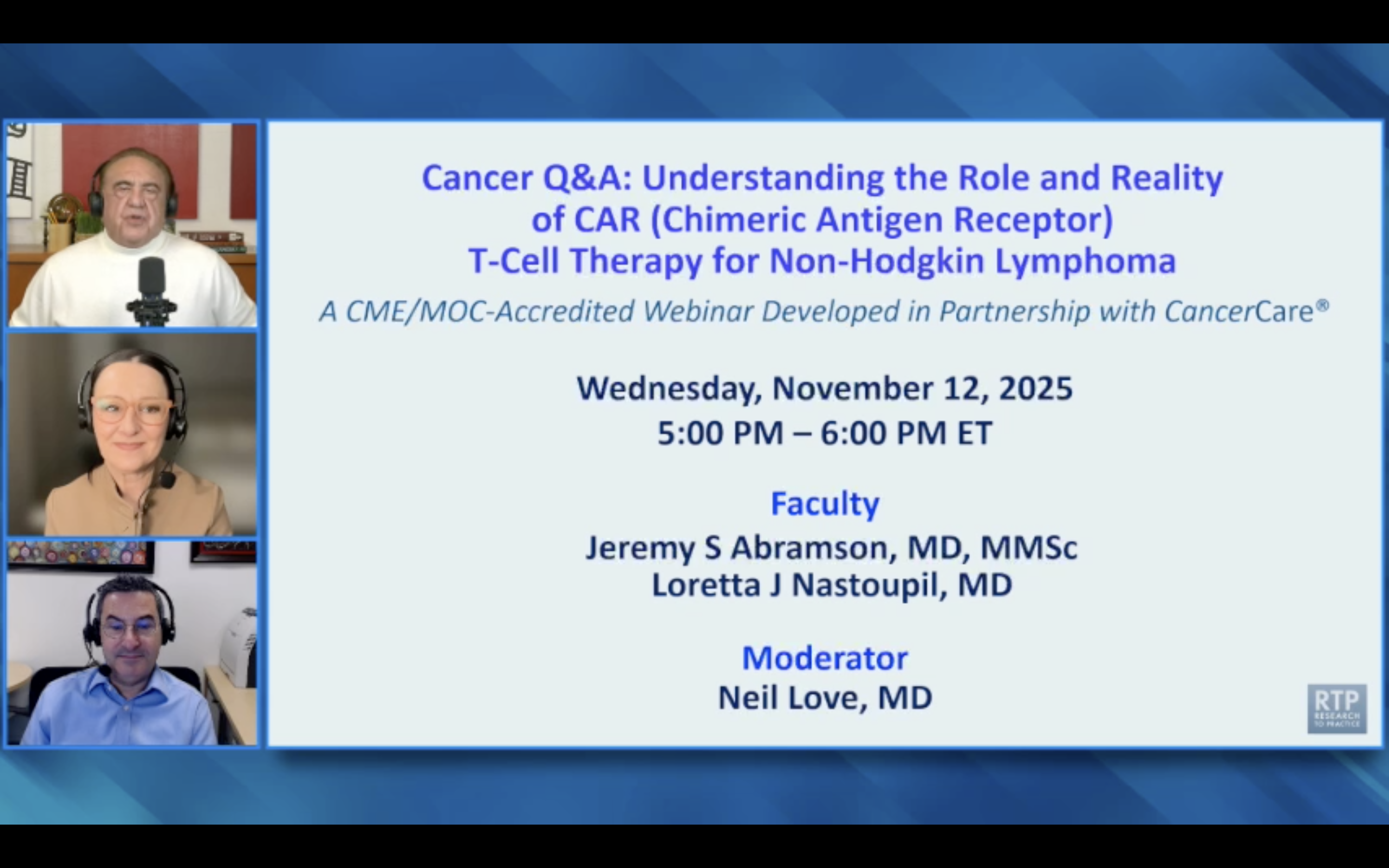
CAR T-Cell Therapy for Non-Hodgkin Lymphoma | Cancer Q&A — Discussing Common Questions Posed by Patients
Featuring perspectives from Dr Jeremy S Abramson and Dr Loretta J Nastoupil, including the following topics: Overview of Chimeric Antigen Receptor (CAR) T-Cell Therapy (0:00) Potential Treatment Benefits of CAR T-Cell Therapy (13:31) Cytokine Release Syndrome and Immune Effector Cell-Associated Neurotoxicity Syndrome (28:13) Finding Information About CAR T-Cell Therapy; Clinical Trials (36:28) Financial Issues; Risk of Infection (42:02) Coping with Anxiety; Healing and Moving On (53:27) CME information and select publications
HER2-Altered Non-Small Cell Lung Cancer — An Interview with Dr John V Heymach
Featuring an interview with Dr John V Heymach, including the following topics: Differentiating factors among various HER2 alterations in non-small cell lung cancer (NSCLC) (0:00) Activity of targeted agents across HER2 alterations in NSCLC (4:06) Available data with zongertinib and sevabertinib for HER2-mutant NSCLC (20:39) Case: A man in his late 40s with HER2-mutant NSCLC receives multiple lines of therapy, including trastuzumab deruxtecan (T-DXd) and zongertinib (29:23) Case: A woman in her mid 50s with HER2-mutant NSCLC receives zongertinib with durable response (34:23) Case: A woman in her late 50s with HER2-mutant NSCLC receives multiple lines of therapy, including sevabertinib and T-DXd (39:53) Investigational approaches in HER2-mutant NSCLC (46:31) CME information and select publications
HER2-Altered Non-Small Cell Lung Cancer — An Interview with Dr John V Heymach (Companion Faculty Lecture)
Featuring a slide presentation and related discussion from Dr John V Heymach, including the following topics: Overview of the biology and treatment landscape of HER2-mutant non-small cell lung cancer (NSCLC) (0:00) Datasets evaluating trastuzumab deruxtecan for HER2-mutant NSCLC (5:03) Clinical data with zongertinib for HER2-mutant NSCLC (6:35) Emerging data with sevabertinib for HER2-mutant NSCLC (14:41) Other investigational strategies being evaluated for HER2-mutant NSCLC (19:10) Summary of the current and future treatment landscape of HER2-mutant NSCLC (21:52) CME information and select publications
Breast Cancer — Highlights from the 2025 ESMO Annual Meeting
Featuring perspectives from Prof Giuseppe Curigliano and Dr Priyanka Sharma, including the following topics: HER2-Positive Breast Cancer (0:00) Hormone Receptor-Positive Breast Cancer (18:16) Triple-Negative Breast Cancer (1:05:23) CME information and select publications

Breast Cancer — Microlearning Activity 3 with Dr Priyanka Sharma: 2025 ESMO Annual Meeting Updates
Featuring an interview with Dr Priyanka Sharma, including the following topics: Endocrine therapy for hormone receptor-positive, HER2-negative high-risk localized breast cancer (0:00) Johnston SR et al. monarchE: Primary overall survival (OS) results of adjuvant abemaciclib + endocrine therapy (ET) for HR+, HER2-, high-risk early breast cancer (EBC). ESMO 2025;Abstract LBA13. Durvalumab in combination with neoadjuvant chemotherapy for localized triple-negative breast cancer (TNBC) (3:25) Loibl S et al. Durvalumab in combination with neoadjuvant chemotherapy in early triple-negative breast cancer (TNBC) – Long-term analysis from the GeparNuevo trial. ESMO 2025;Abstract 292MO. Efficacy and safety findings with TROP2-directed antibody-drug conjugates for metastatic TNBC (5:11) Cortés JC et al. Primary results from ASCENT-03: A randomized phase III study of sacituzumab govitecan (SG) vs chemotherapy (chemo) in patients (pts) with previously untreated advanced triple-negative breast cancer (TNBC) who are unable to receive PD-(L)1 inhibitors (PD-[L]1i). ESMO 2025;Abstract LBA20. de Azambuja E et al. Patient-reported outcomes (PROs) with sacituzumab govitecan (SG) + pembrolizumab (pembro) vs chemotherapy (chemo) + pembro in patients (pts) with previously untreated PD-L1+ metastatic triple-negative breast cancer (mTNBC) in the phase III ASCENT-04/KEYNOTE-D19 study. ESMO 2025;Abstract LBA22. Dent R et al. First-line (1L) datopotamab deruxtecan (Dato-DXd) vs chemotherapy in patients with locally recurrent inoperable or metastatic triple-negative breast cancer (mTNBC) for whom immunotherapy was not an option: Primary results from the randomised, phase III TROPION-Breast02 trial. ESMO 2025;Abstract LBA21. CME information and select publications
Toxicities Associated with CAR T-Cell Therapy — An Interview with Dr Matthew Lunning
Featuring an interview with Dr Matthew Lunning, including the following topics: Reflection on the advances made in chimeric antigen receptor (CAR) T-cell therapy (0:00) Overview of the CAR T-cell therapy administration process (4:40) Opportunities for referral for CAR T-cell therapy (10:05) Selection of a CAR T-cell therapy based on patient characteristics (16:09) Sequencing of CAR T-cell therapy for various non-Hodgkin lymphomas (23:23) Safety regulations and mitigation strategies for adverse events (30:36) Case: A woman in her early 80s with relapsed/refractory (R/R) diffuse large B-cell lymphoma receives lisocabtagene maraleucel (36:16) Case: A man in his early 60s with R/R mantle cell lymphoma receives brexucabtagene autoleucel (43:09) Case: A man in his early 60s with R/R multiple myeloma receives ciltacabtagene autoleucel (49:09) CME information and select publications
Toxicities Associated with CAR T-Cell Therapy — An Interview with Dr Matthew Lunning (Companion Faculty Lecture)
Featuring a slide presentation and related discussion from Dr Matthew Lunning, including the following topics: Overview of available chimeric antigen receptor (CAR) T-cell therapies (0:00) Toxicities associated with CAR T-cell therapy (4:03) Mitigation strategies for adverse events (22:02) Novel strategies for outpatient infusion (26:34) Changes to the CAR T-cell therapy safety regulations (30:23) CME information and select publications

Breast Cancer — Microlearning Activity 2 with Dr Priyanka Sharma: 2025 ESMO Annual Meeting Updates
Featuring an interview with Dr Priyanka Sharma, including the following topics: Patient-reported outcomes from the SERENA-6 trial of camizestrant with a CDK4/6 inhibitor for patients with HR-positive, HER2-negative advanced breast cancer and ESR1 mutations emerging during first-line endocrine-based therapy (0:00) Mayer E et al. Patient-reported outcomes (PROs) from the SERENA-6 trial of camizestrant (CAMI) + CDK4/6 inhibitor (CDK4/6i) for emergent ESR1m during first-line (1L) endocrine-based therapy and ahead of disease progression in patients (pts) with HR+/HER2– advanced breast cancer (ABC). ESMO 2025;Abstract 486MO. Imlunestrant and abemaciclib versus fulvestrant and abemaciclib for ER-positive, HER2-negative advanced breast cancer: An indirect treatment comparison of 3 Phase III trials (3:00) Bidard FC et al. Imlunestrant plus abemaciclib versus fulvestrant plus abemaciclib in estrogen receptor positive (ER+), human epidermal growth factor receptor 2 negative (HER2-) advanced breast cancer (ABC): An indirect treatment comparison (ITC) of three phase 3 trials. ESMO 2025;Abstract 496P . Giredestrant in the treatment of ER-positive, HER2-negative breast cancer: The Phase III evERA Breast Cancer and EMPRESS trials (5:39) Mayer E et al. Giredestrant (GIRE), an oral selective oestrogen receptor (ER) antagonist and degrader, + everolimus (E) in patients (pts) with ER-positive, HER2-negative advanced breast cancer (ER+, HER2– aBC) previously treated with a CDK4/6 inhibitor (i): Primary results of the phase III evERA BC trial. ESMO 2025;Abstract LBA16. Llombart-Cussac A et al. Preoperative window-of-opportunity study with giredestrant or tamoxifen (tam) in premenopausal women with estrogen receptor-positive (ER+)/human epidermal growth factor receptor 2-negative (HER2-) and Ki67≥10% early breast cancer (EBC): The EMPRESS study. ESMO 2025;Abstract 294MO. Capivasertib/fulvestrant as first- and second-line endocrine-based therapy for PIK3CA/AKT1/PTEN-altered HR-positive advanced breast cancer in the CAPItello-291 trial and gedatolisib/fulvestrant with or without palbociclib for HR-positive, HER2-negative, PIK3CA wild-type advanced breast cancer in the VIKTORIA-1 trial.(10:25) Rugo HS et al. Capivasertib plus fulvestrant as first and second-line endocrine-based therapy in PIK3CA/AKT1/PTEN-altered hormone receptor-positive advanced breast cancer: Subgroup analysis from the phase 3 CAPItello-291 trial. ESMO 2025;Abstract 526P. Hurvitz SA et al. Gedatolisib (geda) + fulvestrant ± palbociclib (palbo) vs fulvestrant in patients (pts) with HR+/ HER2-/PIK3CA wild-type (WT) advanced breast cancer (ABC): First results from VIKTORIA-1. ESMO 2025;Abstract LBA17. CME information and select publications
Metastatic Breast Cancer — Optimizing the Use of Oral Selective Estrogen Receptor Degraders: Part 2
Featuring perspectives from Dr Komal Jhaveri and Dr Virginia Kaklamani, including the following topics: Introduction: Oral Selective Estrogen Receptor Degraders (SERDs) for the General Medical Oncologist (0:00) SERD Monotherapy (13:34) SERD and CDK Inhibitor Combination — The EMBER-3 Study (35:58) SERDs for "Molecular Progression" — The SERENA-6 Study (41:25) CME information and select publications

Breast Cancer — Microlearning Activity 1 with Dr Priyanka Sharma: 2025 ESMO Annual Meeting Updates
Featuring an interview with Dr Priyanka Sharma, including the following topics: T-DXd versus trastuzumab emtansine for high-risk HER2-positive primary breast cancer with residual invasive disease after neoadjuvant therapy: Interim analysis of the DESTINY-Breast05 trial (0:00) Geyer C et al. Trastuzumab deruxtecan (T-DXd) vs trastuzumab emtansine (T-DM1) in patients (pts) with high-risk human epidermal growth factor receptor 2–positive (HER2+) primary breast cancer (BC) with residual invasive disease after neoadjuvant therapy (tx): Interim analysis of DESTINY-Breast05. ESMO 2025;Abstract LBA1. DESTINY-Breast11 trial: Neoadjuvant T-DXd alone or followed by paclitaxel/trastuzumab/pertuzumab for high-risk HER2-positive localized breast cancer (5:42) Harbeck N et al. DESTINY-Breast11: Neoadjuvant trastuzumab deruxtecan alone (T-DXd) or followed by paclitaxel + trastuzumab + pertuzumab (T-DXd-THP) vs SOC for high-risk HER2+ early breast cancer (eBC). ESMO 2025;Abstract 291O. Trastuzumab deruxtecan (T-DXd) and pertuzumab versus a taxane, trastuzumab and pertuzumab for HER2-positive advanced or metastatic breast cancer: Additional analyses of the DESTINY-Breast09 trial (10:00) Loibl S et al. Trastuzumab deruxtecan (T-DXd) + pertuzumab (P) vs taxane + trastuzumab + pertuzumab (THP) for patients (pts) with HER2+ advanced/metastatic breast cancer (a/mBC): Additional analyses of DESTINY-Breast09 in key subgroups of interest. ESMO 2025;Abstract LBA18. CME information and select publications
HER2-Positive Gastrointestinal Cancers — Clinical Investigator Perspectives on Actual Patient Cases
Featuring perspectives from Dr Tanios Bekaii-Saab and Dr Kristen K Ciombor, including the following topics: Introduction: Assessment of HER2 Status (0:00) Case: An otherwise healthy woman in her early 50s with HER2-positive metastatic gallbladder cancer and multiple intrahepatic metastases — Jeremy Lorber, MD (7:33) Case: A man in his late 60s with HER2-low metastatic gallbladder cancer — Brian P Mulherin, MD (11:58) Data Review: Biliary Tract Cancers (18:19) Case: A man in his mid 50s with HER2-positive metastatic rectal cancer — Sunil Gandhi, MD (26:25) Case: A woman in her early 60s with recurrent HER2-positive rectal cancer — Ranju Gupta, MD (31:31) Data Review: Colorectal Cancer (34:16) Case: An otherwise healthy man in his mid 50s with HER2-positive metastatic gastroesophageal junction cancer and several metastatic liver lesions — Shachar Peles, MD (38:06) Case: A man in his early 60s with recurrent HER2-positive, claudin 18.2-positive metastatic esophageal cancer — Susmitha Apuri, MD (43:21) Data Review: Gastroesophageal Cancer (46:55) Case: A man in his early 60s with HER2-positive esophageal cancer and isolated brain metastases — Priya Rudolph, MD, PhD (50:07) CME information and select publications

HR-Positive Metastatic Breast Cancer — An Interview with Dr Erika Hamilton on the Potential Role of PROTAC Estrogen Receptor Degraders
Featuring an interview with Dr Erika Hamilton, including the following topics: General overview of the mechanisms of action of endocrine-targeted therapies for breast cancer (0:00) Downregulation of estrogen receptor expression levels with endocrine therapy; therapeutic benefit of selective estrogen receptor degraders (SERDs) and proteolysis-targeting chimeras (PROTACs) in ESR1 wild-type and ESR1-mutant breast cancer (5:11) Mechanisms of resistance to endocrine therapy (10:08) Efficacy and toxicities observed with SERDs and PROTACs for HR-positive breast cancer (15:26) Other applications for PROTACs (24:24) Emerging data from the Phase III evERA trial (27:38) Perspectives on clinical investigator and general medical oncologist practice pattern survey results (30:51) CME information and select publications
HR-Positive Metastatic Breast Cancer — An Interview with Dr Erika Hamilton on the Potential Role of PROTAC Estrogen Receptor Degraders (Companion Faculty Lecture)
Featuring a slide presentation and related discussion from Dr Erika Hamilton, including the following topics: Mechanisms of endocrine resistance; incidence of ESR1 mutations in breast cancer (0:00) Testing methods for ESR1 mutations in patients with breast cancer; therapeutic options for patients with ESR1-mutant breast cancer (3:59) General overview of proteolysis-targeting chimeras (PROTACs); comparison of PROTAC estrogen receptor (ER) degraders and selective ER degraders (7:39) Early-phase data with vepdegestrant monotherapy or in combination with CDK4/6 inhibitors in ER-positive, HER2-negative metastatic breast cancer (mBC) (11:54) Phase III VERITAC-2 trial of vepdegestrant versus fulvestrant in ER-positive, HER2-negative mBC previously treated with endocrine therapy and a CDK4/6 inhibitor (17:48) Ongoing clinical trials evaluating vepdegestrant in novel combinations or treatment settings; other clinical applications of PROTACs (26:08) CME information and select publications
Patient Education Resource: Non-Hodgkin Lymphoma — Clinical Experts Address Common Questions Posed by Patients About CAR T-Cell Therapy
Featuring perspectives from Dr Jeremy S Abramson and Dr Manali Kamdar, including the following topics: Introduction: About This Program (0:00) Overview of Chimeric Antigen Receptor (CAR) T-Cell Therapy (3:10) Potential Treatment Benefits of CAR T-Cell Therapy (10:35) CRS (Cytokine Release Syndrome) and ICANS (Immune Effector Cell-Associated Neurotoxicity Syndrome) (34:32) Finding Information About CAR T; Clinical Trials (42:17) Financial Issues; Risk of Infection (48:11) Coping with Anxiety; Healing and Moving On (55:17) Educational and presenter information

ER-Positive Metastatic Breast Cancer — A Roundtable Discussion on the Current and Future Role of Oral SERDs
Featuring slide presentations and related discussion from Prof Francois-Clement Bidard, Dr Hope S Rugo, Dr Rebecca Shatsky and Dr Seth Wander, including the following topics: Optimal approach to biomarker testing for patients with ER-positive metastatic breast cancer (mBC) (0:00) Case: A woman in her early 70s with recurrent ER-positive, HER2-negative mBC receives elacestrant (15:15) Case: A woman in her early 60s with ER-positive, HER2-low, PIK3CA-mutated mBC receives inavolisib-based therapy and experiences no disease progression for 24 months (18:02) Role of oral selective estrogen receptor degrader (SERD) monotherapy in the treatment of progressive ER-positive, HER2-negative mBC (26:26) Case: A woman in her mid 60s with recurrent HR-positive, HER2-negative mBC receives elacestrant (44:12) Case: A woman in her early 50s with recurrent HR-positive, HER2-negative, PIK3CA-mutant mBC receives capivasertib and fulvestrant (45:33) Potential novel applications of oral SERDs in the management of ER-positive, HER2-negative breast cancer (51:25) Case: A woman in her mid 50s with recurrent ER-positive, HER2-negative, PIK3CA-mutated mBC experiences disease progression 18 months after starting first-line letrozole and ribociclib (1:03:46) Case: A woman in her mid 50s with ER-positive, HER2-negative breast cancer undergoes serial ctDNA monitoring during first-line therapy (1:06:54) Tolerability and other practical considerations with oral SERDs (1:14:30) Case: A woman in her early 60s with recurrent HR-positive, HER2-negative mBC receives elacestrant (1:33:26) Case: A woman in her early 60s with recurrent HR-positive, HER2-negative mBC receives elacestrant (1:37:38) CME information and select publications
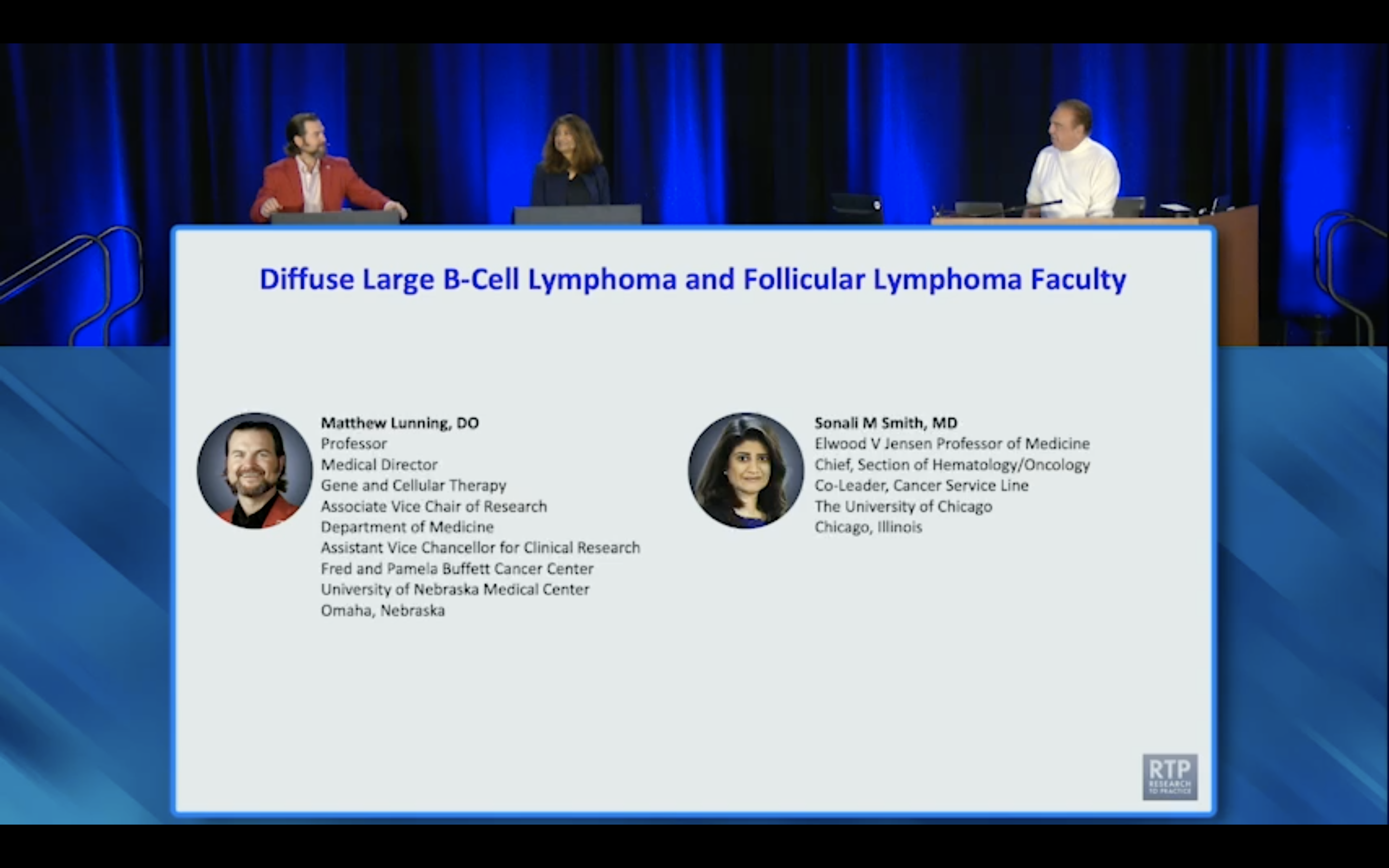
Diffuse Large B-Cell Lymphoma and Follicular Lymphoma — Proceedings from a Multitumor Symposium in Partnership with Florida Cancer Specialists & Research Institute
Featuring perspectives from Dr Matthew Lunning and Dr Sonali M Smith, including the following topics: Which Driver and Which Race: CAR-T and Bispecific Antibodies for Relapsed or Refractory Diffuse Large B-Cell Lymphoma and Follicular Lymphoma — Dr Lunning (0:00) Available and Emerging Novel Therapies for Diffuse Large B-Cell Lymphoma and Follicular Lymphoma — Dr Smith (32:37) CE information and select publications
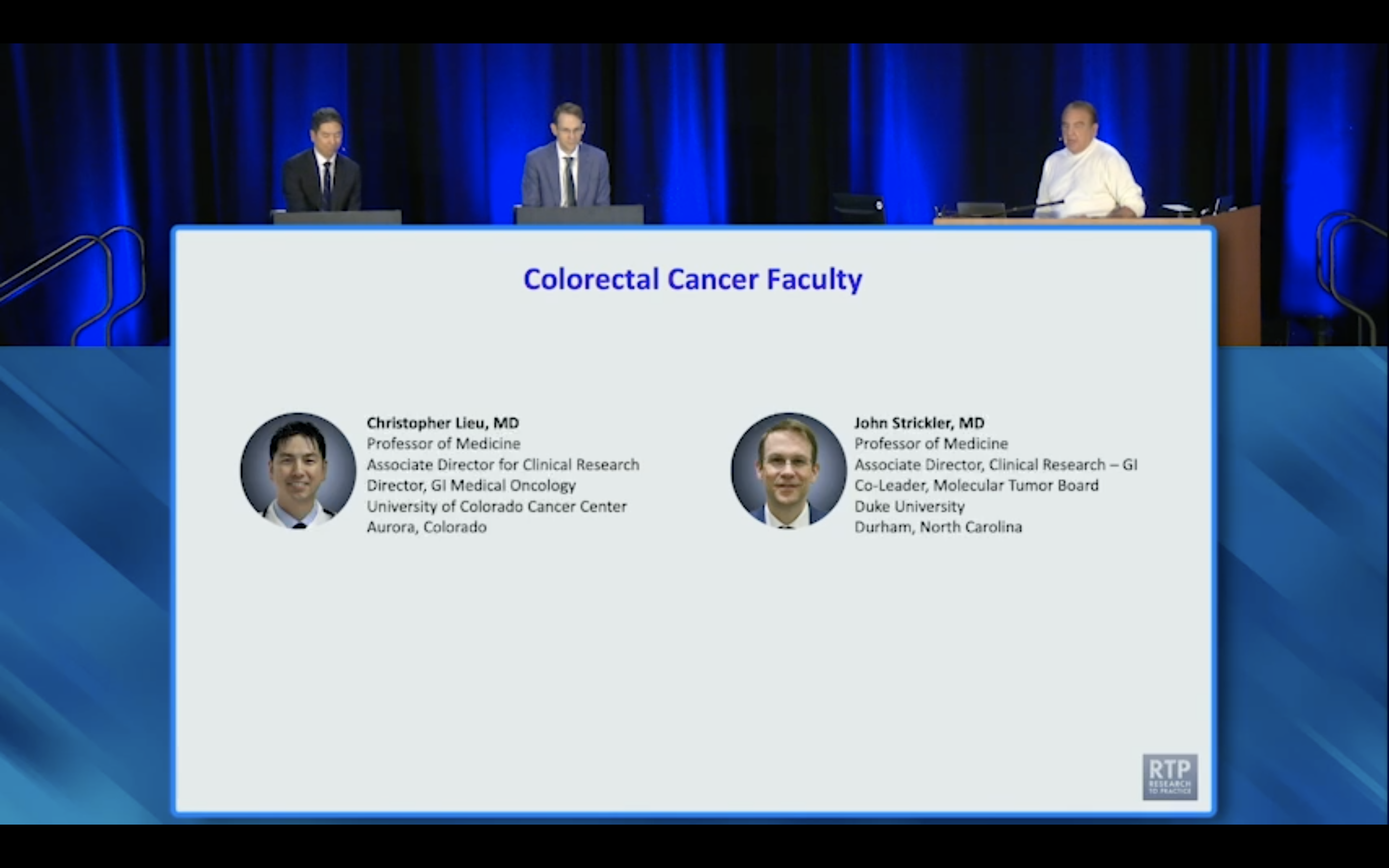
Colorectal Cancer — Proceedings from a Multitumor Symposium in Partnership with Florida Cancer Specialists & Research Institute
Featuring perspectives from Dr Emmanuel S Antonarakis and Dr Matthew R Smith, including the following topics: Current and Future Role of Immune Checkpoint Inhibitors in the Management of Colorectal Cancer — Dr Lieu (0:00) Other Biomarker-Based Strategies for Patients with Colorectal Cancer — Dr Strickler (36:39) CE information and select publications
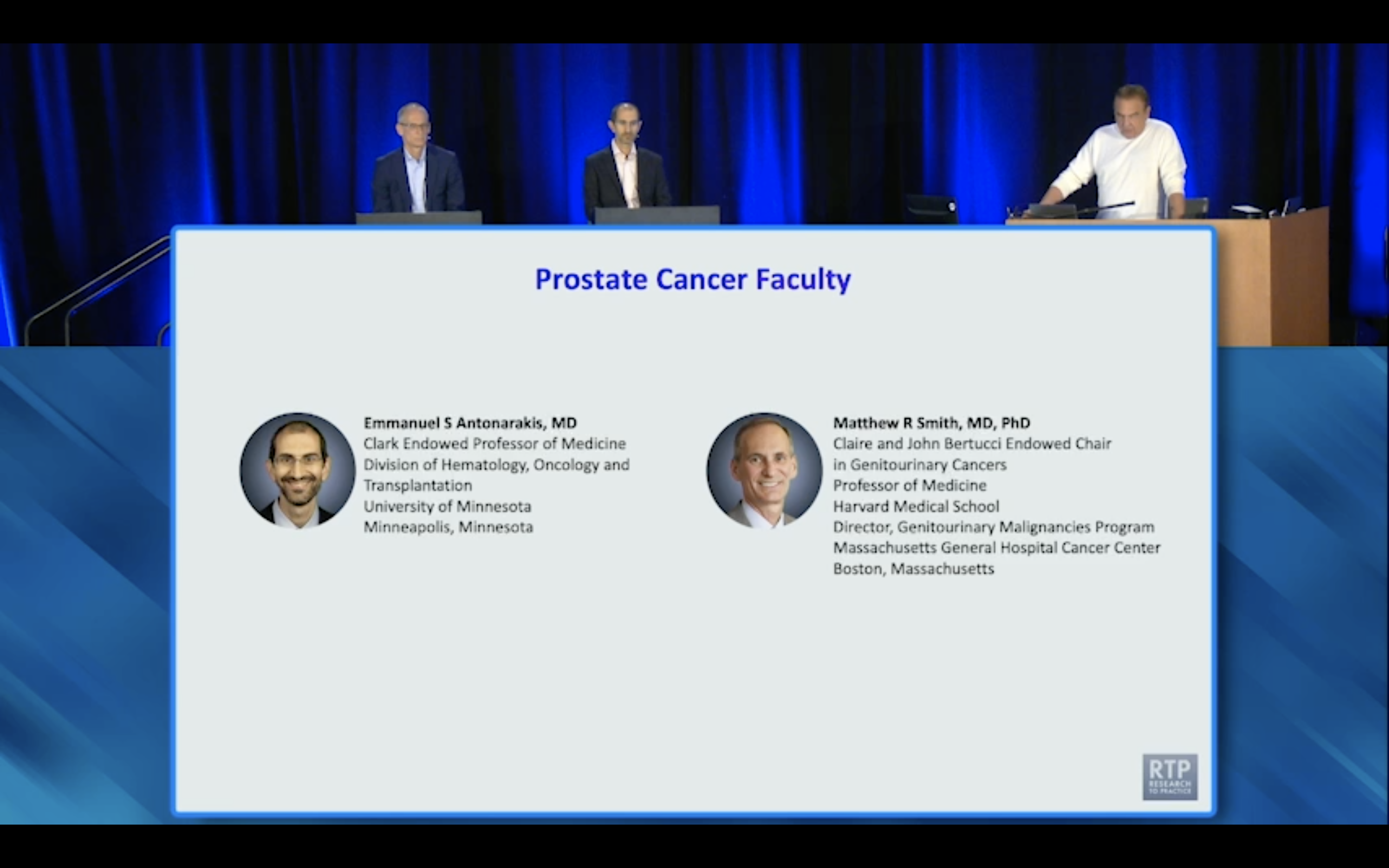
Prostate Cancer — Proceedings from a Multitumor Symposium in Partnership with Florida Cancer Specialists & Research Institute
Featuring perspectives from Dr Emmanuel S Antonarakis and Dr Matthew R Smith, including the following topics: Introduction (0:00) Optimizing the Role of Hormonal Therapy in the Care of Patients with Prostate Cancer — Dr Smith (0:55) Available and Emerging Therapeutic Approaches for Metastatic Castration-Resistant Prostate Cancer — Dr Antonarakis (26:37) CE information and select publications
Breast Cancer — Proceedings from a Multitumor Symposium in Partnership with Florida Cancer Specialists & Research Institute
Featuring perspectives from Dr Harold J Burstein, Dr Matthew P Goetz, Dr Heather McArthur and Dr Rita Nanda, including the following topics: Introduction (0:00) Localized Hormone Receptor (HR)-Positive Breast Cancer; Initial Therapy for Metastatic Disease — Dr Goetz (4:48) Relapsed/Refractory HR-Positive Metastatic Breast Cancer — Dr Nanda (29:45) Management of HER2-Positive Breast Cancer — Dr Burstein (1:04:43) Antibody-Drug Conjugate Treatment Approaches for Triple-Negative Breast Cancer — Dr McArthur (1:29:53) CE information and select publications

Non-Small Cell Lung Cancer — 5-Minute Journal Club Issue 4 with Dr Aaron Lisberg: Defining the Role of TROP2-Directed Antibody-Drug Conjugates
Featuring an interview with Dr Aaron Lisberg, including the following topics: Prevention and Management of Adverse Events of Special Interest with Datopotamab Deruxtecan (Dato-DXd) (0:00) Rugo H et al. US expert Delphi consensus on the prevention and management of stomatitis in patients treated with datopotamab deruxtecan. Support Care Cancer 2025;33(9):756. Abstract Lisberg A et al. Datopotamab deruxtecan-associated select adverse events: Clinical practices and institutional protocols on prophylaxis, monitoring, and management. Oncologist 2025;[Online ahead of print]. Abstract Meric-Bernstam F et al. Prophylaxis, clinical management, and monitoring of datopotamab deruxtecan-associated oral mucositis/stomatitis. Oncologist 2025;30(3). Abstract Novel Strategies Combining Dato-DXd with Osimertinib (10:44) Lu S et al. TROPION-Lung14: A phase 3 study of osimertinib ± datopotamab deruxtecan (Dato-DXd) as first-line (1L) treatment for patients with EGFR-mutated locally advanced or metastatic (LA/M) non-small cell lung cancer (NSCLC). ASCO 2025;Abstract TPS8647. Nadal E et al. TROPION-Lung15: A phase III study of datopotamab deruxtecan (Dato-DXd) ± osimertinib vs platinum doublet chemotherapy in patients with EGFR-mutated locally advanced or metastatic non-small cell lung cancer (NSCLC) and disease progression on prior osimertinib. ELCC 2025;Abstract 124TiP. Intracranial Activity Observed with TROP2-Targeting Antibody-Drug Conjugates (15:14) Felip E et al. Brain metastases and actionable genetic alterations with sacituzumab govitecan versus docetaxel in metastatic non-small cell lung cancer: Subgroups of the phase III EVOKE-01 trial. ELCC 2025;Abstract 13P. Lisberg A et al. Intracranial efficacy of datopotamab deruxtecan (Dato-DXd) in patients (pts) with previously treated advanced/metastatic non-small cell lung cancer (a/m NSCLC) with actionable genomic alterations (AGA): Results from TROPION-Lung05. ASCO 2024;Abstract 8593. Pons-Tostivint E et al. Intracranial efficacy of datopotamab deruxtecan (Dato- DXd) in patients with advanced/metastatic NSCLC in TROPION-Lung01. WCLC 2025;Abstract OA10.01. CME information and select publications
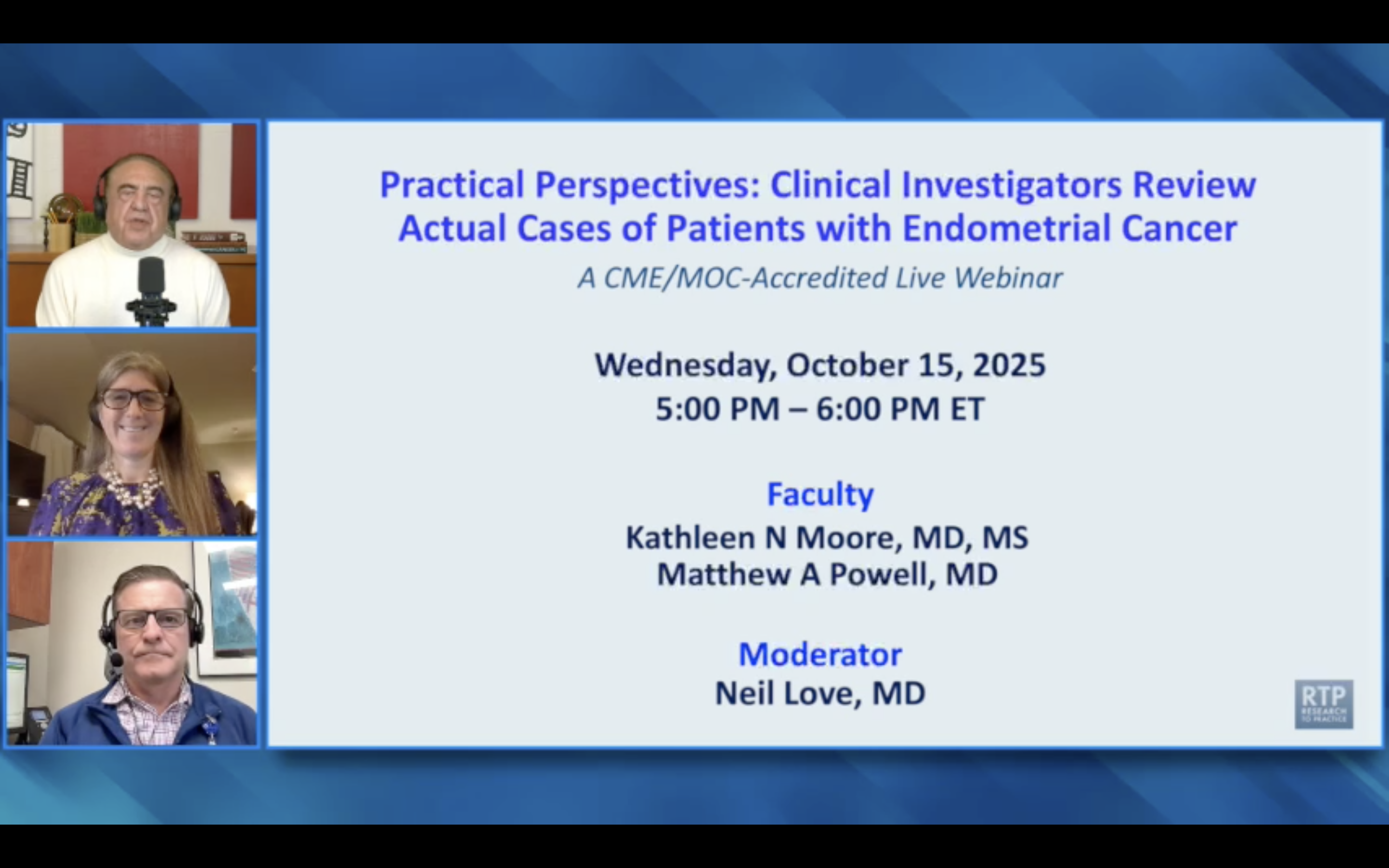
Endometrial Cancer — Clinical Investigator Perspectives on Actual Patient Cases
Featuring perspectives from Dr Kathleen N Moore and Dr Matthew A Powell, including the following topics: Introduction: A Pan-tumor Perspective on Microsatellite Instability (MSI)-High Disease — Immunotherapy for Localized Disease (0:00) Case: A woman in her early 60s with mismatch repair-deficient metastatic endometrial cancer (EC) and multiple positive metastases — Shachar Peles, MD (8:18) Case: A woman in her mid 60s with recurrent EC and a BRCA mutation — Stephen "Fred" Divers, MD (12:17) Data Review: Immune Checkpoint Inhibitors (15:26) Case: A woman in her early 30s with Stage I mismatch repair-proficient EC and multiple pulmonary metastases after receiving fertility treatments — Kellie E Schneider, MD (28:22) Case: A woman in her early 80s with EC and high blood pressure — Syed F Zafar, MD (34:24) Case: A postmenopausal woman in her late 60s with recurrent HER2-positive EC and unresectable carcinomatosis — Lyndsay J Willmott, MD (38:18) Case: A woman in her late 60s with EC and pericarditis — Karim ElSahwi, MD (44:28) Data Review: Novel Antibody-Drug Conjugates (51:38) Case: A woman in her early 70s with metastatic MSI-stable, HER2-negative EC with PI3 kinase and FGFR mutations wants to avoid treatment with chemotherapy — Victoria Giffi, MD (55:01) CME information and select publications
ER-Positive Metastatic Breast Cancer — An Interview with Prof Patrick Neven on the Role of Oral Selective Estrogen Receptor Degraders
Featuring an interview with Prof Patrick Neven, including the following topics: Emergence of ESR1 mutations in ER-positive, HER2-negative breast cancer (0:00) Observed toxicity profile of oral selective estrogen receptor degraders (SERDs) (3:57) Emerging data with novel oral SERD combinations (6:31) Challenges for a general medical oncologist in breast cancer (8:41) Sequencing and selection of therapies in ER-positive, HER2-negative breast cancer (12:16) Evaluating the strategy of switching to an oral SERD during first-line endocrine therapy upon "molecular progression" (23:16) CME information and select publications

ER-Positive Metastatic Breast Cancer — An Interview with Prof Patrick Neven on the Role of Oral Selective Estrogen Receptor Degraders (Companion Faculty Lecture)
Featuring a slide presentation and related discussion from Prof Patrick Neven, including the following topics: Biology of the estrogen receptor (ER) and mechanisms of resistance to therapy (0:00) Clinical trial data involving oral selective ER degraders (SERDs) for endocrine-resistant ER-positive, HER2-negative metastatic breast cancer (13:34) Utility of switching to an oral SERD before radiographic disease progression for patients receiving first-line endocrine treatment (23:12) Ongoing trials with oral SERDs for ER-positive, HER2-negative breast cancer (27:13) Case: Patient with ER-positive, HER2-negative breast cancer receives imlunestrant upon disease progression on first-line letrozole (32:34) Case: Patient with ER-positive, HER2-negative breast cancer receives imlunestrant/abemaciclib upon relapse on letrozole/abemaciclib (34:16) Case: Patient with ER-positive, HER2-negative breast cancer receives camizestrant after first-line tamoxifen (36:20) Case: Patient with ER-positive, HER2-negative breast cancer receives elacestrant after disease progression on first-line letrozole/palbociclib (38:11) CME information and select publications
Colorectal Cancer — An Interview with Dr John Strickler on Molecular Residual Disease Analysis
Featuring an interview from Dr John Strickler, including the following topics: Prognostic value of molecular residual disease (MRD) as detected by circulating tumor DNA (ctDNA) and optimal incorporation of MRD assays into the care of patients with colorectal cancer (0:00) Potential use of MRD assays for patients with microsatellite instability (MSI)-high localized colorectal cancer or those with delayed progression or metastatic disease (16:09) Tumor-informed MRD assays under clinical development (20:36) Predictive role of ctDNA in Stage III colon cancer treated with celecoxib; effect of low-dose aspirin on response to celecoxib in patients with PI3K pathway alterations (24:19) Case: A man in his late 50s with resected Stage IIA colon cancer (30:06) Case: A woman in her late 40s with Lynch syndrome and MSI-H colon cancer with a solitary, small hepatic metastasis (34:57) MRD as a future clinical trial endpoint for solid tumors; increasing incidence of colorectal cancer in younger people (40:24) Antibody-drug conjugates in the treatment of colorectal cancer (45:13) Perspectives on promising areas of clinical research in colorectal cancer (48:23) CME information and select publications
Colorectal Cancer — An Interview with Dr John Strickler on Molecular Residual Disease Analysis (Companion Faculty Lecture)
Featuring a slide presentation and related discussion from Dr John Strickler, including the following topics: Defining molecular residual disease (MRD); tumor-informed and tumor-naïve methods for assessing (0:00) GALAXY and BESPOKE CRC studies of a tumor-informed MRD assay to identify patients with localized colorectal cancer who have an increased risk of recurrence and those who are likely to benefit from adjuvant chemotherapy (6:56) Sustained circulating tumor DNA (ctDNA) clearance and disease-free survival outcomes for patients with localized colorectal cancer (13:21) DYNAMIC study of a ctDNA-guided approach to adjuvant chemotherapy for patients with Stage II colorectal cancer (16:17) ctDNA positivity and radiographic evidence of colorectal cancer (18:48) ctDNA-guided approaches to escalating or de-escalating adjuvant chemotherapy for patients with localized colorectal cancer (21:24) Predictive role of ctDNA assay results in Stage III colon cancer treated with celecoxib; low-dose aspirin for patients with Stage II to III colorectal cancer with a PI3K pathway alteration (26:02) CME information and select publications

Breast Cancer — 5-Minute Journal Club Issue 4 with Dr Kevin Kalinsky: Defining the Role of TROP2-Directed Antibody-Drug Conjugates
Featuring an interview with Dr Kevin Kalinsky, including the following topics: Prophylaxis, Monitoring and Management of Adverse Events of Special Interest with Datopotamab Deruxtecan (0:00) Lisberg A et al. Datopotamab deruxtecan-associated select adverse events: Clinical practices and institutional protocols on prophylaxis, monitoring, and management. Oncologist 2025;30(9). Abstract Meric-Bernstam F et al. Prophylaxis, clinical management, and monitoring of datopotamab deruxtecan-associated oral mucositis/stomatitis. Oncologist 2025;30(3). Abstract Clinical Data with Neoadjuvant Datopotamab Deruxtecan from the I-SPY 2.2 Phase II Trial (5:17) Khoury K et al. Datopotamab–deruxtecan in early-stage breast cancer: The sequential multiple assignment randomized I-SPY2.2 phase 2 trial. Nat Med 2024;30(12):3728-36. Abstract Shatsky RA et al. Datopotamab-deruxtecan plus durvalumab in early-stage breast cancer: The sequential multiple assignment randomized I-SPY2.2 Phase II trial. Nat Med 2024;30(12):3737-47. Abstract NeoSTAR: A Phase II Study of Response-Guided Neoadjuvant Sacituzumab Govitecan and Pembrolizumab for Localized Triple-Negative Breast Cancer (9:09) Abelman RO et al. A phase 2 study of response-guided neoadjuvant sacituzumab govitecan and pembrolizumab (SG/P) in patients with early-stage triple-negative breast cancer: Results from the NeoSTAR trial. ASCO 2025;Abstract 511. OptimICE-RD: A Phase III Study Evaluating Sacituzumab Govitecan with Pembrolizumab versus Pembrolizumab with or without Capecitabine for Residual Triple-Negative Breast Cancer (12:56) Tolaney SM et al. OptimICE-RD: Sacituzumab govitecan + pembrolizumab vs pembrolizumab (± capecitabine) for residual triple-negative breast cancer. Future Oncol 2024;20(31):2343-55. Abstract CME information and select publications
Acute Myeloid Leukemia — An Interview with Dr Eunice S Wang to Review Key Presentations from ASCO and EHA
Featuring an interview with Dr Eunice S Wang, including the following topics: Hypomethylating agent/venetoclax combinations for the treatment of acute myeloid leukemia (AML); integration in community practice (0:00) All-oral regimen of decitabine/cedazuridine with venetoclax for patients with newly diagnosed AML not eligible for intensive induction chemotherapy (9:39) Efficacy of targeted therapy options for AML; potential role of MRD (minimal residual disease) assays in monitoring treatment response (13:07) Treatment approach for patients with FLT3-mutant AML; mutation profiles and predicting response to quizartinib (20:14) Targeting the differentiation of AML tumor cells with IDH and menin inhibitors; associated differentiation syndrome (29:24) Efficacy and tolerability of the IDH inhibitors ivosidenib and olutasidenib (36:54) Key clinical data with approved and investigational menin inhibitors for AML; current and potential integration of menin inhibitors in the AML treatment algorithm (42:30) CME information and select publications
Acute Myeloid Leukemia — An Interview with Dr Eunice S Wang to Review Key Presentations from ASCO and EHA (Companion Faculty Lecture)
Featuring a slide presentation and related discussion from Dr Eunice S Wang, including the following topics: All-oral regimen of decitabine/cedazuridine with venetoclax for patients with newly diagnosed acute myeloid leukemia (AML) not eligible for intensive induction chemotherapy (0:00) Quizartinib-based treatment approaches for FLT3-ITD-mutated and FLT3-ITD wild-type AML (5:21) First- and second-generation IDH inhibitors for AML (17:40) Updated results from the AUGMENT-101 Phase II study of the menin inhibitor revumenib for relapsed/refractory KMT2A-rearranged AML (22:59) Phase Ib/II KOMET-001 study of ziftomenib for relapsed/refractory NMP1-mutant AML (26:42) Novel combination approaches with menin inhibitors for AML (29:11) CME information and select publications
Metastatic Breast Cancer — Current and Future Integration of Antibody-Drug Conjugates
Featuring perspectives from Dr Aditya Bardia and Dr Adam M Brufsky, including the following topics: Introduction: Antibody-drug conjugates in localized breast cancer (0:00) Case: A frail woman in her late 70s with ER-positive, HER2-low metastatic breast cancer (mBC) receives sacituzumab govitecan after multiple lines of therapy — Eric Fox, DO (7:46) Case: A woman in her early 60s with NTRK-mutant ER-negative, HER2-low recurrent mBC receives trastuzumab deruxtecan — Lai (Amber) Xu, MD, PhD (21:07) Case: A woman in her mid 70s with PIK3CA-mutant recurrent metastatic triple-negative breast cancer who developed a diverticular abscess on neoadjuvant chemoimmunotherapy receives sacituzumab govitecan and pembrolizumab — Alan B Astrow, MD (31:49) Case: A woman in her mid 60s with ER-negative, HER2-low mBC receives sacituzumab govitecan after experiencing disease progression on capecitabine — Laila Agrawal, MD (38:37) Case: A woman in her late 50s with ER-negative, HER2-low mBC receives trastuzumab deruxtecan after experiencing disease progression on sacituzumab govitecan — Kimberly Ku, MD (44:24) Case: A woman in her early 60s with ER-positive, HER2-low mBC and hyperglycemia receives trastuzumab deruxtecan after experiencing disease progression on capivasertib/fulvestrant — Eleonora Teplinsky, MD (48:50) CME information and select publications
Non-Small Cell Lung Cancer — 5-Minute Journal Club Issue 3 with Dr Aaron Lisberg: Defining the Role of TROP2-Directed Antibody-Drug Conjugates
Featuring an interview with Dr Aaron Lisberg, including the following topics: Efficacy and Safety of Datopotamab Deruxtecan (Dato-DXd) for Patients with Previously Treated EGFR-Mutated Advanced Non-Small Cell Lung Cancer (NSCLC): A Pooled Analysis of the TROPION-Lung01 and TROPION-Lung05 Trials (0:00) Ahn M-J et al. Efficacy and safety of datopotamab deruxtecan (Dato-DXd) in patients (pts) with previously-treated EGFR-mutated advanced non-small cell lung cancer (NSCLC): A pooled analysis of TROPION-Lung01 and TROPION-Lung05. ESMO Asia 2024;Abstract LBA7 Ahn M-J et al. A pooled analysis of datopotamab deruxtecan in patients with EGFR-mutated NSCLC. J Thorac Oncol 2025;[Online ahead of print]. Abstract Sacituzumab Tirumotecan for Previously Treated Advanced EGFR-Mutated NSCLC: Results from the Randomized OptiTROP-Lung03 Study (7:08) Fang W et al. Sacituzumab tirumotecan versus docetaxel for previously treated EGFR-mutated advanced non-small cell lung cancer: Multicentre, open label, randomised controlled trial. BMJ 2025;389:e085680. Abstract Zhang L et al. Sacituzumab tirumotecan (sac-TMT) in patients (pts) with previously treated advanced EGFR-mutated non-small cell lung cancer (NSCLC): Results from the randomized OptiTROP-Lung03 study. ASCO 2025;Abstract 8507. Combination of Dato-DXd and Immunotherapy as First-Line Therapy for Patients with Advanced NSCLC (13:12) Cuppens K et al. First-line (1L) datopotamab deruxtecan (Dato-DXd) + durvalumab ± carboplatin in advanced or metastatic non-small cell lung cancer (a/mNSCLC): Results from TROPION-Lung04 (cohorts 2 and 4). ESMO Targeted Anticancer Therapies Congress 2025;Abstract 8O. Okamoto I et al. TROPION-Lung07: Phase III study of Dato-DXd + pembrolizumab ± platinum-based chemotherapy as 1L therapy for advanced non-small-cell lung cancer. Future Oncol 2024;20(37):2927-36. Abstract Levy BP et al. TROPION-Lung08: Phase III study of datopotamab deruxtecan plus pembrolizumab as first-line therapy for advanced NSCLC. Future Oncol 2023;19(21):1461-72. Abstract Aggarwal C et al. AVANZAR: Phase III study of datopotamab deruxtecan (Dato-DXd) + durvalumab + carboplatin as 1L treatment of advanced/mNSCLC. World Conference on Lung Cancer (WCLC) 2023;Abstract P2.04-02. TROP2-Targeting Antibody-Drug Conjugates as Neoadjuvant and/or Adjuvant Therapy for Patients with Resectable NSCLC (19:08) A phase III, randomised, open-label, global study of adjuvant datopotamab deruxtecan (Dato-DXd) in combination with rilvegostomig or rilvegostomig monotherapy versus standard of care, following complete tumour resection, in participants with Stage I adenocarcinoma non-small cell lung cancer who are ctDNA-positive or have high-risk pathological features (TROPION-Lung12). NCT06564844 Cascone T et al. Perioperative durvalumab plus chemotherapy plus new agents for resectable non-small-cell lung cancer: The platform phase 2 NeoCOAST-2 trial. Nat Med 2025;31(8):2788-96. Abstract CME information and select publications
Non-Hodgkin Lymphoma — The Implications of Recent Datasets for Current and Future Disease Management
Featuring perspectives from Dr Carla Casulo and Dr Brad S Kahl: Introduction (0:00) Faculty Data and Case Presentation — Dr Kahl (6:38) Faculty Data and Case Presentation — Dr Casulo (25:38) CME information and select publications
HR-Positive and Triple-Negative Metastatic Breast Cancer — An Interview with Dr Laura Huppert on Optimal Integration of ADCs into Treatment
Featuring an interview with Dr Laura Huppert, including the following topics: General overview of antibody-drug conjugate (ADC) structure and function; mechanisms of resistance to ADCs (0:00) Preventing and managing toxicities associated with trastuzumab deruxtecan (5:44) Selecting between sacituzumab govitecan and datopotamab deruxtecan for patients with metastatic breast cancer; common toxicities associated with these 2 agents (9:30) Potential use of ADCs in the first line for metastatic triple-negative breast cancer (mTNBC) (16:13) Case: A woman in her mid 40s with mTNBC receives sacituzumab govitecan and pembrolizumab in the first-line setting (18:25) CNS penetration and activity of ADCs in the treatment of breast cancer (22:27) Use of trastuzumab deruxtecan for HER2-ultralow mTNBC; promising trials of ADCs and other therapies for mTNBC (24:24) Treatment options in the second line and beyond for patients with HR-positive mBC that is HER2-negative, HER2 low or HER2 ultralow (27:05) Case: A woman in her late 50s with HR-positive, HER2-low mBC experiences disease progression on multiple lines of therapy (30:51) Ongoing evaluation of ADCs in the localized disease setting (35:42) Novel therapeutic approaches for leptomeningeal disease in patients with breast cancer (38:38) CME information and select publications
HR-Positive and Triple-Negative Metastatic Breast Cancer — An Interview with Dr Laura Huppert on Optimal Integration of ADCs into Treatment (Companion Faculty Lecture)
Featuring a slide presentation and related discussion from Dr Laura Huppert, including the following topics: Overview of approved antibody-drug conjugates (ADCs) for metastatic hormone receptor-positive HER2-negative breast cancer — trastuzumab deruxtecan, sacituzumab govitecan and datopotamab deruxtecan(0:00) Approved and investigational ADCs for metastatic triple-negative breast cancer (17:18) Sequencing of ADCs for metastatic HER2-negative breast cancer; future research directions (26:10) CME information and select publications
Follicular Lymphoma — Proceedings from a Session Held During the Society of Hematologic Oncology 2025 Annual Meeting
Featuring perspectives from Dr Jeremy S Abramson, Dr Jennifer Crombie and Dr Laurie H Sehn, moderated by Dr Abramson, including the following topics: Introduction (0:00) Integrating Bispecific Antibodies into the Management of Follicular Lymphoma (FL) — Dr Crombie (2:08) ICurrent Role of CD19-Directed Chimeric Antigen Receptor T-Cell Therapy for FL — Dr Abramson (21:01) Other Recently Approved and Emerging Novel Therapies for Relapsed/Refractory FL — Dr Sehn (40:52) CE information and select publications
Acute Myeloid Leukemia — An Interview with Dr Ghayas Issa on the Role of Menin Inhibitors
Featuring an interview with Dr Ghayas Issa, including the following topics: Mechanism of action and efficacy of menin inhibitors (0:00) Presentation and management of differentiation syndrome (13:31) Role of menin inhibitors in other cancers (18:19) Case: A woman in her mid 40s with KMT2A-rearranged acute myeloid leukemia (AML) after treatment for breast cancer (20:51) Mechanisms of resistance to menin inhibition in AML (26:53) Case: A woman in her early 70s with monocytic AML and multiple mutations including NPM1 experienced complete response with ziftomenib (32:31) Mechanism of action of menin inhibitors as differentiation agents (38:05) Similarities and differences between approved and investigational menin inhibitors under clinical development for the treatment of AML (45:55) Dual targeted therapy and other novel treatment approaches under clinical evaluation with menin inhibitors (51:25) Other investigational therapeutic strategies in AML (54:39) CME information and select publications
Acute Myeloid Leukemia — An Interview with Dr Ghayas Issa on the Role of Menin Inhibitors (Companion Faculty Lecture)
Featuring a slide presentation and related discussion from Dr Ghayas Issa, including the following topics: Evolution of menin inhibitors for acute myeloid leukemia (AML) (0:00) Side effects of menin inhibition (10:54) Mechanisms of resistance to menin inhibition in AML (15:08) CME information and select publications
Breast Cancer — An ASCO 2025 Review
Featuring perspectives from Dr Sara A Hurvitz and Dr Sara M Tolaney, including the following topics: Introduction: View from Outer Space (0:00) Hormone Receptor-Positive Breast Cancer (6:23) HER2-Positive Breast Cancer (40:54) Triple-Negative Breast Cancer (52:48) CME information and select publications
Breast Cancer — An ASCO 2025 Review (Faculty Case Presentations)
Featuring case presentations and related discussion from Dr Sara A Hurvitz and Dr Sara M Tolaney, including the following topics: Case: A woman in her mid 50s with localized HR-negative, HER2-positive breast cancer — Dr Tolaney (0:00) Case: A woman in her mid 40s with localized HR-positive breast cancer with a germline BRCA2 mutation — Dr Tolaney (7:08) Case: A woman in her early 30s with HR-negative, HER2-positive metastatic breast cancer with one isolated liver metastasis — Dr Tolaney (11:30) Case: A woman in her early 50s with metastatic triple-negative breast cancer — Dr Tolaney (17:52) Case: A woman in her early 30s with localized HR-positive, HER2-negative breast cancer — Dr Hurvitz (31:49) Case: A woman in her early 60s with HR-positive, HER2-negative metastatic breast cancer with concurrent PIK3CA and ESR1 mutations — Dr Hurvitz (40:39) Case: A woman in her early 40s with recurrent HR-positive advanced breast cancer with a PIK3CA mutation — Dr Hurvitz (51:28) Case: A woman in her early 50s with HR-positive, HER2-negative breast cancer eligible for the SERENA-6 switching strategy — Angela DeMichele, MD, MSCE (58:41) CME information and select publications
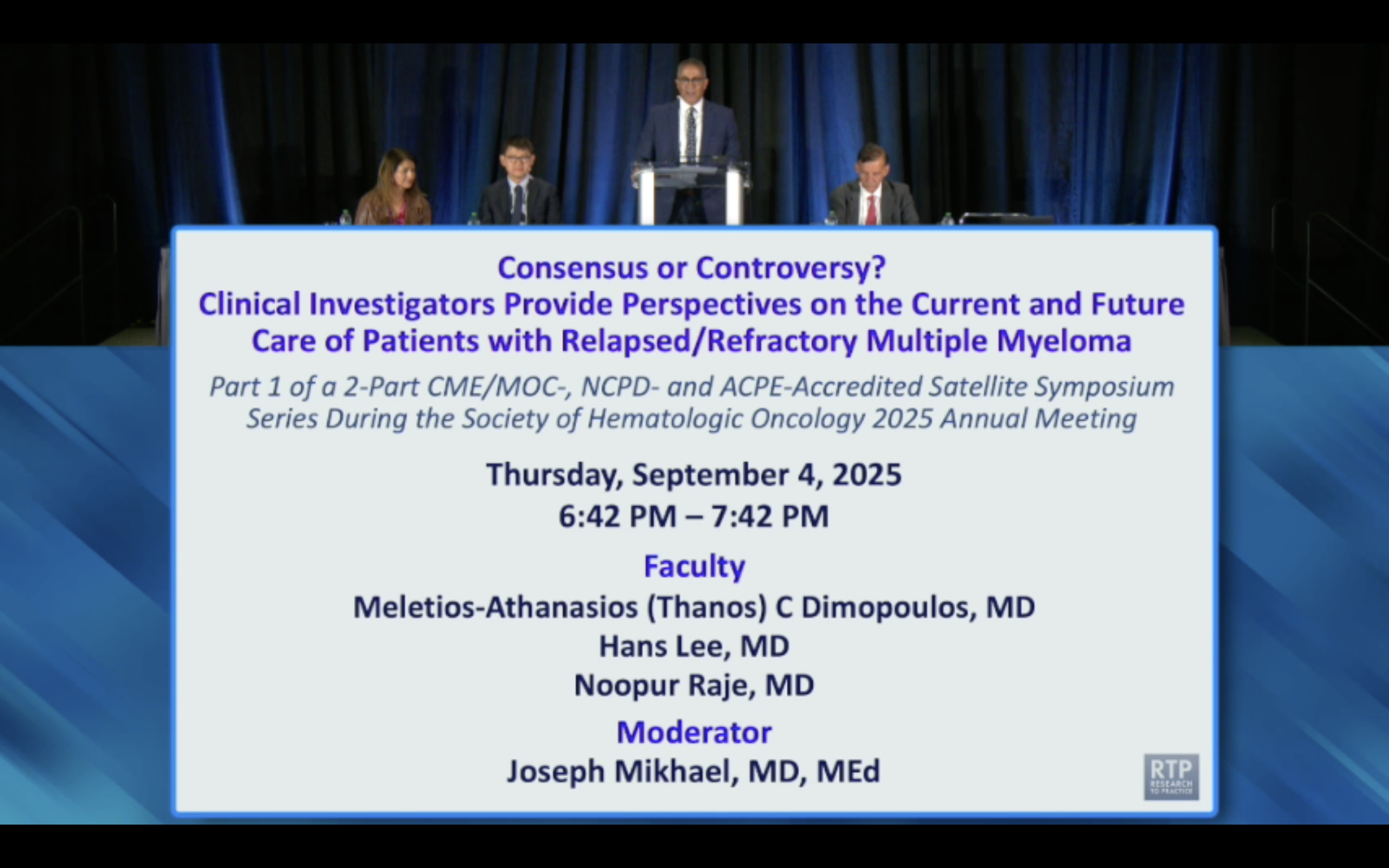
Relapsed/Refractory Multiple Myeloma — Proceedings from a Session Held During the Society of Hematologic Oncology 2025 Annual Meeting
Featuring perspectives from Prof Meletios-Athanasios (Thanos) C Dimopoulos, Dr Hans Lee, and Dr Noopur Raje, moderated by Dr Joseph Mikhael, including the following topics: Introduction (0:00) Chimeric Antigen Receptor (CAR) T-Cell Therapy for Relapsed/Refractory (R/R) Multiple Myeloma (MM) — Dr Raje (3:17) Integrating Bispecific Antibodies into the Management of R/R MM — Dr Lee (20:38) Potential Role of Antibody-Drug Conjugates and Cereblon E3 Ligase Modulators in Therapy for MM — Prof Dimopoulos (40:37) CE information and select publications

Breast Cancer — 5-Minute Journal Club Issue 3 with Dr Kevin Kalinsky: Defining the Role of TROP2-Directed Antibody-Drug Conjugates
Featuring an interview with Dr Kevin Kalinsky, including the following topics: Patient-Reported Outcomes from the TROPION-Breast01 Study (0:00) Pernas S et al. Datopotamab deruxtecan (Dato-DXd) vs chemotherapy (CT) in previously treated inoperable or metastatic hormone receptor-positive, HER2-negative (HR+/HER2-) breast cancer (BC): Patient-reported outcomes from the TROPION-Breast01 study. ASCO 2024;Abstract 1006. Indirect Comparison of Sacituzumab Govitecan and Datopotamab Deruxtecan for Advanced Breast Cancer (5:04) Pathak N et al. Indirect comparison of sacituzumab govitecan (SG) and datopotamab deruxtecan (Dato-DXd) in advanced breast cancer (aBC): Safety and efficacy analysis. San Antonio Breast Cancer Symposium 2024;Abstract P1-02-02. BEGONIA: A Phase Ib/II Study of Datopotamab Deruxtecan with Durvalumab as First-Line Treatment for Unresectable Advanced Triple-Negative Breast Cancer (9:53) Schmid P et al. Datopotamab deruxtecan (Dato-DXd) + durvalumab (D) as first-line (1L) treatment for unresectable locally advanced/metastatic triple-negative breast cancer (a/mTNBC): Updated results from BEGONIA, a phase Ib/II study. ESMO 2023;Abstract 379MO. Advances in the Use of TROP2-Targeted Antibody-Drug Conjugates for Breast Cancer: Mechanisms, Clinical Applications and Future Directions (15:35) Tong Y et al. Advances in Trop-2 targeted antibody-drug conjugates for breast cancer: Mechanisms, clinical applications, and future directions. Front Immunol 2024;15:1495675. Abstract CME information and select publications
Metastatic BRCA-Negative Triple-Negative Breast Cancer — An Interview with Prof Peter Schmid on Optimal Management
Featuring an interview with Prof Peter Schmid, including the following topics: Response to immunotherapy in breast cancer subtypes (0:00) Tolerability of TROP2 antibody-drug conjugates (ADCs) for metastatic breast cancer (mBC) (3:51) Approaches to therapy for patients with HR-negative HER2-low and HER2-ultralow mBC (13:03) ADC structure and treatment-related adverse events (19:02) Available data from the Phase III ASCENT-04 trial evaluating sacituzumab govitecan with pembrolizumab as first-line therapy for patients with PD-L1-positive advanced triple-negative breast cancer (23:06) Novel ADCs and bispecific antibodies under investigation for mBC (28:30) Comparing datopotamab deruxtecan and sacituzumab govitecan for HR-positive disease (33:01) Clinical investigator perspectives on the Phase III DESTINY-Breast09 trial evaluating first-line trastuzumab deruxtecan with or without pertuzumab versus THP (docetaxel/rastuzumab/pertuzumab) for HER2-positive mBC (35:06) CME information and select publications
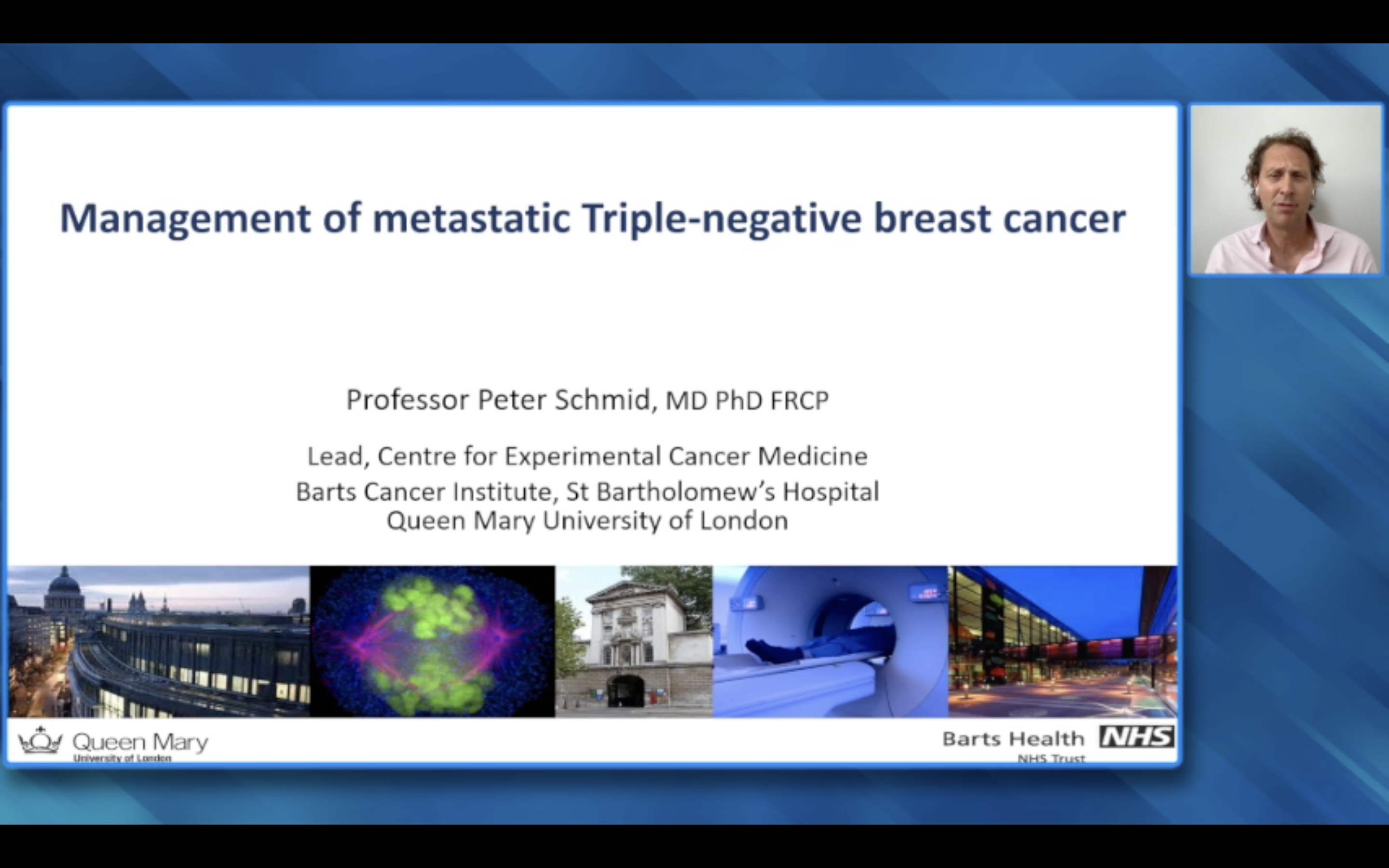
Metastatic BRCA-Negative, Triple-Negative Breast Cancer — An Interview with Prof Peter Schmid on Optimal Management (Companion Faculty Lecture)
Featuring a slide presentation and related discussion from Prof Peter Schmid, including the following topics: Evolution of the therapeutic landscape for metastatic triple-negative breast cancer; age of immunotherapy (0:00) Case: A woman in her early 40s with no actionable mutations (7:29) Evolution of antibody-drug conjugates (ADCs) in the management of metastatic breast cancer (11:13) TROP2-directed ADCs (15:22) Case: A woman in her early 50s with PD-L1-negative, HR-negative, HER2-low de novo metastatic breast cancer (20:21) Novel strategies utilizing approved and investigational ADCs (23:28) Case: A woman in her early 60s with loss of HER2 expression on disease progression (31:39) ADCs in combination with immunotherapy (32:51) CME information and select publications
Extrapulmonary Neuroendocrine Carcinoma — An Interview with Dr Jonathan Strosberg on Current and Future Management
Featuring an interview with Dr Jonathan Strosberg, including the following topics: Overview of extrapulmonary neuroendocrine carcinoma (NEC) (0:00) Treatment strategies for extrapulmonary NEC (10:26) Targeting DLL3 in extrapulmonary NEC (18:49) Early clinical data with obrixtamig for extrapulmonary NEC (21:56) Additional investigational agents for extrapulmonary NEC (25:44) Case: A woman in her mid 50s with poorly differentiated metastatic NEC of unknown primary (27:20) Case: A man in his early 60s with poorly differentiated metastatic esophageal NEC (32:30) Clinical management of well-differentiated NEC (36:58) CME information and select publications
Oncology Nursing Update: Multiple Myeloma — An Interview with Dr Beth Faiman on CAR T-Cell Therapy
Featuring an interview with Dr Beth Faiman, including the following topics: Clinical practice background and historical view of treatment for multiple myeloma (MM) (0:00) Fundamental principles associated with chimeric antigen receptor (CAR) T-cell therapy (7:19) Sequencing of CAR T-cell therapy and bispecific antibodies in the MM treatment landscape (9:00) Patient eligibility to receive CAR T-cell therapy (13:23) Differentiating among approved CAR T-cell therapies for MM (18:18) Durability of responses to CAR T-cell therapy for MM (24:01) Neurotoxicity with CAR T-cell therapies for MM (26:26) Minimal residual disease monitoring in MM (29:39) Support systems for the management of toxicities associated with CAR T-cell therapy (35:10) Patients with MM experiencing durable responses to CAR T-cell therapy (43:11) NCPD information and select publications
Extrapulmonary Neuroendocrine Carcinoma — An Interview with Dr Jonathan Strosberg on Current and Future Management (Companion Faculty Lecture)
Featuring a slide presentation and related discussion from Dr Jonathan Strosberg, including the following topics: Overview of the classification, grading and incidence of neuroendocrine carcinoma (NEC) (0:00) Overview of mutational profile, biomarker assessments and prognosis of NEC (3:45) Current treatment paradigm for extrapulmonary NEC (8:59) DLL3 as an emerging target biomarker in extrapulmonary NEC (17:46) Novel therapeutic agents under investigation for extrapulmonary NEC (23:05) CME information and select publications
Metastatic Triple-Negative Breast Cancer — The Selection and Sequencing of Therapy
Featuring perspectives from Dr Ana C Garrido-Castro and Prof Peter Schmid, including the following topics: Introduction: Legendary Figures in Breast Cancer Research (0:00) Case: A woman in her early 80s, a current smoker with a history of myocardial infarction and stroke, who develops recurrent triple-negative breast cancer (TNBC) — Justin Favaro, MD, PhD (6:44) Case: A woman in her late 60s with metastatic TNBC and a PD-L1 level of 20% who receives chemotherapy/pembrolizumab followed by sacituzumab govitecan — Priya Rudolph, MD, PhD (25:08) Case: A woman in her late 60s with localized TNBC who develops myocarditis while receiving neoadjuvant chemotherapy/pembrolizumab — Richard Zelkowitz, MD (33:53) Case: A woman in her mid 60s with recurrent ER-negative, HER2-low, PI3K-mutant TNBC — Ranju Gupta, MD (37:49) Case: A woman in her early 60s with recurrent TNBC confined to contralateral neck nodes — Eric H Lee, MD, PhD (42:10) Case: A woman in her early 40s with metastatic TNBC who receives sacituzumab govitecan after multiple lines of chemotherapy — Estelamari Rodriguez, MD, MPH (48:10) Case: A woman in her mid 70s with ER-negative, HER2-low breast cancer who develops an isolated brain metastasis — Dr Gupta (55:02) CME information and select publications
Ocular Toxicities Associated with ADCs and Other Cancer Therapies: Part 2 — An Interview with Dr Neel Pasricha on Adverse Event Management
Featuring an interview with Dr Neel Pasricha, including the following topics: Anatomy and physiology of the cornea; intersection of ophthalmology and oncology for patients receiving antibody-drug conjugates (ADCs) (0:00) Association of corneal toxicities with ADCs (4:56) Dose and schedule modifications to mitigate ocular toxicities associated with belantamab mafodotin and other ADCs (9:02) Spectrum and severity of corneal toxicities associated with datopotamab deruxtecan (14:44) Role of optometrists and ophthalmologists in screening for and management of ocular toxicities (17:55) Other ocular toxicities associated with cancer therapies (24:26) Prevention and management of corneal toxicity (33:58) Preexisting ophthalmic conditions as potential risk factors for development of ocular toxicities with ADCs (43:39) General clinical pearls on the management of ocular toxicities with cancer therapies (48:04) CME information and select publications