
Research To Practice | Oncology Videos
990 episodes — Page 8 of 20

For Oncology Nurses: Antibody-Drug Conjugates for Breast Cancer and Lung Cancer — Proceedings from the 2025 Annual ONS Congress
Featuring perspectives from Ms Marianne J Davies, Dr Edward B Garon, Ms Marissa Marti-Smith and Dr Tiffany A Traina, including the following topics: Introduction (0:00) Overview of Antibody-Drug Conjugates (ADCs) (4:40) Trastuzumab Deruxtecan (T-DXd) in Patients with HER2-Positive Metastatic Breast Cancer (mBC) with and without Brain Metastases (12:40) Role of ADCs for Patients with ER-Positive mBC (35:09) T-DXd in Patients with Metastatic Non-Small Cell Lung Cancer (NSCLC) with HER2 Alterations (52:20) Emerging Role of ADCs for Patients with Progressive EGFR-Mutant NSCLC (1:12:20) NCPD information and select publications

Hormone Receptor-Positive Metastatic Breast Cancer — An Interview with Dr Adam M Brufsky on the Impact of Biomarkers and Existing Comorbidities on the Selection of First-Line Therapy
Featuring an interview with Dr Adam M Brufsky, including the following topics: Case: A woman in her early 50s with ER-positive, HER2-low de novo metastatic breast cancer (0:00) Case: A woman in her late 70s with ER-positive, HER2-low metastatic breast cancer after 5 years of an adjuvant aromatase inhibitor (6:52) Clinical Investigator Survey Results (10:05) CME information and select publications

Hormone Receptor-Positive Metastatic Breast Cancer — An Interview with Dr Adam M Brufsky on the Impact of Biomarkers and Existing Comorbidities on the Selection of First-Line Therapy (Companion Faculty Lecture)
Featuring a slide presentation and related discussion from Dr Adam M Brufsky, including the following topics: Mechanism of action of and long-term data with CDK4/6 inhibitors in the management of metastatic breast cancer (mBC) (0:00) Comparing safety profiles of CDK4/6 inhibitors (9:49) Role of CDK4/6 inhibitors in therapy for older patients with mBC (24:06) Real-world evidence with CDK4/6 inhibitors (27:31) CME information and select publications

Genitourinary Cancers — An Interview with Dr William K Oh on Recent Trial Updates
Featuring an interview with Dr William K Oh, including the following topics: Use of secondary hormonal agents for patients with metastatic hormone-sensitive prostate cancer (0:00) Data supporting the clinical activity of PARP inhibitors for metastatic castration-resistant prostate cancer (mCRPC) (11:10) Radiopharmaceuticals for the treatment of mCRPC (16:53) Available data on cabozantinib for mCRPC (24:38) Cabozantinib combinations for advanced renal cell carcinoma (RCC) (26:17) Subcutaneous nivolumab versus intravenous nivolumab for advanced RCC (30:00) Addition of nivolumab to tivozanib compared to tivozanib alone in advanced relapsed/refractory RCC previously treated with an immune checkpoint inhibitor (31:28) Long-term follow-up with belzutifan for relapsed/refractory advanced RCC (33:39) Major findings from the NIAGARA study of perioperative durvalumab for muscle-invasive bladder cancer (MIBC) (35:44) Data surrounding adjuvant immunotherapy for MIBC (38:07) Clinical development of TAR-200 for high-risk non-muscle-invasive bladder cancer (39:44) Updated analysis of EV-302 study of enfortumab vedotin in combination with pembrolizumab for previously untreated advanced urothelial cancer (UC) (41:06) Implementation of emerging data in the treatment landscape of UC (41:56) CME information and select publications

Relapsed/Refractory Follicular Lymphoma Part 1 — A Roundtable Discussion on the Selection and Sequencing of Bispecific Antibodies
Featuring a slide presentation from Dr Matthew Matasar and related discussion from Dr Carla Casulo, Dr Matasar and Dr Laurie H Sehn, including the following topics: Overview of Bispecific Antibodies for the Treatment of Relapsed/Refractory (R/R) Follicular Lymphoma (FL) (0:00) Clinical Data Available with Mosunetuzumab for R/R FL (1:54) Clinical Data Available with Epcoritamab for R/R FL (4:54) Clinical Data Available with Odronextamab for R/R FL (6:53) Clinical Considerations in Selecting Among Available Bispecific Antibodies for R/R FL (8:34) Practical Considerations in the Administration of Bispecific Antibodies (15:21) The Role of Vaccinations in the Prevention of Infections for Patients Receiving Bispecific Antibodies (18:34) Ongoing Clinical Trials Evaluating Bispecific Antibodies for FL (21:34) Case: A man in his late 60s with refractory FL who received mosunetuzumab monotherapy (24:24) Case: A woman in her late 50s with relapsed FL who received third-line epcoritamab monotherapy (30:14) Case: A man in his late 80s with a long-standing history of FL who received odronextamab in combination with a second novel bispecific antibody (33:48) CME information and select publications

EGFR Mutation-Positive NSCLC — Fourth Annual National General Medical Oncology Summit
Featuring perspectives from Dr Jonathan Goldman and Dr Natasha B Leighl, including the following topics: Introduction (0:00) Current Management of Nonmetastatic and Metastatic EGFR Mutation-Positive Non-Small Cell Lung Cancer (NSCLC) — Prof Leighl (1:42) Promising Novel Agents in Clinical Development; EGFR Exon 20 Mutation-Positive NSCLC — Dr Goldman (37:25) CME information and select publications

HER2-Positive and Triple-Negative Breast Cancer — Fourth Annual National General Medical Oncology Summit
Featuring perspectives from Dr Aditya Bardia, Dr Virginia F Borges, Dr Harold J Burstein and Dr Joyce O'Shaughnessy, including the following topics: Introduction (0:00) HER2-Positive Breast Cancer — Dr O'Shaughnessy (3:13) Triple-Negative Breast Cancer — Dr Bardia (32:56) Personalizing Adjuvant Therapy for Patients with HR-Positive Breast Cancer — Dr Borges (57:35) Current Role of CDK4/6 Inhibitors in the Localized Setting — Dr Burstein (1:25:15) CME information and select publications

Oncology Nursing Update Special 2-Part Edition: Bispecific Antibodies in Lymphoma — Part 2
Featuring an interview with Ms Amy Goodrich, including the following topics: Presentation and management of follicular lymphoma (FL) (0:00) Case: A woman in her late 70s with heavily pretreated disease experiences complete response to mosunetuzumab (24:41) Case: A man in his early 60s with extensive diffuse large B-cell lymphoma and short response to CAR-T is successfully bridged to allogeneic transplant with glofitamab (30:15) Case: A man in his late 50s with transformed FL has limited treatment options due to lack of social support (45:51) Effects of bispecific antibodies in follicular and diffuse large B-cell lymphoma (52:53) NCPD information and select publications

Ovarian Cancer — Proceedings from a Session Held During the 2025 SGO Annual Meeting on Women's Cancer®
Featuring perspectives from Dr Kathleen N Moore, Dr Ritu Salani, Dr Angeles Alvarez Secord and Dr Shannon N Westin, moderated by Dr Secord, including the following topics: Introduction (0:00) Up-Front Treatment for Advanced Ovarian Cancer (OC) — Dr Westin (2:42) Management of Relapsed/Refractory OC — Dr Secord (23:06) Novel Investigational Therapies for Advanced OC — Dr Moore (46:55) Diagnosis and Management of Adverse Events Associated with Commonly Employed Therapies for Advanced OC — Dr Salani (1:08:34) CME information and select publications

Myelofibrosis — An Interview with Dr Raajit K Rampal on Key Presentations from the 66th American Society of Hematology (ASH) Annual Meeting
Featuring an interview with Dr Raajit K Rampal, including the following topics: Clinical decision-making in the initiation and stopping of systemic therapy for myelofibrosis (MF) (0:00) Novel research strategies involving CDK4/6 inhibitors for MF (8:03) Implications of the JUMP study for clinical practice (10:00) Therapeutic switching strategies with JAK inhibitors for MF (12:17) Clinical rationale for the use of luspatercept and elritercept for MF (15:35) Emerging clinical data involving BET inhibitors for MF (16:57) Tolerability concerns with selinexor in patients with MF (20:01) Mechanism of and clinical data with the MDM2 inhibitor navtemadlin for MF (22:32) Additional novel strategies under clinical investigation for MF (25:52) Potential transformation of myeloproliferative neoplasms to acute myeloid leukemia (29:40) Management of polycythemia vera and essential thrombocythemia (34:27) General management principles for myeloproliferative neoplasms (37:53) CME information and select publications

Myelofibrosis — An Interview with Dr Raajit K Rampal on Key Presentations from the 66th American Society of Hematology (ASH) Annual Meeting (Companion Faculty Lecture)
Featuring a slide presentation and related discussion from Dr Raajit K Rampal, including the following topics: Overview of the current JAK inhibitor landscape (0:00) Factors predicting clinical benefit in patients with myelofibrosis (MF) receiving ruxolitinib (3:02) Clinical data supporting the use of fedratinib after prior ruxolitinib for MF (9:17) Emerging clinical findings on pelabresib in combination with ruxolitinib for previously untreated MF (12:13) Available clinical data with novel BET inhibitors (15:00) Utility of selinexor in combination with ruxolitinib for MF previously treated with ruxolitinib (16:50) Emerging efficacy and safety findings reported with imetelstat for MF (18:57) Clinical findings reported with the MDM2 inhibitor navtemadlin for MF (21:15) Available clinical data with the TGF-beta inhibitor elritercept for MF (24:05) Other novel agents and strategies under investigation for MF (26:06) CME information and select publications

Sarcoma and Other Connective Tissue Neoplasms — Fourth Annual National General Medical Oncology Summit
Featuring perspectives from Dr Rashmi Chugh and Dr Richard F Riedel, including the following topics: Other Connective Tissue Neoplasms — Dr Chugh (0:00) Sarcoma — Dr Riedel (28:16) CME information and select publications

HR-Positive Breast Cancer — Fourth Annual National General Medical Oncology Summit
Featuring perspectives from Dr Aditya Bardia, Dr Virginia F Borges, Dr Harold J Burstein and Dr Joyce O'Shaughnessy, including the following topics: Introduction (0:00) CDK4/6 Inhibitors for HR-Positive Metastatic Breast Cancer (mBC) — Dr Borges (9:56) Targeting the PTEN/PI3K/AKT Pathway in HR-Positive mBC — Dr Burstein (35:20) Role of Oral Selective Estrogen Receptor Degraders in the Management of HR-Positive mBC — Dr O'Shaughnessy (1:03:07) Antibody-Drug Conjugates for HR-Positive mBC — Dr Bardia (1:36:12) CME information and select publications

Chronic Lymphocytic Leukemia — Fourth Annual National General Medical Oncology Summit
Featuring perspectives from Dr Nicole Lamanna and Dr Kerry Rogers, including the following topics: Introduction (0:00) Current Role of Covalent Bruton Tyrosine Kinase and Bcl-2 Inhibitors in Managing Chronic Lymphocytic Leukemia — Dr Lamanna (10:55) Novel Agents and Combination Strategies — Dr Rogers (31:21) CME information and select publications
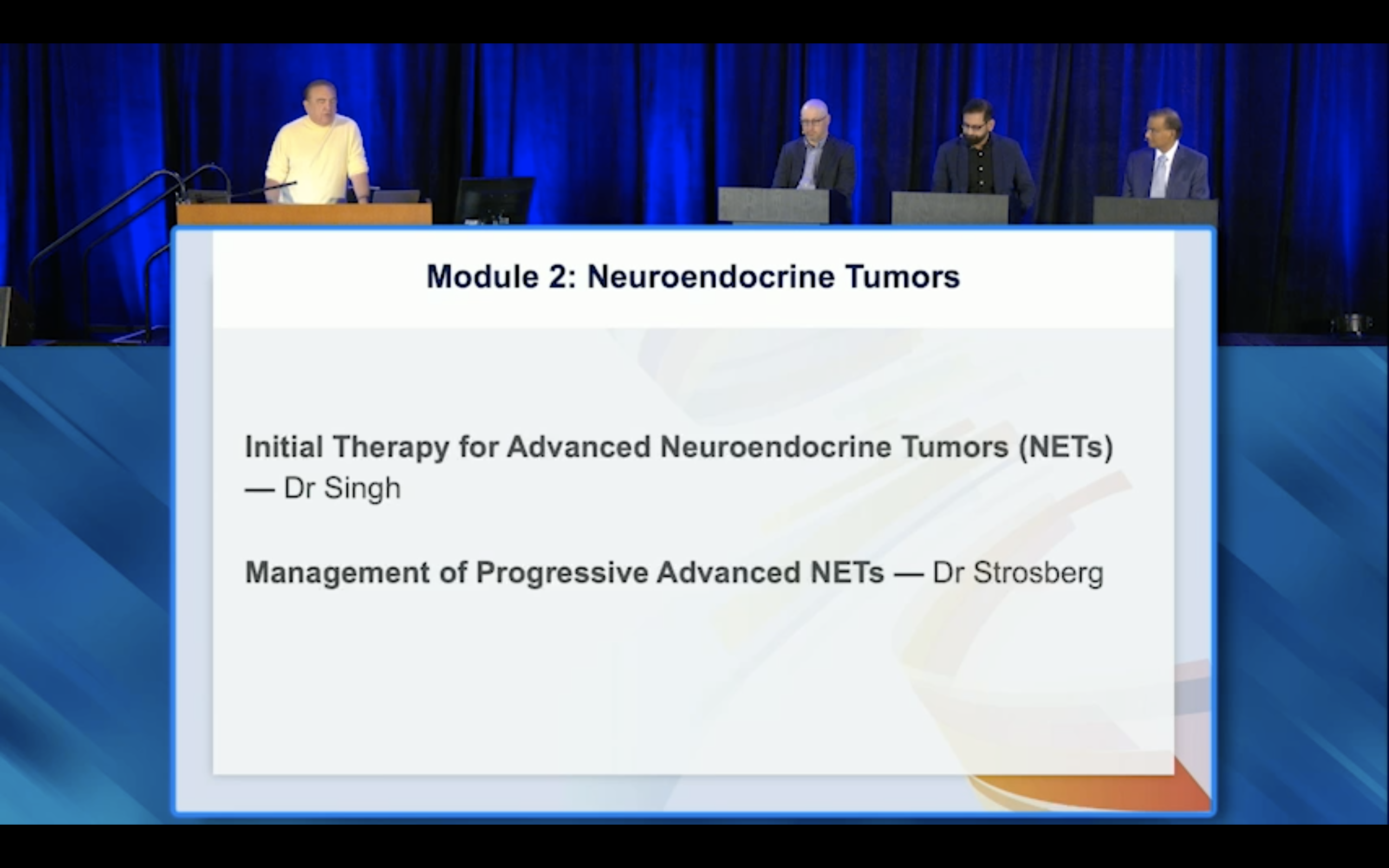
Neuroendocrine Tumors — Fourth Annual National General Medical Oncology Summit
Featuring perspectives from Dr Simron Singh and Dr Jonathan Strosberg, including the following topics: Introduction (0:00) Initial Therapy for Advanced Neuroendocrine Tumors (NETs) — Dr Singh (6:48) Management of Progressive Advanced NETs — Dr Strosberg (28:50) CME information and select publications

First-Line Therapy for Metastatic Non-Small Cell Lung Cancer and an ALK Rearrangement — An Interview with Dr Justin F Gainor
Featuring an interview with Dr Justin F Gainor, including the following topics: Duration of responses observed with ALK inhibitors in patients with ALK-positive metastatic non-small cell lung cancer (mNSCLC) (0:00) Current role of other systemic therapy options for the treatment of ALK-positive mNSCLC; management of oligometastatic disease (8:38) Local therapy approaches for treating CNS disease in ALK-positive mNSCLC (18:32) Tolerability profile of lorlatinib (23:28) Review of clinical investigator survey results (37:08) Novel ALK inhibitors under clinical development (53:22) CME information and select publications

First-Line Therapy for Metastatic Non-Small Cell Lung Cancer and an ALK Rearrangement — An Interview with Dr Justin F Gainor (Companion Faculty Lecture)
Featuring a slide presentation and related discussion from Dr Justin F Gainor, including the following topics: Duration of responses observed with ALK inhibitors in patients with ALK-positive metastatic non-small cell lung cancer (mNSCLC) (0:00) Current role of other systemic therapy options for the treatment of ALK-positive mNSCLC; management of oligometastatic disease (8:38) Local therapy approaches for treating CNS disease in ALK-positive mNSCLC (18:32) Tolerability profile of lorlatinib (23:28) Review of clinical investigator survey results (37:08) Novel ALK inhibitors under clinical development (53:31) CME information and select publications

Breast Cancer — An Interview with Dr Adrienne G Waks on Recent Trial Updates
Featuring an interview with Dr Adrienne G Waks, including the following topics: The Phase III AFT-38 PATINA trial of palbociclib combined with anti-HER2 therapy for hormone receptor (HR)-positive/HER2-positive metastatic breast cancer (mBC) (0:00) Role of immunotherapy in the treatment of breast cancer (8:30) Defining ER-low breast cancer and identifying treatment approaches for this histologic subtype (15:55) Genomic testing approaches for patients with localized breast cancer and identification of candidates for treatment with adjuvant olaparib (19:37) Current role of anthracyclines in the treatment of localized breast cancer (31:17) Available and novel antibody-drug conjugates for the treatment of breast cancer (41:21) Palbociclib with endocrine therapy compared to chemotherapy induction followed by endocrine therapy maintenance for HR-positive, HER2-negative mBC (51:53) CME information and select publications

Breast Cancer — An Interview with Dr Adrienne G Waks on Recent Trial Updates (Companion Faculty Lecture)
Featuring a slide presentation and related discussion from Dr Adrienne G Waks, including the following topics: Updated analyses from key studies of the 21-gene Recurrence Score® for localized ER-positive breast cancer (29:30) Four-year landmark analysis of the NATALEE trial of adjuvant ribociclib with nonsteroidal aromatase inhibitor for localized breast cancer (9:49) The PADMA trial of palbociclib with endocrine therapy compared to chemotherapy induction followed by endocrine therapy maintenance for hormone receptor (HR)-positive, HER2-negative metastatic breast cancer (mBC) (11:25) Imlunestrant with or without abemaciclib for metastatic ER-positive mBC (13:18) TROP2-directed antibody-drug conjugates (ADCs) datopotamab deruxtecan and sacituzumab tirumotecan for HR-positive/HER2-negative mBC (17:50) Recent analyses from the DESTINY-Breast06 trial of trastuzumab deruxtecan (T-DXd) after endocrine therapy for HR-positive, HER2-low or HER2-ultralow mBC (21:09) The ICARUS-BREAST01 Phase II trial of the HER3-targeted ADC patritumab deruxtecan for HR-positive/HER2-negative mBC (26:02) Updates from neoadjuvant/adjuvant trials of pembrolizumab (KEYNOTE-522) and atezolizumab (NSABP B-59/GBG 96-GeparDouze) for localized triple-negative breast cancer (TNBC) (27:36) Ten-year update of the OlympiA trial of adjuvant olaparib for patients with germline BRCA1/2-mutated HER2-negative localized breast cancer (31:23) Exploratory analysis of patients who did or did not receive prior PD-1/PD-L1 inhibition in the Phase III OptiTROP-Breast01 study of sacituzumab tirumotecan versus chemotherapy for previously treated advanced TNBC (32:56) CNS efficacy of T-DXd (DESTINY-Breast12 trial) and outcomes with palbociclib combined with anti-HER2 therapy (AFT-38 PATINA trial) for HER2-positive mBC (34:04) CME information and select publications

Chronic Lymphocytic Leukemia — An Interview with Dr Catherine C Coombs on Real-World Cases and Current Questions and Controversies Presented at Recent Conferences
Featuring an interview with Dr Catherine C Coombs, including the following topics: Case: A woman in her early 80s with dementia and newly diagnosed IGHV-mutated del(13q) chronic lymphocytic leukemia (CLL) receives initial treatment with zanubrutinib (0:00) Current and investigational initial therapy approaches for CLL (13:41) Case: A man in his late 40s under observation for asymptomatic CLL develops worsening symptoms and initiates treatment with venetoclax/obinutuzumab (28:15) Phase III AMPLIFY trial of fixed-duration acalabrutinib combined with venetoclax with or without obinutuzumab as first-line treatment for CLL (36:02) Other novel venetoclax combinations for the treatment of CLL (43:36) Case: A man in his mid 70s with multiregimen-refractory CLL receives pirtobrutinib (46:51) Personal perspectives on the activity and tolerability of pirtobrutinib; sequencing pirtobrutinib and chimeric antigen receptor T-cell therapy for patients with CLL (51:16) CME information and select publications

HER2-Positive Gynecologic Cancers — Proceedings from a Session Held During the 2025 SGO Annual Meeting on Women's Cancer®
Featuring perspectives from Dr Kathleen N Moore, Dr David M O'Malley and Dr Alessandro D Santin, moderated by Dr O'Malley, including the following topics: Introduction (0:00) Strategies to Identify Patients with HER2-Positive Gynecologic Cancers — Dr Santin (2:17) Available Data with and Practical Application of HER2-Targeted Therapy for Advanced Gynecologic Cancers — Dr O'Malley (30:24) Identification and Management of Adverse Events with Trastuzumab Deruxtecan — Dr Moore (1:01:53) CME information and select publications

Neurofibromatosis Type 1 Plexiform Neurofibromas — An interview with Dr Christopher L Moertel
Featuring an interview with Dr Christopher L Moertel, including the following topics: Overview of neurofibromatosis type 1(NF1) (0:00) Cancer in NF1 (8:38) Dermatologic manifestations of NF1 (16:57) Treatment options for NF1 (20:43) Malignant peripheral nerve sheath tumors (MPNST) (25:14) FDA-approved MEK inhibitors for NF1 plexiform neurofibromas (28:36) Specializing in NF (44:44) CME information and select publications

Neurofibromatosis Type 1 Plexiform Neurofibromas — An interview with Dr Christopher L Moertel (Companion Faculty Lecture)
Featuring a slide presentation and related discussion from Dr Christopher L Moertel, including the following topics: Overview of neurofibromatosis (0:00) Common clinical manifestations of neurofibromatosis type 1 (NF1) (14:13) Role of MEK inhibitors in the management of NF1 plexiform neurofibromas (29:30) CME information and select publications
HR-Positive Breast Cancer — An Interview with Dr Sara A Hurvitz on the Role of Endocrine-Based Therapy
Featuring an interview with Dr Sara A Hurvitz, including the following topics: Role of endocrine therapy in the management of HER2-positive breast cancer; implications of the Phase III PATINA study (0:00) Case: A woman in her mid 60s with node-negative, HR-positive, HER2-negative localized breast cancer and a Recurrence Score® of 28 (8:38) Available data guiding the selection of an adjuvant CDK4/6 inhibitor (12:49) Selection of a CDK4/6 inhibitor in the metastatic setting (23:16) Available therapies for patients with HR-positive metastatic breast cancer (mBC) and PIK3CA mutations; implications of the Phase III INAVO120 study (29:17) Case: A woman in her early 60s with HR-positive, HER2-negative mBC with short duration of benefit from a first-line CDK4/6 inhibitor and an aromatase inhibitor (AI) and coexisting PIK3CA and ESR1 mutations (37:11) Available data with approved and investigational oral SERDs (selective estrogen receptor degraders) (43:23) Case: A woman in her early 70s with HR-positive, HER2-negative mBC and an ESR1 mutation detected on disease progression after durable responses to first-line endocrine therapy and second-line CDK4/6 inhibitor with an AI (51:38) Selection of therapy for patients with HR-positive mBC and coexisting targetable genetic mutations (53:11) Case: A woman in her late 50s with HR-positive, HER2-negative mBC and an ESR1 mutation detected on disease progression after first-line CDK4/6 inhibitor with an AI (1:00:17) CME information and select publications

For Oncology Nurses: Bispecific Antibodies in Multiple Myeloma — An Interview with Dr Tiffany A Richards
Featuring an interview with Dr Tiffany A Richards, including the following topics: Current treatment landscape for multiple myeloma (MM) (0:00) CAR (chimeric antigen receptor) T-cell therapy for the management of MM (10:22) Bispecific antibodies for relapsed/refractory MM (24:26) Case: A woman in her early 80s with relapsed MM receives teclistamab (35:56) Case: A man in his early 70s with multiregimen-refractory MM receives linvoseltamab on a clinical trial (44:06) Case: A woman in her early 60s with relapsed MM and extramedullary disease receives talquetamab (48:38) Role of nurses in transitions of care for patients with MM (53:15) Case: A man in his mid 70s with heavily pretreated MM experiences a response to teclistamab (58:56) Risk of second cancers with bispecific antibodies and other immunotherapy-based treatment approaches (1:00:55) NCPD information and select publications
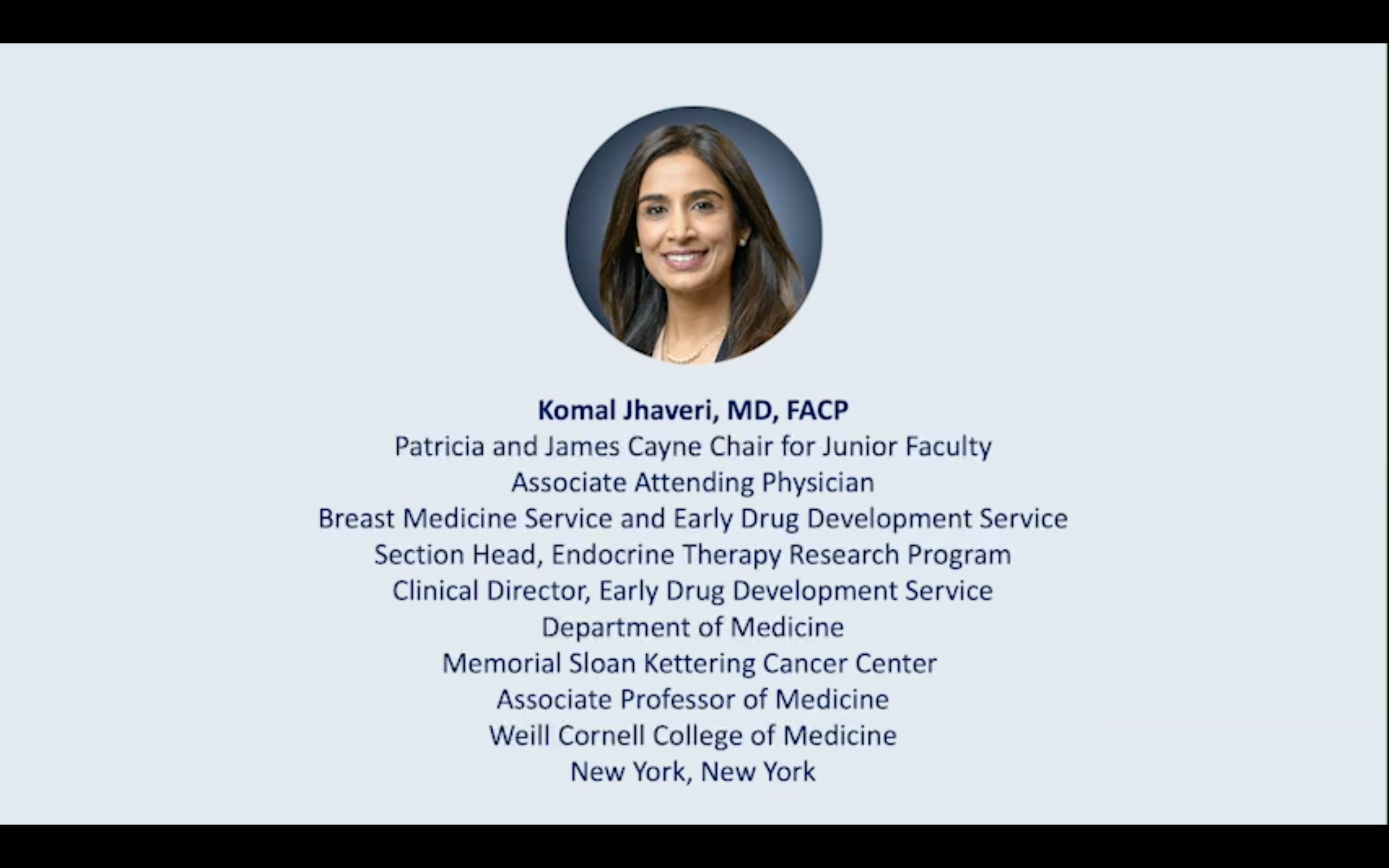
ER-Positive Metastatic Breast Cancer | 5-Minute Journal Club Issue 6 with Dr Komal Jhaveri: Reviewing the Role of Oral SERDs in the Management of ER-Positive Metastatic Breast Cancer
Featuring an interview with Dr Komal Jhaveri, including the following topics: Emerging treatment options for advanced ER-positive breast cancer (0:00) Burstein H. Emerging treatment options for advanced ER+ breast cancer. San Antonio Breast Cancer Symposium 2024;Abstract GS1-01 Discussant. Elacestrant real-world progression-free survival for adult patients with ER-positive, HER2-negative advanced breast cancer: A retrospective analysis using insurance claims in the United States (7:28) Swallow E et al. Elacestrant real-world progression-free survival (rwPFS) of adult patients with ER+/HER2-, advanced breast cancer: A retrospective analysis using insurance claims in the United States. San Antonio Breast Cancer Symposium 2024;Abstract P3-10-08. Ongoing clinical trials involving oral SERDs (9:03) Kaklamani V et al. ELCIN: Elacestrant in women and men with CDK4/6 inhibitor (CDK4/6i)-naïve estrogen receptor-positive (ER+), HER2-negative (HER2-) metastatic breast cancer (mBC): An open-label multicenter phase 2 study. San Antonio Breast Cancer Symposium 2024;Abstract P2-08-20. An adjuvant endocrine-based therapy study of camizestrant (AZD9833) in ER+/HER2- early breast cancer (CAMBRIA-2). NCT05952557 Bardia A et al. ELEGANT: Elacestrant versus standard endocrine therapy in women & men with node-positive, estrogen receptor-positive, HER2-negative, early breast cancer with high risk of recurrence in a global, multicenter, randomized, open-label phase 3 study. San Antonio Breast Cancer Symposium 2024;Abstract P2-08-21. Precision therapeutics and emerging strategies for HR-positive metastatic breast cancer (13:48) Lloyd MR et al. Precision therapeutics and emerging strategies for HR-positive metastatic breast cancer. Nat Rev Clin Oncol 2024;21(10):743-61. Abstract CME information and select publications

Oncology Nursing Update: Bispecific Antibodies in Lymphoma Part 1 — An Interview with Ms Robin Klebig
Featuring an interview with Ms Robin Klebig, including the following topics: Overview of the natural history and treatment landscapes of lymphoma subtypes (0:00) Structure and mechanisms of action of bispecific antibodies (23:41) Similarities and differences among the various approved and investigational CD20 x CD3 bispecific antibodies for non-Hodgkin lymphoma (28:14) Case: A man in his early 50s with multiagent/multiregimen-refractory follicular lymphoma who experienced disease progression with chimeric antigen receptor T-cell therapy now receives mosunetuzumab (39:14) Case: A woman in her mid 60s with relapsed/refractory (R/R) diffuse large B-cell lymphoma receives glofitamab (49:08) Case: A man in his mid 60s with R/R high-grade B-cell lymphoma with MYC and Bcl-2 rearrangements receives epcoritamab (52:57) Case: A man in his early 60s with composite lymphoma receives epcoritamab (56:55) NCPD information and select publications

Renal Cell Carcinoma — Proceedings from a Session Held in Conjunction with the 2025 ASCO Genitourinary Cancers Symposium (ASCO GU)
Featuring perspectives from Dr Thomas E Hutson, Dr Rana R McKay, Dr Sumanta Kumar Pal and Dr Tian Zhang, moderated by Dr Pal, including the following topics: Introduction (0:00) Immunotherapeutic Strategies for Localized and Metastatic Clear Cell Renal Cell Carcinoma (RCC) — Dr Hutson (2:34) Optimal Management of Relapsed/Refractory RCC — Dr Zhang (32:49) Role of HIF-2α Inhibitors in the Treatment of Sporadic and von Hippel-Lindau-Associated RCC — Dr McKay (1:04:02) Current and Future Care of Patients with Non-Clear Cell RCC — Dr Pal (1:33:13) CME information and select publications

Colorectal Cancer — Year in Review Series on Relevant New Datasets and Advances
Featuring perspectives from Dr Scott Kopetz and Dr Jeffrey Meyerhardt, including the following topics: Introduction (0:00) Cell-Free DNA Molecular Residual Disease Assays in Clinical Practice (3:25) Immunotherapy for Localized and Metastatic Microsatellite Instability-High Colorectal Cancer (28:27) Other Important Datasets (46:06) CME information and select publications

Colorectal Cancer | Scott Kopetz, MD, PhD
Year in Review: Clinical Investigator Perspectives on the Most Relevant New Datasets and Advances in Colorectal Cancer | Faculty Presentation 2: Advances in the Management of Metastatic CRC (mCRC) — Scott Kopetz, MD, PhD CME information and select publications
Colorectal Cancer | Jeffrey Meyerhardt, MD, MPH
Year in Review: Clinical Investigator Perspectives on the Most Relevant New Datasets and Advances in Colorectal Cancer | Faculty Presentation 1: Optimizing the Care of Patients with Localized Colorectal Cancer (CRC) — Jeffrey Meyerhardt, MD, MPH CME information and select publications

Localized Breast Cancer — Examining the Current Use of Genetic Testing and Related Clinical Management
Featuring perspectives from Dr Kevin S Hughes and Dr Mark Robson, including the following topics: Introduction (0:00) Optimal Approach to Genetic Testing for Patients with Localized Breast Cancer (BC) — Dr Hughes (10:22) Available Data with and Practical Application of PARP Inhibition as Adjuvant Therapy for Patients with BC — Dr Robson (38:06) CME information and select publications

Urothelial Bladder Cancer and Prostate Cancer — Proceedings from a Session Held in Conjunction with the 2025 ASCO Genitourinary Cancers Symposium (ASCO GU)
Featuring perspectives from Dr Terence Friedlander and Dr Matthew D Galsky, Dr Neeraj Agarwal and Dr Andrew J Armstrong, moderated by Dr Elisabeth I Heath, including the following topics: Introduction (0:00) Role of Antibody-Drug Conjugates (ADCs) in Front-Line Therapy for Metastatic Urothelial Bladder Cancer (mUBC) — Dr Friedlander (2:53) Evidence-Based Use of ADCs for Relapsed/Refractory mUBC — Dr Galsky (33:04) Evolving Role of Treatment Intensification with Androgen Receptor Pathway Inhibitors for Nonmetastatic and Metastatic Prostate Cancer — Dr Armstrong (1:01:28) Optimal Integration of PARP Inhibitors into Therapy for Prostate Cancer — Dr Agarwal (1:27:49) CME information and select publications
5-Minute Journal Club Issue 5 with Dr Komal Jhaveri: Reviewing the Role of Oral SERDs in the Management of ER-Positive Metastatic Breast Cancer
Featuring an interview with Dr Komal Jhaveri, including the following topics: Imlunestrant, an oral selective estrogen receptor degrader (SERD), with and without abemaciclib for ER-positive, HER2-negative advanced or metastatic breast cancer (0:00) Jhaveri KL et al. Imlunestrant, an oral selective estrogen receptor degrader (SERD), as monotherapy & combined with abemaciclib, for patients with ER+, HER2- advanced breast cancer (ABC), pretreated with endocrine therapy (ET): Results of the phase 3 EMBER-3 trial. San Antonio Breast Cancer Symposium 2024;Abstract GS1-01. Jhaveri KL et al. Imlunestrant with or without abemaciclib in advanced breast cancer. N Engl J Med 2024;[Online ahead of print]. Abstract Rugo HS et al. Elacestrant abemaciclib (abema) combination in patients (pts) with estrogen receptor-positive (ER+), HER2-negative (HER2-) advanced or metastatic breast cancer (mBC). San Antonio Breast Cancer Symposium 2024; Abstract PS7-07. Elacestrant for ER-positive, HER2-negative metastatic breast cancer with ESR1-mutated tumors: Subgroup analyses from the Phase III EMERALD trial by duration of prior endocrine therapy with a CDK4/6 inhibitor and in clinical subgroups (7:40) Bardia A et al. Elacestrant in ER+, HER2- MBC with ESR1-mutated tumors: Subgroup analyses from the phase III EMERALD trial by prior duration of endocrine therapy plus CDK4/6 inhibitor and in clinical subgroups. Clin Cancer Res 2024;30(19):4299-309. Abstract Pharmacokinetics and safety of imlunestrant in patients with hepatic impairment (11:25) Wang XA et al. Evaluation of pharmacokinetics and safety of imlunestrant in participants with hepatic impairment. San Antonio Breast Cancer Symposium 2024;Abstract P4-10-07. Precision therapeutics and emerging strategies for HR-positive metastatic breast cancer (13:15) Lloyd MR et al. Precision therapeutics and emerging strategies for HR-positive metastatic breast cancer. Nat Rev Clin Oncol 2024;21(10):743-61. Abstract CME information and select publications
Biliary Tract Cancers — Reviewing Patient Cases with Prof John Bridgewater: Part 1 of 2
Featuring perspectives from Prof John Bridgewater, including the following topics: Introduction: Biology and Epidemiology; Classification (0:00) Localized Biliary Tract Cancers (6:25) First-Line Treatment of Metastatic BTC (20:04) HER2-Positive Advanced BTC (24:22) Management of Mixed Hepatocellular Carcinoma/BTC Tumors (43:18) Advanced Cholangiocarcinoma with an FGFR2 Fusion (47:59) Other Important Issues in BTC (52:33) CME information and select publications

Relapsed/Refractory Diffuse Large B-Cell Lymphoma — A Roundtable Discussion on Current and Future Management Strategies
Featuring slide presentations and related discussion from Prof Martin Hutchings, Dr Manali Kamdar, Dr Matthew Lunning and Prof Gilles Salles, including the following topics: Evolving Role of Chimeric Antigen Receptor (CAR) T-Cell Therapy in Diffuse Large B-Cell Lymphoma (DLBCL) — Dr Kamdar (0:00) Case: A 61-year-old man with Stage IV non-GCB DLBCL receives R-CHOP but experiences disease progression 8 months later (30:39) Case: A 68-year-old man with double-hit DLBCL who experiences disease progression on chemotherapy and second-line CAR T-cell therapy receives glofitamab (39:22) Incorporation of Bispecific Antibody Therapy into DLBCL Management — Prof Hutchings (45:25) Case: A 42-year-old man with progressive DLBCL refractory to 2 lines of therapy receives glofitamab with a durable response (1:07:30) Case: An 81-year-old woman with multiregimen-refractory DLBCL experiences a prolonged response to epcoritamab (1:14:25) Case: A 69-year-old man with follicular lymphoma transformed to DLBCL and refractory to 3 lines of treatment receives glofitamab (1:21:48) Selection and Sequencing of Other Available Therapies for Relapsed/Refractory (R/R) DLBCL — Prof Salles (1:24:37) Case: An 82-year-old woman with follicular lymphoma transformed to DLBCL receives tafasitamab/lenalidomide (1:42:05) Case: A 69-year-old man with urinary bladder carcinoma and recurrent GCB DLBCL receives loncastuximab tesirine (1:46:26) Promising Investigational Approaches for Patients with R/R DLBCL — Dr Lunning (2:00:37) Case: An 80-year-old woman with multiregimen-refractory GCB DLBCL seeks treatment requiring minimal clinic visits and receives loncastuximab tesirine (2:15:59) Case: A 54-year-old man with primary refractory non-GCB DLBCL receives CAR T-cell therapy, and follow-up imaging on day 29 demonstrates a Deauville score of 4 (2:25:22) CME information and select publications

Colorectal Cancer — Proceedings from a Session Held in Conjunction with the 2025 ASCO Gastrointestinal Cancers Symposium (ASCO GI)
Featuring perspectives from Dr Arvind Dasari, Dr Christopher Lieu, Dr Van K Morris, Dr Jenny Seligmann and Prof Eric Van Cutsem, moderated by Dr Lieu, including the following topics: Introduction (0:00) Optimizing Biomarker Assessment for Patients with Colorectal Cancer (CRC) — Dr Dasari (2:18) Identification and Management of Metastatic CRC (mCRC) with a BRAF V600E Mutation — Dr Morris (26:37) Incorporation of Immune Checkpoint Inhibitors into the Management of Microsatellite Instability-High/Mismatch Repair-Deficient CRC — Dr Seligmann (49:46) Integration of Therapies Targeting HER2 into the Management of mCRC — Prof Van Cutsem (1:14:19) Biomarker-Based Decision-Making for Patients with mCRC and KRAS G12C Mutations — Dr Lieu (1:36:36) CME information and select publications

Multiple Myeloma — An Interview with Dr Surbhi Sidana on Optimizing the Role of CAR T-Cell Therapy
Featuring an interview with Dr Surbhi Sidana, including the following topics: Long-term outcomes for patients with relapsed/refractory multiple myeloma (MM) (0:00) Clinical considerations in the selection of patients for chimeric antigen receptor (CAR) T-cell therapy (3:34) Practical challenges for patients receiving CAR T-cell therapy (8:34) Selection among available CAR T-cell therapies (12:18) Prevention, management and supportive care involved in the management of toxicities associated with CAR T-cell therapy (16:34) Secondary cancers associated with CAR T-cell therapy (21:25) Bridging therapy considerations for patients receiving CAR T-cell treatment (25:15) Utility of antibody-drug conjugates and bispecific antibodies for MM (27:49) Case: A man in his early 40s experiences rapid progression on induction therapy for MM (31:59) Case: A man in his early 50s with heavily pretreated MM receives multiple CAR T-cell therapies (41:47) CME information and select publications

Multiple Myeloma — An Interview with Dr Surbhi Sidana on Optimizing the Role of CAR T-Cell Therapy (Companion Faculty Lecture)
Featuring a slide presentation and related discussion from Dr Surbhi Sidana, including the following topics: Key clinical data of FDA-approved chimeric antigen receptor (CAR) T-cell therapies (0:00) Real-world evidence evaluating utility of CAR T-cell therapies in the clinic (8:08) Impact of prior BCMA-targeted treatment on CAR T-cell therapy efficacy (12:55) Investigational CAR T-cell therapies in clinical development (15:08) Incidence and management of toxicities associated with CAR T-cell therapy (18:21) CME information and select publications

HER2-Low and HER2-Ultralow Breast Cancer — A Roundtable Discussion on Current and Future Management Strategies
Featuring slide presentations and related discussion from Dr Joyce O'Shaughnessy, Dr Mark Pegram and Prof Peter Schmid, including the following topics: Strategies to Identify Patients with HER2-Low and HER2-Ultralow Breast Cancer (0:00) Case: A woman in her mid 50s initially presenting with ER-positive, HER2 IHC 1+ locally advanced breast cancer who experiences progression to HER2 0 metastatic disease (20:53) Case: A woman in her early 60s with ER-positive, HER2 IHC 1+ metastatic breast cancer (mBC) who experiences disease progression 8 months after starting first-line CDK4/6 and aromatase inhibitor (29:14) Expanding the Spectrum of Targeted Therapy (38:52) Case: A woman in her early 60s with HR-positive, HER2 IHC 1+ mBC who receives fifth-line T-DXd resulting in stable disease (1:04:13) Case: A woman in her early 50s with progressive HR-positive, HER2 IHC 0 mBC and an ESR1 mutation who has ultralow HER2 expression on rebiopsy of new liver lesions (1:12:35) Identification and Management of Adverse Events with T-DXd (1:20:27) Case: A woman in her late 40s with HR-positive, HER2 IHC 2+ mBC who experienced persistent low-grade nausea with T-DXd that resolved with olanzapine (1:34:02) Case: A woman in her early 60s with ER-positive, HER2 2+ mBC who received T-DXd resulting in fatigue and asymptomatic interstitial lung disease (1:48:58) CME information and select publications

Hepatocellular Carcinoma — Proceedings From a Session Held in Conjunction with the 2025 ASCO Gastrointestinal Cancers Symposium (ASCO GI)
Featuring perspectives from Dr Anthony El-Khoueiry, Dr Richard S Finn, Dr Aiwu Ruth He and Dr Stacey Stein, moderated by Dr Stephen "Fred" Divers, including the following topics: Adjuvant Systemic Therapy for Early-Stage Hepatocellular Carcinoma (HCC) — Dr El-Khoueiry Introduction (0:00) Faculty Presentation (3:08) IMbrave050: Adjuvant systemic treatment for high-risk resected HCC — Robin K (Katie) Kelley, MD and Thomas A Abrams, MD (13:43) Neoadjuvant systemic therapy for patients with borderline resectable HCC — Dr Abrams (20:15) Case: A man in his early 70s with locally advanced HCC and tumor thrombus that extends into the right atrium — Ghassan Abou-Alfa, MD, MBA (24:34) Recent Developments in the Management of Intermediate-Stage HCC — Dr Finn Faculty Presentation (31:18) EMERALD-1 and LEAP-012 trials of TACE with immunotherapy — Drs Abrams and Kelley (42:15) Systemic treatment for patients with Child-Pugh B cirrhosis and HCC — Dr Kelley (48:29) Use of immunotherapy for patients with autoimmune disorders: A man in his early 30s with active colitis and metastatic HCC receives first-line lenvatinib — Drs Abrams and Abou-Alfa (53:05) Current First-Line Therapy for Advanced HCC — Dr He Faculty Presentation (1:00:39) Selection of first-line treatment regimen for advanced HCC — Drs Abrams, Kelley and Abou-Alfa (1:12:00) Role of single-agent immunotherapy in the treatment of advanced HCC — Dr Kelley (1:18:22) Management of HCC in patients with discordant tumor markers or mixed tumor histology — Dr Abrams (1:23:03) Promising Investigational Front-Line Strategies for Advanced HCC; Selection and Sequencing of Therapy for Relapsed/Refractory HCC — Dr Stein Faculty Presentation (1:29:42) Choice of tyrosine kinase inhibitor as second-line systemic treatment for HCC; prevention, monitoring and mitigation of lenvatinib-associated side effects — Dr Kelley (1:42:59) Case: A man in his early 70s with metastatic HCC that has rapidly progressed on atezolizumab/bevacizumab — Dr Abou-Alfa (1:49:27) Supportive care measures to manage ascites in patients with HCC — Dr Abrams (1:55:20) CME information and select publications

EGFR-Mutant Non-Small Cell Lung Cancer — Year in Review Series on Relevant New Datasets and Advances
Featuring perspectives from Dr Enriqueta Felip and Dr Helena Yu, including the following topics: Introduction (0:00) First-Line Treatment of Metastatic Disease (2:34) Adjuvant and Neoadjuvant Therapy (22:31) EGFR Exon 20 Insertion Mutations (34:21) Antibody-Drug Conjugates (42:45) CME information and select publications
EGFR-Mutant Non-Small Cell Lung Cancer | Helena Yu, MD
Year in Review: Clinical Investigator Perspectives on the Most Relevant New Datasets and Advances in EGFR-Mutant Non-Small Cell Lung Cancer | Faculty Presentation 2: Other Relevant Topics in EGFR Mutation-Positive NSCLC, Such as Nonmetastatic Disease, Exon 20 Insertion Mutations and Novel Agents — Helena Yu, MD CME information and select publications

5-Minute Journal Club Issue 4 with Dr Seth Wander: Reviewing the Role of Oral SERDs in the Management of ER-Positive Metastatic Breast Cancer
Featuring an interview with Dr Seth Wander, including the following topics: Therapy selection after CDK4/6 inhibitor failure: A review of current and investigational treatment for HR-positive, HER2-negative breast cancer Astore S et al. A therapeutic algorithm guiding subsequent therapy selection after CDK4/6 inhibitors' failure: A review of current and investigational treatment for HR+/Her2- breast cancer. Crit Rev Oncol Hematol 2024;204:104535. Abstract (0:00) A preoperative window-of-opportunity study of the oral SERD imlunestrant for newly diagnosed ER-positive, HER2-negative localized breast cancer Neven P et al. A preoperative window-of-opportunity study of oral SERD, imlunestrant, in newly diagnosed ER-positive, HER2-negative early breast cancer: Results from the EMBER-2 Study. Clin Cancer Res 2024;30(23):5304-13. Abstract (3:30) An assessment of an exosome-based ESR1-monitoring RT-qPCR kit that detects acquired resistance variants in liquid biopsy samples Statt S et al. An exosome-based ESR1 monitoring RT-qPCR kit that rapidly and accurately detects acquired resistance variants at ≤ 0.1% frequency in liquid biopsy samples. ESMO 2024;Abstract 420P. (7:08) CME information and select publications

EGFR-Mutant Non-Small Cell Lung Cancer | Enriqueta Felip, MD, PhD
Year in Review: Clinical Investigator Perspectives on the Most Relevant New Datasets and Advances in EGFR-Mutant Non-Small Cell Lung Cancer | Faculty Presentation 1: Management of Metastatic EGFR Mutation-Positive NSCLC — Enriqueta Felip, MD, PhD CME information and select publications

Multiple Myeloma — Optimizing the Selection of First-Line Therapy with Dr Saad Zafar Usmani
Featuring an interview with Dr Saad Zafar Usmani, including the following topics: Optimizing treatment intervention for patients with newly diagnosed multiple myeloma (MM) (0:00) Role of anti-CD38 antibodies in induction and maintenance therapy for patients with newly diagnosed disease (4:22) Case: A woman in her late 70s with revised International Staging System (R-ISS) Stage II IgG kappa myeloma who received D-Rd followed by maintenance daratumumab (14:02) Case: A man in his early 60s with double-hit myeloma who received D-KRd and carfilzomib maintenance therapy (26:10) Case: A man in his early 70s with R-ISS Stage III IgG kappa myeloma and translocation (4;14) who deferred transplant (33:24) Future directions in the management of MM (40:37) CME information and select publications

Multiple Myeloma — Optimizing the Selection of First-Line Therapy with Dr Saad Zafar Usmani (Companion Faculty Lecture)
Featuring a slide presentation and related discussion from Dr Saad Zafar Usmani, including the following topics: Evolution of therapeutic decision-making for patients with newly diagnosed multiple myeloma (MM) (0:00) Quadruplet therapy for transplant-eligible patients with newly diagnosed MM (6:26) Daratumumab with lenalidomide as maintenance therapy after transplant in newly diagnosed MM (16:16) Therapeutic options for transplant-ineligible patients with MM (19:51) CME information and select publications

5-Minute Journal Club Issue 3 with Dr Seth Wander: Reviewing the Role of Oral SERDs in the Management of ER-Positive Metastatic Breast Cancer
Featuring an interview with Dr Seth Wander, including the following topics: The clinical utility of ESR1 mutations in HR-positive, HER2-negative advanced breast cancer Grinshpun A et al. The clinical utility of ESR1 mutations in hormone receptor-positive, HER2-negative advanced breast cancer. Hematol Oncol Clin North Am 2023;37(1):169-81. Abstract (0:00) Imlunestrant, an oral selective estrogen receptor degrader, as monotherapy and in combination with targeted therapy for ER-positive, HER2-negative advanced breast cancer Jhaveri KL et al. Imlunestrant, an oral selective estrogen receptor degrader, as monotherapy and in combination with targeted therapy in estrogen receptor-positive, human epidermal growth factor receptor 2-negative advanced breast cancer: Phase Ia/Ib EMBER study. J Clin Oncol 2024;[Online ahead of print]. Abstract (6:01) EORTC-2129-BCG: Elacestrant for ER-positive/HER2-negative breast cancer patients with ctDNA relapse Ignatiadis M et al. EORTC-2129-BCG: Elacestrant for treating ER+/HER2- breast cancer patients with ctDNA relapse (TREAT ctDNA). ESMO 2024;Abstract 338TiP. (8:20) CME information and select publications

Chronic Lymphocytic Leukemia with Dr Jennifer Woyach: Part 3 of a 3-Part Meet The Professor Series
Featuring perspectives from Dr Jennifer Woyach, including the following topics: AMPLIFY — First-Line Trials Combining Bruton Tyrosine Kinase (BTK) Inhibitors with Venetoclax Introduction (0:00) Case: An African American man in his mid 40s with progressive lymphadenopathy in the neck is diagnosed with chronic lymphocytic leukemia (CLL)/small lymphocytic lymphoma (SLL) with trisomy 12 and an SF3B1 mutation — Erik Rupard, MD (1:50) Pirtobrutinib Questions for the Faculty: Effectiveness and tolerability of pirtobrutinib for patients with CLL and disease progression on prior BTK inhibition — Zanetta S Lamar, MD (21:18) Choice of First-Line BTK Inhibitor Case: A woman in her mid 80s diagnosed with CLL more than 30 years ago now has relapsed/refractory, ibrutinib-intolerant disease — Warren S Brenner, MD (31:29) Cardiotoxicity of BTK Inhibitors Case: A man in his early 70s with chronic atrial fibrillation requiring long-term anticoagulation is diagnosed with IGHV-unmutated CLL with del(13q), del(17p) and an XPO1 mutation — Bhavana (Tina) Bhatnagar, DO (34:53) Case: A man in his mid 70s with trisomy 12, IGHV-unmutated CLL has a history of congestive heart failure (ejection fraction 20% to 25%) resulting in multiple hospital admissions — Laurie Matt-Amaral, MD, MPH (37:51) CLL and COVID-19 Vaccinations; Role of MRD Testing; Anti-CD20 Antibodies Case: A man in his early 60s with CLL receives first-line obinutuzumab/venetoclax and has a moderate infusion reaction to obinutuzumab — Dr Rupard (41:17) Case: A man in his early 60s with CLL and well controlled autoimmune hemolytic anemia on ibrutinib is switched to zanubrutinib — Dr Lamar (45:26) Questions for the Faculty: CLL and COVID-19 vaccinations; role of MRD testing; anti-CD20 antibodies — Dr Brenner (49:23) Case: An Amish man in his mid 60s requires treatment for CLL but is paying for treatment "out of pocket" — Dr Rupard (55:33) CME information and select publications

Metastatic Triple-Negative Breast Cancer — Oncology Q&A for Clinicians: Discussing Common Questions Posed by Patients
Featuring perspectives from Dr Lisa Carey and Dr Rita Nanda, including the following topics: Introduction (0:00) Patient Videos and Clinical Investigator Survey (3:26) San Antonio Breast Cancer Symposium (SABCS®) Report — Education Session on Antibody-Drug Conjugates (26:03) Patient Videos and Clinical Investigator Survey (43:27) SABCS Report — Abstracts of Interest (55:56) Patient Videos and Clinical Investigator Survey (56:27) CME information and select publications