
Real Vision: Finance & Investing
2,136 episodes — Page 27 of 43
The U.S. Consumer Boosts the Stock Market
U.S. equity indexes were well in the green Thursday afternoon despite the fact that gross domestic product contracted at an annualized rate of 1.4% during the first quarter, according to the Bureau of Economic Analysis. Earnings reports continue to reflect consumer resilience in the face of historic inflation, even as the conflict in Eastern Europe metastasizes and the situation in Japan – with the central bank still trying to control the yield curve but the government pushing for a stronger yen – threatens a fiscal crisis. “The bottom line with the U.S. economy is where the breaking point is with respect to the consumer response to ever-rising prices,” notes Peter Boockvar. “We are moving closer to it, and there are signs here and there that we are hitting it. But, from what I’ve heard from company CEOs, we’re not there yet.” Boockvar, the CIO of Bleakley Advisory Group, joins Ash Bennington for today’s Real Vision Daily Briefing to talk about the economy, inflation, and today’s price action. Want to submit questions? Drop them right here on the Exchange: https://rvtv.io/3OCdmQu Learn more about your ad choices. Visit podcastchoices.com/adchoices

The Bank of Japan Is Playing a Dangerous Game
Prices for assets of all kinds were up Wednesday, including stocks, commodities, and cryptocurrencies. The U.S. dollar continued to strengthen, and global bond yields marched higher. That’s despite the emergence of still more signs of underlying weakness, including Robinhood laying off 9% of its workforce. And Russia cut off natural gas supplies to Poland and Bulgaria in the latest escalation of the war in Eastern Europe. Meanwhile, the Bank of Japan will meet tomorrow to discuss monetary policy, as Governor Haruhiko Kuroda remains committed to an accommodative stance despite the yen’s historic weakness. China, too, is sticking with accommodation, as President Xi Jinping said the government will support major infrastructure projects in cities impacted by renewed coronavirus lockdowns. Darius Dale, founder and CEO of 42 Macro, joins Weston Nakamura to talk about financial markets, geopolitics, and the odds central banks are able to engineer a soft landing for the global economy. Want to submit questions? Drop them right here on the Exchange: https://rvtv.io/3Lpk36q Learn more about your ad choices. Visit podcastchoices.com/adchoices

Why Yields Will Go Higher ... and Then Sharply Lower
U.S. stocks fell sharply on Tuesday, with the Nasdaq Composite leading to the downside with a 3.0% loss two hours short of the close of the day’s regular trading, the S&P 500 off 2.1%, and the Dow Jones Industrial Average lower by 1.6%. Today’s selling reflects concern about growth in the face of what seems to be inexorable inflation, as widespread COVID-19 testing in Beijing augurs a lockdown of the biggest city in the world’s second-largest economy. Concerning the war in Eastern Europe, Moscow will stop sending natural gas to Poland on Wednesday, and Russian Foreign Minister Sergei Lavrov warned there’s a “serious” risk of nuclear war over Ukraine. The Federal Reserve’s increasingly hawkish tone is having its effect, as mortgage rates have moved sharply higher. Home prices are still rising, but new home purchases slipped 8.6% to a 763,000 annualized pace. Mortgage refinance demand is also slowing rapidly. “But there's all this pent up demand they said... not at higher rates there isn’t,” notes Steven Van Metre. Van Metre, founder of Steven Van Metre Financial, says interest rates will eventually go down again, to new record lows, as a simple matter of supply and demand. He joins Maggie Lake for today’s Real Vision Daily Briefing to talk about growth, inflation, and the trajectory of interest rates. Want to submit questions? Drop them right here on the Exchange: https://rvtv.io/3vhH31G Learn more about your ad choices. Visit podcastchoices.com/adchoices

Is This a "Lose-Lose" Scenario for Stocks?
The major U.S. equity indexes were mixed Monday, with the Dow Jones Industrial Average and the S&P 500 in the red but the tech-heavy Nasdaq holding a modest gain on reports that Elon Musk is nearing a deal to take Twitter private. Investors continue to grapple with the fact that the Federal Reserve is aggressively tightening monetary policy into what appears to be a slowing economy. As Mark Ritchie II notes, this “feels like a potential lose-lose for riskier assets.” Ritchie II, managing partner and chief investment officer at RTM Capital Advisors, joins Maggie Lake for today’s Real Vision Daily Briefing to talk about recent price action, relative strength, and whether the Fed will be able to engineer a soft landing. Want to submit questions? Drop them right here on the Exchange: https://rvtv.io/3k8eqxw Learn more about your ad choices. Visit podcastchoices.com/adchoices

Real Visionaries-What is Beta?
Using hedge fund strategies and venture strategies to construct client portfolios. Thanks for watching The Interview, the premier business and finance interview series in the world. Learn more about your ad choices. Visit podcastchoices.com/adchoices

Mish Schneider’s Journey to the NYSE
Seasoned investor, Mish Schneider, joins Maggie to discuss her career paths in both trading and teaching, becoming one of the first female traders on the New York Stock Exchange, and so much more. Learn more about your ad choices. Visit podcastchoices.com/adchoices

Is Recession Risk Growing With Rate Hikes?
Yesterday, Chair Jerome Powell reiterated that the Federal Reserve will tighten monetary policy aggressively to fight inflation, noting that a 50-basis-point hike is on the table for the May Federal Open Market Committee meeting. U.S. stocks, still processing the Fed’s hawkish pivot, are well in the red Friday, with the major equity indexes all down nearly 2%. According to Jared Dillian, “The curve will continue to flatten in such fashion until 2s are at 3% and 10s are at 2% (or thereabouts) and we will have a massively inverted curve at the end of this.” Dillian, editor of The Daily Dirtnap, thinks we’re headed for recession. He joins Maggie Lake for today’s Real Vision Daily Briefing to talk about the bond market, central banking, and the economy. Want to submit questions? Drop them right here on the Exchange: https://rvtv.io/3s6Xpsb Learn more about your ad choices. Visit podcastchoices.com/adchoices
Why We Need To Watch the Japanese Yen
The U.S. dollar climbed to a fresh two-decade peak to the Japanese yen on Wednesday, this latest move catalyzed by Federal Reserve officials pushing for more aggressive interest rate hikes. Meanwhile, the Bank of Japan continues to defend its ultra-accommodative policy. Policymakers there believe inflation is indeed transitory and that capping interest rates remains the wise course. But this divergence is creating unprecedented tension in the bond and forex markets. According to Jim Bianco, president and founder of Bianco Research, “The bond market, the banking system, and the financial system are not really designed to have the entire bond market lose 10% of its value in four months. Every other time we’ve seen this we have run into problems.” Bianco joins Real Vision’s Maggie Lake for today’s Daily Briefing to talk about the Japanese yen’s systemic significance, the Fed’s fight against inflation, and the trajectory of the U.S. and the global economy. Want to submit questions? Drop them right here on the Exchange: https://rvtv.io/3Mn1Syk. Learn more about your ad choices. Visit podcastchoices.com/adchoices

Are the Bank of Japan and Netflix Disasters in Progress?
Is the Bank of Japan brewing up a Netflix-blockbuster-level disaster with its dogged adherence to “yield curve control”? Is Netflix itself a blockbuster-level disaster with its declining subscriber numbers? The U.S. dollar hit a 20-year high against the Japanese yen, as the Bank of Japan announced it would buy an unlimited amount of fixed-rate 10-year Japanese government bonds at 0.25% from April 21 through April 26. And shares of the pandemic-era stock market darling plunged 37% today after management reported a 200,000 decline in paying customers during its most recent quarter. The BoJ is desperate to hold interest rates down as other global central banks push for tighter monetary conditions. Netflix is desperate to boost revenue growth; it’ll crack down on password-sharing and consider a lower-priced ad-supported tier. Darius Dale, founder and CEO of 42 Macro, joins Real Vision’s Weston Nakamura to talk about Japan, Netflix, and markets in general on today’s Daily Briefing. Want to submit questions? Drop them right here on the Exchange: https://rvtv.io/3vwOfG3 Learn more about your ad choices. Visit podcastchoices.com/adchoices
U.S. Stocks Rally on Strong Start to Earnings Season
The major U.S. equity indexes were all up more than 1% late in Monday’s regular trading session, with the tech-heavy Nasdaq Composite leading the way with a 1.85% gain. Stocks today seem to reflect a strong start to earnings reporting season. According to Bloomberg, 38 of the 48 S&P 500 components that have reported so far have posted positive surprises. Earlier in the day, the yield on the 10-year U.S. Treasury note touched 2.93%, a level the benchmark rate hasn’t seen since 2018, as bond investors continue to price in the impact of Federal Reserve efforts to fight inflation. U.S. natural gas prices eased off after hitting 13-year highs ahead of an unusual April snowstorm in the Northeast. Crude oil slid nearly 5% on Tuesday, as the International Monetary Fund cut its 2022 and 2023 global growth forecasts. And broader concerns about global resource constraints amid the war in Eastern Europe linger. Thomas Thornton, founder of Hedge Fund Telemetry, joins Warren Pies, founder of 3Fourteen Research, for today’s Real Vision Daily Briefing to talk about the stock market rally, commodities, energy, and inflation, and the problem the Federal Reserve faces in trying to stabilize prices without triggering a recession. Want to submit questions? Drop them right here on the Exchange: https://rvtv.io/3vsVH5c. Learn more about your ad choices. Visit podcastchoices.com/adchoices

Why You Need To Know About the High-Yield Bond Market
“The Fed has been in the business of suppressing volatility in financial assets for most of the post-Global Financial Crisis period,” notes Bill Zox, “but they are out of that business now.” According to Zox, co-portfolio manager at Brandywine Capital, tighter financial conditions to contain inflation mean wider credit spreads and lower equity prices. Zox joins Maggie Lake for today’s Real Vision Daily Briefing to talk about opportunities for investors in the high-yield bond market amid unprecedented uncertainty at the macro level. War in Eastern Europe has only added to global inflationary pressures. But close to 20% of high-yield is in energy companies and other commodities producers that benefit from an inflationary environment. And inflation is good for credit quality, as the value of fixed-rate debt declines and principal and interest payments are made in inflated dollars. As Zox explains, high-yield can be hit particularly hard by volatility and illiquidity. But, as long as you can hold through these periods, “this is what creates the long-term opportunity.” Want to submit questions? Drop them right here on the Exchange: https://rvtv.io/3MexfLo Learn more about your ad choices. Visit podcastchoices.com/adchoices
Why Did Markets Rally After a Fed Rate Hike?
Why did global equities stage their biggest rally since November 2020 upon the official launch of a monetary tightening cycle at the March 2022 meeting of the Federal Open Market Committee? Why was this decisive risk-on move in stocks led by the tech sector, as front-end bond yields surged, curves collapsed, and dot plots adjusted? And why are the vast majority of market commentators confused, with no consensus explanation forming for this indiscriminate demand for shares as the Fed finally moves off the zero bound? Weston Nakamura explains the sustained upside in global equity markets in the aftermath of Fed Chair Jerome Powell’s press conference. Learn more about your ad choices. Visit podcastchoices.com/adchoices

Hugh Hendry’s Extraordinary Journey
Award-winning hedge fund manager and market commentator, Hugh Hendry, joins Maggie to break down his fascinating career, what he learned from 17th century rice traders, and more. Learn more about your ad choices. Visit podcastchoices.com/adchoices

Is It Time to Talk About Hyperinflation?
The average 30-year mortgage rate in the U.S. surged past 5% for the first time since 2011 this week, up from 4.72% last week, as the market continues to price in an aggressive monetary tightening cycle by the Federal Reserve. Inflation remains the dominant factor for policy makers, investors, and consumers. In fact, as Jared Dillian notes, it’s time to think about the unthinkable: hyperinflation. Policy choices have fed into structural factors to create an upward producer and consumer price spiral that the Fed and other central banks will be hard-pressed to control. Dillian, the editor of The Daily Dirtnap, joins Maggie Lake for today’s Real Vision Daily Briefing to talk about the macro picture, gold, and why Elon Musk would be good for Twitter. Want to submit questions? Drop them right here on the Exchange: https://rvtv.io/37P5H0u Learn more about your ad choices. Visit podcastchoices.com/adchoices

Is Inflation the Only Thing That Matters Right Now?
The Bureau of Labor Statistics’ report on the producer price index for March showed the biggest month-over-month and year-over-year gains on record, 1.4% and 11.2%, respectively, as inflation continues to dominate the discourse. The PPI data follow the hottest consumer price index reading in 40 years, 8.5%. As the Federal Reserve continues to try to convince markets and consumers it’s serious about tightening monetary conditions and reining in spiraling prices, policymakers in China and Japan press on with accommodation. Our man in Japan, Weston Nakamura, joins Maggie Lake at the top of today’s Real Vision Daily Briefing to talk about the Japanese yen’s role in the global financial system and the worrying signals he’s seeing in forex markets. Then, Maggie welcomes Darius Dale, founder and CEO of 42 Macro, to talk about the Fed, markets, and inflation as we head into a critical earnings-reporting season. Want to submit questions? Drop them right here on the Exchange: https://rvtv.io/3EeUTF4 Learn more about your ad choices. Visit podcastchoices.com/adchoices

When Will Inflation Abate, and What Will Make That Happen?
The Consumer Price Index increased 8.5% in March compared to a year earlier, another new 40-year-high following a 7.9% annual gain in February. Energy and agriculture markets remain the critical areas of focus, each of them adversely impacted by Russia’s invasion of Ukraine. U.S. equity indexes surged on a slower-than-expected 0.3% month-over-month CPI increase, and many economists see this as a potential peak in this inflationary period. The Federal Reserve has left the door open for a 50 basis point increase to its federal funds rate target, and “quantitative tightening” is set to commence in May. But there’s little to suggest inflation will recede toward the central bank’s 2% target anytime soon. Tony Greer, founder of TG Macro, joins Warren Pies, founder of 3Fourteen Research, for today’s Real Vision Daily Briefing to discuss commodities, inflation, central bank policy, and financial markets. Want to submit questions? Drop them right here on the Exchange: https://rvtv.io/3JtPfzO Learn more about your ad choices. Visit podcastchoices.com/adchoices

Where We Are in the Market Cycle
The Consumer Price Index for March is going to generate a lot of headlines when it’s released on Tuesday morning at 8:30 a.m. ET. That’s still the No. 1 issue confronting policymakers and investors, and, given the constraints on energy and agricultural commodities exacerbated by Russia’s invasion of Ukraine, that’s likely to be the case for some time. Will the Federal Reserve tighten policy to the point of economic recession? Matt Peron, Director of Research at Janus Henderson Investors, joins Real Vision’s Maggie Lake for today’s Daily Briefing to talk about where we are in the market cycle, inflation, and the merits of dividends. At the top of the show, Ash Bennington shares an update on cryptocurrency markets in the aftermath of the Bitcoin 2022 conference in Miami. Want to submit questions? Drop them right here on the Exchange: https://rvtv.io/3rejLHK Learn more about your ad choices. Visit podcastchoices.com/adchoices

A Special Bonus Trade From Rick Rule
What did Rick Rule learn from renowned investor, Warren Buffett? He shares that with Maggie on a bonus edition of My Life in 4 Trades Learn more about your ad choices. Visit podcastchoices.com/adchoices

Rick Rule & The Art of Trading Natural Resources
Legendary trader, Rick Rule, joins Maggie Lake on the debut episode of My Life in 4 Trades to discuss his journey investing in natural resource securities, the companies he has financed across the globe, and the most important lessons he’s learned along the way. Learn more about your ad choices. Visit podcastchoices.com/adchoices

The U.S. Dollar Continues To Show Its Strength
The U.S. dollar index hit 100 for the first time in two years on Friday, surging on the prospect of a more aggressive monetary tightening cycle on top of an increasingly fraught geopolitical landscape. Signs of inflation abound, even as the Federal Reserve asserts its hawkishness at every opportunity. The U.N. Food and Agriculture Organization’s food price index jumped nearly 13% in March to a new record high, with disruptions to global trade flows, specifically passage through the crucial Black Sea, fueling fears of food shortages. And prices for agricultural commodities continue to rise. U.S. equity indexes were mixed two hours before Friday’s close of regular trading, with tech stocks giving back much of what was gained on Thursday. The yield on the 10-year U.S. Treasury note touched a new three-year high. Jeremy Schwartz, Global Chief Investment Officer at WisdomTree Asset Management, joins Warren Pies on today’s Daily Briefing to discuss the U.S. dollar, supply chain disruptions, and inflation. Want to submit questions? Drop them right here on the Exchange: https://rvtv.io/3xenRmT Learn more about your ad choices. Visit podcastchoices.com/adchoices

Markets React to Crude Chess Games
WTI gave back early gains today, as member-states of the International Energy Agency agreed to release 60 million barrels of oil from storage in a follow-up move to President Joe Biden’s plan to tap the Strategic Petroleum Reserve for 180 million barrels. There are also questions about whether eurozone authorities will be able to keep Russian oil off the market. Chinese officials provided more rhetorical support for stepping up monetary stimulus for the economy to boost consumption at an “appropriate time,” acknowledging that domestic and global risks are now more significant than previously forecast. Minutes from the March meeting of the Federal Open Market Committee show the U.S. central bank plans to begin to run off its $9 trillion balance sheet at a $1 trillion per year annualized pace beginning in May. And St. Louis Fed President James Bullard said today he’d like to see a 3.5% fed funds rate by the second half of 2022 and favors a 50-basis-point hike at the FOMC’s meeting next month. Darius Dale, founder and CEO of 42 Macro, joins Real Vision’s Ash Bennington for today’s Daily Briefing to discuss crude oil prices, Chinese monetary policy, and the Fed’s new hawkishness. Want to submit questions? Drop them right here on the Exchange: https://rvtv.io/3JkKDM6 Learn more about your ad choices. Visit podcastchoices.com/adchoices

Faster Balance Sheet Runoff, Steep Rate Hikes Have Markets Spooked - LIVE from San Diego
Minutes to the Federal Open Market Committee’s March meeting reveal that the U.S. central bank plans to begin reducing its balance sheet as soon as after the FOMC’s May meeting. Policymakers discussed monthly caps for asset runoffs, $35 billion for mortgage-backed securities and $60 billion for Treasuries. The plan includes a phase-in period of three months, or modestly longer, but the monthly total cap of $95 billion is significantly higher than the last time the Federal Reserve tried to shrink its balance sheet. The Fed’s hawkish tone was underscored by the fact that multiple members conceded that at least one rate hike of 50 basis points may be warranted and that they might have voted for one of that magnitude in March but for Russia’s invasion of Ukraine presenting a new challenge to growth. U.S. equity markets slipped further into the red following the minutes’ release, while the yield on the 10-year Treasury note jumped to a three-year high. Real Vision is in San Diego for this week’s Macro Experience event, where we continue to meet face to face with some of our favorite guests. Julian Brigden, co-founder of MI2 Partners, joins Maggie Lake to discuss the FOMC minutes and the central bank’s efforts to fight inflation while supporting growth on today’s Daily Briefing. Want to submit questions? Drop them right here on the Exchange: https://rvtv.io/3NLQFsR. Learn more about your ad choices. Visit podcastchoices.com/adchoices
Fed Voices Get Hawkish on Inflation - LIVE from San Diego
With the minutes of the Federal Open Market Committee’s March meeting set for release on Wednesday, financial markets continue to search for direction. Kansas City Fed President Esther George said today a faster pace of rate increases may be warranted, with 50 basis points on the table for May. Federal Reserve Governor Lael Brainard noted the central bank will raise interest rates steadily and will begin reducing its balance sheet as soon as next month. Brainard, normally a dovish voice, also noted that balance-sheet reduction could proceed “at a rapid pace.” U.S. equity indexes lingered in the red at midday, as bond prices sagged on Brainard’s comments. The question now is how aggressively the Fed will move after having indulged the “transitory” fantasy too long. Real Vision is in San Diego for this week’s Macro Experience event, where we continue to meet face to face with some of our favorite guests. Mish Schneider, Director of Trading Education at MarketGauge.com, joins Maggie Lake to talk about the Fed’s approach to inflation on today’s Daily Briefing. Want to submit questions? Drop them right here on the Exchange: https://rvtv.io/3LHARWe and check out our new podcast, My Life in 4 trades right here: https://www.realvision.com/podcast/mylifein4trades/page/1 Learn more about your ad choices. Visit podcastchoices.com/adchoices
What's the Message From Recent Price Action? LIVE From San Diego
Today marks 40 days since Russia invaded Ukraine. U.S. equity indexes hold solid gains as we near Monday’s close in New York, with Asian and European stocks having already ended normal trading sessions well in the green. Energy commodity prices continue to react to developments in Eastern Europe, with crude oil rising today on reports the European Union is planning to impose more sanctions on Moscow. A key section of the U.S. Treasury yield curve remains inverted after the two-year exceeded the 10-year last week. The issue of inflation and the question of recession loom ahead of Wednesday’s release of the minutes from the March meeting of the Federal Open Market Committee. Meanwhile, shares of Twitter soared 30% after Tesla CEO Elon Musk revealed in a regulatory filing that he’s taken a 9.2% stake in the social media company. Real Vision is in San Diego for this week’s Macro Experience event, where we’ll have a chance to meet face to face with some of our favorite guests. Thomas Thornton, founder of Hedge Fund Telemetry, joins Maggie Lake to talk markets and stocks on today’s Daily Briefing. Want to submit questions? Drop them right here on the Exchange: https://rvtv.io/3j6CBvI Learn more about your ad choices. Visit podcastchoices.com/adchoices
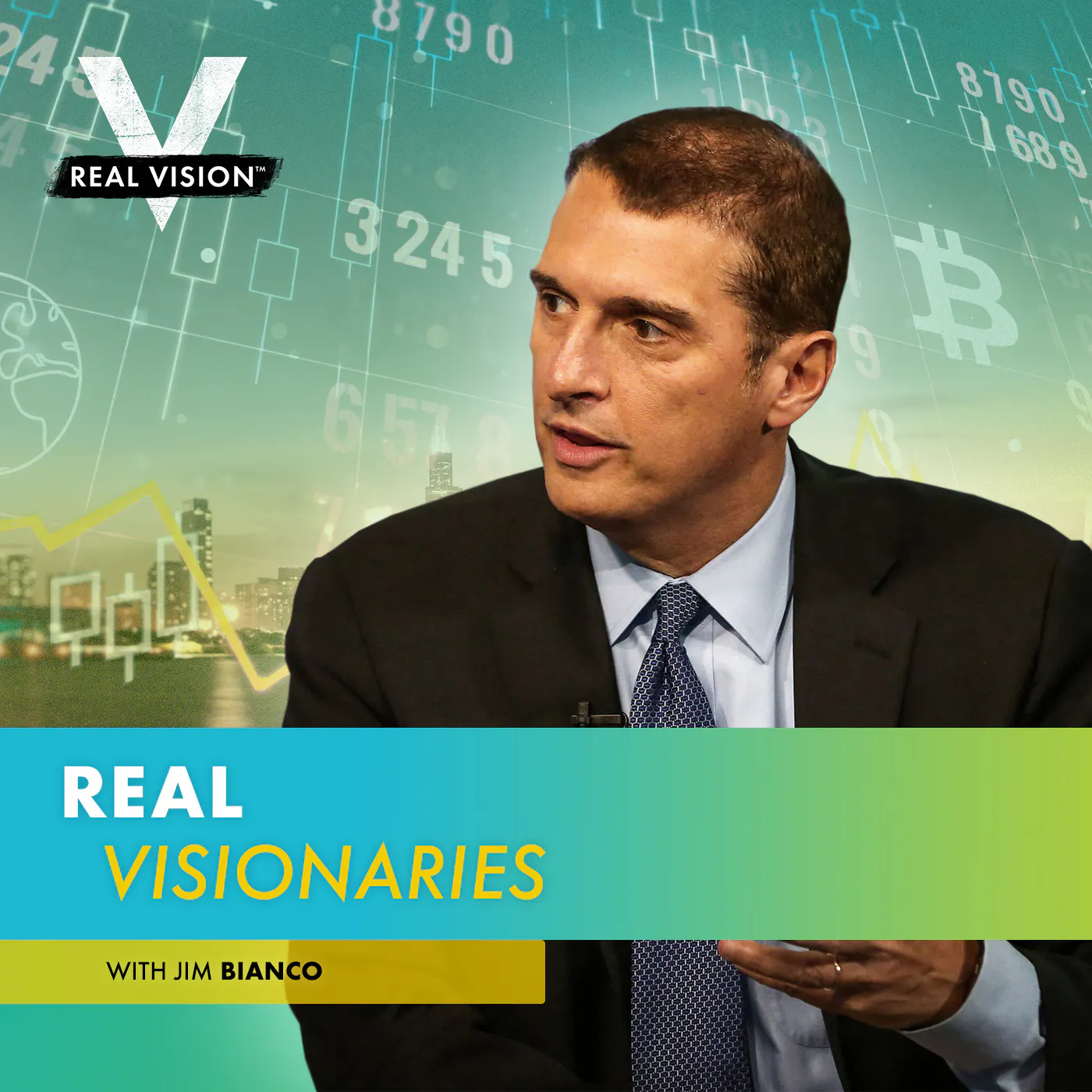
No Going Back: The Post-Pandemic Economy
In the wake of the pandemic, Jim Bianco believes that “there is a wholesale change underway in the economy.” But is it all doom and gloom from here? Not necessarily. We appear to be in a period of transition, which, historically, has also been a catalyst for economic progression. Bianco introduces Martin Fleming, Michael Drury, and Sal Mercogliano to discuss the changes we’re experiencing today, how they're impacting the economy, and what the future could begin to look like. Recorded on March 13, 2022 Learn more about your ad choices. Visit podcastchoices.com/adchoices

The Realities of Positioning for a Pandemic
Positioning for a crisis is no easy feat but Mike Green was one of the few traders that was able to profit during the pandemic while others were left asking the same question: “what the hell is going on?” While Green was positioned well for the pandemic, it wasn’t all plain sailing. Just what are the psychological aspects of trading in situations like these? In addition to describing his philosophy at the time, Green reveals his state of mind during the pandemic and some of the methods that helped him stay level-headed while “constantly” second-guessing trades during a period of rampant uncertainty. Filmed on January 20, 2022 Learn more about your ad choices. Visit podcastchoices.com/adchoices

How To Make Sense of All These Inflationary Pressures
Real Vision co-founder and CEO Raoul Pal joins Maggie Lake for today’s Daily Briefing to talk about volatility across markets, the economy, and geopolitics. Stocks closed out their first losing quarter in two years on Thursday, and U.S. bonds had their worst three-month period in more than 40 years. The eurozone’s inflation rate jumped to another record high in March. Although prices dipped for the fifth straight day today, crude oil is 44.7% higher than it was a year ago, up 32% in February alone. The U.S. economy once again added more than 400,000 jobs in March and the unemployment rate dropped to 3.6%, but companies across many industries say they’re struggling to find workers. And war continues to rage in Eastern Europe. What’s Raoul’s take? Get your questions ready, and drop them on the Exchange: https://rvtv.io/3x1pDYm Learn more about your ad choices. Visit podcastchoices.com/adchoices

Will Crude Oil Constraints Continue To Drive Inflation?
President Joe Biden announced a plan to release from the U.S. Strategic Petroleum Reserve 1 million barrels of oil per day for the next six months as part of the federal government’s effort to fight inflation. Releasing 180 million barrels from the SPR is an unprecedented step. But it’s unclear whether it will have a meaningful impact on oil prices. Earlier Thursday, OPEC+ ratified a 432,000 barrel per day production increase as of May, but that increase is in line with the cartel’s plan; it is not responding to oil consumers’ calls for significant output boosts. Oil investors everywhere seem to be holding the line for only gradual production increases, despite the ongoing crisis in Eastern Europe. Bart Melek, Global Head of Commodity Markets Strategy at TD Securities, joins Real Vision’s Ash Bennington to discuss the global crude oil market, current constraints on production and supply, and inflation. Want to submit questions? Drop them right here on the Exchange: https://rvtv.io/3IV7RbE Learn more about your ad choices. Visit podcastchoices.com/adchoices
What's Wrong With the Yen, and Why Is It Important?
The Japanese yen, long a safe haven, is not reacting to crisis this time around the way it has in the past. In fact, the yen just broke through a key long-term level of technical support and is trading at six-year lows versus the U.S. dollar. But Governor Haruhiko Kuroda continues to defend the Bank of Japan’s yield cap, in place to sustain accommodative monetary policy, despite broader risks to the domestic situation. Our man in Japan, Weston Nakamura, joins Maggie Lake to assess the global implications of the country’s continuing efforts to stimulate growth in the world’s third-largest economy. Then, Maggie welcomes Darius Dale, founder and CEO of 42 Macro, to talk about the Federal Reserve’s fight against inflation, the impact of tighter policy on the housing market, and the employment situation in the U.S. Want to submit questions? Drop them right here on the Exchange: https://rvtv.io/36Zk3uw Learn more about your ad choices. Visit podcastchoices.com/adchoices

Is the Market Pricing In Peace?
Although no formal agreements have been reached, Moscow has said it will redeploy troops and reduce military activity around Kyiv, and Ukraine has said it will adopt a neutral stance in exchange for a Russian ceasefire, stoking optimism the end of the war in Eastern Europe is in sight. Delegates from Russia and Ukraine met face-to-face in Istanbul Tuesday, with Turkish Foreign Minister Mevlut Cavusoglu saying the discussions had yielded the most significant progress to date. Equity indexes in Europe closed higher across the board, and U.S. stocks are holding solid gains two hours shy of the close of regular trading in New York. Meanwhile, the bond market is on course for its worst quarterly loss on record after the Federal Reserve launched its monetary tightening efforts this month and signaled the potential for more aggressive hikes. With tensions seemingly easing in Eastern Europe, inflation remains the major threat to global growth. Tony Greer, founder of TG Macro, joins Warren Pies to talk about the market’s response to Russia-Ukraine and the Fed’s response to inflation. Want to submit questions? Drop them right here on the Exchange: https://rvtv.io/3Ljle6U. Learn more about your ad choices. Visit podcastchoices.com/adchoices

Is Recession the Only Answer to Inflation?
As Jared Dillian puts it, when the prices of things we need are going higher and the prices of things we want are going lower, “it creates economic misery.” Things we need include fossil fuels and agricultural commodities. Things we want include stocks and bonds. In 2022, with stock and bond prices falling and commodity prices rising, wealth has evaporated, and the cost of living has increased. And the thing is, to seriously take on rising prices, the Federal Reserve is going to have to accelerate its monetary tightening cycle. “In order to stop inflation,” writes Dillian, “the Fed will have to engineer a recession.” We’re starting to see indications from sections of the yield curve that a downturn is imminent – for example, the yield on the five-year U.S. Treasury note exceeded the yield on the 30-year bond earlier today. Stocks, meanwhile, have enjoyed a two-week rally. Is there a way out for the Fed that doesn’t include recession? Dillian, author of The Daily Dirtnap, joins Real Vision’s Maggie Lake for today’s Daily Briefing to talk about the Fed, interest rates, economic misery, and recession. Want to submit questions? Drop them right here on the Exchange: https://rvtv.io/3IMaiNH Learn more about your ad choices. Visit podcastchoices.com/adchoices

Gold Mine: Creating Value Through Entrepreneurship
Raising capital for small companies is a difficult and time-consuming process — legendary entrepreneur Ross Beaty, chairman of Equinox Gold, emphasizes the importance of having tenacity and adaptability to change strategy when things don’t pan out. From a lifelong journey of building up businesses and investing, he chats with his long-time friend and fellow investor Rick Rule, president and CEO of Rule Investment Media, to share the lessons Beaty learned in the energy and mining space. The pair examine the changing capital and scale requirements of companies today in a market where long-term value creation is of utmost importance. Filmed on October 6, 2021. Learn more about your ad choices. Visit podcastchoices.com/adchoices

Making Sense of Massive Change
Russell Clark, one of Real Vision’s favorite guest-personalities, returns for another engrossing conversation with Raoul Pal. Russell always brings fresh perspectives, and Raoul is always keen to draw on his current thinking to help make sense of what’s happening around us. In short, Russell’s current sense is that everything has changed. In a far-ranging conversation, Russell and Raoul weigh the impact of innovations such as extracting oil and gas from shale, the ongoing center-of-gravity shift from capital to labor, and the vulnerabilities of centralized risk management. Russell notes that clearing houses are now the center of trading activity; they price risk differently than central banks, and he describes how that works and how that doesn't work. “The collateral,” says Russell, “can never go bust.” The world is changing, rapidly. This is a great way to catch up. To read more of Russell's work, visit www.russell-clark.com. Recorded on March 1, 2022. Learn more about your ad choices. Visit podcastchoices.com/adchoices

How Fragile Is the Global Funding System?
Inflation is at four-decade highs in the U.S., and supply constraints caused by the war in Eastern Europe only increase upward pressure on crucial commodities. The Federal Reserve is laser-focused on the issue, to the point where futures markets are now pricing in more than nine rate hikes in 2022. And the yield on the 10-year U.S. Treasury note hit a two-year high on Friday, reaching 2.503% on expectations of aggressive tightening ahead. Still, the Fed is sticking with a relatively robust growth forecast. Investors are clear on the Fed’s path. It remains to be seen how Chinese policymakers will respond to threats to growth and stability. As the world continues to respond to Russia’s invasion of Ukraine, it becomes clearer that major shifts are in process. Will the Chinese yuan ever overtake the U.S. dollar in the global currency hierarchy? What role could Bitcoin play in a revamped global system? More immediately, are we on the verge of a global liquidity crisis? Michael Howell, managing director at CrossBorder Capital, joins Tony Greer to discuss these issues and more on today’s edition of Real Vision Daily Briefing. Got questions? Drop them on the Exchange: https://rvtv.io/3JGuIZz Learn more about your ad choices. Visit podcastchoices.com/adchoices

Markets Have Their Own March Madness
The Federal Reserve was already staring down an inflation problem well before Russian President Vladimir Putin ordered his troops into Ukraine. One month into the war, there’s no clear end in sight. And constraints on key commodities will continue to drive prices and spur the creation of new supply chains. The Fed launched its tightening cycle with a 25 basis point increase to the fed funds target rate. The futures market is now pricing in a 50-basis-point move in May. Equity markets remain volatile. But the most interesting action may be in the bond market, where prices are falling faster than they have in decades as investors account for the Fed’s absolute focus on showing its commitment to fighting inflation. President Joe Biden is in Brussels to meet with NATO counterparts about Russia and Ukraine. But there are no easy answers for that conflict. However, Thomas Thornton, founder of Hedge Fund Telemetry, is here with Real Vision’s Ash Bennington to talk about the Fed, the bond market, Bitcoin, and finding opportunity in disorder in today’s Daily Briefing. Want to submit questions? Drop them right here on the Exchange: https://rvtv.io/3JTKf8N Learn more about your ad choices. Visit podcastchoices.com/adchoices

A Hawkish Fed Eyes Inflation (and Not Much Else)
In another sign energy is now a second front in the Eastern European war, President Vladimir Putin has said he wants “unfriendly countries” to pay for Russian oil and gas in rubles. Putin’s move follows reports that European Union nations are considering joining the U.S. boycott of Russian oil and in the aftermath of a weekend attack on Saudi production facilities. Brent crude, the European benchmark, has surged again, rising nearly 5% Wednesday to $121. Energy costs will surely have the attention of an inflation-obsessed Federal Reserve. Cleveland Fed President Loretta Meester said she supports front-loading rate hikes, while San Francisco Fed President Mary Daly said she sees room for a 50-basis-point hike at the next Federal Open Market Committee meeting in May. That’s despite the fact that market rates are already negatively impacting the housing market, with new home sales down for a second straight month in February and mortgage refinance applications down 14% week over week. Darius Dale, founder and CEO of 42 Macro, joins Maggie Lake to talk about energy, inflation, and the Fed. Want to submit questions? Drop them right here on the Exchange: https://rvtv.io/36C4JE6 Learn more about your ad choices. Visit podcastchoices.com/adchoices

The Fed's Hawkish Tone Hits the Bond Market Hard
Federal Reserve Chair Jerome Powell said on Monday, “Inflation is much too high,” noting that the Fed would continue to raise interest rates until inflation is under control. And St. Louis Fed President James Bullard reiterated his view that U.S. monetary policy must be tightened quickly to put a stop to upward pressure on inflation that’s already too high, repeating his call for a fed funds target rate above 3.0% this year. Meanwhile, a selloff in government bonds intensified on concerns that rising inflation will drag the nation’s economy into recession. The yield on the 10-year U.S. Treasury note hit its highest level since 2019, as the Treasury market nears the end of what could be its worst quarter since 1973. Altogether, it looks like the hiking cycle could be more aggressive than previously forecast. But what if we have inflation all wrong? Could it be, suggests Vincent Deluard, director of Global Macro Strategy at StoneX Group, that in a service-oriented economy “inflation” is just another word for “growth”? Deluard joins Warren Pies to discuss inflation and growth, monetary policy, and the likelihood of an inverted yield curve in the very near future. Want to submit questions? Drop them right here on the Exchange: https://rvtv.io/3qrBE5m Learn more about your ad choices. Visit podcastchoices.com/adchoices

As Gas Spirals, Can Europe Divorce Russia?
We’re nearly one month into Russia’s war against Ukraine. Officials from Moscow and Kyiv have met intermittently for peace talks that have so far failed to bring a cessation of hostilities. Geopolitical tensions are once again showing up in energy markets. Several European Union member states are pushing for a fifth round of sanctions on Russia. Cutting off Russian crude would theoretically take 4% to 5% of global supply off the market. Meanwhile, Saudi Arabia, under increasing pressure to ramp up its output, is calling on Western allies to do more to help counter attacks by Iran-backed Yemeni Houthis on critical oil infrastructure. Investors are also weighing a rise in COVID-19 cases in Europe stemming from an emerging variant. Izabella Kaminska, former editor of The Financial Times’ FT Alphaville blog and founder of The Blind Spot, joins Emil Kalinowski to discuss the latest geopolitical and financial headlines, with a focus on media and propaganda surrounding the war in Eastern Europe. Want to submit questions? Drop them right here on the Exchange: https://rvtv.io/3Jww8pv Learn more about your ad choices. Visit podcastchoices.com/adchoices

Adapt and Overcome
Brian Estes’ unwavering passion for Bitcoin is fueled by a much deeper motive that will change the way you think about the entire crypto space. In this discussion with fellow Bitcoin advocate Mark Yusko, Estes shines a light on why the cryptocurrency isn’t even close to realizing its full potential and outlines the four valuation methods he’s used to determine an estimation for Bitcoin’s value in 2029. The venture capitalist who invests heavily into companies offering blockchain solutions says we’re currently witnessing an era in which we’re “rebuilding what wasn’t built correctly the first time.” Our first visionary on the show shares his inspirational backstory and brings a fascinating understanding of Bitcoin to the table in what is quite simply the perfect start to this exciting series on the future of digital assets. Learn more about your ad choices. Visit podcastchoices.com/adchoices

Meme Commodities, Central Banks & Crypto
Kyla Scanlon is a US-based independent content creator and curator with an expanding social media profile built on both short- and long-form TikTok, Instagram, and YouTube videos as well as extensive written work on her newsletter, her Substack, and her blog. Known for her ability to distill market moves and current events in an analytical but humorous way, she both informs and entertains her audience. Himself a content creator and curator, Real Vision’s Weston Nakamura talks to Kyla about the creative process, the challenges they face, and their respective visions for the future of financial education. In a conversation as sprawling as it is compelling, Weston and Kyla, who share mutual interest in empowering an ever-growing global audience of self-directed market participants, also discuss current events, “meme commodities,” central banks, and crypto. Thanks for watching! Subscribe to our channel now for more videos like this one: https://rvtv.io/subscribe Learn more about your ad choices. Visit podcastchoices.com/adchoices

Do You Believe the Stock Market or the Bond Market?
St. Louis Federal Reserve President Jim Bullard was the only member of the Federal Open Market Committee to dissent from the decision to hike interest rates by 25 basis points. Bullard wanted 50 basis points, and he’d like to see a fed funds rate of 3% by the end of 2022, not the 1.75% of the central bank’s current forecast. Bullard and Fed Chair Jerome Powell do agree that the economy can handle monetary tightening. And the stock market, with the S&P 500 on the way to its best week since November 2020, seems to accept the Fed’s outlook on growth. But the bond market sees something different – that is, a slowdown. The Treasury yield curve continues to flatten, and the 10-year yield fell below the five-year rate for the first time since March 2020. Meanwhile, war in Eastern Europe continues to sow dysfunction, most obviously in commodity markets. Jim Bianco, president and founder of Bianco Research, joins Real Vision’s Ash Bennington to talk about the Fed, inflation and growth, China and the Russia-Ukraine conflict, and where markets go from here. Want to submit questions? Drop them right here on the Exchange: https://rvtv.io/3tol3RY Be sure to grab your tickets to the Crypto Gathering here: https://www.realvision.com/cryptogathering Learn more about your ad choices. Visit podcastchoices.com/adchoices

A Hawkish Fed Moves Against Inflation
The Federal Reserve’s monetary tightening cycle is underway, with yesterday’s 25-basis-point increase to the fed funds target range the first of what’s now forecast to be a total of seven such moves in 2022. Chair Jerome Powell said during his post-Federal Open Market Committee (FOMC) meeting press conference that the Fed could finalize “quantitative tightening” plans as soon as the FOMC’s May meeting. The Fed expects inflation to come in at 4.3% in 2022 before it falls to 2.7% in 2023 and 2.3% in 2024. Policymakers adjusted downward their 2022 growth forecast, from 4.0% to 2.8%. U.S. equity indexes have responded positively to the Fed’s new hawkish stance. Market yields continue to climb, most notably the average 30-year mortgage rate. Volatility continues to be the primary characteristic of financial markets. Chinese stocks continued to rally on accommodative moves announced by government officials, but the nickel market remains an unsettled mess. The “Fed Guy,” Joseph Wang, a former trader on the central bank’s open markets desk, joins Real Vision’s Maggie Lake to discuss the Fed’s decision, the means it will employ to combat inflation, its forecasts for both inflation and growth, and financial markets’ response. Want to submit questions? Drop them right here on the Exchange: https://rvtv.io/3CNtwkF Learn more about your ad choices. Visit podcastchoices.com/adchoices
RV After Dark with Raoul Pal & Friends | Highlight
Real Vision's latest Twitter Space was a smashing success. Real Vision's Raoul Pal, Elaine Ly, Weston Nakamura, and thousands of RV listeners including Bill Tai and more joined to voice their thoughts on everything happening across the globe. Learn more about your ad choices. Visit podcastchoices.com/adchoices

Are We at the Point Where Central Bankers Can Do No Right?
The Federal Open Market Committee (FOMC) made it official this afternoon, raising the fed funds target range by 25 basis points to 0.25% to 0.50%. The FOMC also boosted the interest on reserves rate and the reverse repo rate. In its statement announcing the decision, the FOMC noted with regard to the Russia-Ukraine war that “in the near term the invasion and related events are likely to create additional upward pressure on inflation and weigh on economic activity.” The Fed forecast year-end inflation of 4.3%, with a total of seven rate hikes through year's end. U.S equity indexes were mixed in the immediate aftermath of the FOMC announcement, as bond yields surged. Chinese stocks notched their biggest rally in 14 years, as President Xi Jinping’s government offered wide-ranging support for capital markets. Darius Dale, founder and CEO of 42 Macro, joins Real Vision’s Ash Bennington to discuss the FOMC’s decision, the complex set of circumstances central bankers face, and China’s accommodative moves. Want to submit questions? Drop them right here on The Exchange: https://rvtv.io/3iauaz6 Learn more about your ad choices. Visit podcastchoices.com/adchoices

Will Commodity Prices Drive Inflation Even Higher?
It’s safe to say the macro environment is unsettled right now, to an extent not seen in decades, and financial markets are correspondingly volatile. Crude oil prices are now down nearly 30% from recent highs, as investors weigh the demand impact of new COVID-19 lockdowns in China against supply constraints owing to the Russia-Ukraine war. Wheat has also backed off but is still up nearly 40% since Russia invaded Ukraine. The Labor Department reported this morning that the Producer Price Index for February was up 10% year over year and 0.8% month over month, as recent spikes for energy and food inputs promise a “faster for longer” rate of rise. Still, the major U.S. equity indexes were all trading more than 1% higher through midday. This is all prelude to Wednesday’s monetary policy announcement by the Federal Open Market Committee. Inflation is the main enemy for the Federal Reserve. But global stress – heightened by reported talks between Saudi Arabia and China about the former accepting the yuan in payment for oil rather than the U.S. dollar – must be weighing on Jerome Powell and company. Tony Greer, founder of TG Macro and editor of The Morning Navigator, joins Warren Pies, founder of 3Fourteen Research, to discuss the impact of war in Eastern Europe on commodity and financial markets and how policymakers are likely to try to manage it all. Want to submit questions? Drop them right here on the Exchange: https://rvtv.io/3KKXSai Learn more about your ad choices. Visit podcastchoices.com/adchoices

Will We Sacrifice Growth on the Altar of Inflation?
Sellers took control of the major U.S. equity indexes after lunchtime Monday and bond yields continued to climb, as investors await the Federal Reserve’s first move to boost its federal funds rate target later this week. Crude oil has sold off by nearly 25% from near-term highs, though inflationary pressures remain the central bank’s primary concern, even as the war in Eastern Europe shows no signs of ending anytime soon. The Fed must be mindful, however, that the economy was already slowing before Russia invaded Ukraine, notes Daniel Lacalle, chief economist at Tressis. And Josh Lipsky, director of the Atlantic Council’s GeoEconomics center, points out that Russia’s economic contraction in a matter of weeks is comparable to the Great Depression, which took place over a number of years. China is another wild card, as its tech sector continues to sell off and officials are announcing new COVID-19 lockdowns. The Middle Kingdom’s role in the Russia-Ukraine war is also generating heated speculation. Lacalle and Lipsky join Real Vision’s Maggie Lake for today’s Daily Briefing, where they’ll discuss geopolitics, monetary policy, and markets. Want to submit questions? Drop them right here on the Exchange: https://rvtv.io/3KLveFJ Learn more about your ad choices. Visit podcastchoices.com/adchoices

An Update From Raoul on the Geopolitical Situation and What It Means for Investors
In this special update, co-founder and CEO of Real Vision Raoul Pal shares with us how he’s approaching the market amid this incredibly chaotic environment. Raoul outlines several scenarios for how the Russia-Ukraine situation could play out and breaks down what war in Easern Europe means for gold, bonds, oil, and, yes, even crypto. Raoul also explains why he thinks the U.S. dollar is now more of a liability than an asset and forecasts the Federal Reserve’s next moves. This is another can’t-miss presentation that will help you understand how Raoul is thinking as he navigates these turbulent times. Recorded on March 6, 2022. Learn more about your ad choices. Visit podcastchoices.com/adchoices

Volatility: The Tail That Wags the Dog
Volatility matters — especially to Jason Buck, who runs his own volatility fund with the primary objective of building diverse portfolios that are capable of thriving in any financial forecast. Join Buck as he speaks with Anthony Scaramucci, Alex Lennard, Cem Karsan, Noel Smith and Scott Army about harnessing volatility for desired outcomes. Learn more about your ad choices. Visit podcastchoices.com/adchoices

The Crisis of Inflation, the Cataclysm of War, and Where We Go From Here
Making a long-awaited return to the Daily Briefing, Real Vision co-founder and CEO Raoul Pal joins Ash Bennington to talk about inflation, economy, and, of course, the war in Eastern Europe. Governments around the world continue to react to Russia’s invasion of Ukraine, with the U.S. including $13.6 billion in aid to the latter as part of a $1.5 trillion spending bill and President Joe Biden suggesting an end to the latter’s “most favored nation” trade status. In another indication of an emerging deglobalization trend, Chinese tech stocks suffered their worst decline since October 2008 on increased regulatory scrutiny and fears of delisting from American exchanges. Raoul and Ash discuss the U.S. dollar, global trade, and the rising profile of cryptocurrency amid what remains the most interesting times most of us have yet experienced. Get your questions ready for Raoul, and drop them on the Exchange: https://rvtv.io/3pYiJyO Learn more about your ad choices. Visit podcastchoices.com/adchoices

Volatility Defines Markets Right Now
The U.S. Department of Labor reported this morning that the Consumer Price Index increased 7.9% during the 12 months through February, another fresh 40-year high. And that measure doesn’t account for the impact of the Russia-Ukraine war on energy and food commodities. Crude oil prices have backed off 13-year highs on news the United Arab Emirates would support production increases by fellow OPEC members. And wheat futures have also retreated from 14-year highs. The European Central Bank acknowledged the threat of inflation to economic growth by announcing an earlier-than-expected withdrawal of monetary stimulus. Equity markets remain volatile, which can be helpful for options specialists like today’s Daily Briefing guest Imran Lakha. Lakha, the founder of Options Insight, joins Real Vision’s Alfonso Peccatiello to talk about inflation, how central banks plan to address it, and the role cryptocurrency and gold can play in mitigating its effects on investors’ portfolios. Want to submit questions? Drop them right here on the Exchange: https://rvtv.io/34A0gRK Learn more about your ad choices. Visit podcastchoices.com/adchoices