
Radio Lento podcast
304 episodes — Page 5 of 7

Ep 104104 While away in winter woodland (a clear mind special)
December is a very quiet month for natural sound out here in the walkable wilderness. Wind moaning in the telegraph wires, and rain spattering into flooded puddles. And when you reach them, the woods, down long lanes and a muddy footpath, the song birds haven't yet begun to sing. But stop, qwell the noise of your boots, and listen. Wait.... Let all sense of motion go. A few moments are all that's needed. It comes, more as a feeling than a sound, though it comes from sound. An awareness, of the surrounding wood. The wood as one, huge, still presence. One, huge, reverberant reservoir, of hushing quiet, that has you immersed within it. The wind rises, and falls. The calls of distant birds echo through the voids. Occasionally, the creaking sound, as solid tree trunks bend with the pressure of moving air. The hushing is made as the banks of cold winter wind brush over the high tree tops, and through into the countless boughs and bare branches. Each one, each bough and branch, each one in their thousands, in their millions, generates small trails of invisible, turbulent air. White noise streamers, that shower down, to land on our ears. We hear it, as waves of infinitely spatial hushing. The sound of the whole forest, as it brushes against the wind. This was recorded in Comb's Wood, Hertfordshire in December.

Ep 103103 Tidal breakers winter beach - in HD sound
How it is, that a winter weekend city walk, can end up like this - by the seaside! How an inner city landscape, with its roads and concrete valleys between misty mid-distance skyscrapers, can be faded from consciousness by simply hopping over one, very long, brick wall. So up and over the flood wall you go, with its curved brick top, and down you drop, not onto but into, something else. Something else entirely. Beach! Yes a beach. A real beach! A wild watery foreshore, with blustery winds, and rushing white horses, and liberating rejuvenating scrunchy shingle under foot. You walk, over the unsteady ground, with a rolling swagger. You walk, right up to the water's edge, right into its bright white noise, its refreshing spray. And everything, from only moments ago, is suddenly forgotten. Forgotten because now you remember. Remember what it is you are living for. This! Children playing amongst bright ringing stones. The thrum of deep channel cruisers. An accidentally discovered beach, beside the Thames, at Rotherhithe. Tidal breakers. Winter beach.

Ep 102102 Mild valley in June at the Cheshire / Derbyshire border (source of natural white noise)
There is always quiet. Somewhere. All the time great swathes of it do exist. But these, are the farthest from reach. Here though, is some, within reach. Quiet, that from its highest point, is within sight of a major city. Within sight of busy roads. Buried behind nature's natural barriers, this quiet, lies beside a single-track lane. Water flowing along the valley bottom. Fills the air with pleasant noise. Birds, singing out across the steep soft pastures. Mellifluous. Mid-morning voices. To the right a distant farm. To the left, dense woodland at the mouth of a leafy ravine. Ahead, a sleepy farm building, hidden beneath tall dark trees. Over this mild, favourable hour, a lone car passes. It labours up the steeply winding lane, past the tree that holds the microphones, then coasts back down a short while later. A country car. The only one. On country business. This section of audio is from a twelve hour recording we made of time passing in a quiet valley in June last year. We spent some days in the area and made a second overnight recording further down the valley in a different spot. Episode 89 and 78 are taken from the second location. The brook, about 100 yards in front of the microphones, runs left to right across the sound-view, and defines the Cheshire / Derbyshire border.

Ep 101101 At Benfleet Creek
With Benfleet behind, see ahead the footpath to Leigh-on-Sea. It's a beckoning line to the horizon. But for now, we can just let it go. Let it go because something else beckons. Something sky sized. Breezing in from the flat reflecting water. A presence, that's been there all along. So turn off the path and stride down, down through the thick grass. Head straight to the land water boundary. The ground will soften, and soften again, but keep going. In careful steps, press on through the ankle deep squelch, around the slippery half submerged stones, until the vegetation beneath your feet feels like a semi floating bed of sponge. This, is the last walkable point. The point where you just have to stop, and listen, because the presence of this place has got so strong. In front, is the exposed mud, patterned with trickling remnants of the high tide. Further on, a bright reflected sky. A sky reverberant, with the bending tones of a passing propeller plane. It's the sense of wide, wide open that makes this place so overwhelmingly present. And one might respond to it with an equally strong feeling, an awareness somehow, that what's here and happening outside, is happening inside too. Pure openness. But not emptiness. This place is vast, but not empty. It is filled with fresh blustery winds, and patrolled by tiny, flapping sparks. These are the wild birds. And this, is their world. The tripod sinks deep into the sponge-like vegetation, but finds its place, so we attach the mics and leave them, wrapped in a wind absorbent hat, to record alone. As we climb away, back up the slippery bank, we hear them, the wild birds, coming back to see what it is we left behind.
Ep 100100 Suffolk Wood (part 11) - a new day
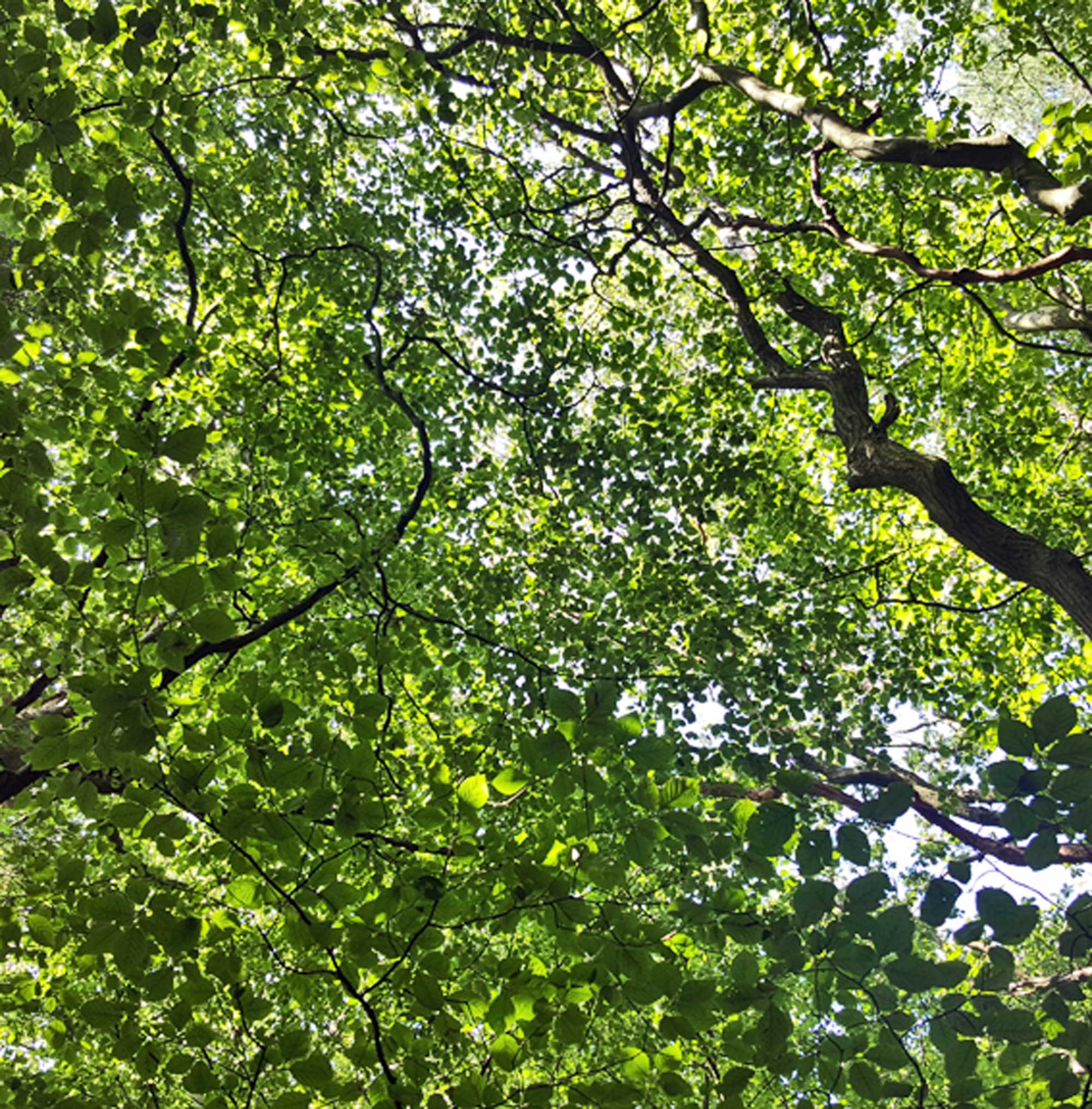
Six strikes St Mary's bell, and it's a new day. A new woodland day, with time returned to normal. The wood pigeons coo it. The cow lows it. The buzzard whistles it and the rooks crow it, from the high tree tops. The cockerel crows it too. A new day, for this wood, just to be. Footsteps? Someone! Steady strides. Wading boot deep into the forest pool, down, and into it through a flood bank of leaves. It's the woodsman, come to tend the forest. Come to clear its tangles and fallen branches. But we think the woodsman's come not just for work, but for a swim. A swim and a bathe in the forest's atmosphere. Its still sense of emptiness, the rippling bands of peace between the trees. Its high vertical walls, of quiet. To mark Radio Lento's 100th episode, we wanted to share this, a special recording. It is the eleventh segment from the twelve hour overnight recording we made of an empty wood in Dedham Vale. Lento began at episode 1 with a 30 minute clip from this same segment, done back then as a test, to see if the whole idea might work. Thanks to everyone who's listened and especially to those who've got in touch to tell us what Lento recordings mean to them. You've inspired us to make these 100 episodes, to keep searching for new places to record, and to develop better methods for capturing the essence of these natural places in detailed, spatial sound. Huge thanks to everyone who has made a donation too. Every pound goes towards the costs of Radio Lento, which is funded by us.

Ep 9999 High in the hills amongst snow laden trees - Christmas special
We always try to make a recording in the landscape after it's just snowed. It's so quiet. And the quiet is palpable. The effect is unique and wonderful, and is down to the way freshly fallen snow absorbs sound. By absorbing it so well though, there is virtually nothing for the microphones to pick up, and so none of these recordings have ever properly worked. Over Christmas 2014, whilst staying with family up in the hills of Derbyshire, it snowed, and snowed, for days and days. And so we recorded, and recorded, for days and days too. Each time, on playback through headphones, the spatial sense of landscape quiet, the effect we strive to capture in all our recordings, was entirely missing. A few days later, just before ten o'clock at night, the snow began to fall again. The landscape was frozen, after days of freeze thaw. And this time, instead of absorbing sound, the icy snow was reflecting it. As the snow fell, every tiny fragment and particle of it made a sound, in varying degrees from the finest of fine dust, to sounds almost like leaves dropping, to distinctly heavier scattering ice falls. There was a lazy wind in the trees too, moving through as soft murmuring white noise. Occasionally, it was strong enough to push off the lighter accumulations of snow and ice, causing it to fall between the branches, and down onto the frozen ground below. For the first time, the snowy landscape sounded spatial, and the microphones were able to capture the feeling of being out amongst snow laden trees, within a wide open, and frozen landscape. The old clocks can be heard chiming ten inside the house, and towards the end of this unusually short episode for us, far away geese, and foxes too. Merry Christmas everyone! From Radio Lento we wish you and your family a happy and sound new year.
Ep 9898 A ship that passes in the night - sleep safe
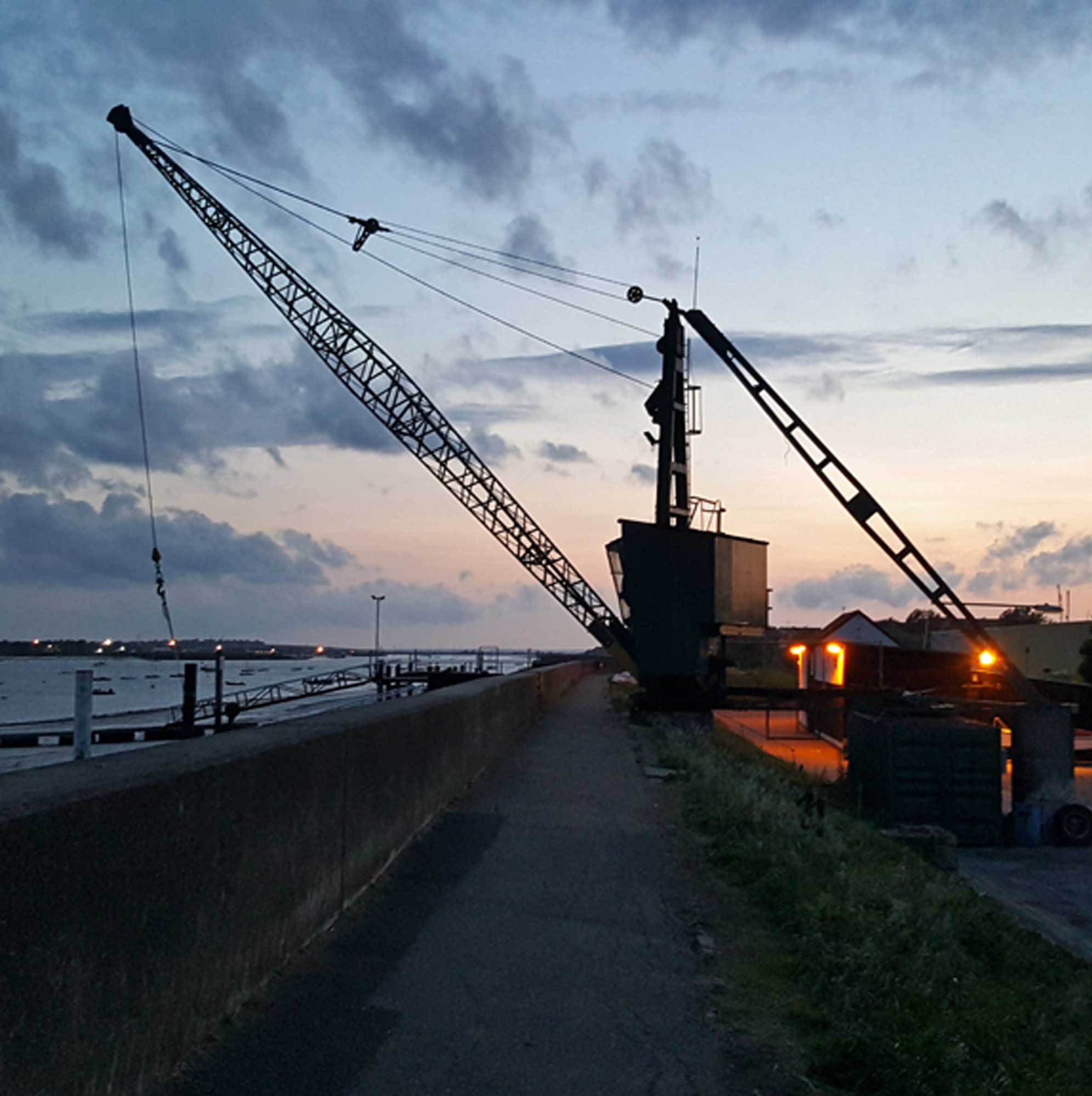
A passing ship, in the night, is like a thought in slow motion. A thought sailing in, from out on the ocean. A thought made of bulk timber upon steel. Made of engine, rudder and wheel. tangible. Omnipotent. But a thought unseen. In perfect dark. In perfect, peninsula darkness. From this place upon the seawall, the nocturnal transit begins, as a warm, pulsating hum. As a low down sound rising slowly, in the east. A vast, timber laden hulk, that to the inflowing tide, feels like nothing more than a drifting feather. To it, a feather adrift. To us, a ship. This soundscape is another excerpt from the twelve hour overnight recording we made last summer in Essex, about seven miles inland from the North Sea along the tidal River Crouch. The mics, which we tied to a seawall railing while we slept in a nearby inn, captured this chance event in total darkness, an event that we feel makes for one of the most compelling listens, of all the river sounds. A passing ship! a ship that comes, and never seems to go. A hum, among the washing waves.
Ep 9797 Through the trees, distant weir (source of natural white noise - 3D with ear/headphones)
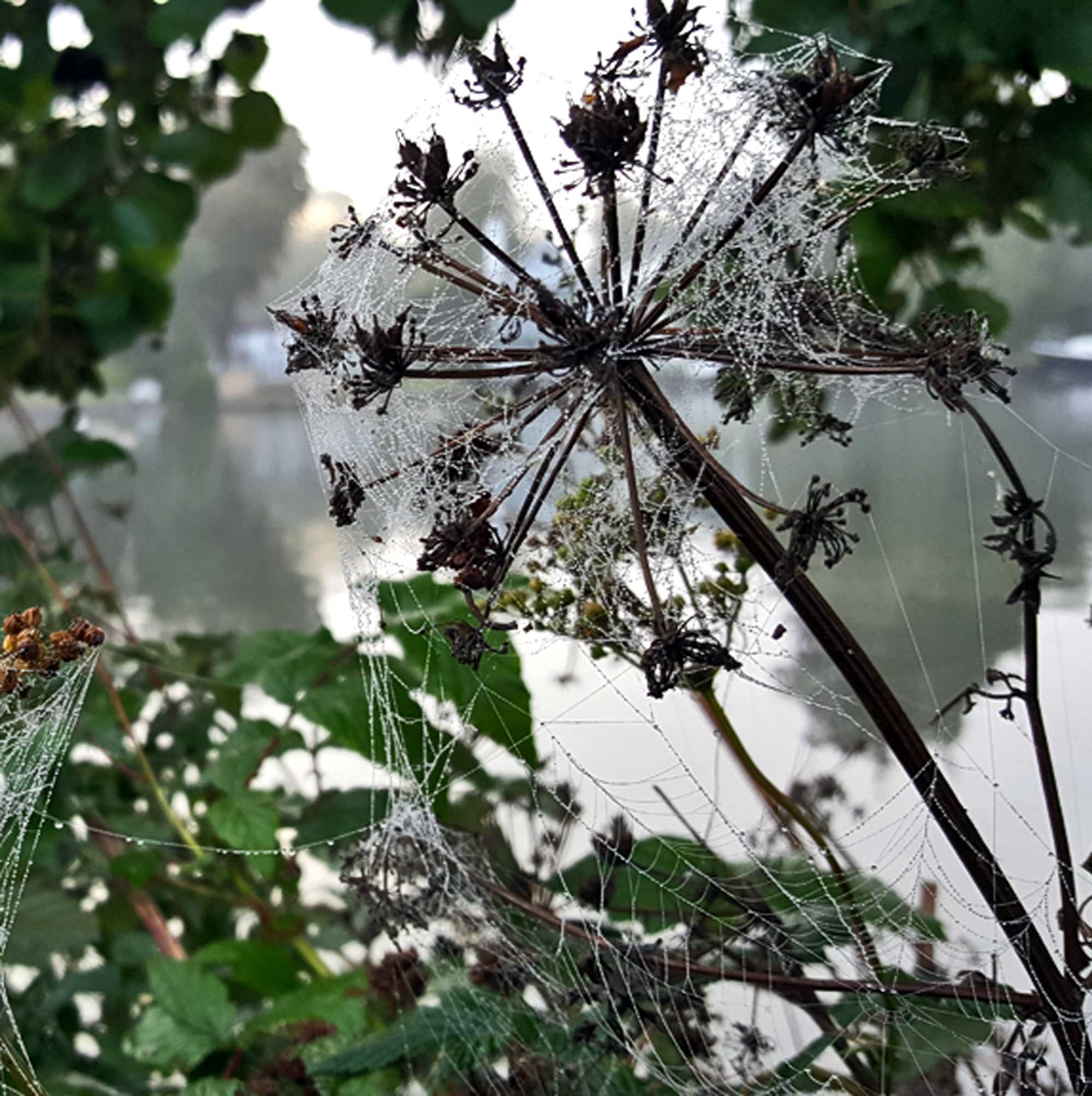
Still air. Quiet parkland. It's 8am, before the people come. Empty paths. Untrodden grass. Mist lifting. On the face of it, nothing is happening. But nothing needs to happen. This is a bright autumnal Sunday morning in late September. To the listener, the scene is panoramic, and one enveloped in another kind of mist. Consistent. Never lifting, never changing. From night to day, from month to month, from year to year, a mist made of sound. A flow of pure and natural white noise, infinitely spatial, present throughout every shadowed space beneath the trees. The weir. Its soft surrounding balm. Lulle Brook is a tributary of the Thames at Cookham, just off the Thames Path National Trail. We heard it from afar, when we first came, long before we knew what it was. A noise on the horizon. A noise with a soft, gravitational pull. In the solitude of the empty parkland, with nobody about, the flowing water instils peace into the air. Widens the sense of space. Throws a canvas on which the birds can paint on their sparse, autumnal calls. Wrens, robins, screeching green parrots, tchacking jackdaws, finches, some distant high passing geese.
Ep 9696 A blustery day begins on inland tidal water (headphones)
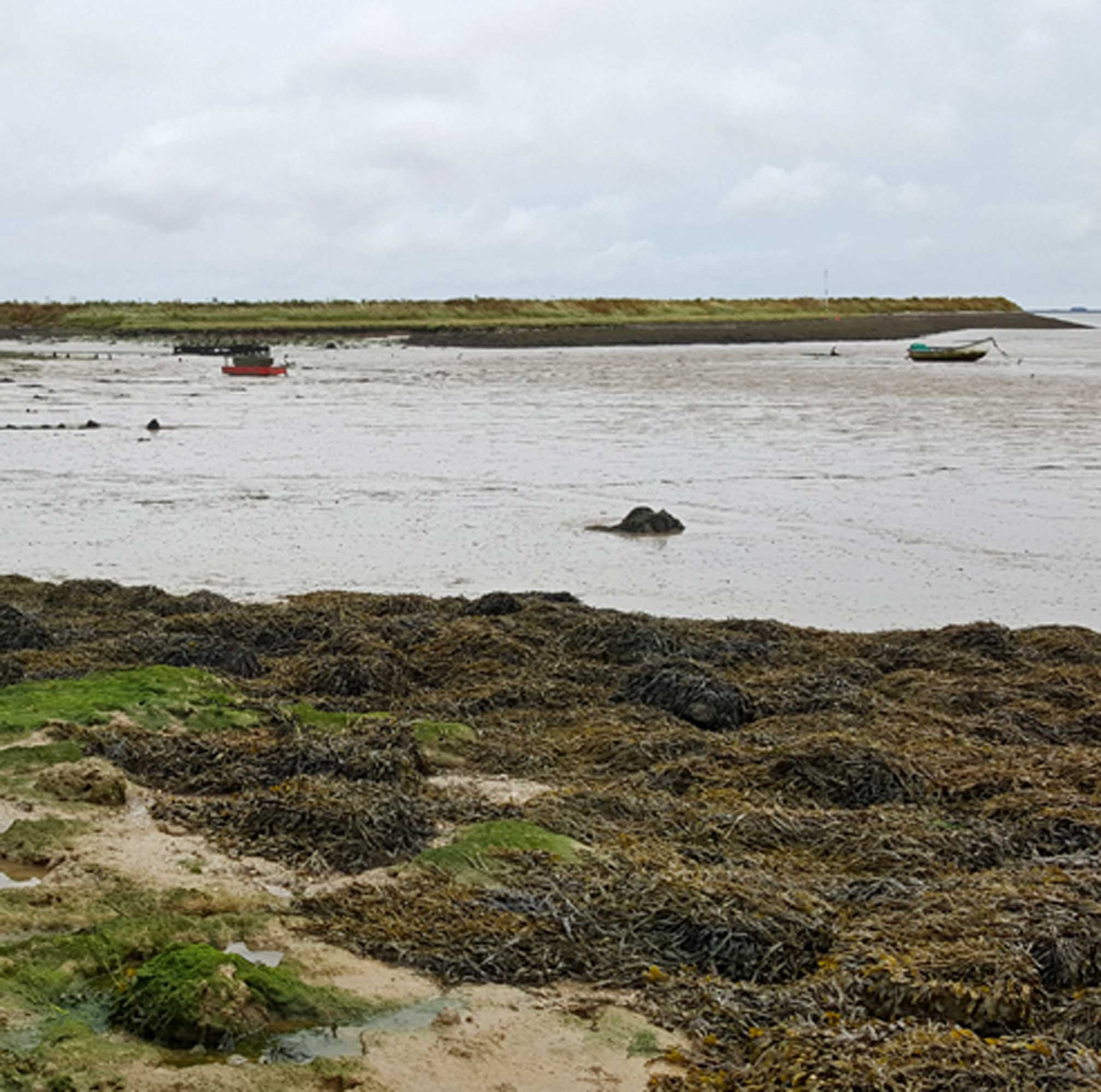
When we set up to record, there were no signs of the weather front. It was late evening. Low tide. We'd followed the path East along the river out of Burnham-on-Crouch and come across a Second World War armament, a pillbox, overgrown and derelict, beside the footpath. A lookout, that now, and for the last seventy years, has looked and been looking out on nothing more than the to and fro of the tides. Further along we saw a railing sloping steeply down the seawall, and into the water. Gripping onto the railing not to slip, we climbed down. In places the seawall was covered in a fine moss, and felt velvety under foot. Where the rough shrubs and grasses gave way to bare concrete, marked the high tide line. The sky had filled with dusk, and we stopped, to listen. It's the sound-check, the audition, before we can commit the kit. A silent minute, that lets us hear the world far beyond ourselves. Slowly, the main flow of the river's outer edge was revealed through countless thousands of swirling eddies. In the mile wide body of air above, the ding ding dings of redshank, the rasping calls of hardy gulls. It was a good, panoramic place to record, and a scene somehow also shaped by not a sound, but an absorbent mass, the low lying effect of Wallasea Island, far off over the opposite bank, with not a light in sight. To make the 12 hour recording, we spent the night in an Inn, half a mile up-river from the microphones. In the dead of night we could hear the yacht masts ringing in the wind, and the rain battering against the window panes, and wondered. What will it be like down at the seawall? Had we gauged the high tide mark right? Will the fluffy hat that we stretched over the kit box stand up to the pelting rain? This is the section of the recording from between 7am and 8am. rain clouds are still passing overhead, their precipitations sifting down like tiny fragments of grit on the rising water, and as it gets heavy, hammering on the lid of the mic box. Seabirds are all around, mainly in the distance, between the gusts of wind, but sometimes they swoop by very close. Someone passes, up early and on foot, with their scampering dog. A few planes traverse, softly reverberating through the full width of the sky above Wallasea Island. The hat that we used to help baffle against the constant esturary wind is by now wringing wet, and the wooden box protecting the kit is too, though luckily not inside. What the mics manage to capture though, despite the drenched state of the equipment, is the essence of this wild landscape around the River Crouch, as another blustery day begins.
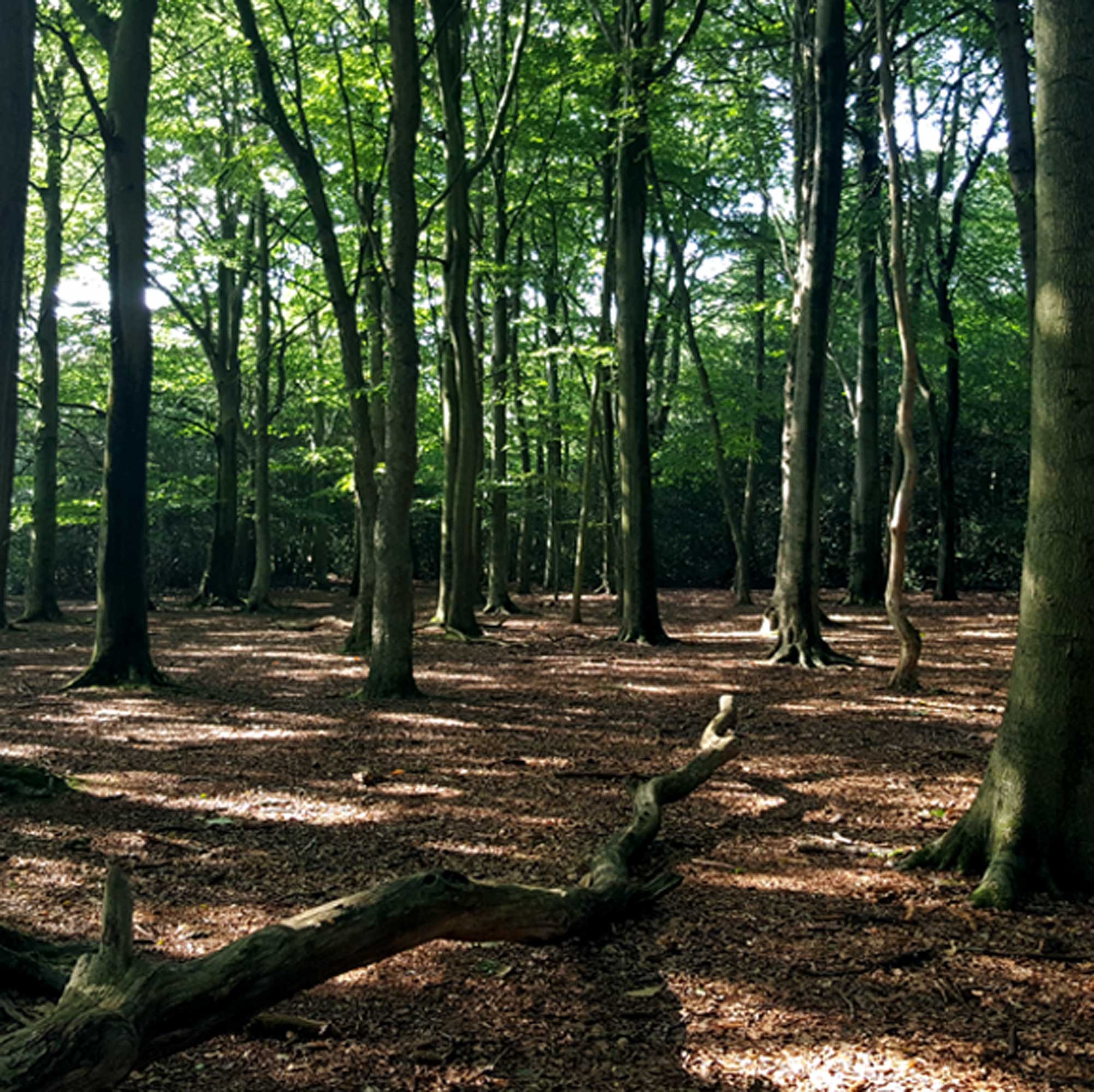
Ep 9595 Suffolk Wood (part 10) - a voyage from dawn to day - spacious and subtle - best with headphones
Day has arrived, and there's no mystery about it. Gone the voids. Gone the echoes. Gone the skewed sense of time, magnified, with distance overlapping. 5am, and it's here and there and all about. The present. The world, re-appeared. Light has come, yet the wood remains still. It's filled with the anodyne reverberations of the distant A12, reflecting off all the hard surfaces of the trees, revealing in sound the huge interior space that is the wood. Don't be beguiled though! These are the grey blue watery minutes, the slack, before the journey really begins. Stand behind the prow, and lean into this, a quiet voyage, from dawn, to day. Slowly, the creatures come. In the leaf litter, they nibble shoots, chase over fallen branches and twisted vines. Gambol around the microphones, as morning children do. They race through the night's re-arrangement of leaves, then stop to bathe in the newness of the wood, re-appeared. Some tiny mammal squeaks, from somewhere near. High in the branches above, the rooks caw, and observe. Maybe they see the cow that lows, in the field beyond. And what about the day? Dressed in the cotton soft coos of wood pigeons, embroidered by the sparkling songs of wrens, buttoned with the bright pips of the littler birds, the day is getting ready. Ready to rise up, and in the blue light, blink. Blink, and lift its shoulders wide, and stretch out its neck, for a touch of the morning sun. -------------------------------------------------------------------------------------- We made this recording back in August 2017, leaving our microphones to record overnight and alone, in a rural wood, off-the-beaten track. This section is from 5am to 6am. Listen to the other episodes from through the night.
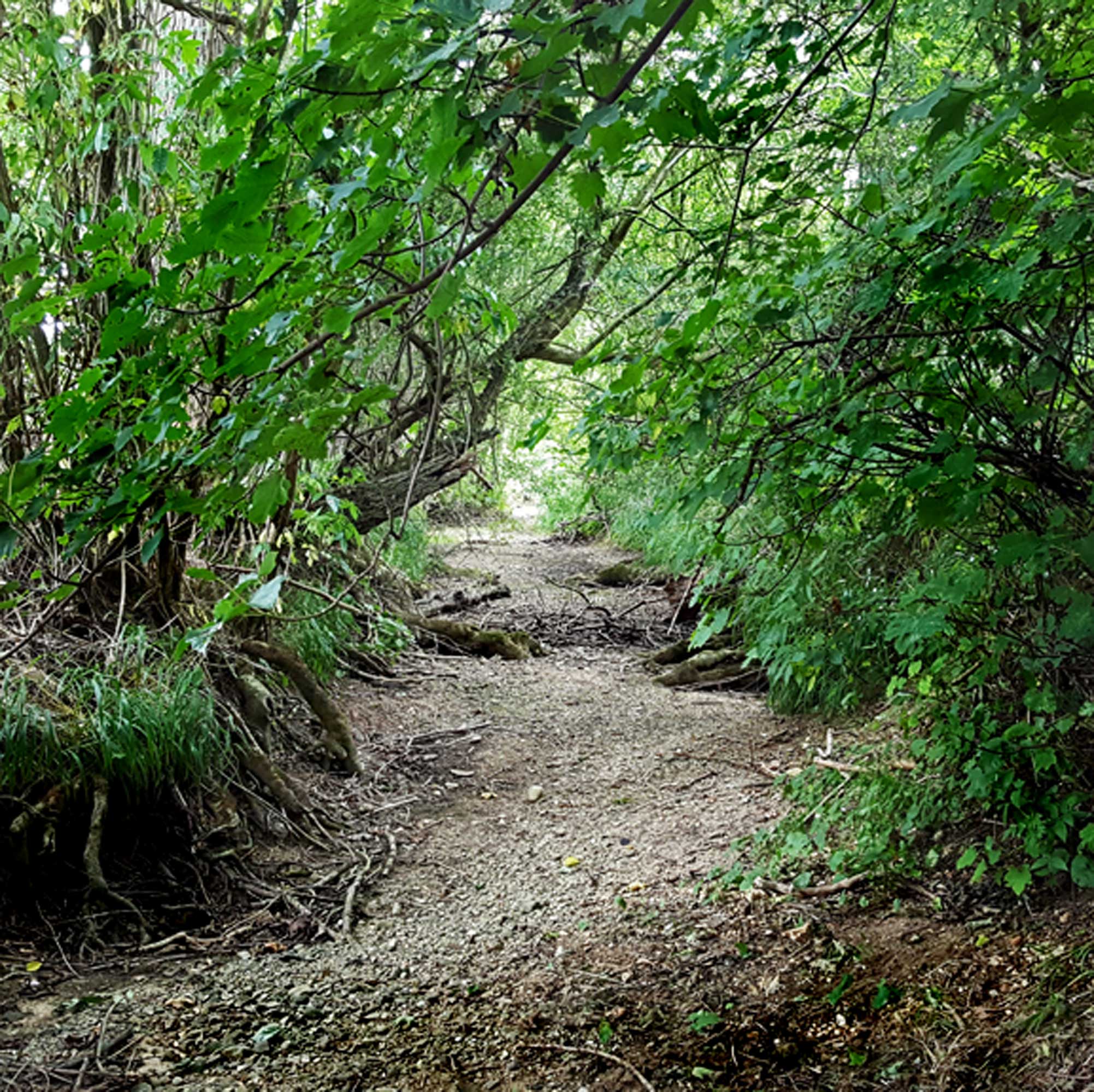
Ep 9494 The trees that wait for the chalk stream to flow (natural source of white noise)
Out of the 240 chalk streams globally, 160 are (or were) in England. For a moment, I thought I heard a splosh and the whip of a fishing rod. But how? Ankle deep in dusty soft leaf litter, several yards down in the waterless bed of a dried up chalk stream, I craned my ears. There it was again. More of a splish, this time, or was it a wish just uttered, by the trees. They swayed in a gust of late summer wind, and I swayed with them. There was someone there. An old man. He was sitting bolt upright on the bank just beside me, with crystal clear water lapping at his leather boots. He was smoking a pipe, and holding a fishing rod. And he was swinging it in, right past my nose, the most beautiful fish I'd ever seen. A dark silvery torpedo shaped body with proud fin, hoisted and shimmering, in the setting sun. A fish! I exclaimed. Aye the old man muttered, from behind his puff of Parson's Pleasure. Just a grayling. It was so beautiful. Where did it come from I said? The wind gusted again in the overhanging trees, and they swayed. Swayed with what this time I knew was a kindly form of long-suffering impatience. Grayling used to live right there, where you are standing now. And many others like them. Mind you, there was a lot more life about when I was around, in those clear flowing waters. Before he and the fish vanished, I saw its iridescent soul rise up, into one of the trees. And I realised there, it will have to stay, leaf like, waiting with its kin, until the chalk stream returns. -------------------------------------------------------------------------------------- We recorded the natural white noise created by these trees a few months ago in the countryside near Newport in Essex. It was a peaceful place, with a tractor tilling a field in the far distance. The trees grew along the banks of what we later found in bygone days used to be a chalk stream. We think of it as a barometer of human impact, and turn to listen to the wisdom of trees. Chalk streams are rare and fascinating. Find out more. -------------------------------------------------------------------------------------- Love Lento? Here's how to support the podcast.
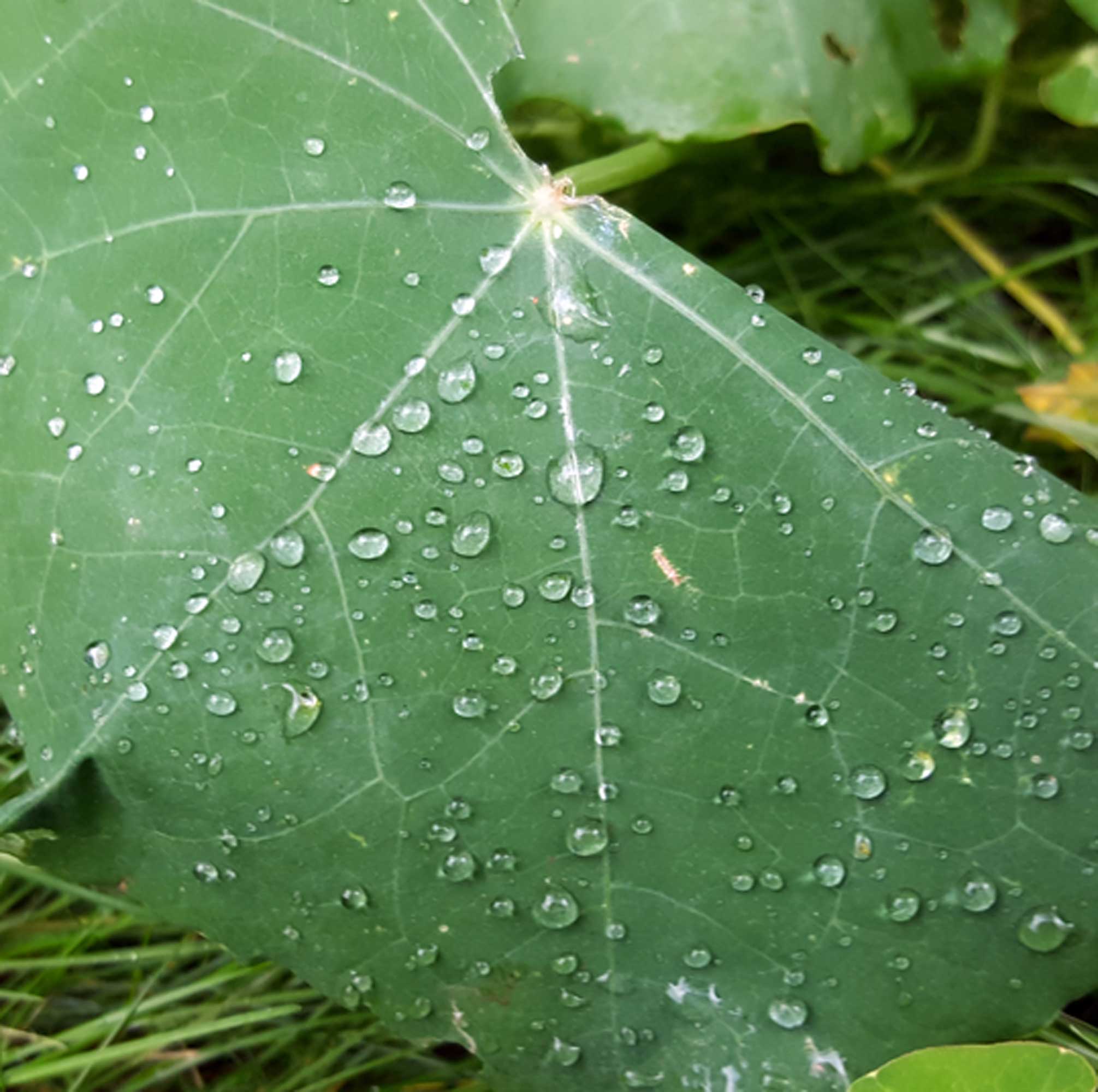
Ep 9393 Rain garden after dark (sleep safe)
Rain. Rain falling in the night. Falling in the night when there's nobody about to hear it. Falling onto a little ramshackle garden made up of upturned pots, a patch of leaf scattered concrete, and a square of grass surrounded by sleeping shrubs and plants. A little walled garden, basking under the falling water, still, under grey black suburban sky. Sometimes gusted, by a nosy, billowing wind. Does the rain know where it's going to fall? An old tarpaulin hangs beside the raspberry canes. Beneath, a small piece of shelter. A small piece of peace, tapped by the tiny, scattering drops. Does this rain make a sound, when there's nobody around to hear it? We hardly know anything of our garden at night. A few weeks ago we left the Lento microphones there, to find out. Under a waxed hat they recorded the passing hours of the night. City slumber, silk softness, and a band of tranquil, spacious rain. In the morning, it was the raindrops caught on the nasturtium leaves, that told the story of the night.
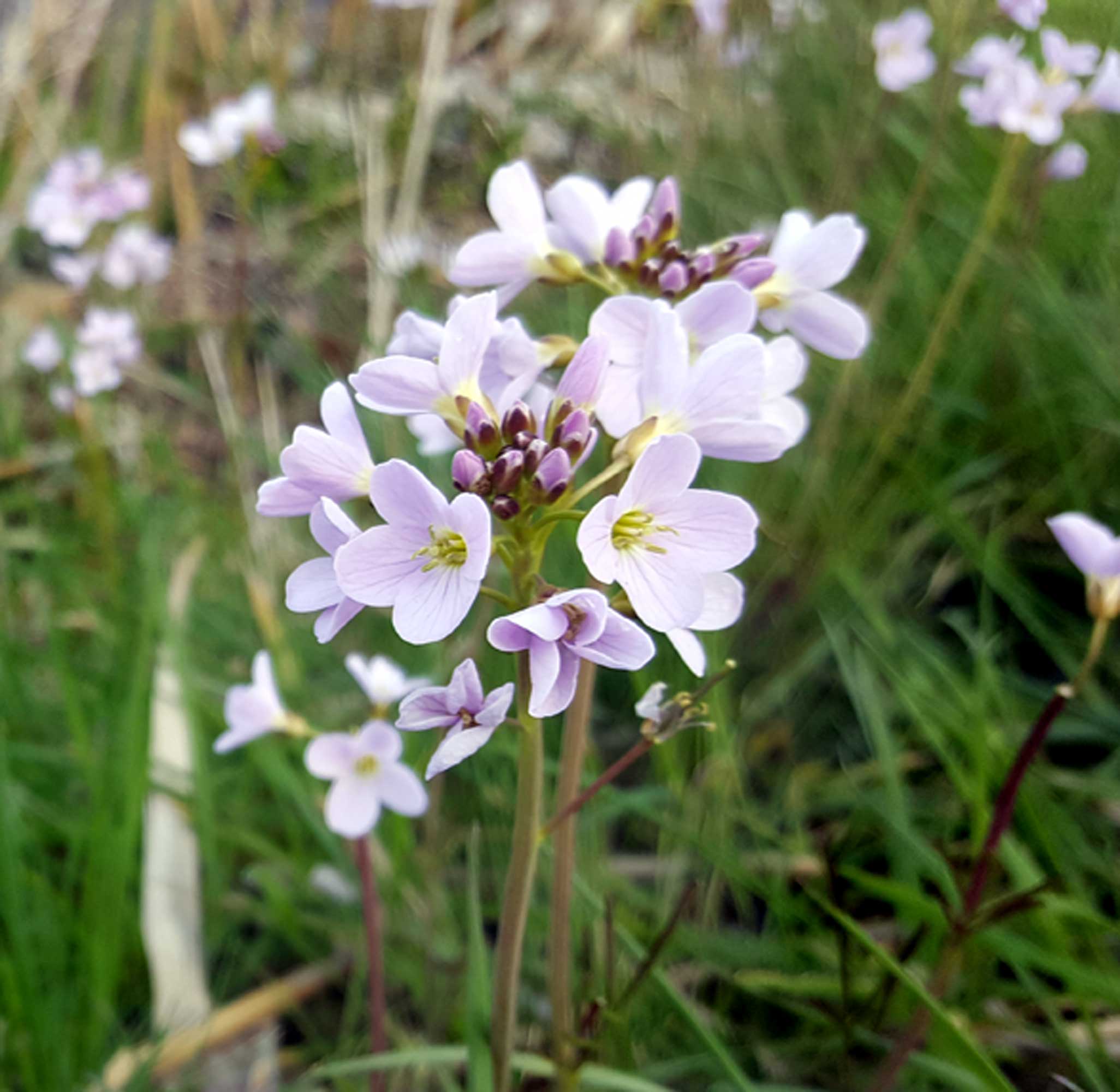
Ep 9292 Up in the April hills of mid Wales
Up in the April hills of Wales, beside an empty road. Behind the brambles, down a dell, a stream, over bare stone rolls. What sing you mistle thrush? The inbetween of holly trees, is lit by morning sun. In the field beyond the birches, a thirsty sheep dog runs. Green beach, open sky, scattered lines of sheep shells. Run run, you thirsty dog, the world's your oyster. What sing you mistle thrush? First car of the day, chases emptiness away. Then another in its wake, lest it dare to stay. Their bow waves press the brambles in. Their tyres peel gently by. Their wind sends the dry straw up. It spins. Floats. Then settles down, upon the asphalt, in jumble writing. Sing, sing, you mistle thrush. Sing your mottled, scuttled, song. ---------------------------------------------------------------- This is part of an overnight recording we made in early spring 2019, up in the hills above Kerry, mid Wales. We first thought it featured a spring blackbird, but now know it is a mistle thrush. Chif chaf, wrens, a juddering pheasant, great tits, rooks and wood pigeons can also be heard.
Ep 9191 When woods go weird
Three years ago we made another overnight recording at the edge of a rural wood. It turned out to be one of those night's when almost nothing stirred, just the faintest susurrations of wind in trees and the occasional crick of a dark bush cricket, hidden amongst the thick brambles that grew around the taught wire fence where we tied the microphones. Nothing happening, for hour upon hour. It seemed it wouldn't make even one episode. But then, just before the gothic bell clanked the half hour before 5am, something in the air changed. The wood, came alive. The change began with a tawny owl, far off to the left, that began to call. It was soon joined by another, replying in an unusually tremulous way. Their strange mid-distance hoots over time were joined by others. Some close, some farther away. Each owl, materialising in its own silent void of the forest, filled the space with what, at times, can almost be said to be an owl chorus. It is often said that everything connects, and so it seems. Whether roused from slumber or in some way spoken to, a cow lows back to the owls from the field beyond the wood. There is a timing to it. It isn't rational, of course, but the interaction is there, all the same, to be heard. Passing geese join too, calling down from their lofty processions, and the ducks laugh back at them, from their murky millpond. It is, in all respects, a weird time, a weird scene, from this wood several miles from the A12 in rural Suffolk. Distant bells clank the hour. The parish clock strikes 5. The dark robe of night is slipping away. The dawn is nigh. Awake you wood pigeons. Fly by you large bird. Buzz you giant insect, sounding like two airborne elastic bands. Hoot, and hoot again, you strange owls. Welcome! The August dawn.
Ep 9090 Wind on water, night curlews, rain later (sleep safe)
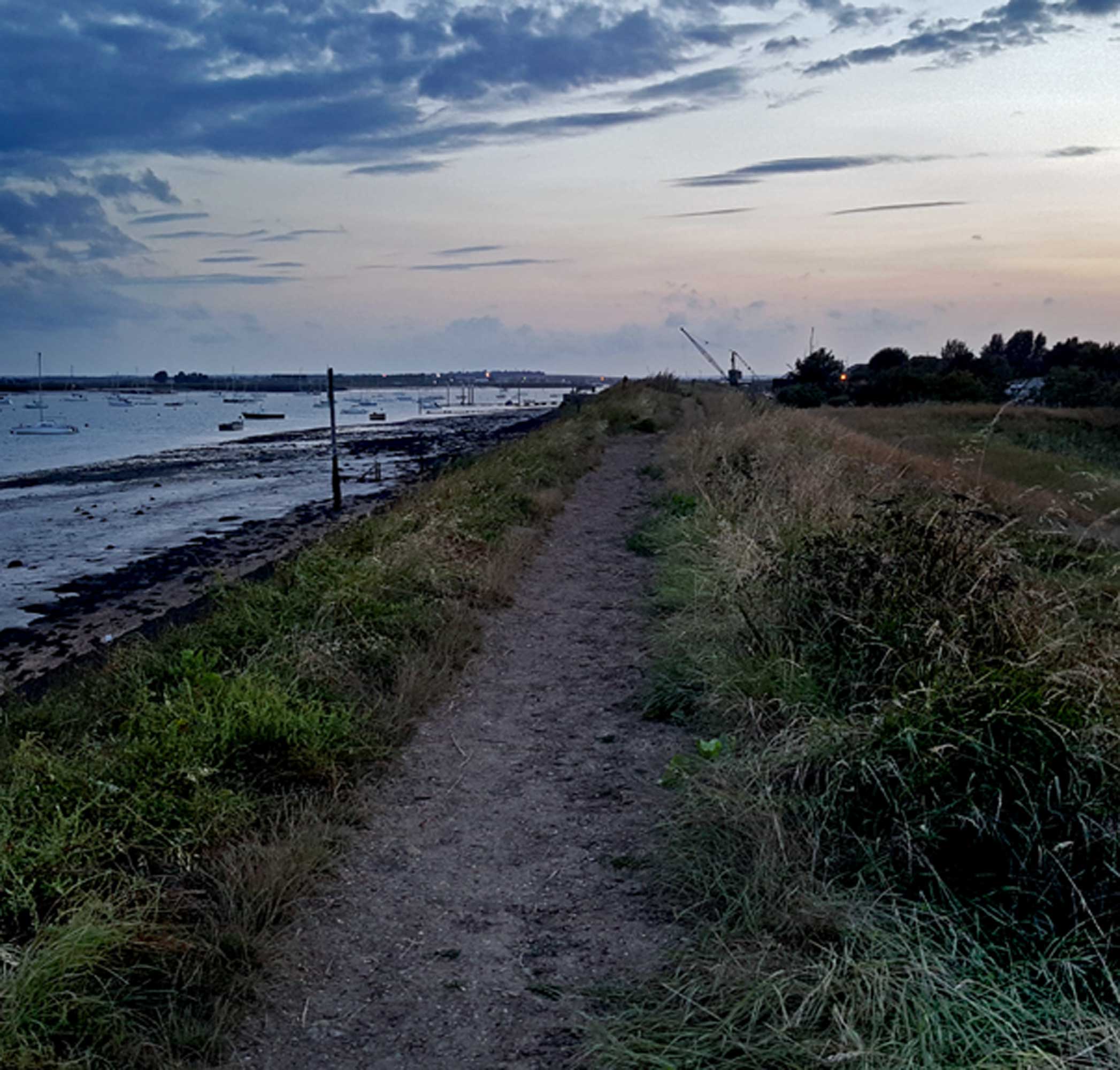
Deep and spaciously detailed night quiet, at the edge of the tidal river Crouch in rural Essex. Wind on water. Rain on water. Night birds over water. Water upon water. A real piece of time, captured from one rainy inclement night in August by a pair of weatherproofed microphones tied to a seawall railing in Burnham-on-Crouch. Over time, and as the weather front rolls in, the delicate shifting movements of the water fill, and become richer and more pronounced. Unperturbed, curlew, redshank and distant geese patrol the black, empty night air. Their calls carry far, in long natural intervals, across the wide open space. It's the waiting, between the calls, that refreshes the mind. Three step listener guide: 1. Ear/headphones enable you to hear the detail and panorama of the captured sound. 2. On a phone or tablet try setting volume in the middle but if you hear nothing nudge volume up, bit by bit, until you feel immersed in the light rippling washes of waves. Not loud, they should feel delicate to start with, because the soundscape is real. 3. Unlike music or speech audio, playing back the detail and space of a naturally recorded soundscape is greatly enhanced, in addition to headphones, when your surroundings are conducive too. It's the listening equivalent of dimming the lights, closing the curtains and settling down to watch an atmospheric film. These are not sound effects, they are all 100% original and natural recordings from real places.
Ep 8989 The birds of the leafy ravine - a tonic for tired minds (best with headphones)
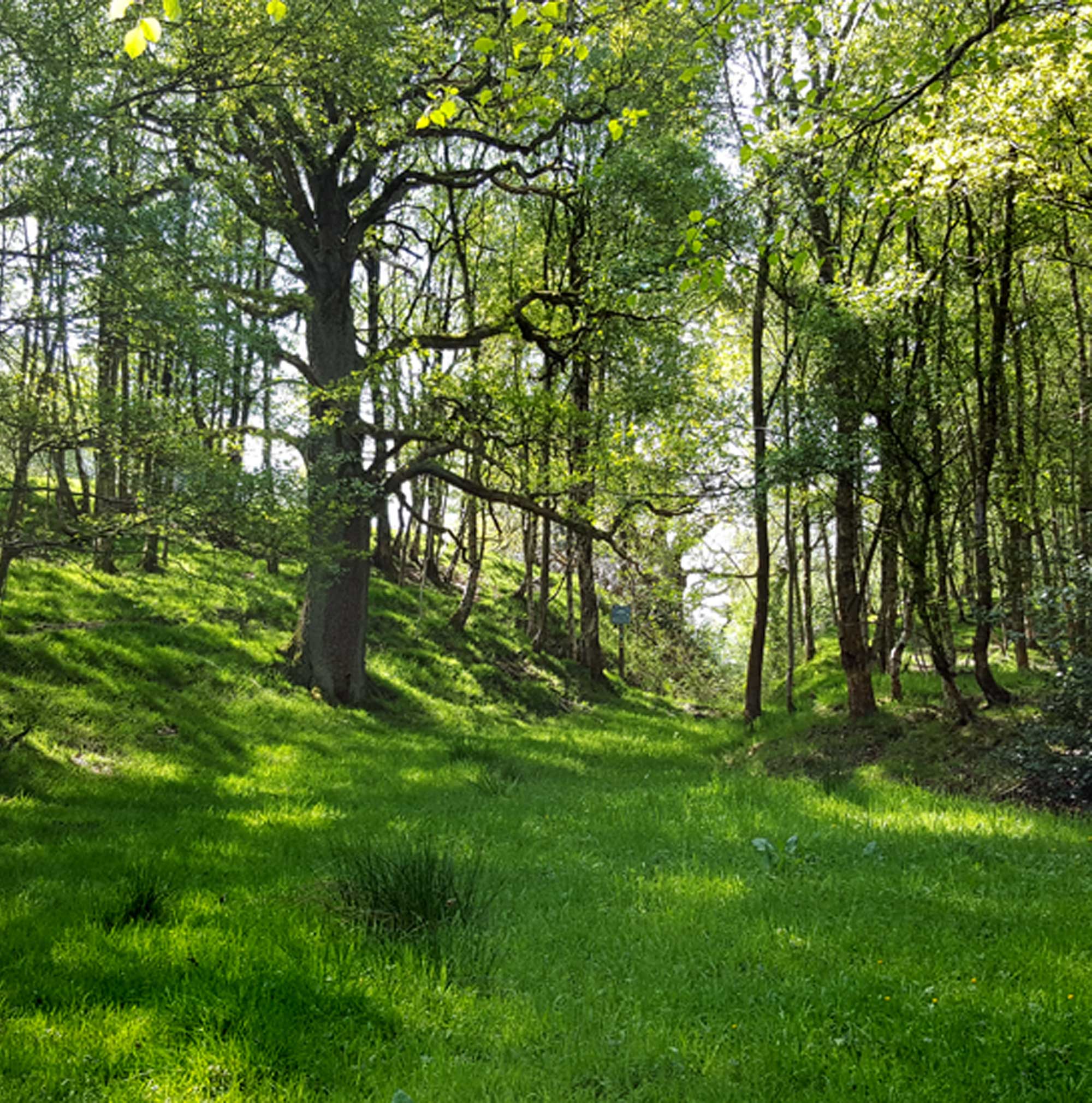
We're going back to early June this year, to the rich and intermingled singing of birds that happens at dawn throughout the spring and early summer. In Britain it's called the dawn chorus, a behaviour associated with song birds during the breeding season. Captured by a lone pair of microphones tied to a tree, above the watery and precipitous ravine that runs into the infamous Todbrook Reservoir at the Cheshire / Derbyshire border, this segment is from just before four o'clock in the morning. It can be hard to distinguish the different songs, but in amongst the mellifluous tunes there are song thrushes, blackcaps, blackbirds and robins, resonating in the fresh morning air of the ravine. From left to right the watery flow of the stream fills the space, and in the fields beyond, sheep and lambs can be heard. At four minutes some things with hooves, perhaps several small deer, scramble past along the precipitous path about thirty feet below the microphones. One small fleeting drama, on the cusp of a perfect June day. Far out on the right, where the valley opens out into the reservoir, occasional echoes of cars spill over from the country road between Macclesfield and Whaley Bridge. If, from inside their steel boxes, the occupants could have known about the dawn chorus from down in this secret valley, maybe they'd have stopped, turned off their engines, and listened to a phenomenon so few of us ever really get to hear.
Ep 8888 An afternoon at Wrabness (part 2)
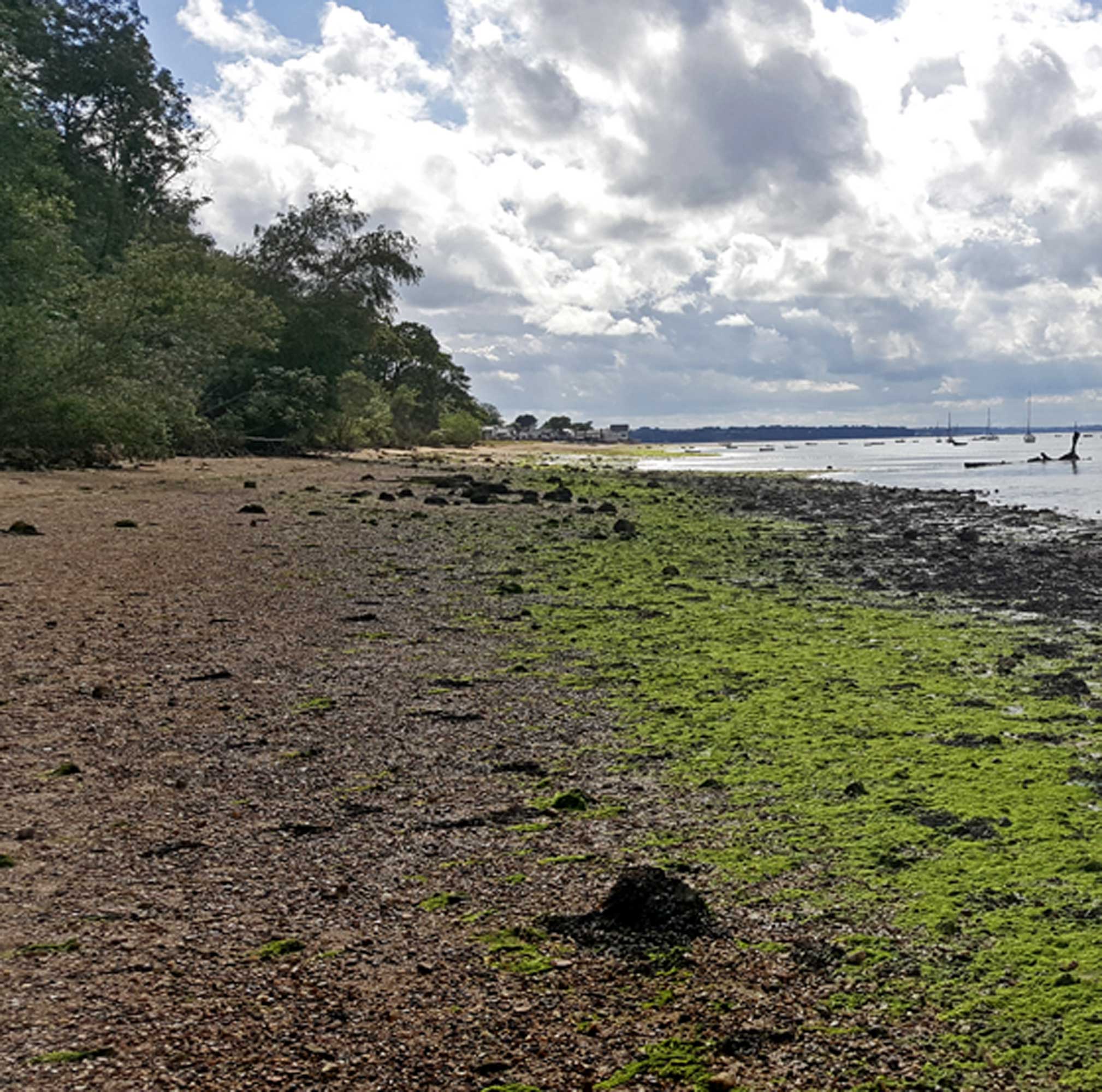
Above the mud silt beach, it's all bright clouds, moving. Then the sun breaks through. The river is stretching wide here, left to right, silently carrying the land's outflow through marshes, and out to sea. Warm wind blows in between long spells of calm. Close by, on the tree holding the microphones, and almost within touching distance, small waxy leaves rustle in the summer breeze. The tide's falling. Wind is pushing against the moored boats opposite and setting them swaying. In jolly colours they rock to and fro, like bath toys, masts knocking, ringing, bell-like. Mid-stream, marine vessels plough comfortably by. As they pass they make slow moving delta waves. V-shaped echoes, that travel along behind, and sideways, expanding, so that eventually, they wash up along the shallow shore, in clean bright, rinsing waves. Gulls over the water. Wood pigeons in the trees. A mistle thrush too, somewhere far out to the left, Sounding something like a blackbird, still just practising his song. This is quiet time, in a place beside wide water. A place, beneath an open sky, that's not sea nor river, but estuary. Tidal, yet calm. Wild, yet sheltered. A place that's good for afternoon people.
Ep 8787 Sky landing - when the wind bends the trees
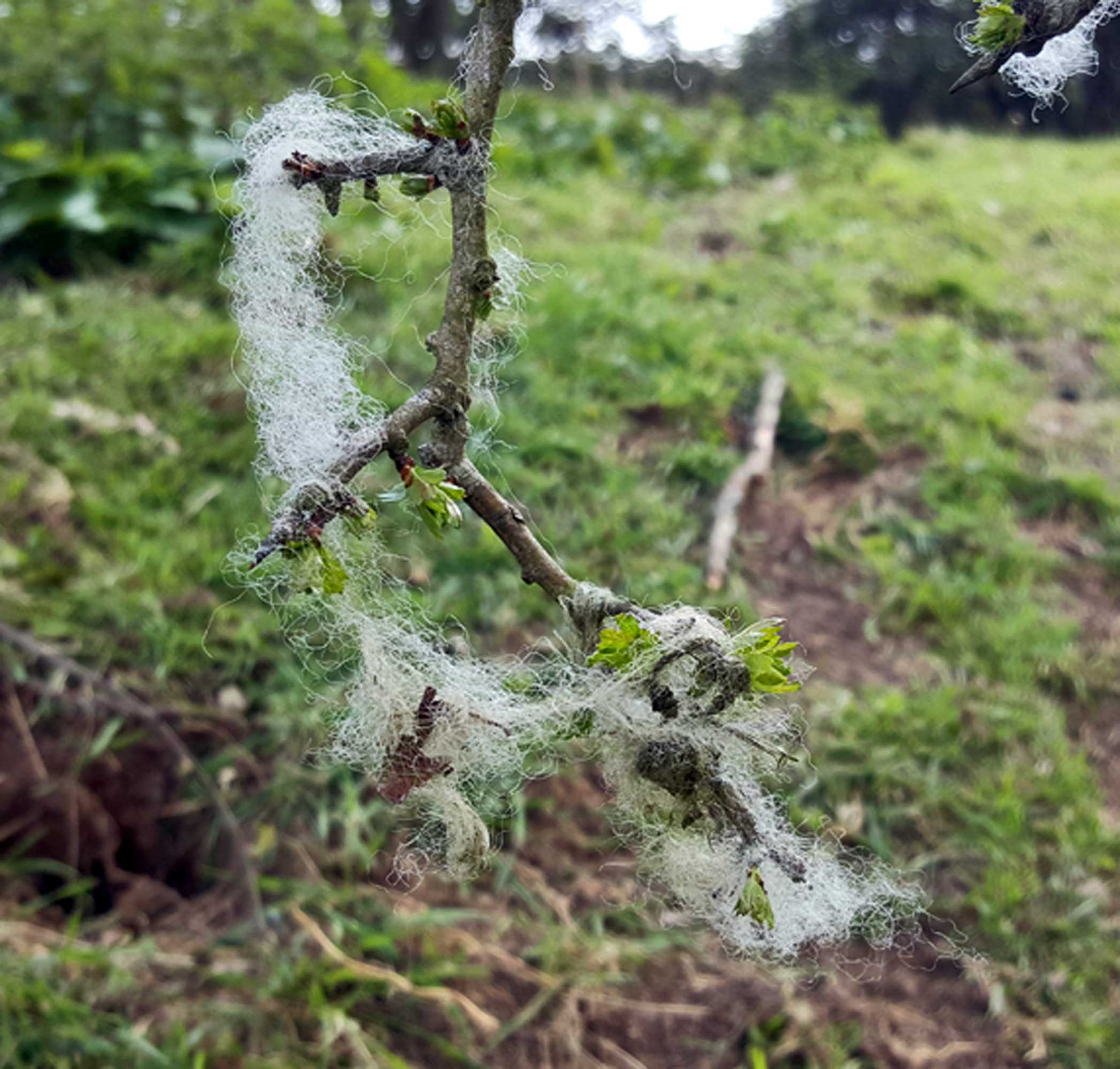
They look as if they are swimming in it. The banks of trees. Tense into the current, swaying, twisting in sympathy with the changing wind. Like they're wading out into on-coming waves, wading out to be washed in this force of sky, landing. And in-between, in the tranquil lulls, resting. Tall. Collegiate. Upright. With leaves still trembling. Equinoctial gales, glanced the highland cattle. Or the vernal winds, as the stalwart sheep prefer. A storm of wind that's come to sweep away the dry husks of summer. That's come to redden the leaves. Is it true though? That such thing as an equinoctial gale, is in fact a myth? Myth, roar the trees. A myth, mutter the scattering leaves. You'll have to ask the sky. Now, the autumn air's blowing in. Along wooded moorsides, up and down the country, the season is changing. Time to blow away the cobwebs. To pack a rucksack, flask and tea. To check the map. To put on coats. To catch wiffs of woodsmoke in the air.
Ep 86Night tide turning at pillbox point (sleep safe)
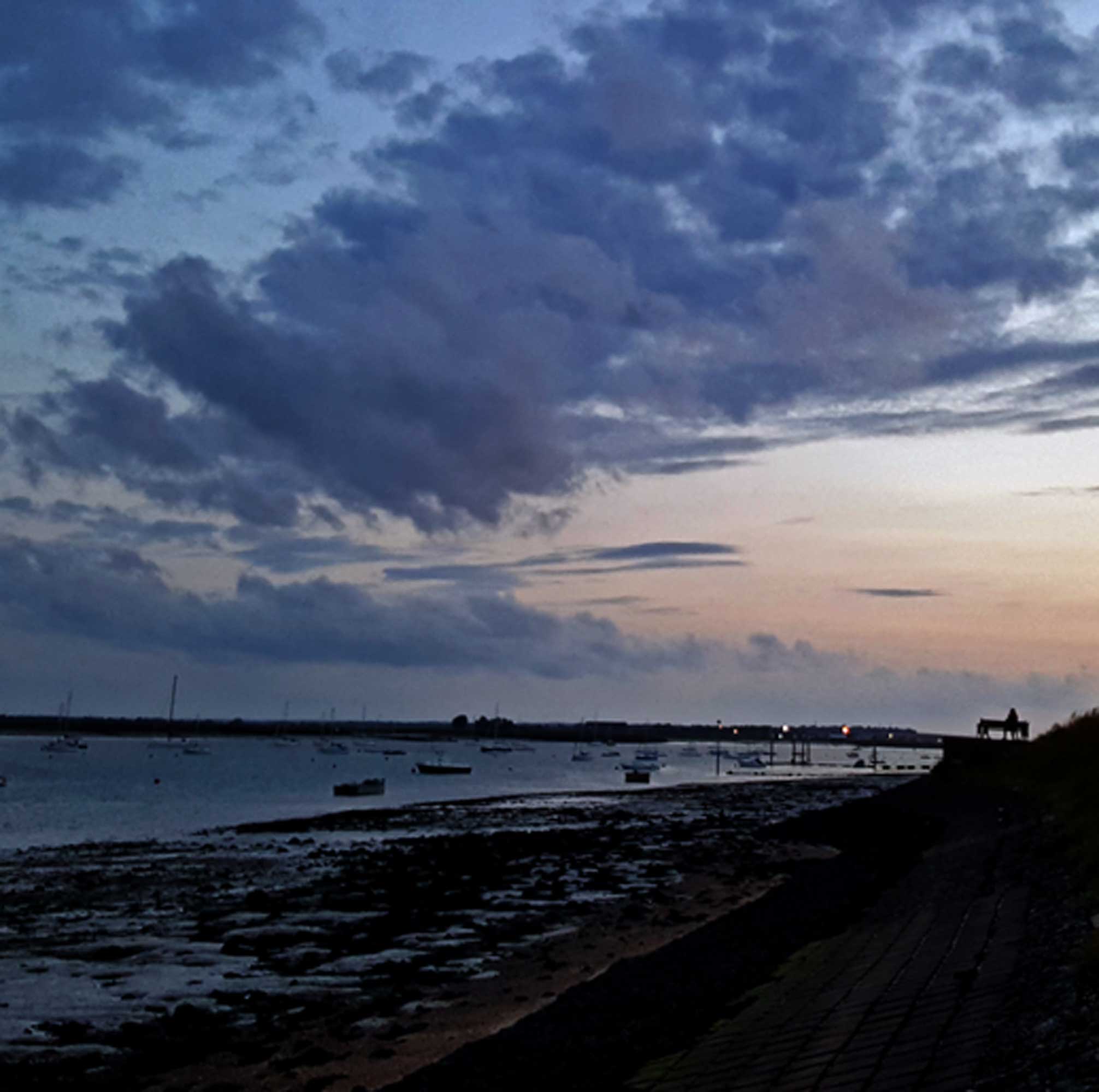
High tide on the River Crouch. Night. Not a soul about. Small bobbly waves gamboling along the brimming tideline. Playful, in swilling swirls, reaching for one more inch of land, before the ebb. From the east, a lazy wind muffles. Tide turned. The surface has begun to calm. Palmful waves bob over each other in glassy melodious slurps. Their thirst for land is over. Retreat not yet in mind, and still nudging the hard ground, they are letting themselves settle to its dry resistance. Night wind softly presses. The ebb. A grainy hiss of newly exposed land has appeared along the tideline. The water, relaxed, moving slow like a minute hand, is inching back. It's slackened, into tiny, feathery currents. This place is no longer about a shoreline. It's opened. Become panoramic. An aural vista. Wide, silent, tidal river. Far off, murmurs of nocturnal flying curlew, redshank, and geese. And of a low, soporific hum. A ship. In port. Docked, and sleeping.
Ep 85Afternoon meadow in late summer
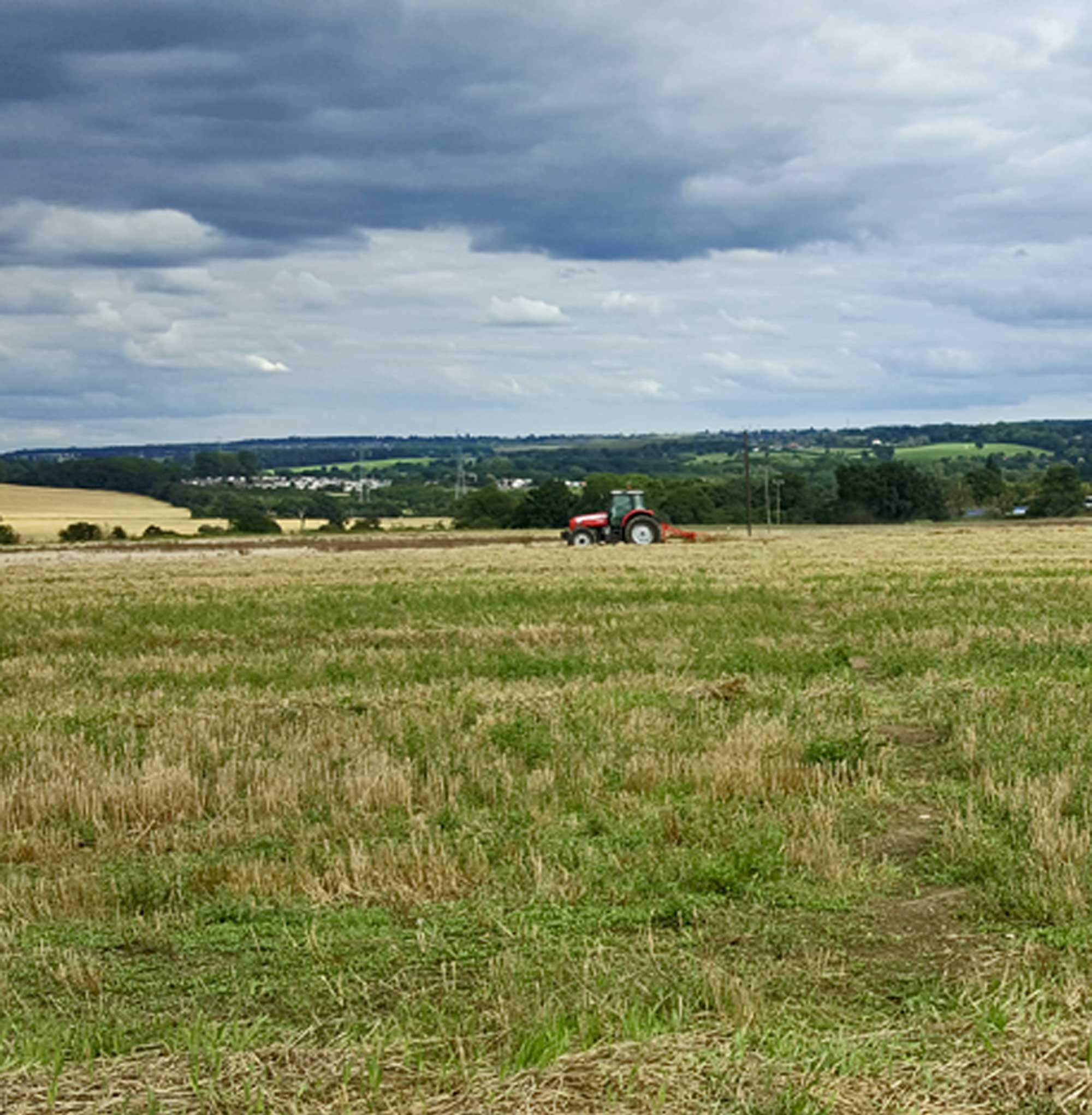
Last day of August. Pleasant sunshine, blue sky. Wind 1 to 2 knots, barely noticeable. Standing tall with motionless leaves, the trees are leaning into the warmth, letting their limbs soak up every available ounce of the sun's golden heat. Along the old bridleway, away from the grey noise of a cross-country road, quiet fields are revealed. Knee deep with grass. Waiting to be mown. A hedgerow, beside a field. All around, the air thrums, with a feeling of wide open space. In the mid-distance, a flock of geese, slowly transiting the open sky. From near in a high tree, a rook calls. It echoes over the fields, a dry bark-like caw that spells the arrival of autumn. In the next field, hidden from view behind a line of trees, a tractor pulls a long wheeled and bladed contraption up and down. It's mowing the summer's grass. Time to make hay. An old propeller plane hums proudly over. It's passage draws a slow, arching line, between the eastern and western skies. Gradually, with nobody around, the birds return. Magpies, to bully in the high top branches. The tchack tchacks, of scattering jackdaws. A pheasant, its creaky call like an unoiled gate somewhere in the undergrowth. Little birds, perched amongst the brambles, emit short, percussive sounds. The tractor continues to mow. More planes traverse the sky. And all the time, from everywhere and nowhere, the air continues to thrum with tiny, silken vibrations. These are the traces, the most elemental of aural fragments, the leftovers gathered at the edges of human hearing from the action of countless rolling tyres on fast asphalt roads, but that from here, filtered through so many trees and hedgerows, are safely and forgettably muffled beneath the horizon.
Ep 84Down at the marina on a weekday in August
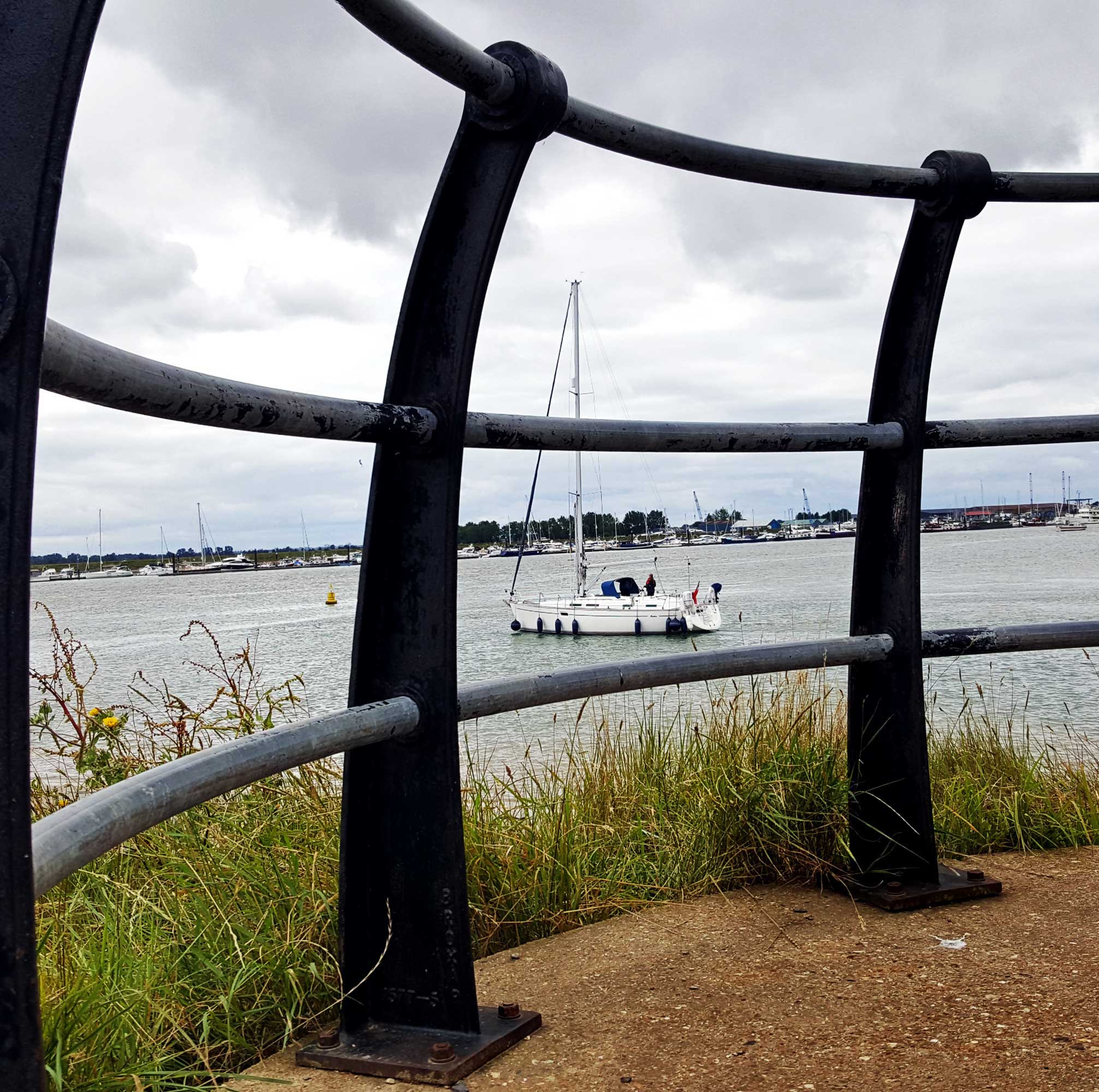
Sunlit pontoons. Taut ropes. Empty footways. Still, like a photograph. So many boats moored up, waiting for someone to come down to sail them. This is the marina at Burnham-on-Crouch, Essex, where to the eye, on this hot summer day in August, everything looks still. To the ear though, it's a different story. Guy ropes whistle and moan in the wind. Halyards ring against hollow masts. Tidal water swells, and though smooth on the surface, slaps impatiently against the pontoons. And when the wind eases, crickets in the long grass discretely sing. Out on the open water, small craft on small journeys manoeuvre. Mid-stream, a heavy-engined vessel labours against the out-going tide. Docked, distantly opposite the marina, machines relieve a bulk carrier of its consignment of timber. All the sounds of an August working day. At eleven minutes, six, soft edged, evenly spaced booms. Detonations from the firing range seven miles southeast on Foulness. The aural ambience in the air around the marina pushes to, and fro, like the ever-changing water. Filling, then emptying, filling, then emptying, in slow, peaceful transitions. It's the sort of place where one can go to just listen, and take in the atmosphere. A waterside place with sun-warmed railings for leaning into, where everything is there, and everything is happening, but in a more reflective, tide coming in and out, kind of way. Summer beside the marina time.
Ep 83Suffolk Wood (part 9) - the hour before dawn with owls and nocturnal animals
From over the fields beyond the edge of the forest, the bell of St Mary's strikes 4. Within this empty space between the trees, the golden sound rings pure and clear, though there's no one around to hear it. Soon, the dawn will come. For now, down amongst the leaf litter, the dark bush crickets are still counting the seconds. Still twinkling, like tiny jewels on the velvety dark carpet of peace that stretches out in all directions over the forest floor. Around, nocturnal animals pad lightly in the darkness. Above, traces of a breeze. Of dry twigs and branches dropping. Of the last drifting echoes of night haulage from the distant A12. Across the resonant wood, owls call. Time passes. Then, signalled by one single rasp from a rook, something in the air changes. It's well before sunrise. In the mid-distance, a wood pigeon begins to caw. Are these the internal circadian rhythms of life or have they both seen some kind of light? Perhaps a stratospheric cloud, illuminated by a first shaft of sunlight? Whatever it is, a cockerel crows. The bell strikes 5. The night is over. The day has come. -------------------------------------------------------------------------------------- This is the 9th episode in our series made from one continuous recording through the night in this special location. You can listen to all previous episodes via this blog post.

Ep 8282 Hill top oak in strong wind - a natural source of white noise (sleep safe)
High up on an exposed moor, between the Derbyshire towns of Glossop and Buxton, an old oak tree leans into the wind. Its sound is heard only by passing walkers, who from time to time, clink through the gate on their way over the exposed moor. As we passed, we tied the microphones to one of the low boughs, leeside of the strong prevailing wind, and left them alone to record. ----------------------------------------------------------------------------------------- Artificial white noise generators designed to promote sleep and relaxation are widely available online and via apps. For anyone trying to steer their mind away from the distractions of the world they provide a stream of wind-like sound, that masks, washes, and soothes. Of course natural noise generators exist everywhere. Unlike their artificial versions, they produce their noise in infinitely varying ways. So much so, that rather than thinking of them as making just noise, they can be thought of more as instruments that enable you to hear the shape of an ever-changing current. Perhaps the most abundant and interesting of natural noise generators, are trees. Evolved as giant plants able to thrive with almost any strength of wind, their leaves, boughs and branches convert even the softest of breezes into perfectly audible sound. Having evolved in and amongst trees, over several millions of years, our listening minds must have been fundamentally influenced by these kinds of sounds. So it must be, that all of us must have and share an intrinsic ability to understand the language of wind in trees. It might also help to explain why listening to white noise of any kind, works as a type of sound therapy. -------------------------------------------------------------------------------------- Thanks for listening to Radio Lento. We make it without any grants, sponsorship or funding. You can help Lento keep going by buying us a coffee on our Ko-fi site or by telling other people about Radio Lento or leaving us a positive review wherever you get your podcasts. Thank you.
Ep 81Rising tide in the rock garden - the sea wall near Bradwell-on-Sea
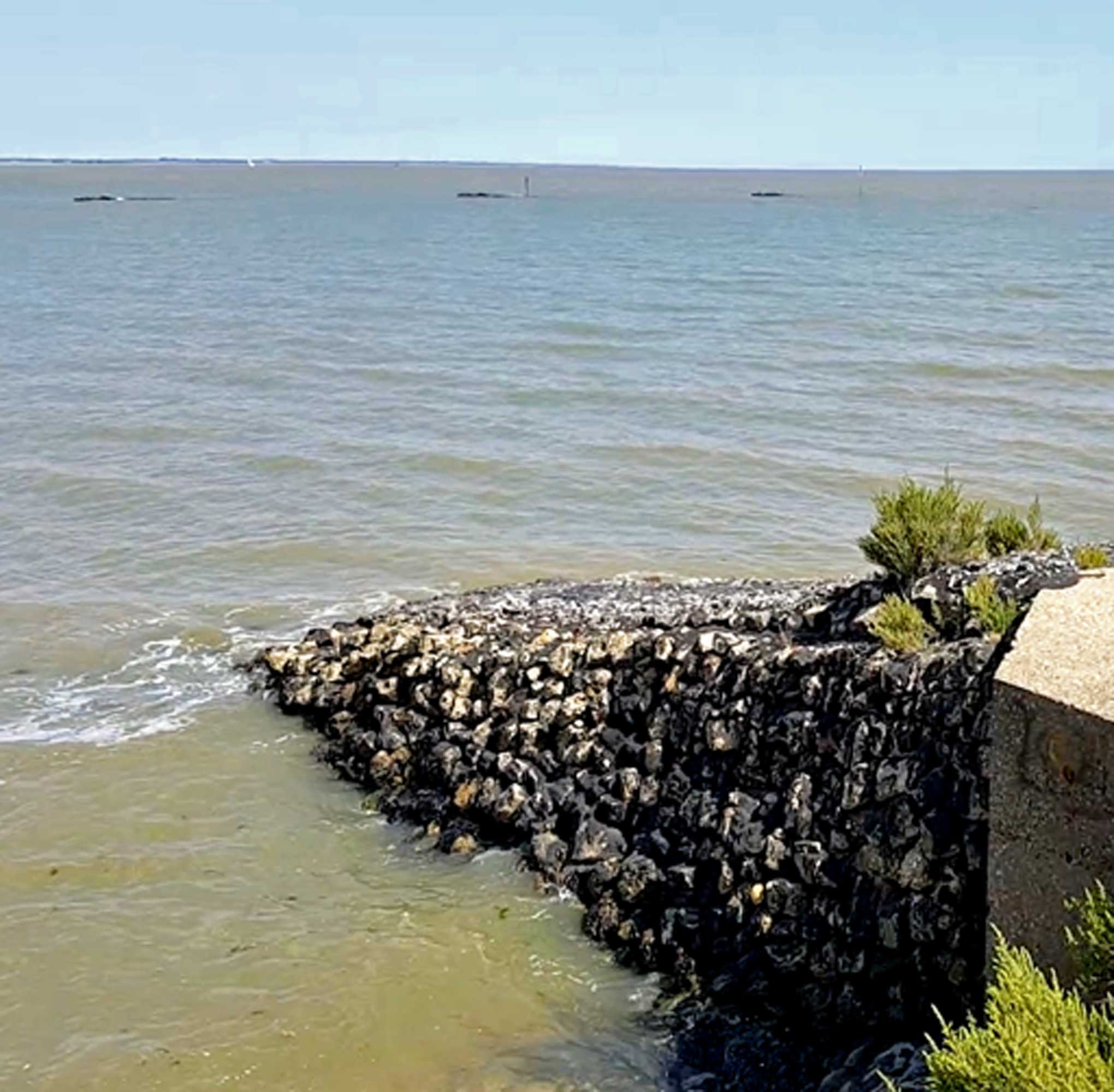
Stop walking! There's a place to sit. Roll up your jacket to make a cushion and perch on the rocks, just for a moment, to take in the view. Look! Over the expanse of cloud-dappled water, beyond, where the outgoing surge of the river Blackwater swirls into the North Sea, that's Mersea Island. From here, just a sliver of low lying land. A few miles up the coast, though not yet in sight, are the two giant blockhouses of the now decommissioned and quiescent Bradwell nuclear power station built in 1957. Between the cuffing gusts of the onshore breeze, the air here feels unusually still of human noise. Unusually crisp, unusually vibrant with textural sounds. Deep inside clouds and far out over the channel, are some passing rumbles. Not thunder, more like low flying military jets patrolling and underlining some invisible boundary out there, over the sea. Their distant rumblings not only illuminate, through sound, the infinite void of the sky, but bring contrast to the very tiniest, very closest of sounds. Countless fine edged movements, of a sand made of featherlight shells. Shifting and sifting, picked up and dropped, by gentle, inquisitive waves. Somehow, a quarter of an hour has passed. The rock pools between the sunken concrete barges that make up the sea wall, are now filling, and swirling, with the rising tide. Moving back up the rocks, above the high water mark, you find a new place to sit, and watch, as the pools overflow, merge into one another, to become new areas of wide open sea. The planes are gone. The footpath beckons. But you stay for a little while longer, just to listen to the changing sounds of the fast disappearing rock garden.
Ep 80A doze in the grass on Wallasea Island (High-def sound and sleep safe)
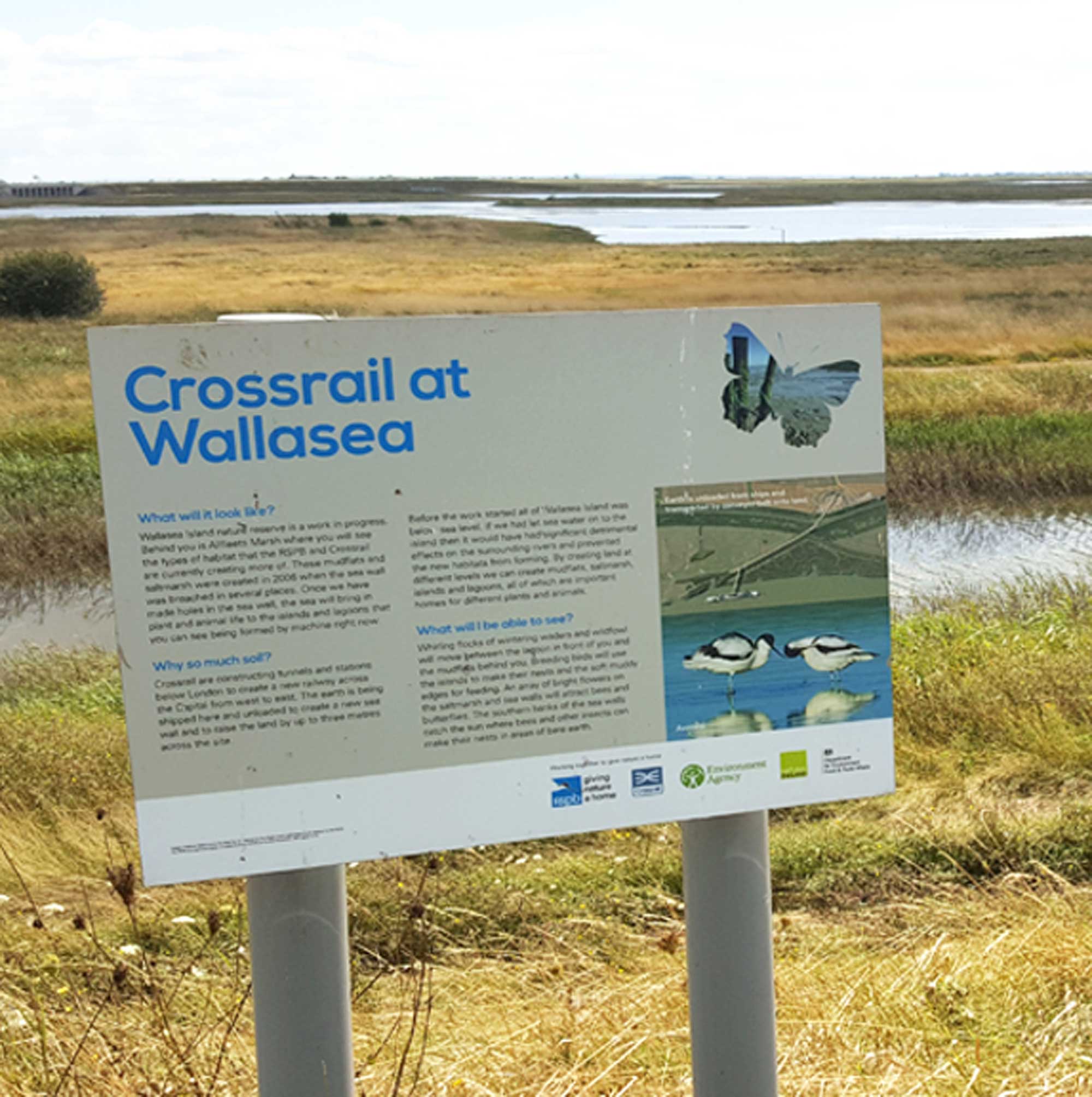
This, is summer island time. Sizzled by crickets, gusted to and fro by hot marshy breezes, a distant marine vessel softly thrums the air with a low soporific hum. Occasional planes pass lazily over. This is Allfleet Marsh on Wallasea island in Essex. East is Foulness and then the North Sea. Down a steep bank from the trail that leads from the car park to School House viewpoint where the River Roach flows into the Crouch, a swath of warm grassland basks under the hot August sun. Sheltered below the ridge, it's quiet, perfect for a doze. A few yards away from the microphones, behind the waist-deep sedge, a tepid inlet reflects glints of the summer sun. It's hot here. Dazzling bright. Invigorated, the bees and hoverflies and countless other insects are hurrying skilfully by. The gusting winds don't affect them. Being early in the afternoon, nothing much is about, except for the sparse calls of a marshland bird. A tumbling chirruping song, fleeting, with a bright yellow timbre. Hidden, but only a little way off, somewhere amongst the tall grass.
Ep 79Essence of estuary
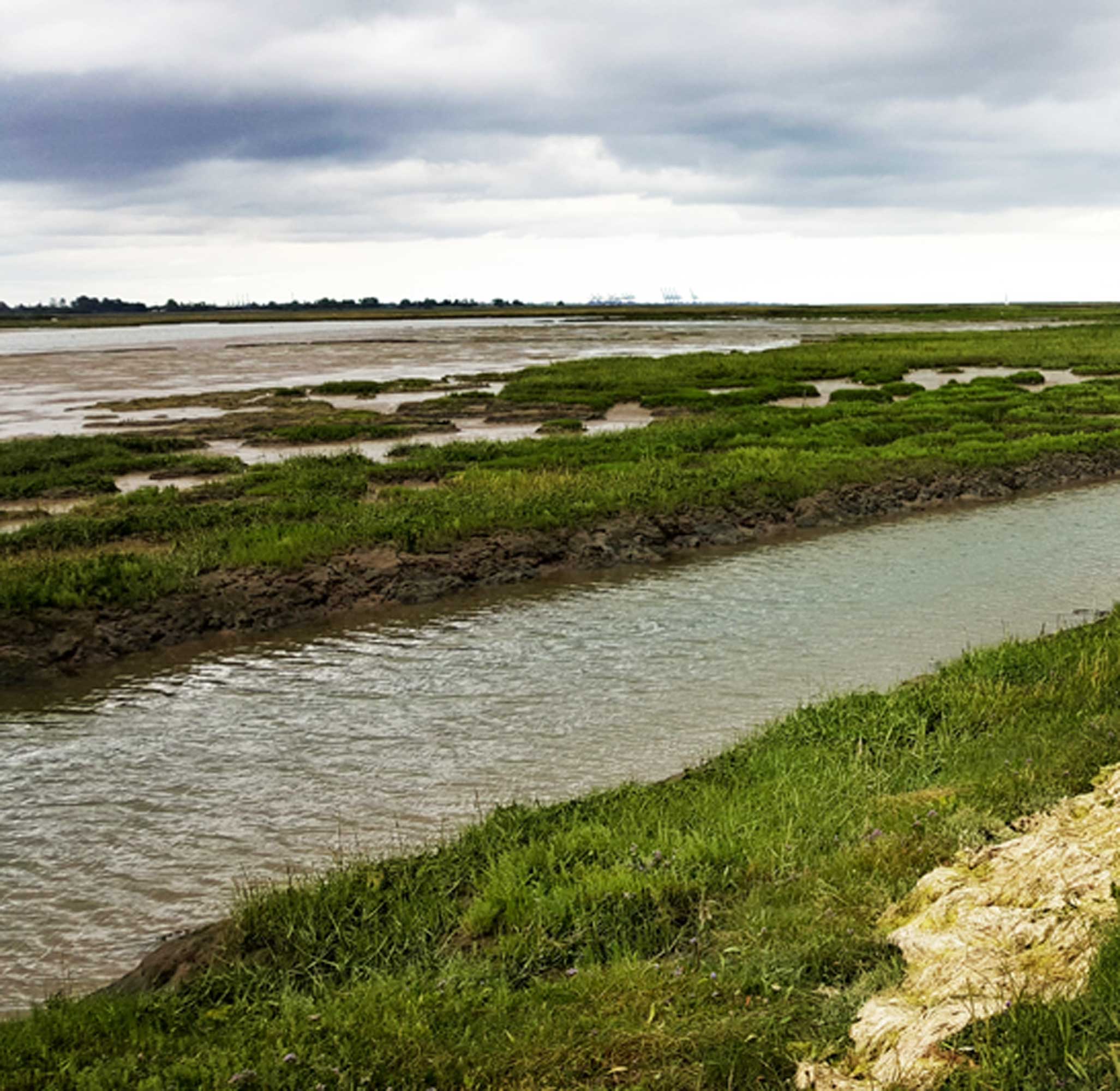
Plunge off the train and smile at the fresh air of nowhere! This is Thorpe-le-Soken in Essex. All ground and sky. The bell in the driver's cab rings twice, then twice again, and it's off. Next stop, somewhere else. The ensuing feeling of loneliness is only temporary. With the decaying buildings of the old maltings nearby, proceed on foot towards the main road. The brick bridge should be firmly on your right. Don't go under it. Turn left instead and walk along the road for a few minutes, until on the opposite side of the road, you see the entrance to an overgrown footpath. This is the beginning of a country walk, that will eventually lead to the creek. In late summer, it'll be a corridor of deliciously verdant green, busy with butterflies. The aural presence of the B1414 will remain on the left. Follow the natural path all the way to the fast bisecting road, cross and continue along a lane surrounded by open fields until you reach another fast bisecting road. Join and follow, until a private road appears on the right. This is, though not signposted, the official footpath down into the creek. It's a lane that ends in a handful of cottages, and a land that slides away between old timbered groynes, down shallow slipways of vegetated green, into nothing but wild, wide open water. Wind ruffled, low lying and unbelievably silent of human noise, those few miles we covered on shanks pony now feel worth every stride. We set the mics to record on a tripod at the water's edge, sunk part way in the wet spongy mud, tiny bubbles popping, and facing an island some way out into the creek. It was encircled by gulls, ringing redshank and curlews. Tide rising, a wind was beginning to whip up. A weather front was approaching from the south. From some trees farther along, we sat in the grass and watched the rain approach while the mics recorded. Listening, helped by some tea from a flask, It was the sound landscape we'd hoped we'd find. Essence of estuary.
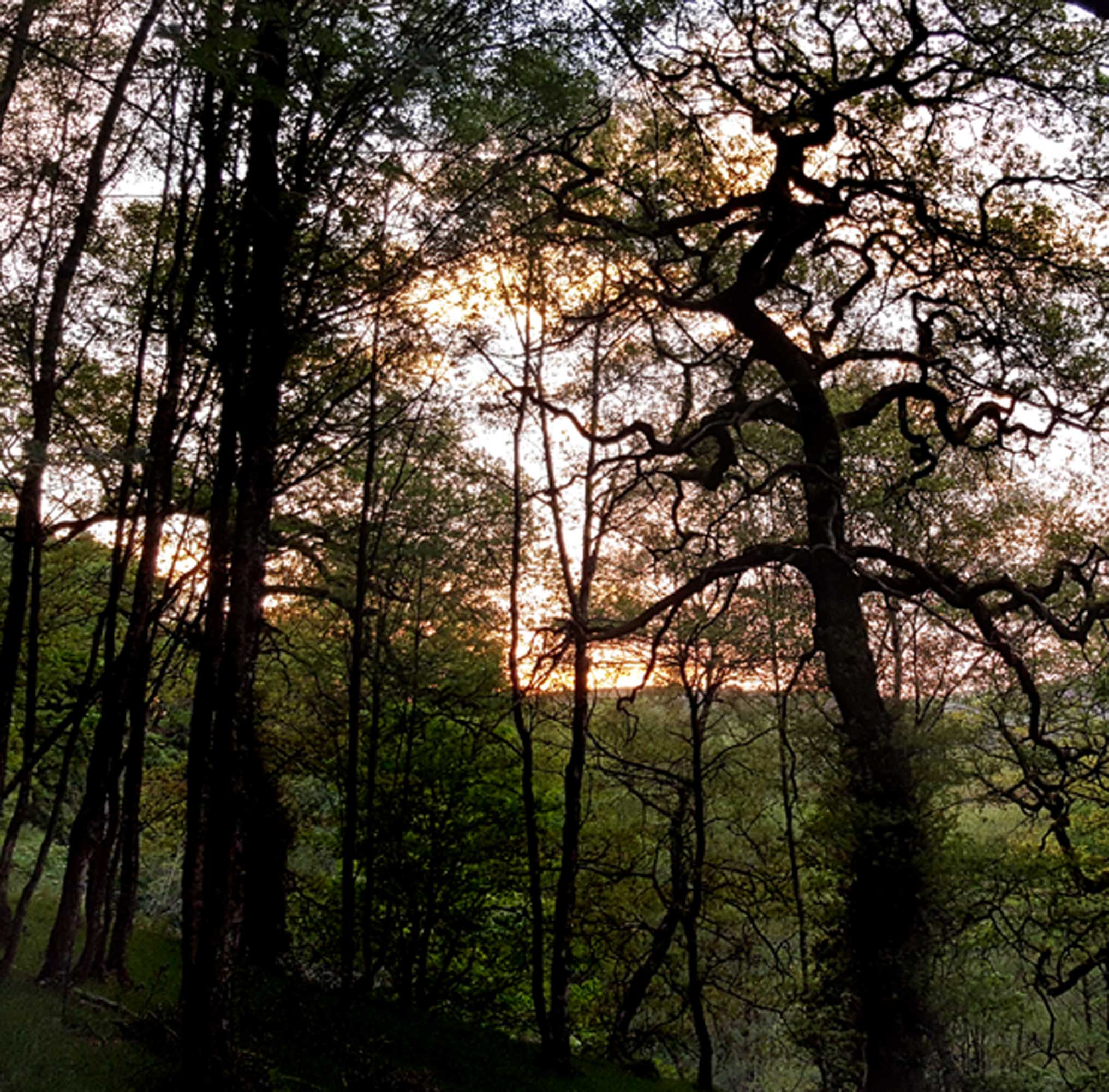
Ep 7878 The birds that sing on the cusp of night - a leafy ravine in the Peak District (sleep safe after 16 mins)
Early June days, up in the green of the Peak District hills, do not give way easily to night. The birds won't let them. Brimming over with life and song, they sing at the dying light to stay, with all the gusto of dawn. Here above the deep leafy ravine, their mercurial voices can be heard, pouring out into the sheer air, and down, onto the shallow stony river flowing below. The light, for a while, stays. The day, balanced upon the very edge of the horizon, has, with its luminous glow, turned back to catch the last arias of the ravine. As night falls, the last to sing is a robin, the last to fly is a goose. A lone rear-guard bird, filling the dark shrouded void with sparse echoing calls , as it flies back down the valley to join the others, amongst the woodland beside the reservoir beyond. --------------------------------------------------------------------------------------------------- This is part of a 24 hour recording we made last month to capture the sound landscape above the infamous Todbrook reservoir of Whaley Bridge. This spot was just on Cheshire side of the border with Derbyshire, the river a natural border between. We tied our spatial microphones to a tree growing out of the steep banks, about 60 feet above the river that feeds the reservoir with an almost unchanging flow of fresh moorland water. The aural space of the ravine on the transition into night is rarely if ever heard, and makes for a uniquely peaceful soundscape.
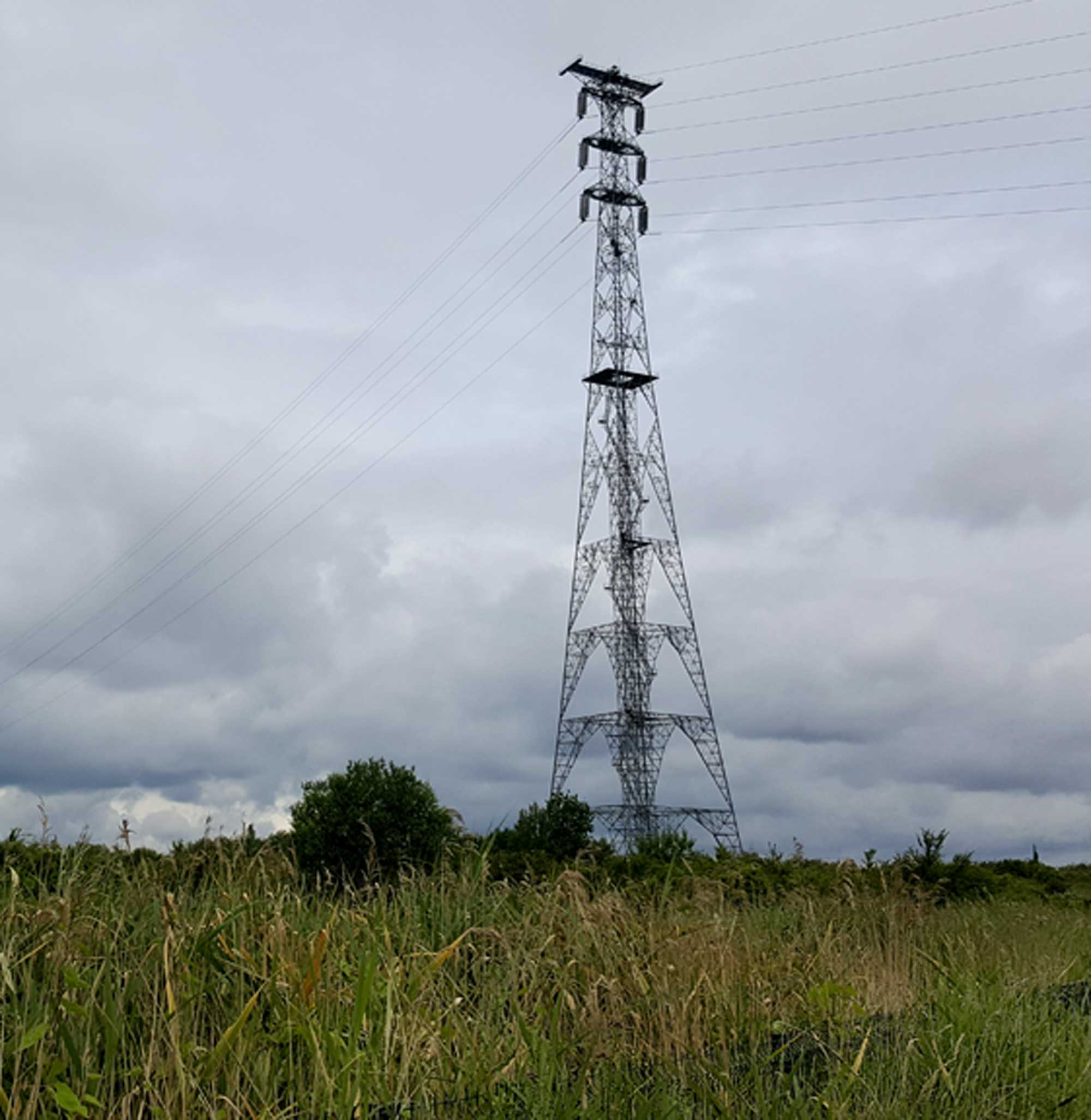
Ep 7777 The cuckoo of Swanscombe Marsh
Swanscombe is one of the last surviving brownfield sites in the Thames Estuary where threatened wildlife can live. On the Kent side of the Thames, to the east of the QEII bridge, opposite Grays on the Essex side, it is an oasis of natural quiet. We took a train and a bus to get there, then walked a sloping path, paved then muddy with the sound of the road dying away. The marsh was full of fascinating life, though empty of people, except for a couple of weekday birders who gave us a wave. Onwards we walked, heading to the UK's tallest pylon, scraping the sky from the very edge of the river. Impossibly high at 600 feet. We hoped it'd hum, or be drizzling so we'd hear it fizz, or windy so we'd hear a whistle, But instead it stood silently in accepting partnership with its sibling on the other side of the river. Though strictly-speaking too quiet to record, we tied the mics onto one of the giant pylon's legs anyway, and left them alone. Listening back, days later, we discovered the mics had captured not only splashes of the lapping Thames and the wide spatial feeling of the place, but also some astonishing and unexpected sounds. Listen and hear the gifts from the marsh. Truly, a magical precious location to be protected. ----------------------------------------------------------------------------------- How many different birds can you hear singing on the marsh? Surprising answers revealed by the winner of the first Radio Lento Golden Lobes quiz see our blog! ------------------------------------------------------------------------------------- Find out more about the campaign to Save Swanscombe Marshes.
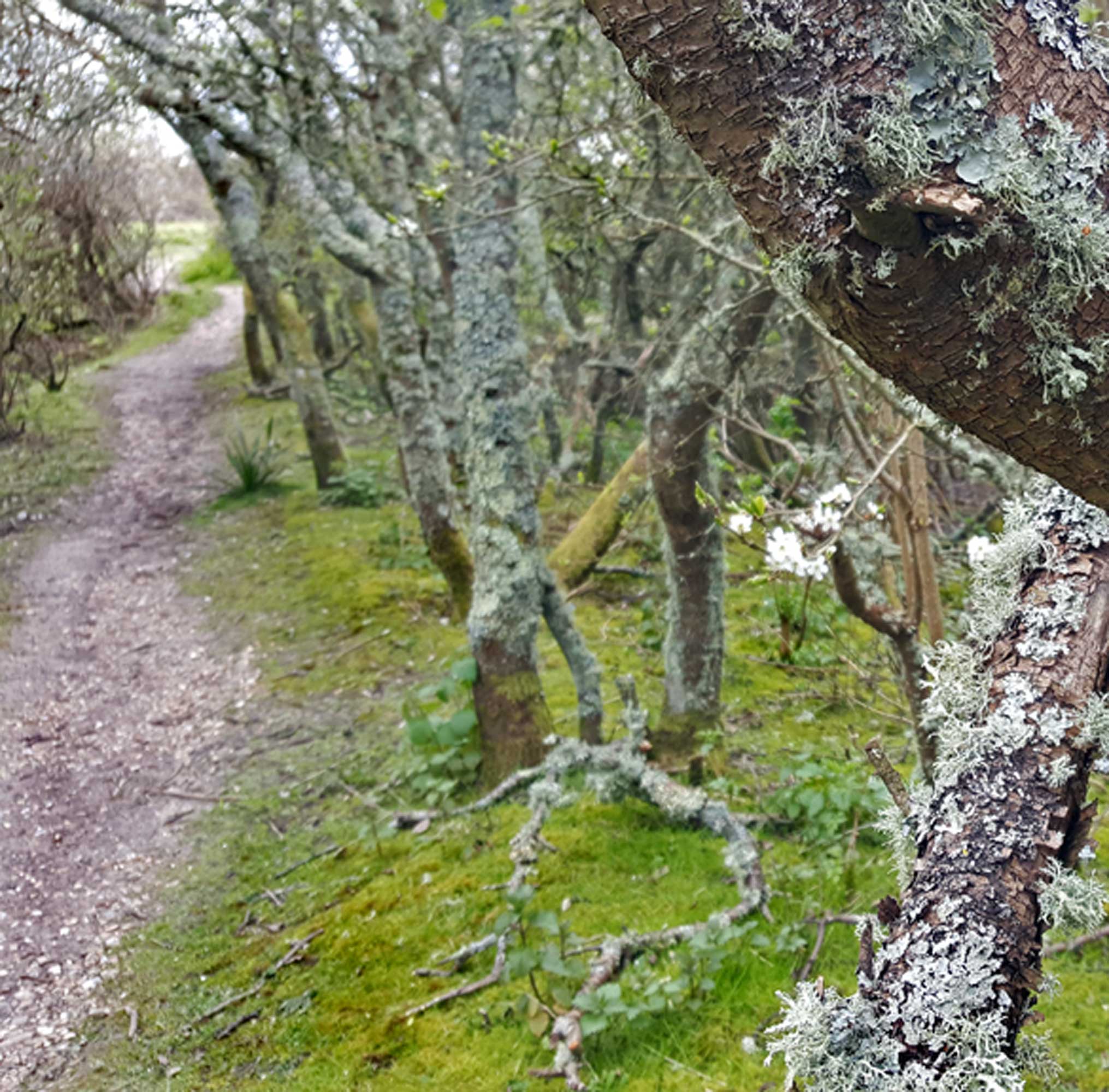
Ep 76Last pasture before the sea - Winchelsea to Rye
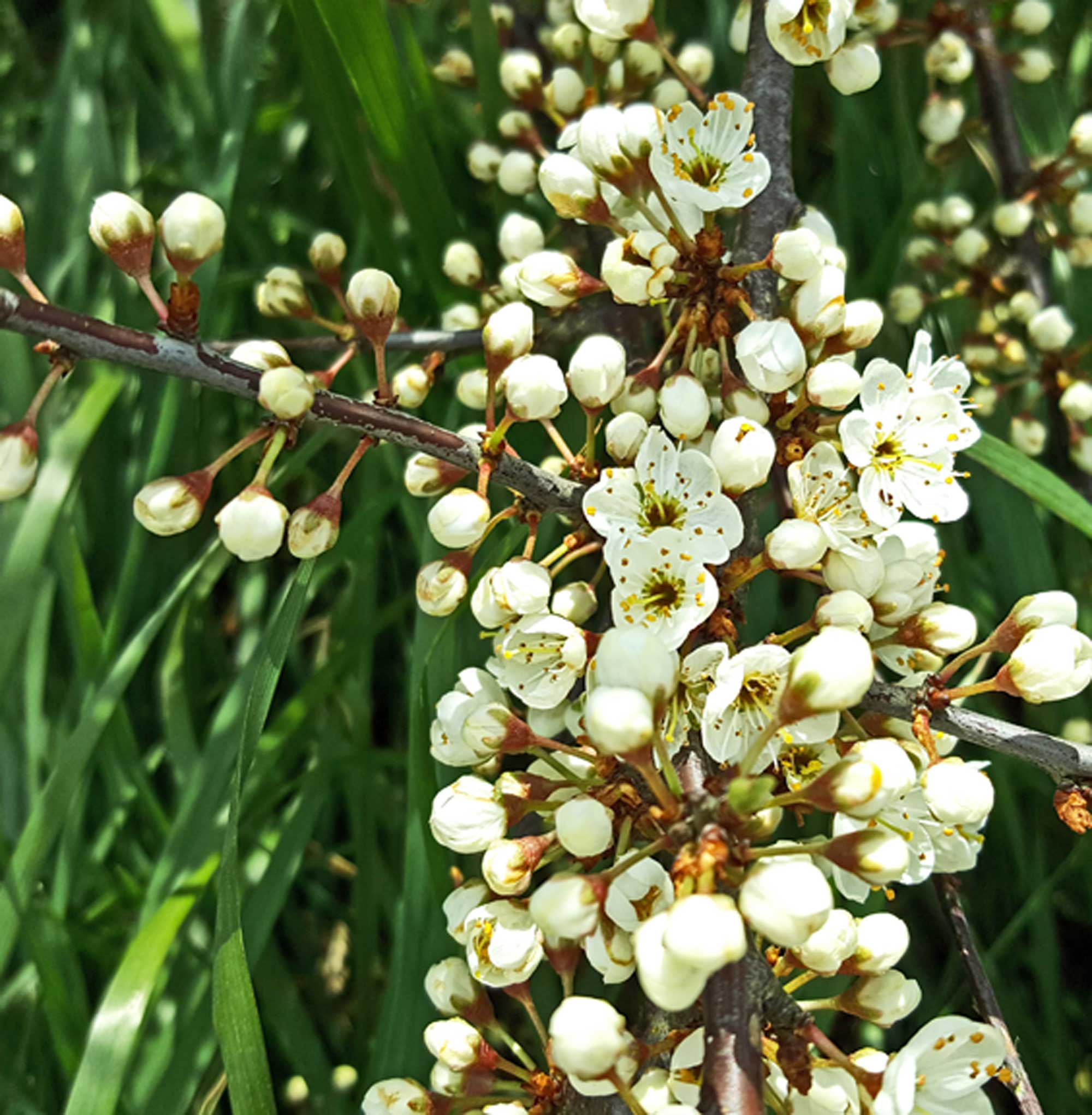
Our first really clear sound-view of the landscape came along a footpath a mile or so from Winchelsea station, with the A259 behind us and, according to the map at least, the open sea ahead. It was in all its peaceful wideness, its pastoral mildness, there to be heard, from inside a little outcrop of blackthorn trees. Every branch covered in the healthiest grey lichen we'd ever seen. Blossom just starting to appear. We named it lichen thicket. The land from Winchelsea to Rye is not only pleasantly low lying and bucolic, but the last before the shingle. We walked it before the summer came through all the new bright green, under a changeable April sky, under the thin calls of distant seagulls and passing geese. Hot sun shone between banks of fast moving cloud. Fresh breezes blew, they smelled at first of luscious hedgerows, then as we got closer, of the salty tidal zone. A see-sawing great tit watched as we set up the microphones. Then as we scuffed away down the stony path, we heard the tumbling song of a chaffinch. Time begins to pass, pushed along by a gentle wind. Some falling drops of honey: a willow warbler. Distant activity on a farm. Yard dogs barking, rooks surveying the ground. Amidst the long quiet, two propeller planes pass, one behind the other.
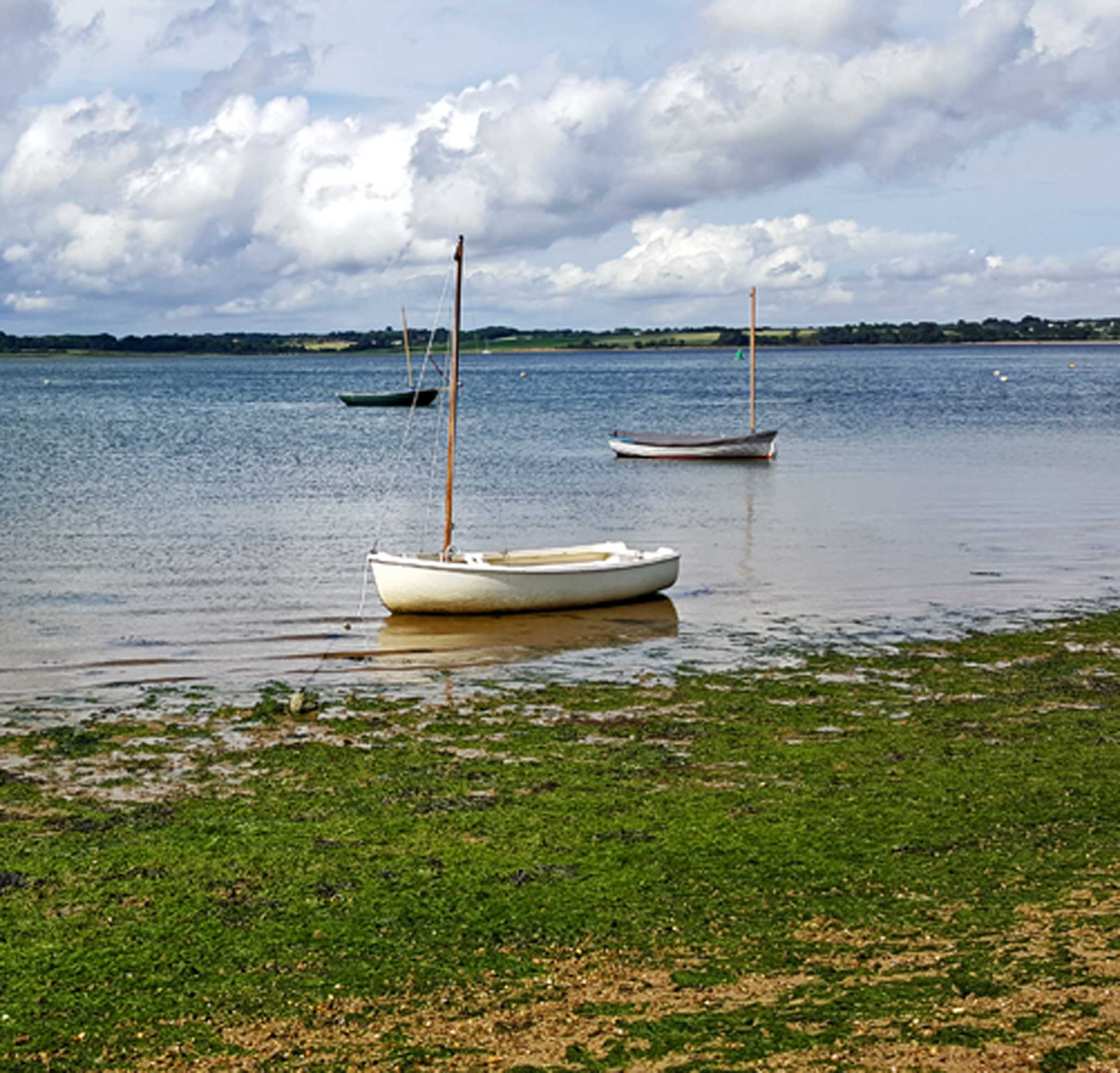
Ep 7575 Yacht masts on the estuary at Wrabness (part 1)
We stopped to step over a large brown caterpillar mid-way across the rough brambled footpath. All around us light breezes were sweeping through the high grasses, nettles and reeds. Miles and miles, of wide open estuary land. Then in the distance, amongst the just audible drones of lone cars on winding country roads, we heard the plaintive drooping call of a curlew. The water was close. The map showed we'd converge, ahead about a quarter of a mile. Soft sand blending to mud then water. Gently swirling waves. High tide but on the turn. Pleasantly susurrating woodland and little wooden houses on stilts, some storing beached boats beneath. At the high water mark a gnarled weather-worn tree stands with a panoramic view of the estuary. It leans out precariously, towards the lapping waves, but is sturdy as rock. A good place for the microphones. We leave to brew tea and cook beans for the kids. Yacht masts ring like lonely bells in the light wind. Two walkers stop to pick something up from the muddy sand. Perhaps an oyster shell, there are lots here. Boats squeak and bump reassuringly against their moorings. Two men bob about, fasten ropes, secure decks. Timelessly absorbed in the act of preparing to sail. Everything's settled, between gently lifting banks of estuary wind. From nowhere a blackbird begins to sing. The tide's very gradually going out. The clouds part and a wood pigeon welcomes the arrival of some hot uninterrupted afternoon sun. -------------------------------------------------------------------------------------- Thanks for supporting the podcast. We keep it going without any grants or funding. Every donation however small really helps. You can buy us a coffee or a piece of Lento merch on our Kofi site or support us by spreading the word about Radio Lento or leaving us a positive review wherever you get your podcasts. Thank you.
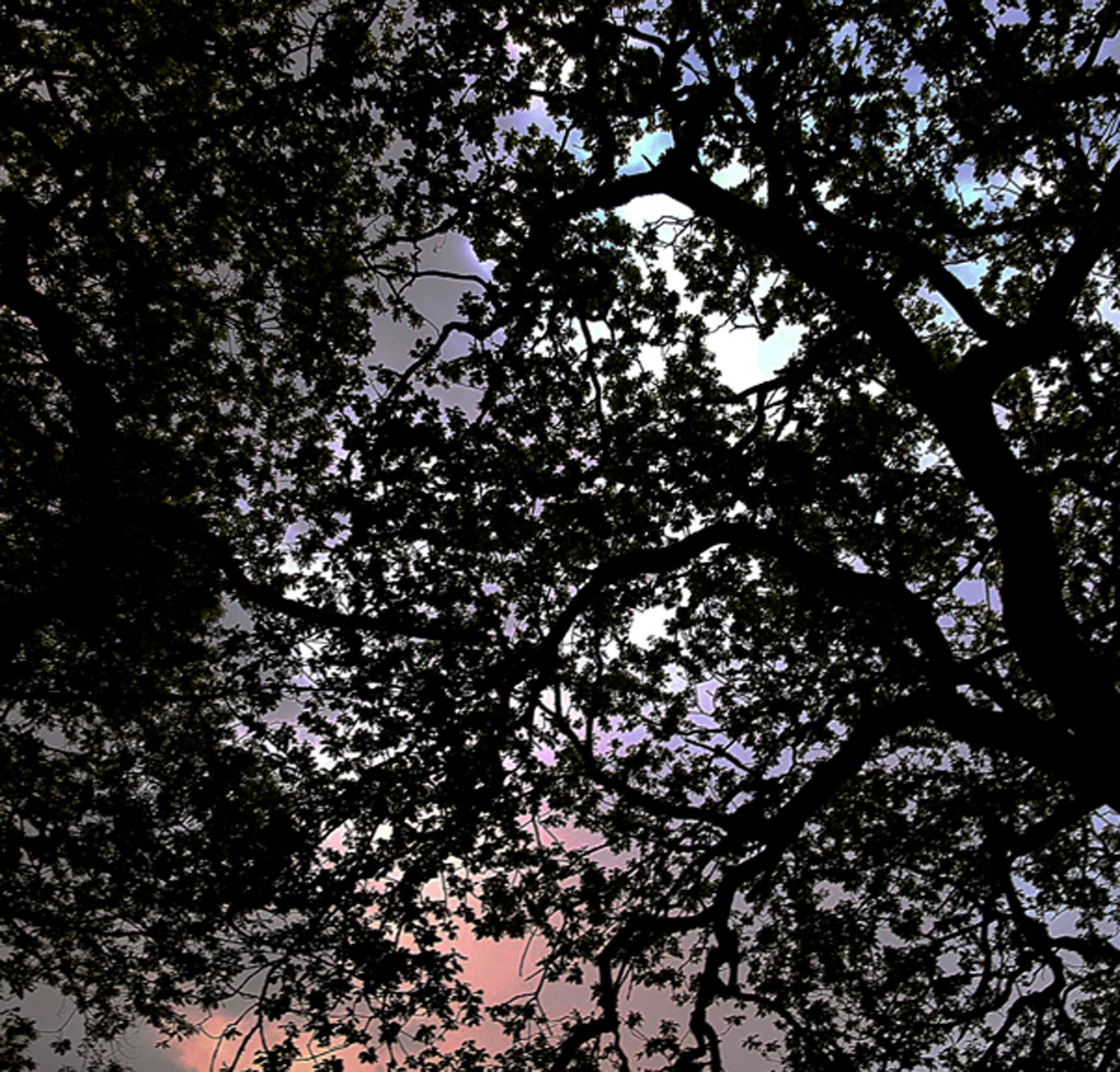
Ep 7474 Night shallowing in a Suffolk Wood - listen with headphones (sleep safe)
This is part eight, 3am to 4am of the twelve hour Suffolk Wood recording. We made it almost four years ago on a balmy summer night in August by leaving a pair of sensitive microphones spaced out like ears, to record non-stop in the heart of an uninhabited rural wood in Dedham Vale. It was the first overnight recording we ever made, and we had no idea what the microphones would hear. The wood is situated about three miles from the A12. In the evening, when we set things up, the noise of the road was barely audible, but in the dead of night, air cooled and still, the wood becomes transparent to the A12's pale grey drift that illuminates the landscape beyond, like aural moonlight. Close by, between the tree trunks and hidden amongst the ankle-deep leaf litter, are the dark bush crickets. They chirrup pleasantly through the whole night, stridulating their resonant bodies marking out the passage of time in slow, natural seconds. Owls haunt the empty voids, as do other strange and almost unearthly noises. The things we are unused to hearing, the things we may call dream-like. Miniature deer called muntjac inhabit this ground, as do badgers, rabbits and other smaller mammals. Unworried by the microphones they move about with light footsteps on the dry leaves, so close you could almost touch them. A precious sound-view onto their world that our very presence would normally preclude. There are so many surrounding sounds, from bits of dead wood dropping from the tree tops, to distant geese and ducks flying their nocturnal routes. There are also the planes. Passenger planes, possibly also military, emerging as soft rumbles from over the horizon, then passing in lazy arcs overhead, before dissolving away into the world beyond. For them this land below doesn't exist. And just over a mile away, from over the fields, the golden toned bell of St Mary's parish church strikes the hour. Bookends, to the slow passing of time in this peaceful rural wood. ** We've marked this episode *sleep safe* as it is quiet with no louder noises. However, you may find the snuffling of animals and snapping of twigs keeps you awake. So only listen during the day if this the case! ------------------------------------------------------------------------------------- To listen to the other episodes in this series and how the sound of the wood changes over time, visit the Radio Lento blog which lists them all in one handy place. -------------------------------------------------------------------------------------
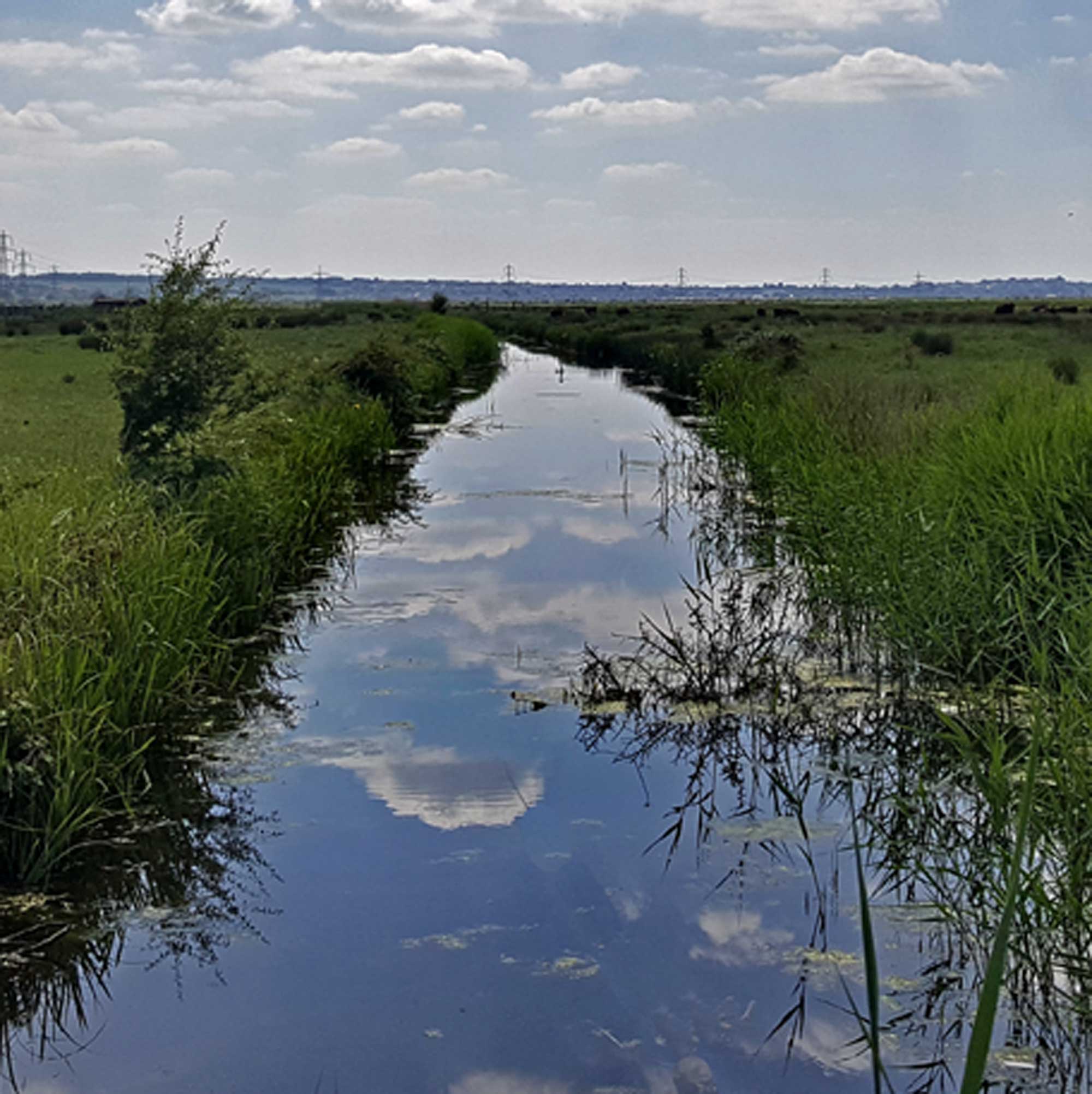
Ep 73Slow rhythms of the Hoo Peninsula
Several miles up the sun-baked track, along overgrown footpaths and through fields high with meadow grass, lie the watery ditches of the Higham Marshes nature reserve. Nestled within the wide expanse of partly farmed, partly inhabited, but mostly untended land that runs along the lower reaches of the Thames Estuary in Kent. On a barmy summer's day, blown about by a friendly wind, it's a place of retreat and of well tempered quiet. Beside one of the wild ditches, from inside a hawthorn bush at the water's edge, we find a secret space to record. Well defended by thorns, it gently creaks in sympathy with the breeze, but has a birds-ear view of the nearby wildlife and the landscape beyond. The air is cooler beside the water. It rings with the pewit calls of the lapwings. Croaks stretchily with the marsh frogs. Echoes with the gliding yelps of distant geese. At ground level this world is all green and overgrown, but from the air, it must be laced with glints and pools. Bees buzz quickly by and a farmer traverses a field on a quadbike. It's alive with sheep and lambs. Above, skylarks wheel beneath high thrumming planes. From over the horizon, fleeting whines of overtaking motors along a distant country road. These are the slow rhythms of an early summer's day on the Hoo Peninsula.
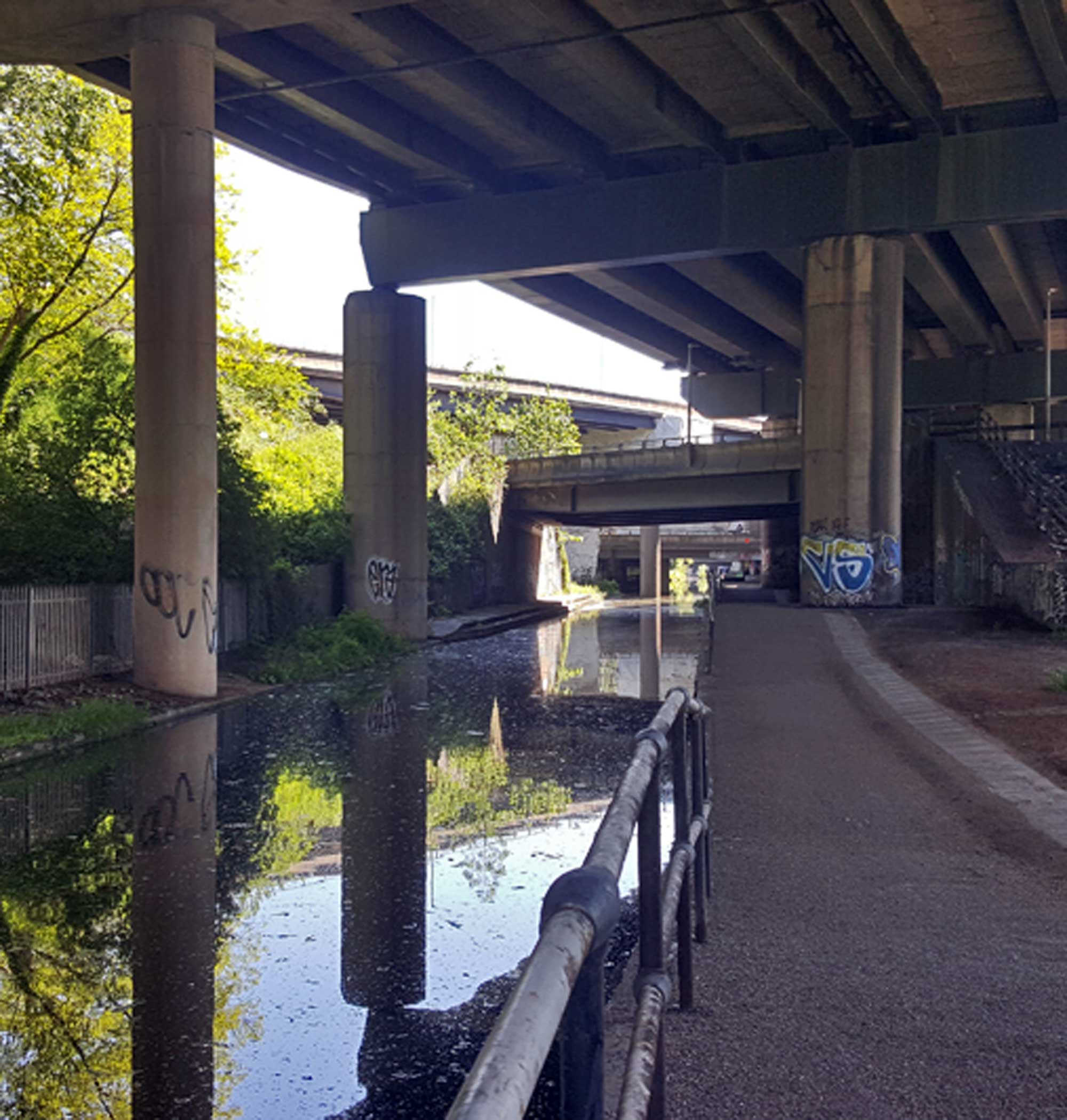
Ep 72The tunnel, the towpath and the window - under the M6 at Spaghetti Junction
Set free from its cradled bowl, the smoke from the bargeman's pipe rose straight, into the sky. Lighter than air, the burning vapours knew all-too-well where they wanted to go. Up! And so up they went. Unravelling coils of wisdom, racing towards one small window of blue in the vast ashen sky. Not in your lifetime, nor mine, the bargeman confided between tokes from his short black pipe, but sure as night follows day all of this'll be buried. His prophecy seemed to startle a bird out of a hedgerow, some fifty yards yonder along the towpath. It flapped low over the water before dropping into the scrub opposite. The barge horse, head deep in the thick grass beside the canal, only twitched an ear. Buried? I said, looking up and down the towpath, then up into the vastness of the sky. All of this? More mouthing the words than saying them. The bargeman made an arch with his work-worn hands. Black water, under a metalled sky. The horse tore hungrily at the grass. The bird remained in its refuge. I watched as a curl of smoke lifted towards the patch of piercing blue. The bargeman saw me looking, then slowly let out a gentle smile. If you ask me I reckon they'll have to keep that little window up there. His words made me fix my eye on it. Why will they do that? I whispered. To let the future in, when it comes knocking, he said, pulling up the horse's rope. That's the blue of the world beyond. The one that's tired of all our soot and smoke. Teach the children about the blue, for when it comes knocking. And Never Lock Your Door. ----------------------------------------------------------------------------------- Built in the 1840s, the Tame Valley Canal was covered by the M6 motorway in the 1950s, and then overshadowed by further development of Spaghetti Junction in 1972. When we visited on a bright May day, there were no boats or birds on the water. The cars, motorbikes and lorries, oblivious to the space underneath. Just a few walkers and cyclists joined us in the empty space below the concrete. There, in a dark tunnel under the road, a window onto the sky, placed to let the light and sound from above in. Impossibly placed graffiti on the other side of the canal said in huge letters 'Never Lock Your Door'. ------------------------------------------------------------------------------------- See photos from this place via our Twitter. Explore other brutal soundscapes.
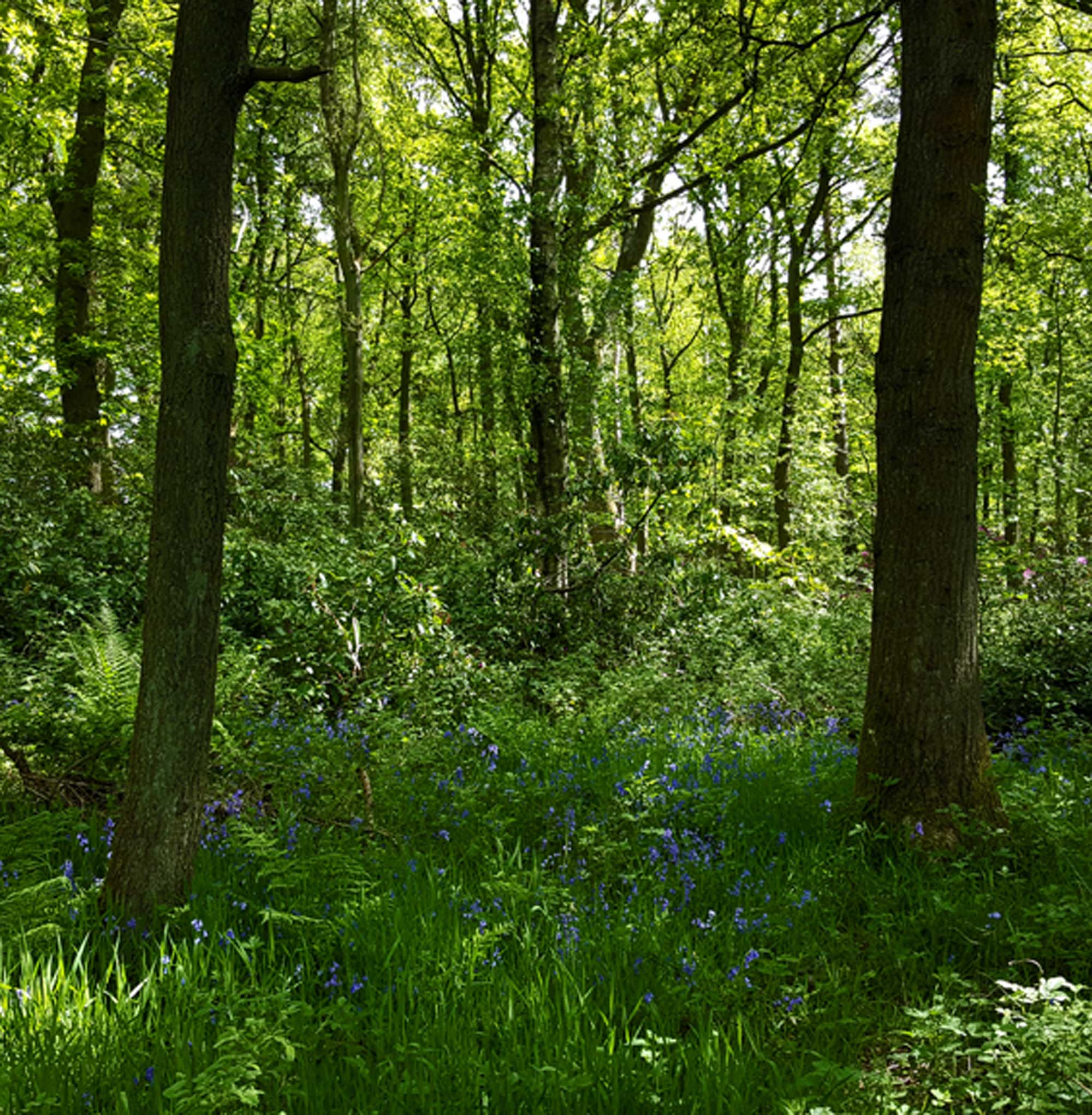
Ep 71Wading cows and a passing cuckoo - the lakes and woodland of Chatsworth
Mid-afternoon. June hot. An overgrown track on the Chatsworth Estate, close to the peaceful lakes above the house, between meadows and dense woodland. An abundance of fresh hoof marks. A route used not by people, but by livestock changing fields. Hedgerows scent the quiet air with pollen. Cow parsley, moist nettles, something like aniseed. Nobody is around, so we leave the microphones behind to record, on the trunk of a tree facing straight into the sound vista. Through the tall trees, beneath the loudly singing birds, come the echoes of cows. Knee deep and wading. Splashing and wallowing in the cool shallows. With us gone the true sound of the woodland is revealed. An infinite humming, of bees and countless tinier insects. It can, if we let it, grate with modern taste, but it is a key barometer of life. Humming is a sound-measure of biodiversity, and the louder it is, the healthier the ecosystem. This is a well place. The birds and the insects and the wallowing cows are, with the woodland and the lake, basking in the summer heat. And then, at nine minutes, the thing we never thought could happen... A magic spell. A sonorous rocking call. A simple pair of musical notes, that flow through the air with a special kind of wistful purity. A cuckoo. All-too fleeting. But a cuckoo. Flying.

Ep 7070 - Blue sky. Empty beach. Low tide.
It's past midday on a late May day in Suffolk and the sun is pouring down onto a calm sea. It's shining, for the first time this year, with that summer strength that makes you stop, to really take in the moment. It's perfect, here at the shoreline, not far from where the River Deben joins the sea, the beaches a mix of shingle and soft sand. Listen. There's no wind. No on-shore breeze. Nothing to cuff the ears or muffle the sound that washes to and fro here at the boundary of low tide. Hear the mesmerisingly detailed and spatial sound which shallow waves make as they break and dissipate. Break, and dissipate. A propeller plane. The grey outline of a container ship on the horizon. Sailing away. Under full steam, out into the North Sea. With each new wave, its grey box-like outline shrinks, and recedes. A giant hulk, no bigger than a fingertip. A few waves more, until it dips out of sight.
Ep 69Time beside a stream in the Welsh hills
A fair April day has dawned up in the hills above the village of Kerry. Nothing's come or gone yet along the road beside the stream. Nature's curfew means its dew tinted tarmac must stay empty for a little while longer, to let the stream have its say and give the scattered strands of meadow grass a chance to be blown back into the hedgerows. Silently and invisibly to the ear, the road waits, winding down into the valley through woods and open fields, almost all of the way. Intertwined and accompanied by the music of the stream. Up here in the hills, the air is cool and pristine fresh. Soon the morning sun will have lifted away the last of the night's chill. A distant cockerel crows amongst birds in full song. Their sonorous voices ring out over the landscape, pure, unfettered by human noise. One flies down to the stream. Tiny wings beat the air. Then gone, quick as a dart. A short creaky call echoes. A roaming pheasant, sounding like an unoiled garden gate. When near the sheer effort can be heard to judder the air. The stream runs steadily, hidden out of sight along the bottom of a steep brambled gully about ten feet below the level of the road. This section is thickly wooded with weather beaten trees. Far from habitation and almost knee-deep with leaf litter, it's a safe home to birds and ground living wildlife, and a wonderful place to experience the sound of the landscape. ----------------------------------------------------------------------- This is the fourth episode from this lovely spot near the Kerry Ridgeway. Explore them all via this blog post.
Ep 68Birdsong in rain from inside the derelict chapel at Abney Park nature reserve
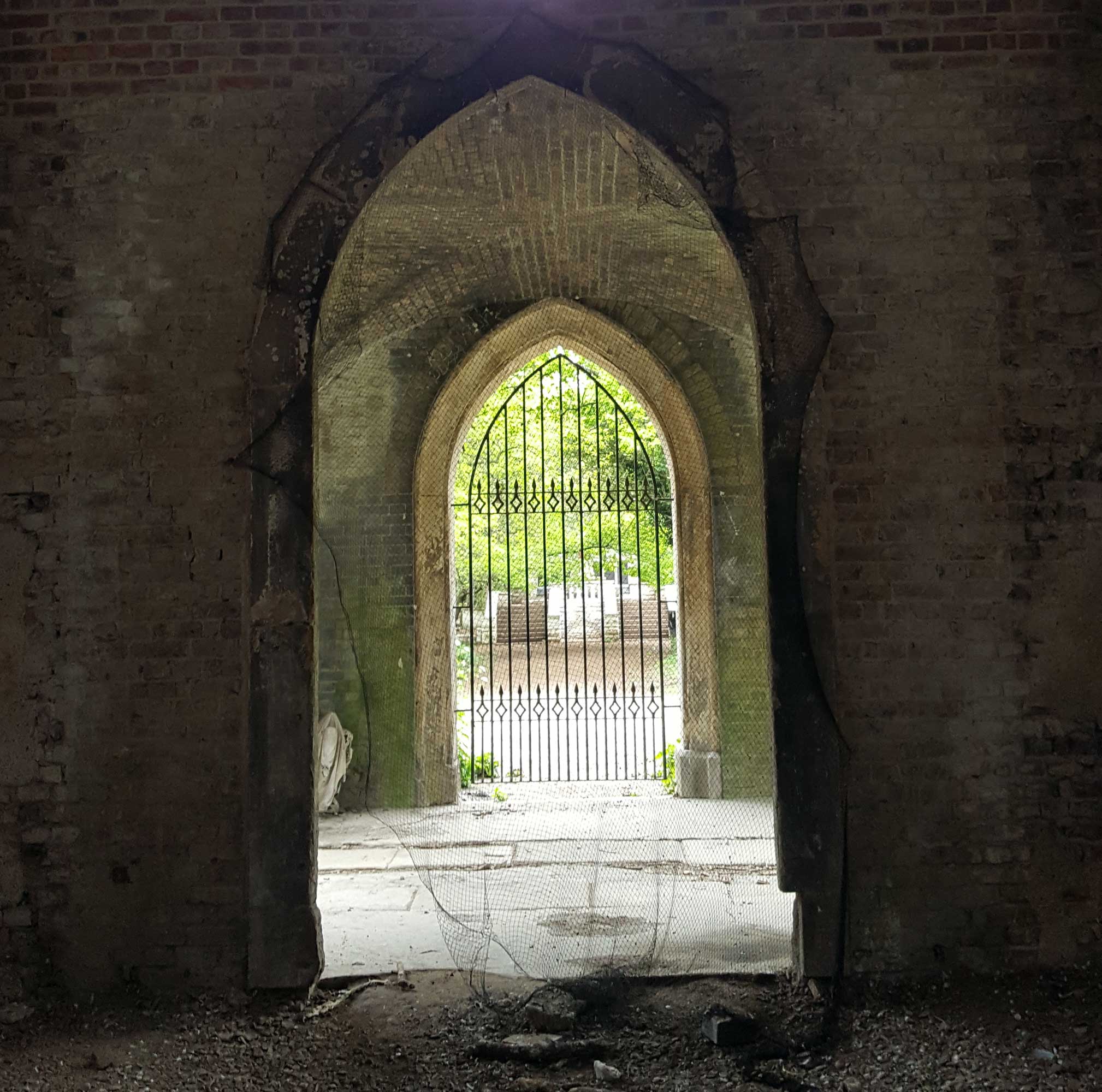
There's a special feeling that comes with the sound of falling rain. With a sky still free of jet planes, this is how the day unfolds within the secret space of the derelict chapel of Abney Park. It is first thing in the morning, when the birds begin to sing and the trees change from dark shadow into green. Set within dense woodland in the north east of London, barred and padlocked against vandals, this architecturally significant chapel hollowed out by fire thirty years ago, now stands on the cusp of restoration. It's a dissenting gothic structure that aligns and appreciates the natural landscape, and whose 120 foot spire, still visible above the veteran pines, signifies to all around that below lies an oasis of calm within the city. Since its dereliction, the chapel has witnessed ten thousand dawns. This is just one of them. One glorious section of time captured by a pair of microphones left alone to record inside the chapel, underneath nesting birds.
Ep 67May rain after daybreak
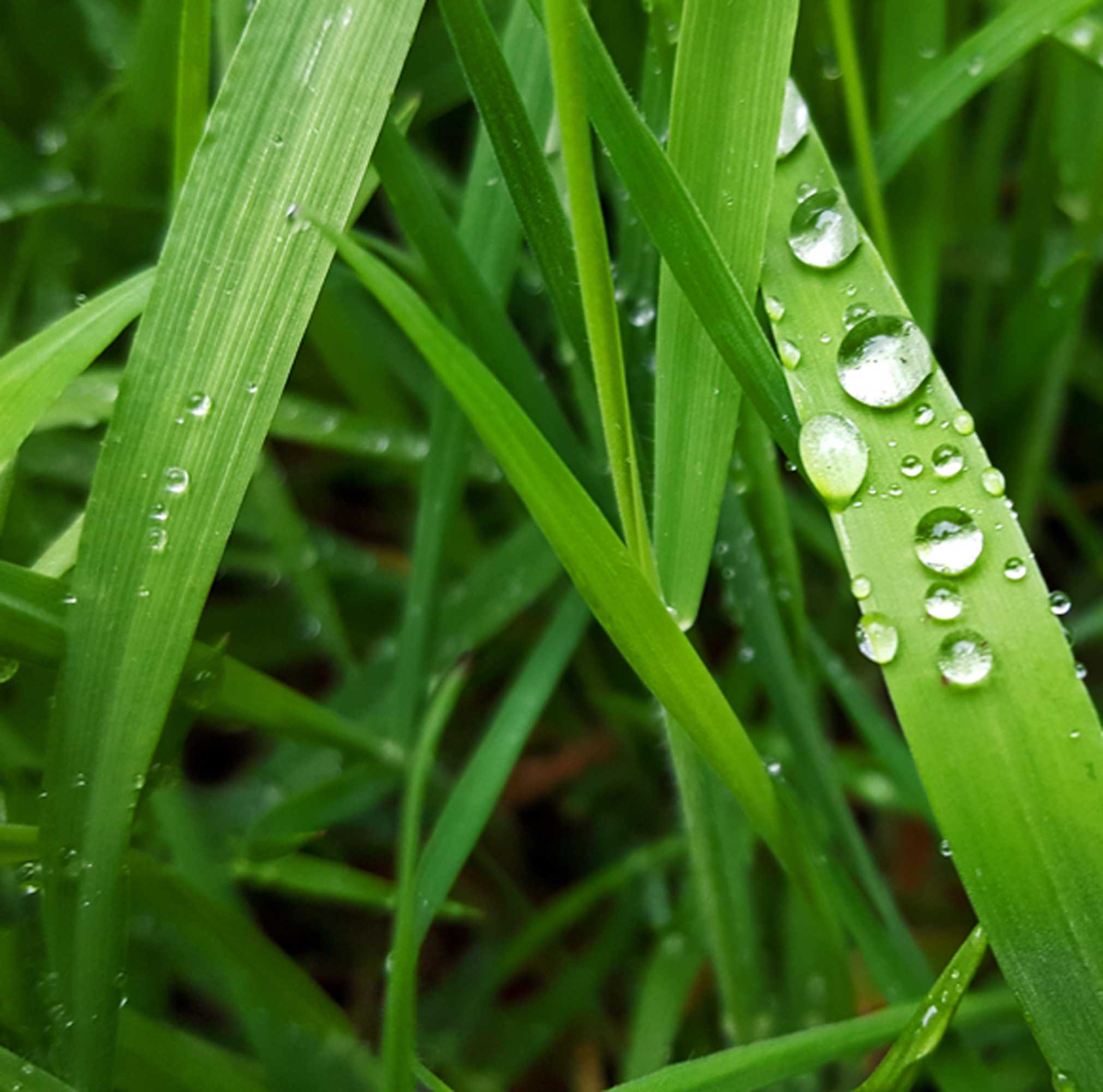
It must have broken through a mist of spring rain when it came, the dawn, the first light of day. It would have come into a watery sky too, one busy with clouds, but full of blossoming spring and still clean, free of jet planes. The birds will have seen it coming, long before. In fine voice they sing from the mid-distance like in a dream, reflected off so many back garden walls. None in this back garden though, with its wide hanging tarpaulin, tumbled stacks of empty flowerpots, upturned planters, and old paint tins. The timpani, for when the rain drops fall. They know what they're doing, the birds. They watch the rain clouds from their sheltered perches and wait for them to pass. They wait for the water to soak into the grass, and bring up the worms. They bide their time. As they wait, the city hums, quietly. It isn't quite ready yet. The rain showers down, in fine mists and spray. It falls between the birdsong onto the tarpaulin, onto the upturned pots, the countless leaves and blades of grass. And as it lands, it lights up the garden, in sound. Plays upon the upturned pots and tins, taps like a million fingertips on the tarpaulin, gathers, then with a lifting wind streams off onto the yard floor in splatters. This is how a little garden sounds at dawn, when the rain falls. When there's no one around to hear it. ----------------------------------------------------------------------------- Like this episode? Please give us a like, review or share wherever you get your podcasts or on Twitter. You can also support us on Ko-fi to help us keep going - buy lovely cards or buy us a coffee. Thanks for listening.
Ep 66Listening to the longshore drift
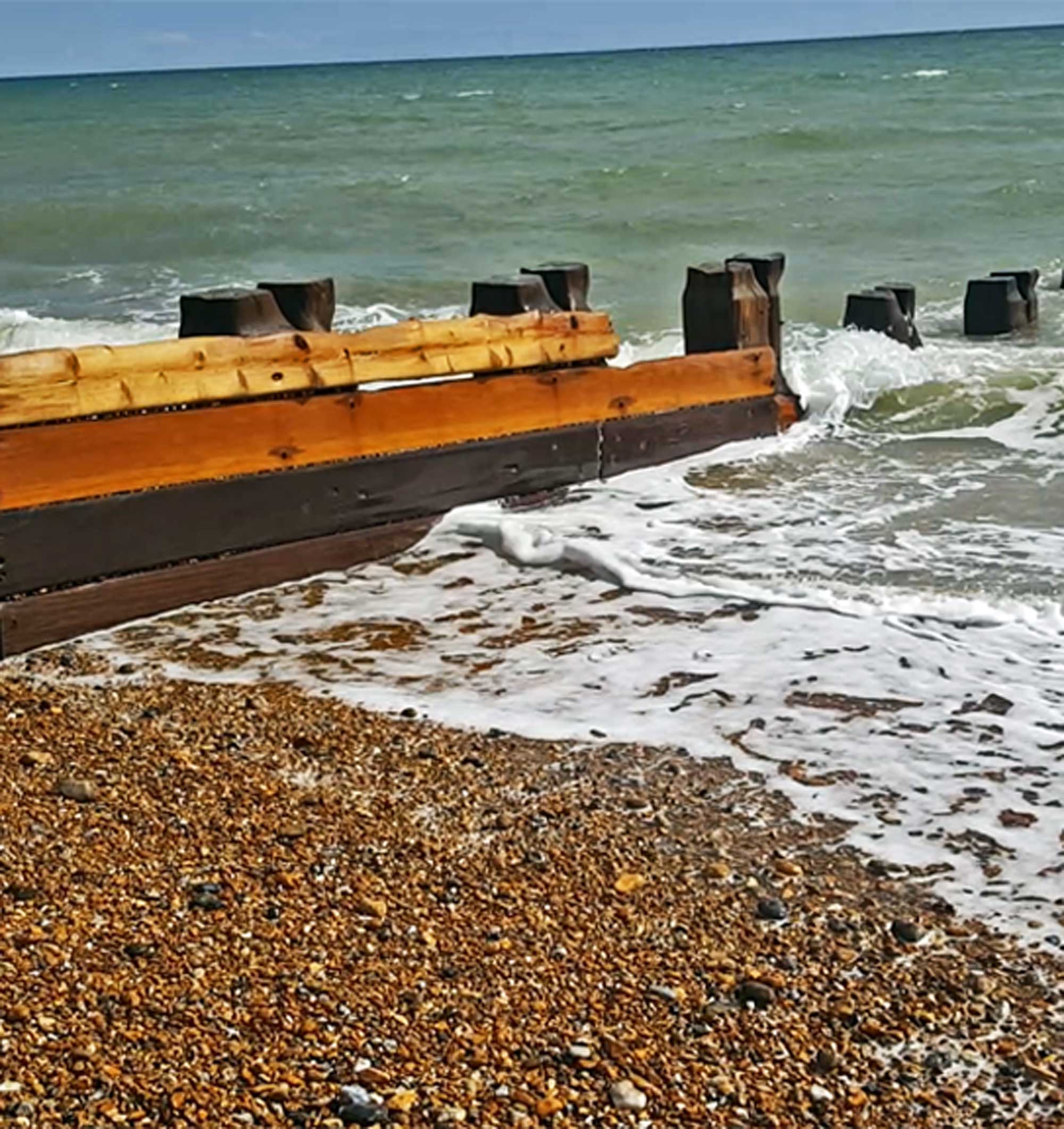
There's a point along the promenade at Bexhill-on-Sea where the pull of the crashing waves outweighs the ice cream hubbub underneath the pavilion. Where no matter your age, you'll find yourself leap from the walkway and begin the short steep shingle scrunching journey down towards the sea. It's a point, buffeted by a salt-scented onshore breeze, that has no need for sign or marker. No need for a call or shout. A turn-off, from the flat walkway, where you simply follow the invisible tracks of everyone who's ever been, and fall headlong into your own childhood dream. We saw in the distance a man walking across the beach with his child, a kite bobbing in the sky in front of them. We jumped down. We strode in giant steps steep down the shingle. We followed the old wooden groyne and stopped when it stopped, at the water's edge, beside the foam fizzing waves. Standing so near to the surf zone we could feel it. The weight of the sea. Thudding the shingle through our feet. How can anything matter in the face of such weight and movement? We could hear the waves rolling in, interlacing, unfurling and breaking. Swooshing in from left to right, pushed by force of current and prevailing wind. This is the sound of longshore drift. The reason the beach is bisected by groynes. We listened, and marvelled, at the gloriousness of the waves as they raced up the beach to meet us.
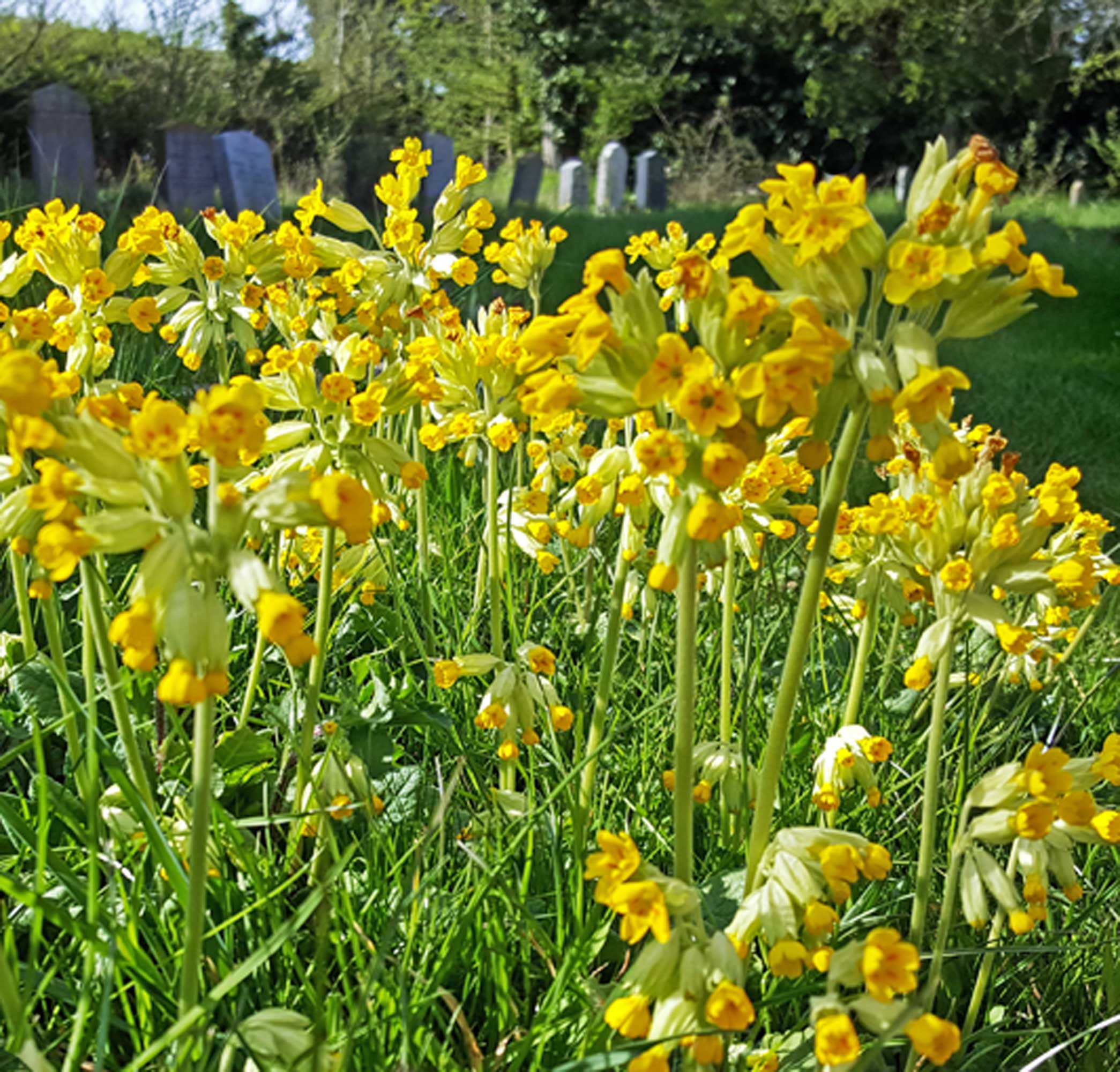
Ep 6565 Songs from the churchyard of St Mary’s Gilston
The parish church of St Mary, Gilston in Hertfordshire dates from the 13th century. It is set within wide open farmland north of Harlow. It's one of only a handful of buildings, surrounded on all sides by fields and outcrops of old trees, left behind from when the land was cleared for farming. As we walked along the narrow lane away from Eastwick, thickly verged and wafting with spring flowers, we listened as the noise from the A414 gradually subsided behind us, and dwindled with each turn in the lane, until at last it was nothing. It was then that we felt real quiet, and heard the skylarks. High and rising over the fields, slowly circling on the warm updrafts. Singing out that from up there they could see whole fields of yellow. The porch entrance to St Mary's has two wooden benches. A stack of second-hand books, parish notices pinned to the board, warnings to would-be heritage thieves, dog bowls full of water for passing pooches and a box of hand-drawn pathway maps, free to take away. It is the perfect spot to stop and take in the atmosphere. The sound of a sleepy rural church, adorned with sedately cooing wood pigeons basking on its sun warmed slates. The sound of the overgrown churchyard with its gravestones surrounded by a carpet of cowslips, looking up to be read. Chaffinches and seesawing great tits in full voice from all over, hidden in the hedgerows. At the far end of the churchyard, just before the fields start, a fir tree sways in the breeze. Jovial. Breathing in the wind. Home to a gloriously country-toned blackbird, who flew back to sing for a while.
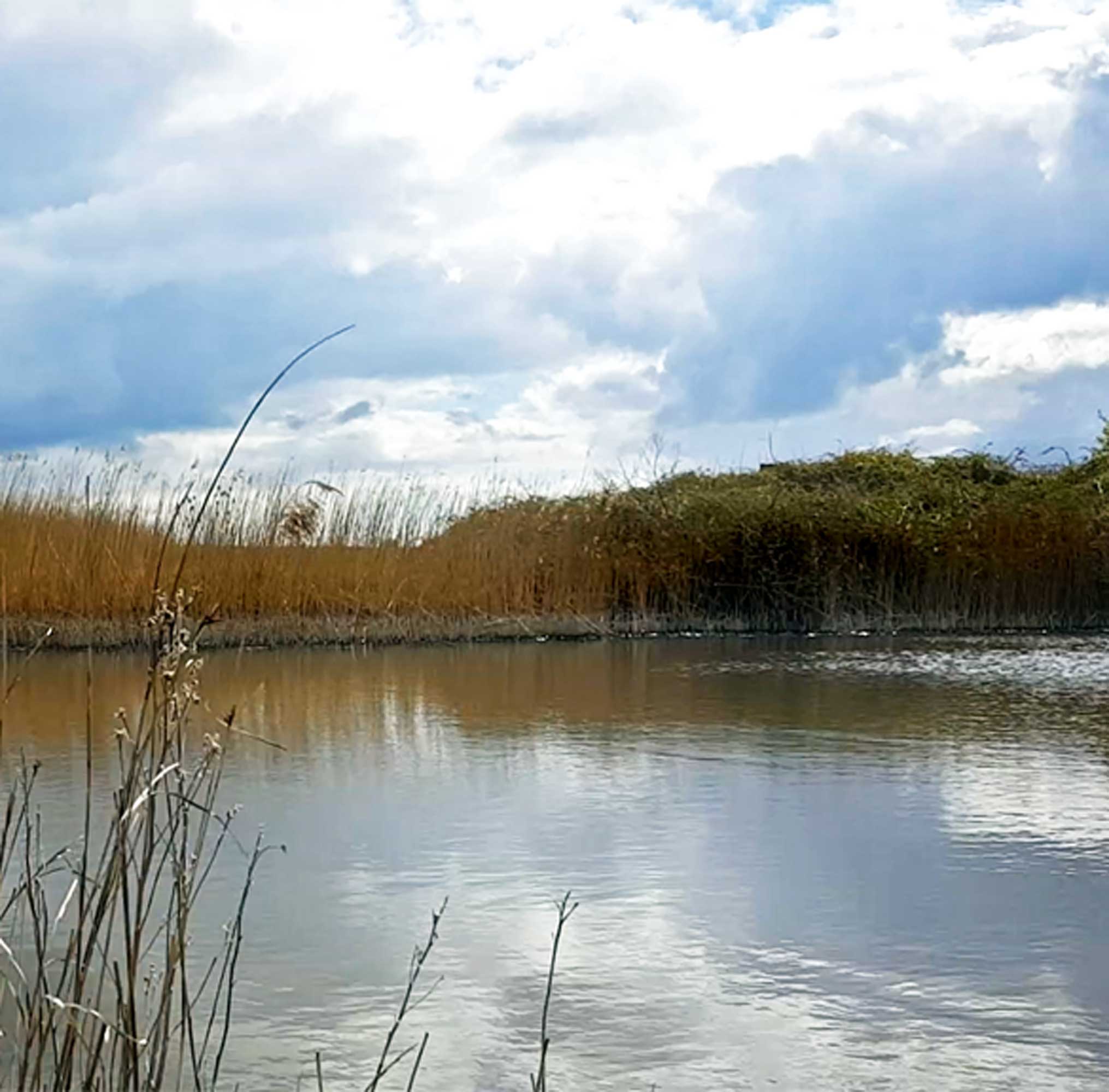
Ep 64Waiting for skylarks at the Rye Harbour nature reserve
If I sit here, very still, so as not to scare the water birds, might they come back? I hope so. They've wheeled away again, like they do. It's their drifting altitudinous song that I most want to hear. Sparse clouds are hurrying by. When the sun is out, it's surprisingly strong. It makes the air smell of warm grass. A sea breeze is blowing. Swishing in, from left to right through the tall stems. This spot is only a few hundred yards from the crashing waves of the sea, but a steep shingle ridge softens the sound into almost nothing. It's quiet. Birds are all around, mostly in the mid-distance. A wader that's been sploshing along the shallow edge searching for food has come closer. It seems unperturbed. Does it know I'm here? As I wonder I start to hear them. It is them. They're coming. The skylarks are wheeling back, beginning to unfurl their cornfield-yellow string of audible bunting across the sky above me once again. I drink their sound in. The simple timeless beauty of them. My body eases into a state of complete rest. From somewhere behind, on a track that bisects the nature reserve a car bumps slowly by. A minute later a heavy truck follows. Clanking metalwork over deep ruts. It sounds like it's out of a film set in the Australian Outback. It stops, turns around, then clanks back off into the distance, the way it came. As it goes it draws a long and dusty spatial line across the sound landscape, reminding me this is a vast land, on the edge. The skylarks continue to wheel. Two geese fly by. A migrating swallow makes landfall. ------- Follow us on Twitter to see more pictures from this special place.
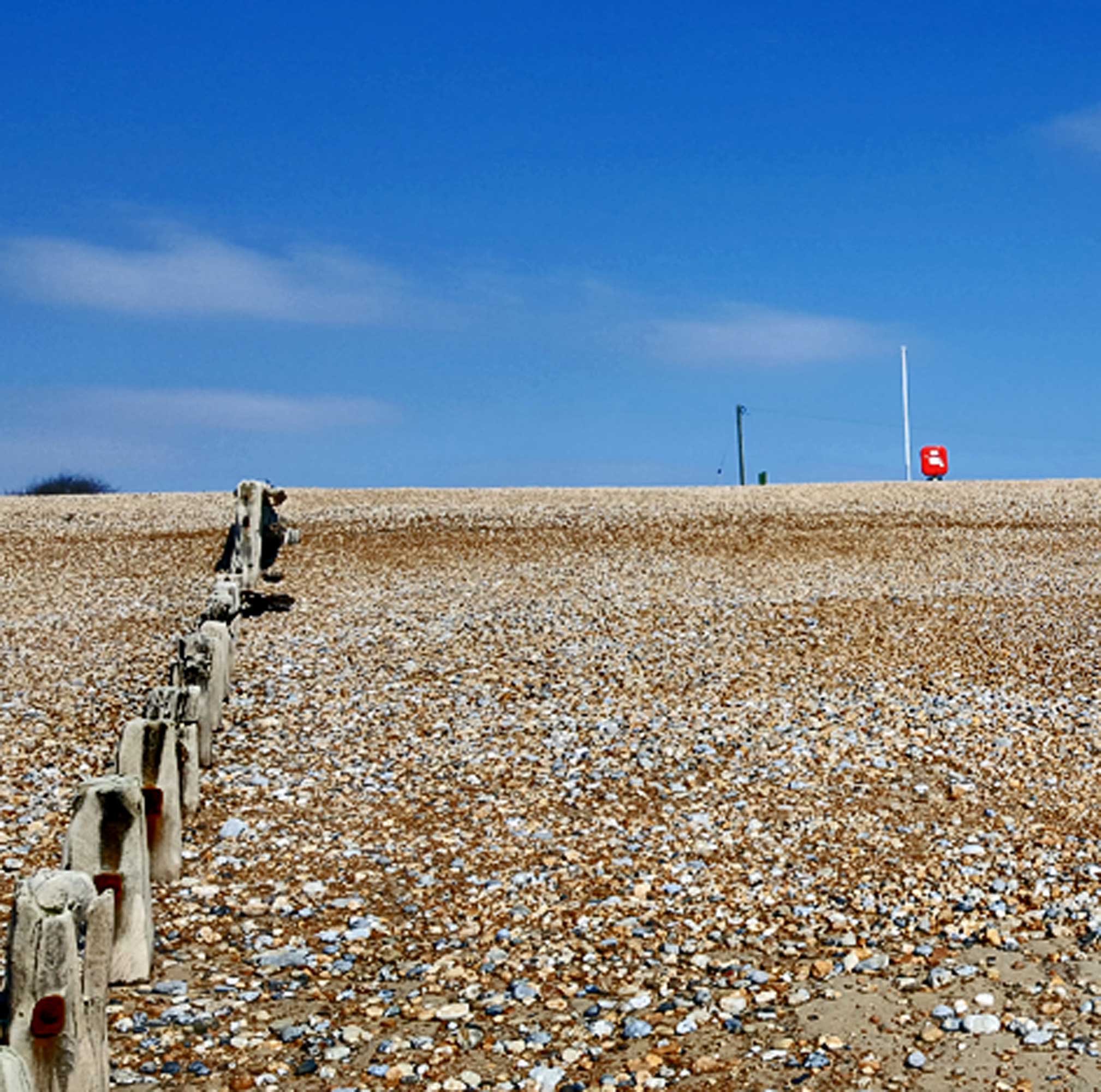
Ep 63Taking forty winks at the seaside - Norman's Bay, East Sussex (sleep safe)
The perfect spot for a snooze on a windy beach is the leeside of a shingle berm. Sheltered from the onshore breeze, you can't see over to the sea, but you can hear it, with all its wholesome sound. You can feel it too. The vast gravitational swell, the ever alternating push and tow. It's why the sea changes the rules of everything. Even time. Just below the crest of the berm, the roar of the breakers is quelled. Cushioned into comforting rumbles, topped with white swishes. Basking in this safe and soporific place, there's no need for words. No need to think, plan, or worry. For this little bit of timeless time, it's just you, the berm, and the sea. Families crunch by over the shingle, their voices lost in wind. Time passes. A loose shell tinkles. Towards the end, water from the advancing breakers can be heard trickling through the berm. A propeller plane gently flies over. It's heading west, towards Eastbourne. This is a sleep safe episode. There are no loud or unexpected noises. ------------------------------------------------------------------- Shingle beaches form steep ridges called berms. They show the lines of the high tide and the storm tides. Explore more soothing episodes from beside the sea.

Ep 62Mistle thrush sings amongst wind hushing conifers
The air above Broxbourne Wood is moving steadily, pushed along by an early April wind. It's catching the tops of the tall brush-like conifers abundant in this part of the wood. They're all about, and pointing up into the sky, and all hushing, in slow, sympathetic waves. It's a therapeutic sound that helps to open the lungs, and ease the mind. Down here on the forest floor it's quiet. Just the fleeting voices of children playing somewhere else deeper in the wood. A bumble bee comes, then goes, and there's a mistle thrush. A mistle thrush whose jaunty song echoes throughout the vast empty space beneath the trees. It's like a blackbird, but sings in shorter form, and has a lighter, more effervescent voice. For us the mistle thrush spells the joyful arrival of spring. We love to hear it this time of year. It's a bright afternoon. The clouds have thinned almost to nothing and the sun is about to come out. Time for a flask of tea. We attach the microphones to the trunk of a tree and leave them alone to capture the beautiful ambience of this rural Hertfordshire wood.
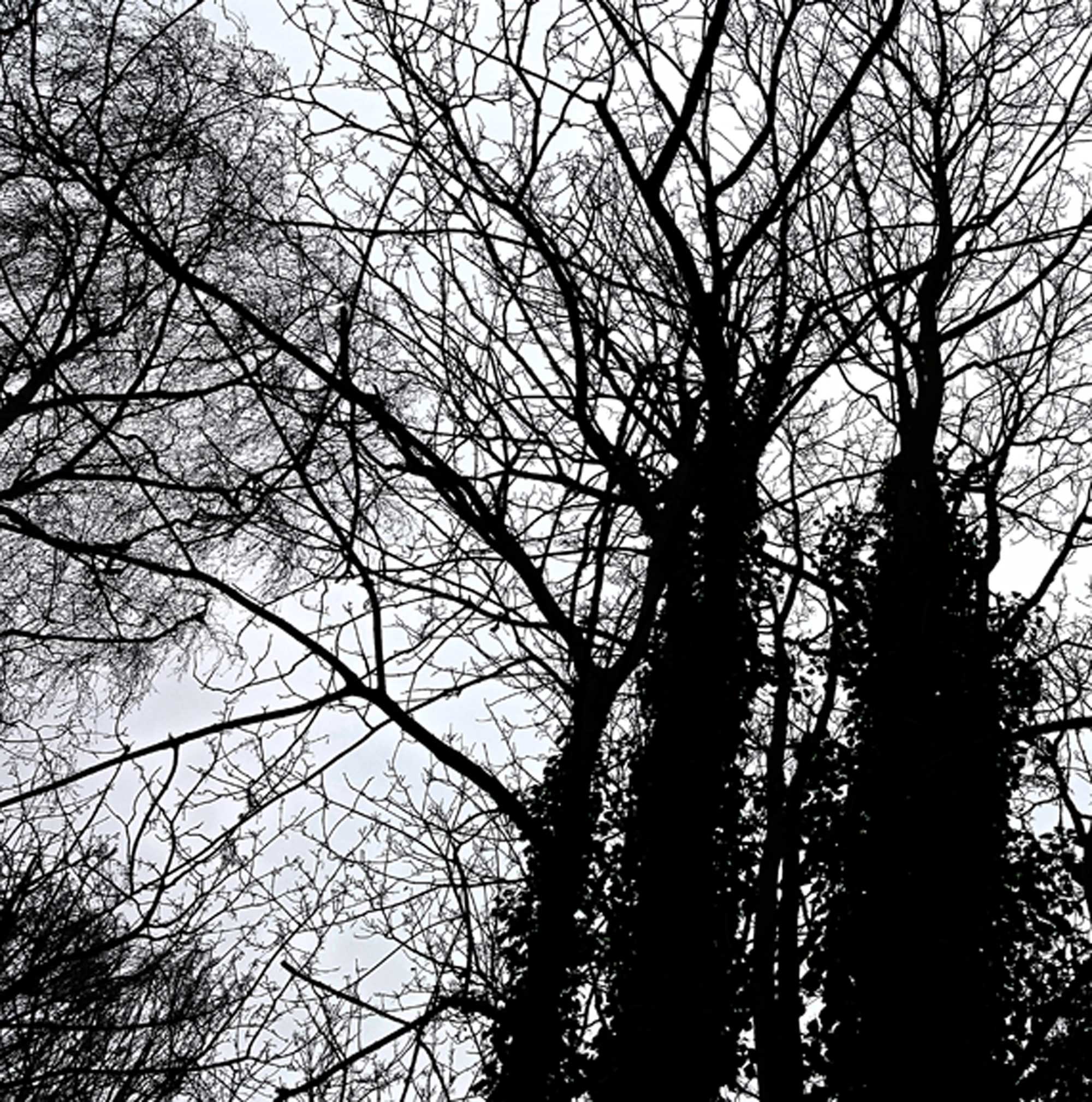
Ep 61A city at low tide (sleep safe)
It is said that cities never sleep, but from inside north east London's Abney Park nature reserve, the silken hum tells a different story. It's the early hours of Christmas Day 2020. The park has long since closed. Nothing is about. From part way up the trunk of one of the many ivy-clad trees, the microphones are recording. Capturing the murmurations of the city at night. The traffic has retreated. The torrents of noise have shallowed. An urban sprawl that's gone out to the horizon. This is the sound of the city at low tide. The indeterminable rumble has thinned, to a soft hum. A panoramic hum that shifts, and billows, like curtains of audible silk. It's sometimes lost amongst the hiss and rustle of the ivy. A fox barks. An undulating tone fades in and out. Somewhere off, an unsteady bough squeaks, like a rusty garden gate. Lone cars pass in long hushing waves. Near to the microphones ivy leaves rustle. Then, is that something singing from through the leaf bare trees? Is it a silvery glimpse of dawn? It is a robin. But it's only dreaming. Dreaming out loud, of tomorrow's song. Explore our other episodes recorded from Abney Park.
Ep 60Soundscenes of spring from the Derbyshire hills
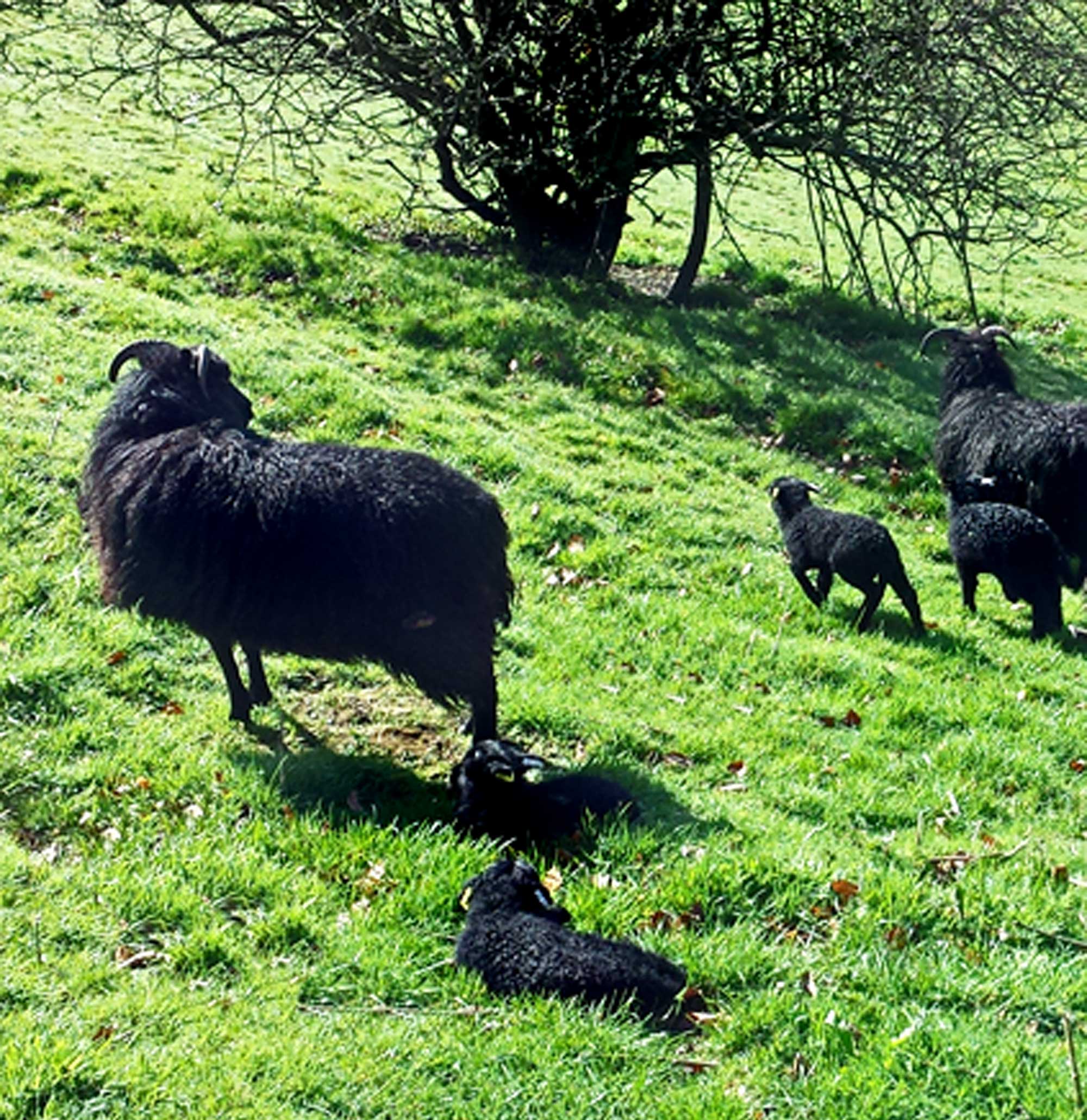
Nestled between high gritstone walls, just off a single track lane about 1000 feet up in the Derbyshire hills, there's an old farmhouse with a chicken coop. Hidden under tall trees it has a panoramic view over the valley. On an early April day in 2018 when the barometer was high, when a blue sky stretched over and the air had that invigorating sniff of rain-washed agricultural land, we left the microphones in an elderly apple tree to record the sheep, the birds and the valley for a few hours. The tree was one of a pair that have stood there opposite the farmhouse for perhaps half a century or more. They stand like an admiring couple, taking in the view. From this beautiful spot they must have witnessed fifty springs, and thousands of new born lambs. These soundscenes feature hens and a cockerel, cows, sheep and lambs. Assorted garden and moorland birds assemble - chaffinches, jackdaws, rooks and robins, blackbirds, black caps and a pheasant. This is also the sound of the sky as we knew it pre-lockdown. Threaded with aircraft, including some long humming lazy propellers. We hope we can get back soon after restrictions are lifted to re-record this soundscape. **This is our 60th episode and marks our first birthday. We launched in lockdown on 29 March 2020 and have been sharing weekly sound postcards to work or rest to ever since. Please help us keep going. Buy us a coffee and / or get some lovely Lento cards to brighten your day or someone else's. Support Radio Lento on Ko-fi. Thanks for listening. **
Ep 59A fallen tree on Galley Hill
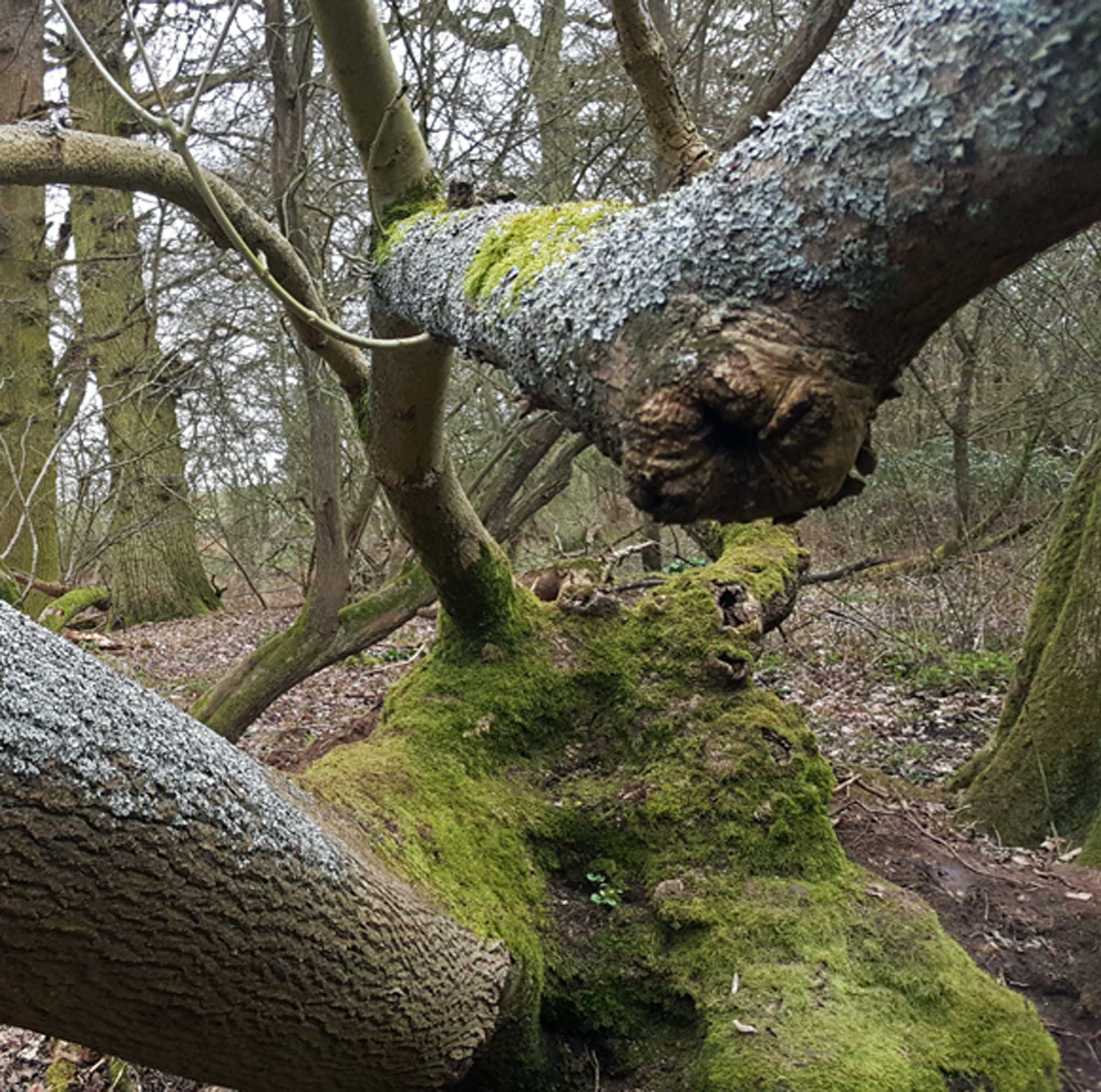
It was, from a bridleway in rural Essex, the long slanted beam that first attracted us over for a better look. A fallen tree, perpendicular to the rest, lying half in and half out of a patch of woodland. We'd been trudging over claggy footpaths for an hour and it was coming on to rain. We needed to stop moving, and properly take in the landscape. The beam formed a natural bench, and something to climb on. After our ears had adjusted, we realised much of the human noise in the landscape was gone. The M25 to the south, and a road called the Crooked Mile which separates the edge of the Lee Valley Park and open country, had both sunk below the horizon. This spot was an oasis for listening. A place to enjoy the early spring sound of the local wildlife, and the rising and falling of the wind in the trees. Leaving the microphones behind on the tree trunk to record for a while, we went back to the bridleway, just to see where it went.

Ep 58Suffolk Wood (part 7) 2am - counting the chirps of a dark bush cricket (sleep safe)
When the bell of St Mary's strikes 2am, and the world has dissolved into shadows and echoes of far away things, there's a solace to be found in counting the chirps of a dark bush cricket. When all that is near is a loose twig falling, a small mammal, biding its time between a fleeting moment of stealth, and the semblance of a nocturnal breeze seems to be somewhere around, high up in the trees, there is a reason to let go of the urge to track time. Let the night planes take it. Let them draw it away in their soft rumbling arcs, away and over the dark curve of the Earth. And don't worry. They'll be sure to leave it where you can find it. It'll be there when you arrive. There on the cusp of dawn. Here, in this rural Suffolk wood, in this safe and empty place, on this calm August night when thoughts can be let go to float down into the leaves, its the trees who'll stand over. This is a very very quiet episode. An hour of stillness and peace. It is sleep safe. Listen with headphones to get the full sound. This is the seventh episode from this lovely location. Here's a blog post about Suffolk Wood which lists them all, so you can listen in order and hear how the sound of one night changes.

Ep 57Seaside brutalism - at the Port of Felixstowe
On the beach, sat within wetting distance of the water's edge, there's a point where the noise from the container port begins to meld in with the shingle soft washing to and fro of the waves. Here, about a quarter of a mile away, towering gantry cranes can be seen whining backwards and forwards, deftly hoisting lorry-sized containers like little matchboxes from an impossibly vast supership. Venus, mega-sized, operated by China Shipping Container Lines, and with a warehouse-sized engine and chimney that throbs and pulsates the sea air for miles around. On this, a weekday last summer, the port and all of its rumblings form nothing more than a backdrop to what beaches are really for. Playing. Oblivious children constantly on the move run soaked and delighted to their families before rushing back to get ankle-deep in the waves again. Parents warn there's a stranded jellyfish, while claxons and two-tone sirens announce the peril of yet another swooping crane, on the horizon. There's a jagged beauty to all of this, a form of shoreline brutalism. It is quieter up coast, around Languard Point and past Felixstowe town, where we also recorded that summer. You can hear these soundscapes in episodes 25 (Cooling off beside sifting waves at Felixstowe Ferry - 32mins) and 33 (Champagne shingle on Felixstowe beach - 19mins). If you like brutalist soundscapes, we have more for you to explore.
Ep 5656 The whispering trees of Bayford Wood
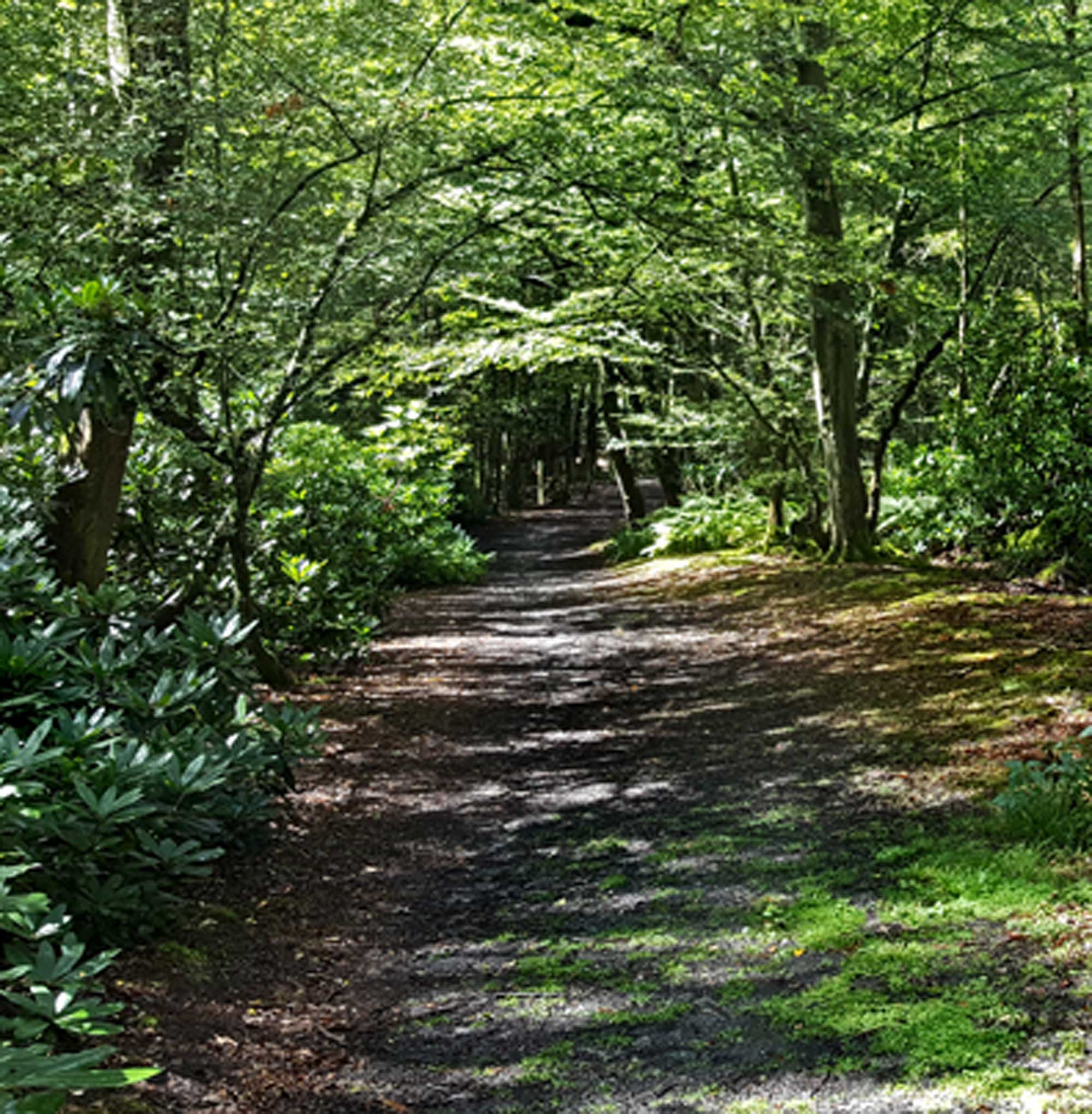
It was our first visit to Bayford Wood. A country walk, on a bright July day which was not quite as warm as it should be. A walk under an undecided sky, from time-to-time enhanced with inexplicable flurries of raindrops that fell like scattering beads. As we followed the track deeper into the woods, surrounded by tall trees, long growing and cathedral high, a small propeller plane buzzed over. It made us look. Then, with the quiet returned, our ears became tuned to the presence of countless myriad things high above us. Whispering things, hissing things, softly shushing things, filtering down their fine gossamer sounds in slow undulating waves. Lung easing. Chest expanding. Mind cleansing. All from up in the vaulted ceiling of green, forty feet above, millions upon millions of leaves, set in tiny individual motions by the breeze. We found a grassy bank set back from the track, pushed through a hedge of ivy, and left the microphones alone to record while we went off to brew tea on a camping stove.
Ep 55Light rain beside the lane near Sandy
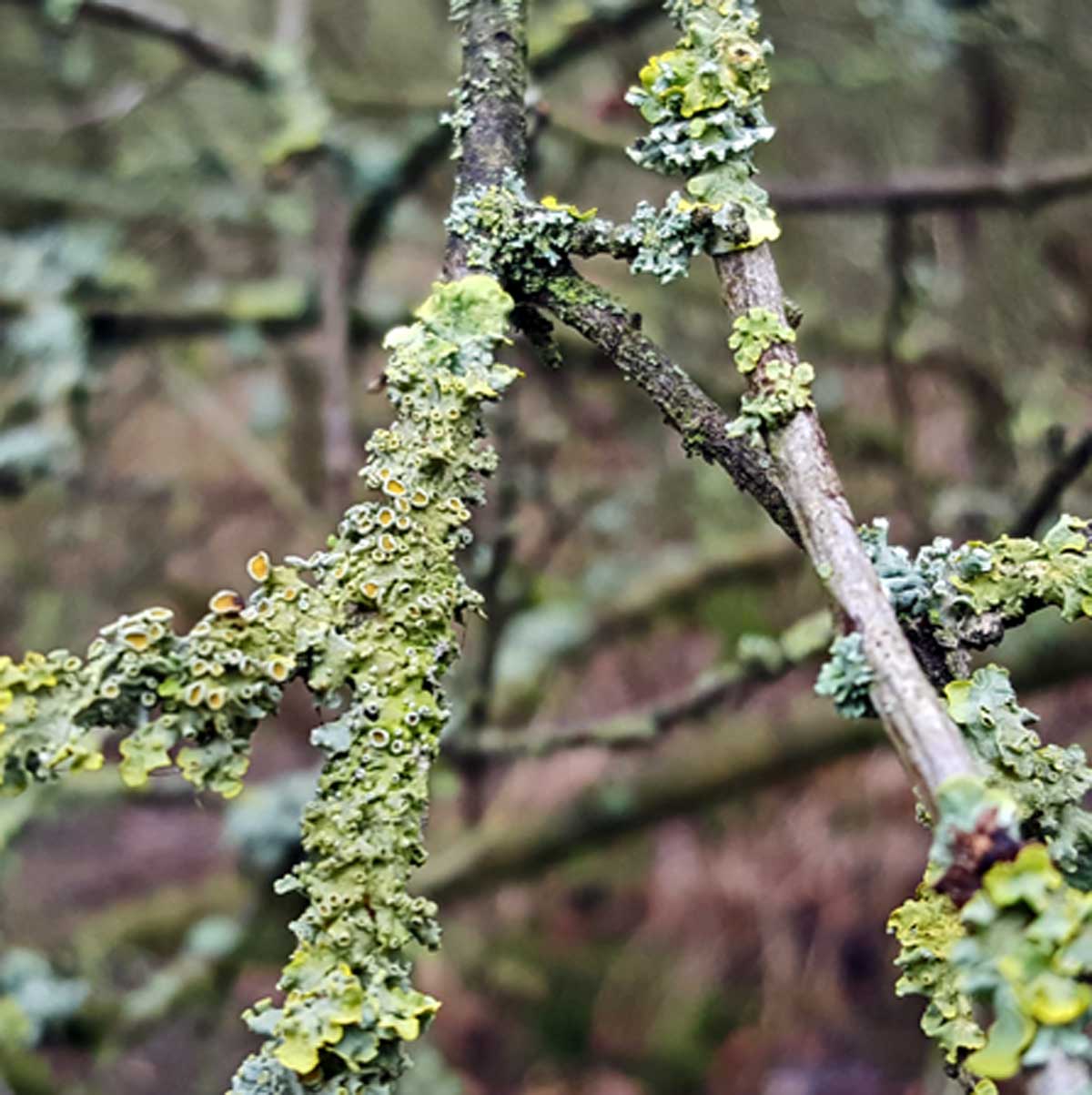
It's all woods and rolling fields in rural Bedfordshire. Good for long walks under wide skies. A chance to get away from it all. On a wet February day, after splashing along muddy lanes and mud sliding footpaths, after passing a pair of Anderson shelters either side of an empty and waterlogged field, we saw a tumbledown wall cloaked in moss. Behind the wall, tucked down in a shallow dell, so quiet it hardly reached us, the melodious sound of a running winterbourne. Watery places always seem to cast a magic spell. So we climbed through the spiky trees peppered with lichen and left the microphones to record. It felt like a long forgotten spot, set back from people and the Iron Age track. When they were sure we had gone, tiny birds returned to flit about, distant cows lowed as the rain gently sifted down through the bare branches. A silvery sounding place, cool, and clean of clutter. In a few months the leaves will come, the fields will dry, and the landscape will sound of spring. New this week! **Please help us keep Lento going. Buy us a coffee and / or get some lovely Lento cards to brighten your day or someone else's. Support Radio Lento on Ko-fi. **