
Question of the Week, from the Naked Scientists
637 episodes — Page 4 of 13

Ep 487Why do we keep catching the same diseases?
This week, listener Rick emailed us to ask "Why do we acquire lifelong immunity against some pathogens but not others?" Sally Le Page asked author and infectious disease researcher at Imperial College, London, John Tregoning, to jog our memories... Like this podcast? Please help us by supporting the Naked Scientists

Ep 486Do frogs get itchy?
Margaret got in touch to ask The Naked Scientists: "Science has now identified actual nerve endings that humans and other mammals have that send that itchy feeling to the brain. Do snakes and other amphibians have these same nerve types? Have frogs been seen scratching an itch?"Harry Lewis dived deep to find an answer and Gerhard Schlosser from the National University of Ireland Galway was on hand to tell him more... Like this podcast? Please help us by supporting the Naked Scientists

Ep 485What happens to light's lost energy?
Listener Mark was curious to know: "Since the Universe is expanding, and light coming across it stretches as it does so, becoming more red, what happens to the lost energy when the shorter wavelength, higher energy light towards the blue end of the spectrum is shifted into lower energy, red wavelengths?" Cameron Voisey went off to figure it out... Like this podcast? Please help us by supporting the Naked Scientists

Ep 484How long before the food I eat becomes 'me'?
Listener Martin wanted to know: "How long does it take the food I eat to become part of me?" Eva Higginbotham set off to find out the answer... Like this podcast? Please help us by supporting the Naked Scientists

Ep 483What proportion of the brain stores memory?
Dave got in touch with The Naked Scientists to ask, "How much of the brain is memory?" This week Harrison Lewis only just remembered to get in touch with Amy Milton from the University of Cambridge. Thank goodness he did, as Amy has extensive experience wrapping her head around this brain teaser... Like this podcast? Please help us by supporting the Naked Scientists

Ep 482Why do ladybirds have varying spot numbers?
Listener Ruomei wrote in to ask "Why do ladybugs have different numbers of spots on their backs?"Eva Higginbotham spoke with ladybird enthusiast Helen Roy from the Uk Centre for Ecology and Hydrology... Like this podcast? Please help us by supporting the Naked Scientists

Ep 481Is lava wet?
Listener Henk wrote in to ask "Is lava wet?" Sally Le Page spoke with magmanimous geologist Brooke Johnson from the University of Oxford... Like this podcast? Please help us by supporting the Naked Scientists

Ep 480Why don't dogs get hairballs when cats do?
Beth wrote in to ask "My dog is always licking her fur but never gets a hairball. Why don't dogs get hairballs?" Sally Le Page spoke to three animal aficionados: Nick Sutton, Science Communications Advisor at The Kennel Club; Justine Shotton, Junior Vice President at the British Veterinary Association; and Ann Hohenhaus, Staff Doctor at NYC's Animal Medical Center for the answer... Like this podcast? Please help us by supporting the Naked Scientists

Ep 479If heat rises, why is it colder up mountains?
Wayne got in touch to ask: "We've always learned that heat rises but it's normally cooler in the mountains. Shouldn't their higher elevation make it warmer there?" Sally Le Page reached out to atmospheric physicist Simon Clark for the answer... Like this podcast? Please help us by supporting the Naked Scientists

Ep 478Could bagpipes help you recover after Covid?
Paul got in touch to ask "If one is recovering or has recovered from covid, would playing bagpipes help to expand the lungs and be beneficial or detrimental?". Adam Murphy reached out to John Dickinson from the University of Kent and Michael Steiner from the University of Leicester for the answer... Like this podcast? Please help us by supporting the Naked Scientists

Ep 477Why do crocodiles have such bumpy skin?
Johan aged 5 got in touch to ask: "Why are crocodiles' skin so bumpy and not smooth?" Sally Le Page reached out to James Hennessy from Ireland's National Reptile Zoo for the answer... Like this podcast? Please help us by supporting the Naked Scientists

Ep 476Will a can in the ocean float or be crushed?
This week, Phil Sansom has been thinking deeply - or rather, sinking deeply - about this question from listener Richard. "Will a can of soda dropped in the ocean sink until it implodes, or float once it reaches equilibrium?" Here's the answer, with help from the Cambridge Science Centre's Mia Foulkes... Like this podcast? Please help us by supporting the Naked Scientists

Ep 475Is every snowflake unique?
This week, Charlotte Birkmanis is chilling out, as she answers Alan's cool question: "I have heard it said many times that no two snowflakes are the same. Given the billions and billions of them that have fallen to Earth, this really does seem unlikely. Since nobody has looked at them all, would you agree with me that the only thing to be said with any certainty, is that no researcher has ever found two the same?" Like this podcast? Please help us by supporting the Naked Scientists

Ep 474Can overcooking junk food make it healthy
This week, we're turning up the heat, as Adam Murphy's been looking into Kelvin's question: "We are told not to overcook our vegetables because this kills the nutrients. Now if that's the case, why don't we just overcook the food we enjoy and not run the risk of putting on weight?" Like this podcast? Please help us by supporting the Naked Scientists

Ep 473Can dog wee dissolve rubber tyres?
This week, urine for a treat - Phil Sansom tackles this question from listener Trent. "Every time I walk my dog, it pees on the tyre of a particular trailer. It got me thinking: urine contains uric acid. Is that strong enough to eat through the rubber of the tyre? If so, how long would it take?" Like this podcast? Please help us by supporting the Naked Scientists
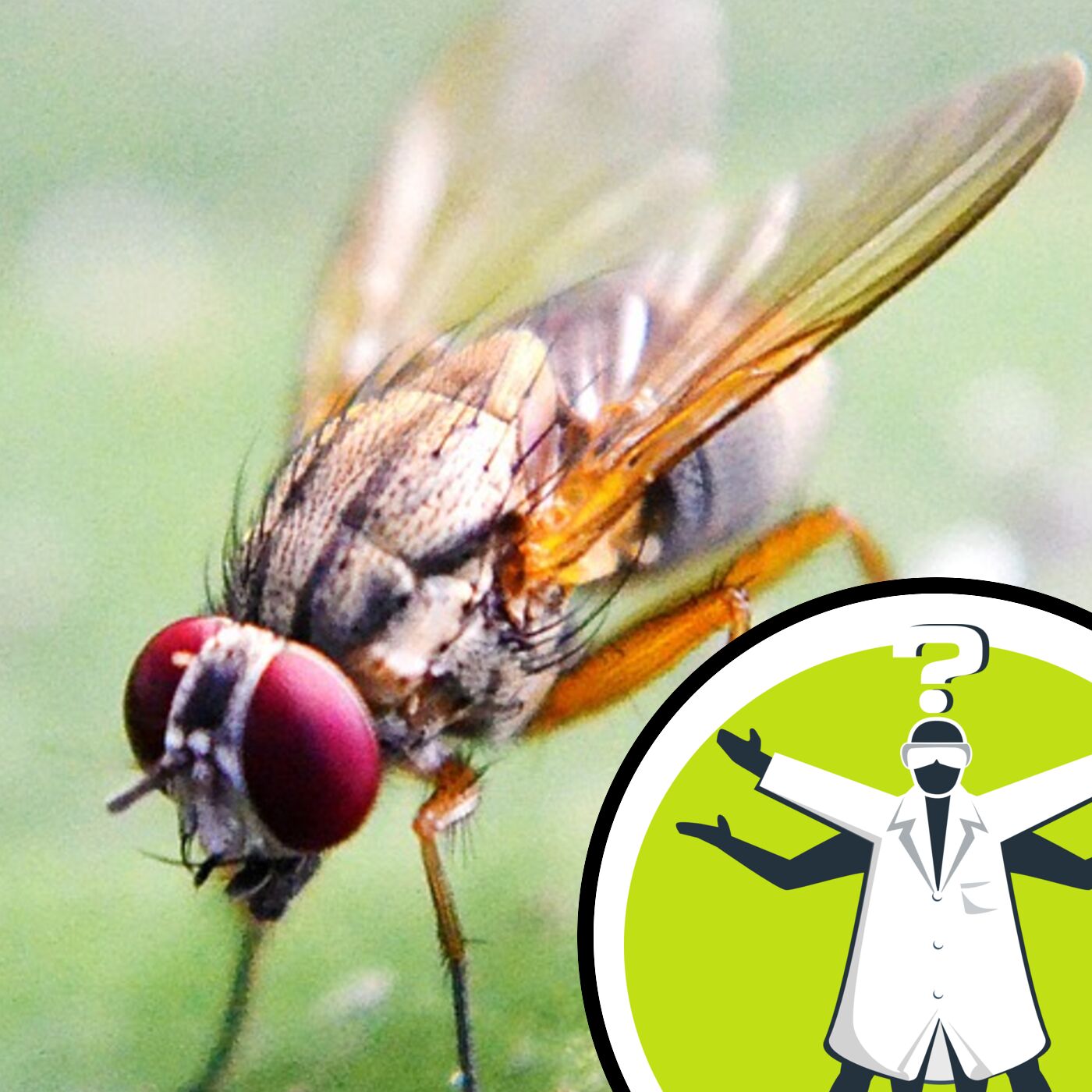
Ep 472Can flies survive the winter?
Jeffrey got in touch to ask: "We've had a cold and snowy winter, and I've had to shovel my driveway every few days. We had a fly in our house, and I was curious if it survived the cold somehow, or recently hatched?" Adam Murphy got in touch with Erica McAlister, fly specialist and Senior Curator from the Natural History Museum in London to fly in an answer... Like this podcast? Please help us by supporting the Naked Scientists

Ep 471How do ZIP files work?
Listener Ellie wanted to know: "how do ZIP files work on my computer?" Phil Sansom unzipped the question - with an answer from research data scientist Peter Foster... Like this podcast? Please help us by supporting the Naked Scientists

Ep 470Why are electrons never in between orbitals?
Quantum hats on for this week's 'exciting' question! Listener Mejnun says: "I have learned at school that when an electron excites it jumps to another orbital around the nucleus. If an electron jumps an orbital you would expect that at that moment it can be found between the two orbitals. My teacher told me that this is never the case. I can not wrap my head around it. Does the particle just disappear in one orbital and appear in the other? Is this instant, is the particle in the other orbital the same? Can you please help me to understand this?" Phil Sansom asked physicist Ankita Anirban to... Like this podcast? Please help us by supporting the Naked Scientists

Ep 469Why do chillies stay on your hands?
Nancy asked: "Why does chilli stay on your fingers for so long after cooking with them, even after you wash your hands multiple times it can still hurt if you touch your eyes?" So what's the answer to this burning question. Adam Murphy asked chemist Tim Woodman, from the University of Bath... Like this podcast? Please help us by supporting the Naked Scientists

Ep 468How did varying chromosome numbers evolve?
Listener Mattie asked "If humans have too many or too few chromosomes it can cause them to be infertile. So how did different creatures get different numbers of them? For example, humans have 46 chromosomes, but mice have 40." Eva Higginbotham asked genome evolution expert Hugues Roest Crollius... Like this podcast? Please help us by supporting the Naked Scientists

Ep 467Do animals get bored eating the same food?
Listener Douglas asked us: "do animals get bored eating the same thing all the time? Like sheep - do they get bored of one type of grass?" Katie Haylor bored deep into the question, with help from neuroscientist James Danckert... Like this podcast? Please help us by supporting the Naked Scientists

Ep 466Why aren't all batteries rechargeable?
Listener Michael got in touch to ask "Why can't batteries, such as AA or AAA size, be recharged? What's the difference between regular batteries and rechargeables, especially lithium ones? Is this a 'big battery' conspiracy to sell more batteries, or are there valid reasons?" Like this podcast? Please help us by supporting the Naked Scientists

Ep 465How can you make normal TV look 3D?
Pavel got in touch to ask "Take sunglasses and remove one lens. Watch a normal television film with one eye darkened by a sunglass lens, and the other free. The film will appear in 3D. Can someone explain to me, how does this work?" After dusting off her sunglasses, Eva Higginbotham put the question to 3D vision expert Andrew Glennerster from the University of Reading... Like this podcast? Please help us by supporting the Naked Scientists

Ep 464What are the impacts of an aristocrat's diet?
James got in touch to ask us: "What were the health impacts of the vastly different diets and lifestyles of aristocrats and peasants? Would wealthy Roman patricians be much smarter than plebeians based solely on improved nutrition?" Hungry for answers, Adam Murphy spoke to University of Cambridge archaeologist Sam Leggett, and the University of Bristol's Julie Dunne... Like this podcast? Please help us by supporting the Naked Scientists

Ep 463How would a foetus develop in zero gravity?
Listener David asked: "Would a foetus develop differently in zero gravity conditions?" Adam Murphy found an answer with the help of reproductive biologist Adam Watkins, from the University of Nottingham... Like this podcast? Please help us by supporting the Naked Scientists

Ep 462When will we run out of music?
"Assuming there are a finite number of musical notes - chords, notes, octaves - at what point, how many years, would we use all combinations of musical themes such that no more music could be created?" Creative computing expert Rebecca Fiebrink from UAL totted up the answer to listener David's musical musing for us... Like this podcast? Please help us by supporting the Naked Scientists

Ep 461Why do some people shiver when they pee?
Listener Eleanora asked: "I want to know why my dad shivers when he pees." Phil Sansom managed to find the answer to this 'Question of the Wee'.... Like this podcast? Please help us by supporting the Naked Scientists

Ep 460If Earth were heavier, would rockets work?
"Is it true that if the mass of the Earth were greater, it would render our chemical rockets incapable of reaching orbit?" Listener Steven launched this question at us, and so Martin Khechara went to find the answer... Like this podcast? Please help us by supporting the Naked Scientists

Ep 459Can you get DNA from crematorium ashes?
Paul got in touch to ask: "I was wondering if it was possible to get DNA out of crematorium ashes. Could you get any information about the person such as weight or height, from their ashes?" Katie Haylor put the question to Charmaine Bale, from Anglia Ruskin University... Like this podcast? Please help us by supporting the Naked Scientists

Ep 458Is sourdough bread a healthy option?
Mervyn got in touch to ask "Is sourdough bread a healthy option?" Eva Higginbotham put the question to dietician Rebecca McManamon... Like this podcast? Please help us by supporting the Naked Scientists

Ep 457Why are sperm made below body temperature?
Jordan got in touch to ask ""Why do females produce eggs inside the body, at body temperature, but males have to produce sperm outside the body, at a lower temperature?" Eva Higginbotham put the question to reproduction expert William Colledge at the University of Cambridge... Like this podcast? Please help us by supporting the Naked Scientists

Ep 456Compost or landfill: which emits more CO2?
Listener Robert asks: "does household composting release fewer greenhouse gases compared to a landfill?" Phil Sansom dug him up an answer, with help from environmental engineer Sintana Vergara... Like this podcast? Please help us by supporting the Naked Scientists

Ep 455Could loud music deafen my dog?
Robyn got in touch to ask: "I often wonder when I listen to music in the car when my dog is with me: since they hear higher frequencies than humans, do they also perceive for example loud music louder than us?" To sniff out an answer, Adam Murphy spoke to Nancy Dreschel, a specialist in animal beaviour from Penn State University... Like this podcast? Please help us by supporting the Naked Scientists

Ep 454How many people could share my surname?
Beata asked "If three hundred years ago there was one person with a certain surname, how many people could have their surname today?" Eva Higginbotham got mathematician James Grime to crunch the numbers... Like this podcast? Please help us by supporting the Naked Scientists

Ep 453What time should I water my plants?
Kevin asks: "Does watering my veggie garden in the morning mean that water uptake will coincide with the intake of sunlight, and give my vegetables the best chance? Or is it just as good to water in the evening?" Phil Sansom dug out the answer by asking Anthony Bridgen from Cambridge University's Sainsbury Laboratory and Guy Barter from RHS... Like this podcast? Please help us by supporting the Naked Scientists

Ep 452How do bats roost upside down?
Satish asks: "how does a bat sleep the whole day hanging from a tree? Won't being upside down affect blood circulation?" Phil Sansom went to find the answer, with help from Western University's Brock Fenton... Like this podcast? Please help us by supporting the Naked Scientists

Ep 451Which water is better: hard or soft?
Hard... or soft? That's the watery wrangle on which listener Jo asked us to weigh in. She said: "my question is about drinking water. We drink gallons of the stuff in a lifetime, but which is better for us, hard or soft? My skin and hair prefer it soft, but what about teeth and bones? And which do our kidneys prefer?" Adam Murphy got the answer with the help of University of Cambridge chemist Ljiljana Fruk... Like this podcast? Please help us by supporting the Naked Scientists

Ep 450Do insects have a stress response?
Charlie sent in this question "Humans have adrenaline for our fight or flight situation, do bugs have this too?" Eva Higginbotham put the question to insect-lover and expert, Eleanor Drinkwater from the University of York... Like this podcast? Please help us by supporting the Naked Scientists

Ep 449Why does anxious sweat smell worse?
This week's question is a sweaty one! It comes to us from listener Margaret: "Why, why, why can I work in the yard and be covered in sweat for hours, and only stink a little; but reveal one personal thing to a group of friends, and immediately stink to high heaven?" Phil Sansom got the answer from the International Hyperhidrosis Society's Angela Ballard, and University of Cambridge physiologist Christof Schwiening... Like this podcast? Please help us by supporting the Naked Scientists

Ep 448How would you measure time when in space?
This week we've been against the clock to get the answer to this question from David "What measurement of time would you use in travelling through space as a day, week, month or a year would become meaningless, and how would this affect the body clock?" Eva Higginbotham spoke to space sleep expert Cassie Hilditch, and also former NASA astronaut Steve Swanson, to find out the answer... Like this podcast? Please help us by supporting the Naked Scientists

Ep 447Why do I need to pee more nearer the loo?
This week we're flushing out the answer to this question from Charlie: "Maybe this is just me, but it dawned on me that whenever I have to hold in a pee, the need to go increases exponentially when I know that relief is close. Why is this?" So to relieve Charlie of his question, I asked physiologist Bill Colledge from Cambridge University to expel the answer... Like this podcast? Please help us by supporting the Naked Scientists

Ep 446Why do particles gather in a bucket's centre?
Six-year-old listener Jonathan asks: "when you stir a bucket of water, I know the water is pushed to the outside; however, why do any particles end up the centre after the water has finished spinning? I have asked my Dad, but he doesn't know." Phil Sansom found someone who does know - and it's fluid dynamics expert Dan Nickstroem... Like this podcast? Please help us by supporting the Naked Scientists

Ep 445Do our brains process sound or light faster?
Lionel got in touch to ask us about a curious phenomenon he's noticed since installing a new sensor, raising the question whether our brains process light or sound faster. Eva Higginbotham spoke with Brian Moore of the University of Cambridge who helped us unpick the answer... Like this podcast? Please help us by supporting the Naked Scientists

Ep 444Does burying paper sequester carbon?
Johnny asked us if burying paper counts towards carbon sequestration. To dig up an answer, Adam Murphy spoke to Shaun Fitzgerald, Royal Academy of Engineering Visiting Professor at the University of Cambridge, about how useful that really is... Like this podcast? Please help us by supporting the Naked Scientists

Ep 443Should you wash, rinse, and repeat?
Julie got in touch to ask whether there was any reason to wash, rinse and repeat, or if it was just marketing hype. Phil Sansom spoke to two hair specialists, Sally-Ann Tarver and Eva Proudman, about this hairy issue... Like this podcast? Please help us by supporting the Naked Scientists

Ep 442Why do hospitals need so much PPE?
Carol got in touch to ask "The government has provided more than a billion items of PPE to hospitals. There have been 130,000 COVID cases in hospitals, about 10,000 items of PPE per patient. Can you find out why so much?" Eva Higginbotham put the question to medic Isabelle Cochrane... Like this podcast? Please help us by supporting the Naked Scientists

Ep 441Why does coffee dissolve so fast?
Neerav wanted to know why some things dissolve faster than others, so we spoke to University of Cambridge chemist Ljiljana Fruk to find out... Like this podcast? Please help us by supporting the Naked Scientists

Ep 440How alike are the kids of identical twins?
Sam got in touch to ask: "If identical twin brothers marry identical twin sisters, and each of those couples has a child, will those two children be like twins?" Eva Higginbotham put the question to Tessa Bertozzi - a geneticist at the University of Cambridge. Like this podcast? Please help us by supporting the Naked Scientists

Ep 439Why aren't planes dimpled like golf balls?
Darren got in touch to ask us: "Golf balls are dimpled to disrupt the air around the ball. As far as I can gather, this reduces their drag and allows them to fly further than they would if they were perfectly round. Why do we not see dimpled cars, aircraft, and trains? If this effect is so effective for golf balls, why not use it on Formula 1 cars, for instance?"Adam Murphy went looking for a hole-in-one to this question, and spoke to Sam Grimshaw from the Whittle Lab at the University of Cambridge... Like this podcast? Please help us by supporting the Naked Scientists

Ep 438Could saponins help fight coronavirus?
We've been hunting down the answer to this questions from Denise: "There are plants that contain saponins and were used by Australian aboriginal people as bush medicine. Is there any research on the antiviral properties of saponins in, for example, Australian Acacia species, or other plants?" Eva Higginbotham spoke with Maher Mohamed Abed El Aziz from the University of Tripoli in Libya, and Anthony Davenport from the University of Cambridge, to find the answer. Like this podcast? Please help us by supporting the Naked Scientists