Psychologically Speaking with Leila Ainge
Psychological insights, without the jargon. Psychologist & coach Leila Ainge explores the fascinating world of human behaviour, weaving together ground-breaking research & real-life experiences.
Decibelle Creative
Show overview
Psychologically Speaking with Leila Ainge has been publishing since 2023, and across the 3 years since has built a catalogue of 62 episodes, alongside 4 trailers or bonus episodes. That works out to roughly 30 hours of audio in total. Releases follow a fortnightly cadence, with the show now in its 4th season.
Episodes typically run twenty to thirty-five minutes — most land between 14 min and 45 min — with run-times ranging widely across the catalogue. None of the episodes are flagged explicit by the publisher. It is catalogued as a EN-language Science show.
The show is actively publishing — the most recent episode landed yesterday, with 14 episodes already out so far this year. The busiest year was 2025, with 34 episodes published. Published by Decibelle Creative.
From the publisher
A psychologist's insight into the fascinating world of human behaviour without the jargon, with Psychologist & coach, Leila Ainge. Blending scientific research with real experiences, Leila is on a mission to reframe outdated notions of imposter syndrome. Psychologically Speaking delves into Leila's own ground-breaking research, exploring what drives those pesky fraudulent feelings in entrepreneurs, the unexpected advantages, and how you can actually leverage imposter moments to your benefit (yes, really). This podcast is for anyone who has ever felt like a fraud, just moments away from being 'found out'. This podcast is produced by Decibelle Creative
Latest Episodes
View all 62 episodesWhy Does This Feel So Hard? | Imposter Phenomenon, Risk & the Psychology of Difficult Things
58. Your Whole Axis Shifts: What Grief Changes About Work and Life
57. Off the Beaten Path: Identity, Belonging & Building a Career That Actually Fits
What if interviews don’t just reveal what we think… but actually change it?
bonusWe often assume interviews are a way of capturing what people already think. But qualitative psychology suggests something different. Interviews can be active sites of meaning-making, where thoughts are not just shared, but formed in real time.Drawing on ideas like the double hermeneutic from Anthony Giddens and reflexive approaches to qualitative research, I reflect on what it means to ask questions that might shift how someone understands their own experience.As an insider researcher studying online communities I belong to, this raises a deeper question: what trace does research leave behind?This episode explores:Why interviews are not neutral data collection toolsHow questions can shape reflection and self-understandingThe role of reflexivity in qualitative researchThe ethical tension between insight and influenceWhat happens when someone thinks something for the first time… out loudIf you’re a researcher, writer, coach, or simply curious about how we make sense of our experiences, this episode invites you to listen a little more closely to the pauses.
S4 Ep 56I Refuse to Hate Myself: Emma Seville on 'Starting Again'
“I refuse to hate myself in any way… I hope women reclaim ageing as a gift.”When everything shifts at once, home, body, identity, what does it take to rebuild a sense of safety and self? Leila Ainge and Emma Seville explore menopause, midlife transitions, and the psychology of starting over.In this episode of Psychologically Speaking, psychologist Leila Ainge speaks with menopause coach Emma Seville about navigating unexpected life changes, financial precarity, ADHD, and the psychological impact of midlife transitions. Together, they explore agency, belonging, and how women can reclaim ageing as a powerful, identity-shaping experience.
Bonus: Everything we know is shaped by where we stand in the world.
bonusHi, I’m Leila, and I’m currently doing a PhD exploring the experiences of women who are independent workers, including entrepreneurs, freelancers, and the self-employed, who use online communities as part of their working lives.My first study is collecting data through a series of interviews with women and community hosts across two online communities where I’m also a paying member. These are spaces I didn’t join as a researcher, but as someone looking for connection, support, and belonging in independent work.Alongside the research itself, I’ll be keeping a series of blog posts as part of my reflexivity practice. These posts will sit under a little series I’m calling Field Notes (from the Inside) reflections on researching communities I belong to, in real time.
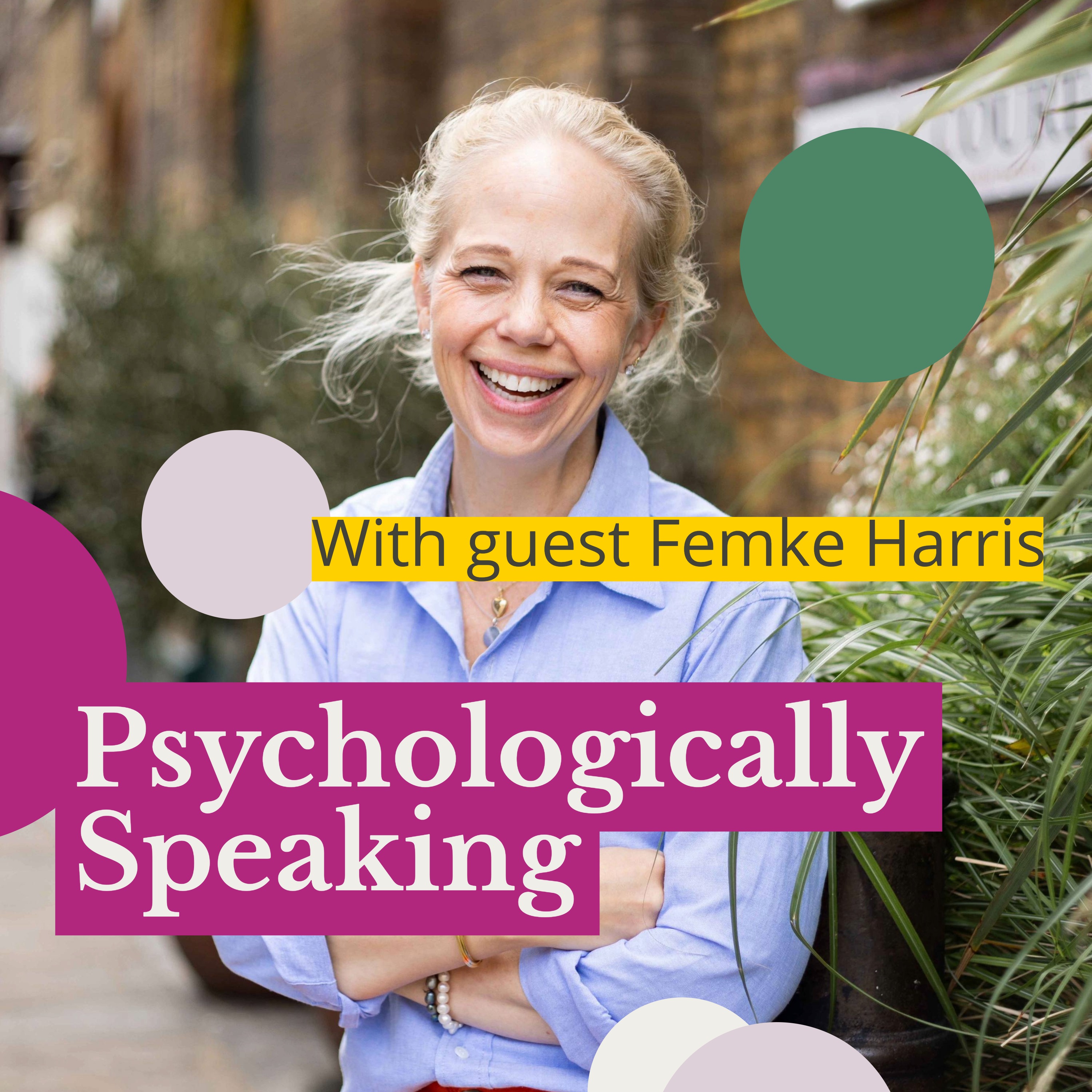
S4 Ep 5555. From War Zones to Motherhood: The Unexpected Path to Building a Business
In this episode of Psychologically Speaking, Leila Ainge speaks with entrepreneur Femke Harris about the unexpected twists that shape our lives. From growing up as a third-culture kid in Hong Kong to managing operations on a NATO base in Afghanistan, Femke’s career path has been anything but predictable.Together they explore the psychology of resilience, identity and adaptation when life doesn’t follow the plan we imagined. Femke shares how major life transitions – moving countries, career pivots, motherhood and COVID-era uncertainty – ultimately led her to create the Merry-go-round Club, a sustainable baby equipment rental service designed to support parents and reduce waste.This conversation explores how unexpected change can strengthen confidence, reshape identity and open the door to meaningful work.Topics include resilience, entrepreneurship, motherhood, community support, and the psychology of adapting when life throws curveballs.Femke Harris: "I'm a third culture kid, mother, founder and former international operations lead. I’ve lived and worked across Hong Kong, Belgium, the UK, Afghanistan and France including senior roles managing sales strategy in APAC and logistics contracts in complex environments. Along the way I’ve navigated motherhood, global relocations, and major life transitions, and more recently founded my own business. My path has been defined less by planning and more by adaptation.”https://merrygoround.club/

S4 Ep 5454. Can Digging in the Dirt Really Improve Your Mental Health? : The Science of Gardening and Wellbeing
What if one of the most powerful mental health tools was already in your garden?In this episode, I’m joined by horticultural therapist Kendall Marie Platt to explore the science behind soil, why getting your hands in the dirt can change your mood, and how gardening might help us regulate stress in ways modern life often forgets.And in many ways, Kendall’s story captures the spirit of this season’s theme: expect the unexpected. From forensic science labs to flowers and soil, her journey is a reminder that sometimes the paths we never planned are the ones that reconnect us with what really matters.Kendall Marie Platt is a horticultural therapist and founder of Adventures with Flowers. She combines horticultural therapy with sensory-led garden design to help people use gardening as a practical antidote to burnout. Through her membership The Seed, 1:1 programmes and garden-along sessions, she helps people create restorative spaces that support both body and mind.She is a writer, speaker and facilitator who has appeared on This Morning, BBC Radio and in publications including The Independent, The Telegraph, Happiful and Reclaim. www.adventureswithflowers.com/aboutkendallLeila Ainge is a psychologist, researcher and coach who helps people use psychology to work with more clarity, confidence and joy. Her work brings together research, reflection and practical insight so you can use evidence in ways that make sense for you.More details at www.leilaainge.co.uk

S4 Ep 5353. Goals Don’t Fail, They Reveal: What Happens After the Plan?
In this episode of Psychologically Speaking, Leila Ainge checks back in with coaches Emma Thomas and Lucy Green a few months after they set ambitious business goals. The conversation reveals how real progress unfolds.Emma shares how a community project had to pause due to unforeseen circumstances and teases us with a new book project!. Lucy reflects on launching her programme Good Company, which sparked strong interest but fewer sales than expected, leading her to adapt the offer and rethink how clients take their first steps into corporate work.Across the conversation, a common theme emerges: the process of pursuing goals generates insight, momentum, and new opportunities. Both coaches discover that experimentation, reflection, and small pivots are valuable.The episode explores the psychology behind this, including anticipated failure, experimentation, and the role of community and accountability in sustaining progress. Ultimately, the takeaway is simple when you pursue a goal, the real reward is often what you learn along the way.

S4 Ep 52What Actually Happens After You Set a Goal?
In this episode of Psychologically Speaking, Leila is joined by three Goal Sprint participants, Hannah Isted, Jen Vaughan and Darren Scotland, for an honest progress check-in just weeks into the year.Together they explore:• Why momentum matters more than motivation• How perfectionismblocks progress (and how to move anyway)• The psychology of getting out of your comfort zone from running faster to showing up online• Why community support accelerates confidence and behaviour change• How small actions create belief, not the other way around• Letting go of “gatekeepers” and reframing rejection• Using goals as direction, not pressureYou’ll hear:Hannah share how pushing past “safe effort” transformed her running Jen open up about visibility fears, tech discomfort, and building connection in business from the ground up.Darren reflect on perfectionism, creative momentum, community collaboration and turning setbacks into progress.Leila weaves in psychological insights around effort, behaviour change, self-criticism, resource conservation, social comparison and why progress rarely looks linear.If you’ve ever:• Set a goal and felt stuck straight after• Waited to feel confident before acting• Struggled with perfectionism or fear of visibility• Wondered why progress feels slower than expectedThis episode will help you understand what’s really happening in your brain and how to work with it rather than against it.

S4 Ep 51“Nothing Bad Happened”: What Visibility Teaches Us About Confidence
What actually happens to your confidence once you start pursuing a goal?In this episode of Psychologically Speaking, psychologist Leila Ainge checks back in with three creatives who set goals on the podcast weeks earlier, Graphic Designer Bhavini, Animator Duncan and Documentary Maker Dany. Instead of tidy success stories, you’ll hear what goal pursuit looks like in real life, confidence rising and dipping, perfectionism showing up, comparison creeping in, and plans changing shape.Through honest reflection and psychological insight, this episode explores why confidence doesn’t grow in a straight line, how visibility reduces fear over time, and why setbacks and pivots are often signs of progress rather than failure.If you’re navigating imposter feelings, struggling with comparison, or wondering why motivation feels inconsistent, this episode offers reassurance and a more realistic picture of change.

S4 Ep 50Are you Avoidance Crafting?
Why do resolutions wobble just when we think they should be working?This episode explores avoidance crafting, impatience, burnout, and how goals, habits, and mental distance shape real progress especially in January.In this episode of Psychologically Speaking, Leila explores the intricacies of human behavior, particularly focusing on the themes of resolutions, goals, and habits. She discusses the common pitfalls of New Year's resolutions, the importance of understanding the difference between resolutions and goals, and how habits play a crucial role in achieving these goals. Leila also delves into the impact of social comparison on our progress and introduces the concept of mental distance as a strategy to combat burnout and maintain motivation. The episode emphasizes the importance of community support and self-compassion in the journey towards personal development.takeawaysJanuary often feels like the longest month of the year.Resolutions are declarations linked to identity and values.Goals provide structure and direction for achieving resolutions.Habits require time to show their impact and rewards.Impatience can lead to negative feelings about progress.Social comparison can intensify feelings of uncertainty.Mental distance can protect against burnout.Avoidance crafting can be a strategic approach to stress.Community support can enhance motivation and accountability.Self-compassion is crucial in the goal-setting process.Leila's Research Services. From fast-turnaround, tailored insight report for freelancers, founders, and thoughtful doers who want evidence-backed answers, to retained services to support your PR messaging as you launchYou bring the questions and curiosity, I bring back a bespoke, research-informed insights packed with plain-language psychology, strategic prompts, and deep, usable clarity. It’s not theory for theory’s sake. It’s practical insight you can apply immediately.head to www.leilaainge.co.uk

S4 Ep 49Sustainable Goals in an Unsustainable World
Why do goals that feel exciting at first suddenly become exhausting even when we care deeply about them?In this episode of Psychologically Speaking, I explore why goals often become unsustainable not because of a lack of motivation or discipline, but because they’re designed for ideal conditions rather than real life.Drawing on psychology, environmental thinking, and embodied cognition, we look at how our physical and emotional environments quietly shape what we’re able to sustain long before willpower ever comes into play.You’ll be introduced to the concept of solastalgia, a term that describes the distress we feel when the places we call home change in ways that feel out of our control. Originally coined by environmental philosopher Glenn Albrecht, solastalgia helps us put language to a sense of discomfort many of us feel right now — at home, at work, and in the wider world.We also explore:Why goal-setting advice often assumes a resource-neutral worldHow embodied cognition explains the link between clutter, noise, uncertainty and mental fatigueWhy living in a brittle, anxious, non-linear environment (often described as BANI or VUCA) quietly drains our capacityHow Conservation of Resources theory reframes burnout, confidence loss, and stalled momentumWhy sustainability isn’t the opposite of ambition — it’s the condition that allows momentum to existRather than asking “How much more can I push?”, this episode invites a different question:What can my current environment realistically support without depletion?You’ll leave with two practical reflections to help you:Name your real working environment (without minimising it)Redesign your goals so they create more resources than they consumeThis episode is especially relevant if you’re:Feeling stuck or depleted despite caring about your goalsParenting, creating, caregiving, coaching, or leading in uncertain conditionsQuestioning whether the problem is you — or the system you’re operating withinFind out more about booking me as a researcher for hire at www.leilaainge.co.uk

Ep 1BONUS - Goal Derailment
bonusBonus Episode

S4 Ep 4848. Lights, Camera… Courage: Dany’s Arctic Documentary Journey
In this deeply honest and energising episode of Psychologically Speaking, Dany Johnston — data & AI consultant, documentary filmmaker, and PhD researcher — shares her most ambitious and vulnerable goal yet: to create and release a new documentary filmed during a once-in-a-lifetime expedition to the Arctic Circle.Dany’s story is one of dual passions: 25 years in business transformation and data, and a lifelong pull toward storytelling, creativity, and human rights. Her PhD bridges those worlds, exploring how data harvesting and AI shape the human rights landscape — and how documentary can help everyday people join conversations that usually happen behind closed doors.But 2026 isn’t about theory. It’s about exposure.The kind she’s avoided for years.Dany openly shares her “abject fear of judgment,” the reason projects from New York still sit on a hard drive, and why this year must be different. Her measure of success? Not just making a film — but submitting it to the festival circuit.

S4 Ep 4747. The Cupboard Under the Stairs: Emma’s Year of Coherence
In this episode of Psychologically Speaking, Emma returns to share her 2026 goal — and it’s one that will resonate with anyone whose business has grown faster than their systems.Emma describes the year ahead as a “cupboard under the stairs” moment — the kind of messy-but-essential reorganisation that requires everything to come out before the clarity goes back in. We talk about the three strands of her work (Managing the Menopause, The Triple Shift coaching practice, and Holding Up the Sky) and the emotional labour of running a multi-offer business while supporting women in some of life’s most demanding seasons. Why her goal isn’t just tidying — it’s coherence, identity, and focusHer habit of “shiny object syndrome” and the insecurity that sometimes sits beneath itHow under the surface, the real 2026 goal is growing her corporate coaching practiceThe tension between doing what feels easy (reorganising) vs what moves the business forwards (sales & outreach)Why a focus group may be the missing piece in her coherence puzzleEmma shares the three actions she’ll take by the end of JanuaryThis is a thoughtful, honest conversation about visibility, intentionality, and the very human temptation to do the parts of business that feel soothing instead of the ones that feel stretching.If you’re navigating growth, clarity, or identity shifts in your business, this one will feel like a cup of tea, a deep exhale, and a nudge forward.

S4 Ep 4646. Creative Confidence: The Goal That Strengthens Self-Worth with Bhavini Lakhani
A conversation about creative confidence, goal setting, and how sharing your work builds self-worth. Designer Bhavini joins Leila to explore fear, visibility, and growth.In this episode of Psychologically Speaking, Leila Ainge sits down with creative designer Bhavini (B81 Designs) to explore the psychology behind creative confidence, self-worth, and setting goals that stretch you.Bhavini shares the now-iconic story of her childhood Peter Rabbit — the rainbow-drenched sculpture her mum repainted white — and how that moment shaped her creative identity decades later. It becomes a powerful metaphor for self-expression, suppression, and the courage to show the work you’re proud of.💡 What’s inside this episodeHow childhood experiences quietly shape creative identityWhy sharing your work feels terrifying — even when clients love itThe difference between confidence, self-esteem, and self-worthHow fear of rejection stops creatives from posting their workThe “imagined audience” and why visibility feels riskyPractical strategies for building a habit of sharingWhy accountability, community, and collaboration matterHow one difficult client situation derailed Bhavini’s motivation The value of starting a goal that’s really about self-worth, not perfection🎯 Bhavini’s 2026 GoalTo share more of her design work online ,consistently, visibly, and beyond her comfort zone , and to build self-worth by doing the thing she’s been avoiding.With tools like the Rejection Challenge, a bingo card of self-sabotage phrases, and reframing portfolio updates as self-worth time, the episode shows what it looks like to set a goal that genuinely grows you.🧠 Why this episode mattersIf you’ve ever hesitated to show your work, doubted your abilities, or worried about being judged online, this conversation will land deeply. It’s about identity, self-expression, and the quieter psychology behind creative careers.🔗 MentionedB81 Designs (Bhavini)Doing It For the Kids CommunityBeing FreelanceLiz Mosley & The Rejection ChallengeHannah Isted🚀 Join the 2026 Goal SprintWant your own ambitious, exciting 2026 goal — the kind that assumes you can grow from day one? Join Leila’s 60-minute live Goal Sprint.www.leilaainge.co.uk/goalsprint

S4 Ep 4545. From Stretch Goals to Finish Lines: Goal Setting, Marketing Growth & Marathon Mindset with Hannah
In this episode of Psychologically Speaking, Leila talks with marketer, community-builder and marathon-in-training Hannah Isted, about her 2026 goals. Together, they explore how ambitious stretch goals like scaling a marketing membership and finishing the London Marathon in a faster time, require the same core ingredients: consistency, accountability, community, and strategic planning.This conversation blends the worlds of business growth, running, and mindset coaching, showing how transferable skills like contingency planning, habit building, and overcoming self-sabotage can fuel both entrepreneurial success and marathon training.Hannah shares the motivation behind her bold business goals, the momentum built over four years of consistent work, and the commitment to focusing solely on membership growth. She also talks about how a strong community, from her business audience to her running partners, keeps her accountable and inspired.Switching gears into marathon training, Leila and Hannah explore the running mindset, the role of audiobooks and podcasts in staying motivated, the importance of “time on feet,” and why you don’t need to reinvent the wheel in training. They discuss everything from speed work, consistency, and progress tracking to the quiet ways self-sabotage can creep into big goals.Whether you're an entrepreneur scaling a community, a runner training for a marathon, or someone trying to build better habits in your everyday life, this episode is full of practical insights, inspiring stories, and grounded strategies.

S4 Ep 4444. The Ripple Effect: Women, Money, and Mission-Driven Growth with Lucy Green
In this episode of Psychologically Speaking: The Goal Experiments, Lucy shares her 2026 goal, not just for her business, but for the women who benefit when she succeeds.We talk about what it means to set a goal that has social impact. Lucy’s ambition is grounded in something practical: helping more women secure meaningful contracts and build financially independent businesses. This is a grounded, thoughtful conversation about the kind of goal that changes not just a business, but the people around it. If you’re setting your own 2026 intentions, Lucy’s clarity and ambition might be exactly the nudge you need.SOCIAL MEDIA & WEBSITE LINKSwww.lucygreen.nethttps://www.instagram.com/lucygreencoaching/

S4 Ep 4343. Animation, Ambition, and the 2026 Plan with Duncan Caterall-Mason
In this episode of Psychologically Speaking: The Goal Experiments, animator and filmmaker Duncan Catterall-Mason talks to Leila Ainge on what it really takes to build a sustainable freelance career in the creative industries. They talk about ambition and burnout when you’re raising a family and trying to carve out time to network.Duncan shares his 16-year journey in animation and visual effects, why he’s shifting toward a premium service model, and what launching a new showreel by December will unlock for his growth in 2026. We dig into the psychology of social proof, the realities of client outreach.If you’re a freelancer, creative, or independent figuring out success on your terms — with fewer clients, better boundaries, and a clearer plan — this episode will leave you feeling seen.