
Plain Talk
969 episodes — Page 8 of 20
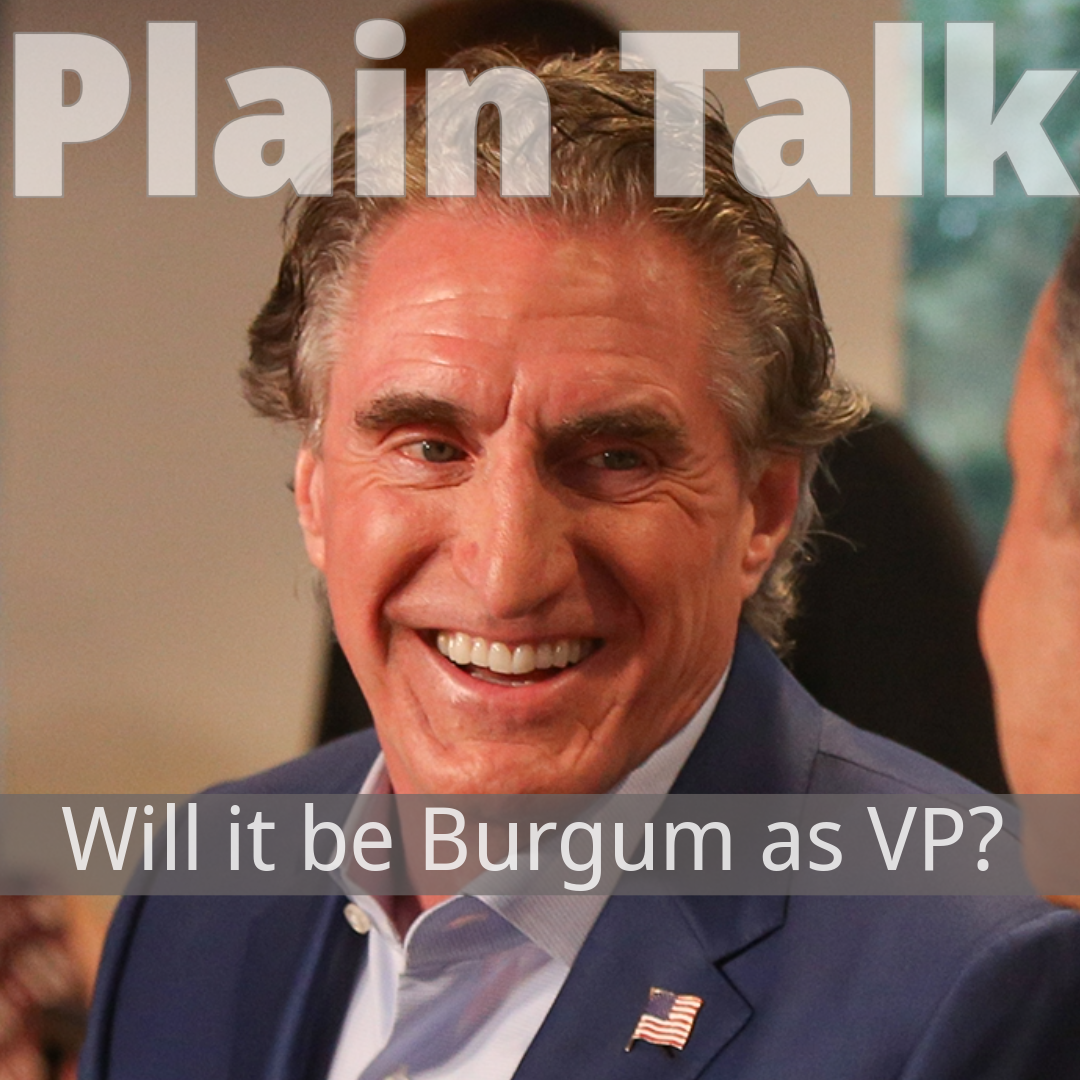
516: 'They all had love for him at a certain point'
Gov. Doug Burgum has gone through a "transformation." That's what reporter Stephen Rodrick said on this episode of Plain Talk. He spent a lot of time in North Dakota for a profile of Burgum published recently by Politico. He wrote that the governor has been "rebranding" on his way to a potential place on former President Donald Trump's national ticket. That means that Burgum has, along the arc of his political career, but a lot of different things to different people. What Rodrick found, talking to people who knew Burgum during times in his life, is that many of them feel that many who liked him in the past perhaps feel differently now. "They all had love for him at a certain point," he said, even those who today might be fairly described as Burgum's enemies. "His transformation over the past 3 or 4 months if baffling," Rodrick told my co-host Chad Oban and I. And how will Burgum be received on the national stage if he is Trumps VP pick? Rodrick thinks observers will be surprised. "They're going to be like, 'wow he really didn't want anyone who has his own level of national charisma.'" Also on this episode, Oban and I discuss April Baumgarten's story about North Dakota First Lady Katyrn Burgum's primary ballot getting rejected because of a handwriting mismatch. Burgum World isn't offering anything in the way of an explanation for why that happened, which leaves an information vacuum that could be filled with some not-so-great conclusions. Want to subscribe to Plain Talk? Search for the show wherever you get your podcasts, or click here for more information.
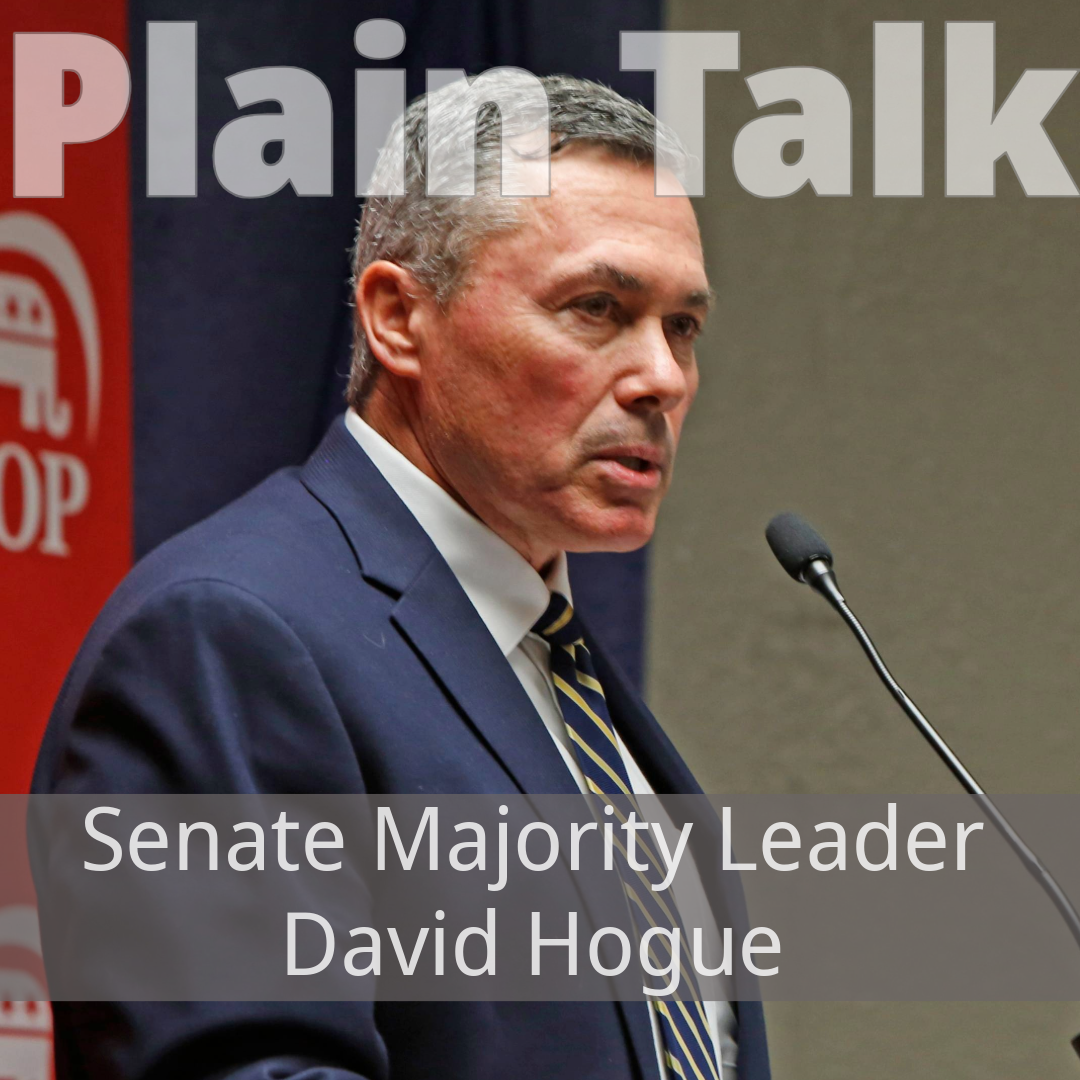
515: 'The idea that the pipeline is dangerous, I reject that'
Senate Majority Leader David Houge, a Republican from Minot, says that if voters approve a ballot measure eliminating property taxes, state lawmakers will be left with a mess. He said that the legislature's appropriators will be tasked with making big spending cuts. He said that members of the taxation and finance committees will have to find new ways to bring in revenues. He also said that reserve funds would likely have to be tapped to make up the roughly $2.6 billion in revenues property taxes generate for local governments every budget cycle. But in 2012, voters rejected a similar ballot measure to eliminate property taxes, in part based on promises from lawmakers that they would fix the problem. My co-host, Chad Oban, asked Hogue why voters should trust them this time around. "We have tried other things that haven't necessarily worked," he said, but this time he sees more willingness from his colleagues to implement things like caps on taxation. We also spoke with Hogue about his recent letter to the editor, which he co-authored with House Majority Leader Mike Lefor (R - Dickinson), making the case for carbon capture in North Dakota. He likened the debate over the opposition to the Summit Carbon pipeline to the protests against the Dakota Access Pipeline, pointing out that in both instances, the opposition said the pipelines were unsafe. "The idea that the pipeline is dangerous, I reject that," he said, going on to point out that capturing and sequestering carbon in North Dakota has many benefits for the state's agriculture and energy industries, though he also acknowledged that Summy Carton Solutions, the company behind the project, has made some mistakes. "They lowballed some landowners," he said, and acknowledged that Summit may have been too aggressive in using a state statute that allows surveyors to go on private land without permission. "That was a misstep as well," he said, though he added that since Summit has "corrected" a lot of its mistakes. Want to subscribe to Plain Talk? Search for the show wherever you get your podcasts, or click here for more information.
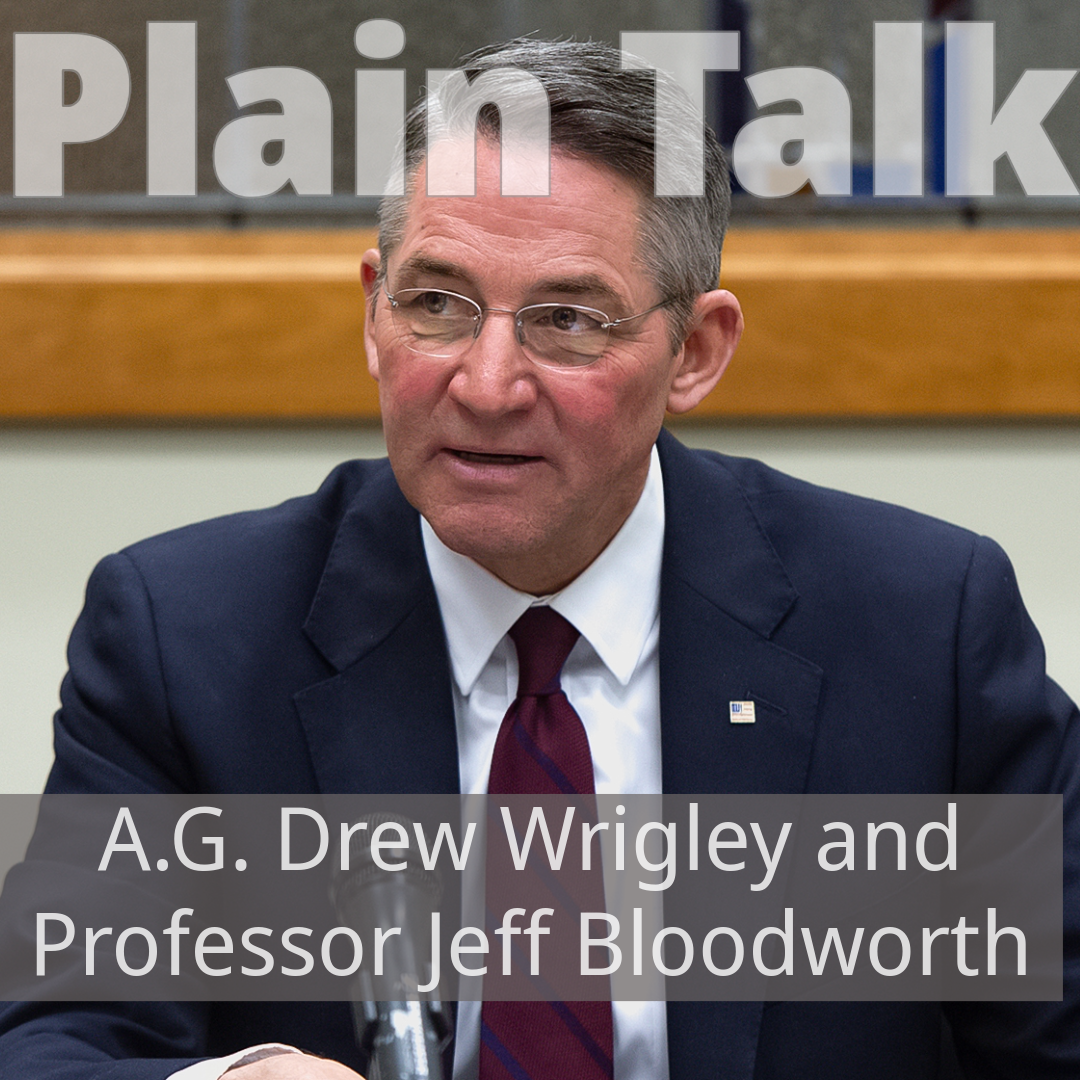
514: 'The public does not yet have any sense of the breadth and depth of what's going to be coming out'
Disgraced former state Sen. Ray Holmberg has indicated, through his legal counsel, that he will be pleading guilty to federal criminal charges related to international travel to solicit sex with children. "When that happens," Attorney General Drew Wrigley said on this episode of Plain Talk, "everything that we have becomes a public record." An untold number of public documents, including email messages and more, are currently inaccessible by the news media and the public due to state law that exempts records related to on-going criminal investigations. But once Holmberg official pleads guilty, which will happen later this year, that exemption will go away, and Wrigley says his office will work to preemptively make as much information available to the public as possible. Wrigley also spoke with me and my co-host Chad Oban about the on-going rift between North Dakota and Minnesota over fossil-fuel energy. Minnesota has passed a law mandating that all energy used in the state be from sources that don't emit carbon by 2040. North Dakota, which has successfully sued Minnesota over similar legislation in the past, and which provides the bulk of Minnesota's electricity, much of it from coal-fired power plants, is objecting. Wrigley sits on the North Dakota Industrial Commission, which recently sent Minnesota a letter asking the state to reconsider or reform the law. "We're not at war with Minnesota," he said. "We're not even at war with their statute. But we could be." Also on this episode, Gannon University Professor Jeff Bloodworth, who authored a recent Washington Post article about the struggles Democrats are having with rural voters, took our questions about how Democrats might go about fixing that problem. "Urban educated liberals took over the Democratic Party and started booting out working class Democrats," he said. He argues that the party's leaders currently see little need to figure out why rural Americans aren't voting for them. "It's just easier to stereotype rural voters," he said. Want to subscribe to Plain Talk? Search for the show wherever you get your podcasts, or click here for more information.
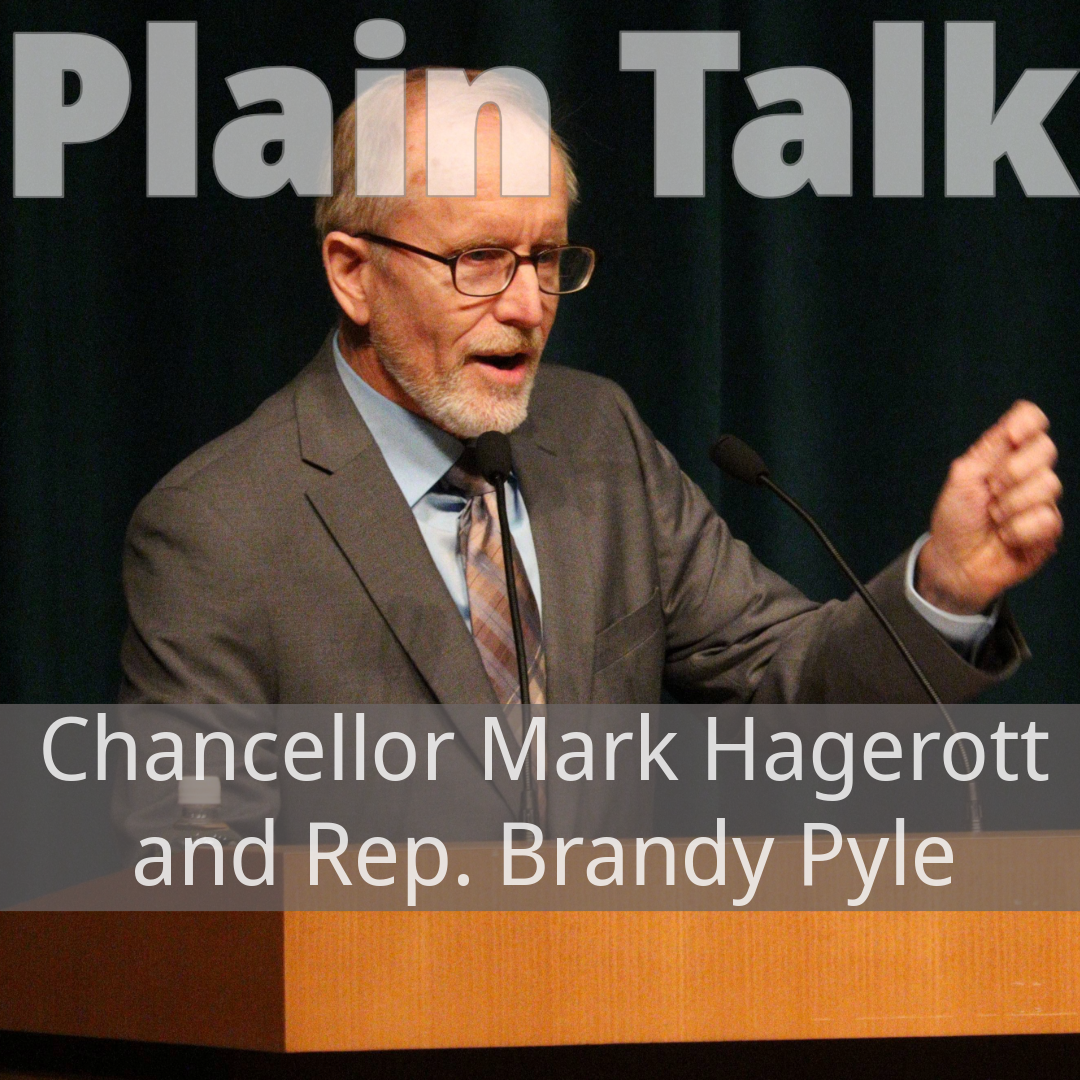
513: Chancellor Mark Hagerott, Rep. Brandy Pyle, and that terrible debate performance from President Joe Biden
We covered a lot of ground on this episode of Plain Talk. Rep. Brandy Pyle, a Republican from Casselton, joined to talk about her efforts to curb distractions from devices in the legislative committee she chairs, and to talk about the struggles our society is having with our phone addictions. North Dakota University System Chancellor Mark Hagerott also joined to discuss the State Board of Higher Education's decision to move on from his leadership. Hagerott characterized it as an amicable transition, though he acknowledged that he doesn't get along with one board member. "I'm not on his Christmast list," Hagerott said, though he declined to mention which board member. Also on this episode, me and co-host Chad Oban discuss what we both agreed was a terrible, really bad, no good debate performance from President Joe Biden last night. Want to subscribe to Plain Talk? Search for the show wherever you get your podcasts, or click here for more information.

512: Trygve Hammer and Keep It Local ND
The signature turn-in deadline for the committee backing a ballot measure to abolish North Dakota's tax on property value (but not, it's important to note, other types of property taxes) arrives on Saturday, June 29. The committee is expected to turn in the requisite number of signatures, which, if they pass muster, will kick off a repeat of a debate over property taxes voters here have had before. In 2012 a similar proposal to eliminate the tax on property value was put before voters, and it failed spectacularly. A coalition group calling itself Keep It Local ND rallied to persuade more than 70% of voters to cast their ballots against the measure. That coalition is back, and two of its organizers -- Andrea Pfennig from the Greater North Dakota Chamber of Commerce and my co-host Chad Oban, whose day job is with North Dakota United -- were on this episode of Plain Talk to discuss it. Their arguments against the measure? It would eliminate about $2.6 billion in revenues for local governments every budget cycle with no real plan for how to replace it. And those voters who are frustrated with the Legislature's impotence in addressing this issue should consider, they argue, that it would be that same Legislature tasked with coming up with a revenue alternative. Also on this episode, Democratic-NPL U.S. House candidate Trygve Hammer, fresh off his victory in the June primary, joined to discuss his general election campaign. He wants to make it clear to North Dakota voters that a Democrat winning a statewide vote in North Dakota is "not impossible." "I have an experience that's closer to what most North Dakotan's have experienced," he said, touting his military background and blue-collar resume. "I've been boots on the ground in the oil patch." Hammer spoke about everything from border security to foreign affairs. Of Ukraine, "Putin has to be stopped," Hammer said. "Putin is a butcher." In the middle-east, Hammer said Israel absolutely has a right to protect itself, but sees a toxic relationship between the Islamic extremists who are a threat to the Jewish state and its current leadership. "Netanyahu needs Hamas and Hamas needs Netanyahu," he said, referring to Israeli Prime Minister Benjamin Netanyahu. To subscribe to Plain Talk, search for the show wherever you get your podcasts, or click here for more information.
511: 'You can't take these things seriously'
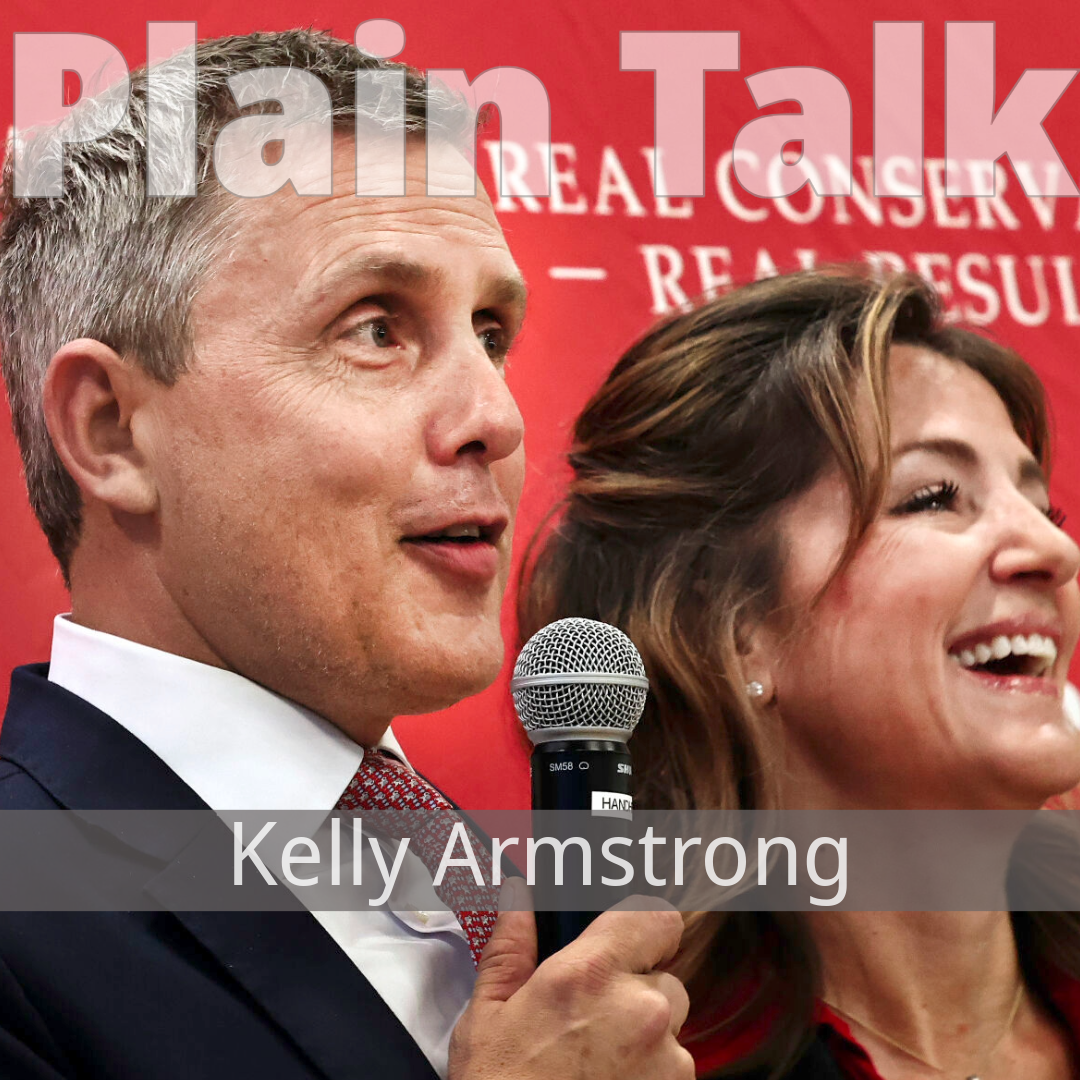
North Dakota's primary elecitons this year were brutal. Attack ads and dirty tricks are endemic to politics, but I think most people would admit that, by the standards of our state, the Republican campaigns in this cycle were rough. In legislative races, we saw ads suggesting that some incumbent lawmakers promote pornography to children, or that they would be unsafe to allow your children around. In the U.S. House primary, some unknown entity supporting Rick Becker's campaign was sending out text messages trying to fool voters into thinking Julie Fedorchak, who ultimately won that race, had pulled out. And in the gubernatorial race, Tammy Miller's campaign ran ads accusing Kelly Armstrong of enriching himself by helping child molesters avoid justice. But when Armstrong appeared on this episode of Plain Talk to recap the race, he shrugged the attacks off. "You can't take these things seriously," he told me and my co-host Corey Mock. Armstrong now faces Democratic-NPL candidate Merrill Piepkorn in the general election, but we asked him, if he should win in November, what the top priorities of his administration would be. "Property taxes," he said, pointing out that consternation about those tax bills are running so high that a ballot measure to abolish them, which may appear on the November ballot as well, could well pass. "If it passes, you have a real problem," he said. Armstrong said another problem is access to labor. He said past political leaders in North Dakota have campaigned on creating jobs, but that doesn't make a lot of sense right now. "We have 30,000 open jobs," he said. "Campaigning on jobs is great...trying to figure out how to get people here to take them is a harder conversation." Also, in this episode, Mock and I discussed the seemingly intractable problem of property taxes, and what the primary election results mean for the future of the divide in the North Dakota Republican Party. Want to subscribe to Plain Talk? Search for the show wherever you get your podcasts, or click here for more information.
510: Julie Fedorchak recaps U.S. House primary win
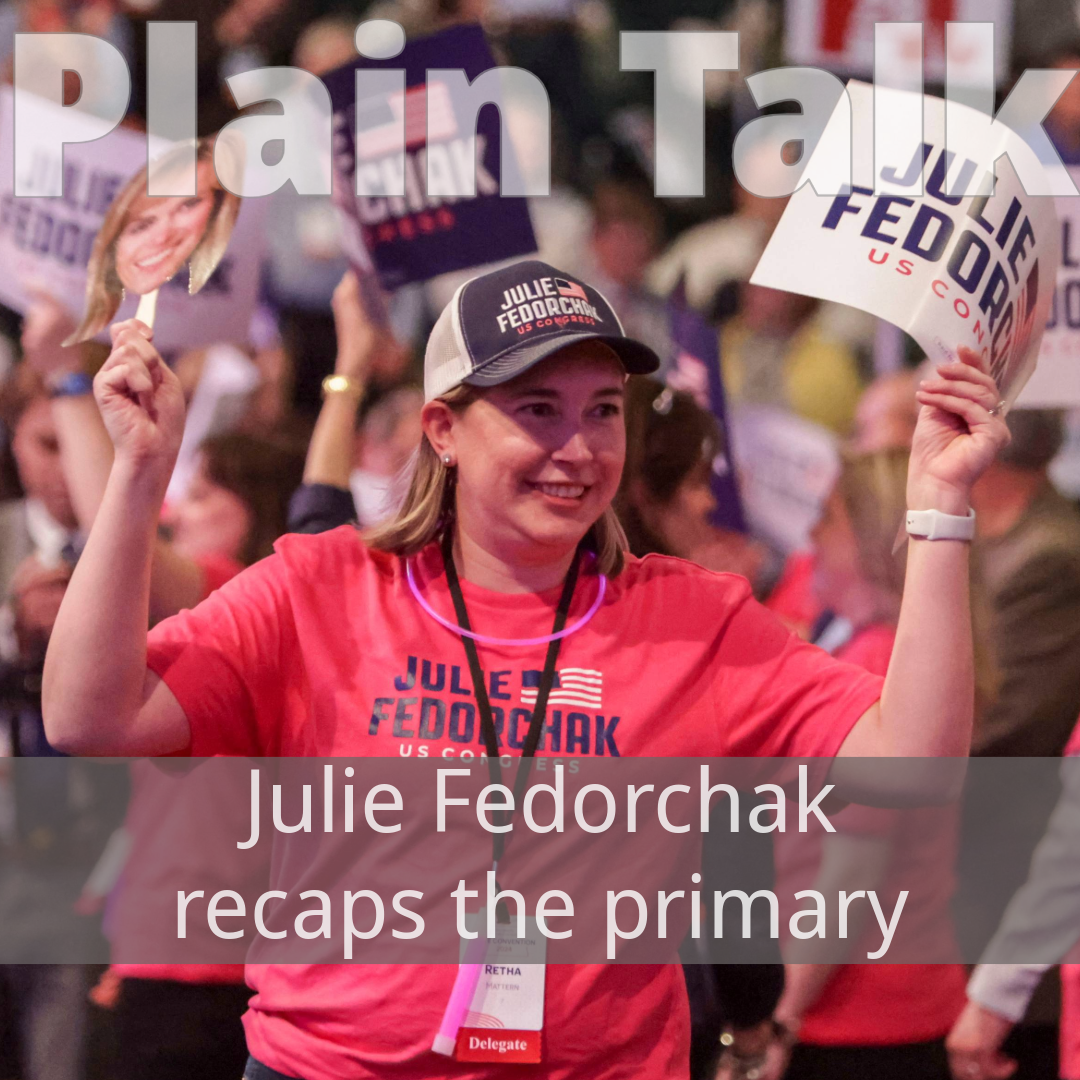
"We knew we wanted to stay positive and above board," Republican U.S. House nominee Julie Fedorchak said on this episode of Plain Talk. Fedorchak just emerged from a bruising competition against former state lawmaker Rick Becker and three other candidates with a resounding victory. She received nearly 50% of the vote in a five-way race. The race was a nasty one. In the final days text messages in support of Becker (thought he candidate has denied involvement) disseminated false information, including the bogus claim that Fedorchak had withdraw from the race. Fedorchak told me and co-host Chad Oban that she heard reports from poll workers saying voters were showing up thinking she wasn't still a valid candidate on the ballot. Fedorchak says her campaign plans to pursue their complaint with the Federal Election Commission over what she described as "election fraud," as well as possible legal action. That sort of campaigning is "bad for your overall cause," Fedorchak told us. "It's bad for conservatism." Also on this episode, Oban and I talk about Kelly Armstrong's resounding victory over Tammy Miller in the gubernatorial primary, as well as victories for traditional Republican candidates in legislative primaries around the state. Our conclusion? Last night, voters rejected ugly, populist, culture war campaigning, and it was an act of civic hygiene. To subscribe to Plain Talk, search for the show wherever you get your podcasts, or click here for more information.
509: Our predictions for North Dakota's 2024 primary election
Will a ballot measure putting age limits on North Dakota's congressional delegation, and printing candidate ages on the ballot, be approved by voters? Will MAGA-aligned populists gain ground against traditional Republican legislators in the North Dakota Republican party's primaries? Who will win the NDGOP's primaries for governor and U.S. House? Can Democratic-NPL candidates across the state build enough momentum to be competitive in the general election? My co-host Chad Oban and I make our predictions on this episode of Plain Talk. On our next show, on Wednesday, we'll either be gloating because we were right, or eating our hats. Want to subscribe to Plain Talk? Search for the show wherever you get your podcasts, or click here for more information.
508: 'We need to do away with some of this Washington D.C. politics'
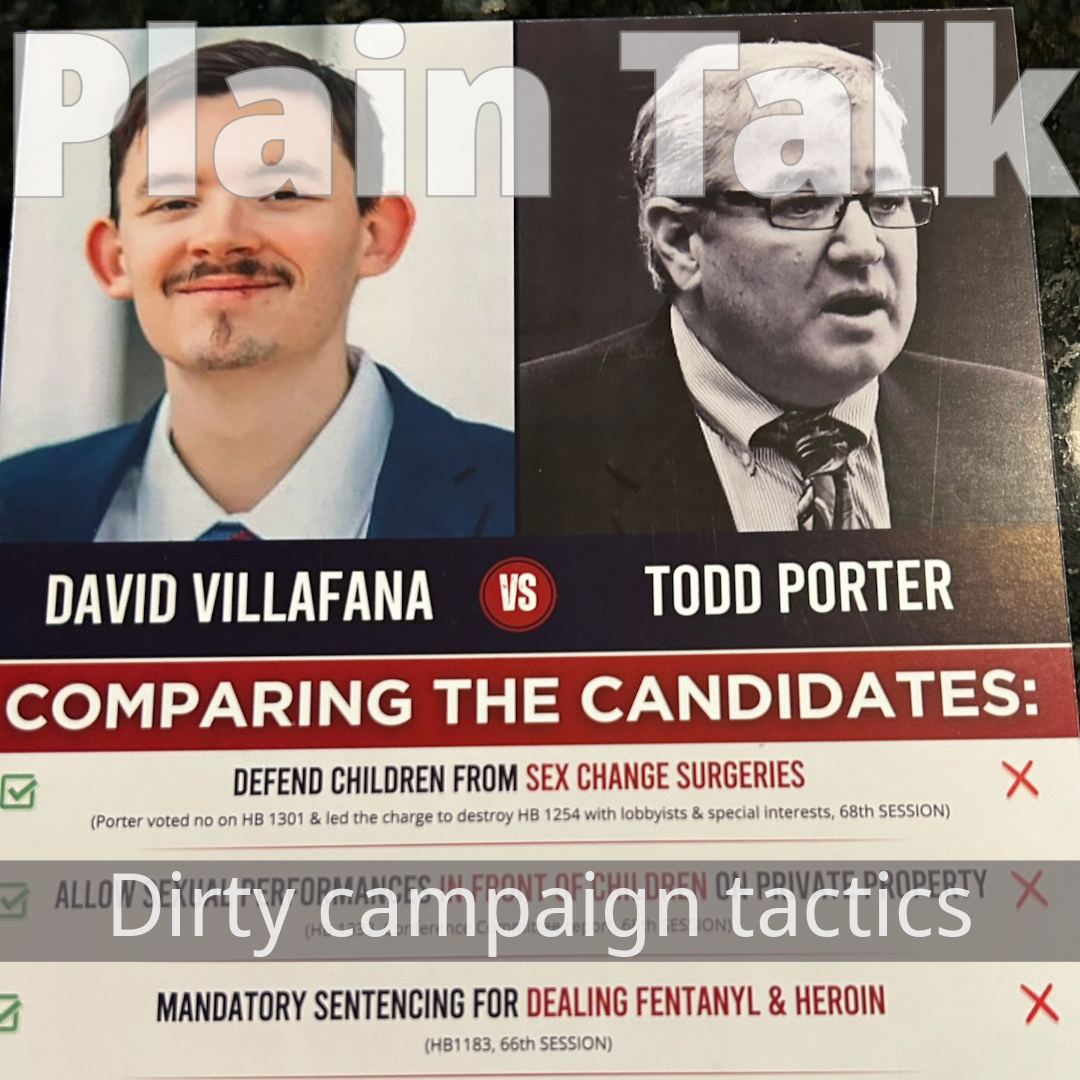
Due to a scheduling mix-up with Attorney General Drew Wrigley -- he was coming on to discuss North Dakota's legal position in redistricting lawsuits -- this episode of Plain Talk was truncated. Still, despite the shorter show, we covered some good ground. Me and my co-host Chad Oban talked about the top election official in one of North Dakota's most populous counties winning a gift from U.S. House candidate Rick Becker's campaign. We also had Bismarck resident Lance Hagen on to discuss his FEC complaint against state Rep. Brandon Prichard and his federal political action committee Citizens Alliance of North Dakota, which has been running some wildly inaccurate ads and, Hagen alleges, may be violating federal rules on independent candidates colluding with candidates. Hagen also said he's concerned about Rep. Prichard shuffling money between political committees he's founded, arguing that money may be used for purposes the donors didn't intend. Want to subscribe to Plain Talk? Search for the show wherever you get your podcasts, or click here for more information.
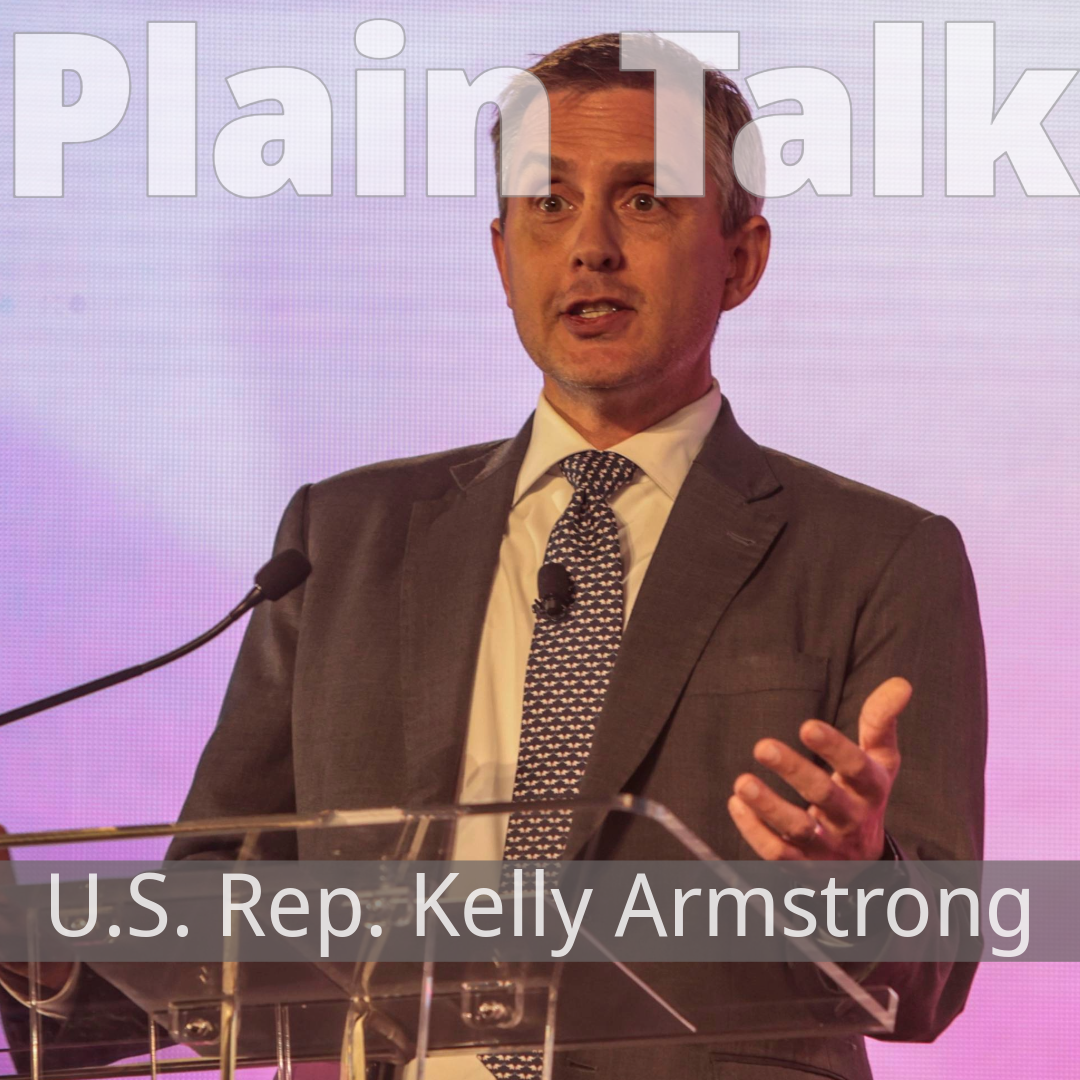
507: A heated conversation with Kelly Armstrong about Donald Trump's conviction
When we booked U.S. Rep. Kelly Armstrong for this episode of Plain Talk, we weren't planning on talking about Donald Trump. The plan was to get Armstrong's reactions to polls showing a prohibitive lead for him over Lt. Gov. Tammy Miller in the Republican gubernatorial primary. The plan was to discuss the debate the Greater North Dakota Chamber of Commerce just hosted between him and Miller. But then a New York jury convicted Trump on 34 criminal counts, and we were obliged to talk to Armstrong about it. All the more so because, just hours before the jury handed down that verdict, Trump had endorsed Armstrong in the primary. It was a respectful but heated conversation -- neither I nor my co-host Chad Oban are Trump fans -- but I'm glad we had it. And one thing I appreciate about Armstrong is that you can have vigorous disagreements with him, and it's never personal. Armstrong, a former criminal defense attorney, addressed some of the legal arguments around the case. My argument? I'm worried that the particulars of the legal arguments cause us to gloss over the grotesque behavior from Trump that's at the heart of the case. Namely, the fact that he paid off multiple porn stars to cover up extra-marital affairs, and colluded with a notorious tabloid to capture and kill negative stories about him. We didn't just talk about Trump, though. We also covered the debate, property taxes, and child care. Want to subscribe to Plain Talk? Search for the show wherever you get your podcasts, or click here for more information.

506: Alex Balazs talks House race
U.S. House candidate Alex Balazs is still set on winning. On this episode of Plain Talk, he told me and co-host Chad Oban that he plans to finish the last two weeks of his primary campaign strong. There will be ads and billboards and travel, and the candidate, who received the North Dakota Republican Party's convention endorsement in April, thinks he can win, despite polls showing him in a distant 4th place. But if he doesn't, would he stay involved in politics? "I just don't know," he said. Balazs also took questions about Donald Trump's criminal trial in New York, with its looming verdict, and the level of assistance he's received from the North Dakota Republican Party. "They've been really good at helping," he said. Also on this episode, Chad and I discuss the recent polling in the Republican House and gubernatorial primaries, dirty campaigning in legislative races, and more. To subscribe to Plain Talk, search for the show wherever you get your podcasts, or click here for more information.
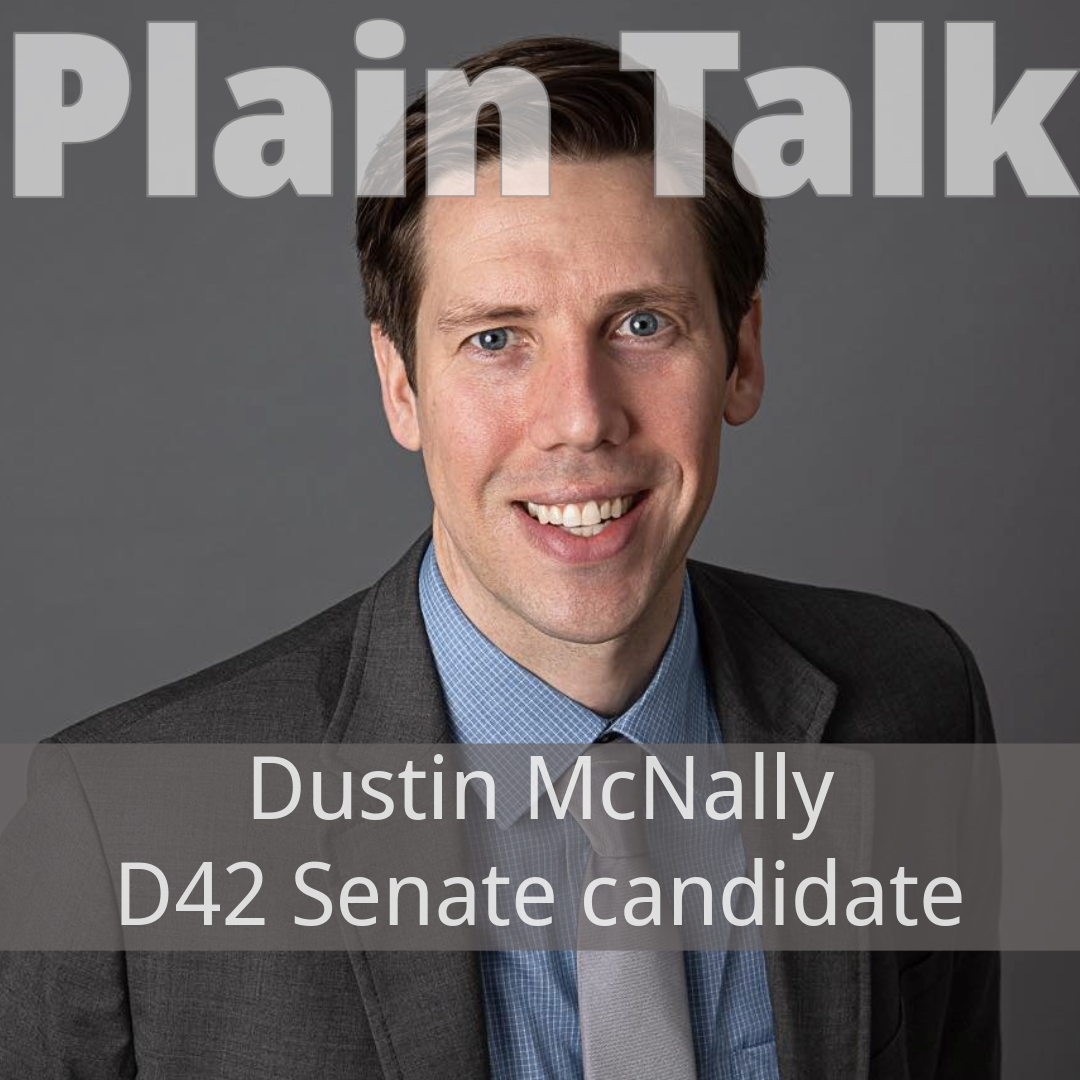
505: 'People are fed up'
"I've been an outside viewer," Dustin McNally, a Republican candidate for the state Senate in Grand Forks-area District 42, said on this episode of Plain Talk. "I haven't really liked what I've seen. McNally was speaking about what he's been seeing from North Dakota's Legislature. "It's a lot of negative news. It's a lot of changes in the Republican party, and not for the better," he said. "I feel like they're not working for me," he added. "I feel like they're working for themselves." "People are fed up, he continued." McNally says he'd like to see more focus on pragmatic issues, and less on dramatic culture war topics. "I'm a frugal, fiscally conservative person," he said. "I'm not a headline grabber." Also on this episode, me and co-host Chad Oban talk about the ominous silence coming from Epic Companies, a West Fargo-based company with projects in just about all of North Dakota's major communities that is widely rumored to be in distress but isn't being forthcoming with information. We also discussed the state of the Republican U.S. House primary, and how certain legislative races around the state may impact North Dakota's balance of political power. To subscribe to Plain Talk, search for the show wherever you get your podcasts, or click here for more information.

504: Coal industry endorses Fedorchak
U.S. House candidate Rick Becker recently took the unusual step of paying internet personality and trans rights activist Dylan Mulvaney to record a message praising the energy record of his primary rival, Public Service Commisisoner Julie Fedorchak. The message was done tongue-in-cheek -- though it hasn't sat well with some elements of the MAGA movement who take exception to Becker working with Mulvaney in even a joking way -- but Becker used it to attack Fedorchak's record on coal issues. "What's not a laughing matter is how time and again Julie Fedorchack placed radical green energy proposals above the coal industry here in North Dakota," he wrote. That may have been a mistake. North Dakota's coal industry noticed Becker's stunt, and it has prompted them to endorse Fedorchak in the race. "That is a statement I can't even wrap my head around," Jason Bohrer, the president of the North Dakota Lignite Energy Council and chair of Lignite's political action committee, said on this episode of Plain Talk. "I don't understand where that statement comes from," he added. Bohrer told me and co-host Chad Oban that Lignite doesn't typically endorse in partisan primaries, but they feel this situation is different. "This is a place where we have to be clear," Bohrer said. "We do support Julie." He made it clear that the organization is endorsing Fedorchak in the race. Bohrer said he didn't want to spend a lot of time "attacking" Becker's record on coal issues while serving in the Legislature, but he did say that Becker "has never been supportive" of the industry's priorities on research and development. "We had a group of legislators we would go to for those things," Bohrer added. "He wasn't in it." Also on this episode, state Rep. Michelle Strinden, who is running for Lt. Governor alongside gubernatorial candidate Kelly Armstrong, took questions about being chosen as a running mate, the state of the race, and top issues like education and property taxes. Want to subscribe to Plain Talk? Search for the show wherever you get your podcasts, or click here for more information.
503: 'Absolutely underhanded and unethical'
A civil war is playing out in the North Dakota Republican Party between traditionally conservative Republicans and MAGA-aligned populists. One front in that war is the NDGOP's legislative primaries, where a group called Citizens Alliance of North Dakota is trying to defeat traditional Republicans. State Rep. Brandon Prichard, a Republican from Bismarck, is the executive director of Citizens Alliance. His group has been sending mailers to voters suggesting that its preferred candidates in the primaries are backed by incumbents who do not support actually them. One of the candidates targeted by these tactics, Rep. Jeremy Olson, a first-termer from District 26 who is seeking another term in the state House, joined this episode of Plain Talk. He called Prichard's tactics "absolutely underhanded and unethical. Also, on this episode, guest co-host Ben Hanson and I and discuss former Fargo Mayor Jon Lindgren's argument that Gov. Doug Burgum is seeking to be disgraced former President Donald Trump's runningmate for the sake of being a moderating influence. Want to subscribe to Plain Talk? Search for the show wherever you get your podcasts, or click here for more information.

502: 'I'm the only candidate that has consistently been a Republican'
"I like debates," Public Service Commissioner Julie Fedorhcak told me and co-host Chad Oban on this episode of Plain Talk. Fedorchak has come under fire from some of her opponents in the Republican U.S. House primary. Three of them — Rick Becker, Cara Mund, and Alex Balazs — participated in a recent debate sponsored by BEK Television. Fedorchak did not. "Last weekend was a balancing act," she said, noting that she's already participated in one debate with her opponents, with two more planned. She told us that the night of the debate was also her son's graduation party. "I wanted to devote my attention to my son on Friday night," she said. Fedorchak also responded to a recent independent poll I reported on, which shows her in a dead heat with Becker in the race (Mund is trailing as a distant third). She said she got into the race late and had a deficit in name identification with voters but that the poll "shows that we closed the gap" with Becker. She added that she feels confident about her position in the race. "I'm the only candidate who has consistently been a Republican," she said, referencing the fact that both Mund and Becker campaigned against Republicans as independents last cycle. "I have strong favorability in the polling we've seen," she added. That's something Dean Mitchell of DFM Research, who conducted the survey for North Dakota United, spoke about as well in a separate interview. Mitchell said the House race is tight but favors Fedorchak. "I'd rather not be Becker," he said. "I think he's at his ceiling. I think she (Fedorchak) has more room for growth." "I'd give the edge to Fedorchak," he added, though he acknowledged that the race is very close. "I wouldn't put much money on it." The NDU poll also covered the gubernatorial race, showing current U.S. Rep. Kelly Armstrong with a 38-point lead over Lt. Gov. Tammy Miller, a nearly identical result to numbers released to me by the Armstrong campaign from a contemporaneous poll. "I don't want to say you can put a fork in it," Mitchell said, "but the silverware is on the table." To subscribe to Plain Talk, search for the show wherever you get your podcasts, or click here for more information.
501: Anti-Becker mailers and governor's race polling
Pat Finken is a long-time political consultant in North Dakota who now heads up an independent political action committee called the Brighter Future Alliance. Finken and his group have come under fire from U.S. House candidate Rick Becker and his allies for mailers attacking Becker and his voting record. Finken joined this episode of Plain Talk my me and my co-host Chad Oban, and said his goal is to reveal for the public that Becker is a "show pony." "He is not a serious legislator," Finken added. As for Becker's response to his group's mailers? "This is what all politicians do when someone criticizes them," Finken said. "They play the victim." Becker has disputed Finken's assertions that, by voting against budgets for the North Dakota Highway Patrol and the North Dakota National Guard, he opposes law enforcement and the military. He argues that it's possible to object to a budget without objecting to what that budget funds. But Finken says the difference is that Becker was only voting no, not working to improve those budgets. "He didn't come back with an alternative," Finken said. "If he was a serious legislator he would have worked to make changes," he added. Also, on this episode, Oban and I discuss the recent polling released in the Republican guberantorial primary showing U.S. Rep. Kelly Armstrong with a massive lead over Lt. Gov. Tammy Miller. Want to subscribe to Plain Talk? Search for the show wherever you get your podcasts, or click here for more information.
500: A renewed legal battle over redistricting and teacher pay
The State of North Dakota is back in court over redistricting. This time, the state is asking the U.S. Supreme Court to reverse a lower court decision that the state had previously argued for. Specifically, the dismissal of a lawsuit questioning the constitutionality of legislative subdistricts created by lawmakers in an attempt to enhance the state's Native American vote in two districts. The courts ended up striking down that map anyway and replacing it with a new one, but this separate legal action questions whether creating subdistricts in just two districts passes muster under the 14th amendment's equal protection provisions. Is it constitutional for some North Dakotans to vote for just two members of the Legislature on election day, while others get to vote for three? Robert Harms, an attorney (and a Republican candidate for the state Senate in District 2) joined this episode of Plain Talk to discuss the case. Also on this episode, Nick Archuleta, the president of North Dakota United, joined to discuss a recent study looking at teacher pay which indicates that North Dakota is moving down the rankings in terms of average salaries for educators. To subscribe to Plain Talk, search for the show wherever you get your podcasts, or click here for more information.
499: 'I don't look for racism'
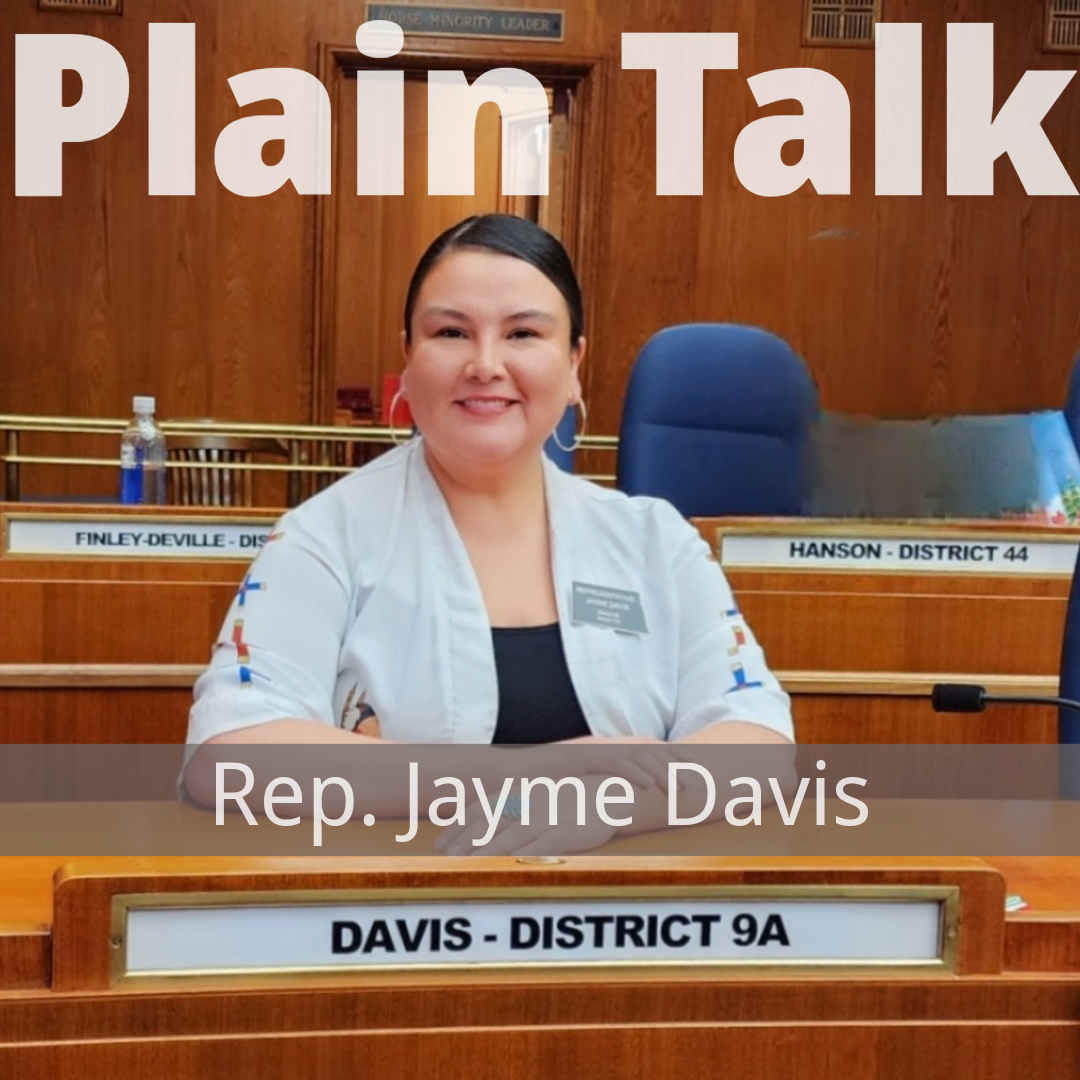
Racial incidents keep happening at North Dakota school events. At basketball games. Proms. Hockey games. Part of the problem is, we don't know if they're happening more, or less. Maybe we're just noticing them more now that everyone has a smartphone in their pocket and the ability to document the taunts and jeers and boorish behavior. State Rep. Jayme Davis is a Democrat from District 9a, which covers the Turtle Mountain Indian Reservation. In the state House of Representatives, she's the minority caucus leader. She wants to do something about this problem. "I don't look for racism. That's not something I look for in my daily life," she said on this episode of Plain Talk. "But it shows up." During the 2023 session, Davis introduced a resolution calling for a study of racial incidents at North Dakota school events. It passed, but the the Legislature's interim committees chose not to take it up. But she says she's not going to stop trying. She'd like to see data collected about these incidents, to measure the scope of the problem, and she'd also liked to see more training for the state's educators, sports officials, and even lawmakers. Also on this episode, are North Dakota's political leaders being too tough on electric vehicles? And what was with South Dakota Gov. Kristi Noem bragging about killing a dog? Me and co-host Chad Oban discuss. Want to subscribe to Plain Talk? Search for the show wherever you get your podcasts, or click here for more information.
498: ND coal industry distances itself from Summit carbon pipeline project
"I'm sympathetic to what they're doing while recognizing there's a better way to do it." Those are the words of Jason Bohrer, president of the North Dakota Lignite Energy Council, and advocacy and lobbying group that represents the state's coal industry. He was speaking on this episode of Plain Talk about the Midwest Carbon Express pipeline proposed by Summit Carbon Solutions. That project has no ties to the coal industry. Rather, it seeks to bring carbon emissions gathered from ethanol plans across the upper midwest to North Dakota where it would be buried underground. Bohrer joined the program to discuss the controversy around the North Dakota Republican Party's resolution branding carbon capture as "fascism." The resolution had appeared to have been passed at the party's state convention earlier this month, but after a recount, it turns out it failed. But Bohrer says Lignite's larger concern is that public backlash against Summit's project may turn into generalized opposition against the concept of carbon capture. "An individual project differs from a technological opportunity," he said. "We're going to take a long term view," he added. Also on this episode, two board members from the North Dakota Association for Justice joined to discuss consternation in North Dakota's legal circles over Lt. Gov. Tammy Miller's gubernatorial campaign saying some ugly things about lawyers. "Politicians and trial lawyers often struggle with the truth," is a quote Miller spokesman Dawson Schefter gave me for an article about their campaign ad attacking their opponent in the Republican primary. "Kelly Armstrong is both, so it's no surprise he lies about his opponent and his opponent's ads." The NDAJ fired back, calling those comments "ill-informed and ignorant." Then Schefter came back again. "It's no surprise lawyers and politicians are sticking up for each other," he told me in response to the NDAJ's statement. "While Kelly Armstrong was raking in cash defending drug dealers, a man who beat his wife unconscious, and a man who attempted to suffocate his daughter — Tammy Miller was growing a company and creating thousands of jobs. Job creator or trial lawyer is an easy choice." "Frankly, we were offended," attorney Tatum O'Brien said. "She probably has a failing campaign," attorney Tim O'Keefe added by way of explaining why Miller's campaign would launch the attack. Both O'Brien and O'Keefe are board members of the NDAJ, and say that attorneys do important work defending the rights of citizens in court, from the 4th amendment protections against illegal search and seizure to our 7th amendment right to seek a jury trial in matters of civil law. Want to subscribe to Plain Talk? Search for the show wherever you get your podcasts, or click here for more information.

497: Will ND voters legalize recreational marijuana?
Marijuana is already legal in North Dakota. At least for medicinal reasons. But the backers of a new ballot measure want recreational use of marijuana to be legal as well. The campaign is calling itself New Economic Frontier. Their measure was just approved by the North Dakota Secretary of State's office for circulation. They have until July 8 to get it on the November ballot, though if they miss that deadline they'll still have a year from the date they began collecting signatures to qualify for the next statewide vote. Steve Bakken, the former mayor of Bismarck, and current member of the Burleigh County Commission, joined this episode of Plain Talk to discuss the measure. North Dakotans have said no to recreational marijuana before, though the "no" side of the argument has been shrinking. In 2018, just over 40% of voters cast their ballots for a proposal to legalize. In 2021, another legalization proposal passed in the state House of Representatives on a 56-38 vote, though it failed in the state Senate with just 10 Senators approving it. In 2022, just over 45% of voters cast a ballot for another legalization proposal. Bakken says that's progress, and they're relying on it to get this measure over the finish line, though Bakken says he isn't planning on partaking if it's successful. "I'm not interested in using it," he said, but he does think the status quo creates problems, such as dangerous marijuana products mixed with other drugs. "It's tragic when you see someone who smokes some canabis and then dies from a fentanly overdose," he said. Want to subscribe to Plain Talk? Search for the show wherever you get your podcasts, or click here for more information.
496: 'Supporting Ukraine puts America first'
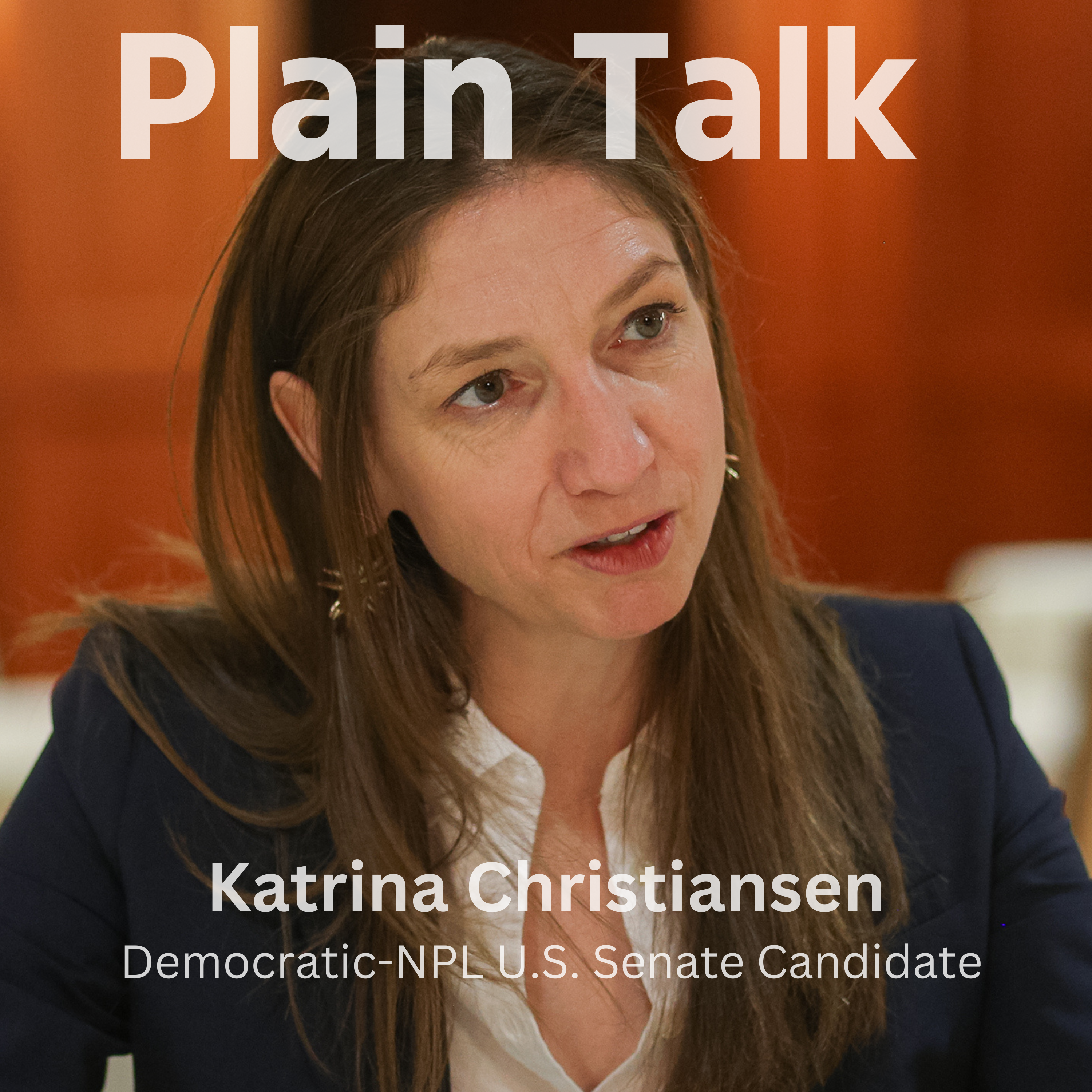
U.S. Senate candidate Katrina Christiansen says the incumbent in her race "isn't that popular." Christiansen is running unopposed for the Democratic-NPL's nomination, and the incumbent she's referring to is Republican Sen. Kevin Cramer, who is seeking a second six-year term. The challenger says she has polling suggesting that only 33% of previous Cramer voters are committed to voting for the incumbent again. "I think that shows the race can be competitive," she told me and my co-host Chad Oban, though she acknowledges that she has her own challenges. "My name rec is not great," she said, referring to name recognition, a common campaign metric, especially for challengers. We talked mostly about the question of federal policy on abortion -- Christiansen said she would vote to "codify Roe" in federal law -- and foreign policy. On the latter, Christiansen said Congress should have passed more aid funding for Ukraine "six months ago." She also spoke strong in support of Israel, though she says she supports a ceasefire. Still, "Supporting Ukraine puts America first," she said. "Supporting Israel puts America first." Christiansen said that if elected, she'll be "a foreign policy hawk." Also on this episode, we discuss the first debate between Republican gubernatorial candidates Tammy Miller and Kelly Armstrong, as well as my story about Miller's running mate, Commerce Commissioner Josh Teigen, and some personal conflicts of interest he had with his work in the Commerce Department under Gov. Doug Burgum's administration. To subscribe to Plain Talk, search for the show wherever you get our podcasts, or click here for more information.
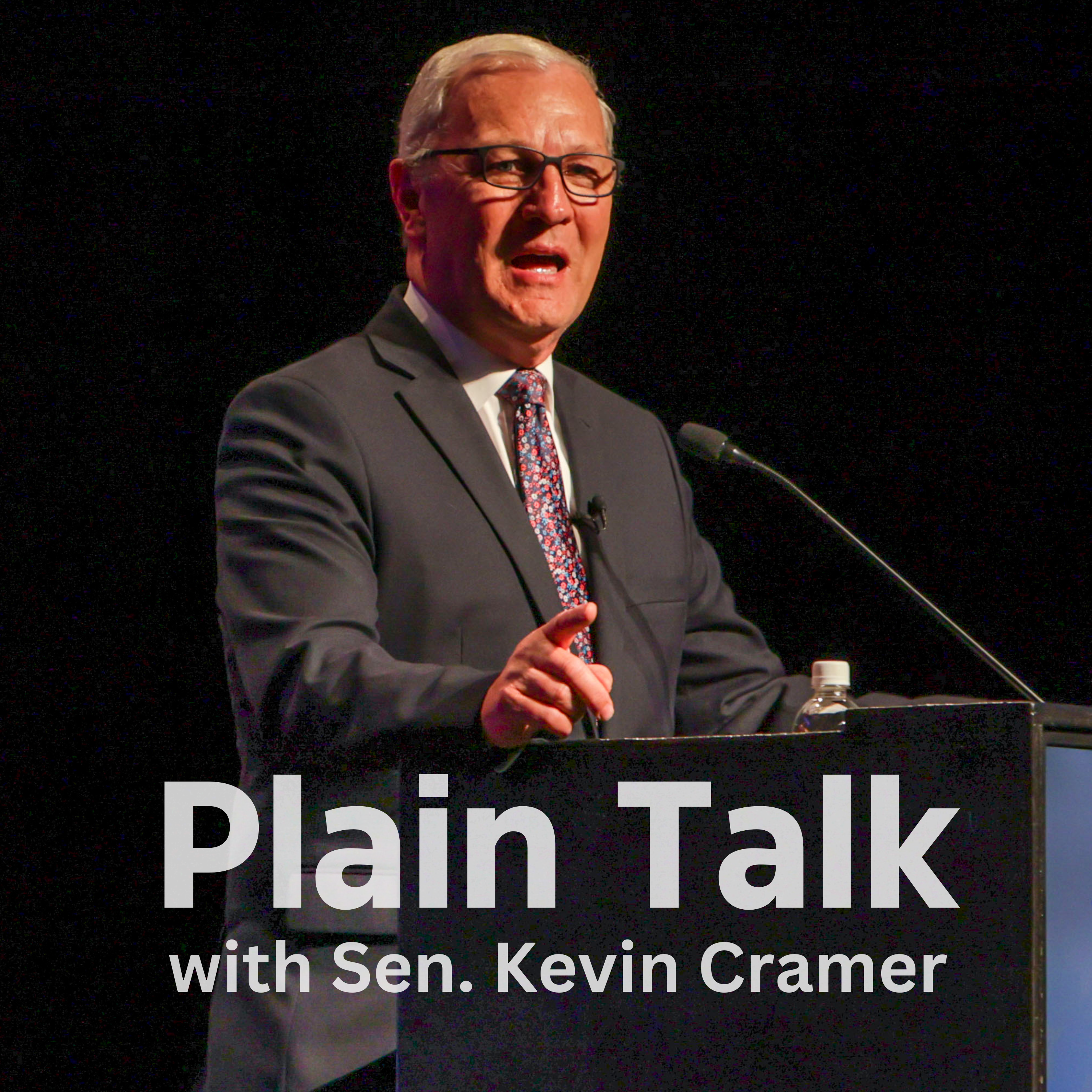
495: 'The House doesn't really need more bulls in a China closet'
It wasn't on purpose, but bipartisanship and moderation ended up being the themes of this episode of Plain Talk. Whether we're talking about a Republican Speaker of the House, under siege from the MAGA wing of his own party, reaching out to Democrats to get things done, or democracy engaging on the issue of abortion now that the Roe v. Wade precedent has been overturned, it's clear that process matters. And when we engage in the process, and we have the debates, and we don't let ourselves be derailed by all the various flavors of theatrical obstructionism, the outcomes we get are further from what the extremes might want, and closer to what most of us can live with. Co-host Chad Oban and I talk about renewed controversy about delegate votes at the NDGOP state convention and whether U.S. House candidate Rick Becker's promises to help contribute to the chaos in Congress if elected is going to help him with North Dakota voters. We asked the guest for this show, Sen. Kevin Cramer, about that last point. "I think it's consistent with how Rick Becker has behaved in the Legislature," he said, arguing that Becker's campaign trail posturing is authentic. "It might be a good tactic to being the largest vote getter in a five-way race, he added. But also, "the House doesn't really need more bulls in a China closet," Cramer added. Want to subscribe to Plain Talk? Search for the show wherever you get your podcasts, or click here for more information.

494: U.S. House candidates Julie Fedorchak and Cara Mund
"I don't think he's a good person," U.S. House candidate said on this episode of Plain Talk, referring to former President Donald Trump. "I'm appalled at how much people have caved," she also said, saying her opponents in the North Dakota Republican Party's primary are too Trump loyal. "I'm the only candidate in this race who is not worshiping Trump,"she added. "I support women," she continued, referencing her fiercely pro-choice position on the issue of abortion, "and I will not bow to Trump." But when I asked her how she'll vote in November, she didn't rule out casting a ballot for Trump. "I'm considering the options for both," she said, adding that she did vote for Trump in 2016. Mund also discussed other policy positions, such as the issues at the border and support for Israel, and told my co-host Chad Oban and I that despite her passion about keeping legal access to abortion, she doesn't want to be known as a single-issue candidate. Public Service Commissioner Julie Fedorchak also joined this episode, and talked about her evolving position on a federal abortion ban. When we interviewed her on Plain Talk in February, Fedorchak said she opposed a federal abortion ban. Now she says she supports one. What gives? Fedorchak says she supports the Supreme Court's decision to overturn Roe, and send the issue back to the states, but that she also isn't opposed to the federal government setting national guideline, though it wouldn't be an immediate priority. "Would this be my goal in the first 100 days in Congress? It wouldn't," she said. Fedorchak also hit both Mund and Becker for what she characterized as convenient political posturing. "They have changed parties as opportunists," she said, referring to Becker's decision to challenge Republican Sen. John Hoeven in 2022 as an independent, and Mund's strong support from Democrats as an independent U.S. House candidate that same cycle. As for Mund's contention that she worships Trump? "The only person I worship is my god," she said, adding that she plans to support Trump in 2024, and has no comment on his personal lifestyle choices or legal challenges. "I'm not going to pass judgment on Trump and his personal issues," she said. Want to subscribe to Plain Talk? Search for the show wherever you get your podcasts, or click here for more information.

493: 'I have not heard in 12 years that families are asking us for more Christianity'
Kirsten Baesler has been the elected Superintendent of North Dakota's Public Schools for nearly 12 years. She's now seeking a fourth term. Before each of her previous three elections to this office, she sought and received the North Dakota Republican Party's endorsement. She sought it again this year, but was denied it by the convention's delegates by a wide margin. They instead chose home schooling advocate James Bartlett, who has campaigned on bringing the 10 commandments and other Christian tenets to our state's public schools. On this episode of Plain Talk, Baesler told my co-host Chad Oban and I about her experiences at the state convention, Bartlett's push for more religion in schools, and why voters should give her a fourth term in office. "I have not heard in 12 years that families are asking us for more Christianity," she said. She added that she sought the NDGOP's endorsement knowing full well "things had shifted quite a bit in the Republican party" toward a new sort of populism. She said that whether or not to seek the endorsement at the convention was "weighing" on her mind. "I decided in the end I was going," she said. "I needed to make my case." Also on this episode, we discuss the politics around North Dakota's five-way Republican U.S. House primary that now features a traditional Republican in Public Service Commisisoner Julie Fedorchak, a populist Republican in former state lawmaker Rick Becker, former Miss America Cara Mund who campaigned against a Republican House incumbent as an independent last cycle, and two newcomer candidates, Alex Balazs and Sharlet Mohr. To subscribe to Plain Talk, search for the show wherever you get your podcasts, or click here for more information.

492: 'If you just want to stir things up you're not doing your job'
Alex Balazs, the out-of-nowhere candidate who won the North Dakota Republican Party's convention endorsement last week, ended his interview on this episode of Plain Talk by joking about the tough questions we asked him. We did run him through the ringer, on everything from abortion, to Trump's claims about the 2020 election and January 6, to the farm bill, Ukraine, and Social Security. One question I thought was important to get him on the record about was how he'd handle the dysfunction that has roiled the Republican caucus in the United States House of Representatives. One of his opponents, former lawmaker Rick Becker, has promised to go to Washington D.C. and contribute to the chaos by being a "bull in a china shop." "If you just want to stir things up you're not doing your job," Balazs told us of that approach. Balazs says he was "very humbled" to receive the convention endorsement. He said he made his decision to run for Congress "at the kitchen table." "I guess you could call me a Trump Republican, he said when asked about his support for the former president, "but I'm also the first one in the kitchen to say 'why did he have to say that?'" Did Trump win the 2020 election? "We went through a process that elected Joe Biden," he said, though he also said there was some fraud in the voting, and that Democrats should acknowledge it. As for January 6? "There was no insurrection," he said. "I'm never going to support anyone who broke a window or something," he added, but said he felt there have been many people put in jail for merely walking into the capitol that day. He added that what happened on January 6 was "less wrong than what happened after." On abortion, Balazs says "the answer is no on a federal abortion ban" but that he's a "conception to death kind of person" who wants to put "more teeth in the law." Balazs also said his campaign is mostly self-funded. He claims to have raised only $2,035 from contributors so far. So far in his campaign, he's leaned heavily on his resume in the military. When asked if he could offer documentation to substantiate that record, he said he doesn't want personal information made public --"they're very sensitive documents," he said -- but would be willing to make arrangements to have them reviewed. To subscribe to Plain Talk, search for the show wherever you get your podcasts, or click here for more information.
491: North Dakota's primary election just got a lot more interesting
By the time you listen to this podcast, we will know if Cara Mund is going to turn the three-way Republican House primary into a four-way race. Whatever choice the former Miss America makes, North Dakota politics has gotten a lot more interesting since the North Dakota Republican Party's state convention in Fargo. And the Democratic-NPL's convention, as well. On this episode of Plain Talk, co-host Chad Oban recap the convention, and analyze what it will all mean for the June primary vote, and the November general election. A political unknown named Alex Balazs won the U.S. House endorsement over Public Service Commissioner Julie Fedorchak, but former lawmaker Rick Becker, who was ineligible for the endorsement, encouraged his supporters to try and spoil the vote. Now Mund may enter the race, adding an additional level of complexity. Also, the convention endorsed James Bartlett for Superintendent of Public Schools despite an amateurish campaign promoting some pretty extreme ideas, such as pushing the Christian 10 commandments into classrooms. Is the NDGOP's convention even still relevant? Also, Oban attended the Democratic-NPL convention, saying the energy level there was higher than in past years behind statewide contestants like gubernatorial candidate Merrill Piepkorn, U.S. House candidate Trygve Hammer, and U.S. Senate candidate Katrina Christiansen. To subscribe to Plain Talk, search for the show wherever you get your podcasts, or click here for more information.
490: 'I don't even know what AOC stands for'
When state Sen. Merrill Piepkorn, gubernatorial candidate for the Democratic-NPL, joined this episode of Plain Talk with me and my co-host Chad Oban, the first question I wanted to ask him was how he plans to unite North Dakota voters at a time when even Republicans here seem deeply divided against themselves. Piepkorn accused me of not "pussy footing around." Joking aside, he thinks the right approach is "making the effort" to get to know people and understand their issues. The candidate says one of the challenges Democrats running in North Dakota have is that they get lumped in with the national Democratic brand. Which, he argues, isn't nearly so moderate as the North Dakota iteration of the party. "I don't even know what AOC stands for," he said, referring to the oft-used initials of U.S. Rep. Alexandria Ocasio-Cortez, one of the most visible national figures representing the progressive wing of the Democratic party. Piepkorn also took questions about what his agenda would be for North Dakota, if elected, how he feels about the ballot measure to abolish property taxes (he's against it), and how he might try to appeal to Republican voters who are feeling disillusioned. His answer to that last was candidate. He says he doesn't know, and that he'd rather say that than "make stuff up." "I have stuff to do," he said. "We're going to talk to people and find out," he added. Also on this episode, Chad and I discuss Gov. Doug Burgum's trip to Mar-a-Lago to schmooze Donald Trump, and the controversy over District 37's delegates to the NDGOP's state convention. To subscribe to Plain Talk, search for the show wherever you get your podcasts, or click here for more information.
489: 'Let's get back to making North Dakota better for its citizens'
Resolutions are, once again, causing headaches for North Dakota Republicans ahead of the 2024 statewide convention. One party resolution to be voted on at the convention calls for laws that would put a pregnant woman who seeks an abortion in jail, along with anyone who helped her. Another denigrates public schools as places where children are indoctrinated. Yet another opposes vaccinations using demonstrably false information. Rep. Jim Jonas, a Republican from West Fargo, was on the committee that screened these resolutions. He joined this episode of Plain Talk to talk about the process and why, from his point of view, most of them "don't align" with the majority of Republicans. Jonas told co-host Chad Oban and I that he sees "authoritarianism" in the efforts to force elected Republicans to abide by policy resolutions developed and approved by a small sliver of North Dakota's Republican citizens. Jonas, a long-time educator, says he used to teach world history, and that this expectation of loyalty to party is the sort of thing you'd seen in places like China. "I'm going to represent the people of West Fargo," he said, adding that many of his fellow Republicans "would like to do away with this process." "Let's get back to making North Dakota better for its citizens" he said. Also on this episode, Oban and I discuss Tom Campbell's decision to bow out of the NDGOP's U.S. House primary. To subscribe to Plain Talk, search for the show wherever you get your podcasts, or click here for more information.
488: 'I'm in a campaign. I'm always nervous.'
"The reality is we knew the campaign team," U.S. Rep. Kelly Armstrong told me and my co-host Chad Oban on this episode of Plain Talk. Armstrong was responding to a question about his decision to go negative first against his opponent, Lt. Gov. Tammy Miller, in North Dakota's Republican gubernatorial primary. "We are going to play the game by the rules as they are not as we wish them to be," he said, adding that the political team running Miller's campaign "has never not gone scorched earth." Asked if going negative so early is a sign that he's nervous about losing this election, Armstrong admitted that he is. "I'm in a campaign," he said. "I'm always nervous." The attack ad branded Miller as "Tall Tale Tammy." Asked about why he chose that approach, Armstrong said it's because he has a strong dislike of politicians who present themselves other than as they are. "The one thing I hate in politics, I just despise it, is inauthenticity," he said. I've reported on messaging polling that the Miller campaign has done, testing potential attacks on Armstrong. Some of the questions in that polling dealt with Armstrong's past work as a criminal defense attorney, pointing out that he represented clients accused of some heinous crimes, like spousal abuse and child abuse. But Armstrong said he was proud of his work. "I've been fighting for people's civil liberties, sometimes even in really unpopular venues," he said, pointing out that all Americans have a right to legal counsel in a criminal proceeding. "If they think I'm going to back away from my record as a criminal defense attorney, they're mistaken," he added. Also on this episode, Oban and I discuss my recent reporting about New Song Church in Bismarck, a religious institution with deep political connections that has seemingly embraced partisan politics and Christian nationalism. To subscribe to Plain Talk, search for the show wherever you get your podcasts, or click here for more information.
487: 'I'm not sure that we're achieving justice at this point'
It's campaign season, and unfortunately in the news cycle that often means substantive policy discussions takes a back seat to aspersions and invective from political campaigns. We have a bit of both on this episode of Plain Talk. Yes, we talk about U.S. Rep. Kelly Armstrong throwing the first punch in what promises to be a nasty gubernatorial primary against Lt. Gov. Tammy Miller. And yes, we interviewed U.S. House candidate Tom Campbell, who said one of his primary opponents, Julie Fedorchak, has "threatened" him in an attempt to force him out of what is now a four-way race. But before we got to any of that, we had a conversation with Travis Finck, the executive director of North Dakota's woefully underfunded public defender system. Finck recently delivered a report to state lawmakers detailing problems he has with filling open positions and providing legal services to criminal defendants who have a constitutional right to them. He said his office is very close to telling district court judges that they may have to prioritize cases, and may not be able to have someone appear at every hearing. "I'm not sure that we're achieving justice at this point," he told co-host Chad Oban and I on this episode of Plain Talk. Campbell, meanwhile, says he is under intense pressure to get out of the House race. "Julie's campaign called my campaign and threatened me," he said, claiming Fedorchak's people said they would bring up his supposed residency issues as well as his family's decision to sell farm land to billionaire Microsoft founder Bill Gates. Campbell said the residency issue -- which he says has to do with his owning a lake residence in Minnesota -- is "beyond ridiculous." As for the land sale, he says he's had questions about it on the campaign trail. "Once I tell them the truth they're like, you need to tell people about that," he said. He says he hopes North Dakota's House race doesn't get as negative as the gubernatorial primary. When I asked him how he squares that preference with his support for former President Donald Trump, who is notorious for his pugnacious demeanor, he said that "Donald Trump is his own enemy." He said Trump has done "immoral" things, and while he prefers the presumptive Republican nominee to the incumbent, President Joe Biden, "I wish we could have found someone better," he said. Want to subscribe to Plain Talk? Search for the show wherever you get your podcasts, or click here for more information. And if you can, consider leaving a rating and review on whatever platform you use to listen.
486: 'Rob, sometimes you make us money'
The North Dakota Republican Party will be holding what will be a very interesting event on April 5. Interesting in the conventional way in that it will be a showcase of (most) of the party's statewide candidates. Interesting also in that there is a divide among Republicans between those who think the party's most ardent activists, the one who fill up the seats at the party's conventions, are increasingly out of touch with not only the larger electorate, but rank-and-file Republican voters as well. I don't know that this convention will be the answer to that debate, but it will be informative. Talking about that issue on this episode of Plain Talk is NDGOP executive director Andrew Nyhus. "Rob, sometimes you make us money," he told me and my co-host Chad Oban, referencing my frequent criticisms of the party. "The checks come in," he claims. He also spoke to rumors that there may be an attempt to set aside rules at the convention to allow U.S. House candidate Rick Becker to seek the convention endorsement. Becker is from the MAGA wing of the NDGOP, and the conventions are his base of political power. In 2022, after losing the convention endorsement to U.S. Senate incumbent John Hoeven, he then challenged Hoeven in the general election as an independent. The NDGOP has a rule stating that any candidate who seeks office as an independent, or the candidate for another party, cannot seek the Republican endorsement for three political cycles. "If you say you believe in the rule of law, and you have rules...you can't really suspend the rules," he said of potential efforts to get Becker before the delegates. "Suspending the rules is not possible," he added, and defended the rule barring Becker from the endorsement. His challenge to Hoeven in the general election "could have cost us a win," he said. "A U.S. Senate seat." Nyhus also discussed divides in the party over the platform, and the role of the party in activism. Also on this episode, Chad and I discuss the recent polling in North Dakota U.S. House race released by Becker's campaign. To subscribe to Plain Talk, search for the show wherever you get your podcasts, or click here for more information.
485: A bellwether legislative race
There is a shift happening in North Dakota politics. Republicans are divided between Trump-style populists, and more traditional conservatives. The legislative primary in District 8 may well be a bellwether for the future of both North Dakota's dominant political party, and the way in which our state is governed. That jurisdiction is home to state Rep. Brandon Prichard, one of the most polarizing figures in state politics today, a young man just a few years removed from high school who has made a name for himself with vile and bigoted social media antics and professional activism aimed at defeating many of his fellow Republican lawmakers. Now, he's got primary challengers of his own. Mike Berg, the co-founder of an engineering firm in Bismarck, and Ken Rensch, who has a background in emergency medical response, have announced campaigns for the state House of Representatives in District 8. They'll be seeking the Republican nomination on the June primary, challenging Prichard and his fellow incumbent Rep. SuAnn Olson. "The people of District 8 could have people in the House of Representatives who represent them better," Berg said on this episode of Plain Talk. Also on this episode, we discuss politicians who say they aren't politicians, U.S. Rep. Kelly Armstrong's recent comments about double standards at a high-profile House Judiciary hearing this week, and Democrats making President Joe Biden apologize for saying "illegal immigrant." To subscribe to Plain Talk, search for the show wherever you get your podcasts, or click here for more information.
484: 'It's strategically dumb'
"It's strategically dumb," says Sen. Kevin Cramer, referring to those who heckled President Joe Biden during the State of the Union address, and otherwise made a spectacle of themselves. Cramer joined this episode of Plain Talk to discuss the president's speech, the Senate's GOP's progress toward picking a new leader, and the prospect for tackling border security during an election year. Cramer had tough words in his assessment of the speech -- "I thought it was the worst State of the Union address I have ever listened to or sat through," he said in his official statement -- but thought those who felt the need to shout at the president during the speech were "giving up the moral high ground." He said those who got up to antics -- such as Rep. Majorie Taylor Greene wearing a Trump campaign hat -- "have to trust the view public more." Cramer also acknowledged that Biden is conceding some points on border security to Republicans, and that he believes Republicans ought to press the issue. He said he'd be in favor of the Senate passing a border security bill through regular order and sending it to the House, even though former President Donald Trump opposes making progress on the issue before he's elected, and Speaker of the House Mike Johnson has said that any such bill is "dead on arrival" in the House. Why, then, did Cramer vote against the border deal negotiated with Democrats by Oklahoma Republican Sen. James Lankford? He says because it wasn't brought forward through regular order. As for the new leader for Senate Republicans, Cramer says that right now the race is between South Dakota Sen. John Thune and Texas Sen. John Cornyn, but that he expects a third name to emerge. He wasn't ready to say who he supports, and added that the election of a new leader will take place after the November election, the results of which will have a big impact on the choice. Want to subscribe to Plain Talk? Search for the show wherever you get your podcasts, or click here for more information.
483: Five for Fighting plays Fargo, Burgum won't say if he would have certified the 2020 election
For people of a certain age, who entered adulthood around the turn of the last century, the music of Five for Fighting is a cultural touchstone. The song, "Superman (It's Not Easy)" was an anthem post 9/11. John Ondrasik, the man who is Five for Fighting, performed it at the 2001 Concert for New York. Ondrasik, who will be playing the Fargo Theater in Fargo on March 26, accompanied by a string quartet, has never been shy about tackling controversial issues with his music. He wrote a song critical of the way American troops were ordered to depart Afghanistan. He wrote a song in support of Ukraine in their fight against the bloody, revanchist aggression of Vladimir Putin's regime. Most recently, Ondrasik has weighed in on the war between Israel and Hamas. Called "OK," it juxtaposes images of the Hamas terror attack on Israelis, and Hamas sympathizers here in America supporting it, with a call for moral clarity on the issue. Ondrasik joined this episode of Plain Talk to discuss the song, and the dangers of artists taking on touchy political issues. "I think it's the right thing to do," he said when I asked him why he would take the risk of releasing these songs. "If I was 22 years old and trying to have a career in the music industry would I still be writing these songs? I don't know," he said. "I hope so." He noted that these issues -- Ukraine, Israel, Afghanistan -- are not necessarily partisan. Actor Debra Messing, an outspoken liberal, and right-wing talk radio host Mark Levine agree on Israel, he pointed out. The positions on Ukraine don't break down neatly along ideological or partisan lines either. Ondrasik said he doesn't consider the politics of these situations when he chooses to write about them. "OK" is a moral message, not a political one, he claims. But he did say there is an overall leftward bias in his industry. "If Donald Trump had been responsible for that Afghanistan disaster I'd probably have a Grammy in my hand." If you interested in attending Ondrasik's show in Fargo, you can purchase tickets at FiveforFighting.com or on the website for the Fargo Theatre. Also on this episode, my co-host Ben Hanson and I discuss Gov. Doug Burgum's refusal to say whether he'd certify the 2020 election, and the recent NDGOP presidential caucus vote. To subscribe to Plain Talk, search for the show wherever you get your podcasts, or click here for more information.
482: The Stenehjem email saga continues
As someone who has worked as a reporter in this state for more than two decades, who has broken a very large number of stories based on records requested from various government entities, I know a thing or two about North Dakota open records laws. When a prosecutor says that criminal charges can't be brought in a case where a staffer ordered the deletion of the emails of a deceased state official -- explicitly stating that the deletion was so that members of the public couldn't request them -- because it's not clear that emails are considered a government record in state law, I can't help but feel there are shenanigans afoot. My co-host Chad Oban and I discussed the matter on this episode of Plain Talk. Also on this episode, David Banks, a climate policy advisor to former President Donald Trump joined to discuss the Prove It Act. This bipartisan legislation, sponsored by North Dakota Sen. Kevin Cramer, would begin to collect data on the environmental impacts of American-made products. The goal is to develop trade policy that takes into account the difference in environmental standards between America and the countries it trades with. It's one thing to set environmental standards for American companies making goods and providing services from within our borders, but what good are those standards when companies operating in other countries, like China or India, who do not meet our standards, can undercut American companies? American companies should absolutely have to compete with companies in other countries. That's good for Americans, and good for the world. But American companies shouldn't have to compete against companies can abuse the environment, and their labor forces, in aways that are proscribed by our laws. Want to subscribe to Plain Talk? Search for the show wherever you get your podcasts, or click here for more information.
481: Standing up for what's right
We talk a lot about political leaders and activists who do stupid things. Ugly things. Cynical and self-serving things. But what about those who are standing up for what's right? On this episode of Plain Talk, co-host Chad Oban and I discussed Sec. of State Michael Howe, North Dakota's top election official who has, despite the partisan pressures coming from his office, has maintained that the 2020 election was not stolen, and has consistently defended the integrity of North Dakota's voting process. Also, on this episode, we discuss the chair of the North Dakota Republican Party is slamming Lt. Gov. Tammy Miller for not bringing her gubernatorial campaign to the party's state convention, the politicians on the North Dakota Industrial Commission approving a controversial contract to market carbon capture that pays a talk radio host who also covers said politicians, the upcoming presidential primary vote, and what it will take for the depressing political trends we're all living through to change. Want to subscribe to Plain Talk? Search for the show wherever you get your podcasts, or click here for more information.
480: What kind of a strategy is avoiding voters?
Rep. Scott Louser, a Republican from Minot who also recently announced a campaign for the local school board, has a big proposal aimed at school funding and North Dakota's seemingly intractable property tax problem. He has organized it into a draft bill for the 2025 legislative session. But does that mean he thinks a proposed ballot measure to abolish property taxes won't pass? "Dr. Becker is leading the charge and also running for Congress," Louser told my co-host Chad Oban and I on this episode of Plain Talk. He's referring to former state lawmaker Rick Becker, a Bismarck plastic surgeon organizing the petition drive behind that measure who has also announced a campaign for the U.S. House. Louser seems skeptical about Becker keeping his eye on the ball. "I don't know if it gets on the ballot," Louser, who has endorsed Becker's House campaign, told us. "I don't know if it passes." Louser says his proposal, which would increase state-level funding for schools in exchange for caps on mill levies, is not intended to "derail" Becker's proposal. Louser's draft bill, which you can read below, also includes new funding for private schools. Also on this episode, we discuss gubernatorial candidate Tammy Miller's decision to skip local NDGOP party events in the early days of her campaign -- we're not sure we understand the strategy -- as well as the controversy surrounding the departure of a prominent supporter of Miller's rival in that race from Gov. Doug Burgum's administration. To subscribe to Plain Talk, search for the show wherever you get your podcasts, or click here for more information.
479: Previewing North Dakota's presidential caucus
No, the Republican presidential primary is not over yet. And yes, North Dakotans, you will have a chance to vote in it and make a difference. Bob Harms, who is running the NDGOP's presidential caucuses, joined this episode of Plain Talk to discuss the process. He talked about how to vote, and where to vote, and how those votes will be counted and reported. You can click here for more information. Joining me as co-host on this episode is Michael Bell, host of Dakota Talk, which airs out of Bismarck on KFYR AM550 from 9-11 am on weekdays. Michael and I talked about the national presidential primary, the Republican gubernatorial primary between Lt. Gov. Tammy Miller and U.S. Rep. Kelly Armstrong, and the Republican House primary between Public Service Commissioner Julie Fedorchak, former state Rep. Rick Becker, and former state Sen. Tom Campbell. Want to be notified when new episodes of Plain Talk are published? Search for the show and subscribe wherever you get your podcasts, or click here for a full listing of episodes, and information on how to subscribe on specific platforms.
478: 'I don't like the state of our country'
Why did Public Service Commissioner Julie Fedorchak opt to run for the United States Hosue of Representatives? "I don't like the state of our country," she told me and my co-host Chad Oban on this episode of Plain Talk. Fedorchak is a long-time member of the policy-intensive PSC, and thinks she can take what she learned from administering the complicated to the point of being arcane regulatory process around things like pipelines and transmission lines to Congress. "This is what we do," she said of her work on the commission. "We work through controversial issues." She said her energy expertise, in particular, could be useful in Washington were she said there is a "fundamental lack of understanding" of that policy area. "We're basically committing energy suicide in our country," she said, noting America's abundant resources. "There is no reason we should ever run short." Fedorchak said she'd also like to help move the nation's budgeting process out of the grips of two-year election cycles toward a longer-term commitment to an 8 to 10 year plan. She also said there needs to be a "return to order" on the border, and a focus in general on "policy" instead of "personalities." As for other hot-button policy areas, Fedorchak declined to say whether she would have voted for the recent bipartisan budget bill that was tanked by Republicans at the behest of former President Donald Trump -- she said she didn't know enough about it -- and added that while she's pro-life, she thinks the federal government should leave the abortion issue to the states, and that Congress should focus more on policies that "help women choose life." Also on this episode, incumbent state Rep. Jon Nelson, a Republican, joined to discuss why he and his fellow District 14 incumbents opted to skip their party's local endorsing convention. He decried an "eat your own" mentality in the NDGOP today. "We don't have a discussion," he said. "We're preached to." He also had some sharp words for some of his fellow Republican lawmakers, like Minot Rep. Dan Ruby and Bismarck Rep. Brandon Prichard, who funding and managing efforts to target Republican incumbents like himself. He accused Prichard, specifically, of spreading false information about his votes. "Unlike Rep. Prichard, I actually care about being accurate," he said. Nelson added that he's choosing to seek another term in the House because "as long as I'm able to make a difference, I want to try." To subscribe to Plain Talk, search for the show wherever you get your podcasts, or click here for more information.
477: On lies, and the people who tell them
Me and my co-host Chad Oban took a break from guests on this episode of Plain Talk to spend some to talk through some of the headlines in North Dakota. We discussed the Republican primary races. With Lt. Gov. Tammy Miller in the gubernatorial race with U.S. Rep. Kelly Armstrong, and Public Service Commissioner Julie Fedorchak in the U.S. House race with former state lawmakers Rick Becker and Tom Campbell, the stage seems set. It doesn't seem like we're likely to get any more candidates in those races. But how will they play out? We made some predictions, one being that we're all about to be inundated with political advertising, particularly from candidates in the gubernatorial race. Also on this episode, we spent some time talking about the death of Russian political dissident Alexei Navalny, the antics of Putin apologist Tucker Carlson, the inability of 2020 election conspiracy theorists to make their case in court, the legal battle over the costs of responding to the violent protests against the Dakota Access Pipeline, and how that all ties in to this ignoble moment in North Dakota politics. Want to subscribe to Plain Talk? Search for the show wherever you get your podcasts, or click here for more information. Also, if you listen to the show on platforms like Apple Podcasts or Spotify which allow you to leave a rating or review, please give us an honest one. We appreciate it.
476: Tammy Miller joins North Dakota's gubernatorial race
Lt. Gov. Tammy Miller has announced her campaign for governor. She'll be taking on U.S. Rep. Kelly Armstrong in the Republican primary. Asked, on this episode of Plain Tal, how she's different from Armstrong, she touted her business background. "I'm a proven business leader," she said, referencing the 14 years she spent leading Border States Electric, the Fargo-based electrical distributor and one of the largest companies in the country in that category. This was perhaps telegraphing what will be an early talking point deployed by Miller's campaign against Armstrong, who has served in elected office -- first the state Legislature, then Congress -- since 2013. Miller seems eager to contrast that time in politics with her private sector experience. Asked by my co-host Chad Oban why she wants to be governor, Miller said she'd like to "continue the great momentum" of Gov. Doug Burgum's administration. Miller talked about growing up in small town North Dakota (she's from Brocket, population 34), and working at her family's retail business. Sometimes defending it, too. "We were often robbed," she said. "We would protect our store with shotguns until the Ramsey County Sheriff showed up." Her early campaign messaging leans heavily into culture war topics with the candidate vowing to fight "woke" left-wing activists and the "socialist" administration of President Joe Biden. But, as governor, Burgum was more moderate than that on social issues. When asked about that, Miller said that while she was glad the Legislature took up some of those issues during previous campaigns, she was hoping to see a focus more on economic policy areas in coming sessions. But she is leaning hard on her support for former President Donald Trump and his bid for a second term in the White House. A campaign ad released along with her announcement touts Trump heavily. Asked why she felt it was important for her to endorse Trump for president hours after Burgum announced he wasn't seeking a third term, she said it's because "Donald is the best person to lead our country." To subscribe to Plain Talk, search for the show wherever you get your podcasts, or click here for more information.
475: 'I am frustrated by Biden' on border security says Democratic U.S. Senate candidate
"Republicans understandably and rightly believe that border security is important for our national security," U.S. Senate candidate Katrina Christiansen told me and co-host Chad Oban on this episode of Plain Talk. Wanting a secure border is "absolutely paramount if you're going to be a real leader," she added. I want to stress, at this juncture, that Christiansen is a Democrat. She's challenging incumbent Republican Sen. Kevin Cramer. You don't normally hear Democrats talk about the border this way -- acknowledging that it's a crisis, calling for a crackdown on illegal crossings -- but Christiansen is going there. She says she's "frustrated" by President Joe Biden who, she argues, "had an opportunity in the first two years" to address the border but didn't. Christiansen understands that she's a Democrat challenging a Republican incumbent in a Republican leaning state, but, pointing to Republicans tanking a get-tough border bill seemingly at the behest of former President Donald Trump and his short-term political interests, she says "our current leadership isn't working." "Kevin Cramer is very good at identifying problems -- and I mean this sincerely -- and he's good at assigning blame," Christiansen said. But where he's lacking is taking the next step, and getting to solutions. Christiansen also talked about what she learned from her losing campaign for the U.S. Senate from last cycle, where she got nearly 25% of the vote in a three-way race against incumbent Sen. John Hoeven. Also on this episode, Oban and I talk about President Joe Biden's age issues, which are making headlines thanks to a special counsel's report on his handling of classified information, as well as some of the weirdness around U.S. House candidate Rick Becker's campaign, whether another Republican is going to join that race, and whether Lt. Gov. Tammy Miller will eventually announce a run for governor against Rep. Kelly Armstrong, who is already in that race. Want to subscribe to Plain Talk? Search for the show wherever you get your podcasts, or click here for more information.
474: Former Valley News Live host Chris Berg has some regrets
Chris Berg says that he once had a boss, when he was a talk radio host for AM1100 "The Flag" in Fargo, who told him that he was supposed to be infuriating his audience. "You gotta get people angry," Berg says he was told (he said people will think he was talking about host Scott Hennen, but that it was someone else). In addition to talk radio, Berg was the host of the politically-themed 6:30 Point of View on Valley News Live in Fargo for nearly a decade, and he often succeeded in making his audience angry. Berg has moved on from the media industry — he is now working in commercial real estate in California — and he has some regrets. "Turn off the TV and talk radio," he now says, despite working in those media for more than a decade. "Take off the red or blue glasses and challenge yourself," he added. "I felt like I was dragging myself to the microphone," Berg told me on this episode of Plain Talk. He said that shortly after he moved to California, news broke of a school shooting in Tennessee, and despite the awful news, he felt a sense of relief that he wouldn't have to spend hours having the same old shout fest about it without anything meaningful getting done. "The sad thing about the media business is the more anger and hate you sow, the more money you make," he said. To subscribe to Plain Talk, search for the show wherever you get your podcasts, or click here for more information.
473: 'He's taking more crap for this than we are'
MINOT — Sen. Kevin Cramer is vexed by some of his fellow Republicans who want to kill a tax bill, and an immigration deal, lest they be seen accomplishing anything that might be perceived by voters as an accomplishment for incumbent Republican Joe Biden. "That frustrates me," told me and my co-host Chad Oban on this episode of Plain Talk. On the immigration bill, specifically, Cramer said Biden is under more fire from his left flank than Republicans are from the left. "He's taking more crap for this than we are," he said. We also asked Cramer about the competitive primaries North Dakota Republicans have for open gubernatorial and U.S. House races. "My political action committee, my leadership PAC, will be participating," Cramer said, though he made it clear he isn't picking a side just yet. He said he didn't run for office "so I can be neutral." He praised Armstrong for getting into the gubernatorial race quickly after Burgum announced he wouldn't be seeking a third term. "He could lock out the crowd," he said, adding that Armstrong's early advantages in the race "may be weighing" on Lt. Gov. Tammy Miller's own decision on whether or not to seek that office. As for the House race? Cramer said he "loves" both former state Rep. Rick Becker, and former state Sen. Tom Campbell, but also said, "I don't think that field is filled yet." "I think there's room in our party for another candidate in that race," he added. He said the chaos in the Republican House caucus may be giving some potential candidates pause. "I'm starting to wonder why anyone wants the job." Also on this episode, Scott Schofield, an Air Force veteran from Grand Forks, talks about his campaign for the state House in District 18, where he's taking on Democratic-NPL incumbent Rep. Corey Mock. In his campaign announcement, Schofield said there are "many of our elected leaders are more focused on fighting culture wars than in working together to address the problems facing our state." "I also think there are a lot of Republican voters who don't want to hear that," he said when we asked him about the statement. He said he considered running for the Legislature as a Democrat, but ultimately chose to campaign as a Republican because he feels he more consistently lines up with the NDGOP's platform. "I'm fiscally conservative," he said, though he added that not everything in that platform is to his liking. "The part that really chapped me is there is an entire chapter that is against the LGBTQ community," he said. "That hurts my heart," he added. Schofield also described himself as "pro-choice" and said he opposes North Dakota's near-total ban on abortions, which is currently being litigated in the courts, though he said he would consider certain a ban on abortion after a certain number of weeks. Want to subscribe to Plain Talk? Search for the show wherever you get your podcasts, or click here for more information.
472: 'Does he want to bankrupt our small towns with no farm program?'
Former state Sen. Tom Campbell has a plan for getting the nation's finances in order should he be elected to Congress. "No new hiring," he said. "Let's use artificial intelligence." He argued that many government jobs could be automated, resulting in dramatic reductions in the federal workforce, and savings for taxpayers. Campbell is seeking the NDGOP's nomination for the U.S. House, and he had some sharp words for his opponent in that race, former state Rep. Rick Becker. He accused Becker of opposing the farm bill. "Does he want to bankrupt our small towns with no farm program?" he asked, going on to say that Becker is "just too radical far right." Also on this episode, state Rep. Mike Nathe of Bismarck discusses why he and his fellow incumbents in District 30 skipped their own party's endorsing convention, something for which they were censured. "Our [district] party was taken over a few years ago," he said, adding that district events had become so "ugly" that a police presence was necessary. "A lot of good Republicans don't want to go because it is so disgusting," he said, adding that he and his fellow incumbents struggle to find delegates to attend the local convention because "a lot of them have PTSD" from bad experiences in the past. He argued that other NDGOP district committees have similar problems across the state. Nathe and the other incumbents skipped the endorsing convention, which was organized by a district chair who was also a candidate for the endorsement, and instead collected signatures to place their names on the June ballot. Nathe says that if he's elected to another term in the House, he plans to introduce legislation to do away with the endorsing convention process. Want to subscribe to Plain Talk? Search for the show wherever you get your podcasts, or click here for more information.
471: 'The expansion of state government is not going to solve problems'
MINOT — "I think our personalities are different," Rep. Kelly Armstrong said on this episode of Plain Talk, responding to my question about how he's different from outgoing Gov. Doug Burgum. Armstrong immediately launched a campaign to be North Dakota's next governor when Burgum announced that he wouldn't seek a third term in that office. "Given the current dynamic change in the political environment, North Dakota is going to need a lot of leadership," he told my co-host Chad Oban and I. But how is he different from the governor who has presided over North Dakota's affairs for most of the last decade? "He's one of the smartest people in North Dakota if not the country," Armstrong said of Burgum, "but I grew up in smaller businesses." But he said the differences may be more style than substance. He said he also admires former governors Ed Schafer, John Hoeven, and Jack Dalrymple, but argued few would see them as sharing similar styles and personalities. Burgum frequently clashed with the Republican-controlled Legislature. Even during the 2023 legislative session, which we now know was Burgum's last as governor, it wasn't unusual to hear members of Burgum's own party bemoan his vetoes. Armstrong said he would likely have his conflicts with lawmakers too, as all governors do, but said his philosophy in politics is to not "make it personal." One area where lawmakers and Burgum frequently failed to see eye to eye were on social or so-called "culture war" bills that dealt with things like book bans pronouns and LGTBQ+ issues. Burgum signed a couple of those bills, but vetoed more. Asked how he would handle those issues, Armstrong said he'd use the approach he uses for all policy proposals. "First of all, is it a problem? Second, does the solution have unintended or unforeseen consequences? Third, is it something for the state or federal government to handle?" "The expansion of the state government is not going to solve problems" he added. Asked how he has navigated an era where American politics is not just divided between Republicans and Democrats, but also Republicans and Republicans, Armstrong said that he seeks to work with the other side, but also understands that unity, while "a great buzzword," is not necessary "to be effective." To subscribe to Plain Talk, search for the show wherever you get your podcasts, or click here for more information.
470: A wild week in North Dakota politics
It's been a wild week in North Dakota politics. Former state Rep. Rick Becker announced a primary challenge to U.S. House incumbent Kelly Armstrong. But then, Armstrong left the race to run for governor because the incumbent there, Doug Burgum, opted not to seek a third term. Many pieces are moving around the chess board of North Dakota politics. On this episode of Plain Talk, me and my co-host Chad Oban dig into them. Can former state Sen. Tom Campbell, who is also running for governor, overcome the early advantages in terms of fundraising Armstrong has as a congressional incumbent? Will Lt. Governor Tammy Miller join the governor's race? And if she does, to what extent will outgoing Gov. Doug Burgum support her financially? Will Public Service Commissioner Julie Fedorchak get in the race? Becker is currently the only Republican running for North Dakota's at-large seat in the House. Will others join that race? We don't have answers to all those questions, but we certainly have some informed thoughts. To subscribe to Plain Talk, search for the show wherever you get your podcasts, or click here for more information.
469: Law enforcement spokesman says it's 'angering' and 'frustrating' that Rep. Rios hasn't resigned
"Yeah, I think that's a fair conclusion," Aaron Moss, a former member of the Minot Police Department, and the Sgt. at Arms of the North Dakota Fraternal Order of Police, told me and co-host Chad Oban on this episode of Plain Talk. Moss was asked if his group feels state Rep. Nico Rios, who so far hasn't stepped down after an incident in which he berated two Williston Police Department officers with racist and homophobic diatribes during an arrest for DUI. He called the situation "extraordinarily frustrating." "We rely on these folks to come up with the police we enforce," Moss said. When an elected official who makes the laws behaves this way, "It cuts the legs out from under us." Moss applauded House Majority Leader Mike Lefor for calling on Rios to resign, and for removing the Williston lawmaker from the House Judiciary Committee, where he would have been a "distraction" for law enforcement officials obliged to work with that committee. Also on this episode, Chad and I discuss a political attack by state Rep. Brandon Prichard on nearly three dozen of his Republican colleagues, and Gov. Doug Burgum's endorsement of former President Donald Trump for a second term. To subscribe to Plain Talk, search for the show wherever you get your podcasts, or click here for more information.
468: North Dakota has a carbon shortage?
When we talk about carbon dioxide, it's usually in the context of having too much of it. Which is to say, that we're putting too much carbon into our atmosphere though human activity. But according to Ron Ness, the president of the North Dakota Petroleum Council, who joined me and co-host Ben Hanson on Plain Talk today, our state's oil industry is going to need more carbon to keep itself sustainable into the future. The industry needs the carbon to inject down into oil wells for enhanced oil recovery. "It's absolutely critical," he told us. Ness's comments come at a time when there is a brawling political debate over carbon pipelines. The Summit Carbon Pipeline, specifically, has drawn a lot of attention, facing as it does outspoken opposition from a coalition of strange bed fellows, including left-wing environmentalists and right-wing populists. That project doesn't have anything to do with what Ness is talking about -- it's backed by the ethanol industry, aiming to bring carbon produced at ethanol plants to North Dakota for storage -- but he says his industry is watching it carefully. Because they're going to need carbon in the future, and pipelines are the best way to bring it here. Also on this episode, Ben and I discuss and analyze the possibility that Gov. Doug Burgum could join a second Trump administration in some official way. Maybe as a cabinet official? Maybe as Trump's running mate? To subscribe to Plain Talk, search for the show wherever you get your podcasts, or click here for more information.
467: Trygve Hammer talks U.S. House campaign
"It's one thing to think about Democrats in the abstract," U.S. House candidate Trygve Hammer, himself a Democrat, told co-host Chad Oban and I on this episode of Plain Talk. "It's another thing to meet a Democrat. Hammer has a strong military and labor background, and when he said that, he was responding to a question about how he, as a member of a party that in many ways has lost touch with blue-collar voters, can reconnect with that constituency. He also spoke about some of the recent scandals North Dakota Republicans have found themselves mired in, and suggested Democrats have some culpability as well. Not for the scandals themselves, but for not being more competitive with Republicans. "There is a little bit of Democratic responsibility for this," he said, adding that "it would be political malpractice in this cycle for Democrats not to bring this stuff up." As for his opponent, incumbent Congressman Kelly Armstrong, Hammer says he feels some empathy. "I sympathize with him," Hammer said. "He's been put in a pickle by a lot of the bad actors in his party." Also on this episode, Oban and I analyze the case former state Sen. Tom Campbell is making for his gubernatorial ambitions, and whether or not state Rep. Jason Dockter, a Bismarck Republican who is facing a misdemeanor criminal charge over a sweetheart office lease deal, should resign. To subscribe to Plain Talk, search for the show wherever you get your podcasts, or click here for more information.