
Plain Talk
969 episodes — Page 6 of 20
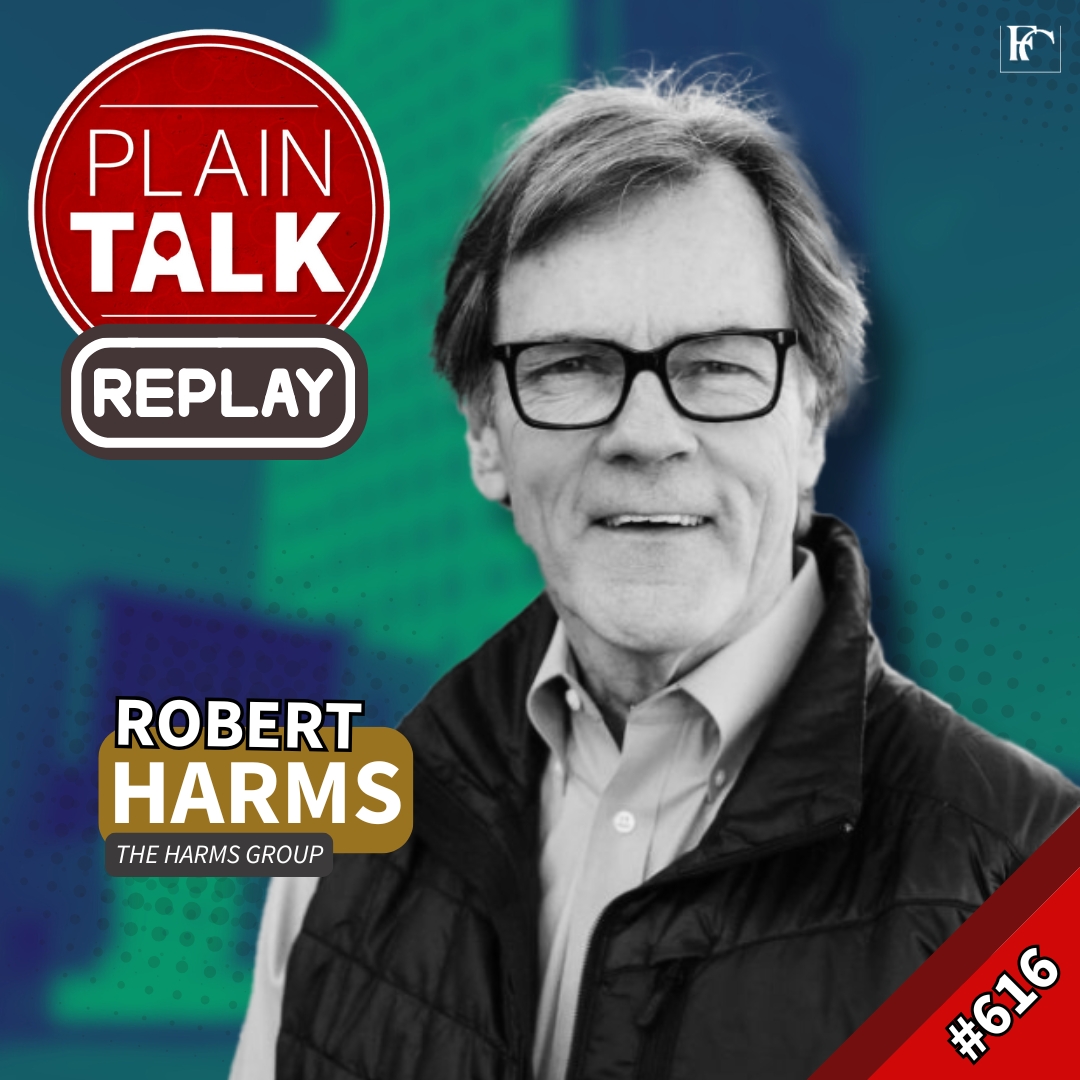
616: 'We have...lifelong Republicans saying I'm done.' (REPLAY)
In this special replay episode, Rob Port and Chad Oban revisit a timely conversation with former North Dakota Republican Party Chair Bob Harms. With infighting and censures making headlines again, Harms' perspective on internal party dynamics, district-level power struggles, and the long-term risks to the GOP brand hits even harder today. The discussion dives into how party rules, legislative overreach, and local gamesmanship are discouraging participation and undermining transparency. Harms also shares his concerns about property tax reform, the future of the Legacy Fund, and what happens when politics becomes more about power than principle. If you want to participate in Plain Talk, just give us a call or text at 701-587-3141. It's super easy — leave your message, tell us your name and where you're from, and we might feature it on an upcoming episode. To subscribe to Plain Talk, search for the show wherever you get your podcasts or use one of the links below. Apple Podcasts | Spotify | YouTube | Pocket Casts | Episode Archive
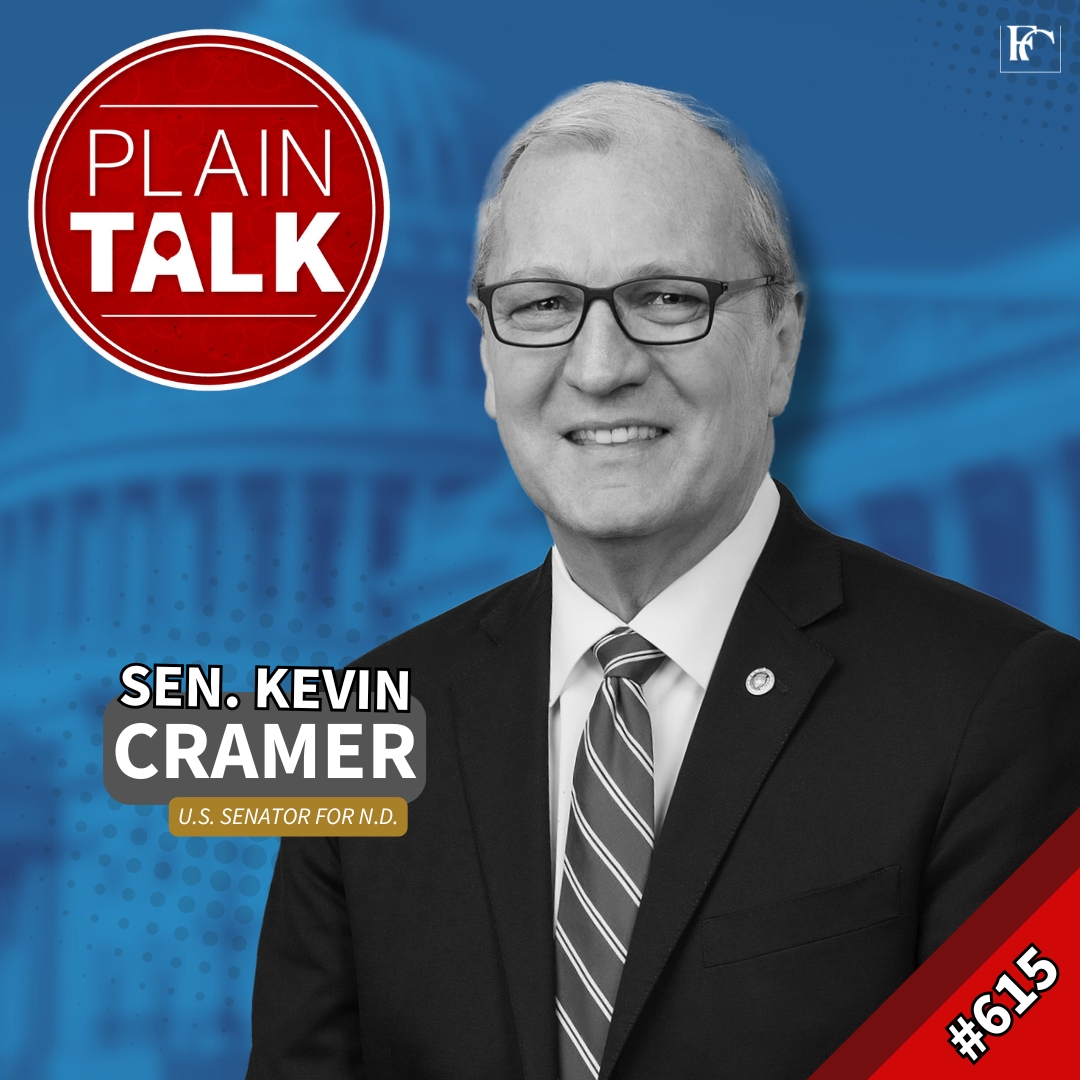
615: 'Donald Trump likes people who like him'
President Donald Trump joined Israel's attacks against Iran's nuclear program, and so far the operation seems to have been a success. That's certainly Sen. Kevin Cramer's view of it, as he explained on this episode of Plain Talk. He also praised Trump's willingness to repudiate some of the isolationists in the MAGA movement. "I've often said, and people have quoted me saying, 'Donald Trump likes people who like him.' The problem is when the body of people who like you range, you know, so greatly, you at some point are going to disappoint somebody," he said. "I was very proud of this decision. And you don't even have to love the decision to recognize...that this is a bit of a repudiation to the Tucker Carlson isolationist crowd." "He probably made peace more than he made war with the strike. Now, we'll see how it all turns out," Cramer continued. The Senator also discussed his "golden dome" legislative proposal for protecting America from drone and missile strikes. He noted that North Dakota has historically been an essential part of America's air defense systems, and he sees that remaining the case going forward. He also had tough words for the new leadership of the North Dakota Republican Party, which censured Gov. Kelly Armstrong over property tax policy and his veto of a book ban bill. "If the state Republican party wants to make itself less relevant, just censure your duly elected governor," he said. "It's absurd." Cramer is a former chair of the NDGOP himself, but said some in charge of the party now have a skewed view of its role. "Too many people, I think, have confused the role of a state party with the role of governing," he said. "The role of state parties are to elect republicans not to govern the not to govern the state." If you want to participate in Plain Talk, just give us a call or text at 701-587-3141. It's super easy — leave your message, tell us your name and where you're from, and we might feature it on an upcoming episode. To subscribe to Plain Talk, search for the show wherever you get your podcasts or use one of the links below. Apple Podcasts | Spotify | YouTube | Pocket Casts | Episode Archive

614: 'When someone on your own side is referring to them as cuts, you're losing that war'
Recently, Congresswoman Julie Fedorchak sent out an email seeking to debunk what she describes as myths when it comes to proposed changes to the Medicaid program. She argues that the program isn't being cut, but rather just being slowed in its growth. But wherever you come down on that debate, the fact that she's prompted to make these arguments is politically significant. On this episode of Plain Talk, my co-host Chad Oban and I talked about that, in the context of one of Fedorchak's predecessors, former Rep. Earl Pomeroy, trying to explain his vote in favor of Obamacare. Oban pointed out that while Fedorchak is disputing the claims that Medicaid is being cut, some Republicans, including Mehmet Oz, the Trump administration's administrator for Medicare and Medicaid services, are calling them cuts. "The problem that she has is it's not just people like me who are saying it's Medicaid cuts," Oban said. "You're like, well, these aren't cuts, but when someone on your own side is referring to them as cuts, you're losing that war," he continued. We also discussed the NDGOP's on-going District 25 debacle, and what the proposed sell-off of federal lands means for Interior Secretary Doug Burgum's political trajectory. Also on this episode, Matt Briney, chief communications officer for the Theodore Roosevelt President Library, talks about the progress on the project. "We're looking forward to welcoming everybody July 4th, 2026 when we will open to the public." Public funding for the project has drawn some criticism, but Briney pointed out that only "about 11% of the project is funded from state funds" and that the library organizqation hasn't had to touch a $70 million line of credit made available by the state. He also detailed some of the features visitors will be able to explore next year. "We're going to take you into the White House. TR's White House. Not the White House that we know today, but TR's White House. So, it's going to have the full kind of look and feel replica of being in there," he said, adding that the library will leverage artificial intelligence technology to make simulated conversations with Roosevelt possible. "You're actually going to be able to talk to TR and TR is going to talk back to you," Briney said. "And that's where we're we're leveraging new technologies from Microsoft...where you can have actual conversations in a group setting with him." If you want to participate in Plain Talk, just give us a call or text at 701-587-3141. It's super easy — leave your message, tell us your name and where you're from, and we might feature it on an upcoming episode. To subscribe to Plain Talk, search for the show wherever you get your podcasts or use one of the links below. Apple Podcasts | Spotify | YouTube | Pocket Casts | Episode Archive
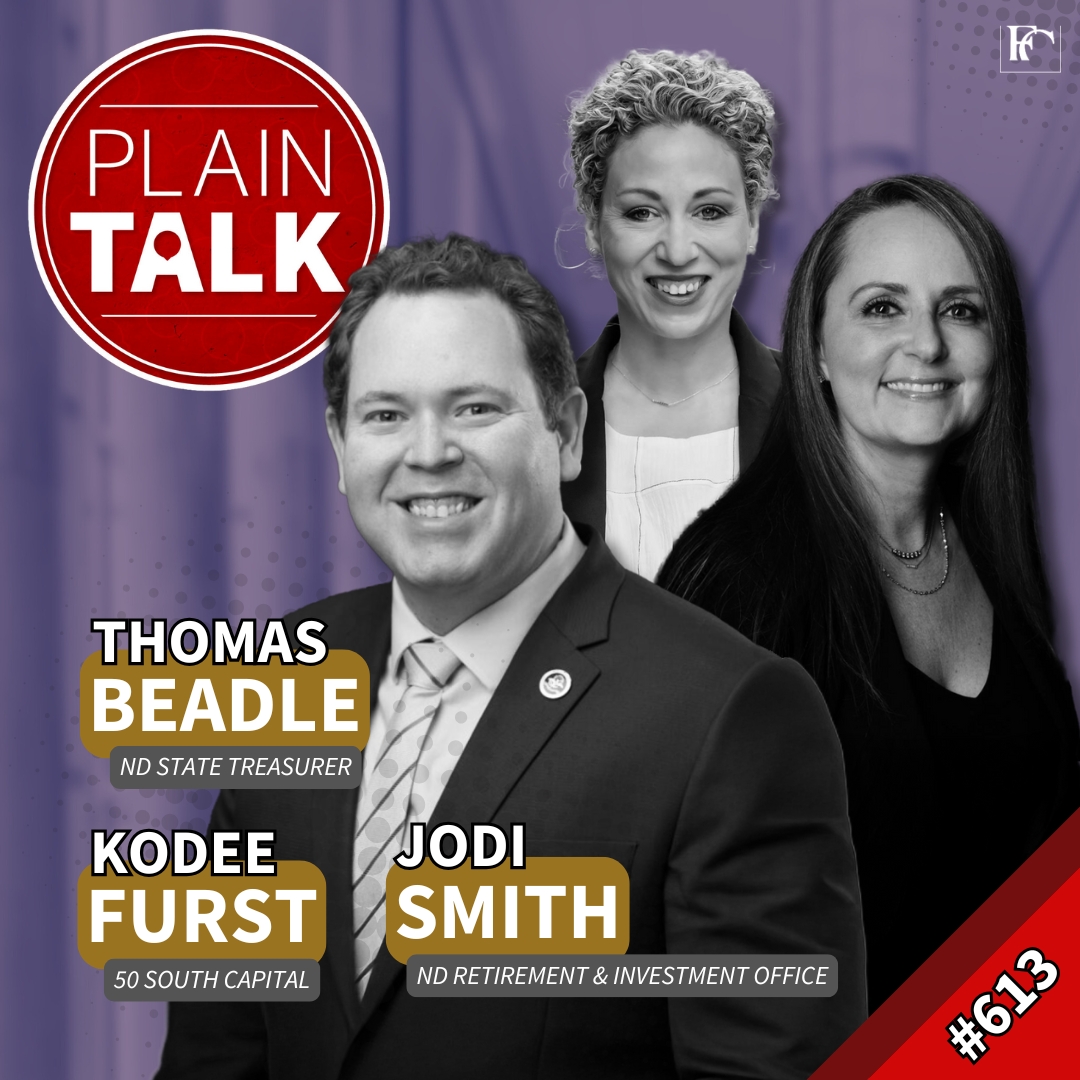
613: 'We're not providing a grant. We do expect a return to come back to us.'
In a recent column, I argued that the concept of "baby bonds" — a verison of which is included in "big beautiful bill" President Donald Trump is backing in Congress — is something North Dakotans should implement whatever the federal government might do. We have hundreds of millions in revenue from the Legacy Fund's investments, and we have the Bank of North Dakota to administer the program. A rough estimate based on the average number of live births in our state every year is that this would cost the state about $20 million or so per biennium. After I published my column, Treasurer Thomas Beadle reached out, saying it's a topic that intrigues him as well. "I think that you get a little bit of a a stakeholder society," he said on this episode of Plain Talk. "Children are being set up with these accounts, and the parents are managing these accounts on behalf of their kids, so they will be vested. They might have a stakeholder interest in making sure that programs like this are viable." Speaking of investments, also joining this episode was Jodi Smith, executive director of the state Retirement and Investment Board, and Kodee Furst, a director 50 South Capital. They discussed the ongoing efforts to implement the Legacy Fund's in-state investment program. The goal is to have the Legacy Fund at $1.3 billion invested inside of the state by 2030. Some of the challenges in getting there early on were negotiating the producer-investor rules. State investment officials have a responsibilty to maximize returns, but with the in-state investment program, the idea is that some of those returns aren't in the form of interest on investments but rather economic development. This balance is important. "We're not providing a grant," Smith said. "We do expect a return to come back to us." If you want to participate in Plain Talk, just give us a call or text at 701-587-3141. It's super easy — leave your message, tell us your name and where you're from, and we might feature it on an upcoming episode. To subscribe to Plain Talk, search for the show wherever you get your podcasts or use one of the links below. Apple Podcasts | Spotify | YouTube | Pocket Casts | Episode Archive

612: 'I'm a North Dakotan first. I'm the governor second and a Republican third.'
The North Dakota Republican Party censured Republican Gov. Kelly Armstrong at a recent meeting. And yes, despite what some party leaders are now saying, Armstrong does see it that way. "It was a censure," he said on this episode of Plain Talk, going on to expand on his immediate reaction to the censures which was "I don't care." The censures expressed disapproval in Armstrong's property tax plan, along with his veto of book ban legislation, but he says that serving the party isn't his top priority. "I just view it this way: I'm a North Dakotan first. I'm the governor second and a Republican third." He accused some in NDGOP leadership of being obsessed with "microniche" issues and wanting to control Republican elected leaders with party rules and censures. "I mean, one of the problems I think you're running into in this is...this was always 'we hate the smoke-filled back room,' right? That was always the argument forever. That's not really true. What they want to do is control the smoke-filled back room," he said. "I don't think they spend near enough time talking about how to win elections, which is what people rely on the party for," he added, further arguing that party leadership is elected by small groups of people. "Matt Simon got elected with 24 votes," Armstrong said "I hope he does great. I hope he brings unity." Also on this episode, we discuss Rep. Scott Louser's decision to forgo a property tax ballot measure challenging the relief lawmakers passed earlier this year, as well as the recent No Kings protests and how their momentum compares to the 2009 "tea party" movement that changed the shape of North Dakota politics. If you want to participate in Plain Talk, just give us a call or text at 701-587-3141. It's super easy — leave your message, tell us your name and where you're from, and we might feature it on an upcoming episode. To subscribe to Plain Talk, search for the show wherever you get your podcasts or use one of the links below. Apple Podcasts | Spotify | YouTube | Pocket Casts | Episode Archive

611: 'The escalation is 100% the point'
Andrew Loftesnes is a veteran of the U.S. Marine Corps. Specifically, he served with the 2nd Battalion, 7th Marines, 1st Marine Division, which is the same unit that President Donald Trump has, controversially, deployed to Los Angeles to, as Secretary of Homeland Security Kristi Noem put it recently, "liberate this city from the socialist and burdensome leadership" elected by local citizens. The deployment was "not only a direct threat to democracy and in my opinion a significant step towards autocracy, but also a direct betrayal of the young men and women who serve in the Marine Corps and other branches of the US military," Loftesnes said on this episode of Plain Talk. "The escalation 100% is the point," he added when asked if Trump's motive was to inflame an already delecate situation further. "Anyone who calls themselves a conservative politically, I think, should be horrified by this federal overreach," he said. Also on this episode, Attorney General Drew Wrigley explains his legal opinion concluding that Gov. Kelly Armstrong's line-item veto should stand, and that a special session isn't necessary. He points to Article V of the North Dakota constitution which states that the governor need send two things back to the Legislature when issuing a veto: A veto message, and the original bill, with the latter requirement being an anachronism from the pre-digital, pre-copy machine era when there would be only one copy of a given piece of legislation. Wrigley says that the veto message issued by Armstrong was accurate, and that whatever mistakes were made up the marked-up version of the bill Armstrong sent back alongside the message are irrelevant. "This isn't a hieroglyphics contest," he said. Armstrong's office is proceeding following Wrigley's opinion, but the Legislature, and specifically the Legislative Management Committee which Senate Majority Leader David Hogue chairs, has yet to decide whether they'll litigate or call themselves back into session to take further action. In public statements, Hogue was dismissive of Wrigley's opinion, saying his "understanding of the English language" and "respect for the rule of law" prevented him from going along with it. Wrigley says he's since spoken to Hogue, and that they laughed the matter off. "We had a conversation that afternoon," he said. "In fact, I had seen the quote that you just mentioned, and when he called me later in the afternoon, I asked him if he was calling to discuss the English language, at which point he started speaking Spanish. We started off with a pretty good laugh." If you want to participate in Plain Talk, just give us a call or text at 701-587-3141. It's super easy — leave your message, tell us your name and where you're from, and we might feature it on an upcoming episode. To subscribe to Plain Talk, search for the show wherever you get your podcasts or use one of the links below. Apple Podcasts | Spotify | YouTube | Pocket Casts | Episode Archive
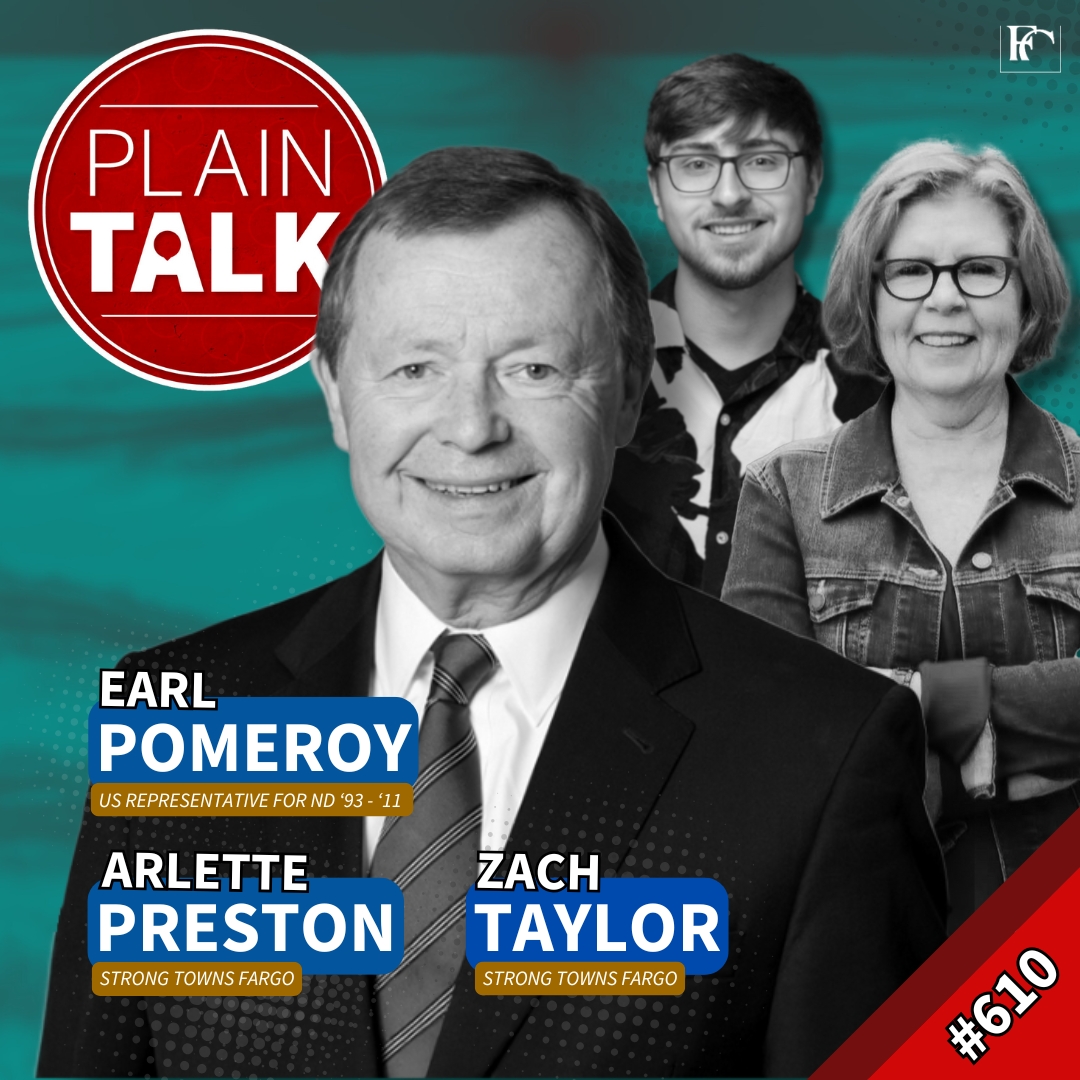
610: 'There's going to be an election day reckoning'
When former Congressman Earl Pomeroy looks at the protests today against the Trump administration and the so-called "big, beautiful bill" in Congress, he sees echoes of the 2009 protests that ended his tenure in elected office. "There's going to be an election day reckoning," Pomeroy, a Democrat who represented North Dakota in the U.S. House from 1993 to 2010, said on this episode of Plain Talk. What was interesting about this discussion is that many of the 2009-era "tea party" protests in North Dakota were organized, in part, by me. Pomeroy said that in 2009, there were times when voters would be "mad as hell out there" but Democratic leaders in Washington D.C. were dismissive. "The leadership would say to the nervous members not to worry. They'll get over it. Or, as has been said with the more recent demonstrations, or the passionate town halls, oh, these are paid agitators." He says he still thinks the 2009 protesters were operating on bad information, but that they should have been taken seriously. "What I found is the the concern, the anxiety, the anger was very real." North Dakota's political dynamics are different in 2025 than they were in 2009. At that time, our state was politically mixed, with an all-Democratic congressional delegation. Today, North Dakota's political landscape is more ideologically homogenous, and the protests against Congresswoman Julie Fedorchak, as well as Senators John Hoeven and Kevin Cramer, have quite reached the critical mass that the 2009 demonstrations achieved. Still, Pomeroy has a warning for those Republicans: "I think these protests are real and I think that there's some people going to lose their seats over it." Also on this episode, Zachary Taylor and former Fargo City Commissioner Arlette Preston, representing Strong Towns Fargo, joined to discuss my recent column about sprawl in North Dakota cities, its impact on property taxes, and how property tax reform recently passed by the Legislature may force local governments to have some meaningful debate about it. If you want to participate in Plain Talk, just give us a call or text at 701-587-3141. It's super easy — leave your message, tell us your name and where you're from, and we might feature it on an upcoming episode. To subscribe to Plain Talk, search for the show wherever you get your podcasts or use one of the links below. Apple Podcasts | Spotify | YouTube | Pocket Casts | Episode Archive
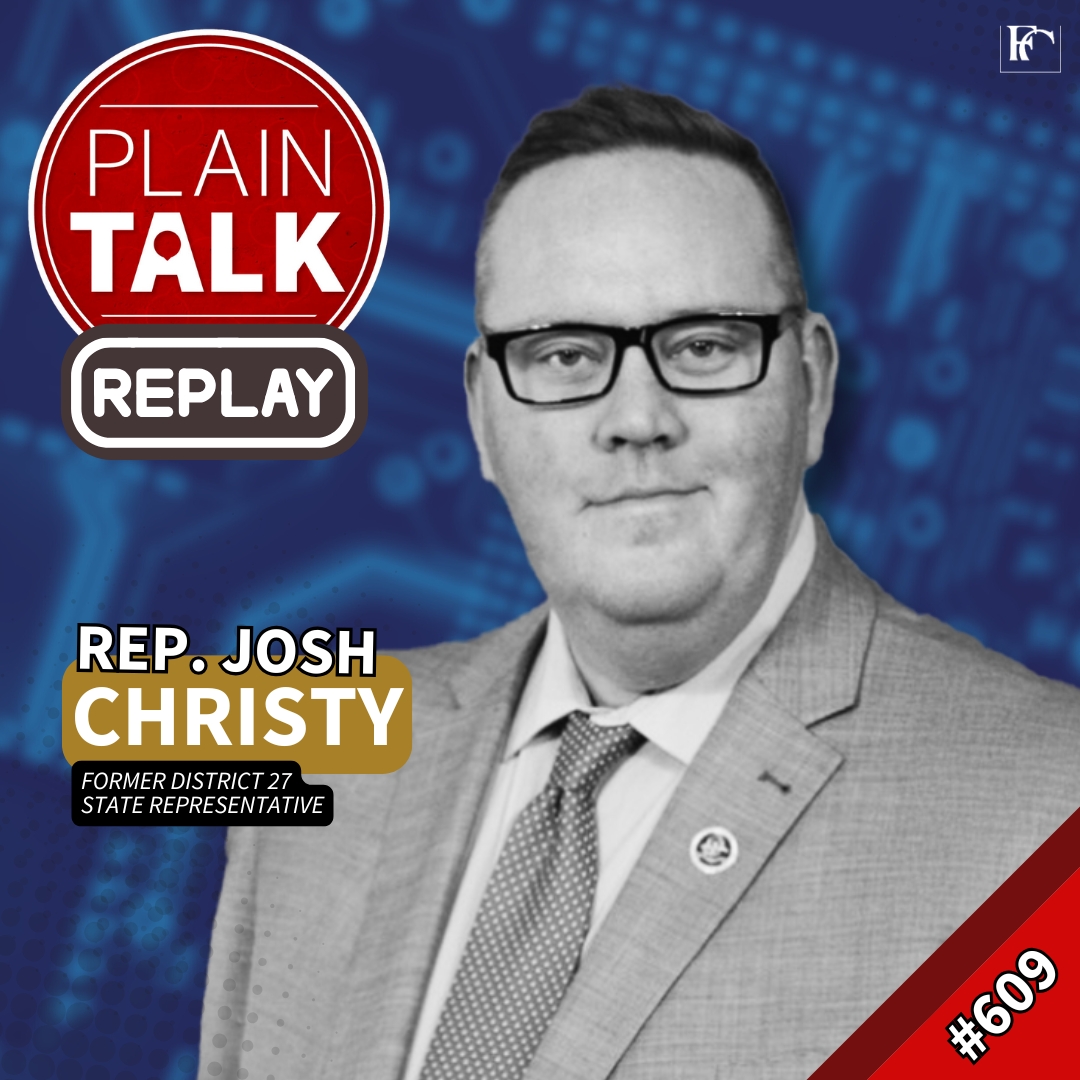
609: Remembering Rep. Josh Christy on AI (REPLAY)
Artificial intelligence continues to dominate conversations worldwide, sparking both optimism and deep concern. On this replay episode of Plain Talk, hosts Rob Port and Chad Oban revisit a compelling discussion with the late Rep. Josh Christy, an influential North Dakota lawmaker and expert in artificial intelligence who tragically passed away during the legislative session. Throughout the conversation, Christy emphasizes the critical balance between safeguarding communities and fostering economic growth through responsible AI adoption. His insights offer valuable perspectives that remain highly relevant today, underscoring both the transformative potential of AI and the necessity of thoughtful policymaking. If you want to participate in Plain Talk, just give us a call or text at 701-587-3141. It's super easy — leave your message, tell us your name and where you're from, and we might feature it on an upcoming episode. To subscribe to Plain Talk, search for the show wherever you get your podcasts or use one of the links below. Apple Podcasts | Spotify | YouTube | Pocket Casts | Episode Archive
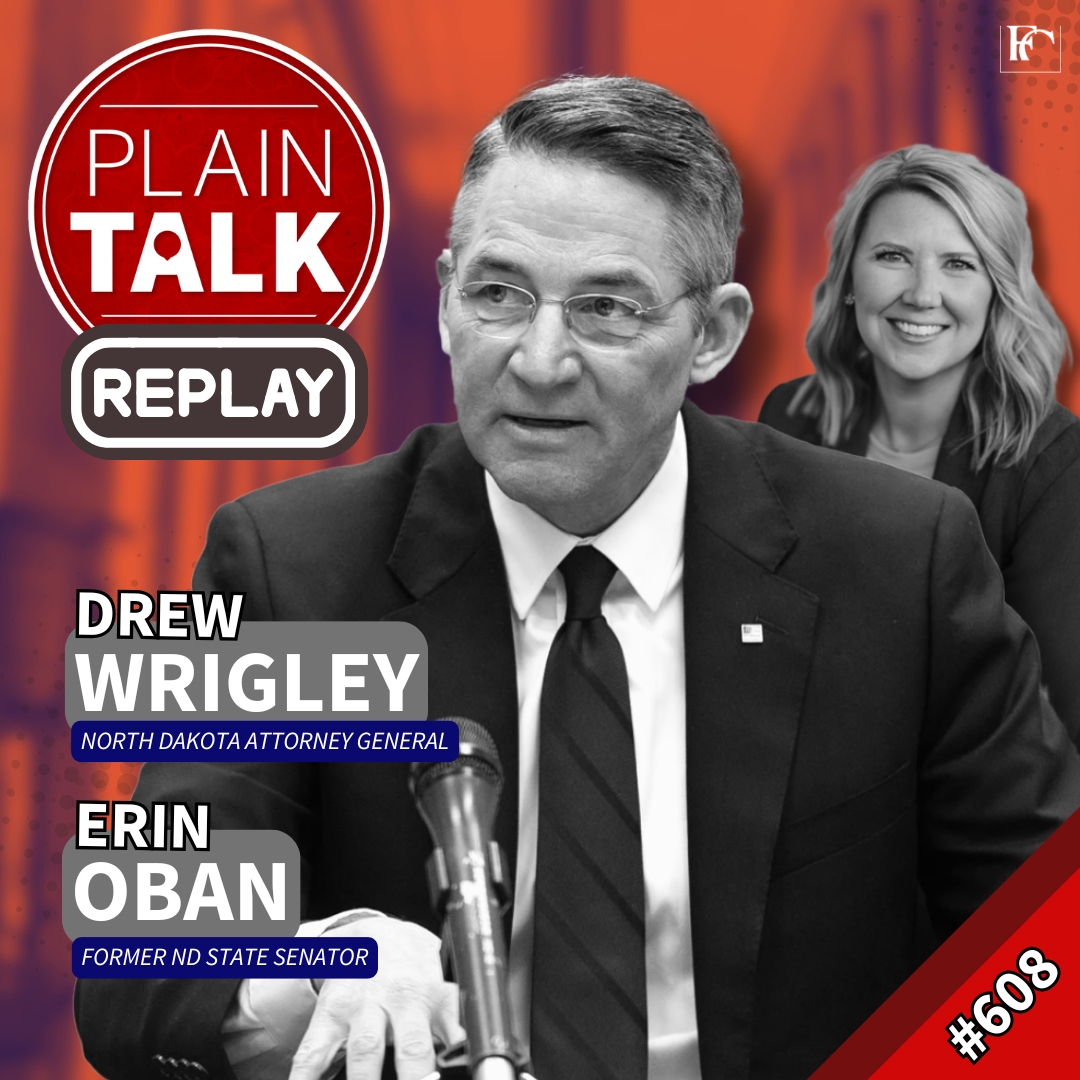
608: 'That is a blatant falsehood' (REPLAY)
At the beginning of this episode of Plain Talk, Attorney General Drew Wrigley took exception to my recent reporting suggesting that he and Gov. Kelly Armstrong are at odds over sentencing legislation and the performance of state prison officials. Based on what would follow, I think the conflict between two of North Dakota's top elected officials is positively overt. According to Wrigley, the North Dakota Department of Corrections and Rehabilitation, headed by director Colby Braun, is lying to state lawmakers and the public. He took particular issue with a recent fiscal note issued by the DOCR indicating that so-called "truth in sentencing" legislation he supports, which would mean that inmates serve a larger percentage of their sentences, will cost taxpayers as much as $269 million. "Their quest is to make it extraordinarily expensive to turn people away from the bill," he said. "That is a blatant falsehood," a stormy Wrigley told guest-cost Erin Oban and I. "It is not worth the paper it's written on," he continued about the fiscal note. "It would be a joke if it weren't a matter of serious policy debate," he said. Wrigley also said that DOCR officials have been hiding data from the public and lawmakers, and making misleading statements about rising crime rates. "What an absolute abdication of responsibility," concluded. These are serious accusations -- lying, abdication of responsibility, etc. -- but Braun isn't an independent operator. He has a boss. That's Armstrong, who was also scheduled to appear on this episode to discuss the progress of property tax reform, which he has made his primary focus during this legislative session. I asked Wrigley if he felt Braun should be fired, and he demured, saying it wasn't his place to advise the governor on personnel issues. If you want to participate in Plain Talk, just give us a call or text at 701-587-3141. It's super easy — leave your message, tell us your name and where you're from, and we might feature it on an upcoming episode.

607: How do we do politics in the classroom? (REPLAY)
We all know the old saying. You don't talk about religion and politics in polite company. Only, does that advice make sense in a society like ours, where we practice self-governance? How can we govern ourselves if we can't talk to one another about politics? And, more pertinent to this episode of Plain Talk, how do we teach our kids how to participate in discourse over challenging issues like abortion or gun control if teachers are afraid to tackle politics in the classroom? Lindsey Galvao is a long-time educator -- the social studies curriculum specialist at GBH and a multiplatform creator for public media, and curriculum writer for the Civics Collection on PBS LearningMedia. (https://mass.pbslearningmedia.org/col...) Ben Klutsey is the executive director of the Mercatus Center at George Mason University whose work is featured in the documentary "Undivide US." (https://undivideusmovie.com/) They recently co-authored an op-ed about politics in the classroom, (https://www.grandforksherald.com/opin...) and joined my cohost Chad Oban and I to talk about that very conundrum. "We disagree and that's ok," Klutsey told us. The problem, he argues, is that so many people say "we disagree and you're a threat to my existence." Both Klutsey and Galvao say that teachers need to be unafraid to host discussions about even fraught social and political questions, but that their focus should be on listening and encouraging students to understand one another. But how do we deal with misinformation? Kids who might have gotten the idea that the Sandy Hook school shooting didn't really happen, as right-wing talk radio host Alex Jones has claimed, or that the world is flat? Galvao said she would encourage teachers to ask those kids, "How do you know what you know?" They should be encouraged to explore the basis for their point of view. "We have to think about abiding by certain core principles," Klutsey said, identifying them as respect, authenticity, and curiosity. Which is to say that we need to respect those who disagree with us, represent our own views authentically, and be curious about why others disagree with us. Though, he acknowledged, that doesn't mean making room for false information. "Facts are facts," he said, "and you have to engage on facts as an educator." If you want to participate in Plain Talk, just give us a call or text at 701-587-3141. It's super easy — leave your message, tell us your name and where you're from, and we might feature it on an upcoming episode. To subscribe to Plain Talk, search for the show wherever you get your podcasts or use one of the links below. Apple Podcasts | Spotify | YouTube | Pocket Casts | Episode Archive
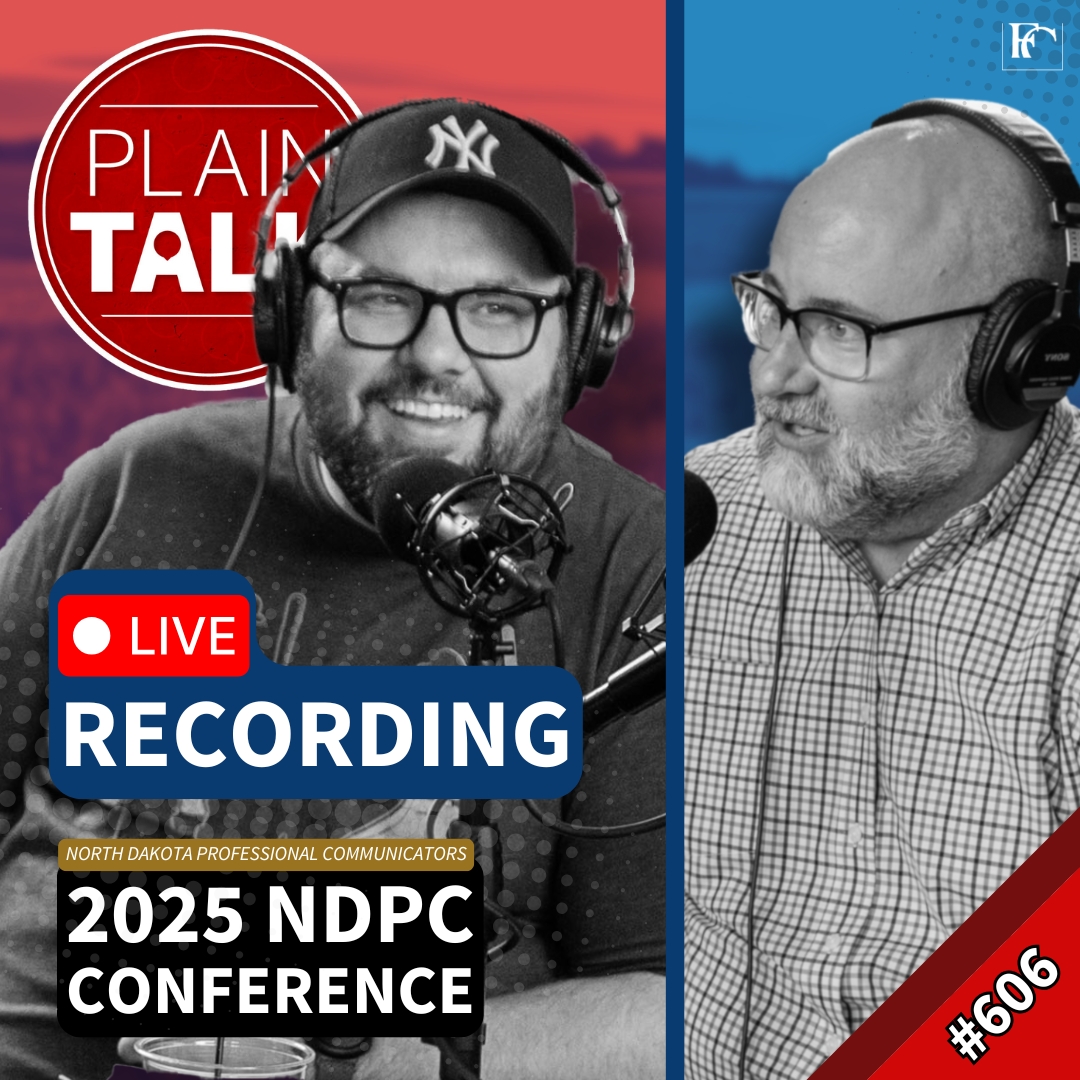
606: 'We can disagree and still respect each other'
Recorded live at the North Dakota Professional Communicators conference in Minot, this special episode features Rob and Chad in front of a live audience talking media bias, political polarization, and the value of honest disagreement. They share lessons learned from tough interviews and respond to audience questions about journalism, trust, and what could be done to make North Dakota's legislature more effective. If you want to participate in Plain Talk, just give us a call or text at 701-587-3141. It's super easy — leave your message, tell us your name and where you're from, and we might feature it on an upcoming episode. To subscribe to Plain Talk, search for the show wherever you get your podcasts or use one of the links below. Apple Podcasts | Spotify | YouTube | Pocket Casts | Episode Archive
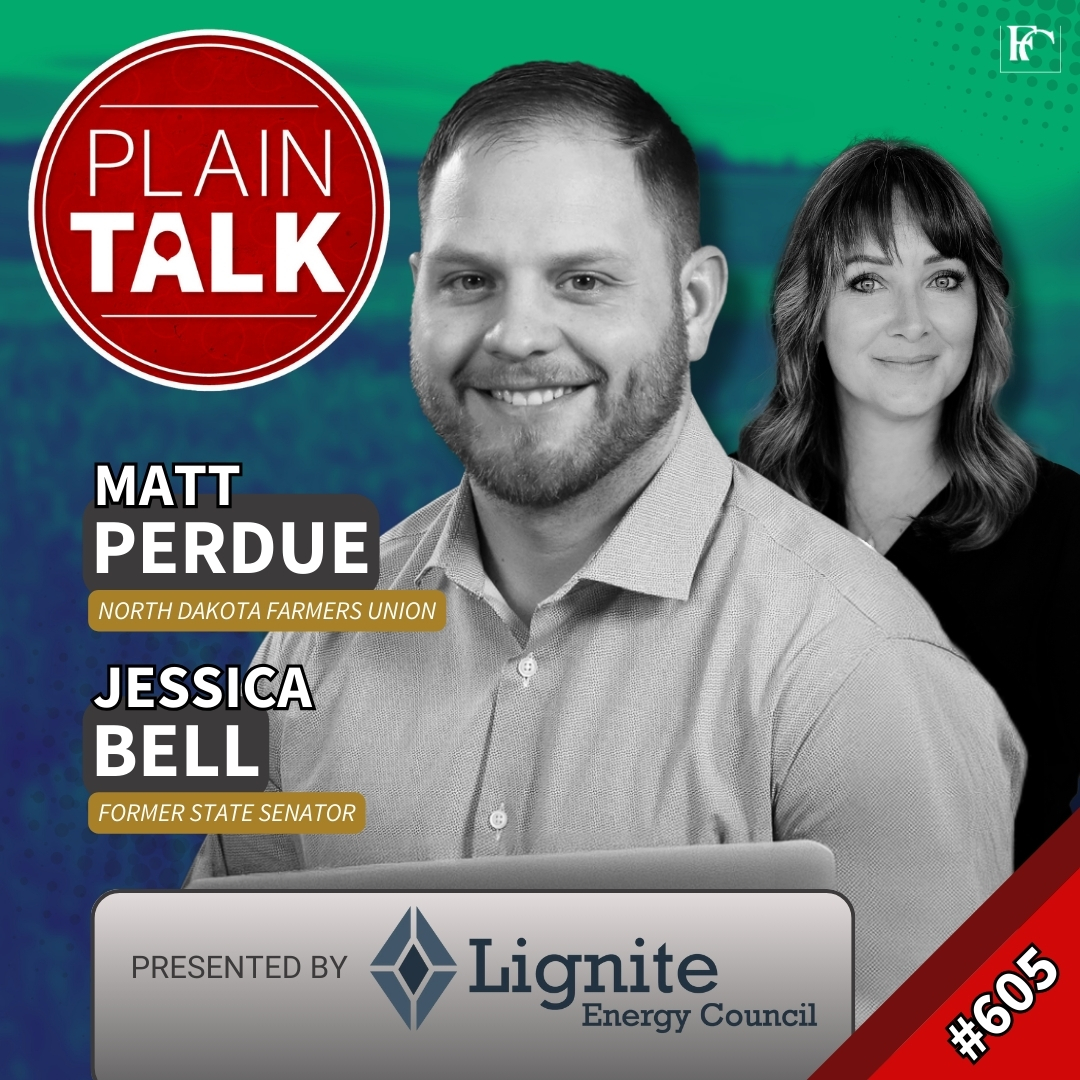
605: 'It just doesn't work for me'
On this episode of Plain Talk, co-host Chad Oban takes the reins with guest co-host and former State Senator Jessica Bell for a conversation with Matt Perdue, Government Relations Director at North Dakota Farmers Union. Perdue, who's running to become the next president of NDFU, emphasizes the uncertainty facing many producers amid economic headwinds, fluctuating commodity prices, and ongoing concerns about federal farm policy and trade conflicts. He also shares how farmers are working through complicated relationships with energy developers, the challenges of rising land prices and absentee landowners, and the importance of investing in rural communities to attract and retain young families. Plus, Chad and Jessica dive into the recent veto snafu by Gov. Kelly Armstrong, the implications of growing partisanship, and the upcoming appointment of a new Superintendent of Public Instruction. This episode is presented by Lignite Energy Council, an organization dedicated to protecting and enhancing the development of North Dakota's abundant lignite resouces. Their goal is to maintain a viable lignite coal industry and support the generation of electrcity, syntheitc natural gas, and valuable byproducts. Visit www.Lignite.com/Podcast to connect and learn more. If you want to participate in Plain Talk, just give us a call or text at 701-587-3141. It's super easy — leave your message, tell us your name and where you're from, and we might feature it on an upcoming episode. To subscribe to Plain Talk, search for the show wherever you get your podcasts or use one of the links below. Apple Podcasts | Spotify | YouTube | Pocket Casts | Episode Archive

604: 'Our partners in the Republican Party'
On this episode of Plain Talk, Sen. Josh Boschee, a Democrat from Fargo, characterized the just-completed legislative session as marked by crucial victories but also "too many missed opportunities" and numerous "close calls on bad Republican bills." He emphasized how Republicans and Democrats worked together to achieve both. Among the victories? Passing Gov. Kelly Armstrong's property tax plan, which implements $1,600 primary residence property tax credits and 3% caps on growth in property tax bills. Noting his day job in real estate, Boschee extolled "how much this is going to help make housing more affordable throughout our state." He highlighted that the reform could potentially "completely wipe out" property taxes for lower-priced or rural homes or those in smaller communities, allowing residents to invest that money in home repairs, buy a larger home, or open up more affordable housing stock for others. And the bad bills? Boschee said those included "book bans, what teachers are teaching in the classroom, which bathrooms people are using," and issues related to "abortion and gay marriage." Most of those initiatives failed, and Boschee said that's because "a faction of the Republican party worked with Democrats to defeat a lot of those bills." Boschee also praised former Rep. Cynthia Schreiber Beck, who passed away recently. She was someone who "got things done for Richland County or District 25," he said. "Someone that we could all depend on and trust" and who "told you like it was." "If she wasn't going to support your idea, you knew it," he said, but if she liked your idea, she "would work with you to make it better or to get it across the finish line." Also on this episode, co-host Chad Oban and I discuss the impact the property tax cap may have on the ways North Dakota communities develop, and how the state's new ban on cell phones in schools will play out. This episode is presented by Lignite Energy Council, an organization dedicated to protecting and enhancing the development of North Dakota's abundant lignite resouces. Their goal is to maintain a viable lignite coal industry and support the generation of electrcity, syntheitc natural gas, and valuable byproducts. Visit www.Lignite.com/Podcast to connect and learn more. If you want to participate in Plain Talk, just give us a call or text at 701-587-3141. It's super easy — leave your message, tell us your name and where you're from, and we might feature it on an upcoming episode. To subscribe to Plain Talk, search for the show wherever you get your podcasts or use one of the links below. Apple Podcasts | Spotify | YouTube | Pocket Casts | Episode Archive
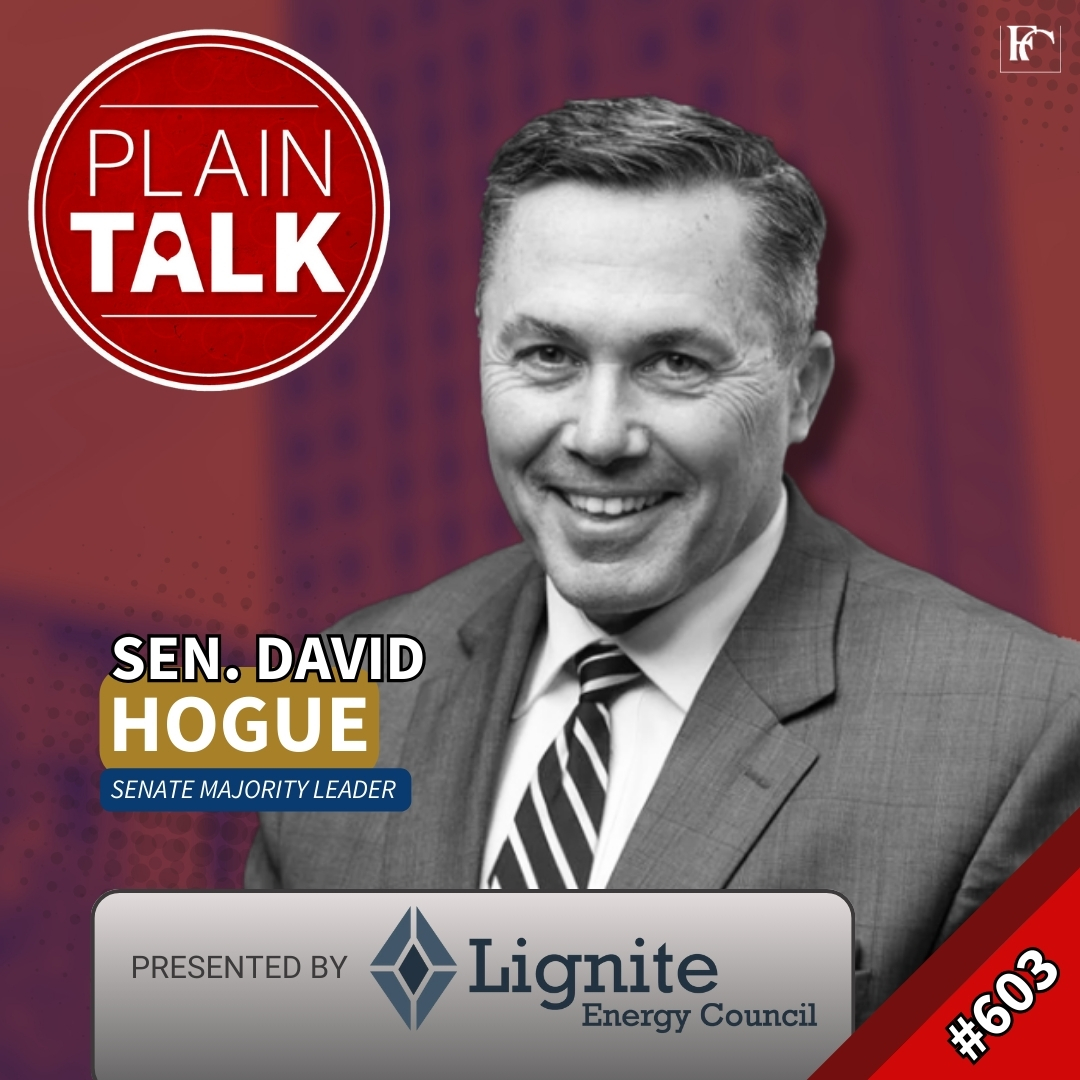
603: 'Nobody in the nation is doing what North Dakota is doing'
Though his instance on a "skin in the game" provision in property tax reform -- effectively a cap on how much of the primary residence credit property owners could receive -- was one of the major flash points during this year's legislative session, Senate Majority Leader David Hogue says he's satisfied with the outcome overall. More than that, really. He was downright enthusiastic on this episode of Plain Talk. "Nobody, whether you measured it on a per capita basis, whether you measure it on a percentage of your surplus that you gave back to the taxpayer, nobody in the nation is doing what North Dakota is doing," he said. "You know, what Minnesota did last session when they had a surplus, they don't have a surplus this session. So, guess what? No tax relief," Hogue said. "Montana, the same thing. They are trying some income tax relief." Hogue also extolled a provision in the property tax package that went overlooked by many, but which he sees as important. "Our rural legislators were interested in seeing more funding for rural infrastructure, but they were also interested in seeing that funding source be something that isn't flat and static like our gasoline tax," he said. "And so in addition to using the Legacy Fund earnings to fund the primary residents tax credit, we also tied 2% of those Legacy Fund earnings to go into the DOT budget and specifically to fund rural infrastructure. County roads. Bridges." Which isn't to say that he thought the property tax package was perfect. "The biggest issue that probably went unreported was how many people are eligible for the primary residence tax credit and how many are going to claim it," Hogue said. The Tax Commissioner's office was estimating around 160,000 eligible homes, he continued, while the Senate's estimate was around 144,000. "If you do that math, that's 16,000 primary residence applications times two in a bienium. That's 32,000 homes times a $1,600 tax credit," he said. "That's a $50 million item of difference that you're trying to factor into the amount of tax relief." He expects the Tax Commissioner may be coming to lawmakers for more funding for the property tax credits. Also on this episode, my co-host Chad Oban and I discuss the public reaction to my story about Jesse Burgum being misleading about her dad Doug Burgum's financial involvement in her fiml career and news that once-disqualified and infamous baseball legends like Pete Rose and Shoeless Joe Jackson are now eligible for the Hall of Fame. This episode is presented by Lignite Energy Council, an organization dedicated to protecting and enhancing the development of North Dakota's abundant lignite resources. Their goal is to maintain a viable lignite coal industry and support the generation of electricity, synthetic natural gas, and valuable byproducts. Visit www.Lignite.com/Podcast to connect and learn more. If you want to participate in Plain Talk, just give us a call or text at 701-587-3141. It's super easy — leave your message, tell us your name and where you're from, and we might feature it on an upcoming episode. To subscribe to Plain Talk, search for the show wherever you get your podcasts or use one of the links below. Apple Podcasts | Spotify | YouTube | Pocket Casts | Episode Archive
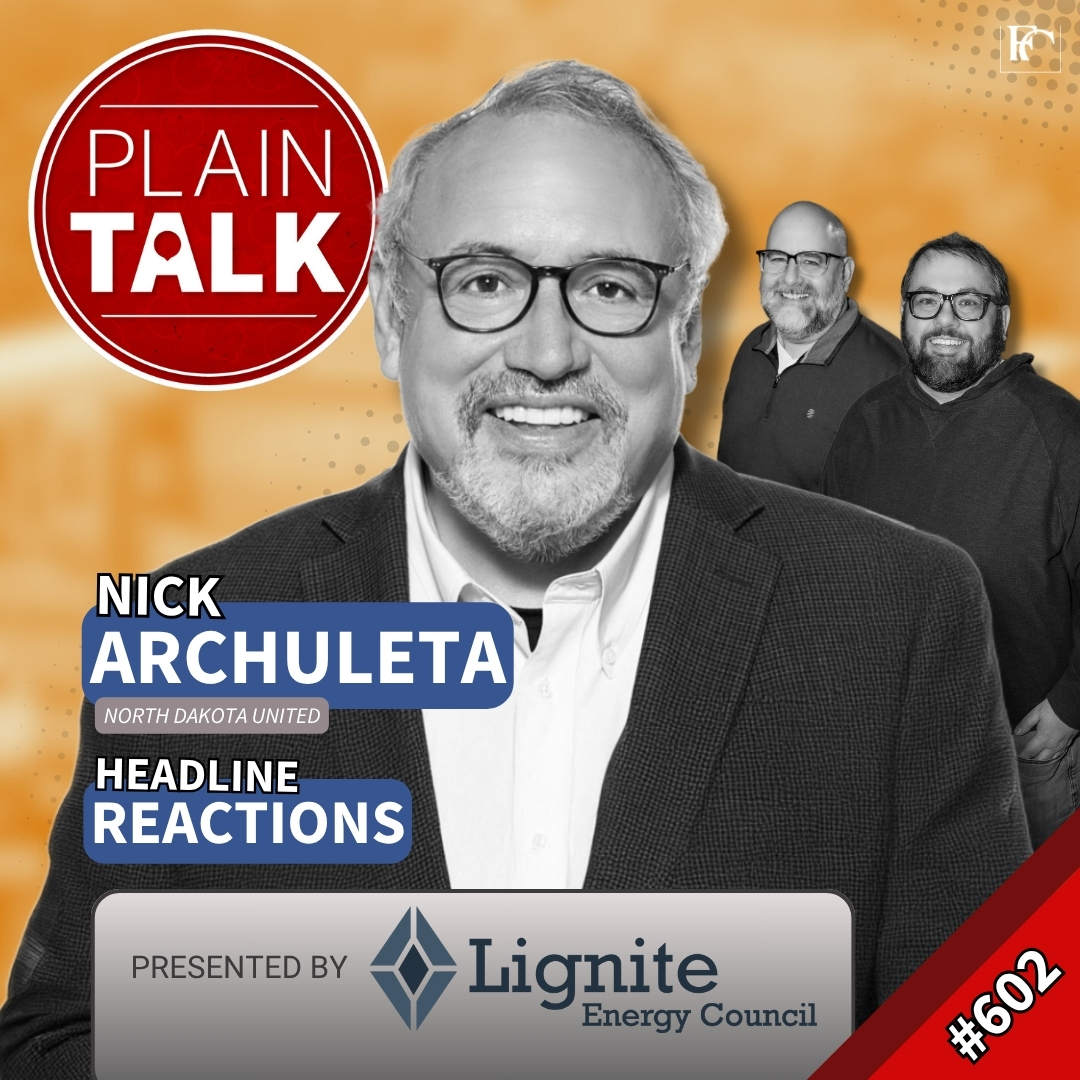
602: 'We are horrible at telling our success stories'
Nick Archuleta and North Dakota United, the state's combined teacher and public workers union, are touting a report showing that our state is sliding down the rankings in terms of teacher pay. We're now 40th in the nation, down significantly from roughly a decade ago. But Archuleta admitted during an interview on Plain Talk that educators could be doing a better job of giving the taxpayers some context around the pay issue. "We are horrible at telling our success stories," he said. "We have to do a better job," he added, rattling off some examples of the stories that could be told. "Eighth graders are second in the nation in mathematics. Fourth graders are third in the nation in mathematics. Archuleta said it's also time to "tone down the rhetoric surrounding K12 education" and back off some of the expectations, from the left and the right, that educators be central to the culture wars. "Everybody that I know that has gone into education goes into it because they want to make sure that every child has the best educational outcomes that they can possibly have," he said. "They don't go into it to be part of a political scrum and they shouldn't. That's exactly the wrong reason to get into education." As for teacher pay specifically? Archuleta said that North Dakota is "not increasing salaries very quickly." He also noted that other states like Montana, Idaho, Wyoming, and New Mexico have "done things that actually raise salaries faster." This is impacting North Dakota's ability to recruit new teachers. "We have an acute teacher shortage in North Dakota" that "has gotten to the point, this is particularly true in rural areas but also in our larger areas, where we're depending more and more on foreign based teachers, particularly from the Philippines." Also on this episode, co-host Chad Oban and I talk about how on-going chaos in the North Dakota Republican Party and a possible legal fight with the state Ethics Commission may impact the upcoming election cycle. We also take a look at the last bills from the recently-concluded legislative session that are on Gov. Kelly Armstrong's desk and what he might do with them. (Full disclosure: Oban also works for North Dakota United.) This episode is presented by Lignite Energy Council, an organization dedicated to protecting and enhancing the development of North Dakota's abundant lignite resources. Their goal is to maintain a viable lignite coal industry and support the generation of electricity, synthetic natural gas, and valuable byproducts. Visit www.Lignite.com/Podcast to connect and learn more. If you want to participate in Plain Talk, just give us a call or text at 701-587-3141. It's super easy — leave your message, tell us your name and where you're from, and we might feature it on an upcoming episode. To subscribe to Plain Talk, search for the show wherever you get your podcasts or use one of the links below. Apple Podcasts | Spotify | YouTube | Pocket Casts | Episode Archive
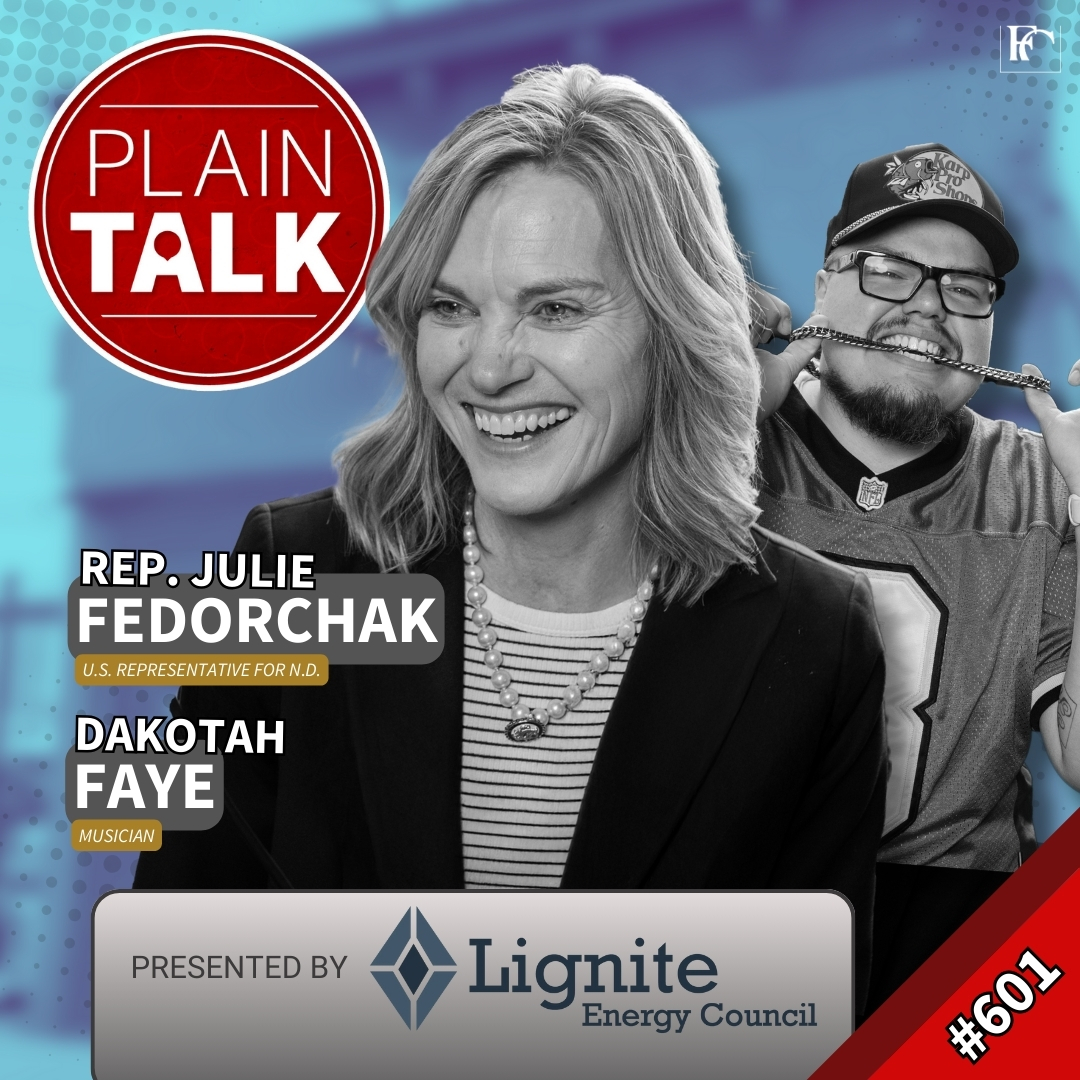
601: 'We found out about it in the newspaper'
"The Minot State one took us by surprise," U.S. Rep. Julie Fedorchak told us on this episode of Plain Talk, referring to the cuts of nearly two dozen staff at the North Dakota Center for Persons with Disabilities. One of those workers, Kyle Erickson, who lives with cerebral palsy and not only works for the center but received services from it as a child, joined us to talk about the cuts on a previous episode of Plain Talk. "We found out about it in the newspaper, and we've been trying to get to the bottom of it, and I'm not sure that we have yet," Fedorchak said, expressing some mild frustration with how President Donald Trump's administration has been going about these cuts. "I do wish that some of the sudden cuts that are coming out, that the the administration is unleashing, would be a little bit more clear," she said. "That we'd have more heads up, that we understood the grand scheme and how these things are working out. What the big plan is, because I think that's what's hard. It's not having time to prepare for them. Or be thoughtful about them." "You know, if I was doing it, that's not how I would do it," Fedorchak continued, responding to a question about how DOGE and Elon Musk have presented their efficiency efforts to the public. "I would I would not talk about it this way, but I'm not in charge." Still, Fedorchak supports the overall effort. "In my opinion, we do need to be retracting and right-sizing the federal government," she said. "It isn't sustainable. There has been out of control spending and we have to correct that for ourselves and for the future citizens of our country." Fedorchak also pushed back on claims that Medicaid is being cut and that Republicans are pushing for tax cuts for the rich. She said the rate of growth in Medicaid spending is to be slowed, and that Republicans only want to renew existing tax policy. Also on this episode, Minot-based rapper Dakotah Faye performed his song '925,' discussed how he's managed his burgeoning career as a performing artist from North Dakota, and talked about his work with the F5 Project as someone who has struggled with addiction in the past. This episode is presented by Lignite Energy Council, an organization dedicated to protecting and enhancing the development of North Dakota's abundant lignite resources. Their goal is to maintain a viable lignite coal industry and support the generation of electricity, synthetic natural gas, and valuable byproducts. Visit www.Lignite.com/Podcast to connect and learn more. If you want to participate in Plain Talk, just give us a call or text at 701-587-3141. It's super easy — leave your message, tell us your name and where you're from, and we might feature it on an upcoming episode. To subscribe to Plain Talk, search for the show wherever you get your podcasts or use one of the links below. Apple Podcasts | Spotify | YouTube | Pocket Casts | Episode Archive
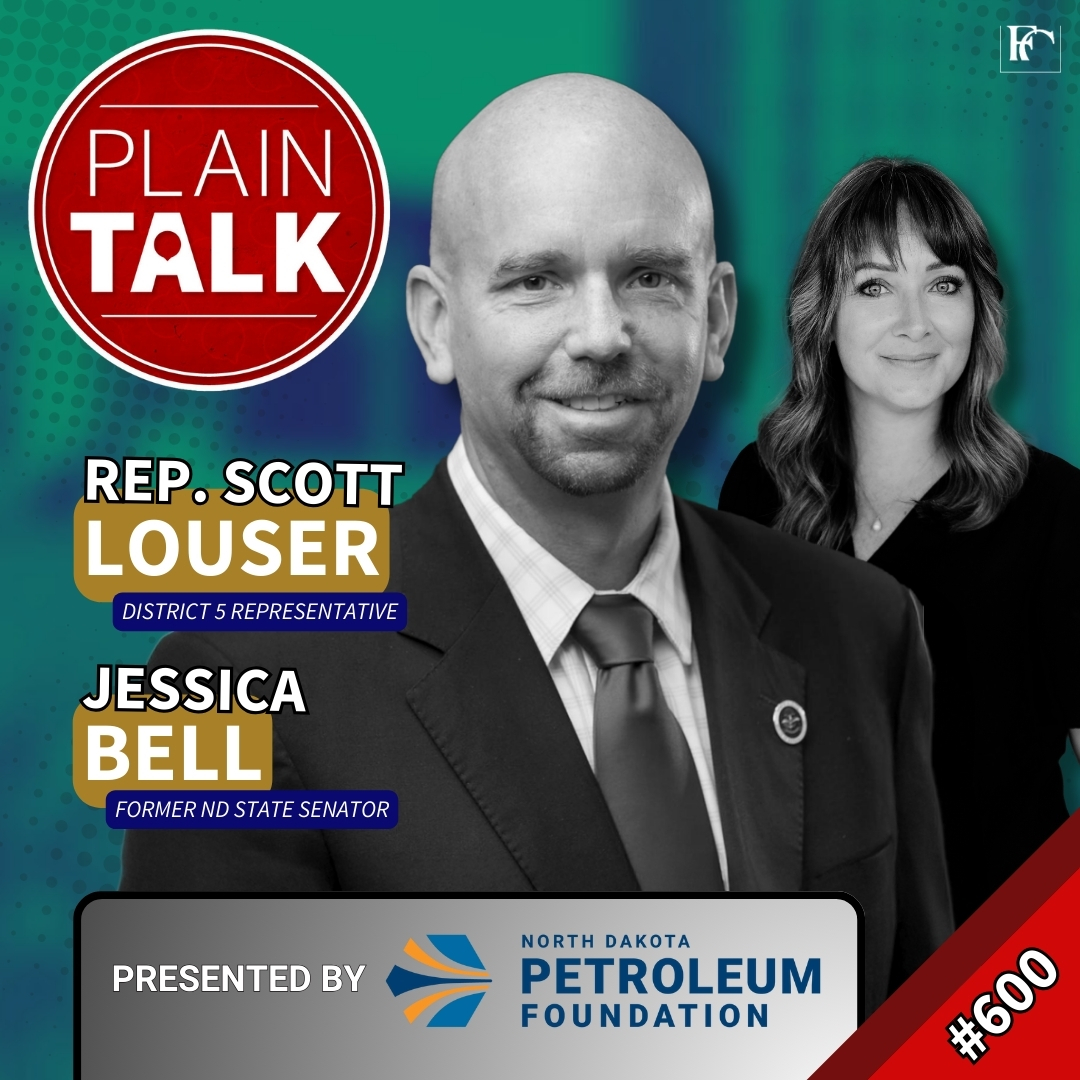
600: 'We're going to have problems with the caps'
During the closing hours of the legislative session, lawmakers came to a consensus around a property tax plan endorsed by Gov. Kelly Armstrong which provides $1,600 credits for the primary residences of North Dakotans and a 3% cap on the growth in overall property tax bills. Rep. Scott Louser voted for that plan, and encouraged his colleagues to vote for it, but in a surprise move, also announced in a floor speech that he had drafted language for a ballot measure campaign for his own property tax plan which had been amended into oblivion earlier in the session. "I wanted everybody to vote for property tax relief," he said of his eyebrow-raising move. "I just think there's a better way to do it." Louser wants the state to buy out the 60 mills funding school districts across the state, something he estimates will cost $750 million. He says his plan wouldn't nullify the plan lawmakers did pass, but he pointed out that the primary residence credit would have to be reauthorized by lawmakers next session anyway, and that his expectation would be, if voters approve his ballot measure, that lawmakers reduce of eliminate the credit. But wouldn't that mean some people, who saw their property tax bills eliminated by the primary residence credit, would start getting bills again? Louser said the next legislative session ould have to take that issue up, too. "If this were to pass, we are going to be in a situation next session where we have to evaluate for all of those people that had their taxes zeroed out," he said. "How do you balance that? How do you keep it at zero at a lower amount and then continue to step up the credit in the future?" Though Louser also indicated that he's not entirely decided on whether to go forward with his measure campaign or not. "It's hard for me to answer, 'are you going forward?'" he said, indicating that he like to do some polling of the public first. "If the polling shows that it's a 25 point no, why proceed with it? I don't have that answer yet." Louser also expressed frustration about the failure of a campaign finance reform bill which was originally intended to require legislative candidates to disclose beginning and ending fund balances, as well as campaign expenditures but ran into a wall of what was at times viscerally angry opposition in the House chamber. "It was almost all about process and not about the product," Louser said of the debate. "In the end, it's the product that we that we leave for the for the public to see. And the product that we have now is nothing. Nothing changed," he continued, referring to the fact that the legislation, drained of any real reform by the House, ultimately failed. Louser pointed out that taxpayers have "spent a little over a million dollars" on a new campaign finance system for the Secretary of State's office"to make this reporting easier for us as legislators, easier for the public to read," but that system now won't be fed with better data. This episode is brought to you by the North Dakota Petroleum Foundation, providing education and outreach opportunities related to the petroleum industry, advancing quality of life initiatives, and promoting and enhancing the conservation heritage of North Dakota. Learn more at www.NDPetroleumFoundation.org. If you want to participate in Plain Talk, just give us a call or text at 701-587-3141. It's super easy — leave your message, tell us your name and where you're from, and we might feature it on an upcoming episode. To subscribe to Plain Talk, search for the show wherever you get your podcasts or use one of the links below. Apple Podcasts | Spotify | YouTube | Pocket Casts | Episode Archive

599: 'We are 100% in a no-win situation with this'
Like many organizations and government entities across our region, the Fargo School Board has had to weigh how to react to an erratic president who is on a seek-and-destroy mission for anything with even a whiff of diversity, equity, and inclusion initiatives. Katie Christensen Mineer is the president of the school board. She and her fellow board members have come under fire for removing from their website four "philosophies" related to how they handle students in the LGBTQ community. Some critics have accused her and her board of capitulating to President Donald Trump. "We did this when we did because we were in the process of applying for and renewing a lot of our federal grants, which is $19.7 million," she said on Plain Talk. "And we wanted to protect those dollars." But she added that the philosophies didn't really have any bearing on how the school district conducts its business. "I believed in these statements for sure and I think some people liked seeing them there," she said, "but the actual, like, inner workings of our district, that is rooted in our strategic plan and that is rooted in our policies." Christensen Mineer also said that former Superintendent Rupak Gandhi, who very publicly proclaimed that he would ignore state laws regulating bathroom and pronoun use in our schools after the 2023 session, put her district in the political crosshairs. "A part of me is proud of him and I spoke in support of that and then a part of me is like, 'Oh, crud. What did we just do here?' Because yeah, I mean, we became this target then." Also on this episode, the Trump administrations chaotic approach to slashing federal spending has resulted in 23 workers losing their jobs at a Minot State University center that served disabled people. One of them, Kyle Erickson, wasn't just a worker at the center, but also received services from it. "It was kind of a neat little full circle moment for me because one of the projects that [the North Dakota Center for Pesons with Disabilities] runs is called infant development and they do a lot of work with, you know, early intervention, early diagnosis, screening, that type of thing. And I was born with cerebral palsy," he said. "I spent a lot of my youth in infant development." "I've been involved with this organization my entire life as a client and now I'm an employee fighting to keep this place running for, you know, people that were like me 10, 20 years ago that do rely on the good work." This episode is brought to you by the North Dakota Petroleum Foundation, providing education and outreach opportunities related to the petroleum industry, advancing quality of life initiatives, and promoting and enhancing the conservation heritage of North Dakota. Learn more at www.NDPetroleumFoundation.org. If you want to participate in Plain Talk, just give us a call or text at 701-587-3141. It's super easy — leave your message, tell us your name and where you're from, and we might feature it on an upcoming episode. To subscribe to Plain Talk, search for the show wherever you get your podcasts or use one of the links below. Apple Podcasts | Spotify | YouTube | Pocket Casts | Episode Archive
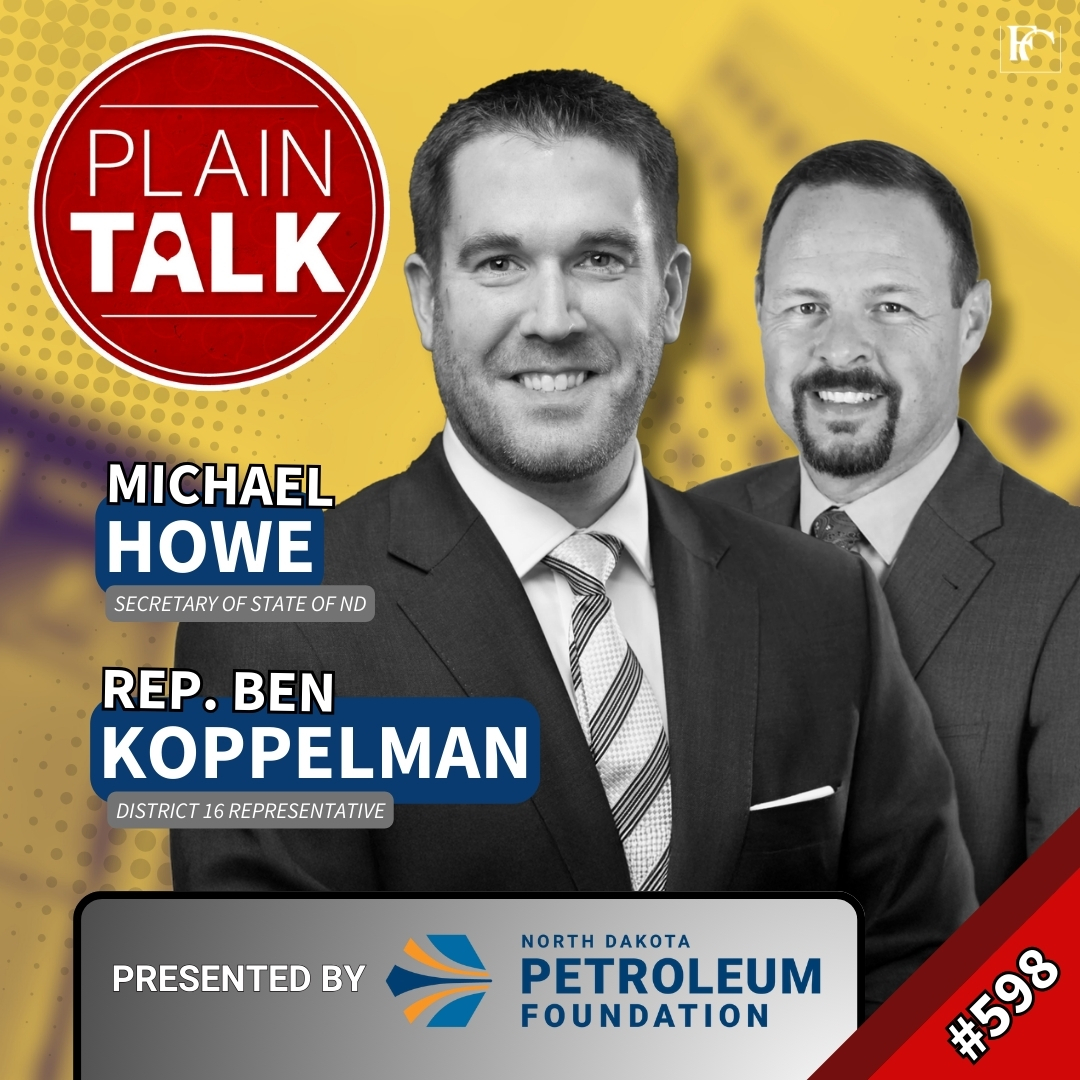
598: 'Fodder for just trolling and fishing'
On this Plain Talk, Sec. of State Michael Howe and Rep. Ben Koppelman joined us to discuss a surprisingly contentious issue in the closing days of the legislative session. Namely, a debate over laws requiring more rigorous campaign finance disclosures from legislative candidates. Howe supports the legislation, saying he wants better data for a new online database his office is implementing. Rep. Koppelman, however, suggested that the information wasn't that important to the public and would be "fodder for just trolling and fishing." He said that allowing the public to "really microscope every movement" is "not a practical or I would argue even a useful reason" to require greater disclosure. But without better disclosures, how could the public and the news media detect if a candidate is engaged in fraudulent or otherwise untoward activities with their campaign money? Koppelman said public officials are expected to "behave with high moral standards and follow these rules in a way that they can defend." Howe, meanwhile, said his office's goal is "to make this easy for the filer and for the public." Koppelman also weighed in on the closing debate over property taxes, saying he's not confident that the public is going to get enough property tax relief to head off another ballot measure. Koppleman called the legislation backed by Gov. Kelly Armstrong "the wrong approach from the get-go" and suggested that it's a futile endeavor. "I don't see any point in passing the bill, quite frankly, because it's like people aren't asking me for three drops in the bucket of relief from their property tax bill," he said. Also on this episode, co-host Chad Oban and I discuss the state of the property tax debate, and when this legislative session is likely to be over. This episode is brought to you by the North Dakota Petroleum Foundation, providing education and outreach opportunities related to the petroleum industry, advancing quality of life initiatives, and promoting and enhancing the conservation heritage of North Dakota. Learn more at www.NDPetroleumFoundation.org. If you want to participate in Plain Talk, just give us a call or text at 701-587-3141. It's super easy — leave your message, tell us your name and where you're from, and we might feature it on an upcoming episode. To subscribe to Plain Talk, search for the show wherever you get your podcasts or use one of the links below. Apple Podcasts | Spotify | YouTube | Pocket Casts | Episode Archive
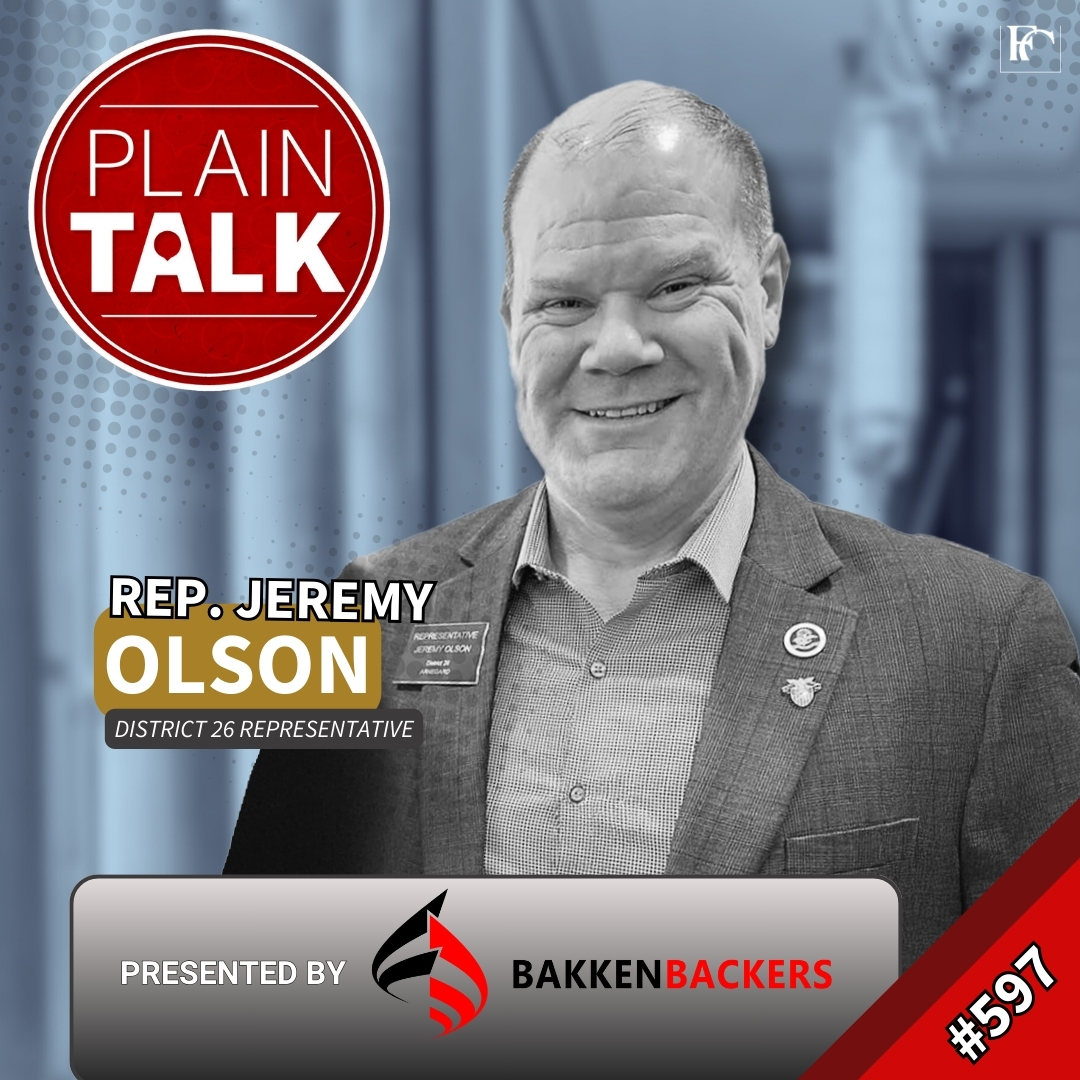
597: 'We're at the point where we're ready to throw fists here'
"Everybody's frustrated with everybody right now," Rep. Jeremy Olson said on this episode of Plain Talk. Olson is a Republican from Arnegard, and serves as the Majority Caucus Leader, and is well known as a "gentle giant" of North Dakota politics. Which is to say that his comment about fist fights was tongue-in-cheek, but he was expressing a real sense of frustration as lawmakers reach the hectic end of their session. Lawmakers are locked in tough debates over things like property taxes, budget bills, and school choice, though the last of those bills failed earlier this week. In particular, Olson spoke about the incessant division of complicated budget bills, such as the appropriation for the Commerce Department, which saw its amendments divided, and then the final bill amended, with most of that action being led by Rep. Ben Koppelman, a Republican from West Fargo. "When some people get up or when some divisions happen, you can kind of hear an audible groan in the room," Olson told us. "I'll leave it at that." Olson also spoke of legislation he's championed to incentivize oil exploration. Specifically, House Bill 1483 and Senate Bill 2397 which would lower tax burdens for oil exploration outside of the hottest areas of the Bakken and Three Forks formations. "They could find the next big boom in the Williston Basin," he said. "So, in order to help them offset that cost, that risk, we're giving them a financial incentive." Also on this episode, co-host Chad Oban and I talk about the bitter and surprising way this sessions debate over school choice bills ended, and analyze who has the strongest hand to play in the final fight over property tax reform. This episode is presented by Bakken Backers. Bakken Backers is a coalition of businesses, leaders, workers, and citizens who support energy production from the Bakken formation and its many benefits for North Dakota. Learn more at www.BackTheBakken.org. If you want to participate in Plain Talk, just give us a call or text at 701-587-3141. It's super easy — leave your message, tell us your name and where you're from, and we might feature it on an upcoming episode. To subscribe to Plain Talk, search for the show wherever you get your podcasts or use one of the links below. Apple Podcasts | Spotify | YouTube | Pocket Casts | Episode Archive

596: 'I'm kind of a free speech absolutist'
Just before Gov. Kelly Armstrong appeared on this episode of Plain Talk, he issued two vetoes for two very controversial bills passed by the legislature. The first was a rejection of Senate Bill 2307, a book ban bill sponsored by Sen. Keith Boehm. "I'm kind of a free speech absolutist," Armstrong said of his decision to spike the legislation, "because nobody's ever figured out who polices the policers." Armstrong criticized the legislation for making librarians and educators subject to potential civil and criminal penalties based on complaints filed against books from anywhere in the country. "They don't have to be in North Dakota. It's any individual," he said, calling the process the legislation set up "untenable and unworkable." Armstrong, who is a proponent of school choice policies, said he vetoed House Bill 1540, sponsored by Rep. Ben Koppelman, because it "is only for private school." What would a better school choice bill look like? One that "allows more parents more options to do more things and have more autonomy over their kids' education," he said. "And that includes a small rural school district that is 150 miles away from the closest private school." The governor is urging support for Senate Bill 2400, backed by Sen. Michelle Axtman, which is still alive in the legislative session. That bill would make education savings accounts available for all students for approved education expenses beyond just private school tuition. Also on this episode, singer and songwriter Chuck Suchy, new minted as North Dakota's official state troubadour, talked about that honor, and his musical career. "I am very grateful," he said, adding that he's happy "the state community embraces music, and I hope art and humanity." This episode is brought to you by the North Dakota Petroleum Foundation, providing education and outreach opportunities related to the petroleum industry, advancing quality of life initiatives, and promoting and enhancing the conservation heritage of North Dakota. Learn more at www.NDPetroleumFoundation.org. If you want to participate in Plain Talk, just give us a call or text at 701-587-3141. It's super easy — leave your message, tell us your name and where you're from, and we might feature it on an upcoming episode. To subscribe to Plain Talk, search for the show wherever you get your podcasts or use one of the links below. Apple Podcasts | Spotify | YouTube | Pocket Casts | Episode Archive

595: 'I couldn't care less that this comes from Donald Trump'
Dane DeKrey is a criminal defense attorney with the Moorhead-based lawfirm Ringstrom Dekrey. He recently signed onto an amicus brief in a legal fight over an executive order signed by President Donald Trump, which exacts retribution on a law firm Trump feels has wronged him. It does so by, among other punitive measures, revoking the firm's security clearances and prohibiting its personnel from entering government buildings. In his order, Trump accused the law firm WilmerHale of engaging "in obvious partisan representations to achieve political ends" and "the obstruction of efforts to prevent illegal aliens from committing horrific crimes and trafficking deadly drugs within our borders." But from another perspective, that's just engaging in the political process and representing criminal defendants. DeKrey says his support for the law firm isn't about politics. It's about principles. "I couldn't care less that this comes from Donald Trump," he said on this episode of Plain Talk. "I care that the rule of law is being questioned and as lawyers and as my law firm...we defend people who are not sympathetic the vast majority of the time. And if a person who is not sympathetic cannot call out for a lawyer and have someone answer, we are in a dangerous territory and I don't want to be there." Also on this episode, Sen. Kyle Davis, a Republican from Fargo, took a break from his work on the Appropriations Committee to talk to us about the progress toward funding a new state hospital in Jamestown, the challenges the state faces in delivering mental health services, and the debates over school choice policies and property taxes. He also commented on a last-minute amendment to the budget for the Office of Management and Budget to create a "life education committee" that would promote alternatives to abortion. The committee, which would be appointed by the governor and legislative leaders, would have $1.5 million in funding and would be tasked with contracting with a third party entity to provide pro-life education services. "I've always pushed back on bills that get added in the last minute," Davison said of the amendment, adding that he has "a bit of frustration in regards to it not being a standalone bill." "Those standalone bills that make it all the way through have had a minimum of four hearings, two of them in appropriations and they're better pieces of legislation because of it when they pass through like that," he said. "Especially when you're setting something up new and it's a new appropriation." He also said that lawmakers are mindful of last year's state Supreme Court ruling, which struck down the OMB budget from the 2023 session for not complying with the state constitution's single-subject mandate. "There is no question in my mind that we as a legislature are paying attention to that decision made by the Supreme Court in regards to the OMB budget," he said. This episode is brought to you by the North Dakota Petroleum Foundation, providing education and outreach opportunities related to the petroleum industry, advancing quality of life initiatives, and promoting and enhancing the conservation heritage of North Dakota. Learn more at www.NDPetroleumFoundation.org. If you want to participate in Plain Talk, just give us a call or text at 701-587-3141. It's super easy — leave your message, tell us your name and where you're from, and we might feature it on an upcoming episode. To subscribe to Plain Talk, search for the show wherever you get your podcasts or use one of the links below. Apple Podcasts | Spotify | YouTube | Pocket Casts | Episode Archive
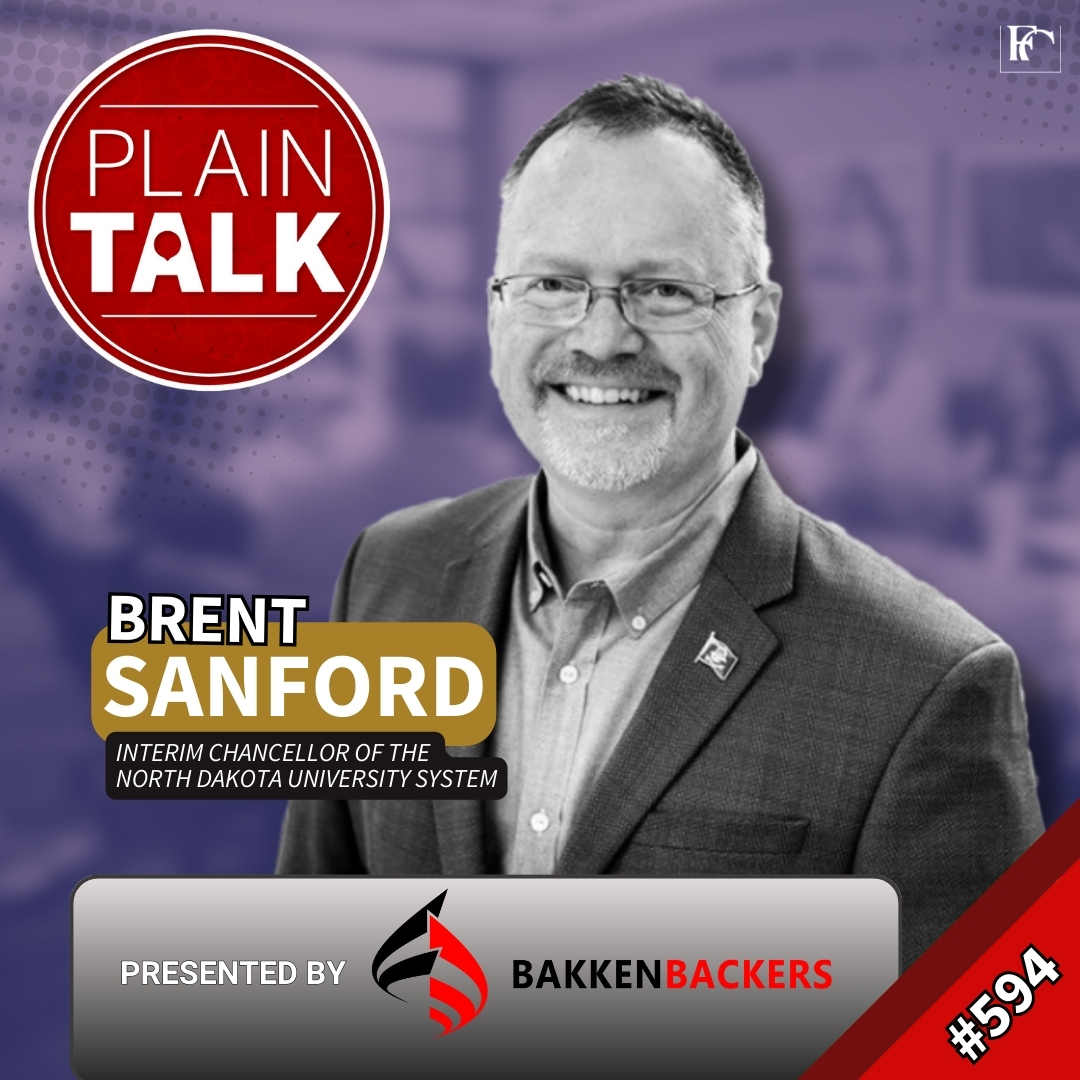
594: 'I hope it's not that I'm some kind of junky for chaos'
When former Lt. Gov. Brent Sanford accepted the job as interim chancellor of the North Dakota University System, he said a long time colleague contacted him to say he's "proven that you like dysfunction and you like to jump into that." Sanford said he laughed it off. "I hope it's not that I'm some kind of junkie for chaos for goodness sakes, but there's a lot in in in higher ed in general, especially with what's happening at the federal level," he said on this Plain Talk. "I mean, there's a lot of people that say, 'Why in the world would you want to go this direction?'" Speaking of chaos at the federal level, North Dakota State University recently announced that a foreign student who was here legally on a work and education program was detained for deportation by ICE. Sanford said that's going to be a significant challenge for a university system that has many staff, faculty, and students who aren't citizens. "Canadians are even nervous about this," he said. "I was just talking to a gentleman at breakfast that said down in Arizona the snowbirds that are Canadians are selling their house. They're not only offended but they're scared about this." "I hope we get this under control and return to an environment where we're respecting legal immigration," Sanford added. It should be noted that, after serving as Lt. Governor, Sanford headed up a recruitment program operated by North Dakota's oil industry that sought to recruit workers from Ukraine. Looking ahead, Sanford's initial focus as Chancellor will be on accountability, transparency, and conducting a "listening tour" across the state to understand the needs of stakeholders. He also said he was open to making his appointment as chancellor a permanent one. "I can say that pretty comfortably even though I haven't even started," he said. Also on this episode, co-host Chad Oban and I discuss the latest twists and turns in the property tax debate, the likely fate of Sen. Keith Boehm's book ban bill should it be sent to Gov. Armstrong's desk, and Rep. Lori VanWinkle playing the victim card against criticism of her mid-session ski vacation. This episode is presented by Bakken Backers. Bakken Backers is a coalition of businesses, leaders, workers, and citizens who support energy production from the Bakken formation and its many benefits for North Dakota. Learn more at www.BackTheBakken.org. If you want to participate in Plain Talk, just give us a call or text at 701-587-3141. It's super easy — leave your message, tell us your name and where you're from, and we might feature it on an upcoming episode. To subscribe to Plain Talk, search for the show wherever you get your podcasts or use one of the links below. Apple Podcasts | Spotify | YouTube | Pocket Casts | Episode Archive
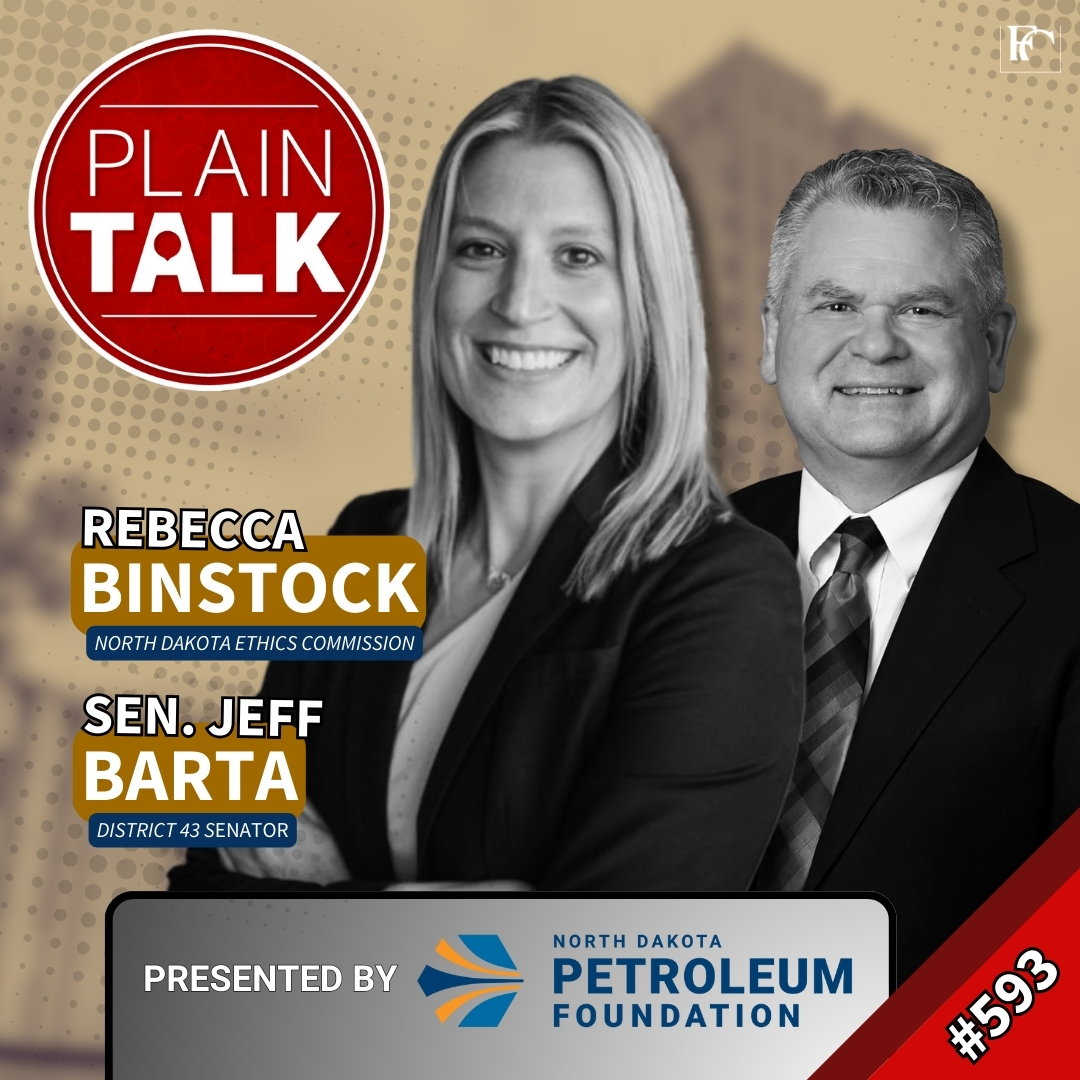
593: Ethics process is 'ready for exploitation and weaponization' without good reforms
"The way the current process is set up, it is ready for exploitation and weaponization," Rebecca Binstock said on this episode of Plain Talk. Binstock is the executive director of the North Dakota Ethics Commission, and she admits that there are problems with the status quo. For instance, public servants who have a complaint filed against them are prohibited, under threat of criminal penalty, from talking about it, even though the person who filed the complaint is free to say whatever they want. She also says that complaints take too long to process because they require the commission to host what can be a lengthy and often fruitless mediation between the complainant and the respondent. But rather than fix these issues, Binstock says lawmakers seem more interested in making the commission's job harder. Recently, a House committee that is considering the commission's budget cut funding for a new staffer-- currently the staff consists of just Binstock and two others--and imposed a 180 day time limit for a complaint. While Binstock said a deadline might make sense in some circumstances, in this context, it may make their jobs next to impossible. In response to the committee's actions, the Ethics Commission put out a statement saying the changes are "a roadblock intended to hamper the commission's work." That language--specifically the use of the word "hamper"--is interesting because the ethics amendment to the state constitution states, "Laws may be enacted to facilitate, safeguard, or expand, but not to hamper, restrict, or impair" the ethics commission. Does the commission consider the committee's actions a potential constitutional violation? "It certainly has been a discussion," Binstock said, when asked. "I think the commission statement kind of speaks for itself," she added. Also on this episode, Sen. Jeff Barta, a Republican from Grand Forks, responds to the defeat of a so-called "parental rights" bill, the passage of a new legislation governing genders in bathrooms, and his work to create a collaborative process between the U.S. military and state/local interests when it comes to the impact of development and industrialization about military installations in our state. This episode is brought to you by the North Dakota Petroleum Foundation, providing education and outreach opportunities related to the petroleum industry, advancing quality of life initiatives, and promoting and enhancing the conservation heritage of North Dakota. Learn more at www.NDPetroleumFoundation.org. If you want to participate in Plain Talk, just give us a call or text at 701-587-3141. It's super easy — leave your message, tell us your name and where you're from, and we might feature it on an upcoming episode. To subscribe to Plain Talk, search for the show wherever you get your podcasts or use one of the links below. Apple Podcasts | Spotify | YouTube | Pocket Casts | Episode Archive
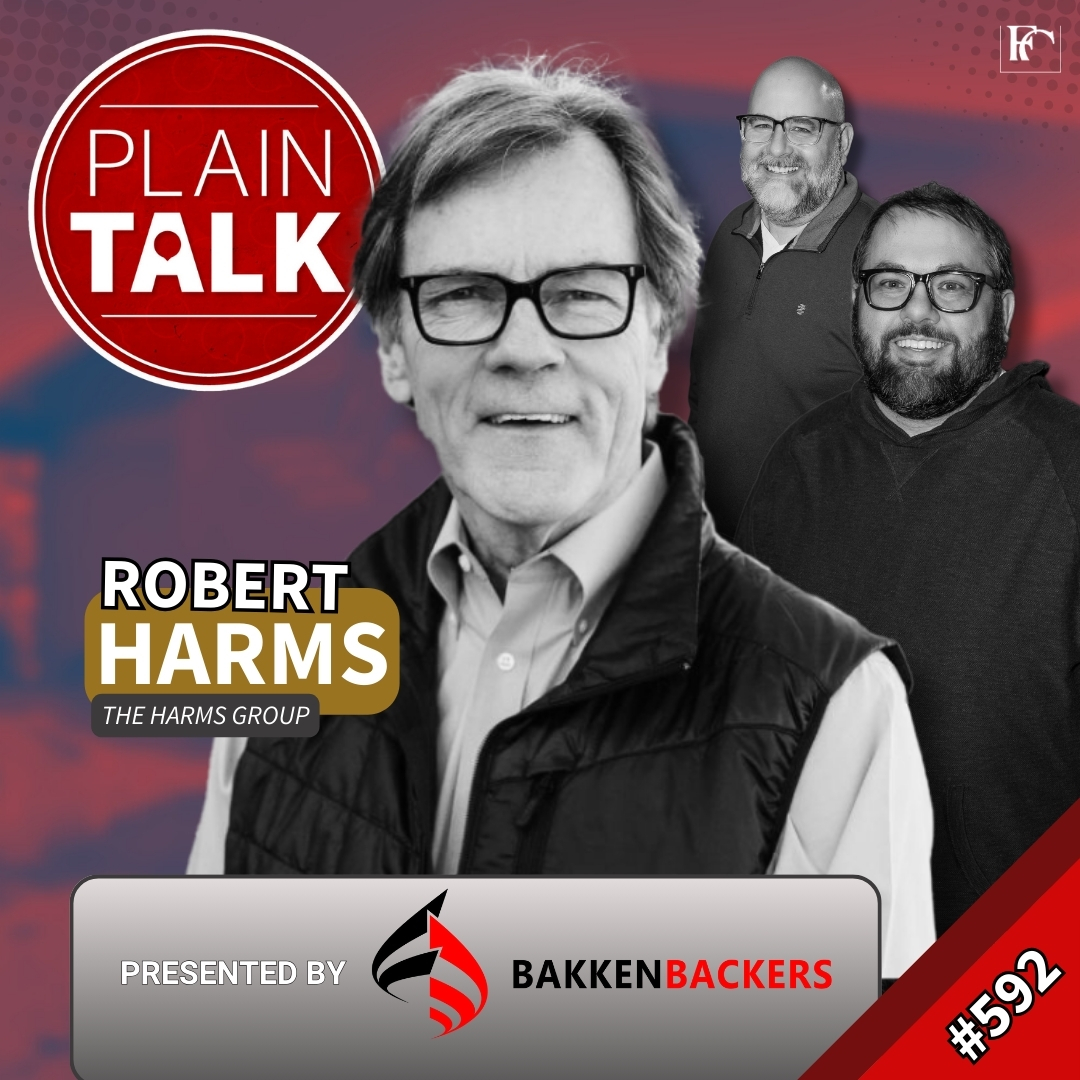
592: 'We have...lifelong Republicans saying I'm done. I've had it.'
If you're a Republican on the ballot in North Dakota you're probably going to win. It wasn't always that way, and it won't always be that way, but it is that way now, and it makes a problem within the NDGOP, where a certain faction is playing games with the rules to control which candidates appear on the ballot as Republicans, all the more acute. "What's going on is we have some gamesmanship at the district level where the districts are basically telling the state party that they are autonomous and they can do their own thing and they don't have to answer to the state committee or the state Republican party," Robert Harms said on this episode of Plain Talk. What this means, as a practical matter, is that if you want to get involved in local politics, as a candidate or a district-level leader, or even as a just a rank-and-file party member, you may get locked out by political shenanigans. Harms is a former NDGOP chairman, who as served as legal counsel to multiple governors, and he is trying to get a law changed that prohibits political parties from setting uniform rules for their constituent districts. He said the status quo, which sees some district leaders trying to keep meetings and rules a secret, is alienating people. "I mean, we have former elected officials, statewide elected officials, long-time, lifelong Republicans saying, 'I'm done. I've had it. I'm not going to any more conventions, whether it's at the state level or the endorsing convention,'" Harms said. "I've had friends tell me, 'Harms, there is no way I'm going to engage with the Republican party any longer because of all the nonsense that's going on.'" Also on this episode, co-host Chad Oban and I talk about the status of property tax reform in Bismarck, the local impact of the Department of Government Efficiency's (DOGE) cuts, and what the last weeks of the legislative session may look like. This episode is presented by Bakken Backers. Bakken Backers is a coalition of businesses, leaders, workers, and citizens who support energy production from the Bakken formation and its many benefits for North Dakota. Learn more at BackTheBakken.org. If you want to participate in Plain Talk, just give us a call or text at 701-587-3141. It's super easy — leave your message, tell us your name and where you're from, and we might feature it on an upcoming episode. To subscribe to Plain Talk, search for the show wherever you get your podcasts or use one of the links below. Apple Podcasts | Spotify | YouTube | Pocket Casts | Episode Archive
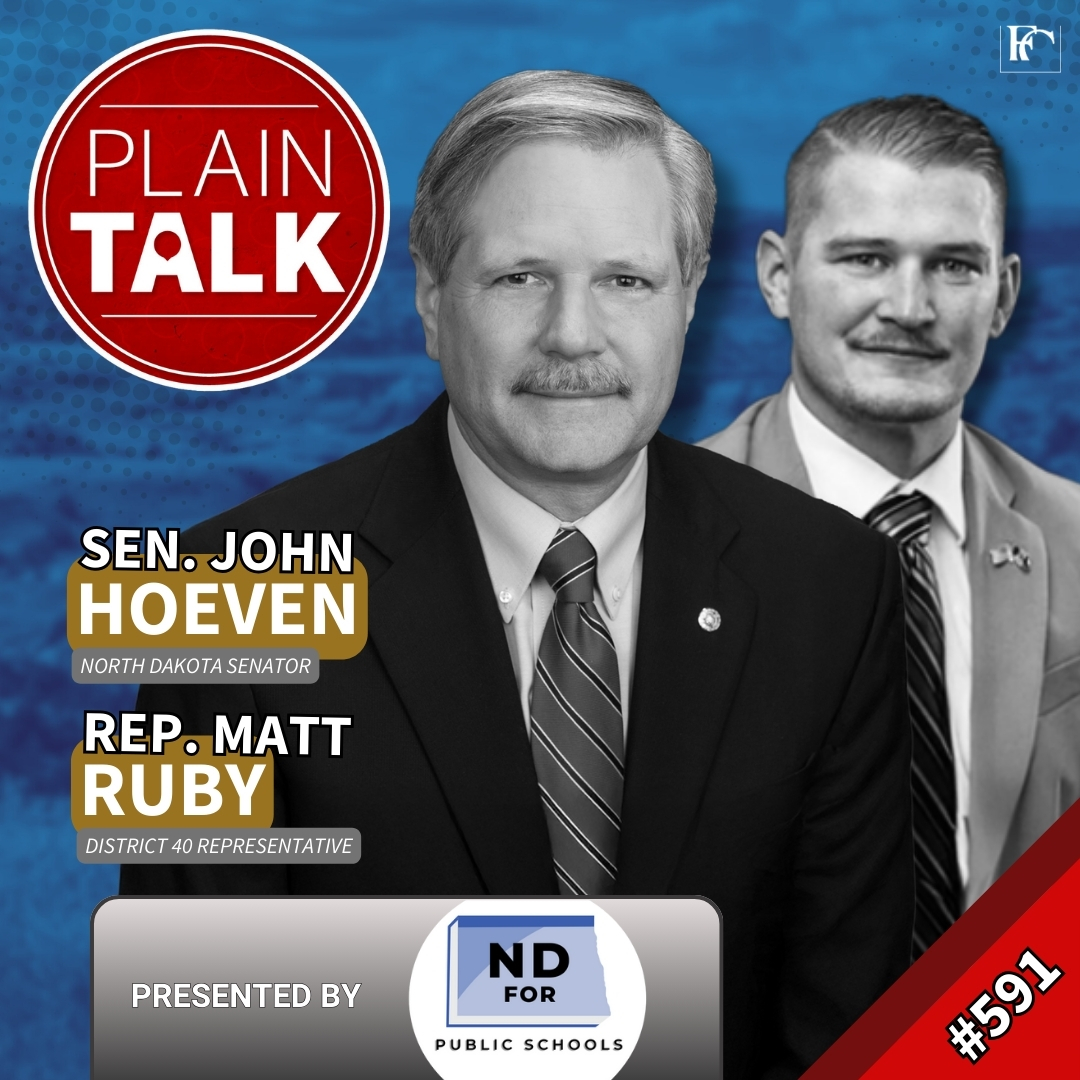
591: 'We're going to be right back in this position fighting'
"I think we are for certain going to see another property tax measure if that's the version that we kick out." That's what Minot Republican Rep. Matt Ruby said of the watered-down version of Gov. Kelly Armstrong's property tax plan that the state Senate is currently backing. "I don't think that that measure failing by that amount was because people love paying property taxes," Ruby continued, referring to the Measure 4 proposal to abolish property taxes, which more than 60% of voters voted against last year. "If we don't have a stepped plan where eventually we get to the point where it's zeroed out as best as possible...we're going to be right back in this position fighting." Ruby also took questions about the failure of Attorney General Drew Wrigley's truth-in-sentencing legislation, and his decision to repudiate his vote in favor of a resolution opposing same-sex marriage. Also on this episode, Sen. John Hoeven talked about tariffs, trade, the Department of Government Efficiency, and impeaching judges. On that last, Hoeven called the push to impeach judges "concerning," saying it could threaten the independence of the judiciary, though he also said that there are things Congress can do to address practices such as judge shopping, or judges delaying infrastructure projects for years by allowing endless litigation. Hoeven also took questions about whether he'd hold town halls. "I do public meetings all over the state and people can come. I mean, everybody's got their own style in terms of a town hall, but these are public meetings and I've always done many of them all over the state and I'll continue to do them," he said. "I also come on and talk to guys like you. I answer questions to the press, to the radio. People can come in and see me. I have meetings. I work pretty hard on staying connected with uh North Dakotans, and I respect them, and it's an honor and a privilege to serve him." This episode is presented by North Dakotans for Public Schools. North Dakotans for Public Schools is dedicated to protecting and strengthening public education in North Dakota. United by the belief that public schools are the cornerstone of our communities; North Dakotans for Public Schools fights against harmful policies like voucher schemes that divert resources away from public schools. By bringing together educators, parents, school boards, and citizens; North Dakotans for Public Schools amplifies the voices of those who understand the critical role public schools play in shaping the future of North Dakota's children and communities. Learn more and get involved at www.NDforPublicSchools.com. If you want to participate in Plain Talk, just give us a call or text at 701-587-3141. It's super easy — leave your message, tell us your name and where you're from, and we might feature it on an upcoming episode. To subscribe to Plain Talk, search for the show wherever you get your podcasts or use one of the links below. Apple Podcasts | Spotify | YouTube | Pocket Casts | Episode Archive

590: 'We don't even know who we're supposed to call'
Gov. Kelly Armstrong is pushing a "bell to bell" ban on cell phones in schools, and his inspiration is a book called the Anxious Generation, which was written by Jonathan Haidt. But it's more than a book. It's also a movement. Casey Mock, the senior policy manager for Anxious Generation, joined this episode of Plain Talk to discuss their initiative. Some are condemning this effort as another teen panic, but Mock says that's not so. "You know what makes it different from a moral panic like the satanic panic or even going back to Salem witch trials type witch hunts is that we actually have pretty clear data that demonstrates the impact that not just phones but also social media is having on kids mental health on their educational," Mock said. "There's just pretty clear data that's been assembled over the last decade, decade and a half since these things have become mainstream which makes it materially different from some of these earlier moral panics." He said the goal of the legislation is to make state government the"bad cop" and taking pressure off educators to police phone use. Also on this episode, Coiya Tompkins, president of Grand Forks-based Community Violence Intervention Center, and Seth O'Neill, executive director of the North Dakota Domestic and Sexual Violence Coalition, talked about the uncertainties chaos in the federal government is creating for their work. O'Neill said that getting answers on their current funding, and future appropriations, has proven hugely difficult among cuts implemented by top Trump administration adviser Elon Musk and his Department of Government Efficiency team. "So we just heard recently that the CDC, which funds rape prevention and education,they basically decimated that division. Cut people. We don't even know who we're supposed to supposed to call or who is our a grant manager there because they just pretty much cut everyone," he said. "What I've been telling both federal people at the federal congressional level as well as our state folks is that we do not believe that what we are proposing is a want. It's a need," Tompkins added. Both argued that while cuts to their programs may save money in the short term, over a longer period of time costs will accumulate if their services, which often help prevent crime and violence and ease burdens on the criminal justice system, become less accessible. This episode is presented by Bakken Backers. Bakken Backers is a coalition of businesses, leaders, workers, and citizens who support energy production from the Bakken formation and its many benefits for North Dakota. Learn more at BackTheBakken.org. If you want to participate in Plain Talk, just give us a call or text at 701-587-3141. It's super easy — leave your message, tell us your name and where you're from, and we might feature it on an upcoming episode. To subscribe to Plain Talk, search for the show wherever you get your podcasts or use one of the links below. Apple Podcasts | Spotify | YouTube | Pocket Casts | Episode Archive
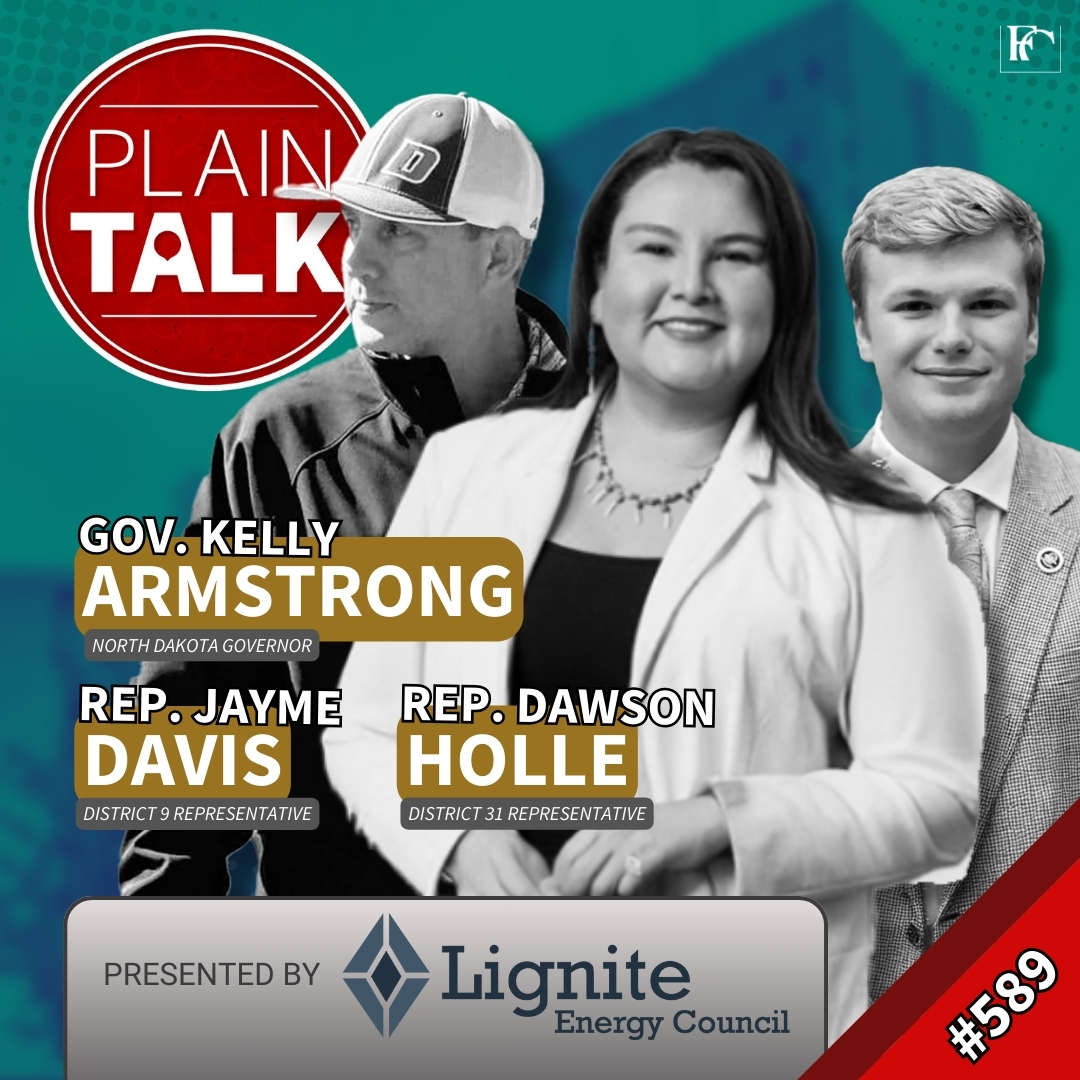
589: 'I think this is an unforced error'
It's an annual tradition to have Gov. Kelly Armstrong on Plain Talk for a baseball-only episode contemporaneous to MLB's opening day. Unfortunately, we didn't keep our promise this time, since we're in the closing weeks of the legislative session in Bismarck, and there's a lot going on. When you have the governor on in that context, you have to ask some political questions. We asked Armstrong about amendments made to the property tax plan he's backing by the Senate Appropriations Committee at the behest of Senate Majority Leader David Houge. "I spent six years in D.C. where a lot of times Republicans would walk in and step on a rake before we go vote," the former congressman said. "I think this is an unforced error," he added, "and I think this is what happens when you have a small group of people decide they're going to put amendments onto a bill without vetting it publicly." Armstrong says he objects to lowering the tax credit homeowners would receive from $1,450 to $1,250, as well as the 75% cap on how much of a property tax bill that credit could offset. He also pushed back on intent language which aims to use Legacy Fund dollars to pay for non-primary residence properties which in many cases are owned by people who live out of state. Armstrong also commented on amendments he's backing to ban cell phones in schools, saying it's not making him that popular with his own children. "I have two teenagers at home," he said. "You can about imagine how it's going." Also on this episode, Rep. Dawson Holle, a Republican, and Rep. Jayme Davis, a Democrat, talk about their new Future Caucus, which seeks to bring together a bipartisan group of younger lawmakers so that they can find ways to work together. Holle said it's helpful to coordinate these efforts, especially since older lawmakers don't necessarily understand modern issues. He described one older lawmaker who was confused about artificial intelligence issues. "AI, is that artificial insemination for cows?" Holle says he was asked. "Oh my goodness, no, that is artificial intelligence," he replied. This episode is presented by Lignite Energy Council, an organization dedicated to protecting and enhancing the development of North Dakota's abundant lignite resources. Their goal is to maintain a viable lignite coal industry and support the generation of electricity, synthetic natural gas, and valuable byproducts. Visit www.Lignite.com/Podcast to connect and learn more. If you want to participate in Plain Talk, just give us a call or text at 701-587-3141. It's super easy — leave your message, tell us your name and where you're from, and we might feature it on an upcoming episode. To subscribe to Plain Talk, search for the show wherever you get your podcasts or use one of the links below. Apple Podcasts | Spotify | YouTube | Pocket Casts | Episode Archive
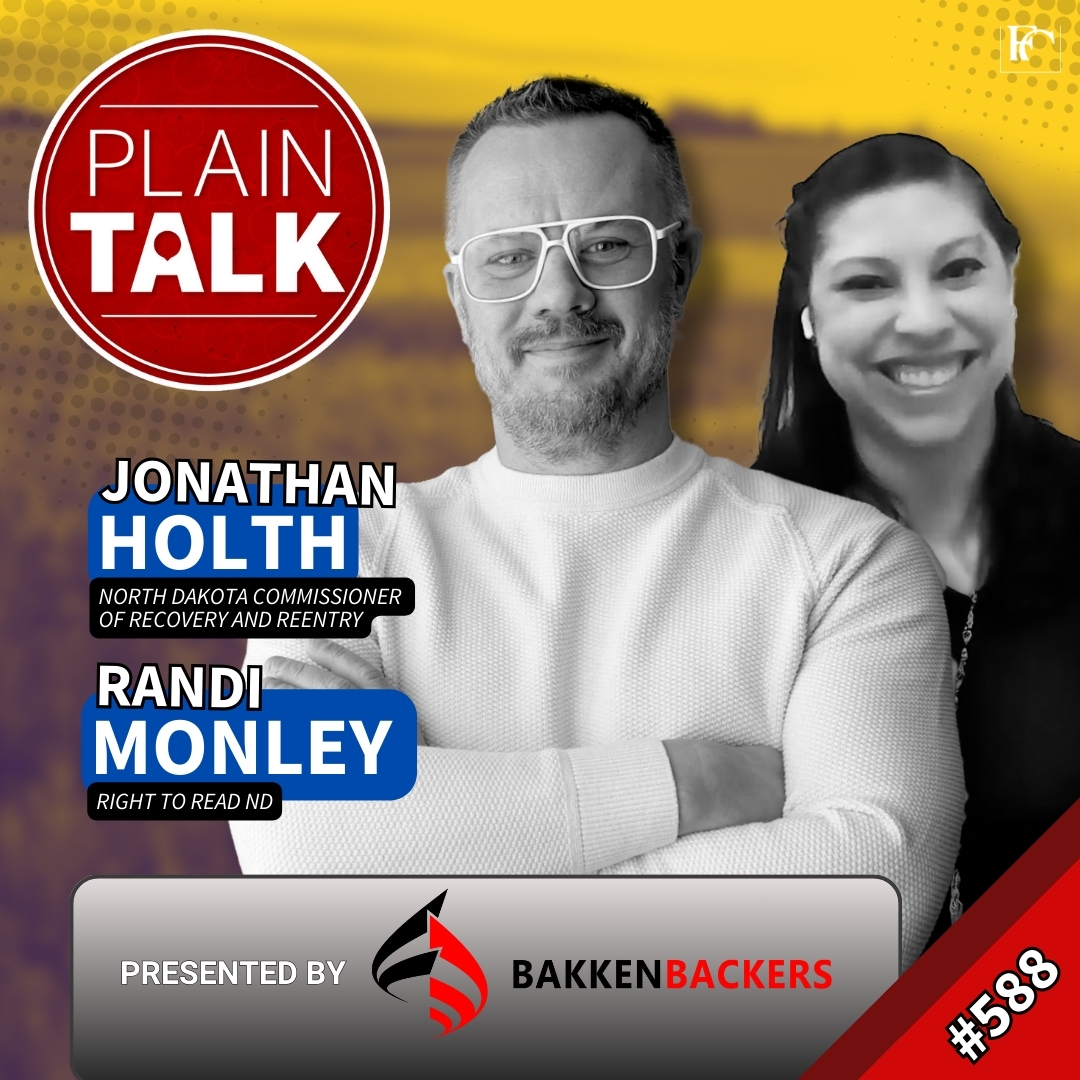
588: 'Does everything in the library need to be at the at the level for a kindergartner?'
There is a big debate over criminal justice reform at the legislative session in Bismarck. Attorney General Drew Wrigley suggests the state has been soft on crime, and that's resulted in higher crime rates. He's pushing a bill to keep people convicted of many crimes locked up for longer. But Jonathan Holth, Gov. Kelly Armstrong's Commissioner of Recovery and Re-entry, pointed out on this episode of Plain Talk that, far from being soft on crime, North Dakota's incarceration rates have been climbing. According to state Department of Corrections data, he's right. The population in North Dakota's state prisons (not counting local jails) is up more than 15% over the last five years, and more than 47% in the previous 20. There is friction between Wrigley and Armstrong's administration over Wrigley's sentencing bill, but Holth joined Plain Talk to talk about another set of bills lawmakers are considering. House Bill 1425, 1417, and 1549, seek to create new tools to help those with addiction and mental health challenges navigate the criminal justice system and find peace and prosperity again. HB1425 addresses diversion and deflection programs, which gives law enforcement, prosecutors, and judges some flexibility to get a person help instead of arresting, charging, and incarcerating them; HB1417 seeks to reform the probation and parole process, addressing things like paperwork and fees that could land people back in jail on minor technicalities; HB1549 deals with helping people re-entering society have the the things they need, like up-to-date ID, to find housing and jobs. Holth says these three bills together provide "a comprehensive look at sort of the front end, the middle, and the back end" of the criminal justice system. Also on this episode, Minot-area librarian Randi Monley, a co-chair of Right to Read ND, gave an update on the progress of Senate Bill 2307, which is book ban legislation introduced by Sen. Keith Boehm, who argues that North Dakota's libraries and schools are showing children pornography. The legislation requires libraries to move supposedly offensive materials to places where children aren't allowed. "So in a K-12 library, what are you going to do? Are you going to have to have a separate space for just high school kids?" she asked. "I doubt many schools are going to do that. Or does everything in the library need to be at the level for a kindergartener?" Also on this episode, co-host Chad Oban and I discussed a hearing on Wrigley's legislation, Senate Bill 2128, which saw some less than truthful testimony. This episode is presented by Bakken Backers. Bakken Backers is a coalition of businesses, leaders, workers, and citizens who support energy production from the Bakken formation and its many benefits for North Dakota. Learn more at BackTheBakken.org. If you want to participate in Plain Talk, just give us a call or text at 701-587-3141. It's super easy — leave your message, tell us your name and where you're from, and we might feature it on an upcoming episode. To subscribe to Plain Talk, search for the show wherever you get your podcasts or use one of the links below. Apple Podcasts | Spotify | YouTube | Pocket Casts | Episode Archive
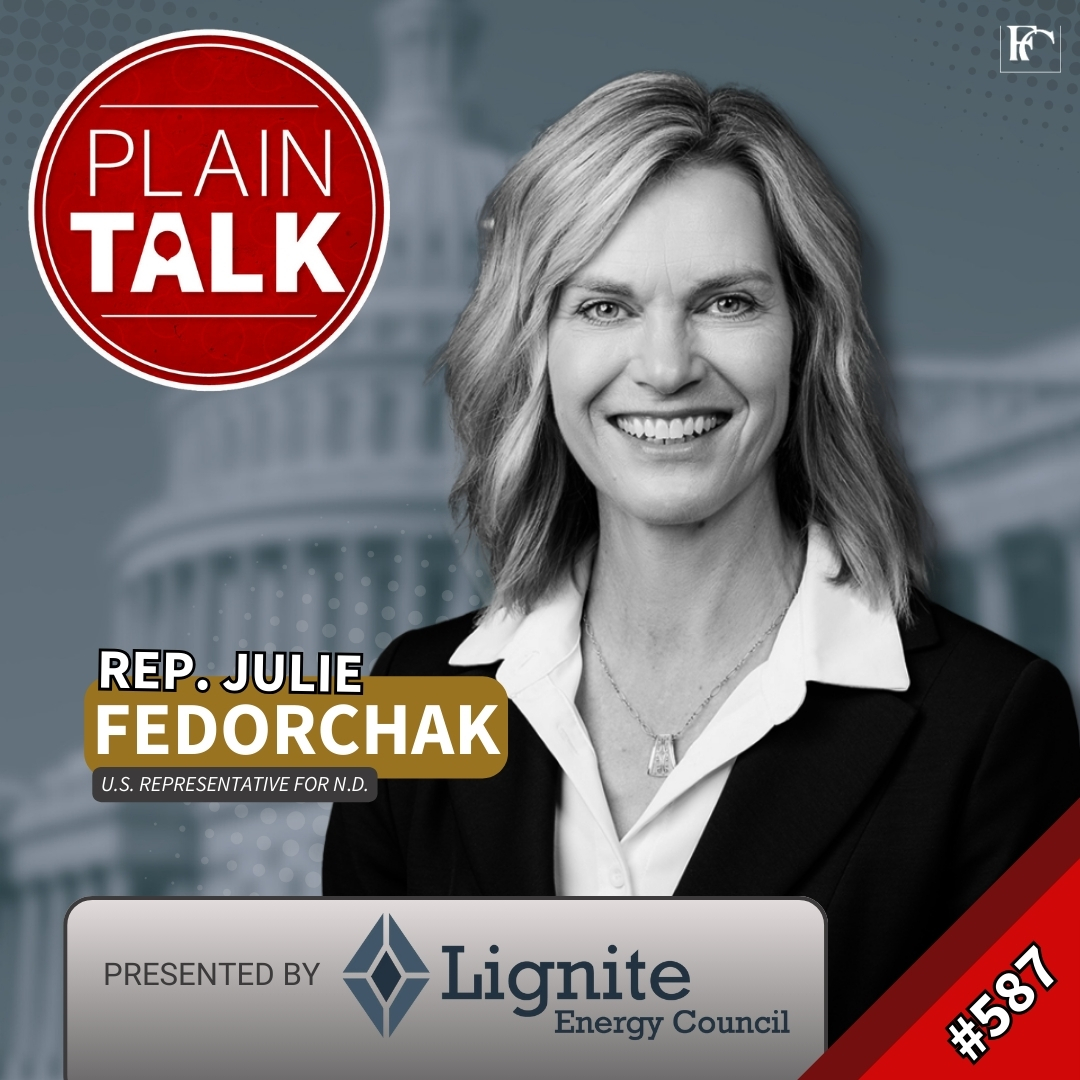
587: 'I don't know what President Trump's position on Canada is right now either'
Many North Dakotans are demanding that our state's federal delegation hold town hall meetings to take questions about the extraordinary beginning of President Donald Trump's second term in office. I've called for town halls, too. Congresswoman Julie Fedorchak joined this episode of Plain Talk, and while that's not a town hall, she did take some questions on the topics that are motivating those calls for town halls. Like the administration's antagonistic and mercurial approach to relations with our northern neighbors in Canada. "I don't know what President Trump's position on Canada is right now either," she said, echoing a similar sentiment from North Dakota Farmer's Union President Mark Watne. "I can't control Trump's tariff approach, right?" she continued. "He's going to do that." She did say that Trump's approach is "not my style" and that she's "more about solutions." Fedorchak also took questions about the DOGE, or Department of Government Efficiency, arguing that there is waste and fraud in the federal government and that a shakeup was needed. Still, she indicated that the approach gives her pause. "You can disagree with how they manage it. I'm not defending them," she said. "They don't work for me. They work for President Trump." Fedorchak also expressed support for interacting with constituents. "I agree with you on the the need for constant communication with constituents and I have been doing that since day one," she said, listing numerous open-pto-the-public events she's held with various interest groups. But she argued that these interactions should be "back and forth, hearing from constituents, delivering answers, facing questions, not uh, waving signs and shouting everybody down." Also on this episode, co-host Chad Oban and I discuss the ugly new revelations about former state Sen. Ray Holmberg's repugnant activities, and the sometimes partisan reaction to them, as well as the latest from the legislative session. This episode is presented by Lignite Energy Council, an organization dedicated to protecting and enhancing the development of North Dakota's abundant lignite resources. Their goal is to maintain a viable lignite coal industry and support the generation of electricity, synthetic natural gas, and valuable byproducts. Visit Lignite.com to connect and learn more. If you want to participate in Plain Talk, just give us a call or text at 701-587-3141. It's super easy — leave your message, tell us your name and where you're from, and we might feature it on an upcoming episode. To subscribe to Plain Talk, search for the show wherever you get your podcasts or use one of the links below. Apple Podcasts | Spotify | YouTube | Pocket Casts | Episode Archive
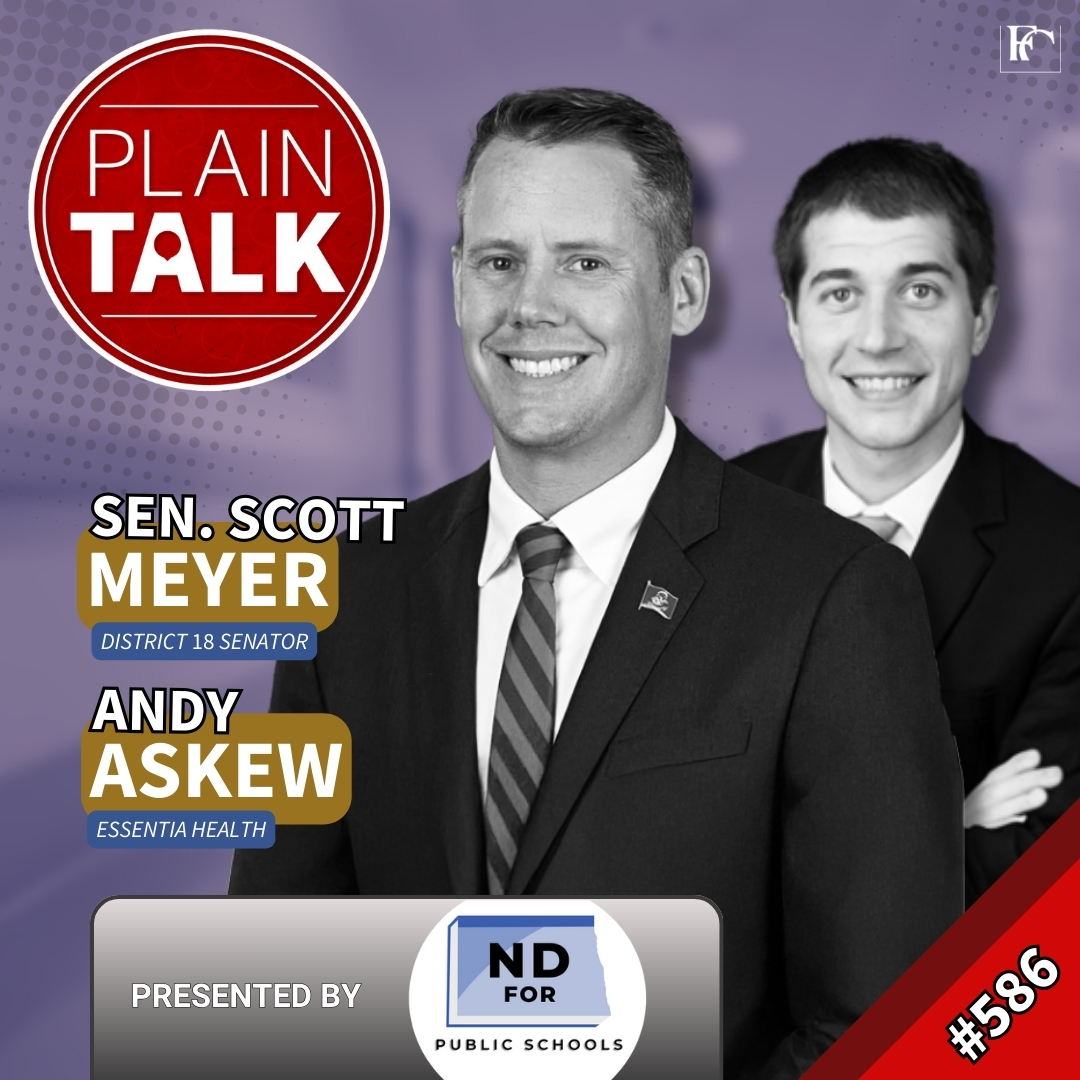
586: 'The people who ultimately get hurt in this...are the patients'
MINOT — Our attitudes about health insurance shift, depending on the context we're in. When we're healthy and paying premiums, we want costs to be low. When we're sick or hurt or sitting alongside a family member suffering some malady, we want expansive coverage and not a lot of bureaucracy. Unfortunately, these things are in tension with one another; part of it is the process of prior authorization. What is that, specifically? "When a provider requests a procedure, a prescription, or anything like that, what they do is they request this through the insurance provider to make sure that it's covered," Sen. Scott Meyer said. That can sometimes be a lengthy process, taking days or weeks, which aren't happy days or weeks when a person is hurting. Sen. Meyer has sponsored Senate Bill 2280, which targets a specific type of insurance (self-funded policies) for regulation on prior authorization. "If we're going to be reviewing a prior authorization with the insurance company, it needs to be done by a physician rather than a business analyst, an algorithm or AI," Sen. Meyer said of his bill. "The people that ultimately get hurt in this, though, are the patients," added Andy Askew, who is the Vice President of Public Policy for Essentia Health and appeared alongside Sen. Meyer. "This is meant, again, to help these folks that need help, need care, and to get it in a timely manner." Also on this episode, co-host Chad Oban and I discussed a Minnesota lawmaker backing legislation to define criticism of President Donald Trump as a mental illness (and his recent arrest for soliciting sex from a child), the progress on a book ban bill, the status of Gov. Kelly Armstrong's proposed property tax reform, and how my reporting ended up on a Court TV live stream. This episode is presented by North Dakotans for Public Schools. North Dakotans for Public Schools is dedicated to protecting and strengthening public education in North Dakota. United by the belief that public schools are the cornerstone of our communities; North Dakotans for Public Schools fights against harmful policies like voucher schemes that divert resources away from public schools. By bringing together educators, parents, school boards, and citizens; North Dakotans for Public Schools amplifies the voices of those who understand the critical role public schools play in shaping the future of North Dakota's children and communities. Learn more and get involved at www.NDforPublicSchools.com. If you want to participate in Plain Talk, just give us a call or text at 701-587-3141. It's super easy — leave your message, tell us your name and where you're from, and we might feature it on an upcoming episode. To subscribe to Plain Talk, search for the show wherever you get your podcasts or use one of the links below. Apple Podcasts | Spotify | YouTube | Pocket Casts | Episode Archive
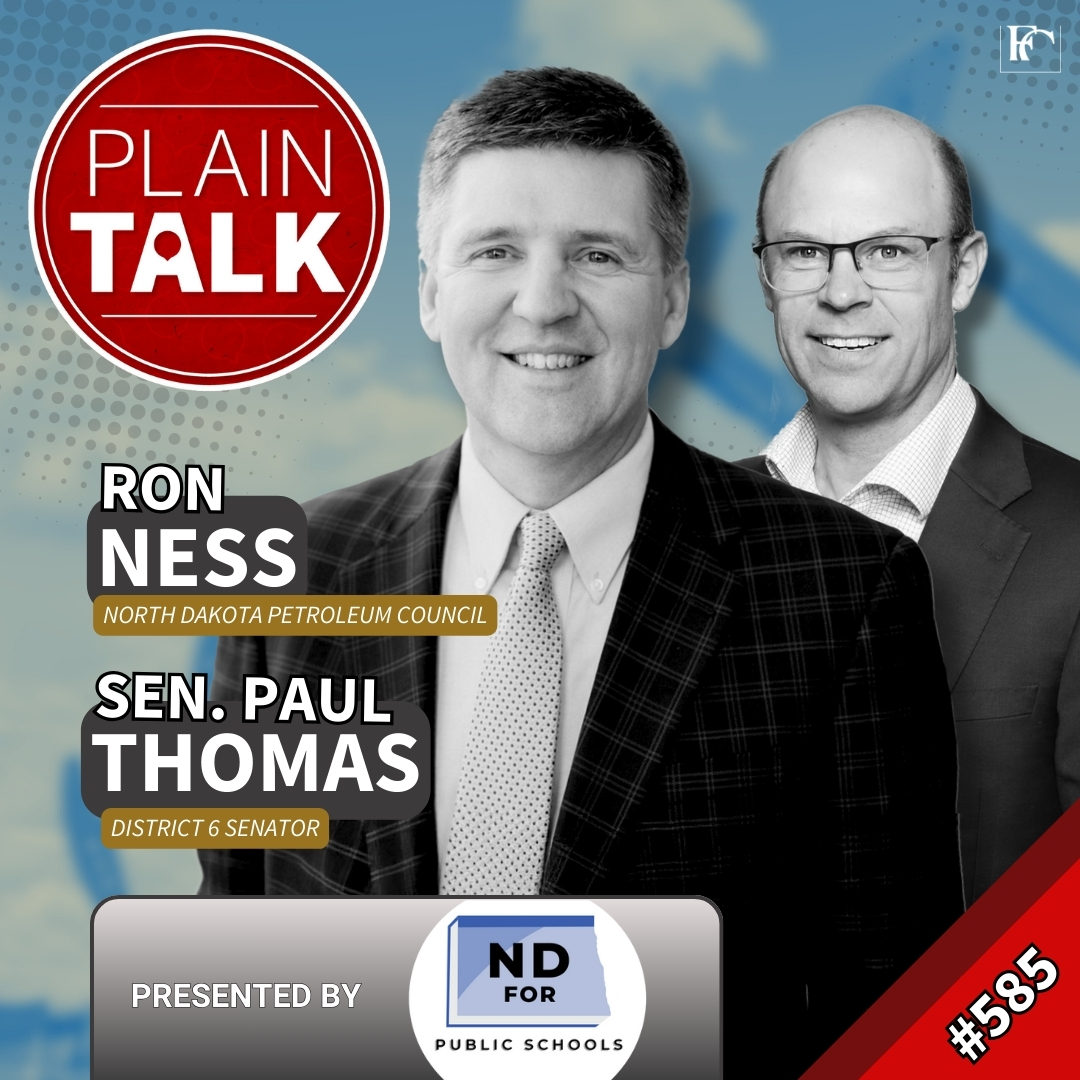
585: 'We're going to need massive amounts of CO2'
It's no secret that the oil industry is central to North Dakota's economy. Still, it's surprising even for in-the-know citizens to look back at the remarkable growth of that industry over the last couple of decades. The North Dakota Petroleum Council routinely commissions studies into the economic impact of their industry, and the findings are eye-popping. The first study was conducted in 2005. "At that time, the oil and gas industry, we were producing 92,000 barrels of oil a day. We had 3,300 mostly tired oil wells from non-Bakken formations. We employed about 5,000 people," NDPC President Ron Ness said on this episode of Plain Talk. "Today we are a three $3.2 billion industry." "We employ 63,000 people," he continued. "We produce 1.2 million barrels of oil a day. "It's as you said, the rise has just been incredible." But what about the future? Ness says there are opportunities to find new avenues for growth that North Dakota must seize lest oil production and its attendant boons in terms of economic impacts and tax revenues ebb. "With the best technology in all the world focused on this resource, out of every 100 barrels of oil, we're still leaving 85 in the ground," he said. "If we can get another 15%, that's a doubling of the ultimate recovery, and it will add generations and generational wealth and opportunities for future North Dotans. Without that, we're going to we're going to deplete this resource." How do we seize this opportunity? "We're going to need massive amounts of CO2," Ness said, pointing out that the NDPC, along with partners at North Dakota's universities, have been pursuing enhanced oil recovery methods using carbon dioxide. "We've been studying enhanced oil recovery through the use of carbon dioxide since 20 3 with the [University of North Dakota Energy and Environment Research Center]," Ness said. "The uniqueness about carbon dioxide and what it does is it mobilizes new oil off the rock. You've got to keep that that pressure up in that reservoir. Natural gas will help that. It'll do some of that, but CO2, as proven by EERC in Bakken rock, will mobilize new oil." Also on this episode, Sen. Paul Thomas, a Republican from Velva, joined us to discuss the rural perspective on the property tax debate. One concern he has is that the focus of House Bill 1176, which was introduced by Rep. Mike Nathe and is supported by Gov. Kelly Armstrong, is exclusively on property tax relief for primary residences. Thomas argues that this could create a political unbalance that has the spending promoted by a majority of voters supported by a minority of farmers and business owners. "In many of the counties, agricultural land provides the majority of the tax base for that county," he said. "In certain communities, obviously if you go to you know Ward County or you go to Cass County with the larger cities, it's not going to be as high a percentage, but when you get out in the in the other rural counties, the agricultural land is providing a majority of the tax." HB1176 provides property $1,450 tax credits for primary residences. Thomas says he'd like to see that combined with House Bill 1168, sponsored by Rep. Scott Louser of Minot, which buys out school credits. The combo, Thomas argues, would deliver the direct and dramatic relief for homeowners that Gov. Armstrong has asked for while also delivering some relief to business owners and farmers. This episode is presented by North Dakotans for Public Schools. North Dakotans for Public Schools is dedicated to protecting and strengthening public education in North Dakota. United by the belief that public schools are the cornerstone of our communities; North Dakotans for Public Schools fights against harmful policies like voucher schemes that divert resources away from public schools. By bringing together educators, parents, school boards, and citizens; North Dakotans for Public Schools amplifies the voices of those who understand the critical role public schools play in shaping the future of North Dakota's children and communities. Learn more and get involved at www.NDforPublicSchools.com If you want to participate in Plain Talk, just give us a call or text at 701-587-3141. It's super easy — leave your message, tell us your name and where you're from, and we might feature it on an upcoming episode. To subscribe to Plain Talk, search for the show wherever you get your podcasts or use one of the links below. Apple Podcasts | Spotify | YouTube | Pocket Casts | Episode Archive
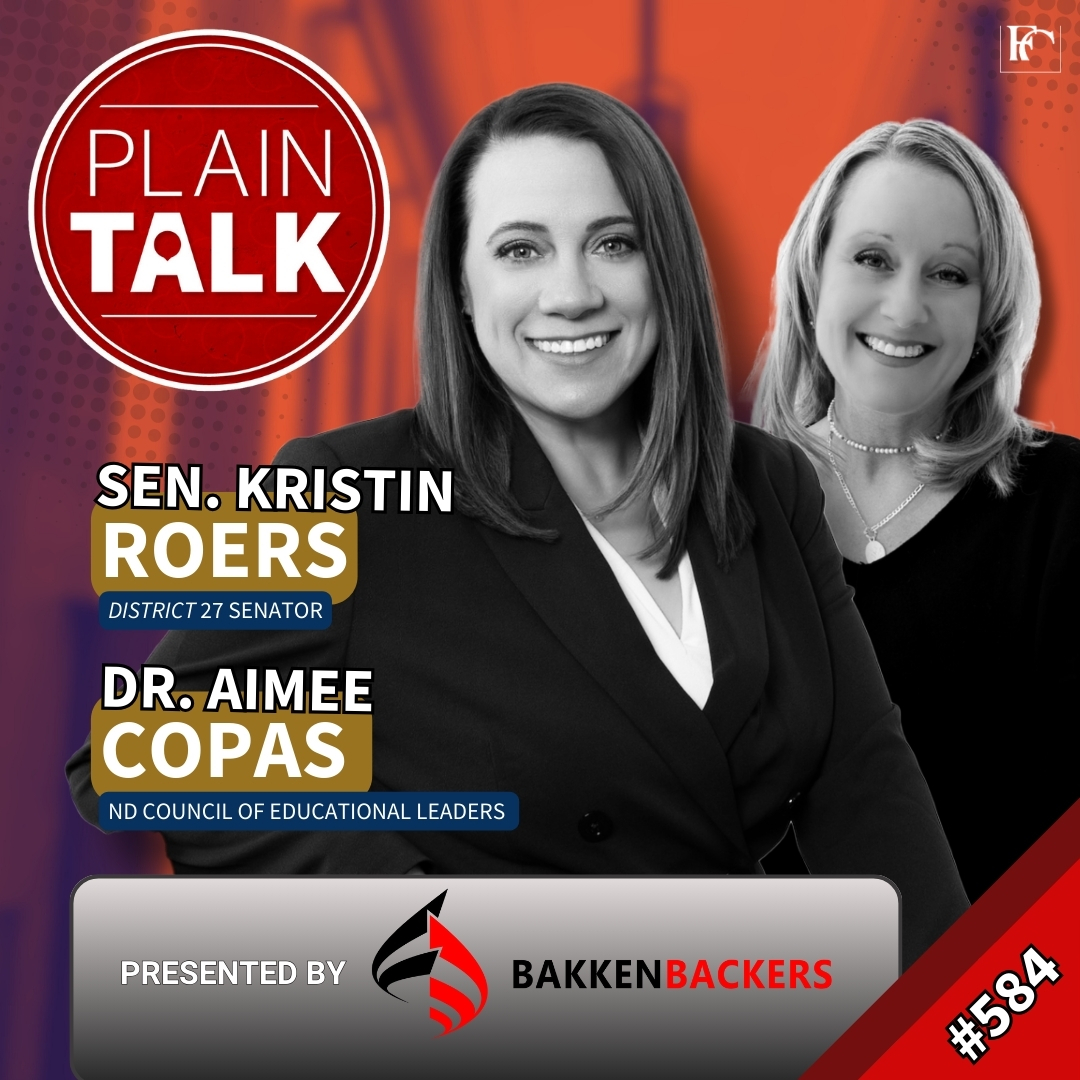
584: 'I just found it disgusting'
We invited Sen. Kristin Roers to this episode of Plain Talk to discuss the debate over term limits reforms making their way through the Legislature in Bismarck, but before we turned to that topic, I asked Roers about recent comments made by state Rep. Brandon Prichard about her former colleage Rep. Josh Christy. Christy passed away during the current legislative session. He served in Fargo-area District 27 alongside Roers. When the District 27 Republicans approved the appointment of Rep. T.J. Brown to replace Christy, Prichard, through his group Citizens Alliance of North Dakota, took credit for the move, claiming falsely that Brown had won a "special election" and celebrating his replacing Christy, who was a moderate. "I just found it disgusting," Roers said, accusing Prichard of "trying to take credit" for something "he had absoultely nothing to do with." Roers said that she has spoken with Rep. Brown, who indicated that Prichard and his group had nothing to do with his appointment. As for term limits, there are several proposals before the Legislature. House Concurrent Resolutoin 3034, Senate Concurrent Resolution 2028, and Senate Concurrent Resoluton 4008 would each amend the state constitution to change the voter-initiated term limits to 12 years, or three terms, instead of 8 years, or two terms. Roers, though, says she introduced an amendment to SCR4008, specifically, which would go a bit further. Her amendment would allow lawmakers to serve for a total of four terms, or 16 years, regardless of which chamber they're in. She argued that this was closer to what voters approved, which allows a person to serve for as many as eight years in each chamber. The Roers amendment simply allows those 16 years already allowed to be served entirely in a single chamber. She also included some language making it so that lawmakers, such as Brown, who are appointed to partial terms, or who are elected to a two-year term after redistricting, can still serve four full terms. Also on this episode, Dr. Aimee Copas, executive director of the North Dakota Council of Education Leaders, talks about the property tax debate, the school choice debate, and recently-released test results showing that North Dakota students are testing at some of the highest levels in the world. Recent NAEP (National Assessment of Educational Progress) testing had North Dakota students with scores that "put us on part with some of the best scores globally." She also warned that North Dakota lawmakers aren't preparing for dramatic budget cuts that could result from President Donald Trump's dramatic and chaotic push to slash federal spending. "You're not seeing that conversation at all right now," she said. This episode is presented by Bakken Backers. Bakken Backers is a coalition of businesses, leaders, workers, and citizens who support energy production from the Bakken formation and its many benefits for North Dakota. Learn more at BackTheBakken.org. If you want to participate in Plain Talk, just give us a call or text at 701-587-3141. It's super easy — leave your message, tell us your name and where you're from, and we might feature it on an upcoming episode. To subscribe to Plain Talk, search for the show wherever you get your podcasts or use one of the links below. Apple Podcasts | Spotify | YouTube | Pocket Casts | Episode Archive
583: 'The retaliation is the problem'
President Donald Trump's announced tariffs against Canada and Mexico and their retaliatory measures have significant economic risks, particularly for places like North Dakota, where so much of our economy is tied up in international markets. But perhaps even more damaging is the uncertainty Trump's mercurial approach to this policy area engenders. One of the first questions we asked North Dakota Farmers Union President Mark Watne on this episode of Plain Talk was whether we know what exactly our tariffs policy is toward Canada and Mexico right now given that Trump has pulled back on the tariffs he announced less than a week before. "We really don't," Watne said. "It's been kind of hit and miss on trying to understand it and of course that's a symptom of a bigger problem." "North Dakota is impacted the hardest of all states because we export so much," Watne added, "and the retaliation is the problem." Trump's approach to tariffs can close off foreign markets to American goods, including crops, and that can have major economic implications. "If you're going to hold the US supplies in the US because you're killing your foreign markets, we're going to be in a depressed marketplace for a long period of time," Watne said. He also warned that it's not just farmers who are going to feel the pain from tariffs. "Now, from a consumer perspective, you would assume, well, commodity prices are lower then of course food's lower, but that's not true," he said. "We've effectively gotten so much concentration in our place of food production from beef slaughter to pork slaughter to many grocery chains that control the distribution system that the reflection on commodity prices in what you pay is irrelevant." "It doesn't matter if the price of wheat goes up or down, other than when it goes up [food prices] go up. When it goes back down, they don't bring the price down again." Also on this episode, Chad Oban and react to some listener feedback, and make some predictions for the second half of the legislative session which kicked off this week. This episode is presented by Dakota Resource Council. For nearly 50 years, DRC has worked across North Dakota to protect our land, water and future. Become a member, volunteer and take action, or donate today at www.DRCinfo.org. If you want to participate in Plain Talk, just give us a call or text at 701-587-3141. It's super easy — leave your message, tell us your name and where you're from, and we might feature it on an upcoming episode. To subscribe to Plain Talk, search for the show wherever you get your podcasts or use one of the links below. Apple Podcasts | Spotify | YouTube | Pocket Casts | Episode Archive

582: 'We've got counties in North Dakota where 20, 25, 30% of the kindergarteners aren't vaccinated'
"It's a tragedy what's happening in Texas," Dr. Paul Carson said on this episode of Plain Talk, referring to that state's measels outbreak, which has already claimed the life of one child. Carson is a medical doctor and an emeritus professor of the public health faculty at North Dakota State University. I wrote recently about North Dakota's statewide kindergarten vaccination rates for well-established vaccines for things like measels and chickenpox are worse than in Texas. Dr. Carson said that means North Dakota is at risk "We have, as Rob alluded to in his article, we have counties in North Dakota that are significantly worse than the areas of Texas that we're talking about," he said. "It's often a matter of time before highly contagious viruses like measles get back into a community and circulate again." "Thankfully most of us are vaccinated, but we've got counties in North Dakota where 20, 25, 30% of the kindergarteners aren't vaccinated," he continued. "If it kind of gets into one of those schools, you'll see it spread and that often shuts down a school and may shut down an entire school for weeks." "It doesn't feel like we should be surprised if we see a news report that there's a measles case that pops up somewhere in North Dakota," he added. Also on this episode, Dakota Rudesill, a professor of law at Ohio State University and a former legislative assisstant on national security to Sen. Kent Conrad, answered questions about the tense situation between the United States, Ukraine, and Russia. Specifically, Rudesill spoke about Ukrainian President Volodymyr Zelenskyy's visit to, and subsequent ejection from, the White House. "One of the things that happened there is that the president and the vice president really wanted Zelenskyy to adopt some of their talking points and parrot those or at least not contest them," he said, "and Zalinsky wasn't willing to do that. And that is very much like the baseline now which has emerged for people in the Trump administration or people who want Trump's favor which is you have to endorse false things that he says." This extends, he argues, to people in Trump's orbit refusing to acknowledge something as verfiably true as Russia's invasion of Ukraine. "The nominees for the top jobs at the Department of Defense scrupulously will not acknowledge the fact that Russia invaded Ukraine," Rudesill said. "The closest we saw to that was the nominee for the under secretary of defense for policy. He said, you know, I understand from the president and vice president that words are very important and so I will not say anything to undermine the negotiations. He couldn't acknowledge the largest invasion since World War II even occurred." This episode is presented by Dakota Resource Council. For nearly 50 years, DRC has worked across North Dakota to protect our land, water and future. Become a member, volunteer and take action, or donate today at www.DRCinfo.org. If you want to participate in Plain Talk, just give us a call or text at 701-587-3141. It's super easy — leave your message, tell us your name and where you're from, and we might feature it on an upcoming episode. To subscribe to Plain Talk, search for the show wherever you get your podcasts or use one of the links below. Apple Podcasts | Spotify | YouTube | Pocket Casts | Episode Archive
581: 'I'm taking the heat for it'
Rep. Scott Louser, a Republican from Minot, is one of a handful of North Dakota lawmakers who, after casting a vote in favor of a resolution asking the U.S. Supreme Court to overturn precedent striking down state bans on same-sex marriage, came to regret the decision. "I'm taking the heat for it," Louser said of his change of heart on this episode of Plain Talk. "I don't have a fantastic answer that's going to satisfy everybody," he said when co-host Chad Oban and I asked him about how he came to change his mind. "The best that I could do was tell the world I regretted what I did." "I don't go tell the public, you know, I wish I would have voted different on a bill every time," he continued. "This one warranted that. I made a mistake and I've apologized for it, but probably that's not going to satisfy everybody. I understand that." Louser also discussed the property tax debate. His bill was one of three packages for property tax reform and relief that the House sent the Senate before the crossover break. Why did the House send three bills instead of coalescing around one? He said there was a directive from leadership to "send all three out to the floor of the House and let the whole house decide as opposed to one committee." "The strategy was give the Senate the best ideas that we've had and see what they think," he continued. Also on this episode, Sen. Sean Cleary spoke about his objection on the floor of the Senate to comments characterizing North Dakota's educators and librarians as groomers and pedophiles, and his opposition to the bill they were made in support of. "We're basically bringing law enforcement into a conversation about books in the library," he said of Senate Bill 2307, adding he "just couldn't support a bill like that." Cleary also spoke about a constitutional amendment he proposed which would ban the use of revenues from charitable gaming for political purposes. Legislation defeated in the House before crossover would have directed local governments to deem political organizations like campaigns and parties as "public-spirited" and eligible for the proceeds. Cleary said that bill made him realize "that we have some pretty serious concerns when it comes to gaming in this state." Senate Concurrent Resolution 4027 is "low hanging fruit"when it comes to addressing some of the challenges the explosion in gambling in North Dakota has wrought. This episode is presented by Dakota Resource Council. For nearly 50 years, DRC has worked across North Dakota to protect our land, water and future. Become a member, volunteer and take action, or donate today at www.DRCinfo.org. If you want to participate in Plain Talk, just give us a call or text at 701-587-3141. It's super easy — leave your message, tell us your name and where you're from, and we might feature it on an upcoming episode. To subscribe to Plain Talk, search for the show wherever you get your podcasts or use one of the links below. Apple Podcasts | Spotify | YouTube | Pocket Casts | Episode Archive

580: Introducing dozens of bills is 'poor legislation' says lawmaker
On Tuesday, February 25, lawmakers in the state House of Representatives worked late into the evening to finish work on the hundreds of bills introduced in that chamber this session so that they could be sent over to the state Senate for consideration. This legislative session has seen a lot of bills introduced — the most since the 1990s — and that's put a strain on the process. So much so that state Rep. Landon Bahl, a Republican from Grand Forks, says it's precluding lawmakers from giving important issues the attention they deserve. Bills get "ramrodded" into up or down votes, Bahl said, with lawmakers sometimes approving bad legislation in the hope that their colleagues in the other legislative chamber will address the flaws. Bahl sponsored House Bill 1408 with an eye toward addressing some of these problems. The bill, which passed the House by a wide margin earlier this month, would move lawmakers to annual sessions, albeit within the same 80-day constitutional limit they already have. Bahl thinks that would allow the Legislature to do a better job of keeping up with North Dakota's needs, but on this episode of Plain Talk, he said more is needed. Like a cap on the number of bills any lawmaker can introduce. Bahl pointed out that some of his colleagues have introduced dozens of bills. He said he started the session with just three introduced. "I guarantee you other lawmakers do not know their 10, 20, 30 bills inside and out. And I think that's poor legislation," he said. Bahl also said he'd support giving the Legislature's interim committees more power to finalize their work on bills so they can be brought immediately to the floor for votes when the legislative session begins. He'd also like committees to be able to kill legislation without it coming to a floor vote. "I think that streamlines government," he said. "It's a better use of our time. The efficiency is going to increase. Our work, the quality of our work is going to increase. The committees have the time to dive in." Also on this episode, co-host Chad Oban and I discuss Rep. Austin Foss's emotional comments against a resolution opposing same-sex marriage which passed the House this week, as well as progress on property tax legislation, a controversial sentencing bill, and the failure of legislation funding school lunches for all North Dakota children. This episode is presented by Dakota Resource Council. For nearly 50 years, DRC has worked across North Dakota to protect our land, water and future. Become a member, volunteer and take action, or donate today at www.DRCinfo.org. If you want to participate in Plain Talk, just give us a call or text at 701-587-3141. It's super easy — leave your message, tell us your name and where you're from, and we might feature it on an upcoming episode. To subscribe to Plain Talk, search for the show wherever you get your podcasts or use one of the links below. Apple Podcasts | Spotify | YouTube | Pocket Casts | Episode Archive

579: 'Nobody wanted to listen to Scott Davis the Indian guy'
"I got angry," Scott Davis said on this episode of Plain Talk. "I had to walk away." Davis served as the Commissioner of Indian Affairs under three North Dakota governors (John Hoeven, Jack Dalrymple, and Doug Burgum), and now works as a consultant for North Dakota's tribal communities (he has familial roots in both the Standing Rock Sioux Tribe and the Turtle Mountain Chippewa). What made him angry, and want to walk away, were comments by Sen. Diane Larsen, a Bismarck Republican, suggesting that "cartels" were behind a proposal by the Turtle Mountain tribe to open a casino near Grand Forks. Davis is also a Republican, I should point out, having served under Republican governors, and as a leader in his local NDGOP district. On Plain Talk, Davis pointed out that tribal gaming is legal and thoroughly regulated by tribal government, state government, and the federal government. He contrasted that with charitable gaming which, thanks to the popularity of electronic pull tab machines, has exploded to become a multi-billion dollar enterprise in North Dakota. He described charitable gaming as "wild west, unregulated activity." Davis said he warned lawmakers about electronic pull tabs when their legalization was being debated in Bismarck. "Nobody wanted to listen to Scott Davis the Indian guy." Asked if charitable gaming had put a dent in tribal proceeds from gambling, he said "big time." He expressed frustration that lawmakers like Larsen are so often dismissive of the tribe's interests. "Treat us fair," he said. "That's all we ask for." Davis appeared alongside Sen. Scott Meyer, a Republican from Grand Forks, who sponsored enabling legislation (Senate Bill 2376) that would allow Turtle Mountain's project to proceed. That bill failed in the Senate recently, but Meyer expressed confidence that it could return later in the session. Also on this episode, co-host Chad Oban and I reacted to some feedback from listeners, and discussed recent debates over Sen. Keith Boehm's book ban bill, which passed in the state Senate this week, and school lunch funding legislation, which got a "do not pass" recommendation from the House appropriations committee after what seemed like a perfunctory debate. This episode is brought to you by the North Dakota Petroleum Foundation, providing education and outreach opportunities related to the petroleum industry, advancing quality of life initiatives, and promoting and enhancing the conservation heritage of North Dakota. Learn more at www.NDPetroleumFoundation.org. If you want to participate in Plain Talk, just give us a call or text at 701-587-3141. It's super easy — leave your message, tell us your name and where you're from, and we might feature it on an upcoming episode. To subscribe to Plain Talk, search for the show wherever you get your podcasts or use one of the links below. Apple Podcasts | Spotify | YouTube | Pocket Casts | Episode Archive

578: Plain Talk Live! The legislature will have to change
MINOT — For the first time ever we took the Plain Talk podcast on the road, to famed bar, restaurant, and political hangout Peacock Alley. We interviewed Senate Majority Leader David Hogue and House Minority Leader Zac Ista. We also interviewed a couple of former lawmakers, Jessica Bell and Erin Oban. The theme of the night? The legislature is going to have to change. Bell and Oban talked about how much the Legislature changed, both during their time and since. Things have become more performative and less productive. Hogue and Ista talked about the struggles to get through more than a thousand proposed bills while still giving each of them the scrutiny and consideration they deserve. All of this is happening as both North Dakota, and the nation, go through a sometimes baffling political realignment, and North Dakota, specifically, has a new term limits law for lawmakers looming. What can North Dakota do to ensure that the Legislature can continue to serve our state well, without veering off into the morass of dysfunction that's reality in Washington D.C.? We also talked about tough fights taking place in the current legislative session over sentencing, property taxes, and more. This episode is brought to you by the North Dakota Petroleum Foundation, providing education and outreach opportunities related to the petroleum industry, advancing quality of life initiatives, and promoting and enhancing the conservation heritage of North Dakota. Learn more at www.NDPetroleumFoundation.org. If you want to participate in Plain Talk, just give us a call or text at 701-587-3141. It's super easy — leave your message, tell us your name and where you're from, and we might feature it on an upcoming episode. To subscribe to Plain Talk, search for the show wherever you get your podcasts or use one of the links below. Apple Podcasts | Spotify | YouTube | Pocket Casts | Episode Archive
577: Will the Legislature pass education savings accounts?
Lawmakers in Bismarck are considering a number of school choice bills which would, in various ways, make public dollars available for parents to use toward private school tuition. The most important one, perhaps, is Senate Bill 2400, introduced by Sen. Michelle Axtman, and it does a whole lot more than just fund school choice. As currently amended, it would create what's called education savings accounts, making at least $1,000 available for every student in North Dakota who attends a public school or is home-schooled. For students attending participating private schools, there would be $4,000 available per student for families making 300% of the federal poverty level or less, $2,000 for families making up to 500% of the poverty level, and $1,000 for everyone else. These funds could be used not just for tuition, but other things as well, like a STEM camp or tutoring, but there's a big price tag attached. The most recent fiscal note attached to the legislation estimates its cost at north of $200 million per two-year budget cycle. Sen. Axtman joined Plain Talk to discuss this legislation, including its cost, the impact it may have on funding for public schools, and the process through which North Dakotans would access these funds. Also on this episode, co-host Chad Oban and I talked about the status of culture war bills in the Legislature, as well as Rep. Lori VanWinkle's vile comments about infertile women. This episode is brought to you by the North Dakota Petroleum Foundation, providing education and outreach opportunities related to the petroleum industry, advancing quality of life initiatives, and promoting and enhancing the conservation heritage of North Dakota. Learn more at www.NDPetroleumFoundation.org. If you want to participate in Plain Talk, just give us a call or text at 701-587-3141. It's super easy — leave your message, tell us your name and where you're from, and we might feature it on an upcoming episode. To subscribe to Plain Talk, search for the show wherever you get your podcasts or use one of the links below. Apple Podcasts | Spotify | YouTube | Pocket Casts | Episode Archive
576: 'That is a blatant falsehood'
At the beginning of this episode of Plain Talk, Attorney General Drew Wrigley took exception to my recent reporting suggesting that he and Gov. Kelly Armstrong are at odds over sentencing legislation and the performance of state prison officials. Based on what would follow, I think the conflict between two of North Dakota's top elected officials is positively overt. According to Wrigely, the North Dakota Department of Corrections and Rehabilitation, headed by director Colby Braun, is lying to state lawmakers and the public. He took particular issue with a recent fiscal note issued by the DOCR indicating that so-called "truth in sentencing" legislation he supports, which would mean that inmates serve a larger percentage of their sentences, will cost taxpayers as much as $269 million. "Their quest is to make it extraordinarily expensive to turn people away from the bill," he said. "That is a blatant falsehood," a stormy Wrigley told guest-cost Erin Oban and I. "It is not worth the paper it's written on," he continued about the fiscal note. "It would be a joke if it weren't a matter of serious policy debate," he said. Wrigley also said that DOCR officials have been hiding data from the public and lawmakers, and making misleading statements about rising crime rates. "What an absolute abdication of responsibility," concluded. These are serious accusations -- lying, abdication of responsibility, etc. -- but Braun isn't an independent operator. He has a boss. That's Armstrong, who was also scheduled to appear on this episode to discuss the progress of property tax reform, which he has made his primary focus during this legislative session. I asked Wrigley if he felt Braun should be fired, and he demured, saying it wasn't his place to advise the governor on personnel issues. As for Armstrong's feelings about Braun? "I have total confidence in Colby," Armstrong told us when I asked him about Wrigley's remarks. "I try not to make things personal," he added. Armstrong said he hadn't yet reviewed the fiscal note issued by DOCR in response to Wrigley's legislation, which is Senate Bill 2128, but expressed some sympathy with its conclusions about cost. "It turns out when you lock people up, it's expensive," he said. Armstrong also said that while he'll take advice from his staff and cabinet into consideration, if he is ultimately asked to sign something like SB2128 into law, the decision will ultimately be based on his consideration of its merits. As for the progress on property taxes, Armstrong said he's pleased with the debate, though he's worried about lawmakers watering down the caps in his bill. House Bill 1176, which was introduced by Rep. Mike Nathe and carries the governor's plan, was amended in policy committees to allow local governments to set aside a 3% cap on spending increases for as much as 10 years if approved by a vote. "The way it was done probably means there aren't really caps," Armstrong said of the change, later arguing that it was a loophole so big "you could drive a grain truck through it." This episode is presented by Dakota Resource Council. For nearly 50 years, DRC has worked across North Dakota to protect our land, water and future. Become a member, volunteer and take action, or donate today at www.DRCinfo.org. If you want to participate in Plain Talk, just give us a call or text at 701-587-3141. It's super easy — leave your message, tell us your name and where you're from, and we might feature it on an upcoming episode. To subscribe to Plain Talk, search for the show wherever you get your podcasts or use one of the links below. Apple Podcasts | Spotify | YouTube | Pocket Casts | Episode Archive
575: Rep. Nico Rios didn't show up
In our promotions for this episode of Plain Talk, we had indicated that state Rep. Nico Rios would be joining us. Rios has made some fairly ugly headlines over the past year or so. He derated two law enforcement officers with bigoted and homophobic comments during an arrest for DUI. More recently, with regard to Mexican President Claudia Sheinbaum Pardo, he wondered in an X post "if the CIA would help Trump overthrow and kick this Jew out of power in Mexico." He's also introduced a resolution, in the current legislative session in Bismarck, which would have the State of North Dakota "acknowledge the Kingship of Jesus Christ over all the world," something that likely violates the state constitution, the U.S. constitution, and would not be in keeping with what many North Dakotans -- those of the Jewish faith, or Islamic, etc. -- believe to be true. Me and my co-host, Chad Oban, were looking forward to a respectful interview with Rios about these words and actions. Unfortunately, just minutes before the agreed-upon time for the interview, Rios backed out. "Ay dude I'm not going on your boring little show," he told me in a text. "When I initially agreed to come on Sunday afternoon I thought it was just to promote my Christ is King Resolution, but you seem to be focusing on my social media. NOT NEWS. Got more important things to do than chat Capitol gossip." We did have a very good interview with state Rep. Mike Nathe, who spoke about his property tax bill (which carries Gov. Kelly Armstrong's plan for reform) as well as legislation he's backing that would require all candidates seeking a political party's nomination to collect signatures to appear on the primary ballot. Currently, candidates endorsed at party conventions do not have to collect signatures. "I'm just glad they got this one out so everyone can see it," he said of his property tax bill, which just emerged from the policy committee with a "do-pass" recommendation and some amendments. The committee added the option for local voters to approve a 10-year exemption from the budget caps promoted by Gov. Armstrong. It also lowered the amount of the primary residence tax credit by roughly $100, and added an income tax cut. "If it was my desire that would have been in a separate bill," he said of the income tax portion. Nathe also responded to some of the controversy around Rep. Rios. "I don't agree with it," he said of Rios's words and actions. "My colleagues don't agree with it." Asked if he felt his party should remove Rios from the caucus, and strip him of committee assignments, Nathe deferred to House Majority Leader Mike Lefor, though he did have this message for the people who elected Rios: "The people of Williston have got to stand up." This episode is presented by Dakota Resource Council. For nearly 50 years, DRC has worked across North Dakota to protect our land, water, and future. Become a member; volunteer and take action; or donate today at www.DRCinfo.org. If you want to participate in Plain Talk, just give us a call or text at 701-587-3141. It's super easy — leave your message, tell us your name and where you're from, and we might feature it on an upcoming episode. To subscribe to Plain Talk, search for the show wherever you get your podcasts or use one of the links below. Apple Podcasts | Spotify | YouTube | Pocket Casts | Episode Archive
574: 'Try to have good speech drive out bad speech'
"We live in an age where people can say whatever they want without consequence," says Steve Hunegs, executive director of the Jewish Community Relations Council of Minnesota and the Dakotas. Hunegs appeared on this episode of Plain Talk to discuss the anti-Semitic comments made recently by state Rep. Nico Rios, who referred to Mexican President Claudia Sheinbaum Pardo as "this Jew." "There's nothing new under the sun with anti-Semitism," Hunegs told me and co-host Chad Oban, noting that hateful tropes and conspiracy theories focused on the Jewish people are often centuries old and dusted off for modern contexts. He said he hopes to have a "respectful" and "intelligent" conversation with Rep. Rios at some point. He wants to "try to have good speech drive out the bad speech." Also on this episode, Cody Schuler, advocacy manager for the ACLU of North Dakota, joined to talk about how some communities in North Dakota are trying to balance the principles of free speech with the desire some in public have to use open meetings as stages for at times hateful and bigoted language. He also spoke to legislation mandating the 10 commandments and Pledge of Allegiance in classrooms, as well as a Republican-backed bill that would expand legal access to abortion in the state. This episode is presented by Dakota Resource Council. For nearly 50 years, DRC has worked across North Dakota to protect our land, water, and future. Become a member; volunteer and take action; or donate today at www.DRCinfo.org. If you want to participate in Plain Talk, just give us a call or text at 701-587-3141. It's super easy — leave your message, tell us your name and where you're from, and we might feature it on an upcoming episode. To subscribe to Plain Talk, search for the show wherever you get your podcasts or use one of the links below. Apple Podcasts | Spotify | YouTube | Pocket Casts | Episode Archive
573: 'If we had less bills we could have more meaningful debates'
Property taxes are complicated, so is it any surprise that reforming the property tax code is similarly complicated? We talked about the property tax issue on this Plain Talk (again) because it is, without a doubt, the most complicated and consequential question before lawmakers in Bismarck during the 2025 session. Rep. Scott Louser, a Republican from Minot, discussed his property tax plan, which includes coupling a spending cap on local governments with a buydown of property tax mills. He also critiqued Gov. Kelly Armstrong's plan, saying he's worried that his proposed primary residence tax credits could depress North Dakota's real estate markets. Sen. Mark Weber, a Republican from Casselton, talked about his role in this process as the chair of the Finance and Tax committee, which will need to sort through these bills. Weber represents a largely rural area, and said that the owners of farm land are worried about being left out in the cold on property tax relief. In some rural areas, the bulk of property taxes are paid by a relatively small number of land owners. Is that fair? And what sort of a situation are we creating if a small number of voters, who don't pay the property tax thanks to the state's primary residence credits, can vote to raise taxes on a much smaller number of land-owning voters who do? "Everybody should pay a little property tax," Sen. Weber said. He also expressed frustration with the number of bills introduced this legislative session, which close to a record for the last 20 years. "I think we are introducing entirely too many bills in the legislature," he said. "If we had less bills we could have more meaningful debates," he added. This episode is brought to you by the North Dakota Petroleum Foundation, providing education and outreach opportunities related to the petroleum industry, advancing quality of life initiatives, and promoting and enhancing the conservation heritage of North Dakota. Learn more at www.NDPetroleumFoundation.org. If you want to participate in Plain Talk, just give us a call or text at 701-587-3141. It's super easy — leave your message, tell us your name and where you're from, and we might feature it on an upcoming episode. To subscribe to Plain Talk, search for the show wherever you get your podcasts or use one of the links below. Apple Podcasts | Spotify | YouTube | Pocket Casts | Episode Archive
572: 'Prions don't exist'
There is a fight in the Legislature between the North Dakota Game & Fish Department and a group of hunters and landowners over regulations aimed at curbing the impact of chronic wasting disease on North Dakota's wildlife populations. But is that fight really about CWD? Or is this another front in the culture war spurred by (in some respects not entirely unreasonable) frustration with Game & Fish regulations? Dusty Backer is an activist (I don't use that word pejoratively, though he objected to being described that way) who joined this episode of Plain Talk to discuss the issue. He argues that concerns over CWD are feigned by state officials, federal officials, and academics as an avenue toward "controlling people." "Prions don't exist," he told us (CWD is described by health officials as "a prion disease"). He said that the state's efforts to regulate bait hunting, implemented as one method to control the spread of CWD, are unreasonable and an affront to property rights. Also on this episode, we've heard a lot about Gov. Kelly Armstrong's property tax plan, but Rep. Ben Koppelman, a Republican from West Fargo, has an alternative he says is better, though he admits that he likes broad portions of Armstrong's proposal. "The cap in the governor's plan I agree with," he said, referring to a 3% limit on growth in local budgets which he says the governor took from him. "I'm honored he would take that idea and put it in his plan." "Where I disagree is on the relief portion," Koppelman continued, saying that his plan delivers more tax relief on primary residences more quickly than Armstrong's plan by buying down a percentage as opposed to providing a fixed credit. He says there is political risk in not delivering tax relief swiftly. "I think we're going to set ourselves up for another measure," he said, referring to Measure 4, a proposal to abolish taxes on property values which voters defeated by a wide margin last year. Koppelman argues that, under his plan, a broader crossection of property owners will feel relief on a shorter timeline than under the governor's plan. "The idea is everyone should get to zer [property taxes] together," he said. This episode is brought to you by the North Dakota Petroleum Foundation, providing education and outreach opportunities related to the petroleum industry, advancing quality of life initiatives, and promoting and enhancing the conservation heritage of North Dakota. Learn more at www.NDPetroleumFoundation.org. If you want to participate in Plain Talk, just give us a call or text at 701-587-3141. It's super easy — leave your message, tell us your name and where you're from, and we might feature it on an upcoming episode. To subscribe to Plain Talk, search for the show wherever you get your podcasts or use one of the links below. Apple Podcasts | Spotify | YouTube | Pocket Casts | Episode Archive
571: Should North Dakota have an ID requirement for online porn?
There's no denying that the easy availability of explicit content on the internet is a major problem for parents, not to mention schools. We all agree, children shouldn't be looking at pornography, but how we go about regulating access (and even how we define what is and is not pornography) are tricky problems. Rep. Steve Swiontek, a Republican from Fargo, has proposed a bill that would create a requirement for the purveyors of explicit content online to implement age verification, but the government wouldn't enforce it. Instead, the legislation creates a legal liability for the companies allowing them to be sued by private citizens, or classes of citizens, if they aren't doing verification. "I do have a passion for this one," Rep. Swiontek said on this episode of Plain Talk. Also on this episode, we discussed a growing trend in the insurance industry that's worrisome for people obliged to take expensive medications. Basically, the insurance companies aren't counting payments made on prescription drugs with third-party money toward a patient's deductible. If the patient gets a coupon or a gift card to cover a portion of their out of pocket payment, that doesn't count. If they get some help from family, or a charity or a church, that also doesn't count. That can leave those patients stuck on an out-of-pocket treadmill for much longer than they would need to be. Rep. Karen Karls, a Bismarck Republican, joined this Plain Talk alongside Bill Robie from the National Bleeding Disorders Foundation, to talk about proposed legislation prohibiting this practice. If you want to participate in Plain Talk, just give us a call or text at 701-587-3141. It's super easy — leave your message, tell us your name and where you're from, and we might feature it on an upcoming episode. To subscribe to Plain Talk, search for the show wherever you get your podcasts or use one of the links below. Apple Podcasts | Spotify | YouTube | Pocket Casts | Episode Archive
570: 'That does hurt'
Former President Joe Biden spent the last moments of his time in office issuing preemptive pardons to family members and political allies. He also pardoned thousands of people convicted of crimes, often to the bewilderment of judges and prosecutors, including some here in North Dakota. New President Donald Trump, meanwhile, spent the first moments after his inauguration releasing hundreds of people who participated in the violent January 6 attack on Congress which was inspired by his lies about the 2020 election. Mac Schneider has spent the last couple of years working in the justice business. The Justice Department, specifically, as the U.S. Attorney for North Dakota. How does he feel about these pardons? "The folks I work with are incredibly serious about upholding the rule of law," he said on this episode of Plain Talk, adding that the "wreckage" created by many of those pardoned persists even as their accountability disappears at the stroke of a politician's pen. "When you get news of that variety, I think of the victims," he said. "That does hurt." Also on this episode, first-term state Rep. Austin Foss, a Democrat from Fargo, talks about his experiences in his first legislative session, as well as legislation he's proposed that would require employers to give people interested in serving in the legislature a leave of absence. What does Foss think of the Legislature so far? "I'm surprised by the number of Republicans that do want to work with us," he said. If you want to participate in Plain Talk, just give us a call or text at 701-587-3141. It's super easy — leave your message, tell us your name and where you're from, and we might feature it on an upcoming episode. To subscribe to Plain Talk, search for the show wherever you get your podcasts or use one of the links below. Apple Podcasts | Spotify | YouTube | Pocket Casts | Episode Archive
569: 'I'm patient...but our patience is wearing thin."
Participatory politics is what makes our democracy work, but it also supposes that those who are participating are doing so in good faith. How do we handle people who want to use the tools of participation -- things like open records requests and open meetings -- as soap boxes for narcissistic jeremiads? What if the people participating aren't intent on being constructive, but instead are out to just burn everything down (figuratively speaking)? The City of Dickinson will soon hold a special election in which the incumbent, city commissioner Jason Fridrich, who was recalled to the ballot by petitioners, will run unopposed after the leader of the petitioning campaign, a local gadfly prolifically active on social media and in the public comment period at city meetings, chose not to run. This exercise in futility will cost the taxpayers of Dickinson tens of thousands of dollars, and what does it accomplish? Satisfying the ego of a minority faction of malcontents? "I bite my tongue," Dickinson Mayor Scott Decker said on this episode of Plain Talk of his efforts to keep his composure while getting berated during public meetings. "I'm patient," he continued, "but our patience is wearing thin." Decker and his community are struggling with balancing the sort of openness and transparency that allows certain members of the public to verbally abuse elected officials, and accuse them of all manner of perfidy, with the need to just get on with the public's business. Why should members of the public, attending a city meeting to learn about budgets, or taxes, or a zoning issue, be subjected to long-winded tirades that often have little to do with city business? This isn't just a Dickinson problem. Local governing entities across North Dakota -- indeed, across America -- are struggling with these problems. During his interview, Decker offered some fascinating insight on what it all looks like from a seat in local government. Also on this episode, Travis Finck, North Dakota's top public defender, talks about his office's struggles amid funding shortfalls, and his efforts to convince lawmakers to fund his lawyers on par with what prosecutors receive. "Right now we're not worried about a level playing field," Finck told us. "We're not even in the arena. If you want to participate in Plain Talk, just give us a call or text at 701-587-3141. It's super easy — leave your message, tell us your name and where you're from, and we might feature it on an upcoming episode. To subscribe to Plain Talk, search for the show wherever you get your podcasts or use one of the links below. Apple Podcasts | Spotify | YouTube | Pocket Casts | Episode Archive

568: A legislative fight over chronic wasting disease
In North Dakota, game and fish officials have the authority to restrict bait hunting in order to protect animals from diseases like chronic wasting disease. And that's what they've been doing. When a case is found in the deer population, they ban the use of bait for hunting in an area 25 miles around it. This has a very vocal faction of the hunting community incensed. Many of them insist that chronic wasting disease is a hoax, or at the every least an exaggerated threat, and they want state officials stripped of the ability regulate bait hunting. There are three versions of bills to do that before lawmakers in Bismarck. Brock Wahl is a fifth-generation North Dakotan and chair of the North Dakota Backcountry Hunters and Anglers organization. On this episode of Plain Talk, he told co-host Chad Oban and I that while regulation of bait hunting hasn't been perfect, it is necessary, and it is protecting state deer populations from CWD. "It's undoutable that this is making a difference," he said. As for the opponents? "I think some of these folks are on a disinformation campaign." Wahl spoke at length about the history of prion diseases like CWD, or other maladies like so-called "mad cow disease, calling them "both vertical and horizontal" threats. Part of what he means by that is CWD can spread to other species. Is that a threat to livestock, which is an important part of North Dakota's economy? Wahl said he didn't want to exaggerate the threat. "I don't know that it's a significant concern," he said. But he argued it's like playing the lottery. The odds may be against it, but buy enough tickets, and eventually you'll have a winner. Wahl said that some opponents of baiting regulation invoke property rights, arguing that they should get to do what they want on their property, but Wahl pointed to Article XI, section 27 of the state constitution, which states, "Hunting, trapping, and fishing and the taking of game and fish are a valued part of our heritage and will be forever preserved for the people and managed by law and regulation for the public good." The property may be privately owned, Wahl said, but the wildlife belongs to everyone. Also on this episode, Chad and I discuss the debate over bills mandating the 10 commandments and the Pledge of Allegiance in our schools, the first hearing over Gov. Kelly Armstrong's property tax proposal, and the debate over the explosion in charitable gaming. This episode is presented by the North Dakota Petroleum Foundation. ND Petroleum Foundation provides education and outreach opportunities related to the petroleum industry, advances quality of life initiatives, and promotes and enhances the conservation heritage of North Dakota. Learn more at www.NDPetroleumFoundation.org. If you want to participate in Plain Talk, just give us a call or text at 701-587-3141. It's super easy — leave your message, tell us your name and where you're from, and we might feature it on an upcoming episode. To subscribe to Plain Talk, search for the show wherever you get your podcasts or use one of the links below. Apple Podcasts | Spotify | YouTube | Pocket Casts | Episode Archive
567: Auditor Josh Gallion wants subpoena power
By his own admission, Auditor Josh Gallion had a rocky relationship with lawmakers last session, which resulted in the Legislature appropriating funding for an audit of Gallion's office. That audit has been completed. It had findings related to communications issues and confusing invoices. The review also found that Gallion has implemented measures to improve these issues, and that they have improved. Gallion joined this episode of Plain Talk to discuss the audit of his office, as well as a request he's making to lawmakers to give him subpoena power to help his office review public/private partnerships. "I can't tell you how much I appreciate the feedback that we received last legislative session," Gallion said. He said there was some "additional emotion" on both sides of the relationship between his office and the Legislature during the 2023 session, but that he hopes to put that in the past. "We definitely needed to improve the communications and the detail and the training. So, that's the feedback that we really appreciated last session," he said. As for subpoena power, a growing number of government entities in North Dakota are working with or through private entities like nonprofits. Sometimes, the nonprofits are even created by the government entities themselves. This presents a challenge for Gallion and his team because their authority "really stops at the edge of that government organization," he told co-host Chad Oban and I. "If we do need to follow the money, there are times where we have challenges and these private entities may not have to necessarily comply with the public records," he continued. Gallion's office has submitted a proposal for subpoena power to lawmakers. Also on this episode, Dean Mitchell from DFM Research talked about a survey he conducted which was sponsored by North Dakota United, the state's teacher and public worker's union which Oban also works for. The survey found strong support for universal school lunches and property tax reform, as well as opposition to using public dollars to fund private school tuition. Mitchell walked us through the survey's results. This episode is brought to you by the North Dakota Petroleum Foundation, providing education and outreach opportunities related to the petroleum industry, advancing quality of life initiatives, and promoting and enhancing the conservation heritage of North Dakota - learn more at www.NDPetroleumFoundation.org. If you want to participate in Plain Talk, just give us a call or text at 701-587-3141. It's super easy — leave your message, tell us your name and where you're from, and we might feature it on an upcoming episode. To subscribe to Plain Talk, search for the show wherever you get your podcasts or use one of the links below. Apple Podcasts | Spotify | YouTube | Pocket Casts | Episode Archive